Lesson 18 of 22 · about 45 minutes
Conversation and Composition
You'll be able to
- Describe a person or place with verbless clauses, predicate adjectives, יֵשׁ and אֵין, and לְ of possession
- Ask yes/no questions with הֲ and הֲלֹא, and content questions with מִי, מָה, אַיֵּה, אֵי, אֵיפֹה, מֵאַיִן, אָנָה, לָמָּה, מַדּוּעַ, אֵיךְ, מָתַי and כַּמָּה
- Answer questions the Hebrew way, by repeating the key word, with הִנֵּנִי, or with לֹא
- Tell a short story in the narrative past: a setting with וַיְהִי, a chain of waw-consecutive verbs, and speech with וַיֹּאמֶר
- Tell classical phrases from modern ones in everyday conversation
- Write and read aloud a story of six to eight sentences in classical style
Sixteen lessons of forms, and one of numbers. This lesson spends them. You will describe people and places, ask questions and answer them, tell a story in the narrative past, and write a short story that is yours. Almost nothing here is new grammar. What is new is putting the pieces together the way Hebrew storytellers did.
Speak everything aloud. This course uses modern Israeli pronunciation (lesson 3), which is how most people who speak Hebrew today read the classical texts. Nobody speaks the Hebrew of Genesis as a mother tongue, but the language of Genesis is still the base of the language spoken in Israel, and many of the sentences in this lesson would be understood on a street in Jerusalem. Where a phrase is modern and not classical, the lesson says so.
Describing: the verbless clause
Hebrew does not need a verb for "is" or "are" in the present. Put a subject next to a predicate and the clause is complete (Gesenius, section 141). You met this in lessons 8 and 9. Here are the patterns you will use most when you describe something.
| Pattern | Hebrew | English | Source |
|---|---|---|---|
| Adjective first, no article | טוֹב הָאִישׁ | The man is good. | pattern of lesson 8 |
| Noun first, then adjective | וְהָאֶבֶן גְּדֹלָה | and the stone was big | Genesis 29:2 |
| Noun, then pronoun subject | עִבְרִי אָנֹכִי | I am a Hebrew. | Jonah 1:9 |
| Participle as predicate | אֶת־אַחַי אָנֹכִי מְבַקֵּשׁ | I am looking for my brothers. | Genesis 37:16 |
| יֵשׁ "there is" | יֶשׁ־לָנוּ אָב זָקֵן | We have an old father. | Genesis 44:20 |
| אֵין "there is not" | וּלְחַנָּה אֵין יְלָדִים | but Hannah had no children | 1 Samuel 1:2 |
| לְ of possession | וּלְלָבָן שְׁתֵּי בָנוֹת | Laban had two daughters. | Genesis 29:16 |
| Name with וּשְׁמוֹ | וּשְׁמוֹ אֶלְקָנָה | and his name was Elkanah | 1 Samuel 1:1 |
The rule from lesson 8 is the one to watch: an adjective with no article next to a noun with the article is a statement (טוֹב הָאִישׁ "the man is good"); an adjective that copies the article is a description inside a noun phrase (הָאִישׁ הַטּוֹב "the good man"). Hebrew possession works the same way: there is no verb "to have." You say "there is to me": יֶשׁ־לִי, or simply put לְ on the owner.
Genesis describes people in exactly these short clauses. Here are two brothers and two sisters.
וַיִּגְדְּלוּ הַנְּעָרִים וַיְהִי עֵשָׂו אִישׁ יֹדֵעַ צַיִד אִישׁ שָׂדֶה וְיַעֲקֹב אִישׁ תָּם יֹשֵׁב אֹהָלִים׃
Genesis 25:27, Westminster Leningrad Codex
"The boys grew up. Esau was a man who knew hunting, a man of the field, and Jacob was a quiet man, living in tents." The second half, וְיַעֲקֹב אִישׁ תָּם, has no verb at all: "and Jacob, a quiet man." The participles יֹדֵעַ "knowing" and יֹשֵׁב "sitting, living" describe what each man habitually did (lesson 14).
וּלְלָבָן שְׁתֵּי בָנוֹת שֵׁם הַגְּדֹלָה לֵאָה וְשֵׁם הַקְּטַנָּה רָחֵל׃
Genesis 29:16, Westminster Leningrad Codex
וְעֵינֵי לֵאָה רַכּוֹת וְרָחֵל הָיְתָה יְפַת־תֹּאַר וִיפַת מַרְאֶה׃
Genesis 29:17, Westminster Leningrad Codex
"Laban had two daughters. The name of the older was Leah, and the name of the younger was Rachel. Leah's eyes were soft (or weak), and Rachel was beautiful in form and beautiful in appearance." Notice הַגְּדֹלָה "the big one" for "the older" and הַקְּטַנָּה "the small one" for "the younger": the article turns the adjective into a noun. יְפַת־תֹּאַר is the construct of יָפָה "beautiful" bound to a noun, "beautiful of form." Here the past tense הָיְתָה "was" is written, because the narrator is describing the past.
Useful describing words
| Masculine | Feminine | Guide (masc.) | Meaning |
|---|---|---|---|
| גָּדוֹל | גְּדוֹלָה | [ga-DOL] | big, great; older |
| קָטֹן | קְטַנָּה | [ka-TON] | small; younger |
| טוֹב | טוֹבָה | [TOV] | good |
| רַע | רָעָה | [RA] | bad, evil |
| יָפֶה | יָפָה | [ya-FE] | beautiful |
| זָקֵן | זְקֵנָה | [za-KEN] | old (of people) |
| חָכָם | חֲכָמָה | [kha-KHAM] | wise |
| רַב | רַבָּה | [RAV] | many, much, great |
Example: describing a place in five clauses
הָעִיר קְטַנָּה. וּבָעִיר בְּאֵר. וְהַבְּאֵר עֲמֻקָּה וְהַמַּיִם טוֹבִים. וְיֵשׁ שָׁם עֵץ גָּדוֹל. וְאֵין שָׁם אִישׁ.
A made-up practice text in classical style. "The town is small. In the town there is a well. The well is deep and the water is good. There is a big tree there. And there is no one there."
Notes: קְטַנָּה and עֲמֻקָּה are feminine because עִיר and בְּאֵר are feminine. מַיִם "water" is plural in Hebrew, so its adjective is plural too: טוֹבִים. A phrase in front, וּבָעִיר בְּאֵר, is a natural way to say "there is" without יֵשׁ. And אֵין אִישׁ "there is no man" is the ordinary way to say "nobody."
Asking questions
Yes or no: הֲ and הֲלֹא
A yes/no question can be marked only by tone of voice: Isaac asks Jacob אַתָּה זֶה בְּנִי עֵשָׂו "Are you really my son Esau?" (Genesis 27:24) with no question word at all. More often the question gets the prefix הֲ on its first word (Gesenius, section 100 and section 150).
- Usually הֲ [ha]: הֲשָׁלוֹם לוֹ "Is he well?" (Genesis 29:6); הֲשֹׁמֵר אָחִי אָנֹכִי "Am I my brother's keeper?" (Genesis 4:9).
- Before a guttural it is often הַ: הַעוֹד אָבִי חָי "Is my father still alive?" (Genesis 45:3).
- Before a consonant with shewa it is also הַ: הַיְדַעְתֶּם "Do you know?" (Genesis 29:5).
- Do not confuse the question הֲ with the article הַ. The article doubles the next letter with a dagesh; the question prefix does not.
הֲלֹא (also spelled הֲלוֹא) [ha-LO] expects the answer yes, like English "isn't it?": Abram says to Lot הֲלֹא כָל־הָאָרֶץ לְפָנֶיךָ "Isn't the whole land before you?" (Genesis 13:9), and Boaz says to Ruth הֲלוֹא שָׁמַעַתְּ בִּתִּי "You hear, don't you, my daughter?" (Ruth 2:8). A double question, "this or that?", puts הֲ on the first half and אִם on the second.
Question words
| Word | Guide | Meaning | Real example |
|---|---|---|---|
| מִי | [MI] | who? | מִי אַתָּה בְּנִי "Who are you, my son?" (Genesis 27:18) |
| בַּת־מִי | [bat-MI] | whose daughter? | בַּת־מִי אַתְּ "Whose daughter are you?" (Genesis 24:23) |
| לְמִי | [le-MI] | whose? to whom? | לְמִי הַנַּעֲרָה הַזֹּאת "Whose young woman is this?" (Ruth 2:5) |
| מָה, מַה־ | [MA] | what? | מַה־שְּׁמֶךָ "What is your name?" (Genesis 32:28) |
| אַיֵּה | [a-YE] | where (is)? | אַיֵּה שָׂרָה אִשְׁתֶּךָ "Where is Sarah your wife?" (Genesis 18:9) |
| אֵי | [E] | where? | אֵי הֶבֶל אָחִיךָ "Where is Abel your brother?" (Genesis 4:9) |
| אֵיפֹה | [e-FO] | where? | אֵיפֹה הֵם רֹעִים "Where are they grazing (the flocks)?" (Genesis 37:16) |
| מֵאַיִן | [me-A-yin] | from where? | מֵאַיִן בָּאתֶם "Where have you come from?" (Genesis 42:7) |
| אָנָה, אָן | [A-na], [AN] | where to? | וְאָנָה תֵלֵךְ "and where are you going?" (Genesis 32:18) |
| לָמָּה | [LA-ma] | why? | לָמָּה חָרָה לָךְ "Why are you angry?" (Genesis 4:6) |
| מַדּוּעַ | [ma-DU-a] | why? | מַדּוּעַ פְּנֵיכֶם רָעִים הַיּוֹם "Why do you look so sad today?" (Genesis 40:7) |
| אֵיךְ | [EKH] | how? | וְאֵיךְ אָמַרְתָּ "and how could you say?" (Genesis 26:9) |
| מָתַי | [ma-TAI] | when? | מָתַי אֶעֱשֶׂה "When shall I provide?" (Genesis 30:30) |
| כַּמָּה | [KA-ma] | how many? | כַּמָּה יְמֵי שְׁנֵי חַיֶּיךָ (Genesis 47:8, lesson 17) |
Notes on the table. מָה usually joins the next word with a maqaf and doubles its first letter: מַה־שְּׁמֶךָ, מַה־זֹּאת. Before a guttural it keeps qamets: מָה אַרְצֶךָ "what is your country?" (Jonah 1:8; Gesenius, section 37). The word for "where" can take a suffix: אַיֶּכָּה "where are you?" is God's question to the man in Genesis 3:9, and Reuel asks his daughters about Moses וְאַיּוֹ "and where is he?" (Exodus 2:20). The table gives the classical stress, which the Masoretic accents mark: on the last syllable of אֵיפֹה, on the first syllable of לָמָּה. In everyday Israeli speech you will hear [EI-fo] and [LA-ma]; careful modern Hebrew says [ei-FO] and [la-MA].
וַיֹּאמְרוּ אֵלָיו הַגִּידָה־נָּא לָנוּ בַּאֲשֶׁר לְמִי־הָרָעָה הַזֹּאת לָנוּ מַה־מְּלַאכְתְּךָ וּמֵאַיִן תָּבוֹא מָה אַרְצֶךָ וְאֵי־מִזֶּה עַם אָתָּה׃
Jonah 1:8, Westminster Leningrad Codex
The sailors fire five questions at Jonah in one breath: "Tell us, please, on whose account this evil has come upon us. What is your work? Where do you come from? What is your country? And from which people are you?" Count the question words: לְמִי, מַה־, מֵאַיִן, מָה, אֵי־מִזֶּה. Jonah's answer in 1:9 begins עִבְרִי אָנֹכִי "I am a Hebrew," a verbless clause.
Answering
Classical Hebrew has no all-purpose word for "yes." (Modern כֵּן "yes" means "so, thus, right" in the classical texts.) To answer yes, you repeat the key word of the question in the right form. To answer no, use לֹא.
- הַיְדַעְתֶּם אֶת־לָבָן "Do you know Laban?" יָדָעְנוּ "We know (him)." (Genesis 29:5)
- הֲתֵלְכִי עִם־הָאִישׁ הַזֶּה "Will you go with this man?" אֵלֵךְ "I will go." (Genesis 24:58)
- הֲשָׁלוֹם לוֹ "Is he well?" שָׁלוֹם "Well." (Genesis 29:6)
- הֲיֵשׁ בָּזֶה הָרֹאֶה "Is the seer here?" יֵּשׁ "He is." (1 Samuel 9:11 to 12)
- When someone calls your name, the answer is הִנֵּנִי [hi-NE-ni] "Here I am" (Genesis 22:1).
- Sarah denies laughing, לֹא צָחַקְתִּי "I did not laugh," and is answered לֹא כִּי צָחָקְתְּ "No, but you did laugh." (Genesis 18:15)
Telling a story in the narrative past
A classical Hebrew story has a shape you can learn and reuse. Lesson 12 taught you the waw-consecutive imperfect, the form that carries the main line of events. Here is how a whole story is built around it (Gesenius, section 111).
1. The setting: וַיְהִי
Stories often open with וַיְהִי [vay-HI] "and it was, and it happened," followed by a time phrase or a person.
וַיְהִי בִּימֵי שְׁפֹט הַשֹּׁפְטִים וַיְהִי רָעָב בָּאָרֶץ וַיֵּלֶךְ אִישׁ מִבֵּית לֶחֶם יְהוּדָה לָגוּר בִּשְׂדֵי מוֹאָב הוּא וְאִשְׁתּוֹ וּשְׁנֵי בָנָיו׃
Ruth 1:1, Westminster Leningrad Codex
"It happened in the days when the judges judged: there was a famine in the land, and a man from Bethlehem in Judah went to live as a stranger in the fields of Moab, he and his wife and his two sons." Two וַיְהִי in a row: the first sets the time, the second states the problem. Then the action begins with וַיֵּלֶךְ.
וַיְהִי אִישׁ אֶחָד מִן־הָרָמָתַיִם צוֹפִים מֵהַר אֶפְרָיִם וּשְׁמוֹ אֶלְקָנָה
1 Samuel 1:1 (first part), Westminster Leningrad Codex
"There was a certain man from Ramathaim-zophim, from the hill country of Ephraim, and his name was Elkanah." This is the classic "once upon a time." אִישׁ אֶחָד "one man" means "a certain man," and וּשְׁמוֹ "and his name (was)" gives the name in a verbless clause.
2. The actions: a waw-consecutive chain
Once the story starts, each new event gets a new waw-consecutive verb at the head of its clause. Hebrew prose does not like to stack two main verbs without a וַ. Jonah's flight is a good model:
וַיָּקָם יוֹנָה לִבְרֹחַ תַּרְשִׁישָׁה מִלִּפְנֵי יְהוָה וַיֵּרֶד יָפוֹ וַיִּמְצָא אָנִיָּה בָּאָה תַרְשִׁישׁ וַיִּתֵּן שְׂכָרָהּ וַיֵּרֶד בָּהּ לָבוֹא עִמָּהֶם תַּרְשִׁישָׁה מִלִּפְנֵי יְהוָה׃
Jonah 1:3, Westminster Leningrad Codex
"But Jonah got up to flee to Tarshish, away from the LORD. He went down to Joppa, found a ship going to Tarshish, paid its fare and went down into it, to go with them to Tarshish, away from the LORD." Five events, five waw-consecutive verbs: וַיָּקָם "he got up," וַיֵּרֶד "he went down," וַיִּמְצָא "he found," וַיִּתֵּן "he gave," וַיֵּרֶד "he went down." The infinitives לִבְרֹחַ "to flee" and לָבוֹא "to go" give the purpose. The ending ָה on תַּרְשִׁישָׁה means "toward Tarshish."
Common narrative verbs to have ready, all attested in Genesis or Samuel:
| Form | Guide | Meaning | Root, stem |
|---|---|---|---|
| וַיֵּלֶךְ | [va-YE-lekh] | and he went | הלך, Qal |
| וַיָּבֹא | [va-ya-VO] | and he came | בוא, Qal |
| וַיֵּצֵא | [va-ye-TSE] | and he went out | יצא, Qal |
| וַיָּשָׁב | [va-YA-shov] | and he returned | שׁוב, Qal |
| וַיֵּשֶׁב | [va-YE-shev] | and he sat, stayed | ישׁב, Qal |
| וַיַּרְא | [va-YAR] | and he saw | ראה, Qal |
| וַיִּשְׁמַע | [va-yish-MA] | and he heard | שׁמע, Qal |
| וַיִּקַּח | [va-yi-KAKH] | and he took | לקח, Qal |
| וַיִּתֵּן | [va-yi-TEN] | and he gave | נתן, Qal |
| וַיִּמְצָא | [va-yim-TSA] | and he found | מצא, Qal |
| וַיִּקְרָא | [va-yik-RA] | and he called | קרא, Qal |
| וַיַּשְׁכֵּם | [va-yash-KEM] | and he got up early | שׁכם, Hiphil |
| וַיָּשֶׁב | [va-YA-shev] | and he brought back | שׁוב, Hiphil |
| וַיְבַקֵּשׁ | [vay-va-KESH] | and he sought | בקשׁ, Piel |
Watch the pair וַיָּשָׁב "and he returned" (Qal) and וַיָּשֶׁב "and he brought back" (Hiphil): one vowel tells them apart (lesson 16). Many short waw-consecutive forms pull the stress back to the next-to-last syllable, which is why וַיֵּלֶךְ is [va-YE-lekh] and not [va-ye-LEKH].
3. Speech: וַיֹּאמֶר
Hebrew has no quotation marks. A speech starts after וַיֹּאמֶר [va-YO-mer] "and he said" (feminine וַתֹּאמֶר [va-TO-mer], plural וַיֹּאמְרוּ [va-yo-me-RU]) and runs until the narrator speaks again, usually with the next waw-consecutive verb. The person addressed comes with אֶל or לְ: וַיֹּאמֶר אֵלָיו "and he said to him." After other verbs of speaking, a speech is introduced with לֵאמֹר [le-MOR] "saying," which works like a colon. In a conversation the speakers often are not named at all, only וַיֹּאמֶר ... וַיֹּאמֶר; the content tells you who is talking (see Genesis 27:18 and 27:24).
4. Breaking the chain
When the narrator wants to describe, contrast or step back, the chain stops. The clause begins with וְ and a noun, and the verb, if there is one, is a perfect or a participle: וְיוֹנָה יָרַד אֶל־יַרְכְּתֵי הַסְּפִינָה "but Jonah had gone down into the hold of the ship" (Jonah 1:5). וְהִנֵּה "and look!" switches to what a character sees: וְהִנֵּה רָחֵל בִּתּוֹ בָּאָה עִם־הַצֹּאן "and look, Rachel his daughter is coming with the flock" (Genesis 29:6). Lesson 19 treats these clauses in detail.
Example: the Siloam inscription tells a story too
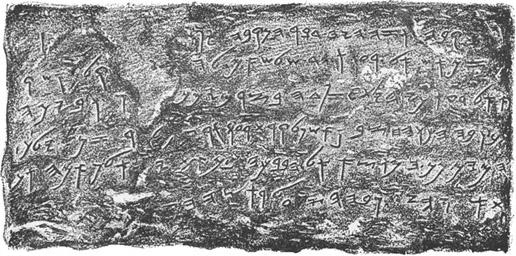
Hebrew storytelling is not only in the Hebrew Bible. The workmen who cut the Siloam tunnel left a short account in stone. It is unpointed and its spelling is older, but its style is familiar. It tells how the two crews, digging toward each other from opposite ends, heard each other: while there were still three cubits to cut, "the voice of a man calling to his fellow" was heard. In square letters, unpointed as on the stone, that phrase is קל אש קרא אל רעו. Compare אִישׁ אֶל־רֵעֵהוּ "each to his fellow" in Jonah 1:7. The account goes on with a time phrase, "and on the day of the breakthrough" (וביום הנקבה), and a string of clauses joined with ו, much like the stories in Genesis. The spelling is older and leaves out many vowel letters: קל for קוֹל, אש for אִישׁ.
Model dialogues
Dialogue 1: on the road (classical)
Every line in this dialogue is built from phrases that occur in Genesis or Samuel; the source is given in parentheses. Two travelers, A and B, meet. Practice it with a partner or by yourself, switching voices.
| Hebrew | Guide | English | |
|---|---|---|---|
| A | שָׁלוֹם לְךָ. | [sha-LOM le-KHA] | Peace to you. (the old man's greeting in Judges 19:20, there in the pausal form שָׁלוֹם לָךְ) |
| B | שָׁלוֹם. | [sha-LOM] | Peace. |
| A | לְמִי־אַתָּה וְאָנָה תֵלֵךְ? | [le-mi-a-TA ve-A-na te-LEKH] | Whose are you, and where are you going? (Genesis 32:18) |
| B | מִבֵּית לֶחֶם אָנֹכִי, וְאֶל־הָעִיר אָנֹכִי הוֹלֵךְ. | [mi-BET LE-khem a-no-KHI, ve-el-ha-IR a-no-KHI ho-LEKH] | I am from Bethlehem, and I am going to the city. (patterns of Genesis 29:4 and 28:20) |
| A | מַה־שְּׁמֶךָ? | [ma-she-ME-kha] | What is your name? (Genesis 32:28) |
| B | שְׁמִי דָּוִד. | [she-MI da-VID] | My name is David. (use your own name) |
| A | הֲיֵשׁ לְךָ אָח? | [ha-YESH le-KHA AKH] | Do you have a brother? (Genesis 43:7 has the plural, הֲיֵשׁ לָכֶם אָח) |
| B | יֶשׁ־לִי אָח קָטֹן. | [yesh-LI AKH ka-TON] | I have a younger brother. (compare Genesis 44:20) |
| A | הַעוֹד אָבִיךָ חָי? | [ha-OD a-VI-kha KHAI] | Is your father still alive? (Genesis 43:7 and 45:3) |
| B | עוֹדֶנּוּ חָי. | [o-DE-nu KHAI] | He is still alive. (Genesis 43:28) |
| A | הֲשָׁלוֹם לוֹ? | [ha-sha-LOM LO] | Is he well? (Genesis 29:6) |
| B | שָׁלוֹם. | [sha-LOM] | He is well. (Genesis 29:6) |
| A | לֵךְ לְשָׁלוֹם. | [LEKH le-sha-LOM] | Go in peace. (1 Samuel 20:42) |
Notes. לְמִי־אַתָּה "whose are you?" asks which household or master you belong to; in a modern conversation you would ask מִי אַתָּה. אָנֹכִי and אֲנִי both mean "I" (lesson 9); אָנֹכִי is common in Genesis and gone from modern speech. To a woman, the forms change: מַה־שְּׁמֵךְ "what is your name?", לְכִי לְשָׁלוֹם "go in peace" (1 Samuel 1:17).
Dialogue 2: in a classroom today (modern)
| Hebrew | Guide | English | Label | |
|---|---|---|---|---|
| A | שָׁלוֹם! מַה שְּׁלוֹמְךָ? | [sha-LOM! ma shlom-KHA] | Hello! How are you? | classical words; the question is a modern idiom |
| B | בְּסֵדֶר, תּוֹדָה. וְאַתָּה? | [be-SE-der, to-DA. ve-a-TA] | Fine, thanks. And you? | בְּסֵדֶר modern; תּוֹדָה new meaning |
| A | טוֹב מְאֹד. אֵיפֹה אַתָּה גָּר? | [TOV me-OD. EI-fo a-TA GAR] | Very well. Where do you live? | גָּר classical "sojourn," modern "live" |
| B | אֲנִי גָּר בְּעִיר קְטַנָּה. | [a-NI GAR be-IR ke-ta-NA] | I live in a small town. | all classical words |
| A | מָה אַתָּה לוֹמֵד? | [MA a-TA lo-MED] | What are you studying? | classical root, modern use of the participle |
| B | אֲנִי לוֹמֵד עִבְרִית. | [a-NI lo-MED iv-RIT] | I am studying Hebrew. | עִבְרִית is later Hebrew |
| A | לָמָּה? | [la-MA] | Why? | classical |
| B | כִּי אֲנִי רוֹצֶה לִקְרֹא אֶת הַתַּנַ״ךְ. | [ki a-NI ro-TSE lik-RO et ha-ta-NAKH] | Because I want to read the Tanakh. | רוֹצֶה "want" is a later meaning; תַּנַ״ךְ is an abbreviation |
| A | יָפֶה! לְהִתְרָאוֹת. | [ya-FE! le-hit-ra-OT] | Nice! See you. | יָפֶה "beautiful" used as "well done"; לְהִתְרָאוֹת modern |
| B | לְהִתְרָאוֹת! | [le-hit-ra-OT] | See you! | modern |
Look at how much is old: שָׁלוֹם, טוֹב מְאֹד (Genesis 1:31 has טוֹב מְאֹד), אֲנִי, עִיר, קְטַנָּה, לָמָּה, כִּי, לִקְרֹא. תַּנַ״ךְ is made from the initials of Torah, Neviim (Prophets) and Ketuvim (Writings). The gershayim mark ״ shows it is an abbreviation, the same mark you used for numbers in lesson 17. The words בְּסֵדֶר "in order, fine" and לְהִתְרָאוֹת "to see one another" are modern coinages made from old roots.
A guided composition
Now you write. The plan gives the content in English and the key Hebrew words. Write each sentence in Hebrew, in classical style, then read the whole story aloud. Do not look at the model answer in the writing drill until you have a full draft. A mistake you catch yourself teaches more than a correct sentence you copy.
Plan: "The Lost Lamb" (a made-up story)
- There was a certain man in Bethlehem, and his name was Eliav. (וַיְהִי אִישׁ אֶחָד; בְּבֵית לֶחֶם; וּשְׁמוֹ)
- He was a shepherd. (verbless clause: וְהוּא + רֹעֵה צֹאן, as in Genesis 4:2)
- He got up early in the morning and went out to the field with the flock. (וַיַּשְׁכֵּם; בַּבֹּקֶר; וַיֵּצֵא; הַשָּׂדֶה; עִם־הַצֹּאן)
- In the evening he looked, and one lamb was missing. (וַיְהִי בָעֶרֶב; וַיַּרְא וְהִנֵּה; שֶׂה אֶחָד; אֵינֶנּוּ "he is not there")
- He went to look for the lamb. (וַיֵּלֶךְ; לְבַקֵּשׁ)
- He found it under the tree. (וַיִּמְצָאֵהוּ; תַּחַת הָעֵץ)
- He brought the lamb back to the flock. (וַיָּשֶׁב, Hiphil; אֶל־הַצֹּאן)
- The man was very happy and said, "Blessed be the LORD." (וַיִּשְׂמַח; מְאֹד; וַיֹּאמֶר; בָּרוּךְ יְהוָה, as in Genesis 24:27)
Practicing out loud
- Shadow a verse. Read a verse aloud, then cover it and say it again from memory. Genesis 29:4 to 6 is short enough to learn whole in a week.
- Change one thing. Take a sentence you know and change the person: מֵאַיִן אַתֶּם "where are you (plural) from?" becomes מֵאַיִן אַתָּה to a man, מֵאַיִן אַתְּ to a woman. Say each one aloud.
- Answer the Hebrew way. When you practice yes/no questions, never answer with a bare "yes." Repeat the verb.
- Narrate your day. In the evening, tell your day in four or five waw-consecutive verbs: וָאָקוּם ... וָאֵלֵךְ ... "and I got up ... and I went ..." (וָאֵלֵךְ is in 1 Samuel 15:20). The first person forms are in lesson 12.
- Record yourself. Listen back for the stressed syllables. Most words are stressed on the last syllable; segolates like בֹּקֶר and עֶרֶב and short waw-consecutive forms like וַיֵּלֶךְ are stressed on the one before.
Practice
- Translate: טוֹב הָאִישׁ and הָאִישׁ הַטּוֹב. What makes the difference?
- Translate: וּלְלָבָן שְׁתֵּי בָנוֹת.
- Say in Hebrew: "I have a brother." "I have no brother."
- Turn into a yes/no question with הֲ: שָׁלוֹם לוֹ.
- Give the question word: (a) from where? (b) where to? (c) why? (two words) (d) how many?
- Translate: אֵי הֶבֶל אָחִיךָ (Genesis 4:9).
- Answer the Hebrew way: הֲתֵלְכִי עִם־הָאִישׁ הַזֶּה?
- Translate: וַיֹּאמֶר אֵלָיו מַה־שְּׁמֶךָ וַיֹּאמֶר יַעֲקֹב (Genesis 32:28).
- Which of these continues the main line of a story, and which steps outside it? (a) וַיֵּרֶד יָפוֹ (b) וְיוֹנָה יָרַד
- Write an opening sentence for a story about a woman named Hannah who lived in a small town.
- Modern: say "Where do you live?" to a man, and answer it.
- Which words in בְּסֵדֶר, תּוֹדָה are modern in this meaning?
Answers
- "The man is good" (a statement: the adjective has no article) and "the good man" (a phrase: the adjective copies the article).
- "Laban had two daughters," literally "and to Laban (were) two daughters" (Genesis 29:16).
- יֶשׁ־לִי אָח. אֵין לִי אָח.
- הֲשָׁלוֹם לוֹ "Is he well?" (Genesis 29:6)
- (a) מֵאַיִן (b) אָנָה or אָן (c) לָמָּה, מַדּוּעַ (d) כַּמָּה
- "Where is Abel your brother?"
- אֵלֵךְ "I will go" (Genesis 24:58).
- "He said to him, 'What is your name?' And he said, 'Jacob.'" The speakers are not named; context tells you who is talking.
- (a) is the main line: a waw-consecutive verb. (b) steps outside: וְ + noun + perfect, "but Jonah had gone down" (Jonah 1:5).
- For example: וַיְהִי אִשָּׁה אַחַת בְּעִיר קְטַנָּה וּשְׁמָהּ חַנָּה "There was a certain woman in a small town, and her name was Hannah." Note feminine אַחַת and וּשְׁמָהּ "and her name."
- אֵיפֹה אַתָּה גָּר? Answer: אֲנִי גָּר בְּ... plus your town.
- Both: בְּסֵדֶר "fine" is a modern idiom, and תּוֹדָה "thanks" is a classical word for thanksgiving used in a new way.
Writing drill
Copy. In print with vowel points, copy the question-word table's first column twice: מִי, מָה, אַיֵּה, אֵי, אֵיפֹה, מֵאַיִן, אָנָה, לָמָּה, מַדּוּעַ, אֵיךְ, מָתַי, כַּמָּה. Then copy Genesis 29:4 to 6 (in the Reading below) once in cursive without vowel points, the way Israelis write by hand: ויאמר להם יעקב אחי מאין אתם.
Compose. Write "The Lost Lamb" from the plan above, one sentence per line. Then add two lines of your own: someone at home asks the shepherd a question, and he answers.
Model answer
וַיְהִי אִישׁ אֶחָד בְּבֵית לֶחֶם וּשְׁמוֹ אֱלִיאָב.
וְהוּא רֹעֵה צֹאן.
וַיַּשְׁכֵּם בַּבֹּקֶר וַיֵּצֵא הַשָּׂדֶה עִם־הַצֹּאן.
וַיְהִי בָעֶרֶב וַיַּרְא וְהִנֵּה שֶׂה אֶחָד אֵינֶנּוּ.
וַיֵּלֶךְ לְבַקֵּשׁ אֶת־הַשֶּׂה.
וַיִּמְצָאֵהוּ תַּחַת הָעֵץ.
וַיָּשֶׁב אֶת־הַשֶּׂה אֶל־הַצֹּאן.
וַיִּשְׂמַח הָאִישׁ מְאֹד וַיֹּאמֶר בָּרוּךְ יְהוָה.
וַתֹּאמֶר אֵלָיו אִשְׁתּוֹ אֵיפֹה הָיִיתָ?
וַיֹּאמֶר אֶת־הַשֶּׂה אָנֹכִי מְבַקֵּשׁ וְהִנֵּה מְצָאתִיו.
"There was a certain man in Bethlehem, and his name was Eliav. He was a shepherd. He got up early in the morning and went out to the field with the flock. In the evening he looked, and there was one lamb missing. He went to look for the lamb. He found it under the tree. He brought the lamb back to the flock. The man was very happy and said, 'Blessed be the LORD.' His wife said to him, 'Where were you?' He said, 'I was looking for the lamb, and here, I have found it.'"
Notes. Every phrase is modeled on the classical texts: רֹעֵה צֹאן is the construct participle "shepherd of a flock" (Genesis 4:2); וַיַּשְׁכֵּם ... בַּבֹּקֶר as in Genesis 19:27; וַיֵּצֵא הַשָּׂדֶה uses the bare noun for "to the field," as in וְצֵא הַשָּׂדֶה (Genesis 27:3); וַיְהִי בָעֶרֶב as in Genesis 29:23; וַיַּרְא וְהִנֵּה as in Genesis 29:2; אֵינֶנּוּ "he is not (there)" as in Genesis 42:13; לְבַקֵּשׁ אֶת־ as in 1 Samuel 10:14; וַיִּמְצָאֵהוּ "and he found him" as in Genesis 37:15; תַּחַת הָעֵץ as in Genesis 18:4. The shepherd's answer copies Joseph's word order in Genesis 37:16, אֶת־אַחַי אָנֹכִי מְבַקֵּשׁ: object first for emphasis, then a participle. שֶׂה is masculine in grammar, so it is "him" (וַיִּמְצָאֵהוּ, מְצָאתִיו). The question mark is a modern help; the Masoretic text has none. If you wrote אֶל־הַשָּׂדֶה instead of הַשָּׂדֶה, that is also good Hebrew.
Speaking drill
Read aloud. Genesis 29:4 to 6, Jacob at the well. Read each line twice, once slowly and once at speaking speed.
- אַחַי מֵאַיִן אַתֶּם [a-KHAI me-A-yin a-TEM] "My brothers, where are you from?"
- מֵחָרָן אֲנָחְנוּ [me-kha-RAN a-NAKH-nu] "We are from Haran."
- הַיְדַעְתֶּם אֶת־לָבָן בֶּן־נָחוֹר [hay-da-TEM et-la-VAN ben-na-KHOR] "Do you know Laban son of Nahor?"
- יָדָעְנוּ [ya-DA-nu] "We know him."
- הֲשָׁלוֹם לוֹ [ha-sha-LOM LO] "Is he well?" שָׁלוֹם [sha-LOM] "He is well."
The pausal forms אֲנָחְנוּ and יָדָעְנוּ, at the end of their verse halves, are stressed on the next-to-last syllable.
Question and answer. Answer aloud in classical style, in full sentences. Sample answers follow each question.
- מַה־שְּׁמֶךָ? [ma-she-ME-kha] Sample: שְׁמִי ... [she-MI ...]
- מֵאַיִן אַתָּה? [me-A-yin a-TA] (to a woman מֵאַיִן אַתְּ [me-A-yin AT]) Sample: מֵאֶרֶץ רְחוֹקָה אָנֹכִי [me-E-rets re-kho-KA a-no-KHI] "I am from a distant land."
- הֲיֵשׁ לְךָ אָח? [ha-YESH le-KHA AKH] Sample: יֶשׁ־לִי אָח or אֵין לִי אָח.
- אָנָה תֵלֵךְ? [A-na te-LEKH] Sample: הַבַּיְתָה אֵלֵךְ [ha-BAI-ta e-LEKH] "I will go home." (the ending ָה means "toward")
- Tell the story of the lost lamb from memory, in eight sentences. It need not match the model word for word.
Reading
Two real conversations from the Westminster Leningrad Codex: Jacob meets the shepherds at a well in Haran, and Saul and his servant meet young women going out to draw water.
וַיֹּאמֶר לָהֶם יַעֲקֹב אַחַי מֵאַיִן אַתֶּם וַיֹּאמְרוּ מֵחָרָן אֲנָחְנוּ׃
Genesis 29:4, Westminster Leningrad Codex
וַיֹּאמֶר לָהֶם הַיְדַעְתֶּם אֶת־לָבָן בֶּן־נָחוֹר וַיֹּאמְרוּ יָדָעְנוּ׃
Genesis 29:5, Westminster Leningrad Codex
וַיֹּאמֶר לָהֶם הֲשָׁלוֹם לוֹ וַיֹּאמְרוּ שָׁלוֹם וְהִנֵּה רָחֵל בִּתּוֹ בָּאָה עִם־הַצֹּאן׃
Genesis 29:6, Westminster Leningrad Codex
הֵמָּה עֹלִים בְּמַעֲלֵה הָעִיר וְהֵמָּה מָצְאוּ נְעָרוֹת יֹצְאוֹת לִשְׁאֹב מָיִם וַיֹּאמְרוּ לָהֶן הֲיֵשׁ בָּזֶה הָרֹאֶה׃
1 Samuel 9:11, Westminster Leningrad Codex
וַתַּעֲנֶינָה אוֹתָם וַתֹּאמַרְנָה יֵּשׁ הִנֵּה לְפָנֶיךָ מַהֵר עַתָּה כִּי הַיּוֹם בָּא לָעִיר כִּי זֶבַח הַיּוֹם לָעָם בַּבָּמָה׃
1 Samuel 9:12, Westminster Leningrad Codex
Word help
- לָהֶם [la-HEM]: to them (לְ with the suffix "them," lesson 9).
- אַחַי [a-KHAI]: my brothers, a friendly way to address strangers.
- חָרָן [kha-RAN]: Haran, a city in upper Mesopotamia, Laban's home.
- הַיְדַעְתֶּם [hay-da-TEM]: question הַ + יְדַעְתֶּם "you (plural) know" (Qal perfect of יָדַע; the perfect of this verb is used for "know" in the present).
- בָּאָה [ba-A]: coming (Qal participle, feminine singular, of בּוֹא).
- הֵמָּה עֹלִים [HE-ma o-LIM]: they were going up (pronoun + participle: a background clause, lesson 19).
- בְּמַעֲלֵה הָעִיר [be-ma-a-LE ha-IR]: on the ascent to the town.
- נְעָרוֹת יֹצְאוֹת לִשְׁאֹב מָיִם: young women going out to draw water.
- הָרֹאֶה [ha-ro-E]: the seer, an older word for a prophet (1 Samuel 9:9 explains it).
- וַתַּעֲנֶינָה ... וַתֹּאמַרְנָה: and they (feminine plural) answered ... and said. The feminine plural waw-consecutive ends in ְנָה.
- יֵּשׁ [YESH]: "there is," used alone as the answer "yes, he is." The dagesh in the yod is a Masoretic detail after the previous word; read it as an ordinary y.
- מַהֵר עַתָּה [ma-HER a-TA]: hurry now (Piel imperative).
- זֶבַח [ZE-vakh]: a sacrifice, a sacrificial meal; בַּבָּמָה [ba-ba-MA] "at the high place."
Notes. In Genesis 29 Jacob asks three questions with three different tools: a question word (מֵאַיִן), הַ on a verb, and הֲ on a verbless clause. The shepherds answer each one by repeating the key word. Then the narrator breaks the chain with וְהִנֵּה and a participle, so that we see Rachel arrive through Jacob's eyes. In 1 Samuel 9 the young women answer the question הֲיֵשׁ with the same word, יֵּשׁ, and then keep talking, the way people really do.
Translation
Genesis 29:4 Jacob said to them, "My brothers, where are you from?" They said, "We are from Haran." 5 He said to them, "Do you know Laban son of Nahor?" They said, "We know him." 6 He said to them, "Is he well?" They said, "He is well. And look, here is Rachel his daughter coming with the sheep."
1 Samuel 9:11 As they were going up the ascent to the town, they met young women coming out to draw water, and they said to them, "Is the seer here?" 12 They answered them and said, "He is. Look, he is just ahead of you. Hurry now, because he has come to the town today, because the people have a sacrifice today at the high place."
Checklist
- I can describe a person or place in five short Hebrew clauses, using a verbless clause, יֵשׁ or אֵין, and לְ of possession.
- I can ask yes/no questions with הֲ and הֲלֹא and answer them by repeating the key word.
- I can ask who, what, where, from where, where to, why, how, when and how many.
- I can open a story with וַיְהִי, move it with waw-consecutive verbs, and bring in speech with וַיֹּאמֶר.
- I can tell which phrases in a modern conversation are classical, which are old words with new meanings, and which are new.
- I have written "The Lost Lamb" and read it aloud.
Updated October 28, 2026.
Check yourself
1. In Genesis 29:6 Jacob asks the shepherds about Laban: הֲשָׁלוֹם לוֹ. What does he ask?
הֲ marks a yes/no question, and שָׁלוֹם לוֹ is 'peace (is) to him,' that is, 'he is well.' So: 'Is he well?' The shepherds answer with one word, שָׁלוֹם, 'well.'
2. Which question word asks 'from where?'
מֵאַיִן is מִן 'from' plus אַיִן 'where.' Jacob asks it in Genesis 29:4: אַחַי מֵאַיִן אַתֶּם 'My brothers, where are you from?' אָנָה is 'to where,' אַיֵּה 'where (is)?', מָתַי 'when?'
3. Rebekah's family asks her הֲתֵלְכִי עִם־הָאִישׁ הַזֶּה, 'Will you go with this man?' How does she say yes (Genesis 24:58)?
Classical Hebrew usually answers yes by repeating the verb in the right person: 'Will you go?' 'I will go,' אֵלֵךְ. The modern word for yes, כֵּן, means 'so, thus' in the classical texts.
4. Which verb form normally carries the main line of events in a classical story?
The waw-consecutive imperfect (wayyiqtol), such as וַיֵּלֶךְ 'and he went,' moves the story from one event to the next (lesson 12; Gesenius, section 111).
5. What is the job of וַיְהִי at the start of Ruth 1:1, וַיְהִי בִּימֵי שְׁפֹט הַשֹּׁפְטִים?
וַיְהִי 'and it was, and it happened' often introduces a time phrase that sets the scene before the main events start.
6. In modern Israeli Hebrew תּוֹדָה means 'thank you.' What does the word mean in the classical texts?
In the Psalms and Leviticus תּוֹדָה is thanksgiving or a thank offering. The everyday 'thank you' is a modern use. Many words in a modern dialogue are classical words with new jobs.
Terms in this lesson
- Verbless clause
- A clause with no finite verb, where 'is' or 'are' is understood: טוֹב הָאִישׁ 'the man is good.' Also called a nominal clause (Gesenius, section 141).
- Predicate adjective
- An adjective that says something about its noun ('the man is good'). In Hebrew it has no article and usually comes first: טוֹב הָאִישׁ.
- Interrogative הֲ
- The prefix that turns a statement into a yes/no question: הֲשָׁלוֹם לוֹ 'is he well?' It is pointed הֲ, הַ or הֶ depending on the next sound.
- Narrative chain
- A run of waw-consecutive imperfects (וַיֵּלֶךְ ... וַיַּרְא ... וַיֹּאמֶר) that tells events in order.
- Direct speech
- The exact words of a speaker, introduced in classical Hebrew by וַיֹּאמֶר or by לֵאמֹר 'saying.' Hebrew has no quotation marks.
- Composition
- Writing your own Hebrew, as opposed to translating out of it. The quickest way to find out what you really know.
Sources
- Gesenius' Hebrew Grammar, ed. Kautzsch, trans. Cowley (1910), sections 37 (interrogative pronouns), 100 (interrogative ה), 111 (waw-consecutive imperfect), 141 (noun clauses) and 150 (questions) checked 2026-10
- Brown, Driver and Briggs, Hebrew and English Lexicon (1906), entries for מִי, מָה, אַיֵּה, אֵיפֹה, לָמָּה and תּוֹדָה checked 2026-10
- Open Scriptures Hebrew Bible (WLC with morphology), used to check every form in the dialogues and the model story checked 2026-10
- Westminster Leningrad Codex / UXLC checked 2026-10
- Sefaria, Genesis 29 (Jacob at the well) checked 2026-10
- Wikimedia Commons, Siloam Inscription (public domain) checked 2026-10
