Lesson 2 of 22 · about 50 minutes
Vowel Points, Shewa and Dagesh
You'll be able to
- Name and pronounce every Tiberian vowel sign, full and reduced, and tell qamets from qamets hatuf
- Recognize the vowel letters ו י ה (and quiet א) and read full and short spellings of the same word
- Decide whether a shewa is vocal or silent using four rules
- Tell dagesh lene from dagesh forte, and a mappiq from both
- Read shureq, holem-vav and a consonant vav correctly, and place the shin and sin dots
- Explain how the divine name יְהוָה is written and why it is read aloud as Adonai
In lesson 1 you learned 22 letters, all consonants. For more than a thousand years Hebrew was written with those letters alone, and readers supplied the vowels from memory and from the sense of the sentence. The Dead Sea Scrolls have no vowel signs at all, and neither does a Torah scroll read in a synagogue today. The small dots and dashes you see in a printed Hebrew Bible were added by scholars called the Masoretes in the early Middle Ages. This lesson teaches all of them.
It is a long lesson, because the marks are many and small. Do not try to memorize it in one sitting. Read it through once, then work through the tables with a pencil, and come back to the shewa and dagesh rules as often as you need. Every lesson after this one uses them.
The Masoretes and the Tiberian system
The word Masorete comes from מָסֹרֶת, the "tradition" handed down. The Masoretes were families of Jewish scholars, working between about the 7th and 10th centuries AD, whose task was to preserve the text of Scripture and the traditional way of reading it aloud. They did not change the consonants. Instead they added three kinds of signs around them:
- Vowel points (niqqud, "pointing"), which show the vowels.
- Accents (cantillation marks), which show which syllable is stressed, how the words group into phrases, and the melody for chanting.
- Other reading marks, such as the dagesh, the mappiq, the maqaf and the meteg.
They also wrote thousands of notes in the margins, counting words and flagging unusual spellings. Several systems of pointing grew up. In Babylonia scribes wrote their vowel signs above the letters, and there was an older Palestinian system as well. The one that won out was the system of the Masoretes of Tiberias, a city on the Sea of Galilee, and above all of the ben Asher family. Aaron ben Moses ben Asher pointed the Aleppo Codex around 930 AD. The Leningrad Codex, copied in 1008 AD and the basis of the text used in this course, follows the ben Asher tradition closely (Gesenius, section 7).
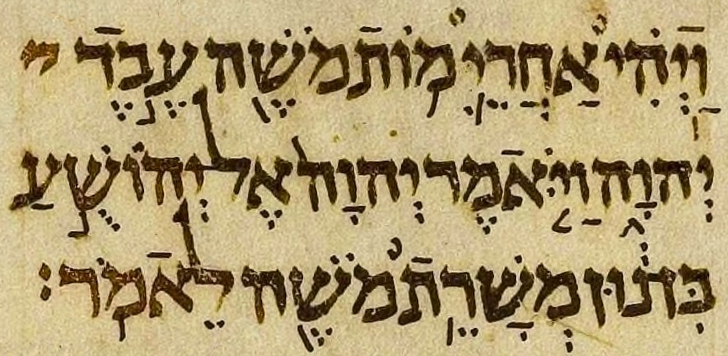
Two facts are worth holding onto. First, the Masoretes recorded a reading tradition that was already old. They were writing down how the text was read in the synagogue, not inventing new vowels. Second, their signs record the vowel quality they heard (a, e, i, o, u and their shades) more exactly than vowel length. The idea of "long" and "short" vowels in grammar books, including Gesenius, is partly a scholarly analysis laid on top of the signs (Gesenius, sections 8 and 9). It is still a useful way to learn, and this lesson uses it.
Where the points go
Most vowel points sit under the letter. A vowel is said after the consonant it is written with: מָ is ma, not am. Three marks sit elsewhere:
- The holem dot sits above the letter, at its upper left: מֹ mo.
- The shureq is a dot inside a ו: מוּ mu.
- The holem-vav is a dot on top of a ו: מוֹ mo.
The dot of the dagesh goes inside the letter, and the shin and sin dots go over the right or left arm of ש. In printed Hebrew a letter can carry three or four marks at once, as in שָּׁ in הַשָּׁמַיִם: the letter ש, the shin dot, a dagesh and a qamets.
The vowel signs
Here is every vowel sign, shown on the letter מ so that each one is easy to see. The chart below the table groups them into the a, e, i, o and u families that Gesenius uses (section 8). The sound column gives the modern Israeli sound this course speaks with. The Tiberian column gives the older reading where it differs.
| Sign on מ | Name | Say it | Tiberian | Example |
|---|---|---|---|---|
| מָ | qamets (long) | a, as in "father" | an open o-like a, as in British "law" | דָּבָר [da-VAR] word |
| מַ | patah | a | a | בַּת [BAT] daughter |
| מֵ | tsere | e, as in "they" but without the glide | a close e | לֵב [LEV] heart |
| מֵי | tsere with yod | e (Israelis often say ei) | a close e | בֵּית [BET] house of |
| מֶ | segol | e, as in "met" | an open e | מֶלֶךְ [ME-lekh] king |
| מִ | hireq | i, as in "machine" (shorter) | i | אִם [IM] if |
| מִי | hireq with yod | i, as in "machine" | i | מִי [MI] who? |
| מֹ | holem | o, as in "more" | a close o | לֹא [LO] not |
| מוֹ | holem with vav | o | a close o | טוֹב [TOV] good |
| מֻ | qibbuts | u, as in "rule" | u | שֻׁלְחָן [shul-KHAN] table |
| מוּ | shureq | u | u | סוּס [SUS] horse |
| מָ | qamets hatuf (short) | o | the same open vowel as qamets | חָכְמָה [khokh-MA] wisdom |
| מְ | shewa | a quick e, or nothing | a very short a-like vowel, or nothing | בְּנֵי [be-NE] sons of |
| אֲ | hateph patah | a, quick | a very short a | אֲנִי [a-NI] I |
| אֱ | hateph segol | e, quick | a very short e | אֱמֶת [e-MET] truth |
| אֳ | hateph qamets | o, quick | a very short o | אֳנִיָּה [o-ni-YA] ship (Jonah 1:5, with a prefix) |
Long, short and reduced vowels
Traditional grammars sort the vowels into three lengths (Gesenius, sections 8 to 10). You will need the categories later, because many spelling changes depend on them.
| Family | Long | Short | Reduced |
|---|---|---|---|
| a | qamets מָ | patah מַ | hateph patah אֲ |
| e | tsere מֵ, מֵי | segol מֶ | hateph segol אֱ; vocal shewa מְ |
| i | hireq-yod מִי | hireq מִ | (none) |
| o | holem מֹ, holem-vav מוֹ | qamets hatuf מָ | hateph qamets אֳ |
| u | shureq מוּ | qibbuts מֻ | (none) |
The table is a simplification. Hireq without yod can be long, and qibbuts often stands where shureq would be expected, simply because the scribe chose a short spelling. In modern Israeli speech none of this length is heard: patah and qamets both sound a, tsere and segol both sound e. That is one reason this course gives the classical background. When a later lesson says "the qamets shortens to patah" or "the tsere reduces to shewa," the length categories explain why.
Qamets and qamets hatuf
One sign, ָ, does two jobs. Usually it is qamets, said a. In a closed syllable that does not carry the stress, it is qamets hatuf, "snatched qamets," said o (Gesenius, section 9). The Tiberian Masoretes heard one open vowel in both places, something like the vowel of British "law," so they wrote one sign. Modern Israeli pronunciation splits them into a and o, and you have to work out which is which.
The commonest qamets hatuf words are these:
- כָּל־ [kol] "all, every" when it is joined to the next word by a maqaf, as in כָּל־לֵב. The maqaf takes the stress away and the syllable is closed, so the vowel is o. The same word standing alone is spelled כֹּל with holem.
- חָכְמָה [khokh-MA] wisdom. The first syllable חָכְ is closed (the shewa is silent) and unstressed, so it is o.
- Many verb forms you will meet in later lessons, such as the short forms of verbs with a qamets in a closed syllable.
Some modern editions print a slightly different sign for qamets hatuf to help readers. The Leningrad Codex does not: it has one sign for both, and the reading depends on the syllable. Lesson 4 gives you the syllable rules to decide.
Vowel letters: matres lectionis
Long before the Masoretes, scribes had found a partial answer to the missing vowels. They borrowed four consonant letters to hint at vowels: ו, י, ה and, less often, א. Grammarians call them by the Latin name matres lectionis, "mothers of reading" (Gesenius, section 7).
| Letter | Shows | Combined with | Examples |
|---|---|---|---|
| ו | o or u | holem-vav וֹ; shureq וּ | קוֹל [KOL] voice; רוּחַ [RU-akh] wind |
| י | i or e | hireq-yod ִי; tsere-yod ֵי; segol-yod ֶי | מִי [MI] who; בֵּית [BET] house of; אֵלֶיךָ [e-LE-kha] to you |
| ה | a, e or o at the end of a word | qamets, segol, tsere or holem before it | תּוֹרָה [to-RA] teaching; שָׂדֶה [sa-DE] field; פֹּה [PO] here |
| א | a vowel, with the א itself silent | any vowel before it | רֹאשׁ [ROSH] head; בָּרָא [ba-RA] he created |
A vowel letter at the end of a word is silent as a consonant. The ה of תּוֹרָה is not said; it only shows that the word ends in a vowel. The א of בָּרָא was once a consonant, a glottal stop, but it fell silent long before the Masoretes, and they left it unpointed. A letter that has gone quiet this way is called quiescent.
Full and short spellings
Scribes did not use vowel letters consistently. The same word can be spelled with a vowel letter ("full" spelling, Latin plene) or without one ("defective" spelling). The pronunciation is the same. The Leningrad Codex has both of these, for example:
| Full | Short | Meaning | Where |
|---|---|---|---|
| קוֹל | קֹל | voice | קוֹל Genesis 3:8; וְקֹל Exodus 19:16 |
| דָּוִיד | דָּוִד | David | דָּוִיד Psalm 122:5; דָּוִד Ruth 4:22 |
When you look up a word in a dictionary, or search for it in a text, try both spellings. Unpointed modern Hebrew uses many more vowel letters than the classical texts do, because without points readers need every hint they can get.
Shewa: vocal and silent
The shewa ְ is two dots stacked under a letter. It has two jobs (Gesenius, section 10):
- Vocal shewa is a very short vowel. In the Tiberian reading it was usually a short a-like murmur. In this course's guides it is written e and said quickly: בְּנֵי [be-NE].
- Silent shewa means "no vowel here." It marks the end of a syllable and is not pronounced: מִשְׁפָּט [mish-PAT].
The two look identical, so you decide from the word. The rules in this table settle nearly every case.
| Rule | Shewa is | Example |
|---|---|---|
| 1. Under the first letter of a word | vocal | בְּרֵאשִׁית [be-re-SHIT]; בְּנֵי [be-NE] |
| 2. Under a letter with dagesh forte (a doubled letter) | vocal | הַמְּאֹרֹת [ham-me-o-ROT] the lights (Genesis 1:16) |
| 3. Two shewas side by side in the middle of a word: the first is silent, the second vocal | first silent, second vocal | יִשְׁמְרוּ [yish-me-RU] they will keep |
| 4. After a long vowel, in an open syllable | vocal | שֹׁמְרִים [sho-me-RIM] guards, those keeping |
| 5. After a short vowel, closing a syllable | silent | מִשְׁפָּט [mish-PAT] justice; יִשְׂרָאֵל [yis-ra-EL] Israel |
| 6. At the end of a word | silent | מֶלֶךְ [ME-lekh] king; אַתְּ [AT] you (woman) |
A shewa at the end of a word is written only in a few places: in final kaf ךְ, to keep it from looking like final nun, and where a word ends in two consonants, as in אַתְּ "you (feminine)" or וַיֵּשְׁתְּ [va-YESHT] "and he drank" (Genesis 9:21), which has two silent shewas in a row.
Modern Israelis drop many vocal shewas in ordinary speech: בְּנֵי often sounds like "bnei." This course writes vocal shewa as e in its guides so that you hear the classical shape of the word, and you can let it get very short. Never stress a vocal shewa. It is the lightest sound in the language.
Some grammars speak of a third kind, a "medium" shewa, for a few cases between the two. Earlier editions of Gesenius used the term, but the 1910 edition drops it and treats those syllables as closed (Gesenius, section 10). You do not need it to read. If a later lesson meets one of those cases, it will say so.
Hateph vowels
The four guttural letters א ה ח ע do not like a bare vocal shewa. Where another letter would have one, a guttural usually takes a hateph ("hurried") vowel instead: shewa combined with patah, segol or qamets (Gesenius, sections 10 and 22).
| Sign | Name | Say it | Example |
|---|---|---|---|
| ֲ | hateph patah | a, quick | אֲנִי [a-NI] I; אֲדֹנָי [a-do-NAI] my Lord |
| ֱ | hateph segol | e, quick | אֱלֹהִים [e-lo-HIM] God; אֱמֶת [e-MET] truth |
| ֳ | hateph qamets | o, quick | חֳלִי [kho-LI] sickness; אֳנִיָּה [o-ni-YA] ship |
Compare בְּנֵי [be-NE] with אֲנִי [a-NI]. Both words start with a reduced vowel. The ב takes plain shewa; the א, a guttural, takes hateph patah. A hateph vowel is always vocal, never silent, and like vocal shewa it is never stressed.
Dagesh: the dot inside a letter
A dot inside a letter is called a dagesh. There are two kinds, and they look exactly alike (Gesenius, sections 12 and 13).
Dagesh lene: hard sounds in ב ג ד כ פ ת
The six letters ב ג ד כ פ ת, the begadkefat letters, each had a hard sound and a soft sound in the Tiberian reading. A dagesh lene (Latin for "weak") marks the hard sound. The soft sound comes when a vowel is said just before the letter. So the dagesh lene appears in two places (Gesenius, section 21):
- At the start of a word, as long as the word before it does not end in a vowel closely joined to it: בְּרֵאשִׁית, בָּרָא, דָּבָר, תּוֹרָה.
- After a closed syllable, that is, after a silent shewa: מִדְבָּר, מִשְׁפָּט.
Genesis 1:2 shows the rule working across words. The phrase עַל־פְּנֵי תְהוֹם "over the face of the deep" has a dagesh in the פּ of פְּנֵי, because עַל ends in a consonant. But the ת of תְהוֹם has no dagesh, even though it is the first letter of a word, because פְּנֵי ends in a vowel and the two words are read closely together. In the same verse וָבֹהוּ has a soft ב after the vowel of the prefix "and": [va-VO-hu].
In modern Hebrew only three of the six letters still change sound: בּ b and ב v, כּ k and כ kh, פּ p and פ f. In the other three the dagesh lene makes no difference to a modern speaker: ג, ד and ת sound g, d and t either way. Lesson 3 gives the Tiberian soft sounds.
Dagesh forte: doubling
A dagesh forte (Latin for "strong") doubles the letter. The letter is said twice, once closing one syllable and once opening the next: אִשָּׁה is ish-sha, "woman." Any letter except the gutturals א ה ח ע and the letter ר can take it (Gesenius, sections 12 and 22). A begadkefat letter with dagesh forte is both doubled and hard: חַנָּה [khan-NA] (Hannah) doubles נ, and שַׁבָּת [shab-BAT] doubles a hard b.
Dagesh forte often marks a letter that has swallowed another one. The article הַ "the" doubles the next letter: הַשָּׁמַיִם [hash-sha-MA-yim] "the heavens," הַמָּיִם [ham-MA-yim] "the waters." Lesson 7 covers the article. Modern Israelis do not pronounce double consonants, so in speech הַשָּׁמַיִם sounds ha-sha-MA-yim. The doubling still matters for grammar and for the dagesh lene rule.
Telling them apart
| Where is the dot? | It is | Example |
|---|---|---|
| In ב ג ד כ פ ת at the start of a word or after a silent shewa | dagesh lene | בְּנֵי, מִדְבָּר |
| In any letter right after a full vowel | dagesh forte | הַשָּׁמַיִם, שַׁבָּת, הַגְּדֹלִים |
| In any letter that is not begadkefat, in the middle of a word | dagesh forte | אִשָּׁה, חַנָּה |
| In a final ה | mappiq (see below) | לָהּ |
| In ו with no vowel of its own | shureq, the vowel u (see below) | סוּס |
The key question is always: did a full vowel come right before this letter? A begadkefat letter with a dot after a vowel must be doubled, because a single one would be soft there. The גּ in הַגְּדֹלִים "the great ones" (Genesis 1:16) comes right after the patah of the article, so its dot is dagesh forte, and the word is said hag-ge-do-LIM.
Mappiq
A final ה is usually a silent vowel letter. A dot inside it, the mappiq, says "this ה is a real consonant; say it" (Gesenius, section 14). It is the commonest way to recognize the suffix "her":
- לָהּ [LAH] "to her," against תּוֹרָה with a silent ה.
- אַרְצָהּ [ar-TSAH] "her land" (Deuteronomy 29:22).
- כַּפָּהּ [ka-PAH] "her palm" (Proverbs 31:20), which you saw in lesson 1.
Modern Israelis rarely pronounce the h of a mappiq clearly, but in careful reading it is said. The opposite mark, the rafe, a small line over a letter, appears in some manuscripts to show that a letter has no dagesh or that a ה is silent. Printed texts seldom show it.
Shin and sin
The letter ש carries a dot over its right arm for shin, sh, or over its left arm for sin, s.
- שָׁלוֹם [sha-LOM] peace; שָׁמַיִם [sha-MA-yim] heavens.
- שָׂדֶה [sa-DE] field; יִשְׂרָאֵל [yis-ra-EL] Israel.
Printers often save space by letting the dot do two jobs. In מֹשֶׁה [mo-SHE] "Moses," the holem of מ and the shin dot of ש sit next to each other, and in some fonts and manuscripts they merge into one dot. In a word like שֹׁמֵר [sho-MER] "one who keeps," the shin dot and the holem sit together on the right arm of ש. If you see only one dot over a ש, ask whether a holem is hiding there too.
Vav: consonant or vowel
Because ו is both a consonant and a vowel letter, it can look confusing at first. There are four cases.
| Form | What it is | Sound | Example |
|---|---|---|---|
| וּ | shureq: ו with a dot inside and no vowel of its own | u | סוּס [SUS] horse |
| וֹ | holem-vav: ו with a dot on top, after a consonant | o | טוֹב [TOV] good |
| וָ | consonant ו with its own vowel | v (classical w) plus the vowel | וָבֹהוּ [va-VO-hu] and void |
| וָּ | consonant ו with dagesh forte and its own vowel | doubled v (classical ww) plus the vowel | צִוָּה [tsi-VA] he commanded |
The test for a dotted ו is simple. If the ו has a vowel of its own, under or after it, it is a consonant and the dot is a dagesh. If it has no vowel of its own, the dot makes it the vowel u.
One more detail. When a consonant ו is followed by the vowel o, the Leningrad Codex writes the holem dot a little to the left over the ו, and computer texts encode it as a different mark: עָוֺן [a-VON] "iniquity," מִצְוֺת [mits-VOT] "commandments of." Here ו is the consonant v and the dot is its vowel o. In many fonts this looks almost the same as holem-vav, so let the word guide you.
At the start of a word, the prefix "and," normally וְ, becomes וּ before the letters ב מ פ and before a letter with shewa: וּמִשְׁפָּט [u-mish-PAT] "and justice" (Genesis 18:19). That shureq is a whole syllable by itself, the only syllable in Hebrew that starts with a vowel (Gesenius, section 26). Lesson 7 teaches the rule.
Marks this course takes away
A page of the Leningrad Codex has more marks than this course shows you. Here is the first verse of Genesis with all its accent marks, then as this course prints it:
בְּרֵאשִׁ֖ית בָּרָ֣א אֱלֹהִ֑ים אֵ֥ת הַשָּׁמַ֖יִם וְאֵ֥ת הָאָֽרֶץ׃
Genesis 1:1 with cantillation marks, Westminster Leningrad Codex
בְּרֵאשִׁית בָּרָא אֱלֹהִים אֵת הַשָּׁמַיִם וְאֵת הָאָרֶץ׃
Genesis 1:1, Westminster Leningrad Codex (as printed in this course)
The extra marks are the accents, or cantillation marks (Hebrew טְעָמִים, "tastes"). Each word normally has one. It sits on the stressed syllable (with a few exceptions), it shows whether the word is joined to the next word or divided from it, and it tells a synagogue reader which musical phrase to chant (Gesenius, section 15). The small upright stroke under the א of הָאָרֶץ in the first line is the silluq, the accent on the stressed syllable of the last word of every verse. The same stroke elsewhere in a word is the meteg (Gesenius, section 16), which marks a secondary stress or a slight lengthening of the vowel beside it.
The accents are wonderful to learn, and they settle questions of stress and phrasing. But two dozen extra marks on top of the vowels are too much for a beginner. This course removes them, as most beginners' books do, and keeps the vowels, dagesh, mappiq, shin and sin dots, maqaf and sof pasuq. Lesson 4 shows how to find the stress without the accents, and lesson 20 points you to editions that print everything.
The divine name
One word in the Hebrew Bible is written one way and read another every time. It is the personal name of the God of Israel, four consonants י ה ו ה, printed in the Leningrad Codex as יְהוָה.
By long Jewish practice, going back before the Masoretes, the name is not pronounced as written. When reading Scripture aloud, Jews say אֲדֹנָי Adonai, "my Lord," in its place. The Masoretes kept the four consonants exactly as they found them and wrote vowel points with them that point to the reading, not to the letters. Gesenius (section 17) lists the name among the words that are always read differently from the way they are written, a "perpetual qere." The vowels of יְהוָה in the Leningrad Codex are shewa and qamets. A form with a holem, יְהֹוָה, which matches the vowels of אֲדֹנָי more closely, appears in some manuscripts and many printed Bibles.
When the name follows the word אֲדֹנָי itself, saying Adonai twice would sound wrong, so the Masoretes pointed the name differently, יֱהוִה, and it is read Elohim, "God." Genesis 15:2 has it:
וַיֹּאמֶר אַבְרָם אֲדֹנָי יֱהוִה מַה־תִּתֶּן־לִי
Genesis 15:2 (opening words), Westminster Leningrad Codex
[va-YO-mer av-RAM a-do-NAI e-lo-HIM ma-ti-ten-LI] "And Abram said, 'Lord GOD, what will you give me?'"
This course follows Jewish practice. It prints the name as it stands in the Leningrad Codex and guides it [a-do-NAI] wherever it appears (or [e-lo-HIM] in the rare form יֱהוִה). Many English Bibles show the same custom by printing "the LORD" in small capitals for this name and "GOD" in small capitals for יֱהוִה. The English form "Jehovah" came from reading the four consonants with the vowels meant for Adonai, a mixture no ancient reader ever said. Outside prayer and reading, many observant Jews avoid even Adonai and say הַשֵּׁם HaShem, "the Name."
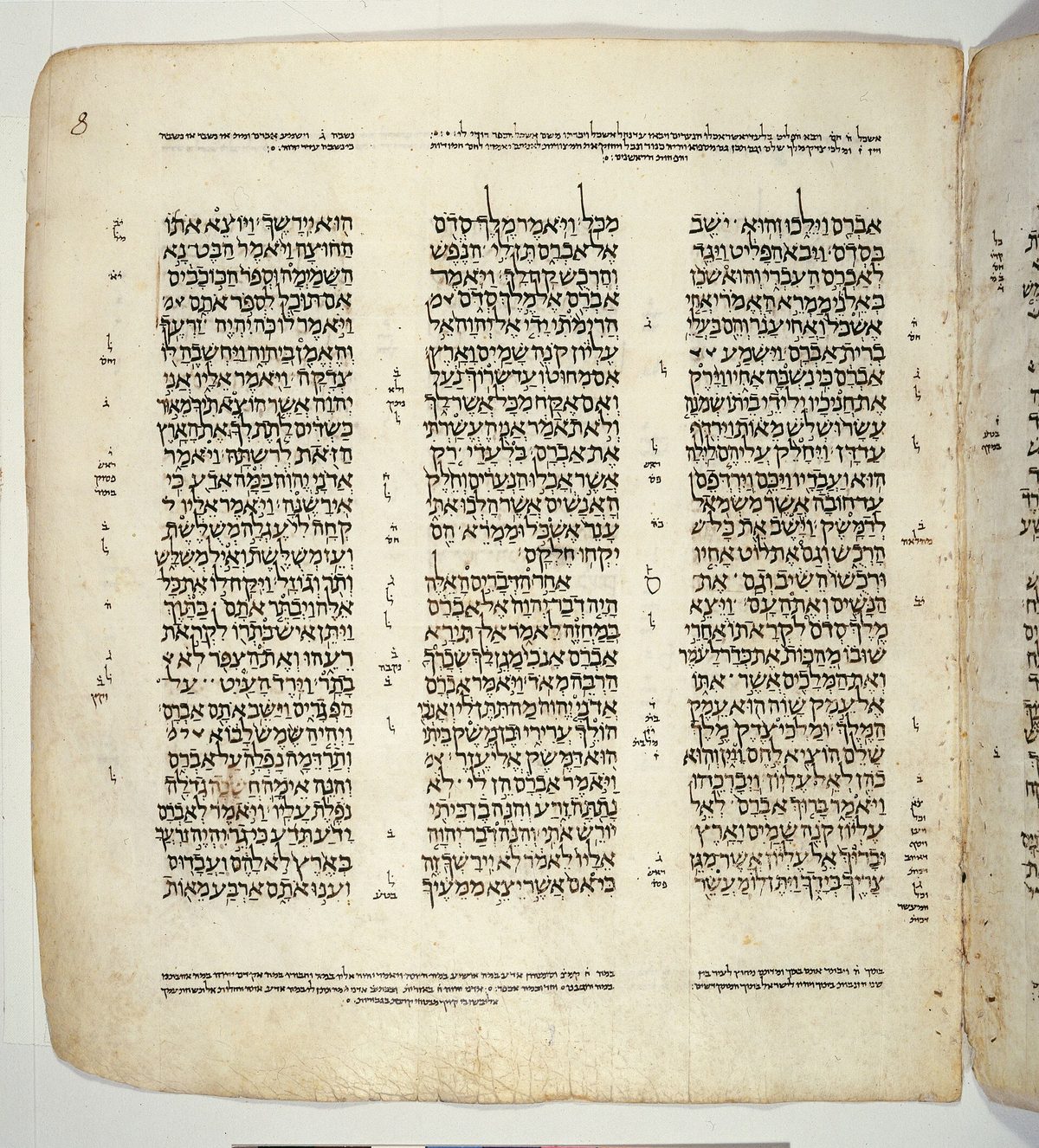
Putting it together
Example
Read הַשָּׁמַיִם mark by mark, from right to left:
- הַ: ה with patah, ha.
- שָּׁ: ש with the shin dot on the right (sh), a dagesh forte (after the vowel of הַ, so it doubles: the first sh closes the syllable hash-), and qamets: sha.
- מַ: מ with patah, ma. This syllable is stressed.
- יִם: י with hireq (yi), then final mem.
Result: [hash-sha-MA-yim], said in modern Hebrew [ha-sha-MA-yim]. "The heavens," Genesis 1:1.
Example
Read יִשְׂרָאֵל: יִ yi; שְׂ sin with silent shewa (after the short hireq, closing the syllable yis-); רָ ra; אֵל el, with the א silent before its vowel. Result: [yis-ra-EL].
Practice
- Name each vowel sign and give its sound: בַּ, בֵּ, בֶּ, בִּי, בֹּ, בֻּ, בּוּ.
- Which three vowel signs are written somewhere other than under the letter?
- Vocal or silent? The shewa in: (a) בְּנֵי (b) מִדְבָּר (c) the shewa under מ in יִשְׁמְרוּ (d) מֶלֶךְ (e) הַמְּאֹרֹת.
- Lene or forte? The dagesh in: (a) בָּרָא (b) שַׁבָּת (c) מִשְׁפָּט (d) אִשָּׁה (e) the כּ of כֻּלָּם.
- Why is there no dagesh in the ת of תְהוֹם in Genesis 1:2?
- Read aloud and say whether the qamets is a or o: דָּבָר, חָכְמָה, כָּל־לֵב.
- What is the dot in each ו? רוּחַ, קוֹל, צִוָּה.
- Which word ends in a consonant h, and which in a silent ה? לָהּ, תּוֹרָה.
- Shin or sin? שָׁלוֹם, שָׂדֶה, יִשְׂרָאֵל, נֶפֶשׁ.
- Give the short spelling of קוֹל and the full spelling of דָּוִד.
- Why does אֱלֹהִים begin with hateph segol rather than a plain shewa?
- How do you read יְהוָה aloud in this course, and how do you read יֱהוִה?
Answers
- patah a [ba]; tsere e [be]; segol e [be]; hireq-yod i [bi]; holem o [bo]; qibbuts u [bu]; shureq u [bu]. (Each ב has dagesh lene because it stands alone, as at the start of a word.)
- Holem (above, at the upper left), shureq (inside ו) and holem-vav (on top of ו).
- (a) vocal, first letter of the word (b) silent, after a short vowel; the dagesh in בּ confirms it (c) vocal, the second of two shewas (d) silent, end of word (e) vocal, under a letter with dagesh forte.
- (a) lene, start of word (b) forte, after the patah (c) lene, after silent shewa (d) forte, ש is not begadkefat and follows a vowel (e) lene, start of word. (The ל in כֻּלָּם has dagesh forte.)
- Because the word before it, פְּנֵי, ends in a vowel and is read closely with it, so ת follows a vowel and stays soft.
- [da-VAR] a; [khokh-MA] o (closed, unstressed syllable); [kol-LEV] o (the maqaf removes the stress from כָּל).
- Shureq (the vowel u); holem-vav (the vowel o); dagesh forte in a consonant ו (the vav has its own vowel qamets).
- לָהּ has a mappiq, so its ה is said: [LAH]. In תּוֹרָה the ה is silent.
- shin, sin, sin, shin.
- קֹל; דָּוִיד.
- א is a guttural. Gutturals take a hateph vowel where other letters would take vocal shewa.
- יְהוָה is read [a-do-NAI]; יֱהוִה, which follows אֲדֹנָי, is read [e-lo-HIM].
Writing drill
Copy. Write the vowel ladder on the letter מ three times, saying each syllable as you write it. Put the points neatly: under the letter, holem at the upper left, the dot of shureq inside the ו.
מָ מַ מֵ מֵי מֶ מִ מִי מֹ מוֹ מֻ מוּ מְ
Then the hateph vowels on the gutturals: אֲ אֱ אֳ חֲ חֱ חֳ עֲ.
Then copy these words with every mark: הַשָּׁמַיִם, מִשְׁפָּט, יִשְׂרָאֵל, חָכְמָה, לָהּ, אֱמֶת, שָׁלוֹם.
Compose. Take the name you wrote in lesson 1 and add the vowel points that match the way you say it. Use qamets or patah for a, segol or tsere for e, hireq for i, holem or holem-vav for o, shureq or qibbuts for u. Put a dagesh lene in a first letter that is one of ב כ פ if you want the hard sound. Then point the names Dana and Ben.
Model answer
דָּנָה בֶּן
Dana: ד with dagesh lene (start of word) and qamets, נ with qamets, silent ה at the end. Ben: ב with dagesh lene for the b sound, segol, final nun. A name like Lisa could be pointed לִיסָה. There is more than one correct answer; what matters is that a Hebrew reader would say your name the way you say it.
Speaking drill
Read aloud. Read the vowel ladder on ב with the hard sound, then on ב without dagesh with the soft sound, from right to left:
בָּ בַּ בֵּ בֶּ בִּי בֹּ בּוּ בָ בַ בֵ בֶ בִי בֹ בוּ
[ba ba be be bi bo bu] then [va va ve ve vi vo vu].
Now read these words, paying attention to vocal and silent shewa: בְּנֵי [be-NE], מִשְׁפָּט [mish-PAT], יִשְׁמְרוּ [yish-me-RU], מִדְבָּר [mid-BAR], שֹׁמְרִים [sho-me-RIM].
Answer aloud. Point at a vowel sign in the chart and ask מַה־זֶּה [ma-ZE] "What is this?" Answer with the English name of the sign and the syllable it makes on מ.
- (pointing at מָ) מַה־זֶּה Answer: qamets, [ma].
- (pointing at מֹ) מַה־זֶּה Answer: holem, [mo].
- (pointing at מְ) מַה־זֶּה Answer: shewa, [me] or silent.
- (pointing at אֲ) מַה־זֶּה Answer: hateph patah, [a].
Reading
The priestly blessing in Numbers 6 is one of the best known passages in the Hebrew Bible. Aaron and his sons were told to bless the people with these words, and they are still said in synagogues and churches today. They use nearly every mark in this lesson. Read each verse slowly, naming the vowels, then read it with the guide.
יְבָרֶכְךָ יְהוָה וְיִשְׁמְרֶךָ׃
Numbers 6:24, Westminster Leningrad Codex
[ye-va-REKH-kha a-do-NAI ve-yish-me-RE-kha]
יָאֵר יְהוָה פָּנָיו אֵלֶיךָ וִיחֻנֶּךָּ׃
Numbers 6:25, Westminster Leningrad Codex
[ya-ER a-do-NAI pa-NAV e-LE-kha vi-khu-NE-ka]
יִשָּׂא יְהוָה פָּנָיו אֵלֶיךָ וְיָשֵׂם לְךָ שָׁלוֹם׃
Numbers 6:26, Westminster Leningrad Codex
[yi-SA a-do-NAI pa-NAV e-LE-kha ve-ya-SEM le-KHA sha-LOM]
Word help: יְבָרֶכְךָ may he bless you; יְהוָה the LORD, read [a-do-NAI]; וְיִשְׁמְרֶךָ and may he keep you (two shewas in a row: the first silent, the second vocal); יָאֵר may he make shine; פָּנָיו his face (the ו at the end is silent here; the ending יו is said [av]); אֵלֶיךָ toward you; וִיחֻנֶּךָּ and may he be gracious to you (note the qibbuts, and the dagesh forte in the final ךּ, which makes it a hard k); יִשָּׂא may he lift up (sin, with dagesh forte); וְיָשֵׂם and may he set, give; לְךָ to you, for you; שָׁלוֹם peace.
Notice how "you" is written: the final kaf ךָ with qamets, said [kha], at the end of five words, plus a sixth, וִיחֻנֶּךָּ, where the kaf has a dagesh and is said [ka]. That suffix is one of the most common endings in Hebrew. Notice also that "and" is וְ in verses 24 and 26 but וִי before the yod in verse 25; lesson 7 explains why.
Translation
"May the LORD bless you and keep you.
May the LORD make his face shine upon you and be gracious to you.
May the LORD lift up his face toward you and give you peace."
The "you" is singular throughout: each person in the crowd is blessed as one. The verbs are in the jussive, the "may he" form you will meet in lesson 13. "Lift up his face toward you" means to look on someone with favor.
Updated October 28, 2026.
Check yourself
1. Which vowel sign is the patah?
Patah is the plain line ַ, said a. Qamets ָ is the line with a stroke hanging from it. Tsere ֵ is two dots side by side and segol ֶ is three dots, both said e (Gesenius, section 8).
2. In the word מִשְׁפָּט [mish-PAT], justice, is the shewa under שׁ vocal or silent, and how can you tell?
After the short vowel hireq the shewa closes the syllable מִשְׁ. The dot in the following פּ confirms it: a begadkefat letter takes dagesh lene after a closed syllable, never after a vowel (Gesenius, sections 10 and 21).
3. The dot in the שּׁ of הַשָּׁמַיִם (the heavens, Genesis 1:1) is which mark?
It follows a full vowel (the patah of the article הַ) and doubles the letter: hash-sha-MA-yim. A dagesh in a letter right after a full vowel is forte. ש is not even a begadkefat letter, so it could not be lene.
4. What is the difference between וּ in סוּס (horse) and וֹ in טוֹב (good)?
When ו has no vowel of its own, a dot in its belly makes the vowel u (shureq) and a dot on its head makes the vowel o (holem-vav). The ו is then not a consonant at all.
5. In the Leningrad Codex the divine name is usually written יְהוָה. How is it read aloud by long Jewish practice, and how does this course guide it?
The name is a perpetual qere: the consonants stay in the text, and readers say אֲדֹנָי, Adonai (Gesenius, section 17). After the word אֲדֹנָי itself, the name is pointed יֱהוִה and read Elohim, as in Genesis 15:2.
6. What makes the final ה in לָהּ (to her) different from the final ה in תּוֹרָה (teaching)?
A final ה is normally a silent vowel letter. The mappiq dot tells you it is a consonant: [LAH]. That difference often marks the suffix 'her' (Gesenius, section 14).
Terms in this lesson
- Niqqud
- The system of vowel points and related dots written under, over and inside the Hebrew letters. The word means 'pointing.'
- Masoretes
- Jewish scholars of the 7th to 10th centuries AD who added vowel points, accents and notes to the consonantal text so that the traditional reading would be preserved exactly. The Tiberian Masoretes, of the city of Tiberias, produced the system printed today.
- Mater lectionis
- Latin for 'mother of reading' (plural matres lectionis): a consonant letter, ו, י, ה or sometimes א, used to show a vowel.
- Shewa
- The two dots ְ under a letter. Vocal shewa is a very short e sound; silent shewa marks the end of a syllable and is not pronounced.
- Hateph vowel
- A reduced vowel written as shewa plus patah, segol or qamets (ֲ ֱ ֳ). It stands mainly under the guttural letters where other letters would have vocal shewa.
- Dagesh
- A dot inside a letter. Dagesh lene makes ב ג ד כ פ ת hard; dagesh forte doubles the letter.
- Mappiq
- A dot in a final ה (rarely in other letters) showing that the letter is a real consonant, not a silent vowel letter.
- Qere and ketiv
- Aramaic for 'what is read' and 'what is written.' Where the Masoretes read a word differently from the consonants in the text, the consonants stay and the reading is noted. The divine name is a perpetual qere.
Sources
- Gesenius' Hebrew Grammar, ed. Kautzsch, trans. Cowley (1910), sections 7 to 10 (vowels, vowel letters, shewa) and 12 to 17 (dagesh, mappiq, accents, maqqef and metheg, qere and ketiv) checked 2026-10
- Westminster Leningrad Codex (UXLC): Numbers 6:24 to 26, Genesis 1:1, Genesis 15:2 checked 2026-10
- Open Scriptures Hebrew Bible (WLC with morphology), used to check every example word checked 2026-10
- Brown, Driver and Briggs, Hebrew and English Lexicon (1906), entries for יְהוָה and אֲדֹנָי checked 2026-10
- Unicode Standard, Hebrew block chart: the points U+05B0 to U+05C7 checked 2026-10
- Wikimedia Commons: Aleppo Codex Joshua 1 1.jpg (public domain) checked 2026-10
- Wikimedia Commons: Leningrad Codex Folio 008a.jpg (public domain, scan by USC Dornsife) checked 2026-10

