Lesson 19 of 22 · about 50 minutes
Clauses and Word Order
You'll be able to
- Tell a verbal clause from a verbless clause and give the usual order of each
- Explain why a fronted word changes a waw-consecutive verb into a perfect, and what fronting does: emphasis, contrast, a new topic
- Recognize disjunctive clauses (וְ + noun) and say whether they give background, contrast, a simultaneous action or a flashback
- Translate subordinate clauses with כִּי, אֲשֶׁר, אִם, לְמַעַן and פֶּן, and the main kinds of conditional sentence
- Treat וַיְהִי and וְהָיָה as signposts in narrative and instruction, and tell them from the full verb 'to be'
- Choose the right negative: לֹא, אַל, אֵין, בִּלְתִּי, טֶרֶם or פֶּן
You can now read most words in a Hebrew sentence. This lesson is about the sentence itself: which word comes first, what it means when the usual order is broken, and how clauses are joined to one another. Word order in Hebrew is not free decoration. A writer who puts the subject before the verb, or starts a clause with וְ and a noun instead of a waw-consecutive verb, is telling you something: this is background, this is a contrast, this happened earlier, look at this. Once you see the pattern you will notice it in every chapter you read.
The examples come mainly from Genesis 1 to 4, Ruth 1 and Jonah 1. All are quoted from the Westminster Leningrad Codex.
Two kinds of clause
Hebrew grammar sorts clauses by what they are built on (Gesenius, sections 140 to 142):
- A verbal clause has a finite verb: a perfect, an imperfect, a waw-consecutive form, an imperative. וַיַּרְא אֱלֹהִים אֶת־הָאוֹר "God saw the light."
- A verbless clause, also called a nominal clause, has none: עִבְרִי אָנֹכִי "I am a Hebrew." A participle can fill the predicate slot, because a participle is partly a noun: אֶת־אַחַי אָנֹכִי מְבַקֵּשׁ "I am looking for my brothers."
Many grammarians also call a clause that begins with a noun a "noun clause" even when a verb follows. This course calls those disjunctive clauses (below), so that "verbless" always means what it says.
Verbal clauses: the verb comes first
In a story, the main line is carried by waw-consecutive verbs (lessons 12 and 18). The waw-consecutive form must stand at the very start of its clause, with nothing before it. So the normal order of a narrative clause is verb, subject, object, then everything else (Gesenius, section 142).
וַיַּרְא אֱלֹהִים אֶת־הָאוֹר כִּי־טוֹב וַיַּבְדֵּל אֱלֹהִים בֵּין הָאוֹר וּבֵין הַחֹשֶׁךְ׃
Genesis 1:4, Westminster Leningrad Codex
"God saw the light, that it was good, and God separated between the light and the darkness." [va-YAR e-lo-HIM et-ha-OR ki-TOV va-yav-DEL e-lo-HIM ben ha-OR u-VEN ha-KHO-shekh] Two verbal clauses, each in the order verb, subject, object: וַיַּרְא (verb) אֱלֹהִים (subject) אֶת־הָאוֹר (object, marked by אֶת because it is definite); then וַיַּבְדֵּל (verb) אֱלֹהִים (subject) and a prepositional phrase. Between them is a כִּי clause, which you will meet below.
Some practical consequences:
- If the subject is already known, it is often left out; the verb ending carries it: וַיֵּרֶד יָפוֹ "and he went down to Joppa" (Jonah 1:3).
- A pronoun object is usually a suffix on the verb or on אֶת: וַיִּמְצָאֵהוּ "and he found him" (Genesis 37:15).
- Outside narrative, in speech, poetry and law, a perfect or imperfect can also stand first, and verb-first is still the unmarked order. But speech fronts things much more often than narrative does.
Verbless clauses
A verbless clause has two parts, subject and predicate, and no verb (Gesenius, section 141). Two orders are common, and they tend to do different jobs.
| Order | Typical job | Example | Source |
|---|---|---|---|
| Predicate, subject | describes or classifies: what kind of thing the subject is | כֵּנִים אֲנַחְנוּ | "We are honest men" (Genesis 42:11) |
| Predicate, subject | accusation, exclamation | מְרַגְּלִים אַתֶּם | "You are spies!" (Genesis 42:9) |
| Subject, predicate | identifies: which one the subject is | אֲנִי יוֹסֵף | "I am Joseph" (Genesis 45:3) |
| Subject, predicate | states where or how someone is | וְלוֹט יֹשֵׁב בְּשַׁעַר־סְדֹם | "and Lot was sitting in the gate of Sodom" (Genesis 19:1) |
Joseph's brothers and Joseph trade both kinds. He accuses them, מְרַגְּלִים אַתֶּם, with the predicate first and loud; they reply כֵּנִים אֲנַחְנוּ "honest are we." When he finally reveals himself, he says אֲנִי יוֹסֵף, subject first: "I am Joseph," identifying himself.
A third-person pronoun sometimes stands at the end of a verbless clause and works almost like "is": Pharaoh complains לָמָּה לֹא־הִגַּדְתָּ לִּי כִּי אִשְׁתְּךָ הִוא "why did you not tell me that she is your wife?" (Genesis 12:18). Note the old spelling הִוא, which is read הִיא [HI] "she" throughout the Torah.
Time in a verbless clause. A verbless clause has no tense of its own. Its time comes from the context: וְיַעֲקֹב אִישׁ תָּם "and Jacob was a quiet man" (Genesis 25:27) is past because the story is past. To make the time explicit, add a form of הָיָה, which turns it into a verbal clause: וְהַנָּחָשׁ הָיָה עָרוּם "now the serpent was cunning" (Genesis 3:1).
Fronting: breaking the order on purpose
When something other than the verb comes first, it has been put there. The usual reasons are emphasis ("it was your voice I heard"), contrast ("this one ... but that one ...") and a change of topic ("now as for Joseph ..."). In a clause that would otherwise start with a waw-consecutive verb, fronting forces the verb to become a perfect, because nothing may stand before a waw-consecutive form (Gesenius, section 142).
Fronted object or phrase: emphasis
וַיֹּאמֶר אֶת־קֹלְךָ שָׁמַעְתִּי בַּגָּן וָאִירָא כִּי־עֵירֹם אָנֹכִי וָאֵחָבֵא׃
Genesis 3:10, Westminster Leningrad Codex
"He said, 'Your voice I heard in the garden, and I was afraid, because I was naked, and I hid.'" The man answers אַיֶּכָּה "where are you?" by putting the object first: אֶת־קֹלְךָ שָׁמַעְתִּי, "it was your voice I heard." Then he slips back into the first-person waw-consecutive chain: וָאִירָא "and I was afraid," וָאֵחָבֵא "and I hid." The כִּי clause in the middle gives the reason.
The woman's answer to the serpent in Genesis 3:2 to 3 fronts both of her phrases, setting them against each other:
וַתֹּאמֶר הָאִשָּׁה אֶל־הַנָּחָשׁ מִפְּרִי עֵץ־הַגָּן נֹאכֵל׃
Genesis 3:2, Westminster Leningrad Codex
וּמִפְּרִי הָעֵץ אֲשֶׁר בְּתוֹךְ־הַגָּן אָמַר אֱלֹהִים לֹא תֹאכְלוּ מִמֶּנּוּ וְלֹא תִגְּעוּ בּוֹ פֶּן־תְּמֻתוּן׃
Genesis 3:3, Westminster Leningrad Codex
"The woman said to the serpent, 'From the fruit of the trees of the garden we may eat. But from the fruit of the tree that is in the middle of the garden, God said, "You shall not eat from it, and you shall not touch it, lest you die."'" Two fronted phrases with the same shape, מִפְּרִי ... and וּמִפְּרִי ...: the first one allowed, the second forbidden.
Mirror order: chiasm
Writers like to put two clauses in mirror order, A B then B A. Genesis 1:5 does it: וַיִּקְרָא אֱלֹהִים לָאוֹר יוֹם (verb, subject, "to the light," "day") then וְלַחֹשֶׁךְ קָרָא לָיְלָה ("and to the darkness," verb, "night"). The second clause fronts "to the darkness," which forces the plain perfect קָרָא. Genesis 1:27 does the same with בְּצַלְמוֹ ... בְּצֶלֶם אֱלֹהִים בָּרָא אֹתוֹ.
Fronting in speech and poetry
Ruth's famous promise is built almost entirely from fronted clauses:
וַתֹּאמֶר רוּת אַל־תִּפְגְּעִי־בִי לְעָזְבֵךְ לָשׁוּב מֵאַחֲרָיִךְ כִּי אֶל־אֲשֶׁר תֵּלְכִי אֵלֵךְ וּבַאֲשֶׁר תָּלִינִי אָלִין עַמֵּךְ עַמִּי וֵאלֹהַיִךְ אֱלֹהָי׃
Ruth 1:16, Westminster Leningrad Codex
"Ruth said, 'Do not urge me to leave you, to turn back from following you. For where you go, I will go, and where you lodge, I will lodge. Your people are my people, and your God is my God.'" [ki el-a-SHER te-le-KHI e-LEKH u-va-a-SHER ta-LI-ni a-LIN a-MEKH a-MI ve-lo-HA-yikh e-lo-HAI] The place phrases אֶל־אֲשֶׁר תֵּלְכִי and בַּאֲשֶׁר תָּלִינִי come first, then the verbs. The last two clauses are verbless: עַמֵּךְ עַמִּי "your people (is) my people."
Naomi's answer in Ruth 1:21 fronts two adjectives to make a sharp contrast: אֲנִי מְלֵאָה הָלַכְתִּי וְרֵיקָם הֱשִׁיבַנִי יְהוָה "I went away full, but empty the LORD has brought me back."
Disjunctive clauses: וְ + noun
The most important departure from verb-first order is the clause that begins with וְ plus a noun or pronoun (usually the subject), followed by a perfect, a participle, or no verb at all. It interrupts the chain of waw-consecutive verbs. Grammars call it a disjunctive or circumstantial clause (Gesenius, sections 142 and 156). It is your signal that the narrator has stepped out of the sequence of events. It does one of five jobs.
1. Background at the start
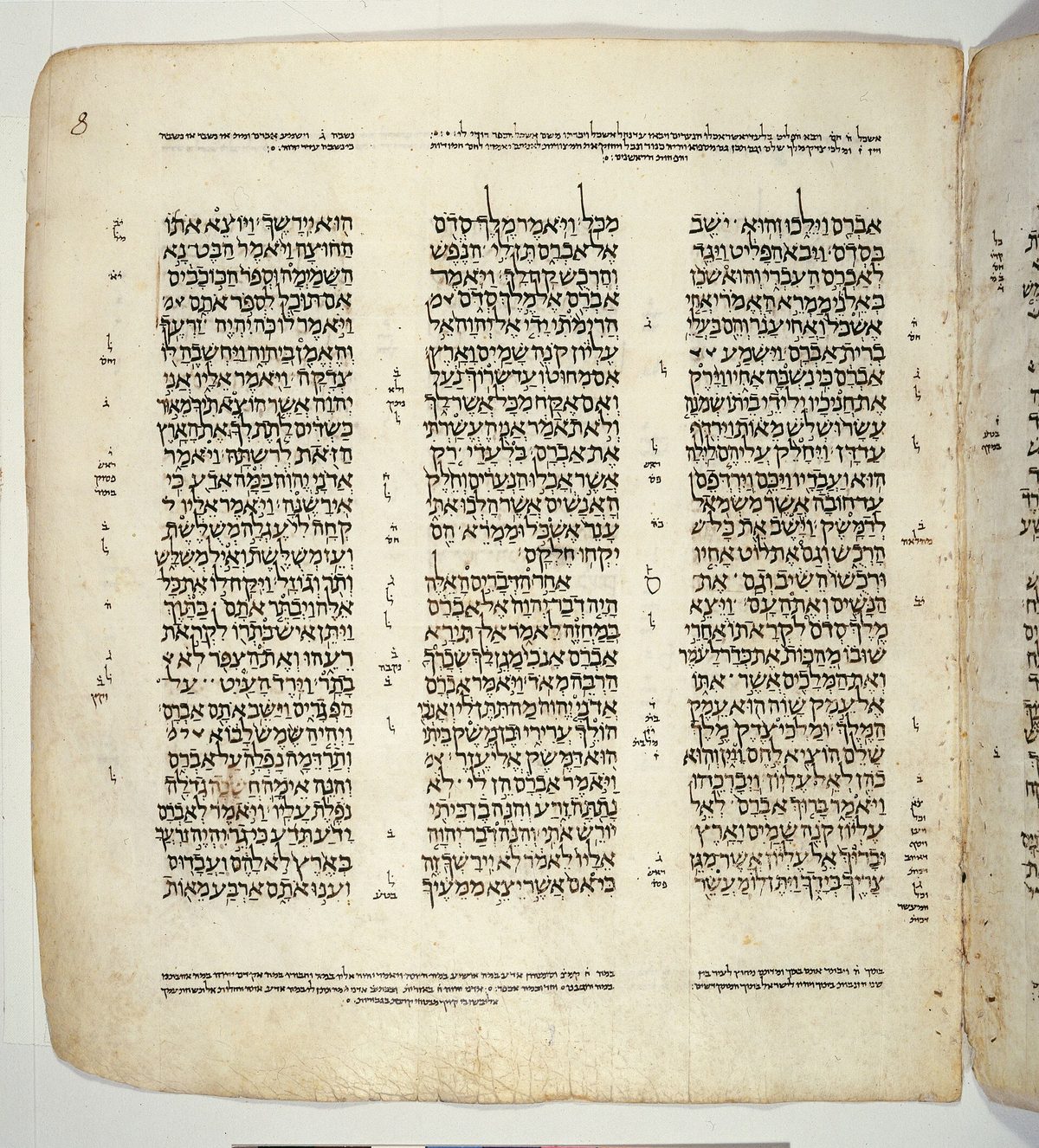
וְהָאָרֶץ הָיְתָה תֹהוּ וָבֹהוּ וְחֹשֶׁךְ עַל־פְּנֵי תְהוֹם וְרוּחַ אֱלֹהִים מְרַחֶפֶת עַל־פְּנֵי הַמָּיִם׃
Genesis 1:2, Westminster Leningrad Codex
"Now the earth was formless and empty, and darkness was over the face of the deep, and the spirit (or wind) of God was hovering over the face of the waters." [ve-ha-A-rets ha-ye-TA TO-hu va-VO-hu ve-KHO-shekh al-pe-NE te-HOM ve-RU-akh e-lo-HIM me-ra-KHE-fet al-pe-NE ha-MA-yim]
| Clause | Shape | English |
|---|---|---|
| וְהָאָרֶץ הָיְתָה תֹהוּ וָבֹהוּ | וְ + subject + perfect + predicate | now the earth was formless and empty |
| וְחֹשֶׁךְ עַל־פְּנֵי תְהוֹם | וְ + subject + prepositional phrase (verbless) | and darkness (was) over the face of the deep |
| וְרוּחַ אֱלֹהִים מְרַחֶפֶת עַל־פְּנֵי הַמָּיִם | וְ + subject + participle | and the spirit of God (was) hovering over the waters |
Three disjunctive clauses in a row paint the scene before anything happens. The action starts in verse 3 with וַיֹּאמֶר אֱלֹהִים, the first waw-consecutive verb of the story. The English "now" is a good way to translate the וְ of such a clause. The serpent is brought on stage the same way in Genesis 3:1, וְהַנָּחָשׁ הָיָה עָרוּם מִכֹּל חַיַּת הַשָּׂדֶה "Now the serpent was more cunning than any animal of the field," and Abraham's old age in Genesis 24:1, וְאַבְרָהָם זָקֵן בָּא בַּיָּמִים "Now Abraham was old, advanced in days."
2. Contrast
וַתֹּסֶף לָלֶדֶת אֶת־אָחִיו אֶת־הָבֶל וַיְהִי־הֶבֶל רֹעֵה צֹאן וְקַיִן הָיָה עֹבֵד אֲדָמָה׃
Genesis 4:2, Westminster Leningrad Codex
"She also bore his brother Abel. Abel became a keeper of sheep, while Cain was a worker of the ground." The first brother gets a waw-consecutive clause, וַיְהִי־הֶבֶל; the second gets a disjunctive one, וְקַיִן הָיָה, which English renders with "while" or "but." Two verses later the brothers are contrasted again, and this time the narrator fronts twice:
וְהֶבֶל הֵבִיא גַם־הוּא מִבְּכֹרוֹת צֹאנוֹ וּמֵחֶלְבֵהֶן וַיִּשַׁע יְהוָה אֶל־הֶבֶל וְאֶל־מִנְחָתוֹ׃
Genesis 4:4, Westminster Leningrad Codex
וְאֶל־קַיִן וְאֶל־מִנְחָתוֹ לֹא שָׁעָה וַיִּחַר לְקַיִן מְאֹד וַיִּפְּלוּ פָּנָיו׃
Genesis 4:5, Westminster Leningrad Codex
"And Abel, for his part, brought some of the firstborn of his flock and of their fat portions, and the LORD looked with favor on Abel and his offering. But to Cain and his offering he did not look. Cain was very angry, and his face fell." Verse 4 fronts the subject (וְהֶבֶל הֵבִיא "and Abel brought," set against Cain in verse 3); verse 5 fronts the prepositional phrase (וְאֶל־קַיִן ... לֹא שָׁעָה), set against אֶל־הֶבֶל at the end of verse 4. A negated verb also cannot be waw-consecutive, so לֹא שָׁעָה is a plain perfect.
3. Something happening at the same time
With a participle, a disjunctive clause shows an action in progress while the main events happen: וַיָּבֹאוּ שְׁנֵי הַמַּלְאָכִים סְדֹמָה בָּעֶרֶב וְלוֹט יֹשֵׁב בְּשַׁעַר־סְדֹם "The two angels came to Sodom in the evening, while Lot was sitting in the gate of Sodom" (Genesis 19:1). Abraham is וְהוּא יֹשֵׁב פֶּתַח־הָאֹהֶל "sitting at the entrance of the tent" when the LORD appears (Genesis 18:1).
4. Something that had already happened
With a perfect, a disjunctive clause can reach back to an earlier event, which English expresses with "had." In Jonah 1, while the sailors are throwing cargo overboard in the storm, the narrator tells us where Jonah is:
וְיוֹנָה יָרַד אֶל־יַרְכְּתֵי הַסְּפִינָה וַיִּשְׁכַּב וַיֵּרָדַם׃
Jonah 1:5 (end), Westminster Leningrad Codex
"But Jonah had gone down into the innermost part of the ship, and had lain down, and was fast asleep." After the fronted subject and the perfect יָרַד, the chain picks up again with וַיִּשְׁכַּב and וַיֵּרָדַם, now inside the flashback. Genesis 39:1 picks up Joseph's story after the interlude of chapter 38 the same way: וְיוֹסֵף הוּרַד מִצְרָיְמָה "Now Joseph had been brought down to Egypt."
5. A new scene or a new actor
A fronted subject often marks the start of a new episode or a new person taking the initiative. After Jonah runs, the LORD acts:
וַיהוָה הֵטִיל רוּחַ־גְּדוֹלָה אֶל־הַיָּם וַיְהִי סַעַר־גָּדוֹל בַּיָּם וְהָאֳנִיָּה חִשְּׁבָה לְהִשָּׁבֵר׃
Jonah 1:4, Westminster Leningrad Codex
"But the LORD hurled a great wind onto the sea, and there was a great storm on the sea, and the ship was about to break up." The verse opens with וַיהוָה (read [va-a-do-NAI]) and the perfect הֵטִיל instead of a waw-consecutive: a new actor on stage. It ends with another disjunctive clause, וְהָאֳנִיָּה חִשְּׁבָה, describing the ship's state. Ruth 4:1 opens a new scene with וּבֹעַז עָלָה הַשַּׁעַר "Meanwhile Boaz had gone up to the gate," and Genesis 21:1 begins the birth of Isaac with וַיהוָה פָּקַד אֶת־שָׂרָה "and the LORD visited Sarah."
Subordinate clauses
Hebrew joins many clauses with plain וְ and lets the reader work out the relation. But it also has a set of conjunctions for "that," "because," "which," "if," "so that" and "lest." The subordinate clause usually follows the main clause, though "if" and "when" clauses often come first.
כִּי: that, because, when, but
כִּי [KI] is the busiest conjunction in the language (Gesenius, sections 157, 158 and 159).
| Use | Example | English |
|---|---|---|
| "that" after verbs of seeing, knowing, saying | וַיַּרְא אֱלֹהִים אֶת־הָאוֹר כִּי־טוֹב | God saw the light, that it was good (Genesis 1:4) |
| "that" after "tell" | מִי הִגִּיד לְךָ כִּי עֵירֹם אָתָּה | Who told you that you were naked? (Genesis 3:11) |
| "because" | וָאִירָא כִּי־עֵירֹם אָנֹכִי | and I was afraid, because I was naked (Genesis 3:10) |
| "because" before the main clause | כִּי עָשִׂיתָ זֹּאת אָרוּר אַתָּה | Because you have done this, cursed are you (Genesis 3:14) |
| "when, if" | וְהָיָה כִּי־יִרְאוּ אֹתָךְ הַמִּצְרִים | And when the Egyptians see you ... (Genesis 12:12) |
| "no, but" after a negative | לֹא כִּי צָחָקְתְּ | No, but you did laugh (Genesis 18:15) |
כִּי עָשִׂיתָ זֹּאת אָרוּר אַתָּה מִכָּל־הַבְּהֵמָה וּמִכֹּל חַיַּת הַשָּׂדֶה
Genesis 3:14 (middle), Westminster Leningrad Codex
"Because you have done this, cursed are you above all livestock and above every animal of the field." The reason comes first, then a verbless clause with the predicate fronted: אָרוּר אַתָּה "cursed (are) you." (The opening words of this verse print the divine name with slightly different vowels in the Leningrad Codex; it is read [a-do-NAI] as always.)
Genesis 22:12 shows two kinds of כִּי in one breath: כִּי עַתָּה יָדַעְתִּי כִּי־יְרֵא אֱלֹהִים אַתָּה "for now I know that you fear God." The first כִּי gives the reason ("for"), the second introduces what is known ("that").
אֲשֶׁר: relative clauses
אֲשֶׁר [a-SHER] means "who, which, that, where." It never changes form. If the noun it refers to has a role inside the relative clause other than subject, Hebrew often repeats it with a pronoun, called a resumptive pronoun (Gesenius, section 138).
- Subject: הָעֵץ אֲשֶׁר בְּתוֹךְ־הַגָּן "the tree which (is) in the middle of the garden" (Genesis 3:3).
- Object, no pronoun needed: הָאִשָּׁה אֲשֶׁר נָתַתָּה עִמָּדִי "the woman whom you gave (to be) with me" (Genesis 3:12).
- With a resumptive pronoun: הֲמִן־הָעֵץ אֲשֶׁר צִוִּיתִיךָ לְבִלְתִּי אֲכָל־מִמֶּנּוּ אָכָלְתָּ "Have you eaten from the tree which I commanded you not to eat from (it)?" (Genesis 3:11). The מִמֶּנּוּ "from it" points back to the tree; English drops it.
- With no noun before it, "where, the one who": אֶל־אֲשֶׁר תֵּלְכִי "to where you go" (Ruth 1:16); בַּאֲשֶׁר תָּמוּתִי אָמוּת "where you die I will die" (Ruth 1:17).
- Joined with prepositions: כַּאֲשֶׁר "as, when": כַּאֲשֶׁר דִּבֶּר אֵלָיו יְהוָה "as the LORD had told him" (Genesis 12:4).
Jonah also uses the short relative שֶׁ, which is common in later Hebrew and standard in modern Hebrew: בְּשֶׁלְּמִי הָרָעָה הַזֹּאת לָנוּ "on whose account this evil has come on us" (Jonah 1:7) and בְשֶׁלִּי "on my account" (Jonah 1:12).
אִם: if
אִם [IM] introduces a real condition, one that may well be true (Gesenius, section 159). The "if" half usually has an imperfect (or a perfect); the "then" half often has a perfect with waw-consecutive, as in Genesis 18:26:
וַיֹּאמֶר יְהוָה אִם־אֶמְצָא בִסְדֹם חֲמִשִּׁים צַדִּיקִם בְּתוֹךְ הָעִיר וְנָשָׂאתִי לְכָל־הַמָּקוֹם בַּעֲבוּרָם׃
Genesis 18:26, Westminster Leningrad Codex
"The LORD said, 'If I find in Sodom fifty righteous people within the city, then I will spare the whole place for their sake.'" The "if" clause has the imperfect אֶמְצָא; the "then" clause starts with וְנָשָׂאתִי, a perfect with waw-consecutive (lesson 12), which has future meaning. (צַדִּיקִם is spelled without the yod of צַדִּיקִים.) Jacob's vow in Genesis 28:20 to 21 has the same shape, with a longer "if": אִם־יִהְיֶה אֱלֹהִים עִמָּדִי "if God will be with me ..."
Two more uses of אִם: paired, אִם ... וְאִם "whether ... or": אִם־הַשְּׂמֹאל וְאֵימִנָה וְאִם־הַיָּמִין וְאַשְׂמְאִילָה "if (you go) left, I will go right, and if right, I will go left" (Genesis 13:9). And as the second half of a double question (lesson 18).
Conditions that did not happen: לוּ and לוּלֵא
For a condition contrary to fact, Hebrew uses לוּ "if (only)" and its negative לוּלֵא "if not, had it not been," usually with a perfect:
כִּי לוּלֵא הִתְמַהְמָהְנוּ כִּי־עַתָּה שַׁבְנוּ זֶה פַעֲמָיִם׃
Genesis 43:10, Westminster Leningrad Codex
"For if we had not delayed, by now we would have returned twice." Judah says this to his father: they did delay, so they did not go twice.
Conditions without "if"
Hebrew can also state a condition with no conjunction at all, by putting two perfects with waw-consecutive side by side: לֹא־יוּכַל הַנַּעַר לַעֲזֹב אֶת־אָבִיו וְעָזַב אֶת־אָבִיו וָמֵת "the boy cannot leave his father; (if) he should leave his father, he would die" (Genesis 44:22). Context tells you the first clause is a supposition.
לְמַעַן: so that
לְמַעַן [le-MA-an] "in order that, so that" introduces purpose, with an imperfect or an infinitive (Gesenius, section 165).
אִמְרִי־נָא אֲחֹתִי אָתְּ לְמַעַן יִיטַב־לִי בַעֲבוּרֵךְ וְחָיְתָה נַפְשִׁי בִּגְלָלֵךְ׃
Genesis 12:13, Westminster Leningrad Codex
"Please say you are my sister, so that it may go well with me because of you, and my life may be spared on your account." אֲחֹתִי אָתְּ is a verbless clause, predicate first: "my sister (are) you." לְמַעַן יִיטַב־לִי gives the purpose, and the perfect with waw-consecutive וְחָיְתָה continues it.
פֶּן: lest
פֶּן [PEN] "lest, or else, so that ... not" introduces something to be avoided. It is followed by an imperfect and is usually joined with a maqaf (Gesenius treats it with the negatives, section 152).
- וְלֹא תִגְּעוּ בּוֹ פֶּן־תְּמֻתוּן "and you shall not touch it, lest you die" (Genesis 3:3)
- וְעַתָּה פֶּן־יִשְׁלַח יָדוֹ "and now, lest he stretch out his hand" (Genesis 3:22)
- פֶּן־נָפוּץ עַל־פְּנֵי כָל־הָאָרֶץ "lest we be scattered over the face of the whole earth" (Genesis 11:4)
Other joining words
| Word | Guide | Meaning | Example |
|---|---|---|---|
| טֶרֶם | [TE-rem] | not yet, before | Genesis 2:5 טֶרֶם יִהְיֶה בָאָרֶץ "was not yet in the land" |
| עַד אֲשֶׁר | [ad a-SHER] | until | Genesis 29:8 עַד אֲשֶׁר יֵאָסְפוּ "until they are gathered" |
| אוּלַי | [u-LAI] | perhaps | Jonah 1:6 אוּלַי יִתְעַשֵּׁת הָאֱלֹהִים לָנוּ "perhaps God will give a thought to us" |
| יַעַן | [YA-an] | because | Genesis 22:16 |
| preposition + infinitive | when, as | Genesis 3:5 בְּיוֹם אֲכָלְכֶם "on the day you eat"; Genesis 4:8 בִּהְיוֹתָם בַּשָּׂדֶה "when they were in the field" |
The last row matters for reading speed. Hebrew often uses an infinitive construct with a preposition where English uses a whole clause (lesson 14): בְּצֵאתוֹ מֵחָרָן "in his going out from Haran," that is, "when he left Haran" (Genesis 12:4).
וַיְהִי and וְהָיָה: signposts
The verb הָיָה "be, become, happen" has two forms that often work as signposts rather than as ordinary verbs (Gesenius, sections 111 and 112).
וַיְהִי in narrative
וַיְהִי [vay-HI] "and it happened" often opens an episode or a step within one. It is followed by a time phrase, and then the main event comes with a waw-consecutive verb. English usually leaves it untranslated, or uses "when," "one day," "it came about."
- וַיְהִי בִּהְיוֹתָם בַּשָּׂדֶה וַיָּקָם קַיִן אֶל־הֶבֶל אָחִיו "And when they were in the field, Cain rose up against Abel his brother" (Genesis 4:8).
- וַיְהִי כַּאֲשֶׁר הִקְרִיב לָבוֹא מִצְרָיְמָה וַיֹּאמֶר "When he was about to enter Egypt, he said" (Genesis 12:11).
- וַיְהִי בָעֶרֶב וַיִּקַּח "And in the evening he took" (Genesis 29:23).
- וַיְהִי אַחַר הַדְּבָרִים הָאֵלֶּה וְהָאֱלֹהִים נִסָּה אֶת־אַבְרָהָם "After these things, God tested Abraham" (Genesis 22:1). Here the time phrase is followed by a disjunctive clause, not a waw-consecutive verb.
Do not treat every וַיְהִי as a signpost. It is also the ordinary verb "and there was, and he became": וַיְהִי־אוֹר "and there was light" (Genesis 1:3), וַיְהִי יְהוָה אֶת־יוֹסֵף "the LORD was with Joseph" (Genesis 39:2), וַיְהִי רָעָב בָּאָרֶץ "there was a famine in the land" (Ruth 1:1). Test: if וַיְהִי has a subject of its own, it is the verb; if it is followed only by a time phrase and then another verb, it is the signpost.
וְהָיָה in prediction and instruction
וְהָיָה [ve-ha-YA], the perfect with waw-consecutive, is the future partner of וַיְהִי. It opens a forecast, a plan or an instruction: "and it will be that ..." What follows is usually a time or condition clause and then more perfects with waw-consecutive.
וְהָיָה כִּי־יִרְאוּ אֹתָךְ הַמִּצְרִים וְאָמְרוּ אִשְׁתּוֹ זֹאת וְהָרְגוּ אֹתִי וְאֹתָךְ יְחַיּוּ׃
Genesis 12:12, Westminster Leningrad Codex
"When the Egyptians see you, they will say, 'This is his wife,' and they will kill me, but you they will let live." Track the forms: וְהָיָה (signpost) + כִּי־יִרְאוּ (when-clause with an imperfect) + וְאָמְרוּ and וְהָרְגוּ (perfects with waw-consecutive, future) + וְאֹתָךְ יְחַיּוּ (fronted object for contrast, so the verb is a plain imperfect). אִשְׁתּוֹ זֹאת is a verbless clause, "his wife (is) this." Genesis 9:14 has the same signpost: וְהָיָה בְּעַנְנִי עָנָן עַל־הָאָרֶץ וְנִרְאֲתָה הַקֶּשֶׁת בֶּעָנָן "when I bring clouds over the earth, the bow will be seen in the clouds."
Again, וְהָיָה can be a full verb: וְהָיָה יְהוָה לִי לֵאלֹהִים "and the LORD will be my God" (Genesis 28:21).
Questions and negatives: a recap
Questions
Lesson 18 gave the question words. Two word-order points belong here. First, a question word comes first in its clause: מִי הִגִּיד לְךָ "who told you?" Second, the question prefix הֲ goes on the first word, and whatever is put first is what is being questioned. In Genesis 3:11, הֲמִן־הָעֵץ ... אָכָלְתָּ puts the tree in front: "Is it from the tree ... that you have eaten?" A question can also be marked only by intonation, with no word at all (Genesis 27:24; Gesenius, section 150).
Negatives
| Negative | Guide | Used with | Example |
|---|---|---|---|
| לֹא | [LO] | verbs (statements); firm, general prohibitions with the imperfect | וְאָנֹכִי לֹא יָדָעְתִּי "and I did not know" (Genesis 28:16); לֹא תֹאכַל מִמֶּנּוּ "you shall not eat from it" (Genesis 2:17) |
| אַל | [AL] | jussive: "don't" for a particular act | אַל־תִּשְׁלַח יָדְךָ אֶל־הַנַּעַר "do not lay your hand on the boy" (Genesis 22:12) |
| אֵין, אַיִן | [EN], [A-yin] | verbless clauses: "there is not"; takes suffixes | וְאָדָם אַיִן "and there was no man" (Genesis 2:5); וְהָאֶחָד אֵינֶנּוּ "and one is no more" (Genesis 42:13) |
| לְבִלְתִּי | [le-vil-TI] | infinitives: "so as not to" | לְבִלְתִּי אֲכָל־מִמֶּנּוּ "not to eat from it" (Genesis 3:11) |
| טֶרֶם | [TE-rem] | "not yet," with the imperfect | Genesis 2:5 |
| פֶּן | [PEN] | "lest," with the imperfect | Genesis 3:3 |
Remember that a negative, like a fronted noun, stops the waw-consecutive chain: you cannot say "and he did not ..." with a waw-consecutive form. Hebrew says וְלֹא + perfect: וְלֹא מָצָאוּ "but they did not find (them)" (1 Samuel 9:4).
Practice
- Label each clause verbal or verbless: (a) עִבְרִי אָנֹכִי (b) וַיֵּרֶד יָפוֹ (c) וְחֹשֶׁךְ עַל־פְּנֵי תְהוֹם (d) וְקַיִן הָיָה עֹבֵד אֲדָמָה
- Give the word order (verb, subject, object) of וַיַּרְא אֱלֹהִים אֶת־הָאוֹר.
- Why is the verb in וְלַחֹשֶׁךְ קָרָא לָיְלָה (Genesis 1:5) a perfect?
- Translate, showing the emphasis: אֶת־קֹלְךָ שָׁמַעְתִּי בַּגָּן.
- Which job does each disjunctive clause do (background, contrast, simultaneous, flashback, new scene)? (a) וְהָאָרֶץ הָיְתָה תֹהוּ וָבֹהוּ (b) וְיוֹנָה יָרַד אֶל־יַרְכְּתֵי הַסְּפִינָה (c) וְלוֹט יֹשֵׁב בְּשַׁעַר־סְדֹם (d) וְקַיִן הָיָה עֹבֵד אֲדָמָה
- Translate: מִי הִגִּיד לְךָ כִּי עֵירֹם אָתָּה. What does כִּי mean here?
- Translate: הָאִשָּׁה אֲשֶׁר נָתַתָּה עִמָּדִי.
- Find the resumptive pronoun: הָעֵץ אֲשֶׁר צִוִּיתִיךָ לְבִלְתִּי אֲכָל־מִמֶּנּוּ.
- Translate: אִם־אֶמְצָא שָׁם שְׁלֹשִׁים (Genesis 18:30).
- Translate and name the conjunction: וְלֹא תִגְּעוּ בּוֹ פֶּן־תְּמֻתוּן.
- Signpost or full verb? (a) וַיְהִי־אוֹר (b) וַיְהִי בָעֶרֶב וַיִּקַּח (c) וְהָיָה כִּי־יִרְאוּ
- Choose the negative: (a) "Do not be afraid" (jussive תִּירָא) (b) "There is no water" (c) "He did not know."
Answers
- (a) verbless (b) verbal (c) verbless (d) verbal (a disjunctive clause with the perfect הָיָה)
- Verb (וַיַּרְא), subject (אֱלֹהִים), object (אֶת־הָאוֹר).
- Because "to the darkness" has been fronted, and nothing may come before a waw-consecutive verb. The clause mirrors the one before it.
- "It was your voice I heard in the garden" or "Your voice I heard in the garden."
- (a) background (b) flashback: "Jonah had gone down" (c) simultaneous: "while Lot was sitting" (d) contrast: "while Cain was a worker of the ground"
- "Who told you that you were naked?" כִּי = "that" (object clause).
- "The woman whom you gave (to be) with me" (Genesis 3:12).
- מִמֶּנּוּ "from it," pointing back to הָעֵץ.
- "If I find thirty there."
- "And you shall not touch it, lest you die." פֶּן "lest."
- (a) full verb: "and there was light" (b) signpost: "and in the evening he took" (c) signpost: "and it will be, when (they) see ..."
- (a) אַל־תִּירָא (as in Genesis 15:1) (b) אֵין מַיִם (c) לֹא יָדַע
Writing drill
Copy. In print, with all vowel points, copy Genesis 1:2 and then Ruth 1:16 from כִּי אֶל־אֲשֶׁר to the end. Mark each clause boundary with a vertical line as you go, and write V (verbal), N (verbless) or D (disjunctive) above each clause. Then copy Genesis 1:2 once in cursive without points: והארץ היתה תהו ובהו.
Compose. Write four short Hebrew sentences, each showing one structure from this lesson: (1) a narrative sentence with a waw-consecutive verb followed by a disjunctive clause of contrast; (2) a sentence with a fronted object for emphasis; (3) a sentence with כִּי meaning "because"; (4) a conditional with אִם and a perfect with waw-consecutive in the "then" half. Use vocabulary you know: אִישׁ, אִשָּׁה, עִיר, שָׂדֶה, לֶחֶם, מַיִם, הָלַךְ, יָשַׁב, אָכַל, מָצָא, רָאָה.
Model answer
וַיֵּלֶךְ הָאִישׁ הַשָּׂדֶה וְהָאִשָּׁה יָשְׁבָה בָּעִיר.
אֶת־הַלֶּחֶם אָכַלְתִּי וְאֶת־הַמַּיִם לֹא שָׁתִיתִי.
וַיֵּשֶׁב בָּעִיר כִּי רָעָב בַּשָּׂדֶה.
אִם־תִּמְצָא מַיִם וְהָלַכְתָּ הָעִירָה.
(1) "The man went to the field, while the woman stayed in the town." The second clause is disjunctive: וְ + subject + perfect יָשְׁבָה. (2) "The bread I ate, but the water I did not drink." Both objects fronted for contrast, so both verbs are perfects; שָׁתִיתִי is the Qal perfect of שָׁתָה "drink" (lesson 16, III-he verbs). (3) "He stayed in the town, because there was a famine in the field." The כִּי clause is verbless. (4) "If you find water, then go to the town." The "then" half uses the perfect with waw-consecutive וְהָלַכְתָּ, which can carry the force of an instruction; הָעִירָה is "to the town" with the ending ָה of direction. Any sentences that show the four structures correctly are good answers.
Speaking drill
Read aloud. Pause briefly at each clause boundary, marked here with a slash in the guide.
- Genesis 1:2: [ve-ha-A-rets ha-ye-TA TO-hu va-VO-hu / ve-KHO-shekh al-pe-NE te-HOM / ve-RU-akh e-lo-HIM me-ra-KHE-fet al-pe-NE ha-MA-yim]
- Genesis 3:10: [va-YO-mer / et-ko-le-KHA sha-MA-ti ba-GAN / va-i-RA / ki-e-ROM a-no-KHI / va-e-kha-VE]
- Ruth 1:16, end: [ki el-a-SHER te-le-KHI e-LEKH / u-va-a-SHER ta-LI-ni a-LIN / a-MEKH a-MI / ve-lo-HA-yikh e-lo-HAI]
Notice the voice: the fronted words (אֶת־קֹלְךָ, אֶל־אֲשֶׁר תֵּלְכִי) naturally get a little extra weight when you read them, just as "your voice" does in English.
Transform aloud. Say each sentence, then say it again with the bracketed word fronted, changing the verb from waw-consecutive to perfect.
- וַיִּקַּח הָאִישׁ אֶת־הַלֶּחֶם [front הָאִישׁ] Answer: וְהָאִישׁ לָקַח אֶת־הַלֶּחֶם [ve-ha-ISH la-KAKH et-ha-LE-khem]
- וַיֵּשֶׁב בָּעִיר [front בָּעִיר] Answer: וּבָעִיר יָשַׁב [u-va-IR ya-SHAV]
- וַיַּרְא אֶת־הָעִיר [front אֶת־הָעִיר] Answer: וְאֶת־הָעִיר רָאָה [ve-et-ha-IR ra-A]
Question and answer. Ask and answer aloud: מִי הִגִּיד לְךָ? [MI hi-GID le-KHA] "Who told you?" Answer with a fronted subject: הָאִשָּׁה הִגִּידָה לִּי [ha-i-SHA hi-GI-da LI] "The woman told me," compare Genesis 3:12, הִוא נָתְנָה־לִּי "she (it was who) gave me."
Reading
Jonah 1:4 to 6, the storm. Before you look at the translation, mark every clause V (waw-consecutive), D (וְ + noun) or S (speech), and find the three fronted subjects.
וַיהוָה הֵטִיל רוּחַ־גְּדוֹלָה אֶל־הַיָּם וַיְהִי סַעַר־גָּדוֹל בַּיָּם וְהָאֳנִיָּה חִשְּׁבָה לְהִשָּׁבֵר׃
Jonah 1:4, Westminster Leningrad Codex
וַיִּירְאוּ הַמַּלָּחִים וַיִּזְעֲקוּ אִישׁ אֶל־אֱלֹהָיו וַיָּטִלוּ אֶת־הַכֵּלִים אֲשֶׁר בָּאֳנִיָּה אֶל־הַיָּם לְהָקֵל מֵעֲלֵיהֶם וְיוֹנָה יָרַד אֶל־יַרְכְּתֵי הַסְּפִינָה וַיִּשְׁכַּב וַיֵּרָדַם׃
Jonah 1:5, Westminster Leningrad Codex
וַיִּקְרַב אֵלָיו רַב הַחֹבֵל וַיֹּאמֶר לוֹ מַה־לְּךָ נִרְדָּם קוּם קְרָא אֶל־אֱלֹהֶיךָ אוּלַי יִתְעַשֵּׁת הָאֱלֹהִים לָנוּ וְלֹא נֹאבֵד׃
Jonah 1:6, Westminster Leningrad Codex
Word help
- הֵטִיל [he-TIL]: he hurled (Hiphil perfect of טוּל); וַיָּטִלוּ [va-ya-TI-lu] in verse 5 is the same verb, waw-consecutive plural: the sailors hurl cargo just as the LORD hurled the wind.
- סַעַר [SA-ar]: storm.
- חִשְּׁבָה לְהִשָּׁבֵר [khi-she-VA le-hi-sha-VER]: (the ship) thought to break up, was about to break up (Piel perfect of חָשַׁב + Niphal infinitive of שָׁבַר).
- הַמַּלָּחִים [ha-ma-la-KHIM]: the sailors (from מֶלַח "salt").
- וַיִּזְעֲקוּ אִישׁ אֶל־אֱלֹהָיו: and they cried out, each to his god.
- הַכֵּלִים [ha-ke-LIM]: the gear, the cargo. אֲשֶׁר בָּאֳנִיָּה: a relative clause, "which (were) in the ship."
- לְהָקֵל מֵעֲלֵיהֶם [le-ha-KEL me-a-le-HEM]: to lighten (the load) from upon them (Hiphil infinitive of קָלַל).
- יַרְכְּתֵי הַסְּפִינָה [yar-ke-TE ha-se-FI-na]: the innermost parts of the ship, the hold. סְפִינָה is another word for "ship," the usual word in later Hebrew.
- וַיֵּרָדַם [va-ye-ra-DAM]: and he fell fast asleep (Niphal waw-consecutive of רָדַם); נִרְדָּם [nir-DAM] in verse 6 is the Niphal participle, "sleeping."
- רַב הַחֹבֵל [rav ha-kho-VEL]: the chief of the sailors, the captain.
- מַה־לְּךָ נִרְדָּם: what is (the matter) with you, sleeping? A verbless question.
- קוּם קְרָא [KUM ke-RA]: get up, call. The same two imperatives God spoke to Jonah in 1:2.
- אוּלַי יִתְעַשֵּׁת הָאֱלֹהִים לָנוּ: perhaps God will give a thought to us (Hithpael imperfect of עָשַׁת, a rare verb).
- וְלֹא נֹאבֵד [ve-LO no-VED]: and we will not perish, so that we do not perish.
| Clause | Type | Note |
|---|---|---|
| וַיהוָה הֵטִיל רוּחַ־גְּדוֹלָה | D | fronted subject, new actor |
| וַיְהִי סַעַר־גָּדוֹל בַּיָּם | V | full verb: "there was a storm" |
| וְהָאֳנִיָּה חִשְּׁבָה לְהִשָּׁבֵר | D | the ship's state |
| וַיִּירְאוּ ... וַיִּזְעֲקוּ ... וַיָּטִלוּ | V V V | the sailors' actions in order |
| וְיוֹנָה יָרַד | D | fronted subject, flashback: "had gone down" |
| וַיִּשְׁכַּב וַיֵּרָדַם | V V | chain continues inside the flashback |
| וַיִּקְרַב ... וַיֹּאמֶר | V V | back to the main line |
| מַה־לְּךָ נִרְדָּם ... וְלֹא נֹאבֵד | S | speech: question, imperatives, "perhaps," negative |
Translation
4 But the LORD hurled a great wind onto the sea, and there was a great storm on the sea, and the ship was about to break up. 5 The sailors were afraid, and each of them cried out to his god, and they hurled the cargo that was in the ship into the sea to lighten it for themselves. But Jonah had gone down into the hold of the ship, had lain down and was fast asleep. 6 The captain came to him and said to him, "What do you mean, sleeping? Get up, call to your god! Perhaps the god will give a thought to us, and we will not perish."
Checklist
- I can tell a verbal clause from a verbless one and give the usual order of each.
- I can explain why a fronted word or a negative turns a waw-consecutive verb into a perfect.
- I can find the disjunctive clauses in Genesis 1:2, Genesis 4:2 to 5 and Jonah 1:4 to 5 and say what each one does.
- I can translate כִּי in at least four ways and choose the right one from context.
- I can read relative clauses with אֲשֶׁר, including ones with a resumptive pronoun.
- I can translate conditions with אִם and לוּלֵא, purpose with לְמַעַן and warnings with פֶּן.
- I can tell וַיְהִי and וְהָיָה as signposts from the same words used as full verbs.
Updated October 28, 2026.
Check yourself
1. What is the usual word order of a clause in a classical Hebrew story?
The waw-consecutive verb has to stand first in its clause, so narrative runs verb, subject, object: וַיַּרְא אֱלֹהִים אֶת־הָאוֹר 'God saw the light' (Genesis 1:4).
2. Genesis 1:2 begins וְהָאָרֶץ הָיְתָה תֹהוּ וָבֹהוּ. Why is the verb הָיְתָה a perfect and not a waw-consecutive form?
When a writer puts a noun first, the verb after it is a perfect (or a participle). This 'וְ + noun + perfect' clause steps out of the chain of events to describe the state of things: 'Now the earth was formless and empty.'
3. In Genesis 12:13 Abram says אִמְרִי־נָא אֲחֹתִי אָתְּ לְמַעַן יִיטַב־לִי בַעֲבוּרֵךְ. What does לְמַעַן introduce?
לְמַעַן means 'in order that, so that' and introduces purpose, here with an imperfect: 'so that it may go well with me because of you.'
4. Which negative goes with a command not to do something, as in Genesis 22:12, ___ תִּשְׁלַח יָדְךָ אֶל־הַנַּעַר?
אַל with the jussive forbids a particular act: אַל־תִּשְׁלַח 'do not stretch out (your hand).' לֹא with the imperfect is a firm, general prohibition (לֹא תֹאכַל, Genesis 2:17). אֵין negates verbless clauses.
5. What does פֶּן mean in Genesis 3:3, וְלֹא תִגְּעוּ בּוֹ פֶּן־תְּמֻתוּן?
פֶּן introduces something to be avoided: 'and you shall not touch it, lest you die.'
6. In Genesis 12:12, וְהָיָה כִּי־יִרְאוּ אֹתָךְ הַמִּצְרִים, what is the job of וְהָיָה?
וְהָיָה is the future counterpart of וַיְהִי. It opens a forecast or instruction and is usually followed by a time or condition clause and then by perfects with waw-consecutive.
Terms in this lesson
- Verbal clause
- A clause with a finite verb. In narrative the verb usually comes first (Gesenius, section 142).
- Verbless (nominal) clause
- A clause with no finite verb, where 'is' or 'are' is understood: עִבְרִי אָנֹכִי 'I am a Hebrew' (Gesenius, section 141).
- Fronting
- Putting a word or phrase before the verb to mark emphasis, contrast or a new topic: אֶת־קֹלְךָ שָׁמַעְתִּי 'it was your voice I heard.'
- Disjunctive clause
- A clause that starts with וְ plus a non-verb (usually the subject), stepping outside the narrative chain to give background, contrast, a simultaneous action or a flashback.
- Protasis and apodosis
- The 'if' half and the 'then' half of a conditional sentence.
- Resumptive pronoun
- A pronoun inside a relative clause that points back to the noun: הָעֵץ אֲשֶׁר צִוִּיתִיךָ לְבִלְתִּי אֲכָל־מִמֶּנּוּ 'the tree which I commanded you not to eat from it.'
- Discourse marker
- A word that organizes a text rather than adding content, such as וַיְהִי 'and it happened' at the start of an episode.
Sources
- Gesenius' Hebrew Grammar, ed. Kautzsch, trans. Cowley (1910), sections 111 and 112 (waw-consecutive), 138 (relative clauses), 141 and 142 (noun and verbal clauses), 150 and 152 (questions and negatives), 156 to 159 and 165 (circumstantial, object, causal, conditional and final clauses) checked 2026-10
- Brown, Driver and Briggs, Hebrew and English Lexicon (1906), entries for כִּי, אֲשֶׁר, אִם, לְמַעַן, פֶּן and הָיָה checked 2026-10
- Open Scriptures Hebrew Bible (WLC with morphology), used to check every verse and form checked 2026-10
- Westminster Leningrad Codex / UXLC checked 2026-10
- Sefaria, Genesis 1:2 checked 2026-10
- Sefaria, Jonah 1:4 checked 2026-10
- Wikimedia Commons, Leningrad Codex folio 8a (public domain, scan by USC Dornsife) checked 2026-10
