Lesson 12 of 22 · about 50 minutes
The Qal Imperfect and the Waw-Consecutive
You'll be able to
- Recite the Qal imperfect of קָטַל and of שָׁמַר and name the prefix letters א, י, ת, נ
- Translate the imperfect as future, habitual, or modal (may, must, should), and use לֹא with the imperfect for a permanent prohibition
- Recognize the waw-consecutive imperfect by its וַ and following dagesh, and its shortened forms such as וַיֹּאמֶר, וַיְהִי, וַיַּרְא, וַיָּקָם
- Explain how a narrative chain of wayyiqtol verbs moves a story forward, and how a clause beginning with וְ + noun stops the chain for background or contrast
- Recognize the waw-consecutive perfect (weqatal) and translate it in commands, predictions and habits
- Read and parse Genesis 1:3 to 5, Jonah 1:1 to 3 and Ruth 1:1 to 2
The third verse of Genesis contains two verbs from the same root, ה־י־ה "be," one pointing forward and one telling what happened:
וַיֹּאמֶר אֱלֹהִים יְהִי אוֹר וַיְהִי־אוֹר׃
Genesis 1:3, Westminster Leningrad Codex
"And God said, 'Let there be light,' and there was light." יְהִי [ye-HI] "let there be" and וַיְהִי [va-ye-HI] "and there was" differ by one syllable, וַ. That syllable turns a wish into a past event. The verb וַיֹּאמֶר "and he said" at the start of the verse has it too. This lesson teaches the form underneath both, the imperfect, and then the special forms with waw that carry nearly every story in the Hebrew Bible.
The Qal imperfect of קָטַל
Where the perfect adds endings (lesson 11), the imperfect adds prefixes, and in some persons an ending as well. That is why it is also called the prefix conjugation, or yiqtol after its 3ms form. The forms of the strong verb are these (Gesenius, section 47 and Paradigm B).
| Person | Hebrew | Guide | Meaning | Prefix + ending |
|---|---|---|---|---|
| 3rd masculine singular | יִקְטֹל | [yik-TOL] | he will kill | יִ־ |
| 3rd feminine singular | תִּקְטֹל | [tik-TOL] | she will kill | תִּ־ |
| 2nd masculine singular | תִּקְטֹל | [tik-TOL] | you (m.) will kill | תִּ־ |
| 2nd feminine singular | תִּקְטְלִי | [tik-te-LI] | you (f.) will kill | תִּ־ ... ־ִי |
| 1st common singular | אֶקְטֹל | [ek-TOL] | I will kill | אֶ־ |
| 3rd masculine plural | יִקְטְלוּ | [yik-te-LU] | they (m.) will kill | יִ־ ... ־וּ |
| 3rd feminine plural | תִּקְטֹלְנָה | [tik-TOL-na] | they (f.) will kill | תִּ־ ... ־נָה |
| 2nd masculine plural | תִּקְטְלוּ | [tik-te-LU] | you (m. pl.) will kill | תִּ־ ... ־וּ |
| 2nd feminine plural | תִּקְטֹלְנָה | [tik-TOL-na] | you (f. pl.) will kill | תִּ־ ... ־נָה |
| 1st common plural | נִקְטֹל | [nik-TOL] | we will kill | נִ־ |
How it is built
- Four prefixes. א for "I," נ for "we," י for "he" and "they (m.)," ת for everything else: "you" in all four forms, "she," and "they (f.)." These are the four letters of אֵיתָן from lesson 10. The vowel of the prefix is hireq, except the 1cs אֶ, which takes segol because א is a throat letter.
- Three endings. ־ִי for "you (f. sg.)," ־וּ for masculine plurals, ־נָה for feminine plurals. All other forms have no ending.
- The stem vowel. Between the second and third root letters stands holem: יִקְטֹל. Before the vowel endings ־ִי and ־וּ the stress moves to the ending and the holem reduces to vocal shewa: תִּקְטְלִי, יִקְטְלוּ. Before ־נָה, which begins with a consonant, it stays: תִּקְטֹלְנָה.
- Two pairs that look alike. 3fs and 2ms are identical (תִּקְטֹל), and so are 3fp and 2fp (תִּקְטֹלְנָה). Context, usually an expressed subject or a "you" in the dialogue, tells them apart.
The dagesh in the ת of תִּקְטֹל is the dagesh lene of a word-initial begadkephat letter. After a vowel, as in וְאַתָּה אֶת־בְּרִיתִי תִשְׁמֹר (Genesis 17:9), it disappears and the ת is written without it. Both are the same prefix.
A real verb: שָׁמַר in the imperfect
| Person | שָׁמַר | Guide | Meaning | Attested | Where |
|---|---|---|---|---|---|
| 3ms | יִשְׁמֹר | [yish-MOR] | he will keep | יִשְׁמֹר | Psalm 121:7 |
| 3fs | תִּשְׁמֹר | [tish-MOR] | she will keep | תִּשְׁמֹר | Proverbs 2:11 |
| 2ms | תִּשְׁמֹר | [tish-MOR] | you (m.) will keep | תִּשְׁמֹר | Exodus 23:15 |
| 2fs | תִּשְׁמְרִי | [tish-me-RI] | you (f.) will keep | תִזְכְּרִי | Isaiah 54:4 ("you will remember") |
| 1cs | אֶשְׁמֹר | [esh-MOR] | I will keep | אֶשְׁמֹר | Genesis 30:31 |
| 3mp | יִשְׁמְרוּ | [yish-me-RU] | they (m.) will keep | יִשְׁמְרוּ | Psalm 105:45 |
| 3fp | תִּשְׁמֹרְנָה | [tish-MOR-na] | they (f.) will keep | תַּחְגֹּרְנָה | Psalm 65:13 ("they gird themselves") |
| 2mp | תִּשְׁמְרוּ | [tish-me-RU] | you (m. pl.) will keep | תִּשְׁמְרוּ | Genesis 17:10 |
| 2fp | תִּשְׁמֹרְנָה | [tish-MOR-na] | you (f. pl.) will keep | rare in strong verbs | |
| 1cp | נִשְׁמֹר | [nish-MOR] | we will keep | נִשְׁמֹר | Deuteronomy 6:25 |
In תַּחְגֹּרְנָה (root חגר "gird") the first root letter is the throat letter ח, which turns the prefix vowel into patah; otherwise the pattern is תִּקְטֹלְנָה. The hills "gird themselves with joy" in Psalm 65:13, a feminine plural subject.
Variations you will meet
- Paragogic nun. The endings ־וּ and ־ִי sometimes add a ן, especially in Deuteronomy and poetry: שָׁמוֹר תִּשְׁמְרוּן אֶת־מִצְוֺת יְהוָה "You shall diligently keep the commandments of the LORD" (Deuteronomy 6:17). תִּשְׁמְרוּן means exactly what תִּשְׁמְרוּ means (Gesenius, section 47). The שָׁמוֹר before it is an infinitive absolute, adding emphasis ("keeping, you shall keep"); lesson 14 covers it.
- Before maqaf. When a short word follows joined by maqaf, the holem shortens to qamets hatuf, still said o: יְהוָה יִשְׁמָר־צֵאתְךָ וּבוֹאֶךָ "The LORD will keep your going out and your coming in" (Psalm 121:8). Read יִשְׁמָר־ as [yish-mor].
- Pause. In pause the reduced vowel returns: יִשְׁמֹרוּ for יִשְׁמְרוּ (Psalm 56:7).
- a-class imperfects. Stative verbs, and verbs whose second or third root letter is a throat letter, take patah instead of holem: יִכְבַּד "he will be heavy, honored" (Isaiah 66:5), יִגְדַּל "he will grow up" (Genesis 38:11), יִלְבַּשׁ "he will put on" (Deuteronomy 22:5), יִשְׁמַע "he will hear." The prefixes and endings are unchanged (Gesenius, section 47).
What the imperfect means
The imperfect presents an action as not complete: still to come, happening repeatedly, or only possible, wished for or required. English needs several different words for these, and Gesenius lists them in section 107. Context decides.
1. Future
יְהוָה יִמְלֹךְ לְעֹלָם וָעֶד׃
Exodus 15:18, Westminster Leningrad Codex
"The LORD will reign forever and ever." The most common English rendering of an imperfect is "will."
2. Habitual or repeated, in the past or present
When the story is in the past, an imperfect often means "used to" or "would." In Numbers 11:5 (lesson 11) the people remember הַדָּגָה אֲשֶׁר־נֹאכַל בְּמִצְרַיִם "the fish that we used to eat in Egypt." Hannah's yearly trip to Shiloh is told the same way:
וְכֵן יַעֲשֶׂה שָׁנָה בְשָׁנָה מִדֵּי עֲלֹתָהּ בְּבֵית יְהוָה כֵּן תַּכְעִסֶנָּה וַתִּבְכֶּה וְלֹא תֹאכַל׃
1 Samuel 1:7, Westminster Leningrad Codex
"So he (Elkanah) would do year after year; whenever she went up to the house of the LORD, so she (her rival) would provoke her, and she wept and would not eat." יַעֲשֶׂה, תַּכְעִסֶנָּה and תֹאכַל are imperfects of repeated action. The one wayyiqtol, וַתִּבְכֶּה "and she wept," is usually read as moving to the particular year the story is about.
3. Modal: may, can, should, must
- Permission: מִכֹּל עֵץ־הַגָּן אָכֹל תֹּאכֵל "From every tree of the garden you may freely eat" (Genesis 2:16).
- Obligation: וְאַתָּה אֶת־בְּרִיתִי תִשְׁמֹר "And you, you shall keep my covenant" (Genesis 17:9).
- Purpose, after בַּעֲבוּר "so that": בַּעֲבוּר יִשְׁמְרוּ חֻקָּיו "so that they might keep his statutes" (Psalm 105:45).
- Questions about the future or the possible: הֲמָלֹךְ תִּמְלֹךְ עָלֵינוּ "Are you really going to reign over us?" (Genesis 37:8), Joseph's brothers mocking his dream.
4. Permanent prohibition: לֹא with the imperfect
לֹא תִּרְצָח׃
Exodus 20:13, Westminster Leningrad Codex
"You shall not murder." Two words. לֹא + imperfect states a standing law. The softer, immediate "don't" uses אַל with the jussive, as in אַל־תִּירָא "do not fear" (Genesis 15:1); that is lesson 13.
The waw-consecutive imperfect (wayyiqtol)
Now the form that Genesis 1:3 opened with. Put וַ (waw with patah) in front of an imperfect and double the prefix letter with a dagesh, and you get the waw-consecutive imperfect, also called wayyiqtol or the "narrative past." In spite of its imperfect shape, it reports past events, one after another (Gesenius, sections 49 and 111).
| Person | Hebrew | Guide | Meaning | Attested |
|---|---|---|---|---|
| 3ms | וַיִּקְטֹל | [va-yik-TOL] | and he killed | וַיִּשְׁמֹר Genesis 26:5; וַיִּזְכֹּר Genesis 8:1; וַיִּכְתֹּב Exodus 24:4 |
| 3fs | וַתִּקְטֹל | [va-tik-TOL] | and she killed | וַתִּגְנֹב Genesis 31:19; וַתִּלְבַּשׁ Genesis 38:19 |
| 2ms | וַתִּקְטֹל | [va-tik-TOL] | and you (m.) killed | |
| 2fs | וַתִּקְטְלִי | [va-tik-te-LI] | and you (f.) killed | |
| 1cs | וָאֶקְטֹל | [va-ek-TOL] | and I killed | וָאֶזְכֹּר Exodus 6:5 |
| 3mp | וַיִּקְטְלוּ | [va-yik-te-LU] | and they killed | וַיִּשְׁמְרוּ Psalm 59:1; וַיִּמְכְּרוּ Genesis 37:28 |
| 3fp | וַתִּקְטֹלְנָה | [va-tik-TOL-na] | and they (f.) killed | וַתִּשֶּׂאנָה "and they lifted up," Ruth 1:9 |
| 2mp | וַתִּקְטְלוּ | [va-tik-te-LU] | and you (m. pl.) killed | |
| 2fp | וַתִּקְטֹלְנָה | [va-tik-TOL-na] | and you (f. pl.) killed | |
| 1cp | וַנִּקְטֹל | [va-nik-TOL] | and we killed | וַנַּעֲבֹר "and we passed by," Deuteronomy 2:8 |
How to spot it
- וַ with patah, and a dagesh in the next letter: וַיִּ, וַתִּ, וַנִּ.
- Before א, which cannot take a dagesh, the patah lengthens to qamets: וָאֶזְכֹּר, וָאֹכֵל "and I ate" (Genesis 3:12).
- A yod with shewa often drops the dagesh: וַיְהִי, not וַיְּהִי (Gesenius, section 20). The patah on the waw is still the sign.
- Compare the plain conjunction: וְיִשְׁמָר (Psalm 107:43), with shewa and no doubling, is just "and let him keep," an ordinary imperfect used as a wish.
Short forms
Many verbs, especially weak ones, use a shortened imperfect after the waw-consecutive, with the stress drawn back toward the front of the word (Gesenius, sections 48 and 49). Strong verbs like שָׁמַר barely change, but the most frequent verbs in narrative change a lot. Learn these by sight now; lesson 16 explains them.
| Imperfect | Guide | Waw-consecutive | Guide | Meaning |
|---|---|---|---|---|
| יֹאמַר | [yo-MAR] | וַיֹּאמֶר | [va-YO-mer] | and he said |
| יִהְיֶה | [yih-YE] | וַיְהִי | [va-ye-HI] | and it was, and it happened |
| יִרְאֶה | [yir-E] | וַיַּרְא | [va-YAR] | and he saw |
| יָקוּם | [ya-KUM] | וַיָּקָם | [va-YA-kom] | and he arose |
| יֵרֵד | [ye-RED] | וַיֵּרֶד | [va-YE-red] | and he went down |
| יֵלֵךְ | [ye-LEKH] | וַיֵּלֶךְ | [va-YE-lekh] | and he went |
Every form in the left column occurs in the books our tool covers (for example יֹאמַר Genesis 31:8, יִרְאֶה Genesis 22:8, יָקוּם Exodus 21:19, יֵרֵד Genesis 42:38), and the right column is the form you will meet on almost every page of narrative. In וַיָּקָם the second qamets is a qamets hatuf in a closed unstressed syllable, said o. וַיֹּאמֶר alone occurs hundreds of times in Genesis.
How narrative chains work
A Hebrew story is a chain of wayyiqtol verbs. Each one normally reports the next event: "and he arose, and he went down, and he found." Translate the waw as "and," "then," "so," or leave it out and start a new English sentence; all are faithful (Gesenius, section 111).
A wayyiqtol must stand first in its clause. So whenever a writer wants to put something else first (a subject for contrast, an object, a time phrase, background), the chain is broken: the clause starts with וְ plus that word, and the verb, if there is one, is a perfect (lesson 11) or a participle, or there is no verb at all. Grammarians call these off-line clauses. They do not move the story forward; they describe the scene, contrast two things, or say what was going on at the same time.
Example: Genesis 1:3 to 5 verb by verb
וַיַּרְא אֱלֹהִים אֶת־הָאוֹר כִּי־טוֹב וַיַּבְדֵּל אֱלֹהִים בֵּין הָאוֹר וּבֵין הַחֹשֶׁךְ׃
Genesis 1:4, Westminster Leningrad Codex
וַיִּקְרָא אֱלֹהִים לָאוֹר יוֹם וְלַחֹשֶׁךְ קָרָא לָיְלָה וַיְהִי־עֶרֶב וַיְהִי־בֹקֶר יוֹם אֶחָד׃
Genesis 1:5, Westminster Leningrad Codex
וַיֹּאמֶר (1:3) Qal wayyiqtol 3ms of אמר, short form: "and he said." Inside the speech, יְהִי is a jussive, "let there be," with no waw (lesson 13).
וַיְהִי־אוֹר Qal wayyiqtol 3ms of היה, short form: "and there was light." The command is fulfilled in the very next step of the chain.
וַיַּרְא (1:4) Qal wayyiqtol 3ms of ראה, short form: "and he saw." The clause כִּי־טוֹב "that (it was) good" is a verbless clause after the verb of seeing.
וַיַּבְדֵּל Hiphil wayyiqtol 3ms of בדל: "and he separated." The prefix vowel a and the tsere are Hiphil marks (lesson 15).
וַיִּקְרָא (1:5) Qal wayyiqtol 3ms of קרא: "and he called." Then the chain breaks: וְלַחֹשֶׁךְ קָרָא לָיְלָה, waw + prepositional object + Qal perfect 3ms. This is not a later act. It is the other half of the same naming, set in contrast: "the light he called Day, and the darkness he called Night."
וַיְהִי־עֶרֶב וַיְהִי־בֹקֶר two more wayyiqtols: "and there was evening and there was morning." Then a verbless summary: יוֹם אֶחָד "one day" or "day one."
וַיְהִי as a scene opener
The wayyiqtol of "be," וַיְהִי, often opens a new episode or a whole book, followed by a time phrase. Older English translations rendered it "and it came to pass." Modern ones often leave it out or say "now" or "once." Jonah and Ruth both begin this way.
Example: Jonah 1:1 to 3
וַיְהִי דְּבַר־יְהוָה אֶל־יוֹנָה בֶן־אֲמִתַּי לֵאמֹר׃
Jonah 1:1, Westminster Leningrad Codex
קוּם לֵךְ אֶל־נִינְוֵה הָעִיר הַגְּדוֹלָה וּקְרָא עָלֶיהָ כִּי־עָלְתָה רָעָתָם לְפָנָי׃
Jonah 1:2, Westminster Leningrad Codex
וַיָּקָם יוֹנָה לִבְרֹחַ תַּרְשִׁישָׁה מִלִּפְנֵי יְהוָה וַיֵּרֶד יָפוֹ וַיִּמְצָא אָנִיָּה בָּאָה תַרְשִׁישׁ וַיִּתֵּן שְׂכָרָהּ וַיֵּרֶד בָּהּ לָבוֹא עִמָּהֶם תַּרְשִׁישָׁה מִלִּפְנֵי יְהוָה׃
Jonah 1:3, Westminster Leningrad Codex
1:1. וַיְהִי "And it happened" opens the book: "The word of the LORD came to Jonah son of Amittai, saying." לֵאמֹר "saying" is an infinitive that introduces direct speech, like a colon.
1:2. Inside the speech: three imperatives, קוּם "arise," לֵךְ "go," וּקְרָא "and call out," then a reason clause with a perfect, כִּי־עָלְתָה רָעָתָם לְפָנָי "for their evil has come up before me." עָלֶיהָ "against it" and רָעָתָם "their evil" have the suffixes of lesson 9.
1:3. Five wayyiqtols, five events, in a row:
- וַיָּקָם "and he arose": the same root as God's command קוּם, so for one word Jonah seems to obey. Then: לִבְרֹחַ תַּרְשִׁישָׁה "to flee to Tarshish."
- וַיֵּרֶד יָפוֹ "and he went down to Joppa."
- וַיִּמְצָא אָנִיָּה "and he found a ship" בָּאָה תַרְשִׁישׁ "going to Tarshish" (a participle, lesson 14).
- וַיִּתֵּן שְׂכָרָהּ "and he paid its fare": אָנִיָּה "ship" is feminine, so "its" is ־ָהּ.
- וַיֵּרֶד בָּהּ "and he went down into it," לָבוֹא עִמָּהֶם תַּרְשִׁישָׁה "to go with them to Tarshish," מִלִּפְנֵי יְהוָה "away from the presence of the LORD."
The verb יָרַד "go down" appears twice in one verse, and the phrase "from the presence of the LORD" frames it at both ends. The writer uses the chain itself to show Jonah going down and away, step after step.
Example: Ruth 1:1 to 2, chain and background
וַיְהִי בִּימֵי שְׁפֹט הַשֹּׁפְטִים וַיְהִי רָעָב בָּאָרֶץ וַיֵּלֶךְ אִישׁ מִבֵּית לֶחֶם יְהוּדָה לָגוּר בִּשְׂדֵי מוֹאָב הוּא וְאִשְׁתּוֹ וּשְׁנֵי בָנָיו׃
Ruth 1:1, Westminster Leningrad Codex
וְשֵׁם הָאִישׁ אֱלִימֶלֶךְ וְשֵׁם אִשְׁתּוֹ נָעֳמִי וְשֵׁם שְׁנֵי־בָנָיו מַחְלוֹן וְכִלְיוֹן אֶפְרָתִים מִבֵּית לֶחֶם יְהוּדָה וַיָּבֹאוּ שְׂדֵי־מוֹאָב וַיִּהְיוּ־שָׁם׃
Ruth 1:2, Westminster Leningrad Codex
On the line. וַיְהִי בִּימֵי שְׁפֹט הַשֹּׁפְטִים "In the days when the judges judged" (scene opener). וַיְהִי רָעָב בָּאָרֶץ "there was a famine in the land." וַיֵּלֶךְ אִישׁ "and a man went" from Bethlehem in Judah to live as a foreigner in the fields of Moab, הוּא וְאִשְׁתּוֹ וּשְׁנֵי בָנָיו "he and his wife and his two sons" (pronoun and suffixes from lesson 9).
Off the line. Ruth 1:2 stops the chain for three verbless clauses, each beginning וְשֵׁם "and the name of": "The man's name was Elimelech, his wife's name Naomi, and the names of his two sons Mahlon and Chilion, Ephrathites from Bethlehem in Judah." No event happens here; the narrator introduces the family.
Back on the line. וַיָּבֹאוּ שְׂדֵי־מוֹאָב "and they came to the fields of Moab" וַיִּהְיוּ־שָׁם "and they stayed there." Two plural wayyiqtols pick up the story where 1:1 left it.
The waw-consecutive perfect (weqatal)
The mirror image of the narrative chain is a chain of perfects with וְ (a plain shewa, no doubling). After an imperfect, an imperative, a participle used of the future, or any statement about what will happen or what is done regularly, a waw-consecutive perfect carries on in the same time and mood (Gesenius, sections 49 and 112). It is translated "and you shall ...," "and he will ...," or "and he would ...". In the 1cs and 2ms the stress usually shifts to the ending: וְשָׁמַרְתָּ [ve-sha-mar-TA].
| Use | Example | Translation |
|---|---|---|
| Instruction (after the context of a law) | וְשָׁמַרְתָּ אֶת־הַחֻקָּה הַזֹּאת (Exodus 13:10) | You shall keep this statute. |
| Instruction | וּשְׁמַרְתֶּם אֶת־הַמַּצּוֹת (Exodus 12:17) | You shall observe the festival of unleavened bread. |
| After an imperative | שְׁמַע בְּקוֹלָם וְהִמְלַכְתָּ לָהֶם מֶלֶךְ (1 Samuel 8:22) | Listen to them and make them a king. |
| After a general imperfect | עַל־כֵּן יַעֲזָב־אִישׁ אֶת־אָבִיו וְאֶת־אִמּוֹ וְדָבַק בְּאִשְׁתּוֹ וְהָיוּ לְבָשָׂר אֶחָד (Genesis 2:24) | Therefore a man leaves his father and his mother and clings to his wife, and they become one flesh. |
| Habit in the past, after an imperfect | וְאֵד יַעֲלֶה מִן־הָאָרֶץ וְהִשְׁקָה אֶת־כָּל־פְּנֵי־הָאֲדָמָה (Genesis 2:6) | A mist would go up from the earth and water the whole face of the ground. |
Notice Genesis 2:24 and 2:6: the first verb is an imperfect, and every verb after it is a weqatal continuing in the same frame, general truth in one case and repeated past action in the other. The rule is simply that weqatal takes its time from what goes before.
The four combinations side by side
| Form | Shape | Example | Usual time |
|---|---|---|---|
| perfect (qatal) | endings, no waw-consecutive | שָׁמַר | past; present for states |
| imperfect (yiqtol) | prefixes | יִשְׁמֹר | future, habitual, modal |
| waw-consecutive imperfect (wayyiqtol) | וַ + doubled prefix | וַיִּשְׁמֹר | past, in sequence (narrative) |
| waw-consecutive perfect (weqatal) | וְ + perfect | וְשָׁמַר | future, command or habit, in sequence |
The pattern is easy to state and worth memorizing: the two waw-consecutive forms continue the time frame of the verb before them, and wayyiqtol specializes in the past. Older grammars spoke of the waw "converting" the tense, which is why some books call it the "waw-conversive." Gesenius uses "waw consecutive," the term this course follows; whatever the history, the reading rule is the same.
New words for this lesson
| Hebrew | Guide | Meaning |
|---|---|---|
| אָמַר / וַיֹּאמֶר | [a-MAR] / [va-YO-mer] | say / and he said |
| הָיָה / וַיְהִי | [ha-YA] / [va-ye-HI] | be, become, happen / and it was |
| רָאָה / וַיַּרְא | [ra-A] / [va-YAR] | see / and he saw |
| קָרָא | [ka-RA] | call, name, read aloud |
| קוּם / וַיָּקָם | [KUM] / [va-YA-kom] | arise / and he arose |
| יָרַד / וַיֵּרֶד | [ya-RAD] / [va-YE-red] | go down / and he went down |
| הָלַךְ / וַיֵּלֶךְ | [ha-LAKH] / [va-YE-lekh] | go, walk / and he went |
| אוֹר | [OR] | light |
| חֹשֶׁךְ | [KHO-shekh] | darkness |
| עֶרֶב / בֹּקֶר | [E-rev] / [BO-ker] | evening / morning |
Practice
- Write the Qal imperfect of זָכַר (stem vowel holem).
- Translate: אֶשְׁמֹר, תִּזְכְּרִי, יִמְלְכוּ, נִכְתֹּב, תִּשְׁמֹרְנָה.
- Which two pairs of imperfect forms are identical, and how do you tell them apart?
- Parse וַיִּכְתֹּב and וְיִכְתֹּב. What is the difference?
- Why is it וָאֶזְכֹּר and not וַאֶזְכֹּר with a dagesh?
- Give the waw-consecutive forms of יֹאמַר, יִהְיֶה, יִרְאֶה.
- Translate לֹא תִּשְׁמְרוּ two ways, as a future and as a prohibition.
- In Numbers 11:5, why is נֹאכַל translated "we used to eat"?
- In Genesis 1:5, is וְלַחֹשֶׁךְ קָרָא לָיְלָה a new event after וַיִּקְרָא אֱלֹהִים לָאוֹר יוֹם? Explain.
- Count the wayyiqtol verbs in Jonah 1:3 and list them.
- Translate וּשְׁמַרְתֶּם אֶת־הַמַּצּוֹת (Exodus 12:17) and name the form.
- What does Ruth 1:2 add to the story, and how does the grammar show it is background?
Answers
- יִזְכֹּר, תִּזְכֹּר, תִּזְכֹּר, תִּזְכְּרִי, אֶזְכֹּר, יִזְכְּרוּ, תִּזְכֹּרְנָה, תִּזְכְּרוּ, תִּזְכֹּרְנָה, נִזְכֹּר
- "I will keep"; "you (f.) will remember"; "they will reign"; "we will write"; "they (f.) will keep" or "you (f. pl.) will keep."
- 3fs and 2ms (תִּקְטֹל); 3fp and 2fp (תִּקְטֹלְנָה). Context: an expressed subject, or whether the verb is in speech addressed to someone.
- וַיִּכְתֹּב: Qal waw-consecutive imperfect 3ms, "and he wrote" (Exodus 24:4). וְיִכְתֹּב: conjunction + Qal imperfect (or jussive) 3ms, "and he will write" or "and let him write." The patah with the doubled yod is the difference.
- א cannot be doubled, so instead of a dagesh the vowel of the waw lengthens from patah to qamets.
- וַיֹּאמֶר, וַיְהִי, וַיַּרְא.
- "You (pl.) will not keep" or "You shall not keep." The second is a lasting prohibition, like לֹא תִּרְצָח.
- Because the people are remembering their past routine. An imperfect in a past setting is often habitual.
- No. It puts the object first, so it cannot use a wayyiqtol. It is the contrasting half of the same act of naming: off-line, not a new step.
- Five: וַיָּקָם, וַיֵּרֶד, וַיִּמְצָא, וַיִּתֵּן, וַיֵּרֶד.
- "You shall observe (keep) the unleavened bread": Qal waw-consecutive perfect 2mp of שׁמר.
- The names of the family. It is a string of verbless clauses beginning with וְשֵׁם, waw plus noun, which interrupts the wayyiqtol chain; the chain resumes with וַיָּבֹאוּ.
Writing drill
Copy. Write the Qal imperfect of שָׁמַר in print, then in cursive, and circle the four prefix letters. Then write the waw-consecutive column, adding וַ and the dagesh to each. Finally copy Genesis 1:3 in cursive:
וַיֹּאמֶר אֱלֹהִים יְהִי אוֹר וַיְהִי־אוֹר
Compose. Write a five-step story about your morning in Hebrew narrative style: start with וַיְהִי בַּבֹּקֶר "in the morning," then use four wayyiqtol verbs in the 1st person (וָאֶ...) or the 3rd person. Add one off-line clause with וְ + noun to give background. Then write one sentence of instructions using a weqatal.
Model answer
וַיְהִי בַּבֹּקֶר וַיָּקָם דָּוִד וַיֵּלֶךְ אֶל־הַשָּׂדֶה וַיִּכְתֹּב אֶת־הַדָּבָר בַּסֵּפֶר וַיִּשְׁמֹר אֶת־הַסֵּפֶר "In the morning David got up, went to the field, wrote the matter in the book and kept the book."
וְהָאוֹר טוֹב "and the light was good," an off-line verbless clause giving background, which could be placed after וַיֵּלֶךְ אֶל־הַשָּׂדֶה.
תֵּלֵךְ אֶל־הַשָּׂדֶה וְשָׁמַרְתָּ אֶת־הַסֵּפֶר "You will go to the field and you shall keep the book" (imperfect, then weqatal).
Speaking drill
Chant aloud, stressing the capitalized syllable:
- יִשְׁמֹר, תִּשְׁמֹר, תִּשְׁמֹר, תִּשְׁמְרִי, אֶשְׁמֹר [yish-MOR, tish-MOR, tish-MOR, tish-me-RI, esh-MOR]
- יִשְׁמְרוּ, תִּשְׁמֹרְנָה, תִּשְׁמְרוּ, תִּשְׁמֹרְנָה, נִשְׁמֹר [yish-me-RU, tish-MOR-na, tish-me-RU, tish-MOR-na, nish-MOR]
- וַיֹּאמֶר, וַיְהִי, וַיַּרְא, וַיָּקָם, וַיֵּרֶד, וַיֵּלֶךְ [va-YO-mer, va-ye-HI, va-YAR, va-YA-kom, va-YE-red, va-YE-lekh]
- וַיֹּאמֶר אֱלֹהִים יְהִי אוֹר וַיְהִי־אוֹר [va-YO-mer e-lo-HIM ye-HI OR va-ye-hi-OR]
Question and answer. Answer each question with a full sentence. Future questions get an imperfect; "what happened?" questions get a wayyiqtol.
- מַה־תִּכְתֹּב [ma-tikh-TOV] "What will you write?" Answer: אֶכְתֹּב סֵפֶר [ekh-TOV SE-fer] "I will write a book."
- מִי יִמְלֹךְ [MI yim-LOKH] "Who will reign?" Answer: יְהוָה יִמְלֹךְ [a-do-NAI yim-LOKH].
- מֶה עָשָׂה יוֹנָה [ME a-SA yo-NA] "What did Jonah do?" Answer: וַיָּקָם וַיֵּרֶד יָפוֹ [va-YA-kom va-YE-red ya-FO] "He got up and went down to Joppa."
- הֲתִשְׁמְרוּ אֶת־הַחֻקָּה [ha-tish-me-RU et-ha-khu-KA] "Will you keep the statute?" Answer: נִשְׁמֹר [nish-MOR] "We will keep it."
In question 3, מֶה is the form of "what" before the throat letter ע with qamets (lesson 9).
Reading
Tamar, in Genesis 38, takes off her widow's clothes to go and meet Judah; after it is over, she puts them back on. The verse after the meeting is a pure chain of feminine wayyiqtols:
וַתָּקָם וַתֵּלֶךְ וַתָּסַר צְעִיפָהּ מֵעָלֶיהָ וַתִּלְבַּשׁ בִּגְדֵי אַלְמְנוּתָהּ׃
Genesis 38:19, Westminster Leningrad Codex
And a promise in the imperfect, from a psalm of travel:
יְהוָה יִשְׁמָרְךָ מִכָּל־רָע יִשְׁמֹר אֶת־נַפְשֶׁךָ׃
Psalm 121:7, Westminster Leningrad Codex
יְהוָה יִשְׁמָר־צֵאתְךָ וּבוֹאֶךָ מֵעַתָּה וְעַד־עוֹלָם׃
Psalm 121:8, Westminster Leningrad Codex
Word help. וַתָּקָם "and she arose" (3fs of the short form וַיָּקָם). וַתֵּלֶךְ "and she went." וַתָּסַר "and she removed" (Hiphil of סוּר, short form). צְעִיפָהּ "her veil." מֵעָלֶיהָ "from on her." וַתִּלְבַּשׁ "and she put on," an a-class wayyiqtol of לבשׁ. בִּגְדֵי "clothes of." אַלְמְנוּתָהּ "her widowhood." In Psalm 121: יִשְׁמָרְךָ "he will keep you," an imperfect with the 2ms object suffix (the holem has shortened to qamets hatuf before the suffix); רָע "evil, harm"; נַפְשֶׁךָ "your life, your soul" (pausal suffix); צֵאתְךָ וּבוֹאֶךָ "your going out and your coming in," two infinitives with suffixes; מֵעַתָּה וְעַד־עוֹלָם "from now and forever."
Translation
Genesis 38:19: "She got up and went away. She took off her veil and put on her widow's clothes." Four wayyiqtols, four steps, every one with the 3fs prefix ת.
Psalm 121:7 to 8: "The LORD will keep you from all harm; he will keep your life. The LORD will keep your going out and your coming in from now and forever." Three imperfects of שָׁמַר, all looking forward. Compare the two time frames: the narrative is a chain of completed steps; the psalm is a promise held open into the future.
Updated October 28, 2026.
Check yourself
1. What does תִּשְׁמְרוּ mean?
Prefix ת with ending ־וּ is 2nd masculine plural. 'She will keep' is תִּשְׁמֹר (no ending), 'they (f.)' is תִּשְׁמֹרְנָה, 'we' is נִשְׁמֹר. Genesis 17:10 has אֲשֶׁר תִּשְׁמְרוּ.
2. How do you recognize a waw-consecutive imperfect such as וַיִּשְׁמֹר?
The wayyiqtol is spelled וַ + doubled prefix: וַיִּ, וַתִּ, וַנִּ. Before א, which cannot be doubled, the patah lengthens to qamets: וָאֶ. A plain וְ on an imperfect is the ordinary 'and.'
3. In Genesis 1:5, why does וְלַחֹשֶׁךְ קָרָא לָיְלָה use a perfect, not a wayyiqtol?
A wayyiqtol must stand first in its clause. To put 'the darkness' first, in contrast to the light, the writer switches to waw + noun + perfect. It is the same act of naming, not a new step in time.
4. What does לֹא תִּרְצָח (Exodus 20:13) express?
לֹא with the imperfect states a lasting prohibition. אַל with the jussive (lesson 13) is for an immediate, specific 'don't.'
5. How is וְשָׁמַרְתָּ in Exodus 13:10 best translated?
It is a waw-consecutive perfect (weqatal) in a passage of instructions about the festival: 'and you shall keep this statute.' In this use the stress usually moves to the ending.
6. Why is it וַיֹּאמֶר and not וַיֹּאמַר?
Many verbs use a shortened form after the waw-consecutive, with the stress pulled back toward the front: יֹאמַר becomes וַיֹּאמֶר, יִהְיֶה becomes וַיְהִי, יִרְאֶה becomes וַיַּרְא (Gesenius, section 49).
Terms in this lesson
- Imperfect (yiqtol, prefix conjugation)
- The verb form built with prefixes (and some endings): יִקְטֹל, תִּקְטְלוּ. It presents an action as not yet complete: future, repeated, or possible.
- Preformative
- A prefix that marks person in the imperfect: א (I), י (he, they), ת (you, she, they f.), נ (we).
- Waw-consecutive imperfect (wayyiqtol)
- וַ + doubled prefix + imperfect: וַיִּקְטֹל 'and he killed.' The main past-tense form of Hebrew narrative; each one usually moves the story a step forward.
- Waw-consecutive perfect (weqatal)
- וְ + perfect continuing a future, a command or a habit: וְשָׁמַרְתָּ 'and you shall keep.'
- Narrative chain
- A series of wayyiqtol verbs telling events in order: 'and he arose, and he went down, and he found, and he paid.'
- Off-line clause
- A clause that interrupts the chain, usually וְ + a noun or pronoun + a perfect or verbless clause. It gives background, contrast or a simultaneous fact instead of the next event.
- Short (apocopated) form
- A shortened imperfect used after the waw-consecutive and in the jussive, with stress pulled back: וַיְהִי from יִהְיֶה, וַיַּרְא from יִרְאֶה.
- Paragogic nun
- An extra ן on imperfect endings ־וּ and ־ִי: תִּשְׁמְרוּן for תִּשְׁמְרוּ. It does not change the meaning.
Sources
- Gesenius' Hebrew Grammar (Kautzsch and Cowley, 1910), sections 47 to 49 (imperfect and waw-consecutive forms), 107 (uses of the imperfect), 111 and 112 (the waw-consecutive imperfect and perfect); Paradigm B checked 2026-10
- Brown, Driver and Briggs, Hebrew and English Lexicon (1906): וְ, הָיָה, אָמַר checked 2026-10
- Open Scriptures Hebrew Bible (WLC with morphology): conjugation codes i, w, q and attested forms checked 2026-10
- Westminster Leningrad Codex / UXLC checked 2026-10
- Sefaria, Genesis 1:3 checked 2026-10
- Sefaria, Jonah 1:3 checked 2026-10
- Sefaria, Ruth 1:1 checked 2026-10
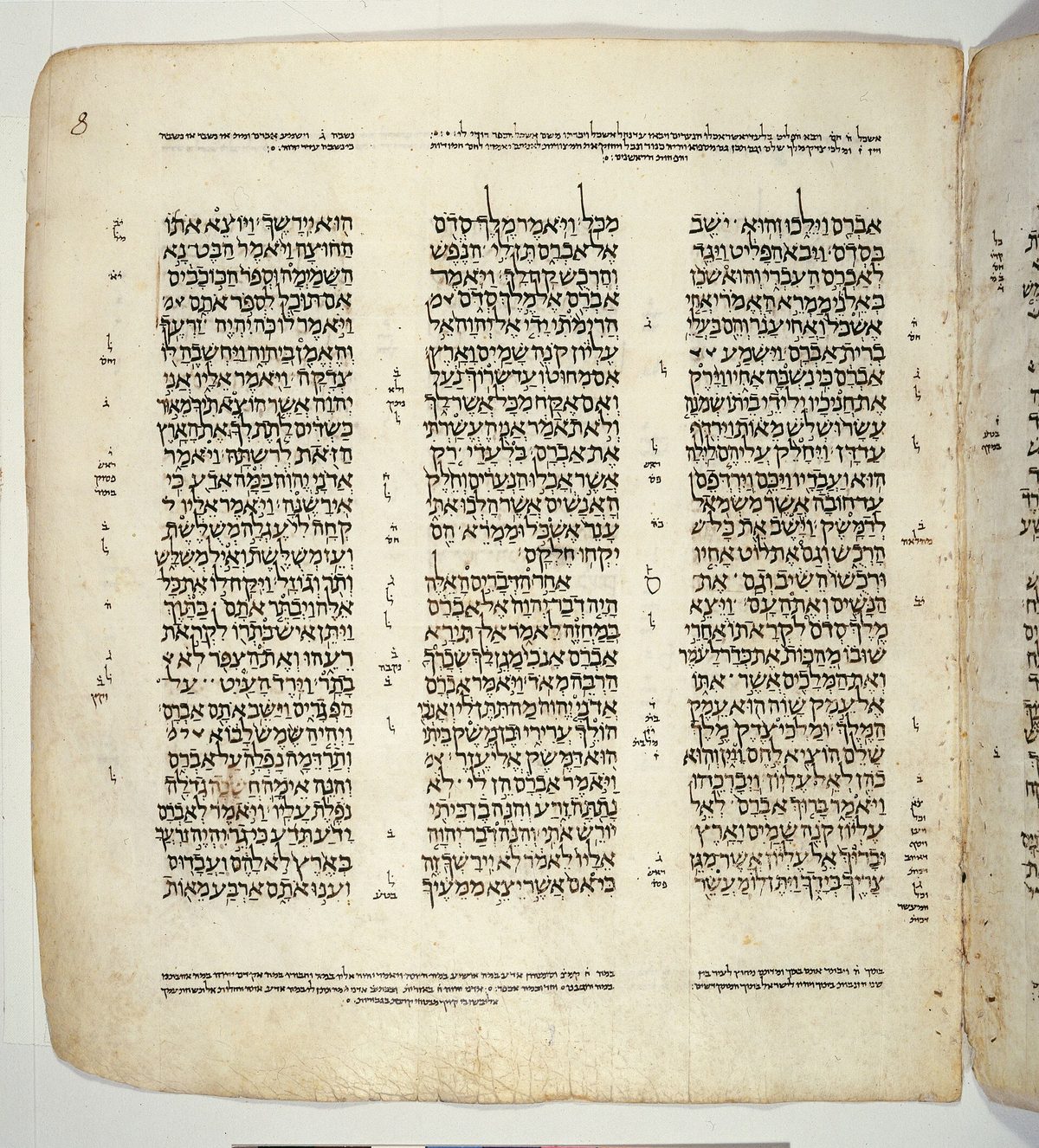
- Wikimedia Commons, Leningrad Codex folio 8a checked 2026-10
