Lesson 19 of 19 · about 20 minutes
Pictures, Numbers and Infographics
You'll be able to
- Locate the module's key dates on a single timeline from the 1606 Virginia charter to the 2026 Slaughter decision
- Read federal land, PILT, employment and balance sheet figures with their sources and limits
- Explain why some measures rise and fall with war while others accumulate
- Trace Pierson's five steps from sincere institution to institutionalism, and the off ramp he names
Start here: the short version
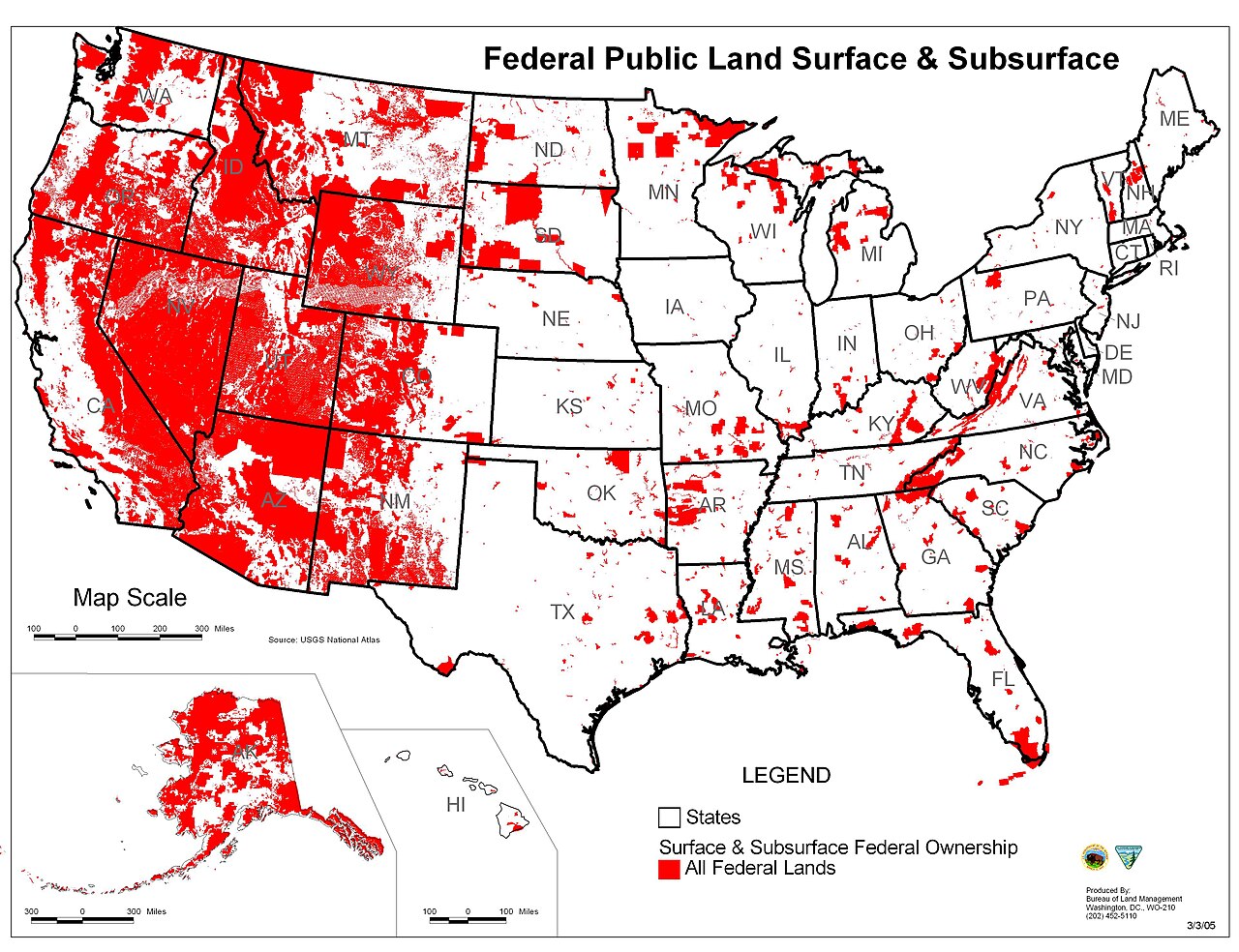
In 1816 the federal civilian workforce numbered 4,837. In 2024 it was about 3 million. The Federal Register ran 2,620 pages in 1936 and 90,402 in 2023, and five federal agencies hold 61.9 percent of Idaho's land. Those numbers and others sit side by side below, each with a government or primary source. It also gathers the best public domain images from the eighteen lessons before it, and four infographics: a timeline of the institutions the module covers from 1606 to 2026, a bar chart of federal land ownership in the western states, a bar chart of the Federal Reserve's balance sheet, and a flow diagram of how an institution slides into institutionalism, built from Pierson's own essay "The Acacia Illusion." The numbers do not all point the same way. Some of them spoil the easy story on each side.
Challenge
If the federal government looks like a machine that only grows, read the employment series. It fell from 3.8 million in 1945 to under 3 million in 1970, and the September 2026 figure sits below the 2024 average. War, more than appetite, drove the biggest jumps. And the federal share of Idaho rests in part on Idaho's own constitution, which disclaimed the public lands. If the growth worries look overblown, read the Federal Register and the Fed's balance sheet. Federal Register output rose about 35 times from 1936 to 2023. Both have been cut hard at times, and neither has come close to its starting level. Each camp has numbers it would rather skip, and the table prints them all.
Numbers cannot settle an argument about legitimacy. They can keep it honest. A claim that an institution "grew" means little until it has a starting figure, an ending figure and a source. Each figure below comes from a federal statistical series, a statute, a court docket, a government report or a company's own filing, and each note says which one. Where two sources count different things, the table says so.
Gallery
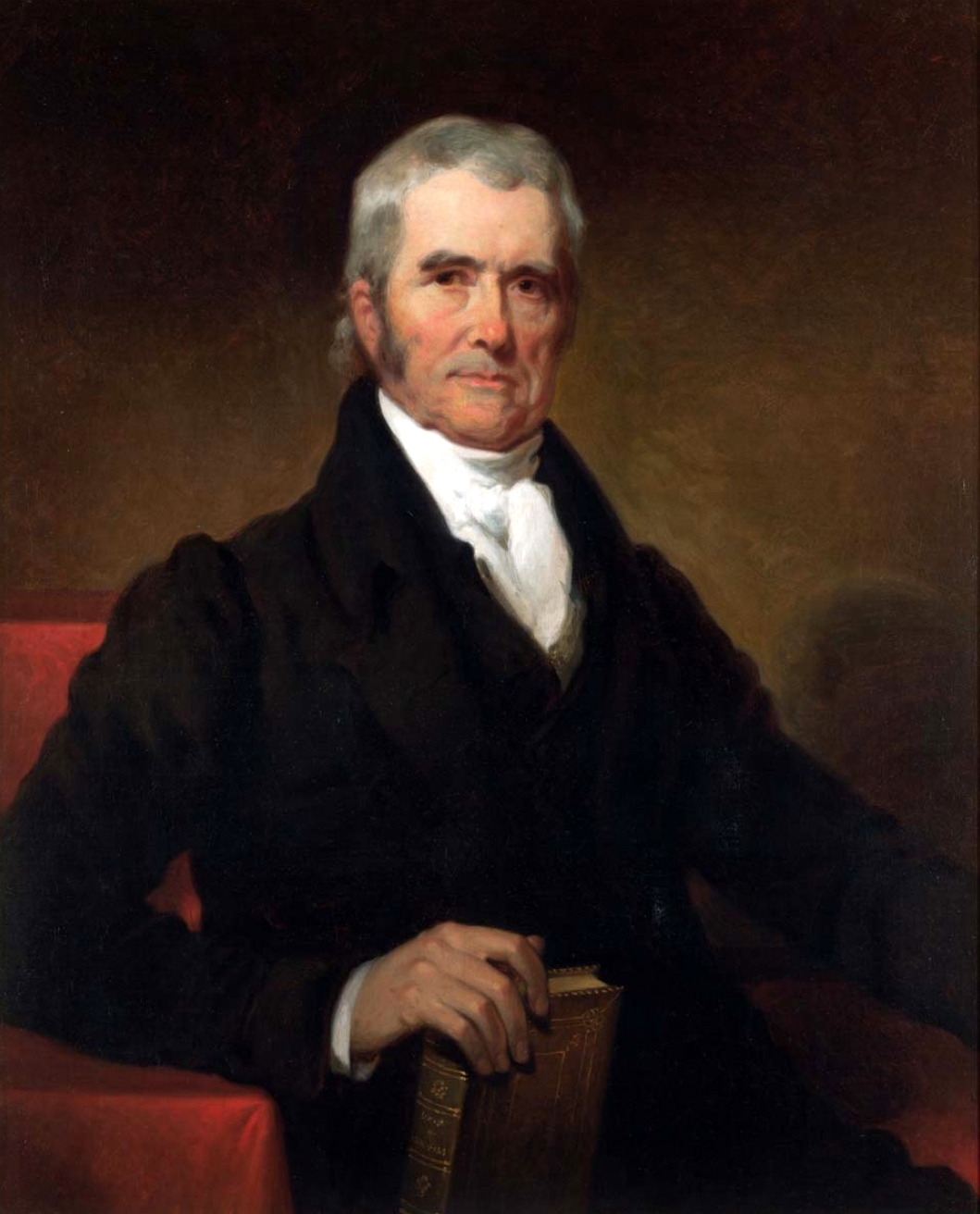
The images are public domain because of their age or because they are works of the United States government. Captions give the creator and date where the record supplies them.
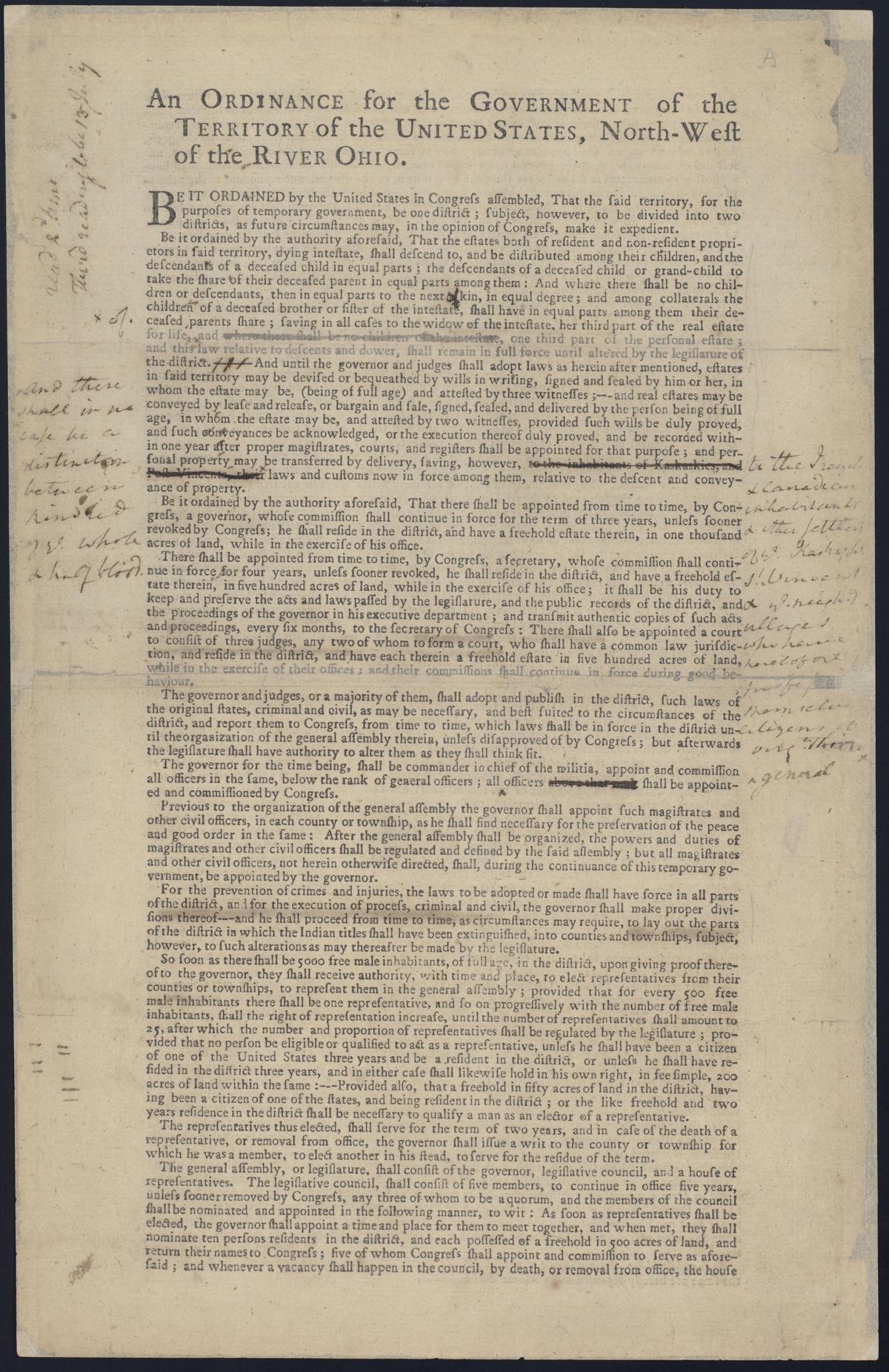
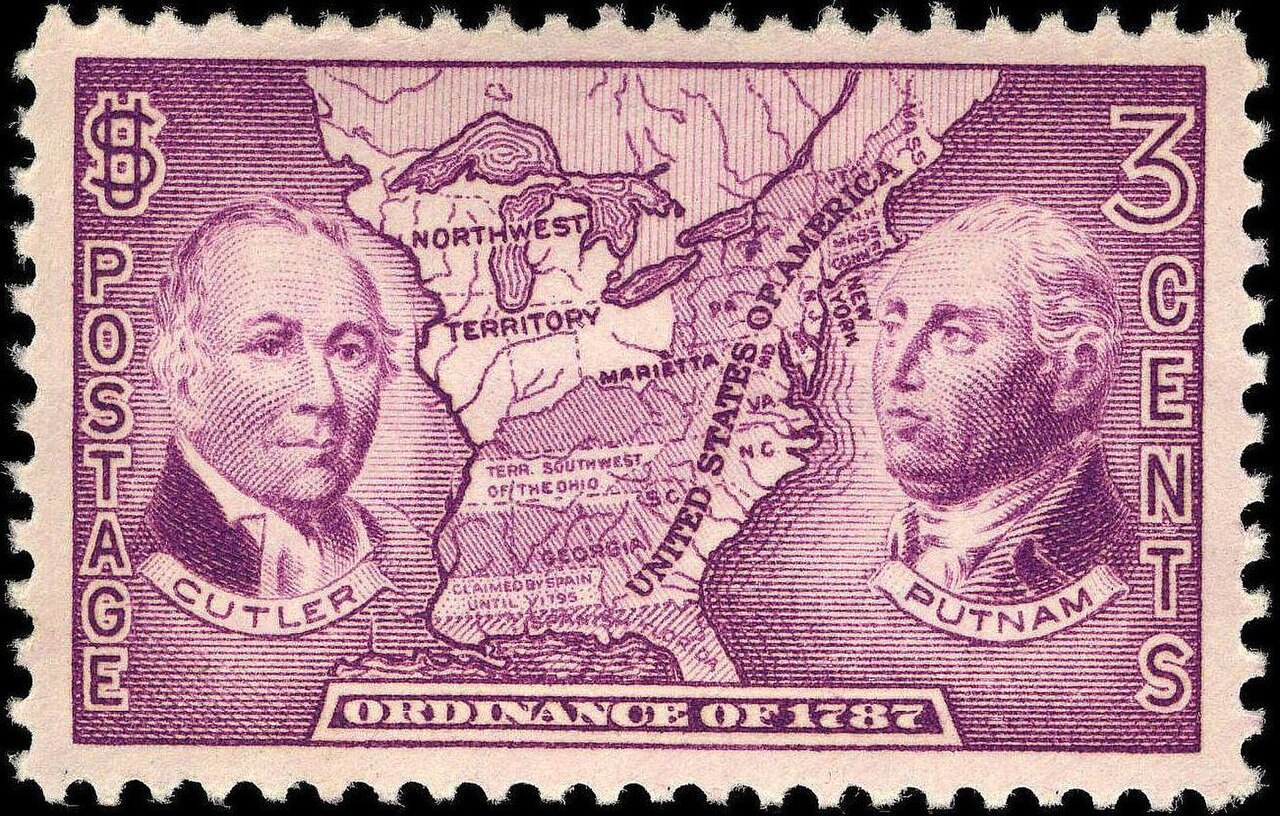

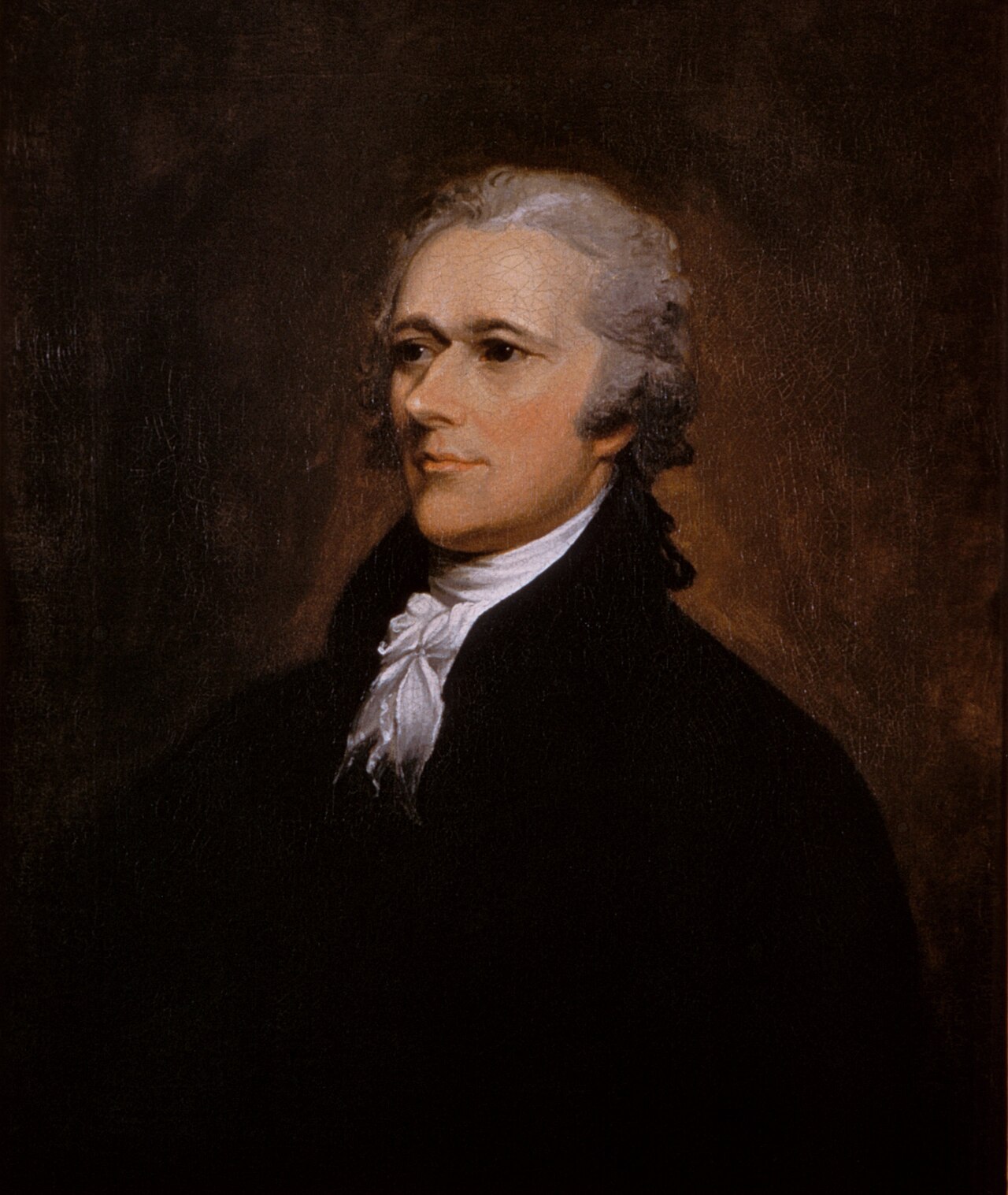

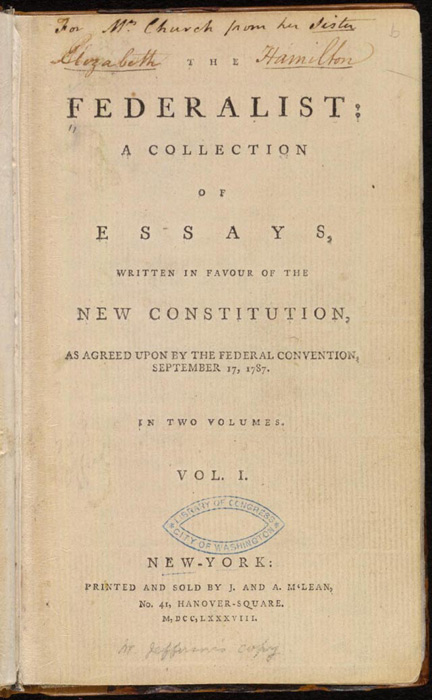



Timeline of institutions, 1606 to 2026
The timeline marks the founding documents and decisions the module treats as load-bearing. Brown marks charters, public credit and finance. Green marks territory and land. Purple marks courts and adjudication. Blue marks agencies and treaties. The spacing is by event, so the crowding of the twentieth and twenty-first centuries shows density of institution-building, not a time scale.
The numbers
| Measure | Figure | Date | Source |
|---|---|---|---|
| Paid federal civilian employees | 4,837 | 1816 | Historical Statistics, series Y 30826 |
| Paid federal civilian employees | 36,672 | 1861 | Series Y 30826 |
| Paid federal civilian employees | 239,476 | 1901 | Series Y 30826 |
| Paid federal civilian employees | 1,042,420 | 1940 | Series Y 30826 |
| Paid federal civilian employees | 3,816,310 | 1945 | Series Y 30826 |
| Paid federal civilian employees | 2,981,574 | 1970 | Series Y 30826 |
| Federal government employment, all federal including Postal Service | about 3,000,000 (annual average) | 2024 | BLS series CES909100000127 |
| Same series, latest month | 2,682,000 | September 2026 | BLS series CES909100000127 |
| Federal land share of Idaho | 61.9% (32,785,766 of 52,933,120 acres) | Sept. 30, 2024 | CRS R42346, Table 128 |
| Federal land share, 11 western states combined | 45.9% | Sept. 30, 2024 | CRS R4234628 |
| Federal land share, nation (five agencies) | 27.1% (615,203,294 acres) | Sept. 30, 2024 | CRS R42346, Table 128 |
| PILT, national payments | $644,769,260 | FY2025 | Interior, FY2025 national summary29 |
| PILT, Idaho | $42,973,738 | FY2025 | Interior, FY2025 national summary29 |
| PILT, national payments | $733,041,949 | FY2026 | Interior, FY2026 national summary19 |
| PILT, Idaho | $49,562,605 | FY2026 | Interior, FY2026 national summary19 |
| Federal administrative law judges | 1,422 at 30 agencies | March 2009 | CRS, citing OPM30 |
| Federal administrative law judges | about 2,000 | March 2024 | ACUS bulletin31 |
| Social Security ALJs | more than 1,500 in 163 hearing offices | page certified Nov. 8, 2019 | SSA Office of Hearings Operations32 |
| Federal Register pages published | 2,620 | 1936 | Office of the Federal Register33 |
| Federal Register pages published | 90,402 | 2023 | Office of the Federal Register33 |
| Federal Reserve total assets | $870 billion | Aug. 1, 2007 | FRED, WALCL34 |
| Federal Reserve total assets (peak) | $8.965 trillion | Apr. 13, 2022 | FRED, WALCL34 |
| Federal Reserve total assets | $6.754 trillion | Oct. 21, 2026 | FRED, WALCL34 |
| BlackRock assets under management | $15.5 trillion | Sept. 30, 2026 | BlackRock earnings supplement, SEC Form 8-K35 |
| Vanguard global assets | USD $13.3 trillion | July 30, 2026 | Vanguard Canada release36 |
| State Street assets under management | $6.3 trillion | Sept. 30, 2026 | State Street 3Q26 fact sheet37 |
| U.S. debt in Hamilton's report | $54,124,464.56 (foreign $11,710,378.62) | January 1790 | Report on Public Credit5 |
Read the table with care. The historical employment series, Y 308, counts paid civilian employment as of June 30 and runs only to 1970; the modern BLS series counts payroll jobs and includes the Postal Service, so the 1970 and 2024 figures come from different methods. Compare them loosely.2627 The federal land percentages cover only five agencies and so understate total federal ownership, a point CRS makes in its notes to Table 1.28 And the three asset manager figures are not additive measures of control. They are assets managed for clients, reported in each firm's own terms on different dates.353637
Set side by side, the numbers move at very different speeds. The federal workforce grew almost 790 times from 1816 to its 1945 wartime peak, then fell by more than 800,000 by 1970. Federal Register output rose about 35 times from 1936 to 2023. The Federal Reserve's balance sheet grew more than tenfold from 2007 to its 2022 peak and in October 2026 remains about 7.8 times its 2007 size. Idaho's PILT payment rose by $6,588,867 from FY2025 to FY2026, while the national total rose by about $88 million and the larger per-acre rate rose for inflation from $3.46 to $3.55.2919
Federal land share by western state
Idaho ranks third among the states, behind Nevada and Utah, and just ahead of Alaska. Idaho's share follows in part from its statehood bargain: in Article XXI, section 19 of its constitution, which Congress accepted in the Admission Act of July 3, 1890, the people of Idaho disclaimed all right and title to the unappropriated public lands within the state.1241
The Federal Reserve balance sheet
How an institution becomes institutionalism
This flow diagram uses only Pierson's words from "The Acacia Illusion." It reads top to bottom as the slide he describes, with the dashed green box as the exit he names: reform while the institution is still responsive. Pierson ties the image to a biology finding, writing that ants fed the nectar "can no longer metabolize other sugars."39 The 2014 study by Heil and colleagues supports the core of that, with one narrowing: the enzyme blocked is invertase, which breaks down sucrose, so the finding concerns sucrose. The study reports that chitinase in the extrafloral nectar of Acacia hosts inhibits invertase in the guts of newly emerged Pseudomyrmex worker ants, so that a worker who feeds first on host nectar keeps feeding on it.3839
Through Pierson's Framework
Pierson's method judges an institution by what it does, and numbers are one of the few ways to see what an institution does across two centuries. The employment series shows that the federal government's size tracks war more than anything else: the 1945 figure was more than three and a half times the 1940 figure, and much of it was gone within five years.26 That pattern cuts against the picture of a body growing on its own momentum. War built most of the peak, and much of it left with the war. The Federal Register and the Federal Reserve tell a different story. Both have fallen sharply at times: Federal Register pages dropped from 87,012 in 1980 to 47,418 in 1986 and from 97,069 in 2016 to 61,703 in 2017, and the Fed's balance sheet shrank by about $2.4 trillion from its 2022 peak to a low of $6.54 trillion in December 2025, and in October 2026 stood about $2.2 trillion below the peak. Neither has come close to returning to its starting level, which fits what Pierson's phrase "tyranny by sediment" describes: layers that accumulate faster than anyone removes them.403334
The land numbers test the other side of his framework, the duty to support legitimate government. The federal share of Idaho is high because of a bargain written into the constitution framed by Idaho's convention in 1889 and accepted by Congress in the Admission Act of July 3, 1890.1241 PILT is the federal government's partial payment for that bargain, and it now runs to about $49.6 million a year for Idaho.19 An ordered liberty reading treats both as public, lawful arrangements. Calling the federal estate in Idaho a seizure ignores Idaho's own constitution. Calling it beyond argument ignores that citizens are free to argue about it and to change it by lawful means, the course lesson 18 traces.
Hard Questions and Answers
Isn't a numbers page like this just cherry picking the years that make government look huge?
Check the years it picks. The employment years include years that cut against a growth story, such as the fall from 3.8 million in 1945 to under 3 million in 1970.26 The table also prints the latest BLS figure, 2,682,000 for September 2026, which is lower than the 2024 average.27 A page built to make government look huge would leave those two out. Every number sits beside its note, so the charge can be tested figure by figure.
Federal Register pages measure paper, not power. Why count them at all?
Fair hit. Pages are a crude measure, and the Office of the Federal Register's own table splits them into rules, proposed rules, notices and presidential documents, which shows how much of the total is routine notice.33 In 2023, rules filled 26,286 pages and notices 33,147.33 The figure belongs in the table as a measure of volume. It says nothing about whether any given rule is lawful or wise.
Why print the BlackRock, Vanguard and State Street figures at all, unless the point is that three firms own the country?
Because scale is a fact and ownership is a separate claim. Assets under management are client money: retirement accounts, pensions and index funds owned by others and managed under contract. The figures show scale and concentration of management, which lesson 16 discusses with the case for and against concern.42 They do not show ownership of land or control of government, and lesson 18 found no record support for that claim. Anyone who wants to make it has to bring documents the record does not contain.43
Why trust a 2024 ACUS estimate for ALJs over OPM, the obvious source?
Because the obvious source is silent. OPM's ALJ page, checked October 22, 2026, publishes no current headcount.44 The last OPM-based count found in a government report is the March 2009 figure in CRS, and the most recent official estimate is ACUS's "about 2,000" in March 2024.3031 The table prints both with their dates rather than invent a precise current figure.
Learn more
- CRS, Federal Land Ownership: Overview and Data (R42346): state by state federal acreage, updated September 2026.
- Interior Department, Payments in Lieu of Taxes: state and county PILT payments by year.
- FRED, Federal Reserve total assets (WALCL): the weekly balance sheet series.
- FRED, All Employees, Federal (CES9091000001): BLS monthly federal employment.
- Historical Statistics of the United States, Chapter Y: federal employment 1816 to 1970, series Y 308 to 317.
- Office of the Federal Register, pages published 1936 to 2023: the full table by category.
- Lesson 18, Reading the Record: the claim by claim test of the territorial thesis.
- Lesson 1, What Institutionalism Is: the definition behind the flow diagram.
Notes
- The First Charter of Virginia, April 10, 1606. The Avalon Project, Yale Law School. Read it online. ↩
- The Charter of Massachusetts Bay, 1629 (dated the fourth day of March in the fourth year of Charles I). The Avalon Project, Yale Law School. Read it online. ↩
- An Ordinance for the Government of the Territory of the United States North West of the River Ohio, July 13, 1787, sections 3, 4, 5, 9, 11 and Articles 2, 4 and 5. The Avalon Project, Lillian Goldman Law Library, Yale Law School. Read it online. ↩
- An Act to provide for the Government of the Territory North-west of the river Ohio, ch. 8, 1 Stat. 50, 52 to 53 (Aug. 7, 1789), section 1. GovInfo, U.S. Statutes at Large. Read it online. ↩
- Alexander Hamilton, Report Relative to a Provision for the Support of Public Credit, January 9, 1790. Founders Online, National Archives. Read it online. ↩
- Federal Reserve History, "The First Bank of the United States," Federal Reserve Bank of Philadelphia. Read it online. ↩
- American Insurance Co. v. 356 Bales of Cotton (Canter), 26 U.S. (1 Pet.) 511, 546 (1828), opinion of Marshall, C.J. Legal Information Institute, Cornell Law School. Read it online. ↩
- Murray's Lessee v. Hoboken Land and Improvement Co., 59 U.S. (18 How.) 272, 284 (1856). Legal Information Institute, Cornell Law School. Read it online. ↩
- National Archives, Milestone Documents, "Pacific Railway Act (1862)," Act of July 1, 1862, 12 Stat. 489. Read it online. ↩
- An Act to provide a temporary Government for the Territory of Idaho, ch. 117, 12 Stat. 808 (Mar. 3, 1863), sections 2, 3 and 9. GovInfo, U.S. Statutes at Large. Read it online. ↩
- National Archives, Milestone Documents, "Interstate Commerce Act (1887)," Public Law 49-41, February 4, 1887. Read it online. ↩
- Constitution of the State of Idaho, Article XXI, section 19. Idaho Legislature. Idaho was admitted by An act to provide for the admission of the State of Idaho into the Union, 26 Stat. 215 (approved July 3, 1890). Read it online. ↩
- Downes v. Bidwell, 182 U.S. 244 (decided May 27, 1901), opinion of Brown, J., and dissent of Harlan, J. Legal Information Institute, Cornell Law School. Read it online. ↩
- Federal Reserve History, "Federal Reserve Act Signed into Law," December 23, 1913. Read it online. ↩
- Crowell v. Benson, 285 U.S. 22, 51, 54 (1932), opinion of Hughes, C.J. Legal Information Institute, Cornell Law School. Read it online. ↩
- Administrative Procedure Act, ch. 324, 60 Stat. 237 (approved June 11, 1946), sections 1 and 11. GovInfo, U.S. Statutes at Large. Read it online. ↩
- Agreement between the Parties to the North Atlantic Treaty regarding the Status of their Forces, London, 19 June 1951. NATO official texts. Read it online. ↩
- Federal Land Policy and Management Act of 1976, Pub. L. 94-579, title I, sec. 102, 90 Stat. 2744 (Oct. 21, 1976), codified at 43 U.S.C. 1701(a)(1). Legal Information Institute, Cornell Law School. Read it online. ↩
- U.S. Department of the Interior, Payments in Lieu of Taxes, state payment table for FY2024 to FY2026 (FY2026 payments $733,041,949, distributed June 23, 2026); FY2026 appropriation $733.6 million, of which $0.6 million for administration, per CRS R46260 (Aug. 31, 2026); Alternative A rate $3.55 and Alternative B rate $0.51 per acre; Idaho $49,562,605; original law Public Law 94-565, October 20, 1976. Program page with state and county data. Read it online. ↩
- U.S. Department of the Treasury, "About TARP": the Emergency Economic Stabilization Act, authorizing the Troubled Asset Relief Program, was enacted October 3, 2008. Read it online. ↩
- Lucia v. Securities and Exchange Commission, 585 U.S. 237 (decided June 21, 2018), No. 17-130, opinion of Kagan, J., including the syllabus and Part I on the Government's change of position. Legal Information Institute, Cornell Law School. Read it online. ↩
- Securities and Exchange Commission v. Jarkesy, 603 U.S. 109 (decided June 27, 2024), No. 22-859, syllabus and opinion of Roberts, C.J. Legal Information Institute, Cornell Law School. Read it online. ↩
- Loper Bright Enterprises v. Raimondo, 603 U.S. 369 (decided June 28, 2024), No. 22-451. Legal Information Institute, Cornell Law School. Read it online. ↩
- Supreme Court of the United States, docket No. 22O160, Utah v. United States: motion for leave to file a bill of complaint filed August 20, 2024; amicus briefs filed October 18 and 22, 2024; brief of the United States in opposition and motion to intervene of the Ute Indian Tribe filed November 21, 2024; motion for leave denied January 13, 2025. Read it online. ↩
- Trump v. Slaughter, 609 U.S. 422 (decided June 29, 2026), No. 25-332, syllabus and opinion of Roberts, C.J., at 450 and Part III-B, at 456. Supreme Court of the United States, preliminary print. Read it online. ↩
- U.S. Bureau of the Census, Historical Statistics of the United States, Colonial Times to 1970 (1975), Part 2, Chapter Y, Series Y 308-317, "Paid Civilian Employment of the Federal Government: 1816 to 1970," column Y 308 (total), as of June 30 except as noted. Read it online. ↩
- U.S. Bureau of Labor Statistics, Current Employment Statistics, All Employees, Federal (series CES9091000001), thousands, seasonally adjusted; 2024 monthly average 3,000 thousand; September 2026 value 2,682 thousand. Via FRED, Federal Reserve Bank of St. Louis, retrieved October 22, 2026. Read it online. ↩
- Congressional Research Service, "Federal Land Ownership: Overview and Data," R42346 (updated September 14, 2026), summary, history section and Table 1 (acreage as of September 30, 2024). Read it online. ↩
- U.S. Department of the Interior, Fiscal Year 2025 Payments in Lieu of Taxes National Summary (June 2025): payments $644,769,260; Alternative A rate $3.46 per acre; Idaho $42,973,738. Read it online. ↩
- Congressional Research Service, "Administrative Law Judges: An Overview," RL34607, citing OPM data as of March 2009. Read it online. ↩
- Administrative Conference of the United States, "ALJ Basics," Information Interchange Bulletin No. 035 (March 2024). Read it online. ↩
- Social Security Administration, Office of Hearings Operations, "About Hearings and Appeals" (page certified November 8, 2019). Read it online. ↩
- Office of the Federal Register, "Federal Register Pages Published per Category, 1936 to 2023" (2024): 1936 total 2,620; 1980 total 87,012; 1986 total 47,418; 2016 total 97,069; 2017 total 61,703; 2023 total 90,402, with rules 26,286, proposed rules 28,892 and notices 33,147. Read it online. ↩
- Board of Governors of the Federal Reserve System, Assets: Total Assets, Wednesday Level (series WALCL), millions of dollars: 870,261 on August 1, 2007; 8,965,487 on April 13, 2022; 6,753,604 on October 21, 2026. Via FRED, Federal Reserve Bank of St. Louis, retrieved October 22, 2026. Read it online. ↩
- BlackRock, Inc., Form 8-K, Exhibit 99.2, Earnings Release Supplement, third quarter 2026: "Assets Under Management of $15.5 trillion at September 30, 2026." SEC EDGAR. Read it online. ↩
- Vanguard Investments Canada, press release of September 24, 2026, company boilerplate: "Vanguard manages USD $13.3 trillion (CAD $18.4 trillion) in global assets ... (as of July 30, 2026)." Read it online. ↩
- State Street Corporation, 3Q26 Earnings Fact Sheet: AUM $6.3T as of September 30, 2026. Read it online. ↩
- Martin Heil, Alejandro Barajas-Barron, Domancar Orona-Tamayo, Natalie Wielsch and Ales Svatos, "Partner manipulation stabilises a horizontally transmitted mutualism," Ecology Letters 17, no. 2 (2014): 185 to 192, doi:10.1111/ele.12215. Pierson's essay cites Heil, McKey and Bennett (2001) for the acacia and ant relationship; the specific finding that nectar chitinase inhibits the ants' invertase is from this 2014 paper. PubMed abstract. Read it online. ↩
- Jeff A. Pierson, "The Acacia Illusion: How Institutionalism Mimics Nature's Most Subtle Manipulation," in The Ordered Liberty Papers (2025). Read it online. ↩
- Jeff A. Pierson, "The Anti-Federalist Warning: Institutional Power and the Fragility of Liberty," appendix to Ordered Liberty Reclaimed: A Foundation for Liberty. Read it online. ↩
- An act to provide for the admission of the State of Idaho into the Union, 26 Stat. 215 (approved July 3, 1890), preamble reciting the constitutional convention assembled July 4, 1889. GovInfo, U.S. Statutes at Large. Read it online. ↩
- Lesson 16 of this module, "Modern Mercantilism: State and Capital Fused, 2008 to 2026," on the Big Three asset managers and what their filings report. Read it online. ↩
- Lesson 18 of this module, "Reading the Record: Testing the Territorial Thesis." Read it online. ↩
- U.S. Office of Personnel Management, "Administrative Law Judges" (ALJ Program Office page), checked October 22, 2026; the page describes recruitment and the ALJ Loan and Senior ALJ programs but gives no current headcount. Read it online. ↩
Terms in this lesson
- Series Y 308
- The Census Bureau's historical series of paid federal civilian employment from 1816 to 1970, counted as of June 30.
- WALCL
- The Federal Reserve's weekly series for total assets on its balance sheet, published in the H.4.1 release.
- PILT
- Payments in Lieu of Taxes, federal payments to local governments under 31 U.S.C. 6901 to 6907 for tax-exempt federal land within their borders.
- Entitlement land
- Federal land, such as BLM and Forest Service acreage, that counts toward a county's PILT payment.
- Assets under management (AUM)
- The market value of client money a firm manages; it measures scale of management, not ownership by the firm.
- Federal Register
- The daily federal publication of rules, proposed rules, notices and presidential documents, begun in 1936.
Sources
- An Ordinance for the Government of the Territory of the United States North West of the River Ohio, July 13, 1787, sections 3, 4, 5, 9, 11 and Articles 2, 4 and checked 2026-10
- An Act to provide for the Government of the Territory North-west of the river Ohio, ch. 8, 1 Stat. 50, 52 to 53 (Aug. 7, 1789), section 1. GovInfo, U.S. Statute checked 2026-10
- Alexander Hamilton, Report Relative to a Provision for the Support of Public Credit, January 9, 1790. Founders Online, National Archives checked 2026-10
- American Insurance Co. v. 356 Bales of Cotton (Canter), 26 U.S. (1 Pet.) 511, 546 (1828), opinion of Marshall, C.J checked 2026-10
- Murray's Lessee v. Hoboken Land and Improvement Co., 59 U.S. (18 How.) 272, 284 (1856) checked 2026-10
- An Act to provide a temporary Government for the Territory of Idaho, ch. 117, 12 Stat. 808 (Mar. 3, 1863), sections 2, 3 and 9. GovInfo, U.S. Statutes at Large checked 2026-10
- Constitution of the State of Idaho, Article XXI, section 19. Idaho Legislature. Idaho was admitted by An act to provide for the admission of the State of Idaho checked 2026-10
- Downes v. Bidwell, 182 U.S. 244 (decided May 27, 1901), opinion of Brown, J., and dissent of Harlan, J checked 2026-10
- Crowell v. Benson, 285 U.S. 22, 51, 54 (1932), opinion of Hughes, C.J checked 2026-10
- Administrative Procedure Act, ch. 324, 60 Stat. 237 (approved June 11, 1946), sections 1 and 11. GovInfo, U.S. Statutes at Large checked 2026-10
- Federal Land Policy and Management Act of 1976, Pub. L. 94-579, title I, sec. 102, 90 Stat. 2744 (Oct. 21, 1976), codified at 43 U.S.C. 1701(a)(1) checked 2026-10
- U.S. Department of the Interior, Payments in Lieu of Taxes, state payment table for FY2024 to FY2026 (FY2026 payments $733,041,949, distributed June 23, 2026); FY2026 appropriation $733.6 million, of which $0.6 million for administration, per CRS R46260 (Aug. 31, 2026) checked 2026-10
- Lucia v. Securities and Exchange Commission, 585 U.S. 237 (decided June 21, 2018), No. 17-130, opinion of Kagan, J., including the syllabus and Part I on the Go checked 2026-10
- Securities and Exchange Commission v. Jarkesy, 603 U.S. 109 (decided June 27, 2024), No. 22-859, syllabus and opinion of Roberts, C.J checked 2026-10
- Loper Bright Enterprises v. Raimondo, 603 U.S. 369 (decided June 28, 2024), No. 22-451 checked 2026-10
- Supreme Court of the United States, docket No. 22O160, Utah v. United States: motion for leave to file a bill of complaint filed August 20, 2024; amicus briefs checked 2026-10
- Trump v. Slaughter, 609 U.S. 422 (decided June 29, 2026), No. 25-332, syllabus and opinion of Roberts, C.J., Part III. Supreme Court of the United States, preli checked 2026-10
- Congressional Research Service, "Federal Land Ownership: Overview and Data," R42346 (updated September 14, 2026), summary, history section and Table 1 (acreage checked 2026-10
- Congressional Research Service, "Administrative Law Judges: An Overview," RL34607, citing OPM data as of March 2009 checked 2026-10
- Administrative Conference of the United States, "ALJ Basics," Information Interchange Bulletin No. 035 (March 2024) checked 2026-10
- Social Security Administration, Office of Hearings Operations, "About Hearings and Appeals" (page certified November 8, 2019) checked 2026-10
- U.S. Office of Personnel Management, "Administrative Law Judges" (ALJ Program Office page), checked October 22, 2026; the page describes recruitment and the ALJ checked 2026-10
- The First Charter of Virginia, April 10, 1606 checked 2026-10
- The Charter of Massachusetts Bay, 1629 (dated the fourth day of March in the fourth year of Charles I) checked 2026-10
- Federal Reserve History, "The First Bank of the United States," Federal Reserve Bank of Philadelphia checked 2026-10
- National Archives, Milestone Documents, "Pacific Railway Act (1862)," Act of July 1, 1862, 12 Stat. 489 checked 2026-10
- National Archives, Milestone Documents, "Interstate Commerce Act (1887)," Public Law 49-41, February 4, 1887 checked 2026-10
- Federal Reserve History, "Federal Reserve Act Signed into Law," December 23, 1913 checked 2026-10
- Agreement between the Parties to the North Atlantic Treaty regarding the Status of their Forces, London, 19 June 1951. NATO official texts checked 2026-10
- U.S. Department of the Treasury, "About TARP": the Emergency Economic Stabilization Act, authorizing the Troubled Asset Relief Program, was enacted October 3, 2 checked 2026-10
- U.S. Bureau of the Census, Historical Statistics of the United States, Colonial Times to 1970 (1975), Part 2, Chapter Y, Series Y 308-317, "Paid Civilian Employ checked 2026-10
- U.S. Bureau of Labor Statistics, Current Employment Statistics, All Employees, Federal (series CES9091000001), thousands, seasonally adjusted; 2024 monthly aver checked 2026-10
- U.S. Department of the Interior, Fiscal Year 2025 Payments in Lieu of Taxes National Summary (June 2025): payments $644,769,260; Alternative A rate $3.46 per ac checked 2026-10
- Office of the Federal Register, "Federal Register Pages Published per Category, 1936 to 2023" (2024): 1936 total 2,620; 2023 total 90,402, with rules 26,286, pr checked 2026-10
- Board of Governors of the Federal Reserve System, Assets: Total Assets, Wednesday Level (series WALCL), millions of dollars: 870,261 on August 1, 2007; 8,965,48 checked 2026-10
- BlackRock, Inc., Form 8-K, Exhibit 99.2, Earnings Release Supplement, third quarter 2026: "Assets Under Management of $15.5 trillion at September 30, 2026." SEC checked 2026-10
- Vanguard Investments Canada, press release of September 24, 2026, company boilerplate: "Vanguard manages USD $13.3 trillion (CAD $18.4 trillion) in global asset checked 2026-10
- State Street Corporation, 3Q26 Earnings Fact Sheet: AUM $6.3T as of September 30, 2026 checked 2026-10
- Martin Heil, Alejandro Barajas-Barron, Domancar Orona-Tamayo, Natalie Wielsch and Ales Svatos, "Partner manipulation stabilises a horizontally transmitted mutua checked 2026-10
- An act to provide for the admission of the State of Idaho into the Union, 26 Stat. 215 (approved July 3, 1890), preamble reciting the constitutional convention checked 2026-10