Lesson 4 of 19 · about 35 minutes
Admiralty Courts, Writs and the Grievances of 1776
You'll be able to
- Explain what a vice-admiralty court was and how the Sugar Act of 1764 turned it into a revenue tribunal
- Identify the specific enforcement clauses of the Sugar Act that the First Continental Congress listed as grievances in 1774
- Describe the American Board of Customs Commissioners created in 1767 and why it is an early administrative board on American soil
- Connect the Declaration of Independence's grievances on new offices, dependent judges and jury trial to specific statutes
- Weigh how the majority, concurrence and dissent in SEC v. Jarkesy (2024) used this history, and how Hamburger's prerogative thesis and its critics read it
Start here: the short version
On October 29, 1768, the Crown's advocate general in Boston filed informations against John Hancock in the vice-admiralty court, seeking £9,000, treble the value of the wine he was charged with landing. No jury would hear the case. And the prosecutor, as informer, was entitled to a third of whatever he won. Between 1761 and 1776 the quarrel between Britain and its colonies turned on institutions built like that one: courts that decided cases without juries, and offices that governed without the consent of colonial assemblies. The Sugar Act of 1764 let customs officers take their cases to a vice-admiralty court, where a single Crown-appointed judge decided, the owner carried the burden of proof and the officers shared in the forfeitures. The Townshend Acts of 1767 created an American Board of Customs Commissioners in Boston and paid royal officials from American revenue. The colonists answered with the Stamp Act Congress, the Continental Congress and finally the Declaration of Independence, which charged the king with erecting "a multitude of New Offices" and "depriving us in many cases, of the benefits of Trial by Jury." The Supreme Court cited that history in 2024.
Challenge
Two easy readings are on offer, and the record spoils both. A reader who distrusts modern agencies will want the American Board of Customs to be the SEC's grandfather and Jarkesy to be 1776 vindicated. But the Board had no rulemaking power, answered to the Treasury, and Justice Sotomayor's dissent counts more than 200 statutes in which Congress authorized agencies to impose civil penalties. A reader who trusts agencies will want the colonists to be smugglers wrapping tax evasion in Magna Charta. Hancock may well have been guilty. Yet the officer picked the forum, the owner carried the burden of proof, the judges were paid from forfeitures, and a wrongful seizure cost the officer nothing. Whether a defendant is guilty and whether the forum is fair are separate questions. Each reader tends to answer one and skip the other.
Lesson 3 showed that the empire's legal tools were in place by 1696: juryless admiralty courts available "att the Pleasure of the Officer or Informer," the burden of proof on the owner of seized goods, and the voiding of colonial laws that conflicted with the trade acts.1 For most of the next seventy years those tools were used lightly. After the Seven Years' War ended in 1763, Britain, "burdened by heavy debts" in the words of the State Department's historians, decided to use them in earnest.2 The record from 1763 to 1776 shows what happens when an empire wakes up institutions its subjects never consented to. It also shows the colonists naming, clause by clause, what they objected to.
What a vice-admiralty court was
An admiralty court decides cases of the sea: collisions, salvage, seamen's wages, prize ships taken in war. In England the High Court of Admiralty followed the civil law of continental Europe, not the common law, and it sat without a jury. In the colonies, royal commissions created vice-admiralty courts on the same model. One modern summary describes their original work as resolving "disputes among merchants and seamen," with judges "appointed from the local population and paid from the treasuries of the colonies served."3
The trouble began when Parliament gave these courts work that had nothing to do with the sea. Justice Neil Gorsuch, writing in 2024 and drawing on the historian Carl Ubbelohde, summarized the shift: "The creep away from the original province of those courts began with the grant of authority over violations of certain trade and customs laws. But in the decade before the Revolution, the drip, drip, drip of expanding power became a torrent, as Parliament allowed more and more actions to be brought in colonial vice-admiralty courts." He added that "Many of the matters added to vice-admiralty jurisdiction in the Colonies would have required juries in England," and that colonial vice-admiralty judges "usually served at the pleasure of the royal administration."4
The reason for the shift was no secret. Colonial juries would not convict their neighbors of smuggling. Gorsuch quotes a royal governor of Massachusetts as explaining that colonial juries "'were not to be trusted.'"4 The editors of John Adams's legal papers, writing as historians and with some sympathy for the Crown's officers, put it more neutrally: the statutes "provided the choice of proceeding at common law or in Admiralty, because it was a truism that no jury could be found to convict for violation of the Acts of Trade."5
1761: James Otis and the writs of assistance
The first great argument came before the Sugar Act, over a search warrant. A writ of assistance was a general warrant that let customs officers, with a constable's help, enter any house, shop or warehouse to search for smuggled goods. It named no place and no suspect. In 1761 the customs officers asked the province's Superior Court to issue such writs, and Boston's merchants petitioned against them.
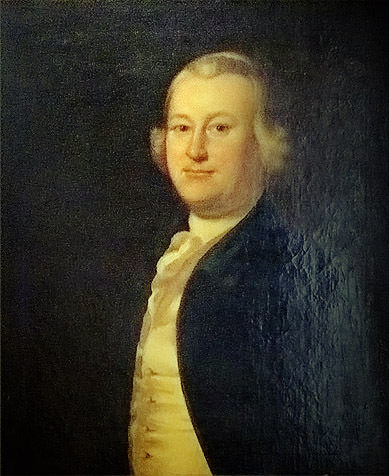
Boston merchants hired James Otis to oppose them. Otis had been the province's advocate general in the vice-admiralty court and resigned that post, by the standard account, rather than defend the writs.6 He argued before the Superior Court in February 1761.7 The only record of what he said comes from John Adams, then a young lawyer in the audience, who took notes and later wrote out a fuller reconstruction, which the editors of his papers date to about the spring of 1761. What follows is Adams's version, as printed in the Liberty Fund edition of Otis's writings.6
"It appears to me the worst instrument of arbitrary power, the most destructive of English liberty and the fundamental principles of law, that ever was found in an English law book."6
Otis admitted that "special writs, directed to special officers, and to search certain houses, etc., specially set forth in the writ," could be legal when granted "upon oath made before the lord treasurer by the person who asks it." The general writ was different. "It is a power that places the liberty of every man in the hands of every petty officer." It was "universal," directed to every subject. "In the next place, it is perpetual; there is no return. A man is accountable to no person for his doings."6 And it reached the home: "Now one of the most essential branches of English liberty is the freedom of one's house. A man's house is his castle; and while he is quiet, he is as well guarded as a prince in his castle." Under the writ, "Bare suspicion without oath is sufficient."6
Then Otis made the claim that would echo through the next fifteen years: "No acts of Parliament can establish such a writ; though it should be made in the very words of the petition, it would be void. An act against the constitution is void."6 He lost the case. The writs issued. But Otis had framed the issue as a question of accountability, an officer "accountable to no person," and as a limit on Parliament itself.

Parliament answered the legal doubt six years later. Section X of the Townshend Revenue Act of 1767 recited that because no act had "expressly given" authority "to any particular court to grant such writs of assistance for the officers of the customs in the said plantations, it is doubted whether such officers can legally enter houses and other places on land." To "obviate which doubts for the future," it provided that writs of assistance "shall and may be granted by the said superior or supreme courts of justice having jurisdiction within such colony or plantation respectively."8 The answer to Otis was a statute confirming the power he called void.
1764: the Sugar Act and the court at Halifax
The American Revenue Act of 1764, called the Sugar Act, is the statute that turned the vice-admiralty court into a revenue court. Its preamble stated a new purpose: "it is just and necessary, that a revenue be raised, in your Majestys said dominions in America, for defraying the expences of defending, protecting, and securing the same." It cut the duty on foreign molasses to "the sum of three pence" a gallon and set out to collect it.9
Its institutional design shows in the enforcement sections, and the First Continental Congress would later list nearly every one of them as a grievance.
| Sugar Act section | What it said | Effect |
|---|---|---|
| XLI | Penalties and forfeitures under this act and the other customs acts could be recovered in a court of record or in a court of admiralty or vice-admiralty, including one "appointed over all America," "at the election of the informer or prosecutor." | The officer chose a forum without a jury. |
| XLII | After charges, net proceeds split three ways: one third to the king, "one third part to the governor or commander in chief" of the colony, "and the other third part to the person who shall seize, inform, and sue for the same." | The officers who brought cases shared in the outcome. |
| XLIV | No one could claim seized goods "until sufficient security be first given ... in the penalty of sixty pounds, to answer the costs and charges of prosecution," failing which the goods "shall be adjudged to be forfeited." | The owner paid to defend his own property. |
| XLV | In disputes over duties or origin, "the proof thereof shall lie upon the owner or claimer of such ship or goods, and not upon the officer who shall seize or stop the same." | The burden of proof fell on the accused. |
| XLVI | If the owner won but the judge certified "a probable cause of seizure," the owner got no costs and the officer could not be sued; in a damages suit the owner could recover no more than "two pence damages." | A wrongful seizure cost the officer nothing. |
Sources for each row: the act's text.9 (The Avalon transcription of section XLI drops a line; the words "appointed over all America" survive and show the act's reference to a single court with continental jurisdiction.)
That court sat at Halifax, Nova Scotia. The Crown sent William Spry from England as "Judge of the Vice-Admiralty Court of all America," with jurisdiction from the Floridas to Newfoundland.10 It did not replace the local vice-admiralty courts, but an officer could file there when he expected a local court to rule against him.3 A merchant in Georgia whose ship was libeled at Halifax faced a voyage of well over a thousand miles to defend it, and had to post sixty pounds of security before he could even enter a claim.9
In April 1764 Parliament also passed the Currency Act, which provided that no colonial assembly could create "any paper bills, or bills of credit of any kind or denomination whatsoever, declaring such paper bills, or bills of credit, to be legal tender."11 The State Department's historians note that the measure "made it even more difficult for colonists to pay their debts and taxes."2
1765: the Stamp Act and the Stamp Act Congress
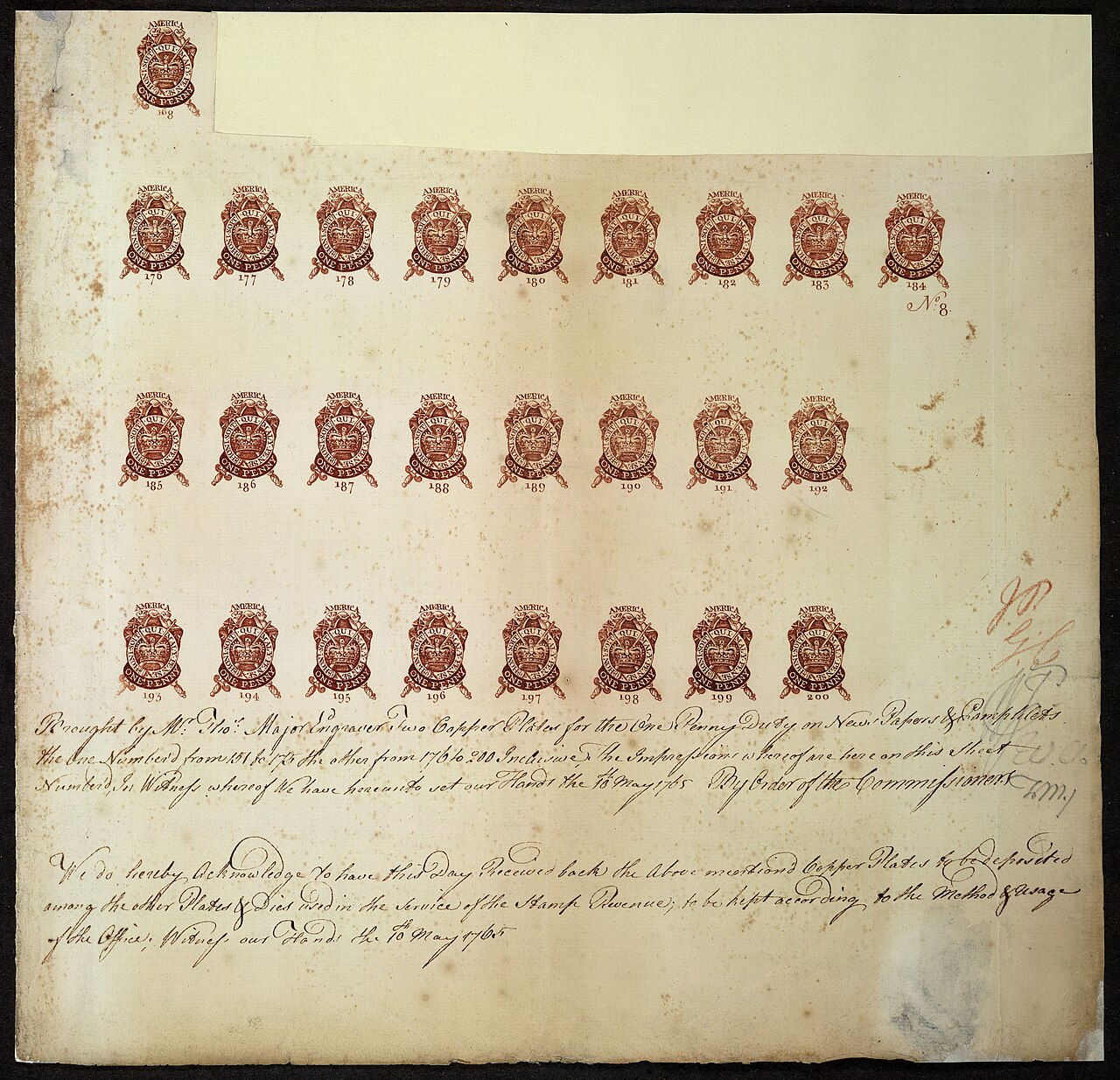
The Stamp Act, passed March 22, 1765, imposed duties from November 1, 1765, on paper used in the colonies: legal documents, licenses, newspapers, pamphlets, almanacs, even playing cards. It taxed pleadings "in any admiralty court within the said colonies and plantations," at one shilling a sheet.12 Its sections LVII and LVIII carried the Sugar Act's enforcement model forward. Penalties under the Stamp Act and under the 1764 act could be recovered "in any court of record, or in any court of admiralty, in the respective colony or plantation where the offence shall be committed, or in any court of vice admiralty appointed or to be appointed," again "at the election of the informer or prosecutor." Section LVIII added an appeal from any colonial admiralty court to a vice-admiralty court.12

Delegates from nine colonies met in October 17652 and on October 19 adopted a set of resolutions.13 They began with professions of loyalty: the colonists owed "all due subordination to that august body the Parliament of Great Britain." Then they drew lines. "No taxes ever have been, or can be constitutionally imposed on them, but by their respective legislatures." And the seventh and eighth resolutions turned to courts:
"That trial by jury is the inherent and invaluable right of every British subject in these colonies.
That the late Act of Parliament, entitled, An Act for granting and applying certain Stamp Duties, and other Duties, in the British colonies and plantations in America, etc., by imposing taxes on the inhabitants of these colonies, and the said Act, and several other Acts, by extending the jurisdiction of the courts of Admiralty beyond its ancient limits, have a manifest tendency to subvert the rights and liberties of the colonists."13
The Congress asked for repeal of the Stamp Act and "of all clauses of any other Acts of Parliament, whereby the jurisdiction of the Admiralty is extended as aforesaid."13 Taxation without representation and adjudication without juries were, to the delegates, two halves of one grievance: in each case a power that belonged to bodies the colonists chose, their assemblies and their juries, had been transferred to bodies they did not.
Parliament repealed the Stamp Act in 1766, under pressure from colonial boycotts and British merchants.2 On March 18, 1766, it also passed the Declaratory Act, affirming that Parliament "had, hath, and of right ought to have, full power and authority to make laws and statutes of sufficient force and validity to bind the colonies and people of America ... in all cases whatsoever."14 The tax went. The claim to unlimited authority stayed on the books.
1767: the Townshend Acts and the Board of Customs
The next ministry tried again with duties on imports. The Townshend Revenue Act, effective November 20, 1767, taxed glass, red and white lead, painters' colors, paper and tea brought into the colonies. Its preamble named the new use of the money: "making a more certain and adequate provision for defraying the charge of the administration of justice, and the support of civil government, in such provinces where it shall be found necessary."8 Section V let the king, "by any warrant or warrants under his or their royal sign manual," apply the revenue to those charges "as his Majesty, or his successors, shall think proper or necessary."8
That clause attacked the colonial assemblies at their strongest point. As lesson 3 showed, assemblies controlled royal officials largely by controlling their pay. A governor or judge paid by warrant from London out of American customs revenue no longer needed the assembly's vote. The officials would be answerable upward to the Crown and not at all to the colonists who paid the duties.
A companion act, 7 Geo. III c. 41, authorized a new institution: the American Board of Customs Commissioners, with five commissioners seated in Boston.1510 The Journal of the American Revolution describes it as modeled on the British Board of Customs, with more customs officials and a colonial coast guard.10 The editors of Adams's legal papers record that when the Board was commissioned, "The offices of all the colonial surveyors general were abolished and their commissions revoked." Three commissioners "arrived from England on 5 November" 1767, and the first two named, John Temple and Henry Hulton, took their oaths before the Superior Court "on 16 Nov. 1767." The Board then "occupied themselves in clarifying the scope of the new statutes, which were to take effect on 20 November, and in determining the extent of their new domain."15
The American Board of Customs is the clearest colonial ancestor of a modern administrative board on American soil. It was a multi-member body. Its members were appointed in London. It sat in America and supervised a field staff of collectors, comptrollers and searchers in every port. It issued instructions, requested legal opinions on "construction of the statutes," and directed seizures.15 It answered to the Lords of the Treasury in London, who on at least one occasion overruled it, ordering a Salem collector the Board had dismissed for corruption reinstated in 1768.15 It answered to no one in America.
Parliament also authorized new vice-admiralty courts with district jurisdiction (8 Geo. III c. 22), and on July 6, 1768, the Privy Council approved courts at Boston, Philadelphia and Charleston, alongside Halifax.1016 The Adams editors note that the judges' salaries were fixed at £600, "to be paid out of the King's share of fines and forfeitures, or from the sale of old naval stores in England if the former was insufficient."5 The judges' pay came first from the King's share of the forfeitures, the proceeds of the system they administered.
1768: the Liberty and John Hancock
The Board's most famous case shows the whole apparatus working at once. John Hancock, a wealthy Boston merchant and a leader of the opposition, had made himself the commissioners' "chief tormentor," in the words of the Adams editors. His sloop Liberty arrived from Madeira on May 9, 1768, and the next day its master entered twenty-five pipes of Madeira wine and paid the duties. A month later, on June 10, a tidesman named Thomas Kirk swore that on the night of May 9 he had been locked below while men unloaded more wine.5
That evening, at about sunset, the collector and comptroller seized the Liberty, with marines and sailors from H.M.S. Romney, a warship that had arrived on May 17 in response to the Board's urgent pleas, and moored her under the warship's guns. A crowd had gathered. In the riot that followed, the two officers "were roughed up, windows in their houses were smashed, and the Collector's pleasure boat was burned on the Common." The commissioners, told by Governor Bernard that he could not guarantee their safety, "took up residence at Castle William in Boston Harbor," and from there "the North American customs were managed until mid-November." Two British regiments arrived in Boston at the end of September.5
Judge Robert Auchmuty decreed the Liberty forfeit on August 17, and she was sold. Then, after the Attorney General in England advised that the persons concerned could be sued, the advocate general Jonathan Sewall on October 29 filed informations in the vice-admiralty court against Hancock "and five others," including the sloop's master and Daniel Malcom, personally. The charge was that Hancock had helped land "one hundred pipes of Madeira wine valued at £30 sterling each." The penalty sought "was £9,000, treble the value of the wine." Judge Auchmuty set bail at £3,000. As informer, Sewall "was entitled to a third of the proceeds."5 The case proceeded by information rather than indictment, and with no jury.17
John Adams defended Hancock. His surviving draft argued, in the summary of the editors of his diary, that the statute "denied his client the right of a jury trial and thus, by repealing 'Magna Charta, as far as America is concerned,' 'degraded Hancock below the Rank of an Englishman.'" On March 25, 1769, the record reads: "The Advocate General prays leave to Retract this Information and says our Sovereign Lord the King will prosecute no further hereon. Allow'd."17 Why the Crown dropped the case is unclear. The Adams editors note that a key Crown witness, reportedly indicted for perjury, had been spirited out of the province, and that "There has never been a satisfactory explanation for the Crown's action."5
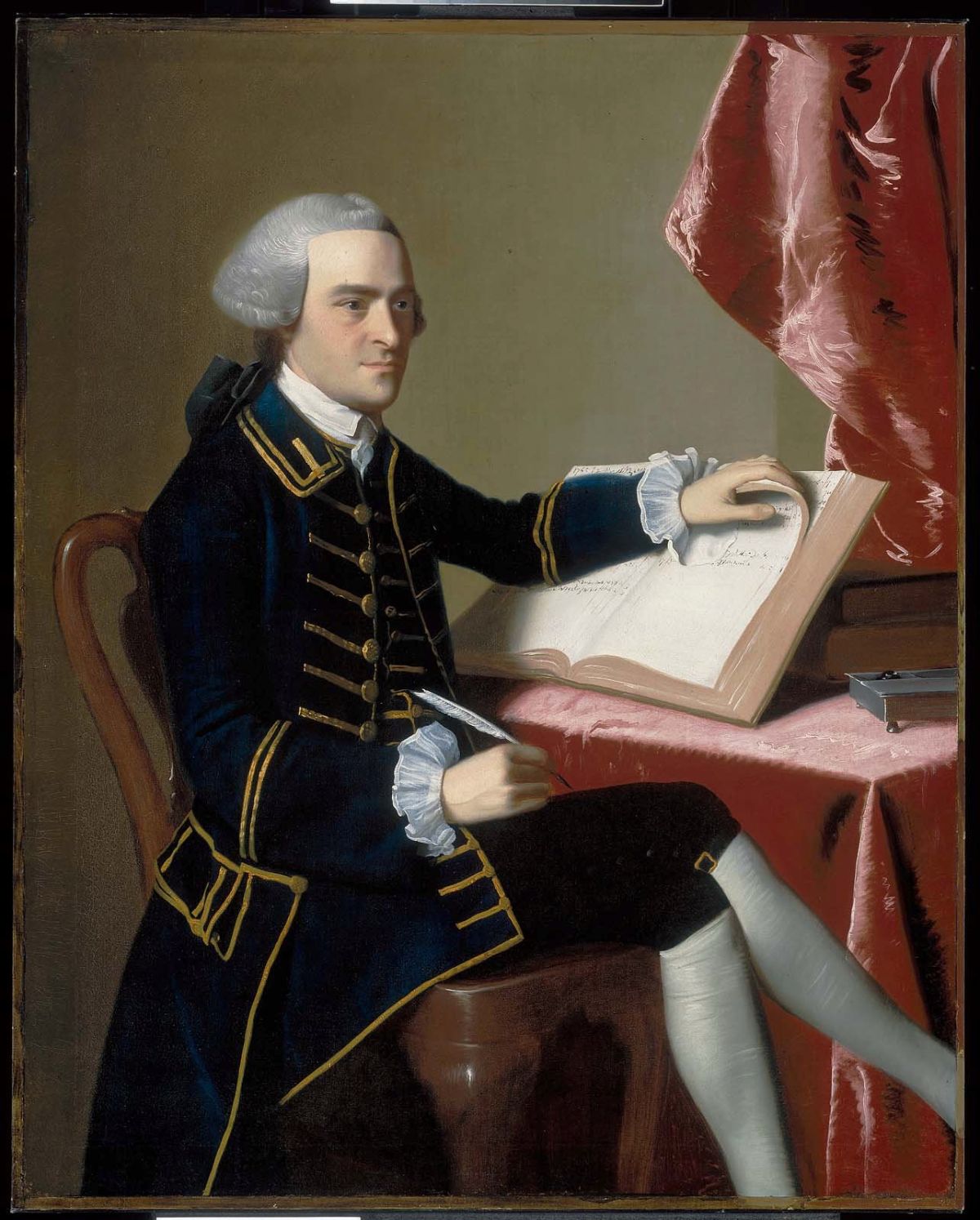

The same editors offer a defense of the officers. Dividing forfeitures in thirds was "common 18th-century practice," and fees and forfeitures "were used to encourage an element of private enterprise which helped to keep salaries low and place the cost of government on those who invoked its powers." "This system could certainly be abused if profit, rather than enforcement, became the sole aim of the officials involved. There was no abuse in the seizure of the Liberty, however," they conclude, because the offense alleged "amounted to the very kind of smuggling which the Commissioners had been sent to root out."5 Hancock may well have been guilty. The colonists' objection was to how guilt would be decided and by whom.
1774: the grievances itemized
After the Boston Tea Party of December 1773, Parliament passed the Coercive Acts, which the colonists called the Intolerable Acts. Two of them went straight at colonial institutions. The Massachusetts Government Act of May 20, 1774 declared the clauses of the 1691 charter "which relates to the time and manner of electing the assistants or counsellors for the said province ... hereby revoked and made void and of none effect." From August 1, 1774, the council would be "nominated and appointed by his Majesty," between twelve and thirty-six members.18 Parliament had rewritten a royal charter by statute. The Administration of Justice Act of the same date let the governor send an official accused of a capital crime in suppressing riots to be tried "in some other of his Majesty's colonies, or in Great Britain," whenever he decided "that an indifferent trial cannot be had within the said province."19
The First Continental Congress met in Philadelphia that autumn. Its Declaration and Resolves of October 14, 1774 opened with a single sentence that named the institutions of the previous decade. Parliament, "claiming a power, of right, to bind the people of America by statutes in all cases whatsoever," had imposed revenue duties, "established a board of commissioners, with unconstitutional powers, and extended the jurisdiction of courts of admiralty, not only for collecting the said duties, but for the trial of causes merely arising within the body of a county."20
The Congress claimed for the colonists "the great and inestimable privilege of being tried by their peers of the vicinage, according to the course of that law." It declared that "the exercise of legislative power in several colonies, by a council appointed, during pleasure, by the crown, is unconstitutional, dangerous and destructive to the freedom of American legislation." And it listed the acts it wanted repealed, the revenue acts of 1764 to 1768, because they "impose duties for the purpose of raising a revenue in America, extend the power of the admiralty courts beyond their ancient limits, deprive the American subject of trial by jury, authorize the judges certificate to indemnify the prosecutor from damages, that he might otherwise be liable to, requiring oppressive security from a claimant of ships and goods seized, before he shall be allowed to defend his property, and are subversive of American rights."20 The list tracks the table of Sugar Act sections above clause for clause.
1775 and 1776: from grievance to independence
In July 1775, after fighting had begun at Lexington and Concord, the Second Continental Congress issued its Declaration of the Causes and Necessity of Taking Up Arms. It repeated the charge, that "statutes have been passed for extending the jurisdiction of courts of admiralty and vice-admiralty beyond their ancient limits; for depriving us of the accustomed and inestimable privilege of trial by jury, in cases affecting both life and property."21
A year later the Declaration of Independence turned the list of institutions into a list of charges against the king. Read with this lesson's statutes in mind, several of its grievances describe specific institutions:
- "He has made Judges dependent on his Will alone, for the tenure of their offices, and the amount and payment of their salaries." Crown-salaried vice-admiralty judges and the Townshend plan to pay officials from American revenue.
- "He has erected a multitude of New Offices, and sent hither swarms of Officers to harrass our people, and eat out their substance." The Board of Customs and its expanded field staff.
- "For depriving us in many cases, of the benefits of Trial by Jury." The vice-admiralty jurisdiction under the Sugar and Stamp Acts.
- "For transporting us beyond Seas to be tried for pretended offences." The Dockyards Act of 1772, which the First Continental Congress said allowed trial "out of the realm," and the 1774 provisions for trials outside the colony.
- "For taking away our Charters, abolishing our most valuable Laws, and altering ... the Forms of our Governments." The Massachusetts Government Act.
All five grievances are quoted from the National Archives transcription.22 The pairings with statutes are this lesson's reading; the Declaration names no statutes. Its complaint was against "New Offices" and the "Officers" who staffed them, against judges "dependent" on one will, and against trials without juries. It was a complaint about the structure of government, made by people who had spent fifteen years reading the statutes that built that structure.
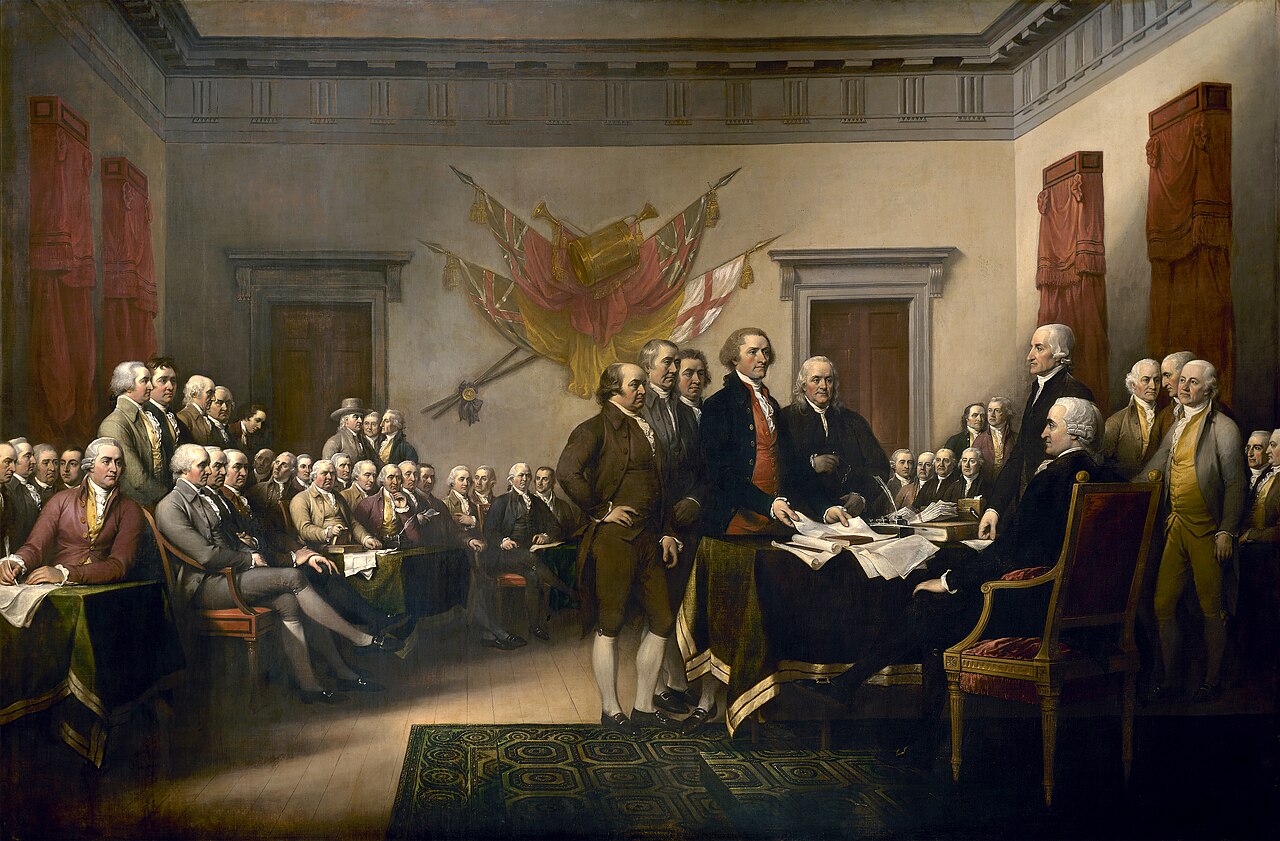

What the founders built in answer
The Constitution of 1787 created federal courts under Article III with judges who hold office "during good Behaviour" and receive salaries that cannot be cut while they serve, a direct answer to judges "dependent on his Will alone."31 The first Congress then sent the states the Seventh Amendment, ratified with the rest of the Bill of Rights on December 15, 1791: "In Suits at common law, where the value in controversy shall exceed twenty dollars, the right of trial by jury shall be preserved, and no fact tried by a jury, shall be otherwise re-examined in any Court of the United States, than according to the rules of the common law."23
The founders did not abolish admiralty courts or require juries everywhere. Alexander Hamilton, defending the Constitution in Federalist 83, noted that in the states "admiralty causes, and almost all those which are of equity jurisdiction, are determinable under our own government without the intervention of a jury."24 He observed that the friends and the opponents of the Constitution agreed on the value of jury trial, the former regarding "it as a valuable safeguard to liberty; the latter represent it as the very palladium of free government."24 Admiralty remained juryless, in its proper sphere. What the colonists had objected to was the use of a juryless forum for cases that belonged at common law, and the line between the two is the line the Supreme Court is still drawing.
The Supreme Court reads the colonial record, 2024
On June 27, 2024, in SEC v. Jarkesy, the Court held that "When the SEC seeks civil penalties against a defendant for securities fraud, the Seventh Amendment entitles the defendant to a jury trial."25 Chief Justice Roberts wrote for six justices. His opinion recounted that "When the English began evading American juries by siphoning adjudications to juryless admiralty, vice admiralty, and chancery courts, Americans condemned Parliament for 'subvert[ing] the rights and liberties of the colonists,'" quoting the Stamp Act Congress, and that "when the English continued to try Americans without juries, the Founders cited the practice as a justification for severing our ties to England," citing the Declaration's jury grievance.25
Justice Gorsuch's concurrence drew the comparison directly. "Like the modern SEC, British colonial officials were not required to bring many of their cases before the vice-admiralty courts. Often, Parliament gave those officials the option to proceed in either the ordinary common-law courts or the vice-admiralty courts. Unsurprisingly, though, they sought to file where they were most likely to win."4
Justice Sotomayor, joined by Justices Kagan and Jackson, dissented, and her opening states the other side of the historical argument with equal force: "Throughout our Nation's history, Congress has authorized agency adjudicators to find violations of statutory obligations and award civil penalties to the Government as an injured sovereign." Congress, she wrote, "has enacted more than 200 statutes authorizing dozens of agencies to impose civil penalties for violations of statutory obligations," relying on the Court's long approval of the practice.26 Lesson 17 returns to the case in full.
Hamburger's prerogative thesis, previewed
The most ambitious scholarly version of the argument connecting colonial grievances to modern agencies is Philip Hamburger's Is Administrative Law Unlawful? (2014). As his publisher's description summarizes it, Hamburger "locates its origins in the medieval and early modern English tradition of royal prerogative," traces resistance to that prerogative through seventeenth-century English constitutional law, and argues that "administrative power reemerged in the Progressive and New Deal Eras" and "has returned American government and society to precisely the sort of consolidated or absolute power that the US Constitution" was designed to prevent.27 In Hamburger's own words, as quoted by a reviewer: "Just as English monarchs once claimed a prerogative power to make law outside acts of Parliament, so too the American executive now claims an administrative power to make law outside acts of Congress."28
Hamburger's main historical evidence is English, not colonial: the Star Chamber, the High Commission, the dispensing power of the Stuart kings, which Vermeule's review lists among the book's main subjects.28 The colonial vice-admiralty courts fit his pattern well, since they were royal tribunals deciding matters outside the common law at the Crown's option. His critics reply that the analogy fails on the details. Adrian Vermeule of Harvard argued in his review that "There is too much in this book about Charles I and Chief Justice Coke," and "not enough about the Administrative Procedure Act, about administrative law judges, about the statutes, cases and arguments," and that the book "misunderstands what that body of law actually holds and how it actually works."28 The module treats Hamburger as a serious argument to test. It does not treat his thesis as settled.
Through Pierson's Framework
The years 1761 to 1776 are the cleanest test in this module of Pierson's first standard, accountability to the people, because the colonists themselves applied it in writing. The Stamp Act Congress said taxes could be imposed only by the colonists' "respective legislatures" and that trial by jury was their "inherent and invaluable right."13 They located legitimacy in two bodies the people chose: the assembly that voted taxes and the jury that decided guilt. Every institution they objected to bypassed one or the other.
The function test shows what the names concealed. A vice-admiralty court was a court of the sea by name and a revenue tribunal by function. A probable-cause certificate under section XLVI was a procedural ruling by name and a shield against liability by function.9 A board of customs was a tax-collection office by name and, as the Continental Congress put it, a body "with unconstitutional powers" by function.20 Pierson's charge that institutionalism "prioritizes procedural legitimacy over moral outcomes" fits the British answer to Otis precisely: when he called the general writ void, Parliament made it lawful by statute.298 Pierson's appendix describes the move exactly: institutions "entrench policies behind procedure, insulate officials through legal immunity, and claim moral neutrality."30 Section XLVI of the Sugar Act was an immunity clause.
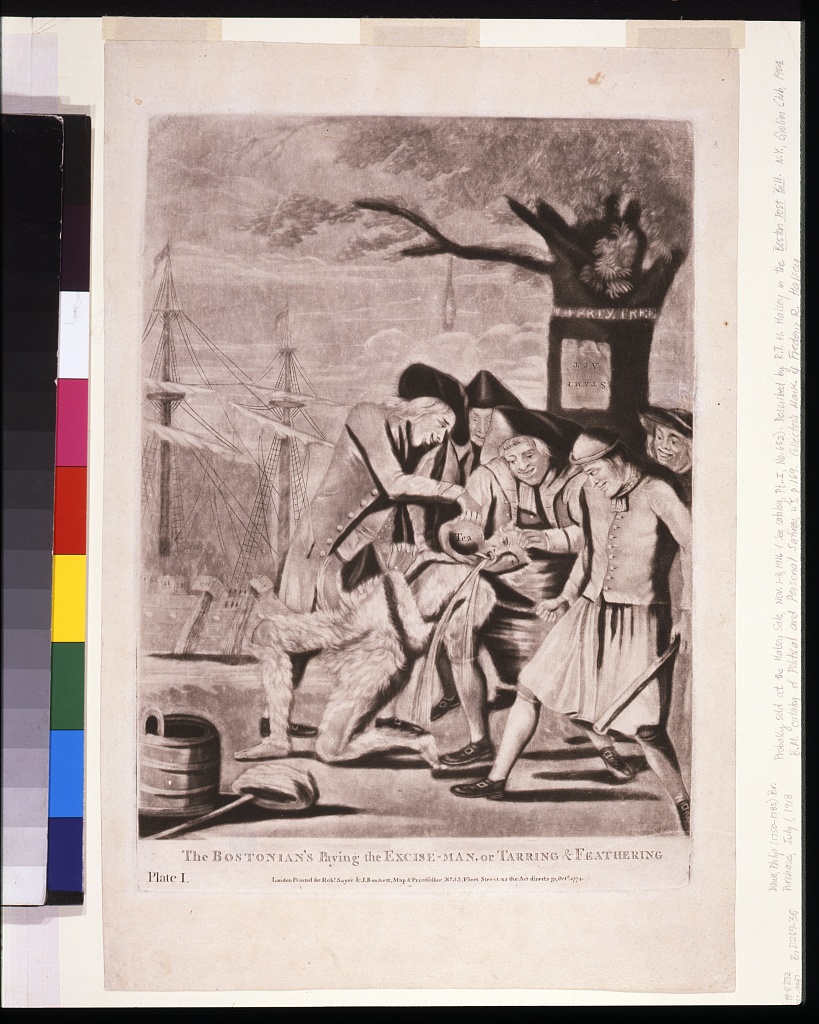
Mutual restraint, the second test, cuts against both sides. The colonists' resolutions in 1765 professed "all due subordination" to Parliament and petitioned before they resisted.13 Their side also produced the crowd that drove the customs commissioners to Castle William and, as the 1774 cartoon shows, men who tarred and feathered officers. Pierson's framework calls for holding government accountable and supporting legitimate government, under restraint by all. By that measure the petition and the boycott pass, Adams's legal defense of Hancock passes, and the mob does not. The Declaration itself claimed to have exhausted restraint first: "In every stage of these Oppressions We have Petitioned for Redress in the most humble terms."22
Did these institutions defend themselves on habit rather than performance? The Declaratory Act of 1766 is the plainest case. Having lost the argument over the Stamp Act, Parliament repealed the tax and kept the claim of power "in all cases whatsoever," a defense of authority as such, detached from any working policy.14 Pierson writes that institutionalism "assumes continuity equals virtue, structure guarantees truth, and outside critique is a threat by default."29 The British government treated colonial critique that way for a decade, right up to the Declaration of Independence in July 1776.
Hard Questions and Answers
Admiralty courts never used juries, and they still don't. Weren't the colonists inflating a technicality into a revolution?
The concession is real. Hamilton noted that state admiralty courts sat "without the intervention of a jury," and even Justice Gorsuch wrote that confined to admiralty disputes, "perhaps the lack of a jury would have proven unexceptional (as juries were not usually required in such cases then, nor are they today)."244 The colonists did not object to admiralty as such. The Stamp Act Congress objected to "extending the jurisdiction of the courts of Admiralty beyond its ancient limits," and the Continental Congress to its use "for the trial of causes merely arising within the body of a county."1320 The grievance was the transfer of land-based revenue cases out of the common-law courts, which is a narrower and more defensible claim.
Wasn't this really about money, with the jury talk as a lawyer's varnish on tax resistance?
Taxes started it and taxes were central. But the documents treat juries as a separate grievance from the first. The Stamp Act Congress gave jury trial its own resolution, the seventh, before turning to admiralty in the eighth.13 The First Continental Congress listed the probable-cause certificate and the security requirement, which have nothing to do with tax rates.20 And the Declaration lists "depriving us in many cases, of the benefits of Trial by Jury" separately from "imposing Taxes on us without our Consent."22 The colonists saw two linked transfers of power, and they named both.
Hancock and his friends were smugglers breaking the law. Why side with them against the officers enforcing it?
On the law, many of them very likely were breaking it. Smuggling was widespread, and the editors of Adams's legal papers conclude that the Liberty seizure involved "the very kind of smuggling which the Commissioners had been sent to root out."5 Pierson's framework asks citizens to support legitimate government, and that includes obeying lawful duties. The colonists' answer was that the laws were not legitimate in their making (no consent) or in their enforcement (no jury, reversed burden, officer immunity). Both things can be true: Hancock may have smuggled, and the forum that would have judged him was one the colonists had good reason to reject.
Calling the Board of Customs an "administrative agency" and lining it up with the SEC is anachronism recruited for a modern political fight. Isn't it?
Partly, and the comparison needs care. The Board had no rulemaking power like a modern agency's, and its members answered to the Treasury, not to an elected executive. The comparison holds at the level of function: a multi-member board, appointed by a distant authority, administering a statute through a field staff and choosing its own forum for enforcement.15 Justice Gorsuch drew a similar functional comparison in Jarkesy.4 Justice Sotomayor answered that Congress has authorized agency adjudication "Throughout our Nation's history," which shows the American practice has its own long lineage under the Constitution, approved by courts the founders created.26 Both lineages are real, and later lessons trace the American one.
The Otis speech survives only in John Adams's reconstruction. Why build anything on one hero's memory of another?
Nothing should rest on it alone. The text is Adams's reconstruction, and the Teaching American History edition identifies it as such.6 Adams wrote down what he remembered and believed, and he had political reasons to make Otis a founding hero. The ideas it records are confirmed elsewhere, though. Parliament's own 1767 act admitted the legal doubt Otis raised about the writs.8 The principle of a "man's house" as his "castle" is old English law. And the Fourth Amendment's requirement of warrants "particularly describing the place to be searched" answers his complaint about general writs directly.23
Learn more
- The Sugar Act, 1764: read sections XLI through XLVII for the enforcement machinery.
- Resolutions of the Stamp Act Congress, 1765: the jury and admiralty resolutions in full.
- The Townshend Revenue Act, 1767: the civil list clause and the writs of assistance section.
- Declaration and Resolves of the First Continental Congress, 1774: the colonists' itemized list of institutional grievances.
- Declaration of Independence: the grievances against new offices, dependent judges and trials without juries.
- James Otis, Speech Against Writs of Assistance (1761): Adams's reconstruction of the argument.
- Legal Papers of John Adams: Sewall v. Hancock: the full record of the Liberty case.
- SEC v. Jarkesy (2024): majority, concurrence and dissent on the colonial history of jury trial.
- Module 53, Founding of the Republic: the broader story of the Revolution and the Constitution.
Notes
- 7 & 8 Will. III c. 22 (1696), "An Act for preventing Frauds and regulating Abuses in the Plantation Trade," section VI, in Statutes of the Realm: Volume 7, 1695-1701, British History Online. Read it online. ↩
- Office of the Historian, U.S. Department of State, "Parliamentary Taxation of Colonies, International Trade, and the American Revolution, 1763-1775," Milestones in the History of U.S. Foreign Relations. Read it online. ↩
- Independence Hall Association, ushistory.org, "The Vice Admiralty Courts" (secondary summary). Read it online. ↩
- SEC v. Jarkesy, 603 U.S. ___ (2024), No. 22-859, Gorsuch, J., concurring, slip op. at 5-8, citing Carl Ubbelohde, The Vice-Admiralty Courts and the American Revolution (1960), and David Lovejoy, "Rights Imply Equality: The Case Against Admiralty Jurisdiction in America, 1764-1776," 16 Wm. and Mary Q. 459 (1959). Read it online. ↩
- Legal Papers of John Adams, volume 2, editorial note to Sewall v. Hancock and its notes (including note 42 on the 1768 judges' salaries, citing Ubbelohde), Adams Papers Digital Edition, Massachusetts Historical Society. Read it online. ↩
- Teaching American History, "Speech Against Writs of Assistance," introduction and text (John Adams's reconstruction of the speech, from The Collected Political Writings of James Otis, ed. Richard A. Samuelson, Liberty Fund, 2015, 11-14). Read it online. ↩
- Ruhr-Universitat Bochum, Quellensammlung, "James Otis on the Writs of Assistance, February 24, 1761" (older printing of Adams's reconstruction, from Charles Francis Adams, ed., The Works of John Adams); Legal Papers of John Adams, volume 2, editorial note ("The argument actually began on 24 February 1761"; the "Abstract of the Argument" was "probably made by him sometime in the spring of 1761"), Founders Online. Read it online. Adams Papers note. ↩
- The Townshend Revenue Act (7 Geo. III c. 46), effective November 20, 1767, sections I, IV, V and X, Avalon Project, Yale Law School. Read it online. ↩
- The Sugar Act (4 Geo. III c. 15), 1764, Avalon Project, Yale Law School, from Danby Pickering, ed., The Statutes at Large. Read it online. ↩
- Journal of the American Revolution, "Vice-Admiralty Courts and Writs of Assistance" (January 2015), citing the Hardwicke Papers for Spry's title, the Statutes at Large (8 Geo. III c. 22) for the 1768 courts and the Privy Council order of July 6, 1768. Read it online. ↩
- The Currency Act, April 19, 1764, Avalon Project, Yale Law School. Read it online. ↩
- The Stamp Act (5 Geo. III c. 12), March 22, 1765, Avalon Project, Yale Law School. Read it online. ↩
- Resolutions of the Stamp Act Congress, October 19, 1765, Avalon Project, Yale Law School. Read it online. ↩
- The Declaratory Act, March 18, 1766, Avalon Project, Yale Law School (the Avalon transcription reads "had. bath," a typing error for "had, hath"; the act vests the power in the king "by and with the advice and consent of the lords spiritual and temporal, and commons of Great Britain, in parliament assembled"). Read it online. ↩
- Legal Papers of John Adams, volume 2, editorial note to the Folger case and notes 10, 13 and 14, Adams Papers Digital Edition, Massachusetts Historical Society. Read it online. ↩
- "Vice admiralty court," Wikipedia, section "American Revolution" (reorganization of 1768; Boston, Charleston, Philadelphia). Read it online. ↩
- Diary and Autobiography of John Adams, volume 3, "Seizure of Hancock's Sloop, 1768-1769," editorial note 1, Adams Papers Digital Edition, Massachusetts Historical Society. Read it online. ↩
- The Massachusetts Government Act, May 20, 1774, section I, Avalon Project, Yale Law School. Read it online. ↩
- The Administration of Justice Act, May 20, 1774, Avalon Project, Yale Law School. Read it online. ↩
- Declaration and Resolves of the First Continental Congress, October 14, 1774, Avalon Project, Yale Law School. Read it online. ↩
- A Declaration ... Setting Forth the Causes and Necessity of Their Taking Up Arms, July 1775, Avalon Project, Yale Law School. Read it online. ↩
- The Declaration of Independence, July 4, 1776, transcription, National Archives. Read it online. ↩
- Bill of Rights, Fourth and Seventh Amendments, transcription, National Archives (ratified December 15, 1791). Read it online. ↩
- Alexander Hamilton, The Federalist No. 83 (1788), Avalon Project, Yale Law School. Read it online. ↩
- SEC v. Jarkesy, 603 U.S. ___ (2024), No. 22-859, decided June 27, 2024, syllabus and opinion of the Court (Roberts, C.J.). Read it online. ↩
- SEC v. Jarkesy, 603 U.S. ___ (2024), Sotomayor, J., dissenting, slip op. at 1-2. Read it online. ↩
- Columbia Law School Scholarship Archive, description of Philip Hamburger, Is Administrative Law Unlawful? (University of Chicago Press, 2014). Read it online. ↩
- Adrian Vermeule, "Review of Philip Hamburger, Is Administrative Law Unlawful?" (manuscript, forthcoming in Texas Law Review), Harvard DASH repository, pp. 1-2 and notes 2-3 (quoting Hamburger at 31, 51 and 57). Read it online. ↩
- Jeff A. Pierson, "The Acacia Illusion: How Institutionalism Mimics Nature's Most Subtle Manipulation," in The Ordered Liberty Papers (2025). Read it online. ↩
- Jeff A. Pierson, "The Anti-Federalist Warning: Institutional Power and the Fragility of Liberty," appendix to Ordered Liberty Reclaimed. Read it online. ↩
- Constitution of the United States, Article III, section 1, transcription, National Archives. Read it online. ↩
Terms in this lesson
- Vice-admiralty court
- A colonial court commissioned by the Crown on the model of the English High Court of Admiralty, sitting without a jury under civil-law procedure.
- Writ of assistance
- A general search warrant letting customs officers enter any building to look for smuggled goods, without naming a place or suspect.
- Information
- A charge filed by a Crown officer rather than a grand jury indictment, used in the vice-admiralty case against John Hancock.
- Informer
- The person who brought a forfeiture case and, under the Sugar Act, received a third of the net proceeds.
- Probable cause certificate
- Under section XLVI of the Sugar Act, a judge's finding that shielded a seizing officer from costs and damages even when the owner won.
- American Board of Customs Commissioners
- A five-member board authorized by 7 Geo. III c. 41 (1767), seated in Boston, that ran customs collection for North America.
- Civil list
- Payment of governors, judges and other officials; the Townshend Act directed American revenue to it by royal warrant.
- Declaratory Act
- The 1766 statute affirming Parliament's power to bind the colonies "in all cases whatsoever."
- Seventh Amendment
- The 1791 guarantee of jury trial in federal suits at common law where the value exceeds twenty dollars.
- Royal prerogative
- Powers claimed by the Crown outside acts of Parliament; Hamburger argues administrative power revives it.
Sources
- The Sugar Act, 1764 (Avalon Project) checked 2026-10
- The Stamp Act, 1765 (Avalon Project) checked 2026-10
- Resolutions of the Stamp Act Congress, 1765 checked 2026-10
- The Townshend Revenue Act, 1767 checked 2026-10
- Declaration and Resolves of the First Continental Congress, 1774 checked 2026-10
- Declaration of Independence (National Archives) checked 2026-10
- Otis, Speech Against Writs of Assistance (Teaching American History) checked 2026-10
- Legal Papers of John Adams, Sewall v. Hancock checked 2026-10
- SEC v. Jarkesy (2024), slip opinion checked 2026-10
- Vermeule, Review of Hamburger, Is Administrative Law Unlawful? checked 2026-10