Lesson 7 of 19 · about 32 minutes
Territorial Government: St. Clair, Ohio and Louisiana, 1787 to 1828
You'll be able to
- Describe the structure of territorial government under the Northwest Ordinance, including the governor's absolute veto and the three-stage path to statehood
- Explain the conflict between Governor Arthur St. Clair and the Ohio statehood movement, using his November 3, 1802 address and Madison's November 22, 1802 removal letter
- Summarize Jefferson's constitutional doubts about the Louisiana Purchase from his August 1803 letters and the government Congress built for Orleans in 1804
- State what American Insurance Co. v. Canter (1828) held about territorial courts, and apply Pierson's framework to the territorial model that Idaho Territory inherited in 1863
Start here: the short version
On November 3, 1802, a governor who held an absolute veto over an elected assembly stood before Ohio's constitutional convention and called the act of Congress that had summoned it "a nullity." Arthur St. Clair had run the Northwest Territory for fourteen years under a model the founders kept from 1787 for land outside the states: an appointed governor and three appointed judges who chose laws for settlers who had no vote, then an elected house whose bills the governor could kill outright. The Constitution's checks were built for states. Jefferson removed St. Clair by a letter Madison signed, dated November 22. A year later Jefferson bought Louisiana while privately writing that the Constitution gave no power to hold foreign territory, and Congress governed New Orleans through a governor and a council the President appointed. In 1828 Chief Justice Marshall held that courts in a territory are "legislative courts," outside Article III. The territorial model was a deliberate exception to the Madisonian design, and it lasted. Idaho Territory was organized under a version of it on March 3, 1863.
Challenge
If Jefferson is your model of a strict constructionist, he wrote that the Constitution gave no power to hold foreign territory, took Louisiana anyway, and asked the nation to sanction it afterward. If you cheer St. Clair for telling Congress its act was "a nullity," he had spent three years killing an elected house's bills with a veto nobody could override, and he discovered the people's inherent rights just as his own office was about to end. If the Northwest Ordinance is a charter of liberty, it also let an appointed governor dissolve the legislature. If it was only an instrument of control, it kept slavery out and secured jury trial before the Bill of Rights existed. And Marshall's verdict on the power to govern territory, "the possession of it is unquestioned" whatever its source, should bother anyone who thinks constitutional limits enforce themselves.
The Northwest Ordinance passed the Confederation Congress on July 13, 1787, while the Philadelphia convention was still meeting.1 Nathan Dane, who claimed to have drawn it, told Rufus King three days later that Congress "found ourselves rather pressed" because "The Ohio company appeared to purchase a large tract of federal lands" (lesson 6).2 The ordinance was written for a region with a few thousand settlers, many Indian nations and no state government. It became the template for territorial government across the continent.
The Ordinance of 1787: three stages
Stage one: governor and judges
Section 3 provided "That there shall be appointed from time to time by Congress, a governor, whose commission shall continue in force for the term of three years, unless sooner revoked by Congress." He had to "reside in the district, and have a freehold estate therein in 1,000 acres of land."1 A secretary, with a four-year commission and 500 acres, kept the records. Congress would also appoint "a court to consist of three judges, any two of whom to form a court, who shall have a common law jurisdiction," each holding 500 acres, "and their commissions shall continue in force during good behavior."1
The lawmaking clause is the heart of the first stage. "The governor and judges, or a majority of them, shall adopt and publish in the district such laws of the original States, criminal and civil, as may be necessary and best suited to the circumstances of the district, and report them to Congress from time to time: which laws shall be in force in the district until the organization of the General Assembly therein, unless disapproved of by Congress."1 The same four men who enforced and judged the law also selected it. No one in the territory voted for any of them.
Stage two: an elected house and an absolute veto
"So soon as there shall be five thousand free male inhabitants of full age in the district," they could elect representatives, one for every five hundred.1 The franchise was limited to men with "a freehold in fifty acres of land," and a representative had to hold "two hundred acres."1 The general assembly would "consist of the governor, legislative council, and a house of representatives." The council had five members, chosen by Congress from ten names the house nominated.1
The governor's place in that assembly was unlike anything in the federal Constitution. Bills passing both houses "shall be referred to the governor for his assent; but no bill, or legislative act whatever, shall be of any force without his assent. The governor shall have power to convene, prorogue, and dissolve the general assembly, when, in his opinion, it shall be expedient."1 There was no override. Eleven years earlier the Declaration of Independence had charged the King with having "dissolved Representative Houses repeatedly."3
Stage three: statehood, and the compact
The final section declared six articles to be "articles of compact between the original States and the people and States in the said territory" that would "forever remain unalterable, unless by common consent."1 Article 1 protected worship: "No person, demeaning himself in a peaceable and orderly manner, shall ever be molested on account of his mode of worship or religious sentiments." Article 2 guaranteed "the writ of habeas corpus, and of the trial by jury; of a proportionate representation of the people in the legislature; and of judicial proceedings according to the course of the common law."1
Article 3 is the most quoted: "Religion, morality, and knowledge, being necessary to good government and the happiness of mankind, schools and the means of education shall forever be encouraged. The utmost good faith shall always be observed towards the Indians; their lands and property shall never be taken from them without their consent."1 Article 4 bound the new states to the land system: their legislatures "shall never interfere with the primary disposal of the soil by the United States in Congress assembled," and "No tax shall be imposed on lands the property of the United States."1 Article 5 provided for "not less than three nor more than five States," each to be admitted "on an equal footing with the original States in all respects whatever" when it reached "sixty thousand free inhabitants."1 Article 6: "There shall be neither slavery nor involuntary servitude in the said territory, otherwise than in the punishment of crimes," followed by a fugitive clause.1
So the ordinance promised the settlers equality and self-government eventually, with rights the Constitution itself did not yet guarantee. In the meantime it gave them a government that answered upward to Congress and not outward to them.
Re-enactment under the Constitution, August 7, 1789
The First Congress adopted the ordinance as one of its earliest acts. "An Act to provide for the Government of the Territory North-west of the river Ohio," approved August 7, 1789, opened with the recital that "in order that the ordinance of the United States in Congress assembled, for the government of the territory north-west of the river Ohio may continue to have full effect, it is requisite that certain provisions should be made, so as to adapt the same to the present Constitution of the United States."4
The adaptation moved the appointing power to the President. "The President shall nominate, and by and with the advice and consent of the Senate, shall appoint all officers which by the said ordinance were to have been appointed by the United States in Congress assembled." And "in all cases where the United States in Congress assembled, might, by the said ordinance, revoke any commission or remove from any office, the President is hereby declared to have the same powers of revocation and removal."4 The removal clause would matter thirteen years later.
Arthur St. Clair's government, 1788 to 1802
Congress elected Arthur St. Clair governor on Friday, October 5, 1787, and Winthrop Sargent secretary. St. Clair was then President of Congress. On October 16 it elected Samuel Holden Parsons, John Armstrong Jr. and James Mitchell Varnum as judges.5 Armstrong declined, and John Cleves Symmes took his seat.6 Parsons, as lesson 6 showed, had been the Ohio Company's own candidate for governor until Cutler traded him away for votes.
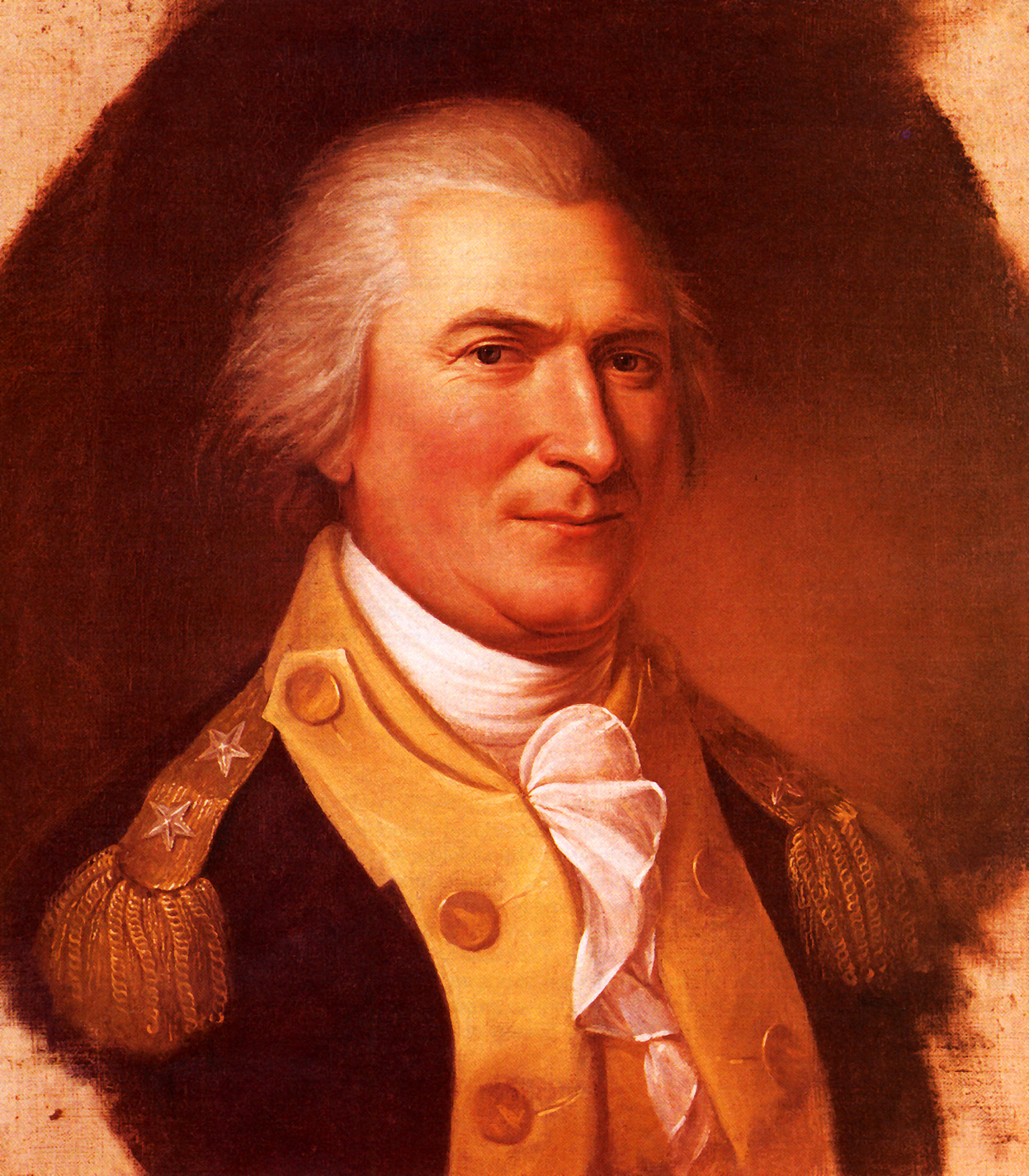

St. Clair reached Marietta in July 1788 and, after the public ceremonies of July 15, "set to work with the judges to form a code of laws."8 His sympathetic editor, William Henry Smith, conceded that the governor and judges "did not strictly confine themselves within the limits of their legislative authority, which was to make selections from the statutes of the original thirteen States. When they could not find laws suited to the condition of the Territory, they supplied the want by enactments of their own."8 Congress refused to approve the laws that were not adopted from state codes, "on the ground that the officers were not authorized to enact laws. Nevertheless, they (with two exceptions) continued in force in the Territory, because necessary to good government."8
That episode is the first documented case of the territorial model producing rules that its own charter did not authorize, and of those rules staying in force because they were useful. Smith quoted Salmon P. Chase's verdict that the officers "exceeded their authority, without the slightest disposition to abuse it."8 The record supports both halves of that sentence.
St. Clair was also commander of the army in the West. On November 4, 1791, his army was routed by a confederation of Indian nations; his papers record that he "had four horses killed at the battle."9
The second stage and the veto fights
Once the territory passed 5,000 free adult males, it entered the second stage. Representatives met at Cincinnati on February 4, 1799, nominated ten men for the council, and adjourned. The two houses organized on September 24, 1799.10 Smith described what changed: under the new form "the Ordinance clothed him with an absolute veto," where before St. Clair had sometimes "acquiesced in legislation that did not meet his approval."10
He used it. The assembly and governor disagreed over who could create counties. St. Clair "held that the Ordinance had placed it exclusively in the Executive." "Bills for the erection of six new counties had been passed by the Legislature and vetoed by the Governor. This action provoked a remonstrance, addressed to Congress, against the unqualified veto given to the Governor."10 The same assembly chose William Henry Harrison as delegate to Congress "by a vote of eleven to ten" over the governor's son, Arthur St. Clair Jr.10
Congress divided the territory on May 7, 1800, creating Indiana Territory to the west and making Chillicothe, on the Scioto, the seat of the Northwest Territory.11 A plan to redivide the remaining territory, which would have postponed statehood for the eastern district, was defeated in Congress in 1802; Thomas Worthington, a leader of the Republican statehood party, celebrated its defeat in a public address of July 5, 1802.12
The Enabling Act and the address of November 3, 1802
Congress sided with the statehood party. The act approved April 30, 1802 authorized "the inhabitants of the eastern division of the territory northwest of the river Ohio" to "form for themselves a constitution and state government," to be "admitted into the Union, upon the same footing with the original states, in all respects whatever."13 It fixed the boundaries, set the apportionment of delegates "in a ratio of one representative to every twelve hundred inhabitants," and directed the convention to meet "at Chilicothe on the first Monday in November next" and decide first "whether it be or be not expedient at that time to form a constitution."13
Section 7 offered terms "for their free acceptance or rejection": section 16 in every township for schools, the salt springs for the state, and one twentieth of the net proceeds of federal land sales for roads. The price was an ordinance "irrevocable, without the consent of the United States," exempting every tract sold by Congress after June 30, 1802 from state taxation for five years.13
The convention assembled at Chillicothe on November 1, 1802. A decided majority were Republicans; Thomas Worthington told Jefferson they held 26 of 35 seats.1412 "On the third day of the session, Governor St. Clair, by permission, addressed the Convention."14 His speech began with gratitude and paternal feeling, recalling a time "when your numbers were only about thirty men; a wilderness before them to subdue."14 He defended his record: the territorial government "is not so popular as that of the greater part of the United States," he admitted, "but it is as much so as it is consistent with the colonial state."14 He warned that "Party rage is stalking with destructive strides over the whole continent."14
Then he attacked the act that had called the convention into being:
"That the people of the Territory should form a convention and a constitution needed no act of Congress. To pretend to authorize it was, on their part, an interference with the internal affairs of the country, which they had neither the power nor the right to make. The act is not binding on the people, and is in truth a nullity, and, could it be brought before that tribunal where acts of Congress can be tried, would be declared a nullity."14
He went further. "For all internal affairs we have a complete legislature of our own, and in them are no more bound by an act of Congress than we would be bound by an edict of the first consul of France."14 Being assembled as a convention, "no matter by what means it was brought about, you may do whatever appears to you to be for the best for your constituents as freely as if Congress had never interfered in the matter." By the act, he said, "above five thousand people are divested of the rights they were in possession of without a hearing," and he added that they had been "bartered away like sheep in a market."14 He called the road fund "a mere illusion" and objected that lands "solemnly pledged for the redemption of the public debt" would be exempt from state tax.14
The irony is hard to miss. The appointed governor who held an absolute veto over an elected assembly was now arguing for the people's inherent right to frame their own government without leave from Congress. His argument also ran against the compact he had governed under, whose Article 4 bound future states never to tax federal land.1 The convention ignored his advice, accepted the Enabling Act, and on November 29, 1802 formed a constitution for "the State of Ohio."15
Removal, November 22, 1802
Albert Gallatin, the Treasury Secretary, sent Jefferson a copy of the address on November 20 and called it indecent and outrageous.16 Two days later the Secretary of State wrote to the governor. James Madison's letter, dated Department of State, Washington, November 22, 1802, reads in full:
"Sir: The President observing, in an address lately delivered by you to the convention held at Chillicothe, an intemperance and indecorum of language toward the Legislature of the United States, and a disorganizing spirit and tendency of very evil example, and grossly violating the rules of conduct enjoined by your public station, determines that your commission of Governor of the North-western Territory shall cease on the receipt of this notification."17
The authority came from the 1789 act, which gave the President the removal power Congress had held under the ordinance.4 The letter went under cover to the territorial secretary, Charles Willing Byrd, who, by the account of St. Clair's editor, had spent his time in office "forming a party in opposition to the Governor," and who would act as governor under the 1789 act's vacancy clause.418 St. Clair wrote from Cincinnati on December 21 that the letter "was delivered to me by Mr. Secretary Byrd on the 14th day of this month." He thanked the President for discharging him "from an office I was heartily tired of, about six weeks sooner than I had determined to rid myself of it."18 He denied any "intemperance or indecorum," unless "the rule of conduct is an implicit blind obedience," and repeated that the transfer of "above five thousand people, without their knowledge or consent," was "something worse than intemperate and indecorous."18
The dates often get run together, so here they are straight. The address was delivered November 3, 1802. The removal letter is dated November 22, 1802. The letter took effect "on the receipt of this notification," and St. Clair received it December 14, 1802.18 Congress recognized Ohio as a state in the act of February 19, 1803.15
Louisiana, 1803: Jefferson's doubts
On April 30, 1803, American envoys in Paris signed the treaty ceding Louisiana. Its Article III promised that "The inhabitants of the ceded territory shall be incorporated in the Union of the United States and admitted as soon as possible according to the principles of the federal Constitution to the enjoyment of all these rights, advantages and immunities of citizens of the United States."19 A companion convention set the price at "Sixty millions of francs," paid by creating "a Stock of eleven millions, two hundred and fifty thousand Dollars bearing an interest of Six per cent," payable "in London Amsterdam or Paris."20 A second convention assumed American citizens' claims against France up to "twenty millions of Francs."21
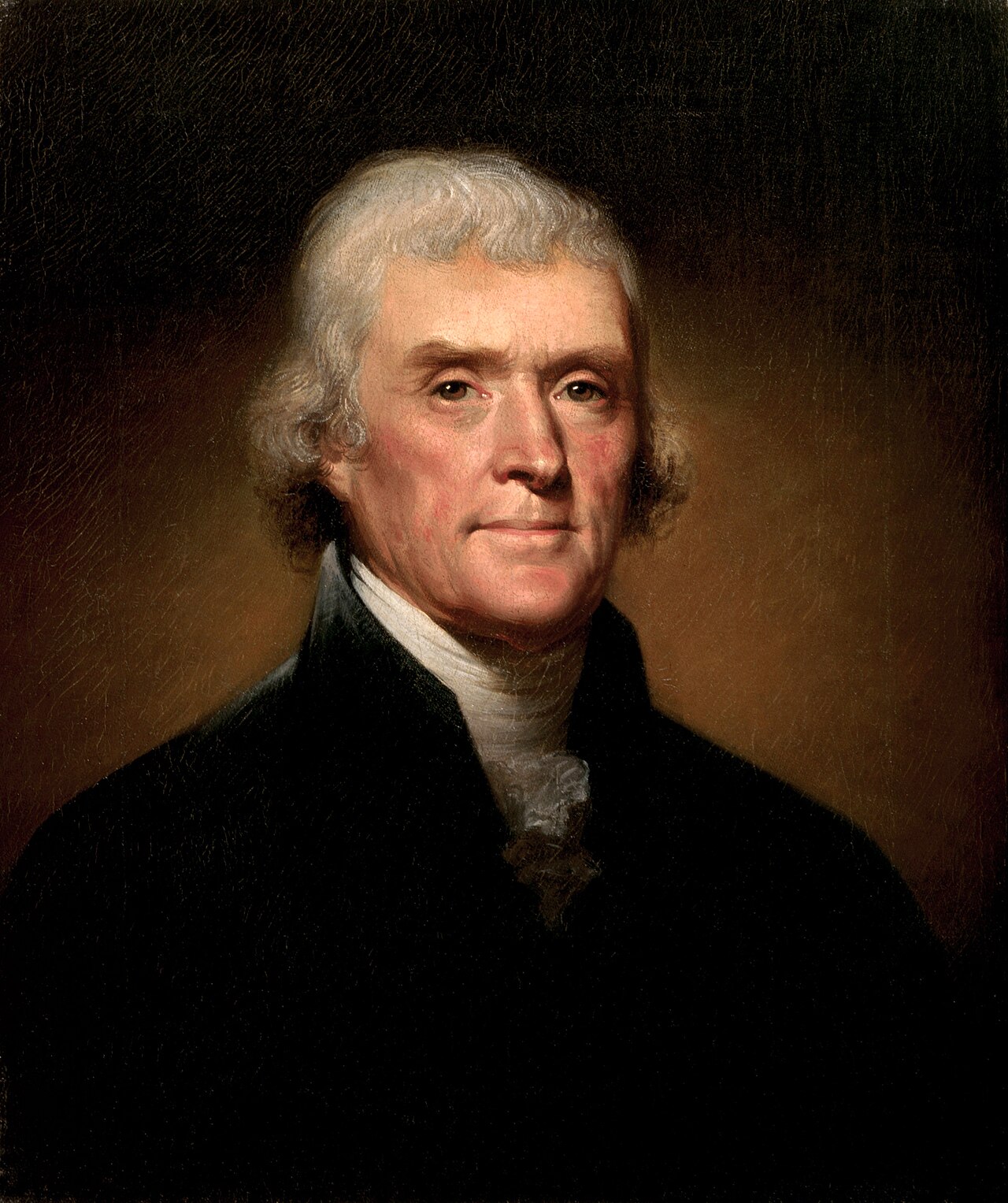

Jefferson had spent a decade arguing for strict construction. On August 9, 1803, he answered a letter of August 1 in which John Dickinson had sent his approval of the purchase. The recipient's copy is at the Historical Society of Pennsylvania; a press copy is in the Library of Congress.23 After observing that "the acquisition of New Orleans would of itself have been a great thing," he turned to the Constitution: "the general government has no powers but such as the constitution has given it; and it has not given it a power of holding foreign territory, & still less of incorporating it into the Union. an amendment of the constitution seems necessary for this."23 In the meantime, he wrote, the government must "rely on the nation to sanction an act done for it's great good, without it's previous authority."23
Three days later, to Senator John Breckinridge, he was blunter. The Executive had "done an act beyond the constitution." Congress must ratify it, "casting behind them Metaphysical subtleties, and risking themselves like faithful servants," and "throw themselves on their country for doing for them unauthorised what we know they would have done for themselves."24 He compared it to "a guardian, investing the money of his ward in purchasing an important adjacent territory; & saying to him when of age, I did this for your good; I pretend to no right to bind you."24
On September 7, writing to Wilson Cary Nicholas, he restated the principle that later readers attribute to the Dickinson letter: "our peculiar security is in the possession of a written constitution. let us not make it a blank paper by construction."25 But if his friends thought otherwise, he added, "certainly I shall acquiesce with satisfaction."25 The "blank paper" line is in the Nicholas letter of September 7, not the Dickinson letter of August 9.
He acquiesced. No amendment was proposed. The Senate approved the treaty on October 20, 1803, by 24 to 7.26
Governing Louisiana: 1803 and 1804
The first act, approved October 31, 1803, went further than the Ordinance of 1787 had. Until Congress provided otherwise, "all the military, civil and judicial powers, exercised by the officers of the existing government of the same, shall be vested in such person and persons, and shall be exercised in such manner, as the President of the United States shall direct."27 For several months, the President alone was the government of Louisiana.
The Act of March 26, 1804 then created the Territory of Orleans south of the 33rd parallel. "The executive power shall be vested in a governor," appointed for three years "unless sooner removed by the President."28 "The legislative powers shall be vested in the governor, and in thirteen of the most fit and discreet persons of the territory, to be called the legislative council, who shall be appointed annually by the President of the United States."28 There was no elected house. "The governor or legislative council shall have no power over the primary disposal of the soil."28 "The judicial power shall be vested in a superior court," whose judges "shall hold their offices for the term of four years."28
The act did secure some rights the 1787 compact had promised. In capital cases "the trial shall be by a jury of twelve good and lawful men of the vicinage," and in the superior court any party could demand a jury.28 No law could "lay any person under restraint, burthen, or disability, on account of his religious opinions."28 But the treaty's promise that the inhabitants would be "incorporated in the Union" and admitted "as soon as possible" was carried out by a government in which they elected no one.19 Congress passed an enabling act for Orleans on February 20, 1811, and admitted the State of Louisiana by an act of April 8, 1812.2930
American Insurance Co. v. Canter, 1828
The constitutional status of territorial courts reached the Supreme Court through a shipwreck. The ship Point a Petre, carrying cotton from New Orleans to Le Havre, wrecked on the Florida coast. Salvors carried the cargo "into Key West, where it was sold for the purpose of satisfying the salvors; by virtue of a decree of a Court, consisting of a notary and five jurors, which was erected by an Act of the territorial legislature of Florida."31 The insurers sued in federal court in South Carolina "to obtain restitution of 356 bales of cotton." David Canter claimed them as a good-faith buyer at the Key West sale.31 Daniel Webster argued for Canter.31
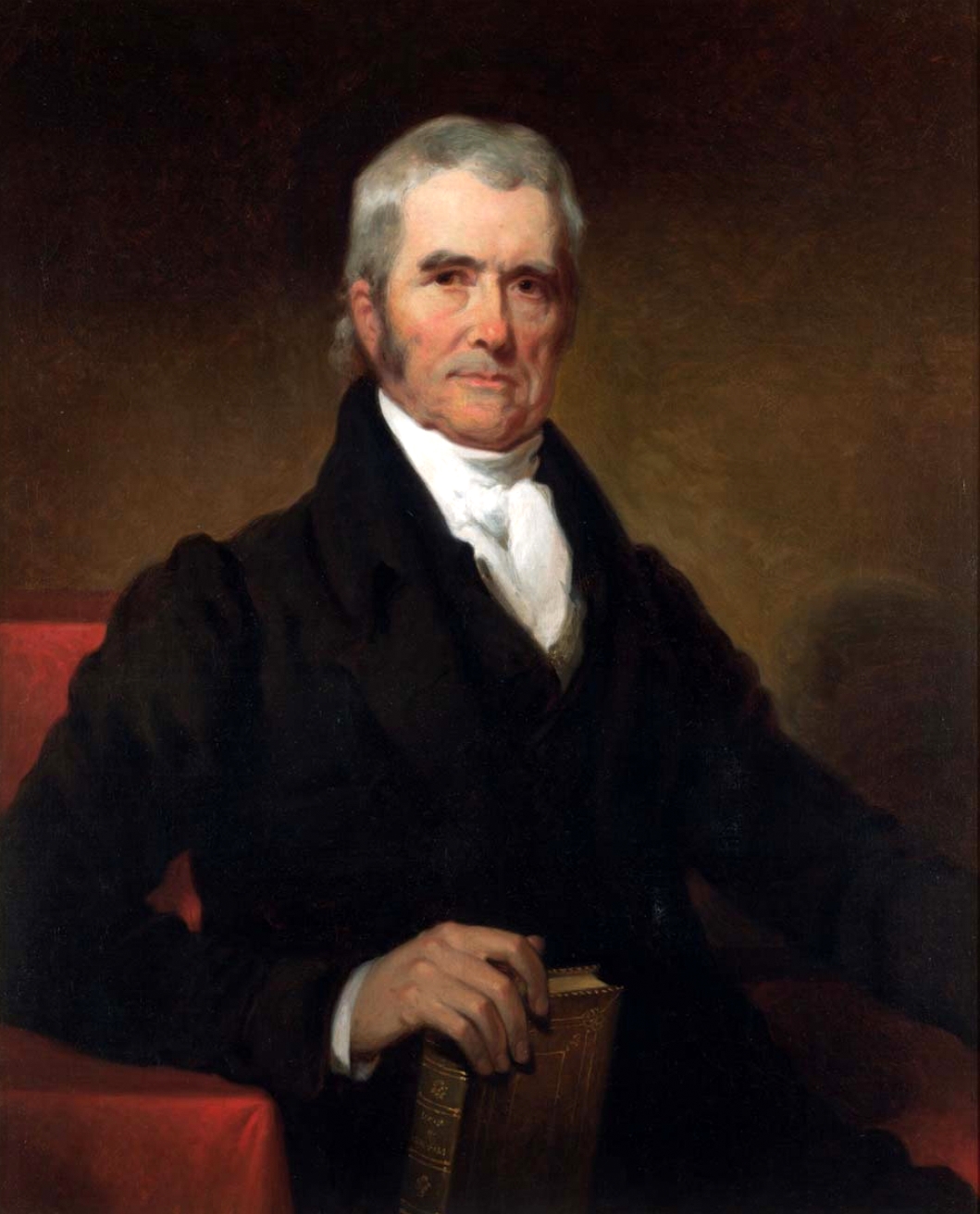

The insurers' argument was that admiralty and salvage cases fall within the federal judicial power of Article III, which can be vested only in courts whose judges hold office "during good Behaviour."33 A notary's court created by a territorial legislature could not exercise it. Chief Justice Marshall's opinion for the Court, January Term 1828, rejected that argument.31
He began with the power to acquire territory. "The Constitution confers absolutely on the government of the Union, the powers of making war, and of making treaties; consequently, that government possesses the power of acquiring territory, either by conquest or by treaty."31 Florida, ceded by Spain, "continues to be a territory of the United States; governed by virtue of that clause in the Constitution, which empowers Congress 'to make all needful rules and regulations, respecting the territory, or other property belonging to the United States.'"31 Its inhabitants enjoy the rights of citizens under the treaty, but "They do not, however, participate in political power; they do not share in the government, till Florida shall become a state."31
He then turned to the source of the governing power. "Perhaps the power of governing a territory belonging to the United States, which has not, by becoming a state, acquired the means of self-government, may result necessarily from the facts, that it is not within the jurisdiction of any particular state, and is within the power and jurisdiction of the United States. The right to govern, may be the inevitable consequence of the right to acquire territory. Whichever may be the source, whence the power is derived, the possession of it is unquestioned."31
Then came the holding on the courts:
"The Judges of the Superior Courts of Florida hold their offices for four years. These Courts, then, are not constitutional Courts, in which the judicial power conferred by the Constitution on the general government, can be deposited. They are incapable of receiving it. They are legislative Courts, created in virtue of the general right of sovereignty which exists in the government, or in virtue of that clause which enables Congress to make all needful rules and regulations, respecting the territory belonging to the United States. The jurisdiction with which they are invested, is not a part of that judicial power which is defined in the 3d article of the Constitution, but is conferred by Congress, in the execution of those general powers which that body possesses over the territories of the United States."31
"Although admiralty jurisdiction can be exercised in the states in those Courts, only, which are established in pursuance of the 3d article of the Constitution; the same limitation does not extend to the territories. In legislating for them, Congress exercises the combined powers of the general, and of a state government."31 The sale was valid and the decree for Canter was affirmed.
Canter is the origin of the phrase "legislative court" in American constitutional law. It answered a question the Madisonian design had left open. In the states, judicial power belongs to Article III judges with life tenure and protected salaries. In the territories, Congress can create courts staffed by judges with fixed terms, and those courts can decide the same kinds of cases. Later cases built on that opening. Lesson 8 covers Murray's Lessee (1856) and the idea of "public rights," lesson 11 the Insular Cases, and lesson 18 tests whether today's agency judges are really descendants of Canter's courts.
The model goes west: Idaho Territory, 1863
By 1863 the territorial model had been refined through dozens of organic acts. "An Act to provide a temporary Government for the Territory of Idaho," approved March 3, 1863, shows how much changed and how much did not.34
The governor was still appointed and removable: "the executive power and authority in and over said Territory of Idaho shall be vested in a governor, who shall hold his office for four years, and until his successor shall be appointed and qualified, unless sooner removed by the President of the United States."34 "The governor, secretary, chief justice, and associate justices, attorney, and marshal, shall be appointed by the President of the United States, by and with the advice and consent of the Senate."34 The judicial power went to "a supreme court, district courts, probate courts, and in justices of the peace," with a chief justice and two associates who "shall hold their offices during the period of four years."34 Those were Canter's legislative courts, by design.
What changed was the legislature. Idaho's legislative assembly had an elected council of seven and an elected house of thirteen from the start, apportioned "in the ratio of its qualified voters," and the governor's veto could be overridden: "If, after such reconsideration, two thirds of that house shall agree to pass the bill," it would proceed despite his objections.34 St. Clair's absolute veto was gone. The legislative power extended "to all rightful subjects of legislation consistent with the Constitution of the United States," with limits copied almost word for word from Article 4 of the 1787 compact: "no law shall be passed interfering with the primary disposal of the soil; no tax shall be imposed upon the property of the United States."341 Sections 16 and 36 of every township were reserved for schools.34 The territory sent a delegate to the House with no vote.34
So the Idaho settlers of 1863 lived under a government with elected lawmakers and an appointed executive and judiciary, inside a land system that put the soil beyond their legislature's reach. Lesson 10 follows Idaho to statehood in 1890 and the disclaimer of title to federal land in its admission terms.
Through Pierson's Framework
Pierson's method asks who an institution answers to and whether it defends itself by habit. The territorial government of 1787 answered by design to Congress and, after 1789, to the President. It was never meant to answer to the governed until they became a state. The founders were explicit about that, and St. Clair said so to the convention: the government was "as much so" popular "as it is consistent with the colonial state."14 Judged by name, it was a temporary arrangement for frontier districts. Judged by function, in Ohio it was about eleven years of executive and judicial officers making law, from July 1788 to September 1799, then three years of an appointed governor vetoing an elected house.
The St. Clair years show how quickly a temporary institution starts defending itself. The governor and judges wrote laws they were not authorized to write, and those laws stayed in force because they were "necessary to good government."8 When the settlers outgrew the arrangement, the governor fought statehood on the boundaries the compact had promised and then, when Congress overruled him, called Congress's act "a nullity."14 His argument for popular sovereignty may have been sincere. It was also the argument of an officeholder whose office was about to end. Pierson writes that institutionalism "assumes continuity equals virtue, structure guarantees truth, and outside critique is a threat by default."35 St. Clair's reply to Madison, that the only rule of conduct being enforced was "implicit blind obedience," shows that the charge can run both ways.18
The removal itself is a case of accountability working, though not in the direction the settlers' self-government would suggest. The President removed an appointed official for attacking a statute of Congress. The settlers had no vote in the matter. The mechanism was upward accountability, the same structure St. Clair had used for fourteen years. Pierson's ordered liberty asks for both accountability and support for legitimate government. In 1802 the legitimate government was the Congress that passed the Enabling Act, and the people who would become Ohio's voters had just elected a convention that accepted it. The removal served them, even though they had no say in it.
Louisiana is harder. Jefferson wrote privately that the Constitution gave no power to hold foreign territory and that "an amendment of the constitution seems necessary for this."23 He then let the question drop. The national government governed Louisiana for months entirely through the President and then through a council the President appointed every year.2728 Pierson's appendix warns of institutions that become "self-justifying, declaring their actions lawful simply because they are legal."36 In 1803 the action came first and its legality was settled later by acceptance. By 1828 Marshall could write that "the possession of it is unquestioned," whatever its source.31 That sentence is the moment a practice becomes precedent.
Canter is where Pierson's name-versus-function test bites hardest. Article III says the judicial power of the United States belongs to judges with tenure during good behavior.33 Canter said a court with four-year judges could decide an admiralty case in a territory because what it exercised was not "the judicial power" by name. Functionally, it decided who owned 356 bales of cotton, the same thing an Article III court would have decided. The label changed the constitutional rules; the function did not change at all. Lesson 18 asks whether later legislative courts and agency tribunals rest on the same move.
Hard Questions and Answers
Territorial government was a stopgap for a frontier with no states. Why treat a temporary necessity as a model for anything?
Because it got copied. The founders called it temporary and meant it. The Ordinance of 1787 promised statehood "on an equal footing" at 60,000 inhabitants, and Ohio went from first settlement in 1788 to statehood in about fifteen years.115 The temporary form still became a template: Orleans in 1804 and Idaho in 1863 reused its appointed governor, presidential removal, term-limited judges and bar on taxing federal land.2834 Each territory was temporary. The model kept coming back.
St. Clair was a Federalist fired by a Republican president. Isn't this a partisan purge dressed up as principle?
Partly, and the record says so. St. Clair's own editor wrote that Byrd had been "forming a party in opposition to the Governor" and that the removal served "the work of making a new Republican State."18 Republicans dominated the convention.12 But the stated ground was real and documented. The governor had told a convention called under an act of Congress that the act was "a nullity" and that the territory was no more bound by Congress in internal affairs "than we would be bound by an edict of the first consul of France."14 An appointed federal officer who says that in public about a federal statute hands any president, of either party, a reason to remove him.
Jefferson himself wrote that the Constitution gave no such power. Why should anyone treat the Louisiana Purchase as lawful?
His letters prove he had doubts. They do not settle the question. He wrote that the Constitution "has not given it a power of holding foreign territory."23 Others disagreed, and the Senate ratified 24 to 7.26 In 1828 the Supreme Court found the power in the treaty and war powers and in the Property Clause.31 One can argue Jefferson was right and the Court wrong, but the courts have treated the question as settled for almost two centuries. What the letters do show is harder on his admirers: a strict constructionist who decided a great national advantage outweighed his reading of the text, and asked the nation to approve after the fact.
Drawing a line from a Key West salvage court to modern agency judges is a stretch, isn't it?
Some of it is. Canter is a root, and only one of several. It created the category "legislative court" and grounded it in Congress's territorial power.31 It said nothing about agencies inside the states. The doctrine that lets Congress assign some matters to non-Article III bodies within the states came later, from cases such as Murray's Lessee (1856) on "public rights," covered in lesson 8. Calling every agency judge a territorial judge overstates the link. Ignoring Canter understates it, because the idea that Congress can create tribunals outside Article III when it acts under its own plenary powers starts here.
The Northwest Ordinance banned slavery and protected religious liberty. Isn't calling it an instrument of control a smear on one of the best laws Congress ever passed?
It was both, and its admirers should not skip the second half. Article 6 kept slavery out of the Northwest Territory, Article 1 protected worship, and Article 2 secured habeas corpus and jury trial before the federal Bill of Rights existed.1 Those were real gains for liberty, and they lasted. The same document gave an appointed governor an absolute veto and the power to "prorogue, and dissolve the general assembly."1 The ordinance was generous with rights and stingy with self-government. Its critics owe it the first half of that sentence.
Learn more
- Northwest Ordinance, July 13, 1787 (Avalon Project): the full text.
- Northwest Ordinance research guide (Library of Congress): Journals entries, Letters of Delegates and printed broadsides.
- The St. Clair Papers, vol. 2 (1882): the November 3, 1802 address and the reply to Madison, pages 592 to 601.
- Madison to St. Clair, November 22, 1802 (Founders Online): the removal letter with editorial notes.
- Jefferson to Dickinson, August 9, 1803 (Founders Online): the constitutional doubts in Jefferson's words.
- Jefferson to Nicholas, September 7, 1803 (Founders Online): the "blank paper by construction" letter.
- American Insurance Co. v. Canter (LII): Marshall's opinion on legislative courts.
- Statutes at Large, 37th Congress (Library of Congress): the Idaho Organic Act at 12 Stat. 808.
- Module 53: Founding of the Republic: the wider founding context.
Notes
- An Ordinance for the Government of the Territory of the United States North West of the River Ohio, July 13, 1787. Avalon Project, Yale Law School. Read it online. ↩
- Nathan Dane to Rufus King, New York, July 16, 1787, in Charles R. King, ed., The Life and Correspondence of Rufus King, vol. 1 (New York: G. P. Putnam's Sons, 1894), pp. 289 to 290. Also reprinted in Letters of Delegates to Congress, vol. 24 (Library of Congress). Internet Archive. Read it online. ↩
- Declaration of Independence, July 4, 1776, transcription, National Archives. Read it online. ↩
- An Act to provide for the Government of the Territory North-west of the river Ohio, ch. 8, 1 Stat. 50, approved August 7, 1789. U.S. Statutes at Large, vol. 1, Library of Congress. Read it online. ↩
- Journals of the Continental Congress, vol. 33, ed. Roscoe R. Hill (Washington: Government Printing Office, 1936), entries for Friday, October 5, 1787 (election of Arthur St. Clair as governor and Winthrop Sargent as secretary) and Tuesday, October 16, 1787 (election of Samuel Holden Parsons, John Armstrong Jr. and James Mitchell Varnum as judges). Internet Archive. Read it online. ↩
- William Henry Smith, ed., The St. Clair Papers: The Life and Public Services of Arthur St. Clair, vol. 1 (Cincinnati: Robert Clarke and Co., 1882), p. 135 (Armstrong declined and John Cleves Symmes was appointed in his place). Internet Archive. Read it online. ↩
- Charles Willson Peale, Arthur St. Clair, between 1782 and 1784, Independence National Historical Park. Wikimedia Commons file record (public domain). Read it online. ↩
- The St. Clair Papers, vol. 1, pp. 144 to 145 (arrival at Marietta, July 15, 1788; the governor and judges' code; Congress's refusal to approve laws not adopted from the original states; judicial vacancies), quoting Salmon P. Chase's Preliminary Sketch. Internet Archive. Read it online. ↩
- The St. Clair Papers, vol. 2, editor's note recording that St. Clair "had four horses killed at the battle, 4th November, 1791." Internet Archive. Read it online. ↩
- The St. Clair Papers, vol. 1, pp. 208 to 209 and 214 (first General Assembly: representatives met February 4, 1799; houses organized September 24, 1799; the governor's absolute veto; vetoes of six county bills; election of William Henry Harrison as delegate by eleven votes to ten). Internet Archive. Read it online. ↩
- An act to divide the territory of the United States northwest of the Ohio, into two separate governments, ch. 41, 2 Stat. 58, approved May 7, 1800 (Indiana Territory; Chillicothe made seat of the Northwest Territory). U.S. Statutes at Large, vol. 2, Library of Congress. Read it online. ↩
- Thomas Worthington to Thomas Jefferson, Chillicothe, 8 November 1802, with enclosures (Scioto Gazette of November 6, 1802 printing St. Clair's November 3 address; Worthington's July 5, 1802 address to the citizens of the territory on the defeat of the plan to redivide it) and editorial notes on the convention, which sat November 1 to 29, 1802. Founders Online, National Archives. Read it online. ↩
- An Act to enable the people of the Eastern division of the territory northwest of the river Ohio to form a constitution and state government, ch. 40, 2 Stat. 173, approved April 30, 1802. U.S. Statutes at Large, vol. 2, Library of Congress. Read it online. ↩
- "Remarks of Governor St. Clair before the Constitutional Convention," [November 3, 1802], in The St. Clair Papers, vol. 2 (Cincinnati: Robert Clarke and Co., 1882), pp. 592 to 597, from the Worthington Papers; editor's note quoting Chase that the convention assembled at Chillicothe November 1, 1802 and that "On the third day of the session, Governor St. Clair, by permission, addressed the Convention." The printed text sets "bartered away like sheep in a market" off with dashes; the lesson quotes the two phrases separately so that no punctuation inside the quotation marks is altered. Internet Archive. Read it online. ↩
- An Act to provide for the due execution of the laws of the United States, within the state of Ohio, ch. 7, 2 Stat. 201, approved February 19, 1803 (reciting that the convention formed a constitution on November 29, 1802). U.S. Statutes at Large, vol. 2, Library of Congress. Read it online. ↩
- James Madison to Arthur St. Clair, 22 November 1802, The Papers of James Madison, Secretary of State Series, vol. 4, with editorial note on the address of November 3 and Albert Gallatin's letter to Jefferson of November 20, 1802. Founders Online, National Archives. Read it online. ↩
- The St. Clair Papers, vol. 1, pp. 243 to 246, printing James Madison to Arthur St. Clair, Department of State, November 22, 1802, with the editor's comments. Internet Archive. Read it online. ↩
- Arthur St. Clair to James Madison, Cincinnati, December 21, 1802, in The St. Clair Papers, vol. 2, pp. 599 to 601, with editor's notes. Internet Archive. The same letter is calendared on Founders Online. Read it online. ↩
- Treaty between the United States and the French Republic (Louisiana Purchase), April 30, 1803, Article III. Avalon Project. Read it online. ↩
- Convention between the United States and the French Republic, April 30, 1803 (sixty million francs; stock of $11,250,000 at six percent), and the companion claims convention (up to twenty million francs). Avalon Project. Read it online. ↩
- Convention between the United States and the French Republic on claims of American citizens, April 30, 1803. Avalon Project. Read it online. ↩
- Rembrandt Peale, Thomas Jefferson, 1800, White House Historical Association. Wikimedia Commons file record (public domain). Read it online. ↩
- Thomas Jefferson to John Dickinson, 9 August 1803 (recipient's copy at the Historical Society of Pennsylvania; press copy in the Library of Congress), The Papers of Thomas Jefferson, vol. 41. Founders Online, National Archives. Read it online. ↩
- Thomas Jefferson to John Breckinridge, 12 August 1803, The Papers of Thomas Jefferson, vol. 41. Founders Online, National Archives. Read it online. ↩
- Thomas Jefferson to Wilson Cary Nicholas, 7 September 1803, The Papers of Thomas Jefferson, vol. 41. Founders Online, National Archives. Read it online. ↩
- United States Senate, "Senate Approves Louisiana Purchase Treaty" (October 20, 1803; vote 24 to 7). Read it online. ↩
- An Act to enable the President of the United States to take possession of the territories ceded by France to the United States, ch. 1, 2 Stat. 245, approved October 31, 1803. U.S. Statutes at Large, vol. 2 (Eighth Congress), Library of Congress. Read it online. ↩
- An Act erecting Louisiana into two territories, and providing for the temporary government thereof, ch. 38, 2 Stat. 283, approved March 26, 1804. U.S. Statutes at Large, vol. 2 (Eighth Congress), Library of Congress. Read it online. ↩
- An Act to enable the people of the Territory of Orleans to form a constitution and state government, ch. 21, approved February 20, 1811. U.S. Statutes at Large, vol. 2 (Eleventh Congress), Library of Congress. Read it online. ↩
- An Act for the admission of the State of Louisiana into the Union, and to extend the laws of the United States to the said state, approved April 8, 1812. U.S. Statutes at Large, vol. 2 (Twelfth Congress), Library of Congress. Read it online. ↩
- American Insurance Co. v. 356 Bales of Cotton (Canter), 26 U.S. (1 Pet.) 511 (January Term, 1828), opinion of Chief Justice Marshall. Text via Legal Information Institute, Cornell Law School; also Justia. Read it online. ↩
- Henry Inman, John Marshall, 1832. Wikimedia Commons file record (public domain). Read it online. ↩
- Constitution of the United States, transcription, National Archives (Article III, Section 1; Article IV, Section 3). Read it online. ↩
- An Act to provide a temporary Government for the Territory of Idaho, ch. 117, 12 Stat. 808, approved March 3, 1863 (sections 2, 6, 9, 11, 13 and 14). U.S. Statutes at Large, vol. 12, Library of Congress. Read it online. ↩
- Jeff A. Pierson, "The Acacia Illusion: How Institutionalism Mimics Nature's Most Subtle Manipulation," in The Ordered Liberty Papers (2025). Read it online. ↩
- Jeff A. Pierson, "The Anti-Federalist Warning: Institutional Power and the Fragility of Liberty," appendix to Ordered Liberty Reclaimed: A Foundation for Liberty. Read it online. ↩
Terms in this lesson
- Territorial government
- A temporary government created by Congress for federal land outside any state, with officers appointed by the national government.
- First stage (Northwest Ordinance)
- Government by an appointed governor, secretary and three judges, who could adopt laws from the original states, subject to disapproval by Congress.
- Second stage
- Once a district had 5,000 free adult male inhabitants, it elected a house of representatives; with an appointed council and the governor it formed a general assembly, and the governor held an absolute veto.
- Compact articles
- The six articles of the Northwest Ordinance declared a compact between the original states and the people of the territory, "forever" unalterable except by common consent.
- Enabling act
- A statute authorizing the people of a territory to form a constitution and apply for admission as a state; Ohio's was approved April 30, 1802.
- Legislative court
- Marshall's term in Canter (1828) for a territorial court created by Congress under its territorial powers, whose judges lack Article III tenure and which does not exercise the judicial power of Article III.
- Property Clause
- Article IV, Section 3, Clause 2 of the Constitution, giving Congress power to make all needful rules and regulations respecting the territory or other property of the United States.
- Organic act
- The statute that organizes a territory's government; Idaho's was approved March 3, 1863.
Sources
- Northwest Ordinance, July 13, 1787 (Avalon Project) checked 2026-10
- The St. Clair Papers, vol. 1 and 2 (1882) checked 2026-10
- James Madison to Arthur St. Clair, 22 November 1802 (Founders Online) checked 2026-10
- Thomas Jefferson to John Dickinson, 9 August 1803 (Founders Online) checked 2026-10
- Louisiana Purchase Treaty, April 30, 1803 (Avalon Project) checked 2026-10
- American Insurance Co. v. Canter, 26 U.S. 511 (1828) (LII) checked 2026-10
- Idaho Organic Act, 12 Stat. 808 (1863) checked 2026-10