Lesson 1 of 14 · about 45 minutes · Updated October 28, 2026
Colonial Religion Before 1730: Puritans, the Half-Way Covenant and the Established Churches
You'll be able to
- Explain the covenant theology of the New England Puritans and the role of the conversion "relation" in church membership, quoting the Cambridge Platform.
- State what the synod of 1662 decided about baptism and what it did not decide about the Lord's Supper.
- Describe Solomon Stoddard's open communion in his own words and date his five "harvests" from Edwards's account.
- Compare the church establishments of Massachusetts, Connecticut, Virginia, the Carolinas and New York with the charters of Rhode Island and Pennsylvania.
- Weigh the textual dispute over Winthrop's "Modell of Christian Charity" and the historians' debate over New England "declension."
- Identify which institutions of 1620 to 1730 the revivalists and their critics of the 1740s inherited.
Start here: the short version
The Great Awakening of the 1730s and 1740s did not fall on empty ground. For a century before it, the English colonies had been building churches, writing church constitutions, arguing about who belonged to the church, and asking whether the faith of the founders was fading in their grandchildren. In New England, Puritan settlers who arrived from 1630 organized Congregational churches whose full members had to give an account of their conversion, and their colonial governments taxed every town to pay a minister. The synod of 1662 (the "Half-Way Covenant") allowed the baptized but unconverted children of church members to have their own children baptized, while still keeping them from the Lord's Supper. At Northampton, Massachusetts, Solomon Stoddard went further and opened the Supper to all church members of good life, and he counted five seasons of revival, which he called "harvests," between the 1670s and 1718. In Virginia and the southern colonies the Church of England was the established church, while Rhode Island and Pennsylvania wrote liberty of conscience into their charters. New England preachers built a sermon form, which the historian Perry Miller named the jeremiad, that warned their people of decline. Whether religion really declined is a question historians still test against church records. This lesson sets out these institutions and arguments, because the revivalists of lesson 02 and the critics of lesson 04 were born into them and argued from them.
This module follows the revivals that shaped American Protestantism from Jonathan Edwards to Charles Finney. The story begins earlier, with the churches the revivals were meant to renew. Every revival preacher of the 1740s was baptized, catechized and ordained inside one of the colonial church systems described here, and almost every quarrel of the Awakening (who may take the Lord's Supper, whether a minister must be converted, whether a town may tax a Baptist to pay a Congregational minister) was a quarrel the colonies had already been having for decades. The Puritans and Congregational church order are taught in outline in Module 80, lesson 05, and the Calvinist and Arminian positions in Module 80, lesson 03. This lesson does not repeat those overviews. It goes into the documents: Winthrop's discourse of 1630, the Cambridge Platform of 1648, the Propositions of 1662, Stoddard's writings, the Reforming Synod of 1679, the Saybrook Platform of 1708, and the colonial charters and statutes that set up or refused an established church.
The Puritan errand
Who the Puritans were
The Puritans of the Massachusetts Bay Company were members of the Church of England who believed it remained a true church in need of further reform. The Library of Congress exhibition on religion and the founding of the American Republic calls them "non-separating Congregationalists," and distinguishes them from the Pilgrims of Plymouth (1620), who had separated from the national church.1 In the 1620s, as the same exhibition records, English church and state leaders grew increasingly hostile to Puritan demands, and beginning in 1630 "as many as 20,000" Puritans left England for America, most of them for New England and some for the West Indies.1 That figure is the usual estimate for what is called the Great Migration of the 1630s. It is an estimate from passenger lists, town records and later reckonings, and it should be read as an order of magnitude.
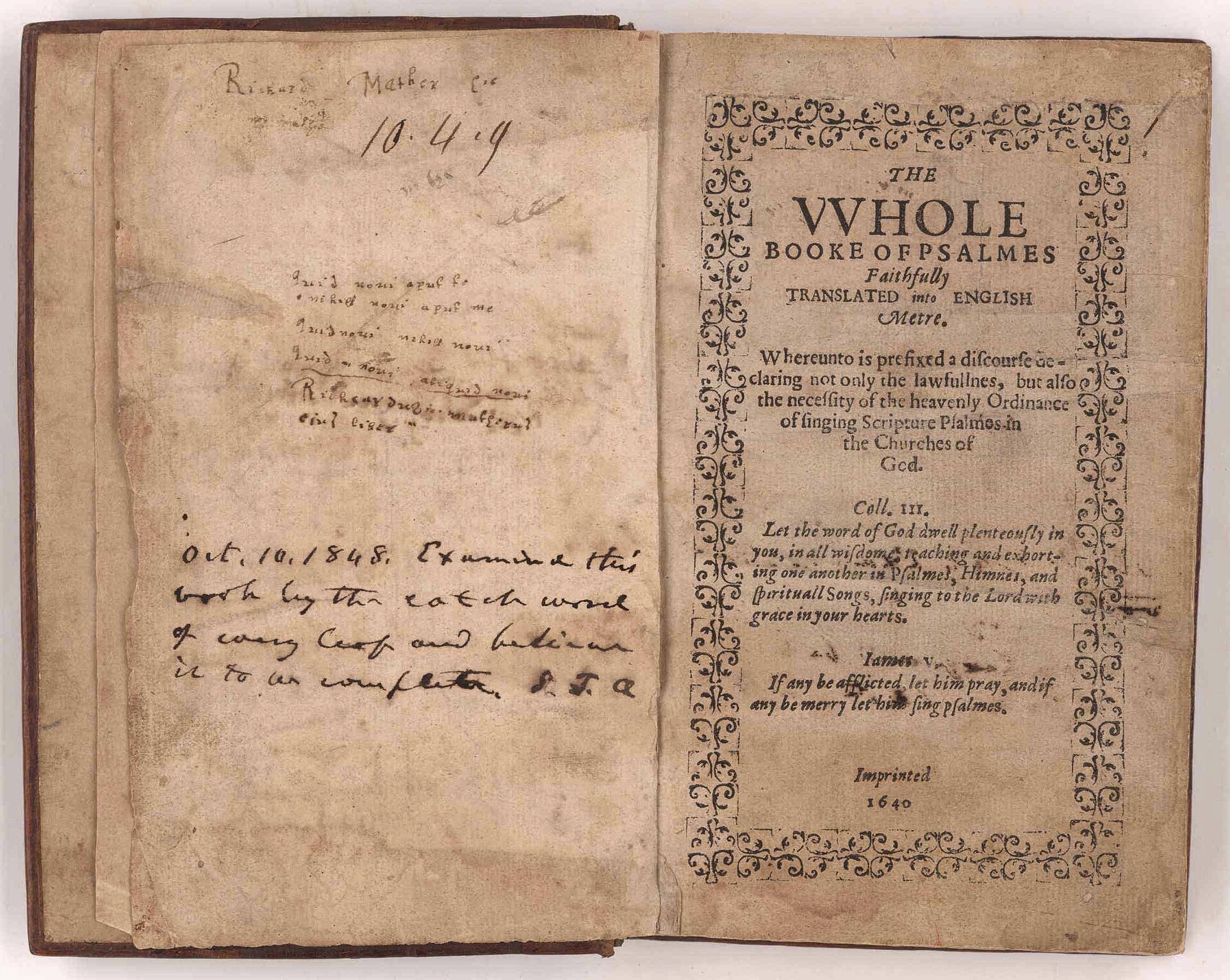
The settlers brought their Bibles, and the Library of Congress notes that the first King James Bible known to have reached the colonies was carried by John Winthrop to Massachusetts in 1630, although the Geneva Bible remained in use among Pilgrims and Puritans until the King James version gradually replaced it.1 They also brought a printing press. In 1640 Stephen Daye printed at Cambridge, Massachusetts, the metrical psalter known as the Bay Psalm Book, the first book published in British North America.1 The congregations sang the psalms in English meter because they held that only Scripture should be sung in public worship, and the book's own title page announced a discourse "declaring not only the lawfullness, but also the necessity of the heavenly ordinance of singing scripture psalmes in the churches of God."2

John Winthrop and "A Modell of Christian Charity"
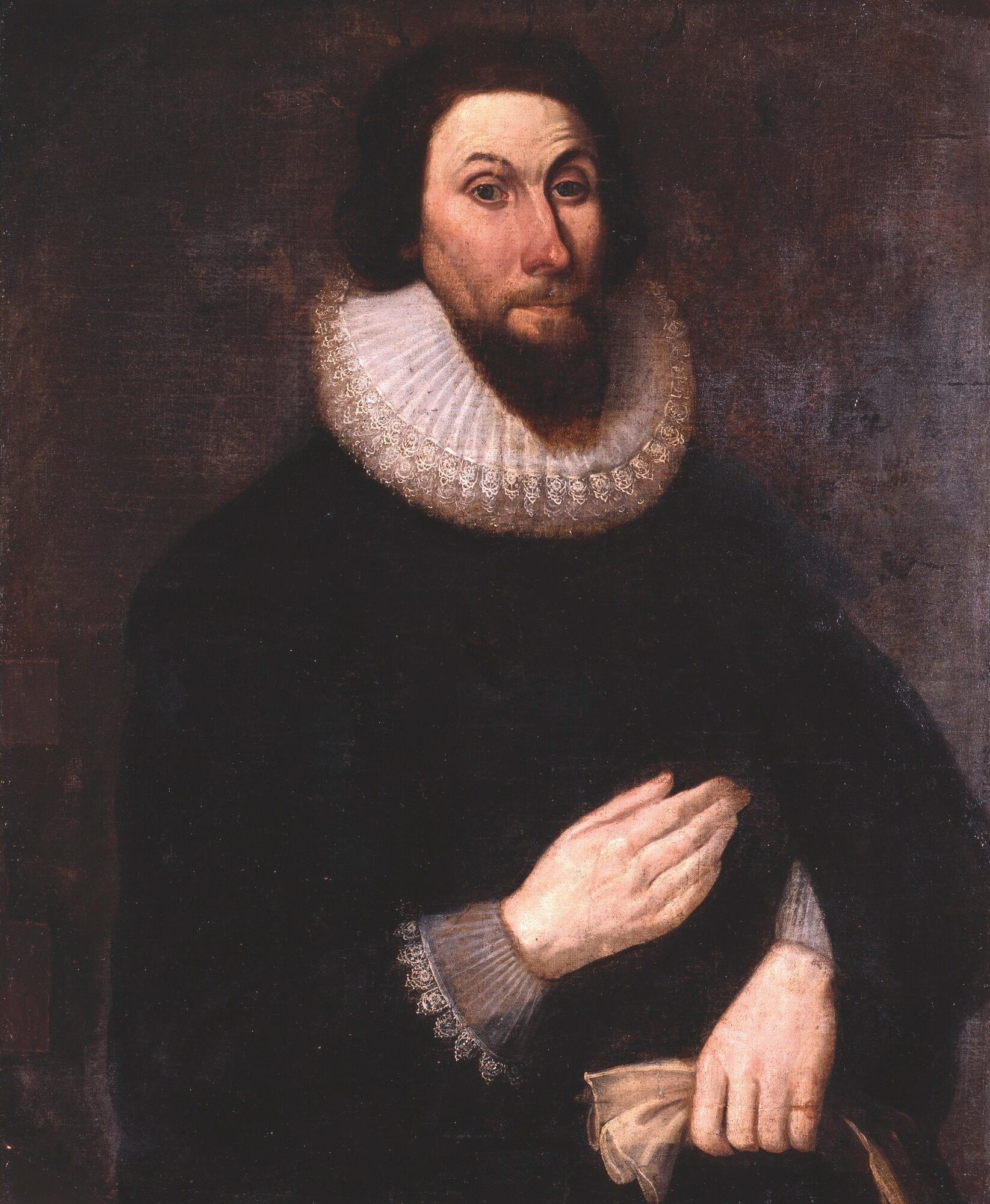
John Winthrop (1588 to 1649), a lawyer and landowner from Suffolk, was chosen governor of the Massachusetts Bay Company before its fleet sailed in the spring of 1630.3 A discourse attributed to him, "A Modell of Christian Charity," has become the best known Puritan text in American public life because of a single sentence. It begins with a statement about the order of society: "GOD ALMIGHTY in his most holy and wise providence, hath soe disposed of the condition of mankind, as in all times some must be rich, some poore, some high and eminent in power and dignitie; others mean and in submission."4 The bulk of the discourse is an argument about love, mercy, lending and forgiving among Christians, with many cases put and answered in the manner of a sermon or a lecture on duty.
Near its end Winthrop (or the author) tells the settlers what their common life requires: "For this end, wee must be knitt together, in this worke, as one man. Wee must entertaine each other in brotherly affection. Wee must be willing to abridge ourselves of our superfluities, for the supply of other's necessities."4 Then comes the sentence quoted ever since: "For wee must consider that wee shall be as a citty upon a hill. The eies of all people are uppon us."4 The image is from the Sermon on the Mount: "Ye are the light of the world. A city that is set on an hill cannot be hid" (Matthew 5:14, KJV).5 The discourse also cites Micah 6:8, "to do justly, and to love mercy, and to walk humbly with thy God."5
Read in its setting, the "citty upon a hill" is a warning as much as a promise. The next sentences say: "Soe that if wee shall deale falsely with our God in this worke wee haue undertaken, and soe cause him to withdrawe his present help from us, wee shall be made a story and a by-word through the world. Wee shall open the mouthes of enemies to speake evill of the wayes of God."4 The discourse closes with Moses's farewell in Deuteronomy 30: "Beloued there is now sett before us life and good, Death and evill ... Therefore lett us choose life that wee, and our seede may liue, by obeyeing His voyce and cleaveing to Him, for Hee is our life and our prosperity."4
The discourse also states the covenant idea that runs through this lesson. "Thus stands the cause betweene God and us. We are entered into Covenant with Him for this worke. Wee haue taken out a commission."4 A people bound to God by covenant could expect blessing for keeping it and judgment for breaking it, and that expectation shaped New England preaching for the next century.

Where was it delivered? The textual dispute
The popular account says that Winthrop preached "A Modell of Christian Charity" on the deck of the Arbella in mid-ocean. That account rests on a heading. The text was first printed in 1838 in the Collections of the Massachusetts Historical Society, under the heading "WRITTEN ON BOARD THE ARBELLA, ON THE ATLANTIC OCEAN."4 The only early manuscript, given to the New-York Historical Society in 1809 by Francis Bayard Winthrop, is not in John Winthrop's hand, and the note about the Arbella is on a separate cover sheet.6 Scholars have drawn different conclusions from these facts:
- Hugh Dawson (1991) argued that the discourse was delivered at Southampton before the fleet sailed, on the same occasion as John Cotton's farewell sermon to the emigrants, and suggested a date in March 1630.6
- Francis Bremer, Winthrop's biographer (John Winthrop: America's Forgotten Founding Father, 2003), accepts Southampton but doubts Dawson's date, and points to the phrase "here in England" in the text as a clue that it was spoken before departure. He also notes that the Arbella carried only a small share of the emigrants, which makes a shipboard address to the whole company unlikely.6
- Daniel Rodgers (As a City on a Hill, 2018) and Richard Gamble (In Search of the City on a Hill, 2012) argued that it may have been a written treatise rather than a spoken sermon. Bremer replies that Puritan preachers often wrote out or expanded what they had preached.6
- Abram Van Engen (City on a Hill: A History of American Exceptionalism, 2020) argued that the surviving text is only a copy, and possibly a copy of a copy, pointing among other things to inaccurate scriptural citations that Winthrop would not have made.6
- A textual study in the journal Textual Cultures went further and asked whether Winthrop was its author at all, noting that its authorship was "a settled matter" for about 150 years after 1838 until Dawson's questions, and that the manuscript and its transmission have "anomalous features."7
The fair summary is that the text is from 1630 or close to it, that its attribution to Winthrop is traditional and widely accepted but has been questioned, and that the place of delivery (Southampton, on board ship, or nowhere, if it was a written treatise) is unresolved. The text itself received little attention until the twentieth century, when Perry Miller and others made it the starting point of the American story; Van Engen's book traces how it became famous.6
Covenant theology
Puritan theology was Reformed (Calvinist) in its account of salvation: God's eternal decree, human inability after the fall, the sovereign grace of God in regeneration, and the perseverance of the saints. These points are taught in Module 80, lesson 03. What gave New England Puritanism its own shape was the language of covenant. The Westminster Confession (1646), whose doctrine the Cambridge Synod approved in 1648, and the Savoy Declaration of the English Congregationalists (1658), which the Massachusetts synod adopted with small changes in 1680 and the Connecticut churches at Saybrook in 1708, both state it in chapter VII:8
"The first Covenant made with man, was a Covenant of Works, wherein life was promised to Adam, and in him to his posterity, upon condition of perfect and personal obedience. ... Man by his fall having made himself uncapable of life by that Covenant, the Lord was pleased to make a second, commonly called the Covenant of Grace; wherein he freely offereth unto sinners life and salvation by Jesus Christ, requiring of them faith in him that they may be saved, and promising to give unto all those that are ordained unto life, his holy Spirit, to make them willing and able to believe."8
New England used covenant language at three levels. The covenant of grace was between God and the elect believer. The church covenant was a written promise by which the members of a congregation bound themselves to God and to one another; a church was "gathered" when a group of visible saints signed or owned such a covenant. And the national or social covenant, which Winthrop's discourse invokes, bound a whole people to God, so that public sins could bring public judgments such as drought, war or epidemic.4 The tension between these levels drove the debates of the next century. A church that admitted only visible saints would shrink if the children of members did not experience conversion, while a social covenant that included the whole town required that the whole town be under some kind of church discipline.
The historian Perry Miller, in The New England Mind: The Seventeenth Century (1939) and The New England Mind: From Colony to Province (1953), argued that the covenant scheme let Puritan ministers preach human duty without abandoning divine sovereignty: God had bound himself by promise, so the preacher could urge his hearers to "prepare" for grace.9 Norman Pettit, in The Heart Prepared (1966), traced the disputes over "preparation for salvation" from English Puritanism through New England.10 Later scholars have argued that Miller overstated how far covenant theology departed from Calvin; the Reformed side would say that covenant language came from Scripture (the covenants with Noah, Abraham, Moses and David) and from Reformed writers before the Puritans. Arminian and Wesleyan readers would say that the Puritan preacher's urgent calls to sinners fit poorly with a decree that could not be changed. The Puritans' own answer, in the confession quoted above, was that God ordains the means as well as the end, so that preaching, prayer and the sacraments are the ordinary ways in which the elect are brought to faith.
The gathered church and the conversion narrative
Membership by "relation"
The distinctive New England practice was to require of adult candidates for full church membership a public account of how God had worked in their souls. This account was called a "relation." It was more than a profession of correct doctrine and a blameless life, which English parishes and most Reformed churches in Europe asked of communicants. The candidate was expected to describe conviction of sin, the hearing of the word, and the signs of saving faith, so that the church could judge him or her a "visible saint." Historians such as Edmund Morgan (Visible Saints: The History of a Puritan Idea, 1963) date the general use of the relation in Massachusetts to the later 1630s.11
The Cambridge Platform of 1648 put the practice into the churches' written constitution. Its chapter XII, "Of Admission of members into the Church," begins: "The doors of the Churches of Christ upon earth, doe not by Gods appointment stand so wide open, that all sorts of people good or bad, may freely enter therein at their pleasure; but such as are admitted therto, as members ought to be examined & tryed first; whether they be fit & meet to be received into church-society, or not."12 Later in the same chapter it states: "A personall & publick confession, & declaring of Gods manner of working upon the soul, is both lawfull, expedient, & usefull, in sundry respects."12 The platform made allowance for the timid: where persons were not able to speak in public, "it is sufficient that the Elders having received private satisfaction, make relation therof in publick before the church."12 In practice this provision was used for many women, who often gave their relations to the elders in private.
Members admitted on these terms were "in full communion." They could take the Lord's Supper, and male members could vote in church affairs, including the election of officers and the admission and censure of members. Their children were baptized as infants, on the ground that the children of believers are within the covenant. The rest of the town attended the same meetinghouse, heard the same sermons and paid the same rates, but did not take the Supper.
The Cambridge Platform (1648)
The Cambridge Synod was called by the Massachusetts General Court in 1646, at a time when Presbyterians were gaining strength in the English Parliament and some colonists were asking for a Presbyterian order in New England. It held sessions in September 1646 and June 1647 and finished its work in 1648.13 On "the last of the sixth month, 1648" (August 31, 1648, by the old reckoning in which March was the first month), the synod voted that it had considered the Westminster Assembly's confession and judged it "very holy, orthodox, & judicious in all matters of faith," and that it consented to it "for the substance therof," reserving only matters of church government, for which it referred readers to its own platform.8 The draft of the platform was by Richard Mather, minister at Dorchester from 1636 to 1669.1 The General Court did not approve it at once; some churches and some deputies objected to parts of it. On October 14, 1651, the Court voted to "giue theire testimony to the sd Booke of Discipline, that for the substance thereof it is that we haue practised & doe beleeve."13
The platform defines a church as a congregation of visible saints joined by covenant, governs each congregation by its own elders with the consent of the brethren, and allows synods to give advice without power to command. Its chapter XVII, on the civil magistrate, explains how church and state were to relate. Section 5 states: "As it is unlawfull for church-officers to meddle with the sword of the Magistrate, so it is ulawfull for the Magistrate to meddle with the work proper to church-officers."14 Section 8 gives the magistrate the duty to restrain "Idolatry, Blasphemy, Heresy, venting corrupt & pernicious opinions, that destroy the foundation, open contempt of the word preached, prophanation of the Lords day, disturbing the peaceable administration & exercise of the worship & holy things of God, & the like."14 Ministers did not hold civil power under this arrangement, while magistrates were bound to protect the true religion and punish open offenses against it.
Church and commonwealth in Massachusetts
Membership in the church also had civil consequences in early Massachusetts. A 1631 order of the General Court limited the status of freeman (the right to vote for colony officers and to sit in the General Court) to church members, so that, as the Constitution Annotated of the United States Congress puts it, "A public confession of faith was necessary to become a citizen of the colony."15 Massachusetts mandated Congregational churches and, between 1659 and 1661, executed four Quakers who returned after banishment; the most remembered of them, Mary Dyer, is the subject of Module 102, lesson 08.15 Roger Williams, banished from Massachusetts in 1635, founded Providence, and the Baptist congregation there was organized in 1639.16
The Massachusetts Body of Liberties (1641), the colony's first code, shows the same mixture of scriptural rule and English law. On slavery, its section 91 reads: "There shall never be any bond slaverie, villinage or Captivitie amongst us unles it be lawfull Captives taken in just warres, and such strangers as willingly selle themselves or are sold to us. And these shall have all the liberties and Christian usages which the law of god established in Israell concerning such persons doeth morally require."17 The section is often quoted as a ban on slavery, but its exceptions permitted the holding of captives and of persons "sold to us," and enslaved Africans and Native captives were held in New England under it. Ministers were among the slaveholders. Cotton Mather's diary for December 1706 records that "Some Gentlemen of our Church ... purchased for me, a very likely Slave; a young Man, who is a Negro of a promising Aspect and Temper," and that "I putt upon him the Name of Onesimus."18

The Half-Way Covenant (1662)
The problem of the second generation
The New England churches baptized the infant children of full members. By the 1650s many of those baptized children had grown up, married and had children of their own, without ever giving a relation of conversion and being admitted to the Lord's Supper. The question was whether their children could be baptized. If they could not, a growing share of each town would be outside the covenant and outside church discipline, and the churches would shrink to a remnant. If they could, the gathered church of visible saints would include more and more people who had never claimed saving grace.
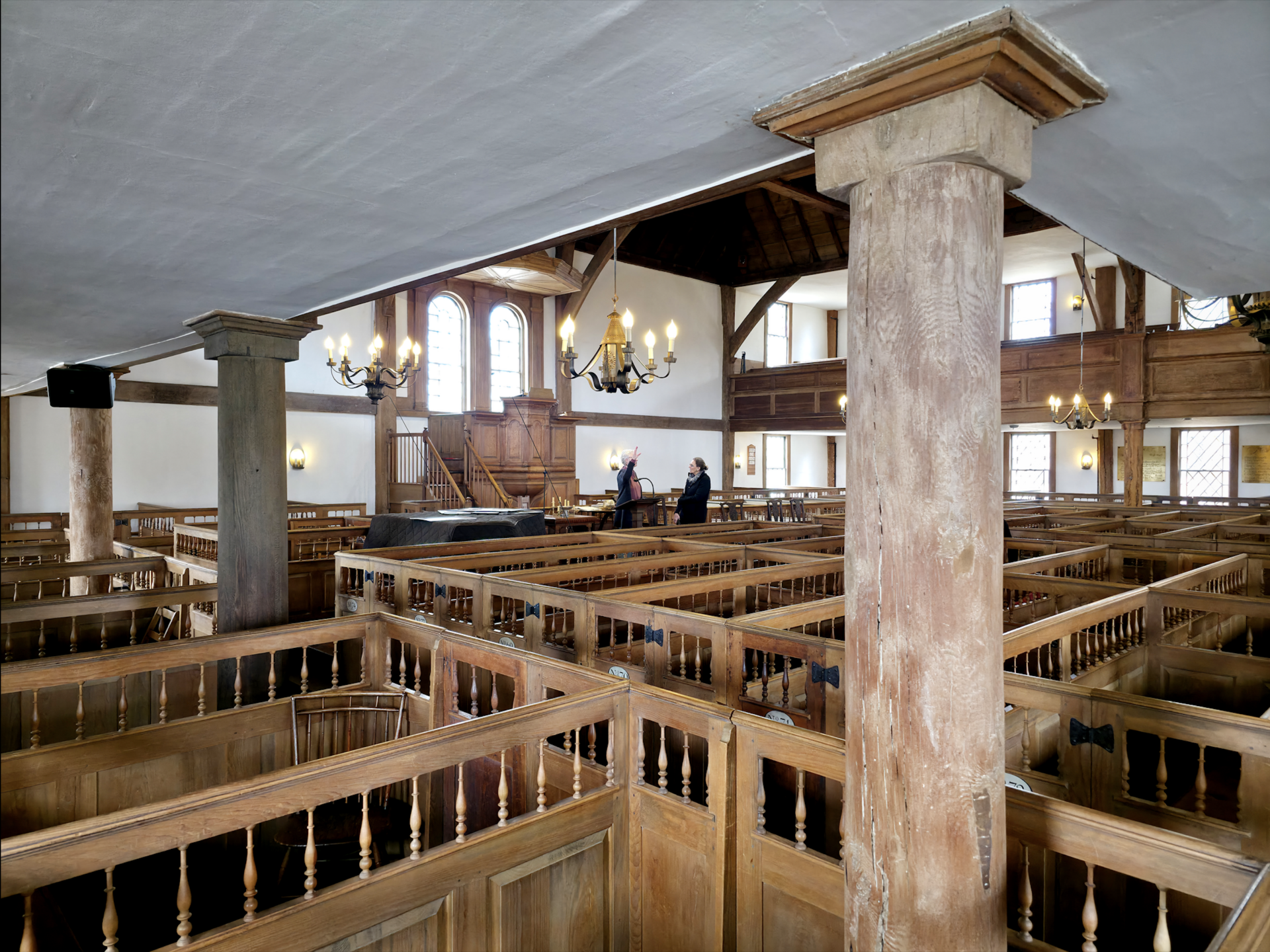
A ministerial assembly met in Boston in 1657 on the question. The Massachusetts General Court then called a synod, which met in Boston in March 1662 with about seventy ministers and lay messengers.20 According to Williston Walker's history of the documents (1893), "at least eight or nine of the seventy present" opposed any Half-Way principles. The opposition included Charles Chauncy, president of Harvard; John Mayo and Increase Mather of Boston's Second Church; and Increase's brother Eleazer Mather of Northampton.20 The leading voice for the measure was Jonathan Mitchell of Cambridge, with Richard Mather of Dorchester and John Allin. After adjourned sessions in June and September, the synod adopted its Propositions by a vote that Walker describes as "more than seven to one," and its committee reported to the Court on October 8, 1662.20
What the Propositions said
The synod answered the Court's first question, "Who are the subjects of Baptism?", in seven propositions. The key steps are these, in the synod's own words:21
- Proposition 2: "The members of the visible Church according to Scripture, are confederate visible believers, in particular Churches, and their infant-seed, i.e. children in minority, whose next parents, one or both, are in Covenant."
- Proposition 3: "The Infant-seed of confederate visible Believers, are members of the same Church with their parents, and when grown up, are personally under the Watch, Discipline and Government of that Church."
- Proposition 4: "These Adult persons are not therefore to be admitted to full Communion, meerly because they are and continue members, without such further qualifications, as the Word of God requireth thereunto."
- Proposition 5: "Church-members who were admitted in minority, understanding the Doctrine of Faith, and publickly professing their assent thereto; not scandalous in life, and solemnly owning the Covenant before the Church, wherein they give up themselves and their Children to the Lord, and subject themselves to the Government of Christ in the Church, their Children are to be Baptized."
The arrangement was afterward called the Half-Way Covenant, a name given by its opponents. The baptized adult who "owned the covenant" was a member, under discipline, and could bring his or her children to baptism; but by Proposition 4 such a person was not admitted to the Lord's Supper, and the synod's argument added that half-way members did not vote in church affairs, since "how can they, who are not able to examine and judge themselves, be thought able and fit to discern and judge in the weighty affairs of the house of God?"21 The fifth proposition, which Walker calls "the most fiercely contested battle ground," went through three drafts.20
Adoption and resistance
The synod's result was advice, since a Congregational synod had no power to bind a local church. Each congregation decided for itself whether to adopt the Half-Way practice, and many delayed for years, often because the lay brethren rather than the ministers resisted it. Chauncy published a reply, Anti-Synodalia Scripta Americana, in London the same year, and John Davenport of New Haven wrote against the result; Increase Mather at first opposed it and later changed his view and defended it.20 In Connecticut the practice was probably first used at Hartford soon after 1666, and as late as 1666 Davenport counted several Connecticut churches that still "favored the old way."20 The historian Robert G. Pope, in The Half-Way Covenant: Church Membership in Puritan New England (1969), studied the church records town by town and found that most churches adopted the measure only gradually, many of them in the 1670s and 1690s, often at times of crisis such as King Philip's War (1675 to 1676).22
The two sides argued from the same Reformed principles. Supporters said that God's covenant is with believers and their seed (Genesis 17:7), that the children of members are members, and that a church that cast off its grown children would abandon them to the world. Opponents said that the church of Christ consists of visible saints, that baptism signs and seals the covenant of grace, and that baptizing the children of persons who had never claimed saving faith emptied the sign of its meaning. Chauncy said of the final wording of the fifth proposition, after three drafts, that it "swerves further off from Scripture then both the former."20 Neither side denied that only the regenerate are saved. The question was how far a church could go in recognizing and nurturing those it could not judge to be regenerate.
The jeremiad and the Reforming Synod
The sermon of lament
From the 1660s New England ministers preached a recurring kind of sermon, especially on election days, fast days and days of public humiliation: an account of God's mercies to the founders, a list of the people's sins, a reading of recent calamities as God's judgments, and a call to repent and renew the covenant. Perry Miller named this form the "jeremiad," after the prophet Jeremiah, in The New England Mind: From Colony to Province (1953), and argued that it served as the main way second and third generation New Englanders understood their history.9 Sacvan Bercovitch, in The American Jeremiad (1978), argued that the form did more than lament: by measuring the present against a sacred mission, it kept the mission alive and prepared the ground for later American rhetoric of national purpose.23
The phrase most often taken from this literature is the title of Samuel Danforth's election sermon of 1670, A Brief Recognition of New-Englands Errand into the Wilderness, which gave Perry Miller the title of his essay collection Errand into the Wilderness (1956).9 The same image appears in Cotton Mather, who warned that "there is danger lest the enchantments of this world make them to forget their errand into the wilderness."24
The Reforming Synod of 1679 to 1680
In 1679 the Massachusetts General Court called a synod to ask two questions, which became the title of its result, The Necessity of Reformation (Boston, 1679): "What are the Evils that have provoked the Lord to bring his Judgments on New-England?" and "What is to be done that so those Evils may be Reformed?"25 The synod met at Boston and agreed its answer on September 10, 1679. Its title page cited Malachi 3:7, "Even from the dayes of your Fathers yee are gone away from mine Ordinances, and have not kept them; Return unto me and I will return unto you, saith the Lord of Hosts."25 The first evil named was: "There is a great and visible decay of the power of Godliness amongst many Professors in these Churches."25 The synod named thirteen evils in all, each with Scripture proofs, among them pride, the profaning of God's name, disorder in families, "Inordinate Passions," "much want of Truth amongst men," "Inordinate affection to the world," "opposition unto the work of Reformation," and the want of "A publick Spirit."25 The remedies included church covenant renewals, which many congregations then held. In its second session in 1680 the synod adopted the Savoy Declaration as the confession of the Massachusetts churches.8
Solomon Stoddard sat in this synod. In 1709 he published his own account of a debate there over whether a candidate for full communion must give "a Relation of the work of Gods Spirit upon their hearts." He wrote that Increase Mather "held the Negative" against his own view and that the synod "blotted out that clause of Making a Relation of the work of Gods Spirit, and put in the room of it, The Making a Profession of their Faith and Repentance." An anonymous reply said the story was "a mistake, and a gross one," on the word of Mather, who had moderated the synod. Walker judged that Stoddard's signed account "is to be preferred to the hearsay of a nameless writer."26

Solomon Stoddard at Northampton
The man
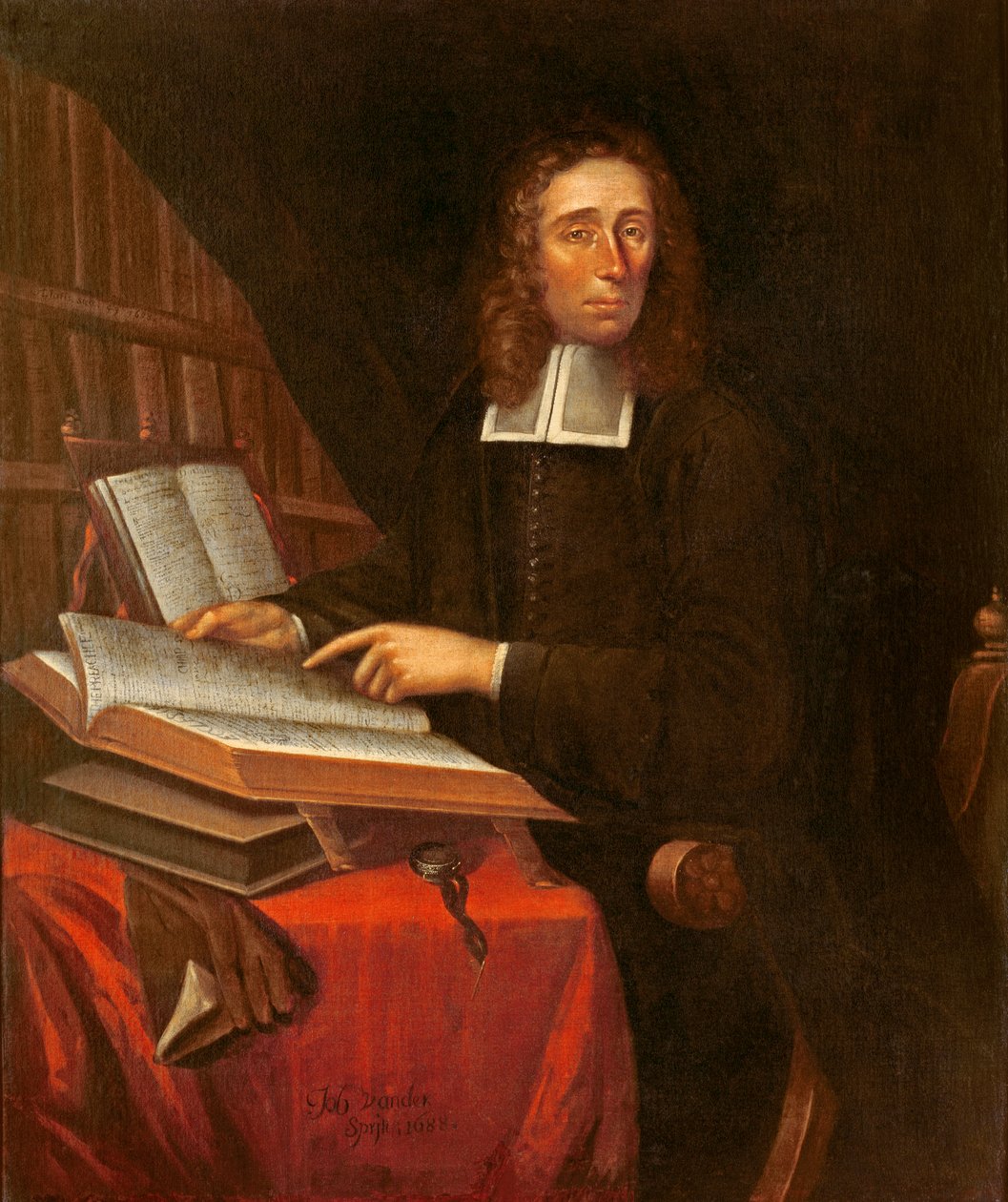
Solomon Stoddard was born at Boston in 1643, graduated from Harvard in 1662, served the college as tutor and librarian, accepted an invitation to preach at Northampton in 1669 and a formal call in 1672, and remained there until his death on February 11, 1729.26 Northampton's first minister, Eleazer Mather, an opponent of the Half-Way Covenant at the synod of 1662, had died in 1669. Stoddard's grandson Jonathan Edwards, who became his colleague in the Northampton pulpit about two years before his death, later wrote that Stoddard "came first to the town the November after his death; but was not ordained till September 11, 1672, and died February 11, 1728-9. So that he continued in the work of the ministry here, from his first coming to town, near 60 years."27 (The date "1728-9" reflects the old English calendar, in which the new year began on March 25.) Walker quotes Timothy Dwight's later judgment that Stoddard "possessed, probably, more influence than any other Clergyman in the province, during a period of thirty years."26
Open communion
Stoddard went beyond the Half-Way Covenant. In The Doctrine of Instituted Churches Explained and Proved from the Word of God (London, 1700), written in answer to Increase Mather's The Order of the Gospel (Boston, 1700), he put and answered the question whether persons of good life and knowledge may come to the Lord's Supper "in case they know themselves to be in a Natural Condition" (that is, unconverted). His answer: "They may and ought to come tho they know themselves to be in a Natural Condition; this Ordinance is instituted for all the adult Members of the Church who are not scandalous, and therefore must be attended by them; as no Man may neglect Prayer, or hearing the Word, because he cannot do it in Faith, so he may not neglect the Lords Supper."26
Walker summarizes the rest of the treatise: Stoddard affirmed the existence of national churches, denied the necessity of local church covenants, and held that the minister, without the "intermeddling of the brethren," should decide who was fit to be admitted to the sacraments.26 Historians have described Stoddard's view as treating the Supper as a "converting ordinance," a means by which God may bring the unconverted to faith, as he does through the preached word; that phrase is the historians' summary, and the quoted answer above is Stoddard's own reasoning. A later Puritan tradition held that Stoddard himself had been converted while taking the Lord's Supper; Walker records the tradition and the source in which it was printed (1884) without endorsing it.26
The Mathers answered. The controversy produced Increase Mather's The Order of the Gospel (1700), Stoddard's Doctrine of Instituted Churches (1700), Stoddard's An Appeal to the Learned (1709), and an anonymous Appeal of Some of the Unlearned.26 The practice spread through the Connecticut River valley, where Stoddard's influence was greatest, and was called "Stoddardeanism." Walker notes that Stoddard was not its originator, only its chief advocate.26 The question did not die with him. His grandson Jonathan Edwards reversed the Northampton practice and required a profession of saving faith for the Supper, and the congregation dismissed him in 1750, a story told in lesson 05.
The five harvests
Stoddard's Northampton saw repeated seasons of religious concern, which he called "harvests." The best record of them is in Edwards's A Faithful Narrative of the Surprising Work of God (dated November 6, 1736, published in London in 1737), the subject of lesson 02:
"And as he was eminent and renowned for his gifts and grace; so he was blessed, from the beginning, with extraordinary success in his ministry, in the conversion of many souls. He had five harvests, as he called them. The first was about 57 years ago; the second about 53; the third about 40; the fourth about 24; the fifth and last about 18 years ago. Some of these times were much more remarkable than others, and the ingathering of souls more plentiful. Those about 53, and 40, and 24 years ago, were much greater than either the first or the last: but in each of them, I have heard my grandfather say, the greater part of the young people in the town, seemed to be mainly concerned for their eternal salvation."27
Counting back from 1736, Edwards's figures place the harvests at about 1679, 1683, 1696, 1712 and 1718. Those are approximate years from Edwards's "about," and the count of five is Stoddard's own as reported by his grandson. Edwards added that "After the last of these, came a far more degenerate time (at least among the young people), I suppose, than ever before," and that in the two years he served with Stoddard "there were nearly twenty that Mr. Stoddard hoped to be savingly converted."27 Edwards described Northampton at the time of writing as a town of "about 200 families."27
The harvests matter for this module because they show that revival, in the sense of a season in which many in a town became concerned for salvation at once, was a known pattern in New England before 1734. Thomas Kidd, in The Great Awakening: The Roots of Evangelical Christianity in Colonial America (2007), begins his account with such earlier local awakenings, including Stoddard's, and with the revivals among Dutch Reformed congregations in New Jersey's Raritan valley under Theodorus Frelinghuysen in the 1720s.28 The Library of Congress exhibition likewise notes: "During the first decades of the eighteenth century in the Connecticut River Valley a series of local 'awakenings' began."16
Cotton Mather
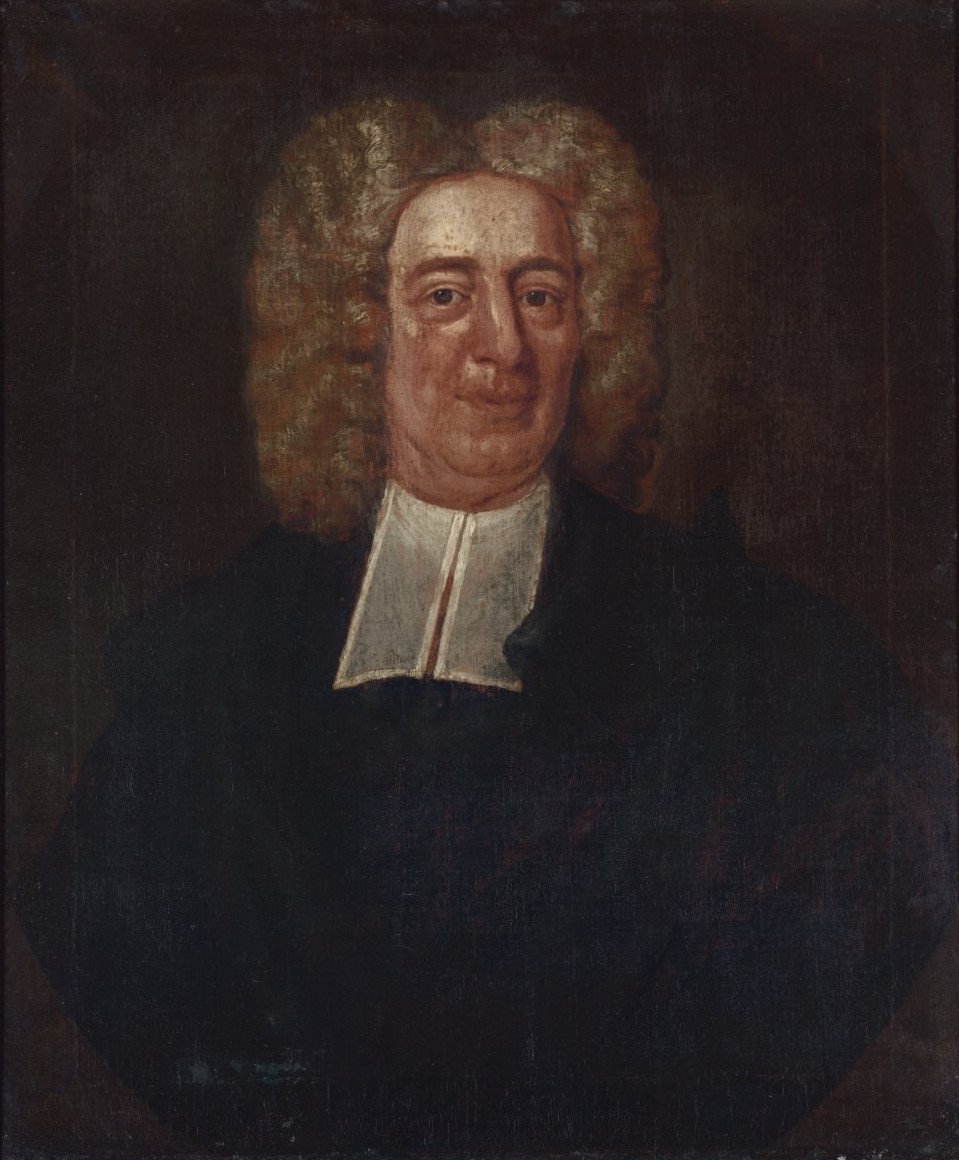
Cotton Mather (1663 to 1728), Increase Mather's son and his colleague at Boston's Second Church, was the most prolific writer of colonial New England; the Library of Congress credits him with about 450 books and pamphlets.1 His largest work, Magnalia Christi Americana (London, 1702), an ecclesiastical history of New England in seven books, opens with a sentence that states the purpose of the whole: "I WRITE the Wonders of the Christian Religion, flying from the depravations of Europe, to the American Strand; and, assisted by the Holy Author of that Religion, I do with all conscience of Truth, required therein by Him, who is the Truth itself, report the wonderful displays of His infinite Power, Wisdom, Goodness, and Faithfulness, wherewith His Divine Providence hath irradiated an Indian Wilderness."29
The Magnalia also states the fear behind the jeremiads. Of the churches of Plymouth Colony, in the chapter of Book I that takes leave of that colony, Mather wrote: "Their chief hazard and symptom of degeneracy, is in the verification of that old observation, Religio peperit Divitias, et filia devoravit matrem: Religion brought forth Prosperity, and the daughter destroyed the mother."24 He urged that as the settlers "grew in their estates" they should grow in "the payment of their quit-rents unto the God who gives them power to get wealth, by more liberally supporting his ministers and ordinances among them."24
Cotton Mather's part in the Salem witchcraft trials of 1692 is covered in Module 102, lesson 08 and is not retold here. In the years before the Awakening he urged voluntary societies for prayer and reform, wrote on doing good (Bonifacius, 1710), and pressed for smallpox inoculation in the Boston epidemic of 1721. These activities connect him to the evangelical movement that followed; Pietism is treated in Module 77, lesson 01. As noted above, his own diary records that he held an enslaved man, Onesimus, whom members of his church bought and gave to him in 1706.18

The Saybrook Platform (1708)
Connecticut took a different path from Massachusetts in church government. In May 1708 the Connecticut General Court passed a toleration act modeled on the English Toleration Act of 1689, which allowed dissenters to worship separately while still requiring them to pay their taxes for the support of the established order; at the same session it called a synod.30 Delegates from the county councils met at Saybrook on September 9, 1708. They adopted the Savoy Confession as the Massachusetts synod of 1680 had revised it, the English Heads of Agreement of 1691 (a basis of union between English Congregationalists and Presbyterians), and Articles for the administration of church discipline.30
The Articles created two kinds of county bodies: "consociations" of churches (ministers and lay messengers), with power to hear and decide cases of discipline brought from local churches, and "associations" of ministers, which examined candidates for the ministry and advised on church matters. Above them a General Association of ministers met yearly. The General Court approved the whole result at its October 1708 session in New Haven, enacting it into the law of the colony.30 Walker describes it as "an ecclesiastical constitution imposed by state authority."30 The New Haven and Fairfield county consociations interpreted the Articles differently, Fairfield in a more Presbyterian direction and New Haven in a more Congregational one. The Saybrook system remained part of the legal basis of the Connecticut churches until 1784, when it was quietly omitted from the statutes.30
The Saybrook Platform brought Connecticut Congregationalism close to Presbyterianism in practice. That closeness explains why Connecticut ministers in the eighteenth century could cooperate with Presbyterians in the Middle Colonies, why Yale graduates often served Presbyterian churches, and why the two bodies later joined in the Plan of Union of 1801, treated in lesson 13. It also explains why, during the Awakening, Connecticut's consociations and associations had the machinery to examine and discipline itinerant preachers and separatist congregations, a story taken up in lesson 04.
The established churches
An "established" church, in the colonial sense, was a church supported by law: its ministers paid from public taxes or glebe lands, its parishes or towns defined by statute, and its worship protected by laws that punished blasphemy and Sabbath breaking. Dissenters might be tolerated, fined or exempted, depending on the colony and the decade. In 1730 the thirteen colonies that later formed the United States fell into three groups: Congregational establishments in most of New England, Church of England establishments in the South and part of New York, and colonies with no established church at all.
Congregational establishments in New England
In Massachusetts the charter of 1691, which joined Plymouth and Maine to the Bay colony, granted "a liberty of Conscience allowed in the Worshipp of God to all Christians (Except Papists)." The Puritan churches nevertheless remained the establishment.31 An act of November 4, 1692 (amended February 17, 1693) set the pattern for the next century: every town was to be supplied with an "Able, learned, orthodox" minister, chosen by the town's majority and paid by a tax on all inhabitants, and the courts could order a town that failed in this duty to "procure and settle a minister qualified as aforesaid."31 The editors of the Legal Papers of John Adams, who trace these laws, record the exemptions that followed. A law of December 19, 1727 let members of the Church of England have their ministerial taxes paid to their own minister if they lived "within five miles of the church." A law of June 20, 1728 exempted from the poll tax for ministers those Baptists and Quakers, enrolled in their own societies, who had a conscientious scruple against being "assessed for the support of the minister or ministers of the churches established by the laws of this province"; a similar act of December 20, 1729 exempted their estates.31 Later acts (1734, 1753, 1758) required lists and certificates signed by Baptist ministers and principal members, and the certificate system became a long grievance of the Baptists, taken up in lesson 06.31
Connecticut supported its Congregational churches by town taxes in the same way and, from 1708, governed them through the Saybrook system described above, with a toleration act that let dissenters worship apart while still paying for the established order.30 New Hampshire towns also supported Congregational ministers by local taxation in the Massachusetts pattern (a point given here from standard accounts; no New Hampshire statute was opened for this lesson).
Rhode Island
Rhode Island had no established church. Its royal charter of July 15, 1663, granted at the colonists' request, recorded their wish "to hold forth a livlie experiment, that a most flourishing civill state may stand and best bee maintained ... with a full libertie in religious concernements." It ordered "That our royall will and pleasure is, that noe person within the sayd colonye, at any tyme hereafter, shall bee any wise molested, punished, disquieted, or called in question, for any differences in opinione in matters of religion, and doe not actually disturb the civill peace of our sayd colony."32 Baptists, Quakers and others found a place there. The colony's neighbors often described it as a refuge for disorder; its own charter described it as an experiment.
The Middle Colonies
Pennsylvania, founded by the Quaker William Penn in 1681 to 1682, wrote liberty of conscience into its Charter of Privileges of October 28, 1701. Its first article begins: "BECAUSE no People can be truly happy, though under the greatest Enjoyment of Civil Liberties, if abridged of the Freedom of their Consciences, as to their Religious Profession and Worship." It promised that no one who acknowledged "One almighty God, the Creator, Upholder and Ruler of the World" would be "molested or prejudiced ... because of his or their conscientious Persuasion or Practice, nor be compelled to frequent or maintain any religious Worship, Place or Ministry, contrary to his or their Mind." Office holding was limited to those who "profess to believe in Jesus Christ, the Saviour of the World."33 Pennsylvania and the lower counties that became Delaware drew English and Welsh Quakers, German Lutherans and Reformed, Mennonites and other German groups, and Scots-Irish Presbyterians.
The first American presbytery was organized at Philadelphia in 1706 under Francis Makemie, and in 1729 the Synod of Philadelphia passed the Adopting Act, by which its ministers accepted the Westminster Confession and Catechisms as "good forms of sound words and systems of Christian Doctrine," with the presbyteries keeping the right to judge disagreements over particular articles.34 That synod split in 1741 over the revival, as told in lesson 04; the Presbyterian story in outline is in Module 80, lesson 02.
New York, taken from the Dutch in 1664, had Dutch Reformed churches, and Congress's Constitution Annotated notes that whether it had an established church is still debated. The colony guaranteed the free exercise of religion to Christians while requiring parishes to choose ministers and collect taxes for churches. After the English Toleration Act, New York excluded Catholics from its guarantees of liberty of conscience and adopted the Ministry Act of 1693, which required "the settling of a ministry" in four counties; whether this meant only Church of England ministers was disputed then and since.15 New Jersey had no single establishment.
Anglican establishments in the South
Virginia was the oldest Church of England establishment in America. The first and second Virginia charters provided for it; the Articles, Laws and Orders of 1610 to 1611 required daily worship and punished blasphemy; and laws of 1661 and 1662 required the colonists to build churches, pay ministers at public expense, and refrain from public worship outside the established church.15 Parish vestries of leading planters managed church property, collected the tithe and in practice controlled the clergy, since there was no resident bishop in America and every Anglican clergyman had to go to England for ordination.
Maryland was founded in 1634 by the Catholic Calvert family. Its Act Concerning Religion of 1649 protected anyone "professing to believe in Jesus Christ," while setting severe penalties for denying the Trinity. After the political upheavals of the late 1600s, Maryland stripped Catholics of civil rights and established the Church of England.15 The establishment act usually dated 1702 completed that process.
In the Carolinas the Church of England was established but more religious variety was tolerated than in Virginia.15 In North Carolina, where Quakers provided most of the organized religion of the seventeenth century, the first Vestry Act of 1701 divided the colony into five parishes, each with a vestry of twelve men empowered to build churches and levy a tax. The Church of England's presence remained thin: by 1765 only five Anglican church buildings existed in the colony.35 In South Carolina the Anglican governor Sir Nathaniel Johnson pushed through a Test Act and an Establishment Act in 1704; dissenters protested to Parliament, the House of Lords disallowed both, and the Assembly passed a more moderate Establishment Act in 1706 that let dissenters take full part in politics.36 Georgia, chartered in 1732, established the Church of England by act of its assembly in 1758, after the period of this lesson.
Dissenters, Baptists and Quakers
Outside Rhode Island and Pennsylvania, dissenters lived under laws written for someone else's church. In Massachusetts, Baptists and Quakers were taxed for the Congregational minister until the exemption acts of 1728 and 1729, and afterward had to prove their membership by lists and certificates.31 The Quakers had been banished and, in four cases between 1659 and 1661, executed in Massachusetts.15 The Baptists, few in number before the Awakening, had congregations in Providence (organized 1639), Boston, Newport and the Middle Colonies.16 Baptist history is the subject of Module 80, lesson 06. The Awakening multiplied the Baptists, especially among New England "Separates" who left their parish churches and among Separate Baptists who carried revival to the South in the 1750s and 1760s, and it was the Baptists who pressed hardest for disestablishment (see lesson 06).
For Anglicans in New England the position was reversed. In England they belonged to the national church; in Massachusetts and Connecticut they were dissenters, though powerful ones, protected by royal government and by the Society for the Propagation of the Gospel in Foreign Parts, which the Church of England founded in 1701 to send missionaries to the colonies. The Anglican presence grew after the 1691 Massachusetts charter, and the 1727 Massachusetts law on Church of England taxes was a response to it.31
Two other religious communities should be named. John Eliot's mission produced a Bible in the Massachusett (Algonquian) language in 1663, and the Library of Congress counts about 1,100 "Praying Indians" in fourteen towns under his care.1 And Africans, enslaved and free, lived in every colony; in 1730 relatively few had been baptized, and the question of whether baptism affected a slave's legal status troubled colonial assemblies and slaveholders (a matter outside this lesson's sources). Evangelical preaching among Black colonists became widespread only with the Awakening and after.
Declension: a claim and its tests
What the ministers said
The word "declension" was the preachers' own. The Reforming Synod spoke of "a great and visible decay of the power of Godliness."25 Cotton Mather warned that prosperity was destroying the religion that produced it.24 Edwards wrote of "a far more degenerate time" after Stoddard's last harvest.27 The claim had several parts: that fewer people were joining the churches in full communion, that the young were less serious than their parents, that trade and land had replaced the founders' errand, and that God's judgments (wars, fires, epidemics, droughts) proved it.
For much of the twentieth century historians accepted the ministers' account in a modified form. Perry Miller read the jeremiads as evidence of a real loss of the founders' intellectual and spiritual unity, even while he showed that the jeremiad itself was a creative form.9 On that reading the Half-Way Covenant was a concession to decline, Stoddard's open communion was a further concession, and the Great Awakening was a reaction that tried to restore the experience of conversion at the center of church life.
How historians test it
Later historians turned to the church records. Robert G. Pope argued in 1969, in The Half-Way Covenant and in an article titled "New England versus the New England Mind: The Myth of Declension" (Journal of Social History, 1969 to 1970), that the ministers' sermons are poor evidence of what was happening in the pews. Admissions to full communion rose and fell in waves, often rising after a crisis or a covenant renewal, and the Half-Way Covenant was in many towns resisted by the laity rather than imposed by them.22 Studies of membership lists found that from the later seventeenth century women made up a growing majority of new full members in many churches, so that "decline" among men could sit beside steady or rising participation among women. Bercovitch read the jeremiad as a ritual that strengthened, rather than recorded the loss of, New England's sense of purpose.23
Outside New England the test is harder because records are thinner. Patricia Bonomi, in Under the Cope of Heaven: Religion, Society, and Politics in Colonial America (1986), argued that the colonies were becoming more churched in the decades before the Awakening, as congregations were organized faster than the population grew. The Library of Congress exhibition, which does not name its source for the figure, states that between 1700 and 1740 "an estimated 75 to 80 percent of the population attended churches," which were being built "at a headlong pace."1637 Roger Finke and Rodney Stark, in The Churching of America, 1776 to 1990 (1992), estimated from counts of congregations multiplied by an average membership that only about 17 percent of Americans were church "adherents" in 1776.38 The two figures measure different things: attendance at worship on one side, formal membership or adherence on the other. In New England, where full membership required a relation of conversion, many regular attenders were never members. The figures are estimates built on assumptions about congregation size and population, and they should be quoted with their authors' names and methods.
The fair conclusion is that the ministers' claim of decline was a real belief, sincerely held and widely preached; that membership in full communion did fall as a share of the adult population in many New England towns, especially among men; that attendance, church building and the number of congregations grew across the colonies; and that historians still disagree on what the ministers' sense of declension tells us about lay piety. The revivalists of the 1730s inherited both the sense of decline and the practice of harvests, and they read the Awakening as God's answer to the first through the means of the second.

Timeline, 1620 to 1730
What the revivalists inherited
When Jonathan Edwards preached at Northampton in 1734, every piece of this inheritance was in place. He served the church Stoddard had shaped, with its open communion and its memory of five harvests. He preached in a province that taxed every town for an orthodox minister and had only recently begun to exempt Baptists and Quakers. He inherited a theology of covenant and grace that the synods of 1648, 1680 and 1708 had written into confessions. And he preached to a people who had heard for two generations that their religion was in decline. When George Whitefield arrived in 1739 (lesson 03), he moved through a chain of colonies with very different church laws, from Anglican Virginia and the Carolinas to Quaker Pennsylvania and Congregational New England. The disputes of lesson 04 over unconverted ministers, itinerant preaching and separate congregations, and the Baptist campaign against the certificate laws in lesson 06, all grew from the institutions described here. Colonial self-government in general is taught in Liberty and the Republic, Module 53, lesson 01, and the role of religion in the founders' idea of self-government in Module 50, lesson 10.
What the record shows and what it does not
- Documented fact: the text of the Cambridge Platform (1648), its approval by the Massachusetts General Court (October 14, 1651), the Propositions of the Synod of 1662 and their report to the Court (October 8, 1662), the Necessity of Reformation (1679), the Saybrook meeting (September 9, 1708) and its approval by the Connecticut General Court (October 1708), the Massachusetts ministerial and exemption laws (1692 to 1758), and the Rhode Island (1663) and Pennsylvania (1701) charters.
- A preacher's own claim: Stoddard's five "harvests" are his count, reported by Edwards with approximate dates. The account of the 1679 synod's vote on relations is Stoddard's, disputed in print in his lifetime. The ministers' claim of declension is their own reading of their times.
- Later tradition: that Winthrop preached "A Modell of Christian Charity" on board the Arbella rests on a heading and a cover note, not on any contemporary report. That Stoddard was converted at the Lord's Supper is a tradition printed in the nineteenth century.
- Scholarly reading: Perry Miller's "jeremiad," Bercovitch's account of its function, Pope's "myth of declension," Bonomi's picture of a growing colonial church, and Finke and Stark's adherence estimates are interpretations and estimates, each tied to its author's method.
- Open questions: where and whether Winthrop's discourse was delivered, and by whom it was written; how far lay piety declined, if at all, in New England between 1660 and 1730; how many colonists were church members, as distinct from attenders, in 1730.
Claims checked
"The Puritans came to America for religious freedom."
Rating: Partly supported. The Puritans left England because they could not worship and govern their churches as they believed Scripture required, and they sought freedom to do so. They did not seek, and did not grant, freedom for others to worship differently in Massachusetts. Their Cambridge Platform charged the magistrate to restrain "Heresy" and "venting corrupt & pernicious opinions," their colony banished Roger Williams and executed four Quakers, and its law taxed every town for an orthodox minister.141531 Liberty of conscience in the broader sense was written into the charters of Rhode Island (1663) and Pennsylvania (1701).3233
"Winthrop preached the 'City upon a Hill' sermon on the deck of the Arbella."
Rating: Unresolved. The 1838 printing carries the heading "WRITTEN ON BOARD THE ARBELLA, ON THE ATLANTIC OCEAN," taken from a cover sheet on the only manuscript, which is not in Winthrop's hand.46 Dawson and Bremer place its delivery at Southampton before sailing; Rodgers and Gamble suggest it may have been a written treatise; Van Engen treats the surviving text as an imperfect copy; and one textual study has asked whether Winthrop wrote it.67
"'City upon a hill' was a boast that America would be a shining example."
Rating: Partly supported. The phrase does present the colony as a model watched by the world. In the text, though, it is a warning: "if wee shall deale falsely with our God in this worke ... wee shall be made a story and a by-word through the world."4 It applied to a covenanted community of Christians, and its later use as a description of the United States as a nation is a twentieth century development traced by Van Engen and Rodgers.6
"The Half-Way Covenant let unconverted people take communion."
Rating: Refuted. The synod's Proposition 4 states that baptized adults were "not therefore to be admitted to full Communion, meerly because they are and continue members, without such further qualifications, as the Word of God requireth."21 The Half-Way Covenant concerned baptism. Opening the Lord's Supper to the unconverted was Stoddard's later and separate step, defended in 1700 and resisted by the Mathers.26
"Stoddard admitted people to the Lord's Supper who knew they were unconverted."
Rating: Supported. His own words: "They may and ought to come tho they know themselves to be in a Natural Condition."26
"Puritan New England was a theocracy ruled by ministers."
Rating: Partly supported. Church membership was required for the colony franchise in early Massachusetts, the law supported the churches, and magistrates punished heresy and blasphemy.1514 Ministers, however, did not hold civil office or wield civil power under the Cambridge Platform, which declared it "unlawfull for church-officers to meddle with the sword of the Magistrate."14 Historians usually describe the system as a close partnership of church and state in a Bible commonwealth, governed by magistrates who were church members, rather than as rule by clergy.
"Religion declined steadily in New England from the founders to the Great Awakening."
Rating: Unresolved. The ministers said so, and full membership fell as a share of the population in many towns.2524 Church records also show waves of admissions, Stoddard's harvests, covenant renewals and the building of new churches, and historians including Pope and Bonomi have questioned the picture of steady decline.223727
"Most colonists were unchurched before the Great Awakening."
Rating: Unresolved. It depends on what is counted. Finke and Stark's estimate of about 17 percent adherence in 1776 measures membership; the estimate of 75 to 80 percent attendance between 1700 and 1740, cited by the Library of Congress, measures attendance.3816 In New England, full membership was set high on purpose, so low membership figures there do not mean low attendance.
"Stoddard was converted while taking the Lord's Supper, and that is why he opened it."
Rating: Unresolved. The story is a tradition recorded in print in 1884, which Walker notes without endorsing.26 Stoddard's own published reasoning rests on Scripture and on the nature of the sacrament as an ordinance for all non-scandalous members.
"The Massachusetts Body of Liberties (1641) banned slavery."
Rating: Refuted. Section 91 forbids "bond slaverie" except for "lawfull Captives taken in just warres, and such strangers as willingly selle themselves or are sold to us," exceptions under which slavery was practised in the colony.17
Hard questions and answers
A strict Reformed reader asks: was the Half-Way Covenant a betrayal of the gathered church of visible saints?
Its opponents in 1662 said so, in their own Reformed terms: baptism seals the covenant of grace, and baptizing the children of parents who did not claim saving grace weakened the sign. Chauncy said the final wording of the fifth proposition "swerves further off from Scripture then both the former."20 Its defenders, also Reformed, answered from the covenant with Abraham and his seed and from the synod's third proposition that the children of members "are members of the same Church with their parents."21 Both sides kept the Supper for those judged regenerate. Edwards later took the stricter side against his grandfather's practice (lesson 05).
An Arminian or Wesleyan reader asks: if God's decree settles who is saved, why did the Puritans preach so urgently, and why did Stoddard call the unconverted to the Supper?
The Puritans' answer, in the Savoy and Westminster confessions, was that God works through means: he "freely offereth unto sinners life and salvation by Jesus Christ, requiring of them faith in him," and the preached word and sacraments are the ordinary instruments by which the elect are brought to faith.8 Stoddard reasoned that the unconverted may not neglect prayer or hearing the word because they cannot yet do them in faith, and so may not neglect the Supper either.26 Arminian and Wesleyan writers argued, then and later, that a universal offer implies a real ability to respond, which they grounded in prevenient grace; that debate, carried into the nineteenth century by Finney, is the subject of lesson 10.
A Catholic reader asks: where were Catholics in this picture?
Mostly outside it. The Massachusetts charter of 1691 granted liberty of conscience "to all Christians (Except Papists)."31 New York excluded Catholics from its guarantees of liberty of conscience after the Toleration Act, and Maryland, founded by a Catholic proprietor and the author of the 1649 Act Concerning Religion, later stripped Catholics of civil rights and established the Church of England.15 Pennsylvania's charter of 1701 protected the worship of all who acknowledged one God, while limiting office to those who professed belief in Jesus Christ.33
A skeptic asks: was the "declension" just ministers complaining that people did not obey them?
In part it was a clergy's reading of its people, and historians such as Pope have warned against taking sermons as statistics.22 The ministers' complaints were also tied to measurable things (admissions to full communion, the share of men among new members, the support of ministers by towns), and Cotton Mather's complaint that prosperity weakened support for "ministers and ordinances" was partly a complaint about salaries.24 The better question is which measure is being used. On attendance and church building the colonies grew; on full membership in New England, many towns lagged their population.1637
A Baptist reader asks: if Massachusetts exempted Baptists in 1728, what was the grievance?
The exemptions were partial and administered by the established towns. From 1728 Baptists had to appear on lists of members attested by their own leaders; from 1734 town assessors prepared the exempt lists; from 1753 certificates had to be signed by a Baptist minister and two principal members and vouched for by three other Baptist churches; and the act of 1758 declared that only persons on a certified list were to be "esteemed or accounted an Annabaptist."31 Baptists who were left off the lists, or whose churches the towns did not recognize, could still be taxed. Isaac Backus's campaign against these laws is the subject of lesson 06.
A reader asks: how did the colonial churches treat slavery?
Before 1730 the established churches of every colony accepted slavery in law and practice. The Massachusetts Body of Liberties allowed the enslavement of captives and of persons "sold to us," and Cotton Mather recorded that members of his church bought an enslaved man and gave him to Mather, who named him Onesimus and resolved to make him "a Servant of Christ."1718 Organized antislavery argument among Congregational ministers came later, with Samuel Hopkins and Jonathan Edwards Jr. in the 1770s and 1780s (lesson 07), and the record of the revival leaders themselves on slavery is set out in lessons 02, 03 and 05.
Learn more
- Williston Walker, The Creeds and Platforms of Congregationalism (1893): All the New England church documents of this lesson in one public domain volume, with Walker's careful historical introductions.
- John Winthrop, A Modell of Christian Charity: Read the whole discourse: most of it is about mercy, lending and forgiving, and the famous sentence comes near the end.
- The Works of Jonathan Edwards Online (Jonathan Edwards Center, Yale): The critical text of A Faithful Narrative, with Stoddard's harvests, in vol. 4.
- Library of Congress, Religion and the Founding of the American Republic: Images of the Bay Psalm Book, the Eliot Bible and the Mathers, with short essays.
- Legal Papers of John Adams: the Massachusetts religious tax laws: A precise guide to the 1692 to 1758 statutes that lesson 06 builds on.
- Module 80, lesson 05: Congregationalists and Puritans: The outline of Puritan history and Congregational polity this lesson assumes.
Still being checked (10 items)
These points could not be confirmed against a primary source when this lesson was written and fact checked in October 2026. The text above states each one as uncertain.
- Place, date and authorship of "A Modell of Christian Charity" are disputed; the lesson reports the positions of Dawson, Bremer, Rodgers, Gamble and Van Engen as summarized by the Historic Bostons blog, not from their books directly. The Textual Cultures article's author and year were not shown on the page opened; it is cited by URL and journal only.
- Titles and years of Rodgers (2018), Gamble (2012), Van Engen (2020), Morgan (1963), Pettit (1966), Pope (1969 and the 1969 to 1970 article), Bercovitch (1978), Bonomi (1986), Miller (1939, 1953, 1956) and Kidd (2007) are given from standard bibliography; their arguments are summarized, not quoted.
- Finke and Stark's figure of about 17 percent adherence in 1776 was not checked against the book in this session.
- The finding that women made up a growing majority of new full members in many New England churches is stated from the general historical literature without a specific study opened.
- Pope's finding that churches adopted the Half-Way Covenant gradually, many in the 1670s and 1690s, is summarized from memory of his book.
- The 1631 date of the Massachusetts order limiting freemanship to church members is the standard date; the source opened (Constitution Annotated) states the rule without the year.
- Maryland's Church of England establishment act is dated 1702 from standard accounts; Georgia's establishment act of 1758; New Hampshire's town support of Congregational ministers; Penn's founding of Pennsylvania (1681 to 1682), the Calvert founding of Maryland (1634), the English taking of New York (1664), the founding of the SPG (1701), and Samuel Danforth's 1670 election sermon title were not opened in a primary text for this lesson.
- Cotton Mather's Bonifacius (1710) and his promotion of inoculation in 1721 are stated from standard accounts; no source was opened for them.
- Page ranges given for Walker's Creeds and Platforms are approximate where the OCR text did not show page numbers clearly.
- The tradition that Stoddard was called "Pope" by critics was not checked and is not used.
Notes
- Library of Congress, Religion and the Founding of the American Republic (exhibition), section I, "America as a Religious Refuge: The Seventeenth Century" (retrieved Oct. 28, 2026). Read it online. ↩
- The Whole Booke of Psalmes Faithfully Translated into English Metre (Cambridge, Mass.: Stephen Daye, 1640), title page, John Carter Brown Library copy, as reproduced and catalogued on Wikimedia Commons (retrieved Oct. 28, 2026). Read it online. ↩
- Francis J. Bremer, John Winthrop: America's Forgotten Founding Father (New York: Oxford University Press, 2003), for Winthrop's life and election as governor in 1629 to 1630. Read it online. ↩
- John Winthrop, "A Modell of Christian Charity" (1630), first printed in Collections of the Massachusetts Historical Society, 3rd series, vol. 7 (Boston, 1838), pp. 31 to 48; text from the Hanover Historical Texts Collection, Hanover College (retrieved Oct. 28, 2026). Read it online. ↩
- The Holy Bible, King James Version (1611), Matthew 5:14; Micah 6:8 (public domain). Read it online. ↩
- "Sermon? Treatise? or not by Winthrop at all?", Historic Bostons blog, summarizing the arguments of Hugh Dawson (1991), Francis Bremer, Daniel Rodgers (2018), Richard Gamble (2012) and Abram Van Engen (2020) on the manuscript, authorship and place of delivery of "A Modell of Christian Charity" (retrieved Oct. 28, 2026). Read it online. ↩
- "'Christian Charity', A Sacred American Text: Fact, Truth, Method," Textual Cultures (Indiana University), article abstract and reference list, on the manuscript at the New-York Historical Society and the questions raised since Hugh Dawson's work (retrieved Oct. 28, 2026). Read it online. ↩
- Williston Walker, The Creeds and Platforms of Congregationalism (New York: Charles Scribner's Sons, 1893): the Savoy Declaration (1658) as adopted at Boston (1680) and Saybrook (1708), chapter VII, pp. 374 to 375; the Cambridge Synod's vote of "the last of the sixth month, 1648" on the Westminster Confession, in the preface to the Cambridge Platform. Public domain, Internet Archive. Read it online. ↩
- Perry Miller, The New England Mind: The Seventeenth Century (1939); The New England Mind: From Colony to Province (Cambridge, Mass.: Harvard University Press, 1953), Book I on the jeremiad; Errand into the Wilderness (1956). Interpretation attributed to Miller. Read it online. ↩
- Norman Pettit, The Heart Prepared: Grace and Conversion in Puritan Spiritual Life (New Haven: Yale University Press, 1966). Interpretation attributed to Pettit. Read it online. ↩
- Edmund S. Morgan, Visible Saints: The History of a Puritan Idea (New York: New York University Press, 1963). Interpretation attributed to Morgan. Read it online. ↩
- Cambridge Platform (1648), chapter XII, "Of Admission of members into the Church," sections 1 to 5, in Williston Walker, The Creeds and Platforms of Congregationalism (1893), pp. 221 to 224. Public domain, Internet Archive. Read it online. ↩
- Williston Walker, The Creeds and Platforms of Congregationalism (1893), chapter "The Cambridge Synod and Platform," on the sessions of September 1646 and June 1647 and the General Court's vote approving the Platform (Records of Massachusetts Bay, vol. III, p. 240), especially pp. 187 to 188. Public domain, Internet Archive. Read it online. ↩
- Cambridge Platform (1648), chapter XVII, "Of the Civil Magistrates power in Matters Ecclesiastical," sections 5 and 8, in Williston Walker, The Creeds and Platforms of Congregationalism (1893), pp. 236 to 238. Public domain, Internet Archive. Read it online. ↩
- Constitution Annotated (Congress.gov, Library of Congress), Amendment 1, "State-Established Religion in the Colonies," Amdt1.2.2.3, with its notes to Thomas J. Curry, The First Freedoms (1986), Michael W. McConnell (2003) and Frank Lambert (2003) (retrieved Oct. 28, 2026). The page dates the four Quaker executions "between 1658 and 1661"; the executions took place in 1659 (two), 1660 and 1661, as the lesson gives them. Read it online. ↩
- Library of Congress, Religion and the Founding of the American Republic (exhibition), section II, "Religion in Eighteenth-Century America" (retrieved Oct. 28, 2026). Read it online. ↩
- The Massachusetts Body of Liberties (1641), section 91, text from the Hanover Historical Texts Collection, Hanover College (retrieved Oct. 28, 2026). Read it online. ↩
- Diary of Cotton Mather, vol. 1, 1681 to 1709, Collections of the Massachusetts Historical Society, 7th series, vol. 7 (Boston, 1911), entry of December 1706, p. 579. Public domain, Internet Archive. Read it online. ↩
- First Parish in Hingham, Old Ship Church, "Meeting House Tours" history page (retrieved Oct. 28, 2026). Read it online. ↩
- Williston Walker, The Creeds and Platforms of Congregationalism (1893), chapter "The Half-Way Covenant," especially pp. 262 to 270 on the synod of March to September 1662, its vote, its report to the General Court on October 8, 1662, and the opposition of Chauncy, Davenport, Mayo and the Mathers. Public domain, Internet Archive. Read it online. ↩
- Propositions Concerning the Subject of Baptism and Consociation of Churches, Collected and Confirmed out of the Word of God, by a Synod of Elders and Messengers of the Churches in Massachusets-Colony (Cambridge, Mass., 1662), Propositions 2 to 5 and the argument on voting, as printed in Williston Walker, The Creeds and Platforms of Congregationalism (1893), pp. 314 to 328. Public domain, Internet Archive. Read it online. ↩
- Robert G. Pope, The Half-Way Covenant: Church Membership in Puritan New England (Princeton: Princeton University Press, 1969); and "New England versus the New England Mind: The Myth of Declension," Journal of Social History 3 (1969 to 1970). Interpretation attributed to Pope. Read it online. ↩
- Sacvan Bercovitch, The American Jeremiad (Madison: University of Wisconsin Press, 1978). Interpretation attributed to Bercovitch. Read it online. ↩
- Cotton Mather, Magnalia Christi Americana (London, 1702), Book I, ed. Thomas Robbins (Hartford: Silas Andrus and Son, 1853), vol. 1, pp. 63 to 64, Book I, on Plymouth Colony ("Religio peperit Divitias" and "their errand into the wilderness"). Public domain, Internet Archive. Read it online. ↩
- The Necessity of Reformation ... Agreed upon by the Elders and Messengers of the Churches Assembled in the Synod at Boston in New-England, Sept. 10, 1679 (Boston, 1679), title page and Question I, as printed in Williston Walker, The Creeds and Platforms of Congregationalism (1893), chapter on the Reforming Synod of 1679 to 1680. Public domain, Internet Archive. Read it online. ↩
- Williston Walker, The Creeds and Platforms of Congregationalism (1893), pp. 279 to 283, on "Stoddardeanism": Stoddard's biography; his account of the 1679 synod in An Appeal to the Learned (1709) and the reply in An Appeal of Some of the Unlearned; his answer on the Lord's Supper quoted from The Doctrine of Instituted Churches (London, 1700); Dwight's judgment; and the tradition of Stoddard's conversion at the Supper (I. N. Tarbox, New Englander, Sept. 1884). Public domain, Internet Archive. Read it online. ↩
- Jonathan Edwards, A Faithful Narrative of the Surprising Work of God in the Conversion of Many Hundred Souls in Northampton (letter dated Nov. 6, 1736; London, 1737), section I, text of the 1834 Hickman edition of Edwards's Works, as given at A Puritan's Mind (retrieved Oct. 28, 2026). The critical text is in The Works of Jonathan Edwards, vol. 4, The Great Awakening, ed. C. C. Goen (Yale, 1972), at edwards.yale.edu. Read it online. ↩
- Thomas S. Kidd, The Great Awakening: The Roots of Evangelical Christianity in Colonial America (New Haven: Yale University Press, 2007), chapters 1 and 2 on the revivals before 1734. Interpretation attributed to Kidd. Read it online. ↩
- Cotton Mather, Magnalia Christi Americana (London, 1702), "A General Introduction," opening sentence, ed. Thomas Robbins (Hartford, 1853), vol. 1. Public domain, Internet Archive. Read it online. ↩
- Williston Walker, The Creeds and Platforms of Congregationalism (1893), chapter XV, "The Proposals of 1705, and the Saybrook Platform of 1708," pp. 463 to 523, including the minutes of the Saybrook meeting of Sept. 9, 1708 (p. 502), the Connecticut General Court's approval in October 1708 and the toleration act of May 1708 (p. 507), the New Haven and Fairfield interpretations (pp. 509 to 513), and the omission of the system from the statutes in 1784; and p. 275 on "an ecclesiastical constitution imposed by state authority." Public domain, Internet Archive. Read it online. ↩
- Legal Papers of John Adams, vol. 2, editorial note to Green v. Washburn, on the Massachusetts charter of 1691 and the province laws of Nov. 4, 1692, Feb. 17, 1693, Dec. 19, 1727, June 20, 1728, Dec. 20, 1729, July 4, 1734, Jan. 5, 1753 and Jan. 25, 1758, Founders Online, National Archives (retrieved Oct. 28, 2026). Read it online. ↩
- Charter of Rhode Island and Providence Plantations, July 15, 1663, Avalon Project, Yale Law School (retrieved Oct. 28, 2026). Read it online. ↩
- William Penn, Charter of Privileges Granted by William Penn, Esq. to the Inhabitants of Pennsylvania and Territories, October 28, 1701, article I, Avalon Project, Yale Law School (retrieved Oct. 28, 2026). Read it online. ↩
- "The changing faces of American Presbyterianism, 1706 to 2006, part 1," Presbyterian Outlook, February 2006, on Francis Makemie, the first presbytery (1706) and the Adopting Act (1729) (retrieved Oct. 28, 2026). Read it online. ↩
- "Church of England," Encyclopedia of North Carolina, ed. William S. Powell (Chapel Hill: University of North Carolina Press, 2006), on NCpedia (retrieved Oct. 28, 2026). Read it online. ↩
- "Dissenters," South Carolina Encyclopedia (University of South Carolina, Institute for Southern Studies), on the Test and Establishment Acts of 1704 and the Establishment Act of 1706 (retrieved Oct. 28, 2026). Read it online. ↩
- Patricia U. Bonomi, Under the Cope of Heaven: Religion, Society, and Politics in Colonial America (New York: Oxford University Press, 1986). Interpretation and estimates attributed to Bonomi. Read it online. ↩
- Roger Finke and Rodney Stark, The Churching of America, 1776 to 1990: Winners and Losers in Our Religious Economy (New Brunswick: Rutgers University Press, 1992), chapter 2, estimate of religious adherence in 1776. Estimate attributed to Finke and Stark; figure not checked against the book for this lesson. Read it online. ↩
Check yourself
1. What did the Cambridge Platform (1648) require of adults seeking full church membership?
Chapter XII says candidates "ought to be examined & tryed first" and calls a "personall & publick confession, & declaring of Gods manner of working upon the soul" lawful and useful.
2. Under Proposition 5 of the synod of 1662, whose children could be baptized?
Proposition 5 extended baptism to the children of those admitted in minority who owned the covenant, without requiring a relation of conversion.
3. What did the Half-Way Covenant say about half-way members and the Lord's Supper?
Proposition 4: such adults were "not therefore to be admitted to full Communion, meerly because they are and continue members." Opening the Supper was Stoddard's later step.
4. According to Edwards's Faithful Narrative, how many "harvests" did Solomon Stoddard have at Northampton?
Edwards wrote: "He had five harvests, as he called them," about 57, 53, 40, 24 and 18 years before 1736.
5. Which colony's royal charter of 1663 spoke of a "livlie experiment" with "full libertie in religious concernements"?
The Rhode Island charter of July 15, 1663 recorded the colonists' wish to hold forth a "livlie experiment" and forbade molesting anyone for differences of religious opinion.
6. What did the Saybrook Platform (1708) create in Connecticut?
The Saybrook meeting of September 9, 1708 adopted a confession, the Heads of Agreement, and Articles creating consociations and associations; the General Court enacted it in October 1708.
7. Who named the New England sermon of lament the "jeremiad"?
Perry Miller used the term in The New England Mind: From Colony to Province (1953); Sacvan Bercovitch later reinterpreted it in The American Jeremiad (1978).
8. What did the Massachusetts law of June 20, 1728 do?
The editors of the Legal Papers of John Adams record that the 1728 act exempted conscientious Baptists and Quakers from ministerial taxes on their polls; a 1729 act exempted their estates.
Terms in this lesson
- Covenant theology
- The Reformed teaching, stated in the Westminster and Savoy confessions, that God dealt with humanity first by a covenant of works with Adam and then by a covenant of grace in Christ; New England applied covenant language to churches and to the whole community.
- Relation
- A candidate's account, given in public or through the elders, of how God had worked conversion in his or her soul, required in New England for full church membership.
- Visible saints
- Persons whose profession and life gave a church grounds to judge them regenerate; New England Congregationalists held that a true church is made up of such persons joined by covenant.
- Cambridge Platform
- The constitution of Congregational church order drafted by the Cambridge Synod (1646 to 1648), approved by the Massachusetts General Court in 1651.
- Half-Way Covenant
- The arrangement approved by the Massachusetts synod of 1662 by which baptized but unconverted adults who owned the covenant could have their children baptized, while not being admitted to the Lord's Supper; the name was given by its opponents.
- Owning the covenant
- A baptized adult's public acceptance of the church covenant and submission to its discipline, without a relation of conversion.
- Stoddardeanism
- Solomon Stoddard's practice and teaching at Northampton that non-scandalous church members with knowledge of the faith may and ought to come to the Lord's Supper even if they know themselves unconverted.
- Harvest
- Stoddard's word for a season in which many in a town, especially the young, became concerned for their salvation at once; Edwards reported five under Stoddard.
- Jeremiad
- Perry Miller's name for the New England sermon form that recalled God's mercies to the founders, listed the people's sins, read calamities as judgments and called for repentance.
- Declension
- The decline in piety and church membership that New England ministers believed they saw after the founding generation; historians still debate how far the claim matches the records.
- Established church
- A church supported by colonial law, with ministers paid from public taxes or lands; Congregational in most of New England, Church of England in the South.
- Saybrook Platform
- The Connecticut church settlement of 1708 that adopted a confession and created county consociations and ministerial associations, enacted by the General Court.
- Consociation
- Under the Saybrook Platform, a county body of ministers and lay messengers with power to hear and decide church cases.
- Certificate laws
- Massachusetts laws from 1728 to 1758 under which Baptists and Quakers had to appear on attested lists or certificates to be exempt from taxes for the Congregational minister.
Sources
- John Winthrop, A Modell of Christian Charity (1630; MHS Collections, 1838), Hanover College text (1630) checked 2026-10
- Williston Walker, The Creeds and Platforms of Congregationalism (1893): Cambridge Platform, Propositions of 1662, Necessity of Reformation (1679), Savoy Confession, Saybrook Platform (1893 (documents 1648 to 1708)) checked 2026-10
- Jonathan Edwards, A Faithful Narrative of the Surprising Work of God (1737), Hickman edition text (1736 to 1737) checked 2026-10
- Cotton Mather, Magnalia Christi Americana, vol. 1 (1853 edition) (1702) checked 2026-10
- Diary of Cotton Mather, vol. 1 (1911) (1681 to 1709) checked 2026-10
- Massachusetts Body of Liberties (1641), Hanover College text (1641) checked 2026-10
- Charter of Rhode Island and Providence Plantations (1663), Avalon Project (July 15, 1663) checked 2026-10
- Pennsylvania Charter of Privileges (1701), Avalon Project (October 28, 1701) checked 2026-10
- Legal Papers of John Adams, vol. 2, editorial note to Green v. Washburn (Founders Online) (1965 edition; laws 1692 to 1758) checked 2026-10
- Constitution Annotated, State-Established Religion in the Colonies (Congress.gov text via Cornell LII) (current) checked 2026-10
- Library of Congress, Religion and the Founding of the American Republic, sections I and II (1998 exhibition) checked 2026-10
- Library of Congress, Religion in Eighteenth-Century America (1998 exhibition) checked 2026-10
- Historic Bostons, Sermon? Treatise? or not by Winthrop at all? (undated) checked 2026-10
- Textual Cultures article on "A Modell of Christian Charity" (Indiana University ScholarWorks) (undated in page) checked 2026-10
- South Carolina Encyclopedia, Dissenters (current) checked 2026-10
- Encyclopedia of North Carolina, Church of England (NCpedia) (2006) checked 2026-10
- Presbyterian Outlook, The changing faces of American Presbyterianism, part 1 (February 2006) checked 2026-10
- Old Ship Church, Hingham, history page (current) checked 2026-10
- Bay Psalm Book title page (1640), Wikimedia Commons (1640) checked 2026-10
- Perry Miller, The New England Mind: From Colony to Province (1953) (1953) checked 2026-10
- Robert G. Pope, The Half-Way Covenant (1969) (1969) checked 2026-10
- Sacvan Bercovitch, The American Jeremiad (1978) (1978) checked 2026-10
- Patricia U. Bonomi, Under the Cope of Heaven (1986) (1986) checked 2026-10
- Roger Finke and Rodney Stark, The Churching of America (1992) (1992) checked 2026-10
- Thomas S. Kidd, The Great Awakening (2007) (2007) checked 2026-10
- Francis J. Bremer, John Winthrop: America's Forgotten Founding Father (2003) (2003) checked 2026-10
- Edmund S. Morgan, Visible Saints (1963); Norman Pettit, The Heart Prepared (1966) (1963, 1966) checked 2026-10