Lesson 3 of 16 · about 45 minutes · Updated October 28, 2026
How the Canon Formed: The Old and New Testaments and the Apocrypha Question
You'll be able to
- Explain what "canon," "apocryphal" and "deuterocanonical" mean and why the same book can carry all three labels.
- Describe the evidence for the Jewish canon: the prologue to Sirach, Josephus's twenty-two books, Bava Batra 14b and Mishnah Yadayim 3:5.
- Compare the Old Testament canons of Jewish, Protestant, Catholic and Eastern Orthodox Bibles and name the books on which they differ.
- Trace the Apocrypha question from Athanasius and Augustine through the African councils, Florence and Trent to Luther, Article VI, the 1611 KJV and the Westminster Confession.
- Follow the recognition of the New Testament from the four gospels of Irenaeus to Eusebius's three classes and Athanasius's list of the twenty-seven books in 367.
- Rate the popular claims that Nicaea chose the books and that a council at Jamnia closed the Hebrew canon.
Start here: the short version
The Bible is a collection of books, and the question "which books?" has its own history, separate from the history of how each book's wording was copied (lessons 01 and 02). No ancient council handed down a finished list on a single day. The lists grew out of use: which books were read aloud in synagogue and church, which were quoted as Scripture, and which were set aside.
For the Old Testament, Jewish writers of the first century AD already speak of a fixed body of sacred books. Josephus counts twenty-two. Later Jewish tradition counts the same books as twenty-four. Protestant Bibles divide those same books into thirty-nine. The disagreement among Christians is over a further group of Jewish books written in the last centuries before Christ and read in the Greek Old Testament: Tobit, Judith, Wisdom, Sirach, Baruch, 1 and 2 Maccabees and additions to Esther and Daniel. Catholics call most of them "deuterocanonical" and count them as Scripture, a position the Council of Trent defined on April 8, 1546. The Eastern Orthodox churches accept them and a few more. Protestants call them the Apocrypha. Luther printed them in his 1534 Bible as books "useful and good to read" but not equal to Scripture, the Church of England's Article VI says the same, and the King James Version of 1611 printed them between the testaments.
For the New Testament, the four gospels and the letters of Paul were treated as Scripture by the late second century. A handful of books (Hebrews, James, 2 Peter, 2 and 3 John, Jude and Revelation) were questioned in some regions for much longer. The first surviving list of exactly the twenty-seven books of the modern New Testament, no more and no fewer, is in the Easter letter Athanasius of Alexandria wrote for the year 367. North African councils at Hippo (393) and Carthage (397 and 419) listed the same twenty-seven. The Council of Nicaea in 325 did not choose the books of the Bible, and there was no "Council of Jamnia" that closed the Hebrew canon in AD 90. Both claims are checked at the end of this lesson.
What "canon" means
The word canon comes from the Greek kanon, a straight rod or measuring rule. By the fourth century Christian writers used it for the list of books the church received as Scripture, the books that served as the church's rule of faith. Athanasius, bishop of Alexandria, used the word in exactly that sense in 367 when he promised to "set before you the books included in the Canon, and handed down, and accredited as Divine."1 Earlier writers spoke of the same thing in other terms: books that were "accepted" or "acknowledged," books that were "disputed," and books that were "rejected."2
Two separate questions are bundled together in the word. The first is a question of authority: is this book Scripture, a writing that carries the authority of God? The second is a question of record: when and by whom was a list of such books first written down, and when did a church body make that list binding? The first question is theological, and the churches answer it differently. The second is historical, and it can be checked against documents. This lesson is mostly about the second question. It reports what each church says about the first in that church's own words, and it lets the documents show when each list appears.
Three terms recur. A canonical book is one received as Scripture. An apocryphal book, in the older usage of writers like Athanasius, is a hidden, spurious or heretical book that pretends to be Scripture. In Protestant usage from the sixteenth century on, "the Apocrypha" means a specific group of Jewish books found in the Greek and Latin Old Testament but not in the Hebrew Bible. Catholic writers call most of those same books deuterocanonical, "of the second canon," a word that marks the fact that their place in the canon was settled later and debated longer, without implying lower authority. Orthodox writers often speak of the "longer canon."3 The same book, Tobit for instance, can therefore be called canonical, deuterocanonical or apocryphal, depending on who is writing.

The Old Testament canon
Law, Prophets and Writings: the Tanakh
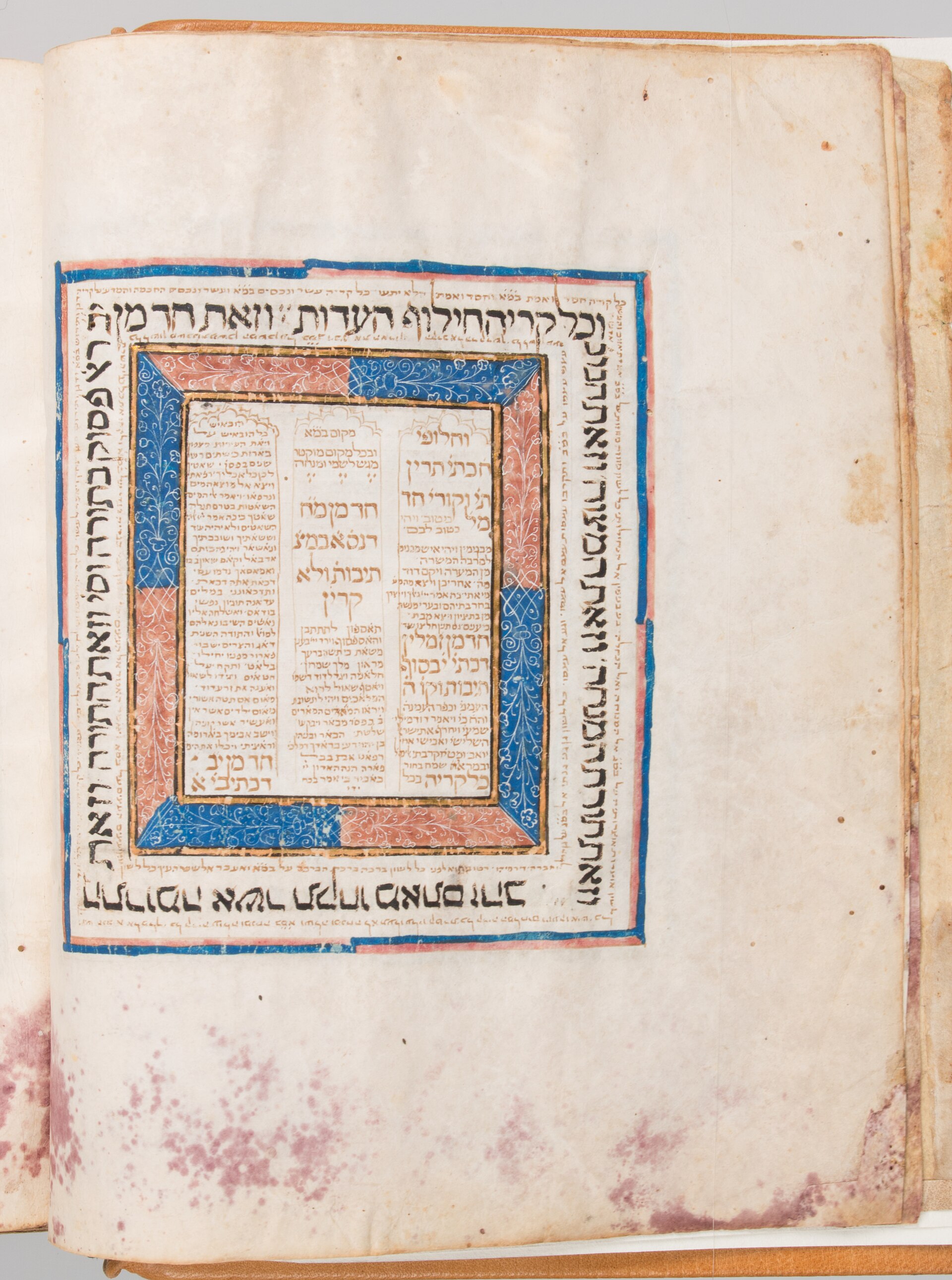
The Jewish Bible is called the Tanakh, an acronym formed from the first letters of its three divisions: Torah (the Law, the five books of Moses), Nevi'im (the Prophets) and Ketuvim (the Writings). Jewish tradition counts twenty-four books. The count is low because several books that Christian Bibles divide are counted as one: Samuel is one book, Kings is one, Chronicles is one, Ezra and Nehemiah together are one, and the twelve minor prophets from Hosea to Malachi are one book called "the Twelve." Those same twenty-four books, divided differently, are the thirty-nine books of the Old Testament in a Protestant Bible. The contents are the same. Only the counting and the order differ.
The order is also different. The Babylonian Talmud, compiled in the centuries after AD 200 from older teaching, preserves a teaching (a baraita) on the order of the books. "The order of the books of the Prophets when they are attached together," it says, "is as follows: Joshua and Judges, Samuel and Kings, Jeremiah and Ezekiel, and Isaiah and the Twelve Prophets." It continues: "The order of the Writings is: Ruth and the book of Psalms, and Job and Proverbs; Ecclesiastes, Song of Songs, and Lamentations; Daniel and the Scroll of Esther; and Ezra and Chronicles."4 Printed Hebrew Bibles today use a somewhat different order within the Writings, but they keep the threefold division, and most of them end with Chronicles. Christian Bibles, following the Greek and Latin tradition, arrange the same books by kind (law, history, poetry and wisdom, prophets) and end with Malachi.
The New Testament reflects a threefold grouping. After the resurrection, in Luke's account, Jesus tells the disciples "that all things must be fulfilled, which were written in the law of Moses, and in the prophets, and in the psalms, concerning me" (Luke 24:44, KJV).5 Many readers take "the psalms" there as the name of the third division by its first and largest book, though the verse itself does not say so. Jesus also speaks of the blood of the prophets "From the blood of Abel unto the blood of Zacharias, which perished between the altar and the temple" (Luke 11:51, KJV).5 Abel is the first murder in Genesis. A Zechariah son of Jehoiada is stoned "in the court of the house of the LORD" in 2 Chronicles 24:20 to 21. Some scholars, F. F. Bruce among them, have argued that the saying runs from the first book of the Hebrew Bible to the last, which would mean the books already ran from Genesis to Chronicles in Jesus' day. Others reply that the saying may be chronological (the first and the last martyrs Jesus' hearers knew of) and proves nothing about book order. The argument is a reading of the verse, not a document about the canon.
The prologue to Sirach: "the law, and the prophets, and other books"
The earliest outside witness to a threefold grouping is the prologue to the book of Sirach (also called Ecclesiasticus), itself one of the disputed books. The prologue was written by the grandson of the author, who translated his grandfather's Hebrew book into Greek in Egypt. The King James Version prints it this way:
Whereas many and great things have been delivered unto us by the law and the prophets, and by others that have followed their steps ... my grandfather Jesus, when he had much given himself to the reading of the law, and the prophets, and other books of our fathers, and had gotten therein good judgment, was drawn on also himself to write something pertaining to learning and wisdom. (Prologue to Sirach, KJV Apocrypha)6
The grandson says that he came "in the eight and thirtieth year coming into Egypt, when Euergetes was king," and that "the same things uttered in Hebrew, and translated into another tongue, have not the same force in them: and not only these things, but the law itself, and the prophets, and the rest of the books, have no small difference, when they are spoken in their own language."6 Scholars identify that king with Ptolemy VIII Euergetes and so place the translation in the later second century BC. Two things follow from the prologue. By then there was a recognized group of "the law" and "the prophets" with a third, less sharply named group ("other books of our fathers," "the rest of the books"). And those books already existed in Greek translation in Egypt, since the grandson compares his own work with them. The prologue does not list the books in the third group, so it cannot show whether the group was closed.
"Since the time that a prophet was not seen"
One idea that shaped the Jewish canon was the belief that prophecy had ceased for a time after the last prophets of the Persian period. The book of 1 Maccabees, another of the disputed books, written about the Jewish revolt of the 160s BC, twice reflects that belief. When the defiled altar stones of the temple were taken down, the leaders "laid up the stones in the mountain of the temple in a convenient place, until there should come a prophet to shew what should be done with them" (1 Maccabees 4:46, KJV). After the death of Judas Maccabeus, "there was a great affliction in Israel, the like whereof was not since the time that a prophet was not seen among them" (1 Maccabees 9:27, KJV).7 A book that says no prophet was then available does not claim to be prophecy itself, a point Protestant writers often make about Maccabees. Catholic and Orthodox writers answer that the church received the book as Scripture on other grounds.
Josephus: "only twenty-two books"
The clearest first-century statement comes from the Jewish historian Flavius Josephus in his defense of Judaism, Against Apion, written in the 90s AD after his Antiquities. In William Whiston's public domain translation:
For we have not an innumerable multitude of books among us, disagreeing from and contradicting one another, [as the Greeks have,] but only twenty-two books, which contain the records of all the past times; which are justly believed to be divine; and of them five belong to Moses, which contain his laws and the traditions of the origin of mankind till his death. ... but as to the time from the death of Moses till the reign of Artaxerxes king of Persia, who reigned after Xerxes, the prophets, who were after Moses, wrote down what was done in their times in thirteen books. The remaining four books contain hymns to God, and precepts for the conduct of human life. (Josephus, Against Apion 1.8, Whiston translation)8
Josephus then adds that later Jewish history "hath been written since Artaxerxes very particularly, but hath not been esteemed of the like authority with the former by our forefathers, because there hath not been an exact succession of prophets since that time," and that "during so many ages as have already passed, no one has been so bold as either to add any thing to them, to take any thing from them, or to make any change in them."8
Josephus does not name the twenty-two books. Most scholars think his count matches the later twenty-four with two pairs joined (Ruth with Judges and Lamentations with Jeremiah), which is how Origen and other Christian writers later counted twenty-two, to match the twenty-two letters of the Hebrew alphabet. That identification is an inference, since Josephus gives only the total and the three groups (five, thirteen and four). His statement still matters for three reasons. He writes as a priest from Jerusalem, not as a Christian. He presents the number as something all Jews knew. And he draws the line at the reign of Artaxerxes, which would exclude books like 1 Maccabees and Sirach, written later. His own Antiquities goes on to narrate the Maccabean period as history, so the line he draws is between history and Scripture, not between true and false books.
The rabbis and the disputed Writings
The Mishnah, the code of Jewish law edited about AD 200, records that some rabbis still argued about two books of the Writings. The test it uses is whether a scroll "defiles the hands," a ritual rule that applied to holy scrolls. In Joshua Kulp's translation of Mishnah Yadayim 3:5:
All the Holy Scriptures defile the hands. The Song of Songs and Kohelet (Ecclesiastes) defile the hands. Rabbi Judah says: the Song of Songs defiles the hands, but there is a dispute about Kohelet. Rabbi Yose says: Kohelet does not defile the hands, but there is a dispute about the Song of Songs. ... Rabbi Akiba said: Far be it! No man in Israel disputed that the Song of Songs [saying] that it does not defile the hands. For the whole world is not as worthy as the day on which the Song of Songs was given to Israel; for all the writings are holy but the Song of Songs is the holy of holies. (Mishnah Yadayim 3:5, translated by Joshua Kulp)9
The same passage reports a tradition that the matter was decided "on the day when they appointed Rabbi Elazar ben Azariah head of the academy," and ends: "so they disputed and so they reached a decision."9 That day is placed at Yavneh (Jamnia), the town on the coastal plain where rabbinic scholars gathered after the destruction of Jerusalem in AD 70. This passage is the main source behind the modern idea of a "Council of Jamnia," discussed below. Read as written, it shows rabbis discussing the status of two books already in use. It does not show a council drawing up a list, and it says nothing about Sirach, Tobit or the other books Christians later debated.
Melito of Sardis: the first Christian list
The oldest surviving Christian list of Old Testament books comes from Melito, bishop of Sardis in Asia Minor in the later second century. It survives only because Eusebius of Caesarea copied it into his Church History about a century and a half later. Melito wrote to a fellow Christian named Onesimus, who had asked for "an accurate statement of the ancient book, as regards their number and their order." Melito answered:
Accordingly when I went East and came to the place where these things were preached and done, I learned accurately the books of the Old Testament, and send them to you as written below. Their names are as follows: Of Moses, five books: Genesis, Exodus, Numbers, Leviticus, Deuteronomy; Jesus Nave, Judges, Ruth; of Kings, four books; of Chronicles, two; the Psalms of David, the Proverbs of Solomon, Wisdom also, Ecclesiastes, Song of Songs, Job; of Prophets, Isaiah, Jeremiah; of the twelve prophets, one book; Daniel, Ezekiel, Esdras. (Melito, in Eusebius, Church History 4.26.14, McGiffert translation)10
"Jesus Nave" is Joshua son of Nun, in the Greek spelling. "Four books of Kings" means 1 and 2 Samuel and 1 and 2 Kings, which the Greek Bible calls 1 to 4 Kingdoms. The list is worth reading closely. It contains no Tobit, Judith, Sirach or Maccabees. It also lacks Esther, and Lamentations and Nehemiah are presumably counted under Jeremiah and "Esdras." The words "Wisdom also" (in Greek, he kai Sophia) have been read two ways: as another name for Proverbs ("the Proverbs of Solomon, which is also Wisdom") or as the separate Wisdom of Solomon. The Greek allows either reading. Melito says he had to travel to Palestine to learn the list accurately, which suggests that a Christian bishop in Asia Minor around 170 could not simply take a settled list off a shelf.
Origen: the twenty-two books "as the Hebrews have handed them down"
Origen of Alexandria, the most learned Christian scholar of the third century, knew Hebrew and worked closely with the Hebrew and Greek texts in his six-column edition called the Hexapla. In his commentary on the first Psalm, quoted by Eusebius, he wrote: "It should be stated that the canonical books, as the Hebrews have handed them down, are twenty-two; corresponding with the number of their letters." He then named them with their Hebrew titles in Greek spelling, ending: "Isaiah, Jessia; Jeremiah, with Lamentations and the epistle in one, Jeremia; Daniel, Daniel; Ezekiel, Jezekiel; Job, Job; Esther, Esther. And besides these there are the Maccabees, which are entitled Sarbeth Sabanaiel."11
Three details stand out. Origen includes "the epistle" (the Letter of Jeremiah, a short Greek work) with Jeremiah. He sets the Maccabees "besides these," outside the count. And the list as Eusebius preserves it does not name the Twelve Prophets, although the count of twenty-two requires them. The usual explanation is that the name dropped out in copying. Origen's list shows that a Christian scholar could report the Hebrew canon carefully while the church around him also read other books.
The "Council of Jamnia" hypothesis
Many twentieth-century textbooks taught that a council of rabbis at Jamnia (Yavneh) around AD 90 closed the Hebrew canon, deciding once and for all which of the Writings belonged and, by implication, shutting out the books later called the Apocrypha. The idea is usually traced to the nineteenth-century Jewish historian Heinrich Graetz, and it spread through English-language scholarship in the decades after him.
In 1964 Jack P. Lewis published a short article titled "What Do We Mean by Jabneh?" in the Journal of Bible and Religion (later the Journal of the American Academy of Religion), volume 32, pages 125 to 132.12 Lewis went back to the rabbinic sources and found no record of a council, no list of books, and no decision about any book other than the old debates over Ecclesiastes and the Song of Songs, which the rabbis continued to discuss after the Yavneh period. Later scholars, including Sid Z. Leiman in a 1976 study and David E. Aune in a 1991 note in the Journal of Biblical Literature titled "On the Origins of the 'Council of Javneh' Myth," carried the criticism further.13 Today the "council" is generally treated as a modern construction. The rabbis at Yavneh were a school, not a church council, and what the Mishnah records is a discussion of two books already in use.
When the Hebrew canon was closed remains an open question. Some scholars, especially those who weigh Josephus heavily, place a fixed collection in the second century BC or earlier. Others think the edges of the Writings stayed open into the second century AD or later. Both groups agree that there was no single council and no single date.
The Apocrypha question
What the books are
The books in question are Jewish writings from roughly the last three centuries before Christ and the first century after, most of them preserved in Greek. They include history (1 and 2 Maccabees, on the revolt against the Seleucid kings in the 160s BC), stories (Tobit and Judith), wisdom (the Wisdom of Solomon and Sirach), prophecy in the manner of Jeremiah (Baruch and the Letter of Jeremiah), and additions to two canonical books: six passages added to Esther, and three to Daniel (the Prayer of Azariah and Song of the Three Young Men, Susanna, and Bel and the Dragon). The Church of England's Article VI gives the Protestant list in full: "The Third Book of Esdras, The Fourth Book of Esdras, The Book of Tobias, The Book of Judith, The rest of the Book of Esther, The Book of Wisdom, Jesus the Son of Sirach, Baruch the Prophet, The Song of the Three Children, The Story of Susanna, Of Bel and the Dragon, The Prayer of Manasses, The First Book of Maccabees, The Second Book of Maccabees."14 The Esdras books that Article VI numbers third and fourth are the ones most English Bibles call 1 and 2 Esdras.
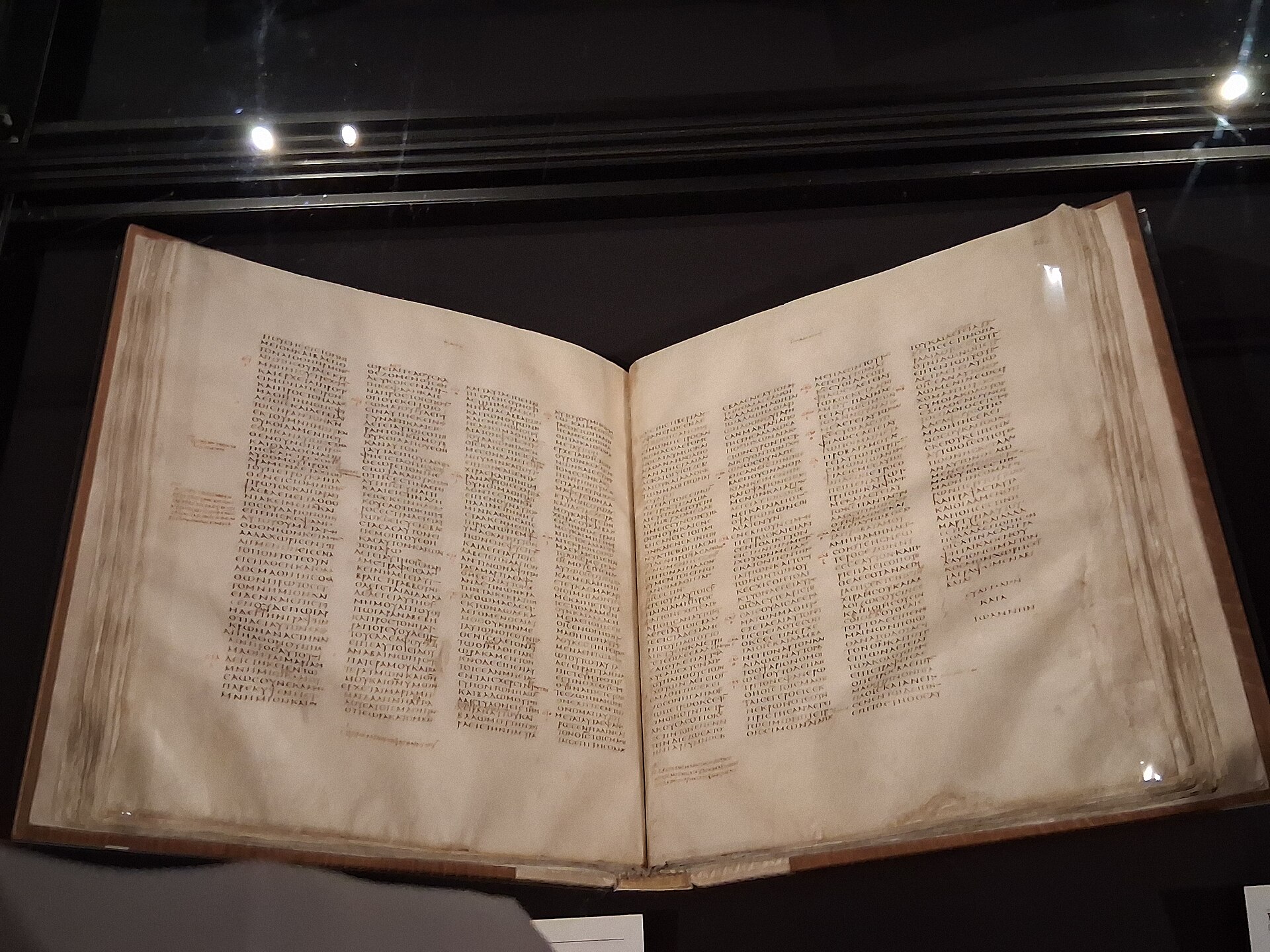
The books came into Christian use because the first Christians, most of whom read Greek, used the Greek Old Testament, the Septuagint (see lesson 01). The great Greek Bibles of the fourth and fifth centuries mix these books among the others. The Codex Sinaiticus Project, which publishes the fourth-century Codex Sinaiticus online, describes the surviving part of its Old Testament as "around half of the Old Testament and Apocrypha (the Septuagint)," naming among the books present "2 Esdras, Tobit, Judith, 1 & 4 Maccabees, Wisdom and Sirach." The same codex adds two early Christian writings after the New Testament: "an Epistle by an unknown writer claiming to be the Apostle Barnabas" and "'The Shepherd', written by the early second-century Roman writer, Hermas."15 ("2 Esdras" in the Greek numbering is the book of Ezra and Nehemiah.) A Bible that contained a book did not by that fact declare it canonical: Sinaiticus also contains Barnabas and Hermas, which no church today counts as Scripture. What the codices show is which books Greek-speaking Christians copied and read alongside Scripture.

The fourth-century lists: read, but not in the canon
When fourth-century Greek bishops drew up formal lists, most of them followed the Hebrew count of twenty-two and placed the extra books in a second class. Athanasius, after giving his twenty-two Old Testament books, added:
But for greater exactness I add this also, writing of necessity; that there are other books besides these not indeed included in the Canon, but appointed by the Fathers to be read by those who newly join us, and who wish for instruction in the word of godliness. The Wisdom of Solomon, and the Wisdom of Sirach, and Esther, and Judith, and Tobit, and that which is called the Teaching of the Apostles, and the Shepherd. (Athanasius, Festal Letter 39.7, translated by R. Payne-Smith, NPNF 2nd series vol. 4)1
Athanasius's own list has surprises on both sides. It counts "Jeremiah with Baruch, Lamentations, and the epistle, one book," so Baruch and the Letter of Jeremiah are inside his canon. And it leaves Esther out, placing it among the books to be read. Then he warns that the true "apocryphal writings" are something else again: "they are an invention of heretics, who write them when they choose."1 For Athanasius there were three classes: the canon, the useful books read to new converts, and the forgeries.
Cyril, bishop of Jerusalem, gave a similar list in his lectures to candidates for baptism in the middle of the fourth century. "Read the Divine Scriptures," he told them, "the twenty-two books of the Old Testament, these that have been translated by the Seventy-two Interpreters." His list includes Esther as "the twelfth book" and, like Athanasius, counts Jeremiah "including Baruch and Lamentations and the Epistle." Then he warns: "Study earnestly these only which we read openly in the Church," and "whatever books are not read in Churches, these read not even by yourself."16 A list attached as canon 60 to the canons of the Synod of Laodicea gives the same twenty-two books, but the Nicene and Post-Nicene Fathers edition prints it with the warning, "This Canon is of most questionable genuineness."17
Augustine and the African councils: the longer list
In the Latin West the line ran differently. Augustine, bishop of Hippo in North Africa, wrote On Christian Doctrine (begun in the 390s) as a guide for readers of Scripture. He told the reader to follow "the judgment of the greater number of Catholic churches," preferring books "received by all the Catholic churches to those which some do not receive." His list of "the whole canon of Scripture" includes, among the historical books, "Job, and Tobias, and Esther, and Judith, and the two books of Maccabees, and the two of Ezra." Of Wisdom and Ecclesiasticus he wrote that they "are ascribed to Solomon from a certain resemblance of style, but the most likely opinion is that they were written by Jesus the son of Sirach. Still they are to be reckoned among the prophetical books, since they have attained recognition as being authoritative." He sums up: "The authority of the Old Testament is contained within the limits of these forty-four books."18
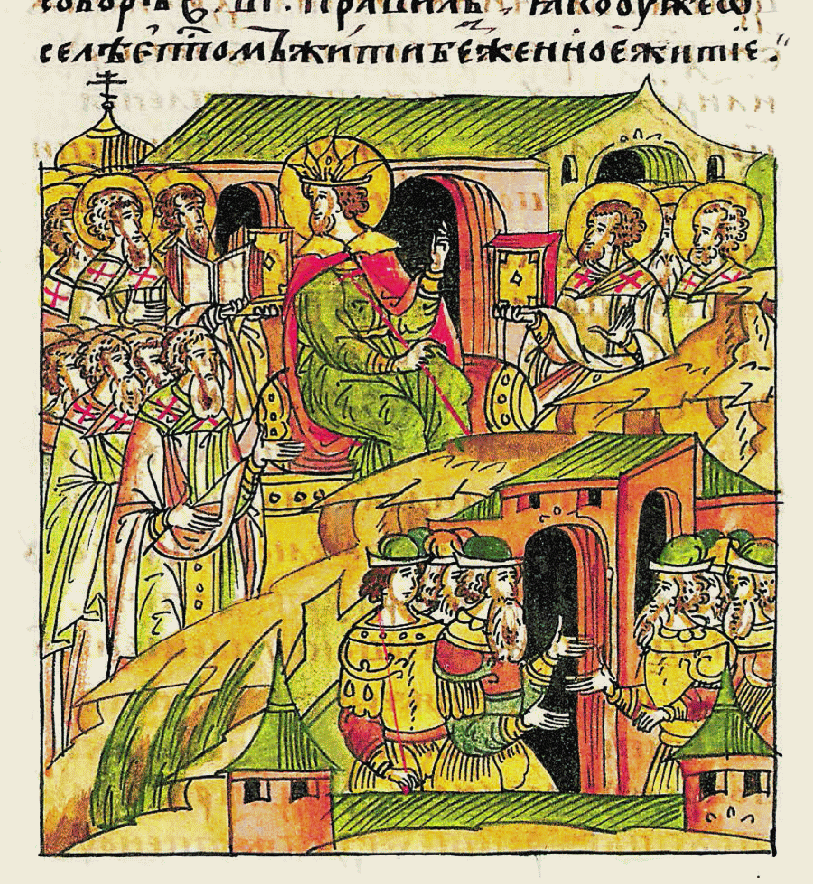
The councils of the African church, in which Augustine took part, adopted a list of the same shape. The Code of Canons of the African Church, a collection of canons from councils held at Carthage, Hippo and Milevis that was read and confirmed at Carthage in 419, contains this canon (numbered 24 in the Latin and 27 in the Greek):
Item, that besides the Canonical Scriptures nothing be read in church under the name of divine Scripture. But the Canonical Scriptures are as follows: Genesis. Exodus. Leviticus. Numbers. Deuteronomy. Joshua the Son of Nun. The Judges. Ruth. The Kings, iv. books. The Chronicles, ij. books. Job. The Psalter. The Five books of Solomon. The Twelve Books of the Prophets. Isaiah. Jeremiah. Ezechiel. Daniel. Tobit. Judith. Esther. Ezra, ij. books. Macchabees, ij. books. (Code of Canons of the African Church, canon 24, translated by Henry Percival, NPNF 2nd series vol. 14)19
"The Five books of Solomon" are Proverbs, Ecclesiastes, the Song of Songs, Wisdom and Sirach. The canon closes by asking that it be sent to "our brother and fellow bishop, Boniface," the bishop of Rome, "that they may confirm this canon, for these are the things which we have received from our fathers to be read in church."19 The editors' table of councils in the same volume lists the earlier meetings whose canons the code gathered, among them Hippo (393) and two councils at Carthage in 397.19 The 393 and 397 lists are usually said to be the same as this one (with the request for confirmation addressed to an earlier bishop of Rome), but the forms that survive come through this later collection. These were regional councils of the African church. Their lists became the practice of the Latin West, but they were not ecumenical councils, and they did not bind the Greek East, where Athanasius's and Cyril's shorter lists remained in use.

The Latin Bible and the Middle Ages
The Latin Vulgate (translated about 382 to 405 at the request of Pope Damasus I; see lesson 04) became the Bible of the Western church for a thousand years, and medieval Latin Bibles carried the books on the African list. The Vulgate's translator, working from the Hebrew, himself held the shorter Hebrew canon and said so in prefaces that were copied into many medieval Bibles. Those prefaces are why Article VI of the Church of England, in the sixteenth century, could appeal to an ancient Latin authority for the view that the extra books are read "for example of life and instruction of manners" but not used "to establish any doctrine."14 Medieval writers in the West held both views, sometimes side by side, until the question became a dividing line in the Reformation.
Before Trent, the Council of Florence had already issued a list. Its Bull of Union with the Copts, dated February 4, 1442, says that the Roman church "accepts and venerates" the books of both testaments, "whose titles are as follows," and its Old Testament list includes "Tobit, Judith, Esther," "Wisdom, Ecclesiasticus," "Baruch" and "two books of the Maccabees," with the twenty-seven books of the New Testament.20 The Florence decree was an instruction to a church seeking union with Rome. It set out the list but did not attach a penalty to rejecting it.
The Council of Trent, April 8, 1546
The Reformers' challenge to the extra books forced the question. At its fourth session, "celebrated on the eighth day of the month of April, in the year MDXLVI," the Council of Trent issued its decree on the canonical Scriptures. The council said it "receives and venerates with an equal affection of piety, and reverence, all the books both of the Old and of the New Testament," together with the unwritten traditions, and inserted a list "lest a doubt may arise in any one's mind, which are the books that are received by this Synod." The list includes "Tobias, Judith, Esther," "Wisdom, Ecclesiasticus," "Jeremias, with Baruch," and "two books of the Machabees, the first and the second." Then came the binding clause:
But if any one receive not, as sacred and canonical, the said books entire with all their parts, as they have been used to be read in the Catholic Church, and as they are contained in the old Latin vulgate edition; and knowingly and deliberately contemn the traditions aforesaid; let him be anathema. (Council of Trent, Fourth Session, Decree concerning the Canonical Scriptures, translated by J. Waterworth, 1848)21
The words "entire with all their parts" bring in the additions to Esther and Daniel. Trent's list does not include 1 and 2 Esdras (3 and 4 Esdras in the Latin numbering) or the Prayer of Manasseh, which medieval Latin Bibles had often carried. Trent's decree is the point at which, for Roman Catholics, the longer canon became a defined article of faith with an anathema attached. Catholic writers point out that the list itself was not new: it was the African list of 393 to 419 and the Florence list of 1442. Protestant writers point out that the anathema was new, and that Trent closed a question that many earlier Catholic scholars had treated as open.
Luther's Bible of 1534: "useful and good to read"
Martin Luther finished his German translation of the whole Bible in 1534 (see module 79, lesson 11). He did not drop the disputed books. He moved them out of the Old Testament and gathered them into a separate section between the testaments, under a heading that the German Bible Society quotes from an early edition of Luther's Bible: "Apocrypha. Das sind Bücher: so nicht der heiligen Schrift gleich gehalten: und doch nützlich und gut zu lesen sind." In English: "Apocrypha. These are books which are not held equal to Holy Scripture, and yet are useful and good to read." According to Martin Rösel's essay published by the German Bible Society, Luther's section included Judith, Wisdom, Tobit, Sirach, Baruch, 1 and 2 Maccabees and the additions to Esther and Daniel, with the Prayer of Manasseh at the close of the Old Testament, and left out the Third and Fourth Books of Esdras.22 The pattern Luther set (the books printed, set apart, and labeled as lesser) was followed by most Protestant Bibles for the next three centuries.
The Church of England: Article VI
The Church of England stated its position in the Thirty-Nine Articles, agreed by the bishops and clergy "in the Convocation holden at London in the year 1562" and confirmed again with the assent of Queen Elizabeth "in the Year of our Lord 1571."14 (See module 80, lesson 04 for the Church of England.) Article VI, "Of the Sufficiency of the holy Scriptures for salvation," opens: "Holy Scripture containeth all things necessary to salvation: so that whatsoever is not read therein, nor may be proved thereby, is not to be required of any man, that it should be believed as an article of the Faith." It defines Scripture as "those Canonical Books of the Old and New Testament, of whose authority was never any doubt in the Church," lists the Old Testament books of the Hebrew canon, and then says: "And the other Books ... the Church doth read for example of life and instruction of manners; but yet doth it not apply them to establish any doctrine." The list of "other Books" follows, and the article ends: "All the Books of the New Testament, as they are commonly received, we do receive, and account them Canonical."14
The phrase "read for example of life" was meant literally. The Church of England's lectionary appointed readings from these books in public worship. The distinction was between reading and proving doctrine: a passage of Sirach could be read in church as moral instruction, but no doctrine could rest on it alone.
The King James Version of 1611
The King James Version of 1611 (see lesson 07) followed the same pattern. Its preliminary table of "the names and order of all the books of the Olde and New Testament, with the Number of their Chapters" has three parts: the Old Testament, then "The Bookes called Apocrypha," listing 1 and 2 Esdras, Tobit, Judith, "The rest of Esther," Wisdom, Ecclesiasticus, "Baruch with the Epistle of Ieremiah," the Song of the Three Children, the Story of Susanna, "The idole Bel and the Dragon," "The prayer of Manasseh" and 1 and 2 Maccabees, and then "The Bookes of the New Testament."23 The Apocrypha was translated by one of the six companies of translators and printed between the testaments, with running heads reading "Apocrypha" at the top of its pages. Editions of the King James Version without the Apocrypha were printed later, and most modern printings omit it, but the 1611 edition carried it.
The KJV's Apocrypha includes the passage most often cited in the Catholic and Protestant debate over prayers for the dead. After a battle, Judas Maccabeus collected money for a sin offering for fallen soldiers, and the writer comments: "For if he had not hoped that they that were slain should have risen again, it had been superfluous and vain to pray for the dead. ... Whereupon he made a reconciliation for the dead, that they might be delivered from sin" (2 Maccabees 12:44 to 45, KJV Apocrypha).24 Catholic theology has cited this passage in support of prayer for the dead and purgatory. Protestant writers reply that a book outside the canon cannot establish a doctrine, which is exactly the rule of Article VI. The same book ends with its author's modest word about his own work: "And if I have done well, and as is fitting the story, it is that which I desired: but if slenderly and meanly, it is that which I could attain unto" (2 Maccabees 15:38, KJV Apocrypha).24
The Westminster Confession: "no part of the canon"
The Westminster Assembly, meeting in London in the 1640s, took a firmer line. Chapter 1 of the Westminster Confession of Faith lists the sixty-six books of the Old and New Testaments, "All which are given by inspiration of God to be the rule of faith and life," and then states:
The books commonly called Apocrypha, not being of divine inspiration, are no part of the canon of the Scripture, and therefore are of no authority in the church of God, nor to be any otherwise approved, or made use of, than other human writings. (Westminster Confession of Faith 1.3)25
The difference from Article VI is real. The Church of England read the books in church as profitable. The Westminster Confession, adopted by Presbyterian churches in Scotland and later in America, put them on the level of "other human writings." Between them, those two statements mark the range of Protestant views.
The Bible societies and the end of the printed Apocrypha
The practical change came in the nineteenth century, when Bible societies began printing and giving away Bibles by the hundreds of thousands. The British and Foreign Bible Society, founded in London in 1804, had printed some Bibles with the Apocrypha for distribution in Europe, where Lutheran and Catholic readers expected those books. Scottish members led by Robert Haldane and Andrew Thomson objected in the 1820s. A Scottish Christian heritage site states that the Society "had been printing Bibles with the Apocrypha added since 1821" and that "Eventually the Apocrypha was removed, thanks to the alertness of Scottish leaders."26 A history published by the Free Presbyterian Church of Scotland says that "The whole issue came to a head in 1826 and 1827" and quotes the first of the rules the Society then added: "That the fundamental law of the Society, which limits its operations to the circulation of the Holy Scriptures, be fully and distinctly recognised as excluding the circulation of the Apocrypha."35 The Society's own annual reports were not opened for this lesson. After it, Protestant Bibles in English without the Apocrypha became the norm, and most English-speaking Protestants have never seen an edition that includes those books.
The Eastern Orthodox canons
The Eastern Orthodox churches never held a council like Trent that settled the question for all of them. The Orthodox Church in America, answering a question about "the books that the Protestant churches refer to as the Apocrypha," states that these books, "know[n] in the Orthodox Church as the 'longer canon' rather than the 'Apocrypha,' as they are known among the Protestants," "are accepted by Orthodox Christianity as canonical scripture." It names "Tobit, Judith, more chapters of Esther and Daniel, the Books of Maccabees, the Book of the Wisdom of Solomon, the Book of Sirach, the Prophecy of Baruch, and the Prayer of Manasseh."3
Greek Orthodox Bibles print a few books that Catholic Bibles do not. According to OrthodoxWiki, the Synod of Jerusalem in 1672 "decreed the Greek Orthodox canon which is similar to the one decided by the Council of Trent"; the Greek churches "generally consider Psalm 151 to be part of the Book of Psalms"; the books of Maccabees "are four in number, though 4 Maccabees is generally in an appendix"; and the Greek Bible has "1 Esdras and Ezra-Nehemiah." The same source adds that the Jerusalem synod "was a regional council and neither ecumenical nor pan-Orthodox," so its decree was not binding on every Orthodox church.27 The Ethiopian Orthodox Tewahedo Church is generally reported to keep a still larger canon, including 1 Enoch and Jubilees, but that canon is not examined in this lesson. The New Testament letter of Jude quotes a prophecy of "Enoch also, the seventh from Adam" (Jude 14, KJV), a passage found in the book now called 1 Enoch, which shows that at least one New Testament writer knew and used a book outside every Western canon.5
The New Testament canon
What the New Testament says about itself
The process of recognizing New Testament books began inside the New Testament. Paul told the churches to read his letters aloud and to share them: "I charge you by the Lord that this epistle be read unto all the holy brethren" (1 Thessalonians 5:27, KJV), and "when this epistle is read among you, cause that it be read also in the church of the Laodiceans; and that ye likewise read the epistle from Laodicea" (Colossians 4:16, KJV).5 Reading in the assembly, the practice that had given the synagogue its Scripture, was the setting in which Christian writings gained their standing.
Two passages put apostolic writings beside the Old Testament. Second Peter speaks of "our beloved brother Paul" who wrote "in all his epistles," in which "are some things hard to be understood, which they that are unlearned and unstable wrest, as they do also the other scriptures, unto their own destruction" (2 Peter 3:15 to 16, KJV).5 The phrase "the other scriptures" places Paul's letters in the class of Scripture. And 1 Timothy 5:18 introduces two quotations with one formula: "For the scripture saith, Thou shalt not muzzle the ox that treadeth out the corn. And, The labourer is worthy of his reward." The first is Deuteronomy 25:4. The second matches the saying of Jesus in Luke 10:7, "for the labourer is worthy of his hire" (KJV).5 Whether 1 Timothy is quoting Luke's gospel or a saying of Jesus known separately is debated. Either way, the verse puts a word of Jesus under the heading "the scripture saith."
Marcion and the first list
The first known person to draw up a closed list of Christian books was Marcion, a shipowner from Pontus who taught in Rome in the middle of the second century and was expelled by the Roman church. Marcion rejected the Old Testament and its God, and accepted only an edited Gospel of Luke and ten letters of Paul. His teaching and his list are covered in module 79, lesson 02. Many historians think Marcion's narrow list pushed other churches to state their own, broader one, though the church was already reading four gospels and more letters before he acted. The Muratorian fragment, below, names Marcion directly as the source of forged letters.
Irenaeus: "the Gospel under four aspects"
By about 180, Irenaeus, bishop of Lyons in Gaul, could treat the four gospels as a closed set. In Against Heresies, written against the Gnostic teachers who used other gospels, he argued that the number four was no accident:
It is not possible that the Gospels can be either more or fewer in number than they are. For, since there are four zones of the world in which we live, and four principal winds, while the Church is scattered throughout all the world, and the pillar and ground of the Church is the Gospel and the spirit of life; it is fitting that she should have four pillars, breathing out immortality on every side, and vivifying men afresh. (Irenaeus, Against Heresies 3.11.8, translated by Alexander Roberts and William Rambaut, ANF vol. 1)28
Irenaeus goes on to match the four gospels with the four living creatures of Revelation 4:7, a pairing that later gave Christian art the lion, ox, man and eagle as symbols of the evangelists. His reasoning from winds and zones does not persuade modern readers, but the point he is making is historical: the four gospels were already the received set in his churches, and he was defending it against writers who added others or, like Marcion, cut it to one. Irenaeus also quotes from most of Paul's letters, Acts, 1 Peter, 1 and 2 John and Revelation as Scripture. He does not make a list.

The Muratorian fragment
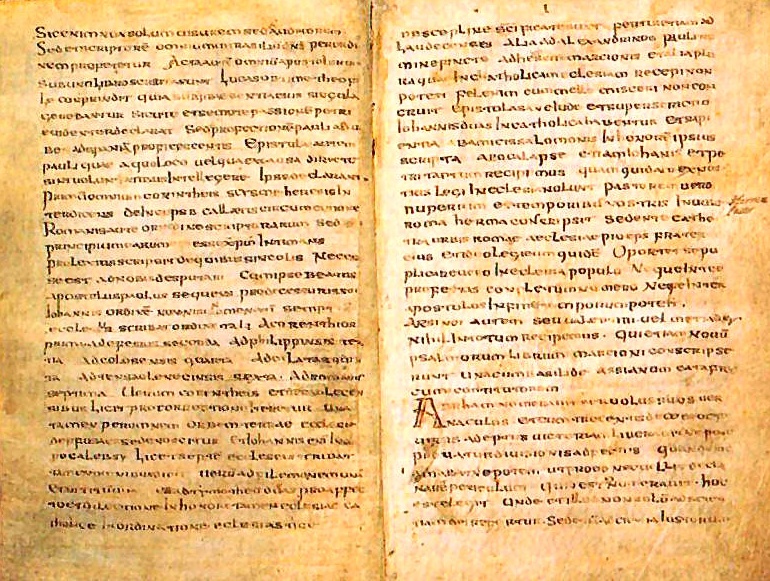
In 1740 the Italian scholar Ludovico Antonio Muratori published a Latin list of New Testament books that he had found in a manuscript in the Ambrosian Library in Milan, copied in the seventh or eighth century. The beginning is lost. The text starts in the middle of a sentence about Mark and then names "the third book of the Gospel" as Luke's, followed by John. In the public domain translation in volume 5 of the Ante-Nicene Fathers, the list goes on to accept Acts, thirteen letters of Paul, Jude and two letters of John, and, in its words, "the Apocalypse of John and that of Peter, though some amongst us will not have this latter read in the Church." It also accepts the Wisdom of Solomon, "written by the friends of Solomon in his honour."29
The fragment rejects some books by name. Letters "to the Laodiceans, and another to the Alexandrians, forged under the name of Paul" are refused, "for it is not suitable for gall to be mingled with honey." Of the Shepherd of Hermas it says: "The Pastor ... did Hermas write very recently in our times in the city of Rome," and that "it also ought to be read; but it cannot be made public in the Church to the people."29 The list does not mention Hebrews, James, 1 and 2 Peter, or one of the letters of John.
The date is the problem. The words "very recently in our times," together with the reference to the brother of Hermas as bishop of Rome (Pius, bishop in the mid second century), led most scholars to place the original list in Rome in the late second century, about 170 to 200. In 1973 Albert C. Sundberg Jr. argued in the Harvard Theological Review, in an article titled "Canon Muratori: A Fourth-Century List," that the list was written in the East in the fourth century, and Geoffrey Mark Hahneman developed that case in his 1992 Oxford monograph The Muratorian Fragment and the Development of the Canon.3031 Others have defended the earlier date. The question is unresolved. If the earlier date is right, the fragment shows a Roman church around 200 with a New Testament close to the modern one, plus the Apocalypse of Peter and Wisdom, and minus a few short letters. If the later date is right, it is one of several fourth-century lists.
Origen on the New Testament
Origen, in the first half of the third century, described the state of opinion in the churches he knew. Eusebius preserves his statements. Of the gospels: "Among the four Gospels, which are the only indisputable ones in the Church of God under heaven, I have learned by tradition that the first was written by Matthew." Of Peter: he "has left one acknowledged epistle; perhaps also a second, but this is doubtful." Of John: "He has left also an epistle of very few lines; perhaps also a second and third; but not all consider them genuine." On Hebrews he weighed the style and concluded: "If I gave my opinion, I should say that the thoughts are those of the apostle, but the diction and phraseology are those of some one who remembered the apostolic teachings," and then: "But who wrote the epistle, in truth, God knows."11 Origen's words show the method of the early church at work: the churches asked whether a book came from an apostle or the apostles' circle, whether it agreed with the faith already received, and whether it had been read in the churches from the beginning.
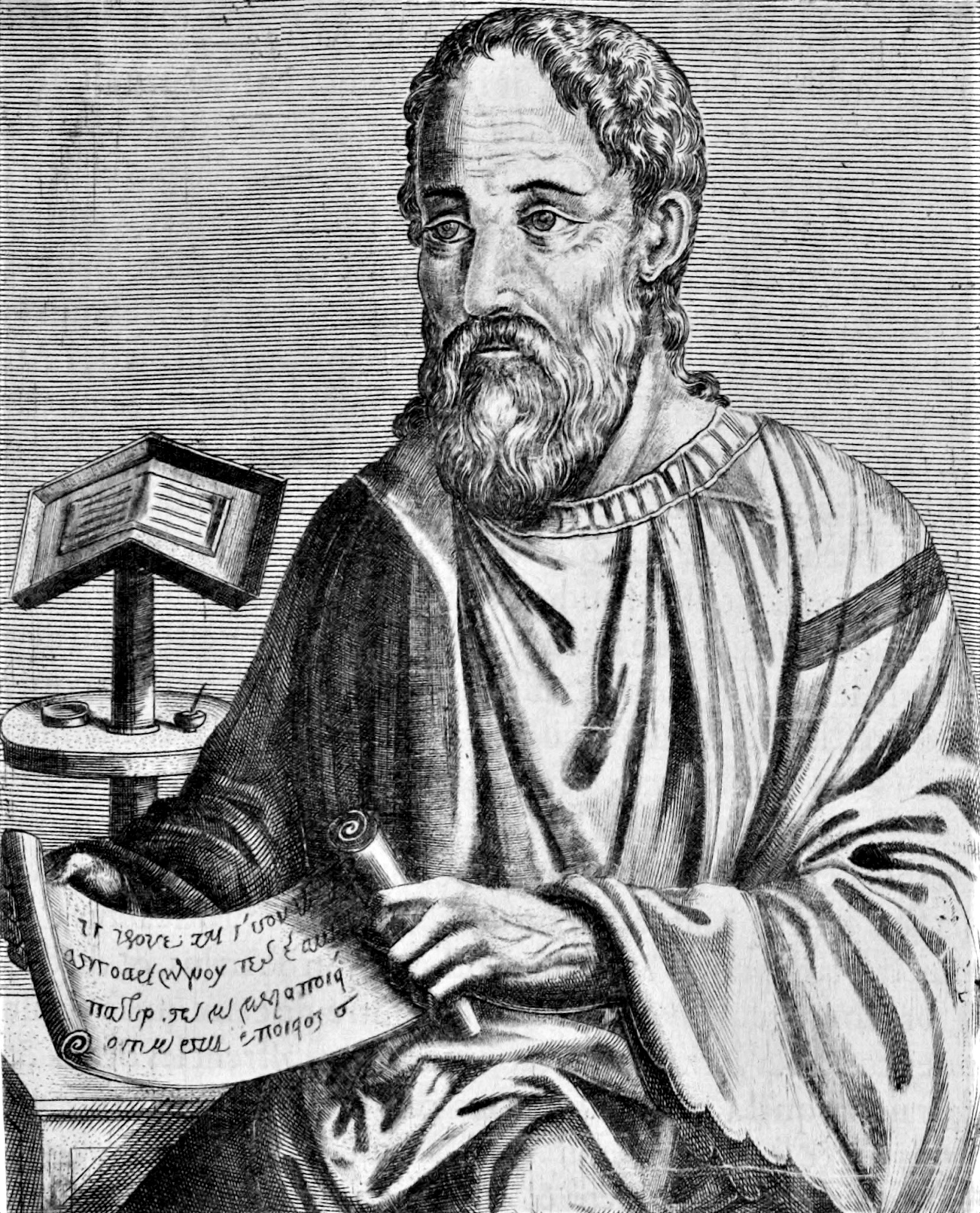

Eusebius: accepted, disputed and rejected
Eusebius, bishop of Caesarea, finished his Church History in the 320s. In book 3, chapter 25, he summed up "the writings of the New Testament" in classes. "First then must be put the holy quaternion of the Gospels; following them the Acts of the Apostles. After this must be reckoned the epistles of Paul; next in order the extant former epistle of John, and likewise the epistle of Peter, must be maintained. After them is to be placed, if it really seem proper, the Apocalypse of John." Those "belong among the accepted writings." Then: "Among the disputed writings, which are nevertheless recognized by many, are extant the so-called epistle of James and that of Jude, also the second epistle of Peter, and those that are called the second and third of John." Among "the rejected writings" he put "the Acts of Paul, and the so-called Shepherd, and the Apocalypse of Peter, and in addition to these the extant epistle of Barnabas, and the so-called Teachings of the Apostles; and besides, as I said, the Apocalypse of John, if it seem proper, which some, as I said, reject, but which others class with the accepted books."2
A fourth group lay beyond all three: books "cited by the heretics under the name of the apostles, including, for instance, such books as the Gospels of Peter, of Thomas, of Matthias," which "are not to be placed even among the rejected writings, but are all of them to be cast aside as absurd and impious."2 Eusebius's account shows that by the early fourth century twenty of the twenty-seven books were received everywhere he knew, that five short letters were "disputed" though "recognized by many," and that Revelation was the book on which opinion was most divided. Eusebius's own uncertainty about Revelation explains why he lists it in two places.
Cyril of Jerusalem: twenty-six books
Cyril of Jerusalem's lecture to baptismal candidates in the mid fourth century gives a New Testament that matches the modern one except at the end. "Then of the New Testament there are the four Gospels only, for the rest have false titles and are mischievous," he said. "Receive also the Acts of the Twelve Apostles; and in addition to these the seven Catholic Epistles of James, Peter, John, and Jude; and as a seal upon them all, and the last work of the disciples, the fourteen Epistles of Paul. But let all the rest be put aside in a secondary rank."16 Revelation is not on his list. The Greek-speaking churches of Palestine and Syria were slow to accept Revelation, and the doubts Eusebius recorded lasted in parts of the East for centuries. The list attached to the canons of Laodicea also omits Revelation, though, as noted above, its genuineness is doubted.17
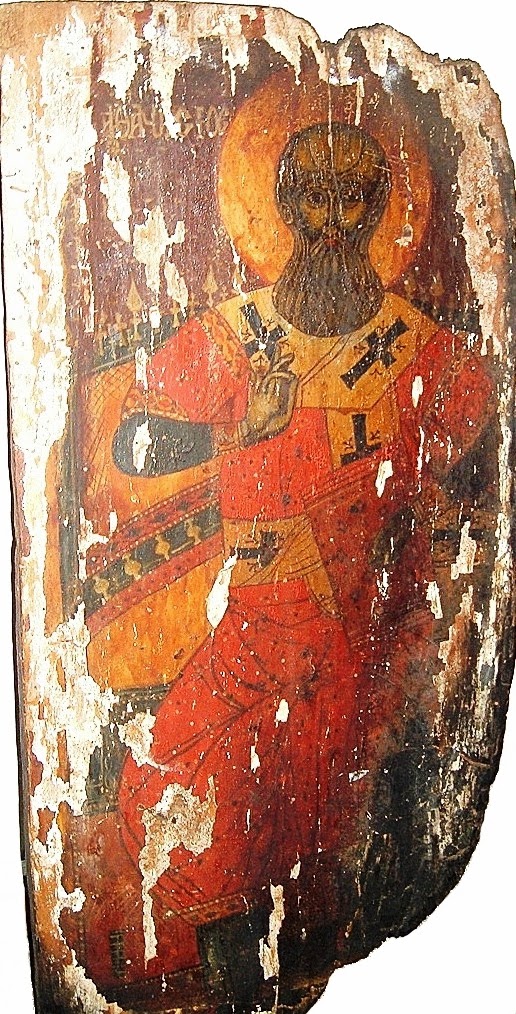

Athanasius, Festal Letter 39 (367): the twenty-seven books
Each year the bishop of Alexandria sent a letter to the churches of Egypt announcing the date of Easter, and these "festal letters" often carried teaching as well. In his thirty-ninth letter, for the Easter of 367, Athanasius explained that he wrote because "some few of the simple should be beguiled from their simplicity and purity, by the subtlety of certain men, and should henceforth read other books, those called apocryphal, led astray by the similarity of their names with the true books." After his Old Testament list he gave the New Testament:
Again it is not tedious to speak of the [books] of the New Testament. These are, the four Gospels, according to Matthew, Mark, Luke, and John. Afterwards, the Acts of the Apostles and Epistles (called Catholic), seven, viz. of James, one; of Peter, two; of John, three; after these, one of Jude. In addition, there are fourteen Epistles of Paul, written in this order. The first, to the Romans; then two to the Corinthians; after these, to the Galatians; next, to the Ephesians; then to the Philippians; then to the Colossians; after these, two to the Thessalonians, and that to the Hebrews; and again, two to Timothy; one to Titus; and lastly, that to Philemon. And besides, the Revelation of John. (Athanasius, Festal Letter 39.5, translated by R. Payne-Smith, NPNF 2nd series vol. 4)1
He concluded: "These are fountains of salvation, that they who thirst may be satisfied with the living words they contain. In these alone is proclaimed the doctrine of godliness. Let no man add to these, neither let him take ought from these."1
This is the oldest surviving list that names exactly the twenty-seven books of the modern New Testament, with nothing added and nothing missing. The order is not the modern Western one. Athanasius puts the seven "Catholic" (general) letters right after Acts, ahead of Paul, and places Hebrews between 2 Thessalonians and 1 Timothy. That order is also found in some Greek manuscripts. Athanasius did not claim to be inventing anything. He said the books were "handed down, and accredited as Divine" and that he wrote "by way of remembrance, of matters with which you are acquainted."1 His letter was an Egyptian bishop's instruction to his own churches, not a decree for the whole church. It shows that in Alexandria by 367 the twenty-seven-book New Testament was settled, while elsewhere, as Cyril's list shows, the edges were still in discussion.
Hippo and Carthage: the West settles the twenty-seven
The African canon quoted above for the Old Testament continues with the New: "The Gospels, iv. books. The Acts of the Apostles, j. book. The Epistles of Paul, xiv. The Epistles of Peter, the Apostle, ij. The Epistles of John the Apostle, iij. The Epistles of James the Apostle, j. The Epistle of Jude the Apostle, j. The Revelation of John, j. book."19 These are the same twenty-seven books Athanasius named. Augustine's On Christian Doctrine lists them too.18 From the African councils (393, 397 and the code of 419) onward, the Latin church used the twenty-seven, and no later council in East or West added to them or took any away. The Council of Florence (1442) and the Council of Trent (1546) both repeated the list.2021 The Church of England's Article VI received "All the Books of the New Testament, as they are commonly received," without needing to list them.14
Agreement on the New Testament did not end all questions about it. In the sixteenth century Luther raised doubts about the standing of Hebrews, James, Jude and Revelation, and in his German New Testament he placed those four books together at the end, after the other twenty-three. He did not remove them, and Lutheran Bibles have always printed all twenty-seven. These were debates about authorship and rank within the canon, and they did not produce a different New Testament in any church.
What the Council of Nicaea did not do
A popular claim holds that the Emperor Constantine and the Council of Nicaea in 325 chose the books of the Bible. The council's own record contradicts it. Nicaea issued a creed and twenty canons on church order: the readmission of the lapsed, the rank of bishops, the date of Easter and similar questions. None of the twenty canons mentions which books are Scripture.32 Eusebius, who attended the council and wrote the most detailed account of the canon question in his generation, still described five letters as "disputed" and gave two opinions on Revelation, which he would hardly have done if the council he attended had settled the list. Athanasius, who as a young deacon was at Nicaea, wrote his list forty-two years later and appealed to what had been "handed down," not to a decision of the council. The council and its work are covered in module 79, lesson 04.
The story has a traceable source. A short Greek collection of council summaries known as the Synodicon Vetus, first printed in 1601 by the Lutheran scholar Johannes Pappus of Strasbourg, tells of books being sorted by a miracle at the council.33 The English publisher William Hone repeated the tale in the preface to his Apocryphal New Testament (first published in 1820), saying that Pappus "in his Synodicon to that council, he tells us, that having 'promiscuously put all the books that were referred to the council for determination, under the communion table in a church, they besought the Lord that the inspired writings might get upon the table while the spurious ones remained underneath, and that it happened accordingly.'"34 Hone cited it to mock the council, and later writers retold it as history. No fourth-century source mentions any such event.
What the record shows and what it does not
- Documented fact: Josephus, in the 90s AD, counts "only twenty-two books" as the Jewish Scriptures and draws the line at the reign of Artaxerxes. The Talmud's teaching in Bava Batra 14b gives an order of the Prophets and Writings. The Mishnah records rabbis disputing Ecclesiastes and the Song of Songs.
- Documented fact: Melito (later second century), Origen (third century), Athanasius (367) and Cyril of Jerusalem (mid fourth century) give Old Testament lists built on the Hebrew count of twenty-two, with some variation (Melito and Athanasius leave out Esther, and Athanasius and Cyril include Baruch and the Letter of Jeremiah).
- Documented fact: Augustine and the African councils (Hippo 393, Carthage 397 and the code of 419) list Tobit, Judith, two books of Maccabees and the "five books of Solomon" in the Old Testament. Florence (1442) and Trent (1546) list the same books, and Trent attaches an anathema.
- Documented fact: Athanasius's Festal Letter 39 (367) is the oldest surviving list of exactly the twenty-seven New Testament books. The African councils and all later councils that addressed the question list the same twenty-seven.
- Documented fact: Luther's Bible (1534), Article VI of the Church of England (agreed in Convocation in 1562 and confirmed in 1571) and the King James Version (1611) printed or listed the Apocrypha as books to be read but not used to establish doctrine. The Westminster Confession (1640s) called them "no part of the canon."
- A church's own claim: The Catholic Church holds that the longer canon was received from the apostles and defined, not created, at Trent. The Orthodox Church in America says the longer canon "was accepted from the beginning by the early Church." Protestant confessions hold that only the books of the Hebrew canon are inspired in the Old Testament.
- Scholarly reading: The "Council of Jamnia" is generally regarded as a modern construction since Jack P. Lewis's 1964 article. The Muratorian fragment's date (about 200 or the fourth century) is disputed.
- Open question: When the third division of the Hebrew Bible, the Writings, was closed, and whether all Jews everywhere held the same list in the first century.
Claims checked
"Constantine and the Council of Nicaea chose the books of the Bible"
Refuted. The twenty canons of Nicaea say nothing about the canon of Scripture.32 Eusebius, who was present, still listed disputed books afterward.2 The first list of exactly the twenty-seven books comes from Athanasius in 367, more than forty years later, and appeals to tradition, not to the council.1 The story of books sorted on an altar comes from the Synodicon Vetus, a late compilation first printed in 1601, and was spread in English by William Hone.3433 The claim is repeated in popular fiction and on many websites. See module 79, lesson 04.
"The Council of Jamnia closed the Hebrew canon in AD 90"
Unsupported. The rabbinic sources record a discussion about Ecclesiastes and the Song of Songs on the day Rabbi Elazar ben Azariah was appointed head of the academy, not a council, a list or a vote on any other book.9 Jack P. Lewis (1964) and David E. Aune (1991) showed how the idea of a council grew up in modern scholarship.1213 Josephus, writing in the same decade, already speaks of twenty-two books as fixed long before.8
"The Catholic Church added the Apocrypha to the Bible at the Council of Trent"
Refuted as stated, partly supported in substance. The books were in the Greek codices of the fourth century, on Augustine's list and the African lists of 393 to 419, and on the Florence list of 1442.15181920 Trent did not add them. What Trent did was make the longer list binding on Catholics under anathema, closing a question that Greek fathers such as Athanasius and Cyril had answered the other way.21
"Protestants removed seven books from the Bible"
Partly supported. The first Protestant Bibles did not remove the books. Luther's Bible of 1534 and the King James Version of 1611 printed them, set apart between the testaments, as books "useful and good to read" but not equal to Scripture.2223 That arrangement followed the Hebrew canon and the shorter lists of Athanasius and Cyril. The physical removal of the books from most Protestant Bibles came later, especially with the Bible societies of the nineteenth century.26 So Protestants changed the books' status at the Reformation and, much later, stopped printing them.
"The King James Bible never contained the Apocrypha"
Refuted. The 1611 edition's own table of books lists "The Bookes called Apocrypha" between the Old and New Testaments, and the books are printed in that position with "Apocrypha" as the running head.23
"Athanasius was the first to list exactly the twenty-seven books"
Supported, with a caution. Festal Letter 39 (367) is the oldest surviving list with exactly the twenty-seven.1 "Oldest surviving" is the right wording. Athanasius says he was passing on what had been handed down, and earlier lists may have been lost.
"The Muratorian fragment proves the New Testament was fixed by AD 200"
Unresolved. The traditional late second-century date rests on the fragment's words about Hermas writing "very recently in our times."29 Sundberg (1973) and Hahneman (1992) argued for a fourth-century date.3031 Even on the early date, the list includes the Apocalypse of Peter and Wisdom and omits Hebrews, James and 1 and 2 Peter, so it does not show the twenty-seven fixed.
"The church suppressed other gospels, such as Thomas, that were equally old"
Partly supported. The church did reject other gospels, openly and by name: Eusebius listed "the Gospels of Peter, of Thomas, of Matthias" among books "to be cast aside as absurd and impious," and Cyril warned that "the Manichæans also wrote a Gospel according to Thomas."216 The rejection is documented. The claim that these gospels were "equally old" is a separate question about dating that scholars still debate. Irenaeus around 180 already treated four gospels as the only ones received.28
"Josephus's twenty-two books are the same as the Protestant Old Testament"
Partly supported. The usual reading is that his twenty-two are the later twenty-four with Ruth joined to Judges and Lamentations to Jeremiah, which together contain the thirty-nine books of a Protestant Old Testament. But Josephus does not name the books, so the identification is an inference.8 His line at Artaxerxes does exclude the later books such as Sirach and Maccabees.
Hard questions and answers
If no council chose the books, who decided?
The historical record shows a long process of recognition rather than a single decision. Books were read in the assemblies, quoted as Scripture, and tested by three questions that appear again and again in the sources: did the book come from the apostles or their circle, did it agree with the faith already received, and had it been read in the churches from the beginning? Origen asks the first question about Hebrews.11 Eusebius sorts books by whether they were "accepted," "disputed" or "rejected" in the churches.2 Augustine tells readers to follow "the judgment of the greater number of Catholic churches."18 Lists and councils came late and recorded a consensus that had mostly formed. Catholics and Orthodox see in this process the church's authority. Protestants see the church recognizing books whose authority came from God. The record itself is the same for both.
A Catholic reader asks: the apostles used the Greek Old Testament, so why not accept its books?
The New Testament writers quoted the Greek Old Testament often (see lesson 01). But the large Greek codices that contain the extra books were copied by Christians in the fourth and fifth centuries, and they also contain books nobody counts as Scripture, such as Barnabas and Hermas in Sinaiticus.15 No first-century list of a "Greek canon" survives. The New Testament nowhere quotes Tobit, Judith, Wisdom, Sirach or Maccabees with a formula such as "it is written," though some passages may echo them. Hebrews 11:35, "others were tortured, not accepting deliverance; that they might obtain a better resurrection" (KJV), is often read as an allusion to the martyrs of 2 Maccabees 7.5 An allusion shows that a writer knew a book. It does not by itself show that he counted it as Scripture, as Jude's use of Enoch shows from the other side.
A Protestant reader asks: if they are not Scripture, why did Luther and the KJV print them?
Because the Reformers held a middle position that most modern Protestants have lost sight of. Luther called them "useful and good to read."22 Article VI says the church reads them "for example of life and instruction of manners."14 The books preserve Jewish history between the testaments (the Maccabean revolt behind the Feast of Dedication mentioned in John 10:22), Jewish prayer and wisdom, and the background of New Testament ideas. Reading them was encouraged. Using them to prove a doctrine was not.
A skeptic asks: doesn't a list from 367 prove the canon was a late, political creation?
The dates do not support that conclusion. Irenaeus treated four gospels as fixed nearly two centuries before Athanasius, and Paul's letters were collected and called "scriptures" within the New Testament itself (2 Peter 3:16).285 The books that took longest to be accepted everywhere were short ones (2 Peter, 2 and 3 John, Jude, James) and Revelation, and the debates over them turned on authorship and teaching, as Origen's and Eusebius's own words show. No emperor issued the list. The two most important lists, Athanasius's and the African canon, come from bishops who were often at odds with imperial power, and Athanasius was exiled several times.
An Orthodox reader asks: why does the Orthodox Church have no single defined list?
The Orthodox churches have treated the canon as a matter of received use in worship more than of conciliar definition. The OCA states that the longer canon has been received "from the beginning," and OrthodoxWiki notes that the Synod of Jerusalem (1672) was "neither ecumenical nor pan-Orthodox."327 In practice the Greek, Slavonic and other Orthodox Bibles agree on the core and differ at the edges, for example on 4 Maccabees.
A King James Only reader asks: does the 1611 Apocrypha mean the translators thought those books were inspired?
No. The KJV translators worked under the Church of England's Article VI, which distinguishes the canonical books from "the other Books" that the church reads but does not use "to establish any doctrine," and the 1611 table separates "The Bookes called Apocrypha" from both testaments.1423 Printing a book with the Bible, in the practice of that time, did not mean counting it as Scripture.
Where to go next
The wording of the books, as opposed to the list of them, is the subject of lesson 01 (the Hebrew text, the Dead Sea Scrolls and the Septuagint) and lesson 02 (the Greek manuscripts). The Latin Bible that carried the longer canon through the Middle Ages is in lesson 04, and the 1611 Bible with its Apocrypha is in lesson 07. For the church history behind this lesson, see Marcion in module 79, lesson 02, Nicaea in module 79, lesson 04, Luther in module 79, lesson 11 and the Church of England in module 80, lesson 04. Readers who want to see the Greek and Hebrew titles of these books can start with Intro to Classical Greek and Intro to Classical Hebrew.
Learn more
- Athanasius, Festal Letter 39: The short letter itself, with both testaments and the books "to be read."
- Eusebius, Church History 3.25: The fourth-century survey of accepted, disputed and rejected books.
- Council of Trent, Fourth Session: The Catholic decree on the canon in a public domain translation.
- Articles of Religion, Article VI: The Church of England's list and its rule on the Apocrypha.
- Josephus, Against Apion: Book 1, section 8, for the twenty-two books.
- Codex Sinaiticus Project: See which books a fourth-century Greek Bible actually contained.
Still being checked (18 items)
These points could not be confirmed against a primary source when this lesson was written and fact checked in October 2026. The text above states each one as uncertain.
- F. F. Bruce's argument from Luke 11:51 (Abel to Zechariah as first and last book) is reported from general knowledge of his Canon of Scripture (1988); the book was not opened for this lesson.
- The identification of the Euergetes of the Sirach prologue with Ptolemy VIII and the resulting late second century BC date are standard scholarship, not checked against a named source here.
- The reading of Melito's "Wisdom also" (Greek he kai Sophia) as either Proverbs or the Wisdom of Solomon is reported from general scholarly discussion, not a source opened for this lesson.
- Heinrich Graetz (1871) as the origin of the Jamnia council idea, and Sid Z. Leiman's 1976 study, are named from secondary summaries. Lewis (1964) and Aune (1991) were confirmed bibliographically through Crossref but their texts were not opened.
- That the Hippo (393) and Carthage (397) lists were the same as the 419 canon 24 is the usual scholarly statement; only the 419 form was read.
- That the Vulgate's translator held the shorter Hebrew canon in prefaces copied into medieval Bibles is standard scholarship; the prefaces were not opened (and the translator is deliberately unnamed under the site rule). Article VI's appeal to an ancient Latin authority was confirmed.
- That medieval Latin Bibles often carried 3 and 4 Esdras and the Prayer of Manasseh was not checked against a manuscript source.
- The British and Foreign Bible Society's decision on the Apocrypha: the 1826 to 1827 rule change is quoted from a Free Presbyterian Church of Scotland history, not from the Society's own annual report. The founding date, March 7, 1804, is confirmed by Christian Heritage Edinburgh.
- That one of the KJV companies translated the Apocrypha, and that the Church of England lectionary appointed readings from it, were not checked here (see lesson 07).
- The Ethiopian Orthodox canon (including 1 Enoch and Jubilees) and the identification of Jude 14 with 1 Enoch are stated as generally reported, not checked.
- OrthodoxWiki (a wiki) is the only source for the 1672 Synod of Jerusalem details, Psalm 151, 1 Esdras and 4 Maccabees in Greek Orthodox Bibles.
- Irenaeus's use of most Pauline letters, Acts, 1 Peter, 1 and 2 John and Revelation as Scripture is stated from general scholarship; only Against Heresies 3.11.8 was opened.
- The Muratorian fragment's acceptance of thirteen Pauline letters and its omission of Hebrews, James and 1 and 2 Peter are from the standard description; the quotations were checked word for word against the Early Christian Writings text (Roberts-Donaldson).
- Luther placing Hebrews, James, Jude and Revelation at the end of his New Testament is standard history (see module 79, lesson 11) but no source was opened here.
- Athanasius's presence at Nicaea as a deacon and his several exiles, and the Greek manuscripts that share his order (catholic epistles after Acts), were not checked.
- Hone's quotation of Pappus is confirmed word for word in the Internet Archive scan of the 1880 Philadelphia printing; the 1820 first edition date was not checked.
- The Synodicon Vetus date of composition was not established; only Pappus's 1601 first edition is confirmed.
- The image caption for the Carthage miniature was reduced to what the Commons record supports; the content of the Slavonic text below the picture was not read.
Notes
- Athanasius, Letter 39 (Festal Letter for 367), sections 2 to 7, translated by R. Payne-Smith, in Nicene and Post-Nicene Fathers, Second Series, vol. 4, ed. Philip Schaff and Henry Wace (Buffalo: Christian Literature Publishing Co., 1892), revised for New Advent by Kevin Knight (retrieved Oct. 28, 2026). Read it online. ↩
- Eusebius, Church History 3.25, translated by Arthur Cushman McGiffert, in Nicene and Post-Nicene Fathers, Second Series, vol. 1 (Buffalo: Christian Literature Publishing Co., 1890), New Advent edition (retrieved Oct. 28, 2026). Read it online. ↩
- Orthodox Church in America, "Canon of Scripture" (Questions and Answers) (retrieved Oct. 28, 2026). Read it online. ↩
- Babylonian Talmud, Bava Batra 14b, William Davidson Edition (English, CC-BY-NC), Sefaria (retrieved Oct. 28, 2026). Read it online. ↩
- King James Version (Oxford 1769 text), Luke 24:44; Luke 11:50 to 51; 2 Chronicles 24:20 to 21; 1 Thessalonians 5:27; Colossians 4:16; 2 Peter 3:15 to 16; 1 Timothy 5:18; Luke 10:7; Jude 14; Hebrews 11:35; John 10:22, public domain text as served by bible-api.com (retrieved Oct. 28, 2026). Read it online. ↩
- Prologue to Sirach (Ecclesiasticus), King James Version Apocrypha, transcription on Wikisource (retrieved Oct. 28, 2026). Read it online. ↩
- 1 Maccabees 4:46 and 9:27, King James Version Apocrypha, transcription on Wikisource (retrieved Oct. 28, 2026). Read it online. ↩
- Flavius Josephus, Against Apion 1.8, translated by William Whiston, Project Gutenberg eBook 2849 (retrieved Oct. 28, 2026). Read it online. ↩
- Mishnah Yadayim 3:5, translated by Joshua Kulp (Mishnah Yomit, CC-BY), Sefaria (retrieved Oct. 28, 2026). Read it online. ↩
- Eusebius, Church History 4.26.12 to 14 (Melito to Onesimus), translated by Arthur Cushman McGiffert, NPNF Second Series vol. 1, New Advent edition (retrieved Oct. 28, 2026). Read it online. ↩
- Eusebius, Church History 6.25 (Origen on the canon), translated by Arthur Cushman McGiffert, NPNF Second Series vol. 1, New Advent edition (retrieved Oct. 28, 2026). Read it online. ↩
- Jack P. Lewis, "What Do We Mean by Jabneh?" Journal of Bible and Religion (now Journal of the American Academy of Religion) 32, no. 2 (1964): 125 to 132. Bibliographic details confirmed through Crossref. The article itself was not opened for this lesson. Read it online. ↩
- David E. Aune, "On the Origins of the 'Council of Javneh' Myth," Journal of Biblical Literature 110, no. 3 (1991): 491 to 493. Bibliographic details confirmed through Crossref. Sid Z. Leiman's 1976 study is named from secondary summaries. Read it online. ↩
- Articles of Religion (the Thirty-Nine Articles), Article VI and the ratification of 1571, Book of Common Prayer text, Church of England (retrieved Oct. 28, 2026). Read it online. ↩
- Codex Sinaiticus Project, "Content" page (British Library, Leipzig University Library, National Library of Russia and Saint Catherine's Monastery) (retrieved Oct. 28, 2026). Read it online. ↩
- Cyril of Jerusalem, Catechetical Lecture 4.33 to 36, translated by Edwin Hamilton Gifford, NPNF Second Series vol. 7 (1894), New Advent edition (retrieved Oct. 28, 2026). Read it online. ↩
- Synod of Laodicea, canons 59 and 60, translated by Henry Percival, NPNF Second Series vol. 14 (1900), with the editors' note on canon 60, New Advent edition (retrieved Oct. 28, 2026). Read it online. ↩
- Augustine, On Christian Doctrine 2.8.12 to 13, translated by James Shaw, NPNF First Series vol. 2 (1887), New Advent edition (retrieved Oct. 28, 2026). Read it online. ↩
- Code of Canons of the African Church (Carthage, 419), canon 24 (Greek 27), with the editors' introduction and table of councils, translated by Henry Percival, NPNF Second Series vol. 14 (1900), New Advent edition (retrieved Oct. 28, 2026). Read it online. ↩
- Council of Florence, Session 11, February 4, 1442, Bull of Union with the Copts, English text from Norman Tanner's Decrees of the Ecumenical Councils as given by Papal Encyclicals Online (retrieved Oct. 28, 2026). Read it online. ↩
- Council of Trent, Fourth Session (April 8, 1546), Decree concerning the Canonical Scriptures, in The Canons and Decrees of the Sacred and Oecumenical Council of Trent, translated by J. Waterworth (London: Dolman, 1848), pp. 17 to 21, Hanover Historical Texts Project (retrieved Oct. 28, 2026). Read it online. ↩
- Martin Rosel, "Nutzlich und gut zu lesen" (abridged from Margot Kassmann and Martin Rosel, Die Bibel Martin Luthers, 2016), page "Luther und die Apokryphen," Deutsche Bibelgesellschaft, quoting the Apocrypha heading in an early edition of Luther's Bible (retrieved Oct. 28, 2026). Read it online. ↩
- The Holy Bible, Conteyning the Old Testament, and the New (London: Robert Barker, 1611), table of books and Apocrypha running heads, scanned copy and OCR text at the Internet Archive (retrieved Oct. 28, 2026). Read it online. ↩
- 2 Maccabees 12:44 to 45 and 15:38, King James Version Apocrypha, transcription on Wikisource (retrieved Oct. 28, 2026). Read it online. ↩
- Westminster Confession of Faith 1.2 to 1.3, text published by the Orthodox Presbyterian Church (retrieved Oct. 28, 2026). Read it online. ↩
- "The Scottish Bible Society," Christian Heritage Edinburgh, March 28, 2024 (Robert Haldane's 1824 visit to the British and Foreign Bible Society; the Society founded March 7, 1804) (retrieved Oct. 29, 2026). Read it online. ↩
- OrthodoxWiki, "Old Testament Canon" (section on the Synod of Jerusalem, 1672) (retrieved Oct. 28, 2026). Read it online. ↩
- Irenaeus, Against Heresies 3.11.8, translated by Alexander Roberts and William Rambaut, Ante-Nicene Fathers vol. 1 (1885), New Advent edition (retrieved Oct. 28, 2026). Read it online. ↩
- The Muratorian fragment, Roberts-Donaldson translation from Ante-Nicene Fathers vol. 5, with introduction, Early Christian Writings (Peter Kirby) (retrieved Oct. 28, 2026). Read it online. ↩
- Albert C. Sundberg Jr., "Canon Muratori: A Fourth-Century List," Harvard Theological Review 66 (1973): 1 to 41. Bibliographic details confirmed through Crossref. Read it online. ↩
- Geoffrey Mark Hahneman, The Muratorian Fragment and the Development of the Canon (Oxford: Clarendon Press, 1992), chapter "Redating the Fragment." Bibliographic details confirmed through Crossref. Read it online. ↩
- First Council of Nicaea (325), the twenty canons, translated by Henry Percival, NPNF Second Series vol. 14 (1900), New Advent edition (retrieved Oct. 28, 2026). Read it online. ↩
- Roger Pearse, "The Manuscripts of the Vetus Synodicon," tertullian.org, on Johannes Pappus's first edition of 1601 (retrieved Oct. 28, 2026). Read it online. ↩
- William Hone, ed., The Apocryphal New Testament (Philadelphia: Gebbie, 1880 printing; first published London, 1820), preface, scanned at the Internet Archive (retrieved Oct. 28, 2026). Read it online. ↩
- "The Bible Societies," Free Presbyterian Magazine, Free Presbyterian Church of Scotland, quoting the rules added by the British and Foreign Bible Society in 1826 and 1827 (retrieved Oct. 29, 2026). Read it online. ↩
Check yourself
1. How many books does Josephus say the Jewish Scriptures contain in Against Apion 1.8?
Josephus writes that the Jews have "only twenty-two books": five of Moses, thirteen of the prophets and four of hymns and precepts.
2. Which document is the oldest surviving list of exactly the twenty-seven books of the New Testament?
Athanasius's thirty-ninth festal letter (367) names the twenty-seven books with nothing added or missing. Nicaea's canons say nothing about the canon.
3. In Eusebius's classification (Church History 3.25), which book did he place in two classes because opinion on it was divided?
Eusebius placed the Apocalypse of John among the accepted books "if it really seem proper" and also among the rejected, noting that some reject it and others accept it.
4. What did the Council of Trent decree on April 8, 1546?
Trent's fourth session listed the books and pronounced anathema on anyone who does not receive them "entire with all their parts" as in the old Latin Vulgate.
5. How did Luther's 1534 Bible treat the disputed Old Testament books?
The heading read: "Apocrypha. These are books which are not held equal to Holy Scripture, and yet are useful and good to read."
6. What does the Mishnah (Yadayim 3:5) show about the so-called Council of Jamnia?
The passage records a debate over two books already in use. Jack P. Lewis (1964) showed that no council or list is recorded.
7. Which statement about the King James Version of 1611 is correct?
The 1611 table of books has three parts: the Old Testament, the books called Apocrypha, and the New Testament.
8. Which New Testament book did Cyril of Jerusalem leave off his list in the mid fourth century?
Cyril lists the four gospels, Acts, seven catholic epistles and fourteen of Paul: twenty-six books, without Revelation.
Terms in this lesson
- Canon
- From the Greek kanon, a measuring rule. The list of books a church receives as Scripture.
- Tanakh
- The Jewish Bible, named from its three divisions: Torah (Law), Nevi'im (Prophets) and Ketuvim (Writings). Traditionally counted as twenty-four books.
- Apocrypha
- In Protestant usage, the Jewish books found in the Greek and Latin Old Testament but not in the Hebrew Bible. In early church usage, spurious or heretical books claiming to be Scripture.
- Deuterocanonical
- The Catholic term for Tobit, Judith, Wisdom, Sirach, Baruch, 1 and 2 Maccabees and the additions to Esther and Daniel: books whose place in the canon was settled later, received as Scripture.
- Longer canon
- The Eastern Orthodox term for the Old Testament including the books found in the Septuagint, as the Orthodox Church in America uses it.
- Septuagint
- The ancient Greek translation of the Old Testament, used by the first Christians, whose manuscripts also contain the disputed books.
- Festal letter
- The yearly letter of the bishop of Alexandria announcing the date of Easter. Athanasius's thirty-ninth, for 367, lists the canon.
- Homologoumena and antilegomena
- Greek terms for the "accepted" and "disputed" books in Eusebius's classification of New Testament writings.
- Muratorian fragment
- A Latin list of New Testament books in a seventh or eighth century manuscript in Milan, published by Muratori in 1740. Its original date (about 200 or fourth century) is debated.
- Council of Jamnia (Yavneh)
- A supposed rabbinic council of about AD 90 that closed the Hebrew canon. Since Jack P. Lewis's 1964 article it is generally regarded as a modern construction.
- Anathema
- A formal condemnation. Trent attached it to rejecting the books on its list.
- Article VI
- The article of the Church of England's Thirty-Nine Articles that defines Scripture and lists the other books read "for example of life and instruction of manners" but not to establish doctrine.
Sources
- Athanasius, Letter 39 (NPNF 2.4) (367 (translation 1892)) checked 2026-10
- Eusebius, Church History, Book III (NPNF 2.1) (about 325 (translation 1890)) checked 2026-10
- Eusebius, Church History, Book IV (NPNF 2.1) (about 325 (translation 1890)) checked 2026-10
- Eusebius, Church History, Book VI (NPNF 2.1) (about 325 (translation 1890)) checked 2026-10
- Josephus, Against Apion (Whiston), Project Gutenberg (about AD 95 (translation 1737)) checked 2026-10
- Babylonian Talmud, Bava Batra 14b (Sefaria, William Davidson Edition) (compiled about 500) checked 2026-10
- Mishnah Yadayim 3:5 (Sefaria, Kulp translation) (about 200) checked 2026-10
- KJV Apocrypha: Sirach, 1 Maccabees, 2 Maccabees (Wikisource) (1611 translation) checked 2026-10
- King James Version text (bible-api.com) (1769 text) checked 2026-10
- The Holy Bible (London: Robert Barker, 1611), Internet Archive (1611) checked 2026-10
- Cyril of Jerusalem, Catechetical Lecture 4 (NPNF 2.7) (mid 4th century (translation 1894)) checked 2026-10
- Synod of Laodicea, canons (NPNF 2.14) (4th century (translation 1900)) checked 2026-10
- Augustine, On Christian Doctrine, Book II (NPNF 1.2) (about 397 (translation 1887)) checked 2026-10
- Code of Canons of the African Church (NPNF 2.14) (419 (translation 1900)) checked 2026-10
- First Council of Nicaea, canons (NPNF 2.14) (325 (translation 1900)) checked 2026-10
- Irenaeus, Against Heresies 3.11 (ANF 1) (about 180 (translation 1885)) checked 2026-10
- Muratorian fragment (ANF 5, Early Christian Writings) (late 2nd or 4th century) checked 2026-10
- Council of Florence, Session 11 (Papal Encyclicals Online) (February 4, 1442) checked 2026-10
- Council of Trent, Fourth Session (Waterworth, Hanover Historical Texts) (April 8, 1546 (translation 1848)) checked 2026-10
- Luther und die Apokryphen (Deutsche Bibelgesellschaft) (2016 essay) checked 2026-10
- Articles of Religion (Church of England) (1562, ratified 1571) checked 2026-10
- Westminster Confession of Faith (OPC) (1646) checked 2026-10
- Orthodox Church in America, Canon of Scripture (undated Q and A) checked 2026-10
- OrthodoxWiki, Old Testament Canon (accessed 2026) checked 2026-10
- Codex Sinaiticus Project, Content (accessed 2026) checked 2026-10
- Christian Heritage Edinburgh, The Scottish Bible Society (March 28, 2024) checked 2026-10
- The Bible Societies, Free Presbyterian Magazine (Free Presbyterian Church of Scotland) (undated web article) checked 2026-10
- Jack P. Lewis, What Do We Mean by Jabneh? (1964) (1964) checked 2026-10
- David E. Aune, On the Origins of the Council of Javneh Myth (1991) (1991) checked 2026-10
- Albert C. Sundberg Jr., Canon Muratori: A Fourth-Century List (1973) (1973) checked 2026-10
- Geoffrey Mark Hahneman, The Muratorian Fragment and the Development of the Canon (1992) (1992) checked 2026-10
- William Hone, The Apocryphal New Testament (1880 printing) (1820 (printing 1880)) checked 2026-10
- Roger Pearse, The Manuscripts of the Vetus Synodicon (accessed 2026) checked 2026-10