Lesson 8 of 16 · about 55 minutes · Updated October 28, 2026
The Textual Debate: Textus Receptus, Majority Text, Critical Text and the Verses in Question
You'll be able to
- Explain the difference between the Textus Receptus, the Majority Text and the critical text, and name the main editions and defenders of each.
- Trace the critical text line from Lachmann (1831) through Westcott and Hort (1881) to Nestle-Aland 28, UBS5 and the Editio Critica Maior.
- Describe external and internal evidence and the canons of the harder and the shorter reading, with the objections raised against them.
- For Mark 16:9 to 20, John 7:53 to 8:11, 1 John 5:7 to 8, Acts 8:37, Matthew 6:13, Luke 2:14, Luke 23:34 and 1 Timothy 3:16, name the main manuscripts and early writers on each side.
- Read the footnotes and brackets of the KJV, NKJV, NASB, NIV and ESV and say which Greek text each follows at a disputed place.
- Rate common claims about the debate against the manuscript record.
Start here: the short version
Every printed Greek New Testament is an edition: an editor or a committee compared handwritten copies that disagree with one another in many small points and a few large ones, and chose a reading at each place. Three families of editions are argued over today. The Textus Receptus ("received text") is the line of printed editions that began with Erasmus in 1516 and stands behind the King James Version of 1611 and the New Testament of the New King James Version. The Majority Text prints, at each place of variation, the reading found in most of the surviving Greek manuscripts, which are mostly late medieval copies of the Byzantine type; its main modern editions are Zane Hodges and Arthur Farstad's (1982) and Maurice Robinson and William Pierpont's (2005). The critical text is the line of editions, from Karl Lachmann in 1831 through Westcott and Hort in 1881 to the Nestle-Aland 28th edition (2012) and the United Bible Societies' 5th edition (2014), that weighs the oldest manuscripts most heavily and stands behind the NASB, NIV, ESV and most modern versions.
The three agree on the great majority of the text. They part company at a few thousand places, and a short list of those places is what most readers mean by "the verses in question": the last twelve verses of Mark (16:9 to 20), the woman taken in adultery (John 7:53 to 8:11), the "three that bear record in heaven" (1 John 5:7 to 8), the eunuch's confession (Acts 8:37), the doxology of the Lord's Prayer (Matthew 6:13), "good will toward men" (Luke 2:14), "Father, forgive them" (Luke 23:34) and "God was manifest in the flesh" (1 Timothy 3:16). This lesson sets out each position in the words of its own defenders, explains the methods, and then takes each passage in turn, naming the manuscripts and early writers on each side and showing how five common English versions print it. It states the evidence evenly. The case against the NIV and similar versions is made in lesson 13.
Why there is a debate at all
No original letter of Paul or first copy of a Gospel survives. What survives is a large body of handwritten copies in Greek, made over some fourteen centuries, together with early translations into Latin, Syriac, Coptic and other languages, and thousands of quotations in the writings of early Christian teachers. Lesson 02 describes these witnesses and their counts. The Institute for New Testament Textual Research (INTF) at Munster, which keeps the official list of Greek New Testament manuscripts, states on its page about the Editio Critica Maior that "more than 5500 manuscripts of the Greek New Testament are known," and adds: "We cannot expect to find the 'original text' of a New Testament writing in any one manuscript."1
The copies disagree. Most differences are spelling, word order, or a word present in one copy and absent from another. A few are whole sentences or paragraphs. Every editor who prints a Greek New Testament, and every translation committee that chooses a Greek text, has to decide what to do at each such place. The debate is over how to decide.
The question is old. Fenton John Anthony Hort, whose 1881 edition with Brooke Foss Westcott is the turning point of this lesson, judged that the share of the text in real doubt was small. In the Introduction to their edition he wrote that "the proportion of words virtually accepted on all hands as raised above doubt is very great, not less, on a rough computation, than seven eighths of the whole." Of the remaining eighth, he said, the part that could "in any sense be called substantial variation" was "but a small fraction of the whole residuary variation, and can hardly form more than a thousandth part of the entire text."2 Defenders of the Textus Receptus answer that the places in that small fraction include some of the best-loved passages in the Bible, and that a method which removes them deserves close scrutiny. Both statements are true, and the rest of this lesson is about the places where they meet.
Three positions in brief
The names used in the debate are worth fixing before the history. These summaries use each side's own descriptions, quoted and cited below.
- Textus Receptus (TR). A family of printed Greek texts: Erasmus (1516 and later editions), Robert Estienne (Stephanus, 1550), Theodore Beza (1565 and later) and the Elzevir brothers (1633), whose preface gave the family its name. The edition most often printed today as "the Greek text of the King James Version" is F. H. A. Scrivener's reconstruction of 1881, reissued in 1894. Lesson 05 tells the story of these editions. Its modern defenders hold that God providentially preserved the New Testament text through the church's use of it, and that the Reformation printed text is that preserved text.
- Majority Text (MT, or "M" in footnotes). An edition built by printing, at each point of variation, the reading of most Greek manuscripts. Because most surviving manuscripts are Byzantine copies from the ninth century and later, the Majority Text is close to the TR but not identical: it lacks, for example, 1 John 5:7 to 8 in its long form and Acts 8:37, both of which the TR prints. Its defenders hold that the reading found in the most copies is most likely the original.
- Critical text (CT, or "NU" in New King James footnotes). An edition built by weighing each variant on two kinds of evidence: external evidence (the age, quality and spread of the manuscripts that carry it) and internal evidence (which reading best explains how the others arose, and which fits the author's style). In practice the critical text gives great weight to a small number of early witnesses, above all the fourth-century codices Vaticanus and Sinaiticus and the early papyri. Its defenders hold that the earliest recoverable form of the text is best reached by this kind of weighing.
The Textus Receptus line
From Erasmus to Scrivener
The first printed Greek New Testament to be published was prepared by Desiderius Erasmus and printed by Johann Froben at Basel in 1516. Erasmus worked from a handful of late manuscripts available to him at Basel, and his text was revised in his own later editions and then by Stephanus, Beza and the Elzevirs. Lesson 05 gives the details, including the famous story of 1 John 5:7 and Erasmus's third edition of 1522. The translators of the King James Version (lesson 07) worked from editions in this line, chiefly those of Beza and Stephanus, and chose among them where they differed.
Because the King James translators did not print a Greek text of their own, the Cambridge scholar Frederick Henry Ambrose Scrivener reconstructed one in 1881, choosing at each place the reading of the earlier printed edition that the English of 1611 follows. The Trinitarian Bible Society publishes that text today. Its own statement says that Scrivener "produced an edition of the Greek New Testament" reflecting the Greek text underlying the Authorised Version, and that "This edition, published posthumously in 1894, is currently published by the Society."3
The phrase "Textus Receptus" itself comes from the preface to the Elzevir edition of 1633, which told the reader that he now had "the text received by all." Lesson 05 quotes and translates the Latin. It was a printer's commendation, and only later became the name of a family of texts.
The received text in its defenders' words
The Trinitarian Bible Society, which publishes the TR and the King James Version, explains its choice in a statement titled "The Received Text." The text, it says, belongs to the Byzantine family, "representing the majority of the handwritten Greek manuscripts before the 16th century," and it "follows the Greek manuscripts which were in widespread use for centuries." The Society holds that "God continued to preserve His New Testament by guiding His people to use a text," and it states plainly: "we reject the Critical Text and use the Textus Receptus as the basis for our translation work."3
The most influential twentieth-century statement of this view is Edward F. Hills's The King James Version Defended, first published in 1956. Hills argued that the text found in the majority of Greek manuscripts was preserved by what he called "the God-guided usage of the Greek Church," and he preferred to call it the Traditional Text: "When we call the text found in the majority of the Greek New Testament manuscripts the Traditional Text, we signify that this is the text which has been handed down by the God-guided tradition of the Church from the time of the Apostles unto the present day."4 Hills did not treat the Majority Text and the TR as identical. Where the TR follows a reading with little Greek support, as it does in a few places that came into Erasmus's text from the Latin, Hills reasoned "according to the logic of faith": "Because the Textus Receptus was God-guided as a whole, it was probably God-guided in these few passages also."4
That argument is theological as well as historical, and its defenders say so openly. In his foreword to the 1984 edition, Theodore Letis quoted John H. Skilton of Westminster Theological Seminary, writing in 1982, who in turn quoted Hills: "to ignore...the divine inspiration and providential preservation of the New Testament and to treat its text like the text of any other book is to be guilty of a fundamental error which is bound to lead to erroneous conclusions."4 The critical-text side, as shown below, holds that the copies must be weighed by the same methods used for any ancient book, while believing that God's providence worked through the whole manuscript tradition. The two sides therefore disagree about method before they disagree about any verse.
The Majority Text
The Majority Text position takes the TR's defense of the Byzantine manuscripts one step further and applies it consistently: if the reading of most manuscripts is the best guide, then the printed text should follow the majority even where Erasmus and his successors did not. Two modern editions put the idea into print.
Hodges and Farstad (1982)
The Greek New Testament According to the Majority Text, edited by Zane C. Hodges and Arthur L. Farstad, was published by Thomas Nelson in 1982, the same year as the complete New King James Version, whose executive editor Farstad was.5 The NKJV used the TR for its text but cited the Majority Text in its footnotes as "M-Text." Bible Gateway's explanation of the NKJV footnotes, taken from the NKJV's own front matter, describes the M-Text as "[a consensus of most Greek manuscripts]" and adds that "M stands for whatever reading is printed in the published Greek New Testament According to the Majority Text, whether supported by overwhelming, strong, or only a divided majority textual tradition."6 Lesson 11 shows how those footnotes work.
Robinson and Pierpont (2005)
Maurice A. Robinson, a professor at Southeastern Baptist Theological Seminary, and William G. Pierpont published The New Testament in the Original Greek: Byzantine Textform 2005 (Chilton Book Publishing). They call their approach "Byzantine priority" rather than a simple count of manuscripts, arguing from the history of transmission that the Byzantine textform is the best representative of the original. In a review posted January 24, 2006, the New Testament scholar Peter J. Williams, in a review that was partly critical, reported that the compilers believe the Byzantine text is "exceedingly close to the original text of the New Testament," noted that "Robinson has collated all mss of the Pericope Adulterae" (the woman taken in adultery), and quoted the edition's copyright notice: "Anyone is permitted to copy and distribute this text or any portion of this text."78
How the Majority Text differs from the TR
Readers sometimes assume the Majority Text and the TR are the same text. They are close, and both stand on the Byzantine tradition, but they differ at many points, some of them well known. The New King James footnotes show it plainly. At Acts 8:37 the NKJV notes: "NU, M omit v. 37. It is found in Western texts, including the Latin tradition." At 1 John 5:7 the note reads: "NU, M omit the words from in heaven (v. 7) through on earth (v. 8). Only 4 or 5 very late mss. contain these words in Greek."910 In both places, then, the Majority Text agrees with the critical text against the TR. At Mark 16:9 to 20, John 7:53 to 8:11, Matthew 6:13, Luke 2:14 and 1 Timothy 3:16 it agrees with the TR against the critical text. The table later in this lesson sets this out passage by passage.
Students of the King James Version Only movement should notice the consequence. A defense of the KJV built on "the majority of manuscripts" defends most of the KJV's readings, but not all of them. A defense built on God's providential guidance of the Reformation printed text, such as Hills's, defends all of them, at the cost of departing from the majority in a few places. The two arguments are often mixed together in popular writing; they lead to different texts.
The critical text line
Lachmann breaks with the received text (1831)
For three centuries after Erasmus, editors printed the received text and collected variant readings in their notes. The first editor of note to print a text built directly from ancient witnesses rather than from the received text was the Berlin classical scholar Karl Lachmann. Scrivener, himself the editor of the TR text described above, records in his Plain Introduction to the Criticism of the New Testament (4th edition, 1894) that "Lachmann had published as early as 1831 a small edition containing only the text of the New Testament, with a list of the readings wherein he differs from that of Elzevir." His larger edition followed in two volumes, 1842 and 1850.11 Lachmann's aim was modest in one sense: to print the text as it stood in the oldest witnesses available to him, roughly the text of the fourth century, without claiming that this was the autograph. It was radical in another: it set aside the printed tradition as the starting point.
Tregelles and Tischendorf
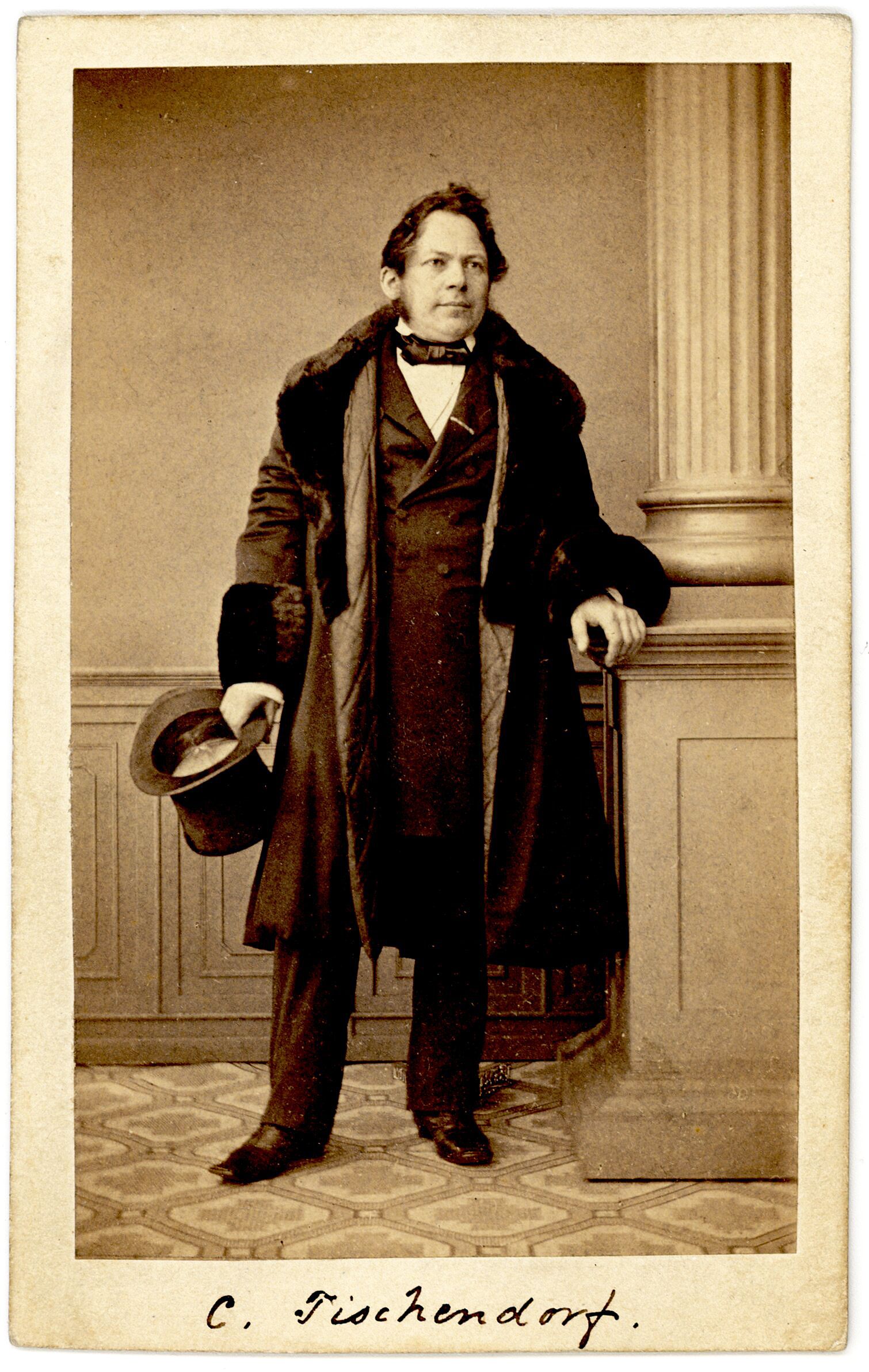
Two editors of the next generation built on that start. Samuel Prideaux Tregelles, an English scholar, published his Greek New Testament in parts from 1857 to 1872, with an appendix by Hort in 1879.11 Constantin von Tischendorf of Leipzig, the discoverer of Codex Sinaiticus at Saint Catherine's Monastery (told in lesson 02), issued eight editions of the Greek New Testament. The eighth, the editio octava critica maior, appeared at Leipzig in parts dated by Scrivener 1865 to 1872, and its apparatus of variant readings is still consulted.11 Tischendorf's later editions leaned heavily on Sinaiticus. John William Burgon, the chief opponent of the new texts, complained that in the eighth edition Tischendorf "remodelled his 7th edition (1856-9) in 3505 places."12

Westcott and Hort (1881)
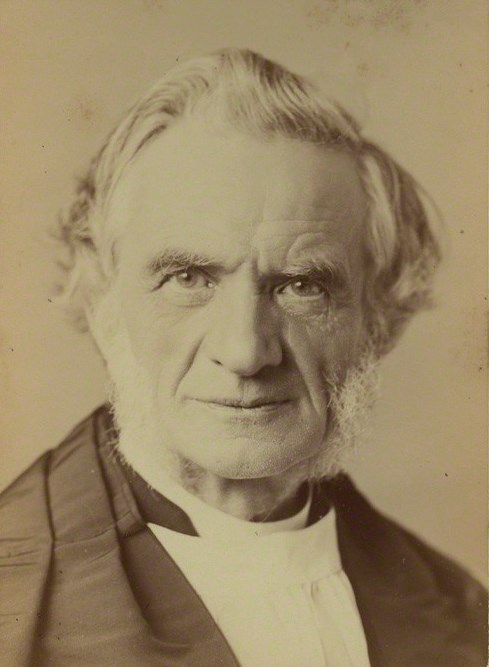
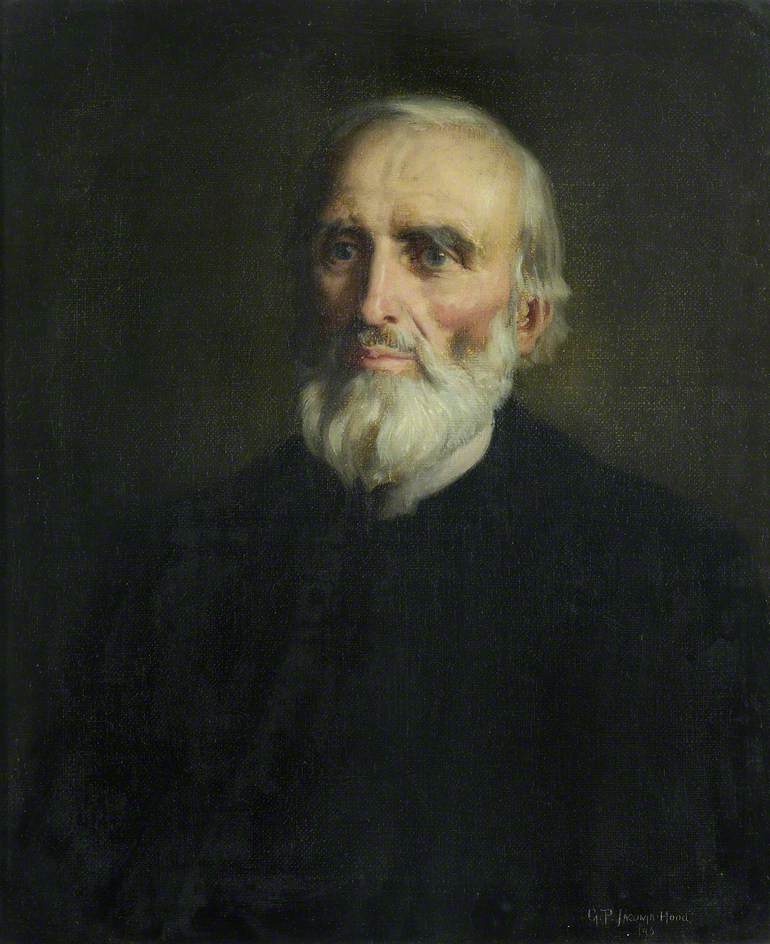
Brooke Foss Westcott and Fenton John Anthony Hort, both Cambridge clergymen and scholars, worked on a new Greek text for many years and published it in 1881, the year the English Revised Version New Testament appeared (lesson 09). Both men also sat on the company that revised the English New Testament. The second volume, an Introduction written by Hort on behalf of both, set out a method and a history of the text that shaped textual criticism for the next century.
Hort's method began with a rule printed in capitals: "KNOWLEDGE OF DOCUMENTS SHOULD PRECEDE FINAL JUDGEMENT UPON READINGS."2 That is, before deciding any single variant, the editor should learn the general character of each manuscript and how the manuscripts are related, much as a family tree is drawn. Hort then grouped the witnesses into text-types he named Syrian, Western, Alexandrian and Neutral.
- The Syrian text (today usually called Byzantine) was, in Hort's account, the result of a deliberate revision made in the region of Antioch in the fourth century. His table of contents describes it as "due to a 'recension' in the strict sense, being formed out of its three chief predecessors, used simultaneously, with an elaborateness which implies deliberate criticism." Because it was, in his judgment, a later combination, he set its distinctive readings aside: "Distinctively Syrian and Post-Syrian readings being set aside, there remain only such readings as the nature of their documentary attestations marks out, often with certainty, often with high probability, as older than 250."2
- The Western text, represented above all by Codex Bezae (D) and the Old Latin, he judged early but given to paraphrase and addition. He made one famous exception: at a handful of places, mostly in Luke 22 to 24, he preferred the shorter Western reading, calling these "Western non-interpolations."2
- The Alexandrian text he judged early but marked by small scholarly polishing.
- The Neutral text, best preserved in Codex Vaticanus (B) and next in Codex Sinaiticus (aleph), he judged to be the purest surviving line, with neither the Western additions nor the Alexandrian polish.
On the question of deliberate corruption, Hort was emphatic. His table of contents announces the "Total absence of deliberate dogmatic falsification as an originating cause of any extant variants, notwithstanding the liability of some forms of bold paraphrase to be so interpreted."2 Defenders of the TR have rejected that judgment from the day it was printed, as the next section shows.


From Nestle (1898) to Nestle-Aland 28 (2012)
In 1898 Eberhard Nestle published a handy Novum Testamentum Graece with the Wurttemberg Bible Society in Stuttgart. The German Bible Society, its present publisher, describes his method as "a simple but ingenious principle": he compared the leading critical editions of the nineteenth century and printed the reading of the majority of them, noting the others.13 The three editions he compared were, in the account of Bruce Metzger and Bart Ehrman, Tischendorf's, Westcott and Hort's, and Richard Weymouth's, with Bernhard Weiss's edition replacing Weymouth's from 1901; the German Bible Society's own history of the edition names the same three.1314 The German Bible Society credits the edition with helping to displace the Textus Receptus in churches and schools.13
Eberhard's son Erwin Nestle carried the work on and added a fuller apparatus; Kurt Aland became co-editor in 1952 and began checking the apparatus against the manuscripts themselves.13 The 26th edition (1979) brought a thorough revision of the text, drawing on papyri discovered in the twentieth century, and from then on, the Society says, "the principal text of the former edition was now identical to that of the latter one," meaning the United Bible Societies' Greek New Testament.13 The 28th edition appeared in 2012. Its editors had, in the Society's words, two tasks: "the critical apparatus was thoroughly revised to make it clearer and easier to use," and the findings of the Editio Critica Maior for the Catholic Letters had to be brought into the text.13
The UBS Greek New Testament (1966 to 2014)
The United Bible Societies' Greek New Testament was first issued in 1966 for Bible translators. Its preface, as reprinted in the fifth revised edition of 2014, recalls that it was made to "meet the growing need for an edition of the Greek New Testament specially adapted to the requirements of Bible translators throughout the world." Its editors for the fifth edition were Barbara and Kurt Aland, Johannes Karavidopoulos, Carlo M. Martini and Bruce M. Metzger, with the work prepared at the INTF in Munster under Holger Strutwolf.15 Its apparatus lists fewer variants than Nestle-Aland but rates each of its decisions with a letter from A (the text is certain) to D (the committee had great difficulty deciding). The fifth edition's text, apart from punctuation and a few spellings, is the same as Nestle-Aland 28; it differs from the fourth edition at 33 places, and its text of the Catholic Letters "was taken over from the Editio Critica Maior."15 Bruce Metzger's companion volume, A Textual Commentary on the Greek New Testament (2nd edition, 1994), explains the committee's reasoning at each rated place, and is the most cited single book in this debate on the critical-text side.16
The Editio Critica Maior
The newest stage is the Editio Critica Maior (ECM), a very large edition prepared by the INTF with international partners. The German Bible Society describes its goal as "to reconstruct the earliest attainable form of the New Testament by considering the entire manuscript tradition, early versions, and patristic citations," and reports: "So far, volumes for the Catholic Letters (1997), Acts (2015), Mark (2021), and Revelation (2024) have been published."17 (The printed Acts volume itself carries the date 2017.)49 The ECM differs from earlier critical editions in two ways that matter to this debate. It collates many more manuscripts in full, including many Byzantine ones. And it uses a computer-assisted method, the Coherence-Based Genealogical Method, which the INTF says had to be developed because the manuscripts are "contaminated": scribes "have always incorporated readings which were not part of their master copy, but which they knew from other manuscripts."1
The INTF is also open about how it chooses which manuscripts to collate fully. Its description says that a test-passage sampling program "discarded the homogeneous texts that form the bulk of the tradition of the High Middle Ages."1 Majority Text advocates point to sentences like this as proof that the critical method sets aside most of the evidence by design; critical-text scholars answer that those manuscripts were set aside only after being sampled and found to repeat one another, so that counting them again would count the same witness many times. The disagreement is the subject of the next section.
Burgon and the defense of the Traditional Text
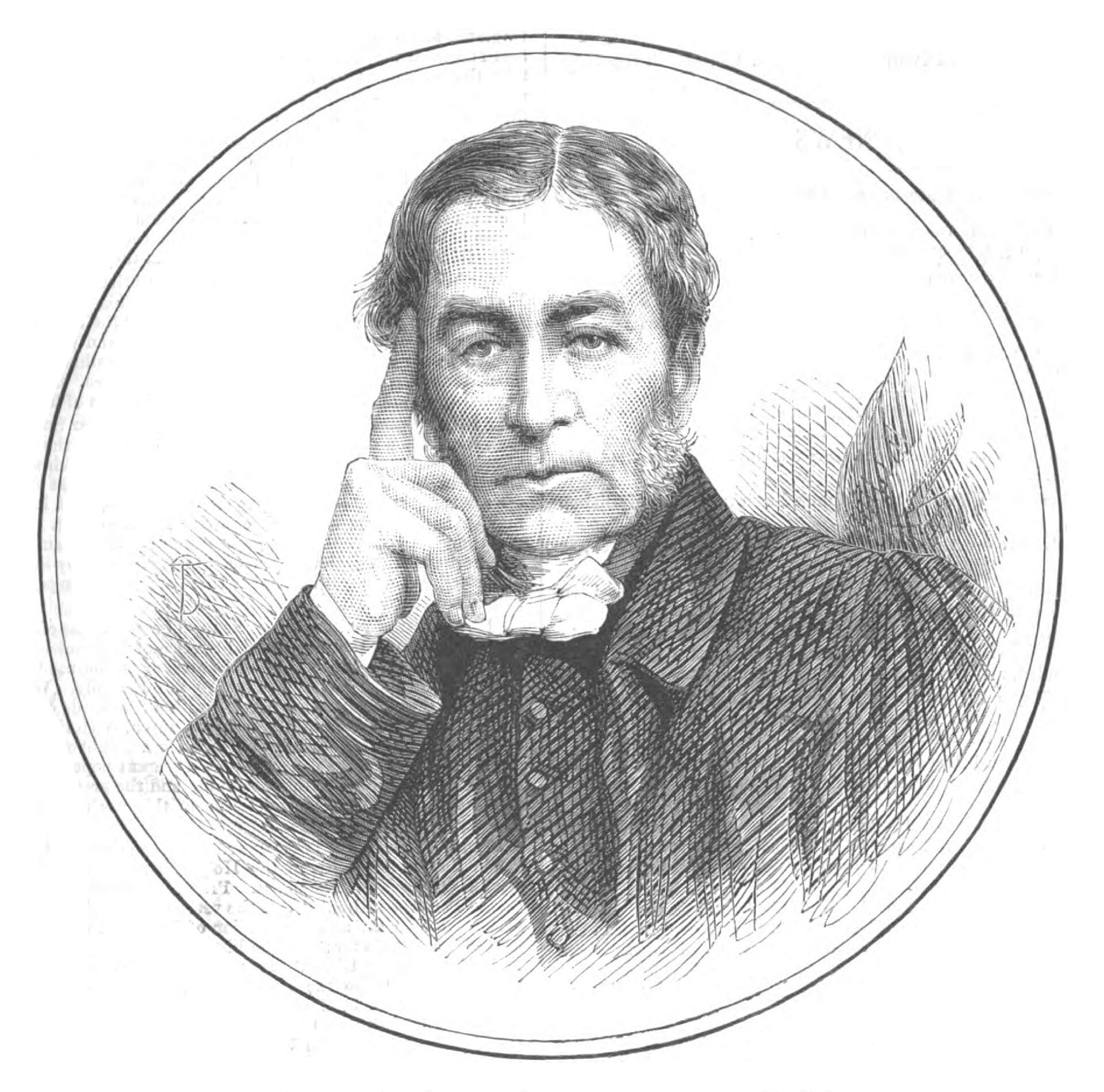
The most forceful answer to Westcott and Hort came from John William Burgon (1813 to 1888), Dean of Chichester from 1876. Burgon was a learned collator of manuscripts and of patristic quotations, and he had already published The Last Twelve Verses of the Gospel According to S. Mark (1871), a full-length defense of Mark 16:9 to 20. When the Revised New Testament and the Westcott and Hort text appeared in 1881, he attacked both in three long articles in the Quarterly Review, collected in 1883 as The Revision Revised.12
Burgon's case had three parts. First, he defended the text found in the great mass of later manuscripts, which he called the "Traditional text," and argued that its age was proved by the early versions and Fathers. Of the printed form of it, he wrote that Stephanus's edition of 1550 "exhibits with sufficient accuracy the Traditional text," which he called "confessedly at least 1530 years old."12 Second, he attacked the codices on which Hort relied. "We venture to assure him, without a particle of hesitation," he wrote of his reader, "that א B D are three of the most scandalously corrupt copies extant."12 (The letter א, aleph, is the siglum for Sinaiticus; B is Vaticanus; D is Bezae.) Where Sinaiticus and Vaticanus stand together against the rest, he argued, they should be treated "as little more than a single reproduction of one and the same scandalously corrupt and (comparatively) late Copy."12 Third, he argued that the very early period was the period of worst corruption, when heretics such as Marcion and careless or bold copyists altered the text, so that early date was no guarantee of purity.
Burgon did not defend every reading of the TR. He was a critic of manuscripts, not of the King James translators alone, and he worked from the whole body of evidence as he saw it. Modern King James Only writers often cite him; the Dean Burgon Society in the United States bears his name. His own position is closer to the Majority Text than to a defense of every word of Erasmus. Scrivener, who prepared the TR edition still in print, also opposed much of the Westcott and Hort text, yet in his Plain Introduction he treated 1 John 5:7 to 8 as an example of a marginal note received into the text, and Acts 8:37 as an addition supplied by copyists.11

The modern defenders
Burgon's arguments were taken up in the twentieth century by several writers who differ among themselves. Edward F. Hills, quoted above, defended the TR on the ground of providential preservation. Wilbur N. Pickering, a missionary linguist, argued in The Identity of the New Testament Text (first published 1977) for the Majority Text and against Hort's genealogical method.18 Zane Hodges and Arthur Farstad edited the 1982 Majority Text. Maurice Robinson argues for "Byzantine priority." The Trinitarian Bible Society publishes and defends the TR, and the Dean Burgon Society and many independent Baptist churches hold that the King James Version should be used alone. These writers agree that Hort was wrong to set the Byzantine text aside. They do not agree on whether the TR or the Majority Text is the better text where the two differ.
The critical-text reply
Scholars who use the critical text have abandoned much of Hort's scheme without returning to the TR. Few today speak of a "Neutral" text, and many doubt that the Byzantine text came from a single fourth-century revision. Kurt and Barbara Aland, in The Text of the New Testament (1987, revised 1989), replaced Hort's text-types with categories of manuscripts based on test readings, and the ECM's Coherence-Based Genealogical Method replaced Hort's family trees of manuscripts with a computer comparison of the texts they carry.19 What they keep from Hort is his preference for the early witnesses and his habit of asking, at each variant, which reading best explains the rise of the others.
On the Byzantine manuscripts, the critical-text reply is that the majority of copies is a majority of late copies. Myths and Mistakes in New Testament Textual Criticism (2019), edited by Elijah Hixson and Peter J. Gurry and written by evangelical scholars for general readers, argues that the large number of Greek manuscripts reflects the long life of the Byzantine church, where Greek remained the language of worship, and that the earliest centuries are represented by comparatively few witnesses on every side.20 On that view, counting manuscripts tells a reader which text the medieval Greek church copied, and the question of what the apostles wrote has to be settled by weighing the earlier evidence. Majority Text advocates answer that the earliest manuscripts come almost entirely from the dry climate of Egypt, so that their survival reflects geography, and that the Byzantine copies descend from ancestors as early as any papyrus.
How textual critics decide: the method and its critics
External and internal evidence
Every modern critical editor weighs two kinds of evidence. External evidence concerns the witnesses: how old they are, how good their texts are elsewhere, how many independent lines of transmission support a reading, and how widely the reading is spread across regions (Greek manuscripts, early translations, and quotations by early writers from different parts of the church). Internal evidence concerns the readings themselves, and has two branches. Transcriptional probability asks what a scribe was likely to do: copy a word twice, skip a line when two lines end alike, smooth a hard phrase, harmonize a Gospel with its parallel. Intrinsic probability asks what the author was likely to write, judged by his vocabulary, style and thought.
Hort put the rule about the order of these steps in capitals, as quoted above: knowledge of documents first. He also warned that in a single case "the evidence on the one side is often too slight and questionable to be implicitly trusted by any one who wishes to ascertain his author's true text, and not merely to follow a generally sound rule."2 Scrivener, who opposed Hort's results, listed the same kinds of rules in his own handbook, which shows that the methods themselves were shared ground in the nineteenth century; the dispute was about how much weight to give to which witnesses.
The harder reading
The first of the internal rules Scrivener lists is a Latin maxim: "PROCLIVI SCRIPTIONI PRAESTAT ARDUA: the more difficult the reading the more likely it is to be genuine." His explanation: "It would seem more probable that the copyist tried to explain an obscure passage, or to relieve a hard construction, than to make that perplexed which before was easy."11 The rule has an obvious limit. A copyist could also produce a "hard" reading by mistake, so a reading can be difficult because it is wrong. Every handbook adds that the harder reading is preferred only when it still makes sense.
The shorter reading
The second famous rule comes from Johann Jakob Griesbach, whose edition of the 1770s to 1800s first set out formal canons. Scrivener quotes it in Latin: "Brevior lectio, nisi testium vetustorum et gravium auctoritate penitus destituatur, praeferenda est verbosiori. Librarii enim multò proniores ad addendum fuerunt, quam ad omittendum." In English: the shorter reading, unless it wholly lacks the support of ancient and weighty witnesses, is to be preferred to the wordier one, for scribes were much more inclined to add than to omit. Scrivener's comment shows the debate already under way in 1894: "This canon bears an influential part in the system of Griesbach and his successors, and by the aid of Cod. B and a few others, has brought great changes into the text as approved by some critics."11
Modern study of the papyri has pressed on the same point. James R. Royse's Scribal Habits in Early Greek New Testament Papyri (2008) studied the singular readings of the earliest papyri and concluded that those scribes left words out more often than they added them.21 If that is so, a shorter reading is not automatically the earlier one, and many textual critics now state the canon with more caution than Griesbach did. Defenders of the TR and of the Majority Text go further: they argue that many critical-text "omissions" are accidental losses in a few early copies, and that the longer readings preserved in the majority should be kept.
"The oldest manuscripts are the best manuscripts"
Modern Bible footnotes often say that "the earliest manuscripts" or "the most reliable early manuscripts" lack a passage. The phrase carries a judgment. Age matters because each copying is a chance for error, but a late manuscript can be copied from an early, good exemplar, and an early one can be careless. The critical-text editors do not claim that age settles every reading. Their claim is narrower: that the early Egyptian witnesses, especially Vaticanus, show by their readings across the whole New Testament that they were copied with unusual care, and so deserve weight. The Claims checked section below rates the popular form of the slogan.
The verses in question
The passages below are the ones most often named in sermons, books and websites about the textual debate. For each, the King James Version text is given first (public domain; the standard Oxford text of 1769 as printed today), then the evidence on each side with the manuscripts named by their standard sigla, then the early Christian writers, then how five English versions print it. The manuscript lists follow the textual notes of the NET Bible (Biblical Studies Press), which print the evidence from the Nestle-Aland apparatus in full, checked where possible against the primary sources linked in the notes.22 A key to the sigla: א (aleph) is Codex Sinaiticus (British Library, mid fourth century); A is Codex Alexandrinus (British Library, fifth century); B is Codex Vaticanus (Vatican Library, fourth century); C is Codex Ephraemi Rescriptus (Paris, fifth century); D is Codex Bezae (Cambridge University Library, about 400) in the Gospels and Acts; W is the Freer Gospels (Washington); P with a number is a papyrus; plain numbers are minuscules; "Byz" means the Byzantine majority of manuscripts. An asterisk (*) marks the first hand of a manuscript, and a raised c, 1 or 2 marks a later corrector.
Mark 16:9 to 20: the last twelve verses of Mark
The text (KJV):
Now when Jesus was risen early the first day of the week, he appeared first to Mary Magdalene, out of whom he had cast seven devils. And she went and told them that had been with him, as they mourned and wept. And they, when they had heard that he was alive, and had been seen of her, believed not. After that he appeared in another form unto two of them, as they walked, and went into the country. And they went and told it unto the residue: neither believed they them. Afterward he appeared unto the eleven as they sat at meat, and upbraided them with their unbelief and hardness of heart, because they believed not them which had seen him after he was risen. And he said unto them, Go ye into all the world, and preach the gospel to every creature. He that believeth and is baptized shall be saved; but he that believeth not shall be damned. And these signs shall follow them that believe; In my name shall they cast out devils; they shall speak with new tongues; They shall take up serpents; and if they drink any deadly thing, it shall not hurt them; they shall lay hands on the sick, and they shall recover. So then after the Lord had spoken unto them, he was received up into heaven, and sat on the right hand of God. And they went forth, and preached every where, the Lord working with them, and confirming the word with signs following. Amen. (Mark 16:9 to 20, KJV)22
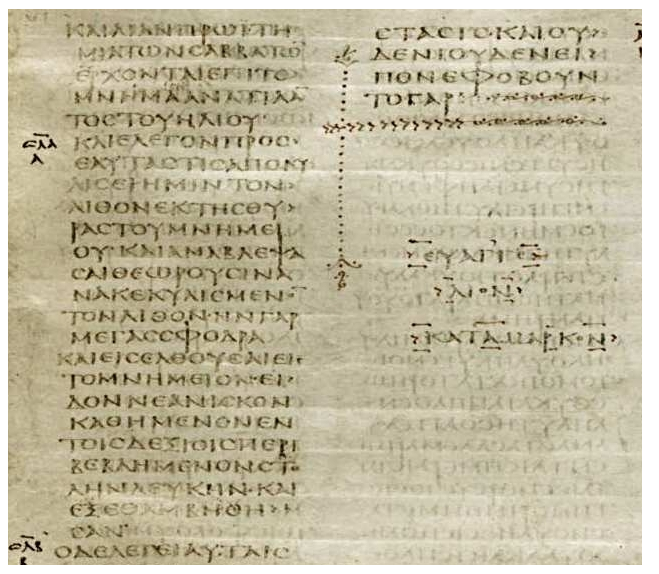
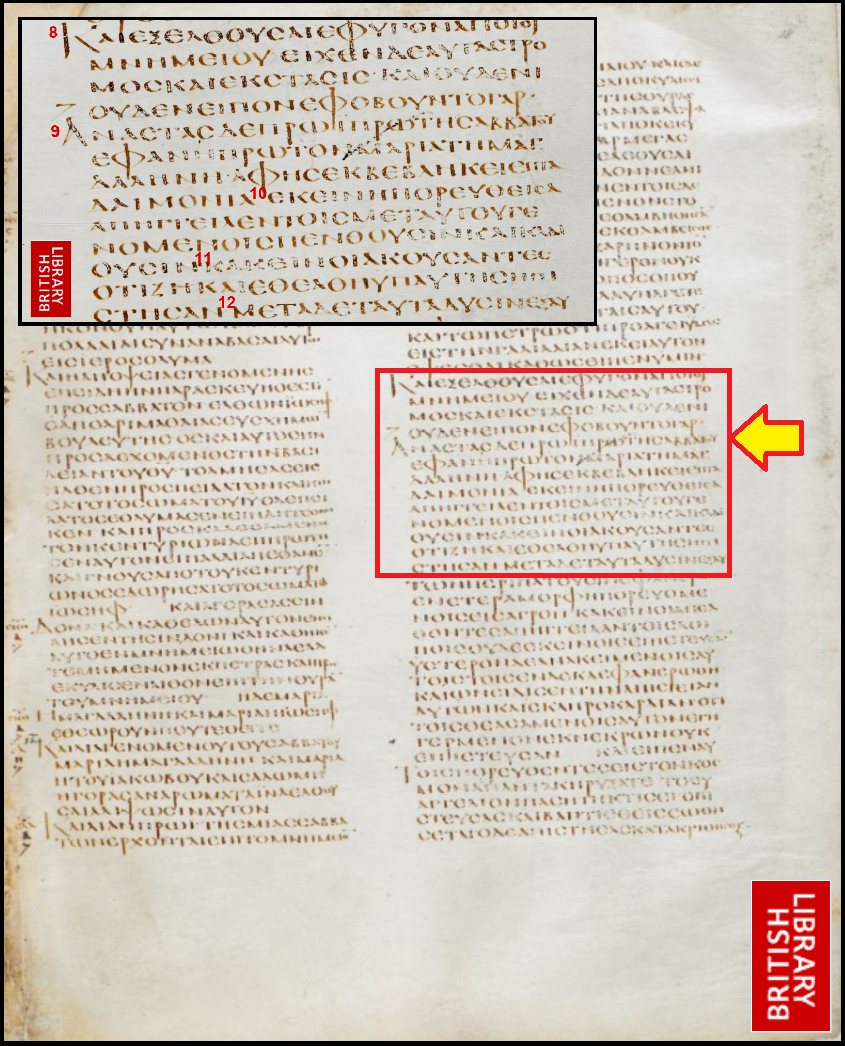
Against (the Gospel ends at 16:8): Codex Sinaiticus (א) and Codex Vaticanus (B), the two oldest complete manuscripts of Mark; minuscule 304; the Sinaitic Syriac; some Sahidic Coptic and Armenian manuscripts. The Old Latin Codex Bobiensis (k) has only the "shorter ending" (a single sentence about the women reporting to Peter) and no verses 9 to 20. Eusebius of Caesarea, in the early fourth century, reported that the accurate copies known to him ended at verse 8.23
For: Codex Alexandrinus (A), Codex Ephraemi (C), Codex Bezae (D), the Freer Gospels (W), Θ, family 13, 33, the great majority of Greek manuscripts (Byz), most Latin witnesses, the Curetonian, Peshitta and Harklean Syriac, and the Bohairic Coptic. Several manuscripts (L, Ψ, 083, 099, 0112, 579) have both the shorter ending and verses 9 to 20, and W adds a further passage after verse 14.23
Early writers: Irenaeus of Lyons, writing about 180, quotes verse 19 as Mark's: "Also, towards the conclusion of his Gospel, Mark says: So then, after the Lord Jesus had spoken to them, He was received up into heaven, and sits on the right hand of God" (Against Heresies 3.10.5 in the Ante-Nicene Fathers numbering).24 Justin Martyr, about 155, writes that the apostles, "going forth from Jerusalem, preached everywhere," wording that some scholars take as an echo of verse 20 and others as a general statement (First Apology 45).25 The Gospel harmony of Justin's pupil Tatian, the Diatessaron (about 170), includes verses from Mark 16:16 to 18 in the Arabic version translated in the Ante-Nicene Fathers, though that version is a much later translation and may have been brought into line with later Gospel texts.26
The arguments. The critical-text case rests on the absence of the verses from א and B, on the testimony of Eusebius, on the existence of several different endings (which suggests that copyists who had a Gospel ending at verse 8 supplied endings of their own), and on the vocabulary and style of verses 9 to 20, which the NET Bible note judges unlike Mark's.23 The case for the verses rests on their presence in nearly every manuscript and every early version but one or two, on Irenaeus's quotation (older than any surviving manuscript of Mark), and on the strangeness of a Gospel that closes with "for they were afraid." Burgon added a physical argument about Vaticanus. Its scribe, he observed, normally began each new book at the top of the next column, yet after Mark 16:8 "He has left in this place one column entirely vacant. It is the only vacant column in the whole manuscript," a space large enough for the twelve verses. Burgon concluded that the scribe's exemplar "must have infallibly contained" them.27 How much weight that blank space bears is still argued: it may show that the scribe knew of a longer ending and left room for it, or only that he chose to leave the rest of the page empty.
How the versions print it: The KJV prints the verses with no note. The NKJV prints them with a footnote: "Vv. 9-20 are bracketed in NU as not in the original text. They are lacking in Codex Sinaiticus and Codex Vaticanus, although nearly all other mss. of Mark contain them." The NASB 1995 prints them in brackets with the note "Later mss add vv 9-20." The NIV (2011) prints them after a bracketed line in the text: "The earliest manuscripts and some other ancient witnesses do not have verses 9-20." The ESV prints them in double brackets after the line "Some of the earliest manuscripts do not include 16:9-20."28 All five, then, print the passage. None of the major versions removes it from the page.


John 7:53 to 8:11: the woman taken in adultery
The text (KJV):
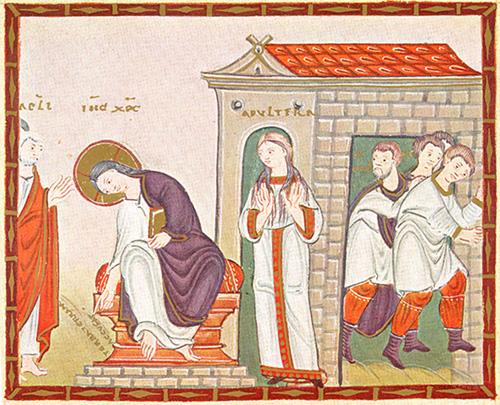
And every man went unto his own house. Jesus went unto the mount of Olives. And early in the morning he came again into the temple, and all the people came unto him; and he sat down, and taught them. And the scribes and Pharisees brought unto him a woman taken in adultery; and when they had set her in the midst, They say unto him, Master, this woman was taken in adultery, in the very act. Now Moses in the law commanded us, that such should be stoned: but what sayest thou? This they said, tempting him, that they might have to accuse him. But Jesus stooped down, and with his finger wrote on the ground, as though he heard them not. So when they continued asking him, he lifted up himself, and said unto them, He that is without sin among you, let him first cast a stone at her. And again he stooped down, and wrote on the ground. And they which heard it, being convicted by their own conscience, went out one by one, beginning at the eldest, even unto the last: and Jesus was left alone, and the woman standing in the midst. When Jesus had lifted up himself, and saw none but the woman, he said unto her, Woman, where are those thine accusers? hath no man condemned thee? She said, No man, Lord. And Jesus said unto her, Neither do I condemn thee: go, and sin no more. (John 7:53 to 8:11, KJV)22
Against (the passage absent): the papyri P66 and P75 (both commonly dated about 200; Bodmer collection, P75 now in the Vatican Library), Sinaiticus (א), Vaticanus (B), L, N, T, W, Δ, Θ, Ψ, 0141, 0211, 33, 565, 1241, 1424 (first hand) and 2768. Alexandrinus (A) and Ephraemi (C) are damaged here, but the NET note judges from the space on the missing leaves that they probably did not contain the passage.29
For: Codex Bezae (D, about 400), the majority of later Greek manuscripts (Byz) and the Latin tradition. Some manuscripts (E, S, Λ, and the margin of 1424) include it with marks such as asterisks or obeli that scribes used to flag doubtful text. Others place it elsewhere: after John 7:36 (minuscule 225), after John 21:25 (family 1), after Luke 21:38 (family 13), or after Luke 24:53 (a corrector of 1333).29 The NKJV footnote states that the passage is "present in over 900 mss. of John."30
Early writers: Eusebius reports that Papias, in the early second century, "relates another story of a woman, who was accused of many sins before the Lord, which is contained in the Gospel according to the Hebrews" (Church History 3.39), a story many scholars connect with this one, though Eusebius does not say it is the same.31 In the Latin West the passage was read and preached. Augustine expounds it at length in his 33rd Tractate on John, quoting "He that is without sin of you, says He, let him first cast a stone at her."32 Metzger's Textual Commentary reports that no Greek Church Father before the twelfth century comments on the passage, a silence he counts against it.16 That statement has itself been challenged: writings of the fourth-century Alexandrian teacher Didymus the Blind, recovered in the 1940s, discuss the story, though scholars disagree about whether Didymus knew it as part of John.50
The arguments. The critical-text case is the absence from the earliest Greek witnesses of every kind, the wandering placement, the scribal marks of doubt, and differences of vocabulary from the rest of John. Bruce Metzger called the evidence for its non-Johannine origin "overwhelming," as quoted in the NET note.29 The case for it is its presence in the majority of manuscripts and in the Latin church from at least the fourth century, its early attestation in some form through Papias, and a report by Augustine, in a treatise on adulterous marriages, that some readers removed it because they feared it would excuse adultery. Many scholars on the critical side, while doubting that John wrote it, consider the story itself an early and probably true account of Jesus.
How the versions print it: the KJV in the text without note; the NKJV in the text with the footnote "NU brackets 7:53 through 8:11 as not in the original text. They are present in over 900 mss. of John"; the NASB 1995 in double brackets with "Later mss add the story of the adulterous woman, numbering it as John 7:53-8:11"; the NIV (2011) in the text after the bracketed line "The earliest manuscripts and many other ancient witnesses do not have John 7:53-8:11"; the ESV in double brackets after "The earliest manuscripts do not include 7:53-8:11."30

1 John 5:7 to 8: the Comma Johanneum
The text (KJV), with the disputed words in italics:
For there are three that bear record in heaven, the Father, the Word, and the Holy Ghost: and these three are one. And there are three that bear witness in earth, the spirit, and the water, and the blood: and these three agree in one. (1 John 5:7 to 8, KJV)22
The words in italics are called the Comma Johanneum ("the Johannine clause"). Without them the passage reads: "For there are three that bear record, the spirit, and the water, and the blood: and these three agree in one."
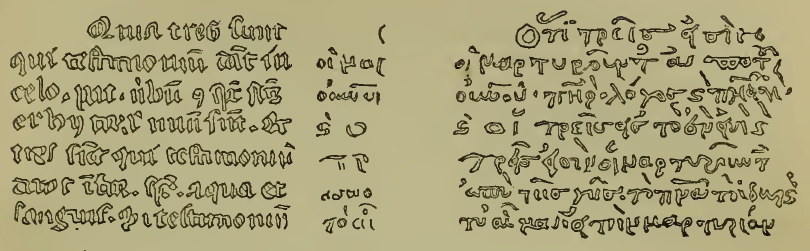
Greek manuscripts that contain it: very few, and all late. The Center for the Study of New Testament Manuscripts, directed by Daniel B. Wallace, reported in a post of July 2, 2010 that "To date, only eight manuscripts are known to have the comma Johanneum in them": four with the words in the text, minuscules 61 (produced about 1520), 629 (fourteenth century), 918 (sixteenth century) and 2318 (eighteenth century), and four with the words added in the margin by a later hand, minuscules 88 (twelfth century, with the words added in the sixteenth), 221 (tenth century), 429 (fourteenth century) and 636 (fifteenth century). The same post announced a ninth, the margin of minuscule 177 at Munich, an eleventh-century manuscript with the note added in a hand of the seventeenth or eighteenth century.33 The NET Bible note also lists minuscule 2473, dated 1634.34 The text of 629, the oldest manuscript with the words in its main text, differs in wording from the others.34
Greek manuscripts that lack it: all the rest, including every Greek manuscript of 1 John written before the fourteenth century except for marginal additions, and the Byzantine majority. The New King James footnote states that "NU, M omit the words," and the NIV footnote says the words are "not found in any Greek manuscript before the fourteenth century."10 The NET note states that no Greek witness of any kind, manuscript or church writer, contains the words before a Greek translation of the acts of the Fourth Lateran Council of 1215.34
The Latin evidence: The words first appear in Latin. Scrivener records that the works of Priscillian, a Spanish teacher executed as a heretic in 385, had then been "quite lately discovered and edited by Dr. G. Schepss" in the Vienna Corpus; the Comma appears in Priscillian's Liber Apologeticus, the earliest clear witness to it.1116 It then entered manuscripts of the Old Latin and of the Latin Vulgate (translated about 382 to 405 at the request of Pope Damasus I), first as a gloss in some copies and later in the text of most medieval ones. Scrivener himself notes Latin manuscripts where the "three heavenly witnesses" appear in a different position or are "added by a contemporary corrector," signs of a text that was still moving.11 Cyprian of Carthage (died 258) wrote: "The Lord says, I and the Father are one; and again it is written of the Father, and of the Son, and of the Holy Spirit, And these three are one" (On the Unity of the Church 6).35 Defenders of the Comma read this as a quotation of verse 7; others hold that Cyprian was reading verse 8 ("these three agree in one") as a figure of the Trinity, as later Latin writers did.
How it entered the printed text: Erasmus left the words out of his first two editions (1516, 1519) and put them in his third (1522), after the appearance of minuscule 61. Lesson 05 examines that story and the claim that he "promised" to include the words if a single Greek manuscript were found. Through Stephanus and Beza the words passed into the TR and the King James Version.
The arguments. The critical-text case is overwhelming on external evidence and is shared by the Majority Text editors: the words are absent from the Greek tradition until the late Middle Ages. The case for them rests on the Latin tradition, on Cyprian, and on a grammatical argument that verse 8 reads awkwardly without verse 7. Edward F. Hills, the most careful modern defender, did not claim certainty. He wrote that the Comma is "a reading which, on believing principles, must be regarded as possibly genuine," and Theodore Letis's foreword notes that Hills did not "advocate with absolute certainty the genuineness of the Johannine Comma."4 The Trinitarian Bible Society continues to print it.
How the versions print it: the KJV in the text; the NKJV in the text with the note "NU, M omit the words from in heaven (v. 7) through on earth (v. 8). Only 4 or 5 very late mss. contain these words in Greek"; the NASB 1995 omits them with the note "A few late mss add...in heaven, the Father, the Word, and the Holy Spirit, and these three are one"; the NIV (2011) reads "For there are three that testify: the Spirit, the water and the blood; and the three are in agreement" (1 John 5:7 to 8, NIV 2011, copyright Biblica, Inc.) and gives the longer words in a footnote; the ESV omits them.10

Acts 8:37: the eunuch's confession
The text (KJV): "And Philip said, If thou believest with all thine heart, thou mayest. And he answered and said, I believe that Jesus Christ is the Son of God." (Acts 8:37, KJV)22
Against: the papyri P45 (third century, Chester Beatty) and P74, Sinaiticus (א), Alexandrinus (A), Vaticanus (B), Ephraemi (C), 33, 614, many Latin Vulgate manuscripts, the Peshitta and Harklean Syriac, and the Coptic versions, according to the NET note, and also the Byzantine majority, as the NKJV footnote "NU, M omit v. 37" shows.369
For: a small number of Greek manuscripts, beginning with the sixth-century Greek and Latin Codex Laudianus (E), and including 36, 323, 453, 945, 1739 and 1891, with differences in wording among them, together with much of the Old Latin tradition.36 The NKJV adds: "It is found in Western texts, including the Latin tradition."9
Early writers: Irenaeus, about 180, retells the story and says of the eunuch that "immediately requesting to be baptized, he said, I believe Jesus Christ to be the Son of God" (Against Heresies 3.12.8). This is older than any surviving manuscript of Acts that contains or omits the verse.37
The arguments. The NET note calls the verse "clearly not a part of the original text of Acts" and suggests it shows how early communities joined a confession of faith to baptism.36 Scrivener, from the other side of the Hort debate, likewise treated it as a circumstance supplied by copyists.11 Its defenders point to Irenaeus and argue that the verse could have dropped out because the practice of requiring a confession before baptism changed. Here the TR stands with the Latin tradition against both the critical text and the Byzantine majority.
How the versions print it: the KJV and NKJV in the text (the NKJV with the footnote quoted above); the NASB 1995 in brackets with "Early mss do not contain this v"; the NIV (2011) with the verse number in brackets and the words in a footnote, "Some manuscripts include here..."; the ESV in a footnote attached to verse 36, "Some manuscripts add all or most of verse 37."9
Matthew 6:13: the doxology of the Lord's Prayer
The text (KJV): "And lead us not into temptation, but deliver us from evil: For thine is the kingdom, and the power, and the glory, for ever. Amen." (Matthew 6:13, KJV; disputed words in italics)22
Against (the prayer ends at "evil"): Sinaiticus (א), Vaticanus (B), Bezae (D), Z, 0170, family 1, the Latin tradition, the Middle Egyptian Coptic, and Origen.38
For: L, W, Θ, 0233, family 13, 33, the Byzantine majority (Byz), the Syriac and Sahidic versions, in several slightly different forms.38
Early writers: The Didache, a church manual usually dated to the late first or early second century, gives the Lord's Prayer ending: "for Yours is the power and the glory forever. Thrice in the day thus pray" (Didache 8, trans. M. B. Riddle). Its doxology lacks "the kingdom."39
The arguments. The critical-text view, as the NET note puts it, is that the doxology was probably composed for worship, perhaps on the model of 1 Chronicles 29:11, and added to the Gospel text from liturgical use, and that "both external and internal evidence" favor the shorter reading.38 Its defenders point to the Didache as proof that a doxology was said with the prayer in the earliest period, to the majority of manuscripts, and to Jewish custom of ending prayers with praise.
How the versions print it: the KJV and NKJV in the text (the NKJV noting "NU omits the rest of v. 13"); the NASB 1995 in brackets with "This clause not found in early mss"; the NIV (2011) ends the prayer at "deliver us from the evil one" and gives the doxology in a footnote marked "some late manuscripts"; the ESV ends at "deliver us from evil" with the footnote "some manuscripts add For yours is the kingdom and the power and the glory, forever. Amen."40
Luke 2:14: "good will toward men"
The text (KJV): "Glory to God in the highest, and on earth peace, good will toward men." (Luke 2:14, KJV)22
The difference here is a single Greek letter. The TR and the Majority Text read eudokia (nominative: "good will"), giving three parallel phrases: glory to God, peace on earth, good will toward men. The critical text reads eudokias (genitive: "of good will" or "of [God's] favor"), giving two: glory to God, and peace on earth among people of his good pleasure.
For eudokias (critical text): Sinaiticus (first hand, א*), Alexandrinus (A), Vaticanus (first hand, B*), Bezae (D), the Freer Gospels (W), and the Sahidic Coptic. Most Old Latin witnesses also have the genitive sense, without the preposition.41
For eudokia (TR and Majority): later correctors of Sinaiticus and Vaticanus (א², B²), L, Θ, Ξ, Ψ, families 1 and 13, the Byzantine majority (Byz), the Syriac versions and the Bohairic Coptic.41
The arguments. The critical-text reading has the oldest Greek manuscripts of different types and the Latin; the NET note also judges it "more difficult than the nominative," since a scribe could easily have dropped the final s and produced the smoother three-part hymn.41 Defenders of the TR point to the correctors of the great codices, who changed the genitive to the nominative, and to the Syriac and Greek majority, and argue that the three-part form is the original song.
How the versions print it: the KJV and the NKJV ("And on earth peace, goodwill toward men!", with the note "NU toward men of goodwill") follow the TR. The NASB 1995 reads "And on earth peace among men with whom He is pleased" (Luke 2:14, NASB 1995, copyright The Lockman Foundation). The NIV (2011) reads "and on earth peace to those on whom his favor rests" (Luke 2:14, NIV 2011, copyright Biblica, Inc.). The ESV reads "and on earth peace among those with whom he is pleased!" (Luke 2:14, ESV, copyright Crossway).42
Luke 23:34: "Father, forgive them"
The text (KJV): "Then said Jesus, Father, forgive them; for they know not what they do. And they parted his raiment, and cast lots." (Luke 23:34, KJV)22
This passage shows that the debate does not always run along party lines. All three text positions print the prayer; the dispute is how confident to be.
Against (the prayer absent): the papyrus P75 (about 200), the first corrector of Sinaiticus (א¹), Vaticanus (B), Bezae as first written (D*), the Freer Gospels (W), Θ, 070, 579, 1241, the Sinaitic Syriac and the Sahidic Coptic.43
For: Sinaiticus as first written (א*) and its second corrector (א²), Alexandrinus (A), Ephraemi (C), a corrector of Bezae (D²), L, Ψ, 0250, families 1 and 13, 33, the Byzantine majority (Byz), the Latin and most Syriac versions.43 The history of Sinaiticus at this verse is a small drama of its own: its first scribe wrote the prayer, a corrector marked it for deletion, and a later corrector restored it.
The arguments. The NET note calls the decision "difficult." Early and varied witnesses omit the words, and a scribe might have added them on the model of Stephen's prayer in Acts 7:60. Yet the saying fits Luke's repeated theme of forgiving enemies.43 Some scholars have also suggested that a scribe might have removed it because the destruction of Jerusalem seemed to show that the prayer had gone unanswered; Metzger's Textual Commentary considered that explanation and judged that the omission "can scarcely be explained as a deliberate excision" of that kind.16 The NA28 prints the words in double brackets, its sign for words judged not part of the original text though very old. The NKJV footnote reports: "NU brackets the first sentence as a later addition."44
How the versions print it: all five print the prayer in the text. The NKJV, NASB 1995, NIV (2011) and ESV each add a footnote; the NIV's reads "Some early manuscripts do not have this sentence," and the NASB 1995's "Some early mss do not contain But Jesus was saying...doing."44
1 Timothy 3:16: "God was manifest in the flesh"
The text (KJV): "And without controversy great is the mystery of godliness: God was manifest in the flesh, justified in the Spirit, seen of angels, preached unto the Gentiles, believed on in the world, received up into glory." (1 Timothy 3:16, KJV)22
The dispute is over the first word of the hymn. In the capital letters of the early codices, "God" (theos) was written as a sacred abbreviation, ΘΣ with a line above it, and "who" (hos) was written ΟΣ. The two differ by a short stroke inside the first letter and the line above.
For hos ("who," or "He who"): Sinaiticus as first written (א*), Alexandrinus as first written (A*, a disputed reading, discussed below), Ephraemi as first written (C*), the Greek and Latin codices F and G, 33, 365, and the Greek writers Didymus and Epiphanius.45
For theos ("God"): later correctors of Sinaiticus, Alexandrinus and Ephraemi (אc, Ac, C²), a corrector of the Greek and Latin Codex Claromontanus (D²), Ψ, 88, 1739, 1881 and the Byzantine majority (Byz).45
For ho ("which"): Claromontanus as first written (D*) and virtually the whole Latin tradition, which reads quod, agreeing in gender with "mystery."45
The arguments. The NET note judges hos original and theos a later change, arising after the second century, that then influenced other copies, including manuscripts already written such as א, A, C and D (through their correctors), and it calls the insistence that theos must be original "special pleading."45 Burgon devoted a long dissertation in The Revision Revised to the opposite view. He argued that the reading of Codex A had been misjudged, that the Fathers supported theos, and that the cursives were nearly unanimous: "out of two hundred and fifty-four copies of S. Paul's Epistles no less than two hundred and fifty-two are discovered to have preserved that expression."12 The first hand of Alexandrinus is the hardest point to settle, because the stroke inside the letter is faint and later ink has been added; scholars who have examined it in different centuries have reported different things. Both readings speak of Christ: the critical reading makes him the subject of the hymn ("He who was manifested in the flesh"), and the TR names him as God. Whether the critical reading weakens the doctrine of Christ's deity is one of the questions argued in lesson 13.
How the versions print it: the KJV and the NKJV ("God was manifested in the flesh," with the note "NU Who") follow the TR. The NASB 1995 reads "He who was revealed in the flesh" (1 Timothy 3:16, NASB 1995, copyright The Lockman Foundation). The NIV (2011) reads "He appeared in the flesh" (1 Timothy 3:16, NIV 2011, copyright Biblica, Inc.). The ESV reads "He was manifested in the flesh," with the footnote "Greek Who; some manuscripts God; others Which" (1 Timothy 3:16, ESV, copyright Crossway).46
What the passages show taken together
Set side by side, the eight passages show several patterns that hold across the debate.
First, the passages are not all of one kind. Two are long paragraphs (Mark 16:9 to 20 and John 7:53 to 8:11) with substantial support in the Greek manuscript tradition and in early writers, which every major English version still prints on the page. Two are short additions (the Comma and Acts 8:37) whose support is chiefly Latin, which the Majority Text editors themselves leave out. Three (Matthew 6:13, Luke 2:14 and 1 Timothy 3:16) are disputes of a word, a phrase or a letter, where the Byzantine majority and the oldest codices disagree. One (Luke 23:34) is a saying that all three editions print, with differing degrees of confidence.
Second, Codex Sinaiticus and Codex Vaticanus stand behind most of the critical-text decisions, which is why Burgon attacked them by name. Where they disagree with each other, or where their own correctors changed them, the critical text does not follow them blindly. At Luke 23:34, for example, the first hand of Sinaiticus supports the traditional reading.
Third, the early church writers do not line up neatly with either side. Irenaeus, earlier than any surviving manuscript of the passages concerned, quotes Mark 16:19 and alludes to Acts 8:37, two readings the critical text sets aside or brackets. The Didache supports a doxology to the Lord's Prayer, but in a shorter form than the TR prints. The Comma first appears in a Latin writer of the late fourth century.
Fourth, the major modern versions are more cautious than their critics sometimes say, and less traditional than their defenders sometimes imply. All of them print Mark 16:9 to 20, John 7:53 to 8:11 and Luke 23:34 on the page, with notes. Several move Acts 8:37 and the Matthew 6:13 doxology to footnotes. All of them follow the critical reading at 1 Timothy 3:16 and Luke 2:14. Readers who want to see how this affects the case for or against a given version will find it argued in lesson 13 and, for the NKJV's way of showing all three texts at once, in lesson 11.
Those who want to read the Greek of these passages for themselves can begin with Introduction to Classical Greek, especially lesson 20 on lexicons and reading aids, and with the method set out in lesson 15.
What the record shows and what it does not
- Documented fact: Codex Sinaiticus and Codex Vaticanus end Mark at 16:8; Alexandrinus, Ephraemi, Bezae and the great majority of later manuscripts contain verses 9 to 20. Irenaeus quoted Mark 16:19 about 180.
- Documented fact: P66, P75, Sinaiticus and Vaticanus lack John 7:53 to 8:11; Bezae and the majority of later manuscripts contain it, and some manuscripts place it elsewhere or mark it as doubtful.
- Documented fact: the long form of 1 John 5:7 to 8 appears in only a handful of Greek manuscripts, the oldest of them from the fourteenth century in the main text, plus later marginal additions; it is absent from the Byzantine majority.
- Documented fact: the Textus Receptus and the Majority Text are different editions; they differ at 1 John 5:7 to 8 and Acts 8:37, among other places, as the NKJV footnotes show.
- A position's own claim: that God providentially preserved the New Testament through the church's use of the received text (the Trinitarian Bible Society, Hills), or through the majority of manuscripts (Majority Text editors).
- Scholarly reading: that the earliest attainable text is best reached by weighing early witnesses and internal probability (Hort, Metzger, the INTF); and the counter-reading that the Byzantine tradition preserves the original best (Burgon, Robinson).
- Open questions: whether Mark ended at 16:8 by design or lost its last leaf; whether Cyprian quoted 1 John 5:7 or read verse 8 as a figure of the Trinity; what the first hand of Alexandrinus wrote at 1 Timothy 3:16; how far scribes added and how far they omitted.
Claims checked
"Modern versions have removed verses from the Bible."
Rating: Partly supported. Several verses that stand in the KJV appear in modern versions only as footnotes: for example Acts 8:37 in the NIV (2011) and ESV, and the doxology of Matthew 6:13 in the same two versions. The word "removed" assumes that the TR is the standard from which others depart. The critical-text editors hold the opposite: that these words were added to the text by copyists, and that the footnotes keep them before the reader. The best-known passages are not removed: Mark 16:9 to 20 and John 7:53 to 8:11 are printed in all five versions checked, with notes or brackets.28309
"Mark 16:9 to 20 is missing from modern Bibles."
Rating: Refuted. The KJV, NKJV, NASB 1995, NIV (2011) and ESV all print the twelve verses. The modern versions mark them with brackets or a note that the earliest manuscripts lack them.28
"The oldest manuscripts are the best manuscripts."
Rating: Partly supported. Age matters, because every copying adds a chance of error, and the oldest witnesses are closer to the source in time. Yet age alone does not prove accuracy. A late manuscript may copy an early, careful exemplar, and early manuscripts can be careless; Burgon called Sinaiticus, Vaticanus and Bezae "three of the most scandalously corrupt copies extant."12 The critical-text editors themselves weigh internal evidence and the spread of readings, and they do not follow the oldest manuscript at every point, as the Luke 23:34 example shows.43
"There are over 5,800 Greek manuscripts, so the text is certain."
Rating: Partly supported. The INTF states that "more than 5500 manuscripts of the Greek New Testament are known" (its page is undated; lesson 02 gives dated counts).1 The number gives the New Testament far more evidence than any other ancient book, and Hort judged that substantial variation touched "hardly...more than a thousandth part of the entire text."2 But most of those manuscripts are late and many are fragments, and the count does not by itself decide any of the passages in this lesson, where large numbers stand on one side and the oldest witnesses on the other.
"The Majority Text and the Textus Receptus are the same text."
Rating: Refuted. The two are close but differ at many places. The NKJV footnotes record that the Majority Text omits Acts 8:37 and the long form of 1 John 5:7 to 8, both of which the TR prints.910
"Westcott and Hort were occultists."
Rating: Unsupported. The record behind this claim is a club at Cambridge in Hort's early years there. Hort's son and biographer records that Hort was a moving spirit in a club "called by its members the 'Ghostly Guild,'" whose object was "to collect and classify authenticated instances of what are now called 'psychical phenomena,'" and which scoffers called the "Bogie Club."47 Investigating ghost stories is not the practice of the occult, and no document cited by those who make the claim shows either man engaged in occult practice. More to the point for the debate, a Greek text stands or falls on its manuscript evidence, which can be checked independently of its editors' private lives.
"Westcott and Hort admitted no doctrinal motive in any variant."
Rating: Supported, as a description of what Hort wrote. Hort's Introduction lists the "Total absence of deliberate dogmatic falsification as an originating cause of any extant variants."2 Burgon disputed this, arguing that early heretics did alter the text.12 Whether Hort was right is a question about particular variants, debated ever since.
"Erasmus promised to add 1 John 5:7 if a single Greek manuscript had it."
Rating: Partly supported. Erasmus did leave the words out of his first two editions and put them into his third (1522) after minuscule 61, written about 1520, came to light; the NET note says he "apparently felt obliged" to include them.34 The story of a formal promise is examined in lesson 05, where the Dutch scholar Henk de Jonge's 1980 study of what Erasmus actually wrote is discussed.
"1 John 5:7 is found in the Greek manuscripts."
Rating: Partly supported. It is found in a few: four or five in the main text, the oldest from the fourteenth century, and several more in later margins, against hundreds that lack it.3334 The NKJV's own footnote says "Only 4 or 5 very late mss. contain these words in Greek."10
"The critical text removes the deity of Christ."
Rating: Unsupported as a general claim. At 1 Timothy 3:16 the critical text reads "who" where the TR reads "God."45 At John 1:18 the reverse happens: the TR reads "the only begotten Son," while the critical text reads "only begotten God," which the NASB 1995 renders "the only begotten God" (John 1:18, NASB 1995, copyright The Lockman Foundation) and the NKJV footnote marks "NU God."48 The deity of Christ is taught in passages that no edition disputes, such as John 1:1. Whether particular modern versions translate particular verses well is argued verse by verse in lesson 13.
Hard questions and answers
If God preserved his word, how can the copies disagree?
All three positions in this lesson affirm that God preserved the Scriptures; they disagree about how. The TR position (Hills, the Trinitarian Bible Society) holds that preservation is found in the text the Reformation church received and printed. The Majority Text position holds that it is found in the reading most copies share. The critical-text position, as held by many evangelical scholars, holds that it is found in the whole body of manuscripts, versions and quotations, from which the original wording can be recovered with high confidence nearly everywhere. Hort's estimate, that substantial variation touched about a thousandth part of the text, and Burgon's insistence on the antiquity of the Traditional Text are both claims about how well the text was kept.212
If the modern editors doubt Mark 16:9 to 20 and John 7:53 to 8:11, why do their translations print them?
Because the evidence for them is old and wide, because the passages have been read in the church for many centuries, and because readers expect them. The NA28 prints both in double brackets, the sign it uses for passages it judges to be very early additions; the NKJV footnotes report that NU brackets both.2830 The English versions follow with brackets or notes. The NET Bible, for example, explains that it prints Mark 16:9 to 20 in double brackets because of the passage's place in the history of the text.23 Defenders of the TR answer that a passage either belongs in Scripture or does not, and that brackets leave readers unsure.
Do Catholics and Orthodox take sides in this debate?
Not along Protestant lines. The Eastern Orthodox churches read the Byzantine Greek text in their liturgy, so their traditional text agrees broadly with the Majority Text, including Mark 16:9 to 20 and John 7:53 to 8:11. The Latin Catholic tradition long read the Latin Vulgate, which contains the Comma in most late medieval copies and supports the "which" reading at 1 Timothy 3:16. Modern Catholic scholarship, represented on the UBS committee by Cardinal Carlo Maria Martini, has worked with the critical text.15
Do the early papyri favor the critical text or the Byzantine text?
Both sides claim them. P66 and P75 lack John 7:53 to 8:11 and P75 lacks Luke 23:34a, readings that support the critical text.2943 Majority Text advocates point out that early papyri also contain individual readings once called "Byzantine" and thought to be late, which shows that some Byzantine readings are early. The papyri show that the text was already varied around 200, and neither side's case rests on them alone.
Does any of this change what Christians believe?
Each position answers differently. Defenders of the critical text say that no doctrine of the historic creeds rests on a disputed passage alone. Defenders of the TR say that the disputed passages carry real teaching (the Trinity in 1 John 5:7, the deity of Christ in 1 Timothy 3:16, the resurrection appearances and commission in Mark 16), and that removing them from the text, even into footnotes, weakens the reader's confidence in the whole. What can be said from the record is that each reader can check: the manuscript evidence for every passage in this lesson is published, and the major manuscripts can be viewed online through the Codex Sinaiticus Project, the Vatican Library and the INTF's New Testament Virtual Manuscript Room.
Learn more
- Burgon, The Revision Revised (Project Gutenberg): The classic case against the Westcott and Hort text, in full and free.
- Westcott and Hort, Introduction (Internet Archive): Hort's own statement of the method that shaped the critical text.
- Burgon, The Last Twelve Verses of Mark (Project Gutenberg): The fullest older defense of Mark 16:9 to 20.
- Codex Sinaiticus Project: View the end of Mark and the correctors' changes at Luke 23:34 in the manuscript itself.
- INTF New Testament Virtual Manuscript Room: Images and transcriptions of Greek manuscripts, including many named in this lesson.
- Trinitarian Bible Society, The Received Text: The TR position in its publisher's own words.
- CSNTM on the Comma Johanneum (2010): A short account of the Greek manuscripts that contain 1 John 5:7 to 8.
Still being checked (12 items)
These points could not be confirmed against a primary source when this lesson was written and fact checked in October 2026. The text above states each one as uncertain.
- The exact years of Hodges and Farstad's Majority Text (1982) and Pickering's Identity of the New Testament Text (1977) are from standard bibliographies; the books themselves were not opened for this lesson.
- Augustine's report that some readers removed John 7:53 to 8:11 (in his treatise on adulterous marriages) was not opened for this lesson.
- That Priscillian's Liber Apologeticus is the earliest clear witness to the Comma is the standard scholarly reading (Metzger and others); Scrivener's 1894 text confirms only Priscillian's date and the discovery of his works.
- The UBS5 preface was read through a summary of the publisher's sample pages (direct download was blocked); the short quotations ('meet the growing need...', 'was taken over from the Editio Critica Maior', 33 places) should be checked against a printed copy.
- What the first hand of Codex Alexandrinus reads at 1 Timothy 3:16 remains disputed; the lesson reports the NET note's A* reading and Burgon's objection without deciding it.
- Nestle-Aland 28's use of double brackets for Mark 16:9 to 20, John 7:53 to 8:11 and Luke 23:34a is stated from the NKJV footnotes ('bracketed in NU') and standard knowledge of the edition; the NA28 page itself was not opened.
- Codex Laudianus (E) for Acts 8:37 is dated to the sixth century from standard handbooks, not from a source opened for this lesson.
- The Codex Egberti caption (made for Egbert, Archbishop of Trier, 980 to 993) relies on the Commons date field and the codex's standard identification.
- The ESV's treatment of 1 John 5:7 to 8 is reported as 'omitted, no note shown' because Bible Gateway displayed no footnote; a printed ESV may differ.
- Metzger's Textual Commentary (1994), Metzger and Ehrman (2005), the Alands (1989), Royse (2008) and Hixson and Gurry (2019) were not opened; their positions are reported in outline. Metzger's statements on John 7:53 to 8:11 (no Greek Father before Euthymius Zigabenus) and on Luke 23:34 ("can scarcely be explained as a deliberate excision") were checked only through secondhand quotations (Roger Pearse's weblog; a B-Greek list post; Tyndale House, Cambridge).
- The German Bible Society's ECM page dates the Acts volume 2015; the printed volume and its reviews give 2017. The lesson quotes the page and notes the 2017 date.
- The Trinitarian Bible Society and German Bible Society pages were checked through fetches in Oct. 2026; the TBS page was read through a summarizing tool that returned the quoted phrases verbatim, not in raw HTML.
Notes
- Institute for New Testament Textual Research (INTF), University of Munster, "The Editio Critica Maior (ECM): Background" (undated web page) (retrieved Oct. 28, 2026). Read it online. ↩
- Brooke Foss Westcott and Fenton John Anthony Hort, The New Testament in the Original Greek: Introduction and Appendix (Cambridge and London: Macmillan, 1881; American edition, New York: Harper, 1882), Introduction by Hort, section 2 (seven eighths; a thousandth part), the discussion of conflicts of intrinsic and transcriptional probability (p. 26), the rule on knowledge of documents (just before section 39), and the analytical table of contents for sections 185, 227, 240 and 369. Internet Archive scan of the 1882 edition (retrieved Oct. 28, 2026). Read it online. ↩
- Trinitarian Bible Society, "The Received Text" (undated web page) (retrieved Oct. 28, 2026). Read it online. ↩
- Edward F. Hills, The King James Version Defended, 4th ed. (1984; first published 1956), foreword by Theodore P. Letis (dated Reformation Day 1983), chapter on the Textus Receptus ("the logic of faith"; the Johannine Comma) and chapter on the providential preservation of the text ("God-guided usage"). Internet Archive copy (retrieved Oct. 28, 2026). Read it online. ↩
- Zane C. Hodges and Arthur L. Farstad, eds., The Greek New Testament According to the Majority Text (Nashville: Thomas Nelson, 1982). Cited for its existence and date; not quoted. ↩
- Bible Gateway, "What do the footnotes in the NKJV [New King James Version] mean?" (support article KA-01478), reproducing the NKJV's explanation of NU-Text and M-Text (retrieved Oct. 28, 2026). Read it online. ↩
- P. J. Williams, "Review of Robinson and Pierpont," Evangelical Textual Criticism (blog), Jan. 24, 2006 (retrieved Oct. 28, 2026). Read it online. ↩
- Maurice A. Robinson and William G. Pierpont, The New Testament in the Original Greek: Byzantine Textform 2005 (Southborough, Mass.: Chilton Book Publishing, 2005). Internet Archive copy (retrieved Oct. 28, 2026). Read it online. ↩
- Bible Gateway, Acts 8:36 to 37 in the New International Version (2011, copyright Biblica, Inc.), English Standard Version (copyright Crossway), New American Standard Bible 1995 (copyright The Lockman Foundation) and New King James Version (copyright Thomas Nelson), with each version's footnotes (retrieved Oct. 28, 2026). Read it online. ↩
- Bible Gateway, 1 John 5:7 to 8 in the New International Version (2011, copyright Biblica, Inc.), English Standard Version (copyright Crossway), New American Standard Bible 1995 (copyright The Lockman Foundation) and New King James Version (copyright Thomas Nelson), with each version's footnotes (retrieved Oct. 28, 2026). Read it online. ↩
- F. H. A. Scrivener, A Plain Introduction to the Criticism of the New Testament, 4th ed., ed. Edward Miller, vol. 2 (London: George Bell and Sons, 1894): the chapter on printed editions (Lachmann, Tischendorf's eighth edition, Tregelles), the chapter on the Old Latin (Priscillian; the three heavenly witnesses in Latin manuscripts) and the chapter on internal evidence (the canons of the harder and the shorter reading). Project Gutenberg ebook 36549 (retrieved Oct. 28, 2026). Read it online. ↩
- John William Burgon, The Revision Revised (London: John Murray, 1883), articles I to III and the dissertation on 1 Timothy 3:16 in the letter to Bishop Ellicott. Project Gutenberg ebook 36722 (retrieved Oct. 28, 2026). Read it online. ↩
- German Bible Society (Deutsche Bibelgesellschaft), "The Nestle's History" and "The NA 28" (die-bibel.de web pages, undated; the earlier academic-bible.com address no longer loads) (retrieved Oct. 29, 2026). Read it online. ↩
- Bruce M. Metzger and Bart D. Ehrman, The Text of the New Testament: Its Transmission, Corruption, and Restoration, 4th ed. (New York: Oxford University Press, 2005), chapter on the modern critical period. Cited for the editions Nestle compared; not quoted. ↩
- The Greek New Testament, 5th revised ed., ed. Barbara Aland, Kurt Aland, Johannes Karavidopoulos, Carlo M. Martini and Bruce M. Metzger, prepared at the INTF under Holger Strutwolf (Stuttgart: Deutsche Bibelgesellschaft, 2014), preface and introduction, as given in the publisher's sample pages (retrieved Oct. 28, 2026). Read it online. ↩
- Bruce M. Metzger, A Textual Commentary on the Greek New Testament, 2nd ed. (Stuttgart: Deutsche Bibelgesellschaft and United Bible Societies, 1994), notes on John 7:53 to 8:11, Luke 23:34 and 1 John 5:7 to 8. Positions reported from this standard work; the phrase on Luke 23:34 ("can scarcely be explained as a deliberate excision") was checked only as quoted in a B-Greek list post (ibiblio.org/bgreek/archives/greek-3/msg00267.html) and summarized by Tyndale House, Cambridge, not in a printed copy. ↩
- German Bible Society (Deutsche Bibelgesellschaft), "Editio Critica Maior (ECM), Publications" (web page, undated) (retrieved Oct. 28, 2026). Read it online. ↩
- Wilbur N. Pickering, The Identity of the New Testament Text (Nashville: Thomas Nelson, 1977; later revised editions). Cited for its argument in outline; not quoted. ↩
- Kurt Aland and Barbara Aland, The Text of the New Testament, trans. Erroll F. Rhodes, 2nd ed. (Grand Rapids: Eerdmans; Leiden: Brill, 1989), on the categories of manuscripts. Not quoted. ↩
- Elijah Hixson and Peter J. Gurry, eds., Myths and Mistakes in New Testament Textual Criticism (Downers Grove, Ill.: IVP Academic, 2019). Cited for its general argument; not quoted. ↩
- James R. Royse, Scribal Habits in Early Greek New Testament Papyri (Leiden: Brill, 2008). Cited for its main conclusion; not quoted. ↩
- The Holy Bible, King James Version, standard Oxford text of 1769 as printed today (public domain), text of Mark 16:9 to 20, John 7:53 to 8:11, 1 John 5:7 to 8, Acts 8:36 to 38, Matthew 6:13, Luke 2:14, Luke 23:34 and 1 Timothy 3:16 retrieved from bible-api.com (translation "kjv") (retrieved Oct. 28, 2026). Read it online. ↩
- NET Bible, full notes edition (Biblical Studies Press, 2005 and later), textual-criticism note on Mark 16:9 to 20, as displayed at biblia.com (retrieved Oct. 28, 2026). Read it online. ↩
- Irenaeus, Against Heresies 3.10.5 (numbered 3.10.6 in some editions), trans. Alexander Roberts and William Rambaut, in Ante-Nicene Fathers, vol. 1, ed. Alexander Roberts, James Donaldson and A. Cleveland Coxe (Buffalo: Christian Literature Publishing, 1885), New Advent edition (retrieved Oct. 28, 2026). Read it online. ↩
- Justin Martyr, First Apology 45, trans. Marcus Dods and George Reith, Ante-Nicene Fathers, vol. 1 (1885), New Advent edition (retrieved Oct. 28, 2026). Read it online. ↩
- Tatian, Diatessaron (Arabic version), section 55, trans. Hope W. Hogg, Ante-Nicene Fathers, vol. 9, ed. Allan Menzies (Buffalo: Christian Literature Publishing, 1896), New Advent edition (retrieved Oct. 28, 2026). Read it online. ↩
- John William Burgon, The Last Twelve Verses of the Gospel According to S. Mark Vindicated Against Recent Critical Objectors and Established (Oxford and London: James Parker, 1871), chapter on Codex B. Project Gutenberg ebook 26134 (retrieved Oct. 28, 2026). Read it online. ↩
- Bible Gateway, Mark 16:8 to 9 in the New International Version (2011, copyright Biblica, Inc.), English Standard Version (copyright Crossway), New American Standard Bible 1995 (copyright The Lockman Foundation) and New King James Version (copyright Thomas Nelson), with each version's footnotes (retrieved Oct. 28, 2026). Read it online. ↩
- NET Bible, full notes edition (Biblical Studies Press, 2005 and later), textual-criticism note on John 7:53 to 8:11, as displayed at biblia.com (retrieved Oct. 28, 2026). Read it online. ↩
- Bible Gateway, John 7:52 to 53 in the New International Version (2011, copyright Biblica, Inc.), English Standard Version (copyright Crossway), New American Standard Bible 1995 (copyright The Lockman Foundation) and New King James Version (copyright Thomas Nelson), with each version's footnotes (retrieved Oct. 28, 2026). Read it online. ↩
- Eusebius, Church History 3.39, trans. Arthur Cushman McGiffert, Nicene and Post-Nicene Fathers, 2nd series, vol. 1 (Buffalo: Christian Literature Publishing, 1890), New Advent edition (retrieved Oct. 28, 2026). Read it online. ↩
- Augustine, Tractates on the Gospel of John 33, trans. John Gibb, Nicene and Post-Nicene Fathers, 1st series, vol. 7, ed. Philip Schaff (Buffalo: Christian Literature Publishing, 1888), New Advent edition (retrieved Oct. 28, 2026). Read it online. ↩
- Center for the Study of New Testament Manuscripts, "The Comma Johanneum in an Overlooked Manuscript," July 2, 2010 (on minuscule 177 at the Bayerische Staatsbibliothek, Munich, Cod. graec. 211) (retrieved Oct. 28, 2026). Read it online. ↩
- NET Bible, full notes edition (Biblical Studies Press, 2005 and later), textual-criticism note on 1 John 5:7 to 8, as displayed at biblia.com (retrieved Oct. 28, 2026). Read it online. ↩
- Cyprian of Carthage, On the Unity of the Church (Treatise 1) 6, trans. Robert Ernest Wallis, Ante-Nicene Fathers, vol. 5 (1886), New Advent edition (retrieved Oct. 28, 2026). Read it online. ↩
- NET Bible, full notes edition (Biblical Studies Press, 2005 and later), textual-criticism note on Acts 8:37, as displayed at biblia.com (retrieved Oct. 28, 2026). Read it online. ↩
- Irenaeus, Against Heresies 3.12.8, trans. Alexander Roberts and William Rambaut, Ante-Nicene Fathers, vol. 1 (1885), New Advent edition (retrieved Oct. 28, 2026). Read it online. ↩
- NET Bible, full notes edition (Biblical Studies Press, 2005 and later), textual-criticism note on Matthew 6:13, as displayed at biblia.com (retrieved Oct. 28, 2026). Read it online. ↩
- The Didache 8, trans. M. B. Riddle, Ante-Nicene Fathers, vol. 7 (1886), New Advent edition (retrieved Oct. 28, 2026). Read it online. ↩
- Bible Gateway, Matthew 6:13 in the New International Version (2011, copyright Biblica, Inc.), English Standard Version (copyright Crossway), New American Standard Bible 1995 (copyright The Lockman Foundation) and New King James Version (copyright Thomas Nelson), with each version's footnotes (retrieved Oct. 28, 2026). Read it online. ↩
- NET Bible, full notes edition (Biblical Studies Press, 2005 and later), textual-criticism note on Luke 2:14, as displayed at biblia.com (retrieved Oct. 28, 2026). Read it online. ↩
- Bible Gateway, Luke 2:14 in the New International Version (2011, copyright Biblica, Inc.), English Standard Version (copyright Crossway), New American Standard Bible 1995 (copyright The Lockman Foundation) and New King James Version (copyright Thomas Nelson), with each version's footnotes (retrieved Oct. 28, 2026). Read it online. ↩
- NET Bible, full notes edition (Biblical Studies Press, 2005 and later), textual-criticism note on Luke 23:34, as displayed at biblia.com (retrieved Oct. 28, 2026). Read it online. ↩
- Bible Gateway, Luke 23:34 in the New International Version (2011, copyright Biblica, Inc.), English Standard Version (copyright Crossway), New American Standard Bible 1995 (copyright The Lockman Foundation) and New King James Version (copyright Thomas Nelson), with each version's footnotes (retrieved Oct. 28, 2026). Read it online. ↩
- NET Bible, full notes edition (Biblical Studies Press, 2005 and later), textual-criticism note on 1 Timothy 3:16, as displayed at biblia.com (retrieved Oct. 28, 2026). Read it online. ↩
- Bible Gateway, 1 Timothy 3:16 in the New International Version (2011, copyright Biblica, Inc.), English Standard Version (copyright Crossway), New American Standard Bible 1995 (copyright The Lockman Foundation) and New King James Version (copyright Thomas Nelson), with each version's footnotes (retrieved Oct. 28, 2026). Read it online. ↩
- Arthur Fenton Hort, Life and Letters of Fenton John Anthony Hort, vol. 1 (London: Macmillan, 1896), pp. 171 to 172. Internet Archive scan (retrieved Oct. 28, 2026). Read it online. ↩
- Bible Gateway, John 1:18 in the New International Version (2011, copyright Biblica, Inc.), English Standard Version (copyright Crossway), New American Standard Bible 1995 (copyright The Lockman Foundation) and New King James Version (copyright Thomas Nelson), with each version's footnotes (retrieved Oct. 28, 2026). Read it online. ↩
- Review of Novum Testamentum Graecum: Editio Critica Maior III, The Acts of the Apostles (Stuttgart: Deutsche Bibelgesellschaft, 2017), Review of Biblical and Early Christian Studies, July 31, 2019 (retrieved Oct. 29, 2026). Read it online. ↩
- Roger Pearse, "Euthymius Zigabenus and the Pericope Adulterae," weblog post, July 29, 2009, with comments by Stephen C. Carlson (on Metzger's statement and Didymus the Blind) (retrieved Oct. 29, 2026). Read it online. ↩
Check yourself
1. Which edition prints, at each place of variation, the reading found in most surviving Greek manuscripts?
The Majority Text editions (Hodges and Farstad 1982; Robinson and Pierpont 2005) follow the majority of manuscripts. The TR is a family of printed editions that sometimes departs from the majority.
2. At which of these passages does the Majority Text agree with the critical text against the Textus Receptus?
The NKJV footnote reads "NU, M omit v. 37." The Majority Text also omits the long form of 1 John 5:7 to 8.
3. Which two fourth-century codices end the Gospel of Mark at 16:8?
Codex Sinaiticus and Codex Vaticanus lack Mark 16:9 to 20; Alexandrinus, Ephraemi, Bezae and the Freer Gospels contain the verses.
4. Which early writer, about 180, quotes Mark 16:19 as part of Mark's Gospel?
Irenaeus, Against Heresies 3.10.5 (ANF numbering): "towards the conclusion of his Gospel, Mark says..."
5. What is the oldest Greek manuscript with the Comma Johanneum (1 John 5:7 to 8) in its main text?
The Comma appears in the main text of only a few Greek manuscripts, the oldest being minuscule 629 from the fourteenth century; others have it added in the margin by later hands.
6. What did Griesbach's canon 'brevior lectio praeferenda' say?
Scrivener quotes Griesbach's Latin: the shorter reading, unless it lacks ancient and weighty witnesses, is preferred, since scribes were 'much more inclined to add than to omit.'
7. At 1 Timothy 3:16 the critical text reads 'who' (hos) where the Textus Receptus reads 'God' (theos). How did Burgon defend 'God'?
Burgon wrote that 'out of two hundred and fifty-four copies of S. Paul's Epistles no less than two hundred and fifty-two' have 'God was manifested in the flesh.'
8. How do the KJV, NKJV, NASB 1995, NIV (2011) and ESV treat John 7:53 to 8:11?
All five print the passage on the page; the NKJV, NASB, NIV and ESV add a note or brackets about the earliest manuscripts.
Terms in this lesson
- Textus Receptus (TR)
- The "received text": the family of printed Greek New Testaments from Erasmus (1516) through Stephanus, Beza and the Elzevirs (1633), behind the KJV. Scrivener's 1881/1894 edition reconstructs the Greek the KJV translators followed.
- Majority Text (M-Text)
- An edition that prints at each variation the reading of most Greek manuscripts, mostly Byzantine copies; the main editions are Hodges and Farstad (1982) and Robinson and Pierpont (2005).
- Critical text (NU-Text)
- An edition built by weighing external and internal evidence, giving great weight to the earliest witnesses; today Nestle-Aland 28 and UBS5, cited in NKJV footnotes as NU.
- Byzantine text
- The form of the Greek New Testament found in most manuscripts copied in the Greek-speaking church, especially from the ninth century on; Hort called it the Syrian text.
- External evidence
- Evidence from the witnesses themselves: their age, quality, number, independence and geographical spread.
- Internal evidence
- Evidence from the readings: what a scribe was likely to do (transcriptional probability) and what the author was likely to write (intrinsic probability).
- Harder reading (lectio difficilior)
- The rule that a more difficult reading is more likely to be original, since copyists tended to smooth difficulties; it applies only when the harder reading still makes sense.
- Shorter reading (lectio brevior)
- Griesbach's rule that the shorter reading is preferred because scribes added more often than they omitted; studies of the early papyri have led many scholars to apply it with caution.
- Siglum (plural sigla)
- The letter, number or symbol that names a manuscript, such as aleph for Sinaiticus, B for Vaticanus, P75 for a papyrus, or 1739 for a minuscule.
- Comma Johanneum
- The words of 1 John 5:7 to 8 about three witnesses "in heaven," found in the TR and KJV, in Latin tradition, and in only a few late Greek manuscripts.
- Pericope adulterae
- The passage about the woman taken in adultery, John 7:53 to 8:11.
- Editio Critica Maior (ECM)
- The large critical edition prepared by the INTF at Munster, published so far for the Catholic Letters (1997), Acts (2017), Mark (2021) and Revelation (2024).
- Coherence-Based Genealogical Method (CBGM)
- A computer-assisted method developed for the ECM to trace relations among texts in a manuscript tradition where scribes mixed readings from several sources.
- Double brackets
- The sign Nestle-Aland uses for passages it judges to be very early additions to the text, such as Mark 16:9 to 20 and John 7:53 to 8:11.
Sources
- Westcott and Hort, The New Testament in the Original Greek: Introduction and Appendix (1882 American edition) (1881 (1882 ed.)) checked 2026-10
- John William Burgon, The Revision Revised (1883) checked 2026-10
- John William Burgon, The Last Twelve Verses of the Gospel According to S. Mark (1871) checked 2026-10
- F. H. A. Scrivener, A Plain Introduction to the Criticism of the New Testament, 4th ed., vol. 2 (1894) checked 2026-10
- Arthur Fenton Hort, Life and Letters of Fenton John Anthony Hort, vol. 1 (1896) checked 2026-10
- Edward F. Hills, The King James Version Defended, 4th ed. (1984 (1st ed. 1956)) checked 2026-10
- Trinitarian Bible Society, The Received Text (undated) checked 2026-10
- Robinson and Pierpont, The New Testament in the Original Greek: Byzantine Textform 2005 (2005) checked 2026-10
- P. J. Williams, Review of Robinson and Pierpont (Evangelical Textual Criticism blog) (2006-01-24) checked 2026-10
- German Bible Society, Nestle-Aland history (undated) checked 2026-10
- German Bible Society, Editio Critica Maior publications (undated) checked 2026-10
- INTF Munster, The Editio Critica Maior: Background (undated) checked 2026-10
- The Greek New Testament, 5th revised edition (UBS5), preface and introduction sample (2014) checked 2026-10
- Center for the Study of New Testament Manuscripts, The Comma Johanneum in an Overlooked Manuscript (2010-07-02) checked 2026-10
- NET Bible textual notes (Biblical Studies Press) at biblia.com: Mark 16, John 7:53, 1 John 5:7, Acts 8:37, Matthew 6:13, Luke 2:14, Luke 23:34, 1 Timothy 3:16 (2005 and later) checked 2026-10
- Bible Gateway, What do the footnotes in the NKJV mean? (KA-01478) (undated) checked 2026-10
- Bible Gateway passage comparisons (NIV 2011, ESV, NASB 1995, NKJV) for the disputed passages (retrieved 2026-10-28) checked 2026-10
- King James Version text via bible-api.com (1769 Oxford text) checked 2026-10
- Irenaeus, Against Heresies 3.10 (ANF vol. 1) (c. 180) checked 2026-10
- Irenaeus, Against Heresies 3.12 (ANF vol. 1) (c. 180) checked 2026-10
- Justin Martyr, First Apology (ANF vol. 1) (c. 155) checked 2026-10
- Tatian, Diatessaron, Arabic version, section 55 (ANF vol. 9) (c. 170 (Arabic version much later)) checked 2026-10
- Eusebius, Church History, book 3 (NPNF2 vol. 1) (early 4th century) checked 2026-10
- Augustine, Tractates on John 33 (NPNF1 vol. 7) (early 5th century) checked 2026-10
- Cyprian, On the Unity of the Church (ANF vol. 5) (251) checked 2026-10
- The Didache (ANF vol. 7) (late 1st or early 2nd century) checked 2026-10
- Metzger and Ehrman, The Text of the New Testament, 4th ed. (2005) checked 2026-10
- Metzger, A Textual Commentary on the Greek New Testament, 2nd ed. (1994) checked 2026-10
- Hodges and Farstad, The Greek New Testament According to the Majority Text (1982) checked 2026-10
- Pickering, The Identity of the New Testament Text (1977) checked 2026-10
- Aland and Aland, The Text of the New Testament, 2nd ed. (1989) checked 2026-10
- Hixson and Gurry, eds., Myths and Mistakes in New Testament Textual Criticism (2019) checked 2026-10
- Royse, Scribal Habits in Early Greek New Testament Papyri (2008) checked 2026-10
- German Bible Society, The Nestle's History (undated) checked 2026-10
- Review of ECM III, The Acts of the Apostles (2017), Review of Biblical and Early Christian Studies (2019-07-31) checked 2026-10
- Roger Pearse, Euthymius Zigabenus and the Pericope Adulterae (2009-07-29) checked 2026-10