Lesson 1 of 16 · about 50 minutes · Updated October 28, 2026
How the Old Testament Was Written and Kept: Scribes, the Masoretes, the Dead Sea Scrolls and the Septuagint
You'll be able to
- Explain why no autograph of an Old Testament book survives and what replaces it as evidence.
- Describe what the Masoretes added to the Hebrew text (vowel points, accents, the Masora parva and magna, qere and ketiv) and what they did not change.
- Identify the Aleppo Codex and the Leningrad Codex, their dates and their place behind the printed Hebrew Bibles BHK, BHS and BHQ.
- Summarize what the Dead Sea Scrolls, and the Great Isaiah Scroll in particular, show about the agreement and the differences between ancient copies and the Masoretic text.
- Distinguish the legend of the Septuagint's origin from what scholars conclude, and give examples of New Testament quotations that follow the Greek.
- Rate common claims about the Old Testament text (word for word agreement, wholesale corruption, the 72 translators) against the evidence.
Start here: the short version
No original manuscript of any Old Testament book survives. What survives is a chain of copies, and the history of the Old Testament text is the history of the people who made and checked those copies. Scribes copied the Hebrew books on leather and papyrus for centuries. In the later first millennium AD, Jewish scholars in Tiberias and elsewhere, called the Masoretes, added vowel signs, accent marks and margins full of counting notes to a consonantal text that was already fixed in its main lines. Their work is preserved above all in two codices: the Aleppo Codex (written in the first half of the tenth century, now missing roughly a quarter to 40 percent of its leaves, by different estimates) and the Leningrad Codex (dated by its colophon to 1008), which is the oldest complete Hebrew Bible and the base of the standard printed editions that translators use today.
Then, from 1947 to 1956, Bedouin and archaeologists found scrolls in eleven caves near Qumran by the Dead Sea, about 230 of them biblical manuscripts, some more than a thousand years older than the Leningrad Codex. The Great Isaiah Scroll (1QIsa-a) contains all 66 chapters of Isaiah in the same order as the Masoretic text, while differing from it in a great many small points of spelling and wording. A few scrolls side with the Greek translation called the Septuagint, or with the Samaritan Pentateuch, against the Masoretic text. The Septuagint itself, begun in Alexandria in the third century BC, was the Bible of most of the first Christians and is quoted in the New Testament, as in Matthew 1:23. This lesson walks the chain from the first scribes to the printed Hebrew Bible, names each witness and where it is held, and checks the popular claims made about them.
The problem of the lost originals
Every book of the Old Testament was first written by hand on a material that decays. Scholars call the first written copy of a book its autograph. None survives, for the Old Testament or for any other book of the ancient Near East written on leather or papyrus. What reaches a modern reader is the result of copying, recopying, checking and, at a few points, editing, carried on over more than two thousand years.
The Old Testament itself describes this kind of writing. Deuteronomy reports that "Moses had made an end of writing the words of this law in a book," and that he commanded the Levites: "Take this book of the law, and put it in the side of the ark of the covenant of the LORD your God, that it may be there for a witness against thee" (Deuteronomy 31:24 to 26, KJV).1 The book of Jeremiah describes how one of its own scrolls was made. When officials asked Baruch how he wrote the prophet's words, "Baruch answered them, He pronounced all these words unto me with his mouth, and I wrote them with ink in the book" (Jeremiah 36:18, KJV).1
The same chapter shows how fragile such a book was. King Jehoiakim had the scroll read to him, and "when Jehudi had read three or four leaves, he cut it with the penknife, and cast it into the fire that was on the hearth, until all the roll was consumed in the fire that was on the hearth" (Jeremiah 36:23, KJV). Jeremiah then dictated the book again to Baruch, "and there were added besides unto them many like words" (Jeremiah 36:32, KJV).2 Already inside the Bible, then, a book could be destroyed, written out again and enlarged by its own author.
The question this lesson answers is practical. If the autographs are gone, how close is the Hebrew text in a modern printed Bible to what the authors wrote, and how is that known? The answer comes from comparing the surviving witnesses: Hebrew manuscripts of different ages, ancient translations into Greek, Aramaic, Syriac and Latin, and the separate Hebrew tradition kept by the Samaritans. Each has its own history. The sections below take them in roughly the order in which they were made, and the two charts in this lesson set them side by side.
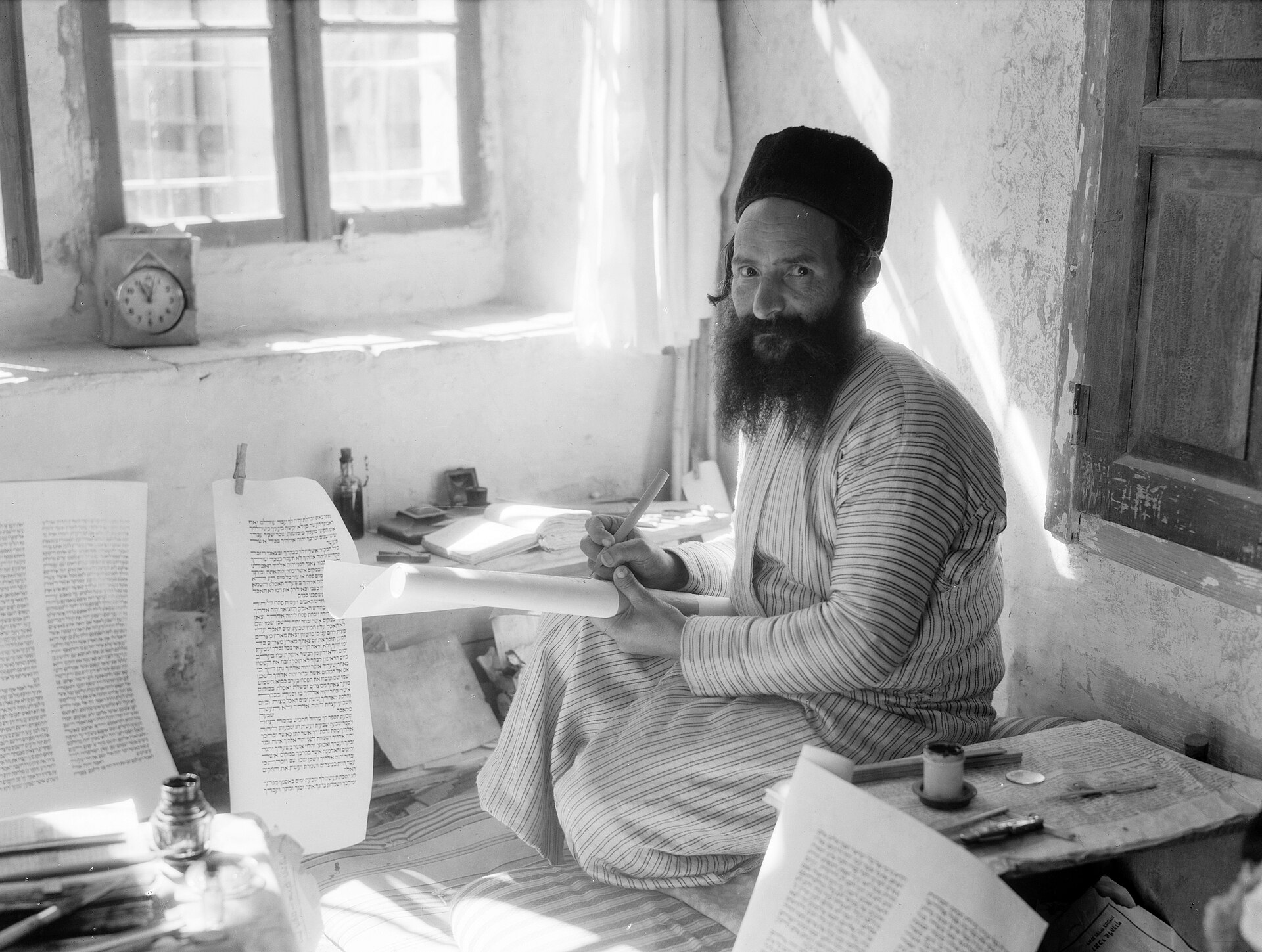

Writing materials and the first scribes
Leather, papyrus and ink
In ancient Israel and Judah, longer texts were written in ink on scrolls of prepared animal skin (leather, and later the finer parchment) or on papyrus, a writing sheet made from the pith of a reed that grew in Egypt. Short notes and receipts were often written on broken pottery (ostraca). Jeremiah 36 speaks of a "roll," of ink, of "leaves" and of a penknife. The Dead Sea Scrolls described below survive as complete scrolls and as "thousands of parchment and papyrus fragments," in the words of the Israel Antiquities Authority's Leon Levy Dead Sea Scrolls Digital Library.3 A long scroll was made by sewing sheets end to end. The Great Isaiah Scroll from Qumran, for instance, has a seam between its 27th and 28th columns where "two sheets are sewn together," as a 2021 study of its handwriting describes it.4
Three facts about these materials shaped the history of the text. First, leather and papyrus rot in damp air, so the oldest surviving biblical manuscripts come from very dry places: the caves of the Judean desert and the sands of Egypt. Second, a worn scroll had to be replaced, so each generation's copies were made from the last generation's, and the worn exemplars were usually not kept. Third, the old Hebrew script wrote only consonants. A reader supplied the vowels from memory and from knowledge of the language, which is why the later work of the Masoretes on vowels mattered so much.
The sopherim: the scribes who counted
The Hebrew word for a scribe is sopher (plural sopherim), from a root that means both "to write" and "to count." Ezra is described as "a ready scribe in the law of Moses, which the LORD God of Israel had given" (Ezra 7:6, KJV).2 Nehemiah 8 describes a public reading of the law in Jerusalem after the return from Babylon, in which the readers "read in the book in the law of God distinctly, and gave the sense, and caused them to understand the reading" (Nehemiah 8:8, KJV).5
Later Jewish tradition remembered the early sages as men who counted the letters of the text. The Babylonian Talmud (tractate Kiddushin 30a) explains: "Therefore, because they devoted so much time to the Bible, the first Sages were called: Those who count [soferim], because they would count all the letters in the Torah." The same passage records that "the letter vav in the word 'belly [gahon]' (Leviticus 11:42) is the midpoint of the letters in a Torah scroll."6 This is a tradition written down many centuries after the first scribes, but it shows the ideal that governed Jewish copying: the text was something to be kept letter by letter, and counting was one way to check a copy.
The Talmud also preserves a tradition about who wrote which book. Tractate Bava Batra 14b says: "Moses wrote his own book, i.e., the Torah, and the portion of Balaam in the Torah, and the book of Job. Joshua wrote his own book and eight verses in the Torah."7 That passage is a statement of rabbinic tradition, not a manuscript record, and scholars of every school weigh it differently. The history of the canon (which books belong, and in what order) is the subject of lesson 03. This lesson is about the wording of the books once they existed.
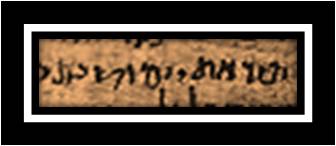
The oldest biblical words: the silver scrolls of Ketef Hinnom
The oldest known artifacts bearing words that match a passage of the Old Testament are two tiny rolled silver amulets found in 1979 by the Israeli archaeologist Gabriel Barkay in a tomb at Ketef Hinnom ("shoulder of Hinnom") in Jerusalem. Each was a strip of silver rolled up like a scroll, with a hole for a string, made to be worn. Unrolled, the larger measures under 4 inches and the smaller about 1.5 inches. It took several years to unroll them safely in the laboratories of the Israel Museum.8
Each amulet contains a version of the priestly blessing of Numbers 6:24 to 26, which in the King James Version reads:
The LORD bless thee, and keep thee: The LORD make his face shine upon thee, and be gracious unto thee: The LORD lift up his countenance upon thee, and give thee peace. (Numbers 6:24 to 26, KJV)5
In Hebrew the blessing has three lines of three, five and seven words, and the divine name YHWH appears in each line.8 The tomb and the script were dated to the end of the First Temple period, the "late seventh or early sixth century B.C.," shortly before the Babylonians destroyed Jerusalem. Because the first readings of the tiny, cracked silver were hard to check, a team of Barkay, Andrew G. Vaughn, Marilyn J. Lundberg and Bruce Zuckerman re-photographed the amulets with new imaging methods and published "The Amulets from Ketef Hinnom: A New Edition and Evaluation" in the Bulletin of the American Schools of Oriental Research 334 (2004). The new study confirmed the earlier readings and the late First Temple date, corrected some errors and added newly readable letters.8
What the amulets prove is limited and real. They do not contain a biblical book or even a full biblical chapter, and they may quote a blessing used in worship rather than copy it from a scroll of Numbers. But they show that the words of the priestly blessing, in a form close to the biblical text, were in use in Jerusalem centuries before the oldest surviving biblical scroll was copied.
The Nash Papyrus: the oldest Hebrew biblical text known before 1947
Before the Dead Sea Scrolls were found, the oldest known manuscript of a biblical text in Hebrew was a small papyrus sheet bought from an Egyptian antiquities dealer and presented to Cambridge University Library in 1903 by Walter Llewellyn Nash, Secretary of the Society of Biblical Archaeology. It is still at Cambridge, with the shelfmark Or.233, and the library's digital edition shows it in full. When it was published, Stanley Cook called it the "oldest Hebrew MS. of any kind in existence."9
The papyrus holds the Ten Commandments followed by the Shema ("Hear, O Israel," Deuteronomy 6:4). Its Decalogue is a mixed text that combines wording from Exodus 20 and Deuteronomy 5. It is made of four fragments fixed together, and it was probably folded or rolled; it may come from a set of phylacteries (tefillin) or from a sheet used for teaching or worship, though it was first identified as a lectionary. Its date is a matter of scholarly reading by handwriting. The library's record notes that William F. Albright (1937) placed it in the second century BC, while a library report of 1903 suggested the first century AD.9
The Nash Papyrus mattered for two reasons. It showed that Hebrew biblical texts had circulated in Egypt in the period before the Masoretes, and its handwriting gave scholars an early sample of the Hebrew square script against which later finds could be compared.

The Masoretes and their text
Who the Masoretes were
The word Masorah means the tradition about the text. The Jewish Encyclopedia (1906), in its article by Crawford Howell Toy and Caspar Levias, defines it as "the system of critical notes on the external form of the Biblical text."10 The Masoretes were the scholars, working in schools in the land of Israel (above all in Tiberias, on the Sea of Galilee) and in Babylonia, who gathered and wrote down that tradition in the centuries after the Talmud was completed. They did not create the consonantal text. They received it and devoted their lives to fixing how it was to be spelled, pronounced, chanted and divided, and to building safeguards against copying errors.
Two families of Tiberian Masoretes became famous: Ben Asher and Ben Naphtali. According to the Jewish Encyclopedia, the heads of these two rival schools worked in the first half of the tenth century, each wrote a standard codex, and the Ben Asher family can be traced back to the latter half of the eighth century. Despite opposition from the scholar Saadia Gaon, "Ben Asher's codex became recognized as the standard text of the Bible."10 The same article adds a caution worth keeping: no complete printed text or surviving manuscript follows Ben Asher alone in every detail. All surviving texts are, in some small degree, mixed.
Vowel points and accents
The Masoretes' best-known work is the system of signs placed above, below and inside the consonants. The Jewish Encyclopedia says the Masoretes invented "graphic signs to indicate the traditional pronunciation, syntactical construction, and cantillation."10 There are three kinds:
- Vowel points (dots and dashes that show which vowel sound follows each consonant). Before them, a reader saw only consonants and supplied the vowels from the reading tradition. The system that prevailed was the Tiberian one.
- Accents (te'amim), marks that tell a reader how to chant each word in the synagogue and, by the same marks, how the words of a verse group together. The accents work as a detailed punctuation system, and they sometimes decide how a verse is to be understood.
- Other marks, such as the dagesh (a dot inside a letter that doubles it or hardens its sound) and the maqqef (a hyphen-like stroke that joins words).
The signs did not alter the consonants. They recorded the way the text was already being read aloud. For a full explanation of how the vowel points, shewa and dagesh work, with exercises, see Introduction to Classical Hebrew, lesson 02 (module 101).
Here is what the points add, shown with the first words of Psalm 100:3 as the Masoretic text prints them, from the Miqra according to the Masorah edition on Sefaria: דְּע֗וּ כִּֽי־יְהֹוָה֮ ה֤וּא אֱלֹ֫הִ֥ים ("Know that the LORD, he is God"). Without the points, a reader would see only דעו כי יהוה הוא אלהים.11
The Masora parva and the Masora magna
In a Masoretic codex the biblical text sits in columns, and the margins carry notes. The Jewish Encyclopedia describes three layers:10
- The small Masorah (Masora parva), brief notes in the side margins and between columns. These give counts (how many times a word or spelling occurs), point out unusual forms, and give marginal readings.
- The large Masorah (Masora magna), fuller notes in the upper and lower margins, often listing the verses where a form occurs so that a copyist could check them.
- The final Masorah (Masora finalis), which gathers "all the longer rubrics for which space could not be found in the margin," arranged alphabetically at the end of the book like a concordance.
The counting had a practical origin and a practical use. The Jewish Encyclopedia notes that in classical antiquity copyists were paid by the number of stichs (lines of fixed length), and since the prose books of the Bible were hardly ever written in such lines, copyists counted the letters instead; from that practice grew the counting notes of the Masorah, and the counts became a check on accuracy. A copy whose word count for a book did not match the tradition had an error in it somewhere. The diagram below shows how these notes sit around the text on a page.
Qere and Ketiv: what is written and what is read
The Masoretes would not change a consonant of the received text, even where they believed the traditional reading differed from it. Instead they left the written form (the ketiv, "what is written") in the line, gave it the vowels of the form to be read aloud, and put the consonants of the read form (the qere, "what is read") in the margin. The Jewish Encyclopedia lists three kinds of marginal readings: "words to be read ('kere') for those written in the text ('ketib')," words read though not written, and words written though not read.10
Psalm 100:3 is a well-known example, and it shows up in English Bibles. The Masoretic text writes ולא (welo', "and not") but marks it to be read וְלוֹ (welo, "and his"). The two words sound alike and differ by one consonant. Sefaria's edition of the Masoretic text prints the pair as "(ולא) [וְל֣וֹ]," the written form in round brackets and the read form in square brackets.11 The King James Version followed the written form: "it is he that hath made us, and not we ourselves; we are his people." The American Standard Version of 1901 followed the read form: "It is he that hath made us, and we are his." So do the World English Bible ("It is he who has made us, and we are his") and the Berean Standard Bible ("It is He who made us, and we are His"), which was dedicated to the public domain in 2023.12 Neither choice changes any teaching of the Bible, but the verse shows how a Masoretic marginal note still decides what an English reader sees.
Some qere readings are so common that the Masoretes did not bother to write them in the margin. The most important is the divine name YHWH, which the Masoretic text usually prints with vowel signs that tell the reader to say Adonai ("Lord"). The English habit of printing "LORD" in capital letters for YHWH comes from this practice, and the form "Jehovah," used in the American Standard Version, is generally explained by scholars as the consonants of the name read with the vowels meant for Adonai.
The "corrections of the scribes"
Rabbinic sources also list a small number of places, called tikkune sopherim ("corrections of the scribes"), where they say an earlier wording was changed out of reverence, for example to avoid a phrase that seemed disrespectful to God. The number given varies by source (the Jewish Encyclopedia lists 11 in the Mekilta, 7 in the Sifre, 13 in the Tanhuma, and 15 or 18 in the Masorah), and the encyclopedia concludes that "The tiḳḳune Soferim are interpretations, not readings," meaning that many of them may be later explanations of the text rather than real changes to it.10 Either way, the list shows that the Jewish scribes themselves kept a record of places where they believed the wording had a history.
The Aleppo Codex
A codex is a book of bound leaves, as opposed to a scroll. Jewish synagogues kept (and keep) the Torah on scrolls for public reading, but from about the ninth and tenth centuries the Masoretes produced great codices of the whole Bible as model copies, with all the vowels, accents and Masoretic notes, against which scrolls and other books could be checked.
The most famous is the Aleppo Codex, called in Hebrew the Keter ("Crown"). It was written in the first half of the tenth century in the land of Israel. David L. Baker, in a 2010 review of Hebrew Bible editions in the Tyndale Bulletin, calls it "the oldest and most authoritative extant manuscript of the Masoretic text," and says it was "pointed and provided with Masorah in the Tenth Century by Aaron ben Asher, in Palestine."13 The attribution to Aaron ben Asher rests on a dedicatory note (colophon) in the codex, later than the codex itself; the consonants are traditionally credited to a scribe named Shlomo ben Buya'a. Whether Aaron ben Asher pointed it with his own hand, or the note credits his school, is still debated by specialists.
The most famous witness to its authority is Moses Maimonides (1138 to 1204), the great Jewish legal scholar, who used a model codex when he wrote the rules for copying Torah scrolls in his code, the Mishneh Torah. In the translation of Eliyahu Touger, he wrote that he relied on "a scroll renowned in Egypt, which includes all the 24 books [of the Bible]. It was kept in Jerusalem for many years so that scrolls could be checked from it. Everyone relies upon it because it was corrected by ben Asher, who spent many years writing it precisely, and [afterward] checked it many times."14 Most scholars identify that book with the Aleppo Codex, which had been in Jerusalem and then in Cairo before it was taken to Aleppo in Syria, where the Jewish community kept it for centuries in its main synagogue.
The codex since 1947
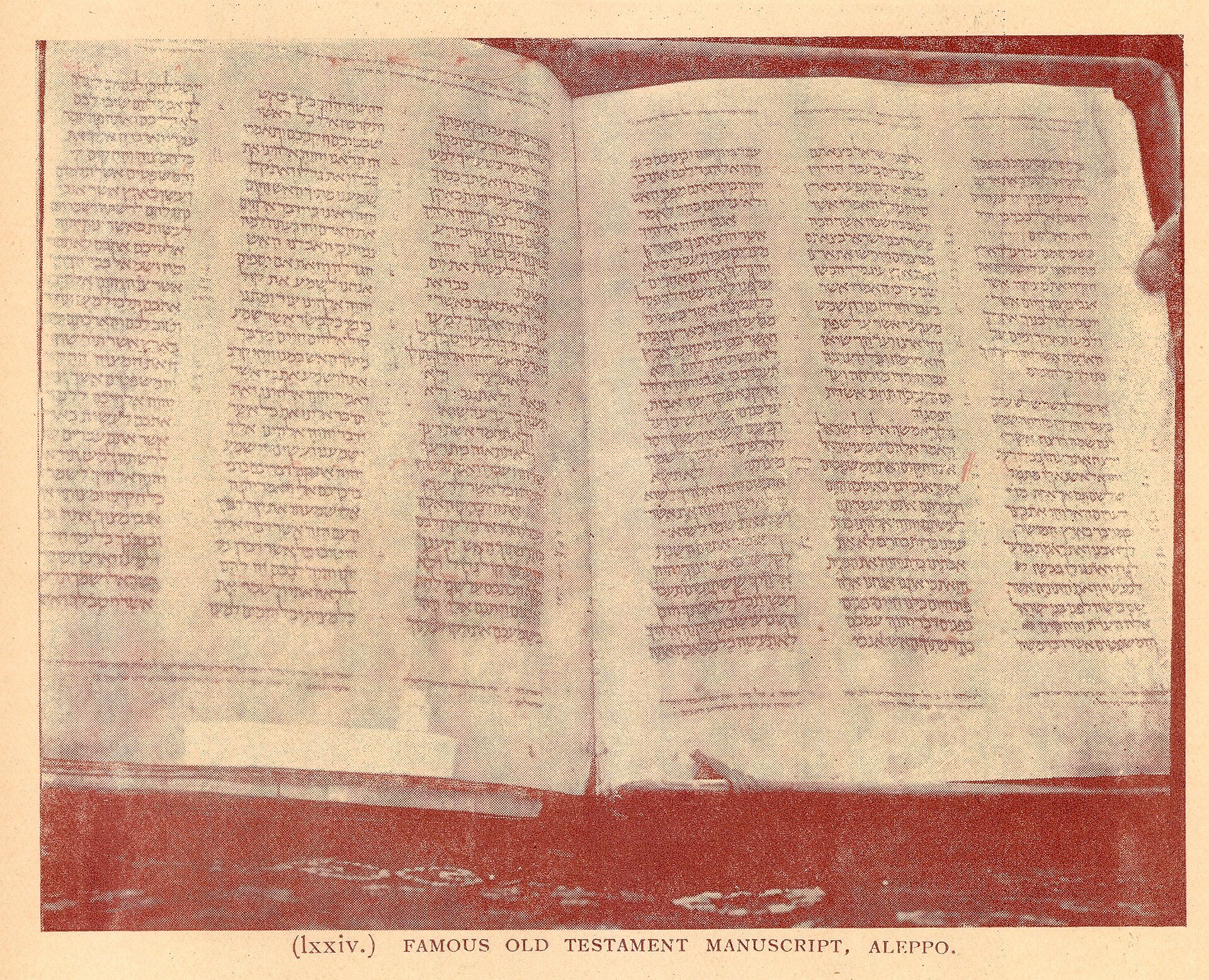
In 1947, after the United Nations vote to partition Palestine, rioters in Aleppo burned the synagogue where the codex was kept. The journalist Matti Friedman, who investigated its history in his book The Aleppo Codex (2012) and in later reporting for Tablet magazine, writes that "In 1947, in a riot that followed the United Nations vote on the partition of Palestine, the codex disappeared," and that when it resurfaced, "200 priceless pages" ("around 40 percent of the total") were missing.15 The codex was smuggled out of Syria and reached Israel in the late 1950s; it is now controlled, in Friedman's words, by "a prestigious academic body, the Ben-Zvi Institute," and has been displayed at the Israel Museum's Shrine of the Book.15 Estimates of how much is missing differ because no one knows exactly how many leaves the codex had in the first place: Baker writes that "about a quarter of the manuscript is missing," while Friedman's figure is about 40 percent.13 Most of the Torah (the five books of Moses) is among the missing parts, which is a great loss, since the Torah was the section Maimonides consulted.
Whether the missing leaves were burned in 1947 or taken by individuals afterward is an open question. Friedman argues that eyewitness reports suggest the codex was largely complete after the fire and that pages were lost later; a few single leaves and fragments have since come to light. The photograph below, taken in 1909, preserves one of the lost pages.

The modern Israeli edition known as the Jerusalem Crown (2000), the Hebrew University Bible Project (begun in 1958, according to Baker), and the free online Hebrew text called the Miqra according to the Masorah are all built on the Aleppo Codex where it survives, with the missing parts supplied from other Ben Asher manuscripts.13
The Leningrad Codex
Because the Aleppo Codex is incomplete, the oldest complete manuscript of the Hebrew Bible is the Leningrad Codex (Codex Leningradensis, abbreviated L or B19A), held in the National Library of Russia in St. Petersburg (the city was called Leningrad from 1924 to 1991, which gave the codex its name).16 Its colophon says it was written in Cairo by a scribe named Samuel ben Jacob in the year 1008 (some calculations of the colophon's several dating systems give 1009), and that it was corrected from manuscripts of Aaron ben Moses ben Asher. The Internet Archive's description of its digitized facsimile puts it this way: "The manuscript claims to have been written by Samuel ben Jacob in Cairo in 1008," and calls it "the oldest extant Hebrew Masoretic manuscript of the entire Old Testament."17
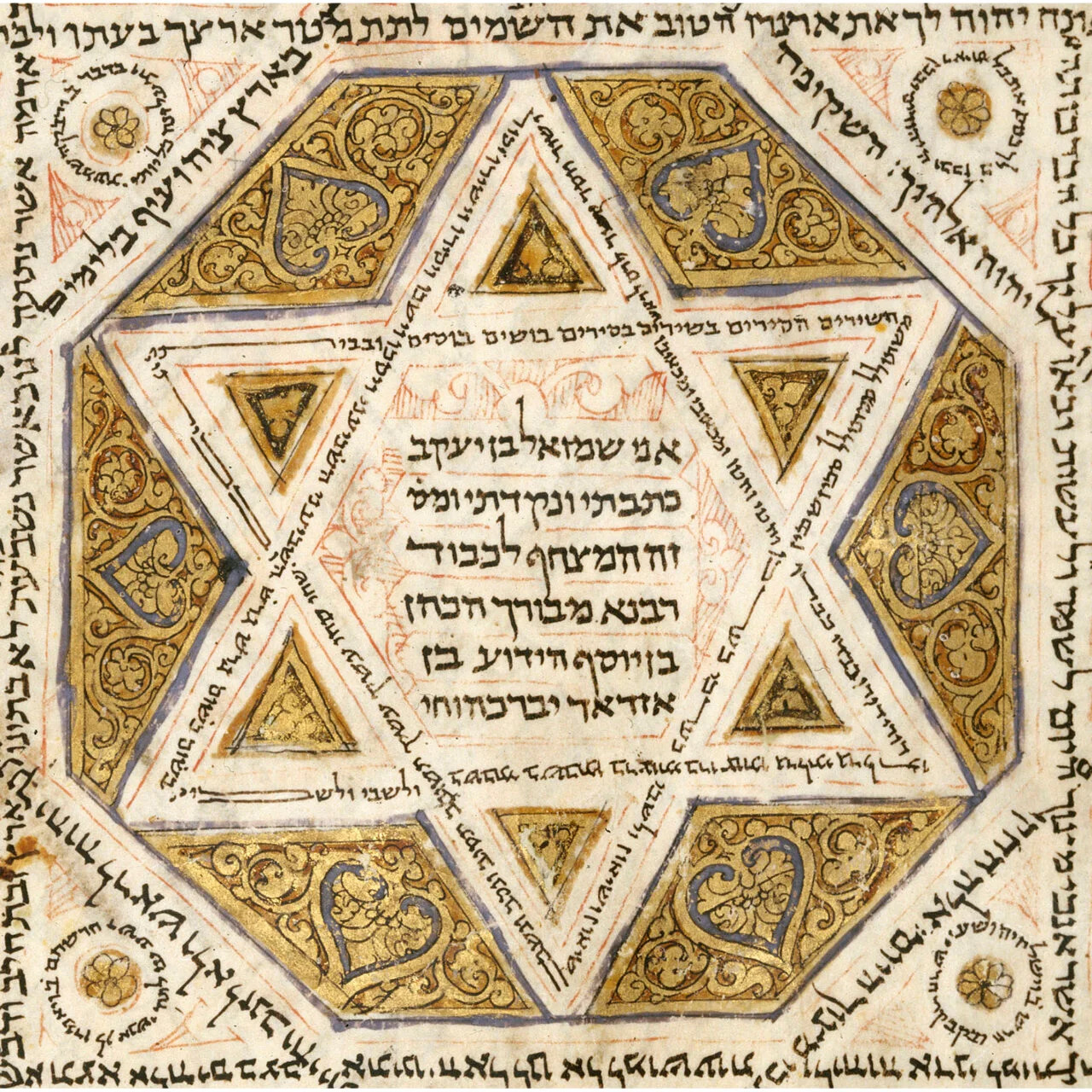
The codex came to St. Petersburg in the nineteenth century from the collection of the Karaite scholar Abraham Firkovich. The German Bible Society cites its shelfmark as "EBP. I B 19a of the National Library of Russia in St. Petersburg," and it is also cited as Firkovich B 19 A.16 It is famous not only for its text but for its decorated "carpet pages," geometric designs made of tiny writing (micrography) and color, with Masoretic notes and biblical verses worked into the patterns. One is shown below.

From the codex to the printed Hebrew Bible
For four centuries after the invention of printing, the Hebrew Bible read in synagogues and studied by Christian scholars was not the Leningrad Codex. It was the text of the second Rabbinic Bible, printed by the Christian publisher Daniel Bomberg in Venice in 1524 to 1525 and edited by Jacob ben Hayyim ibn Adonijah, who collated many manuscripts and printed the Masorah in the margins. The Jewish Encyclopedia says this edition, despite many errors, came to be regarded as the "textus receptus" of the Masorah.10 Baker writes that the text of this second Rabbinic Bible "remained the standard text of the Hebrew Bible until the beginning of the Twentieth Century."13 Its text and the later printings that followed it were the Hebrew Bible in the hands of Protestant translators of the sixteenth and seventeenth centuries, and the New King James Version's preface names the Bomberg edition as its point of comparison (see lesson 11).
The modern scholarly editions changed the base text to the oldest complete manuscript:
- Biblia Hebraica (BHK). Rudolf Kittel of Leipzig planned a critical Hebrew Bible about 1901, and "Kittel's Biblia Hebraica (BHK) was published in 1906 in two volumes," according to the German Bible Society.18 The third edition, published from 1929 to 1937 with the work of Paul Kahle, printed the text of the Leningrad Codex, which Baker calls "generally considered the earliest complete manuscript of the Hebrew Bible."13
- Biblia Hebraica Stuttgartensia (BHS). The fourth edition "appeared, between 1967 and 1977" (Baker). The German Bible Society calls it "the most recent complete scholarly edition of the Hebrew Bible, based on the Leningrad Codex."18 It is the Hebrew text named in the prefaces of many English translations made since then (lessons 10 to 12 give examples).
- Biblia Hebraica Quinta (BHQ). The fifth edition, "the successor to the Biblia Hebraica Stuttgartensia (BHS)," again prints the Leningrad Codex. It is appearing in fascicles: the German Bible Society lists the General Introduction and Megilloth (2004), Ezra and Nehemiah (2006), Deuteronomy (2007), Proverbs (2008), the Twelve Prophets (2010), Judges (2011), Genesis (2016), Leviticus (2020) and Job (2024), with others in preparation.16
- The Westminster Leningrad Codex (WLC). A free digital transcription of the Leningrad Codex maintained by the Groves Center, which readers can use in Bible software and on websites. The Unicode/XML Leningrad Codex project, built from WLC version 4.20, states that "All biblical Hebrew text, in any format, may be viewed or copied without restriction."19
So a reader who opens a modern English Old Testament is, in almost every case, reading a translation of the Leningrad Codex as printed in BHS, checked against the Dead Sea Scrolls, the Septuagint and other witnesses at the places where the translators judged that the Masoretic text needed help. The chart below sets out the whole chain.
The Dead Sea Scrolls
The discovery, 1947 to 1956
Until 1947 the oldest Hebrew manuscripts of most Old Testament books were the Masoretic codices of the tenth century and later. That changed when, in the words of the Israel Antiquities Authority, scrolls were "revealed by a young Bedouin shepherd in 1947." A shepherd of the Ta'amireh tribe, looking for a stray animal on the cliffs near the northwestern shore of the Dead Sea, threw a stone into a cave opening and heard pottery break. The Bedouin later returned and took out seven scrolls. They sold four to Kando, a Bethlehem antiquities dealer, and three to another dealer, Salahi.20
Eliezer Lipa Sukenik of the Hebrew University recognized the ancient writing on a leather fragment and examined the three scrolls held by Salahi. The other four were bought by Archbishop Samuel, head of the Syrian Orthodox Monastery of St. Mark in Jerusalem, who in 1949 took them to the United States. He advertised them for sale in the Wall Street Journal in 1954, and Sukenik's son, the archaeologist Yigael Yadin, bought them through an American intermediary on behalf of the State of Israel.20
Over "the next nine years," Bedouin and archaeologists (a team led by Roland de Vaux and Gerald Lankester Harding surveyed and excavated from 1949 to 1956) found written material in ten more caves near the ruins of Khirbet Qumran. The Israel Antiquities Authority gives these figures, cave by cave: Cave 1 (found 1947) held "at least 70 manuscripts"; Caves 2, 4 and 6 were found by Bedouin in 1952, and Caves 3 and 5 by archaeologists the same year; Cave 4 held "thousands of fragments from hundreds of manuscripts" and accounts for "75% of all material from the Qumran caves"; Caves 7 to 10 were found by archaeologists in 1955; and Cave 11, found by Bedouin in 1956, held "around 30 manuscripts."21 Other sites in the Judean desert, such as Wadi Murabba'at, Nahal Hever and Masada, produced scrolls as well, including biblical fragments, some from the period of the Jewish revolts against Rome.
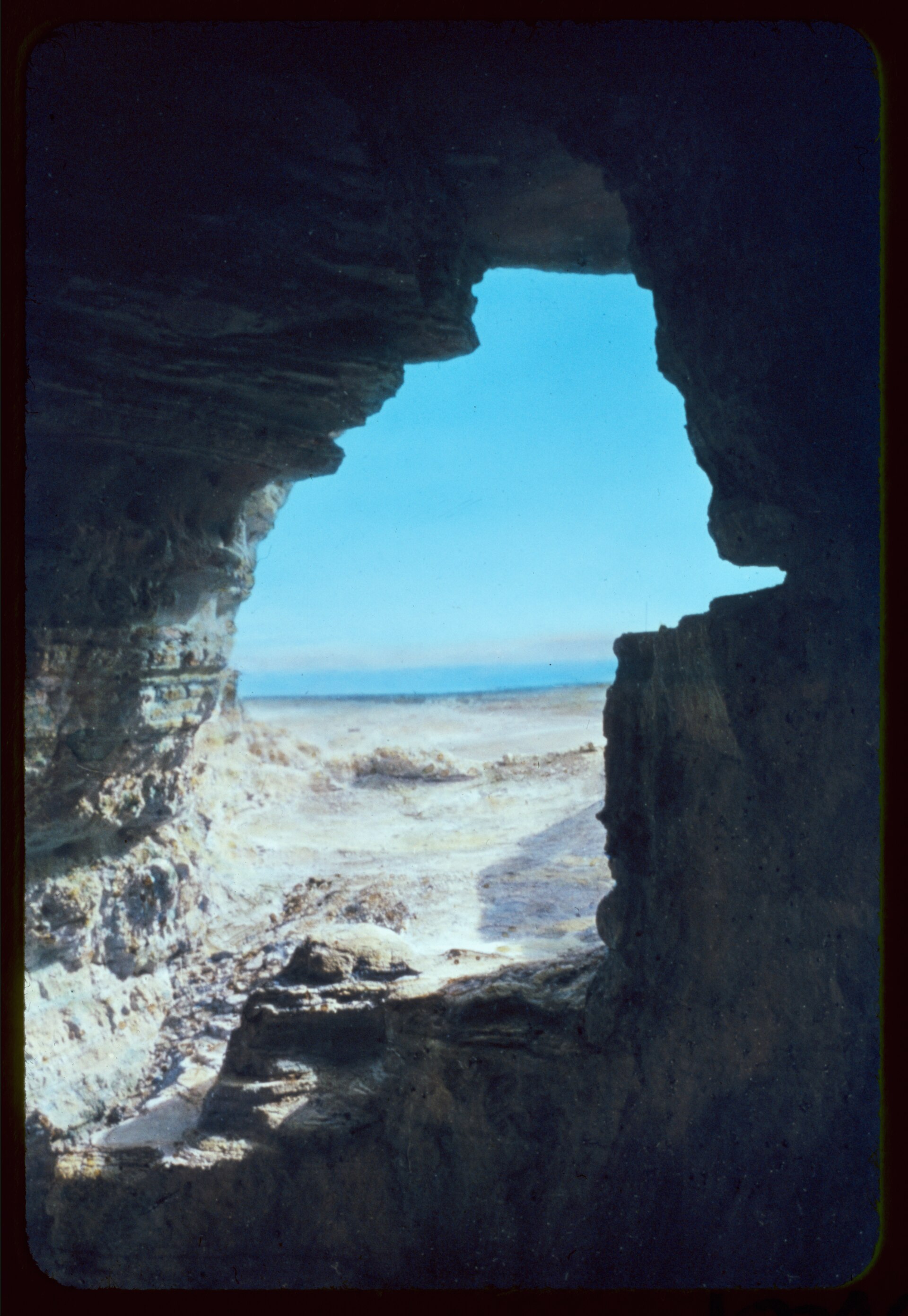
What the caves held
The Qumran scrolls date, according to the Israel Antiquities Authority, from "the third century bce" to "the first century of the Common Era," before the destruction of the Second Temple in AD 70. Hebrew is the main language; about 15 percent are in Aramaic and several are in Greek. "About 230 manuscripts are referred to as 'biblical Scrolls,'" and "Every book is represented among the Dead Sea Scrolls, except the book of Esther." About a dozen copies of some biblical books are written in the old paleo-Hebrew script rather than the square script.322 Most biblical scrolls survive only as fragments: a few verses, a column, or pieces of several columns.
The caves also held many works outside the Hebrew Bible, some of which scholars call "sectarian" because they seem to come from a particular community, along with about two dozen phylactery (tefillin) slips and eight mezuzot.22 The Israel Antiquities Authority notes that the biblical texts already had special standing in this period, but that the communities did not share one fixed list of scripture. Which community or communities owned and copied the scrolls is still debated.3
On the question this lesson is about, the Authority's summary is careful: "Many biblical manuscripts closely resemble the Masoretic Text," while some differ in spelling and contain additions or omissions, which shows that scribes sometimes changed the texts they copied.3 The Great Isaiah Scroll is the best place to see both halves of that statement.
The Great Isaiah Scroll (1QIsa-a)
Scholars name each scroll by its cave and contents: 1QIsa-a means the first ("a") Isaiah manuscript from Qumran Cave 1. It was one of the seven scrolls of 1947 and one of the four that Archbishop Samuel took to America, so it came to Israel with Yadin's purchase in 1954. It is kept today at the Shrine of the Book in the Israel Museum, Jerusalem.
It is the only biblical scroll from Qumran that survives almost complete. The 2021 study by Mladen Popovic, Maruf Dhali and Lambert Schomaker of the University of Groningen gives its physical description: "The scroll measures 7.34 m in length, averages 26 cm in height, and contains 54 columns of Hebrew text," and "the manuscript is traditionally dated to the late 2nd century BCE."4 That date comes first from paleography, the study of how letter shapes changed over time. Radiocarbon tests of the parchment in the 1990s agreed in broad terms: the study by A. J. T. Jull and colleagues in the journal Radiocarbon (1995) gives, at two standard deviations, a calibrated range of 356 to 291 BC (24 percent probability) or 250 to 103 BC (76 percent) for a sample from column 39 of this scroll, matching an earlier Zurich test of the same area; the same table lists the paleographic date as 150 to 125 BC.23 Either way, the scroll is more than a thousand years older than the Aleppo and Leningrad codices.
The same Groningen study used computer analysis of the handwriting and concluded that "there were two main scribes responsible for copying 1QIsaa, their work indeed separated between columns 27 and 28," which is where two sheets of the scroll are sewn together and where the book of Isaiah divides into two halves of 33 chapters each.4
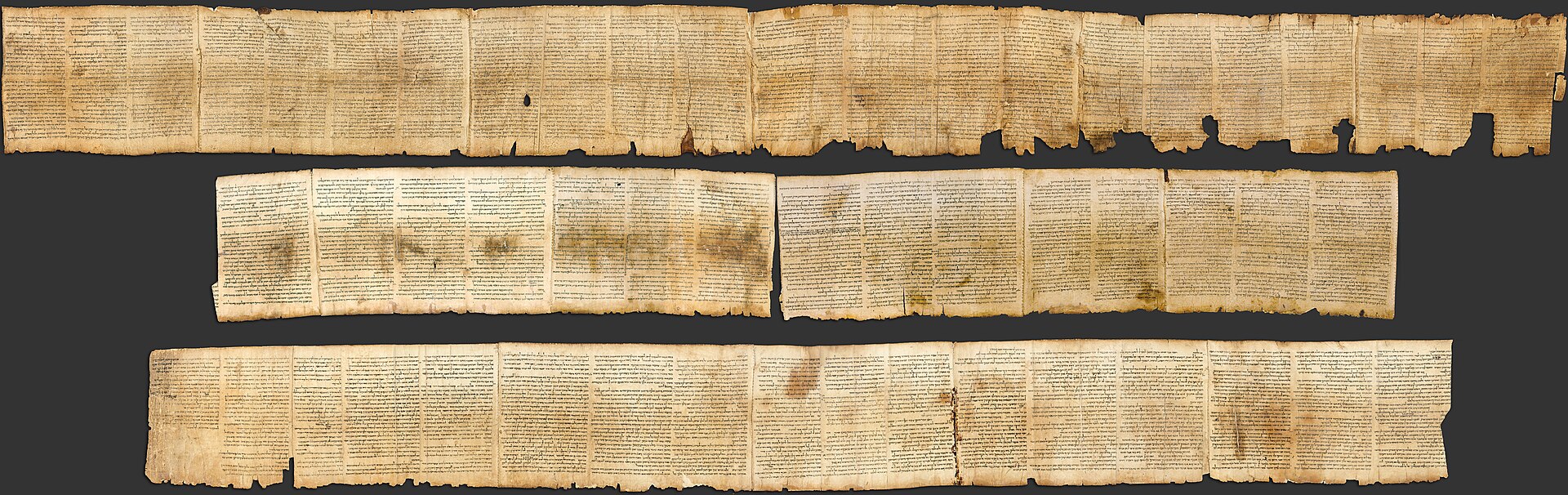

How closely it agrees with the Masoretic text
Two opposite claims are often made about this scroll. One says it matches the Masoretic text word for word. The other says it proves the text was badly changed. The evidence supports neither.
On the large scale, the agreement is close. The scroll contains all 66 chapters of Isaiah in the same order as the Masoretic text, with no chapters added or missing, no rearranged sections and no different version of the book. For a scroll copied more than a thousand years before the Leningrad Codex, that is a strong witness to the care of the copying tradition in between.
On the small scale, the scroll differs from the Masoretic text constantly. The official edition of the Isaiah scrolls by Eugene Ulrich, Peter Flint and Martin Abegg (Oxford, 2010) is reported as counting more than 2,600 textual variants between 1QIsa-a and the Masoretic text.24 Most are minor. The scribes of 1QIsa-a used a "full" spelling with many more vowel letters than the Masoretic text, wrote some words in different grammatical forms, changed word order now and then, and occasionally skipped words or lines and then added them above the line or in the margin. A great many of the 2,600 are spelling differences that cannot even be shown in an English translation.
A few differences touch the meaning. Scholars writing for the Text and Canon Institute (Peter Gentry, John Meade and Anthony Ferguson) worked through Isaiah 52:13 to 53:12 verse by verse in a series of articles, and their examples show what kinds of variants occur:25
- Isaiah 53:11, "light." The Masoretic text reads, in the KJV, "He shall see of the travail of his soul, and shall be satisfied" (Isaiah 53:11, KJV).1 1QIsa-a reads "he will see light and be satisfied." John Meade notes that the word "light" also appears in the second Isaiah scroll from Cave 1 (1QIsa-b), in a Cave 4 fragment (4QIsa-d), both partly damaged, and in the Septuagint's "to show him light."26 Several modern versions adopt it. The World English Bible reads "he will see the light and be satisfied," and the Berean Standard Bible reads "He will see the light of life and be satisfied."27 Here the Dead Sea Scrolls and the Septuagint agree against the Masoretic text, and many scholars judge that a word dropped out of the Masoretic line.
- Isaiah 53:12. 1QIsa-a reads "sins" (plural) where the Masoretic text has "sin" (singular). Meade writes that "the testimony for 'sins' over 'sin' is very strong."25
Anthony Ferguson, comparing the same verse in the same series, notes that 1QIsa-b differs from the Masoretic consonants there only by the added "light," while "1QIsaa has other minor differences when compared to the MT."25 The fair description of the whole scroll is this: a scroll that confirms the content and order of the book across a thousand years, and that also shows a living scribal tradition in which spelling and small wording varied from copy to copy.
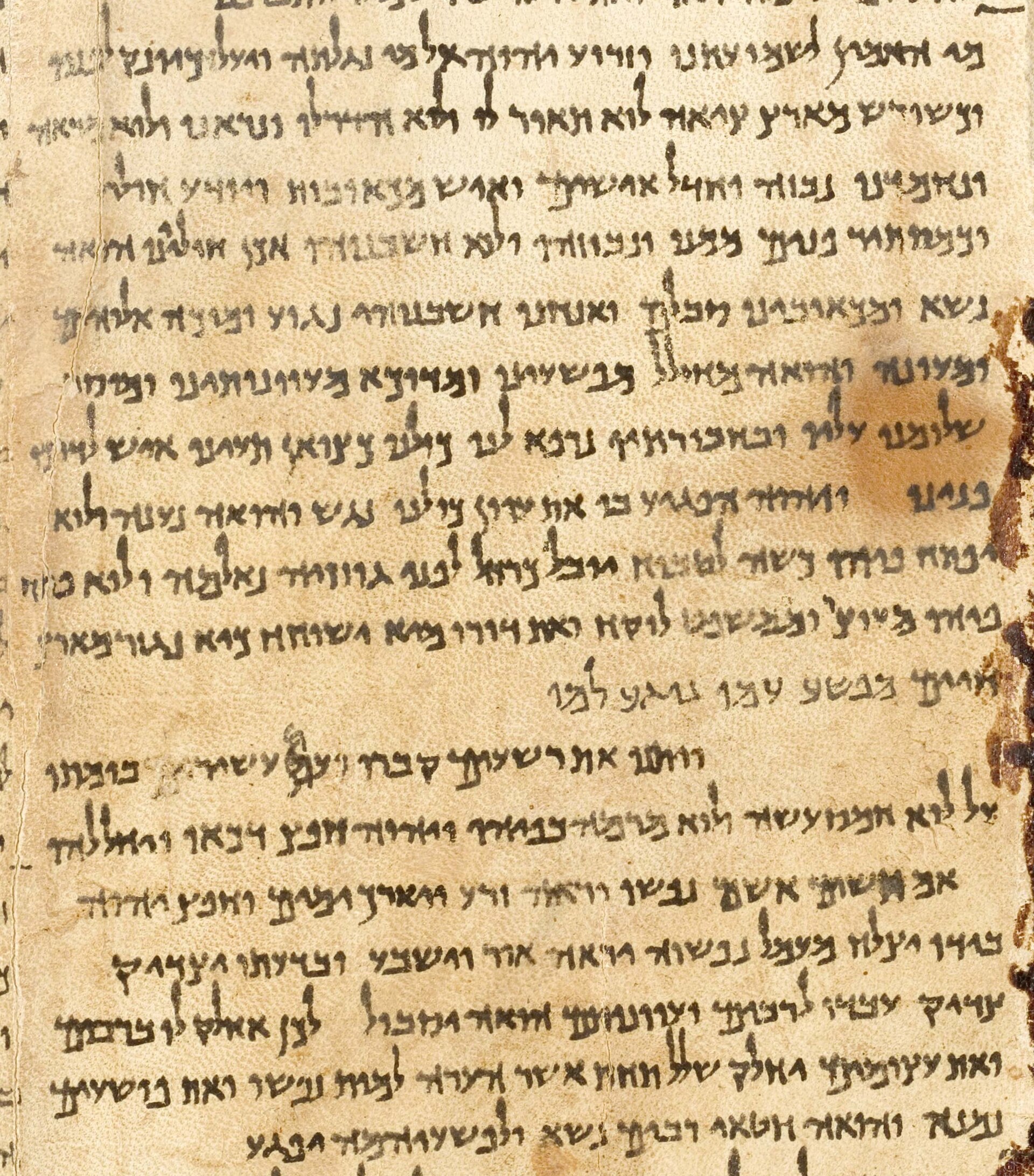

The second Isaiah scroll (1QIsa-b)
Cave 1 held a second, much less complete copy of Isaiah, called 1QIsa-b. Its spelling and wording stand much closer to the Masoretic text than 1QIsa-a does; scholars class it among the "proto-Masoretic" texts, the forerunners of the consonantal text the Masoretes received. Together, the two Isaiah scrolls show that around the time of Christ more than one kind of Hebrew text of the same book was being copied, and that one kind already looked very much like the later Masoretic text. Even 1QIsa-b, though, reads "light" in Isaiah 53:11, as Meade points out.26
A harder case: Deuteronomy 32:8
Not every difference is a slip of the pen. Emanuel Tov, J. L. Magnes Professor of Bible (emeritus) at the Hebrew University and author of the standard handbook Textual Criticism of the Hebrew Bible, has written about Deuteronomy 32:8. The KJV, following the Masoretic text, reads: "When the Most High divided to the nations their inheritance, when he separated the sons of Adam, he set the bounds of the people according to the number of the children of Israel" (Deuteronomy 32:8, KJV).1
A Cave 4 manuscript of Deuteronomy, 4QDeut-j, reads instead bney elohim, "sons of God." An early Greek papyrus of the Septuagint reads "sons of God" as well, and most Septuagint manuscripts read "angels of God." The Samaritan Pentateuch and the Syriac Peshitta agree with the Masoretic "sons of Israel."28 Tov argues that the Masoretic reading is the later one, "a conscious intervention in the text by a scribe uncomfortable with the polytheistic picture of divine beings," and that "sons of God" fits the next verse, "For the LORD's portion is his people; Jacob is the lot of his inheritance" (Deuteronomy 32:9, KJV).2829 Other scholars defend the Masoretic reading. Modern English versions are divided: the World English Bible keeps "the children of Israel," while the Berean Standard Bible reads "according to the number of the sons of God."30
Cases like this are few, but they are real, and they are the reason modern translations print footnotes such as "Dead Sea Scrolls and Septuagint" or "Masoretic Text." Lesson 15 shows how to read those notes.
The Samaritan Pentateuch
The Samaritans, a community that traces its descent to the northern tribes of Israel and worships on Mount Gerizim near Nablus, have kept their own Hebrew text of the five books of Moses, written in their own form of the old Hebrew script. Their tradition has never accepted the Prophets or the Writings as scripture. Their Torah differs from the Masoretic text in many places. The Schaff-Herzog Encyclopedia of Religious Knowledge (1911) reports that "It is said that the variants from the Hebrew text number 6,000." The encyclopedia gives no breakdown of that figure.31
Some differences are deliberate and serve the Samaritans' claim that Gerizim, not Jerusalem, is the chosen place of worship. The same encyclopedia names the most notable: in Deuteronomy 27:4 the Samaritans read "Gerizim" where the Masoretic text has "Ebal" as the mountain where the altar is to be built.31 It also notes wide differences from the Masoretic text in the ages of the patriarchs in the genealogies of Genesis 5 and 11. Many of the Samaritan Pentateuch's other readings agree with the Septuagint against the Masoretic text, and many scholars hold that some Qumran manuscripts share its wider text type (without the Gerizim changes), which would mean this kind of expanded Torah text circulated among Jews as well before it became the Samaritans' own. On Deuteronomy 32:8, by contrast, the Samaritan Pentateuch agrees with the Masoretic text, as Tov notes.28
Translators today use the Samaritan Pentateuch as one witness among several. Where it agrees with the Septuagint or a Dead Sea Scroll against the Masoretic text, its reading gets a hearing; where it reflects Samaritan belief, it does not.
The Septuagint: the Old Testament in Greek
The story in the Letter of Aristeas
After the conquests of Alexander the Great, many Jews lived in Greek-speaking cities, above all in Alexandria in Egypt. Over time they needed their scriptures in Greek. The first part to be translated was the Torah. The story told about that translation comes from a document called the Letter of Aristeas, which claims to be written by a courtier of King Ptolemy II Philadelphus of Egypt, who reigned in the first half of the third century BC.
In the Letter, Demetrius, the head of the king's library at Alexandria, tells the king that the books of the Jewish law are missing from his collection and that "They need to be translated." He proposes a request to the high priest in Jerusalem "asking him to send six elders out of every tribe." The elders are named tribe by tribe, and the letter states: "They were seventy-two in all." They work on the island of Pharos, compare their drafts until they agree, and "the work of translation was completed in seventy-two days." When the Jewish community hears it read, its leaders ask that it stay as it is, and they "pronounce a curse in accordance with their custom upon any one who should make any alteration."32
The Jewish historian Josephus, writing in the first century AD, retells the story in his Antiquities of the Jews (book 12, chapter 2). In William Whiston's translation he names "Demetrius Phalerius, who was library keeper to the king," says the translation "came to its conclusion in seventy-two days," and reports that the priest, the eldest of the elders and the principal men asked that "it might continue in the state it now was, and might not be altered."33 The Babylonian Talmud tells a more miraculous version: King Ptolemy "assembled seventy-two Elders from the Sages of Israel, and put them into seventy-two separate rooms, and did not reveal to them for what purpose he assembled them," and each, working alone, produced the same translation (Megillah 9a).34
The name "Septuagint" comes from this story. Karen Jobes and Moises Silva, in Invitation to the Septuagint (2000), explain that it comes from the Latin interpretatio septuaginta, "the translation of the seventy," a rounded number for the seventy-two translators, which is why the Septuagint is abbreviated with the Roman numeral LXX.35
What scholars conclude about its origin
Scholars of every school treat the Letter of Aristeas as a legend built around a historical core. Jobes and Silva conclude that "the authenticity of the letter should be rejected," though parts of it may be reliable. What the evidence does support, in their account, is that the Torah was translated into Greek by or for the Jews of Alexandria about the middle of the third century BC, and that the historical and prophetic books "were probably translated into Greek by various people at various times" afterward.35 Strictly, then, "the Septuagint" is not one translation but a collection of translations of different books, made by different hands over perhaps two centuries, of very uneven style: some books are rendered almost word for word, others more freely. The Greek Old Testament also included books that are not in the Hebrew Bible; how those books were received is the subject of lesson 03.
Several Greek biblical fragments were found among the Dead Sea Scrolls, which shows that Greek translations of the Torah were being copied in Judea itself before the time of Christ.3 The complete Greek Old Testament survives in the great Christian codices of the fourth and fifth centuries, Codex Vaticanus, Codex Sinaiticus and Codex Alexandrinus, which also hold the oldest complete copies of the Greek New Testament; their history is told in lesson 02.
Why the Septuagint matters for the Old Testament text
Because the Septuagint was translated from Hebrew manuscripts far older than any Masoretic codex, it is an indirect witness to those lost Hebrew texts. Where its Greek implies a Hebrew wording different from the Masoretic text, scholars must decide whether the translator was reading a different Hebrew text, reading the same consonants with different vowels, or simply translating freely. The Dead Sea Scrolls have settled some of these questions. In Deuteronomy 32:8 and Isaiah 53:11, described above, Hebrew scrolls now show the wordings that the Greek had implied.
Some differences come from reading the same Hebrew consonants with different vowels. In Genesis 47:31 the Masoretic text says that Israel "bowed himself upon the bed's head" (KJV), using the word mittah, "bed."2936 Written without vowels, the same three Hebrew consonants can also be read matteh, "staff." The Septuagint read it that way: in Lancelot Brenton's translation of the Greek, "Israel did reverence, leaning on the top of his staff."37 The letter to the Hebrews follows the Greek: Jacob "worshipped, leaning upon the top of his staff" (Hebrews 11:21, KJV).29 The Masoretic vowels and the Greek translators' reading both go back to how the consonants were understood, which is one reason the Masoretic vowel tradition, and the older reading traditions behind it, matter so much.
The Septuagint in the New Testament
The apostles wrote in Greek for readers who mostly knew the Old Testament in Greek. Jobes and Silva write that the New Testament writers "frequently quote the Greek Old Testament directly."35 Two examples show what is at stake.
Isaiah 7:14 and Matthew 1:23. The KJV of Isaiah reads: "Therefore the Lord himself shall give you a sign; Behold, a virgin shall conceive, and bear a son, and shall call his name Immanuel" (Isaiah 7:14, KJV).5 The Hebrew word translated "virgin" is הָעַלְמָה (ha-'almah, Strong's 5959), "the young woman" or "the maiden."38 The Septuagint rendered it with the Greek parthenos, the ordinary word for a virgin; Brenton translates the Greek: "behold, a virgin shall conceive in the womb, and shall bring forth a son, and thou shalt call his name Emmanuel."39 Matthew quotes the verse in the same Greek words, Ἰδοὺ ἡ παρθένος ἐν γαστρὶ ἕξει, "Behold, a virgin shall be with child, and shall bring forth a son, and they shall call his name Emmanuel, which being interpreted is, God with us" (Matthew 1:23, KJV).540 This matters because the Greek translation was made by Jews, two centuries or more before the birth of Jesus, so its choice of parthenos cannot have been a Christian invention. How later English versions have rendered 'almah (the Revised Standard Version's "young woman" in 1952, and the NIV's "virgin") is told in lesson 09 and lesson 13.
Psalm 40:6 and Hebrews 10:5. The Hebrew of Psalm 40:6 reads, in the KJV: "Sacrifice and offering thou didst not desire; mine ears hast thou opened."41 The Septuagint (Psalm 39:6 in its numbering) has, in Brenton's translation, "Sacrifice and offering thou wouldest not; but a body hast thou prepared me."42 Hebrews 10:5 quotes the Greek form: "Sacrifice and offering thou wouldest not, but a body hast thou prepared me" (KJV).41 The writer of Hebrews builds his argument about the incarnation on the Greek wording. Christians of every tradition have had to think about what that means for the authority of the Septuagint, and the Eastern Orthodox churches still use the Septuagint as their Old Testament.
The main witnesses side by side
The table below gathers the witnesses discussed in this lesson: what each is, when it was made, in what language, what it contains and where it is kept.
How the witnesses fit together
Putting the evidence together gives a picture that most textual scholars, conservative and critical, would accept in outline, even when they weigh the details differently.
First, the consonantal text behind the Masoretic Bible is old. Scrolls such as 1QIsa-b and many Qumran fragments of the Torah show a text very close to the later Masoretic consonants already in the last centuries BC. The Masoretes did not invent their text in the Middle Ages. They received a text that had been copied with great care for a thousand years and fixed its reading and pronunciation.
Second, before about the first century AD more than one form of the Hebrew text circulated. Alongside the proto-Masoretic texts, the caves held texts that agree in particular readings with the Hebrew that the Septuagint translators used, texts that scholars group with the Samaritan type, and texts that follow none of these exactly. Isaiah could be copied in the full, free spelling of 1QIsa-a or the plainer, more Masoretic form of 1QIsa-b. Most scholars hold that after the destruction of the Temple in AD 70 the proto-Masoretic form became the standard in Judaism, and the other forms survived mainly through the Septuagint and the Samaritan Pentateuch.
Third, most differences are small and do not change meaning. Spelling, word order, grammatical forms and obvious slips make up the great majority of the thousands of variants in a scroll like 1QIsa-a. A smaller set touches the sense of a verse, as in Isaiah 53:11 and Deuteronomy 32:8. None of the variants found so far overturns a teaching of the Old Testament, though some affect how a particular verse is read.
Fourth, modern translators start from the Masoretic text and depart from it only where they judge another witness better. This is what their prefaces say, and it is visible in their footnotes. Versions differ in how often they make such departures. The King James Version, translated before the Dead Sea Scrolls were found, followed the printed Masoretic text closely (see lesson 07); most later versions follow BHS and add the scrolls and the Septuagint at disputed places. How each translation committee describes its own Hebrew base is set out in lessons 10, 11 and 12, and the New Testament side of the same questions is the subject of lesson 02 and lesson 08.
What the record shows and what it does not
- Documented fact: No autograph of any Old Testament book survives. The Leningrad Codex, completed in 1008 according to its colophon, is the oldest complete Hebrew Bible and is the base of BHK (third edition), BHS and BHQ. The Aleppo Codex is older (tenth century) but has lost a large part of its leaves, including most of the Torah. About 230 biblical manuscripts were found at Qumran, from the third century BC to the first century AD, covering every book except Esther. The Great Isaiah Scroll is 7.34 meters long, has 54 columns and is dated to the late second century BC.
- Documented fact: The Great Isaiah Scroll has the same 66 chapters in the same order as the Masoretic text and also differs from it in a great many small points; some Qumran manuscripts agree with the Septuagint or the Samaritan Pentateuch against the Masoretic text in particular verses.
- Tradition: The Letter of Aristeas's account of 72 elders finishing the Greek Torah in 72 days, and the Talmud's account of 72 identical translations, are traditions, not records. The Talmud's attributions of authorship (Moses wrote the Torah and Job; Joshua wrote his book) are rabbinic tradition. The attribution of the Aleppo Codex's pointing to Aaron ben Asher rests on a later dedicatory note.
- Scholarly reading: That the Septuagint Pentateuch was translated in Alexandria about the middle of the third century BC (Jobes and Silva); that the Masoretic "sons of Israel" in Deuteronomy 32:8 is a later scribal change (Tov); that "light" in Isaiah 53:11 is original (Meade and others). Dates of undated manuscripts by handwriting are scholarly judgments, checked where possible by radiocarbon dating.
- Open question: What happened to the missing leaves of the Aleppo Codex after 1947; who owned and copied the Qumran scrolls; exactly when the Masoretic vowel system was first written down.
Claims checked
"The Isaiah scroll from the Dead Sea matches our Hebrew Bible word for word"
Rating: Refuted as stated (the general point behind it is supported). The claim appears in sermons and popular books as proof of perfect copying. The Great Isaiah Scroll has all 66 chapters in the Masoretic order, which is a strong witness to faithful transmission. But it differs from the Masoretic text in more than 2,600 places by the count reported from the Ulrich, Flint and Abegg edition, most of them spelling, and some of them affecting the sense, such as "light" in Isaiah 53:11 and "sins" for "sin" in 53:12.2425 The second Cave 1 scroll, 1QIsa-b, is closer to the Masoretic text, but it too is not identical. The accurate claim is that the content and order of Isaiah are confirmed across a thousand years, with many small variations.
"The Dead Sea Scrolls prove the Old Testament was changed"
Rating: Unsupported in the form usually meant. The scrolls show that, before about AD 70, more than one form of the Hebrew text circulated, and that scribes sometimes changed wording, as the Israel Antiquities Authority states.3 In a few verses, such as Deuteronomy 32:8, a scholar like Tov argues that the Masoretic text is the changed form.28 But the scrolls do not show any wholesale rewriting of the books, any lost book of the Hebrew Bible, or any doctrine of the Old Testament altered. Many of the biblical scrolls "closely resemble the Masoretic Text." The claim takes a real but limited body of variants and treats it as proof of a general corruption that the evidence does not show.
"The Septuagint was translated by 72 elders in 72 days"
Rating: Unsupported (legend). The story comes from the Letter of Aristeas and was retold by Josephus and, in miraculous form, by the Talmud.323334 Even in the Letter, the translators deal only with the law (the Torah), not the whole Old Testament. Scholars such as Jobes and Silva conclude that the letter is not authentic, that the Torah was translated in Alexandria about the mid third century BC, and that the other books followed by many hands over a long period.35
"The Septuagint is a Christian forgery written after the time of Christ"
Rating: Refuted. This claim circulates in some King James Only literature. The translation is described by Jewish writers (the Letter of Aristeas, Josephus, the Talmud) as a Jewish work, and Greek biblical fragments were found among the Dead Sea Scrolls, which were deposited before AD 70.3 What is true is that the complete Greek Old Testament survives mainly in Christian codices of the fourth and fifth centuries, and that some Greek books and later revisions were copied and edited by Christians.
"The Masoretic text is a medieval text, so it cannot be trusted"
Rating: Refuted. The manuscripts are medieval, but the consonantal text is not. Proto-Masoretic scrolls from Qumran, such as 1QIsa-b, show the same consonantal text in the last centuries BC. The Masoretes added vowels, accents and notes. They did not compose the text, and their rule of writing a doubtful reading in the margin (qere) rather than changing the line (ketiv) shows how reluctant they were to alter it.10
"The scribes counted every letter, so no error could ever enter the text"
Rating: Partly supported. The counting tradition is real and old (Kiddushin 30a), and the Masorah's counts and lists made errors easier to catch.6 But Masoretic manuscripts still differ from one another in small details, which is why the Jewish Encyclopedia says no surviving manuscript follows Ben Asher perfectly, and the tradition itself records qere readings and "corrections of the scribes."10 Counting checked the copies; it did not make them flawless.
"The Leningrad Codex is the oldest Hebrew Bible"
Rating: Partly supported. It is the oldest complete Hebrew Bible. The Aleppo Codex is older but incomplete, and the Dead Sea Scrolls and the Nash Papyrus are a thousand years older but contain only single books or passages.1713
"The Aleppo Codex was burned in the 1947 riots"
Rating: Unresolved. The synagogue that held it was burned in 1947, and when the codex reappeared, a large part of its leaves (about a quarter by Baker's figure, about 40 percent by Friedman's) was missing.1315 Friedman's reporting argues that much of the loss happened after the fire. The surviving leaves do not show the burn damage one would expect if the book had been in the flames, so the simple story that the missing pages burned is doubtful, but what became of them is not known.
"The Ketef Hinnom silver scrolls are the oldest biblical text ever found"
Rating: Supported, with a qualification. They are the oldest known objects with words matching a biblical passage, dated to the late seventh or early sixth century BC, and the 2004 re-examination confirmed both the readings and the date.8 They are amulets carrying a blessing, not copies of a biblical book, so they show that the blessing was in use, not what the scroll of Numbers looked like at the time.
"Matthew mistranslated Isaiah 7:14 to invent the virgin birth"
Rating: Refuted as stated. Matthew 1:23 quotes the Greek Septuagint word for word at this point, and the Septuagint's parthenos was chosen by Jewish translators long before Christianity.4039 Whether the Hebrew 'almah means "virgin" or "young woman" is a real question of Hebrew usage, discussed in later lessons, but Matthew did not create the Greek reading.
Hard questions and answers
If the originals are lost, how can anyone know what they said?
By comparing independent lines of copies. The Masoretic tradition, the Hebrew texts behind the Septuagint, the Samaritan Pentateuch and the Dead Sea Scrolls were copied by different communities in different places, and the scrolls were sealed in caves for two thousand years. Where they agree, as they do for the great majority of the text, the agreement goes back to a common ancestor older than any of them. Where they differ, scholars can usually see how one reading arose from another. What cannot be recovered with certainty is a small number of readings, and those are marked in the footnotes of good translations. The honest answer is that the text is known with high confidence in most places and with less confidence in a few, and the evidence tells a reader which places are which.
Should Christians prefer the Septuagint, since the apostles quoted it?
Eastern Orthodox Christians answer yes: the Septuagint is the Old Testament of their church, and they point to the many New Testament quotations of it, such as Hebrews 10:5.41 Most Protestant translations, and modern Catholic ones, translate from the Hebrew, holding that the Hebrew is the original language of these books and that the apostles quoted the Greek because their readers used it, not because they judged it superior in every place. The New Testament also contains quotations that follow the Hebrew rather than the Greek. The Dead Sea Scrolls have complicated both positions, since they show that some Septuagint readings rest on real Hebrew texts. The canon side of this question (the extra books in the Septuagint) is taken up in lesson 03.
Does the King James Version rest on a reliable Hebrew text?
Yes, in the sense that its translators worked from printed Masoretic Bibles of the sixteenth century, whose text descends from the same Ben Asher tradition as the Aleppo and Leningrad codices. The differences between the Bomberg text and the Leningrad Codex are small. The KJV did not have the Dead Sea Scrolls, and in a few places, such as Isaiah 53:11 and Deuteronomy 32:8, versions that use the scrolls read differently. Readers who hold that the Masoretic text should be followed in every place, as many KJV defenders do, can point out that the scholars themselves disagree about several of those readings. The Old Testament debate is much narrower than the New Testament one described in lesson 08.
Did the Masoretes change the text to oppose Christianity?
The charge goes back to early Christian writers who noticed differences between the Hebrew and the Septuagint. Justin Martyr, in the second century, told the Jewish teacher Trypho that the rabbis "have altogether taken away many Scriptures from the translations," and that they said Isaiah 7:14 "ought to be read, 'Behold, the young woman shall conceive'" (Dialogue with Trypho 71, translated by Marcus Dods and George Reith).43 The charge still appears in some polemics. The evidence does not support it as a general claim. The proto-Masoretic consonantal text is attested at Qumran before Christianity began, and in a key passage such as Isaiah 7:14 the Hebrew word 'almah was already in the text the Septuagint translators read. The Masoretes' own rule of leaving a doubtful written form in the line and putting the reading in the margin is the opposite of a habit of silent change. Specific Masoretic readings, like Deuteronomy 32:8, may reflect earlier scribal changes made for theological reasons, but those concern Jewish reverence for God, not Christian claims.
Are the vowel points inspired?
Some sixteenth and seventeenth century Protestant scholars argued that the vowel points were as old as the consonants. That view lost its support as the history of the points became clear, and the Dead Sea Scrolls, like the Nash Papyrus, are biblical texts written without vowel points. The points record a reading tradition that is much older than the signs themselves, and in nearly every place they are the best guide to the meaning. In a few places, such as Genesis 47:31, the ancient translators read the same consonants with other vowels, and a translator must decide between them.37
Where to go next
- How the vowel points work, with exercises: Classical Hebrew, lesson 02; using lexicons and reading aids: lesson 20; and graded readings: lesson 21. The full course: Introduction to Classical Hebrew.
- The Greek side of the story: lesson 02, The New Testament Manuscripts, and Introduction to Classical Greek.
- Which books belong in the Old Testament, and the Septuagint's extra books: lesson 03, How the Canon Formed.
- The early church and its Bible: Church History, Part A, lesson 01.
- Reading textual footnotes and comparing versions yourself: lesson 15, How to Choose a Bible.
Learn more
- Leon Levy Dead Sea Scrolls Digital Library: The Israel Antiquities Authority's images of the scrolls, with background pages on the discovery, the caves and the contents.
- Leningrad Codex facsimile (Internet Archive): Page through the oldest complete Hebrew Bible and see the Masoretic margins for yourself.
- Cambridge Digital Library: the Nash Papyrus: High-resolution images of the papyrus and the library's description.
- Emanuel Tov on Deuteronomy 32:8 (TheTorah.com): A leading textual scholar explains, for general readers, how one Masoretic reading may have arisen.
- Text and Canon Institute series on Isaiah 53: Verse-by-verse comparison of the Masoretic text, the Isaiah scrolls and the Septuagint in one key passage.
- The Jewish Encyclopedia (1906): Masorah: A detailed older account of the Masoretic notes, the qere and ketiv and the Ben Asher tradition.
- Introduction to Classical Hebrew, lesson 02: vowel points: Learn to read the Masoretic vowel signs.
Still being checked (12 items)
These points could not be confirmed against a primary source when this lesson was written and fact checked in October 2026. The text above states each one as uncertain.
- The count of more than 2,600 variants between 1QIsa-a and the Masoretic text (Ulrich, Flint and Abegg, 2010) is reported from secondary summaries; the volume was not opened.
- The year the Aleppo Codex reached Israel (1958 is usually given). Friedman's Tablet article (June 30, 2014) says the codex surfaced about ten years after 1947 and that the first description of damage dates to 1958; the text says 'the late 1950s'.
- The attribution of the Aleppo Codex's consonants to Shlomo ben Buya'a and its earlier history in Jerusalem and Cairo rest on reference works not opened directly (the colophon itself was not examined).
- The Jerusalem Crown (2000) and the Miqra according to the Masorah being based on the Aleppo Codex were not checked against those editions' own introductions.
- The Leningrad Codex's arrival in St. Petersburg with the Firkovich collection was taken from reference summaries; the shelfmark EBP. I B 19a is confirmed by the German Bible Society's BHQ page, but the National Library of Russia's own catalog was not opened.
- That some Qumran manuscripts share the Samaritan Pentateuch's wider text type is stated as a scholarly view; no specific study was opened.
- The statement that some sixteenth and seventeenth century Protestant scholars held the vowel points to be as old as the consonants was not checked against a specific source.
- The Israel Museum's permanent custody of the Ketef Hinnom amulets: the source opened says they were unrolled in the museum's laboratories and exhibited there.
- The NKJV preface's mention of the Bomberg edition is taken from the module brief and is checked in lesson 11.
- The statement that the Septuagint's Pentateuch was translated about the mid third century BC follows Jobes and Silva; exact dating is a scholarly estimate.
- The image caption date for the Nash Papyrus follows the Cambridge record (Albright: 2nd century BC; 1903 report: 1st century AD), not the Wikimedia Commons description (2nd century AD).
- The Hebrew University Bible Project and the Jerusalem Crown are confirmed as Aleppo-based by Baker (2010); that the Miqra according to the Masorah is Aleppo-based is not in Baker and was not checked against that edition's introduction.
Notes
- King James Version (1769 Oxford text), Deuteronomy 31:24 to 26, Deuteronomy 32:8, Isaiah 53:11 and Jeremiah 36:18, Bible Gateway (retrieved Oct. 28, 2026). Read it online. ↩
- King James Version, Jeremiah 36:23, Jeremiah 36:32 and Ezra 7:6, Bible Gateway (retrieved Oct. 28, 2026). Read it online. ↩
- Israel Antiquities Authority, Leon Levy Dead Sea Scrolls Digital Library, "Introduction" (Learn about the Scrolls) (retrieved Oct. 28, 2026). Read it online. ↩
- Mladen Popovic, Maruf A. Dhali and Lambert Schomaker, "Artificial intelligence based writer identification generates new evidence for the unknown scribes of the Dead Sea Scrolls exemplified by the Great Isaiah Scroll (1QIsaa)," PLOS ONE 16, no. 4 (April 21, 2021): e0249769 (retrieved Oct. 28, 2026). Read it online. ↩
- King James Version, Isaiah 7:14, Matthew 1:23, Numbers 6:24 to 26 and Nehemiah 8:8, Bible Gateway (retrieved Oct. 28, 2026). Read it online. ↩
- Babylonian Talmud, Kiddushin 30a, William Davidson Edition (Koren Noe Talmud, with commentary by Rabbi Adin Even-Israel Steinsaltz), Sefaria, CC BY-NC (retrieved Oct. 28, 2026). Read it online. ↩
- Babylonian Talmud, Bava Batra 14b, William Davidson Edition, Sefaria, CC BY-NC (retrieved Oct. 28, 2026). Read it online. ↩
- "Strata: Hi-Tech Peek at the 'Priestly Blessing' Amulets," Biblical Archaeology Review 31, no. 1 (January/February 2005), republished by the Center for Online Judaic Studies; it summarizes G. Barkay, A. G. Vaughn, M. J. Lundberg and B. Zuckerman, "The Amulets from Ketef Hinnom: A New Edition and Evaluation," Bulletin of the American Schools of Oriental Research 334 (2004), p. 41 (retrieved Oct. 29, 2026). Read it online. ↩
- Cambridge University Library, Cambridge Digital Library, "Nash Papyrus" (MS Or.233), catalog description (retrieved Oct. 28, 2026). Read it online. ↩
- Crawford Howell Toy and Caspar Levias, "Masorah," The Jewish Encyclopedia, vol. 8 (New York: Funk and Wagnalls, 1904 to 1906), public domain (retrieved Oct. 28, 2026). Read it online. ↩
- Psalms 100:3 in Hebrew, Miqra according to the Masorah edition, Sefaria (text with ketiv and qere marked) (retrieved Oct. 28, 2026). Read it online. ↩
- Psalm 100:3 in the King James Version, American Standard Version (1901), World English Bible and Berean Standard Bible (dedicated to the public domain in 2023), Bible Hub parallel page (retrieved Oct. 28, 2026). Read it online. ↩
- David L. Baker, "Which Hebrew Bible? Review of Biblia Hebraica Quinta, Hebrew University Bible, Oxford Hebrew Bible, and Other Modern Editions," Tyndale Bulletin 61, no. 2 (2010) (retrieved Oct. 28, 2026). Read it online. ↩
- Moses Maimonides, Mishneh Torah, Laws of Tefillin, Mezuzah and the Torah Scroll 8:4, translated by Eliyahu Touger (Jerusalem: Moznaim, about 1986 to 2007), Sefaria, copyright Moznaim Publications, CC BY-NC (retrieved Oct. 28, 2026). Read it online. ↩
- Matti Friedman, "The Continuing Mysteries of the Aleppo Codex," Tablet, June 30, 2014 (Friedman is the author of The Aleppo Codex: A True Story of Obsession, Faith, and the Pursuit of an Ancient Bible, Algonquin Books, 2012) (retrieved Oct. 29, 2026). Read it online. ↩
- Deutsche Bibelgesellschaft (German Bible Society), "Biblia Hebraica Quinta (BHQ)" (fascicle list; base text "the manuscript EBP. I B 19a of the National Library of Russia in St. Petersburg, commonly known as the Leningrad Codex") (retrieved Oct. 29, 2026). Read it online. ↩
- Internet Archive, "Leningrad Codex" (digitized facsimile and item description) (retrieved Oct. 28, 2026). Read it online. ↩
- Deutsche Bibelgesellschaft (German Bible Society), "Hebrew Bible" (scholarly editions: BHK and BHS) (retrieved Oct. 28, 2026). Read it online. ↩
- Unicode/XML Leningrad Codex (UXLC), About page, derived from the Westminster Leningrad Codex 4.20 of the Groves Center (retrieved Oct. 28, 2026). Read it online. ↩
- Israel Antiquities Authority, Leon Levy Dead Sea Scrolls Digital Library, "Discovery and Publication" (retrieved Oct. 28, 2026). Read it online. ↩
- Israel Antiquities Authority, Leon Levy Dead Sea Scrolls Digital Library, "Discovery Sites" (retrieved Oct. 28, 2026). Read it online. ↩
- Israel Antiquities Authority, Leon Levy Dead Sea Scrolls Digital Library, "Scrolls Content" (retrieved Oct. 28, 2026). Read it online. ↩
- A. J. T. Jull, D. J. Donahue, M. Broshi and E. Tov, "Radiocarbon Dating of Scrolls and Linen Fragments from the Judean Desert," Radiocarbon 37, no. 1 (1995): 11 to 19, table 2, sample DSS-50 (1QIsa-a): 2141 plus or minus 32 BP; calibrated 1 sigma 335 to 122 BC; 2 sigma 356 to 291 BC (24%) or 250 to 103 BC (76%); paleographic date 150 to 125 BC (retrieved Oct. 29, 2026). Read it online. ↩
- Eugene Ulrich, Peter W. Flint and Martin G. Abegg Jr., Qumran Cave 1.II: The Isaiah Scrolls (Discoveries in the Judaean Desert 32; Oxford: Clarendon Press, 2010), p. 2. The figure of more than 2,600 variants is reported here from secondary summaries; the volume was not opened for this lesson. ↩
- Text and Canon Institute, series on Isaiah 52:13 to 53:12: Peter J. Gentry, Parts 1 and 3; John D. Meade, Parts 2 and 4 (Part 4 on "sins" in Isaiah 53:12); Anthony Ferguson, "Part 5: The Servant Who Sees Light after Anguish" (retrieved Oct. 28, 2026). Read it online. ↩
- John D. Meade, "He Will See Light in Isaiah 53:11," Evangelical Textual Criticism blog, April 10, 2020 (retrieved Oct. 28, 2026). Read it online. ↩
- Isaiah 53:11 in the Berean Standard Bible and the World English Bible, Bible Hub parallel page (retrieved Oct. 28, 2026). Read it online. ↩
- Emanuel Tov, "The Sons of Israel or God? Deuteronomy 32:8," TheTorah.com, August 24, 2023 (retrieved Oct. 28, 2026). Read it online. ↩
- King James Version, Deuteronomy 32:9, Genesis 47:31 and Hebrews 11:21, Bible Gateway (retrieved Oct. 28, 2026). Read it online. ↩
- Deuteronomy 32:8 in the Berean Standard Bible and the World English Bible, Bible Hub parallel page (retrieved Oct. 28, 2026). Read it online. ↩
- The New Schaff-Herzog Encyclopedia of Religious Knowledge, vol. 10 (New York: Funk and Wagnalls, 1911), article on the Samaritans and the Samaritan Pentateuch, Christian Classics Ethereal Library, public domain (retrieved Oct. 28, 2026). Read it online. ↩
- The Letter of Aristeas, sections 11, 32, 50, 301 to 311, in R. H. Charles, ed., The Apocrypha and Pseudepigrapha of the Old Testament in English (Oxford, 1913), Christian Classics Ethereal Library, public domain (retrieved Oct. 28, 2026). Read it online. ↩
- Flavius Josephus, Antiquities of the Jews 12.2.1 and 12.2.13, translated by William Whiston (1737), Christian Classics Ethereal Library, public domain (retrieved Oct. 28, 2026). Read it online. ↩
- Babylonian Talmud, Megillah 9a, William Davidson Edition, Sefaria, CC BY-NC (retrieved Oct. 28, 2026). Read it online. ↩
- Karen H. Jobes and Moises Silva, Invitation to the Septuagint (Grand Rapids: Baker Academic, 2000), excerpts published by Bible and Interpretation (University of Arizona) (retrieved Oct. 28, 2026). Read it online. ↩
- Genesis 47:31, Hebrew text analysis (ham-mittah, "the bed," Strong's 4296), Bible Hub (retrieved Oct. 28, 2026). Read it online. ↩
- Genesis 47:31 in the Septuagint, English translation by Lancelot C. L. Brenton (1851), public domain, Bible Hub (retrieved Oct. 28, 2026). Read it online. ↩
- Isaiah 7:14, Hebrew text analysis (ha-'almah, Strong's 5959), Bible Hub (retrieved Oct. 28, 2026). Read it online. ↩
- Isaiah 7:14 in the Septuagint, English translation by Lancelot C. L. Brenton (1851), public domain, Bible Hub (retrieved Oct. 28, 2026). Read it online. ↩
- Matthew 1:23, Greek text analysis (parthenos, Strong's 3933), Bible Hub (retrieved Oct. 28, 2026). Read it online. ↩
- King James Version, Psalm 40:6, Hebrews 10:5 and Jeremiah 36:23, Bible Gateway (retrieved Oct. 28, 2026). Read it online. ↩
- Psalm 39:6 (Hebrew Psalm 40:6) in the Septuagint, English translation by Lancelot C. L. Brenton (1851), public domain, Bible Hub (retrieved Oct. 28, 2026). Read it online. ↩
- Justin Martyr, Dialogue with Trypho, chapter 71, translated by Marcus Dods and George Reith, Ante-Nicene Fathers, vol. 1 (1885), New Advent, public domain translation (retrieved Oct. 28, 2026). Read it online. ↩
Check yourself
1. What is the oldest complete manuscript of the Hebrew Bible?
The Leningrad Codex, dated by its colophon to 1008 and held in the National Library of Russia, is the oldest complete Hebrew Bible. The Aleppo Codex is older but has lost a large part of its leaves.
2. What did the Masoretes add to the Hebrew text?
The Masoretes received the consonantal text and added vowel signs, accent marks and the notes of the Masorah. They left the written consonants alone, even where they recorded a different reading in the margin.
3. In Psalm 100:3, the KJV reads "and not we ourselves" while the ASV reads "and we are his." Why?
The Masoretic text writes the word for "not" but marks it to be read as the word for "his." The KJV followed the written form, the ASV the marginal reading.
4. About how many biblical manuscripts were found among the Qumran scrolls, according to the Israel Antiquities Authority?
The Leon Levy Dead Sea Scrolls Digital Library says about 230 manuscripts are referred to as biblical scrolls, and every book except Esther is represented.
5. Which statement about the Great Isaiah Scroll (1QIsa-a) is accurate?
The scroll confirms the content and order of Isaiah but differs from the Masoretic text in more than 2,600 small points by the count reported from the official edition, mostly spelling.
6. What does the Letter of Aristeas claim?
The Letter says six elders from each tribe, 72 in all, completed the translation of the law in 72 days. Scholars such as Jobes and Silva treat the story as legend.
7. Why does Hebrews 11:21 say Jacob leaned on "the top of his staff" when Genesis 47:31 in the KJV says "the bed's head"?
Without vowels the Hebrew word can be read mittah (bed) or matteh (staff). The Masoretic vowels read "bed"; the Septuagint read "staff," and Hebrews follows the Greek.
8. Which printed Hebrew Bible was the standard text from the sixteenth century until the early twentieth century?
The Bomberg Rabbinic Bible edited by Jacob ben Hayyim remained the standard text until Kittel's Biblia Hebraica, whose third edition (1929 to 1937) printed the Leningrad Codex.
Terms in this lesson
- Autograph
- The first written copy of a book, from the author or the author's scribe. No autograph of any Old Testament book survives.
- Sopherim
- Scribes; in Jewish tradition, the early sages who copied and taught the law and, according to the Talmud, counted its letters.
- Masoretes
- Jewish scholars of the later first millennium AD, above all in Tiberias, who added vowel points, accents and notes to the received Hebrew text.
- Masoretic text (MT)
- The Hebrew text of the Bible as fixed and annotated by the Masoretes; the base of almost all printed Hebrew Bibles and Old Testament translations.
- Masora parva and Masora magna
- The small Masorah (brief notes in the side margins) and the large Masorah (fuller notes and verse lists in the top and bottom margins) of a Masoretic codex.
- Qere and Ketiv
- "What is read" and "what is written": the Masoretes left a written form in the text and marked a different reading in the margin, as in Psalm 100:3.
- Codex
- A book made of bound leaves, as opposed to a scroll.
- Colophon
- A note at the end of a manuscript giving the scribe, the date or the place of copying, such as the note dating the Leningrad Codex to 1008.
- Aleppo Codex
- A tenth-century Masoretic codex associated with Aaron ben Asher, kept for centuries in Aleppo; a large part was lost after 1947. Now in Jerusalem.
- Leningrad Codex
- The oldest complete Hebrew Bible, written in Cairo in 1008 according to its colophon; held in the National Library of Russia and printed in BHK (3rd ed.), BHS and BHQ.
- Dead Sea Scrolls
- Manuscripts found from 1947 to 1956 in eleven caves near Qumran and at other Judean desert sites, including about 230 biblical manuscripts from the third century BC to the first century AD.
- 1QIsa-a (Great Isaiah Scroll)
- The nearly complete Isaiah scroll from Qumran Cave 1, 7.34 meters long with 54 columns, dated to the late second century BC; in the Shrine of the Book, Jerusalem.
- Samaritan Pentateuch
- The Hebrew Torah kept by the Samaritan community, in Samaritan script, differing from the Masoretic text in about 6,000 places, a few of them deliberate (Gerizim for Ebal).
- Septuagint (LXX)
- The Greek translation of the Hebrew scriptures, begun with the Torah in Alexandria in the third century BC; named from the legend of 70 (72) translators and quoted often in the New Testament.
Sources
- King James Version (1769 Oxford text), Deuteronomy 31:24 to 26, Deuteronomy 32:8, Isaiah 53:11 and Jeremiah 36:18, Bible Gateway (1769 text) checked 2026-10
- King James Version, Jeremiah 36:23, Jeremiah 36:32 and Ezra 7:6, Bible Gateway (1769 text) checked 2026-10
- Israel Antiquities Authority, Leon Levy Dead Sea Scrolls Digital Library, "Introduction" (Learn about the Scrolls) (n.d.) checked 2026-10
- Mladen Popovic, Maruf A. Dhali and Lambert Schomaker, "Artificial intelligence based writer identification generates new evidence for the unknown scribes of the Dead Sea Scrolls exemplified by the Great Isaiah Scroll (1QIsaa)," PLOS ONE 16, no. 4 (April 21, 2021): e0249769 (2021-04-21) checked 2026-10
- King James Version, Isaiah 7:14, Matthew 1:23, Numbers 6:24 to 26 and Nehemiah 8:8, Bible Gateway (1769 text) checked 2026-10
- Babylonian Talmud, Kiddushin 30a, William Davidson Edition (Koren Noe Talmud, with commentary by Rabbi Adin Even-Israel Steinsaltz), Sefaria, CC BY-NC (Talmud, about 500; translation 2017) checked 2026-10
- Babylonian Talmud, Bava Batra 14b, William Davidson Edition, Sefaria, CC BY-NC (Talmud, about 500) checked 2026-10
- "Strata: Hi-Tech Peek at the 'Priestly Blessing' Amulets," Biblical Archaeology Review 31:1 (Jan./Feb. 2005), republished by the Center for Online Judaic Studies (summarizing Barkay, Vaughn, Lundberg and Zuckerman, BASOR 334, 2004) (2005) checked 2026-10
- Cambridge University Library, Cambridge Digital Library, "Nash Papyrus" (MS Or.233), catalog description (MS 2nd c. BC to 1st c. AD; catalog n.d.) checked 2026-10
- Crawford Howell Toy and Caspar Levias, "Masorah," The Jewish Encyclopedia, vol. 8 (New York: Funk and Wagnalls, 1904 to 1906), public domain (1904) checked 2026-10
- Psalms 100:3 in Hebrew, Miqra according to the Masorah edition, Sefaria (text with ketiv and qere marked) (n.d.) checked 2026-10
- Psalm 100:3 in the King James Version, American Standard Version (1901), World English Bible and Berean Standard Bible (dedicated to the public domain in 2023), Bible Hub parallel page (n.d.) checked 2026-10
- David L. Baker, "Which Hebrew Bible? Review of Biblia Hebraica Quinta, Hebrew University Bible, Oxford Hebrew Bible, and Other Modern Editions," Tyndale Bulletin 61, no. 2 (2010) (2010) checked 2026-10
- Moses Maimonides, Mishneh Torah, Laws of Tefillin, Mezuzah and the Torah Scroll 8:4, translated by Eliyahu Touger (Jerusalem: Moznaim, about 1986 to 2007), Sefaria, copyright Moznaim Publications, CC BY-NC (about 1180; translation 1986 to 2007) checked 2026-10
- Matti Friedman, "The Continuing Mysteries of the Aleppo Codex," Tablet, June 30, 2014 (June 30, 2014) checked 2026-10
- Deutsche Bibelgesellschaft (German Bible Society), "Biblia Hebraica Quinta (BHQ)" (n.d.) checked 2026-10
- Internet Archive, "Leningrad Codex" (digitized facsimile and item description) (1008) checked 2026-10
- Deutsche Bibelgesellschaft (German Bible Society), "Hebrew Bible" (scholarly editions: BHK and BHS) (n.d.) checked 2026-10
- Unicode/XML Leningrad Codex (UXLC), About page, derived from the Westminster Leningrad Codex 4.20 of the Groves Center (n.d.) checked 2026-10
- Israel Antiquities Authority, Leon Levy Dead Sea Scrolls Digital Library, "Discovery and Publication" (n.d.) checked 2026-10
- Israel Antiquities Authority, Leon Levy Dead Sea Scrolls Digital Library, "Discovery Sites" (n.d.) checked 2026-10
- Israel Antiquities Authority, Leon Levy Dead Sea Scrolls Digital Library, "Scrolls Content" (n.d.) checked 2026-10
- A. J. T. Jull, D. J. Donahue, M. Broshi and E. Tov, "Radiocarbon Dating of Scrolls and Linen Fragments from the Judean Desert," Radiocarbon 37, no. 1 (1995): 11 to 19 (table 2, 1QIsa-a) (1995) checked 2026-10
- Text and Canon Institute, series on Isaiah 52:13 to 53:12: Peter J. Gentry, Parts 1 and 3; John D. Meade, Parts 2 and 4 (Part 4 on "sins" in Isaiah 53:12); Anthony Ferguson, "Part 5: The Servant Who Sees Light after Anguish" (n.d.) checked 2026-10
- John D. Meade, "He Will See Light in Isaiah 53:11," Evangelical Textual Criticism blog, April 10, 2020 (2020-04-10) checked 2026-10
- Isaiah 53:11 in the Berean Standard Bible and the World English Bible, Bible Hub parallel page (n.d.) checked 2026-10
- Emanuel Tov, "The Sons of Israel or God? Deuteronomy 32:8," TheTorah.com, August 24, 2023 (2023-08-24) checked 2026-10
- King James Version, Deuteronomy 32:9, Genesis 47:31 and Hebrews 11:21, Bible Gateway (1769 text) checked 2026-10
- Deuteronomy 32:8 in the Berean Standard Bible and the World English Bible, Bible Hub parallel page (n.d.) checked 2026-10
- The New Schaff-Herzog Encyclopedia of Religious Knowledge, vol. 10 (New York: Funk and Wagnalls, 1911), article on the Samaritans and the Samaritan Pentateuch, Christian Classics Ethereal Library, public domain (1911) checked 2026-10
- The Letter of Aristeas, sections 11, 32, 50, 301 to 311, in R. H. Charles, ed., The Apocrypha and Pseudepigrapha of the Old Testament in English (Oxford, 1913), Christian Classics Ethereal Library, public domain (about 2nd c. BC; translation 1913) checked 2026-10
- Flavius Josephus, Antiquities of the Jews 12.2.1 and 12.2.13, translated by William Whiston (1737), Christian Classics Ethereal Library, public domain (about AD 94; translation 1737) checked 2026-10
- Babylonian Talmud, Megillah 9a, William Davidson Edition, Sefaria, CC BY-NC (Talmud, about 500) checked 2026-10
- Karen H. Jobes and Moises Silva, Invitation to the Septuagint (Grand Rapids: Baker Academic, 2000), excerpts published by Bible and Interpretation (University of Arizona) (2000) checked 2026-10
- Genesis 47:31, Hebrew text analysis (ham-mittah, "the bed," Strong's 4296), Bible Hub (n.d.) checked 2026-10
- Genesis 47:31 in the Septuagint, English translation by Lancelot C. L. Brenton (1851), public domain, Bible Hub (1851) checked 2026-10
- Isaiah 7:14, Hebrew text analysis (ha-'almah, Strong's 5959), Bible Hub (n.d.) checked 2026-10
- Isaiah 7:14 in the Septuagint, English translation by Lancelot C. L. Brenton (1851), public domain, Bible Hub (1851) checked 2026-10
- Matthew 1:23, Greek text analysis (parthenos, Strong's 3933), Bible Hub (n.d.) checked 2026-10
- King James Version, Psalm 40:6, Hebrews 10:5 and Jeremiah 36:23, Bible Gateway (1769 text) checked 2026-10
- Psalm 39:6 (Hebrew Psalm 40:6) in the Septuagint, English translation by Lancelot C. L. Brenton (1851), public domain, Bible Hub (1851) checked 2026-10
- Justin Martyr, Dialogue with Trypho, chapter 71, translated by Marcus Dods and George Reith, Ante-Nicene Fathers, vol. 1 (1885), New Advent, public domain translation (about AD 160; translation 1885) checked 2026-10