Lesson 11 of 12 · about 50 minutes · Updated November 23, 2026
Health Care and Economic Development in Idaho
You'll be able to
- Describe how big health care is in Idaho's economy using BLS QCEW job and wage counts, and explain what sector 62 includes and leaves out.
- Compare Idaho's health care jobs, pay and growth with the United States, neighboring states and Idaho counties, including the Magic Valley.
- Identify the largest health care employers on the Idaho Department of Labor lists and explain the limits of those lists.
- Explain how hospital capacity is financed in Idaho, including tax-exempt bonds, parent systems, donations and hospital district bonds that need a two-thirds vote.
- Summarize Idaho Code section 63-602D, the 2025 House Bill 130 conditions on the nonprofit hospital property tax exemption, and the federal community health needs assessment rule.
- Read MEPS Insurance Component data on what Idaho employers and workers pay for health coverage.
Start here: the short version
- Health care is one of Idaho's biggest industries. In 2025, private and local-government employers in health care and social assistance (NAICS 62) paid for an average of 130,009 Idaho jobs, 14.9 percent of all 874,283 jobs covered by unemployment insurance, according to the BLS Quarterly Census of Employment and Wages (QCEW). In 2001 the count was 57,778, or 10.1 percent.1
- It grew more than twice as fast as the rest of the economy. From 2001 to 2025 those health care and social assistance jobs rose 125 percent in Idaho while all jobs rose 53 percent. Nationally the figures were 74 percent and 20 percent (our calculations from QCEW annual averages). About one of every four net new Idaho jobs in that span, 23.8 percent, was in this sector.1
- A hospital system is the state's largest private employer. The Idaho Department of Labor's 2025 list ranks St. Luke's Health System first among private employers and Saint Alphonsus Health System third, behind Walmart. The department publishes employment ranges, not exact counts, and lists only employers that agree to be named.23
- The two big systems are building again. St. Luke's is putting up a nine-story tower on its downtown Boise campus, a project Engineering News-Record put at $1.2 billion, for patients in early 2030. Saint Alphonsus broke ground in June 2026 on a Nampa hospital expansion and a North Meridian clinic building that a Catholic Health Association publication put at about $450 million together.4567
- Idaho has no certificate of need law, so a hospital does not need the state's permission to build or add beds. The National Conference of State Legislatures lists Idaho among 15 states without one; Montana, Oregon, Washington and Nevada still have programs.8
- New capacity is paid for in several ways: hospital cash and operating margins, tax-exempt bonds, parent-system money, donations and, for public hospitals, property taxes and bonds that need a two-thirds vote under Article VIII, section 3 of the Idaho Constitution. A 2022 bond for a new Cascade Medical Center got 56.6 percent and failed.910
- Employers carry much of the bill. In 2025 the average single premium at Idaho private employers that offer coverage was $8,770 and the average family premium was $25,957, according to the federal MEPS Insurance Component; 41.9 percent of Idaho private establishments offered coverage, against 49.2 percent nationally.11
Law and data as of Nov. 23, 2026: Internal Revenue Code sections 501(r) and 4959 and 26 CFR 1.501(r)-3 as amended through that date; Idaho Code section 63-602D as amended by House Bill 130 (2025), effective Jan. 1, 2026; Idaho Code Title 39, chapters 13 and 14, and Idaho Constitution Article VIII, sections 3 and 3C, through the 2026 session; employment and wages from BLS QCEW annual averages for 2001 to 2025 (2025 is the newest full year); employer lists from the Idaho Department of Labor's 2025 lists posted August 2026; premiums from the AHRQ MEPS Insurance Component 2025 state tables; construction projects as the hospitals and the trade press described them on the dates named; checked Nov. 23, 2026. Job counts, wages, premiums and project budgets change every year.
When a city council in Meridian or Twin Falls talks about "economic development," it usually means a new factory, a distribution center or a data center. The largest private payroll in Idaho belongs to none of those. It belongs to a nonprofit hospital system. Health care is a big employer in every Idaho county that has a hospital, it pays some of the highest wages in rural places, and it kept adding jobs through the 2008 to 2010 recession and the 2020 pandemic year while most industries lost them.
This lesson looks at health care as an industry: how many people it employs, what it pays, which employers are largest, how much the big systems are building, who pays for new hospitals and clinics, how growth and new employers change the demand for care, and what Idaho employers spend on health coverage for their workers. It uses federal and state records first and names every source. It compares Idaho with the United States and the six neighboring states where the same measure exists, and it uses the Treasure Valley and the Magic Valley as local cases.
Other lessons in this course cover the ground next door. Health spending totals since 1980 are in lesson 01. Who owns each Idaho hospital, charity care and the St. Luke's antitrust case are in lesson 03. The Magic Valley's hospitals are profiled in lesson 04. Physician and dentist supply is in lesson 06, and the occupations, wages and training pipeline of health workers are in lesson 07. For population growth and the general economic development tools Idaho uses, see module 83, especially Where People Work and Economic Development and Housing Pressure.
This is general education. It describes records, rules and choices that exist. It does not recommend any employer, hospital, job, investment, insurance plan or vote, and it gives no financial, tax, insurance or legal advice.
Health care as an Idaho industry
What the job count counts
The best count of jobs by industry is the Quarterly Census of Employment and Wages, run by the U.S. Bureau of Labor Statistics with the Idaho Department of Labor. Every employer that pays into the state unemployment insurance system reports its monthly employment and quarterly wages, so QCEW is close to a full count of wage and salary jobs. It does not count the self-employed, most farm owners or active-duty military. It reports each industry by ownership: private, local government, state government and federal government. It hides a number when publishing it could reveal one employer's data, which matters a great deal in small Idaho counties with a single hospital.12
The industry codes come from the North American Industry Classification System (NAICS). Sector 62, "health care and social assistance," has four parts:13
- 621, ambulatory health care services: physician and dentist offices, clinics, outpatient surgery centers, labs, home health agencies and ambulance services.
- 622, hospitals: general medical and surgical hospitals, psychiatric hospitals and specialty hospitals.
- 623, nursing and residential care facilities: nursing homes, assisted living and residential care for people with disabilities.
- 624, social assistance: child day care, services for older adults and people with disabilities, food banks and job training. This piece is not health care, but it is inside the sector total, so the sector figures in this lesson include it unless a table says otherwise.
One more detail shapes Idaho's numbers. A county-owned hospital or a hospital district counts as local government in QCEW, not private industry. To follow the whole industry over time, this lesson adds private and local-government jobs together. It leaves out state and federal health jobs (the Veterans Affairs medical center in Boise, the state hospitals, the Health and Welfare department), which in 2025 added about 3,400 more Idaho jobs in sector 62.1
Jobs since 2001
In 2001, private and local-government employers in sector 62 averaged 57,778 Idaho jobs. In 2025 they averaged 130,009. Over the same years total covered employment in Idaho, all industries and all owners, went from 571,314 to 874,283. Health care and social assistance went from 10.1 percent of Idaho jobs to 14.9 percent.1
| Year | Idaho private jobs, NAICS 62 | Idaho local government jobs, NAICS 62 | Idaho total, NAICS 62 | All Idaho jobs | Share, Idaho | Share, U.S. |
|---|---|---|---|---|---|---|
| 2001 | 50,973 | 6,805 | 57,778 | 571,314 | 10.1% | 10.6% |
| 2005 | 60,020 | 8,207 | 68,227 | 614,548 | 11.1% | 11.6% |
| 2007 | 65,725 | 6,846 | 72,571 | 660,683 | 11.0% | 11.9% |
| 2010 | 74,556 | 5,771 | 80,327 | 605,571 | 13.3% | 13.4% |
| 2015 | 85,512 | 6,315 | 91,827 | 664,792 | 13.8% | 13.8% |
| 2019 | 97,644 | 7,199 | 104,843 | 752,351 | 13.9% | 14.3% |
| 2020 | 98,712 | 7,435 | 106,147 | 748,123 | 14.2% | 14.7% |
| 2023 | 110,194 | 7,833 | 118,027 | 842,561 | 14.0% | 14.5% |
| 2024 | 118,844 | 4,349 | 123,193 | 858,504 | 14.4% | 15.0% |
| 2025 | 125,530 | 4,479 | 130,009 | 874,283 | 14.9% | 15.4% |
Source: BLS QCEW annual averages. "Share" is private plus local-government NAICS 62 jobs divided by all covered jobs in all industries and ownerships, our calculation. U.S. 2025: 23,967,621 of 155,732,363 jobs.1
Notice the local-government column drop from 7,833 in 2023 to 4,349 in 2024. Nothing closed. Kootenai Health in Coeur d'Alene, which had been run as a public hospital district, became a private 501(c)(3) nonprofit corporation at midnight on Dec. 31, 2023, after a board vote on May 2, 2023, so its employees moved from the local-government column to the private column in the federal count.14 QCEW's Kootenai County data show the move: local-government hospital jobs of 3,559 in 2023 and none reported in 2024, while private health care jobs in the county rose from 8,698 to 12,806.15 Adding the two columns, as this lesson does, keeps that change from looking like growth in one place and loss in another.
Health care did not slow down in the two downturns of this period. From 2007 to 2010, all Idaho jobs fell 8.3 percent (660,683 to 605,571) while private and local-government health care and social assistance jobs rose 10.7 percent (72,571 to 80,327). Nationally, all jobs fell 5.6 percent and the sector grew 6.6 percent. In 2020, all Idaho jobs dipped 0.6 percent while the sector grew 1.2 percent; in the United States the sector lost 3.0 percent of its jobs that year as clinics and dentists closed during the first months of the pandemic.1 That steadiness is one reason economic developers in small Idaho towns pay close attention to their hospital: people need care in a recession, and Medicare and Medicaid keep paying.
Growth has been fast in every period. The table below gives the change and the compound annual growth rate, our calculations from the same QCEW series.
| Period | Idaho NAICS 62 jobs | All Idaho jobs | U.S. NAICS 62 jobs | All U.S. jobs |
|---|---|---|---|---|
| 2001 to 2010 | +39.0% (3.7% a year) | +6.0% (0.6% a year) | +24.0% (2.4% a year) | -1.4% |
| 2010 to 2019 | +30.5% (3.0% a year) | +24.2% (2.4% a year) | +23.5% (2.4% a year) | +15.9% (1.7% a year) |
| 2019 to 2025 | +24.0% (3.7% a year) | +16.2% (2.5% a year) | +13.4% (2.1% a year) | +5.1% (0.8% a year) |
| 2001 to 2025 | +125.0% (3.4% a year) | +53.0% (1.8% a year) | +73.8% (2.3% a year) | +20.1% (0.8% a year) |
Source: BLS QCEW annual averages, private plus local-government NAICS 62 and all covered jobs; our calculation.1
Which parts of health care grew
The fastest growth has been outside hospitals. Private jobs in ambulatory care (doctor and dentist offices, clinics, outpatient surgery, home health) tripled in Idaho from 2001 to 2025. Hospital jobs, private and public together, about doubled. Nursing and residential care grew about half. The table shows 2001 and 2025 for each part, private ownership unless noted.
| Part of sector 62 (Idaho) | 2001 jobs | 2010 jobs | 2019 jobs | 2025 jobs | Change 2001 to 2025 | 2025 average annual pay |
|---|---|---|---|---|---|---|
| Ambulatory health care (621), private | 18,124 | 29,091 | 41,881 | 55,036 | +203.7% | $57,703 |
| Hospitals (622), private plus local government | 19,017 | 24,662 | 30,813 | 38,406 | +102.0% | $84,636 private; $67,603 local government |
| Nursing and residential care (623), private | 10,712 | 13,080 | 15,315 | 16,531 | +54.3% | $41,720 |
| Social assistance (624), private, 2025 only | 19,173 in 2025 | not computed | $30,418 | |||
Source: BLS QCEW annual averages through the BLS API and the 2025 industry files; changes are our calculation.116 Some of the movement between the hospital and clinic lines reflects how employers classify their workers: when a hospital system moves its physician clinics into a separate business unit, those jobs can move from 622 to 621 without anyone changing jobs. Private hospital jobs in Idaho fell from 25,191 in 2016 to 23,352 in 2017 while ambulatory jobs rose from 33,800 to 36,499, a pattern that looks like such a change; the QCEW release does not say why.
The rise in ambulatory care matches what the hospital systems have said they are doing. In a 2018 Times-News report, St. Luke's Magic Valley leaders described a five-year plan centered on primary care clinics away from the main Twin Falls campus, including Kimberly and south Twin Falls, and North Canyon Medical Center in Gooding was opening a clinic in Buhl, its first outside Gooding County.17 Saint Alphonsus's 2026 North Meridian Health Plaza, described below, is a clinic and outpatient building, not a hospital.18
Wages and payroll
Private health care and social assistance employers paid Idaho workers $7.39 billion in 2025, 15.6 percent of all private wages in the state ($47.34 billion), our calculation from QCEW total annual wages.16 The average pay figure hides a wide spread. Hospitals pay well above the state's private-sector average; nursing homes and social assistance pay well below it, because many of their jobs are certified nursing assistant, aide and child care jobs paid by the hour. The occupations behind these numbers, and their wages compared with Medicaid rates, are in lesson 07.
Two things stand out. Idaho hospital pay ($84,636) is within 2 percent of the national figure ($86,159), even though all-industry private pay in Idaho ($63,240) is 20 percent below the national average ($79,094). Hospitals hire nurses, technicians and physicians in a national labor market and have to pay close to national wages to fill jobs. Idaho's ambulatory care pay ($57,703) is 27 percent below the national level ($79,366), our calculation, which may reflect a different mix of jobs (more home health and fewer high-paid specialist offices) as well as lower pay; QCEW does not separate those causes.16
How we figured it: jobs, shares and pay
Data. BLS QCEW annual averages. For 2001 to 2025 we used the BLS Public Data API series for Idaho and the United States: private NAICS 62 (ENU1600010562), local government NAICS 62 (ENU1600010362), all industries and all ownerships (ENU1600010010), and the private and local-government hospital, ambulatory and nursing series. For 2025 pay and wages and for neighbor states and counties we used the QCEW open data industry files.116
Method. Sector jobs = private plus local-government NAICS 62 annual average employment. Share = sector jobs divided by all covered jobs. Percent change = later year divided by earlier year, minus 1. Annual growth rate = (later divided by earlier) raised to 1 divided by the number of years, minus 1. Share of private wages = private NAICS 62 total annual wages ($7,393,040,676) divided by all private total annual wages ($47,340,087,848). Pay comparisons divide one average annual pay by another.
Limits. QCEW counts jobs, not people: a nurse with two part-time jobs counts twice, and a part-time job counts the same as a full-time one, so these are not full-time equivalents. State and federal health jobs are left out because some of their years are suppressed. Sector 62 includes social assistance, which is not health care. Classification changes (a clinic moved from a hospital's books to a separate unit, a public hospital converting to nonprofit) shift jobs between lines. Dollar figures are nominal, not adjusted for inflation.
Idaho and its neighbors
Idaho's health care share of jobs in 2025 was about the same as Montana's and Washington's, below Oregon's and the national share, and well above Utah's, Nevada's and Wyoming's.
| State | Private NAICS 62 jobs | Local government NAICS 62 jobs | All covered jobs | Share of all jobs (our calculation) | Private NAICS 62 average annual pay |
|---|---|---|---|---|---|
| Idaho | 125,530 | 4,479 | 874,283 | 14.9% | $58,895 |
| Utah | 191,834 | 3,518 | 1,741,066 | 11.2% | $58,492 |
| Oregon | 314,889 | 10,060 | 1,987,730 | 16.3% | $68,995 |
| Washington | 486,056 | 28,271 | 3,601,662 | 14.3% | $73,131 |
| Montana | 75,656 | 673 | 512,424 | 14.9% | $67,266 |
| Wyoming | 26,530 | not published | 282,252 | 9.4% (private only) | $55,491 |
| Nevada | 162,078 | 5,982 | 1,569,260 | 10.7% | $67,391 |
| United States | 22,997,661 | 969,960 | 155,732,363 | 15.4% | $66,522 |
Source: BLS QCEW 2025 annual averages.16 Wyoming's local-government health jobs are withheld in the 2025 file; in 2024, the last year published, they were 9,330, so Wyoming's true share is higher than the private-only figure, because several of its hospitals are county-owned.15
Idaho's private health care pay ($58,895) is the third lowest in this group, just above Utah's ($58,492) and Wyoming's ($55,491). Part of the gap is cost of living and part is mix: states with large academic medical centers (Washington, Oregon) have more high-paid specialists and researchers. Idaho has no medical school campus with a teaching hospital of that kind; its physician training is described in lesson 06.
Counties, the Treasure Valley and the Magic Valley
Health care matters most in the regional medical centers. In Bonneville County (Idaho Falls) more than one job in five is in health care and social assistance; in Bannock (Pocatello), Kootenai (Coeur d'Alene) and Twin Falls counties it is more than one in six. Those counties hold the hospitals that serve wide rural areas around them, so their health care jobs serve people who live in other counties.
| County (main city) | Private NAICS 62 jobs, 2025 | Local government NAICS 62 jobs, 2025 | All jobs, 2025 | Share (our calculation) | Private NAICS 62 average annual pay |
|---|---|---|---|---|---|
| Bonneville (Idaho Falls) | 13,540 | none reported | 63,586 | 21.3% | $48,470 |
| Bannock (Pocatello) | 7,396 | none reported | 38,273 | 19.3% | $49,357 |
| Kootenai (Coeur d'Alene) | 13,452 | 6 | 71,925 | 18.7% | $70,638 |
| Twin Falls (Twin Falls) | 7,382 | none reported | 42,703 | 17.3% | $54,968 |
| Nez Perce (Lewiston) | 3,371 | 134 | 21,772 | 16.1% | $54,601 |
| Ada (Boise, Meridian) | 47,038 | 32 | 295,234 | 15.9% | $66,614 |
| Idaho County (Grangeville) | 450 | 193 | 4,573 | 14.1% | $51,611 |
| Canyon (Nampa, Caldwell) | 11,463 | 75 | 90,221 | 12.8% | $52,420 |
| Bingham (Blackfoot) | 1,928 | 4 | 16,585 | 11.6% | $49,671 |
| Cassia (Burley) | 1,394 | none reported | 12,609 | 11.1% | $52,609 |
| Blaine (Hailey, Ketchum) | 1,012 | none reported | 14,438 | 7.0% | $76,892 |
| Minidoka (Rupert) | withheld | 424 | 9,227 | not computable | withheld |
| Gooding (Gooding) | withheld | none reported | 6,664 | not computable | withheld |
| Lincoln (Shoshone) | withheld | none reported | 1,729 | not computable | withheld |
Source: BLS QCEW 2025 annual averages by county. "Withheld" means BLS did not publish the cell to protect a single employer's data; "none reported" means no local-government row appears for the county in the file.1612
Two Magic Valley patterns are worth reading closely. Minidoka County's 424 local-government health jobs, paying an average of $72,827, are almost certainly Minidoka Memorial Hospital in Rupert, which a 2018 Times-News report described as fully owned by Minidoka County; QCEW does not name employers, so that link is an inference.17 In Gooding County, private health care is withheld because so few employers report; North Canyon Medical Center left local-government ownership after 87 percent of Gooding County voters approved dissolving the hospital's taxing district in May 2018, according to the same report.17 Lesson 04, the Magic Valley case study, profiles each hospital.
In the Treasure Valley, Ada County alone had 47,038 private health care and social assistance jobs in 2025, 37 percent of the state's total, our calculation. Canyon County's share of jobs in health care (12.8 percent) is lower than Ada's, which fits a county whose residents often drive to Boise and Meridian for specialty care, and whose construction and manufacturing jobs grew fast; module 83's Where People Work covers the commuting flow from Canyon to Ada.

The largest employers
How the state's employer list is built
The Idaho Department of Labor publishes two lists each summer from unemployment insurance records: a "Top 15 private Idaho businesses" list and a "Top 100 employers" list that includes governments. Both give employment ranges (for example 5,000 to 7,499), not exact counts. An employer appears only if it has more than 500 workers and gives the department permission to publish its name.23 The department's list leaves out the state and federal governments as single employers; a 2023 Idaho Statesman count, using the state controller's figures, found state government to be the largest employer in Idaho with more than 24,000 employees.19
Health employers on the 2025 lists
| Employer | Ownership (IDOL) | 2025 employment range (Top 100 file) | Rank or note |
|---|---|---|---|
| St. Luke's Health System | Private (nonprofit) | 12,500 to 14,999 | No. 1 private and No. 1 overall; the Top 15 web page shows "15,000+" |
| Saint Alphonsus Health System | Private (nonprofit) | 5,000 to 7,499 | No. 3 private, behind Walmart |
| Idaho Department of Health and Welfare | State government | 2,500 to 4,999 | Medicaid, public assistance, state hospitals and more |
| Veterans Administration | Federal government | 2,500 to 4,999 | Includes the Boise VA Medical Center and other VA offices |
| Portneuf Hospital Group | Private | 1,000 to 2,499 | Pocatello |
| Eastern Idaho Health Services | Private | 1,000 to 2,499 | Idaho Falls |
| Blue Cross of Idaho Health Service | Private (insurer) | 1,000 to 2,499 | Health insurer, not a provider |
| Bingham Memorial Hospital | Private | 500 to 999 | Blackfoot |
| Madison Memorial Hospital | Local government | 500 to 999 | Rexburg |
| Moscow Hospital Association | Private | 500 to 999 | Moscow |
Source: Idaho Department of Labor, 2025 Top 100 employers file and 2025 Top 15 private businesses page, both posted August 2026. Cities are added from the employers' own names and locations; the department's file does not list cities.32
Three cautions. First, the two Labor department products disagree about St. Luke's: the spreadsheet says 12,500 to 14,999 and the web page says 15,000 or more. Both are ranges built from unemployment insurance filings; St. Luke's itself told the Statesman in 2023 that it had about 17,000 employees, a figure that may count part-time and per diem staff differently.19 Second, Kootenai Health, which had about 3,600 hospital jobs on the local-government side of QCEW in 2023, does not appear on the 2025 list at all, which most likely means it did not give permission to be named; the department does not say.15 Third, the lists count jobs in Idaho only. A system that also runs hospitals in other states (Saint Alphonsus in eastern Oregon, for example) reports its Idaho employment here.
Even with those gaps, the list says something simple: of the ten largest private employers in Idaho, two are hospital systems, and the largest of all is a hospital system. Among the rest are a retailer, a national laboratory contractor, a chip maker, a grocery chain and a food processor.2
Population growth and access to care
Idaho's population grew from 1,567,582 in the 2010 census to 1,839,106 in 2020 and an estimated 2,029,733 on July 1, 2025.20 Health care jobs grew faster than people. Private and local-government health care and social assistance jobs per 1,000 residents rose from 51.2 in 2010 to 57.7 in 2020 and 64.1 in 2025, our calculation. Nationally the ratio rose from 55.4 to 61.8 to 70.1. Idaho still has fewer health care jobs per person than the country, consistent with its low health spending per person described in lesson 01.120
Hospital beds tell a different story. According to KFF's tables of American Hospital Association survey data, Idaho had about 2.6 hospital beds per 1,000 people in 2001 and 1.80 in 2024; the U.S. figure fell from 2.9 to 2.28 over the same years. Fewer beds per person is a national trend: more surgery is done without an overnight stay and hospital stays are shorter. But it means bed capacity has to be added just to keep up with population, which is the reason both Treasure Valley systems give for their current towers.21
| Measure | Idaho | United States | Neighbors, same year | Year and source |
|---|---|---|---|---|
| Health care and social assistance jobs per 1,000 residents (our calculation) | 64.1 | 70.1 | not computed | 2025; QCEW and Census |
| Hospital beds per 1,000 residents | 1.80 | 2.28 | Utah 1.68, Oregon 1.64, Washington 1.57, Montana 3.26, Wyoming 3.19, Nevada 1.96 | 2024; KFF from AHA survey |
| Of those beds, for-profit hospital beds per 1,000 | 0.49 | 0.36 | Utah 0.33, Nevada 1.22 | 2024; KFF from AHA survey |
Sources: BLS QCEW; U.S. Census Bureau population estimates; KFF State Health Facts.12021
How we figured it: health care jobs per 1,000 residents
Inputs. Private plus local-government NAICS 62 annual average jobs (Idaho: 80,327 in 2010, 106,147 in 2020, 130,009 in 2025; U.S.: 17,108,043, 20,482,193 and 23,967,621) from QCEW. Population: the April 1, 2010, and April 1, 2020, census counts and the July 1, 2025, Vintage 2025 estimate.120
Method. Jobs divided by population, times 1,000. Example: 130,009 divided by 2,029,733 times 1,000 = 64.1.
Limits. Jobs are counted where people work, population where people live. An Idaho resident treated in Spokane, Salt Lake City or Seattle adds to those states' jobs, and Oregonians treated in Boise or Lewiston add to Idaho's. Census dates (April) and job averages (calendar year) do not match exactly.
Jobs and beds are rough measures of access. Physicians per person, shortage areas and the training pipeline are in lesson 06; the rural side, where a single critical access hospital may be the only emergency room for an hour, is in lesson 05 and, from the Medicare side, in Medicare and Rural Idaho.
Hospital building since 2006
Hospitals are among the most expensive buildings anyone builds: they need backup power, medical gases, isolation rooms, imaging suites shielded for radiation and operating rooms with their own air handling. In the Treasure Valley and the Magic Valley, the big projects of the last two decades follow population growth and the race between the two large nonprofit systems. The timeline uses each hospital's own announcements, labeled, and trade or news reports where the hospital did not publish a figure.
| Year | Project or event | What the record says | Source |
|---|---|---|---|
| 2006 | Twin Falls County hospital sold to St. Luke's | 84 percent of Twin Falls County voters approved selling the county-owned Magic Valley Regional Medical Center to St. Luke's, as the Times-News later reported. Engineering News-Record dates the merger agreement to 2004; the two accounts differ on the year. | Times-News 2018; ENR 20101722 |
| 2008 to 2011 | St. Luke's Magic Valley replacement hospital, Twin Falls | More than 700,000 square feet and 186 private rooms; construction from early 2008; on-site workers expected to peak above 400 in summer 2010; opened May 21, 2011. No cost was given in either report. | ENR 2010; Becker's 20112223 |
| 2012 to 2017 | St. Luke's Nampa Medical Center | A medical plaza with an emergency department opened in 2012; the hospital addition (200,000 square feet, 87 patient rooms including 8 neonatal intensive care rooms, $114 million) held its grand opening Oct. 27, 2017. | St. Luke's, Oct. 31, 2017 (hospital's own release)24 |
| 2016 to 2017 | Saint Alphonsus Medical Center-Nampa, at I-84 and Garrity Boulevard | An $80 million, five-story, 240,000-square-foot hospital with 100 beds, replacing the 152-bed 12th Avenue hospital Saint Alphonsus acquired with Mercy Medical Center in 2010; completion expected March 2017. | Idaho Business Review, May 11, 201625 |
| 2018 | North Canyon Medical Center, Gooding | 87 percent of Gooding County voters approved dissolving the hospital's taxing district so it could operate as a nonprofit; tax revenue had already been removed from its operating budget in July 2017. | Times-News 201817 |
| 2022 | Cascade Medical Center bond, Valley County | Up to $19 million in general obligation bonds to build a new district hospital; 56.6 percent yes, short of the two-thirds required. | Idaho Secretary of State canvass; KTVB1026 |
| 2023 | Cascade Medical Center returns to voters | A $40 million bond for a new hospital was placed on the May 16, 2023, ballot. This lesson could not confirm the result from the state canvass. | Becker's, April 4, 202327 |
| 2024 | Kootenai Health becomes a private nonprofit | The hospital district's operations moved to Kootenai Health, Inc., a 501(c)(3), at midnight Dec. 31, 2023. | Kootenai Health14 |
| 2023 to 2030 | St. Luke's Boise downtown campus | Preparatory work from 2023, main construction from 2024; nine-story north tower of about 860,000 square feet with 80 added beds and 27 operating rooms; six-story medical office plaza of about 180,000 square feet; topped out June 26, 2026; patients expected early 2030. ENR reported a $1.2 billion budget funded by existing resources and bonds. | St. Luke's, June 2026 (hospital's own release); ENR, April 20, 202645 |
| 2026 to 2028 | Saint Alphonsus Nampa expansion | About 254,000 to 260,000 square feet (the two releases differ), a seven-story tower and a two-story vertical addition, 64 new medical, surgical and ICU beds and shell space; groundbreaking June 16, 2026; completion fall 2028. | Saint Alphonsus, Feb. 16 and June 16, 2026 (hospital's own releases)286 |
| 2026 to 2028 | Saint Alphonsus North Meridian Health Plaza | About 80,000 square feet of clinics, urgent care, imaging, lab and rehabilitation at Highway 16 and Chinden Road, on more than 17 acres; groundbreaking June 1, 2026; opening spring 2028. | Saint Alphonsus, June 1, 2026 (hospital's own release)18 |
| 2026 | Saint Alphonsus program cost | About $450 million for the Treasure Valley projects together, with a fundraising campaign meant to cover about 10 percent. | Catholic Health World, April 20, 20267 |
What the big projects buy
Both Treasure Valley systems describe their projects as catching up with growth. Saint Alphonsus's February 2026 release cites Census figures showing Canyon County grew 15.5 percent from 2020 to 2024, adding more than 35,000 residents, and says the Nampa expansion "more than doubles" the hospital.28 St. Luke's describes its downtown Boise tower as adding 80 beds to reach more than 500, adding seven operating rooms and moving surgical services into new space, with about 300 workers on site at a time.4 The Engineering News-Record account adds shell space for up to 133 more beds later and gives 28 operating rooms rather than 27; the hospital's own release is used for the counts in this lesson.5
Shell space is a floor or wing built with walls and utilities but not finished inside, so beds can be added later for much less than a new building costs. Both systems are building shell space now, which means some of the next decade's bed growth in the Treasure Valley is already paid for in the structures going up.
Construction itself is an economic event. ENR reported that steel for the St. Luke's tower was fabricated in the Treasure Valley, and the general contractor for both the 2016 Saint Alphonsus Nampa hospital and the St. Luke's tower is the same Utah firm, Layton Construction.525 Construction jobs show up in QCEW's construction sector while the work lasts; the lasting effect is the payroll of the people who staff the finished building.

Magic Valley projects and service changes
In the Magic Valley, the 2011 St. Luke's replacement hospital in Twin Falls was the largest project of the period. Since then, the documented work has been smaller and more spread out: an outpatient surgery center in Twin Falls (opened November 2016) and a second medical plaza (March 2018), clinics in Buhl, Kimberly and south Twin Falls, and North Canyon Medical Center's clinic in Buhl, its first outside Gooding County.17 Cassia Regional Hospital in Burley, part of Intermountain Health, expanded its emergency room and imaging and replaced its boiler and air systems before 2018, its administrator told the Times-News.17
St. Luke's own figures for its Magic Valley region in the fiscal year that ended Sept. 30, 2024, give a sense of scale: 3,047 employees, 380 physicians, 183 advanced practice providers, 243 licensed beds, 13,466 hospital admissions, 641,238 outpatient visits and 1,953 births. The same report lists about $6 million spent that year on facility upgrades and equipment.29 Those are the system's own numbers, not audited cost report figures; the federal cost reports for each hospital are described in lesson 03 and lesson 04.
No certificate of need
A certificate of need (CON) law requires a hospital, nursing home or other provider to get a state agency's approval before building, adding beds or buying major equipment. Congress pushed states to adopt CON programs in the 1970s with federal planning law and then repealed that requirement in the 1980s.8 NCSL's current table lists 35 states and the District of Columbia with CON laws and 15 states without, including Idaho, Utah and Wyoming. Montana's program now covers only long-term care facilities and swing beds; Oregon's covers hospitals and nursing homes; Washington's covers several kinds of facilities with recent exemptions; Nevada's applies to new facilities costing more than $2 million in rural counties.8 Idaho's CON program ended in the 1980s; the NCSL table does not give a year, and this lesson could not confirm the exact repeal date from the session laws.
Without CON, the choice to build in Idaho is a business decision by the hospital's board, limited by zoning and building permits from the city or county (see module 26, Local Government), state facility licensing by the Department of Health and Welfare under Idaho Code Title 39, chapter 13, and the hospital's ability to borrow.30 The arguments on each side are set out in the hard questions below.
Who pays for new capacity
A hospital tower is paid for once and then repaid for decades. The money comes from a short list of places, and the list is different for private nonprofit systems and for public (county or district) hospitals.
Cash, margins and parent systems
A nonprofit hospital has no shareholders, so whatever it earns above its costs (its margin) stays in the organization as reserves, which it can spend on buildings and equipment. That is the main reason hospital boards and bond rating agencies watch operating margins and days cash on hand, terms explained in lesson 05. St. Luke's told ENR its downtown project is funded by "existing resources" and bonds.5 Saint Alphonsus belongs to Trinity Health, a national Catholic system based in Michigan; its February 2026 release says the projects are funded through Trinity Health and that membership lets Saint Alphonsus use system resources for major capital projects.28 That means a decision about a Nampa hospital is partly made by a national system weighing Idaho against its other markets.
Tax-exempt bonds through the state authority
The Idaho Health Facilities Authority, created by Idaho Code sections 39-1441 to 39-1460, issues bonds on behalf of nonprofit and public health facilities. The hospital, not the state, repays them: section 39-1451 provides that the authority's bonds are not a debt of the State of Idaho, and section 39-1452 exempts them from state taxation.31 Because the interest is generally exempt from federal income tax for investors, a nonprofit hospital can borrow at a lower rate than a for-profit company of the same credit quality. KFF estimated that lower bond interest was worth about $1.6 billion to nonprofit hospitals nationally in 2020.32 The bond documents, called official statements, are public; they describe the project, the hospital's finances and its debt, and they are one of the best records a reporter can read.
Hospital district bonds and levies
Idaho law lets voters create a hospital district, a local taxing unit with its own elected board of trustees, to build and run a hospital. Idaho Code Title 39, chapter 13 covers how a district is formed by petition and election, how trustees are elected, how the district levies property taxes (sections 39-1332 to 39-1337) and how it borrows (sections 39-1338 to 39-1343). Section 39-1358 covers leasing or selling district property, and section 39-1359 covers conveying it to a nonprofit corporation, which is the path by which public hospitals have become private nonprofits.30
Two rules make district borrowing hard. Idaho Code section 39-1339 requires an election before a district issues tax-backed debt of $500,000 or more, or debt larger than the year's income, and caps outstanding bonds at 2 percent of the district's market value.33 And Article VIII, section 3 of the Idaho Constitution requires the assent of two-thirds of voters for any local government debt beyond the year's revenue.9 A bond that wins a solid majority can still fail. The May 17, 2022, Cascade Medical Center bond won 564 to 433, 56.6 percent, and failed.1026 In November 2019 a $2.95 million Power County Hospital District bond to finish renovations got 55 percent and failed, Local News 8 reported.34
There is a second path that needs no vote. Article VIII, section 3C of the Idaho Constitution, and subsection 3 of Idaho Code section 39-1339, let a public hospital's governing body approve debt for facilities, equipment and technology as long as it is repaid only from hospital revenue, not from property taxes or the county's or district's taxing power.3533 That lets a financially strong public hospital borrow like a private one. A hospital that needs tax support to build is the one that has to win two-thirds.
The steps for a tax-backed district bond, as the statutes lay them out:
- The district's board of trustees decides a project is needed and adopts a resolution stating the purpose and the amount of debt (Idaho Code section 39-1339).33
- The board orders an election and publishes notice under section 39-1340, and the election is run under the state's election law in Title 34 on one of Idaho's consolidated election dates.30
- Voters in the district vote; under Article VIII, section 3 of the Idaho Constitution, two-thirds of those voting must approve.9
- If the measure passes, the board issues general obligation bonds and levies a property tax each year to pay principal and interest (sections 39-1335 and 39-1338).30
- If it fails, section 39-1342 allows the proposition to be submitted again at a later election.30
The county side of hospital finance (county-owned hospitals and the old county indigent program that ended with Medicaid expansion) is covered in lesson 10 and module 74's Follow the Money.

Tax exemption and Idaho property tax
Under Idaho Code section 63-602D, real property owned by a nonprofit hospital, a county hospital, a hospital district, a critical access hospital or a rural emergency hospital is exempt from property tax, and so is medical equipment owned or leased by a nonprofit, county or district hospital and used in the hospital. If a nonprofit hospital uses part of its property for business unrelated to its exempt purpose, that part is taxed, unless the unrelated use is 3 percent or less of the property's value.36 A for-profit hospital pays property tax like any business.
House Bill 130 (2025) added conditions. To keep the exemption, a nonprofit hospital now has to document its nonprofit incorporation and federal 501(c)(3) status and provide its IRS Form 990 Schedule H. A hospital that is not a critical access hospital also has to meet the federal 501(r) rules on community health needs assessments, financial assistance policies, limits on charges for eligible patients and reasonable efforts before extraordinary collection actions, and has to show a general public benefit to its county in an annual community benefit report. Hospitals with 150 or more patient beds must file an audited community benefit report with the county board of equalization by Dec. 31 each year, itemizing unreimbursed care, charity care, below-cost services, donations, capital additions, the method used to compute shortfalls and how community needs were identified.36 The bill passed the House 39-28-3 on Feb. 24, 2025, was amended twice in the Senate and passed there 30-2-3, passed the House again 58-11-1, and was signed by Gov. Brad Little on April 14, 2025, as chapter 323 of the 2025 session laws, effective Jan. 1, 2026.37
The bill also removed a construction-period break. The version of section 63-602D in force before 2026 taxed only the bare land, and exempted improvements, while property was being "prepared for use as a hospital" under a building permit, for up to three consecutive tax years. That language is struck in the engrossed bill and does not appear in the section as it reads now, so a nonprofit hospital tower under construction no longer has that specific exemption written into the statute; how county assessors treat projects already under way is not addressed in the section and this lesson could not confirm it.3736 The definition of "hospital" in the section now also covers nonprofit medical clinics as defined in Idaho Code section 39-1319.36
The 150-bed report predates the 2025 bill; the statute's history shows amendments in 1999, 2006, 2017 and 2025.36 The reports go to county boards of equalization, which means they are county records. Whether every large hospital has filed one each year, and what the reports say, is a question for each county clerk (see "For reporters and advocates" below). This lesson does not report the dollar value of Idaho's hospital property tax exemption because no state agency publishes it.
The tax exemption debate in numbers
Two national estimates frame the argument over whether nonprofit hospitals give back as much as their tax exemptions are worth. KFF (nonprofit research) estimated the total value of nonprofit hospitals' tax exemptions at about $28 billion in 2020: $14.4 billion federal (mostly corporate income tax, plus donors' deductions and cheaper bonds) and $13.7 billion state and local, including $5.0 billion in local property taxes. It compared that with about $16 billion of charity care.32 Ernst & Young, in a study commissioned by the American Hospital Association (a hospital trade group), put the federal tax benefit at $13.2 billion in 2022, or $54.4 billion with state and local taxes, and compared it with $148.9 billion in community benefits reported on Schedule H, a measure that includes Medicaid shortfalls, education of health professionals and research as well as charity care.38
The two studies mostly differ on what to count as the benefit side: charity care alone, or the full Schedule H community benefit. Neither gives a figure for Idaho. Charity care and community benefit for St. Luke's and Saint Alphonsus, from their own Schedule H filings, are in lesson 03.
Community health needs assessments
Since the Affordable Care Act added section 501(r) to the Internal Revenue Code in 2010, every tax-exempt hospital has had to conduct a community health needs assessment (CHNA) for each hospital facility and adopt a plan to address the needs it finds.39 The Treasury rule, 26 CFR 1.501(r)-3, sets the details:40
- A CHNA must be done in the current tax year or one of the two before it, which in practice means at least every three years.
- The hospital must take input from at least one state, local, tribal or regional public health department (in Idaho, typically one of the seven public health districts) and from members of medically underserved, low-income and minority populations or groups that represent them, and must consider written comments on its last CHNA.
- The report must be posted on a website and available on paper at the hospital free of charge, and stay available until two later CHNAs are published.
- An authorized body of the hospital must adopt an implementation strategy by the 15th day of the fifth month after the end of the tax year in which the CHNA was done.
A hospital organization that fails the CHNA requirement owes a $50,000 excise tax for that year under Internal Revenue Code section 4959, and it reports its CHNA compliance on Schedule H.4142 Since House Bill 130, meeting the CHNA rule is also a condition of the Idaho property tax exemption for nonprofit hospitals other than critical access hospitals.36
For economic developers and city officials, the CHNA is one of the few public documents in which a hospital lays out, community by community, what health problems it sees, which ones it plans to work on and which ones it will leave to others. It is also where a hospital is most likely to describe how growth (new subdivisions, a new plant, a jump in births) is changing demand. CHNAs are not audited, and they describe plans, not results.
New plants, data centers and clinic demand
Idaho's economic development announcements are mostly about manufacturing and technology. Two of the largest in the Treasure Valley are a chip plant and a data center, and each brings two waves of people: a large, temporary construction workforce and a smaller permanent one.
| Project | Investment as announced | Construction jobs | Permanent jobs | Health-related commitments in the record | Source |
|---|---|---|---|---|---|
| Micron Technology memory fabs, Boise | About $50 billion planned in Idaho (part of up to $150 billion company-wide over two decades); CHIPS Act final award of $6.44 billion in direct funding shared among New York, Idaho and Virginia projects | About 6,000 in Boise over 20 years | About 3,500 manufacturing and facility jobs in Boise; the company cites "over 17,000 new jobs" in Idaho, a figure well above the direct estimate | Option of on-site child care for Boise team members; no on-site clinic is mentioned on the pages reviewed | NIST CHIPS; Micron4344 |
| Meta data center, Kuna | $800 million (announced Feb. 16, 2022) | More than 1,200 at peak | About 100 | None in the announcement; Meta committed about $50 million for a water and sewer system to be owned by the City of Kuna | Idaho Department of Commerce45 |
On the demand for clinics, the public record is thin: no Idaho agency or hospital has published a study tying a specific plant to a specific change in clinic visits. Several things are documented, though:
- Large employers almost all offer health coverage. In 2025, 94.1 percent of Idaho private establishments in firms with 50 or more employees offered health insurance, against 30.0 percent of establishments in firms with fewer than 50, according to MEPS-IC Table II.A.2. A new plant with hundreds of workers is very likely to bring employer-insured patients, the payer group that pays hospitals the most (see lesson 02).11
- Hospitals site clinics where workers and families live. In 2018, North Canyon Medical Center's leaders told the Times-News they were considering future expansion into parts of Twin Falls, including the industrial area near the Chobani plant and areas near Kimberly.17 Chobani appears on the Idaho Department of Labor's 2025 list with 1,000 to 2,499 Idaho employees.3 Saint Alphonsus says its North Meridian plaza at Highway 16 and Chinden is meant to serve North Meridian, Star, Eagle and northwest Boise.18
- Growth shows up as births and emergency visits first. St. Luke's Magic Valley recorded 1,953 births and 13,466 admissions in fiscal 2024; its own reports, and the federal cost reports described in lesson 04, let a reader track those counts year to year.29
- Construction workers are a different group. A construction workforce of 1,200 or 6,000 is often employed by contractors and subcontractors, some from out of state, and their coverage depends on the contractor and, for union trades, on union health plans. No public record reviewed for this lesson measures where they get care.
Economic developers can ask for this information. Module 83's lesson on economic development and housing pressure explains Idaho's incentive tools and the public records they create; the same agreements and annual reports often state the number of jobs, the wage and whether the employer offers health insurance.

Employer-sponsored insurance in Idaho
For a business deciding whether to locate or expand in Idaho, health coverage is a labor cost. The federal source for what employers pay is the Medical Expenditure Panel Survey Insurance Component (MEPS-IC), an annual survey of private establishments run by the Agency for Healthcare Research and Quality with the Census Bureau. It is the only source that gives premiums and offer rates for every state on the same basis.11
| State | Establishments offering coverage | Employees at offering establishments | Eligible and enrolled share at offering establishments | Average single premium | Employee share, single | Average family premium | Employee share, family |
|---|---|---|---|---|---|---|---|
| Idaho | 41.9% | 76.6% | 64.7% | $8,770 | $1,686 | $25,957 | $6,439 |
| Utah | 35.4% | 75.9% | 56.7% | $8,448 | $1,591 | $25,122 | not shown here |
| Oregon | 46.0% | 83.1% | 61.5% | $9,225 | $1,499 | $27,182 | not shown here |
| Washington | 49.7% | 82.0% | 66.6% | $8,712 | $1,381 | $27,618 | not shown here |
| Montana | 44.1% | 78.8% | 56.2% | $8,899 | $1,493 | $21,989 | $4,967 |
| Wyoming | 43.2% | 69.8% | 61.9% | $8,997 | $1,497 | $27,084 | not shown here |
| Nevada | 56.7% | 88.4% | 55.2% | $8,215 | $1,563 | $23,075 | $7,902 |
| United States | 49.2% | 84.2% | 54.3% | $9,025 | $1,817 | $26,281 | $7,314 |
Source: AHRQ, MEPS-IC 2025 state tables II.A.2, II.B.2, II.B.2.b, II.C.1, II.C.2, II.D.1 and II.D.2, private-sector establishments. "Enrolled share" is Table II.B.2.b, the percent of all employees at offering establishments who are enrolled. Premiums are annual totals, employer and employee shares combined. Some state cells in the source carry a flag for low precision.11
Idaho is close to the middle on price and lower on offering. Its average single premium was 2.8 percent below the national average in 2025 and its family premium 1.2 percent below, our calculation. Fewer Idaho establishments offer coverage (41.9 percent against 49.2 percent), mainly because small firms are less likely to offer, and Idaho has many small firms. But where coverage is offered, a larger share of Idaho workers enroll (64.7 percent against 54.3 percent).11
Premiums over ten years
From 2015 to 2025 the average Idaho single premium rose 50.7 percent and the family premium 55.5 percent, nominal dollars. Idaho's share of establishments offering coverage rose from 33.9 percent to 41.9 percent.4611 Over the same decade the average private-sector wage in Idaho, as QCEW measures it, rose 63.4 percent, from $38,710 to $63,240, faster than the national 49.6 percent.1615 So a family premium took a smaller bite out of the average Idaho paycheck in 2025 (41.0 percent) than in 2015 (43.1 percent), but it is still a larger bite than in the nation as a whole (33.2 percent), because Idaho wages are lower while premiums are close to national levels. For an employer, that gap is part of the cost of doing business in Idaho; for a worker, it is part of why take-home pay grows slowly when premiums rise. How those premiums turn into hospital revenue is in lesson 02, and what employers and patients see in prices is in lesson 12.
How we figured it: a hypothetical employer's premium bill
This is a hypothetical example, for illustration only. Suppose a new Idaho plant hires 500 workers and offers coverage. If enrollment matched the Idaho average in MEPS-IC Table II.B.2.b (64.7 percent of employees at offering establishments), about 324 workers would enroll (500 times 0.647 = 323.5).11
If all 324 chose single coverage at the 2025 Idaho averages, the total premium would be 324 times $8,770 = $2,841,480 a year. The employer's share is the premium minus the average employee contribution ($8,770 minus $1,686 = $7,084), or 324 times $7,084 = $2,295,216 a year; workers would pay 324 times $1,686 = $546,264.11
Limits. Real plants have a mix of single, employee-plus-one and family enrollment; family coverage costs about three times single. Large firms often self-insure and their costs differ from the average. MEPS-IC averages are survey estimates with standard errors. The example is not a prediction for any real employer.
Pictures, Numbers and Infographics
| Measure | Idaho | U.S. or other states | Year | Source |
|---|---|---|---|---|
| Health care and social assistance jobs, private plus local government | 130,009 | U.S. 23,967,621 | 2025 | BLS QCEW1 |
| Share of all covered jobs | 14.9% | U.S. 15.4%; Oregon 16.3%; Montana 14.9%; Washington 14.3%; Utah 11.2%; Nevada 10.7% | 2025 | BLS QCEW, our calculation16 |
| Growth in sector jobs | +125.0% | U.S. +73.8% | 2001 to 2025 | BLS QCEW, our calculation1 |
| Share of Idaho's net new jobs in the sector | 23.8% | not computed | 2001 to 2025 | BLS QCEW, our calculation1 |
| Private sector wages paid | $7.39 billion (15.6% of private wages) | not computed | 2025 | BLS QCEW16 |
| Private hospital average annual pay | $84,636 | U.S. $86,159 | 2025 | BLS QCEW16 |
| Largest private employer | St. Luke's Health System (12,500 to 14,999 in the Top 100 file) | Saint Alphonsus No. 3 private | 2025 | Idaho Department of Labor3 |
| Hospital beds per 1,000 residents | 1.80 | U.S. 2.28 | 2024 | KFF from AHA survey21 |
| St. Luke's downtown Boise project | $1.2 billion reported; 80 beds added; patients early 2030 | 2024 to 2030 | St. Luke's; ENR45 | |
| Saint Alphonsus Nampa and North Meridian projects | About $450 million; 64 beds added; done 2028 | 2026 to 2028 | Saint Alphonsus; Catholic Health World287 | |
| Vote needed for a tax-backed hospital district bond | Two-thirds | Cascade 2022: 56.6% yes, failed | Constitution; 2022 | Idaho Const. art. VIII, sec. 3; canvass910 |
| Nonprofit hospital property tax exemption conditions | Schedule H and 501(r) compliance; audited report for 150+ beds | Effective Jan. 1, 2026 | Idaho Code 63-602D; HB 130 (2025)3637 | |
| Private establishments offering health insurance | 41.9% | U.S. 49.2% | 2025 | MEPS-IC11 |
| Average family premium | $25,957 | U.S. $26,281 | 2025 | MEPS-IC11 |
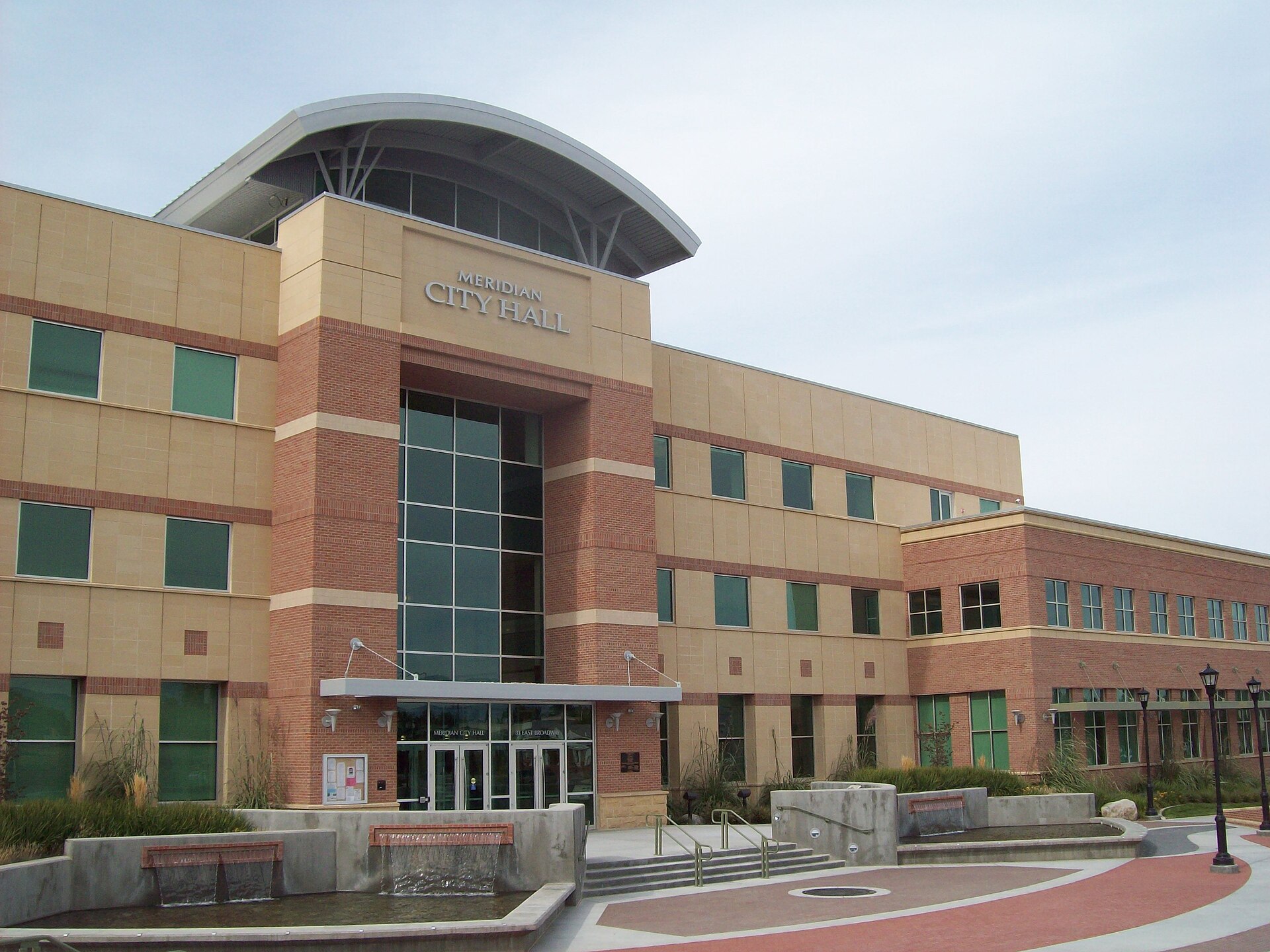
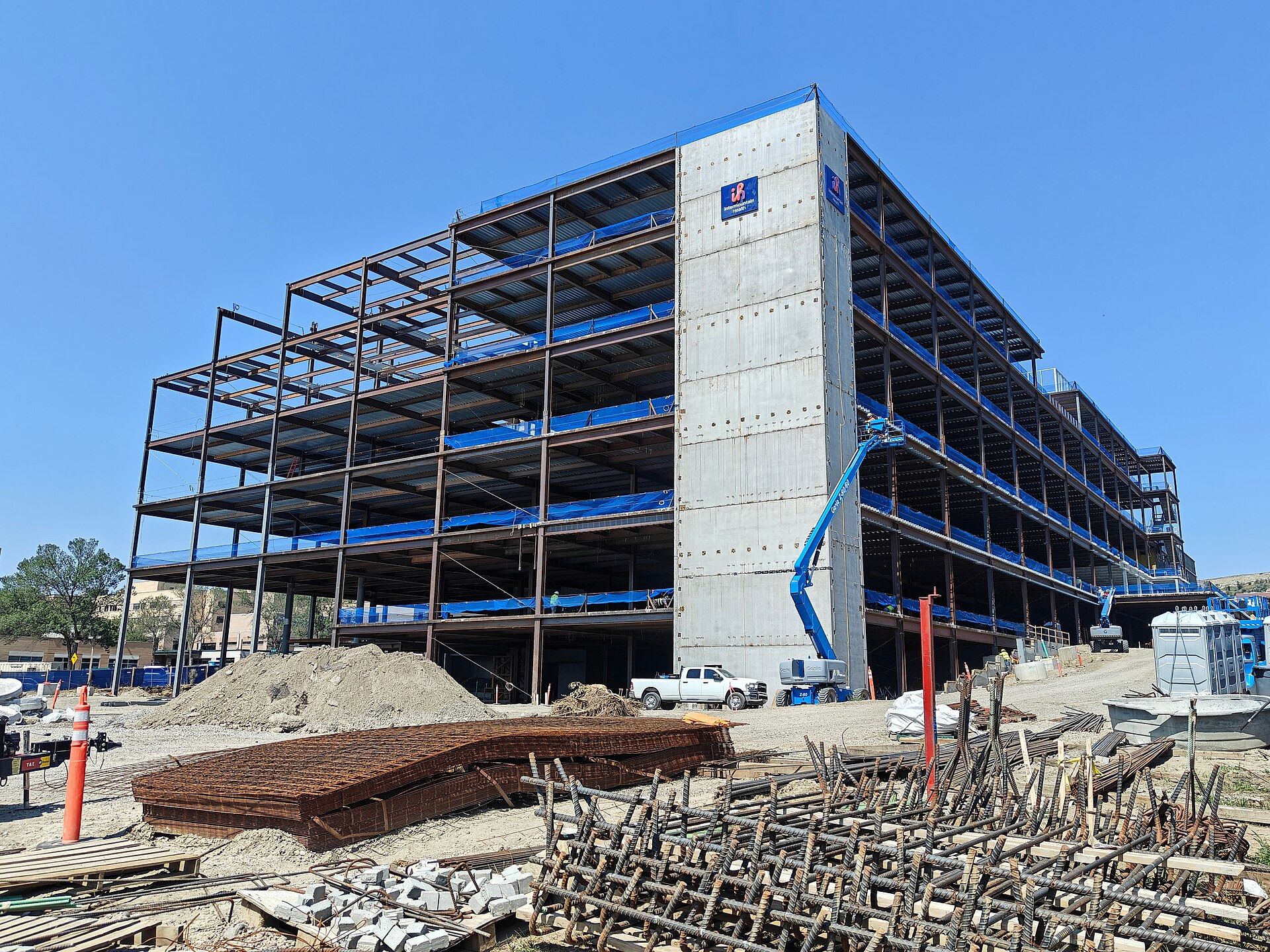
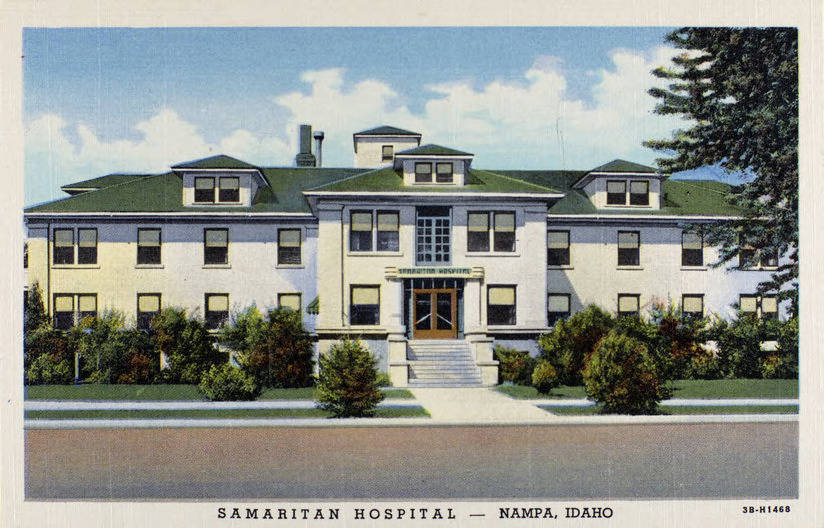
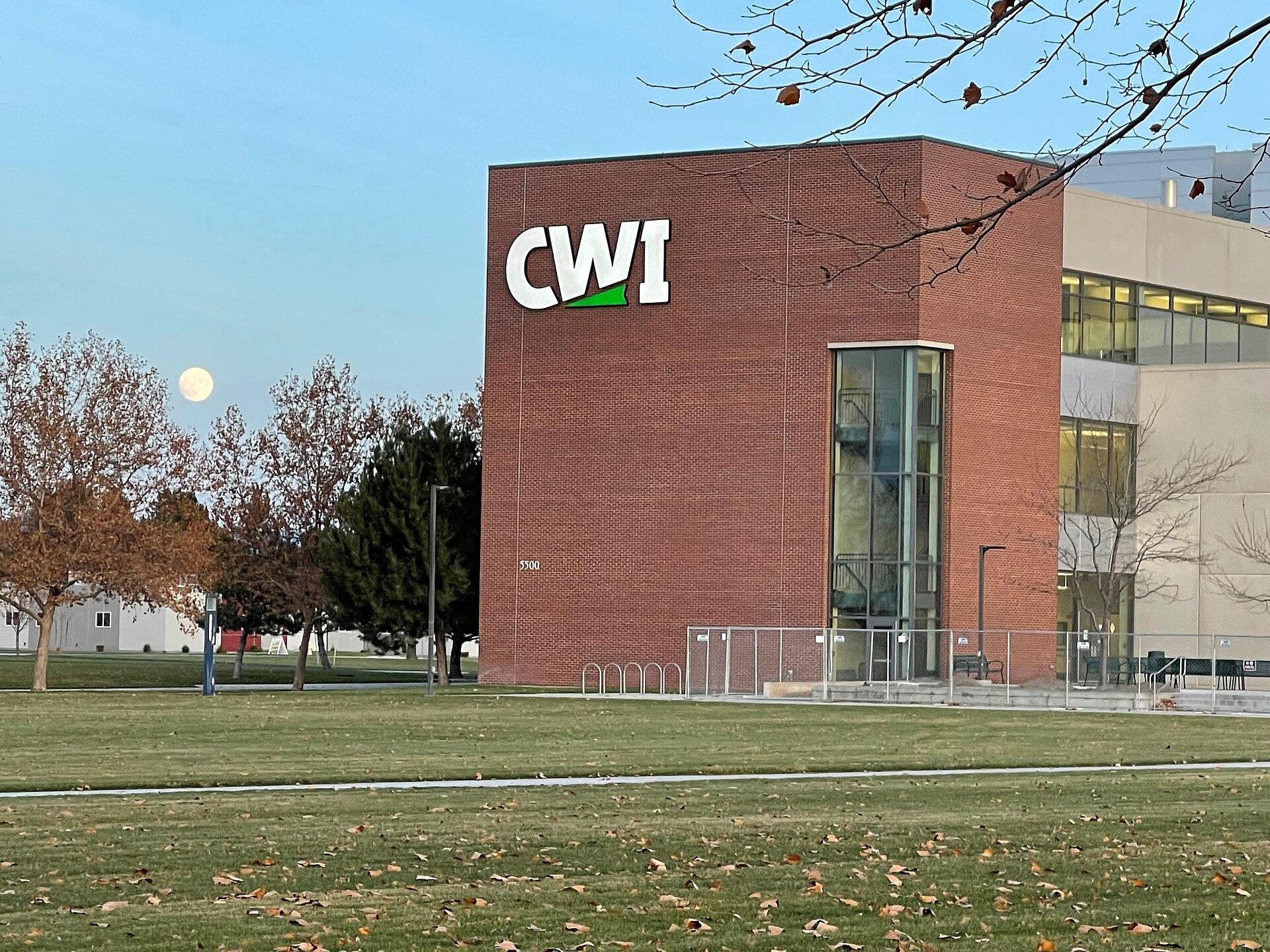
The photographs in this lesson show Meridian City Hall, the College of Western Idaho's Nampa campus, a 1943 postcard of a Nampa hospital and a 2026 hospital construction site in Billings, Montana (not Idaho). The original graphics show the sector's share of jobs since 2001, growth compared with all jobs, pay by part of the sector, the 2006 to 2030 building timeline, where the money for new capacity comes from, employer premiums and the county shares above.
Common mistakes
- Calling all of NAICS 62 "health care." The sector includes social assistance, mostly child care and services for older adults and people with disabilities, which had 19,173 private Idaho jobs in 2025. For health care alone, use subsectors 621, 622 and 623.1316
- Reading job counts as people or full-time workers. QCEW counts filled positions on payrolls. A part-time job counts as one job and a person with two jobs counts twice, so 130,009 jobs is neither 130,009 people nor 130,009 full-time equivalents.12
- Reading the 2024 drop in local-government health jobs as layoffs. Local-government health care and social assistance jobs fell from 7,833 in 2023 to 4,349 in 2024 because Kootenai Health changed from a hospital district to a private nonprofit at the start of 2024; the private column rose by more.114
- Treating the employer list as a head count. The Idaho Department of Labor publishes ranges, its two 2025 products give different ranges for St. Luke's, and an employer that does not give permission is left off. A missing name does not mean a small employer.23
- Assuming a majority wins a hospital bond. Tax-backed local debt in Idaho needs two-thirds of those voting. The 2022 Cascade Medical Center bond had 56.6 percent and failed.910
- Treating state-authority hospital bonds as taxpayer debt. Bonds issued through the Idaho Health Facilities Authority are repaid by the hospital, and Idaho Code section 39-1451 says they are not a debt of the state. The public cost is indirect: forgone federal income tax on the interest.3132
- Comparing charity care with community benefit. The KFF and AHA-commissioned estimates of what nonprofit hospitals give back use different benefit measures: charity care alone, or all Schedule H community benefit including Medicaid shortfalls. Quote which one a figure uses.3238
- Reading the MEPS offer rate as the share of workers with coverage. The 41.9 percent figure is the share of establishments that offer coverage. Because big employers almost all offer, 76.6 percent of Idaho private employees worked at establishments that offered coverage in 2025.11
- Comparing dollars across years without saying so. All premium, wage and project figures here are nominal. A 2011 hospital cost and a 2026 hospital cost are not comparable without an inflation adjustment, and construction costs rose faster than general prices in the 2020s.
What we know, what we don't, and what the data can show
What we know
- Private and local-government health care and social assistance jobs in Idaho rose from 57,778 in 2001 to 130,009 in 2025, from 10.1 to 14.9 percent of all jobs, and kept rising through the 2008 to 2010 recession.1
- St. Luke's is Idaho's largest private employer on the Labor department's 2025 list and Saint Alphonsus is third.2
- Both large systems are in the middle of their biggest construction programs in years: St. Luke's in downtown Boise through late 2029, with patients expected in early 2030, and Saint Alphonsus in Nampa and North Meridian through 2028.428
- Idaho has no certificate of need law, so building decisions rest with hospital boards and local land use rules.8
- Since Jan. 1, 2026, nonprofit hospitals must document Schedule H and, except critical access hospitals, 501(r) compliance to keep their Idaho property tax exemption.3637
What we don't know
- The dollar value of Idaho's property tax exemption for nonprofit hospitals; no state agency publishes it.
- Exact employee counts for each hospital system in Idaho, since the state publishes ranges and the systems report their own head counts differently.
- How much any particular new plant or data center changes clinic or emergency room use; no published Idaho study measures it.
- The total cost of the St. Luke's Boise project as the hospital itself states it, and the cost of each Saint Alphonsus project separately; the figures here come from trade publications.
- The year Idaho's certificate of need program ended, which this lesson could not confirm from the session laws.
What the data can show
- BLS QCEW can show health care jobs and wages by county, ownership and subsector every quarter, so a city can track whether a new hospital or clinic actually added jobs.12
- CMS hospital cost reports (HCRIS) can show each hospital's beds, patient days, payer mix, salaries and capital costs by year (see lesson 03).
- IRS Form 990 and Schedule H can show a nonprofit system's revenue, executive pay, bonds outstanding, charity care and community benefit, and whether it completed its CHNA.42
- Bond official statements filed on the Municipal Securities Rulemaking Board's EMMA site can show a hospital's borrowing, debt service and audited finances.
- MEPS-IC can show employer premiums, contributions and offer rates for Idaho every year since the 1990s.11
- County board of equalization records can show which hospitals filed the community benefit reports Idaho Code section 63-602D requires.36
Questions people ask
Is St. Luke's really Idaho's largest employer?
It is the largest private employer on the Idaho Department of Labor's 2025 lists and the first name on the department's Top 100 list, which includes local and state agencies such as Boise State University and the Department of Health and Welfare. State government as a whole is larger: a 2023 Idaho Statesman count put it above 24,000 employees, but the department does not rank the state as one employer.319
Do nonprofit hospitals pay property tax in Idaho?
Not on hospital property that meets the conditions in Idaho Code section 63-602D. County hospitals, hospital districts, critical access hospitals and rural emergency hospitals are exempt; a nonprofit hospital must also document its nonprofit status, Schedule H and, unless it is a critical access hospital, compliance with federal 501(r) rules. Property it uses for unrelated business is taxed unless that use is 3 percent or less of the property's value. For-profit hospitals pay property tax.36
Can a city or county stop a new hospital?
Not through a certificate of need, because Idaho has none.8 A city or county controls zoning, annexation, building permits and road access, and the state licenses the hospital once it is built under Idaho Code Title 39, chapter 13.30 Local land use hearings are where residents can comment; module 26, Local Government, explains how they work.
Why did a hospital bond fail even though most voters said yes?
Because Article VIII, section 3 of the Idaho Constitution requires two-thirds of those voting to approve local government debt that will be repaid from property taxes beyond the current year's revenue. The Cascade Medical Center bond on May 17, 2022, had 564 yes votes and 433 no votes, 56.6 percent.910
Are health care jobs well paid?
Hospital jobs are: Idaho private hospitals paid an average of $84,636 in 2025, about a third more than the state's all-industry private average of $63,240. Nursing and residential care ($41,720) and social assistance ($30,418) paid well below it. Occupation-level wages are in lesson 07.16
Where can I find a hospital's community health needs assessment?
Federal rules require each tax-exempt hospital to post its CHNA on a website and keep a paper copy available free at the hospital until two later CHNAs are published, and to adopt an implementation strategy. Its Schedule H filing says whether it met the requirement.4042
Does a big new employer mean a new clinic will open nearby?
Not automatically. Hospital systems decide where to put clinics, and their public statements tie new sites to population and travel time. Large employers nearly all offer insurance, which makes an area more attractive to a clinic, but no published Idaho study links a specific plant to a specific clinic.1118
Hard questions
Should Idaho restore certificate of need?
For: Supporters of CON argue it prevents duplicate high-cost services in the same market, protects rural hospitals from competitors that take only well-insured patients, and lets the state steer capital to underserved places. The three-mile gap between the 2017 St. Luke's and Saint Alphonsus Nampa hospitals is the kind of side-by-side building that CON was designed to review.25 Against: Opponents argue CON protects incumbents, slows new capacity when a region is growing fast and invites lobbying, and that Idaho has added beds and clinics without it. Evidence: Most of Idaho's neighbors kept some form of CON while Utah and Wyoming did not; this lesson did not review the national research on CON and costs and found no Idaho-specific study.8
Are big hospital projects good economic development?
Yes: They bring hundreds of construction jobs and then permanent jobs that pay well above local averages, and health care added jobs in both recessions of this century.14 Caution: Almost all of the money that repays a hospital tower comes from local patients, employers and public programs, so a hospital's growth is also a measure of what the community spends on care. Employers who buy coverage feel it in premiums, which in Idaho take a larger share of average pay than nationally.11 Evidence: Both things are true in the data. Whether a given project adds care the region needs or mostly moves care from one provider to another is a question its CHNA, cost reports and prices can help answer.
What should nonprofit hospitals owe in return for their tax exemption?
Hospitals' view: The AHA-commissioned EY study finds community benefits more than 11 times the federal tax benefit, and about three times the total with state and local taxes included, counting Medicaid shortfalls, training and research.38 Skeptics' view: KFF's estimate puts the exemptions at about $28 billion in 2020 against about $16 billion in charity care, and argues charity care is the clearest measure of help to patients who cannot pay.32 Idaho's answer so far: House Bill 130 (2025) did not set a minimum amount of charity care; it tied the property tax exemption to federal 501(r) rules and Schedule H disclosure, effective Jan. 1, 2026.3736
Should public hospitals become private nonprofits?
For conversion: Kootenai Health said its 2024 conversion would let it operate with greater efficiency and effectiveness to serve its patients and community, and 87 percent of Gooding County voters approved dissolving North Canyon Medical Center's taxing district in 2018, after tax revenue had already been taken out of its operating budget.1417 Against: A district hospital has an elected board, open meetings and public records; a private nonprofit's board is usually chosen within the corporation rather than by voters, and its records are more limited, though it still files a Form 990. Evidence: Idaho law allows the change under Idaho Code section 39-1359; this lesson found no study of how Idaho conversions changed prices, services or access.30
For reporters and advocates
Records that exist.
- BLS QCEW county and state data by industry and ownership, quarterly and annual, free on the BLS website and through the Idaho Department of Labor's labor market information site.12
- Idaho Department of Labor employer lists (Top 15 private, Top 100 statewide) each August.2
- IRS Form 990 and Schedule H for St. Luke's, Saint Alphonsus's parent Trinity Health, Kootenai Health, Inc. and other nonprofits (ProPublica's Nonprofit Explorer finds the filings).42
- Bond official statements and annual disclosures on the MSRB's EMMA website, for bonds issued through the Idaho Health Facilities Authority or by a hospital district.31
- Hospital CHNAs and implementation strategies on each hospital's website.40
- County board of equalization records: exemption applications and the audited community benefit reports that hospitals with 150 or more beds must file by Dec. 31 under Idaho Code section 63-602D.36
- Hospital district records: budgets, levy certifications, minutes, bond resolutions and election notices under Idaho Code Title 39, chapter 13, and results on the Secretary of State's canvass site.3010
- City and county land use files: site plans, traffic studies, development agreements and building permits for new hospitals and clinics.
- Economic development agreements and annual reports for incentive programs, which often list jobs, wages and benefits (see module 83).
- CMS cost reports, the Provider of Services file and ownership data for beds and ownership changes (see lesson 03).
Questions to ask. For a hospital: How many jobs will the project add when it opens, at what pay, and how many will be filled from outside Idaho? How is it financed, and what share comes from bonds, cash and donations? Which needs in your latest CHNA does it address? What did your last community benefit report to the county board of equalization say? For a city or county: What did the hospital commit to in its development agreement? For an economic development office: Does the incentive agreement require the employer to offer health coverage, and does the annual report confirm it? For a hospital district: What is the district's levy, its outstanding debt and its plan if a bond fails?
Public records requests. City, county and hospital district records are public records under the Idaho Public Records Act, Idaho Code Title 74, chapter 1; module 47 explains how to request them (Idaho Public Records Requests). A private nonprofit hospital is not a public agency under that act, but its Form 990, its CHNA, its bond disclosures and the reports it files with counties and the state are public. Federal records (CMS, IRS rulings, HHS grants) can be requested under the federal Freedom of Information Act. How health dollars move through the state budget is in lesson 10 and module 75's Idaho State Budget; how to testify on a local or state decision is in module 49, Testifying and Public Comment.
The Idaho angle. Hospitals are the largest private employers in the state and in most regional centers, they are building the biggest projects in their histories, and since 2026 their property tax exemption depends on federal disclosure. The Medicaid side of hospital finance, including the 2025 federal limits on provider taxes and state directed payments, is in module 89's What the 2025 Federal Law Does Beyond Work Requirements.
Where to go next
- BLS QCEW Data Views: Free BLS tool for jobs, establishments and wages by industry, county and ownership; choose Idaho or a county and NAICS 62 or 622. For reporters, economic developers and anyone checking a jobs claim.
- Idaho Department of Labor, labor market information: Free state site with the annual employer lists, county profiles, wages and industry projections. Useful for local officials and job seekers who want Idaho-specific data.
- MEPS Insurance Component summary tables: Free federal tables on employer health insurance by state and year: offer rates, premiums, contributions and deductibles. Pick "Insurance Component," then state tables.
- ProPublica Nonprofit Explorer: Free search tool (run by a nonprofit newsroom) that finds IRS Form 990 filings, including Schedule H, for St. Luke's, Trinity Health, Kootenai Health and other nonprofit hospitals.
- MSRB EMMA (Electronic Municipal Market Access): Free official site for municipal bond documents; search a hospital or the Idaho Health Facilities Authority to read official statements and annual financial disclosures.
- Idaho Secretary of State election results (canvass): Free official results for state and local elections, including hospital district bonds and levies, by date and jurisdiction.
- Idaho Statutes and Constitution: Free official text of Idaho Code (Title 39 chapter 13 hospital districts, section 63-602D) and the Idaho Constitution, with history lines.
Still being checked (10 items)
These points could not be fully confirmed against a primary source when this lesson was written and fact checked in November 2026. The text above states each one as uncertain.
- The year Idaho's certificate of need program ended: NCSL lists Idaho as having no CON law but gives no repeal year, and the session law was not located.
- The year of the St. Luke's and Magic Valley Regional Medical Center combination: the Times-News (2018) describes a 2006 county vote approving the sale (84 percent yes), while Engineering News-Record (2010) refers to a 2004 merger agreement. Both are reported in the lesson.
- The result of Cascade Medical Center's May 16, 2023, $40 million bond election could not be confirmed from the state canvass.
- The total cost of the St. Luke's downtown Boise project ($1.2 billion) and the Saint Alphonsus projects (about $450 million) come from trade publications (ENR and Catholic Health World), not from the hospitals' own releases, which give no dollar figures.
- St. Luke's operating-room count differs between its own release (27) and ENR (28); the Saint Alphonsus Nampa expansion square footage differs between its Feb. 2026 (254,000) and June 2026 (260,000) releases; the June release also mentions 157 new inpatient beds, which was not reconciled with the 64 added beds in other accounts.
- Idaho Department of Labor's two 2025 products disagree on St. Luke's employment range (12,500 to 14,999 in the spreadsheet; 15,000 or more on the web page). Kootenai Health is absent from the 2025 lists; the reason is not stated.
- That Minidoka County's 424 local-government health jobs in QCEW are Minidoka Memorial Hospital is an inference from the 2018 Times-News description of county ownership; QCEW does not name employers.
- The 2016 to 2017 shift of Idaho private jobs from hospitals (NAICS 622) to ambulatory care (621) appears to be a classification change; BLS does not state the cause.
- How county assessors now treat nonprofit hospital buildings under construction after HB 130 removed the construction-period language from Idaho Code 63-602D was not confirmed.
- The Saint Alphonsus Nampa hospital's actual 2017 opening date was not confirmed; the Idaho Business Review reported expected completion in March 2017.
Last verified November 23, 2026. General education, not legal, medical, insurance or financial advice; every figure names its source and year in the Notes and Sources below. Data is revised: check the newest release before relying on any number.
Notes
- U.S. Bureau of Labor Statistics (BLS), Quarterly Census of Employment and Wages (QCEW), annual average employment, 2001 to 2025, Idaho (area 16000) and United States, health care and social assistance (NAICS 62) for private and local government ownership, hospitals (NAICS 622) and ambulatory care and nursing (NAICS 621, 623), and total covered employment for all industries and all ownerships, retrieved through the BLS Public Data API (series ENU1600010562, ENU1600010362, ENU1600010010, ENU16000105621, ENU16000105622, ENU16000103622, ENU16000105623 and the matching US000 series). 2025 annual averages are the first full-year release (read Nov. 23, 2026). Read it online. ↩
- Idaho Department of Labor, "2025 Top 15 private Idaho businesses," Business Listings page, updated August 2026. Ranked by employment range; only businesses with more than 500 employees that gave permission to publish are listed (read Nov. 23, 2026). Read it online. ↩
- Idaho Department of Labor, "2025 Top 100 employers" spreadsheet (statewide, private and public, employment ranges), posted August 2026 (read Nov. 23, 2026). Read it online. ↩
- St. Luke's Health System, "St. Luke's marks construction milestone on Boise campus development project" (topping out June 26, 2026; nine-story north tower, about 860,000 square feet, 80 added beds, 27 operating rooms, a six-story medical office plaza of about 180,000 square feet; completion late 2029, patients early 2030; about 300 workers on site), updated June 30, 2026. The hospital system's own release (read Nov. 23, 2026). Read it online. ↩
- Brian Fryer, "St. Luke's Boise Health System Invests in Downtown Campus," Engineering News-Record, April 20, 2026 ($1.2 billion Downtown Commons Improvement Plan; funded through existing resources and bonds issued by the health system). Trade news report (read Nov. 23, 2026). Read it online. ↩
- Saint Alphonsus Health System, "Saint Alphonsus breaks ground on Nampa hospital expansion," June 16, 2026 (about 260,000 square feet; completion fall 2028). The hospital system's own release (read Nov. 23, 2026). Read it online. ↩
- Catholic Health World (Catholic Health Association of the United States), "Trinity Health's Saint Alphonsus to complete $450 million multi-campus expansion to respond to southwest Idaho growth," April 20, 2026 (Nampa campus licensed for 106 beds; fundraising campaign to cover about 10 percent of the cost). Trade association publication (read Nov. 23, 2026). Read it online. ↩
- National Conference of State Legislatures (NCSL), "Certificate of Need State Laws" (35 states and the District of Columbia have CON laws; Idaho, Utah and Wyoming are among the 15 states without one; Montana, Oregon, Washington and Nevada have programs) (read Nov. 23, 2026). Read it online. ↩
- Idaho Constitution, Article VIII, section 3 (no county, city, school district or other subdivision may incur debt beyond the year's income and revenue without the assent of two-thirds of the voters voting at an election held for that purpose, except for ordinary and necessary expenses authorized by general law) (read Nov. 23, 2026). Read it online. ↩
- Idaho Secretary of State, election canvass, "Cascade Medical Center Hospital District Special Bond," May 17, 2022 (up to $19,000,000 in general obligation bonds to construct a district hospital; yes 564, 56.6 percent; no 433, 43.4 percent) (read Nov. 23, 2026). Read it online. ↩
- Agency for Healthcare Research and Quality (AHRQ), Medical Expenditure Panel Survey, Insurance Component (MEPS-IC), 2025 state tables, series II: Table II.A.2 (percent of private-sector establishments that offer health insurance), II.B.2 and II.B.2.b (employees in offering establishments; percent enrolled), II.C.1 and II.C.2 (average single premium and employee contribution), II.D.1 and II.D.2 (average family premium and employee contribution) (read Nov. 23, 2026). Read it online. ↩
- BLS, "QCEW Overview" (QCEW counts jobs covered by state unemployment insurance and federal workers covered by the Unemployment Compensation for Federal Employees program; it reports by ownership: federal, state and local government and private; it withholds cells that could identify a single employer) (read Nov. 23, 2026). Read it online. ↩
- U.S. Census Bureau, North American Industry Classification System (NAICS), 2022, Sector 62, Health Care and Social Assistance, and its subsectors 621 (ambulatory health care services), 622 (hospitals), 623 (nursing and residential care facilities) and 624 (social assistance) (read Nov. 23, 2026). Read it online. ↩
- Kootenai Health, "New Operating Model" (the Board of Trustees voted May 2, 2023, to convert from a hospital district to a private 501(c)(3) nonprofit; assets, liabilities and operations moved to Kootenai Health, Inc. at midnight on Dec. 31, 2023). The hospital's own page (read Nov. 23, 2026). Read it online. ↩
- BLS, QCEW annual averages by industry for 2015, 2019, 2023 and 2024, open data files for NAICS 10, 62 and 622, used for the ownership comparison and the county figures (read Nov. 23, 2026). Read it online. ↩
- BLS, QCEW 2025 annual averages by industry, open data files for NAICS 10, 62, 621, 622, 623 and 624, all states and counties, including annual average employment, average annual pay and total annual wages by ownership (read Nov. 23, 2026). Read it online. ↩
- Times-News (Twin Falls), "'Very significant growth': Magic Valley health care providers get creative to serve booming population," Aug. 12, 2018, republished by InsuranceNewsNet. News report, used for the 2006 Twin Falls County vote, the 2018 Gooding County vote and statements by hospital leaders (read Nov. 23, 2026). Read it online. ↩
- Saint Alphonsus Health System, "Saint Alphonsus breaks ground on North Meridian Health Plaza," June 1, 2026 (Highway 16 and Chinden Road; opening spring 2028). The hospital system's own release (read Nov. 23, 2026). Read it online. ↩
- Angela Palermo, "Who is Idaho's largest employer? (It's not who Idaho Labor's top 10 list says it is)," Idaho Statesman, republished by EastIdahoNews.com, Dec. 30, 2023. News report, used for the state controller's count of state employees and St. Luke's own head count (read Nov. 23, 2026). Read it online. ↩
- U.S. Census Bureau, State Population Totals and Components of Change, Vintage 2025 (July 1, 2025: Idaho 2,029,733; United States 341,784,857), and the 2010 and 2020 census counts (Idaho 1,567,582 and 1,839,106; United States 308,745,538 and 331,449,281) (read Nov. 23, 2026). Read it online. ↩
- KFF (nonprofit research), State Health Facts, "Hospital Beds per 1,000 Population by Ownership Type," 1999 to 2024, from the American Hospital Association Annual Survey (Health Forum, LLC) and Census population estimates (read Nov. 23, 2026). Read it online. ↩
- "Idaho's 2010 Owner of the Year," Engineering News-Record, May 1, 2010 (St. Luke's Magic Valley replacement hospital: more than 700,000 square feet, 186 beds, construction from early 2008, opening expected late May 2011; on-site workers expected to peak above 400). Trade news report (read Nov. 23, 2026). Read it online. ↩
- Becker's Hospital Review, "Idaho's St. Luke's Magic Valley to Open," May 9, 2011 (opening May 21, 2011; about 700,000 square feet; 186 private rooms). Trade news report (read Nov. 23, 2026). Read it online. ↩
- St. Luke's Health System, "Community welcomes St. Luke's Nampa," Oct. 31, 2017 ($114 million, 200,000 square feet, 87 patient rooms; grand opening Oct. 27, 2017). The hospital system's own release (read Nov. 23, 2026). Read it online. ↩
- Teya Vitu, "Saint Alphonsus and St. Luke's make a mark in Canyon County," Idaho Business Review, May 11, 2016 (Saint Alphonsus Nampa: $80 million, 100 beds, 240,000 square feet, completion expected March 2017; St. Luke's Nampa: $96 million estimate). News report (read Nov. 23, 2026). Read it online. ↩
- KTVB, "Cascade Medical Center bond fails" (the $19 million, 30-year bond to replace a 50-year-old building got nearly 57 percent, short of the two-thirds required), May 2022. News report (read Nov. 23, 2026). Read it online. ↩
- Becker's Hospital Review, "Idaho hospital puts $40M bond for construction of new hospital on the ballot," April 4, 2023 (Cascade Medical Center; election May 16, 2023). Trade news report (read Nov. 23, 2026). Read it online. ↩
- Saint Alphonsus Health System, "Saint Alphonsus announces historic Treasure Valley expansions," Feb. 16, 2026 (Nampa expansion of about 254,000 square feet with 64 new medical, surgical and ICU beds; North Meridian Health Plaza of about 80,000 square feet; funded through Trinity Health). The hospital system's own release (read Nov. 23, 2026). Read it online. ↩
- St. Luke's Health System, "St. Luke's by the Numbers 2024: Magic Valley Overview," fiscal year ended Sept. 30, 2024 (3,047 employees; 243 licensed beds; community benefit $161.6 million as the system reports it). The hospital system's own report (read Nov. 23, 2026). Read it online. ↩
- Idaho Code Title 39, chapter 13, sections 39-1318 to 39-1359 (hospital districts: creation by petition and election, trustees, levies in sections 39-1332 to 39-1337, bonds in sections 39-1338 to 39-1343, lease or sale of district property in section 39-1358, and conveyance to a nonprofit corporation in section 39-1359) (read Nov. 23, 2026). Read it online. ↩
- Idaho Code Title 39, chapter 14, sections 39-1441 to 39-1460 (the Idaho Health Facilities Authority; section 39-1451 provides that the authority's bonds are not a debt of the state; section 39-1452 exempts them from taxation) (read Nov. 23, 2026). Read it online. ↩
- Jamie Godwin, Zachary Levinson and Scott Hulver, "The Estimated Value of Tax Exemption for Nonprofit Hospitals Was About $28 Billion in 2020," KFF (nonprofit research), March 14, 2023, revised March 27, 2023 (federal $14.4 billion; state and local $13.7 billion, including $5.0 billion in local property taxes; charity care about $16 billion) (read Nov. 23, 2026). Read it online. ↩
- Idaho Code section 39-1339, creation of hospital district indebtedness (an election is required for tax-backed debt of $500,000 or more or debt exceeding the year's income and revenue; outstanding coupon bonds may not exceed 2 percent of market value; subsection 3 allows debt without an election for facilities and equipment if no property tax revenue repays it) (added 1965; last amended 2011, ch. 185) (read Nov. 23, 2026). Read it online. ↩
- Local News 8 (Idaho Falls), report on the Power County Hospital District bond, Nov. 6, 2019 ($2.95 million to finish renovations; 55 percent yes, short of the required supermajority). News report (read Nov. 23, 2026). Read it online. ↩
- Idaho Constitution, Article VIII, section 3C, "Hospitals and health services: authorized activities and financing" (public hospitals may incur debt for facilities, equipment and technology with the approval of their governing body, repaid only from hospital revenues and not from property taxes or the taxing power) (read Nov. 23, 2026). Read it online. ↩
- Idaho Code section 63-602D, "Property exempt from taxation: certain hospitals" (added 1996, ch. 98; amended 1999, 2006, 2017 and 2025, ch. 323) (read Nov. 23, 2026). Read it online. ↩
- House Bill 130 (2025), "Property Taxes," Revenue and Taxation Committee. Passed the House 39-28-3 (Feb. 24, 2025), amended in the Senate and passed 30-2-3 (April 1, 2025), final House passage 58-11-1 (April 3, 2025); signed by Gov. Brad Little April 14, 2025; 2025 Idaho Session Laws chapter 323; effective Jan. 1, 2026 (read Nov. 23, 2026). Read it online. ↩
- Ernst & Young for the American Hospital Association (a hospital trade group), "Estimates of the Value of Federal Tax Exemptions and Community Benefits Provided by U.S. Nonprofit Hospitals, 2022," November 2025 (federal tax benefit $13.2 billion; $54.4 billion with state and local taxes; community benefit reported on Schedule H $148.9 billion) (read Nov. 23, 2026). Read it online. ↩
- Internal Revenue Code section 501(r) (26 U.S.C. 501(r)), additional requirements for charitable hospital organizations, added by the Patient Protection and Affordable Care Act, P.L. 111-148 (March 23, 2010), section 9007 (read Nov. 23, 2026). Read it online. ↩
- 26 CFR 1.501(r)-3, community health needs assessments (the CHNA must be conducted in the taxable year or either of the two preceding years; the implementation strategy must be adopted by the 15th day of the fifth month after the year ends; the report must be posted on a website and kept available until two later CHNAs are published; input must come from at least one public health department and from medically underserved, low-income and minority populations) (read Nov. 23, 2026). Read it online. ↩
- Internal Revenue Code section 4959 (26 U.S.C. 4959), a $50,000 excise tax on a hospital organization that fails to meet the CHNA requirement for a taxable year (read Nov. 23, 2026). Read it online. ↩
- Internal Revenue Service, "About Schedule H (Form 990), Hospitals" (the schedule on which nonprofit hospital organizations report financial assistance, community benefit, bad debt and CHNA compliance) (read Nov. 23, 2026). Read it online. ↩
- National Institute of Standards and Technology, CHIPS for America, "Micron (Idaho), Boise" (final award; $6.44 billion in combined direct funding for Micron's New York, Idaho and Virginia projects; about $50 billion planned in Idaho; about 3,500 manufacturing and facility jobs and about 6,000 construction jobs in Boise over 20 years) (read Nov. 23, 2026). Read it online. ↩
- Micron Technology, "U.S. expansion: Idaho" (DRAM output at the first Boise fab scheduled for 2027; option of on-site child care for Boise team members; "over 17,000 new jobs" across direct and indirect jobs as the company states it). The company's own page (read Nov. 23, 2026). Read it online. ↩
- Idaho Department of Commerce, "Meta announces Kuna as location of new data center," Feb. 16, 2022 ($800 million; about 100 ongoing jobs; more than 1,200 construction workers at peak; about $50 million for a water and sewer system to be owned by the City of Kuna) (read Nov. 23, 2026). Read it online. ↩
- AHRQ, MEPS-IC 2015 state tables II.A.2 (percent of establishments offering), II.C.1 (average single premium) and II.D.1 (average family premium) (read Nov. 23, 2026). Read it online. ↩
Check yourself
1. About what share of all Idaho jobs covered by unemployment insurance were in private and local-government health care and social assistance in 2025?
BLS QCEW 2025 annual averages: 130,009 sector jobs out of 874,283 total, or 14.9 percent (our calculation).
2. Why did local-government health care jobs in Idaho drop from 7,833 in 2023 to 4,349 in 2024 in the QCEW data?
Kootenai Health moved its operations to Kootenai Health, Inc., a 501(c)(3), at midnight Dec. 31, 2023; QCEW private health jobs in Kootenai County rose at the same time.
3. According to the Idaho Department of Labor's 2025 list, which is Idaho's largest private employer?
The Idaho Department of Labor's 2025 Top 15 private businesses list ranks St. Luke's first, Walmart second and Saint Alphonsus third.
4. What share of voters must approve a tax-backed hospital district bond in Idaho?
Idaho Constitution Article VIII, section 3 requires the assent of two-thirds of the voters voting at an election held for that purpose; the 2022 Cascade Medical Center bond failed at 56.6 percent.
5. Which Idaho law governs the property tax exemption for nonprofit, county and district hospitals?
Idaho Code section 63-602D, "Property exempt from taxation: certain hospitals," amended by House Bill 130 (2025), effective Jan. 1, 2026.
6. What did House Bill 130 (2025) add as a condition for a non-critical-access nonprofit hospital to keep its Idaho property tax exemption?
Idaho Code section 63-602D(3) as amended by HB 130 requires nonprofit status documentation, Schedule H and, for hospitals that are not critical access hospitals, 501(r) items such as a CHNA and financial assistance policy.
7. How often must a tax-exempt hospital conduct a community health needs assessment under 26 CFR 1.501(r)-3?
26 CFR 1.501(r)-3 requires a CHNA in the taxable year or either of the two preceding years, which means at least every three years.
8. Who repays bonds issued through the Idaho Health Facilities Authority for a nonprofit hospital?
Idaho Code sections 39-1441 to 39-1460 create the authority; section 39-1451 provides that its bonds are not a debt of the state.
9. In 2025, what was the average total family premium at Idaho private establishments that offer health insurance?
AHRQ MEPS-IC 2025 Table II.D.1: Idaho $25,957; U.S. $26,281. $8,770 is the single premium and $16,691 the 2015 Idaho family premium.
10. Which neighboring state, like Idaho, has no certificate of need law according to NCSL?
NCSL's Certificate of Need State Laws table lists Idaho, Utah and Wyoming among the 15 states without CON; Oregon, Washington, Montana and Nevada have programs.
Terms in this lesson
- QCEW
- The Quarterly Census of Employment and Wages, a BLS count of jobs and wages from employers' unemployment insurance reports, by industry, county and ownership.
- NAICS 62
- The industry sector "health care and social assistance": ambulatory care (621), hospitals (622), nursing and residential care (623) and social assistance (624).
- Ownership code
- QCEW's split of jobs into private, local government, state government and federal government. County hospitals and hospital districts are local government.
- Suppressed (withheld) data
- A number BLS does not publish because it could reveal one employer's figures, common for a county with one hospital.
- Average annual pay
- Total wages paid in a year divided by average employment; it mixes part-time and full-time jobs.
- MEPS-IC
- The Medical Expenditure Panel Survey Insurance Component, an annual federal survey of private employers' health insurance offers, premiums and contributions, by state.
- The full annual cost of a health plan for one enrollee or family, employer and employee shares combined.
- Employee contribution
- The part of the premium a worker pays, usually by payroll deduction.
- Hospital district
- A local taxing unit created by voters under Idaho Code Title 39, chapter 13, with an elected board, to build and run a hospital.
- General obligation bond
- A bond backed by a government's power to levy property taxes; in Idaho, local ones need a two-thirds vote.
- A tax-exempt bond issued by a public authority, such as the Idaho Health Facilities Authority, on behalf of a hospital, which alone repays it.
- Shell space
- Floors or wings built with structure and utilities but left unfinished so beds or rooms can be added later at lower cost.
- Certificate of need (CON)
- A state approval some states require before a provider builds, adds beds or buys major equipment; Idaho has none.
- Community health needs assessment (CHNA)
- A report every tax-exempt hospital must complete at least every three years on its community's health needs, with a plan to address them, under IRC 501(r)(3).
- Board of equalization
- The county commissioners sitting to hear property tax matters, including hospital exemption applications and community benefit reports under Idaho Code 63-602D.
Sources
- BLS Quarterly Census of Employment and Wages (QCEW), annual averages 2001 to 2025 (2026-11-23) checked 2026-11
- Idaho Department of Labor, 2025 Top 15 private Idaho businesses and Top 100 employers (2026-11-23) checked 2026-11
- AHRQ, MEPS Insurance Component 2025 state tables, series II (2026-11-23) checked 2026-11
- Idaho Code section 63-602D, property tax exemption for certain hospitals (2026-11-23) checked 2026-11
- House Bill 130 (2025), Idaho Legislature (2026-11-23) checked 2026-11
- Idaho Code Title 39, chapter 13 (hospitals and hospital districts) (2026-11-23) checked 2026-11
- Idaho Constitution, Article VIII, sections 3 and 3C (2026-11-23) checked 2026-11
- Idaho Code sections 39-1441 to 39-1460, Idaho Health Facilities Authority (2026-11-23) checked 2026-11
- 26 CFR 1.501(r)-3, community health needs assessments (2026-11-23) checked 2026-11
- Internal Revenue Code section 501(r) (2026-11-23) checked 2026-11
- Idaho Secretary of State, election canvass, Cascade Medical Center Hospital District bond, May 17, 2022 (2026-11-23) checked 2026-11
- NIST CHIPS for America, Micron (Idaho), Boise (2026-11-23) checked 2026-11
- Saint Alphonsus Health System, Treasure Valley expansions release, Feb. 16, 2026 (2026-11-23) checked 2026-11
- St. Luke's Health System, Boise campus development milestone, June 2026 (2026-11-23) checked 2026-11