Lesson 9 of 12 · about 55 minutes · Updated November 23, 2026
Nursing Home and Assisted Living Economics
You'll be able to
- Explain how Idaho Medicaid sets a nursing home's daily rate under the state plan, IDAPA 16.03.26 and Idaho Code, including the budget adjustment factor and the 1985 property formula.
- Read a nursing home cost report's margins correctly, telling operating margin from total margin and all-payer cost from Medicaid cost.
- Compare what Medicaid, Medicare and private payers pay per day and explain why homes depend on Medicare and private revenue.
- Describe how Idaho's nursing facility assessment draws federal matching money and how section 71115 of P.L. 119-21 treats it.
- Use CMS ownership and change-of-ownership files to identify operators, landlords, lenders and related parties, and state what research says about related-party payments and private equity.
- Compare assisted living and nursing home prices in Idaho with the United States and neighboring states, and explain what Medicaid does and does not pay for in assisted living.
Start here: the short version
- Idaho nursing homes run on thin margins. In the 76 Idaho cost reports for periods that began in 2023, homes took in $397.43 of net patient revenue for each resident day and spent $392.15 to operate, an operating margin of 1.3 percent; counting other income, the total margin was 4.1 percent. The median home made 0.4 percent on patient care, and 35 of 75 homes with usable figures lost money on it (our calculations).1
- Idaho Medicaid sets a daily rate by formula, then trims it to fit the budget. IDAPA 16.03.26 sections 481 to 495 (in force July 1, 2026) and the state plan approved by CMS as amendment ID-21-0012 describe a prospective, price-based rate with case-mix adjustment each quarter and a "budget adjustment factor" that can lower every home's rate; Idaho Code section 56-265 makes every rate change subject to legislative appropriation.234
- Nobody publishes a checked Idaho rate-versus-cost figure. The Idaho Health Care Association, the nursing home trade group, says the Medicaid rate is about $259 a day against costs above $370, or 69 cents on the dollar. MACPAC, the federal Medicaid advisory commission, left Idaho out of its 2023 state-by-state payment-to-cost study because of data quality problems.56
- Medicare pays far more per day than Medicaid, for far fewer days. CMS raised Medicare skilled nursing facility rates 2.4 percent for federal fiscal year 2027 (91 FR 48588, July 31, 2026). MedPAC found freestanding homes earned a 24 percent margin on fee-for-service Medicare patients in 2024 and an all-payer margin of 2.1 percent, and it recommended a 4 percent cut to Medicare rates.78
- The nursing home bed tax is frozen. Idaho's Skilled Nursing Facility Assessment Act (Idaho Code sections 56-1501 to 56-1509) taxes homes per resident day to draw federal matching money. Section 71115 of P.L. 119-21 (July 4, 2025) holds an expansion state's existing nursing facility tax at the level in effect on that date instead of phasing it down the way it does for hospitals.910
- Real estate and lenders are part of the ownership picture. CMS's October 2026 ownership file lists CareTrust REIT, a publicly traded real estate investment trust, as an "additional disclosable party" for 6 Idaho homes, and a lender, White Oak Healthcare Finance, as holding a 5 percent or greater security interest in 23 Cascadia homes (our counts). Federal rules define these roles in 42 CFR 424.502.1112
- Private prices in Idaho sit near the national median. CareScout's 2025 survey put Idaho's median at $5,175 a month for assisted living (U.S. $6,200) and $345 a day for a semi-private nursing home room (U.S. $315).13
Law: Social Security Act sections 1819, 1888(e), 1902(a)(30)(A), 1903(w) and 1919 and 42 CFR parts 413, 424, 433, 447 and 483 as amended through Nov. 23, 2026, including P.L. 119-21 (2025) section 71115; CMS skilled nursing facility payment rules for federal fiscal years 2026 (90 FR 37310, Aug. 4, 2025) and 2027 (91 FR 48588, July 31, 2026); Idaho Code Title 39 chapter 33 and Title 56 chapters 1, 2 and 15, IDAPA 16.03.22 and IDAPA 16.03.26 (in force July 1, 2026), through the 2026 session; Idaho's approved Medicaid state plan amendment ID-21-0012; cost report figures from CMS's public file for periods that began in 2023; facility, ownership and change-of-ownership data from CMS files dated Sept. 29 to Oct. 1, 2026; prices from CareScout's 2025 survey; checked Nov. 23, 2026. Rates, taxes and prices change every year.
A nursing home is a building, a payroll and a set of contracts with payers that pay very different amounts for the same bed. On any day in late 2026 about 4,600 Idahoans lived in one of the state's 80 certified nursing homes.14 Most of their days were paid by Medicaid at a rate the state sets. A smaller number were paid by Medicare at a rate set in Washington, D.C., and the rest by residents and families, Medicare Advantage plans, long-term care insurers, hospice programs and the Department of Veterans Affairs. Whether a home stays open depends on how those payments add up against its labor, food, utilities, insurance and rent or mortgage.
This lesson follows that money. It explains how Idaho Medicaid builds its daily rate, why the rate is lower than cost by the industry's own count and what the public data can and cannot confirm, how Medicare's Patient Driven Payment Model pays for short stays, how the nursing home bed tax and federal matching money work, who owns the buildings and the operating companies, and what assisted living costs and earns. It compares Idaho with the United States and the six neighboring states wherever the same measure is published, and it uses the Magic Valley, the Treasure Valley, eastern Idaho and northern Idaho as local cases.
Other lessons carry the background, and this one does not repeat them. Module 89's lesson Nursing Homes in Idaho covers the count of homes, staffing standards, the repealed federal staffing rule, inspections, star ratings, closures and the State Veterans Homes. Home and Community-Based Services covers Medicaid care in assisted living and at home, and Spend-Down, Asset Rules and Estate Recovery covers how residents qualify for Medicaid and what they pay toward their own care. In this module, How Providers Get Paid explains prospective payment and fee schedules in general, The Health Care Workforce covers aides' and nurses' wages, and Idaho's Budget and Health Care covers the Medicaid appropriation as a whole.
This is general education about how money moves through a regulated business. It does not recommend any facility, payer, investment or course of action, and it gives no medical, legal, insurance, tax or financial advice.
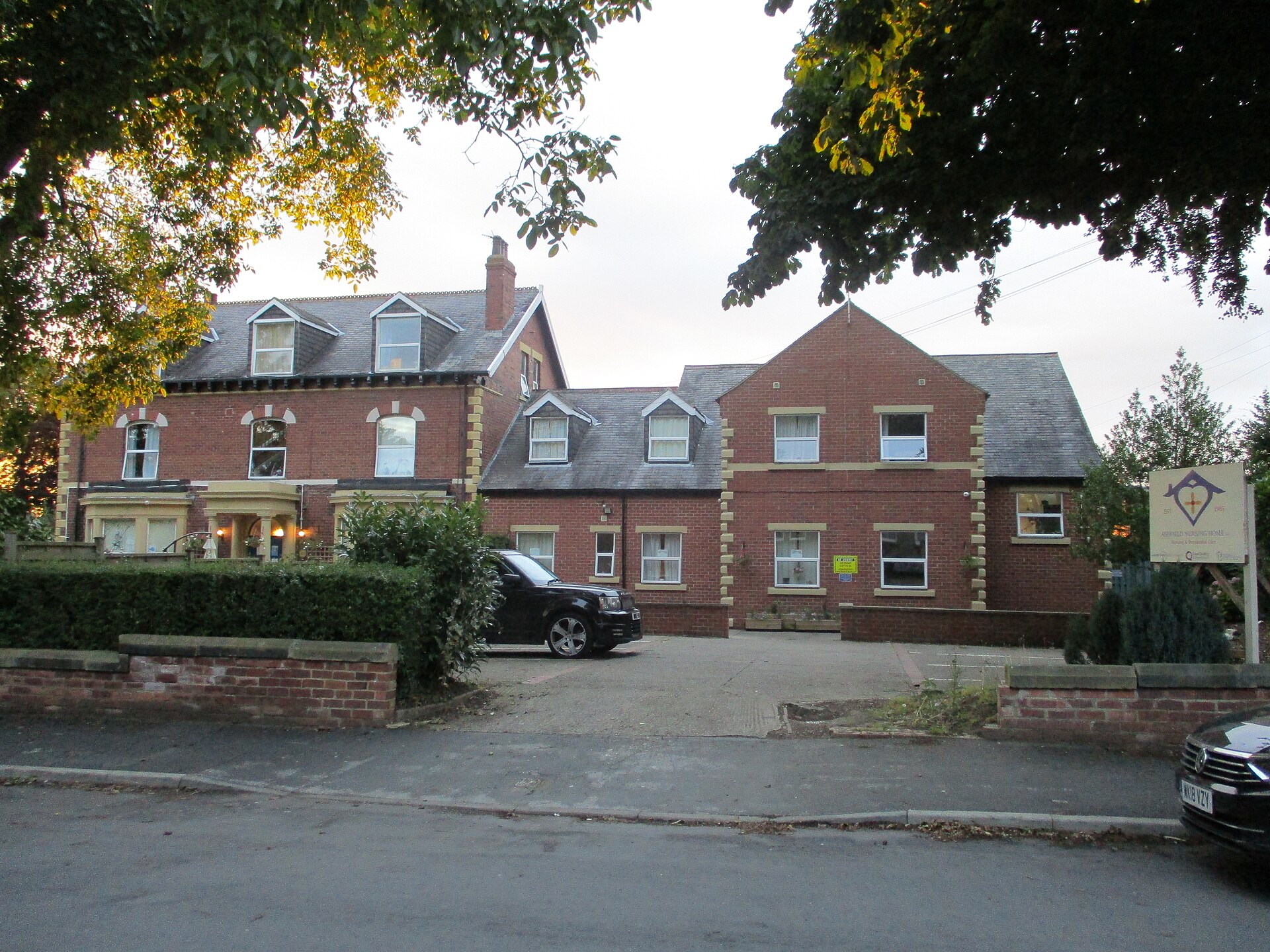

A nursing home as a business
Every certified nursing home in the country files a Medicare cost report each year on form CMS-2540-10. The report lists the home's resident days by payer, its beds, its salaries and contract labor, its balance sheet and its income statement.15 CMS posts the main fields in a public file. Those reports are the only public, home-by-home source of nursing home finances, and they are the base for most of the numbers in this lesson.1 They are filed by the operator and are not audited by CMS line by line, so a single home's figures can contain errors; totals across many homes are steadier.
Where the money comes from
A nursing home sells one main product, a resident day: a bed, meals, nursing care, help with bathing, dressing and eating, activities, housekeeping and laundry for 24 hours. Different payers buy that day at different prices.
- Medicaid pays a daily rate set by the state for long-stay residents who qualify by income, assets and care needs. The resident's own income, after a small personal needs allowance and a few other deductions, goes to the home first, and Medicaid pays the rest of the rate.2
- Medicare Part A pays a daily rate set by CMS for up to 100 days of skilled care after a qualifying hospital stay. Its rate varies with each resident's diagnoses and therapy and nursing needs.16
- Medicare Advantage plans pay rates they negotiate with each home, often below Original Medicare's rate according to MedPAC.8
- Private payers (residents, families and long-term care insurers) pay the home's posted charge.
- Other public payers include the VA, which pays the State Veterans Homes a per diem for eligible veterans, and hospice programs, which pass Medicaid's room-and-board payment through for residents who elect hospice.
Where the money goes
Most of a nursing home's spending is people. In the 2023 Idaho cost reports, salaries made up 47.0 percent of total operating expenses and contract labor (agency nurses and aides) another 4.4 percent; nationally the shares were 41.9 and 6.5 percent (our calculation). Employee benefits, food, supplies, utilities, insurance, property taxes, management fees and rent or mortgage interest make up most of the rest.1 Many of those costs are fixed: a 70-bed building needs a nurse on every shift, a kitchen, heat and a roof whether 50 or 65 residents are living there.
That is why occupancy, the share of available beds that are filled, matters so much. CMS's October 2026 Care Compare file counts 6,115 certified beds in Idaho and an average of 4,578 residents a day, or 74.9 percent occupancy, against 80.0 percent nationally (our calculation).14 The 2023 cost reports, which count "bed days available" a different way, put Idaho's occupancy at 66.4 percent and the nation's at 75.8 percent.1 Idaho Medicaid builds a penalty for low occupancy into its rate: when a home's average occupancy falls below 80 percent of capacity, the department treats a matching share of the home's fixed property costs (other than the property rental rate) as non-allowable, under IDAPA 16.03.26 section 492.2
Idaho nursing home finances by the numbers
Two margins tell different stories. The operating margin compares what a home earns from caring for residents with what it spends to do so. The total margin adds "other income": interest, rental income, gifts, government grants and, in some states and some homes, supplemental Medicaid payments booked outside patient revenue. A home can lose money on care and still show a small profit overall.
Added together, the 76 Idaho homes in the 2023 cost report file reported $596.3 million of net patient revenue, $588.4 million of operating expenses, $7.9 million of net income from patient care and $17.4 million of other income, for total net income of $25.2 million. That is an operating margin of 1.3 percent and a total margin of 4.1 percent (our calculation).1 Idaho looks better than the national totals, where homes as a group reported an operating loss of 9.2 percent and a total margin of 1.0 percent, and better than Washington, Montana and Oregon. Those national and neighbor figures are sums of each home's self-reported numbers, and the way states route supplemental payments into "other income" or patient revenue makes the operating margin hard to compare across states; the total margin is the steadier comparison.
| State | Cost reports | Occupancy, Oct. 2026 | Median operating margin | Total margin (all homes) | Operating expense per resident day | Medicare payment per Medicare day | Contract labor share of expenses |
|---|---|---|---|---|---|---|---|
| Idaho | 76 | 74.9% | 0.4% | 4.1% | $392.15 | $599.80 | 4.4% |
| Utah | 90 | 69.6% | 0.0% | 4.4% | $413.69 | $645.08 | 3.6% |
| Oregon | 144 | 69.1% | 0.6% | 2.1% | $535.47 | $679.11 | 7.2% |
| Washington | 215 | 77.7% | -2.9% | -1.4% | $509.18 | $685.50 | 4.1% |
| Montana | 60 | 68.5% | -10.1% | 1.8% | $414.72 | $570.03 | 12.7% |
| Wyoming | 32 | 68.2% | -1.9% | -0.7% | $377.28 | $620.87 | 9.1% |
| Nevada | 63 | 84.7% | -2.3% | -0.9% | $429.23 | $719.25 | 4.8% |
| United States | 14,944 | 80.0% | -3.9% | 1.0% | $396.00 | $659.90 | 6.5% |
Sources: CMS Skilled Nursing Facility Cost Report public file, periods beginning in 2023, for every column except occupancy; CMS Care Compare Provider Information file, October 2026, for occupancy (average residents per day divided by certified beds). All figures are our calculations.114
How we figured it: margins, costs and Medicare payment from cost reports
Data. CMS's Skilled Nursing Facility Cost Report public use file for cost reporting periods beginning in calendar year 2023 (file CostReportsnf_Final_23), one row per facility report. Idaho has 76 rows; most cover calendar year 2023, a few a fiscal year beginning later in 2022 or 2023.1
Margins. Operating margin = (Net Patient Revenue minus Less Total Operating Expense) divided by Net Patient Revenue. Total margin = Net Income divided by (Net Patient Revenue plus Total Other Income). "All homes" margins add every home's dollars first; "median" margins compute each home's margin and take the middle value (75 Idaho homes had both fields above zero).
Per-day figures. Operating expense per resident day = total operating expense divided by Total Days Total. Medicare payment per Medicare day = the field "Inpatient PPS Amount" divided by "Total Days Title XVIII"; this is an approximation of Medicare's average daily payment and leaves out Medicare Advantage, which cost reports count as "other." Contract labor share = Contract Labor divided by operating expense.
Limits. Cost reports are filed by the operator and are not fully audited by CMS. Homes that are part of a hospital file hospital cost reports and are not in this file, including Countryside Care and Rehabilitation in Rupert. One Idaho report lists its county as "San Juan," a data entry error; it is a Coeur d'Alene home and we counted it in northern Idaho below.
How many Idaho homes lose money on care
The spread is wide. Of the 75 Idaho homes with usable figures, 14 reported operating losses larger than 10 percent of patient revenue, 9 lost between 5 and 10 percent and 12 lost up to 5 percent. Nineteen earned up to 5 percent, 10 earned 5 to 10 percent and 11 earned more than 10 percent (our calculation).1 By ownership, using the type-of-control codes homes report on Worksheet S-2 of the cost report, the median for-profit home (63 reports) earned an operating margin of 1.3 percent, the median nonprofit home (9 reports, 8 with usable figures) lost 8.8 percent and all four state-run homes in the file lost money on care, with a median of minus 3.6 percent.151 The state-run homes, which include the State Veterans Homes, reported the highest operating costs, a median of $536.53 a resident day.
The regions compared
The same cost reports show regional differences in occupancy and payer mix. Magic Valley homes (Twin Falls, Cassia, Gooding, Lincoln and Blaine counties) had the lowest operating costs per day and the highest Medicaid share. Northern Idaho homes had the highest costs and, as a group, lost money on care.1
| Region (counties in the file) | Homes | Beds | Occupancy | Medicaid share of days | Medicare share of days | Operating expense per day | Operating margin |
|---|---|---|---|---|---|---|---|
| Magic Valley (Twin Falls, Cassia, Gooding, Lincoln, Blaine) | 10 | 708 | 62.9% | 70.7% | 9.1% | $360.99 | 3.5% |
| Treasure Valley (Ada, Canyon) | 23 | 2,448 | 71.8% | 55.2% | 7.4% | $374.93 | 4.8% |
| Eastern Idaho (Bonneville, Bannock) | 9 | 761 | 62.4% | 57.3% | 17.4% | $412.04 | 4.0% |
| Northern Idaho (Kootenai, Nez Perce, Idaho) | 14 | 1,139 | 63.8% | 56.7% | 17.0% | $446.80 | -2.6% |
| Idaho, all homes in the file | 76 | 6,447 | 66.4% | 60.1% | 10.9% | $392.15 | 1.3% |
Source: CMS Skilled Nursing Facility Cost Report public file, periods beginning in 2023; occupancy here is resident days divided by the cost report's bed days available, which runs lower than Care Compare's figure; all shares and per-day amounts are our calculations. Bingham County's nursing unit is hospital-based and not in this file.1
In the Magic Valley, the Twin Falls County homes as a group filled only 55.0 percent of their bed days, while the home in Bellevue in Blaine County filled 95.5 percent. Low occupancy in a few large buildings pulls the regional average down and spreads fixed costs over fewer paying days.1 Lesson 04, The Magic Valley as a Case Study, places these homes alongside the region's hospitals and clinics.
How Idaho Medicaid builds the daily rate
Federal law gives states wide room to set Medicaid nursing home rates. Social Security Act section 1902(a)(30)(A) requires that payments be "consistent with efficiency, economy, and quality of care" and sufficient to enlist enough providers, and 42 CFR 447.272 caps a state's total payments to each class of homes (state-run, other government and private) at a reasonable estimate of what Medicare payment principles would pay, the upper payment limit.1718 Inside those limits, Idaho's method comes from three layers of law.
- The statute. Idaho Code Title 56, chapter 1 ("Payment for Skilled and Intermediate Services") defines the cost categories, the "bed-weighted median" used to set price limits and the property rental rate, and section 56-117 lets the director pay special rates for residents whose needs the regular rate does not reflect.1920
- The state plan. Attachment 4.19-D of Idaho's Medicaid state plan, as amended by transmittal ID-21-0012 (effective July 1, 2021; approved by CMS on Dec. 11, 2023), adopted "a price-based prospective reimbursement system" for private homes and a cost-based method for state-owned homes.3
- The rule. IDAPA 16.03.26, Medicaid Plan Benefits, sections 481 to 495, in force July 1, 2026, restates the method in short form and points to the department's "Idaho Medicaid Provider Agreement Additional Terms: Nursing Facility" for detail.2
Idaho Code section 56-265(4) adds the budget control: the department must ask for provider rate changes through the annual budget, and "All changes to provider payment rates shall be subject to approval of the legislature by appropriation."4
The pieces of the rate
Read together, the statute, plan and rule build each private home's daily rate from these parts:1932
- Direct care. Nursing salaries (registered nurses, licensed practical nurses, certified nurse aides and unit clerks), routine nursing supplies, nursing administration, social services, raw food and the benefits tied to those salaries, as Idaho Code section 56-101 defines them. Each home's direct care cost is adjusted for its residents' needs, measured by a case mix index computed from the federal Minimum Data Set assessments, and the adjustment is redone every quarter. The direct care price limit in the 2021 state plan amendment is 108.15 percent of the bed-weighted median for freestanding and urban hospital-based homes, 130.96 percent for rural hospital-based homes and 135.59 percent for freestanding behavioral care units.
- Indirect care. Administration, activities, laundry, housekeeping, the non-food part of dietary, plant operation and maintenance, medical records and the like. The indirect price limit is 103.865 percent of the median for freestanding and urban hospital-based homes and 124.101 percent for rural hospital-based homes.
- Margin payments. A home whose costs come in under the price can keep part of the difference as a margin. The indirect margin is capped at 5 percent, and the plan ties the margin a home can earn to its tier in the Nursing Facility Quality Payment Program, which scores homes on eight long-stay Minimum Data Set quality measures and one long-stay hospitalization measure.
- Costs passed through. Property taxes, reasonable property insurance and some other costs are paid outside the price limits.
- Property. A property rental rate instead of depreciation and interest (next section).
- The budget adjustment factor (BAF). After the rates are computed, the department applies a factor so that total payments fit the Legislature's appropriation. In the plan's words, "The BAF may be positive or negative and will apply to all nursing facility rates."3
Two ceilings sit over the whole rate. Under IDAPA 16.03.26 section 484, rates are computed from audited cost reports for periods ending two calendar years before each July 1, inflated to the middle of the rate year, and "In no case will a rate be set higher than the charge for like services to private pay patients."2 That two-year lag matters when costs jump: a rate set on July 1, 2026, rests on 2024 costs.
The 1985 property formula
Idaho Medicaid does not reimburse a freestanding home for its mortgage interest or depreciation. Idaho Code section 56-108 pays a property rental rate per Medicaid day instead, plus property taxes and reasonable property insurance. The formula is:20
Property rental rate = property base x change in building costs x (40 minus age of facility) / 40
The property base is $9.24 for all facilities, set when the formula took effect on April 1, 1985. The "change in building costs" factor started at 1.0 in 1985 and is adjusted each calendar year by the Marshall Swift building cost index for a class D building in the western region (for freestanding skilled care homes, by that index or the consumer price index for renters' costs, whichever is greater). The age of a facility is capped at 30 years, so the last factor never falls below 10/40, or one quarter, and remodeling can lower a building's effective age.20
A hypothetical example shows how the pieces combine. Suppose a 35-year-old freestanding building (treated as 30 years old) and a building cost factor of 2.5. The rate would be $9.24 x 2.5 x 10 / 40, or $5.78 per Medicaid day. The same factor on a building with an effective age of 10 would give $9.24 x 2.5 x 30 / 40, or $17.33. These factors are made up for illustration; the department does not publish each home's factor. The Idaho Health Care Association says the formula pays $7.39 a day on average while actual capital cost runs $53.57 a day, figures it attributes to cost reports and Health and Welfare rate schedules and that we could not check.5
Two other rules shape the property money. IDAPA 16.03.26 section 493 lets the department "recapture" depreciation it paid under older cost-based rules when a home is sold for more than its book value, in full within the first five years of ownership and 10 percent less for each year after that. And section 492's 80 percent occupancy test, described above, applies to property costs paid outside the rental rate.2
Special rates, behavioral units and distressed homes
Some residents cost far more than the average rate covers. Under Idaho Code section 56-117 and IDAPA 16.03.26 section 491, the department can add a special rate for a resident whose needs exceed regular nursing home care and are expected to last more than 30 days. Health and Welfare's nursing facility page, updated June 29, 2026, lists the current fixed add-on for a resident who depends on a ventilator as $337.85 a day and for tracheostomy care as $199.53 a day, both updated yearly.19221
Homes that serve many residents with serious behavioral needs can qualify as a behavioral care unit (BCU), which earns a higher direct care price limit. The rule requires that at least 30 percent of a home's census days over a 60-day period be BCU days.2 Health and Welfare's web page describes the test differently, as at least 20 percent of a home's Medicaid days going to residents with qualifying behaviors, so the two statements of the threshold do not match.21 Health and Welfare's list shows 22 BCUs, including six in the Magic Valley: Desert View Care Center in Buhl, Lincoln County Care Center in Shoshone, Mini-Cassia Care Center and Parke View Nursing and Rehabilitation in Burley, Oak Creek in Kimberly and The Cove of Cascadia in Bellevue.21
A home "in an under-served area, or addressing an under-served need" can ask for a distressed facility rate under section 486. The department decides case by case, looks at whether the distress comes from patient care costs and whether the home spent prudently, and renews the status only one year at a time. The section allows payment above the department's own cost caps up to the federal upper payment limit.2
Rate versus cost: what the numbers show and what they do not
The most argued number in nursing home finance is the gap between the Medicaid rate and the cost of care. In Idaho, no public agency publishes it. What exists is a set of claims from interested parties, national studies that measured it carefully but left Idaho out, and cost report data that anyone can check but that mix all payers together.
What the industry and advocates say
The Idaho Health Care Association (IHCA), the trade group for nursing homes, runs a campaign site for a bill it calls the Idaho Nursing Facility Sustainability and Quality Act. The site says Idaho's current Medicaid rate is about $259 a day, ranked 45th of 50 states, while the cost of care "exceeds $370 per day," so Medicaid covers about 69 cents of each dollar of cost. For one example, a 108-bed urban home, it gives a cost of $373.21 a day, 69.4 percent covered. It cites CMS cost reports, Health and Welfare rate schedules and Care Compare data from July 2026 as sources, but it does not publish the calculation.5
A trade publication's July 3, 2026, report on Idaho quoted a different set of figures from unnamed nursing home advocates in the state and their state-by-state rate tracker: average reimbursement falling from the mid-$270s a day to about $229 over seven years, and a payment-to-cost ratio of 0.55. The same report said Health and Welfare had told the nursing home industry that that year's budget adjustment factor change would reduce nursing home Medicaid payments by 7 percent, and it quoted Cascadia Healthcare's Steve LaForte as saying that at least four homes with more than 300 licensed beds in all were planning to close by year-end without relief. It also quoted an advocacy campaign, Save Our Seniors Idaho, on a rate freeze since 2018 and cuts since 2019.22 We could not find a Health and Welfare notice or rate table confirming either average rate, the 7 percent figure or the closure plans, and the two advocacy figures ($259 and $229) do not agree with each other. They are reported here as claims.
What the federal studies found
MACPAC, the Medicaid and CHIP Payment and Access Commission, matched 2019 Medicaid claims with cost reports and Minimum Data Set acuity data for its January 2023 study of Medicaid nursing facility payments relative to costs. Nationally, the median home's base Medicaid payment covered 86 percent of its acuity-adjusted cost of caring for Medicaid residents; the average base payment was $200.39 a day against an average cost of $238.94. MACPAC excluded Alaska, Idaho and New Hampshire "due to data quality issues," and it did not net out provider taxes or count lump-sum supplemental payments in the base figures.6
The neighbors show the range Idaho sits within. In MACPAC's 2019 figures, Oregon's base payment ($354.36) was above its average cost ($318.75), a ratio of 1.11. Washington's ratio was 0.80, Montana's 0.84, Utah's 0.77, Wyoming's 0.69 and Nevada's 0.58. MACPAC noted that Nevada and Wyoming paid supplemental amounts above 10 percent of fee-for-service payments, so their base ratios understate what homes received.6
A second federal study, done for the HHS Office of the Assistant Secretary for Planning and Evaluation (ASPE) and published Oct. 11, 2024, used 2019 state payment data and cost reports for freestanding homes in 44 states. It found that Medicaid covered "about 82 cents per every dollar of reported cost" for the average or median home; about 40 percent of homes had 80 percent or less of their Medicaid costs covered and 8 percent were paid more than cost. Nonprofit homes had the lowest payment-to-cost ratios. The authors said the study did not judge whether payments were adequate or whether homes ran efficiently.23
| Measure | Idaho | Comparison | Year | Source |
|---|---|---|---|---|
| Medicaid daily rate claimed by the nursing home industry | About $259 | Cost "exceeds $370" | 2026 | Idaho Health Care Association (trade group)5 |
| Average reimbursement claimed by an advocacy group | About $229 | Payment-to-cost ratio 0.55 | 2026 | Idaho nursing home advocates, as reported by a trade publication22 |
| MACPAC base payment and cost per Medicaid day | Excluded (data quality) | U.S. $200.39 vs. $238.94; Utah $201.73 vs. $263.03; Oregon $354.36 vs. $318.75; Washington $229.57 vs. $285.65; Montana $204.52 vs. $244.31; Wyoming $175.93 vs. $254.82; Nevada $151.89 vs. $263.36 | 2019 | MACPAC, January 20236 |
| Share of Medicaid cost covered, average or median home | Not reported by state | About 82 cents per dollar (44 states) | 2019 | ASPE, Oct. 202423 |
| All-payer operating expense per resident day | $392.15 | U.S. $396.00 | 2023 | CMS cost reports, our calculation1 |
How we figured it: comparing rates and costs
We did not compute an Idaho Medicaid payment-to-cost ratio, because the public cost report file does not separate Medicaid revenue from other revenue and Health and Welfare does not post facility rates. The MACPAC figures are copied from its Table A-1 (2019 averages). The ratio shown for the United States in the graphic's description (0.84) is our division of MACPAC's two national averages; MACPAC's own national figure is a median of 0.86. The cost report figure of $392.15 is all-payer operating expense per resident day, which includes therapy and other services Medicare pays for and Medicaid generally does not, so it is higher than the cost of a typical Medicaid day and should not be read as the Medicaid cost.61
Medicare: the higher-paying payer for short stays
Medicare pays skilled nursing facilities under a prospective payment system created by the Balanced Budget Act of 1997 and written into Social Security Act section 1888(e). CMS sets a national daily rate each federal fiscal year (Oct. 1 to Sept. 30), adjusts it for local wages and for each resident's needs, and pays it for each covered day.1624 Since Oct. 1, 2019, the case-mix system has been the Patient Driven Payment Model (PDPM), which classifies each resident on five case-mix components (physical therapy, occupational therapy, speech-language pathology, nursing and non-therapy ancillaries such as drugs and supplies) plus a flat non-case-mix component for room, board and overhead.
PDPM pays more at the start of a stay. The non-therapy ancillary component is tripled for the first three days and the physical and occupational therapy components fall 2 percent every seven days after day 20, the "variable per diem" schedule. CMS's own worked example in the fiscal year 2027 rule, for a hypothetical resident in classification NHNC1 in an area with a wage index of 0.9343, pays $1,086.14 a day for days 1 to 3, $748.41 a day for days 4 to 20 and slightly less after that, or $23,413.26 for a 30-day stay.7
| Component (unadjusted federal per diem) | Urban FY2026 | Urban FY2027 | Rural FY2026 | Rural FY2027 |
|---|---|---|---|---|
| Physical therapy | $75.73 | $77.46 | $86.33 | $88.30 |
| Occupational therapy | $70.49 | $72.10 | $79.29 | $81.10 |
| Speech-language pathology | $28.28 | $28.93 | $35.63 | $36.44 |
| Nursing | $132.00 | $135.02 | $126.12 | $129.00 |
| Non-therapy ancillaries | $99.59 | $101.87 | $95.15 | $97.33 |
| Non-case-mix | $118.21 | $120.91 | $120.40 | $123.15 |
Source: CMS, fiscal year 2027 SNF final rule, Tables 3 and 4 (91 FR 48588, July 31, 2026). Each component is multiplied by the resident's case-mix index for that component before the wage adjustment, so the components cannot simply be added to get a real day's payment.7
The 2026 and 2027 updates
For federal fiscal year 2026, CMS's final rule (90 FR 37310, Aug. 4, 2025) raised rates 3.2 percent: a 3.3 percent market basket increase plus a 0.6 percentage point forecast error correction minus a 0.7 point productivity cut, about $1.16 billion nationally.25 For fiscal year 2027, starting Oct. 1, 2026, the final rule (91 FR 48588, July 31, 2026) raised rates 2.4 percent, a 3.3 percent market basket minus 0.9 points for productivity, about $882.74 million nationally. CMS made no PDPM changes but asked for comments on "case-mix upcoding," the practice of classifying residents into higher-paying groups than their condition supports. In the rule's impact table, urban homes in the Mountain region, which includes Idaho, gain 1.9 percent in 2027 and rural Mountain homes 0.5 percent, after wage index changes.724
MedPAC and the Medicare margin
The Medicare Payment Advisory Commission (MedPAC), which advises Congress, reported in March 2026 that fee-for-service Medicare spent about $31 billion on skilled nursing facility care in 2024 for 1.5 million stays, and that freestanding homes earned a 24 percent margin on those patients, up from 22 percent in 2023 and projected at 25 percent for 2026. Their margin on all payers combined was 2.1 percent. In the median freestanding home, Medicaid paid for 64 percent of days and fee-for-service Medicare for 8 percent. MedPAC voted 17 to 0 to recommend that Congress cut the 2026 Medicare base rates 4 percent for fiscal year 2027, arguing that "Higher payments from FFS Medicare can be thought of as an implicit subsidy to nursing facilities" and that the cost of supporting homes that treat many Medicaid patients "should be Medicaid's responsibility and not be funded by the Medicare program."8 Congress did not act on that recommendation, and CMS applied the update in current law.
Idaho fits that pattern. In the 2023 cost reports, Idaho homes reported a Medicare prospective payment amount equal to $599.80 for each Medicare day, compared with all-payer operating costs of $392.15 a day. Medicare paid for 10.9 percent of resident days but 16.4 percent of net patient revenue (our calculation).1 Medicare Advantage is a growing part of that story: MedPAC notes that plans' "reportedly lower payment rates" pull down homes' total margins, and Idaho's cost reports count Medicare Advantage days as "other," so the true Medicare share of Idaho days is larger than 10.9 percent.8
Payer mix: days versus dollars
Module 89 reports the share of Idaho nursing home days paid by each payer. The money side looks different, because each payer's daily rate differs. In the 2023 cost reports, Medicare fee-for-service days were 10.9 percent of Idaho resident days and brought 16.4 percent of net patient revenue; Medicaid and all other payers together were 89.1 percent of days and 83.6 percent of revenue (our calculation). Nationally the Medicare figures were 10.4 percent of days and 18.9 percent of revenue; in Wyoming and Nevada Medicare brought more than a quarter of revenue.1 The public file does not split Medicaid revenue from private and Medicare Advantage revenue, so the Medicaid share of revenue cannot be computed from it.
A second payer-mix fact is that much of Idaho Medicaid's nursing home money no longer flows as fee-for-service claims. In Health and Welfare's July 29, 2025, presentation to the Legislature's Medicaid Review Panel, fee-for-service "Nursing Facility Services" were Idaho Medicaid's ninth-largest expense in state fiscal year 2025 at $84,967,858, while the "Duals MCOs," the managed care plans for people with both Medicare and Medicaid, were fifth at $427,526,611.26 Most long-stay nursing home residents have both programs, and when they are enrolled in one of those plans, the plan pays the home. Module 89's lesson Dual Eligibles: People on Both Programs explains those plans. MACPAC's data book, using federal CMS-64 reports, put Idaho's federal fiscal year 2024 fee-for-service spending on institutional long-term care (nursing homes, intermediate care facilities for people with intellectual disabilities and mental health facilities) at $244 million.27
The bed tax, federal matching money and supplemental payments
Idaho, like most states, taxes its own nursing homes in order to pay them more. The mechanism is the federal Medicaid match. When the state spends a dollar on Medicaid nursing home care, the federal government pays its share at the Federal Medical Assistance Percentage (FMAP). For federal fiscal year 2027 (Oct. 1, 2026, to Sept. 30, 2027), Idaho's regular FMAP is 67.31 percent, so each state dollar brings about $2.06 in federal money (our calculation: 67.31 divided by 32.69).28 If the state collects a dollar of tax from homes and pays it back to them as Medicaid payments, the homes as a group get the dollar back plus the federal share.
How Idaho's assessment works
The Idaho Skilled Nursing Facility Assessment Act, Idaho Code sections 56-1501 to 56-1509 (2009, chapter 221; the fund and assessment sections were rewritten in 2011, chapter 164, and amended in 2018, 2020 and 2025), sets these rules:9
- Each licensed nursing home pays a uniform assessment per resident day, excluding Medicare Part A days, which the act defines to include days paid by Medicare Advantage and special needs plans. State- and county-owned homes do not pay (section 56-1505).
- The total cannot exceed "the maximum percentage allowed under federal law" of the assessed homes' net patient service revenue from the prior year. Health and Welfare sets the per-day rate for each state fiscal year and must notify homes by Aug. 30. Homes may build the tax into their charges to other payers but may not show it as a separate line on a bill.
- The money goes into a dedicated nursing facility assessment fund (section 56-1504). It may be used only for administrative costs (capped at 1 percent of the prior year's collections), to reimburse the Medicaid share of the assessment, for quality incentive ("value-based purchasing") payments, to raise payments up to the Medicare upper payment limit and to repay the federal government if CMS later disallows payments.
- Section 56-1504 also requires that the matched money be used to make Medicaid nursing home payments that "equal or exceed the amount of nursing facility medicaid rates, in the aggregate," calculated under the state plan in effect on June 30, 2009, a floor meant to keep the state from using the tax to replace its own spending.
Federal rules set the outer limit. Under 42 CFR 433.68(f)(3)(i), a tax that raises no more than 6 percent of the net patient revenue of the taxed class passes the "hold harmless" test, the so-called safe harbor.29 The Idaho Health Care Association says Idaho's assessment currently runs about 3.5 percent of revenue, about $28.5 million a year, and its proposed bill would raise it to 5.5 percent, about $40.7 million, starting July 1, 2027. The association projects $32 million or more in new federal money in the first year. Health and Welfare does not post the assessment rate on its public pages, and we could not confirm these figures.5
What the 2025 federal law does to the bed tax
Section 71115 of P.L. 119-21 (signed July 4, 2025) changes the hold harmless threshold in Social Security Act section 1903(w)(4) for fiscal years beginning on or after Oct. 1, 2026. For expansion states, which include Idaho, an existing tax on most classes of providers is held to the lower of its current level and a threshold that falls from 5.5 percent in fiscal year 2028 by half a point a year to 3.5 percent in 2032. Nursing facility taxes and taxes on intermediate care facilities for people with intellectual disabilities are treated differently: for those two classes, a tax in effect on the date of enactment keeps "the applicable percent of net patient revenue attributable to such class that has been so determined" instead of stepping down. A state with no tax on a class on that date gets 0 percent.10
That carve-out is what Cascadia Healthcare's chief financial officer, Steve LaForte, referred to in February 2026 when he told Skilled Nursing News, "We appreciate that the Federal government mitigated the negative impact on our sector with the bed tax carve-out."30 It protects Idaho's existing nursing home assessment from the phase-down that hospital taxes face (lesson 05, Rural Hospital Finances, and module 89's What the 2025 Federal Law Does Beyond Work Requirements cover the hospital side). Read literally, the same words also appear to hold the tax at the percentage in effect on July 4, 2025, which would leave little room for the increase the industry's bill proposes. We found no CMS guidance applying section 71115 to a state that wants to raise an existing nursing facility tax, so whether Idaho could raise its assessment to 5.5 percent is unsettled.
Upper payment limit payments and directed payments
Assessment money reaches homes in two main ways besides the base rate: lump-sum upper payment limit (UPL) supplemental payments, which fill some of the gap between Medicaid's base payments and what Medicare principles would pay (42 CFR 447.272), and quality payments.189 As managed care plans pay more of Idaho's nursing home bills, a UPL payment made outside the plans becomes harder to use. House Concurrent Resolution 15 (2025), introduced by the House Health and Welfare Committee on Feb. 25, 2025, stated that CMS "has required that the State of Idaho change its skilled nursing facility reimbursement system by July 1, 2026," and asked Health and Welfare to fold the supplemental payments into the daily rate, have Medicaid managed care plans pay those amounts through a minimum fee schedule and collect the assessment quarterly. The resolution was referred to committee and went no further.31 Whether and how Idaho changed the system by July 1, 2026, is not shown in any public document we found.
The managed care route is called a state directed payment (SDP): the state requires its plans to pay providers a set amount or rate. KFF reported in October 2026 that at least 15 states use SDPs for nursing home services, at an estimated $3.7 billion a year, 60 percent of it federal; KFF did not list Idaho among the states it discussed. The 2025 law caps new SDPs at 100 percent of the Medicare rate in expansion states and cuts existing ones by 10 percentage points a year starting Jan. 1, 2028, until they reach the cap.32 Module 89's lesson 12 covers those limits in detail.
The 2025 and 2026 budget squeeze
Idaho's Medicaid budget ran short in 2025, and nursing homes were part of the response. Health and Welfare Director Juliet Charron's letter of Aug. 22, 2025, announced a 4 percent cut to nearly all Medicaid provider rates, including nursing homes, effective Sept. 1, 2025, according to Idaho Reports. Robert Vande Merwe, the Idaho Health Care Association's executive director, said the cuts would lead providers "to accept fewer Medicaid clients, or none at all," and that private pay and Medicare make up for low Medicaid rates.33 In February 2026, Skilled Nursing News reported that Idaho was likely to carry the 4 percent reduction into state fiscal year 2027 and quoted LaForte: "The two states where we currently have Medicaid issues are Idaho and Washington."30 Lesson 10, Idaho's Budget and Health Care, follows the Medicaid appropriation through those decisions.
Assisted living operators described the same pressure. In September 2025 the Idaho Statesman reported that Idaho often pays Table Rock Senior Living in Nampa, owned by the Eagle-based Pennant Group, less than half of what it costs to care for its Medicaid residents, according to the community's operator, Gary Connell, and a Pennant executive said some facilities had already sent Medicaid residents 30-day move-out notices. The Statesman also reported that about 30 assisted living facilities in the Treasure Valley closed during the COVID-19 pandemic.34
For state fiscal year 2027, which began July 1, 2026, the budget adjustment factor is the tool that turns an appropriation into a rate. A July 3, 2026, trade report said Health and Welfare expected the factor to cut nursing home Medicaid payments by 7 percent, and Cascadia's LaForte warned that the cuts "will lead to facility closures, lack of access, and negative care results for seniors across the state."22 We did not find the department's rate notice. The department's own data show that the fee-for-service nursing home line was about $85 million in state fiscal year 2025, so each 1 percent of that line is roughly $850,000 in total (state and federal) payments, before counting the managed care plans' payments (our calculation).26
| Date | Law, rule or event | What changed for nursing home money | Source |
|---|---|---|---|
| April 1, 1985 | Idaho property rental rate | Medicaid pays a formula rent ($9.24 base) instead of depreciation and interest | Idaho Code 56-10820 |
| 1997 | Balanced Budget Act | Medicare skilled nursing prospective payment system, Social Security Act section 1888(e) (BBA 1997 section 4432) | 167 |
| 2009 and 2011 | Idaho Skilled Nursing Facility Assessment Act | Per-day bed tax matched with federal money; dedicated fund and permitted uses | Idaho Code 56-1501 to 56-15099 |
| June 1, 2014 | Ensign Group spins off CareTrust REIT | Operating company and real estate separated; homes pay rent to the REIT | CareTrust 10-K35 |
| Oct. 1, 2019 | Patient Driven Payment Model | Medicare classifies residents by condition and needs, replacing the RUG-IV model | FY2027 rule background7 |
| July 1, 2021 | State plan amendment ID-21-0012 (approved Dec. 11, 2023) | Price-based Medicaid rates, quality-tier margins, budget adjustment factor | 3 |
| Nov. 17, 2023 | CMS ownership disclosure rule | Homes must report private equity, REIT and other disclosable parties | 36 |
| July 4, 2025 | P.L. 119-21, section 71115 | Hold harmless threshold phased down for most provider taxes; nursing home taxes held at existing level | 10 |
| Sept. 1, 2025 | Idaho 4 percent provider rate cut | Nearly all Medicaid rates, including nursing homes, cut 4 percent | Idaho Reports33 |
| Oct. 1, 2025 | Medicare FY2026 rule | Medicare rates up 3.2 percent | 90 FR 3731025 |
| July 1, 2026 | IDAPA 16.03.26 in force; new Medicaid rate year | Rate method restated in the new rule chapter; budget adjustment factor applied | 2 |
| Oct. 1, 2026 | Medicare FY2027 rule | Medicare rates up 2.4 percent | 91 FR 485887 |
Who owns the business, and who owns the building
Module 89 reports that 65 of Idaho's 80 certified homes (81.2 percent) are for-profit, against 74.1 percent nationally, and that one chain, Cascadia Healthcare, runs 25 of them.14 For the money side, the more useful question is how a home's ownership is split. Many nursing homes are run by an operating company ("opco") that holds the license, employs the staff and bills Medicare and Medicaid, while a separate property company ("propco") owns the land and building and collects rent. A management company may run day-to-day operations for a fee, and a lender may hold a security interest in the home's receivables or property. Any of these may be related to the others through common owners.
What the federal ownership records show
CMS's final rule of Nov. 17, 2023 (Federal Register document 2023-25408), carrying out section 6101 of the Affordable Care Act, requires nursing homes to report "additional disclosable parties" and defines them in 42 CFR 424.502 as anyone who exercises operational, financial or managerial control over the home; who "Leases or subleases real property to the facility" or owns 5 percent or more of that property; or who provides management, administrative, consulting, accounting or financial services to it. The same section defines a private equity company as a company "that collects capital investments from individuals or entities and purchases a direct or indirect ownership share of a provider," and a real estate investment trust (REIT) by reference to the federal tax code, 26 U.S.C. 856.3612
CMS's October 2026 Care Compare ownership file for Idaho's 80 homes contains 1,398 owner and manager records, including 359 additional disclosable party entries, 427 entries for operational or managerial control and 47 for a 5 percent or greater security interest. Our search of the file found these real estate and finance relationships (counts are ours):11
| Entity named in the CMS file | Role recorded | Idaho homes | What the record and filings say |
|---|---|---|---|
| CareTrust REIT, Inc. (with CareTrust GP LLC and CTR Partnership LP) | Additional disclosable party | 6: Salmon, Pocatello (2), Homedale, Burley, Emmett | A publicly traded REIT formed when The Ensign Group separated its real estate on June 1, 2014; its 2015 10-K described triple-net master leases to Ensign and listed 9 Idaho properties35 |
| Standard Bearer Healthcare OP LP | Additional disclosable party | 6: Gooding, Meridian, McCall, Nampa, Rexburg, Boise | Ensign's 2025 10-K calls Standard Bearer Healthcare REIT, Inc. a "captive real estate investment trust" that holds 152 of Ensign's 158 owned properties37 |
| Timberline CTRE Tenant LLC | Additional disclosable party and 5% or greater security interest | 11 Cascadia homes, all dated June 5, 2025 | The file does not say what the entity does beyond its recorded roles |
| Timberline OHI Tenant LLC | Additional disclosable party; security interest at 5 homes | 6 Cascadia homes, all dated June 5, 2025 | Same; includes the Twin Falls Transitional Care home |
| White Oak Healthcare Finance LLC | 5% or greater security interest (23 homes); additional disclosable party (2) | 25 Cascadia homes, dated 2017 to 2022 | A lender's security interest, as recorded by CMS |
Source: CMS Care Compare nursing home Ownership file, processing date Oct. 1, 2026; counts and groupings are ours; company descriptions from the companies' own SEC filings.113537
A different CMS file gives a different first impression. In the Skilled Nursing Facility All Owners file dated Sept. 29, 2026, no Idaho home's enrollment lists an owner flagged by the home as a private equity company or a REIT, as module 89 reported.38 The two files measure different things: the All Owners flags apply to owners, while a landlord REIT appears in the Care Compare file as an additional disclosable party. Neither file reports rent amounts, loan terms or management fees. Nothing in these records suggests wrongdoing by any company named; leasing a building from a REIT and borrowing against receivables are ordinary, legal ways to finance a nursing home.
Related-party payments and what the research says
When a home pays rent or management fees to a company with the same owners, the payment is a related-party transaction. Medicare's cost principles at 42 CFR 413.17 say costs for goods and services bought from a related organization count only "at the cost to the related organization," and never more than the price of comparable services in the open market; the rule's own example is "a corporation building a hospital or a nursing home and then leasing it to another corporation controlled by the owner."39 Homes report those costs and the required adjustments on a separate worksheet of the cost report (Worksheet A-8-1).15 Because Idaho's Medicaid rates are built from cost reports, the same reporting affects the costs Medicaid counts.
Two widely cited studies, both by university economists and published as National Bureau of Economic Research working papers, are the main evidence on whether these structures matter. Ashvin Gandhi and Andrew Olenski ("Tunneling and Hidden Profits in Health Care," NBER working paper 32258, March 2024, revised September 2025) used detailed nursing home financial data and estimated that 68 percent of nursing home profits are shifted to related real estate and management companies, and that counting those profits raises the typical investment's implied rate of return from 4.83 percent to 13.11 percent.40 Atul Gupta, Sabrina Howell, Constantine Yannelis and Abhinav Gupta ("Owner Incentives and Performance in Healthcare: Private Equity Investment in Nursing Homes," NBER working paper 28474, 2021, revised August 2023) estimated that private equity ownership raised the mortality of Medicare patients by about 11 percent and reduced nurse staffing.41 Both studies use national data; neither reports results for Idaho homes.
The reported margins in this lesson are the operator's. If an operator pays above-market rent or fees to a related company, its cost report shows higher costs and lower margins than the combined enterprise earns; if it pays market rates to unrelated companies, the thin margins are real. The public cost report file does not include Worksheet A-8-1, so outside readers cannot tell which is the case for a given Idaho home without the full report.
Changes of ownership
CMS's change-of-ownership file, updated through Sept. 29, 2026, records 25 changes of ownership for Idaho skilled nursing facilities, all with effective dates from 2016 through 2025, or 31.2 for every 100 homes in the October 2026 count (our calculation). Counting the whole file, which runs from 2016 to September 2026, the national figure was 36.4 per 100 homes; among the neighbors, Oregon (46.9), Utah (45.4), Washington (45.1), Wyoming (41.7) and Montana (39.3) were higher and Nevada (34.8) was close to the national rate.4214 Each change matters for money because Idaho's rate is built from a home's own cost reports: under IDAPA 16.03.26, a new owner's rates rest on the prior owner's cost report until the new owner files one, a behavioral care unit keeps its higher limit under a new owner, and the buyer may owe recaptured depreciation.2 Module 89's lesson 02 lists the Idaho changes and closures.
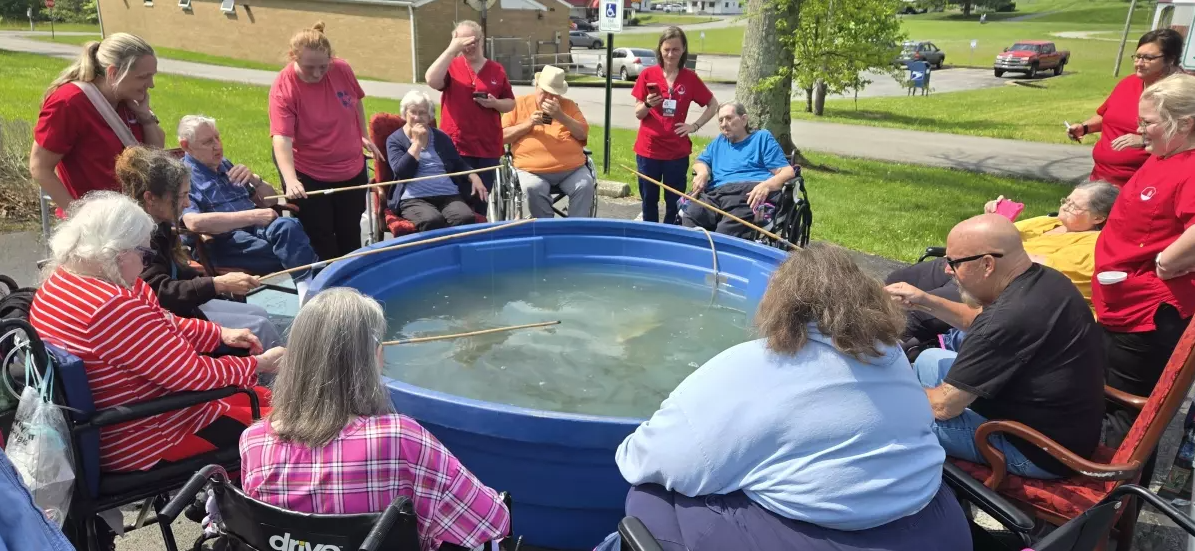

Assisted living economics
Assisted living is a different business with a different payer mix. Idaho licenses it as residential assisted living facilities (RALFs) under the Idaho Residential Care or Assisted Living Act, Idaho Code Title 39, chapter 33, and the rules in IDAPA 16.03.22. A RALF provides supervision, personal help, meals and lodging to three or more adults; it is not certified by CMS and is not required to keep licensed nurses on duty around the clock.43 Most residents pay privately. Medicaid pays only for care, never for room and board, and only for residents who qualify for the Aged and Disabled waiver or state plan personal care services, as module 89's lesson 03 explains.
The 2025 assisted living law and how prices are set
Senate Bill 1102 (2025), signed by Gov. Brad Little on March 28, 2025, as Session Laws chapter 208 and effective July 1, 2025, rewrote large parts of the act, including the "payment levels" section, Idaho Code section 39-3303. As amended, it says Health and Welfare clients placed in assisted living are assessed by the department and "This assessment will determine the reimbursement rate to the service provider." Private residents are assessed by the facility, and that assessment and the resident's negotiated service agreement "shall determine the rate charged to the resident." Facilities must describe their services and costs on admission, give 30 days' notice before changing billing practices or policies, may charge a higher rate for a higher level of care no sooner than the date notice is given, and must keep billing "transparent and understandable." The bill passed the Senate 35 to 0 and the House 67 to 1. Health and Welfare then rewrote IDAPA 16.03.22 to match (docket 16-0322-2501).4443
For Medicaid residents, IDAPA 16.03.26 sets the care paid in a RALF or certified family home by the resident's assessed level: 1.25 hours of personal care a day at Level I, 1.5 hours at Level II, 2.25 hours at Level III and 1.79 hours at Level IV (for residents with serious and persistent mental illness, a developmental disability or Alzheimer's disease or a related dementia who score at Level I or II). The hourly rate rests on the department's wage survey (the WAHR) plus a supplemental component for benefits, payroll taxes, training and administration.45 The resident pays room and board from his or her own income. We did not find a current public table of the hourly rate for assisted living. The Medicaid personal care rate was reported in November 2026 at $24.44 an hour, with a requested increase to $27.64 (see lesson 07), but we could not confirm from a Health and Welfare document that the same hourly rate applies to care hours in assisted living, so we do not state a daily Medicaid amount for assisted living.
What assisted living costs and earns
CareScout, a Genworth Financial company that publishes the long-running Cost of Care Survey (labeled here as industry research), found Idaho's 2025 median for a private one-bedroom assisted living unit to be $5,175 a month, below the national $6,200 and below every neighbor: Utah $5,475, Wyoming $5,325, Montana $6,075, Nevada $6,241, Oregon $6,875 and Washington $7,600.13 Its 2024 survey had put Idaho's median at $55,200 a year (about $4,600 a month), down 8 percent from 2023 and 48th highest of the states; the 2025 figure is about 12.5 percent higher (our calculation), a jump that may reflect sampling as much as price changes.46
Public company reports give a rough check on what operators collect. The Pennant Group, based in Eagle, reported $947.7 million of revenue in 2025, $215.0 million of it from 63 senior living communities in several states, with 79.7 percent average occupancy and average monthly revenue of $5,195 per occupied unit.47 That company-wide figure is close to CareScout's Idaho median, though it covers communities outside Idaho and includes care charges as well as rent.

What care costs by setting
CareScout's 2025 medians allow a side-by-side look at private prices in different settings. Idaho's nursing home prices are above the national median, while its assisted living price is below it.13
| Area | Assisted living, month | Nursing home semi-private, day | Nursing home private, day | Non-medical caregiver, hour |
|---|---|---|---|---|
| Idaho | $5,175 | $345 | $400 | $39 |
| Utah | $5,475 | $285 | $350 | $39 |
| Oregon | $6,875 | $551 | $607 | $40 |
| Washington | $7,600 | $432 | $525 | $45 |
| Montana | $6,075 | $295 | $315 | $38 |
| Wyoming | $5,325 | $326 | $359 | $46 |
| Nevada | $6,241 | $388 | $476 | $37 |
| United States | $6,200 | $315 | $355 | $35 |
Source: CareScout, Cost of Care Survey 2025, median cost data tables (data collected July to November 2025); no Idaho figure was published for adult day health care.13
The State Veterans Homes: a different payment model
Idaho's four State Veterans Homes, in Boise, Pocatello, Lewiston and Post Falls, are run by the Idaho Division of Veterans Services and certified as nursing homes, so they file cost reports like other homes. Their money comes from a different mix. The U.S. Department of Veterans Affairs pays a daily per diem for each eligible veteran and a higher "prevailing rate" for veterans who generally have a service-connected disability rated 70 percent or more or need care for a service-connected condition, who then pay nothing; VA also pays up to 65 percent of the cost of building or renovating a state home.48 VA's published calculation rates for the Idaho homes for fiscal year 2026 were $568.59 a day for Boise, $569.85 for Pocatello, $551.40 for Lewiston and $566.87 for Post Falls, rising in fiscal year 2027 to $586.78, $588.09, $569.04 and $585.01.49 Module 89's lesson 02 covers the homes' history and inspection records. The four state-run homes in the 2023 cost reports had the highest operating costs of any group in Idaho, a median of $536.53 a resident day, and none of the four covered its operating costs from patient revenue in that year.1
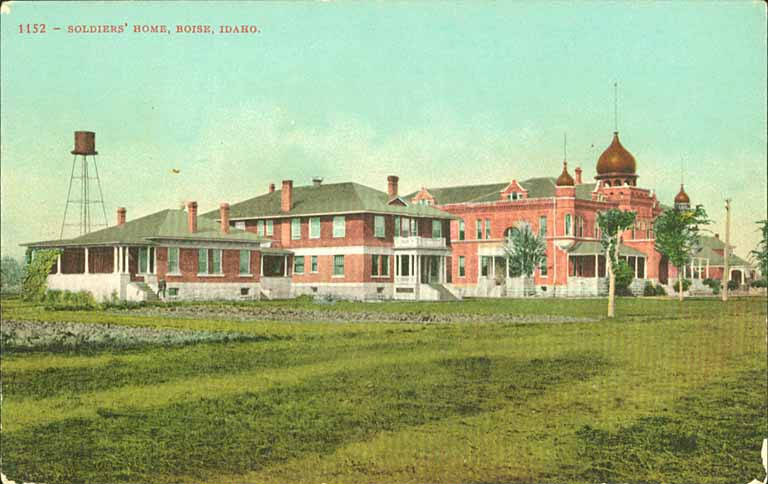

The Magic Valley and the other regions
The Magic Valley shows the economics in small. Its 10 homes in the 2023 cost reports had 708 beds, filled 62.9 percent of their bed days, and relied on Medicaid for 70.7 percent of resident days, more than any other region; Medicare paid 9.1 percent. They also ran the lowest operating costs per day, $360.99, and as a group earned a 3.5 percent operating margin.1 Six of the region's homes, in Buhl, Shoshone, Burley (two), Kimberly and Bellevue, are behavioral care units with higher Medicaid direct care limits.21 Real estate ties reach the region too: CareTrust REIT is listed for the Burley home Parke View, Standard Bearer for Bennett Hills in Gooding, Timberline OHI Tenant LLC for Twin Falls Transitional Care of Cascadia, and White Oak Healthcare Finance holds a security interest in that Twin Falls home and The Cove of Cascadia in Bellevue.11 Hospital-based long-term care, such as Countryside Care and Rehabilitation in Rupert, is reported on the hospital's cost report; lesson 05 covers why small rural hospitals keep such units.
The Treasure Valley's 23 homes had the lowest Medicaid share (55.2 percent), the highest occupancy (71.8 percent) and the best margins (4.8 percent). Eastern and northern Idaho homes got about 17 percent of their days from Medicare, almost twice the Magic Valley share, and northern Idaho homes, with the highest costs ($446.80 a day), lost 2.6 percent on care as a group.1
Pictures, Numbers and Infographics
The key figures in this lesson, with the year and source of each.
| Measure | Idaho | U.S. or other states | Year | Source |
|---|---|---|---|---|
| Certified nursing homes; certified beds | 80; 6,115 | U.S. 14,686; 1,567,009 | Oct. 2026 | CMS Care Compare14 |
| Occupancy (average residents divided by certified beds) | 74.9% | U.S. 80.0%; Nevada 84.7%; Washington 77.7%; Utah 69.6%; Oregon 69.1%; Montana 68.5%; Wyoming 68.2% | Oct. 2026 | CMS Care Compare, our calculation14 |
| Net patient revenue per resident day | $397.43 | U.S. $362.65 | 2023 | CMS cost reports, our calculation1 |
| Operating expense per resident day | $392.15 | U.S. $396.00 | 2023 | CMS cost reports, our calculation1 |
| Operating margin, all homes; median home | 1.3%; 0.4% | U.S. -9.2%; -3.9% | 2023 | CMS cost reports, our calculation1 |
| Total margin, all homes | 4.1% | U.S. 1.0%; MedPAC freestanding homes 2.1% (2024) | 2023 | CMS cost reports; MedPAC18 |
| Homes losing money on patient care | 35 of 75 | U.S. 9,381 of 14,680 | 2023 | CMS cost reports, our calculation1 |
| Medicare share of days; of net patient revenue | 10.9%; 16.4% | U.S. 10.4%; 18.9% | 2023 | CMS cost reports, our calculation1 |
| Medicare fee-for-service margin, freestanding homes | Not published by state | U.S. 24% | 2024 | MedPAC8 |
| Medicare rate update | Same national update | +3.2% (FY2026); +2.4% (FY2027) | 2025 to 2026 | 90 FR 37310; 91 FR 48588257 |
| Medicaid daily rate (industry claim) | About $259 | Cost "exceeds $370" | 2026 | Idaho Health Care Association5 |
| Medicaid fee-for-service nursing facility spending | $84,967,858 | Duals managed care plans $427,526,611 | SFY2025 | Health and Welfare26 |
| Federal match rate (FMAP) | 67.31% | About $2.06 federal per state dollar | FFY2027 | 90 FR 5469628 |
| Changes of ownership per 100 homes | 31.2 | U.S. 36.4; Oregon 46.9 | 2016 to Sept. 2026 | CMS change-of-ownership file, our calculation42 |
| Assisted living, private one-bedroom, median per month | $5,175 | U.S. $6,200 | 2025 | CareScout13 |
| Nursing home semi-private room, median per day | $345 | U.S. $315 | 2025 | CareScout13 |
| Ventilator and tracheostomy special rate add-ons | $337.85 and $199.53 a day | Set by Idaho Medicaid | 2026 | Health and Welfare21 |
Common mistakes
- Treating the all-payer cost per day as the cost of a Medicaid day. The $392.15 a day in Idaho's 2023 cost reports includes therapy, drugs and other services used mostly by Medicare short-stay patients. MACPAC's method adjusts for acuity and limits costs to the nursing facility cost center for exactly this reason.61
- Reading operating margin as total margin. Idaho homes lost little on care in 2023 (operating margin 1.3 percent) but showed a 4.1 percent total margin after other income. In states that book supplemental Medicaid payments as other income, the operating margin can look far worse than the total.1
- Quoting Medicare's margin as the industry's margin. MedPAC's 24 percent figure covers only fee-for-service Medicare patients; the same homes' all-payer margin was 2.1 percent in 2024. Both numbers are true at once.8
- Treating an advocacy figure as an official rate. The $259 and $229 average Medicaid rates both come from interested parties, they disagree, and neither has been published by Health and Welfare. Cite them as claims, with who made them.522
- Assuming "no private equity owner" means no outside investors. The federal All Owners file shows no Idaho home flagged with a private equity or REIT owner, yet the Care Compare ownership file lists a publicly traded REIT for six homes as an additional disclosable party. The two files measure different relationships.3811
- Counting only fee-for-service claims as Medicaid nursing home spending. In state fiscal year 2025 the fee-for-service nursing facility line was about $85 million, but the duals managed care plans, which pay nursing homes for many long-stay residents, spent $427.5 million on all their covered services.26
- Comparing survey prices across years without caution. CareScout's Idaho assisted living median fell 8 percent in its 2024 survey and rose about 12.5 percent in 2025; sample changes can move a state median as much as real prices.4613
- Assuming the bed tax costs homes nothing. The assessment is paid by every non-public home on non-Medicare days; homes as a group get it back with federal match, but an individual home with few Medicaid residents can pay more in tax than it gets back in higher Medicaid payments.9
What we know, what we don't, and what the data can show
What we know
- Idaho's Medicaid method is prospective and price-based, adjusted each quarter for case mix and scaled each July 1 by a budget adjustment factor, under state plan amendment ID-21-0012 and IDAPA 16.03.26.32
- Across Idaho's 76 cost reports for 2023, homes roughly broke even on patient care (operating margin 1.3 percent) and earned 4.1 percent overall, with wide spread among homes.1
- Medicare pays much more per day than Medicaid, and MedPAC has recommended cutting Medicare rates on the view that Medicare is subsidizing Medicaid.8
- P.L. 119-21 spared existing nursing facility provider taxes from the phase-down applied to other provider classes in expansion states.10
- A publicly traded REIT, a captive REIT and a commercial lender appear in CMS's ownership records for more than 30 Idaho homes combined.11
What we don't know
- Each Idaho home's current Medicaid daily rate and the size of the fiscal year 2027 budget adjustment factor; Health and Welfare does not post a rate table.
- Idaho's Medicaid payment-to-cost ratio by a checked method; MACPAC excluded Idaho for data quality and the ASPE study did not report states.623
- The current assessment rate, total collections and supplemental payments; the industry's figures ($28.5 million, 3.5 percent) are not confirmed by a state document we found.5
- Whether Idaho changed its upper payment limit program by July 1, 2026, as HCR 15 (2025) said CMS required.31
- How much Idaho homes pay in rent, management fees and interest to related companies, which the public cost report file does not include.
- How many residential assisted living facilities and beds Idaho has today; Health and Welfare's public pages point to a search portal, not a count.
What the data can show
- CMS Skilled Nursing Facility Cost Report public file: each home's days by payer, beds, revenue, expenses, margins, salaries, contract labor and balance sheet, year by year.1
- Full cost reports from HCRIS (available from CMS in raw form): Worksheet A-8-1 related-organization costs and Worksheet S-2 ownership type.15
- CMS Care Compare Ownership file and SNF All Owners file: owners, managers, landlords and lenders by role and date.1138
- CMS SNF change-of-ownership file: buyer, seller and effective date of each change.42
- SEC filings of publicly traded operators and REITs: lease terms, payer mix and property lists.3537
- Health and Welfare budget documents and Medicaid Review Panel presentations: spending by service line.26
Questions people ask
Why do nursing homes compete for Medicare patients?
Because a Medicare day pays far more. Idaho homes reported a Medicare payment of about $600 per Medicare day in 2023, against about $392 of all-payer operating cost per day, while the industry says Medicaid pays about $259. MedPAC calls the gap an implicit subsidy from Medicare.158
Does a private-pay resident pay more than Medicaid pays for the same bed?
Usually, yes. CareScout's 2025 Idaho median for a semi-private room was $345 a day, above any Medicaid figure in this lesson. Idaho's rule also caps the Medicaid rate at the home's charge to private-pay residents, so Medicaid can never pay more than the private price.132
What happens to rates when the Legislature appropriates less?
Health and Welfare applies the budget adjustment factor to every home's computed rate so that total payments fit the appropriation, and Idaho Code section 56-265 requires legislative approval of rate changes through the budget. The plan language says the factor "may be positive or negative."34
Who pays the nursing home bed tax, and does it show on a bill?
Privately owned licensed homes pay it per resident day, excluding Medicare Part A and Medicare Advantage days; state and county homes are exempt. Homes may raise their charges to cover it but may not list it as a separate line item.9
Does Idaho Medicaid pay for assisted living rent?
No. It pays for care hours set by the resident's assessed level (1.25 to 2.25 hours a day), and the resident pays room and board from income.45 Module 89's lesson 03 explains eligibility.
Where does the public record show who owns a particular home?
CMS's Care Compare site and its downloadable Ownership file list each home's direct and indirect owners, managing employees and additional disclosable parties, with association dates. The SNF All Owners file adds owner-type flags, and the change-of-ownership file shows past sales.113842
Why are the State Veterans Homes' costs so high?
They report the highest operating costs per day in Idaho, a median of $536.53 in 2023, and they are paid partly by a VA per diem of about $550 to $570 a day in fiscal year 2026, a payment other homes do not receive. The cost reports do not explain the difference; staffing and building age are possible reasons we could not test.149
Hard questions
Is Idaho's Medicaid nursing home rate too low?
The case that it is. The Idaho Health Care Association says Medicaid covers about 69 cents of each dollar of cost, that the property formula still rests on a 1985 base and that cuts since 2025 will close homes, especially rural ones; the association's executive director has said the 2025 cuts will lead providers to accept fewer Medicaid clients, Cascadia's Steve LaForte has warned of closures and a Pennant executive said some assisted living facilities had sent Medicaid residents move-out notices.5332234 Idaho's homes rely on Medicaid for 60 percent of their days, and the Magic Valley for more than 70 percent, so the rate drives the business.1
The case that it is not, or that the state cannot pay more. Idaho's homes as a group roughly broke even on care and earned a 4.1 percent total margin in 2023, better than the national and most neighbor totals. The Legislature must balance the Medicaid budget against everything else the general fund pays for, and Idaho Code section 56-265 makes that a legislative choice. Federal studies note that cost is an imperfect benchmark: homes with more Medicaid residents tend to spend less, and related-party costs may inflate reported costs.146
What the evidence shows. No neutral body has published an Idaho payment-to-cost ratio. Nationally, the median home's base Medicaid payment covered 82 to 86 cents of acuity-adjusted Medicaid cost in 2019, and neighbors ranged from 58 percent (Nevada) to 111 percent (Oregon) before supplemental payments.623
Should Medicare pay nursing homes less?
For a cut. MedPAC found a 24 percent fee-for-service Medicare margin in 2024 and voted 17 to 0 to recommend a 4 percent cut, saying that supporting homes with many Medicaid patients "should be Medicaid's responsibility."8 Against. The Idaho Health Care Association's Robert Vande Merwe has said private pay and Medicare make up for low Medicaid rates in Idaho nursing homes, and MedPAC itself reports all-payer margins near 2 percent;33 cutting Medicare without raising Medicaid would narrow those margins further. The evidence. Idaho's numbers match the national pattern: a Medicare day brought about $600 against about $392 of average cost in 2023, and the all-payer margin was thin.1 CMS raised rates 2.4 percent for 2027 under current law.7
Should Idaho raise its nursing home bed tax?
For. The industry's proposed bill would raise the assessment from about 3.5 percent to 5.5 percent of revenue, still under the federal 6 percent safe harbor, bringing in an estimated $32 million or more in new federal money in the first year with a small net general fund cost, and would add a rate floor and rural supplements.529 Against. A provider tax shifts cost to federal taxpayers, and homes with few Medicaid residents pay more tax than they get back; the state also bears part of the cost of the higher payments. Legal uncertainty. Section 71115 of P.L. 119-21 holds an expansion state's existing nursing facility tax at the percentage determined when the law was signed; whether CMS would approve an increase is an open question we could not resolve from the public record.10
Does the way a home is owned and financed matter for its money and its care?
The concern. National research estimates that most nursing home profits are shifted to related real estate and management companies, and that private equity ownership was associated with higher Medicare patient mortality and lower nurse staffing.4041 The operators' case. Separating real estate lets operators raise capital; Cascadia's Steve LaForte was quoted in July 2026 as saying his company had invested more than $100 million in infrastructure over 11 years.22 Leases and loans are ordinary and legal, and federal rules already limit related-party costs to the related company's own cost (42 CFR 413.17).39 What the evidence shows. The studies are national; no study has measured these effects in Idaho, and the public cost report file lacks the related-party worksheet needed to do so.
Should more long-term care money go to assisted living and home care?
For. At 2025 median private prices, a year of assisted living in Idaho ($62,100) costs about half a year in a shared nursing home room ($125,925), and many people prefer to live outside an institution.13 Against. Nursing home residents generally need more care, so the prices are not for the same service, and assisted living operators say current Medicaid payments already fall short of their costs.34 The evidence. Module 89's lesson 03 covers the federal rules and Idaho's waiver programs; the cost difference by setting is clear, but whether a given resident could be served safely in a cheaper setting is a clinical question the price data cannot answer.
For reporters and advocates
Records that exist.
- CMS cost reports. The public Skilled Nursing Facility Cost Report file on data.cms.gov has each home's days, revenue, expenses and balance sheet for each year. The full HCRIS files include every worksheet, including Worksheet A-8-1 (related-organization costs) and S-2 (ownership type).115
- CMS ownership and change-of-ownership files on data.cms.gov: owners, managers, landlords, lenders and sale dates.113842
- Health and Welfare. Nursing facility rate notices, the budget adjustment factor calculation, the annual assessment rate notice (due to homes by Aug. 30 under Idaho Code section 56-1505), upper payment limit demonstrations filed with CMS, the "Provider Agreement Additional Terms: Nursing Facility," quality payment results and Medicaid Review Panel presentations.926
- CMS state plan amendments on medicaid.gov: Idaho's Attachment 4.19-D and any amendment changing supplemental payments.3
- Legislature. Health and Welfare budget requests, Legislative Services Office analyses and JFAC motions (see module 75, The Idaho State Budget), and committee minutes and attachments.
- SEC filings for publicly traded operators and REITs with Idaho properties, and Idaho Secretary of State business filings for the limited liability companies named in CMS files.3537
- Assisted living. Survey results posted through Health and Welfare's facility search portal and documents available on request under IDAPA 16.03.22.43
Questions to ask. What is the current statewide average Medicaid rate and the fiscal year 2027 budget adjustment factor? What was the assessment rate, how much did it raise, and how much came back as supplemental payments? Did Idaho change its upper payment limit program as HCR 15 described, and has CMS approved it? Has Health and Welfare asked CMS whether section 71115 allows an assessment increase? Which homes have asked for distressed facility rates? How many homes have stopped admitting Medicaid residents? For a given home: who owns the building, what is the rent, and is the landlord or management company related to the operator?
How to get records. Idaho's public records law, Idaho Code Title 74, chapter 1, covers Health and Welfare's rate and assessment records (module 47, Idaho Public Records Requests, explains requests). Federal records not already posted, such as CMS correspondence on Idaho's state plan amendments, can be requested from CMS under the Freedom of Information Act. Testimony on rate and assessment bills is covered in module 49, Testifying and Public Comment, and reading cost report data responsibly in Data and Statistics.
The Idaho angle. Watch the 2027 legislative session for the industry's assessment bill, the fiscal year 2028 Medicaid appropriation and any change to the 1985 property formula; watch CMS for guidance on section 71115 and for action on Idaho's supplemental payment method; and watch the Magic Valley, where Medicaid pays for more than 70 percent of nursing home days.
Where to go next
- CMS Care Compare: nursing homes: Free federal site for looking up any certified nursing home's ratings, staffing, inspections, penalties and ownership; search by city or name and open the ownership section.
- CMS nursing home and SNF data downloads: Free downloadable files behind Care Compare, including the Provider Information and Ownership files used in this lesson; useful for reporters and researchers who work in spreadsheets.
- CMS Skilled Nursing Facility Cost Report data: Free yearly files of each certified home's days, revenue, expenses and balance sheet; read the methods box in this lesson before computing margins.
- Idaho Health and Welfare: Medicaid Nursing Facilities: The state's provider page with special rate forms and amounts, the behavioral care unit list and the Nursing Facility Quality Payment Program guide; free.
- Idaho Health and Welfare: Residential Assisted Living Facilities: Explains what RALFs are and links to the state's facility search portal and survey results and an assisted living price comparison worksheet; free.
- MACPAC: nursing facility payment work: The federal Medicaid advisory commission's studies of how states pay nursing homes and how payments compare with costs; free reports and data tables.
- MedPAC: skilled nursing facility services: Congress's Medicare advisers' yearly review of skilled nursing facility payment adequacy, margins and recommendations; free.
- Idaho Legislature: bill and rule search: Free access to bills, statements of purpose, fiscal notes, votes and committee minutes, for following nursing home rate, assessment and assisted living legislation.
Still being checked (11 items)
These points could not be fully confirmed against a primary source when this lesson was written and fact checked in November 2026. The text above states each one as uncertain.
- Idaho Medicaid's current average nursing home daily rate: the Idaho Health Care Association says about $259 and unnamed nursing home advocates (as reported by a trade newsletter) about $229; Health and Welfare does not post a rate table and we found no official average.
- The size of the state fiscal year 2027 budget adjustment factor and the reported 7 percent reduction in nursing home Medicaid payments from July 1, 2026; reported only by a trade newsletter.
- Reports that at least four Idaho nursing homes with more than 300 licensed beds in all planned to close in 2026; reported only by a trade newsletter quoting Cascadia Healthcare's Steve LaForte.
- Idaho's current nursing facility assessment rate and collections (industry figures of about 3.5 percent and $28.5 million a year) and the amount of supplemental (upper payment limit) payments; no state document found.
- Whether Idaho changed its nursing facility upper payment limit program and assessment collection by July 1, 2026, as House Concurrent Resolution 15 (2025) said CMS required.
- How CMS applies P.L. 119-21 section 71115 to an expansion state that wants to raise an existing nursing facility tax; our reading of the statute is that the existing percentage is held, but we found no CMS guidance.
- The current Idaho Medicaid hourly personal care rate used to pay for care in assisted living, so no daily Medicaid assisted living amount is given. The general Medicaid personal care rate was reported in November 2026 at $24.44 an hour (lesson 07), but we could not confirm that it applies to assisted living care hours.
- The current number of licensed residential assisted living facilities and beds in Idaho; an industry fact sheet shows unlabeled figures (261 and 10,604) that we could not tie to a definition or year, so they are not used.
- The roles of Timberline CTRE Tenant LLC and Timberline OHI Tenant LLC beyond what the CMS ownership file records (additional disclosable party and security interest).
- The 'Inpatient PPS Amount' cost report field is used as an approximation of Medicare fee-for-service payment; it may not equal each home's total Medicare revenue.
- The Idaho Health Care Association's FMAP of 70.01 percent differs from the 67.31 percent federal fiscal year 2027 FMAP in the Federal Register; the association does not say which year it used.
Last verified November 23, 2026. General education, not legal, medical, insurance or financial advice; every figure names its source and year in the Notes and Sources below. Data is revised: check the newest release before relying on any number.
Notes
- CMS, Skilled Nursing Facility Cost Report public use file, cost reporting periods beginning in calendar year 2023 (CostReportsnf_Final_23): days by payer, beds, bed days available, net patient revenue, total operating expense, net income, other income, "Inpatient PPS Amount," salaries, contract labor, county and type of control; all totals, shares, margins, medians and per-day amounts for Idaho, its regions, the neighbor states and the United States are our calculations (read Nov. 23, 2026). Read it online. ↩
- IDAPA 16.03.26, Medicaid Plan Benefits, nursing facility sections 470 to 495, each dated 7-1-26: 472 (patient liability), 481 (cost limits), 482 (rate setting), 483 (principle for rate setting), 484 (rate development and private-pay ceiling), 486 (distressed facility), 487 (reviews), 488 to 490 (behavioral care units), 491 (special rates), 492 (occupancy adjustment factor) and 493 (recapture of depreciation) (read Nov. 23, 2026). Read it online. ↩
- CMS approval letter dated Dec. 11, 2023, and Idaho Medicaid state plan amendment transmittal ID-21-0012, Attachment 4.19-D (nursing facility reimbursement), effective July 1, 2021: price-based prospective system, direct and indirect price limits as percentages of the bed-weighted median, 5 percent indirect margin cap, quality-tier margins, budget adjustment factor and private-pay ceiling (read Nov. 23, 2026). Read it online. ↩
- Idaho Code section 56-265, Provider payment, subsections (4) and (5) (read Nov. 23, 2026). Read it online. ↩
- Idaho Health Care Association (nursing home industry trade group), "Idaho Nursing Facility Sustainability and Quality Act" campaign site, viewed Nov. 23, 2026: claimed Medicaid rate of $259 a day, cost above $370 a day, 69 cents per dollar, a 108-bed example at $373.21 a day, property reimbursement of $7.39 against capital cost of $53.57 a day, assessment of about 3.5 percent (about $28.5 million a year) and a proposed 5.5 percent (about $40.7 million) from July 1, 2027; the association's figures, not independently verified (read Nov. 23, 2026). Read it online. ↩
- Medicaid and CHIP Payment and Access Commission (MACPAC), "Estimates of Medicaid Nursing Facility Payments Relative to Costs," issue brief, January 2023: 2019 data; national median base payment-to-cost ratio 86 percent; average base payment $200.39 and average cost $238.94 per day; state figures in Table A-1; Alaska, Idaho and New Hampshire excluded for data quality issues (read Nov. 23, 2026). Read it online. ↩
- CMS, Medicare skilled nursing facility prospective payment system final rule for federal fiscal year 2027 (CMS-1843-F), 91 FR 48588 (July 31, 2026), effective Oct. 1, 2026: statutory background (Balanced Budget Act of 1997 section 4432; PDPM effective Oct. 1, 2019), Tables 3 and 4 (unadjusted federal per diem rates), Tables 9 and 10 (worked example) and the impact table by region; and CMS fact sheet, July 29, 2026 (2.4 percent update, about $882.74 million) (read Nov. 23, 2026). Read it online. ↩
- Medicare Payment Advisory Commission (MedPAC), Report to the Congress: Medicare Payment Policy, March 2026, chapter 7, "Skilled nursing facility services," with the Commission's recommendation of March 12, 2026, for fiscal year 2027 (read Nov. 23, 2026). Read it online. ↩
- Idaho Code sections 56-1501 to 56-1509, Idaho Skilled Nursing Facility Assessment Act (2009, ch. 221; sections 56-1504 and 56-1505 added 2011, ch. 164; amended 2018, 2020 and 2025): definitions, nursing facility assessment fund and permitted uses, uniform per-resident-day assessment excluding Medicare Part A days, exemption for state and county facilities, Aug. 30 notice, no separate line item, penalties (read Nov. 23, 2026). Read it online. ↩
- P.L. 119-21 (July 4, 2025), section 71115, Provider taxes, amending Social Security Act section 1903(w)(4) (42 U.S.C. 1396b(w)(4)), new subparagraph (D)(i) to (iv), 139 Stat. 301 to 303 (read Nov. 23, 2026). Read it online. ↩
- CMS, Care Compare nursing home Ownership data file, October 2026 release (processing date Oct. 1, 2026): 1,398 records for Idaho's 80 homes, with role, owner type, owner name and association date; counts of entities and homes are our calculation (read Nov. 23, 2026). Read it online. ↩
- 42 CFR 424.502, Definitions, including "additional disclosable party," "private equity company" and "real estate investment trust," eCFR as of Nov. 1, 2026 (read Nov. 23, 2026). Read it online. ↩
- CareScout (a Genworth Financial company; industry research), Cost of Care Survey 2025, median cost data tables (data collected July to November 2025), and the release "CareScout Releases 2025 Cost of Care Survey Results," March 2, 2026 (read Nov. 23, 2026). Read it online. ↩
- CMS, Care Compare nursing home Provider Information file, October 2026 release: certified beds, average residents per day and ownership type for each certified home; state totals and occupancy are our calculation (read Nov. 23, 2026). Read it online. ↩
- CMS, Provider Reimbursement Manual, Part 2, chapter 41, instructions for Skilled Nursing Facility cost report form CMS-2540-10, Transmittal 5 (May 2013): Worksheet S-2 type-of-control codes (1 and 2 nonprofit, 3 to 6 proprietary, 7 to 13 governmental) and Worksheet A-8-1 (costs of services from related organizations) (read Nov. 23, 2026). Read it online. ↩
- Social Security Act section 1888(e) (42 U.S.C. 1395yy(e)), prospective payment for skilled nursing facility services (read Nov. 23, 2026). Read it online. ↩
- Social Security Act section 1902(a)(30)(A) (42 U.S.C. 1396a(a)(30)(A)), payments "consistent with efficiency, economy, and quality of care" (read Nov. 23, 2026). Read it online. ↩
- 42 CFR 447.272, Inpatient services: Application of upper payment limits (applies to nursing facilities and intermediate care facilities), eCFR as of Nov. 1, 2026 (read Nov. 23, 2026). Read it online. ↩
- Idaho Code Title 56, chapter 1, Payment for Skilled and Intermediate Services, including section 56-101 (definitions of bed-weighted median, case mix index, direct care costs and indirect care costs) and section 56-117 (payment of special rates) (read Nov. 23, 2026). Read it online. ↩
- Idaho Code section 56-108, Property reimbursement: facilities will be paid a property rental rate, property taxes and reasonable property insurance ($9.24 property base; building cost index; age of facility capped at 30 years) (read Nov. 23, 2026). Read it online. ↩
- Idaho Department of Health and Welfare, "Medicaid Nursing Facilities" provider page, last updated June 29, 2026: current ventilator ($337.85) and tracheostomy ($199.53) reimbursement rates, list of 22 behavioral care units, Nursing Facility Quality Payment Program (read Nov. 23, 2026). Read it online. ↩
- Patrick Connole, "Idaho's Bad News, More Medicaid Cuts Threaten Closures," SNF Digest (industry trade newsletter, Park Place), July 3, 2026: statements attributed to unnamed nursing home advocates and their rate tracker ($229 average rate, 0.55 payment-to-cost ratio), to the Save Our Seniors Idaho advocacy campaign and to Steve LaForte of Cascadia Healthcare (four homes with over 300 licensed beds planning to close; $100 million invested); figures not independently verified (read Nov. 23, 2026). Read it online. ↩
- John R. Bowblis and others, Assessing Medicaid Payment Rates and Costs of Caring for the Medicaid Population Residing in Nursing Homes: Final Report, U.S. Department of Health and Human Services, Office of the Assistant Secretary for Planning and Evaluation, Oct. 11, 2024 (read Nov. 23, 2026). Read it online. ↩
- 42 CFR 413.337, Methodology for calculating the prospective payment rates (skilled nursing facilities): standardization for wages and case mix and annual updates, eCFR as of Nov. 1, 2026 (read Nov. 23, 2026). Read it online. ↩
- CMS, Medicare skilled nursing facility prospective payment system final rule for federal fiscal year 2026 (CMS-1827-F), 90 FR 37310 (Aug. 4, 2025), and CMS fact sheet, July 31, 2025: 3.2 percent update (3.3 percent market basket, plus 0.6 point forecast error adjustment, minus 0.7 point productivity adjustment), about $1.16 billion (read Nov. 23, 2026). Read it online. ↩
- Idaho Department of Health and Welfare, presentation to the Legislature's Medicaid Review Panel, July 29, 2025, "Top 10 Medicaid Expenditures in FY2025": Duals MCOs $427,526,611; nursing facility services $84,967,858 (read Nov. 23, 2026). Read it online. ↩
- MACPAC, MACStats: Medicaid and CHIP Data Book, February 2026, Exhibit 17, Total Medicaid Benefit Spending by State and Category, FY 2024: Idaho fee-for-service institutional long-term services and supports, $244 million (read Nov. 23, 2026). Read it online. ↩
- HHS notice of Federal Medical Assistance Percentages for Oct. 1, 2026, through Sept. 30, 2027, 90 FR 54696 (Nov. 28, 2025): Idaho 67.31 percent; the federal dollars per state dollar figure is our calculation (read Nov. 23, 2026). Read it online. ↩
- 42 CFR 433.68, Permissible health care-related taxes, paragraph (f)(3)(i), the 6 percent indirect guarantee ("hold harmless") test, eCFR (read Nov. 23, 2026). Read it online. ↩
- Zahida Siddiqi, "Nursing Homes Seek Clear 'Roadmap' Amid Medicaid Rate Cut Concerns in State Budget Talks," Skilled Nursing News (industry trade publication), Feb. 23, 2026: interview with Cascadia Healthcare chief financial officer Steve LaForte (read Nov. 23, 2026). Read it online. ↩
- House Concurrent Resolution 15 (2025), Idaho Legislature, House Health and Welfare Committee, on the skilled nursing facility reimbursement system and upper payment limit; introduced Feb. 25, 2025, and referred to committee with no further action (read Nov. 23, 2026). Read it online. ↩
- Priya Chidambaram, Alice Burns and Scott Hulver, "A Closer Look at State Directed Payments for Nursing Home Services," KFF (nonprofit health policy research), Oct. 21, 2026 (read Nov. 23, 2026). Read it online. ↩
- Melissa Davlin, article on providers bracing for a 4 percent Medicaid reduction, Idaho Reports (Idaho Public Television), Aug. 29, 2025: Health and Welfare Director Juliet Charron's Aug. 22, 2025, letter, the Sept. 1, 2025, effective date and statements by Robert Vande Merwe of the Idaho Health Care Association (read Nov. 23, 2026). Read it online. ↩
- Sarah Cutler, "Medicaid cuts threaten 'devastating blow' to Idaho nursing homes, hospice care," Idaho Statesman, republished by The Spokesman-Review, Sept. 2, 2025: statements by The Pennant Group staff and others (read Nov. 23, 2026). Read it online. ↩
- CareTrust REIT, Inc., Form 10-K for fiscal year 2015, U.S. Securities and Exchange Commission: separation from The Ensign Group on June 1, 2014, REIT election, triple-net master leases with Ensign and list of properties including 9 in Idaho (read Nov. 23, 2026). Read it online. ↩
- CMS, final rule on disclosures of ownership and additional disclosable parties for skilled nursing facilities and nursing facilities and disclosure of private equity companies and real estate investment trusts, Federal Register doc. 2023-25408 (Nov. 17, 2023), implementing Affordable Care Act section 6101 (read Nov. 23, 2026). Read it online. ↩
- The Ensign Group, Inc., Form 10-K for fiscal year 2025, U.S. Securities and Exchange Commission: Standard Bearer Healthcare REIT, Inc., a "captive real estate investment trust," holding 152 of 158 owned properties; Medicaid 46.6 percent and Medicare 24.7 percent of skilled services revenue (read Nov. 23, 2026). Read it online. ↩
- CMS, Skilled Nursing Facility All Owners file dated Sept. 29, 2026, owner flags for private equity companies and REITs; Idaho count as reported in module 89, lesson 02 (read Nov. 23, 2026). Read it online. ↩
- 42 CFR 413.17, Cost to related organizations, eCFR as of Nov. 1, 2026 (read Nov. 23, 2026). Read it online. ↩
- Ashvin Gandhi and Andrew Olenski, "Tunneling and Hidden Profits in Health Care," National Bureau of Economic Research working paper 32258, March 2024, revised September 2025 (university research) (read Nov. 23, 2026). Read it online. ↩
- Atul Gupta, Sabrina T. Howell, Constantine Yannelis and Abhinav Gupta, "Owner Incentives and Performance in Healthcare: Private Equity Investment in Nursing Homes," National Bureau of Economic Research working paper 28474, February 2021, revised August 2023 (university research) (read Nov. 23, 2026). Read it online. ↩
- CMS, Skilled Nursing Facility Change of Ownership file updated through Sept. 29, 2026: 5,340 changes nationally with effective dates from 2016 to September 2026 (5,293 in 2016 to 2025), 25 in Idaho, all in 2016 to 2025; rates per 100 homes are our calculation using the October 2026 Care Compare count (read Nov. 23, 2026). Read it online. ↩
- IDAPA 16.03.22, Residential Assisted Living Facilities, current rule (implementing Idaho Code section 39-3305), including the notice that survey findings are posted on the department's public portal; and Legislative Services Office notice of proposed rule docket 16-0322-2501 (2025) (read Nov. 23, 2026). Read it online. ↩
- Senate Bill 1102 (2025), Idaho Residential Care or Assisted Living Act amendments, passed the Senate 35-0-0 (Feb. 24, 2025) and the House 67-1-2 (March 19, 2025), signed March 28, 2025, Session Laws chapter 208, effective July 1, 2025, including amended Idaho Code section 39-3303 (payment levels) (read Nov. 23, 2026). Read it online. ↩
- IDAPA 16.03.26, Medicaid Plan Benefits, personal care services sections 550 to 556, including section 555.04, CFH and RALF rates by assessed level (1.25, 1.5, 2.25 and 1.79 hours a day), dated 7-1-26 (read Nov. 23, 2026). Read it online. ↩
- Genworth and CareScout, "Long-Term Care Costs in Idaho On Par with National Costs," Business Wire release, March 4, 2025 (2024 Cost of Care Survey): Idaho assisted living $55,200 a year, down 8 percent, rank 48 (industry research) (read Nov. 23, 2026). Read it online. ↩
- The Pennant Group, Inc., "Pennant Reports Fourth Quarter and Fiscal Year 2025 Results," Feb. 25, 2026 (company statement): total revenue $947.7 million, senior living revenue $215.0 million, 63 communities, 79.7 percent occupancy, $5,195 average monthly revenue per occupied unit (read Nov. 23, 2026). Read it online. ↩
- U.S. Department of Veterans Affairs, State Veterans Homes fact sheet, May 2025: basic per diem, prevailing rate under 38 U.S.C. 1745 and construction grants of up to 65 percent (read Nov. 23, 2026). Read it online. ↩
- U.S. Department of Veterans Affairs, State Home Per Diem Program page, facility table of FY26 and FY27 calculation rates for each state home, including the four Idaho State Veterans Homes (read Nov. 23, 2026). Read it online. ↩
Check yourself
1. Under Idaho's Medicaid state plan and IDAPA 16.03.26, what tool scales every nursing home's computed rate so total payments fit the Legislature's appropriation?
State plan amendment ID-21-0012 and IDAPA 16.03.26 section 482 apply a budget adjustment factor (BAF) that 'may be positive or negative and will apply to all nursing facility rates.'
2. In the 2023 Idaho cost reports, what was the all-homes operating margin of Idaho nursing homes (our calculation)?
The 76 Idaho reports in CMS's cost report file showed $596.3 million of net patient revenue and $588.4 million of operating expenses, an operating margin of 1.3 percent.
3. Why did MACPAC's January 2023 study give no Medicaid payment-to-cost ratio for Idaho?
MACPAC excluded Alaska, Idaho and New Hampshire from its 2019 estimates 'due to data quality issues.'
4. What property base does Idaho Code section 56-108 use in the Medicaid property rental rate formula?
Idaho Code section 56-108 sets the property base at $9.24 for all facilities, with the building cost factor equal to 1.0 from April 1, 1985.
5. By how much did CMS raise Medicare skilled nursing facility rates for federal fiscal year 2027?
The FY2027 SNF final rule (91 FR 48588, July 31, 2026) applied a 2.4 percent update: a 3.3 percent market basket minus a 0.9 point productivity adjustment.
6. What did MedPAC report as freestanding nursing homes' fee-for-service Medicare margin in 2024?
MedPAC's March 2026 report, chapter 7, found a 24 percent fee-for-service Medicare margin in 2024; the all-payer total margin was 2.1 percent.
7. How does section 71115 of P.L. 119-21 treat an expansion state's existing tax on nursing facilities?
Section 71115 adds Social Security Act section 1903(w)(4)(D)(iv), under which an existing tax on nursing facilities or ICFs/IID keeps the percentage determined on the date of enactment instead of the declining threshold.
8. Under Idaho Code section 56-1505, which nursing home days are excluded from the per-resident-day assessment?
Section 56-1505 sets the assessment per resident day 'exclusive of medicare part A resident days,' and section 56-1503 defines those to include days funded by Medicare Advantage or special needs plans.
9. In CMS's October 2026 Care Compare ownership file, in what role does CareTrust REIT appear for six Idaho homes?
Our count of the CMS Care Compare Ownership file (processing date Oct. 1, 2026) shows CareTrust REIT, Inc. listed as an additional disclosable party (defined in 42 CFR 424.502) for six Idaho homes.
10. What does Idaho Medicaid pay for when a qualifying resident lives in a residential assisted living facility?
IDAPA 16.03.26 section 555.04 pays personal care by assessed level (1.25 to 2.25 hours a day), and residents pay room and board from their own income.
Terms in this lesson
- Budget adjustment factor (BAF)
- A factor Idaho Medicaid applies to every nursing home's computed daily rate so that total payments fit the Legislature's appropriation; it can raise or lower rates.
- Price-based rate
- A Medicaid rate method that pays each home up to a price set from the costs of all homes (in Idaho, a percentage of the bed-weighted median) instead of each home's own full cost.
- Bed-weighted median
- The per diem cost of the middle bed when all facilities' beds are lined up from highest to lowest cost, as defined in Idaho Code section 56-101; used to set Idaho's price limits.
- Property rental rate
- Idaho Medicaid's per-day payment for a freestanding nursing home's building and major equipment, paid instead of depreciation and interest under the 1985 formula in Idaho Code section 56-108.
- Case mix index
- A score of how much care a home's residents need, computed from federal Minimum Data Set assessments; Idaho adjusts each home's direct care rate by it every quarter.
- Patient Driven Payment Model (PDPM)
- Medicare's system since Oct. 1, 2019, for classifying skilled nursing residents into payment groups on five case-mix components plus a non-case-mix component.
- Variable per diem
- PDPM's schedule that pays more early in a stay: the non-therapy ancillary component is tripled for days 1 to 3 and the therapy components decline after day 20.
- Special rate
- An Idaho Medicaid add-on for a resident whose needs exceed normal nursing home care, such as a ventilator ($337.85 a day in 2026) or tracheostomy care ($199.53).
- Behavioral care unit (BCU)
- An Idaho nursing home serving enough residents with serious behavioral needs (at least 30 percent of census days) to earn a higher Medicaid direct care limit.
- Distressed facility rate
- A one-year alternative Medicaid rate Idaho may grant a home in an under-served area or meeting an under-served need whose distress stems from patient care costs.
- Nursing facility assessment
- Idaho's per-resident-day tax on privately owned nursing homes, used to draw federal Medicaid matching money and returned as higher payments under Idaho Code sections 56-1501 to 56-1509.
- Additional disclosable party
- Under 42 CFR 424.502, a person or company that controls, leases property to, lends financial services to or manages a skilled nursing facility, which the home must report to CMS.
- Operating company and property company
- The common split in which one company holds the license and runs the home while another owns the building and collects rent; they may or may not share owners.
- A payment from a nursing home to a company with common ownership or control, such as rent or management fees; Medicare cost rules (42 CFR 413.17) count it only at the related company's cost.
- Residential assisted living facility (RALF)
- Idaho's licensed assisted living setting for three or more adults, governed by Idaho Code Title 39 chapter 33 and IDAPA 16.03.22; not certified by CMS.
Sources
- IDAPA 16.03.26, Medicaid Plan Benefits (nursing facility sections 470 to 495) (2026-11-23) checked 2026-11
- Idaho Medicaid state plan amendment ID-21-0012, nursing facility reimbursement (Attachment 4.19-D) (2026-11-23) checked 2026-11
- Idaho Code section 56-108, property rental rate (2026-11-23) checked 2026-11
- Idaho Code Title 56 chapter 15, Idaho Skilled Nursing Facility Assessment Act (2026-11-23) checked 2026-11
- CMS Skilled Nursing Facility Cost Report public use file (2026-11-23) checked 2026-11
- CMS FY2027 SNF prospective payment system final rule, 91 FR 48588 (July 31, 2026) (2026-11-23) checked 2026-11
- MedPAC, March 2026 Report to the Congress, chapter 7, Skilled nursing facility services (2026-11-23) checked 2026-11
- MACPAC, Estimates of Medicaid Nursing Facility Payments Relative to Costs (January 2023) (2026-11-23) checked 2026-11
- P.L. 119-21 (July 4, 2025), section 71115, provider taxes (2026-11-23) checked 2026-11
- 42 CFR 424.502, definitions including additional disclosable party, private equity company and REIT (2026-11-23) checked 2026-11
- CMS Care Compare nursing home Ownership file (October 2026) (2026-11-23) checked 2026-11
- 42 CFR 413.17, cost to related organizations (2026-11-23) checked 2026-11
- IDAPA 16.03.22, Residential Assisted Living Facilities (2026-11-23) checked 2026-11
- Senate Bill 1102 (2025), Idaho Residential Care or Assisted Living Act (Session Laws ch. 208) (2026-11-23) checked 2026-11