Lesson 6 of 12 · about 50 minutes · Updated November 23, 2026
Physicians, Dentists and Who Accepts Medicaid
You'll be able to
- Compare Idaho's physician and dentist supply with the United States and neighboring states, using named sources and per-person rates.
- Explain what a Health Professional Shortage Area is, how HRSA designates and scores it, and what the Idaho and Magic Valley designations show.
- Describe Idaho's physician pipeline: WWAMI, the Utah seats, the Idaho College of Osteopathic Medicine, residencies, payback contracts and loan repayment, with the 2025 and 2026 laws and budget actions.
- Explain how Idaho Medicaid sets physician fees under Idaho Code 56-265, how they compare with Medicare and other states, and what the 2025 rate cut and the end of Healthy Connections changed.
- Read the evidence on which physicians and dentists accept Medicaid, and say what it can and cannot show.
- Describe the role of federally qualified health centers and rural health clinics in Idaho, using HRSA data.
Start here: the short version
- Idaho has about 210 active physicians for every 100,000 residents, against about 311 nationally. That is our calculation from 4,261 active state-licensed physicians counted for Idaho in September 2026 (KFF, from Redi-Data licensing data) and the Census Bureau's July 1, 2025 population estimate. Every neighboring state has more per person. The State Board of Education's December 2025 plan ranks Idaho 50th for physicians per capita and 44th for primary care physicians.123
- Federal shortage designations cover a large share of the state. As of Sept. 30, 2026, HRSA counted 114 primary care Health Professional Shortage Areas (HPSAs) in Idaho covering 582,074 people, 98 dental HPSAs covering 452,047 people and 65 mental health HPSAs covering 1,282,788 people. Idaho would need 104 more primary care practitioners, 70 dentists and 56 mental health practitioners to remove all of them.4
- Idaho has no public medical school; it buys seats. The state pays for 40 Idaho seats a year in WWAMI (with the University of Washington School of Medicine, since 1972) and 10 a year at the University of Utah. A 2025 law, House Bill 368 (signed April 2, 2025, chapter 257), called for 10 more state-supported seats a year outside WWAMI starting in 2026; the 2026 Legislature did not fund them. The private Idaho College of Osteopathic Medicine in Meridian enrolled its first class in 2018 and gets no direct state money.356
- Residency training has doubled since 2017. Idaho went from 9 residency programs and 134 residents and fellows in 2017 to 18 programs and 284 in 2025, by the State Board's count. The state pays a little under $60,000 of the roughly $210,000 yearly cost of each resident. On April 10, 2026, Gov. Brad Little used a line-item veto on House Bill 978 to stop a legislative cut he said would strip funding from eight residents mid-training.378
- Idaho Medicaid pays doctors close to Medicare, by law. Idaho Code section 56-265 caps primary care fees at 100 percent of Medicare and sets other procedure codes at 90 percent. The Urban Institute's 2024 fee index put Idaho Medicaid physician fees at 0.94 of Medicare overall, against 0.75 nationally. A 4 percent cut to nearly all Medicaid provider rates took effect Sept. 1, 2025.91011
- Dentists: Idaho has fewer per person, but Medicaid covers adult dental. The ADA counted 1,102 working dentists in Idaho in 2025, or 54.3 per 100,000 against 60.0 nationally (our calculation from ADA tables). Idaho Medicaid's dental plan, Idaho Smiles, is run by MCNA Dental, and all Medicaid adults get the Enhanced Plan dental benefit. About 40 percent of Idaho dentists were enrolled as Medicaid or CHIP providers in 2024.121314
- Health centers are the safety net. Idaho's 14 federally funded health center organizations served 247,642 patients in 2025, about one in eight Idahoans (our calculation). Medicaid and CHIP covered 31.8 percent of them and 20.5 percent had no insurance, against 47.9 and 17.2 percent nationally.1516
Law: Social Security Act titles XVIII and XIX and Public Health Service Act sections 330 and 332 as amended through Nov. 23, 2026, including P.L. 119-21 (2025); 42 CFR part 5 (shortage designation) and 42 CFR 447.203 (Medicaid rate transparency) as in force Nov. 23, 2026; Idaho Code sections 33-3723, 33-3731, 33-3732 and 56-265 and Title 39 chapter 59 through the 2026 session; Idaho Medicaid Information Release MA25-17 (Aug. 22, 2025) and state plan amendment ID-25-0010 (effective Jan. 1, 2026); physician counts from KFF (Redi-Data, September 2026); shortage areas from HRSA as of Sept. 30, 2026; dentist counts from the ADA Health Policy Institute (2025 data, published 2025 and 2026); health center data from HRSA's Uniform Data System for 2025; checked Nov. 23, 2026. Counts, designations and payment rates change every quarter or every year.
A doctor's office, a dental chair and a community health center are where most Idahoans meet the health care system. Hospitals get the headlines, but most care happens in these smaller places, and most of the money in them comes from three payers: private insurance, Medicare and Medicaid. This lesson is about the people who staff those places and how many of them there are, where they train, why Idaho has fewer of them than almost any other state, and how Medicaid pays them.
It uses public records: federal licensing counts, HRSA's shortage-area files, the State Board of Education's medical education plans, Idaho's statutes and Medicaid notices, the American Dental Association's state tables, MACPAC's analysis of a federal physician survey and HRSA's health center reports. Each number carries its year and source. Where we computed something, such as a rate per 100,000 people, a methods box shows how. Where two sources disagree, we say so. The Magic Valley, the Treasure Valley, eastern Idaho and northern Idaho serve as local cases.
This is general education about how the system works. It does not recommend any doctor, dentist, clinic, school, career or plan, and it gives no medical, legal, insurance or financial advice. The way doctors and hospitals are paid is explained in lesson 02; this lesson applies that to physicians, dentists and clinics.
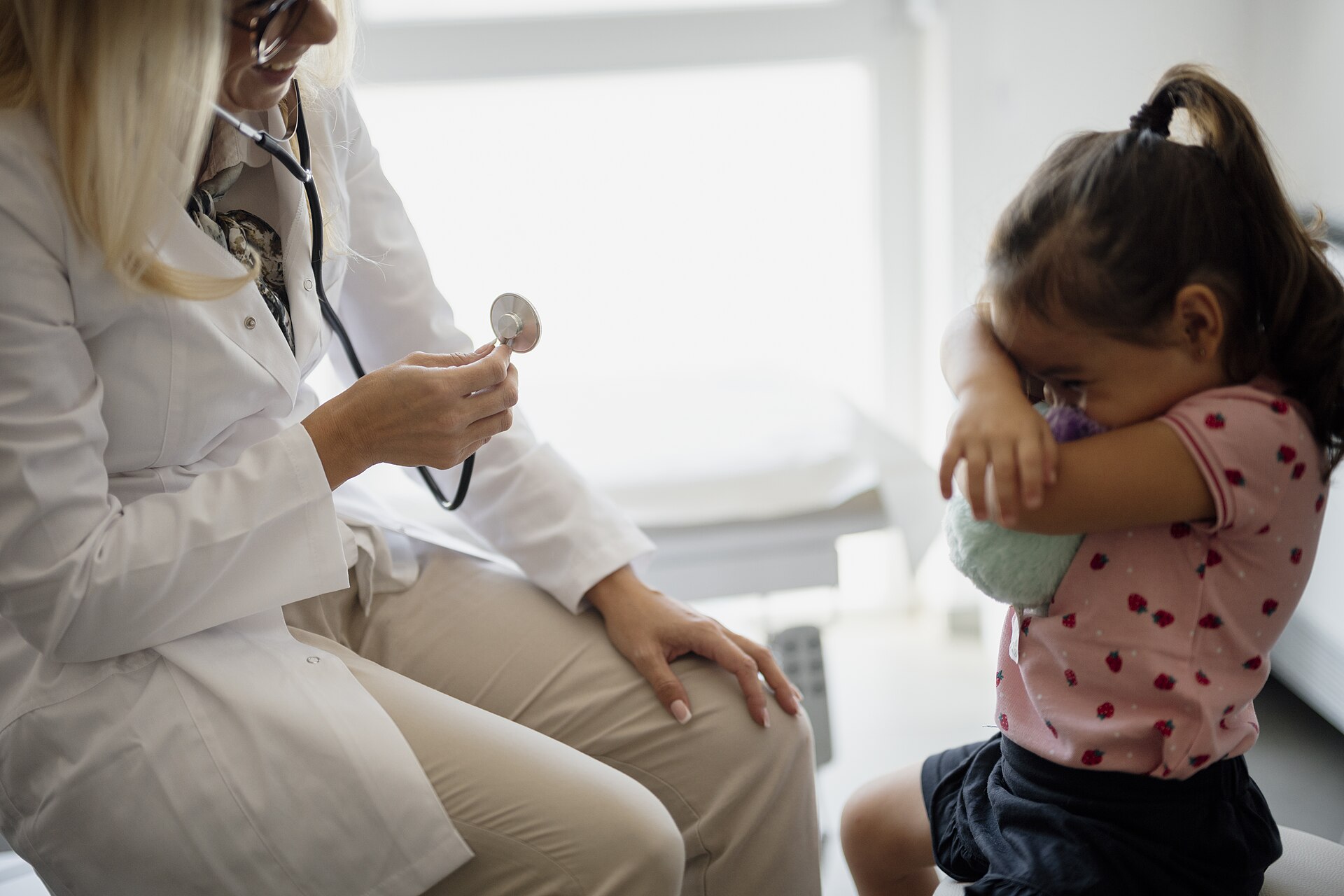

How many doctors Idaho has
There is no single official count of Idaho's doctors. Three kinds of sources exist, and they measure slightly different things. Each is useful if you know what it counts.
- The AAMC count. The Association of American Medical Colleges (a nonprofit association of medical schools and teaching hospitals) publishes state physician workforce data built from the American Medical Association's Physician Masterfile. Its "active physicians" are MDs and DOs who work at least 20 hours a week, including teaching, research and administration as well as patient care. Since 2025 it publishes the state numbers in an interactive dashboard rather than a downloadable report.17
- Licensing counts. KFF (a nonprofit health policy research organization) publishes counts of currently active, state-licensed MDs and DOs from a data company, Redi-Data, Inc. The newest is September 2026. It also sorts physicians by field.1
- Federal workforce files. HRSA's Area Health Resources File and its shortage-area work count physicians by county. HRSA uses those counts to decide where shortages exist, as the next section explains.
"Active" in one source is not the same as "active" in another, and a physician licensed in Idaho may live in Spokane, Salt Lake City or Jackson Hole and treat Idahoans across the line. A headcount is also not a full-time equivalent (FTE): a doctor who sees patients two days a week counts as one physician in a headcount and as about 0.4 in an FTE count. Keep those limits in mind when you see a ranking.
Idaho and its neighbors
The table uses KFF's September 2026 licensing counts and the Census Bureau's July 1, 2025 population estimates, the newest state totals published. Rates are our calculation.
| State | Active physicians | Per 100,000 residents | Primary care physicians | Primary care per 100,000 | Other specialists per 100,000 |
|---|---|---|---|---|---|
| Idaho | 4,261 | 209.9 | 2,468 | 121.6 | 88.3 |
| Utah | 8,372 | 236.6 | 4,085 | 115.4 | 121.1 |
| Oregon | 14,261 | 333.7 | 7,771 | 181.8 | 151.9 |
| Washington | 24,256 | 303.2 | 13,446 | 168.1 | 135.1 |
| Montana | 3,077 | 268.8 | 1,620 | 141.5 | 127.3 |
| Wyoming | 1,504 | 255.5 | 840 | 142.7 | 112.8 |
| Nevada | 7,115 | 216.8 | 3,851 | 117.3 | 99.4 |
| United States | 1,063,139 | 311.1 | 576,793 | 168.8 | 142.3 |
Sources: KFF State Health Facts, "Total Professionally Active Physicians," "Professionally Active Primary Care Physicians by Field" and "Professionally Active Specialist Physicians by Specialty Area," all September 2026 (Redi-Data, Inc.); U.S. Census Bureau, NST-EST2025 state population estimates for July 1, 2025. Primary care here is internal medicine, family medicine, pediatrics and obstetrics and gynecology, as KFF defines it. Per-person rates are our calculation.118192
How we figured it: physicians per 100,000
Data. Physician counts: KFF State Health Facts tables for total, primary care and specialist physicians, timeframe September 2026, from a Redi-Data, Inc. special data request on state licensing. Population: Census Bureau file NST-EST2025-ALLDATA, column POPESTIMATE2025 (July 1, 2025).12
Method. Rate = physicians divided by population, times 100,000. Idaho: 4,261 / 2,029,733 x 100,000 = 209.9. Specialists = total minus primary care (Idaho 4,261 - 2,468 = 1,793, which matches KFF's specialist total). To reach the U.S. rate of 311.1, Idaho would need about 6,314 physicians, or about 2,053 more than it had (311.1 x 20.29733, rounded).
Limits. The counts are from September 2026 and the population from July 2025, so the rates run slightly high for every state. Licensing counts are not FTEs and may include physicians licensed in Idaho who practice mostly elsewhere. Our ranks among neighbors match the State Board's statement that Idaho is 50th, but the AAMC and KFF rates are built differently and should not be mixed in one table.
Primary care and specialists
Idaho's shortfall is not spread evenly. Primary care is 57.9 percent of Idaho's active physicians, against 54.3 percent nationally (our calculation from KFF). The state is especially thin in specialists: 88.3 per 100,000 people against 142.3 nationally. Within primary care, Idaho leans on family physicians, who train to treat all ages: Idaho has 55.4 family medicine physicians per 100,000 people against 41.0 nationally, but 39.5 internists against 81.0, and 15.1 pediatricians against 29.6.18
| Field | Idaho physicians | Idaho per 100,000 | U.S. per 100,000 |
|---|---|---|---|
| Family medicine | 1,125 | 55.4 | 41.0 |
| Internal medicine | 801 | 39.5 | 81.0 |
| Pediatrics | 307 | 15.1 | 29.6 |
| Obstetrics and gynecology | 235 | 11.6 | 17.1 |
| Psychiatry | 162 | 8.0 | 17.5 |
| General surgery | 196 | 9.7 | 16.7 |
| Emergency medicine | 278 | 13.7 | 19.8 |
| Anesthesiology | 135 | 6.7 | 16.4 |
| Diagnostic radiology | 221 | 10.9 | 14.2 |
| Orthopaedic surgery | 184 | 9.1 | 8.0 |
Sources: KFF State Health Facts, September 2026 (Redi-Data, Inc.); Census July 1, 2025 estimates. Rates are our calculation.18192
Two cautions. First, a low count in one specialty can be offset by other clinicians: in Idaho, nurse practitioners and physician assistants provide a large share of primary care and some specialty care, and KFF's physician tables do not count them. Lesson 07 covers the wider workforce. Second, anesthesiology counts can mislead because certified registered nurse anesthetists deliver much of the anesthesia in rural hospitals. A low physician number does not by itself mean a service is missing.
Psychiatry stands out. Idaho had 162 active psychiatrists in September 2026, 8.0 per 100,000 people, less than half the national rate. Mental health shortage designations, described below, cover almost two-thirds of Idahoans. Module 89's lesson on behavioral health and Medicaid covers that workforce in more depth.
Age and makeup of the workforce
The State Board of Education's December 2025 medical education plan says 33 percent of Idaho physicians are over age 60, which means many will retire within a decade. The AAMC's 2025 national findings give a different slice: Idaho had the lowest share of international medical graduates of any state, 7.4 percent of active physicians against 25.6 percent nationally, and the second lowest share aged 65 or older, 19.8 percent, after Utah's 17.7 percent. Women were 28.7 percent of Idaho's active physicians against 39.2 percent nationally.317
The two age figures do not conflict: one counts physicians over 60, the other over 65. Together they say Idaho's doctors are not unusually old by national standards, but that a large share of them are near retirement while the state's population is still growing. The State Board's plan notes Idaho's population grew 54 percent from 2000 and 22.5 percent from 2010, citing the University of Idaho's McClure Center (May 2025).3
The low share of international graduates matters because many states fill rural jobs with them, often through the federal Conrad 30 program, which lets each state sponsor up to 30 foreign physicians a year for waivers of a two-year home-country residence rule if they agree to work in a shortage area.20 Why Idaho has so few international graduates is not settled in the sources we read; the AAMC figure is a fact, and explanations for it are guesses.
Shortage areas: what an HPSA is and where Idaho has them
A Health Professional Shortage Area (HPSA) is a federal designation that a place, a population group or a facility has too few primary care, dental or mental health providers. The authority is Public Health Service Act section 332 (42 U.S.C. 254e), and the criteria are in 42 CFR part 5. States do the groundwork: each state's Primary Care Office (in Idaho, the State Office of Rural Health and Primary Care at the Department of Health and Welfare) gathers the data and submits applications, and HRSA's Bureau of Health Workforce makes the designation.212223
Three kinds of designation
- Geographic area. A whole county, a group of census tracts or a county subdivision where the population-to-provider ratio passes a threshold. For primary care the basic threshold is 3,500 people per full-time primary care physician (3,000 in areas with unusually high needs).422
- Population group. A group within an area that cannot use the providers who are there, most often the low-income population (people below 200 percent of the federal poverty level), or Medicaid enrollees, migrant farmworkers or tribal members. HRSA file names mark these "LI" for low income.
- Facility. Prisons, state psychiatric hospitals and some clinics. Federally qualified health centers, tribal clinics and rural health clinics that meet National Health Service Corps rules are designated automatically by statute.4
Each HPSA gets a score from HRSA (0 to 25 for primary care and mental health, 0 to 26 for dental); higher means greater need. A primary care score adds points for the population-to-provider ratio (up to 10), the share of people below the poverty line (5), an infant health index (5) and travel time to care outside the area (5). HRSA ties the scores to the sites in its National Health Service Corps and other loan repayment programs.23
What a designation brings
A designation is a key that opens other programs:
- National Health Service Corps (NHSC). Clinicians who work at an approved site in an HPSA can get federal loan repayment, up to $75,000 for two years of full-time primary care service under the standard program. The State Board of Education's plan counts 139 Idaho clinicians in the NHSC loan repayment program in 2024, 8 in Students to Service, 39 in the substance use disorder program and 25 in the rural community program.3
- The Medicare HPSA bonus. Social Security Act section 1833(m) (42 U.S.C. 1395l(m)) adds 10 percent to Medicare's payment for physician services in a geographic primary care HPSA (and for psychiatrists in a geographic mental health HPSA).24
- State loan repayment. Idaho's federally supported State Loan Repayment Program received $1.3 million in 2024, according to the State Board's plan, and it uses HPSA status to decide eligibility.3
A designation does not bring a doctor by itself. It makes a place eligible to compete for one.
Idaho's HPSAs in numbers
| Type (as of Sept. 30, 2026) | Idaho designations | Geographic / population / facility | People in designated areas | Percent of need met | Practitioners needed to remove |
|---|---|---|---|---|---|
| Primary care | 114 | 15 / 41 / 58 | 582,074 | 43.91% | 104 |
| Dental | 98 | 6 / 36 / 56 | 452,047 | 37.48% | 70 |
| Mental health | 65 | 5 / 2 / 58 | 1,282,788 | 20.12% | 56 |
Source: HRSA Bureau of Health Workforce, Designated HPSA Quarterly Summary, fourth quarter of federal fiscal year 2026, tables 3, 4 and 5 (data as of Oct. 1, 2026). Counts include HPSAs proposed for withdrawal. Population counts for facility HPSAs are prison populations and are small.4
Measured against Idaho's 2,029,733 residents in July 2025, the primary care HPSAs cover about 28.7 percent of the population, dental HPSAs about 22.3 percent and mental health HPSAs about 63.2 percent (our calculation). Two cautions: an area's designation population is not the number of people who lack care, and some people live in more than one designation.42
| State | Primary care HPSAs | People covered | Need met | Dental HPSAs | Mental health HPSAs | People in mental health HPSAs |
|---|---|---|---|---|---|---|
| Idaho | 114 | 582,074 | 43.91% | 98 | 65 | 1,282,788 |
| Utah | 64 | 781,222 | 66.02% | 60 | 63 | 2,986,377 |
| Oregon | 175 | 1,651,484 | 44.09% | 154 | 135 | 1,703,364 |
| Washington | 260 | 5,576,604 | 42.37% | 222 | 244 | 5,635,742 |
| Montana | 145 | 358,743 | 37.30% | 117 | 115 | 1,318,372 |
| Wyoming | 50 | 273,718 | 54.36% | 29 | 26 | 567,575 |
| Nevada | 87 | 1,425,329 | 41.45% | 71 | 66 | 2,715,680 |
| United States | 8,830 | 102,257,076 | 46.75% | 8,027 | 7,127 | 154,557,656 |
Source: HRSA Designated HPSA Quarterly Summary, fourth quarter of federal fiscal year 2026, tables 1, 3, 4 and 5.4
These counts are hard to compare across states. A state with an active rural health office files more applications, and designations depend on applications. Washington's large population count reflects many urban low-income designations, not more shortage per person. Utah's mental health number is larger than Idaho's because Utah designated most of its counties as geographic mental health HPSAs. The comparable measure across states is "percent of need met," and on primary care Idaho sits close to the national figure.
The Magic Valley up close
HRSA's detail files list every designation and its parts. The table shows the designated primary care and dental HPSAs whose county is one of the Magic Valley counties in this module, as of the HRSA file downloaded Nov. 23, 2026. A score is HRSA's measure of need; "FTE short" is how many full-time practitioners HRSA says the designation lacks.
| County | Designation | Type | Primary care score | Dental score | Designation population |
|---|---|---|---|---|---|
| Twin Falls | Low-income population, Twin Falls County | Population group | 14 | 12 | 31,138 |
| Twin Falls | Family Health Services | Health center (automatic) | 18 | 17 | 49,624 (served) |
| Twin Falls | North Canyon Buhl Clinic | Rural health clinic (automatic) | 14 | 11 | not a population count |
| Gooding | Low-income population, Gooding County | Population group | 17 | none listed | 6,641 |
| Gooding | North Canyon Family Practice | Rural health clinic (automatic) | 14 | 11 | not a population count |
| Lincoln | Lincoln County | Geographic (dental: high-needs geographic) | 16 | 14 | 5,205 |
| Minidoka | Low-income population, Minidoka County | Population group | 14 | 16 | 7,676 |
| Minidoka | Minidoka Medical Center | Rural health clinic (automatic) | 14 | 7 | not a population count |
| Cassia | Low-income population, Cassia County | Population group | 14 | 10 | 9,019 |
| Camas | Camas County | Geographic | 8 | none listed | 1,155 |
| Blaine | Low-income population, Hailey, Bellevue and Carey | Population group | 16 | none listed | 5,306 |
Source: HRSA data downloads, HPSA detail files for primary care (BCD_HPSA_FCT_DET_PC) and dental health (BCD_HPSA_FCT_DET_DH), Idaho rows with status "Designated," downloaded Nov. 23, 2026. "None listed" means no designated dental HPSA of that kind appears for the county in the file. For rural health clinics and health centers the file's population field is an estimate of people served, which we do not treat as a shortage count.25
For mental health, HRSA designates the whole South Central mental health catchment area (Health and Welfare's region 5) as one geographic HPSA with a score of 14 and a designation population of 208,358; it lists Twin Falls, Gooding, Lincoln, Minidoka, Cassia, Camas and Blaine counties among its parts. The same file shows Family Health Services with a mental health score of 19. The pattern in the Magic Valley is the pattern statewide: most designations are for low-income residents, which points to a payment and access problem as much as a raw headcount problem, and mental health shortages are regionwide.25
The other regions look similar. In the Treasure Valley, HRSA designates the low-income population of all of Canyon County (designation population 74,719, score 11) and the health centers Community Health Clinics in Nampa and the Community Council of Idaho. In eastern Idaho, low-income census tracts in the Idaho Falls area (30,106 people, score 14) and the low-income and migrant farmworker population of Bannock County (28,377, score 12) are designated. In the north, the low-income populations of Nez Perce County, Idaho County and the Post Falls and Rathdrum area are designated, and the Nimiipuu Health Center of the Nez Perce Tribe carries a primary care score of 17.25 The rural side of this picture, including critical access hospitals and rural health clinics under Medicare, is in Medicare module lesson 09; the Magic Valley health system is the case study in lesson 04.
The pipeline: from medical school to residency to practice
A physician takes at least seven years to train after college: four years of medical school, then three or more years of residency, the paid, supervised training that follows medical school and is required for a full license and for board certification. Graduate medical education (GME) is the formal name for residency and fellowship training. Where a doctor does residency is one of the strongest predictors of where that doctor will practice. The AAMC's 2025 national figures show 47.2 percent of physicians practicing in the state where they did their graduate training, against 37.5 percent practicing in the state where they went to medical school.17
WWAMI and the Utah seats
Idaho has never had a public medical school. Since 1972 it has bought seats instead. WWAMI (named for Washington, Wyoming, Alaska, Montana and Idaho) is the University of Washington School of Medicine's regional program; Idaho joined in 1972 with the University of Idaho and Washington State University, and the first group of students took classes on the Moscow and Pullman campuses. Wyoming joined in 1996.26 Today Idaho WWAMI students spend their first 18 months (the Foundations Phase) in Moscow and do clinical training across Idaho and the WWAMI region.27
The number of Idaho seats has grown slowly. In January 2009 Idaho had 20 WWAMI seats a year, and the State Board of Education voted that month to back growing to 40 by adding 10 seats a year.28 The State Board's December 2025 plan reports 40 Idaho WWAMI seats a year, all for Idaho residents, plus 10 Idaho-supported seats a year at the University of Utah Spencer Fox Eccles School of Medicine, for 50 state-supported seats in all. A 2022 resolution, House Concurrent Resolution 38, endorsed five more WWAMI seats in 2025 and five in 2027 if money were provided.3
What the state pays: the plan puts state support for fiscal year 2027 at $50,179 to $61,178 per student per year, plus $500 a week per student to pay clinical preceptors (practicing physicians who supervise students). It estimates about 450 WWAMI-trained physicians practice in Idaho. The University of Idaho says 51 percent of WWAMI graduates return to practice in Idaho, against a 39 percent national average of medical graduates practicing in their home state; the plan itself gives figures of roughly half, 51 percent and 72 percent in different places, which do not agree.327
The payback rule is Idaho Code section 33-3731, added in 2022 (session law chapter 278) and amended in 2025 and 2026. A state-supported Idaho medical student who started in fall 2023 or later must sign a contract with the State Board to practice full time in Idaho for four years, starting within a year of licensure, residency or fellowship. Each year of residency in Idaho counts as half a year, up to four years. A graduate who does not practice in Idaho repays the state's investment on an amortized schedule within eight years, with no interest. Repayments go to a medical education reimbursement fund that can pay incentive grants to physicians practicing in Idaho.29
The 2025 law and the WWAMI fight
In February 2025, House Bill 176 proposed ending Idaho's participation in WWAMI. It passed a House committee, and on March 13, 2025 the House sent it back to the Education Committee by unanimous consent, where it stayed. The Idaho Capital Sun reported that some lawmakers wanted assurance that the University of Washington does not teach abortion-related care with Idaho money, that the university signed a statement saying it does not use Idaho taxpayer dollars for abortions or abortion-related activities, and that doctors signed a letter opposing the bill.3031
Lawmakers passed a different bill instead. House Bill 368 (2025), sponsored by the House Education Committee, passed the House 46 to 21 on March 13, the Senate 26 to 8 as amended on March 26, and the House 55 to 15 on final passage March 31. Gov. Little signed it April 2, 2025 (session law chapter 257). It created Idaho Code section 33-3732, which:532
- Adds 10 state-funded Idaho medical student slots a year in programs other than WWAMI, starting with the class entering in 2026 to 2027, until the extra slots reach 30 per class. All but 20 of those students per class must take their coursework and most clinical placements in Idaho.
- Allows the state to reduce WWAMI slots by at least 10 starting in 2027 to 2028.
- Created a working group of up to nine members to write a statewide medical education plan, due Jan. 2, 2026.
The working group, co-chaired by Rep. Dustin Manwaring and Sen. Dave Lent, delivered its plan dated Dec. 31, 2025. It recommended adding the 10 non-WWAMI seats, funding a health education director at the State Board, $2.5 million in startup money for an obstetrics and gynecology residency, 10 new clerkship sites at about $500,000 a year, and a path to more than 300 residency positions. It priced three ways to add medical school capacity: a University of Idaho and University of Utah MD program (about $11.5 million in startup costs through 2030, $8.5 million for space and about $8.2 million a year to operate, targeting 30 students a year from fall 2028), buying ICOM seats (about $35,000 per seat per year, about half of tuition), or buying ICOM outright (a $250 million placeholder pending a valuation).3
The 2026 Legislature funded no new medical school seats, according to Idaho Education News, even though the 2025 law called for subsidized seats starting in 2026.6

The Idaho College of Osteopathic Medicine
Osteopathic physicians (DOs) are fully licensed physicians who can practice in any specialty; their schools add training in the musculoskeletal system. The Idaho College of Osteopathic Medicine (ICOM) was founded in 2016 in partnership with Idaho State University, enrolled its first class in 2018 and was fully accredited in 2022. Its entering class grew from 162 in 2018 to 220 in 2025 (the Idaho Statesman reported 225 for fall 2025). It averages about 34 Idahoans per class. By the State Board's count it had graduated 588 physicians, 96 of them Idahoans, and its graduates filled 20 percent of Idaho's first-year residency positions in 2025, up from 8 percent in 2022. Tuition rose from $62,876 in 2023 to $67,490 in 2025. The state gives ICOM no direct funding.333
ICOM is privately owned and, by its own account to reporters, was profitable in fiscal years 2022 to 2024. The Idaho Statesman reported in September 2025 that Rice University was its largest investor and the private equity firm TPG a minority owner since 2022, that both planned to sell, and that Idaho State University had hired the consulting firm Tripp Umbach for a $100,000 study of a possible purchase. Idaho Education News reported in November 2025 that the consultants recommended buying ICOM rather than building a new school, using a $250 million placeholder price, and that a separate valuation by Huron Consulting was under a nondisclosure agreement. In April 2026 Idaho Education News reported ICOM was not currently on the market.33346 We found no record of a sale as of Nov. 23, 2026.
| Year | Law or event | What changed | Source |
|---|---|---|---|
| 1972 | Idaho joins WAMI (now WWAMI) | First Idaho medical students take their first year in Moscow and Pullman | Archives West, WWAMI records26 |
| 2003 | Rural physician incentive fee, Idaho Code 33-3723 | State-supported medical students pay a fee, matched $2 to $1 by the state, into a fund for rural physician incentive grants | Idaho Code 33-372335 |
| 2009 | State Board backs WWAMI growth | Board votes to grow from 20 to 40 Idaho seats a year | Spokesman-Review, Jan. 26, 200928 |
| 2009 | Magic Valley rural training track | Family medicine residency track opens in the Magic Valley (6 residents in 2022) | State Board GME update, 202236 |
| 2017 | GME line item and 10-year plan | Legislature adds a graduate medical education line item (Senate Bill 1193); 10-year plan sets growth targets from a 2017 baseline of 9 programs | Idaho Capital Sun, Apr. 10, 2026; State Board GME update, 20223736 |
| 2018 | ICOM opens in Meridian | First class of 162 students | State Board plan, 20253 |
| 2022 | Payback law, Idaho Code 33-3731 | State-supported students starting fall 2023 owe four years of Idaho practice or repayment | Idaho Code 33-373129 |
| 2025 | House Bill 176 stalls; House Bill 368 signed April 2 | WWAMI stays; 10 non-WWAMI seats a year authorized from 2026; working group created | Legislature bill pages305 |
| Dec. 31, 2025 | Working group plan delivered | Recommends new seats, residencies and a funding mechanism | State Board plan3 |
| 2026 | Session ends April 2; House Bill 978 line-item veto April 10 | No new seats funded; $900,000 for 15 new residencies funded; GME cut blocked by veto | Idaho Education News; Governor's office; bill page678 |


Residencies in Idaho
Nationally, Medicare is the largest single payer for residency training, through direct graduate medical education and indirect medical education payments to teaching hospitals, and Congress capped the number of residents Medicare pays for in the Balanced Budget Act of 1997. Idaho's plans count on three other sources for growth: state money, hospital money and the clinics that sponsor programs. Lesson 02 explains Medicare's GME payments.
The State Board's 2022 midpoint update of Idaho's 10-year GME plan lists the programs as of July 2022. The plan, first written for 2018 to 2028 and extended to 2030, splits the cost of training roughly in thirds among the program, the sponsoring hospital or institution, and the state.36
| Program | City | Sponsor | Started | Residents, July 2022 |
|---|---|---|---|---|
| Family medicine | Boise | Full Circle Health | 1974 | 36 |
| Family medicine (rural track) | Caldwell | Full Circle Health | 1995 | 10 |
| Family medicine (rural track) | Magic Valley | Full Circle Health | 2009 | 6 |
| Family medicine | Nampa | Full Circle Health | 2019 | 18 |
| Family medicine | Pocatello | Idaho State University | 1992 | 25 |
| Family medicine (rural track) | Rexburg | Idaho State University | 2020 | 3 |
| Family medicine | Coeur d'Alene | Kootenai Health | 2014 | 19 |
| Internal medicine | Boise | University of Washington | 2011 | 30 |
| Psychiatry | Boise | University of Washington | 2006 | 16 |
| Internal medicine | Idaho Falls | HCA (Eastern Idaho Regional Medical Center) | 2018 | 30 |
| Family medicine | Idaho Falls | HCA (Eastern Idaho Regional Medical Center) | 2019 | 18 |
| Psychiatry | Idaho Falls | HCA (Eastern Idaho Regional Medical Center) | 2022 | 4 |
| Psychiatry | Pocatello | University of Utah | 2018 | 12 |
| Preliminary internship | Boise | University of Washington | 1977 | 4 |
Source: Idaho State Board of Education, "Graduate Medical Education in Idaho: A Midpoint Update on the Ten Year Strategic Plan," Dec. 23, 2022, residency table. The same table lists 10 one-year fellowships (sports medicine, HIV and viral hepatitis, geriatrics, obstetrics, hospital medicine, addiction medicine, behavioral health and rural family medicine). A Bingham Memorial Hospital internal medicine program in Blackfoot closed in 2019. The 2025 plan says Saint Alphonsus is expanding a Nampa family medicine program; we did not find a full 2025 list.363
Growth since then: the State Board's December 2025 plan counts 18 residency programs (up from 9 in 2017), 14 fellowship programs (up from 4) and 284 residents and fellows (up from 134), about 92 first-year positions a year: 54 in family medicine, 26 in internal medicine, 8 in psychiatry and 4 in pediatrics. It says 58 percent of the roughly 1,500 residents and fellows trained in Idaho since 2018 stayed in Idaho, the seventh highest rate in the nation, and that Idaho has the lowest ratio of residents and fellows to medical students in the country, about 3 to 10. The 2022 update reported that 70 percent of the Magic Valley rural track's graduates practice in Idaho and 50 percent in rural places.336
The 2022 update gives a measure of how far Idaho has come and how far it has to go: about 6.7 residents per 100,000 people in 2017 and 13.8 in 2022, against a national average it put at roughly 27 to 28 per 100,000. Its plan target is about 20 per 100,000 by 2030.36
Who pays for residencies, and the 2026 veto
State GME money is in the Department of Health and Welfare's public health budget. The 2022 update puts state support at about $5.1 million for nine programs in fiscal 2018 and about $9.9 million a year by 2022 (a table in the same report lists $11,157,000 for 2022), and says the state's share was meant to be $60,000 per resident per year. The 2025 plan says a resident now costs about $210,000 a year to train (up from about $180,000 in 2018 to 2024) and that Idaho pays "a little less than $60,000" of it.363
In 2026, lawmakers funded Gov. Little's $900,000 proposal for 15 new residencies, according to Idaho Education News.6 Then, on March 31, the Joint Finance-Appropriations Committee cut the health care policy initiatives line in House Bill 978, the fiscal 2027 appropriation for Health and Welfare's public health services, which officials said pays for GME. The bill passed the House 34 to 29 and the Senate 24 to 11 and reached the governor April 2. On April 10, 2026, Gov. Little issued a line-item veto. His office said the cut would have stripped funding from eight residents "right in the middle of their committed three-year medical residency." Because the Legislature had adjourned, it could not override the veto. The bill became session law chapter 312. The Legislative Services Office says the veto effectively kept $478,600 for the GME program.538737
Loan repayment and incentives
Idaho has two older state programs, both in Idaho Code Title 39, chapter 59, the Idaho Rural Health Care Access Program, run by Health and Welfare: the Rural Health Care Access grants and the Rural Physician Incentive Program. The physician incentive fund is fed partly by a fee on state-supported medical students under Idaho Code section 33-3723 (no more than 4 percent of the average state medical education support fee), which the state matches $2 for every $1, subject to appropriation.3835 The State Board's plan says the two programs together pay out about $1.8 million a year and offer $100,000 over four years ($25,000 a year) to 16 active participants, with no renewal. It compares Nebraska, which spends $2.2 million a year with awards up to $200,000 over three years.3
Federal programs carry more weight: the National Health Service Corps numbers above, and the federally supported State Loan Repayment Program. Idaho's Rural Health Transformation Program award under P.L. 119-21 (about $930 million over five years, with a first installment of $185,974,367.81) may add more; Idaho Education News reported in April 2026 that Health and Welfare was considering residencies among its uses and that a new legislative committee would review each proposal. Lesson 05 covers that program.6
Who accepts Medicaid
"Does my doctor take Medicaid?" is a question about one office on one day. The data that exist answer narrower questions, and none of them is a live count. It helps to separate four ideas:
- Enrolled. A physician or clinic has a Medicaid provider agreement and can bill Idaho Medicaid. Enrollment counts include doctors who see one Medicaid patient a year.
- Accepting new patients. Whether an office will take a new patient covered by Medicaid. This is what most families care about, and it changes week to week.
- Caseload. How many Medicaid patients a doctor actually sees. A small number of practices, including health centers, often carry most of the load.
- Access. Whether enrollees actually get timely care. That depends on all of the above plus distance, wait times, transportation and language.
What the federal survey shows
The best state-level evidence on acceptance comes from the National Electronic Health Records Survey, a federal survey of office-based physicians run by the National Center for Health Statistics. MACPAC (the Medicaid and CHIP Payment and Access Commission, a nonpartisan legislative branch agency that advises Congress) analyzed it in June 2021. Nationally in 2017, 74.3 percent of physicians accepted new Medicaid patients, against 87.8 percent for Medicare and 96.1 percent for private insurance. Idaho was one of the highest states: 92.7 percent of Idaho physicians accepted new Medicaid patients in the pooled 2014 to 2017 data, up from 86.1 percent in 2011 to 2013, one of six states with a significant increase.39
| State | Accepting new Medicaid patients | Accepting new Medicare patients | Accepting new privately insured patients |
|---|---|---|---|
| Idaho | 92.7% | 93.6% | 97.7% |
| Utah | 85.5% | 83.5% | 96.8% |
| Oregon | 82.6% | 83.4% | 95.4% |
| Washington | 80.2% | 89.0% | 97.4% |
| Montana | 93.5% | 93.6% | 98.8% |
| Wyoming | 95.5% | 91.3% | 97.9% |
| Nevada | 79.9% | 86.7% | 93.5% |
| United States | 74.0% | 88.2% | 95.6% |
Source: MACPAC, "Physician Acceptance of New Medicaid Patients: Findings from the National Electronic Health Records Survey," June 2021, table 1A, pooled 2014 to 2017 estimates for office-based physicians.39
The survey is old. It predates Idaho's Medicaid expansion (coverage began Jan. 1, 2020), the pandemic, the 2025 rate cut and the end of Idaho's primary care case management program, all of which could change the answer. It covers office-based physicians only, not nurse practitioners, dentists or hospital-based doctors. It measures willingness, not how many new patients an office will actually take. MACPAC's same analysis found national acceptance varied widely by specialty in 2017: 46.2 percent of dermatologists and 45.5 percent of psychiatrists accepted new Medicaid patients, against 84.7 percent of pediatricians and 87.5 percent of general surgeons.39
What Idaho Medicaid pays doctors
Medicaid sets its own fees for each service code. Federal law requires that payments be "consistent with efficiency, economy, and quality of care" and sufficient to enlist enough providers that care is available to enrollees at least to the extent it is to the general population in the same area (Social Security Act section 1902(a)(30)(A), 42 U.S.C. 1396a(a)(30)(A)).40 Idaho's own law is unusually specific. Idaho Code section 56-265, as amended through 2026, says that where a Medicare equivalent exists, primary care procedure codes may be paid up to 100 percent of the current Medicare rate and all other procedure codes are paid at 90 percent of the Medicare rate. Rate changes require legislative approval through the appropriation.9
Idaho's state plan, as amended in state plan amendment ID-25-0010 (approved by CMS Dec. 10, 2025, effective Jan. 1, 2026), repeats that rule: payment "will not exceed" 100 percent of Medicare for primary care codes and is 90 percent of Medicare for other codes, with the fee schedule set as of Jan. 1, 2026.41 How the 4 percent cut of Sept. 1, 2025, and any later changes fit with those percentages for each code is best checked on Health and Welfare's published fee schedule.
Because Idaho ties its fees to Medicare, it pays doctors more, relative to Medicare, than most states. The Urban Institute's Medicaid-to-Medicare fee index, published by KFF, compares each state's Medicaid fee-for-service fees with Medicare's for the same services.10
| State | All services, 2024 | Primary care, 2024 | Obstetric care, 2024 | Other services, 2024 | All services, 2019 |
|---|---|---|---|---|---|
| Idaho | 0.94 | 0.97 | 0.90 | 0.90 | 0.93 |
| Utah | 0.80 | 0.76 | 0.87 | 0.82 | 0.81 |
| Oregon | 0.88 | 0.78 | 1.18 | 0.74 | 0.83 |
| Washington | 0.64 | 0.56 | 0.83 | 0.56 | 0.69 |
| Montana | 1.32 | 1.32 | 1.31 | 1.33 | 1.11 |
| Wyoming | 1.00 | 1.03 | 0.98 | 0.97 | 0.96 |
| Nevada | 0.90 | 0.84 | 0.98 | 0.97 | 0.96 |
| United States | 0.75 | 0.66 | 0.88 | 0.84 | 0.72 |
Source: KFF State Health Facts, "Medicaid-to-Medicare Fee Index," from Skopec, Pugazhendhi and Zuckerman, Urban Institute, May 2025. An index of 0.94 means Medicaid paid 94 percent of what Medicare paid for the same set of services. Fee-for-service only; national figures are weighted by 2019 state Medicaid enrollment.10
The 2024 index predates Idaho's 2025 cut. On Aug. 22, 2025, Health and Welfare's Medicaid division issued Information Release MA25-17: "all Idaho Medicaid provider rates will be reduced by four percent (4%)" effective Sept. 1, 2025, including hospitals, nursing facilities, home and community-based services, ambulatory surgical centers, interim rates for health centers, pharmacy dispensing fees and managed care capitation. It exempted tribal providers (paid entirely with federal funds when serving tribal members), the federally required encounter rates for federally qualified health centers and rural health clinics, and pharmacy claims paid at actual acquisition cost.11 The release explained that when lawmakers set the budget they projected 8 percent General Fund growth from the fiscal 2025 original appropriation, and that the newest forecast put that growth at 19 percent.1142 The Idaho Capital Sun reported in April 2026 that the 2026 Legislature "extended cuts to Medicaid's already low pay rates for doctors."43 The Legislative Services Office's 2026 Sine Die report describes this as part of the fiscal 2027 budget: the Division of Medicaid "was initially held to a 3% General Fund reduction, achieved through an across-the-board provider rate reduction," which carried the 4 percent cut forward for all affected providers; it lists no separate physician-only rate cut, and lesson 10 has the amounts.53
A simple hypothetical example shows how the cut works. Suppose Medicare's Idaho fee for an office visit were $100. Under Idaho Code 56-265 Medicaid could pay up to $100 for a primary care code and $90 for a non-primary care code; a 4 percent reduction would make those $96 and $86.40. Real fees differ by code and location; the numbers here are made up to show the arithmetic.
The end of Healthy Connections
For years Idaho Medicaid assigned most members to a primary care provider through Healthy Connections, a primary care case management program that paid a monthly per-member fee for coordinating care, plus Healthy Connections Value Care, a value-based program in which hospital networks and primary care groups shared savings. Health and Welfare's provider page says the program is sunsetting: references were removed from the administrative rules June 30, 2025; the department stopped auto-assigning members and enrolling new Healthy Connections providers; per-member payments ended Dec. 31, 2025; and contracting with Value Care organizations ended Jan. 1, 2026. Members can now see a primary care provider of their choice without formal assignment.44 State plan amendment ID-25-0010 records the change and estimates federal savings of $8,361,200 in 2026 and $11,333,000 in 2027.41
The state's plan to move most Medicaid services into managed care under the 2025 law (House Bill 345) is covered in Idaho Medicaid lesson 07. Under managed care, physicians would contract with health plans, and the state's fee schedule would matter less directly.
Publishing the rates
A 2024 federal rule now requires states to show their work. Under 42 CFR 447.203(b), each state must publish all Medicaid fee-for-service fee schedule rates on a public website by July 1, 2026, and keep them current, and must publish a comparative payment rate analysis comparing its fees for primary care, obstetric and gynecological, and outpatient mental health and substance use disorder services with Medicare's, code by code, as a percentage of Medicare, with claim counts. The first analysis covers rates in effect July 1, 2025 and was due July 1, 2026, with updates every two years.45 We did not locate Idaho's published comparative analysis while preparing this lesson; it is the best place to check Idaho's current percentages once found.
Why fees matter: MACPAC's January 2025 review of 38 studies found mixed evidence that the 2013 to 2014 federal primary care fee increase improved access. Most studies found improvement in at least one measure, but effects on whether physicians participate appeared weaker than effects on physicians already serving Medicaid. The same brief cited a study estimating that physicians lose 17.6 percent of the value of a typical Medicaid visit to claim denials and resubmissions, against 4.7 percent for Medicare and 2.4 percent for commercial insurance, suggesting paperwork can matter as much as the fee.46
Dentists and Medicaid dental care
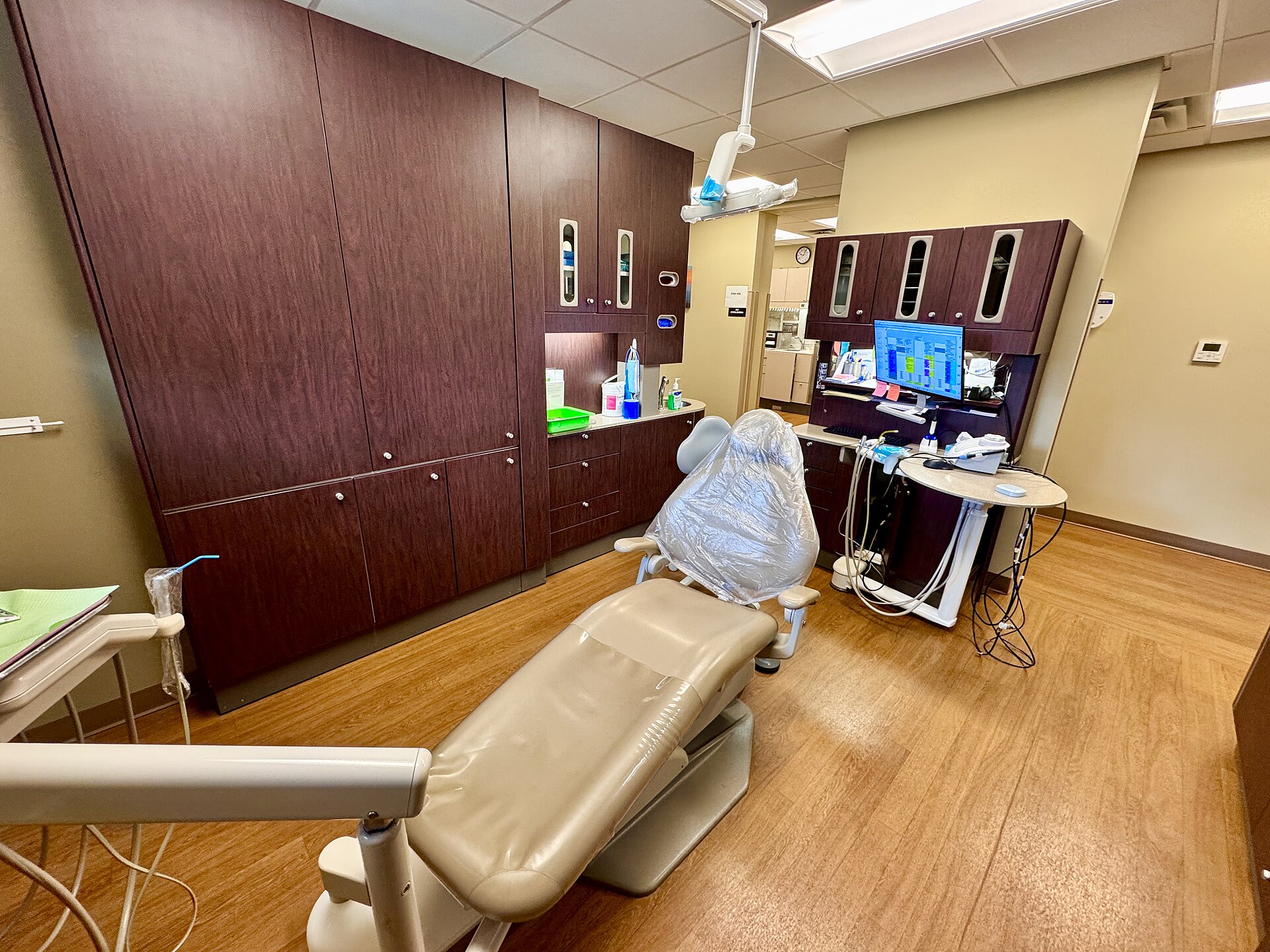

How many dentists
The American Dental Association's Health Policy Institute (the research arm of the national dentists' association) publishes yearly counts of dentists working in dentistry by state, from the ADA Masterfile, along with Census population figures. Idaho had 666 working dentists in 2001 and 1,102 in 2025, a 65.5 percent increase while the population grew 53.8 percent (our calculation). Per person, Idaho rose from 50.5 dentists per 100,000 people in 2001 to a peak of about 59 around 2008 to 2010, then fell back as the population grew faster than the dentist count, to 54.3 in 2025. The national rate has stayed near 60.12
| State | Dentists working in dentistry, 2025 | Per 100,000 residents, 2025 | Dentists enrolled in Medicaid or CHIP, 2024 | Adult Medicaid dental benefit, 2025 |
|---|---|---|---|---|
| Idaho | 1,102 | 54.3 | 40.5% | Enhanced |
| Utah | 2,101 | 59.4 | 32.2% | Enhanced (emergency-only through 2024) |
| Oregon | 2,790 | 65.3 | 30.9% | Enhanced |
| Washington | 5,630 | 70.4 | 27.7% | Enhanced |
| Montana | 628 | 54.9 | not clear in file | Enhanced |
| Wyoming | 295 | 50.1 | 64.5% | Limited |
| Nevada | 1,913 | 58.3 | 21.9% | Emergency-only |
| United States | 205,088 | 60.0 | 41.2% | varies |
Sources: ADA Health Policy Institute, "Supply of Dentists in the U.S.: 2001 to 2025," tables 1 and 2 (2023 to 2025 marked preliminary by the ADA); ADA Health Policy Institute, "Dental Care in Medicaid Programs," data tables published December 2025 (participation from the CMS Insure Kids Now provider directory matched to the ADA office database). Per-person rates are our calculation from the ADA's dentist and population tables. Montana's participation row in the ADA file has one fewer value than the year columns, so we do not report it.1214
Idaho Smiles: Medicaid dental benefits
Idaho Medicaid buys dental care through one statewide dental plan, Idaho Smiles, run by MCNA Dental, a private dental benefits company. Health and Welfare's provider page (updated April 9, 2026) says all Medicaid-eligible adults 21 and older have full access to the Enhanced Plan dental benefit, whether they are in the Basic Plan, the Pregnant Women's plan or the Enhanced Plan. Coverage rules are in the Medicaid benefits rule, IDAPA 16.03.26, in force since July 1, 2026.1347 Children's dental care under EPSDT, Medicaid's child health benefit, is covered in module 89's lesson on children, CHIP and EPSDT.
The ADA classifies Idaho's adult Medicaid dental benefit as "Enhanced" in every year from 2021 to 2025, the same as Oregon, Washington and Montana. Nevada covers emergencies only for adults, Wyoming has a limited benefit, and Utah moved from emergency-only to enhanced in 2025.14 A benefit on paper is not a visit, though, and federal law does not require states to cover adult dental care at all; it is an optional benefit that states can cut in a budget year.
MCNA told a legislative task force on Sept. 11, 2023 that its Idaho network grew from 342 providers added in 2017 to a running total of 701 in 2023, that 91.7 percent of providers and 95.0 percent of members reported satisfaction, and that CMS ranked Idaho 9th in 2021 for children receiving any dental service. Those are the company's figures, presented to lawmakers, not an independent audit.48
Dental use, participation and fees
The ADA's December 2025 tables give the best state comparison:14
- Dentist participation. 40.5 percent of Idaho dentists were enrolled as Medicaid or CHIP providers in 2024, against 41.2 percent nationally. Idaho's share has ranged from 37.2 to 45.6 percent since 2015. Enrollment, as with physicians, does not mean a dentist is taking new Medicaid patients.
- Children's use. 53.5 percent of Idaho children ages 1 to 20 who were enrolled in Medicaid or CHIP for at least 90 days visited a dentist in 2024, against 48.5 percent nationally.
- Adults' use. 21.1 percent of Idaho adults ages 21 to 64 enrolled in Medicaid for at least 90 days visited a dentist in 2022, against 17.5 percent nationally. The ADA masks Idaho's private-insurance utilization rates "due to either contractual restrictions or data quality concerns," so a Medicaid-versus-private comparison is not available for Idaho.
- Fees. The ADA compares Medicaid fee-for-service dental fees from state websites with average dentist charges and with average private dental insurance payments. For Idaho children's services it reports Medicaid at 34.7 percent of dentist charges in 2024 and 58.2 percent in 2025, and at 52.4 percent of private insurance payments in 2024 and 89.0 percent in 2025. For adults it reports 52.6 percent of charges and 84.7 percent of private payments in 2025. The national figures for 2025 are 39.6 and 67.1 percent for children. We could not confirm from Health and Welfare or MCNA what caused the large jump between 2024 and 2025 in the ADA's Idaho figures; treat it as unexplained until the fee schedule is checked.
Dental shortage areas
As of Sept. 30, 2026, Idaho had 98 dental HPSAs covering 452,047 people, meeting 37.48 percent of need, and HRSA said 70 more dentists would remove every designation. That is a small number in absolute terms, which shows how HPSAs work: they measure shortfalls for specific low-income groups and places, not the statewide gap. Using the ADA's 2025 national rate, Idaho would need about 116 more dentists to match the national dentist-to-population ratio (our calculation).412
Health centers: the safety net
A federally qualified health center (FQHC) is a nonprofit or public clinic that receives a federal grant under Public Health Service Act section 330 (42 U.S.C. 254b), or meets the same rules without the grant (a "look-alike"). Health centers must serve everyone regardless of ability to pay, charge on a sliding fee scale and be governed by a board with a majority of patients.49 Medicare and Medicaid pay them through a prospective payment system (PPS), a per-visit rate rather than a fee for each service; for Medicaid the rule is Social Security Act section 1902(bb) (42 U.S.C. 1396a(bb)), and the definition is in section 1905(l)(2) (42 U.S.C. 1396d(l)(2)).5051 That federally required encounter rate is why Idaho's 2025 4 percent cut exempted FQHC encounter payments.11 Rural health clinics, a separate federal type defined in Social Security Act section 1861(aa), are also paid by visit;52 Medicare lesson 88/09 covers them.
Idaho's health centers in numbers
| Measure | 2021 | 2023 | 2025 | U.S., 2025 |
|---|---|---|---|---|
| Health center organizations reporting | not shown | not shown | 14 | 1,356 |
| Patients | 202,675 | 227,881 | 247,642 | 32,746,392 |
| Medicaid or CHIP | 35.55% | 33.41% | 31.75% | 47.92% |
| Uninsured | 20.73% | 21.16% | 20.45% | 17.21% |
| Medicare | 15.10% | 15.74% | 16.26% | 11.63% |
| Other third party (mostly private insurance) | 28.62% | 29.69% | 31.54% | 23.24% |
| At or below 200% of poverty (of known income) | 78.15% | 82.20% | 83.23% | not compared |
| Dental patients (share of all patients) | 21.58% | 23.14% | 23.98% | 21.27% |
| Mental health patients | 8.52% | 8.43% | 10.07% | 9.40% |
| Total cost | $314,243,599 | $438,005,045 | $502,489,694 | not compared |
| Cost per patient | $1,550.48 | $1,922.08 | $2,029.10 | not compared |
Source: HRSA, Health Center Program Uniform Data System (UDS), Idaho and national rollups, five-year summary, reporting period 2025. Nominal dollars, not adjusted for inflation.1516
Patients grew 22.2 percent from 2021 to 2025 and the cost per patient 30.9 percent (our calculation, nominal dollars). Idaho's health centers serve about one in eight Idahoans (247,642 against a July 2025 population of 2,029,733). The striking difference from the nation is payer mix: Medicaid is a much smaller share in Idaho and private insurance and Medicare larger, while the uninsured share is higher. Idaho's health centers also reported 8,409 patients in 2025 who were migratory or seasonal agricultural workers or their family members, and 9,092 patients experiencing homelessness.15
Health centers in the regions
HRSA's shortage files name the health center organizations by county. In the Magic Valley, Family Health Services, based in Twin Falls, carries the highest scores in the region (18 for primary care, 17 dental and 19 mental health). In the Treasure Valley, Community Health Clinics Inc. and Community Council of Idaho are in Canyon County and Full Circle Health is in Ada County; Full Circle Health also sponsored four of the state's eight family medicine residency programs in 2022. Health West Inc. is in Bannock County, and Dirne Community Health Center is in Kootenai County. The Nimiipuu Health Center, run by the Nez Perce Tribe, is a tribal clinic rather than an FQHC.2536 The rural health clinics in the Magic Valley that HRSA lists, North Canyon's Buhl clinic and family practice in Gooding and the Minidoka Medical Center clinic in Minidoka County, are tied to the region's hospitals; lesson 04 describes those hospitals.
Pictures, Numbers and Infographics
The lesson's main numbers in one place. Rates per 100,000 people are our calculation where marked.
| Measure | Idaho | U.S. or other states | Year | Source |
|---|---|---|---|---|
| Active physicians per 100,000 (our calculation) | 209.9 | U.S. 311.1; Utah 236.6; Nevada 216.8; Oregon 333.7 | Sept. 2026 counts, July 2025 population | KFF, Census12 |
| Primary care physicians per 100,000 (our calculation) | 121.6 | U.S. 168.8 | Sept. 2026 | KFF18 |
| Psychiatrists per 100,000 (our calculation) | 8.0 | U.S. 17.5 | Sept. 2026 | KFF19 |
| National rank, physicians per capita | 50th | 44th for primary care | stated Dec. 2025 | State Board plan3 |
| Physicians over age 60 | 33% | not compared | 2025 | State Board plan3 |
| International medical graduates | 7.4% (lowest state) | U.S. 25.6% | 2025 | AAMC17 |
| Primary care HPSAs; people covered | 114; 582,074 | U.S. 8,830; 102,257,076 | Sept. 30, 2026 | HRSA4 |
| Mental health HPSAs; people covered | 65; 1,282,788 | U.S. 7,127; 154,557,656 | Sept. 30, 2026 | HRSA4 |
| State-supported medical school seats a year | 50 (40 WWAMI, 10 Utah) | not compared | 2025 | State Board plan3 |
| Residency programs; residents and fellows | 18; 284 | 2017: 9; 134 | 2025 | State Board plan3 |
| Residency graduates staying in Idaho | 58% (7th highest) | U.S. 47.2% practice in GME state | since 2018; 2025 | State Board plan; AAMC317 |
| Physicians accepting new Medicaid patients | 92.7% | U.S. 74.0% | 2014 to 2017 | MACPAC39 |
| Medicaid-to-Medicare fee index, all services | 0.94 | U.S. 0.75; Washington 0.64; Montana 1.32 | 2024 | Urban Institute via KFF10 |
| Medicaid provider rate cut | 4% | not applicable | effective Sept. 1, 2025 | Health and Welfare MA25-1711 |
| Dentists per 100,000 (our calculation) | 54.3 | U.S. 60.0 | 2025 | ADA12 |
| Dentists enrolled in Medicaid or CHIP | 40.5% | U.S. 41.2% | 2024 | ADA14 |
| Health center patients; Medicaid or CHIP share | 247,642; 31.75% | U.S. 32,746,392; 47.92% | 2025 | HRSA UDS1516 |
How we figured it: Idaho as a percent of the U.S.
Each bar divides Idaho's figure by the U.S. figure and multiplies by 100, rounded to a whole number: physicians 209.9 / 311.1 = 67; primary care 121.6 / 168.8 = 72; psychiatrists 8.0 / 17.5 = 46; family physicians 55.4 / 41.0 = 135; dentists 54.29 / 60.00 = 90 (unrounded inputs); fee index 0.94 / 0.75 = 125. The per-person inputs are our calculations described above. Health center figures: 247,642 patients / 2,029,733 residents = 12.2 percent; patient growth 2021 to 2025 = 247,642 / 202,675 - 1 = 22.2 percent; cost per patient growth = $2,029.10 / $1,550.48 - 1 = 30.9 percent, nominal. Dentist gap: 60.0 per 100,000 x 20.29733 = 1,218 dentists, minus 1,102 = 116.
Common mistakes
- Treating a Medicaid enrollment count as the number of doctors taking Medicaid patients. Enrollment means a provider can bill. MACPAC's survey work measures acceptance of new patients separately and notes that acceptance "alone does not indicate how many new patients a physician will accept."39
- Mixing physician counts from different sources. The AAMC counts active physicians from the AMA Masterfile; KFF's tables count state-licensed physicians from Redi-Data. A rate from one should not be ranked against a rate from the other. Both put Idaho at or near the bottom; the Idaho Statesman reported AAMC's 2022 figure as 192 per 100,000, last in the nation.17133
- Reading a headcount as full-time equivalents. HRSA's shortage math uses FTEs (a half-time doctor counts as 0.5); physician headcounts do not. A county with three part-time doctors may have one FTE.4
- Reading "people in an HPSA" as people without care. HRSA's designation population is everyone in the designated area or group. Many of them have a doctor. The figure that measures the shortfall is "practitioners needed to remove designations."4
- Comparing HPSA counts across states as if they measured shortage. Designations depend on state applications through each state's Primary Care Office, and a state that designates by county gets different numbers from one that designates by census tract.23
- Assuming Idaho Medicaid pays doctors far below Medicare. That is true in many states (the U.S. index was 0.75 in 2024), but Idaho Code 56-265 ties Idaho's fees to 90 to 100 percent of Medicare, and Idaho's index was 0.94.910
- Assuming the 4 percent cut hit health centers' Medicaid visit rates. MA25-17 exempted the federally required FQHC and rural health clinic encounter rates; it reduced interim rates only.11
- Counting ICOM graduates as Idaho doctors. ICOM has graduated about 588 physicians, but only 96 were Idahoans and the school has no return-to-state data yet, according to the State Board's plan.3
- Comparing nominal dollars across years. Health center cost per patient rose 30.9 percent from 2021 to 2025 in nominal dollars; part of that is general inflation. Say which you are using.
What we know, what we don't, and what the data can show
What we know
- Idaho has fewer active physicians per person than any neighboring state and ranks at or near the bottom nationally by both AAMC and KFF counts.31
- Idaho buys 50 medical school seats a year and has no public medical school; a private osteopathic school opened in Meridian in 2018.3
- Residency training roughly doubled from 2017 to 2025, and Idaho keeps more of its residency graduates than most states.3
- Idaho law ties Medicaid physician fees to Medicare, and a federal survey found high Medicaid acceptance by Idaho physicians in 2014 to 2017.939
- Idaho's health centers served 247,642 patients in 2025, with a smaller Medicaid share than health centers nationally.15
What we don't know
- How many Idaho physicians and dentists are taking new Medicaid patients today. No current state-level survey exists; the federal survey analysis is from 2014 to 2017.
- Whether the Sept. 1, 2025 cut, carrying that cut into the fiscal 2027 budget and the end of Healthy Connections have changed access. We found no published evaluation.
- Exactly how many ICOM graduates will practice in Idaho, and whether the state will buy ICOM or fund the 2025 law's new seats.
- Why the ADA's Idaho Medicaid dental fee figures jumped between 2024 and 2025.
- How many nurse practitioners and physician assistants fill primary care gaps in each Idaho county; the physician tables do not count them.
What the data can show
- HRSA HPSA detail files (data.hrsa.gov downloads) show every Idaho designation, its score, its FTE shortage and its last update date, so you can track a county over time.25
- HRSA Uniform Data System reports show each health center's patients, payer mix, services, staffing and costs every year.15
- Idaho's published Medicaid fee schedule and the comparative payment rate analysis required by 42 CFR 447.203 show what Medicaid pays for each code as a percentage of Medicare.45
- State Board of Education GME and medical education reports show residency counts, retention and state spending by program.363
- The ADA Health Policy Institute tables show dentist supply, Medicaid participation and use by state and year.1214
- The CMS National Plan and Provider Enumeration System (NPPES) lists every physician and dentist with a National Provider Identifier and practice address; it can be used to count practitioners by county with care, since addresses are self-reported.
Questions people ask
Why does Idaho have so few doctors per person?
The records point to several causes, and no study we found weighs them against each other. Idaho has no public medical school and has bought a small number of seats (20 a year as late as 2009, 50 now). Residency training, the strongest predictor of where doctors settle, was small until recently (9 programs in 2017). The population has grown fast, 54 percent since 2000 by the State Board's count, so even a rising count of doctors falls behind. And Idaho draws few international medical graduates, 7.4 percent of its physicians against 25.6 percent nationally.32817
Is ICOM a public medical school?
No. It is privately owned, affiliated with Idaho State University, and gets no direct state funding. Its owners, as reported in 2025, were Rice University and the private equity firm TPG. Idaho State University studied a possible purchase in 2025; as of the newest reporting we found (April 2026), no sale had occurred.3336
Do WWAMI students have to come back to Idaho?
Those who started in fall 2023 or later and hold state-supported seats do, or they repay the state. Idaho Code 33-3731 requires four years of full-time Idaho practice, beginning within a year of finishing training, with Idaho residency years counting half. Repayment is interest-free over up to eight years, and the State Board can suspend or waive it in listed hardship cases.29
How can I tell whether my area is a shortage area?
HRSA publishes every designation. The steps:
- Open HRSA's "HPSA Find" tool or the "Shortage Areas by Address" tool on data.hrsa.gov.
- Choose the discipline (primary care, dental or mental health) and Idaho, or type an address.
- Read the designation type (geographic, population or facility), the score and the status. "Proposed for withdrawal" means HRSA expects to remove it at the next annual update.
- For the full record, download the HPSA detail file for the discipline from data.hrsa.gov and filter for Idaho; it lists the FTE shortage and last update date.
A designation describes the area, not any one office.25
Does Idaho Medicaid cover dental care for adults?
Yes, as of the Health and Welfare page updated April 9, 2026: all Medicaid-eligible adults have the Enhanced Plan dental benefit through Idaho Smiles, run by MCNA Dental. Adult dental coverage is optional under federal law, so it depends on state budget decisions.1314
What is the difference between a health center and a rural health clinic?
A federally qualified health center is a nonprofit or public clinic under Public Health Service Act section 330 that must serve everyone on a sliding fee and have a patient-majority board. A rural health clinic is a Medicare certification under Social Security Act section 1861(aa) for clinics in rural areas that are also shortage areas; it can be owned by a hospital, a physician group or a company, and the federal rules do not require a sliding fee or a patient board. Both are paid per visit.4952
Why does residency funding matter so much?
Because where doctors finish training predicts where they stay. The State Board's plan reports 58 percent of Idaho residency graduates since 2018 staying in Idaho, while only about half of WWAMI graduates return.3 A new residency position costs about $210,000 a year, and the state pays a little under $60,000 of it, so each new slot needs hospital or clinic money as well.3
Hard questions
Should Idaho buy a medical school, buy more seats or build its own?
For buying ICOM: ISU's consultants said a purchase would pay for itself within three years and produce 525 practicing Idaho physicians in 20 years, against 225 for a new school, and that Idaho would gain control of an existing, accredited school.34 For buying more seats: seats cost the state about $35,000 to $61,000 a student a year with no capital risk, and WWAMI has a long return record; the working group recommended adding seats.3 For building: a University of Idaho and University of Utah program would be public and designed for Idaho, at about $11.5 million in startup costs and $8.2 million a year.3 What the evidence shows: the purchase price is unknown (the $250 million figure is a placeholder), the valuation is under a nondisclosure agreement, ICOM has no return-to-state data yet, and the 2026 Legislature funded none of the options.346
Should Idaho stay in WWAMI?
For leaving or shrinking it: supporters of the 2025 bills wanted Idaho medical education money spent in Idaho, and some lawmakers wanted assurance that the University of Washington does not teach abortion-related care with Idaho money.3132 For staying: about 450 WWAMI-trained physicians practice in Idaho, roughly half of graduates return, students spend 18 months in Moscow and train clinically in Idaho, and the 2022 payback law now requires service or repayment. The Idaho Capital Sun reported that doctors signed a letter opposing the termination bill.3272931 What the evidence shows: WWAMI's Idaho return rate beats the national home-state average, but most Idaho physicians did not train in WWAMI, and the 2025 law kept WWAMI while allowing a cut of at least 10 WWAMI seats a class starting in the 2027 to 2028 academic year.332
When the budget is short, should Medicaid cut provider rates?
For the cut: Health and Welfare said Medicaid's General Fund costs were on track to grow 19 percent in the year, against the 8 percent growth lawmakers had budgeted, that most of the budget goes to provider payments, and that waiting for the Legislature "could have yielded steeper rate changes."1142 Against: providers told lawmakers cuts would force some to close or drop staff, and the federal access standard in section 1902(a)(30)(A) requires rates sufficient to keep care available.4340 What the evidence shows: Idaho's physician fees started near Medicare (0.94 in 2024), so a 4 percent cut leaves them above most states'.10 MACPAC's review found fee changes affect access unevenly and that claim denials and paperwork also matter.46 No Idaho-specific study of the 2025 cut's effect has been published that we found.
How much should the state pay toward residencies?
For more state money: residency location predicts practice location, Idaho keeps 58 percent of its residency graduates, and in his April 10, 2026 veto the governor wrote that Idaho's GME program "boasts one of the highest retention rates in the country."337 For restraint: legislators facing a tight 2026 budget cut the line that funds GME, and hospitals and clinics that gain trained staff also pay part of the cost.37 What the evidence shows: the state covers less than a third of each resident's cost, and the plan's growth targets assumed $60,000 to $70,000 per resident; funding below that slowed growth, according to the 2022 update.36
For reporters and advocates
Records and data that exist:
- HRSA HPSA detail files and quarterly summaries (data.hrsa.gov), and the HRSA Uniform Data System reports for each health center, including each center's payer mix, staffing and finances.2515
- Idaho Medicaid information releases (such as MA25-17), the published fee schedule, state plan amendments on medicaid.gov (such as ID-25-0010) and the 42 CFR 447.203 rate comparison.114145
- Health and Welfare's Medicaid provider enrollment counts by type and county, which can be requested.
- State Board of Education agendas and minutes, GME committee reports, WWAMI contracts and payback-contract data under Idaho Code 33-3731 (aggregate counts of graduates in repayment).29
- Legislative bill pages, statements of purpose and fiscal notes (House Bills 176 and 368 of 2025; House Bill 978 of 2026), JFAC minutes and the governor's veto letters.58
- Board of Medicine and Board of Dentistry license lists, which show licensees by city (licensed is not the same as practicing in Idaho).
- Rural Physician Incentive and Rural Health Care Access grant awards under Idaho Code Title 39, chapter 59.38
Questions to ask: How many Idaho physicians and dentists billed Idaho Medicaid last year, and how many billed for more than 50 patients? Has Idaho published its comparative payment rate analysis under 42 CFR 447.203, and where? What did carrying the 4 percent cut into fiscal 2027 do to physician fees, by code? How many graduates under the 33-3731 payback contracts are practicing in Idaho, and how many are repaying? How many residency slots will Rural Health Transformation money add, and who will pay when the five-year grant ends?
How to get records: Idaho public records requests go to the agency under Idaho Code Title 74, chapter 1; module 47 explains how. Federal records, such as HRSA designation files or CMS correspondence on Idaho's state plan amendments, can be requested under the federal Freedom of Information Act. Lawmakers' budget work is covered in the Idaho state budget module, testimony in module 49, and reading rates and counts in the data and statistics training.
The Idaho angle: Idaho is the state where the physician shortage is worst by per-person measures, and also a state where Medicaid fees sit near Medicare by law. That combination makes Idaho a test of how much payment alone can do. The local stories are in the residency programs (the Magic Valley rural track, the Nampa and Idaho Falls programs), the health centers and rural health clinics in each county, and the money the state does or does not put into seats and residencies each session. Lessons 02, 04, 07 and 11 connect.
Where to go next
- HRSA HPSA Find: Free federal tool that lists every primary care, dental and mental health shortage designation by state and county, with scores and status. For anyone checking an area; choose the discipline and Idaho, then read the designation type and score.
- HRSA data downloads: Free federal data files, including the HPSA detail files and health center site lists, as CSV or Excel. For reporters and analysts who want to track designations over time; filter the state column for ID.
- HRSA Health Center Program data (UDS) for Idaho: Free annual reports on Idaho's federally funded health centers: patients, insurance, services, staffing and costs, statewide and for each center.
- KFF State Health Facts: physician supply and Medicaid fee index: Free state tables from a nonprofit health policy research organization, including active physicians by state and field and the Medicaid-to-Medicare fee index. Useful for comparing Idaho with other states; check the timeframe and source note on each table.
- ADA Health Policy Institute data: Free workbooks from the national dentists' association on dentist supply, Medicaid participation, dental use and fees by state. Downloadable as Excel; note which years are preliminary.
- Idaho State Board of Education medical education and GME pages: Free agendas, minutes and reports on WWAMI, the University of Utah seats, the medical education working group and graduate medical education. Search the board site for WWAMI or GME.
- Idaho Medicaid provider information (Health and Welfare): Free state pages with Medicaid information releases, fee schedules and program changes such as the end of Healthy Connections. For providers, reporters and the public tracking rate changes.
- Idaho Legislature bill and statute search: Free official source for bills (with statements of purpose, fiscal notes and votes), session laws and the Idaho Code, including Title 33 chapter 37 on medical education and section 56-265 on Medicaid payment.
Still being checked (9 items)
These points could not be fully confirmed against a primary source when this lesson was written and fact checked in November 2026. The text above states each one as uncertain.
- Physician rankings: we could not download the AAMC's state data (now an interactive dashboard), so Idaho's rank (50th overall, 44th in primary care) is as stated in the State Board's Dec. 31, 2025 plan, and the 2022 figure of 192 per 100,000 is as reported by the Idaho Statesman. Our per-person rates use KFF licensing counts, which are built differently from AAMC counts.
- The Idaho Capital Sun (April 9, 2026) reported that lawmakers "extended cuts to Medicaid's already low pay rates for doctors"; the LSO Sine Die report shows only the across-the-board provider rate reduction carried into fiscal 2027, so we treat the "extension" as that cut. No physician-specific bill section or percentage was found.
- Idaho's comparative payment rate analysis required by 42 CFR 447.203(b), due July 1, 2026, was not located; we could not confirm whether or where it was published.
- We could not confirm what caused the large rise between 2024 and 2025 in the ADA's figures for Idaho Medicaid dental fees relative to dentist charges and private insurance.
- The State Board backed growth from 20 to 40 WWAMI seats in January 2009 at 10 more seats a year (Spokesman-Review), but the years in which the seats were actually added were not confirmed. The State Board plan gives inconsistent WWAMI return rates (about half, 51 percent and 72 percent).
- ICOM's ownership and sale status after April 2026 were not confirmed; the owners named (Rice University and TPG) are as reported by the Idaho Statesman in September 2025.
- The State Board of Education's PDF reports could be read online but could not be downloaded to the module folder (the site returned errors to automated downloads); the medicaid.gov state plan amendment also refused download.
- The IDAPA 16.03.26 in-force date of July 1, 2026 is taken from the section history notes in the current rule PDF and module 89's fact check.
- Health and Welfare's office name for Idaho's federal Primary Care Office (State Office of Rural Health and Primary Care) was not re-checked on the department's site.
Last verified November 23, 2026. General education, not legal, medical, insurance or financial advice; every figure names its source and year in the Notes and Sources below. Data is revised: check the newest release before relying on any number.
Notes
- KFF State Health Facts, "Total Professionally Active Physicians," timeframe September 2026, source: special data request on state licensing information from Redi-Data, Inc. KFF is a nonprofit health policy research organization (read Nov. 23, 2026). Read it online. ↩
- U.S. Census Bureau, Population Estimates Program, file NST-EST2025-ALLDATA, annual state resident population estimates, column POPESTIMATE2025 (July 1, 2025) (read Nov. 23, 2026). Read it online. ↩
- Office of the Idaho State Board of Education and the Undergraduate Medical Education Plan Working Group (co-chairs Rep. Dustin Manwaring and Sen. Dave Lent), Idaho Medical Education Working Group Plan, Dec. 31, 2025, submitted under Idaho Code section 33-3732(3); executive summary and pages 2 to 36 (read Nov. 23, 2026). Read it online. ↩
- Health Resources and Services Administration (HRSA), Bureau of Health Workforce, Designated HPSA Quarterly Summary, Fourth Quarter of Fiscal Year 2026, as of September 30, 2026 (data as of Oct. 1, 2026), tables 1 to 5 and endnotes (read Nov. 23, 2026). Read it online. ↩
- Idaho Legislature, House Bill 368 (2025), "Medical Education," bill page and action history: House 46-21-3 (Mar. 13), Senate 26-8-1 as amended (Mar. 26), House final 55-15-0 (Mar. 31), signed by the governor April 2, 2025, session law chapter 257 (read Nov. 23, 2026). Read it online. ↩
- Kevin Richert, "In depth: A flood of rural healthcare money could reshape Idaho, and seep into higher ed," Idaho Education News, April 30, 2026 (news report) (read Nov. 23, 2026). Read it online. ↩
- Office of the Governor of Idaho, "Gov. Little veto restores funding for doctor recruitment," news release, April 10, 2026, on the line-item veto of House Bill 978 (read Nov. 23, 2026). Read it online. ↩
- Idaho Legislature, House Bill 978 (2026), fiscal year 2027 appropriation to the Department of Health and Welfare for Public Health Services, bill page: House 34-29-7, Senate 24-11-0, delivered to the governor April 2, 2026, line-item veto April 10, 2026, session law chapter 312, effective July 1, 2026 (read Nov. 23, 2026). Read it online. ↩
- Idaho Code section 56-265, "Provider payment," as amended through 2026 (history: 2011 ch. 164; 2015 ch. 301; 2016 ch. 173; 2017 ch. 82; 2020 ch. 35; 2025 ch. 118; 2026 ch. 161) (read Nov. 23, 2026). Read it online. ↩
- KFF State Health Facts, "Medicaid-to-Medicare Fee Index," 2024 and 2019, from Skopec, Pugazhendhi and Zuckerman, Urban Institute, May 2025; fee-for-service fees only; national figures weighted by 2019 state Medicaid enrollment. The Urban Institute is a nonprofit research organization (read Nov. 23, 2026). Read it online. ↩
- Idaho Department of Health and Welfare, Division of Medicaid, Information Release MA25-17, "Provider Rate Adjustment," from Deputy Director Juliet Charron, Aug. 22, 2025, effective Sept. 1, 2025 (copy posted by the Gem State Chronicle) (read Nov. 23, 2026). Read it online. ↩
- American Dental Association Health Policy Institute, Supply of Dentists in the U.S.: 2001 to 2025, data workbook, table 1 (dentists working in dentistry by state), table 2 (Census population by state) and table 3; 2023 to 2025 marked preliminary. The ADA is the national association of dentists (read Nov. 23, 2026). Read it online. ↩
- Idaho Department of Health and Welfare, "Dental" (managed care providers page: Idaho Smiles, MCNA Dental), last updated April 9, 2026 (read Nov. 23, 2026). Read it online. ↩
- American Dental Association Health Policy Institute, Dental Care in Medicaid Programs, data tables published December 2025: adult dental benefit levels 2021 to 2025, dentist participation in Medicaid and CHIP 2015 to 2024, child and adult utilization, and fee-for-service reimbursement as of September 2025 (read Nov. 23, 2026). Read it online. ↩
- HRSA, Health Center Program Uniform Data System (UDS), Idaho state rollup, reporting period 2025, five-year summary (patients, insurance, services, costs); 14 reporting awardees (read Nov. 23, 2026). Read it online. ↩
- HRSA, Health Center Program Uniform Data System, national rollup, reporting period 2025; 1,356 reporting awardees (read Nov. 23, 2026). Read it online. ↩
- Association of American Medical Colleges, U.S. Physician Workforce Data Dashboard, "2025 Key Findings" (physician data for 2025; Idaho international medical graduate share, age 65 and older and female shares; national practice-location retention). The AAMC is a nonprofit association of medical schools and teaching hospitals (read Nov. 23, 2026). Read it online. ↩
- KFF State Health Facts, "Professionally Active Primary Care Physicians by Field," September 2026 (Redi-Data, Inc.) (read Nov. 23, 2026). Read it online. ↩
- KFF State Health Facts, "Professionally Active Specialist Physicians by Specialty Area," September 2026 (Redi-Data, Inc.) (read Nov. 23, 2026). Read it online. ↩
- Immigration and Nationality Act section 214(l), 8 U.S.C. 1184(l), the waiver program for foreign medical graduates ("Conrad 30"), limiting each state to 30 waivers a fiscal year (read Nov. 23, 2026). Read it online. ↩
- Public Health Service Act section 332, 42 U.S.C. 254e, health professional shortage areas (read Nov. 23, 2026). Read it online. ↩
- 42 CFR part 5, "Designation of Health Professional(s) Shortage Areas," including appendix A (primary medical care criteria) (read Nov. 23, 2026). Read it online. ↩
- HRSA Bureau of Health Workforce, "Scoring Shortage Designations" (score ranges, scored factors, applications from State Primary Care Offices) (read Nov. 23, 2026). Read it online. ↩
- Social Security Act section 1833(m), 42 U.S.C. 1395l(m), the 10 percent Medicare incentive payment for physician services in health professional shortage areas (read Nov. 23, 2026). Read it online. ↩
- HRSA data downloads, HPSA detail files BCD_HPSA_FCT_DET_PC (primary care), BCD_HPSA_FCT_DET_DH (dental) and BCD_HPSA_FCT_DET_MH (mental health), Idaho rows, downloaded Nov. 23, 2026; Idaho extracts saved in the module download folder (read Nov. 23, 2026). Read it online. ↩
- Archives West, finding aid for WWAMI records, 1972 to 2016, University of Idaho Library Special Collections (historical note on Idaho's 1972 entry and the first University of Idaho and Washington State University classes) (read Nov. 23, 2026). Read it online. ↩
- University of Idaho, WWAMI Medical Education, "Frequently Asked Questions" (Foundations Phase in Moscow, return rate, payback requirement) (read Nov. 23, 2026). Read it online. ↩
- Betsy Z. Russell, "State board: Increase WWAMI seats for Idaho med students," Spokesman-Review, Jan. 26, 2009 (news report) (read Nov. 23, 2026). Read it online. ↩
- Idaho Code section 33-3731, "Contract requirements for state-supported medical students, human medical education reimbursement fund" (added 2022 ch. 278; amended 2025 ch. 257 and 2026 ch. 246) (read Nov. 23, 2026). Read it online. ↩
- Idaho Legislature, House Bill 176 (2025), "Medical Education" (WWAMI transition), bill page; last action March 13, 2025: returned to the Education Committee by unanimous consent (read Nov. 23, 2026). Read it online. ↩
- Kyle Pfannenstiel, "After stalled WWAMI termination bill, Idaho Legislature introduces medical education bill," Idaho Capital Sun, March 5, 2025 (news report, as republished by Yahoo News) (read Nov. 23, 2026). Read it online. ↩
- Idaho Code section 33-3732, "Medical education" (added 2025 ch. 257, sec. 3) (read Nov. 23, 2026). Read it online. ↩
- Rose Evans, "ISU may buy a private med school. What would it mean for Idaho's doctor shortage?" Idaho Statesman, Sept. 22, 2025 (news report, as republished by East Idaho News) (read Nov. 23, 2026). Read it online. ↩
- "Consultants: Idaho should pursue ICOM purchase, despite unknown costs," Idaho Education News, Nov. 25, 2025 (news report, as republished by the Daily Fly) (read Nov. 23, 2026). Read it online. ↩
- Idaho Code section 33-3723, "Rural physician incentive fee assessment" (added 2003 ch. 283; amended 2012 ch. 44 and 2018 ch. 138) (read Nov. 23, 2026). Read it online. ↩
- Ted Epperly, Moe Hagman and Mary Barinaga, Graduate Medical Education in Idaho: A Midpoint Update on the Ten Year Strategic Plan, Idaho State Board of Education GME Committee, Dec. 23, 2022 (program table as of July 2022, funding, retention dashboard) (read Nov. 23, 2026). Read it online. ↩
- "Idaho Gov. Brad Little vetoes bill that cut graduate medical education funding," Idaho Capital Sun, April 10, 2026 (news report, including the governor's veto letter quotations and the 2017 Senate Bill 1193 line item) (read Nov. 23, 2026). Read it online. ↩
- Idaho Code Title 39, chapter 59, "Idaho Rural Health Care Access Program," sections 39-5901 to 39-5913 (rural health care access and physician incentive funds and grants) (read Nov. 23, 2026). Read it online. ↩
- Medicaid and CHIP Payment and Access Commission (MACPAC), "Physician Acceptance of New Medicaid Patients: Findings from the National Electronic Health Records Survey," fact sheet, June 2021, table 1A (pooled 2011 to 2013 and 2014 to 2017 state estimates) (read Nov. 23, 2026). Read it online. ↩
- Social Security Act section 1902(a)(30)(A), 42 U.S.C. 1396a(a)(30)(A), Medicaid payment methods and the equal access requirement (read Nov. 23, 2026). Read it online. ↩
- Centers for Medicare and Medicaid Services, Idaho state plan amendment ID-25-0010, submitted Sept. 15, 2025, approved Dec. 10, 2025, effective Jan. 1, 2026 (Attachment 4.19-B pages 13 and 14; ends Healthy Connections and Healthy Connections Value Care) (read Nov. 23, 2026). Read it online. ↩
- James Dawson, "Idaho to cut Medicaid provider rates by 4% in September," Boise State Public Radio, Aug. 26, 2025 (news report) (read Nov. 23, 2026). Read it online. ↩
- "Idaho lawmakers dodged Medicaid expansion repeal. But what did they do with Medicaid?" Idaho Capital Sun, April 9, 2026 (news report, as republished by States Newsroom) (read Nov. 23, 2026). Read it online. ↩
- Idaho Department of Health and Welfare, "Healthy Connections and Healthy Connections Value Care" (provider page on the program's sunset, 2025 to 2026) (read Nov. 23, 2026). Read it online. ↩
- 42 CFR 447.203(b)(1) to (b)(5), payment rate transparency, comparative payment rate analysis and payment rate disclosure (added by the 2024 Medicaid access rule, CMS-2442-F, 89 FR 40542 (May 10, 2024), effective July 9, 2024); text as of Nov. 1, 2026 (read Nov. 23, 2026). Read it online. ↩
- MACPAC, "Evaluating the Effects of Medicaid Payment Changes on Access to Physician Services," issue brief, January 2025 (review of 38 studies by Mathematica and an expert roundtable) (read Nov. 23, 2026). Read it online. ↩
- IDAPA 16.03.26, Medicaid Plan Benefits, sections 290 to 299 (dental services: section 290, dental benefits provided through a managed care contractor; section 292, all participants eligible), effective dates shown as July 1, 2026 (read Nov. 23, 2026). Read it online. ↩
- MCNA Dental, "Idaho Smiles Experience," presentation to the Idaho Legislature's Medicaid Managed Care Task Force, Sept. 11, 2023 (company presentation) (read Nov. 23, 2026). Read it online. ↩
- Public Health Service Act section 330, 42 U.S.C. 254b, health centers (sliding fee, patient-majority governing board, services to all) (read Nov. 23, 2026). Read it online. ↩
- Social Security Act section 1902(bb), 42 U.S.C. 1396a(bb), Medicaid prospective payment for federally qualified health centers and rural health clinics (read Nov. 23, 2026). Read it online. ↩
- Social Security Act section 1905(l)(2), 42 U.S.C. 1396d(l)(2), definition of federally qualified health center services (read Nov. 23, 2026). Read it online. ↩
- Social Security Act section 1861(aa), 42 U.S.C. 1395x(aa), rural health clinic and federally qualified health center definitions for Medicare (read Nov. 23, 2026). Read it online. ↩
- Idaho Legislative Services Office, Budget and Policy Analysis, 2026 Legislative Sine Die Report (Division of Medicaid: "initially held to a 3% General Fund reduction, achieved through an across-the-board provider rate reduction"; House Bill 978 line-item veto "effectively retaining $478,600 for the Graduate Medical Education (GME) Program") (read Nov. 23, 2026). Read it online. ↩
Check yourself
1. About how many active physicians per 100,000 residents did Idaho have, using KFF's September 2026 licensing counts and the Census Bureau's July 2025 population?
4,261 physicians divided by 2,029,733 residents, times 100,000, is 209.9 (our calculation from KFF State Health Facts, September 2026, and Census NST-EST2025). About 311 is the U.S. rate and about 334 is Oregon's.
2. Under Idaho Code section 56-265, what may Idaho Medicaid pay for primary care procedure codes that have a Medicare equivalent?
Idaho Code 56-265 allows up to 100 percent of the current Medicare rate for primary care codes and sets other procedure codes at 90 percent of Medicare; 101 percent of cost is the critical access hospital rule in the same section.
3. Which payments did Idaho Medicaid Information Release MA25-17 exempt from the 4 percent rate cut that took effect Sept. 1, 2025?
MA25-17 (Aug. 22, 2025) exempted tribal providers, FQHC and rural health clinic encounter rate payments, and pharmacy claims paid at actual acquisition cost; hospitals, nursing facilities and capitation were cut.
4. As of Sept. 30, 2026, which kind of Health Professional Shortage Area covered the most Idahoans?
HRSA's fourth-quarter FY2026 summary shows 1,282,788 people in Idaho mental health HPSAs, against 582,074 in primary care and 452,047 in dental HPSAs. HRSA does not designate pharmacy HPSAs.
5. What does Idaho Code section 33-3731 require of a state-supported medical student who starts in fall 2023 or later?
Section 33-3731 (2022 ch. 278, amended 2025 and 2026) requires four years of full-time Idaho practice starting within a year of finishing training, or amortized, interest-free repayment within eight years.
6. What did House Bill 368 (2025), signed April 2, 2025, do?
HB 368 (session law chapter 257) created Idaho Code 33-3732 with those three provisions. HB 176, the WWAMI termination bill, was returned to committee on March 13, 2025.
7. How many residents and fellows were training in Idaho in 2025, according to the State Board of Education's Dec. 31, 2025 plan?
The plan counts 284 residents and fellows in 18 residency programs, up from 134 and 9 programs in 2017. About 1,500 is the number trained since 2018; 4,261 is KFF's active physician count.
8. In MACPAC's June 2021 analysis of the National Electronic Health Records Survey, what share of Idaho physicians accepted new Medicaid patients in 2014 to 2017?
MACPAC table 1A gives Idaho 92.7 percent (up from 86.1 percent in 2011 to 2013), against 74.0 percent nationally; 42.2 percent (New Jersey) and 99.4 percent (North Dakota) were the low and high states.
9. Who runs Idaho Smiles, Idaho Medicaid's dental plan, according to Health and Welfare's April 2026 page?
Health and Welfare's dental page (updated April 9, 2026) names MCNA Dental as the manager of Idaho Smiles, and IDAPA 16.03.26.290 says dental benefits are provided through a managed care contractor.
10. In HRSA's 2025 Uniform Data System rollup, what share of Idaho health center patients were covered by Medicaid or CHIP, compared with the nation?
HRSA UDS 2025: Idaho 31.75 percent Medicaid or CHIP, national 47.92 percent. About 20 percent is Idaho's uninsured share; 16 and 12 percent are the Medicare shares.
Terms in this lesson
- Active physician
- A licensed MD or DO currently working. Sources define it differently: the AAMC counts those working at least 20 hours a week; KFF's tables count currently active state-licensed physicians.
- Health Professional Shortage Area (HPSA)
- A federal designation under Public Health Service Act section 332 that a geographic area, population group or facility has too few primary care, dental or mental health providers.
- HPSA score
- HRSA's measure of need for a designation: 0 to 25 for primary care and mental health, 0 to 26 for dental. Higher means greater need.
- Full-time equivalent (FTE)
- A count that adds up working time rather than people; two half-time doctors equal one FTE.
- Graduate medical education (GME)
- Residency and fellowship training after medical school, required for full licensure and board certification.
- Residency
- Paid, supervised training of three or more years in a specialty after medical school.
- WWAMI
- The University of Washington School of Medicine's regional program for Washington, Wyoming, Alaska, Montana and Idaho; Idaho has bought seats in it since 1972.
- Osteopathic physician (DO)
- A fully licensed physician trained at an osteopathic medical school, with added training in the musculoskeletal system; DOs practice in every specialty.
- Payback contract
- The agreement under Idaho Code 33-3731 that a state-supported medical student will practice in Idaho for four years or repay the state's investment.
- Medicaid-to-Medicare fee index
- The Urban Institute's ratio of a state's Medicaid fee-for-service physician fees to Medicare's fees for the same services; 1.00 means equal.
- Primary care case management (PCCM)
- A Medicaid model that pays a primary care provider a small monthly fee per member to coordinate care; Idaho's Healthy Connections program ended its payments Dec. 31, 2025.
- Federally qualified health center (FQHC)
- A nonprofit or public clinic funded or recognized under Public Health Service Act section 330 that must serve everyone on a sliding fee scale and is paid per visit by Medicare and Medicaid.
- Encounter rate
- The per-visit payment Medicaid must pay FQHCs and rural health clinics under Social Security Act section 1902(bb).
- National Health Service Corps (NHSC)
- A federal program that repays loans or gives scholarships to clinicians who work at approved sites in shortage areas.
- Comparative payment rate analysis
- The comparison of Medicaid fees with Medicare's, code by code, that states must publish under 42 CFR 447.203(b), first due July 1, 2026.
Sources
- KFF State Health Facts: Total Professionally Active Physicians (Sept. 2026) (2026-11-23) checked 2026-11
- HRSA Designated HPSA Quarterly Summary, Q4 FY2026 (2026-11-23) checked 2026-11
- HRSA data downloads: HPSA detail files (2026-11-23) checked 2026-11
- Idaho State Board of Education, Idaho Medical Education Working Group Plan (Dec. 31, 2025) (2026-11-23) checked 2026-11
- Idaho State Board of Education, GME Midpoint Update (Dec. 23, 2022) (2026-11-23) checked 2026-11
- Idaho Code section 33-3731 (payback contracts) (2026-11-23) checked 2026-11
- Idaho Code section 33-3732 (medical education) (2026-11-23) checked 2026-11
- Idaho Code section 56-265 (Medicaid provider payment) (2026-11-23) checked 2026-11
- Idaho Medicaid Information Release MA25-17 (Aug. 22, 2025) (2026-11-23) checked 2026-11
- CMS, Idaho state plan amendment ID-25-0010 (2026-11-23) checked 2026-11
- MACPAC, Physician Acceptance of New Medicaid Patients (June 2021) (2026-11-23) checked 2026-11
- ADA Health Policy Institute, Dental Care in Medicaid Programs (Dec. 2025) (2026-11-23) checked 2026-11
- ADA Health Policy Institute, Supply of Dentists in the U.S.: 2001 to 2025 (2026-11-23) checked 2026-11
- HRSA Uniform Data System, Idaho rollup, 2025 (2026-11-23) checked 2026-11
- 42 CFR 447.203 (Medicaid payment rate transparency) (2026-11-23) checked 2026-11