Lesson 2 of 12 · about 55 minutes · Updated November 23, 2026
How Providers Get Paid
You'll be able to
- Explain the difference between a charge, an allowed amount and a payment, and name the four basic ways payers pay providers.
- Compute a Medicare DRG payment and a Medicare physician fee for Idaho from the CMS FY2027 and CY2026 and CY2027 tables.
- Describe how Idaho Medicaid sets physician fees under Idaho Code 56-265 and hospital payments under IDAPA 16.03.26, including the Sept. 1, 2025 rate cut.
- Compare Medicaid, Medicare, Medicare Advantage and commercial prices using the Urban Institute fee index, RAND and Brookings studies.
- Identify cost-based and per-visit payment for critical access hospitals, rural health clinics and federally qualified health centers.
- Locate the federal and Idaho records that show each provider's payment rates, wage index, supplemental payments and fee schedules.
Start here: the short version
- Medicare pays most hospital stays a fixed price per diagnosis group. For federal fiscal year 2027 (Oct. 1, 2026 to Sept. 30, 2027), CMS raised inpatient rates 2.3 percent in a final rule published at 91 FR 49570 on Aug. 4, 2026: a 3.2 percent hospital market basket minus a 0.9 point productivity cut. The base rate for a hospital that reports quality data is $6,848.00 per case before the area wage index and the diagnosis weight are applied.123
- Medicare pays doctors by formula: relative value units times a geographic index times a conversion factor. The 2026 conversion factor is $33.4009 for most clinicians; for 2027 CMS set it at $32.6286 (a 2.31 percent cut) in a final rule published at 91 FR 70992 on Nov. 9, 2026, mostly because a one-year 2.5 percent increase in the 2025 federal budget law ends Dec. 31, 2026.456
- Idaho is one Medicare physician payment area, and it is paid below the national average. Idaho's 2027 geographic adjustment factor is 0.928, down from 0.942 in 2026, partly because the 1.0 floor on the physician work index is not in the 2027 numbers. Our calculation of a common office visit (CPT 99213) in Idaho: $89.71 in 2026 and $85.48 in 2027.78
- Idaho law ties Medicaid doctor fees to Medicare. Idaho Code section 56-265 caps Medicaid at 100 percent of Medicare for primary care codes and sets 90 percent for other codes; a 4 percent cut on Sept. 1, 2025 brought those to about 96 and 86.4 percent of 2026 Medicare in the Health and Welfare fee schedule (our calculation). Idaho's Medicaid physician fees were 94 percent of Medicare in 2024, against 75 percent nationally, in the Urban Institute's fee index.9101112
- Idaho Medicaid pays most hospital stays by a different grouping system. Since July 2021 it has used All Patient Refined DRGs; the statewide base rate for stays after July 1, 2026 is $11,160. Critical access hospitals are paid 101 percent of cost under both Medicare and Idaho Medicaid.13141516
- Private insurers pay far more than Medicare. RAND's employer-sponsored price study (round 5.1, Dec. 10, 2024) found private plans paid hospitals 254 percent of what Medicare would have paid in 2022, on average across the country. Medicare Advantage plans pay hospitals prices close to traditional Medicare, a Brookings study of 2025 price data found.1718
- Some providers are paid per visit, not per service. Rural health clinics have a Medicare per-visit limit set in law: $165 in 2026, $178 in 2027 and $190 in 2028. The 2026 base rate for federally qualified health centers is $207.72 per visit, adjusted by area.1920
Law: Social Security Act titles XVIII and XIX and 42 CFR parts 405, 412, 413, 414, 419, 422, 433 and 447 as amended through Nov. 23, 2026, including P.L. 119-21 (July 4, 2025); Medicare payment rules as published in the Federal Register: FY2027 inpatient (91 FR 49570, Aug. 4, 2026, and correction 91 FR 61328, Sept. 29, 2026), CY2026 physician fee schedule (90 FR 49266, Nov. 5, 2025), CY2027 physician fee schedule (91 FR 70992, Nov. 9, 2026) and CY2027 outpatient (91 FR 70284, Nov. 6, 2026); Idaho Code Title 56 chapters 2, 14 and 22 and IDAPA 16.03.26 (in force July 1, 2026) through the 2026 session; Idaho Medicaid fee schedule for October to December 2026 (version 1.1) and APR-DRG calculator for state fiscal year 2027 (version 1.1); checked Nov. 23, 2026. Payment rates change every year, and most change on Oct. 1, Jan. 1 or July 1.
Every bill that a hospital, clinic or doctor sends goes to a payer that has already decided, by law, rule or contract, what it will pay. The price on the bill is rarely what anyone pays. Medicare sets its prices through formulas in federal law and in rules that CMS rewrites every year. Idaho Medicaid sets its prices through a state law that points at Medicare, a state rule, a fee schedule and a budget the Legislature votes on. Medicare Advantage plans and commercial insurers set their prices in private contracts. The same knee replacement in the same Boise operating room can bring in three or four very different amounts depending on whose card the patient carries.
This lesson walks through each of those payment systems in plain words, with the law and rule behind each one and the 2026 and 2027 numbers that apply in Idaho. It does not repeat what other lessons cover. How Medicare pays critical access hospitals, rural health clinics and ambulances from the patient and program side is in Medicare and Rural Idaho. How Medicare Advantage plans themselves are paid by Medicare is in Original Medicare vs. Medicare Advantage. How Medicaid is financed between Idaho and Washington, D.C. is in Follow the Money. Here the focus is the price a provider receives and how that price is built.

Who pays, and how the money moves
Charges, allowed amounts and payments
Three numbers sit on almost every medical claim, and confusing them is the most common error in health care reporting.
- The charge is the provider's list price, taken from its chargemaster, the master price list every hospital keeps for each item and service. Charges are the same for every patient at that hospital, whoever pays.
- The allowed amount is what the payer has agreed or decided to pay in total for that service, including the patient's share. For Medicare it comes from a federal formula; for Idaho Medicaid from the state fee schedule or grouper; for a commercial plan from a negotiated contract.
- The payment is the part of the allowed amount the payer sends. The rest is the patient's deductible, copayment or coinsurance. The difference between the charge and the allowed amount is written off as a contractual adjustment, except for uninsured patients, who are often billed charges unless a hospital's financial assistance policy applies (lesson 03 covers charity care, and lesson 12 covers what patients are billed).
Idaho Medicaid's own rule shows how far apart charges and payments can be. The hospital cost-to-charge ratios in Health and Welfare's state fiscal year 2027 DRG calculator run from 0.146 at Eastern Idaho Regional Medical Center in Idaho Falls to 0.6912 at the Rehabilitation Hospital of the Northwest, which means the first hospital's costs, as the state measures them, are about 15 cents for each dollar it charges.14 The state uses those ratios to decide when a stay is expensive enough to earn an outlier payment. They also show why a chargemaster price tells you little about what anyone is paid.
The payers and the payer mix
A provider's payer mix is the share of its patients, days or revenue that comes from each payer. In Idaho the main payers are traditional Medicare (paid by the federal government under Social Security Act title XVIII), Medicare Advantage plans (private plans paid by Medicare that in turn pay providers), Idaho Medicaid (title XIX, paid jointly by Idaho and the federal government and run by the Department of Health and Welfare), commercial insurance bought by employers or individuals (including plans sold through Your Health Idaho), the Department of Veterans Affairs and TRICARE, the Indian Health Service and tribes, workers' compensation, auto insurers, and patients who pay themselves. Each has its own price. Lessons 03 and 05 use hospital cost reports to show payer mix for Idaho hospitals; this lesson explains the prices behind it.
Four ways to pay a provider
Almost every payment system in this lesson is a version of one of four basic designs.
- Fee-for-service (FFS). The payer pays a set amount for each service, such as an office visit, an X-ray or a surgery. The Medicare physician fee schedule and most of Idaho Medicaid's fee schedule work this way. More services bring more money.
- Prospective payment per case or per visit. The payer sets a price in advance for a bundle, such as a whole hospital stay grouped by diagnosis or a whole clinic visit. If the hospital spends less than the price, it keeps the difference; if it spends more, it absorbs the loss. Medicare's inpatient and outpatient hospital systems, Idaho Medicaid's APR-DRG system and the federally qualified health center rate work this way.
- Cost-based reimbursement. The payer pays the provider's own allowable costs, measured after the year ends on a cost report. Medicare and Idaho Medicaid pay critical access hospitals 101 percent of reasonable cost.1615
- Capitation and value-based payment. The payer pays a fixed amount per person per month, or adds bonuses and penalties tied to quality and total cost, as in accountable care organizations. Idaho Medicaid ran a value-based program with hospital and clinic groups from 2021 until it ended those contracts by Jan. 1, 2026.21
Medicare inpatient payment: DRGs and the base rate
Since the Social Security Amendments of 1983, Medicare has paid most acute care hospitals a set amount per discharge under the inpatient prospective payment system (IPPS), in Social Security Act section 1886(d) (42 U.S.C. 1395ww(d)).22 "Prospective" means the price is set before care is given. The hospital does not get more because a patient stayed an extra day, unless the case is extreme enough to qualify as an outlier. The rates are set in 42 CFR part 412 and updated every fiscal year in a rule CMS proposes each spring and finalizes by Aug. 1.23
What an MS-DRG is
Every Medicare inpatient stay is assigned one Medicare Severity Diagnosis Related Group (MS-DRG) based on the principal diagnosis, the procedures performed, and whether the patient had a complication or comorbidity (CC) or a major one (MCC). Each MS-DRG has a relative weight that reflects how costly that kind of stay is compared with the average Medicare stay, which has a weight of about 1.0. CMS's FY2027 Table 5 lists 768 MS-DRGs (our count of the table's rows).24 Some examples from that table:
| MS-DRG | Description (CMS wording, shortened) | FY2027 relative weight | Geometric mean length of stay (days) |
|---|---|---|---|
| 470 | Major hip and knee joint replacement without MCC | 1.9563 | 2.0 |
| 469 | Major hip and knee joint replacement with MCC | 3.1085 | 3.3 |
| 291 | Heart failure and shock with MCC | 1.2685 | 3.8 |
| 293 | Heart failure and shock without CC or MCC | 0.5462 | 2.1 |
| 871 | Septicemia or severe sepsis without ventilation over 96 hours, with MCC | 1.9320 | 4.8 |
| 194 | Simple pneumonia and pleurisy with CC | 0.7888 | 2.7 |
| 807 | Vaginal delivery without sterilization or D&C, without CC or MCC | 0.6805 | 2.0 |
Source: CMS, FY2027 IPPS final rule Table 5 (correction notice version).24
A hospital's case mix index (CMI) is the average relative weight of all its Medicare discharges. A high CMI means the hospital treats sicker or more surgical patients, and it earns more per case. CMS's FY2027 Table 2 lists each hospital's CMI for discharges in federal fiscal 2025. Among Idaho's 16 IPPS hospitals in that table, the CMI runs from 0.6373 at Grove Creek Medical Center in Blackfoot to 4.3793 at Northwest Specialty Hospital in Post Falls, a surgical hospital; St. Luke's Regional Medical Center in Boise is at 2.0925, Saint Alphonsus Regional Medical Center at 2.2205, Kootenai Health at 2.2256, Eastern Idaho Regional Medical Center at 2.4039 and St. Luke's Magic Valley Medical Center in Twin Falls at 1.7657.2526
The DRG formula
For a hospital that reports quality data and is a meaningful user of electronic health records, the FY2027 national standardized amount is $6,848.00 per case: $4,245.76 labor-related and $2,602.24 nonlabor-related if the hospital's wage index is 1.0 or less (a 62 percent labor share), or $4,519.68 and $2,328.32 if its wage index is above 1.0 (a 66 percent labor share). Hospitals that fail to report quality data or are not meaningful EHR users get a lower update, down to minus 0.9 percent.3 The capital rate, paid on top for buildings and equipment, is $539.95 per case before adjustment.3
The basic operating payment is:
(labor-related amount x area wage index + nonlabor amount) x MS-DRG relative weight
Add-ons then follow: indirect medical education for teaching hospitals, disproportionate share and uncompensated care payments for hospitals that serve many low-income patients, outlier payments for very costly cases, new technology add-on payments, and quality adjustments (the Hospital Readmissions Reduction Program, Hospital Value-Based Purchasing and the hospital-acquired condition penalty).1 The patient's Part A deductible, $1,736 per benefit period in 2026, is counted inside the payment, not added to it.27
The annual update
Each year's increase starts with the hospital market basket, a CMS index of the prices hospitals pay for labor, supplies and other inputs, and subtracts a productivity adjustment that the Affordable Care Act added in 2010. For FY2026 the update was 2.6 percent (a 3.3 percent market basket minus 0.7 point) in the final rule published at 90 FR 36536 on Aug. 4, 2025. For FY2027 it is 2.3 percent (3.2 minus 0.9), effective Oct. 1, 2026. CMS estimated FY2027 IPPS payments would rise about $2.1 billion nationally.282 Hospitals that fail to submit quality data lose a quarter of the market basket, and those that are not meaningful EHR users lose three quarters, which is why Table 1A shows updates as low as minus 0.9 percent.3
The wage index in Idaho
The wage index adjusts the labor part of the payment for local hospital wages. CMS builds it from wage data in hospital cost reports, by core-based statistical area (CBSA). It is not a pure wage measure: floors, caps and reclassifications change the number a hospital is paid. Idaho's FY2027 values in Table 3:
| Area (CBSA) | Average hourly wage, FY2027 data | FY2027 wage index paid | Index before the rural floor | Capital GAF |
|---|---|---|---|---|
| Boise City (14260) | $57.74 | 0.9555 | not floored | 0.9693 |
| Coeur d'Alene (17660) | $57.66 | 0.9541 | not floored | 0.9683 |
| Twin Falls (46300) | $56.49 | 0.9347 | not floored | 0.9548 |
| Idaho Falls (26820) | $48.48 | 0.9283 | 0.8023 | 0.9503 |
| Pocatello (38540) | $49.38 | 0.9283 | 0.8171 | 0.9503 |
| Lewiston, Idaho part (30300) | $51.71 | 0.9283 | 0.8557 | 0.9503 |
| Rural Idaho (state code 13) | $41.93 | 0.9283 | (sets the floor) | 0.9503 |
Source: CMS FY2027 IPPS final rule, Table 3 (correction notice version).29 The rural floor, in section 4410 of the Balanced Budget Act of 1997 as carried into CMS rules, says an urban area's wage index cannot be lower than the state's rural index. Three Idaho metro areas would be paid well below the rural index without it.29
Reclassification: why some Idaho hospitals are paid a Nevada, Oregon or Washington wage index
Hospitals can apply to the Medicare Geographic Classification Review Board to be paid the wage index of a nearby area where they compete for workers. Table 2 shows that six of Idaho's 16 IPPS hospitals are paid a higher wage index than their own area in FY2027 because of reclassification:2526
| Hospital (CMS certification number) | Home area | Paid as | FY2027 wage index paid | Home area index |
|---|---|---|---|---|
| St. Luke's Magic Valley Medical Center, Twin Falls (130002) | Twin Falls | Rural Nevada | 1.0090 | 0.9347 |
| St. Joseph Regional Medical Center, Lewiston (130003) | Lewiston | Rural Washington | 1.1224 | 0.9283 |
| St. Luke's Regional Medical Center, Boise (130006) | Boise | Rural Oregon | 1.0877 | 0.9555 |
| Saint Alphonsus Regional Medical Center, Boise (130007) | Boise | Rural Oregon | 1.0877 | 0.9555 |
| Saint Alphonsus Medical Center, Nampa (130013) | Boise | Rural Oregon | 1.0877 | 0.9555 |
| Kootenai Health, Coeur d'Alene (130049) | Coeur d'Alene | Spokane | 1.0354 | 0.9541 |
The effect is large. Using the FY2027 numbers, an MS-DRG 470 case at St. Luke's Magic Valley earns an operating payment of $13,476.32 at the reclassified index of 1.0090 (which uses the 66 percent labor share), against $12,854.36 at Twin Falls' own index of 0.9347: $621.96, or 4.8 percent, more per case before add-ons (our calculation; see the methods box below). Reclassification is budget neutral nationally. Social Security Act section 1886(d)(8)(D) requires CMS to apply a reclassification budget neutrality adjustment to everyone's rates, so a hospital that does not reclassify pays a small share of its neighbors' gain.1
How we figured it: DRG payment examples
Data. CMS FY2027 IPPS final rule Tables 1A and 1B (standardized amounts, full update), 1D (capital rate $539.95), 3 (wage index and geographic adjustment factor by CBSA) and 5 (MS-DRG weights), correction notice versions downloaded Nov. 23, 2026; Table 2 for each Idaho hospital's paid wage index.3292425
Method. Operating payment = (labor amount x wage index + nonlabor amount) x relative weight, using Table 1B (62 percent labor share) when the wage index is 1.0 or less and Table 1A (66 percent) when it is above 1.0. Capital payment = $539.95 x capital GAF x relative weight. Boise: ($4,245.76 x 0.9555 + $2,602.24) x 1.9563 = $13,027.13, plus $539.95 x 0.9693 x 1.9563 = $1,023.88, total $14,051.01. Twin Falls (0.9347, GAF 0.9548): $12,854.36 plus $1,008.56. Rural Idaho floor (0.9283, GAF 0.9503): $12,801.20 plus $1,003.81. St. Luke's Magic Valley at 1.0090: ($4,519.68 x 1.0090 + $2,328.32) x 1.9563 = $13,476.32.
Limits. Real payments add or subtract IME, DSH, uncompensated care, outlier, transfer, new technology and quality adjustments, and the capital payment has its own adjustments. These are illustrations of the formula, not any hospital's actual payment.
Outliers
When a case costs far more than the DRG pays, Medicare adds an outlier payment. The hospital's charges are converted to cost with its cost-to-charge ratio; if that cost exceeds the DRG payment plus a fixed-loss threshold, Medicare pays 80 percent of the cost above that line. Summaries of the FY2027 final rule report a fixed-loss threshold of $49,346, up from $40,397 in FY2026, with outlier payments targeted at 5.1 percent of IPPS payments.301
Disproportionate share and uncompensated care payments
Medicare disproportionate share hospital (DSH) payments go to hospitals that treat many low-income patients, measured by the share of Medicare days for patients on Supplemental Security Income and the share of all days for Medicaid patients (Social Security Act section 1886(d)(5)(F); 42 CFR 412.106).31 Since FY2014, under the Affordable Care Act, a hospital receives only 25 percent of the formula amount directly (the "empirically justified" part). The other 75 percent goes into a national pool, reduced by the drop in the uninsured rate, and is divided among eligible hospitals by each hospital's share of national uncompensated care costs, as reported on worksheet S-10 of the cost report.31
For FY2027 CMS set the pool at $7,939,472,850: Factor 1 (75 percent of estimated DSH) of $11,825,250,000 times Factor 2 (the uninsured adjustment) of 67.14 percent. That is about $226.3 million, or 2.9 percent, more than FY2026.130 Each hospital's Factor 3 in CMS Table 18 is its share of the pool. The 12 Idaho IPPS hospitals marked as projected to receive DSH in FY2027 have Factor 3 shares in the correction notice version of the table adding to 0.3394 percent of the national pool, about $26.9 million (our calculation: sum of Factor 3 x $7,939,472,850). St. Luke's Regional Medical Center in Boise has the largest Idaho share (0.0866 percent, about $6.9 million) and St. Luke's Magic Valley's share is about $3.5 million. Table 18 marks Portneuf Medical Center as a sole community hospital and three Idaho hospitals as not projected to receive DSH.32
Teaching hospitals: IME and GME
Hospitals that train residents receive two kinds of extra Medicare money. Indirect medical education (IME) raises each DRG payment by a percentage tied to the ratio of residents to beds, using the formula c x [(1 + residents/beds)0.405 minus 1], where the multiplier c has been 1.35 for discharges since fiscal 2008 (42 CFR 412.105).33 Direct graduate medical education (GME) pays Medicare's share of residents' salaries and teaching costs using a hospital-specific amount per resident, under 42 CFR 413.75 to 413.83. Both are capped by the number of residents a hospital had in 1996, with later additions. Idaho's residency programs and their funding are covered in lesson 06.
Small and rural hospital adjustments
Medicare has several special payment classes for small hospitals that are not critical access hospitals. A sole community hospital is paid the higher of the federal rate or its own updated historical cost per case. A Medicare-dependent hospital (a small rural hospital with at least 60 percent of days or discharges from Medicare) gets part of the gap between its historical costs and the federal rate. A low-volume hospital far from other hospitals gets a percentage add-on of up to 25 percent. The Medicare-dependent hospital program and the expanded low-volume definition are temporary and have been extended many times by Congress. The FY2027 final rule says that, after section 6202 of the Consolidated Appropriations Act, 2026 (P.L. 119-75), the Medicare-dependent hospital program runs through Dec. 31, 2026, and the Healthcare Financial Management Association's summary of the rule reports that the expanded low-volume criteria also expire then, which CMS estimated would leave 589 fewer hospitals eligible, a $258 million reduction.13022 Whether Congress extends them again was not settled in the records checked for this lesson. How these rules play out for Idaho's rural hospitals is in lesson 05.
Medicare outpatient hospital payment: APCs
Hospital outpatient care (emergency visits, outpatient surgery, imaging, infusions, clinic visits in hospital-owned departments) is paid under the outpatient prospective payment system (OPPS) in Social Security Act section 1833(t) (42 U.S.C. 1395l(t)) and 42 CFR part 419.19 Each service code is assigned to an Ambulatory Payment Classification (APC), a group of services with similar cost. Each APC has a relative weight; the weight times a national conversion factor, adjusted for the hospital's wage index, gives the payment rate (42 CFR 419.32).34 Many low-cost items, such as most supplies, are packaged into the main service and not paid separately. Medicare beneficiaries generally owe 20 percent coinsurance on the APC rate after the Part B deductible.
The OPPS update follows the same hospital market basket as the inpatient system: 2.6 percent for calendar 2026 and 2.3 percent for calendar 2027.3536 The final rule for 2027 was published at 91 FR 70284 on Nov. 6, 2026.37 Three policy changes in the 2026 and 2027 rules matter for Idaho hospitals' outpatient revenue:
- Site-neutral payment. "Site neutral" means paying a hospital-owned off-campus clinic the same as a physician office for the same service. For 2026 CMS paid drug administration at excepted off-campus hospital departments at the physician fee schedule equivalent, which it estimated would cut OPPS spending by $290 million nationally. For 2027 it extended the idea to imaging without contrast, paying 40 percent of the OPPS rate at excepted off-campus departments for 337 services, with rural sole community hospitals exempt.3536
- The inpatient-only list. Medicare keeps a list of procedures it will pay only as inpatient stays. CMS began a three-year phase-out in 2026, removing 285 mostly musculoskeletal procedures, and removed 637 more on Jan. 1, 2027. More surgeries can now be paid at the lower outpatient rate.3536
- 340B drugs. For 2027 CMS cut OPPS payment for drugs bought through the 340B discount program from average sales price plus 6 percent to average sales price minus 28 percent, raising other OPPS rates about 7.5 percent to keep the change budget neutral, and raised the yearly offset for the earlier 340B court remedy from 0.5 percent to 2 percent. Lesson 08 explains 340B.36

The Medicare physician fee schedule
Since Jan. 1, 1992, Medicare has paid physicians and other clinicians from a national fee schedule based on the resource-based relative value scale, created by the Omnibus Budget Reconciliation Act of 1989 and now in Social Security Act section 1848 (42 U.S.C. 1395w-4).638 Each of the thousands of service codes has three relative value units (RVUs): physician work (time, skill and effort), practice expense (staff, rent, equipment and supplies, with a lower "facility" value when the service is done in a hospital that bills its own fee) and malpractice insurance.
The RVU formula
The payment is set by 42 CFR 414.20 as the product of the RVUs, the geographic adjustment and the conversion factor.39 In practice each RVU is multiplied by its own geographic practice cost index (GPCI) for the payment locality:
[(work RVU x work GPCI) + (practice expense RVU x PE GPCI) + (malpractice RVU x MP GPCI)] x conversion factor
Idaho in the fee schedule
Idaho is a single Medicare payment locality (locality 00), listed under Medicare administrative contractor number 02202. Many larger states are split into several localities; Washington and Oregon have a "rest of state" locality and metro localities. Idaho's indexes, compared with the neighbor states' rest-of-state or statewide localities:78
| Locality | 2026 work GPCI (with 1.0 floor) | 2026 PE GPCI | 2026 MP GPCI | 2027 work GPCI (no floor) | 2027 PE GPCI | 2027 MP GPCI |
|---|---|---|---|---|---|---|
| Idaho | 1.000 | 0.920 | 0.473 | 0.960 | 0.932 | 0.484 |
| Utah | 1.000 | 0.940 | 0.898 | 0.971 | 0.948 | 0.866 |
| Montana | 1.000 | 1.000 | 0.998 | 0.968 | 1.000 | 1.018 |
| Wyoming | 1.000 | 1.000 | 0.740 | 0.983 | 1.000 | 0.740 |
| Nevada | 1.000 | 1.001 | 0.833 | 0.978 | 1.002 | 0.823 |
| Rest of Oregon | 1.000 | 0.996 | 0.703 | 0.982 | 1.006 | 0.762 |
| Rest of Washington | 1.013 | 1.053 | 0.761 | 1.018 | 1.065 | 0.719 |
Source: CMS CY2026 physician fee schedule final rule Addendum E (Feb. 4, 2026 update) and CY2027 final rule Addendum E.87 Montana, Nevada and Wyoming are marked as frontier states, which by law get a practice expense index of at least 1.0. Idaho's malpractice index is the lowest of the seven, which reflects lower malpractice premiums in the CMS data. Its overall 2027 geographic adjustment factor is 0.928, down 1.5 percent from 0.942 in 2026.7
The 1.0 floor on the work GPCI has been in Social Security Act section 1848(e)(1)(E) since 2004 and, in the version of the statute checked for this lesson, runs "before January 1, 2027." CMS's 2027 Addendum E lists every locality's work GPCI "without 1.0 Floor."67 If Congress extends the floor, Idaho's work index would go back to 1.000 and 2027 Idaho payments would rise.
The conversion factor, 2026 and 2027
Under the Medicare Access and CHIP Reauthorization Act of 2015 (MACRA), there are two conversion factors starting in 2026: one for clinicians who are "qualifying participants" in advanced alternative payment models (updated 0.75 percent a year) and one for everyone else (0.25 percent a year), in section 1848(d)(20).6 On top of those small updates, CMS applies budget neutrality adjustments when it revalues services, and Congress has added temporary bumps:
| Item | 2026 | 2027 | Change |
|---|---|---|---|
| Conversion factor, most clinicians (non-qualifying) | $33.4009 | $32.6286 | minus 2.31 percent |
| Conversion factor, qualifying APM participants | $33.5675 | $32.9548 | minus 1.83 percent |
| Temporary statutory increase | 2.5 percent (section 1848(t)(1)(F)) | none (expired Dec. 31, 2026) | |
| Budget neutrality adjustment | 0.9988 (minus 0.12 percent) |
Sources: CY2027 physician fee schedule final rule, 91 FR 70992 (Nov. 9, 2026), as summarized by the American Medical Association (a physician professional association); Social Security Act section 1848(t)(1)(F).456 The 2027 non-qualifying factor is the 2026 factor with the 2.5 percent removed ($33.4009 divided by 1.025), the 0.25 percent update applied and the budget neutrality factor applied: $33.4009 / 1.025 x 1.0025 x 0.9988 = $32.6286.5 The 2.5 percent for 2026 came from P.L. 119-21, the July 4, 2025 budget law, which wrote it into section 1848(t)(1)(F) for services "on or after January 1, 2026, and before January 1, 2027."640
For 2026 CMS also cut the work RVUs (and related time) of many non-time-based services, such as surgeries, imaging reads and procedures, by 2.5 percent in what it called an "efficiency adjustment," in the final rule published at 90 FR 49266 on Nov. 5, 2025.41 Office visits, which are time-based, were not cut, so primary care gained relative to surgery. The total knee replacement code, CPT 27447, illustrates how much RVUs can move: its total facility RVUs fell from 34.72 in CMS's 2026 Addendum B to 29.21 in the 2027 Addendum B.87
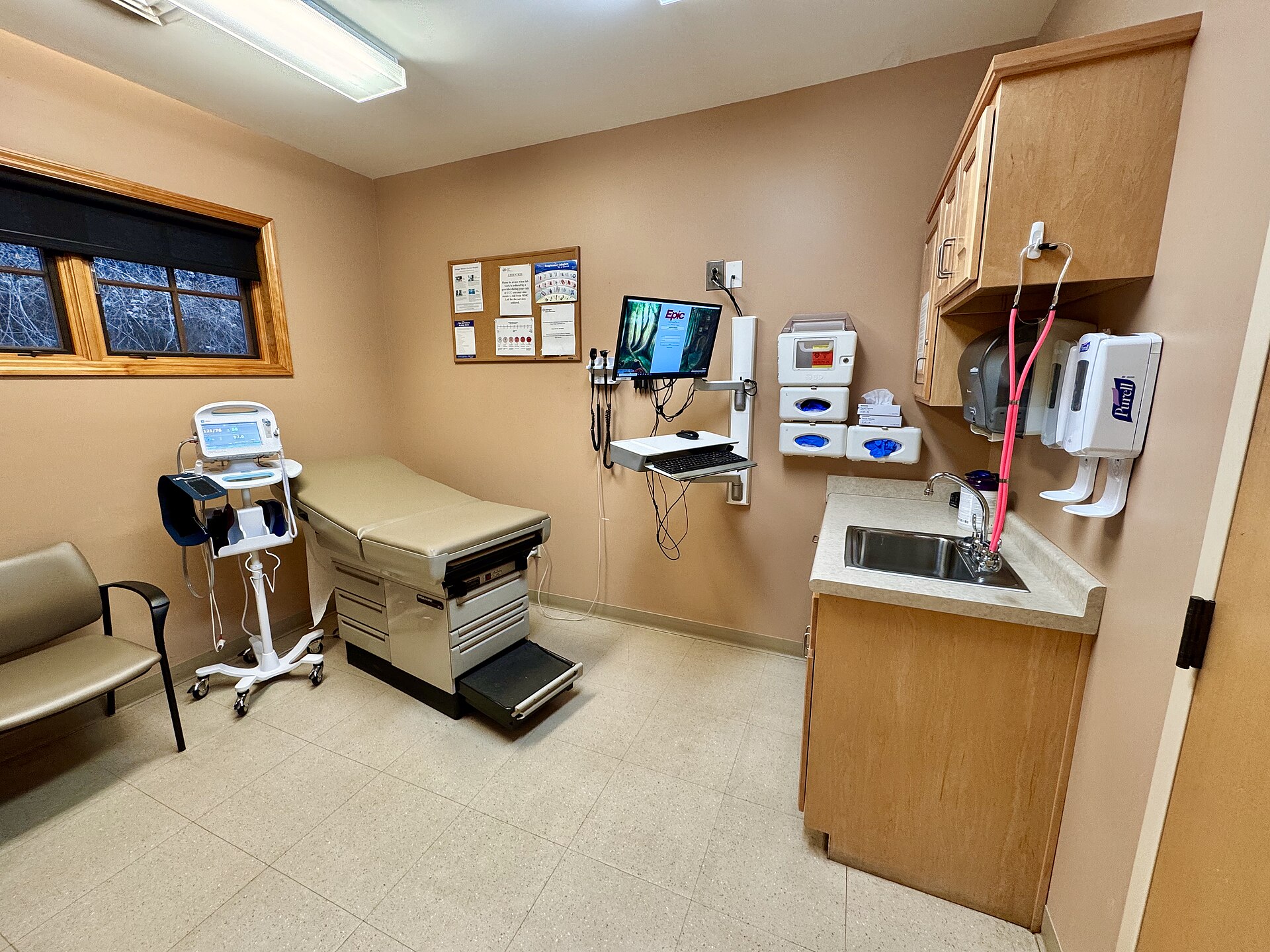

The same visit in two buildings
The practice expense RVU differs by setting. For 99213 in 2026 it was 1.46 in a physician's office and 0.33 in a facility.8 When a hospital owns the practice and bills it as an off-campus outpatient department, Medicare pays the physician the lower facility rate and pays the hospital a separate facility fee, which together usually come to more than the office rate. That is why site-neutral payment is debated in Congress, in CMS's outpatient rules and in Idaho, where House Bill 345 (2025) told Health and Welfare to submit a state plan amendment by July 1, 2026 to pay hospital-acquired physician practices the same Medicaid rate as physician-owned practices for equivalent services, except critical access hospitals and rural emergency hospitals (Idaho Code section 56-2207).42 Whether the state plan amendment was filed and approved could not be confirmed in the records checked for this lesson.
Cost-based and per-visit payment
Critical access hospitals
Medicare pays a critical access hospital (CAH), a small rural hospital with no more than 25 inpatient beds that meets distance rules, 101 percent of its reasonable costs for inpatient and outpatient services, under Social Security Act sections 1814(l) and 1834(g) and 42 CFR 413.70.1643 The hospital receives interim payments during the year and settles up on its cost report. Idaho Medicaid also pays in-state CAHs, and CAHs within 35 miles of the Idaho border, 101 percent of allowable cost with a retrospective settlement (Idaho Code section 56-265(6)(a); IDAPA 16.03.26.070).915 The CMS Hospital General Information file lists 26 critical access hospitals in Idaho as of its latest release.26 The federal rules for CAHs, rural health clinics, rural emergency hospitals and rural ambulance add-ons are explained in Medicare and Rural Idaho, and what cost-based payment means for a rural hospital's bottom line is in lesson 05.
Rural health clinics
A rural health clinic (RHC) is a primary care clinic in a rural, underserved area certified under Social Security Act section 1861(aa). Medicare pays it an all-inclusive rate (AIR) per visit based on its costs, up to a limit. The Consolidated Appropriations Act, 2021 rewrote the limits in section 1833(f): $100 per visit after March 31, 2021, rising to $113 in 2022, $126 in 2023, $139 in 2024, $152 in 2025, $165 in 2026, $178 in 2027 and $190 in 2028, then growing with the Medicare Economic Index. Clinics owned by hospitals with fewer than 50 beds that had higher 2020 rates keep a grandfathered limit.1920 The payment is per visit, not per service, so a visit with several tests is paid the same rate as a short one, subject to the clinic's cost report.
Federally qualified health centers
A federally qualified health center (FQHC) is a nonprofit or public community health center that receives federal grant funding under section 330 of the Public Health Service Act, or meets the same requirements (a "look-alike"). Medicare pays FQHCs under their own prospective payment system: a national base rate per visit of $207.72 in 2026, adjusted by an FQHC geographic factor and raised 34.16 percent for a new patient or an initial preventive or annual wellness visit (42 CFR 405.2462 and related sections). MedPAC counts about 8,000 FQHC sites that served 1.6 million traditional Medicare patients in 2025, with Medicare spending of $1.2 billion.2044
Medicaid must also pay FQHCs and RHCs a per-visit prospective rate based on each center's historical costs, updated by the Medicare Economic Index, under Social Security Act section 1902(bb), added by the Benefits Improvement and Protection Act of 2000. Idaho's rule says payment "must be made in accordance with" that law (IDAPA 16.03.26).1545 That federal floor is why Idaho's 4 percent rate cut in 2025 exempted FQHC and RHC encounter rates, though not their interim rates.10 Lesson 06 covers health centers as the safety net for Medicaid patients.
How Idaho Medicaid pays providers
Federal law gives states wide room to set Medicaid rates but sets one broad test. Social Security Act section 1902(a)(30)(A) requires payments "consistent with efficiency, economy, and quality of care" and "sufficient to enlist enough providers" so that Medicaid patients have access to care at least to the extent of the general population in the area.45 Rates are described in the state plan, which CMS must approve, and rate cuts must go through a public process under 42 CFR 447.203 to 447.205.46 Idaho Medicaid pays for most physical health care on a fee-for-service basis, so the state's own fee schedule and hospital grouper set the price for most medical services. (Behavioral health and dental benefits are run by contractors that set their own rates within state limits, and lesson Managed Care and Privatization covers the coming move to managed care.)
The Medicare link in Idaho law
Idaho ties Medicaid physician fees to Medicare by statute. Idaho Code section 56-265(1), added in 2011, says that where there is a Medicare equivalent, payment to Medicaid providers "may be up to but shall not exceed one hundred percent (100%) of the current medicare rate for primary care procedure codes" and "shall be ninety percent (90%) of the current medicare rate for all other procedure codes."9 Subsection (4) requires Health and Welfare to put a line item for provider rate changes in its yearly budget request and makes "all changes to provider payment rates" subject to legislative approval by appropriation. Where there is no Medicare equivalent, as for residential habilitation and other disability services, rates come from cost surveys and rules (subsection 2, rewritten in 2026 to require audited cost surveys and a yearly public report starting Dec. 31, 2027).9
Health and Welfare publishes the resulting prices in its numerical fee schedule, updated quarterly. The October to December 2026 schedule (version 1.1) lists the allowed amount for each code and notes that most services by nurse practitioners, physician assistants, certified nurse midwives, clinical nurse specialists and pharmacists are paid "up to 85% of the allowed maximum."11 We compared four common codes with Medicare's 2026 Idaho amounts:
| CPT code and service | Idaho Medicaid allowed amount (effective July 1, 2026) | Medicare 2026, Idaho (our calculation) | Medicaid as percent of Medicare | Medicare 2027, Idaho (our calculation) |
|---|---|---|---|---|
| 99203 new patient office visit, low complexity | $105.65 | $110.05 | 96.0 | $105.10 |
| 99213 established patient office visit, low complexity | $86.12 | $89.71 | 96.0 | $85.48 |
| 99214 established patient office visit, moderate complexity | $122.69 | $127.80 | 96.0 | $121.81 |
| 27447 total knee replacement (surgeon, 90-day global) | $913.80 | $1,057.95 | 86.4 | $852.95 |
Sources: Idaho Medicaid Numerical Fee Schedule, October to December 2026, version 1.1; CMS CY2026 and CY2027 physician fee schedule Addenda B and E.1187 The ratios match the statute after the 4 percent cut: 100 percent of Medicare times 0.96 is 96.0 percent for primary care codes, and 90 percent times 0.96 is 86.4 percent for other codes. Because Idaho's schedule follows the "current medicare rate" with a lag, Medicaid's 99213 fee of $86.12 is slightly above Medicare's 2027 Idaho amount of $85.48 until the state updates its schedule.
How we figured it: Medicaid as a percent of Medicare
Data. Idaho Medicaid allowed amounts from the October to December 2026 fee schedule (price effective date July 1, 2026). Medicare RVUs from CMS Addendum B for 2026 and 2027; Idaho GPCIs from Addendum E (2026: work 1.000, practice expense 0.920, malpractice 0.473; 2027: 0.960, 0.932, 0.484); conversion factors $33.4009 (2026) and $32.6286 (2027) for non-qualifying clinicians.11875
Method. Medicare amount = (work RVU x work GPCI + PE RVU x PE GPCI + MP RVU x MP GPCI) x conversion factor, using non-facility practice expense for office visits and facility practice expense for 27447. Ratio = Medicaid allowed amount / Medicare 2026 amount x 100.
Limits. Four codes are an illustration, not an index. Medicare amounts include the patient's 20 percent coinsurance; Idaho Medicaid patients owe little or no cost sharing. Medicaid pays some clinicians 85 percent of the listed amount.
The 2025 rate cut and the 2026 budget
On Aug. 15, 2025, Gov. Brad Little ordered most state agencies to hold back 3 percent of their general fund spending in Executive Order 2025-05, after state revenue fell short.4748 On Aug. 22, Health and Welfare Director Juliet Charron told providers that Medicaid would cut rates 4 percent starting Sept. 1, 2025.47 The department's formal notice of intent to amend the state plan and waivers says the cut applied to nearly every provider type, including inpatient and outpatient hospitals, home and community-based services, nursing facilities, hospice, ambulatory surgical centers, swing beds, interim FQHC rates, pharmacy dispensing fees and managed care capitation rates.10 The exemptions were tribal providers serving tribal members (paid entirely with federal funds), FQHC and RHC encounter rates (protected by federal law) and drug claims paid at actual acquisition cost.10 The notice attests that rates after the cut stay "at or above eighty percent (80%)" of Medicare in aggregate and that the reduction is no more than 4 percent of fee-for-service spending in each affected category, the two thresholds that let a state use the simpler review path in 42 CFR 447.203(c)(1) added by CMS's 2024 access rule.1046 Idaho's DRG calculator records the same step: "9/1/2025: Base rates and CCRs reduced 4%."14
The cut was meant to be temporary, but it was carried into the next budget. In October 2025 the Idaho Capital Sun reported that, to meet the governor's directive to make the 3 percent cuts permanent, Health and Welfare planned to extend the 4 percent provider cut through fiscal year 2027, worth $41.6 million.49 The Legislative Services Office's 2026 Sine Die report says the Division of Medicaid "was initially held to a 3% General Fund reduction, achieved through an across-the-board provider rate reduction," that specific provider rate decreases produced "a $24 million ongoing reduction," and that House Bill 863 cut residential habilitation rates by another $21,008,900 in general funds. The FY2027 Division of Medicaid appropriation is $5,506,118,400.48 Reporting on the session in April 2026, the Capital Sun said lawmakers "extended cuts to Medicaid's already low pay rates for doctors."50 How those budget choices were made is in lesson 10.
Idaho compared with its neighbors
The most-used national comparison of Medicaid doctor fees is the Medicaid-to-Medicare fee index built by researchers at the Urban Institute (a nonprofit research group) from state surveys, most recently for 2024, and published by KFF (a nonprofit health policy research group). A value of 1.00 means Medicaid pays the same as Medicare for the same basket of services. Idaho ranks high:12
| State | All services, 2024 | Primary care, 2024 | Obstetric care, 2024 | All services, 2019 |
|---|---|---|---|---|
| Idaho | 0.94 | 0.97 | 0.90 | 0.93 |
| Montana | 1.32 | 1.32 | 1.31 | 1.11 |
| Wyoming | 1.00 | 1.03 | 0.98 | 0.96 |
| Nevada | 0.90 | 0.84 | 0.98 | 0.96 |
| Oregon | 0.88 | 0.78 | 1.18 | 0.83 |
| Utah | 0.80 | 0.76 | 0.87 | 0.81 |
| Washington | 0.64 | 0.56 | 0.83 | 0.69 |
| United States | 0.75 | 0.66 | 0.88 | 0.72 |
Source: KFF State Health Facts, Medicaid-to-Medicare Fee Index, from Skopec, Pugazhendhi and Zuckerman, Urban Institute, May 2025.12 The index covers fee-for-service fees only and uses 2019 service weights. The 2024 survey predates Idaho's September 2025 cut, so Idaho's current all-services index is likely lower by about 4 percent; no published index measures it yet. A high index does not mean doctors find Medicaid profitable. Medicare itself pays less than commercial insurers, and the index says nothing about how quickly claims are paid, how much paperwork they take or whether patients can find a doctor (lesson 06).
How Idaho Medicaid pays hospitals
Until mid-2021 Idaho was one of only seven states that paid hospitals for inpatient care based on their recently reported allowable costs, according to the Legislature's Office of Performance Evaluations (OPE).13 House Bill 351 (2020) amended Idaho Code section 56-265(8) to require "value-based payment methods for inpatient and outpatient hospital services to replace existing cost-based reimbursement methods" effective July 1, 2021.913 Idaho now pays most in-state hospitals a prospective price per stay using the All Patient Refined DRG (APR-DRG) grouper from Solventum (formerly 3M), which, unlike Medicare's MS-DRGs, is built from data on all patients, including children and pregnant women, and assigns each stay one of four severity levels (IDAPA 16.03.26.070.08).1513
Health and Welfare's APR-DRG pricing calculator for state fiscal year 2027 shows the pieces:14
- A single statewide base rate of $11,160 for general acute hospitals for discharges on or after July 1, 2026; long-term acute care and rehabilitation hospitals have a policy adjustor of 2.65, for a base of $29,574.
- An age adjustor: 0.95 for adults 19 and older and 1.15 for children (1.16 in the July 1, 2025 version), with separate categories for obstetrics and newborns.
- APR-DRG version 43 relative weights times a "recentering factor" of 1.0921, times a service category policy adjustor that raises payment for chosen service lines, such as 1.45 for obstetrics, 1.65 for oncology and 1.60 for mental health and substance use stays (raised from 1.00 on Jan. 1, 2026).
- A cost outlier payment when a stay's estimated cost exceeds the DRG payment by more than $45,000, raised from $25,000 on July 1, 2026.
For an adult elective knee replacement at the lowest severity (APR-DRG 326-1, adjusted weight 1.5277), the calculator's math gives $11,160 x 0.95 x 1.5277 = $16,196.68 (our calculation from the state's published values). Critical access hospitals are not in this system: they are paid 101 percent of allowable cost. State-owned hospitals and the Boise VA Medical Center get 100 percent of cost, and out-of-state hospitals more than 35 miles from the border are paid APR-DRG rates designed to cover 87 percent of cost on average (IDAPA 16.03.26.070.08; Idaho Code section 56-265(6)).159
For outpatient hospital care, the same rule refers to "the outpatient reimbursement parameters outlined in the Medicaid Provider Agreement and Section 56-265, Idaho Code." OPE reported in February 2024 that Medicaid planned to move outpatient hospital payment to Ambulatory Payment Classifications in July 2024, and Idaho Medicaid's July 2024 provider newsletter carried information release MA24-14, "Change In Hospital Reimbursement Methodology APC."151351 The fee schedule now lists an "APC effective date for hospitals using fee schedule" for many codes.11
What did the switch do? OPE found that Medicaid hospital spending doubled over the decade to more than $1 billion, but about 40 percent of the increase (about $224 million) came from supplemental payments funded by the hospital assessment and federal match, base payments rose 67 percent ($345 million) mostly because expansion added enrollees, and inflation-adjusted spending per member fell 10 percent. Comparing Idaho's DRG rates with Colorado, Connecticut, Montana and Wyoming at Idaho's FY2023 case mix, OPE concluded that Idaho paid more per inpatient stay than those states: its estimate for Idaho, $13,364 a stay, was 8 percent above Connecticut's, 11 percent above Montana's, 15 percent above Wyoming's ($11,581) and 4 and 24 percent above Colorado's rural and urban rates, though Idaho paid 25 percent less than Montana for sick newborns.13
Supplemental payments and the hospital assessment
Medicaid payments to hospitals come in two layers: base payments for each claim and supplemental payments made in lump sums.
- Upper payment limit (UPL) payments. Federal rules let a state pay each class of hospitals (state-owned, other government-owned, private) up to a reasonable estimate of what Medicare would have paid for the same services, the upper payment limit in 42 CFR 447.272 (inpatient) and 447.321 (outpatient). The gap between base Medicaid payments and that limit can be paid as a supplement.52
- Medicaid disproportionate share hospital (DSH) payments. Separate from Medicare DSH, Social Security Act section 1923 gives each state a yearly federal allotment to help hospitals that serve many Medicaid and uninsured patients, capped at each hospital's uncompensated costs. IDAPA 16.03.26 sets Idaho's "mandatory" and "deemed" DSH tests and the annual DSH survey.5315
Idaho pays the state share of these supplements mostly with a tax on hospitals. The Idaho Hospital Assessment Act (Idaho Code sections 56-1401 to 56-1409, added 2008 and 2010) sets the assessment each state fiscal year as the percentage of each hospital's net patient revenue needed to fund the UPL gap and the private-hospital DSH share, capped at "the federal limit as referenced in 42 CFR 433.68." Since July 1, 2023, an additional amount equal to 30 percent of the UPL payment is assessed "for general fund medicaid needs."54 State hospitals and the Boise VA, and private hospitals with no emergency department that are not rehabilitation, psychiatric or long-term acute care hospitals, are exempt (section 56-1408).54
A provider tax like this is legal under 42 CFR 433.68 only if it is broad-based, uniform and does not "hold harmless" the taxpayers, meaning the state cannot promise to return the tax to each hospital. A tax at or below 6 percent of revenue is presumed not to hold harmless.55 The 2025 federal law froze provider taxes at their July 4, 2025 levels and lowers the ceiling for expansion states from federal fiscal 2028; that is covered from the Medicaid-law side in What the 2025 Federal Law Does Beyond Work Requirements.40
The dollars are large. The governor's FY2027 request for the Division of Medicaid, presented to the Joint Finance-Appropriations Committee on Jan. 22, 2026, listed a Hospital Assessment Fund supplemental of $190,510,600 for FY2026 and an ongoing Hospital Assessment Fund enhancement of the same $190,510,600 for FY2027.56 The final FY2027 budget moved $349,701,600 of appropriation from federal funds to dedicated funds "pursuant to H 345" and created a budgeted program to track supplemental payments.48 Health and Welfare has not published a current hospital assessment rate in the records reviewed for this lesson.
Value-based payment and managed care
Idaho Code section 56-265(5) lets Health and Welfare pay providers "based on their value in terms of measurable health care quality," as long as each agreement is cost-neutral or cost-saving, and exempts FQHCs from financial risk in those agreements from the 2024 performance period.9 Under that authority the state ran Healthy Connections Value Care, in which provider-led value care organizations (hospital networks and primary care groups) could share in savings if their patients' total costs came in under a target while meeting quality measures. Health and Welfare says it would "discontinue contracting and reimbursing through value care organizations" and the primary care case management program by Jan. 1, 2026, and the Healthy Connections per-member-per-month payment ended Dec. 31, 2025.21 House Bill 345 (2025) instead directs Health and Welfare to submit a plan for statewide Medicaid managed care covering all services; a 2026 amendment set the deadline for the federal application at July 1, 2027 (Idaho Code section 56-2204).57 Under managed care, Medicaid pays plans a monthly capitation per enrollee and the plans negotiate provider rates, within limits such as the 2025 federal cap on state directed payments at 100 percent of Medicare in expansion states.40
Traditional Medicare has its own value-based programs. In the Medicare Shared Savings Program (42 CFR part 425), groups of doctors and hospitals form accountable care organizations (ACOs). Medicare still pays every claim at fee schedule rates, then shares savings (or, in some tracks, losses) against a spending benchmark, adjusted for quality.58 Hospital rates are also adjusted up or down by the Hospital Value-Based Purchasing Program and cut for excess readmissions and hospital-acquired conditions.1
Medicare Advantage and commercial rates
Medicare Advantage contracts
A Medicare Advantage plan is paid by Medicare a monthly amount per enrollee (explained in Original Medicare vs. Medicare Advantage) and then pays hospitals and doctors itself, under contracts it negotiates. Those contracts are private and are not filed with any Idaho agency. Two things hold MA prices near traditional Medicare. First, federal rules require a hospital or doctor with no contract to accept, as payment in full, what traditional Medicare would have paid (42 CFR 422.214), which gives plans a fallback price.59 Second, many contracts are written as a percentage of Medicare's fee schedules and DRGs. A Brookings Institution study by Matthew Fiedler and Samuel Peterson (Oct. 13, 2026), using 2025 hospital price transparency data, found that "the prices that MA plans pay for both inpatient and outpatient services are still close to TM's, on average," and found little evidence that the ratio changes with how many people in an area are in MA.18 Brookings is a nonprofit research organization. Medicare Advantage plans also add costs for hospitals that traditional Medicare does not, such as prior authorization and claim denials, which hospital groups cite when they describe MA as paying less in practice; there is no public Idaho data on those costs.
Commercial insurance
Commercial prices are set by negotiation between insurers (or employers that self-fund their plans and hire an insurer to administer them) and providers. A large hospital system with no nearby competitor has more bargaining power than a small independent practice. Since Jan. 1, 2021, hospitals have had to post their negotiated rates in machine-readable files under 45 CFR part 180, and insurers have had to post theirs under the Transparency in Coverage rule; lesson 12 explains those files and what they show for Idaho.
The largest national study of commercial hospital prices is RAND Corporation's employer-led price transparency project, which uses claims from self-insured employers, insurers and state all-payer claims databases. RAND is a nonprofit research organization. Its round 5.1 report (Dec. 10, 2024) found that in 2022 employers and private insurers paid, on average, 254 percent of what Medicare would have paid for hospital inpatient and outpatient services including related professional claims, with inpatient facility prices at 254 percent, outpatient facility prices at 279 percent and related professional prices at 184 percent; state averages ranged from under 170 percent in Arkansas to over 300 percent in eight states.17 RAND's round 5.1 state values sit in a supplemental spreadsheet that could not be downloaded for this lesson. In its round 4 report (May 2022), covering 2018 to 2020, RAND found private plans paid 224 percent of Medicare overall in 2020; Becker's Hospital Review's reading of that report listed Idaho's 2020 inpatient hospital price at 266 percent of Medicare, against 242 percent nationally, 176 percent in Utah, 227 percent in Oregon, 282 percent in Montana, 226 percent in Wyoming and 274 percent in Nevada.6061 Treat the Idaho figure as dated and approximate: it rests on whichever Idaho hospitals had claims in RAND's sample, and RAND later corrected a data error that had pulled Washington's round 4 figure down.17
Commercial prices matter to everyone in Idaho who buys insurance, because premiums follow them. Employers and workers pay those premiums; the gap between commercial and public prices is one of the main fights in health policy. Hospitals argue that commercial rates must cover the losses on Medicare and Medicaid patients and on uncompensated care ("cost shifting"); employer groups and many economists argue that high commercial prices mostly reflect market power. Lesson 03 looks at Idaho hospital margins, and the hard questions below give each side's case.
One knee replacement, four ways
To see the systems side by side, take one hypothetical example: an adult patient with no major complications has an elective total knee replacement as an inpatient at a Boise hospital paid at the Boise wage index (not one of the reclassified hospitals), with a two-day stay, in late 2026. The hospital part and the surgeon's part are paid separately.
| Payer | Hospital payment (inpatient stay) | Surgeon payment (CPT 27447, includes 90 days of follow-up) | Basis |
|---|---|---|---|
| Traditional Medicare | $14,051.01 | $1,057.95 (2026); $852.95 (2027) | MS-DRG 470, FY2027 Boise rates, before add-ons; Idaho physician fee schedule, facility rate |
| Medicare Advantage plan | Contract price; often near $14,051 | Contract price; often near the Medicare fee | Private contract; 42 CFR 422.214 sets Medicare rates for non-contracted providers |
| Idaho Medicaid | $16,196.68 | $913.80 | APR-DRG 326-1, SFY2027 base rate $11,160 x 0.95 adult adjustor x 1.5277; fee schedule effective July 1, 2026 |
| Commercial plan (illustration only) | About $35,690 at 254 percent of Medicare | About $1,947 at 184 percent of the 2026 Medicare fee | RAND round 5.1 national averages applied to the Medicare amounts; actual Idaho contracts are not public in this form |
Sources and method: Medicare and Medicaid amounts are our calculations from the CMS and Health and Welfare files cited in the methods boxes above; the commercial row multiplies the Medicare amounts by RAND's 2022 national averages and is an illustration, not a price any Idaho hospital charges.324141117 Real payments would differ: Medicare adds teaching, low-income and quality adjustments; a severity level above 1 would raise the Medicaid payment (APR-DRG 326-2 pays $17,504.96 by the same math); patients pay part of the Medicare and commercial amounts through deductibles and coinsurance; and many knee replacements are now done as outpatient surgery, where APC and ambulatory surgical center rates apply instead.
Two things in the table surprise many readers. Idaho Medicaid's hospital payment for this case is higher than traditional Medicare's base payment, which fits OPE's finding that Idaho's DRG rates are high compared with similar states; the two groupers weight cases differently, and Medicare's add-ons narrow the gap for teaching and safety-net hospitals.13 And Idaho Medicaid's surgeon fee is tied to Medicare's 2026 fee, so Medicare's 2027 cut for this code leaves Medicaid briefly paying the surgeon more than Medicare until the state updates.
A short history of provider payment
Most of today's systems were built to fix the incentives of the one before. When Medicare began, it paid hospitals their reasonable costs and doctors their "customary, prevailing and reasonable" charges, which rewarded spending more. Each later law moved more payment to prices set in advance.38

| Year | Law or event | What changed for provider payment | Source |
|---|---|---|---|
| 1965 | Social Security Amendments of 1965 (P.L. 89-97, July 30, 1965) | Created Medicare and Medicaid. Hospitals paid reasonable cost; physicians paid customary, prevailing and reasonable charges. | 38 |
| 1983 | Social Security Amendments of 1983 (P.L. 98-21, April 20, 1983) | Created the inpatient prospective payment system with DRGs, phased in from cost reporting periods beginning Oct. 1, 1983. | 3822 |
| 1989 | Omnibus Budget Reconciliation Act of 1989 (P.L. 101-239) | Created the RBRVS physician fee schedule, effective Jan. 1, 1992. | 386 |
| 1997 | Balanced Budget Act of 1997 (P.L. 105-33, Aug. 5, 1997) | Created critical access hospitals and cost-based payment for them; required an outpatient prospective system; created the wage index rural floor; repealed the Boren Amendment's Medicaid rate standard. | 38 |
| 2000 | Outpatient PPS begins (Aug. 1, 2000); Benefits Improvement and Protection Act of 2000 (P.L. 106-554) | APC payment for hospital outpatient care; Medicaid per-visit PPS for FQHCs and RHCs (section 1902(bb)). | 3845 |
| 2007 | FY2008 IPPS rule | MS-DRGs replace the older DRGs, adding severity levels, starting Oct. 1, 2007. | 38 |
| 2010 | Affordable Care Act (P.L. 111-148, March 23, 2010) | Productivity cut to provider updates; DSH split into 25 percent direct and 75 percent uncompensated care pool from FY2014; Medicare Shared Savings Program ACOs. | 3831 |
| 2011 | 2011 Idaho Session Laws chapter 164 | Added Idaho Code 56-265, tying Medicaid physician fees to Medicare. | 9 |
| 2015 | MACRA (P.L. 114-10, April 16, 2015) | Repealed the sustainable growth rate formula; set two conversion factors from 2026 (0.75 and 0.25 percent updates). | 6 |
| 2020 | Consolidated Appropriations Act, 2021 (P.L. 116-260, Dec. 27, 2020) | New RHC per-visit limits ($100 in 2021 to $190 in 2028); created rural emergency hospitals; enacted the No Surprises Act. | 1938 |
| 2021 | Idaho Medicaid, July 2021 | APR-DRG prospective payment replaces cost-based payment for most Idaho hospitals. | 13 |
| 2025 | P.L. 119-21 (July 4, 2025); Idaho Medicaid cut (Sept. 1, 2025) | One-year 2.5 percent fee schedule increase for 2026; provider tax freeze and directed payment cap; Idaho cuts nearly all Medicaid rates 4 percent. | 4010 |
| 2026 | CY2026 rules; Idaho VCOs end Jan. 1; Idaho SFY2027 rates July 1; FY2027 IPPS Oct. 1 | 2.5 percent efficiency cut to many procedure RVUs; inpatient-only list phase-out begins; Idaho DRG base rate $11,160; Medicare inpatient rates up 2.3 percent. | 4121142 |
| 2027 | CY2027 rules, Jan. 1, 2027 | Physician conversion factor $32.6286 (minus 2.31 percent); work GPCI floor and Medicare-dependent hospital program lapse unless Congress extends them. | 5730 |
Pictures, Numbers and Infographics
The table gathers this lesson's main numbers. Each row names its year and source; rows marked "our calculation" are explained in the methods boxes above.
| Measure | Idaho | U.S. or other states | Year | Source |
|---|---|---|---|---|
| Medicare inpatient rate update | same national update | 2.3 percent (3.2 market basket minus 0.9) | FY2027 | 2 |
| Medicare national standardized amount (full update) | same national amount | $6,848.00 per case; capital $539.95 | FY2027 | 3 |
| Medicare wage index | Boise 0.9555; Twin Falls 0.9347; Coeur d'Alene 0.9541; rural and floor 0.9283 | 1.0 is the national average | FY2027 | 29 |
| Idaho IPPS hospitals paid a higher wage index through reclassification | 6 of 16 | FY2027 | 25 | |
| Medicare uncompensated care pool and Idaho share | about $26.9 million to 12 hospitals (our calculation) | $7.94 billion nationally | FY2027 | 321 |
| Physician conversion factor (non-qualifying) | same national factor | $33.4009 (2026); $32.6286 (2027) | CY2026, CY2027 | 5 |
| Physician geographic adjustment factor | 0.942 (2026); 0.928 (2027) | 1.000 national | CY2026, CY2027 | 7 |
| Office visit 99213, Medicare (our calculation) | $89.71 (2026); $85.48 (2027) | $95.19 national (2026) | CY2026, CY2027 | 87 |
| Office visit 99213, Idaho Medicaid | $86.12 (96.0 percent of 2026 Medicare) | July 1, 2026 | 11 | |
| Medicaid-to-Medicare physician fee index, all services | 0.94 | U.S. 0.75; Utah 0.80; Oregon 0.88; Washington 0.64; Montana 1.32; Wyoming 1.00; Nevada 0.90 | 2024 | 12 |
| Idaho Medicaid APR-DRG statewide base rate | $11,160 | SFY2027 (from July 1, 2026) | 14 | |
| Medicaid provider rate cut | 4 percent, Sept. 1, 2025; extended through FY2027 | 2025 to 2027 | 1049 | |
| Critical access hospital payment | 101 percent of cost (Medicare and Idaho Medicaid) | same Medicare rule nationally | current law | 169 |
| RHC per-visit limit (Medicare) | same national limit | $165 (2026); $178 (2027); $190 (2028) | 2026 to 2028 | 19 |
| FQHC PPS base rate (Medicare) | adjusted by FQHC GAF | $207.72 | 2026 | 20 |
| Commercial hospital prices as percent of Medicare | 266 (inpatient, round 4) | U.S. 254 (all hospital services, round 5.1) | 2020; 2022 | 6117 |
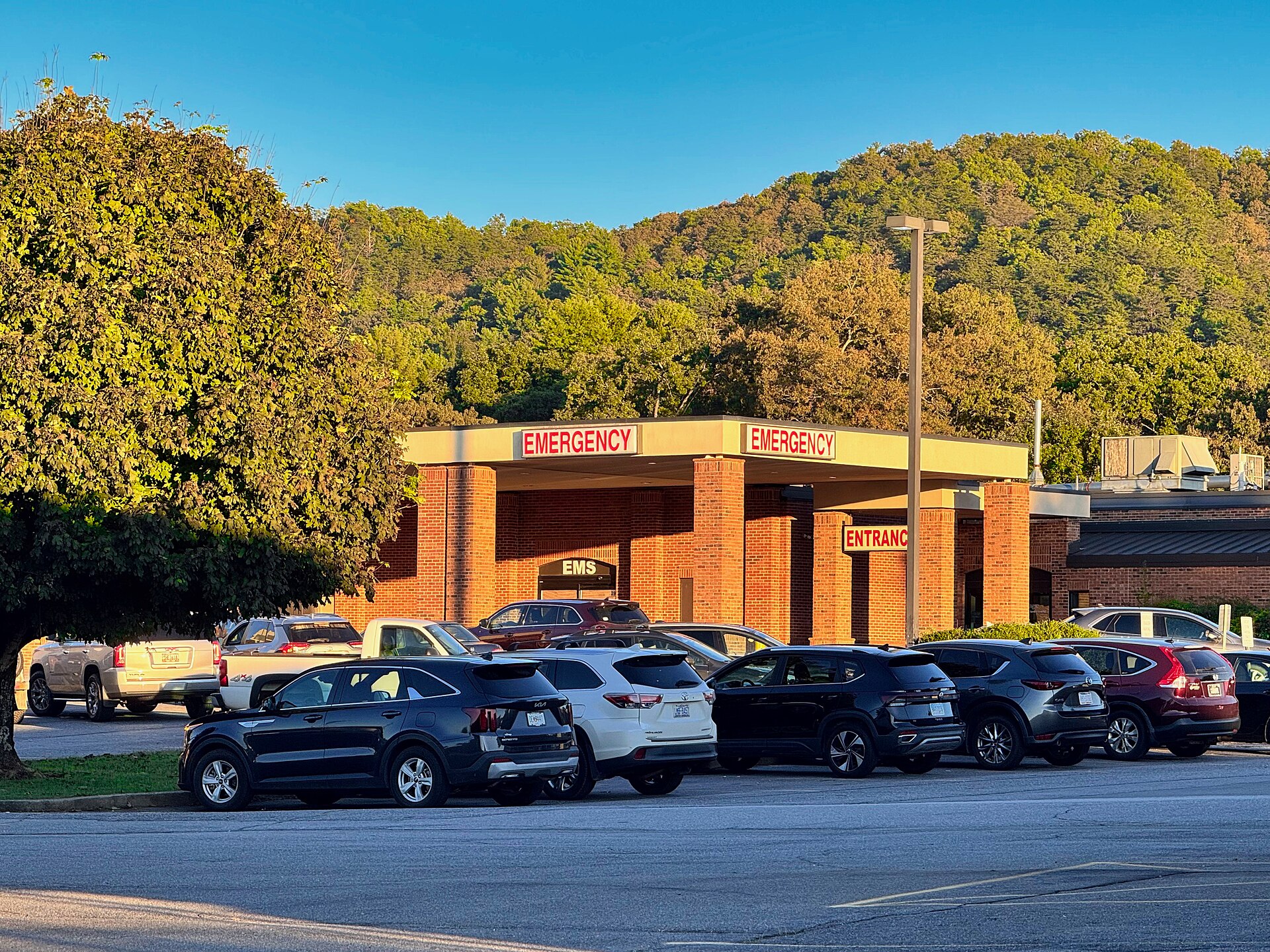
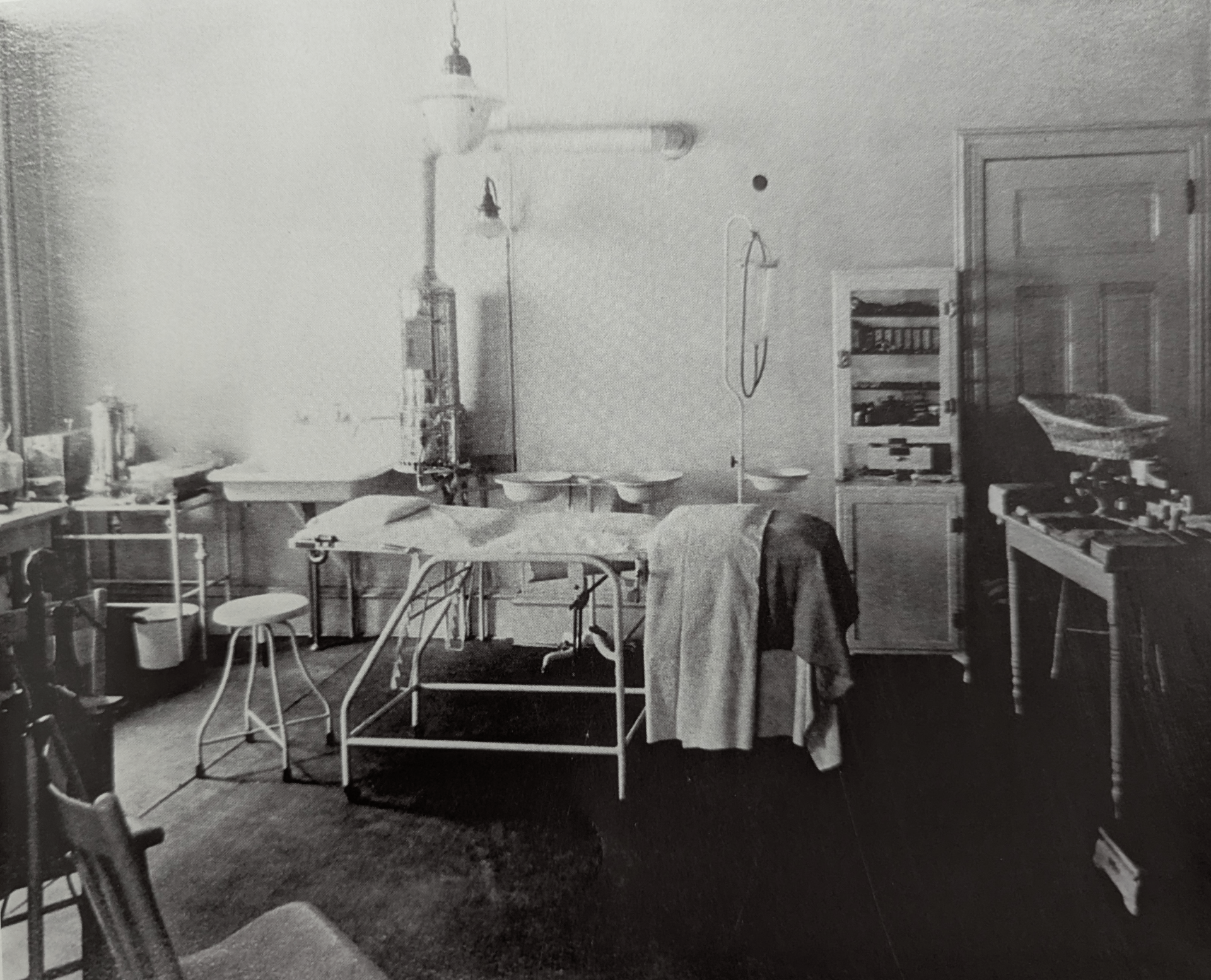
The other graphics in this lesson show the money flow among payers and providers, the DRG formula, the RVU formula, how an Idaho Medicaid fee is set, one knee replacement priced four ways and a timeline of payment systems. The photos show the federal agency headquarters where Medicare and Medicaid payment rules are written, an emergency department entrance, a clinic exam room and an operating room from the 1920s.
Common mistakes
- Treating charges as prices. A hospital's chargemaster price is not what Medicare, Medicaid or most insurers pay. Idaho Medicaid's own DRG calculator lists hospital cost-to-charge ratios as low as 0.146, meaning costs of about 15 cents per dollar of charges at that hospital.14
- Reading the DRG base rate as the payment. The $6,848.00 standardized amount is adjusted by the wage index and multiplied by the DRG weight; a knee replacement in Boise comes to about $14,051 before add-ons, and a complex sepsis case far more.324
- Assuming a hospital is paid its own area's wage index. Six of Idaho's 16 IPPS hospitals are paid a reclassified index from rural Nevada, rural Oregon, rural Washington or Spokane in FY2027.25
- Mixing fiscal years. Medicare inpatient rates run on the federal fiscal year (Oct. 1 to Sept. 30), the physician and outpatient fee schedules on the calendar year, and Idaho Medicaid rates on the state fiscal year (July 1 to June 30). "The 2027 rate" can mean three different periods.1414
- Comparing Medicaid fees to the wrong Medicare year. Idaho's Medicaid 99213 fee was 96 percent of 2026 Medicare but is slightly above 2027 Medicare, because the state schedule lags the federal one.117
- Calling a fee index a measure of access. Idaho's 0.94 Medicaid-to-Medicare index says nothing by itself about whether Medicaid patients can get appointments; the index covers fee-for-service fees only, uses 2019 weights and predates the 2025 cut.12
- Counting supplemental payments as new state money. Most of Idaho's hospital supplemental payments are funded by the hospitals' own assessment plus federal match, not the general fund, as OPE noted.1354
- Applying the RAND national average to Idaho. RAND's 254 percent is a 2022 national average; its state figures rest on the hospitals in its sample, and Idaho's most recent published inpatient figure is from 2020.1761
- Assuming Medicare Advantage pays more than Medicare because plans are paid more. What Medicare pays plans and what plans pay providers are different questions; the Brookings study found plans' hospital prices close to traditional Medicare.18
What we know, what we don't, and what the data can show
What we know
- The formulas, base rates, weights and indexes for Medicare's inpatient, outpatient and physician payment are public in the Federal Register rules and CMS tables, down to each Idaho hospital's wage index and case mix.1254
- Idaho law ties Medicaid physician fees to Medicare at up to 100 and 90 percent; the September 2025 cut lowered them by 4 percent; and the October to December 2026 fee schedule reflects both.91011
- Idaho Medicaid pays most hospitals by APR-DRG with a published base rate, weights and policy adjustors, and pays critical access hospitals 101 percent of cost.1415
- Before the 2025 cut, Idaho's Medicaid physician fees were among the closest to Medicare in the country, at 0.94 in 2024.12
What we don't know
- What commercial insurers and Medicare Advantage plans actually pay each Idaho hospital and practice. The contracts are private; price transparency files show negotiated rates but are hard to compare (lesson 12).
- Whether the 4 percent cut and the 2027 Medicare cut will change how many Idaho clinicians take Medicaid or Medicare patients. No Idaho survey since the cut has been published.
- The current Idaho hospital assessment rate and each hospital's net gain from supplemental payments, which Health and Welfare has not published in the records reviewed.
- Whether Congress will extend the Medicare work GPCI floor, the Medicare-dependent hospital program and the low-volume adjustment beyond Dec. 31, 2026, and whether Idaho's site-neutral state plan amendment was approved.
What the data can show
- CMS IPPS tables 2, 3, 5 and 18 show each Idaho hospital's wage index, reclassification, case mix and uncompensated care share every year.2532
- CMS physician fee schedule addenda B and E let anyone compute the Medicare fee for any code in Idaho.7
- The Idaho Medicaid fee schedule and APR-DRG calculator give the state's price for each code and each hospital stay, quarter by quarter.1114
- Hospital cost reports (HCRIS) show payer mix, Medicaid and Medicare revenue, and uncompensated care on worksheet S-10, used in lessons 03 and 05.
- Hospital price transparency files show negotiated commercial and Medicare Advantage rates by payer and plan for each Idaho hospital.
Questions people ask
Why does my bill show a huge charge and then a huge adjustment?
The charge comes from the hospital's chargemaster. The adjustment is the difference between that charge and the allowed amount your payer has set by formula or contract. You owe only your share of the allowed amount (deductible, copay or coinsurance) when the provider is in network or is paid by Medicare or Medicaid. Lesson 12 covers how to read an explanation of benefits.
Does Medicare pay Idaho doctors less than doctors elsewhere?
Yes, by design. The fee schedule adjusts for local costs through the GPCIs, and Idaho's are below 1.0 for practice expense and malpractice. Idaho's overall geographic adjustment factor is 0.942 for 2026 and 0.928 for 2027, so Idaho fees average about 6 to 7 percent below the national amount. For 99213 the 2026 Idaho fee is $89.71 against $95.19 at the national rate (our calculation).78
Why is the 2027 Medicare physician fee lower than 2026?
Mostly because the one-year 2.5 percent increase that P.L. 119-21 wrote into section 1848(t)(1)(F) covers only services in 2026. Without new legislation, the 2027 conversion factor is $32.6286 for most clinicians, 2.31 percent below 2026. In Idaho, the expiring work GPCI floor lowers payments further.657
Does Idaho Medicaid pay hospitals less than cost?
It depends on the hospital and on whether supplemental payments are counted. Critical access hospitals are paid 101 percent of allowable cost by rule. For other hospitals, base APR-DRG payments are set to a statewide rate, not to each hospital's cost, and supplemental UPL and DSH payments are added on top, funded mostly by the hospitals' own assessment. OPE found Idaho's DRG rates higher than four comparison states but did not measure payment against each hospital's cost.1513 Lessons 03 and 05 look at hospital margins.
Who decides Idaho Medicaid rates?
Three bodies. The Legislature sets the formula in Idaho Code section 56-265 and must approve any rate change through the budget. Health and Welfare writes the rules (IDAPA 16.03.26), runs the fee schedule and the DRG calculator, and files state plan amendments. CMS approves the state plan and enforces the federal access and public notice rules in 42 CFR 447.203 to 447.205.91546 Lesson Who Writes the Rules in the Idaho Medicaid module explains the rulemaking process.
Are rural health clinics paid more than other clinics?
Per visit, often yes, because an RHC's all-inclusive rate covers the whole visit, up to $165 in 2026, while a regular office is paid code by code (a 99213 is $89.71 in Idaho in 2026). But the RHC rate must cover everything in the visit, and the clinic must meet staffing, location and cost reporting rules. Medicaid also pays RHCs a per-visit rate, protected from Idaho's 4 percent cut.1910 The rural details are in Medicare and Rural Idaho.
What is "site-neutral" payment and does it affect Idaho?
It means paying the same price for the same service whether it is done in a physician's office or in a hospital-owned outpatient department. Medicare applied it to drug administration in 2026 and to some imaging in 2027 at excepted off-campus departments.3536 Idaho's House Bill 345 (2025) told Health and Welfare to submit a state plan amendment by July 1, 2026 to apply it in Medicaid for hospital-acquired physician practices, except critical access and rural emergency hospitals.42
Hard questions
Should Idaho Medicaid pay closer to Medicare, or less?
For higher rates. Physician groups, hospitals and disability providers argue that low rates push providers to limit or stop seeing Medicaid patients; Idaho Hospital Association CEO Brian Whitlock has pointed to Idaho's ranking of 50th in physicians per capita.62 Toni Lawson of the Idaho Hospital Association told Idaho Reports in August 2025 that hospitals "are going to have to make tough decisions" after the cut.47 For restraint. Budget writers point out that Medicaid is the largest and fastest-growing program in the general fund, that Idaho's fees were already among the closest to Medicare in the country (0.94 in 2024), and that the Legislature had to close a revenue gap in 2025 and 2026.1248 What the evidence shows. A January 2025 review for MACPAC, the federal Medicaid advisory commission, by Mathematica concluded that "the literature does not find a conclusive relationship between Medicaid physician payment rates and access"; the temporary federal primary care fee increase of 2013 and 2014 improved use of services more than it increased the number of participating physicians, and claim denials and paperwork may matter about as much as rates. There is no Idaho-specific study of the 2025 cut yet.63
Is cost-based payment for small hospitals good policy?
For it. Rural hospital groups argue that a 15-bed hospital with an emergency room that must be staffed around the clock cannot survive on per-case prices set for large hospitals, and that paying cost keeps care within reach of Idaho's rural towns. Against it. Economists and some policymakers argue that paying cost rewards spending more, which is why Idaho Medicaid moved most hospitals off cost-based payment in 2021, and that it does not reward efficiency or quality.13 What the evidence shows. OPE found the move to DRGs gave the Legislature more budget control and changed hospital incentives, while critical access hospitals remained on cost under both Medicare and Medicaid. Whether that mix is right is a policy judgment; lesson 05 shows rural hospital margins.
Is wage index reclassification fair?
For it. Hospitals that compete for nurses with higher-wage areas argue that reclassification lets Medicare's price reflect the labor market they actually face, and that it is allowed by law and reviewed by a federal board. Against it. Because reclassification is budget neutral by law, every hospital that does not reclassify receives slightly less. Hospitals in low-wage areas have long argued the system favors larger hospitals with the resources to file.125 What the evidence shows. In Idaho, the six reclassified hospitals include the state's largest systems' flagship hospitals; the gain for St. Luke's Magic Valley on a single MS-DRG 470 case is about $622 in FY2027 (our calculation). The national cost is spread across all hospitals.
Do high commercial prices pay for low public ones?
The hospital case. Hospitals say Medicare and Medicaid pay less than the full cost of care for many patients, and that commercial prices must make up the difference so hospitals can keep services open. The employer case. Employers and many health economists say commercial prices vary far more than public shortfalls can explain, and that prices are highest where hospitals face the least competition. What the evidence shows. RAND's data show commercial hospital prices averaging 254 percent of Medicare nationally in 2022, with wide variation from state to state and hospital to hospital, which suggests that market conditions, not only public payment levels, drive commercial prices.17 No public study measures this for Idaho hospitals specifically.
For reporters and advocates
Federal records that exist. The yearly CMS payment rules in the Federal Register and their tables (IPPS Tables 1 to 18, including each Idaho hospital's wage index in Table 2 and uncompensated care share in Table 18); the physician fee schedule addenda and the CMS physician fee schedule look-up tool; OPPS addenda; hospital cost reports (HCRIS) with payer mix and worksheet S-10 uncompensated care; the CMS Hospital General Information and Provider of Services files; Medicare Geographic Classification Review Board decisions; and CMS-approved Idaho state plan amendments posted on Medicaid.gov.125726
Idaho records. Health and Welfare's numerical fee schedule (quarterly), APR-DRG calculator and outpatient pricing files; information releases to providers (such as MA25-17 on the 4 percent cut and MA24-14 on outpatient APCs); public notices of rate changes on Idaho's Town Hall site; Health and Welfare budget requests and the LSO budget analysis, JFAC minutes and the Sine Die report; Office of Performance Evaluations reports on Medicaid rates; and the hospital assessment calculations under Idaho Code 56-1404.111410485613
Questions to ask. What is the current hospital assessment rate, and how much does each hospital pay and receive back? Did Health and Welfare file the site-neutral state plan amendment required by Idaho Code 56-2207, and what does it change? When will Idaho publish the comparative payment rate analysis required by 42 CFR 447.203(b)(2), and what does it show for primary care, obstetric and behavioral health codes? How many Idaho clinicians billed Medicaid before and after Sept. 1, 2025? What do the state's largest commercial insurers pay Idaho hospitals as a percent of Medicare? For hospital district trustees and county commissioners: what share of the local hospital's revenue comes from each payer, and what would a 1 percent change in each payer's rate do to the budget?
How to get records. Idaho public records requests to Health and Welfare, the LSO, county hospitals and hospital districts go under Idaho Code Title 74, chapter 1 (see Idaho Public Records Requests); federal records not already published can be requested from CMS under the Freedom of Information Act. Public comment on Idaho rate changes and rules is covered in Testifying and Public Comment, and how rules are made in Laws and Rules.
The Idaho angle. Idaho is a single Medicare physician locality with below-average indexes, its Medicaid doctor fees are tied to Medicare by statute, its Medicaid hospital payment moved from cost to DRGs only in 2021, and its largest hospitals reclassify to higher wage indexes from Oregon, Nevada and Washington. Each of those facts makes a federal or state payment decision show up quickly in Idaho providers' revenue.
Where to go next
- CMS Physician Fee Schedule Look-Up Tool: Free CMS tool that shows the Medicare payment for any service code in any locality, including Idaho (locality 00). Choose the year, the code and the Idaho locality.
- CMS FY 2027 IPPS Final Rule Home Page: Free CMS page with the inpatient rule's data tables, including each hospital's wage index (Table 2), the wage index by area (Table 3), DRG weights (Table 5) and uncompensated care shares (Table 18). Files are zipped text and Excel.
- Idaho Medicaid fee schedules (Health and Welfare): Free quarterly Idaho Medicaid numerical fee schedule in Excel and PDF, with allowed amounts by procedure code. A separate folder holds the hospital DRG and APC pricing files.
- KFF State Health Facts: Medicaid-to-Medicare Fee Index: Free nonprofit research table comparing each state's Medicaid physician fees with Medicare for 2019 and 2024, by service type.
- Idaho Town Hall public notices: Free state site where Health and Welfare posts notices of Medicaid rate and state plan changes and takes public comments.
- Federal Register: Free official daily publication of federal rules, including every CMS payment rule; search by rule number such as CMS-1849-F.
- Idaho Legislature budget and policy analysis (LSO): Free Legislative Services Office budget documents, including the Legislative Budget Book and the Sine Die report, which track Medicaid provider rate decisions.
- CMS Hospital General Information (Provider Data Catalog): Free CMS file listing every Medicare hospital with its type and ownership; useful to match a CMS certification number to a hospital name.
Still being checked (10 items)
These points could not be fully confirmed against a primary source when this lesson was written and fact checked in November 2026. The text above states each one as uncertain.
- RAND's round 5.1 state-level hospital prices for Idaho and neighbor states could not be retrieved (RAND's supplemental spreadsheet was blocked); the Idaho figure used (266 percent of Medicare for inpatient care in 2020) is from RAND round 4 as reported by Becker's Hospital Review, not read directly from RAND's state table.
- Whether Health and Welfare filed, and CMS approved, the site-neutral state plan amendment required by Idaho Code 56-2207 by July 1, 2026 could not be confirmed.
- The exact effective date of Idaho Medicaid's outpatient hospital APC method (information release MA24-14) could not be read; OPE said it was planned for July 2024.
- Whether Congress has extended the Medicare work GPCI floor, the Medicare-dependent hospital program or the expanded low-volume adjustment beyond Dec. 31, 2026 was not settled in the records checked on Nov. 23, 2026.
- The current Idaho hospital assessment rate is not published in the records reviewed.
- The CPT 27447 RVU drop from 34.72 (2026) to 29.21 (2027) is read from CMS addenda; the reason (revaluation, efficiency adjustment or both) was not confirmed.
- The 2020 amendment to Idaho Code 56-265 (2020 Session Laws chapter 35) is named House Bill 351 in the OPE report; the chapter-to-bill match was not checked in the session laws themselves.
- Historical program start dates in the timeline (inpatient PPS 1983, RBRVS Jan. 1, 1992, OPPS Aug. 1, 2000, MS-DRGs Oct. 1, 2007, Boren Amendment repeal 1997) are standard legislative history not re-downloaded from the original Federal Register rules for this lesson.
- The MS-DRG count (768) is our count of rows in CMS Table 5 and may include rows CMS does not count as active groups.
- Idaho's 'one Medicare physician locality' and contractor number 02202 come from CMS Addendum E; the contractor's name was not confirmed.
Last verified November 23, 2026. General education, not legal, medical, insurance or financial advice; every figure names its source and year in the Notes and Sources below. Data is revised: check the newest release before relying on any number.
Notes
- Centers for Medicare & Medicaid Services (CMS), final rule CMS-1849-F, Medicare Program; Hospital Inpatient Prospective Payment Systems for Acute Care Hospitals (IPPS) and the Long-Term Care Hospital Prospective Payment System for FY2027, 91 FR 49570 (Aug. 4, 2026), effective Oct. 1, 2026, with correction notice 91 FR 61328 (Sept. 29, 2026); preamble sections on uncompensated care (Factor 1 $11,825,250,000; Factor 2 67.14 percent; uncompensated care amount $7,939,472,850), outliers (fixed-loss threshold $49,346; 5.1 percent target), reclassification budget neutrality under section 1886(d)(8)(D), quality programs, and the Medicare-dependent hospital program through Dec. 31, 2026 under section 6202 of P.L. 119-75 (read Nov. 23, 2026). Read it online. ↩
- CMS, fact sheet, "FY 2027 Hospital Inpatient Prospective Payment System (IPPS) and Long-Term Care Hospital Prospective Payment System (LTCH PPS) Final Rule (CMS-1849-F)," July 31, 2026: 2.3 percent update (3.2 percent market basket minus 0.9 point productivity), payments up about $2.1 billion (read Nov. 23, 2026). Read it online. ↩
- CMS, FY2027 IPPS final rule and correction notice, Tables 1A to 1E (file "CMS-1849-CN Tables 1A - 1E"): operating standardized amounts $4,519.68 and $2,328.32 (wage index above 1) and $4,245.76 and $2,602.24 (wage index 1 or less) at the full 2.3 percent update; lower amounts for hospitals that fail quality reporting or are not meaningful EHR users (updates of 1.5, minus 0.1 and minus 0.9 percent); capital rate $539.95; downloaded from the FY 2027 IPPS Final Rule Home Page (read Nov. 23, 2026). Read it online. ↩
- CMS, final rule CMS-1848-F, CY 2027 Payment Policies Under the Physician Fee Schedule and Other Changes to Part B Payment and Coverage Policies, 91 FR 70992 (Nov. 9, 2026) (read Nov. 23, 2026). Read it online. ↩
- American Medical Association (a physician professional association), CY 2027 Medicare Physician Fee Schedule Final Rule Summary, November 2026: conversion factors $33.4009 and $33.5675 (2026) and $32.6286 and $32.9548 (2027); calculation $33.4009 / 1.025 x 1.0025 x 0.9988; budget neutrality minus 0.12 percent; temporary 2.5 percent 2026 increase not extended as of Nov. 10, 2026; rule released Nov. 4, 2026 (read Nov. 23, 2026). Read it online. ↩
- Social Security Act section 1848 (42 U.S.C. 1395w-4), payment for physicians' services, including (d)(20) (0.75 and 0.25 percent updates for 2026 and later), (e)(1)(E) (work GPCI floor of 1.00 for services before Jan. 1, 2027, in the version read) and (t)(1)(F) (2.5 percent increase for services on or after Jan. 1, 2026 and before Jan. 1, 2027) (read Nov. 23, 2026). Read it online. ↩
- CMS, CY2027 physician fee schedule final rule (CMS-1848-F) addenda, updated Nov. 5, 2026: Addendum B (RVUs; 99213 work 1.30, non-facility PE 1.42, malpractice 0.10; 27447 total facility RVUs 29.21), Addendum D (Idaho GAF 0.942 in 2026 with the work floor and 0.928 in 2027 without it, minus 1.50 percent) and Addendum E (2027 GPCIs, Idaho locality 00 under contractor 02202: work 0.960 without the 1.0 floor, PE 0.932, MP 0.484; neighbor states as listed) (read Nov. 23, 2026). Read it online. ↩
- CMS, CY2026 physician fee schedule final rule (CMS-1832-F) addenda, updated Feb. 26, 2026: Addendum B (99213 work 1.30, non-facility PE 1.46, facility PE 0.33, malpractice 0.09, non-facility total 2.85; 27447 total facility RVUs 34.72) and Addendum E (2026 Idaho GPCIs: work 1.000 with floor, PE 0.920, MP 0.473; neighbor states as listed) (read Nov. 23, 2026). Read it online. ↩
- Idaho Code section 56-265, provider payment (added 2011, ch. 164; amended 2015, 2016, 2017, 2020, 2025 ch. 118 and 2026 ch. 161): (1) up to 100 percent of the current Medicare rate for primary care codes and 90 percent for other codes; (2) cost surveys for services with no Medicare equivalent; (4) line-item request and legislative approval of rate changes; (5) value-based agreements; (6) critical access hospitals at 101 percent of cost, out-of-state hospitals 87 percent, state-owned hospitals 100 percent; (8) value-based hospital payment to replace cost-based payment effective July 1, 2021 (read Nov. 23, 2026). Read it online. ↩
- Idaho Department of Health and Welfare, Division of Medicaid, Notice of Intent to Submit State Plan and Waiver Amendments and Solicitation of Public Input (4 percent rate reduction requested effective Sept. 1, 2025; information release MA25-17, Aug. 22, 2025; tribal letter Aug. 28, 2025): services affected, exemptions for tribal providers, FQHC and RHC encounter rates and actual acquisition cost drug claims, and attestation that rates stay "at or above eighty percent (80%)" of Medicare with no more than a 4 percent reduction per benefit category (read Nov. 23, 2026). Read it online. ↩
- Idaho Department of Health and Welfare, Division of Medicaid, Numerical Fee Schedule, October to December 2026, version 1.1 (Excel): allowed amounts effective July 1, 2026 for 99203 ($105.65), 99213 ($86.12), 99214 ($122.69) and 27447 ($913.80); note that most nurse practitioner, physician assistant, certified nurse midwife, clinical nurse specialist and pharmacist services are paid up to 85 percent of the allowed maximum; APC effective dates column (read Nov. 23, 2026). Read it online. ↩
- KFF (a nonprofit health policy research organization), State Health Facts, "Medicaid-to-Medicare Fee Index," 2024 and 2019, from state surveys reported in Skopec, Pugazhendhi and Zuckerman, Urban Institute (a nonprofit research organization), May 2025; fee-for-service only, 2019 service weights (read Nov. 23, 2026). Read it online. ↩
- Idaho Legislature, Office of Performance Evaluations, Medicaid Hospital Rates, report 23-02, February 2024: Idaho one of seven states paying inpatient care on recent allowable costs before the July 2021 move to DRGs; APC outpatient payment planned for July 2024; Medicaid hospital spending doubled to more than $1 billion, with about 40 percent of the increase ($224 million) from supplemental payments, base payments up 67 percent ($345 million) and per-member spending down 10 percent after inflation; exhibit 7 and text: Idaho's per-stay estimate of $13,364 at its FY2023 case mix was 4 and 24 percent above Colorado's rural and urban rates and 8, 11 and 15 percent above Connecticut, Montana and Wyoming ($11,581); Idaho paid 25 percent less than Montana for sick newborns; House Bill 351 named as the 2020 law (read Nov. 23, 2026). Read it online. ↩
- Idaho Department of Health and Welfare, ID DRG Calculator SFY 2027 Version 1.1 (APR-DRG pricing calculator effective July 1, 2026): statewide base rate $11,160; adult age adjustor 0.95 and pediatric 1.15; APR-DRG version 43 weights with recentering factor 1.0921; service category adjustors (obstetrics 1.45, oncology 1.65, mental health and substance use 1.60 from Jan. 1, 2026); LTAC and rehabilitation adjustor 2.65; cost outlier threshold $45,000; change history including "9/1/2025: Base rates and CCRs reduced 4%"; provider table with cost-to-charge ratios (read Nov. 23, 2026). Read it online. ↩
- IDAPA 16.03.26, Medicaid Plan Benefits (in force July 1, 2026), section 070 (hospital services definitions: APR-DRG prospective payment for in-state hospitals; 100 percent of cost for state-owned hospitals and the VA; 101 percent of cost for CAHs; out-of-state APR-DRG rates at 87 percent cost coverage; outpatient parameters in the provider agreement and Idaho Code 56-265; DSH definitions and the upper payment limit), section 074 (DSH tests) and the FQHC and RHC sections (payment under 42 U.S.C. 1396a(bb)) (read Nov. 23, 2026). Read it online. ↩
- Social Security Act section 1814(l) (42 U.S.C. 1395f(l)): payment for inpatient critical access hospital services "equal to 101 percent of the reasonable costs"; outpatient CAH payment is in section 1834(g) (read Nov. 23, 2026). Read it online. ↩
- RAND Corporation (a nonprofit research organization), Prices Paid to Hospitals by Private Health Plans: Findings from Round 5.1 of an Employer-Led Transparency Initiative, RR-A1144-2-v2, Dec. 10, 2024: 254 percent of Medicare in 2022 for inpatient and outpatient services including professional claims; inpatient facility 254 percent, outpatient facility 279 percent and professional 184 percent; Arkansas below 170 percent and eight states above 300 percent; Washington's round 4 figure too low because some Medicare Advantage claims were included in error; state annex table updated March 28, 2025 (read Nov. 23, 2026). Read it online. ↩
- Matthew Fiedler and Samuel Peterson, Brookings Institution (a nonprofit research organization), "Do Medicare Advantage plans still pay hospitals prices close to traditional Medicare's?" Oct. 13, 2026 (2025 hospital price transparency data) (read Nov. 23, 2026). Read it online. ↩
- Social Security Act section 1833 (42 U.S.C. 1395l), including subsection (t) (hospital outpatient prospective payment system) and subsection (f) (rural health clinic per-visit limits: $100 after March 31, 2021; $113 in 2022; $126 in 2023; $139 in 2024; $152 in 2025; $165 in 2026; $178 in 2027; $190 in 2028; then MEI growth) (read Nov. 23, 2026). Read it online. ↩
- Medicare Payment Advisory Commission (MedPAC), Payment Basics: Federally Qualified Health Center Payment System, October 2026: 2026 FQHC PPS base rate $207.72; 34.16 percent adjustment for new patients and initial preventive or annual wellness visits; about 8,000 FQHCs serving 1.6 million fee-for-service beneficiaries with $1.2 billion in Medicare spending in 2025; RHC statutory limit $165 in 2026 rising to $190 in 2028 (read Nov. 23, 2026). Read it online. ↩
- Idaho Department of Health and Welfare, "Healthy Connections and Healthy Connections Value Care" provider page (value care organizations and primary care case management discontinued by Jan. 1, 2026; Healthy Connections per-member-per-month payment ended Dec. 31, 2025) (read Nov. 23, 2026). Read it online. ↩
- Social Security Act section 1886 (42 U.S.C. 1395ww), payment to hospitals for inpatient hospital services, including subsections (d) (prospective payment, wage index, outliers, IME, DSH, reclassification, sole community and Medicare-dependent hospitals), (d)(12) (low-volume hospitals) and (r) (uncompensated care payments) (read Nov. 23, 2026). Read it online. ↩
- 42 CFR 412.64, federal rates for inpatient operating costs (standardized amounts, labor share, wage index adjustment) (read Nov. 23, 2026). Read it online. ↩
- CMS, FY2027 IPPS final rule and correction notice, Table 5 (MS-DRG relative weights and geometric and arithmetic mean length of stay); 768 MS-DRG rows counted by us (read Nov. 23, 2026). Read it online. ↩
- CMS, FY2027 IPPS final rule and correction notice, Table 2 (case mix index for FY2025 discharges and wage index by CCN, with geographic and reclassified CBSA); Idaho rows (CCN 13xxxx) read by us (read Nov. 23, 2026). Read it online. ↩
- CMS, Provider Data Catalog, Hospital General Information (hospital name, city, county, type and ownership by CMS certification number), Idaho rows (read Nov. 23, 2026). Read it online. ↩
- CMS, fact sheet, "2026 Medicare Parts A & B Premiums and Deductibles," Nov. 14, 2025: Part A inpatient deductible $1,736 per benefit period (read Nov. 23, 2026). Read it online. ↩
- CMS, final rule CMS-1833-F, FY2026 IPPS and LTCH PPS, 90 FR 36536 (Aug. 4, 2025): 2.6 percent update (3.3 percent market basket minus 0.7 point productivity) (read Nov. 23, 2026). Read it online. ↩
- CMS, FY2027 IPPS final rule and correction notice, Table 3 (wage index and GAF by CBSA, average hourly wages, pre-rural-floor values and rural floor eligibility); Idaho rows (read Nov. 23, 2026). Read it online. ↩
- Healthcare Financial Management Association (a professional association of health care finance staff), FY 2027 IPPS/LTCH PPS Final Rule Summary, August 2026: outlier threshold $49,346 (FY2026 $40,397); uncompensated care payments up $226.3 million or 2.9 percent; expanded low-volume hospital criteria expire Dec. 31, 2026, with 589 fewer hospitals eligible and $258 million less spending (read Nov. 23, 2026). Read it online. ↩
- 42 CFR 412.106, special treatment of hospitals that serve a disproportionate share of low-income patients, including the 25 percent empirically justified payment and the uncompensated care payment in paragraph (g) (read Nov. 23, 2026). Read it online. ↩
- CMS, FY2027 IPPS final rule and correction notice, Table 18 (correction notice file "CMS-1840-CN Table 18") (Medicare DSH uncompensated care payment Factor 3 by CCN and projected DSH eligibility); Idaho rows summed by us (read Nov. 23, 2026). Read it online. ↩
- 42 CFR 412.105, special treatment of hospitals that incur indirect costs for graduate medical education programs; paragraph (d)(3)(xii): multiplier 1.35 for discharges in fiscal year 2008 and thereafter; teaching factor .405 in paragraph (c) (read Nov. 23, 2026). Read it online. ↩
- 42 CFR 419.32, calculation of prospective payment rates for hospital outpatient services (conversion factor and annual update) (read Nov. 23, 2026). Read it online. ↩
- CMS, fact sheet, "Calendar Year 2026 Hospital Outpatient Prospective Payment System (OPPS) and Ambulatory Surgical Center (ASC) Payment System Final Rule," Nov. 21, 2025: 2.6 percent update; drug administration at excepted off-campus departments paid at the physician fee schedule equivalent ($290 million estimated reduction); three-year inpatient-only list phase-out starting with 285 procedures in 2026; 340B remedy offset kept at 0.5 percent (read Nov. 23, 2026). Read it online. ↩
- American Medical Association (a physician professional association), CY 2027 OPPS Final Rule Summary, November 2026: 2.3 percent update (3.2 percent market basket minus 0.9); 340B drugs paid at ASP minus 28 percent with other rates up an estimated 7.5 percent; remedy offset raised to 2 percent; imaging without contrast at excepted off-campus departments paid 40 percent of OPPS for 337 services, rural sole community hospitals exempt; 637 services removed from the inpatient-only list Jan. 1, 2027 (read Nov. 23, 2026). Read it online. ↩
- CMS, final rule, CY2027 Hospital Outpatient Prospective Payment and Ambulatory Surgical Center Payment Systems, 91 FR 70284 (Nov. 6, 2026) (read Nov. 23, 2026). Read it online. ↩
- Public laws as named in the timeline, in the U.S. Statutes at Large: Social Security Amendments of 1965 (P.L. 89-97), Social Security Amendments of 1983 (P.L. 98-21), Omnibus Budget Reconciliation Act of 1989 (P.L. 101-239), Balanced Budget Act of 1997 (P.L. 105-33), Medicare, Medicaid, and SCHIP Benefits Improvement and Protection Act of 2000 (P.L. 106-554), Patient Protection and Affordable Care Act (P.L. 111-148), Medicare Access and CHIP Reauthorization Act of 2015 (P.L. 114-10) and Consolidated Appropriations Act, 2021 (P.L. 116-260); program start dates (inpatient PPS 1983, physician fee schedule Jan. 1, 1992, outpatient PPS Aug. 1, 2000, MS-DRGs Oct. 1, 2007) as carried in the Social Security Act and the CMS rules cited in this lesson (read Nov. 23, 2026). Read it online. ↩
- 42 CFR 414.20, formula for computing fee schedule amounts (RVUs times GAF times conversion factor) (read Nov. 23, 2026). Read it online. ↩
- P.L. 119-21 (July 4, 2025), the 2025 budget reconciliation law, including the 2.5 percent physician fee schedule increase for 2026 and the Medicaid provider tax and state directed payment provisions (sections 71115 and 71116) (read Nov. 23, 2026). Read it online. ↩
- CMS, final rule CMS-1832-F, CY 2026 Payment Policies Under the Physician Fee Schedule, 90 FR 49266 (Nov. 5, 2025), including the minus 2.5 percent efficiency adjustment to the work RVUs of non-time-based services; see also CMS MLN Matters MM14315 (read Nov. 23, 2026). Read it online. ↩
- Idaho Code section 56-2207, legislative approval, site-neutral payments (added 2025, ch. 118, House Bill 345): state plan amendment by July 1, 2026 to pay hospital-acquired physician practices the same rate as physician-owned practices for equivalent outpatient services, excepting critical access and rural emergency hospitals (read Nov. 23, 2026). Read it online. ↩
- 42 CFR 413.70, payment for services of a critical access hospital (101 percent of reasonable costs) (read Nov. 23, 2026). Read it online. ↩
- 42 CFR 405.2462, payment for RHC and FQHC services (read Nov. 23, 2026). Read it online. ↩
- Social Security Act section 1902 (42 U.S.C. 1396a), state plans for medical assistance, including (a)(30)(A) (payments consistent with efficiency, economy and quality of care and sufficient to enlist enough providers) and (bb) (prospective payment for FQHC and RHC services, added by P.L. 106-554 in 2000) (read Nov. 23, 2026). Read it online. ↩
- 42 CFR 447.203, documentation of access to care and service payment rates, including (b) payment rate transparency (first publication by July 1, 2026) and comparative payment rate analysis, and (c)(1) the 80 percent of Medicare and 4 percent reduction thresholds for rate reductions; see also 447.204 and 447.205 (read Nov. 23, 2026). Read it online. ↩
- Melissa Davlin, Idaho Reports (Idaho Public Television), "Providers brace for 4% Medicaid reduction," Aug. 29, 2025 (Director Juliet Charron's Aug. 22 letter; cut effective Sept. 1; Gov. Little's Aug. 15 order for 3 percent agency cuts; quotes of Toni Lawson, Idaho Hospital Association, and Robert Vande Merwe, Idaho Health Care Association) (read Nov. 23, 2026). Read it online. ↩
- Idaho Legislative Services Office, 2026 Legislative Sine Die Report: general fund discussion ("specific provider rates were decreased at Medicaid, resulting in a $24 million ongoing reduction"); S 1331 and Executive Order 2025-05; Division of Medicaid FY2027 budget of $5,506,118,400 (S 1435, S 1433, S 1446), the 3 percent general fund reduction "achieved through an across-the-board provider rate reduction," H 863 reduction of $21,008,900, and the Hospital Assessment Fund alignment of $349,701,600 pursuant to H 345 (read Nov. 23, 2026). Read it online. ↩
- Kyle Pfannenstiel, Idaho Capital Sun, "As Idaho permanently extends governor's budget cuts, Medicaid will keep provider pay cuts," Oct. 30, 2025 (4 percent provider cut extended through FY2027, $41.6 million) (read Nov. 23, 2026). Read it online. ↩
- Idaho Capital Sun, "Idaho lawmakers dodged Medicaid expansion repeal. But what did they do with Medicaid?" April 9, 2026 (lawmakers "extended cuts to Medicaid's already low pay rates for doctors"; House Bill 863), read as republished by News From the States (read Nov. 23, 2026). Read it online. ↩
- Idaho Medicaid, MedicAide provider newsletter, July 2024, listing information release MA24-14, "Change In Hospital Reimbursement Methodology APC" (read Nov. 23, 2026). Read it online. ↩
- 42 CFR 447.272, inpatient services: application of upper payment limits (a reasonable estimate of what Medicare payment principles would pay, by ownership class); outpatient limits are in 447.321 (read Nov. 23, 2026). Read it online. ↩
- Social Security Act section 1923 (42 U.S.C. 1396r-4), adjustment in payment for inpatient hospital services furnished by disproportionate share hospitals (Medicaid DSH allotments and hospital-specific limits) (read Nov. 23, 2026). Read it online. ↩
- Idaho Code Title 56, chapter 14, Idaho Hospital Assessment Act, sections 56-1401 to 56-1409, including 56-1404 (assessment rates for the upper payment limit gap and private-hospital DSH, capped at the federal limit in 42 CFR 433.68; additional 30 percent of the UPL payment for general fund Medicaid needs beginning July 1, 2023; net patient revenue base) and 56-1408 (exemptions) (read Nov. 23, 2026). Read it online. ↩
- 42 CFR 433.68, permissible health care-related taxes (broad-based, uniform, no hold harmless; the 6 percent indirect guarantee threshold in paragraph (f)(3)) (read Nov. 23, 2026). Read it online. ↩
- Joint Finance-Appropriations Committee, Jan. 22, 2026, minutes attachment 1 (Division of Medicaid FY2027 budget request summary): Hospital Assessment Fund FY2026 supplemental $190,510,600 and FY2027 ongoing Hospital Assessment Fund enhancement $190,510,600 (the $376,124,900 line on the same page is the population forecast adjustment) (read Nov. 23, 2026). Read it online. ↩
- Idaho Code section 56-2204, legislative approval, comprehensive Medicaid managed care (added 2025, ch. 118; amended 2026, ch. 271): federal application due no later than July 1, 2027 (read Nov. 23, 2026). Read it online. ↩
- 42 CFR part 425, Medicare Shared Savings Program (accountable care organizations) (read Nov. 23, 2026). Read it online. ↩
- 42 CFR 422.214, special rules for services furnished by noncontract providers to Medicare Advantage enrollees (accept the amount payable under original Medicare as payment in full) (read Nov. 23, 2026). Read it online. ↩
- RAND Corporation, news release, "Private Health Plans During 2020 Paid Hospitals 224 Percent of What Medicare Would Pay," May 17, 2022 (round 4, 2018 to 2020 data) (read Nov. 23, 2026). Read it online. ↩
- Marissa Plescia and Andrew Cass, Becker's Hospital Review, "Inpatient medical bills paid by private insurance vs. Medicare: Comparison by state," May 6, 2022, reporting RAND round 4 state inpatient relative prices for 2020 (Idaho 266 percent; national 242 percent; Utah 176; Oregon 227; Washington 214; Montana 282; Wyoming 226; Nevada 274) (read Nov. 23, 2026). Read it online. ↩
- Kyle Pfannenstiel, Idaho Capital Sun, "Before the One Big Beautiful Bill Act, Idaho braced for federal Medicaid cuts. But not this change," Aug. 18, 2025 (Idaho Hospital Association CEO Brian Whitlock on Idaho's ranking of 50th in physicians per capita) (read Nov. 23, 2026). Read it online. ↩
- Medicaid and CHIP Payment and Access Commission (MACPAC), Evaluating the Effects of Medicaid Payment Changes on Access to Physician Services, January 2025 (literature review and roundtable conducted by Mathematica) (read Nov. 23, 2026). Read it online. ↩
Check yourself
1. What was the Medicare inpatient (IPPS) payment update for federal fiscal year 2027 for hospitals that report quality data?
CMS's FY2027 IPPS final rule (91 FR 49570, Aug. 4, 2026) set a 2.3 percent update: a 3.2 percent market basket minus a 0.9 point productivity adjustment. 2.6 percent was the FY2026 update.
2. Which three things are multiplied together to set a Medicare physician fee under 42 CFR 414.20?
42 CFR 414.20 computes the fee schedule amount as the product of the RVUs, the geographic adjustment factor (in practice the GPCIs) and the conversion factor.
3. What is the CY2027 Medicare physician conversion factor for most clinicians (those not qualifying APM participants)?
The CY2027 final rule (91 FR 70992, Nov. 9, 2026) set $32.6286, down 2.31 percent from $33.4009 in 2026, after the one-year 2.5 percent increase in section 1848(t)(1)(F) ended.
4. Under Idaho Code 56-265(1), what may Idaho Medicaid pay for primary care procedure codes with a Medicare equivalent?
Idaho Code 56-265(1)(a) caps primary care codes at 100 percent of the current Medicare rate; (1)(b) sets 90 percent for all other codes.
5. Which providers' rates were exempt from Idaho Medicaid's 4 percent cut effective Sept. 1, 2025, according to Health and Welfare's notice?
The Health and Welfare notice of intent lists those three exemptions; hospitals, nursing facilities, ASCs and interim FQHC rates were cut.
6. In the Urban Institute fee index published by KFF, what was Idaho's 2024 Medicaid-to-Medicare ratio for all physician services?
KFF's Medicaid-to-Medicare Fee Index lists Idaho at 0.94 in 2024, against 0.75 nationally, 0.64 in Washington and 1.32 in Montana.
7. How does Idaho Medicaid pay most in-state, non-critical-access hospitals for inpatient stays since July 2021?
OPE's 2024 report and IDAPA 16.03.26.070 describe APR-DRG prospective payment; the SFY2027 statewide base rate is $11,160 in Health and Welfare's DRG calculator.
8. What does Medicare pay a critical access hospital for inpatient services?
Social Security Act section 1814(l) and 42 CFR 413.70 set payment at 101 percent of reasonable costs; Idaho Code 56-265(6)(a) uses the same 101 percent for Idaho Medicaid.
9. What is the Medicare per-visit payment limit for most rural health clinics in 2027 under Social Security Act section 1833(f)?
Section 1833(f)(2) sets $165 for 2026, $178 for 2027 and $190 for 2028.
10. Why is St. Luke's Magic Valley Medical Center paid a Medicare wage index of 1.0090 in FY2027 rather than Twin Falls' 0.9347?
CMS FY2027 Table 2 lists CCN 130002 with a wage index payment area of rural Nevada (code 29) and a wage index of 1.0090; Table 3 gives Twin Falls 0.9347.
Terms in this lesson
- Chargemaster
- A hospital's master list of prices (charges) for every item and service. Charges are the same for every patient but are rarely what any payer pays.
- Allowed amount
- The total a payer recognizes for a service, including the patient's share. The difference between the charge and the allowed amount is written off as a contractual adjustment.
- Prospective payment
- A price set before care is given, for a defined bundle such as a hospital stay or clinic visit; the provider keeps savings and absorbs losses.
- MS-DRG
- Medicare Severity Diagnosis Related Group: one of 768 FY2027 groups used to pay Medicare inpatient stays, each with a relative weight.
- APR-DRG
- All Patient Refined Diagnosis Related Group: a grouper built on all-payer data with four severity levels, used by Idaho Medicaid since July 2021.
- Case mix index (CMI)
- The average DRG relative weight of a hospital's discharges; higher means more complex patients and more payment per case.
- Wage index
- Medicare's adjustment of the labor share of a payment for local hospital wages, by area; affected by floors, caps and reclassification.
- Geographic reclassification
- Approval by the Medicare Geographic Classification Review Board for a hospital to be paid another area's wage index.
- Relative value unit (RVU)
- A measure of the resources in a physician service, split into work, practice expense and malpractice parts.
- Geographic practice cost index (GPCI)
- An index that adjusts each RVU part for local costs; Idaho is a single locality.
- Conversion factor
- The dollar amount per adjusted RVU in the Medicare physician fee schedule: $33.4009 in 2026 and $32.6286 in 2027 for most clinicians.
- Ambulatory Payment Classification (APC)
- A group of outpatient hospital services with similar cost, each with a relative weight, used in the Medicare outpatient prospective payment system.
- All-inclusive rate (AIR)
- The per-visit Medicare payment to a rural health clinic, based on its costs and capped by law ($165 in 2026).
- Upper payment limit (UPL)
- The federal cap on Medicaid fee-for-service payments to a class of facilities: a reasonable estimate of what Medicare would pay (42 CFR 447.272).
- Hospital assessment
- Idaho's tax on hospitals' net patient revenue under Idaho Code 56-1404 that funds the state share of supplemental Medicaid payments.
- Site-neutral payment
- Paying the same rate for a service whether it is performed in a physician's office or a hospital-owned outpatient department.
Sources
- CMS FY2027 IPPS/LTCH PPS final rule, 91 FR 49570 (Aug. 4, 2026) (2026-11-23) checked 2026-11
- CMS FY 2027 IPPS Final Rule Home Page (Tables 1 to 18) (2026-11-23) checked 2026-11
- CMS CY2027 physician fee schedule final rule, 91 FR 70992 (Nov. 9, 2026) (2026-11-23) checked 2026-11
- CMS CY2027 physician fee schedule final rule addenda (CMS-1848-F) (2026-11-23) checked 2026-11
- CMS CY2027 OPPS final rule, 91 FR 70284 (Nov. 6, 2026) (2026-11-23) checked 2026-11
- Social Security Act section 1848 (42 U.S.C. 1395w-4) (2026-11-23) checked 2026-11
- Social Security Act section 1886 (42 U.S.C. 1395ww) (2026-11-23) checked 2026-11
- Idaho Code section 56-265, provider payment (2026-11-23) checked 2026-11
- Idaho Hospital Assessment Act, Idaho Code 56-1401 to 56-1409 (2026-11-23) checked 2026-11
- IDAPA 16.03.26, Medicaid Plan Benefits (2026-11-23) checked 2026-11
- Idaho Medicaid fee schedules and APR-DRG calculator (Health and Welfare public documents) (2026-11-23) checked 2026-11
- Idaho Medicaid notice of 4 percent rate reduction (2025) (2026-11-23) checked 2026-11
- Idaho Office of Performance Evaluations, Medicaid Hospital Rates (February 2024) (2026-11-23) checked 2026-11
- Idaho Legislative Services Office, 2026 Legislative Sine Die Report (2026-11-23) checked 2026-11