Lesson 7 of 12 · about 55 minutes · Updated November 23, 2026
The Health Care Workforce: Nurses, Aides, Wages and Who Pays Them
You'll be able to
- Tell the difference between BLS OEWS occupation data and QCEW industry data and use each correctly
- Compare Idaho health care wages with the U.S. and the six neighboring states, in dollars and relative to local wages
- Read the Idaho Department of Labor's 2024 to 2034 projections and explain why most openings are replacements
- Describe how nurses are licensed in Idaho, how the Nurse Licensure Compact works and what limits the nursing school pipeline
- Explain how Idaho Medicaid turns a target wage into a personal care rate, including Idaho Code section 56-265 and the federal 80 percent rule
- Identify the federal immigration actions of 2025 and 2026 that affect health workers and what is and is not known about their effect in Idaho
Start here: the short version
- Health care and social assistance is about one Idaho job in seven. In 2025 the industry averaged 133,423 jobs across private employers and government, 15.3 percent of all 874,283 jobs covered by unemployment insurance in Idaho, against 16.1 percent nationally, in the Bureau of Labor Statistics' Quarterly Census of Employment and Wages (our calculation of the shares).1
- Registered nurses are the largest licensed group, and home care aides the largest group overall. The BLS Occupational Employment and Wage Statistics survey for May 2025 counts 16,880 registered nurse jobs in Idaho (median $44.45 an hour), 20,770 home health and personal care aide jobs ($16.72), 7,910 nursing assistant jobs ($18.58) and 1,880 licensed practical nurse jobs ($30.67).2
- Idaho pays less than the nation and much less than Oregon and Washington. The Idaho median for registered nurses was 5.2 percent below the U.S. median of $46.90 in May 2025, and 28 percent below Oregon's $62.02 (our calculations from BLS data).34
- The Idaho Department of Labor projects health jobs to grow about twice as fast as all jobs. Its 2024 to 2034 projections, released Oct. 7, 2026, show healthcare support occupations up 30.2 percent and healthcare practitioners up 24.1 percent, against 13.4 percent for all occupations, with about 1,228 registered nurse openings and 4,369 home care aide openings a year.56
- Training rules are set by law. Federal rules require at least 75 hours of training, including 16 supervised practical hours, for nursing home aides (42 CFR 483.152); Idaho's approved CNA course is 120 hours, according to the Department of Health and Welfare. Idaho has belonged to the Nurse Licensure Compact since 2001 (Idaho Code section 54-1418).789
- Medicaid rates and home care wages are tied together. Idaho sets its personal care rate from a survey of wages in nursing facilities (IDAPA 16.03.26.555). The Legislature's auditors found in 2023 that the wage the rate supported lagged its own target by $2.62 an hour in 2022; in November 2026 Health and Welfare asked to raise the hourly personal care rate from $24.44 to $27.64.101112
- Federal immigration policy changed in 2025 and 2026. Proclamation 10973 (Sept. 19, 2025) put a $100,000 payment on new H-1B petitions, and Proclamation 11069 (September 2026) extended it to Sept. 21, 2027, while federal courts split over it. KFF counts immigrants as 17 percent of U.S. health care workers in 2024.131415
Law: Social Security Act sections 1819 and 1919 and 42 CFR parts 441 and 483 as amended through Nov. 23, 2026, including the 2024 Ensuring Access to Medicaid Services rule; Idaho Code Title 54 chapter 14 (nursing), Title 44 chapter 20 (right to work) and section 18-915C, and IDAPA 16.03.26 (in force July 1, 2026), through the 2026 session; Presidential Proclamations 10973 (2025) and 11069 (2026); wage and job counts from BLS OEWS May 2025 and QCEW annual averages for 2015 to 2025; projections from the Idaho Department of Labor's 2024 to 2034 release (September and October 2026); checked Nov. 23, 2026. Wages, rates and immigration rules change every year, and some of the court cases named here were still moving on the check date.
Health care is mostly people. A hospital's largest expense is its payroll; a home care agency's is almost nothing but payroll; a nursing home's Medicaid rate is built around the hours its aides and nurses work. When Idaho argues about Medicaid rates, rural hospitals, nursing home closures or the price of a clinic visit, it is usually arguing about wages, whether it says so or not. This lesson counts the people who do the work, what they earn, where they come from, what rules govern their training and licenses, and how public money reaches their paychecks.
The lesson leans on federal data that anyone can download, and it says plainly which numbers are counts, which are surveys, which are projections and which are our own calculations. It links rather than repeats lessons that cover pieces of the same ground: physicians and dentists are in lesson 06, nursing home finances in lesson 09, health care as an industry and employer in lesson 11, and the Magic Valley's hospitals and clinics in lesson 04. Nursing home staffing standards are in module 89's lesson on nursing homes in Idaho, and the home care workforce under Medicaid's waivers is in its lesson on home and community-based services.


Who works in Idaho health care
Two federal programs count health care workers, and they answer different questions. Mixing them is the most common way stories about "the health care workforce" go wrong, so it helps to know each one before looking at the numbers.
Two federal yardsticks: OEWS counts jobs by occupation, QCEW counts jobs by industry
Occupational Employment and Wage Statistics (OEWS) is a survey of business establishments, run by BLS with state labor agencies, that pools six semiannual panels over three years. It reports how many wage and salary jobs exist in each occupation (registered nurse, nursing assistant, pharmacist) and what they pay, in every state and metropolitan area. It counts jobs, not people: a nurse with two part-time jobs counts twice. It leaves out the self-employed, which matters for physicians, dentists and some therapists, and it puts each job where the employer is, not where the worker lives.17
The Quarterly Census of Employment and Wages (QCEW) is not a survey. It is built from the quarterly reports every employer files for unemployment insurance, so it covers nearly every wage and salary job, sorted by the employer's industry (hospitals, nursing homes, doctors' offices, home health agencies). A billing clerk at a hospital is a hospital job in QCEW; a nurse who works for a school district is an education job. QCEW gives exact counts and total wages paid, but says nothing about occupations.18
A short way to keep them straight: QCEW tells you how big the health care industry is; OEWS tells you how many nurses and aides there are and what they earn, wherever they work. Lesson 11 uses QCEW to look at health care as an industry; this lesson uses both. The two lessons count the sector a little differently: lesson 11 adds private and local-government jobs (130,009, or 14.9 percent of Idaho jobs in 2025), while this lesson's all-owner total also includes state and federal jobs (133,423, or 15.3 percent).
The occupations in numbers
The table lists the occupations that make up most of the direct patient care workforce, with May 2025 OEWS figures for Idaho and the United States. "Per 1,000 jobs" is the occupation's share of all jobs in the state, which lets a small state be compared with the nation.
| Occupation (SOC code) | Idaho jobs | Idaho per 1,000 jobs | Idaho median hourly | Idaho mean annual | U.S. jobs | U.S. median hourly | U.S. mean annual |
|---|---|---|---|---|---|---|---|
| Registered nurses (29-1141) | 16,880 | 19.7 | $44.45 | $92,710 | 3,379,720 | $46.90 | $101,420 |
| Home health and personal care aides (31-1120) | 20,770 | 24.2 | $16.72 | $34,220 | 4,305,810 | $17.21 | $36,120 |
| Nursing assistants (31-1131) | 7,910 | 9.2 | $18.58 | $39,100 | 1,448,910 | $20.32 | $42,700 |
| Medical assistants (31-9092) | 5,250 | 6.1 | $21.49 | $44,240 | 817,870 | $21.97 | $46,120 |
| Pharmacy technicians (29-2052) | 2,950 | 3.4 | $22.32 | $47,120 | 471,680 | $22.00 | $46,620 |
| Dental assistants (31-9091) | 2,680 | 3.1 | $22.06 | $47,250 | 387,790 | $23.11 | $50,200 |
| Dental hygienists (29-1292) | 2,060 | 2.4 | $45.51 | $95,500 | 222,740 | $47.16 | $98,990 |
| Licensed practical and vocational nurses (29-2061) | 1,880 | 2.2 | $30.67 | $63,860 | 648,410 | $30.96 | $67,050 |
| Pharmacists (29-1051) | 1,790 | 2.1 | $69.66 | $139,410 | 321,970 | $67.75 | $140,920 |
| Nurse practitioners (29-1171) | 1,750 | 2.0 | $63.72 | $133,420 | 323,040 | $63.61 | $137,300 |
| Family medicine physicians (29-1215) | 690 | 0.8 | $166.91 | $307,400 | 107,510 | $117.39 | $255,820 |
| All healthcare practitioners and technical (29-0000) | 51,500 | 60.1 | $40.56 | $101,480 | 9,823,860 | $41.60 | $108,700 |
| All healthcare support (31-0000) | 41,510 | 48.4 | $17.89 | $38,470 | 7,901,670 | $18.43 | $40,800 |
| All occupations (00-0000) | 857,440 | 1,000 | $23.06 | $61,170 | 155,495,730 | $24.51 | $69,770 |
Source: U.S. Bureau of Labor Statistics, OEWS, May 2025, state and national estimates, retrieved through the BLS public data interface Nov. 23, 2026.23 Physician figures cover only salaried jobs and miss self-employed physicians; lesson 06 uses physician-specific sources.
Several things stand out. Healthcare practitioners and healthcare support workers together hold 93,010 Idaho jobs, 10.8 percent of all OEWS jobs in the state, a little below the national share of 11.4 percent (our calculation). Home care aides outnumber registered nurses, which is true nationally as well. Idaho has far fewer licensed practical nurses for its size than the nation: 2.2 per 1,000 jobs against 4.2 nationally, about half (our calculation). Idaho has a little more than the national share of medical assistants, the clinic workers who room patients and take vital signs, and about the national share of pharmacists and nurse practitioners.23
The registered nurse share is the number most often cited in shortage debates. Idaho had 19.7 RN jobs per 1,000 jobs in May 2025 against 21.7 nationally, which BLS calls a location quotient of about 0.91 (our calculation). The Idaho Department of Labor found the same pattern four years earlier: its 2022 study reported that the RN location quotient fell from 0.96 in 2019 to 0.88 in 2021.19
Direct support professionals have no code of their own
Direct support professionals (DSPs) help people with intellectual and developmental disabilities live in their homes, work and take part in their communities. Idaho Medicaid pays for their work in residential habilitation, supported living and community support services (module 89's lesson on developmental disability services). Federal statistics cannot count them directly, because the 2018 Standard Occupational Classification has no DSP occupation. Their jobs are scattered across home health and personal care aides, social and human service assistants, and other codes, depending on how each employer answers the survey.
That may change. BLS's page on the 2028 revision of the classification, updated Sept. 30, 2026, says the review is to finish in 2027 and names "care workers" as a possible addition. In August 2026 the Congressional Budget Office scored S. 3211, the Recognizing the Role of Direct Support Professionals Act, which would require the Office of Management and Budget to consider a separate DSP code and report to Congress if it does not create one; CBO noted that more than 1,500 public comments to the revision discussed DSPs.2021 Until a code exists, any statewide DSP count is an estimate.
Health care as a share of Idaho jobs
QCEW shows how the industry has grown. NAICS sector 62, "health care and social assistance," has four parts: ambulatory health care (621: physician and dental offices, clinics, home health agencies, labs, ambulances), hospitals (622), nursing and residential care facilities (623: nursing homes, assisted living, group homes) and social assistance (624: child care, services for older adults and people with disabilities, food banks and similar). Social assistance is not health care, but much of Idaho's Medicaid home care sits inside it, so the sector total is the usual yardstick.
| Measure | Idaho 2015 | Idaho 2020 | Idaho 2025 | Change 2015 to 2025 | U.S. 2025 |
|---|---|---|---|---|---|
| All covered jobs | 664,792 | 748,123 | 874,283 | +31.5% | 155,732,363 |
| Health care and social assistance, all owners | 94,732 | 109,382 | 133,423 | +40.8% | 25,103,872 |
| Share of all jobs | 14.2% | 14.6% | 15.3% | +1.1 points | 16.1% |
| Private ambulatory care (621) | 33,188 | 43,189 | 55,036 | +65.8% | 9,016,938 |
| Private hospitals (622) | 24,227 | 24,317 | 34,789 | +43.6% | 5,572,896 |
| Government hospitals (federal, state, local) | 7,484 | 8,814 | 6,015 | see note | 1,528,782 |
| Private nursing and residential care (623) | 14,149 | 15,512 | 16,531 | +16.8% | 3,423,564 |
| Private social assistance (624) | 13,948 | 15,693 | 19,173 | +37.5% | 4,984,263 |
| Private sector 62 average weekly wage | $763 | $876 | $1,133 | +48.5% | $1,279 |
| All private jobs average weekly wage | $744 | $919 | $1,216 | +63.4% | $1,521 |
Source: BLS QCEW annual averages for Idaho (2015, 2020, 2025) and the United States (2025), downloaded from the QCEW open data files Nov. 23, 2026. Percentages and the all-owner totals (private plus federal, state and local government) are our calculations.1
Ambulatory care, the clinics and offices, grew fastest. Nursing homes and residential care grew slowest, which matches module 89's finding that Idaho's count of certified nursing homes barely moved over the decade while home and community services grew. Wages in the sector rose 48.5 percent in nominal dollars, but less than the 63.4 percent rise for all private jobs, so health care's average weekly pay fell from slightly above the private average in 2015 to 93.2 percent of it in 2025 (our calculation). Nationally, private health care and social assistance paid 84.1 percent of the all-private average in 2025, so the gap is wider in the nation than in Idaho, largely because Idaho's overall wages are lower.1
One line needs care. Government hospital jobs in Idaho fell from 9,294 in 2023 to 5,926 in 2024 while private hospital jobs rose from 27,033 to 31,749. QCEW sorts jobs by the employer's ownership, so a hospital that changes from public to private ownership, or changes how it reports, moves its whole payroll from one line to the other in a single year. The files do not name the employer. Lesson 11 traces most of this shift to Kootenai Health in Coeur d'Alene, which its board voted on May 2, 2023, to convert from a public hospital district to a private 501(c)(3) nonprofit corporation, effective at midnight on Dec. 31, 2023.52 The combined hospital total (private plus government) rose from 36,327 in 2023 to 37,675 in 2024 and 40,804 in 2025.1 Lesson 03 covers who owns Idaho's hospitals.
How we figured it: health care's share of Idaho jobs
Data. BLS QCEW annual average files for area 16000 (Idaho statewide) for 2015 through 2025 and area US000 for 2024 and 2025. We used the rows for ownership codes 1 (federal), 2 (state), 3 (local) and 5 (private), at the sector (NAICS 62) and subsector (621 to 624) levels, and the all-industry, all-ownership total row.1
Method. Health care and social assistance, all owners, is the sum of the four ownership rows for NAICS 62. The share is that sum divided by total covered employment: 133,423 divided by 874,283 equals 15.3 percent for Idaho in 2025; 25,103,872 divided by 155,732,363 equals 16.1 percent for the nation. The same method with total annual wages gives a wage share of 14.6 percent for Idaho and 14.0 percent nationally. Growth is (2025 value divided by 2015 value) minus 1; for private NAICS 62, 125,530 divided by 85,512 equals 1.468, so 46.8 percent. The relative weekly wage is 1,133 divided by 1,216, or 93.2 percent.
Limits. QCEW counts jobs covered by unemployment insurance, so it leaves out the self-employed, many people hired directly by families, and some religious and student workers. It is by place of work. Figures are nominal dollars, not adjusted for inflation. Annual averages are the average of 12 monthly counts.
Regional differences inside Idaho
Wages differ inside the state as much as they do across state lines. The OEWS metropolitan estimates for May 2025 show the pattern for two key jobs.
| Metropolitan area (May 2025) | RN jobs | RN median hourly | Nursing assistant jobs | Nursing assistant median hourly |
|---|---|---|---|---|
| Boise City | 8,550 | $47.06 | 3,790 | $18.85 |
| Coeur d'Alene | 2,060 | $47.55 | 970 | $19.15 |
| Idaho Falls | 1,540 | $40.44 | 540 | $18.13 |
| Twin Falls | 890 | $39.75 | 540 | $18.59 |
| Pocatello | 830 | $37.87 | 300 | $17.47 |
| Lewiston (Idaho and Washington) | 730 | $42.14 | 350 | $18.69 |
| Idaho statewide | 16,880 | $44.45 | 7,910 | $18.58 |
Source: BLS OEWS May 2025 metropolitan area estimates, retrieved Nov. 23, 2026.22 The Lewiston area includes Asotin County, Washington.
The Boise and Coeur d'Alene areas pay registered nurses about $7 to $10 an hour more than Twin Falls and Pocatello. Coeur d'Alene sits next to Spokane, and North Idaho hospitals compete with Washington employers; the Department of Labor's 2022 study and the Legislature's 2023 audit both found the worst shortages in counties bordering Washington and Oregon.1911 The Magic Valley pays less: the Department of Labor's South Central region, which includes Twin Falls, Gooding, Lincoln, Minidoka, Cassia, Camas and Blaine counties, had a 2025 median of $40.75 an hour for registered nurses and $14.80 for home health and personal care aides, the lowest aide median of the state's six regions.5 Lesson 04 looks at the Magic Valley's hospitals and clinics.
What Idaho health workers earn, against the nation and the neighbors
Idaho's median wage for all jobs, $23.06 an hour in May 2025, was 5.9 percent below the national median of $24.51 (our calculation). Most health care wages sit below the national figure by a similar amount, and a few, mostly jobs with national labor markets, sit at or slightly above it.23
The comparison with neighboring states matters more to Idaho employers than the national figure, because nurses and aides can and do move across state lines, and some commute. Two of Idaho's six neighbors pay much more.
| State (May 2025) | All occupations median | Registered nurses median | RN median as multiple of state median | Licensed practical nurses median | Nursing assistants median | Home health and personal care aides median |
|---|---|---|---|---|---|---|
| Idaho | $23.06 | $44.45 | 1.93 | $30.67 | $18.58 | $16.72 |
| Utah | $24.09 | $40.67 | 1.69 | $30.40 | $19.15 | $17.25 |
| Oregon | $27.40 | $62.02 | 2.26 | $38.69 | $23.96 | $21.35 |
| Washington | $30.28 | $59.71 | 1.97 | $39.98 | $23.65 | $22.95 |
| Montana | $23.43 | $41.00 | 1.75 | $29.91 | $19.67 | $17.61 |
| Wyoming | $24.17 | $40.27 | 1.67 | $30.51 | $18.83 | $15.96 |
| Nevada | $22.91 | $49.84 | 2.18 | $36.62 | $21.87 | $16.19 |
| United States | $24.51 | $46.90 | 1.91 | $30.96 | $20.32 | $17.21 |
Source: BLS OEWS May 2025 state and national estimates, retrieved Nov. 23, 2026. The multiple is the RN median divided by the state's all-occupation median, our calculation.43
Read the table two ways. In dollars, an Idaho registered nurse at the median earns 71.7 percent of the Oregon median and 74.4 percent of the Washington median, and an Idaho nursing assistant earns about 78 percent of the median in either state (our calculations). Those gaps are large enough to pull workers from North Idaho, the Palouse, Lewiston and the Payette and Ontario area across the border. In local terms, though, Idaho RNs earn 1.93 times the state's median wage, a hair above the national 1.91 and above Utah, Montana and Wyoming, where RN pay is lower than Idaho's. Idaho does not underpay nurses relative to its own economy; it pays them like a lower-wage state, which it is. For nursing assistants the picture is less favorable: the Idaho median is 0.81 of the state's all-job median, against 0.83 nationally and 0.87 in Oregon.4
How we figured it: comparing wages across states
Inputs. BLS OEWS May 2025 median hourly wages for SOC codes 00-0000, 29-1141, 29-2061, 31-1131 and 31-1120 in Idaho, Utah, Oregon, Washington, Montana, Wyoming, Nevada and the United States, from the BLS public data interface (series OEUS and OEUN, data type 08).4
Calculations (ours). Idaho versus U.S., registered nurses: 44.45 divided by 46.90 equals 0.948, so 5.2 percent lower. Idaho versus Oregon: 44.45 divided by 62.02 equals 0.717. Versus Washington: 44.45 divided by 59.71 equals 0.744. Nursing assistants, Idaho versus Oregon: 18.58 divided by 23.96 equals 0.775; versus Washington: 18.58 divided by 23.65 equals 0.786. Multiple of the state median: RN median divided by all-occupation median (Idaho 44.45 divided by 23.06 equals 1.93).
Limits. Medians are for all jobs in the occupation in all industries, including part-time jobs. They are nominal dollars and are not adjusted for local prices; housing in Boise or Coeur d'Alene can cost more than in parts of Oregon or Washington. They do not include benefits, shift differentials paid as bonuses, overtime patterns or sign-on bonuses. Travel nurses employed by out-of-state agencies may be counted where the agency is, not in Idaho.
Why the gap exists, and what the evidence says
Several explanations are offered, and the evidence supports some more than others.
- Lower wages across the whole economy. This is the best documented. Idaho's all-job median is lower than every neighbor's except Nevada's, and health wages track it.4
- Payer mix and prices. Idaho hospitals and clinics are paid by Medicare, Medicaid and commercial insurers. Medicare's hospital and physician rates are adjusted by area wage indexes that are lower for most of Idaho, and Medicaid rates are set by the state (lessons 02 and 05). Lower revenue per service gives employers less room to raise pay, though the size of that effect has not been measured for Idaho.
- Union bargaining. Washington and Oregon have far higher union membership and many hospital nurse contracts; Idaho has a right-to-work law and very few health care bargaining units (see unions below). Union contracts raise pay where they exist, but no study we found separates their effect on Idaho-versus-Washington nurse pay from the effect of everything else.
- Cost of living. The Department of Labor's 2022 study and the Legislature's 2023 audit both reported that rising housing costs pushed recruits away and that some candidates turned down Idaho job offers for lack of affordable housing; that evidence comes from interviews and surveys, not wage data.1911
The Department of Labor's 2022 survey of Idaho nurses, pharmacists and physicians, run through their licensing boards (503 RN responses), found that nurses planning to leave would need wages in the top quarter of their occupation to stay, that younger and less experienced nurses were more likely to plan an exit, and that RNs in Nevada, Oregon and Washington would need "considerably higher pay" to move to Idaho. Nurses, pharmacists and physicians all mentioned Idaho's "cultural or political climate" among their reasons for leaving the labor market or moving out of state.23
The projections: 2024 to 2034
Every two years the Idaho Department of Labor projects employment 10 years ahead, using federal methods and data, and estimates how many job openings each occupation will have. Openings come from three sources: workers who leave the labor force (retirement, family, illness), workers who move to a different occupation, and new jobs from growth. Projections are estimates of future demand, built on past trends and population forecasts; they are not counts and not promises.5
| Occupation (Idaho statewide) | Jobs 2024 | Jobs 2034 (projected) | Change | Openings per year | Median wage 2025 |
|---|---|---|---|---|---|
| All occupations | 905,707 | 1,026,830 | +13.4% | 116,798 | $23.06 |
| Healthcare practitioners and technical | 50,013 | 62,073 | +24.1% | 4,207 | $40.56 |
| Healthcare support | 41,362 | 53,868 | +30.2% | 7,899 | $17.89 |
| Home health and personal care aides | 20,872 | 28,419 | +36.2% | 4,369 | $16.72 |
| Registered nurses | 16,013 | 19,485 | +21.7% | 1,228 | $44.45 |
| Nursing assistants | 7,770 | 9,374 | +20.6% | 1,341 | $18.58 |
| Medical assistants | 5,080 | 6,636 | +30.6% | 850 | $21.49 |
| Pharmacy technicians | 2,848 | 3,352 | +17.7% | 332 | $22.32 |
| Licensed practical nurses | 1,820 | 2,171 | +19.3% | 195 | $30.67 |
| Pharmacists | 1,726 | 2,026 | +17.4% | 99 | $69.66 |
| Nurse practitioners | 1,695 | 2,752 | +62.4% | 202 | $63.72 |
Source: Idaho Department of Labor, Occupation projections 2024 to 2034, tables 2 and 5, statewide, posted September 2026; labeled projections.5 The department's 2024 base counts differ from OEWS because the projections add self-employment and use a different benchmark.
The industry projections tell the same story from the employer side. The department expects health care and social assistance to add 33,945 jobs, from 124,815 in 2024 to 158,760 in 2034, the fastest growth of any sector at 2.4 percent a year; ambulatory care is projected to grow 31.2 percent and hospitals 22.8 percent. Its Oct. 7, 2026, release attributes the growth to "the state's continued aging population trend."246
The chart shows why "shortage" talk focuses on replacing workers, not only on growth. For home care aides, 3,614 of the 4,369 openings a year are projected to come from workers leaving the labor force or the occupation, and only 755 from new jobs. For registered nurses, 881 of 1,228 openings a year are replacements. Nurse practitioners are the exception: more than half of their openings come from growth, because the occupation is projected to grow 62.4 percent in ten years.5
In the Magic Valley, the department's South Central region is projected to need 124 registered nurse openings, 133 nursing assistant openings and 387 home care aide openings a year, with RN jobs growing 22.7 percent from 1,592 to 1,953.5
Nurses: licenses, the compact and the school pipeline
Who licenses nurses
In Idaho no one may practice nursing or use the title "nurse," "registered nurse" or "licensed practical nurse" without a license from the Idaho Board of Nursing or a multistate license from another compact state, under Idaho Code section 54-1401. Section 54-1402 defines the licensed roles: registered nurses, licensed practical nurses (who work at the direction of an RN, physician or dentist), and advanced practice registered nurses in four roles, certified nurse-midwife, clinical nurse specialist, certified nurse practitioner and certified registered nurse anesthetist.2526
The Board of Nursing is now one of 44 boards and commissions served by the Division of Occupational and Professional Licenses (DOPL), part of the consolidation Gov. Brad Little began with Executive Order 2020-10 and the Legislature wrote into law in 2021. In 2024 House Bill 437 merged the Midwifery Board into the Board of Nursing. DOPL's performance report for fiscal 2025 (July 2024 to June 2025) lists 41,102 Board of Nursing licenses, up from 35,721 in fiscal 2022, with 261 complaints and 29 final disciplinary actions in fiscal 2025.27 That count covers every license type the board issues and includes nurses who hold an Idaho license but live or work elsewhere; it leaves out nurses who practice in Idaho on a multistate license issued by another compact state. It is not a count of nurses working in Idaho.
The Nurse Licensure Compact
Under the Nurse Licensure Compact, a registered nurse or LPN whose primary state of residence is a member state can hold one multistate license and practice, in person or by telehealth, in every other member state. Idaho joined in 2001 (Session Laws 2001, chapter 76) and replaced that law with the enhanced compact in 2016 (Session Laws 2016, chapter 56); the enhanced compact took effect among its members on Jan. 19, 2018. The National Council of State Boards of Nursing reports 43 member jurisdictions in its fiscal 2025 annual report.928
Among Idaho's neighbors, Utah, Montana, Wyoming and Washington are members; Washington joined July 24, 2023, according to its Nursing Care Quality Assurance Commission. Oregon and Nevada are not members, so a nurse moving between Idaho and those states still needs a separate license.2829 The compact works in both directions: it makes it easy for a Washington-licensed travel nurse to fill a shift in Coeur d'Alene, and just as easy for an Idaho nurse to take a job, or a telehealth position, in Spokane.
The school pipeline
Idaho's nursing programs report their graduates' first-time results on the national licensing exam, the NCLEX, to the Board of Nursing. The board's table is the best public measure of how many new nurses Idaho schools produce each year.
| Idaho program type | First-time takers 2023 | First-time takers 2024 | First-time takers 2025 |
|---|---|---|---|
| Registered nurse programs (15 programs: associate, bachelor's and master's entry) | 1,095 | 1,071 | 1,275 |
| Practical nurse programs (8 programs) | 134 | 133 | 232 |
| College of Southern Idaho, Twin Falls: ADN RN (pass rate) | 77 (97.40%) | 61 (100%) | 81 (97.53%) |
| College of Southern Idaho: LPN (pass rate) | 24 (83.33%) | 16 (81.25%) | 30 (70%) |
Source: Idaho Board of Nursing, NCLEX First-Time Pass Rates, calendar years 2023 to 2025, posted January 2026. Totals are our sums of the program rows.30
Applying each program's 2025 pass rate to its number of takers, about 1,156 graduates of Idaho RN programs passed the NCLEX on the first try in 2025 (our calculation). That is close to the Department of Labor's projection of 1,228 RN openings a year, but the two numbers do not line up neatly. Not every new nurse stays in Idaho; Brigham Young University-Idaho, the largest single program with 173 takers, draws students from across the country. Some openings are filled by nurses moving in from other states, and some Idaho residents train in other states.305
The constraint on the pipeline is not interest. The Department of Labor's 2022 study reported that "the pool of qualified applicants for health care occupational training programs still generally exceeds the number of available admission spots." Program leaders named three limits: hiring and keeping teaching faculty, whose pay trails what they could earn in practice; classrooms and training equipment; and clinical placements, with "growing difficulties placing nursing students for their clinicals" that sent many Idaho students out of state for that part of their training.19
The Board of Nursing has tried one workaround. Its Nurse Intern Pilot lets nursing students work in acute care settings under volunteer preceptors. At its April 22, 2026, meeting the board heard support from Saint Alphonsus, Portneuf Medical Center and Kootenai Health staff, discussed adding long-term care and rehabilitation facilities and a possible LPN version, kept narcotics, insulin and titratable IV medications out of scope, and voted to extend the pilot through July 1, 2027.31


Travel nurses, agency staff and turnover
Travel nurses are RNs hired through staffing agencies for short contracts, usually 13 weeks, often at higher pay than staff nurses. Their use surged during the COVID-19 pandemic. The Department of Labor's 2022 study found that Idaho's OEWS data showed little RN wage growth in 2019 to 2021 even though nurses described travel work as lucrative, and explained that a travel nurse working in a Coeur d'Alene hospital "may be technically employed by the traveling nurses service located out of state," so the wages may be recorded in another state.19 That is a real blind spot: no public dataset counts travel nurses working in Idaho hospitals.
Nursing homes are the exception, because they must report staffing to CMS every day through the Payroll-Based Journal, including contract staff. In April to June 2026, contract staff worked 4.1 percent of nursing hours in Idaho nursing homes, as computed in module 89's nursing home lesson from the CMS daily staffing file. CMS's October 2026 state averages show total nursing staff turnover of 49.5 percent a year in Idaho nursing homes against 45.3 percent nationally.3233 Hospitals, clinics and home care agencies report no comparable public data.
CNAs, aides and direct care workers
"Direct care worker" is a policy term for the people who give hands-on help with bathing, dressing, eating, moving, toileting and daily routines: certified nursing assistants in nursing homes and hospitals, home health aides, personal care aides and attendants, and direct support professionals. They are the largest and lowest-paid part of the health workforce, and much of their pay comes, directly or indirectly, from Medicaid.
CNA training: the federal floor and Idaho's course
Federal training rules for nurse aides date to the nursing home reforms of the Omnibus Budget Reconciliation Act of 1987 (P.L. 100-203, signed Dec. 22, 1987), now in Social Security Act sections 1819(f)(2) and 1919(f)(2). The rules apply to aides in nursing homes certified by Medicare or Medicaid.34
- Training. A state-approved nurse aide training and competency evaluation program must have at least 75 clock hours of training, including at least 16 hours of supervised practical training, and cover listed subjects such as basic nursing skills, personal care, residents' rights and care of cognitively impaired residents (42 CFR 483.152).7
- Idaho's course. Health and Welfare's CNA registry page says the approved Idaho course "is 120 hours," with 80 hours of classroom instruction and 40 hours of clinical instruction. Idaho State University's December 2024 course sheet describes its version as 88 classroom hours and 32 supervised resident care hours, for a class fee of about $800 including state testing fees.835
- Testing and registry. Graduates take a written and a skills test through the state's testing contractor, Prometric, and are listed on the Idaho Certified Nurse Aide Registry, which Health and Welfare maintains. Employers must check the registry when they hire and at renewal.8
- Use before certification. A nursing home may not use anyone as a nurse aide for more than four months, full time, unless that person is competent and has completed an approved training and competency evaluation program (42 CFR 483.35(d)).36
- Keeping the certificate. A CNA must do at least eight hours of paid nursing or nursing-related work in each 24-month period or retest. Idaho charges no fee to renew. Nursing homes must give each aide at least 12 hours of in-service training a year (42 CFR 483.95(g)).816
In Idaho CNAs are not licensed. The Board of Nursing's rules treat them as unlicensed assistive personnel who work under the direction and supervision of licensed nurses and may not be delegated tasks that require nursing assessment or judgment, as Health and Welfare's registry page explains, quoting IDAPA 24.34.01.8 Home care aides and personal assistants who work for Medicaid home care agencies are not required to be CNAs; IDAPA 16.03.26 lets them qualify as RNs, LPNs or under Medicaid's "personal assistant" standards.10
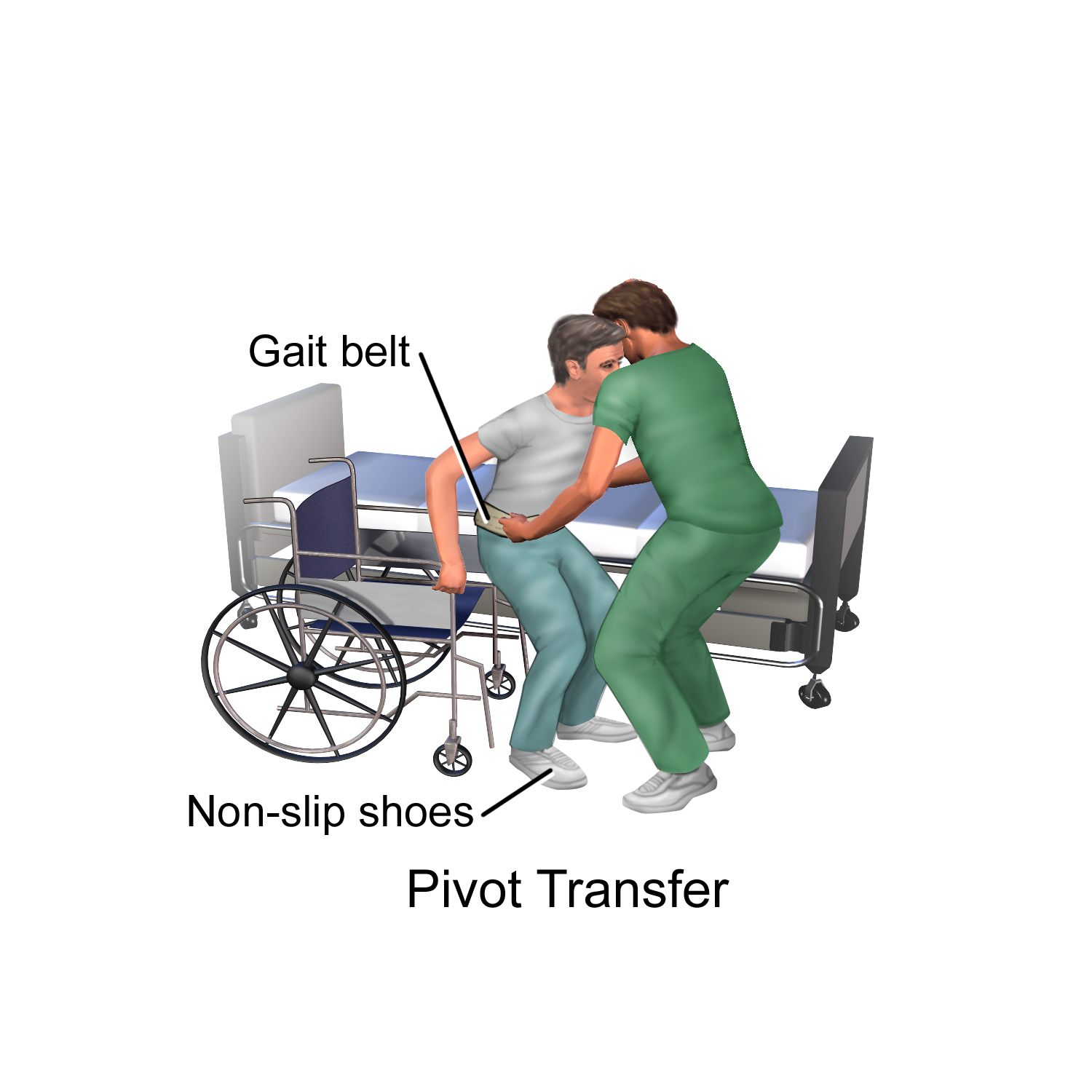

What the Legislature's auditors found
The most detailed Idaho study of the direct care workforce is the Office of Performance Evaluations' February 2023 report, Sustainability of Idaho's Direct Care Workforce (report 22-02). Module 89's home and community-based services lesson summarizes its findings on the shortage, which OPE put at about 3,000 workers in 2022, and its recommendations. Two findings bear on this lesson's subject, wages.11
First, pay. OPE reported that Idaho nursing assistants earned an average of $14.16 an hour and other direct care workers $11.49 in 2021 data, and that they could have earned $19.64 and $15.68, increases of 39 and 36 percent, by leaving direct care for other work they were qualified for.11 Wages have risen since: OEWS puts the Idaho nursing assistant mean at $18.80 and the home care aide mean at $16.45 in May 2025.2
Second, how rates turn into wages, which the next section explains.
Medicaid rates and wages
Medicaid does not set anyone's wage. It sets the rate it pays a provider for an hour or a unit of service, and the provider decides what to pay workers out of that rate. But for services that are almost all labor, such as personal care, attendant care and homemaker services, the rate puts a ceiling on wages that most agencies cannot exceed without other income.
How Idaho builds a direct care rate
OPE described Idaho Medicaid's general method: each direct care rate is a target hourly wage for the worker plus three overhead pieces, each usually a percentage of the target wage: employee-related expenses such as benefits and payroll taxes, program-related expenses such as supervising professionals, and general and administrative costs. The target wage comes either from BLS occupation data or from a survey of wages in Idaho nursing facilities and intermediate care facilities, called the weighted average hourly rate (WAHR).11
The rule now in force says the same for personal care services. IDAPA 16.03.26.555, effective July 1, 2026, says personal care rates "are calculated using an annual survey of all Idaho NFs and ICFs/IID to establish the WAHR for Idaho NF employees in comparable positions," and that the agency rate is the WAHR "multiplied by a supplemental component composed of costs reported for travel, administration, training, and all payroll taxes and fringe benefits collected during the most recent State Fiscal Year."10 In plain words, Idaho prices an hour of home care by what nursing homes pay comparable workers, then adds overhead.
State law adds its own wage rules. Idaho Code section 56-265, as amended through the 2026 session (most recently Session Laws 2026, chapter 161, which is House Bill 863), requires that residential habilitation, personal care services, developmental disability agency services, community-supported employment and targeted service coordination "be cost-surveyed annually with fifteen percent (15%) or more of responses being audited." Rates must include allocations to "direct care worker wages, employee-related expenses, program-related expenses, and general and administrative costs," and providers must spend each year "at least the appropriated amount allocated to direct care workers and employee-related expenses." A provider that falls short can face a corrective action plan, a closed intake or termination of its provider agreement, and Health and Welfare must publish a summary of the cost survey audits each year, the first by Dec. 31, 2027. The same section says "all changes to provider payment rates shall be subject to approval of the legislature by appropriation," so a new survey does not by itself raise a rate (lesson 10 covers the budget).37 In effect, Idaho already has a state-law version of a wage pass-through for these services, measured against the wage allocation built into the rate rather than a fixed percentage.
OPE compared the target wage in Idaho's cost surveys with the wage the rate could actually support after overhead, from 2017 through 2022. For attendant and personal care, the supported wage stayed flat in 2018 and 2019 and again in 2020 and 2021 while the target kept rising, and in 2022 it was $13.93 against a target of $16.55. OPE's conclusion: wages supported by rates "were often closer to target wages after a cost survey, but tended to drift away over time." The gaps were larger for some developmental disability services; for children's habilitative supports the supported wage was $9.89 in 2022 against a target of $17.26.11
The 2025 cut and the 2026 request
On Sept. 1, 2025, Health and Welfare cut nearly all Medicaid provider rates by 4 percent, including home and community-based services, citing rising Medicaid costs: when the Legislature set the budget it had projected 8 percent growth in Medicaid's General Fund spending, and the department's forecast had risen to 19 percent.38 For fiscal 2027 the Legislative Services Office reports that the Division of Medicaid "was initially held to a 3% General Fund reduction, achieved through an across-the-board provider rate reduction," with a further cut to residential habilitation rates in House Bill 863.39 Module 89's home and community-based services lesson traces the state's request to hold personal care services and certified family homes harmless from the cut.
On Nov. 19, 2026, the Idaho Capital Sun reported Health and Welfare's budget request for the next fiscal year. It asks to raise the pay rate for personal care services by 13 percent, from "Idaho's current hourly pay rate of $24.44" to $27.64, at a cost of about $3.9 million in state money and $8.1 million in federal money. Medicaid Administrator Sasha O'Connell said the department's secret-shopper research found that only 3 of 152 personal care service agencies could take children and fewer than a third could take new adult Medicaid clients: "What we found is very concerning." The request goes to the governor and then to the 2027 Legislature, which decides whether to fund it.12 The report describes $24.44 as an hourly pay rate; we read it as the Medicaid rate paid to agencies for an hour of personal care, not the wage aides receive, but we could not confirm that from a Health and Welfare document.
For a national yardstick, KFF's 2025 survey of state Medicaid home care programs (published Jan. 5, 2026) found a median payment rate of $26 an hour to personal care agencies and $19 an hour where states pay individual providers, based on rates states reported between April and July 2025.40 The Idaho figure is for 2026 and the KFF median for 2025, so the comparison is rough.
How we figured it: a hypothetical personal care hour
Inputs. Personal care rate of $24.44 an hour, as reported Nov. 19, 2026.12 Idaho median hourly wage for home health and personal care aides, $16.72, BLS OEWS May 2025.2 Employer share of Social Security and Medicare tax, 7.65 percent of wages under the Federal Insurance Contributions Act.
Calculation (ours). 16.72 divided by 24.44 equals 68.4 percent. 16.72 times 0.0765 equals $1.28. 16.72 plus 1.28 equals $18.00, which is 73.6 percent of $24.44. 24.44 minus 18.00 equals $6.44 left for everything else.
Limits. This is a hypothetical example, not any agency's books. The median aide wage covers aides in all settings, not only Medicaid personal care; real agencies pay different wages, pay for travel time and mileage, carry workers compensation and unemployment insurance, and may or may not offer health benefits. Agencies also bill other services at other rates. The example says nothing about whether any agency makes or loses money.
The federal 80 percent rule
CMS's 2024 Ensuring Access to Medicaid Services rule (CMS-2442-F, 89 FR 40542, May 10, 2024, effective July 9, 2024) added a "payment adequacy" test for home care paid under section 1915(c) waivers. States must show that each provider spends at least 80 percent of the Medicaid payments it receives for homemaker, home health aide and personal care services on total compensation for the direct care workers who deliver them. Compensation includes wages, benefits such as health insurance and paid leave, and the employer share of payroll taxes; training, travel and protective equipment costs can be left out of the calculation. States may set a lower percentage for small providers they define, and may set exceptions for hardship. The test applies starting July 9, 2030, six years after the rule took effect (42 CFR 441.302(k)).4142
The final rule's preamble summarizes both sides of the public comments. Commenters who backed the requirement argued that it would make sure Medicaid money reaches worker paychecks; commenters who opposed it, many of them providers, argued that a single percentage would squeeze supervision, training and administration and could push small and rural agencies out of Medicaid. CMS responded by adding the small-provider option and hardship exemptions and by giving states six years.41 The 80 percent provision was in the text of 42 CFR 441.302(k) that we read on Nov. 23, 2026; we found no final rule repealing or delaying it, though that could change before 2030.42


Immigrant workers and federal immigration policy
How many immigrants work in Idaho health care
No Idaho agency publishes the immigrant share of the state's health workforce, and the federal survey that can answer the question, the Census Bureau's American Community Survey, is too small in Idaho to give precise answers for single occupations in a single year. The best Idaho figures come from an American Immigration Council fact sheet (a nonprofit advocacy group) built from the 2018 ACS microdata: 9,144 immigrant workers in Idaho's health care and social assistance industry, and immigrants made up 13 percent of all workers in healthcare support occupations, one of the five occupation groups with the highest immigrant shares in the state. Immigrants were 8 percent of Idaho's labor force overall that year.43 Those figures are now eight years old.
National figures are newer. KFF (labeled nonprofit research), analyzing the 2024 ACS, counts about 3.3 million immigrant health care workers, 17 percent of the U.S. health workforce, including 28 percent of physicians and surgeons and 30 percent of direct long-term care workers (nursing assistants, home health aides and personal care aides in long-term care). In hospitals, immigrants were 17 percent of registered nurses and 22 percent of nursing assistants. The leading countries of origin were the Philippines (12 percent), Mexico (11 percent) and India (7 percent).15 KFF's 2025 hospital study found that in nine states at least one in five hospital workers was an immigrant; Nevada was among them, Idaho was not.44
Because Idaho's immigrant population is smaller and more heavily Mexican-born than the nation's, Idaho's health workforce probably depends less on immigrants than the national figures suggest, especially among nurses; that is a reasoned inference from the 2018 numbers, not a measured fact. Rural hospitals that recruit physicians through visa programs are a separate question, covered in lesson 06.
Federal changes in 2025 and 2026
Three federal actions in 2025 and 2026 bear on health workers born abroad. Each is described here from its primary record; their effects in Idaho have not been measured.
- The H-1B payment, Sept. 19, 2025. Proclamation 10973, "Restriction on Entry of Certain Nonimmigrant Workers," published at 90 FR 46027 (Sept. 24, 2025), restricted entry of H-1B specialty occupation workers unless the employer's petition is "accompanied or supplemented by a payment of $100,000," effective 12:01 a.m. Eastern time Sept. 21, 2025, for 12 months, for petitions for workers outside the United States. The Secretary of Homeland Security may exempt an individual, all workers at a company, or all workers in an industry if the hiring "is in the national interest." The H-1B category covers "specialty occupation" workers, which in health care can include some physicians, pharmacists and therapists.13
- The immigrant visa pause, Jan. 21, 2026. The State Department announced on Jan. 14, 2026, that it would not issue immigrant visas to nationals of 75 countries it named as high risk for use of public benefits, effective Jan. 21, 2026; people already in the United States and nonimmigrant visas such as H-1B were not affected. KFF estimated that about 1.2 million U.S. health care workers under 65, about 8 percent, were born in 69 of those countries, more than half of them in healthcare support jobs such as home health and nursing aides.45
- The H-1B extension, September 2026. Proclamation 11069, filed with the Federal Register on Sept. 22, 2026, and published Sept. 23 (FR Doc. 2026-19554), extended the 2025 restriction for 12 months, to Sept. 21, 2027, saying the original restrictions "have proven to be highly effective."14
The courts have not settled the H-1B payment. According to an Oct. 1, 2026, summary by CUPA-HR, a higher education human resources association: the U.S. District Court for the District of Columbia upheld it in Chamber of Commerce v. Department of Homeland Security, and that decision was on appeal to the D.C. Circuit; a federal court in Massachusetts vacated the implementing agency policies in June 2026, and the First Circuit declined to stay that ruling in July; and on Sept. 30, 2026, the U.S. District Court for the Northern District of California vacated the agencies' policies implementing both the 2025 proclamation and the 2026 extension.46 We did not read the court dockets and could not confirm the case numbers or the status on Nov. 23, 2026; this is listed under unverified.
The arguments on each side are plain. The proclamations say H-1B use, especially by information technology outsourcing firms, has displaced and underpaid American workers.13 Employers that sponsor visa workers, including some hospitals and clinics, can seek an exemption under the national interest clause; the records we read do not show whether any health care employer or the health care industry received one. How the payment affects Idaho health care is not known, because no public data shows how many Idaho health workers hold H-1B or other temporary visas.
Unions, safety and working conditions
Unions and bargaining
Idaho has been a right-to-work state since 1985. Idaho Code section 44-2003, enacted that year (Session Laws 1985, chapter 2), says no person may be required, as a condition of employment, to join a labor organization or to pay dues or fees to one.47 Union membership is low: BLS counts 4.1 percent of Idaho's wage and salary workers as union members in 2025 (5.3 percent represented by a union), against 18.0 percent in Washington, 15.1 percent in Oregon, 13.0 percent in Nevada, 11.2 percent in Montana, 6.0 percent in Wyoming and 3.8 percent in Utah. BLS notes that its 2025 figures are 11-month averages because October data was not collected during the federal government shutdown.48
BLS does not publish union rates by industry for each state, and we found no public count of health care bargaining units in Idaho. The National Labor Relations Board's election records, searchable by state and employer, are the place to look for any that exist. The practical effect for this lesson is that most Idaho nurses' and aides' pay is set by employers and by what Medicare, Medicaid and insurers pay those employers, not by contracts, while many hospital nurses across the border in Washington and Oregon work under union contracts.
Workplace safety
Health care is one of the more dangerous industries to work in, mostly because of lifting and moving patients and because of violence from patients and visitors. In its Nov. 18, 2026, release for 2025, BLS reported 535,500 recordable injury and illness cases in private health care and social assistance, a rate of 3.2 cases per 100 full-time-equivalent workers, down from 3.4 in 2024, against 2.3 for all private industry. In nursing and residential care facilities, illness cases fell 60.0 percent to 9,800 as respiratory illness cases dropped from 21,200 to 5,100; injury cases "remained essentially unchanged."49 The release quoted here is national; it does not give Idaho-specific health care rates.
Idaho has one law aimed at violence against health workers. Idaho Code section 18-915C, added in 2014 (Session Laws 2014, chapter 288), makes battery against a person "licensed, certified or registered by the state of Idaho to provide health care, or an employee of a hospital, medical clinic or medical practice," while on duty or because of the job, punishable by up to three years in state prison.50
The Rural Health Transformation money and the workforce
The 2025 federal budget law, P.L. 119-21, created the Rural Health Transformation Program, with $50 billion nationally over five years, and the Legislative Services Office lists workforce development among its purposes. Lesson 05 covers the program and Idaho's award in full. Two facts matter here. The Legislative Services Office's 2026 sine die report says the program "provides $929 million to Idaho over five years," and that Senate Bill 1453 (2026) created the Idaho Rural Health Transformation Fund and a legislative Rural Health Transformation Committee to review spending; the related appropriation provided $294,076,500 one-time for fiscal 2027.39 Idaho Education News reported on April 30, 2026, that the first installment was $185,974,367.81, that federal rules cap infrastructure spending at 20 percent, and that Health and Welfare Director Juliet Charron said the department was looking at bolstering medical residencies; Idaho State University's vice president for health sciences, Rex Force, called using short-term grants to pay ongoing residency costs "a recipe for disaster."51 The article reported no specific amounts for nursing or aide training. How much of the money will reach nursing, CNA and direct care training was not public on the check date.
The 2026 Legislature also appropriated $900,000 in House Bill 920 for new medical residency and fellowship positions, including one more family medicine resident in Burley, and Senate Bill 1332 moved $10 million to the Workforce Development Council's In-Demand Careers Fund.39 Lesson 06 covers the residency money.
A timeline of workforce rules
| Year | Law, rule or event | What changed | Source |
|---|---|---|---|
| 1985 | Idaho right-to-work law, Session Laws 1985, chapter 2 | No one can be required to join or pay a union as a condition of employment | Idaho Code 44-2001, 44-200347 |
| 1987 | Omnibus Budget Reconciliation Act of 1987, P.L. 100-203, signed Dec. 22, 1987 | Nursing home reform, including nurse aide training, competency testing and state registries | Social Security Act 1819(f)(2), 1919(f)(2)34 |
| 2001 | Session Laws 2001, chapter 76 | Idaho joins the Nurse Licensure Compact | Idaho Code 54-14189 |
| 2014 | Session Laws 2014, chapter 288 | Battery against health care workers punishable by up to three years | Idaho Code 18-915C50 |
| 2016 and 2018 | Session Laws 2016, chapter 56; enhanced compact operational Jan. 19, 2018 | Idaho adopts the enhanced Nurse Licensure Compact | Idaho Code 54-1418; NCSBN928 |
| 2020 and 2021 | Executive Order 2020-10; 2021 laws including Senate Bills 1024, 1026 and 1056 | Licensing boards, including the Board of Nursing, consolidated under DOPL | DOPL performance report27 |
| 2022 | Idaho Department of Labor study, fall 2022 | Documents post-COVID exits, faculty and clinical placement limits | IDOL report19 |
| 2023 | OPE report 22-02, Feb. 2023; Washington joins the compact July 24, 2023 | Direct care shortage and rate drift documented; a large neighbor joins the compact | OPE; Washington commission1129 |
| 2024 | CMS-2442-F, 89 FR 40542, May 10, 2024; House Bill 437 (2024) | 80 percent home care compensation test adopted for 2030; midwifery board merged into Board of Nursing | Final rule; DOPL4127 |
| 2025 | 4 percent Medicaid rate cut, Sept. 1, 2025; Proclamation 10973, Sept. 19, 2025 | Provider rates cut; $100,000 payment on new H-1B petitions | Idaho Reports; 90 FR 460273813 |
| 2026 | Visa pause Jan. 21; Nurse Intern Pilot extended April 22; Session Laws 2026, chapter 161 amends 56-265; S 1453; Proclamation 11069; projections Oct. 7; rate request Nov. 19 | Immigrant visas paused for 75 countries; pilot runs to July 1, 2027; Idaho rate law amended; RHT fund created; H-1B payment extended; new 10-year projections; 13 percent personal care rate increase requested | KFF; Board of Nursing; Idaho Code; LSO; FR; IDOL; Idaho Capital Sun4531373914612 |
| 2027 | Sept. 21, 2027; Dec. 31, 2027 | H-1B restriction set to expire absent extension; first Idaho cost survey audit summary due | Proclamation 11069; Idaho Code 56-2651437 |
| 2028 | Revised Standard Occupational Classification | Possible new code for care workers or DSPs | BLS; CBO2021 |
| 2030 | July 9, 2030 | 80 percent home care compensation test applies | 42 CFR 441.302(k)42 |
Pictures, Numbers and Infographics
The key numbers in this lesson, with their year and source. Shares, ratios and sums marked "ours" are our calculations from the cited data.
| Measure | Idaho | U.S. or other states | Year | Source |
|---|---|---|---|---|
| Health care and social assistance jobs, all owners (share of all jobs, ours) | 133,423 (15.3%) | U.S. 25,103,872 (16.1%) | 2025 annual average | BLS QCEW1 |
| Private health care and social assistance jobs, growth since 2015 (ours) | 125,530 (+46.8%) | All Idaho jobs +31.5% | 2015 to 2025 | BLS QCEW1 |
| Registered nurse jobs; median hourly wage | 16,880; $44.45 | U.S. $46.90; Oregon $62.02; Washington $59.71; Utah $40.67 | May 2025 | BLS OEWS24 |
| RN jobs per 1,000 jobs | 19.7 | U.S. 21.7 (ours) | May 2025 | BLS OEWS2 |
| Nursing assistant jobs; median hourly wage | 7,910; $18.58 | U.S. $20.32; Oregon $23.96; Washington $23.65 | May 2025 | BLS OEWS4 |
| Home health and personal care aide jobs; median hourly wage | 20,770; $16.72 | U.S. $17.21; Washington $22.95; Wyoming $15.96 | May 2025 | BLS OEWS4 |
| LPN jobs per 1,000 jobs | 2.2 | U.S. 4.2 (ours) | May 2025 | BLS OEWS23 |
| Projected annual openings: RNs; home care aides; nursing assistants | 1,228; 4,369; 1,341 | Not compared | 2024 to 2034 projection | Idaho Department of Labor5 |
| Projected growth, health care and social assistance industry | +33,945 jobs (2.4% a year) | All Idaho jobs 1.3% a year; U.S. about 0.3% a year | 2024 to 2034 projection | Idaho Department of Labor246 |
| Board of Nursing licenses | 41,102 | 35,721 in fiscal 2022 | Fiscal 2025 | DOPL27 |
| First-time NCLEX takers from Idaho programs, RN and LPN (ours) | 1,275 and 232 | 1,071 and 133 in 2024 | Calendar 2025 | Idaho Board of Nursing30 |
| CNA training hours | 120 (Idaho course) | Federal minimum 75, with 16 supervised practical | Current | Health and Welfare; 42 CFR 483.15287 |
| Medicaid personal care hourly rate | $24.44 now; $27.64 requested | KFF national agency median $26 (2025) | 2026 | Idaho Capital Sun; KFF1240 |
| Gap between target wage and supported wage, attendant and personal care | $2.62 an hour | Not compared | 2022 | OPE11 |
| Union members as share of workers | 4.1% | Washington 18.0%; Oregon 15.1%; Utah 3.8% | 2025 | BLS48 |
| Immigrant share of workers | Healthcare support 13% | U.S. health care 17%; direct long-term care 30% | Idaho 2018; U.S. 2024 | American Immigration Council; KFF4315 |
| Nursing home total nurse staff turnover | 49.5% | U.S. 45.3% | October 2026 Care Compare | CMS33 |
| Injury and illness rate, private health care and social assistance | Not published here | U.S. 3.2 per 100 FTE (all private 2.3) | 2025 | BLS SOII49 |
The seven graphics in this lesson: health care job growth since 2015; Idaho and U.S. wages by occupation; Idaho and neighbor wages for nurses and aides (above); projected openings by source; the nursing pipeline; the target and supported wage for personal care; and a hypothetical personal care hour. Module 30 in the training family, data and statistics, explains medians, means and survey error for readers who want to check our math.
Common mistakes
- Treating OEWS job counts as head counts. OEWS counts wage and salary jobs, so a nurse with two jobs counts twice, and self-employed workers are missing. It is also not a count of full-time equivalents (FTEs): a part-time aide is one job. BLS says so in its technical notes.17
- Treating a license count as a workforce count. DOPL's 41,102 Board of Nursing licenses include license types beyond RN and LPN and holders who live or work outside Idaho, and they leave out nurses practicing in Idaho on another compact state's multistate license.279
- Calling "health care and social assistance" health care. NAICS 62 includes child care centers, food banks and other social services. Use the 621 to 623 subsectors when the question is health care alone.18
- Reading the 2024 jump in private hospital jobs as hiring. Most of the 2023 to 2024 rise in Idaho's private hospital jobs was matched by a fall in government hospital jobs, which points to a change in ownership or reporting, not new positions.1
- Comparing wages across states without context. Idaho's RN median is far below Oregon's and Washington's in dollars, but close to the national ratio when measured against Idaho's own median wage. Both comparisons are true; say which one you are using.4
- Treating a Medicaid rate as a wage. The $24.44 personal care rate pays for the worker's wage plus payroll taxes, benefits, supervision, travel, training, billing and overhead. Under Idaho's own rate rules the wage is only one of four components.1137
- Saying the federal 80 percent rule is in effect. It applies from July 9, 2030 (42 CFR 441.302(k)). Idaho's state-law requirement in Idaho Code section 56-265 is a different, separate rule.4237
- Reading projections as forecasts of certainty. The Department of Labor's openings are projections built from past patterns. Their 2024 base numbers also differ from OEWS counts because of different methods.5
- Using national immigrant shares for Idaho. KFF's 17 percent figure is national. Idaho's only occupation-level figure we found is from 2018 and is lower for healthcare support.1543
What we know, what we don't, and what the data can show
What we know
- Health care and social assistance is about 15 percent of Idaho jobs and has grown faster than the rest of the economy since 2015.1
- Idaho's health care wages are below national medians for most occupations and well below Oregon and Washington.4
- Most projected openings come from replacing workers who leave, not from growth.5
- Idaho nursing programs have more qualified applicants than seats; faculty and clinical placements limit them.19
- Idaho's Medicaid home care rates are built from a wage survey of nursing facilities, and the supported wage lagged its target in 2017 to 2022.1011
- Idaho has belonged to the Nurse Licensure Compact since 2001; Oregon and Nevada are not members.928
What we don't know
- How many nurses actually practice in Idaho, counting compact license holders, travel nurses and part-timers; no agency publishes that number.
- How many direct support professionals work in Idaho, because they have no federal occupation code.20
- The current immigrant share of Idaho's health workforce and how the 2025 and 2026 federal actions have affected it.
- How many travel and agency nurses work in Idaho hospitals and what they are paid.
- What Medicaid-funded home care agencies actually pay their aides, until Health and Welfare's first audit summary under Idaho Code section 56-265, due by Dec. 31, 2027.37
- How much Rural Health Transformation money will go to nursing and direct care training.
What the data can show
- BLS OEWS (state and metro files): employment and wage percentiles for each occupation, by year, for Idaho, its metro areas and nonmetro areas, and every neighbor.2
- BLS QCEW (county files): jobs, establishments and wages for hospitals, clinics, nursing homes and home health agencies in each Idaho county, quarterly, back many years, with suppression where an employer would be identifiable.1
- Idaho Department of Labor projections: projected growth and openings by occupation for six regions of Idaho.5
- Idaho Board of Nursing NCLEX tables and DOPL reports: graduates by program and license counts by year.3027
- CMS Payroll-Based Journal and Care Compare: daily nursing home staffing, contract staff hours and turnover for every Idaho nursing home.3233
- Health and Welfare cost surveys and rate files: the wage targets behind each Medicaid direct care rate, available through public records requests.37
Questions people ask
Is there a nursing shortage in Idaho?
The evidence points to a persistent gap, larger in some places than others. Idaho has fewer RN jobs per 1,000 jobs than the nation (19.7 against 21.7 in May 2025), the Department of Labor projects 1,228 RN openings a year to 2034, and its 2022 study found hospitals naming RNs as their most pressing need. Idaho programs had about 1,156 first-time NCLEX passes in 2025, and not all of those graduates stay. Whether that adds up to a "shortage" depends on the definition; what is documented is that demand is growing faster than the state's own pipeline.251930
Why do nurses leave Idaho for Oregon or Washington?
Pay is the documented reason: the Oregon median RN wage was $62.02 and Washington's $59.71 in May 2025, against Idaho's $44.45. Nurses in the 2022 Department of Labor survey also named burnout, housing costs and Idaho's cultural or political climate. Washington's 2023 entry into the compact made working across that border easier.42329
What is the difference between a CNA and a personal care aide?
A CNA has finished an approved training program (120 hours in Idaho) and passed the state competency test, and is listed on the Health and Welfare registry; federal rules require that training for nurse aides in Medicare- and Medicaid-certified nursing homes. A personal care aide working for a Medicaid home care agency in Idaho must meet the "personal assistant" standards in Medicaid's rules but does not need CNA certification. BLS counts CNAs as nursing assistants (31-1131) and home care workers as home health and personal care aides (31-1120).8710
Can a nurse licensed in another state work in Idaho?
A nurse whose home state is a compact member and who holds a multistate license can practice in Idaho without an Idaho license. A nurse from a non-member state such as Oregon or Nevada needs an Idaho license, issued by the Board of Nursing through DOPL.92528
Does Medicaid set home care workers' pay?
Not directly. Medicaid sets the rate it pays agencies, and agencies set wages. But Idaho's rate rules build each direct care rate from a target wage, and Idaho Code section 56-265 requires providers of several services to spend at least the amount the appropriation allocates to direct care wages and employee-related expenses.1037
Are Idaho health care workers unionized?
Very few, as far as public data shows. Idaho's overall union membership rate was 4.1 percent in 2025, and the state's right-to-work law bars requiring union membership or dues. BLS does not publish a health care union rate for Idaho.4847
How much of Idaho's economy is health care?
By jobs, about 15 percent counting social assistance, and about 14.6 percent of total covered wages in 2025 (our calculation from QCEW). Lesson 11 looks at hospitals and clinics as employers and builders.1
Hard questions
Should Idaho raise Medicaid rates to lift direct care wages?
The case for: Health and Welfare's own research found few agencies able to take new Medicaid clients, OPE found rates drifting below their wage targets, and higher rates would bring federal matching money (about $2 federal for each $1 of state money in the November 2026 personal care request). The case against, or for waiting: Idaho's forecast of Medicaid General Fund growth jumped from 8 to 19 percent in 2025, the fiscal 2027 budget kept an across-the-board provider rate reduction, and every rate increase is ongoing spending that competes with schools, tax cuts and other services. What the evidence shows: OPE documented the gap between target and supported wages and the pay workers could earn elsewhere; no Idaho study has measured how much a given rate increase raises wages or access.12113839
Should the state pay to expand nursing education?
For: qualified applicants exceed seats, faculty pay trails practice, and clinical placements are short; public money could fix bottlenecks private employers cannot fix alone. Against or cautious: graduates are free to leave, and a bigger pipeline does not keep nurses in Idaho if wages stay lower than in neighboring states; employers who benefit could pay more of the cost. Evidence: the Department of Labor documented the capacity limits; first-time RN NCLEX takers from Idaho programs rose 19 percent from 2024 to 2025 (our calculation), but we found no study of how many Idaho graduates stay.1930
Should Idaho widen what nursing students, LPNs and aides may do?
For: the Nurse Intern Pilot puts students to work under preceptors, and hospital educators told the Board of Nursing it builds skills and teamwork. Against or cautious: each widening of scope moves tasks to people with less training; the board has kept narcotics, insulin and titratable IV medications out of the pilot and noted that IV pushes are outside LPN scope. Evidence: the board is gathering facility surveys; no published outcome study exists yet.31
How should immigration policy weigh health care jobs?
For tighter rules: the 2025 and 2026 proclamations argue that the H-1B program has been used to displace and underpay American workers. For looser rules: KFF counts 30 percent of U.S. direct long-term care workers and 28 percent of physicians as immigrants, and estimates that about 8 percent of health care workers came from the 75 countries in the 2026 visa pause. Evidence: the national dependence is documented; Idaho's is smaller and not measured with current data.13141545
For reporters and advocates
Records that exist. BLS OEWS state, metro and nonmetro files; BLS QCEW county and industry files; the Idaho Department of Labor's projections workbooks; DOPL performance reports and Board of Nursing minutes, NCLEX tables and disciplinary orders; the Health and Welfare CNA registry; CMS Payroll-Based Journal and Care Compare files for nursing homes; Health and Welfare cost surveys, rate-setting files and budget requests; the Legislative Services Office's budget documents; OPE reports; and the Federal Register for federal rules and proclamations.215273239
Questions to ask. Ask Health and Welfare which wage survey and target wage sit behind the current personal care rate, and when the first Idaho Code 56-265 audit summary will be published. Ask hospitals how many travel or agency nurses they used last year and at what cost, and what share of nursing positions are vacant. Ask nursing programs how many qualified applicants they turned away and how many graduates took Idaho jobs. Ask the Rural Health Transformation Committee how much of the federal money will go to nursing and direct care training. Ask employers whether they sponsor visa workers and whether the H-1B payment has changed their hiring.
Public records. State records requests go under the Idaho Public Records Act, Idaho Code Title 74, chapter 1; module 47 explains how (Idaho public records requests). Hospital districts and county hospitals are public agencies subject to the act. Federal agencies answer requests under the Freedom of Information Act. Budget hearings are covered in module 75 (the Idaho state budget) and testifying in module 49 (testifying and public comment).
The Idaho angle. Compare a local hospital's or nursing home's wages with the metro area medians in OEWS, check the region's projected openings in the Department of Labor workbook, and look at Care Compare staffing and turnover for local nursing homes. For the Magic Valley, the College of Southern Idaho's NCLEX numbers and the South Central region projections are the starting points; lesson 04 has the region's providers, and lesson 09 the nursing home business side. Growth numbers for the state are in module 83 (Idaho growth by the numbers).
Where to go next
- BLS Occupational Employment and Wage Statistics data: Free federal data on jobs and wages by occupation for Idaho, its metro and nonmetro areas and every other state; pick an area and an occupation to see employment and wage percentiles.
- Idaho Department of Labor occupational and industry projections: Free Excel workbooks with 10-year projections and yearly openings for every occupation, statewide and for six Idaho regions.
- BLS QCEW data viewer and open data files: Free counts of jobs and wages by industry for Idaho and each county, quarterly and annual; useful for hospital, clinic and nursing home employment.
- Idaho Certified Nurse Assistant Registry (Health and Welfare): The state's official page on CNA certification, training requirements, renewal and the registry lookup; free.
- Idaho Board of Nursing (DOPL): The licensing board for RNs, LPNs and APRNs; posts meeting minutes, rules, NCLEX tables and license verification; free to use.
- Nurse Licensure Compact: The compact's official site, run by NCSBN, with the member state map and rules on multistate licenses; free.
- Idaho Office of Performance Evaluations reports: The Legislature's nonpartisan evaluation office; its 2023 direct care workforce report and follow-ups are free to read.
- CMS Payroll-Based Journal staffing data: Free daily staffing data for every nursing home, including contract staff hours; large files best opened with a spreadsheet or data tool.
Still being checked (5 items)
These points could not be fully confirmed against a primary source when this lesson was written and fact checked in November 2026. The text above states each one as uncertain.
- The $24.44 personal care rate and the $27.64 request come from the Idaho Capital Sun's Nov. 19, 2026, report; we could not read the Health and Welfare budget request itself, and we read $24.44 as the hourly Medicaid rate paid to agencies, not the aide wage. The report described the next fiscal year as starting in June; Idaho's state fiscal year starts July 1.
- Court rulings on the H-1B payment (D.D.C. Chamber of Commerce v. Department of Homeland Security, the June 2026 Massachusetts ruling and First Circuit stay denial, and the Sept. 30, 2026, Northern District of California ruling) come from a CUPA-HR summary; we did not read the dockets and could not confirm case numbers or status on Nov. 23, 2026.
- Session Laws 2026, chapter 161 is House Bill 863 (signed March 26, 2026), which amended Idaho Code 56-265; we could not see the bill's markup, so whether the annual cost survey and direct care spending language in 56-265(2) was added in 2026 or by 2025 chapter 118 was not confirmed.
- Idaho's immigrant share of health workers is from 2018 data; no current Idaho figure was found.
- The nursing home contract staff share (4.1 percent) and turnover figures (49.5 and 45.3 percent) are taken from module 89's November 2026 computation from CMS files, not recomputed for this lesson.
Last verified November 23, 2026. General education, not legal, medical, insurance or financial advice; every figure names its source and year in the Notes and Sources below. Data is revised: check the newest release before relying on any number.
Notes
- U.S. Bureau of Labor Statistics (BLS), Quarterly Census of Employment and Wages, annual averages by area: Idaho (area 16000) for 2015 to 2025 and the United States (area US000) for 2024 and 2025, open data CSV files; rows for ownership codes 1, 2, 3 and 5 and NAICS 10, 62 and 621 to 624; sums, shares and growth rates are our calculations (read Nov. 23, 2026). Read it online. ↩
- BLS, Occupational Employment and Wage Statistics (OEWS), May 2025 State Occupational Employment and Wage Estimates: Idaho, retrieved through the BLS public data API (series OEUS1600000000000, data types 01, 04, 08 and 16), saved as bls-oews-may2025-series.json (read Nov. 23, 2026). Read it online. ↩
- BLS, OEWS, May 2025 National Occupational Employment and Wage Estimates, retrieved through the BLS public data API (series OEUN0000000000000) (read Nov. 23, 2026). Read it online. ↩
- BLS, OEWS, May 2025 state estimates for Utah, Oregon, Washington, Montana, Wyoming and Nevada, median hourly wages for SOC 00-0000, 29-1141, 29-2061, 31-1131 and 31-1120 (data type 08), retrieved through the BLS public data API (read Nov. 23, 2026). Read it online. ↩
- Idaho Department of Labor, Occupation projections, 2024-2034 (Excel workbook), tables 1, 2 and 5, statewide and six regions, posted September 2026; labeled projections (read Nov. 23, 2026). Read it online. ↩
- Idaho Department of Labor, news release, "Idaho expected to see annual employment growth over national average through 2034," Oct. 7, 2026 (read Nov. 23, 2026). Read it online. ↩
- 42 CFR 483.152, requirements for approval of a nurse aide training and competency evaluation program (75 clock hours; 16 hours supervised practical training; required subjects), current text (read Nov. 23, 2026). Read it online. ↩
- Idaho Department of Health and Welfare, "About the Certified Nurse Assistant Registry" (course requirements of 120 hours; Prometric testing; renewal after 8 paid hours in 24 months; CNAs as unlicensed assistive personnel under IDAPA 24.34.01) (read Nov. 23, 2026). Read it online. ↩
- Idaho Code section 54-1418, Nurse Licensure Compact; history: added 2001, ch. 76; repealed and new section added 2016, ch. 56 (read Nov. 23, 2026). Read it online. ↩
- IDAPA 16.03.26, Medicaid Plan Benefits, in force July 1, 2026, section 555 (PCS reimbursement: rate methodology based on the weighted average hourly rate of Idaho nursing facility employees and the supplemental component) and the personal care provider qualification sections (read Nov. 23, 2026). Read it online. ↩
- Idaho Legislature, Office of Performance Evaluations, Sustainability of Idaho's Direct Care Workforce, report 22-02, February 2023, including exhibit 15 (target and supported wages, 2017 to 2022) and the wage findings (read Nov. 23, 2026). Read it online. ↩
- Kyle Pfannenstiel, "Idaho officials request raise for disability caregivers and restoring cuts to mental health services," Idaho Capital Sun, Nov. 19, 2026 (also published by KBOI-TV, idahonews.com); news report of the Health and Welfare budget request (read Nov. 23, 2026). Read it online. ↩
- Proclamation 10973 of Sept. 19, 2025, "Restriction on Entry of Certain Nonimmigrant Workers," 90 Federal Register 46027 (Sept. 24, 2025), FR Doc. 2025-18601 (read Nov. 23, 2026). Read it online. ↩
- Proclamation 11069, "Restriction on Entry of Certain Nonimmigrant Workers" (extension to Sept. 21, 2027), Federal Register public inspection document 2026-19554, scheduled for publication Sept. 23, 2026 (read Nov. 23, 2026). Read it online. ↩
- Drishti Pillai and Samantha Artiga, KFF (nonprofit research), "The Role of Immigrants in the U.S. Health Care Workforce," June 18, 2026, from the 2024 American Community Survey 1-year microdata (read Nov. 23, 2026). Read it online. ↩
- 42 CFR 483.95(g), required in-service training for nurse aides (no less than 12 hours per year), current text (read Nov. 23, 2026). Read it online. ↩
- BLS, OEWS technical notes: survey of nonfarm establishments; estimates pool six semiannual panels over three years; counts jobs and excludes the self-employed (read Nov. 23, 2026). Read it online. ↩
- BLS, Quarterly Census of Employment and Wages, program overview: counts of employment and wages reported by employers covered by unemployment insurance, by industry and ownership (read Nov. 23, 2026). Read it online. ↩
- Idaho Department of Labor, The Post-COVID Outlook for Idaho Health Care Workers (Matthew Paskash, labor economist; fall 2022), full report, including section 2.4 on Idaho Hospital Association discussions and the education program interviews (read Nov. 23, 2026). Read it online. ↩
- BLS, "2028 SOC Revision" page, updated Sept. 30, 2026 (first Federal Register notice June 12, 2024; final structure planned for 2027; "care workers" named as a possible addition) (read Nov. 23, 2026). Read it online. ↩
- Congressional Budget Office, cost estimate for S. 3211, Recognizing the Role of Direct Support Professionals Act, Aug. 25, 2026 (read Nov. 23, 2026). Read it online. ↩
- BLS, OEWS, May 2025 metropolitan area estimates for Boise City, Coeur d'Alene, Idaho Falls, Twin Falls, Pocatello and Lewiston, registered nurses and nursing assistants, retrieved through the BLS public data API (read Nov. 23, 2026). Read it online. ↩
- Idaho Department of Labor, The Post-COVID Outlook for Idaho Health Care Workers: Executive Summary (fall 2022), including the 2022 survey of health care professionals (503 RN respondents) (read Nov. 23, 2026). Read it online. ↩
- Idaho Department of Labor, Industry projections, 2024-2034 (Excel workbook), table 3, statewide, posted September 2026; labeled projections (read Nov. 23, 2026). Read it online. ↩
- Idaho Code section 54-1401, purpose, license required, representation to the public (read Nov. 23, 2026). Read it online. ↩
- Idaho Code section 54-1402, definitions (registered nurse, licensed practical nurse, advanced practice registered nurse) (read Nov. 23, 2026). Read it online. ↩
- Idaho Division of Occupational and Professional Licenses, FY 2025 Performance Measurement Report (2025): agency profile (Executive Order 2020-10; 2021 Senate Bills 1024, 1026 and 1056; 2024 House Bill 437) and Board of Nursing license, complaint and discipline counts for fiscal 2022 to 2025 (read Nov. 23, 2026). Read it online. ↩
- National Council of State Boards of Nursing, Nurse Licensure Compact FY25 Annual Report (43 member jurisdictions; enhanced NLC implemented Jan. 19, 2018; member state table) (read Nov. 23, 2026). Read it online. ↩
- Washington State Nursing Care Quality Assurance Commission, "Multistate License (MSL)" page: Washington joined the Nurse Licensure Compact July 24, 2023 (read Nov. 23, 2026). Read it online. ↩
- Idaho Board of Nursing (DOPL), NCLEX First-Time Pass Rates, calendar years 2023, 2024 and 2025, by program, posted January 2026; totals and estimated passes are our calculations (read Nov. 23, 2026). Read it online. ↩
- Idaho Board of Nursing, minutes of the April 22, 2026, meeting (Nurse Intern Pilot discussion and motion to extend through July 1, 2027; legislative update) (read Nov. 23, 2026). Read it online. ↩
- CMS, Payroll Based Journal Daily Nurse Staffing, April 1 to June 30, 2026; Idaho contract staff share of nursing hours (4.1 percent) as computed in module 89, lesson 02, from this file (read Nov. 23, 2026). Read it online. ↩
- CMS, Care Compare nursing home State US Averages file, October 2026 release: total nursing staff turnover, Idaho 49.5 percent and U.S. 45.3 percent, as reported in module 89, lesson 02 (read Nov. 23, 2026). Read it online. ↩
- Social Security Act section 1919 (42 U.S.C. 1396r), requirements for nursing facilities, including (f)(2) nurse aide training and competency evaluation, added by the Omnibus Budget Reconciliation Act of 1987, P.L. 100-203; parallel Medicare section 1819 (42 U.S.C. 1395i-3) (read Nov. 23, 2026). Read it online. ↩
- Idaho State University, College of Technology, Continuing Education Workforce Training, Certified Nursing Assistant (CNA) Student Information Sheet, revised December 2024 (read Nov. 23, 2026). Read it online. ↩
- 42 CFR 483.35(d), requirements for facility hiring and use of nurse aides (four-month rule), current text (read Nov. 23, 2026). Read it online. ↩
- Idaho Code section 56-265, provider payment, subsections (2) and (4), as amended through Session Laws 2026, chapter 161 (read Nov. 23, 2026). Read it online. ↩
- Melissa Davlin, "Providers brace for 4% Medicaid reduction," Idaho Reports (Idaho Public Television), Aug. 29, 2025; news report of Health and Welfare's Aug. 22, 2025, letter (read Nov. 23, 2026). Read it online. ↩
- Idaho Legislative Services Office, Budget and Policy Analysis, 2026 Legislative Sine Die Report (Health and Welfare, Division of Medicaid, Health Education Programs, S 1453 Rural Health Transformation Fund, S 1332 transfers) (read Nov. 23, 2026). Read it online. ↩
- KFF (nonprofit research), "Payment Rates for Medicaid Home Care Ahead of the 2025 Reconciliation Law," Jan. 5, 2026, from the KFF 2025 Medicaid Home Care/HCBS survey of states (April to July 2025) (read Nov. 23, 2026). Read it online. ↩
- CMS, "Medicaid Program; Ensuring Access to Medicaid Services," final rule CMS-2442-F, 89 Federal Register 40542, May 10, 2024, effective July 9, 2024, including the preamble discussion of comments on the HCBS payment adequacy requirement (read Nov. 23, 2026). Read it online. ↩
- 42 CFR 441.302(k), HCBS payment adequacy (definitions of compensation and direct care worker; 80 percent minimum performance level; small provider and hardship options; applicability six years after July 9, 2024), current text (read Nov. 23, 2026). Read it online. ↩
- American Immigration Council (advocacy group), Immigrants in Idaho fact sheet (2020), from its analysis of 2018 American Community Survey 1-year microdata (read Nov. 23, 2026). Read it online. ↩
- KFF (nonprofit research), "What Role Do Immigrants Play in the Hospital Workforce?," June 17, 2025, from 2018 to 2023 American Community Survey microdata (read Nov. 23, 2026). Read it online. ↩
- KFF (nonprofit research), "Potential Impact of the Federal Pause on Immigrant Visas From 75 Countries on the U.S. Health Care Workforce," Jan. 29, 2026 (State Department announcement Jan. 14, 2026, effective Jan. 21, 2026; 2025 Current Population Survey) (read Nov. 23, 2026). Read it online. ↩
- CUPA-HR (College and University Professional Association for Human Resources, a higher education trade association), "Federal Judge Blocks H-1B Fee Proclamations From Enforcement," Oct. 1, 2026; secondary summary of court rulings (read Nov. 23, 2026). Read it online. ↩
- Idaho Code sections 44-2001 (declaration of public policy) and 44-2003 (freedom of choice guaranteed), added 1985, ch. 2 (read Nov. 23, 2026). Read it online. ↩
- BLS, Union Members news release, table 5, "Union affiliation of employed wage and salary workers by state, 2024-2025 annual averages" (2025 figures are 11-month averages) (read Nov. 23, 2026). Read it online. ↩
- BLS, "Employer-Reported Workplace Injuries and Illnesses, 2025," news release, Nov. 18, 2026 (Survey of Occupational Injuries and Illnesses, private industry) (read Nov. 23, 2026). Read it online. ↩
- Idaho Code section 18-915C, battery against health care workers, added 2014, ch. 288 (read Nov. 23, 2026). Read it online. ↩
- Kevin Richert, "In depth: A flood of rural healthcare money could reshape Idaho, and seep into higher ed," Idaho Education News, April 30, 2026 (also published by the Idaho Capital Sun) (read Nov. 23, 2026). Read it online. ↩
- Kootenai Health, "New Operating Model" (Board of Trustees vote May 2, 2023, to convert from a hospital district to a private 501(c)(3) nonprofit; assets, liabilities and operations moved to Kootenai Health, Inc. at midnight on Dec. 31, 2023), the hospital's own page, as used in lesson 11 (read Nov. 23, 2026). Read it online. ↩
Check yourself
1. What does the BLS OEWS survey count?
BLS's OEWS technical notes describe a survey of establishments that counts jobs by occupation and leaves out the self-employed; QCEW is the program built from unemployment insurance reports.
2. What was the Idaho median hourly wage for registered nurses in May 2025?
BLS OEWS May 2025: Idaho $44.45; $46.90 is the U.S. median, $62.02 Oregon's and $40.67 Utah's.
3. About what share of Idaho's covered jobs were in health care and social assistance in 2025?
BLS QCEW 2025 annual averages: 133,423 of 874,283 jobs, or 15.3 percent (our calculation), against 16.1 percent nationally.
4. How many hours is Idaho's approved CNA course, according to the Department of Health and Welfare?
Health and Welfare's CNA registry page says the NATCEP-approved course is 120 hours (80 classroom, 40 clinical); 42 CFR 483.152 sets the federal floor of 75 hours with 16 supervised practical hours.
5. Which neighboring states are NOT members of the Nurse Licensure Compact?
NCSBN's fiscal 2025 NLC annual report lists Utah, Montana, Wyoming and Washington (joined July 24, 2023) as members; Oregon and Nevada are not.
6. In the Idaho Department of Labor's 2024 to 2034 projections, which occupation has the most openings per year?
Idaho Department of Labor, Occupation projections 2024 to 2034, table 5: about 4,369 openings a year for home health and personal care aides, against 1,341 for nursing assistants and 1,228 for RNs.
7. How does IDAPA 16.03.26.555 set Idaho's Medicaid personal care rate?
IDAPA 16.03.26.555 (effective July 1, 2026) uses the weighted average hourly rate (WAHR) from the annual NF and ICF/IID survey multiplied by a supplemental component for travel, administration, training, payroll taxes and fringe benefits.
8. When does the federal 80 percent home care compensation test in 42 CFR 441.302(k) apply?
42 CFR 441.302(k), adopted in CMS-2442-F (89 FR 40542, May 10, 2024), applies six years after the rule's July 9, 2024, effective date, so July 9, 2030.
9. What did Proclamation 10973 of Sept. 19, 2025, require?
Proclamation 10973, 90 FR 46027 (Sept. 24, 2025), restricted H-1B entry unless the petition is accompanied by a $100,000 payment; the 75-country immigrant visa pause was a separate State Department action effective Jan. 21, 2026.
10. What gap did the Office of Performance Evaluations find in 2022 between the target wage and the wage the Medicaid rate supported for attendant and personal care?
OPE report 22-02 (February 2023), exhibit 15: target $16.55 and supported $13.93 in 2022, a gap of $2.62.
Terms in this lesson
- OEWS
- Occupational Employment and Wage Statistics, a BLS survey of employers that estimates how many jobs exist in each occupation and what they pay, by state and metro area.
- QCEW
- Quarterly Census of Employment and Wages, a BLS count of jobs and wages by industry built from employers' unemployment insurance reports.
- Location quotient
- An occupation's share of jobs in an area divided by its share nationally; below 1 means the area has relatively fewer of those jobs.
- Projected openings
- The Department of Labor's estimate of yearly job openings, combining workers leaving the labor force, workers changing occupations and new jobs from growth.
- CNA (certified nursing assistant)
- A nurse aide who has completed a state-approved training and competency evaluation program and is listed on the state nurse aide registry.
- Direct care worker
- A worker who gives hands-on help with daily activities: nursing assistants, home health aides, personal care aides and direct support professionals.
- Direct support professional (DSP)
- A worker who supports people with intellectual and developmental disabilities at home, at work and in the community; there is no separate federal occupation code.
- Nurse Licensure Compact (NLC)
- An interstate agreement letting RNs and LPNs with a multistate license from their home member state practice in all member states.
- NCLEX
- The national licensing exam that new registered and practical nurses must pass before a state board of nursing licenses them.
- Travel nurse
- A nurse placed by a staffing agency on a short contract, often 13 weeks, at a hospital or other facility.
- WAHR (weighted average hourly rate)
- The average hourly wage of comparable workers in Idaho nursing facilities and ICFs/IID, from an annual survey, used to set Idaho's personal care rate.
- Target wage
- The hourly worker wage built into a Medicaid direct care rate before overhead is added.
- Payment adequacy (80 percent rule)
- The federal requirement in 42 CFR 441.302(k) that, from July 9, 2030, providers spend at least 80 percent of certain Medicaid home care payments on direct care worker compensation.
- H-1B
- A temporary U.S. visa for workers in specialty occupations that require specialized knowledge, usually a bachelor's degree or higher.
- Right-to-work law
- A state law, in Idaho Code Title 44 chapter 20, barring any requirement to join or pay a union as a condition of employment.
Sources
- BLS OEWS May 2025 State Estimates: Idaho (2026-11-23) checked 2026-11
- BLS Quarterly Census of Employment and Wages, Idaho annual averages 2025 (2026-11-23) checked 2026-11
- Idaho Department of Labor, Occupation projections 2024-2034 (2026-11-23) checked 2026-11
- Idaho Department of Labor, The Post-COVID Outlook for Idaho Health Care Workers (2022) (2026-11-23) checked 2026-11
- Idaho Office of Performance Evaluations, Sustainability of Idaho's Direct Care Workforce (2023) (2026-11-23) checked 2026-11
- IDAPA 16.03.26, Medicaid Plan Benefits (2026-11-23) checked 2026-11
- Idaho Code section 56-265, provider payment (2026-11-23) checked 2026-11
- Idaho Code section 54-1418, Nurse Licensure Compact (2026-11-23) checked 2026-11
- 42 CFR 483.152, nurse aide training and competency evaluation programs (2026-11-23) checked 2026-11
- 42 CFR 441.302(k), HCBS payment adequacy (2026-11-23) checked 2026-11
- Idaho Board of Nursing, NCLEX first-time pass rates 2023 to 2025 (2026-11-23) checked 2026-11
- DOPL FY 2025 Performance Measurement Report (2026-11-23) checked 2026-11
- Proclamation 10973, 90 FR 46027 (Sept. 24, 2025) (2026-11-23) checked 2026-11
- Idaho Legislative Services Office, 2026 Legislative Sine Die Report (2026-11-23) checked 2026-11