Lesson 12 of 12 · about 60 minutes · Updated November 23, 2026
Prices, Price Transparency and What Patients Pay
You'll be able to
- Explain the difference between a gross charge, a discounted cash price, a negotiated rate, an allowed amount and the patient's share, using posted Idaho prices.
- Read a hospital machine-readable price file and an explanation of benefits and say what each number means and what is missing.
- Describe the federal hospital price transparency rule (45 CFR part 180), the Transparency in Coverage rules and the 2025 to 2026 changes, and how CMS enforces them in Idaho.
- Summarize what the No Surprises Act protects, what it leaves out, and how the federal arbitration process works and who wins it.
- Explain the steps the Idaho Patient Act requires before a medical debt can be sued on or reported, and the penalties for skipping them.
- Identify the public records and data that reporters, advocates and policymakers can use to study Idaho prices and billing.
Start here: the short version
- One service has at least three prices. In the price file St. Luke's posted on March 25, 2026, for its Boise and Meridian license, an outpatient MRI of a knee or other leg joint without contrast (CPT 73721) carries a gross charge of $1,857 and a cash price of $1,857, while the 57 dollar rates negotiated with insurance plans run from $257.64 to $1,671.30. At St. Luke's Wood River in Ketchum, the same charge sits beside negotiated rates of $1,058.49 to $1,801.29.12
- Hospitals must post their prices under federal rule 45 CFR part 180, in force since Jan. 1, 2021. The calendar year 2026 outpatient payment rule (90 FR 53448, Nov. 25, 2025) added actual median, 10th and 90th percentile allowed amounts, a named executive who attests the file is true and complete, and hospital NPI numbers, with enforcement starting April 1, 2026.345
- No Idaho hospital has been fined. CMS's enforcement data through March 31, 2026, list 55 compliance cases involving 37 Idaho hospitals: 28 warning notices, 13 cases that reached a request for a corrective action plan, and no civil money penalties. Nationally CMS has issued 28 penalty notices since 2022.67
- The federal No Surprises Act has protected most insured Idahoans from surprise out-of-network bills since Jan. 1, 2022. It is Title I of Division BB of the Consolidated Appropriations Act, 2021 (P.L. 116-260, signed Dec. 27, 2020). Doctors and insurers fight over the leftover bill in federal arbitration: 1,372,563 disputes were filed in the last six months of 2025 alone, and providers won about 85 percent of decisions.8910
- Idaho's own medical-bill law is the Idaho Patient Act, Idaho Code sections 48-301 to 48-315, passed as House Bill 515 (2020), signed March 16, 2020, and in force Jan. 1, 2021. It bars lawsuits, wage garnishment and credit reporting on medical debt until the patient has received an itemized final notice and set waiting periods have run, and it caps collection fees at $350 or $750 in most cases.1112
- The federal rule to remove medical debt from credit reports never took effect. The Consumer Financial Protection Bureau published it Jan. 14, 2025 (90 FR 3276); on July 11, 2025, a federal judge in the Eastern District of Texas vacated it at the joint request of the Bureau and the credit industry groups that sued.1314
Law: Public Health Service Act section 2718(e) and Title XXVII part D and part E (the No Surprises Act) as amended through Nov. 23, 2026, including the Consolidated Appropriations Act, 2026 (P.L. 119-75, Feb. 3, 2026); 45 CFR part 180 (hospital price transparency) as amended by the CY2026 OPPS final rule; 45 CFR 147.210 to 147.212 (Transparency in Coverage) before and after the final rule published Oct. 6, 2026, effective Dec. 7, 2026; 45 CFR part 149 (surprise billing and independent dispute resolution) as amended by the final rule effective Aug. 3, 2026; Idaho Code Title 48 chapter 3 (Idaho Patient Act) through the 2026 session; CMS enforcement data through March 31, 2026; hospital price files as posted March 25, 2026; checked Nov. 23, 2026. Prices, rules and enforcement change often. Every price in this lesson is a posted rate for a stated date; none is a quote for any patient.
Ask an Idaho hospital what an MRI costs and the honest answer is a question back: who is paying? The hospital keeps one list price for every item it sells, from a box of gauze to a knee replacement. Almost nobody pays that list price. Insurance companies pay rates they negotiated in private contracts. Medicare and Medicaid pay rates set by law and rule. People without insurance may get a cash discount, a charity care write-off, or a bill at full charges. What the patient finally owes depends on the plan's deductible, copay and coinsurance, and on whether the doctor was in the plan's network.
For most of the last fifty years the negotiated prices were trade secrets. Since 2021 federal rules have forced them into public view, first from hospitals and then from health insurers. Congress added the No Surprises Act to stop the worst out-of-network bills, and Idaho added its own law on how medical debts can be collected. This lesson walks through each layer: what a charge is, what the price files say, what the rules require, who enforces them, what happens when a bill goes to collections, and what the public data can and cannot tell an Idaho patient, employer, reporter or legislator.
It builds on earlier lessons. Lesson 2 explains how Medicare, Medicaid and private insurers pay hospitals and doctors, and Lesson 3 covers Idaho's hospitals, owners, charity care and community benefit. Lesson 1 puts the dollars in context, and Lesson 8 covers drug prices, which follow different rules. For what Medicare patients pay in premiums and cost sharing, see Medicare in Idaho, lesson 7; for Medicaid denials and appeals, see Idaho Medicaid, lesson 8.


Three prices for one service
Federal law and rule now use precise words for the different prices. Learning them is the fastest way to read a hospital bill, a price file or a news story about prices without getting lost.
The chargemaster and the gross charge
Every hospital keeps a chargemaster, also called a charge description master or CDM. Federal rule defines it as "the list of all individual items and services maintained by a hospital for which the hospital has established a charge." The price on that list is the gross charge: the amount the hospital bills before any discount or contract applies.3 The hospital sets it. No law caps it, and no Idaho law requires a hospital to tie it to cost.
Gross charges matter for three reasons even though few people pay them. First, some insurance contracts are written as a percent of charges: the plan pays, say, 85 percent of whatever the chargemaster says. In the St. Luke's Wood River file, many plan contracts for a hip or knee replacement are written that way, at 65 to 85.8 percent of billed charges.2 When the chargemaster rises, those payments rise. Second, a patient with no insurance, or a patient treated out of network before 2022, could be billed the full charge. Third, hospitals report charges to Medicare on their cost reports, and researchers use charges, adjusted by cost-to-charge ratios, to estimate costs. Charges are a starting point for many calculations and the end point for very few.
The negotiated rate and the allowed amount
A payer-specific negotiated charge is the rate a hospital agreed to accept from one insurance company for one plan or group of plans. It can be a flat dollar amount (a fee schedule or a "case rate" for a whole hospital stay), a percent of charges, or a formula tied to Medicare's rates. The allowed amount is what the plan recognizes as the full price of the service on a given claim, after the contract is applied. The plan's payment plus the patient's share equals the allowed amount. An in-network hospital cannot bill the patient for the difference between its gross charge and the allowed amount.
Since Jan. 1, 2026, federal rule requires that when a negotiated rate is a percent or a formula, the hospital's file must also show the dollar amounts actually allowed in the past: the median, the 10th percentile and the 90th percentile of allowed amounts from a period of 12 to 15 months before the file was posted, and the count of claims behind them.35 The St. Luke's files show these fields. For example, the Wood River file lists a median allowed amount of $1,581.04 for an outpatient knee-joint MRI under one UnitedHealthcare plan.2
The cash price
The discounted cash price is what the hospital charges a person who pays without using insurance. Many hospitals set it below the gross charge. In both St. Luke's files used here, the discounted cash price column for the services we checked is the same as the gross charge: $1,857 for the outpatient MRI, $2,263 for a CT scan of the abdomen and pelvis with contrast, $1,204 for an advanced emergency room visit.12 A posted cash price is not the same as charity care. Under federal tax rules, a nonprofit hospital's financial assistance policy can reduce or erase a bill for patients who qualify by income, and those discounts do not appear in the price file. Lesson 3 covers charity care and the federal 501(r) rules.
What the patient pays
For an insured patient, the bill that matters is the patient's share of the allowed amount. That share depends on the plan, not the hospital:
- A deductible is the amount a person pays each year before the plan starts sharing costs. Until it is met, the patient pays the whole allowed amount for most services.
- Coinsurance is a percent of the allowed amount, such as 20 percent, after the deductible.
- A copay is a flat dollar amount, such as $40 for a visit.
- The out-of-pocket maximum caps what the patient pays in a year for covered in-network care.
Here is a hypothetical example, made up for illustration, using real posted numbers. Suppose an insured adult has an outpatient knee MRI at St. Luke's in Boise, and the plan's negotiated rate happens to equal the middle of the 57 posted dollar rates, $887.19. If the patient has not met the deductible, the patient owes $887.19 and the plan pays nothing. If the deductible is met and the plan has 20 percent coinsurance, the patient owes $177.44 and the plan pays $709.75. The gross charge of $1,857 never touches either patient's bill. A patient with no insurance who does not qualify for financial assistance would see the posted cash price, $1,857.
The explanation of benefits
After an insured visit, the plan sends an explanation of benefits, or EOB. It is not a bill. It lists, for each service, the amount the provider billed, the allowed amount, what the plan paid and what the patient may owe, with a code for any amount the plan did not cover. Comparing the EOB with the provider's bill is the patient's best check that the provider billed the right plan and applied the contract rate. The No Surprises Act requires plans to send a separate advance estimate, called an advanced explanation of benefits, before scheduled care, but as of Nov. 23, 2026, the federal agencies had not issued a final rule putting that requirement into effect, and we found none in the Federal Register.8
Reading a real Idaho price file
Federal rule requires each hospital to post one machine-readable file of all its standard charges, in a CMS template, plus a text file named cms-hpt.txt at the root of its website that points to the file and names a contact.3 St. Luke's Health System's cms-hpt.txt lists a separate file for each hospital license, with a link to each file and a price transparency contact.15 We used two of them: the file for St. Luke's Regional Medical Center, Ltd., which covers St. Luke's Boise Medical Center and St. Luke's Meridian Medical Center (and lists a Mountain Home address), and the file for St. Luke's Wood River Medical Center in Ketchum, a critical access hospital in Blaine County. Both files are in CMS template version 3.0.0, both are dated March 25, 2026, and both carry the attestation statement the rule requires and the name of the official who attests.12
The files are large. The Wood River file is about 390 megabytes, with 98,678 rows and 549 columns; the Boise and Meridian file is about 481 megabytes, with 115,236 rows. Each row is one item or service in one setting (inpatient, outpatient or both). The columns hold the description, billing codes (the hospital's own chargemaster code, the CPT or HCPCS procedure code, the revenue code, the MS-DRG for inpatient stays), the gross charge, the cash price, and then a block of columns for each insurance plan: a negotiated dollar amount or a negotiated percentage, the method (fee schedule, case rate, percent of total billed charges), the median and percentile allowed amounts, the claim count, and notes.
| Service (code, setting) | Hospital file | Gross charge = cash price | Lowest plan rate | Median plan rate (our calc.) | Highest plan rate | Dollar rates posted |
|---|---|---|---|---|---|---|
| MRI, leg joint, no contrast (CPT 73721, outpatient) | Boise/Meridian | $1,857 | $257.64 | $887.19 | $1,671.30 | 57 |
| MRI, leg joint, no contrast (CPT 73721, outpatient) | Wood River | $1,857 | $1,058.49 | $1,634.16 | $1,801.29 | 39 |
| CT abdomen and pelvis with contrast (CPT 74177, outpatient) | Boise/Meridian | $2,263 | $376.70 | $1,392.40 | $2,036.70 | 57 |
| CT abdomen and pelvis with contrast (CPT 74177, outpatient) | Wood River | $2,263 | $1,289.91 | $1,991.44 | $2,195.11 | 39 |
| Emergency room visit, "advanced" (CPT 99283, both settings) | Boise/Meridian | $1,204 | $903.00 | $987.28 | $1,083.60 | 25 |
| Emergency room visit, "advanced" (CPT 99283, both settings) | Wood River | $1,204 | $686.28 | $1,071.56 | $1,167.88 | 36 |
| Blood chemistry panel (CPT 80053, outpatient) | Boise/Meridian | $47 | $10.56 | $23.76 | $42.30 | 60 |
| Blood chemistry panel (CPT 80053, outpatient) | Wood River | $47 | $26.79 | $41.36 | $45.59 | 39 |
| Hip or knee replacement without major complications (MS-DRG 470, inpatient) | Boise/Meridian | $115,024.43 | $16,754.52 | $16,857.02 | $41,410.00 | 15 |
| Hip or knee replacement without major complications (MS-DRG 470, inpatient) | Wood River | $115,274.51 | $41,410.00 | $41,410.00 | $41,410.00 | 3 |
Source: St. Luke's Regional Medical Center, Ltd. and St. Luke's Wood River Medical Center, Ltd. standard charges files, both last updated March 25, 2026; rows for the codes shown. "Plan rate" counts only rates posted as dollar amounts; many plans post a percentage of charges instead (22 plan rows for MS-DRG 470 in the Boise file, 20 in the Wood River file). Medians, lows and highs are our calculation.12
How we figured it: two St. Luke's price files
Data. The two standard charges files listed in St. Luke's cms-hpt.txt for the St. Luke's Regional Medical Center, Ltd. license (Boise and Meridian) and the St. Luke's Wood River Medical Center, Ltd. license (Ketchum), both in CMS template version 3.0.0 and last updated March 25, 2026, downloaded Nov. 23, 2026.1215
Method. A short script read each file row by row and kept only the rows whose code columns held CPT 73721, 74177, 99283, 80053 or 45378 or MS-DRG 470. For each kept row we listed every column ending in "negotiated_dollar," then took the lowest, the median and the highest of those values. We did not weight by plan size or number of patients, because the files do not say how many patients each plan covers. We kept each setting (inpatient, outpatient, both) separate, as the files do.
Limits. A posted rate is a contract term, not a record of what any patient paid. Rows posted only as a percentage of charges are left out of the dollar medians. The lowest imaging rates in both files are shared by several Medicare Advantage plans and the Veterans Affairs community care contract; traditional Medicare and Idaho Medicaid rates are set by public fee schedules and appear differently. Medicare pays critical access hospitals such as Wood River on reasonable cost, which is one reason a small rural hospital's commercial and Medicare Advantage contracts can look different from a large urban hospital's. A file can contain errors: GAO found in 2024 that CMS does not routinely check files for accuracy.16
Three things stand out. First, the gross charges are the same at both hospitals for most of these services: St. Luke's appears to use one chargemaster across its hospitals. Second, the spread of negotiated rates is much wider in Boise. The lowest outpatient MRI rate there, $257.64, is less than a sixth of the highest, $1,671.30, while at Wood River the lowest rate is about 59 percent of the highest. Third, the middle negotiated rate for the outpatient MRI and CT scan is far higher at the small Ketchum hospital than in Boise. The file does not say why. Lesson 5 on rural hospital finances explains the low volumes and high fixed costs that small hospitals carry, and lesson 2 explains cost-based Medicare payment for critical access hospitals.
Facility fees and where care happens
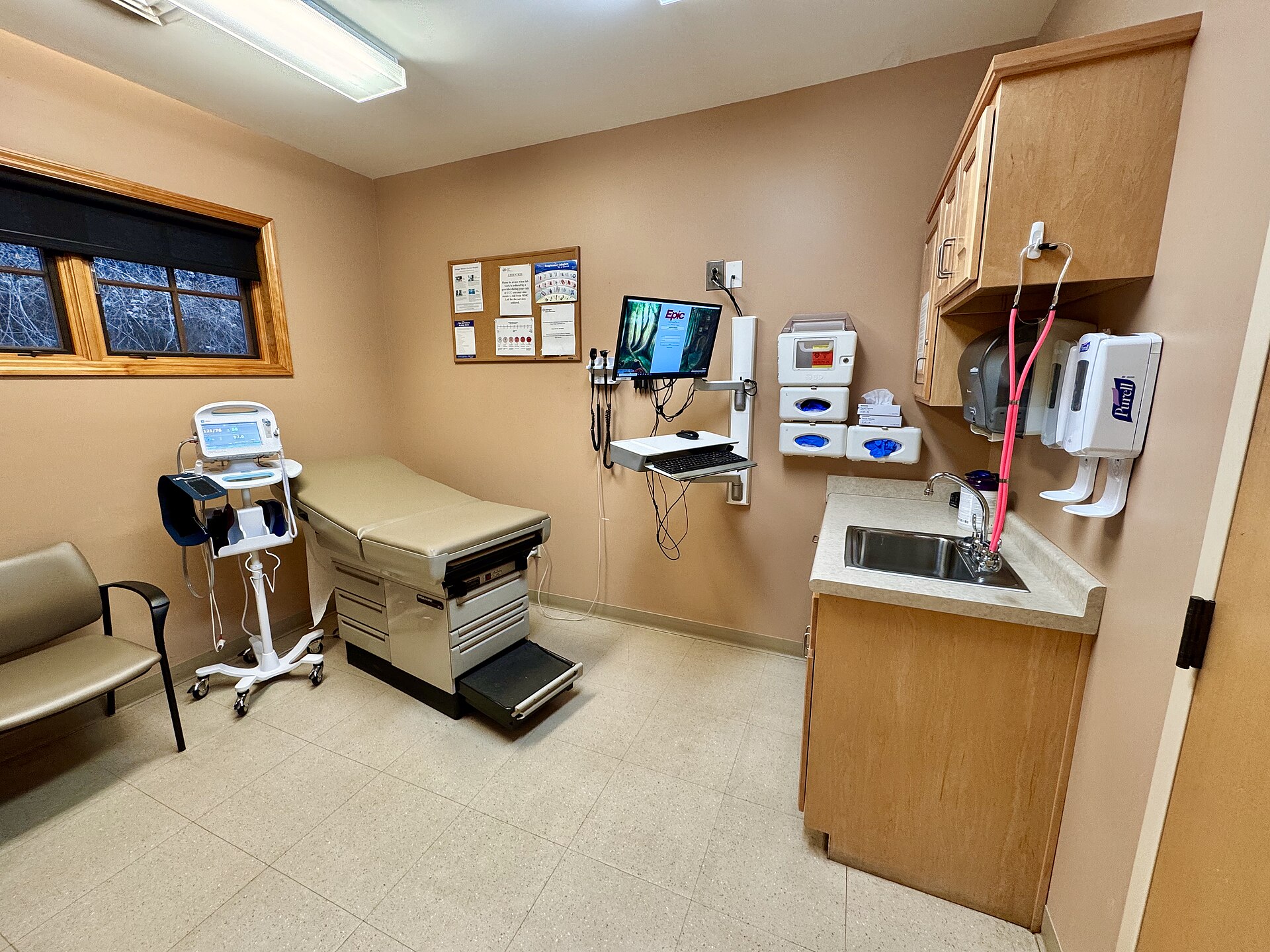
A facility fee is a separate charge a hospital adds when a service is given in a department the hospital owns, on top of the doctor's professional fee. It is legal. Medicare designed its payment that way: when a clinic is a "provider-based" department of a hospital under 42 CFR 413.65, Medicare pays the hospital a facility payment under the outpatient prospective payment system and pays the doctor a lower professional fee. When the same visit happens in an independent doctor's office, Medicare pays only the physician fee schedule's office rate, which is built to cover the office's overhead.17 A patient may see two bills, one from the doctor and one from the hospital, for a visit in a building that looks like any other clinic.
Congress and CMS have narrowed the gap for some services, a policy called site-neutral payment:
- Section 603 of the Bipartisan Budget Act of 2015 (P.L. 114-74, Nov. 2, 2015) added paragraph (21) to Social Security Act section 1833(t) (42 U.S.C. 1395l(t)). Off-campus hospital departments that started billing after Nov. 2, 2015 are no longer paid at full outpatient rates for most services.18 CMS pays those newer departments through a "PFS relativity adjuster," set at 40 percent of the outpatient rate, a policy the CY2026 outpatient rule continues.4
- Beginning in 2019, CMS paid a basic clinic visit at older ("excepted") off-campus departments at a physician-fee-schedule-equivalent rate. In the CY2026 rule, CMS extended that treatment to drug administration services at excepted off-campus departments. CMS estimated the change would cut outpatient spending by $290 million in 2026: $220 million for Medicare and $70 million in lower coinsurance for patients.19
- Section 6225 of the Consolidated Appropriations Act, 2026 (P.L. 119-75, signed Feb. 3, 2026) adds a new paragraph (23) to section 1833(t). Starting Jan. 1, 2028, Medicare will not pay for services furnished by an off-campus outpatient department unless the department bills under its own National Provider Identifier, separate from the main hospital's, and the hospital has filed an attestation, renewed on a schedule CMS sets, that the department meets the provider-based rules in 42 CFR 413.65. The law gave CMS $20 million to review attestations and directs the HHS Inspector General to report on the process by Jan. 1, 2030.20 The CY2027 outpatient final rule (91 FR 70284, Nov. 6, 2026, effective Jan. 1, 2027) finalized CMS's first steps to carry out the new law.21
The separate NPI matters for transparency. Today a claim from a hospital-owned clinic across town often looks, in billing data, like a claim from the main hospital. Once each off-campus department bills under its own number, researchers, insurers and employers will be able to see which services happen in which building, and what each building is paid. Idaho has no state law on facility fees. We searched the Idaho Legislature's bill lists for 2023 through 2026 and found no facility fee bill.
Facility fees are a fight with two real sides. Hospitals argue that their departments carry costs an office does not: emergency standby, round-the-clock staffing, stricter building and safety codes, and patients who are sicker on average, and that cutting the payment would shift costs to other patients or close rural services. Insurers, employers and many economists argue that paying more for the same service because a hospital owns the building rewards consolidation, and that patients should not owe a hospital-sized coinsurance for an office visit. MedPAC, the congressional advisory commission on Medicare payment, has recommended that Congress more closely align payment rates across settings for selected services that are safe to provide in any setting when doing so does not put access at risk (Recommendation 8 of its June 2023 report).22 Lesson 11 on economic development covers hospital purchases of physician practices in Idaho.

The federal hospital price transparency rule
The legal root of hospital price posting is one sentence in the Affordable Care Act. Public Health Service Act section 2718(e) (42 U.S.C. 300gg-18(e)) says each hospital "shall for each year establish (and update) and make public (in accordance with guidelines developed by the Secretary) a list of the hospital's standard charges for items and services provided by the hospital, including for diagnosis-related groups." From 2010 to 2020, CMS read that to mean the chargemaster, the list price almost no one pays.23
From executive order to rule, 2019 to 2021
On June 24, 2019, President Trump signed Executive Order 13877, "Improving Price and Quality Transparency in American Healthcare To Put Patients First," directing HHS to require hospitals to post negotiated rates in a form patients could use.24 CMS published the final rule on Nov. 27, 2019 (84 FR 65524), creating 45 CFR part 180, effective Jan. 1, 2021.25 It defined "standard charges" to include five numbers for every item and service: the gross charge, the discounted cash price, each payer-specific negotiated charge, and the lowest and highest negotiated charges with the payer names removed (the "de-identified minimum" and "maximum"). It required two postings: one machine-readable file of all standard charges, and a consumer-friendly list of 300 "shoppable services" (services a patient can schedule ahead), 70 of them chosen by CMS, or an online price estimator tool instead.3
The American Hospital Association and others sued, arguing the rule exceeded the statute, violated the Administrative Procedure Act and compelled speech in violation of the First Amendment. The U.S. District Court for the District of Columbia ruled for HHS (No. 1:19-cv-03619), and on Dec. 29, 2020, the U.S. Court of Appeals for the D.C. Circuit affirmed in American Hospital Association v. Azar, No. 20-5193. Judge David Tatel wrote that "standard charges" can reasonably include the prices hospitals charge insurers, and that requiring hospitals to disclose prices before providing services is "traditional or ordinary economic regulation of commercial activity."26 The rule took effect three days later.
Penalties, templates and attestations, 2022 to 2026
The first-year penalty was small: at most $300 a day, whatever the hospital's size. Early studies found many hospitals posting nothing or posting files that were hard to use. CMS raised the penalty in the CY2022 outpatient rule (86 FR 63458, Nov. 16, 2021). Since Jan. 1, 2022, the daily maximum is $300 for a hospital with 30 or fewer beds, $10 per bed for a hospital with 31 to 550 beds, and $5,500 for a hospital with more than 550 beds, with amounts adjusted each year for inflation.273 A 550-bed hospital out of compliance for a full year could face $2,007,500 before inflation adjustments (our calculation: $5,500 times 365 days). A 25-bed critical access hospital could face $109,500 (our calculation: $300 times 365).
The CY2024 outpatient rule (88 FR 81540, Nov. 22, 2023) required hospitals to use a CMS template from July 1, 2024, to add more data elements from Jan. 1, 2025, to post the cms-hpt.txt file and a footer link on their home page, and to "affirm" in the file that the data were true, accurate and complete.283
On Feb. 25, 2025, President Trump signed Executive Order 14221 on health care pricing information (90 FR 11005, Feb. 28, 2025; its full title is in the note). It directed the Departments of HHS, Labor and the Treasury to require actual prices, not estimates, to standardize the data so prices can be compared across hospitals and plans, and to update enforcement.29 CMS answered for hospitals in the CY2026 outpatient final rule (90 FR 53448, Nov. 25, 2025), effective Jan. 1, 2026:45
- The old "estimated allowed amount" field is replaced by the actual median allowed amount and the 10th and 90th percentile allowed amounts, in dollars, for any negotiated rate set as a percentage or formula, drawn from remittance (EDI 835) data for a period of 12 to 15 months, with the count of allowed amounts used.
- The file must include an attestation that the data are true, accurate and complete and that every negotiated rate that can be shown in dollars is shown in dollars, and it must name the chief executive, president or senior official who oversees the data.
- The file must list the hospital's Type 2 (organizational) National Provider Identifiers.
- A hospital that waives its right to a hearing before an administrative law judge gets a 35 percent reduction in a civil money penalty, except when the penalty is for posting no file or no shoppable-services list at all.
- CMS delayed enforcement of the new file requirements until April 1, 2026.
The St. Luke's files described above follow the 2026 format: they carry the attestation sentence, an attester's name, the hospital's Type 2 NPI, and median and percentile allowed amounts with claim counts. Where a plan had no paid claims for a service in the 15 months before posting, the files say "Zero final payments for the item or service in the 15 months prior to posting the file."12
Timeline of price transparency rules
| Date | Law, rule or event | What changed | Source |
|---|---|---|---|
| March 23, 2010 | Affordable Care Act adds Public Health Service Act section 2718(e) | Hospitals must publish a yearly list of standard charges under HHS guidelines | 42 U.S.C. 300gg-18(e)23 |
| June 24, 2019 | Executive Order 13877 | Directs HHS to require posting of negotiated rates | 84 FR 3084924 |
| Nov. 27, 2019 | Hospital price transparency final rule | Creates 45 CFR part 180, effective Jan. 1, 2021 | 84 FR 6552425 |
| Nov. 12, 2020 | Transparency in Coverage final rule | Insurers and group plans must post rate files and offer a cost-sharing tool | 85 FR 7215830 |
| Dec. 27, 2020 | No Surprises Act signed (P.L. 116-260, Division BB) | Surprise billing protections, good faith estimates, arbitration; effective Jan. 1, 2022 | P.L. 116-2608 |
| Dec. 29, 2020 | American Hospital Association v. Azar | D.C. Circuit upholds the hospital rule | No. 20-519326 |
| Jan. 1, 2021 | 45 CFR part 180 takes effect; Idaho Patient Act takes effect | Hospitals must post files; Idaho limits on medical debt collection begin | 45 CFR 180; Idaho Code 48-301311 |
| Jan. 1, 2022 | Higher hospital penalties; No Surprises Act in force | Penalties scale with beds up to $5,500 a day | 86 FR 6345827 |
| July 1, 2022 | Insurer rate files enforced | In-network rate and out-of-network allowed amount files go public | 85 FR 7215830 |
| July 1, 2024 | CMS template required for hospital files | Standard format; affirmation of accuracy | 88 FR 8154028 |
| Feb. 25, 2025 | Executive Order 14221 | Directs actual prices and standard, comparable data | 90 FR 1100529 |
| Jan. 1, 2026 (enforced April 1, 2026) | CY2026 outpatient rule changes to part 180 | Median and percentile allowed amounts, executive attestation, NPIs | 90 FR 534484 |
| Feb. 3, 2026 | Consolidated Appropriations Act, 2026 (P.L. 119-75) | Separate NPI and attestation for off-campus hospital departments from 2028; No Surprises Act implementation money extended | P.L. 119-75, sections 6225 and 640420 |
| Dec. 7, 2026 | Revised Transparency in Coverage rule takes effect | New insurer file elements, quarterly cadence, phone access to prices | 91 FR 6374831 |
| Jan. 1, 2028 | Off-campus department NPI requirement | No Medicare outpatient payment without a separate NPI and attestation | P.L. 119-75, section 622520 |
How CMS enforces the hospital rule
CMS does not inspect every hospital's file. It reviews hospitals chosen from public complaints, its own audits and reviews of a sample. When it finds a problem it follows the steps in 45 CFR 180.70 to 180.90: a warning notice; then, if the problem is not fixed, a request for a corrective action plan (CAP) with a deadline; then, if the hospital does not submit or follow the plan, a civil money penalty. A hospital can appeal a penalty to an HHS administrative law judge.3
Since 2025 CMS has published its case-level enforcement data. The file released for the first quarter of 2026 lists 11,440 actions in 7,037 cases dated from January 2021 through March 31, 2026, involving 4,980 hospital names in 53 states and territories (our count of distinct name, city and state). It records 2,993 warning notices, 1,521 cases that reached a CAP request, 3,340 findings that a hospital met the requirements, and 28 civil money penalty notices.6 CMS's separate penalty page lists those penalty notices, from Northside Hospital Atlanta and Northside Hospital Cherokee in Georgia in June 2022 to Pinnacle Hospital in Indiana in 2026. None is in Idaho or a neighboring state.7
The Government Accountability Office reviewed the program in October 2024 (GAO-25-106995). CMS estimated that 27 percent of hospitals fully complied with both posting requirements in February 2021 and 70 percent by November 2022. From 2021 through 2023, CMS reviewed 1,746 hospitals and opened 1,287 enforcement actions, and it had issued more than $4 million in penalties to 14 hospitals. GAO found that CMS "does not have assurance that pricing data hospitals report are sufficiently complete and accurate," because it checks whether files exist and follow the format, not whether the prices are right, and it had never fined a hospital for inaccurate data. GAO recommended that CMS assess whether the files are complete and accurate enough to serve their purpose; HHS agreed.16
Idaho hospitals in the enforcement data
The CMS file lists 95 actions in 55 cases involving 37 Idaho hospitals. Twenty-four actions are findings that a hospital met the requirements, 28 are warning notices, 17 are requests for corrective action plans (in 13 cases), and 26 are closure notices, which CMS sends when a hospital has fixed the problem. No Idaho hospital has received a penalty.6 The 13 Idaho cases that reached a corrective action plan request were these:
| Hospital (city) | Warning notice | CAP request(s) | Status in the file |
|---|---|---|---|
| Bear Lake Memorial Hospital (Montpelier) | none listed | July 5, 2023 | Closed Oct. 23, 2023 |
| Benewah Community Hospital (St. Maries) | Feb. 20, 2024 | May 24, 2024 | Closed July 3, 2024 |
| Boundary Community Hospital (Bonners Ferry) | Feb. 22, 2024 | May 31, 2024 | Closed June 28, 2024 |
| Cascade Medical Center (Cascade) | Sept. 16, 2025 | Dec. 19, 2025; Jan. 21, 2026 | Open at March 31, 2026 |
| Lifeways Hospital (Boise) | none listed | Sept. 4, 2025; Dec. 8, 2025 | Open at March 31, 2026 |
| St. Luke's Boise Medical Center (Boise) | Feb. 17, 2023 | June 15, 2023 | Closed Aug. 18, 2023; met requirements March 7, 2024; new warning Feb. 26, 2026 |
| St. Luke's Magic Valley Medical Center (Twin Falls) | March 1, 2023 | June 15, 2023 | Closed Sept. 13, 2023 |
| St. Mary's Health (Cottonwood) | Feb. 29, 2024 | June 5, 2024 | Closed July 29, 2024 |
| Teton Valley Health Care (Driggs) | Feb. 27, 2023 | June 8, 2023 | Closed July 6, 2023; met requirements April 2, 2024 |
| Treasure Valley Hospital (Boise) | none listed | Aug. 14, Oct. 3 and Dec. 12, 2024 | Closed Feb. 13, 2025 |
| Valor Health (Emmett) | Feb. 28, 2023 | June 8, 2023 | Closed July 31, 2023; new warning March 19, 2026 |
| Vibra Hospital of Boise (Boise) | July 3, 2025 | Nov. 4, 2025 | Closed Jan. 27, 2026 |
| Weiser Memorial Hospital (Weiser) | Sept. 18, 2025 | Dec. 19, 2025 | Closed Jan. 2, 2026 |
Source: CMS, Hospital Price Transparency Enforcement Activities and Outcomes, first quarter 2026 file, Idaho rows. A closure notice means CMS closed the case after the hospital corrected the problem. "Open" means the file shows no closure by March 31, 2026; later actions would appear in later releases.6
In the Magic Valley, besides St. Luke's Magic Valley, the file shows Intermountain Health Cassia Regional Hospital in Burley found to meet the requirements on May 8, 2023, and Aug. 19, 2025, and a warning notice to North Canyon Medical Center in Gooding on March 13, 2026. St. Luke's Wood River does not appear in the file. In Canyon County, West Valley Medical Center in Caldwell was found to meet the requirements three times (Nov. 28, 2023; April 14, 2025; May 9, 2025), and Saint Alphonsus Medical Center in Nampa once (July 11, 2025).6 Appearing in the file is not proof of wrongdoing: CMS reviews many hospitals that turn out to comply, and a warning notice is a finding about the posted file. It says nothing about the hospital's prices or care.
| State | Hospitals in file (our count) | Cases | Warning notices | Cases with a CAP request | "Met requirements" findings | Penalty notices |
|---|---|---|---|---|---|---|
| Idaho | 37 | 55 | 28 | 13 | 24 | 0 |
| Utah | 50 | 73 | 29 | 6 | 43 | 0 |
| Oregon | 43 | 64 | 21 | 7 | 41 | 0 |
| Washington | 76 | 106 | 40 | 18 | 62 | 0 |
| Montana | 40 | 59 | 34 | 14 | 20 | 0 |
| Wyoming | 22 | 30 | 14 | 11 | 13 | 0 |
| Nevada | 67 | 123 | 66 | 28 | 52 | 0 |
| United States (53 states and territories) | 4,980 | 7,037 | 2,993 | 1,521 | 3,340 | 28 |
Source: CMS, Hospital Price Transparency Enforcement Activities and Outcomes, first quarter 2026 file (actions dated January 2021 through March 31, 2026); counts are our tabulation. "Hospitals" counts distinct name, city and state combinations, so a hospital listed under two spellings would be counted twice.6
Insurers: the Transparency in Coverage rules
Hospital files show one side of each contract. The insurer side comes from the Transparency in Coverage rules, issued jointly by HHS, Labor and the Treasury on Nov. 12, 2020 (85 FR 72158) under the Affordable Care Act's transparency provisions. They apply to most private group health plans, including self-funded employer plans, and to individual and group insurance policies, but not to grandfathered plans, Medicare or Medicaid.30 The HHS version sits at 45 CFR 147.210 to 147.212.31
The 2020 rule required three things. First, from plan years beginning in 2022 (enforced from July 1, 2022), plans must post an in-network rate file with every negotiated rate for every provider, and an allowed amount file showing what the plan allowed for out-of-network services and what out-of-network providers billed. A third file for prescription drug prices was put on hold. Second, plans must give each member a cost-sharing estimate before care through an online tool, or on paper on request: for 500 listed items and services from plan years beginning in 2023, and for all covered items and services from 2024. Third, the files must be updated monthly.30
The files proved enormous and hard to use, with rates listed for providers who would never perform a service (a dermatologist's rate for heart surgery, for example). On Oct. 6, 2026, the three departments published a revised final rule (91 FR 63748), effective Dec. 7, 2026, citing Executive Order 14221. It adds the plan's product type, provider network name and network identifier to the in-network file; removes rates for unlikely provider-and-service pairs; adds a change log, a utilization file and a provider taxonomy file; lengthens the out-of-network reporting period from 90 days to six months and lowers the threshold for reporting from 20 claims to 11; requires a text file with contact information and a footer link on the plan's website; moves to a quarterly reporting cadence; and requires that the cost-sharing information available online or on paper also be given by phone on request, using the customer number on the member's ID card. The departments wrote that meeting the phone requirement also satisfies section 114 of the No Surprises Act, which requires price comparison by phone, including for grandfathered plans.32 The rule sets later compliance dates for some parts; check the rule for the date that applies to a given plan.
For Idaho, the insurer files are the only public source that shows what Blue Cross of Idaho, Regence BlueShield of Idaho, SelectHealth, PacificSource, Mountain Health CO-OP, St. Luke's Health Plan or a national carrier pays each provider in the state, because Idaho has no all-payer claims database that publishes such data (we found none; see "What we know" below). The files are posted by each insurer and each self-funded employer plan, usually through a link on the company's website, and they run to many gigabytes.
Surprise bills and the No Surprises Act
A surprise bill is a bill from an out-of-network provider that the patient did not choose: an emergency room doctor whose group does not contract with the patient's plan, an anesthesiologist at an in-network hospital, an air ambulance. Before 2022 the out-of-network provider could balance bill, sending the patient the difference between its full charge and whatever the plan paid. Idaho had almost no protection. A 2019 study by Boise State University's Idaho Policy Institute (university research) found that roughly 1 percent of claims for Idaho residents were out of network, rising to more than 2 percent for emergency services, with higher out-of-network rates in rural counties and more emergency problems in urban ones. It noted that Idaho law barred balance billing only in narrow cases, such as workers' compensation and some managed care referrals, and that a 2018 bill, House Bill 495, the Health Care Billing Equity Act, had been introduced and sent to the House Health and Welfare Committee without becoming law.33
What the law protects
The No Surprises Act is Title I of Division BB of the Consolidated Appropriations Act, 2021 (P.L. 116-260), signed Dec. 27, 2020. It added new sections to the Public Health Service Act (2799A-1 to 2799A-10 for plans, 2799B-1 to 2799B-9 for providers and facilities) and parallel sections to the federal employee benefits law and the tax code. It took effect for plan years beginning on or after Jan. 1, 2022. The three departments wrote the rules in two interim final rules in 2021 (86 FR 36872, July 13, 2021, and 86 FR 55980, Oct. 7, 2021) and a final rule (87 FR 52618, Aug. 26, 2022), now at 45 CFR part 149.83435369 For people with private insurance it does four main things:
- Emergency care. Plans must cover emergency services without prior approval and whether or not the hospital or doctor is in network, and must charge the patient only in-network cost sharing. Out-of-network emergency providers and facilities may not balance bill.
- Out-of-network doctors at in-network facilities. When a patient goes to an in-network hospital, hospital outpatient department, critical access hospital or ambulatory surgical center, an out-of-network doctor there may not balance bill for nonemergency care unless the patient signed a notice-and-consent form in advance. Consent is not allowed at all for "ancillary" services, including emergency medicine, anesthesiology, pathology, radiology, neonatology, assistant surgeons, hospitalists, intensivists and lab work, or when no in-network provider was available.
- Air ambulances. Out-of-network air ambulance companies may not balance bill, and the patient pays in-network cost sharing.
- Cost sharing math. The patient's share is figured from a "recognized amount," usually the plan's qualifying payment amount (QPA): the plan's median in-network rate for that service in that area as of Jan. 31, 2019, raised each year for inflation.
The law does not cover ground ambulances, which are often run by counties, cities, fire districts and ambulance districts in Idaho, and it does not cover people with Medicare or Medicaid, who already had balance billing protections under those programs. It also requires providers and facilities to post and hand out a one-page notice of these rights. The Idaho Department of Insurance publishes an Idaho version of the federal notice template.37
Good faith estimates for uninsured and self-pay patients
Public Health Service Act section 2799B-6 and 45 CFR 149.610 require providers and facilities to give a written good faith estimate of expected charges to a patient who is uninsured or who chooses not to use insurance, when the patient schedules care at least three business days ahead or asks for an estimate. The estimate must list the expected items and services, with codes and charges, and it must include services from other providers the patient is expected to need (the "convening" provider gathers them).9
If the final bill from a provider is "substantially in excess" of the estimate, defined as at least $400 above that provider's expected charges, the patient may start the federal patient-provider dispute resolution process by filing within 120 calendar days of receiving the first bill and paying a small administrative fee. A dispute resolution entity then decides what the patient owes.9 The law also calls for insured patients to receive an "advanced explanation of benefits" from their plan before scheduled care, but as noted above, that part had not been put into effect by rule as of Nov. 23, 2026.


The arbitration fight over the leftover bill
The No Surprises Act took the patient out of the middle but left the plan and the out-of-network provider to settle the payment. The plan must pay or deny within 30 days. If the provider disagrees with the amount, the two sides have 30 business days of "open negotiation." If they still disagree, either side can start the federal independent dispute resolution (IDR) process. A certified IDR entity, a private arbitration firm approved by the departments, picks one side's final offer, as in baseball arbitration. It must consider the QPA and other factors, such as the provider's training and the patient's acuity. The losing party pays the IDR entity's fee.9
The process was swamped from the start. In the first half of 2025, parties filed 1,186,812 disputes, 39 percent more than the 853,374 filed in the last half of 2024. Providers or their representatives started 81 percent of them, and just three initiating parties, HaloMD, Team Health and SCP Health, accounted for about 44 percent. IDR entities closed 1,349,343 disputes in that half year and issued 1,082,247 payment determinations.38 In the second half of 2025, parties filed 1,372,563 disputes, about 16 percent more again. IDR entities closed 1,449,900, found about 19 percent of disputes ineligible, and in payment decisions the provider, facility or air ambulance side prevailed about 85 percent of the time. The winning offer was higher than the QPA in about 87 percent of decisions.10 Adding the two halves, about 2.56 million disputes were filed in 2025 (our calculation: 1,186,812 plus 1,372,563).
The fight has real sides. Insurers and employer groups argue that high arbitration awards and the sheer volume of disputes, driven by a few large physician staffing and billing companies, raise premiums and undo the law's goal of holding down costs. Physician groups argue that insurers set QPAs too low, pay late or deny claims, and that winning 85 percent of decisions shows the plans' offers were unreasonable. Physician groups led by the Texas Medical Association also won several federal court rulings in Texas in 2022 and 2023 that struck parts of the departments' rules for giving the QPA too much weight and for other procedures; the rules have been rewritten since. The departments' newest rule, "Federal Independent Dispute Resolution Operations" (91 FR 33900, June 4, 2026, effective Aug. 3, 2026), requires plans to send specific information with the first payment, to use standard claim codes when paying out-of-network providers, and to register in the federal IDR portal, and it changes the rules for batching claims, eligibility review and fees.39 Section 6404 of the Consolidated Appropriations Act, 2026 extended the No Surprises Act implementation funding in section 118(a) of the 2021 law to Dec. 31, 2026, and raised the amount in section 118(a)(2) from $14 million to $42.1 million.20
Who enforces the No Surprises Act in Idaho
Congress gave states the first right to enforce the law, with CMS stepping in where a state does not. On Dec. 9, 2021, CMS wrote to Gov. Brad Little and Insurance Director Dean Cameron that the Idaho Department of Insurance would enforce the surprise billing protections against health insurers in Idaho and also against health care providers, facilities and air ambulance companies, including the good faith estimate and patient-provider dispute sections. Because Idaho has no state law or all-payer agreement that sets out-of-network rates, the letter said, the federal IDR process applies in Idaho.40 In a Dec. 29, 2021 notice, the Department told carriers to file their disclosure documents and policy amendments by April 1, 2022.37 The Department runs a No Surprises Act complaint form for Idaho consumers and providers.41 Self-funded employer plans, which many large Idaho employers use, are regulated by the U.S. Department of Labor under federal benefits law, not by the state.
Idaho's own law: the Idaho Patient Act
Idaho has no state hospital price transparency law of its own and no state surprise billing law. Its main medical-bill statute governs what happens after care: how a medical debt may be collected. The Legislature found in Idaho Code section 48-302 that "medical billing practices have little visibility to Idaho citizens," that people "often find themselves in collection actions for debts they were unaware of, from health care providers whom they do not recognize," and that existing law "enables excessive attorney's fees."11
What the law requires
House Bill 515 (2020) created Idaho Code Title 48, chapter 3. The Ways and Means Committee bill was signed by Gov. Brad Little on March 16, 2020, as Session Law chapter 139, effective Jan. 1, 2021.12 The law applies to any "health care provider," a term that covers licensed practitioners, health care facilities of every kind (hospitals, surgery and urgent care centers, nursing facilities, labs, imaging centers, rehabilitation centers and medical transportation providers) and their agents and debt collectors. It controls "extraordinary collection actions," which the law defines as selling or assigning the debt to a third party within 60 days of the final notice, reporting the debt to a credit bureau, or going to court: liens, bank account seizures, lawsuits and wage garnishment.11 Under Idaho Code section 48-304, no one may take an extraordinary collection action unless:
- The provider sent its charges to the patient's insurer (or to the patient, if there is no insurer) within 45 days of the service, the discharge, or the first date billing rules allowed.
- The facility sent the patient a free consolidated summary of services within 60 days, listing every billing entity whose providers treated the patient, with a heading that says "This is Not a Bill." A facility may skip the summary if one billing entity bills everything and the patient was told who it is (section 48-309).
- The patient received a free final notice before extraordinary collection action, listing the services with dates and initial charges, the insurers billed, every adjustment and payment, and the final amount owed, and saying an itemized list is available on request.
- No interest, fees or other charges were added until at least 60 days after the patient received the later of the summary or the final notice.
- At least 90 days passed after that, and every internal review, good faith dispute and insurance appeal was finally resolved. A provider may report to a credit bureau after 45 days instead of 90 if it gave 30 days' written warning, but a provider that reports early gives up the right to sue.
If the provider meets those steps and wins in court, section 48-305 limits what it can add to the principal: in an uncontested case, the lesser of $350 or 100 percent of the principal; in a contested case, the lesser of $750 or 100 percent; $75 for a successful garnishment motion and $25 for each later writ to the same garnishee, plus interest. A court may award more only if the costs are grossly disproportionate and the patient willfully tried to avoid a real debt. If the patient wins a contested case, the patient recovers costs and attorney's fees.11
If anyone takes a collection action without following the law, section 48-311 says the patient owes no collection costs, fees or interest, and the collector owes the patient actual damages or $1,000, whichever is greater, or up to three times actual damages or $3,000 for a willful violation, plus the patient's legal costs. The party collecting bears the burden of proving it followed every step and must plead its compliance "with particularity" in any lawsuit (section 48-307).11
Amendments and bills since 2020
- House Bill 42 (2021), a Business Committee bill signed March 1, 2021, as Session Law chapter 13, added section 48-313, giving providers extra time to meet the notice deadlines for services before July 1, 2021.42
- House Bill 778 (2022), a Business Committee bill signed March 25, 2022, as Session Law chapter 263, rewrote sections 48-304 to 48-310 (the definitions, deadlines, notice rules and burden of proof described above, in their current form), added a severability clause as section 48-314, and added section 48-315, stating that the Legislature always intended the law to apply to every collection action begun on or after Jan. 1, 2021, regardless of when care was given. That section was made retroactive to Jan. 1, 2021.4311
- Senate Bill 1079 (2025), a State Affairs Committee bill to amend the Idaho Patient Act on actions, proceedings and judgments "founded in or derived from a judgment," cleared committee but was held on the Senate calendar and recommitted to State Affairs on March 21, 2025. It did not become law.44
- House Bill 529 (2026), a House Health and Welfare Committee bill whose statement of purpose lists Rep. Chris Bruce as its contact, would have added Idaho Code section 41-1854 to bar insurers from stopping providers from offering discounted cash prices to insured patients and to count such cash payments toward the patient's deductible and out-of-pocket maximum. It was sent to the House floor's General Orders on March 10, 2026, then returned to the Business Committee on March 20 and did not pass.45
- Senate Bill 1315 (2026), a Senate Health and Welfare Committee bill whose statement of purpose lists Sen. Camille Blaylock as its contact, would have required hospitals that deliver babies to post consumer-friendly prices for uncomplicated vaginal and cesarean births on one page of their price estimator tools. It was printed and referred to the Senate Health and Welfare Committee on Feb. 17, 2026, and went no further.46
Medical debt and credit reports
When a patient cannot or does not pay, the debt may end up with a collection agency and on a credit report. The Consumer Financial Protection Bureau estimated in a March 2022 report that $88 billion in medical debt sat on consumer credit records as of June 2021, and that medical debts were 58 percent of all third-party collection items on credit reports, far more than the next category, telecommunications debt, at 15 percent. Most medical collection items were under $500. The Bureau noted that the true total of medical debt in collections is higher, because not every debt is reported.47
The credit bureaus' changes in 2022 and 2023
In March 2022 the three national credit bureaus, Equifax, Experian and TransUnion, jointly announced that they would stop including paid medical debt, medical debt less than a year old and medical debt under $500 on credit reports. The Congressional Research Service reports that the CFPB estimated roughly half of consumers with medical debt on their reports would have it removed.48 These were voluntary company policies; no law required them. The Idaho Patient Act adds a separate state rule: a provider or collector may not report an Idaho patient's medical debt to a credit bureau until the notice steps and waiting periods in section 48-304 are met.11
The federal rule that was vacated
On Jan. 7, 2025, the CFPB issued a rule under the Fair Credit Reporting Act to remove a regulatory exception that had let lenders use medical debt information, and to bar credit bureaus from giving lenders reports containing medical debt that lenders could not use. It was published Jan. 14, 2025 (90 FR 3276), with a correction Jan. 27, 2025 (90 FR 8173), and was set to take effect March 17, 2025, later stayed to June 15, 2025.13 Two trade groups, the Cornerstone Credit Union League and the Consumer Data Industry Association, sued in the U.S. District Court for the Eastern District of Texas (Cornerstone Credit Union League v. Consumer Financial Protection Bureau, Civil No. 4:25-cv-16-SDJ). Under new leadership the Bureau agreed the rule was unlawful, and on July 11, 2025, Judge Sean D. Jordan entered a memorandum opinion and final judgment vacating it over the objection of consumer-side intervenors. The court held that the Fair Credit Reporting Act permits credit bureaus to report coded medical debt information and permits lenders to consider it.14 On Oct. 28, 2025, the Bureau also issued an interpretive rule (90 FR 48710) stating its view that the Fair Credit Reporting Act generally preempts state laws in broad areas of credit reporting, replacing a 2022 interpretation that had said the opposite.49
Several states have their own laws limiting medical debt on credit reports. The Urban Institute's Debt in America map (nonprofit research), updated Nov. 10, 2026, with credit data from August 2026, lists Oregon and Washington among states with such restrictions; Idaho, Utah, Montana, Wyoming and Nevada are not on its list. Those state laws affect what shows up in credit data, so state-to-state comparisons of medical debt in collections are not apples to apples.50 How the 2025 preemption interpretation affects those state laws is a question for the courts.
What the public data show about Idaho prices
There is no single official number for "Idaho's health care prices." The best evidence comes from studies that compare private insurers' payments with what Medicare would have paid for the same services, because Medicare's rates are public and adjusted for local wages.
RAND hospital price studies (nonprofit research). RAND's fifth round, published in 2024 and revised Dec. 10, 2024 (RR-A1144-2-v2), used claims for 2020 to 2022 from self-insured employers, state all-payer claims databases (including Utah's and Oregon's) and health plans. Nationally, employers and private insurers paid hospitals 254 percent of what Medicare would have paid in 2022, counting inpatient and outpatient facility and related professional claims. State averages ranged from below 170 percent in Arkansas to above 300 percent in eight states, among them Florida and West Virginia.51 RAND publishes state-level results in a supplemental annex; we could not download it to confirm Idaho's round 5 figure, so we do not state one. In RAND's fourth round, for inpatient hospital care in 2020, Becker's Hospital Review (trade press) reported Idaho at 266 percent of Medicare, 15th highest, against 242 percent nationally, with Utah at 176 percent, Oregon 227, Washington 214, Montana 282, Wyoming 226 and Nevada 274.52 RAND later wrote that Washington's round 4 figure was too low because some Medicare Advantage claims had been included by mistake.51 These studies cover only patients of participating employers and plans, and the number of Idaho claims in them is small.
Hospital and insurer price files. The files themselves are the newest source, but they show contract terms and say nothing about how many patients used each contract. A rate for a plan with ten members counts the same as a rate for a plan with a hundred thousand. Turning them into a reliable average price takes claims data that are not public in Idaho. Private companies sell cleaned versions of the files; treat any figure from them as the company's own analysis and ask how it was built.
Cost reports. Medicare cost reports (HCRIS) give each hospital's gross charges, total revenue and costs, which researchers use to compute a hospital's average markup, or charge-to-cost ratio. Lesson 3 and lesson 5 use them for margins.
How to read a price file and an EOB
These steps describe what the documents contain and where each number sits. They are not advice about where to get care or what to pay.
Reading a hospital price file
- Find the file. Every hospital must link to its machine-readable file from a footer link on its home page and list it in a text file at the root of its website named cms-hpt.txt (for example, the St. Luke's file lists each hospital license, the file link and a contact). Many hospitals also post a shoppable-services list or a price estimator tool, which is easier to read.
- Check the header rows. The first rows give the hospital name, license number, locations covered, the date the file was last updated, the CMS template version, the Type 2 NPI and, since 2026, the attestation sentence and the name of the official who attests.
- Find the service. Search the code columns for the CPT or HCPCS code for a test or procedure, or the MS-DRG for an inpatient stay. The description column alone can mislead, since hospitals use their own wording.
- Note the setting. The same code can have separate rows for inpatient, outpatient and "both." Emergency visits, imaging and labs often differ by setting.
- Read the gross charge and the discounted cash price. These are the hospital's list price and its price for people paying without insurance.
- Find the plan. Each insurer and plan has a block of columns. A negotiated rate may be a dollar amount, a percentage of charges or a formula, and the methodology column says which.
- For a percentage rate, read the median, 10th and 90th percentile allowed amounts and the count column. "Zero final payments" or a count of 0 means the plan paid no claims for that service in the look-back period.
- Remember what is missing: the doctor's separate professional bill, the anesthesiologist's bill and any outside lab are not in the hospital's file, and the patient's share depends on the plan's deductible and coinsurance.
Reading an explanation of benefits
- Match the EOB to the bill by date of service, provider name and claim number.
- Read the "amount billed" (the provider's gross charge) and the "allowed amount" (the contract price). An in-network provider's bill to the patient should not exceed the patient's share of the allowed amount.
- Read the plan's payment and the patient responsibility, split into deductible, copay and coinsurance.
- Read the remark codes. They explain denials and adjustments, such as a service the plan says was not covered or a claim sent to the wrong plan.
- Check network status. If an out-of-network provider treated the patient in an emergency or at an in-network facility, the No Surprises Act notice explains the protections, and the Idaho Department of Insurance's complaint form exists for disputes covered by the law.
- Compare the provider's bill with the Idaho Patient Act notices. A final notice before collection must list the charges, every adjustment and insurance payment, and the final amount.
Pictures, Numbers and Infographics
| Measure | Idaho | U.S. or other states | Year or date | Source |
|---|---|---|---|---|
| Outpatient knee-joint MRI (CPT 73721): gross charge and cash price | $1,857 (St. Luke's Boise/Meridian and Wood River) | n/a | Files dated March 25, 2026 | St. Luke's price files12 |
| Same MRI: range of negotiated dollar rates | $257.64 to $1,671.30 (Boise/Meridian, 57 rates); $1,058.49 to $1,801.29 (Wood River, 39 rates) | n/a | March 25, 2026 | St. Luke's price files12 |
| Hospital price transparency rule in force | Applies to all Idaho hospitals | All U.S. hospitals | Since Jan. 1, 2021 | 45 CFR part 1803 |
| Maximum daily penalty (before inflation adjustment) | $300 (30 beds or fewer) to $5,500 (over 550 beds) | Same nationwide | Since Jan. 1, 2022 | 45 CFR 180.903 |
| Hospitals in CMS enforcement data | 37 hospitals, 55 cases, 28 warnings, 13 CAP cases, 0 penalties | U.S.: 4,980 hospitals, 7,037 cases, 28 penalty notices | January 2021 to March 31, 2026 | CMS enforcement file6 |
| Hospitals fully compliant (CMS estimate) | not published by state | 27% (Feb. 2021); 70% (Nov. 2022) | 2021 to 2022 | GAO-25-10699516 |
| Federal IDR disputes filed | not published by state in the reports used | 1,186,812 (Jan. to June 2025); 1,372,563 (July to Dec. 2025) | 2025 | CMS IDR reports3810 |
| Provider side prevails in IDR | n/a | About 85% of payment decisions | July to Dec. 2025 | CMS IDR report10 |
| Idaho Patient Act collection fee caps | $350 uncontested; $750 contested (or 100% of principal if less) | n/a | Since Jan. 1, 2021 | Idaho Code 48-30511 |
| Medical debt on U.S. credit records | not published by state in the CFPB report | $88 billion; 58% of collection items | June 2021 | CFPB47 |
| Private insurer hospital prices as percent of Medicare | 266% inpatient (round 4, 2020, trade press report) | U.S. 254% all hospital services (round 5, 2022); 242% inpatient (round 4, 2020) | 2020 and 2022 | RAND; Becker's5152 |

Common mistakes
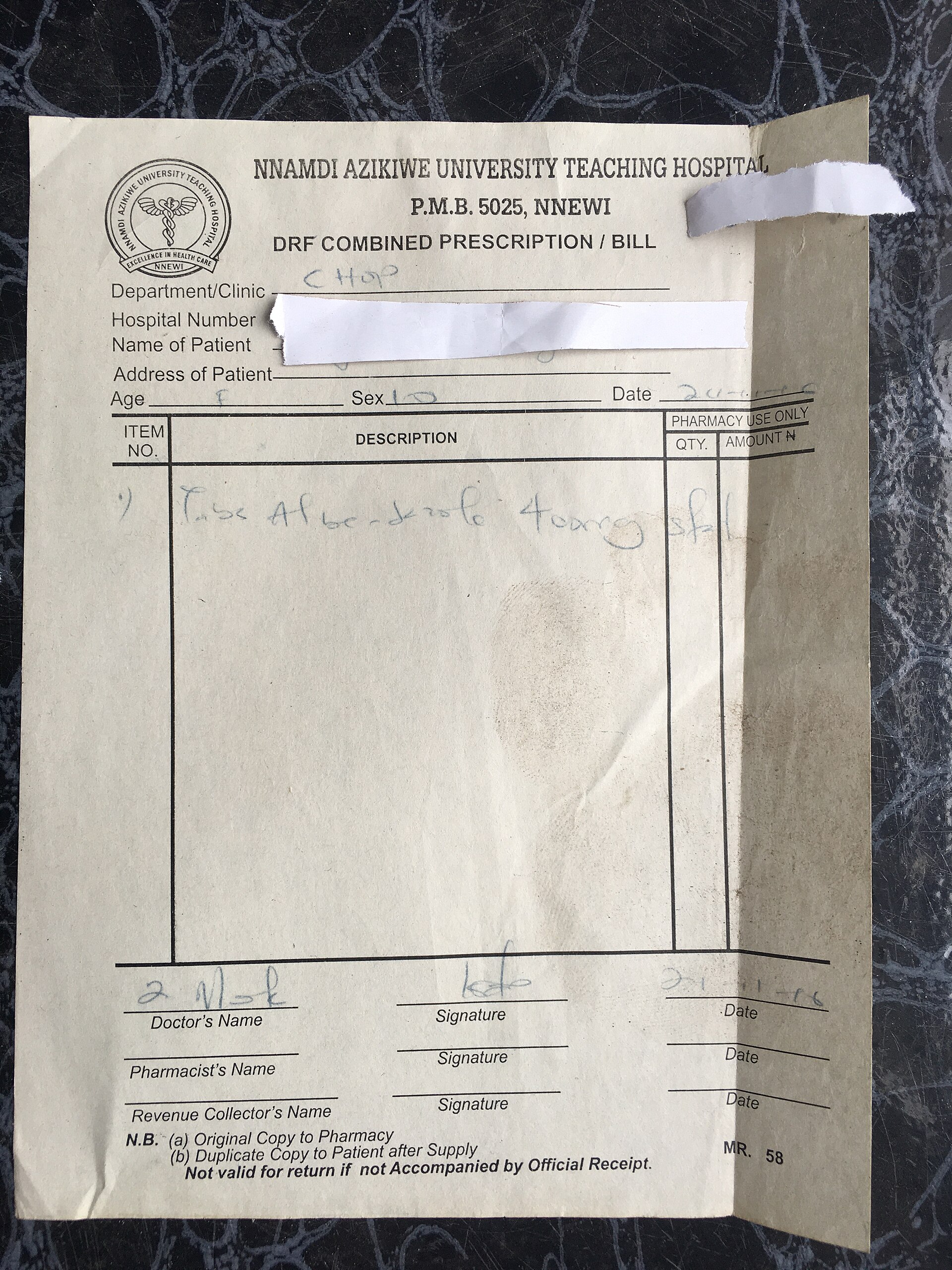
- Treating a gross charge as a price anyone pays. The chargemaster price is a list price. In the St. Luke's Boise and Meridian file, the median posted plan rate for an outpatient knee MRI is less than half the $1,857 charge. Stories that say a hospital "charges" $115,000 for a knee replacement describe a number few patients or insurers pay.1
- Reading a negotiated rate as what the patient owes. The patient's share depends on the deductible, coinsurance and copay. A patient with a high deductible may pay the whole negotiated rate; a patient who met the out-of-pocket maximum may pay nothing.
- Averaging the rates in a price file and calling it the average price. Each plan's rate counts once no matter how many people the plan covers. Without claims counts or enrollment, a simple median of posted rates, as in our table, describes contracts. It is no measure of the average price paid.
- Assuming a posted file is accurate because it is posted. GAO found that CMS checks format and presence, not accuracy, and that some files listed implausible prices such as knee replacements over $1 million.16
- Assuming the cash price is the charity care price. A discounted cash price is the posted self-pay rate. Financial assistance under a nonprofit hospital's 501(r) policy is separate and can be much lower or free for eligible patients. See lesson 3.
- Thinking the No Surprises Act covers every surprise bill. It does not cover ground ambulances, and it does not stop a bill for services a plan does not cover at all, or for an out-of-network provider the patient chose with valid notice and consent where consent is allowed.9
- Thinking the CFPB rule took medical debt off credit reports. The rule was vacated on July 11, 2025, before it took effect. What changed in 2022 and 2023 were the credit bureaus' own voluntary policies.1448
- Counting a CMS warning notice as a fine. No Idaho hospital has received a price transparency penalty. Most Idaho cases ended with a closure notice after the hospital fixed its file.6
- Mixing dates. Price files are dated by the hospital; insurer files are monthly or, from the 2026 rule, quarterly; RAND's studies lag two or more years; CMS enforcement data are quarterly. Name the date of every price.
What we know, what we don't, and what the data can show
What we know
- Every Idaho hospital must post a machine-readable price file and a shoppable-services list or estimator, under 45 CFR part 180, and since 2026 the files must include actual allowed amounts and an executive attestation.3
- CMS has opened 55 cases involving 37 Idaho hospitals since 2021 and fined none.6
- In the two St. Luke's files we read, posted plan rates for the same service vary several-fold, and gross charges are identical across the Boise and Ketchum hospitals for the services checked.12
- The Idaho Department of Insurance enforces the No Surprises Act against both insurers and providers in Idaho, and the federal IDR process applies here.40
- The Idaho Patient Act has governed medical debt collection since Jan. 1, 2021, with fee caps and damages for violations.11
What we don't know
- How many Idahoans have used a hospital price file, an insurer cost tool or a good faith estimate, or saved money by doing so. No Idaho agency collects this.
- How many Idaho medical debt collection cases are filed each year, and how often courts apply the Idaho Patient Act's fee caps or damages. The Idaho courts do not publish a count by debt type that we found.
- How many No Surprises Act disputes involve Idaho providers or plans, and how many complaints the Idaho Department of Insurance has received. The CMS reports we used do not give state totals, and we did not obtain Department complaint counts.
- Idaho's current average commercial hospital price relative to Medicare. RAND's round 5 state annex was not available to us, and Idaho has no public all-payer claims database that we found.
- How accurate the Idaho hospital price files are. No public audit has tested them.
What the data can show
- Hospital machine-readable files (linked from each hospital's cms-hpt.txt) can show each Idaho hospital's posted charges, cash prices and plan-by-plan rates for any service, and from 2026 the median and percentile amounts actually allowed.
- CMS Hospital Price Transparency Enforcement Activities and Outcomes data can show every warning, CAP request and closure for each Idaho hospital by date.
- Insurer Transparency in Coverage files can show what each plan pays each Idaho provider, and from Dec. 7, 2026, which network each rate belongs to.
- CMS Federal IDR public use files can show disputes by provider, plan, service and outcome, including those involving Idaho parties where the files identify location.
- Medicare cost reports (HCRIS) can show each Idaho hospital's total charges, revenue and costs, and so its charge-to-cost ratio.
- Idaho court records (the iCourt portal) can show collection lawsuits filed by named providers and collectors in each county.
Questions people ask
Why do hospitals keep gross charges so far above what they are paid?
Charges are the starting point for contracts written as a percent of charges, for some out-of-network and workers' compensation payments, and for uninsured bills. A hospital that lowered its chargemaster would lower its payment under every percent-of-charges contract unless it renegotiated them. Hospitals say charges also have to cover patients who pay little or nothing. Charges are not set by law in Idaho, and federal rule requires only that they be posted.3
Can an Idaho hospital bill an uninsured patient the full gross charge?
No Idaho law caps what a hospital may bill. Federal law limits nonprofit hospitals: under the 501(r) rules, patients who qualify for financial assistance may not be charged more than the amounts generally billed to insured patients for emergency and other medically necessary care (26 CFR 1.501(r)-5; lesson 3 covers this).53 The No Surprises Act gives uninsured patients a right to a good faith estimate and a dispute process if the bill is at least $400 more than the estimate. The Idaho Patient Act controls how any unpaid amount may be collected.911
Does the No Surprises Act apply to people on Medicare or Medicaid?
Its surprise billing rules apply to private group and individual coverage. People with traditional Medicare or Idaho Medicaid already had limits on balance billing under those programs: providers that accept Medicare assignment or Medicaid payment must take the program's payment, plus the patient's set cost sharing, as payment in full. For Medicare cost sharing see Medicare in Idaho, lesson 7.
Who checks whether a hospital's price file is right?
CMS enforces the federal rule. It reviews files after complaints and in its own audits, but GAO found in 2024 that it checks whether a file exists and follows the template, not whether the prices are accurate. Since 2026 a named hospital official must attest that the file is true and complete. The Idaho Legislature has not passed its own price transparency law, so no Idaho agency checks hospital files.165
Why would posted rates at a small rural hospital be higher than in Boise?
The files do not give reasons. Small hospitals have fewer patients to spread fixed costs over, critical access hospitals are paid by Medicare on cost, and insurers may need a rural hospital in their network more than the hospital needs any one insurer. Large systems negotiate system-wide contracts that may set different rates at different hospitals. Lesson 5 covers rural hospital costs and margins, and lesson 2 covers cost-based payment.
If a medical bill went to collections, what did Idaho law require first?
For collection actions begun on or after Jan. 1, 2021, the Idaho Patient Act requires timely billing of the insurer, a summary of services, a final itemized notice, and waiting periods of 60 days before interest or fees and 90 days (after all appeals and disputes are resolved) before a lawsuit, garnishment, lien or credit report, with a 45-day option for credit reporting that gives up the right to sue. A collector that skipped steps cannot collect fees or interest and owes the patient damages. The law is Idaho Code sections 48-301 to 48-315.11
Are ground ambulance bills protected?
Not by the No Surprises Act. Many Idaho ground ambulances are run by counties, cities, fire districts and ambulance districts, some funded partly by local property taxes. Whether a patient gets a balance bill depends on the service's billing policy and the patient's plan. We found no Idaho statute that limits ground ambulance balance billing for privately insured patients.
Hard questions
Do price files help patients, or mostly insurers and employers?
For patients: Supporters, including the administrations that issued Executive Orders 13877 and 14221, argue that public prices let patients and doctors compare options before scheduled care, expose billing errors and pressure high-priced hospitals.2429 For buyers: Others argue that most care is not shopped, patients pay coinsurance rather than full prices, and the main users are employers, insurers and data companies who use the files to negotiate. The hospital association argued in court that the rule was likely to "misinform" consumers and "facilitate anticompetitive effects"; the D.C. Circuit held that HHS had examined the data and explained its choice, and upheld the rule.26 The evidence: Compliance rose from 27 percent of hospitals to 70 percent in less than two years, but GAO found CMS had not checked accuracy, and federal agencies rewrote both the hospital and insurer rules in 2025 and 2026 to make the data usable. Whether patients' bills have fallen because of the files has not been shown in Idaho data.16
Is federal arbitration raising health costs?
Plans and employers: They point to 2.56 million disputes filed in 2025, providers winning about 85 percent of decisions, and winning offers above the QPA in about 87 percent, and argue that this raises premiums and rewards high-volume billing firms.1038 Physicians: They argue that QPAs are set by insurers, that insurers often underpay first and that the win rate shows the plans' offers were too low; they won court rulings striking rules they said tilted the process. The evidence: CMS's reports confirm the volume and win rates. They also show that a few large initiating parties file most disputes and that low-dollar services produce large percentage awards because small dollar gaps look large in percentage terms. CMS's reports do not measure the effect on premiums.10
Should Idaho pass its own price, cash-payment or facility fee laws?
For state action: Supporters of bills such as House Bill 529 and Senate Bill 1315 (2026) argue that state law can fill gaps in federal rules, such as letting cash payments count toward deductibles or making maternity prices easy to find, and that Idaho could enforce its own law instead of waiting for CMS.4546 Against: Hospitals and insurers argue that federal rules already cover the ground, that a separate state format adds cost, and that federal benefits law limits what a state can require of self-funded employer plans. The evidence: Neither 2026 bill got a floor vote. Other states have passed facility fee and price laws; whether they changed prices is still being studied.
Should medical debt appear on credit reports?
For removing it: The CFPB argued in 2025 that medical debt is a poor predictor of whether someone will repay other loans, that it often comes from billing and insurance errors, and that reporting it pressures patients to pay bills they may not owe.1347 For keeping it: Credit unions, banks and credit bureaus argued that lenders need complete information, and the federal court in Texas held that the Fair Credit Reporting Act allows coded medical debt information to be reported and used.14 The evidence: The credit bureaus' own 2022 and 2023 changes removed most small and paid medical debts. Idaho's law takes a third path: it does not ban reporting, but it delays it until notices and waiting periods are complete.4811
For reporters and advocates
Records that exist.
- Hospital price files. Every Idaho hospital's machine-readable file, listed in the cms-hpt.txt file at the root of its website. Note the "last updated" date, the attester's name and whether the file shows dollar amounts or only percentages. Files run to hundreds of megabytes; a short script can pull one code at a time, as our methods box describes.
- CMS enforcement data. The Hospital Price Transparency Enforcement Activities and Outcomes file on data.cms.gov, updated quarterly, and CMS's list of penalty notices. Each penalty notice is a public letter.67
- Insurer files. Each Idaho insurer's and large employer plan's Transparency in Coverage files, linked from the company's website; from Dec. 7, 2026, a contact text file and footer link are required.32
- No Surprises Act data. CMS's Federal IDR public use files and supplemental reports; the Idaho Department of Insurance's No Surprises Act complaint records and carrier filings.1041
- Court records. Collection lawsuits by hospitals and collectors in Idaho magistrate courts, searchable through the Idaho courts' online portal. Under Idaho Code section 48-307, a complaint must plead compliance with each Idaho Patient Act step and name the insurer billed and the date, so the complaint itself shows whether the law was followed.11
- Hospital finances. Medicare cost reports (HCRIS) for charges, revenue and costs; IRS Form 990 Schedule H for nonprofit hospitals' charity care, bad debt and collection policies (lesson 3).
- Legislative records. Bill pages, statements of purpose and committee minutes for House Bill 515 (2020), House Bill 42 (2021), House Bill 778 (2022), Senate Bill 1079 (2025), House Bill 529 (2026) and Senate Bill 1315 (2026) on the Legislature's website.
Questions to ask. Ask a hospital: when was your price file last updated, who attests to it, and why does a given rate differ so much between plans? How many patients used your price estimator last year? How many accounts did you send to collections, and how do you document Idaho Patient Act compliance? Ask an insurer or employer plan: how do you use hospital files in negotiations, and how many No Surprises Act disputes did you have with Idaho providers? Ask the Idaho Department of Insurance: how many No Surprises Act complaints has it received since 2022, by type, and what came of them? Ask legislators: why did House Bill 529 and Senate Bill 1315 stall, and who testified?
Public records. Idaho public records requests under Idaho Code Title 74 can reach the Department of Insurance's complaint statistics and correspondence with CMS, county-owned and hospital-district hospitals' collection policies and agency contracts, and public hospitals' price and billing records; see Idaho Public Records Requests. Private nonprofit and for-profit hospitals are not public agencies under Title 74. Federal records (CMS warning letters, CAP correspondence, IDR complaints) can be requested under the federal Freedom of Information Act. For data methods, see Data and Statistics; for testifying on bills such as these, see Testifying and Public Comment and Laws and Rules.
The Idaho angle. Idaho has no state price transparency law, no surprise billing law of its own and no public all-payer claims database that we found, so federal files and federal enforcement are the main tools. Its Idaho Patient Act is one of the more detailed state medical debt collection laws, and court filings under it are a source few reporters have mined. The Magic Valley offers a direct comparison: St. Luke's Magic Valley in Twin Falls, North Canyon Medical Center in Gooding, Minidoka Memorial Hospital in Rupert, Cassia Regional Hospital in Burley and St. Luke's Wood River in Ketchum each post files that can be read side by side.
Where to go next
- CMS Hospital Price Transparency: Free federal pages from CMS explaining what hospitals must post, with the file templates, frequently asked questions and a form to report a hospital that is not complying. Useful for patients, reporters and hospital staff.
- CMS No Surprises Act consumer pages: Free federal site with plain-language explanations of surprise billing protections, good faith estimates and the patient-provider dispute process, plus the federal help desk and complaint channel. Also hosts the IDR reports.
- Idaho Department of Insurance: No Surprises Act: Free state pages from the agency that enforces the No Surprises Act in Idaho against insurers and providers, with the Idaho rights notice and a complaint form.
- CMS Hospital Price Transparency enforcement data: Free quarterly CMS dataset listing every warning notice, corrective action plan request, closure and penalty by hospital and date. Downloadable as a spreadsheet; filter the State column for ID.
- Idaho Patient Act (Idaho Code 48-301 to 48-315): Free official text of Idaho's medical debt collection law on the Idaho Legislature's website, one page per section, with the session law history of each section.
- Idaho Legislature bill search: Free official site with every bill, statement of purpose, fiscal note, vote and committee minutes by session; useful for following price and medical debt bills.
- CFPB: medical debt and credit reports: Free federal consumer pages on credit reports, disputing errors and medical debt collection; free official credit reports are available through the site the CFPB links to.
Still being checked (11 items)
These points could not be fully confirmed against a primary source when this lesson was written and fact checked in November 2026. The text above states each one as uncertain.
- RAND round 5 state-level relative prices for Idaho and neighbor states: the RAND supplemental annex could not be downloaded, so no round 5 Idaho figure is stated; the round 4 (2020 inpatient) Idaho figure of 266 percent is taken from a Becker's Hospital Review summary, not checked against the RAND annex.
- That Idaho has no public all-payer claims database and no state hospital price transparency, facility fee or surprise billing law: based on our search of Idaho Legislature bill lists for 2023 to 2026 and the 2019 Boise State study, not on an official statement.
- That no Idaho statute limits ground ambulance balance billing for privately insured patients: based on our search, not confirmed by the Department of Insurance.
- Applicability (compliance) dates of the Oct. 6, 2026 Transparency in Coverage rule (91 FR 63748): only the Dec. 7, 2026 effective date was confirmed; specific compliance dates for each new element were not read.
- Texas Medical Association litigation over the IDR rules (E.D. Tex. 2022 and 2023, and appeals): described only generally; docket numbers and appellate outcomes were not checked from the record for this lesson.
- Whether any appeal or later action has altered the July 11, 2025 vacatur of the CFPB medical debt rule: we found none, but did not check the full docket.
- The administrative fee for patient-provider dispute resolution is described only as 'small'; the dollar amount was not confirmed in regulation text.
- The PFS relativity adjuster of 40 percent for nonexcepted off-campus departments is cited to the CY2026 OPPS rule from a full-text search match; the exact passage was not read.
- The statement that CMS has paid clinic visits at excepted off-campus departments at a PFS-equivalent rate since 2019 is from general CMS rulemaking history and was not separately cited to the CY2019 OPPS rule.
- Hospital counts in the CMS enforcement tabulation count distinct name, city and state combinations and may double-count hospitals listed under two spellings.
- GAO-25-106995 details: the summary page confirms the Oct. 2024 date, 1,287 enforcement actions from 2021 through 2023, more than $4 million in penalties to 14 hospitals, the quoted finding and HHS concurrence; the 27 and 70 percent compliance estimates, the 1,746 hospitals reviewed and the example of knee replacements priced over $1 million come from the report body and were not re-read by the fact checker.
Last verified November 23, 2026. General education, not legal, medical, insurance or financial advice; every figure names its source and year in the Notes and Sources below. Data is revised: check the newest release before relying on any number.
Notes
- St. Luke's Regional Medical Center, Ltd. (St. Luke's Boise Medical Center and St. Luke's Meridian Medical Center), standard charges machine-readable file, CMS template version 3.0.0, last updated March 25, 2026, with hospital attestation; rows for CPT 73721, 74177, 99283, 80053 and 45378 and MS-DRG 470 extracted and tabulated by us (read Nov. 23, 2026). Read it online. ↩
- St. Luke's Wood River Medical Center, Ltd. (Ketchum), standard charges machine-readable file, CMS template version 3.0.0, last updated March 25, 2026, with hospital attestation and Type 2 NPI; rows for the same codes extracted and tabulated by us (read Nov. 23, 2026). Read it online. ↩
- 45 CFR part 180, Hospital Price Transparency, sections 180.20 (definitions, including chargemaster, median and percentile allowed amounts), 180.40 to 180.60 (machine-readable file, data elements, attestation, shoppable services), 180.70 to 180.90 (monitoring, corrective action plans and civil monetary penalties), eCFR text current as of Nov. 1, 2026 (read Nov. 23, 2026). Read it online. ↩
- CMS, Medicare Program: Hospital Outpatient Prospective Payment and Ambulatory Surgical Center Payment Systems ... (CY2026 OPPS/ASC final rule with comment period, CMS-1834-FC), 90 FR 53448 (Nov. 25, 2025), effective Jan. 1, 2026, including hospital price transparency changes to 45 CFR 180.50 and 180.90 and the PFS relativity adjuster for nonexcepted off-campus departments (read Nov. 23, 2026). Read it online. ↩
- CMS fact sheet, CY 2026 OPPS/ASC Final Rule: Hospital Price Transparency Policy Changes, Nov. 21, 2025 (allowed amounts, attestation, NPIs, 35 percent penalty reduction, enforcement from April 1, 2026) (read Nov. 23, 2026). Read it online. ↩
- CMS, Hospital Price Transparency Enforcement Activities and Outcomes, first quarter 2026 data file (11,440 actions dated Jan. 7, 2021 to March 31, 2026; fields: case ID, hospital name, address, city, state, action, date of action); Idaho and neighboring-state rows tabulated by us (read Nov. 23, 2026). Read it online. ↩
- CMS, Hospital Price Transparency, Enforcement Actions page listing civil monetary penalty notices, 2022 to 2026, page last modified Nov. 18, 2026 (read Nov. 23, 2026). Read it online. ↩
- Consolidated Appropriations Act, 2021, P.L. 116-260 (Dec. 27, 2020), Division BB, Title I (No Surprises Act) and Title II (transparency), adding Public Health Service Act sections 2799A-1 to 2799A-10 and 2799B-1 to 2799B-9, including section 111 (advanced explanation of benefits) and section 114 (price comparison) (read Nov. 23, 2026). Read it online. ↩
- 45 CFR part 149, Surprise Billing and Transparency Requirements, including 149.110 to 149.130 (emergency and nonemergency protections), 149.140 (qualifying payment amount), 149.410 and 149.420 (notice and consent), 149.510 (federal IDR process), 149.610 (good faith estimates for uninsured or self-pay individuals) and 149.620 (patient-provider dispute resolution, $400 threshold, 120 calendar days), eCFR text current as of Nov. 1, 2026 (read Nov. 23, 2026). Read it online. ↩
- U.S. Departments of HHS, Labor and the Treasury (CMS), Federal IDR Supplemental Background on Federal Independent Dispute Resolution Public Use Files, July 1, 2025 to December 31, 2025 (1,372,563 disputes initiated; 1,449,900 closed; about 19 percent ineligible; provider side prevailed in about 85 percent of payment determinations; prevailing offer above QPA in about 87 percent), 2026 (read Nov. 23, 2026). Read it online. ↩
- Idaho Code Title 48, chapter 3, Idaho Patient Act, sections 48-301 to 48-315 (added 2020, ch. 139; amended 2021, ch. 13 and 2022, ch. 263), including 48-302 (legislative intent), 48-303 (definitions), 48-304 (requirements for extraordinary collection action), 48-305 (fees and costs), 48-307 (burden of proof), 48-311 (enforcement and civil penalties) and 48-315 (applicability) (read Nov. 23, 2026). Read it online. ↩
- Idaho Legislature, House Bill 515 (2020), Idaho Patient Act, Ways and Means Committee; signed by the governor March 16, 2020; Session Law chapter 139; effective Jan. 1, 2021 (read Nov. 23, 2026). Read it online. ↩
- Consumer Financial Protection Bureau, Prohibition on Creditors and Consumer Reporting Agencies Concerning Medical Information (Regulation V), final rule issued Jan. 7, 2025, 90 FR 3276 (Jan. 14, 2025), correction 90 FR 8173 (Jan. 27, 2025); effective date March 17, 2025, stayed to June 15, 2025; CFPB rule page notes vacatur on July 11, 2025 (read Nov. 23, 2026). Read it online. ↩
- Cornerstone Credit Union League v. Consumer Financial Protection Bureau, Civil No. 4:25-cv-16-SDJ (E.D. Tex., Sherman Div.), Memorandum Opinion and Order and Final Judgment, July 11, 2025 (Judge Sean D. Jordan), Dkt. 52, vacating the Medical Debt Rule (read Nov. 23, 2026). Read it online. ↩
- St. Luke's Health System, cms-hpt.txt file listing each hospital license's standard charges file, source page and price transparency contact (read Nov. 23, 2026). Read it online. ↩
- U.S. Government Accountability Office, Health Care Transparency: CMS Needs More Information on Hospital Pricing Data Completeness and Accuracy, GAO-25-106995, October 2024 (compliance estimates of 27 percent in February 2021 and 70 percent in November 2022; 1,746 hospitals reviewed and 1,287 enforcement actions in 2021 to 2023; more than $4 million in penalties to 14 hospitals; recommendation to assess completeness and accuracy) (read Nov. 23, 2026). Read it online. ↩
- 42 CFR 413.65, Requirements for a determination that a facility or an organization has provider-based status, eCFR (read Nov. 23, 2026). Read it online. ↩
- Social Security Act section 1833(t), 42 U.S.C. 1395l(t), including paragraph (21) added by section 603 of the Bipartisan Budget Act of 2015, P.L. 114-74 (Nov. 2, 2015) (payment for items and services furnished by off-campus outpatient departments) (read Nov. 23, 2026). Read it online. ↩
- CMS fact sheet, Calendar Year 2026 Hospital Outpatient Prospective Payment System (OPPS) and Ambulatory Surgical Center (ASC) Payment System Final Rule (CMS-1834-FC), Nov. 21, 2025 (2.6 percent update; drug administration at excepted off-campus departments paid at a PFS-equivalent rate, estimated $290 million reduction, $220 million Medicare and $70 million beneficiary coinsurance) (read Nov. 23, 2026). Read it online. ↩
- Consolidated Appropriations Act, 2026, P.L. 119-75 (H.R. 7148, approved Feb. 3, 2026), Division J (Health Care Extenders), section 6225 (separate NPI and attestation for each off-campus outpatient department, adding Social Security Act section 1833(t)(23), for items and services furnished on or after Jan. 1, 2028; $20,000,000 for CMS; HHS OIG analysis by Jan. 1, 2030) and section 6404 (No Surprises Act implementation, amending section 118(a) of Division BB of P.L. 116-260) (read Nov. 23, 2026). Read it online. ↩
- CMS, CY2027 OPPS/ASC final rule with comment period, 91 FR 70284 (Nov. 6, 2026), effective Jan. 1, 2027, including implementation of Consolidated Appropriations Act, 2026 provisions for off-campus outpatient departments (read Nov. 23, 2026). Read it online. ↩
- Medicare Payment Advisory Commission (MedPAC), Report to the Congress: Medicare and the Health Care Delivery System, June 2023, chapter 8, "Aligning fee-for-service payment rates across ambulatory settings," Recommendation 8 (read Nov. 23, 2026). Read it online. ↩
- Public Health Service Act section 2718(e), 42 U.S.C. 300gg-18(e), added by the Patient Protection and Affordable Care Act, P.L. 111-148 (March 23, 2010) (hospital standard charges) (read Nov. 23, 2026). Read it online. ↩
- Executive Order 13877, Improving Price and Quality Transparency in American Healthcare To Put Patients First, signed June 24, 2019, 84 FR 30849 (June 27, 2019) (read Nov. 23, 2026). Read it online. ↩
- CMS, CY2020 OPPS policy changes and payment rates; Price Transparency Requirements for Hospitals To Make Standard Charges Public (final rule), 84 FR 65524 (Nov. 27, 2019), effective Jan. 1, 2021 (read Nov. 23, 2026). Read it online. ↩
- American Hospital Association v. Azar, No. 20-5193 (D.C. Cir. Dec. 29, 2020) (opinion by Judge Tatel), affirming summary judgment for HHS in No. 1:19-cv-03619 (D.D.C.) (read Nov. 23, 2026). Read it online. ↩
- CMS, CY2022 OPPS/ASC final rule with comment period, 86 FR 63458 (Nov. 16, 2021), including increased hospital price transparency civil monetary penalties scaled by bed count from Jan. 1, 2022 (read Nov. 23, 2026). Read it online. ↩
- CMS, CY2024 OPPS/ASC final rule with comment period, 88 FR 81540 (Nov. 22, 2023), effective Jan. 1, 2024, including the required CMS template (July 1, 2024), new data elements (Jan. 1, 2025), the cms-hpt.txt file and footer link, and the affirmation statement (read Nov. 23, 2026). Read it online. ↩
- Executive Order 14221, Making America Healthy Again by Empowering Patients With Clear, Accurate, and Actionable Healthcare Pricing Information, signed Feb. 25, 2025, 90 FR 11005 (Feb. 28, 2025) (read Nov. 23, 2026). Read it online. ↩
- Departments of the Treasury, Labor and HHS, Transparency in Coverage final rules, 85 FR 72158 (Nov. 12, 2020) (machine-readable files for plan years beginning on or after Jan. 1, 2022; internet self-service tool for 500 items and services for plan years beginning on or after Jan. 1, 2023 and all items and services from Jan. 1, 2024); enforcement of the rate files from July 1, 2022 per the departments' August 2021 guidance (read Nov. 23, 2026). Read it online. ↩
- 45 CFR 147.210 to 147.212, Transparency in coverage, eCFR text current as of Nov. 1, 2026, with link to the amendment at 91 FR 63862 (Oct. 6, 2026) (read Nov. 23, 2026). Read it online. ↩
- Departments of the Treasury, Labor and HHS, Transparency in Coverage final rules, 91 FR 63748 (Oct. 6, 2026), effective Dec. 7, 2026 (new data elements and contextual files, removal of unlikely provider-service rates, out-of-network reporting period of six months and 11-claim threshold, text file and footer, quarterly cadence, cost-sharing information by phone satisfying No Surprises Act section 114) (read Nov. 23, 2026). Read it online. ↩
- Boise State University, Idaho Policy Institute (university research), Balance Billing in Idaho, 2019 (read Nov. 23, 2026). Read it online. ↩
- Departments of the Treasury, Labor and HHS and Office of Personnel Management, Requirements Related to Surprise Billing; Part I, interim final rules, 86 FR 36872 (July 13, 2021) (read Nov. 23, 2026). Read it online. ↩
- Departments of the Treasury, Labor and HHS and Office of Personnel Management, Requirements Related to Surprise Billing; Part II, interim final rules, 86 FR 55980 (Oct. 7, 2021) (federal IDR process, good faith estimates, patient-provider dispute resolution) (read Nov. 23, 2026). Read it online. ↩
- Departments of the Treasury, Labor and HHS, Requirements Related to Surprise Billing, final rules, 87 FR 52618 (Aug. 26, 2022), effective Oct. 25, 2022 (read Nov. 23, 2026). Read it online. ↩
- Idaho Department of Insurance, notice to all major medical plan, student health plan and self-funded plan carriers, "No Surprises Act," Dec. 29, 2021 (revised), with Attachment 2, the Idaho template "Your Rights and Protections Against Surprise Medical Bills" (read Nov. 23, 2026). Read it online. ↩
- CMS, Federal IDR Supplemental Background, January 1, 2025 to June 30, 2025 (1,186,812 disputes initiated, 853,374 in the last six months of 2024; 81 percent initiated by providers; HaloMD, Team Health and SCP Health about 44 percent; 1,349,343 closed; 1,082,247 payment determinations) (read Nov. 23, 2026). Read it online. ↩
- Departments of the Treasury, Labor and HHS, Federal Independent Dispute Resolution Operations, final rules, 91 FR 33900 (June 4, 2026), effective Aug. 3, 2026; correction 91 FR 55462 (Aug. 28, 2026) (read Nov. 23, 2026). Read it online. ↩
- CMS Center for Consumer Information and Insurance Oversight, letter to Gov. Brad Little and Director Dean Cameron on Consolidated Appropriations Act, 2021 enforcement in Idaho, Dec. 9, 2021 (read Nov. 23, 2026). Read it online. ↩
- Idaho Department of Insurance, No Surprises Act pages, including the No Surprises Act complaint form and resources for health care providers (read Nov. 23, 2026). Read it online. ↩
- Idaho Legislature, House Bill 42 (2021), Idaho Patient Act time extension, Business Committee; signed March 1, 2021; Session Law chapter 13 (read Nov. 23, 2026). Read it online. ↩
- Idaho Legislature, House Bill 778 (2022), Idaho Patient Act amendments, Business Committee; signed March 25, 2022; Session Law chapter 263; sections 8 and 10 retroactive to Jan. 1, 2021 (read Nov. 23, 2026). Read it online. ↩
- Idaho Legislature, Senate Bill 1079 (2025), Idaho Patient Act, State Affairs Committee; recommitted to State Affairs March 21, 2025 (read Nov. 23, 2026). Read it online. ↩
- Idaho Legislature, House Bill 529 (2026), out-of-pocket payments for health care services (proposed Idaho Code section 41-1854), House Health and Welfare Committee bill; bill page and statement of purpose RS32947 (contact: Rep. Chris Bruce); referred back to Business March 20, 2026 (read Nov. 23, 2026). Read it online. ↩
- Idaho Legislature, Senate Bill 1315 (2026), maternity price transparency and disclosure, Senate Health and Welfare Committee bill; bill page and revised statement of purpose RS33406 (contact: Sen. Camille Blaylock); referred to Health and Welfare Feb. 17, 2026 (read Nov. 23, 2026). Read it online. ↩
- Consumer Financial Protection Bureau, Medical Debt Burden in the United States, March 2022 ($88 billion in medical debt on credit records as of June 2021; 58 percent of collection tradelines) (read Nov. 23, 2026). Read it online. ↩
- Congressional Research Service, An Overview of Medical Debt: Collection, Credit Reporting, and Related Policy Issues, IF12169, updated April 2, 2025 (credit bureaus' March 2022 announcement) (read Nov. 23, 2026). Read it online. ↩
- Consumer Financial Protection Bureau, Fair Credit Reporting Act; Preemption of State Laws, interpretive rule, 90 FR 48710 (Oct. 28, 2025) (read Nov. 23, 2026). Read it online. ↩
- Urban Institute (nonprofit research), Debt in America: An Interactive Map, medical debt tab, updated Nov. 10, 2026, credit data from August 2026, note on states restricting medical debt on credit reports (read Nov. 23, 2026). Read it online. ↩
- RAND Corporation (nonprofit research), Prices Paid to Hospitals by Private Health Plans: Findings from Round 5.1 of an Employer-Led Transparency Initiative, RR-A1144-2-v2, Dec. 10, 2024 (254 percent of Medicare in 2022; state range from below 170 percent in Arkansas to above 300 percent in eight states, including Florida and West Virginia; Washington round 4 figure too low because some Medicare Advantage claims were included in error; inpatient facility 254 percent, outpatient facility 279 percent, professional 184 percent) (read Nov. 23, 2026). Read it online. ↩
- Becker's Hospital Review (trade press), "Inpatient medical bills paid by private insurance vs. Medicare: Comparison by state," May 6, 2022, reporting RAND round 4 inpatient relative prices for 2020 by state (read Nov. 23, 2026). Read it online. ↩
- 26 CFR 1.501(r)-5, Limitation on charges (amounts generally billed for patients eligible for financial assistance), eCFR (read Nov. 23, 2026). Read it online. ↩
Check yourself
1. In the St. Luke's Boise and Meridian price file dated March 25, 2026, what is the gross charge for an outpatient MRI of a leg joint without contrast (CPT 73721)?
The file lists a gross charge and discounted cash price of $1,857; $257.64 and $1,671.30 are the lowest and highest negotiated dollar rates, and $887.19 is our median (St. Luke's standard charges file).
2. Which federal rule requires hospitals to post their standard charges, including payer-specific negotiated charges?
45 CFR part 180, created by the final rule at 84 FR 65524 (Nov. 27, 2019), effective Jan. 1, 2021, sets the hospital price transparency requirements.
3. Since Jan. 1, 2026, when a negotiated rate is a percentage or formula, what must a hospital's file also show?
The CY2026 OPPS final rule (90 FR 53448) replaced the estimated allowed amount with actual median, 10th and 90th percentile allowed amounts from 12 to 15 months of remittance data (45 CFR 180.20 and 180.50).
4. According to CMS's enforcement data through March 31, 2026, how many civil money penalties has CMS imposed on Idaho hospitals for price transparency?
The CMS Hospital Price Transparency Enforcement Activities and Outcomes file lists 55 Idaho cases with 28 warnings and 13 cases reaching CAP requests, but no penalty notices; the 28 penalty notices nationwide are all outside Idaho.
5. Which service is NOT covered by the No Surprises Act's balance billing protections?
P.L. 116-260, Division BB and 45 CFR part 149 cover emergency services, air ambulances and out-of-network providers at in-network facilities; ground ambulances are not covered.
6. An uninsured patient's bill is how much higher than the good faith estimate before the patient may use federal patient-provider dispute resolution?
45 CFR 149.620 defines 'substantially in excess' as at least $400 more than the expected charges on the good faith estimate, with 120 calendar days to start the process.
7. In the last six months of 2025, about what share of federal IDR payment decisions did providers, facilities or air ambulances win?
CMS's Federal IDR supplemental background report for July to December 2025 says the provider side prevailed in about 85 percent of payment determinations.
8. Under the Idaho Patient Act, what is the most a court may add to the principal in an uncontested medical debt judgment, apart from interest?
Idaho Code section 48-305(1)(a) caps costs and fees in an uncontested judgment at $350 or 100 percent of the principal, whichever is less; $750 applies to contested judgments.
9. What happened to the CFPB's January 2025 rule removing medical debt from credit reports?
In Cornerstone Credit Union League v. CFPB, No. 4:25-cv-16-SDJ (E.D. Tex.), the court vacated the rule (90 FR 3276) on July 11, 2025, at the joint request of the Bureau and the plaintiffs.
10. Starting Jan. 1, 2028, what must an off-campus hospital outpatient department have for Medicare to pay its outpatient claims?
Section 6225 of the Consolidated Appropriations Act, 2026 (P.L. 119-75) adds Social Security Act section 1833(t)(23), requiring a separate NPI and attestations of compliance with 42 CFR 413.65.
Terms in this lesson
- Chargemaster
- A hospital's list of every item and service it bills and the gross charge it sets for each (45 CFR 180.20). Also called the charge description master.
- Gross charge
- The hospital's list price for an item or service before any discount, contract or adjustment.
- Discounted cash price
- The price a hospital charges a person who pays without using insurance. It is separate from charity care discounts.
- Payer-specific negotiated charge
- The rate a hospital agreed to accept from a particular insurer for a particular plan, as a dollar amount, a percentage of charges or a formula.
- Allowed amount
- The full price a health plan recognizes for a service on a claim; the plan's payment plus the patient's share equals it.
- Explanation of benefits (EOB)
- A statement from a health plan, not a bill, showing what was billed, what the plan allowed and paid, and what the patient may owe.
- Machine-readable file
- A large data file in a standard format that hospitals and insurers must post so computers can read every price.
- Shoppable service
- A service a patient can schedule ahead; hospitals must post prices for 300 of them or offer a price estimator (45 CFR 180.60).
- Facility fee
- A separate charge a hospital bills for a service given in a department it owns, in addition to the doctor's professional fee.
- Site-neutral payment
- Paying the same rate for a service whether it is given in a hospital outpatient department or a doctor's office.
- Balance billing
- An out-of-network provider billing the patient for the difference between its charge and what the plan paid.
- Qualifying payment amount (QPA)
- Under the No Surprises Act, a plan's median in-network rate for a service in an area as of Jan. 31, 2019, adjusted for inflation; used to figure patient cost sharing.
- Independent dispute resolution (IDR)
- The federal arbitration process in which a certified entity picks either the plan's or the out-of-network provider's final payment offer.
- Good faith estimate
- A written estimate of expected charges that providers must give uninsured or self-pay patients under 45 CFR 149.610.
- Extraordinary collection action
- Under the Idaho Patient Act, selling a medical debt early, reporting it to a credit bureau, or suing, placing a lien, seizing an account or garnishing wages (Idaho Code 48-303).
- Transparency in Coverage
- Federal rules (45 CFR 147.210 to 147.212) requiring health plans to post negotiated rates and allowed amounts and to give members cost-sharing estimates.
Sources
- 45 CFR part 180, Hospital Price Transparency (eCFR) (2026-11-23) checked 2026-11
- CY2026 OPPS/ASC final rule, 90 FR 53448 (Nov. 25, 2025) (2026-11-23) checked 2026-11
- CMS Hospital Price Transparency Enforcement Activities and Outcomes data (2026-11-23) checked 2026-11
- GAO-25-106995, Health Care Transparency: CMS Needs More Information on Hospital Pricing Data Completeness and Accuracy (2026-11-23) checked 2026-11
- Transparency in Coverage final rules, 91 FR 63748 (Oct. 6, 2026) (2026-11-23) checked 2026-11
- 45 CFR part 149, Surprise Billing and Transparency Requirements (eCFR) (2026-11-23) checked 2026-11
- CMS Federal IDR supplemental background, July to December 2025 (2026-11-23) checked 2026-11
- CMS letter on No Surprises Act enforcement in Idaho, Dec. 9, 2021 (2026-11-23) checked 2026-11
- Idaho Code Title 48, chapter 3, Idaho Patient Act (2026-11-23) checked 2026-11
- Consolidated Appropriations Act, 2026, P.L. 119-75 (2026-11-23) checked 2026-11
- Cornerstone Credit Union League v. CFPB, No. 4:25-cv-16-SDJ (E.D. Tex. July 11, 2025), memorandum opinion (2026-11-23) checked 2026-11
- American Hospital Association v. Azar, No. 20-5193 (D.C. Cir. Dec. 29, 2020) (2026-11-23) checked 2026-11
- St. Luke's Health System cms-hpt.txt (links to hospital standard charges files) (2026-11-23) checked 2026-11