Lesson 7 of 12 · about 55 minutes · Updated November 22, 2026
Premiums, IRMAA and What Seniors Pay
You'll be able to
- State the 2026 and 2027 Part B premium, Part B deductible and Part A amounts and name the CMS documents that set them.
- Explain how Social Security Act section 1839 sets the standard premium at 50 percent of the aged actuarial rate, about 25 percent of Part B costs.
- Convert a historical premium into 2026 dollars with the CPI-U and explain why nominal comparisons across decades mislead.
- Describe IRMAA: the 2027 income tiers, the two-year lookback, the cliffs, the life-changing events in 20 CFR 418.1205 and the appeal path.
- Explain the hold-harmless provision, who it does not protect, and how it relates to the Social Security COLA.
- Compare Idaho plan premiums with neighboring states and identify the Medicare Savings Programs and their Idaho income limits.
Start here: the short version
- The standard Part B premium is $209.40 a month in 2027, up $6.50 from $202.90 in 2026. CMS announced it on Nov. 17, 2026, with a Part B deductible of $292 (up from $283) and a Part A hospital deductible of $1,776 (up from $1,736).12
- The premium comes from a formula written into the law. Social Security Act section 1839 sets the standard premium at 50 percent of the monthly "actuarial rate" for enrollees 65 and over, which works out to about 25 percent of Part B costs for older enrollees; federal general revenue pays most of the rest.345
- In 1966 the premium was $3.00 a month. That is about $30.76 in 2026 dollars by our CPI-U calculation, so after inflation the 2026 premium of $202.90 is about 6.6 times the first one; in raw dollars it is about 68 times.67
- Higher-income enrollees pay IRMAA. For 2027 the surcharge starts above $112,000 of modified adjusted gross income for a single tax return or $224,000 for a joint return, using 2025 tax returns, and runs to a total Part B premium of $711.80 plus $96.40 a month added to Part D. About 9 percent of people with Part B pay it, according to CMS.18
- The 2027 Social Security cost-of-living adjustment is 3.6 percent. SSA announced it Oct. 14, 2026; the average retired worker's check rises about $75 a month, to $2,170, against the $6.50 Part B increase.910
- Idaho's average Medicare Advantage premium rose for 2027. CMS reported it went from $27.81 a month in 2026 to $37.93 in 2027, while the national average fell from $14.37 to $12.00.1112
- Help exists for low incomes. In 2026 an Idaho resident with monthly income up to $1,816 (single) and resources up to $9,950 can qualify for a Medicare Savings Program that pays the Part B premium, under limits posted by the Idaho Department of Health and Welfare.13
Law: Social Security Act title XVIII, 20 CFR part 418 and 42 CFR as amended through Nov. 22, 2026; 2026 amounts as announced by CMS on Nov. 14, 2025, and 2027 amounts as announced by CMS on Nov. 17, 2026; 2027 COLA as announced by SSA on Oct. 14, 2026; Idaho Medicare Savings Program limits effective January 2026; CPI-U data through October 2026; other data as named in each table; checked Nov. 22, 2026. Amounts change every year; check Medicare.gov and SSA.gov.
This lesson is about the bill. It covers what people with Medicare pay in premiums, deductibles and surcharges, where each number comes from, how the Part B premium grew from $3.00 a month in 1966 to $209.40 in 2027, and how the income-related monthly adjustment amount (IRMAA) works for people with higher incomes. It ends with the help that exists for people with low incomes and three hypothetical Idaho retirees whose yearly costs are built only from published amounts.
The lesson explains rules and numbers for general education; it does not tell any reader which plan or policy to buy, keep or drop, and gives no tax, insurance or financial advice. Inflation-adjusted figures and percent changes are our own calculations, with the method shown.
Background is in other lessons: What Medicare Is (lesson 01), Original Medicare vs. Medicare Advantage (04), Medigap in Idaho (05), Part D and Drug Costs (06), The Trust Funds and the Long-Term Math (10), and the Idaho Medicaid lesson Who Qualifies and Who Is Covered.
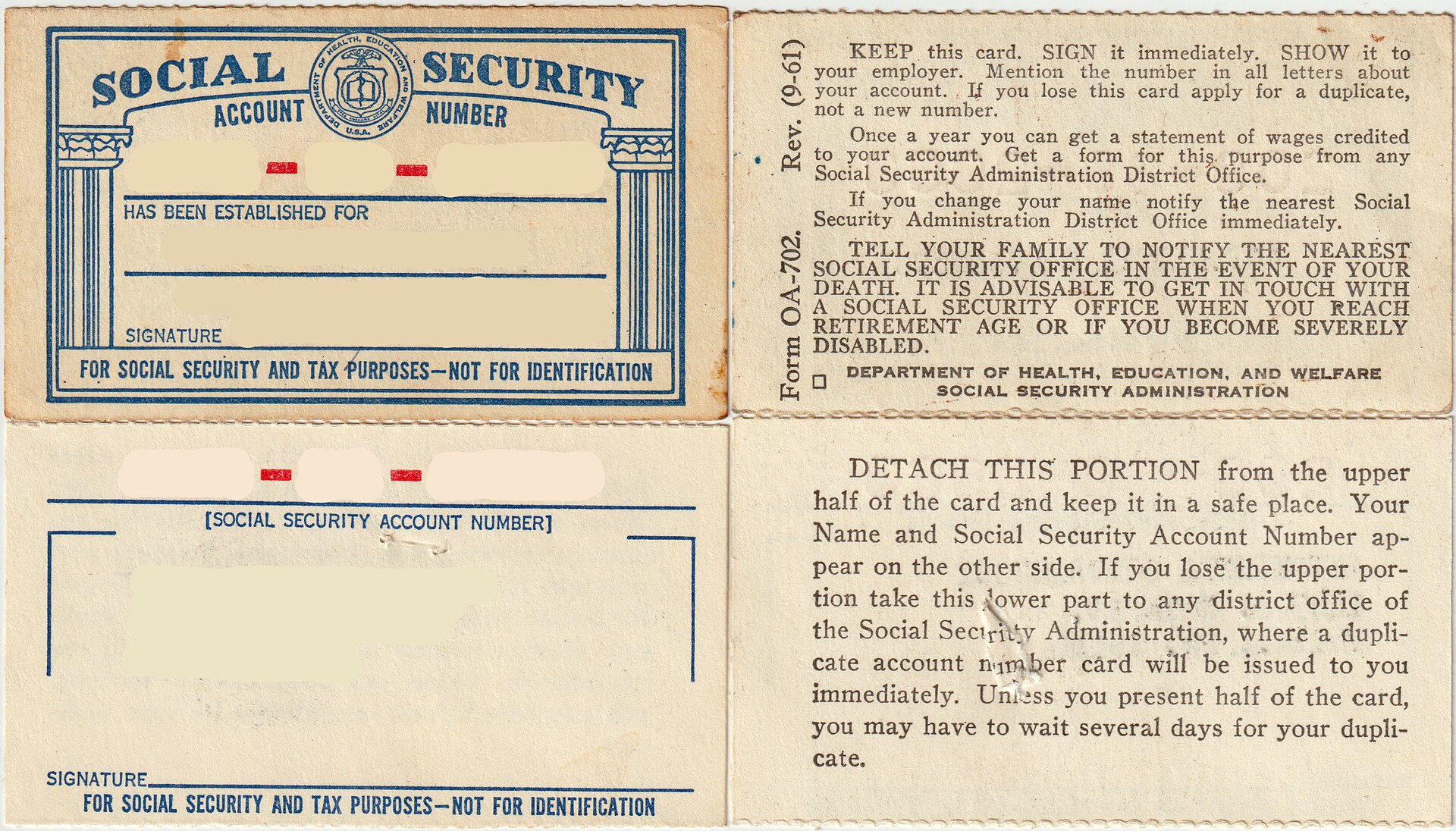

The pieces of the Medicare bill
There is no single "Medicare premium." A person in Original Medicare (the government-run program that pays doctors and hospitals directly) may pay the Part B premium and any IRMAA to Medicare, a Part D premium to a private drug plan and a Medigap premium to a private insurer. A person in a Medicare Advantage plan (a private plan that replaces Original Medicare's coverage, also called Part C) still pays the Part B premium plus any plan premium. Then come deductibles (paid before coverage starts), coinsurance (a percentage of each bill) and copayments (a fixed amount per service). The federal amounts:
| Amount | 2026 | 2027 | Who pays it | Source |
|---|---|---|---|---|
| Part B standard monthly premium | $202.90 | $209.40 | Most people with Part B, unless a state pays it or a lower hold-harmless amount applies | CMS fact sheets21 |
| Part B annual deductible | $283 | $292 | Everyone with Part B, before Part B pays (after which coinsurance is generally 20 percent) | CMS fact sheets |
| Part B IRMAA (added to the premium) | $81.20 to $487.00 a month | $83.70 to $502.40 a month | People with 2024 (for 2026) or 2025 (for 2027) income above the thresholds | CMS fact sheets |
| Part D IRMAA (added to any drug plan premium) | $14.50 to $91.00 a month | $15.40 to $96.40 a month | Same income test, for anyone with Part D coverage, including through Medicare Advantage or an employer | CMS fact sheets; Medicare.gov14 |
| Part A premium, full | $565 a month | $597 a month | People with fewer than 30 quarters of Medicare-covered work (and certain disabled people) | CMS fact sheets |
| Part A premium, reduced | $311 a month | $328 a month | People with 30 to 39 quarters, or married to someone with 30 or more | CMS fact sheets |
| Part A inpatient deductible (each benefit period) | $1,736 | $1,776 | A hospital patient in Original Medicare, days 1 to 60 | CMS fact sheets |
| Hospital coinsurance, days 61 to 90 | $434 a day | $444 a day | Same | CMS fact sheets |
| Lifetime reserve days | $868 a day | $888 a day | Same, after day 90 (60 days in a lifetime) | CMS fact sheets |
| Skilled nursing facility coinsurance, days 21 to 100 | $217 a day | $222 a day | A skilled nursing patient in Original Medicare | CMS fact sheets |
| Part D base beneficiary premium (a national benchmark, not a plan price) | $38.99 | $41.33 | Used to figure the Part D late penalty and subsidies | Trustees; CMS1516 |
| Part D deductible and out-of-pocket threshold (standard benefit) | $615 and $2,100 | $700 and $2,400 | People in Part D plans (plans may use lower deductibles) | Trustees17 |
About 99 percent of beneficiaries pay no Part A premium, CMS says.1
How the Part B premium is set
The formula in the law
Part B (doctors, outpatient care, durable medical equipment, many drugs given in a doctor's office, and preventive care) is voluntary and is paid for by two sources: premiums from enrollees and transfers from the federal general fund. Social Security Act section 1839(a)(3) (42 U.S.C. 1395r) tells the Secretary of Health and Human Services to set a "monthly actuarial rate" for enrollees 65 and over each year and sets the standard premium "equal to 50 percent of the monthly actuarial rate for enrollees age 65 and over."3 The actuarial rate is itself one-half of projected per-person costs for aged enrollees, plus a margin for a contingency reserve, so the premium covers about one quarter of those costs. The 2026 Medicare Trustees Report puts it this way: "Under current law, the standard Part B premium is set at the level of about 25 percent of average expenditures for beneficiaries aged 65 and over."18
For 2027 the numbers in CMS's notice CMS-8094-N are: an aged actuarial rate of $418.70 a month (up from $405.40 in 2026), a disabled actuarial rate of $452.40, and a standard premium of $209.40, which the notice calls "3.2 percent or $6.50 higher than the 2026 standard premium rate of $202.90."4 CMS estimates the increase at $5.2 billion for about 66 million enrollees.
The Medicare Payment Advisory Commission (MedPAC), the independent agency that advises Congress on Medicare payment, summarized the financing in March 2026: about 73 percent of Part B money comes from federal general revenue, 25 percent from premiums and 2 percent from other sources, and "Part B premiums increase at the same rate as expenditures."5 The Trustees reported that aggregate Part B benefits rose 5.6 percent in 2025 and averaged 6.9 percent a year growth over the previous five years.18
The contingency reserve
Because the premium is set before the year begins, the actuaries add a contingency margin so the Part B account of the Supplementary Medical Insurance (SMI) trust fund keeps a reserve; for 2027 CMS targets "an 18.6-percent reserve ratio."4 When spending comes in lower than projected the next premium can fall, as it did for 2023.
A short history of the 25 percent rule
The 25 percent share has not always been the rule, as the Congressional Research Service (CRS) summarized in May 2022.19
| Year | Law or event | What changed for the Part B premium | Source |
|---|---|---|---|
| 1965 to 1966 | P.L. 89-97, Social Security Amendments of 1965 (signed July 30, 1965) | First premium $3.00 from July 1966, set to cover 50 percent of costs | CRS; SSA206 |
| 1972 | P.L. 92-603, Social Security Amendments of 1972 (Oct. 30, 1972) | Increases limited to the Social Security COLA percentage | CRS |
| 1982 to 1984 | P.L. 97-248, Tax Equity and Fiscal Responsibility Act of 1982 (Sept. 3, 1982) | 25 percent rule took effect Jan. 1, 1984 | CRS; SSA |
| 1988 to 1989 | P.L. 100-360, Medicare Catastrophic Coverage Act of 1988 (July 1, 1988), repealed by P.L. 101-234 (Dec. 13, 1989) | 1989 premium of $31.90 included a catastrophic coverage premium; 1990 fell to $28.60 | SSA |
| 1997 | P.L. 105-33, Balanced Budget Act of 1997 (Aug. 5, 1997) | 25 percent made permanent | CRS21 |
| 2003 to 2007 | P.L. 108-173, Medicare Prescription Drug, Improvement, and Modernization Act of 2003 (Dec. 8, 2003) | Income-related premium (IRMAA) for higher-income enrollees from 2007 | CRS; Trustees22 |
| 2010 | P.L. 111-148, Patient Protection and Affordable Care Act (Mar. 23, 2010) | IRMAA thresholds frozen 2011 to 2019; Part D IRMAA from 2011 | CRS; Trustees23 |
| 2015 to 2016 | P.L. 114-74, Bipartisan Budget Act of 2015 (Nov. 2, 2015) | 2016 premium set ignoring hold-harmless; $3.00 repayment add-on | Trustees24 |
| 2015 to 2018 | P.L. 114-10, Medicare Access and CHIP Reauthorization Act of 2015 (Apr. 16, 2015) | Lower thresholds for higher IRMAA tiers from 2018 | Trustees25 |
| 2018 to 2019 | P.L. 115-123, Bipartisan Budget Act of 2018 (Feb. 9, 2018) | Top IRMAA tier at $500,000 single, $750,000 joint from 2019 | Trustees26 |
| 2020 to 2021 | P.L. 116-159, Continuing Appropriations Act, 2021 and Other Extensions Act (Oct. 1, 2020) | 2021 increase limited to one-fourth of the projected rise | Trustees27 |
| 2026 to 2027 | Repayment completed | Balance "zero by the end of 2026"; no add-on in 2027 | Trustees; CMS-8094-N284 |
The wider history is in lesson 02, How Medicare Grew, 1965 to 2026.
Every Part B premium, 1966 to 2027
The table lists the standard monthly Part B premium for every year since the program began, in the dollars of that year and in 2026 dollars. Premiums before 1984 took effect each July.615 The 2026 dollar column is our calculation (methods box below).
| Year | Standard premium | In 2026 dollars | Note |
|---|---|---|---|
| 1966 | $3.00 | $30.76 | From July 1966 |
| 1967 | $3.00 | $29.93 | |
| 1968 | $4.00 | $38.27 | |
| 1969 | $4.00 | $36.29 | |
| 1970 | $5.30 | $45.43 | |
| 1971 | $5.60 | $46.02 | |
| 1972 | $5.80 | $46.15 | |
| 1973 | $6.30 | $47.22 | |
| 1974 | $6.70 | $45.22 | |
| 1975 | $6.70 | $41.43 | |
| 1976 | $7.20 | $42.10 | |
| 1977 | $7.70 | $42.28 | |
| 1978 | $8.20 | $41.83 | |
| 1979 | $8.70 | $39.89 | |
| 1980 | $9.60 | $38.77 | |
| 1981 | $11.00 | $40.26 | |
| 1982 | $12.20 | $42.07 | |
| 1983 | $12.20 | $40.76 | |
| 1984 | $14.60 | $46.77 | January start; 25 percent rule |
| 1985 | $15.50 | $47.95 | |
| 1986 | $15.50 | $47.06 | |
| 1987 | $17.90 | $52.42 | |
| 1988 | $24.80 | $69.79 | |
| 1989 | $31.90 | $85.63 | Catastrophic premium |
| 1990 | $28.60 | $72.84 | |
| 1991 | $29.90 | $73.06 | |
| 1992 | $31.80 | $75.42 | |
| 1993 | $36.60 | $84.31 | |
| 1994 | $41.10 | $92.27 | |
| 1995 | $46.10 | $100.67 | |
| 1996 | $42.50 | $90.17 | |
| 1997 | $43.80 | $90.80 | |
| 1998 | $43.80 | $89.41 | |
| 1999 | $45.50 | $90.90 | |
| 2000 | $45.50 | $87.93 | |
| 2001 | $50.00 | $93.97 | |
| 2002 | $54.00 | $99.90 | |
| 2003 | $58.70 | $106.18 | |
| 2004 | $66.60 | $117.33 | |
| 2005 | $78.20 | $133.25 | |
| 2006 | $88.50 | $146.09 | |
| 2007 | $93.50 | $150.06 | IRMAA begins |
| 2008 | $96.40 | $148.99 | |
| 2009 | $96.40 | $149.53 | |
| 2010 | $110.50 | $168.63 | Hold-harmless offset |
| 2011 | $115.40 | $170.72 | |
| 2012 | $99.90 | $144.79 | |
| 2013 | $104.90 | $149.85 | |
| 2014 | $104.90 | $147.45 | |
| 2015 | $104.90 | $147.28 | |
| 2016 | $121.80 | $168.88 | Most held at $104.90 |
| 2017 | $134.00 | $181.92 | Hold-harmless offset |
| 2018 | $134.00 | $177.58 | |
| 2019 | $135.50 | $176.37 | |
| 2020 | $144.60 | $185.92 | |
| 2021 | $148.50 | $182.37 | Limited by Congress |
| 2022 | $170.10 | $193.42 | Aduhelm reserve |
| 2023 | $164.90 | $180.09 | Decrease |
| 2024 | $174.70 | $185.33 | |
| 2025 | $185.00 | $191.22 | |
| 2026 | $202.90 | $202.90 | Skin substitute action |
| 2027 | $209.40 | n.a. | CMS, Nov. 17, 2026 |
How we figured it: the Part B premium in 2026 dollars
Premiums. 1966 to 2015: SSA, Annual Statistical Supplement, 2015, Table 2.C1.6 2016 to 2026: 2026 Medicare Trustees Report, Table V.E2, which matches SSA for overlapping years.15 2027: CMS fact sheet of Nov. 17, 2026.1
Price index. The Consumer Price Index for All Urban Consumers (CPI-U), U.S. city average, all items, not seasonally adjusted, BLS series CUUR0000SA0, monthly values downloaded through the BLS Public Data API.7 For each year we took the simple average of the 12 monthly values (1966: 32.458; 2024: 313.689). Two exceptions: the series has no value for October 2025, so the 2025 figure (321.943) is the average of the other 11 months, which is also the 2025 annual average BLS published; and 2026 is not over, so the 2026 level (332.769) is the average of January through October 2026. The 2027 premium is shown only in nominal dollars.
Formula. Premium in 2026 dollars = premium in year Y x (332.769 / CPI-U average for year Y). Example for 1966: $3.00 x (332.769 / 32.458) = $3.00 x 10.252 = $30.76. Example for 1989: $31.90 x (332.769 / 123.967) = $85.63.
Growth. Nominal: $202.90 / $3.00 = 67.6 times. Real: $202.90 / $30.76 = 6.6 times. Compound annual growth of the nominal premium was 9.24 percent from 1966 to 1996 (CPI-U: 5.39 percent a year) and 5.35 percent from 1996 to 2026 (CPI-U: 2.54 percent a year); from 2016 to 2026 it was 5.24 percent a year against 3.32 percent for CPI-U. Compound growth = (end value / start value) raised to the power 1 / years, minus 1.
Limits. Pre-1984 premiums ran July to June but are deflated by the calendar year they started. The CPI-U covers all urban consumers, not older households.
What the table shows
From 1966 to the mid-1980s the real premium stayed between about $30 and $48 in 2026 dollars, because the 1972 amendments tied increases to the COLA while costs grew faster. The 25 percent rule then pulled it up, from $46.77 in 1984 to $100.67 in 1995 in 2026 dollars. Since 2000 it has followed per-person Part B spending: $87.93 in 2000 and $202.90 in 2026, in 2026 dollars. It fell in nominal dollars only in 1990, 1996, 2012 and 2023.
What drove the big jumps
The hold-harmless years: 2010, 2016 and 2017
The Trustees say the 2010 and 2017 premiums "reflect significant additional increases designed to offset the loss of revenues attributable to the hold-harmless provision."15 When the COLA is zero or tiny, most enrollees cannot be charged more, so the increase falls on the roughly 30 percent who are not protected. For 2016, with a zero COLA, the Bipartisan Budget Act of 2015 set the premium "as if the hold-harmless provision did not apply," covered the gap from the general fund and added $3.00 a month to later premiums to repay it.28 In 2017 about 70 percent of enrollees paid an average of $109.00 while the standard premium was $134.00, according to CRS.19
2021: Congress trims an increase
For 2021 Congress limited the aged actuarial rate to the 2020 rate plus "one-fourth of the difference" from the projected rate, again with a general fund transfer repaid through the $3.00 add-on.28 CMS's 2022 fact sheet cited that action, and the extension of the add-on "through 2025," as one reason the 2022 premium rose.29 The 2026 premium included $0.20 of repayment, the last of it.28
2022 and 2023: the Aduhelm reserve and the drop
The premium rose $21.60 in 2022, to $170.10, the largest dollar increase to that time. CMS's Nov. 12, 2021, fact sheet named rising prices and use, the 2021 congressional action, and "additional contingency reserves due to the uncertainty regarding the potential use of the Alzheimer's drug" Aduhelm, without a dollar figure for the reserve.29 On Jan. 10, 2022, HHS Secretary Xavier Becerra told CMS to reassess the premium after the drug's price was cut in half.30 CMS reported on May 27, 2022, that Aduhelm's average price had fallen from $56,000 to $26,200 a year and that the savings would go into the 2023 premium.31 On Sept. 27, 2022, CMS set the 2023 premium at $164.90, $5.20 lower, because "Lower-than-projected spending on both Aduhelm and other Part B items and services resulted in much larger reserves."32
2026: skin substitutes and a $17.90 increase
The 2026 premium rose $17.90, to $202.90, second only to 2022 in dollars and 9.7 percent by our calculation. CMS attributed it mainly to projected price and use increases and said it would have been about $11 a month larger without its action on skin substitutes (wound-care products), whose spending CMS expected to fall about 90 percent under the 2026 Physician Fee Schedule.2
2027: a smaller increase
For 2027 the increase is $6.50, or 3.2 percent, which CMS attributes to projected increases in health care spending.1 The Trustees had estimated $209.50 in June 2026 and project $255.50 for 2030 and $360.60 for 2035, projections that change with each report (lesson 10).2815
The Part B deductible
The Part B deductible is the amount a person in Original Medicare pays each year before Part B starts paying its share. It was $50 from 1966 through 1972, $60 from 1973 through 1981, $75 from 1982 through 1990, $100 from 1991 through 2004 and $110 in 2005.6 Those amounts were set in law; since 2006 the deductible has risen with the Part B aged actuarial rate, so it tracks per-person spending.15 It was $166 in 2016, $233 in 2022, $226 in 2023 (it fell with the premium), $257 in 2025, $283 in 2026 and $292 in 2027.151
By our CPI-U calculation the $50 deductible of 1966 equals about $513 in 2026 dollars and the $100 deductible of 2004 about $176. After the deductible the enrollee generally owes 20 percent coinsurance, with no yearly cap in Original Medicare, which is why most people in Original Medicare carry Medigap, retiree coverage or Medicaid.15

Hold-harmless and the Social Security COLA
What the hold-harmless rule does
Under Social Security Act section 1839(f), a person's Part B premium "shall not be increased" to the extent the increase would reduce the person's Social Security check below the year before.3 It covers people whose premiums are deducted from Social Security, "roughly 70 percent of Part B enrollees," per the Trustees. Not covered: new enrollees, people without Social Security checks, people paying IRMAA, and dual eligibles whose premiums Medicaid pays.285 In a low-COLA year those groups and state Medicaid budgets carry more of the cost unless Congress acts.
The COLA and the premium, side by side
The Social Security cost-of-living adjustment (COLA) is announced in October and paid from January. The 2.8 percent COLA for 2026 raised the average retired worker's benefit from $2,015 to $2,071 a month.33 On Oct. 14, 2026, SSA announced a 3.6 percent COLA for 2027 for nearly 72 million beneficiaries, raising the average retired worker's benefit about $75, to $2,170, and the average disabled worker's to $1,701.910
COLAs are from the SSA Office of the Chief Actuary.34 Hold-harmless works in dollars: with a $6.50 increase and a 3.6 percent COLA for 2027, only a benefit under about $181 a month (3.6 percent of $180.56 is $6.50) gets a COLA smaller than the premium increase; for 2026 the break-even was about $639. The standard premium takes 9.8 percent of the average retired worker's January 2026 benefit ($202.90 / $2,071) and 9.6 percent in January 2027 ($209.40 / $2,170), by our calculation.3310
The Part A premium for people without 40 quarters
Part A (hospital insurance) is premium-free for people who qualify for Social Security or Railroad Retirement benefits through their own work or a spouse's, which generally means 40 quarters of coverage (about 10 years of work in jobs that paid Medicare tax). People 65 and over who do not qualify may buy Part A under Social Security Act section 1818 (42 U.S.C. 1395i-2).35 Since 1994, people with at least 30 quarters of coverage pay a reduced premium.36 A quarter of coverage is earned with a set amount of earnings: $1,890 in 2026 and $1,970 in 2027, up to four a year.3310
The full premium was $33 a month in 1973, $301 in 2000, $461 in 2010, $518 in 2025, $565 in 2026 and $597 in 2027; the reduced premium was $166 in 2000, $285 in 2025, $311 in 2026 and $328 in 2027.63621
At $597 a month, a full year of Part A costs $7,164 in 2027, more than the yearly premium for Part B and a typical Medigap policy combined. It falls on people with too few years in Medicare-covered jobs who cannot qualify through a spouse. Idaho Medicaid's Qualified Medicare Beneficiary program can pay the Part A premium for people with low incomes who qualify.37 Buying Part A late can bring a penalty: the premium may go up 10 percent, for twice the number of years the person could have signed up and did not.38
IRMAA: the income-related surcharge
What IRMAA is and where it comes from
The income-related monthly adjustment amount, or IRMAA, is an extra charge added to the Part B premium, and separately to Part D coverage, for people whose income is above set thresholds. For Part B it comes from Social Security Act section 1839(i), added by the Medicare Prescription Drug, Improvement, and Modernization Act of 2003 and phased in starting in 2007.322 For Part D it comes from section 1860D-13(a)(7) (42 U.S.C. 1395w-113), added by the Affordable Care Act and in effect since 2011.3923 The Deficit Reduction Act of 2005 shortened the original five-year Part B phase-in to three years, according to CRS.40
IRMAA shrinks the government subsidy as income rises. The Trustees explain that people above the threshold "will pay premiums covering 35, 50, 65, 80, or, beginning in 2019, 85 percent of the average program cost for aged beneficiaries, depending on their income level."41
Who decides, and what income counts
The Social Security Administration (SSA), not CMS, decides who owes IRMAA, using income information from the IRS. The rules are in 20 CFR part 418, subparts B and C. Income means modified adjusted gross income (MAGI): adjusted gross income from the federal tax return plus tax-exempt interest income, as defined in 20 CFR 418.1010.42 SSA uses the return for "the tax year 2 years prior to the effective year," and if the IRS cannot provide that year it uses the year three years before (20 CFR 418.1135).8 So 2027 IRMAA is based on 2025 income; 2026 IRMAA was based on 2024 income.
Because adjusted gross income includes taxable retirement withdrawals, capital gains, pensions and wages, a one-time item can push a person over a threshold two years later. This describes the rule; it is not tax advice.
The 2026 and 2027 IRMAA tables
The 2027 amounts below are from CMS's Nov. 17, 2026, fact sheet; the 2026 amounts are from its Nov. 14, 2025, fact sheet.12 Each amount is per person per month. A married couple filing jointly with income above a joint threshold pays the surcharge twice if both spouses have Part B.
| Single return MAGI (2025 income) | Joint return MAGI (2025 income) | 2027 Part B IRMAA | 2027 total Part B premium | 2027 Part D IRMAA | Share of cost paid (Part B) |
|---|---|---|---|---|---|
| $112,000 or less | $224,000 or less | $0.00 | $209.40 | $0.00 | about 25 percent |
| Above $112,000 to $141,000 | Above $224,000 to $282,000 | $83.70 | $293.10 | $15.40 | 35 percent |
| Above $141,000 to $177,000 | Above $282,000 to $354,000 | $209.40 | $418.80 | $39.70 | 50 percent |
| Above $177,000 to $212,000 | Above $354,000 to $424,000 | $335.00 | $544.40 | $64.00 | 65 percent |
| Above $212,000 and less than $500,000 | Above $424,000 and less than $750,000 | $460.60 | $670.00 | $88.30 | 80 percent |
| $500,000 or more | $750,000 or more | $502.40 | $711.80 | $96.40 | 85 percent |
For 2026 the tiers started above $109,000 single or $218,000 joint (2024 income), with total Part B premiums of $284.10, $405.80, $527.50, $649.20 and $689.90 and Part D amounts of $14.50 to $91.00.2
Married people who file separate returns and lived with their spouse at any time during the year have a much shorter table. In 2027 they pay nothing extra at $112,000 or less, $460.60 (Part B) and $88.30 (Part D) above $112,000 and below $388,000, and $502.40 and $96.40 at $388,000 or more. In 2026 the middle band ran to $391,000.12
The cliff
IRMAA tiers are cliffs, not a gradual phase-in. The full surcharge for a tier applies to anyone whose MAGI is even one dollar above the line. A single filer with 2025 MAGI of $112,000 pays $209.40 a month for Part B in 2027; a single filer with $112,001 pays $293.10 plus $15.40 for Part D, a difference of $99.10 a month or $1,189.20 for the year, by our calculation from the CMS table. A couple filing jointly just over $224,000 pays that amount twice: $2,378.40 for the year. The cliffs are written into section 1839(i)(3), which assigns each income range a single "applicable percentage."3
How the thresholds have moved
The Affordable Care Act froze the thresholds at $85,000 single and $170,000 joint for 2011 through 2019 (20 CFR 418.1105);4323 MACRA lowered the lines for higher tiers from 2018, and the Bipartisan Budget Act of 2018 added the $500,000 and $750,000 tier from 2019, not indexed until 2028.412526 Other thresholds have been indexed since 2020.
The freeze and the lower lines pulled more people in. The Trustees count about 1.7 million people paying a Part B income-related premium in 2007, 2.9 million in 2015, 4.7 million in 2020, 5.1 million in 2025 and an estimated 6.1 million in 2026, with an estimated 6.6 million in 2027.41 For Part D, about 0.9 million paid in 2011 and 4.5 million in 2025.44 CMS's own fact sheets say the surcharge affects "roughly 8%" of people with Part B in 2026 and "roughly 9%" in 2027.21
| Year | Part B: people paying IRMAA (millions) | Part B: extra premiums collected (billions) | Part D: people paying IRMAA (millions) | Part D: extra premiums (billions) |
|---|---|---|---|---|
| 2007 | 1.7 | $0.7 | not yet in law | not yet in law |
| 2011 | 1.6 | $2.3 | 0.9 | $0.3 |
| 2015 | 2.9 | $3.8 | 2.1 | $0.9 |
| 2019 | 4.3 | $8.4 | 3.4 | $1.6 |
| 2023 | 5.3 | $13.4 | 4.4 | $2.2 |
| 2025 | 5.1 | $14.1 | 4.5 | $2.4 |
| 2026 (listed with historical data) | 6.1 | $18.8 | 5.3 | $3.1 |
| 2027 (Trustees estimate) | 6.6 | $20.9 | 5.8 | $3.5 |
Source: 2026 Medicare Trustees Report, Tables V.E3 and V.E4.4144 The Trustees' table also shows Part D IRMAA amounts jumping in 2030 (for example, the lowest tier from an estimated $17.30 in 2029 to $51.70 in 2030), when an Inflation Reduction Act provision resets how the Part D base premium is calculated.44 That is a projection and depends on future law and plan bids.
We found no SSA or CMS count of Idahoans paying IRMAA.
When income drops: life-changing events and Form SSA-44
Because IRMAA looks back two years, people who retire often owe a surcharge based on their last full working year. The rules allow SSA to use a more recent year's estimated income if a "major life-changing event" caused a significant drop. 20 CFR 418.1205 lists the events: death of a spouse; marriage; divorce or annulment; the person or spouse stopped working or reduced work hours; loss of income-producing property because of a disaster or other event beyond the person's control; the scheduled cessation, termination or reorganization of an employer's pension plan; and an employer settlement payment because of the employer's closure, bankruptcy or reorganization.45 Section 418.1210 says SSA "will not consider events other than those described in § 418.1205 to be major life-changing events."45
The drop must move the person to a lower tier or below the threshold (20 CFR 418.1215).46 SSA takes Form SSA-44 online, by fax or by mail.47 The steps:
- Read the SSA notice. It names the tax year and MAGI used and how to disagree.14
- Pick the path. A listed life-changing event that cut income: Form SSA-44. Wrong figures or wrong return: reconsideration (20 CFR 418.1325).48 An amended return: send it with the IRS acknowledgment or transcript within 3 calendar years (20 CFR 418.1150).49
- On Form SSA-44, give the event, its date, the income drop and an estimate of MAGI for the newer year, with evidence of the event (for example, proof of a spouse's death if SSA does not already have it, or an employer's or signed statement about stopping work) and of the income drop (20 CFR 418.1250, 418.1255 and 418.1265).46
- If still disputed: reconsideration, then a hearing before an administrative law judge in HHS's Office of Medicare Hearings and Appeals, then the Medicare Appeals Council and federal court (20 CFR 418.1350).48
A one-time capital gain or a large IRA withdrawal is not on the list in 418.1205.
How IRMAA is collected
Both surcharges are deducted from Social Security, Railroad Retirement or federal annuity payments, or billed by Medicare. The Part D surcharge goes to Medicare, not the plan, applies to employer and Medicare Advantage drug coverage, and must be paid "to keep your Part D coverage."14
Late enrollment penalties
| Part | Penalty | How long it lasts | Example from Medicare.gov | Law |
|---|---|---|---|---|
| Part A (only for people who must buy it) | Premium may go up 10 percent | Twice the number of years the person could have had Part A and did not | 2 years late means 4 years of the higher premium | Social Security Act section 181835 |
| Part B | 10 percent of the standard premium for each full 12-month period the person could have had Part B and did not | Generally as long as the person has Part B | 24 months late in 2026: 20 percent, or $40.58, for a total of $243.50 a month after rounding | Section 1839(b)3 |
| Part D | 1 percent of the national base beneficiary premium for each month without Part D or other creditable drug coverage | Generally as long as the person has Part D, even after switching plans | 14 months without coverage in 2026: 14 percent of $38.99, or $5.50 a month after rounding | Section 1860D-13(b)39 |
Source for the examples: Medicare.gov, "Avoid late enrollment penalties."38 The Part D penalty base is $41.33 in 2027.16

What people actually spend out of pocket
Beyond premiums, costs depend on use and on supplemental coverage. MedPAC's July 2026 Data Book reports national figures from the Medicare Current Beneficiary Survey (MCBS), a CMS sample survey with no Idaho estimates.50
| Measure (United States) | Figure | Year | Source |
|---|---|---|---|
| Beneficiaries with coverage that supplements or replaces Medicare (Medicare managed care, Medigap, employer retiree coverage, Medicaid or other public) | About 94 percent | 2023 | MedPAC Data Book Chart 3-1 |
| In Medicare managed care (Medicare Advantage, cost and prepayment plans) | 53.2 percent | 2023 | Chart 3-1 |
| Fee-for-service with Medigap | 20.5 percent | 2023 | Chart 3-1 |
| Fee-for-service with employer-sponsored retiree coverage only | 13.4 percent | 2023 | Chart 3-1 |
| Fee-for-service with no supplemental coverage | 6.4 percent | 2023 | Chart 3-1 |
| Total health spending per fee-for-service beneficiary, all payers, including services Medicare does not cover | $20,996 | 2023 | Chart 3-5 |
| Share of that paid directly by beneficiaries (cost sharing and non-covered services, not counting premiums) | 16 percent, about $3,250 | 2023 | Chart 3-5 |
| Average Part B cost sharing owed per fee-for-service beneficiary | $1,725 | 2022 | Chart 3-7 |
| Average out-of-pocket spending on Part A and B cost sharing, with supplemental coverage vs. without | $653 vs. $1,041 | 2023 | Chart 3-9 |
These out-of-pocket figures exclude premiums, and averages hide a wide spread: total spending for the top 10 percent of fee-for-service beneficiaries averaged $110,264 in 2023, against $551 for the lowest 10 percent.50
MedPAC notes Medigap is the most common supplement for rural beneficiaries outside managed care; see lesson 09, Medicare and Rural Idaho.
What Idahoans pay for plans: Medicare Advantage, Part D and Medigap
Idaho in the 2027 CMS numbers
CMS's Sept. 28, 2026, Idaho fact sheet reported 416,679 Idahoans enrolled in Medicare (month not named) and said the average monthly Medicare Advantage premium "changed from $27.81 in 2026 to $37.93 in 2027." Every Idahoan with Medicare has access to a $0-premium plan, and 18.17 percent of stand-alone drug plan enrollees get Extra Help.11 Nationally, CMS projected the average Medicare Advantage premium to fall from $14.37 in 2026 to $12.00 in 2027 and the average total stand-alone drug plan premium to rise "less than $1, from $35.09 in 2026 to $36 in 2027."12
| State | People enrolled in Medicare | Average MA premium 2026 | Average MA premium 2027 | MA plans 2026 / 2027 | Stand-alone drug plans 2027 | Lowest stand-alone drug plan premium 2027 |
|---|---|---|---|---|---|---|
| Idaho | 416,679 | $27.81 | $37.93 | 48 / 44 | 8 | $5.30 |
| Utah | 490,235 | $9.59 | $9.16 | 55 / 51 | 8 | $5.30 |
| Oregon | 972,585 | $25.15 | $26.30 | 101 / 100 | 8 | $5.30 |
| Washington | 1,583,566 | $17.39 | $22.75 | 126 / 120 | 8 | $5.30 |
| Montana | 272,554 | $18.48 | $16.12 | 32 / 23 | 9 | $5.30 |
| Wyoming | 133,246 | $45.91 | $69.23 | 14 / 8 | 9 | $5.30 |
| Nevada | 629,551 | $1.09 | $0.56 | 105 / 98 | 9 | $5.30 |
| United States | not stated in the release | $14.37 | $12.00 | 5,553 / about 5,532 | not stated | not stated |
Source: CMS state-by-state fact sheets and national press release, Sept. 28, 2026.111251 The averages blend $0 plans with plans that charge and exclude the Part B premium, which Medicare Advantage enrollees also pay, though plans "may buy down some or all" of it, MedPAC notes.5 Which plans are offered in which Idaho counties for 2027, and which insurers left or entered, is in lesson 08, The 2027 Plan Year in Idaho.
Medigap premiums in Idaho
Medigap (Medicare supplement insurance) is sold by private insurers in standardized plans identified by letter. The Idaho Department of Insurance, through its Senior Health Insurance Benefits Advisors (SHIBA) program, posts a chart of monthly rates that each company filed and the Department accepted. The version updated Nov. 3, 2026, lists 20 companies' rates for nonsmokers 65 and over, with effective dates from Oct. 1, 2025, to Jan. 1, 2027.5253 The Department says it "cannot certify the accuracy of the information," so the figures show the spread, not a quote.
| Plan (monthly rate, nonsmoker 65 and over) | Lowest listed | Median of listed rates (our calculation) | Highest listed | Companies listing the plan |
|---|---|---|---|---|
| Plan G | $212.25 | $274.88 | $342.88 | 20 |
| Plan N | $158.91 | $216.00 | $282.39 | 20 |
How we figured it: Idaho Medigap rate spread
We read the Plan G and Plan N columns of the Idaho Department of Insurance chart "Monthly Standard Premium Rates for 65+ Non-Smoker" (current update Nov. 3, 2026).52 Columns shift when the PDF is converted to plain text, so we assigned each rate to its column from the rate's horizontal position on the page. Plan G: 20 rates from $212.25 to $342.88; the median is the average of the 10th and 11th, ($273.50 + $276.25) / 2 = $274.88. Plan N: 20 rates from $158.91 to $282.39, median $216.00. A median of company rates is not an enrollment-weighted average.
Plan G covers the Part A deductible and Part B coinsurance and excess charges but not the Part B deductible.54 Plans that cover the Part B deductible (C and F) cannot be sold to people newly eligible for Medicare on or after Jan. 1, 2020, under the Medicare Access and CHIP Reauthorization Act of 2015;25 lesson 05 explains that rule, the federal six-month Medigap open enrollment period, and Idaho's own Medigap law. For 2027 CMS set the yearly out-of-pocket limits for Medigap Plans K and L at $8,360 and $4,180.55
Help paying Medicare costs in Idaho
Medicare Savings Programs
Medicare Savings Programs are run by state Medicaid agencies under federal law and pay Medicare costs for people with low incomes and limited resources. In Idaho the Department of Health and Welfare runs them. Medicare.gov describes what each pays: the Qualified Medicare Beneficiary (QMB) program pays Part A premiums (for people who owe them), Part B premiums, deductibles, coinsurance and copayments; the Specified Low-Income Medicare Beneficiary (SLMB) and Qualifying Individual (QI) programs pay the Part B premium only; QI is first-come, first-served and needs a yearly application.37 Enrollees also get Extra Help with Part D.
| Idaho program (effective January 2026) | Income level | Monthly income limit, single | Monthly income limit, couple | Resource limit, single / couple | What it pays |
|---|---|---|---|---|---|
| QMB | Up to 100 percent of the federal poverty level | $1,350 | $1,824 | $9,950 / $14,910 | Part B premium, Part A premium if any, deductibles and coinsurance |
| SLMB I | 100 to 120 percent | $1,616 | $2,184 | $9,950 / $14,910 | Part B premium |
| QI | 120 to 135 percent | $1,816 | $2,455 | $9,950 / $14,910 | Part B premium |
Source: Idaho Department of Health and Welfare, Medicaid program income limits page; the amounts match the 2026 federal limits Medicare.gov publishes.1337 In 2027 that is $2,512.80 a year in Part B premiums. CMS's open enrollment fact sheets say only about half of eligible people are enrolled in the Medicare Savings Programs nationally.11 Full Medicaid eligibility is in Who Qualifies and Who Is Covered; a later part of this series covers dual eligibles.
Extra Help and Part D
Extra Help, also called the Part D low-income subsidy, lowers Part D premiums, deductibles and copays. CMS reported that 18.17 percent of Idahoans in stand-alone drug plans get Extra Help for 2027.11 Lesson 06 covers its limits and the 2027 drug out-of-pocket threshold of $2,400.17


Three hypothetical Idaho retirees in 2027
The three people below are hypothetical examples, made up to show how the published amounts add up. The comparison is not a recommendation of any coverage.
- Hypothetical retiree A is single, lives in Twin Falls, had 2025 MAGI of $40,000 (below the IRMAA threshold), and has Original Medicare, a Medigap Plan G policy and a stand-alone Part D drug plan.
- Hypothetical retirees B are a married couple in Boise who filed jointly with 2025 MAGI of $250,000, which puts each spouse in the first IRMAA tier for 2027. Each has Original Medicare, Medigap Plan G and a stand-alone drug plan.
- Hypothetical retiree C is single, lives in Kootenai County, had 2025 MAGI of $30,000 and monthly income of about $2,500, above the Idaho Medicare Savings Program limits, and has a Medicare Advantage plan that includes drug coverage.
How we figured it: the three hypothetical retirees
Part B. $209.40 x 12 = $2,512.80 (A and C). Couple B, first IRMAA tier for joint 2025 MAGI above $224,000 to $282,000: $293.10 x 12 = $3,517.20 each.1 Part B deductible $292.1
Medigap. Median Plan G rate in the Idaho Department of Insurance chart (nonsmoker, 65 and over, update of Nov. 3, 2026): $274.88 x 12 = $3,298.56.52 Plan G does not pay the Part B deductible.54
Drug plan. National average stand-alone premium for 2027 (no Idaho average is published): $36 x 12 = $432.12 Part D IRMAA for B: $15.40 x 12 = $184.80 each.1
Medicare Advantage. CMS's Idaho average 2027 Medicare Advantage premium: $37.93 x 12 = $455.16.11
Drug cost ceiling. The 2027 Part D out-of-pocket threshold of $2,400 (deductible plus cost sharing on covered drugs), as stated in the 2026 Trustees Report.17 Totals: A = $2,512.80 + $292.00 + $3,298.56 + $432.00 = $6,535.36. B (each) = $3,517.20 + $292.00 + $3,298.56 + $432.00 + $184.80 = $7,724.56; couple = $15,449.12. C = $2,512.80 + $455.16 = $2,967.96. IRMAA adds ($83.70 + $15.40) x 12 = $1,189.20 a person for B, or $2,378.40 for the couple.
Left out. Dental, vision and hearing; Medicare Advantage extra benefits and medical copays; any premium help.
The comparison shows the trade-off lesson 04 describes: higher fixed premiums with little cost sharing on one path, lower premiums with use-based cost sharing up to a cap, inside a network, on the other. For couple B, the first IRMAA tier adds $2,378.40 a year.
Pictures, Numbers and Infographics
The key numbers in this lesson, with Idaho and comparison figures where they exist. Federal premium amounts are the same in every state.
| Measure | Idaho | U.S. or other states | Year | Source |
|---|---|---|---|---|
| Standard Part B premium, monthly | $209.40 (same nationwide) | $209.40 | 2027 | CMS1 |
| Part A full / reduced premium, monthly | $597 / $328 | same | 2027 | CMS |
| IRMAA starts above (single / joint 2025 MAGI) | $112,000 / $224,000 | same | 2027 | CMS |
| People paying Part B IRMAA | not published for Idaho | about 6.1 million (U.S., estimate) | 2026 | Trustees41 |
| Social Security COLA | 3.6 percent | 3.6 percent | 2027 | SSA9 |
| People enrolled in Medicare | 416,679 | Utah 490,235; Oregon 972,585; Washington 1,583,566; Montana 272,554; Wyoming 133,246; Nevada 629,551 | as reported Sept. 2026 | CMS11 |
| Average Medicare Advantage premium, monthly | $37.93 (up from $27.81) | U.S. $12.00 (down from $14.37) | 2027 | CMS1112 |
| Stand-alone drug plans offered | 8 | Utah, Oregon, Washington 8; Montana, Wyoming, Nevada 9 | 2027 | CMS |
| Median listed Medigap Plan G rate, nonsmoker 65+ | $274.88 a month (our calculation) | not compared | chart of Nov. 3, 2026 | Idaho DOI52 |
| QMB income limit, single | $1,350 a month | same federal limit | 2026 | Idaho DHW; Medicare.gov13 |
| Out-of-pocket spending with vs. without supplemental coverage (Part A and B cost sharing, fee-for-service) | no Idaho figure | $653 vs. $1,041 | 2023 | MedPAC50 |
Common mistakes
- Thinking IRMAA uses this year's income. A 2027 surcharge reflects 2025 income (20 CFR 418.1135).8
- Assuming IRMAA phases in gradually. One dollar over $112,000 (single, 2027) adds $1,189.20 a year, by our calculation.1
- Assuming any drop in income lowers IRMAA. Only the events listed in 20 CFR 418.1205 count as life-changing events; a lower year from investment losses or from simply spending less does not qualify under 418.1210.45
- Forgetting that Part D IRMAA follows Medicare Advantage and employer drug coverage. Medicare.gov says the Part D surcharge applies to drug coverage through a Medicare Advantage plan or an employer, and it is paid to Medicare, not the plan.14
- Comparing premiums across decades without adjusting for inflation. The premium rose about 68 times in dollars from 1966 to 2026 but about 6.6 times after inflation (our CPI-U calculation).7
- Assuming hold-harmless protects everyone. Roughly 30 percent of enrollees are not eligible, per the Trustees.28
- Missing the Part B sign-up window. The penalty is 10 percent per full 12 months of delay, generally for life.38
- Assuming Medigap Plan G covers everything. It does not pay the Part B deductible ($292 in 2027), and Medigap does not cover drugs.54
What we know, what we don't, and what the data can show
What we know
- The 2027 premium ($209.40), deductible ($292) and IRMAA tiers, from CMS's fact sheet and notice CMS-8094-N.14
- The premium is set at 50 percent of the aged actuarial rate under section 1839(a)(3), which equals about 25 percent of Part B costs for aged enrollees.318
- The $3.00 repayment add-on that began in 2016 ended with the balance repaid by the end of 2026.4
- About 5.1 million people paid Part B IRMAA in 2025 and about 4.5 million paid Part D IRMAA, per the Trustees.4144
- Idaho's average Medicare Advantage premium rose to $37.93 for 2027, and Idaho has 8 stand-alone drug plans, per CMS.11
What we don't know
- How many Idahoans pay IRMAA. We found no state count from SSA or CMS.
- How many eligible Idahoans are not in a Medicare Savings Program; CMS gives only a national figure (about half enrolled).11
- What Idahoans actually pay out of pocket. The MCBS is a national sample, and MedPAC's figures are national.50
- Why Idaho's average Medicare Advantage premium rose while the national average fell.
- The 2028 premium. The Trustees' intermediate estimate is $224.50, but every report revises its projections.15
What the data can show
- Part B premium in real dollars: SSA Table 2.C1 and Trustees Table V.E2 plus BLS CPI-U series CUUR0000SA0, as in this lesson's methods box.
- IRMAA growth over time: Trustees Tables V.E3 and V.E4 (people affected and dollars collected, 2007 or 2011 onward, with projections).
- Idaho plan premiums by county and year: the CMS plan files for Medicare Advantage and Part D, published each fall (lesson 08 uses them).
- Medigap rate trends in Idaho: the Department of Insurance's current and historical rate charts and company rate filings.53
- Premiums as a share of benefits: SSA COLA fact sheets and the Annual Statistical Supplement give average benefits to compare with the premium each year.
- Who has what coverage: MCBS and MedPAC (national); CMS Medicare Monthly Enrollment data for Idaho counties (lesson 03, Idaho's Medicare Population).
Questions people ask
Why did my Part B premium go up when my income did not change?
The standard premium rises every year that projected Part B spending per enrollee rises, because the law ties the premium to the aged actuarial rate. For 2027 it went from $202.90 to $209.40 for everyone paying the standard amount.1 A separate jump can come from IRMAA, which reflects income from two years earlier, or from a late enrollment penalty.
Who sets the premium: CMS or Congress?
Congress wrote the formula in Social Security Act section 1839; CMS's actuaries apply it each fall and publish the result in the Federal Register (for 2027, notice CMS-8094-N).34 Congress can and does override single years, as it did for 2016 and 2021.28
Why do I get an IRMAA letter the year after I retired?
Because SSA looks at the tax return from two years before the premium year. Someone who retired in 2026 will have 2027 IRMAA figured on 2025 income, which may include a full year of wages. Stopping work or reducing hours is one of the life-changing events in 20 CFR 418.1205 that allow a request to use a newer year's income with Form SSA-44.84547
Does IRMAA apply to both spouses?
Each person with Part B or Part D is charged separately. A couple filing jointly above $224,000 (2027) pays the tier's surcharge twice if both are enrolled.1
Can the state of Idaho change what I pay for Part B?
Not the federal amount. The state runs the Medicare Savings Programs and regulates Medigap insurers.1353 The state budget pays its share of Medicaid's cost for those premiums (see Idaho State Budget for how that money is appropriated).
Hard questions
Should higher-income seniors pay a larger share of Part B?
The case for more means-testing: Part B is about three-quarters funded by general revenue, including taxes paid by younger workers with lower incomes than many IRMAA payers, and spending is growing faster than the economy. The Congressional Budget Office (CBO) estimated in December 2022 that freezing the IRMAA thresholds from 2024 through 2032 would save $57 billion over 2024 to 2032 and raise the share of enrollees paying income-related premiums to about 17 percent by 2032.56 The case against: people paid Medicare tax on all their earnings, IRMAA uses a two-year-old snapshot that catches one-time income, and frozen thresholds pull in more middle-income retirees through inflation. What the evidence shows: the Trustees' tables show the number paying Part B IRMAA rose from 1.7 million in 2007 to an estimated 6.1 million in 2026, with collections of about $18.8 billion in 2026.41
Should the standard premium stay at 25 percent of costs?
The case for raising it: CBO estimated in December 2022 that raising the basic premium in steps from 25 percent to 35 percent of expected costs, starting in 2024, would save $406 billion over 2024 to 2032 and bring the premium to $402.64 a month by 2032.56 The case against: the premium already takes 9.6 percent of the average retired worker's check (January 2027, our calculation), and a higher premium shifts cost to state Medicaid and to people just above the Medicare Savings Program limits. What the evidence shows: the 25 percent share has been permanent law since 1997, and the premium has tracked Part B spending since; the 1972 to 1983 period, when increases were tied to the COLA, shows that limiting premiums moves the cost to general revenue rather than making it disappear.19
Is the hold-harmless rule fair to the people it does not cover?
For the rule: a retiree's net Social Security check never shrinks because of Medicare. Against it as written: in a low-COLA year it pushes the increase onto the roughly 30 percent not protected and onto state Medicaid budgets.2819 What the evidence shows: in 2017, about 70 percent of enrollees paid an average of $109.00 while the standard premium was $134.00, according to CRS; with a 3.6 percent COLA for 2027 and a $6.50 increase, the rule should matter only for very small benefits.1910
Do low Medicare Advantage premiums mean lower costs for everyone?
The case for Medicare Advantage on cost to enrollees: plans use federal rebate dollars to offer lower cost sharing, extra benefits and, for some enrollees, a lower Part B premium; MedPAC reported that plans put 7 percent of rebate funds toward reducing enrollees' Part B premiums, and that enrollees in focus groups name supplemental benefits as the main reason they choose Medicare Advantage.57 The case that it costs everyone more: MedPAC estimated in March 2026 that Medicare will spend 14 percent, a projected $76 billion, more for Medicare Advantage enrollees in 2026 than it would if they were in Original Medicare, and that "Higher MA spending increases Part B premiums for all beneficiaries, including those in FFS Medicare." It put the effect at about $11 billion in Part B premiums in 2026, roughly $175 per beneficiary per year or $14.61 a month.57 What the evidence shows: the plan premium a beneficiary sees and the federal payment to the plan are different numbers, so both points can be true at once. Lesson 04 covers how insurers respond to MedPAC's method.
For reporters and advocates
Records that exist. CMS's annual Federal Register premium notices (CMS-8094-N for 2027);4 Trustees Report Appendix V.E;15 CMS fall fact sheets, including state sheets; MedPAC's Data Book and reports; SSA COLA fact sheets; 20 CFR part 418; and in Idaho, Department of Insurance Medigap rate charts and filings and Department of Health and Welfare Medicare Savings Program data.
Questions to ask. Of SSA: how many Idaho residents pay IRMAA, how many Form SSA-44 requests are filed and granted, and how long they take. Of the Idaho Department of Health and Welfare: how many Idahoans are enrolled in QMB, SLMB and QI, and what the state spends on Part B premiums for them each year. Of the Idaho Department of Insurance: which Medigap rate increases were requested and approved for 2027, by how much, and how many Idahoans hold each plan letter. Of insurers: why Idaho's average Medicare Advantage premium rose for 2027 when the national average fell.
Getting records. State records from the Department of Insurance and the Department of Health and Welfare can be requested under the Idaho Public Records Act, Idaho Code title 74, chapter 1; lesson guidance is in the course Idaho Public Records Requests. Federal records from CMS and SSA can be requested under the Freedom of Information Act. For working with the numbers themselves, see Data and Statistics.
The Idaho angle. Idaho has 416,679 people on Medicare, a Medicare Advantage premium average well above the national figure for 2027, a stand-alone drug plan market of 8 plans, and Medicare Savings Program limits set at the federal floor. Stories on what a Magic Valley or Treasure Valley retiree pays should use published amounts, label examples as hypothetical, and adjust old premiums for inflation.
Where to go next
- Medicare Plan Finder (Medicare.gov): Free official tool from CMS that lists the Medicare Advantage, Part D and Medigap options and premiums for a ZIP code; it can be used without an account, and an account adds a person's own drug list.
- Social Security: request to lower IRMAA: Free SSA page explaining life-changing events and how to submit Form SSA-44 online, by fax or by mail; for anyone who received an IRMAA notice.
- Idaho SHIBA (Senior Health Insurance Benefits Advisors): Free, unbiased Medicare counseling program of the Idaho Department of Insurance, funded in part by a federal State Health Insurance Assistance Program grant; it publishes the Idaho Medigap rate charts and holds open enrollment events. Phone listed on its charts: 1-800-247-4422.
- Medicare Savings Programs (Medicare.gov): Free official explanation of QMB, SLMB, QI and QDWI, what each pays, and the federal income and resource limits; applications go to the state Medicaid agency.
- Idaho Department of Health and Welfare, Medicaid program income limits: Free state page listing the Idaho Medicare Savings Program and other Medicaid income and resource limits; updated when federal poverty levels change.
- Medicare Trustees Report (CMS Office of the Actuary): Free annual report with historical and projected premiums, deductibles and IRMAA counts (Appendix V.E); for readers who want the source tables.
- 1-800-MEDICARE: CMS's free help line (1-800-633-4227, TTY 1-877-486-2048), available 24 hours a day, which answers questions about premiums, bills and plan choices without charge.
Still being checked (4 items)
These points could not be fully confirmed against a primary source when this lesson was written and fact checked in November 2026. The text above states each one as uncertain.
- The number of Idaho residents who pay IRMAA: no SSA or CMS state count was found, so the lesson gives only national figures.
- The month of enrollment behind CMS's figure of 416,679 Idahoans enrolled in Medicare (the Sept. 28, 2026, fact sheet does not name it).
- National Medicare Advantage plan counts for 2026 and 2027 (5,553 and about 5,532) are from news coverage of the CMS release, not the release text itself.
- Whether insurers or their trade groups have formally responded to MedPAC's March 2026 estimate of higher Part B premiums from Medicare Advantage payments was not checked for this lesson; lesson 04 covers the debate.
Last verified November 22, 2026. General education, not legal, medical, insurance or financial advice; every figure names its source and year in the Notes and Sources below. Data is revised: check the newest release before relying on any number.
Notes
- Centers for Medicare & Medicaid Services (CMS), "2027 Medicare Parts A & B Premiums and Deductibles," fact sheet, Nov. 17, 2026: Part B premium $209.40 and deductible $292; Part A deductible $1,776, coinsurance $444, $888 and $222, premiums $597 and $328; IRMAA tables for Part B and Part D; about 9 percent of people with Part B or Part D pay IRMAA; about 99 percent pay no Part A premium (read Nov. 22, 2026). Read it online. ↩
- CMS, "2026 Medicare Parts A & B Premiums and Deductibles," fact sheet, Nov. 14, 2025: Part B premium $202.90 (from $185.00) and deductible $283 (from $257); increase about $11 a month smaller because of action on skin substitute spending; 2026 Part A amounts and IRMAA tables; roughly 8 percent pay IRMAA (read Nov. 22, 2026). Read it online. ↩
- Social Security Act section 1839 (42 U.S.C. 1395r), amounts of Part B premiums: (a)(3) premium "equal to 50 percent of the monthly actuarial rate for enrollees age 65 and over"; (b) 10 percent increase "for each full 12 months" of late enrollment; (f) hold-harmless; (i) income-related monthly adjustment amount, including the applicable percentages in (i)(3), the two-year lookback in (i)(4)(B), life-changing events in (i)(4)(C) and indexing of the $500,000 tier after 2027 in (i)(5) (read Nov. 22, 2026). Read it online. ↩
- CMS, "Medicare Program; Medicare Part B Monthly Actuarial Rates, Premium Rates, and Annual Deductible Beginning January 1, 2027," notice CMS-8094-N, FR Doc. 2026-23601, filed for public inspection Nov. 17, 2026, and published in the Federal Register Nov. 19, 2026, at 91 FR 74570: aged actuarial rate $418.70 (2026: $405.40), disabled rate $452.40, 18.6 percent reserve ratio target, aged contingency margin $7.13, $2.8 billion in brand-name drug fees, repayment balance "zero by the end of 2026," about 66 million enrollees and a $5.2 billion total premium increase (read Nov. 22, 2026). Read it online. ↩
- Medicare Payment Advisory Commission (MedPAC), "Medicare Part B premium payment basics," presentation by Jennifer Druckman, Mar. 3, 2026 (preliminary): about 73 percent general revenue, 25 percent premiums, 2 percent other; premiums increase at the same rate as expenditures; hold-harmless groups; Medicare Advantage plans may buy down the Part B premium (read Nov. 22, 2026). Read it online. ↩
- Social Security Administration, Annual Statistical Supplement to the Social Security Bulletin, 2015, Table 2.C1 (Medicare Part A and Part B deductible, coinsurance and premium amounts, 1966 to 2016; data as of Nov. 16, 2015): monthly premiums took effect in July through 1983 and in January from 1984; 1989 Part B premium includes the catastrophic coverage supplemental premium; hold-harmless notes for 2010, 2011 and 2016 (read Nov. 22, 2026). Read it online. ↩
- U.S. Bureau of Labor Statistics, Consumer Price Index for All Urban Consumers (CPI-U), U.S. city average, all items, not seasonally adjusted, series CUUR0000SA0, monthly values 1966 to October 2026 downloaded through the BLS Public Data API on Nov. 21, 2026; the series contains no October 2025 value; the BLS annual average for 2025 (321.943) equals the average of the 11 published months. Annual averages and 2026 dollars are our calculation (read Nov. 22, 2026). Read it online. ↩
- 20 CFR 418.1135: SSA uses modified adjusted gross income "for the tax year 2 years prior to the effective year," or the year 3 years prior if the IRS cannot provide it (read Nov. 22, 2026). Read it online. ↩
- Social Security Administration, press release, "Social Security Announces 3.6 Percent Benefit Increase for 2027," Oct. 14, 2026 (nearly 72 million beneficiaries; 2027 Medicare premium amount in the my Social Security Message Center from late November; mailed notices in December) (read Nov. 22, 2026). Read it online. ↩
- Social Security Administration, "The 2027 COLA" fact sheet: average retired worker benefit $2,095 before and $2,170 after the 3.6 percent COLA; all disabled workers $1,642 and $1,701; quarter of coverage $1,970 (read Nov. 22, 2026). Read it online. ↩
- CMS, "Medicare Open Enrollment in Idaho, 2027," fact sheet, Sept. 28, 2026, and the same-date fact sheets for Utah, Oregon, Washington, Montana, Wyoming and Nevada, published together as the 2027 Medicare Advantage and Part D state-by-state fact sheets drawn from the CMS plan data files (landscape files); the sheets also say only about half of people eligible for the Medicare Savings Programs are enrolled (read Nov. 22, 2026). Read it online. ↩
- CMS, press release, "Medicare Advantage and Medicare Prescription Drug Programs Expected to Remain Stable in 2027," Sept. 28, 2026 (average MA premium $14.37 in 2026 and $12.00 in 2027; average stand-alone drug plan premium $35.09 and $36; MA enrollment estimated at 34 million, 47.4 percent) (read Nov. 22, 2026). Read it online. ↩
- Idaho Department of Health and Welfare, "Medicaid Program Income Limits" page: Medicare Savings Program limits effective January 2026 (QMB $1,350 and $1,824; SLMB I $1,616 and $2,184; QI $1,816 and $2,455 a month; resources $9,950 and $14,910) (read Nov. 22, 2026). Read it online. ↩
- Medicare.gov, "How income affects your Medicare drug coverage premiums," publication 11469 (2026 edition): Part D IRMAA applies to Medicare drug plans, Medicare Advantage plans with drug coverage, cost plans and employer coverage; deducted from benefits or billed by Medicare; must be paid to keep Part D coverage; list of income-changing events (read Nov. 22, 2026). Read it online. ↩
- Boards of Trustees, Federal Hospital Insurance and Federal Supplementary Medical Insurance Trust Funds, 2026 Annual Report (transmitted June 9, 2026), Appendix V.E, Table V.E2, "SMI Cost-Sharing and Premium Amounts" (Part B standard premium and deductible 2015 to 2026 and estimates to 2035; Part D base beneficiary premium) and text (2010 and 2017 premiums reflect hold-harmless offsets; deductible fixed by statute through 2005 and indexed after; 20 percent coinsurance for most services) (read Nov. 22, 2026). Read it online. ↩
- CMS, "Medicare Part D: 2027 National Average Monthly Bid Amount Information," fact sheet, July 28, 2026 (national average monthly bid $296.05; base beneficiary premium $41.33; premium stabilization demonstration ends after 2026; base premium increases capped at 6 percent a year 2024 to 2029 under the Inflation Reduction Act) (read Nov. 22, 2026). Read it online. ↩
- Boards of Trustees, Federal Hospital Insurance and Federal Supplementary Medical Insurance Trust Funds, 2026 Annual Report (transmitted June 9, 2026), section on Part D standard benefit: "For 2027, the initial deductible and the catastrophic threshold will be set at $700 and $2,400 respectively"; low-income subsidy enrollees a projected 25 percent of Part D beneficiaries in 2026; Table V.E2 shows 2026 values of $615 and $2,100 (read Nov. 22, 2026). Read it online. ↩
- Boards of Trustees, Federal Hospital Insurance and Federal Supplementary Medical Insurance Trust Funds, 2026 Annual Report (transmitted June 9, 2026), section III.C: "the standard Part B premium is set at the level of about 25 percent of average expenditures for beneficiaries aged 65 and over"; Part B benefits rose 5.6 percent in 2025 and averaged 6.9 percent a year over 5 years (read Nov. 22, 2026). Read it online. ↩
- Patricia A. Davis, Congressional Research Service, Medicare Part B: Enrollment and Premiums, R40082, May 19, 2022, including Appendix A on the history of the premium (50 percent in 1966; 1972 COLA limit; 25 percent from Jan. 1, 1984; Balanced Budget Act of 1997; IRMAA history; 2017 hold-harmless average premium of $109.00 for about 70 percent of enrollees) (read Nov. 22, 2026). Read it online. ↩
- P.L. 89-97, Social Security Amendments of 1965 (July 30, 1965); P.L. 92-603, Social Security Amendments of 1972 (Oct. 30, 1972); P.L. 97-248, Tax Equity and Fiscal Responsibility Act of 1982 (Sept. 3, 1982); P.L. 100-360, Medicare Catastrophic Coverage Act of 1988 (July 1, 1988); P.L. 101-234, Medicare Catastrophic Coverage Repeal Act of 1989 (Dec. 13, 1989). Effects on the premium as summarized by CRS R40082 and SSA Table 2.C1; link is to the 1965 law in the Statutes at Large (read Nov. 22, 2026). Read it online. ↩
- P.L. 105-33, Balanced Budget Act of 1997 (Aug. 5, 1997), which per CRS "permanently set the premium at 25% of program costs" (read Nov. 22, 2026). Read it online. ↩
- P.L. 108-173, Medicare Prescription Drug, Improvement, and Modernization Act of 2003 (Dec. 8, 2003): income-related reduction in the Part B premium subsidy beginning in 2007 (read Nov. 22, 2026). Read it online. ↩
- P.L. 111-148, Patient Protection and Affordable Care Act (Mar. 23, 2010): froze the Part B income thresholds at 2010 levels for 2011 through 2019 and created the Part D income-related premium beginning in 2011 (read Nov. 22, 2026). Read it online. ↩
- P.L. 114-74, Bipartisan Budget Act of 2015 (Nov. 2, 2015): 2016 Part B premium set as if hold-harmless did not apply, general fund transfer, and $3.00 monthly repayment amount, as described by the Trustees (read Nov. 22, 2026). Read it online. ↩
- P.L. 114-10, Medicare Access and CHIP Reauthorization Act of 2015 (Apr. 16, 2015): lowered income thresholds for the higher IRMAA tiers from 2018 and changed indexing from 2020; also barred sale of Medigap plans covering the Part B deductible to people newly eligible on or after Jan. 1, 2020 (read Nov. 22, 2026). Read it online. ↩
- P.L. 115-123, Bipartisan Budget Act of 2018 (Feb. 9, 2018): new IRMAA tier at 85 percent of cost for incomes of $500,000 or more ($750,000 joint) beginning in 2019 (read Nov. 22, 2026). Read it online. ↩
- P.L. 116-159, Continuing Appropriations Act, 2021 and Other Extensions Act (Oct. 1, 2020): 2021 aged actuarial rate limited to the 2020 rate plus one-fourth of the projected increase, with a general fund transfer repaid through the $3.00 add-on, as described by the Trustees (read Nov. 22, 2026). Read it online. ↩
- Boards of Trustees, Federal Hospital Insurance and Federal Supplementary Medical Insurance Trust Funds, 2026 Annual Report (transmitted June 9, 2026), section III.C, Part B financial status: 2026 premium $202.90 and estimated 2027 premium $209.50; hold-harmless provision applies to "roughly 70 percent of Part B enrollees" and footnote 56 lists those not eligible; Bipartisan Budget Act of 2015 and Continuing Appropriations Act, 2021 transfers; $0.20 of the 2026 premium for repayment; balance due of $98 million on Jan. 1, 2026 (read Nov. 22, 2026). Read it online. ↩
- CMS, "2022 Medicare Parts A & B Premiums and Deductibles; 2022 Medicare Part D Income-Related Monthly Adjustment Amounts," fact sheet, Nov. 12, 2021 (reasons for the 2022 increase, including "additional contingency reserves due to the uncertainty regarding the potential use of the Alzheimer's drug"; $3.00 repayment extended through 2025) (read Nov. 22, 2026). Read it online. ↩
- U.S. Department of Health and Human Services, press release, "HHS Secretary Xavier Becerra Instructs CMS to Reassess Recommendation for 2022 Medicare Part B Premium," Jan. 10, 2022 (cites the 50 percent price drop of Aduhelm) (read Nov. 22, 2026). Read it online. ↩
- CMS, press release, "CMS Releases Analysis on 2022 Medicare Part B Premium Reexamination," May 27, 2022 (Aduhelm average price $56,000 a year before the premium was set, later $26,200; coverage with evidence development; savings to be reflected in the 2023 premium) (read Nov. 22, 2026). Read it online. ↩
- CMS, "2023 Medicare Parts A & B Premiums and Deductibles; 2023 Medicare Part D Income-Related Monthly Adjustment Amounts," fact sheet, Sept. 27, 2022 ($164.90 premium, a $5.20 decrease; deductible $226) (read Nov. 22, 2026). Read it online. ↩
- Social Security Administration, 2026 COLA fact sheet (certified Oct. 24, 2025): average retired worker benefit $2,015 before and $2,071 after the 2.8 percent COLA; quarter of coverage $1,890 in 2026 (read Nov. 22, 2026). Read it online. ↩
- Social Security Administration, Office of the Chief Actuary, "Cost-of-Living Adjustments" history table (COLAs listed by the December they take effect) (read Nov. 22, 2026). Read it online. ↩
- Social Security Act section 1818 (42 U.S.C. 1395i-2), hospital insurance benefits for uninsured elderly individuals not otherwise eligible: voluntary Part A enrollment with a monthly premium, reduced premium and late enrollment increase (read Nov. 22, 2026). Read it online. ↩
- Boards of Trustees, Federal Hospital Insurance and Federal Supplementary Medical Insurance Trust Funds, 2026 Annual Report (transmitted June 9, 2026), Appendix V.E, Table V.E1, "HI Cost-Sharing and Premium Amounts" (standard and reduced Part A premiums by year; reduced premium available since 1994 with at least 30 quarters of coverage) (read Nov. 22, 2026). Read it online. ↩
- Medicare.gov, "Medicare Savings Programs" page (what QMB, SLMB, QI and QDWI pay; QI first-come, first-served and yearly application; enrollees also get Extra Help; 2026 federal limits) (read Nov. 22, 2026). Read it online. ↩
- Medicare.gov, "Avoid late enrollment penalties" (Part A, Part B and Part D penalty rules and 2026 examples) (read Nov. 22, 2026). Read it online. ↩
- Social Security Act section 1860D-13 (42 U.S.C. 1395w-113), Part D premiums: (a)(7) increase in premium for higher-income individuals; (b) increase for failure to maintain creditable prescription drug coverage (late enrollment penalty) (read Nov. 22, 2026). Read it online. ↩
- P.L. 109-171, Deficit Reduction Act of 2005 (Feb. 8, 2006), which shortened the IRMAA phase-in from five years to three, as summarized by CRS R40082 (read Nov. 22, 2026). Read it online. ↩
- Boards of Trustees, Federal Hospital Insurance and Federal Supplementary Medical Insurance Trust Funds, 2026 Annual Report (transmitted June 9, 2026), Appendix V.E, Table V.E3, "Part B Income-Related Premium Information," and text: people affected and aggregate premiums 2007 to 2035; 35, 50, 65, 80 and 85 percent of program cost; thresholds frozen 2011 to 2019 and indexed after; MACRA 2015 and Bipartisan Budget Act of 2018 changes; about 5.1 million paid in 2025 (read Nov. 22, 2026). Read it online. ↩
- 20 CFR 418.1010, definitions: modified adjusted gross income is adjusted gross income as defined by the Internal Revenue Code plus tax-exempt interest income (read Nov. 22, 2026). Read it online. ↩
- 20 CFR 418.1105, thresholds: $85,000 (individuals) and $170,000 (joint returns) for 2011 through 2019, indexed for inflation from 2020 (read Nov. 22, 2026). Read it online. ↩
- Boards of Trustees, Federal Hospital Insurance and Federal Supplementary Medical Insurance Trust Funds, 2026 Annual Report (transmitted June 9, 2026), Appendix V.E, Table V.E4, "Part D Income-Related Premium Information": people affected and aggregate premiums 2011 to 2035; about 4.5 million paid in 2025; footnote 113 on the base beneficiary premium reset in 2030 under the Inflation Reduction Act (read Nov. 22, 2026). Read it online. ↩
- 20 CFR 418.1205 (what is a major life-changing event: death of spouse, marriage, divorce or annulment, work stoppage, work reduction, loss of income-producing property, loss of pension income, employer settlement payment) and 418.1210 ("We will not consider events other than those described in § 418.1205 to be major life-changing events") (read Nov. 22, 2026). Read it online. ↩
- 20 CFR 418.1215 (what is a significant reduction in income), 418.1250 (evidence needed for a more recent tax year), 418.1255 (kinds of evidence of a major life-changing event, such as proof of death or a statement about stopping work) and 418.1265 (evidence of the income reduction) (read Nov. 22, 2026). Read it online. ↩
- Social Security Administration, "Request to lower an income-related monthly adjustment amount (IRMAA)" web page: life-changing events; Form SSA-44 online or by fax or mail; amended returns (read Nov. 22, 2026). Read it online. ↩
- 20 CFR 418.1301 to 418.1355, administrative review: initial determinations (418.1301), reconsideration (418.1325) and hearing before an OMHA administrative law judge with further review (418.1350) (read Nov. 22, 2026). Read it online. ↩
- 20 CFR 418.1150: a beneficiary "may provide your amended tax return for a tax year we used within 3 calendar years," with the IRS acknowledgment or transcript (read Nov. 22, 2026). Read it online. ↩
- MedPAC, A Data Book: Health Care Spending and the Medicare Program, July 2026, section 3, "Medicare beneficiaries' supplemental coverage and financial liability," Charts 3-1, 3-2, 3-5, 3-6, 3-7 and 3-9 (MedPAC analysis of the Medicare Current Beneficiary Survey, 2023, and CMS program statistics, 2022) (read Nov. 22, 2026). Read it online. ↩
- American Journal of Managed Care (news), "CMS projects 16.5% drop in 2027 Medicare Advantage premiums," Sept. 30, 2026 (national MA plan count projected to fall from 5,553 to about 5,532) (read Nov. 22, 2026). Read it online. ↩
- Idaho Department of Insurance, SHIBA, "Idaho Medicare Supplement Plans: Monthly Standard Premium Rates for 65+ Non-Smoker," current update Nov. 3, 2026 (rates filed by each company and accepted by the Department; effective dates Oct. 1, 2025, to Jan. 1, 2027) (read Nov. 22, 2026). Read it online. ↩
- Idaho Department of Insurance, SHIBA, "Medicare Supplement (Medigap)" page (community rate charts for 65 and over and under 65, innovative plans, and historical rate charts for December 2019, December 2020, March 2022 and December 2022) (read Nov. 22, 2026). Read it online. ↩
- Medicare.gov, "Compare Medigap plan benefits" chart (Plan G covers the Part A deductible and Part B excess charges; plans covering the Part B deductible are not available to everyone; high-deductible F and G amount of $2,950 in 2026) (read Nov. 22, 2026). Read it online. ↩
- CMS, "Out-of-Pocket Limits for Medigap Plans K & L for Calendar Year 2027," October 2026 announcement ($8,360 and $4,180, under Social Security Act section 1882(w)(2)) (read Nov. 22, 2026). Read it online. ↩
- Congressional Budget Office, Options for Reducing the Deficit, 2023 to 2032, Volume I, "Increase the Premiums Paid for Medicare Part B," Dec. 7, 2022 (raise the basic premium to 35 percent: $406 billion over 2024 to 2032; freeze income-related thresholds: $57 billion; about 17 percent paying income-related premiums by 2032) (read Nov. 22, 2026). Read it online. ↩
- MedPAC, Report to the Congress: Medicare Payment Policy, March 2026, chapter 12, "The Medicare Advantage program: Status report": Medicare spending 14 percent (a projected $76 billion) more for MA enrollees in 2026 than in FFS; about $11 billion higher Part B premiums in 2026 ($14.61 per beneficiary per month); 7 percent of rebates used to reduce Part B premiums (read Nov. 22, 2026). Read it online. ↩
Check yourself
1. What is the standard Medicare Part B premium for 2027?
CMS's fact sheet of Nov. 17, 2026, and notice CMS-8094-N set the 2027 standard premium at $209.40, up $6.50 from $202.90 in 2026. $224.50 is the Trustees' estimate for 2028.
2. Under Social Security Act section 1839(a)(3), the standard Part B premium equals what?
Section 1839(a)(3) sets the premium "equal to 50 percent of the monthly actuarial rate for enrollees age 65 and over"; the Trustees describe this as about 25 percent of average expenditures for aged beneficiaries.
3. Which tax year's income does SSA use to set a person's 2027 IRMAA?
20 CFR 418.1135 uses modified adjusted gross income for the tax year 2 years before the effective year, or 3 years before if the IRS cannot provide it.
4. A single filer had 2025 MAGI of $112,001. What total Part B premium does that person pay per month in 2027?
CMS's 2027 table puts single filers above $112,000 and up to $141,000 in the first IRMAA tier: $83.70 added to $209.40, for $293.10. Tiers are cliffs, so one dollar over the line triggers the full amount.
5. Which of these is a "major life-changing event" under 20 CFR 418.1205?
418.1205 lists death of a spouse, marriage, divorce or annulment, work stoppage or reduction, loss of income-producing property, loss of pension income and employer settlement payments; 418.1210 excludes other events.
6. In 2026 dollars, using the CPI-U, about how much was the first Part B premium of $3.00 (July 1966)?
Our calculation in the methods box: $3.00 x (332.769 / 32.458) = $30.76, using BLS series CUUR0000SA0.
7. Who is NOT protected by the Part B hold-harmless provision?
The Trustees list those not eligible: new enrollees, people not receiving Social Security checks, people subject to IRMAA and dual eligibles whose premiums are paid by Medicaid, about 30 percent of enrollees.
8. Why did the standard Part B premium fall from $170.10 in 2022 to $164.90 in 2023?
CMS's Sept. 27, 2022, fact sheet said the 2022 premium included a contingency margin for Aduhelm and that lower-than-projected spending on Aduhelm and other Part B items resulted in much larger reserves.
9. According to CMS's Sept. 28, 2026, Idaho fact sheet, what happened to Idaho's average monthly Medicare Advantage premium for 2027?
The Idaho fact sheet says the average monthly MA plan premium changed from $27.81 in 2026 to $37.93 in 2027; $14.37 to $12.00 is the national MA average and $35.09 to $36 the national stand-alone drug plan average.
10. In 2026, what is the monthly income limit for a single person in Idaho's Qualifying Individual (QI) program, which pays the Part B premium?
The Idaho Department of Health and Welfare lists QI (120 to 135 percent of poverty) at $1,816 a month for a single person, with a $9,950 resource limit, effective January 2026.
Terms in this lesson
- The monthly Part B premium most enrollees pay: $202.90 in 2026 and $209.40 in 2027. Some pay more (IRMAA, late penalties) or less (hold-harmless), and a Medicare Savings Program may pay it.
- Monthly actuarial rate
- One-half of projected Part B cost per enrollee, plus a reserve margin, set each year by CMS actuaries; the standard premium is 50 percent of the rate for enrollees 65 and over ($418.70 in 2027).
- IRMAA
- Income-related monthly adjustment amount: an extra charge on Part B and Part D for people whose modified adjusted gross income from two years earlier is above set thresholds.
- MAGI
- Modified adjusted gross income for IRMAA: adjusted gross income from the federal tax return plus tax-exempt interest (20 CFR 418.1010).
- Two-year lookback
- The rule that IRMAA for a year is based on the tax return from two years before (20 CFR 418.1135).
- Life-changing event
- One of the events listed in 20 CFR 418.1205, such as a spouse's death or stopping work, that lets SSA use a more recent year's lower income, requested on Form SSA-44.
- Hold-harmless provision
- Social Security Act section 1839(f): for people whose premium is deducted from Social Security, the Part B premium increase cannot exceed the dollar increase in their benefit.
- Cost-of-living adjustment (COLA)
- The yearly percentage increase in Social Security benefits, announced in October: 2.8 percent for checks paid in 2026 and 3.6 percent for 2027.
- Contingency reserve
- A margin built into the Part B premium so the Part B account can absorb higher-than-projected spending; for 2027 CMS targets an 18.6 percent reserve ratio.
- Late enrollment penalty
- A permanent premium increase for signing up late: 10 percent per full 12 months for Part B and 1 percent of the base beneficiary premium per month for Part D.
- A national Part D benchmark set by CMS each summer ($38.99 for 2026, $41.33 for 2027) used to figure the Part D late penalty and subsidies; it is not any plan's price.
- Medicare Savings Programs
- State-run programs (QMB, SLMB, QI and QDWI) that pay Medicare premiums and, for QMB, cost sharing for people with limited income and resources.
- Quarter of coverage
- A credit for work in jobs that paid Social Security and Medicare tax ($1,890 of earnings in 2026, $1,970 in 2027); 40 quarters generally bring premium-free Part A.
- Real (inflation-adjusted) dollars
- An amount restated in the purchasing power of one year using a price index; this lesson uses the CPI-U and 2026 dollars.
Sources
- CMS, 2027 Medicare Parts A and B Premiums and Deductibles (Nov. 17, 2026) (2026-11-22) checked 2026-11
- CMS, 2026 Medicare Parts A and B Premiums and Deductibles (Nov. 14, 2025) (2026-11-22) checked 2026-11
- CMS-8094-N, Part B actuarial rates, premium rates and deductible for 2027 (Federal Register, Nov. 2026) (2026-11-22) checked 2026-11
- 2026 Annual Report of the Boards of Trustees of the Medicare trust funds (2026-11-22) checked 2026-11
- Social Security Act section 1839 (42 U.S.C. 1395r), Part B premiums and IRMAA (2026-11-22) checked 2026-11
- 20 CFR part 418, subparts B and C: Medicare Part B income-related monthly adjustment amount (2026-11-22) checked 2026-11
- SSA Annual Statistical Supplement 2015, Table 2.C1 (Medicare premiums and deductibles by year) (2026-11-22) checked 2026-11
- SSA, Social Security Announces 3.6 Percent Benefit Increase for 2027 (Oct. 14, 2026) (2026-11-22) checked 2026-11
- BLS, CPI-U U.S. city average, all items, series CUUR0000SA0 (2026-11-22) checked 2026-11
- MedPAC, July 2026 Data Book, section 3: supplemental coverage and financial liability (2026-11-22) checked 2026-11
- CMS, Medicare Open Enrollment in Idaho, 2027, and other state fact sheets (Sept. 28, 2026) (2026-11-22) checked 2026-11
- Idaho Department of Insurance, Medicare supplement monthly rates, 65+ nonsmoker (update Nov. 3, 2026) (2026-11-22) checked 2026-11
- Idaho Department of Health and Welfare, Medicaid program income limits (Medicare Savings Programs, January 2026) (2026-11-22) checked 2026-11
- Congressional Research Service, Medicare Part B: Enrollment and Premiums, R40082 (May 19, 2022) (2026-11-22) checked 2026-11