Lesson 9 of 12 · about 60 minutes · Updated November 22, 2026
Medicare and Rural Idaho: Small Hospitals, Clinics and Long Drives
You'll be able to
- Explain the federal conditions a critical access hospital must meet, including the 25-bed limit, the 96-hour average stay and the 35-mile and 15-mile distance tests.
- Describe how Medicare pays critical access hospitals, rural health clinics and rural emergency hospitals, and what beneficiaries pay at each.
- Use CMS enrollment, Provider of Services and cost report files to find a hospital's status, beds, Medicare share and margin.
- Compare Medicare Advantage shares across Idaho's CMS county types and explain what MA growth can mean for small hospitals, citing MedPAC and labeled industry sources.
- List the rural Medicare extenders in P.L. 119-75 and their current end dates, and identify which matter most for Idaho.
- Compare Idaho's rural Medicare system with Montana, Wyoming, Oregon, Washington, Utah and Nevada using named CMS data.
Start here: the short version
- Idaho has 26 critical access hospitals (CAHs). That is the count in CMS's hospital enrollment file dated Sept. 29, 2026. Idaho's health department counted 27 in 2020; the difference is Cascade Medical Center in Valley County, which CMS lists as a rural emergency hospital since Feb. 25, 2025.12
- The rules are federal and strict. A CAH may keep no more than 25 inpatient beds and an annual average acute stay of 96 hours or less, and it must generally sit more than a 35-mile drive from another hospital (15 miles in mountainous terrain or on secondary roads) unless the state certified it as a "necessary provider" before Jan. 1, 2006 (42 CFR 485.610 and 485.620; Social Security Act section 1820).345
- Medicare pays a CAH 101 percent of its reasonable costs (42 CFR 413.70), minus the 2 percent budget sequester, which Congress extended into fiscal year 2033 in the Consolidated Appropriations Act, 2026 (P.L. 119-75, Feb. 3, 2026). Patients pay Part B outpatient coinsurance figured on 20 percent of the hospital's charges, which the HHS inspector general found added up to nearly half of CAH outpatient costs in 2012.678
- Rural health clinics are the other half of the system. CMS's Sept. 29, 2026 file lists 52 Idaho rural health clinic enrollments, up from 49 in July 2024. The federal per-visit payment limit is $165 in 2026, $178 in 2027 and $190 in 2028 under Social Security Act section 1833(f).910
- Medicare Advantage thins out with distance. In November 2026, 53.4 percent of Medicare-eligible Idahoans in CMS's "metro" counties were in Medicare Advantage, against 29.6 percent in the 22 Idaho counties CMS labels "counties with extreme access considerations" (our calculation from CMS files).1112
- Several rural payments have end dates. P.L. 119-75 runs the Medicare-dependent hospital program and the low-volume hospital adjustment through Dec. 31, 2026, and the ambulance add-ons and telehealth flexibilities through Dec. 31, 2027. In CMS's fiscal year 2027 impact file, no Idaho hospital is coded as a Medicare-dependent hospital or carries a low-volume adjustment.713
- New federal grant money is not Medicare money. The 2025 reconciliation law (P.L. 119-21, sec. 71401) created a $50 billion Rural Health Transformation Program; CMS awarded Idaho $185,974,368 for the first year on Dec. 29, 2025, and about $182.7 million for the second year was announced in November 2026.141516
Law: Social Security Act title XVIII and 42 CFR parts 412, 413, 422 and 485 as amended through Nov. 22, 2026, including P.L. 119-21 (July 4, 2025) and P.L. 119-75 (Feb. 3, 2026); payment amounts for 2026 and 2027 as set in statute and CMS transmittals on the dates named; facility counts from CMS enrollment files dated Sept. 29, 2026 and the Provider of Services file for the third quarter of 2026; Medicare Advantage shares from the CMS penetration file for November 2026; hospital finances from CMS cost report files posted in October 2026; checked Nov. 22, 2026. Amounts and extender dates change often, sometimes with a few days' notice; check CMS and Congress before relying on any number here.
More than one in eight Medicare-eligible Idahoans live in a county so thinly settled that CMS gives insurers the loosest travel-time rules in the country for building a network there. In those 22 counties, the nearest hospital is often a 25-bed critical access hospital paid on a cost basis that Congress designed in 1997 for exactly this kind of place. This lesson explains how Medicare treats rural Idaho: the special hospital types and how each is paid, rural health clinics, the newer rural emergency hospital option, the temporary rural add-ons that Congress keeps extending a year or two at a time, and what the growth of Medicare Advantage means for small hospitals and for the people who use them.
The lesson leans on CMS's own data: the hospital and rural health clinic enrollment files, the Provider of Services file, the cost reports hospitals file every year, the Medicare Advantage penetration file and the network-adequacy reference file. Where we compute something, such as a share, a margin or a distance, the method box says how. The Magic Valley gets a close look, with Twin Falls, Gooding, Rupert, Burley and Ketchum, and the towns between them that have clinics but no hospital: Kimberly, Buhl, Hagerman, Wendell and Shoshone. Hospital association statements are labeled as industry statements, and insurer-side arguments are labeled too.
Other lessons carry the background. Who is on Medicare in each Idaho county, and how fast that number is growing, is in Idaho's Medicare Population. How Medicare Advantage plans are paid and how networks and prior authorization work is in Original Medicare vs. Medicare Advantage. Which plans are offered in each county for 2027 is in The 2027 Plan Year in Idaho, and the Medigap rules that matter to anyone leaving a Medicare Advantage plan are in Medigap in Idaho. The trust fund math behind every payment rule here is in The Trust Funds and the Long-Term Math. Medicaid pays these same hospitals and clinics under different rules; that program is covered in the Idaho Medicaid course, starting with Follow the Money.
This lesson describes rules, programs and public data for general education. It does not tell anyone which plan to choose, which hospital to use or what care to get.
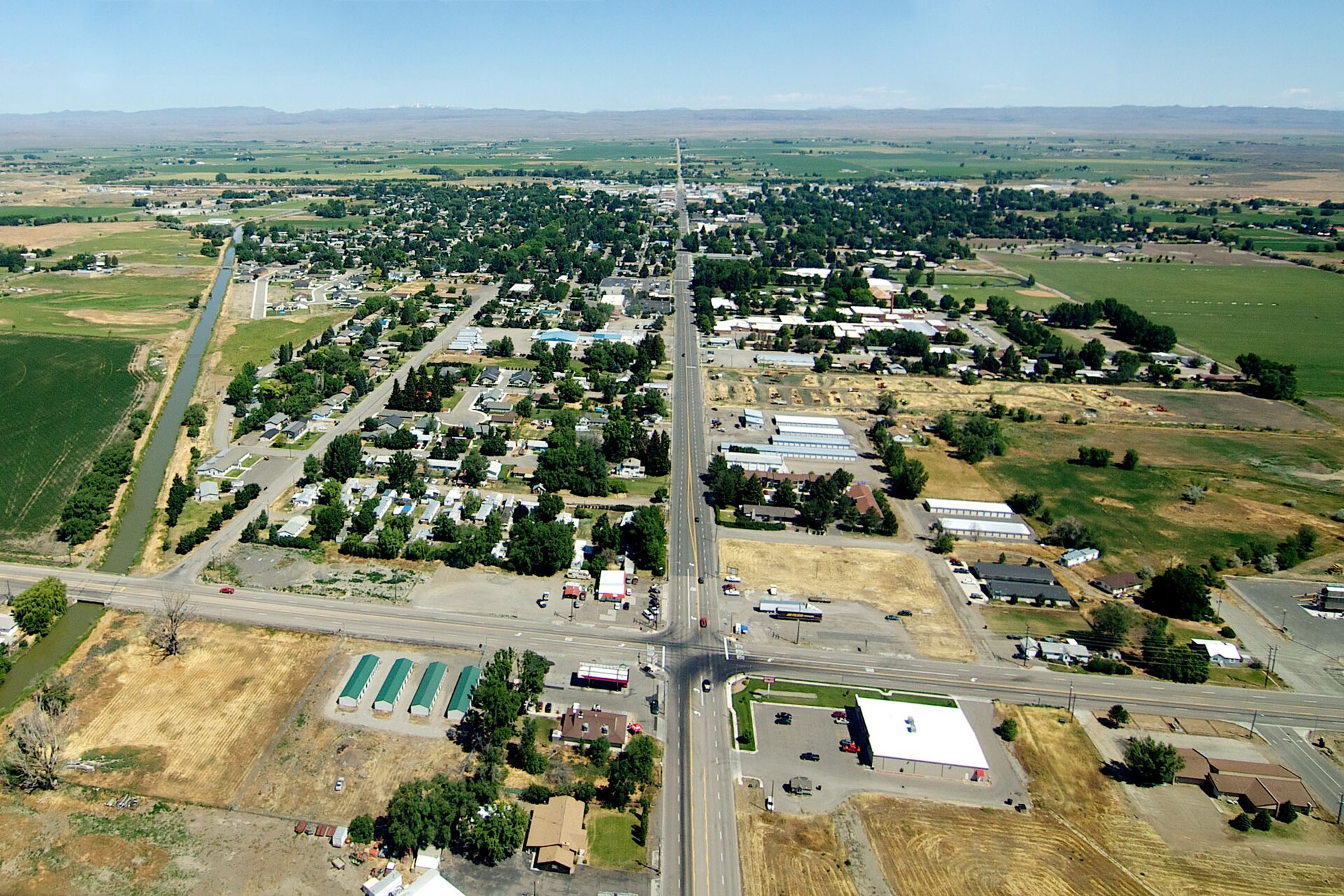

How rural is rural Idaho? Three ways to count
"Rural" has no single definition in Medicare. Different programs use different maps, and a county can be rural for one rule and urban for another. Three definitions matter most in this lesson.
The OMB map. The Office of Management and Budget sorts counties into metropolitan and nonmetropolitan areas. Medicare's hospital rules start there: a critical access hospital must be outside a metropolitan statistical area, or be treated as rural under a reclassification rule in 42 CFR 412.103.3 CMS's Provider of Services file marks four of the CAHs named in this lesson (American Falls, Emmett, Preston and Arco) as sitting in counties that are part of a metropolitan area; the federal rule allows that through reclassification, and the file does not say which route each hospital used.17
The distance test. The CAH law itself uses driving distance: more than 35 miles on primary roads from another hospital, or 15 miles where the terrain is mountainous or only secondary roads exist. Primary roads, under 42 CFR 485.610(c)(2), are numbered federal highways and numbered state highways with two or more lanes each way.3 That means a two-lane state highway over a mountain pass counts as a secondary road, which matters in a state laced with them.
CMS's network map. For Medicare Advantage, CMS sorts every county into one of five types by population and density under 42 CFR 422.116(c): large metro, metro, micro, rural, and "counties with extreme access considerations" (CEAC), which is any county with fewer than 10 people per square mile.18 Each type gets its own maximum travel time and distance for each kind of provider an insurer must have in its network.
Idaho counties by CMS network type
CMS's 2026 Health Service Delivery reference file, the spreadsheet insurers use to test their networks, puts Idaho's 44 counties into four types: 4 metro (Ada, Canyon, Kootenai and Madison), 7 micro, 11 rural and 22 CEAC. Idaho has no "large metro" county.12 In the Magic Valley, Twin Falls County is micro; Gooding, Minidoka and Cassia counties are rural; Blaine, Lincoln and Camas counties are CEAC. In eastern Idaho, Bonneville and Bannock are micro. In northern Idaho, Kootenai is metro, Nez Perce is micro and Idaho County is CEAC.
The standard for hospitals shows what the labels mean on the ground. Under the Table 1 base standards in 42 CFR 422.116(d), a Medicare Advantage plan's network must put an acute inpatient hospital within 45 minutes and 30 miles of enrollees in a metro county, 80 minutes and 60 miles in a micro county, 75 minutes and 60 miles in a rural county, and 110 minutes and 100 miles in a CEAC county.18 For cardiac surgery the CEAC standard is 155 minutes and 140 miles, and CMS's file customizes it further in some Idaho counties: 175 minutes and 155 miles in Lemhi and Lewis counties, 185 minutes and 165 miles in Blaine and Clearwater counties, and 195 minutes and 175 miles in Idaho County.12 Those are the federal yardsticks for "close enough."
| CMS county type (2026 file) | Idaho counties | Medicare eligibles, Nov. 2026 | In Medicare Advantage | MA share (our calculation) | Hospital standard (minutes / miles) |
|---|---|---|---|---|---|
| Metro | 4 | 211,018 | 112,660 | 53.4% | 45 / 30 |
| Micro | 7 | 104,700 | 44,662 | 42.7% | 80 / 60 |
| Rural | 11 | 48,591 | 18,449 | 38.0% | 75 / 60 |
| Counties with extreme access considerations (CEAC) | 22 | 56,770 | 16,795 | 29.6% | 110 / 100 |
| Idaho total | 44 | 421,079 | 192,566 | 45.7% | varies |
Sources: CMS 2026 HSD reference file for county type and the acute inpatient hospital standard; CMS Medicare Advantage State/County Penetration file, November 2026, for eligibles and enrollment.121118
Two things stand out. First, 56,770 Medicare-eligible Idahoans, 13.5 percent of the state total, live in CEAC counties (our calculation). Second, the share in Medicare Advantage drops step by step as counties get emptier: from 53.4 percent in the metro counties to 29.6 percent in the CEAC counties. The lowest county shares in the November 2026 file are Butte County (5.40 percent), Lemhi County (8.76 percent) and Bear Lake County (11.06 percent); the highest are Canyon (62.87 percent), Gem (60.57 percent) and Twin Falls (56.01 percent).11 The data do not say why. Fewer plans, thinner networks, the presence of a local CAH that some plans do not contract with, and the habits of retirees who move in from elsewhere are all possible reasons, and none is proven by these files alone. Lesson 08 counts the plans offered in each county for 2027.
How we figured it: Medicare Advantage share by county type
We took each Idaho county's "Eligibles" and "Enrolled" from CMS's State/County Penetration file for November 2026 and each county's designation from the "Facility Time & Distance" tab of CMS's 2026 HSD reference file (updated Dec. 17, 2025). We added eligibles and enrollees within each designation and divided. No Idaho county had its enrollment hidden by CMS's rule that shows counts of 10 or fewer as an asterisk. The file's Medicare Advantage count includes coordinated care plans, private fee-for-service, medical savings account plans, demonstrations, PACE and cost plans, so it is a little broader than "Medicare Advantage" in everyday use. "Eligibles" are people entitled to Medicare who live in the county, not everyone 65 and older. The "all states" figure (51.5 percent: 35,959,234 of 69,779,581) sums every county row in the same file, which left out Alaska and Connecticut that month, so it is close to but not exactly the national rate. The 13.5 percent CEAC share is 56,770 divided by 421,079.1112
Critical access hospitals: the federal rules
A critical access hospital is a small hospital that Medicare pays on a cost basis instead of the fixed per-case rates it pays most hospitals. Most American hospitals are paid under prospective payment systems (PPS): for an inpatient stay, Medicare pays a preset amount for the patient's diagnosis-related group (DRG), the category a stay falls into based on diagnosis and procedure, adjusted for local wages and other factors. If the hospital's cost is higher, it loses money on the case; if lower, it keeps the difference. A small hospital with a few patients a day cannot spread its fixed costs, such as a 24-hour emergency room, a lab and a nurse on every shift, over enough cases for that system to work. The CAH designation was Congress's answer.
Where the program came from
| Year | Law or event | What changed | Source |
|---|---|---|---|
| 1997 | Balanced Budget Act of 1997, P.L. 105-33 (Aug. 5, 1997) | Created the critical access hospital designation and the Medicare Rural Hospital Flexibility Program in Social Security Act section 1820, with cost-based payment and grants to states. | 195 |
| 1999 to 2004 | Idaho conversions | 25 of Idaho's 26 current CAHs began participating under their CAH certification numbers between April 1999 and November 2004. | 17 |
| 2003 | Medicare Prescription Drug, Improvement, and Modernization Act, P.L. 108-173 (Dec. 8, 2003) | Raised CAH payment from 100 to 101 percent of reasonable costs and the bed limit from 15 acute beds to 25 beds; ended the states' power to certify new "necessary providers" as of Jan. 1, 2006. | 2021 |
| 2010 | Bonner General Hospital, Sandpoint | The most recent Idaho CAH by original participation date (Oct. 1, 2010). | 17 |
| 2013 | Budget Control Act sequester begins | A 2 percent cut to Medicare benefit payments, including cost-based CAH payments; suspended May 2020 through March 2022, 1 percent April to June 2022, 2 percent again from July 1, 2022. | 22 |
| 2020 | Consolidated Appropriations Act, 2021, P.L. 116-260 (Dec. 27, 2020) | Created the rural emergency hospital, open to CAHs and small rural hospitals that existed on Dec. 27, 2020, starting Jan. 1, 2023; set new payment limits for rural health clinics from April 1, 2021. | 232410 |
| 2025 | Cascade Medical Center, Cascade | Converted from CAH to rural emergency hospital (CMS conversion date Feb. 25, 2025), leaving Idaho with 26 CAHs. | 1 |
| 2025 | P.L. 119-21 (July 4, 2025), sec. 71401 | Created the Rural Health Transformation Program, $10 billion a year to states for fiscal years 2026 to 2030. | 14 |
| 2026 | Consolidated Appropriations Act, 2026, P.L. 119-75 (Feb. 3, 2026) | Extended rural add-ons and telehealth on staggered dates and set the Medicare sequester for fiscal year 2033 at 2 percent for five months, then 0 percent. | 7 |
The conditions a CAH must meet
CMS's conditions of participation for CAHs are in 42 CFR part 485, subpart F. The ones that shape rural Idaho most are these.
- Location. Outside a metropolitan area or reclassified as rural, and either more than a 35-mile drive on primary roads from another hospital or CAH (15 miles in mountainous terrain or where only secondary roads exist), or certified by the state as a necessary provider before Jan. 1, 2006. A CAH designated as a necessary provider on or before Dec. 31, 2005 keeps that status.35
- Beds. No more than 25 inpatient beds, which can be used for acute care or as "swing beds" for skilled nursing care. Separate psychiatric and rehabilitation units of up to 10 beds each are allowed and do not count toward the 25.421
- Length of stay. Acute inpatient stays may not exceed 96 hours per patient on an annual average basis. Patients who need longer or more complex care are usually transferred.4
- Emergency care around the clock. Emergency services must be available 24 hours a day, with a doctor, physician assistant, nurse practitioner or clinical nurse specialist on call and on site within 30 minutes, or within 60 minutes in a frontier area with fewer than six residents per square mile that meets the rule's other conditions.25
The necessary-provider path is closed to newcomers. MedPAC, the commission that advises Congress on Medicare payment, notes that more than 200 hospitals became CAHs in 2005 alone, just before the door closed, compared with about 200 conversions in all the years since 2006.21 In CMS's Provider of Services file for the third quarter of 2026, two Idaho CAHs carry a necessary-provider flag: Nell J. Redfield Memorial Hospital in Malad City (designation date Jan. 1, 2001) and Weiser Memorial Hospital (Sept. 23, 2005).17 The field may not capture every older designation, so it should be read as what the file shows, not as a full legal history.
How Medicare pays a CAH
Inpatient and outpatient facility services: 101 percent of reasonable costs. Under 42 CFR 413.70(a)(1) and (b)(2), Medicare pays a CAH 101 percent of the reasonable costs of caring for its Medicare inpatients and outpatients, figured from the hospital's annual Medicare cost report. Some ordinary limits do not apply, including the "lesser of cost or charges" rule.6 Swing-bed care is paid the same way: CMS's guidance for CAHs says swing-bed services are not under the skilled nursing facility payment system and are paid at 101 percent of reasonable costs.26
Interim payments, then a settlement. Because no one knows a hospital's actual costs until the year is over, Medicare's general rule for cost-paid providers in 42 CFR 413.64 is to pay interim amounts during the year, at least monthly, based on estimated costs, and then make a "retroactive adjustment" after the cost report is filed and checked.27 A CAH can owe money back or receive more after settlement. Rural hospital leaders describe this as a cash-flow problem; one Idaho chief executive told the Idaho Capital Sun in May 2026 that getting paid on time is "getting tougher and tougher," although his remark was about all insurers' denials, not Medicare settlement alone.28
Doctors and other professionals. Under the standard method, doctors bill Medicare separately under the physician fee schedule. Under the optional method in 413.70(b)(3), often called "Method II," a CAH bills for professionals who reassign their billing rights to it and receives 115 percent of the fee schedule amount for their services.626 Physicians working in a CAH in a primary care or mental health shortage area can also receive a 10 percent bonus on outpatient professional services, according to CMS's CAH booklet.26
What patients pay. A Medicare patient admitted to a CAH pays the same Part A inpatient deductible as at any hospital: $1,736 per benefit period in 2026.21 Outpatient care is different. At most hospitals, Part B coinsurance is tied to the payment system's rate. At a CAH it is 20 percent of the hospital's charges, which are usually higher than its costs, and CMS's booklet adds that it does not cap the CAH outpatient coinsurance at the Part A deductible amount.2126 The HHS Office of Inspector General (OIG) found in 2014 that Medicare beneficiaries paid about $1.5 billion of the estimated $3.2 billion cost of CAH outpatient services in 2012, nearly half, and that for 10 common outpatient services they paid 2 to 6 times the coinsurance they would have paid at a PPS hospital. OIG recommended that CMS seek legislation to change the formula; the recommendation is still listed as open.8 Medigap and Medicare Advantage cost sharing can change what a given person actually pays; lesson 05 covers Medigap.
Ambulances. A CAH that owns an ambulance service is paid for it at 101 percent of reasonable costs if it is the only ambulance provider or supplier within a 35-mile drive of the CAH; otherwise the ambulance fee schedule applies.2629
Who pays for all of it. MedPAC estimates Medicare spending at CAHs nationwide at about $13 billion in 2024, including beneficiary cost sharing: 63 percent for outpatient services, 19 percent for inpatient care and 18 percent for swing beds.21 Inpatient and swing-bed care comes out of the Part A trust fund; outpatient care comes out of Part B, which is financed mostly by general tax revenue and premiums. Lesson 10 explains both funds.
The sequester and the 101 percent
Since 2013, a budget "sequester" has cut Medicare benefit payments by 2 percent, with a pause during the COVID-19 emergency. The Congressional Research Service explains that for cost-based providers such as CAHs, the cut applies to payments for services during the sequestration period; it is taken from Medicare's share of the payment, not from the patient's coinsurance.22 The Consolidated Appropriations Act, 2026 extended the sequester again: for fiscal year 2033 the President must order a 2 percent cut for the first five months and 0 percent for the last seven.7 MedPAC's 2026 description of CAH payment says plainly that CAHs "may not receive the full 101 percent" because of the sequester and limits on bad-debt payments.21
A second, larger cut was on the table and did not happen. Under the Statutory Pay-As-You-Go Act, a law that adds to the deficit can trigger an automatic cut of up to 4 percent to Medicare. The Congressional Research Service reports that P.L. 119-37, enacted in November 2025, set both PAYGO scorecards to zero, clearing the recorded balances that could have triggered that cut.3022
How we figured it: what 2 percent does to 101 percent
As a rough illustration only: 101 percent of cost reduced by 2 percent is 101 x 0.98 = 98.98 percent of cost. That is not the exact effect on any hospital, for two reasons. First, the sequester applies to Medicare's payment, not the part the patient pays in deductible and coinsurance, so the hospital's loss is a little less than 2 percent of the total. Second, the 101 percent covers only "allowable" costs as defined in the cost-reporting rules, so it is not the same as 101 percent of everything the hospital spends. The point the arithmetic makes is narrow: with the sequester in place, a CAH's Medicare payment for a given year is close to, and can be slightly below, its allowable Medicare costs.62221
Idaho's critical access hospitals
Idaho's CAHs are the hospitals in most of the state's county seats outside the Treasure Valley and the larger eastern and northern cities. CMS's hospital enrollment file dated Sept. 29, 2026 lists 26 Idaho CAH certification numbers, and every one of them also has a separate swing-bed enrollment.1 The Provider of Services file for the third quarter of 2026 agrees on 26.17 In August 2020, Idaho's Department of Health and Welfare, which houses the state's office of rural health (the Bureau of Rural Health and Primary Care), counted 27 and said the federal Office of Rural Health Policy had ranked Idaho fourth nationally among states for its critical access hospitals over the prior year.2 The drop from 27 to 26 is Cascade's 2025 conversion to a rural emergency hospital, covered below.
The state office's role comes from the same 1997 law. Social Security Act section 1820(g) lets HRSA's Federal Office of Rural Health Policy make "Flex" grants to states for rural health plans, rural health networks, CAH designation work and CAH quality improvement, and HRSA accepts one application per state from an organization the governor designates.531
The hospitals named in this lesson
The table lists Idaho CAHs with their certified beds and start year from CMS's Provider of Services file and two figures we computed from each hospital's most recent cost report in CMS's public use file: the share of acute adult and pediatric inpatient days paid by Original Medicare, and the "patient-care margin," which is income from patient services divided by net patient revenue. The method box below explains both, and their limits.
| Hospital | Town | County | Certified beds (Q3 2026) | CAH since | Original Medicare share of acute days (2024 file) | Patient-care margin (2024 file) |
|---|---|---|---|---|---|---|
| Boundary Community Hospital | Bonners Ferry | Boundary | 14 | 1999 | 38.3% | -7.5% |
| North Canyon Medical Center | Gooding | Gooding | 18 | 1999 | 41.2% | 8.4% |
| Nell J. Redfield Memorial Hospital | Malad City | Oneida | 11 | 1999 | 69.5% | -6.8% |
| Power County Hospital District | American Falls | Power | 10 | 1999 | 22.5% | -27.6% |
| Steele Memorial Medical Center | Salmon | Lemhi | 18 | 1999 | 65.1% | -6.2% |
| Weiser Memorial Hospital | Weiser | Washington | 25 | 2000 | 38.4% | -6.7% |
| Caribou Medical Center | Soda Springs | Caribou | 25 | 2000 | 45.0% | 3.7% |
| St. Luke's Elmore Medical Center | Mountain Home | Elmore | 25 | 2000 | 27.8% | 1.9% |
| St. Luke's McCall | McCall | Valley | 15 | 2000 | 36.3% | -1.6% |
| Teton Valley Hospital | Driggs | Teton | 13 | 2000 | 56.5% | -4.6% |
| Shoshone Medical Center | Kellogg | Shoshone | 25 | 2000 | 47.5% | -8.7% |
| Syringa General Hospital | Grangeville | Idaho | 16 | 2001 | 56.4% | -10.6% |
| Bear Lake Memorial Hospital | Montpelier | Bear Lake | 21 | 2001 | 47.3% | -6.6% |
| Benewah Community Hospital | St. Maries | Benewah | 19 | 2001 | 63.5% | -18.0% |
| Valor Health (Walter Knox Memorial Hospital) | Emmett | Gem | 16 | 2001 | 33.6% | 0.2% |
| Minidoka Memorial Hospital | Rupert | Minidoka | 25 | 2001 | 42.9% | -7.9% |
| Clearwater Valley Hospital | Orofino | Clearwater | 23 | 2003 | 60.7% | 5.6% |
| St. Mary's Health | Cottonwood | Idaho | 25 | 2003 | 60.5% | 1.5% |
| Franklin County Medical Center | Preston | Franklin | 20 | 2003 | 35.4% | 4.6% |
| St. Luke's Wood River Medical Center | Ketchum | Blaine | 25 | 2003 | 41.7% | 3.9% |
| Lost Rivers Medical Center | Arco | Butte | 14 | 2003 | 80.0% | -12.1% |
| Bingham Memorial Hospital | Blackfoot | Bingham | 25 | 2004 | 29.1% | -3.0% |
| Intermountain Health Cassia Regional Hospital | Burley | Cassia | 25 | 2004 | 32.9% | -0.6% |
| Gritman Medical Center | Moscow | Latah | 25 | 2004 | 32.7% | -7.9% |
| Bonner General Health | Sandpoint | Bonner | 25 | 2010 | 41.3% | -6.5% |
Sources: CMS Provider of Services file, third quarter 2026 (beds, start year, county code); CMS Hospital Provider Cost Report file, 2024 (days and income); shares and margins are our calculation.1732 St. Mary's Health in Cottonwood is listed under Idaho County, where Cottonwood is, following the county code in the Provider of Services file.
What the cost reports show
Medicare is the biggest single payer for inpatient days. Across the 25 CAHs in the table, the median share of acute adult and pediatric inpatient days paid by Original Medicare was 41.7 percent in the 2024 file and 44.0 percent in the 2023 file. Counted together, Original Medicare paid for 40.8 percent of the 27,166 acute days these hospitals reported in the 2024 file. Individual hospitals ranged from 22.5 percent (American Falls) to 80.0 percent (Arco, on 25 total acute days for the year, so a handful of patients moves the share a lot).3233 For comparison, St. Luke's Magic Valley Regional Medical Center, the 175-bed regional hospital in Twin Falls, reported 25.3 percent in the 2024 file, and St. Luke's Regional Medical Center in Boise reported 20.4 percent.32 These figures count Original Medicare only; Medicare Advantage patients are not in the Title XVIII column of the cost report, so the total Medicare share is higher where Medicare Advantage is common.
Small numbers, big swings. Many of these hospitals average fewer than five acute inpatients a day. In the 2024 file, Lost Rivers in Arco reported 25 acute adult and pediatric days for the whole year and Power County in American Falls reported 80, while Bingham Memorial in Blackfoot reported 2,889 and Gritman in Moscow 3,207.32 Most of a CAH's work, and most of Medicare's CAH spending nationally, is outpatient and swing-bed care, not acute inpatient stays.21
Thin or negative patient-care margins. In the 2024 file, 17 of the 25 CAHs reported negative income from patient services, and the median patient-care margin was minus 6.2 percent (minus 4.2 percent in the 2023 file). The picture improves when other income is counted. Other income can include local tax support for county and district hospitals, donations, investment income and grants; the public file does not break it out. On a total-margin basis (net income divided by patient revenue plus other income), 10 of 25 were negative in the 2024 file and the median was 0.8 percent.32 Cost reports are filed by hospitals and can be revised; one year's figure is a snapshot.
What the hospital association says (industry). The Idaho Hospital Association, which represents hospitals, told an interim legislative group on Oct. 14, 2026 that about half of Idaho's 26 Medicare-certified CAHs operate at a margin below 1 percent and that three have less than 30 days of cash on hand, against a usual benchmark of 60 days, according to the Idaho Press.34 In May 2026 the Idaho Capital Sun reported an association figure that 67 percent of small, rural Idaho hospitals had a negative operating margin in the fourth quarter of 2025, up from 15 percent two years earlier.28 Those are the association's numbers, measured its own way; they cannot be checked against the public cost reports line by line, and the periods differ.

Who owns Idaho's CAHs
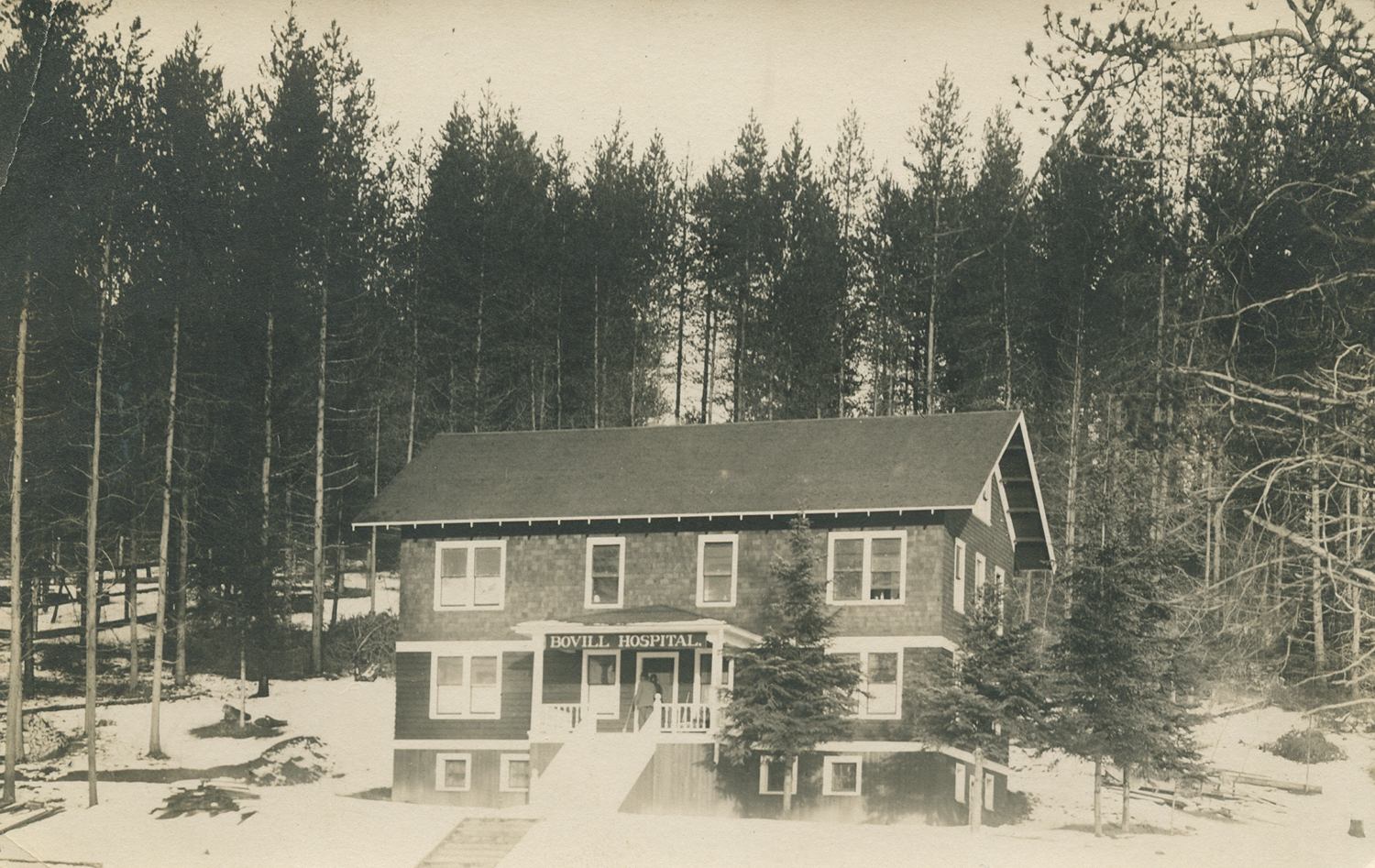
Ownership shapes how a hospital survives thin margins. The cost reports' "type of control" codes put 12 of the 25 CAHs in the table under local government: seven under a county (Malad City, Salmon, Montpelier, St. Maries, Emmett, Rupert and Preston) and five under a hospital district (Bonners Ferry, American Falls, Weiser, Grangeville and Arco). Two are coded as church-affiliated nonprofits (Orofino and Cottonwood), and the other 11 as other nonprofits, including the hospitals that belong to the St. Luke's and Intermountain systems.32 A government-owned hospital can ask local voters and taxpayers for support; a system-owned CAH can lean on its parent for specialists, purchasing and capital. Medicare's cost-based payment is the same for all of them.
How we figured it: Medicare share and margins from cost reports
Data. CMS's Hospital Provider Cost Report public use files for 2024 and 2023 (posted October 2026), filtered to Idaho certification numbers beginning 1313, which CMS assigns to CAHs. The table and medians cover the 25 CAHs named in the table. The 2024 file holds cost-reporting periods that ended between Sept. 30, 2024 and June 30, 2025 for these hospitals.3233
Medicare share. "Hospital Total Days Title XVIII For Adults & Peds" divided by "Hospital Total Days (V + XVIII + XIX + Unknown) For Adults & Peds." Title XVIII is Medicare; on the cost report form, Medicare Advantage days are reported on a separate line, so this is an Original Medicare share. Swing-bed days are not in these columns.
Patient-care margin. "Net Income from Service to Patients" divided by "Net Patient Revenue." Total margin. "Net Income" divided by "Net Patient Revenue" plus "Total Other Income."
Ownership. The "Type of Control" code from the same file, read with the cost report form's code list (9 = governmental, county; 11 = governmental, hospital district; 1 = voluntary nonprofit, church; 2 = voluntary nonprofit, other).
Limits. Cost reports are self-reported, can be amended and are audited later. Hospitals in health systems may book some costs and revenue at the system level. A single year can swing on one large repair or one settlement.
The Magic Valley up close
The Magic Valley shows every piece of the rural Medicare system within about 80 miles: a regional hospital with special rural status, four critical access hospitals, rural health clinics in towns with no hospital, and counties with no hospital at all.
St. Luke's Magic Valley, Twin Falls: a PPS hospital with rural status
St. Luke's Magic Valley Regional Medical Center is not a CAH. It is paid under the inpatient prospective payment system, and in CMS's fiscal year 2027 impact file it is coded as provider type 17, a sole community hospital that is also a rural referral center, with 175 beds.13 A sole community hospital, under 42 CFR 412.92, is generally one located more than 35 miles from other like hospitals, or a rural hospital that meets tighter tests of distance, market share, weather or travel time.35 The impact file carries a "hospital-specific rate" for such hospitals, because Medicare pays a sole community hospital the higher of the standard federal rate or a rate based on its own historical costs. Twin Falls County is a "micro" county in CMS's network file, and St. Luke's Magic Valley is the regional referral hospital for the CAHs around it.12 In the 2024 cost report file, Original Medicare paid for 25.3 percent of its acute adult and pediatric days, and its patient-care margin was minus 5.7 percent.32
The four CAHs around Twin Falls
- North Canyon Medical Center, Gooding. A CAH since May 1999 with 18 certified beds. CMS's rural health clinic file lists clinics it runs, including North Canyon Family Medicine in Gooding and the North Canyon Buhl Clinic. Original Medicare paid for 41.2 percent of its acute days in the 2024 file, and it reported a positive patient-care margin of 8.4 percent, the highest among the CAHs in our table.17932
- Minidoka Memorial Hospital, Rupert. A CAH since October 2001 with 25 certified beds, coded in its cost report as county-owned, with a rural health clinic in Rupert. Original Medicare share 42.9 percent; patient-care margin minus 7.9 percent in the 2024 file and minus 7.1 percent in the 2023 file.1793233
- Intermountain Health Cassia Regional Hospital, Burley. A CAH since October 2004 with 25 certified beds, part of Intermountain Health. Original Medicare share 32.9 percent; patient-care margin minus 0.6 percent in the 2024 file.1732
- St. Luke's Wood River Medical Center, Ketchum. A CAH since August 2003 with 25 certified beds, serving the Wood River Valley in Blaine County. Original Medicare share 41.7 percent; patient-care margin 3.9 percent in the 2024 file.1732
Rupert and Burley sit about 8 miles apart in a straight line, on opposite sides of the Snake River, yet both are CAHs. The 35-mile test is not the only way in: the law also allowed state necessary-provider certifications before 2006, the 15-mile test applies where only secondary roads exist, and distances are measured by road between specific facilities. CMS's public files do not show which test each of these two hospitals met when it was designated, so this lesson does not guess.31736
Towns with clinics, and counties with no hospital
Kimberly, Buhl, Hagerman and Wendell have no hospital. Kimberly is about 5 miles from Twin Falls; Buhl about 15; Wendell about 19; Hagerman about 28 (straight-line distances, our calculation from Census coordinates).36 CMS's rural health clinic file lists clinics in Buhl and Gooding run by North Canyon, an independent family practice clinic in Wendell, a clinic in Rupert run by Minidoka Memorial, and clinics in Burley and Hailey run by a private provider group.9 Lincoln County (Shoshone) and Camas County (Fairfield) have no hospital in CMS's hospital enrollment file; their residents travel to Gooding, Twin Falls or the Wood River Valley.1
The Magic Valley counties also differ sharply in Medicare Advantage use. In November 2026, Twin Falls County had 19,715 Medicare eligibles and a 56.01 percent Medicare Advantage share; Gooding County 3,479 and 49.24 percent; Lincoln County 1,006 and 45.73 percent; Minidoka County 4,364 and 44.62 percent; Cassia County 4,850 and 37.40 percent; Camas County 326 and 33.74 percent; and Blaine County 6,416 and 20.37 percent.11 For comparison, Ada County was at 55.31 percent and Canyon County at 62.87 percent; in eastern Idaho, Bonneville County was at 38.46 percent and Bannock County at 47.05 percent; in northern Idaho, Kootenai County was at 41.16 percent, Nez Perce County at 21.63 percent and Idaho County at 17.34 percent.11
How far is the next big hospital?
A CAH stabilizes and transfers patients who need a cardiologist, a neurosurgeon or an intensive care unit for more than a short stay. The table shows the straight-line distance from each CAH town to the nearest of seven cities with a hospital of 100 or more beds in CMS's fiscal year 2027 impact file: Boise, Caldwell, Twin Falls, Idaho Falls, Pocatello, Coeur d'Alene and Lewiston.1336 Road distances are longer, and mountain passes and winter weather add time that a map line does not show.
| CAH town | Nearest city with a 100-plus-bed hospital | Straight-line miles (our calculation) |
|---|---|---|
| Salmon | Idaho Falls | 148 |
| McCall | Boise | 91 |
| Ketchum | Twin Falls | 78 |
| Bonners Ferry | Coeur d'Alene | 72 |
| Montpelier | Pocatello | 70 |
| Arco | Idaho Falls | 64 |
| Preston | Pocatello | 61 |
| Grangeville | Lewiston | 53 |
| Driggs | Idaho Falls | 49 |
| Malad City | Pocatello | 48 |
| Soda Springs | Pocatello | 47 |
| Weiser | Caldwell | 45 |
| Mountain Home | Boise | 42 |
| Sandpoint | Coeur d'Alene | 41 |
| Rupert | Twin Falls | 40 |
| Cottonwood | Lewiston | 39 |
| Orofino | Lewiston | 36 |
| Burley | Twin Falls | 34 |
| Kellogg | Coeur d'Alene | 33 |
| Gooding | Twin Falls | 29 |
| St. Maries | Coeur d'Alene | 29 |
| Blackfoot | Pocatello | 23 |
| Moscow | Lewiston | 23 |
| American Falls | Pocatello | 21 |
| Emmett | Caldwell | 18 |
Sources: Census 2024 Gazetteer place coordinates; hospital beds from the CMS FY 2027 IPPS impact file; distances are our calculation.3613 Cascade, whose former CAH is now a rural emergency hospital, is about 64 miles from Boise in a straight line.
How we figured it: straight-line distances
We took each town's internal point (latitude and longitude) from the Census Bureau's 2024 Gazetteer place file and computed great-circle distance in miles (Earth radius 3,958.8 miles) to each of the seven cities, keeping the smallest. The seven cities are those with a hospital listed at 100 or more beds in CMS's FY 2027 IPPS impact file: St. Luke's Regional Medical Center and Saint Alphonsus Regional Medical Center (Boise), West Valley Medical Center (Caldwell), St. Luke's Magic Valley (Twin Falls), Eastern Idaho Regional Medical Center (Idaho Falls), Portneuf Medical Center (Pocatello), Kootenai Health (Coeur d'Alene) and St. Joseph Regional Medical Center (Lewiston). A town's internal point is not the hospital's address, and a straight line is always shorter than the road. Hospitals across state lines, such as in Logan, Utah, for Preston, can be closer and are not counted here.3613

Rural health clinics
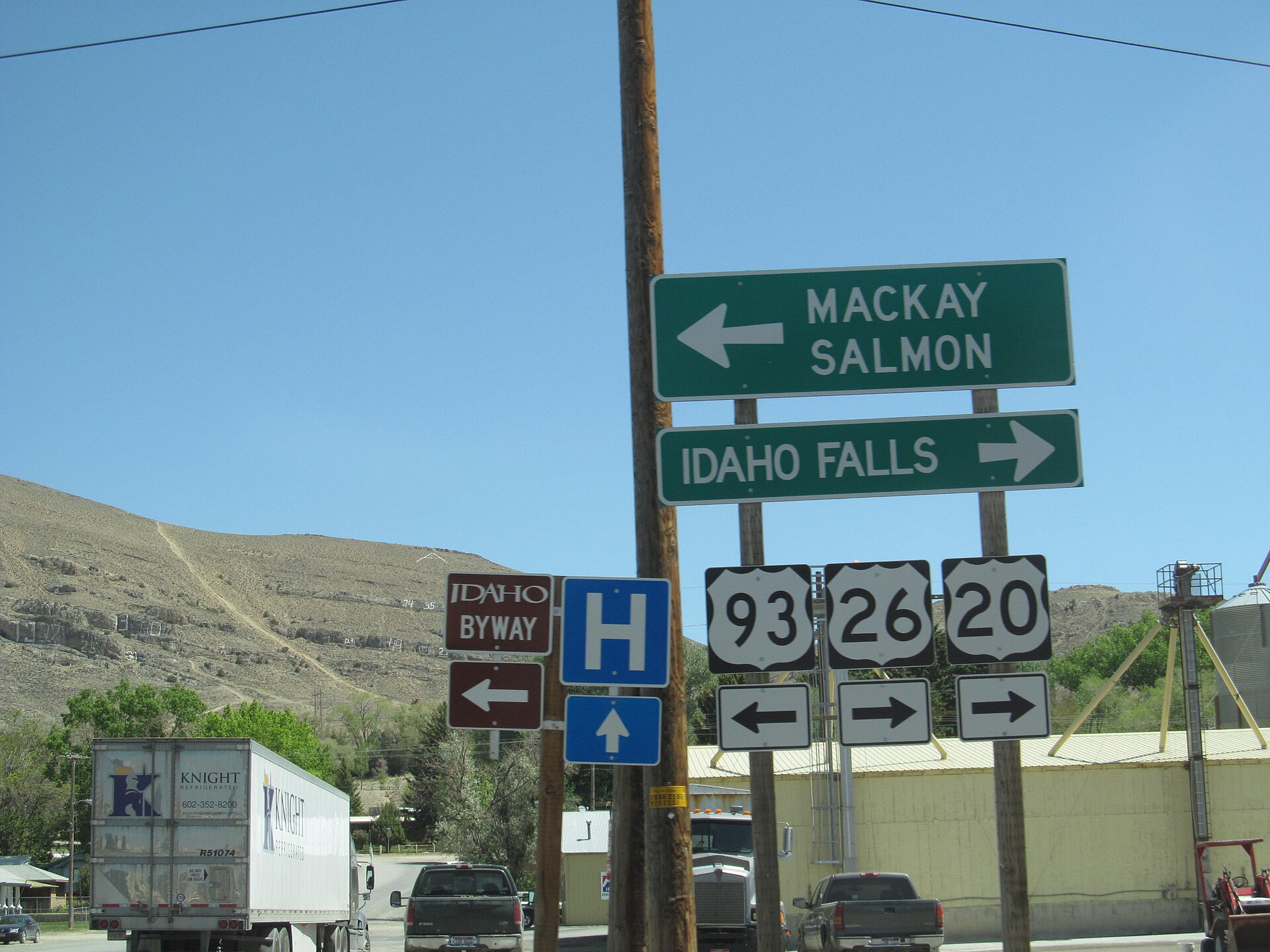
A rural health clinic (RHC) is an outpatient primary care clinic in a rural, underserved area that Medicare certifies and pays under its own method: an all-inclusive rate per visit instead of the physician fee schedule's separate payment for each service. RHCs can be independent (a private practice or a group) or "provider-based," meaning owned and run as part of a hospital, often a CAH. Under 42 CFR 491.5 and 491.8, an RHC must be in a rural area designated as a shortage area, and a nurse practitioner, physician assistant or certified nurse-midwife must be available to see patients at least 50 percent of the time the clinic is open, which is part of what makes RHCs workable in towns that cannot keep a full roster of physicians.37
How many, and where
CMS's rural health clinic enrollment file dated Sept. 29, 2026 has 52 Idaho records, up from 49 in the July 1, 2024 file. Neighboring states in the September 2026 file: Montana 61, Wyoming 29, Oregon 100, Washington 112, Utah 20 and Nevada 19. The national total was 5,626.9 Idaho's clinics are spread from Bonners Ferry to Preston. In the September 2026 file, Blackfoot had three, and Montpelier, Shelley, Weiser, Bonners Ferry, Fruitland, Rigby, Rexburg and Moscow had two each, with single clinics in towns such as Stanley, Arco, Mackay, Riggins, Kooskia, Pierce, Kendrick, Troy, Potlatch, Donnelly, Cascade and Victor, along with the Magic Valley clinics listed above.9 The enrollment records are counts of enrolled practice locations; a few organizations hold more than one.
The RHC payment limit, 2021 to 2028
Before April 2021, the per-visit cap applied mainly to independent RHCs, while clinics owned by hospitals with fewer than 50 beds were exempt, which let some provider-based clinics receive much higher rates. The Consolidated Appropriations Act, 2021 rewrote the limit in Social Security Act section 1833(f). Every RHC is now subject to a per-visit limit that steps up each year through 2028 and then rises with the Medicare Economic Index (MEI), a measure of physician practice costs.2310
| Year | Per-visit payment limit | Source |
|---|---|---|
| 2021 (after March 31) | $100 | SSA 1833(f)(2)10 |
| 2022 | $113 | SSA 1833(f)(2) |
| 2023 | $126 | SSA 1833(f)(2) |
| 2024 | $139 | SSA 1833(f)(2) |
| 2025 | $152 | SSA 1833(f)(2) |
| 2026 | $165 (confirmed in CMS transmittal 13505, Dec. 5, 2025) | SSA 1833(f)(2); CMS38 |
| 2027 | $178 | SSA 1833(f)(2) |
| 2028 | $190 | SSA 1833(f)(2) |
| 2029 and later | Prior year's limit plus the MEI increase | SSA 1833(f)(2) |
The law protected one group. Clinics that were part of a hospital with fewer than 50 beds on Dec. 31, 2020, and were enrolled or had applied by then, keep their own per-visit amount from 2021, raised each year by the MEI, or the new limit, whichever is greater. For 2026, CMS set that MEI increase at 2.7 percent.1038 Many Idaho clinics owned by CAHs fall into that protected group, but CMS's public enrollment file does not say which ones, so this lesson does not list them.
Telehealth at rural clinics and hospitals
Before 2020, Medicare paid for telehealth mostly when the patient was at a clinic or hospital in a rural area, and RHCs could not bill as the "distant site" where the clinician sits. Congress has extended pandemic-era rules in short pieces since then. The Consolidated Appropriations Act, 2026 extended the removal of geographic limits, the patient's home as an allowed site, the wider list of practitioners and the ability of RHCs and federally qualified health centers to bill as distant sites, all through Dec. 31, 2027.7 For a beneficiary in Challis or Fairfield, that date decides whether a video visit from home stays covered under Original Medicare in 2028; Medicare Advantage plans can cover telehealth as a supplemental benefit under their own rules (lesson 04).
Rural emergency hospitals: Idaho's first conversion
A rural emergency hospital (REH) is a newer Medicare provider type for small hospitals that no longer fill inpatient beds. Under 42 CFR 485.502, an REH provides emergency department services, observation care and other outpatient services, with an annual per-patient average length of stay of 24 hours or less, and it may not provide inpatient care except in a separately licensed skilled nursing unit. Under 485.506, only a facility that on Dec. 27, 2020 was a CAH, or a rural hospital with 50 or fewer beds, can convert.24
Payment is built to replace the inpatient money the hospital gives up. Social Security Act section 1834(x) pays REH outpatient services at the hospital outpatient payment rate increased by 5 percent, with the patient's copayment figured as if that 5 percent did not exist, plus a monthly "additional facility payment" that rises each year by the hospital market basket.39 MedPAC puts the 2026 facility payment at $295,052 a month.21
Cascade Medical Center. CMS's hospital enrollment file lists Cascade Medical Center Hospital District in Cascade, Valley County, as a rural emergency hospital with an REH conversion date of Feb. 25, 2025; its former CAH certification number is recorded in the same row.1 When the hospital board voted to seek the change in 2024, the Lewiston Tribune reported that the hospital had averaged 26 inpatients a year over the previous decade, that the federal REH payments would add about $3.3 million a year, and that the hospital expected a net gain of $500,000 to $1.3 million a year after billing changes; chief executive Tom Reinhardt said, "Our hospital, given our very low inpatient volumes, is ideally suited to this model." The paper said roughly one patient a month would need transfer to another hospital, and the hospital could still keep patients in observation for one or two nights.40 Its last cost report as a CAH, for the year ending Sept. 30, 2024, showed a patient-care margin of minus 80.7 percent on about $5.2 million in net patient revenue (our calculation).32
Neighbors. The same September 2026 file lists 57 rural emergency hospital enrollment records nationally, including one each in Montana (Jordan, April 15, 2026), Washington (Ritzville, March 10, 2026) and Nevada (Boulder City, Aug. 11, 2026), and none in Oregon, Wyoming or Utah.1
The trade-off for patients. A town with an REH keeps a 24-hour emergency room, lab and imaging, and outpatient care, but anyone who needs to be admitted goes somewhere else, often by ambulance. For Medicare patients that can mean a family visiting a hospital two hours away, a different skilled nursing pathway (swing beds go away with the inpatient license) and a different set of bills. Whether that trade beats the alternative depends on what the alternative is: a CAH that loses money on a few inpatients a year may otherwise close altogether. We found no public record of another Idaho CAH applying to convert as of Nov. 22, 2026.
Rural add-ons and the extender calendar
Besides the CAH and RHC programs, which are permanent law, Medicare has rural payment adjustments that Congress writes with end dates and then extends, often in year-end spending bills. Hospital groups call them "extenders." The table shows where they stood on Nov. 22, 2026.
| Payment rule | What it does | Current end date (P.L. 119-75) | Idaho angle |
|---|---|---|---|
| Medicare-dependent hospital (MDH) program | Extra inpatient payment for small rural PPS hospitals where Medicare patients are a large share of days | Through Dec. 31, 2026 (expires Jan. 1, 2027) | No Idaho hospital is coded as an MDH in CMS's FY 2027 impact file.13 |
| Low-volume hospital adjustment (expanded version) | Extra percentage on inpatient payments for PPS hospitals with few discharges that are far from other hospitals | Through Dec. 31, 2026 | Every Idaho PPS hospital in the FY 2027 impact file has a low-volume factor of 1, meaning no adjustment.13 |
| Ground ambulance add-ons | 3% (rural pickup), 2% (urban pickup), 22.6% on the base rate for "super-rural" pickups | Through Dec. 31, 2027 | Many Idaho ZIP codes are rural; super-rural ZIPs are rural areas in the lowest quarter of population density.29 |
| Telehealth flexibilities | No geographic limit, home as a site, RHCs and FQHCs as distant sites | Through Dec. 31, 2027 | Matters most in CEAC counties. |
| 2 percent Medicare sequester | Cuts Medicare benefit payments, including CAH cost-based payments | Fiscal year 2033: 2% for five months, then 0% | Applies to every Idaho hospital and clinic paid by Medicare.22 |
Sources: P.L. 119-75, secs. 6201, 6202, 6203, 6209 and 6227; CMS FY 2027 IPPS impact file; MedPAC ambulance Payment Basics, October 2026.71329
The ambulance fee schedule also has a permanent rural feature: the mileage rate is raised 50 percent for the first 17 miles of a ground transport from a rural ZIP code. MedPAC reports $4.7 billion in fee-for-service Medicare spending on ambulance services in 2024, about 1 percent of fee-for-service spending.29 The American Hospital Association, a hospital industry group, wrote to House and Senate leaders on Nov. 16, 2026 asking them to extend the MDH program, the low-volume adjustment and other items set to lapse at the end of the year.41 Because the FY 2027 impact file shows no Idaho MDH or low-volume payments, the Dec. 31, 2026 lapse matters more for neighboring states and for any Idaho hospital whose status changes than for Idaho hospitals as coded in that file. The same law extends the floor on the work geographic practice cost index in physician pay through Dec. 31, 2026 and the Acute Hospital Care at Home waivers through Sept. 30, 2030.42

Medicare Advantage and small hospitals
Cost-based payment protects a CAH only for Original Medicare patients. When a Medicare beneficiary joins a Medicare Advantage (MA) plan, the plan, not Medicare's administrative contractor, pays the hospital, and the rules change. Lesson 04 explains how MA plans are paid and how networks and prior authorization work. This section covers what that means for a 25-bed hospital and its patients.
How an MA plan pays a CAH
With a contract. A hospital in a plan's network is paid whatever the contract says. MedPAC's June 2026 report, based on interviews and outside studies, says hospital representatives described MA plans as generally matching Original Medicare rates for inpatient and outpatient services, with some paying slightly less and some slightly more, but often paying less in effect because plans were less likely to match payments outside the claim, such as add-ons. For CAHs specifically, MedPAC reports that MA plans commonly pay a per diem based on the prior year's cost report.43
Without a contract. A hospital that has no contract with a plan and treats one of its members must accept, as payment in full, what it could collect under Original Medicare, under 42 CFR 422.214(b). If the hospital bills the plan the same way it would bill Medicare, it is treated as asking for the Original Medicare amount.44 For a CAH, that is meant to track the cost-based rate. Whether a particular plan's out-of-network payment actually matches the year-end cost settlement is a common point of dispute, and the public record does not answer it for any Idaho hospital.
Paperwork and timing. Original Medicare rarely requires prior authorization; MA plans often do. MedPAC cites a KFF count of about 1.7 prior authorization requests per MA enrollee in 2024, against 0.02 per Original Medicare beneficiary. It also found that MA patients' hospital stays in fiscal year 2024 were 11.2 percent longer than similar Original Medicare stays after adjusting for patient differences, and 11.8 percent longer at CAHs, with the biggest gaps for patients headed to skilled nursing or rehabilitation facilities, where plans' approvals for the next level of care can take days.43 A longer stay at a cost-paid CAH costs the plan more only if the contract pays by the day.
Since Jan. 1, 2026, CMS's interoperability and prior authorization rule (CMS-0057-F, published Feb. 8, 2024) has required MA plans to decide standard prior authorization requests within 7 calendar days and expedited requests within 72 hours, and to give a specific reason for denials.45 Idaho lawmakers have also looked at state limits. The Idaho Press reported that two 2026 bills, House Bill 841 and House Bill 611, would have set state prior authorization deadlines and did not get hearings, and that an interim working group asked for draft legislation for the 2027 session.34 Federal rules for MA plans generally override state law, other than state licensing and plan-solvency laws, under 42 CFR 422.402, so a state prior authorization law would reach employer and individual health insurance more clearly than it would reach Medicare Advantage plans.46
What the evidence says about MA and rural hospital finances
The evidence points in more than one direction, and each side has a fair argument.
- MedPAC (June 2026). Looking at hospital cost reports from 2013 to 2024, leaving out 2020 and 2021, MedPAC found no statistically significant association between how much of a market is in MA and hospitals' all-payer operating margins, for either PPS hospitals or CAHs. Small PPS hospitals (1 to 100 beds) saw revenue fall 1.7 percent and costs fall 2.3 percent for each 10-point rise in MA penetration. MedPAC stresses that these are associations, not proof of cause.4347
- The hospital industry. The American Hospital Association reported in February 2025 that rural hospitals' MA payment-to-cost ratios ran 89 to 94 percent of their Original Medicare ratios from 2019 to 2023, according to MedPAC's summary of the AHA work; MedPAC lists CAHs at 95 percent and Medicare-dependent and low-volume hospitals at 85 percent.4843
- Other studies. MedPAC's review cites one 2023 study finding that rising MA penetration went with better finances and lower closure risk for rural hospitals, and a 2025 study finding that rural hospitals' Medicare inpatient days and total inpatient revenue fell as MA penetration rose.43
- The plan side. The Better Medicare Alliance, which promotes Medicare Advantage, argues that MA is more affordable for rural beneficiaries than Original Medicare and points to research linking MA growth to rural hospital stability, as KFF Health News reported in April 2025.49
Some rural hospitals in other states have dropped MA contracts. KFF Health News reported in April 2025 that Brookings Health System in South Dakota had dropped its contracts with four major MA companies the year before, and that Great Plains Health in Nebraska and Kimball Health Services, which operates in Nebraska and Wyoming, no longer worked with any MA companies.49 We found no public statement from an Idaho CAH announcing it had dropped all MA contracts as of Nov. 22, 2026. Network changes for 2027, including any contract terminations, are covered in lesson 08.
What Idaho hospital leaders say
In the Idaho Capital Sun's May 13, 2026 report on Idaho's rural hospitals, which drew its examples from two North Idaho hospitals, Bonner General Health chief executive John Hennessy said, "It's getting tougher and tougher to get payments on time," describing insurer denials that push up the days a bill sits unpaid and drain cash on hand. Benewah Community Hospital chief executive Burt Keltner said prior authorization requirements now apply to nearly everything, and the article reported that many CAHs operate at about a 1 percent profit margin.28 The statements cover all commercial and MA insurers together, not Medicare Advantage alone. At the Oct. 14, 2026 working group meeting, the Idaho Hospital Association's Brian Whitlock presented claims data from 25 Idaho hospitals: clean claims took an average of 60 days to be paid at rural hospitals and 54 days at urban ones, and 40 percent of initially denied claims were eventually paid in full, according to the Idaho Press.34 Insurers were not quoted in that report. Under 42 CFR 422.520, MA plans must pay 95 percent of clean claims from noncontracted providers within 30 days, and contracts with network hospitals must include prompt-payment terms the two sides agree on.50
What it means for beneficiaries in rural counties
For a Medicare beneficiary in Salmon, Arco or Grangeville, the choice between Original Medicare and MA has a local edge. An MA plan's network may or may not include the local CAH, and CMS's network test allows up to 110 minutes and 100 miles to an in-network hospital in a CEAC county.18 Emergency care is covered out of network, but planned care may not be. Original Medicare works at any hospital that takes Medicare, but without a Medigap policy or other coverage it has no yearly cap on out-of-pocket costs, and CAH outpatient coinsurance is figured on charges. Moving from MA back to Original Medicare later can bring Medigap medical underwriting outside the protected windows, a rule covered in lesson 05. This lesson does not recommend either path; it describes the rules that shape the choice.
The Rural Health Transformation Program
The 2025 reconciliation law, P.L. 119-21 (signed July 4, 2025), added a Rural Health Transformation Program to the Children's Health Insurance Program title of the Social Security Act, section 2105(h). It appropriates $10 billion a year for fiscal years 2026 through 2030, paid to states that win approval of a rural plan, and requires each state to use its money for at least three of ten listed purposes, among them prevention and chronic disease programs, payments to health care providers, technology and cybersecurity, workforce recruitment with five-year service commitments, "right sizing" rural health care services and new payment models.14 It is not Medicare money and does not change any Medicare payment rule, but it can pay for things Medicare does not, such as equipment, renovations and staff recruitment at the same hospitals and clinics Medicare patients use.
Idaho's awards. CMS announced first-year awards on Dec. 29, 2025, averaging $200 million in a range of $147 million to $281 million; Idaho's was $185,974,368.15 Gov. Brad Little's office said the five-year total would be close to $1 billion.51 The Idaho Department of Health and Welfare runs the grant; its program page lists five initiatives (technology, new care models including emergency medical services, workforce, population-specific prevention projects, and infrastructure and partnerships), says Senate Bill 1453 (2026) created a legislative oversight committee, and sets Oct. 30, 2026 as the date by which all first-year funds were to be obligated.52 The Idaho Capital Sun reported on Nov. 9, 2026 that Idaho's second-year award is about $182.7 million, 40th among the states, and that DHW was reviewing the award.16 A photo caption in the same article gives about $183.7 million; this lesson uses $182.7 million and lists the discrepancy as unverified until CMS's second-year list is read directly.
Neighbors, first year. Montana $233,509,359; Wyoming $205,004,743; Oregon $197,271,578; Utah $195,743,566; Washington $181,257,515; Nevada $179,931,608.15 Half of each year's money is split equally among approved states and half is awarded on factors including each state's proposed initiatives, its rural population, its health care facilities and alignment with federal priorities, which may help explain why thinly populated Wyoming and Montana received more than Idaho.16
Idaho compared with its neighbors
| State | CAHs (Sept. 2026) | Rural emergency hospitals (Sept. 2026) | RHC enrollments (Sept. 2026) | CEAC counties / all counties (2026 HSD file) | MA share, Nov. 2026 (our calculation) | Medicare eligibles per CAH (our calculation) | RHT first-year award |
|---|---|---|---|---|---|---|---|
| Idaho | 26 | 1 | 52 | 22 / 44 | 45.7% | 16,195 | $185,974,368 |
| Montana | 48 | 1 | 61 | 46 / 56 | 29.4% | 5,727 | $233,509,359 |
| Wyoming | 20 | 0 | 29 | 20 / 23 | 14.8% | 6,715 | $205,004,743 |
| Oregon | 26 | 0 | 100 | 11 / 36 | 53.7% | 37,643 | $197,271,578 |
| Washington | 37 | 1 | 112 | 6 / 39 | 49.6% | 43,126 | $181,257,515 |
| Utah | 13 | 0 | 20 | 14 / 29 | 55.1% | 38,117 | $195,743,566 |
| Nevada | 12 | 1 | 19 | 11 / 17 | 51.9% | 53,007 | $179,931,608 |
| All states in the files | 1,375 | 57 | 5,626 | 578 / 3,262 | 51.5% | not computed | about $10 billion total |
Sources: CMS hospital and RHC enrollment files, Sept. 29, 2026; CMS 2026 HSD reference file; CMS MA State/County Penetration file, November 2026; CMS RHT award list, Dec. 29, 2025.19121115 The Provider of Services file for the third quarter of 2026 counts 49 CAHs in Montana and 38 in Washington, one more each than the enrollment file; the two files are built differently.17
Three patterns stand out. Montana and Wyoming are more rural than Idaho by every measure here, with far more CAHs per Medicare beneficiary and much lower MA shares (Wyoming's 14.8 percent is the second lowest of the states in the file, after Vermont's 12.1 percent). Oregon and Washington have about as many CAHs as Idaho or more but far larger Medicare populations, and many more RHCs. Idaho sits between them: half its counties are CEAC, but its Medicare population is concentrated in the Treasure Valley, which is why its statewide MA share is close to Oregon's and Washington's while its frontier counties look like Montana's.
How we figured it: the neighbor comparison
CAH and REH counts are distinct certification numbers in CMS's hospital enrollment file of Sept. 29, 2026, by enrollment state. RHC counts are enrollment records in the RHC enrollment file of the same date. CEAC counts and county totals are from the "Facility Time & Distance" tab of the 2026 HSD reference file. MA share is the sum of county "Enrolled" divided by the sum of county "Eligibles" in the November 2026 penetration file. "Medicare eligibles per CAH" divides each state's summed eligibles (Idaho 421,079; Montana 274,899; Wyoming 134,304; Oregon 978,713; Washington 1,595,647; Utah 495,522; Nevada 636,082) by its CAH count. It is a rough measure of how many people each CAH could serve; it ignores where the hospitals and people are.191211
Pictures, Numbers and Infographics
The lesson's main numbers in one place, followed by a two-panel chart comparing Idaho with its neighbors.
| Measure | Idaho | U.S. or other states | Year or date | Source |
|---|---|---|---|---|
| Critical access hospitals | 26 (27 in 2020) | 1,375 in all states in the file; Montana 48, Oregon 26 | Sept. 29, 2026 | 12 |
| CAH bed limit and average stay | 25 beds; 96 hours | Same nationwide | Current rule | 4 |
| CAH distance test | 35-mile drive, 15 in mountains or on secondary roads | Same nationwide | Current rule | 3 |
| CAH Medicare payment | 101% of reasonable costs, less 2% sequester | Same nationwide; about $13 billion in 2024 | 2026 | 621 |
| Original Medicare share of acute days, median of 25 Idaho CAHs | 41.7% | St. Luke's Magic Valley 25.3%; St. Luke's Boise 20.4% | 2024 cost report file | 32 |
| CAHs with negative patient-care margin | 17 of 25 | Idaho Hospital Association: about half of CAHs below 1% margin (industry) | 2024 file; Oct. 2026 | 3234 |
| Rural emergency hospitals | 1 (Cascade, Feb. 25, 2025) | 57 nationwide; Montana, Washington, Nevada 1 each | Sept. 29, 2026 | 1 |
| REH monthly facility payment | $295,052 | Same nationwide | 2026 | 21 |
| Rural health clinic enrollments | 52 (49 in July 2024) | 5,626 nationwide; Montana 61, Oregon 100 | Sept. 29, 2026 | 9 |
| RHC payment limit per visit | $165 (2026); $178 (2027) | Same nationwide | 2026, 2027 | 1038 |
| MA share, CEAC counties vs. metro counties | 29.6% vs. 53.4% | 51.5% in all states in the file | Nov. 2026 | 1112 |
| Counties CMS rates "extreme access considerations" | 22 of 44 | Montana 46 of 56; Wyoming 20 of 23 | 2026 HSD file | 12 |
| MDH and low-volume programs end | No Idaho hospital coded MDH or low-volume | Expire after Dec. 31, 2026 unless extended | FY 2027 file; P.L. 119-75 | 137 |
| Ambulance add-ons and telehealth end | Dec. 31, 2027 | Same nationwide | P.L. 119-75 | 7 |
| Rural Health Transformation award | $185,974,368 (year 1); about $182.7 million (year 2) | Montana $233.5 million; Wyoming $205.0 million (year 1) | Dec. 29, 2025; Nov. 2026 | 1516 |
Common mistakes
- Calling every small rural hospital a CAH. St. Luke's Magic Valley in Twin Falls and Madison Memorial in Rexburg are paid under the prospective payment system, and Twin Falls is a sole community hospital, a different rural status with different rules. Check the CMS enrollment or impact file before using the label.113
- Assuming CAH outpatient coinsurance is 20 percent of what Medicare pays. At a CAH it is 20 percent of the hospital's charges, and OIG found beneficiaries paid nearly half of CAH outpatient costs in 2012.821
- Reading "101 percent of cost" as a 1 percent profit guarantee. Only allowable Medicare costs count, the 2 percent sequester comes off the top, and Medicare is only one payer; 17 of the 25 Idaho CAHs in our table lost money on patient care in the 2024 cost report file.62232
- Treating the 25-bed limit as a hospital's size. Beds can be used for acute care or swing beds, and many CAHs average only a few acute inpatients a day; most of their Medicare business is outpatient care.421
- Thinking an extender lapse is a done deal, or a permanent fix. The MDH program, low-volume adjustment, ambulance add-ons and telehealth rules all have fixed end dates in P.L. 119-75, and Congress has repeatedly extended them at the last minute. Report the date in current law and say it can change.7
- Mixing up the Rural Health Transformation Program with Medicare. It is a grant to states under the Social Security Act's CHIP title, run in Idaho by the Department of Health and Welfare; it does not raise any Medicare payment rate.1452
- Assuming an MA plan's network includes the local hospital. In a CEAC county, CMS's base standard lets a network's nearest hospital be up to 110 minutes and 100 miles away.18
- Using straight-line distance to judge the CAH distance test. The rule measures a drive on primary or secondary roads between facilities, not a map line between towns.3
What we know, what we don't, and what the data can show
What we know
- Idaho has 26 CAHs and one rural emergency hospital in CMS's Sept. 29, 2026 enrollment file, and 52 RHC enrollments.19
- The federal CAH rules (25 beds, 96 hours, 35-mile or 15-mile drive, 24-hour emergency care) and the 101 percent payment rule are in 42 CFR 485 subpart F and 413.70.346
- Original Medicare pays for roughly 40 percent of acute inpatient days at Idaho's CAHs, and most reported negative patient-care margins in the 2024 cost report file.32
- Medicare Advantage shares fall as counties get more remote, from 53.4 percent in metro counties to 29.6 percent in CEAC counties.1112
- The current end dates for rural extenders are set in P.L. 119-75.7
What we don't know
- How 2027 Medicare Advantage plan exits or network changes will change access in rural counties, and how many rural Idahoans will switch plans in open enrollment.
- What each Idaho CAH is paid by each MA plan. Contract rates are private, and the cost reports do not split MA revenue by plan.
- Whether Congress will extend the MDH and low-volume programs past Dec. 31, 2026, or telehealth and ambulance add-ons past Dec. 31, 2027.
- Whether another Idaho CAH will convert to a rural emergency hospital.
- How Rural Health Transformation subgrants will be divided among hospitals, clinics and EMS agencies across the five years, and whether the projects will last after the money ends.
What the data can show
- CMS Hospital Enrollments and RHC Enrollments files (monthly or quarterly, data.cms.gov): which hospitals are CAHs, REHs or PPS hospitals, conversion dates, and clinic locations.19
- CMS Provider of Services file (quarterly): certified beds, original participation dates, necessary-provider flags, county codes.17
- CMS Hospital Provider Cost Report files (annual): Medicare days, total days, revenue, income, uncompensated care and ownership for every hospital, including CAHs.32
- CMS MA State/County Penetration file (monthly): Medicare eligibles and MA enrollment by county.11
- CMS HSD reference file (annual): each county's network type and the maximum time and distance MA plans must meet.12
- CMS IPPS impact file (annual, with the IPPS rule): which PPS hospitals are sole community, Medicare-dependent or low-volume, with beds and Medicare shares.13
Questions people ask
Is my local hospital a critical access hospital?
Check CMS's Hospital Enrollments file on data.cms.gov: CAHs are listed with the provider type "Part A Provider: Critical Access Hospital," and Idaho CAH certification numbers begin with 1313. The table in this lesson lists the Idaho CAHs it discusses, from the Sept. 29, 2026 file.1
If a CAH transfers me to a bigger hospital, does Medicare pay for both?
Under Original Medicare, yes, each hospital bills for the care it provides under its own payment rules, and the Part A deductible is owed once per benefit period. A medically necessary ambulance transfer is a Part B service. Under a Medicare Advantage plan, the plan's rules on networks, authorization and cost sharing apply, though emergency care is covered out of network.2129
What is a swing bed?
A CAH bed that can be used either for acute care or for skilled nursing care after a hospital stay. Medicare requires the same 3-day hospital stay before a swing-bed admission that it requires before skilled nursing facility care, and pays the CAH 101 percent of reasonable costs for swing-bed care.26 Swing beds let a patient recover close to home instead of in a nursing facility in a distant city.
Why was my outpatient coinsurance higher at the small hospital than in the city?
Because at a CAH, Part B coinsurance is 20 percent of the hospital's charges rather than 20 percent of a Medicare payment rate. OIG found that for 10 common outpatient services, beneficiaries paid 2 to 6 times the coinsurance they would have paid at a PPS hospital in 2012. Medigap or other secondary coverage may pay some or all of it, depending on the policy.8
Will Medicare still cover video visits from home after 2027?
Under current law, the broad telehealth rules, including visits from home and RHCs as distant sites, run through Dec. 31, 2027. After that, unless Congress acts, Original Medicare returns to its older, narrower rules, with some exceptions such as certain mental health services. MA plans may offer telehealth as an extra benefit.7
Does the Rural Health Transformation money go straight to hospitals?
Not automatically. It goes to the state, which uses it under an approved plan for at least three of the law's listed purposes, partly through competitive subgrants. The Idaho Department of Health and Welfare's timeline called for requests for proposals in May and June 2026 and for all first-year funds to be obligated by Oct. 30, 2026.1452
Who helps rural Medicare beneficiaries understand plan rules?
Idaho's Senior Health Insurance Benefits Advisors (SHIBA), part of the Idaho Department of Insurance, trains volunteers who explain Medicare options without selling plans, and 1-800-MEDICARE answers questions about Original Medicare and plan enrollment. Both are listed under Learn more. Lesson 12 explains how SHIBA is funded.
Hard questions
Should Medicare keep paying small hospitals on cost?
For: Cost-based payment keeps 24-hour emergency care open in towns too small to support it under fixed rates, and the alternative in many places is no hospital. Idaho's CAHs are hours from specialty care in places like Salmon and McCall. Against: Paying costs gives a hospital less reason to hold them down, and patients pay coinsurance on charges, which OIG found came to nearly half of outpatient costs. MedPAC notes that before 2006 states could waive the distance test by naming necessary providers, so not every CAH is isolated. Evidence: Idaho's CAHs are small (25 beds or fewer) and mostly unprofitable on patient care even with cost-based Medicare payment, according to their own cost reports; the public files do not show what would happen to access if the payment method changed.21832
Is Medicare Advantage growth hurting rural hospitals?
Hospitals' case: MA plans pay rural hospitals less than Original Medicare in effect, require more prior authorization, deny and delay claims, and CAHs have little bargaining power; the AHA reports rural MA payment-to-cost ratios of 89 to 94 percent of Original Medicare's. Plans' case: MA gives rural beneficiaries lower premiums, out-of-pocket limits and extra benefits, and some research links MA growth to better rural hospital finances. Evidence: MedPAC's 2026 analysis found no statistically significant link between MA penetration and hospital or CAH operating margins over 2013 to 2024, while finding longer stays and far more prior authorization for MA patients. In Idaho, MA shares are lowest in the most remote counties, where the CAHs are most isolated.48434911
Should more Idaho CAHs become rural emergency hospitals?
For: A hospital with a handful of inpatients a year can gain steady federal money, about $3.5 million a year in 2026 facility payments alone, and keep its emergency room. Cascade expected a net gain. Against: Inpatient beds and swing beds disappear, more patients travel for admission, and the community may not get them back. Conversion requires a hospital that was a CAH or small rural hospital on Dec. 27, 2020, so the option is limited. Evidence: One Idaho conversion so far; its last CAH cost report showed deep patient-care losses before conversion. Whether the conversion improved finances or access is not yet visible in public cost reports.40322421
Should Congress make the rural extenders permanent?
For: Hospitals and ambulance services cannot plan around payment rules that may lapse with a few days' notice; the AHA asked Congress in November 2026 to extend the MDH and low-volume programs before year's end. Against: Each extension costs money from the trust funds and general revenue, and short extensions let Congress review whether the payments still reach the places that need them. Evidence: In Idaho specifically, CMS's FY 2027 impact file shows no MDH or low-volume payments, so the Dec. 31, 2026 lapse would hit neighboring states harder; the telehealth and ambulance dates (Dec. 31, 2027) affect Idahoans directly.41137
For reporters and advocates
Records that exist. Every hospital's Medicare cost report (CMS public use files and the full HCRIS database), which shows Medicare days, revenue, costs, uncompensated care and ownership; the CMS Hospital Enrollments, RHC Enrollments and Provider of Services files; CMS's HSD reference file of network standards; the MA State/County Penetration file; the annual IPPS impact file; OIG and MedPAC reports; and county and hospital district budgets, audits and board minutes for government-owned hospitals.321171213
Questions to ask a CAH. What share of your patients are on Original Medicare and on MA? Which MA plans are you in network with for 2027, and on what terms (per diem, percent of cost)? How long do MA plans take to pay, and what share of denials are overturned? What would conversion to a rural emergency hospital mean for your town? Which services, such as obstetrics, surgery or swing beds, are at risk?
Questions to ask insurers and officials. Insurers: which Idaho CAHs are in each plan's 2027 network, and how do you pay noncontracted CAHs under 42 CFR 422.214? The Department of Health and Welfare: which Rural Health Transformation subgrants went to which hospitals, clinics and EMS agencies, and how will results be measured? Idaho's congressional delegation: where do they stand on the MDH, low-volume, telehealth and ambulance extenders?4452
Public records. County hospitals and hospital districts are public agencies subject to the Idaho Public Records Act (Idaho Code title 74, chapter 1); Rural Health Transformation subgrant agreements held by the Department of Health and Welfare are state records. See Idaho Public Records Requests. Federal records, such as CMS correspondence about a CAH designation or REH conversion, can be requested under the federal Freedom of Information Act. For a guide to reading data like the cost reports, see Data and Statistics.
The Idaho angle. Track the Rural Health Transformation awards and the Senate Bill 1453 oversight committee; compare each CAH's cost report from year to year; watch whether any CAH converts to an REH or ends inpatient obstetrics; and check the HSD file each year for county designation changes in the Magic Valley, such as Twin Falls (micro) and Gooding, Minidoka and Cassia (rural). Lesson 12, Having a Say, covers how the public can comment on the CMS rules that set these payments.
Where to go next
- Medicare Care Compare: Free CMS tool for the public. Search a town or ZIP code to see nearby hospitals, including critical access hospitals, with their services and the quality measures they report. Search by hospital name to see its type.
- SHIBA: Senior Health Insurance Benefits Advisors (Idaho Department of Insurance): Free, state-run Medicare counseling program staffed by trained volunteers who explain Original Medicare, Medicare Advantage, Medigap and Part D without selling plans. The page lists events and contact information around the state, including rural counties.
- Medicare.gov and 1-800-MEDICARE: The official federal Medicare site and help line. Free. The site's plan finder shows which plans are offered in each county, and the help line answers questions about coverage and enrollment.
- Idaho Bureau of Rural Health and Primary Care: Idaho's state office of rural health in the Department of Health and Welfare. Free information on critical access hospitals, rural health clinics, shortage areas and rural workforce programs, mainly for providers, communities and researchers.
- CMS Hospital Enrollments data: Free CMS data set, updated regularly. Download the file and filter by state to see which hospitals are critical access hospitals, rural emergency hospitals or PPS hospitals, with addresses and conversion dates. Useful for reporters and researchers.
- Rural Health Information Hub: Idaho: Free national clearinghouse funded by HRSA's Federal Office of Rural Health Policy. The Idaho page gathers state rural health data, organizations, funding notices and news in one place.
- Idaho Commission on Aging: State agency that funds and coordinates the six Area Agencies on Aging, which offer free information and help for older Idahoans and caregivers, including in rural counties.
- Senior Medicare Patrol national resource center: Free federal program that trains volunteers to help Medicare beneficiaries spot and report billing errors and fraud; the site lists each state's SMP program.
Still being checked (7 items)
These points could not be fully confirmed against a primary source when this lesson was written and fact checked in November 2026. The text above states each one as uncertain.
- The cost report form reports Medicare Advantage (HMO) days on a separate line, so the Title XVIII columns we used are an Original Medicare share; we relied on the form's structure and did not confirm how every Idaho CAH filled the lines.
- Ownership categories rely on our reading of the cost report 'Type of Control' codes (9 = county, 11 = hospital district, 1 = church nonprofit, 2 = other nonprofit); we did not check each hospital's legal ownership documents.
- The Provider of Services necessary-provider flag shows only two Idaho CAHs (Malad City and Weiser); we could not confirm from public files which distance or necessary-provider test each other Idaho CAH met, including Rupert and Burley.
- Idaho's second-year Rural Health Transformation award is reported by the Idaho Capital Sun as about $182.7 million (a photo caption in the same article says about $183.7 million); we did not read CMS's second-year award list directly.
- The Idaho Hospital Association figures (67 percent of small rural hospitals with negative operating margins in the fourth quarter of 2025; about half of CAHs below a 1 percent margin; 60-day average payment time for rural clean claims) come from news reports of association statements and could not be checked against the underlying data.
- We found no public record of another Idaho CAH applying to convert to a rural emergency hospital, or of an Idaho CAH dropping all Medicare Advantage contracts, as of Nov. 22, 2026; such steps could be under way without public notice.
- Before April 2021, clinics owned by hospitals with fewer than 50 beds were exempt from the RHC per-visit cap; we inferred this from the grandfathering language in Social Security Act section 1833(f)(3) and did not read the pre-2021 text.
Last verified November 22, 2026. General education, not legal, medical, insurance or financial advice; every figure names its source and year in the Notes and Sources below. Data is revised: check the newest release before relying on any number.
Notes
- CMS, Hospital Enrollments data file, release dated Sept. 29, 2026 (Hospital_Enrollments_2026.09.29.csv), data.cms.gov: provider types 'Part A Provider: Critical Access Hospital' and 'Part A Provider: Rural Emergency Hospital (REH)', with the REH conversion flag, conversion date and former CAH certification number (downloaded Nov. 22, 2026). Read it online. ↩
- Idaho Department of Health and Welfare news release, 'Idaho recognized as top performing state for critical access hospitals,' Aug. 26, 2020 (read Nov. 22, 2026). Read it online. ↩
- 42 CFR 485.610, Condition of participation: Status and location (critical access hospitals), paragraphs (b) and (c), eCFR (read Nov. 22, 2026). Read it online. ↩
- 42 CFR 485.620, Condition of participation: Number of beds and length of stay, eCFR; history note cites 62 FR 46036 (Aug. 29, 1997) as amended through 78 FR 50970 (Aug. 19, 2013) (read Nov. 22, 2026). Read it online. ↩
- Social Security Act section 1820 (42 U.S.C. 1395i-4), Medicare Rural Hospital Flexibility Program: subsection (c)(2)(B) designation criteria (35-mile and 15-mile drive, necessary provider certified before Jan. 1, 2006, 25 beds, 96-hour average stay) and subsection (g) grants to states, ssa.gov compilation (read Nov. 22, 2026). Read it online. ↩
- 42 CFR 413.70, Payment for services of a CAH: paragraph (a)(1) inpatient at 101 percent of reasonable costs, (b)(2) outpatient facility services at 101 percent of reasonable costs subject to the Part B deductible and coinsurance, (b)(3) optional method with professional services at 115 percent, eCFR (read Nov. 22, 2026). Read it online. ↩
- P.L. 119-75, Consolidated Appropriations Act, 2026 (H.R. 7148, Feb. 3, 2026): sec. 6201 (low-volume hospital adjustment through Dec. 31, 2026), sec. 6202 (Medicare-dependent hospital program to Jan. 1, 2027), sec. 6203 (ambulance add-ons to Jan. 1, 2028), sec. 6209 (telehealth flexibilities through Dec. 31, 2027, including RHCs and FQHCs), sec. 6227 (Medicare sequestration for fiscal year 2033), govinfo.gov (read Nov. 22, 2026). Read it online. ↩
- HHS Office of Inspector General, Medicare Beneficiaries Paid Nearly Half of the Costs for Outpatient Services at Critical Access Hospitals, OEI-05-12-00085, Oct. 7, 2014: about $1.5 billion of an estimated $3.2 billion in 2012; recommendation to CMS listed as open (read Nov. 22, 2026). Read it online. ↩
- CMS, Rural Health Clinic Enrollments data files, releases dated Sept. 29, 2026 (RHC_Enrollments_2026.09.29.csv) and July 1, 2024 (RHC_Enrollments_2024.07.01.csv), data.cms.gov; counts are enrollment records by practice-location state (downloaded Nov. 22, 2026). Read it online. ↩
- Social Security Act section 1833(f) (42 U.S.C. 1395l(f)), per-visit payment limits for rural health clinic services: $100 (April to December 2021), $113 (2022), $126 (2023), $139 (2024), $152 (2025), $165 (2026), $178 (2027), $190 (2028), then the Medicare Economic Index; paragraph (3) on clinics in hospitals with fewer than 50 beds, Legal Information Institute (read Nov. 22, 2026). Read it online. ↩
- CMS, Medicare Advantage State/County Penetration file, November 2026 (State_County_Penetration_MA_2026_11.csv) and its Read_Me file: MA counts include local and regional coordinated care plans, MSA, PFFS, demonstrations, National PACE and cost plans; enrollment of 10 or fewer is shown as '*'; Alaska and Connecticut were left out of that month's file (downloaded Nov. 22, 2026). Read it online. ↩
- Centers for Medicare & Medicaid Services (CMS), 2026 Health Service Delivery (HSD) Reference File, updated Dec. 17, 2025, 'Facility Time & Distance' tab: county designation and acute inpatient hospital time and distance standard for each Idaho county and each neighbor-state county (downloaded Nov. 22, 2026). Read it online. ↩
- CMS, FY 2027 IPPS final rule and correction notice impact file (September 2026) and variable descriptions: 'Provider Type' 17 = sole community hospital and rural referral center; 'Low Volume Hospital Adjustment' factor; beds; data from the March 2026 Provider Specific File and FY 2025 MedPAR (downloaded Nov. 22, 2026). Read it online. ↩
- P.L. 119-21 (H.R. 1, July 4, 2025), sec. 71401, Rural Health Transformation Program, adding subsection (h) to Social Security Act section 2105 (42 U.S.C. 1397ee): $10 billion a year for fiscal years 2026 through 2030 and the list of allowed uses in paragraph (6), govinfo.gov (read Nov. 22, 2026). Read it online. ↩
- CMS press release, 'CMS Announces $50 Billion in Awards to Strengthen Rural Health in All 50 States,' Dec. 29, 2025, with the state award list: Idaho $185,974,368; Montana $233,509,359; Wyoming $205,004,743; Oregon $197,271,578; Washington $181,257,515; Utah $195,743,566; Nevada $179,931,608 (read Nov. 22, 2026). Read it online. ↩
- Idaho Capital Sun, 'Idaho to receive $182.7M in second year of federal rural health transformation grant,' Nov. 9, 2026 (news; read Nov. 22, 2026). Read it online. ↩
- CMS, Provider of Services File: Hospital and Non-Hospital Facilities, third quarter 2026 (Hospital_and_other.DATA.Q3_2026.csv), data.cms.gov: active Idaho records with provider category 01 and subtype 11 (critical access hospital); fields CRTFD_BED_CNT (certified beds), ORGNL_PRTCPTN_DT (original participation date), NCRY_PRVDR_DSGNTD_AS_SW (necessary provider flag), CBSA_URBN_RRL_IND and SSA county code (downloaded Nov. 22, 2026). Read it online. ↩
- 42 CFR 422.116, Network adequacy, paragraph (c) county type designations and paragraph (d) Table 1, maximum time and distance standards, eCFR (read Nov. 22, 2026). Read it online. ↩
- P.L. 105-33, the Balanced Budget Act of 1997 (Aug. 5, 1997), which created the critical access hospital designation and the Medicare Rural Hospital Flexibility Program in Social Security Act section 1820, govinfo.gov (read Nov. 22, 2026). Read it online. ↩
- CMS press release, 'CMS increases payments and expands flexibility for critical access hospitals in rural areas,' Jan. 22, 2004, on changes made by P.L. 108-173, the Medicare Prescription Drug, Improvement, and Modernization Act of 2003 (Dec. 8, 2003): payment raised from 100 to 101 percent of reasonable costs and the bed limit raised from 15 acute beds to 25 beds (read Nov. 22, 2026). Read it online. ↩
- Medicare Payment Advisory Commission (MedPAC), Critical Access Hospitals Payment System, Payment Basics, October 2026: about $13 billion in Medicare spending at CAHs in 2024 (63 percent outpatient, 19 percent inpatient, 18 percent swing bed); 2026 inpatient deductible $1,736; outpatient coinsurance at 20 percent of charges; 2026 REH monthly facility payment $295,052 (read Nov. 22, 2026). Read it online. ↩
- Congressional Research Service, Medicare and Budget Sequestration, R45106, updated Nov. 14, 2023: 2 percent reduction to Medicare benefit payments, its suspension May 2020 through March 2022, and its application to cost-based providers such as CAHs (read Nov. 22, 2026). Read it online. ↩
- P.L. 116-260, the Consolidated Appropriations Act, 2021 (Dec. 27, 2020), which created the rural emergency hospital provider type starting Jan. 1, 2023 and replaced the RHC payment limits, govinfo.gov (read Nov. 22, 2026). Read it online. ↩
- 42 CFR 485.502 (definition) and 485.506 (designation and certification) in part 485 subpart E, rural emergency hospitals, eCFR; 485.506 history cites 87 FR 72293 (Nov. 23, 2022) and 88 FR 82183 (Nov. 22, 2023) (read Nov. 22, 2026). Read it online. ↩
- 42 CFR 485.618, Condition of participation: Emergency services, paragraphs (a) and (d), eCFR (read Nov. 22, 2026). Read it online. ↩
- CMS Medicare Learning Network, Information for Critical Access Hospitals, MLN006400, December 2025: swing beds at 101 percent of reasonable costs, the 3-day hospital stay before a swing-bed admission, the optional method paying 115 percent of the physician fee schedule, CAH-owned ambulance paid at cost when it is the only ambulance within a 35-mile drive (read Nov. 22, 2026). Read it online. ↩
- 42 CFR 413.64, Payments to providers: Specific rules, paragraphs (a) and (f), interim payments and retroactive adjustment at the end of the cost reporting period, eCFR (read Nov. 22, 2026). Read it online. ↩
- Laura Guido, 'Idaho's rural hospitals grapple with insurance denials, employee housing shortages, Medicaid changes,' Idaho Capital Sun, May 13, 2026, with remarks by Bonner General Health chief executive John Hennessy and Benewah Community Hospital chief executive Burt Keltner and an Idaho Hospital Association figure (news; read Nov. 22, 2026). Read it online. ↩
- MedPAC, Ambulance Services Payment System, Payment Basics, October 2026: temporary add-ons of 3 percent (rural) and 2 percent (urban) and the 22.6 percent super-rural add-on through Dec. 31, 2027; permanent 50 percent rural add-on for the first 17 miles; $4.7 billion in fee-for-service ambulance spending in 2024 (read Nov. 22, 2026). Read it online. ↩
- Congressional Research Service, Statutory PAYGO and Budget Reconciliation Legislation, IN12564, updated Feb. 12, 2026: P.L. 119-37, enacted November 2025, set both PAYGO scorecards to zero (read Nov. 22, 2026). Read it online. ↩
- Health Resources and Services Administration (HRSA), Federal Office of Rural Health Policy, Notice of Funding Opportunity HRSA-24-002, Medicare Rural Hospital Flexibility Program: one application per state from a governor-designated organization (read Nov. 22, 2026). Read it online. ↩
- CMS, Hospital Provider Cost Report public use file, 2024 (CostReport_2024_Final.csv, posted October 2026), data.cms.gov; fields 'Hospital Total Days Title XVIII For Adults & Peds', 'Hospital Total Days (V + XVIII + XIX + Unknown) For Adults & Peds', 'Net Patient Revenue', 'Net Income from Service to Patients', 'Total Other Income', 'Net Income', 'Type of Control', 'Number of Beds' (downloaded Nov. 22, 2026). Read it online. ↩
- CMS, Hospital Provider Cost Report public use file, 2023 (CostReport_2023_Final.csv, posted October 2026), data.cms.gov, same fields as the 2024 file (downloaded Nov. 22, 2026). Read it online. ↩
- Idaho Press, 'Legislators hear report on thin hospital margins, advance prior authorization reform,' on the Oct. 14, 2026 final meeting of the Idaho Health Insurers Working Group and the presentation by Idaho Hospital Association president and CEO Brian Whitlock (hospital industry group), republished by InsuranceNewsNet, October 2026 (news; read Nov. 22, 2026). Read it online. ↩
- 42 CFR 412.92, Special treatment: Sole community hospitals, paragraph (a) classification criteria, eCFR (read Nov. 22, 2026). Read it online. ↩
- U.S. Census Bureau, 2024 Gazetteer Files, places (2024_Gaz_place_national.txt), internal point latitude and longitude for Idaho places; straight-line distances are our calculation (downloaded Nov. 22, 2026). Read it online. ↩
- 42 CFR 491.5 (location of clinic: an RHC is located in a rural area designated as a shortage area) and 491.8 (staffing: for RHCs, a nurse practitioner, physician assistant or certified nurse-midwife is available to furnish patient care at least 50 percent of the time the RHC operates), eCFR (read Nov. 22, 2026). Read it online. ↩
- CMS, Medicare Claims Processing transmittal 13505 (Change Request 14303), Dec. 5, 2025, effective Jan. 1, 2026: RHC payment limit of $165.00 per visit for 2026 and a 2.7 percent MEI update for grandfathered provider-based RHCs (read Nov. 22, 2026). Read it online. ↩
- Social Security Act section 1834(x) (42 U.S.C. 1395m(x)), payment rules relating to rural emergency hospitals: outpatient payment at the hospital outpatient rate increased by 5 percent, with copayment figured as if the increase had not occurred, plus a monthly additional facility payment, U.S. Code 2024 edition, govinfo.gov (read Nov. 22, 2026). Read it online. ↩
- Lewiston Tribune, 'Regional news roundup: Cascade facility to become rural emergency hospital,' June 2, 2024, reporting the Cascade Medical Center board vote and remarks by chief executive Tom Reinhardt (news; read Nov. 22, 2026). Read it online. ↩
- American Hospital Association (hospital industry group), AHA News, 'AHA requests Congress to act on key healthcare priorities before end of the year,' Nov. 16, 2026 (read Nov. 22, 2026). Read it online. ↩
- U.S. Senate Committee on Finance, Consolidated Appropriations Act, 2026 section-by-section summary of health provisions: work GPCI floor through Dec. 31, 2026 (sec. 6208), telehealth through Dec. 31, 2027 (sec. 6209), Acute Hospital Care at Home through Sept. 30, 2030 (sec. 6210) (read Nov. 22, 2026). Read it online. ↩
- MedPAC, Report to the Congress: Medicare and the Health Care Delivery System, June 2026, chapter 4, 'Estimated association between Medicare Advantage enrollment and hospitals' and post-acute care providers' finances' (read Nov. 22, 2026). Read it online. ↩
- 42 CFR 422.214, Special rules for services furnished by noncontract providers, paragraphs (a) and (b), eCFR (read Nov. 22, 2026). Read it online. ↩
- CMS, final rule CMS-0057-F, Advancing Interoperability and Improving Prior Authorization Processes, 89 FR 8758, Feb. 8, 2024, Federal Register (read Nov. 22, 2026). Read it online. ↩
- 42 CFR 422.402, Federal preemption of State law, eCFR (read Nov. 22, 2026). Read it online. ↩
- MedPAC, public meeting materials, 'Tab G: MA effect on hospitals,' September 2025 (read Nov. 22, 2026). Read it online. ↩
- American Hospital Association (hospital industry group), The Growing Impact of Medicare Advantage on Rural Hospitals Across America, February 2025 (read Nov. 22, 2026). Read it online. ↩
- Arielle Zionts, 'Rural Hospitals Question Whether They Can Afford Medicare Advantage Contracts,' KFF Health News, April 8, 2025 (news; read Nov. 22, 2026). Read it online. ↩
- 42 CFR 422.520, Prompt payment by MA organization, paragraphs (a) and (b), eCFR (read Nov. 22, 2026). Read it online. ↩
- Office of the Governor of Idaho, press release, 'Idaho awarded nearly $1 billion to improve rural healthcare access, affordability,' Dec. 30, 2025 (read Nov. 22, 2026). Read it online. ↩
- Idaho Department of Health and Welfare, 'About the Rural Health Transformation Program Grant,' page last updated Oct. 14, 2026: five initiatives, award of $185,974,367.81, Senate Bill 1453 (2026) oversight committee, timeline through Oct. 30, 2026 (read Nov. 22, 2026). Read it online. ↩
Check yourself
1. Under 42 CFR 485.620, what is the maximum number of inpatient beds a critical access hospital may keep (not counting distinct-part psychiatric or rehabilitation units)?
42 CFR 485.620(a) limits a CAH to no more than 25 inpatient beds, which may be used for inpatient or swing-bed services; the 2003 Medicare law raised the limit from 15 acute beds.
2. How does Medicare pay a critical access hospital for inpatient and outpatient facility services for Original Medicare patients?
42 CFR 413.70(a)(1) and (b)(2) set payment at 101 percent of reasonable costs; under 42 CFR 413.64, interim payments during the year are adjusted after the cost report is filed.
3. At a critical access hospital, a Medicare beneficiary's Part B outpatient coinsurance is based on what?
MedPAC's 2026 CAH Payment Basics says outpatient cost sharing is 20 percent of charges, and HHS OIG report OEI-05-12-00085 (2014) found beneficiaries paid nearly half of CAH outpatient costs in 2012.
4. Which Idaho hospital is listed in CMS's Sept. 29, 2026 hospital enrollment file as a rural emergency hospital?
The CMS Hospital Enrollments file lists Cascade Medical Center Hospital District as a rural emergency hospital with an REH conversion date of Feb. 25, 2025.
5. What is the Medicare per-visit payment limit for rural health clinics in 2027 under Social Security Act section 1833(f)?
Section 1833(f)(2) sets the limit at $165 for 2026, $178 for 2027 and $190 for 2028; CMS transmittal 13505 confirmed the 2026 figure.
6. In November 2026, what share of Medicare eligibles in Idaho's 22 'counties with extreme access considerations' were in Medicare Advantage (our calculation from CMS files)?
Summing county eligibles and enrollees from the CMS November 2026 penetration file by the county types in the 2026 HSD reference file gives 16,795 of 56,770, or 29.6 percent, against 53.4 percent in metro counties.
7. Under P.L. 119-75 (Feb. 3, 2026), when do Medicare's temporary ground ambulance add-on payments end unless Congress extends them?
Section 6203 of P.L. 119-75 replaced Jan. 31, 2026 with Jan. 1, 2028 in Social Security Act section 1834(l), so the add-ons run through Dec. 31, 2027, as MedPAC's 2026 ambulance Payment Basics also states.
8. What does CMS's FY 2027 IPPS impact file show for St. Luke's Magic Valley Regional Medical Center in Twin Falls?
The impact file codes St. Luke's Magic Valley as provider type 17, which the variable descriptions define as a sole community hospital that is also a rural referral center, with 175 beds.
9. Under 42 CFR 422.214, what must a critical access hospital with no contract with a Medicare Advantage plan accept as payment in full for treating that plan's member?
42 CFR 422.214(b) requires a noncontract provider of services to accept, as payment in full, the amounts it could collect if the beneficiary were enrolled in Original Medicare.
10. How much did CMS award Idaho for the first year of the Rural Health Transformation Program created by P.L. 119-21?
CMS's Dec. 29, 2025 press release lists Idaho's first-year award as $185,974,368; $233,509,359 was Montana's, and $50 billion is the five-year national total.
Terms in this lesson
- Critical access hospital (CAH)
- A small hospital certified under Social Security Act section 1820 and 42 CFR 485 subpart F, with no more than 25 inpatient beds and a 96-hour average acute stay, generally more than a 35-mile drive from another hospital, paid by Medicare at 101 percent of reasonable costs.
- Necessary provider
- A CAH that its state certified as needed by local residents before Jan. 1, 2006, which lets it meet the location rule without the 35-mile or 15-mile distance test.
- Swing bed
- A CAH or small hospital bed that can be used for acute care or for skilled nursing care after a qualifying hospital stay; CAH swing-bed care is paid at 101 percent of reasonable costs.
- Reasonable cost payment
- Payment based on a provider's allowable costs as reported on its Medicare cost report, with interim payments during the year and a settlement after the report is filed (42 CFR 413.64).
- Medicare cost report
- The annual financial report every Medicare hospital files with CMS, showing costs, charges, days, revenue and income; CMS publishes public use files of the main fields.
- Rural health clinic (RHC)
- A Medicare-certified outpatient clinic in a rural shortage area, staffed in part by nurse practitioners, physician assistants or certified nurse-midwives, and paid an all-inclusive rate per visit up to a limit set in Social Security Act section 1833(f).
- All-inclusive rate
- A single Medicare payment per RHC visit that covers the clinician's services and related supplies, instead of separate fee-schedule payments for each service.
- Rural emergency hospital (REH)
- A Medicare provider type available since Jan. 1, 2023 for CAHs and small rural hospitals that existed on Dec. 27, 2020; it provides emergency and outpatient care with no inpatient beds and receives outpatient rates plus 5 percent and a monthly facility payment.
- Sole community hospital (SCH)
- A PPS hospital that CMS classifies under 42 CFR 412.92 as the only nearby source of hospital care, usually more than 35 miles from like hospitals; Medicare pays it the higher of the federal rate or a rate based on its own past costs.
- Medicare-dependent hospital (MDH)
- A small rural PPS hospital where Medicare patients are a large share of inpatient days, eligible for extra payment under a program that Congress extends for limited periods; current law runs it through Dec. 31, 2026.
- Low-volume hospital adjustment
- An extra percentage on inpatient payments for PPS hospitals with few discharges that are far from other hospitals; its expanded version runs through Dec. 31, 2026 under P.L. 119-75.
- Sequestration
- An automatic across-the-board budget cut; since 2013 it has reduced Medicare benefit payments by 2 percent, with a pause during the COVID-19 emergency, and current law extends it into fiscal year 2033.
- Counties with extreme access considerations (CEAC)
- CMS's network category for counties with fewer than 10 people per square mile (42 CFR 422.116), where Medicare Advantage networks get the longest allowed travel times and distances; 22 of Idaho's 44 counties in the 2026 file.
- Health extenders
- Temporary Medicare and Medicaid provisions with fixed end dates that Congress renews, often in spending bills, such as rural hospital add-ons, ambulance add-ons and telehealth flexibilities.
- Rural Health Transformation Program
- A $50 billion, five-year grant program to states created by P.L. 119-21 (2025) in Social Security Act section 2105(h); it funds rural health projects but does not change Medicare payment rates.
Sources
- 42 CFR 485.610: Critical access hospitals, status and location (2026-11-22) checked 2026-11
- 42 CFR 413.70: Payment for services of a CAH (2026-11-22) checked 2026-11
- Social Security Act section 1820: Medicare Rural Hospital Flexibility Program (2026-11-22) checked 2026-11
- CMS Hospital Enrollments file, Sept. 29, 2026 (2026-11-22) checked 2026-11
- CMS Rural Health Clinic Enrollments file, Sept. 29, 2026 (2026-11-22) checked 2026-11
- CMS Provider of Services file, hospital and non-hospital facilities, Q3 2026 (2026-11-22) checked 2026-11
- CMS Hospital Provider Cost Report public use file, 2024 (2026-11-22) checked 2026-11
- CMS Medicare Advantage State/County Penetration file, November 2026 (2026-11-22) checked 2026-11
- CMS 2026 HSD Reference File (network adequacy) (2026-11-22) checked 2026-11
- P.L. 119-75, Consolidated Appropriations Act, 2026 (2026-11-22) checked 2026-11
- P.L. 119-21, sec. 71401, Rural Health Transformation Program (2026-11-22) checked 2026-11
- MedPAC Payment Basics: Critical Access Hospitals, October 2026 (2026-11-22) checked 2026-11
- MedPAC June 2026 Report, chapter 4: Medicare Advantage enrollment and provider finances (2026-11-22) checked 2026-11
- HHS OIG OEI-05-12-00085: Beneficiary costs for outpatient services at critical access hospitals (2026-11-22) checked 2026-11
- CMS press release: Rural Health Transformation Program awards, Dec. 29, 2025 (2026-11-22) checked 2026-11