Lesson 12 of 12 · about 55 minutes · Updated November 22, 2026
Having a Say: Comment Periods, the Rate Notice, Congress and SHIBA
You'll be able to
- Identify which body decides a given Medicare question: Congress, CMS, a Medicare contractor, an advisory body or the State of Idaho.
- Explain the notice-and-comment requirements of Social Security Act section 1871 and what Azar v. Allina Health Services (2019) held.
- Trace the Medicare Advantage and Part D rate cycle from the Advance Notice to the Rate Announcement and bids, using the 2026 dates.
- Find an open Medicare docket, read its DATES and ADDRESSES sections, and describe the steps to file a comment.
- Describe the committee roles of Idaho's congressional delegation and how P.L. 119-75 moved through Congress.
- Explain how SHIBA and the Senior Medicare Patrol are organized and funded, and where the Idaho Legislature's authority over Medicare stops.
Start here: the short version
- Most Medicare rules are written by CMS in public, on a calendar. Social Security Act section 1871 (42 U.S.C. 1395hh) says a Medicare rule that sets or changes a payment, coverage or eligibility standard must go through a proposed rule with at least 60 days for public comment, and the Supreme Court enforced that requirement in Azar v. Allina Health Services (June 3, 2019).12
- The Medicare Advantage rate notice moved $13 billion between draft and final. CMS's 2027 Advance Notice (Jan. 26, 2026) projected a 0.09 percent average payment change; after comments closed Feb. 25, the Rate Announcement (April 6, 2026) set 2.48 percent, "over $13 billion."34
- Comments are counted and answered. CMS said it received "approximately 42,632 timely pieces of correspondence" on its 2027 Medicare Advantage and Part D policy proposal, and in the final rule of April 6, 2026 it did not adopt a proposed special enrollment period for provider network terminations.5
- Some comment windows are open right now. As of Nov. 22, 2026: a Part D pharmacy contracting request for information (CMS-4217-NC) closes Nov. 23, 2026; the 2027 hospital outpatient final rule takes comments to Jan. 4, 2027 (CMS-1850-FC); and a program integrity proposed rule known as CRUSH (CMS-6098-P) takes comments to Jan. 19, 2027.678
- Idaho's delegation sits where Medicare law is written and funded. Sen. Mike Crapo chairs the Senate Finance Committee, Rep. Mike Simpson sits on the House Appropriations subcommittee that funds HHS, Rep. Russ Fulcher sits on Energy and Commerce, and Sen. Jim Risch chairs Foreign Relations. All four voted for P.L. 119-75 (signed Feb. 3, 2026), which extended Medicare telehealth rules through Dec. 31, 2027.91011121314
- Idaho's free Medicare counselors are a state office with a federal grant. SHIBA (Senior Health Insurance Benefits Advisors) sits in the Idaho Department of Insurance, answers 1-800-247-4422, logged 11,168 client contacts in state fiscal year 2025 and had 95 volunteers in April 2026; its base federal grant from the Administration for Community Living was $436,054 for the budget year that began April 1, 2024.15161718
- The Idaho Legislature's reach is narrow. It writes Medigap standards (Idaho Code title 41, chapter 44) and licenses insurers and agents, but 42 CFR 422.402 says federal Medicare Advantage standards override state law except state licensing and solvency laws.1920
Law: Social Security Act title XVIII and 42 CFR as amended through Nov. 22, 2026; Idaho Code and IDAPA rules through the 2026 session; Federal Register documents, dockets and comment deadlines as published on the dates named; committee rosters as posted by the Senate, the Clerk of the House and the committees and read Nov. 21 and 22, 2026; enrollment from the CMS Medicare Monthly Enrollment file (July 2026, the newest month posted); SHIBA counts from the Idaho Department of Insurance FY 2025 Performance Report; grant amounts from USAspending.gov. Checked Nov. 22, 2026. Deadlines, rosters and amounts change; check the Federal Register, regulations.gov and Medicare.gov.
Medicare has about 417,781 Idaho enrollees (July 2026), and almost every rule that shapes what they pay and which doctors and hospitals get paid is decided in a public process with dates, dockets and comment counts.21 This lesson maps that process: which body decides which question, the annual calendar of Medicare rules, how a person or a group files a comment that the agency must read, how coverage decisions for Idaho are made, where Idaho's four members of Congress sit, what the Idaho Legislature can and cannot do, and how SHIBA and the Senior Medicare Patrol run on volunteers and federal grants. It ends with public records, data and fair-comment practices for reporters, advocates, providers, insurers and agents.
The lesson describes procedures and the law behind them. It does not tell anyone what position to take on any rule, and it does not tell any reader which plan or coverage to choose. Where a number is our own calculation, a "How we figured it" box shows the inputs. Earlier lessons carry the background: what each part of Medicare covers is in What Medicare Is: Parts A, B, C and D; how Medicare Advantage plans are paid, which is what the rate notice is about, is in Original Medicare vs. Medicare Advantage; the 2027 plan changes in Idaho are in The 2027 Plan Year in Idaho; the trust funds and the Trustees Report are in The Trust Funds and the Long-Term Math; and reporting fraud is in Medicare Fraud and Scams Aimed at Seniors. General skills for testifying and commenting are in Testifying and Public Comment and Laws and Rules, and the companion lesson for Idaho Medicaid is Idaho Medicaid: Having a Say.

Who decides what in Medicare
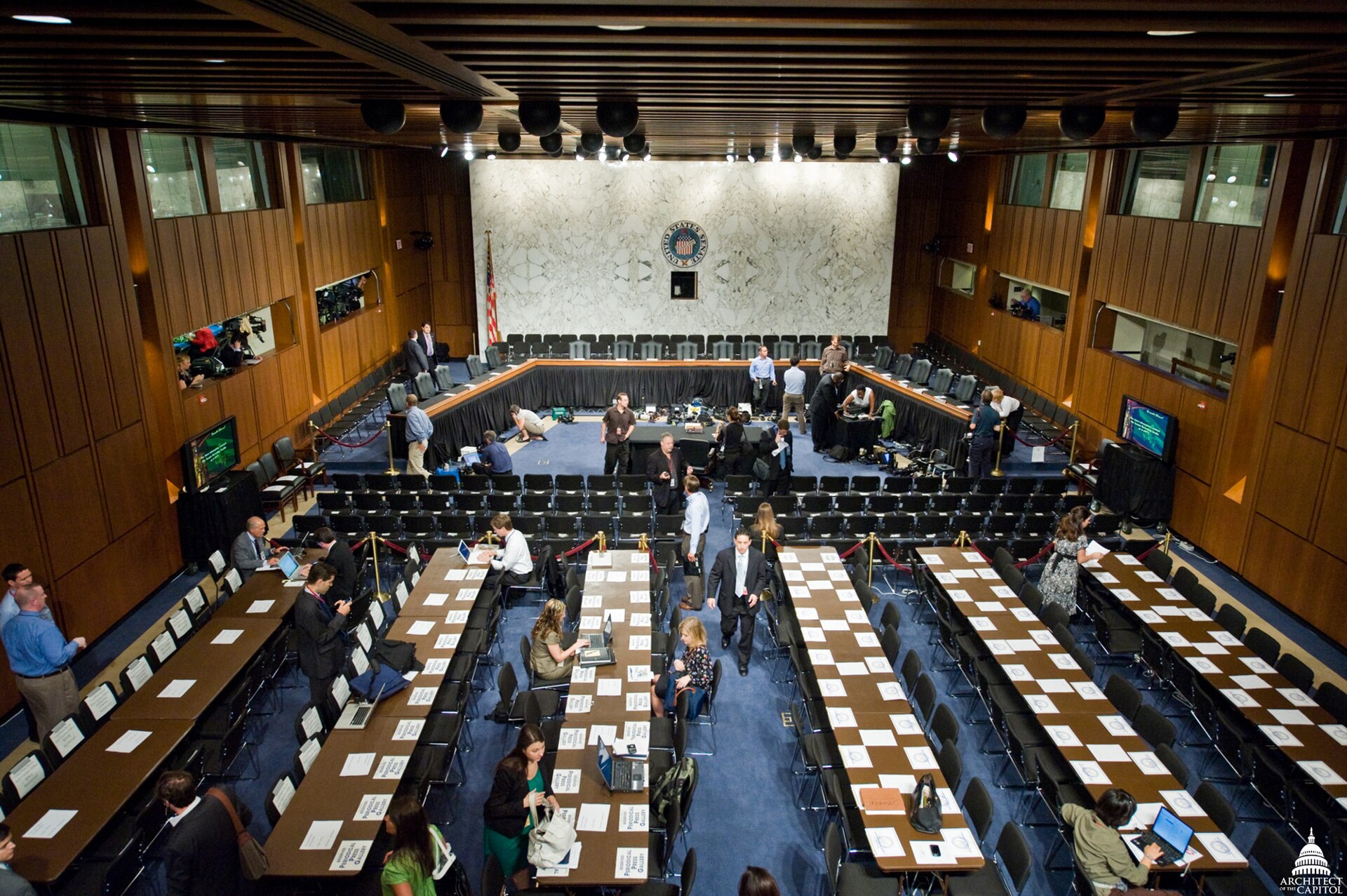
Medicare decisions are split among five kinds of decision makers. Knowing which one owns a question saves time, because a letter to the wrong office can be polite, accurate and useless. Congress writes the law; the Centers for Medicare & Medicaid Services (CMS), part of the Department of Health and Human Services (HHS), writes rules and sets payment; private Medicare Administrative Contractors process claims and write local coverage policies; advisory bodies recommend; and the State of Idaho regulates the parts of the market federal law leaves to states.
Congress writes the law
Title XVIII of the Social Security Act is the Medicare statute. Who is eligible, what Part A and Part B cover, the payroll tax rate, the Part B premium formula (25 percent of program cost for most people), the Medicare Advantage payment framework, the Part D drug benefit and its out-of-pocket cap, and most payment updates for hospitals and doctors are set or bounded by statute. Only Congress can change them. Three committees do most of the work: Senate Finance, House Ways and Means, and House Energy and Commerce. A bill becomes Medicare law the same way any bill does; the general process is in Federal Laws and Rules.
CMS writes the rules and sets payment
Within the limits of the statute, CMS decides a great deal: the yearly payment rates for hospitals, doctors, home health agencies, dialysis centers and nursing homes; the rules Medicare Advantage and Part D plans must follow; the annual Medicare Advantage payment rates; national coverage decisions for new tests and treatments; and the Part B premium, which it calculates from the statutory formula and publishes each fall. The 2027 standard Part B premium of $209.40 a month and deductible of $292, for example, were announced by CMS on Nov. 17, 2026 and published in a notice in the Federal Register on Nov. 19, 2026.22
Contractors process claims and write local coverage
Claims from Idaho hospitals, doctors and other Part A and Part B providers are processed by Noridian Healthcare Solutions, the Medicare Administrative Contractor for Jurisdiction F. CMS announced on Aug. 20, 2025 that Noridian, the incumbent, won the new Jurisdiction F contract covering Alaska, Arizona, Idaho, Montana, North Dakota, Oregon, South Dakota, Utah, Washington and Wyoming, with a base year and six option years worth about $556.4 million in all.23 Contractors write local coverage determinations (LCDs) that say when a service is covered in their jurisdiction, and those go through their own public comment process, covered below.
Advisers recommend; they do not decide
The Medicare Payment Advisory Commission (MedPAC) advises Congress. Federal advisory panels, such as the Advisory Panel on Hospital Outpatient Payment and the Healthcare Advisory Committee, which held its first public meeting in May 2026, advise the HHS Secretary and CMS. The Medicare Trustees report each year on the trust funds. None of them can change a payment or a benefit, but their reports and recommendations are often what Congress and CMS cite when they do.
Idaho regulates what federal law leaves to the state
The State of Idaho licenses insurance companies and agents, sets standards for Medicare supplement (Medigap) policies within the federal framework, investigates complaints against agents, and runs SHIBA. Idaho Medicaid pays Medicare premiums and some cost sharing for low-income people who qualify for both programs (dual eligibles). The state has almost no power over what Medicare Advantage plans cover or how they handle prior authorization, because of the federal preemption rule discussed later in this lesson.
| Decision | Who makes it | Legal basis | Where the public takes part |
|---|---|---|---|
| Part B premium and deductible for next year | CMS, by formula | Social Security Act section 1839 | No comment period; the formula is set by statute (Nov. 19, 2026 notice for 2027)22 |
| Medicare Advantage payment rates | CMS | Section 1853(b) | Advance Notice comments, at least 30 days (2026: Jan. 26 to Feb. 25)243 |
| Rules for MA and Part D plans (marketing, star ratings, enrollment) | CMS | Section 1871; 42 CFR parts 422 and 423 | Proposed rule comments, at least 60 days1 |
| Yearly payment rates for hospitals and doctors | CMS | Section 1871 and each payment system's statute | Proposed rule comments; some final rules take further comment7 |
| National coverage of a new service | CMS | Section 1862(l) | 30-day comment on the proposed decision25 |
| Local coverage in Idaho | Noridian (Jurisdiction F) | Section 1862(l)(5)(D) | Comments on proposed LCDs2523 |
| New benefits, eligibility, taxes, the Part D cap | Congress | Title XVIII | Contact members; committee hearings and markups |
| Medigap standards sold in Idaho | Idaho Legislature and Department of Insurance | Idaho Code title 41, ch. 44; IDAPA 18.04.10 | Legislative hearings; rulemaking comments1926 |
How CMS makes a Medicare rule
Medicare has its own rulemaking statute, stricter than the general federal one. The Administrative Procedure Act (5 U.S.C. 553) sets the baseline for all agencies: publish a notice of proposed rulemaking, let the public comment, consider "the relevant matter presented," and explain the final rule with "a concise general statement of their basis and purpose."27 Medicare adds to that.
Section 1871: the 60-day rule and the logical-outgrowth test
Social Security Act section 1871 (42 U.S.C. 1395hh) contains four requirements that matter to anyone who wants a say:1
- Anything binding must be a regulation. Under section 1871(a)(2), no rule, requirement or other statement of policy that establishes or changes a substantive legal standard governing the scope of benefits, payment for services or eligibility takes effect unless it is issued as a regulation. National coverage determinations are an exception with their own process.
- At least 60 days to comment. Section 1871(b)(1) requires a proposed rule in the Federal Register and "a period of not less than 60 days for public comment," with listed exceptions. The general federal law sets no minimum.
- A final rule must grow out of the proposal. Under section 1871(a)(4), a provision in a final rule that is not a "logical outgrowth" of the proposed rule is treated as a new proposal and needs its own comment period before it can take effect. This is why CMS proposals so often ask for comment on alternatives: it keeps those options open for the final rule.
- A three-year clock. Section 1871(a)(3) requires CMS to publish a regular timeline for final rules, generally no longer than three years after a proposed rule except in exceptional circumstances.
In Azar v. Allina Health Services, decided June 3, 2019, the Supreme Court held 7 to 1 (Justice Gorsuch writing; Justice Breyer dissenting; Justice Kavanaugh not participating) that section 1871 means what it says. HHS had posted on a website, without notice and comment, a 2014 policy of counting Medicare Advantage (Part C) patients in the "Medicare fraction" used to calculate extra payments to hospitals that serve many low-income patients. The Court said the government had "not identified a lawful excuse for neglecting its statutory notice-and-comment obligations" and the policy "must be vacated."2 The practical lesson for the public: when CMS changes a Medicare payment or coverage standard, the comment period is a legal requirement, and skipping it can undo the policy.
The annual payment rules and their 2026 dates
Most Medicare payment systems are updated every year by a proposed rule in spring or summer and a final rule a few months later. The table lists the 2026 cycle as published in the Federal Register. The docket number in each row (for example CMS-1848) is how a rule is found on regulations.gov; the letter at the end tells the stage: P for proposed, F for final, FC for final with comment period, CN for correction, NC for a notice with comment.
| Rule (payment year) | Docket | Proposed rule published | Comments due | Final rule published | Takes effect |
|---|---|---|---|---|---|
| Medicare Advantage and Part D policy and technical changes (contract year 2027) | CMS-4212 | Nov. 28, 2025 (90 FR 54894) | Jan. 26, 2026 | April 6, 2026 (91 FR 17384) | June 1, 2026; most provisions apply to 2027 plans285 |
| MA and Part D Advance Notice and Rate Announcement (2027) | CMS-2026-0034 | Jan. 26, 2026 (Advance Notice) | Feb. 25, 2026 | April 6, 2026 (Rate Announcement) | Jan. 1, 202734 |
| Hospital inpatient (IPPS) and long-term care hospitals (FY 2027) | CMS-1849 | April 14, 2026 (91 FR 19312) | June 9, 2026 (as corrected) | Aug. 4, 2026 (91 FR 49570) | Oct. 1, 2026293031 |
| Skilled nursing, inpatient rehabilitation, inpatient psychiatric (FY 2027) | several | April 6 and 7, 2026 | June 1, 2026 | July 31 and Aug. 3, 2026 | Oct. 1, 202632 |
| Dialysis (ESRD) payment system (CY 2027) | several | June 26, 2026 | Aug. 24, 2026 | Oct. 30, 2026 | Jan. 1, 202732 |
| Home health (CY 2027) | several | July 6, 2026 | Aug. 31, 2026 | Nov. 9, 2026 | Jan. 1, 202732 |
| Hospital outpatient and ambulatory surgical centers (OPPS, CY 2027) | CMS-1850 | July 7, 2026 (91 FR 41734) | Aug. 31, 2026 | Nov. 6, 2026 (91 FR 70284), with comment to Jan. 4, 2027 | Jan. 1, 2027337 |
| Physician Fee Schedule (CY 2027) | CMS-1848 | July 16, 2026 (91 FR 43842) | Sept. 14, 2026 | Nov. 9, 2026 (91 FR 70992) | Jan. 1, 20273435 |
| Part B premium and deductible (2027) | CMS-8094-N | Notice only | None | Nov. 19, 2026 (91 FR 74570) | Jan. 1, 202722 |
A typo in a deadline, and why dates are checked twice
The fiscal year 2027 hospital inpatient proposed rule appeared in the Federal Register on April 14, 2026 with a comment deadline of April 10, 2026, four days before it was published. Two days later, on April 16, CMS published a correction stating that the date "April 10, 2026" should read "June 9, 2026."2930 A second correction notice followed on May 22, 2026, fixing other technical and typographical errors.36 The episode is small, but it explains two habits of people who comment for a living: read the DATES section of the Federal Register notice itself, and search the Federal Register for corrections before relying on a date.
What CMS does with the comments
The final rule must respond to significant comments. The April 6, 2026 Medicare Advantage and Part D final rule shows how that looks on paper. CMS wrote that it "received approximately 42,632 timely pieces of correspondence" on the proposal, that summaries of comments within the scope of the rule and its responses appear section by section, that some comments fell outside the rule's scope and were not addressed, and that it did not respond specifically to comments on its requests for information.5 The same passage says CMS was "not finalizing the proposal to establish a special enrollment period for provider terminations," adding that it acknowledged "the broad interest related to this topic" and would consider future rulemaking.5 For Idaho, where hospital and clinic contract disputes with Medicare Advantage plans can change which doctors a plan covers (see The 2027 Plan Year in Idaho), that decision means the existing enrollment rules stay in place for now.
The same final rule adopted some proposals with changes. CMS finalized a requirement that plans publish their own eligibility criteria for special supplemental benefits for the chronically ill, and it finalized rules for supplemental benefits delivered on debit cards, but dropped a proposed ban on advertising the dollar value of those benefits.5 Those are the kinds of adjustments comments tend to produce: a change in scope, a delay or a narrower definition, more often than a complete reversal.
How many comments rules draw
Comment counts on the Medicare documents charted below vary by a factor of more than 60. Two rules drew tens of thousands of comments in this cycle: the Medicare Advantage and Part D policy proposal and the Physician Fee Schedule. The hospital inpatient and outpatient proposals, which affect fewer and more specialized commenters, drew about 1,100 and 2,300. The counts in the chart are the numbers of comments posted on regulations.gov as shown in the FederalRegister.gov record for each document on Nov. 21, 2026. They can differ from an agency's own count, because the agency counts pieces of correspondence received (by mail as well as online), some comments contain many signatures, and an agency may hold back duplicates or comments it does not post.375
The Medicare Advantage and Part D rate cycle
Medicare Advantage plans are paid a monthly amount per enrollee, built from county benchmarks, the plan's bid, risk scores and quality bonuses (lesson 04 explains each piece). The method for the coming year is set through a separate statutory process that runs on a fixed calendar every year, and it is one of the few Medicare decisions where a small change in a technical assumption moves billions of dollars.
What the statute requires
Social Security Act section 1853(b) (42 U.S.C. 1395w-23(b)) requires CMS to announce the payment rates for the coming year "not later than the first Monday in April before the calendar year concerned." At least 60 days before that announcement, CMS must give notice of proposed changes in its methods and an opportunity "of no less than 30 days" to comment.24 The two documents are called the Advance Notice and the Rate Announcement. Plans then submit bids "not later than the first Monday in June" under 42 CFR 422.254(a)(1) for Medicare Advantage and 42 CFR 423.265(b)(1) for Part D.38 In 2026, the first Monday in April was April 6 and the first Monday in June was June 1.
The 2027 cycle in numbers
CMS released the 2027 Advance Notice on Jan. 26, 2026. It projected a net average year-over-year payment change of 0.09 percent, which CMS said would be "over $700 million" in payments to plans, or 2.54 percent including the expected rise in risk scores. Comments were due at 11:59 p.m. Eastern time on Feb. 25, 2026, through regulations.gov docket CMS-2026-0034.3
The Rate Announcement came April 6, 2026. CMS projected an average increase of 2.48 percent, "over $13 billion," or 4.98 percent including risk score trend. The biggest difference from the Advance Notice: CMS did not adopt the updated Part C risk adjustment model it had proposed and kept the 2024 model for 2027, while excluding diagnoses from audio-only visits and from chart review records not linked to a visit (with an exception for people who switch from one Medicare Advantage organization to another).439 The fact sheet says only that CMS "received a wide variety of comments"; the full Rate Announcement lists comments and responses by topic.439
Who comments on the rate notice, and why it matters to Idaho
The Advance Notice is a technical document about risk adjustment models, growth rates, star rating measures and Part D risk models, and most comments come from insurers, trade associations, actuaries, hospital and physician groups and beneficiary advocates. Individual beneficiaries rarely comment on it. The outcome reaches Idaho directly, though: in July 2026, 191,725 of Idaho's 417,781 Medicare enrollees (45.9 percent, our calculation) were in Medicare Advantage and other health plans, and the payment rate CMS sets is the money from which those plans fund extra benefits, lower premiums and payments to Idaho hospitals and doctors.21 The fairness questions about Medicare Advantage payment, including MedPAC's estimates of payment relative to Original Medicare and the industry's response, are covered in lesson 04; this lesson's point is narrower: the methods are proposed in public, comments are taken, and the final can differ from the draft by billions of dollars.
How to comment on a Medicare rule
Anyone may comment on a proposed Medicare rule: a beneficiary, a SHIBA volunteer, a county commissioner, a pharmacist, a hospital, an insurer, an insurance agent or a reporter writing for a trade group. CMS's Federal Register notices list three ways to submit, and ask commenters to "choose only one": electronically on regulations.gov, by regular mail to a P.O. box in Baltimore, or by express or overnight mail to CMS headquarters. Mailed comments count only if they arrive before the deadline.78
- Find the document. Search the Federal Register (federalregister.gov) or regulations.gov for the topic or the file code, such as CMS-6098-P. Each Medicare rule has a file code (for example CMS-1850-FC) and a regulations.gov docket number (for example CMS-2026-2344). Use the Federal Register version as the official text.
- Read the DATES and ADDRESSES sections first. They give the deadline (often 5 p.m. or 11:59 p.m. Eastern time), the file code to cite, and the docket. Then search for any correction notice, as the hospital inpatient example above shows.
- Read the plain-language summary and the section you care about. Since a 2023 amendment (P.L. 118-9, July 25, 2023), the Administrative Procedure Act requires each proposed rule notice to include the web address of a plain-language summary of no more than 100 words posted on regulations.gov.27 The CRUSH proposed rule, for example, points readers to its summary on regulations.gov.8 Long Medicare rules have a table of contents; most commenters address one or two sections.
- Name the provision. Cite the section of the preamble or the CFR section the comment is about (for example, the CFR section number the proposal would change, or the heading of the preamble section). CMS sorts comments by topic, and a comment that names its topic is easier to summarize accurately.
- Say who you are and what you know. State your role (Medicare beneficiary in Twin Falls County, SHIBA volunteer, rural pharmacy owner in Rupert) and any financial interest. Firsthand facts, numbers and examples carry more weight than adjectives.
- Answer the agency's questions. Proposed rules often ask specific questions ("We seek comment on..."). Answers to those questions are the comments most likely to be summarized and answered in the final rule.
- Offer an alternative. Because of the logical-outgrowth rule in section 1871(a)(4), an alternative raised in comments and discussed by CMS can be adopted in the final rule without a new proposal.1
- Leave out private information. CMS posts comments publicly, "including any personally identifiable or confidential business information that is included in a comment." Do not include a Medicare number, Social Security number, birth date or medical details you would not want published.8
- Submit and keep the tracking number. Regulations.gov gives a comment tracking number. Comments usually appear on the docket days or weeks later. CMS says it will not post comments that threaten individuals or institutions.8
- Read the final rule. The final rule's preamble summarizes comments and gives CMS's response. That response, and whether the final changed, is the measure of whether the comment period worked.
Form letters and mass comments
Trade groups, unions, advocacy groups and companies often organize campaigns in which many people send the same or nearly the same letter. CMS's 2026 notices say it "continues to encourage individuals not to submit duplicative comments" but will "post acceptable comments from multiple unique commenters even if the content is identical or nearly identical to other comments."8 Agencies generally treat a rule's comment period as a search for information and arguments, not a vote; a thousand identical letters show that many people hold a view, while one detailed letter from an Idaho clinic with its own claim-denial data may give CMS something it can use. Both kinds appear in Medicare dockets.
Comment windows open as of Nov. 22, 2026
| Document | File code and docket | Published | Comments due | What it covers |
|---|---|---|---|---|
| Request for information on Part D pharmacy contract terms | CMS-4217-NC; CMS-2026-3037 | Sept. 24, 2026 (91 FR 60568) | Nov. 23, 2026 | Standards for "reasonable and relevant" pharmacy contract terms that section 6223 of P.L. 119-75 requires for plan years beginning Jan. 1, 20296 |
| Hospital outpatient and ASC final rule with comment period (CY 2027) | CMS-1850-FC; CMS-2026-2344 | Nov. 6, 2026 (91 FR 70284) | Jan. 4, 2027 | Final rule effective Jan. 1, 2027; CMS takes further comment as the rule specifies7 |
| Program integrity proposed rule (CRUSH) | CMS-6098-P; CMS-2026-0826 | Nov. 19, 2026 (91 FR 74680) | Jan. 19, 2027 | Provider enrollment, medical review, investigations and other oversight in Medicare, Medicaid, CHIP and the Marketplace; 167 Federal Register pages8 |
The fraud side of the CRUSH proposal, and how beneficiaries report suspected fraud, is covered in lesson 11. Providers in Idaho, especially small clinics, home health agencies and medical equipment suppliers, are the parties most directly affected by enrollment and medical review rules, and their comments are the ones that can describe how a proposal would work in a rural practice.
Coverage decisions: national and local
Whether Medicare pays for a particular test, device or treatment is often decided through a coverage determination rather than a rule. Both national and local coverage decisions have public comment steps written into the statute.
National coverage determinations
A national coverage determination (NCD) decides whether an item or service is covered nationally. Social Security Act section 1862(l) (42 U.S.C. 1395y(l)) sets the clock: a decision on a request is due within 6 months, or 9 months if it needs an outside technology assessment or a meeting of the Medicare coverage advisory committee. CMS must post a proposed decision and allow "a 30-day period for public comment," then issue a final decision within 60 days after the comment period ends, including "summaries of the public comments received and responses to such comments."25 CMS posts open requests, proposed decision memos and comment links on its coverage pages.40
Local coverage determinations in Jurisdiction F
Local coverage determinations are written by the Medicare Administrative Contractors. For Idaho Part A and Part B providers, that contractor is Noridian Healthcare Solutions under the Jurisdiction F contract.23 Section 1862(l)(5)(D) requires each contractor to post a final LCD on its website and the Medicare website "at least 45 days before the effective date," together with where and when the proposed determination was first made public, links to the proposal and to its "response to comments," a summary of the evidence considered, and the rationale.25 An Idaho physician, hospital or patient group that disagrees with a proposed LCD can comment during the contractor's comment period; once final, the posted response to comments is a public record of what the contractor heard.
Advisory bodies and public meetings
MedPAC
The Medicare Payment Advisory Commission was created by the Balanced Budget Act of 1997 (P.L. 105-33, enacted Aug. 5, 1997) and is governed by Social Security Act section 1805 (42 U.S.C. 1395b-6). It has 17 members "appointed by the Comptroller General" (the head of the Government Accountability Office) for staggered three-year terms. It sends Congress a report by March 15 each year on payment policy and another by June 15 on issues affecting Medicare, and it must review and comment on certain HHS reports to Congress.41
MedPAC's deliberations are public. Its meeting cycle runs from September through April, usually about seven meetings; agendas and registration links are posted about a week ahead, transcripts and slides three to five days after. The public can send "official public comment letters signed and submitted in a pdf format" to meetingcomments@medpac.gov, and MedPAC posts them on its website. Its next public meetings are set for Dec. 10 and 11, 2026; Jan. 14 and 15, 2027; March 4 and 5, 2027; and April 8 and 9, 2027.42 The March 2027 report will reflect votes taken at the winter meetings, so comments sent in December and January reach commissioners before they vote.
Federal advisory panels and committees
Several CMS advisory panels meet in public under the Federal Advisory Committee Act, and their meeting notices appear in the Federal Register:
- Advisory Panel on Hospital Outpatient Payment. It advises on the clinical integrity of the payment groups and weights in the hospital outpatient and ambulatory surgical center systems and on supervision of outpatient therapeutic services. CMS's July 8, 2026 notice announced its 2026 meeting as a virtual meeting on Aug. 24, 2026, open to the public.43
- Medicare Advisory Panel on Clinical Diagnostic Laboratory Tests. CMS announced its rechartering, membership and a September 2026 meeting, along with a separate public meeting on new and reconsidered laboratory test codes for the 2027 Clinical Laboratory Fee Schedule, in notices of May 1, 2026.44
- Healthcare Advisory Committee. This committee advises the HHS Secretary and the CMS Administrator on programs and policies consistent with the executive order that established the President's Make America Healthy Again Commission. It held its first public meeting on May 18, 2026; its fiscal year 2026 to 2027 virtual meetings are Aug. 31 and Nov. 9, 2026, and Feb. 22 and May 10, 2027, all open to the public.45
- Coding and add-on payment meetings. CMS also holds public meetings on Healthcare Common Procedure Coding System (HCPCS) Level II coding applications and a town hall on new technology add-on payment applications for fiscal year 2028 (notices of Sept. 8 and Sept. 16, 2026).46
CMS Open Door Forums
CMS runs Open Door Forums, recurring calls by topic (for example hospitals, physicians, home health, rural health) where CMS staff present new policies and take questions. CMS describes them as open to anyone who works with CMS or with consumers who rely on CMS services, and anyone may join the mailing list to be told when calls are scheduled.47 Forums are for information and questions; they are not a substitute for a written comment on a proposed rule, which is what the agency must consider and answer.
The Trustees and the "Medicare funding warning"
The Medicare Trustees report each year on the Hospital Insurance (HI) and Supplementary Medical Insurance (SMI) trust funds. Under title VIII of the Medicare Prescription Drug, Improvement, and Modernization Act of 2003 (P.L. 108-173, Dec. 8, 2003), when the Trustees find in two consecutive reports that general revenue will exceed 45 percent of Medicare spending within seven years, a "Medicare funding warning" is issued and the President is required to send Congress legislation to respond.48 The Social Security Administration's summary of the 2026 reports says this is "the ninth consecutive year in which two successive determinations have resulted in a funding warning," and projects HI trust fund depletion in the second quarter of 2033, when income would cover 89 percent of scheduled benefits.49 The numbers and what they mean are in lesson 10; for this lesson, the point is that the warning is a public trigger written into law that the public can hold elected officials to.
Congress and Idaho's delegation
Medicare benefits, taxes and most payment formulas change only by act of Congress. In the House, Medicare Part A is under the Ways and Means Committee, while Part B is shared by Ways and Means and Energy and Commerce; in the Senate, the Finance Committee has Medicare. The Appropriations Committees fund CMS's administrative budget and grant programs such as SHIBA's federal grant; the Medicare benefit itself is mandatory spending that does not go through annual appropriations.
Where Idaho's four members sit (November 2026)
| Member | Medicare-related seat | Other leadership role | Record source |
|---|---|---|---|
| Sen. Mike Crapo (R) | Chairman, Senate Finance Committee (Medicare jurisdiction in the Senate) | None listed here | Senate Finance Committee membership page9 |
| Sen. Jim Risch (R) | Not a member of Finance | Chairman, Senate Foreign Relations Committee | Foreign Relations membership page12 |
| Rep. Mike Simpson (R), 2nd District | Member, Appropriations Subcommittee on Labor, Health and Human Services, Education, and Related Agencies (funds CMS administration and ACL grants) | Chairman, Appropriations Subcommittee on Interior, Environment, and Related Agencies | Clerk of the House committee pages1050 |
| Rep. Russ Fulcher (R), 1st District | Member, Energy and Commerce Committee (shares Part B jurisdiction); not on its Health Subcommittee | Vice chairman, Subcommittee on Commerce, Manufacturing, and Trade | Energy and Commerce member page; Clerk of the House5111 |
No Idaho member sits on House Ways and Means.52 The 2026 general election on Nov. 3 returned all three Idaho incumbents who were on the ballot: news reports of unofficial results gave Risch about 56 percent over independent Todd Achilles (about 36 percent), Simpson about 50 percent over Democrat Ellie Gilbreath (about 42 percent) and Fulcher about 62.5 percent at press time over Democrat Kaylee Peterson. Official canvassed totals should be checked with the Idaho Secretary of State. The new terms begin Jan. 3, 2027, and committee assignments for the 120th Congress are made after it convenes, so the roles in the table are those of the 119th Congress.53


A bill traced: how the 2026 Medicare extenders became law
Many Medicare changes now arrive in large spending packages rather than stand-alone Medicare bills. The Consolidated Appropriations Act, 2026 (H.R. 7148) is the newest example. Introduced Jan. 20, 2026, it passed the House on Jan. 22 by 341 to 88 (roll call 45), passed the Senate with amendments on Jan. 30 by 71 to 29 (record vote 20), and the House agreed to the Senate amendments on Feb. 3 by 217 to 214 (roll call 53). The President signed it the same day, and it became P.L. 119-75.54 The vote records show Crapo and Risch voted yea in the Senate and Fulcher and Simpson voted yea on both House votes.13
Its Medicare provisions, as described in the Senate Finance Committee's section-by-section summary, include:14
- Section 6206: $100 million for State Health Insurance Assistance Programs (SHIBA in Idaho), Area Agencies on Aging, Aging and Disability Resource Centers and a national benefits outreach contract through Dec. 31, 2027 (the "MIPPA" outreach money discussed below).
- Section 6209: Medicare telehealth flexibilities extended through Dec. 31, 2027, with new billing modifiers for certain telehealth services.
- Section 6219: no cost sharing for generic drugs for Part D enrollees eligible for the low-income subsidy (Extra Help).
- Section 6220: Medicare Advantage plans must keep accurate provider directories on a public website starting in plan year 2028, report on directory accuracy and provide cost-sharing protections.
- Section 6221: Medicare coverage of multi-cancer early detection screening tests, effective Jan. 1, 2029, subject to conditions.
- Section 6223: Part D plans must let any pharmacy that meets standard terms join the network, and those terms must be "reasonable and relevant" (the subject of the open CMS request for information above).
- Section 6224: pharmacy benefit manager (PBM) rules for Part D, including delinking PBM pay from drug prices.
- Section 6227: the 2 percent Medicare sequestration cut extended through the first five months of fiscal year 2033.
Section 6221 shows how a member's bill can travel. Crapo introduced S. 339, the Nancy Gardner Sewell Medicare Multi-Cancer Early Detection Screening Coverage Act, on Jan. 30, 2025, and it was referred to the Finance Committee.55 The same subject, Medicare coverage of multi-cancer early detection tests, was enacted a year later as section 6221 of the spending law.14 Comparing the enacted text with the introduced bill on congress.gov shows what changed along the way, including the 2029 start date in the enacted version.
How constituents reach the delegation
- Pick the right member. Every Idahoan has two senators and one House member. The 1st District covers the panhandle and western Idaho, including Kootenai, Nez Perce and Idaho counties; the 2nd District covers eastern and south-central Idaho, including Bonneville, Bannock and the Magic Valley counties. The line between the two runs through the Treasure Valley, so check the district by address on the House's "Find Your Representative" page before writing.
- Use the member's own web form or district office. Each member's website lists a contact form and the addresses of offices in Idaho. Staff log constituent messages by topic, so a message that names one bill number or one issue is counted more cleanly.
- Ask for casework when the problem is personal. Congressional offices employ caseworkers who contact federal agencies, including CMS and the Social Security Administration, on a constituent's behalf, usually after the constituent signs a privacy release. Casework does not change the law, but it can move a stuck enrollment or premium problem.
- Follow the committee record. Senate Finance, Ways and Means and Energy and Commerce post hearing notices, witness testimony and markup records. Written statements for the hearing record are accepted by many committees for a short period after a hearing; each hearing notice states the rules.
- Check votes and cosponsorships yourself. Roll calls are posted by the Clerk of the House and the Senate, and bill sponsors and cosponsors are on congress.gov. That is how this lesson confirmed the votes on H.R. 7148.
Idaho and its neighbors on the Medicare committees
Idaho has 0.59 percent of U.S. Medicare enrollees (our calculation from July 2026 CMS counts) but holds the Senate Finance chair. Washington, Oregon, Nevada and Utah have members on the House Medicare committees or their health subcommittees; Montana and Wyoming have members on Senate Finance but none on the House committees.2195211
| State | Medicare enrollees, July 2026 | MA and other plans share | Senate Finance | House Ways and Means | House Energy and Commerce |
|---|---|---|---|---|---|
| Idaho | 417,781 | 45.9% | Crapo (chairman) | None | Fulcher |
| Utah | 491,386 | 55.0% | None | Blake Moore (Health Subcommittee) | None |
| Oregon | 973,880 | 53.8% | Ron Wyden (ranking member) | None | Cliff Bentz (Health Subcommittee) |
| Washington | 1,586,306 | 49.7% | Maria Cantwell | Suzan DelBene | Kim Schrier (Health Subcommittee) |
| Montana | 273,047 | 29.8% | Steve Daines | None | None |
| Wyoming | 133,449 | 15.4% | John Barrasso | None | None |
| Nevada | 630,832 | 52.0% | Catherine Cortez Masto | Steven Horsford (Health Subcommittee) | None |
| United States | 70,736,624 | 51.1% | 27 members | See committee rosters | |
Shares are our calculations: Medicare Advantage and other health plan enrollees divided by total enrollees in the CMS Medicare Monthly Enrollment file for July 2026. The "other" category includes cost plans and other non-Original Medicare health plans as CMS groups them. Committee membership is from the Senate Finance membership page and the Clerk of the House rosters read Nov. 21, 2026; the national total is CMS's national row.2195211
Idaho's own levers
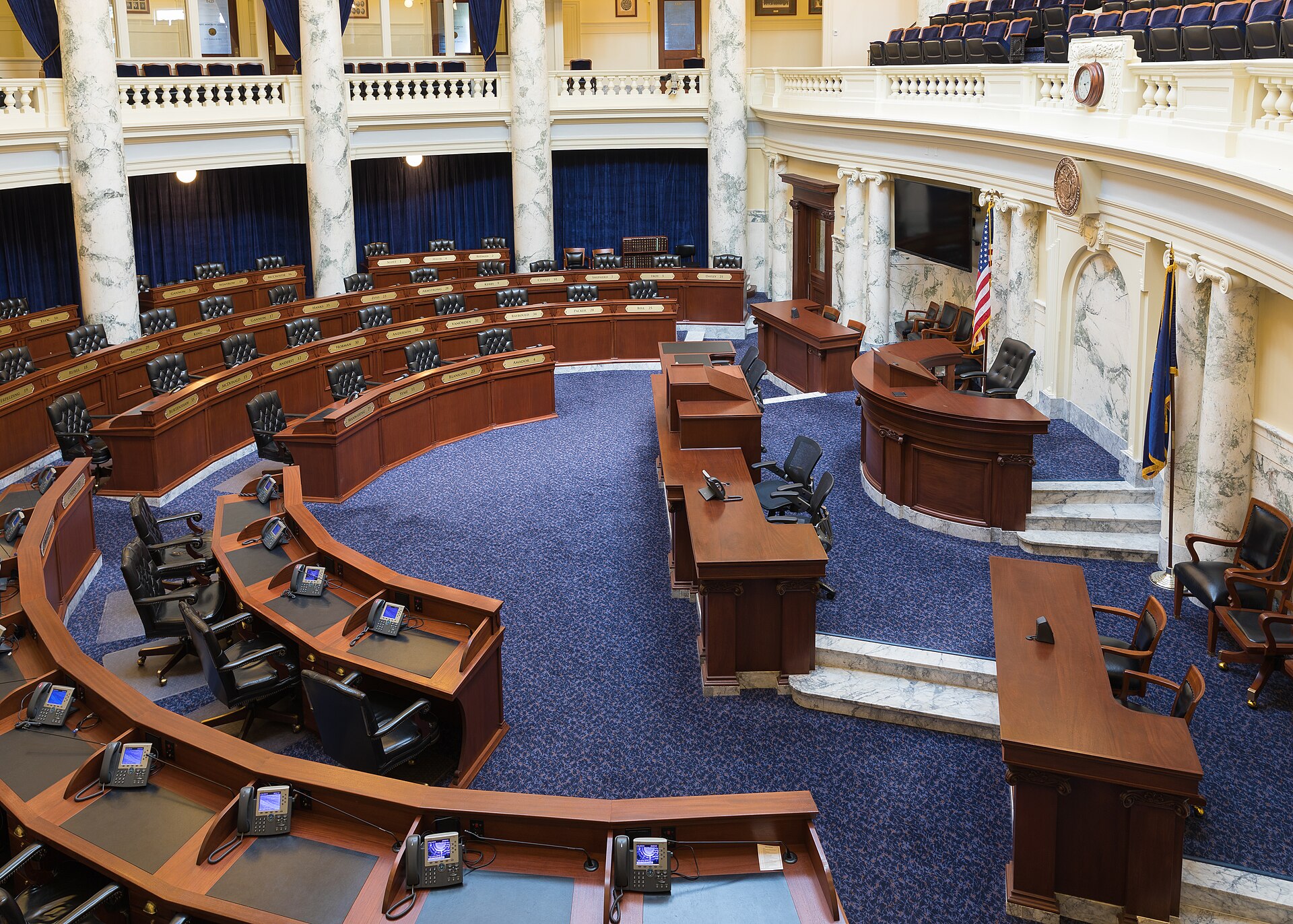
Medicare is a federal program, and most of it is out of the Idaho Legislature's reach. Four state levers remain: insurance regulation (Medigap, agent licensing and complaints), state rules, the state budget for the Department of Insurance and Medicaid, and the state's own studies and hearings.

The preemption line
42 CFR 422.402, titled "Federal preemption of State law," reads: "The standards established under this part supersede any State law or regulation (other than State licensing laws or State laws relating to plan solvency) with respect to the MA plans that are offered by MA organizations."20 In practice, Idaho can license the company that offers a Medicare Advantage plan, check that it can pay its claims, and license and discipline the agents who sell it, but it cannot set the plan's benefits, networks, prior authorization rules or marketing standards. Those are federal, set in 42 CFR part 422 and enforced by CMS.
That line matters for current Idaho debates. In 2026 the Legislature formed the Idaho Health Insurers Working Group, co-chaired by Sen. Mark Harris and Rep. Dustin Manwaring, to "study the performance of health insurers in Idaho," including claim denial rates, "delays in treatment caused by prior authorization decisions" and unpaid accepted claims. It met Aug. 11, Sept. 15 and Oct. 14, 2026, posted its agendas, minutes, recordings and a questionnaire for interested parties, and its web page does not mention Medicare.56 Any state bill that comes out of that work can reach commercial health insurance regulated by the state; under 422.402, it could not change how a Medicare Advantage plan handles prior authorization. Prior authorization in Medicare Advantage is governed by federal rules, including the CMS proposal on prior authorization for drugs published April 14, 2026 (CMS-0062-P, comments due June 15, 2026).57
Medigap is the state's lane
Medicare supplement policies are sold under a federal framework but regulated by states. Idaho Code title 41, chapter 44, the "Medicare Supplement Insurance Minimum Standards" chapter, runs from section 41-4401 (purpose) through 41-4411, covering definitions, policy standards and the Director's authority to make rules (41-4404), loss ratio standards (41-4405), disclosure (41-4406), a free examination period (41-4407), advertising filings (41-4408) and penalties (41-4410).19 The Department of Insurance's rule IDAPA 18.04.10, "Medicare Supplement Insurance Standards," implements that chapter and the NAIC model act, and it is reviewed on the state's eight-year rule review schedule under Idaho Code section 67-5292.26 Questions about open enrollment, guaranteed issue and what Idaho does or does not require beyond federal law are covered in Medigap in Idaho. For having a say, the route is the House and Senate committees that hear insurance bills and the Department of Insurance's rulemaking, which follows Idaho's Administrative Procedure Act; how Idaho rules are made and reviewed is in Idaho Administrative Rules, and testifying in a legislative committee is in Idaho Legislature Committees.
The state budget and Medicaid's share
The Department of Insurance's FY 2025 Performance Report says the agency "is funded entirely by fees collected for licensing insurance producers and companies doing business in Idaho," not by the state general fund, and that although the department collects more than $100 million in premium taxes, "none of those funds are used to support agency operations." (SHIBA also receives the federal grants described below.)16 The Legislature still sets the department's appropriation each year; for fiscal year 2026 it was appropriated 77.5 full-time positions, of which the report places two SHIBA positions in Pocatello and two in Coeur d'Alene.16 The bigger Medicare money in the state budget runs through Idaho Medicaid, which pays Medicare Part B premiums and, for some people, cost sharing for low-income enrollees under federal "buy-in" agreements in Social Security Act section 1843.58 In July 2026, 53,100 Idaho Medicare enrollees were dual eligibles in the CMS count.21 Who qualifies for those Medicare Savings Programs is in Idaho Medicaid lesson 03, and how the state budget is built is in Idaho State Budget.

SHIBA, the Senior Medicare Patrol and the aging network
Most Idahoans who "have a say" in Medicare do it one case at a time: helping a neighbor compare plans, catching a billing error, or teaching a class at the library. Idaho's two federally funded volunteer programs for that work are SHIBA and the Senior Medicare Patrol.
What SHIBA is and who runs it
SHIBA, Senior Health Insurance Benefits Advisors, is Idaho's State Health Insurance Assistance Program (SHIP). It sits in the Consumer Services Bureau of the Idaho Department of Insurance, which the FY 2025 Performance Report says provides "information, counseling, and assistance on Medicare coverage issues to Idaho's Medicare eligible citizens through a network of professional staff, over 100 volunteers, and a help line."16 The help line is 1-800-247-4422. SHIBA counselors meet people in person, by phone and by email, and the program lists Medicare workshops on its events calendar.15 SHIBA says it "does not sell insurance or recommend companies or policies."59
The department's numbers show how much the work has grown. SHIBA logged 8,881 client contacts in state fiscal year 2022, 9,634 in 2023, 9,422 in 2024 and 11,168 in 2025, and reached 2,949, 6,628, 7,643 and 15,243 people through media and outreach in those years.16 From FY 2022 to FY 2025 client contacts rose about 26 percent and outreach about five-fold (our calculation). In an April 29, 2026 release, the department said 95 SHIBA volunteers provided more than 3,446 hours of one-on-one Medicare counseling, valued at more than $119,800 using the Independent Sector's 2026 value of volunteer time, and serve all 44 counties.17 The two reports describe the volunteer corps differently ("over 100" and 95); the counts may be from different dates or definitions.
How SHIBA is paid for: the federal SHIP grant
The national SHIP program was authorized by section 4360 of the Omnibus Budget Reconciliation Act of 1990 (P.L. 101-508). The Congressional Research Service's July 17, 2026 summary reports discretionary SHIP funding of $55,242,000 in each of fiscal years 2024, 2025 and 2026, plus mandatory "MIPPA" funding (named for the Medicare Improvements for Patients and Providers Act of 2008) of $30 million for fiscal 2024 and 2025 combined and $35,013,699 for fiscal 2026 through Dec. 31, 2027 under P.L. 119-75. It reports 10,043 SHIP staff and volunteers nationally from July to December 2025, of whom 48 percent were unpaid volunteers, and nearly 4.3 million beneficiaries served in the April 2022 to March 2023 grant year.60 The mandatory money passes from CMS to the Administration for Community Living (ACL), which administers the grants.6061
Money reaches each state by formula. Under the regulatory formula for the first $10 million, each state gets a fixed $75,000 plus a share weighted 75 percent by Medicare population, 15 percent rural and 10 percent density; ACL's formula for the rest weights 80 percent Medicare population, 10 percent low-income beneficiaries below 150 percent of poverty and 10 percent rural; and the MIPPA formula is two-thirds based on unenrolled people eligible for the Part D low-income subsidy and one-third on rural Part D eligibles. Subject to available funds, no state's total may change by more than 5 percent from one year to the next.60
| Federal award to Idaho | Recipient | Period | Amount |
|---|---|---|---|
| SHIP base grant 90SAPG0096, budget year 1 | Idaho Department of Insurance | From April 1, 2020 | $439,835 (two actions) |
| Same grant, budget year 2 | Idaho Department of Insurance | From April 1, 2021 | $417,843 |
| Same grant, budget year 3 | Idaho Department of Insurance | From April 1, 2022 | $415,423 |
| Same grant, budget year 4 | Idaho Department of Insurance | From April 1, 2023 | $435,477 |
| Same grant, budget year 5 | Idaho Department of Insurance | From April 1, 2024 | $436,054 (two actions) |
| Total obligated on 90SAPG0096 | April 1, 2020 to March 31, 2026 | $2,144,632 | |
| MIPPA "Priority 1 for SHIPs" 2502IDMISH | Idaho Department of Insurance | Sept. 1, 2025 to Aug. 31, 2027 | $144,450 |
| Senior Medicare Patrol 90MPPG0034 | Idaho Commission on Aging | June 1, 2018 to May 31, 2024 | $1,270,719.06 |
The amounts are federal obligations recorded on USAspending.gov, read Nov. 21, 2026.186263 USAspending showed no new obligation on the base grant for a budget year starting April 1, 2025, and we did not find the award that funds SHIBA's base grant after March 31, 2026; that may be a new award number not yet indexed under the program search we used. The CRS summary says the newest five-year SHIP grant period began April 1, 2025 and is to end March 31, 2030, which suggests a new award exists for that period.60
How we figured it: SHIBA reach and grant dollars per enrollee
Contacts per 1,000 enrollees. SHIBA's 11,168 client contacts in state fiscal year 2025 (July 1, 2024 to June 30, 2025), from the Department of Insurance report, divided by 403,012 Idaho Medicare enrollees in January 2025, the middle of that fiscal year, from the CMS Medicare Monthly Enrollment file, times 1,000: about 27.7 contacts per 1,000 enrollees. A contact is not a unique person; one person can be several contacts.1621
Enrollees per volunteer. 417,781 Idaho enrollees (July 2026) divided by the 95 volunteers in the department's April 29, 2026 release: about 4,398 enrollees per volunteer. Staff are not counted.1721
Federal SHIP base grant per enrollee. Idaho's base grant obligation for the budget year beginning April 1, 2024 ($436,054) divided by Idaho's 2024 Medicare enrollment in the CMS file's annual row (394,620): about $1.10 per enrollee. For comparison, national discretionary SHIP funding for fiscal 2024 ($55,242,000) divided by the 2024 national annual row (67,995,116): about $0.81. The two are not perfectly comparable (budget year vs. fiscal year; the national figure includes amounts not distributed to states and the national row may include territories), and the fixed $75,000 per state in the formula raises the per-person amount for small states.186021
Idaho's share of U.S. enrollees. 417,781 divided by 70,736,624 (July 2026): 0.59 percent.21
Volunteering with SHIBA
SHIBA's volunteer page says counselors and educators are trained to help people sort out Medicare questions; some volunteers counsel by phone or in person after an appointment is set, others do data entry and appointment reminders, greet people at events or give presentations. Training starts online at the volunteer's own pace, and a new volunteer then shadows, or is shadowed by, a certified volunteer, partner or staff member.59 The page does not list time commitments or background check rules; ask SHIBA about both when applying.
- Read the volunteer page at doi.idaho.gov/shiba and choose a role: counseling, education and presentations, events, or office support.59
- Apply through the online volunteer application linked from that page, or by calling 1-800-247-4422.59
- Complete the online training at your own pace.
- Shadow a certified volunteer, partner or staff member before counseling on your own.
- Disclose conflicts. SHIBA does not sell insurance or recommend companies or policies; anyone who also sells insurance should raise that with the program before volunteering, because a counselor's role and a sales agent's role are different.59
The events listed on SHIBA's online calendar in November 2026 were Medicare workshops at public libraries in Coeur d'Alene, Lewiston and Moscow from December 2026 through September 2027; none was listed for the Treasure Valley or the Magic Valley, where the seven counties of Twin Falls, Cassia, Minidoka, Gooding, Lincoln, Camas and Blaine had 39,902 Medicare enrollees in July 2026 (our sum).1521 The calendar shows scheduled public events only; counseling by phone and appointment is available statewide.
The Senior Medicare Patrol
The Senior Medicare Patrol (SMP) program trains volunteers to help beneficiaries prevent, detect and report Medicare fraud, errors and abuse. In Idaho, the program is presented on the Idaho Commission on Aging's website, which says it "relies on volunteers in our local communities" and invites people to "Volunteer and become an SMP Team Member!"; the page lists the commission's numbers, (208) 334-3833 and (877) 471-2777.64 Federal records show the Idaho Commission on Aging held the SMP grant from June 1, 2018 to May 31, 2024 ($1,270,719.06 obligated); we did not find the current award in USAspending.63 The national SMP Resource Center (smpresource.org) supports all state programs. How SMP volunteers spot fraud is in lesson 11.
Area Agencies on Aging
The Idaho Commission on Aging contracts with regional Area Agencies on Aging, which run information and assistance lines, caregiver programs and, with MIPPA outreach money, help low-income people apply for Extra Help and the Medicare Savings Programs. The commission's online directory lets a reader filter agencies by county; for example, Twin Falls, Gooding, Minidoka, Cassia, Lincoln, Camas and Blaine counties are each listed under one regional agency.65 Earlier MIPPA grants went to the commission for Area Agencies on Aging and for its Aging and Disability Resource Centers, and the Shoshone-Bannock Tribes received small MIPPA tribal grants.62
Public records and data
Having a say well depends on knowing what is already in the record.
- Idaho records. Department of Insurance records, including SHIBA's reports to ACL, complaint statistics, agent discipline orders and Medigap rate filings, are public records under the Idaho Public Records Act (Idaho Code title 74, chapter 1) unless an exemption applies. Under Idaho Code section 74-103, an agency must grant or deny a request "within three (3) working days," may extend to "ten (10) working days" if it needs time to locate records, and a request it does not answer in time "shall be deemed to be denied."66 How to write a request is in Idaho Public Records Requests.
- Federal records. CMS records not already published can be requested under the Freedom of Information Act (5 U.S.C. 552), which gives an agency 20 working days to decide on a request, with extensions in unusual circumstances. Records such as plan bids may be withheld under FOIA's exemption 4 for confidential commercial or financial information, 5 U.S.C. 552(b)(4).67
- Published data. CMS's Medicare Monthly Enrollment file (state and county counts, updated monthly), the Federal Register and regulations.gov dockets (every comment posted), MedPAC's reports and meeting transcripts, USAspending.gov (every federal grant to SHIBA, ICOA and Idaho providers), congress.gov (bills, cosponsors, actions) and the Clerk of the House and Senate roll calls are free and searchable.213742
Privacy rules for health data, and what HIPAA does and does not cover, are in Privacy and Data Security Laws and Healthcare Cybersecurity and HIPAA. Reading enrollment tables correctly is covered in Data and Statistics.
Fair-comment practices
Medicare rules affect beneficiaries, taxpayers, doctors, hospitals, insurers, drug makers, pharmacies and agents, and each has a real interest. The practices below are drawn from how CMS describes its comment process and from the record of what gets answered; they apply to every side.
- Say who is speaking. Name the organization and any financial interest. A comment from a Medicare Advantage insurer, a hospital or a broker is legitimate; leaving the interest unstated invites the reader to discount it when it comes out.
- Use facts the agency can check. Cite the rule section, the data file and the month. A claim-denial rate from an Idaho clinic's own records, with the time period and the number of claims, is something CMS can weigh.
- Describe the people affected without exposing them. Stories help, but comments are posted publicly with any personal information included, so use no names, Medicare numbers or diagnoses without permission.8
- Do not invent signers. Organized letter campaigns are legal and common; submitting comments in other people's names without their consent is not an honest practice and damages the docket for everyone.
- Answer the question asked and offer the alternative. The logical-outgrowth rule means a clearly stated alternative can be adopted in the final rule.1
- Keep counseling and advocacy separate. SHIBA and SMP volunteers counsel individuals neutrally. Volunteers who also advocate on a rule do so as private citizens or through their organizations, not in a counseling session.59
Pictures, Numbers and Infographics
The table gathers the lesson's main numbers, rules and dates. Each row names its year and source.
| Measure | Idaho | U.S. or other states | Year or date | Source |
|---|---|---|---|---|
| Medicare enrollees | 417,781 | U.S. 70,736,624; Utah 491,386; Oregon 973,880; Washington 1,586,306; Montana 273,047; Wyoming 133,449; Nevada 630,832 | July 2026 | CMS Medicare Monthly Enrollment21 |
| Share in MA and other health plans (our calculation) | 45.9% | U.S. 51.1%; Utah 55.0%; Oregon 53.8%; Nevada 52.0%; Washington 49.7%; Montana 29.8%; Wyoming 15.4% | July 2026 | CMS Medicare Monthly Enrollment21 |
| Minimum comment period for a Medicare rule | 60 days (general federal law sets no minimum) | Current law | Social Security Act section 1871(b)(1)1 | |
| MA Advance Notice comment period | At least 30 days; 2026: Jan. 26 to Feb. 25 | 2027 payment year | Section 1853(b)(2); CMS fact sheet243 | |
| MA payment change, draft vs. final | 0.09% (over $700 million) vs. 2.48% (over $13 billion) | Jan. 26 and April 6, 2026 | CMS fact sheets34 | |
| Comments on the 2027 MA and Part D policy proposal | About 42,632 pieces of correspondence (CMS count) | Comment period closed Jan. 26, 2026 | 91 FR 173845 | |
| Comment period on a draft national coverage decision | 30 days; final within 60 days after | Current law | Section 1862(l)(3)25 | |
| LCD posting before effective date | At least 45 days | Current law | Section 1862(l)(5)(D)25 | |
| MedPAC members and reports | 17 members appointed by the Comptroller General; reports by March 15 and June 15 | Current law | Section 180541 | |
| SHIBA client contacts | 11,168 | FY 2022: 8,881 | State FY 2025 | DOI Performance Report16 |
| SHIBA volunteers | 95 (release); "over 100" (performance report) | SHIPs nationally: 10,043 staff and volunteers, 48% unpaid volunteers (July to Dec. 2025) | April 2026; 2025 | DOI; CRS171660 |
| Federal SHIP base grant to Idaho | $436,054 | National discretionary SHIP: $55,242,000 | Budget year from April 1, 2024; FY 2024 | USAspending; CRS1860 |
| Medicare telehealth flexibilities | Extended through Dec. 31, 2027 | P.L. 119-75, Feb. 3, 2026 | Senate Finance summary14 | |
| Public records response time | 3 working days (up to 10) | FOIA: 20 working days | Current law | Idaho Code 74-103; 5 U.S.C. 5526667 |
Common mistakes
- Commenting after the deadline, or by the wrong date. CMS's notices say comments must be received by the date and time in the DATES section to be "assured consideration," and the hospital inpatient proposal of April 14, 2026 printed a deadline that had already passed until a correction two days later set June 9.308
- Sending a rule comment to a member of Congress, or a request for a new law to CMS. CMS can only act within the statute; a request for a new benefit (for example, routine dental coverage in Original Medicare) needs Congress, while a complaint about how CMS proposes to pay for a service belongs in the CMS docket.1
- Expecting the Idaho Legislature to fix a Medicare Advantage plan's prior authorization or network. Under 42 CFR 422.402, federal MA standards override state law except licensing and solvency laws.20
- Treating the Advance Notice as the final rate. The 2027 Advance Notice's 0.09 percent became 2.48 percent in the Rate Announcement; news stories written in January described a proposal, not the final payment.34
- Putting private health information in a comment. CMS posts comments with "any personally identifiable or confidential business information that is included."8
- Confusing SHIBA with a sales office. SHIBA "does not sell insurance or recommend companies or policies"; it explains options. Agents who sell plans are licensed by the same department but are a separate role.59
- Reading a regulations.gov count as the official total. The posted count for the 2027 MA proposal on regulations.gov (46,153 as shown Nov. 21, 2026) differs from CMS's own count of about 42,632 timely pieces of correspondence; the agency's number in the final rule is the one it stands behind.375
- Assuming committee assignments carry over automatically. The roles in this lesson are those of the 119th Congress; assignments for the 120th Congress are made after it convenes in January 2027.53
What we know, what we don't, and what the data can show
What we know
- Medicare rules that set payment, coverage or eligibility standards need a proposed rule and at least 60 days of comment, and the Supreme Court enforced that requirement in 2019.12
- The 2027 Medicare Advantage payment change moved from 0.09 percent in the January draft to 2.48 percent in April, after comment, with CMS dropping its proposed risk model update.34
- CMS received about 42,632 pieces of correspondence on its 2027 MA and Part D proposal and did not finalize a special enrollment period for provider terminations.5
- Crapo chairs Senate Finance; Simpson sits on the Labor-HHS appropriations subcommittee; Fulcher sits on Energy and Commerce; and all four Idaho members voted for P.L. 119-75.9101113
- SHIBA logged 11,168 client contacts in FY 2025, up from 8,881 in FY 2022.16
What we don't know
- How much any single comment changed a final rule. CMS summarizes comments by topic and rarely ties a change to a named commenter.
- How many Idahoans commented on any 2026 Medicare rule. Regulations.gov lets commenters list a state, but the field is optional and not reported as a statistic.
- SHIBA's federal grant after March 31, 2026, and the current Senior Medicare Patrol award for Idaho; we did not find either in USAspending.gov.1863
- Committee assignments in the 120th Congress, which begins Jan. 3, 2027.
- Whether the 2026 Idaho Health Insurers Working Group will propose legislation, and in what form; minutes for its Oct. 14 meeting were not posted when we checked.56
What the data can show
- Regulations.gov dockets (for example CMS-2026-0826, CMS-2026-2344, CMS-2026-3037) show every posted comment, who signed it and when, and can be searched for Idaho organizations by name.876
- The final rule preambles in the Federal Register show which comments CMS summarized and how it responded.5
- The CMS Medicare Monthly Enrollment file shows how many people in each Idaho county a rule or plan change reaches, by month.21
- USAspending.gov shows every federal grant to SHIBA, the Idaho Commission on Aging and Idaho tribes for Medicare counseling and outreach.1862
- House and Senate roll calls and congress.gov show each member's votes, sponsorships and cosponsorships on Medicare bills.1354
- The Department of Insurance's annual performance reports show SHIBA's contacts and outreach by year.16
Questions people ask
Does CMS read comments from individuals, or only from big organizations?
The law requires CMS to consider relevant comments and respond to significant ones in the final rule, whoever sends them.271 In practice CMS groups comments by topic. A short comment from one beneficiary that raises a new fact or a problem CMS had not considered can appear in the summary; a comment that repeats what thousands of others said is counted with them.
Can I comment anonymously?
Regulations.gov lets a commenter leave some fields blank, but anything in the comment itself is posted, and CMS warns that personal and confidential business information included in a comment is made public.8 A comment signed with a role and a place ("a Medicare beneficiary in Gooding County") gives CMS context without exposing private details.
Can a comment fix a problem with my own Medicare plan or claim?
No. Rule comments are about future policy for everyone. A personal problem with a claim, a plan or an enrollment goes through the appeal and complaint channels: 1-800-MEDICARE, the plan's own appeal process, SHIBA counseling at 1-800-247-4422, or a member of Congress's caseworker.15 Appeals for Medicaid are covered in Idaho Medicaid lesson 08.
Who pays for SHIBA, and is it really free?
SHIBA counseling is free to the person served. The program is funded by a federal SHIP grant from the Administration for Community Living (Idaho's base grant obligation was $436,054 for the budget year beginning April 1, 2024), federal MIPPA outreach money and the Department of Insurance's fee-funded budget, plus volunteer time.186216
Can insurance agents and brokers comment on Medicare rules?
Yes. Agents, brokers, insurers and their trade groups comment on marketing, compensation and enrollment rules every year, and their comments are posted on the same dockets. Fair practice is to state the business interest in the comment.
When is the next big Medicare comment deadline?
As of Nov. 22, 2026: the Part D pharmacy contracting request for information on Nov. 23, 2026; the hospital outpatient final rule with comment on Jan. 4, 2027; and the CRUSH program integrity proposal on Jan. 19, 2027.678 For 2028 Medicare Advantage payment, the statute requires the Rate Announcement by the first Monday in April 2027 (April 5, 2027) and the Advance Notice at least 60 days before that, which puts the Advance Notice in early February 2027 at the latest.24
Does Idaho have its own Medicare office?
No state office runs Medicare. The closest are SHIBA in the Department of Insurance (counseling), the Department of Insurance's consumer services staff (complaints about agents and Medigap insurers), the Idaho Commission on Aging and its regional agencies (outreach and the Senior Medicare Patrol), and Idaho Medicaid (premium help for dual eligibles).
Hard questions
Should mass comment campaigns carry more weight?
The case for more weight: thousands of beneficiaries writing the same thing show how many people a rule touches, and many people affected by Medicare rules have neither the time nor the expertise to write a technical comment. The case against: rulemaking is meant to gather information and reasons, and an identical letter adds a count, not new facts; organized campaigns can be run by any side with money. What the record shows: CMS posts identical comments from unique commenters and counts them, while its responses in final rules are organized by issue and argument.85
Is the Medicare Advantage rate process open enough?
The case that it works: the statute requires notice and at least 30 days of comment; CMS publishes the full methods, and in 2027 it changed course after comments, keeping the 2024 risk model. The case that it does not: the documents are highly technical, most commenters are insurers and providers with a direct financial stake, and the difference between draft and final (2.39 percentage points for 2027) is decided with little participation from beneficiaries or taxpayer groups. What the evidence shows: the gap between draft and final is real and documented in CMS's own fact sheets; how much of it reflects comments, and whose, is not stated in those fact sheets.34
Should states have more say over Medicare Advantage plans?
For more state authority: state insurance departments already handle consumer complaints and license agents, know local provider markets, and could act faster on prior authorization delays or network problems, which the 2026 Idaho working group is studying for state-regulated insurance. For keeping federal standards: Medicare is a federal benefit paid with federal money; national rules keep benefits and protections the same for an enrollee in Twin Falls and one in Spokane and avoid 50 sets of rules for plans that operate across state lines. What the law says now: 42 CFR 422.402 preempts state law except licensing and solvency, and changing that would take federal action.2056
Is a volunteer counseling program enough when plan choices are this complex?
The case that it is a sound model: SHIBA's contacts grew 26 percent from FY 2022 to FY 2025 with a small staff, volunteers bring local knowledge, and the service is free and does not sell. The case that it is stretched: 95 volunteers for 417,781 enrollees is about one per 4,398 (our calculation), Idaho's base grant is about $1.10 per enrollee, and most plan comparison help in practice comes from agents and brokers paid by insurers. What the evidence shows: demand is rising in the department's own counts; whether capacity matches need has not been measured in a published Idaho study we found.161718
For reporters and advocates
Records that exist. Federal Register notices and their corrections; regulations.gov dockets with every posted comment; final rule preambles with CMS's summaries and responses; the Advance Notice and Rate Announcement and their comment summaries; MedPAC meeting transcripts and public comment letters; Federal Register notices of advisory panel meetings; Noridian's proposed and final LCDs with responses to comments; House and Senate roll calls; congress.gov bill histories; USAspending.gov grant records for SHIBA, the Idaho Commission on Aging and the Shoshone-Bannock Tribes; the Department of Insurance's annual performance reports, budget requests, SHIBA reports to ACL, complaint data, agent discipline orders and Medigap rate filings; and the agendas, minutes and recordings of the Idaho Health Insurers Working Group.37542181656
Questions to ask. Of CMS: which comments led to the change from the 2027 Advance Notice to the Rate Announcement, and what would the provider-termination special enrollment period have done if finalized? Of Idaho's delegation: what position each office took on the 2027 rate notice and on the CRUSH proposal, and whether any office filed comments. Of the Department of Insurance: how many SHIBA volunteers are active, how counseling is distributed among the Treasure Valley, the Magic Valley, eastern Idaho and the north, what SHIBA's current federal grant is, and how many complaints it received about Medicare marketing. Of Idaho hospitals and clinics: whether they commented on the 2027 payment rules and what they asked for.
How to ask. Idaho records: the Idaho Public Records Act (Idaho Code title 74, chapter 1; response in three working days, extendable to ten); see Idaho Public Records Requests.66 Federal records: FOIA to CMS through HHS's online request system (5 U.S.C. 552).67 Congressional offices answer press questions through their communications staff, and committee staff can explain markups and hearing records.
The Idaho angle. Idaho holds the Senate Finance chair while having 0.59 percent of U.S. Medicare enrollees; 45.9 percent of Idaho enrollees are in Medicare Advantage and other plans, so the yearly rate notice directly affects about 191,725 Idahoans' plans; SHIBA's public workshop calendar in November 2026 listed only northern Idaho sites; and the state's 2026 insurer study cannot reach Medicare Advantage under federal preemption. Each is a story that starts in a public record.9211520
Where to go next
- Regulations.gov: The federal site for reading proposed rules and filing comments. Free; search by docket number (for example CMS-2026-0826), read the plain-language summary, then use the comment button. Comments are posted publicly.
- Federal Register (FederalRegister.gov): The official daily publication of rules and notices. Free; search CMS documents, set email alerts by topic, and check for correction notices before relying on a deadline.
- SHIBA, Idaho Department of Insurance: Idaho's free, unbiased Medicare counseling program, which does not sell insurance. Help line 1-800-247-4422; the site lists workshops and the volunteer application.
- Idaho Senior Medicare Patrol, Idaho Commission on Aging: Idaho's volunteer program for preventing and reporting Medicare fraud and errors. Free; the page lists volunteer coordinators and the commission's phone numbers.
- MedPAC public meetings: Agendas, registration, transcripts and slides for Medicare Payment Advisory Commission meetings, held September through April. Free; written comments go to meetingcomments@medpac.gov.
- Congress.gov: Library of Congress site with every bill's text, sponsors, cosponsors and actions. Free; search a bill number such as H.R. 7148 or a member's name.
- SHIP Technical Assistance Center (shiphelp.org): National site that links to each state's SHIP. Free; useful for comparing programs in neighboring states.
- Idaho Legal Aid Services: Nonprofit that provides free civil legal help to eligible low-income Idahoans, including seniors; the website lists offices, eligibility rules and self-help materials.
Still being checked (7 items)
These points could not be fully confirmed against a primary source when this lesson was written and fact checked in November 2026. The text above states each one as uncertain.
- SHIBA's federal SHIP base grant for the budget year beginning April 1, 2025 and any award after March 31, 2026: USAspending.gov showed no obligation on award 90SAPG0096 for that budget year and we did not find a successor award. CRS reports that the current five-year SHIP grant period began April 1, 2025, so a successor award likely exists under a number we did not find.
- The current federal Senior Medicare Patrol award for Idaho after May 31, 2024, and which organization holds it; the Idaho Commission on Aging hosts the program page, but we did not find the current award.
- The size of SHIBA's volunteer corps: the department's April 29, 2026 release says 95 volunteers and its FY 2025 Performance Report says "over 100"; the difference in dates or definitions was not explained.
- 2026 election results are from news reports of unofficial returns (East Idaho News, Nov. 3 and 4, 2026), not the Idaho Secretary of State's canvass.
- Committee assignments are those of the 119th Congress as posted Nov. 21 and 22, 2026; assignments for the 120th Congress had not been made.
- The number of Idaho Area Agencies on Aging and their host organizations: the Idaho Commission on Aging directory lists agencies by county, but the page did not load a full list for us.
- Which provisions of the CY 2027 hospital outpatient final rule (CMS-1850-FC) are open for comment until Jan. 4, 2027; the DATES section gives the deadline but we did not confirm the scope.
Last verified November 22, 2026. General education, not legal, medical, insurance or financial advice; every figure names its source and year in the Notes and Sources below. Data is revised: check the newest release before relying on any number.
Notes
- Social Security Act section 1871 (42 U.S.C. 1395hh), subsections (a)(2) (substantive legal standards must be issued as regulations), (a)(3) (timeline, generally no longer than 3 years), (a)(4) (logical outgrowth) and (b)(1) (notice and not less than 60 days for public comment); Legal Information Institute text (read Nov. 22, 2026). Read it online. ↩
- Azar v. Allina Health Services, No. 17-1484, 587 U.S. ___ (argued Jan. 15, 2019; decided June 3, 2019), syllabus and opinion of the Court by Justice Gorsuch; docket shows Justice Breyer dissenting and Justice Kavanaugh not participating (read Nov. 22, 2026). Read it online. ↩
- CMS fact sheet, "2027 Medicare Advantage and Part D Advance Notice," Jan. 26, 2026: net average change of 0.09 percent (over $700 million), 2.54 percent including risk score trend; comments due 11:59 p.m. Eastern time Feb. 25, 2026 on regulations.gov docket CMS-2026-0034; the Advance Notice PDF is in the download folder (read Nov. 22, 2026). Read it online. ↩
- CMS fact sheet, "2027 Medicare Advantage and Part D Rate Announcement," April 6, 2026: average increase of 2.48 percent, over $13 billion, 4.98 percent including risk score trend; 2024 Part C risk model retained for 2027; audio-only and unlinked chart review diagnoses excluded (read Nov. 22, 2026). Read it online. ↩
- CMS, final rule, Contract Year 2027 and Certain Contract Year 2026 Policy and Technical Changes to the Medicare Advantage Program, Medicare Prescription Drug Benefit Program, and Medicare Cost Plan Program (CMS-4208-F3 and CMS-4212-F), 91 FR 17384 (April 6, 2026), effective June 1, 2026; section I.D ("approximately 42,632 timely pieces of correspondence"; provider-termination special enrollment period not finalized) and section I.B.5 (supplemental benefits) (read Nov. 22, 2026). Read it online. ↩
- CMS, Request for Information; Medicare Part D Reasonable and Relevant Pharmacy Contracting Standards (CMS-4217-NC), 91 FR 60568 (Sept. 24, 2026); comments due Nov. 23, 2026; regulations.gov docket CMS-2026-3037; implements section 6223(a) of the Consolidated Appropriations Act, 2026 (read Nov. 22, 2026). Read it online. ↩
- CMS, final rule with comment period, Hospital Outpatient Prospective Payment and Ambulatory Surgical Center Payment Systems for CY 2027 (CMS-1850-FC), 91 FR 70284 (Nov. 6, 2026); effective Jan. 1, 2027; comments due Jan. 4, 2027 on regulations.gov docket CMS-2026-2344; ADDRESSES section lists three ways to submit (read Nov. 22, 2026). Read it online. ↩
- CMS, proposed rule, Medicare, Medicaid, and Marketplace Programs; Comprehensive Regulations To Uncover Suspicious Healthcare (CRUSH) (CMS-6098-P), 91 FR 74680 (Nov. 19, 2026), 167 pages; comments due Jan. 19, 2027 on regulations.gov docket CMS-2026-0826; see the ADDRESSES and "Inspection of Public Comments" sections on public posting, mass comments and plain-language summary (read Nov. 22, 2026). Read it online. ↩
- U.S. Senate Committee on Finance, Membership page (119th Congress): Chairman Mike Crapo (R-Idaho), Ranking Member Ron Wyden (D-Ore.), and members including Daines, Barrasso, Cantwell and Cortez Masto (read Nov. 22, 2026). Read it online. ↩
- Office of the Clerk, U.S. House of Representatives, Committee on Appropriations, Subcommittee on Labor, Health and Human Services, Education, and Related Agencies (AP07): Chair Robert B. Aderholt; members include Michael K. Simpson (ID) (read Nov. 22, 2026). Read it online. ↩
- Office of the Clerk, U.S. House of Representatives, Committee on Energy and Commerce (IF00) and its Health Subcommittee (IF14), rosters: Russ Fulcher (ID) on the full committee; Cliff Bentz (OR) and Kim Schrier (WA) on the full committee and the Health Subcommittee (read Nov. 22, 2026). Read it online. ↩
- U.S. Senate Committee on Foreign Relations, Membership page: Chairman James E. Risch (R-Idaho) (read Nov. 22, 2026). Read it online. ↩
- Clerk of the House, roll call 45 (Jan. 22, 2026, H.R. 7148 on passage) and roll call 53 (Feb. 3, 2026, motion to concur in the Senate amendments), Fulcher and Simpson voting yea on both; U.S. Senate roll call vote 20, 119th Congress, 2nd session (Jan. 30, 2026), Crapo and Risch voting yea. XML files are in the download folder (read Nov. 22, 2026). Read it online. ↩
- U.S. Senate Committee on Finance, Consolidated Appropriations Act, 2026 section-by-section summary (health provisions), sections 6206, 6209, 6219, 6220, 6221, 6223, 6224 and 6227 (read Nov. 22, 2026). Read it online. ↩
- Idaho Department of Insurance, SHIBA home page and events calendar: Medicare help line 1-800-247-4422; counseling in person, by phone and email; listed events (Coeur d'Alene, Lewiston and Moscow libraries, Dec. 2026 to Sept. 2027) (read Nov. 22, 2026). Read it online. ↩
- Idaho Department of Insurance, FY 2025 Performance Report (Part I, Agency Profile; Profile of Cases Managed and/or Key Services Provided, FY 2022 to FY 2025): SHIBA client contacts and outreach; "over 100 volunteers"; 77.5 FTE appropriated for FY 2026; two SHIBA FTE each in Pocatello and Coeur d'Alene; agency "funded entirely by fees collected for licensing insurance producers and companies" (read Nov. 22, 2026). Read it online. ↩
- Idaho Department of Insurance news release, "Director Cameron Honors SHIBA Volunteers During National Volunteer Month," April 29, 2026: 95 volunteers, more than 3,446 hours, value more than $119,800 (Independent Sector 2026 value of volunteer time), all 44 counties (read Nov. 22, 2026). Read it online. ↩
- USAspending.gov, award 90SAPG0096, State Health Insurance Assistance Program (SHIP), recipient Department of Insurance Idaho, awarding subagency Administration for Community Living, period April 1, 2020 to March 31, 2026, total obligation $2,144,632; transaction history by budget year (read Nov. 22, 2026). Read it online. ↩
- Idaho Code title 41, chapter 44, Medicare Supplement Insurance Minimum Standards, sections 41-4401 to 41-4411, Idaho Legislature (read Nov. 22, 2026). Read it online. ↩
- 42 CFR 422.402, Federal preemption of State law, eCFR (read Nov. 22, 2026). Read it online. ↩
- CMS, Medicare Monthly Enrollment (data.cms.gov), state, county and national rows for July 2026 (newest month posted), January 2025 and the 2024 annual row, read through the data.cms.gov API Nov. 21, 2026; "MA and other" includes Medicare Advantage and other health plans as CMS groups them. Our extract is data-lesson12-numbers.csv in the download folder (read Nov. 22, 2026). Read it online. ↩
- CMS notice, Medicare Part B Monthly Actuarial Rates, Premium Rates, and Annual Deductible Beginning January 1, 2027 (CMS-8094-N), 91 FR 74570 (Nov. 19, 2026): standard premium $209.40, deductible $292.00; the amounts were announced in CMS's fact sheet "2027 Medicare Parts A & B Premiums and Deductibles," Nov. 17, 2026 (read Nov. 22, 2026). Read it online. ↩
- CMS, Jurisdiction F A/B MAC award fact sheet (Aug. 19, 2025): award to Noridian Healthcare Solutions, LLC announced Aug. 20, 2025, effective about Sept. 1, 2025; states Alaska, Arizona, Idaho, Montana, North Dakota, Oregon, South Dakota, Utah, Washington and Wyoming; base year plus six option years, about $556,438,623 total estimated value (read Nov. 22, 2026). Read it online. ↩
- Social Security Act section 1853(b) (42 U.S.C. 1395w-23(b)): announcement "not later than the first Monday in April"; advance notice at least 60 days before and comment period of no less than 30 days (2017 and later); Legal Information Institute text (read Nov. 22, 2026). Read it online. ↩
- Social Security Act section 1862(l) (42 U.S.C. 1395y(l)), paragraphs (2) and (3) (national coverage timelines, 30-day comment, 60-day final decision with comment summaries) and (5)(D) (local coverage determinations posted at least 45 days before the effective date); Legal Information Institute text (read Nov. 22, 2026). Read it online. ↩
- IDAPA 18.04.10, Medicare Supplement Insurance Standards, Idaho Department of Insurance (implements Idaho Code 41-44 and the NAIC model act; reviewed under Idaho Code 67-5292 on the eight-year review schedule) (read Nov. 22, 2026). Read it online. ↩
- 5 U.S.C. 553(b)(4) (web address of a plain-language summary of not more than 100 words, added by P.L. 118-9, July 25, 2023) and 553(c) (consideration of relevant matter; concise general statement of basis and purpose); Legal Information Institute text and notes (read Nov. 22, 2026). Read it online. ↩
- CMS, proposed rule, Contract Year 2027 Policy and Technical Changes to the Medicare Advantage Program, Medicare Prescription Drug Benefit Program, and Medicare Cost Plan Program (CMS-4212-P), 90 FR 54894 (Nov. 28, 2025); comments due 5 p.m. Eastern time Jan. 26, 2026 (read Nov. 22, 2026). Read it online. ↩
- CMS, proposed rule, Hospital Inpatient Prospective Payment Systems for Acute Care Hospitals and the Long-Term Care Hospital Prospective Payment System and Policy Changes and Fiscal Year 2027 Rates (CMS-1849-P), 91 FR 19312 (April 14, 2026); DATES section as printed (read Nov. 22, 2026). Read it online. ↩
- CMS, proposed rule; correction (CMS-1849-CN), 91 FR 20397 (April 16, 2026): the comment date "April 10, 2026" is corrected to read "June 9, 2026" (read Nov. 22, 2026). Read it online. ↩
- CMS, final rule, FY 2027 IPPS and LTCH PPS (CMS-1849-F and CMS-0062-F), 91 FR 49570 (Aug. 4, 2026), effective Oct. 1, 2026 (read Nov. 22, 2026). Read it online. ↩
- Federal Register documents for other 2026 Medicare payment rules: SNF proposed 2026-06674 (April 7; comments June 1) and final 2026-15562 (July 31); IRF proposed 2026-06642 (April 6) and final 2026-15652 (Aug. 3); IPF proposed 2026-06675 (April 7) and final 2026-15588 (July 31); ESRD proposed 2026-12925 (June 26; comments Aug. 24) and final 2026-22194 (Oct. 30); home health proposed 2026-13602 (July 6; comments Aug. 31) and final 2026-22750 (Nov. 9). Search results on FederalRegister.gov for CMS rules (read Nov. 22, 2026). Read it online. ↩
- CMS, proposed rule, Medicare Program: Hospital Outpatient Prospective Payment and Ambulatory Surgical Center Payment Systems for CY 2027 (CMS-1850-P), 91 FR 41734 (July 7, 2026); comments due Aug. 31, 2026 (read Nov. 22, 2026). Read it online. ↩
- CMS, proposed rule, CY 2027 Payment Policies Under the Physician Fee Schedule and Other Changes to Part B Payment and Coverage Policies (CMS-1848-P), 91 FR 43842 (July 16, 2026); comments due Sept. 14, 2026 (read Nov. 22, 2026). Read it online. ↩
- CMS, final rule, CY 2027 Physician Fee Schedule (CMS-1848-F), 91 FR 70992 (Nov. 9, 2026), effective Jan. 1, 2027 (read Nov. 22, 2026). Read it online. ↩
- CMS, proposed rule; correction (CMS-1849-CN2), 91 FR 30269 (May 22, 2026), correcting technical and typographical errors in the FY 2027 IPPS proposed rule (read Nov. 22, 2026). Read it online. ↩
- FederalRegister.gov document records (comment counts shown from regulations.gov) for 2025-21456 (46,153), 2026-14327 (44,347), 2026-13656 (2,324), 2026-19535 (1,728, open), 2026-07203 (1,101) and 2026-07205 (739), read through the FederalRegister.gov API Nov. 21, 2026 (read Nov. 22, 2026). Read it online. ↩
- 42 CFR 422.254(a)(1) (MA bids "not later than the first Monday in June") and 42 CFR 423.265(b)(1) (Part D bids, same deadline), eCFR; 42 CFR 422.62(a)(2)(iii) (annual coordinated election period Oct. 15 to Dec. 7) (read Nov. 22, 2026). Read it online. ↩
- CMS, Announcement of Calendar Year (CY) 2027 Medicare Advantage (MA) Capitation Rates and Part C and Part D Payment Policies, April 6, 2026, including the attachment summarizing comments and responses (read Nov. 22, 2026). Read it online. ↩
- CMS, Medicare Coverage Determination Process page (read Nov. 22, 2026). Read it online. ↩
- Social Security Act section 1805 (42 U.S.C. 1395b-6), added by P.L. 105-33, title IV, section 4022(a), Aug. 5, 1997: 17 members appointed by the Comptroller General, 3-year terms, reports by March 15 and June 15; Legal Information Institute text (read Nov. 22, 2026). Read it online. ↩
- MedPAC, Public Meetings page: cycle September through April, about seven meetings, comment letters to meetingcomments@medpac.gov, upcoming meetings Dec. 10 and 11, 2026, Jan. 14 and 15, March 4 and 5, and April 8 and 9, 2027 (read Nov. 22, 2026). Read it online. ↩
- CMS notice, Announcement of the Advisory Panel on Hospital Outpatient Payment Meeting, August 24, 2026, 91 FR 42196 (July 8, 2026) (read Nov. 22, 2026). Read it online. ↩
- CMS notices of May 1, 2026 (Federal Register documents 2026-08511, 2026-08512 and 2026-08513): rechartering, membership and September 2026 meeting of the Medicare Advisory Panel on Clinical Diagnostic Laboratory Tests, and the public meeting on new and reconsidered test codes for the CY 2027 Clinical Laboratory Fee Schedule (read Nov. 22, 2026). Read it online. ↩
- CMS notices, Healthcare Advisory Committee (HAC): first meeting May 18, 2026, 91 FR 27052 (May 13, 2026); meetings for FY 2026 to 2027 (Aug. 31 and Nov. 9, 2026; Feb. 22 and May 10, 2027), 91 FR 49433 (Aug. 4, 2026) (read Nov. 22, 2026). Read it online. ↩
- CMS notices: Town Hall Meeting on the Fiscal Year 2028 Applications for New Technology Add-On Payments (Federal Register document 2026-18226, Sept. 8, 2026) and Public Meeting for New Revisions to the HCPCS Level II Coding (2026-19015, Sept. 16, 2026) (read Nov. 22, 2026). Read it online. ↩
- CMS, Open Door Forums page (last modified Sept. 25, 2026), with the mailing list sign-up (read Nov. 22, 2026). Read it online. ↩
- Medicare Prescription Drug, Improvement, and Modernization Act of 2003, P.L. 108-173 (Dec. 8, 2003), title VIII, sections 801 to 803 (excess general revenue Medicare funding determination, Medicare funding warning, presidential submission of legislation and House procedures) (read Nov. 22, 2026). Read it online. ↩
- Social Security Administration, Office of the Chief Actuary, "Status of the Social Security and Medicare Programs: A Summary of the 2026 Annual Reports": HI depletion projected in the second quarter of 2033 with 89 percent of scheduled benefits payable; tenth consecutive excess general revenue determination and ninth consecutive funding warning (read Nov. 22, 2026). Read it online. ↩
- Office of the Clerk, U.S. House of Representatives, Appropriations Subcommittee on Interior, Environment, and Related Agencies (AP06): Chair Michael K. Simpson (ID) (read Nov. 22, 2026). Read it online. ↩
- House Committee on Energy and Commerce, "Rep. Russ Fulcher" member page (Vice Chairman, Subcommittee on Commerce, Manufacturing, and Trade; member, Communications and Technology and Oversight and Investigations), and committee post of July 15, 2025 on subcommittee assignments, which lists the Health Subcommittee roster without Fulcher (read Nov. 22, 2026). Read it online. ↩
- Office of the Clerk, U.S. House of Representatives, Committee on Ways and Means (WM00) and its Health Subcommittee (WM02), rosters: no Idaho member; Blake D. Moore (UT) and Steven Horsford (NV) on the full committee and Health Subcommittee; Suzan DelBene (WA) on the full committee (read Nov. 22, 2026). Read it online. ↩
- East Idaho News, "Republican Risch reelected to 4th term over independent Achilles in tightest race of incumbent's Senate career," Nov. 3, 2026, updated Nov. 4, 2026 (news report of unofficial results, including House races); terms of the 120th Congress begin Jan. 3, 2027 under the 20th Amendment (read Nov. 22, 2026). Read it online. ↩
- Congress.gov, H.R. 7148, Consolidated Appropriations Act, 2026, actions: introduced Jan. 20, 2026; passed House 341 to 88 (roll no. 45) Jan. 22; passed Senate with amendments 71 to 29 (record vote 20) Jan. 30; House agreed to Senate amendments 217 to 214 (roll no. 53) Feb. 3; signed by the President and became Public Law No. 119-75 on Feb. 3, 2026 (read through the congress.gov API) (read Nov. 22, 2026). Read it online. ↩
- Congress.gov, S. 339 (119th Congress), Nancy Gardner Sewell Medicare Multi-Cancer Early Detection Screening Coverage Act, sponsor Sen. Mike Crapo, introduced Jan. 30, 2025, read twice and referred to the Committee on Finance (read through the congress.gov API) (read Nov. 22, 2026). Read it online. ↩
- Idaho Legislature, 2026 Idaho Health Insurers Working Group page: charge, co-chairs Sen. Mark Harris and Rep. Dustin Manwaring, members, meetings Aug. 11, Sept. 15 and Oct. 14, 2026, agendas, minutes (Aug. 11 and Sept. 15), recordings and questionnaire (read Nov. 22, 2026). Read it online. ↩
- CMS, proposed rule, Interoperability Standards and Prior Authorization for Drugs for Medicare Advantage Organizations, Medicaid Managed Care Plans, State Medicaid Agencies, CHIP and Qualified Health Plan issuers (CMS-0062-P), 91 FR 19890 (April 14, 2026); comments due June 15, 2026 (read Nov. 22, 2026). Read it online. ↩
- Social Security Act section 1843 (42 U.S.C. 1395v), agreements with states for Part B enrollment of certain individuals (state "buy-in"); Legal Information Institute text (read Nov. 22, 2026). Read it online. ↩
- Idaho Department of Insurance, "Interested in Becoming a SHIBA Volunteer" page: volunteer roles, self-paced online training, shadowing, and the statement that SHIBA "does not sell insurance or recommend companies or policies" (read Nov. 22, 2026). Read it online. ↩
- Congressional Research Service, "State Health Insurance Assistance Program (SHIP)," In Focus IF10623, updated July 17, 2026: authorization (OBRA 1990 section 4360, P.L. 101-508), Table 1 funding FY 2024 to FY 2026, staff and volunteer counts, beneficiaries served in grant year 2022, allocation formulas; MIPPA note d ($30 million appropriated for FY 2024 and FY 2025) and current five-year grant period April 1, 2025 to March 31, 2030; copy from EveryCRSReport (read Nov. 22, 2026). Read it online. ↩
- Administration for Community Living, State Health Insurance Assistance Program (SHIP) program page (read Nov. 22, 2026). Read it online. ↩
- USAspending.gov, award 2502IDMISH, FY 2025 MIPPA Priority 1 for SHIPs, recipient Department of Insurance Idaho, Sept. 1, 2025 to Aug. 31, 2027, $144,450; earlier MIPPA awards to the Idaho Commission on Aging (priorities 2 and 3, AAAs and ADRCs) and MIPPA tribal awards to the Shoshone-Bannock Tribes (program search, assistance listings 93.071 and 93.324) (read Nov. 22, 2026). Read it online. ↩
- USAspending.gov, award 90MPPG0034, Idaho Senior Medicare Patrol Program, recipient Idaho Commission on Aging, June 1, 2018 to May 31, 2024, $1,270,719.06 (assistance listing 93.048) (read Nov. 22, 2026). Read it online. ↩
- Idaho Commission on Aging, Medicare Fraud Prevention (Idaho Senior Medicare Patrol) page: volunteers, coordinator contacts, phone (208) 334-3833 and (877) 471-2777 (read Nov. 22, 2026). Read it online. ↩
- Idaho Commission on Aging, Area Agencies on Aging directory with county filter (read Nov. 22, 2026). Read it online. ↩
- Idaho Code section 74-103 (time limits: three working days, extension to ten working days, deemed denial), Idaho Legislature (read Nov. 22, 2026). Read it online. ↩
- 5 U.S.C. 552, Freedom of Information Act, including (a)(6)(A)(i) (20 working days to determine a request) and (b)(4) (exemption for trade secrets and confidential commercial or financial information); Legal Information Institute text (read Nov. 22, 2026). Read it online. ↩
Check yourself
1. What is the minimum public comment period Social Security Act section 1871 requires for a proposed Medicare rule, with listed exceptions?
Section 1871(b)(1) (42 U.S.C. 1395hh) requires a proposed rule in the Federal Register and "a period of not less than 60 days for public comment."
2. In Azar v. Allina Health Services (June 3, 2019), why did the Supreme Court vacate an HHS policy?
The Court held that the government had not identified a lawful excuse for neglecting its statutory notice-and-comment obligations under section 1871, so the policy on counting Part C days had to be vacated.
3. The 2027 Medicare Advantage Advance Notice (Jan. 26, 2026) projected an average payment change of 0.09 percent. What did the Rate Announcement of April 6, 2026 set?
CMS's Rate Announcement fact sheet projects an average increase of 2.48 percent, over $13 billion; 4.98 percent is the figure including risk score trend.
4. By law, the Medicare Advantage Rate Announcement must be published no later than:
Social Security Act section 1853(b) requires the announcement "not later than the first Monday in April before the calendar year concerned"; bids are due the first Monday in June under 42 CFR 422.254.
5. About how many timely pieces of correspondence did CMS say it received on its contract year 2027 Medicare Advantage and Part D proposed rule?
The final rule at 91 FR 17384 (April 6, 2026), section I.D, says CMS "received approximately 42,632 timely pieces of correspondence."
6. Which Idaho member of Congress chaired the Senate Finance Committee in 2026?
The Senate Finance Committee's membership page lists Chairman Mike Crapo (R-Idaho); Risch chairs Foreign Relations.
7. Under 42 CFR 422.402, which kind of Idaho law still applies to Medicare Advantage plans?
Section 422.402 says federal MA standards supersede state law "other than State licensing laws or State laws relating to plan solvency."
8. How many client contacts did SHIBA log in Idaho state fiscal year 2025?
The Idaho Department of Insurance FY 2025 Performance Report lists 11,168 SHIBA client contacts for FY 2025; 15,243 is the outreach figure.
9. How long does CMS give the public to comment on a proposed national coverage determination under section 1862(l)?
Section 1862(l)(3)(B) (42 U.S.C. 1395y(l)) provides a 30-day period for public comment on the draft proposed decision, with a final decision due within 60 days after it ends.
10. Through what date did P.L. 119-75 (signed Feb. 3, 2026) extend Medicare telehealth flexibilities?
The Senate Finance Committee section-by-section summary says section 6209 extends the telehealth flexibilities through Dec. 31, 2027.
Terms in this lesson
- Notice and comment
- The rulemaking process in which an agency publishes a proposed rule, takes public comments and explains its final rule; for Medicare, Social Security Act section 1871 requires at least 60 days of comment.
- Proposed rule
- A draft regulation published in the Federal Register for public comment, marked with a P in CMS file codes (for example CMS-6098-P).
- Final rule with comment period
- A final rule that takes effect but also invites comment on parts of it, marked FC in CMS file codes (for example CMS-1850-FC).
- Docket
- The regulations.gov folder for a rulemaking, holding the rule, supporting documents and every posted comment (for example CMS-2026-0826).
- Logical outgrowth
- The test in section 1871(a)(4): a final rule provision must grow out of the proposal, or it is treated as a new proposal needing comment.
- Advance Notice
- CMS's yearly proposal of changes to Medicare Advantage and Part D payment methods, released at least 60 days before the Rate Announcement with at least 30 days for comment.
- Rate Announcement
- CMS's final yearly notice of Medicare Advantage payment rates and Part C and D payment policies, due by the first Monday in April.
- National coverage determination (NCD)
- A CMS decision on whether Medicare covers an item or service nationwide, with a 30-day public comment period on the proposed decision.
- Local coverage determination (LCD)
- A coverage policy written by a Medicare Administrative Contractor for its jurisdiction; Noridian writes them for Idaho in Jurisdiction F.
- Medicare Administrative Contractor (MAC)
- A private company under contract with CMS that processes Medicare Part A and B claims in a multistate jurisdiction.
- MedPAC
- The Medicare Payment Advisory Commission, 17 members appointed by the Comptroller General, which advises Congress in reports due March 15 and June 15.
- SHIP and SHIBA
- The State Health Insurance Assistance Program is the federal grant program for free Medicare counseling; Idaho's program is SHIBA, Senior Health Insurance Benefits Advisors, in the Department of Insurance.
- MIPPA outreach funding
- Mandatory federal money, first provided under the Medicare Improvements for Patients and Providers Act of 2008, for SHIPs and aging agencies to help low-income people apply for Extra Help and Medicare Savings Programs.
- Senior Medicare Patrol (SMP)
- A federally funded volunteer program that helps beneficiaries prevent, detect and report Medicare fraud, errors and abuse.
- Federal preemption
- The rule that federal law overrides conflicting state law; 42 CFR 422.402 preempts state law for Medicare Advantage plans except licensing and solvency.
- Medicare funding warning
- A trigger under the 2003 Medicare law when two consecutive Trustees Reports find general revenue will exceed 45 percent of Medicare spending; it requires the President to propose legislation.
Sources
- Social Security Act section 1871 (42 U.S.C. 1395hh) (2026-11-22) checked 2026-11
- Social Security Act section 1853 (42 U.S.C. 1395w-23) (2026-11-22) checked 2026-11
- Azar v. Allina Health Services, No. 17-1484 (2019) (2026-11-22) checked 2026-11
- CMS, 2027 Medicare Advantage and Part D Advance Notice fact sheet (Jan. 26, 2026) (2026-11-22) checked 2026-11
- CMS, 2027 Medicare Advantage and Part D Rate Announcement fact sheet (April 6, 2026) (2026-11-22) checked 2026-11
- CMS final rule, Contract Year 2027 MA and Part D policy changes, 91 FR 17384 (2026-11-22) checked 2026-11
- CMS proposed rule CMS-6098-P (CRUSH), 91 FR 74680 (2026-11-22) checked 2026-11
- Senate Finance Committee, Consolidated Appropriations Act, 2026 section-by-section (2026-11-22) checked 2026-11
- Clerk of the House, roll call 53 of 2026 (H.R. 7148) (2026-11-22) checked 2026-11
- Idaho Department of Insurance, FY 2025 Performance Report (2026-11-22) checked 2026-11
- Congressional Research Service, State Health Insurance Assistance Program (SHIP), IF10623 (July 17, 2026) (2026-11-22) checked 2026-11
- 42 CFR 422.402, Federal preemption of State law (2026-11-22) checked 2026-11
- CMS, Medicare Monthly Enrollment (July 2026) (2026-11-22) checked 2026-11
- MedPAC, Public Meetings (2026-11-22) checked 2026-11