Lesson 5 of 12 · about 55 minutes · Updated November 22, 2026
Medigap in Idaho
You'll be able to
- Explain what each standardized Medigap plan letter pays and which plans are closed to people new to Medicare since 2020.
- Identify the federal and Idaho windows when a company must sell a Medigap policy without health questions, including trial rights.
- Describe Idaho's birthday rule from the text of Idaho Code 41-4404 and IDAPA 18.04.10.041, and what it does not do.
- Explain community, issue-age and attained-age pricing and the Idaho rules on age, area, gender and under-65 rating.
- Read the Idaho Department of Insurance rate charts and describe their limits.
- Compare Idaho's Medigap rules and enrollment with neighboring states using named sources.
Start here: the short version
- Medigap is private insurance that pays some of what Original Medicare leaves behind. Federal law, Social Security Act section 1882 (42 U.S.C. 1395ss), sets the plan letters and the main buying rights; Idaho Code title 41, chapter 44 and the Idaho Department of Insurance rule IDAPA 18.04.10 add Idaho's own rules on top.12
- The best federal buying window is a one-time six months. It starts the first month a person is both 65 or older and enrolled in Medicare Part B. During it, a company must sell any policy it offers and cannot charge more for health problems.34
- Idaho has a "birthday rule." Since March 1, 2022, a person who already has a Medigap policy may switch, once a year, to a policy with the same or lesser benefits from any company, with no health questions, during the 63 days that begin on the person's birthday (IDAPA 18.04.10.041.02.j and 041.03.g, carried out under Senate Bill 1143, signed April 22, 2021).56
- Idaho prices new Medigap policies by community rating. Idaho Code section 41-4404(3)(k) bans attained-age rating, bans issue-age rating for policies issued after Feb. 28, 2022, and permits community rating; the rule also bars pricing by area or gender, so a company's rate in Boise is its rate in Twin Falls, Burley or Gooding.17
- Idahoans under 65 on Medicare get a six-month open enrollment too, at a price. The rule gives people on Medicare because of disability or end-stage renal disease (ESRD) a six-month window when they enroll in Part B, and caps their premium at 150 percent of the rate for people eligible by age, dropping to the age rate at 65.47
- The Department of Insurance's Nov. 3, 2026 rate chart lists 20 companies. For a nonsmoker 65 or older, filed Plan G rates run from $212.25 to $342.88 a month (median $274.88, our calculation) and Plan N from $158.91 to $282.39; the under-65 chart is about 1.5 times higher.89
- About 92,868 Idahoans had a Medigap policy on Dec. 31, 2023, 45.6 percent of Idaho's Original Medicare enrollees, according to an AHIP (insurance industry trade group) analysis of insurer filings with the National Association of Insurance Commissioners; 54 percent of them had Plan G.10
Law: Social Security Act title XVIII, section 1882 (42 U.S.C. 1395ss), as amended through Nov. 22, 2026; Idaho Code title 41, chapter 44 as amended through the 2026 session (last amended by 2021 Idaho Sess. Laws ch. 274); IDAPA 18.04.10, Medicare Supplement Insurance Standards, as published in the current Idaho Administrative Code (sections dated 3-31-22); 2026 and 2027 Medicare amounts as announced by CMS on Nov. 14, 2025, in October 2026 and on Nov. 17, 2026; Idaho Department of Insurance rate charts dated Nov. 3, 2026; enrollment data for Dec. 31, 2023 as published by AHIP in May 2025. Checked Nov. 22, 2026. Premiums and amounts change every year and a company's rate chart can change any month; check the Idaho Department of Insurance and Medicare.gov.
Original Medicare leaves gaps. Part A has a deductible for each hospital benefit period ($1,736 in 2026 and $1,776 in 2027) and daily coinsurance after day 60. Part B has an annual deductible ($283 in 2026 and $292 in 2027) and then usually 20 percent coinsurance with no yearly cap.1112 Medicare supplement insurance, better known as Medigap, is the private insurance sold to fill those gaps for people who stay in Original Medicare. It is the one part of the Medicare system that the State of Idaho regulates directly, through the Idaho Department of Insurance, and Idaho has made choices about it that differ from those of its neighbors.
This lesson explains what Medigap covers, the federal plan letters, the federal and Idaho windows when a company must sell a policy without asking health questions, Idaho's birthday rule, the rules for Idahoans under 65 who are on Medicare because of a disability or kidney failure, how Idaho premiums are set and filed, what the November 2026 rate charts show, how many Idahoans have Medigap, and how Idaho's rules compare with Utah, Oregon, Washington, Montana, Wyoming, Nevada and a few other states. It explains rules and choices that exist. It does not tell any reader which plan, policy or company to pick, keep or drop, and the made-up beneficiaries used in examples are labeled as hypothetical every time they appear.
Other lessons carry the background. What Parts A, B, C and D are, and the 2026 deductibles and coinsurance in detail, are in lesson 01, What Medicare Is: Parts A, B, C and D. How Medicare Advantage works, and why the choice between it and Original Medicare matters for Medigap, is in lesson 04, Original Medicare vs. Medicare Advantage. Part B premiums, IRMAA and what seniors pay in total are in lesson 07, Premiums, IRMAA and What Seniors Pay, and what changes for Idaho plans in 2027 is in lesson 08, The 2027 Plan Year in Idaho. People with both Medicare and Medicaid usually do not need Medigap; Idaho Medicaid is covered in the earlier course, starting with Who Qualifies and Who Is Covered.
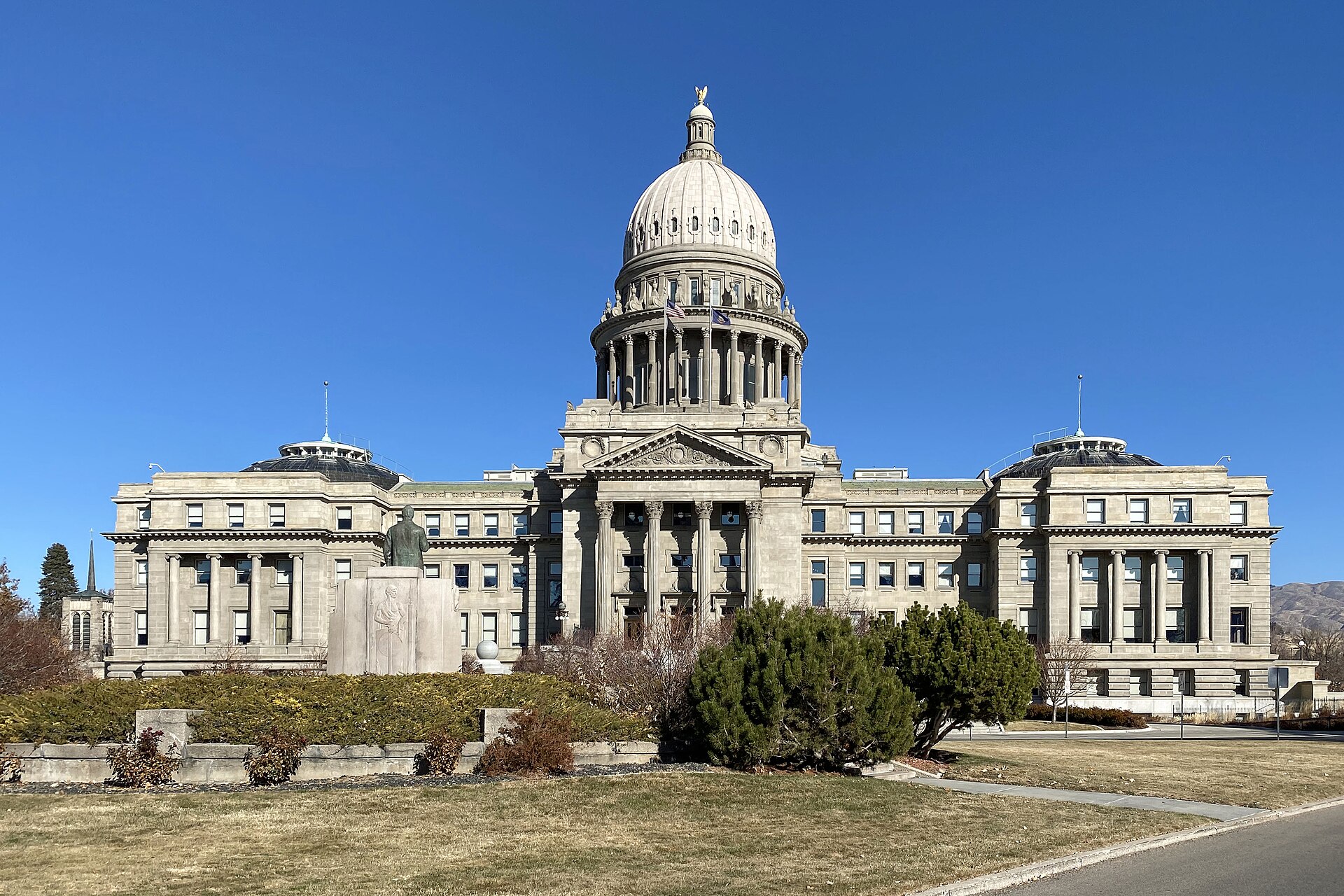

What Medigap is and what it is not
Idaho Code section 41-4402 defines a Medicare supplement policy as a group or individual accident and sickness policy, or a managed care organization's enrollee contract, "advertised, marketed or designed primarily as a supplement to reimbursements under medicare" for hospital, medical or surgical expenses.13 The purpose section, 41-4401, says the chapter exists to standardize and simplify the terms of these policies "to facilitate public understanding and comparison" and to eliminate misleading provisions.14 Federal law uses the term "medicare supplemental policy" and defines it in section 1882(g)(1) of the Social Security Act as a health insurance policy or other health benefit plan offered by a private entity, not counting Medicare Advantage plans or Part D drug plans.3
Four facts frame everything else in this lesson:
- Medigap works only with Original Medicare. Medicare pays its share of an approved bill first, and the Medigap policy pays some or all of what is left. A person in a Medicare Advantage plan (Part C) cannot use a Medigap policy to pay the plan's copays, and Idaho's rule says an issuer "cannot issue a Medicare supplement policy or certificate to an individual enrolled in Medicare Part C unless the effective date of the coverage is after the termination date of the individual's Part C coverage" (IDAPA 18.04.10.076).15
- A policy covers one person. Spouses each buy their own. The CMS buyer's guide says so plainly, and it adds that a separate Medigap premium is paid to the company on top of the Part B premium paid to Medicare.16
- Medigap is guaranteed renewable. The CMS guide says any Medigap policy issued since 1992 is guaranteed renewable: the company cannot cancel it because of health problems as long as the premium is paid.16 Premiums can still go up, for everyone in the same rating class at once.
- Medigap does not cover everything. The CMS guide lists long-term care (non-skilled care in a nursing home), vision or dental care, hearing aids, glasses and private-duty nursing as things Medigap generally does not cover. Since Jan. 1, 2006, no new Medigap policy may include prescription drug coverage; drug coverage comes from Part D, covered in lesson 06, Part D and Drug Costs.1617
Some things are often mistaken for Medigap. The CMS guide lists Medicare Advantage plans, Part D plans, Medicaid, and employer or union group health plans (including retiree plans) as coverage that is not Medigap.16 Idaho Code section 41-4403(2) also leaves employer and labor union plans for employees, retirees and members outside chapter 44.18 A retiree plan from a former employer may pay after Medicare in a way that looks like Medigap, but its rules come from the plan document, not from the Medigap law, and the Idaho birthday rule does not apply to it.6
The standardized plan letters
Since the early 1990s, Medigap policies in 47 states, Idaho among them, have been sold only as standardized plans named by letter. Massachusetts, Minnesota and Wisconsin standardize their policies differently.16 Federal law set this up in the Omnibus Budget Reconciliation Act of 1990 (P.L. 101-508, Nov. 5, 1990), which told the National Association of Insurance Commissioners (NAIC), the association of state insurance regulators, to limit the "groups or packages of benefits" a policy could offer and to use uniform language, now Social Security Act section 1882(p).3 Idaho's rule adopts the NAIC model regulation (Model Regulation 651, 2018 edition) by reference, including its outlines of coverage and plan designs.19
The letters sold to new buyers today are A, B, C, D, F, G, K, L, M and N, plus high-deductible versions of F and G. Plans E, H, I and J were closed to new buyers on June 1, 2010, when the current designs took effect (IDAPA 18.04.10.022 covers policies with an effective date on or after June 1, 2010); people who bought them before then may keep them.20 Because the benefits behind each letter are fixed, a Plan G from one company pays the same benefits as a Plan G from any other. The Department of Insurance says it this way: "the benefits provided in any plan with the same letter will be the same, no matter what company sells you the plan. However, the cost for that plan (premium price) will vary between companies."21
A few terms in the grid need explaining. Coinsurance is a percentage of a bill the patient owes (20 percent of most Part B services); a copayment is a flat dollar amount. A benefit period is the Part A unit that starts with a hospital admission and ends after 60 days in a row without inpatient or skilled nursing care; the Part A deductible is owed for each one. An excess charge is the amount a doctor who does not accept Medicare's approved amount as full payment (does not "take assignment") may bill above that amount. Federal law caps it: the limiting charge in Social Security Act section 1848(g) is 115 percent of the fee schedule amount for non-participating doctors.22 Only Plans F and G pay excess charges. Lesson 01 explains assignment and excess charges in more detail.
Plan N pays the Part B coinsurance except for a copayment of up to $20 for some office visits and up to $50 for emergency room visits that do not lead to an inpatient admission.21 Plans K and L pay half (K) or three-quarters (L) of most cost sharing until the person reaches a yearly out-of-pocket limit, and then pay 100 percent of covered services for the rest of the calendar year.
High-deductible options and the K and L limits
Plans F and G may also be sold with a high deductible. The buyer pays Medicare-covered costs (deductibles, coinsurance and copayments) up to the deductible before the policy pays anything; after that, the plan pays in full for the rest of the year. The amount is set by formula in Social Security Act section 1882(p)(11)(C): $1,500 for 1998 and 1999, raised each year by the change in the Consumer Price Index for all urban consumers (CPI-U) and rounded to the nearest $10. CMS announced in October 2026 that the deductible will be $3,050 for 2027, based on a 3.40 percent CPI-U increase.23 The 2026 amount is $2,950.16 The out-of-pocket limits for Plans K and L are set under section 1882(w)(2), which started at $4,000 (K) and $2,000 (L) in 2006 and are adjusted using CMS's estimate of Medicare per capita costs.24
| Amount | 2025 | 2026 | 2027 | Source |
|---|---|---|---|---|
| High-deductible Plan F and Plan G deductible | $2,870 | $2,950 | $3,050 | Idaho DOI Medigap page (2025); CMS Medigap guide, March 2026; CMS announcement, October 2026211623 |
| Plan K out-of-pocket limit | $7,220 | $8,000 | $8,360 | New Jersey SHIP chart (2025); CMS announcements for 2026 and 2027515024 |
| Plan L out-of-pocket limit | $3,610 | $4,000 | $4,180 | Same515024 |
| Part B deductible (paid by Plans C and F only) | $257 | $283 | $292 | CMS fact sheets, Nov. 14, 2025 and Nov. 17, 20261112 |
| Part A inpatient deductible (per benefit period) | $1,676 | $1,736 | $1,776 | Same1112 |
| Skilled nursing facility coinsurance, days 21 to 100 (per day) | $209.50 | $217 | $222 | Same1112 |
| Standard Part B premium (per month; not paid by any Medigap plan) | $185.00 | $202.90 | $209.40 | Same; 2027 also Federal Register notice CMS-8094-N111225 |
The high-deductible Plan G does not pay the Part B deductible, but the Department of Insurance notes that high-deductible F and G count what a person pays toward the Part B deductible toward the plan deductible.21
The 2020 rule on Plans C and F
The Medicare Access and CHIP Reauthorization Act of 2015 (MACRA, P.L. 114-10, signed April 16, 2015), section 401, added section 1882(z) to the Social Security Act. Starting Jan. 1, 2020, a Medigap policy that covers the Part B deductible "may not be sold or issued to a newly eligible Medicare beneficiary."26 The only plans that cover the Part B deductible are C and F (including high-deductible F), so those plans closed to people new to Medicare. "Newly eligible" means anyone who had not turned 65 before Jan. 1, 2020 and was not entitled to Part A for disability or ESRD (or deemed eligible) before that date.26
Idaho's rule carries this out. For anyone newly eligible on or after Jan. 1, 2020, a guaranteed-issue right to Plan C or F is read as a right to Plan D or G instead (IDAPA 18.04.10.025.03), and people who were eligible before 2020 may still buy C, F and the newer designs (025.04).20 The Department of Insurance tells consumers that Plan F "will not go away for anyone eligible for Medicare before January 1, 2020," and that a person eligible before 2020 but not yet enrolled may still be able to buy it.621 The high-deductible version of Plan G became available to new enrollees at the same time.23
Congress wrote this change as a small cost-sharing rule: people with first-dollar coverage do not see the Part B deductible, and the change was meant to make new beneficiaries pay it. For buyers, the practical effect has been a shift toward Plan G. AHIP's analysis of NAIC filings found Plan G passed Plan F as the most common plan nationally, with 39 percent of enrollees in 2023 to Plan F's 36 percent.10
How Medigap fits with Medicare Advantage and Part D
Medigap and Medicare Advantage are alternatives, not add-ons to each other. Under Original Medicare with Medigap, a person can see any doctor or hospital in the country that accepts Medicare, pays a Medigap premium and usually a Part D premium, and has little or no cost sharing depending on the plan letter. Under Medicare Advantage, a person uses a private plan's network, often pays a lower premium, and has the plan's copays up to the plan's yearly out-of-pocket maximum. Lesson 04 lays out both sides. For Medigap, the important point is timing: the CMS guide warns that "if you drop your Medigap policy to join a Medicare Advantage Plan, you may not be able to get the same policy back (or in some cases any Medigap policy)."16
Federal law protects people from paying twice. Social Security Act section 1882(d)(3) makes it illegal to sell a Medigap policy to someone the seller knows already has one (unless the buyer states in writing that the old one will be canceled), and to sell one that duplicates benefits a person already has under Medicare Advantage or Medicaid, with fines up to $25,000 per violation for an issuer.3 The CMS guide lists these as illegal practices to watch for, along with pressure to buy or lies to get a person to switch.16


The drug rule dates to the Medicare Prescription Drug, Improvement, and Modernization Act of 2003 (P.L. 108-173, signed Dec. 8, 2003), which created Part D and, in section 1882(v), stopped the sale of new Medigap policies with drug coverage once Part D began in 2006. The same law added Plans K and L in section 1882(w).1724 People who still had an old drug-covering Plan H, I or J could keep it, and Idaho's rule (041.05.c) gives them a guaranteed right to a version without drug coverage if they move to Part D.2
How Medigap law is built: Congress, the NAIC and Idaho
Medigap is regulated in layers. Congress sets minimum federal standards in Social Security Act section 1882. The NAIC writes a model act and model regulation that turn those standards into policy language. Each state adopts the model, usually with its own additions, and its insurance department approves the policies and rates sold there. If a state's program does not meet the federal standards, section 1882(a) lets the federal government certify policies instead; every state including Idaho runs its own program.3 For how a federal law becomes a rule and how Idaho rules are written and approved, see Laws and Rules.
The federal law, 1980 to 2020
| Year | Law or event | What changed | Source |
|---|---|---|---|
| 1980 | P.L. 96-265, section 507 (June 9, 1980) | Added section 1882 to the Social Security Act: voluntary federal certification of Medicare supplement policies that met NAIC minimum standards, and penalties for misleading sales. | 42 U.S.C. 1395ss credits3 |
| 1990 | Omnibus Budget Reconciliation Act of 1990, P.L. 101-508 (Nov. 5, 1990) | Standardized benefit packages (section 1882(p)); the NAIC then wrote the lettered plans used from the early 1990s. | 42 U.S.C. 1395ss credits and notes3 |
| 1997 | Balanced Budget Act of 1997, P.L. 105-33, section 4031 (Aug. 5, 1997) | Created Medicare+Choice (now Medicare Advantage) and guaranteed-issue rights for people whose other coverage ends, including the trial right to try a private plan and return. | 42 U.S.C. 1395ss amendment notes3 |
| 2000 | P.L. 106-554, section 618 (Dec. 21, 2000) | Set the guaranteed-issue time periods in section 1882(s)(3)(E), the 63-day windows still used today. | 42 U.S.C. 1395ss amendment notes3 |
| 2003 | Medicare Prescription Drug, Improvement, and Modernization Act, P.L. 108-173 (Dec. 8, 2003) | Created Part D from 2006; barred new Medigap drug coverage (1882(v)); added Plans K and L (1882(w)). | 42 U.S.C. 1395ss(v), (w)17 |
| 2008 | Genetic Information Nondiscrimination Act, P.L. 110-233 (May 21, 2008) | Barred Medigap issuers from using genetic information to deny or price coverage (1882(s)(2)(E), (x)). | 42 U.S.C. 1395ss amendment notes3 |
| 2010 | NAIC plan redesign, effective June 1, 2010 | Closed Plans E, H, I and J to new buyers; added Plans M and N; current plan designs begin. | IDAPA 18.04.10.02220 |
| 2015 | MACRA, P.L. 114-10, section 401 (April 16, 2015) | Section 1882(z): no plan covering the Part B deductible (C, F) for people newly eligible on or after Jan. 1, 2020. | 42 U.S.C. 1395ss(z)26 |
| 2020 | Jan. 1, 2020 | MACRA restriction took effect; high-deductible Plan G offered to new enrollees. | CMS high-deductible announcement, October 202623 |
Idaho Code title 41, chapter 44
Idaho's statute is short. Chapter 44 of title 41, "Medicare Supplement Insurance Minimum Standards," was added in 1999 (1999 Idaho Sess. Laws ch. 102) and has 11 sections, 41-4401 through 41-4411.27 The sections that matter most to buyers are:
- 41-4404, standards for policy provisions. No policy may duplicate Medicare's benefits. A policy may not exclude a loss incurred more than six months after coverage starts because of a pre-existing condition, and may not define a pre-existing condition more broadly than one for which a doctor gave advice or treatment in the six months before coverage began. The director of the Department of Insurance may write rules on renewability, eligibility, open enrollment, replacement and more, including "an annual period during which a policyholder may terminate an existing medicare supplement policy and be eligible to purchase any other comparable or lesser medicare supplement policy on a guaranteed issue basis" (41-4404(3)(b)). Subsection (3)(k) reads: "Attained age rating prohibited; issue age rating prohibited for policies issued after February 28, 2022; and community rating permitted."1
- 41-4405, loss ratios. Policies must return benefits "reasonable in relation to the premium charged," and the director may set minimum loss ratios by rule.28
- 41-4406, disclosure. No policy may be delivered in Idaho unless an "outline of coverage" is delivered when the application is made, describing the principal benefits and the renewal terms, including any right to change premiums.29
- 41-4407, free look. The policy must say on its first page that the buyer may return it within 30 days of delivery for a full refund if not satisfied "for any reason." Federal law, section 1882(c)(4), sets the same minimum of 30 days.303
- 41-4410, penalties. Besides other penalties in the insurance code, the director may order an issuer that breaks the chapter or its rules to stop marketing the related policy in Idaho.31
The 1999 text has been amended once: Senate Bill 1143 in 2021 (2021 Idaho Sess. Laws ch. 274) rewrote subsection 41-4404(3), adding the annual guaranteed-issue period in (3)(b) and the rating language in (3)(k).15
IDAPA 18.04.10, the Medicare Supplement Insurance Standards rule
Most of Idaho's working Medigap law is in the Department of Insurance rule, IDAPA 18.04.10. The rule says it "implements the NAIC Medicare Supplement Insurance Minimum Standards Model Act" and cites Idaho Code title 41, chapters 2 and 44 as its authority.19 It was rewritten in Idaho's zero-based regulation review, and every section in the current text carries the date 3-31-22. The 2021 archive copy shows the same birthday and rating language marked "(11-3-21)T," meaning it first took effect as a temporary rule on Nov. 3, 2021.32 The sections used most in this lesson:
| Section | Subject | What it requires (in plain words) |
|---|---|---|
| 022, 025 | Benefit standards | The plan designs for policies effective on or after June 1, 2010, and the 2020 versions; Plans D and G stand in for C and F for people newly eligible on or after Jan. 1, 2020.20 |
| 036 | Open enrollment | Six months of guaranteed issue at 65 with Part B, and for people under 65 who enroll in Part B because of disability or ESRD; every policy the company sells must be offered "without regard to age."4 |
| 041 | Guaranteed issue for eligible persons | The federal guaranteed-issue situations, the 63-day windows, trial rights, and Idaho's birthday rule (041.02.j and 041.03.g).2 |
| 051 | Loss ratios, refunds, annual rate filing | 65 percent loss ratio for individual policies, 75 percent for group; refunds or credits when experience falls short; annual filing of rates for approval.33 |
| 056 | Filing and approval of forms and rates; age, area and gender rating | No rate used or changed without the director's approval; no more than one increase in 12 months; community rating after Feb. 28, 2022; no area or gender rating; no application fees.7 |
| 061 | Agent commissions | First-year commission no more than 200 percent of the second-year commission; renewal commissions level for at least five years; no commission differences by age or guaranteed-issue status.34 |
| 071, 073, 076 | Applications, replacement, marketing | Required questions about other coverage; a signed replacement notice; bans on high-pressure tactics and "cold lead" advertising; no sale that gives a person more than one Medigap policy.15 |
| 081, 082 | Replacement waiting periods; genetic information | A replacing policy credits time served under the old one; no use of genetic information to deny or price coverage.35 |
When a company must sell a policy without health questions
The single most important thing to understand about Medigap is timing. At certain times, federal or Idaho law requires a company to sell a policy (guaranteed issue), to charge the same price it charges healthy people, and not to impose a waiting period for pre-existing conditions. At other times, a company may use medical underwriting: it may ask health questions, decline the application, or charge an underwritten rate. Idaho has more of these protected windows than federal law alone, but not as many as a few states that allow purchase year-round.
The six-month Medigap open enrollment period
Social Security Act section 1882(s)(2)(A) forbids an issuer to deny or condition a policy, or to discriminate in its price because of health status, claims experience, receipt of health care or medical condition, for an application submitted before or during "the 6 month period beginning with the first month as of the first day on which the individual is 65 years of age or older and is enrolled for benefits under part B."3 Idaho's rule repeats it in IDAPA 18.04.10.036.01.a.i and adds two more starting points: the first month of Part B for a person under 65 who has Medicare because of disability or ESRD, and the first month after a person receives written notice of retroactive Part B enrollment from the Social Security Administration.4
Three details trip people up. First, the clock starts with Part B, not with Part A or a 65th birthday. A person who keeps working past 65 with an employer's group health plan and delays Part B also delays the Medigap open enrollment period; it starts when Part B starts. The CMS guide says the open enrollment period "will start when you're ready to take advantage of it" in that case.16 Second, it happens once; the CMS guide calls it "a one-time enrollment period; it doesn't repeat every year."16 Third, a policy bought during open enrollment may still have a pre-existing condition waiting period of up to six months if the buyer had less than six months of prior "creditable coverage" (such as an employer plan); the waiting period is shortened month for month by prior coverage, and eliminated if the person had six months or more (IDAPA 18.04.10.036.02; section 1882(s)(2)(B) to (D)).43
Federal guaranteed-issue rights
Section 1882(s)(3) lists situations in which a person whose other coverage changes gets a guaranteed right to buy certain Medigap plans. Idaho's rule copies them in IDAPA 18.04.10.041.02. In each case the person must apply within the time period in the rule and send proof of the termination or disenrollment with the application (041.01.a).23
| Situation (IDAPA 18.04.10.041.02) | When to apply (041.03) | Plans the person may buy (041.05) |
|---|---|---|
| (a) An employer or union plan that pays after Medicare ends or stops paying supplemental benefits | From the later of the termination notice or the end of coverage, until 63 days after | A, B, C, F (including high-deductible F), K or L from any company; D and G in place of C and F for people new to Medicare in 2020 or later |
| (b) A Medicare Advantage plan ends its contract, leaves the area, or the person moves out of its area; or the plan broke its contract or misled the person in marketing | From the termination notice until 63 days after coverage ends; if leaving voluntarily, from 60 days before to 63 days after the disenrollment date | Same as (a) |
| (c), (d) A Medicare cost plan, older demonstration or prepayment plan, or a Medicare SELECT policy ends in the same ways | Same as (b) | Same as (a) |
| (e) A Medigap company goes insolvent, ends coverage involuntarily, broke the policy's terms or misled the person | From the earlier of the notice or the end of coverage, until 63 days after coverage ends | Same as (a) |
| (f), (g) Trial right: a person drops a Medigap policy to join a Medicare Advantage plan, cost plan, PACE or SELECT policy for the first time, and leaves within 12 months | 60 days before to 63 days after the disenrollment date | The same policy from the same company if it is still sold; otherwise A, B, C, F, K or L (D or G for people new in 2020 or later) |
| (h) Trial right: a person joins Medicare Advantage or PACE when first eligible for Part A at 65 and leaves within 12 months | 60 days before to 63 days after the disenrollment date | Any Medigap policy offered by any issuer |
| (i) A person with an old Medigap drug policy enrolls in Part D during the initial enrollment period | Until 63 days after Part D coverage begins | A, B, C, F, K or L from the same company |
| (j) Idaho only: a person with a Medigap policy switches on or after March 1, 2022 | The 63 days beginning on the person's birthday | Any comparable or lesser policy from any issuer |
Situations (a) through (i) come from federal law and exist in every state. The CMS guide summarizes them in its "Medigap guaranteed issue right situations" table.16 Situation (j) is Idaho's birthday rule, discussed in the next section. When an event in subsection 041.02 happens because a plan or policy ends, the organization ending it must tell the person about these rights at the same time it sends the termination notice (041.06).2
Trial rights
Trial rights matter for people deciding between Medigap and Medicare Advantage at 65. Under 041.02.h, a person who enrolls in a Medicare Advantage plan when first eligible for Part A and disenrolls within 12 months may buy any Medigap policy any company sells, without health questions. Under 041.02.f and g, a person who drops a Medigap policy to try a private plan for the first time and leaves within 12 months may go back. The rule limits these to a two-year period starting on the first enrollment, even if a plan ends during the trial and the person moves to another (041.04).2 After the trial year, the federal right is gone, and the person is back to underwriting unless another window applies. Lesson 04 explains when people can switch Medicare Advantage plans under Medicare's own enrollment periods.
Outside the windows: medical underwriting
Outside open enrollment and the guaranteed-issue windows, a company may decide whether to sell a policy based on the applicant's health, and the CMS guide warns that "the insurance company can deny you a Medigap policy based on your health."16 Idaho limits how underwriting can be used in price. IDAPA 18.04.10.056.09.a says no discount or underwriting factor below 1.0 may be given to policies issued outside open enrollment or guaranteed issue "unless the greatest discount or lowest underwriting factor is automatically applied to all policies issued under open enrollment and guaranteed issue."7 In plain words, a company may not give healthy underwritten applicants a better price than people who bought under a protected window. The Department of Insurance's rate charts mark with two asterisks the companies that "impose a Pre-Existing Condition Look-Back Period"; in the Nov. 3, 2026 chart those are HumanaDental Insurance Co., United American Insurance Co. and UnitedHealthcare Insurance Co.8 No company may use genetic information or require a genetic test (IDAPA 18.04.10.082).35


Idaho's birthday rule
What the statute and the rule say
The statute authorizes the rule. Idaho Code section 41-4404(3)(b) lets the director adopt standards for "an annual period during which a policyholder may terminate an existing medicare supplement policy and be eligible to purchase any other comparable or lesser medicare supplement policy on a guaranteed issue basis."1 The rule sets the details in three places:
- Who: IDAPA 18.04.10.041.02.j makes an "eligible person" of anyone who "is enrolled in a Medicare Supplement policy, and, on or after March 1, 2022, voluntarily terminates enrollment and enrolls in another Medicare Supplement policy."2
- When: 041.03.g says the guaranteed-issue period "begins on the individual's birthday and ends sixty-three (63) days thereafter."2
- What: 041.05.f says the person may buy "any comparable or lesser Medicare policy offered by any issuer," and that a policy counts as comparable or lesser "unless it contains one (1) or more significant benefits not included in the Medicare Supplement policy or certificate being replaced."2
During the window, the general guaranteed-issue protections in 041.01.b apply: the company cannot deny or condition the policy, cannot charge more because of health status, claims experience, receipt of health care or medical condition, and cannot exclude benefits for a pre-existing condition. Because the new policy replaces another Medigap policy, IDAPA 18.04.10.081 also requires the new company to credit time served under the old policy toward any waiting period, and to impose none for similar benefits if the old policy was in force at least six months.235
The Department of Insurance's consumer page gives examples. "If you have a Plan G, you may purchase a Plan G or any plan with fewer benefits. You cannot upgrade/increase benefits. You may purchase the new plan from any company offering policies in Idaho." A person with Plan F may buy Plan F or lesser coverage such as Plan G during the window. And: "Some companies may allow you to submit an application ahead of the 63-days, however companies are not required to accept an application or issue a plan outside of the 63-day guaranteed issue."6
How Senate Bill 1143 passed in 2021
The change started as a bill in the 2021 Legislature. Senate Bill 1143 was introduced by the Senate State Affairs Committee on Feb. 25, 2021, sent to the Senate Commerce and Human Resources Committee, amended on the Senate floor, and passed the Senate 35 to 0 on March 15, 2021, with Sen. Souza as the floor sponsor. The House Business Committee recommended it, and it passed the House 67 to 0 with 3 absent on April 14, 2021, with Rep. Galloway as the floor sponsor. Gov. Brad Little signed it April 22, 2021, and it took effect July 1, 2021 as 2021 Idaho Session Laws chapter 274.5
The bill's statement of purpose (RS28650) said the legislation "amends Idaho Code § 41-4404 to allow individual healthcare policy holders to change their Medicare Supplement plan each year without going through an underwriting process," and that it "allows for community rating and prohibits issue age rating after December 31, 2021." The enacted text uses a later date, Feb. 28, 2022. The statement lists no cost to the state general fund and names Mike Reynoldson of Blue Cross of Idaho as its contact; under Joint Rule 18 a statement of purpose is prepared by a proponent and is not an expression of legislative intent.36


The Department of Insurance followed with guidance and a rule. Bulletin No. 21-04, posted Sept. 10, 2021, told companies how to rate, market and sell Medigap until a rule was in place, and the department asked companies to file community-rated rates through SERFF, the national electronic rate and form filing system, by Oct. 15, 2021.37 After negotiated rulemaking, the department published a temporary rule in the Idaho Administrative Bulletin, Volume 21-11, on Nov. 3, 2021, and held public webinars on Nov. 18, 2021 and Feb. 15, 2022.6 Its Nov. 16, 2021 news release quoted Director Dean Cameron: "These changes will give Idaho consumers more options for plans that best fit their changing medical needs."38 The two main changes, annual switching and community rating, took effect for policies after Feb. 28, 2022.
The department described the problem the rule addresses as "dead-pooling": "an unfair trade practice where consumers are locked into their current plan while their insurance company offers a new plan to new consumers." Its FAQ says the change "provides consumers the option to annually change their insurance company, regardless of any health conditions."6 In a closed block, the people left in an old policy form tend to be older and sicker over time, so their premiums can climb faster than premiums for a newer form sold to new buyers. A person in good health can leave by passing underwriting; a person in poor health could not leave before the birthday rule.
What the birthday rule does not do
- It does not help people without Medigap. The department's FAQ answers the question "I don't have a Medicare Supplement policy. Can I get one on my birthday?" with "It depends. While the birthday rule only applies to people with Medicare Supplement policies, there may be other guaranteed issue rights available."6 A person in a Medicare Advantage plan who wants to return to Original Medicare cannot use it; the FAQ says the changes "do not affect people with Medicare Advantage plans."6
- It does not allow upgrades. A person with Plan N cannot use the window to buy Plan G, because Plan G covers Part B excess charges and the full Part B coinsurance, which N does not.616
- It does not cover employer group Medigap. Asked whether a person with an employer-sponsored group Medigap plan may switch under the birthday rule, the department's FAQ answers "No" and says other options may exist if the employer plan ends.6
- It does not reset the Part B deductible. The Part B deductible is a calendar-year Medicare amount; switching Medigap policies does not change what has been paid toward it. A high-deductible plan's own deductible may start over with the new company, and the department suggests checking with the company first.6
- It does not force anyone to move. "Current Medicare Supplement plans are guaranteed renewable, and current policies will continue unless a change is requested by the policyholder," and companies "cannot force you to move to a community-rated policy."6
The steps below describe how a switch under the birthday rule works under the rule's text and the department's guidance. They describe a procedure that exists; they are not a suggestion that anyone switch.
- Confirm the starting point. The person must have an individual Medigap policy in force; the new policy's switch must be on or after March 1, 2022 (IDAPA 18.04.10.041.02.j).
- Find the window. It runs 63 days beginning on the person's birthday (041.03.g). For a person born June 10, it runs from June 10 through Aug. 11 if June 10 counts as day 1, or through Aug. 12 if the 63 days are counted from the day after the birthday; a company may, but need not, accept an application earlier.
- Identify the plan letters allowed. Any letter with the same or fewer benefits, judged by whether the new policy contains a "significant benefit" the old one lacks (041.05.f). The benefit grid in this lesson shows which letters cover which benefits.
- Compare filed rates. The Department of Insurance posts rate charts by age group and tobacco status; the department says the charts are not quotes and that buyers should get exact rates from the company.21
- Apply and line up dates. The new policy should start when the old one ends so there is no gap and no overlap; federal law and IDAPA 18.04.10.076 bar a sale that leaves a person with two Medigap policies.15
- Sign the replacement notice. When a sale replaces Medigap coverage, the company or agent must give the applicant a notice regarding replacement, signed by applicant and agent (071.05).15
- Use the free look if needed. The new policy may be returned within 30 days of delivery for a full refund (Idaho Code section 41-4407).30
- Cancel the old policy in writing once the new one is in force, and keep the confirmation.
The day count in step 2 is our reading of "begins on the individual's birthday and ends sixty-three (63) days thereafter." A literal count would end the window 63 days after the birthday, one day later than counting the birthday as day 1. The department's own example, a Dec. 28 birthday allowing a policy effective March 1, 2022, treats the date 63 days after the birthday as inside the window, which fits the later reading, but it speaks of a policy's effective date, not the last day to apply. People close to the edge of the window would need the company's own answer. This point is listed as uncertain at the end of the lesson.6
Medigap for Idahoans under 65
People under 65 get Medicare after 24 months of Social Security disability benefits, with ESRD, or with ALS; lesson 01 explains the rules. Federal Medigap law gives them little. The CMS guide says "Federal law generally doesn't require insurance companies to sell Medigap policies to people who are under 65," and warns that a person under 65 "might not be able to buy the Medigap policy you want, or any Medigap policy, until you turn 65."16 States decide. The March 2026 CMS guide lists 33 states, Idaho among them, that at the time of printing required companies to offer at least one kind of Medigap policy to people with Medicare under 65.16
The Idaho open enrollment right under 65
Idaho's rule goes further than "at least one kind." IDAPA 18.04.10.036.01.a.ii gives a six-month open enrollment period beginning with "the first day of the first month of Medicare Part B eligibility due to disability or end stage renal disease, for an individual that is both under sixty-five (65) years of age and enrolled for benefits under Medicare Part B." Subsection 036.01.b then says "Each Medicare supplement policy and certificate currently available from an issuer is made available to all applicants who qualify under Paragraph 036.01.a. without regard to age."4 So during those six months, a company selling Medigap in Idaho must offer an under-65 applicant every policy it sells, not just one. The Nov. 3, 2026 under-65 rate charts list all 20 companies that appear on the 65-and-older charts.9
The federal guaranteed-issue situations in section 041 do not depend on age, so a person under 65 who loses employer coverage or whose Medicare Advantage plan leaves the area has those rights too. The trial right in 041.02.h is different. Idaho's rule ties it to the time a person first becomes eligible for Part A, while the federal provision it copies, section 1882(s)(3)(B)(vi), says first eligible for Part A "at age 65." Whether Idaho companies honor the trial right for a person whose first Part A eligibility came through disability is a question for the Department of Insurance; we did not find a written answer.2
The 150 percent price cap
For community-rated policies issued after Feb. 28, 2022, IDAPA 18.04.10.056.06.b.i says that for a person "eligible for Medicare Part B only due to disability or end stage renal disease, the premium is no greater than one hundred fifty percent (150%) of the premium for an enrollee otherwise eligible for Medicare Part B." Section 056.06.b.ii says that when the person becomes eligible for Part B because of age, the person "is to be charged the same premium rate as an individual eligible for Medicare Part B due to age."7 Older issue-age policies had a similar limit: no more than 150 percent of the issue-age 65 rate while the person is under 65, then the issue-age 65 rate (056.06.a.ii).7 Section 056.08.b otherwise bars companies from pricing differently based on why a person is eligible for Part B.7
The rate charts show companies using the full cap. In the Nov. 3, 2026 charts, almost every under-65 nonsmoker rate is 1.5 times the same company's 65-and-older rate for the same plan, within $1 either way (most within a few cents). The one larger gap: Regence BlueShield of Idaho's under-65 Plan G rate, $418.00, is 1.49 times its 65-and-older rate of $281.00 (our calculation).89 The median under-65 Plan G rate across the 20 companies is $412.32 a month, against $274.88 for people 65 and older.
The department's FAQ puts it this way: "People eligible for Medicare for reasons other than age may be charged up to 150% more than people eligible for Medicare based on age."6 Read literally, "150% more" would mean 2.5 times the rate. The rule text says "no greater than one hundred fifty percent (150%) of" the age-based premium, which is 1.5 times, and that is what the filed rates show.
Turning 65
A person who has had Medicare under 65 gets a new six-month Medigap open enrollment period at 65. The federal period in section 1882(s)(2)(A) runs from the first month a person is "65 years of age or older and is enrolled for benefits under part B," which for someone already enrolled in Part B is the month of the 65th birthday, and Idaho's rule says the same in 036.01.a.i.34 A person who already holds a community-rated policy also sees the premium drop to the age-based rate at 65 under 056.06.b.ii.7
Suspending a policy for Medicaid or a job
Idaho's application statements, required by IDAPA 18.04.10.071.02, tell buyers of two suspension rights. A person who becomes eligible for Medicaid may ask, within 90 days, to suspend Medigap benefits and premiums for up to 24 months, and may have the policy reinstated by asking within 90 days of losing Medicaid. A person who bought Medigap because of a disability and later gets coverage through an employer or union group health plan may suspend the policy while covered and have it reinstated by asking within 90 days of losing that plan.15 Who qualifies for Idaho Medicaid, and the Medicare Savings Programs that pay Medicare premiums for some low-income Idahoans, are covered in Who Qualifies and Who Is Covered and in lesson 07.
How Idaho Medigap premiums are set
Three ways to price a Medigap policy
The CMS guide says each Medigap policy can be priced in one of three ways:16
- Community-rated (also called "no-age-rated"): generally the same premium for everyone in the rating group, regardless of age. Premiums may rise with inflation and other factors, but not because the policyholder gets older.
- Issue-age-rated (also called "entry-age-rated"): the premium depends on the age at which the person bought the policy. A person who buys at 65 pays less than a person who buys at 75, and neither rate rises later because of age, though both rise with medical costs.
- Attained-age-rated: the premium depends on the person's current age and rises as the person gets older, on top of increases for inflation.
Each method moves money among age groups. Attained-age pricing is cheapest at 65 and most expensive in the 80s. Community rating charges a 65-year-old more than attained-age pricing would, and an 85-year-old less, because the pool's average cost is spread over everyone. Issue-age pricing sits between them and rewards buying early.
Idaho chose community rating
Idaho had already banned attained-age rating as a basis for increases: IDAPA 18.04.10.056.06.a calls it "an unfair practice and an unfair method of competition" to use "the increasing age of an insured" as the basis for raising premiums for people who first bought after Jan. 1, 1995.7 Before 2022, Idaho Medigap was mostly issue-age rated; the department's FAQ calls issue-age "most common rating in Idaho."6 Senate Bill 1143 and the 2021 rule moved new sales to community rating. Section 056.06.b now says that "for policies issued after February 28, 2022, it is an unfair practice and an unfair method of competition for any issuer, insurer, or licensee to use the increasing age or issue age of an insured, subscriber or participant as a basis for premiums."7
The department defines community rating as "a rating method for Medigap insurance that assigns a single rate to all ages and classes of individuals in the group, regardless of risk factors such as age or health."6 The rule still allows two classes: tobacco users and nonusers, and people eligible by disability or ESRD under 65 (the 150 percent cap). The department posts separate charts for each.21
Policies sold before March 1, 2022 under issue-age rating may stay in force at their issue-age rates. They are guaranteed renewable, and the department says companies cannot make anyone move to a community-rated policy.6 The birthday rule is how holders of those older policies can move to a community-rated one with any company if they choose.
No area or gender rating
IDAPA 18.04.10.056.07 says it is "an unfair practice and an unfair method of competition for any issuer, insurer, or licensee to use area or gender for rating purpose."7 Many states let companies charge different rates by ZIP code or county and different rates to women and men. Idaho does not. A company's filed Plan G rate for a nonsmoker 65 or older is the same for a buyer in Boise or Meridian as for one in Twin Falls, Kimberly, Buhl, Hagerman, Gooding, Wendell, Burley, Rupert, Idaho Falls, Pocatello, Coeur d'Alene, Lewiston or Grangeville. This is why the department can post one statewide chart instead of one per county.
What differs from place to place is which companies and agents are active, and whether nearby doctors accept Medicare and take assignment, which matters for Part B excess charges. Lesson 09, Medicare and Rural Idaho, covers rural access to Medicare providers.
Discounts, fees and tobacco
Section 056.09.b bars companies, for policies issued after Feb. 28, 2022, from requiring "application or policy fees" or varying "premium rates based on payment terms including, without limitation, payment method or frequency of payment." Section 056.09.c still lets a company apply a discount or underwriting factor for multiple Medigap policies in the same household and for nonsmoking or non-tobacco use.7 The department's charts show separate smoker and nonsmoker rates.21 The department's FAQ adds that payment-method discounts continue only for plans issued before March 1, 2022, and that household discounts apply when both people buy from the same company.6
Rate filings, loss ratios and refunds
No Medigap rate may be used or changed in Idaho until "the rates, rating schedule, and supporting documentation have been filed with and approved by the director" (IDAPA 18.04.10.056.02.a), and a policyholder may not get more than one rate increase in any 12-month period, except for adjustments tied to changes in Medicare benefits (056.02.b).7 Each company must file its rates every year with its loss-ratio experience (051.03).33
The loss ratio is the share of premium a company pays out in claims. Idaho's rule, following federal law in section 1882(r), says a form may not be sold unless it can be expected to return at least 65 percent of premiums as benefits for individual policies and at least 75 percent for group policies (051.01.a). Companies report experience by May 31 each year; if a form's experience falls short of the benchmark by more than a small amount, the company must pay a refund or credit, with interest, by Sept. 30 (051.02).33 Experience is pooled statewide by plan type, and rate increases are generally applied uniformly across all forms of the same plan type (056.05).7
The department's filing guidance tells companies what a rate revision must include: the purpose, the type of policy, the underwriting method, the premium basis (issue age or community), "issue-age limits (including availability to individuals eligible for Medicare due to a disability)," the target lifetime loss ratio, the commission schedule, lapse and morbidity assumptions, and whether the form is open or closed to new sales.39 These filings are the record behind every number on the department's charts. The statute also lets the director adopt rules for "public hearings prior to approval of premium increases" (41-4404(5)(e)); we did not find a published schedule of Idaho Medigap rate hearings.1
A company may stop selling a form only after 30 days' written notice to the director, and then may not file a new form of the same type for the same plan for five years (056.04).40
Agent commissions
Most Medigap policies are sold through licensed agents paid by commission. IDAPA 18.04.10.061 limits first-year commission to 200 percent of the second-year commission and requires renewal commissions equal to the second year's for at least five years. A company "may not vary commission or otherwise pay commission differentials based upon variables such as age, guarantee issue status, or on any other basis."34 The department's FAQ says the rule "ensures commissions are paid regardless of the age of the policyholder, guaranteed issue status of the policyholder, or any other such bases."6 The purpose is to keep agents from steering people away from guaranteed-issue sales, which tend to bring in sicker buyers.
What Idaho premiums look like in November 2026
The Idaho Department of Insurance publishes monthly "standard premium" rate charts for Medigap, with separate charts for nonsmokers and smokers 65 and older and under 65, plus a chart of plans with "innovative benefits" and a company contact list. The charts are labeled "Current Update 11/3/2026." The department's notice on each chart says the plans and rates "were filed by the company and accepted" by the department, that the department "cannot certify the accuracy of the information," and that "the appearance of a company on this list does not constitute an endorsement."8 Each company's row carries its own effective date, from Oct. 1, 2025 to Jan. 1, 2027, so the chart mixes rates set at different times.
| Plan | Companies listing it | Lowest monthly rate, 65+ nonsmoker | Median, 65+ nonsmoker | Highest, 65+ nonsmoker | Median, under-65 nonsmoker |
|---|---|---|---|---|---|
| A | 20 | $135.00 | $238.94 | $349.18 | $358.25 |
| B | 4 | $189.42 | $253.08 | $287.50 | $379.66 |
| C (only for people eligible before 2020) | 4 | $320.00 | $363.79 | $528.00 | $545.67 |
| D | 2 | $231.83 | $245.92 | $260.00 | $368.38 |
| F (only for people eligible before 2020) | 19 | $227.24 | $347.33 | $416.00 | $520.92 |
| F, high deductible | 4 | $77.00 | $108.51 | $128.41 | $162.75 |
| G | 20 | $212.25 | $274.88 | $342.88 | $412.32 |
| G, high deductible | 8 | $75.91 | $91.09 | $106.23 | $136.61 |
| K | 4 | $103.75 | $136.50 | $157.33 | $204.50 |
| L | 2 | $201.25 | $208.13 | $215.00 | $312.44 |
| M | 0 | none listed | none listed | none listed | none listed |
| N | 20 | $158.91 | $216.00 | $282.39 | $323.00 |
Source: Idaho Department of Insurance, "Monthly Standard Premium Rates for 65+ Non-Smoker" and "Under 65 Non-Smoker," current update Nov. 3, 2026; counts, lows, medians and highs are our calculations.89 The lowest Plan A rate, $135.00, is Regence BlueShield of Idaho's; the lowest Plan G rate, $212.25, is First Health Life and Health Insurance Co.'s; the lowest Plan N rate, $158.91, is State Farm Mutual Automobile Insurance Co.'s; Guarantee Trust Life Insurance Co. has the highest Plan G ($342.88) and Plan N ($282.39) rates on the chart. These are filed rates for one rating class on one date, not quotes, and not a ranking of companies.
How we figured it: the November 2026 rate table and chart
Source files. Idaho Department of Insurance PDFs "Medicare Supplement Rate Grid 65+ Non-Smoker" (65NON-1.pdf) and "Medicare Supplement Rate Grid Under 65 Non-Smoker" (UNDER65NON.pdf), both marked "Current Update 11/3/2026," downloaded Nov. 21, 2026 and saved in this module's downloads folder.89
Reading the grid. We extracted each company's row and assigned each dollar figure to a plan column by its position on the page, then checked the result against an image of the chart. Each chart lists 20 companies. A plan counts as offered by a company when the company's cell for that plan has a rate.
Statistics. "Median" is the middle value of the companies' rates for that plan; with an even number of rates it is the average of the two middle values. For Plan G at 65+, the 20 rates sorted from low to high put $273.50 and $276.25 in the middle, so the median is ($273.50 + $276.25) / 2 = $274.875, shown as $274.88. The under-65 to 65+ ratio is each company's under-65 rate divided by its 65+ rate for the same plan; 106 of 107 pairs fall within $1 of exactly 1.5 times, and the exception is Regence BlueShield of Idaho's Plan G ($418.00 / $281.00 = 1.49).
Limits. The charts show standard nonsmoker rates. They do not show household discounts, underwritten rates, smoker rates (posted on separate charts), or rates for older issue-age policies still in force. Company rows have different effective dates. Regence BlueShield of Idaho's Plan F rate carries an asterisk on the chart, which the chart says marks a plan with an innovative benefit.8
A hypothetical example: two neighbors in Twin Falls
This is a hypothetical example, made up to show how community rating works, using one company's filed rate. Two nonsmokers live on the same street in Twin Falls. One turned 65 in 2026 and is in her six-month Medigap open enrollment period. The other is 81, has had a Plan G policy for years, and is in the 63-day window after her birthday. If both apply for Plan G from the same company, the company's filed 65+ nonsmoker rate applies to both, because Idaho community rating does not use age (IDAPA 18.04.10.056.06.b) and the area rule means the Twin Falls rate is the same as the Boise rate (056.07).7 At the chart's median Plan G rate, $274.88 a month, each would pay $3,298.56 over 12 months if the rate did not change (our arithmetic: $274.88 x 12). Neither figure includes the Part B premium ($209.40 a month in 2027) or a Part D premium.12 A neighbor who is 58 and on Medicare because of a disability, applying in her own six-month window, would pay up to 1.5 times the company's rate.
How many companies sell Medigap in Idaho
The Nov. 3, 2026 charts list 20 companies: Aetna Health and Life Insurance Co.; Blue Cross of Idaho Health Services, Inc.; Federal Life Insurance Co.; First Health Life and Health Insurance Co.; GPM Health and Life Insurance Co.; Guarantee Trust Life Insurance Co.; HumanaDental Insurance Co.; Insurance Company of North America; ManhattanLife Insurance and Annuity Co.; Medco Containment Life Insurance Co.; Moda Health Plan, Inc.; Plateau Insurance Co.; Omaha Insurance Co.; Regence BlueShield of Idaho; State Farm Mutual Automobile Insurance Co.; Tier One Insurance Co.; United American Insurance Co.; UnitedHealthcare Insurance Co.; USAA Life Insurance Co.; and Washington National Insurance Co.8 The department's innovative benefits chart (updated Oct. 8, 2026) lists three companies with extra benefits: Blue Cross of Idaho Health Services (Plans F and G, vision and preventive), Regence BlueShield of Idaho (Plan F "Senior Selection," dental and an individual assistance program), and Moda Health Plan (Plan G, individual assistance program).41 Innovative benefits are extras a company may add with the director's approval; they do not change what the plan letter pays toward Medicare cost sharing.
The department's historical chart for rates effective Dec. 31, 2019, the last full year before community rating was enacted, lists 39 companies on its age-65 nonsmoker page.42 The count on the current chart is about half that. The charts do not say why companies left the list, and a company may still service old policies it no longer sells. Whether the drop is linked to community rating, to mergers, to Medicare Advantage growth or to other causes is not shown in any record we found.
How many Idahoans have Medigap
Neither CMS nor the Idaho Department of Insurance posts an Idaho Medigap enrollment count on its consumer pages. The figures most often used come from the annual Medicare Supplement Insurance Experience Exhibits that insurers file with the NAIC. AHIP, the national trade association of health insurers, analyzes those filings in a report called "The State of Medicare Supplement Coverage." Its May 2025 edition, using filings for Dec. 31, 2023, reports:10
- Idaho enrollment: 92,868 people with Medigap on Dec. 31, 2023, as reported to the NAIC. The report counts one person per policy.
- Idaho share: 45.6 percent of Idaho's Original Medicare (fee-for-service) enrollees had Medigap, compared with 41.9 percent nationally.
- Idaho plan mix: Plan G 50,186 (54.0 percent, our calculation), Plan F 30,665 (33.0 percent), Plan N 8,021 (8.6 percent), older Plan J 1,797, Plan K 699, Plan C 495, Plan A 347, Plan L 169, Plan B 133, Plan D 112, and smaller numbers in Plans E, H, I and M and in pre-standardized policies sold before the lettered plans.
- National total: 14,116,012 people in 2023, down 1.4 percent from 2022. Nationally, Plan G (39 percent) had passed Plan F (36 percent).
AHIP is an industry group whose members sell Medigap, and its report says laws that increase Medigap premiums "will make it unaffordable for millions of Americans." The enrollment counts are its tabulation of NAIC filings, which we could not check against the underlying NAIC filings, since we did not have them. The May 2024 edition reported 93,297 Idaho enrollees and a 44.7 percent share for Dec. 31, 2022.43
The share is measured against Original Medicare enrollment, not total Medicare enrollment, so it moves when Medicare Advantage grows. Lesson 03, Idaho's Medicare Population, gives Idaho's total and Medicare Advantage enrollment by county from CMS files. Because Medigap enrollment is reported by insurers statewide, we found no public Medigap count for Ada, Canyon, Twin Falls, Gooding, Minidoka, Cassia, Blaine or any other Idaho county.
How Idaho's rules compare with other states
States differ on three main questions: whether people who already have Medigap can switch without underwriting each year, whether people under 65 must be offered policies, and how policies may be priced. The table below uses the states' own rules where we read them and, for the rest, two secondary compilations: a chart posted by the NAIC, "State Medigap Rules: 'Birthday Rule' and Coverage for <65," dated May 11, 2026, and a KFF (nonprofit health policy research) overview published Oct. 13, 2026. Where those sources disagree with each other or with a state's text, the table says so.4445
| State | Annual switching right for current Medigap holders | Under-65 access | Pricing notes | Source |
|---|---|---|---|---|
| Idaho | Yes: 63 days beginning on the birthday; same or lesser benefits; any company (since March 1, 2022) | Yes: six-month open enrollment at Part B; every policy offered; up to 150% of the age-based rate | Community rating for policies issued after Feb. 28, 2022; no attained-age, area or gender rating | Idaho Code 41-4404; IDAPA 18.04.10.036, 041, 056127 |
| Oregon | Yes: rule text reads "beginning on a person's birthday and for 30 days after"; same or lesser benefits. The NAIC chart describes 30 days before through 30 days after the birthday, effective Jan. 1, 2013, amended Jan. 1, 2023 | Yes: six-month open enrollment for people eligible by disability; premium may not exceed the premium charged to 65-year-olds | Not checked | OAR 836-052-0143 and 836-052-0138; NAIC chart464744 |
| Washington | Different design: people replacing a policy may buy Plans B, D, G, high-deductible G, K, L, M or N (and C, F and high-deductible F if eligible before 2020) without health screening; Plan A only when replacing Plan A; no annual window stated in the statute | Not on the CMS list of states requiring under-65 coverage (March 2026) | Community rating required; no more than two rating pools (age and disability or ESRD) | RCW 48.66.045; CMS guide4816 |
| Nevada | Yes per NAIC chart: 60 days from the first day of the birth month, same or lesser benefits, effective Oct. 1, 2025 | NAIC chart lists yes, citing 2025 Senate Bill 292; not on the March 2026 CMS list | Not checked | NAIC chart; CMS guide4416 |
| Utah | Limited: NAIC chart describes 2025 legislation allowing a 60-day annual window to switch to equal or lesser benefits with the current insurer only; KFF counts Utah among birthday-rule states | No per NAIC chart; not on CMS list | Not checked | NAIC chart; KFF4445 |
| Wyoming | Yes per NAIC chart and KFF: 63 days beginning on the birthday, same or lesser benefits | Not on CMS list; NAIC chart entry unclear | Not checked | NAIC chart; KFF; CMS guide444516 |
| Montana | No per NAIC chart | Yes (on CMS list) | Not checked | NAIC chart; CMS guide4416 |
| California | Yes: at least 60 days starting on the birthday, equal or lesser benefits, any company | Yes, except people with ESRD, per NAIC chart | Not checked | NAIC chart (Cal. Ins. Code section 10192.11)44 |
| New York | Year-round: KFF lists New York as requiring continuous guaranteed issue | Yes | Community rating, per NAIC chart | KFF; NAIC chart4544 |
| Connecticut | Year-round: KFF lists Connecticut as requiring continuous guaranteed issue | Yes, for people under 65 with disabilities | Not checked | KFF; NAIC chart4544 |
KFF counts 16 states with birthday-type rules (California, Delaware, Idaho, Illinois, Indiana, Kentucky, Louisiana, Maryland, Nevada, New Mexico, Oklahoma, Oregon, Utah, Virginia, West Virginia and Wyoming) plus Missouri's anniversary rule, and says 38 states require companies to offer at least one Medigap policy to people under 65 with disabilities during an initial open enrollment period.45 The March 2026 CMS guide lists 33 such states and the NAIC chart marks 40; the counts differ because the lists were made at different times and count limited rights differently. Within the Northwest, Idaho's mix is unusual: it combines a birthday rule open to any company, mandatory community rating with no area rating, and a guaranteed offer of every policy to people under 65, while Oregon caps the under-65 price at the 65-year-old rate and Washington lets most Medigap holders replace their policy without health screening.
Pictures, Numbers and Infographics
The table gathers this lesson's main numbers, rules and dates. Each row names the year and the source.
| Measure | Idaho | U.S. or other states | Year | Source |
|---|---|---|---|---|
| Medigap open enrollment period | 6 months from first month 65+ and in Part B; also 6 months for under-65 disability or ESRD at Part B | Federal: 6 months at 65+ with Part B only | Current law, 2026 | IDAPA 18.04.10.036; SSA 1882(s)(2)(A)43 |
| Annual switching window | 63 days from birthday, same or lesser, any company | Oregon: birthday plus 30 days; California: 60 days; Nevada: 60 days from first of birth month; New York and Connecticut: year-round | Since March 1, 2022 (Idaho) | IDAPA 18.04.10.041; OAR 836-052-0143; KFF; NAIC chart2464544 |
| Federal guaranteed-issue window after losing coverage | 63 days | 63 days (federal) | Current law | IDAPA 18.04.10.041.03; SSA 1882(s)(3)(E)23 |
| Under-65 premium limit | Up to 150% of the age-based rate | Oregon: no more than the 65-year-old rate | Policies after Feb. 28, 2022 | IDAPA 18.04.10.056.06.b; OAR 836-052-0138747 |
| Companies on the Department of Insurance rate chart | 20 | 39 on the Dec. 31, 2019 chart | Nov. 3, 2026 | Idaho DOI rate charts842 |
| Plan G monthly rate, 65+ nonsmoker (low, median, high) | $212.25, $274.88, $342.88 | Not compared | Nov. 3, 2026 chart | Idaho DOI; our calculation8 |
| Plan N monthly rate, 65+ nonsmoker (low, median, high) | $158.91, $216.00, $282.39 | Not compared | Nov. 3, 2026 chart | Idaho DOI; our calculation8 |
| Plan G monthly rate, under-65 nonsmoker (median) | $412.32 | Not compared | Nov. 3, 2026 chart | Idaho DOI; our calculation9 |
| High-deductible F and G deductible | Same as U.S. | $2,950 (2026); $3,050 (2027) | 2026, 2027 | CMS1623 |
| Plan K and L out-of-pocket limits | Same as U.S. | $8,000 and $4,000 (2026); $8,360 and $4,180 (2027) | 2026, 2027 | CMS5024 |
| People with Medigap | 92,868 | U.S. 14,116,012; Washington 309,719; Oregon 185,009; Nevada 99,601; Montana 96,844; Utah 81,726; Wyoming 58,604 | Dec. 31, 2023 | AHIP analysis of NAIC filings (industry group)10 |
| Share of Original Medicare enrollees with Medigap | 45.6% | U.S. 41.9%; Wyoming 54.3%; Montana 51.9%; Oregon 42.9%; Washington 38.3%; Utah 36.3%; Nevada 33.5% | Dec. 31, 2023 | AHIP (industry group)10 |
| Plan G share of Medigap enrollees | 54.0% (our calculation) | U.S. 39% | 2023 | AHIP (industry group)10 |
| Minimum loss ratio | 65% individual, 75% group | Same federal standard | Current rule | IDAPA 18.04.10.051; SSA 1882(r)333 |
| Free look period | 30 days | At least 30 days (federal) | Current law | Idaho Code 41-4407; SSA 1882(c)(4)303 |
Common mistakes
- Assuming Medigap can be bought any time. Outside open enrollment, the federal guaranteed-issue situations and Idaho's birthday rule, a company may decline an applicant for health reasons. The CMS guide says the best time to buy is the six-month open enrollment period, which "doesn't repeat every year."16
- Thinking the birthday rule lets anyone buy Medigap. It is only for people who already hold a Medigap policy. A person in Medicare Advantage, or with no supplement at all, cannot use it to get one.6
- Thinking the birthday rule allows an upgrade. The new policy must have the same or lesser benefits; a Plan N holder cannot move to Plan G under it.62
- Starting the open enrollment clock at the wrong time. The six months begin with Part B enrollment at 65 or older, not with Part A or the birthday. People who delay Part B while covered by an employer plan based on current work also delay their Medigap window.316
- Reading "150% more" as 2.5 times. The rule caps the under-65 premium at 150 percent of the age-based premium, which is 1.5 times; the department's FAQ wording "up to 150% more" is looser than the rule.76
- Believing Plan F is gone for everyone. Plans C and F are closed only to people newly eligible on or after Jan. 1, 2020; people eligible before then may keep or buy them.266
- Expecting Medigap to cover drugs, dental or a spouse. New policies cannot cover outpatient drugs, the standard plans do not cover routine dental, vision or hearing, and each policy covers one person.16
- Treating the rate chart as a quote. The department says it "cannot certify the accuracy of the information" and recommends getting exact rates from the company; rows carry different effective dates.8
- Assuming a big-city premium. Idaho bars area rating, so a company's filed rate is the same statewide.7
- Dropping Medigap for a Medicare Advantage plan without knowing the way back. The trial right lasts 12 months from a first enrollment; after that, a return to Medigap may require underwriting unless another window applies.216
- Confusing Medigap with Medicaid. Medicaid is a public program for people with low incomes; the Idaho application form must warn that a person "may be eligible for benefits under Medicaid and not need a Medicare supplement policy."15 See What Medicaid Is and Is Not.
What we know, what we don't, and what the data can show
What we know
- The federal rules: plan standardization, the six-month open enrollment, guaranteed-issue situations with 63-day windows, trial rights, and the 2020 restriction on Plans C and F (Social Security Act section 1882).326
- Idaho's added rules: the birthday rule since March 1, 2022; community rating for new policies after Feb. 28, 2022; no attained-age, area or gender rating; no application fees; six-month open enrollment for people under 65 at Part B with every policy offered; the 150 percent cap (Idaho Code 41-4404; IDAPA 18.04.10).17
- How the law passed: Senate Bill 1143, unanimous in both houses, signed April 22, 2021, with a temporary rule on Nov. 3, 2021.538
- The filed standard rates of the 20 companies on the Nov. 3, 2026 charts.8
What we don't know
- How many Idahoans have used the birthday rule since 2022, and whether those who switched were healthier or sicker than those who stayed. We found no published Department of Insurance count.
- What community rating has done to premiums for people who bought at 65 versus older buyers. The 2019 and 2026 charts are seven years apart and use different pricing methods, so they cannot isolate the effect.
- Why the number of companies on the chart fell from 39 (December 2019) to 20 (November 2026).
- How many Medigap policies in Idaho are still issue-age rated, and how their premiums compare with community-rated forms.
- Medigap enrollment by county, and how many Idahoans under 65 hold Medigap.
- Exactly how a company counts the 63-day birthday window (whether the birthday is day 1).
What the data can show
- Department of Insurance rate charts (monthly, plus historical charts for December 2019, December 2020, March 2022 and December 2022) can show each company's filed rate by plan over time.21
- Rate filings submitted through SERFF and approved by the director include actuarial memoranda with loss ratios, lapse rates, trend assumptions and whether a form is open or closed.39
- The Medicare Supplement Insurance Experience Exhibit filed with the NAIC each year (and the refund calculation forms due May 31 under IDAPA 18.04.10.051) can show premiums, claims and covered lives by company and plan type in Idaho.33
- CMS Medicare enrollment files (see lesson 03) give the Original Medicare count that serves as the denominator for Medigap shares.
- Department of Insurance complaint records can show complaints about Medigap sales, replacements and claims.
Questions people ask
I'm 65 and still working with my employer's health plan. When does my Medigap open enrollment period start?
It starts the first month a person is both 65 or older and enrolled in Part B. A person who delays Part B because of group coverage based on current employment starts the six months whenever Part B begins.316 When the employer plan ends, the person may also have a federal guaranteed-issue right under IDAPA 18.04.10.041.02.a if the plan supplemented Medicare.2
Can my Medigap company raise my premium because I got sick, or cancel me?
No to both. Policies are guaranteed renewable, and rate increases must be filed, approved and applied to a whole class of policyholders, no more than once in 12 months (IDAPA 18.04.10.056.02). Premiums can still rise with medical costs.167
Are Medigap premiums higher in Boise than in Burley or Rupert?
Not within the same company. Idaho bars area rating (056.07), so a company's filed rate for a plan and rating class is the same statewide. Different companies charge different rates for the same plan letter.78
I just moved to Idaho with a Medigap policy from another state. Do Idaho's rules help me?
The department's FAQ says a person moving to Idaho has the annual 63-day birthday window to buy comparable or lesser coverage, and may have other rights depending on the situation, such as moving out of a Medicare Advantage plan's service area.6
I'm 58 and on Medicare because of a disability. Can I buy Medigap in Idaho?
Yes during the six months that begin with Part B eligibility due to disability, when every policy a company sells must be offered (IDAPA 18.04.10.036.01). The premium may be up to 150 percent of the age-based rate and drops to that rate at 65, when a new six-month open enrollment period also begins.47
Does any Idaho Medigap plan include dental or vision?
The standard letters do not. The department's innovative benefits chart lists vision and preventive extras on some Blue Cross of Idaho Plan F and G policies, dental and an assistance program on a Regence BlueShield of Idaho Plan F policy, and an assistance program on a Moda Plan G policy.41
Who answers Medigap questions for free in Idaho?
The Senior Health Insurance Benefit Advisors (SHIBA) program at the Department of Insurance runs a Medicare helpline at 1-800-247-4422. The application statements required by IDAPA 18.04.10.071 describe SHIBA as a counseling service for Medigap purchases and Medicaid help.2115
Hard questions
Was community rating a fair trade?
The case for it: Community rating keeps premiums from rising just because a policyholder ages, lets older people change companies at the same price as a 65-year-old, and, combined with the birthday rule, limits closed blocks where older and sicker people are left behind. The department's FAQ frames it as an answer to "dead-pooling."6 The case against: A 65-year-old pays more under community rating than under issue-age rating for the same plan, because the price includes the cost of older members; healthy new retirees may choose Medicare Advantage instead, which could raise costs for the remaining Medigap pool. What the evidence shows: The bill passed both houses without a no vote and with an insurer listed as the statement of purpose contact.536 We found no published study of Idaho premiums or enrollment before and after March 2022 that separates the effect of community rating from medical inflation.
Should Idaho allow Medigap purchases year-round, as New York and Connecticut do?
The case for it: People who choose Medicare Advantage at 65 and later want to return to Original Medicare, for example to keep a specialist outside a network, cannot do so after the trial year without passing underwriting; year-round guaranteed issue removes that lock-in. The case against: If anyone can buy at any time without health questions, some people wait until they are sick, and premiums rise for everyone in the pool. What the evidence shows: KFF lists Connecticut and New York as the states requiring continuous guaranteed issue.45 We did not find a primary-source comparison of their premiums with Idaho's that controls for medical costs.
Is 150 percent the right price for people under 65?
The case for the cap at 150 percent: People on Medicare because of disability or ESRD use more care on average, so pricing them at the age rate would raise premiums for others or lead companies to stop offering policies. The case for a lower cap: People with disabilities often have lower incomes, and a 1.5 times premium (a median of $412.32 a month for Plan G in November 2026) can put Medigap out of reach, leaving them with 20 percent Part B coinsurance and no cap.9 What the evidence shows: Oregon's rule says the premium for a person who qualifies by disability during open enrollment may not exceed the premium charged to 65-year-olds.47 Idaho companies on the November 2026 charts price at or almost exactly 1.5 times.9 We found no Idaho data on how many people under 65 buy Medigap.
Does the Medigap timing rule push people toward Medicare Advantage?
One view: Because a 65-year-old can join Medicare Advantage any fall but can buy Medigap without health questions only at a few points, the rules make the first choice at 65 hard to undo, and people swayed by low premiums in Medicare Advantage advertising may not realize it. Another view: The trial right, the birthday rule and the federal guaranteed-issue windows already give several ways back, and Medicare Advantage offers out-of-pocket limits that Original Medicare alone lacks. What the evidence shows: Federal law gives a 12-month trial right; Idaho's birthday rule helps only people who already hold Medigap.26 Lesson 04 covers the payment and coverage evidence on Medicare Advantage.
For reporters and advocates
Records that exist. Medigap rate filings and actuarial memoranda submitted through SERFF; the director's approvals and disapprovals of rate increases; annual loss-ratio and refund calculation forms due May 31 (IDAPA 18.04.10.051.02); the reports of multiple policies due March 1 (077); advertising filed with the director (072); form discontinuance notices (056.04); Bulletin No. 21-04 and the rulemaking record for the 2021 temporary rule; the department's monthly and historical rate charts; consumer complaints and market conduct actions; and SHIBA counseling statistics.3315403721 At the federal level, the legislative history of section 1882 and the CMS annual high-deductible and K and L announcements are public.2324
How to ask. Idaho's Public Records Act, Idaho Code title 74, chapter 1, covers Department of Insurance records; section 74-102 gives every person a right to examine and copy public records. Some insurer filings may be withheld as trade secrets under the act's exemptions, so ask which parts are public and why others are not. See Idaho Public Records Requests.49 Federal records about Medigap (CMS correspondence or SHIP grant reports) can be requested from CMS under the federal Freedom of Information Act.
Questions to ask the Department of Insurance. How many Idahoans have changed policies under the birthday rule each year since 2022? How have average approved rate increases for community-rated forms compared with closed issue-age forms? How many companies stopped selling Medigap in Idaho after 2021, and what reasons did they give? How many Idahoans under 65 hold Medigap, and how many applied during the under-65 open enrollment? Has the department held a public hearing on any Medigap rate increase under Idaho Code 41-4404(5)(e)? How many Medigap complaints and replacement-related complaints did it receive, and with what outcomes?
The Idaho angle. Idaho is one of a small number of states combining a birthday rule open to any company, mandatory community rating without area rating, and an every-policy offer to people under 65. Medigap is one of the few parts of Medicare where the Idaho Legislature and the Department of Insurance decide the rules, which makes it a place where Idahoans can take part: rule changes go through Idaho's negotiated rulemaking and legislative review, covered in lesson 12, Having a Say, and in Testifying and Public Comment. Local stories can follow a rate increase or a company's exit to the people in Twin Falls, Gooding, Cassia or Minidoka counties, or in Ada and Canyon, who hold the affected policies.
Where to go next
- SHIBA (Senior Health Insurance Benefit Advisors), Idaho Department of Insurance: Idaho's State Health Insurance Assistance Program, run by the Department of Insurance with trained counselors and volunteers. It offers free, unbiased Medicare counseling, including Medigap and the birthday rule, by phone at 1-800-247-4422 and at workshops around the state. It does not sell insurance.
- Idaho Department of Insurance, Medicare Supplement/Medigap rate charts: Free statewide charts of filed Medigap rates by company and plan, for nonsmokers and smokers 65 and older and under 65, plus innovative benefits, company contacts and historical charts back to 2019. Rates are filed rates, not quotes.
- Medicare.gov Medigap policy search: Free federal tool to see which Medigap plans are sold in a ZIP code and how they are priced. Useful for comparing plan letters; check prices against the Idaho charts and the companies.
- Choosing a Medigap Policy (CMS guide, March 2026): Free 48-page federal guide written by CMS and the NAIC: plan chart, buying rights, trial rights, pricing methods and the rules for people under 65.
- 1-800-MEDICARE: Medicare's free national help line, 24 hours a day, for questions about Original Medicare, enrollment and claims; TTY 1-877-486-2048.
- Senior Medicare Patrol Resource Center: Federally funded program that helps people with Medicare spot and report fraud, including misleading insurance sales; the site lists each state's SMP. Free.
- Idaho Commission on Aging and Area Agencies on Aging: State agency for older Idahoans that funds six regional Area Agencies on Aging, which offer information and referral, benefits help and caregiver support. Free.
Still being checked (7 items)
These points could not be fully confirmed against a primary source when this lesson was written and fact checked in November 2026. The text above states each one as uncertain.
- The day count for the birthday window: "begins on the individual's birthday and ends sixty-three (63) days thereafter" (IDAPA 18.04.10.041.03.g) can be read to end on the 63rd day counting the birthday as day 1, or on the date 63 days after the birthday. The Department of Insurance's Dec. 28 example (a policy effective March 1, 2022) fits the later reading but concerns an effective date; we found no ruling on the last day to apply.
- Whether Idaho companies honor the trial right in IDAPA 18.04.10.041.02.h for people whose first Part A eligibility came through disability; the federal provision says "at age 65" and Idaho's rule does not.
- Oregon's birthday window: Oregon.public.law's text of OAR 836-052-0143 says the birthday and 30 days after; the NAIC chart (May 11, 2026) says 30 days before through 30 days after, effective Jan. 1, 2013, amended Jan. 1, 2023. We could not reach the Oregon Secretary of State's official text to settle it.
- The NAIC chart (May 11, 2026), as we read it through a text extraction, appears to list an Idaho birthday-rule effective date of March 29, 2017, which does not match Idaho's statute and rule (2021 law; switching on or after March 1, 2022). We used the Idaho primary record. We also could not download the NAIC chart itself (the site refused automated download), so its other state entries (Nevada, Utah, Wyoming, Montana, California, New York, Connecticut) are reported from our reading of it and from KFF, not from each state's law.
- Nevada's under-65 requirement under 2025 Senate Bill 292 and its Oct. 1, 2025 birthday rule are from the NAIC chart only; the March 2026 CMS guide does not list Nevada among under-65 states.
- AHIP's Idaho Medigap enrollment counts (92,868 for 2023; 93,297 for 2022) are an industry group's tabulation of NAIC filings that we could not check against the filings themselves.
- Whether the Department of Insurance has held any public hearing on a Medigap rate increase under Idaho Code 41-4404(5)(e); we found no published schedule.
Last verified November 22, 2026. General education, not legal, medical, insurance or financial advice; every figure names its source and year in the Notes and Sources below. Data is revised: check the newest release before relying on any number.
Notes
- Idaho Code section 41-4404, "Standards for policy provisions and authority to promulgate rules," as amended by 2021 Idaho Sess. Laws ch. 274 (Senate Bill 1143), subsections (2), (3)(b), (3)(k) and (5)(e) (read Nov. 22, 2026). Read it online. ↩
- IDAPA 18.04.10.041, "Guaranteed Issue for Eligible Persons," Idaho Department of Insurance, Medicare Supplement Insurance Standards, including 041.01, 041.02.a to j, 041.03.a to g, 041.04, 041.05 and 041.06 (sections dated 3-31-22) (read Nov. 22, 2026). Read it online. ↩
- Social Security Act section 1882 (42 U.S.C. 1395ss), "Certification of medicare supplemental health insurance policies," including subsections (a), (c)(4), (d)(3), (g)(1), (p), (r), (s)(2) and (s)(3), with statutory credits and amendment notes (P.L. 96-265, June 9, 1980; P.L. 101-508, Nov. 5, 1990; P.L. 105-33, 1997; P.L. 106-554, sec. 618, Dec. 21, 2000; P.L. 110-233, May 21, 2008), Legal Information Institute text (read Nov. 22, 2026). Also at ssa.gov/OP_Home/ssact/title18/1882.htm. Read it online. ↩
- IDAPA 18.04.10.036, "Open Enrollment," subsections 036.01.a.i to iii, 036.01.b and 036.02 (sections dated 3-31-22) (read Nov. 22, 2026). Read it online. ↩
- Idaho Legislature, 2021 Legislation, Senate Bill 1143, bill status: introduced Feb. 25, 2021; passed Senate 35-0-0 March 15, 2021 (floor sponsor Souza); passed House 67-0-3 April 14, 2021 (floor sponsor Galloway); signed by the governor April 22, 2021; Session Law chapter 274; effective July 1, 2021 (read Nov. 22, 2026). Read it online. ↩
- Idaho Department of Insurance, SHIBA, "Recent Changes to Medicare Supplement Law and Rules," including "Frequently Asked Questions About Changes to Idaho's Medicare Supplement Rules" (read Nov. 22, 2026). Read it online. ↩
- IDAPA 18.04.10.056, "Filing and Approval of Policies and Certificates and Premium Rates," including 056.02 (rate approval, one increase in 12 months), 056.05, 056.06 (age rating, 150 percent limit), 056.07 (area and gender), 056.08 and 056.09 (discounts, fees) (sections dated 3-31-22) (read Nov. 22, 2026). Read it online. ↩
- Idaho Department of Insurance, "Idaho Medicare Supplement Plans: Monthly Standard Premium Rates for 65+ Non-Smoker," rate grid PDF, "Current Update 11/3/2026" (file 65NON-1.pdf, downloaded Nov. 21, 2026; read Nov. 22, 2026). Counts, medians and ranges in this lesson are our calculations. Read it online. ↩
- Idaho Department of Insurance, "Monthly Standard Premium Rates for Under 65 Non-Smoker," rate grid PDF, "Current Update 11/3/2026" (file UNDER65NON.pdf; read Nov. 22, 2026). Ratios and medians are our calculations. Read it online. ↩
- AHIP (America's Health Insurance Plans, a health insurance industry trade group), The State of Medicare Supplement Coverage: Trends in Enrollment and Demographics, May 2025, Table 1, Table 5 and Figure 12, based on NAIC Medicare Supplement Insurance Experience Exhibits for 2023 and California DMHC data (read Nov. 22, 2026). Idaho plan shares are our calculations. Read it online. ↩
- Centers for Medicare & Medicaid Services, "2026 Medicare Parts A & B Premiums and Deductibles," fact sheet, Nov. 14, 2025 (read Nov. 22, 2026). Read it online. ↩
- Centers for Medicare & Medicaid Services, "2027 Medicare Parts A & B Premiums and Deductibles," fact sheet, Nov. 17, 2026 (read Nov. 22, 2026). Read it online. ↩
- Idaho Code section 41-4402, "Definitions," added 1999 Idaho Sess. Laws ch. 102 (read Nov. 22, 2026). Read it online. ↩
- Idaho Code section 41-4401, "Purpose," added 1999 Idaho Sess. Laws ch. 102 (read Nov. 22, 2026). Read it online. ↩
- IDAPA 18.04.10.071 (application forms, required statements including Medicaid and disability suspension and SHIBA, replacement notice), 073 (marketing standards and banned practices) and 076 (excessive insurance; no issue to a Part C enrollee before Part C coverage ends) (sections dated 3-31-22) (read Nov. 22, 2026). Read it online. ↩
- Centers for Medicare & Medicaid Services and NAIC, Choosing a Medigap Policy: A Guide to Health Insurance for People with Medicare, CMS Product No. 02110, March 2026, sections 2 to 6, including the benefit chart, pricing methods, guaranteed issue rights and the list of states requiring under-65 coverage (read Nov. 22, 2026). Read it online. ↩
- Social Security Act section 1882(v) and (w), 42 U.S.C. 1395ss(v) and (w), added by the Medicare Prescription Drug, Improvement, and Modernization Act of 2003, P.L. 108-173 (Dec. 8, 2003), section 104: no sale, issuance or renewal of Medigap drug policies to Part D enrollees on or after Jan. 1, 2006, and two new benefit packages (Plans K and L) (read Nov. 22, 2026). Read it online. ↩
- Idaho Code section 41-4403, "Applicability and scope," subsection (2) (employer and labor organization plans excluded) (read Nov. 22, 2026). Read it online. ↩
- IDAPA 18.04.10, front matter ("This rule implements the NAIC Medicare Supplement Insurance Minimum Standards Model Act"), 000 (legal authority: Idaho Code title 41, chapters 2 and 44) and 002 (incorporation by reference of NAIC Model Regulation 651, 2018) (read Nov. 22, 2026). Read it online. ↩
- IDAPA 18.04.10.022, "Benefit Standards for 2010 Standardized Benefit Plan Policies or Certificates Issued for Delivery with an Effective Date for Coverage on or After June 1, 2010," and 025, "Standard Medicare Supplement Benefit Plans for 2020 Standardized Benefit Plan Policies," including 025.03 and 025.04 (read Nov. 22, 2026). Read it online. ↩
- Idaho Department of Insurance, SHIBA, "Medicare Supplement/Medigap" page (plan descriptions, 2025 high-deductible and Part B deductible amounts, Plan N copays, rate chart notes, links to current and historical rate charts, SHIBA Medicare helpline 1-800-247-4422); site footer reads "last updated: July 28, 2025" (read Nov. 22, 2026). Read it online. ↩
- Social Security Act section 1848(g) (42 U.S.C. 1395w-4(g)), limitation on beneficiary liability ("limiting charge" of 115 percent of the fee schedule amount for nonparticipating physicians) (read Nov. 22, 2026). Read it online. ↩
- Centers for Medicare & Medicaid Services, "Deductible Amount for Medigap High Deductible Options F, G & J for Calendar Year 2027," October 2026 announcement ($3,050; 3.40 percent CPI-U increase; Social Security Act section 1882(p)(11)(C)) (read Nov. 22, 2026). Read it online. ↩
- Centers for Medicare & Medicaid Services, "Out-of-Pocket Limits for Medigap Plans K & L for Calendar Year 2027," October 2026 announcement ($8,360 and $4,180; Social Security Act section 1882(w)(2)) (read Nov. 22, 2026). Read it online. ↩
- Centers for Medicare & Medicaid Services, "Medicare Program; Medicare Part B Monthly Actuarial Rates, Premium Rates, and Annual Deductible Beginning January 1, 2027," CMS-8094-N, Federal Register document 2026-23601, filed for public inspection Nov. 17, 2026, and published in the Federal Register Nov. 19, 2026 (read Nov. 22, 2026). Read it online. ↩
- Social Security Act section 1882(z) (42 U.S.C. 1395ss(z)), "Limitation on certain medigap policies for newly eligible Medicare beneficiaries," added by the Medicare Access and CHIP Reauthorization Act of 2015, P.L. 114-10, title IV, section 401 (April 16, 2015) (read Nov. 22, 2026). Read it online. ↩
- Idaho Code title 41, chapter 44, "Medicare Supplement Insurance Minimum Standards," sections 41-4401 to 41-4411 (chapter PDF), added 1999 Idaho Sess. Laws ch. 102 (read Nov. 22, 2026). Read it online. ↩
- Idaho Code section 41-4405, "Loss ratio standards" (read Nov. 22, 2026). Read it online. ↩
- Idaho Code section 41-4406, "Disclosure standards" (outline of coverage) (read Nov. 22, 2026). Read it online. ↩
- Idaho Code section 41-4407, "Notice of free examination" (30-day return for refund) (read Nov. 22, 2026). Read it online. ↩
- Idaho Code section 41-4410, "Penalties" (read Nov. 22, 2026). Read it online. ↩
- IDAPA 18.04.10, Medicare Supplement Insurance Standards, Idaho Administrative Code 2021 archive, showing section 041.02.j, 041.03.g and the community rating provisions marked "(11-3-21)T" (temporary rule effective Nov. 3, 2021) (read Nov. 22, 2026). Read it online. ↩
- IDAPA 18.04.10.051, "Loss Ratio Standards and Refund or Credit of Premium," including 051.01.a (75 percent group, 65 percent individual), 051.02 (May 31 reporting, refunds by Sept. 30) and 051.03 (annual filing of rates) (read Nov. 22, 2026). Read it online. ↩
- IDAPA 18.04.10.061, "Permitted Compensation Arrangements" (read Nov. 22, 2026). Read it online. ↩
- IDAPA 18.04.10.081 (no new waiting periods in replacement policies) and 082 (prohibition against use of genetic information and requests for genetic testing) (read Nov. 22, 2026). Read it online. ↩
- Idaho Legislature, Statement of Purpose and Fiscal Note, RS28650 / S1143 (2021), introduced Feb. 24, 2021; contact listed as Mike Reynoldson, Blue Cross of Idaho; disclaimer under Joint Rule 18 (read Nov. 22, 2026). Read it online. ↩
- Idaho Department of Insurance, "Rates and Forms: Medicare Supplement" industry page ("New Law: Community Rating for Medigap as of March 1, 2022"; Bulletin No. 21-04 posted Sept. 10, 2021; SERFF filings requested by Oct. 15, 2021) (read Nov. 22, 2026). Read it online. ↩
- Idaho Department of Insurance, "New Rules and Options for Medicare Supplement Policy Holders," news release, Nov. 16, 2021 (read Nov. 22, 2026). Read it online. ↩
- Idaho Department of Insurance, "Medicare Supplement Policy Forms: Specific Information to Include in Rate Revision Filings" (read Nov. 22, 2026). Read it online. ↩
- IDAPA 18.04.10.056.03 and 056.04 (policy forms; discontinuance on 30 days' notice and five-year bar), 072 (filing of advertising) and 077 (reporting of multiple policies by March 1) (read Nov. 22, 2026). Read it online. ↩
- Idaho Department of Insurance, "Medicare Supplement Innovative Benefits Grid," current update Oct. 8, 2026, and "Medicare Supplement Contact Information," last updated Oct. 8, 2026 (read Nov. 22, 2026). Read it online. ↩
- Idaho Department of Insurance, "Historical Rate Information: Medigap/Medicare Supplement Rates Effective December 31, 2019," rate charts by age and tobacco status, current update Dec. 24, 2019 (read Nov. 22, 2026). Company count and examples are our reading of the age 65 nonsmoker page. Read it online. ↩
- AHIP (industry trade group), The State of Medicare Supplement Coverage: Trends in Enrollment and Demographics, May 2024 edition, Idaho figures for Dec. 2022 (read Nov. 22, 2026). Read it online. ↩
- National Association of Insurance Commissioners, "State Medigap Rules: 'Birthday Rule' and Coverage for <65," chart as of May 11, 2026 (secondary compilation; state entries not each checked against state law) (read Nov. 22, 2026). Read it online. ↩
- KFF (nonprofit health policy research organization), "Medigap Guaranteed Issue Requirements: An Overview of Federal and State Rules," published Oct. 13, 2026 (read Nov. 22, 2026). Read it online. ↩
- Oregon Administrative Rules 836-052-0143, "Annual Opportunity to Select Another Medicare Supplement Policy or Certificate," text as posted by Oregon.public.law (read Nov. 22, 2026). Read it online. ↩
- Oregon Administrative Rules 836-052-0138, "Open Enrollment," including subsections (1), (4) and (5); amended by ID 9-2022, effective Jan. 1, 2023 (read Nov. 22, 2026). Read it online. ↩
- Revised Code of Washington 48.66.045, replacement of Medicare supplement policies without evidence of insurability and community rating, last amended 2019 c 38 (read Nov. 22, 2026). Read it online. ↩
- Idaho Code section 74-102, "Public records: right to examine and copy," Idaho Public Records Act, title 74, chapter 1 (read Nov. 22, 2026). Read it online. ↩
- Centers for Medicare & Medicaid Services, "Out-of-Pocket Limits for Medigap Plans K & L for Calendar Year 2026" announcement ($8,000 for Plan K and $4,000 for Plan L in 2026; Social Security Act section 1882(w)(2)) (read Nov. 22, 2026). Read it online. ↩
- New Jersey Division of Aging Services, State Health Insurance Assistance Program (SHIP), "Medigap Benefits Star Chart 2025," Nov. 27, 2024 (2025 Plan K limit $7,220, Plan L limit $3,610 and high-deductible F and G deductible $2,870; a state SHIP summary of the CMS 2025 amounts) (read Nov. 22, 2026). Read it online. ↩
Check yourself
1. When does the federal six-month Medigap open enrollment period begin?
Social Security Act section 1882(s)(2)(A) and IDAPA 18.04.10.036.01.a.i start the six months with the first month a person is 65 or older and enrolled in Part B.
2. Under IDAPA 18.04.10.041.03.g, when does Idaho's birthday-rule guaranteed-issue period run?
The rule says the period "begins on the individual's birthday and ends sixty-three (63) days thereafter." The other choices describe other states' rules as reported by NAIC and Oregon.
3. Who can use Idaho's birthday rule?
IDAPA 18.04.10.041.02.j covers people enrolled in a Medicare supplement policy who switch on or after March 1, 2022; the Department of Insurance says it does not apply to Medicare Advantage enrollees or employer group Medigap.
4. Under the birthday rule, a person with Plan N wants Plan G. What does the rule allow?
IDAPA 18.04.10.041.05.f allows a "comparable or lesser" policy; Plan G adds benefits (Part B excess charges and full Part B coinsurance) that N lacks, and the department says upgrades are not allowed.
5. What does Idaho Code section 41-4404(3)(k) say about Medigap pricing?
The subsection reads "Attained age rating prohibited; issue age rating prohibited for policies issued after February 28, 2022; and community rating permitted."
6. For a community-rated policy, how much may a company charge a person under 65 on Medicare because of disability?
IDAPA 18.04.10.056.06.b.i caps the premium at "one hundred fifty percent (150%) of the premium" for an enrollee eligible by age; at 65 the person moves to the age rate.
7. Why is a company's Idaho Medigap rate the same in Boise and in Rupert?
IDAPA 18.04.10.056.07 makes it an unfair practice to "use area or gender for rating purpose."
8. Starting Jan. 1, 2020, which plans may not be sold to people newly eligible for Medicare?
Social Security Act section 1882(z), added by MACRA (P.L. 114-10, section 401), bars plans covering the Part B deductible, which are C and F, for newly eligible beneficiaries.
9. What is the 2027 deductible for high-deductible Plans F and G?
CMS's October 2026 announcement sets the 2027 amount at $3,050 under section 1882(p)(11)(C); it was $2,950 in 2026 and $2,870 in 2025.
10. According to AHIP's May 2025 analysis of NAIC filings, about what share of Idaho's Original Medicare enrollees had Medigap on Dec. 31, 2023?
AHIP (an industry trade group), The State of Medicare Supplement Coverage, May 2025, Figure 12, shows Idaho at 45.6 percent and the U.S. at 41.9 percent.
Terms in this lesson
- Medigap (Medicare supplement insurance)
- A private insurance policy, sold under Social Security Act section 1882 and state law, that pays some of the deductibles and coinsurance Original Medicare leaves to the patient. It works only with Original Medicare.
- Standardized plan
- A Medigap plan identified by a letter (A, B, C, D, F, G, K, L, M, N) whose benefits are the same from every company; premiums differ.
- Medigap open enrollment period
- The one-time six months beginning with the first month a person is 65 or older and enrolled in Part B, when companies must sell any policy they offer without health-based pricing. Idaho adds a six-month period for people under 65 at Part B enrollment.
- Guaranteed issue
- A situation in which a company must sell certain Medigap policies, cannot charge more for health status and cannot exclude pre-existing conditions, such as after losing other coverage.
- Trial right
- A federal right to buy Medigap without health questions after leaving a Medicare Advantage plan within 12 months of a first enrollment, either at 65 or after dropping a Medigap policy.
- Medical underwriting
- A company's use of health questions to decide whether to sell a policy and at what rate; allowed outside the protected windows.
- Pre-existing condition waiting period
- A period of up to six months when a Medigap policy may refuse to pay for a condition treated or diagnosed in the six months before coverage began; reduced by prior creditable coverage.
- Birthday rule (Idaho)
- IDAPA 18.04.10.041.02.j: a person with a Medigap policy may switch to a same-or-lesser policy from any company, with no health questions, in the 63 days beginning on the birthday, since March 1, 2022.
- Community rating
- Pricing that charges the same premium to everyone in a rating group regardless of age; required in Idaho for Medigap policies issued after Feb. 28, 2022.
- Issue-age rating
- Pricing based on the age at which a person buys the policy; banned in Idaho for new policies after Feb. 28, 2022.
- Attained-age rating
- Pricing based on a person's current age, so the premium rises as the person ages; prohibited by Idaho Code 41-4404(3)(k).
- High-deductible option
- A version of Plan F or G that pays nothing until the person has paid a yearly deductible ($2,950 in 2026, $3,050 in 2027).
- Loss ratio
- The share of premiums a company pays out in benefits; Idaho requires at least 65 percent for individual and 75 percent for group Medigap policies.
- Guaranteed renewable
- A policy the company must renew as long as premiums are paid; all Medigap policies issued since 1992.
- Outline of coverage
- A required summary of a Medigap policy's benefits and renewal terms that must be given with the application (Idaho Code 41-4406).
- Medicare SELECT
- A Medigap policy that pays full benefits only when the person uses the company's network hospitals and sometimes doctors, except in emergencies (Social Security Act section 1882(t)).
Sources
- Social Security Act section 1882, 42 U.S.C. 1395ss (Medicare supplemental policies) (2026-11-22) checked 2026-11
- Idaho Code title 41, chapter 44, Medicare Supplement Insurance Minimum Standards (2026-11-22) checked 2026-11
- IDAPA 18.04.10, Medicare Supplement Insurance Standards (Idaho Department of Insurance) (2026-11-22) checked 2026-11
- Idaho Legislature, Senate Bill 1143 (2021), bill status and statement of purpose (2026-11-22) checked 2026-11
- Idaho Department of Insurance, Recent Changes to Medicare Supplement Law and Rules (FAQ) (2026-11-22) checked 2026-11
- Idaho Department of Insurance, Medigap rate charts, 65+ non-smoker, Nov. 3, 2026 (2026-11-22) checked 2026-11
- Idaho Department of Insurance, Medigap rate charts, under 65 non-smoker, Nov. 3, 2026 (2026-11-22) checked 2026-11
- CMS and NAIC, Choosing a Medigap Policy (Product No. 02110, March 2026) (2026-11-22) checked 2026-11
- CMS, Deductible Amount for Medigap High Deductible Options F, G and J for 2027 (October 2026) (2026-11-22) checked 2026-11
- CMS, Out-of-Pocket Limits for Medigap Plans K and L for 2027 (October 2026) (2026-11-22) checked 2026-11
- CMS, 2027 Medicare Parts A and B Premiums and Deductibles (Nov. 17, 2026) (2026-11-22) checked 2026-11
- Oregon Administrative Rules 836-052-0138 and 836-052-0143 (2026-11-22) checked 2026-11
- Revised Code of Washington 48.66.045 (2026-11-22) checked 2026-11