Lesson 5 of 12 · about 55 minutes · Updated November 23, 2026
Rural Hospital Finances
You'll be able to
- Explain why low volume, fixed standby costs, payer mix and the outpatient shift make rural hospital finances different from those of city hospitals.
- Define operating margin, total margin, days cash on hand and uncompensated care, and read them for Idaho's critical access hospitals in CMS's 2024 cost report file.
- Compare Idaho's critical access hospitals with those in Utah, Oregon, Washington, Montana, Wyoming, Nevada and the nation.
- Describe rural hospital closures, conversions to rural emergency hospitals and obstetric unit closures, nationally and in Idaho, using the Sheps Center list and documented cases.
- Summarize how the Idaho hospital assessment, the 2025 federal law and the Rural Health Transformation Program affect rural hospital money.
- Explain how Idaho counties and hospital districts can tax and borrow for hospitals under Idaho Code Titles 31 and 39.
Start here: the short version
- Most of Idaho's small hospitals lose money on patient care. In CMS's 2024 hospital cost report file, 17 of the 25 Idaho critical access hospitals (CAHs) we analyzed reported a negative operating margin; the median was minus 6.2 percent. Counting tax support, donations, grants and investment income, 10 of the 25 were still in the red and the median total margin was 0.8 percent (our calculations).1
- They are small and mostly outpatient. The median Idaho CAH averaged about 2 acute inpatients a day in the 2024 file and drew 86 percent of its gross charges from outpatient care, yet federal rules require a 24-hour emergency department with a clinician on site within 30 minutes (42 CFR 485.618).12
- Medicaid is a bigger slice in Idaho than in most states. Medicaid paid 9.8 percent of the median Idaho CAH's net patient revenue, against 8.7 percent for CAHs nationally, and the cost of uncompensated care (charity care plus unpaid bills) equaled 4.3 percent of total costs, against 3.6 percent nationally (our calculations, 2024 file).1
- No Idaho hospital is on the national closure list, but one stopped inpatient care. The UNC Sheps Center counts 198 rural hospital closures and conversions in the U.S. since January 2005 and none in Idaho. Cascade Medical Center in Valley County became Idaho's first rural emergency hospital in early 2025 (CMS's Provider of Services file dates its REH certification Jan. 11, 2025; CMS's enrollment file lists a conversion date of Feb. 25, 2025), giving up inpatient beds for a federal monthly payment ($295,052 a month in 2026).345
- Services close before hospitals do. Bonner General Health in Sandpoint and Valor Health in Emmett, both CAHs, announced in March 2023 that they would stop delivering babies. Nationally, a consulting firm's February 2026 report counted 331 rural hospitals that stopped obstetric care from 2011 to 2024.67
- New federal money is a grant, not a payment rate. The Rural Health Transformation Program in P.L. 119-21 (July 4, 2025), section 71401, gives states $10 billion a year for fiscal years 2026 to 2030. Idaho received $185,974,368 for the first year (announced Dec. 29, 2025) and $182,698,377 for the second (announced Nov. 9, 2026).8910
- Local voters are part of the money. Idaho Code lets counties run hospitals and lets voters form hospital districts that can levy property tax up to 0.06 percent of taxable market value a year for operations (Idaho Code sections 31-3613 and 39-1333). Twelve of the 25 CAHs we analyzed are owned by a county or a hospital district.11121
Law: Social Security Act titles XVIII, XIX and XXI and 42 CFR parts 413, 433 and 485 as amended through Nov. 23, 2026, including P.L. 119-21 (July 4, 2025) sections 71115, 71116 and 71401; Idaho Code Title 31 chapter 36, Title 39 chapter 13 and Title 56 chapter 14 through the 2026 session; hospital finances from CMS's Hospital Provider Cost Report public use files for 2024 and 2023 (posted October 2026); facility status from CMS's hospital enrollment file dated Sept. 29, 2026; Rural Health Transformation awards as announced by CMS and HHS on Dec. 29, 2025 and Nov. 9, 2026; checked Nov. 23, 2026. Cost reports are revised and grant awards change each year.
A rural hospital in Idaho is often the largest employer in its county, the only emergency room for 40 miles and the place where a town's babies, broken legs and heart attacks first land. It is also a small business with a large, fixed bill. The emergency room has to be ready every hour of every day whether one patient comes in or ten. The lab, the CT scanner, the pharmacy and the nurses on the night shift cost about the same whether the hospital has two inpatients or twenty. Most of these hospitals have two.
This lesson is about the money side of that arrangement. It explains why small hospitals' finances work differently from those of city hospitals, reads the public cost reports for Idaho's critical access hospitals and compares them with the six neighboring states and the nation, follows uncompensated care, closures and obstetric unit shutdowns, and lays out three sources of money outside the normal payment rates: Medicaid's hospital assessment and supplemental payments, the new federal Rural Health Transformation Program, and local property taxes raised by counties and hospital districts.
Other lessons carry the background, and this one does not repeat them. How Medicare pays a CAH (101 percent of reasonable cost, the sequester, swing beds, outpatient coinsurance), the full list of Idaho CAHs with their Medicare shares, rural health clinics and the details of Idaho's first rural emergency hospital are in Medicare and Rural Idaho. How the 2025 federal law limits provider taxes and state directed payments, section by section, is in What the 2025 Federal Law Does Beyond Work Requirements. The payment systems themselves are in How Providers Get Paid, hospital ownership and charity care rules in Idaho's Hospitals, the hospitals around Twin Falls in Magic Valley Case Study, and the state's Medicaid budget in Idaho's Budget and Health Care.
This is general education about how rural hospital finances work and what the public records show. It does not recommend any hospital, plan or course of action, and it gives no medical, legal, insurance, tax or financial advice.
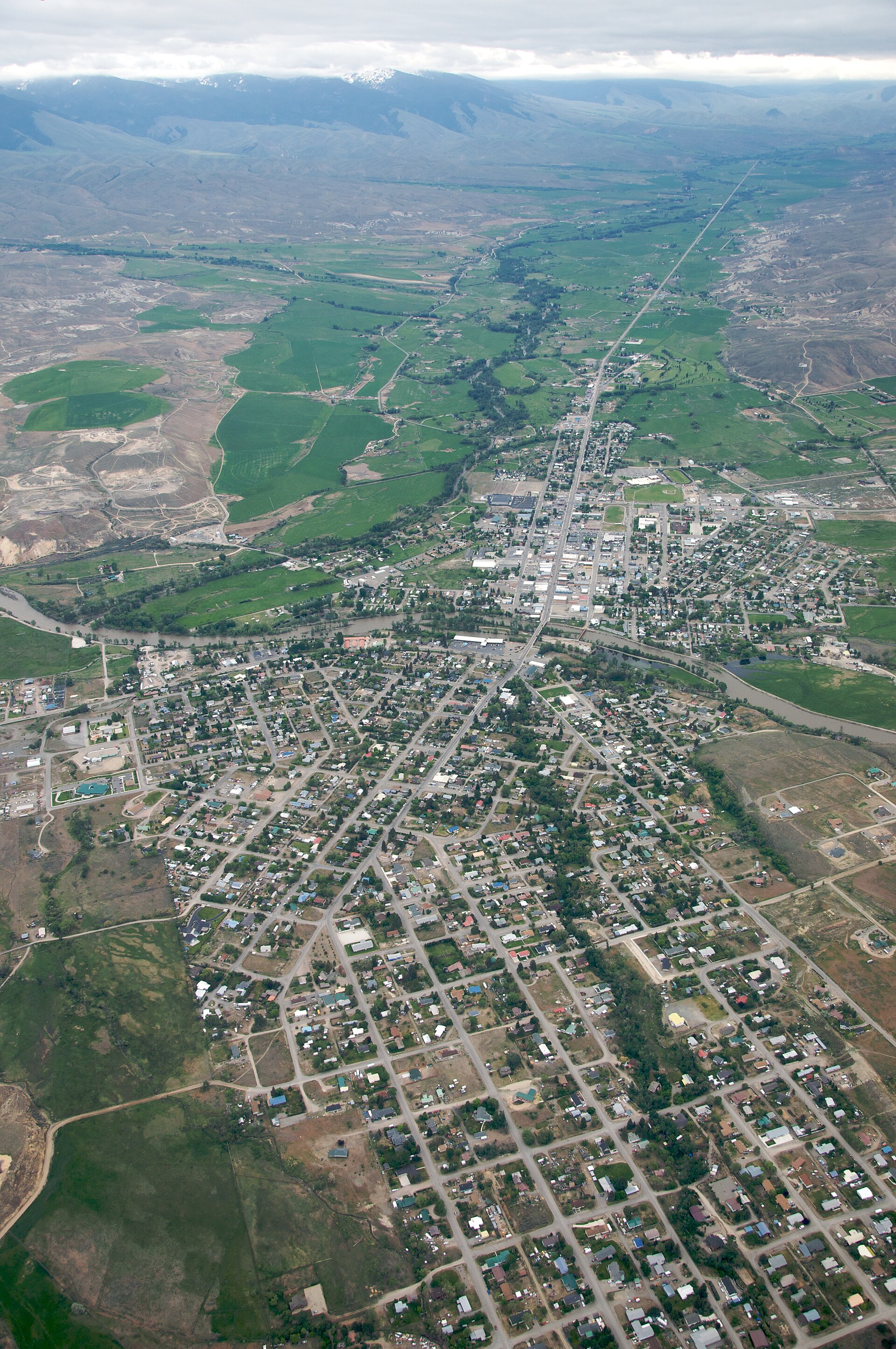

Why a small hospital's money works differently
Hospital finance comes down to two lines: what comes in and what goes out. For a big regional hospital, both lines move with volume. More surgeries bring more revenue and more supply costs, and a full hospital spreads its buildings and administrative staff over many patients. For a small rural hospital, the revenue line moves with volume but much of the cost line does not. Four features explain most of the difference: low volume, high fixed costs, a payer mix weighted toward public programs, and a shift of almost all activity to outpatient care.
Low volume
In CMS's 2024 cost report file, the median Idaho CAH counted 745 acute adult and pediatric inpatient days for the year, an average daily census of about 2.0 patients, and filled about 10.7 percent of its available acute beds (our calculations).1 The national CAH median was almost the same: an average of 2.0 inpatients a day and 9.9 percent of beds filled.1 The extremes in Idaho run from Lost Rivers Medical Center in Arco and the Power County Hospital District in American Falls, which each averaged well under one inpatient a day, to Gritman Medical Center in Moscow and Bingham Memorial Hospital in Blackfoot, which averaged about eight to nine.1
Low volume matters for three reasons. A hospital that sees few patients cannot spread its fixed costs. A single unusual patient, a single retirement or a single large repair can swing a year's results. And any payment that is set per case, such as a Medicaid diagnosis related group (DRG) payment or a commercial insurer's negotiated rate, produces little total revenue when there are few cases.
High fixed costs and the standby emergency room
A fixed cost is one that does not change with the number of patients in the short run: the building, the equipment, the minimum staff needed to keep a service open, insurance, information systems and licensing. A variable cost, such as medical supplies or drugs, rises and falls with patients.
Federal conditions of participation set a floor under a CAH's fixed costs. A CAH must keep emergency services "available on a 24-hours a day basis," keep listed life-saving drugs and equipment on hand, provide blood for emergencies around the clock, and have a doctor, physician assistant, nurse practitioner or clinical nurse specialist with emergency training on call and on site within 30 minutes, or within 60 minutes in certain frontier areas (42 CFR 485.618).2 A CAH must also furnish inpatient care, keep no more than 25 inpatient beds and hold its annual average acute stay to 96 hours or less (42 CFR 485.620).13 Those rules guarantee a community an emergency room; they also guarantee a payroll.
The biggest cost is people. Across the 25 Idaho CAHs we analyzed, salaries reported on Worksheet A came to $543.5 million in the 2024 file, equal to 45.3 percent of total operating expenses of $1.20 billion; depreciation, the yearly cost of buildings and equipment, came to $49.0 million, or 4.1 percent (our calculations). The remaining half covers employee benefits, contract staff, supplies, drugs, purchased services and overhead.1 For how wages and staffing shortages feed these numbers, see The Health Care Workforce.
How we figured it: the standby cost example and the cost shares
Standby example. This is a hypothetical example. We assumed a fixed yearly cost of $2,000,000 to keep an emergency department staffed and ready, then divided it by 2,000, 4,000, 8,000 and 16,000 visits: $1,000, $500, $250 and $125 per visit. It shows the arithmetic of fixed costs; it is not an estimate for any Idaho hospital.
Cost shares. For the 25 Idaho CAHs in the table later in this lesson, we added "Total Salaries From Worksheet A" ($543,522,556), "Depreciation Cost" ($48,962,697) and "Less Total Operating Expense" ($1,200,891,730) from CMS's 2024 Hospital Provider Cost Report file, then divided salaries and depreciation by operating expense.1
Limits. Salary and operating expense lines come from different worksheets of the cost report and do not line up perfectly; benefits are reported separately; hospitals that belong to a system may book some costs at the system level.
Payer mix: who pays the bills
Payer mix is the share of a hospital's patients, days or revenue that comes from each kind of payer: Original Medicare, Medicare Advantage plans, Medicaid, commercial insurance, the uninsured and others. It matters because each payer pays differently. Lesson 02 shows the rate gap between Medicaid, Medicare and commercial insurers in one chart: How Providers Get Paid.
Rural hospitals see older patients, so Medicare is the largest single payer. In the 2024 file, Original Medicare paid for 41.7 percent of acute adult and pediatric inpatient days at the median Idaho CAH, and Medicaid for 10.8 percent (our calculations).1 Medicaid's share of net patient revenue, a separate line on Worksheet S-10, was 9.8 percent at the median.1 The Medicare share is analyzed hospital by hospital in Medicare and Rural Idaho; this lesson focuses on the other payers.
Two features of the payer mix shape a small hospital's results. First, the payers that pay the most relative to cost (commercial insurers) are a smaller share of patients in older, poorer and more rural places. Second, Medicare pays a CAH on its costs, so Medicare business roughly breaks even by design, minus the 2 percent sequester and the limits on bad debt payment; the hospital's margin is made or lost on everyone else.14155
The outpatient shift
Small hospitals today are mostly outpatient businesses. In the 2024 file, outpatient care made up 85.1 percent of the gross charges of the 25 Idaho CAHs combined and 86.2 percent at the median hospital (our calculations), close to the national CAH median of 85.3 percent.1 Emergency visits, lab tests, imaging, infusions, physical therapy and clinic visits now carry these hospitals. MedPAC, the commission that advises Congress on Medicare payment, reports that about 63 percent of Medicare's roughly $13 billion in cost-based payments to CAHs in 2024 was for outpatient services, 19 percent for inpatient care and 18 percent for swing-bed care.5
The shift has two financial edges. Outpatient work can be profitable, and it keeps the hospital's doors and staff busy. But the inpatient floor and the emergency room still have to be staffed around the clock for a census of two, and outpatient services face more competition from clinics, imaging centers and larger systems that can offer the same test closer to where people work.
The rules that define Idaho's small hospitals
Three federal designations decide how most of Idaho's rural hospitals are paid, and each comes with conditions that shape the hospital's costs.
Critical access hospitals in brief
Congress created the critical access hospital in the Balanced Budget Act of 1997 (P.L. 105-33), in what is now Social Security Act section 1820 (42 U.S.C. 1395i-4), along with the Medicare Rural Hospital Flexibility Program that funds state rural health offices to support these hospitals.1416 To qualify, a hospital must be in a rural area or be treated as rural (42 CFR 485.610(b)) and must sit more than a 35-mile drive from another hospital, or 15 miles in mountainous terrain or on secondary roads, unless the state certified it as a "necessary provider" before Jan. 1, 2006 (42 CFR 485.610(c)).17 The Medicare Prescription Drug, Improvement, and Modernization Act of 2003 (P.L. 108-173) ended new necessary-provider designations as of that date, and MedPAC notes that most CAHs operating today converted before 2006, including more than 200 nationally in 2005 alone.185
A CAH may keep up to 25 inpatient beds, which can double as "swing beds" for skilled nursing care, and must keep its annual average acute stay at 96 hours or less (42 CFR 485.620).13 Medicare pays it 101 percent of its reasonable costs for most services (42 CFR 413.70), reduced by the 2 percent Medicare sequester.1519 How that payment works, and what it means for patients' coinsurance, is the subject of Medicare and Rural Idaho.
CMS's hospital enrollment file dated Sept. 29, 2026 lists 26 Idaho CAHs, 1,375 nationally, and 13 in Utah, 26 in Oregon, 38 in Washington, 48 in Montana, 20 in Wyoming and 12 in Nevada (our count of unique CAH certification numbers).4
Idaho Medicaid also pays CAHs on cost
Idaho Medicaid switched most inpatient hospital payment from cost-based reimbursement to diagnosis related groups in July 2021, according to the Idaho Legislature's Office of Performance Evaluations (OPE). Its February 2024 report, Medicaid Hospital Rates, says that "while most inpatient services are paid through DRGs, Idaho continues to pay critical access hospitals based on cost."20 Idaho Code section 56-265 describes the move from "retrospective cost settlements to prospective payment systems," and section 56-1404 refers to it in setting the hospital assessment.21 For a CAH, then, both Medicare and Idaho Medicaid pay on a cost basis, which protects the hospital from losing money on each Medicaid or Medicare patient but also means those programs never produce much of a profit. Commercial insurers, Medicare Advantage plans and patients' own payments are where a CAH can earn or lose a margin.
Rural emergency hospitals in brief
The Consolidated Appropriations Act, 2021 (P.L. 116-260, signed Dec. 27, 2020), section 125, created the rural emergency hospital (REH), effective Jan. 1, 2023, in Social Security Act section 1861(kkk).2223 An REH keeps a 24-hour emergency department and outpatient services but gives up inpatient care, with an annual per-patient average stay of 24 hours or less (42 CFR 485.502). Only a facility that was a CAH, or a rural hospital with 50 or fewer beds, on Dec. 27, 2020 may convert (42 CFR 485.506).24 Medicare pays an REH its outpatient rates plus 5 percent and a monthly "additional facility payment" of $295,052 in 2026, about $3.5 million a year (Social Security Act section 1834(x); MedPAC).255
The REH trade is a financial one: a hospital gives up inpatient revenue it barely has, plus swing-bed revenue, in exchange for a fixed federal payment and higher outpatient rates. CMS's Sept. 29, 2026 file lists 57 REHs nationally and one in Idaho, Cascade Medical Center Hospital District, which converted in early 2025 (conversion date Feb. 25, 2025, in the enrollment file; REH certification Jan. 11, 2025, in the Provider of Services file).4 Its last cost report as a CAH, for the year ended Sept. 30, 2024, showed an operating margin of minus 80.7 percent on about $5.2 million in net patient revenue, and 48 acute inpatient days for the whole year, an average daily census of about 0.1 patients (our calculations).1 The Cascade story, including what the hospital told the public before converting, is in Medicare and Rural Idaho. Cascade is left out of the CAH figures below because it is no longer a CAH.
The larger rural hospitals
A handful of Idaho hospitals outside Boise are too large to be CAHs and are paid under Medicare's inpatient and outpatient prospective payment systems, sometimes with rural add-ons. Two are used for comparison in this lesson: St. Luke's Magic Valley Medical Center in Twin Falls, the regional hospital for south central Idaho, and Madison Memorial Hospital in Rexburg, which the cost report codes as county-owned. Lesson 88/09 reports that in CMS's fiscal year 2027 impact file, no Idaho hospital is coded as a Medicare-dependent hospital or receives the low-volume adjustment, two Medicare programs Congress keeps extending for small rural hospitals paid by DRG.
| Hospital type | Federal law and rule | Beds and size | How Medicare pays | How Idaho Medicaid pays | Idaho count (Sept. 29, 2026 file) |
|---|---|---|---|---|---|
| Critical access hospital (CAH) | SSA section 1820; 42 CFR 485 subpart F | Up to 25 inpatient beds; average stay 96 hours or less | 101% of reasonable cost (42 CFR 413.70), minus 2% sequester | Cost basis (OPE, 2024) | 26 |
| Rural emergency hospital (REH) | SSA sections 1861(kkk) and 1834(x); 42 CFR 485 subpart E | No inpatient beds (a separately licensed nursing unit allowed); average stay 24 hours or less | Outpatient rates plus 5%, plus $295,052 a month in 2026 | Not confirmed for this lesson | 1 (Cascade) |
| Rural prospective payment hospital | SSA section 1886(d); 42 CFR 412 | No federal bed limit | DRG and outpatient rates, with any rural adjustments that apply | DRG since July 2021, plus supplemental payments | Several, including Twin Falls and Rexburg |
Sources: Social Security Act sections 1820, 1834(x), 1861(kkk) and 1886(d); 42 CFR parts 412, 413 and 485; MedPAC, Critical Access Hospitals Payment System (October 2026); Idaho OPE, Medicaid Hospital Rates (February 2024); CMS Hospital Enrollments file, Sept. 29, 2026.14245204
A timeline of rural hospital money
| Year | Law or event | What changed | Source |
|---|---|---|---|
| 1946 | Hospital Survey and Construction Act (Hill-Burton), P.L. 79-725; Idaho county hospital boards law | Federal grants and loans to build hospitals, many in small towns; Idaho gave county hospital boards a levy of their own (now Idaho Code section 31-3613, added 1946) | HRSA; Idaho Code2611 |
| 1965 | Idaho hospital district law | Voters may petition to form a hospital district with its own elected board and property tax (Idaho Code section 39-1320 and following, added 1965) | Idaho Code27 |
| 1983 | Social Security Amendments of 1983, P.L. 98-21 | Medicare moves hospitals from cost to prospective payment by DRG | Congress.gov28 |
| 1997 | Balanced Budget Act, P.L. 105-33 | Creates the critical access hospital and the Medicare Rural Hospital Flexibility Program | SSA section 182016 |
| 1999 | First Idaho CAHs | Gooding, Bonners Ferry, Malad City, American Falls and Salmon among the first certified (CMS Provider of Services file, per lesson 88/09) | CMS |
| 2003 | Medicare Modernization Act, P.L. 108-173 | CAH payment set at 101% of cost; bed limit raised to 25; new necessary-provider designations end Jan. 1, 2006 | MedPAC185 |
| 2010 | Idaho Hospital Assessment Act | Private hospitals pay an assessment that funds Medicaid supplemental and disproportionate share payments (Idaho Code Title 56, chapter 14) | Idaho Code21 |
| 2020 | Consolidated Appropriations Act, 2021, P.L. 116-260, sec. 125 | Creates the rural emergency hospital, effective Jan. 1, 2023 | Congress.gov22 |
| 2021 | Idaho Medicaid DRG payment | Most inpatient stays paid by DRG from July 2021; CAHs still paid on cost | Idaho OPE20 |
| 2023 | Obstetric closures | Bonner General Health (Sandpoint) and Valor Health (Emmett) announce they will stop delivering babies | Idaho Capital Sun6 |
| 2025 | Cascade converts; P.L. 119-21 signed July 4 | Idaho's first REH (certified Jan. 11; enrollment conversion date Feb. 25); federal law freezes provider taxes, caps directed payments and creates the Rural Health Transformation Program | CMS; P.L. 119-2148 |
| 2025 | Idaho Medicaid rate cut | A 4 percent cut to most Medicaid provider rates takes effect Sept. 1 | Idaho Reports; Idaho Capital Sun4429 |
| 2025 to 2026 | First RHT awards | Idaho awarded $185,974,368 (Dec. 29, 2025); all first-year funds to be obligated by Oct. 30, 2026 | CMS; Idaho Health and Welfare930 |
| 2026 | Second RHT awards | Idaho awarded $182,698,377 (Nov. 9, 2026) | HHS10 |
What the cost reports show for Idaho's critical access hospitals
Every hospital that bills Medicare files a cost report (form CMS-2552-10) each year. CMS posts a public use file with about 120 fields from each report, including revenue, expenses, patient days by payer, balance sheet items and uncompensated care.1 It is the only place where the finances of every Idaho hospital, large and small, nonprofit and government, are reported on the same form. This section uses the 2024 file, which holds reporting years that ended between Sept. 30, 2024 and June 30, 2025 for these hospitals, and the 2023 file for comparison.
Three measures, defined
- Operating margin (in this lesson, the patient-care margin): net income from service to patients divided by net patient revenue. It answers: does the hospital cover the cost of caring for patients from what patients and their insurers pay?
- Total margin: net income divided by net patient revenue plus other income. Other income includes county or district tax support, grants, donations, investment income, cafeteria and rental income. It answers: after everything, did the hospital end the year ahead?
- Days cash on hand: cash plus temporary investments divided by one day's operating expenses (operating expenses minus depreciation, divided by 365). It answers: how many days could the hospital pay its bills if no money came in?
Hospital finance analysts use these and other measures, defined in slightly different ways; the method box below gives ours. The industry figures quoted later use their own definitions and periods.
Margins in the 2024 file
Of the 25 Idaho CAHs analyzed, 17 reported a negative operating margin in the 2024 file, the same number as in the 2023 file. The median operating margin was minus 6.2 percent, down from minus 4.2 percent in the 2023 file. Added together, the 25 hospitals lost $30.2 million on patient care on $1.17 billion in net patient revenue, an aggregate operating margin of minus 2.6 percent (our calculations).131
Other income changes the picture. The 25 hospitals reported $59.0 million in other income in the 2024 file. On a total-margin basis, 10 of 25 were negative (8 in the 2023 file), the median was 0.8 percent (2.8 percent in 2023), and the group together earned $23.8 million, an aggregate total margin of 1.9 percent.131 In plain terms: for the typical Idaho CAH, patient care loses money and other income roughly fills the hole, with little left over to replace a roof, an MRI machine or an electronic health record system.
Days cash on hand
The median Idaho CAH held 72 days of cash and temporary investments in the 2024 file, counting the 21 hospitals that report their own cash (79 days in the 2023 file). The four CAHs that belong to St. Luke's Health System or Intermountain Health reported no cash of their own, because their systems hold cash centrally, so we left them out of this measure.131 The national median for CAHs that report cash was also 72.7 days.1 Two Idaho CAHs reported less than 30 days. The Idaho Hospital Association, which represents hospitals, told an interim legislative group in October 2026 that three Idaho CAHs had less than 30 days of cash on hand, according to the Idaho Press as reported in lesson 88/09; that is an industry figure for a later period, measured its own way.
Days cash on hand is a cushion against delays. When an insurer slows payment, a cost report settlement goes the wrong way, or a big repair comes due, a hospital with 30 days of cash has little room. John Hennessy, chief executive of Bonner General Health, told the Idaho Capital Sun in May 2026 that "it's getting tougher and tougher to get payments on time."29
Ownership and margins
The cost reports' "type of control" codes put 12 of the 25 CAHs under local government (7 county-owned, 5 hospital districts), 2 under church-affiliated nonprofits and 11 under other nonprofits, including the four that belong to St. Luke's and Intermountain.1 In the 2024 file the median operating margin was minus 10.6 percent for the district hospitals, minus 6.6 percent for the county hospitals, minus 1.6 percent for the other nonprofits and 3.6 percent for the two church-affiliated hospitals (our calculations). The groups are small, so one hospital can move a median, and the differences say nothing by themselves about management: district and county hospitals tend to be the smallest and most isolated, which is often why the public owns them.1
The hospitals one by one
The table gives each hospital's figures from the 2024 file. Medicaid's share is shown two ways: as a share of acute inpatient days (Worksheet S-3) and as a share of net patient revenue (Worksheet S-10). The cost of uncompensated care is the cost of charity care plus the cost of non-Medicare bad debt, as a share of total costs (Worksheet S-10).
| Hospital | Town (county) | Owner type | Year ended | Operating margin | Total margin | Days cash on hand | Medicaid share of acute days | Medicaid share of net patient revenue | Uncompensated care, % of total costs |
|---|---|---|---|---|---|---|---|---|---|
| Bear Lake Memorial Hospital | Montpelier (Bear Lake) | County | 12/31/2024 | -6.6% | -4.8% | 52 | 10.7% | 10.9% | 3.3% |
| Benewah Community Hospital | St. Maries (Benewah) | County | 12/31/2024 | -18.0% | -7.7% | 25 | 9.0% | 8.0% | 4.8% |
| Bingham Memorial Hospital | Blackfoot (Bingham) | Nonprofit | 12/31/2024 | -3.0% | 1.8% | 55 | 12.8% | 13.5% | 2.6% |
| Bonner General Health | Sandpoint (Bonner) | Nonprofit | 12/31/2024 | -6.5% | 0.8% | 76 | 4.2% | 5.5% | 4.3% |
| Boundary Community Hospital | Bonners Ferry (Boundary) | Hospital district | 12/31/2024 | -7.5% | -3.3% | 42 | 5.4% | 13.9% | 3.4% |
| Caribou Medical Center | Soda Springs (Caribou) | Nonprofit | 12/31/2024 | 3.7% | 5.4% | 39 | 12.2% | 10.8% | 3.0% |
| Intermountain Health Cassia Regional Hospital | Burley (Cassia) | Nonprofit (system) | 12/31/2024 | -0.6% | 1.9% | held by system | 23.8% | 17.2% | 9.4% |
| Clearwater Valley Hospital | Orofino (Clearwater) | Church nonprofit | 12/31/2024 | 5.6% | 9.5% | 72 | 10.8% | 6.5% | 3.1% |
| Franklin County Medical Center | Preston (Franklin) | County | 9/30/2024 | 4.6% | 6.9% | 127 | 9.3% | 14.4% | 5.6% |
| Gritman Medical Center | Moscow (Latah) | Nonprofit | 12/31/2024 | -7.9% | -1.7% | 1 | 7.0% | 7.8% | 1.9% |
| Lost Rivers Medical Center | Arco (Butte) | Hospital district | 9/30/2024 | -12.1% | -1.1% | 108 | 0.0% | 9.6% | 5.3% |
| Minidoka Memorial Hospital | Rupert (Minidoka) | County | 9/30/2024 | -7.9% | -6.2% | 36 | 8.5% | 10.6% | 4.5% |
| Nell J. Redfield Memorial Hospital | Malad City (Oneida) | County | 6/30/2025 | -6.8% | -4.3% | 90 | 9.6% | 16.3% | 1.8% |
| North Canyon Medical Center | Gooding (Gooding) | Nonprofit | 9/30/2024 | 8.4% | 7.8% | 125 | 40.9% | 13.0% | 3.1% |
| Power County Hospital District | American Falls (Power) | Hospital district | 9/30/2024 | -27.6% | -0.6% | 169 | 15.0% | 37.5% | 4.7% |
| Shoshone Medical Center | Kellogg (Shoshone) | Nonprofit | 11/30/2024 | -8.7% | 2.3% | 180 | 6.2% | 4.2% | 6.0% |
| St. Luke's Elmore Medical Center | Mountain Home (Elmore) | Nonprofit (system) | 9/30/2024 | 1.9% | 6.3% | held by system | 20.5% | 9.8% | 5.0% |
| St. Luke's McCall | McCall (Valley) | Nonprofit (system) | 9/30/2024 | -1.6% | 4.0% | held by system | 14.7% | 6.0% | 4.4% |
| St. Luke's Wood River Medical Center | Ketchum (Blaine) | Nonprofit (system) | 9/30/2024 | 3.9% | 7.0% | held by system | 11.1% | 2.3% | 4.7% |
| St. Mary's Health | Cottonwood (Idaho) | Church nonprofit | 12/31/2024 | 1.5% | 7.2% | 94 | 7.6% | 5.4% | 2.3% |
| Steele Memorial Medical Center | Salmon (Lemhi) | County | 9/30/2024 | -6.2% | -2.7% | 46 | 5.9% | 7.4% | 3.9% |
| Syringa Hospital and Clinics | Grangeville (Idaho) | Hospital district | 9/30/2024 | -10.6% | -3.9% | 85 | 12.3% | 9.8% | 0.8% |
| Teton Valley Hospital | Driggs (Teton) | Nonprofit | 9/30/2024 | -4.6% | 0.2% | 41 | 12.6% | 5.5% | 3.1% |
| Valor Health (Walter Knox Memorial Hospital) | Emmett (Gem) | County | 9/30/2024 | 0.2% | 6.5% | 98 | 13.2% | 12.0% | 4.5% |
| Weiser Memorial Hospital | Weiser (Washington) | Hospital district | 6/30/2025 | -6.7% | 0.8% | 37 | 12.7% | 9.6% | 5.0% |
Source: CMS Hospital Provider Cost Report public use file, 2024 (posted October 2026); all figures are our calculations from the fields named in the method box. Names follow the hospitals' current public names where the cost report uses an older or legal name. St. Mary's Health is listed under Idaho County following the Provider of Services file's county code, as in lesson 88/09.1
A few rows need care. Power County's Medicaid revenue share (37.5 percent) is high for a hospital whose Medicaid share of inpatient days is 15 percent, and Lost Rivers reported no Medicaid inpatient days but 9.6 percent of revenue from Medicaid: in both, nearly all care is outpatient, so the inpatient day shares rest on very few days. North Canyon's 40.9 percent Medicaid share of days is far above the others; we could not confirm from the public file what drives it. Gritman's one day of cash reflects how it reports cash and investments on this form, not necessarily its total reserves. Cost reports are self-reported and can be amended.
How we figured it: margins, cash, Medicaid and uncompensated care from cost reports
Data. CMS's Hospital Provider Cost Report public use files for 2024 and 2023, downloaded from data.cms.gov (posted October 2026). Where a hospital had more than one report in a file, we kept the one with the latest fiscal year end. Idaho CAHs are the Idaho certification numbers 131300 to 131399; we analyzed 25 of them, the same 25 that appear in lesson 88/09, leaving out Cascade Medical Center (a rural emergency hospital since early 2025).131
Operating margin. "Net Income from Service to Patients" divided by "Net Patient Revenue." Total margin. "Net Income" divided by the sum of "Net Patient Revenue" and "Total Other Income." Days cash on hand. "Cash on Hand and in Banks" plus "Temporary Investments," divided by ("Less Total Operating Expense" minus "Depreciation Cost") divided by 365. Hospitals reporting zero cash (system members) are left out of the cash median. Medicaid share of days. "Hospital Total Days Title XIX For Adults & Peds" divided by "Hospital Total Days (V + XVIII + XIX + Unknown) For Adults & Peds." Medicaid share of revenue. "Net Revenue from Medicaid" divided by "Net Patient Revenue." Uncompensated care. "Cost of Uncompensated Care" divided by "Total Costs." Outpatient share. "Outpatient Revenue" divided by "Inpatient Revenue" plus "Outpatient Revenue" (gross charges). Average daily census. Acute adult and pediatric days divided by 365.
Other states. The same calculations for every CAH in each state's file (certification numbers ending 1300 to 1399), with no exclusions.
Limits. Reporting years differ by hospital. Members of health systems may book some revenue, costs and cash at the system level. Medicare Advantage and Medicaid managed care days are reported differently from fee-for-service days, so Medicaid day shares are not comparable across states with different managed care use. A single year can swing on one settlement, grant or repair. These are our calculations from self-reported data, not audited financial statements.
Two larger hospitals for comparison
The squeeze is not limited to CAHs. St. Luke's Magic Valley Medical Center in Twin Falls, the regional hospital for south central Idaho, reported an operating margin of minus 5.7 percent and a total margin of 0.4 percent for its year ended Sept. 30, 2024, on $522.4 million in net patient revenue; Medicaid was 9.0 percent of its net patient revenue, and outpatient care 55.1 percent of its gross charges (our calculations).1 Madison Memorial Hospital in Rexburg, coded as county-owned, reported minus 5.4 percent and 0.7 percent, with Medicaid paying for 31.9 percent of its acute inpatient days and 15.4 percent of its net patient revenue, the highest Medicaid revenue share of the hospitals named in this lesson after Power County, Cassia and Malad City.1 The Magic Valley's hospitals are covered in detail in Magic Valley Case Study.
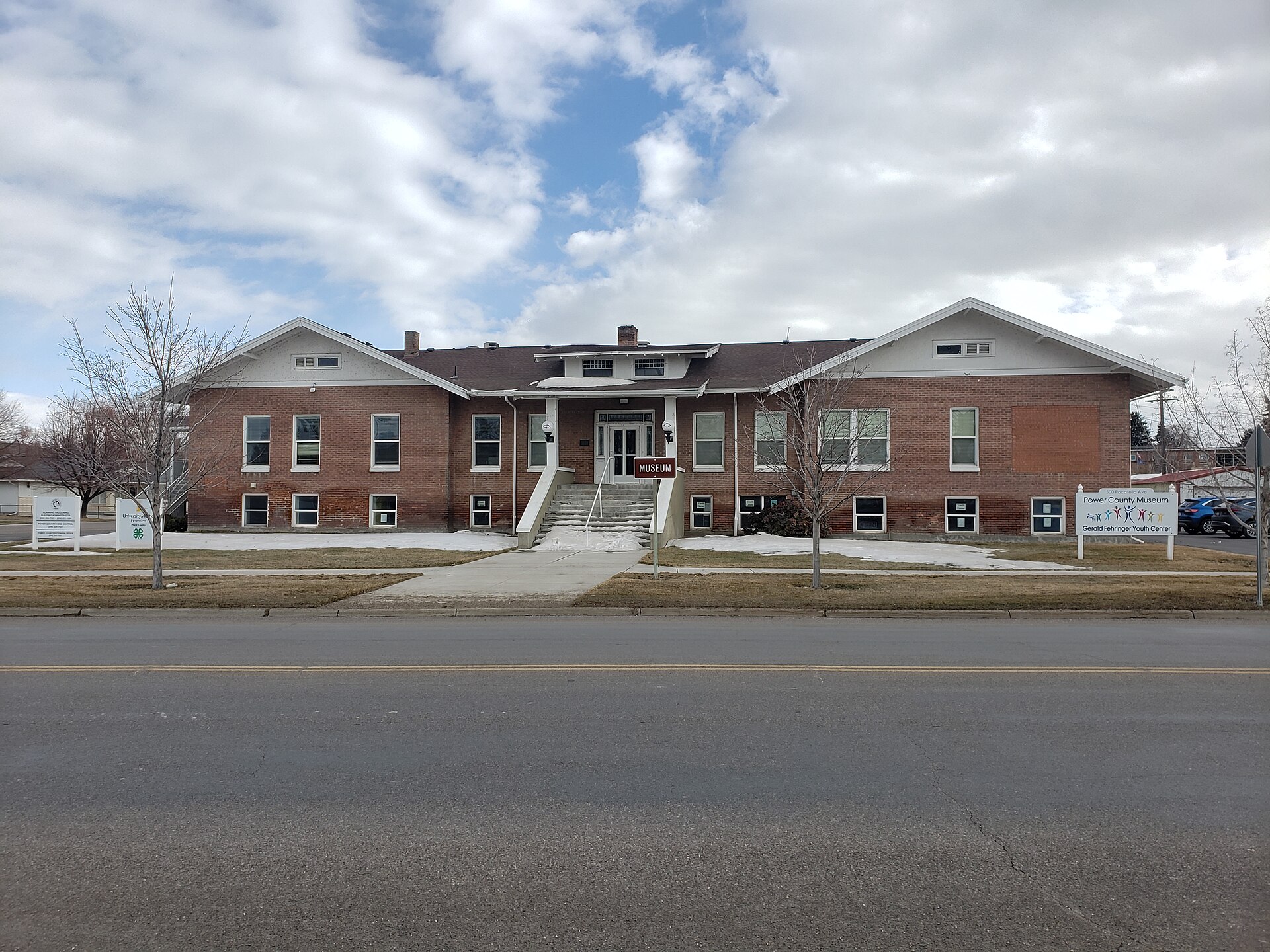

Idaho compared with its neighbors
The same cost report file lets us compare Idaho's CAHs with those in the six neighboring states and the nation. Idaho's CAHs do worse than the national median on patient care and on the bottom line, hold about the national median in cash, and carry more Medicaid revenue and more uncompensated care than the typical CAH.
| State | CAHs with margin data (2024 file) | Median operating margin | Median total margin | Negative operating margin | Median Medicaid share of net patient revenue | Median uncompensated care, % of total costs | Median days cash on hand (hospitals reporting cash) |
|---|---|---|---|---|---|---|---|
| Idaho | 25 | -6.2% | 0.8% | 17 of 25 | 9.8% | 4.3% | 72 |
| Utah | 13 | 3.9% | 9.2% | 4 of 13 | 10.2% | 6.4% | 178 |
| Oregon | 25 | -3.0% | 4.8% | 14 of 25 | 17.6% | 3.4% | 92 |
| Washington | 38 | -6.0% | 3.9% | 30 of 38 | 17.3% | 3.3% | 94 |
| Montana | 48 | -6.9% | 2.4% | 41 of 48 | 13.0% | 3.1% | 88 |
| Wyoming | 17 | -11.6% | -1.4% | 16 of 17 | 4.2% | 5.6% | 49 |
| Nevada | 13 | -2.5% | 6.9% | 7 of 13 | 15.4% | 4.1% | 143 |
| United States | 1,355 | -5.2% | 5.5% | 882 of 1,355 (65%) | 8.7% | 3.6% | 73 |
Source: CMS Hospital Provider Cost Report public use file, 2024; our calculations using the method above. Idaho covers the 25 CAHs in the table above, as in lesson 88/09; other states include every CAH in the file. Days cash on hand counts only hospitals that report their own cash (Idaho 21, Utah 9, Oregon 18, Washington 35, Montana 46, Wyoming 13, Nevada 9, U.S. 1,141).1
Three cautions apply. Utah and Nevada have few CAHs, so their medians can move a lot. Oregon, Washington and Nevada run most Medicaid through managed care plans, which changes how hospitals report Medicaid revenue and days. And Wyoming, the only neighbor that has not expanded Medicaid, shows both the lowest Medicaid revenue share and the worst margins; a consulting firm's 2026 report found 52.2 percent of rural hospitals in non-expansion states had negative operating margins, against 34.9 percent in expansion states, using its own measure and data.7 Idaho expanded Medicaid starting in 2020; that story is in How Idaho Got Expansion.
Uncompensated care: charity care and bad debt
Uncompensated care is care a hospital provides and is never paid for. It has two parts that are easy to mix up. Charity care is care the hospital decides up front, under its own financial assistance policy, not to bill or to bill at a discount because the patient cannot pay. Bad debt is a bill the hospital expected to collect and later wrote off. Hospitals report both on Worksheet S-10 of the cost report, and CMS converts them from charges to costs using each hospital's cost-to-charge ratio.1 Nonprofit hospitals also report charity care at cost on IRS Form 990 Schedule H, which is covered in Idaho's Hospitals.
In the 2024 file, the cost of uncompensated care at the 25 Idaho CAHs totaled $38.7 million, about the same as in the 2023 file. Charity care made up $11.5 million of it, down from $14.0 million; the rest, about $27.2 million, was the cost of non-Medicare bad debt (our calculations).131 At the median hospital, uncompensated care equaled 4.3 percent of total costs, above the national CAH median of 3.6 percent.1 Cassia Regional Hospital in Burley reported the highest share among the 25, 9.4 percent.1
Medicare pays part of the bad debt that its own beneficiaries leave unpaid, such as unpaid deductibles and coinsurance, if the hospital made a reasonable collection effort. Under 42 CFR 413.89(h), Medicare reduces allowable bad debt by 35 percent, so it pays 65 percent: for hospitals paid under the prospective systems since fiscal year 2013, and for "all other providers," the category that covers CAHs, since fiscal year 2015 after a phase-in.32 Medicaid expansion changed the uninsured share in Idaho beginning in 2020, and the 2025 federal law's work requirements and six-month renewals, covered in module 74 and lesson 89/12, could change it again. How much those changes will move uncompensated care at Idaho's small hospitals is not known yet.
Closures and conversions
The national count
The Cecil G. Sheps Center for Health Services Research at the University of North Carolina keeps the most widely cited list of rural hospital closures. Its page counts 198 rural hospital closures and conversions in the U.S. since January 2005: 110 complete closures and 88 converted closures, in which the building still offers some care, such as an emergency room, clinic or nursing home, but no inpatient beds. Since 2010 the count is 155. The Sheps list does not count conversions to rural emergency hospitals.3 The worst years were 2019 and 2015, with 17 each, and 2020 with 16; 2025 had 6 and 2026 had 3 as of the page's latest update (our tally of the page's table).3
No Idaho hospital appears on the Sheps list. Among the neighbors, Washington has one (Deer Park Hospital, 2008) and Nevada two (Owyhee Community Health Facility, 2007, and Nye Regional Medical Center, 2015); Utah, Oregon, Montana and Wyoming have none.3 Chartis, a health care consulting firm, counted 206 rural closures or conversions to non-inpatient models, including REHs, since 2010 in its February 2026 report, and named Idaho among the states where inpatient care disappeared during 2025, which matches the Cascade conversion.7
Who is at risk, and how the counts differ
Chartis's 2026 report, based on cost report data through the third quarter of 2025, found that 41.2 percent of rural hospitals nationally had a negative operating margin, that the median rural operating margin was 2.0 percent, and that 417 rural hospitals were "vulnerable to closure" under its own scoring model.7 It listed 27 rural hospitals in Idaho. These are a private firm's numbers using its own definitions; they cover all rural hospitals, not just CAHs, and they cannot be matched line by line with the public cost report calculations in this lesson.
The Idaho Hospital Association, which represents hospitals, gave its own figure in 2026: 67 percent of Idaho's small, rural hospitals had a negative operating margin in the last quarter of 2025, up from 15 percent two years earlier, as reported by the Idaho Capital Sun on May 13, 2026.29 Quarterly figures swing more than annual ones, and the association's data are not public, so this is an industry figure to be read as such. Burt Keltner, chief executive of Benewah Community Hospital, told the same reporter that many CAHs run at about a 1 percent margin, so a 10 percent payment cut affecting 10 percent of patients would erase it, and said of his hospital, "We weren't built to be a profit center."29
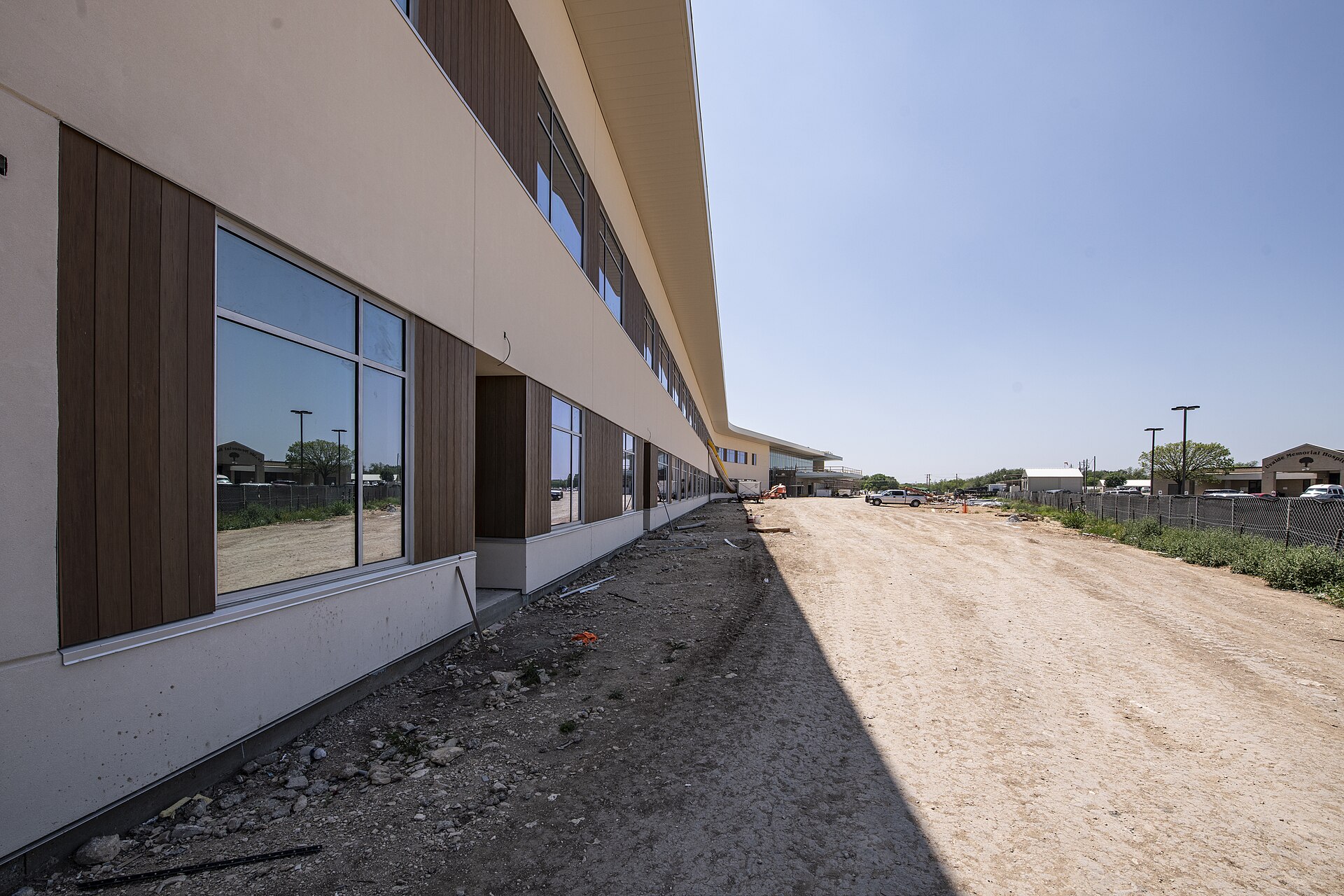

When a service line closes
A hospital rarely closes all at once. It usually stops doing the things that cost the most for the fewest patients first. Labor and delivery is the most common example: a hospital that delivers babies must have obstetric nurses, someone who can do an emergency cesarean section and someone who can resuscitate a newborn available around the clock, whether it has 50 births a year or 500. Chartis counted 331 rural hospitals that stopped offering obstetric services between 2011 and 2024, about 27 percent of rural obstetric units, using cost report data.7
Documented Idaho cases
- Bonner General Health, Sandpoint (Bonner County, CAH). On March 17, 2023, the hospital announced it would stop labor and delivery services. Its statement cited a lack of pediatric coverage, fewer patients delivering there and financial limits, and said that "highly respected, talented physicians are leaving" and that "Idaho's legal and political climate" made recruiting harder. Pregnant patients were directed to a hospital in Coeur d'Alene, about an hour away; NBC News reported that residents would have to drive at least 46 miles.633
- Valor Health, Emmett (Gem County, county-owned CAH). In late March 2023 the hospital announced it would stop delivering babies after June 1, 2023. It said it had become "increasingly difficult and unsustainably expensive to recruit and retain a full team" and projected only 50 deliveries in the coming year; several hospitals were within an hour, according to the Idaho Capital Sun.6
- West Valley Medical Center, Caldwell (Canyon County). Not a rural hospital, but a nearby example: on Feb. 22, 2024, the hospital told the Idaho Statesman it would close its labor and delivery and neonatal intensive care units on April 1, citing fewer births and "challenges in securing consistent coverage."34
- Cascade Medical Center, Cascade (Valley County). Ended inpatient care when it became a rural emergency hospital in early 2025 (CMS enrollment conversion date Feb. 25, 2025; REH certification Jan. 11, 2025, in the Provider of Services file).4
What happens to pregnant patients and newborns after an obstetric unit closes, and how Medicaid pays for births, is in Pregnancy, Postpartum and Family Planning.
The money logic of a service line closure
Closing a service saves its fixed staffing and equipment costs but also gives up its revenue, and often some revenue from related services (prenatal visits, newborn care, follow-up surgery) that leaves with it. Whether the hospital comes out ahead depends on how much of the cost is truly fixed to that service and how many patients it loses. A cost-based payer such as Medicare also pays a CAH a share of its overhead: when a service closes, the hospital's remaining overhead is spread over fewer services, and the cost report settles accordingly. The documented Idaho cases cite staffing and recruitment first, finances second; the public record does not show the dollar effect of any of these closures on the hospital's books.
- Find the announcement and the reasons given. Hospital press releases, board minutes (for county and district hospitals, these are public under Idaho's open meeting law) and news coverage record the date and stated reasons.
- Check the license and the federal record. The Idaho Department of Health and Welfare's Bureau of Facility Standards licenses hospitals under Idaho Code Title 39, chapter 13; CMS's Provider of Services file lists the services each hospital reports, updated quarterly.
- Read the cost reports before and after. Births and delivery room costs show up on the hospital's cost report; compare the years before and after the closure date in the public use file or the full HCRIS data.
- Look at the money that went with it. For county and district hospitals, the budget and audit show staffing and revenue changes; for nonprofits, IRS Form 990 does.
- Follow the patients. Idaho vital statistics report births by county of residence and place of birth; a shift in where a county's babies are born shows where patients went.
Medicaid money: rates, the hospital assessment and the 2025 law
Medicaid reaches a rural hospital's budget in three ways: the base payment for each service, supplemental payments on top of the base, and the state budget decisions that change both. Lesson 89/12 covers the federal law in detail; this section keeps to what it means for hospital finances.
Base rates and the 2025 cut
Federal law requires state Medicaid payments to be "consistent with efficiency, economy, and quality of care" and sufficient to enlist enough providers that services are available to Medicaid patients at least to the extent they are to the general population in the area (Social Security Act section 1902(a)(30)(A)).35 Within that, Idaho sets its own rates. A 4 percent cut to most Idaho Medicaid provider rates took effect Sept. 1, 2025, as the state trimmed its Medicaid budget; lesson 10, Idaho's Budget and Health Care, follows the budget side.4429 John Hennessy of Bonner General estimated the cut would cost his hospital "several $100,000," according to the Idaho Capital Sun.29 For a CAH paid on cost, how a rate cut reaches the hospital depends on how Idaho's cost settlement treats it; we did not find a public Health and Welfare document that explains how the 4 percent cut applied to CAH cost settlements.
The hospital assessment and supplemental payments
A provider tax, which Idaho law calls an assessment, is a charge a state places on a class of health care providers, often to raise the state's share of Medicaid payments that then come back to those providers with federal matching dollars. Federal rules in 42 CFR 433.68 require such taxes to be broad-based and uniform and limit a "hold harmless" arrangement that guarantees providers their money back; a tax at or below 6 percent of net patient revenue falls within a safe harbor.36
Idaho's Hospital Assessment Act, Idaho Code Title 56, chapter 14, applies to private hospitals. Each state fiscal year, Health and Welfare calculates the "upper payment limit gap," the difference between the most Medicaid can pay hospitals with federal matching funds and what it pays from other sources, and sets the assessment rate to fund that gap and the state share of disproportionate share hospital (DSH) payments (Idaho Code section 56-1404). Since July 1, 2023, the law adds an amount equal to 30 percent of the upper payment limit payment "to be utilized for general fund medicaid needs." The rate cannot exceed the federal limit in 42 CFR 433.68.21 The upper payment limit (UPL) is a federal ceiling on total fee-for-service Medicaid payments to a class of hospitals, set at a reasonable estimate of what Medicare's payment principles would pay; a supplemental payment is a lump sum on top of claims payments, up to that ceiling.
The Idaho Office of Performance Evaluations found that supplemental payments grew by about $224 million over the decade it studied, about 40 percent of the growth in Medicaid hospital spending, yet in federal fiscal year 2022 Idaho ranked 47th of 51 (the states and the District of Columbia) in its reliance on supplemental payments.20 The assessment is paid by private hospitals; whether and how county and district hospitals take part in Idaho's supplemental payment programs was not confirmed for this lesson.
What the 2025 federal law changes for hospitals
Two sections of P.L. 119-21 reach these payments. Section 71115 freezes provider taxes at the rates in effect when the law was signed and, for expansion states such as Idaho, phases the safe-harbor ceiling down from 6 percent starting in fiscal year 2028. Section 71116 caps new state directed payments, which states use to raise provider payments in managed care, at 100 percent of Medicare rates in expansion states, with grandfathered payments reduced 10 percentage points a year starting in 2028.8 Because Idaho Medicaid is still mostly fee-for-service and has been directed by House Bill 345 (2025) to move toward managed care, the directed payment cap matters for what Idaho can do in the future more than for what it pays today; lesson 89/12, What the 2025 Federal Law Does Beyond Work Requirements, has the details and the Idaho officials' statements.
The Rural Health Transformation Program
What the law says
Section 71401 of P.L. 119-21 added subsection (h) to section 2105 of the Social Security Act (42 U.S.C. 1397ee), in the Children's Health Insurance Program title. It appropriates $10 billion a year for fiscal years 2026 through 2030 for allotments to the 50 states, with no state match required. Half of each year's money is divided equally among approved states; CMS allots the other half using factors that include each state's rural population share, its share of the nation's rural health facilities and "the situation of hospitals in the State." Each state must use its money for at least 3 of 10 listed purposes, may spend no more than 10 percent on administration, and may not use the money to pay its share of Medicaid. CMS may withhold or claw back money a state does not use as its approved plan describes, and its allotment decisions cannot be appealed.8
The ten purposes include prevention and chronic disease programs, "payments to health care providers," technology, workforce recruitment with five-year service commitments, information technology and cybersecurity, helping communities "right size" their health care delivery systems, substance use and mental health services, and new payment models. A state's plan must also identify the causes "driving the accelerating rate of stand-alone rural hospitals becoming at risk of closure, conversion, or service reduction" and strategies "to manage long-term financial solvency."8
Idaho's awards
Idaho applied Nov. 4, 2025. CMS announced first-year awards on Dec. 29, 2025, and Idaho's was $185,974,368. Second-year awards were announced on Nov. 9, 2026; Idaho's was $182,698,377.30910 The governor's office said the five-year total could approach $1 billion; the actual total depends on CMS's yearly decisions.37
| State | FY2026 award (Dec. 29, 2025) | FY2027 award (Nov. 9, 2026) | Change |
|---|---|---|---|
| Idaho | $185,974,368 | $182,698,377 | -$3,275,991 |
| Utah | $195,743,566 | $191,923,052 | -$3,820,514 |
| Oregon | $197,271,578 | $197,254,520 | -$17,058 |
| Washington | $181,257,515 | $177,060,212 | -$4,197,303 |
| Montana | $233,509,359 | $239,740,669 | +$6,231,310 |
| Wyoming | $205,004,743 | $207,231,931 | +$2,227,188 |
| Nevada | $179,931,608 | $182,403,722 | +$2,472,114 |
Sources: CMS press release, Dec. 29, 2025; HHS press release, Nov. 9, 2026. Change is our calculation.910 In the second year, awards ranged from $142,338,224 (New Jersey) to $281,976,026 (Texas). HHS said the second-year amounts reflected factors including state policy actions and its review of each state's annual report.10
How Idaho is spending it
The Idaho Department of Health and Welfare runs the grant. Its program page lists five initiatives: technology (telehealth, cybersecurity, emergency communications, electronic health record upgrades), new care models (including emergency medical services), the rural workforce (including payments for priority positions and graduate medical education), population-specific prevention projects (chronic disease, behavioral health, maternal and child health), and infrastructure and partnerships (renovations, equipment, patient transport vehicles, safety code compliance and tribal rural health). It says Senate Bill 1453 (2026) created a legislative oversight committee and set Oct. 30, 2026 as the date by which all first-year money had to be obligated.30
On Aug. 28, 2026, Health and Welfare opened about $97 million in "Healthcare Infrastructure Support" grants to rural hospitals, clinics, health centers, long-term care facilities, public health districts, tribes and others, with applications due Sept. 13.38
| Healthcare Infrastructure Support category (Aug. 28, 2026) | Amount available |
|---|---|
| Renovation | $35,070,000 |
| Technology | $21,954,653 |
| Equipment | $21,469,000 |
| Vehicles | $10,670,000 |
| Cybersecurity remediation and advisory consulting | $6,050,000 |
| Practice transformation, consultation and training | $2,000,000 |
| Total (our calculation) | $97,213,653 |
Source: Idaho Department of Health and Welfare news release, Aug. 28, 2026.38
The Idaho Capital Sun reported on Oct. 28, 2026 that Idaho had committed its entire first-year award through nearly 115 subgrants for workforce development, chronic disease prevention and cancer screening, rural hospital infrastructure, substance use prevention, maternal and child health and 911 emergency communications. Examples it named included more than $6.6 million to Benewah Community Hospital, more than $4.8 million to St. Mary's in Cottonwood, $2.26 million to Mountain View Hospital for a mobile clinic and $1.59 million to St. Luke's Health System for a mobile screening program.39 Benewah's chief executive described plans including a cardiac and dialysis program, an MRI upgrade and nurse recruitment, and Rep. Jordan Redman, R-Coeur d'Alene, co-chair of the oversight committee, asked, "how is this sustainable long-term?"29
What the grant can and cannot do for hospital finances
The program is large next to Idaho's rural hospital budgets: the first-year award equals about 16 percent of the $1.17 billion in net patient revenue the 25 CAHs reported in the 2024 file (our calculation), though much of the money goes to clinics, public health, emergency medical services and workforce programs rather than hospitals.19 It is one-time or year-to-year money for specific projects, while a hospital's operating loss recurs every year. A renovation or a new electronic health record can lower costs or raise revenue for years; a grant cannot pay next year's payroll unless it is renewed. The law sends the money through the state, not directly to hospitals, and the yearly amounts depend on CMS's scoring. Whether the program changes the finances shown in the cost reports will not show up in the public data until reports for 2026 and 2027 are filed and posted, around 2028 and 2029.
Other public help: Flex, SHIP and the State Office of Rural Health
Smaller, older federal programs also flow through Health and Welfare's Bureau of Rural Health and Primary Care, Idaho's state office of rural health. In federal fiscal year 2025, the Health Resources and Services Administration's Federal Office of Rural Health Policy awarded the Idaho Department of Health and Welfare $732,277 under the Medicare Rural Hospital Flexibility Program (Flex), which supports CAH quality, finance and operations work under Social Security Act section 1820(g); $337,018 under the Small Rural Hospital Improvement Program (SHIP), which helps small hospitals with value-based purchasing and payment changes; and $223,410 for the State Office of Rural Health, for a total of $1,292,705.4014 These are modest sums next to hospital budgets, but they pay for the technical help, data reports and shared purchasing that small hospitals often cannot afford alone.
Hospital districts, county hospitals and local taxes
Idaho law gives communities two ways to own a hospital and tax for it.
County hospitals
Idaho Code Title 31, chapter 36, lets a county run a hospital through a county hospital board. Each year the board submits a budget to the county commissioners, who may approve, amend or modify it, and the county may levy up to 0.06 percent of the market value for assessment purposes of all taxable property in the county for the hospital (Idaho Code section 31-3613, added in 1946).11 Seven of the 25 CAHs in this lesson are coded as county-owned.1 County budgets and audits are public; see Local Government.
Hospital districts
A hospital district is a separate local government with its own elected board of trustees, created by local voters. The process starts with a petition signed by at least 10 percent of the qualified electors and taxpayers of the proposed district, filed with the county commissioners; the district must lie within one county, except for joint districts allowed by section 39-1321, and voters then decide at an election (Idaho Code sections 39-1320 to 39-1325).27 Five of the 25 CAHs here are run by hospital districts, as is Cascade's rural emergency hospital.14
A district's taxing powers are set in statute:
- Operating levy. Up to 0.06 percent of market value a year for organization, equipment, operation and upkeep; a levy above 0.04 percent requires a public hearing with published notice (Idaho Code section 39-1333).12
- Sinking fund levy. Up to 0.02 percent a year for new buildings, equipment and improvements, with no election required (section 39-1334(a)).41
- Solvency levy. A levy above the normal limits to pay off past operating deficits, only if two-thirds of the district's voters approve (section 39-1334(b)).41
- Bonds. Debt of $500,000 or more payable from taxes requires a voter election; outstanding bonds may not exceed 2 percent of the district's taxable market value (section 39-1339).42
The 2026 Legislature considered House Bill 549, which would have revised how a hospital district can be dissolved by petition and election. It passed the House 68 to 0 on Feb. 23, 2026, and on March 18 a Senate committee sent it to the amending order; the bill's status page lists no further action.43
How we figured it: what a hospital levy costs a homeowner (hypothetical)
Hypothetical example. A home with a taxable value of $300,000 after any exemptions, in a hospital district levying the full 0.06 percent operating levy: $300,000 times 0.0006 equals $180 a year. At the 0.04 percent level that triggers a hearing: $120. A full 0.02 percent sinking fund levy would add $60.
Limits. This is arithmetic on the statutory maximum rates in Idaho Code sections 39-1333 and 39-1334, not a figure for any real district; actual levy rates are set each year, can be lower, and Idaho's other property tax limits (for example the yearly budget growth limits in Idaho Code Title 63) can hold a district's levy below the statutory maximum. Each county's property tax levy reports list actual rates by taxing district.1241
Local tax support helps explain why the total margins of Idaho's government-owned CAHs look better than their operating margins. Other income, which includes tax revenue, equaled a median 7.5 percent of net patient revenue at the five district hospitals and 2.4 percent at the seven county hospitals in the 2024 file (our calculation), though the public file does not separate taxes from donations, grants and investment income.1 How Idaho counties and districts set budgets is in The Idaho State Budget and Local Government; how hospital capital projects are financed is in Economic Development and Health Care.


Pictures, Numbers and Infographics
The table gathers the lesson's main numbers, rules and dates. Cost report figures are our calculations from CMS's public use files; every other row names its source.
| Measure | Idaho | U.S. or other states | Year or date | Source |
|---|---|---|---|---|
| Critical access hospitals enrolled | 26 | U.S. 1,375; UT 13, OR 26, WA 38, MT 48, WY 20, NV 12 | Sept. 29, 2026 | CMS enrollment file4 |
| Rural emergency hospitals | 1 (Cascade, since early 2025) | U.S. 57 | Sept. 29, 2026 | CMS enrollment file4 |
| Median CAH operating margin | -6.2% | U.S. -5.2% | 2024 cost report file | CMS; our calculation1 |
| Median CAH total margin | 0.8% | U.S. 5.5% | 2024 file | CMS; our calculation1 |
| CAHs with negative operating margin | 17 of 25 | U.S. 882 of 1,355 | 2024 file | CMS; our calculation1 |
| Median days cash on hand (hospitals reporting cash) | 72 | U.S. 73 | 2024 file | CMS; our calculation1 |
| Median Medicaid share of net patient revenue | 9.8% | U.S. 8.7% | 2024 file | CMS; our calculation1 |
| Median uncompensated care, % of total costs | 4.3% | U.S. 3.6% | 2024 file | CMS; our calculation1 |
| Median outpatient share of gross charges | 86.2% | U.S. 85.3% | 2024 file | CMS; our calculation1 |
| Median average daily acute census | 2.0 patients | U.S. 2.0 | 2024 file | CMS; our calculation1 |
| Rural closures and conversions since 2005 | 0 | U.S. 198 | Page updated 2026 | UNC Sheps Center3 |
| Rural hospitals that ended obstetrics, 2011 to 2024 | Documented: Sandpoint and Emmett (2023) | U.S. 331 | 2011 to 2024 | Chartis (consulting firm); news76 |
| RHT award, year one | $185,974,368 | Range of states in year two: $142.3 million to $282.0 million | Dec. 29, 2025 | CMS; HHS910 |
| RHT award, year two | $182,698,377 | Montana $239,740,669; Washington $177,060,212 | Nov. 9, 2026 | HHS10 |
| Flex, SHIP and State Office of Rural Health grants | $1,292,705 | Not compared | FFY2025 | HRSA40 |
| Maximum hospital district operating levy | 0.06% of market value | State laws differ | Current law | Idaho Code 39-133312 |
| REH monthly facility payment | $295,052 | Same nationally | 2026 | MedPAC5 |
Common mistakes
- Reading an operating margin as the whole story. An operating (patient-care) margin leaves out tax support, grants, donations and investment income. In the 2024 file, Power County's operating margin was minus 27.6 percent but its total margin was minus 0.6 percent. Report both, and say which one you mean.1
- Treating "cost-based" as "paid in full." Medicare pays a CAH 101 percent of allowable cost, but the 2 percent sequester and the 65 percent limit on Medicare bad debt payment mean CAHs often receive less than full cost, as MedPAC notes, and costs Medicare does not allow are not covered at all.532
- Adding charity care and bad debt as if they were the same thing. Charity care is forgiven under a policy before collection; bad debt is a failed collection. Cost reports and Form 990 Schedule H report them separately, and bad debt on the cost report is shown both as charges and at cost; adding the charge figure to costed charity care double-counts.1
- Comparing Medicaid day shares across states. Where Medicaid runs through managed care, hospitals may report Medicaid days and revenue differently from fee-for-service. Idaho's median Medicaid day share (10.8 percent) is much higher than Washington's (2.6 percent), largely for this reason; revenue shares compare better.1
- Reading zero cash as a broke hospital. Hospitals in a system often report no cash of their own because the parent holds it. Leave them out of cash measures or use the system's audited statements.1
- Counting a conversion as a closure, or the reverse. The Sheps Center counts "converted closures" (no inpatient care, some services remain) but not REH conversions; Chartis counts REH conversions in its closure and conversion figure. Name the list and its rules.37
- Treating the Rural Health Transformation money as hospital payment. It is a grant to the state for at least three of ten purposes, spread across clinics, emergency services, workforce and public health as well as hospitals, and it can be withheld or recovered; it is not a Medicare or Medicaid rate.8
- Mixing fiscal years. Idaho CAHs' cost report years end on Sept. 30, Nov. 30, Dec. 31 or June 30; the state fiscal year runs July 1 to June 30 and the federal fiscal year Oct. 1 to Sept. 30. Say which year each number belongs to.1
What we know, what we don't, and what the data can show
What we know
- Most Idaho CAHs lose money on patient care: 17 of 25 in both the 2023 and 2024 cost report files, with a median operating margin of minus 6.2 percent in 2024.131
- Other income, including local taxes for county and district hospitals, moves most of them close to break-even; the median total margin was 0.8 percent in 2024.1
- No Idaho hospital is on the Sheps Center's national closure list; one, Cascade, converted to a rural emergency hospital in 2025.34
- Two Idaho CAHs, in Sandpoint and Emmett, stopped delivering babies in 2023, citing staffing, recruitment and finances.6
- Idaho has been awarded $368,672,745 in Rural Health Transformation money for the first two years (our sum of the two awards).910
What we don't know
- How the 4 percent Medicaid rate cut of Sept. 1, 2025 and the 2026 budget choices show up in each CAH's cost settlement; Health and Welfare has not published hospital-by-hospital effects that we found.
- How the provider tax freeze and phase-down in P.L. 119-21 section 71115 will change Idaho's hospital assessment and supplemental payments year by year after 2027.
- Whether the Rural Health Transformation subgrants will lower costs or raise revenue enough to change hospitals' margins after the grant years end.
- How much of each government hospital's "other income" is local tax revenue, because the public use file does not break it out.
- The dollar effect of the 2023 obstetric closures on the hospitals' finances.
What the data can show
- CMS Hospital Provider Cost Report public use files and the full HCRIS data: margins, cash, payer mix by days and revenue, uncompensated care (Worksheet S-10) and outpatient share for every Idaho hospital, every year since 2011.1
- CMS hospital enrollment and Provider of Services files: which hospitals are CAHs or REHs, conversion dates, beds and services, quarterly.4
- The Sheps Center closure list: closures and converted closures by state and year since 2005.3
- Health and Welfare's Rural Health Transformation reports to CMS and the legislative oversight committee: subgrants by recipient and purpose.30
- County and hospital district budgets, levy reports and audits: tax support for each government-owned hospital.1112
- IRS Form 990 and Schedule H for nonprofit hospitals: audited revenue, charity care at cost and community benefit (see Idaho's Hospitals).
Questions people ask
If Medicare pays on cost, how can a critical access hospital lose money?
Medicare's cost-based payment covers only Medicare's share of allowable costs, minus the sequester, and pays only 65 percent of Medicare patients' bad debt. Everyone else pays differently: Idaho Medicaid also pays CAHs on cost, but commercial insurers, Medicare Advantage plans and self-pay patients pay negotiated amounts, discounted charges or nothing. When those payers do not cover their share, the hospital loses money.153220
Does my property tax pay for the local hospital?
Only if you live in a county that runs a hospital through a county hospital board or in a hospital district that levies a tax. The levy appears on property tax bills as a separate line for the district or within the county levy, and the rate is set each year within the limits in Idaho Code sections 31-3613, 39-1333 and 39-1334. Nonprofit and system-owned hospitals do not levy taxes.111241
Can voters get rid of a hospital district?
Yes. Idaho Code section 39-1325A sets out a petition and election process for dissolving a hospital district, and section 39-1325C sets the effects of dissolution. House Bill 549 (2026) would have revised the process; it passed the House but the status page lists no final action.43
What changes for patients when a hospital becomes a rural emergency hospital?
The emergency room, lab, imaging and outpatient services stay open around the clock, but patients who need to be admitted are transferred to another hospital, and the swing beds used for short skilled nursing stays go away with the inpatient license. Lesson 88/09, Medicare and Rural Idaho, explains Cascade's conversion and what it means for Medicare patients.24
Who decides where the Rural Health Transformation money goes?
CMS decides each state's allotment; the state decides how to spend it within its approved plan. In Idaho, Health and Welfare runs the program through requests for proposals and subgrants, and a legislative oversight committee created by Senate Bill 1453 (2026) reviews it.830
Why do small hospitals stop delivering babies first?
Obstetrics requires round-the-clock specialized staff for a small and often shrinking number of births. The Idaho hospitals that ended deliveries in 2023 cited the cost of recruiting and keeping that staff, low birth numbers and, in Sandpoint, the loss of pediatric coverage and the state's legal and political climate.633
Are Idaho's rural hospitals worse off than those in other states?
On the 2024 cost reports, Idaho's CAHs had a lower median operating margin than the national median (minus 6.2 against minus 5.2 percent) and a lower median total margin (0.8 against 5.5 percent), with similar cash. Montana's and Wyoming's operating margins were lower than Idaho's; Utah's were much higher.1
Hard questions
Should Idaho Medicaid pay rural hospitals more?
For: hospital leaders argue that thin margins leave no room for cuts, that a CAH is often the only emergency care for an hour or more, and that the 2025 rate cut fell on hospitals already losing money on patient care; Benewah's chief executive said a cut touching a tenth of patients can wipe out a 1 percent margin.29 Against: the Legislature and Health and Welfare have to balance Medicaid's growth against other parts of the budget, CAHs are already paid on cost by Idaho Medicaid, and OPE estimated Idaho's inpatient rates were higher overall than those of all four comparison states it studied, though lower than some for pregnancy and newborn care.20 The evidence: the cost reports show most CAHs lose money on patient care, but Medicaid is about a tenth of their revenue, so a Medicaid change alone moves margins only modestly; commercial and Medicare Advantage payment matter as much or more.1
Is the Rural Health Transformation Program a fair trade for the Medicaid changes in the same law?
Supporters of the law point to roughly $1 billion over five years for Idaho, a large sum next to rural hospital budgets, aimed at technology, workforce and buildings that small hospitals cannot finance on their own.37 Skeptics, including a legislator on the oversight committee, ask whether time-limited grants can sustain hospitals whose losses recur every year, and note that the same law limits provider taxes and directed payments.298 The evidence: the federal estimates of the law's Medicaid effects and the grant amounts are national and annual; how they net out for Idaho's hospitals will not be visible in cost reports until about 2028.
Should more Idaho CAHs convert to rural emergency hospitals?
For: for a hospital with almost no inpatients, the REH payment ($295,052 a month in 2026) and higher outpatient rates can stabilize the emergency room the town most needs, and Cascade made that choice.54 Against: the community loses inpatient and swing-bed care, patients and families travel farther, and Medicaid and commercial payment for REHs are less settled than for CAHs. The evidence: nationally 57 REHs were enrolled in September 2026 while 1,375 CAHs, plus small rural hospitals, were eligible to convert; the model is too new to show long-term results.4
Should local voters be asked to tax themselves for a hospital?
For: a hospital district gives local voters control through elected trustees and a dedicated tax, and the cost reports show other income, including taxes, is what keeps many government-owned CAHs near break-even. Against: property owners already carry school, county and city levies; a hospital tax falls on residents whether or not they use the hospital, and in a small tax base it raises relatively little. The evidence: the five district hospitals in this lesson had the weakest median operating margins and the highest median other income as a share of revenue in the 2024 file, which fits the idea that local taxes fill a gap rather than build reserves.112
For reporters and advocates
Records that exist. CMS Hospital Provider Cost Report public use files (yearly, about 120 fields) and the full HCRIS cost report data (every worksheet, including S-10 uncompensated care and S-3 patient days); CMS hospital enrollment and Provider of Services files (designation, conversion dates, beds); CMS Care Compare hospital data; the Sheps Center closure list; HRSA Federal Office of Rural Health Policy grant fact sheets; IRS Form 990 and Schedule H for nonprofit hospitals (ProPublica Nonprofit Explorer finds them); CMS's Rural Health Transformation award announcements and the state's annual reports.143409
Idaho records. County hospital budgets, audits and board minutes; hospital district trustee minutes, budgets, levy hearings and bond election results; county levy reports listing every taxing district's rate; Health and Welfare's Medicaid hospital rate and assessment calculations, cost settlements and supplemental payment schedules; Rural Health Transformation subgrant awards, reports and oversight committee materials; Legislative Services Office budget analyses for the Division of Medicaid; and the Office of Performance Evaluations' reports. Requests go under the Idaho Public Records Act, Idaho Code Title 74, chapter 1; see Idaho Public Records Requests. Federal records not posted online can be requested from CMS and HRSA under the Freedom of Information Act.2030
What to ask. For a hospital: What was your operating margin and total margin last year, and how much of other income was tax support? How many days of cash do you hold? Which services lose the most money, and are any under review? Have you applied for Rural Health Transformation subgrants, and for what? Have you studied rural emergency hospital conversion? For Health and Welfare: How did the Sept. 1, 2025 rate cut apply to CAH cost settlements? What is this year's hospital assessment rate, and how close is it to the falling federal ceiling? Which subgrants went to hospitals, and how will results be measured?
The Idaho angle. Compare a local hospital's cost report numbers with the table in this lesson; check whether the county or district levy has changed; follow where a county's babies are born after an obstetric closure; and match Rural Health Transformation subgrants to the hospitals and clinics that received them. Use the statistics methods in Data and Statistics to report medians and margins correctly.
Where to go next
- CMS Hospital Provider Cost Report data: Free CMS download of yearly cost report fields for every Medicare hospital, with a data dictionary. Useful for reporters, trustees and researchers who want to check a local hospital's margins, payer mix and uncompensated care; filter by state and certification number.
- CMS Hospital Enrollments: Free quarterly CMS file listing every enrolled hospital, CAH and rural emergency hospital, with REH conversion dates. Search by state or city.
- Idaho Rural Health Transformation Program Grant: Idaho Department of Health and Welfare's official page for the federal grant: initiatives, milestones, funding opportunities and the annual report to CMS. Free.
- UNC Sheps Center rural hospital closures list: University research center's free list of U.S. rural hospital closures and converted closures since 2005, by state and year, with definitions.
- Idaho Legislature, Idaho Code Title 39, chapter 13: Free official text of Idaho's hospital licensing and hospital district laws, including formation, trustees, levies and bonds.
- Idaho Office of Performance Evaluations reports: The Legislature's nonpartisan evaluation office; its February 2024 report Medicaid Hospital Rates explains how Idaho Medicaid pays hospitals. Free PDFs.
- ProPublica Nonprofit Explorer: Free search tool for IRS Form 990 filings, including Schedule H for nonprofit hospitals; use it to find audited revenue and charity care for Idaho's nonprofit hospitals.
Still being checked (11 items)
These points could not be fully confirmed against a primary source when this lesson was written and fact checked in November 2026. The text above states each one as uncertain.
- That critical access hospitals fall under the all other providers category of 42 CFR 413.89(h)(4) for the 65 percent bad debt payment is our reading of the rule and of MedPAC; the rule does not name CAHs.
- The provider-payment and capital spending percentage limits in CMS's Rural Health Transformation funding notice were not confirmed from the notice itself, so they are not stated.
- How the Sept. 1, 2025 4 percent Idaho Medicaid rate cut applied to critical access hospitals' cost-based Medicaid settlements; no Health and Welfare document explaining it was found.
- How Idaho Medicaid pays rural emergency hospitals (shown as not confirmed in the hospital type table).
- Whether county and hospital district hospitals take part in Idaho's Medicaid supplemental (upper payment limit) payments; the hospital assessment statute applies to private hospitals.
- The current Idaho hospital assessment rate as a percent of net patient revenue was not found in a public document.
- What drives North Canyon Medical Center's 40.9 percent Medicaid share of acute inpatient days in the 2024 cost report file.
- The exact date Bonner General Health delivered its last baby in 2023; sources give the March 17, 2023 announcement only.
- The Idaho Hospital Association figures (67 percent of small rural hospitals with negative fourth-quarter 2025 operating margins; three CAHs under 30 days cash) are industry figures that could not be checked against public data.
- HHS and HRSA pages and two Idaho Capital Sun articles could not be saved to the downloads folder by script (the sites refused automated downloads); they were read online on Nov. 23, 2026.
- Cascade Medical Center's REH date differs between two CMS files: the Provider of Services file gives Jan. 11, 2025 (REH certification, also the date in a Senate Finance Committee REH list), and the Sept. 29, 2026 enrollment file gives a conversion date of Feb. 25, 2025. The lesson gives both.
Last verified November 23, 2026. General education, not legal, medical, insurance or financial advice; every figure names its source and year in the Notes and Sources below. Data is revised: check the newest release before relying on any number.
Notes
- CMS, Hospital Provider Cost Report public use file, 2024 (CostReport_2024_Final.csv, posted October 2026; cost-reporting periods ending in 2024 and early 2025), fields as named in this lesson's method boxes; figures are our calculations (downloaded and read Nov. 23, 2026). Read it online. ↩
- 42 CFR 485.618, Condition of participation: Emergency services (critical access hospitals), eCFR current text (read Nov. 23, 2026). Read it online. ↩
- Cecil G. Sheps Center for Health Services Research, University of North Carolina (university research), Rural Hospital Closures list and counts, page as updated in 2026 (read Nov. 23, 2026). Read it online. ↩
- CMS, Hospital Enrollments file, Sept. 29, 2026 (Hospital_Enrollments_2026.09.29.csv), provider type, CCN and REH conversion date fields; counts of unique CAH certification numbers are our calculation (read Nov. 23, 2026). Read it online. ↩
- Medicare Payment Advisory Commission (MedPAC), Critical Access Hospitals Payment System, Payment Basics, revised October 2026 (read Nov. 23, 2026). Read it online. ↩
- Audrey Dutton, "Another Idaho hospital announces it can no longer deliver babies," Idaho Capital Sun, republished by Boise State Public Radio, March 31, 2023 (Valor Health, Emmett; Bonner General Health, Sandpoint) (read Nov. 23, 2026). Read it online. ↩
- Chartis Center for Rural Health (Chartis, a health care consulting firm), 2026 Rural Health State of the State, February 2026 (page dated Feb. 6, 2026), based on HCRIS data through 2025 (read Nov. 23, 2026). Read it online. ↩
- P.L. 119-21 (July 4, 2025), section 71401, Rural Health Transformation Program, adding Social Security Act section 2105(h) (42 U.S.C. 1397ee(h)); also sections 71115 and 71116 (read Nov. 23, 2026). Read it online. ↩
- CMS, "CMS Announces $50 Billion in Awards to Strengthen Rural Health in All 50 States," press release, Dec. 29, 2025, state award table (read Nov. 23, 2026). Read it online. ↩
- U.S. Department of Health and Human Services, "Trump Administration Awards $10 Billion in Second Year of Rural Health Transformation Program," press release, Nov. 9, 2026, state award table (read Nov. 23, 2026). Read it online. ↩
- Idaho Code section 31-3613, Annual budget, tax levy (county hospital boards), added 1946, amended 1961 and 1995 (read Nov. 23, 2026). Read it online. ↩
- Idaho Code section 39-1333, Levy and collection of taxes, initial financing (hospital districts) (read Nov. 23, 2026). Read it online. ↩
- 42 CFR 485.620, Condition of participation: Number of beds and length of stay (critical access hospitals), eCFR (read Nov. 23, 2026). Read it online. ↩
- Social Security Act section 1820 (42 U.S.C. 1395i-4), Medicare Rural Hospital Flexibility Program and critical access hospitals (read Nov. 23, 2026). Read it online. ↩
- 42 CFR 413.70, Payment for services of a CAH, eCFR (read Nov. 23, 2026). Read it online. ↩
- Balanced Budget Act of 1997, P.L. 105-33 (Aug. 5, 1997), section 4201, Medicare Rural Hospital Flexibility Program, Congress.gov record for H.R. 2015 (read Nov. 23, 2026). Read it online. ↩
- 42 CFR 485.610, Condition of participation: Status and location (critical access hospitals), including paragraph (c) on distance and necessary providers, eCFR (read Nov. 23, 2026). Read it online. ↩
- Medicare Prescription Drug, Improvement, and Modernization Act of 2003, P.L. 108-173 (Dec. 8, 2003), section 405, Congress.gov record for H.R. 1 (read Nov. 23, 2026). Read it online. ↩
- Consolidated Appropriations Act, 2026, P.L. 119-75 (Feb. 3, 2026), extending the Medicare sequester as described in module 88, lesson 09 (read Nov. 23, 2026). Read it online. ↩
- Idaho Legislature, Office of Performance Evaluations, Medicaid Hospital Rates, report 23-02, February 2024, pages 6, 10, 15 to 18 and 20 (read Nov. 23, 2026). Read it online. ↩
- Idaho Code section 56-1404, Assessments (Idaho Hospital Assessment Act, Title 56, chapter 14) (read Nov. 23, 2026). Read it online. ↩
- Consolidated Appropriations Act, 2021, P.L. 116-260 (Dec. 27, 2020), division CC, section 125, Rural emergency hospitals, Congress.gov record for H.R. 133 (read Nov. 23, 2026). Read it online. ↩
- Social Security Act section 1861(kkk) (42 U.S.C. 1395x(kkk)), definition of rural emergency hospital (read Nov. 23, 2026). Read it online. ↩
- 42 CFR part 485, subpart E, Conditions of participation for rural emergency hospitals, sections 485.502 (definitions) and 485.506 (designation and certification), eCFR (read Nov. 23, 2026). Read it online. ↩
- Social Security Act section 1834(x) (42 U.S.C. 1395m(x)), payment for rural emergency hospital services, U.S. Code via GovInfo (read Nov. 23, 2026). Read it online. ↩
- Health Resources and Services Administration, Hill-Burton Free and Reduced-Cost Health Care (history of the Hospital Survey and Construction Act of 1946, P.L. 79-725) (read Nov. 23, 2026). Read it online. ↩
- Idaho Code section 39-1320, Organization of hospital district, petition, contents, filing (added 1965, ch. 173), with sections 39-1321 to 39-1325 (read Nov. 23, 2026). Read it online. ↩
- Social Security Amendments of 1983, P.L. 98-21 (April 20, 1983), title VI, Medicare inpatient prospective payment, Congress.gov record for H.R. 1900 (read Nov. 23, 2026). Read it online. ↩
- Laura Guido, Idaho Capital Sun, article on Idaho rural hospitals, insurance denials, employee housing shortages and Medicaid changes, May 13, 2026, as republished by The Spokesman-Review; includes the Idaho Hospital Association (industry) margin figures and the Sept. 1, 2025 Medicaid rate cut (read Nov. 23, 2026). Read it online. ↩
- Idaho Department of Health and Welfare, About the Rural Health Transformation Program Grant, page last updated Oct. 14, 2026 (read Nov. 23, 2026). Read it online. ↩
- CMS, Hospital Provider Cost Report public use file, 2023 (CostReport_2023_Final.csv, posted October 2026); our calculations (read Nov. 23, 2026). Read it online. ↩
- 42 CFR 413.89, Bad debts, charity, and courtesy allowances, paragraph (h) (Medicare bad debt payment at 65 percent), eCFR (read Nov. 23, 2026). Read it online. ↩
- NBC News (from TODAY.com), "Idaho hospital closes its maternity ward, citing the state's 'political climate'," March 2023 (read Nov. 23, 2026). Read it online. ↩
- Angela Palermo, "Boise-area hospital will close labor, delivery units," Idaho Statesman, Feb. 22, 2024, as republished by Yahoo News (read Nov. 23, 2026). Read it online. ↩
- Social Security Act section 1902(a)(30)(A) (42 U.S.C. 1396a(a)(30)(A)), Medicaid payment methods and access (read Nov. 23, 2026). Read it online. ↩
- 42 CFR 433.68, Permissible health care-related taxes (broad-based, uniform, hold harmless and the 6 percent threshold), eCFR (read Nov. 23, 2026). Read it online. ↩
- Office of the Governor of Idaho, "Idaho awarded nearly $1 billion to improve rural healthcare access, affordability," press release, Dec. 30, 2025 (read Nov. 23, 2026). Read it online. ↩
- Idaho Department of Health and Welfare, "Healthcare Infrastructure Support funding is specifically for Idaho's rural healthcare providers," news release, Aug. 28, 2026 (read Nov. 23, 2026). Read it online. ↩
- Idaho Capital Sun, "Idaho allocates its entire $186 million in federal grant to improve rural health access" (corrected), Oct. 28, 2026 (read Nov. 23, 2026). Read it online. ↩
- Health Resources and Services Administration, Federal Office of Rural Health Policy, FY 2025 Idaho Fact Sheet (Flex, SHIP and State Office of Rural Health awards) (read Nov. 23, 2026). Read it online. ↩
- Idaho Code section 39-1334, Additional tax levies (sinking fund and solvency levies), added 1965, amended 1981, 1995 and 1996 (read Nov. 23, 2026). Read it online. ↩
- Idaho Code section 39-1339, Creation of indebtedness, election on proposed indebtedness (hospital districts) (read Nov. 23, 2026). Read it online. ↩
- House Bill 549 (2026), Hospital districts (amending Idaho Code section 39-1325A), bill text and status page: passed the House 68-0-2 on Feb. 23, 2026; reported by Senate State Affairs to the 14th Order on March 18, 2026; no later action listed (read Nov. 23, 2026). Read it online. ↩
- Melissa Davlin, "Providers brace for 4% Medicaid reduction," Idaho Reports (Idaho Public Television), Aug. 29, 2025: rate reductions take effect Sept. 1, 2025 (news) (read Nov. 23, 2026). Read it online. ↩
Check yourself
1. In CMS's 2024 cost report file, how many of the 25 Idaho critical access hospitals analyzed reported a negative operating (patient-care) margin?
Our calculation from the CMS Hospital Provider Cost Report public use file, 2024: 17 of 25 had negative net income from service to patients; 10 of 25 had a negative total margin.
2. What is the main difference between operating margin and total margin as used in this lesson?
Operating margin is net income from service to patients divided by net patient revenue; total margin is net income divided by net patient revenue plus total other income (CMS cost report fields; method box).
3. Under 42 CFR 485.618, how quickly must a clinician with emergency training generally be able to reach a critical access hospital's emergency department?
42 CFR 485.618(d) requires a doctor, PA, NP or clinical nurse specialist on call and on site within 30 minutes, 24 hours a day, or 60 minutes in qualifying frontier areas.
4. How does Idaho Medicaid pay critical access hospitals, according to the Office of Performance Evaluations' February 2024 report?
OPE, Medicaid Hospital Rates (February 2024): most inpatient services moved to DRGs in July 2021, but Idaho continues to pay critical access hospitals based on cost.
5. How many Idaho hospitals appear on the UNC Sheps Center's list of 198 rural hospital closures and conversions since 2005?
The Sheps Center list counts 198 U.S. rural closures and conversions since January 2005 and none in Idaho; REH conversions such as Cascade's are not counted.
6. What did Cascade Medical Center become in early 2025?
CMS's Hospital Enrollments file (Sept. 29, 2026) lists Cascade Medical Center Hospital District as a rural emergency hospital with a conversion date of Feb. 25, 2025; CMS's Provider of Services file dates its REH certification Jan. 11, 2025.
7. How much did CMS award Idaho for the first year of the Rural Health Transformation Program?
CMS press release, Dec. 29, 2025: Idaho's first-year award was $185,974,368. HHS announced a second-year award of $182,698,377 on Nov. 9, 2026.
8. Which statement about the Rural Health Transformation Program in P.L. 119-21 section 71401 is correct?
Social Security Act section 2105(h), added by P.L. 119-21 section 71401, requires use for 3 or more listed activities, bars using it for the non-federal share of Medicaid, requires no state match and sends money to states.
9. What is the maximum yearly operating levy an Idaho hospital district may impose under Idaho Code section 39-1333?
Idaho Code section 39-1333 limits the general levy to 0.06 percent of market value for assessment purposes and requires a hearing above 0.04 percent.
10. Which Idaho critical access hospitals announced in March 2023 that they would stop delivering babies?
Idaho Capital Sun, March 31, 2023: Bonner General Health announced March 17, 2023 and Valor Health said deliveries would end after June 1, 2023.
Terms in this lesson
- Operating margin
- Net income from patient care divided by net patient revenue; shows whether patient care pays for itself.
- Total margin
- Net income from all sources divided by net patient revenue plus other income, including taxes, grants, donations and investments.
- Days cash on hand
- Cash and short-term investments divided by one day's operating expenses (excluding depreciation); how long a hospital could pay its bills with no new income.
- Fixed cost
- A cost that does not change with the number of patients in the short run, such as a 24-hour emergency department staff, buildings and equipment.
- Payer mix
- The share of a hospital's patients, days or revenue that comes from each payer: Medicare, Medicare Advantage, Medicaid, commercial insurance, self-pay and others.
- Uncompensated care
- Care never paid for: charity care plus bad debt, reported at cost on Worksheet S-10 of the Medicare cost report.
- Charity care
- Care a hospital provides free or at a discount under its financial assistance policy because the patient cannot pay.
- Bad debt
- A bill the hospital expected to collect and later wrote off; Medicare pays 65 percent of its own beneficiaries' bad debt under 42 CFR 413.89(h).
- Rural emergency hospital (REH)
- A Medicare provider type since 2023 that keeps 24-hour emergency and outpatient care but no inpatient beds, paid outpatient rates plus 5 percent and a monthly facility payment.
- Provider tax (assessment)
- A state charge on a class of providers, such as Idaho's hospital assessment, used to fund the state share of Medicaid payments that return to those providers with federal match.
- Upper payment limit (UPL)
- The federal ceiling on total fee-for-service Medicaid payments to a class of providers, based on what Medicare principles would pay; supplemental payments fill the gap up to it.
- Hospital district
- An Idaho local government formed by voter petition and election under Idaho Code Title 39, chapter 13, with elected trustees and power to levy property taxes and issue bonds for a hospital.
- Rural Health Transformation Program
- A $50 billion federal grant program for fiscal years 2026 to 2030 created by P.L. 119-21 section 71401 and paid to states for rural health projects.
- Service line
- A distinct hospital service, such as labor and delivery, surgery or imaging, that can be opened or closed on its own.
- Cost report (HCRIS)
- The yearly financial and statistical report every Medicare hospital files with CMS (form CMS-2552-10); HCRIS is CMS's database of these reports.
Sources
- CMS Hospital Provider Cost Report public use files, 2023 and 2024 (2026-11-23) checked 2026-11
- CMS Hospital Enrollments file, Sept. 29, 2026 (2026-11-23) checked 2026-11
- 42 CFR part 485, subparts E and F (rural emergency hospitals and critical access hospitals) (2026-11-23) checked 2026-11
- Social Security Act section 1820, Medicare Rural Hospital Flexibility Program (2026-11-23) checked 2026-11
- P.L. 119-21 (July 4, 2025), including section 71401, Rural Health Transformation Program (2026-11-23) checked 2026-11
- MedPAC, Critical Access Hospitals Payment System (October 2026) (2026-11-23) checked 2026-11
- Idaho Office of Performance Evaluations, Medicaid Hospital Rates (February 2024) (2026-11-23) checked 2026-11
- Idaho Code Title 39, chapter 13 (hospital districts) (2026-11-23) checked 2026-11
- Idaho Code Title 31, chapter 36 (county hospital boards) (2026-11-23) checked 2026-11
- Idaho Code section 56-1404 (Idaho Hospital Assessment Act) (2026-11-23) checked 2026-11
- CMS, Rural Health Transformation awards (Dec. 29, 2025) (2026-11-23) checked 2026-11
- HHS, Rural Health Transformation year-two awards (Nov. 9, 2026) (2026-11-23) checked 2026-11
- Idaho Department of Health and Welfare, Rural Health Transformation Program Grant (2026-11-23) checked 2026-11
- UNC Sheps Center, Rural Hospital Closures (university research) (2026-11-23) checked 2026-11
- HRSA Federal Office of Rural Health Policy, FY 2025 Idaho Fact Sheet (2026-11-23) checked 2026-11