Lesson 3 of 12 · about 55 minutes · Updated November 23, 2026
Idaho's Hospitals: Who Owns Them, What They Report and What They Owe the Public
You'll be able to
- Count Idaho's hospitals by federal type and bed size using the CMS Provider of Services file, and compare beds per person with neighboring states.
- Identify the owners of Idaho's general hospitals, including the two large nonprofit systems, investor-owned chains, and county and hospital district hospitals.
- Explain how Idaho law lets counties run hospitals and lets voters create hospital districts, including levy limits and conversion to a nonprofit under Idaho Code section 39-1359.
- Describe the four requirements of IRC section 501(r) and read the main parts of IRS Form 990 Schedule H, separating charity care, bad debt and the Medicare shortfall.
- Compute and interpret patient-care and total margins from Medicare cost reports, and say why they differ from audited statements and Form 990s.
- Use CMS ownership files, court records, Form 990s and public hospital budgets to report on hospital ownership and charity care in Idaho.
Start here: the short version
- Idaho has 55 active Medicare-certified hospital records. CMS's Provider of Services file for the third quarter of 2026 lists 16 short-term acute care hospitals (2,781 beds), 26 critical access hospitals (551 beds), 6 psychiatric hospitals, 2 long-term acute care hospitals, 2 rehabilitation hospitals, 1 rural emergency hospital and 2 federal records (the Boise VA Medical Center and an Air Force record at Mountain Home).1
- Two nonprofit systems hold about 44 percent of general hospital beds. By our count from CMS ownership files, St. Luke's Health System controls 7 of Idaho's 42 general hospitals and 947 of their 3,332 beds (28.4 percent), and Saint Alphonsus Health System, part of Trinity Health, controls 2 hospitals and 517 beds (15.5 percent). Investor-owned hospitals hold 997 beds (29.9 percent).12
- Fifteen general hospitals are public. Idaho lets counties run hospitals through county hospital boards (Idaho Code Title 31, chapter 36) and lets voters create hospital districts with their own property tax levy of up to 0.06 percent of market value (Idaho Code sections 39-1318 to 39-1359). Most of them are small critical access hospitals.34
- Kootenai Health stopped being a public hospital district on Dec. 31, 2023. Its board moved the hospital's assets, debts and operations to a private nonprofit, Kootenai Health, Inc., using Idaho Code section 39-1359. In May 2024 it signed a consent decree with the Idaho Attorney General ending its management ties with Syringa Hospital in Grangeville, without admitting a violation.567
- Nonprofit hospitals must meet four federal tests to keep their tax exemption. Internal Revenue Code section 501(r), added by the Affordable Care Act in 2010, requires a community health needs assessment every three years, a written financial assistance policy, limits on what eligible patients are charged and limits on aggressive collection. Each hospital reports its charity care and community benefit on IRS Form 990, Schedule H.89
- "Community benefit" totals are not comparable without reading the fine print. St. Luke's reported $930 million in total community benefit for the year ended Sept. 30, 2024, including $382.1 million in unreimbursed Medicare costs that the IRS does not count as community benefit on Schedule H Part I. Saint Alphonsus Regional Medical Center reported $47.3 million in "IRS-defined community benefit" for the year ended June 30, 2025.1011
- Most small rural hospitals lose money on patient care. In Medicare cost reports for periods that began in federal fiscal year 2024, the median Idaho critical access hospital had a patient-care margin of minus 6.5 percent and a total margin of 0.8 percent; 12 of 27 reported a net loss (our calculation).12
Law: Social Security Act titles XVIII and XIX and 42 CFR as amended through Nov. 23, 2026; Internal Revenue Code section 501(r) and 26 CFR 1.501(r)-1 to 1.501(r)-7; Idaho Code Title 31 chapter 36, Title 39 chapter 13 and Title 48 chapter 3 through the 2026 session; CMS data files as dated in each table (Provider of Services file, third quarter 2026; hospital enrollment, ownership and change-of-ownership files dated Sept. 29, 2026; Hospital Provider Cost Report public use files for 2019 to 2024); hospital community benefit reports for the fiscal years named; checked Nov. 23, 2026. Ownership changes often, and CMS files can lag a sale by months.
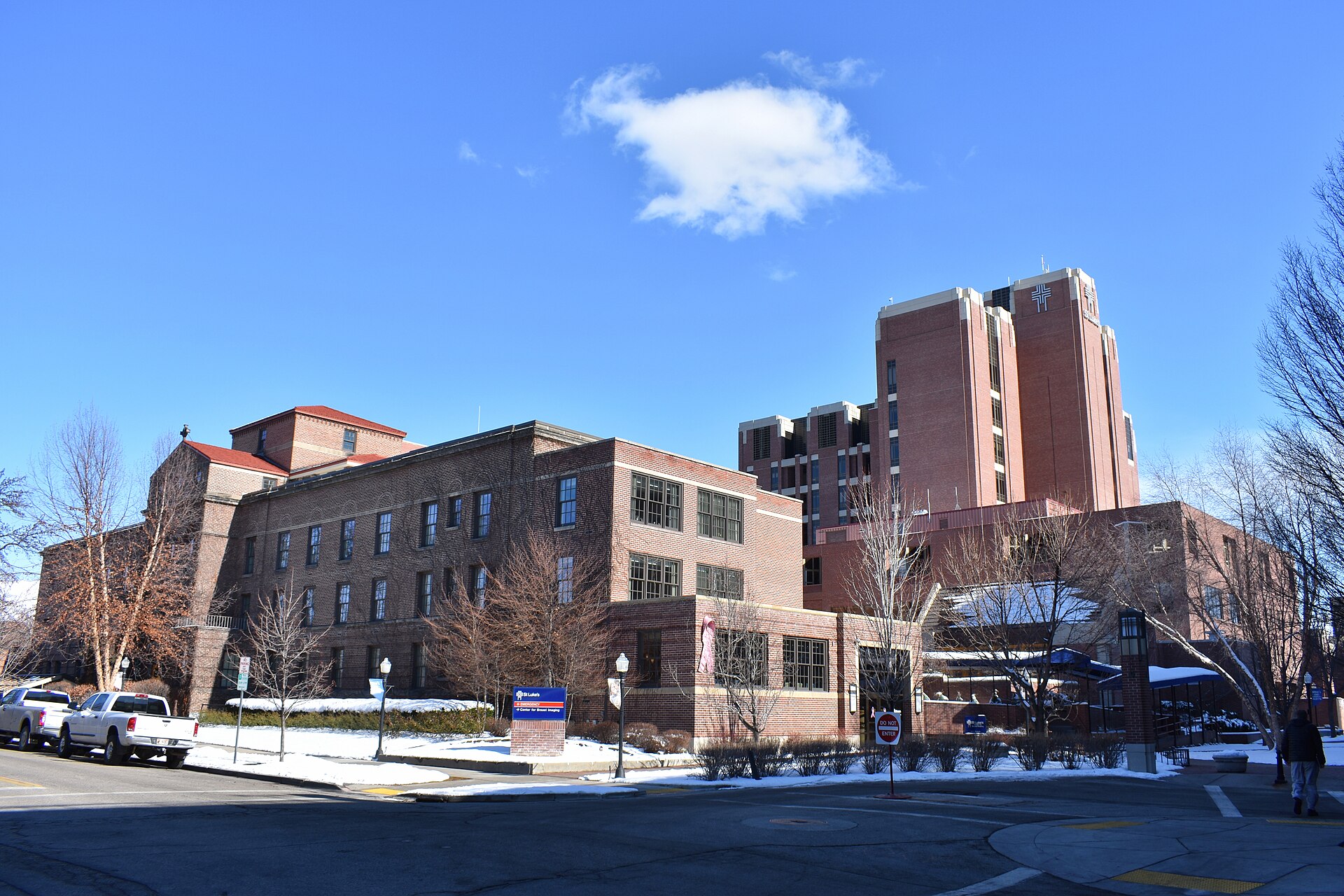

This lesson is about who owns Idaho's hospitals, what kinds of hospitals they are, what the law asks of each kind, and what their public records show about money and charity care. How hospitals are paid is in lesson 2. The Magic Valley gets its own case study in lesson 4, and small-town hospital budgets get theirs in lesson 5. Medicare's rules for critical access hospitals, rural health clinics and rural emergency hospitals are in Medicare and Rural Idaho, and nursing homes are in Nursing Homes in Idaho. We link those lessons instead of repeating them.
Counting Idaho's hospitals
There is no single official count of "hospitals in Idaho." The number depends on which list you use and what you count as one hospital. Three public lists matter.
- The state license. No one may run a hospital in Idaho without a license from the Idaho Department of Health and Welfare under the Streamlined Facilities Licensing and Inspection Act, Idaho Code section 39-1303. The department's Division of Licensing and Certification (long called the Bureau of Facility Standards) issues the license and also inspects hospitals for Medicare.13
- The Medicare certification. A hospital that bills Medicare or Medicaid gets a CMS Certification Number (CCN). CMS publishes every certification each quarter in the Provider of Services (POS) file, with the hospital's type, bed count, ownership code and the date it began taking Medicare.1
- The enrollment and ownership files. Since 2022 CMS has published, monthly, the legal business behind each certified hospital and every person or company holding 5 percent or more of it, directly or indirectly, along with each change of ownership.14215
One CCN can cover more than one building. A hospital can run a second campus under its main certification. Counting CCNs, as we do below, gives a count of licensed and certified hospital organizations, not buildings with a hospital sign. Standalone emergency rooms, outpatient surgery centers and clinics are not counted.
Hospitals by type
The POS file sorts hospitals into federal types. Each type has its own Medicare payment method, which lesson 2 explains.
| Type (CMS category) | What it is | Idaho hospitals | Idaho beds | Examples |
|---|---|---|---|---|
| Short-term acute care | General hospitals paid under Medicare's inpatient prospective payment system; most have emergency rooms, surgery and intensive care | 16 | 2,781 | St. Luke's Regional Medical Center (Boise), Saint Alphonsus Regional Medical Center (Boise), Kootenai Health (Coeur d'Alene), Eastern Idaho Regional Medical Center (Idaho Falls), Portneuf Medical Center (Pocatello), St. Luke's Magic Valley (Twin Falls) |
| Critical access hospital (CAH) | Rural hospitals with no more than 25 inpatient beds, generally 35 miles from another hospital, paid on reasonable cost by Medicare | 26 | 551 | North Canyon Medical Center (Gooding), Minidoka Memorial Hospital (Rupert), Cassia Regional Hospital (Burley), St. Luke's Wood River (Ketchum), Gritman Medical Center (Moscow) |
| Psychiatric | Inpatient mental health hospitals | 6 | 459 | Intermountain Hospital (Boise), Cottonwood Creek Behavioral Hospital (Meridian), Lifeways Hospital (Boise), State Hospitals South, North and West |
| Long-term acute care | Hospitals for patients who need hospital care for weeks, such as ventilator weaning | 2 | 100 | Vibra Hospital of Boise; Northern Idaho Advanced Care Hospital (Post Falls) |
| Rehabilitation | Inpatient physical rehabilitation after stroke, injury or surgery | 2 | 70 | Saint Alphonsus Regional Rehabilitation Hospital (Boise); Rehabilitation Hospital of the Northwest (Post Falls) |
| Rural emergency hospital (REH) | Emergency and outpatient care only, no inpatient stays; created by Congress in 2020, payable since 2023 | 1 | None used for inpatients (the file still shows 10) | Cascade Medical Center (Cascade); POS participation date Jan. 11, 2025 (CMS's enrollment file gives Feb. 25, 2025 as the conversion date) |
| Federal | Veterans Affairs and military records | 2 | 223 | Boise VA Medical Center (188 beds); an Air Force hospital record at Mountain Home (35 beds) |
| Total | 55 | 4,194 |
Source: CMS Provider of Services file, Hospital and Non-Hospital Facilities, third quarter 2026, active Idaho records (termination code 00), field BED_CNT.1 The critical access rules are in Social Security Act section 1820 and 42 CFR 485.610 and 485.620; the rural emergency hospital rules are in section 1861(kkk) and 42 CFR part 485, subpart E.161718
Some things are missing from the list, and the gaps are part of the story.
- No separately certified children's hospital. St. Luke's Children's Hospital in Boise operates inside St. Luke's Regional Medical Center rather than under its own children's hospital certification, so the POS file has no Idaho record in the children's category.
- No Indian Health Service or tribal hospital. The POS file lists no IHS or tribal hospital in Idaho. Tribal health care in Idaho runs through clinics such as those at Fort Hall and Lapwai, which Tribal Health and Medicaid covers.
- Only one VA medical center. The Boise VA Medical Center is the only VA hospital in the state. The Mountain Home record dates from 1991; we could not confirm what inpatient service, if any, runs there now.
Idaho compared with its neighbors
Idaho has fewer general hospital beds per person than the nation and most of its neighbors, and more of its general hospitals are critical access hospitals than in any neighbor except Montana and Wyoming.
| State | Short-term acute hospitals | Critical access hospitals | CAH share of general hospitals | General hospital beds | Beds per 1,000 residents, 2025 (our calculation) |
|---|---|---|---|---|---|
| Idaho | 16 | 26 | 62% | 3,332 | 1.64 |
| Utah | 33 | 13 | 28% | 5,570 | 1.57 |
| Oregon | 31 | 26 | 46% | 8,214 | 1.92 |
| Washington | 46 | 38 | 45% | 11,844 | 1.48 |
| Montana | 11 | 49 | 82% | 3,026 | 2.64 |
| Wyoming | 8 | 20 | 71% | 1,374 | 2.33 |
| Nevada | 23 | 12 | 34% | 6,965 | 2.12 |
| United States | 3,080 | 1,385 | 31% | 821,570 | 2.40 |
Sources: CMS Provider of Services file, third quarter 2026 (active short-term and critical access records, field BED_CNT); U.S. Census Bureau Vintage 2025 state population estimates for July 1, 2025 (Idaho 2,029,733).119 Psychiatric, rehabilitation, long-term care and federal hospitals are left out of this table.
How we figured it: counting hospitals and beds
Data. The Provider of Services file for Hospital and Non-Hospital Facilities, third quarter 2026, downloaded from data.cms.gov on Nov. 23, 2026, filtered to provider category 01 (hospitals). We kept records with termination code 00 (active).1
Method. "General hospitals" are records with subtype 01 (short-term) or 11 (critical access). Beds are the BED_CNT field, which is the hospital's total reported beds; for one Idaho CAH (Bonner General) that field is 48 while the certified count is 25, so CAH bed totals here run slightly higher than Medicare's 25-bed inpatient limit would suggest. Beds per 1,000 residents = general hospital beds divided by the Census July 1, 2025 population, times 1,000. Example: Idaho 3,332 / 2,029,733 x 1,000 = 1.64.19
Limits. Licensed beds, staffed beds and certified beds differ. St. Luke's reported 982 licensed beds systemwide for its 2024 fiscal year, a number that includes its Oregon and Nevada service and is not comparable to the CMS field.10 Beds per person do not measure access by themselves; travel time, staffing and outpatient care matter more for most patients, as lesson 4 shows for the Magic Valley.
Who owns Idaho's hospitals
Hospital ownership comes in four broad kinds: nonprofit corporations, governments (federal, state, county or hospital district), investor-owned companies, and physician owners. Each kind answers to a different authority, pays different taxes and files different public records.
| Owner type | Who controls it | Taxes | Main public records |
|---|---|---|---|
| Nonprofit corporation | A self-perpetuating or member-appointed board; often a parent health system | Exempt from federal income tax under IRC 501(c)(3) if it meets section 501(r); Idaho property tax exemption under state law (see lesson 11) | IRS Form 990 with Schedule H; Medicare cost report; CMS ownership file |
| County hospital | A county hospital board appointed under Idaho Code Title 31, chapter 36, with the county commissioners approving the budget | Public entity; may receive county tax levy | Budget, audit and minutes open under Idaho public records and open meeting laws; cost report |
| Hospital district | An elected board of trustees under Idaho Code sections 39-1318 to 39-1359 | Public taxing district; may levy property tax and issue bonds with voter approval | Budget, levy, audit, minutes, bond elections; cost report |
| Investor-owned (for-profit) | A company and its shareholders, often through several holding companies and sometimes a private equity fund | Pays income and property taxes | Medicare cost report; CMS ownership file; parent company SEC filings if publicly traded |
| Physician-owned | Physicians who may also refer patients there, under limits in Social Security Act section 1877(i) | Pays taxes | Medicare cost report; CMS ownership file |

The two big nonprofit systems
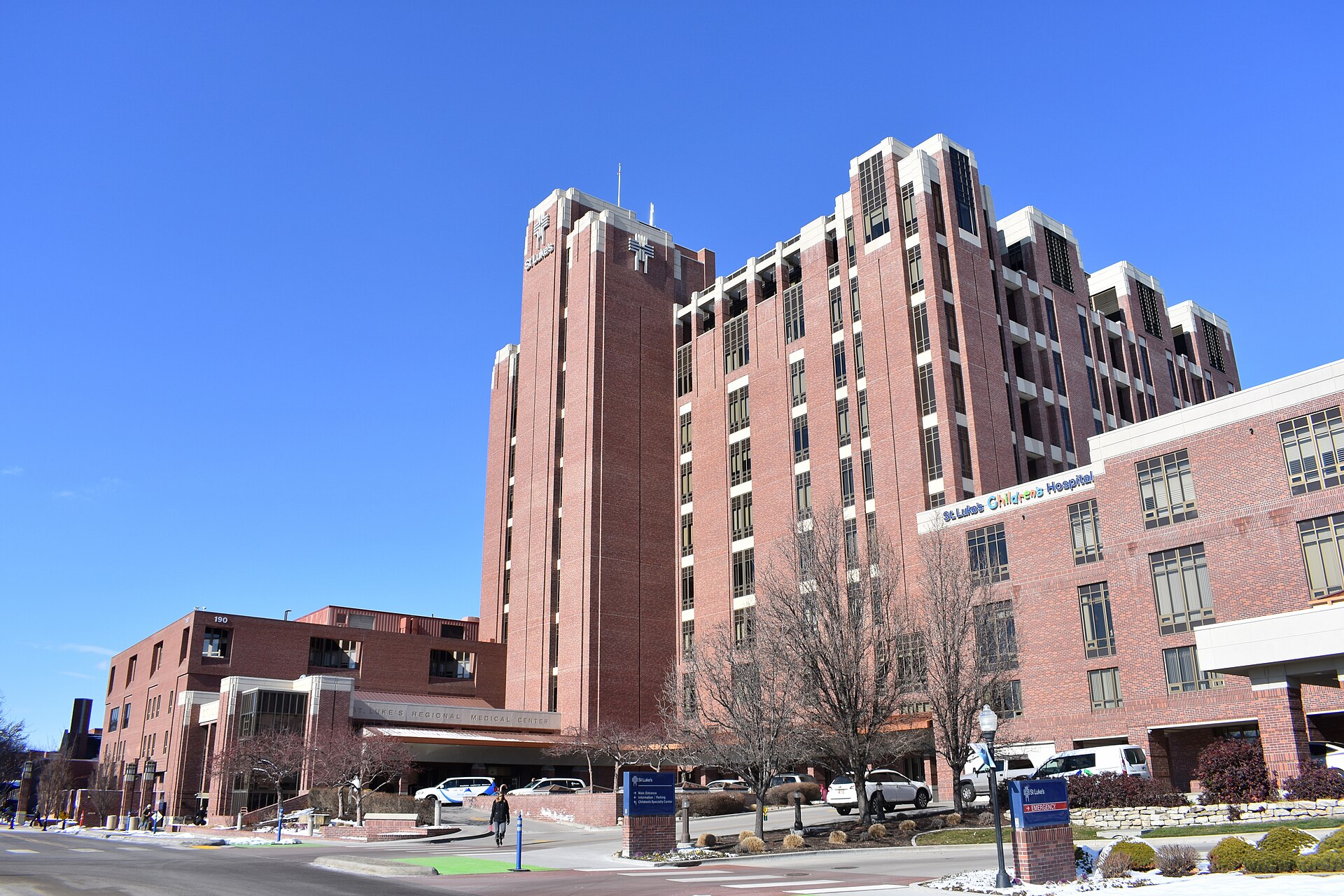
St. Luke's Health System is a Boise-based nonprofit. CMS's ownership file lists St. Luke's Health System, Ltd. as the 100 percent owner of the corporations behind St. Luke's Regional Medical Center (Boise and other Treasure Valley sites), St. Luke's Nampa Medical Center, St. Luke's Magic Valley Regional Medical Center (Twin Falls) and four critical access hospitals: St. Luke's Wood River (Ketchum), St. Luke's Elmore (Mountain Home), St. Luke's McCall and one more critical access hospital.2 St. Luke's describes itself as "the only Idaho-based, not-for-profit, community-owned and community-led health system" and reported 16,980 employees and 982 licensed beds for its fiscal year ended Sept. 30, 2024.10 St. Luke's traces its founding to 1902 and its formation as a health system to 2006, the year CMS records a change of ownership at the Twin Falls hospital (July 1, 2006).101
Saint Alphonsus Health System is the Idaho and eastern Oregon arm of Trinity Health, a national Catholic health system based in Michigan. CMS lists Saint Alphonsus Health System, Inc. and Trinity Health Corporation as 100 percent indirect owners of Saint Alphonsus Regional Medical Center in Boise and Saint Alphonsus Medical Center-Nampa.2 Saint Alphonsus also owns 49 percent of the Saint Alphonsus Regional Rehabilitation Hospital in Boise; Encompass Health Corporation, a publicly traded rehabilitation company, owns the other 51 percent.2 The Nampa hospital was Mercy Medical Center before it took the Saint Alphonsus name.
Together, by our count, the two systems control 9 of Idaho's 42 general hospitals and 1,464 of their 3,332 beds, or 43.9 percent. In the Treasure Valley (Ada and Canyon counties), they run 4 of the 6 short-term hospitals in the POS file and 1,148 of the 1,318 short-term beds there, or 87.1 percent (our calculation). The other two are West Valley Medical Center in Caldwell (HCA) and Treasure Valley Hospital in Boise; the Boise VA Medical Center is federal and not counted.1
Kootenai Health, Intermountain and the independents
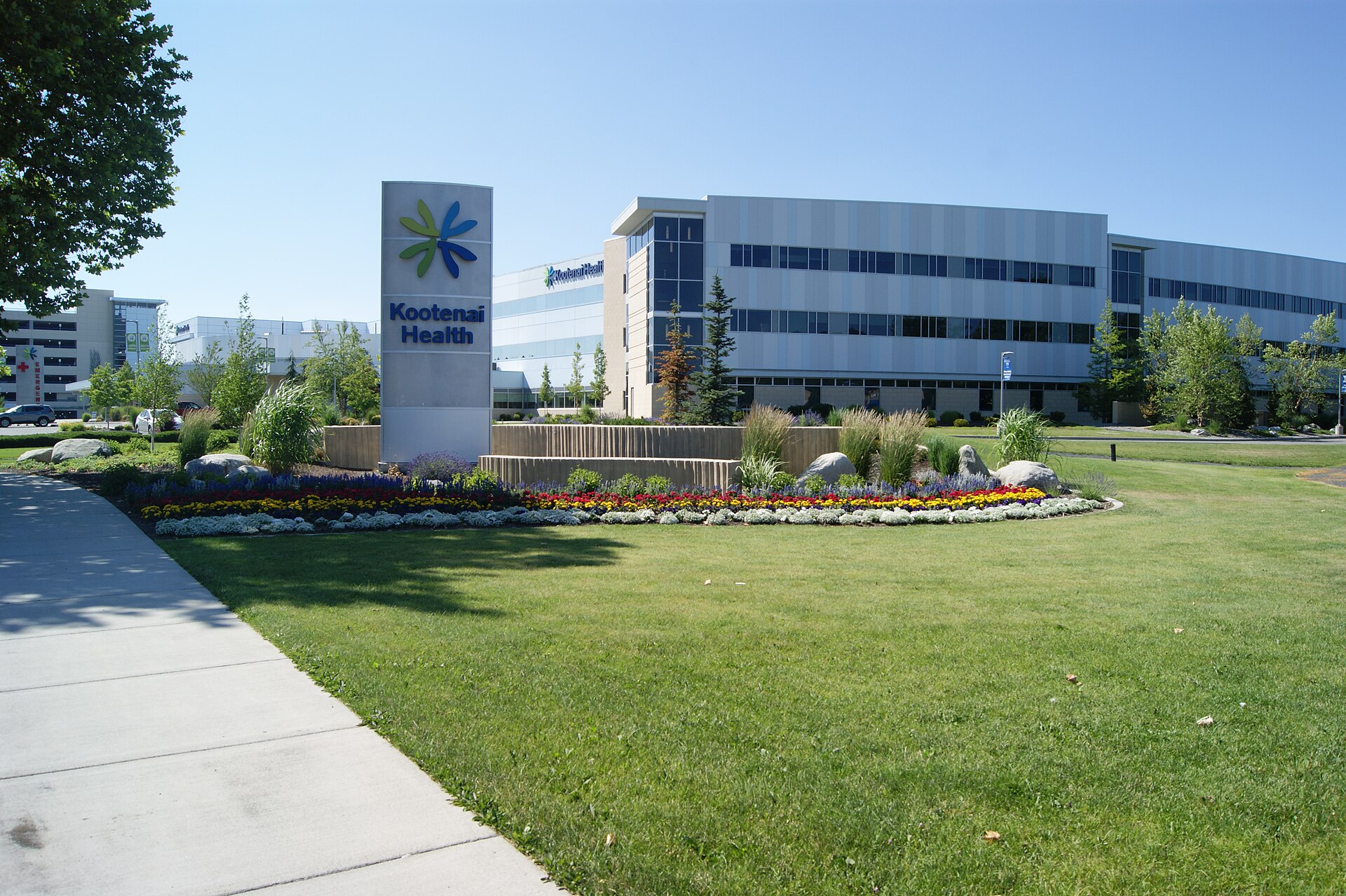
Kootenai Health in Coeur d'Alene is the largest hospital in north Idaho, with 321 beds in the CMS file.1 For decades it was run by the Kootenai Hospital District, a public taxing district with an elected board. On May 2, 2023, the district board voted unanimously to move to "a private 501(c)(3) not-for-profit model," and the hospital's assets, liabilities and operations were "fully transferred to Kootenai Health, Inc., on midnight, December 31, 2023," with the sitting district trustees named as the new corporation's board. The hospital gave its reason as a way "to operate more efficiently and effectively to better serve the health care needs of our patients and community."5 CMS records a change of ownership effective Jan. 1, 2024.15 Idaho Code section 39-1359 is the law that allows this: a district board may convey or lease its hospital to a nonprofit corporation whose first board is the district's trustees, for a lease of no more than 99 years, if the nonprofit agrees to care for indigent patients and to accept anyone who becomes sick or injured in the district. If the hospital stops operating as a nonprofit hospital, a conveyed hospital reverts to the district and a lease ends. The section does not require a public vote.6
Kootenai Health also owns two critical access hospitals: St. Mary's Health in Cottonwood and Clearwater Valley Hospital and Clinics in Orofino, both listed in the CMS ownership file as 100 percent owned by Kootenai Health, Inc.2 The Idaho Attorney General's consent decree says Kootenai acquired them in 2020.7 Kootenai also holds 25 percent of the Northern Idaho Advanced Care Hospital and of the Rehabilitation Hospital of the Northwest, both in Post Falls; Ernest Health, whose ownership chain in the CMS file runs up to a private equity fund (One Equity Partners VII), holds 75 percent.2
The Kootenai-Syringa consent decree. On May 10, 2024, the Idaho Attorney General filed a consent decree in the district court for Idaho County (case CV25-24-0249) with Kootenai Health and the Syringa Hospital District, which runs Syringa Hospital in Grangeville. Under a 2017 management agreement, Kootenai had hired and paid Syringa's chief executive. The Attorney General alleged that, after Kootenai bought nearby St. Mary's, the hospitals discussed not soliciting each other's employees and not competing on wages, which the state said could violate the Idaho Competition Act (Idaho Code section 48-104). The hospitals disputed the allegations and admitted no violation. They had already agreed on Nov. 28, 2023 to end the management agreement. The decree requires them to end all agreements between them, give the state 45 days' notice of any new one, and not agree to limit competition for workers, for five years from the court's approval.7
Intermountain Health, the Salt Lake City-based nonprofit system, owns Cassia Regional Hospital in Burley through IHC Health Services, Inc.2 It also holds minority stakes in two Idaho Falls hospitals: 15 percent of Mountain View Hospital and 20 percent of Idaho Falls Community Hospital, according to the CMS ownership file.2
Independent nonprofits. Several hospitals belong to no system. North Canyon Medical Center (Gooding), Teton Valley Hospital (Driggs), Gritman Medical Center (Moscow) and Bonner General Hospital (Sandpoint) are local nonprofit corporations. Bingham Memorial Hospital in Blackfoot is run by BMH, Inc., which also wholly owns Grove Creek Medical Center, an eight-bed short-term hospital in Blackfoot.21
Investor-owned hospitals
Eight of Idaho's general hospitals are owned by companies that pay taxes and return profits to owners. The CMS ownership file names the chain of owners for each; the table gives the owners at the top of each chain as of the Sept. 29, 2026 file.
| Hospital (city) | Beds (POS) | Owners named in CMS ownership file | Notes |
|---|---|---|---|
| Eastern Idaho Regional Medical Center (Idaho Falls) | 330 | HCA Healthcare, Inc. (100% indirect), through HTI Hospital Holdings | CMS records a change of ownership April 30, 1990 |
| West Valley Medical Center (Caldwell) | 150 | HCA Healthcare, Inc. (100% indirect) | Canyon County |
| Portneuf Medical Center (Pocatello) | 187 | Pocatello Health System, LLC (98.49% direct); Ardent Health and LHP Hospital Group (about 76% indirect); Portneuf Health Trust (22.68% indirect) | Joint venture since 2009 after a November 2008 Bannock County vote |
| St. Joseph Regional Medical Center (Lewiston) | 145 | St. Joseph Holdings, LLC; Knight Health Holdings, LLC (100% indirect) | Change of ownership May 1, 2017 |
| Idaho Falls Community Hospital | 88 | SMBI Idaho, LLC (80%); IHC Health Services, Inc. (20%) | Began Medicare participation Dec. 24, 2019 |
| Mountain View Hospital (Idaho Falls) | 43 | SMBI Idaho, LLC (67.98%); IHC Health Services, Inc. (15%); a limited partnership interest held by BCPE Seminole Holdings, LP | Coded "physician" ownership in the POS file |
| Northwest Specialty Hospital (Post Falls) | 34 | National Surgical Hospitals, LLC (57.9% indirect); Mountain View Hospital, LLC (13.63%); individual physicians and investment firms | Surgical hospital |
| Treasure Valley Hospital (Boise) | 20 | Surgical Care Affiliates and Optum, part of UnitedHealth Group (40.63% indirect); physician partners | Limited partnership; surgical hospital |
Sources: CMS Hospital All Owners file and Hospital Enrollments file, both dated Sept. 29, 2026; CMS Provider of Services file, third quarter 2026; Portneuf Medical Center ownership page.214120 Percentages are as CMS reports them; indirect ownership shares can exceed or fall short of 100 percent across a chain because each level reports its own share.
Portneuf is a hybrid. Portneuf says that in November 2008, "78 percent of Bannock County's voters approved placing the assets of Portneuf Health into the joint venture," and that "since 2009, Portneuf Health has been owned and operated by a joint venture" of Ardent Health, physician members of the medical staff and the Portneuf Health Trust, a 501(c)(3) nonprofit that "owns a minority share."20 In October 2016 Portneuf announced that its majority owner, LHP Hospital Group, had agreed to merge with Ardent Health Services.21
The psychiatric and post-acute hospitals are mostly investor-owned too. CMS lists Universal Health Services, Inc. as the indirect owner of Intermountain Hospital in Boise, and a chain ending at Webster Equity Partners funds and Oceans holding companies as the owner of Cottonwood Creek Behavioral Hospital in Meridian since Jan. 1, 2025.2


Physician-owned and specialty hospitals
Federal law limits doctors who refer Medicare patients to a hospital they own. Under the "whole hospital" exception in Social Security Act section 1877, a physician-owned hospital may still bill Medicare for physician-referred patients only if it had physician ownership and a Medicare provider agreement in place by Dec. 31, 2010, and it may not expand its beds, operating rooms or procedure rooms beyond its 2010 baseline without a CMS exception. The Affordable Care Act (P.L. 111-148, section 6001) added those limits.22 Treasure Valley Hospital (Medicare participation since 1996), Mountain View Hospital (2003) and Northwest Specialty Hospital (2003) all predate the cutoff.1 Supporters of these hospitals say they give surgeons control over scheduling and quality and compete on price; opponents, including general hospitals, say they take the best-paid patients and leave emergency, Medicaid and uninsured care to community hospitals. We found no Idaho-specific study of the question.
Public hospitals: counties and hospital districts
Fifteen of Idaho's 42 general hospitals are owned by a county or a hospital district, by our reading of the CMS files. Fourteen are critical access hospitals. The other is Madison Memorial Hospital in Rexburg, an 81-bed short-term hospital owned by Madison County.12
County hospitals. Idaho Code Title 31, chapter 36 lets county commissioners create a county hospital board by resolution after a public hearing. The board runs the hospital, hires its chief executive and sets its rules, but it "shall not have power to create any indebtedness in excess of the amount of its annual budget," which the county commissioners must approve. It must report to the commissioners within 30 days after its annual audit, publish an annual financial statement in a local newspaper, and prepare monthly financial reports for the commissioner who sits on the board.323
Hospital districts. A hospital district is a separate local government. Under Idaho Code section 39-1320, at least 10 percent of the qualified electors and taxpayers of the proposed area petition the county commissioners; the district must lie within one county. After a hearing that fixes the boundaries, voters decide in an election, and the district then elects its own trustees.2425 A district may levy property tax of up to 0.06 percent of market value for operations, with a public hearing required above 0.04 percent; an additional 0.1 percent for organizational debt; and up to 0.02 percent for a reserve fund for buildings and equipment. A levy above those limits to cover the previous year's operating deficit needs a two-thirds vote of the district's electors.426 Bonds for buildings and equipment also go to voters.25
To put the levy cap in dollars, take a hypothetical example: on a home with a taxable value of $300,000, the 0.06 percent operating cap equals $180 a year. Actual district levies are set each year in the county's levy tables and are often well below the cap.
The 42 general hospitals by owner
The table sorts every Idaho short-term and critical access hospital into an owner group. CMS's own ownership code in the POS file is out of date for several hospitals, so we used the enrollment and ownership files to update it, as the methods box explains. One St. Luke's critical access hospital is counted in the St. Luke's totals but not named here.
| Owner group | Hospitals | Beds | Share of beds (our calculation) | Hospitals in the group |
|---|---|---|---|---|
| Investor-owned and physician-owned | 8 | 997 | 29.9% | Eastern Idaho Regional, West Valley, Portneuf, St. Joseph Regional, Idaho Falls Community, Mountain View, Northwest Specialty, Treasure Valley Hospital |
| St. Luke's Health System | 7 | 947 | 28.4% | St. Luke's Regional (Boise), St. Luke's Nampa, St. Luke's Magic Valley (Twin Falls), St. Luke's Wood River (Ketchum), St. Luke's Elmore (Mountain Home), St. Luke's McCall, one more CAH |
| Saint Alphonsus (Trinity Health) | 2 | 517 | 15.5% | Saint Alphonsus Regional (Boise), Saint Alphonsus Nampa |
| Kootenai Health | 3 | 369 | 11.1% | Kootenai Health (Coeur d'Alene), St. Mary's (Cottonwood), Clearwater Valley (Orofino) |
| County or hospital district | 15 | 340 | 10.2% | Madison Memorial (Rexburg); critical access: Bear Lake Memorial (Montpelier), Benewah Community (St. Maries), Boundary Community (Bonners Ferry), Caribou Medical Center (Soda Springs), Franklin County Medical Center (Preston), Lost Rivers (Arco), Minidoka Memorial (Rupert), Nell J. Redfield Memorial (Malad City), Power County Hospital District (American Falls), Shoshone Medical Center (Kellogg), Steele Memorial (Salmon), Syringa (Grangeville), Valor Health (Emmett), Weiser Memorial (Weiser) |
| Independent nonprofit | 4 | 104 | 3.1% | North Canyon (Gooding), Teton Valley (Driggs), Gritman (Moscow), Bonner General (Sandpoint) |
| Bingham Memorial (BMH, Inc.) | 2 | 33 | 1.0% | Bingham Memorial (Blackfoot), Grove Creek Medical Center (Blackfoot) |
| Intermountain Health | 1 | 25 | 0.8% | Cassia Regional (Burley) |
| Total | 42 | 3,332 | 100.0% |
Cascade Medical Center, a hospital district facility, became a rural emergency hospital in early 2025 (the POS file dates its new certification Jan. 11, 2025; CMS's enrollment file gives a Feb. 25, 2025 conversion date) and is no longer counted as a general hospital here.1
How we figured it: owner groups
Data. CMS Provider of Services file, third quarter 2026 (hospital type, beds, ownership code); CMS Hospital Enrollments and Hospital All Owners files dated Sept. 29, 2026 (legal business name, proprietary or nonprofit flag, and every owner with 5 percent or more); CMS Hospital Change of Ownership file dated Sept. 29, 2026.114215
Method. We started with the POS ownership code (GNRL_CNTL_TYPE_CD) and changed it where the newer enrollment and ownership files showed a different owner. Four changes mattered: Kootenai Health is still coded "hospital district" in the POS file but has been a private nonprofit since Jan. 1, 2024; St. Joseph Regional Medical Center in Lewiston is coded "private nonprofit" but its enrollment record says proprietary and its owners are for-profit holding companies; St. Luke's McCall is coded "proprietary" but its enrollment record says nonprofit and St. Luke's Health System owns 100 percent; and Boundary Community Hospital, Franklin County Medical Center and Syringa Hospital are coded "other nonprofit" or "private nonprofit" but are owned by Boundary County, Franklin County and the Syringa General Hospital District according to the ownership and enrollment files. Beds are the POS BED_CNT field. Shares are each group's beds divided by 3,332.
Limits. We did not check each county's records. Caribou Medical Center, Lost Rivers Medical Center and Shoshone Medical Center are counted as public because the POS file codes them as local government or hospital district; the ownership file names the hospitals themselves as owners. A reporter checking any one of them should ask the county or district for its organizing documents.
Mergers, sales and changes since 2000
Idaho's hospital map has changed mostly through conversions of small hospitals to critical access status, the growth of the two Boise systems, and a handful of sales to national companies. The table lists changes documented in CMS files, court records or the hospitals' own statements. It is not a list of every clinic purchase or joint venture.
| Date | Event | What changed | Source |
|---|---|---|---|
| April 30, 1990 | Eastern Idaho Regional Medical Center change of ownership | Now owned through HCA Healthcare | CMS POS and ownership files12 |
| 1999 to 2004 | Small hospitals convert to critical access | Most of today's Idaho critical access hospitals took the new CAH status created by the Balanced Budget Act of 1997 in these years, by the POS dates; see 88/09 | CMS POS file1 |
| March 15, 2002 | Council Community Hospital (Council) ends Medicare participation | A six-bed CAH in Adams County closes as a hospital | CMS POS file1 |
| Oct. 1, 2002 | Pocatello Regional Medical Center ends Medicare participation | Pocatello's inpatient care consolidates at what is now Portneuf Medical Center | CMS POS file1 |
| July 1, 2006 | Change of ownership at Magic Valley Regional Medical Center, Twin Falls | Becomes St. Luke's Magic Valley; St. Luke's dates its health system to 2006 | CMS POS file; St. Luke's110 |
| July 1, 2007 | Change of ownership at Bingham Memorial Hospital | Now run by BMH, Inc. | CMS POS file1 |
| Nov. 2008 to Feb. 1, 2009 | Bannock County voters approve; Portneuf joint venture takes over | County hospital assets move into a for-profit joint venture with a nonprofit trust as minority owner | Portneuf; CMS POS file201 |
| Oct. 1, 2010 | Change of ownership at McCall's hospital | Becomes St. Luke's McCall | CMS POS file1 |
| 2012 to May 2, 2017 | St. Luke's buys Saltzer Medical Group in Nampa; federal court orders it undone | Divestiture approved May 2, 2017 | FTC; court opinions2728 |
| May 1, 2017 | St. Joseph Regional Medical Center, Lewiston, changes owners | Becomes for-profit St. Joseph Hospital, LLC | CMS change-of-ownership file15 |
| Dec. 7, 2017 | St. Luke's Nampa Medical Center begins Medicare participation | Second St. Luke's hospital in Canyon County | CMS POS file1 |
| Aug. 10, 2019; Dec. 24, 2019 | Saint Alphonsus Regional Rehabilitation Hospital and Idaho Falls Community Hospital open | Joint ventures with Encompass Health and with Intermountain | CMS POS and ownership files12 |
| 2020 | Kootenai Health acquires St. Mary's (Cottonwood) and Clearwater Valley (Orofino) | North Idaho's largest hospital adds two CAHs | Consent decree7 |
| Aug. 1, 2021 | Caribou Memorial Hospital change of ownership | Becomes Caribou Medical Center, Inc. | CMS change-of-ownership file15 |
| Dec. 31, 2023 | Kootenai Hospital District transfers the hospital to Kootenai Health, Inc. | Largest public hospital in Idaho becomes a private nonprofit | Kootenai Health; CMS515 |
| May 10, 2024 | Idaho Attorney General consent decree with Kootenai Health and Syringa Hospital District | Ends management ties and bars no-poach or wage agreements for five years | Consent decree7 |
| Early 2025 (POS: Jan. 11; enrollment file: Feb. 25) | Cascade Medical Center becomes a rural emergency hospital | Ends inpatient care; keeps emergency and outpatient services | CMS POS and enrollment files1 |
| Jan. 1, 2025 | Cottonwood Creek Behavioral Hospital's parent chain changes | New indirect owners led by Oceans holding companies and Webster Equity Partners funds | CMS ownership file2 |
The St. Luke's and Saltzer antitrust case
Idaho's most important hospital antitrust case involved a physician group. In 2012 St. Luke's acquired the assets of Saltzer Medical Group, which had 34 physicians at its Nampa offices, including 16 primary care physicians, the largest primary care group in the Nampa market.28 Saint Alphonsus Medical Center-Nampa and others sued in federal court in Boise (case 1:12-cv-00560). The Federal Trade Commission and the State of Idaho filed their own suit on March 12, 2013, and the cases were consolidated.27
After a trial in fall 2013, Chief Judge B. Lynn Winmill ruled on Jan. 24, 2014 that the acquisition violated section 7 of the Clayton Act and the Idaho Competition Act and ordered St. Luke's to divest Saltzer.29 St. Luke's argued the deal would improve care through integrated, value-based medicine. On Feb. 10, 2015, the U.S. Court of Appeals for the Ninth Circuit affirmed in Saint Alphonsus Medical Center-Nampa Inc. v. St. Luke's Health System, Ltd., 778 F.3d 775. The court found a post-merger Herfindahl-Hirschman Index (a standard measure of market concentration) of 6,219 in the Nampa adult primary care market, an increase of 1,607, which it called "extremely high." It assumed without deciding that efficiencies could be a defense, found St. Luke's had not shown its efficiencies "would have a positive effect on competition," and said it remained "skeptical about the efficiencies defense in general."28 A court-appointed trustee later arranged the sale, and the district court approved the divestiture on May 2, 2017, with Change Healthcare to manage Saltzer as an independent primary care practice.30
The case is still cited nationally on hospital purchases of physician practices. Its practical lesson for Idaho readers is that hospital systems compete for the doctors who refer patients as well as for the patients themselves, and that the state Attorney General can act under the Idaho Competition Act, as it did again with Kootenai and Syringa in 2024.7

Charity care and community benefit
Every hospital with an emergency department that takes Medicare must screen and stabilize anyone who arrives with an emergency, whether or not the person can pay, under the Emergency Medical Treatment and Labor Act (Social Security Act section 1867).31 What a hospital does about the bill afterward depends on its ownership. Nonprofit hospitals face federal tax rules; public hospitals answer to voters and county commissioners; investor-owned hospitals set their own policies. Idaho has no statute that sets a minimum charity care standard for all hospitals.
The federal rules: section 501(r)
The Affordable Care Act (P.L. 111-148, signed March 23, 2010, section 9007) added section 501(r) to the Internal Revenue Code. A hospital organization keeps its 501(c)(3) tax exemption only if each of its hospital facilities meets four requirements:8
- Community health needs assessment (CHNA). Conduct a needs assessment at least once every three taxable years, with input from people who represent the community and public health experts, make it widely available, and adopt an implementation strategy. A hospital that misses it owes a $50,000 excise tax under IRC section 4959.32
- Financial assistance policy. Have a written policy that says who is eligible for free or discounted care, how the discount is calculated and how to apply, and a written emergency care policy.
- Limits on charges. Charge people eligible under the policy no more than the "amounts generally billed" (AGB) to insured patients for emergency or other medically necessary care, and never the full gross charges (the chargemaster price, explained in lesson 12).
- Billing and collection. Make reasonable efforts to find out whether a patient qualifies before taking "extraordinary collection actions," such as reporting to a credit bureau, selling the debt, suing or placing a lien.
The Treasury rules in 26 CFR 1.501(r)-1 through 1.501(r)-7 (Treasury Decision 9708, 79 FR 78954, Dec. 31, 2014) fill in the details.33 Under 26 CFR 1.501(r)-6, a hospital generally must wait at least 120 days after the first post-discharge bill before an extraordinary collection action, must accept financial assistance applications for 240 days after that first bill, and must give at least 30 days' written notice before starting such actions.34 The law sets no minimum amount of charity care and no income level a policy must cover. Each hospital picks its own eligibility levels. Saint Alphonsus, for example, describes its financial assistance as covering patients with incomes up to 400 percent of the federal poverty level.11
What Schedule H reports
Nonprofit hospital organizations file IRS Form 990 every year, and those that run a hospital add Schedule H. The IRS instructions sort the money into parts that matter for reading any hospital's claims:935
| Schedule H part | What goes there | Counted as "community benefit" in Part I? |
|---|---|---|
| Part I, line 7a | Financial assistance (charity care) at cost | Yes |
| Part I, lines 7b and 7c | Unreimbursed cost of Medicaid and other means-tested government programs | Yes |
| Part I, lines 7e to 7i | Community health improvement, health professions education, subsidized health services, research, cash and in-kind contributions | Yes |
| Part II | Community building activities (housing, economic development, coalition work) | No, reported separately |
| Part III, section A | Bad debt expense, and an estimate of how much of it was owed by patients who may have qualified for financial assistance | No |
| Part III, section B | Medicare revenue and costs, and the Medicare shortfall or surplus | No |
| Part V | Facility-by-facility answers on the CHNA, the financial assistance policy, AGB method and collection practices | Not a dollar item |
Charity care and bad debt are different things. Charity care is care the hospital decided in advance not to bill (or to discount) because the patient qualified for financial assistance. Bad debt is a bill the hospital expected to collect and wrote off when it could not. Medicare cost reports count both on Worksheet S-10, where "cost of uncompensated care" is charity care plus non-Medicare bad debt, converted from charges to cost.12
Two systems, two ways of counting
Idaho's two big systems publish community benefit numbers that cannot be put side by side without adjustment, because they count different things.
| Item | St. Luke's Health System, fiscal year ended Sept. 30, 2024 (whole system) | Saint Alphonsus Regional Medical Center (Boise), fiscal year July 2024 to June 2025 | Saint Alphonsus Medical Center-Nampa, same year |
|---|---|---|---|
| Headline total | $930 million "total community benefit" | $47,322,219 "IRS-defined community benefit" | $9,217,423 "IRS-defined community benefit" |
| Charity care or financial assistance | $50 million | $17,697,612 at cost | $8,090,097 at cost |
| Unpaid cost of Medicaid | $126.4 million | $12,484,237 | $0 |
| Unpaid cost of Medicare | $382.1 million, included in the total | Not in the IRS-defined total; included in a separate $99,025,182 "community impact" figure | Not in the IRS-defined total; separate "community impact" figure $14,681,743 |
| Other items named | Subsidized health services $33.9 million; education of health professionals $54.5 million; community health improvement services $10.8 million; cash, in-kind and other donations $8.6 million; Community Health Improvement Fund grants $1.01 million | Community benefit programs $17,140,370; community contributions $939,087 | Community benefit programs $1,127,326; community contributions $279,400 |
Sources: St. Luke's, "St. Luke's by the Numbers 2024"; Saint Alphonsus fiscal year 2025 community impact reports for Boise and Nampa.101136 These are the hospitals' own reports. The audited figures are on each corporation's Form 990, Schedule H.
Saint Alphonsus says plainly that its "community impact" figure "acknowledges the investments made that are making an impact in the community that the IRS does not consider, such as unpaid cost of Medicare."11 St. Luke's report folds the Medicare shortfall into its headline. If you take St. Luke's $930 million and subtract the $382.1 million Medicare shortfall, $547.9 million remains (our calculation). That remainder is still not a Schedule H Part I total, because the one-page report does not say whether any other item (bad debt, for example) is in it. The only like-for-like comparison is Schedule H Part I, line 7k, from each corporation's Form 990.
The same split runs through the national debate. KFF, a nonprofit health research group, estimated that tax exemption was worth about $28 billion to nonprofit hospitals in 2020, against about $16 billion in charity care costs; its authors note charity care is only part of community benefit.37 A November 2025 report prepared by EY for the American Hospital Association put nonprofit hospitals' total community benefits at about $149 billion in 2022, counting the Medicare shortfall and bad debt attributable to charity care, against $13.2 billion in forgone federal taxes, "over 11 times greater." Counting state and local tax benefits as well ($54.4 billion in all), the same report's ratio is about 2.7 to 1.38 Both are national; neither gives Idaho figures.
Idaho law on charity care and medical debt
Idaho has no general charity care statute. Two Idaho laws touch the subject.
- Hospital district conversions. A nonprofit that takes over a district hospital under Idaho Code section 39-1359 must agree to care for indigent patients and accept anyone who becomes sick or injured within the district. The statute does not define the level of care or set income limits.6
- The Idaho Patient Act. House Bill 515 (2020), signed March 16, 2020 as 2020 Idaho Session Laws chapter 139 and effective Jan. 1, 2021, added Idaho Code Title 48, chapter 3. It does not require discounts. It sets steps a provider must take before an "extraordinary collection action" on a medical bill: submit charges to the patient's insurer within 45 days of the service or discharge; send a free consolidated summary of services within 60 days; send a final notice; charge no interest or fees until 60 days after the patient receives the final notice or summary; and wait at least 90 days, with every good-faith dispute and appeal resolved, before taking the action. Providers that skip steps face limits on fees and costs.394041 Lesson 12 covers medical debt and the federal No Surprises Act.
Two neighbors set minimum charity care by law. Washington's RCW 70.170.060 requires hospitals in larger systems to give free care to patients with incomes up to 300 percent of the federal poverty level, with 75 percent discounts from 301 to 350 percent and 50 percent discounts from 351 to 400 percent; other Washington hospitals must give free care up to 200 percent.42 Oregon's ORS 442.614 requires nonprofit hospitals' financial assistance policies to give free care up to 200 percent of the poverty level, with discounts of at least 75, 50 and 25 percent in bands up to 400 percent.43 Supporters of a state standard in Idaho would point to these as models; hospitals and others who oppose one argue that federal 501(r) rules, Medicaid expansion and each hospital's own policy already cover most low-income patients, and that a mandate would fall hardest on small rural hospitals that already lose money on patient care.
Hospital finances: what the records show
Two public records show a hospital's money. The Medicare cost report (CMS Form 2552-10) is required of every hospital that takes Medicare, under 42 CFR 413.20; CMS publishes a public use file with selected fields for every hospital each year.4412 The IRS Form 990 is filed by nonprofit corporations. Neither is the same as a hospital's audited financial statement, and each uses its own fiscal year: St. Luke's ends its year Sept. 30, Saint Alphonsus June 30, and Kootenai Health Dec. 31.
Two terms carry most of the weight:
- Patient-care (operating) margin: what is left from net patient revenue after operating expenses, as a share of net patient revenue. It shows whether patient care alone pays its way.
- Total margin: net income from everything, including investment income, donations, grants, government relief money and local tax levies, as a share of total revenue. A hospital can lose money on patients and still post a positive total margin.
Margins by type, 2019 to 2024
| Cost report year (periods beginning in federal FY) | Idaho short-term hospitals: median patient-care margin | Median total margin | Reporting a net loss | Idaho CAHs: median patient-care margin | Median total margin | Reporting a net loss |
|---|---|---|---|---|---|---|
| 2019 | 7.3% | 9.7% | 2 of 14 | -4.0% | 1.6% | 8 of 27 |
| 2020 | -1.5% | 8.6% | 1 of 15 | -5.5% | 5.8% | 7 of 27 |
| 2021 | 0.7% | 8.1% | 3 of 16 | -1.0% | 14.1% | 1 of 28 |
| 2022 | 1.1% | 4.3% | 6 of 15 | -6.4% | 0.5% | 12 of 27 |
| 2023 | 1.1% | 6.1% | 4 of 16 | -5.3% | 2.8% | 9 of 27 |
| 2024 | 0.2% | 5.3% | 2 of 16 | -6.5% | 0.8% | 12 of 27 |
| U.S., 2024 | -1.1% | 5.5% | 920 of 3,154 | -5.2% | 5.5% | 396 of 1,368 |
Source: CMS Hospital Provider Cost Report public use files, 2019 to 2024 editions; our calculations.12 The 2020 and 2021 total margins likely include federal COVID-19 relief payments, which hospitals generally reported outside patient revenue; the patient-care margins would not.
The pattern is steady. Idaho's larger hospitals have earned small positive margins on patient care in most years; the median critical access hospital has lost money on patient care every year and stayed near break-even only because of other income, which for public hospitals includes local property tax levies. Compared with neighbors in the 2024 files, the median Idaho CAH's total margin (0.8 percent) was below Utah (9.2 percent), Nevada (6.9 percent), Oregon (4.8 percent), Washington (3.9 percent) and Montana (2.4 percent) and above Wyoming (minus 1.4 percent). Idaho's short-term hospitals (5.3 percent) were near the national median (5.5 percent), well below Utah (16.7 percent) and Nevada (16.9 percent) and above Oregon (minus 1.4 percent) and Washington (1.0 percent).12 Lesson 5 explains why small hospitals run thin.
Selected hospitals in the 2024 cost reports
| Hospital | Cost report period | Net patient revenue | Patient-care margin | Total margin | Charity care cost | Bad debt | Medicare / Medicaid share of inpatient days |
|---|---|---|---|---|---|---|---|
| St. Luke's Regional (Boise) | Oct. 2023 to Sept. 2024 | $2,496.8M | -0.3% | 8.2% | $23.4M | $62.8M | 17% / 22% |
| Saint Alphonsus Regional (Boise) | July 2024 to June 2025 | $923.6M | -3.5% | 5.0% | $23.4M | $20.5M | 21% / 22% |
| Kootenai Health | Calendar 2024 | $812.6M | -18.6% | 5.6% | $4.9M | $30.4M | 26% / 18% |
| St. Luke's Magic Valley (Twin Falls) | Oct. 2023 to Sept. 2024 | $522.4M | -5.7% | 0.4% | $12.4M | $29.2M | 22% / 10% |
| Portneuf (Pocatello) | Calendar 2024 | $511.5M | 17.2% | 17.4% | $2.7M | $29.2M | 22% / 17% |
| Eastern Idaho Regional (Idaho Falls) | Oct. 2023 to Sept. 2024 | $425.5M | 57.7% | 58.1% | $12.6M | $7.1M | 23% / 23% |
| Saint Alphonsus Nampa | July 2024 to June 2025 | $337.6M | 13.9% | 26.0% | $13.5M | $9.0M | 21% / 21% |
| St. Luke's Nampa | Oct. 2023 to Sept. 2024 | $256.6M | 1.0% | 4.1% | $5.0M | $15.7M | 18% / 21% |
| Madison Memorial (Rexburg) | Oct. 2023 to Sept. 2024 | $99.2M | -5.4% | 0.7% | $0.2M | $4.2M | 10% / 40% |
| North Canyon (Gooding), CAH | Oct. 2023 to Sept. 2024 | $72.9M | 8.4% | 7.8% | $0.2M | $2.8M | 40% / 33% |
| Cassia Regional (Burley), CAH | Calendar 2024 | $66.4M | -0.6% | 1.9% | $3.7M | $3.4M | 23% / 26% |
| Minidoka Memorial (Rupert), CAH | Oct. 2023 to Sept. 2024 | $57.1M | -7.9% | -6.2% | $0.3M | $3.1M | 57% / 7% |
Source: CMS Hospital Provider Cost Report public use file, 2024 edition, fields "Net Patient Revenue," "Net Income from Service to Patients," "Net Income," "Total Other Income," "Cost of Charity Care," "Total Bad Debt Expense" and "Total Days" by title; our calculations.12 Inpatient day shares count only days Medicare or Medicaid paid for directly; Medicare Advantage days are not in the Medicare share. These are unaudited filings. Investor-owned chains report company-level results in their own financial statements, and a hospital's cost report can leave out costs paid at the corporate level, so the Eastern Idaho Regional and Portneuf margins should not be read as what their owners earned.
What the Form 990s show
Nonprofit hospital corporations report total revenue and expenses on Form 990. ProPublica's Nonprofit Explorer posts the filings.
| Filer (EIN) | Tax year ended | Total revenue | Total expenses | Revenue minus expenses (our calculation) |
|---|---|---|---|---|
| St. Luke's Regional Medical Center (82-0161600) | Sept. 2024 | $2,744,054,005 | $2,573,479,885 | $170.6 million |
| Kootenai Health, Inc. (82-0380784) | Dec. 2024 | $1,001,675,291 | $973,897,402 | $27.8 million |
| Saint Alphonsus Regional Medical Center, Inc. (82-0200895) | June 2024 | $907,008,025 | $911,407,711 | -$4.4 million |
| St. Luke's Magic Valley Regional Medical Center, Ltd. (56-2570686) | Sept. 2024 | $575,572,819 | $588,798,198 | -$13.2 million |
| Saint Alphonsus Medical Center Nampa, Inc. (82-0200896) | June 2024 | $336,412,314 | $254,303,480 | $82.1 million |
Sources: IRS Form 990 filings as posted by ProPublica Nonprofit Explorer, read Nov. 23, 2026.4546474849 The 2024 Form 990 for Kootenai Health, Inc. is its first full year running the hospital; its filings for 2021 to 2023, before it took over the hospital, report revenue of under $5 million a year.46 Form 990 revenue includes investment gains and other items that the cost report does not, which is one reason the two records differ.
How we figured it: margins from cost reports
Data. CMS Hospital Provider Cost Report public use files for 2019 through 2024. Each edition holds reports for cost reporting periods that began in that federal fiscal year (for example, the 2024 edition covers periods beginning Oct. 1, 2023 through Sept. 30, 2024). Idaho had 50 to 52 reports a year; the national 2024 file had 6,109.12
Method. Short-term hospitals are certification numbers ending 0001 to 0879; critical access hospitals end 1300 to 1399. We dropped reports with zero net patient revenue. Patient-care margin = "Net Income from Service to Patients" / "Net Patient Revenue." Total margin = "Net Income" / ("Net Patient Revenue" + "Total Other Income"). We report medians, so one very large or very small hospital does not drive the result, and count reports with negative total margin as "reporting a net loss." Medicare and Medicaid day shares = "Total Days Title XVIII" and "Total Days Title XIX" divided by "Total Days (V + XVIII + XIX + Unknown)."
Limits. Cost reports are filed by the hospitals, are unaudited when first posted, and may be amended. Some hospitals' "other income" includes parent-company transfers or tax levies. The 2024 Idaho count of 27 CAHs includes Cascade, which filed as a CAH for a period before its 2025 conversion.
Pictures, Numbers and Infographics
| Measure | Idaho | U.S. or other states | Year | Source |
|---|---|---|---|---|
| Active Medicare-certified hospital records | 55 (4,194 beds) | U.S. short-term plus CAH: 4,465 | Q3 2026 | CMS POS1 |
| Short-term acute / critical access hospitals | 16 / 26 | U.S. 3,080 / 1,385 | Q3 2026 | CMS POS1 |
| General hospital beds per 1,000 residents | 1.64 | U.S. 2.40; Montana 2.64; Utah 1.57; Washington 1.48 | 2026 beds, 2025 population | CMS POS; Census (our calculation)19 |
| CAH share of general hospitals | 62% | U.S. 31%; Montana 82%; Utah 28% | Q3 2026 | CMS POS1 |
| Nonprofit / for-profit / government share of general hospitals (CMS codes) | 50% / 19% / 31% | U.S. 61% / 17% / 22%; Oregon 77% / 4% / 19%; Nevada 37% / 46% / 17% | Q3 2026 | CMS POS1 |
| St. Luke's plus Saint Alphonsus share of general beds | 43.9% | Not compared | 2026 | CMS files (our calculation)2 |
| Median CAH total margin | 0.8% | U.S. 5.5%; Utah 9.2%; Wyoming -1.4% | Cost report year 2024 | CMS cost reports (our calculation)12 |
| Charity care cost, all Idaho short-term hospitals | $105.2 million | U.S. short-term: $34.5 billion | Cost report year 2024 | CMS cost reports (our calculation)12 |
| Bad debt, all Idaho short-term hospitals | $221.4 million | U.S. short-term: $51.3 billion | Cost report year 2024 | CMS cost reports (our calculation)12 |
| Hospital district operating levy cap | 0.06% of market value | Varies by state | Current law | Idaho Code 39-13334 |
| Free charity care required by state law | None | Washington up to 300% FPL (larger systems); Oregon up to 200% FPL | Current law | RCW 70.170.060; ORS 442.6144243 |
| Rural emergency hospitals | 1 (Cascade) | U.S. 57 | Q3 2026 | CMS POS1 |
Common mistakes
- Adding charity care and bad debt together and calling it charity. The IRS keeps them apart: financial assistance at cost goes on Schedule H Part I, line 7a, and bad debt goes in Part III, which is not part of the community benefit total. In Idaho's 2024 cost reports, short-term hospitals reported $221.4 million in bad debt against $105.2 million in charity care cost.912
- Comparing community benefit totals across systems without checking what is in them. St. Luke's $930 million includes $382.1 million in Medicare shortfall; Saint Alphonsus's $47.3 million "IRS-defined" figure does not. Compare Schedule H Part I, line 7k, from each Form 990.10119
- Trusting the ownership code in one CMS file. The POS file still codes Kootenai Health as a hospital district and St. Joseph Regional Medical Center as a private nonprofit; newer CMS enrollment and ownership files show both changed. Check the Hospital Enrollments and All Owners files, which CMS updates monthly, against the POS code.1142
- Reading a patient-care margin as a total margin, or the reverse. Kootenai Health's 2024 cost report shows a patient-care margin of minus 18.6 percent and a total margin of 5.6 percent. Both are true; they measure different things.12
- Mixing fiscal years. St. Luke's fiscal year ends Sept. 30, Saint Alphonsus June 30, Kootenai Dec. 31, and cost report editions are grouped by the federal fiscal year in which each period began. A "2024" figure from each can cover different months.1247
- Treating a cost report as an audited financial statement. Cost reports are the hospital's own filing to Medicare under 42 CFR 413.20, built for Medicare cost-finding rules. For-profit chains report profit at the company level, and nonprofit systems often move money between the hospital and the parent.44
- Counting certification numbers as buildings. One CMS certification can cover more than one campus, and standalone emergency departments and surgery centers are not hospitals in these files.1
- Assuming every nonprofit hospital must give a set amount of charity care. Section 501(r) requires a policy, a needs assessment, charge limits and collection limits, but no minimum amount, and Idaho law adds none.8
What we know, what we don't, and what the data can show
What we know
- Idaho has 42 general hospitals (16 short-term, 26 critical access) with 3,332 beds, plus 13 other certified hospital records, as of the third-quarter 2026 POS file.1
- St. Luke's and Saint Alphonsus control about 44 percent of general hospital beds statewide; investor-owned hospitals hold about 30 percent; counties and districts own 15 hospitals but about 10 percent of beds (our calculation).2
- Kootenai Health left public district ownership on Dec. 31, 2023 under Idaho Code section 39-1359.56
- The median Idaho critical access hospital lost money on patient care in every cost report year from 2019 to 2024.12
- Federal law requires nonprofit hospitals to have financial assistance policies and limits charges and collections; Idaho adds collection-timing rules in the Idaho Patient Act but no charity care minimum.840
What we don't know
- How much each Idaho nonprofit hospital reported on Schedule H Part I, line 7k, for the most recent year, until someone pulls each filing; the IRS does not publish a state summary.
- What investor-owned Idaho hospitals earn for their owners, because company financial statements combine many hospitals.
- How many Idaho patients who qualified for financial assistance were billed in full or sent to collections. Schedule H asks hospitals to estimate the bad debt owed by eligible patients, but there is no state audit.
- How Medicaid changes in P.L. 119-21 (2025) will change Idaho hospitals' uncompensated care year by year; see 89/12 and lesson 5.
- Whether the 2023 Kootenai conversion changed prices, charity care or access. It is too early, and no public study exists.
What the data can show
- CMS Provider of Services file (quarterly): every certified hospital's type, beds, ownership code, start date and termination date, back to the 1990s.
- CMS Hospital Enrollments, All Owners and Change of Ownership files (monthly since late 2022): the legal owner chain, private equity and REIT stakes, and each sale.
- CMS Hospital Provider Cost Report public use files (yearly): revenue, expenses, margins, payer days, charity care and bad debt (Worksheet S-10) for every hospital.
- IRS Form 990 and Schedule H (via ProPublica Nonprofit Explorer or the IRS): community benefit by category, bad debt, Medicare shortfall, executive pay and each facility's financial assistance and collection policies.
- County and hospital district budgets, levies and audits: local tax support for public hospitals, available under Idaho's public records law.
Questions people ask
Is St. Luke's a public hospital?
No. St. Luke's Health System is a private nonprofit corporation. It calls itself "community-owned," meaning no shareholders own it, but it is not a government body. Its hospitals file Form 990s, not public budgets. Madison Memorial and the county and district critical access hospitals in the table above are the public ones.102
Who owns Portneuf Medical Center?
A joint venture. CMS lists Pocatello Health System, LLC as 98.49 percent owner, with Ardent Health and LHP Hospital Group above it holding about 76 percent indirectly and the nonprofit Portneuf Health Trust holding 22.68 percent indirectly. Portneuf says physician members of the medical staff are also owners and that governance is split 50-50 between the trust and the other owners on a block-voting basis.220
Can a hospital district hand its hospital to a private company without a vote?
To a nonprofit, yes. Idaho Code section 39-1359 lets the district board convey or lease the hospital to a nonprofit corporation without an election, subject to the conditions in the law, including indigent care. Selling to a for-profit company would fall under other rules, such as section 39-1358 on lease or sale. Portneuf's 2009 joint venture followed a Bannock County vote in November 2008.620
What is the difference between charity care and the discount my insurer gets?
An insurer's discount is a negotiated price, recorded as a "contractual allowance" and not counted as charity. Charity care is free or reduced care for a patient who qualifies under the hospital's financial assistance policy. Section 501(r) says nonprofit hospitals may not charge eligible patients more than the amounts generally billed to insured patients.833
Does a for-profit hospital have to give charity care?
Not under section 501(r), which applies only to tax-exempt hospitals. Every hospital with an emergency department that takes Medicare must still screen and stabilize emergency patients regardless of ability to pay, under EMTALA, and many investor-owned hospitals have their own financial assistance policies. Their cost reports show charity care costs too: Eastern Idaho Regional reported $12.6 million for its 2024 cost report period.3112
Where can someone find a hospital's financial assistance policy?
Section 501(r) requires nonprofit hospitals to make the policy, a plain-language summary and the application widely available, including on a website. Schedule H Part V asks each facility to give the web address.339
Hard questions
Are Idaho's nonprofit hospitals earning their tax exemption?
The case that they are: Nonprofit systems run the state's trauma centers, neonatal intensive care, behavioral health units and residency programs, many of which lose money, and they absorb large Medicaid and Medicare shortfalls. St. Luke's reports $930 million in total community benefit for 2024.10 The hospital association's national study counts community benefits at more than 11 times the federal tax exemption.38 The case that the bar is too low: Federal law sets no minimum, and Idaho has none. Charity care at Idaho's short-term hospitals ($105.2 million in 2024 cost reports) was less than half their bad debt ($221.4 million), and KFF's national estimate put the value of tax exemption at about 1.75 times charity care costs in 2020 ($28 billion against $16 billion).1237 What the evidence shows: The answer depends on which items count. With the Medicare shortfall included, benefits far exceed the tax break; with only charity care, they often do not. No one has published an Idaho-specific estimate of the tax exemption's value.
Should Idaho set a statewide charity care standard?
For: Washington and Oregon require free care up to set income levels, so patients know where they stand regardless of which hospital they reach.4243 Against: Idaho expanded Medicaid in 2020, which covers many of the lowest-income adults; federal rules already require policies; and a mandate would bind small public and independent hospitals that already lose money on patient care.12 Evidence: We found no study of how the Washington or Oregon standards changed hospital finances or patient debt that would settle the question for Idaho.
Is hospital consolidation good for Idaho patients?
For: Systems can keep small hospitals open, share specialists and records, and borrow at lower cost; St. Luke's runs four critical access hospitals that might struggle alone. Against: Fewer owners means less price competition for employers and insurers. In the Saltzer case, the federal courts found the deal gave St. Luke's a dominant share of adult primary care in Nampa and ordered it undone.28 Evidence: The courts' findings are specific to Nampa primary care in 2012 to 2014. Idaho price comparisons are in lesson 12.
Should public hospital districts convert to private nonprofits?
For: Kootenai Health said the change would let it "operate more efficiently and effectively."5 Private nonprofits can join ventures, borrow and hire with fewer public-entity limits. Against: Converting moves a large public asset out of direct voter control without an election, and the public loses open-meeting and public-records access to a board that once answered to voters. Evidence: Idaho law allows it with conditions (section 39-1359); there is no Idaho study yet of results after conversion.6
For reporters and advocates
Records that exist.
- CMS data at data.cms.gov: the Provider of Services file, Hospital Enrollments, Hospital All Owners and Change of Ownership files, and the Hospital Provider Cost Report public use file. The full cost report for any hospital (HCRIS) is downloadable too.1212
- IRS Form 990 and Schedule H for each nonprofit hospital corporation and parent, through ProPublica Nonprofit Explorer or by request to the organization, which must provide its three most recent returns.9
- Community health needs assessments and implementation strategies, which section 501(r) requires each nonprofit hospital to post.8
- Hospital price transparency files required by 45 CFR part 180 (lesson 12).50
- Public hospital records: county hospital board and hospital district budgets, levy requests, audits, minutes, bond election materials and contracts. These are public under the Idaho Public Records Act (Idaho Code Title 74, chapter 1) and open meeting law; see Idaho Public Records Requests and Local Government.
- Court records: the Saltzer case (D. Idaho 1:12-cv-00560; 9th Cir. 14-35173) and the Kootenai-Syringa consent decree (Idaho County CV25-24-0249).277
- State licensing and inspection records from the Idaho Department of Health and Welfare, and federal inspection results posted by CMS.13
Questions to ask.
- What did the hospital report on Schedule H Part I, line 7a (financial assistance at cost) and line 7k (total community benefit) for its latest year, and how does that compare with its own published "community benefit" number?
- What income levels qualify for free and discounted care under its financial assistance policy, and how many patients received it last year?
- How much bad debt did it report, and what share does it estimate was owed by patients eligible for financial assistance (Schedule H Part III, line 3)?
- For a public hospital: what property tax levy does it receive, what was its operating result before the levy, and what bonds does it owe?
- For an investor-owned hospital: who are the owners in the CMS ownership file, and has the hospital changed owners or management companies since 2015?
- For any hospital: what services has it added or closed in the last five years, and why?
The Idaho angle. Watch hospital district budget hearings and levy requests each summer, any proposal to convert a district hospital under section 39-1359, sales of physician practices to the big systems, and how Idaho hospitals' Medicaid revenue changes under the 2025 federal law (lesson 10, 74/05). For testimony at a district or county hearing, see Testifying and Public Comment; for reading the numbers, see Data and Statistics. Federal Freedom of Information Act requests to CMS can reach hospital certification and survey records that are not posted online.
Where to go next
- CMS Care Compare: hospitals: Free federal tool for patients, families and reporters. Search any Idaho hospital by name or town to see its type, ownership category, star rating and quality measures.
- data.cms.gov hospital data (enrollments, owners, changes of ownership, cost reports): Free CMS downloads used in this lesson. Filter by state ID to see every Idaho hospital's legal owner, ownership chain and sales; files are large spreadsheets.
- ProPublica Nonprofit Explorer: Free search of IRS Form 990 filings run by a nonprofit newsroom. Search a hospital corporation's name to read its Form 990 and Schedule H, including community benefit and bad debt.
- Idaho Legislature: Idaho Code online: Free official text of Idaho Code, including Title 39 chapter 13 (hospital districts), Title 31 chapter 36 (county hospitals) and Title 48 chapter 3 (Idaho Patient Act).
- IRS: Requirements for 501(c)(3) hospitals under the Affordable Care Act: Free IRS explainer of the needs assessment, financial assistance, charge and collection rules for nonprofit hospitals.
- Idaho Department of Health and Welfare, facility licensing and certification: The state agency that licenses Idaho hospitals and inspects them for Medicare. Its website lists licensed facilities and explains complaint and inspection processes.
Still being checked (11 items)
These points could not be fully confirmed against a primary source when this lesson was written and fact checked in November 2026. The text above states each one as uncertain.
- St. Luke's Children's Hospital: we did not find a separate CMS certification and assume it operates under St. Luke's Regional Medical Center's CCN; not confirmed with St. Luke's.
- Whether the St. Luke's Regional Medical Center certification (544 beds) covers more than one campus (for example Meridian) was not confirmed from a primary record.
- The Mountain Home Air Force Base hospital record (35 beds) dates from 1991 in the POS file; whether any inpatient service still operates there was not confirmed.
- Owner type for Caribou Medical Center, Lost Rivers Medical Center and Shoshone Medical Center is taken from POS ownership codes (local government or hospital district); the CMS ownership file names the hospitals themselves as owners. County organizing documents were not checked.
- St. Joseph Regional Medical Center's top owner is given as CMS lists it (Knight Health Holdings LLC); we did not confirm the operating company's public name (often reported as LifePoint Health).
- Mercy Medical Center in Nampa took the Saint Alphonsus name; the exact year (the CMS enrollment record dates to 2010) was not confirmed from a primary filing.
- That 2020 and 2021 total margins include federal COVID-19 relief payments is an inference from timing and standard accounting, not checked hospital by hospital.
- The Saint Alphonsus Medical Center-Nampa private suit's filing date (late 2012) is inferred from the docket number 1:12-cv-00560; the FTC and State of Idaho complaint date (March 12, 2013) is confirmed.
- Whether the Kootenai Hospital District still exists as a taxing district and what property it retains after the Dec. 31, 2023 transfer was not confirmed.
- Cascade Medical Center's POS bed field still shows 10 beds; as a rural emergency hospital it may not provide acute inpatient care. We did not confirm whether it keeps any distinct-part skilled nursing beds.
- Schedule H Part I line 7k totals for St. Luke's and Saint Alphonsus corporations could not be read because ProPublica's filing downloads were blocked from our tools; community benefit figures come from the hospitals' own reports.
Last verified November 23, 2026. General education, not legal, medical, insurance or financial advice; every figure names its source and year in the Notes and Sources below. Data is revised: check the newest release before relying on any number.
Notes
- CMS, Provider of Services File, Hospital and Non-Hospital Facilities, third quarter 2026 (Hospital_and_other.DATA.Q3_2026.csv); active Idaho hospital records and national counts by state, fields PRVDR_CTGRY_SBTYP_CD, GNRL_CNTL_TYPE_CD, BED_CNT, ORGNL_PRTCPTN_DT, CHOW_DT and TRMNTN_EXPRTN_DT (read Nov. 23, 2026). Read it online. ↩
- CMS, Hospital All Owners file dated Sept. 29, 2026 (Hospital_All_Owners_2026.09.29.csv): owners with 5 percent or more direct or indirect interest, percentages and association dates, Idaho hospitals (read Nov. 23, 2026). Read it online. ↩
- Idaho Code Title 31, chapter 36, County Hospital Boards, sections 31-3601 to 31-3620 (read Nov. 23, 2026). Read it online. ↩
- Idaho Code section 39-1333, Levy and collection, initial financing: operating levy up to 0.06 percent of market value, hearing above 0.04 percent, organizational debt levy up to 0.1 percent (read Nov. 23, 2026). Read it online. ↩
- Kootenai Health (the hospital), "New Operating Model" (board vote May 2, 2023; transfer to Kootenai Health, Inc. at midnight Dec. 31, 2023) (read Nov. 23, 2026). Read it online. ↩
- Idaho Code section 39-1359, Conveyance to nonprofit corporation (lease of up to 99 years, initial board, indigent care, reversion) (read Nov. 23, 2026). Read it online. ↩
- Consent Decree, State of Idaho, ex rel. Attorney General Raul R. Labrador, with Kootenai Health, Inc. (formerly Kootenai Hospital District) and Syringa Hospital District, District Court of the Second Judicial District, Idaho County, case CV25-24-0249, filed May 10, 2024; posted by the National Association of Attorneys General (read Nov. 23, 2026). Read it online. ↩
- 26 U.S.C. 501(r), Additional requirements for certain hospitals, added by the Patient Protection and Affordable Care Act, P.L. 111-148 (March 23, 2010), section 9007 (read Nov. 23, 2026). Read it online. ↩
- Internal Revenue Service, Instructions for Schedule H (Form 990), Hospitals, current edition (Part I community benefit lines 7a to 7k; Part III bad debt and Medicare; Part V facility information) (read Nov. 23, 2026). Read it online. ↩
- St. Luke's Health System (the hospital system), "St. Luke's by the Numbers 2024," community benefit report, fiscal year ended Sept. 30, 2024 (read Nov. 23, 2026). Read it online. ↩
- Saint Alphonsus Health System (the hospital system), Fiscal Year 2025 (July 2024 to June 2025) Community Impact Report, Saint Alphonsus Regional Medical Center (read Nov. 23, 2026). Read it online. ↩
- CMS, Hospital Provider Cost Report public use files, 2019 through 2024 editions (CostReport_2024_Final.csv and earlier), drawn from cost reports filed on Form CMS-2552-10; Idaho and national records; margins, medians and totals are our calculations (read Nov. 23, 2026). Read it online. ↩
- Idaho Code section 39-1303, Licensure (Streamlined Facilities Licensing and Inspection Act) (read Nov. 23, 2026). Read it online. ↩
- CMS, Hospital Enrollments file dated Sept. 29, 2026 (Hospital_Enrollments_2026.09.29.csv): legal business name, proprietary or nonprofit flag and organization type for each Idaho hospital enrollment (read Nov. 23, 2026). Read it online. ↩
- CMS, Hospital Change of Ownership file dated Sept. 29, 2026 (Hospital_CHOW_2026.09.29.csv), Idaho buyers: St. Joseph Hospital LLC (May 1, 2017), Lifeways Inc (Jan. 1, 2019), Caribou Medical Center Inc (Aug. 1, 2021), Kootenai Health Inc (Jan. 1, 2024) (read Nov. 23, 2026). Read it online. ↩
- Social Security Act section 1820 (42 U.S.C. 1395i-4), Medicare Rural Hospital Flexibility Program and critical access hospitals (read Nov. 23, 2026). Read it online. ↩
- 42 CFR part 485, subpart F, Conditions of participation for critical access hospitals, including 485.610 (location) and 485.620 (25 beds) (read Nov. 23, 2026). Read it online. ↩
- Social Security Act section 1861(kkk) (42 U.S.C. 1395x(kkk)), rural emergency hospitals, added by the Consolidated Appropriations Act, 2021; 42 CFR part 485, subpart E (read Nov. 23, 2026). Read it online. ↩
- U.S. Census Bureau, Vintage 2025 population estimates for states, NST-EST2025-ALLDATA, July 1, 2025 estimates (Idaho 2,029,733; U.S. 341,784,857) (read Nov. 23, 2026). Read it online. ↩
- Portneuf Medical Center (the hospital), "Ownership and Leadership" (read Nov. 23, 2026). Read it online. ↩
- Portneuf Medical Center (the hospital), "Parent company merges with Ardent Health Services," Oct. 10, 2016 (read Nov. 23, 2026). Read it online. ↩
- Social Security Act section 1877 (42 U.S.C. 1395nn), including subsection (i) on physician-owned hospitals, added by P.L. 111-148 (2010), section 6001, as amended (read Nov. 23, 2026). Read it online. ↩
- Idaho Code section 31-3607, Duties of board (budget limit, audit report, published financial statement, monthly reports) (read Nov. 23, 2026). Read it online. ↩
- Idaho Code section 39-1320, Organization of hospital district, petition (read Nov. 23, 2026). Read it online. ↩
- Idaho Code Title 39, chapter 13, Hospitals, including hospital district sections 39-1318 to 39-1359 (formation, elections, board, levies, bonds, lease, sale and conveyance) (read Nov. 23, 2026). Read it online. ↩
- Idaho Code section 39-1334, Additional tax levies: reserve levy up to 0.02 percent; deficit levy above limits with two-thirds voter approval (read Nov. 23, 2026). Read it online. ↩
- Federal Trade Commission, case page, FTC and State of Idaho v. St. Luke's Health System, Ltd. and Saltzer Medical Group, P.A., D. Idaho No. 1:12-cv-00560-BLW-REB; 9th Cir. No. 14-35173; FTC matter 121 0069 (complaint March 12, 2013) (read Nov. 23, 2026). Read it online. ↩
- Saint Alphonsus Medical Center-Nampa Inc. v. St. Luke's Health System, Ltd., 778 F.3d 775 (9th Cir. Feb. 10, 2015), No. 14-35173, opinion by Judge Hurwitz (read Nov. 23, 2026). Read it online. ↩
- Memorandum Decision and Order and Findings of Fact and Conclusions of Law, Saint Alphonsus Medical Center-Nampa, Inc. v. St. Luke's Health System, Ltd., No. 1:12-cv-00560-BLW (D. Idaho Jan. 24, 2014), listed on the FTC case page (read Nov. 23, 2026). Read it online. ↩
- Federal Trade Commission, "FTC Obtains Court Approval of Divestiture of Saltzer Medical Group," press release, May 2, 2017 (read Nov. 23, 2026). Read it online. ↩
- Social Security Act section 1867 (42 U.S.C. 1395dd), Examination and treatment for emergency medical conditions and women in labor (EMTALA) (read Nov. 23, 2026). Read it online. ↩
- 26 U.S.C. 4959, Taxes on failures by hospital organizations ($50,000 excise tax for failing the needs assessment requirement) (read Nov. 23, 2026). Read it online. ↩
- 26 CFR 1.501(r)-1, Definitions (amounts generally billed, extraordinary collection actions); T.D. 9708, 79 FR 78954 (Dec. 31, 2014), corrections at 80 FR 12761 (Mar. 11, 2015) (read Nov. 23, 2026). Read it online. ↩
- 26 CFR 1.501(r)-6, Billing and collection (120-day notification period, 240-day application period, 30-day notice) (read Nov. 23, 2026). Read it online. ↩
- Internal Revenue Service, Schedule H (Form 990), Hospitals, current form (read Nov. 23, 2026). Read it online. ↩
- Saint Alphonsus Health System (the hospital system), Fiscal Year 2025 Community Impact Report, Saint Alphonsus Medical Center Nampa (read Nov. 23, 2026). Read it online. ↩
- KFF (nonprofit health research), Jamie Godwin, Zachary Levinson and Scott Hulver, "The Estimated Value of Tax Exemption for Nonprofit Hospitals Was About $28 Billion in 2020," March 14, 2023, revised March 27, 2023 (read Nov. 23, 2026). Read it online. ↩
- EY for the American Hospital Association (hospital trade group), "Estimates of the Value of Federal Tax Exemptions and Community Benefits Provided by US Nonprofit Hospitals, 2022," November 2025 (read Nov. 23, 2026). Read it online. ↩
- House Bill 515 (2020), Idaho Patient Act: passed House Feb. 24, 2020 (49-20-1) and Senate March 9, 2020 (32-1-2); signed March 16, 2020; 2020 Idaho Session Laws chapter 139; effective Jan. 1, 2021 (read Nov. 23, 2026). Read it online. ↩
- Idaho Code Title 48, chapter 3, Idaho Patient Act, sections 48-301 to 48-315 (read Nov. 23, 2026). Read it online. ↩
- Idaho Code section 48-304, Requirements for extraordinary collection action (45-day, 60-day and 90-day steps) (read Nov. 23, 2026). Read it online. ↩
- Revised Code of Washington 70.170.060, Charity care (income thresholds as amended by 2022 c 197) (read Nov. 23, 2026). Read it online. ↩
- Oregon Revised Statutes 442.614, financial assistance policies (2019 Oregon Laws chapter 497; 2021 c.96) (read Nov. 23, 2026). Read it online. ↩
- 42 CFR 413.20, Financial data and reports (cost report requirement) (read Nov. 23, 2026). Read it online. ↩
- IRS Form 990, St. Luke's Regional Medical Center (EIN 82-0161600), tax year ended September 2024, as posted by ProPublica Nonprofit Explorer (read Nov. 23, 2026). Read it online. ↩
- IRS Form 990 filings, Kootenai Health, Inc. (EIN 82-0380784), tax years ended December 2021 to December 2024, as posted by ProPublica Nonprofit Explorer (read Nov. 23, 2026). Read it online. ↩
- IRS Form 990, Saint Alphonsus Regional Medical Center, Inc. (EIN 82-0200895), tax year ended June 2024, as posted by ProPublica Nonprofit Explorer (read Nov. 23, 2026). Read it online. ↩
- IRS Form 990, St. Luke's Magic Valley Regional Medical Center, Ltd. (EIN 56-2570686), tax year ended September 2024, as posted by ProPublica Nonprofit Explorer (read Nov. 23, 2026). Read it online. ↩
- IRS Form 990, Saint Alphonsus Medical Center Nampa, Inc. (EIN 82-0200896), tax year ended June 2024, as posted by ProPublica Nonprofit Explorer (read Nov. 23, 2026). Read it online. ↩
- 45 CFR part 180, Hospital price transparency, effective Jan. 1, 2021, as amended (read Nov. 23, 2026). Read it online. ↩
Check yourself
1. How many critical access hospitals did Idaho have in CMS's third-quarter 2026 Provider of Services file?
The Q3 2026 POS file lists 26 active Idaho critical access hospitals, 16 short-term acute hospitals (42 general hospitals together) and 55 active hospital records in all.
2. Which law lets a hospital district board convey or lease its hospital to a nonprofit corporation without a public vote?
Idaho Code section 39-1359 allows conveyance or a lease of up to 99 years to a nonprofit whose first board is the district trustees, with an indigent care requirement and no election.
3. What is the maximum operating levy an Idaho hospital district may set under Idaho Code section 39-1333?
Section 39-1333 caps the general levy at 0.06 percent of market value, with a public hearing required above 0.04 percent.
4. Under IRS Schedule H, where is a hospital's Medicare shortfall reported?
The IRS Schedule H instructions put Medicare revenue, costs and shortfall in Part III, section B; it is not part of the Part I community benefit total.
5. What did St. Luke's report as its total community benefit for the fiscal year ended Sept. 30, 2024?
St. Luke's By the Numbers 2024 reports $930 million in total community benefit, including $382.1 million in unreimbursed Medicare and $126.4 million in unreimbursed Medicaid; $508.5 million is total under-reimbursed care.
6. In the Saltzer case, what did the Ninth Circuit decide on Feb. 10, 2015?
Saint Alphonsus Medical Center-Nampa v. St. Luke's Health System, 778 F.3d 775 (9th Cir. 2015), affirmed the divestiture order; the district court approved the divestiture May 2, 2017.
7. When did Kootenai Health's operations transfer from the hospital district to Kootenai Health, Inc.?
Kootenai Health's New Operating Model page says the transfer took effect at midnight Dec. 31, 2023; CMS records a change of ownership effective Jan. 1, 2024.
8. Under the Idaho Patient Act, how soon must a provider submit charges to a patient's insurer before it can later take an extraordinary collection action?
Idaho Code section 48-304 requires submission to the third-party payor within 45 days of the latest of the service date, discharge date or first permitted billing date.
9. In 2024 cost reports, what was the median total margin of Idaho's critical access hospitals (our calculation)?
From the CMS Hospital Provider Cost Report 2024 file, the median Idaho CAH total margin was 0.8 percent (patient-care margin -6.5 percent); the U.S. CAH median was 5.5 percent.
10. Which statement about section 501(r) is correct?
26 U.S.C. 501(r), added by P.L. 111-148 section 9007, requires a needs assessment, a financial assistance policy, limits on charges and limits on collections, but no minimum amount; it applies to tax-exempt hospital organizations.
Terms in this lesson
- CMS Certification Number (CCN)
- The six-character number CMS assigns to each certified provider; the last four digits show the type (for hospitals, 0001 to 0879 short-term, 1300 to 1399 critical access, 4000 to 4499 psychiatric).
- Provider of Services (POS) file
- A quarterly CMS file listing every Medicare- and Medicaid-certified facility with its type, beds, ownership code and participation dates.
- Hospital district
- In Idaho, a separate local government formed by petition and election under Idaho Code sections 39-1318 to 39-1359, with an elected board, a property tax levy and bonding power.
- County hospital board
- A board created by county commissioners under Idaho Code Title 31, chapter 36 to run a county-owned hospital within a commissioner-approved budget.
- Section 501(r)
- The part of the Internal Revenue Code that requires tax-exempt hospitals to do community health needs assessments and to have financial assistance, charge and collection policies.
- Schedule H
- The IRS Form 990 schedule on which nonprofit hospital organizations report community benefit, bad debt, Medicare shortfall and facility policies.
- Community benefit
- In IRS terms, the Schedule H Part I total: charity care at cost, unreimbursed Medicaid and other means-tested programs, health improvement, education, subsidized services, research and contributions. Hospitals' own reports often use broader definitions.
- Amounts generally billed (AGB)
- The typical amount a hospital is paid by insured patients for a service; under 501(r), the most a nonprofit hospital may charge a patient eligible for financial assistance.
- Extraordinary collection action
- Steps such as credit reporting, selling the debt, suing or placing a lien; limited by 26 CFR 1.501(r)-6 and, in Idaho, by the Idaho Patient Act.
- Patient-care margin
- Net patient revenue minus operating expenses, divided by net patient revenue; shows whether patient care alone covers its cost.
- Total margin
- Net income from all sources, including investments, donations, grants and tax levies, divided by total revenue.
- Medicare cost report
- The annual financial report (Form CMS-2552-10) each hospital files with Medicare under 42 CFR 413.20, including Worksheet S-10 on charity care and bad debt.
- Physician-owned hospital
- A hospital in which referring doctors hold ownership; under Social Security Act section 1877(i), only those with ownership and a Medicare agreement by Dec. 31, 2010 may bill Medicare for physician-referred patients.
- Herfindahl-Hirschman Index (HHI)
- A measure of market concentration used in antitrust cases: the sum of the squared market shares of all firms; above 2,500 is considered highly concentrated.
Sources
- CMS Provider of Services File, Hospital and Non-Hospital Facilities, Q3 2026 (2026-11-23) checked 2026-11
- CMS Hospital All Owners file, Sept. 29, 2026 (2026-11-23) checked 2026-11
- CMS Hospital Enrollments file, Sept. 29, 2026 (2026-11-23) checked 2026-11
- CMS Hospital Provider Cost Report public use files, 2019 to 2024 (2026-11-23) checked 2026-11
- Idaho Code Title 39, chapter 13 (hospitals and hospital districts) (2026-11-23) checked 2026-11
- Idaho Code Title 31, chapter 36 (county hospital boards) (2026-11-23) checked 2026-11
- Idaho Code Title 48, chapter 3 (Idaho Patient Act) (2026-11-23) checked 2026-11
- 26 U.S.C. 501(r) (2026-11-23) checked 2026-11
- IRS Instructions for Schedule H (Form 990) (2026-11-23) checked 2026-11
- Saint Alphonsus Medical Center-Nampa v. St. Luke's Health System, 778 F.3d 775 (9th Cir. 2015) (2026-11-23) checked 2026-11
- Idaho Attorney General consent decree with Kootenai Health and Syringa Hospital District, May 10, 2024 (2026-11-23) checked 2026-11
- U.S. Census Bureau Vintage 2025 state population estimates (2026-11-23) checked 2026-11