Lesson 10 of 12 · about 50 minutes · Updated November 22, 2026
Tribal Health and Medicaid
You'll be able to
- Name Idaho's five federally recognized tribes and describe each tribe's health facility and who runs it.
- Trace the laws from the Snyder Act (1921) through the Indian Health Care Improvement Act (1976) and P.L. 119-21 (2025) that shape Medicaid for American Indians.
- Explain when Medicaid services are matched at 100 percent federal money, including the care coordination rules in SHO 16-002 and Idaho's SPA 19-0009.
- Describe how Idaho pays tribal clinics with the IHS all-inclusive rate and how the money flows among IHS, Medicaid, the state and the tribe.
- List the federal protections for Native Medicaid members on cost sharing, assets, estate recovery, managed care and work requirements, with the law for each.
- Read the health data on life expectancy and Idaho death rates, and identify what is and is not published about Idaho's tribal Medicaid spending.
Start here: the short version
- Five tribal nations are based in Idaho. The Bureau of Indian Affairs list published Jan. 30, 2026, names 575 federally recognized tribes, including the Coeur d'Alene Tribe, the Kootenai Tribe of Idaho, the Nez Perce Tribe, the Shoshone-Bannock Tribes of the Fort Hall Reservation and the Shoshone-Paiute Tribes of the Duck Valley Reservation. Idaho Health and Welfare says it consults with six tribes on Medicaid.12
- The federal government pays all of it when care comes through a tribal or IHS clinic. Social Security Act section 1905(b) sets the federal match at 100 percent for Medicaid services "received through" an Indian Health Service (IHS) facility, whether IHS or a tribe runs it. CMS letter SHO 16-002 (Feb. 26, 2016) stretched that to outside care a tribal clinic requests under a written care coordination agreement.34
- Idaho pays tribal clinics a federal per-visit rate. Under Idaho state plan amendment 19-0009 (effective Oct. 1, 2019), Idaho Medicaid pays tribal facilities the IHS all-inclusive rate published each year in the Federal Register: $826 per outpatient visit in the lower 48 states for calendar year 2026, up from $801 in 2025.5626
- Federal law shields American Indian Medicaid members from charges. Section 1916(j) and 42 CFR 447.56(a)(1)(x) bar premiums and cost sharing for an Indian served by an IHS, tribal or urban Indian program or through its referral. The 2025 federal law, P.L. 119-21, exempts Indians from the new expansion work rule (section 71119) and keeps the 1916(j) protection when $35 copays begin Oct. 1, 2028 (section 71120).78910
- Six tribal and IHS clinics serve Idaho, and no urban Indian clinic. CMS's April 2024 guide lists two IHS sites at Fort Hall and tribal clinics in Plummer, Lapwai, Kamiah and Bonners Ferry. The Shoshone-Paiute clinic sits across the state line in Owyhee, Nevada.1135
- The health gap is large. CDC's life tables put 2024 life expectancy at birth at 71.1 years for American Indian and Alaska Native people, against 79.0 for the whole U.S. population. In Idaho, the Northwest Tribal Epidemiology Center found a 2016 to 2020 diabetes death rate of 48.7 per 100,000 for Native Idahoans, against 20.1 for non-Hispanic white Idahoans.1243
- The state share is what 100 percent replaces. Idaho's regular federal match (FMAP) is 67.31 percent for federal fiscal year 2027, so the state pays about 33 cents of each regular Medicaid dollar. For care received through an IHS or tribal facility, the state pays nothing.13
Law: Social Security Act title XIX (sections 1902, 1905, 1911, 1916, 1917 and 1932) and 42 CFR parts 438 and 447 as amended through Nov. 22, 2026, including P.L. 119-21 (2025); the Indian Health Care Improvement Act (25 U.S.C. 1601 and following) and the Indian Self-Determination and Education Assistance Act; Idaho Medicaid state plan amendments as approved by CMS; IHS calendar year 2026 rates (Federal Register, Jan. 22, 2026); FMAPs for federal fiscal years 2026 and 2027; data as named in each table; checked Nov. 22, 2026. Rates, rules and plans change every year; check with Idaho Health and Welfare and the Indian Health Service.
Most of this course is about programs any Idahoan can use if they qualify: nursing homes, waivers, behavioral health, children's coverage. This lesson is about a set of rules that exist because of a relationship between the United States and tribal nations. American Indians and Alaska Natives can get care from the Indian Health Service, a federal agency, and from clinics their tribes run with federal money. Many are also on Medicaid. When those two systems meet, special rules apply: the federal government pays all of the Medicaid bill instead of sharing it with the state, the clinics are paid a federal per-visit rate, and the patients are protected from premiums, copays, some asset counting and estate recovery.
The lesson explains where those rules come from, from the Snyder Act of 1921 to the 2025 federal law; who the tribes and clinics in Idaho are, using each tribe's own name and its own description of its health program; how the money flows among IHS, Medicaid, the State of Idaho and the tribes; what protections the law gives Native Medicaid members; how Idaho Health and Welfare consults with tribes; and what the health data show. It ends with the open questions, including how Idaho's planned move to Medicaid managed care treats tribal members.
This is general education. It describes the law, the programs and the data; it does not tell any reader whether to apply for Medicaid, where to get care or which clinic to use, and it gives no medical, legal or financial advice. Any person, bill or visit made up to show how a rule works is labeled as a hypothetical example.
Other lessons carry the background. What Medicaid is and how federal and state money combine is in module 74, What Medicaid Is and Is Not, and how Idaho expanded Medicaid in 2020 is in How Idaho Got Expansion. How long-term care became Medicaid's biggest job is lesson 01, Medicaid's Second Job: Long-Term Care. Pregnancy and postpartum coverage, which matters a great deal in tribal communities where births run young, is lesson 09, Pregnancy, Postpartum and Family Planning. Medicaid for people leaving jail, including tribal members held in county jails, is lesson 11, Medicaid and Jails, and the 2025 federal law's other changes are lesson 12, What the 2025 Federal Law Does Beyond Work Requirements.
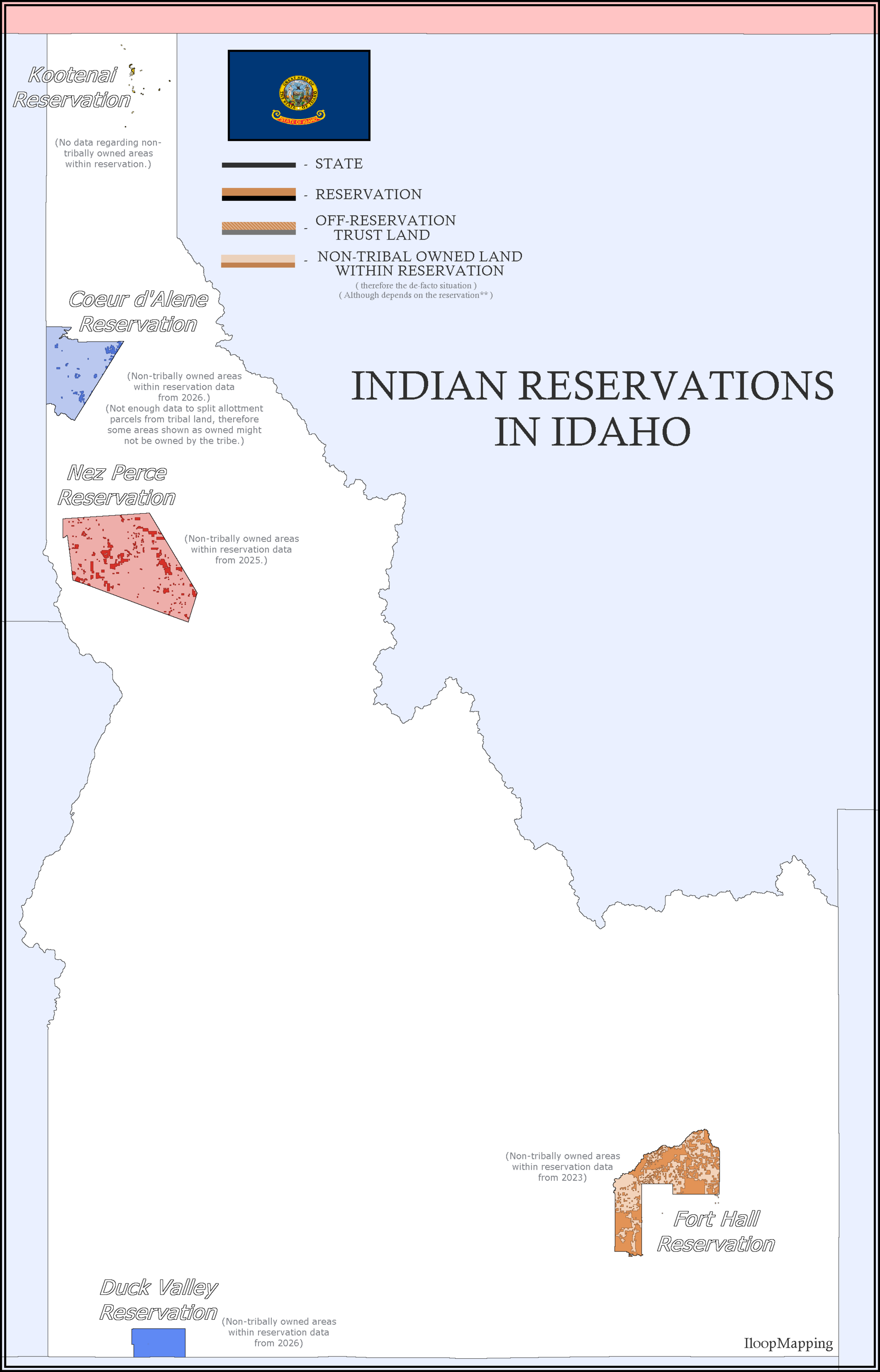

Idaho's tribal nations
A federally recognized tribe is a tribal government that the United States deals with government to government. The Secretary of the Interior publishes the official list each year in the Federal Register under the Federally Recognized Indian Tribe List Act of 1994. The list published Jan. 30, 2026, at 91 FR 4102, counts 575 tribal entities in the lower 48 states and Alaska.1 Recognition is what makes a tribe's members eligible for IHS services and what lets a tribe contract with IHS to run its own health programs.
Five of the tribes on that list have their reservations and governments in Idaho. The names below are the names printed in the 2026 list. The list prints "Coeur D'Alene Tribe" with a capital D; the tribe writes its own name "Coeur d'Alene Tribe," and this lesson follows the tribe.
| Tribe (official name) | Reservation and seat | Health program, as the tribe or IHS describes it | Who runs it | Source |
|---|---|---|---|---|
| Coeur d'Alene Tribe | Coeur d'Alene Reservation, North Idaho (Benewah and Kootenai counties); about 345,000 acres | Marimn Health (formerly Benewah Medical Center), 427 N. 12th St., Plummer; medical, dental, behavioral health, optometry, pharmacy, purchased and referred care; wellness center in Plummer | Owned and operated by the Coeur d'Alene Tribe | Marimn Health; NPAIHB; CMS 2024282911 |
| Kootenai Tribe of Idaho | Near Bonners Ferry, Boundary County; more than 170 tribal citizens | Kootenai Tribal Health Clinic, opened 1993, Bonners Ferry; physician, nurse practitioner, behavioral health, labs, immunizations, referrals for dental, optical and specialty care | Tribal health department | Kootenai Tribe; CMS 2024333411 |
| Nez Perce Tribe | Nez Perce Reservation, north-central Idaho; offices in Lapwai; more than 3,500 citizens | Nimiipuu Health: Lapwai clinic (opened 2004) and Kamiah clinic (opened 2001); medical, pharmacy, dental, optometry, behavioral health, lab and radiology, community health, purchased and referred care, an assisted living facility | The tribe, which took over from IHS in 1997 under P.L. 93-638 and moved to a self-governance compact in 2002 | Nez Perce Tribe; Nimiipuu Health; NPAIHB323031 |
| Shoshone-Bannock Tribes of the Fort Hall Reservation | Fort Hall Reservation, southeastern Idaho (Bingham, Bannock, Power and Caribou counties); more than 500,000 acres | Not-Tsoo Gah-Nee Indian Health Center (Fort Hall Service Unit), outpatient medical, dental, optometry, lab, x-ray, pharmacy; the tribes' own Tribal Health and Human Services Department runs other programs | IHS (federal service unit), jointly accredited with the tribes' health department | IHS; CMS 20242711 |
| Shoshone-Paiute Tribes of the Duck Valley Reservation, Nevada | Duck Valley Reservation, which straddles the Idaho and Nevada line (Owyhee County, Idaho, and Elko County, Nevada) | Owyhee Community Health Facility, Owyhee, Nevada; clinic, 24-hour emergency medical services, diabetes program, specialty clinics | The tribes' Duck Valley health system; listed in the IHS Phoenix Area directory | Shoshone-Paiute Tribes; IHS Phoenix Area3536 |
Counties and acreage come from the sources named; the county lists for the Fort Hall and Duck Valley reservations are the commonly described locations and are not taken from a single federal table. Idaho Health and Welfare's tribal consultation page says the department "consults on a regular, on-going basis with the six tribes in Idaho."2 The page does not name the sixth. The IHS Fort Hall Service Unit says its health center serves "the ambulatory health care needs of the Shoshone-Bannock Tribes and the Northwestern Band of Shoshoni," and the 2026 federal list includes the Northwestern Band of the Shoshone Nation, so that tribe is the likely sixth; we could not confirm that from the department itself.271
How many Native people live in Idaho
The count depends on how the question is asked. In the 2020 Census, 65,552 Idaho residents reported American Indian or Alaska Native ancestry alone or with another race, 3.6 percent of the state's 1,839,106 people, according to the Northwest Tribal Epidemiology Center's October 2024 Idaho profile.43 The Census Bureau's QuickFacts table, using the July 1, 2025, estimates, puts the "American Indian and Alaska Native alone" share at 2.0 percent of 2,029,733 Idahoans.48 Nationally, the 2020 Census counted about 3.7 million people who were American Indian and Alaska Native alone (1.1 percent) and 9.7 million alone or in combination (2.9 percent).47 By either measure, Idaho's Native share is higher than the national share.
None of those numbers is the same as tribal enrollment, which each tribe sets for itself, or as the IHS "user population," which counts people who have used IHS or tribal facilities. IHS itself warns that the user population is a rough size measure, not a count of tribal members or patients.37 Many Native Idahoans live in Boise, Nampa, Caldwell, Pocatello, Idaho Falls, Lewiston, Coeur d'Alene and Twin Falls, far from any tribal clinic. For them, the special rules in this lesson apply only in part, as later sections explain.
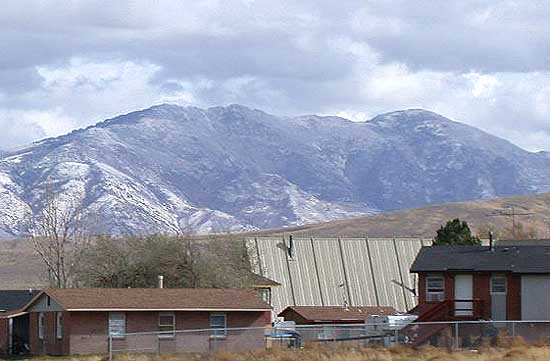

The trust responsibility and the laws behind it
Federal health care for American Indians rests on the federal trust responsibility: the legal duty the United States took on through treaties, statutes and court decisions when tribes ceded land. Congress states the principle in the Indian Health Care Improvement Act's declaration of national Indian health policy, which declares it the policy of the nation, "in fulfillment of its special trust responsibilities and legal obligations to Indians," to ensure the highest possible health status for Indians and to provide the resources to do so (25 U.S.C. 1602).25 The trust responsibility is the reason the rules in this lesson treat tribal members differently from other Medicaid members. The difference is political, based on membership in a tribal government, not on race.
The Snyder Act (1921)
The Snyder Act, signed Nov. 2, 1921, and codified at 25 U.S.C. 13, is the basic authority for federal Indian health spending. It directs the Bureau of Indian Affairs to spend the money Congress appropriates "for the benefit, care, and assistance of the Indians throughout the United States," including "for relief of distress and conservation of health."14 The act sets no benefit and creates no entitlement. Care depends on what Congress appropriates each year, and that is still true of IHS today.
The Transfer Act and the birth of IHS (1954 and 1955)
The Transfer Act, P.L. 83-568, signed Aug. 5, 1954, moved Indian health programs from the Bureau of Indian Affairs to the Public Health Service, effective July 1, 1955. That is the start of what is now the Indian Health Service, an agency of the Department of Health and Human Services.15 IHS says it now serves about 2.8 million American Indian and Alaska Native people a year through more than 600 federal and tribal facilities and 41 urban Indian organizations.46
Self-determination and "638" contracts and compacts (1975)
The Indian Self-Determination and Education Assistance Act, P.L. 93-638, signed Jan. 4, 1975, lets a tribe take over a federal program that serves its members and run it with the federal money that would have been spent on it (25 U.S.C. 5301 and following).16 The public law number gave the arrangement its everyday name: a clinic run by a tribe under this law is a "638 facility" or "638 program." There are two forms. Under a self-determination contract (title I of the act), the tribe runs a program under a contract with IHS. Under a self-governance compact (title V, made permanent for IHS by the Tribal Self-Governance Amendments of 2000, P.L. 106-260, signed Aug. 18, 2000)51, the tribe gets a negotiated funding agreement and more freedom to redesign and move money among programs.
IHS's August 2020 profile says tribes administer more than 60 percent of the IHS appropriation through these contracts and compacts.45 In Idaho, the Nez Perce Tribe shows the path: IHS ran health care on the reservation until 1997, when the tribe took it over under P.L. 93-638, and the tribe moved to a self-governance compact in 2002, according to a Northwest Portland Area Indian Health Board member-tribe page that the board has since taken down.31 At Fort Hall, by contrast, IHS still runs the clinic directly.27
The Indian Health Care Improvement Act (1976) and the opening to Medicaid
Before 1976, IHS facilities could not bill Medicaid or Medicare. The Indian Health Care Improvement Act (IHCIA), P.L. 94-437, signed Sept. 30, 1976, changed that. Its title IV added section 1911 to the Social Security Act (42 U.S.C. 1396j), which says a facility of the Indian Health Service, "whether operated by such Service or by an Indian tribe or tribal organization," is eligible for Medicaid payment "if and for so long as it meets all of the conditions and requirements" that apply to similar facilities.17 The same law added the sentence to section 1905(b) that sets the federal match at 100 percent for those services.3
The reason was practical. IHS appropriations were never enough to meet need, and many IHS patients were already eligible for Medicaid. Letting IHS bill Medicaid brought in money that stays with the facility for its own programs. Setting the federal match at 100 percent meant states would not pay for what was already a federal responsibility, which removed a reason for states to resist enrolling Native people.
The IHCIA was written with expiration dates and reauthorized several times. The Patient Protection and Affordable Care Act, P.L. 111-148, signed March 23, 2010, made it permanent in section 10221, which enacted the Indian Health Care Improvement Reauthorization and Extension Act of 2009.18 That law also confirmed the rule that IHS and tribal programs are the "payer of last resort" (25 U.S.C. 1623(b)): when a Native patient has Medicaid, Medicare or private insurance, that coverage pays first, and IHS money is used only after.24
The 2009 Medicaid protections
The American Recovery and Reinvestment Act of 2009, P.L. 111-5, signed Feb. 17, 2009, added a group of Medicaid protections for American Indians in section 5006.19 In plain words:
- No premiums or cost sharing for an Indian who gets care from an IHS, tribal or urban Indian program or through its referral (Social Security Act section 1916(j)).7
- Certain property is not counted when a state decides whether an Indian applicant's resources are too high: trust and restricted land on or near a reservation, ownership in rents, leases and royalties from federally protected rights such as timber, fish and game, and property with unique religious, spiritual, traditional or cultural significance (section 1902(ff)).20
- Protected Indian property is exempt from estate recovery after death: the income, resources and property that CMS manual instructions exempted as of April 1, 2003 (section 1917(b)(3)(B)), "because of the Federal responsibility for Indian Tribes and Alaska Native Villages." Lesson 08, Spend-Down, Asset Rules and Estate Recovery, explains estate recovery in general.21
- Managed care protections: Indians in Medicaid managed care can use Indian health care providers, in or out of network, and those providers must be paid (section 1932(h), carried out in 42 CFR 438.14).2223
- Tribal consultation: each state with an IHS, tribal or urban Indian program must seek their advice on Medicaid matters likely to affect them, including before submitting plan amendments and waivers (section 1902(a)(73)).20
Timeline, 1921 to 2028
| Year | Law or event | What changed | Source |
|---|---|---|---|
| 1921 | Snyder Act (Nov. 2, 1921), 25 U.S.C. 13 | General authority to spend appropriations "for relief of distress and conservation of health" of Indians | 25 U.S.C. 1314 |
| 1954 and 1955 | Transfer Act, P.L. 83-568 (Aug. 5, 1954) | Indian health moved from the BIA to the Public Health Service on July 1, 1955: the start of IHS | 42 U.S.C. 200115 |
| 1965 | Social Security Amendments of 1965 (July 30, 1965) | Medicaid (title XIX) and Medicare created; IHS facilities could not yet bill them | Module 74, lesson 01 |
| 1975 | Indian Self-Determination and Education Assistance Act, P.L. 93-638 (Jan. 4, 1975) | Tribes may contract to run IHS programs: "638" facilities | 25 U.S.C. 5301 and following16 |
| 1976 | Indian Health Care Improvement Act, P.L. 94-437 (Sept. 30, 1976) | Added Social Security Act section 1911 (IHS and tribal facilities can bill Medicaid) and the 100 percent FMAP sentence in section 1905(b) | 42 U.S.C. 1396j; 1396d(b)173 |
| 1997 and 2002 | Nez Perce Tribe takes over health care | Tribe runs care under a 638 contract from 1997 and a self-governance compact from 2002 | NPAIHB31 |
| 2000 | Tribal Self-Governance Amendments, P.L. 106-260 (Aug. 18, 2000) | Permanent self-governance compacts with IHS (title V) | P.L. 106-26051 |
| 2009 | American Recovery and Reinvestment Act, P.L. 111-5, section 5006 (Feb. 17, 2009) | No premiums or cost sharing; trust property not counted and exempt from estate recovery; managed care protections; tribal consultation requirement | P.L. 111-519 |
| 2010 | Affordable Care Act, P.L. 111-148, section 10221 (March 23, 2010) | Indian Health Care Improvement Act made permanent | P.L. 111-14818 |
| 2010 and 2011 | Idaho tribal consultation state plan amendment | Idaho writes its consultation process into the Medicaid state plan (effective Aug. 1, 2010; approved June 6, 2011) | CMS synopsis38 |
| 2016 | CMS letter SHO 16-002 (Feb. 26, 2016) | 100 percent FMAP extended to outside care requested by an IHS or tribal facility under a written care coordination agreement | SHO 16-0024 |
| 2019 | Idaho state plan amendment 19-0009 (effective Oct. 1, 2019) | Idaho adopts the care coordination policy; tribal facilities paid the IHS all-inclusive rate as tribal FQHCs | ID SPA 19-00096 |
| 2020 | Idaho Medicaid expansion begins (Jan. 1, 2020) | Adults up to 138 percent of poverty covered, including many tribal members | Module 74, lesson 02 |
| 2021 to 2023 | American Rescue Plan Act, section 9815 | 100 percent FMAP for urban Indian organizations for 8 quarters (none in Idaho) | 42 U.S.C. 1396d(b)3 |
| 2025 | P.L. 119-21 (July 4, 2025) | Expansion work rule with an exemption for Indians (section 71119); expansion copays from Oct. 1, 2028, with the 1916(j) protection kept (section 71120) | P.L. 119-21910 |
| 2026 | IHS calendar year 2026 rates (Jan. 22, 2026); tribal federal list (Jan. 30, 2026); Idaho tribal managed care listening session (Feb. 25, 2026) | $826 outpatient visit rate; 575 recognized tribes; tribes ask that Native members stay in fee for service unless they opt in | 91 FR; DHW5140 |
How the money flows
Three money streams meet at a tribal or IHS clinic: the federal IHS appropriation, payments from insurers (Medicaid above all), and whatever the tribe adds from its own revenue. Each works differently.
IHS appropriations and purchased and referred care
IHS is funded by yearly discretionary appropriations, not by an entitlement. For federal fiscal year 2027, the administration requested $9.1 billion in total discretionary funding for IHS, according to IHS testimony to the Senate Committee on Indian Affairs on May 20, 2026, plus $5.6 billion in advance appropriations for fiscal 2028 for most programs.46 IHS's August 2020 profile put spending per IHS user at $4,078 in fiscal 2019, compared with national health spending of $9,726 per person in 2017, a different measure but the comparison IHS itself makes. Its October 2024 profile prints the same $4,078 figure, labeled fiscal 2023, against national spending of $13,493 per person in 2022.45
When an IHS or tribal clinic cannot provide a service, such as surgery or a hospital stay, it can pay an outside provider through Purchased and Referred Care (PRC), formerly called Contract Health Services. PRC money is limited and rationed by medical priority, and a patient generally must live in the tribe's PRC delivery area and meet notice deadlines. Marimn Health, Nimiipuu Health and the Fort Hall Service Unit all list PRC among their services.283027 Because IHS and tribal programs are the payer of last resort under 25 U.S.C. 1623(b), a patient who has Medicaid has the referral billed to Medicaid first.24 Every Medicaid-covered referral stretches the PRC budget for patients with no other coverage. That is why tribal clinics often help their patients apply for Medicaid.
Medicaid billing and the all-inclusive rate
A clinic run by IHS or by a tribe can enroll as a Medicaid provider under section 1911 and bill Idaho Medicaid for covered services to members who are enrolled.17 Idaho's state plan amendment 19-0009, effective Oct. 1, 2019, sets out how Idaho pays them. It says facilities operated by a tribe or tribal organization are, by definition, federally qualified health centers (FQHCs), and that the tribal facilities agreed through tribal consultation to be paid the all-inclusive rate (AIR) published each year in the Federal Register. A tribal FQHC may bill "the appropriate number of payable daily encounters based on the services that members receive." Idaho also sets a prospective payment system (PPS) rate for tribal FQHCs, based on what it pays non-tribal FQHCs, to confirm each year that the AIR is higher.6
IHS sets the AIR each calendar year from its own cost data. The rates for 2025 and 2026, as published:
| IHS rate (lower 48 states) | Calendar year 2025 | Calendar year 2026 | Change (our calculation) | Source |
|---|---|---|---|---|
| Outpatient per visit (excluding Medicare) | $801 | $826 | +$25 (3.1 percent) | 89 FR 101607; 91 FR 2787 (Jan. 22, 2026)265 |
| Outpatient per visit (Medicare) | $718 | $733 | +$15 (2.1 percent) | Same |
| Inpatient hospital per diem (excludes physician services) | $5,580 | $5,707 | +$127 (2.3 percent) | Same |
| Alaska outpatient per visit (for comparison) | $1,209 | $1,222 | +$13 (1.1 percent) | Same |
The 2026 notice says the rates apply to Medicare and Medicaid beneficiaries and others, "to the extent consistent with payment authorities, including the applicable Medicaid State plan."5 Idaho's plan adopts them for tribal facilities, as above. Idaho has no IHS or tribal hospital, so in Idaho the outpatient rate is the one that matters most.
The 100 percent federal match
Medicaid is paid jointly. For most services, the federal share is the state's federal medical assistance percentage (FMAP), set each year by a formula based on state per capita income. Idaho's regular FMAP is 66.91 percent for federal fiscal year 2026 (Oct. 1, 2025, to Sept. 30, 2026) and 67.31 percent for fiscal 2027, according to the HHS notices in the Federal Register.4113 Expansion adults are matched at 90 percent, and CHIP at an enhanced rate of 77.12 percent in fiscal 2027.13 Module 74's Follow the Money explains these rates in general.
Section 1905(b) overrides all of them for one category: "the Federal medical assistance percentage shall be 100 per centum with respect to amounts expended as medical assistance for services which are received through an Indian Health Service facility whether operated by the Indian Health Service or by an Indian tribe or tribal organization."3 For those services, Idaho's general fund pays nothing; the federal government pays it all.
Three points are easy to miss. First, the 100 percent match is paid to the state, not to the tribe. The clinic receives the same Medicaid rate either way; what changes is who pays the state's share of it. Second, the match follows the place of care, not the patient. A tribal member seen at a private clinic in Twin Falls with no tie to a tribal facility is matched at the regular rate, and a non-Native patient seen at a tribal clinic is too: the CMS long-term care technical assistance page says non-Indian patients are reimbursed at the state's usual FMAP, not 100 percent.50 Third, the patient must be Medicaid-eligible: the 100 percent rule changes only who pays, not who qualifies.
SHO 16-002: when outside care counts as "received through"
For 40 years CMS read "received through" narrowly: the service had to be provided by the IHS or tribal facility itself, or by a contractor acting for it. Most hospital and specialist care for tribal members happened elsewhere and was matched at the regular rate. On Feb. 26, 2016, CMS issued State Health Official letter SHO 16-002, signed by Medicaid director Vikki Wachino, which widened the reading.4
Under the letter, a service from an outside provider counts as "received through" an IHS or tribal facility, and is matched at 100 percent, when all of these are true:
- The patient has an established relationship with a practitioner at the IHS or tribal facility (an initial visit may be by telehealth if the facility offers it).
- The facility and the outside provider have a written care coordination agreement. It can be a contract, a provider agreement or a memorandum of understanding, in a form the facility chooses. Both must be enrolled Medicaid providers.
- The facility practitioner requests the specific service, electronically or by another verifiable means, and sends the outside provider the relevant patient information.
- The facility practitioner keeps responsibility for the patient's care, and the facility keeps control of the medical record.
- The outside provider sends back results of screenings, diagnostics and treatment, and the facility puts them in its record.
Care a patient seeks on their own, or that another outside provider refers, does not qualify; the state still pays for it, at the regular match. The letter covers any service the facility is authorized to provide under IHS rules that is also covered in the state plan, including long-term services and supports (LTSS) and emergency and non-emergency transportation. States may not require tribal members to use IHS or tribal facilities, freedom of choice of provider stays in force, and no facility or outside provider is required to sign an agreement. Rates for Native patients must be the same as for other patients; they "may not vary based on the applicable FMAP." For managed care, a state may claim 100 percent on the share of a capitation payment tied to services received through a facility, if the plan keeps auditable records.4
Idaho adopted the policy in its state plan with SPA 19-0009, effective Oct. 1, 2019. In CMS's words, the amendment "authorizes 100% FFP for services provided by non-IHS/Tribal providers" with a written care coordination agreement. FFP means federal financial participation, the federal share. The SPA lists a federal budget impact of $0.6 We did not find a public list of which Idaho hospitals, specialists or long-term care providers have signed care coordination agreements with Idaho tribal facilities; it is listed under "what we don't know" below.
Long-term care and the 100 percent match
The 100 percent rule reaches long-term services and supports, the subject of lessons 01 to 03. CMS's long-term care technical assistance center for tribes says eligible LTSS for Native Medicaid patients at IHS or tribal facilities can be reimbursed at 100 percent "in all states," if LTSS is written into the tribe's 638 contract or compact with IHS, the tribal health department provides or oversees the service, and the health department bills the state Medicaid office.50 Nimiipuu Health lists an assisted living facility among its services.30 We did not find a public record showing whether any Idaho tribal LTSS is billed to Idaho Medicaid at 100 percent; see lesson 03, Home and Community-Based Services, for the state's assisted living and waiver rules.
Following one visit through the system
The funding flow is easiest to see with one visit. The diagram below follows a Medicaid-covered outpatient visit at a tribal clinic in Idaho in 2026. The tribe's clinic bills Idaho Medicaid; Idaho pays the clinic the IHS all-inclusive rate; Idaho then claims the federal share from CMS on its quarterly CMS-64 expenditure report, and for a service received through the facility that share is all of it. The clinic keeps the Medicaid payment as program income and can spend it on its own health programs, which is how Medicaid money ends up paying for staff, equipment and PRC referrals for patients with no coverage.
How we figured it: what the 100 percent match is worth to Idaho, per visit
The hypothetical case. One Medicaid-covered outpatient visit paid at the 2026 IHS all-inclusive rate of $826, for a tribal member enrolled in Idaho Medicaid. This is a hypothetical example; real claims vary by service and by eligibility group.
Inputs. Idaho's regular FMAP for federal fiscal 2027 is 67.31 percent, so the state share is 100 minus 67.31, or 32.69 percent.13 Expansion adults are matched at 90 percent (state share 10 percent). Services received through an IHS or tribal facility are matched at 100 percent (state share 0).3
Arithmetic. Regular match: $826 times 0.3269 equals $270.02 from Idaho. Expansion adult: $826 times 0.10 equals $82.60 from Idaho. Received through a tribal or IHS facility: $826 times 0 equals $0 from Idaho.
What it does not show. The total Idaho saves in a year depends on how many such services are billed, which we could not find in a public Idaho report (see "what we don't know"). A non-tribal clinic would be paid a different rate for the same visit, so this is not a comparison of what the visit "should" cost.
Idaho and its neighbors
Because the 100 percent rule replaces the state's share, it is worth more per dollar in a state with a lower regular FMAP. The table uses the fiscal 2027 FMAPs published by HHS on Nov. 28, 2025. The state share is our calculation (100 minus the FMAP).
| State | Regular FMAP, FY 2027 | CHIP enhanced FMAP, FY 2027 | State share of a regular Medicaid dollar (our calculation) | State share for care received through IHS or tribal facility |
|---|---|---|---|---|
| Idaho | 67.31% | 77.12% | 32.69 cents | 0 |
| Utah | 61.95% | 73.37% | 38.05 cents | 0 |
| Montana | 60.01% | 72.01% | 39.99 cents | 0 |
| Nevada | 59.31% | 71.52% | 40.69 cents | 0 |
| Oregon | 58.18% | 70.73% | 41.82 cents | 0 |
| Washington | 50.00% | 65.00% | 50.00 cents | 0 |
| Wyoming | 50.00% | 65.00% | 50.00 cents | 0 |
Source: HHS, Federal Financial Participation in State Assistance Expenditures, FY 2027 (90 FR 54696, Nov. 28, 2025).13 Idaho's regular FMAP is the highest of the seven, which means the 100 percent rule saves Idaho a smaller share of each dollar than it saves Washington or Wyoming. All six neighbors have tribes and IHS or tribal facilities; Washington and Oregon also have urban Indian organizations, which Idaho does not.11
Protections for Native Medicaid members
American Indians and Alaska Natives qualify for Idaho Medicaid by the same income, household and residency rules as anyone else; module 74's Who Qualifies and Who Is Covered explains them. Enrollment in a tribe does not by itself make anyone eligible. What federal law adds is a set of protections once a person qualifies or applies. The law uses "Indian" as defined in the Indian Health Care Improvement Act, generally a member of a federally recognized tribe, and in some sections people eligible for IHS services.25
No premiums or cost sharing
Section 1916(j) says no enrollment fee, premium, deductible, copayment or similar charge may be imposed on an Indian "who is furnished an item or service directly by the Indian Health Service, an Indian Tribe, Tribal Organization, or Urban Indian Organization or through referral under contract health services."7 The CMS rule at 42 CFR 447.56(a)(1)(x) goes further: an Indian who is eligible to receive or has received such a service is exempt from premiums, and an Indian who is currently receiving or has ever received one is exempt from all cost sharing, wherever the later care happens. Under 447.56(c)(2), the state may not cut its payment to the provider to make up the waived amount.8
The protection matters for what comes next. P.L. 119-21 section 71120 requires states, beginning Oct. 1, 2028, to charge expansion adults with incomes above 100 percent of poverty cost sharing of more than $0 and up to $35 per service for some services. The new subsection is written "subject to" section 1916(j), so the Indian exemption stays in force.10 Lesson 12 covers the copay rule and its other exemptions.
Property not counted and not recovered
For Medicaid groups that count resources, such as most long-term care and the Medicare Savings Programs, section 1902(ff) tells states to disregard four kinds of property for an Indian applicant: (1) property, including land and improvements, held in trust or under federal restriction on or near a reservation; (2) for tribes without a current reservation, property within the most recent boundaries of a prior federal reservation; (3) ownership interests in rents, leases, royalties or usage rights from federally protected rights to natural resources, such as timber, fish and game; and (4) ownership interests in or usage rights to items with unique religious, spiritual, traditional or cultural significance, or rights that support subsistence or a traditional lifestyle under tribal law or custom.20 Section 1917(b)(3)(B) requires states to exempt from estate recovery, after a Medicaid member's death, the Indian income, resources and property that were exempt as of April 1, 2003, under CMS's manual instructions. The statute ties this exemption to those instructions, not to the section 1902(ff) list, and we did not compare the two lists item by item.21 Lesson 08 explains Idaho's asset rules and estate recovery in general; these exemptions sit on top of them.
Managed care protections
Section 1932(a)(2)(C) says a state using its state plan authority may not require an Indian to enroll in a managed care plan unless the plan is run by IHS, a tribe or an urban Indian organization.22 For Indians who are enrolled in managed care, 42 CFR 438.14 requires each plan to show it has enough Indian health care providers in network for timely access, to pay Indian health care providers whether or not they are in the network, to let an Indian enrollee choose an in-network Indian health care provider as primary care provider, to cover services from out-of-network Indian providers, and to accept referrals from them.23
These rules matter now in Idaho. House Bill 345 (2025) directed Health and Welfare to move most Medicaid members into managed care, a plan module 74 covers in Managed Care and Privatization. The department held a Tribal Medicaid Member and Provider Listening Session on Feb. 25, 2026, in Boise and online. Its posted summary records the recommendation that "AI/AN Medicaid members remain in fee-for-service (FFS) unless they opt-in to managed care," along with requests for tribal liaisons on plan staff, performance measures specific to Native members, a 365-day window for clean claims, and a separate formal consultation with tribal leaders. One participant suggested a section 1115 waiver approach like those used in Arizona and New Mexico. As of the page we read, the department said the shift to managed care "has been delayed" and gave no start date.40
The 2025 work requirement exemption
P.L. 119-21 section 71119 adds section 1902(xx) to the Social Security Act, which requires expansion adults to show 80 hours a month of work or other community engagement, beginning no later than the first quarter after Dec. 31, 2026. Among the "specified excluded individuals" the law lists a person who "is an Indian or an Urban Indian," a California Indian, or a person who "has otherwise been determined eligible as an Indian for the Indian Health Service."9 Section 71107 points to the same list to exempt these individuals from the six-month eligibility renewals that apply to expansion adults for renewals scheduled from Jan. 1, 2027; lesson 12 covers that change.9 Idaho's own work requirement law, House Bill 913 (2026), and how the exemptions are applied are in module 74, The 2027 Work Requirements. The exemption applies to the person, not the clinic: a tribal member who lives in Boise and never uses a tribal clinic is still exempt if the state determines they meet the definition.
Tribal consultation in Idaho
Consultation is how tribal governments get a say before the state changes Medicaid. Section 1902(a)(73) requires every state with an IHS, tribal or urban Indian program to have a process under which the state "seeks advice on a regular, ongoing basis" from their designees on Medicaid matters "likely to have a direct effect" on them, including before submitting "any plan amendments, waiver requests, and proposals for demonstration projects." The state may also appoint an advisory committee and put a tribal designee on its Medical Care Advisory Committee.20
Idaho's written policy
Idaho's Medicaid Tribal Consultation Policy and Procedures, final Aug. 1, 2010, says the Divisions of Medicaid and Welfare intend "to consult on a regular, on-going basis with the six Tribes on matters relating to Medicaid eligibility and services." It applies when a state plan amendment, waiver proposal, demonstration proposal or state Medicaid rule "will likely have a compliance cost or direct impact on Idaho Native Americans or Idaho Indian Health Programs (638 Clinics/IHS/FQHC)." It also says the policy "does not apply to federally mandated State Plan Amendments or waiver amendments," and it preserves the department's right to decide based on the needs of all Medicaid and CHIP members.39
CMS's summary of the Idaho consultation state plan amendment (submitted Sept. 27, 2010, effective Aug. 1, 2010, approved June 6, 2011) lists the methods: written "Dear Tribal Leader" letters, quarterly joint meetings with the Northwest Portland Area Indian Health Board (NPAIHB), invitations to Medical Care Advisory Committee meetings for tribes with clinics in Idaho, an online site and work groups. The standard timeline is 60 days' notice before the state submits a change to CMS, with 30 days for tribes to respond; an expedited process allows 14 days' notice and 7 days to respond. The summary also notes that Idaho "has no urban clinics but does have both IHS and 638 clinics."38
Health and Welfare posts notices and agendas for its tribal meetings on its "Idaho Medicaid Program and Tribes of Idaho" page, by year, from 2020 through 2025. When we read the page on Nov. 22, 2026, it had no 2026 folders.2 The 2026 managed care listening session was posted on the department's managed care page instead.40
- The department drafts a change, such as a state plan amendment, a waiver or a rule, and decides whether it is likely to have a direct effect on tribes or Indian health programs.
- It sends a "Dear Tribal Leader" notice to each tribe and Indian health program, normally at least 60 days before submitting the change to CMS (14 days in the expedited process).38
- Tribes respond in writing or at the quarterly meeting, normally within 30 days (7 days in the expedited process).
- The department submits the change to CMS, which reviews it and, if it approves, posts the approved amendment on Medicaid.gov.
- The record is public: notices, agendas and minutes on the department's site and on NPAIHB's site, and the submitted amendment on Medicaid.gov.2
How consultation differs from a public hearing, and how anyone can comment on a waiver or rule, is in module 49, Testifying and Public Comment, and module 27, How Laws and Rules Get Made. Lesson 12 of this course, What the 2025 Federal Law Does Beyond Work Requirements, covers the federal changes on which Idaho will consult tribes in 2027 and 2028.
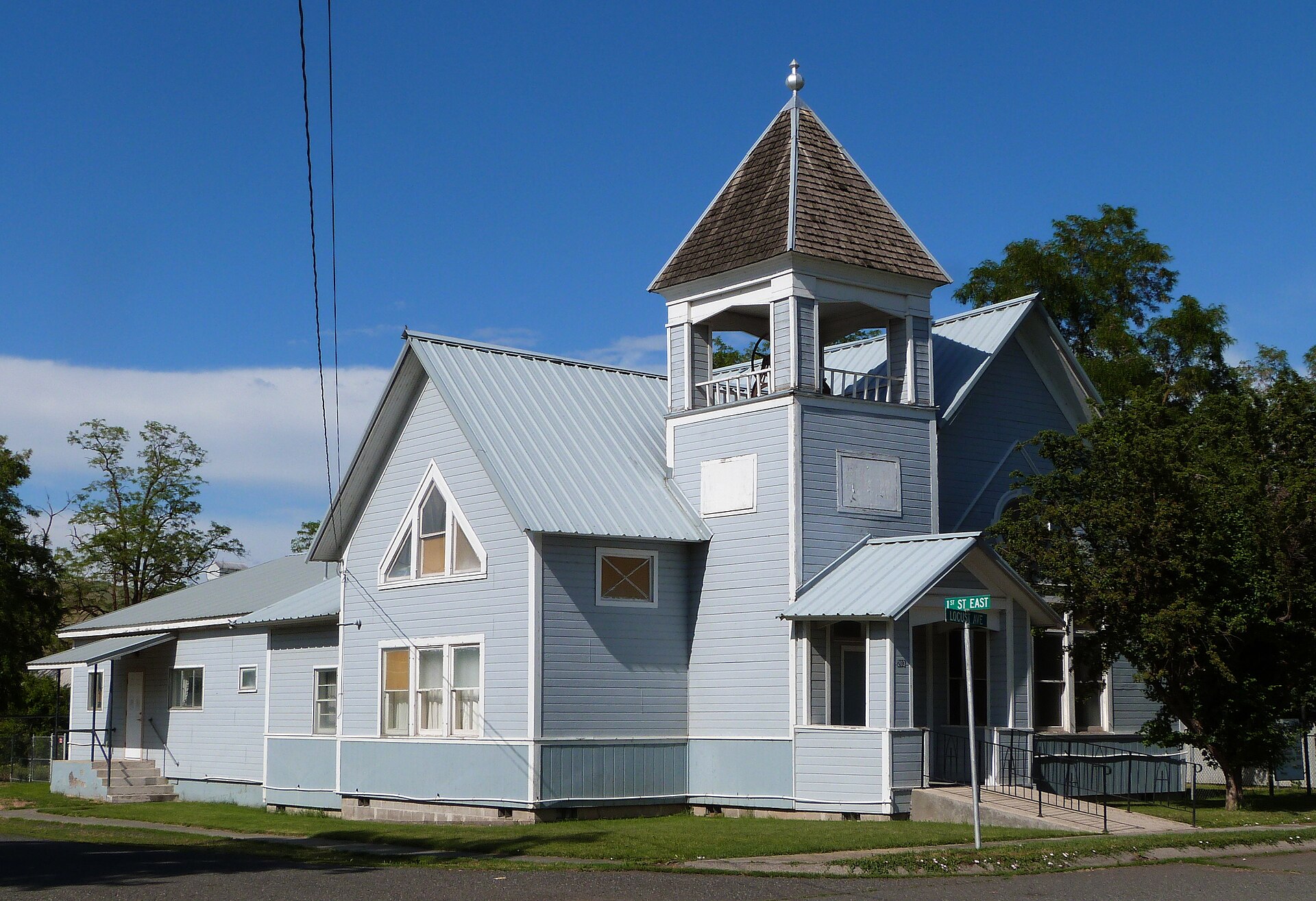

The clinics up close
This section describes each facility using the tribe's own site or IHS's page, and CMS's April 2024 guide "Serving American Indians and Alaska Natives in Idaho, Oregon, and Washington," which lists every IHS, tribal and urban Indian facility in the three states.11 Clinic services, hours and eligibility rules are set by each tribe or by IHS and change; the descriptions are as posted when we read them.
Marimn Health, Plummer (Coeur d'Alene Tribe)
Marimn Health describes itself as "owned and operated by the Coeur d'Alene Tribe." Its medical center at 427 N. 12th St. in Plummer offers primary care, dental, behavioral health, optometry, chiropractic, radiology and lab, pharmacy, physical therapy, telehealth and purchased and referred care; its community health programs include diabetes prevention, maternal and child health, elder care, nutrition, transportation and WIC; and it runs a wellness center in Plummer and a Boys and Girls Club in Worley. The site says it serves "all members of the community."28 A Northwest Portland Area Indian Health Board member-tribe page, since taken down, said the clinic, formerly the Benewah Medical Center, serves about 6,000 patients a year and that the reservation covers about 345,000 acres in North Idaho; the tribe's own history page says the 1873 executive order reservation totaled more than 500,000 acres.29
Nimiipuu Health, Lapwai and Kamiah (Nez Perce Tribe)
Nimiipuu Health runs two clinics: 111 Bever Road in Lapwai and 313 3rd St. in Kamiah. It lists medical, pharmacy, dental, optometry, behavioral health, lab and radiology, community health, purchased and referred care, a wellness program and an assisted living facility. Its stated mission is "to provide quality healthcare in a culturally sensitive and confidential setting."30 Nimiipuu Health says the Lapwai clinic is a 43,000-square-foot building that opened in 2004, and the Kamiah clinic, about 72 miles southeast, is a 7,000-square-foot facility that opened in 2001.31 The tribe says it has more than 3,500 citizens.32
Not-Tsoo Gah-Nee Indian Health Center, Fort Hall (IHS, serving the Shoshone-Bannock Tribes)
The Fort Hall Service Unit is a federal IHS unit. Its main site, the Not-Tsoo Gah-Nee Indian Health Center, is a 28,915-square-foot outpatient building offering medical, optometry and dental care, an in-house lab, x-ray and pharmacy, and purchased and referred care, diabetes and community health nursing programs. The IHS page, as read online on Nov. 22, 2026, says it serves "over 13,380 registered American Indian and Alaska Natives," with about 37,294 outpatient visits a year and a staff of 50, including four clinic physicians. A copy of the same page saved to this module's downloads that day gives different figures (over 20,000 registered patients, about 50,000 visits and 48 staff, including three physicians), so treat these counts as approximate. Complex cases are referred to medical centers in Salt Lake City. IHS calls the unit "the first and only Federal Service Unit to attain and maintain" joint accreditation with a tribal health department, the Shoshone-Bannock Tribes' Tribal Health and Human Services Department. IHS says Pocatello and Blackfoot are within 12 miles of Fort Hall.27 CMS's 2024 guide also lists a Shoshone-Bannock Community Health Center at Fort Hall under IHS.11
Owyhee Community Health Facility, Owyhee, Nevada (Shoshone-Paiute Tribes)
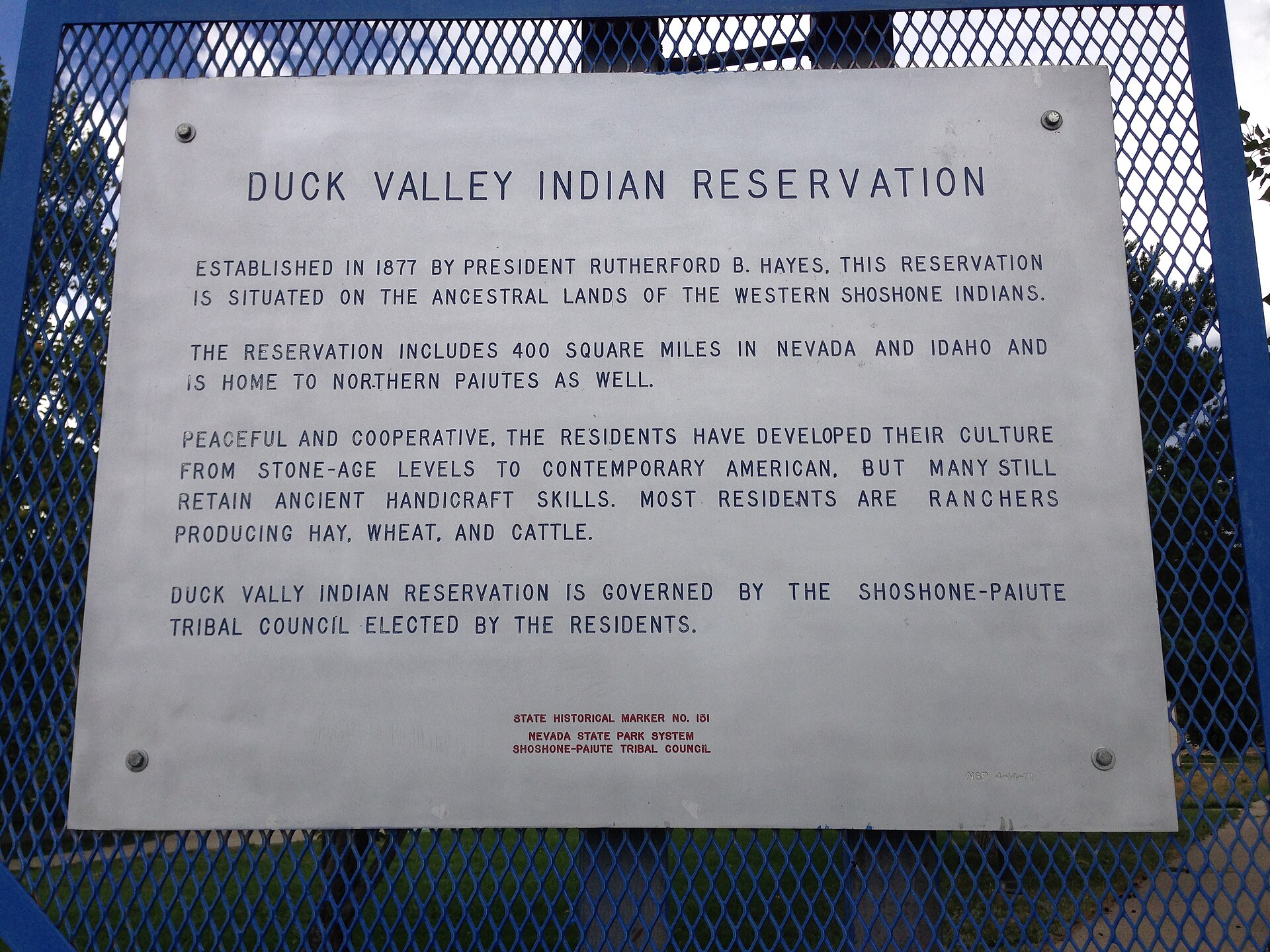
The Duck Valley Reservation straddles the Idaho and Nevada line, and the town of Owyhee, where the clinic sits, is in Nevada. The tribes' site says the facility "provides health care to the Shoshone-Paiute Tribes of the Duck Valley Reservation," to other American Indians and Alaska Natives enrolled in or descended from a federally recognized tribe, and to people living on or near the reservation. It lists 24-hour emergency medical services, weekday clinic hours, scheduled specialty clinics (optometry, audiology, mammography, behavioral health), a diabetes program, and community health representative and CNA home visits with interpretation in Shoshone or Paiute.35 An IHS Phoenix Area directory lists the Owyhee facility, because Nevada tribes are in the IHS Phoenix Area, not the Portland Area that covers Idaho.36 For Idaho Medicaid, that means care at Owyhee is out-of-state care; we could not confirm from a public record how Idaho Medicaid enrolls and pays the Owyhee facility for Idaho members.

Kootenai Tribal Health Clinic, Bonners Ferry (Kootenai Tribe of Idaho)
The Kootenai Tribe's health department says its Kootenai Tribal Health Clinic opened in 1993. It lists appointments with a physician, nurse practitioner, registered nurse, dietitian and patient care coordinator; behavioral and mental health visits; routine labs; immunizations; chiropractic care; well-child and routine physical exams; and referrals for dental, optical and specialty care.33 The tribe says it has more than 170 citizens and is one of the Ktunaxa bands whose territory spans Idaho, Washington, Montana, British Columbia and Alberta.34 The clinic's posted address is 1227 Mission Road; CMS's 2024 guide lists the tribe's 100 Circle Drive address.3311
No urban Indian clinic in Idaho
The third leg of the Indian health system, the urban Indian organization (UIO), is a nonprofit that receives IHS funds under title V of the IHCIA to serve Native people in cities. IHS testified in May 2026 that there are 41 UIOs nationally.46 CMS's 2024 guide lists urban programs in Oregon and Washington and none in Idaho, and CMS's summary of Idaho's consultation amendment says the same.1138 The nearest listed are in Washington and Oregon. Native residents of Ada, Canyon, Twin Falls, Bonneville and Bannock counties who want Indian health care must travel to a tribal or IHS clinic; Twin Falls, for example, is more than 100 miles from Fort Hall by highway. From April 2021 to March 2023, the American Rescue Plan Act set the federal match at 100 percent for services received through UIOs too; that provision ran for eight quarters and has expired under the eight-quarter limit written into section 1905(b).3
The IHS Portland Area
IHS runs its system through regional area offices. The Portland Area office serves tribes in Washington, Oregon and Idaho, which it describes as more than forty tribes, through a mix of IHS facilities, tribal facilities and urban Indian organizations.37 The Portland Area's tribes share a policy body, the Northwest Portland Area Indian Health Board, created by the tribes, which runs the Northwest Tribal Epidemiology Center that produced the Idaho health profile used below. NPAIHB is a tribal organization and an advocate for its member tribes, and its reports are labeled as such here.
Health data for Native Idahoans
The numbers below come from the federal vital statistics system and from the Northwest Tribal Epidemiology Center, which corrects Idaho death certificates for a known problem: American Indians are often misclassified as another race on death certificates, which makes Native death rates look lower than they are. NCHS adjusts its national life tables for that misclassification too.1243
Life expectancy
CDC's National Center for Health Statistics reports that life expectancy at birth in 2024 was 71.1 years for the non-Hispanic American Indian and Alaska Native population, up 1.0 year from 70.1 in 2023, against 79.0 for the total U.S. population, up from 78.4 (United States Life Tables, 2024, published Aug. 25, 2026).12 The gap was 7.9 years in 2024 and 8.3 years in 2023 (our calculation). NCHS Data Brief 548 adds that in 2024, the age-adjusted death rate, corrected for misclassification, was 872.7 per 100,000 for Native women and 1,213.0 for Native men, against 722.1 for the total population.42 We did not find a published Idaho-only life expectancy for Native Idahoans; the Idaho profile reports death rates instead.
Idaho death rates
The Northwest Tribal Epidemiology Center's "American Indian and Alaska Native Community Health Profile: Idaho" (October 2024) links Idaho death certificates with its Northwest Tribal Registry to correct race. It compares Native Idahoans (AI/AN) with non-Hispanic white Idahoans (NHW).43
| Measure (Idaho) | AI/AN | NHW | Ratio (our calculation) | Years |
|---|---|---|---|---|
| Diabetes deaths, age-adjusted per 100,000 | 48.7 | 20.1 | 2.4 times | 2016 to 2020 |
| Suicide deaths, age-adjusted per 100,000 | 35.4 | 23.7 | 1.5 times (the report says "about 50% higher") | 2016 to 2020 |
| Median age | 32.8 years | 40.4 years | 2021 | |
| Median household income | $48,840 | $64,579 | 0.76 | 2021 |
| Share of people in poverty | 20.9% | 9.6% | 2.2 times | 2021 |
Source: NPAIHB, Northwest Tribal Epidemiology Center, Idaho community health profile, October 2024, pages 9, 11, 19 and 45, using Idaho death certificates and Census and American Community Survey data.43 The report says Native and white overdose death rates in Idaho were similar from 2011 to 2020. For comparison with older national data, an October 2019 IHS fact sheet put the national Native diabetes death rate at 3.2 times the all-races rate (2009 to 2011 data).44 Suicide and behavioral health care through Medicaid are in lesson 05, Behavioral Health and Medicaid.
What Medicaid means to Indian health
Nationally, Medicaid is the largest outside payer of the Indian health system. IHS's August 2020 profile reported that 724,359 IHS users had Medicaid coverage in fiscal 2019, and that federal IHS facilities collected $1.14 billion from all third-party payers that year, up from $968 million in fiscal 2016.45 KFF, a nonprofit health policy research group, reported in 2017 that IHS expected $1.3 billion in third-party collections in fiscal 2017, the largest share, $810 million, from Medicaid, and that Medicaid covered about 27 percent of nonelderly Native adults and half of Native children in 2015.49 Those are older national figures. A later IHS Profile dated October 2024 reports 781,359 Medicaid-covered IHS users and $1.71 billion in third-party collections at federal direct care facilities in fiscal 2023, and IHS appropriations of $7.1 billion for fiscal 2024.45 We did not find any Idaho-specific count of Medicaid collections at Idaho tribal clinics. Tribally run clinics are not included in IHS's collection totals, because they bill and keep their own revenue.
Across Idaho: where the rules meet real places
North Idaho: Plummer, Lapwai, Kamiah and Bonners Ferry
Four of Idaho's six tribal and IHS sites are in the north: Marimn Health in Plummer (Benewah County), Nimiipuu Health in Lapwai (Nez Perce County) and Kamiah (Lewis and Idaho counties), and the Kootenai clinic in Bonners Ferry (Boundary County).11 All four are tribally run, so they bill Idaho Medicaid as tribal FQHCs at the IHS rate under SPA 19-0009, and their referred care to hospitals in Lewiston, Coeur d'Alene, Moscow or Spokane can be matched at 100 percent only when a written care coordination agreement covers it.64
Eastern Idaho: Fort Hall, Pocatello and Blackfoot
The Fort Hall Service Unit is IHS-run, the only federally run clinic among Idaho's tribes. It sits between Pocatello (Bannock County) and Blackfoot (Bingham County), and refers complex cases to Salt Lake City.27 When a Fort Hall patient enrolled in Idaho Medicaid is sent to a Utah hospital, two questions decide who pays the state share: whether the patient's Idaho Medicaid covers the out-of-state service, and whether the referral falls under a care coordination agreement. Out-of-state care rules are part of Idaho's general Medicaid rules covered in module 74.
Southwest Idaho: Duck Valley and the Treasure Valley
Shoshone-Paiute members on the Idaho side of Duck Valley, in Owyhee County, use a clinic in Nevada.35 In Ada and Canyon counties there is no tribal clinic and no urban Indian program.11 Native Medicaid members in Boise, Meridian, Nampa and Caldwell use the same providers as everyone else. They keep the federal protections tied to their status as Indians, such as the cost-sharing exemption under 447.56 if they have ever been served by an Indian health program and the work requirement exemption, but most of their care is matched at Idaho's regular rate.89
The Magic Valley
No tribal or IHS clinic sits in the Magic Valley. Native residents of Twin Falls, Kimberly, Buhl, Gooding, Hagerman, Burley, Rupert and Wendell, and of Twin Falls, Gooding, Lincoln, Minidoka, Cassia, Camas and Blaine counties, are hours from Fort Hall or Owyhee. The CMS 2024 guide lists no Indian health facility in any of those counties.11 We did not find county-level counts of Native Medicaid members for the Magic Valley; Health and Welfare does not publish Medicaid enrollment by race and county in the reports we found, and small counts would likely be suppressed.
Pictures, Numbers and Infographics
The lesson's key numbers, rules and dates in one table. Each row names its source; computed shares and gaps are our calculations from the named inputs.
| Measure | Idaho | U.S. or other states | Year | Source |
|---|---|---|---|---|
| Federally recognized tribes | 5 based in Idaho; DHW consults with 6 | 575 nationally | Jan. 30, 2026 | BIA list; DHW12 |
| IHS and tribal facilities listed by CMS | 6 (2 IHS at Fort Hall, 4 tribal); no urban Indian program | Oregon and Washington have urban programs | April 2024 | CMS guide11 |
| Federal match for services received through IHS or tribal facility | 100% | 100% in every state | Since 1976 | SSA 1905(b)3 |
| Regular FMAP | 66.91% (FY 2026); 67.31% (FY 2027) | Utah 61.95%, Montana 60.01%, Nevada 59.31%, Oregon 58.18%, Washington and Wyoming 50.00% (FY 2027) | FY 2026 and 2027 | HHS FMAP notices4113 |
| IHS outpatient per-visit rate (Medicaid), lower 48 | $826 (paid to Idaho tribal FQHCs) | $1,222 in Alaska | CY 2026 | IHS rate notice; SPA 19-000956 |
| IHS inpatient per diem, lower 48 | No IHS or tribal hospital in Idaho | $5,707 | CY 2026 | IHS rate notice5 |
| Native population share | 3.6% alone or in combination (65,552, 2020 Census); 2.0% alone (V2025 estimates) | 2.9% alone or in combination; 1.1% alone (2020) | 2020; 2025 | NPAIHB; Census434847 |
| Life expectancy at birth, AI/AN | Not published for Idaho | 71.1 years vs. 79.0 total U.S. | 2024 | NCHS life tables12 |
| Diabetes death rate, AI/AN vs. NHW (per 100,000) | 48.7 vs. 20.1 | 2016 to 2020 | NPAIHB43 | |
| Suicide death rate, AI/AN vs. NHW (per 100,000) | 35.4 vs. 23.7 | 2016 to 2020 | NPAIHB43 | |
| Fort Hall Service Unit | About 13,380 to 20,000 registered users; about 37,000 to 50,000 visits a year (two versions of the IHS page) | As posted by IHS, read Nov. 22, 2026 | IHS27 | |
| IHS budget request | $9.1 billion discretionary, FY 2027 request; 2.8 million people served | May 20, 2026 | IHS testimony46 | |
| Idaho tribal consultation notice | 60 days before submission; 30 days to respond (expedited: 14 and 7) | Required in every state with Indian health programs | Since 2010 | CMS synopsis; SSA 1902(a)(73)3820 |
| Work requirement and copays | Indians exempt from both | Same nationally | From 2027 and Oct. 1, 2028 | P.L. 119-21 sections 71119, 71120910 |
Photos in this lesson: the reservation map, Fort Hall, Lapwai and the Duck Valley marker. Infographics: the law timeline, the IHS rate chart, the SHO 16-002 flowchart, the money flow, the FMAP comparison, the protections grid, the life expectancy chart and the Idaho death-rate chart.
Common mistakes
- Treating IHS as health insurance. IHS is a federal health program funded by yearly appropriations, not an insurance plan, and its referral money for outside care is limited and rationed by priority. Federal law makes IHS and tribal programs the payer of last resort, so Medicaid, Medicare or private coverage pays first.2414
- Thinking the 100 percent match covers all care for Native Medicaid members. It covers services "received through" an IHS or tribal facility: those it provides and, since SHO 16-002, outside care it requests under a written agreement. Other care is matched at the regular rate.34
- Thinking the 100 percent match pays the tribe more. The match decides the split between federal and state money. The clinic is paid the same Medicaid rate either way, and SHO 16-002 says rates "may not vary based on the applicable FMAP."4
- Assuming tribal membership makes someone Medicaid-eligible. Eligibility follows the regular income and category rules. The special rules change charges, asset counting, estate recovery, managed care and work rules, not the basic test.20
- Treating the protections as racial categories. The law defines "Indian" by membership in or eligibility through federally recognized tribes, a political relationship grounded in the trust responsibility.25
- Placing every tribe's clinic in Idaho. The Duck Valley Reservation crosses the state line and the Owyhee clinic is in Nevada, in the IHS Phoenix Area.3536
- Mixing population measures. "Alone" counts, "alone or in combination" counts, tribal enrollment and the IHS user population are four different numbers. Idaho's share is 2.0 percent by one and 3.6 percent by another.484337
- Mixing years. FMAPs run on the federal fiscal year (Oct. 1 to Sept. 30); IHS rates run on the calendar year; Idaho's budget runs July 1 to June 30. A 2026 IHS rate and a fiscal 2027 FMAP overlap for only part of a year.513
What we know, what we don't, and what the data can show
What we know
- Federal law sets a 100 percent federal match for Medicaid services received through IHS or tribal facilities, and CMS has read that since 2016 to include requested outside care under written agreements; Idaho adopted that reading effective Oct. 1, 2019.346
- Idaho pays tribal facilities the IHS all-inclusive rate, $826 per outpatient visit for 2026.56
- Native Medicaid members are protected from premiums and cost sharing, from counting of trust property, from estate recovery on protected property, from mandatory state plan managed care, and from the 2027 work rule.72021229
- Idaho has a written tribal consultation process with 60-day notice, and tribes asked in February 2026 that Native members stay in fee for service unless they opt in to managed care.3840
- Native Americans nationally live 7.9 fewer years than the U.S. average (2024), and Native Idahoans die of diabetes at 2.4 times the white rate (2016 to 2020).1243
What we don't know
- How much Idaho Medicaid spends each year at the 100 percent match, and how much state money that saves. We did not find it in Health and Welfare's public reports or the Legislature's budget documents.
- How many Idaho Medicaid members are American Indian or Alaska Native, statewide or by county.
- Which hospitals, specialists and long-term care providers have signed care coordination agreements with Idaho tribal facilities, and how many referrals are claimed at 100 percent.
- How Idaho's move to managed care, now delayed, will treat Native members, and what the formal tribal consultation in 2026 produced.
- How Idaho Medicaid enrolls and pays the Owyhee facility in Nevada for Idaho members.
What the data can show
- CMS-64 expenditure reports, the quarterly reports states use to claim federal Medicaid money, are where Idaho claims the 100 percent IHS match; the state-level detail can be requested from CMS or Health and Welfare.
- T-MSIS Analytic Files (TAF), CMS's research files of Medicaid claims and enrollment, record race and ethnicity and provider type, and can show enrollment and claims at IHS and tribal providers by state, subject to CMS's data quality notes and small-cell suppression.
- The IHS rate notices in the Federal Register give a consistent year-by-year series of the all-inclusive rate.526
- NCHS life tables and the Northwest Tribal Epidemiology Center's Idaho profiles show mortality trends corrected for race misclassification.1243
- Medicaid.gov state plan amendments show each tribal consultation record and the approved payment method, such as SPA 19-0009.6
Questions people ask
Can someone use both an IHS or tribal clinic and Medicaid?
Yes. A tribal member enrolled in Idaho Medicaid can be seen at an IHS or tribal clinic, which then bills Medicaid, or at any other Medicaid provider. Federal law makes IHS and tribal programs the payer of last resort, so Medicaid pays first when it covers the service, and SHO 16-002 says states may not require tribal members to use IHS or tribal facilities.244
Why do tribal clinics ask patients about Medicaid?
Because Medicaid payments are program income the clinic keeps and spends on care, and because a Medicaid-covered referral does not draw down the limited purchased and referred care budget. The Indian Health Care Improvement Act opened Medicaid billing to IHS and tribal facilities in 1976 for that reason.1745
Do non-Native patients use tribal clinics?
Some tribal clinics serve them. Marimn Health says it serves "all members of the community," and the Owyhee facility lists people living on or near the reservation among those it serves. Each tribe sets its own policy. Services to non-Native Medicaid members are matched at the state's regular rate, not 100 percent.283550
Are tribal members exempt from the new work requirement?
The federal law lists Indians, urban Indians, California Indians and people determined eligible as Indians for IHS among the "specified excluded individuals" in P.L. 119-21 section 71119. How Idaho verifies the exemption is covered in module 74's lesson on the 2027 work requirements.9
Can Idaho's estate recovery take trust land?
Section 1917(b)(3)(B) requires states to exempt from estate recovery the Indian income, resources and property that CMS's manual instructions exempted as of April 1, 2003, "because of the Federal responsibility for Indian Tribes and Alaska Native Villages." Those instructions, not the section 1902(ff) resource list, define what is protected from recovery. Other assets follow Idaho's general estate recovery rules in lesson 08.2120
What does "638" mean?
It is the public law number of the Indian Self-Determination and Education Assistance Act of 1975, P.L. 93-638. A "638" clinic is one a tribe runs under a contract or compact with IHS instead of IHS running it. In Idaho, the Coeur d'Alene, Nez Perce and Kootenai clinics are tribally run, and Fort Hall is IHS-run.1611
Is there an urban Indian clinic in Boise or Twin Falls?
Not according to CMS's 2024 list of facilities in Idaho, Oregon and Washington, which names no urban Indian organization in Idaho.11
Hard questions
Should Idaho share its 100 percent match savings with tribes?
For sharing: the case is that the savings exist only because tribal clinics treat and coordinate care for their members, so some of the state money freed up should go back to tribal health programs, and CMS's long-term care center for tribes encourages tribes to negotiate with their states.50 Against: the state can argue that the 100 percent rule exists to keep states from paying for a federal duty, not to create a new state payment, that SHO 16-002 says provider rates "may not vary based on the applicable FMAP," and that the Legislature, not the department, decides how general fund savings are spent.4 The evidence: without a public figure for Idaho's 100 percent claims, no one outside the department can say how large the savings are; that number is the first thing a public debate would need.
Should Native Medicaid members be in Idaho's managed care plans?
For opt-in only: tribal participants in the February 2026 listening session recommended that Native members stay in fee for service unless they opt in, citing slow payment, network problems and the need for tribal liaisons; federal law already bars mandatory enrollment under state plan authority unless the plan is run by an Indian health program.4022 For enrollment with protections: managed care backers argue that plans can coordinate care across providers, that 42 CFR 438.14 already requires plans to pay Indian providers in or out of network, and that one participant pointed to section 1115 models in Arizona and New Mexico.2340 The evidence: Idaho has not published its design for Native members; the outcome depends on the formal consultation and the request for proposals, neither public when we checked.
Is reliance on Medicaid filling a gap Congress should fill?
One view: IHS's own numbers show spending per user well below national health spending per person, and Medicaid has become a major revenue source for Indian health. On this view, that leaves Indian health exposed to every Medicaid cut, and Congress should fund IHS fully under the trust responsibility.4549 Another view: Medicaid billing is the policy Congress chose in 1976 so that IHS money goes further, and tribal clinics that bill well can expand services; the 2027 budget request proposes $9.1 billion for IHS and advance appropriations for 2028.1746 The evidence: both are true at once; the size of the gap and the share of tribal clinic revenue from Medicaid in Idaho are not published.
Are the Indian exemptions in the 2025 law fair to other low-income Idahoans?
For the exemptions: they follow the federal trust responsibility and the long-standing 1916(j) protection, and Congress wrote them into the law.97 The other side: some argue that any work or cost rule should apply evenly to everyone with similar income. The evidence: the U.S. Supreme Court in Morton v. Mancari (1974) treated a preference based on tribal membership as a political classification tied to the federal relationship with tribes,52 and the exemption was enacted by Congress without a state option to drop it.
For reporters and advocates
Records that exist. The yearly BIA tribal list and IHS rate notices in the Federal Register; Idaho's state plan amendments on Medicaid.gov, including SPA 19-0009 and the tribal consultation amendment; Health and Welfare's tribal consultation notices and agendas, posted by year; NPAIHB's meeting minutes and Idaho tribal notices; CMS-64 expenditure reports; IHS budget justifications and testimony; the IHS Portland and Phoenix Area facility pages; the Northwest Tribal Epidemiology Center's Idaho profiles; and the managed care listening session summaries on the Health and Welfare site.15624340
Questions to ask. Of Health and Welfare: how much did Idaho claim at the 100 percent IHS match in each of the last five federal fiscal years, and how much general fund did that save? How many Idaho Medicaid members are American Indian or Alaska Native, and in which counties? How many care coordination agreements are in place, and with which providers? How will managed care treat Native members, and when is the formal consultation? Of tribal health directors: what share of clinic revenue comes from Medicaid, and how would expected coverage losses under the 2025 law affect purchased and referred care?
Getting records. Health and Welfare records can be requested under the Idaho Public Records Act, Idaho Code Title 74; module 47, Idaho Public Records Requests, explains how. CMS and IHS records can be requested under the federal Freedom of Information Act. Tribal governments are sovereign and are not covered by Idaho's records law or the federal FOIA; ask tribal offices directly and respect tribal data rules. Patient-level health records are protected under HIPAA, covered in module 69, Privacy and Data Security Laws. For working with rates, small counts and race measures, see Data and Statistics.
The Idaho angle. Idaho has five tribal nations, six clinic sites and no urban Indian program; a clinic for one tribe is in Nevada; Idaho's regular match is the highest among its neighbors, so the 100 percent rule saves Idaho less per dollar than it saves Washington or Wyoming; and the state's managed care plan is the next test of the consultation process. Lesson 12, What the 2025 Federal Law Does Beyond Work Requirements, covers the federal deadlines, and lesson 11, Medicaid and Jails, covers reentry, which also touches tribal members held in county jails.
Where to go next
- Idaho Medicaid Program and Tribes of Idaho (Health and Welfare): The state's tribal consultation page, with yearly folders of notices and agendas. Free. Useful for anyone following proposed Medicaid changes that affect tribes and tribal clinics.
- IHS Portland Area: The IHS regional office for Idaho, Oregon and Washington, with facility pages such as the Fort Hall Service Unit. Free. For patients, staff and reporters looking up IHS facilities and programs.
- Northwest Portland Area Indian Health Board: A tribal organization of Northwest tribes; posts member-tribe pages, Idaho tribal Medicaid meeting materials and Northwest Tribal Epidemiology Center reports such as the Idaho health profile. Free.
- CMS guide: Serving American Indians and Alaska Natives in Idaho, Oregon, and Washington: A CMS publication (April 2024) listing every IHS, tribal and urban Indian facility in the three states, with addresses. Free PDF.
- HealthCare.gov: American Indians and Alaska Natives: The federal marketplace's explanation of coverage rules for members of federally recognized tribes, including Medicaid and cost-sharing protections. Free.
- idalink (Idaho Health and Welfare): The state's online system where Idahoans apply for and manage Medicaid and other benefits. Free; requires creating an account.
- Medicaid.gov: Idaho state plan amendments: Searchable federal list of approved state plan amendments, including Idaho's SPA 19-0009 on IHS and tribal payment. Free.
Still being checked (13 items)
These points could not be fully confirmed against a primary source when this lesson was written and fact checked in November 2026. The text above states each one as uncertain.
- Health and Welfare says it consults with six tribes but does not name them on the page we read; that the sixth is the Northwestern Band of the Shoshone Nation is our inference from the IHS Fort Hall page and the 2026 BIA list.
- The county lists for the Coeur d'Alene, Fort Hall and Duck Valley reservations are commonly described locations, not taken from a single federal table.
- How Idaho Medicaid enrolls and pays the Owyhee Community Health Facility in Nevada for Idaho members was not found in a public record.
- How much Idaho Medicaid claims each year at the 100 percent IHS match, and how much state general fund that saves, was not found in Health and Welfare or Legislative budget documents.
- The number and names of care coordination agreements between Idaho tribal facilities and outside providers are not public in any source we found.
- Whether any Idaho tribal long-term care service, such as Nimiipuu Health's assisted living facility, bills Idaho Medicaid at the 100 percent match was not confirmed.
- CMS's 2024 guide lists a Shoshone-Bannock Community Health Center at Fort Hall under IHS; we did not confirm its current operator with the tribes, whose site returned a verification page.
- The statement that Twin Falls is more than 100 miles from Fort Hall by highway is a map estimate, not from a cited source.
- We did not find an official count of Idaho Medicaid members who are American Indian or Alaska Native, statewide or by county.
- Section 1917(b)(3)(B) protects Indian property that CMS's manual instructions exempted as of April 1, 2003; those manual instructions were not read for this lesson, so the lesson does not list their contents or compare them with section 1902(ff).
- The IHS Fort Hall Service Unit page gave two different sets of figures on Nov. 22, 2026: read online, over 13,380 registered users, about 37,294 visits, 50 staff and 4 physicians; saved to the module downloads (IHS-Portland-Fort-Hall-Service-Unit_2026-11-22.html), over 20,000 registered patients, about 50,000 visits, 48 staff and 3 physicians. Which is current could not be determined; the lesson gives both.
- The NPAIHB member-tribe pages for the Coeur d'Alene and Nez Perce tribes (345,000 acres; about 6,000 Marimn patients a year; 1997 P.L. 93-638 takeover; 2002 self-governance compact) were taken down; the figures could not be re-checked on a live official page.
- IHS's August 2020 profile (ihs.gov/newsroom/factsheets/ihsprofile) returned 'not found' to a direct download on Nov. 22, 2026; its fiscal 2019 figures ($4,078 per user, 724,359 Medicaid-covered users, $1.14 billion collections) were read online but not re-checked. The October 2024 profile PDF is saved in the module downloads.
Last verified November 22, 2026. General education, not legal, medical, insurance or financial advice; every figure names its source and year in the Notes and Sources below. Data is revised: check the newest release before relying on any number.
Notes
- Bureau of Indian Affairs, Department of the Interior, Indian Entities Recognized by and Eligible To Receive Services From the United States Bureau of Indian Affairs, 91 FR 4102 to 4106 (Jan. 30, 2026), FR Doc. 2026-01899; 575 entities (read Nov. 22, 2026). Read it online. ↩
- Idaho Department of Health and Welfare, Idaho Medicaid Program and Tribes of Idaho (consultation page with notices and agendas, 2020 to 2025) (read Nov. 22, 2026). Read it online. ↩
- Social Security Act section 1905(b) (42 U.S.C. 1396d(b)), 100 percent FMAP for services received through an IHS facility; added by P.L. 94-437 (1976); urban Indian and Native Hawaiian clause for 8 quarters added by the American Rescue Plan Act of 2021, section 9815 (read Nov. 22, 2026). Read it online. ↩
- Centers for Medicare and Medicaid Services, State Health Official Letter SHO #16-002, Federal Funding for Services "Received Through" an IHS/Tribal Facility and Furnished to Medicaid-Eligible American Indians and Alaska Natives, Feb. 26, 2016 (read Nov. 22, 2026). Read it online. ↩
- Indian Health Service, Reimbursement Rates for Calendar Year 2026, 91 FR 2787 (Federal Register vol. 91, no. 14, Jan. 22, 2026), FR Doc. 2026-01178; outpatient per visit rate (excluding Medicare) lower 48 states $826, Alaska $1,222; inpatient per diem $5,707 (read Nov. 22, 2026). Read it online. ↩
- Idaho Medicaid State Plan Amendment ID-19-0009, Attachment 4.19-B page 9b, services received through IHS/Tribal facilities, care coordination agreements and tribal FQHC all-inclusive rate; effective Oct. 1, 2019, CMS approval letter and page dated Jan. 29, 2020 (read Nov. 22, 2026). Read it online. ↩
- Social Security Act section 1916(j) (42 U.S.C. 1396o(j)), no premiums or cost sharing for Indians furnished items or services by Indian health programs or through referral (read Nov. 22, 2026). Read it online. ↩
- 42 CFR 447.56(a)(1)(x) and (c)(2), exemptions from premiums and cost sharing for Indians (read Nov. 22, 2026). Read it online. ↩
- P.L. 119-21 (July 4, 2025), section 71119, adding Social Security Act section 1902(xx) (community engagement requirement; specified excluded individuals include Indians, Urban Indians and California Indians; start no later than the first quarter beginning after Dec. 31, 2026), 139 Stat. 306 to 312 ; and section 71107, adding Social Security Act section 1902(e)(14)(L), whose clause (ii) exempts individuals described in section 1902(xx)(9)(A)(ii)(II) from six-month redeterminations, 139 Stat. 295 to 296 (read Nov. 22, 2026). Read it online. ↩
- P.L. 119-21 (July 4, 2025), section 71120, adding Social Security Act section 1916(k) (cost sharing for certain expansion adults from Oct. 1, 2028, up to $35 per item or service, "subject to" subsection (j)), 139 Stat. 315 to 316 (read Nov. 22, 2026). Read it online. ↩
- Centers for Medicare and Medicaid Services, Serving American Indians and Alaska Natives in Idaho, Oregon, and Washington, ICN 909560-N, April 2024 (lists IHS, tribal and urban Indian facilities) (read Nov. 22, 2026). Read it online. ↩
- Arias E, Xu J, Tejada-Vera B. United States Life Tables, 2024. National Vital Statistics Reports vol. 75, no. 5, National Center for Health Statistics, Aug. 25, 2026; AI/AN non-Hispanic life expectancy 71.1 (2024) and 70.1 (2023); total 79.0 and 78.4 (read Nov. 22, 2026). Read it online. ↩
- Department of Health and Human Services, Federal Financial Participation in State Assistance Expenditures; Federal Matching Shares for Medicaid, the Children's Health Insurance Program, and Aid to Needy Aged, Blind, or Disabled Persons for October 1, 2026 Through September 30, 2027, 90 FR 54696 to 54699 (Nov. 28, 2025), FR Doc. 2025-21332 (read Nov. 22, 2026). Read it online. ↩
- Snyder Act of Nov. 2, 1921, 25 U.S.C. 13 (read Nov. 22, 2026). Read it online. ↩
- Transfer Act, P.L. 83-568 (Aug. 5, 1954), 42 U.S.C. 2001 (transfer of Indian health functions to the Public Health Service, effective July 1, 1955) (read Nov. 22, 2026). Read it online. ↩
- Indian Self-Determination and Education Assistance Act, P.L. 93-638 (Jan. 4, 1975), 25 U.S.C. 5301 and following (read Nov. 22, 2026). Read it online. ↩
- Social Security Act section 1911 (42 U.S.C. 1396j), Indian Health Service facilities, as added by P.L. 94-437, title IV, section 402(a), Sept. 30, 1976, 90 Stat. 1409 (read Nov. 22, 2026). Read it online. ↩
- Patient Protection and Affordable Care Act, P.L. 111-148 (March 23, 2010), section 10221 (Indian Health Care Improvement Reauthorization and Extension Act of 2009), 124 Stat. 935 (read Nov. 22, 2026). Read it online. ↩
- American Recovery and Reinvestment Act of 2009, P.L. 111-5 (Feb. 17, 2009), division B, title V, section 5006 (protections for Indians under Medicaid and CHIP), 123 Stat. 505 and following (read Nov. 22, 2026). Read it online. ↩
- Social Security Act section 1902(a)(73) (tribal advice and consultation) and section 1902(ff) (disregard of certain property for Indians), 42 U.S.C. 1396a (read Nov. 22, 2026). Read it online. ↩
- Social Security Act section 1917(b)(3)(B) (42 U.S.C. 1396p(b)(3)(B)), estate recovery exemption for Indian income, resources and property exempt as of April 1, 2003, under CMS manual instructions, added by P.L. 111-5, section 5006(c) (read Nov. 22, 2026). Read it online. ↩
- Social Security Act section 1932(a)(2)(C) and (h) (42 U.S.C. 1396u-2), Indian enrollment in managed care and protections (read Nov. 22, 2026). Read it online. ↩
- 42 CFR 438.14, requirements that apply to MCO, PIHP, PAHP and PCCM entity contracts involving Indians, Indian health care providers and Indian managed care entities (read Nov. 22, 2026). Read it online. ↩
- 25 U.S.C. 1623(b), Indian Health Care Improvement Act, payer of last resort (read Nov. 22, 2026). Read it online. ↩
- Indian Health Care Improvement Act, sections 3 and 4 (25 U.S.C. 1602, declaration of national Indian health policy, and 1603, definitions including "Indian" and "Urban Indian") (read Nov. 22, 2026). Read it online. ↩
- Indian Health Service, Reimbursement Rates for Calendar Year 2025, 89 FR 101607 to 101608 (Dec. 16, 2024), FR Doc. 2024-29505; outpatient per visit lower 48 $801, Medicare $718, inpatient per diem $5,580 (read Nov. 22, 2026). Read it online. ↩
- Indian Health Service, Portland Area, Fort Hall Service Unit (Not-Tsoo Gah-nee Indian Health Center; registered users, visits, staff, accreditation) (read Nov. 22, 2026). Read it online. ↩
- Marimn Health (owned and operated by the Coeur d'Alene Tribe), home page and services (read Nov. 22, 2026). Read it online. ↩
- Northwest Portland Area Indian Health Board (tribal organization), Member Tribes: Coeur d'Alene Tribe (about 345,000 acres; about 6,000 patients a year; formerly Benewah Medical Center). On Nov. 22, 2026, the page (npaihb.org/member-tribes/coeur-dalene-tribe) no longer loaded on the board's site and the figures could not be re-checked; the Coeur d'Alene Tribe's site (cdatribe-nsn.gov) gives the 1873 reservation as more than 500,000 acres. Read it online. ↩
- Nimiipuu Health (Nez Perce Tribe), home page, clinic locations and services (read Nov. 22, 2026). Read it online. ↩
- Nimiipuu Health (Nez Perce Tribe), About Us (Lapwai clinic 43,000 square feet, opened 2004; Kamiah clinic 7,000 square feet, opened 2001) (read Nov. 22, 2026). The 1997 takeover under P.L. 93-638 and the 2002 self-governance compact come from the Northwest Portland Area Indian Health Board (tribal organization) member-tribe page for the Nez Perce Tribe, npaihb.org/member-tribes/nezperce, which on Nov. 22, 2026, redirected to the board's home page and could not be re-checked. Read it online. ↩
- Nez Perce Tribe, official website ("more than 3,500 citizens") (read Nov. 22, 2026). Read it online. ↩
- Kootenai Tribe of Idaho, Health (Kootenai Tribal Health Clinic, opened 1993) (read Nov. 22, 2026). Read it online. ↩
- Kootenai Tribe of Idaho, official website (over 170 tribal citizens; Ktunaxa territory) (read Nov. 22, 2026). Read it online. ↩
- Shoshone-Paiute Tribes of the Duck Valley Reservation, Health Home page, Owyhee Community Health Facility (OCHF) section (read Nov. 22, 2026). Read it online. ↩
- Indian Health Service, Phoenix Area, Hospitals and Health Centers Directory (undated; lists the Owyhee facility, Owyhee, Nevada) (read Nov. 22, 2026). Read it online. ↩
- Indian Health Service, Portland Area, About Us (Washington, Oregon and Idaho; user population note) (read Nov. 22, 2026). Read it online. ↩
- Centers for Medicare and Medicaid Services, Idaho State Plan Amendment Synopsis (tribal consultation SPA submitted Sept. 27, 2010, effective Aug. 1, 2010, approved June 6, 2011) (read Nov. 22, 2026). Read it online. ↩
- Idaho Department of Health and Welfare, Idaho Medicaid Tribal Consultation Policy and Procedures, final Aug. 1, 2010 (posted by CMS) (read Nov. 22, 2026). Read it online. ↩
- Idaho Department of Health and Welfare, Medicaid Managed Care page (House Bill 345 (2025); Tribal Medicaid Member and Provider Listening Session, Feb. 25, 2026; transition "has been delayed") (read Nov. 22, 2026). Read it online. ↩
- Department of Health and Human Services, FMAP notice for Oct. 1, 2025, through Sept. 30, 2026, 89 FR 94744 (Nov. 29, 2024), FR Doc. 2024-27910; Idaho FMAP 66.91, CHIP 76.84 (read Nov. 22, 2026). Read it online. ↩
- Xu J, Murphy SL, Kochanek KD, Arias E. Mortality in the United States, 2024. NCHS Data Brief No. 548, January 2026 (read Nov. 22, 2026). Read it online. ↩
- Northwest Portland Area Indian Health Board, Northwest Tribal Epidemiology Center (tribal organization), American Indian and Alaska Native Community Health Profile: Idaho, October 2024, pages 8, 9, 11, 19, 40 to 42 and 45 (read Nov. 22, 2026). Read it online. ↩
- Indian Health Service, Disparities fact sheet, October 2019 (mortality rates 2009 to 2011) (read Nov. 22, 2026). Read it online. ↩
- Indian Health Service, IHS Profile fact sheet, August 2020 (budget, facilities, Medicaid-covered users FY 2019, third-party collections, per capita spending) (the HTML address above returned "not found" to a direct download on Nov. 22, 2026; its August 2020 figures were read online and could not be re-checked); and Indian Health Service, IHS Profile, October 2024, PDF at https://www.ihs.gov/sites/newsroom/themes/responsive2017/display_objects/documents/factsheets/IHSProfile.pdf (fiscal 2023 Medicaid coverage within the IHS user population 781,359; third-party collections at federal direct care facilities $1.71 billion; expenditure per user population $4,078 (fiscal 2023) against national health expenditure of $13,493 per person (2022); FY 2024 appropriation $7.1 billion) (read Nov. 22, 2026). Read it online. ↩
- Clayton Fulton, Chief of Staff, Indian Health Service, testimony on the President's Fiscal Year 2027 Budget, Senate Committee on Indian Affairs, May 20, 2026 (read Nov. 22, 2026). Read it online. ↩
- U.S. Census Bureau, Improved Race and Ethnicity Measures Reveal U.S. Population Is Much More Multiracial, Aug. 12, 2021 (2020 Census) (read Nov. 22, 2026). Read it online. ↩
- U.S. Census Bureau, QuickFacts, Idaho (population estimates, July 1, 2025, V2025; American Indian and Alaska Native alone 2.0 percent) (read Nov. 22, 2026). Read it online. ↩
- KFF (nonprofit health policy research), Artiga S, Ubri P, Foutz J, Medicaid and American Indians and Alaska Natives, Sept. 7, 2017 (read Nov. 22, 2026). Read it online. ↩
- Centers for Medicare and Medicaid Services, Long-Term Services and Supports Technical Assistance Center for Indian Country, 100% FMAP for LTSS: Educate Your State (read Nov. 22, 2026). Read it online. ↩
- Tribal Self-Governance Amendments of 2000, P.L. 106-260 (Aug. 18, 2000), adding title V to the Indian Self-Determination and Education Assistance Act (read Nov. 22, 2026). Read it online. ↩
- Morton v. Mancari, 417 U.S. 535 (1974) (read Nov. 22, 2026). Read it online. ↩
Check yourself
1. Under Social Security Act section 1905(b), what is the federal match for Medicaid services received through an IHS or tribal facility?
Section 1905(b) sets the FMAP at 100 per centum for services received through an IHS facility, whether IHS or a tribe operates it.
2. What did CMS letter SHO 16-002 (Feb. 26, 2016) change?
SHO 16-002 widened "received through" to services by non-IHS providers requested by facility practitioners under written care coordination agreements, and barred states from requiring use of IHS or tribal facilities.
3. What does Idaho Medicaid pay tribal facilities for an outpatient visit under SPA 19-0009?
SPA 19-0009 says tribal facilities agreed through consultation to be paid the AIR published annually in the Federal Register; the CY 2026 lower-48 outpatient rate is $826 (FR Doc. 2026-01178).
4. Which law first let IHS and tribal facilities bill Medicaid?
P.L. 94-437, title IV, section 402(a), signed Sept. 30, 1976, added Social Security Act section 1911 (42 U.S.C. 1396j).
5. Which statement about cost sharing is correct?
Section 1916(j) and 42 CFR 447.56(a)(1)(x) set the exemption; P.L. 119-21 section 71120 makes the new copays subject to subsection (j).
6. Where is the Shoshone-Paiute Tribes' health facility for the Duck Valley Reservation?
The tribes' site places the Owyhee Community Health Facility in Owyhee, Nevada, and the IHS Phoenix Area directory lists it there.
7. How many urban Indian organization clinics does CMS's April 2024 guide list in Idaho?
The CMS guide lists urban programs in Oregon and Washington and none in Idaho; CMS's synopsis of Idaho's consultation SPA says Idaho has no urban Indian clinics.
8. Under P.L. 119-21 section 71119, who is exempt from the expansion community engagement requirement?
Section 71119 lists these among the "specified excluded individuals" in new Social Security Act section 1902(xx)(9)(A)(ii).
9. What did CDC's 2024 life tables report?
NCHS, United States Life Tables, 2024 (NVSR vol. 75, no. 5, Aug. 25, 2026), with rates adjusted for misclassification.
10. What does Idaho's tribal consultation process provide for a standard change?
CMS's synopsis of Idaho's consultation SPA (effective Aug. 1, 2010) lists 60 days' notice and 30 days to respond, with an expedited 14 and 7 day process.
Terms in this lesson
- Indian Health Service (IHS)
- The federal agency in the Department of Health and Human Services, begun in 1955, that provides or funds health care for members of federally recognized tribes. It is funded by yearly appropriations and is not insurance.
- Federal trust responsibility
- The legal duty the United States owes tribes under treaties, statutes and court decisions, which Congress cites as the basis for Indian health programs (25 U.S.C. 1602).
- 638 facility
- A clinic or program a tribe runs under a contract or compact with IHS under the Indian Self-Determination and Education Assistance Act, P.L. 93-638 (1975).
- Self-governance compact
- A form of 638 agreement (title V of the act, permanent since 2000) that gives a tribe a negotiated funding agreement and more freedom to design its programs.
- Urban Indian organization (UIO)
- A nonprofit that receives IHS funds under title V of the Indian Health Care Improvement Act to serve Native people in cities. Idaho has none.
- 100 percent FMAP
- The federal match for Medicaid services received through an IHS or tribal facility under Social Security Act section 1905(b): the federal government pays the whole bill and the state pays nothing.
- Received through
- The test for the 100 percent match: services the facility provides, and since SHO 16-002 (2016), outside services the facility requests under a written care coordination agreement.
- Care coordination agreement
- A written agreement between an IHS or tribal facility and an outside Medicaid provider that lets requested services count as received through the facility.
- All-inclusive rate (AIR)
- The per-visit or per-day rate IHS publishes each calendar year in the Federal Register; Idaho pays it to tribal facilities ($826 per outpatient visit in 2026).
- Tribal FQHC
- A tribally operated facility treated as a federally qualified health center for Medicaid payment; Idaho's SPA 19-0009 uses this status to pay tribal clinics the AIR.
- Purchased and Referred Care (PRC)
- IHS and tribal money used to pay outside providers for care the clinic cannot give, formerly Contract Health Services; limited and rationed by medical priority.
- Payer of last resort
- The rule in 25 U.S.C. 1623(b) that IHS and tribal programs pay only after Medicaid, Medicare and private coverage.
- Tribal consultation
- The process under Social Security Act section 1902(a)(73) by which a state seeks tribal advice on Medicaid changes, including before submitting plan amendments and waivers.
- Indian health care provider (IHCP)
- An IHS, tribal or urban Indian health program; managed care plans must pay IHCPs in or out of network under 42 CFR 438.14.
Sources
- Social Security Act section 1905(b), 42 U.S.C. 1396d (2026-11-22) checked 2026-11
- Social Security Act section 1911, 42 U.S.C. 1396j (2026-11-22) checked 2026-11
- CMS SHO #16-002 (Feb. 26, 2016) (2026-11-22) checked 2026-11
- Idaho Medicaid SPA ID-19-0009 (2026-11-22) checked 2026-11
- IHS Reimbursement Rates for Calendar Year 2026 (FR Doc. 2026-01178) (2026-11-22) checked 2026-11
- BIA list of federally recognized tribes, 91 FR 4102 (Jan. 30, 2026) (2026-11-22) checked 2026-11
- 42 CFR 447.56, premium and cost sharing exemptions (2026-11-22) checked 2026-11
- 42 CFR 438.14, managed care protections for Indians (2026-11-22) checked 2026-11
- P.L. 119-21 (July 4, 2025), sections 71119 and 71120 (2026-11-22) checked 2026-11
- CMS, Serving American Indians and Alaska Natives in Idaho, Oregon, and Washington (April 2024) (2026-11-22) checked 2026-11
- HHS FMAP notice for FY 2027, 90 FR 54696 (2026-11-22) checked 2026-11
- NCHS, United States Life Tables, 2024 (2026-11-22) checked 2026-11
- NPAIHB Northwest Tribal Epidemiology Center, AI/AN Community Health Profile: Idaho (Oct. 2024) (2026-11-22) checked 2026-11
- Idaho Health and Welfare, Idaho Medicaid Program and Tribes of Idaho (2026-11-22) checked 2026-11