Lesson 11 of 12 · about 50 minutes · Updated November 22, 2026
Medicaid and Jails
You'll be able to
- Explain the federal inmate exclusion and its inpatient exception, including the 24-hour test in 42 CFR 435.1010.
- Describe the difference between suspending and terminating Medicaid at incarceration and the Jan. 1, 2026, federal requirement.
- Summarize the juvenile pre-release requirements of section 5121 of P.L. 117-328 and the status of Idaho House Bill 578 (2026).
- Explain what a section 1115 reentry demonstration pays for, the 2026 changes, and where Idaho and its neighbors stand.
- Trace who pays for health care in Idaho county jails and state prisons under Idaho Code sections 20-612, 31-3302, 20-605 and 20-237B.
- Describe how Medicaid expansion and House Bill 735 (2022) ended Idaho's county indigent and Catastrophic Health Care Cost programs.
Start here: the short version
- Medicaid stops paying at the jail door, with one big exception. The paragraph after section 1905(a)(32) of the Social Security Act, known as the inmate exclusion, bars federal Medicaid payment for care given to "an inmate of a public institution," except when the person is a patient in a medical institution. Under 42 CFR 435.1009 and 435.1010, that exception covers an inpatient admission expected to last 24 hours or more.123
- Since Jan. 1, 2026, no state may end a person's Medicaid because they are jailed. Division G, title I, section 205 of the Consolidated Appropriations Act, 2024 (P.L. 118-42, signed March 9, 2024) requires states to suspend coverage instead of terminating it for inmates of every age. CMS explained the rule in an informational bulletin dated Dec. 23, 2025.45
- Youth leaving custody must get screening and case management. Section 5121 of the Consolidated Appropriations Act, 2023 (P.L. 117-328) has required, since Jan. 1, 2025, screening and diagnostic services and targeted case management in the 30 days before release, and case management for at least 30 days after, for eligible juveniles. Idaho's House Bill 578 (2026), which would have approved the state plan amendment with services starting no earlier than July 1, 2027, was introduced Feb. 3, 2026, and shows no action after it went to committee.6789
- Twenty-two states and D.C. run reentry demonstrations; Idaho is not one of them. Under CMS's April 17, 2023, letter SMD 23-003, a state may use a section 1115 demonstration to pay for some care before release. Medicaid.gov lists 22 states and the District of Columbia, including Utah, Oregon, Washington, Montana and Nevada. An Idaho Behavioral Health Council team said in 2026 that it had identified "potential opportunities" but that any change would need legislative authorization and state money.10111213
- Idaho counties lost their old medical safety net in 2022. House Bill 735 (2022), signed March 29, 2022, repealed the county medically indigent program and the state Catastrophic Health Care Cost Program for services after March 31, 2022, along with the county charity levy. Counties still pay jail medical bills, now at 95 percent of the unadjusted Medicaid rate unless a contract sets another rate, under Idaho Code section 20-605 as amended by House Bill 70 (2023).14151617
- Idaho's jails held about 4,250 people on a typical day in mid-2019 and logged about 113,450 admissions that year. That is 238 people per 100,000 residents, above the U.S. rate of 224, according to the Bureau of Justice Statistics Census of Jails, 2005 to 2019 (October 2021). About 63.7 percent of Idaho's jail population had not been convicted.18
Law: Social Security Act titles XIX and XXI and 42 CFR parts 435 and 457 as amended through Nov. 22, 2026, including P.L. 117-328 (2022), P.L. 118-42 (2024) and P.L. 119-21 (2025); CMS guidance through the September 2026 reentry FAQs; Idaho Code titles 20, 31 and 56 and IDAPA 16.03.01 through the 2026 session; Idaho data from the Bureau of Justice Statistics, the Idaho Department of Correction and county budgets for the years named in each table; checked Nov. 22, 2026. Rules and county practices change; check with Idaho Health and Welfare and the county named.
On any given day, a few thousand Idahoans sit in county jails, and close to ten thousand more are in the custody of the Idaho Department of Correction. Most of them will go home, many within days. Medicaid touches each stage of that trip in a different way. It usually pays nothing while a person is locked up, it can pay for a hospital stay during custody, its coverage now has to be paused instead of cancelled, and it is supposed to be ready the day the person walks out. Each of those rules has a dollar side, because whatever Medicaid does not pay, a county, the state or the person pays instead.
This lesson explains the federal inmate exclusion and its inpatient exception, the shift from ending coverage to suspending it, the 2023 federal law on juveniles, the section 1115 reentry demonstrations that 22 states and D.C. now run, and how Idaho pays for health care in county jails and state prisons. It then follows the money in Idaho's own history: the county indigent program and the Catastrophic Health Care Cost Program, what Medicaid expansion in 2020 changed, and what House Bill 735 of 2022 did to county budgets. It ends with Idaho jail and prison numbers compared with neighboring states, the records reporters can request, and the arguments on each side.
This is general education. It describes the rules and the choices that exist. It gives no legal, medical, insurance or financial advice, and it does not tell any reader or any official what to do. Any person or case made up to illustrate a rule is labeled as a hypothetical example.
Other lessons carry the background. Who qualifies for Idaho Medicaid and how expansion worked are in the Idaho Medicaid course: How Idaho Got Expansion and Who Qualifies and Who Is Covered. The mental health system that jails lean on, including crisis centers and the Idaho Behavioral Health Plan, is in lesson 05 of this course, Behavioral Health and Medicaid. The tribal side, including tribal jails and the 100 percent federal match for care through the Indian Health Service, is in lesson 10, Tribal Health and Medicaid. The 2025 federal law's other Medicaid changes are in lesson 12, What the 2025 Federal Law Does Beyond Work Requirements. How county budgets, levies and the property tax cap work is in the Local Government course.
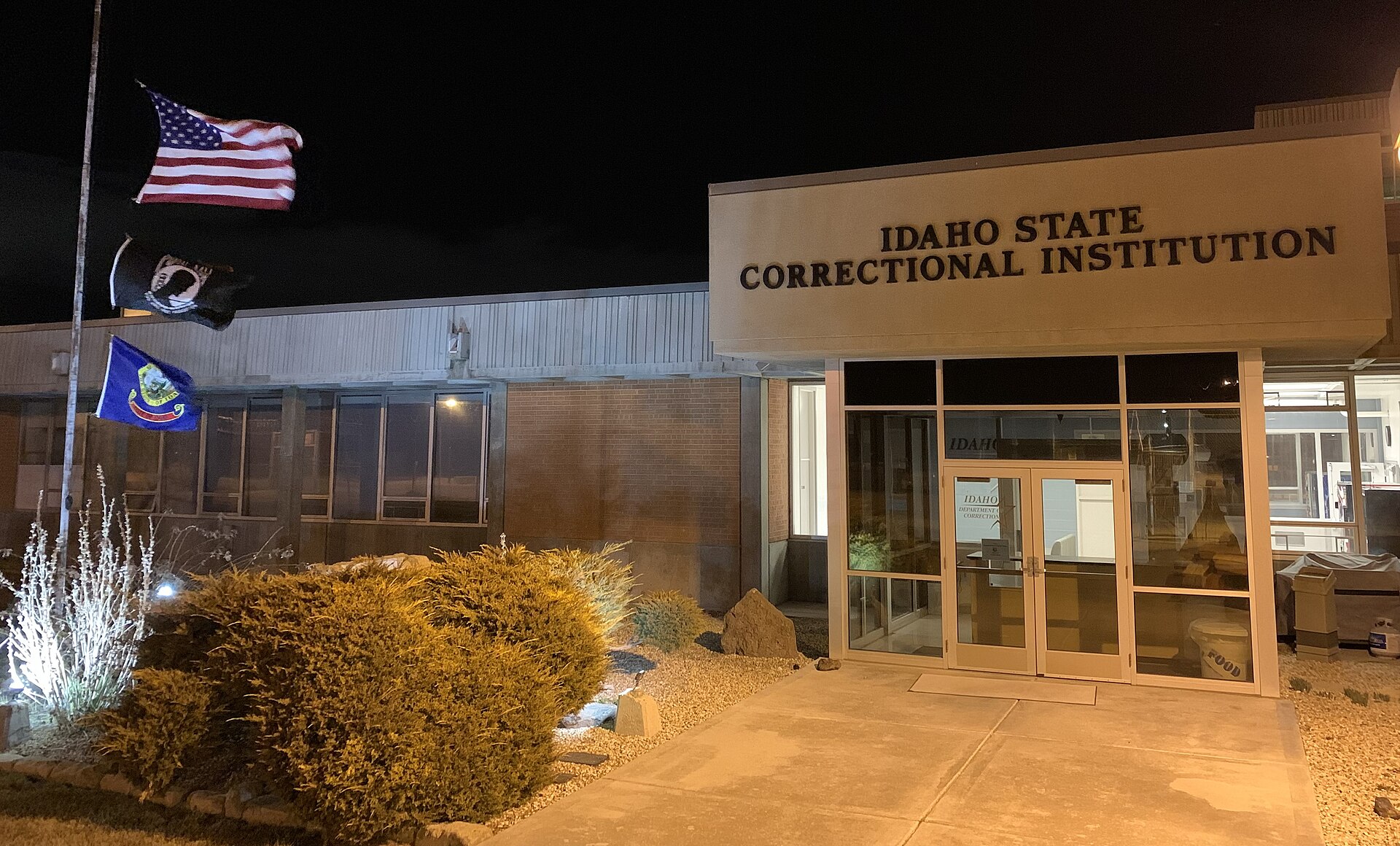

The inmate exclusion in plain words
Medicaid is a federal and state program. Each state runs its own plan and the federal government pays a share of each dollar, called the federal medical assistance percentage (FMAP). The money question in jails turns on one sentence in the federal law that defines "medical assistance."
What the law says
Section 1905(a) of the Social Security Act, codified at 42 U.S.C. 1396d(a), lists the services Medicaid can pay for in 32 numbered paragraphs. After the last numbered paragraph, the law says that, except as otherwise provided, "such term does not include," followed by subparagraph (A): "any such payments with respect to care or services for any individual who is an inmate of a public institution (except as a patient in a medical institution...)." Since the Consolidated Appropriations Act, 2023, the same parenthetical also carves out the juvenile services described later in this lesson.1 Older documents cite this language as section 1905(a)(29)(A) or a similar number, because Congress has added numbered paragraphs over the years; CMS now calls it the "inmate payment exclusion" and places it in "paragraph (A) following the last numbered paragraph of section 1905(a)."7
The federal rule that carries out the statute is 42 CFR 435.1009, titled "Institutionalized individuals." It says federal financial participation (FFP, the federal share) "is not available in expenditures for services provided to" individuals "who are inmates of public institutions as defined in § 435.1010." It also says the bar does not apply "during that part of the month in which the individual is not an inmate," which matters for people who are booked or released partway through a month.2
Who counts as an inmate
The definitions are in 42 CFR 435.1010. An "inmate of a public institution" is "a person who is living in a public institution." A "public institution" is one "that is the responsibility of a governmental unit or over which a governmental unit exercises administrative control." A medical institution, an intermediate care facility, a small public community residence of 16 or fewer people, and certain child-care institutions are not public institutions under the rule, but the small-residence carve-out expressly excludes "correctional or holding facilities for individuals who are prisoners, have been arrested or detained pending disposition of charges."3
CMS's State Health Official letter SHO 16-007 (April 28, 2016) added a working test: "CMS considers an individual of any age to be an inmate if the individual is in custody and held involuntarily through operation of law enforcement authorities in a public institution." The letter's key word is freedom. A person on parole or probation, or released to the community pending trial (including under pretrial supervision), is not an inmate, so Medicaid can pay for that person's covered care if the person is otherwise eligible. The same letter says federal matching money is available for eligible people living in corrections-related "supervised community residential facilities," such as some halfway houses, when residents have freedom of movement, for example to work or seek care in the community.19
The Congressional Research Service summed it up in an In Focus paper updated July 24, 2024: an individual held in "a local jail, state or federal prison, detention facility, or other setting organized for the primary purpose of involuntary confinement" is generally an inmate, while people "on probation or parole, under home confinement, residing in halfway houses under the jurisdiction of state or local governments, etc., are generally not considered inmates." Medicaid also makes no distinction, for adults, between someone held before trial and someone serving a sentence.20
The inpatient exception
The exception in the statute is "except as a patient in a medical institution." The rule defines an inpatient as a patient admitted on a physician's or dentist's recommendation who receives room, board and professional services "for a 24 hour period or longer," or who is expected to stay that long even if the patient dies, is discharged or is transferred sooner. An outpatient is someone expected to receive, and who does receive, services for less than 24 hours, "whether or not a bed is used."3 SHO 24-004 (July 23, 2024) repeats the test: qualifying stays are in "hospitals, nursing homes, psychiatric residential treatment facilities, or other medical institutions for an expected duration of 24 hours or more, in which there is an admission of the individual to the facility as an inpatient."7
Three limits narrow the exception. First, the person must actually be eligible for Medicaid and enrolled, or found eligible for that stay. Second, outpatient care at the same hospital, such as an emergency room visit that ends without an admission, is still excluded. Third, a unit that treats prisoners "primarily or exclusively," such as a prison infirmary or a locked hospital wing run for a corrections agency, is treated as a correctional setting and is excluded even for inpatient stays. CRS notes that the federal Bureau of Prisons keeps paying for its own inmates' care, so in practice the exception is not used for federal prisoners.20
Idaho's eligibility rule says the same thing in one sentence. IDAPA 16.03.01, section 281, "Medical Exception for Inmates," says: "An inmate can receive Medicaid while they are an inpatient in a medical facility, and must meet all Medicaid eligibility requirements." The rule's history note dates the current text to July 1, 2024.21
Coverage versus eligibility
The single most misread point about Medicaid and jails is that the inmate exclusion is a payment rule, not an eligibility rule. Being jailed does not make a person ineligible for Medicaid. CMS says so in SHO 24-004: "In Medicaid, incarceration status is not a condition of eligibility and does not render an individual ineligible."7 CRS calls the exclusion "a coverage (not an eligibility) exclusion." For decades most states ended a person's Medicaid at booking anyway, partly to avoid paying managed care premiums or claims for someone the program could not legally pay for.20 That habit is what Congress changed, first for juveniles in 2018 and then for everyone in 2024.
CHIP, the Children's Health Insurance Program under title XXI, works the other way. A child who is an inmate of a public institution is excluded from the definition of a targeted low-income child, so incarceration is a factor of CHIP eligibility. Since the 2023 law, however, a state may not end a child's CHIP eligibility solely because the child is jailed; it may suspend coverage instead.7 Lesson 06, Children: CHIP, EPSDT and Katie Beckett, explains how CHIP is set up in Idaho.
The constitutional duty behind the bill
The inmate exclusion does not mean people in custody go without care. In Estelle v. Gamble, 429 U.S. 97 (1976), the U.S. Supreme Court held that "deliberate indifference to serious medical needs of prisoners" violates the Eighth Amendment's ban on cruel and unusual punishment.22 The duty to provide care falls on the government that holds the person. In Idaho that means the county for a county jail and the State Board of Correction for a state prison. Medicaid's exclusion decides who pays, not whether care is owed.20
How the rules changed, 1965 to 2026
The inmate exclusion is as old as Medicaid. For most of the program's history it mattered little, because most adults in jail had no path to Medicaid: before the Affordable Care Act, a working-age adult without children or a disability usually could not qualify at any income. The rules started to move when expansion made many jailed adults eligible, and they moved fastest after 2018.
| Year | Law, rule or event | What changed | Source |
|---|---|---|---|
| 1965 | Social Security Act title XIX (Medicaid) | Medicaid's definition of medical assistance excludes payments for an "inmate of a public institution (except as a patient in a medical institution)." | 42 U.S.C. 1396d(a)1; CRS IF1183020 |
| 1976 | Estelle v. Gamble, 429 U.S. 97 | Deliberate indifference to prisoners' serious medical needs violates the Eighth Amendment, so jails and prisons must provide care. | U.S. Supreme Court22 |
| 1978 to 1994 | 42 CFR 435.1009 and 435.1010 | Federal rules define inmate, public institution, medical institution and the 24-hour inpatient test. | eCFR history notes23 |
| 2010 to 2014 | Affordable Care Act, Medicaid expansion option | States may cover adults 19 to 64 up to 133 percent of poverty; many people leaving jail become eligible for the first time. | CRS IF1183020 |
| 2016 | CMS letter SHO 16-007 (April 28) | Clarifies who is an inmate, that parole, probation and pretrial release are not inmate status, and that halfway house residents with freedom of movement can be covered. | CMS19 |
| 2018 | SUPPORT for Patients and Communities Act (P.L. 115-271, Oct. 24), section 1001 | States may not terminate Medicaid for "eligible juveniles" (under 21, or former child welfare youth up to 26) because they are jailed; they may suspend. | congress.gov23; SMD 21-00224 |
| 2018 | SUPPORT Act section 5032 | Directs HHS to issue guidance on section 1115 demonstrations to improve care transitions for people leaving incarceration. | SMD 23-00310 |
| 2020 | Idaho Medicaid expansion begins Jan. 1 | Most low-income Idaho adults 19 to 64 become eligible, so inpatient stays of many jailed adults become billable to Medicaid. | Idaho Code section 56-26725 |
| 2022 | Idaho House Bill 735 (signed March 29) | Repeals the county medically indigent program and the Catastrophic Health Care Cost Program for services after March 31, 2022, and the county charity levy. | Legislature14; IAC15 |
| 2022 | Consolidated Appropriations Act, 2023 (P.L. 117-328, signed Dec. 29), sections 5121 and 5122 | Requires pre-release screening and case management for eligible juveniles from Jan. 1, 2025; lets states cover juveniles pending disposition of charges. | congress.gov6; SHO 24-0047 |
| 2023 | Idaho House Bill 70 (signed March 15) | Writes the jail medical rate (95 percent of the unadjusted Medicaid rate) into Idaho Code sections 20-605 and 31-3302 and repeals the CAT fund account. | Legislature17 |
| 2023 | CMS letter SMD 23-003 (April 17) | Invites section 1115 reentry demonstrations paying for up to 90 days of pre-release services. | CMS10 |
| 2024 | Consolidated Appropriations Act, 2024 (P.L. 118-42, signed March 9), division G, title I, section 205 | Bars terminating Medicaid or CHIP for any inmate because of incarceration, effective Jan. 1, 2026. | congress.gov4; CIB Dec. 23, 20255 |
| 2024 | CMS letter SHO 24-004 (July 23) | Explains the section 5121 and 5122 juvenile requirements; state plan amendments due by March 31, 2025. | CMS7 |
| 2025 | Section 5121 takes effect Jan. 1 | Juvenile pre-release screening and 30 days before and after case management become mandatory. | SHO 24-0047 |
| 2025 | P.L. 119-21 (signed July 4), section 71119 | New work requirement for expansion adults from 2027 excludes inmates and deems people compliant for 3 months after release. | congress.gov26 |
| 2026 | No-termination rule takes effect Jan. 1 | States must suspend, not end, coverage for jailed adults and juveniles. | CIB Dec. 23, 20255 |
| 2026 | Idaho House Bill 578 (introduced Feb. 3) | Would have approved Idaho's juvenile state plan amendment; no action shown after committee referral. | Legislature8 |
| 2026 | CMS reentry FAQs (September) and five new approvals | Future adult pre-release periods capped at 60 days (90 for youth facilities); Louisiana, Maine, Minnesota, Nevada and D.C. approved. | CMS1211 |
Suspension instead of termination
Ending a person's Medicaid at booking looks tidy on paper. The person cannot use the coverage, the state cannot claim federal money for most care, and a managed care plan should not be paid a monthly premium for someone in jail. The trouble shows up at release. A terminated enrollee has to apply again, wait for a decision and prove income and residency, often with no mail address, no phone and no identification. The gap falls in the weeks when, according to studies CMS cites, the risk of overdose death is highest. SMD 23-003 cites a study of people released from North Carolina prisons from 2000 to 2015 that found an overdose death rate in the first two weeks after release "40 times higher" than in the state's general population.10
Juveniles first: the SUPPORT Act
Section 1001 of the SUPPORT for Patients and Communities Act (P.L. 115-271), signed Oct. 24, 2018, amended section 1902(a)(84) of the Social Security Act so that a state may not terminate Medicaid for an "eligible juvenile" because the juvenile is an inmate. An eligible juvenile is a person under 21 who was eligible for any Medicaid group, or a young adult up to age 26 in the mandatory group for people who aged out of state child welfare custody, immediately before or during incarceration. The state may suspend the juvenile's eligibility or benefits, must accept and process applications filed by or for a jailed juvenile, and must redetermine eligibility before release without requiring a new application, so that coverage can resume on the day of release.723 CMS's guidance on the provision is SMD 21-002.24
Everyone from January 2026
Congress extended the same protection to adults in the Consolidated Appropriations Act, 2024 (P.L. 118-42), a spending law President Biden signed March 9, 2024. Division G, title I, section 205 amended sections 1902(a)(84)(A) and 2102(d)(1)(A) of the Social Security Act. CMS's Center for Medicaid and CHIP Services explained the change in an informational bulletin dated Dec. 23, 2025, signed by Deputy Administrator Dan Brillman: beginning Jan. 1, 2026, "states must cease terminating Medicaid and CHIP eligibility for adult inmates, including targeted low-income pregnant women," and "may instead suspend Medicaid and CHIP coverage for all individuals." The bulletin applies the familiar test that a person "of any age" is an inmate if "in custody and held involuntarily," in a state or federal prison, local jail, detention facility or other penal setting.45
The National Association of Counties (NACo), the trade group for county governments, told its members on Jan. 7, 2026, that the change should let people regain coverage quickly after release and may reduce uninsured periods and uncompensated care for county health systems, while noting that it "does not eliminate" the inmate exclusion.27
Two ways to suspend
The December 2025 bulletin describes two methods, and a state may use either for adults or juveniles.5
- Eligibility suspension. The person's eligibility is paused. Before lifting the suspension, the state must confirm the person is still eligible, and if more than 12 months have passed since the last application or renewal, the state must complete a renewal first.
- Benefits suspension. The person stays enrolled, but Medicaid pays only for services the inmate exclusion does not bar, mainly inpatient stays. Regular renewals continue during incarceration.
Either way, suspension is an adverse action for Medicaid purposes: the bulletin says the state must send written notice at least 10 days in advance, with fair hearing rights. (How Idaho's fair hearings work is in If You Are Denied or Cut Off.) No state plan amendment is required for the Medicaid change, but the state should document its method in a publicly available place under 42 CFR 431.18. Managed care contracts must allow capitation payments to stop and inappropriate payments to be recovered. States can seek a 90 percent federal match for computer system changes needed to carry out the rule.5
What Idaho does
Idaho's published eligibility rule, IDAPA 16.03.01, contains the inpatient exception in section 281 but, in the current text downloaded for this lesson, no section titled "suspension" for incarcerated enrollees.21 This lesson could not find a public Idaho Department of Health and Welfare notice describing which suspension method Idaho chose for adults after Jan. 1, 2026, or how jails report bookings and releases to the department. Federal law has required suspension since that date, so the question for Idaho is the method and the data exchange, not whether to suspend. The Idaho Behavioral Health Council's criminal justice team listed "Medicaid eligibility processes prior to release" and "data-sharing capabilities" among the readiness questions Idaho would need to answer before any reentry demonstration.13 That gap is listed in the "unverified" items for this lesson and is a good public records question (see the reporting box).
The general sequence a state follows under the federal rules, as CMS's guidance describes it, can be written as steps. These are the government's steps, not instructions for any reader.
- Learn of the incarceration. The state Medicaid agency needs a feed from jails, the prison system and juvenile corrections, or matches against court or booking data. CMS says states "will need a mechanism to identify when a Medicaid or CHIP beneficiary becomes an inmate of a public institution."5
- Send notice and suspend. The agency sends a written notice at least 10 days ahead and places the case in eligibility or benefits suspension; a managed care plan stops receiving monthly payments for the person.5
- Pay only allowed claims. During custody, the agency pays only claims that fit the inpatient exception, or juvenile pre-release services under section 5121, or demonstration services in states that have one.27
- Accept applications from people in custody. A person who was not enrolled can apply while jailed; the inmate exclusion does not bar eligibility, only payment.7
- Prepare for release. For juveniles, the state must redetermine eligibility before release and, since 2025, provide screening and case management in the last 30 days. For adults whose eligibility was suspended, the state confirms eligibility and renews if the last renewal was more than 12 months earlier.57
- Lift the suspension on release. Coverage resumes when the person leaves custody, including release to probation, parole or a halfway house with freedom of movement.19
Youth leaving custody: the 2023 law
The Consolidated Appropriations Act, 2023 (P.L. 117-328), a year-end spending law signed Dec. 29, 2022, included two sections on young people in custody. CMS explained both in State Health Official letter SHO 24-004, "Provision of Medicaid and CHIP Services to Incarcerated Youth," dated July 23, 2024, and signed by Deputy Administrator Daniel Tsai.67
Section 5121: what states must do
Section 5121 added a new subparagraph to section 1902(a)(84) and created a carve-out from the inmate exclusion. Beginning Jan. 1, 2025, for an eligible juvenile who is in custody after adjudication (the juvenile system's word for a finding of delinquency, roughly comparable to a conviction), a state must provide:7
- Screening and diagnostic services, including behavioral health screening, in the 30 days before the scheduled release, or within one week after release (or as soon as practicable) when that is not possible. For youth under 21, the standard is EPSDT, Medicaid's children's benefit (explained in lesson 06). For people 21 and older, states set reasonable standards.
- Targeted case management for 30 days before release and for at least 30 days after release, including referrals to care in the young person's home area where feasible.
The requirement covers state prisons, local and tribal jails and juvenile facilities; CMS said it does not yet cover federal prisons. CHIP has a parallel requirement for children under 19. States had to have an internal operational plan by Jan. 1, 2025, and to submit a Medicaid state plan amendment by March 31, 2025, with an effective date no later than Jan. 1, 2025.7
Section 5122: the pretrial option
Section 5122 lets a state, at its option, pay for Medicaid or CHIP services for eligible juveniles held pending disposition of their charges, that is, before the case is resolved. A state that takes the option must cover the full range of services the youth would otherwise receive, not a short list. This lesson found no record that Idaho has elected this option.7
Idaho and House Bill 578
In Idaho, adding services to the Medicaid state plan generally needs the Legislature's approval first. Idaho Code section 56-2201, enacted by House Bill 345 (2025), bars Health and Welfare from pursuing a state plan amendment or waiver that extends coverage or raises state costs unless the Legislature approves it in statute. Lesson 02 of the Idaho Medicaid course traces that law.28
House Bill 578 was the department's request for that approval. Printed for the House Health and Welfare Committee and introduced Feb. 3, 2026, it would have added a new section to Idaho Code title 56, chapter 22, saying the department "shall submit a state plan amendment by July 1, 2026," for screening, diagnostic services and targeted case management for eligible juveniles "within thirty (30) days of the date they are scheduled to be released from a correctional facility." It also said the services "shall not commence before July 1, 2027, and are subject to legislative appropriation."8
The bill's statement of purpose, written by the department, said it would let Health and Welfare submit Medicaid and CHIP amendments "as required by Section 5121 of the Consolidated Appropriations Act, 2023," and that "the Department will not implement until appropriated funding in a future year." Its fiscal note estimated the first-year cost at $311,400 in state general funds and $634,600 in federal funds, figured as the targeted case management rate times the estimated number of youth served, with implementation no earlier than state fiscal year 2028.9
The Legislature's bill page shows two actions: introduction and printing on Feb. 3 and 4, 2026, and referral to the House Health and Welfare Committee. It shows no hearing vote, no floor vote and no session law chapter. The section number the bill would have created, 56-2208, was later used for a different law on clinic payment rates.829 As of Nov. 22, 2026, this lesson found no public CMS approval of an Idaho section 5121 state plan amendment. How Idaho is meeting the federal requirement in the meantime, for example through existing services at the Idaho Department of Juvenile Corrections, is not documented in the public record this lesson could find, and it is listed as unverified.
How we figured it: the federal share in the House Bill 578 fiscal note
Inputs. The House Bill 578 (2026) fiscal note lists $311,400 in state general funds and $634,600 in federal funds for the first funded year.9
Method. Total: $311,400 + $634,600 = $946,000. Federal share: $634,600 divided by $946,000 = 0.6708, or about 67.1 percent. State share: about 32.9 percent.
What it shows. The federal share in the estimate is close to Idaho's regular federal match for Medicaid services, not the 90 percent expansion rate, which fits a service aimed mostly at youth under 21. The fiscal note does not say how many youth it assumed or the case management rate used; those are this lesson's own calculations from the two published totals, and the true cost would depend on the appropriation the Legislature makes, if any.
Reentry demonstrations: paying for care before release
Section 1115 of the Social Security Act lets the HHS Secretary waive parts of Medicaid law for experimental, pilot or demonstration projects that the Secretary judges likely to help promote the program's objectives. Section 5032 of the 2018 SUPPORT Act told HHS to issue guidance on using such demonstrations to improve care for people leaving incarceration. CMS did so in State Medicaid Director letter SMD 23-003, "Opportunities to Test Transition-Related Strategies to Support Community Reentry and Improve Care Transitions for Individuals Who Are Incarcerated," dated April 17, 2023.10
What a reentry demonstration pays for
SMD 23-003 set a minimum benefit package that every approved state must cover before release:10
- Case management to assess physical health, behavioral health and health-related social needs, and to set up a hand-off to care after release.
- Medication for opioid use disorder and other substance use disorders, with counseling.
- A 30-day supply of prescribed medications given at release.
States may add other services. The letter encouraged broad eligibility, applied to people leaving state prisons, local jails and youth facilities (not federal prisons), asked states to help people apply for Medicaid no later than 45 days before release, and expected states to suspend rather than end coverage during incarceration. Its most important money condition is reinvestment: a state that receives new federal money for services it or its counties already paid for with state or local dollars must reinvest an equal amount in care or services that help keep people out of the justice system.10
The 2026 changes: 60 days and reinvestment
In September 2026, CMS issued "Frequently Asked Questions (FAQs) for Reentry Section 1115 Demonstrations." For future approvals, CMS will allow up to 60 days of pre-release coverage in jails, prisons and adult tribal correctional facilities, down from the 90 days SMD 23-003 allowed, and will keep up to 90 days for youth correctional facilities. The FAQs restate that the demonstrations are not meant to shift correctional health costs to Medicaid, require a reinvestment plan, annual progress updates and a final reinvestment assessment, and require states to guard against added profits for privately operated facilities. They also let a state claim the section 5121 juvenile services through its demonstration while keeping the state plan amendment on file.12
Which states have one
Medicaid.gov's reentry demonstration page, read Nov. 22, 2026, lists 22 states and the District of Columbia: Arizona, California, Colorado, the District of Columbia, Hawaii, Illinois, Kentucky, Louisiana, Maine, Maryland, Massachusetts, Minnesota, Montana, Nevada, New Hampshire, New Mexico, North Carolina, Oregon, Pennsylvania, Utah, Vermont, Washington and West Virginia. Idaho and Wyoming are not on the list.11 CMS's July 2, 2024, press release announced approvals for Illinois, Kentucky, Oregon, Utah and Vermont and named California, Massachusetts, Montana and Washington as states already in the program.30 KFF, a nonprofit health research group, notes on its waiver tracker map, dated Nov. 13, 2026, that Michigan withdrew its approved pre-release waiver in December 2025.31
| State | Reentry demonstration (Nov. 2026) | Medicaid expansion | Note | Source |
|---|---|---|---|---|
| Idaho | None; no application found | Yes, since Jan. 1, 2020 | 2026 council team identified "potential opportunities"; any change needs legislative authorization | Medicaid.gov11; IBHC13 |
| Washington | Approved | Yes | Named by CMS in July 2024 as already in the program | CMS30 |
| Oregon | Approved | Yes | Approval announced July 2, 2024 | CMS30 |
| Utah | Approved | Yes | Approval announced July 2, 2024 | CMS30 |
| Montana | Approved | Yes | Named by CMS in July 2024 as already in the program | CMS30 |
| Nevada | Approved | Yes | Among five approvals in September 2026 | Medicaid.gov11; KFF31 |
| Wyoming | None listed | No | Not on the Medicaid.gov list | Medicaid.gov11 |
Of Idaho's six neighbors, five run reentry demonstrations. Wyoming, which has not expanded Medicaid, does not. Idaho, which has expanded, does not.
Where Idaho stands
The clearest public statement of Idaho's position is a paper titled "Medicaid 1115 Waivers and Corrections Settings," posted on the Idaho Behavioral Health Council's website in April 2026 and attributed to the council's Criminal Justice and Continuum of Care team. Lesson 05 describes the council and its work. The paper said the team "has recently identified potential opportunities" for a section 1115 waiver for pre-release services and post-release supported housing. It noted that Idaho already has an approved section 1115 Behavioral Health Transformation waiver for other purposes, and said that any amendment would require legislative authorization, state money for the non-federal share and coordination among Health and Welfare, the Idaho Department of Correction, the Idaho Department of Juvenile Corrections and community providers. It said successful programs "typically require 2-4 years to develop and implement."13
Under Idaho Code section 56-2201, a reentry demonstration would need a bill. A demonstration would also bring the reinvestment condition: if Medicaid began paying for pre-release care that county jails or the state prison contract now pay for, Idaho would have to put an equal amount of federal money back into community services. The paper did not estimate costs or savings, and no bill to authorize a reentry demonstration appears in the 2026 session records this lesson reviewed.1328
Who pays for health care behind bars in Idaho
Because Medicaid pays only in narrow cases, the bill for most care in custody lands on the government holding the person. Idaho law splits that bill three ways: counties pay for people in county jails, the state pays for people in the custody of the Department of Correction, and the person pays in some cases or has their own coverage applied.
County jails: Idaho Code sections 20-612, 31-3302 and 20-605
Idaho Code section 20-612, a law that dates to 1863 in its first form, says the board of county commissioners must furnish everyone committed to the county jail with "necessary food, clothing, bedding, and medical care," paid from the county treasury under rules the board sets. The county's duty ends when the person is no longer committed because of a dismissal, bail or other court order, but a temporary release solely to get medical care for an injury suffered in the jail does not end it. The section's last sentence says nothing in the chapter keeps a released person from getting coverage under Idaho Code title 31, chapter 35, a reference to the indigent program discussed below.32
Idaho Code section 31-3302 lists county charges, including expenses for "persons charged with or convicted of crime and committed therefor to the county jail." House Bill 70 (2023) added that "any medical expenses shall be paid at the reimbursement rate," defined as 95 percent of the unadjusted Medicaid rate in effect when the service is given, unless a contract or agreement sets another rate.1733
Idaho Code section 20-605 sets the default charge when one government holds a person for another under a court order: $35 per day per person, "plus the cost of any medical or dental services paid at the reimbursement rate," again 95 percent of the unadjusted Medicaid rate, unless an agreement sets a different amount. The section also lets the county check whether the detained person qualifies for local, state, federal or private programs that cover medical, dental or burial costs, and requires the person to apply, with benefits offsetting the person's costs.16
The statement of purpose for House Bill 70 said the bill "seeks to codify current policy for jail medical claims that was repealed last session in HB735." The rate tie matters: when a county jail sends a person to a local hospital, the county pays close to the Medicaid price instead of the hospital's full charges, even though Medicaid itself does not pay unless the stay qualifies for the inpatient exception.34
The Bureau of Justice Statistics counted 36 local jail jurisdictions in Idaho at midyear 2019.18 Counties may hire their own medical staff or contract for jail health care. This lesson did not find a single public list of Idaho jail health contracts, and it does not name individual vendors. Those contracts are public records held by each county (see the reporting box).
State prisons: the Department of Correction
For people sentenced to state custody, Idaho Code section 20-237B governs outside medical bills. The State Board of Correction, or a private medical provider under contract with the Department of Correction, pays providers for prisoners housed in a correctional facility. Non-hospital providers are paid at "reimbursement rates of the Idaho medicaid reimbursement fee schedule in place at the time services are provided," and hospitals are paid the interim Idaho Medicaid rates. Services with no Medicaid rate are paid at their reasonable value. The section requires the contracted provider to contract with each hospital that gives non-emergency outside care, with Medicaid-like terms for claims, authorizations, audits and appeals. It does not apply to county jails or to out-of-state contract facilities.35
The Department of Correction contracts out prison health care. On Oct. 1, 2021, Centurion Health replaced Corizon Health, which had held the contract for more than 10 years. The Idaho Capital Sun reported that the state would pay Centurion $299,418,000 over five years, about $59.8 million a year, for care for about 8,000 people, with the contract running through Sept. 30, 2026, and options to renew for up to 10 more years.36 This lesson did not find a public record of whether the department renewed, extended or rebid the contract after Sept. 30, 2026; that is listed as unverified.
The state budget shows the cost. In the Division of Financial Management's FY2027 budget request book, the Department of Correction's Medical Services program reported $73,634,600 in actual spending in state fiscal year 2025 (July 1, 2024, to June 30, 2025), an original FY2026 appropriation of $66,491,900 and an FY2027 request of $73,289,500. The program description says these costs "are all included in the per diem paid to the contracted medical provider," and that the program also reviews medical care for state prisoners in county jails.37 At the Board of Correction's Sept. 24, 2025, meeting, staff reported 9,937 people in the department's incarcerated population, with 1,684 housed out of state or in county jails, and a medical budget driven by facilities near or over capacity.38
State prisoners in county jails
Because state prisons are full, the department rents county jail beds. For those people, the department pays medical costs under a published "county jail scope of services." It sorts care into four categories. Acute or emergency conditions, such as a heart attack, stroke or severe trauma, can be treated without prior approval, but a medical authorization must reach the department within 72 hours. Medically necessary non-emergency care, such as treatment for diabetes, heart disease, cancer, HIV or tuberculosis, needs approval first. Elective care and items of limited medical value need approval and are rarely approved. Late authorizations "are subject to non-payment."39
Medicaid's inpatient exception applies to state prisoners the same way it applies to county inmates: if a person in state custody is admitted to a community hospital for 24 hours or more and is eligible for Medicaid, the stay can be billed to Medicaid instead of the department. This lesson did not find a published figure for how much the department or its contractor recovers from Medicaid each year; that is a records question for the department and Health and Welfare.
The county indigent program and the CAT fund
For four decades Idaho had its own safety net for large medical bills, and it was tied closely to jails. Under Idaho Code title 31, chapter 35, a county paid medical bills for residents found "medically indigent," and the state's Catastrophic Health Care Cost Program (CAT) paid the large claims above a county threshold. The Idaho Medicaid course describes the program as it stood before expansion: counties paid the first $11,000 of eligible claims in 12 months and the state paid above that, mainly for single adults 18 to 64 without children at home. See How Idaho Got Expansion. People released from jail with hospital bills were among the applicants, which is why Idaho Code section 20-612 still mentions chapter 35.32
Expansion shrinks the program
Medicaid expansion took effect Jan. 1, 2020, under Idaho Code section 56-267, the law voters adopted as Proposition 2 in 2018.25 Most people the indigent program had served became eligible for Medicaid, with the federal government paying 90 percent of the cost of the expansion group under section 1905(y) of the Social Security Act.1 The Idaho Association of Counties (IAC), the counties' trade group, summarized House Bill 316 (2021), signed May 10, 2021, as Session Laws chapter 336 and effective March 1, 2022: people eligible for insurance or Medicaid were no longer eligible for the county indigent program.15
Ada County's budget books show what happened to one large county's levy. The property tax Ada County levied for its Indigent Services fund was $7,861,833 for fiscal year 2018, $6,724,917 for 2019, $8,103,361 for 2020, $3,915,449 for 2021 and $2,474,296 for 2022. The FY2022 budget said a decrease in Indigent Services spending was "related to services being phased out due to Medicaid expansion." The FY2024 budget shows $0 for 2023 and 2024, with the note "Levy Authority Eliminated by HB 735 during the 2022 Legislative Session."4041 (Ada County's fiscal year runs Oct. 1 to Sept. 30.)
House Bill 735 ends the program
House Bill 735 (2022), a House Revenue and Taxation Committee bill with Rep. Jon Weber and Sen. Todd Lakey as floor sponsors, passed the House 63 to 1 on March 8, 2022, passed the Senate as amended 35 to 0 on March 24, passed the House again as amended 67 to 2 on March 25, and was signed by Gov. Little on March 29, 2022, as 2022 Session Laws chapter 318. Its sections took effect on several dates from March 29, 2022, to Oct. 1, 2024.14 Its statement of purpose described a trade: the bill repealed the county charity and indigent fund levy for property tax relief, the state reimbursed counties for the 2021 levy amount in FY2023 and FY2024 (a total of $20,960,619 from sales tax), and from Oct. 1, 2024, the state took over paying for public defense, with an automatic $36 million a year plus the existing Public Defense Commission money.42
The Idaho Association of Counties' April 2022 guidance to its members spelled out the health side:15
- "The county medically indigent program is repealed effective March 31, 2022," and the county charity levy is repealed.
- The CAT program stayed in place through July 1, 2023, to process applications for services received before March 31, 2022, under chapter 35 as it existed on March 1, 2022; counties had to process all applications by March 1, 2023.
- Money a county had levied for jail medical costs could be moved to its justice or current expense fund.
- Counties would keep collecting repayments from past recipients.
House Bill 70 (2023) cleaned up the rest. Signed March 15, 2023, as chapter 32 after passing the House 67 to 0 and the Senate 35 to 0, it wrote the jail medical rate into law, created a way to settle old indigent claims, redirected the $5 share of seat belt fines that had gone to the CAT fund, repealed the CAT fund account and kept the Catastrophic Health Care Cost Board until the end of September 2023 to finish its audit and reports. Its fiscal note said counties and the CAT board had settled 27 cases in the prior two years for $1,124,299.35 in combined county and state money.1734
Today Idaho Code title 31, chapter 35 contains sections on county hospitals and a reimbursement section, 31-3503, under which a person whose county aid was approved for services through March 31, 2022, must still repay a share the commissioners find the person can afford, with liens that remain valid and a settlement process.4344
The IAC guidance also described Senate Bill 1327 (2022), effective March 21, 2022, under which Health and Welfare took over paying for designated examiners in involuntary mental health commitments as of March 1, 2022, a cost counties had carried.15 Lesson 05, Behavioral Health and Medicaid, explains commitment costs.


What expansion changed for jails
Before 2020, the inpatient exception rarely helped an Idaho county, because most adults in jail did not qualify for Medicaid at any income. MACPAC, the congressional advisory commission on Medicaid, wrote in a July 2018 issue brief that "historically, most justice-involved adults were uninsured," and that in expansion states "many are now eligible for Medicaid coverage upon release." It cited officials in New York and Colorado who estimated that 80 and 90 percent of their state prison populations, respectively, were likely eligible, against 2 percent in North Carolina, which had not expanded at the time.45
Idaho's expansion changed three things for people leaving custody and for the governments that pay for them:
- Hospital stays during custody became billable. If a jailed adult with income up to 138 percent of the poverty line (133 percent plus a standard 5 percent disregard) is admitted to a hospital for 24 hours or more, Medicaid can pay, with the federal government paying 90 percent for the expansion group. Without coverage, the county pays at 95 percent of the Medicaid rate.133
- Coverage can be in place on release day. A person enrolled before booking, or who applies while in custody, can have coverage resume at release. Suspension rules since 2026 make that the default.5
- The county indigent program lost its main population. The people it had served were largely the people expansion covered, which is the reason the Legislature gave for repealing it.15
The 2025 federal law adds a new condition. Starting no later than Jan. 1, 2027, under section 71119 of P.L. 119-21 (adding section 1902(xx) of the Social Security Act), most expansion adults 19 to 64 must show 80 hours a month of work or other qualifying activity. An "inmate of a public institution" is among the people excluded from the requirement, and the state must deem a person compliant for any month if the person was an inmate at any point during the 3-month period ending on the first day of that month.2646 Idaho adopted the federal standard in House Bill 913 (2026); the details are in The 2027 Work Requirements.
How we figured it: a hypothetical jail hospital stay
Hypothetical example. A man held in a Magic Valley county jail before trial is taken to a hospital and admitted for three days for pneumonia. Assume the Idaho Medicaid payment for that stay would be $12,000 (a made-up figure for illustration; real rates depend on the hospital and the diagnosis).
If he is enrolled in Medicaid as an expansion adult. The stay meets the inpatient exception (42 CFR 435.1010). Medicaid pays $12,000; the federal share is 90 percent, $10,800, and the state share is $1,200. The county pays nothing for the hospital stay itself.13
If he is not enrolled or not eligible. The county pays under Idaho Code section 31-3302 at 95 percent of the unadjusted Medicaid rate: 0.95 times $12,000 = $11,400, unless a contract sets a different rate.33
If he were taken to the emergency room and sent back the same day. The visit is outpatient care, and Medicaid cannot pay even if he is enrolled; the county pays at the statutory rate.3
Limits. The dollar amount is invented. Actual Medicaid hospital payments in Idaho follow Health and Welfare's payment methods, and a stay may involve separate physician bills. The example only shows how the rules assign the bill.
Behavioral health and jails
Jails hold many people with mental illness or substance use disorders. SMD 23-003 cited survey data that about 37 percent of people in state and federal prisons and 44 percent of people in jails in 2011 to 2012 had a history of mental illness, and estimates that the rate of substance use disorder may be as high as 65 percent in prisons nationally.10 KFF's August 2024 analysis of reentry waivers used the same 65 percent estimate for people in state and federal prisons with an active substance use disorder.47 Those are national figures; this lesson found no comparable published Idaho jail figure.
Idaho's response runs through several systems that this course covers elsewhere:
- Treatment courts. The Idaho Supreme Court's 2026 annual report insert says Idaho runs 70 treatment courts in 38 counties, including drug and alcohol, mental health, veterans and youth courts. In state fiscal year 2025 they served 2,698 people and graduated 636. A 2014 evaluation found felony drug court participants had a recidivism rate 12 percent lower than felony probationers; a new statewide evaluation was planned for FY2026.48 Treatment court participants are not inmates while they live in the community, so Medicaid can pay for their treatment if they are eligible.19
- Crisis centers and the Idaho Behavioral Health Plan. Behavioral health crisis centers give law enforcement a place other than jail to take someone in crisis, and Medicaid pays for outpatient mental health and substance use care through the Idaho Behavioral Health Plan. Both are in lesson 05, Behavioral Health and Medicaid.
- The Idaho Behavioral Health Council's criminal justice team. Its 2026 paper on reentry waivers is the most recent public statement of state interest in pre-release Medicaid services.13
- Counties and commitments. Since Senate Bill 1327 (2022), Health and Welfare pays designated examiners in commitment cases, a cost counties used to carry.15
Section 71119 of P.L. 119-21 also exempts some people from the new work requirement because of a substance use disorder or a disabling mental disorder; those exemptions, and the separate 3-month post-release deeming, both matter for people leaving jail.46
Idaho jail and prison numbers
The best state-by-state jail counts come from the Bureau of Justice Statistics (BJS) Census of Jails, last done for midyear 2019 and published in October 2021. BJS's yearly jail surveys since then report national totals but not state figures.1849
| State | Jail inmates, midyear 2019 | Per 100,000 residents, 2019 | Per 100,000, 2005 | Percent unconvicted, 2019 | Admissions, 2019 | Average days in jail, 2019 |
|---|---|---|---|---|---|---|
| Idaho | 4,250 | 238 | 266 | 63.7 | 113,450 | 13.9 |
| Utah | 7,300 | 228 | 270 | 44.5 | 94,860 | 28.2 |
| Oregon | 6,040 | 143 | 181 | 64.5 | 182,810 | 12.0 |
| Washington | 11,710 | 154 | 203 | 75.2 | 266,220 | 16.7 |
| Montana | 2,510 | 235 | 243 | 57.6 | 42,410 | 21.2 |
| Wyoming | 1,570 | 271 | 306 | 75.7 | 30,940 | 19.0 |
| Nevada | 7,220 | 234 | 295 | 74.8 | 161,130 | 16.0 |
| United States | 734,470 | 224 | 253 | 65.5 | 10,322,570 | 26.2 |
Source: BJS, Census of Jails, 2005 to 2019, Statistical Tables (NCJ 255406, October 2021), tables 4, 8 and 14. Inmate counts are rounded to the nearest 10. Admissions and average days are from table 14; BJS estimates average time in jail from average daily population and admissions.18
Four points stand out. Idaho's jail incarceration rate in 2019, 238 per 100,000, was above the national rate of 224 and among the higher rates in the region, behind Wyoming's 271. Idaho's jail count grew 26.9 percent from 2013 to 2019, the largest increase among these states. Idaho's average stay, an estimated 13.9 days, was about half the national figure, which means Idaho jails turn over quickly: roughly 113,450 admissions for an average daily population of about 4,330. And BJS counted 1,370 more people under the supervision of Idaho jails but not confined in them, in programs outside the jail walls, 24.3 percent of all people under jail supervision, a high share.18
Fast turnover matters for Medicaid. A person who stays 14 days usually has no time for a pre-release plan, so the suspension and reinstatement rules, not pre-release services, decide whether coverage is there on release. BJS counted 36 local jail jurisdictions in Idaho at midyear 2019.18
Nationally, BJS's "Jail Inmates in 2024" (September 2026) counted 658,700 people in local jails at midyear 2024, 194 per 100,000 U.S. residents, with 68 percent unconvicted, about 7.9 million admissions in the year ending June 2024 and an average stay of 31 days.49 NACo says counties run 91 percent of the nation's local jails.27
Idaho prisons
The Idaho Department of Correction's population has grown faster than its beds. The department's FY2022 incarcerated population report counted 7,275 people serving terms, 1,329 riders (people in a period of retained jurisdiction, a court-supervised program before a judge decides on probation) and 454 parole violators at June 30, 2022, about 9,058 in all, up 6.3 percent from a year earlier. In FY2021, the report listed 7,019 admissions and 6,597 releases.50 At the Board of Correction's Sept. 24, 2025, meeting, staff reported 9,937 people in custody, with 1,684 housed out of state or in county jails.38 The department's 2026 Justice Reinvestment report to the Legislature said the prison population was at an all-time high, at 122 percent of capacity, with more than 1,200 people sentenced to state custody housed in county jails and 600 out of state, and a three-year recidivism rate of 37.9 percent.51
About 6,600 releases a year, at the FY2021 level, is the pool a reentry demonstration in Idaho's prisons would serve, before counting county jails. That count is from 2021 and is used here only to show scale.50
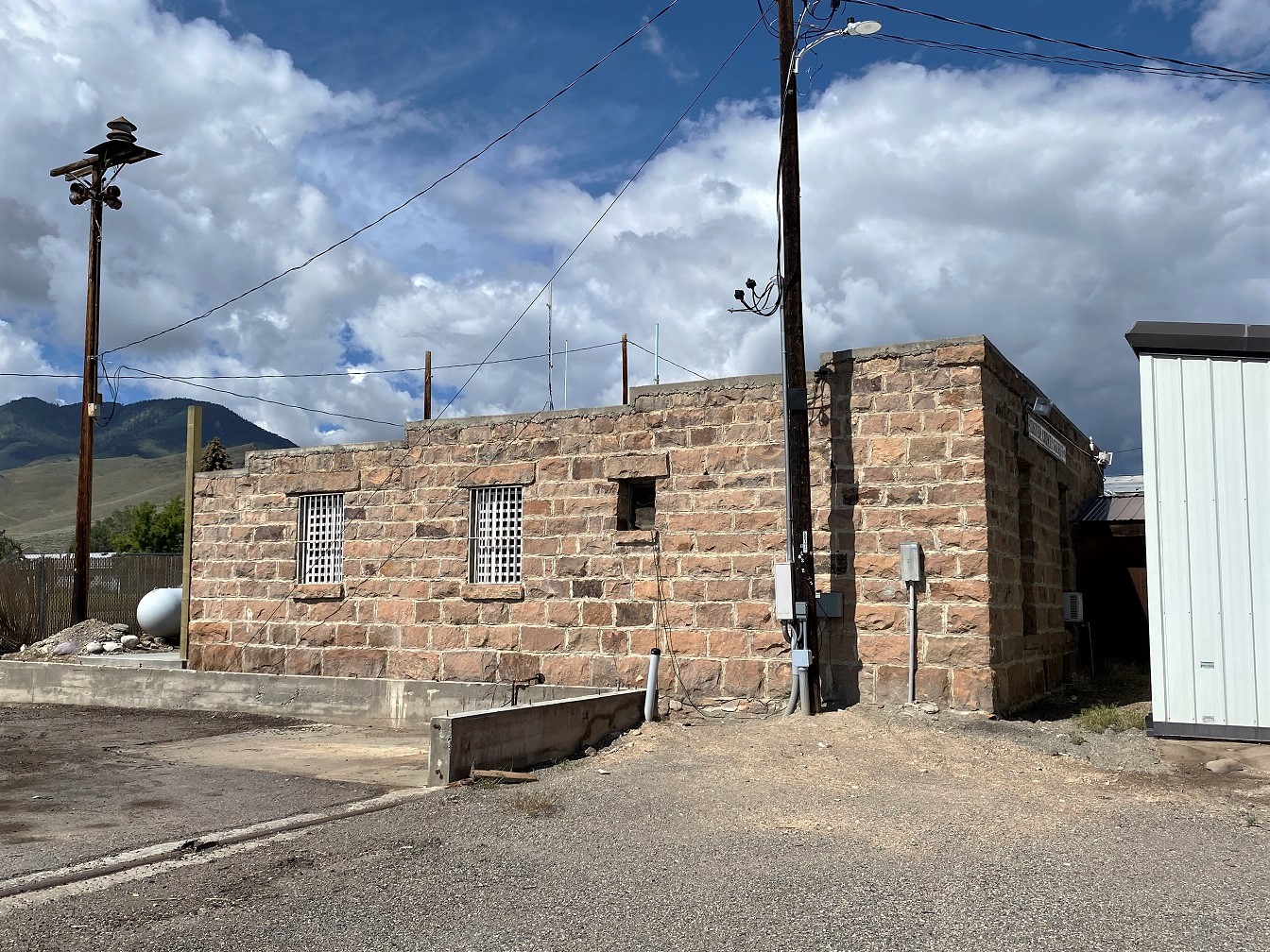

Local examples: Treasure Valley and Magic Valley
Ada County's budget books, cited above, are the clearest public record of how one county's indigent costs shrank after expansion and ended in 2022. Comparable line items exist in other county budgets. In Canyon County, Twin Falls County and the other Magic Valley counties (Gooding, Lincoln, Minidoka, Cassia, Camas and Blaine), jail medical costs, any jail health contract and any remaining indigent repayments appear in adopted budgets and commissioners' meeting records. This lesson did not find those figures published in a form that allows a fair comparison across counties, so it reports none; the reporting box lists the records to request. County jail data by county is not published by BJS, which reports Idaho only as a state total.1840

Pictures, Numbers and Infographics
The key numbers, rules and dates in this lesson, in one place.
| Measure | Idaho | U.S. or other states | Year | Source |
|---|---|---|---|---|
| Inpatient exception threshold | Same federal rule (IDAPA 16.03.01.281) | Admission expected to last 24 hours or more | Rule current 2026 | 42 CFR 435.10103; IDAPA21 |
| No termination of Medicaid at incarceration, all ages | Applies | All states | From Jan. 1, 2026 | P.L. 118-42 sec. 2054; CMS CIB5 |
| Juvenile pre-release screening and case management | HB 578 (2026) not advanced; first-year estimate $311,400 state, $634,600 federal | Required in all states | From Jan. 1, 2025 | P.L. 117-328 sec. 51216; HB 578 SOP9 |
| Section 1115 reentry demonstration | None | 22 states and D.C., including UT, OR, WA, MT, NV | Nov. 2026 | Medicaid.gov11 |
| Maximum pre-release period, future approvals | Not applicable | 60 days adults; 90 days youth facilities | September 2026 | CMS FAQs12 |
| County jail medical rate (no contract) | 95% of unadjusted Medicaid rate | Varies by state | Since 2023 | Idaho Code 31-3302, 20-6053316 |
| County indigent program and CAT | Repealed for services after March 31, 2022 | Not applicable | 2022 | HB 73514; IAC15 |
| Ada County indigent levy | $8,103,361 (FY2020); $2,474,296 (FY2022); $0 (FY2023, FY2024) | Not applicable | FY2018 to FY2024 | Ada County budgets4041 |
| Prison health contract | Centurion, $299,418,000 over 5 years | Not applicable | Oct. 2021 to Sept. 2026 | Idaho Capital Sun36 |
| IDOC Medical Services spending | $73,634,600 actual; FY2027 request $73,289,500 | Not applicable | SFY2025; SFY2027 | DFM budget request37 |
| People in IDOC custody | 9,937 (1,684 out of state or in county jails) | Not applicable | June 2025 (reported Sept. 2025) | Board of Correction38 |
| Jail inmates per 100,000 residents | 238 | U.S. 224; WY 271; MT 235; NV 234; UT 228; WA 154; OR 143 | Midyear 2019 | BJS Census of Jails18 |
| Jail admissions | 113,450 | U.S. 10,322,570 | 2019 | BJS table 1418 |
| Share of jail inmates unconvicted | 63.7% | U.S. 65.5% | Midyear 2019 | BJS table 818 |
| Treatment courts | 70 courts in 38 counties; 2,698 served | Not applicable | FY2025 and 2026 | Idaho Supreme Court48 |
Common mistakes
- "People lose Medicaid when they go to jail." Not as a matter of eligibility. Incarceration does not make a person ineligible for Medicaid; the inmate exclusion limits payment, not eligibility. CMS: "In Medicaid, incarceration status is not a condition of eligibility." Since Jan. 1, 2026, states may only suspend coverage, not end it, because of incarceration.75
- "Medicaid never pays for anyone in custody." It pays for an eligible person's inpatient stay in a hospital, nursing facility or other medical institution expected to last 24 hours or more, and, since 2025, for required pre-release services for eligible juveniles.37
- "A trip to the emergency room counts." An emergency room visit or outpatient procedure that does not lead to an inpatient admission is outpatient care and stays excluded, whatever the hospital bill says.320
- "People on probation or parole cannot use Medicaid." They are not inmates under CMS's test; neither are people on pretrial release or in a halfway house with freedom of movement.19
- "Idaho still has a county indigent program for jail releases." House Bill 735 (2022) repealed it for services after March 31, 2022, and the CAT program closed out its old cases in 2023. Counties still pay jail medical costs, at the statutory rate.141517
- "A reentry demonstration shifts jail health costs to the federal government." CMS says the demonstrations are not meant to shift correctional costs, and requires states to reinvest federal money equal to what the program pays for services corrections agencies already provided.1210
- Mixing jail and prison numbers. County jails (about 4,250 people on a typical day in 2019, most not convicted) and state prisons (9,937 people in IDOC custody in a June 2025 update reported in September 2025) are different systems with different payers. Some state prisoners sit in county jails, which makes double counting easy.1838
- Mixing fiscal years. The state's fiscal year runs July 1 to June 30; Ada County's runs Oct. 1 to Sept. 30; BJS jail counts are midyear (June 30) snapshots. A "2025" figure from each source covers a different period.374018
What we know, what we don't, and what the data can show
What we know
- Federal law bars Medicaid payment for inmates of public institutions except inpatient care in a medical institution, defined by a 24-hour test.13
- Since Jan. 1, 2026, every state must suspend rather than end Medicaid and CHIP coverage because of incarceration.5
- Since Jan. 1, 2025, federal law has required pre-release screening and case management for eligible juveniles; Idaho's 2026 bill to approve the state plan amendment did not advance.78
- Twenty-two states and D.C. have reentry demonstrations; Idaho does not.11
- Idaho repealed its county indigent and CAT programs in 2022 and set the county jail medical rate at 95 percent of the unadjusted Medicaid rate in 2023.1417
What we don't know
- Which suspension method Idaho Health and Welfare uses for adults since Jan. 1, 2026, how jails and the prison system report bookings and releases, and how fast coverage resumes after release.
- How Idaho is meeting the section 5121 juvenile requirement without an approved state plan amendment, and whether CMS has raised the issue with the state.
- How much Idaho counties and the Department of Correction recover from Medicaid for inpatient stays each year, and how much counties spend on jail medical care in total.
- Whether the Department of Correction's health contract was renewed, extended or rebid after Sept. 30, 2026, and at what price.
- What a reentry demonstration would cost or save Idaho, after the reinvestment requirement; no public estimate exists.
What the data can show
- BJS Census of Jails and Annual Survey of Jails show jail populations, admissions, conviction status and stays, by state for census years (most recently 2019) and nationally each year.1849
- Idaho Department of Correction population reports and dashboards show admissions, releases, riders and people housed in county jails.5051
- DFM and Legislative Services Office budget documents show the state's prison medical spending by year.37
- County adopted budgets show indigent levies before and after 2022 and, where broken out, jail medical spending, as Ada County's do.4041
- Medicaid.gov demonstration records, including approval letters, special terms and conditions and monitoring reports, show what other states pay for before release and how many people they serve.11
- Idaho Medicaid claims data, if requested from Health and Welfare, could show inpatient claims flagged for incarcerated enrollees and the number of suspended cases; this lesson found no published series.
Questions people ask
Does a person have to reapply for Medicaid after leaving jail?
Under the federal rule in effect since Jan. 1, 2026, a state may not terminate coverage because of incarceration; it suspends it. With an eligibility suspension, the state must confirm eligibility before lifting the suspension and must complete a renewal first if more than 12 months have passed since the last one. With a benefits suspension, renewals continue during custody. A person who was never enrolled can apply while in custody.57 How quickly Idaho reinstates coverage in practice is not published.
Who pays if someone in jail needs surgery?
If the person is admitted as an inpatient for 24 hours or more and is eligible for Medicaid, Medicaid can pay. If the surgery is outpatient, or the person is not eligible, the county pays, at 95 percent of the unadjusted Medicaid rate unless a contract sets another rate. For a state prisoner, the Department of Correction or its contractor pays at Idaho Medicaid rates.33335
Can a county look to the person's own coverage?
Idaho Code section 20-605 lets a county determine whether a person in custody qualifies for local, state, federal or private programs that cover medical, dental or burial costs, requires the person to apply, and applies any benefits to the person's costs.16 Private insurance rules on coverage during incarceration vary by policy.
Are people held before trial treated differently?
Not for adults. CMS treats anyone "in custody and held involuntarily" as an inmate, whether or not convicted. For juveniles, section 5122 lets a state cover youth held pending disposition of charges; this lesson found no record that Idaho has taken that option. A person released before trial, including under pretrial supervision, is not an inmate.197
Does the new work requirement apply right after release?
Under section 71119 of P.L. 119-21, inmates are excluded, and a state must treat a person as meeting the requirement for any month if the person was an inmate at any point in the 3-month period ending on the first day of that month. The requirement starts no later than Jan. 1, 2027.2646
Why doesn't Idaho have a reentry demonstration?
No Idaho official statement gives a single reason. The Idaho Behavioral Health Council team's 2026 paper lists what would be needed: legislative authorization (required for coverage-expanding waivers under Idaho Code section 56-2201), state money for the non-federal share, readiness of eligibility and data systems, provider capacity and coordination among agencies, with 2 to 4 years typical to develop and start a program.1328
Do these rules apply to tribal jails?
Yes, in general. Section 5121's juvenile requirements apply to tribal jails, and CMS's 2026 FAQs set the adult pre-release period for adult tribal correctional facilities at up to 60 days for future demonstrations.712 Lesson 10, Tribal Health and Medicaid, covers the federal match for care through Indian Health Service and tribal facilities.
Hard questions
Should Idaho seek a reentry demonstration?
The case for. Supporters point to the overdose risk right after release that CMS documents, to the five neighboring states that already run demonstrations, and to the chance of bringing federal money into care that Idaho counties and the state now pay for alone. They argue that starting medication for opioid use disorder and setting up a doctor's appointment before release costs less than an emergency room visit, a relapse or a new arrest.1011
The case against or for waiting. Skeptics point out that a demonstration requires state money for the non-federal share, new data systems and two to four years of work, and that Idaho's Legislature has chosen since 2025 to require its own approval before any coverage-expanding waiver. CMS's own 2026 changes, cutting future adult pre-release periods from 90 to 60 days and tightening reinvestment, show the federal terms can change after a state builds a program.121328
What the evidence shows. The demonstrations are new; most states started services in 2024 to 2026, and CMS replaced its mid-point assessment with a "Reentry Early Implementation Rapid Cycle Report" due after go-live, so outcome evaluations are not yet available. The strongest current evidence is on the risk being addressed, not on the program's results.12
Who should pay for health care in jails?
The counties' view. NACo and county officials argue that the inmate exclusion makes counties carry the full cost of care for people who would otherwise have federal coverage, including people held before trial who have not been convicted, and that the 2026 suspension rule helps but "does not eliminate" that burden.27
The other view. The exclusion has been in Medicaid since 1965, and supporters of keeping it argue that the government that chooses to hold a person should pay for that person's care, as Estelle v. Gamble requires; shifting costs to Medicaid would spread a local choice to federal and state taxpayers. CMS's reinvestment rule for demonstrations reflects the same concern.202212
What the evidence shows. In Idaho the question was partly settled by expansion and House Bill 735: the state took on public defense costs and repealed the county indigent levy, while counties kept jail medical costs at a Medicaid-based rate. No public statewide figure shows what Idaho counties now spend on jail medical care, so the size of the remaining county burden is unknown.4217
Did repealing the indigent program leave a gap?
The case that it did not. Supporters of House Bill 735 argued that Medicaid expansion had already moved most indigent patients onto Medicaid, that House Bill 316 (2021) had excluded anyone eligible for insurance or Medicaid, and that counties' indigent levies had fallen sharply, as Ada County's budget shows. Repeal turned the remaining levy into property tax relief.1540
The case that it might have. People who are not eligible for Medicaid, for example because of immigration status or income just above the limit without affordable coverage, no longer have a county program of last resort for catastrophic bills. Hospitals then carry those bills as charity care or bad debt.
What the evidence shows. This lesson found no study measuring Idaho's uncompensated care before and after the 2022 repeal. Hospital cost reports filed with CMS would be the data source for such a study.
Is Idaho out of compliance with the juvenile requirement?
One reading. Section 5121 has been mandatory since Jan. 1, 2025, and CMS asked for state plan amendments by March 31, 2025. Idaho's own bill to approve the amendment did not advance in 2026, and its fiscal note put the start no earlier than state fiscal year 2028.789
Another reading. CMS said it would offer states technical assistance, and existing services at juvenile facilities may already meet part of the requirement. Idaho's 2025 legislative approval law means the department cannot add services without a bill, so the delay reflects the Legislature's process.
What the evidence shows. The public record shows the bill and its fiscal note but no CMS finding about Idaho. Whether CMS has approved, questioned or set a deadline for Idaho is unverified.
For reporters and advocates
Records that exist. Federal: CMS's December 2025 bulletin on suspension; SHO 24-004 and SHO 16-007; SMD 23-003 and the September 2026 FAQs; each state's reentry approval letter, special terms and conditions, implementation plan, reinvestment plan and monitoring reports on Medicaid.gov; BJS jail and prison statistics; the CRS In Focus on Medicaid and incarcerated people.57101120 State: House Bill 578 (2026) and its statement of purpose; House Bills 735 (2022) and 70 (2023); the Department of Correction's health contract, amendments and performance reports; DFM and Legislative Services Office budget documents for the Medical Services program; Board of Correction minutes; Idaho Behavioral Health Council papers.81417373813 County: adopted budgets, jail medical contracts and bids, sheriff's office reports, commissioners' minutes, and any remaining indigent repayment and lien records under Idaho Code section 31-3503.4340
Questions to ask Health and Welfare. Which suspension method does Idaho use for adults since Jan. 1, 2026, and where is it documented under 42 CFR 431.18? How many Medicaid cases were suspended for incarceration in 2026, and how many were reinstated within a week of release? How does the department learn of bookings and releases from each county jail, the Department of Correction and the Department of Juvenile Corrections? What is the status of the section 5121 state plan amendment, and has CMS contacted the state about it? How much did Medicaid pay for inpatient stays of incarcerated enrollees last year?57
Questions to ask the Department of Correction and counties. Who holds the prison health contract after Sept. 30, 2026, at what price, and with what performance penalties? How much did the contractor or the department recover from Medicaid for inpatient stays? For a county sheriff: who provides jail medical care, under what contract and price, how many inmates were hospitalized last year, and how many of those stays were billed to Medicaid? What did the county spend on jail medical care before and after expansion and House Bill 735?353633
How to ask. State and county records in Idaho are requested under the Idaho Public Records Act, Idaho Code title 74, chapter 1; the steps, deadlines and exemptions are in the Idaho Public Records Requests course. Federal records from CMS can be requested under the federal Freedom of Information Act. Individual medical records of people in custody are confidential, so ask for counts, totals and contracts, not patient files; the privacy and data security course explains HIPAA and related rules. For the budget side, the Idaho State Budget course explains appropriation bills and agency requests, and the Local Government course explains county budgets and levies. Testifying on a future bill is covered in Testifying and Public Comment, and reading rates and counts carefully is in Data and Statistics.
The Idaho angle. Idaho expanded Medicaid but has no reentry demonstration, while five of its six neighbors do. It repealed its county indigent program but kept counties on the hook for jail medical bills at a Medicaid-linked rate. Its jails turn over fast, with about 113,450 admissions in 2019, and its prisons are over capacity, with state prisoners in county jails. The suspension rule that took effect in January 2026 is the change most likely to affect the largest number of Idahoans leaving custody, and it is also the least documented. Lesson 12, What the 2025 Federal Law Does Beyond Work Requirements, covers the other federal changes that will reach the same people from 2027.
Where to go next
- idalink (Idaho Department of Health and Welfare): The state's free online portal for applying for and managing Idaho Medicaid and other benefits, including reporting changes. Run by Health and Welfare; no cost to use.
- Medicaid.gov: Reentry Section 1115 Demonstrations: CMS's free page listing approved reentry demonstrations, with links to each state's approval letters and terms. Useful for comparing what neighboring states pay for before release.
- Idaho Behavioral Health Council: State council site with plans and papers, including the 2026 paper on Medicaid waivers in corrections settings. Free; useful for following state policy on behavioral health and the justice system.
- Idaho Legal Aid Services: A nonprofit that provides free civil legal help to low-income Idahoans and publishes free self-help information on public benefits, including Medicaid. Eligibility for its services depends on income and case type.
- Idaho 211 CareLine: A free statewide information and referral line run by Health and Welfare that lists community services such as health clinics, food and housing help. Reachable by dialing 211.
- Bureau of Justice Statistics: Census of Jails: Free federal statistics on jail populations, admissions and conditions, including the Census of Jails and the Annual Survey of Jails. For reporters, researchers and county officials.
- Idaho Department of Correction: The state prison agency's site, with population reports, Board of Correction minutes and health services documents. Free; useful for reentry and budget questions.
Still being checked (7 items)
These points could not be fully confirmed against a primary source when this lesson was written and fact checked in November 2026. The text above states each one as uncertain.
- Which suspension method (eligibility or benefits suspension) Idaho Health and Welfare uses for incarcerated adults since Jan. 1, 2026, and how Idaho jails and the Department of Correction report bookings and releases to the department; no public Idaho notice was found.
- How Idaho is meeting the section 5121 juvenile pre-release requirement in 2025 and 2026 without a legislatively approved state plan amendment, and whether CMS has approved, questioned or set a deadline for Idaho.
- Whether House Bill 578 (2026) received a committee hearing or vote; the Legislature's bill page shows only introduction and referral, and a third-party tracker lists a House Health and Welfare Committee agenda date of Feb. 18, 2026.
- Whether the Idaho Department of Correction renewed, extended or rebid its Centurion health care contract after Sept. 30, 2026, and the current contract value.
- How much Idaho counties and the Department of Correction recover from Medicaid for inpatient stays each year, and total county jail medical spending; no statewide figure was found.
- Whether Idaho has elected the optional section 5122 coverage for juveniles pending disposition of charges; no record was found.
- Names of private jail health vendors under contract with individual Idaho counties (Ada, Canyon, Twin Falls, Bonneville, Kootenai and others); no public statewide list was found, so none are named.
Last verified November 22, 2026. General education, not legal, medical, insurance or financial advice; every figure names its source and year in the Notes and Sources below. Data is revised: check the newest release before relying on any number.
Notes
- Social Security Act section 1905(a), 42 U.S.C. 1396d(a), the paragraph following paragraph (32), subparagraph (A) (inmate exclusion), and section 1905(y) (expansion match), as amended through 2026, Legal Information Institute (read Nov. 22, 2026). Read it online. ↩
- 42 CFR 435.1009, "Institutionalized individuals," eCFR, current through 2026 (history: 43 FR 45204, Sept. 29, 1978; redesignated 71 FR 39225, July 12, 2006) (read Nov. 22, 2026). Read it online. ↩
- 42 CFR 435.1010, "Definitions relating to institutional status" (inmate of a public institution, public institution, medical institution, inpatient, outpatient), eCFR, current through 2026 (read Nov. 22, 2026). Read it online. ↩
- Consolidated Appropriations Act, 2024, P.L. 118-42 (March 9, 2024), division G, title I, section 205, amending Social Security Act sections 1902(a)(84)(A) and 2102(d)(1)(A), congress.gov (read Nov. 22, 2026). Read it online. ↩
- CMS Center for Medicaid and CHIP Services, Informational Bulletin, "Prohibition on Termination of Enrollment Due to Incarceration," Dec. 23, 2025, signed by Dan Brillman (read Nov. 22, 2026). Read it online. ↩
- Consolidated Appropriations Act, 2023, P.L. 117-328 (Dec. 29, 2022), division FF, title V, sections 5121 and 5122, congress.gov (read Nov. 22, 2026). Read it online. ↩
- CMS State Health Official letter SHO 24-004, "Provision of Medicaid and CHIP Services to Incarcerated Youth," July 23, 2024, signed by Daniel Tsai (read Nov. 22, 2026). Read it online. ↩
- Idaho Legislature, House Bill 578 (2026), "Medicaid: Adds to existing law to provide legislative approval for a state plan amendment regarding incarcerated juveniles transition services," bill text and status page (introduced Feb. 3, 2026; referred to House Health and Welfare) (read Nov. 22, 2026). Read it online. ↩
- Idaho Legislature, House Bill 578 (2026), Statement of Purpose and Fiscal Note, RS32849, prepared by the Idaho Department of Health and Welfare (read Nov. 22, 2026). Read it online. ↩
- CMS State Medicaid Director letter SMD 23-003, "Opportunities to Test Transition-Related Strategies to Support Community Reentry and Improve Care Transitions for Individuals Who Are Incarcerated," April 17, 2023 (pages 2 to 6 for health data; minimum benefits, eligibility and reinvestment sections) (read Nov. 22, 2026). Read it online. ↩
- Medicaid.gov, "Reentry Section 1115 Demonstrations," list of approved states (read Nov. 22, 2026). Read it online. ↩
- CMS, "Frequently Asked Questions (FAQs) for Reentry Section 1115 Demonstrations," September 2026 (read Nov. 22, 2026). Read it online. ↩
- Idaho Behavioral Health Council, Criminal Justice and Continuum of Care team, "Medicaid 1115 Waivers and Corrections Settings," posted April 2026 (read Nov. 22, 2026). Read it online. ↩
- Idaho Legislature, House Bill 735 (2022), "County indigent services," bill history, 2022 Session Laws chapter 318, signed March 29, 2022 (read Nov. 22, 2026). Read it online. ↩
- Idaho Association of Counties (county government association), "HB 735 Guidance," Seth Grigg, Kelli D. Brassfield and Carolyn Carder, April 2022 (repeal of county medically indigent and CAT programs; HB 316; SB 1327) (read Nov. 22, 2026). Read it online. ↩
- Idaho Code section 20-605, "Costs of confinement," as amended 2023 (read Nov. 22, 2026). Read it online. ↩
- Idaho Legislature, House Bill 70 (2023), "County indigent services and finances," 2023 Session Laws chapter 32, signed March 15, 2023 (amends Idaho Code sections 20-605, 31-3302, 31-3503 and 49-673) (read Nov. 22, 2026). Read it online. ↩
- U.S. Bureau of Justice Statistics, Census of Jails, 2005 to 2019, Statistical Tables, NCJ 255406, October 2021, tables 1, 2, 4, 8 and 14 (read Nov. 22, 2026). Read it online. ↩
- CMS State Health Official letter SHO 16-007, "To Facilitate Successful Re-entry for Individuals Transitioning from Incarceration to Their Communities," April 28, 2016 (read Nov. 22, 2026). Read it online. ↩
- Congressional Research Service, "Medicaid and Incarcerated Individuals," In Focus IF11830, updated July 24, 2024 (read Nov. 22, 2026). Read it online. ↩
- IDAPA 16.03.01, "Eligibility for Health Care Assistance for Families and Children," section 281, "Medical Exception for Inmates" (7-1-24), Idaho Administrative Code (read Nov. 22, 2026). Read it online. ↩
- Estelle v. Gamble, 429 U.S. 97 (1976), U.S. Supreme Court (read Nov. 22, 2026). Read it online. ↩
- SUPPORT for Patients and Communities Act, P.L. 115-271 (Oct. 24, 2018), sections 1001 and 5032, congress.gov (read Nov. 22, 2026). Read it online. ↩
- CMS State Medicaid Director letter SMD 21-002, "Implementation of At-Risk Youth Medicaid Protections for Inmates of Public Institutions (Section 1001 of the SUPPORT Act)" (read Nov. 22, 2026). Read it online. ↩
- Idaho Code section 56-267, "Medicaid eligibility expansion" (Proposition 2, 2018) (read Nov. 22, 2026). Read it online. ↩
- P.L. 119-21 (July 4, 2025), section 71119, "Requirement for States to Establish Medicaid Community Engagement Requirements for Certain Individuals," adding Social Security Act section 1902(xx), congress.gov (read Nov. 22, 2026). Read it online. ↩
- National Association of Counties (county government association), "CMS requires state Medicaid suspension upon arrest versus termination," Jan. 7, 2026 (read Nov. 22, 2026). Read it online. ↩
- Idaho Code section 56-2201, "Legislative approval required," enacted by House Bill 345 (2025) (read Nov. 22, 2026). Read it online. ↩
- Idaho Code section 56-2208, "Legislative approval: change in encounter rate due to change in scope of services," and title 56, chapter 22 index (read Nov. 22, 2026). Read it online. ↩
- CMS press release, "HHS Authorizes Five States to Provide Historic Health Care Coverage for People Transitioning Out of Incarceration," July 2, 2024 (read Nov. 22, 2026). Read it online. ↩
- KFF (nonprofit health policy research), "Medicaid Waiver Tracker: Approved and Pending Section 1115 Waivers by State," as of Nov. 13, 2026 (read Nov. 22, 2026). Read it online. ↩
- Idaho Code section 20-612, "Receipt of prisoners," county duty to furnish food, clothing, bedding and medical care (read Nov. 22, 2026). Read it online. ↩
- Idaho Code section 31-3302, "County charges," as amended by House Bill 70 (2023) (read Nov. 22, 2026). Read it online. ↩
- Idaho Legislature, House Bill 70 (2023), Statement of Purpose and Fiscal Note, RS30124 (read Nov. 22, 2026). Read it online. ↩
- Idaho Code section 20-237B, "Medical costs for state prisoners," as amended 2018 (read Nov. 22, 2026). Read it online. ↩
- Idaho Capital Sun, "Idaho Department of Correction replaces prison health care provider," Oct. 26, 2021 (read Nov. 22, 2026). Read it online. ↩
- Idaho Division of Financial Management, FY2027 Agency Budget Request, Department of Correction, Medical Services program (agency summary, p. 1; division description, p. 5) (read Nov. 22, 2026). Read it online. ↩
- Idaho Board of Correction, meeting minutes and fiscal update, Sept. 24, 2025 (read Nov. 22, 2026). Read it online. ↩
- Idaho Department of Correction, Health Services, "County Jail Scope of Services" (read Nov. 22, 2026). Read it online. ↩
- Ada County, FY2021-2022 Adopted Budget, budget message and property tax comparison (p. 11) and Indigent Services (p. 43) (read Nov. 22, 2026). Read it online. ↩
- Ada County, FY2023-2024 Adopted Budget, property tax comparison year by year (p. 12) (read Nov. 22, 2026). Read it online. ↩
- Idaho Legislature, House Bill 735 (2022), Statement of Purpose and Fiscal Note, RS29669 (read Nov. 22, 2026). Read it online. ↩
- Idaho Code section 31-3503, "Reimbursement," as amended 2022 and 2023 (read Nov. 22, 2026). Read it online. ↩
- Idaho Code title 31, chapter 35, chapter index (sections 31-3501 to 31-3509) (read Nov. 22, 2026). Read it online. ↩
- MACPAC, "Medicaid and the Criminal Justice System," issue brief, July 2018 (read Nov. 22, 2026). Read it online. ↩
- Center for Health Care Strategies (nonprofit policy center), "OBBBA Work Requirements, Sec. 71119," statutory text summary, including section 1902(xx)(3)(A)(ii) and (9)(A)(ii)(VIII) (read Nov. 22, 2026). Read it online. ↩
- KFF (nonprofit health policy research), "Section 1115 Waiver Watch: Medicaid Pre-Release Services for People Who Are Incarcerated," Aug. 19, 2024 (read Nov. 22, 2026). Read it online. ↩
- Idaho Supreme Court, 2026 annual report insert, "Treatment Courts" (FY2025 participants and graduates) (read Nov. 22, 2026). Read it online. ↩
- U.S. Bureau of Justice Statistics, Zhen Zeng, Jail Inmates in 2024, Statistical Tables, NCJ 311504, September 2026 (read Nov. 22, 2026). Read it online. ↩
- Idaho Department of Correction, FY2022 Incarcerated Population Report (population at June 30, 2022; FY2021 admissions and releases) (read Nov. 22, 2026). Read it online. ↩
- Idaho Department of Correction, Justice Reinvestment in Idaho, report to the Legislature, 2026 (read Nov. 22, 2026). Read it online. ↩
Check yourself
1. Under 42 CFR 435.1010, which stay lets Medicaid pay for an eligible person who is in jail?
The inmate exclusion in Social Security Act section 1905(a) has an exception for a patient in a medical institution; 42 CFR 435.1010 defines an inpatient as someone admitted for, or expected to stay, 24 hours or more.
2. Since Jan. 1, 2026, what must a state do with the Medicaid coverage of an adult enrollee who is jailed?
Division G, title I, section 205 of P.L. 118-42 (2024), explained in CMS's Dec. 23, 2025, informational bulletin, bars terminating Medicaid or CHIP eligibility because of incarceration and allows suspension.
3. Which group is NOT considered an inmate under CMS letter SHO 16-007?
SHO 16-007 (April 28, 2016) says people on parole, probation or pretrial release are not inmates because they are not held involuntarily in a public institution.
4. Since Jan. 1, 2025, section 5121 of P.L. 117-328 requires which services for eligible juveniles leaving custody after adjudication?
CMS letter SHO 24-004 (July 23, 2024) describes the section 5121 requirements for screening, diagnostic services and targeted case management.
5. What happened to Idaho House Bill 578 (2026), which would have approved the juvenile state plan amendment?
The Idaho Legislature's bill page for H0578 lists only introduction, printing and referral to the House Health and Welfare Committee.
6. As of November 2026, how many jurisdictions does Medicaid.gov list with approved section 1115 reentry demonstrations?
Medicaid.gov's reentry demonstration page lists 22 states plus D.C.; Idaho and Wyoming are not on the list.
7. For future reentry demonstration approvals, what pre-release period did CMS's September 2026 FAQs set for adult jails and prisons?
The CMS FAQs (September 2026) allow up to 60 days for adult facilities and keep up to 90 days for youth correctional facilities, down from the 90 days in SMD 23-003.
8. Under Idaho Code section 31-3302 as amended by House Bill 70 (2023), at what rate does a county pay medical expenses for jail inmates when no contract sets a rate?
House Bill 70 (2023) defined the reimbursement rate as 95 percent of the unadjusted Medicaid rate in Idaho Code sections 31-3302 and 20-605; the $35 per day is the separate confinement charge.
9. What did Idaho House Bill 735 (2022) do to the county medically indigent program?
House Bill 735 (2022 Session Laws chapter 318) and the Idaho Association of Counties' April 2022 guidance describe the repeal effective March 31, 2022, with CAT closing out old applications through July 1, 2023.
10. Under section 71119 of P.L. 119-21, how is a person just released from jail treated under the new Medicaid work requirement starting in 2027?
Section 1902(xx)(3)(A)(ii) of the Social Security Act, added by P.L. 119-21 section 71119, requires states to deem compliance for people who were inmates of a public institution at any point in the prior 3-month period.
Terms in this lesson
- Inmate exclusion
- The rule in Social Security Act section 1905(a), carried out by 42 CFR 435.1009, that bars federal Medicaid payment for care of an inmate of a public institution, except as a patient in a medical institution.
- Inmate of a public institution
- Under 42 CFR 435.1010 and CMS letter SHO 16-007, a person living in a government-run institution and held involuntarily by law enforcement, such as a jail, prison or detention center; people on probation, parole or pretrial release are not inmates.
- Inpatient exception
- The exception that lets Medicaid pay for an eligible inmate's admission to a hospital, nursing facility or other medical institution expected to last 24 hours or more.
- Suspension (of Medicaid)
- Pausing a person's Medicaid eligibility or benefits during incarceration instead of ending it, so coverage can resume at release; required for all ages since Jan. 1, 2026.
- Eligibility suspension
- A suspension method in which eligibility is paused; the state confirms eligibility, and renews if more than 12 months have passed, before lifting the suspension.
- Benefits suspension
- A suspension method in which the person stays enrolled but Medicaid pays only for services the inmate exclusion does not bar, mainly inpatient stays.
- Eligible juvenile
- Under Social Security Act section 1902(nn), a person under 21 who was eligible for Medicaid, or a young adult up to 26 in the group for people who aged out of state child welfare custody, before or during incarceration.
- Adjudication
- In juvenile court, the finding that a youth committed a delinquent act, roughly comparable to a conviction in adult court.
- Targeted case management
- A Medicaid service that helps a defined group get needed medical, social and other services; required for eligible juveniles for 30 days before and at least 30 days after release.
- Reentry demonstration
- A section 1115 Medicaid demonstration, under CMS letter SMD 23-003 (2023), that pays for certain services in the days before release from jail or prison, such as case management, medication for substance use disorder and a 30-day medication supply.
- Reinvestment
- The condition in reentry demonstrations that a state reinvest federal money equal to what Medicaid pays for services corrections agencies already provided, in care or services that reduce justice involvement.
- County medically indigent program
- Idaho's former county program under Idaho Code title 31, chapter 35 that paid medical bills for residents who could not pay; repealed for services after March 31, 2022, by House Bill 735.
- Catastrophic Health Care Cost Program (CAT)
- Idaho's former state program that paid large indigent medical claims above the county's share; closed out under House Bills 735 (2022) and 70 (2023).
- Rider (retained jurisdiction)
- In Idaho, a period in state custody during which a judge keeps jurisdiction over a sentenced person before deciding on probation or prison.
Sources
- Social Security Act section 1905, 42 U.S.C. 1396d (Legal Information Institute) (2026-11-22) checked 2026-11
- 42 CFR 435.1010, Definitions relating to institutional status (eCFR) (2026-11-22) checked 2026-11
- CMS Informational Bulletin, Prohibition on Termination of Enrollment Due to Incarceration (Dec. 23, 2025) (2026-11-22) checked 2026-11
- CMS SHO 24-004, Provision of Medicaid and CHIP Services to Incarcerated Youth (July 23, 2024) (2026-11-22) checked 2026-11
- CMS SMD 23-003, reentry section 1115 demonstration opportunity (April 17, 2023) (2026-11-22) checked 2026-11
- CMS FAQs for Reentry Section 1115 Demonstrations (September 2026) (2026-11-22) checked 2026-11
- CMS SHO 16-007, To Facilitate Successful Re-entry (April 28, 2016) (2026-11-22) checked 2026-11
- Idaho House Bill 578 (2026), incarcerated juveniles transition services (2026-11-22) checked 2026-11
- Idaho House Bill 735 (2022), county indigent services (2026-11-22) checked 2026-11
- Idaho House Bill 70 (2023), county indigent services and finances (2026-11-22) checked 2026-11
- Idaho Code section 20-237B, Medical costs for state prisoners (2026-11-22) checked 2026-11
- Bureau of Justice Statistics, Census of Jails, 2005 to 2019, Statistical Tables (October 2021) (2026-11-22) checked 2026-11
- Idaho Behavioral Health Council, Medicaid 1115 Waivers and Corrections Settings (2026) (2026-11-22) checked 2026-11
- Congressional Research Service, Medicaid and Incarcerated Individuals, IF11830 (updated July 24, 2024) (2026-11-22) checked 2026-11