Lesson 4 of 12 · about 55 minutes · Updated November 22, 2026
Developmental Disability Services
You'll be able to
- Explain the definition of developmental disability in Idaho Code section 66-402, the federal DD Act and IDAPA 16.03.26, and the extra ICF/IID level-of-care test for the Adult DD waiver.
- Describe the Adult DD waiver, the Adult DD state plan option, residential habilitation (supported living and certified family homes), Consumer-Directed Community Supports and the ICF/IID option.
- Trace how an adult's Medicaid budget is set, how the K.W. v. Armstrong case changed that process, and where the new Level of Need assessment stands in 2026.
- Summarize House Bill 863 (2026): the $21.8 million general fund rate cut, its link to the 2022 K.W. appropriation, the new cost survey and audit rules, and the votes.
- Convert a general fund cut into total Medicaid dollars using Idaho's FMAP and read the 2026 Adult DD fee schedule.
- Identify the public records, court dockets and data sources that can show what happens next.
Start here: the short version
- Idaho defines developmental disability in statute. Idaho Code section 66-402 covers a chronic disability that appears before age 22, is tied to intellectual disability, cerebral palsy, epilepsy, autism or a closely related condition, and causes substantial limits in three or more major life areas. The federal DD Act uses nearly the same test.12
- Adults get services through a 1915(c) waiver and a state plan option. Idaho's Adult Developmental Disabilities Waiver pays for residential habilitation (supported living and certified family homes), supported employment, respite, behavior consultation and more for adults who meet the ICF/IID level of care; a 1915(i) state plan option pays for developmental therapy and crisis supports for adults who do not. The rules now sit in IDAPA 16.03.26, sections 560 to 615, effective July 1, 2026.3
- House Bill 863 (2026) cut $21.8 million in state general fund from residential habilitation rates for state fiscal year 2027. It passed the House 60 to 8 on March 12 and the Senate 19 to 15 on March 23, and Gov. Brad Little signed it March 26, 2026 (Session Law Chapter 161). With the federal match, the cut is roughly $66.5 million to $66.7 million in total Medicaid spending (our calculation).456
- The money traces to a federal lawsuit. In 2022 the Legislature added $66,663,200 for new services and a new budget tool required by the K.W. v. Armstrong settlement. A court dispute stopped the tool, Health and Welfare paid providers the higher rate anyway from 2023, and HB 863 removed that piece starting July 1, 2026.47
- K.W. v. Armstrong is still open after 14 years. U.S. District Judge B. Lynn Winmill found Health and Welfare in civil contempt on March 31, 2025, for missing the June 2022 deadline for a new budget tool. Idaho picked Connecticut's Level of Need (LON) assessment in December 2025, began an 800-person pilot in November 2026, and the special master's proposed timeline puts full use of the new budgets at Jan. 1, 2030.8910
- The state institution shrank from about 1,000 residents to a few dozen. The Nampa campus that opened as the Idaho State Sanitarium (White Hall finished in 1918) held almost 1,000 people in 1955; as the Southwest Idaho Treatment Center (SWITC) it held 17 in 2018 and now runs as a short-term crisis center with a fiscal 2027 appropriation of $13,094,800 and 111 authorized positions.1112
Law: Social Security Act title XIX (sections 1905(d), 1915(c) and 1915(i)), the Developmental Disabilities Assistance and Bill of Rights Act of 2000 and 42 CFR parts 441 and 483 as amended through Nov. 22, 2026; Idaho Code sections 56-265 and 66-402 through the 2026 session, including House Bill 863 (2026); IDAPA 16.03.26 (Medicaid Plan Benefits) as effective July 1, 2026, IDAPA 16.03.19 and 16.03.21; Idaho Medicaid fee schedules effective July 1 and Nov. 1, 2026; K.W. v. Armstrong (D. Idaho No. 1:12-cv-00022-BLW) docket through the special master's report filed Sept. 28, 2026; data as named in each table; checked Nov. 22, 2026. Rates, rules and budgets change every year; check with Idaho Health and Welfare.
Idaho Medicaid pays for the daily supports that let thousands of Idaho adults with intellectual and developmental disabilities live in apartments, family homes and small certified family homes instead of an institution. It pays the staff who help adults cook dinner and take medicine at home, the job coaches who work beside them at local businesses, and overnight staff in supported living homes from Coeur d'Alene to Burley. It also still pays for one state institution, the Southwest Idaho Treatment Center in Nampa, which now serves a small number of adults in crisis.
This lesson explains who counts as having a developmental disability under Idaho and federal law, how Idaho's adult developmental disability (DD) services are built (the waiver, the state plan option, residential habilitation, self-direction and the ICF/IID option), how each person's budget is set, and why a federal lawsuit filed in 2012 still shapes that budget in 2026. It then follows the money through the 2026 Legislature's $21.8 million cut to residential habilitation rates in House Bill 863, what the bill does beyond the cut, and what changed after July 1, 2026.
This is general education. It describes the rules, the programs and the choices that exist; it does not tell any reader to apply for, keep, drop or change a service, choose a provider, or appeal a decision, and it gives no medical, legal, insurance or financial advice. Any person, budget or schedule made up to illustrate a rule is labeled as a hypothetical example.
Other lessons carry the background. Why Medicaid, and not Medicare, pays for most long-term care, and how much of Idaho Medicaid goes to older and disabled people, is in lesson 01, Medicaid's Second Job: Long-Term Care. The general rules for home and community-based services (HCBS), the Aged and Disabled waiver, the 2014 settings rule and the direct care workforce are in lesson 03, Home and Community-Based Services. Children with developmental disabilities, Katie Beckett coverage, the Children's DD program and the YES system are in lesson 06, Children: CHIP, EPSDT and Katie Beckett. How Idaho counts income and assets for long-term care, and estate recovery, are in lesson 08, Spend-Down, Asset Rules and Estate Recovery. The layers of federal law, state plan, waivers, Idaho Code and IDAPA rules are explained in the Idaho Medicaid course, Who Writes the Rules, and the notice and fair hearing system is in If You Are Denied or Cut Off.


Who counts as having a developmental disability
"Developmental disability" is a legal category, not a diagnosis. A doctor diagnoses autism, cerebral palsy, Down syndrome or epilepsy; the law then asks whether that condition started early in life and whether it limits the person enough, across enough parts of daily life, to need long-term, planned supports. Idaho and the federal government use close versions of the same test.
Idaho Code section 66-402
Idaho Code section 66-402 defines a developmental disability as "a chronic disability of a person that appears before the age of twenty-two (22)" and that meets three conditions. It must be attributable to "an impairment, such as intellectual disability, cerebral palsy, epilepsy, autism or other condition found to be closely related to or similar to one (1) of these impairments that requires similar treatment or services," or to dyslexia resulting from such impairments. It must result in "substantial functional limitations in three (3) or more" of seven areas of major life activity: self-care, receptive and expressive language, learning, mobility, self-direction, capacity for independent living, and economic self-sufficiency. And it must reflect the need for "a combination and sequence of special, interdisciplinary or generic care, treatment or other services that are of lifelong or extended duration and individually planned and coordinated."1 The section sits in Title 66, chapter 4, the chapter on treatment and care of people with developmental disabilities, which also governs guardianship and protective placement. The 2026 Code shows two versions of section 66-402, one in force now and one that takes effect Jan. 1, 2027; the definition of developmental disability reads the same in both and only moves from subsection (5) to subsection (4).1
The federal DD Act definition
The Developmental Disabilities Assistance and Bill of Rights Act of 2000 (Public Law 106-402) defines a developmental disability at 42 U.S.C. 15002(8) as "a severe, chronic disability" that is attributable to a mental or physical impairment or combination of impairments, is manifested before age 22, is likely to continue indefinitely, results in substantial functional limitations in three or more of the same seven life areas, and reflects the need for lifelong or extended, individually planned supports. For children from birth through age 9, the federal law lets a substantial developmental delay or a specific congenital or acquired condition count even before three limitations show up, if the child would likely meet the test later without services.2
The DD Act is not a Medicaid law. It funds three state-level bodies in every state: a state council on developmental disabilities, a protection and advocacy system, and a university center for excellence. In Idaho those are the Idaho Council on Developmental Disabilities (a state agency created under the DD Act in 1971 and in Idaho Code section 67-6703 in 1978), DisAbility Rights Idaho (a private nonprofit designated as the protection and advocacy system), and the Center on Disabilities and Human Development at the University of Idaho.139 All three appear in the K.W. case and the 2026 budget fight described below.
The Medicaid test: IDAPA 16.03.26, section 561
Idaho Medicaid turns the statute into measurable steps in IDAPA 16.03.26, section 561 ("DD Determination Standards: Participant Eligibility"), effective July 1, 2026. Eligibility requires documentation of a developmental disability, a medical, social and developmental assessment (MSDA), and a functional assessment. Intellectual disability is shown by an IQ score of 70 or below (with a five-point standard error) or, for a child under 5, a 30 percent overall delay on a functional assessment. Epilepsy counts unless the person has been seizure-free and off medication for three years. A "closely related" condition can include an IQ above 75 when functional limits look like intellectual disability, but never a mental illness alone. Substantial functional limitation means a score at least two standard deviations below the mean in three or more life areas.3
For the Adult DD waiver, a second gate applies: an assessor must find that the person meets the level of care for an intermediate care facility for individuals with intellectual disabilities (ICF/IID). That is the federal condition for any 1915(c) waiver: the waiver pays for community services for people who would otherwise qualify for an institution.314
| Test | Idaho Code 66-402 | Federal DD Act, 42 U.S.C. 15002(8) | Idaho Medicaid, IDAPA 16.03.26.561 |
|---|---|---|---|
| Age of onset | Before 22 | Before 22 | Before 22 (uses the 66-402 definition) |
| Named conditions | Intellectual disability, cerebral palsy, epilepsy, autism, closely related conditions, dyslexia resulting from them | Any mental or physical impairment or combination | Same as 66-402, with IQ and seizure tests spelled out |
| Functional limits | Substantial limits in 3 or more of 7 life areas | Substantial limits in 3 or more of 7 life areas | 2 standard deviations below the mean in 3 or more areas |
| Duration | Chronic; lifelong or extended services | Likely to continue indefinitely | Chronic |
| Young children | No special rule | Birth to 9: delay or specific condition can qualify | Under 3: 30 percent below age norm or 6-month delay |
| Extra gate for the waiver | None | None (not a Medicaid law) | ICF/IID level of care for the Adult DD waiver |
Sources: Idaho Code section 66-402; 42 U.S.C. 15002(8); IDAPA 16.03.26, section 561 (effective July 1, 2026).123
How Idaho's DD system is built
Idaho does not run one "DD program." It runs several, split by age, by how much support a person needs, and by who pays. Most of them are Medicaid; a few are state general fund or federal education money. The Idaho Department of Health and Welfare runs all of them, through different divisions: the Division of Medicaid (adult and children's DD Medicaid services), the division the Department is renaming Child, Youth and Family Services (the Infant Toddler Program, children's developmental disability services and SWITC), and the Division of Licensing and Certification (agency and home certification).15
Birth to three: the Infant Toddler Program
The Infant Toddler Program serves children from birth to age 3 who have a developmental delay or a condition (such as prematurity, Down syndrome or hearing loss) likely to cause one. It is Idaho's program under Part C of the Individuals with Disabilities Education Act (20 U.S.C. 1431 and following; 34 CFR part 303). Services such as service coordination, developmental, physical, occupational and speech therapy, and hearing and vision services are provided "at no cost to families," paid from private insurance, Medicaid, and federal and state funds.16 In its fiscal 2027 budget request, Health and Welfare listed the Infant Toddler Program among programs where a general fund reduction would "reduce ability to meet the Federal requirement to enroll children in 45 days."17
Children ages 3 to 17
Children with developmental disabilities can get Medicaid services through Idaho's Children's DD program. CMS approved Idaho's renewal of its section 1915(i) Children with Developmental Disabilities HCBS benefit (state plan amendment ID-26-0001) on June 26, 2026, effective July 1, 2026, for five years through June 30, 2031. It projects 4,847 children from July 1, 2026, to June 30, 2027. It covers respite, community-based supports, family education, home modification, adaptive equipment, and a family-directed option with support brokers and a fiscal agent; eligibility uses an independent assessment with the Vineland-3.18 Children who need an institutional level of care can also qualify through Katie Beckett coverage. Those programs, and Youth Empowerment Services for children with serious emotional disturbance, are covered in lesson 06, Children: CHIP, EPSDT and Katie Beckett.
Adults 18 and older
Adult DD services start at 18 (IDAPA 16.03.26, section 569). An adult who meets the DD determination standards can use:3
- The Adult DD HCBS State Plan Option (sections 590 to 593). This is a 1915(i)-style benefit for adults with DD who do not meet the ICF/IID level of care. It pays for developmental therapy and community crisis supports (up to 20 hours in any five consecutive days when a person risks losing housing, a job or income, or faces jail, harm or family conflict).
- The Adult DD Waiver (sections 610 to 615). A section 1915(c) waiver for adults who meet ICF/IID level of care, can live safely in the community, and whose average waiver and medical costs do not exceed the average cost of ICF/IID care. Its federal waiver number is ID.0076.19
- Consumer-Directed Community Supports (sections 800 to 846). The self-direction option, in which a waiver participant controls an individualized budget, hires community support workers, and uses a fiscal employer agent to handle payroll.
- Targeted service coordination (sections 630 to 637) to plan and monitor services.
- An ICF/IID: private intermediate care facilities licensed in Idaho and the state-run SWITC, for people who choose or need institutional care. Section 611 says waiver-eligible adults "may instead choose admission to an ICF/IID."
- The ID/MI Health Home (sections 620 to 625), a team for adults with an intellectual disability and a serious mental illness, or autism, whose needs exceed traditional community services.
How many people use these services depends on the count. The Legislature's Office of Performance Evaluations (OPE) found that 12,660 adults with developmental disabilities and 4,670 children with developmental disabilities received home and community-based direct care services through Idaho Medicaid in 2021, based on provider claims.20 The University of Minnesota's Residential Information Systems Project (RISP, a university research survey of state DD agencies) lists 8,322 people on Idaho's DD agency caseload in state fiscal year 2023, excluding people in ICF/IIDs, and 22 people in large state DD facilities of 16 or more beds; RISP itself flags several Idaho rows as carried over or inconsistent.21 Idaho officials estimated earlier in 2026, as the Idaho Capital Sun reported in September, that more than 16,000 Idahoans used home and community-based services at least once a year at a state general fund cost of more than $176 million, a figure that covers more than the DD programs.225 Health and Welfare has not posted a current count of Adult DD waiver participants on its public pages; the CMS-372 annual waiver reports that hold that number are not posted online either (see "What we don't know" below).
Residential habilitation: the service at the center
Residential habilitation is the largest and most expensive service in the Adult DD waiver, and it is the service House Bill 863 targeted. IDAPA 16.03.26, section 612(01), defines it as "an integrated array of individually tailored services and supports designed to assist participants reside successfully in their own homes, with their families, or in CFHs [certified family homes]." It has three parts: habilitation (training in self-direction, money management, daily living skills, socialization, mobility, and behavior shaping and management), personal assistance with activities of daily living and household tasks, and skills training to reinforce that habilitation.3
Supported living
Supported living is residential habilitation delivered by a licensed residential habilitation agency to a person living in their own home or apartment, alone or with roommates. Agencies are licensed and inspected by Health and Welfare's Division of Licensing and Certification under IDAPA 16.03.21 ("Developmental Disabilities Agencies (DDA), Residential Habilitation Agencies, and Adult Residential Care Facilities").23 Supported living comes in levels. Hourly supported living is billed in 15-minute units. Daily "high support" and "intense support" rates cover people who need staff around the clock; Health and Welfare reserves intense supported living, typically 24-hour one-to-one staffing, for adults with a sustained history of serious aggression, complex and unstable medical conditions, certain felony charges or convictions, or a history of predatory sexual offenses with high risk of reoffending.24
Certified family homes
A certified family home (CFH) is a private home where a provider, often a relative, lives with and cares for adults who cannot live alone. IDAPA 16.03.19 caps a CFH at two residents unless Health and Welfare grants a variance for three or four; a home with a variance needs a yearly inspection, monthly fire drills and extra training.25 Under the Adult DD waiver, Medicaid pays a daily residential habilitation rate to the CFH provider. The resident's room and board are not covered by Medicaid; they are usually paid from the person's own income, often Supplemental Security Income (SSI). In 2026 the SSI federal benefit rate was $994 a month for an individual, rising to $1,029 in 2027 (Social Security Administration).26
What residential habilitation pays in 2026
Health and Welfare's Adult DD Waiver fee schedule, effective July 1, 2026 (the first schedule after House Bill 863), and reissued with new billing codes effective Nov. 1, 2026, lists these allowed amounts:27
| Service (procedure code) | Unit | Allowed amount, July 1 and Nov. 1, 2026 | Hourly or yearly equivalent (our calculation) |
|---|---|---|---|
| Individual supported living (H2015) | 15 minutes | $7.07 | $28.28 an hour |
| Group supported living (H2015 HQ) | 15 minutes | $3.61 | $14.44 an hour per person |
| Daily supported living, high support (H2022) | 1 day | $368.67 | $134,564.55 a year |
| Daily supported living, intense support (H2016) | 1 day | $678.77 | $247,751.05 a year |
| Intense support, reduced for school days (H2016 U1) | 1 day | $537.36 | |
| Residential habilitation in a certified family home (S5140) | 1 day | $69.41 | $25,334.65 a year |
| Supported employment (H2023) | 15 minutes | $11.44 | $45.76 an hour |
| Respite care, daily (S9125) | 1 day | $51.25 | |
| Adult day health (S5100) | 15 minutes | $2.68 | $10.72 an hour |
| DD service coordination (G9002) | 15 minutes | $20.97 | $83.88 an hour |
| Developmental therapy, adult, home or community (97537) | 15 minutes | $6.01 | $24.04 an hour |
Source: Idaho Medicaid, Adult Developmental Disabilities Waiver Fee Schedule, effective 07/01/2026 (archived) and 11/01/2026 (current); the amounts shown are the same in both. Hourly figures multiply the 15-minute rate by 4; yearly figures multiply a daily rate by 365. These are what Medicaid pays the agency, not what a worker earns.27
A rate is not a wage. The agency rate pays the direct support professional's wages, payroll taxes and benefits, plus training, supervision, nursing oversight, transportation, insurance, office costs and profit or margin. OPE's February 2023 report found the typical Idaho direct care worker other than a nursing assistant earned $11.49 an hour in 2021 (Bureau of Labor Statistics data) and could earn about 36 percent more by leaving direct care; it estimated Idaho needed about 3,000 more direct care workers to reach national staffing levels.20 At a Senate hearing on House Bill 863, Jodi New, owner of Teton Supported Living, said the 2022 raises let her raise staff pay from $12 to $16 an hour.28
How we figured it: rate equivalents
Inputs. Allowed amounts from the Idaho Medicaid Adult DD Waiver Fee Schedule effective July 1, 2026 (unchanged in the Nov. 1, 2026, schedule).27
Hourly. Four 15-minute units make an hour: $7.07 x 4 = $28.28; $3.61 x 4 = $14.44; $11.44 x 4 = $45.76; $2.68 x 4 = $10.72; $20.97 x 4 = $83.88; $6.01 x 4 = $24.04.
Yearly. A daily rate times 365 days: $678.77 x 365 = $247,751.05; $368.67 x 365 = $134,564.55; $69.41 x 365 = $25,334.65. Real annual payments are lower when a person is in the hospital, away, or (for intense support) in school, and plans authorize specific services, not a full year of every code.
What this does not show. We did not find a posted fee schedule for the months just before July 1, 2026, so these figures cannot show the size of the HB 863 cut code by code. Health and Welfare described the combined effect of the 2025 and 2026 cuts as a 10 percent reduction "since September 2025."7
Self-direction and other waiver services
Adults on the DD waiver can choose a traditional model, in which agencies provide services under a plan written with a paid plan developer, or the Consumer-Directed Community Supports (CDCS) option, Idaho's self-direction program. Under IDAPA 16.03.26, sections 800 to 846, a CDCS participant (or legal representative) signs an agreement accepting guiding principles that include "freedom for the participant to make choices and plan their own life" and "authority for the participant to control resources allocated to them." The participant builds a support and spending plan inside an individualized budget, hires community support workers, may use a support broker to help plan, and must use a fiscal employer agent (FEA) that handles payroll, taxes and payments. A participant can also include unpaid community supports in the plan.29 On the fee schedule, self-directed services are "manual price": "participants set rates based on their specific needs and approved budget through negotiation with the Department."27
The waiver also pays for supported employment, which IDAPA section 612 describes as "competitive work in integrated work settings" for people for whom competitive employment "has not traditionally occurred." Section 574 lets the Department authorize a plan above the assigned budget when supported employment is needed for a participant to obtain or maintain a job, or when services are needed for health and safety.3 Other waiver services include chore services, respite, non-medical transportation, environmental accessibility adaptations, specialized medical equipment, personal emergency response systems, home-delivered meals, skilled nursing, behavior consultation and crisis management, adult day health, and transition services (up to $2,000 every two years to move from a nursing facility, hospital, institution for mental diseases or ICF/IID into the community). Section 612(15) bars DD waiver services in "non-HCBS settings" and in residential assisted living facilities.3
Two federal rules frame all of it. The HCBS settings rule at 42 CFR 441.301(c), adopted in 2014, requires waiver settings to be integrated in the community and, for provider-owned or controlled housing, to give residents a lease or similar protection, privacy, lockable doors, choice of roommates, access to food at any time and visitors at any time. The same section requires person-centered planning.30 The 2024 Access Rule added 42 CFR 441.302(k), which from July 9, 2030, will require states to show that providers spend at least 80 percent of Medicaid payments for homemaker, home health aide and personal care services on direct care worker compensation. As written, that 80 percent test covers those three service types and does not name residential habilitation; the reporting rules at 42 CFR 441.311 reach more HCBS.3132 Lesson 03, Home and Community-Based Services, explains both rules in detail.


The individual budget and how it is set
Every Adult DD waiver participant gets a yearly dollar budget, and the plan must fit inside it. IDAPA 16.03.26, section 574, says: "The Department sets an individualized budget annually for each participant and notifies them of their set budget amount as part of the eligibility process. Notification includes information on appealing the set budget amount." A budget can be re-evaluated when "documented changes in their condition" create a need for services "not reflected in the current inventory of needs," and the Department can authorize services above the budget through an exception review for health and safety or employment.3 Health and Welfare's program page lists these as "change in condition" requests, "exception reviews" and appeals of eligibility or budgets set by the independent assessment provider.24
The budget tool in use since 2011
The budget formula Idaho uses today dates to the period before the K.W. lawsuit. The 2016 court decision describes it. An independent assessor scores the person on the Scales of Independent Behavior, Revised (SIB-R), a booklet of about 20 pages that estimates an "age equivalency" in areas such as fine motor skills, eating and meal preparation, and toileting, and scores problem behaviors. The assessor also fills out an Inventory of Individual Needs. Those answers feed an Individualized Budget Calculation form; for each field (for example, "Feeding," "Toileting" or "Need for Nursing Services"), the software adds or subtracts dollars from a starting constant until it produces an "Assigned Budget Amount," which is then exported into the notice sent to the participant.33
Under the settlement, until a new tool is in place each class member gets the higher of the calculated budget or the "Injunction Budget," the highest budget received on or after July 1, 2011. Health and Welfare's K.W. page says budgets stay at that level "while Medicaid is working on the new process" and that "when the new supports budget model is ready, everyone will get a new budget."348
K.W. v. Armstrong: the lawsuit over the budget tool
K.W. v. Armstrong (U.S. District Court for the District of Idaho, No. 1:12-cv-00022-BLW) began in 2012, when adults on Idaho's DD waiver sued the Department of Health and Welfare after their budgets were cut. "K.W." are the initials of one adult with a developmental disability, who sued through a "next friend," D.W.; Richard Armstrong was the Health and Welfare director at the time, and later filings name later directors in their official capacity, such as Alex J. Adams in the July 2025 order.343335 The American Civil Liberties Union of Idaho served as class counsel; the lead attorney in 2026 is Ritchie Eppink.828 The case has been before U.S. District Judge B. Lynn Winmill the whole time.
What the court found in 2016
The court first ordered the cuts stopped. The parties agreed to an injunction that restored budgets to the levels in place before July 1, 2011, the date of the notices the court later found inadequate.33 The court certified a class of "all persons who are participants in or applicants to the Adult Developmental Disability Services program ... and who undergo the annual eligibility determination or reevaluation process." Sixteen named plaintiffs represented about 3,600 participants.33
On March 28, 2016, the court granted partial summary judgment to the class. It found that the budget tool's "unreliability and arbitrary nature" violated due process, that the notices were inadequate, and that before confirming any budget cut produced by the tool, Health and Welfare had to "receive a commitment from a suitable representative to assist the participant."8 The 2016 opinion cited the record: before Health and Welfare ended a human "reconsideration" review of tool results, 62 percent of budgets were increased on reconsideration; a Health and Welfare program manager estimated about 15 percent of participants had calculated budgets that "may need to be enhanced"; and the Department had "never checked to ensure that the current tool is not reducing participant budgets arbitrarily."33
The 2016 settlement and its 24 action steps
The parties then signed a Class Action Settlement Agreement, which the court approved after a fairness hearing on Jan. 12, 2017. Its core promise was that Health and Welfare would "develop and implement a new, constitutionally adequate budget tool," which the agreement calls a "resource allocation model," following 24 action steps. Until then, a "Bridge Period" protected class members with the injunction budget, trained "suitable representatives" (support brokers or targeted service coordinators paid by Medicaid to help with appeals), and access to assessment records.834 The goal was a new tool within 24 months. In December 2020, after the Department missed that goal, the court set a "reasonable completion deadline" of June 2022.8
The SIS-A and what went wrong
Health and Welfare chose the Supports Intensity Scale, Adult Version (SIS-A) in 2016 after a working group that included class counsel, DisAbility Rights Idaho and the Council on Developmental Disabilities reviewed three tools. The Department planned to switch to the SIS-A in June 2022.836 Three things stopped it, according to the court's March 31, 2025, order:
- Idaho accepted extra federal HCBS money under section 9817 of the American Rescue Plan Act of 2021, which carried a "maintenance of effort" condition. The Department said CMS told it to run the old and new tools side by side during that period, and it chose to delay the switch until after March 2024. The plaintiffs said CMS would have allowed the switch if new class members got the higher of the two budgets.837
- The publisher of the SIS-A, the American Association on Intellectual and Developmental Disabilities (AAIDD), refused to let the user's manual be shared with class members. In 2023 and 2024 the court ruled that the manual had to be available in some instances; AAIDD then stopped working with Idaho, and the Department had to start over on a new tool.838
- Class counsel did not approve the Department's testing and suitable-representative plans, and the Department did not take those plans to the court.8
Health and Welfare told legislators in January 2026 that the plaintiffs "brought forward new concerns" in spring 2022, that it was "in and out of Federal Court through 2024," and that the court ordered it "to identify a completely different resource allocation model," which "has meant that IDHW has had to go back to square one."7
Contempt in 2025
On March 31, 2025, Judge Winmill found Health and Welfare in civil contempt. "There is no dispute that the Department violated its obligations under the Settlement Agreement," he wrote; "most significantly, it failed to develop and implement a new budget tool by June 2022." He rejected the Department's impossibility defense and called its substantial-compliance defense "a close call," finding the Department did not take "every reasonable step" mainly because it "unilaterally" delayed the SIS-A during the ARPA period rather than asking the court for more time.8 He declined the plaintiffs' request to change the Bridge Period rules so that budgets would be set by approved plans, finding that would be "counterproductive and delay final implementation." The remedy was narrow: the Department must pay class counsel's ordinary monitoring fees for one year from March 31, 2025. The judge also wrote that "federal courts aren't at their best when supervising complex settlement agreements such as this one, which are aimed at reforming entire departments of important state agencies."8 On July 22, 2025, he denied the Department's motion to reconsider the fee award.35 A special master, Ruby Moore, had been appointed on Nov. 12, 2024.8
The new tool: Connecticut's Level of Need
Health and Welfare's contractor, the Human Services Research Institute (HSRI), reviewed 47 assessments used in other states, narrowed them to eight and then to three finalists: the Connecticut Level of Need (LON) assessment, the Oregon Needs Assessment and the interRAI-ID. Self-advocates and family members spent three days in October 2025 reviewing the three; HSRI's January 2026 report says that "in almost every category rated by self-advocates and families, the LON had the highest scores" and recommended it.36 The special master reports that the LON was selected in December 2025 and that on Jan. 28, 2026, Connecticut's Department of Developmental Services gave Idaho permission to use it. Connecticut later declined to sign a memorandum of understanding or provide more training, but the special master confirmed the permission stands.9
The LON pilot began in November 2026 and runs to April 2027 or until 800 assessments are done. Liberty Healthcare conducts the pilot assessments; participants are picked at random, may decline, get a $100 thank-you payment, and keep their current budgets and services.10
The proposed timeline to 2030 and beyond
In her third report, filed Sept. 28, 2026, the special master recommended that the court approve a timeline agreed with the parties. It sets Jan. 1, 2030, as the "go live" date when class members' budgets are no longer calculated using the current budget tool, July 1, 2030, for completing the settlement's action items, and two years of monitoring after go-live (the report's timeline box lists January 2030 to January 2033). Steps in between include analyzing historical claims data (November 2026 to June 2027), a request for information for an independent assessment contractor (January to July 2027), a level framework (April 2027 to March 2028), a request for proposals that needs legislative money (March 2028 to April 2029), a budget framework with "model service mixes" (March 2028 to June 2029), new rules (October 2028 to July 2030), and a waiver amendment with public comment, with writing expected to start in June 2028.9
The same report says trust between the parties "diminished" in 2026 over three Department actions taken without class members' involvement: the House Bill 863 cuts, Medicaid Information Release MA26-08 of March 13, 2026, which changed billing for intense supported living (one-to-one services of less than 24 hours a day are now billed in 15-minute units), and a request for information to possible assessment vendors. It also notes that "the State anticipates the introduction of Managed Care for the Adult IDD system in 2032."939
| Date | Event in K.W. v. Armstrong | What changed | Source |
|---|---|---|---|
| July 1, 2011 | Budget notices under the current tool | Later found inadequate; the "injunction budget" is the highest budget on or after this date | Dkt. 270; Health and Welfare K.W. page3334 |
| 2012 | Suit filed (No. 1:12-cv-00022-BLW) | Budget cuts enjoined; class certified later | Dkt. 27033 |
| March 28, 2016 | Partial summary judgment for the class | Budget tool and notices violate due process | Dkt. 27033 |
| Jan. 12, 2017 | Settlement approved | New resource allocation model; 24 action steps; Bridge Period protections | Dkt. 6518 |
| December 2020 | Court sets completion deadline | June 2022 | Dkt. 6518 |
| 2022 | Legislature funds service enhancements and rate increases | $66,663,200 and $70,393,100 line items (Chapter 252, Laws of 2022) | HB 8634 |
| June 2022 | SIS-A launch postponed | Deadline missed | Health and Welfare, Jan. 20267 |
| Nov. 2023 (back to July 2023) | Temporary higher provider rate | Health and Welfare pays residential habilitation providers a rate reflecting both 2022 line items | Health and Welfare, Jan. 20267 |
| Aug. 23, 2023 and March 3, 2024 | Rulings on the SIS-A user's manual | Manual must be available in some instances; publisher withdraws | Dkt. 596, Dkt. 624, Dkt. 651388 |
| Nov. 12, 2024 | Special master appointed | Ruby Moore oversees implementation | Dkt. 6518 |
| March 31, 2025 | Health and Welfare held in civil contempt | One year of monitoring fees | Dkt. 6518 |
| July 22, 2025 | Reconsideration denied | Fee order stands | Dkt. 66035 |
| December 2025 to Jan. 28, 2026 | Connecticut LON chosen; permission granted | Replaces SIB-R once implemented | HSRI; Dkt. 673369 |
| March 26, 2026 | HB 863 signed | Removes the K.W. service-enhancement money from rates from July 1, 2026 | HB 8634 |
| Sept. 28, 2026 | Special master's third report | Proposed go-live Jan. 1, 2030 | Dkt. 6739 |
| Nov. 2026 to Apr. 2027 | LON pilot | 800 assessments; no change to current budgets | Health and Welfare10 |
The ICF/IID option and the Southwest Idaho Treatment Center
An intermediate care facility for individuals with intellectual disabilities (ICF/IID) is an institution certified by Medicaid to provide 24-hour care and "active treatment." Congress made ICF services (then "ICF/MR") an optional Medicaid benefit in 1971; the definition is in section 1905(d) of the Social Security Act (42 U.S.C. 1396d(d)).40 Federal conditions of participation are in 42 CFR part 483, subpart I; 42 CFR 483.440 requires each client to receive "a continuous active treatment program" with an individual program plan based on an interdisciplinary assessment.41 An ICF/IID is a different license and a different federal rulebook from a nursing facility, which is covered in lesson 02, Nursing Homes in Idaho. Idaho pays ICF/IIDs under IDAPA 16.03.26, sections 501 to 525, using cost reports, a capped cost and retrospective settlement.3
From sanitarium to crisis center
The Legislature established the Idaho State Sanitarium in 1911. White Hall, its first residential building, was finished in Nampa in 1918, built by state penitentiary prisoners; it is still the administration building. OPE's January 2019 report traces the campus through several names: the Idaho State Sanitarium (165 clients in 1918), the Idaho State School and Colony (almost 400 in 1927), the Nampa State School (almost 1,000 in 1955), the Idaho State School and Hospital (almost 800 in 1965), and the Southwest Idaho Treatment Center (49 clients in 2011 and 17 in 2018). The state owns the 600-acre campus and leases more than 500 acres for two golf courses, a work release center, a Job Corps center and a juvenile corrections facility.11
OPE found that SWITC "had been downsized from hundreds of clients to about a dozen" and that the remaining residents were among the highest-need people in the state. The 2019 report followed a period in which, in 2017, six employees left after findings of abuse or neglect, a client died by suicide, and failed surveys threatened SWITC's federal certification as an ICF.42 OPE's July 2023 follow-up found operations had improved, with back-to-back deficiency-free annual surveys, but that "SWITC's most urgent problem remains staffing," and that SWITC now admits only as many clients as its staffing supports, keeping an informal waiting list for others.42
Health and Welfare's Developmental Disabilities Crisis System Improvement Project planned to replace eight unused buildings with an assessment and observation unit and a small number of step-down apartments; the Department said in June 2023 that construction would finish in 2025 or 2026. The project also contracted with the National Center for START Services for a community crisis model.43 In its fiscal 2027 budget request, the Department said it would move SWITC residents "to newly constructed building with a new funding model where the facility will maximize Medicaid funding," and warned that "if the Medicaid funding changes, SWITC may need to reduce staffing and, thus, capacity."17 It also asked for authority to move child welfare money to SWITC to pay for placing children in state custody on the SWITC campus "when no other appropriate placement options are available," estimating $1.4 million for fiscal 2026.17 The fiscal 2027 appropriation bill, Senate Bill 1435 (2026), gives SWITC $13,094,800 ($6,497,900 general fund, $493,900 dedicated, $6,103,000 federal) and 111 full-time positions.12 Health and Welfare does not post a current SWITC census on its public pages; RISP's fiscal 2023 survey lists 22 people in large state DD facilities in Idaho.21
Olmstead and the 2026 federal memo
The shift from the Nampa campus to community services followed both federal Medicaid law and civil rights law. In 1981, the Omnibus Budget Reconciliation Act created section 1915(c), letting states use Medicaid to pay for home and community-based services as an alternative to institutions.14 In Olmstead v. L.C., 527 U.S. 581 (1999), the U.S. Supreme Court held that unjustified institutional isolation of people with disabilities can be discrimination under Title II of the Americans with Disabilities Act when community placement is appropriate, the person does not oppose it, and it can be reasonably accommodated.44 Lesson 01, Medicaid's Second Job: Long-Term Care, has the full federal timeline.
In June 2026, the U.S. Justice Department issued a memo reinterpreting Olmstead; as reported by the Idaho Capital Sun, it argues the ADA and the Rehabilitation Act did not impose an "integration mandate" on states for people with mental disabilities. The same report says that in the final days of the previous administration the Justice Department had warned Idaho it was unnecessarily institutionalizing people with physical disabilities, and that an internal Health and Welfare memo said cutting HCBS would require more institutional capacity than Idaho has. Amy Cunningham, executive director of DisAbility Rights Idaho, told the paper it "would be very sad if Idaho decided to move toward institutionalization," and Christine Pisani, executive director of the Idaho Council on Developmental Disabilities, called building new institutions "an astronomical cost."22 We did not obtain the memo itself (see "unverified").
The 2026 cut: House Bill 863
House Bill 863 (2026) is short, but it reaches three different things: the 2027 Medicaid budget, the Idaho Code section that governs how Medicaid sets provider rates, and two sections of the Medicaid rules. Its path through the 2026 session also shows how disability services became the main place lawmakers found Medicaid savings.
Where the money came from: 2022
In 2022 Health and Welfare brought two separate budget requests that affected residential habilitation providers, and the Legislature approved both in Chapter 252, Laws of 2022. One was a line item of $70,393,100 "to increase provider rates for adult developmental disabilities in residential habilitation settings." The other was a line item of $66,663,200 "providing service enhancements and a new budget tool stemming from the KW v. Armstrong lawsuit" (listed in the budget as "FY 2023 DU-7 KW Settlement, Svc. Enhance.").45 Sasha O'Connell, a Health and Welfare deputy director, told the Senate Health and Welfare Committee that both enhancements were first funded with federal American Rescue Plan Act money, and that in 2022 the Department said a future general fund adjustment would be needed; she said $21.8 million in general fund was the state's share of the $66.6 million for the K.W. service array.45
When the SIS-A launch was postponed in 2022, providers who had reorganized for the new services could not bill for them. Health and Welfare's January 2026 summary for legislators says the Department agreed in the end "to create an updated reimbursement rate for providers reflective of appropriated funding from both requests," as "a temporary measure to ensure their solvency and maintain access to services," implemented in November 2023 and made retroactive to July 2023.7 So from mid-2023 to mid-2026, residential habilitation providers were paid a rate that included both the 2022 rate increase and the K.W. service-enhancement money, even though the new services never started.
The 2025 cut and the 2026 budget gap
On Aug. 22, 2025, Health and Welfare Director Juliet Charron notified providers of a 4 percent cut to nearly all Medicaid rates effective Sept. 1, 2025, citing rising costs; Idaho Reports noted the Medicaid budget had been set assuming 8 percent growth while the forecast had risen to 19 percent.46 For fiscal 2027, the Governor's executive budget assumed $67 million in Medicaid reductions ($22 million general fund and $45 million federal) and listed options requiring legislative action, including "an additional reduction to residential habilitation rates," removing adult dental services, removing "home and community based services," removing therapy, hospice, adult vision and other optional services, and removing the pharmacy benefit for non-expansion adults.47 The special master's report says the Department shared a Jan. 21, 2026, "Budget Holdback Medicaid letter" to the Health and Welfare chairs that addressed "an anticipated $130 million general fund deficit for Medicaid."9 Hundreds of people rallied at the Capitol on Jan. 12, 2026, the day of the State of the State address, in a protest organized by Idaho Voices for Children.48
Health and Welfare's own summary, prepared for the Legislature in January 2026, presented the residential habilitation option this way: "This option is not a removal of the Residential Habilitation service. Rather, it would reduce payment rates by removing the funding associated with the KW Service Enhancements. The new reimbursement rate would still include the rate increase appropriated in 2022 minus the 4% reduction that IDHW has implemented across Medicaid providers and services. Together these changes would result in a 10% rate reduction since September 2025."7
What the bill says
House Bill 863, introduced March 10, 2026, by the House Health and Welfare Committee, has four sections:4
- Findings and intent (section 1). The state "pays more than $176.5 million from the general fund through Medicaid to help people with disabilities live independently with residential habilitation and other home and community-based services." It recites the 2022 line items, says "a new court order halted the implementation of that budget tool, and as a result, the service enhancements have not gone into effect," and finds that the general fund match "is approximately $21,800,000 and can be reduced from the current budget."
- Cost surveys and audits (section 2). It amends Idaho Code section 56-265 (provider payment). Residential habilitation, personal care services, developmental disability agency services, community-supported employment and targeted service coordination "shall be cost-surveyed annually with fifteen percent (15%) or more of responses being audited." Rates must include allocations to direct care worker wages, employee-related expenses, program expenses, and general and administrative costs, "subject to legislative appropriation." Providers must spend at least the appropriated amount allocated to direct care workers and employee-related expenses; failure "may result in a department-approved corrective action plan, closure of intake, or termination of the provider agreement." The Department must publish a summary of the audits by Dec. 31 each year, starting Dec. 31, 2027.49
- Voiding two rules (section 3). IDAPA 16.03.26, sections 051 and 052, "shall be null, void, and of no force and effect on and after July 1, 2026." O'Connell told senators those sections covered how rates were developed for HCBS services set by cost surveys, and that they conflicted with the new law. The current rule book shows sections 051 and 052 as "(Reserved)."4453
- Emergency clause (section 4). The act took effect on passage and approval; the rule repeal took effect July 1, 2026.
The fiscal note says: "The Medicaid budget will reduce by $21.8 million in GF in FY 2027 due to the residential habilitation rate reduction," and that the Department needs $1.7 million ($850,000 general fund and $850,000 federal) for an independent auditor. The contacts listed are Sen. Julie VanOrden and Rep. John Vander Woude, chairs of the Senate and House Health and Welfare committees.5
How it passed
| Date (2026) | Action | Vote or detail |
|---|---|---|
| March 10 | Introduced by House Health and Welfare Committee | Statement of purpose RS33677 |
| March 12 | Passed House | 60 yes, 8 no, 2 absent; floor sponsor Rep. John Vander Woude (R-Nampa) |
| March 16 | Senate Health and Welfare Committee holds the bill "subject to the call of the Chair" | Substitute motion by Sen. Melissa Wintrow; roll call 7 aye, 2 nay (Sens. Lenney and Keyser) |
| March 19 | Reported out with a do-pass recommendation | |
| March 23 | Passed Senate | 19 yes, 15 no, 1 absent; floor sponsor Sen. Julie VanOrden (R-Pingree) |
| March 25 | Delivered to the governor at 4:39 p.m. | |
| March 26 | Signed by Gov. Brad Little | Session Law Chapter 161 |
| July 1 | Rate reduction and rule repeal take effect | Start of state fiscal year 2027 |
Sources: Idaho Legislature, House Bill 863 (2026) bill history; Senate Health and Welfare Committee minutes, March 16, 2026.445
The eight House "no" votes were Reps. Berch, Egbert, Galaviz, Gannon, Green, Haws, Mathias and Rubel.4 In the Senate, nine Republicans joined six Democrats in voting no, according to the Idaho Capital Sun.50 The House passed the bill without debate. Earlier, after a first version of the cuts was held in committee, Vander Woude, who said "I don't see where they would have to shut down," asked Rep. Jordan Redman to bring a bill to repeal Medicaid expansion, and many lawmakers framed the choice as disability cuts or expansion repeal.4851 The companion appropriation, Senate Bill 1435 (2026), set the fiscal 2027 Health and Welfare budget.1251 How the 2026 session handled Medicaid expansion and work requirements is in the Idaho Medicaid course, The 2027 Work Requirements.
What each side argued
Sponsors and Health and Welfare. VanOrden told the Senate committee, in the words of its minutes, that the bill "would not take away the services provided by Medicaid, rather, it would strengthen the program," and that providers would still be paid 33 percent more than 2022 rates. On the Senate floor she said, "The money follows from the state to the providers to the caregivers."4550 O'Connell said that "the current data was limited and the audit would provide data to inform future appropriation decisions," that the Department "knew very little about the cost of services," that the Department would "monitor access and ensure participants could find care," and that, compared with the other cuts the Governor recommended, "this option would have less impact." Asked by Sen. Zuiderveld whether providers also collect rent, she said some supported living providers own the homes participants live in and take rent from their Social Security disability payments, though "that was not the case in all situations."45
Opponents. At the March 16 hearing, nine people testified against the bill and none for it, including providers, participants and Eppink.4528 Jodi New of Teton Supported Living said a 10 percent cut would put providers "out of business." Katie Hodges, who receives residential habilitation and had spent time in jails, prisons and hospitals before living in the community, asked lawmakers not to make the cuts. Eppink warned the cuts could invite more litigation and doubted they would save $21.8 million.2851 Sen. Brian Lenney (R-Nampa) said "real fiscal conservatism would find the $21.8 million somewhere else"; Sen. Josh Keyser said the cut came from essential services while expansion enrollment went untouched; Sen. Melissa Wintrow (D-Boise) said she supported the audit but favored a smaller cut, such as $10 million, and later said the cut could "destabilize that whole system."284550 Sen. Kevin Cook (R-Idaho Falls) said some providers could close and had proposed cutting half as much.50
How we figured it: HB 863 in total Medicaid dollars
Inputs. The HB 863 fiscal note: $21.8 million general fund for state fiscal year 2027 (July 1, 2026, to June 30, 2027). The Legislative Services Office's 2026 Sine Die Report lists the final general fund reduction for HB 863 in the Medicaid budget as $21,008,900, slightly below the fiscal note's estimate; the calculation below uses the fiscal note figure, so the final total-funds effect is about 3.6 percent smaller.595 Idaho's federal medical assistance percentage (FMAP): 66.91 percent for federal fiscal year 2026 (Oct. 1, 2025, to Sept. 30, 2026) and 67.31 percent for federal fiscal year 2027.526 Residential habilitation under a 1915(c) waiver is matched at the regular FMAP.
Method. State share = 1 minus FMAP. At the federal fiscal year 2027 rate the state pays 32.69 percent, so total spending = $21.8 million / 0.3269 = about $66.7 million, of which about $44.9 million is federal. Because state fiscal year 2027 has three months in federal fiscal year 2026 and nine in 2027, a blended FMAP is 0.25 x 66.91 + 0.75 x 67.31 = 67.21 percent; total = $21.8 million / 0.3279 = about $66.5 million. Either way, the total matches the $66,663,200 line item from 2022: $66,663,200 x 0.3269 = about $21.79 million.
The size of the HB 863 step. Health and Welfare says the 4 percent cut of September 2025 and HB 863 together equal a 10 percent cut. If a rate R becomes R x 0.96 x (1 minus x) = R x 0.90, then x = 1 minus 0.90/0.96 = 6.25 percent. This assumes the 10 percent applies to every residential habilitation code equally, which the documents do not say.7
Caution. Actual savings depend on how many units are billed. Eppink told senators he doubted the full $21.8 million would be saved.28
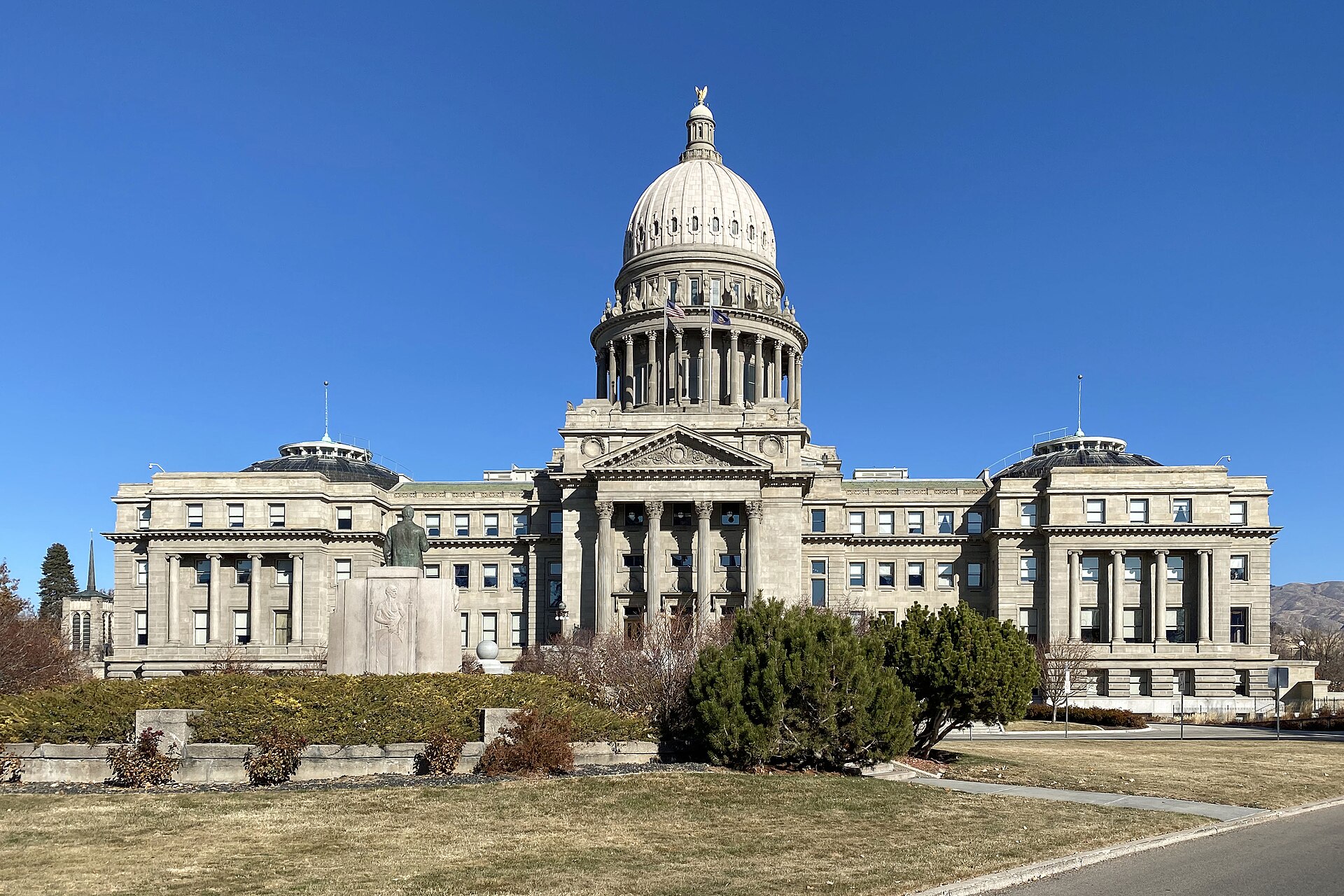

What changed after July 1, 2026
The record available on Nov. 22, 2026, shows these changes:
- New rates. Health and Welfare posted an Adult DD Waiver fee schedule effective July 1, 2026, that lists intense supported living both as a daily rate and as 15-minute individual and blended codes (for example, $678.77 a day and $7.07 per 15 minutes), and a reissued schedule effective Nov. 1, 2026, that relabels the school-day reduction codes (H2016 U1 and H2022 U1) with the same dollar amounts.27
- Intense supported living billing. Information Release MA26-08, "Intense Supported Living Billing Practices," issued March 13, 2026, requires one-to-one services of less than 24 hours a day to be billed in 15-minute units; the special master says the Department explained this as a control against paying full-day rates "when the people they serve are at work or an alternate day service setting."399
- Rules. IDAPA 16.03.26 sections 051 and 052 are now reserved, and cost surveys with audits of at least 15 percent of responses are required by Idaho Code section 56-265. The first public audit summary is due by Dec. 31, 2027.493
- The K.W. case. The special master reported in September 2026 that class members were "not included in the discussion of these changes" and that the cut "could also destabilize the supports people need to fully participate in community life," while noting HB 863's cost studies and direct support wage provisions could have "some potential for positive impact."9
- More budget pressure. In September 2026, the Idaho Capital Sun reported that the Governor's budget chief told agencies to plan for less money rather than restoration of past cuts, and that advocates worried disability services could face cuts again in the 2027 session.22
We did not find a public record, as of Nov. 22, 2026, of how many residential habilitation agencies closed, stopped taking new clients or gave notice after July 1, 2026, or of how many participants changed providers. Health and Welfare's Licensing and Certification division licenses these agencies, and its records, along with Medicaid provider enrollment data, would show closures (see "For reporters and advocates").
The local picture: counties and families
Health and Welfare does not publish Adult DD waiver enrollment by county. The closest public county count comes from the Our Care Can't Wait coalition, led by the Idaho Council on Developmental Disabilities, which asked Medicaid for the number of people eligible for HCBS through Idaho's two adult waivers and the children's waiver program. The counts combine older adults and people with physical disabilities on the Aged and Disabled waiver, adults on the DD waiver, and children; they are point-in-time counts, and counties with fewer than 10 people are suppressed.5354
| County | Region | May 15, 2023 | Sept. 17, 2024 | Change (our calculation) |
|---|---|---|---|---|
| Ada | Treasure Valley | 5,717 | 5,474 | -243 (-4.3%) |
| Canyon | Treasure Valley | 3,279 | 3,039 | -240 (-7.3%) |
| Twin Falls | Magic Valley | 1,252 | 1,140 | -112 (-8.9%) |
| Cassia | Magic Valley | 288 | 231 | -57 (-19.8%) |
| Minidoka | Magic Valley | 202 | 210 | +8 (+4.0%) |
| Gooding | Magic Valley | 179 | 160 | -19 (-10.6%) |
| Blaine | Magic Valley | 52 | 45 | -7 |
| Lincoln | Magic Valley | 24 | 28 | +4 |
| Bonneville | Eastern Idaho | 1,867 | 1,734 | -133 (-7.1%) |
| Bannock | Eastern Idaho | 1,405 | 1,307 | -98 (-7.0%) |
| Bingham | Eastern Idaho | 568 | 543 | -25 (-4.4%) |
| Kootenai | Northern Idaho | 1,784 | 1,534 | -250 (-14.0%) |
| Nez Perce | North central | 451 | 463 | +12 (+2.7%) |
| Idaho County | North central | 168 | 172 | +4 |
| Idaho total | 21,533 | 19,942 | -1,591 (-7.4%) |
Source: Our Care Can't Wait coalition and Idaho Council on Developmental Disabilities, "Medicaid Home and Community Based Services" county maps, point-in-time data from Idaho Medicaid as of May 15, 2023, and Sept. 17, 2024. Counts include the Aged and Disabled waiver, the Adult DD waiver and the children's waiver program, so they are not DD-only. Percent changes are our calculation; small-county changes are not shown as percentages because a few people move the rate a lot. Camas County was suppressed in 2023. The 2023 county table adds to 21,490, not the 21,533 total the map states, and the map label for Canyon County reads 3,729 against 3,279 in the table; this lesson uses the table and the stated totals.5453
The 2023 to 2024 drop overlapped with the period after pandemic-era continuous Medicaid coverage ended in 2023, when Idaho redetermined every enrollee; the Idaho Medicaid course explains that process in Who Qualifies and Who Is Covered. The maps do not show which program each person left, so they cannot tell how many were adults with developmental disabilities. In the Magic Valley, Health and Welfare's Region 5 office, based in Twin Falls, runs DD quality assurance for the area, including Twin Falls, Cassia, Minidoka, Gooding, Lincoln, Camas and Blaine counties; its listed number is 208-736-3024.24 Providers serving Twin Falls, Burley, Rupert, Buhl, Kimberly, Gooding and Hagerman are paid from the same rate schedule as those in Boise and Nampa: Idaho pays one statewide rate for each waiver service, with no rural adjustment on the Adult DD fee schedule.27
Families and the unpaid side
Medicaid pays for only part of the support most adults with developmental disabilities get. Many live with parents or siblings who provide unpaid care, transportation and supervision, and the CDCS rules expressly build "unpaid community supports and services" into the spending plan (IDAPA 16.03.26, section 806).29 RISP data for Idaho list 44 percent of people on the state DD caseload as 17 or younger in fiscal 2023, which means many families move from the children's system to the adult system each year, at 18.21 The Council on Developmental Disabilities says its Community NOW! workgroup, which has more than 60 members led by adults with I/DD and their families, is part of carrying out the K.W. settlement, and the Council's page credits that work to its $527,570 federal grant from the U.S. Administration for Community Living for federal fiscal year 2026.55 One statement by a workgroup participant, posted on the Community NOW! page, put the point this way: "I DO NOT LIVE IN YOUR WORKPLACE YOU WORK IN MY HOME."55


Idaho compared with the United States and neighbors
National data on DD services are hard to compare state to state, because states organize waivers differently and report on different years. The numbers below each come from a named source and year.
| Measure | Idaho | U.S. or other states | Year | Source |
|---|---|---|---|---|
| Federal medical assistance percentage (FMAP) | 67.31% | Utah 61.95%; Montana 60.01%; Nevada 59.31%; Oregon 58.18%; Washington 50.00%; Wyoming 50.00% | Federal FY2027 | 90 FR 546966 |
| HCBS share of all Medicaid LTSS spending | 74.3% | U.S. 64.6%; Washington 82.6%; Oregon 79.1% | 2022 | CMS and Mathematica rebalancing brief56 |
| HCBS share of LTSS spending for people with autism, ID or DD | Not published by state | U.S. 82.9% of spending; 94.9% of users | 2022 | CMS and Mathematica rebalancing brief56 |
| People on HCBS waiver waiting or interest lists | 0 (Idaho reports no list) | U.S. 649,905 in 40 states, 576,672 of them waiting for I/DD services; Utah 13,316 | 2026 | KFF State Health Facts (nonprofit research)58 |
| People on HCBS waiting or interest lists, earlier KFF brief | Not reported for Idaho in the brief | U.S. over 710,000; 73% are people with I/DD; average I/DD wait 50 months | 2024 | KFF (nonprofit research)57 |
| People in large state DD facilities (16+ beds) | 22 | State FY2023 | RISP, University of Minnesota (university research)21 |
Idaho's higher FMAP means the federal government pays about 67 cents of every Medicaid dollar spent on residential habilitation in Idaho, compared with 50 cents in Washington and Wyoming. That cuts both ways: every general fund dollar Idaho adds draws about $2.06 in federal money, and every general fund dollar it removes gives up the same federal match (our calculation: 0.6731 / 0.3269).6 Idaho's overall HCBS share of LTSS spending (74.3 percent in 2022) is above the national figure but below Washington and Oregon.56 Lesson 01, Medicaid's Second Job, covers the institutional versus HCBS split in more depth.
Pictures, Numbers and Infographics
The key numbers, rules and dates from this lesson in one place, each with its year and source.
| Measure | Idaho | U.S. or other states | Year or date | Source |
|---|---|---|---|---|
| Age by which a developmental disability must appear | Before 22 | Before 22 (federal DD Act) | Current law | Idaho Code 66-402; 42 U.S.C. 15002(8)12 |
| Adults with DD receiving Medicaid HCBS direct care | 12,660 | 2021 | OPE, Feb. 202320 | |
| Children with DD receiving Medicaid direct care | 4,670 | 2021 | OPE, Feb. 202320 | |
| Children projected in the Children's DD 1915(i) benefit | 4,847 | July 2026 to June 2027 | SPA ID-26-000118 | |
| Waiver HCBS users, all three waivers, point in time | 19,942 | Sept. 17, 2024 | Our Care Can't Wait and ICDD53 | |
| State general fund for residential habilitation and other HCBS | More than $176.5 million | 2026 (as stated in HB 863) | HB 863, section 14 | |
| HB 863 cut, general fund | $21.8 million | State FY2027 | HB 863 fiscal note5 | |
| HB 863 cut, total funds | About $66.5 million to $66.7 million | State FY2027 | Our calculation with FMAP6 | |
| Combined rate cut since Sept. 2025 | About 10% | Sept. 2025 to July 2026 | Health and Welfare, Jan. 20267 | |
| Votes on HB 863 | House 60-8; Senate 19-15 | March 12 and 23, 2026 | Idaho Legislature4 | |
| Intense supported living, daily rate | $678.77 | July 1, 2026 | Adult DD fee schedule27 | |
| Certified family home residential habilitation, daily rate | $69.41 | July 1, 2026 | Adult DD fee schedule27 | |
| Budget tool deadline missed | June 2022 | Set Dec. 2020 | K.W. v. Armstrong, Dkt. 6518 | |
| Contempt finding | March 31, 2025 | Dkt. 6518 | ||
| Assessments reviewed for a new tool | 47, then 8, then 3 | LON from Connecticut chosen | 2024 to 2025 | HSRI, Jan. 202636 |
| LON pilot size | 800 assessments | Nov. 2026 to Apr. 2027 | Health and Welfare10 | |
| Planned go-live of new budgets | Jan. 1, 2030 | Proposed Sept. 2026 | Special master, Dkt. 6739 | |
| Nampa institution clients | Almost 1,000 (1955); 17 (2018) | 1955 and 2018 | OPE, Jan. 201911 | |
| SWITC appropriation and positions | $13,094,800; 111 FTP | State FY2027 | Senate Bill 1435 (2026)12 | |
| FMAP | 67.31% | Washington and Wyoming 50.00%; Utah 61.95% | Federal FY2027 | 90 FR 546966 |
| HCBS share of LTSS spending | 74.3% | U.S. 64.6% | 2022 | CMS rebalancing brief56 |
| Direct care worker typical wage (non-CNA) | $11.49 an hour | 2021 | OPE, Feb. 2023 (BLS data)20 |
Common mistakes
- Treating the general fund number as the whole cut. The $21.8 million in HB 863 is state general fund. Because Idaho's FMAP is about 67 percent, the drop in total Medicaid payments to providers is about three times larger, roughly $66.5 million to $66.7 million in state fiscal year 2027 (our calculation). News stories that call it a "$22 million cut" are describing the state share.56
- Thinking HB 863 ended residential habilitation. It cut the rate, not the service. Health and Welfare's January 2026 summary says "this option is not a removal of the Residential Habilitation service." Whether lower rates reduce the number of providers or staff willing to deliver it is a separate, open question.7
- Reading "33 percent above 2022" as a 33 percent raise for workers. The figure compares provider payment rates, not wages. HB 863 now requires providers to spend at least the amount appropriated for direct care wages and related costs on those costs, and the first audit report is not due until Dec. 31, 2027.4549
- Assuming a waiver works like an entitlement. Under section 1915(c), a state can cap the number of waiver participants and spending, and must show that waiver costs do not exceed institutional costs on average; IDAPA 16.03.26, section 611, carries that cost test into Idaho rules. A state plan service is different: everyone who qualifies gets it.143
- Confusing K.W. with Jeff D. K.W. v. Armstrong is about adults on the DD waiver and their budgets. The Jeff D. case and the YES system concern children with serious emotional disturbance; see lesson 05, Behavioral Health and Medicaid, and lesson 06.8
- Calling an ICF/IID a nursing home. ICF/IIDs follow 42 CFR part 483 subpart I and must provide "active treatment"; nursing facilities follow subpart B. They are paid under different sections of IDAPA 16.03.26.413
- Reading county HCBS maps as DD counts. The 2023 and 2024 county maps combine the Aged and Disabled waiver, the Adult DD waiver and the children's waiver program, so they cannot show DD enrollment alone.53
- Mixing fiscal years. Idaho's state fiscal year 2027 runs July 1, 2026, to June 30, 2027; the federal fiscal year 2027 FMAP runs Oct. 1, 2026, to Sept. 30, 2027. A state-year cut spans two federal match rates.526
- Assuming the 2024 Access Rule's 80 percent test covers residential habilitation. As written in 42 CFR 441.302(k)(3), the 80 percent minimum applies to homemaker, home health aide and personal care services starting July 9, 2030. Idaho's own direct care spending requirement for residential habilitation comes from HB 863, not from that rule.3149
What we know, what we don't, and what the data can show
What we know
- Idaho cut $21.8 million in general fund from residential habilitation rates starting July 1, 2026, through HB 863 (Session Law Chapter 161), on top of a 4 percent across-the-board cut in September 2025.446
- The cut removed money first appropriated in 2022 for K.W. settlement services that never started, after a federal court dispute stopped the planned budget tool.47
- A federal judge held Health and Welfare in civil contempt in 2025 over the missed budget tool deadline; a special master now oversees the work, Idaho chose Connecticut's LON assessment, and the proposed go-live date is Jan. 1, 2030.89
- The Nampa state institution went from almost 1,000 residents in 1955 to 17 in 2018 and now operates as a crisis center.11
- Starting with 2027, residential habilitation and four other HCBS services must be cost-surveyed every year with at least 15 percent of responses audited.49
What we don't know
- How many adults are on the Adult DD waiver today, and how many use supported living, certified family homes or self-direction. Health and Welfare does not post current counts, and the CMS-372 reports are not online.
- Whether residential habilitation agencies closed, stopped intake or cut staff pay after July 1, 2026. No public tally was found as of Nov. 22, 2026.
- Whether the full $21.8 million will be saved. That depends on billed units, and Eppink told senators he doubted it would be.28
- Whether the court will adopt the special master's timeline, and how new budgets under the LON will compare with current budgets.9
- How the June 2026 Justice Department memo on Olmstead, and the planned 2032 move toward managed care for adult I/DD services, will affect Idaho.229
What the data can show
- The cost survey audits required by Idaho Code section 56-265 (first summary due Dec. 31, 2027) can show how much of each residential habilitation dollar goes to direct care wages and benefits.49
- Health and Welfare's fee schedules, archived over time, can show rate changes code by code.27
- The LON pilot results (800 assessments, November 2026 to April 2027) and HSRI's analysis of historical claims data can show how needs and budgets relate.910
- CMS-372 annual waiver reports for waiver ID.0076 show participants, days of service and spending per participant, compared with ICF/IID costs.19
- The RISP survey (University of Minnesota) and the CMS and Mathematica LTSS reports can compare Idaho's settings and HCBS share with other states, with the caveats each source lists.2156
- Licensing and Certification records for developmental disability agencies, residential habilitation agencies and certified family homes can show openings and closures by region.2325
Questions people ask
Does HB 863 change what services a person can get?
No service was removed by the bill. It reduced the rate Medicaid pays providers for residential habilitation and added cost survey, audit and direct care spending requirements. A person's budget under the K.W. protections is set separately. What can change is whether a provider is available at the new rate, which the Department told senators it would monitor.445
What is the difference between supported living and a certified family home?
Supported living is delivered by a licensed residential habilitation agency to a person in their own home or apartment, billed hourly or daily depending on support level. A certified family home is a private home certified under IDAPA 16.03.19, usually for up to two residents, where the provider lives with the person and is paid a daily rate ($69.41 on July 1, 2026).2527
Who decides a budget, and can it be appealed?
An independent assessment provider gathers the assessment, and the Department's budget tool sets the amount; the notice must include appeal information. Under the K.W. settlement, Medicaid pays trained support brokers or targeted service coordinators to act as "suitable representatives" in budget appeals. The appeal and fair hearing process in general is covered in If You Are Denied or Cut Off.334
Will the new LON assessment change budgets now?
No. Health and Welfare says taking part in the pilot "will not impact your current budget or services." New budgets are planned to start Jan. 1, 2030, after a level framework, a budget framework, rules, a waiver amendment and court review.109
Is SWITC still an institution?
Yes. SWITC is a state-run, federally certified ICF/IID in Nampa, now focused on short-term crisis care, with a fiscal 2027 appropriation of $13,094,800 and 111 positions. Health and Welfare has also used the campus for some children in state custody when no other placement was available.111217
What is the Idaho Council on Developmental Disabilities?
It is a state agency created under the federal DD Act in 1971 and Idaho Code section 67-6703 in 1978, with governor-appointed members, most of whom are people with I/DD or family members. It runs Community NOW! and the Our Care Can't Wait coalition, and it took part in the K.W. assessment selection.1355
Does Idaho have a waiting list for adult DD services?
Not a formal one. KFF's 2026 state table, built from states' own survey answers, lists 0 Idahoans waiting for waiver services, including 0 for I/DD, against 649,905 people in 40 states nationally (576,672 of them waiting for I/DD services) and 13,316 in Utah. KFF's 2024 brief counted more than 710,000 people nationally, 73 percent of them people with I/DD, with an average I/DD wait of 50 months. A zero for formal lists does not count waits for an assessment or a provider, a limit lesson 03 explains, and SWITC keeps an informal waiting list for crisis admissions, according to OPE.585742
Hard questions
Was residential habilitation the right place to cut?
For the cut: The money was appropriated in 2022 for services and a budget tool that never started; Health and Welfare called its rate a temporary solvency measure; rates remain about 33 percent above 2022; and the Governor's other options (ending adult dental, therapy or broader HCBS) would have removed services outright. Against: Providers had already raised wages with the money; Sens. Lenney and Keyser argued the savings should come from the expansion population; Wintrow favored a smaller cut; and the special master said the cut was made without the settlement's required class engagement. Evidence: The Legislature has no audited data yet on how providers used the 2022 money; that is what HB 863's audits are meant to produce.7459
How long should a federal court supervise Idaho's DD program?
For ending it sooner: The Department argued it substantially complied and that every dollar of fees is a dollar not spent on services; Judge Winmill himself wrote that federal courts "aren't at their best" supervising agency reform. For continued oversight: The court found the Department in contempt for missing a deadline by years, and the 2016 record showed a tool whose results were changed on review 62 percent of the time. Evidence: The proposed timeline runs to 2030, with monitoring to 2033.835339
Should providers that own the housing also be paid for services?
Concern: Sen. Zuiderveld asked whether providers collect both rent and Medicaid payments; Health and Welfare said some supported living providers own the homes and take rent from participants' Social Security disability payments. Defense: Housing for people with high support needs is scarce, and federal settings rules protect tenants in provider-controlled housing with lease rights and privacy. Evidence: The extent of provider-owned housing in Idaho is not published; the new cost surveys may show it.4530
Community services or more institutional capacity?
For more institutional capacity: The June 2026 Justice Department memo argues the ADA does not impose an integration mandate, and some people with the most complex needs have had trouble finding community providers. Against: Olmstead remains Supreme Court law; DisAbility Rights Idaho and the DD Council warn institutions cost more; Health and Welfare's own internal memo said Idaho lacks institutional capacity. Evidence: Idaho's waiver rules require average waiver costs to stay at or below ICF/IID costs, and SWITC already limits admissions to its staffing.2244342
For reporters and advocates
Records that exist. The K.W. v. Armstrong docket (D. Idaho No. 1:12-cv-00022-BLW) on PACER, with many opinions free on GovInfo, and Health and Welfare's K.W. page with special master reports and LON pilot notices; House Bill 863 and Senate Bill 1435 with statements of purpose, fiscal notes and committee minutes and attachments on the Legislature's website; the Governor's executive budget and the Legislative Budget Book; Idaho Medicaid fee schedules (current and archived) and Information Releases such as MA26-08; IDAPA 16.03.26, 16.03.19 and 16.03.21; the Adult DD waiver (ID.0076) application and CMS-372 reports from CMS; OPE reports on SWITC (2019, 2023) and the direct care workforce (2023); Bureau of Facility Standards survey reports for SWITC and private ICF/IIDs; and the cost survey audit summaries due each Dec. 31 from 2027.344271149
Questions to ask. Of Health and Welfare: how many Adult DD waiver participants, supported living users and CFH residents there are by region; how many residential habilitation agencies closed or stopped intake after July 1, 2026; what the residential habilitation rates were on June 30, 2026, by code; how much of the $21.8 million was saved in the first quarter; and SWITC's current census and the number of children in state custody placed there. Of providers: how wages and staffing changed. Of class counsel and the special master: whether the court has approved the 2030 timeline.
Getting records. Idaho agency records are public under the Idaho Public Records Act, Idaho Code Title 74, chapter 1, subject to exemptions for personal health information; see Idaho Public Records Requests. CMS records not online can be requested under the federal Freedom of Information Act. Testimony on future budget or rule changes follows the process in Testifying and Public Comment, and the budget process is in The Idaho State Budget. How the 2025 federal law adds pressure on state Medicaid budgets is in lesson 12, What the 2025 Federal Law Does Beyond Work Requirements.
The Idaho angle. Idaho is one of the few states where a federal court has supervised the adult DD budget method for more than a decade, and where a legislative budget cut was tied directly to the court's halt of a settlement tool. Every number in that story, from the $66,663,200 line item to the 2030 go-live, is in a public record.
Where to go next
- Idaho Department of Health and Welfare: About the KW Lawsuit: The Department's official page on the K.W. settlement, with special master reports, LON pilot notices, change-in-condition and exception review forms, and assessment record requests. Free; for participants, families, providers and reporters.
- Idaho Department of Health and Welfare: Developmental Disabilities Program Information: Health and Welfare's page for the Adult DD program with fee schedules, intense supported living criteria, appeal instructions and regional contacts. Free.
- Idaho Council on Developmental Disabilities: A state agency under the federal DD Act, run mostly by people with I/DD and family members; publishes Community NOW! updates, the Our Care Can't Wait county maps and annual reports. Free.
- DisAbility Rights Idaho: A private nonprofit designated as Idaho's protection and advocacy system for people with disabilities; publishes information on rights and monitoring of facilities such as SWITC. Its services are free.
- Idaho Legislature: House Bill 863 (2026): The official bill page with text, statement of purpose, fiscal note and roll call votes. Free; useful for anyone following the 2027 session.
- GovInfo: K.W. v. Armstrong opinions: Free copies of the court's written opinions in the case from 2012 to 2025, published by the U.S. Government Publishing Office. Full dockets are on PACER, which charges per page.
- Idaho Office of Performance Evaluations reports: The Legislature's nonpartisan evaluation office; its SWITC (2019, 2023) and direct care workforce (2023) reports are free and include data and recommendations.
- Idaho 211 CareLine: A free, statewide information and referral line run with Health and Welfare that lists community resources, including disability services, by location.
Still being checked (10 items)
These points could not be fully confirmed against a primary source when this lesson was written and fact checked in November 2026. The text above states each one as uncertain.
- Current number of Adult DD waiver (ID.0076) participants, and the split among supported living, certified family homes and self-direction: Health and Welfare does not post these, and CMS-372 reports were not available online.
- Residential habilitation rates in effect immediately before July 1, 2026, code by code: no pre-cut fee schedule was found, so the exact per-code size of the HB 863 cut is not confirmed; the 6.25 percent figure is our derivation from Health and Welfare's '10 percent since September 2025' statement.
- Any residential habilitation agency closures, intake freezes or provider notices after July 1, 2026: none found in public records or news as of Nov. 22, 2026.
- SWITC's current resident census and whether residents have moved into the new building under the planned Medicaid funding model.
- The number of private ICF/IIDs operating in Idaho in 2026.
- Whether people wait for Adult DD waiver services in ways KFF's 2026 table does not count (Idaho reports 0 on formal lists): waits for assessments or for a provider with an opening are not published.
- The text of the June 2026 U.S. Justice Department memo on Olmstead and the earlier Justice Department warning to Idaho about institutionalizing people with physical disabilities: described only as reported by the Idaho Capital Sun.
- Whether the court has approved the special master's proposed timeline (go-live Jan. 1, 2030) after the Sept. 28, 2026, report.
- The name Health and Welfare uses publicly for adult DD self-direction beyond the IDAPA term Consumer-Directed Community Supports.
- The exact date K.W. v. Armstrong was filed in 2012 (the earliest opinion on GovInfo is dated Feb. 3, 2012).
Last verified November 22, 2026. General education, not legal, medical, insurance or financial advice; every figure names its source and year in the Notes and Sources below. Data is revised: check the newest release before relying on any number.
Notes
- Idaho Code section 66-402, Definitions (Title 66, chapter 4, treatment and care of the developmentally disabled), including the definition of developmental disability in subsection (5), which becomes subsection (4) on Jan. 1, 2027 (read Nov. 22, 2026). Read it online. ↩
- Developmental Disabilities Assistance and Bill of Rights Act of 2000, P.L. 106-402 (Oct. 30, 2000), 42 U.S.C. 15002(8), definition of developmental disability, including the birth-to-9 rule in subparagraph (B) (read Nov. 22, 2026). Read it online. ↩
- IDAPA 16.03.26, Medicaid Plan Benefits, Idaho Department of Health and Welfare, sections 051 to 052 (reserved), 501 to 525 (ICF/IID), 560 to 574 (DD determination and adult DD services), 590 to 593 (Adult DD HCBS State Plan Option), 600 to 606 (developmental therapy), 610 to 615 (Adult DD Waiver services), 620 to 625 (ID/MI Health Home) and 630 to 637 (service coordination), effective July 1, 2026 (read Nov. 22, 2026). Read it online. ↩
- Idaho Legislature, House Bill 863 (2026), "Medicaid, revises provisions regarding provider payment," bill text and bill history: introduced March 10, passed House 60-8-2 March 12, passed Senate 19-15-1 March 23, signed by the governor March 26, 2026; Session Law Chapter 161; sections 1 and 2 effective March 26, 2026, section 3 effective July 1, 2026 (read Nov. 22, 2026). Read it online. ↩
- Idaho Legislature, Statement of Purpose and Fiscal Note RS33677 / H0863 (introduced March 10, 2026): $21.8 million general fund reduction in FY 2027 and $1.7 million ($850,000 GF, $850,000 federal) for an independent auditor; contacts Sen. Julie VanOrden and Rep. John Vander Woude (read Nov. 22, 2026). Read it online. ↩
- U.S. Department of Health and Human Services, "Federal Financial Participation in State Assistance Expenditures; Federal Matching Shares for Medicaid, the Children's Health Insurance Program, and Aid to Needy Aged, Blind, or Disabled Persons," 90 FR 54696 (Nov. 28, 2025), Table 1, FY 2027 (Oct. 1, 2026, to Sept. 30, 2027): Idaho FMAP 67.31 percent (read Nov. 22, 2026). Read it online. ↩
- Idaho Department of Health and Welfare, "Residential Habilitation Budget Reduction Option Overview," January 2026, Attachment 2 to the Senate Health and Welfare Committee minutes of March 16, 2026 (read Nov. 22, 2026). Read it online. ↩
- K.W. v. Armstrong, No. 1:12-cv-00022-BLW (D. Idaho), Memorandum Decision and Order, Dkt. 651, filed March 31, 2025 (civil contempt; one year of monitoring fees; history of the 2016 judgment, the 2017 settlement approval, the December 2020 deadline and the Nov. 12, 2024, special master appointment) (read Nov. 22, 2026). Read it online. ↩
- Ruby Moore, Special Master, "Report of the Special Master," K.W. v. Armstrong, No. 1:12-cv-00022-BLW, Dkt. 673, dated Sept. 25, 2026, filed Sept. 28, 2026, posted by Idaho Department of Health and Welfare Oct. 13, 2026 (read Nov. 22, 2026). Read it online. ↩
- Idaho Department of Health and Welfare, "About the LON Pilot" and "Idaho LON FAQs: Participating in the LON Pilot, November 2026 to April 2027," posted Oct. 21, 2026 (read Nov. 22, 2026). Read it online. ↩
- Idaho Legislature, Office of Performance Evaluations, Southwest Idaho Treatment Center, evaluation report, January 2019, including Exhibit 1 (client counts 1918 to 2018 from Health and Welfare records) (read Nov. 22, 2026). Read it online. ↩
- Idaho Legislature, Senate Bill 1435 (2026), FY 2027 appropriation to the Department of Health and Welfare, section 1 (Southwest Idaho Treatment Center, $13,094,800 total) and the full-time position limits (SWITC 111.00) (read Nov. 22, 2026). Read it online. ↩
- Idaho Council on Developmental Disabilities (state agency), 2025 Annual Report, October 2024 to September 2025: Council established under the federal DD Act in 1971 and Idaho Code section 67-6703 in 1978 (read Nov. 22, 2026). Read it online. ↩
- Social Security Act section 1915(c) (42 U.S.C. 1396n(c)), home and community-based services waivers, added by the Omnibus Budget Reconciliation Act of 1981, P.L. 97-35, section 2176 (Aug. 13, 1981); permits states to limit the number of participants and requires average per capita costs not to exceed institutional costs (read Nov. 22, 2026). Read it online. ↩
- Idaho Legislative Services Office, Budget and Policy Analysis, "Department of Health and Welfare Agency Overview," Jan. 26, 2026, Attachment 1 to the Senate Health and Welfare Committee minutes (organization chart and planned rename of Family and Community Services to Child, Youth, and Family Services) (read Nov. 22, 2026). Read it online. ↩
- Idaho Department of Health and Welfare, "About the Infant Toddler Program" (Part C of the Individuals with Disabilities Education Act, 20 U.S.C. 1431 and following; 34 CFR part 303) (read Nov. 22, 2026). Read it online. ↩
- Idaho Department of Health and Welfare, Director Juliet Charron, "FY 2027 Budget Recommendation," Feb. 10, 2026, Attachment 1 to the Senate Health and Welfare Committee minutes (SWITC transfer exemption and funding model; Infant Toddler Program reduction; residential habilitation option) (read Nov. 22, 2026). Read it online. ↩
- Centers for Medicare & Medicaid Services, Idaho State Plan Amendment ID-26-0001, renewal of the section 1915(i) HCBS benefit for Children with Developmental Disabilities, approved June 26, 2026, effective July 1, 2026, through June 30, 2031; projected 4,847 unduplicated participants July 1, 2026, to June 30, 2027 (read Nov. 22, 2026). Read it online. ↩
- Centers for Medicare & Medicaid Services, Idaho Developmental Disabilities Waiver (control number ID.0076.R06.00), Appendix K emergency amendment application, 2020 (identifies the waiver number) (read Nov. 22, 2026). Read it online. ↩
- Idaho Legislature, Office of Performance Evaluations, Sustainability of Idaho's Direct Care Workforce, February 2023: 12,660 adults and 4,670 children with developmental disabilities received Medicaid direct care in 2021; typical wages from 2021 Bureau of Labor Statistics data; about 3,000 more workers needed (read Nov. 22, 2026). Read it online. ↩
- Residential Information Systems Project (RISP), Institute on Community Integration, University of Minnesota, "State Profiles FY 2023: Idaho" (university research survey; caseload table and state notes) (read Nov. 22, 2026). Read it online. ↩
- Idaho Capital Sun (States Newsroom), "As Idaho extends slim budgets and feds shift stance, disability care may face cuts, advocates worry," Sept. 17, 2026, as republished by News From The States (read Nov. 22, 2026). Read it online. ↩
- IDAPA 16.03.21, Developmental Disabilities Agencies (DDA), Residential Habilitation Agencies, and Adult Residential Care Facilities, Idaho Department of Health and Welfare, Division of Licensing and Certification (read Nov. 22, 2026). Read it online. ↩
- Idaho Department of Health and Welfare, "Developmental Disabilities Program Information" (intense supported living criteria, change in condition, exception reviews, appeals, regional quality assurance contacts), page dated July 1, 2026 (read Nov. 22, 2026). Read it online. ↩
- IDAPA 16.03.19, Certified Family Homes, Idaho Department of Health and Welfare, section 140 (two-resident limit and variance for three or four residents) (read Nov. 22, 2026). Read it online. ↩
- Social Security Administration, Office of the Chief Actuary, "SSI Federal Payment Amounts" (2026 individual rate $994 a month, computed from the published unrounded annual amount; 2027 rate $1,029 a month) (read Nov. 22, 2026). Read it online. ↩
- Idaho Medicaid, Adult Developmental Disabilities Waiver Fee Schedule, date effective 11/01/2026 (current) and 07/01/2026 (archive), Idaho Department of Health and Welfare reimbursement rates library (read Nov. 22, 2026). Read it online. ↩
- Idaho Capital Sun, "Idaho Medicaid disability budget cuts shelved in Senate committee," March 16, 2026 (read Nov. 22, 2026). Read it online. ↩
- IDAPA 16.03.26, Medicaid Plan Benefits, sections 800 to 846, Consumer-Directed Community Supports (CDCS) option, including section 806 (unpaid community supports) and sections 830 to 846 (fiscal employer agent), effective July 1, 2026 (read Nov. 22, 2026). Read it online. ↩
- 42 CFR 441.301, contents of request for a waiver, including 441.301(c) person-centered service plan and home and community-based settings requirements (eCFR, current as of Nov. 1, 2026) (read Nov. 22, 2026). Read it online. ↩
- 42 CFR 441.302(k), HCBS payment adequacy, minimum performance level of 80 percent for homemaker, home health aide and personal care services, applicable beginning 6 years after July 9, 2024 (eCFR, current as of Nov. 1, 2026) (read Nov. 22, 2026). Read it online. ↩
- 42 CFR 441.311, reporting requirements for section 1915(c) waivers, added by the Medicaid Access Rule (CMS-2442-F, 89 FR 40542, May 10, 2024) (eCFR, current as of Nov. 1, 2026) (read Nov. 22, 2026). Read it online. ↩
- K.W. v. Armstrong, No. 1:12-cv-00022-BLW (D. Idaho), Memorandum Decision and Order, Dkt. 270, filed March 28, 2016 (partial summary judgment; description of the SIB-R, Inventory of Individual Needs and budget tool; about 3,600 program participants) (read Nov. 22, 2026). Read it online. ↩
- Idaho Department of Health and Welfare, "About the KW Lawsuit" (settlement changes, suitable representatives, injunction budget at the highest level received on or since July 1, 2011), page last updated Oct. 22, 2026 (read Nov. 22, 2026). Read it online. ↩
- K.W. v. Adams (formerly K.W. v. Armstrong), No. 1:12-cv-00022-BLW (D. Idaho), Memorandum Decision and Order, Dkt. 660, filed July 22, 2025 (motion to reconsider fee award denied) (read Nov. 22, 2026). Read it online. ↩
- Human Services Research Institute (contractor to Idaho Department of Health and Welfare), "Assessment of Support Needs Recommendation: Assessment Selection Process and Outcome," January 2026, posted as "Idaho Assessment Tool Final Recommendation" Feb. 23, 2026 (read Nov. 22, 2026). Read it online. ↩
- American Rescue Plan Act of 2021, P.L. 117-2 (March 11, 2021), section 9817, additional support for Medicaid home and community-based services (10 percentage point FMAP increase with a supplement-not-supplant requirement) (read Nov. 22, 2026). Read it online. ↩
- K.W. v. Armstrong, No. 1:12-cv-00022-BLW-CWD (D. Idaho), Memorandum Decision and Order (Dkt. 577), Dkt. 596, filed Aug. 23, 2023 (motion to preclude dissemination of the SIS-A User's Manual) (read Nov. 22, 2026). Read it online. ↩
- Idaho Department of Health and Welfare, Division of Medicaid, MedicAide newsletter, April 2026 (list of Information Releases including MA26-08, Intense Supported Living Billing Practices) (read Nov. 22, 2026). Read it online. ↩
- Social Security Act section 1905(d) (42 U.S.C. 1396d(d)), definition of intermediate care facility services for individuals with intellectual disabilities; ICF/MR coverage added by P.L. 92-223 (Dec. 28, 1971) (read Nov. 22, 2026). Read it online. ↩
- 42 CFR 483.440, Condition of participation: active treatment services (part 483, subpart I, conditions of participation for intermediate care facilities for individuals with intellectual disabilities) (eCFR, current as of Nov. 1, 2026) (read Nov. 22, 2026). Read it online. ↩
- Idaho Legislature, Office of Performance Evaluations, Southwest Idaho Treatment Center: Follow-up Report, July 2023 (read Nov. 22, 2026). Read it online. ↩
- Idaho Department of Health and Welfare, DHW Voice, Chad Cardwell, "State treatment center celebrates dawn of new era," June 16, 2023 (Developmental Disabilities Crisis System Improvement Project) (read Nov. 22, 2026). Read it online. ↩
- Olmstead v. L.C. ex rel. Zimring, 527 U.S. 581 (1999), U.S. Supreme Court, decided June 22, 1999 (read Nov. 22, 2026). Read it online. ↩
- Idaho Senate Health and Welfare Committee, Minutes, Monday, March 16, 2026 (H 863 presentation by Chair VanOrden; testimony of Deputy Director Sasha O'Connell; roll call on the motion to hold) (read Nov. 22, 2026). Read it online. ↩
- Melissa Davlin, Idaho Reports (Idaho Public Television), "Providers brace for 4% Medicaid reduction," Aug. 29, 2025 (read Nov. 22, 2026). Read it online. ↩
- Idaho Division of Financial Management, FY 2027 Executive Budget, agency detail, Department of Health and Welfare (Medicaid reduction options of $22,000,000 general fund and $45,000,000 federal) (read Nov. 22, 2026). Read it online. ↩
- Idaho Capital Sun, "Idaho House to consider $22M cuts to Medicaid disability provider pay rates," March 10, 2026 (read Nov. 22, 2026). Read it online. ↩
- Idaho Code section 56-265, Provider payment, as amended by House Bill 863 (2026), Session Law Chapter 161, subsection (2) (annual cost surveys, 15 percent audits, direct care spending, report by Dec. 31 each year from 2027) (read Nov. 22, 2026). Read it online. ↩
- Idaho Capital Sun, "Idaho Senate passes $22M in Medicaid disability budget cuts, sending bill to governor," March 23, 2026 (read Nov. 22, 2026). Read it online. ↩
- Idaho Capital Sun, "Idaho governor approves $22M in Medicaid disability budget cuts," March 27, 2026 (read Nov. 22, 2026). Read it online. ↩
- U.S. Department of Health and Human Services, Federal Matching Shares notice for Oct. 1, 2025, through Sept. 30, 2026, 89 FR 94742 (Nov. 29, 2024), Table 1: Idaho FMAP 66.91 percent (read Nov. 22, 2026). Read it online. ↩
- Our Care Can't Wait coalition and Idaho Council on Developmental Disabilities, "Medicaid Home and Community Based Services" county map, point-in-time data from Idaho Medicaid as of Sept. 17, 2024 (statewide 19,942) (read Nov. 22, 2026). Read it online. ↩
- Our Care Can't Wait coalition and Idaho Council on Developmental Disabilities, "Medicaid Home and Community Based Services" county map, point-in-time data from Idaho Medicaid as of May 15, 2023 (statewide 21,533) (read Nov. 22, 2026). Read it online. ↩
- Idaho Council on Developmental Disabilities, "Community NOW!" page (membership, role in the K.W. settlement, September 2025 meeting, $527,570 Administration for Community Living grant for FFY 2026) (read Nov. 22, 2026). Read it online. ↩
- Centers for Medicare & Medicaid Services and Mathematica, "Medicaid Long-Term Services and Supports Rebalancing," 2022 data brief (T-MSIS Analytic Files), Table 1, Table 2 and Figures 3 and 4 (read Nov. 22, 2026). Read it online. ↩
- KFF (nonprofit health policy research), "A Look at Waiting Lists for Medicaid Home- and Community-Based Services from 2016 to 2024," Oct. 31, 2024, updated Aug. 13, 2025 (read Nov. 22, 2026). Read it online. ↩
- KFF (nonprofit health policy research), State Health Facts, "Number of People Waiting for Medicaid Home Care (HCBS), by Target Population and Whether States Screen for Eligibility," 2026 survey data (Idaho 0; U.S. 649,905, including 576,672 I/DD), and Alice Burns, Abby Wolk and Molly O'Malley Watts, "A Look at Waiting Lists for Medicaid Home- and Community-Based Services from 2016 to 2026," Oct. 5, 2026 (40 states with lists) (read Nov. 22, 2026). Read it online. ↩
- Idaho Legislative Services Office, 2026 Legislative Sine Die Report, Department of Health and Welfare, Division of Medicaid: general fund reduction of $21,008,900 for the residential habilitation rate decrease in House Bill 863 (read Nov. 22, 2026). Read it online. ↩
Check yourself
1. Under Idaho Code section 66-402, a developmental disability must appear before what age?
Idaho Code section 66-402 defines a developmental disability as a chronic disability that appears before the age of twenty-two (22); the federal DD Act, 42 U.S.C. 15002(8), uses the same age.
2. What extra test must an adult meet for Idaho's Adult DD waiver, beyond the DD determination standards?
IDAPA 16.03.26, sections 561 and 611, require an assessor to find the person would qualify for ICF/IID level of care if waiver services were not available.
3. How much state general fund did House Bill 863 (2026) cut from residential habilitation for fiscal year 2027?
The HB 863 fiscal note (RS33677) says the Medicaid budget will reduce by $21.8 million in general fund in FY 2027 due to the residential habilitation rate reduction.
4. Using Idaho's federal fiscal year 2027 FMAP of 67.31 percent, roughly what is HB 863's cut in total Medicaid funds?
Our calculation: $21.8 million divided by the state share of 32.69 percent (1 minus 0.6731, from 90 FR 54696) is about $66.7 million, which matches the $66,663,200 line item appropriated in 2022.
5. What did the 2022 line item of $66,663,200 that HB 863 removed originally pay for?
HB 863, section 1, says the $66,663,200 line item provided 'service enhancements and a new budget tool stemming from the KW v. Armstrong lawsuit,' which a court order halted.
6. On March 31, 2025, the federal court in K.W. v. Armstrong found Health and Welfare in civil contempt mainly because it:
Dkt. 651 says there was no dispute the Department violated the settlement and that 'most significantly, it failed to develop and implement a new budget tool by June 2022.'
7. Which assessment did Idaho choose in 2025 and 2026 to replace the SIB-R for adult DD budgets?
HSRI's January 2026 recommendation and the special master's Sept. 2026 report say the Connecticut LON was selected in December 2025, with Connecticut's permission granted Jan. 28, 2026.
8. Under the special master's proposed timeline, when would new adult DD budgets 'go live'?
The special master's report (Dkt. 673, filed Sept. 28, 2026) sets Jan. 1, 2030, as the go-live date, with action items due July 1, 2030, and monitoring to Jan. 1, 2033.
9. About how many clients lived at the Nampa state institution in 1955, according to OPE's 2019 report?
OPE's January 2019 report, Exhibit 1, lists the Nampa State School with almost 1,000 clients in 1955, compared with 17 at SWITC in 2018.
10. What does HB 863 require for residential habilitation and four other HCBS services starting with the new law?
HB 863 amended Idaho Code section 56-265 to require annual cost surveys of residential habilitation, personal care, DD agency services, community-supported employment and targeted service coordination, with 15 percent or more of responses audited and a public report by Dec. 31 each year from 2027.
Terms in this lesson
- Developmental disability (Idaho)
- Under Idaho Code section 66-402, a chronic disability appearing before age 22, tied to intellectual disability, cerebral palsy, epilepsy, autism or a closely related condition, causing substantial limits in three or more major life areas and needing lifelong or extended, planned services.
- ICF/IID
- Intermediate care facility for individuals with intellectual disabilities: a Medicaid-certified institution providing 24-hour care and active treatment under 42 CFR part 483, subpart I.
- ICF/IID level of care
- The finding that a person's needs would qualify them for an ICF/IID; required for the Adult DD waiver.
- Adult DD Waiver
- Idaho's section 1915(c) waiver (ID.0076) paying for community services for adults who meet ICF/IID level of care, governed by IDAPA 16.03.26, sections 610 to 615.
- Adult DD HCBS State Plan Option
- Idaho's state plan benefit for adults with DD who do not meet ICF/IID level of care, covering developmental therapy and community crisis supports (IDAPA 16.03.26, sections 590 to 593).
- Residential habilitation
- Waiver services that help an adult live in their own home, with family or in a certified family home: habilitation training, personal assistance and skills training.
- Supported living
- Residential habilitation delivered by a licensed agency in the person's own home, billed hourly or at daily high or intense support rates.
- Certified family home (CFH)
- A private home certified under IDAPA 16.03.19 where a provider lives with and cares for usually up to two adults.
- Consumer-Directed Community Supports (CDCS)
- Idaho's self-direction option, in which a participant controls an individualized budget, hires community support workers and uses a fiscal employer agent (IDAPA 16.03.26, sections 800 to 846).
- Individualized budget
- The yearly dollar amount the Department sets for each Adult DD waiver participant; services in the plan must fit inside it unless an exception is approved.
- SIB-R
- Scales of Independent Behavior, Revised: the assessment booklet whose scores feed Idaho's current adult DD budget tool.
- Level of Need (LON)
- Connecticut's assessment, chosen by Idaho in December 2025 to replace the SIB-R under the K.W. settlement; piloted from November 2026.
- Injunction budget
- Under K.W. v. Armstrong, the highest budget a class member received on or after July 1, 2011; the floor until the new budget model is in place.
- Suitable representative
- A trained support broker or targeted service coordinator, paid by Medicaid under the K.W. settlement, who helps a participant with a budget appeal.
- Special master
- A court-appointed official, here Ruby Moore (appointed Nov. 12, 2024), who monitors the K.W. settlement and reports to the judge.
- Cost survey
- A survey of provider costs that Idaho Code section 56-265, as amended in 2026, requires each year for residential habilitation and four other HCBS services, with at least 15 percent audited.
Sources
- Idaho Code section 66-402, Definitions (2026-11-22) checked 2026-11
- 42 U.S.C. 15002, DD Act definitions (2026-11-22) checked 2026-11
- IDAPA 16.03.26, Medicaid Plan Benefits (effective July 1, 2026) (2026-11-22) checked 2026-11
- House Bill 863 (2026), bill history and text (2026-11-22) checked 2026-11
- House Bill 863 statement of purpose and fiscal note (2026-11-22) checked 2026-11
- Senate Health and Welfare Committee minutes, March 16, 2026 (2026-11-22) checked 2026-11
- K.W. v. Armstrong, Dkt. 651, civil contempt order (March 31, 2025) (2026-11-22) checked 2026-11
- K.W. v. Armstrong, Dkt. 270, partial summary judgment (March 28, 2016) (2026-11-22) checked 2026-11
- Report of the Special Master, Dkt. 673 (Sept. 2026) (2026-11-22) checked 2026-11
- Idaho Medicaid Adult DD Waiver Fee Schedule (effective Nov. 1, 2026) (2026-11-22) checked 2026-11
- OPE, Southwest Idaho Treatment Center (January 2019) (2026-11-22) checked 2026-11
- OPE, Sustainability of Idaho's Direct Care Workforce (February 2023) (2026-11-22) checked 2026-11
- Senate Bill 1435 (2026), Health and Welfare FY 2027 appropriation (2026-11-22) checked 2026-11
- Federal Register, FMAP for FY 2027 (90 FR 54696) (2026-11-22) checked 2026-11
- CMS, Idaho SPA ID-26-0001, Children's DD 1915(i) renewal (2026-11-22) checked 2026-11