Lesson 2 of 12 · about 55 minutes · Updated November 22, 2026
Nursing Homes in Idaho
You'll be able to
- Describe Idaho's 80 certified nursing homes by size, location, ownership type and chain, using the October 2026 CMS Care Compare file.
- Explain who pays for nursing home care, including Medicare's skilled nursing benefit and the Medicaid share of resident days in Idaho and other states.
- Summarize how Idaho Medicaid sets nursing facility rates under IDAPA 16.03.26 and Idaho Code, including the nursing facility assessment and the 2025 rate cut.
- Identify the main federal requirements in 42 CFR part 483, including residents' rights, discharge protections and nurse staffing, and trace the 2024 staffing rule through the courts, Congress and its repeal.
- Read Payroll-Based Journal staffing measures, star ratings, the scope and severity grid and penalty data for Idaho homes.
- Use CMS closure, change-of-ownership and ownership files to report on changes in Idaho's nursing homes since 2015.
Start here: the short version
- Idaho has 80 Medicare- or Medicaid-certified nursing homes with 6,115 certified beds. CMS's October 2026 Care Compare file counts an average of 4,578 residents a day, which fills 74.9 percent of those beds (our calculation), against 80.0 percent nationally. The count has barely moved since 2015, when CMS's Provider of Services file listed 78 active Idaho facilities with 5,858 beds.12
- Medicaid is the main payer. In cost reports for periods that began in 2023, Medicaid paid for 60.1 percent of all resident days in Idaho nursing homes, Medicare for 10.9 percent and all other payers (private pay, Medicare Advantage, insurance, the VA) for 29.0 percent. Nationally the Medicaid share was 56.0 percent.3
- Most Idaho nursing homes are run for profit and belong to chains. 65 of the 80 (81 percent) are for-profit, 10 are run by the state, a county, a city or a hospital district, and 5 are nonprofit. One operator, Cascadia Healthcare, runs 25 of them, according to CMS's chain field.1
- The federal staffing minimum is gone. The 2024 CMS rule (CMS-3442-F) required 3.48 nurse hours per resident per day and a registered nurse on site 24 hours a day. A federal judge in Texas vacated key parts on April 7, 2025; P.L. 119-21, signed July 4, 2025, barred enforcement through Sept. 30, 2034 (section 71111); and CMS repealed the numeric standards in a rule effective Feb. 2, 2026.4567
- Idaho staffing is near the national average. In the April to June 2026 payroll data behind the October 2026 Care Compare release, the average Idaho nursing home reported 3.99 total nurse staff hours per resident per day and 0.84 registered nurse hours, against 3.90 and 0.69 nationally. Total nursing staff turnover was 49.5 percent in Idaho and 45.3 percent nationally.89
- Inspections are done by the state for CMS. The Idaho Department of Health and Welfare's Bureau of Facility Standards surveys every certified nursing home at least every 15 months, with a statewide average of 12 months, under Social Security Act section 1919(g). In October 2026, one Idaho home was in CMS's Special Focus Facility program for persistent poor performance and five more were candidates.101112
- Idaho's Medicaid rate is set by state rule and the state budget. IDAPA 16.03.26, the Medicaid Plan Benefits rule in force since July 1, 2026, sets a prospective, price-based daily rate recalculated each July 1 with quarterly case-mix adjustments, and Idaho Code section 56-265 makes every rate change subject to legislative appropriation. A 4 percent cut to nearly all Medicaid provider rates took effect Sept. 1, 2025.131415
Law: Social Security Act sections 1819, 1919 and 1128I and 42 CFR parts 409, 483 and 488 as amended through Nov. 22, 2026, including P.L. 119-21 (2025) section 71111 and the CMS interim final rule effective Feb. 2, 2026; Idaho Code Title 39 chapter 13 and Title 56 chapters 1, 2 and 15, and IDAPA 16.03.26 (in force July 1, 2026; it replaced the nursing facility sections of IDAPA 16.03.10, cited here only as history), through the 2026 session; 2026 Medicare amounts from CMS's Nov. 14, 2025, fact sheet; facility counts, ratings, staffing and inspection data from the CMS Care Compare files released Oct. 28, 2026 (processing date Oct. 1, 2026), with staffing from Payroll-Based Journal data for April to June 2026; payer mix from CMS cost reports for periods that began in 2023; checked Nov. 22, 2026. Ratings, staffing and rates change every quarter or every year; check Care Compare and Idaho Health and Welfare for current figures.
About 4,600 Idahoans live in a nursing home on any given day. Most are old, many have dementia, and most will stay for months or years. A smaller group arrives from a hospital for a few weeks of rehabilitation after a fall, a stroke or a joint replacement and then goes home. Both groups live in the same buildings, are cared for by the same certified nursing assistants and nurses, and are protected by the same federal rules. They are paid for very differently: the short stays mostly by Medicare, the long stays mostly by Medicaid.
This lesson describes Idaho's nursing homes as public records show them in late 2026: how many there are, who owns them, who pays, how Idaho Medicaid sets its daily rate, what federal law requires of every certified home, how the 2024 federal staffing rule rose and fell, what the payroll data say about staffing in Idaho, how inspections and penalties work, and which homes have closed or changed hands since 2015. It compares Idaho with the United States and the six neighboring states wherever CMS publishes the same measure, and it uses the Magic Valley, the Treasure Valley, eastern Idaho and northern Idaho as local cases.
This is general education. It describes the rules, the data and the choices that exist; it does not recommend any facility, payer or course of action, and it gives no medical, legal, insurance or financial advice. Star ratings and inspection results describe a facility at a point in time; they are not a guarantee about any resident's care.
Other lessons carry the background. Why Medicaid became the main payer of long-term care, and how much of Idaho Medicaid's budget goes to it, is in lesson 01, Medicaid's Second Job: Long-Term Care. Care at home, in certified family homes and in residential assisted living facilities is in lesson 03, Home and Community-Based Services. People who have both Medicare and Medicaid, which includes most long-stay residents, are in lesson 07, Dual Eligibles: People on Both Programs. How Idaho counts income and assets for nursing home Medicaid, the share of income a resident pays toward care and estate recovery after death are in lesson 08, Spend-Down, Asset Rules and Estate Recovery. The 2025 federal law's other Medicaid provisions, including the limits on provider taxes, are in lesson 12, What the 2025 Federal Law Does Beyond Work Requirements. Medicare's skilled nursing facility benefit is explained in module 88, What Medicare Is: Parts A, B, C and D.
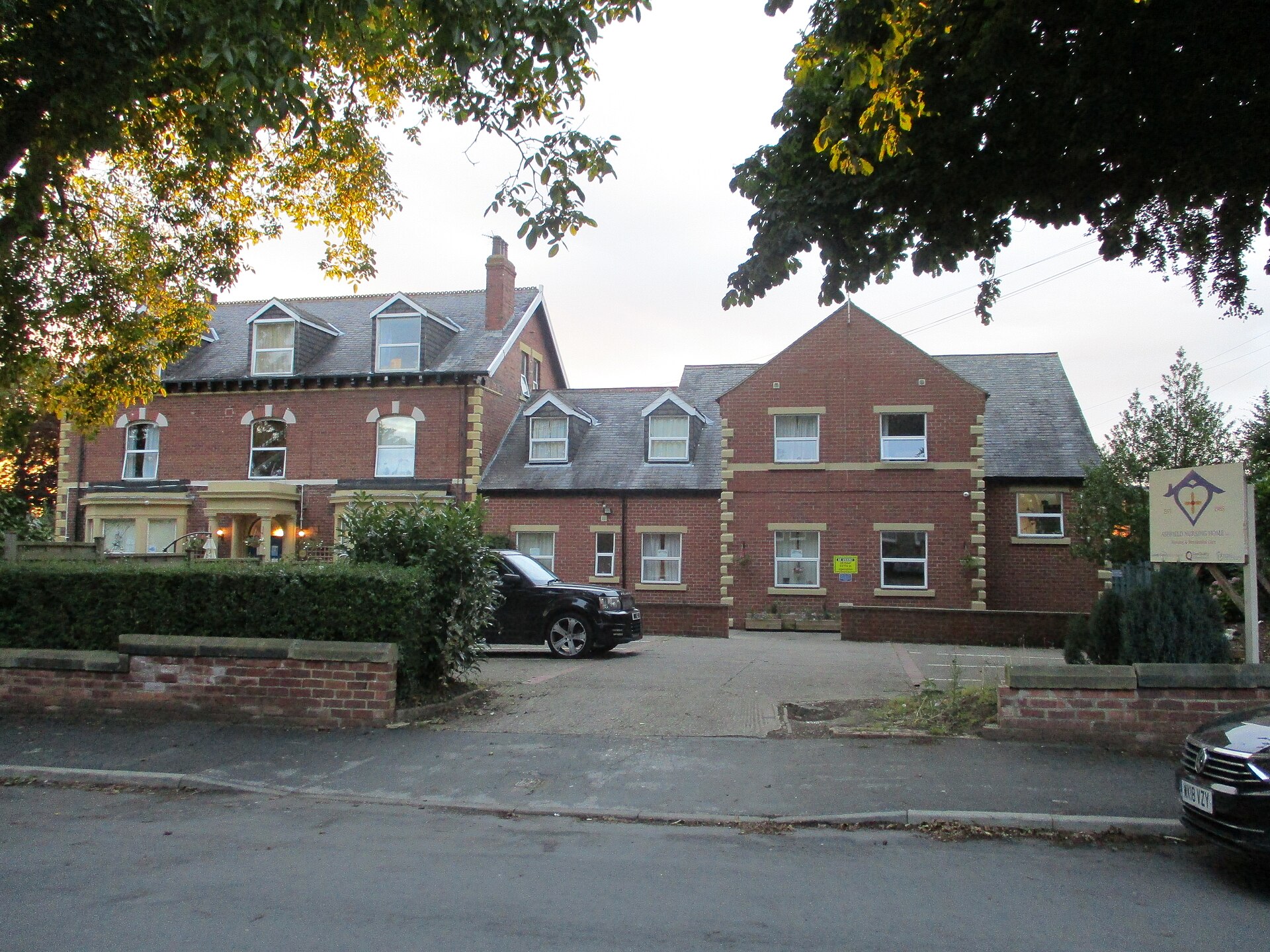

What a nursing home is, in law and in practice
Federal law uses two names for what most people call a nursing home. A skilled nursing facility (SNF) is a home certified to take Medicare patients under Social Security Act section 1819. A nursing facility (NF) is a home certified to take Medicaid residents under section 1919. Nearly every Idaho nursing home holds both certifications: in CMS's October 2026 file, 75 of the 80 are certified for "Medicare and Medicaid" and 5 for Medicare only.16101 The two sections of the Social Security Act are written almost word for word alike, and CMS enforces one set of rules for both, found in 42 CFR part 483, subpart B.17
A nursing home is different from assisted living. Idaho licenses assisted living as residential assisted living facilities (RALFs) under separate state rules; they provide supervision, meals and help with daily activities, but they are not required to have licensed nurses on duty around the clock and are not certified by CMS. Medicaid can pay for some services in a RALF through the Aged and Disabled waiver, which lesson 03 covers. This lesson is about the certified nursing homes only.
A nursing home is also different from a hospital. Seven Idaho nursing homes are physically part of a hospital ("hospital-based" in CMS's terms): Bear Lake Memorial in Montpelier, Bingham Memorial in Blackfoot, Boundary County Nursing Home in Bonners Ferry, Franklin County Transitional Care in Preston, Countryside Care and Rehabilitation in Rupert, Oneida County Hospital and Long Term Care in Malad and Power County Skilled Nursing Facility in American Falls.1 Most are small, rural and publicly owned; lesson 09 of module 88, Medicare and Rural Idaho, explains why small rural hospitals often keep a long-term care unit.
Two kinds of residents
Short-stay residents come from a hospital for skilled care: wound care, intravenous drugs, physical, occupational or speech therapy. Medicare Part A pays for up to 100 days of skilled nursing facility care in each benefit period, but only after an inpatient hospital stay of at least three consecutive days (not counting the day of discharge) and only while the person needs daily skilled care.18 In 2026 Original Medicare pays the full cost for days 1 to 20; for days 21 to 100 the patient owes a coinsurance of $217 a day.19 Medicare Advantage plans set their own rules for skilled nursing stays and often waive the three-day hospital requirement. A hospital stay billed as "observation" does not count toward the three days, a frequent source of surprise bills.
Long-stay residents live in the home because they cannot safely live elsewhere. Medicare does not pay for this "custodial" care. People pay from their own income and savings until they qualify for Medicaid, or they have long-term care insurance, or the VA pays for some veterans. Once a resident qualifies for Medicaid, Idaho Health and Welfare reduces its payment by the amount of the resident's own income that must go toward care, after a personal needs allowance and other deductions, under IDAPA 16.03.26 section 472 (before July 1, 2026, IDAPA 16.03.10 section 224) and the eligibility rules in IDAPA 16.03.05.13 Lesson 08 explains how that "patient liability" is figured.
Medicaid will pay for nursing home care only for a person who meets the nursing facility level of care, a functional test of how much help a person needs. Idaho's criteria are in IDAPA 16.03.26 section 471 (before July 1, 2026, IDAPA 16.03.10 sections 222 and 223); for adults, the department uses a standard assessment to decide whether the person falls in one of the classifications of Medicare's Patient Driven Payment Model (PDPM).13 Federal law also requires every nursing home that takes Medicaid to screen each applicant before admission for serious mental illness or intellectual disability (the Preadmission Screening and Resident Review, or PASRR), so that people whose needs can be met elsewhere are not placed in a nursing home by default.10
How many nursing homes Idaho has
CMS's Care Compare data, released Oct. 28, 2026, lists 80 certified nursing homes in Idaho with 6,115 certified beds and an average of 4,578.3 residents a day.1 The national file lists 14,686 homes with 1,567,009 certified beds and about 1,254,184 residents a day. Idaho homes are smaller than the national average: CMS's state averages file shows an average of 57.2 residents per Idaho home against 85.7 nationally.8
The number has been steady for a decade. We counted active Idaho nursing facilities and skilled nursing facilities (provider categories 02 to 04) in CMS's Provider of Services files: 78 facilities with 5,858 certified beds in the fourth quarter of 2015, 81 with 6,142 in the fourth quarter of 2019, 80 with 6,090 in the fourth quarter of 2023 and 80 with 6,103 in the fourth quarter of 2024.2 Homes closed and others opened in that time (see the section on closures below), but the statewide total stayed within a few facilities and a few hundred beds. Over the same years Idaho's population aged 65 and older grew quickly (lesson 01 has the Census figures), so the number of nursing home beds per older Idahoan fell, while more care moved to assisted living and to people's homes.
| State | Certified nursing homes | Certified beds | Average residents per day | Beds filled (our calculation) |
|---|---|---|---|---|
| Idaho | 80 | 6,115 | 4,578 | 74.9% |
| Utah | 97 | 8,379 | 5,831 | 69.6% |
| Oregon | 128 | 10,602 | 7,331 | 69.1% |
| Washington | 193 | 18,763 | 14,575 | 77.7% |
| Montana | 61 | 4,997 | 3,424 | 68.5% |
| Wyoming | 36 | 2,938 | 2,005 | 68.2% |
| Nevada | 66 | 7,235 | 6,125 | 84.7% |
| United States | 14,686 | 1,567,009 | 1,254,184 | 80.0% |
Source: CMS Care Compare Provider Information file, October 2026 release (processing date Oct. 1, 2026). Beds filled is average residents per day divided by certified beds, our calculation.1
Where they are
The homes follow Idaho's population. Ada and Canyon counties have 21 of the 80, with 2,003 certified beds. (CMS's file places one Nampa home, Cascadia of Nampa, in Ada County; we follow the file.) Kootenai, Nez Perce and Idaho counties in the north have 14 homes and 1,217 beds; Bonneville, Bannock and Bingham counties in the east have 10 homes and 751 beds.1 CMS classifies 51 of Idaho's homes as urban and 29 as rural. Some counties, including Camas, have none.
The Magic Valley counties used in this module (Twin Falls, Gooding, Lincoln, Minidoka, Cassia, Camas and Blaine) have 11 certified homes with 744 beds and an average of 533.5 residents a day, 71.7 percent of beds filled (our calculation). The table lists each one as CMS reported it in October 2026.
| Nursing home | Town (county) | Ownership (CMS) | Certified beds | Avg. residents per day | Overall stars | Total nurse hours per resident day |
|---|---|---|---|---|---|---|
| Twin Falls Transitional Care of Cascadia | Twin Falls (Twin Falls) | For profit, corporation | 116 | 79.4 | 5 | 3.65 |
| Bridgeview Estates | Twin Falls (Twin Falls) | For profit, LLC | 116 | 48.1 | 3 | 3.86 |
| Serenity Transitional Care | Twin Falls (Twin Falls) | For profit, LLC | 60 | 55.9 | 3 | 3.50 |
| Oak Creek Rehabilitation Center of Kimberly | Kimberly (Twin Falls) | For profit, LLC | 57 | 34.6 | 2 | 3.68 |
| Cascades at Desert View | Buhl (Twin Falls) | For profit, LLC | 57 | 34.5 | 1 | 4.05 |
| Bennett Hills Rehabilitation and Care Center | Gooding (Gooding) | For profit, corporation | 80 | 55.9 | 2 | 3.78 |
| Lincoln County Care Center | Shoshone (Lincoln) | For profit, LLC | 36 | 27.0 | 3 | 3.38 |
| Parke View Rehabilitation and Care Center | Burley (Cassia) | For profit, corporation | 86 | 80.0 | 5 | 3.86 |
| Mini-Cassia Care Center | Burley (Cassia) | For profit, corporation | 68 | 58.0 | 3 | 3.26 |
| Countryside Care and Rehabilitation | Rupert (Minidoka) | Government, county (hospital-based) | 36 | 29.1 | 3 | 5.93 |
| The Cove of Cascadia | Bellevue (Blaine) | For profit, LLC | 32 | 31.0 | 4 | 4.59 |
Source: CMS Care Compare Provider Information file, October 2026 release; staffing is reported total nurse staff hours per resident per day from Payroll-Based Journal data for April to June 2026. Hagerman, Wendell and Camas County have no certified nursing home in the file.1
Who owns Idaho's nursing homes
CMS's Care Compare file records each home's ownership type as the home reports it on its Medicare enrollment. In October 2026 Idaho's 80 homes broke down this way:1
- For profit: 65 homes (81.3 percent) with 5,334 beds (87.2 percent). Of these, 38 are limited liability companies, 26 are corporations and 1 is an individual owner.
- Government: 10 homes (12.5 percent) with 521 beds. Five are state-run (the four Idaho State Veterans Homes and Syringa Chalet Nursing Facility in Blackfoot, run by the state on the grounds of State Hospital South), three are county-run, one is run by a city and county together (Bear Lake Memorial in Montpelier) and one by a hospital district (Power County in American Falls).
- Nonprofit: 5 homes (6.3 percent) with 260 beds. They include the two Valley Vista Care Centers in Sandpoint and St. Maries, St. Luke's Elmore Long Term Care in Mountain Home, The Terraces of Boise and Bingham Memorial's skilled nursing unit in Blackfoot.
Idaho's for-profit share is higher than the national share. Nationally, 74.1 percent of certified homes are for-profit, 19.4 percent nonprofit and 6.5 percent government. Among the neighbors, Oregon (86.7 percent) and Nevada (86.4 percent) have higher for-profit shares, Washington (79.3 percent) is close to Idaho, and Utah (71.1 percent), Montana (57.4 percent) and Wyoming (47.2 percent) are lower. Wyoming stands out for government ownership: 38.9 percent of its homes, most of them county or hospital district facilities.1
Chains and operators
Most Idaho homes are part of a chain. CMS's "chain" field groups homes under common ownership or management. In October 2026 it shows Cascadia Healthcare with 25 Idaho homes, The Ensign Group with 15, Life Care Centers of America with 8, Cascades Healthcare with 5, Tanabell Health Services with 4, PACS Group and Advanced Health Care with 2 each, and Promontory Healthcare Management, Sunterra Springs and HumanGood with 1 each; 16 homes, including all the government homes, are not listed in any chain.1 Cascadia's chief financial officer told a trade publication in February 2026 that it operates 58 facilities in six states and that Idaho is its largest state.20
Chain membership matters to residents and to regulators because chains share management, purchasing and sometimes staff, and because a chain's track record in one state can say something about its homes in another. CMS publishes each chain's average star ratings next to each home on Care Compare. Cascadia's chain average overall rating in the October 2026 file was based on its homes in all states, not only Idaho.1
Private equity, real estate trusts and what the ownership data show
Ownership of U.S. nursing homes changed quickly in the 2010s, with private equity funds and real estate investment trusts (REITs) buying homes or the buildings under them. Research for the U.S. Department of Health and Human Services linked private equity ownership with lower staffing, and CMS said about 3,000 nursing homes changed ownership from 2016 to 2021, about four times the number of hospitals.21 Section 6101 of the Affordable Care Act (2010) required nursing homes to disclose more about their owners, and CMS's final rule on disclosure of ownership (Federal Register document 2023-25408, announced Nov. 15, 2023) added definitions of private equity and REITs and required homes to report those who lease property to them.21
CMS now publishes two ownership files. The Care Compare Ownership file lists each direct and indirect owner and manager of each home with the role it plays and its ownership percentage. The Skilled Nursing Facility All Owners file from Medicare enrollment flags owners the home itself reports as private equity companies or REITs.2223 In the All Owners file dated Sept. 29, 2026, we found no Idaho skilled nursing facility enrollment with an owner flagged as a private equity company or a REIT. Nationally, 98 enrollments listed a private equity owner and 606 listed a REIT owner, out of 14,404 (our count). By comparison, 20 Oregon enrollments and 10 Washington enrollments listed a REIT owner.23
That finding has limits. The flags are self-reported. A REIT that owns a nursing home's building and leases it to an operator is a landlord, which the 2023 rule requires homes to report, but a landlord may not appear as an "owner" with a percentage in the enrollment file. And a company that is publicly traded or owned through layers of holding companies may not be flagged as private equity even when investors hold large stakes. The plain reading of the federal records, as of September 2026, is that no Idaho home reported a private equity or REIT owner; anyone writing about a specific home should check its full ownership listing and its operator's own filings.
Who pays: the payer mix
The most complete public measure of who pays for nursing home care is the Medicare cost report, which every certified skilled nursing facility files each year. Each report counts the resident days paid by Medicare (Title XVIII), Medicaid (Title XIX) and all other payers. "Other" includes residents paying privately, long-term care insurance, Medicare Advantage plans (which are not counted as Title XVIII days in this field), the VA and hospice arrangements.3
We added up the 76 Idaho cost reports for reporting periods that began in 2023, the newest complete year in CMS's public file. They counted 1,500,402 resident days: 60.1 percent paid by Medicaid, 10.9 percent by Medicare and 29.0 percent by others.3 Nationally the shares were 56.0, 10.4 and 33.6 percent. Among the neighbors, Wyoming (59.9 percent) and Montana (57.9 percent) were close to Idaho's Medicaid share, while Washington (54.4 percent), Utah (53.1 percent), Nevada (53.0 percent) and Oregon (47.6 percent) were lower.
The nursing home industry uses a slightly different figure. Robert Vande Merwe, executive director of the Idaho Health Care Association, the nursing home trade group, told Idaho Reports in August 2025 that about 67 percent of nursing facility care in Idaho is Medicaid, with a higher share in rural areas.15 The difference may come from counting residents rather than days, from a different year, or from counting Medicaid managed care residents differently; the cost report figure is the one anyone can check.
The local pattern is clear in the cost reports. Medicaid paid for 44.6 percent of resident days in Ada County homes but 77.2 percent in Canyon County. In the Magic Valley, Medicaid's share was 65.3 percent in Twin Falls County homes, 77.5 percent in Cassia County, 69.7 percent in Gooding County, 79.1 percent in Lincoln County and 77.9 percent in Blaine County. In the east, it was 55.0 percent in Bonneville County and 59.2 percent in Bannock County; in the north, 57.1 percent in Kootenai County, 54.6 percent in Nez Perce County and 67.0 percent in Idaho County.3 Hospital-based units, including Countryside Care and Rehabilitation in Rupert, file hospital cost reports and are not in these county totals.
How we figured it: payer mix from cost reports
Data. CMS's Skilled Nursing Facility Cost Report public use file for cost reporting periods beginning in calendar year 2023 (file CostReportsnf_Final_23, posted October 2026). Each row is one facility's report.3
Method. For each state we added the fields "Total Days Title XIX" (Medicaid), "Total Days Title XVIII" (Medicare) and "Total Days Other," and divided each by "Total Days Total." Idaho: 76 reports and 1,500,402 total days. The United States: 14,944 reports. We did not weight or adjust the data.
Limits. Reporting periods differ by facility (most follow the calendar year, some a fiscal year). Medicare Advantage days are reported as "other," so Medicare's role is larger than the Title XVIII share alone suggests. Hospital-based nursing units file hospital cost reports and are mostly not in this file. County totals use the county field in the cost report.
How Idaho Medicaid pays nursing homes
Federal law leaves Medicaid nursing home payment rates to each state, within limits. A state's payments must be consistent with efficiency, economy and quality of care and sufficient to attract enough providers, under Social Security Act section 1902(a)(30)(A),24 and total payments to each class of facility cannot exceed a federal upper payment limit, a reasonable estimate of what Medicare payment principles would pay, under 42 CFR 447.272.25 Inside those limits, Idaho's method is written in state statute and in IDAPA 16.03.26, Medicaid Plan Benefits, which on July 1, 2026 replaced the older Enhanced Plan rules in IDAPA 16.03.10.
The daily rate
IDAPA 16.03.26 sections 481 to 495 describe Idaho's nursing facility reimbursement system in short form; section 481 points to the department's "Idaho Medicaid Provider Agreement Additional Terms: Nursing Facility" for the details. The rule it replaced, IDAPA 16.03.10 sections 250 to 287, spelled out more of the method and said it implemented Idaho Code sections 56-101 through 56-135.13 In plain terms:
- It is prospective and price-based. Section 482 says payments go to nursing facilities "through a prospective price-based system, which includes NF-specific case mix adjustments, separate margin payments for indirect care costs and direct care costs, and applied BAF" (budget adjustment factor). Under section 484, new rates take effect each July 1, calculated from audited cost reports for periods ending two calendar years earlier, with an inflation adjustment; the older rule named the Skilled Nursing Facility Market Basket index as that inflation measure.
- It has separate parts. A direct care part (nursing staff and supplies), adjusted by each home's case mix; an indirect care part (administration, dietary, housekeeping and the like); a property part; and "margin" payments for homes whose costs fall below the price set for their group.
- Case mix changes it quarterly. A home's direct care rate is adjusted using its residents' care needs as measured by the federal Minimum Data Set assessments, so a home with sicker residents receives more. Section 482 says rates are set on each home's case-mix index quarterly.
- Property is paid as a rental rate. Instead of paying depreciation and interest, Idaho pays freestanding homes a property rental rate per Medicaid day, under a formula in Idaho Code section 56-108 based on a 1985 base of $9.24, building cost indexes and the age of the facility.26
- A budget factor can cut every rate. The rules define a budget adjustment factor applied each July 1 so that total payments fit what the Legislature appropriated.13
- Special cases. Section 486 lets the department set an alternative rate for a "distressed" facility in an under-served area or addressing an under-served need, and sections 488 to 490 allow a higher direct care cost limit for homes with a behavioral care unit for residents with serious behavioral needs.13
Idaho Code section 56-265 adds two controls over all Medicaid provider rates. Subsection (4) requires the department to request rate adjustments through the annual budget and says "All changes to provider payment rates shall be subject to approval of the legislature by appropriation." Subsection (5) lets the department enter value-based agreements with providers, paying based on measured quality, as long as they are cost-neutral or save money.14
The nursing facility assessment
Like most states, Idaho uses a provider tax to draw more federal money for nursing homes. The Idaho Skilled Nursing Facility Assessment Act, Idaho Code sections 56-1501 to 56-1509 (the current sections were added in 2011, Session Laws chapter 164), charges nursing homes a uniform assessment per resident day, excluding Medicare Part A days; state- and county-owned homes do not pay. The total cannot exceed the maximum share of net patient revenue that federal law allows.27 The money goes into a dedicated fund, is matched with federal Medicaid dollars, and under section 56-1504 can be used only to reimburse the Medicaid share of the assessment, fund quality incentive payments to nursing homes, raise payments up to the federal upper payment limit, cover limited administrative costs (no more than 1 percent) and repay the federal government if CMS later disallows the payments.27
The 2025 federal law changed the rules for provider taxes in ways that matter more for hospitals than for nursing homes; lesson 12 explains the freeze and phase-down. For nursing homes, the immediate Idaho question in 2025 was a different one. House Concurrent Resolution 15 (2025), introduced Feb. 25, 2025, by the House Health and Welfare Committee, stated that CMS "has required that the State of Idaho change its skilled nursing facility reimbursement system by July 1, 2026," and asked Health and Welfare to convene a council to move the supplemental upper payment limit payments into the daily Medicaid rate, have Medicaid managed care plans pay those amounts as part of a minimum fee schedule, and collect the assessment quarterly. The legislative record shows the resolution was printed and referred to the House Health and Welfare Committee, with no further action.28 Whether and how Idaho changed its method by July 1, 2026, is not clear from the public records we could find; it is listed as unverified below.
The 2025 and 2026 rate cuts
Idaho's Medicaid budget ran short in 2025. In an Aug. 22, 2025, letter, Health and Welfare Director Juliet Charron announced a 4 percent cut to Medicaid reimbursement rates for nearly all services, including nursing care, effective Sept. 1, 2025, citing a Medicaid budget growth forecast that had risen from the 8 percent the Legislature assumed to 19 percent.15 Vande Merwe of the Idaho Health Care Association responded that the cuts would cause providers "to accept fewer Medicaid clients, or none at all," and that private pay and Medicare compensate for low Medicaid rates in Idaho nursing facilities.15
In October 2025 the governor's budget office proposed keeping the 4 percent provider rate cut for another year, into state fiscal year 2027; budget chief Lori Wolff said it accounted for about $41.6 million of the fiscal year 2027 reductions.29 The 2026 Legislature's Medicaid actions, summarized by the Idaho Capital Sun on April 9, 2026, focused on disability services (House Bill 863), Assertive Community Treatment and work requirements (House Bill 913); the Capital Sun noted the 4 percent provider rate cut made the year before.30 We did not find a 2026 bill aimed specifically at nursing facility rates. In February 2026, Cascadia's chief financial officer told a trade publication that Idaho and Washington had partly offset lower Medicaid rates through a nursing home bed tax carve-out and rural health funding.20
The budget documents that show the nursing facility line, including the Health and Welfare budget request and the Legislative Services Office's budget analysis for the Medicaid division, are explained in module 75, The Idaho State Budget, and in module 74's Follow the Money. MACPAC's analysis of CMS-64 spending reports shows Idaho spent $244 million in federal fiscal year 2024 on fee-for-service institutional long-term services and supports, a category that includes nursing facilities, intermediate care facilities for people with intellectual disabilities and mental health facilities; spending paid through managed care plans is counted in MACPAC's managed care category instead.31
What federal law requires of every certified nursing home
The modern federal standards date from the Nursing Home Reform Act, part of the Omnibus Budget Reconciliation Act of 1987 (P.L. 100-203, signed Dec. 22, 1987). It rewrote both section 1819 (Medicare) and section 1919 (Medicaid) to require that each home care for residents "to attain or maintain the highest practicable physical, mental, and psychosocial well-being of each resident," to assess every resident with a standard instrument, to train nurse aides and to protect a written list of residents' rights.3210 CMS's regulations implementing those sections are in 42 CFR part 483, subpart B, sections 483.1 to 483.95. CMS rewrote much of subpart B in a final rule published Oct. 4, 2016 (81 FR 68688), with the changes phased in from 2016 to 2019.17
Residents' rights
42 CFR 483.10 says a resident "has a right to a dignified existence, self-determination, and communication with and access to persons and services inside and outside the facility."33 The rule then lists specific rights. Among them:
- To be informed of and take part in decisions about one's own care and treatment, including the right to refuse treatment, and to choose one's attending physician.
- To manage one's own money, or to have the facility hold it in a separate interest-bearing account with quarterly statements if the resident chooses.
- To privacy and confidentiality of personal and medical records, and to see one's records within 24 hours (excluding weekends and holidays) of asking.
- To receive visitors of one's choosing at any time, subject to the resident's own consent and reasonable safety limits.
- To voice grievances without discrimination or reprisal, and to have the facility act promptly on them.
- To organize and take part in resident and family councils. CMS's October 2026 file shows which Idaho homes report a resident council, a family council or both.1
- To be free from physical or chemical restraints imposed for discipline or convenience and not needed to treat medical symptoms, and to be free from abuse, neglect, misappropriation of property and exploitation (42 CFR 483.12).34
The transfer and discharge rule, 42 CFR 483.15, limits when a home may make a resident leave. A home may transfer or discharge a resident only for the reasons listed in the rule, such as when the resident's needs cannot be met in the facility, the resident's health has improved, the safety or health of others is endangered, the resident has failed to pay after reasonable notice, or the facility closes. In most cases the home must give written notice at least 30 days in advance, stating the reason, the effective date and the right to appeal, and must send a copy to the state long-term care ombudsman.3510 A Medicaid resident who goes to the hospital has a right to return to the home under its bed-hold and readmission policy.
Two other rules shape daily care. 42 CFR 483.20 requires a standardized assessment of each resident (the Minimum Data Set) at admission, at least quarterly and when the resident's condition changes significantly, and 42 CFR 483.21 requires a baseline care plan within 48 hours of admission and a full care plan built from the assessment, with the resident and family invited to take part.36
The nurse staffing rule that remains
Since 1987 the statute has required each nursing facility to "provide 24-hour licensed nursing services which are sufficient to meet the nursing needs of its residents" and to "use the services of a registered professional nurse for at least 8 consecutive hours a day, 7 days a week," with a full-time registered nurse as director of nursing; states can waive the RN and 24-hour licensed nurse requirements for a facility that shows it cannot recruit enough staff.10 The current regulation, 42 CFR 483.35, repeats those requirements and adds a general standard: the home "must have sufficient nursing staff with the appropriate competencies and skills sets" to meet residents' needs, "in accordance with the facility assessment required at § 483.71."37
That facility assessment, 42 CFR 483.71, requires each home to document, at least once a year, how many residents it serves, what care they need and what staff, equipment and services it must have to care for them, including on nights and weekends and in emergencies.38 No number of hours is set. Nurse aides must complete a state-approved training and competency evaluation program within four months of starting full-time work (section 1919(b)(5) and 42 CFR 483.35(d)).37


The 2024 staffing rule and what happened to it
On May 10, 2024, CMS published a final rule, "Minimum Staffing Standards for Long-Term Care Facilities and Medicaid Institutional Payment Transparency Reporting" (CMS-3442-F, 89 FR 40876). For the first time it set numeric minimums: 3.48 total nurse staff hours per resident per day (HPRD), including at least 0.55 registered nurse HPRD and 2.45 nurse aide HPRD, plus a registered nurse on site 24 hours a day, 7 days a week. It also strengthened the facility assessment rule and required states to report the share of Medicaid payments to nursing homes and intermediate care facilities that goes to direct care workers.47
The rule was phased in. The 24/7 RN and 3.48 total HPRD requirements were to apply to non-rural homes by May 11, 2026, and to rural homes by May 10, 2027; the 0.55 RN and 2.45 nurse aide HPRD requirements by May 10, 2027 (non-rural) and May 10, 2029 (rural). Homes could seek limited, temporary hardship exemptions.7
The arguments for and against
Supporters, including resident advocates and nursing unions, argued that understaffing is the root of many quality problems, that federal law had left "sufficient" undefined for decades, and that research ties higher nurse staffing to better resident outcomes. CMS cited that research and its own staffing study in the final rule and said the standards would protect residents in the homes with the lowest staffing.4
Opponents, led by the American Health Care Association (the national nursing home trade group) and joined by many states, argued that there were not enough nurses and aides to hire, especially in rural areas; that the cost would close homes and reduce access, particularly where Medicaid pays most of the bills; that a single national number ignores differences in residents' needs; and that Congress had never given CMS authority to set such a number. When CMS repealed the standards in 2025, it estimated that removing them would save facilities, patients and payers about $55.1 billion over 10 years, about $5.5 billion a year.7
The courts, Congress and the repeal
Three things ended the numeric standards:
- April 7, 2025: a federal court in Texas. In American Health Care Association v. Kennedy, No. 2:24-cv-114-Z (consolidated with No. 2:24-cv-171-Z), the U.S. District Court for the Northern District of Texas, Amarillo Division, entered judgment for the plaintiffs and vacated the 24/7 RN requirement and the HPRD requirements, holding that HHS had exceeded its statutory authority. The government filed an appeal to the Fifth Circuit on June 2, 2025.57
- June 18, 2025: a federal court in Iowa. In Kansas v. Kennedy, No. C24-110-LTS-KEM, the U.S. District Court for the Northern District of Iowa, in a suit brought by a group of states, granted summary judgment and vacated the HPRD and 24/7 RN provisions.7
- July 4, 2025: Congress. Section 71111 of P.L. 119-21, the 2025 reconciliation law, bars HHS from implementing, administering or enforcing the 2024 staffing standards through Sept. 30, 2034.67
- Dec. 3, 2025: CMS repeals the standards. CMS published an interim final rule (Federal Register document 2025-21792) removing the 3.48, 0.55 and 2.45 HPRD standards, the 24/7 RN requirement and the definition of "hours per resident day" from 42 CFR 483.5 and 483.35, effective Feb. 2, 2026. It restored the 8-hour-a-day RN requirement and kept the "sufficient staff" standard tied to the facility assessment.7
The Medicaid institutional payment transparency reporting part of the 2024 rule, which requires states to report how much of their nursing home and ICF/IID payments goes to compensation for direct care workers, is a separate rule, 42 CFR 442.43, which the 2024 rule required states to implement beginning May 10, 2028. It was not among the staffing standards removed in December 2025; whether CMS has since changed it is listed as unverified below.4
Idaho's own staffing rules
Idaho once had its own state licensing rules for nursing homes, IDAPA 16.03.02, "Skilled Nursing and Intermediate Care Facilities," and a state statute on minimum staffing, Idaho Code section 39-1307B. Senate Bill 1015 (2025), the "Streamlined Facilities Licensing and Inspection Act," repealed section 39-1307B and the other old hospital and nursing home licensing sections, and its statement of purpose says it repeals IDAPA 16.03.02 as no longer necessary. The bill passed the Senate and the House (with two House members voting no), was signed by Gov. Brad Little on March 19, 2025, and became Session Law chapter 122, effective July 1, 2025.39
Under the new Idaho Code section 39-1303, a nursing facility must "have and maintain CMS certification," and a facility that is at least in substantial compliance is licensed; under section 39-1304 a license stays in force until it is surrendered or the facility fails to meet CMS certification standards, and the department may deny or revoke a license when conditions endanger residents. Section 39-1305 keeps the department's power to make "such inspections and investigations as it deems necessary."39 In practice, since July 1, 2025, Idaho nursing homes are held to the federal standards in 42 CFR part 483, and Idaho has no separate state staffing minimum for them.
Idaho staffing by the numbers
Every certified nursing home must report its staffing to CMS each quarter through the Payroll-Based Journal (PBJ) system, a requirement added to the Social Security Act by the Affordable Care Act (section 1128I(g)). Homes submit daily hours worked by each type of nurse and aide, drawn from payroll and contractor records, along with daily resident counts.40 CMS uses the data in the Care Compare staffing measures and the staffing star rating and publishes the daily records for every home.9
The October 2026 Care Compare release uses PBJ data for April to June 2026. We confirmed this by recomputing Idaho's average from CMS's PBJ daily file for that quarter: the average across 79 Idaho homes came to 3.99 total nurse staff hours per resident per day, matching the Care Compare state average.98
| Measure (April to June 2026) | Idaho | U.S. | UT | OR | WA | MT | WY | NV |
|---|---|---|---|---|---|---|---|---|
| Total nurse staff hours per resident per day | 3.99 | 3.90 | 4.08 | 5.13 | 4.42 | 4.02 | 3.98 | 4.33 |
| Registered nurse hours per resident per day | 0.84 | 0.69 | 1.24 | 0.76 | 0.99 | 0.92 | 0.96 | 1.13 |
| Nurse aide hours per resident per day | 2.41 | 2.35 | 2.36 | 3.48 | 2.68 | 2.56 | 2.50 | 2.36 |
| Weekend total nurse staff hours per resident per day | 3.39 | 3.43 | 3.54 | 4.56 | 3.82 | 3.53 | 3.38 | 3.80 |
| Weekend RN hours per resident per day | 0.56 | 0.48 | 0.90 | 0.52 | 0.71 | 0.65 | 0.64 | 0.89 |
| Total nursing staff turnover (percent) | 49.5 | 45.3 | 50.0 | 43.5 | 43.9 | 54.6 | 52.1 | 43.0 |
| Registered nurse turnover (percent) | 40.7 | 42.5 | 40.1 | 49.5 | 43.8 | 48.9 | 44.8 | 39.3 |
| Staffing star rating, state average | 3.0 | 3.0 | 3.2 | 3.9 | 3.7 | 3.5 | 3.4 | 3.3 |
Source: CMS Care Compare State and US Averages file, October 2026 release (processing date Oct. 1, 2026). Hours are averages across homes, reported (not case-mix adjusted). Turnover is the share of nursing staff who left over a 12-month period, as defined in CMS's data dictionary.841
Three things stand out. First, Idaho's total staffing is a little above the national average but below every neighbor except Wyoming; Oregon reports the highest figure in the region. Second, Idaho homes report more registered nurse time than the national average, 0.84 hours against 0.69, both on weekdays and on weekends. Third, staffing drops on weekends everywhere: Idaho's weekend total, 3.39 hours, is 15 percent below its overall average (our calculation). Idaho's nursing staff turnover, 49.5 percent, is higher than the national figure.
Idaho homes rely little on agency staff. In the April to June 2026 PBJ records, contract and agency workers supplied 4.1 percent of all nurse staff hours in Idaho homes (our calculation from the employee and contract hour fields).9
How many Idaho homes would have met the repealed standard
Using each home's reported hours in the October 2026 file, we counted how many homes met all three numeric standards from the 2024 rule (3.48 total, 0.55 RN and 2.45 nurse aide hours per resident per day). In Idaho, 22 of 79 homes with reported staffing (27.8 percent) met all three; 78.5 percent met the 3.48 total, and 83.5 percent met the 0.55 RN level. The nurse aide standard was the hardest to meet. Nationally, 22.8 percent of homes met all three. Among the neighbors, Oregon (70.2 percent) and Washington (51.9 percent) had the highest shares, and Nevada (25.0 percent) the lowest.1
How we figured it: homes meeting the repealed 2024 standards
Data. CMS Care Compare Provider Information file, October 2026 release, fields "Reported Total Nurse Staffing Hours per Resident per Day," "Reported RN Staffing Hours per Resident per Day" and "Reported Nurse Aide Staffing Hours per Resident per Day" (PBJ data for April to June 2026).1
Method. A home was counted as meeting the standard if its reported total was at least 3.48, its RN figure at least 0.55 and its nurse aide figure at least 2.45. Homes with any of the three fields blank were left out (1 in Idaho; 367 nationally). Idaho: 22 of 79. United States: 3,265 of 14,319.
Limits. The 2024 rule would have measured compliance its own way, using facility-wide hours over set periods; this is a rough check, not a compliance finding. The rule was never enforced and has been repealed. The 24/7 on-site RN requirement cannot be measured from these averages.
The workforce
Certified nursing assistants (CNAs) give most of the hands-on care in nursing homes. In the U.S. Bureau of Labor Statistics' Occupational Employment and Wage Statistics survey for May 2025, Idaho had about 7,910 nursing assistants (in all settings, including hospitals and assisted living) with a mean wage of $18.80 an hour ($39,100 a year), against $20.53 an hour ($42,700) nationally. Neighbors paid more: $19.45 in Utah, $19.94 in Wyoming, $20.75 in Montana, $21.59 in Nevada, $25.08 in Oregon and $25.11 in Washington. Idaho's registered nurses averaged $44.57 an hour (U.S. $48.76) and licensed practical nurses $30.70 (U.S. $32.24).42
Those wage gaps help explain the staffing debate. A nursing home in Idaho competes for aides with hospitals, assisted living, home care agencies and retail and warehouse jobs, and for nurses with hospitals in Boise and in neighboring states that pay more. Most of a nursing home's revenue for long-stay residents comes from the Medicaid rate, so the rate the Legislature funds sets a ceiling on wages. Operators argue that rate cuts make hiring harder; advocates for residents argue that operators choose how to spend what they are paid. Both points can be tested with cost reports, PBJ data and wage surveys, and few public studies have done so for Idaho.


Care Compare star ratings for Idaho
CMS's Five-Star Quality Rating System, published on Medicare's Care Compare website since December 2008, gives each home one to five stars on three parts and an overall rating. The health inspection rating comes from the last two standard surveys and three years of complaint inspections, scored by the number and seriousness of deficiencies and compared with other homes in the same state. The staffing rating comes from PBJ hours adjusted for residents' needs and from turnover. The quality measures rating comes from resident assessment data and Medicare claims on things such as falls, pressure ulcers, antipsychotic use and rehospitalizations. The overall rating starts from the health inspection stars and adds or subtracts stars for staffing and quality.43
Because the health inspection rating compares homes within each state, its distribution is set by design (roughly the bottom fifth of homes in each state get one star), so it is not a direct comparison of states. The staffing and quality ratings use national thresholds.43
| Rating (Idaho, October 2026) | 1 star | 2 stars | 3 stars | 4 stars | 5 stars | Not rated | Idaho average | U.S. average |
|---|---|---|---|---|---|---|---|---|
| Overall | 12 | 17 | 17 | 16 | 17 | 1 | 3.1 | 3.0 |
| Health inspection | 18 | 19 | 19 | 19 | 4 | 1 | 2.6 | 2.8 |
| Staffing | 12 | 16 | 19 | 19 | 12 | 2 | 3.0 | 3.0 |
| Quality measures | 0 | 8 | 10 | 19 | 42 | 1 | 4.2 | 3.7 |
Source: counts from CMS Care Compare Provider Information file, October 2026 release, Idaho's 80 homes; averages from the State and US Averages file. The home not rated overall is the one in the Special Focus Facility program, which CMS does not rate.18
Idaho homes score well on the quality measures (42 of 80 have five stars) and below average on health inspections. The two do not always agree because they measure different things: the quality measures come largely from data the homes themselves report in resident assessments, while health inspection results come from state surveyors. CMS's technical users' guide explains how each of the three domains is scored and how they combine; it describes the rating system as a way to make distinctions between high and low performing homes, built from the data available, not as a guarantee about any resident's care.43
Inspections and enforcement
Federal law makes each state's survey agency CMS's inspector. In Idaho that is the Bureau of Facility Standards (BFS) in the Department of Health and Welfare, whose Long Term Care Program surveys skilled nursing facilities; CMS "maintains oversight" and makes final certification decisions.11 Under Social Security Act section 1919(g)(2)(A)(iii), each home must have a standard survey "not later than 15 months after the date of the previous standard survey," and "the statewide average interval between standard surveys of a nursing facility shall not exceed 12 months." Standard surveys are unannounced.10 Surveyors also investigate complaints and "facility-reported incidents," such as alleged abuse or injuries of unknown cause, which homes must report under 42 CFR 483.12; BFS runs an online portal for those reports.3411
Surveyors follow CMS's State Operations Manual. When they find a home out of compliance with a requirement, they cite a deficiency under a federal tag number (an "F-tag") and assign it a letter for scope and severity.
The scope and severity grid
The grid has 12 boxes, A to L. Severity has four levels: no actual harm with potential for minimal harm (A, B, C); no actual harm with potential for more than minimal harm (D, E, F); actual harm that is not immediate jeopardy (G, H, I); and immediate jeopardy to resident health or safety (J, K, L), meaning the noncompliance has caused or is likely to cause serious injury, harm, impairment or death. Scope has three levels: isolated, pattern and widespread. CMS's remedy rules in 42 CFR 488.408 tie the choice of penalties to these categories: plans of correction and state monitoring for lower-level deficiencies; denial of payment for new admissions and civil money penalties for widespread potential harm or actual harm; and temporary management, termination or the highest civil money penalties for immediate jeopardy.44
What Idaho inspections find
CMS's October 2026 health deficiencies file lists 2,159 health citations for Idaho homes from the inspections used in current ratings, most of them dated 2023 to 2026. That is 27.0 citations per home, against 28.6 nationally. Of Idaho's citations, 1,108 came from complaint investigations.45 The CMS state averages file shows Idaho homes averaged 10.4 health deficiencies on their most recent standard survey cycle, against 9.2 nationally.8
Idaho's citations are less often at the serious end of the grid. Only 3.3 percent were at actual harm or immediate jeopardy (G to L), against 5.3 percent nationally, 11.3 percent in Utah, 10.0 percent in Wyoming, 6.9 percent in Montana, 4.2 percent in Oregon, 4.0 percent in Washington and 1.6 percent in Nevada (our calculation).45 This may reflect care, surveyor practice or both. Survey agencies in different states do not cite in exactly the same way, so the shares are best read as a comparison of what was cited, not a ranking of care.
The deficiencies cited most often in Idaho, by CMS's description of each tag, were:
- Food safety: procuring, storing, preparing and serving food under sanitary conditions (F812), 134 citations.
- Infection control: providing and implementing an infection prevention and control program (F880), 130.
- Quality of care: appropriate treatment and care according to orders and the resident's preferences and goals (F684), 114.
- Drug labeling and storage (F761), 98.
- Care plan timing and revision (F657), 87.
- Respiratory care (F695), 80.
- Accident hazards and supervision to prevent accidents (F689), 64.
- Developing and carrying out each resident's care plan (F656), 63.45
Eight citations were at immediate jeopardy. They include, for example, a citation at level J under F600, the requirement to "protect each resident from all types of abuse such as physical, mental, sexual abuse, physical punishment, and neglect by anybody," at Oak Creek Rehabilitation Center of Kimberly in a July 4, 2024, survey; CMS's penalties file shows a $13,627 fine for the home dated the same day.4546 Other immediate jeopardy citations in the file were at homes in Nampa, Sandpoint, Boise and Lewiston, under tags for abuse and neglect, dialysis care, significant medication errors, quality of care, food safety and infection control (one at level L, widespread). The inspection reports themselves, called the CMS-2567 "statement of deficiencies," describe what surveyors found and the home's plan of correction; they are posted on Care Compare and can be requested from BFS.
Fines and other penalties
Civil money penalties are set by statute (up to $10,000 a day in section 1919(h) as written in 1987) and adjusted for inflation each year under 45 CFR part 102.1044 CMS's October 2026 penalties file lists 39 fines against 27 Idaho homes, dated Oct. 18, 2023, to Sept. 3, 2026, totaling $1,015,042 (our sum). By year: 6 fines in the part of 2023 covered, 15 in 2024, 14 in 2025 and 4 through September 2026. No Idaho home had a denial of payment for new admissions in the file. The largest fines were $186,850 against Idaho State Veterans Home Lewiston (June 28, 2024), $144,000 against Lakeside Rehabilitation and Care Center in Coeur d'Alene (Oct. 18, 2023) and another $76,832 against Lakeside (Oct. 11, 2024), and $58,286 against Cascadia of Nampa (Dec. 5, 2025).46 The average Idaho home was fined $12,688 over the period, against $30,351 nationally, according to CMS's state averages.8 CMS marks homes cited for abuse with an icon on Care Compare; 8 Idaho homes carried it in October 2026.1
A fine is not a finding that a particular resident was harmed, and homes can dispute citations through informal dispute resolution with the state or an independent review, and appeal penalties to the HHS Departmental Appeals Board. BFS's web page describes Idaho's informal and independent dispute resolution processes.11
Special Focus Facilities
Section 1919(f)(10) of the Social Security Act requires CMS to run a "special focus facility program" for homes with a history of serious problems and to survey each one "not less often than once every 6 months."10 CMS picks candidates in each state using the same inspection scoring as the health inspection star rating; the candidate list is five homes for each Special Focus Facility (SFF) slot, with at least five candidates per state, and the state survey agency chooses which candidate becomes an SFF. A home graduates after two consecutive standard health surveys with 12 or fewer deficiencies cited at scope and severity level E or less on each survey. Under CMS's revised program rules (memo QSO-23-01-NH, revised Jan. 28, 2026), an SFF cited at immediate jeopardy on any two surveys while in the program will be considered for termination from Medicare and Medicaid.1247
CMS's October 2026 list shows one Idaho SFF: Silverton Health and Rehabilitation of Cascadia in Silverton (Shoshone County), in the program for 16 months, which met the graduation criteria on its July 10, 2026, survey. Five Idaho homes were candidates: Timber Springs Transitional Care in Boise (a candidate for 32 months), Karcher Post Acute in Nampa (7 months), Cascades at Desert View in Buhl (4 months), Cascadia of Nampa (4 months) and The Orchards of Cascadia in Nampa (1 month). Two Idaho homes have graduated: Cascadia of Boise on Sept. 20, 2024, after 15 months, and Royal Plaza Health and Rehabilitation of Cascadia in Lewiston on June 2, 2025, after 8 months.12
COVID-19 in Idaho nursing homes
COVID-19 hit long-term care hardest. On Dec. 14, 2021, Health and Welfare Director Dave Jeppesen said Idaho had "crossed the grim milestone of 1,000 COVID deaths among long-term care residents," about one in four of the state's COVID-19 deaths at that time. That count covered residents of nursing homes and of other long-term care facilities.48 During the pandemic CMS required nursing homes to report COVID-19 cases and deaths to the CDC's National Healthcare Safety Network and published the results by facility. Infection control remains the second most-cited deficiency in Idaho (above).45
The federal facility-level COVID-19 nursing home data are no longer posted on data.cms.gov's current catalog, and we could not retrieve a final cumulative count of COVID-19 deaths among Idaho nursing home residents from a federal source for this lesson. That number is listed as unverified.
Closures and changes of ownership, 2015 to 2026
Idaho did not see the wave of nursing home closures that hit some rural states, but homes have closed and many have changed hands. CMS's Provider of Services files record when a provider's Medicare and Medicaid participation ends and why, using codes defined in the file's data dictionary.249 For Idaho nursing homes since 2015 they show:
| Date participation ended | Facility (city) | Certified beds | CMS termination code | Notes |
|---|---|---|---|---|
| Dec. 1, 2015 | River Ridge Center (Twin Falls) | 119 | 01: voluntary, merger or closure | Magic Valley |
| Dec. 19, 2016 | Eastern Idaho Regional Medical Center transitional care unit (Idaho Falls) | 16 | 06: involuntary, failure to meet agreement | Hospital unit |
| Nov. 30, 2017 | Safe Haven Care Center of Pocatello (Pocatello) | 84 | 05: involuntary, failure to meet health and safety requirements | |
| Jan. 16, 2018 | Saint Alphonsus Transitional Rehabilitation Unit (Boise) | 15 | 01: voluntary, merger or closure | Hospital unit |
| April 20, 2021 | Good Samaritan Society Boise Village (Boise) | 127 | 05: involuntary, failure to meet health and safety requirements | Residents moved by May 20, 2021 |
| May 31, 2021 | Caribou Memorial Living Center (Soda Springs) | 30 | 01: voluntary, merger or closure | Rural, hospital-affiliated |
| Sept. 30, 2023 | St. Luke's Rehab Elks Sub Acute Rehab Unit (Boise) | 20 | 01: voluntary, merger or closure | Hospital unit |
Source: CMS Provider of Services File (QIES), fourth quarter 2024, Idaho provider categories 02 to 04; codes from the file's data dictionary.249
The Boise Village case shows how an involuntary termination works. CMS ended Good Samaritan Society Boise Village's Medicare and Medicaid funding on April 20, 2021; according to news reports, the termination notice cited deficiencies in resident care plans, quality of care, nursing services, resident assessments, administration and infection control, and more than 120 residents had to be moved in under 30 days, with Health and Welfare helping families.50 A home that loses its federal funding almost always closes, because few can operate on private pay alone.
New homes opened in the same years, including the Idaho State Veterans Home in Post Falls (2023) and several short-stay rehabilitation centers in the Treasure Valley and eastern Idaho, which kept the statewide count near 80.21
Changes of ownership were far more common than closures. CMS's change-of-ownership file, updated through Sept. 29, 2026, lists 25 changes of ownership for Idaho skilled nursing facilities with effective dates from May 2016 to July 2025 (our count): 2 in 2016, 1 in 2017, 3 in 2018, 1 in 2019, 5 in 2020, 1 in 2021, 4 in 2022, 4 in 2023, 2 in 2024 and 2 in 2025.51 Many involved homes moving into the Cascadia and Cascades groups, and the exit of the Evangelical Lutheran Good Samaritan Society, which sold its Idaho Falls home (March 1, 2023) and its Moscow home (May 1, 2023). In the Magic Valley, the file shows Bennett Hills in Gooding changing owners Nov. 1, 2018; Twin Falls Transitional Care on June 1, 2020; and Cascades at Desert View in Buhl and the Lincoln County Care Center in Shoshone, both on Jan. 1, 2023. In 2025, Lakeside Rehabilitation and Care Center in Coeur d'Alene (June 1) and Timber Springs Transitional Care in Boise (July 1) changed owners; both had been fined or listed as SFF candidates.514612
A change of ownership usually means a new operating company takes over the Medicare provider agreement and the residents, often with the same building, staff and name. BFS asks operators to submit licensing and change-of-ownership materials at least 90 days before the planned ownership date.11 For residents the main risks are a change in management and staffing; for regulators, the question is whether the new owner's record elsewhere predicts better or worse care. CMS's ownership files make it possible to trace who owns a home now and who owned it before.
The Idaho State Veterans Homes
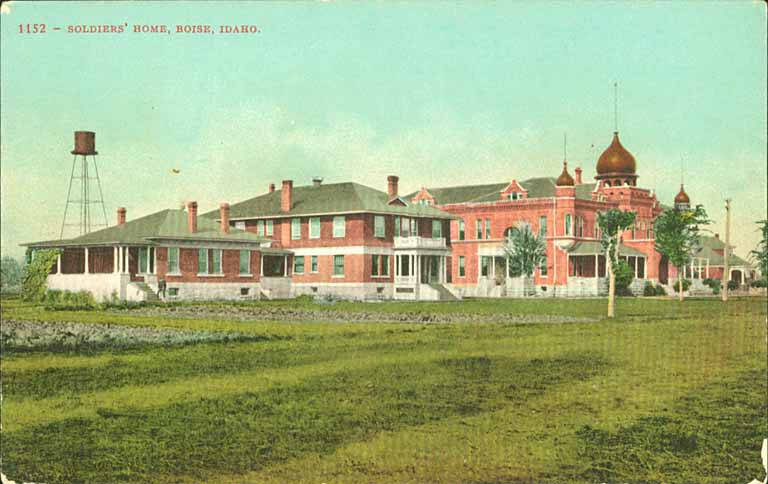
Idaho has cared for aging veterans since the 1890s. The Idaho Soldiers' Home opened in Boise in 1894 on State Street; today the Idaho Division of Veterans Services runs four state veterans homes certified as nursing homes: Boise (122 certified beds), Pocatello (66), Lewiston (66) and Post Falls (64). The Post Falls home, built in four household wings of 16 private rooms each, admitted its first two residents on Feb. 27, 2023.152
Veterans homes are paid differently from other nursing homes. The U.S. Department of Veterans Affairs pays a daily per diem for each eligible veteran under its State Home program, and pays a higher "prevailing rate" for veterans who qualify under 38 U.S.C. 1745, generally those with a service-connected disability rated 70 percent or more or who need care for a service-connected condition; those veterans pay nothing. VA also pays up to 65 percent of the cost of building or renovating a state home.53 VA's published FY2026 calculation rates for the Idaho homes are $568.59 a day for Boise, $569.85 for Pocatello, $551.40 for Lewiston and $566.87 for Post Falls, rising to $586.78, $588.09, $569.04 and $585.01 in FY2027.54 Other residents pay a daily charge and may use Medicare (for skilled stays) and Medicaid.
The veterans homes are inspected by the state for CMS like any other certified home, and by VA. In October 2026 Care Compare rated the Pocatello home 4 stars, the Boise and Lewiston homes 2 stars and the Post Falls home 1 star. The Lewiston home's $186,850 fine on June 28, 2024, was the largest in Idaho in CMS's current penalties file, and it followed an immediate jeopardy citation under the abuse and neglect tag (F600) in a survey that day.14645

Pictures, Numbers and Infographics
The key numbers in this lesson, with the year and source for each. Shares and comparisons marked as ours were computed from the CMS files named.
| Measure | Idaho | U.S. or other states | Year or period | Source |
|---|---|---|---|---|
| Certified nursing homes | 80 | U.S. 14,686 | October 2026 release | CMS Care Compare1 |
| Certified beds | 6,115 | U.S. 1,567,009 | October 2026 release | CMS Care Compare1 |
| Average residents per day | 4,578 | U.S. 1,254,184 | October 2026 release | CMS Care Compare1 |
| Beds filled (our calculation) | 74.9% | U.S. 80.0%; NV 84.7%; WA 77.7%; UT 69.6%; OR 69.1%; MT 68.5%; WY 68.2% | October 2026 release | CMS Care Compare1 |
| Active homes and beds, 2015 | 78 homes, 5,858 beds | Q4 2015 | CMS Provider of Services file2 | |
| For-profit share of homes | 81.3% | U.S. 74.1% | October 2026 release | CMS Care Compare1 |
| Homes in the largest chain (Cascadia Healthcare) | 25 | October 2026 release | CMS Care Compare chain field1 | |
| Homes reporting a private equity or REIT owner | 0 | U.S. 98 private equity, 606 REIT (of 14,404 enrollments) | Sept. 29, 2026 | CMS SNF All Owners file23 |
| Medicaid share of resident days | 60.1% | U.S. 56.0% | Cost reports beginning 2023 | CMS SNF cost reports3 |
| Medicare (Title XVIII) share of resident days | 10.9% | U.S. 10.4% | Cost reports beginning 2023 | CMS SNF cost reports3 |
| Medicare SNF coinsurance, days 21 to 100 | $217 a day | Same nationally | 2026 | CMS fact sheet, Nov. 14, 202519 |
| Total nurse staff hours per resident per day | 3.99 | U.S. 3.90 | April to June 2026 | CMS State and US Averages8 |
| RN hours per resident per day | 0.84 | U.S. 0.69 | April to June 2026 | CMS State and US Averages8 |
| Total nursing staff turnover | 49.5% | U.S. 45.3% | 12 months, October 2026 release | CMS State and US Averages8 |
| Homes meeting all three repealed 2024 hour standards (our calculation) | 27.8% (22 of 79) | U.S. 22.8% | April to June 2026 | CMS Care Compare1 |
| Nursing assistant mean hourly wage | $18.80 | U.S. $20.53; WA $25.11; OR $25.08 | May 2025 | BLS OEWS42 |
| Average overall star rating | 3.1 | U.S. 3.0 | October 2026 release | CMS State and US Averages8 |
| Health citations per home (our calculation) | 27.0 | U.S. 28.6 | Rating cycles in October 2026 file | CMS Health Deficiencies45 |
| Share of citations at actual harm or worse (G to L) | 3.3% | U.S. 5.3% | Rating cycles in October 2026 file | CMS Health Deficiencies45 |
| Fines in the CMS penalties file | 39 fines, $1,015,042 | Avg. per home: Idaho $12,688, U.S. $30,351 | Oct. 2023 to Sept. 2026 | CMS Penalties; State and US Averages468 |
| Special Focus Facilities and candidates | 1 SFF, 5 candidates | October 2026 | CMS SFF list12 | |
| Changes of ownership | 25 | May 2016 to July 2025 | CMS SNF change of ownership file51 | |
| Federal staffing minimum in force | None (repealed) | RN 8 hours a day, 7 days a week still required | Effective Feb. 2, 2026 | Federal Register doc. 2025-217927 |
| Medicaid provider rate cut | 4 percent | Effective Sept. 1, 2025 | Idaho Reports15 |
Common mistakes
- "Medicare pays for nursing homes." Medicare pays for short skilled nursing facility stays after a qualifying hospital stay, up to 100 days per benefit period, with a $217 daily coinsurance from day 21 in 2026. It does not pay for long-term custodial care. In Idaho's 2023 cost reports Medicare paid for 10.9 percent of resident days; Medicaid paid for 60.1 percent.18193
- Counting an "observation" stay toward the three-day rule. Days in a hospital under observation status are outpatient days and do not count toward the three inpatient days Original Medicare requires before a skilled nursing stay.18
- Reading a star rating as a guarantee. The ratings summarize inspections, staffing and resident assessment data over set periods. The health inspection stars compare homes only within the same state, and the quality measures rely largely on data the homes report. CMS's technical guide explains these limits.43
- Comparing health inspection stars across states. Because each state's homes are ranked against each other, about 20 percent of homes in every state get one health inspection star by design; a one-star home in Idaho and a one-star home in Utah are not measured on the same scale.43
- Assuming the 2024 staffing minimum is in effect. It never took effect. Courts vacated its core in 2025, P.L. 119-21 section 71111 blocked it through Sept. 30, 2034, and CMS repealed it effective Feb. 2, 2026.76
- Assuming Idaho has its own staffing minimum. Idaho repealed its state nursing home staffing statute (Idaho Code section 39-1307B) in Senate Bill 1015 (2025), effective July 1, 2025. Idaho homes follow the federal standard only.39
- Treating the share of residents and the share of days as the same thing. Short-stay Medicare residents come and go quickly, so they are a larger share of admissions than of days. The industry's 67 percent Medicaid figure and the cost report's 60.1 percent may measure different things.153
- Reading "no private equity owner" as "no investor ownership." CMS's private equity and REIT flags are self-reported and do not capture every landlord or holding company. The Idaho finding of zero flagged owners describes the federal enrollment records, not a full ownership investigation.23
- Treating a fine as proof of harm to a particular person. Penalties follow citations, which can be disputed and appealed; the inspection report says what surveyors found. Report only what the record states.44
- Mixing state and federal fiscal years. Idaho's budget year runs July 1 to June 30; the federal fiscal year runs Oct. 1 to Sept. 30; cost reports follow each facility's own year. MACPAC's FY2024 spending figures are federal fiscal year amounts.31
What we know, what we don't, and what the data can show
What we know
- Idaho has 80 certified nursing homes with 6,115 beds, about three-quarters full, and the count has held near 80 since 2015.12
- Medicaid pays for about 60 percent of nursing home days in Idaho, more than the national share.3
- About four of five Idaho homes are for-profit, and one chain operates 25 of them.1
- Idaho's average staffing is close to the national average, with more RN time and higher total turnover.8
- No numeric federal or Idaho staffing minimum applies to Idaho nursing homes as of November 2026.739
- Idaho Medicaid cut provider rates, including nursing facility rates, by 4 percent from Sept. 1, 2025.15
What we don't know
- How the 4 percent rate cut and any 2026 changes affected nursing home finances, staffing or admissions of Medicaid residents; the cost reports that would show it will not be public until 2027 or later.
- Whether Idaho changed its nursing facility payment method by July 1, 2026, as House Concurrent Resolution 15 (2025) said CMS required, and how upper payment limit payments now flow.28
- Who owns or profits from each Idaho home through layers of companies and property leases; the federal flags show no private equity or REIT owners, but the data have known limits.23
- The final count of COVID-19 deaths among Idaho nursing home residents from federal data.
- How many Idahoans need nursing home level care but live at home or in assisted living, and how many wait for a bed in a particular area.
What the data can show
- CMS Payroll-Based Journal daily staffing files show each home's staff hours by job type every day, including weekends and contract staff, quarter by quarter since 2017.9
- CMS Care Compare provider, deficiency and penalty files show ratings, every citation with its tag and scope and severity, and every fine, updated monthly or quarterly.14546
- CMS skilled nursing facility cost reports show resident days by payer, costs, revenues and profit or loss for each home each year.3
- CMS Provider of Services files and change-of-ownership and ownership files show openings, closures, termination reasons and every change of owner.25123
- BLS wage data show what nursing assistants and nurses earn in Idaho against other states.42
- Idaho budget documents (Health and Welfare's budget request and the Legislative Services Office's Medicaid budget analysis) show what the Legislature appropriates for nursing facility payments; see module 75.
Questions people ask
Where can anyone read a specific Idaho nursing home's inspection report?
Care Compare on Medicare.gov posts each home's star ratings, staffing, fines and the full statements of deficiencies from recent inspections. The same data are in CMS's downloadable files. BFS keeps survey results and can provide reports on request; its web page links to survey results and to the complaint process.111
Who inspects Idaho nursing homes, and how often?
The Bureau of Facility Standards in Idaho Health and Welfare, acting for CMS. Each home gets an unannounced standard survey at least every 15 months, with a statewide average of 12 months, plus complaint investigations; Special Focus Facilities are surveyed at least every six months.1011
Can a nursing home make a resident leave?
Only for the reasons listed in 42 CFR 483.15, such as when the home cannot meet the resident's needs, the resident no longer needs nursing home care, others' health or safety is endangered, or the bill has gone unpaid after notice. In most cases the home must give 30 days' written notice with the reason and appeal rights and send a copy to the long-term care ombudsman. Idaho's ombudsman program is run through the Idaho Commission on Aging and the Area Agencies on Aging.3555
How much does Idaho Medicaid pay a nursing home per day?
Each home has its own rate, set each July 1 under IDAPA 16.03.26 sections 482 to 484 and adjusted quarterly for case mix, so there is no single figure. Health and Welfare sets the rates within the amount the Legislature appropriates (Idaho Code section 56-265). Rate lists and the method are public records that can be requested from Health and Welfare; we did not find a current statewide rate table posted online.1314
What staffing levels does a home have to keep?
Federal rules require licensed nurses 24 hours a day, an RN at least 8 consecutive hours a day 7 days a week, a full-time RN director of nursing, and enough staff to meet residents' needs as shown in the home's facility assessment. Since the 2024 numeric minimum was repealed, there is no required number of hours per resident. Each home must post its daily staffing.3738
Are the state veterans homes only for veterans?
The homes are run for veterans by the Idaho Division of Veterans Services, which sets admission rules; VA pays its per diem only for eligible veterans. The homes are also certified by CMS and inspected like any other nursing home, and residents who qualify can use Medicare and Medicaid there.531
Do private-pay residents pay more than Medicaid?
Usually. IDAPA 16.03.26 section 484 says no rate will be set higher than a home's charge for like services to private-pay patients, computed as the lower of costs or customary charges, and homes may raise charges to other payers to cover the nursing facility assessment (Idaho Code section 56-1505(4)), so private rates are typically at or above the Medicaid rate.1327
Hard questions
Should there be a numeric staffing minimum?
For: Resident advocates argue that "sufficient staff" has been undefined since 1987, that low staffing is linked to worse outcomes, and that a floor protects residents in the worst-staffed homes. Against: Operators and many states argue that there are not enough workers, especially in rural areas, that a single number ignores residents' different needs, and that the cost (CMS estimated about $5.5 billion a year in savings from repeal) would close homes. The evidence: In April to June 2026, 72 percent of Idaho homes did not meet all three repealed standards, mostly because of the nurse aide requirement, while 83.5 percent met the RN level (our calculation). Congress and two federal courts have settled the federal question for now; a state could still adopt its own standard.71
Is Idaho's Medicaid rate enough?
Providers say no: the Idaho Health Care Association said the 2025 cut would lead homes to take fewer Medicaid residents, and that private pay and Medicare make up for low Medicaid rates.15 The state's case: Medicaid costs were growing far faster than forecast, the Legislature must balance the budget, and the cost-based method already pays homes based on their reported costs, with a provider tax to draw federal money.1529 The evidence: cost reports show what homes spend and earn, and comparing Medicaid days, staffing and closures before and after Sept. 1, 2025, will be possible once 2025 and 2026 cost reports and PBJ data are public. So far, the number of Idaho homes has not dropped.1
Does who owns a nursing home matter for care?
One view: chains bring management, purchasing and capital, and Idaho's largest chain includes both five-star and one-star homes. Another view: frequent sales and complex ownership make accountability harder, and federal research links some ownership types with lower staffing. The evidence: in Idaho, every home now in the SFF program or on the candidate list is for-profit and part of a chain, but so are most Idaho homes; CMS's ownership files let anyone compare ratings, staffing and penalties by owner.12121
Was it wise to replace Idaho's own nursing home licensing rules with federal certification?
Supporters of Senate Bill 1015 (2025) said the state rules duplicated federal requirements, and the bill's fiscal note says it has no cost. The case for state rules is that they protect residents if federal rules weaken, as the federal staffing rule did; we found no organized public opposition to the bill in the legislative record we reviewed, where it passed with two House votes against. The evidence: since July 1, 2025, Idaho's licensing follows CMS certification, so any change in federal standards now applies directly in Idaho with no state backstop; whether that changes outcomes will show up in inspection and staffing data over time.39
For reporters and advocates
Records that exist. CMS Care Compare files (provider information, health deficiencies, fire safety deficiencies, penalties, ownership, quality measures, state averages), updated monthly or quarterly; the full CMS-2567 inspection reports on Care Compare; PBJ daily staffing files; skilled nursing facility cost reports; Provider of Services files; the SNF change-of-ownership, enrollment and All Owners files; the monthly Special Focus Facility list; and CMS survey and enforcement memos (QSO memos).19325112
Idaho records. Health and Welfare's Medicaid nursing facility rate setting files (rates by facility, budget adjustment factor, assessment amounts and supplemental payment calculations); BFS survey reports, complaint investigation results, facility-reported incident summaries and correspondence about terminations or changes of ownership; Health and Welfare budget requests and the Legislative Services Office's budget analysis for the Division of Medicaid; legislative committee minutes on nursing home rates; and the state plan amendments that describe the nursing facility payment method, filed with CMS. Requests go under the Idaho Public Records Act, Idaho Code Title 74, chapter 1; see module 47, Idaho Public Records Requests. Idaho Code section 39-1306 says information that would identify individual residents is subject to disclosure only as the Public Records Act provides.39 Federal records not posted online can be requested from CMS under the Freedom of Information Act.
Questions to ask officials. What is each home's current Medicaid daily rate and how did it change after Sept. 1, 2025? Did Idaho change its upper payment limit and supplemental payment method by July 1, 2026, and has CMS approved it? How much did the nursing facility assessment raise in state fiscal years 2025 and 2026, and how was it spent? How many surveyors does BFS have, and is it meeting the 15-month and 12-month survey intervals? How many complaints did BFS receive and substantiate each year? How many Medicaid residents were discharged after the rate cut?
The Idaho angle. Compare homes within a region: in the Magic Valley, ratings ranged from one star (Cascades at Desert View in Buhl) to five stars (Twin Falls Transitional Care of Cascadia and Parke View in Burley) in October 2026. Track the five SFF candidates and the one SFF. Follow changes of ownership through CMS's quarterly file. When a home closes, the CMS termination code, the Health and Welfare relocation records and the ombudsman's role are the core documents. Report only what the records state about any facility, and never name residents. For how to read rates and percentages correctly, see Data and Statistics; for testifying on rates or rules, see module 49, Testifying and Public Comment.112
Where to go next
- Medicare Care Compare: nursing homes: Free federal website run by CMS. Anyone can look up an Idaho nursing home's star ratings, staffing, inspection reports, fines and ownership. Search by city or ZIP code and open the inspection tab for full reports.
- CMS Provider Data Catalog: nursing homes: Free downloadable CSV files behind Care Compare, for reporters, researchers and advocates who want to sort or compare homes. Updated monthly; each file has a data dictionary.
- Idaho Bureau of Facility Standards, skilled nursing: Idaho Health and Welfare's page for the office that inspects nursing homes. Lists survey results, the complaint process and contacts. Free.
- Idaho Commission on Aging and long-term care ombudsman: State agency that oversees the long-term care ombudsman program and the six Area Agencies on Aging. The ombudsman program is a free resource for residents and families with concerns about care or discharges.
- SHIBA (Senior Health Insurance Benefits Advisors): Free counseling program of the Idaho Department of Insurance that explains Medicare coverage, including the skilled nursing benefit, to people with Medicare and their families.
- Idaho Division of Veterans Services, state veterans homes: State agency that runs the veterans homes in Boise, Pocatello, Lewiston and Post Falls; its site describes admissions and costs.
- DisAbility Rights Idaho: Idaho's federally designated protection and advocacy organization (an advocacy group) for people with disabilities, including people living in nursing homes. Services are free.
Still being checked (8 items)
These points could not be fully confirmed against a primary source when this lesson was written and fact checked in November 2026. The text above states each one as uncertain.
- Whether Idaho changed its nursing facility Medicaid reimbursement method and upper payment limit payments by July 1, 2026, as House Concurrent Resolution 15 (2025) said CMS required; HCR 15 itself shows no action after committee referral.
- Current Idaho Medicaid nursing facility daily rates by facility and the exact effect of the 4 percent cut on nursing facility rates in state fiscal years 2026 and 2027; we did not find a posted rate table.
- The final cumulative count of COVID-19 deaths among Idaho nursing home residents from CMS/CDC NHSN data; the only figure used is the Health and Welfare statement of 1,000 long-term care resident deaths as of Dec. 2021, which covers nursing homes and other long-term care facilities.
- Whether CMS has changed or delayed the Medicaid institutional payment transparency reporting requirement (42 CFR 442.43) from the 2024 rule.
- What VA's "FY26 MB 3.2% Calculation Rate" figures for the Idaho State Veterans Homes represent exactly; the VA page does not label them, and we describe them as VA's published calculation rates.
- The Fifth Circuit's disposition of the government's appeal in AHCA v. Kennedy after the December 2025 repeal.
- The Idaho Health Care Association's 67 percent Medicaid figure: its year and method are not stated in the news report.
- National and neighbor-state comparisons computed from national CMS files the writer did not keep (28.6 health citations per home nationally; the G-to-L shares for the U.S. and neighbor states; 98 private equity and 606 REIT enrollments of 14,404 nationally, and the Oregon and Washington REIT counts) could not be recomputed by the fact checker; all Idaho figures were recomputed from the saved files and match.
Last verified November 22, 2026. General education, not legal, medical, insurance or financial advice; every figure names its source and year in the Notes and Sources below. Data is revised: check the newest release before relying on any number.
Notes
- Centers for Medicare & Medicaid Services (CMS), Care Compare nursing home Provider Information data file, October 2026 release (processing date Oct. 1, 2026; released Oct. 28, 2026), one row per certified nursing home, with ownership type, chain, certified beds, average residents per day, star ratings, reported staffing from Payroll-Based Journal data for April to June 2026, Special Focus status, abuse icon and fines; Idaho and neighboring-state rows counted and summed by us (read Nov. 22, 2026). Read it online. ↩
- CMS, Provider of Services File: Quality Improvement and Evaluation System, quarterly files for the fourth quarters of 2015, 2019, 2023 and 2024; Idaho providers in categories 02 to 04 (skilled nursing and nursing facilities); active providers (termination code 00) and certified beds counted by us; termination dates and codes for closed providers (read Nov. 22, 2026). Read it online. ↩
- CMS, Skilled Nursing Facility Cost Report public use file, cost reporting periods beginning in 2023 (CostReportsnf_Final_23, posted October 2026): Total Days Title XIX (Medicaid), Title XVIII (Medicare), Other and Total by facility, state and county; shares are our calculation (read Nov. 22, 2026). Read it online. ↩
- CMS, final rule, "Medicare and Medicaid Programs; Minimum Staffing Standards for Long-Term Care Facilities and Medicaid Institutional Payment Transparency Reporting," CMS-3442-F, RIN 0938-AV25, 89 FR 40876 (May 10, 2024), including 42 CFR 483.35 hour standards and 42 CFR 442.43 payment transparency reporting (read Nov. 22, 2026). Read it online. ↩
- Judgment, American Health Care Association v. Kennedy, No. 2:24-cv-114-Z-BR (lead), consolidated with No. 2:24-cv-171-Z, U.S. District Court for the Northern District of Texas, Amarillo Division, filed April 7, 2025 (Document 102); reported at 777 F. Supp. 3d 691 (N.D. Tex. 2025) (read Nov. 22, 2026). Read it online. ↩
- P.L. 119-21 (July 4, 2025), section 71111, moratorium on implementation, administration and enforcement of the 2024 long-term care facility minimum staffing standards through Sept. 30, 2034, as quoted in the CMS interim final rule of Dec. 3, 2025 (read Nov. 22, 2026). Read it online. ↩
- CMS, interim final rule with comment, "Medicare and Medicaid Programs; Repeal of Minimum Staffing Standards for Long-Term Care Facilities," CMS-3442-IFC, Federal Register Vol. 90, No. 230, FR Doc. 2025-21792 (Dec. 3, 2025), effective Feb. 2, 2026; amends 42 CFR 483.5 and 483.35; describes the 2024 rule's phase-in dates, AHCA v. Kennedy (N.D. Tex. 2025, appealed June 2, 2025), Kansas v. Kennedy, No. C24-110-LTS-KEM (N.D. Iowa June 18, 2025) and section 71111 of P.L. 119-21, and estimates savings of $55,089,104,265 over 10 years (read Nov. 22, 2026). Read it online. ↩
- CMS, Care Compare State US Averages nursing home file, October 2026 release (processing date Oct. 1, 2026): state and national averages of star ratings, deficiencies, residents per day, reported nurse staffing hours per resident per day (weekday and weekend), turnover and fines (read Nov. 22, 2026). Read it online. ↩
- CMS, Payroll Based Journal Daily Nurse Staffing, calendar year 2026 second quarter (April 1 to June 30, 2026; released Oct. 28, 2026), Idaho rows (7,189 facility-days); our recomputation of the facility-average total nurse staff hours per resident per day (3.99), aggregate hours (3.85) and contract staff share of hours (4.1 percent) (read Nov. 22, 2026). Read it online. ↩
- Social Security Act section 1919 (42 U.S.C. 1396r), requirements for nursing facilities, including 1919(b)(4)(C) nursing services, 1919(b)(5) nurse aide training, 1919(c) residents' rights and 30-day transfer notice, 1919(e)(7) preadmission screening, 1919(f)(10) special focus facility program, 1919(g) surveys and 1919(h) enforcement (read Nov. 22, 2026). Read it online. ↩
- Idaho Department of Health and Welfare, Bureau of Facility Standards, "CMS/Federal Resources" page for skilled nursing facilities (updated April 6, 2026): licensure and certification, survey results, complaints, the provider reporting portal for facility-reported incidents, informal and independent informal dispute resolution and the 90-day change-of-ownership submission (read Nov. 22, 2026). Read it online. ↩
- CMS, Special Focus Facility (SFF) Program posting and candidate list, October 2026: Table A current SFFs, Table B graduates, Table C terminations and Table D candidates, with the program description and selection method (read Nov. 22, 2026). Read it online. ↩
- IDAPA 16.03.26, Medicaid Plan Benefits, nursing facility sections 470 to 495, each dated 7-1-26: 471 eligibility and level of care (adults classified under the Patient Driven Payment Model), 472 patient liability, 475 PASRR, 481 cost limits (details in the Idaho Medicaid Provider Agreement Additional Terms for nursing facilities), 482 rate setting (prospective price-based system, quarterly case-mix adjustment, margin payments, budget adjustment factor), 484 rate development (rates effective each July 1 from audited cost reports two years earlier; no rate above the private-pay charge), 486 distressed facilities, 488 to 490 behavioral care units. The current adminrules.idaho.gov listing has no IDAPA 16.03.10; its earlier nursing facility sections (220 to 287, including 222 and 223 criteria, 224 post-eligibility income, 255 to 257 rate setting, 263 distressed facilities and 266 to 269 behavioral care units) are cited only as history (read Nov. 22, 2026). Read it online. ↩
- Idaho Code section 56-265, provider payment, subsections (4) (rate changes subject to legislative appropriation) and (5) (value-based payment agreements), as amended through 2026, ch. 161 (read Nov. 22, 2026). Read it online. ↩
- Melissa Davlin, article on providers bracing for a 4 percent Medicaid reduction, Idaho Reports (Idaho Public Television), Aug. 29, 2025: Health and Welfare Director Juliet Charron's Aug. 22, 2025, letter, the Sept. 1, 2025, effective date and statements by Robert Vande Merwe of the Idaho Health Care Association (nursing home industry group) (read Nov. 22, 2026). Read it online. ↩
- Social Security Act section 1819 (42 U.S.C. 1395i-3), requirements for skilled nursing facilities in Medicare (read Nov. 22, 2026). Read it online. ↩
- 42 CFR part 483, subpart B, Requirements for Long Term Care Facilities, sections 483.1 to 483.95, as revised by the final rule "Reform of Requirements for Long-Term Care Facilities," 81 FR 68688 (Oct. 4, 2016) (read Nov. 22, 2026). Read it online. ↩
- 42 CFR 409.30, basic requirements for Medicare posthospital SNF care, including the three-consecutive-day inpatient hospital stay; Social Security Act section 1812(a)(2) (100 days per spell of illness) (read Nov. 22, 2026). Read it online. ↩
- CMS, fact sheet, "2026 Medicare Parts A & B Premiums and Deductibles," Nov. 14, 2025: Part A deductible $1,736; skilled nursing facility coinsurance $217.00 a day for days 21 to 100 (read Nov. 22, 2026). Read it online. ↩
- Zahida Siddiqi, "Nursing Homes Seek Clear 'Roadmap' Amid Medicaid Rate Cut Concerns in State Budget Talks," Skilled Nursing News (industry trade publication), Feb. 23, 2026, interview with Cascadia Healthcare chief financial officer Steve LaForte (read Nov. 22, 2026). Read it online. ↩
- CMS, press release on nursing home ownership transparency, Nov. 15, 2023, and the final rule "Medicare and Medicaid Programs; Disclosures of Ownership and Additional Disclosable Parties Information," Federal Register doc. 2023-25408 (Nov. 17, 2023), implementing Affordable Care Act section 6101 (read Nov. 22, 2026). Read it online. ↩
- CMS, Care Compare nursing home Ownership data file, October 2026 release: owners and managers of each home, role, type and percentage (read Nov. 22, 2026). Read it online. ↩
- CMS, Skilled Nursing Facility All Owners file dated Sept. 29, 2026, matched to the Skilled Nursing Facility Enrollments file of the same date by enrollment ID; enrollments with any owner flagged "Private Equity Company" or "REIT" counted by us (read Nov. 22, 2026). Read it online. ↩
- Social Security Act section 1902(a)(30)(A) (42 U.S.C. 1396a(a)(30)(A)), payments consistent with efficiency, economy, quality of care and access (read Nov. 22, 2026). Read it online. ↩
- 42 CFR 447.272, inpatient services: application of upper payment limits to hospitals, nursing facilities and ICFs/IID by ownership category (read Nov. 22, 2026). Read it online. ↩
- Idaho Code section 56-108, property reimbursement: property rental rate formula with a $9.24 property base, building cost index and facility age (read Nov. 22, 2026). Read it online. ↩
- Idaho Code sections 56-1501 to 56-1509, Idaho Skilled Nursing Facility Assessment Act (2009), especially section 56-1504 (nursing facility assessment fund and permitted uses) and section 56-1505 (assessments; state and county facilities exempt; Medicare Part A days excluded; charges to other payers), as amended by 2025, ch. 82 (read Nov. 22, 2026). Read it online. ↩
- House Concurrent Resolution 15 (2025), Idaho Legislature, by the House Health and Welfare Committee, directing the Department of Health and Welfare to convene a council on the skilled nursing facility Medicaid reimbursement method and upper payment limit; bill status: introduced Feb. 25, 2025, printed and referred to Health and Welfare Feb. 26, 2025 (read Nov. 22, 2026). Read it online. ↩
- Kyle Pfannenstiel, "As Idaho permanently extends governor's budget cuts, Medicaid will keep provider pay cuts," Idaho Capital Sun, Oct. 30, 2025 (read Nov. 22, 2026). Read it online. ↩
- "Idaho lawmakers dodged Medicaid expansion repeal. But what did they do with Medicaid?" Idaho Capital Sun, April 9, 2026, as republished by States Newsroom (read Nov. 22, 2026). Read it online. ↩
- Medicaid and CHIP Payment and Access Commission (MACPAC), MACStats: Medicaid and CHIP Data Book, February 2026, Exhibit 17, Total Medicaid Benefit Spending by State and Category, FY 2024 (CMS-64 data as of June 3, 2025): Idaho fee-for-service institutional LTSS $244 million (read Nov. 22, 2026). Read it online. ↩
- Omnibus Budget Reconciliation Act of 1987, P.L. 100-203 (H.R. 3545, signed Dec. 22, 1987), nursing home reform provisions amending Social Security Act sections 1819 and 1919 (read Nov. 22, 2026). Read it online. ↩
- 42 CFR 483.10, Resident rights (read Nov. 22, 2026). Read it online. ↩
- 42 CFR 483.12, Freedom from abuse, neglect, and exploitation, including reporting of alleged violations (read Nov. 22, 2026). Read it online. ↩
- 42 CFR 483.15, Admission, transfer, and discharge rights, including 483.15(c) notice and (d) and (e) bed-hold and return (read Nov. 22, 2026). Read it online. ↩
- 42 CFR 483.20, Resident assessment, and 42 CFR 483.21, Comprehensive person-centered care planning (official section titles) (read Nov. 22, 2026). Read it online. ↩
- 42 CFR 483.35, Nursing services, as amended effective Feb. 2, 2026: sufficient staff per the facility assessment, licensed nurses 24 hours, RN 8 consecutive hours a day 7 days a week, RN director of nursing, nurse aide training within 4 months and posting of staffing data (read Nov. 22, 2026). Read it online. ↩
- 42 CFR 483.71, Facility assessment (read Nov. 22, 2026). Read it online. ↩
- Senate Bill 1015 (2025), Idaho Legislature, Streamlined Facilities Licensing and Inspection Act: repeals Idaho Code sections 39-1301 to 39-1308 (including 39-1307B on minimum staffing) and replaces them with new sections 39-1301 to 39-1309; statement of purpose says it repeals IDAPA 16.03.02; signed by the governor March 19, 2025; Session Law chapter 122; effective July 1, 2025; see new Idaho Code sections 39-1303 to 39-1306 (read Nov. 22, 2026). Read it online. ↩
- Social Security Act section 1128I(g) (42 U.S.C. 1320a-7j(g)), submission of staffing information based on payroll data in a uniform format, added by the Affordable Care Act (read Nov. 22, 2026). Read it online. ↩
- CMS, Nursing Home Data Dictionary for the Care Compare provider data files, field definitions for staffing hours, turnover and ratings (read Nov. 22, 2026). Read it online. ↩
- U.S. Bureau of Labor Statistics, Occupational Employment and Wage Statistics, May 2025 state estimates: nursing assistants (SOC 31-1131), registered nurses (29-1141) and licensed practical nurses (29-2061), mean hourly and annual wages and employment for Idaho, the U.S. and neighboring states, retrieved through the BLS public data API (read Nov. 22, 2026). Read it online. ↩
- CMS, Design for Care Compare Nursing Home Five-Star Quality Rating System: Technical Users' Guide, September 2026 (ratings began December 2008; health inspection ratings set within each state, top 10 percent five stars and bottom 20 percent one star) (read Nov. 22, 2026). Read it online. ↩
- 42 CFR 488.301 (definitions, including immediate jeopardy) and 42 CFR 488.408 (selection of remedies by category, including civil money penalty ranges as adjusted annually under 45 CFR part 102) (read Nov. 22, 2026). Read it online. ↩
- CMS, Care Compare nursing home Health Deficiencies file, October 2026 release: every health citation in the inspection cycles used for ratings, with tag, description, scope and severity code, survey date and complaint flag; Idaho and other states counted by us (read Nov. 22, 2026). Read it online. ↩
- CMS, Care Compare nursing home Penalties file, October 2026 release: fines and payment denials by facility and date; Idaho rows summed by us (read Nov. 22, 2026). Read it online. ↩
- CMS, memorandum QSO-23-01-NH, "Revisions to the Special Focus Facility (SFF) Program," original release Oct. 21, 2022, revised Sept. 27, 2023, and Jan. 28, 2026 (read Nov. 22, 2026). Read it online. ↩
- "Idaho officials: 1 in 4 COVID deaths was in nursing homes," East Idaho News, Dec. 14, 2021, reporting a Department of Health and Welfare briefing by Director Dave Jeppesen and deputy state epidemiologist Dr. Kathryn Turner (read Nov. 22, 2026). Read it online. ↩
- CMS, POS File QIES data dictionary (record layout, March 2023): termination codes 00 active, 01 voluntary merger or closure, 05 involuntary failure to meet health and safety requirements, 06 involuntary failure to meet agreement (read Nov. 22, 2026). Read it online. ↩
- "Idaho nursing home shutters after CMS pulls funding," Becker's Hospital Review, April 23, 2021, citing KTVB reporting on Good Samaritan Society Boise Village (read Nov. 22, 2026). Read it online. ↩
- CMS, Skilled Nursing Facility Change of Ownership file dated Sept. 29, 2026: buyer, seller, type and effective date of each change; Idaho buyers counted by us (read Nov. 22, 2026). Read it online. ↩
- Bonner County Daily Bee, article on the Post Falls veterans home receiving its first patients, March 11, 2023 (first residents Feb. 27; 64 beds in four 16-room households) (read Nov. 22, 2026). Read it online. ↩
- U.S. Department of Veterans Affairs, State Veterans Homes fact sheet, May 2025: basic per diem, prevailing rates under 38 U.S.C. 1745 and construction grants of up to 65 percent (read Nov. 22, 2026). Read it online. ↩
- U.S. Department of Veterans Affairs, State Home Per Diem Program page, facility table of "FY26 MB 3.2% Calculation Rate" and "FY27 MB 3.2% Calculation Rate" for each state home, including the four Idaho State Veterans Homes (read Nov. 22, 2026). Read it online. ↩
- Idaho Commission on Aging, long-term care ombudsman program and Area Agencies on Aging (program under the Older Americans Act, 42 U.S.C. 3058g) (read Nov. 22, 2026). Read it online. ↩
Check yourself
1. How many certified nursing homes did CMS's October 2026 Care Compare file list in Idaho?
The CMS Provider Information file (October 2026 release) lists 80 Idaho nursing homes with 6,115 certified beds.
2. In cost reports for periods beginning in 2023, what share of Idaho nursing home resident days did Medicaid pay for?
CMS's 2023 SNF cost report file shows Medicaid (Title XIX) paid for 60.1 percent of Idaho resident days, Medicare 10.9 percent and other payers 29.0 percent (our calculation).
3. In 2026, what does an Original Medicare patient owe per day for days 21 to 100 of a covered skilled nursing facility stay?
CMS's Nov. 14, 2025, fact sheet sets the 2026 SNF coinsurance at $217.00 a day for days 21 to 100.
4. Which event came first in the life of the 2024 federal nursing home staffing minimum?
The Texas court entered judgment April 7, 2025; the Iowa ruling came June 18, 2025; P.L. 119-21 was signed July 4, 2025; CMS's repeal was published Dec. 3, 2025.
5. What federal nurse staffing requirement still applies to every certified nursing home after Feb. 2, 2026?
Social Security Act section 1919(b)(4)(C) and 42 CFR 483.35(b) require an RN at least 8 consecutive hours a day, 7 days a week; the CMS interim final rule restored this when it repealed the numeric standards.
6. What was the average total nurse staff hours per resident per day in Idaho homes in April to June 2026?
CMS's State and US Averages file (October 2026 release, PBJ data for April to June 2026) shows 3.99 for Idaho and 3.90 nationally; 5.13 is Oregon.
7. Which Idaho law repealed the state's nursing home staffing statute, Idaho Code section 39-1307B?
Senate Bill 1015 (2025), Session Law chapter 122, effective July 1, 2025, repealed section 39-1307B and tied state licensing to CMS certification.
8. On the federal scope and severity grid, what do levels J, K and L mean?
Under 42 CFR 488.301 and 488.408 and CMS survey guidance, J to L are immediate jeopardy; Idaho had 8 such citations (0.37 percent) in the October 2026 file.
9. How many Idaho homes were in CMS's Special Focus Facility program in October 2026?
CMS's October 2026 SFF list shows one Idaho SFF, Silverton Health and Rehabilitation of Cascadia, plus five candidates.
10. Under Idaho Code section 56-1505, which nursing homes do not pay the nursing facility assessment?
Idaho Code section 56-1505(1) exempts state and county-owned facilities; the assessment is charged per resident day excluding Medicare Part A days.
Terms in this lesson
- Skilled nursing facility (SNF)
- A nursing home certified to serve Medicare patients under Social Security Act section 1819; Medicare pays for short skilled stays after a qualifying hospital stay.
- Nursing facility (NF)
- A nursing home certified to serve Medicaid residents under Social Security Act section 1919; most Idaho homes are certified as both SNF and NF.
- Custodial care
- Help with daily activities such as bathing, dressing and eating, and supervision, without the need for daily skilled nursing or therapy; Medicare does not pay for it.
- Payroll-Based Journal (PBJ)
- CMS's system for collecting each nursing home's daily staff hours by job type from payroll and contractor records, required by Social Security Act section 1128I(g).
- Hours per resident day (HPRD)
- Total staff hours of a given type in a day divided by the number of residents that day; the standard measure of nursing home staffing.
- Facility assessment
- A required yearly review under 42 CFR 483.71 of a home's residents, their care needs and the staff and resources needed to care for them.
- Case mix
- A measure of how much care a home's residents need, based on Minimum Data Set assessments; Idaho uses it to adjust the direct care part of each home's Medicaid rate.
- Minimum Data Set (MDS)
- The federal standardized assessment of each nursing home resident at admission, quarterly and after significant changes, under 42 CFR 483.20.
- Nursing facility assessment
- Idaho's provider tax on nursing homes other than state- and county-owned homes, charged per resident day excluding Medicare Part A days and used to draw federal matching funds for nursing home payments (Idaho Code 56-1501 to 56-1509).
- Upper payment limit (UPL)
- The federal cap on total Medicaid payments to a class of facilities, a reasonable estimate of what Medicare payment principles would pay (42 CFR 447.272).
- Scope and severity
- The letter grade (A to L) surveyors give each deficiency, combining how widespread it is with how serious the harm or risk is.
- Immediate jeopardy
- Noncompliance that has caused or is likely to cause serious injury, harm, impairment or death to a resident; levels J, K and L on the grid.
- Special Focus Facility (SFF)
- A nursing home with a history of serious, persistent problems that CMS and the state survey at least every six months until it improves or leaves Medicare and Medicaid.
- Change of ownership (CHOW)
- A transfer of a nursing home's Medicare provider agreement to a new owner or operator, recorded in CMS enrollment files.
- Civil money penalty (CMP)
- A fine imposed per day or per instance of noncompliance under Social Security Act section 1919(h) and 42 CFR 488.408, adjusted for inflation each year.
- Bureau of Facility Standards (BFS)
- The office in the Idaho Department of Health and Welfare that licenses and inspects nursing homes and surveys them for CMS.
Sources
- CMS Care Compare nursing home Provider Information file, October 2026 (2026-11-22) checked 2026-11
- CMS Care Compare State and US Averages, October 2026 (2026-11-22) checked 2026-11
- CMS Payroll Based Journal Daily Nurse Staffing, 2026 Q2 (2026-11-22) checked 2026-11
- CMS Skilled Nursing Facility Cost Report data, 2023 (2026-11-22) checked 2026-11
- CMS Health Deficiencies and Penalties files, October 2026 (2026-11-22) checked 2026-11
- CMS Special Focus Facility list, October 2026 (2026-11-22) checked 2026-11
- Social Security Act section 1919 (42 U.S.C. 1396r) (2026-11-22) checked 2026-11
- 42 CFR part 483, subpart B (eCFR) (2026-11-22) checked 2026-11
- CMS interim final rule repealing minimum staffing standards, FR Doc. 2025-21792 (Dec. 3, 2025) (2026-11-22) checked 2026-11
- CMS-3442-F minimum staffing final rule, 89 FR 40876 (May 10, 2024) (2026-11-22) checked 2026-11
- IDAPA 16.03.26, Medicaid Plan Benefits (nursing facility sections 470 to 495, in force July 1, 2026) (2026-11-22) checked 2026-11
- Idaho Code sections 56-1501 to 56-1509, Skilled Nursing Facility Assessment Act (2026-11-22) checked 2026-11
- Senate Bill 1015 (2025), Streamlined Facilities Licensing and Inspection Act (2026-11-22) checked 2026-11
- CMS Skilled Nursing Facility Change of Ownership and All Owners files, Sept. 29, 2026 (2026-11-22) checked 2026-11