Lesson 4 of 12 · about 55 minutes · Updated November 23, 2026
The Magic Valley: A Health Care Case Study
You'll be able to
- Describe the five Magic Valley hospitals by type, beds, ownership and trauma designation, using the CMS Provider of Services file and the Idaho TSE list.
- Trace how county-owned hospitals in Twin Falls, Burley, Gooding and the Wood River Valley became part of nonprofit systems or independent nonprofits, and the Idaho laws that govern county hospitals and hospital districts.
- Read payer mix, patient-care margin, total margin and uncompensated care from CMS cost reports, and compare the region with Idaho, the United States and neighbor states.
- Explain what Schedule H of IRS Form 990 reports about charity care, Medicaid shortfalls and community benefit, and why it differs from the cost report.
- Identify the region's federally qualified health center sites, rural health clinics and federal shortage designations.
- Use drive-time calculations and the Provider of Services file's ended-record codes to report accurately on access, closures and service changes.
Start here: the short version
- Five hospitals serve seven south-central Idaho counties. St. Luke's Magic Valley Regional Medical Center in Twin Falls (226 certified beds) is the hub. Four critical access hospitals surround it: North Canyon Medical Center in Gooding (18 beds), Minidoka Memorial Hospital in Rupert (25), Intermountain Health Cassia Regional Hospital in Burley (25) and St. Luke's Wood River Medical Center in Ketchum (25), according to CMS's third-quarter 2026 Provider of Services file.1
- The seven counties grew 19.8 percent from 2010 to 2025, from 163,416 people in the 2010 Census to 195,729 in the Census Bureau's July 1, 2025, estimates (our calculation). Idaho as a whole grew 29.5 percent. Twin Falls County alone added 20,309 people.23
- Money is tight at most of the five. In CMS's 2024 cost report file, three of the five lost money on patient care: St. Luke's Magic Valley (minus 5.7 percent), Minidoka Memorial (minus 7.9 percent) and Cassia Regional (minus 0.6 percent). North Canyon (plus 8.4 percent) and St. Luke's Wood River (plus 3.9 percent) made money. Investment and other income turned two of the three losses into small overall gains (our calculations).4
- Medicaid matters most in Burley. Medicaid supplied 17.2 percent of Cassia Regional's net patient revenue in calendar 2024, against 9.0 percent at St. Luke's Magic Valley, 13.0 percent at North Canyon, 10.6 percent at Minidoka Memorial and 2.3 percent at St. Luke's Wood River (our calculations from the cost reports).4
- There is no Level I or Level II trauma center in the region. The Idaho Time Sensitive Emergency system lists St. Luke's Magic Valley as a Level III trauma center and the three larger critical access hospitals as Level IV. The nearest adult Level II centers are in Boise and Pocatello, roughly 80 minutes to three hours away by road (our drive-time calculation).56
- One nonprofit health center network covers much of the safety net. HRSA lists 31 active service sites of Family Health Services, a federally qualified health center, in the seven counties, 16 of them in schools. Every county has at least one federal primary care, dental or mental health shortage designation.78
- Counties and voters once owned much of this system. Twin Falls County voters approved the sale of the county hospital in 2006, as Idaho Code section 31-3507 (numbered 31-3515 until 2022) requires for any county hospital sale, and St. Luke's took over July 1, 2006. Cassia's hospital opened in 1960 as a county hospital; Minidoka Memorial is still coded as a local government hospital.910111
Law: Social Security Act titles XVIII and XIX as amended through Nov. 23, 2026, including P.L. 119-21 (2025); 42 CFR parts 412, 413, 485 and 491; Idaho Code Title 31 chapter 35, Title 39 chapters 4 and 13 and Title 56 chapter 2 through the 2026 session. Data: CMS Hospital Provider Cost Report files for 2023 and 2024 (posted October 2026), CMS Provider of Services file for the third quarter of 2026, CMS enrollment files dated Sept. 29, 2026, IRS Form 990 filings for fiscal years ending Sept. 30, 2025, HRSA shortage-area and health center files and Idaho Time Sensitive Emergency designations as downloaded or read Nov. 23, 2026, and Census Bureau Vintage 2025 county estimates. Drive times are our calculation. Checked Nov. 23, 2026. Hospital finances, designations and services change every year.
The Magic Valley is a good place to see how the money and the providers fit together, because the whole system is visible at a glance. One regional hospital in Twin Falls takes the heart attacks, the strokes, the cancer patients, the complicated births and the serious injuries from a wide area. Four small hospitals within about an hour handle emergencies, short stays, outpatient tests and swing-bed rehabilitation, and send the sickest patients on. A nonprofit health center network runs clinics in towns such as Buhl, Kimberly, Shoshone and Fairfield and in more than a dozen schools. Three air ambulance programs keep helicopters in or near the region, and the nearest Level II trauma centers sit two or three hours away by road.
This lesson follows the dollars through that system using public records: Medicare cost reports, the CMS Provider of Services file, IRS Form 990 filings, HRSA data, Census estimates, Idaho law and the state's emergency care designations. It describes who owns each hospital and how ownership changed, who pays, which hospitals lose money on patient care and why, where the shortage areas are, how far people travel, and what has closed. It builds on lesson 03, Idaho's hospitals, and sets up lesson 05, rural hospital finances. The Medicare side of the same hospitals (critical access hospital rules, Medicare Advantage shares, straight-line distances) is in Medicare and rural Idaho, and this lesson does not repeat it.
This is general education. It describes facilities, records and choices; it does not recommend any hospital, clinic, plan or course of action and gives no medical, legal, insurance or financial advice. Figures for a single hospital in a single year can move for accounting reasons, so each number below names its source and year.
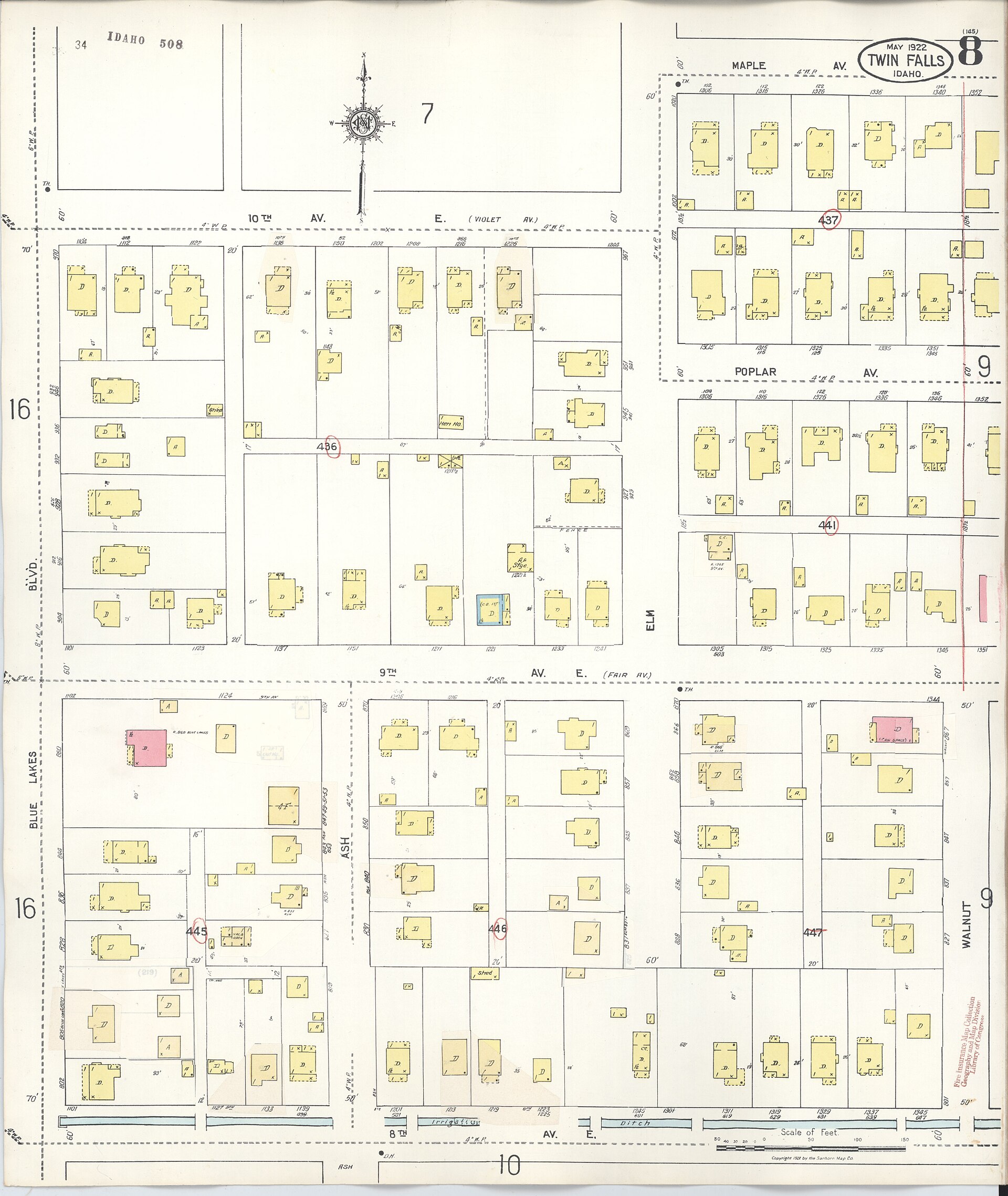

The region and its people
"Magic Valley" is a regional name, not a legal one. For this lesson it means seven counties along and north of the Snake River in south-central Idaho: Twin Falls, Gooding, Lincoln, Minidoka, Cassia, Camas and Blaine. They hold the five hospitals named above and most of the towns this module uses as local examples: Twin Falls, Kimberly, Buhl, Filer, Gooding, Hagerman, Wendell, Shoshone, Burley, Rupert, Hailey and Ketchum. The state's South Central Public Health District, District 5 under Idaho Code section 39-408, covers eight counties that include these seven.12
Population and growth
Twin Falls County is the population center, with 97,539 residents in the Census Bureau's July 1, 2025, estimate. Cassia, Blaine and Minidoka each have 22,000 to 27,000 people; Gooding has about 16,000; Lincoln about 5,600; and Camas, the smallest, about 1,300.2
| County | 2010 Census | April 1, 2020 estimates base | July 1, 2025 estimate | Change 2010 to 2025 (our calculation) | Hospital in county |
|---|---|---|---|---|---|
| Twin Falls | 77,230 | 90,050 | 97,539 | +26.3% | St. Luke's Magic Valley (Twin Falls) |
| Cassia | 22,952 | 24,688 | 26,397 | +15.0% | Cassia Regional (Burley) |
| Blaine | 21,376 | 24,271 | 25,517 | +19.4% | St. Luke's Wood River (Ketchum) |
| Minidoka | 20,069 | 21,584 | 22,911 | +14.2% | Minidoka Memorial (Rupert) |
| Gooding | 15,464 | 15,600 | 16,446 | +6.4% | North Canyon (Gooding) |
| Lincoln | 5,208 | 5,129 | 5,603 | +7.6% | None |
| Camas | 1,117 | 1,072 | 1,316 | +17.8% | None |
| Seven counties | 163,416 | 182,394 | 195,729 | +19.8% | Five hospitals |
| Idaho | 1,567,582 | 1,839,123 | 2,029,733 | +29.5% |
Sources: Census Bureau county population totals, Vintage 2025 (co-est2025-alldata) and the 2010 Census counts in the 2010 to 2020 county file (co-est2020-alldata). Percent change is our calculation.23
Growth here has been slower than in the Treasure Valley but steady, and it has not been even. Twin Falls County grew more than a quarter in 15 years, which adds patients to the one hospital that offers most specialty care. Gooding and Lincoln counties grew by single digits. Blaine County's year-round population grew, and its resort economy adds visitors and second-home owners whom resident counts miss. Idaho Growth by the Numbers explains how the Census estimates are made and why they get revised.
Two of the seven counties, Lincoln (Shoshone) and Camas (Fairfield), have no hospital at all in CMS's enrollment files, so every inpatient stay for their residents happens in another county.13
How we figured it: population change
Data. The Census Bureau's county population totals for Vintage 2025 (file co-est2025-alldata.csv, columns ESTIMATESBASE2020 and POPESTIMATE2025) and the 2010 to 2020 county file (co-est2020-alldata.csv, column CENSUS2010POP).23
Method. Percent change equals the July 1, 2025, estimate minus the April 1, 2010, Census count, divided by the 2010 count. The seven-county total is the sum of the seven counties. Example: Twin Falls County, (97,539 minus 77,230) divided by 77,230 equals 26.3 percent.
Limits. Estimates are revised every year, and the 2020 estimates base is not the same as the 2020 Census count. Visitors, seasonal workers and second-home owners are not counted where they get care.
Who is covered, in broad strokes
Medicare is a large payer here. In CMS's November 2026 Medicare Advantage penetration file, Twin Falls County had 19,715 people eligible for Medicare, Cassia 4,850, Minidoka 4,364, Gooding 3,479, Blaine 6,416, Lincoln 1,006 and Camas 326, about 40,156 in all (our sum). The share enrolled in Medicare Advantage plans ran from 20.37 percent in Blaine County to 56.01 percent in Twin Falls County. Lesson 88/09 covers what that difference means for small hospitals.14
Public data on Medicaid enrollment by county is thinner. The Census Bureau's American Community Survey publishes county estimates of Medicaid coverage, but its data service now requires a registration key that this build did not use, so this lesson relies on what the hospitals themselves report: how many patient days and how much revenue come from Medicaid. Those cost report figures are in the money section below. Who qualifies for Idaho Medicaid covers eligibility.
Five hospitals, one hub
The region's hospitals fall into two payment worlds. St. Luke's Magic Valley is paid by Medicare under the inpatient and outpatient prospective payment systems, with fixed rates per case (lesson 02 explains how). CMS's fiscal year 2027 impact file codes it as both a sole community hospital and a rural referral center, two designations that can raise Medicare payment for hospitals that are isolated or that draw patients from a wide rural area (42 CFR 412.92 and 412.96).1516 The other four are critical access hospitals, which Medicare pays at 101 percent of reasonable cost for most inpatient and outpatient services under 42 CFR 413.70, in exchange for staying small: no more than 25 inpatient beds and, with exceptions, at least 35 road miles from another hospital (42 CFR 485.610 and 485.620).1718
| Hospital | Town (county) | Medicare type | Owner or operator | Certified beds (POS, Q3 2026) | Critical access since | Trauma level (Idaho TSE) |
|---|---|---|---|---|---|---|
| St. Luke's Magic Valley Regional Medical Center | Twin Falls (Twin Falls) | Prospective payment; sole community hospital and rural referral center | St. Luke's Health System (nonprofit) | 226 | Not a CAH | III |
| North Canyon Medical Center | Gooding (Gooding) | Critical access hospital | North Canyon Medical Center Inc. (independent nonprofit) | 18 | May 18, 1999 | None listed |
| Minidoka Memorial Hospital | Rupert (Minidoka) | Critical access hospital | Local government (county) | 25 | Oct. 1, 2001 | IV |
| Intermountain Health Cassia Regional Hospital | Burley (Cassia) | Critical access hospital | Intermountain Health (nonprofit) | 25 | Oct. 1, 2004 | IV |
| St. Luke's Wood River Medical Center | Ketchum (Blaine) | Critical access hospital | St. Luke's Health System (nonprofit) | 25 | Aug. 16, 2003 | IV |
Sources: CMS Provider of Services file, Q3 2026 (beds, participation dates, control codes); CMS FY 2027 IPPS impact file; Idaho Bureau of EMS and Preparedness TSE designations updated Nov. 17, 2026. Owner names come from the hospitals' own filings and pages.11551119
The beds in that table are licensed and certified capacity. The cost reports count beds actually set up and staffed, which are fewer: 175 at St. Luke's Magic Valley, 16 at North Canyon and 22 at Minidoka Memorial in the 2024 file.4
St. Luke's Magic Valley Regional Medical Center, Twin Falls
The Twin Falls hospital began as a county institution. St. Luke's own history says Twin Falls County Hospital opened in 1918, voters approved bonds for a larger building after World War II, Magic Valley Memorial Hospital opened in 1951, and a remodel finished in 1982 renamed it Magic Valley Medical Center. In 2001 it merged with the nonprofit Twin Falls Clinic and Hospital; CMS's file shows that hospital's Medicare agreement ending Dec. 31, 2001, with the code for a voluntary merger or closure.9120
In 2006, St. Luke's history says, Twin Falls County voters approved the sale of the hospital to St. Luke's Health System. Idaho Code section 31-3507 (section 31-3515 at the time) lets county commissioners lease or sell a county hospital, but a sale is not valid until a majority of the county's voters approve it. CMS's file records a change of ownership effective July 1, 2006. The new corporation, St. Luke's Magic Valley Regional Medical Center Ltd., received its federal tax exemption in February 2007. The current campus on Pole Line Road west of downtown opened in 2011.91012122
St. Luke's describes the hospital as offering a 24-hour emergency department, an advanced cancer center, inpatient and outpatient behavioral health, and women's and children's care, and its pages refer to a neonatal intensive care unit and adult critical care.22 The Provider of Services file lists 28 psychiatric unit beds, the only inpatient psychiatric beds at any of the five hospitals.1 Idaho's emergency system designates it Level III for trauma, Level II for stroke and Level I for STEMI heart attacks; only Saint Alphonsus in Boise and Kootenai Health in Coeur d'Alene hold the list's higher "Level I+" STEMI mark.5
It is by far the largest employer of the five. Its 2024 cost report counted 1,948 full-time-equivalent employees on payroll, 12,275 discharges and 37,647 inpatient days, an average of about 103 patients in bed on a given day (our calculation, 37,647 days divided by 366).4
North Canyon Medical Center, Gooding
Gooding's hospital appears in CMS records as Gooding County Memorial Hospital, a 14-bed hospital whose Medicare participation dates to July 1, 1966, and whose control code is "hospital district or authority." That record ended May 18, 1999, the day the facility began participating as a critical access hospital.120 Today it is run by North Canyon Medical Center Inc., a private nonprofit corporation whose IRS exemption dates to August 2008.23 A replacement hospital opened in Gooding in 2010; a trade publication reported in February 2010 that it cost $17 million and would begin seeing patients March 2.24
Idaho Code section 39-1359 allows a hospital district's trustees to convey or lease the district's hospital to a nonprofit corporation, on conditions that include indigent care and a broadly representative membership. The records read for this lesson do not show whether that section was used in Gooding, so this lesson does not say it was. Gooding County voters dissolved the hospital district itself in 2018 (see the local control section below).2556
North Canyon is the smallest of the five by inpatient use: 298 discharges in its fiscal 2024 cost report and about three patients in bed on an average day. It is not small as a business. It reported 278.5 full-time-equivalent employees, $72.9 million in net patient revenue, and 92 percent of its gross patient revenue from outpatient services.4 CMS's rural health clinic file lists two clinics it runs: North Canyon Family Medicine in Gooding and the North Canyon Buhl Clinic.26 North Canyon has no trauma, stroke or STEMI designation on the Idaho list updated Nov. 17, 2026.5
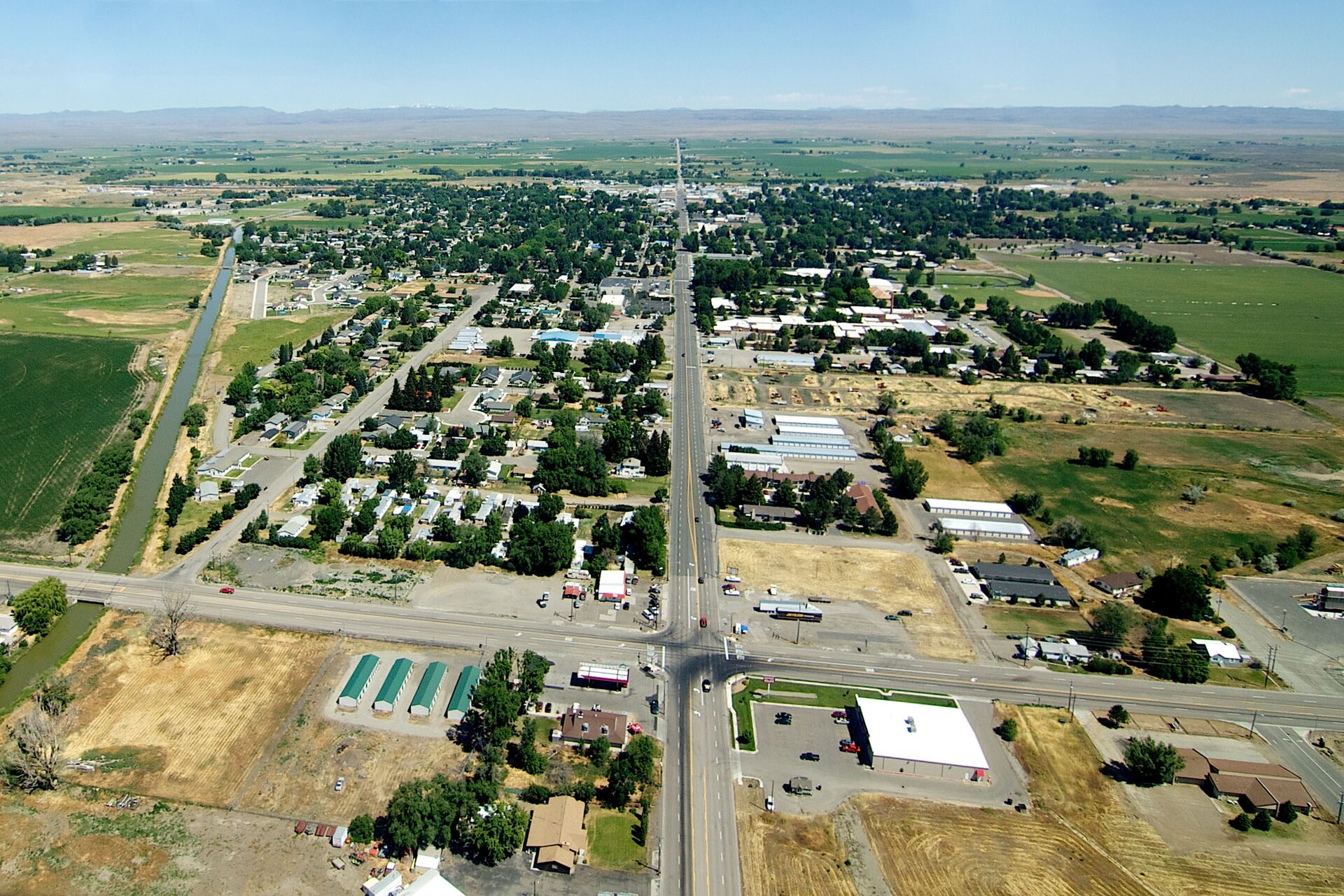

Minidoka Memorial Hospital, Rupert
Minidoka Memorial is the region's remaining government hospital. Its current CMS record carries control code 07, "local," and its cost report codes it as a county hospital.1204 Its earlier record shows Medicare participation from July 1, 1966, as a 27-bed general hospital, ending Oct. 1, 2001, when it became a critical access hospital.1 It runs a rural health clinic in Rupert.26
It had the weakest total margin of the five in both of the two most recent cost report years (minus 4.4 percent in fiscal 2023 and minus 6.2 percent in fiscal 2024), with patient-care margins of minus 7.1 and minus 7.9 percent and an overall net loss of $3.6 million in fiscal 2024.274 Rupert and Burley are about 9 road miles apart, and both have critical access hospitals; lesson 88/09 explains why CMS's public files do not show which distance test each met.
Intermountain Health Cassia Regional Hospital, Burley
Intermountain's history page says Cassia Memorial Hospital opened in 1960, owned by Cassia County and run under a management contract with the LDS Church; it joined the Intermountain system in 1975; a new Cassia Regional Medical Center opened in 1995; and the hospital took its current name in 2016.11 CMS's older record shows it as a 53-bed general hospital until Oct. 1, 2004, when it became a 25-bed critical access hospital.1
Intermountain describes it as a 25-bed critical access hospital whose providers "deliver more than 500 babies a year," with Level IV trauma, Level III stroke and Level II STEMI designations.115 It is the busiest of the four critical access hospitals, with 1,347 discharges and about 11 patients in bed on an average day in calendar 2024.4 Intermountain announced on Feb. 11, 2022, that Classic Air Medical, an Intermountain company, would begin service from a helicopter base on the campus in summer 2022, with a pilot, a critical care flight medic and a critical care flight nurse on duty around the clock.28
St. Luke's Wood River Medical Center, Ketchum
The Wood River Valley's hospital history shows up in CMS records as a series of hand-offs. Moritz Community Hospital in Sun Valley and Blaine County Medical Center in Hailey, both coded as local government hospitals, ended their Medicare records on Jan. 31, 1992. Wood River Medical Center in Sun Valley, also a local government hospital, participated from Feb. 1, 1992, to Nov. 19, 2000. A St. Luke's record in Ketchum began Nov. 21, 2000, and the hospital became a critical access hospital on Aug. 16, 2003.1 St. Luke's marked the hospital's 25th anniversary in 2025, saying it opened its doors in 2000.29
St. Luke's Wood River has the smallest Medicaid share of the five (2.3 percent of net patient revenue in fiscal 2024) and the largest balance sheet of the critical access hospitals: $156.4 million in total assets in its 2024 cost report.4 In November 2025, a local news site reported that Air St. Luke's had placed a full-time helicopter crew at the hospital after Blaine County commissioners asked about air medical service, and that Life Flight Network had committed a base near Friedman Memorial Airport in Hailey.30
The region as a map
The diagram below places the region's towns by latitude and longitude. Squares are hospitals; circles are towns without one. It is not a road map. Road travel times are in the distance section later in this lesson.
A century of hospitals: the timeline
Almost every hospital in the region began as a public institution built by a county or a community, and most were later handed to a larger nonprofit system. The table lists only events found in CMS records, Idaho law or the hospitals' own published histories.
| Year | Event | What changed | Source |
|---|---|---|---|
| 1918 | Twin Falls County Hospital opens | First county hospital in Twin Falls | St. Luke's history9 |
| 1951 | Magic Valley Memorial Hospital opens | New county hospital built with voter-approved bonds | St. Luke's history9 |
| 1960 | Cassia Memorial Hospital opens in Burley | County-owned, run under a church management contract | Intermountain history11 |
| 1966 (July 1) | Medicare begins paying hospitals | Twin Falls, Gooding, Rupert, Burley, Hailey, Sun Valley and Twin Falls Clinic hospitals all show Medicare participation from this date | CMS POS1 |
| 1975 | Cassia joins Intermountain | Burley hospital becomes part of a multi-state nonprofit system | Intermountain history11 |
| 1982 | Remodel finished; name becomes Magic Valley Medical Center | $26.7 million expansion approved in 1979 | St. Luke's history9 |
| 1992 | Wood River Medical Center replaces two Blaine County hospital records | Moritz (Sun Valley) and Blaine County Medical Center (Hailey) records end Jan. 31 | CMS POS1 |
| 1995 | New Cassia Regional Medical Center opens | Replacement building in Burley | Intermountain history11 |
| 1999 | Gooding becomes a critical access hospital (May 18) | Cost-based Medicare payment begins | CMS POS1 |
| 2000 | St. Luke's opens in Ketchum (record begins Nov. 21) | Wood River Medical Center record ends Nov. 19 | CMS POS; St. Luke's129 |
| 2001 | Minidoka Memorial becomes a CAH (Oct. 1); Magic Valley Medical Center merges with Twin Falls Clinic and Hospital (Dec. 31) | Twin Falls goes from two hospital records to one | CMS POS; St. Luke's history19 |
| 2003 | St. Luke's Wood River becomes a CAH (Aug. 16) | Cost-based Medicare payment begins | CMS POS1 |
| 2004 | Cassia becomes a CAH (Oct. 1) | Goes from 53 to 25 certified beds | CMS POS1 |
| 2006 | Twin Falls County voters approve the hospital sale; St. Luke's takes over July 1 | County hospital becomes part of St. Luke's Health System | St. Luke's history; CMS POS; Idaho Code 31-3507 (then 31-3515)9110 |
| 2008 | North Canyon Medical Center Inc. receives IRS exemption (August) | Gooding hospital run by an independent nonprofit | IRS via ProPublica23 |
| 2010 | Replacement hospital opens in Gooding | Reported cost $17 million | Becker's Hospital Review24 |
| 2011 | New St. Luke's Magic Valley campus opens in Twin Falls | Current hospital on Pole Line Road | St. Luke's922 |
| 2014 (Dec. 19) | Mountain View Center for Geriatric Psychiatry, Kimberly, loses Medicare agreement | CMS code: involuntary, failure to meet health and safety requirements | CMS POS120 |
| 2016 | Sawtooth Behavioral Health, Twin Falls, participates Feb. 11 to Aug. 26 | 29-bed psychiatric hospital record ends as a voluntary closure | CMS POS1 |
| 2022 | Classic Air Medical helicopter base opens at Cassia Regional | 24-hour air ambulance crew in Burley | Intermountain28 |
| 2023 (May 11) | Sawtooth Surgery Center's 4-bed hospital record ends | Voluntary closure code | CMS POS1 |
| 2025 | Air St. Luke's places a helicopter crew at St. Luke's Wood River | Full base operations targeted for January 2026 | Eye on Sun Valley (news)30 |
Following the money: what the cost reports show
Every hospital paid by Medicare files an annual cost report with CMS. The report's worksheets list beds, staff, patient days by payer, charges, costs, revenue, income and the balance sheet. CMS posts a summary file of selected fields from every report each year, and that file is the source for most numbers in this section.431 The "2024 file" holds the reports for fiscal years that, for these hospitals, ran Oct. 1, 2023, to Sept. 30, 2024, except Cassia Regional, whose year is the calendar year 2024. The "2023 file" holds the year before.27
Size, staff and revenue
| Hospital (2024 file) | Fiscal year | FTEs on payroll | Discharges | Inpatient days (all units) | Gross charges (total patient revenue) | Contractual allowances and discounts | Net patient revenue | Outpatient share of gross revenue |
|---|---|---|---|---|---|---|---|---|
| St. Luke's Magic Valley | Oct. 2023 to Sept. 2024 | 1,948.4 | 12,275 | 37,647 | $1,482.2 million | $959.8 million (64.8%) | $522.4 million | 55.1% |
| North Canyon | Oct. 2023 to Sept. 2024 | 278.5 | 298 | 1,073 | $135.0 million | $62.0 million (46.0%) | $72.9 million | 92.0% |
| Minidoka Memorial | Oct. 2023 to Sept. 2024 | 271.1 | 266 | 1,624 | $91.3 million | $34.3 million (37.5%) | $57.1 million | 88.8% |
| Cassia Regional | Jan. to Dec. 2024 | 278.4 | 1,347 | 4,202 | $160.4 million | $94.0 million (58.6%) | $66.4 million | 78.0% |
| St. Luke's Wood River | Oct. 2023 to Sept. 2024 | 333.7 | 805 | 2,512 | $174.0 million | $78.0 million (44.8%) | $96.1 million | 79.5% |
| Five hospitals | 3,110.1 | 14,991 | 47,058 | $2,042.9 million | $814.8 million |
Source: CMS Hospital Provider Cost Report file, 2024. Percentages and totals are our calculations.4
Three things stand out. First, charges are not prices. St. Luke's Magic Valley billed $1.48 billion at its list prices in fiscal 2024 and collected $522 million; the other $960 million was written off as contractual allowances and discounts, mostly the gap between list prices and what Medicare, Medicaid and insurers agreed to pay. Lesson 12 explains why list prices exist at all. Second, the critical access hospitals are mostly outpatient businesses: emergency visits, imaging, lab work, surgery without an overnight stay, clinics and therapy. North Canyon took in 92 percent of its gross revenue from outpatient services. Third, the five hospitals together employed about 3,110 full-time-equivalent workers and paid $309.9 million in salaries on their cost reports' Worksheet A, which makes hospital care one of the region's largest payrolls; lesson 11 takes up health care as an industry.4
Payer mix: who pays for a hospital day
"Payer mix" means the share of a hospital's patients, days or revenue that comes from each kind of payer. The cost report splits inpatient days among Title XVIII (traditional Medicare), Title XIX (Medicaid) and all others, a group that includes private insurance, Medicare Advantage plans, the VA, workers' compensation and people paying themselves.31
| Hospital | Adult and pediatric days, 2024 file | Traditional Medicare | Medicaid | All other | Medicaid share of net patient revenue, 2024 | Medicaid share of net patient revenue, 2023 | Medicaid share of gross charges, 2024 |
|---|---|---|---|---|---|---|---|
| St. Luke's Magic Valley | 28,669 | 25.3% | 8.1% | 66.7% | 9.0% | 10.2% | 19.5% |
| North Canyon | 861 | 41.2% | 40.9% | 17.9% | 13.0% | 16.7% | 17.0% |
| Minidoka Memorial | 863 | 42.9% | 8.5% | 48.7% | 10.6% | 9.1% | 15.3% |
| Cassia Regional | 2,328 | 32.9% | 23.8% | 43.3% | 17.2% | 19.3% | 24.5% |
| St. Luke's Wood River | 2,149 | 41.7% | 11.1% | 47.1% | 2.3% | 5.6% | 7.7% |
| Idaho, short-term and critical access hospitals combined | 10.2% | 11.4% | |||||
| United States, short-term and critical access hospitals combined | 10.6% | 11.1% |
Source: CMS Hospital Provider Cost Report files, 2023 and 2024. Shares are our calculations; rows may not add to 100 because of rounding.427
Read the day counts with care. At a hospital with fewer than 900 adult and pediatric days a year, a handful of long Medicaid stays can swing the shares. North Canyon's Medicaid share of adult and pediatric days jumped from 9.5 percent in the 2023 file to 40.9 percent in the 2024 file while its Medicaid revenue share fell, a pattern that may reflect a few long stays, a change in how days were counted or a reporting error; the public file alone cannot say which. Revenue shares are steadier.274
The gap between Medicaid's share of charges and its share of net revenue is the clearest sign of how Medicaid pays. At Cassia Regional, Medicaid patients generated 24.5 percent of gross charges but 17.2 percent of net patient revenue. At St. Luke's Magic Valley, 19.5 percent of charges became 9.0 percent of net revenue. Both nonprofit tax returns read for this lesson report Medicaid paying less than the cost of care, a gap they count as a community benefit (see the Schedule H section below). Lesson 02 explains how Idaho sets Medicaid hospital rates, and the 4 percent cut to most Idaho Medicaid provider rates that took effect Sept. 1, 2025, under the legislative appropriation process that Idaho Code section 56-265 requires.3233
Margins: who makes money on patient care
A margin is profit or loss as a share of revenue. This lesson uses two from the cost report. The patient-care margin is net income from service to patients divided by net patient revenue; it shows whether caring for patients covered the cost of caring for them. The total margin adds other income (investment returns, donations, grants, cafeteria and parking revenue, rent and similar items) and divides net income by net patient revenue plus that other income. A hospital can lose money on patients and still end the year ahead, or the reverse.31
| Hospital | Patient-care margin, 2023 file | Patient-care margin, 2024 file | Total margin, 2023 file | Total margin, 2024 file | Net income, 2024 file |
|---|---|---|---|---|---|
| St. Luke's Magic Valley | -9.5% | -5.7% | -2.3% | 0.4% | $2.1 million |
| North Canyon | 5.2% | 8.4% | 5.8% | 7.8% | $5.9 million |
| Minidoka Memorial | -7.1% | -7.9% | -4.4% | -6.2% | -$3.6 million |
| Cassia Regional | 1.0% | -0.6% | 2.8% | 1.9% | $1.3 million |
| St. Luke's Wood River | 5.4% | 3.9% | 11.4% | 7.0% | $6.9 million |
| Idaho critical access hospitals, median (27) | -5.3% | -6.5% | |||
| U.S. critical access hospitals, median | -5.9% | -5.2% |
Source: CMS Hospital Provider Cost Report files, 2023 and 2024. All margins and medians are our calculations; the minus sign means a loss.274
St. Luke's Magic Valley lost $47.4 million on patient care in fiscal 2023 and $29.6 million in fiscal 2024, and other income of $35.1 million and $31.8 million covered most or all of the gap. Its federal tax return for the following year, the fiscal year ended Sept. 30, 2025, reported total revenue of $611.3 million against expenses of $610.6 million, a gain of $738,650, after losses of $12.1 million and $13.2 million on the two previous returns.421 Those return figures cover the whole St. Luke's Magic Valley corporation, which reported operating two hospital facilities, so they are not a Twin Falls-only number.34
North Canyon had the highest patient-care margin of the five in the 2024 file and the second highest, just behind St. Luke's Wood River, in the 2023 file. Its return for the fiscal year ended Sept. 30, 2025, reported revenue of $76.8 million, expenses of $73.1 million and net income of $3.7 million, with total assets of $100.7 million and total liabilities of $72.3 million. Its liabilities rose from $47.7 million to $72.9 million between its 2023 and 2024 returns; the filing's schedules show the debt, and a reporter would read them before saying what it paid for.23
Minidoka Memorial lost money on patient care in both years, and its overall net loss grew. Cassia Regional was near break-even. St. Luke's Wood River made money on patients and more with other income; the summary file does not break other income into its parts.4
Charity care, bad debt and uncompensated care
Worksheet S-10 of the cost report separates two kinds of unpaid care. Charity care is care the hospital decided in advance, under its financial assistance policy, not to charge for in full; it is reported at cost. Bad debt is care the hospital billed for and could not collect; the cost report shows it at charges and then converts the non-Medicare portion to cost. The sum, at cost, is uncompensated care.31
| Hospital, 2024 file | Charity care (at cost) | Bad debt expense (at charges) | Uncompensated care (at cost) | Uncompensated care as share of total costs |
|---|---|---|---|---|
| St. Luke's Magic Valley | $12,356,578 | $29,173,810 | $21,572,226 | 5.2% |
| North Canyon | $244,959 | $2,810,865 | $1,596,665 | 3.1% |
| Minidoka Memorial | $338,736 | $3,128,475 | $2,379,240 | 4.5% |
| Cassia Regional | $3,733,664 | $3,400,693 | $4,973,416 | 9.4% |
| St. Luke's Wood River | $1,919,747 | $3,451,097 | $3,711,423 | 4.7% |
| Five hospitals | $18,593,684 | $41,964,940 | $34,232,970 | |
| Idaho median, all hospitals | 3.9% | |||
| U.S. median, all hospitals | 3.4% |
Source: CMS Hospital Provider Cost Report file, 2024. Totals, shares and medians are our calculations.4
Cassia Regional stands out: uncompensated care equal to 9.4 percent of its costs, more than double the Idaho median, with charity care larger than bad debt. The cost report cannot say why. Possible reasons include a more generous financial assistance policy, a larger uninsured population or different accounting, and only Intermountain's own policies and filings could sort them out. At the other four, bad debt is larger than charity care, which means more unpaid bills were written off after collection efforts than were forgiven up front. Charity care and bad debt are different things and should not be added together without saying so; this lesson's "uncompensated care" column follows CMS's definition.
How we figured it: margins, payer shares and medians
Data. CMS Hospital Provider Cost Report public use files for 2023 and 2024, posted October 2026 (CostReport_2023_Final.csv and CostReport_2024_Final.csv), one row per hospital report. The Magic Valley rows are those with certification numbers 130002, 131302, 131319, 131326 and 131323.427
Method. Patient-care margin = "Net Income from Service to Patients" divided by "Net Patient Revenue." Total margin = "Net Income" divided by ("Net Patient Revenue" plus "Total Other Income"). Day shares = "Hospital Total Days Title XVIII For Adults and Peds" and the Title XIX equivalent, each divided by the adult and pediatric total. Medicaid revenue share = "Net Revenue from Medicaid" divided by "Net Patient Revenue." Uncompensated care share = "Cost of Uncompensated Care" divided by "Total Costs." State and national margin and uncompensated care figures are medians across all hospitals in the file with positive net patient revenue; state and national Medicaid revenue shares are total Medicaid net revenue divided by total net patient revenue for short-term and critical access hospitals combined; report counts include every report in the file; critical access hospitals are those whose certification number has 13 in the third and fourth places (1300 to 1399). Idaho had 27 critical access hospital reports in each file; the United States had 1,384 in the 2023 file and 1,390 in the 2024 file.
Limits. Cost reports are filed by the hospitals and may be amended; CMS posts them as submitted. Fiscal years differ. Medicare Advantage days are reported outside the Title XVIII column in these summary fields, so the "traditional Medicare" share understates Medicare's total role. Hospitals that belong to systems may book some costs, investment income and cash at the system level, so a single hospital's margin and cash can look different from the system's. We did not adjust for inflation.
Compared with Idaho, the nation and the neighbors
The same cost report files let the Magic Valley be compared with other places. The table shows medians for critical access hospitals and for other short-term general hospitals, and Medicaid's share of net patient revenue across all hospitals in each state.
| Place (2024 file) | CAH reports | CAH median patient-care margin | Other short-term hospital reports | Short-term median patient-care margin | Medicaid share of net patient revenue, short-term and critical access hospitals combined |
|---|---|---|---|---|---|
| Idaho | 27 | -6.5% | 16 | 0.2% | 10.2% |
| Utah | 13 | 3.9% | 33 | 12.3% | 8.5% |
| Oregon | 25 | -3.0% | 30 | -7.3% | 14.0% |
| Washington | 39 | -6.0% | 47 | -6.3% | 10.9% |
| Montana | 50 | -6.9% | 11 | -4.1% | 9.8% |
| Wyoming | 17 | -11.6% | 11 | 0.4% | 3.8% |
| Nevada | 13 | -2.5% | 22 | 13.3% | 7.7% |
| United States | 1,390 | -5.2% | 3,212 | -1.1% | 10.6% |
Source: CMS Hospital Provider Cost Report file, 2024; medians and shares are our calculations using the method in the box above. "Other short-term" means certification numbers 0001 to 0879.4
Idaho's critical access hospitals had a lower median patient-care margin than the national median, and the Magic Valley's four sit on both sides of it: North Canyon, St. Luke's Wood River and Cassia Regional above it, Minidoka Memorial below. Fifty-nine percent of all Idaho hospital reports in the 2024 file showed a patient-care loss, against 54 percent nationally (our calculation).4 Lesson 05 looks at why small hospitals lose money on patients and how they survive anyway.
Tax exemption and community benefit: what the Form 990s say
Four of the five hospitals are run by nonprofit organizations, and a nonprofit hospital organization's Form 990 must include Schedule H. This lesson read two of those returns, for St. Luke's Magic Valley and North Canyon. Federal law in Internal Revenue Code section 501(r) requires a written financial assistance policy, a community health needs assessment every three years, limits on charges to people eligible for assistance, and limits on extraordinary collection actions.35 Schedule H reports what the hospital calls community benefit, at cost, in categories the IRS defines: financial assistance (charity care), the unpaid cost of Medicaid and other means-tested programs, community health programs, health professions education, subsidized services, research and donations.36
| Schedule H, Part I, line 7 (net, at cost) | St. Luke's Magic Valley Regional Medical Center Ltd. | Share of total expense | North Canyon Medical Center Inc. | Share of total expense |
|---|---|---|---|---|
| 7a Financial assistance (charity care) | $6,897,875 | 1.13% | $199,561 | 0.27% |
| 7b Unpaid cost of Medicaid | $39,871,567 | 6.54% | $1,249,629 | 1.71% |
| 7e Community health improvement | $1,287,418 | 0.21% | $424,231 | 0.58% |
| 7f Health professions education | $16,118,134 | 2.64% | none reported | |
| 7g Subsidized health services | $13,760,336 | 2.26% | $1,552,528 | 2.12% |
| 7h and 7i Research, cash and in-kind gifts | $1,026,091 | 0.16% | none reported | |
| 7k Total community benefit | $78,961,421 | 12.94% | $3,425,949 | 4.69% |
| Part III: bad debt expense | $6,178,062 | $1,363,068 | ||
| Part III: Medicare revenue minus Medicare allowable costs | -$34,741,981 | -$86,666 |
Source: IRS Form 990 Schedule H for tax year 2024 (fiscal years ended Sept. 30, 2025), as filed and rendered by ProPublica Nonprofit Explorer. Line 7h plus 7i for St. Luke's is our sum of $150,548 and $875,543.3419
Several things in the table need care. The Medicaid line counts the gap between the hospital's cost and Medicaid's payment as a community benefit; at St. Luke's Magic Valley that gap ($39.9 million) is nearly six times the charity care figure. Bad debt and the Medicare shortfall are reported in Part III but are not counted in the line 7 total, under the IRS form's rules. And the two hospitals face different Medicare rules: North Canyon, a critical access hospital paid on reasonable cost, reported Medicare revenue within $86,666 of its Medicare allowable costs, while St. Luke's Magic Valley, paid fixed prospective rates, reported a $34.7 million Medicare shortfall.341917
The cost report and Schedule H measure charity care differently, over different fiscal years, and for different entities (a hospital provider number versus a corporation that may run more than one facility). Do not set the two side by side as if they should match. Lesson 03 compares community benefit across Idaho's larger systems. Minidoka Memorial is a county hospital, and government hospitals generally do not file Form 990. Cassia Regional belongs to Intermountain Health, so its figures would appear in Intermountain's filings rather than a stand-alone return; this lesson did not search those filings, or St. Luke's Wood River's.
Clinics and the safety net
Most health care happens outside hospitals, and in the smaller Magic Valley towns it happens in two kinds of clinics that federal law treats specially. A federally qualified health center (FQHC) is a nonprofit or public clinic that receives a federal Health Center Program grant (or meets the same requirements as a "look-alike"), serves everyone regardless of ability to pay with a sliding fee scale, and is paid by Medicare and Medicaid under special prospective payment rules. A rural health clinic (RHC) is a clinic in a rural shortage area that meets the federal requirements in 42 CFR part 491 and receives an all-inclusive payment per visit. Both are defined in Social Security Act section 1861(aa).3738
Family Health Services: the region's health center
HRSA's site file lists 31 active service delivery sites in the seven counties, every one of them run by Family Health Services, a health center based in Twin Falls. They include medical, dental and behavioral health clinics in Twin Falls, Buhl, Kimberly, Burley, Rupert, Shoshone, Bellevue and Fairfield; an urgent care clinic in downtown Twin Falls; a certified community behavioral health clinic in Twin Falls added in August 2023; a mobile dental unit; a county response office in Bellevue added in December 2025; and 16 sites in schools in Twin Falls, Kimberly, Buhl, Burley, Declo and Shoshone.7
| Town | Family Health Services sites (HRSA, active) | Of which in schools | Earliest "added to scope" date in HRSA file |
|---|---|---|---|
| Twin Falls | 12 | 5 | Jan. 4, 1982 |
| Kimberly | 6 | 5 | June 5, 2013 |
| Buhl | 3 | 2 | Jan. 8, 1985 |
| Burley | 3 | 2 | May 1, 2012 |
| Shoshone | 2 | 1 | Aug. 5, 2021 |
| Bellevue | 2 | 0 | Aug. 2, 2021 |
| Rupert | 1 | 0 | April 20, 2017 |
| Fairfield | 1 | 0 | Nov. 29, 2004 |
| Declo | 1 | 1 | June 12, 2019 |
| Seven counties | 31 | 16 |
Source: HRSA Health Center Service Delivery and Look-Alike Sites file, downloaded Nov. 23, 2026; counts are our tally. "Added to scope" is the date HRSA records for adding the site to the grant, not necessarily the date a clinic first opened.7
For Idaho as a whole, the 14 Health Center Program awardees reported 247,642 patients in 2025, up from 202,675 in 2021. Of those 2025 patients, 31.75 percent had Medicaid or CHIP, 20.45 percent were uninsured, 16.26 percent had Medicare and 31.54 percent had other third-party coverage, mostly private insurance, according to HRSA's Uniform Data System summary for Idaho.39 HRSA's per-organization page for Family Health Services did not return its data tables to this build, so this lesson does not give that organization's own patient count; lesson 06 covers health centers statewide.
Rural health clinics
CMS's Sept. 29, 2026, rural health clinic enrollment file lists six RHCs in the region: North Canyon Family Medicine (Gooding) and the North Canyon Buhl Clinic, both run by North Canyon Medical Center; Minidoka Memorial Hospital's clinic in Rupert; an independent family practice in Wendell; and two clinics run by a private provider group, in Hailey and Burley.26 The file marks the two hospital-run North Canyon clinics and the Minidoka clinic as nonprofit and the other three as proprietary. Kimberly, Filer, Hagerman and Shoshone have no RHC in the file; Kimberly and Shoshone are served by Family Health Services sites. Lesson 88/09 explains how Medicare pays RHCs.

Shortage areas
HRSA designates Health Professional Shortage Areas (HPSAs) for primary care, dental care and mental health under 42 CFR part 5. A designation can cover a whole county ("geographic"), a population within it, such as low-income residents ("population"), or a facility. Each gets a score; higher means greater need (0 to 25 for primary care and mental health, 0 to 26 for dental). Designations open the door to National Health Service Corps clinicians, some state and federal loan repayment programs.408
| County | Primary care HPSA (type, score, first designated) | Dental HPSA (type, score, status) | Mental health HPSA |
|---|---|---|---|
| Twin Falls | Low-income population, 14, Feb. 17, 1998 | Low-income population, 12, designated | South-central catchment area, 14 |
| Gooding | Low-income population, 17, June 13, 2003 | Low-income population, 18, proposed for withdrawal | South-central catchment area, 14 |
| Lincoln | Geographic (whole county), 16, June 23, 1980 | High-needs geographic, 14, designated | South-central catchment area, 14 |
| Minidoka | Low-income population, 14, Feb. 20, 1998 | Low-income population, 16, designated | South-central catchment area, 14 |
| Cassia | Low-income population, 14, Nov. 5, 1997 | Low-income population, 10, designated Sept. 22, 2025 | South-central catchment area, 14 |
| Camas | Geographic (whole county), 8, Oct. 18, 1978 | Geographic, 9, proposed for withdrawal | South-central catchment area, 14 |
| Blaine | Low-income, Hailey, Bellevue and Carey areas, 16, May 12, 2026; county low-income designation (13) proposed for withdrawal | Low-income, Hailey and Ketchum areas, 16, and Carey area, 8, both proposed for withdrawal | South-central catchment area, 14 |
Source: HRSA HPSA detail files for primary care, dental health and mental health, downloaded Nov. 23, 2026. "Low-income population" HPSAs cover residents below a poverty threshold, not the whole county. The mental health catchment area covers the eight counties of the south-central health district.84142
Facilities get designations too. Family Health Services holds automatic facility HPSA scores as an FQHC (18 for primary care, 17 for dental and 19 for mental health), and the North Canyon clinics in Gooding and Buhl and Minidoka Memorial's clinic hold rural health clinic facility designations.84142 The files also estimate shortages in full-time-equivalent clinicians: the Twin Falls County low-income primary care area was short about 6.0 FTE primary care practitioners, and the south-central mental health catchment area about 5.8 FTE psychiatrists, against HRSA's target ratios.842 A shortage designation is a ratio test; it does not mean a county has no clinicians.
Distance and time: how far is care?
Distance shapes everything about rural care: where an ambulance goes, when a helicopter is called, how far a pregnant woman drives for a scheduled delivery, and whether a small hospital can keep a service. The table gives road travel times computed for this lesson from each town's center to each hospital, under free-flowing traffic. Lesson 88/09 gives straight-line distances, which are shorter.
| Town | Nearest hospital | Minutes (miles) to nearest hospital | Minutes to St. Luke's Magic Valley (Level III trauma) | Minutes to nearest adult Level II trauma center |
|---|---|---|---|---|
| Twin Falls | St. Luke's Magic Valley | 0 (in town) | 0 | 119 (Pocatello) |
| Kimberly | St. Luke's Magic Valley | 13 (7) | 13 | 113 (Pocatello) |
| Filer | St. Luke's Magic Valley | 13 (8) | 13 | 130 (Pocatello) |
| Buhl | St. Luke's Magic Valley | 26 (16) | 26 | 129 (Boise) |
| Wendell | North Canyon | 15 (11) | 28 | 107 (Boise) |
| Hagerman | North Canyon | 33 (21) | 46 | 104 (Boise) |
| Gooding | North Canyon | 0 (in town) | 43 | 110 (Boise) |
| Shoshone | North Canyon | 28 (17) | 35 | 132 (Boise) |
| Fairfield | North Canyon | 61 (35) | 100 | 116 (Boise) |
| Rupert | Minidoka Memorial | 2 (1) | 53 | 80 (Pocatello) |
| Burley | Cassia Regional | 1 (1) | 46 | 82 (Pocatello) |
| Oakley | Cassia Regional | 40 (22) | 85 | 121 (Pocatello) |
| Hailey | St. Luke's Wood River | 16 (11) | 87 | 164 (Boise) |
| Ketchum | St. Luke's Wood River | 4 (3) | 104 | 181 (Boise) |
| Carey | St. Luke's Wood River | 58 (43) | 91 | 145 (Pocatello) |
Source: our calculation with the OSRM open-source routing engine (driving profile, OpenStreetMap roads), from Census 2024 Gazetteer town points to hospital addresses located with the Census Bureau geocoder. Level II centers: Saint Alphonsus Regional Medical Center, Boise, and Portneuf Medical Center, Pocatello, per the Idaho TSE list updated Nov. 17, 2026.643445
How we figured it: drive times
Data. Town locations are the "internal point" latitude and longitude of each Idaho place in the Census Bureau's 2024 Gazetteer file. Hospital locations are the street addresses in CMS's Provider of Services file, located with the Census Bureau's public geocoder for the hospitals in Rupert, Burley, Ketchum, Boise and Pocatello; for Twin Falls and Gooding, where the geocoder did not match the exact address, we used the town's internal point.43441
Method. We sent all 15 towns and 7 hospitals to the OSRM "table" service (router.project-osrm.org, driving profile) on Nov. 23, 2026, which returns the fastest-route time and distance for every pair, and rounded to whole minutes and miles. The full results are saved in the module's download folder as a CSV file.6
Limits. Times assume legal speeds with no traffic, weather, road work or time to load a patient. Winter driving on U.S. 93, State Highway 75 and the Interstate 84 corridor can add much more. An ambulance with lights and siren may be faster; a helicopter flies straight but needs a crew, weather and a landing zone. The "nearest hospital" is by drive time among the seven hospitals in the calculation, not every emergency room in the state.

Trauma, stroke and heart attack care
Idaho's Time Sensitive Emergency (TSE) system, run by the Bureau of EMS and Preparedness in the Department of Health and Welfare, designates hospitals by level for trauma, stroke and STEMI heart attacks. Level I is the most capable. As of the list updated Nov. 17, 2026, no Idaho hospital held an adult Level I trauma designation; the adult Level II centers were Kootenai Health in Coeur d'Alene, Saint Alphonsus Regional Medical Center in Boise, Portneuf Medical Center in Pocatello and Eastern Idaho Regional Medical Center in Idaho Falls, and St. Luke's Regional Medical Center in Boise held a pediatric Level II designation.5
| Hospital | Trauma | Stroke | STEMI |
|---|---|---|---|
| St. Luke's Magic Valley, Twin Falls | III | II | I |
| Cassia Regional, Burley | IV | III | II |
| Minidoka Memorial, Rupert | IV | III | II |
| St. Luke's Wood River, Ketchum | IV | none | none |
| North Canyon, Gooding | none | none | none |
Source: Idaho Bureau of EMS and Preparedness, TSE facility designations, updated Nov. 17, 2026.5
In practice, a badly injured person in the Magic Valley is usually stabilized at the nearest emergency room and moved by ground or air to Twin Falls, Boise, Pocatello or out of state. Federal law, the Emergency Medical Treatment and Labor Act (Social Security Act section 1867), requires any Medicare-participating hospital with an emergency department to screen and stabilize anyone who comes in and to arrange an appropriate transfer when it cannot provide the care needed.45 The money follows the patient: the transferring hospital is paid for the emergency visit, the receiving hospital for the stay, and the ambulance or air ambulance separately.
Air ambulances
Air St. Luke's says it flies from bases in Boise and Twin Falls.46 Classic Air Medical, owned by Intermountain, has operated a helicopter base at Cassia Regional since summer 2022.28 In the Wood River Valley, a November 2025 news report described a new Air St. Luke's crew at St. Luke's Wood River and a Life Flight Network commitment near Friedman Memorial Airport, with full St. Luke's operations in Ketchum targeted for January 2026.30 Air ambulance bills can be large; the federal No Surprises Act limits what an insured patient can be billed for out-of-network air ambulance service, a subject lesson 12 covers.
Services, closures and changes
Service lines
The five hospitals divide the work. St. Luke's Magic Valley is the only one with inpatient psychiatric beds (28 in the Provider of Services file), a neonatal intensive care unit, a cancer center and the region's highest stroke and STEMI designations.1225 Births happen at St. Luke's Magic Valley, Cassia Regional and St. Luke's Wood River, which the Provider of Services file marks as offering obstetric services and whose own pages describe maternity care; North Canyon and Minidoka Memorial are not marked for obstetric services in the current file.11129 Minidoka Memorial's older record, which ended in 2001, did carry an obstetrics flag, but the file does not say when deliveries stopped. Lesson 89/09 covers rural maternity care and Medicaid's role in paying for births.
Closures and ended Medicare agreements
The Provider of Services file keeps a record of every hospital agreement that has ended, with a coded reason. The table lists every ended hospital record in the seven counties. Many are not closures at all; code 07, "provider status change," is what the file shows when a hospital converts to a critical access hospital and gets a new record.120
| Facility (town) | Kind, beds, control | Medicare record began | Record ended | CMS termination code |
|---|---|---|---|---|
| Moritz Community Hospital (Sun Valley) | General, 27 beds, local government | July 1, 1966 | Jan. 31, 1992 | 07 provider status change |
| Blaine County Medical Center (Hailey) | General, 15 beds, local government | July 1, 1966 | Jan. 31, 1992 | 07 provider status change |
| Canyon View Hospital (Twin Falls) | Psychiatric, 28 beds, for-profit | June 21, 1985 | Dec. 31, 1996 | 01 voluntary merger or closure |
| Walker Center (Gooding) | Hospital record, 22 beds, nonprofit | Oct. 1, 1987 | Nov. 20, 1996 | 01 voluntary merger or closure |
| Gooding County Memorial Hospital (Gooding) | General, 14 beds, hospital district | July 1, 1966 | May 18, 1999 | 07 (became CAH) |
| Wood River Medical Center (Sun Valley) | General, 39 beds, local government | Feb. 1, 1992 | Nov. 19, 2000 | 01 voluntary merger or closure |
| SunHealth Behavioral Health System (Twin Falls) | Psychiatric, 14 beds, for-profit | Aug. 17, 1999 | Jan. 23, 2001 | 01 voluntary merger or closure |
| Minidoka Memorial Hospital (Rupert) | General, 27 beds, local government | July 1, 1966 | Oct. 1, 2001 | 07 (became CAH) |
| Twin Falls Clinic and Hospital (Twin Falls) | General, 44 beds, nonprofit | July 1, 1966 | Dec. 31, 2001 | 01 voluntary merger or closure |
| St. Luke's Medical Center, Wood River (Ketchum) | General, 32 beds | Nov. 21, 2000 | Aug. 16, 2003 | 01 voluntary merger or closure (ended the day the CAH record began) |
| Cassia Regional (Burley), earlier record | General, 53 beds, nonprofit | July 1, 1966 | Oct. 1, 2004 | 07 (became CAH) |
| Mountain View Center for Geriatric Psychiatry (Kimberly) | Psychiatric, 41 beds, for-profit | Oct. 18, 2002 | Dec. 19, 2014 | 05 involuntary, failure to meet health and safety requirements |
| Sawtooth Behavioral Health (Twin Falls) | Psychiatric, 29 beds, for-profit | Feb. 11, 2016 | Aug. 26, 2016 | 01 voluntary merger or closure |
| Sawtooth Surgery Center (Twin Falls) | Hospital record, 4 beds, for-profit | Sept. 3, 2021 | May 11, 2023 | 01 voluntary merger or closure |
Source: CMS Provider of Services file, hospital and other facilities, Q3 2026, and the POS record layout's code list. The file does not record why a facility closed.120
Two patterns stand out. First, every general hospital that existed in the region in 1966 is still operating in some form; the losses were consolidations (two Blaine County hospitals into one, two Twin Falls hospitals into one), not closures of a town's only hospital. Second, the region has lost four free-standing psychiatric hospital records since 1996, two of them short-lived, leaving the 28-bed unit at St. Luke's Magic Valley as the only inpatient psychiatric capacity among the region's hospitals. Lesson 89/05 covers behavioral health and Medicaid.
People and training
Hospitals spend more on people than on anything else. The five Magic Valley hospitals reported $309.9 million in salaries on Worksheet A of their 2024 cost reports, against $839.4 million in total operating expenses (our sums).4 St. Luke's Magic Valley also reported $15.3 million for contract labor for direct patient care in fiscal 2024, down from $18.2 million in fiscal 2023; the four critical access hospitals left that field blank in the summary file.274 Contract labor, mostly travel nurses and other temporary clinicians, costs more per hour than staff, and hospitals across the country cut back on it after 2022. Lesson 07 covers Idaho's health care workforce and wages.
Much of the region's nursing workforce trains at the College of Southern Idaho in Twin Falls. On May 15, 2025, CSI announced a part-time option in its Associate of Science in Nursing program with St. Luke's Magic Valley: classes two evenings a week over eight semesters, with clinical shifts at the Twin Falls hospital, for applicants who already hold a CNA or LPN credential.47
Public health is a separate system. The South Central Public Health District, one of seven Idaho public health districts created under Idaho Code section 39-408, serves eight counties, including the seven in this lesson, with immunizations, WIC, food and facility inspections and other services, and links to the region's behavioral health board.1248
Public money and local control
County hospitals and hospital districts
Idaho law gives communities two public ways to own a hospital. A county can own one under Title 31, chapter 35 of the Idaho Code, and section 31-3507 lets the county commissioners lease or sell it, but a sale (and most leases) is not valid until a majority of the county's voters approve it.10 Voters can also create a hospital district, a separate taxing district with its own elected board, under Idaho Code sections 39-1318 through 39-1359. A district board can levy a property tax (sections 39-1333 and 39-1334), issue bonds with voter approval (sections 39-1338 through 39-1342) and, under section 39-1359, convey or lease the district hospital to a nonprofit corporation that agrees to care for indigent patients and accept anyone who becomes sick or injured in the district.495025
The Magic Valley has used both. Twin Falls County owned its hospital for 88 years before voters approved the 2006 sale. Cassia County owned Burley's hospital when it opened in 1960. Gooding's hospital was coded as a hospital district facility in CMS's records until 1999, and Minidoka Memorial is still coded as a local government hospital.9111 Gooding County voters approved dissolving the Gooding County Memorial Hospital District on May 15, 2018, by 2,164 to 322 (87 percent), effective June 1, 2018, according to the Idaho Secretary of State's election records.56 Whether any other hospital district in these counties levies a property tax today is a question for the county assessors' levy lists and the Idaho State Tax Commission's annual levy data, which this lesson did not check. Local government in Idaho explains taxing districts.
State and federal money
Two recent changes affect every hospital in the region. First, Idaho cut most Medicaid provider rates by 4 percent effective Sept. 1, 2025, as the Department of Health and Welfare worked to stay within its appropriation; under Idaho Code section 56-265, Medicaid rate changes depend on legislative appropriation.3332 Lessons 02 and 10 follow that decision.
Second, the federal law signed July 4, 2025 (P.L. 119-21) phases down how much states can raise through provider taxes and limits state directed payments to Medicaid managed care plans, while section 71401 created the Rural Health Transformation Program with $10 billion a year for fiscal years 2026 through 2030.51 Idaho's Department of Health and Welfare reports a first-year award of $185,974,367.81, and the Idaho Capital Sun reported on Nov. 9, 2026, that Idaho would receive $182.7 million in the second year.5253 How much reaches Gooding, Rupert, Burley or Ketchum depends on the state's spending plan; lesson 05 and 89/12 cover the details.
Pictures, Numbers and Infographics
The table collects the lesson's main numbers. Each row names its year and source.
| Measure | Magic Valley | Idaho, U.S. or other comparison | Year | Source |
|---|---|---|---|---|
| Population, seven counties | 195,729 | Idaho 2,029,733 | July 1, 2025 | Census Vintage 20252 |
| Population growth since 2010 | 19.8% | Idaho 29.5% | 2010 to 2025 | Census; our calculation23 |
| Hospitals (critical access) | 5 (4) | Idaho: 27 CAH cost reports in the 2024 file | 2026 | CMS POS; cost reports14 |
| Certified hospital beds | 319 | Q3 2026 | CMS POS; our sum1 | |
| Hospital FTEs on payroll | 3,110 | 2024 file | Cost reports; our sum4 | |
| Net patient revenue, five hospitals | $814.8 million | 2024 file | Cost reports; our sum4 | |
| Medicaid share of net patient revenue, five hospitals combined | 9.3% | Idaho 10.2%; U.S. 10.6% | 2024 file | Cost reports; our calculation4 |
| Hospitals losing money on patient care | 3 of 5 | Idaho 59% of reports; U.S. 54% | 2024 file | Cost reports; our calculation4 |
| Uncompensated care, five hospitals (at cost) | $34.2 million | Idaho median 3.9% of costs | 2024 file | Cost reports; our calculation4 |
| St. Luke's Magic Valley corporation: net community benefit | $79.0 million (12.94% of expense) | North Canyon $3.4 million (4.69%) | FY ended Sept. 30, 2025 | Schedule H3419 |
| Family Health Services sites | 31 (16 in schools) | Idaho: 14 health center awardees, 247,642 patients | 2026; 2025 | HRSA739 |
| Rural health clinics | 6 | Sept. 29, 2026 | CMS RHC enrollments26 | |
| Highest trauma level in region | Level III (Twin Falls) | Adult Level II: Boise, Pocatello, Idaho Falls, Coeur d'Alene | Nov. 17, 2026 | Idaho TSE list5 |
| Longest drive to an adult Level II center, towns in table | 181 minutes (Ketchum to Boise) | Shortest: 80 minutes (Rupert to Pocatello) | Nov. 23, 2026 | Our OSRM calculation6 |
| Medicare eligibles, seven counties | 40,156 | Medicare Advantage share 20.37% (Blaine) to 56.01% (Twin Falls) | November 2026 | CMS MA penetration file14 |
The other graphics in this lesson: the region map and the ownership timeline near the top, the payer mix and margin charts in the money section, and the community benefit chart in the Form 990 section.
Common mistakes
- Treating charges as what anyone paid. St. Luke's Magic Valley's gross charges in fiscal 2024 were $1.48 billion; it collected $522 million in net patient revenue. CMS's cost report reports both, and only net revenue is money received.4
- Reading a patient-care loss as a hospital in collapse. St. Luke's Magic Valley lost $29.6 million on patient care in fiscal 2024 and still finished with net income of $2.1 million because of other income. The reverse also happens. Look at both the patient-care margin and the total margin, and at the system behind a hospital.4
- Calling the "2024 file" calendar 2024. Four of the five hospitals in that file report fiscal years that ended Sept. 30, 2024; Cassia Regional's is calendar 2024. Form 990s run on the organization's fiscal year and are labeled by the tax year in which it began.436
- Adding charity care and bad debt without saying so, or comparing the cost report's charity care with Schedule H's. They measure different things, at different bases (cost versus charges) and sometimes for different entities and years. The IRS instructions for Schedule H and CMS's Worksheet S-10 each define their own terms.3631
- Reading traditional Medicare days as all Medicare. In the cost report summary fields, Medicare Advantage days fall outside the Title XVIII column, and in Twin Falls County 56 percent of Medicare eligibles were in Medicare Advantage in November 2026.1431
- Treating a shortage designation as a count of clinicians. An HPSA reflects a ratio of population to clinicians (and other need factors) under 42 CFR part 5. A designated county can have many clinicians; a low-income population HPSA covers only part of the county's people.40
- Using straight-line miles for travel. Oakley is 37 miles from St. Luke's Magic Valley in a straight line and 60 road miles (85 minutes) by our calculation.6
- Reading a Provider of Services "termination" as a closure. Code 07 means the hospital changed status, usually to a critical access hospital, and kept operating under a new record.20
What we know, what we don't, and what the data can show
What we know
- Five hospitals serve the seven counties; one is a prospective-payment regional hub and four are critical access hospitals, with certified beds, dates and ownership codes in CMS's Provider of Services file.1
- In the two latest cost report files, St. Luke's Magic Valley and Minidoka Memorial lost money on patient care in both years, and North Canyon and St. Luke's Wood River made money in both.274
- The region's highest trauma designation is Level III, and the nearest adult Level II centers are in Boise and Pocatello.5
- Twin Falls County voters approved selling the county hospital in 2006, as Idaho law requires.910
What we don't know
- Patient origin: how many patients at each hospital come from which county or from Nevada. Hospitals know; the public cost report does not show it.
- Whether any hospital district in the seven counties still levies a property tax, and how much.
- Family Health Services' own patient counts and payer mix for 2025, which HRSA publishes but this build could not read.
- When Minidoka Memorial stopped delivering babies, and the reasons for the psychiatric hospital closures recorded in the Provider of Services file.
- How the Rural Health Transformation money will be divided among the region's hospitals.
What the data can show
- CMS Hospital Provider Cost Report files: margins, payer days, Medicaid revenue, uncompensated care, staffing and balance sheets for each hospital, year by year.4
- CMS Provider of Services file: beds, ownership codes, services offered and every ended hospital record with a reason code.1
- IRS Form 990 and Schedule H: nonprofit revenue, executive pay, debt, community benefit and financial assistance policies.3419
- HRSA HPSA and health center site files: shortage designations and scores, and clinic locations, by county.87
- Idaho TSE designation list: which hospitals are certified for trauma, stroke and heart attack care, and at what level.5
Questions people ask
Why isn't the Twin Falls hospital a critical access hospital?
Critical access hospitals are limited to 25 inpatient beds under 42 CFR 485.620, and St. Luke's Magic Valley has 226 certified beds. It is paid under Medicare's prospective payment systems, with the sole community hospital and rural referral center designations that CMS's fiscal 2027 impact file lists.1815
Who owns the Magic Valley's hospitals?
St. Luke's Health System, a Boise-based nonprofit, runs the Twin Falls and Ketchum hospitals; Intermountain Health, a Utah-based nonprofit, runs Cassia Regional; North Canyon Medical Center Inc. is an independent nonprofit; and Minidoka Memorial is a local government hospital. None is investor-owned.11123
Can an Idaho county sell its hospital without a vote?
No. Idaho Code section 31-3507 says a sale of a county hospital is not valid until a majority of the county's voters approve it. Some leases are exempt from the vote, including leases to a hospital district in the county.10
How can a hospital lose money on patients year after year and stay open?
Other income (investment returns, gifts, grants, rent), support from a parent system, cost-based Medicare payment for critical access hospitals, local tax support where a public owner provides it, and drawing down reserves can all fill the gap for a time. The cost report shows other income and the balance sheet; it does not show how long a hospital can continue.417
Where do people without insurance get care in the region?
Every Medicare-participating hospital emergency department must screen and stabilize anyone under EMTALA. Family Health Services, as a federally funded health center, must offer a sliding fee scale by income. Nonprofit hospitals must have written financial assistance policies under Internal Revenue Code section 501(r). Lesson 12 covers medical bills and debt.45357
Are the clinics in Buhl and Kimberly part of a hospital?
Some are. North Canyon's Buhl clinic is a hospital-run rural health clinic under CMS's enrollment file. The Family Health Services clinics in Buhl and Kimberly belong to a separate nonprofit health center. Neither kind offers inpatient beds.267
Hard questions
Has system ownership been good for the Magic Valley?
The case for: St. Luke's and Intermountain bring capital, specialists, air ambulance programs, shared electronic records and the ability to absorb years of patient-care losses, as St. Luke's Magic Valley did in 2023 and 2024 when other income covered most of the gap. A county-owned hospital that lost $47 million on patient care in one year would have had to raise taxes or cut services. The case against: decisions about services move to boards in Boise or Salt Lake City, local voters no longer elect the trustees, and a system can move a service to the hub. What the evidence shows: the records show that ownership consolidated after 1992 without any town losing its only hospital, and that the two independent or public critical access hospitals finished in very different places (North Canyon with the best margins, Minidoka Memorial with the worst). The records read here cannot show whether quality or prices changed with ownership.1274
Should south-central Idaho have a Level II trauma center?
The case for: Ketchum is about three hours by road from the nearest adult Level II center, and several towns are two hours or more; a closer center could shorten the time to definitive care for the most seriously injured. The case against: a Level II center requires round-the-clock surgeons and specialists and a steady volume of severe cases to keep skills sharp; spreading scarce specialists more thinly could hurt quality, and air transport already covers much of the gap. What the evidence shows: the region has one Level III center, three Level IV centers and three helicopter programs nearby; the TSE list and our drive-time table show the distances, but they do not show patient outcomes, which would require trauma registry data.56
Do nonprofit hospitals give back enough for their tax exemption?
The case for "yes": St. Luke's Magic Valley reported $79.0 million in net community benefit, 12.94 percent of its expenses, including $39.9 million in unpaid Medicaid costs and $16.1 million for training health professionals. The case for "no": its charity care was $6.9 million, about 1.1 percent of expenses, and the largest item is a Medicaid shortfall that depends on the hospital's own cost accounting. What the evidence shows: the IRS sets no minimum level of community benefit, and the value of the tax exemption itself (property, sales and income taxes not paid, plus tax-exempt bonds) is not reported on Schedule H, so the two cannot be compared from the form alone. Lesson 03 discusses the statewide picture.343635
Should two critical access hospitals nine miles apart both continue?
The case for keeping both: Rupert and Burley serve about 49,000 people together, the Snake River separates them, each runs an emergency room with trauma, stroke and heart attack designations, and closing either would add drive time and move jobs. The case for combining: two hospitals with about 4 and 11 patients in bed on an average day duplicate fixed costs, and Minidoka Memorial lost money on patient care in both recent years. What the evidence shows: the cost reports show the volumes and losses, and the TSE list shows the designations; whether combining would save money or harm access would take a study neither hospital has published in the records read for this lesson.452
For reporters and advocates
Records that exist. CMS cost reports for each hospital, every year, in the summary file and the full HCRIS data; the Provider of Services file, including ended records; CMS hospital and RHC enrollment files; Care Compare quality data; hospital price transparency files that every hospital must post under 45 CFR part 180; IRS Form 990 and Schedule H for the nonprofit corporations, including the community health needs assessment and financial assistance policy each must publish under section 501(r); HRSA HPSA, health center site and UDS files; and the Idaho TSE designation list.413485
Local records. County commission minutes and budgets for Minidoka County's hospital, hospital district budgets and levy certifications if any district still exists, bond election results, county indigent care records, South Central Public Health District board minutes, and the 2006 Twin Falls County hospital sale election and sale agreement. Idaho's public records law, Idaho Code Title 74, chapter 1, covers counties, hospital districts and public hospitals; see Idaho public records requests. Federal agencies answer requests under the Freedom of Information Act, 5 U.S.C. 552.5455
Questions to ask. Which services lose money, and which pay for them? How many patients are transferred out each year, to where, and by what kind of transport? How many patients come from outside the county or the state? What share of bad debt came from patients who would have qualified for financial assistance? What does the hospital plan to do with Rural Health Transformation money? For a public hospital: what does the county pay, and what would it take to sell, lease or close it? Testifying and public comment covers how to raise questions at public meetings, and Data and statistics covers reading numbers like these.
The Idaho angle. The Magic Valley shows in one region the forces this module traces statewide: consolidation into two large nonprofit systems, small hospitals living on outpatient revenue and cost-based Medicare payment, a thin Medicaid margin, long distances to the highest levels of care, and a safety net built around one health center network.
Where to go next
- CMS Care Compare: hospitals: Free federal tool with quality ratings, patient survey results and basic facts for every Medicare-certified hospital, including the five in this lesson. Search by town or hospital name.
- CMS Hospital Provider Cost Report data: Free annual files of selected cost report fields for every hospital, used for this lesson's margins and payer mix. Filter by state and certification number; a data dictionary explains each field.
- ProPublica Nonprofit Explorer: Free search tool from a nonprofit newsroom that posts IRS Form 990 filings, including Schedule H for nonprofit hospitals. Search by organization name or EIN.
- HRSA Find a Health Center: Free federal locator for federally funded health centers, which charge on a sliding fee scale by income. Search by address or ZIP code.
- HRSA HPSA Find: Free federal tool showing primary care, dental and mental health shortage designations, scores and dates by state and county.
- Idaho TSE facility designations: Free state list of hospitals designated for trauma, stroke and STEMI heart attack care, by region and level, from the Idaho Bureau of EMS and Preparedness.
- Idaho Statutes search (Idaho Legislature): Free official text of the Idaho Code, including county hospital (Title 31 chapter 35) and hospital district (Title 39 chapter 13) laws.
Still being checked (11 items)
These points could not be fully confirmed against a primary source when this lesson was written and fact checked in November 2026. The text above states each one as uncertain.
- The date of the 2006 Twin Falls County election approving the hospital sale and the vote totals were not found in the primary election record; the lesson relies on St. Luke's published history and CMS's July 1, 2006, change-of-ownership date.
- Whether Idaho Code section 39-1359 (conveyance of a hospital district hospital to a nonprofit) was used when North Canyon Medical Center Inc. took over the Gooding hospital was not confirmed. Resolved by the fact check: the Secretary of State's canvass shows Gooding County voters dissolved the Gooding County Memorial Hospital District on May 15, 2018, effective June 1, 2018.
- North Canyon's 2010 replacement hospital cost and opening date come from a trade publication (Becker's Hospital Review, Feb. 1, 2010), not a primary record.
- The lesson states that Medicare Advantage days fall outside the Title XVIII column of the cost report summary fields; this reading of the cost report instructions was not checked against the full Worksheet S-3 instructions.
- North Canyon's Medicaid share of adult and pediatric days rose from 9.5 percent (2023 file) to 40.9 percent (2024 file) while its Medicaid revenue share fell; the cause (long stays, counting changes or a reporting error) is unknown.
- Obstetric service flags in the Provider of Services file are facility-reported and may be out of date; the date Minidoka Memorial stopped delivering babies was not found.
- HRSA's organization-level UDS page for Family Health Services (grant H80CS00425) did not return data tables, so its own patient count and payer mix are not given.
- St. Luke's Wood River Medical Center Ltd. and Intermountain Health Form 990 filings were not read; community benefit for Cassia Regional and St. Luke's Wood River is not reported here.
- Drive times are our OSRM calculation under free-flow conditions; for Twin Falls and Gooding the hospital location was approximated by the town's Census internal point because the geocoder did not match the exact address.
- The Census American Community Survey county estimates of Medicaid coverage could not be retrieved because the Census data API required a key; county Medicaid coverage is not given.
- The fact check could not reproduce the writer's original short-term hospital counts and Medicaid shares for Washington and the United States; the comparison table now uses the fact checker's recalculation with the stated method (short-term = certification numbers 0001 to 0879; Medicaid shares are totals for short-term and critical access hospitals).
Last verified November 23, 2026. General education, not legal, medical, insurance or financial advice; every figure names its source and year in the Notes and Sources below. Data is revised: check the newest release before relying on any number.
Notes
- CMS, Provider of Services file, Hospital and Non-Hospital Facilities, third quarter 2026 (Hospital_and_other.DATA.Q3_2026.csv), data.cms.gov: Idaho records in Twin Falls, Gooding, Lincoln, Minidoka, Cassia, Camas and Blaine counties, fields CRTFD_BED_CNT, ORGNL_PRTCPTN_DT, PGM_TRMNTN_CD, TRMNTN_EXPRTN_DT, GNRL_CNTL_TYPE_CD, CHOW_DT, OB_SRVC_CD and PSYCH_UNIT_BED_CNT; extract saved in the module download folder (downloaded Nov. 23, 2026). Read it online. ↩
- U.S. Census Bureau, County Population Totals, Vintage 2025 (co-est2025-alldata.csv): ESTIMATESBASE2020 and POPESTIMATE2025 for Idaho counties (downloaded Nov. 23, 2026). Read it online. ↩
- U.S. Census Bureau, County Population Totals, 2010 to 2020 (co-est2020-alldata.csv): CENSUS2010POP for Idaho counties (downloaded Nov. 23, 2026). Read it online. ↩
- CMS, Hospital Provider Cost Report public use file, 2024 (CostReport_2024_Final.csv, posted October 2026), data.cms.gov: rows for certification numbers 130002, 131302, 131319, 131326 and 131323 and all Idaho, neighbor-state and U.S. rows; margins, shares, sums and medians are our calculations (downloaded Nov. 23, 2026). Read it online. ↩
- Idaho Department of Health and Welfare, Bureau of EMS and Preparedness, Idaho Time Sensitive Emergency (TSE) facility designations by region, trauma, stroke and STEMI levels, page last updated Nov. 17, 2026 (read Nov. 23, 2026). Read it online. ↩
- Our calculation: road travel times and distances from the OSRM routing engine (Open Source Routing Machine, table service, driving profile, OpenStreetMap data) run Nov. 23, 2026; results saved as our-calculation-drive-times-OSRM-2026-11-23.csv in the module download folder. Read it online. ↩
- HRSA, Health Center Service Delivery and Look-Alike Sites data download (Health_Center_Service_Delivery_and_LookAlike_Sites.csv): active Idaho sites by county FIPS code; counts are our tally (downloaded Nov. 23, 2026). Read it online. ↩
- HRSA, Health Professional Shortage Areas, primary care detail file (BCD_HPSA_FCT_DET_PC.csv): designation type, score, status, designation date and FTE shortage for Idaho counties and facilities (downloaded Nov. 23, 2026). Read it online. ↩
- St. Luke's Health System (the hospital's owner), "Magic Valley: 100 years of care," news post, June 2018: 1918 county hospital, 1951 Magic Valley Memorial Hospital, 1979 expansion, 1982 renaming, 2001 merger with Twin Falls Clinic and Hospital, 2006 county voter approval of the sale, 2011 new hospital (the original page no longer loads on St. Luke's site; Internet Archive copy of March 18, 2025, read Nov. 23, 2026). Read it online. ↩
- Idaho Code section 31-3507, Lease or sale (county hospitals, Title 31, chapter 35; added 1974 as section 31-3515 and redesignated 31-3507 in 2022): sale or lease valid only with approval of a majority of the county's qualified electors, with exceptions for certain leases (read Nov. 23, 2026). Read it online. ↩
- Intermountain Health (the hospital's owner), "About Cassia Regional Hospital": 1960 opening as county-owned Cassia Memorial Hospital, 1975 joining Intermountain, 1995 new building, 2016 renaming, 25-bed critical access hospital, "more than 500 babies a year" (read Nov. 23, 2026). Read it online. ↩
- Idaho Code section 39-408, Establishment of districts (public health districts; District No. 5 includes eight south-central counties) (read Nov. 23, 2026). Read it online. ↩
- CMS, Hospital Enrollments data file, release dated Sept. 29, 2026 (Hospital_Enrollments_2026.09.29.csv), data.cms.gov: Idaho hospital practice locations by city (downloaded Nov. 23, 2026). Read it online. ↩
- CMS, Medicare Advantage State/County Penetration file, November 2026 (State_County_Penetration_MA_2026_11.csv): eligibles, enrolled and penetration for Idaho counties; seven-county sum is our calculation (downloaded Nov. 23, 2026). Read it online. ↩
- CMS, FY 2027 IPPS final rule impact file and variable descriptions (September 2026): provider type 17, sole community hospital and rural referral center, and bed count for certification number 130002 (read Nov. 23, 2026). Read it online. ↩
- 42 CFR 412.92, Special treatment: sole community hospitals, and 42 CFR 412.96, Special treatment: referral centers, eCFR (read Nov. 23, 2026). Read it online. ↩
- 42 CFR 413.70, Payment for services of a CAH (payment at 101 percent of reasonable costs), eCFR (read Nov. 23, 2026). Read it online. ↩
- 42 CFR part 485, subpart F, Conditions of participation: critical access hospitals, including 485.610 (status and location, 35-mile and 15-mile tests) and 485.620 (no more than 25 inpatient beds), eCFR (read Nov. 23, 2026). Read it online. ↩
- IRS Form 990 Schedule H, tax year 2024 (fiscal year ended Sept. 30, 2025), North Canyon Medical Center Inc., EIN 26-1938641, Part I line 7, Part III lines 2 to 7 and Part V (one hospital facility, 267 North Canyon Drive, Gooding), as rendered by ProPublica Nonprofit Explorer (downloaded Nov. 23, 2026). Read it online. ↩
- CMS, Provider of Services file record layout (hospital category), April 2023: PGM_TRMNTN_CD values (00 active, 01 voluntary merger or closure, 05 involuntary failure to meet health and safety requirements, 07 provider status change) and GNRL_CNTL_TYPE_CD values (02 private nonprofit, 04 private for-profit, 07 local, 08 hospital district or authority) (read Nov. 23, 2026). Read it online. ↩
- ProPublica Nonprofit Explorer (finder for IRS filings), St. Luke's Magic Valley Regional Medical Center Ltd., EIN 56-2570686: tax exemption February 2007; Form 990 totals for fiscal years ended September 2022 to September 2025 (read Nov. 23, 2026). Read it online. ↩
- St. Luke's Health System (the hospital's owner), St. Luke's Magic Valley Medical Center facility page: opened 2011, 801 Pole Line Road W., 24-hour emergency department, cancer center, inpatient and outpatient behavioral health, women's and children's care (read Nov. 23, 2026). Read it online. ↩
- ProPublica Nonprofit Explorer (finder for IRS filings), North Canyon Medical Center Inc., EIN 26-1938641: tax exemption August 2008; Form 990 totals for fiscal years ended September 2022 to September 2025 (read Nov. 23, 2026). Read it online. ↩
- Becker's Hospital Review (trade publication), "Idaho Replacement Hospital Set to Open," Feb. 1, 2010: North Canyon Medical Center replacement hospital, $17 million, patients from March 2 (read Nov. 23, 2026). Read it online. ↩
- Idaho Code section 39-1359, Conveyance of hospital district property to nonprofit corporation (read Nov. 23, 2026). Read it online. ↩
- CMS, Rural Health Clinic Enrollments file dated Sept. 29, 2026 (RHC_Enrollments_2026.09.29.csv), data.cms.gov: Idaho clinics in Gooding, Buhl, Rupert, Wendell, Hailey and Burley (downloaded Nov. 23, 2026). Read it online. ↩
- CMS, Hospital Provider Cost Report public use file, 2023 (CostReport_2023_Final.csv, posted October 2026), data.cms.gov; same fields and method as the 2024 file (downloaded Nov. 23, 2026). Read it online. ↩
- Intermountain Health (the base's owner), news release, "Classic Air Medical and Intermountain Healthcare opening new base at Cassia Regional Hospital in Burley, Idaho," Feb. 11, 2022 (read Nov. 23, 2026). Read it online. ↩
- St. Luke's Health System (the hospital's owner), "St. Luke's Wood River kicks off 25th anniversary celebration," 2025: opened in 2000; services include care for new mothers and babies (read Nov. 23, 2026). Read it online. ↩
- Eye on Sun Valley (local news), "Mobile ER in the Sky Settles in at St. Luke's Wood River," Nov. 14, 2025: Air St. Luke's crew at St. Luke's Wood River, Life Flight Network near Friedman Memorial Airport, full base operations targeted for January 2026 (read Nov. 23, 2026). Read it online. ↩
- CMS, Hospital Provider Cost Report dataset page and data dictionary, data.cms.gov: field definitions drawn from Worksheets S-2, S-3, S-10, A and G of form CMS-2552-10 (read Nov. 23, 2026). Read it online. ↩
- Idaho Code section 56-265, Provider payment (rate changes subject to legislative appropriation), as amended through 2026 (read Nov. 23, 2026). Read it online. ↩
- Melissa Davlin, "Providers brace for 4% Medicaid reduction," Idaho Reports (Idaho Public Television), Aug. 29, 2025: Sept. 1, 2025, effective date of the 4 percent rate reduction (news) (read Nov. 23, 2026). Read it online. ↩
- IRS Form 990 Schedule H, tax year 2024 (fiscal year ended Sept. 30, 2025), St. Luke's Magic Valley Regional Medical Center Ltd., EIN 56-2570686, filed Aug. 15, 2026: Part I line 7, Part III lines 2 to 7, and Part V (two hospital facilities), as rendered by ProPublica Nonprofit Explorer (downloaded Nov. 23, 2026). Read it online. ↩
- 26 U.S.C. 501(r), Additional requirements for certain hospitals (financial assistance policy, community health needs assessment, limits on charges and on extraordinary collection actions), Legal Information Institute (read Nov. 23, 2026). Read it online. ↩
- Internal Revenue Service, Instructions for Schedule H (Form 990), 2024: Part I line 7 categories, Part III bad debt and Medicare lines, and which items count toward line 7 (read Nov. 23, 2026). Read it online. ↩
- Social Security Act section 1861(aa) (42 U.S.C. 1395x(aa)), definitions of rural health clinic services and federally qualified health center services, Legal Information Institute (read Nov. 23, 2026). Read it online. ↩
- 42 CFR part 491, Certification of certain health facilities (rural health clinics and FQHCs), eCFR (read Nov. 23, 2026). Read it online. ↩
- HRSA, Health Center Program Uniform Data System, Idaho state data, reporting period 2025: 14 awardees, 247,642 patients, five-year insurance status summary (2021 to 2025) (downloaded Nov. 23, 2026). Read it online. ↩
- 42 CFR part 5, Designation of health professional(s) shortage areas, eCFR (read Nov. 23, 2026). Read it online. ↩
- HRSA, Health Professional Shortage Areas, dental health detail file (BCD_HPSA_FCT_DET_DH.csv) (downloaded Nov. 23, 2026). Read it online. ↩
- HRSA, Health Professional Shortage Areas, mental health detail file (BCD_HPSA_FCT_DET_MH.csv): south-central Idaho mental health catchment area, score 14, designated Aug. 6, 2021 (downloaded Nov. 23, 2026). Read it online. ↩
- U.S. Census Bureau, 2024 Gazetteer Files, places (2024_Gaz_place_national.txt): internal point latitude and longitude for Idaho places (downloaded Nov. 23, 2026). Read it online. ↩
- U.S. Census Bureau, Census Geocoder, one-line address service, benchmark Public_AR_Current, used Nov. 23, 2026, for hospital street addresses. Read it online. ↩
- Social Security Act section 1867 (42 U.S.C. 1395dd), Examination and treatment for emergency medical conditions and women in labor (EMTALA), Legal Information Institute (read Nov. 23, 2026). Read it online. ↩
- St. Luke's Health System (the program's owner), Air St. Luke's coverage area page: helicopter service from bases in Boise and Twin Falls (read Nov. 23, 2026). Read it online. ↩
- College of Southern Idaho, news release, "CSI and St. Luke's partner to offer part-time registered nursing program," May 15, 2025 (read Nov. 23, 2026). Read it online. ↩
- South Central Public Health District, home page: immunizations, WIC, inspections, behavioral health board link, Board of Health (read Nov. 23, 2026). Read it online. ↩
- Idaho Code Title 39, chapter 13, Hospitals: hospital district sections 39-1318 through 39-1359, including creation by petition and election (39-1320 to 39-1325), tax levies (39-1333 to 39-1337) and bonds (39-1338 to 39-1342) (read Nov. 23, 2026). Read it online. ↩
- Idaho Code section 39-1334, Additional tax levies (hospital districts) (read Nov. 23, 2026). Read it online. ↩
- P.L. 119-21 (July 4, 2025), sections 71115 (provider taxes), 71116 (state directed payments) and 71401 (Rural Health Transformation Program, adding Social Security Act section 2105(h), $10 billion a year for fiscal years 2026 through 2030), govinfo.gov (read Nov. 23, 2026). Read it online. ↩
- Idaho Department of Health and Welfare, "About the Rural Health Transformation Program Grant": award of $185,974,367.81 (read Nov. 23, 2026). Read it online. ↩
- Idaho Capital Sun (news), "Idaho to receive $182.7M in second year of federal rural health transformation grant," Nov. 9, 2026 (read Nov. 23, 2026). Read it online. ↩
- Idaho Code Title 74, chapter 1, Public records act (read Nov. 23, 2026). Read it online. ↩
- 5 U.S.C. 552, Freedom of Information Act, Legal Information Institute (read Nov. 23, 2026). Read it online. ↩
- Idaho Secretary of State, election canvass, May 15, 2018, Gooding County local proposition "Gooding County Memorial Hospital Dissolution" ("Should Gooding County Memorial Hospital District be dissolved on June 1, 2018?"): yes 2,164 (87.0 percent), no 322 (13.0 percent) (read Nov. 23, 2026). Read it online. ↩
Check yourself
1. Which Magic Valley hospital is paid under Medicare's prospective payment systems rather than as a critical access hospital?
CMS's Provider of Services file lists St. Luke's Magic Valley with 226 certified beds, above the 25-bed limit for critical access hospitals in 42 CFR 485.620, and CMS's FY 2027 impact file codes it as a sole community hospital and rural referral center.
2. Under Idaho Code section 31-3507, what must happen before a county hospital sale is valid?
Idaho Code section 31-3507 (numbered 31-3515 until 2022) says a sale is not valid until approved by a majority of the county's qualified electors; St. Luke's history says Twin Falls County voters approved the sale in 2006.
3. In the 2024 cost report file, what was St. Luke's Magic Valley's patient-care margin?
CMS's 2024 Hospital Provider Cost Report file shows net income from service to patients of minus $29.6 million on net patient revenue of $522.4 million (our calculation); plus 8.4 percent was North Canyon.
4. Which hospital drew the largest share of its net patient revenue from Medicaid in the 2024 cost report file?
Cassia Regional's Medicaid net revenue was 17.2 percent of net patient revenue in calendar 2024, the highest of the five, per CMS's cost report file (our calculation).
5. What is the highest trauma designation held by any hospital in the seven-county region, per the Idaho TSE list updated Nov. 17, 2026?
The Idaho Bureau of EMS and Preparedness lists St. Luke's Magic Valley as Level III; the adult Level II centers are in Boise, Pocatello, Idaho Falls and Coeur d'Alene.
6. On Schedule H for tax year 2024, what was St. Luke's Magic Valley Regional Medical Center Ltd.'s largest community benefit item?
Schedule H Part I line 7b reports a net Medicaid shortfall of $39,871,567 (6.54 percent of expense), against $6,897,875 in financial assistance on line 7a.
7. In the CMS Provider of Services file, what does termination code 07 usually mean for these hospitals?
The POS record layout defines code 07 as 'other, provider status change'; the Gooding, Rupert and Burley hospitals each show a 07 record ending on the day their critical access record began (the earlier Ketchum record ended the same way but carries code 01).
8. How many active Family Health Services sites does HRSA list in the seven counties, and how many are in schools?
HRSA's Health Center Service Delivery and Look-Alike Sites file, downloaded Nov. 23, 2026, lists 31 active sites in the seven counties, 16 co-located with schools (our tally).
9. Why can St. Luke's Magic Valley lose money on patient care and still report positive net income?
Its 2024 cost report shows a $29.6 million loss on patient care offset by $31.8 million in other income, for net income of $2.1 million; 101 percent of cost applies to critical access hospitals under 42 CFR 413.70.
10. By our OSRM calculation, about how long is the drive from Ketchum to the nearest adult Level II trauma center?
Our drive-time calculation (OSRM, Nov. 23, 2026) gives 181 minutes from Ketchum to Saint Alphonsus Regional Medical Center in Boise; 104 minutes is Ketchum to St. Luke's Magic Valley.
Terms in this lesson
- Sole community hospital
- A Medicare designation under 42 CFR 412.92 for hospitals that are isolated by distance, travel time, weather or market share; Medicare pays the higher of the federal rate or a rate based on the hospital's own past costs.
- Rural referral center
- A Medicare designation under 42 CFR 412.96 for rural hospitals that treat many patients referred from a wide area; it can change wage index and other payment rules.
- Patient-care margin
- Net income from service to patients divided by net patient revenue, from the cost report; shows whether patient care covered its costs.
- Total margin
- Net income divided by net patient revenue plus other income; includes investment returns, gifts, grants and other non-patient income.
- Contractual allowances
- The amount a hospital writes off between its list-price charges and what Medicare, Medicaid and insurers agreed to pay.
- Payer mix
- The share of a hospital's patients, days or revenue that comes from each kind of payer, such as Medicare, Medicaid, private insurance or self-pay.
- Worksheet S-10
- The cost report worksheet where hospitals report charity care, bad debt and uncompensated care costs.
- Schedule H
- The IRS Form 990 schedule nonprofit hospital organizations file to report financial assistance, community benefit, bad debt, Medicare shortfalls and facility policies.
- Provider of Services (POS) file
- CMS's quarterly file of Medicare and Medicaid certified facilities, with beds, ownership codes, services and ended records with reason codes.
- Change of ownership (CHOW)
- A Medicare record of a transfer of a provider's ownership, such as the July 1, 2006, change at the Twin Falls hospital.
- TSE designation
- Idaho's Time Sensitive Emergency system levels for trauma, stroke and STEMI heart attack care, with Level I the most capable.
- Hospital district
- An Idaho taxing district created by local voters under Idaho Code Title 39 chapter 13, with an elected board that can levy property taxes, issue bonds and run or lease a hospital.
- Low-income population HPSA
- A shortage designation that covers residents below a poverty threshold in an area, not everyone who lives there.
- Drive time (OSRM)
- Road travel time computed by a routing engine from mapped roads and speed limits; it leaves out traffic, weather and patient loading.
Sources
- CMS Hospital Provider Cost Report file, 2024 (2026-11-23) checked 2026-11
- CMS Hospital Provider Cost Report file, 2023 (2026-11-23) checked 2026-11
- CMS Provider of Services file, hospital and other facilities, Q3 2026 (2026-11-23) checked 2026-11
- CMS Rural Health Clinic Enrollments, Sept. 29, 2026 (2026-11-23) checked 2026-11
- IRS Form 990 Schedule H, St. Luke's Magic Valley Regional Medical Center Ltd., tax year 2024 (2026-11-23) checked 2026-11
- IRS Form 990 filings, North Canyon Medical Center Inc. (2026-11-23) checked 2026-11
- Idaho TSE facility designations (Bureau of EMS and Preparedness) (2026-11-23) checked 2026-11
- HRSA Health Center Service Delivery and Look-Alike Sites data (2026-11-23) checked 2026-11
- HRSA HPSA detail file, primary care (2026-11-23) checked 2026-11
- Census Bureau county population totals, Vintage 2025 (2026-11-23) checked 2026-11
- Idaho Code section 31-3507, county hospital lease or sale (2026-11-23) checked 2026-11
- Idaho Code Title 39 chapter 13, hospitals and hospital districts (2026-11-23) checked 2026-11
- 42 CFR part 485 subpart F, critical access hospitals (2026-11-23) checked 2026-11