Lesson 12 of 13 · about 55 minutes · Updated November 17, 2026
Economic Development and Housing Pressure
You'll be able to
- Explain how Idaho's Tax Reimbursement Incentive, county plant exemptions, urban renewal tax increment and the CHIPS Act award to Micron work, and what each requires.
- Read Commerce's TRI reports and tell estimated jobs apart from jobs actually created.
- Compute jobs added per housing unit permitted and permits per 1,000 residents from QCEW, Census BPS and population estimates.
- Use LODES and OnTheMap to show how jobs in one county fill homes in its neighbors, using Jerome and Twin Falls counties as the example.
- Compare promised wages with county average pay, median rent and inflation-adjusted home prices.
- Find and request the public records behind an incentive deal and match them against housing data.
Start here: the short version
- Idaho's main job incentive is the Tax Reimbursement Incentive (TRI). From fiscal 2015 through fiscal 2025 the Idaho Department of Commerce approved 104 TRI projects promising 18,845 jobs and an estimated $400 million in credits over their terms. Commerce's table of actual results counts 5,637 jobs created to date against 9,894 "jobs forecasted to date."1
- The law that creates TRI never mentions housing. Idaho Code 67-4737 to 67-4744 sets job counts, a wage floor tied to the county average and a credit of up to 30 percent of new state revenue for up to 15 years. No section asks a company or a city to plan for the homes its workers will need.2
- Jerome County is where jobs most outran homes in the Magic Valley. From 2015 to 2025 the county gained 2,352 jobs (BLS QCEW) while permitting 971 housing units from 2016 to 2025 (Census BPS), about 2.4 jobs per unit. Idaho as a whole added 1.21 jobs per unit permitted; the United States, 1.12.345
- The gap gets filled by commuting. In 2023, 3,239 Jerome County residents worked in Twin Falls County and 3,074 Twin Falls County residents worked in Jerome County; only 4,253 people both lived and worked in Jerome County.6
- Home prices rose much faster than pay. After inflation (CPI-U, 2025 dollars), the FHFA house price index rose 98.8 percent in Jerome County and 72.1 percent in Twin Falls County from 2015 to 2025, while average pay per job rose 15.6 and 13.7 percent.78
- The biggest deals are federal as well as state. The U.S. Commerce Department awarded Micron up to $6.165 billion in CHIPS Act funding on Dec. 10, 2024, for fabs in Idaho and New York; in June 2025 Micron put its total CHIPS award at up to $6.4 billion, including up to $275 million for its plant in Manassas, Virginia. Idaho's TRI agreement with Micron (2022) promises 2,000 jobs at an average wage of $89,533.91011
- Some public money does reach housing, through other doors. Idaho's $50 million Workforce Housing Fund put $3.55 million into a 72-unit apartment project at Hankins Road and Kimberly Road in Twin Falls in 2022. That money came from the Legislature through the Idaho Housing and Finance Association, not from any employer agreement.1213
Data: Idaho Department of Commerce 2025 Annual Report (TRI fiscal 2025 and cumulative tables) and approved TRI list, read Nov. 17, 2026; Census Building Permits Survey annual county, state and place files, 2015 to 2025; BLS Quarterly Census of Employment and Wages annual averages, 2015 to 2025 (2025 annual averages are the newest); Census Vintage 2025 population estimates; Census LEHD LODES 8, 2023 (Idaho's 2024 files were posted Oct. 14, 2026; lesson 07 uses them); FHFA house price indexes (annual county file updated March 31, 2026; quarterly state and U.S. files through 2026 Q2); ACS 2020 to 2024 5-year tables B25064, B25077 and B19013; BLS CPI-U annual averages through 2025 (321.943); Urban Renewal Agency of Twin Falls 2025 Annual Report (March 16, 2026); Idaho Code as posted Nov. 17, 2026. Agencies revise data; newer releases may differ.
Every few months an Idaho governor, mayor or economic development group stands next to a company executive and announces a number: 160 jobs at a yogurt plant in Twin Falls, 520 at a beef plant in Jerome County, 2,000 at a chip fab in Boise. The announcement usually says what the jobs will pay and how much the company will invest. It almost never says where the workers will live.
This lesson follows that missing question through the public record. It explains the tools Idaho and its cities use to attract employers (the state's Tax Reimbursement Incentive, property tax exemptions, urban renewal tax increment financing, and federal money such as the CHIPS Act), what the records say about each Magic Valley and Treasure Valley deal, and then what the housing data show in the same counties and years: how many homes were permitted, how many workers commute in, and whether the promised wages can pay local rents and prices. It ends with a step by step method anyone can use to match a deal against permit, commuting and rent data.
It builds on other lessons and does not repeat them. The mechanics of urban renewal agencies, revenue allocation areas and their audits are in module 39, Urban Renewal and Economic Development, which has a full lesson on Magic Valley agencies and one on state incentives. Data centers have their own modules: Data Center Impacts (with a lesson on taxes and incentives) and Data Center Planning. Inside this module, the six Magic Valley towns are profiled in The Magic Valley Case Study, commuting is covered in depth in Where People Work, prices and rents over time in Prices and Rents vs. Inflation, and the water and school limits on growth in Water, Schools and Roads.


The tools Idaho uses to attract employers
An economic development incentive is anything a government gives a business to locate or expand in a place: a tax credit, a tax exemption, a grant, cheap land, or public spending on roads, water and sewer that serves the site. Idaho's tools fall into four groups. The state offers income tax credits and sales tax relief through the Department of Commerce and the State Tax Commission. Counties can exempt new plants from part of their property tax. Cities can create urban renewal districts that send the growth in property tax on a site back to pay for its infrastructure. And the federal government adds its own money for favored industries, which in Idaho has meant semiconductors.
The Tax Reimbursement Incentive (TRI)
The Legislature created TRI in 2014 under the name "Idaho Reimbursement Incentive Act" (Idaho Code 67-4737 through 67-4744). The statute calls it "a performance-based tax reimbursement mechanism."2 In plain terms: a company that adds jobs gets back part of the new state taxes those jobs and its operations generate, as a refundable credit against its Idaho income tax. The rules that matter most for housing are these:
- Size of the credit. The "approved percentage" may not exceed 30 percent of the new state revenue (the company's new corporate income or franchise tax, its new sales and use tax, and the state income tax withheld from new workers' paychecks) over the term, and the term may not exceed 15 years.2
- Minimum jobs. At least 20 new jobs over the term in a rural community (a city under 25,000 people or an unincorporated area) or 50 in an urban community. A city under 25,000 that adjoins an urban community counts as urban.2
- Wage floor. The new jobs must be full time (30 hours a week or more), nonseasonal, and "collectively pay an average annual wage that equals or exceeds the average annual county wage" of the county where the local government providing the community match sits.2
- Local match. The city or county must commit something (money, fee waivers, in-kind services or infrastructure) and send a letter of support signed by its elected officials.2
- Who decides. The Economic Advisory Council approves or rejects applications; the Commerce director then signs the agreement.2
- Reporting. Each company reports new jobs and new state revenue every year, and Commerce must publish an annual report to the governor and Legislature on estimated and actual costs and benefits, with an independent audit.2
A search of the whole of Title 67, Chapter 47 (the chapter that holds TRI, the Idaho Opportunity Fund and the Commerce department's other powers) finds no use of the word "housing."2 The application must list "known or expected detriments to the state or existing industries in the state," but nothing in the statute names homes, rents or worker housing as a cost to consider.
What TRI has promised and what it has delivered
Commerce's 2025 Annual Report, published in January 2026, gives three kinds of numbers. They should never be mixed, because two are estimates made when a deal is approved and one is a count of what has happened.1
| Measure | Fiscal 2025 approvals | All approvals, fiscal 2015 to 2025 | Actual results to date |
|---|---|---|---|
| Projects | 8 | 104 | 39 companies have requested credits; 36 have been issued credits |
| Jobs | 753 estimated | 18,845 estimated | 5,637 created to date, against 9,894 forecast to date |
| Average annual wage | $69,788 estimated | $55,372 estimated | $46,857 actual |
| Capital investment | $141 million estimated | $19.8 billion estimated | Not reported |
| Credits to companies | $11.5 million estimated over the terms | $400 million estimated over the terms | $22 million issued to date; $5.5 million issued in calendar 2024 |
| New state tax revenue | $87 million estimated over the terms | $1.4 billion estimated over the terms | Not reported in the summary |
| Average credit and term | 16 percent, 8 years | 21 percent, 10 years |
The report also says 55 projects were active, 42 inactive and 7 had completed their terms.1 "Inactive" covers deals that never started or were dropped; Commerce does not pay credits until a company reports the jobs and revenue, so a dropped deal costs the state little. The flip side is that the 18,845 "project jobs" figure is a list of promises, many of which will never exist. The difference between 9,894 forecast and 5,637 created (57 percent) is the best public measure of how far promises run ahead of results; the report does not say exactly which projects the forecast covers, but 39 companies had requested credits by then.
The fiscal 2025 approvals show where the program is now aimed: two projects in Caldwell (Kaitech, 69 jobs, and "Project Arion," 135), two in Nampa ("Project Cranberry," 235, and "Project LFR," 124), two in Rupert (Pipeline Plastics, 49, and "Project Snow," 42), one in Ketchum ("Project Punch," 75) and one in Sandpoint (Timberline Helicopters, 24).1 Code names are normal at approval; the real names often appear later on the approved list or in local news.
TRI deals in the Magic Valley and Treasure Valley
The approved TRI list on Commerce's website gives, for each deal, the date the Economic Advisory Council approved it, the promised jobs, the average wage, the capital investment, the credit percentage, the term and an estimated incentive value.11 The job creation table in the 2025 Annual Report adds jobs created to date for deals that have begun reporting.1 Together they show the deals that matter for the six core Magic Valley towns and the largest Treasure Valley deal.
| Company (place) | Approved | Jobs promised | Average wage promised | Capital investment | Credit, term | Estimated incentive | Jobs created to date |
|---|---|---|---|---|---|---|---|
| Glanbia (Gooding) | Dec. 4, 2014 | 43 | $42,000 | $82 million | 23%, 10 yrs | $877,000 | 52 |
| Hilex Poly/Novolex (Jerome) | July 29, 2015 | 45 | $40,200 | $6.5 million | 21%, 15 yrs | $530,000 | not listed |
| Jayco (Twin Falls) | Aug. 23, 2017 | 360 | $43,300 | $21 million | 24%, 12 yrs | $4.9 million | 150 |
| Idaho Milk Products (Jerome) | Apr. 13, 2018 | 53 | $54,900 | $2 million | 22%, 9 yrs | $267,000 | 153 (table lists 27 projected) |
| Wilbur-Ellis (Buhl) | Oct. 10, 2019 | 97 | $44,724 | $10 million | 20%, 10 yrs | $1.2 million | 88 |
| True West (Jerome County) | July 23, 2020 | 520 | $41,554 | $195 million | 28%, 14 yrs | $7.3 million | 386 |
| Artisan Labs (Hansen) | Sept. 24, 2020 | 170 | $43,634 | $1.87 million | 20%, 10 yrs | $2.2 million | 24 |
| Milk Specialties Global (Jerome) | Dec. 16, 2021 | 37 | $58,598 | $20 million | 25%, 10 yrs | $493,000 | 68 |
| Micron (Ada County) | June 7, 2022 | 2,000 | $89,533 | $15 billion | 30%, 15 yrs | $45.7 million | not yet listed |
| "Project Purpose" (Jerome) | Mar. 23, 2023 | 180 | $63,283 | $500 million | 30%, 15 yrs | $6 million | not yet listed |
| Idaho Milk Products (Jerome) | June 27, 2024 | 113 | $85,435 | $190 million | 21%, 9 yrs | $12.6 million | not yet listed |
| "Project Caseus" (Hansen) | Aug. 28, 2025 | 72 | $52,168 | $166.6 million | 18%, 9 yrs | $792,000 | not yet listed |
Two cautions about this table. First, the "jobs created" column comes from a table that lists one row per company, so Idaho Milk Products' 153 jobs created and 27 projected may combine or differ from the 2018 agreement's 53 promised jobs; Commerce does not explain the difference, and a reporter should ask.111 Second, "estimated incentive" is Commerce's projection of credits over the full term if every promise is met; it is not money paid.
Three deals stand out for housing. True West, the beef plant in Jerome County, promised 520 jobs, more than one in five of all the jobs Jerome County added from 2015 to 2025, at an average wage ($41,554) about equal to the county average that year. "Project Purpose" promised 180 jobs and $500 million of investment in Jerome in 2023. And Micron's 2,000 jobs in Ada County are the largest promise in the program's history.113
Property tax exemptions for new plants
Counties hold the second big tool. Under Idaho Code 63-602NN, a board of county commissioners may exempt "all or a part of the change from the base value attributable directly to the plant investment" for up to five years. The county must first adopt an ordinance setting a minimum investment of at least $500,000, the project must "bring significant economic benefits to the county," and the plant must be "nonretail" commercial or industrial. Before granting an exemption the board must hold a public meeting and give at least five days' notice, with a summary of the application, to every affected taxing district, any urban renewal agency and the Department of Commerce. The board may discuss trade secrets in executive session.14
A second statute, Idaho Code 63-602HH, exempts the net taxable value of all of one taxpayer's property above $800 million in a single county, but only for a taxpayer that invested at least $25 million in that county the prior year and employs at least 1,500 full-time workers there.15 Few Idaho taxpayers can meet those thresholds. Which taxpayers claim it, and for how much, is in county assessor and State Tax Commission records, and module 35's lesson on big projects and data centers explains how such exemptions shift the tax load.
Both exemptions matter for housing indirectly. Idaho property taxes are set by budgets, so when a large plant's value is kept off the rolls, the levy rate on everyone else's property, including homes, is higher than it would otherwise be. Exempted property also stays off the "new construction roll," the list that lets local budgets grow beyond the usual 3 percent cap.1415 Module 26 explains the cap in The 3 Percent Cap.
Urban renewal and tax increment financing
Cities use urban renewal agencies to build roads, water lines, sewer plants and site work for employers. An agency draws a revenue allocation area around a site and freezes the property's taxable value at that year's "base." For up to 20 years (Idaho Code 50-2904), the property taxes on value added above the base, called the increment, go to the agency instead of the city, county, schools and other districts, and the agency uses that stream to repay bonds or reimburse the company for public improvements. Idaho's urban renewal laws are in Title 50, Chapters 20 and 29 of the Idaho Code; module 39 explains the clock, the plan amendments and who pays in Who Pays the Increment.16
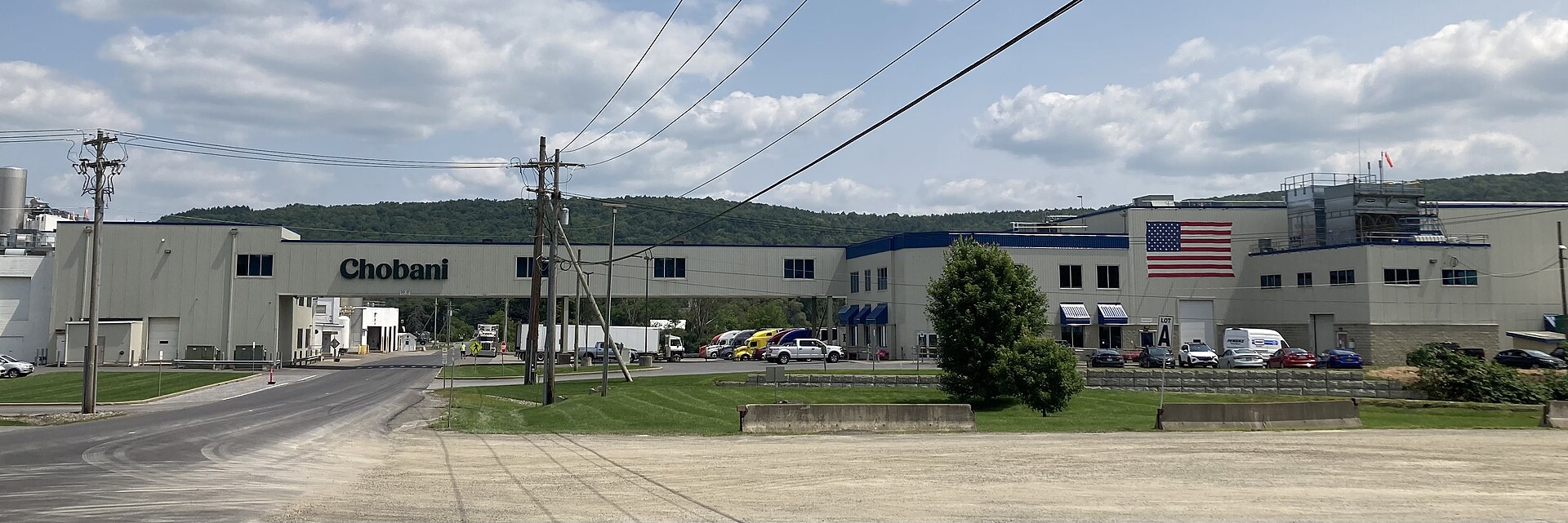
Twin Falls is the clearest Magic Valley example. The Urban Renewal Agency of the City of Twin Falls created Revenue Allocation Area 4-3 (the "Chobani area," about 220 acres south of Kimberly Road) in November 2011 and Area 4-4 (the "Clif Bar area," about 90 acres) in May 2015.17 The agency's audited statements for the year ended Sept. 30, 2025 show what those two employer-centered areas cost and owe:
| Item, Twin Falls Urban Renewal Agency | Area 4-3 (Chobani) | Area 4-4 (Clif Bar) |
|---|---|---|
| Property tax increment received, fiscal 2025 | $3,870,974 | $967,187 |
| Revenue allocation bonds outstanding, Sept. 30, 2025 | Series 2013A, $14,682,000 (7.738 percent; repayment guaranteed by Chobani Global Holding, Inc.) | Series 2016A, $8,140,000 (5.5 percent; matures Sept. 1, 2036) |
| Company reimbursement owed | $14,234,032 under a May 9, 2016 Projects Improvements Reimbursement Agreement (site remediation, a water storage tank and a wastewater equalization tank) | $10,234,049 note to Clif Bar and Company under an Oct. 17, 2013 development agreement |
| What happens to unpaid company debt | Ends without recourse when the area ends | Ends without recourse when the area ends |
In all, the agency carried $47,290,081 in bonds and agreements at Sept. 30, 2025, down from $50,571,081 a year earlier.17 In March 2025 Chobani announced a $500 million expansion of the Twin Falls plant. The agency's report quotes the company: the expansion "is expected to create a minimum of 160 new jobs," the plant "will span 1.6 million square feet and feature 24 production lines," and it will employ "more than 1,200 people earning wages almost 12% higher than the regional average." The agency "approved actions within a development agreement to support the announced expansion."17 Trade press reported that the city will upgrade water and sewer and that the urban renewal agency will reimburse some of those costs.18
The word "housing" does not appear anywhere in the agency's 2025 Annual Report, including its descriptions of the Chobani and Clif Bar areas.17 That is normal for an industrial district, and it is the point: in Idaho, the public money that prepares an employer's site and the public money that helps build homes for its workers move through separate offices on separate schedules.

Federal money: Micron and the CHIPS Act
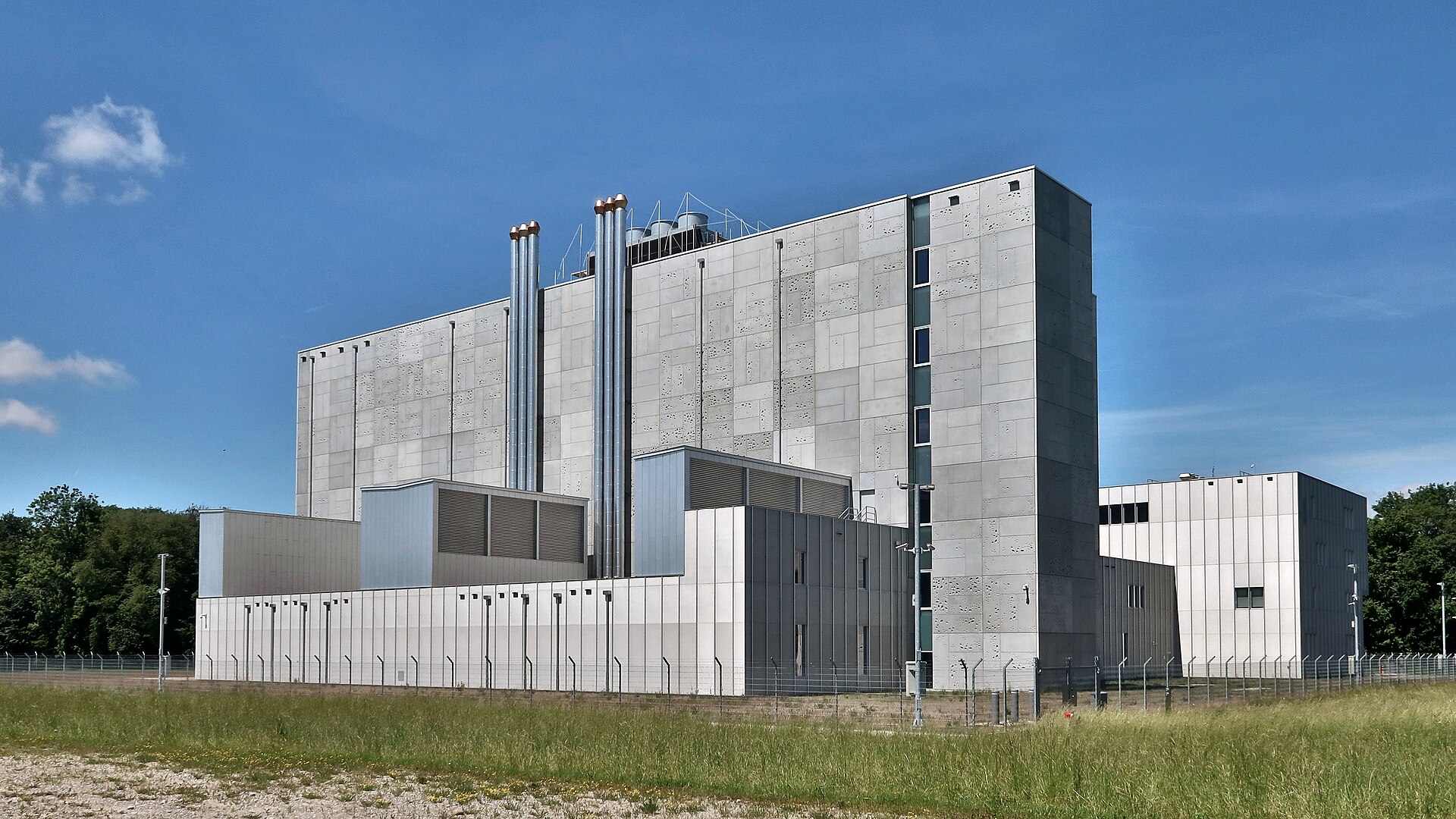
The largest economic development project in Idaho's history is federal as well as state. On Dec. 10, 2024, the U.S. Department of Commerce announced an award to Micron Technology of "up to $6.165 billion" in direct funding under the CHIPS Incentives Program for new memory fabs in Boise and in New York, to be paid out as the projects reach milestones. Commerce said the investments would support "approximately 20,000 jobs" across both states.9 On June 12, 2025, Commerce announced that Micron planned to invest $200 billion in U.S. manufacturing and research, including "a second state-of-the-art chip fabrication facility in Boise, Idaho," accompanied by "up to $275 million in incremental CHIPS Act direct funding," and said the projects in Idaho, New York and Virginia "will create 90,000 jobs" (direct and indirect).10 Micron's own release the same day described "two leading-edge high-volume fabs in Idaho," with "DRAM output scheduled to begin in 2027" at the first, and total CHIPS funding of "up to $6.4 billion"; Micron's release says the $275 million award is for expanding and modernizing its Manassas, Virginia plant, not for Idaho.19 On July 9, 2026, Micron raised its expected U.S. spending to "more than $250 billion through 2035" and said first wafer output was expected "in mid-calendar 2027 for the first fab and late calendar 2028 for the second" in Idaho.44
The state's part came earlier and in two pieces. In 2022 the Legislature passed House Bill 678, the "Idaho Semiconductors for America Act," which exempts from sales and use tax the construction and building materials for a qualifying semiconductor project, if the company also qualifies for a "new, meaningful semiconductor incentive offered by the federal government." Project outlines had to reach the Commerce department by Dec. 31, 2026, and the exemption can run through Dec. 31, 2040.20 The House passed it 39 to 22 and the Senate 30 to 5; Gov. Brad Little signed it March 23, 2022 (Session Law Chapter 162).21 Its fiscal note estimated a cost to the general fund of "approximately $18.4 million each year during the construction phase" for three possible projects, and 1,694 new jobs.22 Then, on June 7, 2022, the Economic Advisory Council approved Micron's TRI: 2,000 jobs at an average wage of $89,533, a 30 percent credit for 15 years, with an estimated incentive value of $45.7 million.11
None of these documents describes a housing commitment. The federal announcements stress apprenticeships and training; the state statute and TRI agreement summary cover jobs, wages and taxes. When U.S. Labor Secretary Marty Walsh visited Boise in November 2022, he told Mayor Lauren McLean the city needed a "really good housing plan" as Micron hired, the Idaho Statesman reported; the same story noted the 2,000 Micron jobs did not include the thousands of construction and contract workers needed to build the plant.23 Separately from the incentive agreements, Micron announced on Oct. 27, 2026 about $10.5 million for housing under its own Community Investment Framework: $2.5 million in gap funding for affordable units in Boise's Lusk District and $8 million with LEAP Housing for 30 rental homes in Mountain Home and down payment help for up to 200 first-time buyers in Ada, Boise, Canyon, Elmore and Gem counties. The company describes these as community investments; they are not terms of the TRI agreement or the CHIPS award.43
Data centers in Kuna
Data centers are the newest kind of large project in the Treasure Valley, and they invert the usual jobs math: huge investment, a big temporary construction crew, few permanent jobs. Meta opened its first Idaho data center in Kuna in 2026. The Idaho Statesman reported in September 2026 that the four-year build cost $1.2 billion, that "at its peak, the project employed 1,600 tradesmen," and that the center would have about 100 full-time staff, about 75 of them hired so far.24 The city of Kuna, meanwhile, permitted 449 housing units in 2023, 901 in 2024 and 1,208 in 2025 (Census BPS place data), the most of any year shown here.25 Those two facts sit side by side; the permit data cannot say whether any of those homes were built for or bought by data center workers.
The tax treatment of data centers, the power and water questions, and the proposed Gemstone Technology Park are covered in Data Center Taxes and Incentives and Tax Incentive Decisions. For this lesson, the housing point is narrow: a project with 1,600 peak construction workers and 100 permanent jobs puts most of its pressure on short-term rentals, RV parks, motels and apartments for two to four years, and little on the long-term market after that.

Magic Valley food processing
The Magic Valley's incentive deals are mostly about milk, meat and potatoes. BLS counts of private food manufacturing jobs (NAICS 311) show the growth: in Jerome County, from 848 in 2015 to 1,743 in 2025; in Twin Falls County, from 2,854 to 3,472; in Gooding County, from 722 to 866; statewide, from 16,800 to 21,363.26 Food manufacturing paid an average of $65,577 per job in Jerome County in 2025 and $66,776 in Twin Falls County, above each county's all-industry average ($54,347 and $50,136).263
- Chobani (Twin Falls). Financed through the Twin Falls urban renewal district described above, not through TRI; Chobani does not appear on Commerce's approved TRI list as read for this lesson.1711
- Clif Bar (Twin Falls). Also an urban renewal deal (Area 4-4, development agreement of Oct. 17, 2013); not on the TRI list.1711
- Glanbia (Gooding). TRI approved Dec. 4, 2014: 43 jobs promised, 52 created to date.111
- Agropur (Jerome). No TRI agreement under that name appears on Commerce's approved list. Any city or county help would be in Jerome city or Jerome County records; this lesson did not find a public agreement, and lists it as unverified.11
- Jerome dairy and meat. Idaho Milk Products (2018 and 2024), Milk Specialties Global (2021), True West beef (2020) and "Project Purpose" (2023) together promised 903 jobs in Jerome and Jerome County, plus Hilex Poly/Novolex's 45 plastics jobs in 2015.11
Lesson 04 of this module, The Magic Valley Case Study, profiles each town's employers and history; lesson 07, Where People Work, breaks down the jobs by industry.
The housing link: jobs announced vs. homes permitted
A building permit is local government's permission to build; the Census Bureau's Building Permits Survey (BPS) counts the housing units authorized by permits in each permit-issuing place and county every year. A permit is not a finished home (some are never built and most take months to a year or more), but permits are the earliest and most complete annual count of new housing for every Idaho county.27 A job here means a position counted in the Quarterly Census of Employment and Wages (QCEW), which tallies jobs covered by unemployment insurance by where the job is located, not where the worker lives.3
Putting the two side by side gives a simple ratio: jobs added per housing unit permitted. It is not a precise target. A household often has more than one worker, some new jobs are filled by people who already live in a home, and some homes go to retirees with no job at all. But when a county's ratio runs far above the state's for a decade, it means workers are finding homes somewhere else.
Jobs and permits by county, 2015 to 2025
| Area | QCEW jobs, 2015 | QCEW jobs, 2025 | Jobs added | Units permitted, 2016 to 2025 | Jobs added per unit permitted | Population change, July 2020 to July 2025 |
|---|---|---|---|---|---|---|
| United States | 139,491,699 | 155,732,363 | 16,240,664 (11.6%) | 14,512,703 | 1.12 | +10,206,753 (3.1%) |
| Idaho | 664,792 | 874,283 | 209,491 (31.5%) | 172,949 | 1.21 | +180,405 (9.8%) |
| Ada County | 216,678 | 295,234 | 78,556 (36.3%) | 60,617 | 1.30 | +47,878 (9.6%) |
| Canyon County | 58,616 | 90,221 | 31,605 (53.9%) | 31,612 | 1.00 | +42,122 (18.1%) |
| Twin Falls County | 36,442 | 42,703 | 6,261 (17.2%) | 6,070 | 1.03 | +7,174 (7.9%) |
| Jerome County | 9,976 | 12,328 | 2,352 (23.6%) | 971 | 2.42 | +2,093 (8.6%) |
| Gooding County | 5,922 | 6,664 | 742 (12.5%) | 403 | 1.84 | +799 (5.1%) |
Sources: jobs, BLS QCEW annual averages, all ownerships, all industries;283 permits, Census BPS annual county and state files (estimates with imputation), summed 2016 through 2025;45 population, Census Vintage 2025 estimates, July 1, 2020 to July 1, 2025.2930 Ratios are our calculation.
The table shows three different patterns. Canyon County permitted about one home per job added, the lowest ratio here, and also grew fastest in people (18.1 percent in five years): it built homes for workers who drive to Ada County (see the commuting section below). Ada and Twin Falls counties sat near the state ratio. Jerome and Gooding counties added jobs much faster than homes. Over 2019 to 2025, a window that includes the pandemic swings, the gap was wider still in Jerome County: 1,854 jobs added against 667 units permitted from 2020 to 2025, 2.78 jobs per unit.2834
How we figured it
Jobs added per unit permitted = (QCEW annual average employment in 2025 minus that in 2015) divided by (housing units authorized by permits in 2016, 2017 and each year through 2025). We use 2016 to 2025 permits so both sides cover ten years of change. Jobs are counted where people work; permits are counted where homes are built. Example for Jerome County: (12,328 minus 9,976) / 971 = 2,352 / 971 = 2.42.
Permits per 1,000 residents = units permitted in a year divided by the July 1 population estimate of the same year, times 1,000. Example for Jerome County, 2025: 143 / 26,362 x 1,000 = 5.42.
Limits. BPS counts only permit-issuing places; the county files include an imputed estimate for months a place did not report. QCEW excludes the self-employed, most farm owners and some agricultural workers, so dairy-heavy counties undercount farm labor. Neither series says who moved into which home.
Jerome County up close
Jerome County's annual permit counts barely moved through the late 2010s even as its plants grew. The county permitted 65 units in 2015, 73 in 2016, 60 in 2017, 85 in 2018 and 86 in 2019. Permits jumped to 169 in 2021, fell back to 87 in 2022 and 75 in 2023, and rose to 99 in 2024 and 143 in 2025.4 The TRI deals approved for Jerome and Jerome County from 2015 through 2024 promised 948 jobs in all. Over 2016 to 2025 the county permitted 971 homes, roughly one home per promised incentive job, before counting any of the county's other job growth.114
The city-level BPS files show where in the Magic Valley the homes went. Kimberly, a small city just east of Twin Falls, permitted more units in several years than the city of Jerome.
| City (county) | 2020 | 2021 | 2022 | 2023 | 2024 | 2025 | Total 2020 to 2025 |
|---|---|---|---|---|---|---|---|
| Twin Falls (Twin Falls) | 681 | 558 | 241 | 169 | 401 | 267 | 2,317 |
| Jerome (Jerome) | 56* | 123 | 49 | 58 | 85* | 116 | 487 |
| Kimberly (Twin Falls) | 72 | 96 | 94 | 69 | 83 | 88 | 502 |
| Buhl (Twin Falls) | 46 | 25 | 18 | 13 | 30 | 27 | 159 |
| Filer (Twin Falls) | 29 | 40 | 21 | 20 | 3 | 13 | 126 |
| Wendell (Gooding) | 2 | 14 | 10 | 7 | 15 | 5 | 53 |
| Gooding (Gooding) | 7 | 12 | 12 | 11 | 7 | 5 | 54 |
| Hagerman (Gooding) | 3 | 5 | 0 | 0 | no report | no report | 8 (2020 to 2023) |
| Kuna (Ada), for comparison | 741 | 433 | 482 | 449 | 901 | 1,208 | 4,214 |
Source: Census BPS annual place files, West region, total units (1, 2, 3 to 4, and 5 or more units).25 * The city reported 11 of 12 months that year; the Census estimate includes imputation for the missing month. Hagerman reported zero months in 2024 and 2025. Lesson 03, The Big Cities Since 2020, has the same data for the ten largest cities.
Commuter spillover
When a county adds jobs faster than homes, the workers do not vanish; they drive. The Census Bureau's Longitudinal Employer-Household Dynamics program (LEHD) publishes LODES, block-level files that match each job's workplace to the worker's home, and the free OnTheMap tool draws them as inflow and outflow maps.31 Our tabulation of the 2023 LODES files for all jobs (the same tabulation used in lesson 07) shows how tightly the Magic Valley core is linked:6
| County, 2023 | Residents with a job | Jobs located in the county | Live and work in the county | Commute in | Commute out | Largest destination of residents who leave |
|---|---|---|---|---|---|---|
| Jerome | 11,172 | 10,794 | 4,253 | 6,541 | 6,919 | Twin Falls County, 3,239 |
| Twin Falls | 41,452 | 40,755 | 26,791 | 13,964 | 14,661 | Jerome County, 3,074 |
| Gooding | 7,053 | 6,580 | 3,034 | 3,546 | 4,019 | Twin Falls County, 1,169 |
| Canyon | 114,708 | 87,969 | 49,391 | 38,578 | 65,317 | Ada County, 53,019 |
| Ada | 247,512 | 294,737 | 200,745 | 93,992 | 46,767 | Canyon County, 25,174 |
Six in ten jobs located in Jerome County (6,541 of 10,794) were held by people who lived in another county, and six in ten Jerome County workers (6,919 of 11,172) worked outside it. Those 2023 counts match the Idaho Department of Labor's Jerome County profile (4,253 live and work, 6,541 in, 6,919 out). Residents with a job include those working in other states, read from the other states' auxiliary files; Alaska and Michigan publish no 2023 or 2024 files, so a few workers may be missing. The Census Bureau posted Idaho's 2024 LODES files on Oct. 14, 2026: in 2024, 4,324 people lived and worked in Jerome County, 7,116 commuted in, 7,067 commuted out, and 3,266 Jerome County residents (28.7 percent of 11,391 with a job) worked in Twin Falls County (our tabulation, as in lesson 07).631
For housing, the commuting pattern means a plant in Jerome fills homes in Twin Falls, Kimberly and Gooding as well as in Jerome. The two big counties are one labor market. The Census Bureau's own files code places in both counties to the same core-based statistical area (CBSA 46300, Twin Falls), and any honest jobs-and-homes comparison should look at the pair as well as each county alone. Combined, Twin Falls and Jerome counties added 8,613 jobs from 2015 to 2025 and permitted 7,041 units from 2016 to 2025, 1.22 jobs per unit, almost exactly the state ratio.3284 The imbalance is within the pair: Twin Falls County built much of the housing, and Jerome County got much of the industrial growth.
The construction crew: a short, sharp demand
Big plants create two waves of housing demand. The first is the construction workforce, which can be larger than the permanent workforce and needs housing fast and for a limited time. Meta's Kuna data center peaked at 1,600 tradespeople and will employ about 100 people afterward.24 Micron's Boise fab construction, the Statesman reported in 2022, requires "thousands" of construction and contract workers on top of the 2,000 permanent jobs.23 The Idaho Department of Labor's June 2025 regional report for southwestern Idaho noted Micron's plan to build a second Boise fab, and advertised wages in the region rising 15.7 percent in a year, from $25.05 an hour in May 2024 to $28.98 in May 2025 (Lightcast job postings data, which the department labels as such).32
No Idaho agency publishes a count of temporary construction workers living in RV parks, motels or short-term rentals. Reporters who want to measure this wave have to use indirect records: campground and RV park occupancy reports, local lodging tax collections where a city levies one, and short-term rental registrations where a city requires them.
Wages of incentivized jobs vs. local prices and rents
The TRI statute's wage floor (the county average) is a useful benchmark. BLS QCEW publishes the average annual pay of all covered jobs in each county each year, so a promised TRI wage can be compared with the county average in the year of approval.283
| Deal (year approved) | Promised average wage | County average pay that year (QCEW) | Promised wage as share of county average |
|---|---|---|---|
| Micron, Ada County (2022) | $89,533 | Ada, $63,343 | 141% |
| Idaho Milk Products, Jerome (2024) | $85,435 | Jerome, $51,608 | 166% |
| "Project Purpose," Jerome (2023) | $63,283 | Jerome, $49,406 | 128% |
| True West, Jerome County (2020) | $41,554 | Jerome, $41,667 | 100% |
| Jayco, Twin Falls (2017) | $43,300 | Twin Falls, $34,658 | 125% |
The True West wage was essentially equal to the 2020 county figure. The statute compares against "the average annual county wage" but does not say which year's figure applies.2 Measured against the last full year before approval (2019, Jerome County average $39,723), the promise cleared the floor; measured against 2020, it matched it.28
What a promised wage can rent
HUD's long-standing benchmark is that housing is affordable when it costs no more than 30 percent of income; households paying more are "cost burdened."33 Applying that rule to a single promised wage (one earner, before taxes) gives the most a worker could pay each month without being cost burdened. The comparison below uses ACS 2020 to 2024 5-year median gross rent, which is the median of rent plus utilities across all renter households in that period. It is a five-year average of conditions, not today's asking rent, and it carries a margin of error (the range within which the true value very likely falls, at 90 percent confidence).34
| Wage | 30 percent of the wage, per month | Median gross rent in the county, ACS 2020 to 2024 (margin of error) |
|---|---|---|
| True West promise, $41,554 (Jerome County) | about $1,040 | $966 (plus or minus $81) |
| Jayco promise, $43,300 (Twin Falls) | about $1,080 | $1,089 (plus or minus $35) |
| "Project Caseus" promise, $52,168 (Hansen, Twin Falls County) | about $1,300 | $1,089 (plus or minus $35) |
| Jerome County average pay, 2025, $54,347 | about $1,360 | $966 (plus or minus $81) |
| Gooding County average pay, 2025, $52,022 | about $1,300 | $880 (plus or minus $62) |
| Micron promise, $89,533 (Ada County) | about $2,240 | $1,577 (plus or minus $32) |
| Ada County average pay, 2025, $73,786 | about $1,840 | $1,577 (plus or minus $32) |
| Idaho average pay, 2025, $62,392 | about $1,560 | $1,238 (plus or minus $16) |
| U.S. average pay, 2025, $78,720 | about $1,970 | $1,413 (plus or minus $2) |
Sources: promised wages, Commerce approved TRI list;11 average pay, QCEW 2025;3 rent, ACS table B25064.34 Monthly figures are our calculation (wage x 0.30 / 12), rounded to the nearest $10. The wages are nominal dollars of different years; the comparison is illustrative.
By this rough test, a single earner at most of these wages could pay the county median rent without being cost burdened. The 2017 Jayco wage (about $1,080 a month at 30 percent) falls just short of the Twin Falls County median ($1,089), and the 2020 True West wage leaves about $70 a month of room in Jerome County. The median, however, includes long-time tenants in older units. A newcomer hunting for a vacant apartment in 2025 faces asking rents the ACS does not show; HUD's Fair Market Rents and private listing indexes, discussed in lesson 09, come closer to that.
Home prices vs. pay over ten years
Buying is a different story. The Federal Housing Finance Agency's house price index (HPI) tracks repeat sales and refinance appraisals of the same single-family homes with Fannie Mae or Freddie Mac mortgages; it measures price change, not price level. Its annual county index is labeled "developmental" by FHFA because samples in small counties are thin.7 Adjusted for inflation with CPI-U, home prices rose far faster than pay everywhere in the comparison:
| Area | HPI 2015 | HPI 2025 | Nominal change | Real change (2025 dollars) | Average pay 2015 | Average pay 2025 | Real pay change |
|---|---|---|---|---|---|---|---|
| United States | 356.13 | 699.34 | +96.4% | +44.6% | $52,942 | $78,720 | +9.5% |
| Idaho | 328.31 | 851.80 | +159.4% | +91.0% | $38,857 | $62,392 | +18.2% |
| Ada County | 548.51 | 1,381.41 | +151.8% | +85.4% | $45,312 | $73,786 | +19.9% |
| Canyon County | 370.98 | 1,056.38 | +184.8% | +109.6% | $33,910 | $54,271 | +17.8% |
| Twin Falls County | 336.36 | 786.32 | +133.8% | +72.1% | $32,459 | $50,136 | +13.7% |
| Jerome County | 194.40 | 525.05 | +170.1% | +98.8% | $34,614 | $54,347 | +15.6% |
| Gooding County | 235.40 | 571.22 | +142.7% | +78.6% | $32,843 | $52,022 | +16.6% |
Sources: county HPI, FHFA annual all-transactions county index (base: first year recorded = 100, so levels cannot be compared across counties, only changes);7 U.S. and Idaho, FHFA quarterly all-transactions index (1980 Q1 = 100), our annual average of four quarters;35 pay, QCEW;283 deflator, CPI-U.8
How we figured it: real dollars
This module uses one deflator: the BLS Consumer Price Index for All Urban Consumers (CPI-U), U.S. city average, all items, annual average, series CUUR0000SA0. The 2025 annual average is 321.943; 2015 is 237.017.8
Real value = nominal value x (CPI 2025 / CPI of the year). Example: Jerome County's 2015 average pay of $34,614 x (321.943 / 237.017) = about $47,017 in 2025 dollars. The 2025 figure, $54,347, is 15.6 percent higher.
Real change in an index = (index 2025 / index 2015) / (CPI 2025 / CPI 2015), minus 1. Example for Jerome County HPI: (525.05 / 194.40) / (321.943 / 237.017) = 2.7009 / 1.3583 = 1.988, a real increase of 98.8 percent.
Partial 2026 data (CPI-U was 337.511 in October 2026) are not deflated in this lesson.
Price-to-income ratios, using ACS 2020 to 2024 5-year estimates for both numbers, put the levels side by side: median home value divided by median household income was 4.12 for the United States, 5.38 for Idaho, 5.60 for Ada County, 5.01 for Twin Falls County, 3.79 for Jerome County and 3.95 for Gooding County.3637 Jerome and Gooding counties are still cheaper relative to income than the state, which helps explain why workers commute from them. Their medians carry wide margins of error (Jerome County median value $271,800, plus or minus $16,969; Gooding County $250,900, plus or minus $25,286), so small differences should not be ranked.36


Who builds workforce housing
"Workforce housing" has no single legal definition in Idaho statute. It usually means homes and apartments priced for working households that earn too much for the deepest subsidies and too little to buy a new house at market prices. In the records reviewed for this lesson, it gets built by four kinds of actors, and employers receiving incentives are rarely among them.
- Private builders and developers build almost all new housing. Their choice of where to build follows land, sewer and water capacity, zoning and expected prices. The permit tables above are mostly their work.
- The Idaho Housing and Finance Association (IHFA) handles federal housing tax credits and HOME funds (both appear in its award lists) and, since 2022, the state's Workforce Housing Fund. The Legislature put $50 million into that fund in 2022 to "fill the financial gap" on projects; IHFA reported nine projects in the first round and six more in a second round announced in May 2023.13 IHFA's list of 2022 awards, as of Dec. 31, 2022, shows $28,159,608 for 1,029 units, including $3,550,000 (plus $1,065,000 in HOME funds) for The Housing Company's 72-unit Alder Apartments at Hankins Road and Kimberly Road in Twin Falls.12
- Cities and counties shape supply through zoning, impact fees, utility capacity and annexation (module 36, Idaho Planning and Zoning), and some urban renewal agencies fund housing infrastructure in downtown districts, though not in the Twin Falls employer districts described above.17
- Employers sometimes build or lease housing directly, especially dairies and resorts with seasonal or rural workforces. None of the TRI summaries, CHIPS announcements or urban renewal reports reviewed for this lesson record an employer housing commitment tied to the incentive.11917
Do incentive agreements require or fund housing?
On the record available Nov. 17, 2026, the answer for Idaho is no, with one partial exception in how the law is written:
| Tool | What the law or record requires | Housing requirement? |
|---|---|---|
| TRI (Idaho Code 67-4737 to 67-4744) | Jobs, wage floor, community match, annual reports, independent audit | None in statute2 |
| Semiconductor sales tax exemption (Idaho Code 63-3622WW) | Federal incentive qualification; construction materials; project outline to Commerce | None in statute20 |
| County plant exemption (Idaho Code 63-602NN) | County ordinance, "significant economic benefits," public meeting | None in statute; a county could weigh housing when judging "benefits"14 |
| Twin Falls urban renewal, Areas 4-3 and 4-4 | Development and reimbursement agreements for site, water and wastewater work | None reported17 |
| CHIPS Act award to Micron | Milestone-based federal disbursement | None described in the Commerce announcements910 |
The partial exception is the county exemption: because the board must find "significant economic benefits," a county could ask about housing and weigh the answer. Whether any Idaho county has done so would be in its meeting minutes.
Step by step: match a deal to the housing data
The three procedures below use only free public records. They take an afternoon for one deal. The diagram summarizes the path.
Find a TRI agreement and its job and wage reports
- Open the Idaho Department of Commerce's approved TRI projects page (commerce.idaho.gov, under Incentives, "Approved TRIs"). Search the page for the city or county name. Write down the company or code name, the Economic Advisory Council approval date, promised jobs, average wage, capital investment, credit percentage, term and estimated incentive value.11
- Open Commerce's most recent annual report (the 2025 report was published in January 2026). Find the TRI job creation table, which lists jobs created to date and projected jobs for each company that has started reporting, and the summary of actual credits issued.1
- If the deal has a code name ("Project Purpose"), search later annual reports and local news for the real name. The statute requires Commerce to report each year on estimated and actual costs and benefits, so the company will eventually appear in the job creation table if it claims credits.2
- Request the agreement itself from Commerce under the Idaho Public Records Act. Expect redactions: Idaho Code 67-4708 lets companies mark financial statements, tax returns, employee records and similar items "confidential -- proprietary information," and those are exempt. The jobs and wage targets, the term, the percentage and the community match letter are the parts to ask for by name.3839 Module 47, Writing a Request That Works, has templates.
- Ask the city or county for its community match: the council or commission minutes approving it, and the letter of commitment the statute requires.2
Find an urban renewal plan and its increment
- Find the agency. The Idaho State Tax Commission keeps an Urban Renewal Registry of agencies and plans, and the State Controller's local government registry collects annual financial reports.4041
- Get the plan and the ordinance that created the revenue allocation area: the creation date, the acreage, the base value and the termination date. Twin Falls's annual report states, for example, that Area 4-3 was created in November 2011 and covers about 220 acres.17
- Get the annual report and audited financial statements. Look for "property taxes" by area (the increment), bonds outstanding, and "reimbursement agreement" or "note" balances owed to companies.17
- Ask for every development agreement, owner participation agreement and reimbursement agreement, and any amendment. Module 39's Reports, Registries and Audits walks through each document.
Match the deal against permits, jobs, commuting and rents
- Jobs and pay. In the BLS QCEW data viewer or its downloadable CSV files, pull the county's annual average employment and average annual pay (all ownerships, total of all industries) for the approval year and each year since. Pull the industry code that matches the plant (for example NAICS 311, food manufacturing) to see whether the sector grew.326
- Homes. From the Census Building Permits Survey, download the annual county file (County, coYYYYa.txt) and the annual place file for the West region. Add the 1-unit, 2-unit, 3 to 4 unit and 5-or-more unit columns to get total units. Note how many months each place reported.425
- Population. From the Census population estimates, download the newest county totals file (Vintage 2025, co-est2025-alldata.csv) for the July 1 estimate of each year.29
- Commuting. In OnTheMap, select the county, choose "Inflow/Outflow" and "All Jobs," and the newest year. Then run "Destination" to see where residents work and "Home Destination" for where the county's workers live.316
- Rents and values. On data.census.gov, pull ACS 5-year tables B25064 (median gross rent), B25077 (median value) and B19013 (median household income) for the county and its towns, with margins of error.343637
- Prices over time. From FHFA, download the annual county HPI file and compute the change since the approval year; deflate with CPI-U using the formula in the methods box above.78
- Compute and compare. Jobs added per unit permitted; permits per 1,000 residents; the promised wage x 0.30 / 12 against median rent; and the same numbers for Idaho and the United States. Then look at the neighbor county in the commute shed.
- Write it fairly. Say what the numbers cannot show (who took which job, who moved into which home), and give the company, the city and the people affected a chance to respond.
Pictures, Numbers and Infographics
The key numbers in this lesson, with the United States and Idaho for comparison. Jerome County is the "place" column unless the row says otherwise.
| Measure | U.S. | Idaho | Place | Year | Source |
|---|---|---|---|---|---|
| Jobs added per housing unit permitted | 1.12 | 1.21 | 2.42 (Jerome County); 1.03 (Twin Falls County) | Jobs 2015 to 2025; permits 2016 to 2025 | QCEW; Census BPS; our calculation34 |
| Units permitted per 1,000 residents | 4.19 | 8.84 | 5.42 (Jerome County); 5.40 (Twin Falls County); 2.19 (Gooding County) | 2025 | Census BPS; Vintage 2025 estimates; our calculation42930 |
| Population change | +3.1% | +9.8% | +8.6% (Jerome County) | July 2020 to July 2025 | Census Vintage 20252930 |
| Real home price change (FHFA HPI) | +44.6% | +91.0% | +98.8% (Jerome County) | 2015 to 2025 | FHFA; CPI-U; our calculation7358 |
| Real average pay change (QCEW) | +9.5% | +18.2% | +15.6% (Jerome County) | 2015 to 2025 | QCEW; CPI-U; our calculation38 |
| Average annual pay per job | $78,720 | $62,392 | $54,347 (Jerome County) | 2025 | QCEW3 |
| Median gross rent (estimate) | $1,413 | $1,238 | $966, plus or minus $81 (Jerome County) | 2020 to 2024 | ACS B2506434 |
| Median home value to median household income | 4.12 | 5.38 | 3.79 (Jerome County) | 2020 to 2024 | ACS B25077, B19013; our calculation3637 |
| Share of county jobs held by in-commuters | no matching U.S. figure | no matching state figure | 61% (6,541 of 10,794, Jerome County) | 2023 | LEHD LODES; our tabulation6 |
| Food manufacturing jobs (NAICS 311) | 1,775,008 | 21,363 | 1,743 (Jerome County), up from 848 in 2015 | 2025 | QCEW26 |
| TRI jobs forecast to date vs. created to date | no federal equivalent | 9,894 forecast; 5,637 created | Jerome-area deals promised 948 jobs, 2015 to 2024 | Through June 2025 | Idaho Commerce111 |
| Tax increment to employer districts | no matching figure | no statewide total in this lesson | $4,838,161 (Twin Falls Areas 4-3 and 4-4) | Fiscal 2025 | Twin Falls URA17 |
The chart below shows how the Magic Valley's TRI deals have performed against their own job promises, the first number to check before matching any deal against housing data.
Common mistakes
- Adding up promises as if they were jobs. Commerce's cumulative TRI figure (18,845 "Est. Project Jobs") is a sum of estimates made at approval. Its own actual-results table shows 5,637 jobs created to date against 9,894 forecast to date.1 A story or speech that says "TRI has created 18,845 jobs" mixes an estimate with a count.
- Treating the estimated return as a measured one. The report's fiscal 2025 summary lists an "Est. Total Return on Reimbursement" of $7.6 to $1 for that year's approvals.1 It is a projection from promised payroll and investment, not an audited result. Pew's review of state incentive evaluation (May 2017) rated Idaho "trailing" because it had "not adopted a plan for regular evaluation of tax incentives," while noting that TRI itself required yearly effectiveness reviews.42
- Comparing a 2017 wage with a 2025 rent. Nominal dollars from different years are not the same dollars. Either compare same-year figures or convert both to 2025 dollars with CPI-U, as in the methods box.8
- Counting jobs where people live. QCEW counts jobs at the workplace; ACS and population estimates count people at home. A plant in Jerome County can raise Jerome County's job count and Twin Falls County's housing demand at the same time.36
- Reading one year of permits. Jerome County's 169 units in 2021 and 87 in 2022 are both "true," and neither is a trend. Use several years, and check the months-reported column before treating a low city count as real.425
- Ranking small towns on ACS medians. Gooding County's median value has a margin of error of plus or minus $25,286. Two towns whose ranges overlap cannot be ranked.36
- Comparing HPI levels across counties. FHFA's annual county index sets each county to 100 in its own first year. Ada County's 1,381 and Jerome County's 525 in 2025 do not mean Ada homes cost 2.6 times as much; only the percent changes are comparable.7
- Taking a capital investment figure as local spending. Micron's "$15 billion" on the TRI list and the CHIPS announcements' $200 billion are multi-year plans; much of the money buys equipment made elsewhere, and none of it is a measure of local wages or housing demand.1110
What we know, what we don't, and what the data can show
What we know
- Idaho's TRI statute ties credits to jobs, wages and new state revenue and contains no housing requirement; the semiconductor sales tax exemption and the county plant exemption do not either.22014
- Jerome County added 2.42 jobs per housing unit permitted over the decade to 2025, about twice the Idaho and U.S. ratios, and six in ten of its jobs were held by in-commuters in 2023.346
- From 2015 to 2025, real home prices rose about four to six times as fast as real average pay in every county compared here, and more than six times as fast in Canyon and Jerome counties.738
- Twin Falls's two employer urban renewal districts collected $4.84 million in increment in fiscal 2025 and owed $47.3 million in bonds and company agreements.17
What we don't know
- How many incentivized jobs went to people who moved to Idaho versus people already living here; no agency links TRI payroll to prior addresses.
- Where the workers at any one plant live; LODES gives commuting by county and block, not by employer.
- How many temporary construction workers lived in RV parks, motels or short-term rentals during the Micron and Meta builds.
- Whether any Idaho county has weighed housing when granting a 63-602NN exemption; that would be in county minutes.
- The public terms of any city or county help for Agropur in Jerome.
What the data can show
- Whether permits kept pace with jobs in a county and its commute shed after a deal (Census BPS county and place files; BLS QCEW).
- Whether promised wages clear the county average and local median rent (Commerce approved TRI list; QCEW; ACS B25064).
- Which towns are becoming bedroom communities for a plant's county (LEHD LODES and OnTheMap inflow and outflow).
- Whether real prices jumped after a big announcement, relative to the state and nation (FHFA annual county HPI; CPI-U).
- How much property tax is diverted to an employer district and what it still owes (urban renewal annual reports and audits; Tax Commission registry).
Questions people ask
Does TRI cost the state money up front?
No. TRI is paid as a refundable income tax credit only after a company reports new jobs and new state revenue, and only as a percentage (30 percent at most) of that new revenue.2 Commerce reported $22 million in credits issued from the program's start through mid-2025, and $5.5 million in calendar 2024.1 The debate is over whether the jobs would have come anyway, in which case the credit is a cost with no gain; the statute asks applicants to explain "whether the project will occur or how it will be altered if the tax credit application is denied."2
Can a city require an employer to build housing as a condition of help?
A city negotiating an urban renewal development agreement or a TRI community match can ask for almost anything the company will agree to, because these are voluntary contracts. Whether a city can impose housing conditions on a land use approval is a different legal question, covered in module 36's lessons on big industrial projects and subdivisions and impact fees. None of the Idaho agreements reviewed for this lesson contains such a condition.1711
Why does Jerome County permit so few homes compared with its job growth?
The data show the gap; they do not show the cause. Possible reasons include sewer and water capacity, the price of land with water rights, builders' preference for the larger Twin Falls market, and buyers' preference for Twin Falls services. Lesson 10, Water, Schools and Roads, covers the water limits, and lesson 04 the town-by-town history. The commuting data show the result: Twin Falls County homes house thousands of Jerome County workers.6
Why is Micron not in Commerce's table of jobs created?
The table lists companies that have begun requesting credits. Micron's TRI agreement dates from June 2022, and its first Boise fab is not scheduled to produce DRAM until 2027, so it had not appeared in the job creation table in the 2025 report.119 Its promised 2,000 jobs remain an estimate until it reports.
Do big announcements raise nearby home prices?
Prices in all the counties here rose sharply in 2021 and 2022, when Idaho's HPI jumped statewide; Jerome County's annual county index rose 25.21 percent in 2021 and 24.72 percent in 2022, and Twin Falls County's 22.84 and 23.84 percent.7 Those years followed the True West approval, but they also were the years of record-low mortgage rates and pandemic migration across the West. The county HPI cannot separate the effects. A careful comparison would look at towns of similar size with and without a new plant over the same years.
Where does state housing money come from, if not incentives?
Mostly from federal programs passed through the Idaho Housing and Finance Association (tax credits, HOME and Housing Trust Fund dollars) and from the one-time $50 million state Workforce Housing Fund of 2022.1312 Commerce's 2025 Annual Report also lists $388,780,000 in private activity bond allocations, including bonds for 11 low-income housing projects with 1,316 rental units.1 Part D of this series, coming later, covers affordable housing programs in detail.
What about the people building the plants?
QCEW and LODES generally place a construction job at the employer's reporting establishment, which for a traveling crew may be in another county or state. A traveling crew working in Kuna for a contractor based elsewhere may not show up in Ada County job counts at all. That is one more reason the temporary housing wave is hard to measure.36
Hard questions
Should incentive deals require employers to plan or pay for housing?
For: a company that receives public money to add hundreds of jobs creates housing demand the public then has to absorb through commutes, school crowding and rents; tying a share of the credit to housing (a contribution to a local fund, master-leased apartments, or down payment help for employees) puts the cost where the demand starts. Against: employers compete for sites across states; adding conditions Idaho's neighbors do not impose could cost the state the plant and its payroll, and housing is a regional market no single employer controls. What the evidence shows: Idaho's statutes and the agreements reviewed here contain no housing conditions.217 The jobs-per-unit and commuting data show the demand lands across county lines, which suggests any housing condition would need to be regional to matter.6
Do incentives pay for themselves?
Yes, by Commerce's estimates: TRI pays only a share of new state revenue, so in a narrow sense the state gives back part of money it would not otherwise have. Commerce estimates $1.4 billion in new revenue against $400 million in credits for all approvals since fiscal 2015.1 Not necessarily: if some companies would have expanded anyway, their credits buy nothing, and the estimates count promised jobs; Commerce's actual-results table shows 57 percent of the jobs forecast to date had materialized. Neither the estimates nor the actuals count local costs such as roads, schools and water service for new households. What the evidence shows: the state's own reports measure credits and jobs; they do not measure housing or local service costs, and independent, regular evaluation of all Idaho incentives has been thin.142
Should urban renewal finance employer sites?
For: without site cleanup and the water and wastewater work in Area 4-3, a large food plant might have gone elsewhere; its property value now pays off the bonds, and the company guaranteed the main bond issue.17 Against: for the life of the district, the growth in property value on those sites does not reach the city, county and schools, which serve the plant's workers and their families; the Clif Bar note has accrued interest the agency has not been able to pay for several years, per its fiscal 2024 statements. What the evidence shows: the Twin Falls districts are paying down bonds ($3.28 million retired in fiscal 2025), and the company debts end without recourse when the districts end.17 Module 39's Does It Work? reviews the broader evidence.
Do newcomers drive up prices, or do they follow the jobs?
Newcomers first: Idaho gained 22,063 people from net migration in the year to July 1, 2025, 19,915 of them from other states, and buyers with out-of-state equity can outbid local wage earners.30 Jobs first: Idaho's job count grew 31.5 percent from 2015 to 2025, nearly three times the national 11.6 percent, and many movers come for work.3 What the evidence shows: both. Lesson 06, Who Is Moving In and From Where, sorts migration by origin and income; this lesson's data show that where jobs grow faster than homes (Jerome County), the extra workers live in the next county.
For reporters and advocates
Every number in this lesson came from a public file. These records let you test any incentive announcement against housing:
- TRI records. The approved list, the annual report and its job creation table; the agreement, the community match letter and the annual company reports, by request to Commerce. Expect the proprietary items listed in Idaho Code 67-4708 to be withheld; ask for the rest.11138
- Urban renewal records. The plan, the creation ordinance, development and reimbursement agreements, annual reports and audits; the Tax Commission's registry and the State Controller's registry.174041
- County exemptions. The county ordinance setting the 63-602NN threshold, the public meeting notice and summary, and the board's minutes.14
- Permit logs and plats. City and county building departments keep permit logs by address and date; county recorders keep subdivision plats. The Census BPS is the yearly summary.25
- Workforce housing awards. IHFA publishes its award lists by project, city and funding source.12
- Public records law. Idaho Code Title 74, Chapter 1 governs requests to every state agency, city, county and urban renewal agency; module 47, Idaho Public Records Requests, explains deadlines, fees and appeals.39
Questions worth asking a mayor, county commissioner, Commerce official or company: How many of the promised jobs exist today, and at what average wage? Where do those workers live (a ZIP code count from payroll is enough)? Did anyone at the approval meeting ask about housing, and what was the answer? How many homes did the city permit in the three years after approval, and how many were rentals? What will the urban renewal district still owe when it ends, and who absorbs it? For the Magic Valley: what share of Jerome's new plant jobs are held by Twin Falls County residents, and is Jerome planning sewer and water capacity for the homes it has not built?
Where to go next
- Idaho Commerce: Approved TRIs: Free state list of every approved TRI deal with jobs, wage, investment, credit and term. For reporters, council members and residents. Search the page for your city or county name, then compare with the annual report's job creation table.
- OnTheMap (U.S. Census Bureau): Free mapping tool for where workers live and work, down to the block. For planners and reporters. Choose a county or city, run Inflow/Outflow for All Jobs, then Destination and Home Destination.
- Census Building Permits Survey: Free monthly and annual counts of housing units authorized by permits for states, counties and permit-issuing places. Download the annual county or place text file and add the four unit-size columns.
- BLS QCEW data viewer and downloads: Free county jobs and average pay by industry, quarterly and annual. Use it to compare a promised TRI wage with the county average in the approval year.
- FHFA House Price Index datasets: Free price change indexes for the U.S., states, metros, counties and ZIP codes. Use percent changes, not index levels, when comparing counties; deflate with CPI-U for real change.
- Idaho State Tax Commission Urban Renewal Registry: Free state registry of urban renewal agencies and plans. Start here to find the plan and ordinance for a revenue allocation area, then request the agency's annual report and agreements.
- Idaho Housing and Finance Association: The state's housing finance agency. Its award lists show which workforce and tax credit projects were funded, where, and for how many units. Free to read.
Still being checked (5 items)
These points could not be fully confirmed against a primary source when this lesson was written and fact checked in November 2026. The text above states each one as uncertain.
- Public terms of any city or county assistance to Agropur in Jerome: no TRI agreement under that name appears on Commerce's approved list, and no city or county agreement was found.
- Commerce's approved-TRI page blocks automated downloads; entries were read online (by WebFetch, Nov. 17, 2026) and cross-checked against the 2025 Annual Report where both list a company.
- Why the 2025 Annual Report's job creation table lists Idaho Milk Products (Jerome) with 27 projected jobs when its 2018 agreement listed 53 promised jobs is not explained in the report.
- Whether Commerce measured the TRI wage floor for True West (2020) against Jerome County's 2019 or 2020 average wage is not stated in the public summary.
- The number of temporary construction workers housed in RV parks, motels or short-term rentals during the Micron and Meta builds is not published by any agency.
Last verified November 17, 2026. General education, not legal, financial or real estate advice; every figure names its source and year in the Notes and Sources below. Data is revised: check the newest release before relying on any number.
Notes
- Idaho Department of Commerce, 2025 Idaho Commerce Annual Report (January 2026): Tax Reimbursement Incentive fiscal 2025 awards summary (p. 14), fiscal 2025 project impact and tax credit commitments (p. 15), cumulative program summary fiscal 2015 to 2025 (p. 16), actual TRI impact and job creation by company (pp. 18 to 19), and private activity bond allocations (p. 25). The site blocks automated downloads; read online (read Nov. 17, 2026). Read it online. ↩
- Idaho Code 67-4737 to 67-4744, Idaho Reimbursement Incentive Act (added 2014, ch. 336; amended 2015, 2016, 2017), within Title 67, Chapter 47 (Department of Commerce), PDF of the chapter as posted by the Idaho Legislature (read Nov. 17, 2026). A text search of the full chapter finds no use of the word "housing." Read it online. ↩
- U.S. Bureau of Labor Statistics, Quarterly Census of Employment and Wages, 2025 annual averages, total covered, all ownerships, all industries (industry code 10, ownership 0), for the U.S. (US000), Idaho (16000) and Ada, Canyon, Gooding, Jerome and Twin Falls counties, via the QCEW open data CSV files (read Nov. 17, 2026). Read it online. ↩
- U.S. Census Bureau, Building Permits Survey, annual county files co2015a.txt through co2025a.txt (estimates with imputation; total units = 1-unit + 2-unit + 3 to 4 unit + 5 or more unit columns), Idaho counties 001, 027, 047, 053, 083 (read Nov. 17, 2026). Read it online. ↩
- U.S. Census Bureau, Building Permits Survey, annual state files st2015a.txt through st2025a.txt, Idaho and United States totals (read Nov. 17, 2026). Example: Idaho 2025, 17,944 units; United States 2025, 1,431,616 units. Read it online. ↩
- U.S. Census Bureau, LEHD Origin-Destination Employment Statistics (LODES 8), Idaho main and auxiliary origin-destination files and other states' auxiliary files (no files exist for Alaska or Michigan), 2023 and 2024, all jobs (JT00); county inflow, outflow and pair counts are our tabulation (2023 recounted by the fact checker; Jerome County figures match the Idaho Department of Labor's county profile); Idaho's 2024 files are dated Oct. 14, 2026 on the LEHD server (read Nov. 17, 2026). Read it online. ↩
- Federal Housing Finance Agency, House Price Index for Counties (All-Transactions Index), annual, developmental, not seasonally adjusted, hpi_at_county.xlsx, last updated March 31, 2026; Idaho counties, column F (base: first year recorded = 100) and annual change (read Nov. 17, 2026). Read it online. ↩
- U.S. Bureau of Labor Statistics, Consumer Price Index for All Urban Consumers (CPI-U), U.S. city average, all items, not seasonally adjusted, series CUUR0000SA0, annual averages: 2015, 237.017; 2019, 255.657; 2020, 258.811; 2024, 313.689; 2025, 321.943; October 2026, 337.511 (read Nov. 17, 2026). Read it online. ↩
- U.S. Department of Commerce, press release, "Department of Commerce Awards CHIPS Incentives to Micron for Idaho and New York Projects" (Dec. 10, 2024), distributed by the department's GovDelivery service (read Nov. 17, 2026). Read it online. ↩
- U.S. Department of Commerce, press release, "President Trump Secures $200B Investment from Micron Technology for Memory Chip Manufacturing in the United States" (June 12, 2025), GovDelivery bulletin (read Nov. 17, 2026). Read it online. ↩
- Idaho Department of Commerce, "Approved TRIs" list (each entry gives Economic Advisory Council approval date, location, new jobs, average wage, capital investment, total project wages, estimated new state revenue, TRI percentage, term and estimated incentive value) (read Nov. 17, 2026). Entries searched for Chobani, Clif, Agropur and Meta returned none. Read it online. ↩
- Idaho Housing and Finance Association, "2022 Workforce Housing Fund Allocations, As of December 31, 2022" (project list with units, affordable units and Workforce Housing, HOME and HTF awards) (read Nov. 17, 2026). Read it online. ↩
- Idaho Housing and Finance Association, Community Report, "Project Financing: Idaho Workforce Housing Fund" ($50 million fund; nine projects in round one, six in round two announced May 2023) (read Nov. 17, 2026). Read it online. ↩
- Idaho Code 63-602NN, Property Exempt from Taxation, Certain Business Property (added 2008; amended 2010 and 2017), in Title 63, Chapter 6 as posted by the Idaho Legislature (read Nov. 17, 2026). Read it online. ↩
- Idaho Code 63-602HH, Property Exempt from Taxation, Significant Capital Investments (added 2005; amended 2006), in Title 63, Chapter 6 (read Nov. 17, 2026). Read it online. ↩
- Idaho Code Title 50, Chapter 29 (Local Economic Development Act: revenue allocation financing, including 50-2903 definitions and 50-2904 duration) and Chapter 20 (Urban Renewal Law), as posted by the Idaho Legislature (read Nov. 17, 2026). Read it online. ↩
- Urban Renewal Agency of the City of Twin Falls, 2025 Annual Report (Shawn Barigar, executive director, March 16, 2026), including the agency's narrative on Revenue Allocation Areas 4-3 and 4-4 and audited financial statements for the years ended Sept. 30, 2024 and Sept. 30, 2025 (notes 1 and 7; combining statement of revenues by project) (read Nov. 17, 2026). A text search of the full report finds no use of the word "housing." Read it online. ↩
- Food Processing, "Chobani Spending $500 Million on Twin Falls, Idaho, Plant Expansion, its Biggest Investment Ever" (March 21, 2025) (trade press; read Nov. 17, 2026). Read it online. ↩
- Micron Technology, press release, "Micron and Trump Administration Announce Expanded U.S. Investments in Leading-Edge DRAM Manufacturing and R&D" (June 12, 2025) (read Nov. 17, 2026). Read it online. ↩
- Idaho Code 63-3622WW, Idaho Semiconductors for America Act (sales and use tax exemption for construction and building materials for qualifying semiconductor projects; project outlines due to Commerce by Dec. 31, 2026; project term ends no later than Dec. 31, 2040) (read Nov. 17, 2026). Read it online. ↩
- Idaho Legislature, House Bill 678 (2022), legislative history: passed House 39-22-9, Senate 30-5-0; signed by the governor March 23, 2022; Session Law Chapter 162, effective July 1, 2022 (read Nov. 17, 2026). Read it online. ↩
- Idaho Legislature, House Bill 678 (2022), revised Statement of Purpose and Fiscal Note, RS29610C1 (read Nov. 17, 2026). Read it online. ↩
- Rachel Spacek, Idaho Statesman, on U.S. Labor Secretary Marty Walsh's Boise visit and Micron hiring, republished by AOL (Nov. 17, 2022) (news report; read Nov. 17, 2026). Read it online. ↩
- Mark Dee, Idaho Statesman, on the opening of Meta's Kuna data center, republished as "Meta Turns On $1.2B Data Center, Promising Water Efficiency," GovTech (Sept. 4, 2026) (news report; read Nov. 17, 2026). Read it online. ↩
- U.S. Census Bureau, Building Permits Survey, annual place files for the West region (bps-place-west, 2020a to 2025a), Idaho places, total units and months reported; copies saved for lesson 03 of this module (read Nov. 17, 2026). Read it online. ↩
- U.S. Bureau of Labor Statistics, QCEW annual averages 2015 and 2025, NAICS 311 food manufacturing, private ownership, for the U.S., Idaho, and Gooding, Jerome and Twin Falls counties (read Nov. 17, 2026). Read it online. ↩
- U.S. Census Bureau, Building Permits Survey program page (definitions, coverage of permit-issuing places, imputation and release schedule) (read Nov. 17, 2026). Read it online. ↩
- U.S. Bureau of Labor Statistics, QCEW annual averages 2015, 2017, 2019, 2020, 2022, 2023 and 2024, same areas and series as the 2025 note (read Nov. 17, 2026). Read it online. ↩
- U.S. Census Bureau, Vintage 2025 county population estimates, co-est2025-alldata.csv (POPESTIMATE2020 and POPESTIMATE2025, July 1 of each year), Idaho counties (read Nov. 17, 2026). Read it online. ↩
- U.S. Census Bureau, Vintage 2025 national and state population estimates and components of change, NST-EST2025-ALLDATA.csv (POPESTIMATE2020, POPESTIMATE2025, NETMIG2025, DOMESTICMIG2025), United States and Idaho (read Nov. 17, 2026). Read it online. ↩
- U.S. Census Bureau, OnTheMap, LEHD's free web tool for inflow/outflow, destination and home destination analyses (read Nov. 17, 2026). Read it online. ↩
- Idaho Department of Labor, "Around Southwestern Idaho: Economic activity, June 2025" (June 26, 2025), citing Lightcast job postings data for advertised wages (read Nov. 17, 2026). Read it online. ↩
- U.S. Department of Housing and Urban Development, Office of Policy Development and Research, "Defining Housing Affordability," PD&R Edge (Aug. 14, 2017) (read Nov. 17, 2026). Read it online. ↩
- U.S. Census Bureau, American Community Survey 2020 to 2024 5-year estimates, table B25064, Median Gross Rent (Dollars), from the ACS table-based summary file acsdt5y2024-b25064.dat; U.S., Idaho, Ada, Gooding, Jerome and Twin Falls counties, with 90 percent margins of error (read Nov. 17, 2026). Read it online. ↩
- Federal Housing Finance Agency, All-Transactions House Price Index, quarterly, state (hpi_at_state.csv) and U.S. (hpi_at_us_and_census.csv), 1980 Q1 = 100; annual values are our average of four quarters (Idaho 2015, 328.31; 2025, 851.80; U.S. 2015, 356.13; 2025, 699.34) (read Nov. 17, 2026). Read it online. ↩
- U.S. Census Bureau, ACS 2020 to 2024 5-year, table B25077, Median Value (Dollars), owner-occupied housing units, same geographies, with margins of error (read Nov. 17, 2026). Read it online. ↩
- U.S. Census Bureau, ACS 2020 to 2024 5-year, table B19013, Median Household Income in the Past 12 Months (in 2024 inflation-adjusted dollars), same geographies (read Nov. 17, 2026). Read it online. ↩
- Idaho Code 67-4708, Business Records (records submitted to the Department of Commerce marked "confidential -- proprietary information" are exempt from disclosure under Title 74, Chapter 1), in the Title 67, Chapter 47 PDF (read Nov. 17, 2026). Read it online. ↩
- Idaho Code Title 74, Chapter 1, Public Records Act, as posted by the Idaho Legislature (read Nov. 17, 2026). Read it online. ↩
- Idaho State Tax Commission, Urban Renewal Registry (read Nov. 17, 2026). Read it online. ↩
- Idaho State Controller, Local Government Registry and compliance reporting portal (read Nov. 17, 2026). Read it online. ↩
- The Pew Charitable Trusts, "State Tax Incentive Evaluation Ratings: Idaho" (fact sheet, May 2017) (research nonprofit; read Nov. 17, 2026). Read it online. ↩
- Micron Technology, press release, "Micron Announces Over $67 Million in New Idaho Community Investments for Transportation, Housing and Children" (Oct. 27, 2026) (company release; read Nov. 17, 2026). Read it online. ↩
- Micron Technology, press release, "Micron Accelerates U.S. Investments, Pours First Concrete at New York Fab" (July 9, 2026) (company release; read Nov. 17, 2026). Read it online. ↩
Check yourself
1. What is the most a TRI credit can be, under Idaho Code 67-4738?
Idaho Code 67-4738 caps the approved percentage at 30 percent of new state revenue and the term at 15 years.
2. According to Commerce's TRI actual-results table, how many jobs had been created to date by mid-2025, compared with jobs forecast to date?
Idaho Commerce's 2025 Annual Report (pp. 18 to 19) lists 9,894 jobs forecast to date and 5,637 actual jobs created.
3. What does the TRI statute say about housing?
A search of Idaho Code Title 67, Chapter 47, which contains the TRI sections 67-4737 to 67-4744, finds no use of the word housing.
4. From 2015 to 2025, about how many jobs did Jerome County add for each housing unit permitted?
BLS QCEW shows Jerome County jobs rising from 9,976 (2015) to 12,328 (2025), 2,352 added; Census BPS county files show 971 units permitted 2016 to 2025; 2,352 / 971 = 2.42.
5. In 2023, how many Jerome County residents worked in Twin Falls County?
Our tabulation of Census LEHD LODES 8, 2023, all jobs, shows 3,239 Jerome County residents working in Twin Falls County; 4,253 lived and worked in Jerome County.
6. After adjusting for inflation with CPI-U, how much did the FHFA house price index rise in Jerome County from 2015 to 2025?
FHFA's annual county index went from 194.40 to 525.05 (170.1 percent nominal); dividing by the CPI-U ratio 321.943 / 237.017 gives a real rise of 98.8 percent. 15.6 percent was the real rise in Jerome County average pay (QCEW).
7. How much property tax increment did the Twin Falls Urban Renewal Agency receive from Area 4-3, the Chobani area, in fiscal 2025?
The agency's audited statements for the year ended Sept. 30, 2025 show $3,870,974 in property taxes for Area 4-3 and $967,187 for Area 4-4; $47,290,081 is total bonds and agreements owed.
8. What did Idaho's 2022 House Bill 678, the Idaho Semiconductors for America Act, provide?
Idaho Code 63-3622WW, added by H0678 (signed March 23, 2022), exempts construction and building materials for qualifying semiconductor projects that also qualify for a federal incentive.
9. Why can't you say Ada County homes cost 2.6 times as much as Jerome County homes because Ada's 2025 FHFA county index is 1,381 and Jerome's is 525?
FHFA's annual county HPI file (March 31, 2026) sets each county's index to 100 when first recorded; levels are not comparable across counties, only percent changes.
10. Which public source gives the 30 percent of income benchmark for housing affordability used in this lesson?
HUD PD&R's 'Defining Housing Affordability' (Aug. 14, 2017) explains that households spending more than 30 percent of income on housing are considered cost burdened.
Terms in this lesson
- Tax Reimbursement Incentive (TRI)
- Idaho's main job incentive: a refundable income tax credit of up to 30 percent of the new state revenue a project generates, for up to 15 years, paid only after jobs and revenue are reported (Idaho Code 67-4737 to 67-4744).
- New state revenue
- Under the TRI law, the added state corporate or franchise tax, sales and use tax and withheld income tax that come from a company's new project, above what it paid at application.
- Community match
- A city's or county's required commitment to a TRI applicant (money, fee waivers, services or infrastructure) plus a letter of support from its elected officials.
- Economic Advisory Council
- The state council that approves or rejects TRI applications before the Commerce director signs an agreement.
- Revenue allocation area
- The district an urban renewal agency draws around sites it is improving; property taxes on value added above the base go to the agency for up to 20 years.
- Tax increment
- The property tax paid on the growth in taxable value inside a revenue allocation area, above its frozen base value.
- Reimbursement agreement
- A contract in which an urban renewal agency agrees to repay a company for public improvements it built, usually only from future increment and without recourse if the increment runs out.
- Plant investment exemption
- A county's option under Idaho Code 63-602NN to exempt part of a new plant's added value from property tax for up to five years, after a public meeting.
- CHIPS Act award
- Federal direct funding under the CHIPS and Science Act for semiconductor plants, paid as projects reach milestones; Micron's award is up to $6.165 billion (Dec. 2024) plus up to $275 million (June 2025).
- Jobs added per unit permitted
- Our ratio: the change in QCEW jobs over a period divided by the housing units permitted (Census BPS) over the same span. Values far above the state's suggest workers live elsewhere.
- Commute shed
- The area where a place's workers live, measured with LEHD LODES or OnTheMap inflow data.
- Cost burdened
- HUD's term for a household spending more than 30 percent of its income on housing costs.
- Workforce housing
- Homes priced for working households that earn too much for the deepest subsidies but too little to buy new homes at market prices; not defined in Idaho statute.
- Developmental index
- FHFA's label for its annual county house price indexes, which rely on small samples and may be revised.
Sources
- Idaho Department of Commerce, 2025 Idaho Commerce Annual Report (TRI tables) (2026-01-15) checked 2026-11
- Idaho Department of Commerce, Approved TRIs (2026-11-17) checked 2026-11
- Idaho Code Title 67, Chapter 47 (Idaho Reimbursement Incentive Act, 67-4737 to 67-4744) (2026-11-17) checked 2026-11
- Idaho Code Title 63, Chapter 6 (63-602NN and 63-602HH exemptions) (2026-11-17) checked 2026-11
- Idaho Code 63-3622WW, Idaho Semiconductors for America Act (2026-11-17) checked 2026-11
- U.S. Department of Commerce, CHIPS award to Micron (Dec. 10, 2024) (2024-12-10) checked 2026-11
- Urban Renewal Agency of the City of Twin Falls, 2025 Annual Report and audited statements (2026-03-16) checked 2026-11
- U.S. Census Bureau, Building Permits Survey annual county files (2026-11-17) checked 2026-11
- U.S. Bureau of Labor Statistics, Quarterly Census of Employment and Wages (2026-11-17) checked 2026-11
- U.S. Census Bureau, LEHD LODES data (2026-11-17) checked 2026-11
- Federal Housing Finance Agency, House Price Index datasets (2026-03-31) checked 2026-11
- U.S. Census Bureau, ACS 2020 to 2024 5-year table-based summary file (2026-11-17) checked 2026-11
- Idaho Housing and Finance Association, 2022 Workforce Housing Fund Allocations (2022-12-31) checked 2026-11
- U.S. Census Bureau, Vintage 2025 county population estimates (2026-11-17) checked 2026-11