Lesson 1 of 14 · about 60 minutes · Updated November 15, 2026
Building the Security Program
You'll be able to
- Explain what a security program is and the six questions a program charter must answer
- Compare centralized, federated and hybrid operating models and in-house, co-sourced, managed and virtual CISO staffing
- Describe what regulators require of a security leader under NYDFS Part 500, the FTC Safeguards Rule, FISMA, HIPAA and Idaho ITA Policy P4110
- Weigh CISO reporting lines using survey data and FFIEC examiner guidance, and describe what the Sullivan and SolarWinds cases mean for security leaders
- Use the NICE Workforce Framework, a RACI chart and NIST IR 8286 to organize the security function and connect it to enterprise risk management
- Lay out a new CISO's first 100 days and adapt a sample Security Program Charter
Start here: the short version
- A security program is a standing business function, not a project or a product. It has a written charter, a defined scope, a named leader, money, staff, authority to set rules, and a reporting line to the people who accept risk for the organization. NIST's Cybersecurity Framework 2.0 puts this in its Govern function, which asks organizations to set roles, responsibilities and authorities and to fund them "commensurate with the cybersecurity risk strategy."1
- Several regulators require a named security leader. New York's 23 NYCRR Part 500 requires a CISO; the FTC Safeguards Rule requires a "Qualified Individual"; federal agencies must have a senior agency information security officer whose primary duty is security; HIPAA requires a designated security official. Each allows some or all of the work to be outsourced, but none lets the organization outsource the responsibility.2345
- Where the CISO reports is still unsettled, and surveys disagree. The IANS and Artico Search State of the CISO 2026 report found 64 percent of security leaders report to an IT leader; Heidrick and Struggles' 2025 survey of 371 CISOs found 42 percent report directly to the chief executive. Bank examiners have said since 2016 that security officers should be independent of IT operations.678
- Personal liability for security leaders has turned on honesty, not on being breached. Uber's former security chief was convicted for concealing a breach from the FTC, and the case ended when the Supreme Court denied review on June 29, 2026. The SEC's fraud case against SolarWinds' CISO was mostly dismissed in 2024 and dropped on Nov. 20, 2025.91011
- The organization chart should follow the risk. Most large programs have the same building blocks: governance, risk and compliance; architecture; security operations; identity; application and product security; operational technology where there are plants or utilities; and a working tie to the privacy office. The NICE Workforce Framework (NIST SP 800-181 Rev. 1, with components version 2.2.0 released April 28, 2026) gives a shared vocabulary for the roles.1213
- A new CISO's first 100 days decide most of what follows: listen, inventory, find the few dangerous gaps and close them, then write a charter and a plan the board approves. This lesson gives a sample charter, an operating-model comparison, an organization chart and a 100-day timeline.
Rules and standards described: NIST Cybersecurity Framework 2.0 (NIST CSWP 29, published Feb. 26, 2024), Govern function; NIST SP 800-181 Rev. 1, Workforce Framework for Cybersecurity (NICE Framework), November 2020, and NICE Framework components version 2.2.0 (April 28, 2026); NIST IR 8286 Rev. 1 (Dec. 18, 2025); NIST SP 800-37 Rev. 2 (Dec. 20, 2018); 23 NYCRR Part 500 as amended effective Nov. 1, 2023; FTC Safeguards Rule, 16 CFR 314.4 (as amended 2021 and 2023); 44 U.S.C. 3554 (Federal Information Security Modernization Act of 2014); 45 CFR 164.308(a)(2); FFIEC IT Examination Handbook, Information Security booklet (September 2016); SEC Regulation S-K Item 106 (17 CFR 229.106); Idaho Code 67-827, 67-827A (as amended through the 2026 session) and 67-831 to 67-833; Idaho Technology Authority Policies P4110 (rev. Aug. 20, 2024) and P4140 (rev. Aug. 20, 2024). All read Nov. 15, 2026. Rules, court decisions, survey results and agency policies change; check the regulator's current text before relying on any point.
Before you change anything. Plan changes to production systems, test them first, keep a way back, and follow your change management process. For clinical, plant-floor or other safety systems, involve the vendor, your safety lead and qualified engineers (see modules 109 and 111).
A hospital system with 14,000 employees hires its first chief information security officer. Until now, security has been three people inside the IT infrastructure team, a firewall contract, an annual penetration test the auditors asked for, and a policy binder last revised in 2019. The board's audit committee has asked for "a real program." On her first morning the new CISO finds no budget line with her name on it, no written statement of what she is allowed to require of anyone, a help desk that resets passwords for anyone who calls, eleven clinical departments that buy their own software, and an IT director who believes security reports to him. None of those problems is technical. All of them are about how the security program is built.
This lesson is about that building. It is written for the people who create, fund, staff and oversee a security function in a large or regulated organization: chief executives and boards, audit and risk committee members, general counsel's offices and compliance officers, chief information officers, chief risk officers, CISOs and the people who want to become one, internal auditors, human resources leaders who write the job descriptions, public officials who run state and local technology offices, and the reporters, advocates and legislators who ask whether any of it works.
It builds on two lessons elsewhere on this site and does not repeat them. Governance, Boards, Officers and Disclosure in module 108 covers the board's legal duty of oversight (Caremark, Marchand and the SolarWinds derivative case), the SEC's 2023 disclosure rules, New York's Part 500 governance duties, the three lines model and a sample top-level Information Security Policy. Risk Management in Plain Terms covers risk registers, appetite and tolerance. At small-business scale, Why Management Owns the Risk and Running the Program in module 73 give the owner-operator version. This lesson goes to the layer underneath: how the function is chartered, organized, staffed and started. The money is in lesson 2, the measurements in lesson 3, the policy machinery in lesson 4, and the maturity checklist that ties the whole module together in lesson 14.


What a security program is
A security program is the set of people, decisions, rules, activities and money an organization uses to manage the risk that its information and systems will be stolen, altered, made unavailable or misused. The word "program" matters. A project ends; a program does not. A product is something you buy; a program decides what to buy, whether it works and what to do when it does not.
Every serious description of a program, whether in a regulation, a standard or an examination manual, comes down to the same handful of elements. Regulators phrase them differently, but they ask about the same things.
| Element | What it means | Where the rules ask for it |
|---|---|---|
| Charter and mandate | A written statement, approved by the top of the organization, of what the program is for, what it covers and what authority it has. | NIST CSF 2.0 GV.RR and GV.PO; NYDFS 500.2 and 500.3 (program and policy approved by a senior officer or the board); FTC 314.4 (written program)123 |
| A named, accountable leader | One person who is responsible for designing and running the program and reporting on it. | NYDFS 500.4 (CISO); FTC 314.4(a) (Qualified Individual); 44 U.S.C. 3554(a)(3) (senior agency information security officer); 45 CFR 164.308(a)(2) (security official)2345 |
| Risk basis | Decisions about what to protect first come from a written risk assessment, tied to the organization's enterprise risk management. | CSF 2.0 GV.RM; NYDFS 500.9; FTC 314.4(b); NIST IR 8286 Rev. 1114 |
| Resources | Staff, budget and tools in proportion to the risk. | CSF 2.0 GV.RR-03; 44 U.S.C. 3554(a)(3) (an office "with the mission and resources")14 |
| Oversight and reporting | Regular written reports to the board or its committee, and a path for urgent bad news. | NYDFS 500.4(b) and (c); FTC 314.4(i); 12 CFR Part 30, Appendix B; SEC Item 106(c)231516 |
| Independent checking | Someone outside the program tests whether it works: internal audit, examiners, external assessors. | IIA Three Lines Model (2020); NYDFS 500.2(c) (independent audit for Class A companies)172 |
Those elements are the same in a county government and a bank holding company. What changes with size is how many people do the work, how many layers the information must cross, and how much of the work is done by outside firms.
Charter, scope, mission and authority
The charter is the founding document of the program. It is shorter and more stable than the top-level information security policy described in module 108, lesson 4. The policy tells the workforce what it must do. The charter tells the organization what the security function is, what it may do, and to whom it answers. Internal audit departments have worked this way for decades. The IIA's Global Internal Audit Standards (2024 edition, in effect since Jan. 9, 2025) have the chief audit executive manage the function "in accordance with the internal audit charter" and include a principle titled "Authorized by the Board." Security functions borrowed the idea because they have the same problem auditors have: they must sometimes tell powerful people things those people do not want to hear, and they need written authority to do it.18
A useful charter answers six questions.
- Mission. What is the program for? One or two sentences tied to the organization's own mission: "to keep patient care running and patient information private," not "to achieve best-in-class cyber posture."
- Scope. What does it cover? All business units and subsidiaries? Joint ventures? The plants and their control systems? The research network? Information held by vendors? The physical security of data centers? Each exclusion should be written down, with the name of the person who owns the risk for whatever is excluded.
- Authority. What may the CISO do without asking? Typical grants: issue binding standards under board-approved policy; require security review before a system goes live or a vendor is signed; order an account disabled or a system isolated during an incident; obtain any record or log needed for an investigation; and escalate to the board committee directly.
- Accountability. To whom does the CISO report day to day, and to which board committee? How often, and in what form?
- Relationships. How does the program work with IT, risk management, compliance, privacy, legal, internal audit, human resources, physical security, procurement and the business units?
- Review. Who approves the charter, and how often is it reviewed? Annually is common; so is "whenever the reporting line or scope changes."
The sample charter later in this lesson puts those answers into a form a board can adopt.
What "Govern" in CSF 2.0 asks of the program
NIST added a Govern function when it published Cybersecurity Framework 2.0 on Feb. 26, 2024. Two of its six categories describe the program's skeleton directly.1
- Roles, Responsibilities and Authorities (GV.RR). Its four subcategories say, in summary, that organizational leadership is responsible and accountable for cybersecurity risk and builds a risk-aware culture (GV.RR-01); that "Roles, responsibilities, and authorities related to cybersecurity risk management are established, communicated, understood, and enforced" (GV.RR-02); that "Adequate resources are allocated commensurate with the cybersecurity risk strategy, roles, responsibilities, and policies" (GV.RR-03); and that "Cybersecurity is included in human resources practices" (GV.RR-04).
- Risk Management Strategy (GV.RM). "The organization's priorities, constraints, risk tolerance and appetite statements, and assumptions are established, communicated, and used to support operational risk decisions."
The framework is voluntary for most private organizations. It still matters because it is the vocabulary that federal agencies, many states (Idaho among them, by ITA Policy P4140), insurers, auditors and many 10-K Item 1C disclosures use. A program that can show, item by item, how it meets GV.RR and GV.RM has most of its charter written already. Module 108, lesson 3 maps CSF to the other standards.19
What a program is not
- Not a tool list. Organizations that answer "what is your program?" with product names usually have no program. Tools are how a program does part of its work.
- Not a compliance binder. A program built only to pass audits tends to protect the audited systems and miss the rest. The SEC alleged that SolarWinds' internal assessments in September 2019 found a "program/practice in place" for only 21 of 325 controls (6 percent) while its public security statement described strong practices. Those are allegations from the complaint, not findings, and most of the case was later dismissed, but the gap between paper and practice is what drew the lawsuit.20
- Not an IT subdepartment by default. Security covers paper records, people, vendors, buildings and products as well as computers. Placing it inside IT can work, as shown below, but it is a choice with costs, not a default.
- Not one person. Even a CISO with a large staff cannot run security alone. Most controls are operated by IT, engineering, human resources, procurement and the business units. The program sets rules, helps, checks and reports.
Operating models: who does the work, and where
An operating model answers two questions: where in the organization do security decisions get made (centralized, federated or hybrid), and who actually performs the work (employees, contractors, managed service providers or some mix). Large organizations rarely pick a pure form. They pick a default and then make exceptions on purpose.
Centralized, federated and hybrid
| Model | How it works | Strengths | Weaknesses | Where it fits |
|---|---|---|---|---|
| Centralized | One corporate security organization sets policy, owns the tools and runs operations for every business unit. | Consistency; one set of tools and logs; clear accountability; economies of scale. | Can be slow and far from the business; business units may route around it; one budget fight decides everything. | Single-line businesses, banks, state agencies after IT consolidation. |
| Federated | Each business unit or subsidiary has its own security leader and staff; a small corporate team sets minimum standards and reports to the board. | Close to the business; fits acquisitions, very different lines of business and different regulators. | Uneven quality; duplicate tools; gaps between units; the corporate CISO may own the risk without owning the people. | Conglomerates, universities, health systems with acquired hospitals, holding companies. |
| Hybrid | Central team owns policy, risk, the security operations center, identity and shared tools; business unit "information security officers" (BISOs) sit in each division with a reporting line to both. | Consistent core with local knowledge; BISOs translate between security and the business. | Dual reporting causes conflict unless the charter says who decides what. | The most common pattern in large organizations. |
The choice should follow the organization's structure, not the other way around. A company that runs its divisions as separate businesses with separate IT will find a centralized security model fights its culture daily; a state that has consolidated executive branch IT, as Idaho has been doing in phases, can centralize security alongside it.21 The danger in any federated or hybrid model is the seam: the subsidiary nobody brought up to standard, the acquired company still on its old remote access system, the research lab that "has its own IT." Lesson 11 covers how acquisitions create those seams.
In-house, co-sourced, managed and virtual
The second question is who performs the work. The options:
- In-house. Employees do the work. Best control and institutional knowledge; hardest to staff, especially for around-the-clock monitoring.
- Co-sourced. Employees lead and own the function; contractors or a firm add capacity or skills (for example, a firm supplies overnight analysts, or a consultant runs the vendor risk reviews under the CISO's direction).
- Managed security services. A managed security service provider (MSSP) runs defined functions such as log monitoring, firewall management or vulnerability scanning under a contract. Managed detection and response (MDR) providers watch endpoint and other telemetry and respond to threats, often with authority to isolate a machine.
- Virtual CISO. A part-time or fractional security leader from a consulting firm. Common at mid-sized organizations and in the period between permanent CISOs.
The law allows all of these, with a condition that never changes: the organization keeps the responsibility. New York's Part 500 lets the CISO be employed by an affiliate or a third-party service provider, but the covered entity must then "retain responsibility for compliance with this Part," must designate a senior member of its own staff to direct and oversee the provider, and must require the provider to maintain a program that protects the entity. The FTC Safeguards Rule sets nearly the same conditions for a Qualified Individual who works for a service provider. The federal FISMA statute goes further for agencies: the senior agency information security officer must have security "as that official's primary duty" and must "head an office with the mission and resources" to carry it out.234
In practice, the questions that decide whether outsourcing works are written into the contract and the charter, not the brochure:
- Who has authority to act during an incident at 2 a.m.: the provider, or only an employee the provider must reach first? How fast must the provider escalate, and to whom?
- Who owns the logs, detection rules, case notes and reports, and can the organization take them when the contract ends?
- What happens if the provider itself is breached? (Managed service providers have repeatedly been used as a path into their customers, as module 108 discusses under vendors and supply chain.)
- Does the provider's work count toward the organization's regulatory duties, and will it support an examiner's or auditor's review?
- Who inside the organization understands what the provider does well enough to tell whether it is doing it?
The last question is the one most often answered "no one." An organization that outsources monitoring but keeps no one who can read the provider's reports has outsourced its judgment, which no regulation allows.
The CISO role in detail
Module 108 introduced the CISO and the reporting-line options in one table. This section goes further: what the job contains, what regulators require of it, what surveys say about how it is organized, and where the personal risks lie.
Duties
The NICE Workforce Framework's work role for "Executive Cybersecurity Leadership" describes a person "responsible for establishing vision and direction for an organization's cybersecurity operations," with authority to make and carry out broad organizational decisions. Its listed tasks include developing strategic plans, conducting cybersecurity risk assessments, developing policies and procedures, managing "cybersecurity budget, staffing, and contracting," and advising senior management.22 In a large organization those tasks usually break into the following duties:
| Duty | What it involves in a large organization |
|---|---|
| Strategy and planning | A multiyear plan tied to the risk assessment and the business plan; annual objectives; a target CSF profile. |
| Policy and standards | Drafting and maintaining the policy set, issuing technical standards, running the exception and risk acceptance process (lesson 4). |
| Risk management | Owning the cyber risk register and feeding it into enterprise risk management; advising on risk acceptance. |
| Security operations | Running or overseeing monitoring, detection, incident response, threat intelligence and vulnerability management. |
| Architecture and engineering input | Setting security requirements for new systems, cloud platforms and products; reviewing designs. |
| Identity and access | Often owning or co-owning identity governance, privileged access and authentication standards. |
| Third-party risk | Reviewing vendors before contract and over the life of the contract, with procurement and legal. |
| Awareness and culture | Training, phishing simulation, executive briefings, and working with human resources on discipline and hiring checks. |
| Compliance support | Evidence for SOC reports, certifications, regulatory exams and audits (lessons 5, 6, 8). |
| Reporting | Written reports to executives and the board; input to SEC disclosures, the NYDFS certification and other attestations (lesson 3). |
| Budget and people | Building and defending the budget, hiring, training and keeping staff, managing contracts (lesson 2). |
| Crisis leadership | Leading the technical side of a major incident and briefing the crisis team (lesson 12). |
The scope keeps widening. IANS reported in January 2026 that executive-level CISOs increasingly delegate day-to-day work, while leaders with dual roles carry a very large scope and stay hands-on, and that 69 percent of the more than 600 security leaders it surveyed were open to changing jobs within a year. Many CISOs now also own privacy engineering, fraud, product security, physical security or AI risk.6
What regulators require of the role
| Rule | Who it covers | What it requires of the security leader |
|---|---|---|
| 23 NYCRR 500.4 (as amended effective Nov. 1, 2023) | Banks, insurers and other entities licensed by New York's Department of Financial Services | A CISO responsible for overseeing and implementing the program; a written CISO report to the senior governing body "at least annually" (500.4(b)); timely reports of material cybersecurity issues (500.4(c)); a board that confirms management "has allocated sufficient resources" (500.4(d)(4)); the CISO may be employed by an affiliate or service provider if the entity keeps responsibility.2 |
| 16 CFR 314.4(a) and (i) | Non-bank financial institutions under the FTC (mortgage brokers, auto dealers that finance, tax preparers, many others) | A Qualified Individual to oversee, implement and enforce the program; written report to the board at least annually.3 |
| 12 CFR Part 30, Appendix B and parallel rules | National banks and other federally supervised banks | Board approval of the program and an annual report to the board; examiner guidance on the security officer's independence.158 |
| 44 U.S.C. 3554(a)(3) | Federal executive branch agencies | A senior agency information security officer, designated by the agency CIO, with professional qualifications, security as a primary duty and an office with the mission and resources to do the job.4 |
| 45 CFR 164.308(a)(2) | HIPAA covered entities and business associates | Identify "the security official who is responsible for the development and implementation" of the required policies and procedures.5 |
| 17 CFR 229.106(c)(2) (SEC Item 106) | Public companies | Not a requirement to have a CISO, but a duty to disclose which management positions or committees are responsible for cyber risk, their "relevant expertise," and how they are informed and report to the board.16 |
| Idaho ITA Policy P4110 (rev. Aug. 20, 2024) | Idaho state agencies | Each agency must have a security program and designate a Cybersecurity Coordinator (and should designate an alternate) to develop, coordinate and administer it, and keep executive management informed.23 |
HIPAA's security rule for health care, including the security official, is covered in depth in module 109, lesson 3; the Safeguards Rule for accounting and tax firms in module 110, lesson 4.
Reporting lines: what the surveys show
No U.S. rule outside federal agencies says where the CISO must sit in the organization chart. Surveys describe what organizations actually do, and they do not agree, which is itself useful information.
- IANS Research and Artico Search, State of the CISO 2026 Benchmark Report (reported Jan. 16, 2026; more than 600 security leaders): 64 percent report directly to an IT leader, usually a CIO or CTO, and 36 percent to a non-IT leader such as the CEO, chief operating officer or general counsel. Forty-seven percent held executive or senior vice president titles, up from 33 percent in 2023 at large enterprises. Executive-level CISOs were about twice as likely as vice president-level CISOs to report to business leaders.6
- Heidrick and Struggles, 2025 Global Chief Information Security Officer Compensation Survey (published Feb. 26, 2026; 371 CISOs surveyed in summer 2025): 42 percent report directly to the CEO, about three times the prior year's share, and the share reporting to a CIO or CTO fell from roughly half to 30 percent.7
Why the difference? The samples are different. An executive search firm's survey draws heavily on senior security executives at large companies, the people it recruits; a research subscription service's benchmark includes more organizations of every size and more director-level leaders. Neither is a random sample of U.S. organizations, and a single year's jump in a self-selected survey should be read with care. What both show is that a reporting line to the CEO or another business executive is now common for senior CISOs in large companies, while the IT reporting line remains the most common arrangement overall.
Bank examiners have been clearer than surveys. The FFIEC's Information Security booklet, issued September 2016 and still the examination standard, says management should designate at least one information security officer, that the officer "should report directly to the board or senior management," should have "sufficient authority, stature within the organization, knowledge, background, training, and independence," and "should be independent of the IT operations staff" and "should not report to IT operations management."8 That is not a ban on reporting to a CIO who is senior management, but it is a warning against putting security under the people who run the systems it checks.
Reporting lines: the tradeoffs in practice
Module 108's table lists the formal strengths and weaknesses of each reporting line. In practice, four tests decide whether a given line works:
- Can the CISO's bad news reach the board unfiltered? A direct line to the committee chair, written into the charter, matters more than which executive signs the CISO's review.
- Does the CISO's boss win when security and speed conflict? If the CISO reports to the CIO and the CIO is measured on uptime and cost, the CISO will lose close calls unless someone above the CIO is watching.
- Does the CISO have budget authority or only budget influence? Lesson 2 discusses budgets; here the point is that a CISO whose money is a line inside the IT budget will see it cut first when IT is squeezed.
- Is the CISO close enough to operations to know what is true? A CISO under the general counsel's office or the chief risk officer can drift into paperwork. The fix is a working agreement with IT operations, shared metrics, and access to the systems and logs.
New York's investigation of the July 15, 2020 Twitter hack is a public example of what an empty or weak position costs. The Department of Financial Services found Twitter "had not had a chief information security officer ('CISO') since December 2019, seven months before the Twitter Hack," and concluded that "an executive-level leader should be responsible for cybersecurity," that a CISO "should have sufficient independence to press for improved cybersecurity protocols," and that "a lack of a CISO sends the message that cybersecurity is not a top priority from senior leadership."24 Twitter announced a new CISO in late September 2020, after the hack.
The CISO's personal liability
Two federal cases made security leaders ask whether the job could cost them their freedom or their savings. Module 108 tells both stories in full in lesson 4. The short version, and what each means for how a program is built:
United States v. Joseph Sullivan. Uber's former chief security officer learned in November 2016, while the FTC was investigating an earlier Uber breach, that hackers had taken records of about 57 million users and drivers. According to the Justice Department, he arranged to pay the hackers through the company's bug bounty program in exchange for nondisclosure agreements that falsely said no data had been taken, and did not tell the FTC. A jury convicted him in October 2022 of obstructing an FTC proceeding and of misprision of a felony; the Justice Department announced on May 5, 2023 that he had been sentenced to three years of probation and a $50,000 fine.9 The Ninth Circuit affirmed on March 13, 2025 and filed an amended opinion on Nov. 12, 2025 while denying rehearing; the Supreme Court denied review on June 29, 2026, which ends the case.2510 The conviction was for concealment from a regulator, not for the breach. (How bug bounty programs should work, and how this one was misused, is in lesson 7.)
SEC v. SolarWinds Corp. and Timothy G. Brown. On Oct. 30, 2023, the SEC sued SolarWinds and its CISO, alleging that the company's public "Security Statement" and other disclosures misled investors about practices its own internal assessments showed were weak. On July 18, 2024, Judge Paul A. Engelmayer dismissed most of the claims, including the SEC's theory that poor cybersecurity controls violated the internal accounting controls provision, and let only claims about the pre-attack Security Statement go forward. On Nov. 20, 2025, the SEC filed a joint stipulation dismissing the whole case with prejudice.1126
Two other decisions matter for any security leader who is also a corporate officer. In In re McDonald's Corporation Stockholder Derivative Litigation (Del. Ch. Jan. 26, 2023), the Delaware Court of Chancery held that officers, not only directors, owe a duty of oversight within their areas, and can be liable for consciously ignoring red flags.27 And in its October 2022 order against the delivery company Drizly, the FTC bound the chief executive personally: if he later leads or holds senior security responsibility at a company that collects information from more than 25,000 consumers, he must put a security program in place there.28
What a program does about personal liability is mostly structural, and it protects the organization as much as the person:
- Write the escalation path into the charter. The CISO should be able, and expected, to take a material risk to the board committee when management will not act. A documented right to escalate turns a lonely judgment call into a process.
- Put every risk acceptance in writing, signed by the executive who owns the business risk, with an expiry date. The CISO advises on risk; the business accepts it. The exception process is in lesson 4.
- Review every public statement about security (website trust pages, sales questionnaires, SOC report descriptions, 10-K Item 1C, risk factors) against internal assessments before it goes out. The surviving SolarWinds claims were about a website page.26
- Route any payment to an attacker, or any agreement with one, through the incident response plan's decision process, the general counsel's office and the executive team, never through a bug bounty or a side budget.
- Check insurance and indemnification. Many CISOs are not corporate officers and may not be automatically covered by the company's directors and officers liability policy or its bylaws' indemnification. Whether they are is a question for the company's general counsel's office and its insurance broker to answer in writing before a crisis. Lesson 9 covers cyber insurance.
- Never sign a certification you believe is false. New York's annual Part 500 certification, due April 15, is signed by the highest-ranking executive and the CISO.2
Read together, the cases point the same way: the law has punished hiding problems and misdescribing them, not failing to stop a capable attacker. That is a reason to build a program in which bad news travels fast and is written down.
The security organization chart
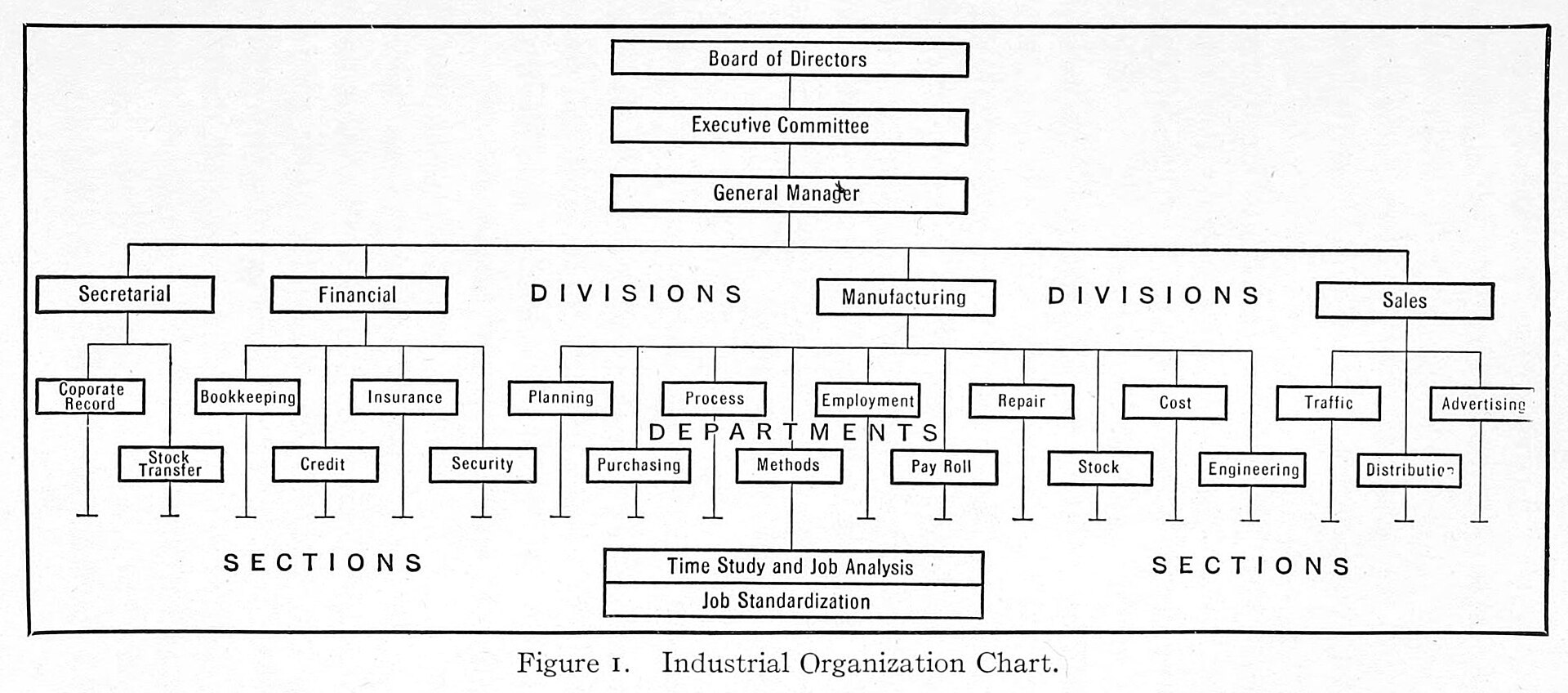
There is no standard organization chart, and the right one depends on size, sector and operating model. Most large programs nonetheless contain the same building blocks. Small programs combine several in one person; large ones give each a director and a team.
| Function | What it does | Typical roles |
|---|---|---|
| Governance, risk and compliance (GRC) | Policies and standards; the risk register; exceptions; control testing and evidence; regulatory exams; audits and certifications; board reporting support; third-party risk (sometimes its own team). | GRC director, risk analysts, compliance analysts, third-party risk analysts, policy manager. |
| Security architecture and engineering | Security requirements and reference designs for networks, cloud, data protection and new systems; building and tuning security tools. | Security architects, cloud security engineers, security engineers. |
| Security operations | The security operations center (monitoring and detection), incident response, threat intelligence, vulnerability management, forensics; often a mix of staff and managed providers. | SOC manager, analysts in tiers, incident responders, threat intelligence analysts, vulnerability management lead. |
| Identity and access management | Identity governance (who has what and who approved it), authentication, privileged access, joiner-mover-leaver processes. Sometimes sits in IT with security setting standards. | IAM director, identity engineers, access review analysts. |
| Application and product security | Secure development practices, code and design review, testing, software supply chain, security of products sold to customers. | Application security engineers, product security officers, "security champions" embedded in development teams. |
| Operational technology (OT) security | Security of industrial control, building and medical device systems, working with plant engineers and safety leads (module 111). | OT security lead, plant security coordinators. |
| Awareness and culture | Training, phishing exercises, executive briefings, communications. | Awareness program manager. |
| Privacy liaison | Working link to the privacy office: data inventories, privacy impact assessments, breach assessment. The privacy office itself usually sits in legal or compliance (lesson 10). | Privacy engineer, a named liaison in GRC. |
| Business information security officers (BISOs) | In hybrid models, senior security people placed in each division to translate between security and the business. | BISOs reporting to the CISO with a dotted line to the division head. |
| Program management office | Roadmap, budget tracking, metrics, vendor contracts and board materials. | Chief of staff, program managers, security finance analyst. |
Two placement questions cause most of the arguments:
- Should the CISO run operations, or only set and check the rules? In three lines terms, a CISO who runs the SOC is doing a first line activity while also performing second line oversight. That is common and workable if the organization says so plainly and makes sure someone else, usually internal audit, tests the CISO's own operations. Some banks split the roles: a CISO in the first line who runs operations, and a technology risk officer in the second line who challenges.17
- Where does physical security go? Some organizations combine cyber and physical security under a chief security officer, arguing that attackers do not respect the line (badge cloning, stolen laptops, insider threats). Others keep them apart because the skills and cultures differ. Either works if the two share incident reporting and insider risk work.
The NICE Workforce Framework
Large organizations need common names for security jobs so they can write job descriptions, plan training, measure gaps and compare themselves with others. The federal government's answer is the NICE Workforce Framework for Cybersecurity, published by NIST's National Initiative for Cybersecurity Education as NIST Special Publication 800-181 Revision 1 in November 2020.12 It is free, voluntary outside government, and widely used by employers, schools and training providers.
Revision 1 changed the framework from a fixed catalog into a set of building blocks:
- Task, Knowledge and Skill (TKS) statements: short descriptions of work ("develop strategic plans") and of what a person must know or be able to do.
- Work roles: groupings of tasks that make up a job function, such as Executive Cybersecurity Leadership, Cybersecurity Policy and Planning, Systems Security Management, Security Control Assessment, Technology Program Auditing and Privacy Compliance.29
- Competency areas: broader clusters of knowledge and skill that cut across roles (for example, cryptography, DevSecOps and AI security).
- Work role categories: the top-level groupings.
Since 2024 NIST has versioned these components separately from the publication itself. Components version 1.0.0 was released March 5, 2024; version 2.0.0 on March 5, 2025; version 2.1.0 on Dec. 3, 2025; and version 2.2.0 on April 28, 2026.13 Version 2.0.0 removed the Cyberspace Effects and Cyberspace Intelligence categories and their 12 work roles, leaving categories focused on civilian security work (Oversight and Governance, Design and Development, Implementation and Operation, Protection and Defense, and Investigation).30 Version 2.2.0 added a Cybersecurity Supply Chain Risk Management work role (OG-WRL-017), added knowledge and skill statements to the cryptography and DevSecOps competency areas, published statements for the AI security competency area, and brought the total number of TKS statements to 2,221.31
How large organizations use it:
- Map current jobs to work roles. Each security job description lists the NICE work roles it covers. This shows where one person covers five roles and where two teams claim the same one.
- Find gaps. Compare the roles the risk assessment calls for with the roles staffed. A hospital with medical devices and no one mapped to OT security has a visible gap.
- Write job postings and career paths in shared language, which helps recruiting from government and the military, where NICE (and the Defense Department's related framework) is standard.
- Plan training against TKS statements rather than vendor course catalogs.
- Report workforce risk to the board in a way that can be compared year to year.
Its limits: the framework describes work, not how much of it an organization needs, and not pay. It does not tell you whether you need three analysts or thirty. Staffing levels and the business case are in lesson 2.
RACI charts: who decides, who does, who is told
A RACI chart lists the program's main activities down one side and the roles across the top, and marks each cell with one letter: Responsible (does the work), Accountable (owns the outcome and signs off; exactly one per row), Consulted (gives input before the decision) or Informed (told after). It is a plain tool and an effective one, because most security failures in large organizations happen in a gap between two teams that each assumed the other had the job. CSF 2.0's GV.RR-02 asks that roles and authorities be "established, communicated, understood, and enforced"; a RACI is the simplest way to show that they are.1
An illustrative RACI for a large organization, to adapt rather than copy:
| Activity | Board committee | CEO | CISO | CIO and IT | Business owner | General counsel's office | Internal audit |
|---|---|---|---|---|---|---|---|
| Approve security program charter and top-level policy | A | R | R | C | I | C | I |
| Set cyber risk appetite | A | R | C | C | C | C | I |
| Issue technical security standards | I | I | A/R | C | C | I | I |
| Patch servers within standard deadlines | C (monitors) | A/R | I | I | |||
| Approve user access to a business application | C (sets rules) | R | A | ||||
| Accept a high risk or grant a policy exception | I | A (above threshold) | C | C | R | C | I |
| Declare a major incident | I | I | A/R | R | I | C | |
| Decide whether an incident is material for SEC purposes | I | A | C | C | C | R | |
| Vendor security review before contract | R | C | A | C | |||
| Independent audit of the program | A | I | C | C | R |
Three rules make a RACI useful rather than decorative. Only one "A" per row. Every "R" must be a team that actually has the people and access to do the work. And the chart is reviewed whenever the organization chart changes, because reorganizations are when duties fall through the floor. The Morgan Stanley case shows the cost: the OCC assessed a $60 million penalty in October 2020 after citing the banks' "failure to exercise proper oversight of the 2016 decommissioning" of two data centers and finding that they "failed to adequately assess the risk of subcontracting the decommissioning work," and "failed to maintain appropriate inventory of customer data stored on the decommissioned hardware devices."32 Decommissioning old hardware is exactly the kind of task that sits between IT operations, procurement, a vendor and security unless someone writes down who is accountable.


Connecting the program to enterprise risk management
Enterprise risk management (ERM) is the organization-wide process for identifying, ranking and deciding what to do about all of its major risks, financial, operational, legal, strategic and reputational, in one place, so leaders can compare them and the board can see them together. A security program that runs its own risk register in its own vocabulary, disconnected from ERM, will lose budget arguments to risks that are expressed in the board's language. Module 108, lesson 2 explains risk registers, appetite and tolerance; this section is about the plumbing between the security program and ERM.
The main reference documents:
- COSO, Enterprise Risk Management: Integrating with Strategy and Performance (2017), which updated the 2004 framework and organizes ERM into five components and 20 principles. Most U.S. public companies' ERM programs are built on it or on ISO 31000.33
- OMB Circular A-123, as revised by Memorandum M-16-17 (July 15, 2016), which requires federal agencies to run ERM, keep risk profiles and set risk appetite.34
- NIST IR 8286 Rev. 1, Integrating Cybersecurity and Enterprise Risk Management, finalized Dec. 18, 2025 with its companion reports IR 8286A Rev. 1 (identifying and estimating risk) and IR 8286C Rev. 1 (staging cyber risks for governance oversight), all aligned with CSF 2.0. It explains how system-level and business-unit cyber risk registers roll up into an enterprise register and why that rollup matters.1435
- NIST SP 800-37 Rev. 2 (Dec. 20, 2018), the Risk Management Framework, which names a "risk executive (function)" for organization-wide risk decisions alongside the senior agency information security officer and the authorizing officials who accept risk for individual systems.36
What the connection looks like in a working program:
- Shared scales. The security program rates likelihood and impact on the same scales ERM uses (for example, impact in dollars and in hours of service lost), not a separate "critical, high, medium" scheme nobody else understands.
- A few enterprise-level cyber risks. The enterprise register carries a handful of cyber risks stated as business outcomes ("prolonged outage of clinical systems from ransomware," "theft of customer financial data," "fraudulent payment from email compromise"), each with an executive owner outside security. Hundreds of technical findings stay in the security register and roll up into these.
- Appetite statements the CISO can use. The board's risk appetite statement includes cyber in terms specific enough to decide cases: for example, no tolerance for internet-facing systems without multifactor authentication, or a maximum tolerable outage for core systems.
- A regular calendar. The CISO's quarterly report to the committee and the ERM report to the board use the same risks and the same ratings, so the board does not hear two different stories.
- Three lines clarity. Business and IT own and operate controls (first line); the CISO's risk function, ERM and compliance set rules and challenge (second line); internal audit tests independently (third line), under the IIA Three Lines Model of July 2020 and, since Feb. 5, 2026, the IIA's Cybersecurity Topical Requirement.1737 Lesson 8 covers internal audit in depth.
The OCC's August 2020 action against Capital One shows what the regulators look for when this breaks. The OCC assessed an $80 million civil money penalty citing the bank's "failure to establish effective risk assessment processes prior to migrating" significant information technology operations to the public cloud, and its "failure to correct the deficiencies in a timely manner," and called them unsafe or unsound practices under the interagency security guidelines.38 A large technology change went ahead before the risk process caught up with it, and the problems it found were not fixed fast enough. Both are program failures, not tool failures.
Public sector variants
Government security programs have the same elements as corporate ones, but their authority comes from statutes, executive orders and appropriations rather than board resolutions, and their accountability runs through legislatures, auditors, open meetings and public records.
Federal agencies
The Federal Information Security Modernization Act of 2014 makes each agency head responsible for "information security protections commensurate with the risk and magnitude of the harm" that could result from a compromise, and requires the agency's chief information officer (or comparable official) to designate a senior agency information security officer, commonly called the agency CISO, who must "possess professional qualifications, including training and experience," must "have information security duties as that official's primary duty," and must "head an office with the mission and resources" to help ensure compliance.4 That statute is unusual in telling an organization, in effect, that its security leader may not be a part-time role for someone with another full-time job. Agency CISOs work inside the NIST Risk Management Framework, in which authorizing officials formally accept the risk of operating each system.36
State CISOs
Every state now has a state CISO or equivalent, usually inside the state CIO's office, with authority that ranges from advisory to binding over executive branch agencies. The best regular source on how they work is the biennial study by the National Association of State Chief Information Officers (NASCIO) and Deloitte.
- 2024 Deloitte-NASCIO Cybersecurity Study (released Sept. 30, 2024; 51 respondents covering all 50 states and the District of Columbia): 86 percent of state CISOs said their responsibilities were growing; more than one-third had no dedicated cybersecurity budget; four said less than 1 percent of their state IT budget went to cybersecurity, compared with more than 10 percent at federal agencies; and the share of CISOs with fewer than five dedicated security employees fell from 16 percent in 2020 to 4 percent.39
- 2026 NASCIO-Deloitte Cybersecurity Study (released April 27, 2026; responses from all 50 states, the District of Columbia and the U.S. Virgin Islands): 22 percent of state CISOs were "extremely" or "very" confident that state information assets are protected, down from 48 percent in 2022; 63 percent were not confident in local government and public higher education's protection of public data, up from 35 percent; 16 percent reported budget cuts, compared with none in 2024; 22 percent said their staff had the required competencies, down from 47 percent in 2024; about half named effectiveness metrics as a top initiative; and about 77 percent oversee cybersecurity for executive branch agencies, with another 10 percent reaching beyond the executive branch.40 Deloitte's press release for the study gave the confidence figure as 26 percent; the 22 percent figure is from the study's own chart.41
Two patterns recur in state programs. First, authority and money are often separate: a state CISO can issue a standard that agencies must follow, but each agency's budget comes from its own appropriation, so compliance depends on whether the legislature funds it. Second, the "whole-of-state" problem: counties, cities, school districts and public universities hold much of the public's data but are outside the state CISO's authority. Roughly one-fifth of state CISOs in 2026 said their states were moving toward a whole-of-state approach.41 Federal grants under the State and Local Cybersecurity Grant Program, discussed in lesson 2, were designed partly to close that gap.
Idaho: the Office of Information Technology Services and the Idaho Technology Authority
Idaho's executive branch program rests on four layers.
- Executive Order 2017-02. Signed by Gov. C.L. "Butch" Otter on Jan. 16, 2017, it adopted the findings of the Cybersecurity Cabinet Taskforce: a director of information security reporting directly to the governor; agency adoption of the NIST Cybersecurity Framework by June 30, 2017; the first five CIS Critical Security Controls by June 30, 2018; annual penetration tests and vulnerability scans; mandatory role-based annual training; and public outreach.42
- The Office of Information Technology Services (ITS), created in the governor's office in 2018. Idaho Code 67-827 gives its administrator oversight of "the coordination and implementation of all information technology services" and "cybersecurity policies within the state of Idaho."43 Idaho Code 67-827A, amended in 2022, twice in 2025 and again in 2026, directs ITS among other things to oversee cybersecurity policies, direct agencies on information security, penetration tests and vulnerability scans, require employee training, require agencies to maintain cybersecurity best practices and use multifactor authentication, and obtain fingerprint-based criminal history checks for certain IT employees and contractors.44
- The Idaho Technology Authority (ITA), created within ITS by Idaho Code 67-832 (added 2018), with up to 18 members, including agency directors, the state controller, the ITS administrator, two legislators, a judicial branch member and up to two governor's appointees (one from private sector IT); the governor designates the chair.45 Under Idaho Code 67-833, the ITA prepares statewide plans, sets policies and standards, approves large projects and publishes an annual report.46 Its policies apply to "state agencies, including all state departments, boards, commissions, councils, and institutions of higher education," with an exemption process under Guideline G120.47
- ITA policies. P4110 (established June 30, 2004; last revised Aug. 20, 2024) requires each agency to have a security program and a designated Cybersecurity Coordinator who develops and administers it, coordinates risk assessments, testing and incident response, and keeps executive management informed; contact information is reported to ITA staff yearly.23 P4140 requires agencies to adopt "the current NIST Cybersecurity Framework as the basis for assessing their cybersecurity programs."19 Other policies cover privileged access with multifactor authentication (P4502), awareness training (P4505), patching (P4520) and incident and breach response (P4590).47
Idaho is also partway through consolidating executive branch IT under ITS. The ITS strategic plan for fiscal years 2026 to 2029 says the sixth and final consolidation phase was planned for fiscal 2026 with implementation starting in fiscal 2027, lists annual third-party penetration testing performed by the Idaho National Guard among its cybersecurity measures, and reports that state software engineer pay lags private sector rates by 50 to 80 percent, which it says makes recruiting hard.21 That plan does not set numeric cybersecurity targets. For Idaho public agencies a breach also starts a governance clock: Idaho Code 28-51-105 requires a city, county or state agency to notify the Attorney General's office within 24 hours of discovering a breach of the security of the system.48
Idaho's counties, cities, school districts and hospital districts are mostly outside the ITA's policies. For them, the practical model is the one in this lesson scaled down: a charter adopted by resolution, a named official (in-house, shared with another jurisdiction, or a contracted virtual CISO), a yearly report in open session, and the free federal services described in module 108, lesson 12. Module 73's lesson on government contracts and the Idaho public sector covers the small-entity version.

The first 100 days of a new CISO
New security leaders, and the executives who hire them, both tend to want a fast visible win. The better first goal is an accurate picture. What follows is a practical sequence drawn from the framework documents cited in this lesson and from common practice; the day counts are illustrative, and a CISO who arrives in the middle of an incident or a regulatory order will compress it. Wherever the plan calls for a change to production systems, plan it, test it and keep a way back.
Days 1 to 30: listen and inventory
- Meet the people who own risk. The CEO, CFO, CIO, general counsel's office, chief risk and compliance officers, head of internal audit, the board committee chair, the heads of the largest business units, and the leaders of plants, hospitals or field operations. Ask each: what worries you, what has gone wrong, what did the last security leader promise that did not happen?
- Read the record. The last three years of audit reports and regulatory exam findings, any consent orders, incident reports, penetration test results, the risk register, cyber insurance applications (which often contain the organization's most candid statements about its controls), SOC reports issued to customers, the 10-K Item 1C if a public company, and board minutes on cyber.
- Find the inventories, or their absence. Hardware and software assets, internet-facing systems, privileged accounts, critical vendors, data stores holding regulated data. Missing inventories are the most common early finding and the most important.
- Learn the incident path. Who gets called at night, what the plan says, when it was last exercised, and which outside firms are on retainer.
- Check the dangerous basics. Multifactor authentication on remote access, email and administrator accounts; offline or immutable backups with a recent successful restore test; patching of internet-facing systems against the CISA Known Exploited Vulnerabilities catalog; logging that someone actually watches.49 Breaches in the public record keep turning on these. Colonial Pipeline's chief executive told a Senate committee in June 2021 that attackers entered through a legacy VPN account protected only by a password; UnitedHealth Group's chief executive testified in May 2024 that attackers used stolen credentials on a Change Healthcare remote access portal that "did not have multi-factor authentication."5051
Days 31 to 60: assess and fix the worst
- Run a rapid assessment against CSF 2.0 to produce a current-state profile, rated honestly. An outside firm can help, but the CISO should own the result.
- Close the few gaps that would embarrass the organization in a headline, through the normal change process, with business owners informed. Typical items: a remote access system without multifactor authentication, shared administrator accounts, a backup that has never been restored.
- Write down the risks you cannot fix quickly, put them in the risk register with owners, and tell the executive team.
- Review the operating model and the team. Who is in which role, which NICE work roles are uncovered, which managed services contracts deliver and which do not.
- Draft the RACI for the ten activities that cause the most confusion.
Days 61 to 100: plan, charter and report
- Write the charter (sample below) and the target profile: where the program should be in three years, tied to the organization's risk appetite.
- Build a roadmap and a budget request (lesson 2), sequenced by risk reduction, with what can be done inside current funding separated from what needs new money.
- Agree on metrics with the executive team and the committee (lesson 3).
- Present to the board committee: what was found, what was fixed, what risks remain and who owns them, the charter for approval, and the plan.
- Schedule the first tabletop exercise with executives, including the disclosure decision for a public company (lesson 12).
A CISO who reaches day 100 with an approved charter, a risk register the executives recognize as their own, a few real fixes and a funded plan has built the frame of a program. The rest of this module is about filling it in.
Sample: Security Program Charter
This charter sits above the top-level Information Security Policy (sample in module 108, lesson 4) and establishes the function that maintains it. A public agency can adopt it by resolution of its governing body, replacing "Board" with the commission, council or board of trustees.
Sample only. Adapt it to your organization's risks, systems and laws, have qualified people review it, and do not treat it as a substitute for a risk assessment.
Follows: NIST Cybersecurity Framework 2.0, Govern function, categories GV.OC, GV.RM, GV.RR, GV.PO and GV.OV (Feb. 26, 2024); 23 NYCRR 500.2 to 500.4 (as amended Nov. 1, 2023); 16 CFR 314.4(a) and (i); 44 U.S.C. 3554(a)(3); 45 CFR 164.308(a)(2); FFIEC Information Security booklet, Section I.B (Sept. 2016); NIST IR 8286 Rev. 1 (Dec. 18, 2025); IIA Three Lines Model (2020); Idaho ITA Policy P4110 (rev. Aug. 20, 2024) for Idaho state agencies.
1. Purpose and mission
This charter establishes the Information Security Program of [Organization name] and the Office of the Chief Information Security Officer (CISO). The mission of the program is to protect the confidentiality, integrity and availability of the information and systems [Organization name] relies on to [serve patients / serve customers / serve residents / meet its mission], in proportion to the risks the Board has decided the organization will carry.
2. Scope
The program covers all business units, subsidiaries and controlled affiliates; all information in any form; all systems, applications, networks, cloud services, operational technology and connected devices that [Organization name] owns, leases or uses, including those operated by vendors on its behalf; and all workforce members. The following are excluded: [list, or "none"]. For each exclusion, the risk owner is: [name and title]. Physical security is [within / outside] the program's scope; where outside, the [Chief Security Officer / Facilities Director] coordinates with the CISO on incidents and insider risk.
3. Authority
The Board authorizes the CISO to:
- Issue information security standards and procedures that are binding on all workforce members and units, under policies approved by the Board or the [Executive Risk Committee].
- Require a security review, and set conditions, before a new system, major change, cloud service or vendor handling [Confidential] information goes into use; a decision to proceed against the CISO's written recommendation must be made and signed by [the executive named in the risk acceptance standard].
- During a declared security incident, direct the isolation of systems, disabling of accounts and preservation of evidence, under the Incident Response Plan, informing the [CIO and affected business owner] as soon as practical.
- Obtain access to any system, log, record, contract or facility needed to carry out the program, subject to [privilege and confidentiality procedures set by the General Counsel's office].
- Engage outside services within the approved budget, under the procurement policy.
- Report directly to the [Committee] chair at any time, without prior approval of management, on any matter the CISO believes is a material risk.
4. Organization and reporting
The CISO reports administratively to [the Chief Executive Officer / Chief Risk Officer / Chief Information Officer] and functionally to the [Risk / Audit] Committee of the Board. The CISO is independent of IT operations management. [If the CISO is employed by an affiliate or service provider: (Organization name) retains responsibility for the program; (name and title), a senior employee, directs and oversees the provider; and the provider's contract requires it to maintain a program that protects (Organization name).] The program's organization, staffing and operating model are described in an annex the CISO maintains and the [Chief Executive] approves.
5. Responsibilities of the program
The program maintains the information security policy set and standards; a cyber risk register aligned with the enterprise risk management program; security architecture requirements; security monitoring, incident response and vulnerability management; identity and access standards; third-party security risk management; security awareness and training; support for audits, examinations, certifications and customer assurance; and reporting under Section 7.
6. Relationships with other functions
- Information Technology and system owners operate controls under the program's standards and remediate findings within the deadlines the standards set.
- Business unit leaders own the information and processes in their units, approve access, and accept business risk within the limits the Board sets.
- Enterprise Risk Management carries the program's top cyber risks in the enterprise risk register using the same rating scales.
- Privacy Office: the program designates a privacy liaison and coordinates on data inventories, privacy impact assessments and breach assessments.
- General Counsel's office and Compliance identify applicable laws and contracts, lead regulatory notices and disclosure decisions, and advise on investigations.
- Human Resources includes security in hiring, onboarding, role changes, discipline and departure.
- Procurement routes vendor contracts within scope to the program for review before signature.
- Internal Audit provides independent assurance over the program, including any operations the program itself runs, and reports to the Audit Committee.
7. Reporting
The CISO reports in writing to the [Committee] at least [quarterly] and to the full Board at least annually on: the state of the program against its plan; top risks and their owners; significant incidents; testing and audit results and open findings by age; vendor risk; policy exceptions and risk acceptances by age and severity; workforce and budget; and recommended changes. The CISO informs [the CEO, General Counsel's office and Committee chair] of any material cybersecurity issue without delay.
8. Resources
Management will provide the program staff, budget and tools in proportion to the risks identified in the risk assessment and the plan the Board approves. The CISO presents the annual budget request with the expected reduction in risk, and reports to the [Committee] any material shortfall.
9. Measurement and review
The program is measured against [NIST CSF 2.0 current and target profiles] and the metrics approved by the [Committee]. This charter is reviewed at least every [12] months and whenever the reporting line, scope or operating model changes. Version [X], approved [date] by [body]. Next review due [date].
Pictures, Numbers and Infographics
The numbers a board member, executive, public official or reporter is most likely to need from this lesson, each with its source.
| Item | Number or date | Source |
|---|---|---|
| Security leaders reporting to an IT leader; to a non-IT leader | 64 percent; 36 percent (600+ respondents) | IANS and Artico, State of the CISO 20266 |
| CISOs with executive or senior vice president titles | 47 percent (large enterprises: up from 33 percent in 2023) | IANS and Artico, 20266 |
| Security leaders open to changing jobs within a year | 69 percent | IANS and Artico, 20266 |
| CISOs reporting directly to the CEO; to a CIO or CTO | 42 percent; 30 percent (371 CISOs) | Heidrick and Struggles, published Feb. 26, 20267 |
| Months Twitter had no CISO before the July 15, 2020 hack | About 7 (since December 2019) | NYDFS Twitter report, Oct. 202024 |
| State CISOs extremely or very confident state assets are protected | 48 percent (2022); 22 percent (2026) | NASCIO-Deloitte 2026 study40 |
| State CISOs reporting budget cuts | 16 percent (2026); none (2024) | NASCIO-Deloitte 2026 study40 |
| State CISOs saying staff have required competencies | 22 percent (2026); 47 percent (2024) | NASCIO-Deloitte 2026 study40 |
| State CISOs with no dedicated cybersecurity budget (2024) | More than one-third of 51 | Deloitte-NASCIO 2024 study39 |
| NICE Framework publication; current components version | SP 800-181 Rev. 1, Nov. 2020; v2.2.0, April 28, 2026 | NIST1213 |
| NICE task, knowledge and skill statements in v2.2.0 | 2,221 (up from 2,148) | NIST v2.2.0 change summary31 |
| CSF 2.0 published; categories in Govern | Feb. 26, 2024; 6 | NIST CSWP 291 |
| NIST IR 8286 Rev. 1 (cyber and ERM) final | Dec. 18, 2025 | NIST14 |
| Sullivan: probation; fine; Supreme Court denial | 3 years; $50,000; June 29, 2026 | DOJ; Supreme Court docket 25-1082910 |
| SEC v. SolarWinds and Brown: filed; mostly dismissed; dropped | Oct. 30, 2023; July 18, 2024; Nov. 20, 2025 | SEC LR-264231126 |
| OCC penalty, Capital One (cloud migration risk assessment) | $80 million, Aug. 6, 2020 | OCC NR 2020-10138 |
| OCC penalty, Morgan Stanley (decommissioning oversight) | $60 million, Oct. 8, 2020 | OCC NR 2020-13432 |
| Equifax settlement; people affected | At least $575 million, up to $700 million; about 147 million | FTC, July 22, 201952 |
| Idaho Technology Authority membership | Up to 18 members | Idaho Code 67-83245 |
| Idaho agency breach notice to the Attorney General | Within 24 hours of discovery | Idaho Code 28-51-10548 |
| Idaho state software engineer pay gap with private sector | 50 to 80 percent behind (state estimate) | ITS Strategic Plan FY2026 to 202921 |
Common mistakes
- Leaving the seat empty. Twitter went seven months without a CISO before the July 2020 hack, and New York's regulator said the vacancy sent "the message that cybersecurity is not a top priority from senior leadership." If a CISO leaves, name an acting leader the same week and tell the board committee.24
- Giving an order and never checking it was carried out. The FTC alleged that after Equifax was alerted in March 2017 to a critical vulnerability, its security team required vulnerable systems to be patched within 48 hours but "did not follow up to ensure the order was carried out by the responsible employees"; the system stayed unpatched until suspicious traffic was spotted in July. A program needs a named owner for each remediation and a way to verify it, not just a policy.52
- Letting a big technology change outrun the risk process. The OCC's $80 million penalty against Capital One in 2020 cited the failure to set up effective risk assessment before a major cloud migration and slow correction of the problems found.38
- Tasks that fall between teams. The OCC's $60 million Morgan Stanley penalty in 2020 turned on poor oversight of hardware decommissioning by a subcontractor and no inventory of the customer data on the devices.32 A RACI with one accountable owner per activity is the cheap fix.
- A committee that never reports up. In the SolarWinds derivative case, the Delaware Court of Chancery noted that the committees responsible for cyber did not report to the full board for 26 months before the attack, and called the reporting system "subpar," though it found no bad faith.53 Put the reporting calendar in the charter.
- Public statements that outrun the program. The SEC built its SolarWinds case on the gap it alleged between a website "Security Statement" and internal assessments.2026
- Treating concealment as damage control. Uber's former security chief was convicted not for the breach but for hiding it from the FTC.9
- Ignoring a warning because no one owns it. The FTC alleged Drizly had been warned when company credentials were exposed in 2018 and did not fix basic problems before a 2020 breach affecting about 2.5 million consumers; the order bound the CEO personally.28
- Outsourcing the judgment along with the work. Part 500 and the Safeguards Rule allow an outside CISO but require the organization to keep responsibility and a senior employee to oversee the provider.23
Questions people ask
Do we need a full-time CISO?
A federal agency does: FISMA requires security to be the senior agency information security officer's primary duty.4 For everyone else the law requires a named, qualified, accountable person, not a full-time employee. New York's Part 500 and the FTC Safeguards Rule both allow a CISO employed by an affiliate or service provider if the organization keeps responsibility and oversees the provider.23 A practical line: once an organization has several hundred employees, regulated data, a board that asks about cyber and more than a handful of security staff or providers to direct, a part-time leader usually cannot keep up with the coordination, and the money saved is small compared with the risk.
Should the CISO be on the executive team?
Surveys suggest more large companies are making the CISO an executive: IANS found 47 percent held executive or senior vice president titles in its 2026 report, and Heidrick found 42 percent reporting to the CEO.67 Membership on the executive team helps when security decisions are business decisions, which in large organizations they usually are. It is less important than two things the charter can guarantee whatever the title: a direct line to the board committee and a seat in the room when major technology, acquisition and product decisions are made.
What is a business information security officer?
A BISO is a senior security person assigned to one division or business line, usually reporting to the CISO with a dotted line to the division head. The BISO translates the division's plans into security requirements and the program's standards into the division's terms, owns the division's security roadmap and risk register entries, and is the first call when the division wants to buy, build or acquire something. BISOs are common in hybrid operating models and in organizations with very different lines of business.
How is a security program charter different from a security policy?
The charter creates and empowers the function: mission, scope, authority, reporting and relationships. The top-level policy tells the workforce what it must do and points to the standards. Both are approved at the top, but the charter changes rarely (when the structure changes), while policies change as risks and technology change. Some organizations combine them; keeping them separate makes it easier to change a policy without reopening the CISO's authority. Lesson 4 covers policy management.
Where should privacy sit relative to security?
Usually apart, and connected. The privacy office deals with what data the organization may collect and how it may be used, which is a legal and ethical question as much as a technical one, so it typically sits with the general counsel's office or compliance. Security protects data the organization has decided to hold. They overlap heavily in data inventories, breach assessment and vendor review, so each needs a named liaison to the other and a shared incident process. Lesson 10 covers the privacy program.
How do we know our security organization chart is right?
Run three checks. Map every activity in the RACI to a team with the people and access to do it; any row with no realistic "R" is a gap. Map staff to NICE work roles and compare with the roles the risk assessment calls for. And trace the last three significant incidents or audit findings: did the right people learn of them quickly, and did someone own the fix? Where the trace stalls, the chart is wrong.
Our county or city is small. Does any of this apply?
The structure scales down. A small jurisdiction can adopt a short charter by resolution, name one official as responsible (an employee, a shared official with neighboring jurisdictions, or a contracted virtual CISO), get a yearly written report in open session, and use free federal services. Idaho state agencies already must designate a Cybersecurity Coordinator under ITA Policy P4110, a model local governments can borrow.23 Module 73's Running the Program is the small-organization guide.
Hard questions
Should the CISO always report outside IT?
The case for yes: a CISO who reports to the CIO is checking the work of the boss. Bank examiners have said since 2016 that security officers should be independent of IT operations staff and should not report to IT operations management, and senior CISOs increasingly report to the CEO.87 The case for no: most security controls are run by IT; a CISO inside IT has influence over architecture and projects from the start, and a strong CIO who owns security outcomes can be the CISO's best ally. The IANS 2026 data show 64 percent of security leaders still report to an IT leader.6 What the evidence shows: there is no published study that convincingly links a reporting line to fewer or smaller breaches; the surveys describe practice, not outcomes. What the enforcement record does show is that failures cluster where nobody had clear ownership or where bad news did not reach the board, which argues for a direct board line and written escalation rights whatever the day-to-day reporting line.
Should security leaders face personal liability?
The case for: organizations respond to the incentives of the people who run them; personal accountability makes executives take security warnings seriously, and the Sullivan case shows that concealment by a security leader can harm millions of people and mislead a regulator.9 The case against: security leaders rarely control budgets or the systems they protect; suing them for a company's statements deters qualified people from taking the job and encourages them to bury bad news in privileged channels. What the evidence shows: the cases that reached judgment were about concealment and false statements. The SEC's broader theory that weak controls themselves violated accounting control rules was rejected by the court in July 2024, and the SEC dropped the case in November 2025.2611 How courts and agencies will treat a security leader's role in a future disclosure case remains uncertain.
Should a large organization centralize security?
The case for centralizing: one set of tools, logs and standards; fewer gaps; easier reporting; economies of scale. States such as Idaho have paired IT consolidation with centralized security.21 The case against: large organizations with very different businesses, regulators or cultures find that a distant central team is ignored, and that business units buy their own tools anyway. What the evidence shows: public enforcement records repeatedly involve seams: subsidiaries, acquired companies, vendor work and decommissioning that no one central team saw. Both models fail at their seams; the hybrid model's popularity reflects an attempt to keep a central core while placing people inside the business.
Are managed security services a substitute for building a team?
The case for: around-the-clock monitoring needs at least several analysts per shift position, skilled staff are scarce (the 2026 NASCIO-Deloitte study found only 22 percent of state CISOs said their staff had the required competencies), and providers see attacks across many customers.40 The case against: providers know the tools but not the business; they may escalate an alert to a customer who has no one able to judge it; and a breached provider can become a path into every customer. What the evidence shows: the rules are clear that responsibility cannot be outsourced, and the practical results depend on whether the organization keeps enough in-house expertise to direct and check the provider.23
For reporters and advocates
What public records exist.
- SEC filings on EDGAR. Every public company's 10-K Item 1C must describe which management positions are responsible for cyber risk, their expertise, and how they report to the board. Compare a company's description of its CISO and reporting line year to year, and against any Form 8-K Item 1.05 incident filing. EDGAR full-text search finds every filer that uses a phrase such as "Chief Information Security Officer" with "reports to."1654
- Regulators' orders and reports. NYDFS investigation reports (such as the Twitter report) and consent orders; OCC, Federal Reserve and FDIC enforcement actions; FTC orders (including orders naming executives). These often describe organizational failures in detail.243828
- Court records. Federal criminal and SEC cases on PACER, many mirrored free on CourtListener; the Ninth Circuit's Sullivan opinion and the Supreme Court docket are free online.2510
- Federal agencies. FISMA reports, inspector general audits of agency security programs, and GAO reports describe agency CISO authority and staffing.
- State government. The NASCIO-Deloitte studies give a national picture; state CIO and CISO offices often publish strategic plans and annual reports. Idaho's ITS strategic plan and ITA policies are online, and Idaho Code 67-833 requires the ITA to publish an annual report.2146
- Idaho public records. Under the Idaho Public Records Act (Idaho Code Title 74, Chapter 1), ask a state agency for the name and title of its designated Cybersecurity Coordinator under ITA P4110, its Annual IT Security Plan, the date of its last penetration test, and any ITA exemptions it holds. Ask a county, city, school district or hospital district whether its governing body has adopted a security charter or policy, who is responsible for security, and when the body was last briefed. Expect technical details to be withheld under security exemptions; policies, budgets, contracts and meeting records are usually releasable.5523
What to ask a company or agency.
- Who is your security leader, to whom does that person report, and can that person go directly to the board or governing body? When was that last used?
- Is there a written charter for the security program? Who approved it and when?
- How long was the security leader's position vacant in the last five years, and who was in charge meanwhile?
- What share of security work is done by outside providers, and who inside checks their work?
- What were the last internal audit or regulatory findings about the security program, and which are still open?
- For public companies: does the 10-K Item 1C description of the CISO's role match what the company says now?
- For Idaho agencies: who is your P4110 Cybersecurity Coordinator, is the role full-time, and how does the agency report to ITS?
Cautions. A new CISO title is not a new program, and a large headcount is not proof of effectiveness. Surveys of CISOs describe the people who answered them, not all organizations. And many security failures are invisible until an incident; the absence of a public breach is weak evidence of a strong program.
Where to go next
- NIST Cybersecurity Framework 2.0 and quick-start guides: Free. The framework, its Govern function and quick-start guides for organizational profiles; use it to write the charter's measurement section and the current and target profiles a new CISO builds in the first 100 days.
- NICE Framework Resource Center: Free, from NIST. Work roles, competency areas and task, knowledge and skill statements; for human resources and security leaders mapping jobs, writing postings and finding staffing gaps.
- NIST IR 8286 series on cybersecurity and enterprise risk management: Free. Explains risk registers and how cyber risk rolls up to the enterprise; for CISOs, risk officers and internal auditors connecting the program to ERM.
- 2026 NASCIO-Deloitte Cybersecurity Study: Free. The biennial survey of state CISOs on authority, budgets, staffing and confidence; for public officials, legislators and reporters comparing states.
- Idaho Technology Authority policies: Free. Idaho's statewide IT and security policies, including P4110 (Cybersecurity Coordinator) and P4140 (NIST CSF); a ready model for Idaho counties, cities and districts.
- NYDFS Twitter Investigation Report: Free. A regulator's detailed account of how a missing CISO and weak governance contributed to a major hack; useful for boards and reporters.
Still being checked (7 items)
These points could not be fully confirmed against a primary source when this lesson was written and fact checked in November 2026. The text above states each one as uncertain.
- The total number of NICE Framework work roles in components v2.2.0 was not found on NIST pages; the lesson gives the categories removed in v2.0.0 and the role added in v2.2.0 but no total. The five remaining category names are stated from the v1.0.0 structure minus the two removed categories.
- The IANS and Artico State of the CISO 2026 figures come from a TechTarget article of Jan. 16, 2026; the underlying report was not read.
- The 2026 NASCIO-Deloitte confidence figure differs between Deloitte's April 27, 2026 press release (26 percent) and the study's chart (22 percent, also reported by Smart Cities Dive); the lesson uses 22 percent and notes the difference.
- NYDFS 500.4 language was checked on the DFS Part 500 web page summary; the phrases 'adequate authority' and 'ability to direct sufficient resources' sometimes attributed to the 2023 amendment were not found there and are not used.
- The IIA Global Internal Audit Standards are paid; only the public overview page was read for the charter and 'Authorized by the Board' points.
- Web search budget was exhausted mid-research; NIST SP 800-37 Rev. 2 roles, COSO ERM 2017 and OMB M-16-17 details were taken from module 108 sources verified Nov. 13, 2026 and not re-fetched.
- The FFIEC Information Security booklet (Sept. 2016) quotations were confirmed in the full copy posted by the Florida Office of Financial Regulation (incorporated by reference in Fla. Admin. Code 69U-100.045), not on the FFIEC site itself (fact check, Nov. 16, 2026).
Last verified November 15, 2026. General education, not legal, compliance, audit or other professional advice; rule versions and dates are stated in the text, and the sources used are listed in the Notes and Sources below. Check the regulator's current text before relying on any point.
Notes
- National Institute of Standards and Technology, The NIST Cybersecurity Framework (CSF) 2.0, NIST CSWP 29, Feb. 26, 2024, Govern function: categories GV.RM (Risk Management Strategy) and GV.RR (Roles, Responsibilities, and Authorities), subcategories GV.RR-01 to GV.RR-04, and the Tiers (Partial, Risk Informed, Repeatable, Adaptive) (read Nov. 15, 2026). Read it online. ↩
- New York Department of Financial Services, 23 NYCRR Part 500, Cybersecurity Requirements for Financial Services Companies, as amended by the Second Amendment effective Nov. 1, 2023: 500.2 and 500.3 (program and policy), 500.4(a)(1) (a CISO employed by an affiliate or third-party service provider; the covered entity must "retain responsibility for compliance with this Part"), 500.4(b) (written CISO report "at least annually"), 500.4(c) (timely reports of material issues), 500.4(d)(4) (resources) and 500.17(b) (April 15 certification) (read Nov. 15, 2026). Read it online. ↩
- 16 CFR 314.4(a) (Qualified Individual, including one employed by a service provider, with the financial institution retaining responsibility) and 314.4(i) (written report to the board at least annually), FTC Standards for Safeguarding Customer Information, eCFR current as of Nov. 2026 (read Nov. 15, 2026). Read it online. ↩
- 44 U.S.C. 3554, Federal agency responsibilities (Federal Information Security Modernization Act of 2014), subsections (a)(1)(A) (protections "commensurate with the risk and magnitude of the harm") and (a)(3)(A) (senior agency information security officer: professional qualifications, information security as the official's "primary duty," and an office "with the mission and resources"), as published by the Legal Information Institute (read Nov. 15, 2026). Read it online. ↩
- 45 CFR 164.308(a)(2), HIPAA Security Rule, Assigned security responsibility, eCFR current as of Nov. 2026 (read Nov. 15, 2026). Read it online. ↩
- Phil Sweeney, "Majority of CISOs now hold executive-level titles, IANS reports," TechTarget, Jan. 16, 2026, reporting IANS Research and Artico Search, State of the CISO 2026 Benchmark Report (more than 600 security leaders; 64 percent report to an IT leader, 36 percent to a non-IT leader; 47 percent hold executive or SVP titles, large enterprises up from 33 percent in 2023; 69 percent open to changing jobs). Secondary report of a private survey; the full report was not read (read Nov. 15, 2026). Read it online. ↩
- Heidrick and Struggles, 2025 Global Chief Information Security Officer Compensation Survey, published Feb. 26, 2026 (371 CISOs surveyed in summer 2025; 42 percent report directly to the CEO; share reporting to a CIO or CTO fell from roughly half to 30 percent). Private survey (read Nov. 15, 2026). Read it online. ↩
- Federal Financial Institutions Examination Council, IT Examination Handbook: Information Security booklet, September 2016, Section I.B, Responsibility and Accountability (information security officers "should report directly to the board or senior management," should have "sufficient authority, stature within the organization, knowledge, background, training, and independence," "should be independent of the IT operations staff" and "should not report to IT operations management"); text read in a copy posted by the Florida Office of Financial Regulation; release announced in OCC Bulletin 2016-27, Sept. 9, 2016 (read Nov. 15, 2026). Read it online. ↩
- U.S. Attorney's Office, Northern District of California, "Former Chief Security Officer Of Uber Sentenced To Three Years' Probation For Covering Up Data Breach Involving Millions Of Uber User Records," May 5, 2023 (read Nov. 15, 2026). Read it online. ↩
- Supreme Court of the United States, Docket No. 25-1082, Joseph Sullivan v. United States, petition filed March 12, 2026, denied June 29, 2026 (read Nov. 15, 2026). Read it online. ↩
- U.S. Securities and Exchange Commission, Litigation Release No. 26423, SEC v. SolarWinds Corp. and Timothy G. Brown, No. 1:23-cv-09518-PAE (S.D.N.Y.), Nov. 20, 2025 (case filed Oct. 30, 2023; joint stipulation of dismissal with prejudice) (read Nov. 15, 2026). Read it online. ↩
- NIST, National Initiative for Cybersecurity Education, "NICE Framework Current Versions" (NIST SP 800-181 Rev. 1, Workforce Framework for Cybersecurity (NICE Framework), November 2020; current components version 2.2.0; page updated May 18, 2026) (read Nov. 15, 2026). Read it online. ↩
- NIST, "NICE Framework Latest Updates" (components v1.0.0, March 5, 2024; v2.0.0, March 5, 2025; v2.1.0, Dec. 3, 2025; v2.2.0, April 28, 2026) (read Nov. 15, 2026). Read it online. ↩
- Stephen Quinn and others, Integrating Cybersecurity and Enterprise Risk Management (ERM), NIST IR 8286 Revision 1, final Dec. 18, 2025 (risk registers; rolling system and organizational risk up to the enterprise level) (read Nov. 15, 2026). Read it online. ↩
- 12 CFR Part 30, Appendix B, Interagency Guidelines Establishing Information Security Standards, sections III.A (Involve the Board of Directors) and III.F (Report to the Board), eCFR current as of Nov. 2026 (read Nov. 15, 2026). Read it online. ↩
- 17 CFR 229.106 (Regulation S-K Item 106, Cybersecurity), paragraph (c) governance, including (c)(2) on management positions or committees responsible for cyber risk and their "relevant expertise," adopted by SEC Release No. 33-11216, 88 Fed. Reg. 51896 (Aug. 4, 2023), eCFR current as of Nov. 2026 (read Nov. 15, 2026). Read it online. ↩
- "3 lines of defense model for risk management gets major update," Journal of Accountancy, July 2020, describing the Institute of Internal Auditors' Three Lines Model issued July 20, 2020 (read Nov. 15, 2026). Read it online. ↩
- Institute of Internal Auditors, Global Internal Audit Standards (2024 edition) overview page, Domain IV (managing the function "in accordance with the internal audit charter") and the principle "Authorized by the Board"; effective date Jan. 9, 2025 as reported in note 37. The standards themselves are a paid publication and were not reproduced (read Nov. 15, 2026). Read it online. ↩
- Idaho Technology Authority, Policy P4140, Cybersecurity Framework (established Oct. 17, 2001; revised April 26, 2016 to incorporate the NIST Cybersecurity Framework; last revised Aug. 20, 2024: agencies "shall adopt the current NIST Cybersecurity Framework as the basis for assessing their cybersecurity programs") (read Nov. 15, 2026). Read it online. ↩
- Complaint, SEC v. SolarWinds Corp. and Timothy G. Brown (S.D.N.Y., filed Oct. 30, 2023), paragraphs 45 to 57 (allegations about internal assessments, including "program/practice in place" for 21 of 325 controls in September 2019; allegations, not findings) (read Nov. 15, 2026). Read it online. ↩
- Idaho Office of Information Technology Services, Strategic Plan FY2026 to 2029 (posted February 2026): Goal 1 (consolidation; sixth and final phase planned for FY2026 with implementation starting FY2027), Goal 2 (cybersecurity; annual third-party penetration testing performed by the Idaho National Guard) and Goal 3 (software engineer compensation lagging private sector rates by 50 to 80 percent) (read Nov. 15, 2026). Read it online. ↩
- Cybersecurity and Infrastructure Security Agency, National Initiative for Cybersecurity Careers and Studies, NICE Framework work role "Executive Cybersecurity Leadership" (description and tasks T1145, T1586, T1543, T1227, T1060) (read Nov. 15, 2026). Read it online. ↩
- Idaho Technology Authority, Policy P4110, Agency Cybersecurity Coordinator (authority Idaho Code 67-833; established June 30, 2004; revised 2009, 2013, 2018, 2022 and Aug. 20, 2024) (read Nov. 15, 2026). Read it online. ↩
- New York State Department of Financial Services, Twitter Investigation Report (on the July 15, 2020 Twitter hack), October 2020, section on cybersecurity governance (no CISO since December 2019; recommendations on an executive-level security leader and CISO independence) (read Nov. 15, 2026). Read it online. ↩
- United States v. Sullivan, No. 23-927 (9th Cir.), opinion filed March 13, 2025; order denying rehearing en banc and amended opinion filed Nov. 12, 2025 (read Nov. 15, 2026). Read it online. ↩
- Covington and Burling LLP, "SEC Voluntarily Dismisses SolarWinds Litigation," Inside Privacy, November 2025, summarizing Judge Paul A. Engelmayer's July 18, 2024 opinion and order and the Nov. 20, 2025 stipulation (read Nov. 15, 2026). Read it online. ↩
- In re McDonald's Corporation Stockholder Derivative Litigation, C.A. No. 2021-0324-JTL (Del. Ch. Jan. 26, 2023) (Laster, V.C.), as summarized in Wilson Sonsini Goodrich and Rosati, "Delaware Court of Chancery Concludes That Duty of Oversight Applies to Officers," 2023 (read Nov. 15, 2026). Read it online. ↩
- Federal Trade Commission, "FTC Takes Action Against Drizly and its CEO James Cory Rellas for Security Failures that Exposed Data of 2.5 Million Consumers," Oct. 24, 2022 (order finalized in 2023) (read Nov. 15, 2026). Read it online. ↩
- Cybersecurity and Infrastructure Security Agency, NICCS, "NICE Framework" page (work role list, including Executive Cybersecurity Leadership, Cybersecurity Policy and Planning, Systems Security Management, Security Control Assessment, Technology Program Auditing and Privacy Compliance; the page still describes the v1.0.0 count of 52 work roles in 7 categories) (read Nov. 15, 2026). Read it online. ↩
- CISA NICCS, "NICE Framework Components Version 2.0.0: Changes and Updates" (removal of the Cyberspace Effects and Cyberspace Intelligence work role categories and their 7 and 5 work roles) (read Nov. 15, 2026). Read it online. ↩
- NIST, "NICE Framework v2.2.0 Summary of Changes," April 2026 (new work role OG-WRL-017, Cybersecurity Supply Chain Risk Management; cryptography and DevSecOps statements; AI Security statements; TKS total 2,148 to 2,221); and NIST news, "NICE Releases NICE Framework Components v2.2.0," April 28, 2026 (read Nov. 15, 2026). Read it online. ↩
- Office of the Comptroller of the Currency, News Release 2020-134, "OCC Assesses $60 Million Civil Money Penalty Against Morgan Stanley," Oct. 8, 2020 (read Nov. 15, 2026). Read it online. ↩
- Committee of Sponsoring Organizations of the Treadway Commission (COSO), Enterprise Risk Management: Integrating with Strategy and Performance (2017), updating the 2004 framework; five components and 20 principles. Paid publication, described only (read Nov. 15, 2026). Read it online. ↩
- Office of Management and Budget, Memorandum M-16-17, OMB Circular No. A-123, Management's Responsibility for Enterprise Risk Management and Internal Control, July 15, 2016 (read Nov. 15, 2026). Read it online. ↩
- NIST, Staging Cybersecurity Risks for Enterprise Risk Management and Governance Oversight, NIST IR 8286C Revision 1, December 2025; see also NIST CSRC news, "NIST Revises IR 8286 Suite of Reports," Dec. 18, 2025 (read Nov. 15, 2026). Read it online. ↩
- Joint Task Force, Risk Management Framework for Information Systems and Organizations: A System Life Cycle Approach for Security and Privacy, NIST SP 800-37 Revision 2, Dec. 20, 2018, Appendix D (roles, including the risk executive function, senior agency information security officer and authorizing official) (read Nov. 15, 2026). Read it online. ↩
- EisnerAmper, "Cybersecurity Topical Requirement: What You Need to Know," 2025, describing the IIA Cybersecurity Topical Requirement effective Feb. 5, 2026 under the Global Internal Audit Standards (effective Jan. 9, 2025) (read Nov. 15, 2026). Read it online. ↩
- Office of the Comptroller of the Currency, News Release 2020-101, "OCC Assesses $80 Million Civil Money Penalty Against Capital One," Aug. 6, 2020, with Consent Order EA 2020-036 (read Nov. 15, 2026). Read it online. ↩
- NASCIO, "2024 Deloitte-NASCIO Survey Finds States Face Growing Cybersecurity Threats, Tight Budgets," news release, Sept. 30, 2024 (51 state CISOs; 86 percent with growing responsibilities; more than one-third with no dedicated cybersecurity budget; four under 1 percent of IT budget; share with fewer than five security staff down from 16 percent in 2020 to 4 percent) (read Nov. 15, 2026). Read it online. ↩
- NASCIO and Deloitte, 2026 NASCIO-Deloitte Cybersecurity Study (survey launched late October 2025; Figure 1, confidence 48 percent in 2022 and 22 percent in 2026; Figure 2; budget, competency, metrics and scope figures including Figure 18) (read Nov. 15, 2026). Read it online. ↩
- Deloitte, press release on the 2026 NASCIO-Deloitte Cybersecurity Study, April 27, 2026 (states the confidence figure as 26 percent; roughly one-fifth moving toward a whole-of-state approach; 16 percent with budget cuts; 49 percent naming effectiveness metrics a top initiative) (read Nov. 15, 2026). Read it online. ↩
- Idaho Executive Order 2017-02, "Findings of the Idaho Cybersecurity Cabinet Taskforce," signed by Gov. C.L. "Butch" Otter, Jan. 16, 2017 (read Nov. 15, 2026). Read it online. ↩
- Idaho Code 67-827, Coordination of policy and programs, Information Technology Services and Cybersecurity (added 2018, ch. 258) (read Nov. 15, 2026). Read it online. ↩
- Idaho Code 67-827A, Powers and duties (of the Office of Information Technology Services), added 2018, ch. 258; amended 2022, ch. 145; 2025, ch. 6; 2025, ch. 143; 2026, ch. 251 (read Nov. 15, 2026). Read it online. ↩
- Idaho Code 67-832, Idaho Technology Authority, composition, appointment and term of office (added 2018, ch. 258, sec. 7) (read Nov. 15, 2026). Read it online. ↩
- Idaho Code 67-833, General powers and duties of the authority (added 2018, ch. 258, sec. 8; no later amendments shown) (read Nov. 15, 2026). Read it online. ↩
- Idaho Technology Authority, "Scope of ITA Policies" and policy list (P4110 to P4590; Guideline G120 exemptions) (read Nov. 15, 2026). Read it online. ↩
- Idaho Code 28-51-105, Disclosure of breach of security of computerized personal information by an agency, individual or a commercial entity (added 2006, amended 2014), as in force through the 2026 session (read Nov. 15, 2026). Read it online. ↩
- Cybersecurity and Infrastructure Security Agency, Known Exploited Vulnerabilities Catalog (read Nov. 15, 2026). Read it online. ↩
- U.S. Senate Committee on Homeland Security and Governmental Affairs, Threats to Critical Infrastructure: Examining the Colonial Pipeline Cyber Attack, hearing of June 8, 2021, S. Hrg. 117-429, testimony of Joseph Blount (legacy VPN profile; single-factor authentication) (read Nov. 15, 2026). Read it online. ↩
- Andrew Witty, Chief Executive Officer, UnitedHealth Group, written testimony to the U.S. Senate Committee on Finance, May 1, 2024 (Change Healthcare Citrix portal; "The portal did not have multi-factor authentication") (read Nov. 15, 2026). Read it online. ↩
- Federal Trade Commission, "Equifax to Pay $575 Million as Part of Settlement with FTC, CFPB, and States Related to 2017 Data Breach," July 22, 2019 (March 2017 alert; 48-hour patch order without follow-up; about 147 million people; up to $700 million) (read Nov. 15, 2026). Read it online. ↩
- Construction Industry Laborers Pension Fund v. Bingle, C.A. No. 2021-0940-SG (Del. Ch. Sept. 6, 2022) (Glasscock, V.C.), memorandum opinion (SolarWinds derivative litigation), affirmed (Del. May 17, 2023) (read Nov. 15, 2026). Read it online. ↩
- U.S. Securities and Exchange Commission, EDGAR full text search (read Nov. 15, 2026). Read it online. ↩
- Idaho Code Title 74, Chapter 1, Public Records Act (read Nov. 15, 2026). Read it online. ↩
Check yourself
1. Under New York's 23 NYCRR 500.4, what happens if a covered entity's CISO is employed by a third-party service provider?
23 NYCRR 500.4(a)(1), as amended Nov. 1, 2023, allows an affiliate or service provider CISO but requires the covered entity to retain responsibility for compliance and oversee the provider.
2. Which federal statute requires an agency's senior information security officer to have information security as that official's primary duty?
44 U.S.C. 3554(a)(3)(A) requires the senior agency information security officer to have information security duties as the official's primary duty and to head an office with the mission and resources to do the job.
3. What did the FFIEC Information Security booklet (September 2016) say about information security officers?
FFIEC IT Examination Handbook, Information Security booklet, Section I.B (Sept. 2016).
4. Why did a federal jury convict Uber's former chief security officer Joseph Sullivan?
DOJ, May 5, 2023: the conviction was for obstructing an FTC proceeding and misprision of a felony; the Ninth Circuit affirmed in 2025 and the Supreme Court denied review June 29, 2026.
5. What happened to the SEC's case against SolarWinds and its CISO Timothy Brown?
SEC Litigation Release 26423 (Nov. 20, 2025) and the court's July 18, 2024 opinion.
6. In a RACI chart, how many people or roles should be marked 'A' (Accountable) on each row?
A RACI works only if one role owns each outcome; CSF 2.0 GV.RR-02 asks that roles and authorities be established, communicated, understood and enforced.
7. Which NICE Framework components version was released April 28, 2026, adding a Cybersecurity Supply Chain Risk Management work role?
NIST, NICE Framework v2.2.0 summary of changes (April 2026): new work role OG-WRL-017.
8. What did New York's Department of Financial Services find about Twitter's security leadership at the time of the July 2020 hack?
NYDFS Twitter Investigation Report (Oct. 2020).
9. According to the 2026 NASCIO-Deloitte Cybersecurity Study, what share of state CISOs were extremely or very confident that state information assets are protected?
2026 NASCIO-Deloitte study, Figure 1: 22 percent, down from 48 percent in 2022 (Deloitte's press release states 26 percent).
10. Under Idaho ITA Policy P4110, what must each Idaho state agency designate?
ITA Policy P4110, Agency Cybersecurity Coordinator (rev. Aug. 20, 2024), issued under Idaho Code 67-833.
Terms in this lesson
- Security program
- The standing set of people, decisions, rules, activities and money an organization uses to manage information security risk, as opposed to a project or a product.
- Security program charter
- A document approved at the top of the organization that establishes the security function's mission, scope, authority, reporting lines and relationships.
- Operating model
- How a security function is organized (centralized, federated or hybrid) and who does the work (in-house, co-sourced, managed services or a virtual CISO).
- Federated model
- An operating model in which each business unit has its own security leader and staff while a small corporate team sets minimum standards.
- Business information security officer (BISO)
- A senior security person placed in a division or business line, reporting to the CISO with a dotted line to the division head.
- Managed security service provider (MSSP)
- A firm that runs defined security functions, such as monitoring or firewall management, for a customer under contract.
- Managed detection and response (MDR)
- A service that monitors a customer's systems for threats and responds, often with authority to isolate affected machines.
- Virtual CISO
- A part-time or fractional security leader supplied by a consulting firm; lawful under NYDFS Part 500 and the FTC Safeguards Rule if the organization keeps responsibility and oversight.
- Senior agency information security officer
- The federal agency official, often called the agency CISO, whom FISMA requires to have security as a primary duty and an office with the resources to do the job.
- NICE Workforce Framework
- NIST SP 800-181 Rev. 1, a vocabulary of task, knowledge and skill statements, work roles and competency areas for cybersecurity work; components are versioned separately (v2.2.0, April 28, 2026).
- Work role
- In the NICE Framework, a grouping of tasks that make up a cybersecurity job function, such as Executive Cybersecurity Leadership.
- RACI chart
- A table that marks, for each activity, who is Responsible, Accountable, Consulted and Informed, with one Accountable role per activity.
- Enterprise risk management (ERM)
- An organization-wide process for identifying, ranking and deciding on all major risks in one place so leaders and the board can compare them.
- Risk executive function
- In NIST SP 800-37 Rev. 2, the individual or group that oversees organization-wide risk decisions above the level of single systems.
- Cybersecurity Coordinator (Idaho)
- The person each Idaho state agency must designate under ITA Policy P4110 to develop, coordinate and administer its security program.
Sources
- NIST Cybersecurity Framework 2.0 (CSWP 29) (2024-02-26) checked 2026-11
- 23 NYCRR Part 500, Cybersecurity Requirements for Financial Services Companies (2023-11-01) checked 2026-11
- 16 CFR 314.4, FTC Safeguards Rule elements (2026-11-15) checked 2026-11
- 44 U.S.C. 3554, Federal agency responsibilities (FISMA 2014) (2026-11-15) checked 2026-11
- FFIEC IT Examination Handbook, Information Security booklet (2016-09-09) checked 2026-11
- NICE Framework current versions (NIST SP 800-181 Rev. 1) (2026-05-18) checked 2026-11
- NIST IR 8286 Rev. 1, Integrating Cybersecurity and Enterprise Risk Management (2025-12-18) checked 2026-11
- NYDFS Twitter Investigation Report (2020-10-14) checked 2026-11
- United States v. Sullivan, Ninth Circuit amended opinion (2025-11-12) checked 2026-11
- SEC Litigation Release 26423, SEC v. SolarWinds and Brown (2025-11-20) checked 2026-11
- 2026 NASCIO-Deloitte Cybersecurity Study (2026-04-27) checked 2026-11
- Idaho Code 67-827A, Office of Information Technology Services powers and duties (2026-11-15) checked 2026-11
- Idaho Technology Authority Policy P4110, Agency Cybersecurity Coordinator (2024-08-20) checked 2026-11
- OCC News Release 2020-101, Capital One civil money penalty (2020-08-06) checked 2026-11