Lesson 4 of 12 · about 55 minutes · Updated November 14, 2026
Governance: Boards, Officers and Disclosure
You'll be able to
- Explain the Caremark oversight duty and how Marchand, the SolarWinds derivative case and the McDonald's decision apply it to cyber risk.
- Describe the CISO role, the main reporting line options and the IIA Three Lines Model as applied to cybersecurity.
- State what Form 8-K Item 1.05 and Regulation S-K Item 106 require, including the four-business-day clock, the materiality determination and the national security delay.
- Compare the board duties in NYDFS Part 500, the FTC Safeguards Rule and the federal banking guidelines.
- Draw lessons for boards and security leaders from SEC v. SolarWinds, the 2024 SEC settlements, the Uber conviction and the Drizly order.
- Build a board governance calendar, metrics and a top-level information security policy suited to the organization.
Start here: the short version
- Cyber risk is a board matter by law, not by fashion. Delaware courts say directors must make a good faith effort to put a board-level reporting system in place for the risks that are mission critical to the company, and then pay attention to it. Officers owe a similar duty inside their own areas.12
- Public companies must tell investors about material cyber incidents fast. Form 8-K Item 1.05 is due within four business days after the company decides an incident is material, and the decision itself must be made "without unreasonable delay." Every 10-K must also describe how the company manages cyber risk and how the board oversees it (Regulation S-K Item 106, reported in Item 1C).34
- Several regulators spell out what the board must receive. New York's 23 NYCRR Part 500 requires a CISO, a written CISO report to the board at least once a year, and a board that understands cyber well enough to oversee it. The FTC Safeguards Rule and the federal banking guidelines require a named security leader and a written report to the board at least yearly.567
- Government enforcement has swung. The SEC sued SolarWinds and its CISO in 2023, lost most of the case in 2024, and dropped the rest on Nov. 20, 2025. It settled with four other companies in October 2024 for downplaying incidents. The disclosure rules themselves remain in force while the SEC reviews Regulation S-K in 2026.8910
- Concealment, not weak security, is what led to a security chief's criminal conviction. Uber's former chief security officer was convicted for hiding a 2016 breach from the FTC; the conviction was affirmed in 2025 and the Supreme Court declined review on June 29, 2026.1112
- Good governance is mostly plumbing: a written top-level policy, clear roles (the three lines model), a committee with cyber on its charter, metrics that show trend and risk rather than activity, a tested process for deciding materiality, and minutes that prove the board asked questions.
Rules and standards described: SEC Release No. 33-11216, "Cybersecurity Risk Management, Strategy, Governance, and Incident Disclosure," 88 Fed. Reg. 51896 (Aug. 4, 2023), including Form 8-K Item 1.05 and Regulation S-K Item 106 (17 CFR 229.106), as in force on Nov. 14, 2026 with no amendment proposed as of that date that this lesson could find; New York 23 NYCRR Part 500 as amended effective Nov. 1, 2023, with its last phased requirements effective Nov. 1, 2025; FTC Safeguards Rule, 16 CFR Part 314 (amended 2021 and 2023); Interagency Guidelines Establishing Information Security Standards, 12 CFR Part 30, Appendix B; NIST Cybersecurity Framework 2.0 (CSWP 29, Feb. 26, 2024); the IIA Three Lines Model (July 2020) and IIA Cybersecurity Topical Requirement (effective Feb. 5, 2026); Delaware case law through 2023; Idaho Code 67-827 and 28-51-105 and Idaho Executive Order 2017-02, read Nov. 13, 2026. Rules, court decisions and agency priorities change; check the regulator's current text before relying on any point.
Before you change anything. Plan changes to production systems, test them first, keep a way back, and follow your change management process. For clinical, plant-floor or other safety systems, involve the vendor, your safety lead and qualified engineers (see modules 109 and 111).
It is 6:40 on a Tuesday evening when the chief information security officer of a mid-sized public company calls the general counsel's office. The company's file servers in two states are encrypted, a ransom note is on the screens, and a criminal group has posted a sample of what it says are employee and customer records. The plants are still running. The finance system is not. Within the next few days the company will have to decide whether this incident is material to investors, and if it is, the clock on a public SEC filing starts. Within 72 hours it may owe a notice to New York's Department of Financial Services if it has a licensed insurance or banking arm there. Within 36 hours its bank subsidiary may owe its federal regulator a notice. The board chair will want to know what the board was told about this risk last quarter, and whether anyone can show it.
Every one of those questions is a governance question. None of them is answered by a firewall. This lesson is about the part of cybersecurity that happens in board rooms, committee meetings, policy binders and SEC filings: who owns the risk, who is told what and when, how a large organization approves and enforces its rules, how the board can tell whether the program works, and what the law requires public companies, financial institutions and regulated entities to disclose. It is written for directors, executives, the general counsel's office and compliance officers, CISOs and their teams, internal auditors, public officials, and the reporters, advocates and legislators who watch them.
It builds on two lessons in the small and medium business module that cover the basics at smaller scale: Why Management Owns the Risk and Privacy Program, AI Governance and Board Reporting. This lesson does not repeat them; it goes further, to the legal duties, filing rules and structures that apply when the organization has a board, outside investors, regulators and thousands of people. Inside this module, the threats boards are overseeing are in lesson 1, the risk vocabulary and risk register are in lesson 2, the frameworks a board will hear about are in lesson 3, the incident response machinery that feeds the disclosure decision is in lesson 10, and breach notice to individuals and states is in lesson 11. For sector rules on top of these, see HIPAA enforcement, the Safeguards Rule for accounting and tax firms and sector rules for manufacturers.
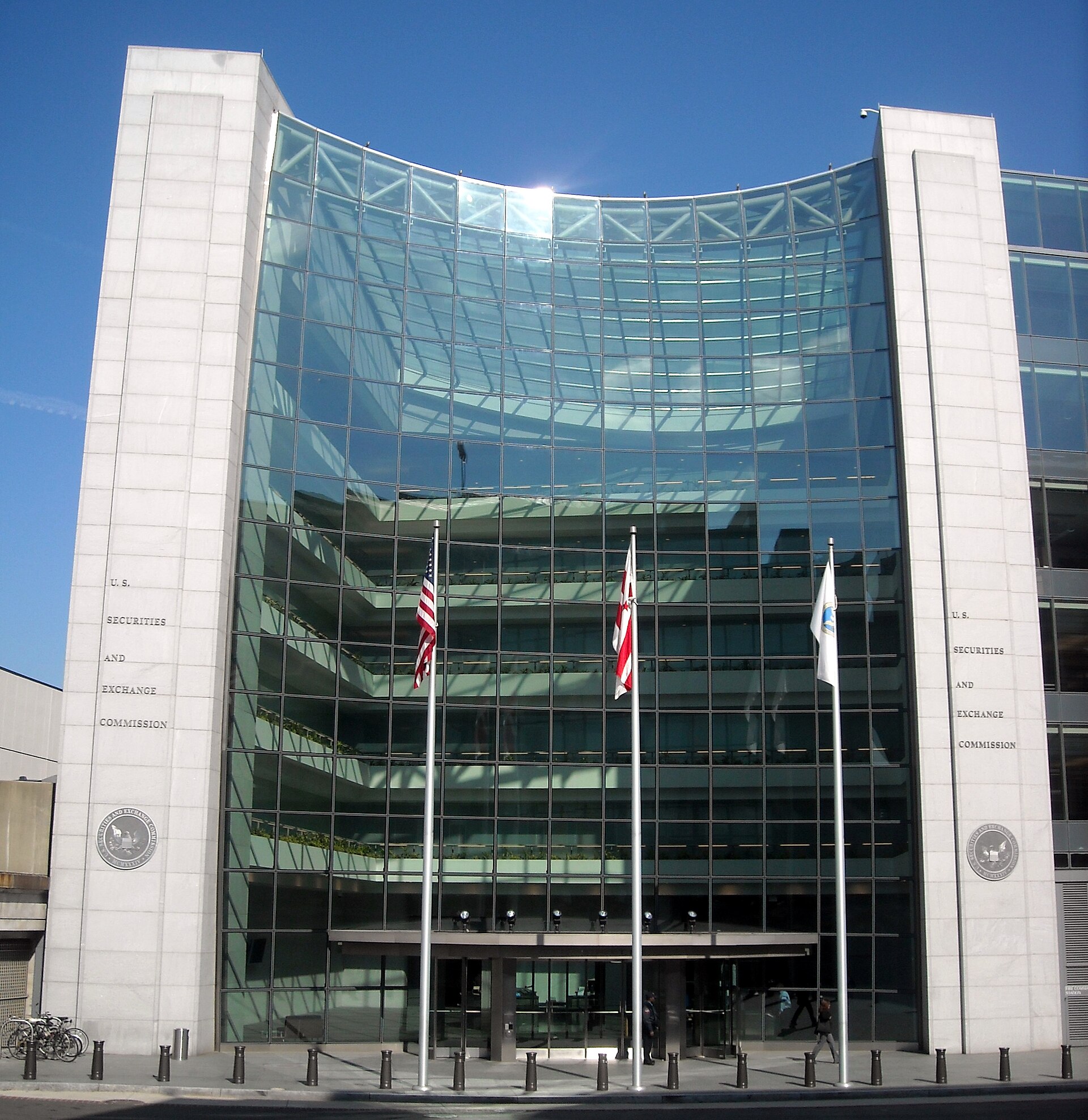

What governance means at scale
Governance is the system of decisions about decisions: who sets the goals, who may accept risk on the organization's behalf, who checks the work, and how information moves up and down. In a 15-person office, the owner is the governance. In a hospital system, a bank holding company or a county government, the people who decide how much risk to accept are several layers away from the people who configure the systems, and the information has to cross those layers without being lost or softened.
The NIST Cybersecurity Framework 2.0, published Feb. 26, 2024, made this explicit by adding a sixth function, Govern, to the original five (Identify, Protect, Detect, Respond, Recover). NIST places Govern "in the center of the wheel because it informs how an organization will implement the other five Functions." Its six categories are Organizational Context (mission, dependencies and legal, regulatory and contractual requirements), Risk Management Strategy (priorities, constraints, risk appetite and tolerance), Roles, Responsibilities and Authorities, Policy ("Organizational cybersecurity policy is established, communicated, and enforced"), Oversight, and Cybersecurity Supply Chain Risk Management.13 The framework is voluntary for most private organizations, but it is the vocabulary regulators, insurers and auditors use, and lesson 3 shows how it maps to the other standards.
Who is in the room
In a large organization the cast usually includes:
- The board of directors (or the equivalent: trustees of a nonprofit hospital, a county commission, a school board, a credit union's board). The board does not run the security program. It oversees it, sets how much risk the organization is willing to carry, hires and holds accountable the chief executive, and approves the top-level policies the law or its own charter requires it to approve.
- Board committees. Audit committees have long carried cyber because it touches financial controls and disclosure. Many large companies now give it to a risk committee or a technology committee, or split it. What matters is that one committee has it in writing in its charter and that the committee reports to the full board.
- The chief executive and the executive team, who own the risk on management's side and decide budgets.
- The CISO (chief information security officer), who designs and runs the security program. Some regulators require a person in this role by name or by function: NYDFS calls it the CISO, the FTC calls it the "Qualified Individual."56
- The chief information officer or chief technology officer, who runs the systems the CISO protects.
- Risk, compliance, privacy and legal functions, which set rules, check them and decide what must be reported to whom.
- Internal audit, which gives the board independent assurance that the controls work.
- A disclosure committee at a public company, usually chaired by the chief financial officer or general counsel's office, which decides what goes in SEC filings. After 2023 it needs a cyber seat.
The board's legal duty of oversight
Most large U.S. companies are incorporated in Delaware, and Delaware courts have written most of the law on what directors owe when something goes wrong that they did not cause directly. Other states generally follow Delaware on these questions or have similar standards, and the same ideas reach nonprofit and public boards through their own duty-of-care rules, though the details vary by state and by type of entity.
Caremark and the two ways boards fail
The starting point is In re Caremark International Inc. Derivative Litigation, a 1996 Court of Chancery decision about a health care company that paid large fines over kickbacks. Chancellor William Allen wrote that directors cannot be expected to know everything, but they must try in good faith to make sure that a reporting system exists that would bring problems to them.14 The Delaware Supreme Court adopted this view in Stone v. Ritter in 2006 and placed it under the duty of loyalty, which matters because Delaware companies can shield directors from money damages for ordinary carelessness but not for bad faith.15
Courts now describe two ways a board can fail. In the words the Court of Chancery used in the SolarWinds derivative case, a board is liable if it utterly fails to implement any reporting or information system or controls (the first prong), or if, having put controls in place, it consciously fails to monitor or oversee them and so disables itself from being informed of problems (the second prong, usually shown by ignored "red flags").16 Both prongs require bad faith. The court in that case put it plainly: "Carelessness absent scienter is not bad faith." Scienter means knowing or intentional wrongdoing.16
That is a high bar, and most of these suits are dismissed. But the bar is easier to clear when the risk is central to the business, and a dismissal still comes after years of discovery requests, books-and-records demands and public pleadings that quote board minutes.
Marchand: mission-critical risks need a board-level system
In Marchand v. Barnhill, decided June 18, 2019, the Delaware Supreme Court let a Caremark claim proceed against the directors of Blue Bell Creameries, an ice cream maker whose listeria outbreak sickened consumers, killed three people and forced a total product recall. The complaint alleged that the board had no system to monitor food safety, that management received reports of listeria in its plants, and that this "never made its way to the board." The court, in an opinion by Chief Justice Leo Strine, held that directors must make a good faith effort, that is, "try," to "put in place a reasonable board-level system" for monitoring compliance with the rules central to the business, and that a board that never discussed the company's most important compliance risk had not tried.1
Marchand was about food safety, not data. Its lesson for cyber is the phrase later courts took from it: when a risk is "mission critical," the board needs its own reporting line on it, not just a general assurance that management handles compliance. For a hospital, a payments company, a cloud provider or a utility, cyber is plainly in that category. The Court of Chancery said exactly that for online service providers in 2022: cybersecurity "is mission critical."16
The SolarWinds derivative case
SolarWinds, a Texas software company, learned in December 2020 that attackers, later attributed by the U.S. government to Russia's foreign intelligence service, had inserted malicious code into updates of its Orion network-monitoring product, which were then installed by thousands of customers including federal agencies. CISA issued Emergency Directive 21-01 on Dec. 13, 2020, ordering federal civilian agencies to disconnect the affected products.17
Shareholders sued the directors in Delaware. In Construction Industry Laborers Pension Fund v. Bingle, decided Sept. 6, 2022, Vice Chancellor Sam Glasscock III dismissed the case. The facts the court accepted for the motion were not flattering. Cybersecurity oversight sat with the Nominating and Corporate Governance Committee, whose charter was amended only in April 2019 to require discussion of "cyber and data security" with management; the committee received one briefing, in February 2019; the audit committee also had a cyber role; and the full board never held a discussion of cybersecurity before the attack. The complaint pointed to warning signs, including a warning, emailed to the company's IT team by an outside party in November 2019, that a company password had been set to "solarwinds123," but the court found no facts showing those red flags reached the directors. It called the committees' reporting to the full board, which did not happen for 26 months, "far from ideal" in hindsight and the reporting system "subpar," but held that this did not show bad faith. It also noted that the company was not alleged to have broken any positive law, such as a statute or regulation, that would make the board's inaction worse.16 The Delaware Supreme Court affirmed on May 17, 2023, on the basis of the lower court's opinion.18
Two readings of the case are common, and both are fair. One: Delaware will not hold directors personally liable for a sophisticated nation-state attack merely because the company's security had gaps. Two: the facts the court recited (a committee that did not report up for two years, a full board that never discussed the topic, a charter amendment that came late) are now a checklist of what not to have in your minutes. Since the SEC's 2023 rules, which are positive law, a board that ignores cyber reporting may also face the argument that the company was breaking a disclosure rule, the missing element in Bingle.
Officers have oversight duties too
On Jan. 26, 2023, in In re McDonald's Corporation Stockholder Derivative Litigation, Vice Chancellor J. Travis Laster held for the first time that corporate officers, not just directors, owe a Caremark-style duty of oversight. The scope follows the job: a chief executive has a company-wide remit, while other officers are responsible within their own areas. An officer can be liable for consciously ignoring red flags in that area, and "a particularly egregious red flag might require an officer to say something even if it fell outside the officer's domain."2 For a CISO who is an officer, a chief information officer, or a general counsel, that is a reason to keep a written record of the risks raised and the decisions made, and to make sure serious warnings reach the people who can act.
Other cyber oversight suits
Derivative suits after large breaches have mostly been dismissed. The best-known example besides SolarWinds involved Marriott International, whose Starwood guest reservation database was breached; the Court of Chancery dismissed the oversight claims in October 2021, finding that the board had received regular reports on cyber risk, even though the program had failed.19 The pattern across the cases is consistent: directors who can show a reporting system and documented attention win, even after bad breaches; directors who cannot show that are the ones whose cases survive a motion to dismiss.
What the cases mean for a board calendar
Reduced to practice, the Delaware cases ask a board to be able to prove five things from its own records:
- A named committee (or the full board) has cyber risk in its written charter.
- That committee hears from the CISO on a regular schedule, usually quarterly, and the full board hears about cyber at least once a year, with both reflected in minutes.
- The reports include bad news: incidents, failed audits, overdue fixes and exceptions to policy, not only project status.
- When a red flag arrives (a regulator's letter, a failed penetration test, a ransomware attack on a peer, a whistleblower), the minutes show a question, an assignment and a follow-up.
- The board knows which laws and rules apply to the company's data and systems, because breaking them is what turns a weak oversight claim into a strong one.
Structure: committees, the CISO and reporting lines
Which committee owns cyber
No federal rule tells a board which committee must oversee cyber risk. The SEC's Item 106 asks a public company to identify "any board committee or subcommittee responsible" for oversight and to describe how the board is informed, which in practice means investors can now compare.4 The common choices are:
| Home for cyber oversight | Why boards choose it | What to watch |
|---|---|---|
| Audit committee | Already oversees internal controls, internal audit and disclosure; members are used to testing management's claims. | Overloaded agendas. Cyber can get 15 minutes after a long financial reporting session. The committee may lack technical background. |
| Risk committee (required at many large banks) | Sees cyber next to credit, market, operational and compliance risk; fits a risk appetite framework. | Can treat cyber as one line on a heat map rather than a set of specific control failures. |
| Technology or cyber committee | Time and expertise focused on technology risk and strategy. | Must still report to the full board; risk of the rest of the board treating cyber as someone else's job. |
| Full board | Smaller boards, public agencies and nonprofits often keep it there; everyone hears the same thing. | Hard to go into enough depth; needs a strong pre-read and an annual deep session. |
Whatever the choice, the charter should say so in words, the committee's reports to the full board should be on a calendar, and the full board should get at least one cyber session a year that covers the risk picture, the incident response plan and the disclosure process. The SolarWinds facts show what happens when a charter is vague and the committee never reports up.16
The CISO role
The CISO is the senior person responsible for the security program: setting strategy, writing or sponsoring policy and standards, running or overseeing security operations, measuring the program and reporting on it. Regulators describe the job by function. NYDFS defines the CISO as "a qualified individual responsible for overseeing and implementing" the covered entity's cybersecurity program and enforcing its policy, and allows the CISO to work for the company, an affiliate or a third-party service provider. If the CISO is outside the company, the company keeps responsibility, must name a senior person to oversee the provider, and must require the provider to maintain a program that protects it.5 The FTC's Safeguards Rule uses nearly the same structure for its "Qualified Individual."6 So a "virtual CISO" from a consulting firm is lawful under both rules, with conditions.
Item 106 asks public companies to describe which management positions or committees are responsible for cyber risk and "the relevant expertise of such persons," and the rule's instructions say expertise can include prior work experience, degrees or certifications.4 That has made the CISO's background a matter of public record at every listed company.
Reporting lines: the options
Where the CISO sits in the organization chart changes what the board hears. No rule picks the answer. The tradeoffs:
| CISO reports to | Strengths | Weaknesses |
|---|---|---|
| Chief information officer or chief technology officer | Close to the systems; security can be built into projects; common in practice. | Conflict of interest: the CIO is measured on uptime, speed and cost, and may filter bad news about the systems the CIO runs. |
| Chief executive | Signals priority; direct access to budget decisions. | The CEO has limited time; the CISO can be isolated from IT operations. |
| Chief risk officer, chief legal officer or chief financial officer | Independence from IT; fits a second-line risk role; strong link to disclosure. | Can drift toward paperwork and away from operations; the CISO may lose technical influence. |
| Any of the above, plus a direct line to a board committee | The board hears from the CISO without a filter; the CISO can escalate if management will not act. | Requires trust and clear rules about when the CISO goes to the committee without the executive's sign-off. |
A practical test: if the CISO believed management was hiding a material risk from the board, is there a written path to tell the board, and would using it cost the CISO the job? The NYDFS rule answers part of that by requiring the CISO, not management, to report "in writing at least annually" to the senior governing body and to "timely report" material cybersecurity issues to the board or senior officers.5
The three lines model
The Institute of Internal Auditors (IIA) published the Three Lines Model on July 20, 2020, replacing its earlier "Three Lines of Defense." The new version dropped "defense" from the name and is built on six principles: governance, the governing body's roles, management and first and second line roles, third line roles, third line independence, and creating and protecting value. The governing body oversees; management, including risk and compliance functions, fills the first and second line roles; internal audit gives independent assurance as the third line; and the model now also names external assurance providers.20
Applied to cyber:
- First line roles: the business units, IT operations and engineering teams that own systems and run the day-to-day controls: patching, access approvals, backups, secure configuration.
- Second line roles: the CISO's policy and risk function, enterprise risk management, compliance and privacy. They set the rules, monitor, challenge and advise. Where the CISO also runs security operations (a first line activity), the organization should say so and make sure someone else checks that work.
- Third line role: internal audit, which reports functionally to the audit committee and tests whether the controls and the second line's monitoring actually work.
- External assurance: the outside financial auditor (which tests IT general controls for financial reporting), SOC 2 and ISO/IEC 27001 auditors, and regulators' examiners.
Internal audit and the IIA Cybersecurity Topical Requirement
Internal audit is the board's independent check. In February 2025 the IIA issued a Cybersecurity Topical Requirement under its Global Internal Audit Standards, effective Feb. 5, 2026. When internal auditors give assurance on cybersecurity, they must now assess three areas: governance (strategy, policies, roles and engagement with the business), risk management (assessments, cross-functional involvement, incident response), and controls (for systems, data and IT, such as encryption, patching and network controls). Conformance is mandatory for assurance work and recommended for advisory work.21 For an audit committee, that gives a ready list of questions: when did internal audit last cover cyber governance, which areas did it skip, and why?
Some regulators require independent testing outright. NYDFS requires each "Class A company" (the largest covered entities, defined below) to "design and conduct independent audits" of its cybersecurity program based on its risk assessment.5
Policies and how they are approved
A large organization runs on written rules, and auditors, regulators and courts read them. The usual hierarchy:
| Document | What it does | Who approves | How often reviewed |
|---|---|---|---|
| Information security policy (the top-level policy) | States the organization's commitment, scope, roles, risk appetite and the rule that everything else follows. Short, stable, signed off at the top. | Board or a board committee, or a senior officer where the board delegates | At least yearly (NYDFS requires annual approval) |
| Topic policies | Access control, acceptable use, data classification, vendor risk, incident response and similar. | Executive or risk committee, CISO | Yearly or when laws or systems change |
| Standards | Specific, measurable requirements (for example, phishing-resistant MFA for all administrators; encryption settings). | CISO | As technology changes |
| Procedures and runbooks | Step-by-step instructions for doing the work. | Control owners | When the process changes; after incidents |
| Guidelines | Advice and good practice that is recommended, not required. | CISO or control owners | As needed |
NYDFS requires a written policy, "approved at least annually by a senior officer or the covered entity's senior governing body," that addresses 15 listed topics as they apply to the business: information security; data governance, classification and retention; asset inventory, device management and end of life management; access controls; business continuity and disaster recovery; systems operations and availability; systems and network security and monitoring; security awareness and training; systems and application security and development; physical security and environmental controls; customer data privacy; vendor and third-party service provider management; risk assessment; incident response and notification; and vulnerability management.5 That list is a good table of contents for any large organization's policy set, regulated in New York or not. The federal banking guidelines require the board or a board committee to approve the bank's written information security program.7 The sample top-level policy later in this lesson follows these sources.
Approval, review and exceptions
Three governance habits separate policies that work from policies that sit on a shelf:
- A real approval record. Minutes or a signed approval page with the date and version, kept where auditors can find it. NYDFS requires covered entities to keep the records supporting their annual compliance filing for five years.5
- A managed exception process. Every large organization has systems that cannot meet a standard yet. A written exception, with a risk owner who accepts it, compensating controls, and an expiry date, is honest; a quiet gap is not. Report the count and age of exceptions to the committee.
- Review triggered by events, not just the calendar: a merger, a new law, a major incident, a move to a new cloud provider.
Metrics boards can use
NIST's Govern function asks organizations to use the results of risk management activities and performance measures "to inform, improve, and adjust the risk management strategy."13 The 2026 fifth edition of the director's handbook published by the National Association of Corporate Directors (NACD) and the Internet Security Alliance (ISA), released April 16, 2026 with a foreword from CISA, makes "Guide cybersecurity risk measurement and reporting" one of its six principles and adds a toolkit on reporting metrics.22 The hard part is choosing numbers that tell directors whether risk is going up or down, rather than how busy the security team is.
What good board metrics look like
Good board metrics have a target set by risk appetite, a trend over at least four quarters, a named owner, and a short explanation of what the number means for the business. The examples below are illustrative, not a standard; pick the handful that match the organization's top risks from its risk register (see lesson 2).
| Question the board is asking | Example metric | Why it helps |
|---|---|---|
| Can attackers log in as us? | Percent of workforce and administrator accounts using phishing-resistant MFA; count of accounts with no MFA, by system. | Stolen credentials and missing MFA keep showing up in the largest breaches (see lesson 5). |
| Are we fixing what attackers use? | Median days to fix vulnerabilities on CISA's Known Exploited Vulnerabilities list on internet-facing systems; count past due. | Ties patching to real attacks, not raw counts. |
| Can we recover? | Date and result of the last full restore test of critical systems; recovery time achieved versus target. | Ransomware is survived by restores, not by policy. |
| Do we know what we have? | Percent of assets in inventory with an owner; unknown devices found by scans. | You cannot protect what you cannot find. |
| Are vendors a hole? | Critical vendors with a current assessment; critical vendors with breach notice terms in the contract. | Many of the largest incidents arrived through suppliers (see lesson 8). |
| Are we accepting more risk than we said we would? | Open policy exceptions by age and severity; overdue audit findings. | Shows whether risk acceptance is managed or drifting. |
| Are we ready to decide and disclose? | Date of the last executive tabletop exercise that included the materiality decision; time from detection to escalation in real incidents. | Tests the governance machinery, not just the technology. |
Metrics to avoid
- Raw activity counts ("4.2 million attacks blocked"), which say nothing about risk and grow when logging improves.
- Single color scores with no definition of what moves them from yellow to red.
- Compliance percentages alone. Passing an audit is not the same as being hard to breach; SolarWinds published a security statement describing good practices that the SEC later alleged it did not follow.23
- Numbers without a target. A board cannot tell whether 92 percent MFA coverage is good unless it agreed what the goal was, and why the last 8 percent matters.
The SEC cybersecurity disclosure rules
On July 26, 2023 the SEC adopted "Cybersecurity Risk Management, Strategy, Governance, and Incident Disclosure" by a 3 to 2 vote, published Aug. 4, 2023 at 88 Fed. Reg. 51896 and effective Sept. 5, 2023.3 Before it, the SEC had only interpretive guidance (2011 staff guidance and a 2018 Commission statement). The rule added two things: a fast current report when a material incident happens, and a standing annual description of how the company manages and governs cyber risk.


Who the SEC rules cover
The rules apply to companies that file periodic reports with the SEC under the Securities Exchange Act: domestic public companies use Form 8-K and Form 10-K; foreign private issuers furnish incident information on Form 6-K and make comparable annual disclosure on Form 20-F.24 They do not reach private companies, most nonprofits, or state and local governments (municipal bond issuers have separate continuing disclosure duties not covered here). But a private company that supplies a public one will feel them through contracts, because its customer now has four business days to describe an incident that may start in the supplier's systems.
Form 8-K Item 1.05
When a company "determines" that a cybersecurity incident it has experienced is material, it must file a Form 8-K under Item 1.05 within four business days of that determination. The filing must describe "the material aspects of the nature, scope, and timing of the incident," and the material impact or reasonably likely material impact on the company, including its financial condition and results of operations.243 The rule's instructions say a company need not disclose specific or technical information about its planned response or its vulnerabilities in a way that would impede its response or remediation. If required information is not determined or is unavailable when the 8-K is filed, the company says so and files an amended 8-K within four business days after the information becomes available.3
The rule defines a "cybersecurity incident" as an unauthorized occurrence, or a series of related unauthorized occurrences, on or conducted through the company's information systems that "jeopardizes the confidentiality, integrity, or availability" of those systems or the information in them. "Information systems" include resources the company uses but does not own, such as a cloud provider's.4 So an incident at a vendor that hits the company's data can count.
Compliance began Dec. 18, 2023 for most companies and June 15, 2024 for smaller reporting companies.24
The materiality determination
The four days run from the materiality determination, not from discovery. The rule requires that determination to be made "without unreasonable delay" after discovery. The SEC chose that phrase over its proposal's "as soon as reasonably practicable," and explained that companies need not rush to a conclusion before they have enough information, but may not stall. Its examples of unreasonable delay are pointed for governance: intentionally deferring a board committee meeting on the question past its normal schedule, or revising incident response policies and procedures to push the determination or the disclosure back. The SEC declined to adopt a safe harbor for good-faith materiality decisions.3
Materiality is the familiar securities-law test: whether there is a substantial likelihood that a reasonable investor would consider the information important. The SEC staff's statement of May 21, 2024, by Erik Gerding, then Director of the Division of Corporation Finance, told companies that "companies should consider qualitative factors alongside quantitative factors," listing harm to reputation, customer or vendor relationships and competitiveness, and the possibility of litigation or regulatory action. A material incident whose impact is not yet known should still be reported under Item 1.05, with an amendment later.25
For governance, this means three things must exist before the incident: a written escalation path from the security team to the people who decide materiality; a named decision group (often the disclosure committee with the CISO, general counsel's office, CFO and investor relations) and a rule for when the board or a committee is briefed; and a record of each decision with its reasons, including decisions that an incident is not material. Exercise it. Lesson 10 covers tabletop exercises; make sure one of them ends with the materiality question.
The national security and public safety delay
Item 1.05(c) allows a delay only if the U.S. Attorney General determines that immediate disclosure "would pose a substantial risk to national security or public safety" and tells the SEC in writing. The first delay is up to 30 days, extendable by up to 30 more; in extraordinary circumstances the Attorney General may add up to 60 more days for national security reasons; anything beyond that needs an SEC exemptive order. A separate paragraph, Item 1.05(d), lets telecommunications carriers subject to the FCC's rule on customer proprietary network information delay up to seven business days, the period the FCC rule requires before public disclosure, with written notice to the SEC.3 The Justice Department and the FBI published procedures for requesting a delay in December 2023, and requests are routed through the FBI; the details are operational and change, so the incident response plan should name who makes the request and keep the current federal guidance attached.
Item 8.01 versus Item 1.05
In the first months of the rule, some companies filed under Item 1.05 for incidents they had not found material, to be safe. The staff's May 2024 statement said "Item 1.05 is not a voluntary disclosure." Companies that want to disclose an immaterial incident, or one whose materiality they have not yet decided, should use a different item, such as Item 8.01 (Other Events), and if the incident later becomes material, file under Item 1.05 within four business days of that determination.25 Two of the best-known 2023 attacks, at Clorox and Johnson Controls, were reported under Item 8.01 because they predated Item 1.05's compliance date.26
Regulation S-K Item 106 and Form 10-K Item 1C
Every annual report on Form 10-K for a fiscal year ending on or after Dec. 15, 2023 must include Item 1C, Cybersecurity, which carries the disclosures required by Item 106.24 Item 106 has two parts.
- Risk management and strategy (106(b)). Describe the company's processes, if any, for assessing, identifying and managing material risks from cybersecurity threats, in enough detail for a reasonable investor to understand them, including whether those processes are part of overall risk management, whether the company uses assessors, consultants or auditors, and whether it has processes to oversee risks from third-party service providers. Also describe whether any risks, including from previous incidents, have materially affected or are reasonably likely to materially affect the business strategy, results or financial condition.
- Governance (106(c)). Describe the board's oversight of cyber risk, naming any responsible committee and how it is informed; and describe management's role, including which positions or committees are responsible and their relevant expertise, how they are informed about and monitor prevention, detection, mitigation and remediation of incidents, and whether they report to the board or a committee.4
The proposal in 2022 would also have required companies to disclose whether any director had cybersecurity expertise. The final rule dropped that requirement.3 Disclosures had to be tagged in Inline XBRL (machine-readable data) beginning one year after initial compliance, which makes them searchable across companies.24
The governance lesson in Item 106 is simple and uncomfortable: whatever a company writes in Item 1C becomes a public promise. If the 10-K says the audit committee receives quarterly CISO reports, the minutes should show quarterly CISO reports. If it says the company follows the NIST CSF, someone should be able to show how. The SEC's SolarWinds case, below, was built on the gap between a public security statement and internal reality.
What the filings look like so far
Item 1.05 filings have been fewer than many expected. A tracker published by a consulting firm in 2026 counted 47 Item 1.05 filings and 31 voluntary Item 8.01 cyber filings from December 2023 through May 2026.27 That count is a private compilation, not an SEC statistic. Examples confirmed on EDGAR include manufacturers Sensata Technologies (filed April 9, 2025), Nucor (filed May 14, 2025, amended June 20, 2025) and Stryker (an amended 8-K under Item 1.05 filed April 9, 2026).26 Many Item 1.05 filings say little more than the rule requires: what kind of incident, which operations were disrupted, that law enforcement was notified, and that the company has not yet determined the financial impact.
Pushback and the 2026 review
Business groups have asked the SEC to retreat. On May 22, 2025, five financial industry trade groups (the American Bankers Association, Bank Policy Institute, SIFMA, Independent Community Bankers of America and Institute of International Bankers) petitioned the SEC to rescind Item 1.05, arguing among other things that it forces disclosure before investigations are complete, undercuts confidential reporting to the government and gives ransomware groups another way to pressure victims.28 The National Association of Manufacturers backed the petition on June 18, 2025.29 On Jan. 13, 2026 SEC Chairman Paul Atkins announced a broad review of Regulation S-K and requested public comment (file number CLL-15).10 Trade groups including SIFMA and others filed comments in April 2026 urging repeal or narrowing of the cyber items, and comments were still arriving in the fall: CTIA, the wireless industry group, wrote on Oct. 2, 2026 asking the SEC to rescind Item 106 and Item 1.05 and return to voluntary incident reporting.3031 The review is moving in phases: on Nov. 13, 2026 the SEC proposed changes to executive compensation disclosure (Item 402), which Atkins called the second of three parts, and said staff are still developing the third part, on the "business, risk, and governance requirements" of Regulation S-K, where the cyber items sit.10 As of Nov. 14, 2026 this lesson found no proposed rule to change Items 1.05 or 106. They remain in force. Watch the SEC's rulemaking page and the Federal Register.
SEC enforcement: SolarWinds and the 2024 cases
SEC v. SolarWinds and Tim Brown
On Oct. 30, 2023, the SEC sued SolarWinds and its CISO, Timothy G. Brown, in federal court in New York, alleging that the company and Brown misled investors about the company's security practices and known risks before and after the Orion attack.8 It was the first time the SEC had charged a CISO personally over disclosures, and it alarmed security leaders across the country.
On July 18, 2024, Judge Paul A. Engelmayer dismissed most of the case. He rejected the SEC's theory that weak cybersecurity controls violated the Exchange Act's internal accounting controls provision (a provision about controls over financial transactions and assets, not every computer system), and its claim about disclosure controls. He allowed securities fraud claims to proceed only on the company's pre-attack "Security Statement" on its website, which described practices the SEC alleged the company did not follow.23 In July 2025 the parties told the court they were finalizing a settlement, but on Nov. 20, 2025 the SEC instead filed a joint stipulation dismissing the entire case with prejudice, "in the exercise of its discretion," adding that the decision "does not necessarily reflect the Commission's position on any other case."823
What remains after the dismissal: a federal judge's ruling that the internal accounting controls provision does not reach cybersecurity controls generally, and a clear warning that public statements about security practices (website pages, trust portals, sales materials, Item 1C) are statements to investors that must be true.32
Unisys, Avaya, Check Point and Mimecast
On Oct. 22, 2024, the SEC announced settled charges against four companies that had been affected by the SolarWinds Orion compromise, for downplaying it in later disclosures. None admitted or denied the findings.9
- Unisys Corp., $4 million. The SEC said Unisys described its cyber risks as hypothetical even though it had already experienced two SolarWinds-related intrusions in which gigabytes of data were taken; it was also charged with disclosure controls violations.
- Avaya Holdings Corp., $1 million. Avaya said the attacker had accessed a "limited number of [the] Company's email messages," while it knew the attacker had also reached at least 145 files in its cloud file-sharing environment.
- Check Point Software Technologies Ltd., $995,000. Check Point described the intrusion and the risks in broad, generic terms.
- Mimecast Limited, $990,000. Mimecast did not disclose the nature of the code the attacker took or how many encrypted credentials were accessed.9
Two commissioners, Hester Peirce and Mark Uyeda, dissented. They wrote that "the Commission playing Monday morning quarterback" had used hindsight to second-guess immaterial details, and warned that the cases could push companies to fill filings with trivia.33 The SEC's later leadership has narrowed its focus, as the next sections show, which is one reason observers expect fewer cyber disclosure cases. The four settlements still stand, and their theory, that describing a risk as hypothetical after it has happened is misleading, is ordinary securities law.
The Cyber and Emerging Technologies Unit
On Feb. 20, 2025 the SEC replaced its Crypto Assets and Cyber Unit with a Cyber and Emerging Technologies Unit (CETU) of about 30 fraud specialists and attorneys. Its listed priorities include hacking to obtain material nonpublic information, takeovers of retail brokerage accounts, compliance by regulated entities with cybersecurity rules, and fraudulent cybersecurity disclosure by public companies.34 The emphasis on fraud suggests the SEC under its current leadership will pursue cases where a company lied, rather than cases about how good its security was. Lying remains the line not to cross.
New York's 23 NYCRR Part 500
New York's Department of Financial Services (DFS) regulates banks, insurers, mortgage companies, money transmitters, virtual currency businesses and others licensed under New York's banking, insurance or financial services laws. Its cybersecurity regulation, 23 NYCRR Part 500, first took effect in 2017. The Second Amendment, effective Nov. 1, 2023, turned it into the most detailed governance rule for cyber in the country, and many companies outside New York use it as a model because so many national insurers and lenders hold a New York license.5
Who it covers, and Class A companies
Part 500 applies to "covered entities" licensed by DFS, with limited exemptions for small businesses and for entities that hold no nonpublic information or information systems. The amendment created a top tier, the Class A company: a covered entity with at least $20 million in gross annual revenue in each of the last two fiscal years from all of its own business plus its affiliates' business in New York, and either more than 2,000 employees on average over the last two fiscal years or more than $1 billion in gross annual revenue in each of the last two fiscal years, counting the company and all its affiliates wherever located.5 Class A companies must also conduct independent audits of their programs, use privileged access management and block commonly used passwords, and run endpoint detection and response with centralized logging. Small business covered entities are exempt from the governance section, 500.4, among others.35
Governance duties under 500.4
Section 500.4 is the part a board must read itself. It requires:
- A CISO, who may be employed by the company, an affiliate or a third-party provider (with the conditions described above).
- A written CISO report to the senior governing body at least once a year on the company's cybersecurity program, covering the security of nonpublic information and systems, the policies and procedures, material cybersecurity risks, the overall effectiveness of the program, material cybersecurity events during the period, and plans for fixing material inadequacies.
- Timely reports from the CISO to the senior governing body or senior officers on material cybersecurity issues, such as significant events and significant changes to the program.
- Board oversight by the senior governing body, which must have "sufficient understanding of cybersecurity-related matters to exercise such oversight," which it may obtain with the help of advisors; require executive management or its designees to develop, carry out and maintain the program; regularly receive and review management reports; and confirm that management has allocated sufficient resources.5
The "senior governing body" is the board, an appropriate committee, or an equivalent governing body, or where none exists, the senior officers responsible for the program.5 DFS continues to issue guidance; on Sept. 10, 2026 it published an industry letter on conducting and using cybersecurity risk assessments.36
The phased deadlines, ending Nov. 1, 2025
The amendment phased in over two years. Its own transition section sets these dates, counted from the Nov. 1, 2023 effective date: notice requirements in 500.17 within 30 days (Dec. 1, 2023); most other new requirements within 180 days (by about April 29, 2024); the governance rules in 500.4, plus encryption (500.15), incident response and business continuity (500.16) and the small business exemption changes, within one year (Nov. 1, 2024); access privilege changes (500.7), vulnerability scanning requirements and Class A endpoint detection and logging within 18 months (May 1, 2025); and multifactor authentication for all individuals accessing any information system (500.12) and a complete asset inventory (500.13(a)) within two years (Nov. 1, 2025).5 Every part of the amended regulation is now in force.
Notice and the April 15 certification
- Incident notice: covered entities must notify DFS electronically "as promptly as possible but in no event later than 72 hours" after determining that a cybersecurity incident has occurred at the entity, an affiliate or a third-party service provider. A cybersecurity incident, for this purpose, is an event that requires notice to a government or supervisory body, is reasonably likely to materially harm a material part of normal operations, or results in ransomware deployed in a material part of the systems.5
- Extortion payments: notice within 24 hours of making a payment, and a written explanation within 30 days of why the payment was necessary, what alternatives were considered and what sanctions diligence was done.5
- Annual filing by April 15: either a certification of material compliance for the prior calendar year or an acknowledgment of noncompliance that lists the sections, describes the gaps and gives a remediation timeline. It must be signed by the highest-ranking executive and the CISO (or the senior officer responsible for the program if there is no CISO), and the supporting records must be kept for five years.5
- Enforcement: a single act prohibited by the rule, or a failure to meet an obligation, is a violation, including the failure to secure or prevent unauthorized access to nonpublic information because of noncompliance, or the material failure to comply with any section for any 24-hour period.5
The certification is what makes Part 500 a governance rule. A CEO who signs it is personally attesting to compliance. A CEO should not sign without a documented compliance review, and a CISO should not co-sign one he or she believes is wrong.
The FTC Safeguards Rule and the banking guidelines
The Gramm-Leach-Bliley Act of 1999 (GLBA) requires financial institutions to protect customer information. Two sets of rules carry it out, and both put duties on boards.
The Qualified Individual and the board report
The FTC's Safeguards Rule, 16 CFR Part 314, covers non-bank financial institutions under FTC jurisdiction: mortgage brokers and lenders, auto dealers that finance, payday lenders, tax preparers, many accounting firms, collection agencies, investment advisers not registered with the SEC, and similar businesses. The amended rule (published Dec. 9, 2021, with most new requirements in force June 9, 2023) requires each institution to:
- "Designate a qualified individual responsible for overseeing and implementing your information security program," who may be an employee, an affiliate's staff member or a service provider, under the same keep-responsibility conditions as NYDFS (16 CFR 314.4(a)).
- Have the Qualified Individual report "in writing, regularly and at least annually" to the board of directors or equivalent governing body, or to a senior officer if there is no board. The report covers the overall status of the program and compliance with the rule, and material matters including risk assessment, risk management and control decisions, service provider arrangements, testing results, security events and management's responses, and recommendations for changes (16 CFR 314.4(i)).6
Institutions that maintain customer information for fewer than 5,000 consumers are exempt from several requirements, including the written board report.37 Since May 13, 2024 the rule has also required notice to the FTC, as soon as possible and no later than 30 days after discovery, of a "notification event" involving the unencrypted information of at least 500 consumers.38 For accounting and tax firms in particular, see module 110, lesson 4.
Banks and credit unions
Banks follow the Interagency Guidelines Establishing Information Security Standards, issued by the federal banking agencies (for national banks, 12 CFR Part 30, Appendix B). Under section III.A, the board of directors "or an appropriate committee of the board" must approve the bank's written information security program and oversee its development, implementation and maintenance, "including assigning specific responsibility for its implementation and reviewing reports from management." Under section III.F, management must report to the board or a committee "at least annually," describing the overall status of the program and compliance with the guidelines, and discussing material matters such as risk assessment, risk management and control decisions, service provider arrangements, results of testing, security breaches or violations and management's responses, and recommendations for changes.7 Federally insured credit unions follow parallel guidelines issued by the National Credit Union Administration in 12 CFR Part 748.39 Separately, the 2021 computer-security incident notification rule requires a banking organization to notify its primary federal regulator no later than 36 hours after it determines that a notification incident has occurred.40 Bank examiners read board minutes; a cyber program the board cannot show it approved is an examination finding.
Other sectors and public bodies
Other regimes require a named security leader without spelling out board duties. The HIPAA Security Rule requires covered entities and business associates to identify "the security official who is responsible for the development and implementation" of required policies and procedures (45 CFR 164.308(a)(2)); see module 109, lesson 3 for the Security Rule and its proposed update.41 Defense contractors under CMMC have a senior official affirm compliance, covered in lesson 3. Pipeline, rail and aviation operators have TSA security directives; utilities have NERC CIP standards; manufacturers' sector rules are in module 111, lesson 6.
Personal liability for security leaders
The Uber case
Joseph Sullivan joined Uber as chief security officer while the FTC was investigating a 2014 Uber breach. He testified under oath to the FTC in November 2016. Ten days later he learned that hackers had used a similar method to steal records of about 57 million Uber users and drivers. According to the Justice Department, he told a subordinate that they "can't let this get out," arranged to pay the hackers in exchange for nondisclosure agreements that falsely stated they had not taken or stored data, and did not tell the FTC, which was then relying on Uber's earlier statements. Uber's new management disclosed the breach in November 2017. A federal jury in San Francisco convicted Sullivan in October 2022 of obstructing an FTC proceeding and of misprision of a felony (actively concealing a known felony). Judge William H. Orrick sentenced him to three years of probation and a $50,000 fine, announced May 5, 2023.11
The Ninth Circuit affirmed on March 13, 2025, and filed an amended opinion on Nov. 12, 2025 while denying rehearing. Among other things it held that the hackers' access was unauthorized when it happened and that a later nondisclosure agreement could not make it authorized after the fact.42 The Supreme Court denied Sullivan's petition for review on June 29, 2026, ending the case.12
The case is often described as "a CISO prosecuted for a breach." It was not. Sullivan was not prosecuted because Uber was breached; he was prosecuted for hiding a breach from a federal agency that was actively investigating the company. The line for security leaders is concealment.
Drizly and the CEO
On Oct. 24, 2022, the FTC announced an order against the alcohol delivery company Drizly and its chief executive, James Cory Rellas, after a breach that exposed information on about 2.5 million consumers. The FTC alleged that the company had been warned two years earlier, when company login credentials were exposed on GitHub in 2018, and failed to fix basic problems. The order named Rellas personally: if he later becomes a majority owner, CEO or senior officer with information security responsibility at a company that collects information from more than 25,000 consumers, he must put an information security program in place there.43 The FTC's point was that an executive's duty under such an order can follow him to the next job.
What security leaders take from these cases
- Write down risks you raise and the decisions made on them, and send serious ones in writing to the people who can act. The McDonald's decision makes this more than self-protection.2
- Never pay an extortion demand, or label one a bug bounty, without the incident response plan's decision process, the general counsel's office, sanctions screening and the notices the law requires (NYDFS requires a 24-hour notice of any extortion payment).5
- Read and challenge every public statement about security, including website trust pages, sales questionnaires, Item 1C and risk factors. SolarWinds' surviving claims were about a website statement.23
- Never sign a compliance certification you believe is false.
- Ask whether the company's directors and officers liability insurance and indemnification cover the CISO. Many CISOs are not corporate officers and may not be covered automatically.
Public agencies and Idaho
State and local governments are not covered by SEC rules or Delaware fiduciary law, but they have governing bodies (legislatures, county commissions, city councils, school boards, hospital district boards) and the same need for a reporting line. Their accountability runs through budgets, audits, open meetings and public records.
Idaho state government
Idaho built its executive branch cyber governance in steps. Governor C.L. "Butch" Otter created a Cybersecurity Cabinet Taskforce in 2015 and, in Executive Order 2017-02 signed Jan. 16, 2017, adopted its findings: a director of information security "reporting directly to the Governor"; adoption of the NIST Cybersecurity Framework by state agencies by June 30, 2017; implementation of the first five CIS Critical Security Controls by June 30, 2018; annual penetration tests and vulnerability scans; mandatory, role-based annual cybersecurity training for state employees; and public outreach to local governments, businesses and citizens.4445 In 2018 the Legislature created the Office of Information Technology Services in the governor's office, whose administrator oversees "the coordination and implementation of all information technology services" and "cybersecurity policies within the state of Idaho" (Idaho Code 67-827, added 2018).46 The Idaho Technology Authority, created under Idaho Code 67-831 to 67-833, sets statewide IT policies, standards and guidelines that agencies must follow.45
Idaho's breach law adds a governance clock for public agencies: when a city, county or state agency becomes aware of a breach of the security of the system, it must notify the Idaho Attorney General's office within 24 hours of discovery (Idaho Code 28-51-105, as amended 2014).47 Notice to affected residents and the rest of the Idaho breach law are in lesson 11.
Cities, counties, school districts and hospital districts
Local governing bodies in Idaho have no statute like Part 500 telling them what their IT staff must report. The practical steps are the same as for a corporate board: name an official responsible for the program; put cyber on the agenda at least yearly in an open session (with sensitive specifics in a properly noticed executive session where state law allows it); adopt a top-level policy by resolution; budget for backups, MFA and training; and require a written annual report. Public hospital districts that are HIPAA covered entities must also have a designated security official.41 For small local governments, the free services described in lesson 12 (CISA services, MS-ISAC and CIS Controls) give an elected board something concrete to ask about.
Idaho public companies
Idaho is home to several large SEC registrants, including Micron Technology, IDACORP (the parent of Idaho Power) and Albertsons Companies in Boise. As public companies they include Item 1C in each Form 10-K and would report a material incident on Form 8-K under Item 1.05.4 IDACORP's utility subsidiary is also subject to the electric sector's NERC CIP standards. Their 10-K Item 1C sections, a few minutes' reading on EDGAR, are a good local example of how boards describe cyber oversight.
Putting it together: a governance calendar
A workable year for a large organization's board and management might look like this. Adjust it to the rules that apply.
- Every quarter: CISO report to the committee that owns cyber, with the agreed metrics, incidents, exceptions and overdue findings; committee chair reports to the full board.
- Once a year (full board): a session on the cyber risk picture, risk appetite and the program plan; approval of the top-level information security policy; review of the incident response plan and the materiality and disclosure process.
- Once a year (written): the CISO's or Qualified Individual's written annual report, if NYDFS, the Safeguards Rule or the banking guidelines apply; NYDFS certification by April 15.
- Once a year (exercise): an executive tabletop exercise that runs from detection to the materiality decision, the 8-K draft and regulator notices (see lesson 10).
- Before each 10-K: the disclosure committee checks that Item 1C matches what actually happens, against minutes and charters.
- Every two to three years: an independent assessment of the program against the chosen framework (see lesson 3), and a board education session.
- When something changes: a merger, a major incident at the company or a peer, a new law, a new critical vendor. Brief the committee and update the risk register.
Where the board directs a change to production systems as a result of these reviews (for example, turning on MFA everywhere or segmenting a network), management should plan it, test it and keep a way back before rolling it out.
Sample: Information Security Policy (the top-level policy)
This is the short, stable document at the top of the policy set. It names who decides, who does the work and who checks, and points to the topic policies and standards underneath it. Lessons 5 through 11 contain samples of several of those topic policies.


Sample only. Adapt it to your organization's risks, systems and laws, have qualified people review it, and do not treat it as a substitute for a risk assessment.
Follows: NIST Cybersecurity Framework 2.0, Govern function (Feb. 26, 2024); 23 NYCRR 500.3 and 500.4 (as amended Nov. 1, 2023); 16 CFR 314.4(a) and (i); 12 CFR Part 30, Appendix B, sections III.A and III.F; SEC Regulation S-K Item 106 and Form 8-K Item 1.05; IIA Three Lines Model (2020).
1. Purpose
[Organization name] depends on information and information systems to serve [customers, patients, members, residents] and to meet its legal duties. This policy sets the organization's commitment to protect the confidentiality, integrity and availability of that information and those systems, assigns responsibility, and establishes the authority of the standards and procedures that carry it out.
2. Scope
This policy applies to all employees, officers, directors, contractors, temporary staff and volunteers; to all information the organization creates, receives, keeps or sends in any form; to all systems, devices, applications and cloud services the organization owns, leases or uses, including those run by vendors on its behalf; and to all locations, including remote work.
3. Authority and approval
The [Board of Directors / Risk Committee of the Board] approves this policy at least once every 12 months and whenever a material change is made. The [CEO] is accountable to the Board for the information security program. The Chief Information Security Officer (CISO) maintains this policy and the standards issued under it. Topic policies listed in Section 9 are approved by [the Executive Risk Committee]. Standards and procedures are approved by the CISO or the named control owner.
4. Roles and responsibilities
- Board and [committee name]. Oversee cyber risk; set and review risk appetite; receive a written CISO report at least [quarterly / annually] covering the state of the program, material risks, incidents, testing results, vendor risk, exceptions and recommended changes; confirm that management has assigned enough resources; and receive prompt reports of material incidents.
- Chief Executive and executive team. Develop, fund and maintain the program; accept or reject risks within the appetite the Board sets; escalate risks beyond it to the Board.
- CISO. Designs and oversees the program; issues standards; monitors compliance; reports to [the CEO / the Chief Risk Officer] and has direct access to [the committee chair] at any time; reports material cybersecurity issues to [the committee] without delay.
- Chief Information Officer and system owners. Operate systems in line with this policy and its standards; maintain asset inventories; fix vulnerabilities on the schedule the standards set.
- Business unit leaders. Own the information and processes in their areas; classify information; approve access; make sure their staff and vendors follow this policy.
- [General Counsel's office / Compliance Officer]. Identify the laws, regulations and contracts that apply; lead regulatory notices; chair or staff the disclosure committee.
- Internal Audit. Provides independent assurance on the program, reporting to the Audit Committee, under a risk-based audit plan.
- All workforce members. Follow this policy and the standards; complete required training; report suspected incidents immediately to [report channel]; never share credentials.
5. Risk management
The organization keeps a cyber risk register, integrated with enterprise risk management. A written risk assessment is performed at least [annually] and when major changes occur. Each risk has a named owner. Risks above [the defined tolerance] require a treatment plan or written acceptance by [the executive named in the risk acceptance standard], and risks above [the Board-set appetite] are reported to the [committee].
6. Program requirements
The program follows [the NIST Cybersecurity Framework 2.0 / ISO/IEC 27001:2022] and at minimum includes: asset inventory; data classification and retention; identity and access management, including multifactor authentication [phishing-resistant for administrators and remote access]; secure configuration and vulnerability management; logging and monitoring; protection of data in transit and at rest; backup and recovery with tested restores; vendor and third-party risk management; security awareness training; physical and environmental security; secure development and change management; and incident response and business continuity. Changes to production systems are planned, tested and reversible under the change management procedure.
7. Incidents, escalation and disclosure
Suspected incidents are handled under the Incident Response Plan. The CISO informs [the CEO, General Counsel's office and CFO] within [X hours] of confirming an incident that meets the plan's escalation criteria. [For public companies:] The [Disclosure Committee] decides without unreasonable delay whether an incident is material, records its reasons, and, if it is, makes sure the Form 8-K under Item 1.05 is filed within four business days of that decision. The [committee chair] is briefed on every incident escalated to the Disclosure Committee. Regulatory notices ([list: NYDFS 72 hours, banking regulator 36 hours, FTC 30 days, HIPAA, state breach laws]) are made on the schedule in the plan. No extortion payment is made or promised except through the process in the plan, which includes [Board / CEO] approval, sanctions screening and required notices.
8. Exceptions
Exceptions to this policy or any standard must be requested in writing, describe the risk and compensating controls, be approved by [the CISO and the business owner, or the executive named in the risk acceptance standard for high risks], and expire after no more than [12 months]. The CISO reports open exceptions by age and severity to the [committee] each [quarter].
9. Supporting policies and standards
[List: Acceptable Use; Access Control; Password and Multifactor Authentication Standard; Data Classification and Retention; Backup and Recovery Standard; Remote Access; Bring Your Own Device; Vendor and Third-Party Risk Management; Incident Response Plan; Ransomware Playbook; Breach Notification Procedure; Privacy Notice.]
10. Enforcement, records and review
Violations may lead to discipline up to termination of employment or contract, and to loss of system access. Records of approvals, reports, risk acceptances and exceptions are kept for at least [five] years. This policy is reviewed at least every 12 months. Version [X], approved [date] by [body]. Next review due [date].
Pictures, Numbers and Infographics
The numbers a board member, compliance officer or reporter is most likely to need from this lesson, each with its source.
| Item | Number or date | Source |
|---|---|---|
| Deadline to file Form 8-K Item 1.05 after deciding an incident is material | 4 business days | SEC Release 33-11216 (2023)3 |
| Item 1.05 compliance start: most companies; smaller reporting companies | Dec. 18, 2023; June 15, 2024 | SEC fact sheet24 |
| First 10-K with Item 1C | Fiscal years ending on or after Dec. 15, 2023 | SEC fact sheet24 |
| Maximum national security or public safety delays by the Attorney General | 30 + 30 days, plus 60 more for national security in extraordinary cases | Item 1.05(c)3 |
| FCC CPNI delay for telecom carriers | Up to 7 business days | Item 1.05(d)3 |
| Item 1.05 filings counted Dec. 2023 to May 2026 (private tracker) | 47 (plus 31 voluntary Item 8.01 filings) | Consulting firm tracker, 202627 |
| SEC penalties for misleading SolarWinds-related disclosures, Oct. 22, 2024 | $4,000,000; $1,000,000; $995,000; $990,000 (total $6,985,000) | SEC press release 2024-1749 |
| SEC v. SolarWinds: filed; mostly dismissed; dropped | Oct. 30, 2023; July 18, 2024; Nov. 20, 2025 | SEC LR-26423 and case summary823 |
| SEC Cyber and Emerging Technologies Unit created | Feb. 20, 2025, about 30 staff | SEC press release 2025-4234 |
| SolarWinds: months the cyber committees did not report to the full board | 26 | Bingle, Del. Ch. 202216 |
| Blue Bell listeria outbreak deaths (Marchand) | 3 | Marchand v. Barnhill (2019)1 |
| NYDFS incident notice; extortion payment notice; written explanation | 72 hours; 24 hours; 30 days | 23 NYCRR 500.175 |
| NYDFS annual certification due | April 15, signed by the top executive and the CISO | 23 NYCRR 500.17(b)5 |
| NYDFS Class A thresholds | $20 million New York revenue, and over 2,000 employees or over $1 billion total revenue | 23 NYCRR 500.15 |
| Last NYDFS phased requirements (universal MFA, asset inventory) | Nov. 1, 2025 | 23 NYCRR 500.225 |
| FTC Safeguards: board report frequency; small-institution exemption | At least yearly; fewer than 5,000 consumers | 16 CFR 314.4(i), 314.6637 |
| FTC notice of a notification event (500 or more consumers) | No later than 30 days after discovery (since May 13, 2024) | 16 CFR 314.4(j)38 |
| Bank notice to primary federal regulator | No later than 36 hours | 12 CFR Part 5340 |
| Uber 2016 breach records; Sullivan sentence | About 57 million; 3 years probation and $50,000 fine | DOJ, May 5, 202311 |
| Supreme Court denies review in Sullivan | June 29, 2026 | Docket 25-108212 |
| Drizly breach; consumer threshold in CEO's order | About 2.5 million consumers; more than 25,000 | FTC, Oct. 24, 202243 |
| IIA Cybersecurity Topical Requirement in force | Feb. 5, 2026 | IIA21 |
| Idaho public agency notice to the Attorney General after a breach | Within 24 hours of discovery | Idaho Code 28-51-10547 |
| Idaho EO 2017-02: NIST CSF adoption; first five CIS Controls | By June 30, 2017; by June 30, 2018 | Executive Order 2017-0244 |
Common mistakes
Each of these comes from a court record, enforcement order or regulator's own words.
- A committee that owns cyber on paper but never reports up. At SolarWinds, the committees with cyber duties did not report on it to the full board for 26 months, and the full board never discussed cybersecurity before the attack. The directors won the lawsuit, but the court called the reporting "subpar," and the facts are now quoted in every governance seminar.16
- No board-level line for the risk that can sink the company. Blue Bell's board had no system for food safety, its most important compliance risk, and the reports of listeria never reached it. That let a Caremark claim go forward.1 Swap "food safety" for "patient records," "payment data" or "grid control systems" and the lesson for cyber is direct.
- Describing a risk as hypothetical after it has happened. Unisys told investors that cyber incidents could happen after two had already happened and data had been taken. That cost $4 million.9
- Shrinking the scope in public. Avaya disclosed access to a "limited number" of email messages while it knew of at least 145 files accessed in its cloud file-sharing environment; Mimecast left out the type of code stolen and the number of encrypted credentials taken; Check Point used generic language for a known intrusion.9
- A public security statement that promises more than the company does. The only SEC fraud claims against SolarWinds that survived a motion to dismiss were about the security statement on its website.23
- Hiding an incident from a regulator. Uber's former security chief arranged a payment to hackers under nondisclosure agreements and did not tell the FTC, which was investigating the company at the time. He was convicted.11
- An executive who ignores a known exposure. The FTC alleged Drizly knew of a credential exposure on GitHub in 2018 and failed to fix basic security before a 2020 breach; the order binds its CEO at future companies.43
- Slowing the materiality decision on purpose. The SEC's own examples of "unreasonable delay" are deferring a committee meeting past its normal schedule and rewriting incident procedures to push back the decision.3
- Filing under Item 1.05 for an incident not found material. The SEC staff said that confuses investors and that Item 1.05 "is not a voluntary disclosure"; use Item 8.01 instead.25
Questions people ask
Does our board need a cybersecurity expert?
No federal rule requires one. The SEC proposed in 2022 that companies disclose whether any director has cyber expertise and dropped the idea in the final rule.3 NYDFS requires the board as a whole to have "sufficient understanding" to oversee cyber, and lets it use advisors to get there.5 The NACD and ISA handbook frames it as "access to expertise," which can mean a director with the background, an outside advisor to the committee, or regular education.22 A board that has none of the three will struggle to challenge management.
Who should the CISO report to?
No rule decides it. The common answer in large regulated organizations is a reporting line outside the CIO (to the CEO, chief risk officer or general counsel's office), plus a standing direct line to a board committee. If the CISO does report to the CIO, the committee should hear from the CISO directly, at least some of the time without management in the room. See the reporting line table above.
How often should the board hear about cyber?
The legal floors are written reports at least once a year under NYDFS, the Safeguards Rule and the banking guidelines, and prompt reports of material events.567 In practice, most large organizations brief the responsible committee quarterly and the full board at least yearly, and brief the committee chair within a day or two of any significant incident.
Is a ransomware attack automatically material?
No. Materiality depends on the facts: what was disrupted and for how long, what data was taken, the cost, and qualitative factors such as harm to reputation, customer relationships and the likelihood of litigation or regulatory action, which the SEC staff told companies to weigh alongside the numbers.25 A one-day outage at one site may not be material; a week-long shutdown of order processing or theft of millions of customer records may be. The decision and its reasons should be written down either way.
Can our CISO be a contractor (a "virtual CISO")?
Yes, under both NYDFS and the FTC Safeguards Rule, if the organization keeps responsibility for compliance, names a senior staff member to direct and oversee the provider, and requires the provider to maintain a program that protects the organization.56 For a large organization, the question is less whether it is allowed than whether a part-time outside person can carry board reporting, incident leadership and the materiality process.
Do private companies, nonprofits and governments need any of this?
The SEC rules do not reach them. But Delaware's oversight duty applies to Delaware corporations whether or not they are public; NYDFS, the Safeguards Rule, the banking guidelines and HIPAA apply by type of business, not by stock listing; and lenders, insurers and large customers increasingly ask for the same evidence of board oversight that the SEC requires public companies to describe. Public bodies answer to voters, auditors and records requests instead (see the Idaho section above).
What should the minutes say about cyber?
Enough to show the board was informed and engaged: who presented, what topics were covered (incidents, metrics, risks, exceptions, audit findings), what questions directors asked, and what follow-up was assigned. They do not need technical details that would help an attacker. The SolarWinds and Blue Bell cases both turned on what the minutes did and did not show.161
Hard questions
Should the SEC keep the four-business-day incident rule?
The case for repeal or narrowing: the five trade groups that petitioned in May 2025 argue that companies must report before investigations are done, that public filings undercut confidential reporting to the government (including the CIRCIA program), that the national security delay is narrow and hard to get, that ransomware groups use the filing deadline as pressure, and that early filings feed lawsuits and insurance disputes. They say ordinary materiality rules and Item 8.01 already cover material incidents.28 Manufacturers and wireless carriers have joined in.2931
The case for keeping it: before 2023, investors often learned of serious incidents months later, if at all, and disclosures varied widely. The rule's supporters, including the SEC majority that adopted it, argue that a material event is material whatever its cause, that the clock starts only after the company decides materiality, that the rule does not require technical details, and that a delay exists for real national security cases.3
What the evidence shows: the rule has produced a modest number of Item 1.05 filings, 47 in about two and a half years by one private count, far fewer than the number of significant incidents reported to other regulators, which suggests companies are not filing on every incident.27 There is no public study yet showing whether the filings moved stock prices, helped attackers or changed security spending. The SEC's 2026 review is where the question will be decided.10
Should CISOs face personal liability?
For: security leaders sign certifications, approve public statements and decide what executives hear. If no one is personally accountable, it is easy for an organization to say one thing and do another. The Uber prosecution and the Drizly order show liability aimed at people who concealed or ignored known problems.1143
Against: CISOs rarely control budgets, cannot stop every attack, and are often not covered by the indemnification and insurance that protect officers. Many security leaders said the SEC's suit against SolarWinds' CISO would drive good people out of the job and discourage frank internal writing.
What the evidence shows: the one SEC case against a CISO ended in dismissal; the one criminal conviction involved active concealment from an investigating agency, not weak security.842 Delaware's McDonald's decision means officers, possibly including CISOs who are officers, owe an oversight duty within their area, but it requires bad faith.2 The practical risk for an honest CISO who documents warnings is low; the risk for one who hides incidents is real.
Does public disclosure of security practices help attackers?
Yes, some argue: describing defenses, vendors and incident details in public filings gives criminals a map, and the trade groups say public filings can invite follow-on attacks.28
No, others answer: Item 106 asks for processes and governance, not configurations, and Item 1.05's instructions say companies need not disclose technical information that would impede response or remediation.43 Attackers learn far more from scanning the internet and stolen data than from a 10-K.
What the evidence shows: this lesson found no documented case of an attacker using an Item 1C disclosure to plan an attack. The extortion concern is better documented in news reports of ransomware groups threatening to report victims to the SEC, a tactic the trade groups cite, but whether it changes outcomes is unclear.
Should cyber sit with the audit committee or its own committee?
Audit committee: it already oversees controls, internal audit and disclosure, and Item 1.05 decisions are disclosure decisions. Separate committee: audit committees are overloaded, and cyber deserves time and technical depth. What the evidence shows: the case law does not care which committee, only that one owns it in writing and reports up; Bingle shows the danger of assigning it vaguely to a committee whose main job is something else.16 The right answer depends on the board's size, skills and the company's exposure.
For reporters and advocates
What public records exist.
- SEC filings on EDGAR. Form 8-K Item 1.05 (material incidents) and Item 8.01 (other cyber events); 10-K Item 1C (risk management and governance); proxy statements (committee charters, director biographies, sometimes the board's description of cyber oversight). EDGAR full-text search finds every company that used a phrase such as "Item 1.05" in a date range.48 Compare a company's Item 1C with what happened in its next incident.
- SEC enforcement. Litigation releases and administrative orders, such as the October 2024 settlements and the SolarWinds dismissal, are on sec.gov, with dissenting statements.9338
- NYDFS. DFS posts consent orders and industry letters on its website.36
- FTC orders. Safeguards Rule and Section 5 cases, including orders naming executives such as Drizly's.43
- Court records. Delaware Court of Chancery opinions are free on the Delaware courts website; federal dockets are on PACER and many are mirrored free on CourtListener. Derivative complaints often quote board minutes obtained through books-and-records demands.16
- Idaho public records. Under the Idaho Public Records Act (Idaho Code Title 74, Chapter 1), ask a state agency, county, city or school district for its board-approved information security policy, the dates its governing body was briefed on cyber, and the annual training completion rates required since EO 2017-02. Ask a public agency whether it notified the Attorney General within 24 hours of any breach, as Idaho Code 28-51-105 requires. Expect redactions of technical details; agencies may cite exemptions for security-sensitive information, but policies and meeting records are usually public.494447
What to ask a company or agency.
- Which board committee owns cyber risk, is it in the charter, and how many times did it hear from the CISO last year?
- Who decides whether an incident is material, and when did that group last practice?
- Does the CISO have a direct line to the board? When was it last used?
- What did the last internal audit of cybersecurity find, and what is still open?
- Do public statements about security (website, Item 1C, sales materials) match the internal assessments?
- For New York-licensed firms: did the company file a certification of compliance or an acknowledgment of noncompliance this April?
- For Idaho agencies: which of the 2017 executive order's requirements (NIST CSF, CIS Controls, annual testing and training) are being met today, and how is that reported to the Office of Information Technology Services?
Cautions. An Item 1.05 filing means a company decided an incident was material, not that it was negligent. An Item 8.01 filing is not an admission of anything. Derivative suits are usually dismissed, and a complaint's allegations are not findings. Settled SEC orders are findings the company neither admitted nor denied.
Where to go next
- NIST Cybersecurity Framework 2.0 and quick-start guides: Free. The Govern function and NIST's quick-start guides, including ones for executives and enterprise risk managers, give boards a shared vocabulary. Use it to frame the CISO's report and the top-level policy.
- SEC EDGAR full text search: Free. Search Form 8-K filings for "Item 1.05" and 10-K filings for "Item 1C" to read how peers describe cyber oversight and incidents. Useful for directors, investors and reporters.
- NYDFS Cybersecurity Resource Center: Free. The text of 23 NYCRR Part 500, FAQs, industry letters and the annual filing portal. Read it even outside New York as a model for board and CISO duties.
- FTC: FTC Safeguards Rule: What Your Business Needs to Know: Free plain-language FTC guide to the Safeguards Rule, including the Qualified Individual and the board report. For non-bank financial institutions, tax preparers and their boards.
- CISA Cybersecurity Performance Goals and resources for leaders: Free. CISA's baseline goals (CPG 2.0 added governance in December 2025) give boards and public officials a short list of outcomes to ask about.
- NACD and ISA Director's Handbook on Cyber-Risk Oversight (2026, fifth edition): Six principles for board cyber oversight with a CISA foreword and a toolkit on metrics, ransomware and third-party risk. Check the NACD site for current access terms.
- Idaho Office of Information Technology Services: statutes and executive orders: Free. Idaho's cyber governance statutes and executive orders for state agencies; useful for Idaho officials, legislators and reporters.
Still being checked (4 items)
These points could not be fully confirmed against a primary source when this lesson was written and fact checked in November 2026. The text above states each one as uncertain.
- No proposed SEC rule to amend Form 8-K Item 1.05 or Regulation S-K Item 106 was found as of Nov. 14, 2026; the SEC proposed executive compensation changes on Nov. 13, 2026 and said the business, risk and governance phase is still being developed. A later proposal would change this.
- The Item 1.05 filing count (47 from December 2023 to May 2026) is a private consulting firm's tally, not SEC data.
- Idaho public records exemptions for security-sensitive information were described generally; the specific Idaho Code exemption was not checked.
- Whether Hester Peirce remains an SEC commissioner as of Nov. 13, 2026 was not checked, so the lesson does not say.
Last verified November 14, 2026. General education, not legal, compliance, audit or other professional advice; rule versions and dates are stated in the text, and the sources used are listed in the Notes and Sources below. Check the regulator's current text before relying on any point.
Notes
- Marchand v. Barnhill, 212 A.3d 805 (Del. 2019), decided June 18, 2019, opinion by Chief Justice Leo E. Strine Jr., as summarized with quotations in Skadden, Arps, Slate, Meagher and Flom LLP, "Director Independence and Oversight Obligation in Marchand v. Barnhill," Harvard Law School Forum on Corporate Governance, July 6, 2019 (read Nov. 13, 2026). Read it online. ↩
- In re McDonald's Corporation Stockholder Derivative Litigation, C.A. No. 2021-0324-JTL (Del. Ch. Jan. 26, 2023) (Laster, V.C.), as summarized in Wilson Sonsini Goodrich and Rosati, "Delaware Court of Chancery Concludes That Duty of Oversight Applies to Officers," 2023 (read Nov. 13, 2026). Read it online. ↩
- U.S. Securities and Exchange Commission, "Cybersecurity Risk Management, Strategy, Governance, and Incident Disclosure," Release Nos. 33-11216 and 34-97989, 88 Fed. Reg. 51896 (Aug. 4, 2023), effective Sept. 5, 2023, including Form 8-K Item 1.05(a) to (d) and its instructions, the discussion of "without unreasonable delay," and the decision not to adopt proposed board-expertise disclosure. Adopted July 26, 2023 on a 3 to 2 vote (Commissioners Peirce and Uyeda dissenting), as reported by Kramer Levin, "SEC Finalizes New Cybersecurity Disclosure Rules," July 2023. Local copy saved in the module's source folder (read Nov. 13, 2026). Read it online. ↩
- 17 CFR 229.106 (Regulation S-K Item 106, Cybersecurity), paragraphs (a) definitions, (b) risk management and strategy, (c) governance, and instructions, eCFR current as of Nov. 2026 (read Nov. 13, 2026). Read it online. ↩
- New York Department of Financial Services, 23 NYCRR Part 500, Cybersecurity Requirements for Financial Services Companies, as amended by the Second Amendment effective Nov. 1, 2023, sections 500.1, 500.2(c), 500.3, 500.4, 500.9, 500.17, 500.20 and 500.22 (read Nov. 13, 2026). Read it online. ↩
- 16 CFR 314.4(a) (Qualified Individual) and 314.4(i) (report to the board of directors), FTC Standards for Safeguarding Customer Information, eCFR current as of Nov. 2026; amended rule published Dec. 9, 2021 (read Nov. 13, 2026). Read it online. ↩
- 12 CFR Part 30, Appendix B, Interagency Guidelines Establishing Information Security Standards, sections III.A (Involve the Board of Directors) and III.F (Report to the Board), eCFR current as of Nov. 2026 (read Nov. 13, 2026). Read it online. ↩
- U.S. Securities and Exchange Commission, Litigation Release No. 26423, SEC v. SolarWinds Corp. and Timothy G. Brown, No. 1:23-cv-09518-PAE (S.D.N.Y.), Nov. 20, 2025 (case filed Oct. 30, 2023; joint stipulation of dismissal with prejudice). SEC.gov blocks scripted downloads, so no local copy was saved (read Nov. 13, 2026). Read it online. ↩
- U.S. Securities and Exchange Commission, "SEC Charges Four Companies With Misleading Cyber Disclosures," Press Release 2024-174, Oct. 22, 2024 (Unisys $4 million, Avaya $1 million, Check Point $995,000, Mimecast $990,000) (read Nov. 13, 2026). Read it online. ↩
- "Statement by Chair Atkins on Reforming Regulation S-K," Harvard Law School Forum on Corporate Governance, Jan. 15, 2026 (statement and request for comment of Jan. 13, 2026, File No. CLL-15); and Chairman Paul S. Atkins, statement on the proposing release on executive compensation disclosure reform, Nov. 13, 2026, sec.gov, describing it as the second of three phases and the third phase, on business, risk and governance requirements, as still under development by staff (read Nov. 14, 2026). Read it online. ↩
- U.S. Attorney's Office, Northern District of California, "Former Chief Security Officer Of Uber Sentenced To Three Years' Probation For Covering Up Data Breach Involving Millions Of Uber User Records," May 5, 2023 (read Nov. 13, 2026). Read it online. ↩
- Supreme Court of the United States, Docket No. 25-1082, Joseph Sullivan v. United States, petition filed March 12, 2026, denied June 29, 2026 (read Nov. 13, 2026). Read it online. ↩
- National Institute of Standards and Technology, The NIST Cybersecurity Framework (CSF) 2.0, NIST CSWP 29, Feb. 26, 2024, Govern function and categories GV.OC, GV.RM, GV.RR, GV.PO, GV.OV and GV.SC. Local copy saved (read Nov. 13, 2026). Read it online. ↩
- In re Caremark International Inc. Derivative Litigation, 698 A.2d 959 (Del. Ch. 1996) (Allen, C.), as quoted and applied in Bingle (Del. Ch. Sept. 6, 2022) (read Nov. 13, 2026). Read it online. ↩
- Stone v. Ritter, 911 A.2d 362 (Del. 2006), as discussed in Bingle (Del. Ch. Sept. 6, 2022) (read Nov. 13, 2026). Read it online. ↩
- Construction Industry Laborers Pension Fund v. Bingle, C.A. No. 2021-0940-SG (Del. Ch. Sept. 6, 2022) (Glasscock, V.C.), memorandum opinion (SolarWinds derivative litigation). Local copy saved in the module's source folder (read Nov. 13, 2026). Read it online. ↩
- Cybersecurity and Infrastructure Security Agency, Emergency Directive 21-01, "Mitigate SolarWinds Orion Code Compromise," Dec. 13, 2020 (read Nov. 13, 2026). Read it online. ↩
- Construction Industry Laborers Pension Fund v. Bingle, No. 411, 2022 (Del. May 17, 2023) (order affirming on the basis of the Court of Chancery's Sept. 6, 2022 opinion and Oct. 13, 2022 final order), as published on Justia (read Nov. 14, 2026). Read it online. ↩
- Firemen's Retirement System of St. Louis v. Sorenson, C.A. No. 2019-0965-LWW, 2021 WL 4593777 (Del. Ch. Oct. 5, 2021) (Will, V.C.) (Marriott International derivative litigation), as cited in Bingle and summarized by Potter Anderson and Corroon LLP: the board and audit committee were alleged to have been "routinely apprised" of cyber risks and received annual enterprise risk assessments covering cybersecurity (read Nov. 14, 2026). Read it online. ↩
- "3 lines of defense model for risk management gets major update," Journal of Accountancy, July 2020, describing the Institute of Internal Auditors' Three Lines Model issued July 20, 2020 (archived article) (read Nov. 13, 2026). Read it online. ↩
- EisnerAmper, "Cybersecurity Topical Requirement: What You Need to Know," 2025, describing the IIA Cybersecurity Topical Requirement issued February 2025 and effective Feb. 5, 2026 under the IIA's Global Internal Audit Standards (effective Jan. 9, 2025) (read Nov. 13, 2026). Read it online. ↩
- National Association of Corporate Directors, "New Guide for Corporate Boards Addresses the Rising Stakes for Cyber-Risk Oversight," press release, April 16, 2026 (NACD and Internet Security Alliance, Director's Handbook on Cyber-Risk Oversight, fifth edition, with a CISA foreword) (read Nov. 13, 2026). Read it online. ↩
- Covington and Burling LLP, "SEC Voluntarily Dismisses SolarWinds Litigation," Inside Privacy, November 2025, summarizing Judge Paul A. Engelmayer's July 18, 2024 opinion and order (granting in part and denying in part the motion to dismiss), the July 2, 2025 request to suspend the schedule pending settlement, and the Nov. 20, 2025 stipulation (read Nov. 13, 2026). Read it online. ↩
- U.S. Securities and Exchange Commission, Fact Sheet, "Public Company Cybersecurity Disclosures; Final Rules," Release 33-11216 (2023), including compliance dates and Inline XBRL timing (read Nov. 13, 2026). Read it online. ↩
- Erik Gerding, Director, SEC Division of Corporation Finance, "Disclosure of Cybersecurity Incidents Determined To Be Material and Other Cybersecurity Incidents," May 21, 2024 (staff statement, not a Commission rule) (read Nov. 13, 2026). Read it online. ↩
- SEC EDGAR filing records checked Oct. 28, 2026 for module 111: Sensata Technologies 8-K Item 1.05 filed April 9, 2025; Nucor 8-K Item 1.05 filed May 14, 2025 and amended June 20, 2025; Stryker 8-K/A Item 1.05 filed April 9, 2026; Clorox and Johnson Controls 2023 filings under Item 8.01. Link is the Stryker filing (read Nov. 13, 2026). Read it online. ↩
- Cherry Hill Advisory, "SEC Cybersecurity Disclosure Rule: Two Years of 8-K Filings (2026 Review)," June 3, 2026, covering Dec. 18, 2023 to May 23, 2026 and drawing on the Debevoise and Plimpton 8-K tracker (private compilation, not SEC data) (read Nov. 13, 2026). Read it online. ↩
- American Bankers Association, Bank Policy Institute, Securities Industry and Financial Markets Association, Independent Community Bankers of America and Institute of International Bankers, petition for rulemaking to rescind Form 8-K Item 1.05, May 22, 2025, SEC File No. 4-856 (read Nov. 13, 2026). Read it online. ↩
- National Association of Manufacturers, "NAM: SEC Must Make Changes to Cybersecurity Disclosure Rule," June 18, 2025 (read Nov. 13, 2026). Read it online. ↩
- SIFMA and other trade associations, "Reforming Regulation S-K's Cybersecurity Disclosures (Joint Trades)," comment letter, April 2026 (read Nov. 13, 2026). Read it online. ↩
- CTIA, comment letter to SEC Secretary Vanessa A. Countryman on Regulation S-K cybersecurity disclosures, Oct. 2, 2026, File No. CLL-15 (read Nov. 13, 2026). Read it online. ↩
- A&O Shearman, "SolarWinds Dismissed: What the SEC's U-turn Signals for Cyber Enforcement," Harvard Law School Forum on Corporate Governance, Dec. 7, 2025 (commentary) (read Nov. 13, 2026). Read it online. ↩
- Commissioners Hester M. Peirce and Mark T. Uyeda, "Statement Regarding Administrative Proceedings Against SolarWinds Customers," Oct. 22, 2024 (read Nov. 13, 2026). Read it online. ↩
- U.S. Securities and Exchange Commission, "SEC Announces Cyber and Emerging Technologies Unit to Protect Retail Investors," Press Release 2025-42, Feb. 20, 2025 (read Nov. 13, 2026). Read it online. ↩
- New York Department of Financial Services, "What is Required?" (applicability of Part 500 sections to small business, limited-exemption, standard and Class A covered entities) (read Nov. 13, 2026). Read it online. ↩
- New York Department of Financial Services, industry letter on conducting and using cybersecurity risk assessments, Sept. 10, 2026, as listed on the DFS cybersecurity guidance page (read Nov. 13, 2026). Read it online. ↩
- 16 CFR 314.6, Exceptions (financial institutions that maintain customer information concerning fewer than 5,000 consumers are exempt from 314.4(b)(1), (d)(2), (h) and (i)) (read Nov. 13, 2026). Read it online. ↩
- 16 CFR 314.2(m) (notification event) and 314.4(j) (notice to the FTC no later than 30 days after discovery for events involving at least 500 consumers), effective May 13, 2024 (read Nov. 13, 2026). Read it online. ↩
- 12 CFR Part 748 and its Appendix A, NCUA Guidelines for Safeguarding Member Information (parallel board approval and annual reporting duties for federally insured credit unions); text not reread in full for this lesson (read Nov. 13, 2026). Read it online. ↩
- 12 CFR Part 53 (OCC), Computer-Security Incident Notification, with parallel Federal Reserve and FDIC rules, adopted November 2021: notice to the primary federal regulator no later than 36 hours after determining a notification incident has occurred (read Nov. 13, 2026). Read it online. ↩
- 45 CFR 164.308(a)(2), HIPAA Security Rule, Assigned security responsibility (read Nov. 13, 2026). Read it online. ↩
- United States v. Sullivan, No. 23-927 (9th Cir.), opinion filed March 13, 2025; order denying rehearing en banc and amended opinion filed Nov. 12, 2025 (McKeown, Johnstone and de Alba, JJ.). Local copies saved (read Nov. 13, 2026). Read it online. ↩
- Federal Trade Commission, "FTC Takes Action Against Drizly and its CEO James Cory Rellas for Security Failures that Exposed Data of 2.5 Million Consumers," Oct. 24, 2022 (order later finalized in 2023) (read Nov. 13, 2026). Read it online. ↩
- Idaho Executive Order 2017-02, "Findings of the Idaho Cybersecurity Cabinet Taskforce," signed by Gov. C.L. "Butch" Otter, Jan. 16, 2017. Local copy saved (read Nov. 13, 2026). Read it online. ↩
- Idaho Office of Information Technology Services, "IT Statutes and Executive Orders" (Idaho Code 67-827 and 67-831 to 67-833, Executive Orders 2015-07 and 2017-02) (read Nov. 13, 2026). Read it online. ↩
- Idaho Code 67-827, Coordination of policy and programs, Information Technology Services and Cybersecurity (added 2018, ch. 258) (read Nov. 13, 2026). Read it online. ↩
- Idaho Code 28-51-105, Disclosure of breach of security of computerized personal information by an agency, individual or a commercial entity (added 2006, amended 2014), as in force through the 2026 session (read Nov. 13, 2026). Read it online. ↩
- U.S. Securities and Exchange Commission, EDGAR full text search (read Nov. 13, 2026). Read it online. ↩
- Idaho Code Title 74, Chapter 1, Public Records Act (read Nov. 13, 2026). Read it online. ↩
Check yourself
1. Under Form 8-K Item 1.05, when is the filing due?
SEC Release 33-11216 (2023): an Item 1.05 Form 8-K must be filed within four business days of determining that a cybersecurity incident is material, and the determination must be made without unreasonable delay after discovery.
2. Who can authorize a delay of an Item 1.05 filing for national security or public safety reasons?
Item 1.05(c) allows delay only if the U.S. Attorney General determines that disclosure poses a substantial risk to national security or public safety and notifies the SEC in writing: up to 30 days, another 30, and in extraordinary cases 60 more for national security.
3. Which example did the SEC give of an unreasonable delay in deciding materiality?
The 2023 adopting release lists deferring a committee meeting past the normal time and revising incident response procedures to postpone the decision as examples of unreasonable delay.
4. In the SolarWinds derivative case (Bingle, Del. Ch. 2022), why were the claims against the directors dismissed?
Vice Chancellor Glasscock found no particularized facts showing bad faith: the red flags were not shown to reach the board and no violation of positive law was alleged, even though the reporting system was 'subpar.'
5. What did the Court of Chancery hold in the McDonald's case of Jan. 26, 2023?
In re McDonald's Corp. Stockholder Derivative Litigation held that officers owe a Caremark-style oversight duty, scoped to their area, with the CEO having a company-wide remit.
6. How did SEC v. SolarWinds and its CISO end?
SEC Litigation Release 26423 (Nov. 20, 2025) announced the joint stipulation of dismissal with prejudice; Judge Engelmayer had dismissed most claims on July 18, 2024.
7. Which company paid the largest of the four SEC penalties announced Oct. 22, 2024 for misleading cyber disclosures?
SEC Press Release 2024-174: Unisys paid $4 million, in part for describing cyber risks as hypothetical after two SolarWinds-related intrusions.
8. Under 23 NYCRR 500.4, how often must the CISO report in writing to the senior governing body?
23 NYCRR 500.4(b) requires a written CISO report at least annually, plus timely reports on material cybersecurity issues under 500.4(c).
9. Who must sign a NYDFS annual compliance certification due April 15?
23 NYCRR 500.17(b) requires the filing to be signed by the highest-ranking executive and the CISO (or the senior officer responsible for the program if there is no CISO).
10. For what was Uber's former chief security officer convicted?
U.S. Attorney's Office, N.D. Cal. (May 5, 2023): convicted in October 2022 of obstruction and misprision; affirmed by the Ninth Circuit (2025); Supreme Court denied review June 29, 2026.
Terms in this lesson
- Caremark claim
- A shareholder claim that directors breached the duty of loyalty by utterly failing to put a board-level reporting system in place, or by consciously ignoring it and its red flags. Named for a 1996 Delaware case; requires bad faith.
- Derivative suit
- A lawsuit a shareholder brings on the company's behalf against its own directors or officers, usually claiming they harmed the company.
- Mission-critical risk
- A risk central to the company's business, such as food safety for an ice cream maker or cybersecurity for an online service provider, for which Delaware courts expect a board-level reporting system.
- Red flag
- A warning sign that reaches directors or officers and should prompt action; consciously ignoring red flags can support an oversight claim.
- Form 8-K Item 1.05
- The SEC current-report item for material cybersecurity incidents, due within four business days after the company determines materiality.
- Form 10-K Item 1C
- The annual report item where public companies give the cybersecurity risk management, strategy and governance disclosures required by Regulation S-K Item 106.
- Materiality
- Whether there is a substantial likelihood that a reasonable investor would consider information important; for cyber incidents it includes qualitative factors such as reputational harm and litigation risk.
- Disclosure committee
- A management group at a public company, often led by the CFO or general counsel's office, that decides what goes in SEC filings.
- Senior governing body
- NYDFS term for the board of directors, an appropriate committee or an equivalent body, or the responsible senior officers if there is no board.
- Class A company
- Under 23 NYCRR 500.1, a large NYDFS-covered entity with at least $20 million in annual revenue (its own business plus its affiliates' New York business) in each of the last two fiscal years and either over 2,000 employees or over $1 billion in total revenue; it has extra duties such as independent audits.
- Qualified Individual
- The person the FTC Safeguards Rule requires a financial institution to designate to oversee and carry out its information security program and report to the board.
- Three Lines Model
- The IIA's 2020 model of governance roles: management in first and second line roles, internal audit as the independent third line, under oversight by the governing body.
- Risk appetite
- The amount and type of risk an organization is willing to accept in pursuit of its goals, set by the board and used to decide which risks need treatment or escalation.
- Misprision of a felony
- A federal crime (18 U.S.C. 4) of actively concealing a felony one knows about and failing to report it.
Sources
- SEC, Cybersecurity Risk Management, Strategy, Governance, and Incident Disclosure, 88 Fed. Reg. 51896 (2023-08-04) checked 2026-11
- 17 CFR 229.106 (Regulation S-K Item 106), eCFR (2026-11-13) checked 2026-11
- SEC Division of Corporation Finance statement on Item 1.05 (Gerding) (2024-05-21) checked 2026-11
- SEC Press Release 2024-174: SEC Charges Four Companies With Misleading Cyber Disclosures (2024-10-22) checked 2026-11
- SEC Litigation Release 26423, SEC v. SolarWinds Corp. and Timothy G. Brown (2025-11-20) checked 2026-11
- Construction Industry Laborers Pension Fund v. Bingle (Del. Ch.) (2022-09-06) checked 2026-11
- 23 NYCRR Part 500 (NYDFS Cybersecurity Regulation) (2023-11-01) checked 2026-11
- 16 CFR 314.4, FTC Safeguards Rule elements (2026-11-13) checked 2026-11
- 12 CFR Part 30, Appendix B, Interagency Guidelines Establishing Information Security Standards (2026-11-13) checked 2026-11
- United States v. Sullivan, No. 23-927 (9th Cir.), amended opinion (2025-11-12) checked 2026-11
- NIST Cybersecurity Framework 2.0 (CSWP 29) (2024-02-26) checked 2026-11
- Idaho Executive Order 2017-02 (2017-01-16) checked 2026-11
- Idaho Code 28-51-105 (2026-11-13) checked 2026-11