Lesson 6 of 12 · about 55 minutes · Updated November 14, 2026
Network and Cloud Security
You'll be able to
- Explain why internet-facing edge devices became a leading way into organizations in 2024 to 2026, using the Verizon DBIR and CISA directives.
- Describe network segmentation, microsegmentation and firewall rule management, and the controls that make remote access safer.
- Define zero trust as NIST SP 800-207 and CISA's Zero Trust Maturity Model describe it, and say what it is not.
- Identify which security duties stay with the customer in IaaS, PaaS and SaaS, using the Capital One and Storm-0558 cases.
- Prioritize vulnerabilities with CVSS, EPSS, the KEV catalog and the BOD 26-04 risk tiers, and compare federal, financial, health and Idaho state patch rules.
- Set rules for EDR, secure configuration baselines and personal mobile devices that balance security, recordkeeping and privacy.
Start here: the short version
- Attackers now get in through the front door hardware more than any other way. Verizon's 2026 Data Breach Investigations Report found that 31 percent of breaches began with exploitation of a software vulnerability, ahead of stolen passwords for the first time.1 The year before, edge devices and VPNs (the boxes that connect a network to the internet) jumped from 3 percent to 22 percent of the systems attackers exploited.2
- The federal government changed its patch rules in 2026. CISA's Binding Operational Directive 26-04 (June 10, 2026) replaced the old "fix every known exploited flaw in two weeks" rule with a risk-based clock that can be as short as three days, and BOD 26-02 (Feb. 5, 2026) orders agencies to pull unsupported edge devices off their networks within 12 to 18 months.34 These bind federal agencies only, but they are the clearest public yardstick any large organization can use.
- Zero trust means no device or user is trusted just because it is "inside." NIST SP 800-207 says trust is never granted "based solely on" network location or ownership; every request is checked.5 It is a design approach, not a product you can buy.
- In the cloud, the provider secures the building and the machines; you secure what you put in it. Capital One learned that at the cost of an $80 million federal penalty after a 2019 breach that regulators tied to weak cloud risk management.6
- Segment the network, shrink what faces the internet, and know every device you own. Most of the large-incident reports in this lesson trace back to one of three gaps: an internet-facing box nobody patched, a flat network that let an intruder walk from one system to all of them, or an inventory that missed the system that failed.
- Phones and personal devices are part of the network now. Regulators have fined firms for business done on personal phones, and state agencies such as Idaho's set minimum rules for any device that touches state data.
- This lesson includes two sample policies: a Remote Access Policy and a Bring Your Own Device Policy.
Rule and standard versions described: NIST SP 800-207 (August 2020); NIST SP 1800-35 (final, June 2025); NIST SP 800-46 Rev. 2 (July 2016); NIST SP 800-40 Rev. 4 (April 2022); NIST SP 800-124 Rev. 2 (May 2023); NIST CSWP 41 (May 19, 2025); CISA Zero Trust Maturity Model 2.0 (April 2023); OMB M-22-09 (Jan. 26, 2022); CISA BOD 18-01 (Oct. 16, 2017), ED 24-01 (Jan. 19, 2024), BOD 25-01 (Dec. 17, 2024), BOD 26-02 (Feb. 5, 2026) and BOD 26-04 (June 10, 2026, which revoked BOD 19-02 and BOD 22-01); CISA KEV catalog version 2026.11.10; CVSS v4.0 (November 2023) and EPSS v4 (March 2025); RFC 9989 (DMARC, May 19, 2026); FTC Safeguards Rule, 16 CFR 314.4 (eCFR current to Oct. 23, 2026); New York 23 NYCRR Part 500 as amended effective Nov. 1, 2023; HIPAA Security Rule, 45 CFR Part 164 Subpart C, and the proposed rule of Jan. 6, 2025 (not final as of this writing); PCI DSS v4.0.1 (June 2024); Idaho Technology Authority policies P4520 (revised June 30, 2021), P4550 (revised Sept. 4, 2025) and P4570 (revised May 5, 2026). All read or checked Nov. 13, 2026. Rules, directives and catalogs change often; check the issuing agency's current text before relying on any point.
Before you change anything. Plan changes to production systems, test them first, keep a way back, and follow your change management process. For clinical, plant-floor or other safety systems, involve the vendor, your safety lead and qualified engineers (see modules 109 and 111).
A regional hospital system in 2026 might run 40,000 networked devices: laptops and desktops, servers in two data centers, hundreds of cloud workloads, infusion pumps and imaging machines, badge readers, building controls, phones that staff carry home, and a dozen remote access paths for vendors who maintain equipment. A county government, a credit union with 60 branches, a law firm with offices in six states and a food processor with three plants all look much the same on a smaller scale. The network is no longer a building with a wall around it. It is a mesh of connections, some owned, some rented and some personal, and an attacker needs only one weak connection.
This lesson is about how large and regulated organizations protect that mesh. It covers network segmentation and firewalls, remote access and its risks, zero trust in plain terms, how responsibility splits between you and a cloud provider, email authentication, vulnerability and patch management at scale, attack surface management, secure configuration baselines, endpoint detection and response, and mobile and personal devices. It explains what the federal government now requires of its own agencies, because those directives are public, specific and dated, and because banking, health, insurance and state regulators increasingly borrow from them. It is written for the people who approve budgets and policies (executives, boards, compliance officers, agency heads) as much as for the people who run the systems.
The basics are covered elsewhere on this site, and this lesson does not repeat them. For the layered defense idea at small and medium business scale, see Layered Defense Architecture; for patching and websites in a smaller shop, see Vulnerabilities, Patching and Your Website; for office Wi-Fi, routers and remote work, see Network, Wi-Fi and Remote Work; and for phones, see Phones, Tablets and Mobile. Plant floors and industrial control networks have their own rules and their own safety stakes; those are in module 111, especially IT, OT and the Purdue Model and A Plant Floor Segmentation Plan.
Inside this module, identity and multifactor sign-in, which are the other half of zero trust, are in lesson 5, Identity and Access. Encryption, backups and data protection are in lesson 7. Cloud and software vendors as third parties are in lesson 8. Logging, monitoring and what to do when something gets through are in lesson 10. Which framework requires what is in lesson 3, The Standards Map.
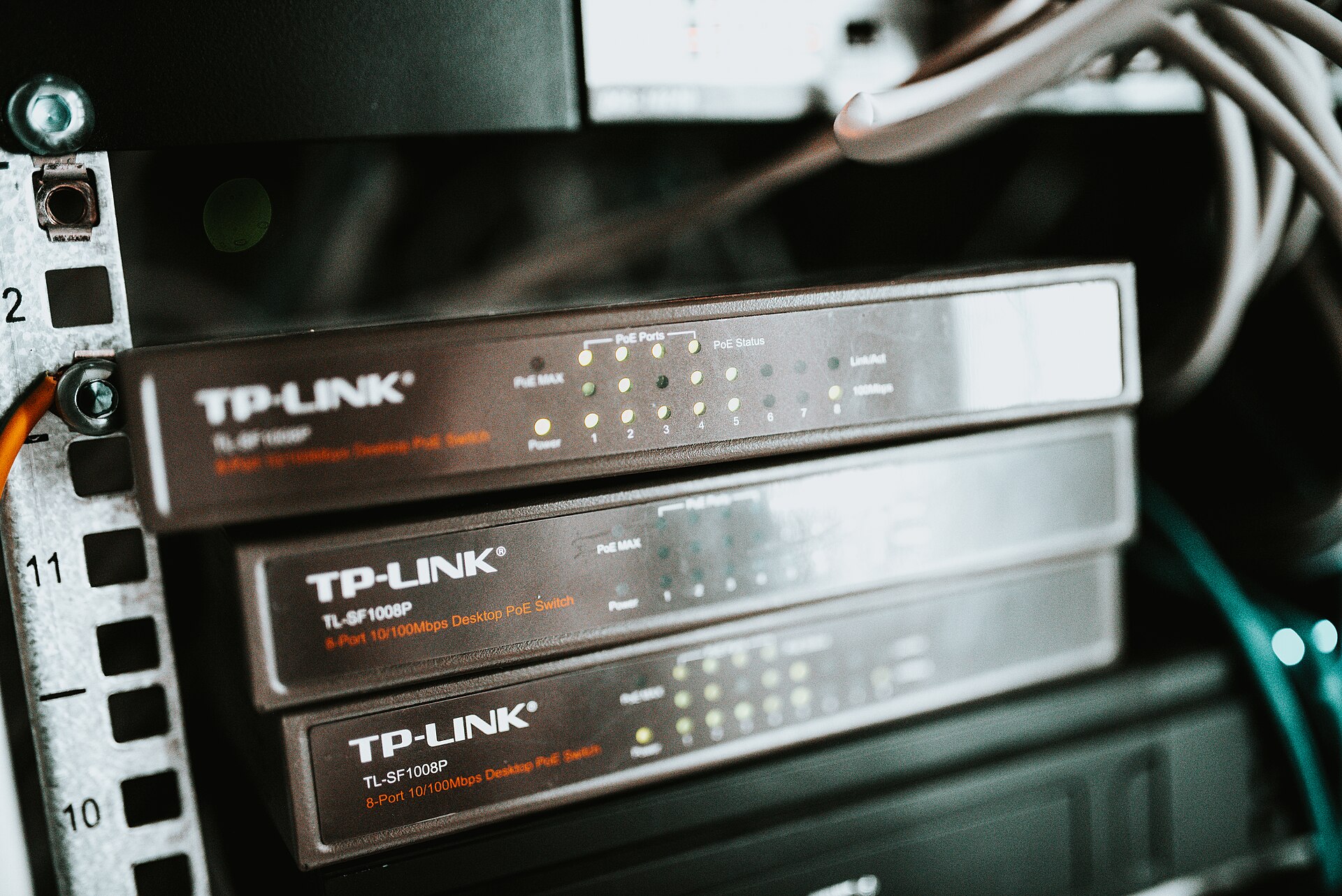

Why the network edge is where breaches start
For most of the last two decades, the main way into an organization was a person: someone clicked a link, opened an attachment or typed a password into a fake page. People are still a large part of the story (see lesson 9). But the data from 2024 to 2026 shows a shift toward something more mechanical and, in a way, more preventable: unpatched, internet-facing equipment.
What the 2025 and 2026 breach reports show
Verizon's Data Breach Investigations Report (DBIR) is a yearly study built from incident data contributed by investigators, insurers, government agencies and security companies. It is not a census of all breaches, and its contributors change from year to year, but it is the largest public dataset of its kind.
- 2025 DBIR (released April 23, 2025, covering Nov. 1, 2023 to Oct. 31, 2024; 22,052 incidents, 12,195 confirmed breaches): exploitation of a vulnerability was the first step in 20 percent of breaches. Among the systems attacked that way, edge devices and VPNs rose from 3 percent to 22 percent. Breaches involving a third party doubled, from 15 to 30 percent.2 Of the edge device vulnerabilities organizations knew about, only about 54 percent were fully fixed during the year, and fixing them took a median of 32 days.7
- 2026 DBIR (data from Nov. 1, 2024 to Oct. 31, 2025): 31 percent of breaches now begin with software vulnerability exploitation, which Verizon says has passed stolen credentials as the leading way in. Ransomware was present in 48 percent of breaches.1 Published summaries of the full report say only 26 percent of known exploited vulnerabilities were fully fixed (down from 38 percent) and the median time to fix rose to 43 days.8 Those last two figures come from a secondary summary, not from Verizon's own web page, and are listed as uncertain at the end of this lesson.
Put plainly: attackers are getting faster and defenders are getting slower. A median of 43 days to patch a flaw that criminals are already using is about six weeks in which a firewall, VPN gateway or file transfer server is open to anyone with the exploit. The FBI's 2025 Internet Crime Report says the same thing in a single line of advice to organizations: "Prioritize patching known exploited vulnerabilities in internet-facing systems."9
Why edge devices are attractive targets
An edge device is any device that sits on the boundary of a network and can be reached from the internet. CISA's definition in BOD 26-02 lists "load balancers, firewalls, routers, switches, wireless access points, network security appliances, IoT edge devices, software defined networks and other physical or virtual networking devices that are responsible for routing network traffic and provide privileged access."4 The same directive explains why criminals and spies like them: they have "extensive reach into an organization's network and integrations with identity management systems," and they are especially exposed to "newly discovered, unpatched vulnerabilities."
Three more reasons, drawn from the incident reports cited in this lesson:
- They are hard to watch. Many appliances cannot run the endpoint detection software that protects laptops and servers, so an intruder on a VPN gateway may not trigger any alert.
- They are trusted. Traffic that comes through the VPN or the firewall is often treated as legitimate by everything behind it.
- They age quietly. A firewall bought in 2017 may still pass traffic in 2026 long after its maker stopped issuing security fixes. Nobody notices until it is exploited.
Edge devices and the federal orders of 2024 to 2026
CISA (the Cybersecurity and Infrastructure Security Agency) issues two kinds of orders to federal civilian agencies. A Binding Operational Directive (BOD) sets a standing requirement; an Emergency Directive (ED) answers a specific crisis. Neither binds private companies, states or local governments, but they are public, they are specific, and they show what the government's own defenders think is urgent. Three recent ones matter most here.
- ED 24-01, Ivanti (Jan. 19, 2024). After "widespread and active exploitation" of Ivanti Connect Secure and Policy Secure VPN gateways, CISA ordered mitigations, then on Jan. 31, 2024 told agencies to disconnect every instance of those products by 11:59 p.m. on Friday, Feb. 2, 2024, and to follow a rebuild procedure before reconnecting.10 An order to unplug a whole product line is rare. It shows how much damage one compromised remote access gateway can do.
- BOD 26-02, end-of-support edge devices (Feb. 5, 2026). Agencies must immediately update supported edge devices still running end-of-support software to a supported version, inventory devices on CISA's end-of-support list within three months, remove listed devices whose support ended by the 12-month mark, remove all identified unsupported edge devices within 18 months, and within 24 months run continuous discovery so devices are retired before support ends. The directive says unsupported devices "should not reside anywhere on federal networks."4
- BOD 26-04, risk-based patching (June 10, 2026). This directive replaced BOD 22-01, the 2021 order that created the Known Exploited Vulnerabilities catalog, and BOD 19-02. It sets remediation clocks of 3, 14 or 60 days, or "fix on system upgrade," based on four questions about each flaw. It is explained in detail in the patching section below.3
The Justice Department showed the private-sector side of the same problem in January 2024, when it announced a court-authorized operation against a botnet that Chinese state hackers (the group known as Volt Typhoon) had built from "hundreds" of end-of-life Cisco and NetGear small office and home office routers. The routers were vulnerable because "they were no longer supported through their manufacturer's security patches," and the FBI urged owners to "remove and replace any end-of-life SOHO router."11 For a large organization, that means branch offices, clinics, home offices of executives and remote workers count too.
| Question for the board or agency head | Why it matters | What a good answer looks like |
|---|---|---|
| How many internet-facing devices do we have, and who owns each one? | You cannot patch what you have not listed. BOD 26-02 starts with an inventory for that reason. | A current list with an owner, location, software version and end-of-support date for each device, updated automatically. |
| How many are past or within 12 months of end of support? | Unsupported devices get no fixes when the next flaw is found. | A number, a replacement budget and a date for each one. |
| How fast do we fix flaws on that list that are being exploited? | The 2026 DBIR median was 43 days; federal agencies now get as little as 3. | A written target, measured monthly, with exceptions approved by a named executive. |
| Could an attacker on the VPN reach the payroll system, the patient record system or the plant? | A flat network turns one weak device into a full breach. | Segmentation that limits each remote user to the systems their job needs, tested at least yearly. |
Segmentation and firewalls
Segmentation means dividing a network into zones and controlling what may pass between them. The idea is old and simple: a ship has watertight compartments so one hole does not sink it. In a network, segmentation keeps a compromised laptop in accounting from reaching the database servers, keeps a guest on the lobby Wi-Fi away from patient records, and keeps an infected office computer from reaching the controllers on a plant floor.
Zones, and why flat networks fail
A flat network is one where every device can talk to every other device. Flat networks are cheap and easy to run, which is why so many organizations have them. They are also why ransomware incidents so often end with every server encrypted at once: once the intruder is in, nothing stops them from moving sideways (security staff call this lateral movement).
A segmented design for a large organization usually has at least these zones:
- Internet edge and demilitarized zone (DMZ): the systems that must be reachable from outside, such as public websites, the email gateway and the remote access gateway, kept apart from everything internal.
- User zone: staff laptops and desktops. They need to reach some servers, not all.
- Server and data zones: often split further, so the electronic health record, the core banking system, the case management system or the student information system sit in their own segment with tight rules.
- Management zone: the network from which administrators manage firewalls, switches, servers and cloud consoles. This is the most valuable zone to an attacker and should be reachable only from hardened administrator workstations or a "jump host" (a single tightly controlled server administrators pass through).
- Special-purpose zones: medical devices, building controls, cameras, point-of-sale systems and, at manufacturers and utilities, the operational technology network, which module 111 covers.
- Guest and untrusted zone: visitor Wi-Fi and personal devices, with internet access only.
Firewalls: what they do and do not do
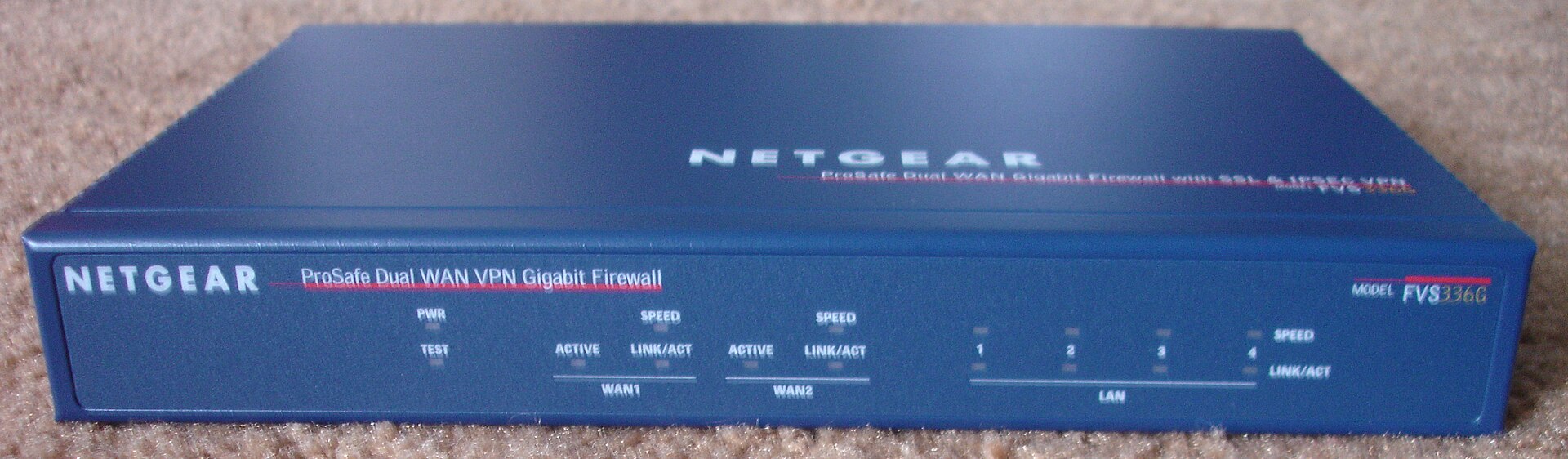
A firewall is a device or software that allows or blocks network traffic according to rules. Older firewalls decide by address and port number (which computer, which kind of service). "Next-generation" firewalls also look at which application is in use, can check for known attack patterns (intrusion prevention) and can tie rules to user identity. Firewalls now also come as cloud services and as software built into cloud platforms (AWS calls its version "security groups").
A firewall is only as good as its rule set. Common problems in large organizations are rules nobody remembers adding, temporary rules that became permanent, "allow any" rules created during an outage, and administrator consoles reachable from the internet. Idaho's state firewall policy, revised in May 2026, is a good, short public example of what a firm rule set looks like. It requires that all inbound and outbound traffic pass through approved firewalls "configured in a deny-by-default posture," that rules follow least privilege, that "quarterly audits must identify and remove obsolete or overly permissive rules," that firewalls be configured to industry benchmarks such as NIST or CIS, and that administrative access come only from secured management networks or hardened jump hosts, with multifactor authentication for every administrator account.12

Microsegmentation
Microsegmentation takes segmentation down to the level of individual applications or even individual workloads, so that each server or cloud service may talk only to the specific systems it needs. Instead of one rule for "the server zone," there might be rules saying the billing application may reach this one database on this one port, and nothing else may. CISA published the first part of a federal guide on the subject on July 29, 2025, describing microsegmentation as a core part of a zero trust design and advising agencies to start with an inventory of applications and the traffic flows between them before writing any rules.13
Microsegmentation is usually done with software (agents on servers, cloud security groups or a software-defined network) rather than with physical firewalls. It works best when an organization knows what its applications are and how they talk; it fails when it is switched on without that map, because legitimate traffic gets blocked and staff quickly add broad exceptions. Any change of this kind to production networks should be planned, tested in a limited area first and have a way back.
Segmentation rules regulators write down
Several rules and standards now name segmentation directly:
- PCI DSS v4.0.1 (the payment card industry standard, June 2024) builds its first requirement around "network security controls" and allows an organization to shrink the part of its network the standard covers by isolating the cardholder data environment, provided the isolation is tested. Penetration tests must check that segmentation actually works.14
- TSA pipeline and rail security directives require IT and OT segmentation designed so that one side's compromise does not disrupt the other (module 111, Sector Rules, quotes them).
- The proposed HIPAA Security Rule update of Jan. 6, 2025 would require network segmentation, vulnerability scanning at least every six months and penetration testing at least every 12 months.15 It has not been finalized; trade press reported in 2026 that the federal regulatory agenda now shows July 2027 for a final rule.16 Module 109 covers the proposal in The Security Rule and the Proposed Update.
- Federal agencies under OMB M-22-09 were told to "begin executing a plan to break down their perimeters into isolated environments."17
Remote access and VPN risk
Remote access is any way someone outside the building reaches internal systems: a VPN (virtual private network, which creates an encrypted tunnel from a laptop to the internal network), a remote desktop gateway, a virtual desktop service, a cloud application that reaches internal data, or a vendor's support tool. Since 2020, remote access has grown from a convenience for a few traveling staff into the main way thousands of employees and contractors work. It has also become one of the main ways attackers get in.
What went wrong: Colonial, Ivanti, Change Healthcare
The public record has three lessons that keep recurring.
- Forgotten accounts. Colonial Pipeline's chief executive told a Senate committee in June 2021 that "we believe the attacker exploited the legacy VPN profile that was not intended to be in use," and that the profile "did only have single-factor authentication" (a password alone, though he said it was a complicated one).18 The attack encrypted Colonial's IT systems and led the company to shut down the pipeline as a precaution.
- Unpatched gateways. The Ivanti VPN flaws of early 2024 were exploited before many organizations could apply mitigations, which is why CISA ordered federal agencies to disconnect the products entirely.10
- Remote portals without multifactor sign-in. UnitedHealth Group's chief executive testified in 2024 that criminals entered Change Healthcare through a Citrix remote access portal that did not have multifactor authentication. Module 109 tells that story in Breach Notification, and lesson 5 of this module covers the identity side.
NIST's remote access guide, SP 800-46 Rev. 2, gives the starting assumption in one sentence: plan telework security "based on the assumption that external environments contain hostile threats." It tells organizations to assume that telework devices "will be acquired by malicious parties."19
Controls for remote access at scale
- Inventory every path in. List every VPN, remote desktop gateway, virtual desktop service, vendor support tool, modem and cloud connector. Large organizations routinely find paths nobody in IT approved, such as a vendor's remote support appliance installed with a medical device or a department's own remote desktop tool.
- Require phishing-resistant multifactor authentication on every one. No exceptions for executives, vendors or service accounts. Lesson 5 explains phishing-resistant methods (security keys, passkeys, smart cards). The FTC Safeguards Rule already requires multifactor authentication "for any individual accessing any information system" at covered financial institutions, and New York's cybersecurity rule required it for all users of covered entities' systems from Nov. 1, 2025.2021
- Check the device as well as the person. Allow only managed, encrypted, patched devices to connect with full access; give unmanaged devices browser-only or virtual desktop access to a limited set of applications.
- Limit where each user can go. A VPN that drops a user onto the whole internal network is the flat network problem again. Grant access to specific applications, not to the network.
- Patch the gateway first and fastest. Remote access gateways are internet-facing edge devices; under BOD 26-04's logic they get the shortest clock.
- Remove what is not used. Retire old VPN profiles, legacy gateways, test accounts and vendor accounts at the end of each engagement. Review the list at least quarterly.
- Log and watch. Send remote access logs to the central monitoring system (lesson 10) and alert on logins from new countries, impossible travel, off-hours administrator access and many failed attempts.
Vendor and third-party remote access
Equipment vendors, managed service providers and software support teams often need remote access to keep systems running. Their access is among the riskiest, because it is often privileged, often shared among the vendor's staff and often left open. Good practice is to give each vendor person a named account with multifactor authentication, to turn access on only for a scheduled window and off afterward, to route sessions through a monitored gateway that records them, and to write these terms into the contract. Lesson 8 covers the contract side, and module 111's Remote Access, Vendors and Supply Chain covers vendor access to industrial systems, where a mistake can affect physical safety.
Zero trust in plain terms
"Zero trust" is the most used and most misused phrase in network security sales. Underneath the marketing is a plain and sensible idea: stop treating anything as safe just because it is inside your network, and check every request to reach data or a system, every time, based on who is asking, what device they are using and what they are asking for.
What NIST SP 800-207 says
NIST Special Publication 800-207, Zero Trust Architecture, published in August 2020, is the reference document. It says zero trust "assumes there is no implicit trust granted to assets or user accounts based solely on their physical or network location (i.e., local area networks versus the internet) or based on asset ownership (enterprise or personally owned)."5 It lists seven basic tenets, which in plain words are:
- Every data source and computing service is a resource to protect, including cloud services and personal devices that reach company data.
- All communication is secured, whether it travels across the internet or across the office.
- Access to each resource is granted one session at a time.
- Access is decided by a dynamic policy that weighs the user's identity, the device's state, the application and other signals such as time and location.
- The organization monitors the security state of every device it owns or allows.
- Authentication and authorization are checked strictly before access is allowed, and again as conditions change.
- The organization collects as much information as it can about its assets, network and traffic and uses it to improve security.
The document describes three logical parts. A policy engine makes the decision; a policy administrator carries it out by opening or closing the path; and a policy enforcement point sits in front of the resource and lets the session through or blocks it. In a real system these may be features of an identity provider, a secure access gateway, a firewall and endpoint software working together.
CISA's Zero Trust Maturity Model
CISA's Zero Trust Maturity Model, Version 2.0, released in April 2023, turns the idea into a progress chart. It has five pillars (Identity, Devices, Networks, Applications and Workloads, and Data) and three capabilities that cut across all of them (Visibility and Analytics, Automation and Orchestration, and Governance). Each pillar is rated at one of four stages: Traditional, Initial, Advanced and Optimal. Version 2.0 added the "Initial" stage so organizations could show partial progress.22 The model was written for federal agencies, but it is free and is widely used by states, hospitals and companies as a self-assessment.
| Pillar | What "Traditional" looks like | What "Advanced" looks like |
|---|---|---|
| Identity | Passwords, some multifactor; separate accounts in separate systems | Phishing-resistant multifactor; one identity system; risk checked at each sign-in |
| Devices | Partial inventory; little idea of patch state | Every device known; access depends on its health |
| Networks | Large flat zones; perimeter firewall does most of the work | Segmented around applications; internal traffic encrypted |
| Applications and Workloads | Reached through the VPN; tested occasionally | Reached directly with per-application checks; tested continuously |
| Data | No reliable inventory or labels | Data labeled by sensitivity; access and copying controlled by label |
The middle and right columns are plain-language summaries for this lesson, not CISA's wording; see the model itself for the official stage descriptions.
OMB M-22-09 and the federal deadline
On Jan. 26, 2022, the Office of Management and Budget issued Memorandum M-22-09, "Moving the U.S. Government Toward Zero Trust Cybersecurity Principles," which required agencies to meet specific goals "by the end of Fiscal Year (FY) 2024," organized around CISA's five pillars.17 In plain words, agencies were to give staff enterprise-managed identities with phishing-resistant multifactor sign-in, keep a full device inventory, encrypt DNS requests and web traffic inside their networks, "treat all applications as internet-connected" and test them, and start labeling data. CISA's February 2026 edge device directive points agencies back to M-22-09 when they plan replacements, so the memo still shapes federal buying.4 This lesson did not find a public, government-wide report showing how many agencies met every M-22-09 goal by the deadline; that remains uncertain.
What zero trust is not
- Not a product. NIST's June 2025 practice guide, SP 1800-35, built 19 example zero trust architectures with 24 industry partners. One of its authors, Alper Kerman, said "every ZTA is a custom build."23 Any vendor claiming to sell "zero trust in a box" is selling one part.
- Not a reason to drop the basics. Patching, backups, logging and segmentation still matter. Zero trust depends on them.
- Not all or nothing. Most organizations start with identity (strong sign-in for everyone), then device checks, then application-level access for remote users, then segmentation of the most sensitive systems.
- Not a fit everywhere. Many plant-floor and medical devices cannot authenticate users or run agents. Zero trust ideas still apply around them (module 111 explains how), but the device itself may need to be protected by the network.
Cloud: who is responsible for what
When an organization moves systems to a cloud provider, it hands over some security work and keeps the rest. Every major provider publishes a statement of where the line falls. The terms to know:
- IaaS (infrastructure as a service): you rent virtual servers, storage and networks, and you manage the operating systems and everything above them.
- PaaS (platform as a service): the provider runs the operating system and platform; you deploy your applications and data on it.
- SaaS (software as a service): you use a finished application, such as email, office software, a customer relationship system or an electronic health record hosted by the vendor.
What the providers say
Amazon Web Services frames it as security "of" the cloud (AWS protects the hardware, software, networking and facilities) versus security "in" the cloud (the customer's job). For a rented virtual server, AWS says the customer handles "management of the guest operating system (including updates and security patches)" and "the configuration of the AWS-provided firewall (called a security group)."24 Microsoft's guidance, updated Aug. 24, 2026, is blunter: "For all cloud deployment types, you own your data and identities," and the customer always keeps responsibility for data, endpoints, accounts and access management.25 Google uses the phrase "shared fate" to describe a provider that ships secure defaults and blueprints and works with customers on risk, while still describing a division of tasks.26
The practical point for executives and procurement staff: moving to SaaS does not move accountability. If an organization's staff can sign in to a cloud email system with only a password, or its storage is set to public, or its administrator accounts are shared, the provider has done its part and the breach is still the customer's.

The Capital One case
Capital One is the case most often used to teach cloud misconfiguration, and the public record is clear about what regulators found. In 2019 a former employee of a cloud provider used a tool she built to scan Amazon Web Services accounts for "misconfigured accounts," broke into more than 30 organizations, and took data that the Justice Department said affected more than 100 million Capital One customers.27 A jury convicted her in June 2022 of wire fraud and computer intrusion charges; in October 2022 she was sentenced to time served and five years of probation.28
The bank's regulator, the Office of the Comptroller of the Currency, focused on the bank's own controls. In August 2020 it assessed an $80 million civil money penalty and found (the bank neither admitting nor denying) that "in or around 2015, the Bank failed to establish effective risk assessment processes prior to migrating its information technology operations to the cloud operating environment," and failed to establish appropriate risk management for the cloud, "including appropriate design and implementation of certain network security controls, adequate data loss prevention controls, and effective dispositioning of alerts." It also found that internal audit "failed to identify numerous control weaknesses and gaps in the cloud operating environment."6
The lessons for any regulated organization are in that one paragraph: assess the risk before you migrate, design network controls for the cloud rather than assuming the old ones carry over, watch for data leaving, act on alerts, and make sure internal audit understands the cloud well enough to find the gaps.
Storm-0558: when the provider fails
Shared responsibility runs both ways. In the summer of 2023, a group the U.S. government links to China used a stolen Microsoft signing key to forge sign-in tokens and read email at 22 organizations, including senior U.S. officials. The federal Cyber Safety Review Board reported on March 20, 2024 that the intrusion resulted from "a cascade of security failures" at Microsoft and "was preventable and should never have occurred." Among its recommendations: cloud providers should offer a minimum level of audit logging by default, at no extra charge.29 The intrusion was first spotted by a customer, the State Department, through a custom alert on a mailbox access log (MailItemsAccessed) that it could see only because it paid for Microsoft's premium audit logging tier.29 For a large customer, the lessons are to buy the logging tier that lets you see what happened in your tenant, to send those logs to your own monitoring, and to ask providers in contracts how they protect their signing keys and how fast they will tell you about an incident (lesson 8 covers the contract terms).
Secure cloud configuration
Two federal documents give large organizations a free, specific starting list.
- BOD 25-01 and SCuBA. On Dec. 17, 2024, CISA ordered federal agencies to apply its Secure Cloud Business Applications (SCuBA) configuration baselines to Microsoft 365, starting with a tenant inventory by Feb. 21, 2025, CISA's free assessment tools by April 25, 2025, and all mandatory settings by June 20, 2025. The directive says that in recent incidents "the improper configuration of security controls in cloud environments introduced substantial risk and resulted in actual compromises."30 The baselines and the assessment tool are public, and any organization using the same products can run them.
- NSA and CISA's "Top Ten Cloud Security Mitigation Strategies" (March 7, 2024) covers shared responsibility, identity and access management, key management, network segmentation and encryption in the cloud, securing data, continuous integration and delivery pipelines, infrastructure as code, hybrid and multi-cloud environments, managed service providers, and logs.31
Beyond those, the cloud controls that matter most in large organizations are the same ones that matter on premises, applied with cloud tools: a single identity system with strong sign-in for every administrator, no public storage unless someone signs off on it, network rules in code that is reviewed before deployment, continuous checks for drift from the approved settings (often called cloud security posture management), and logs kept long enough to investigate. Any change to production cloud settings should be planned, tested in a non-production account first and reversible.
Email security: SPF, DKIM and DMARC at scale
Email is part of the network edge. Criminals send mail that claims to come from your domain to trick your customers, patients, vendors and employees. Three public standards let receivers check whether a message really came from you:
- SPF (Sender Policy Framework) publishes a list of the servers allowed to send mail for your domain.
- DKIM (DomainKeys Identified Mail) adds a digital signature to each message that receivers can check against a key you publish.
- DMARC (Domain-based Message Authentication, Reporting, and Conformance) tells receivers what to do with mail that fails those checks (nothing, quarantine to spam, or reject) and sends you reports. The current standard is RFC 9989, published May 19, 2026, which replaced the original specification, RFC 7489.32
BOD 18-01: the federal model
CISA's predecessor ordered federal agencies to adopt these standards in Binding Operational Directive 18-01 on Oct. 16, 2017. Within 90 days agencies had to offer STARTTLS (encryption between mail servers) and publish SPF and DMARC records; within 120 days they had to turn off old, weak encryption (SSLv2, SSLv3, 3DES and RC4) on mail servers; and within one year they had to set "a DMARC policy of 'reject' for all second-level domains and mail-sending hosts." The directive explains why: a reject policy "provides the strongest protection against spoofed email."33 BOD 18-01 also required HTTPS and HSTS (a setting that forces browsers to use encrypted connections) on federal websites.
Since February 2024, the large consumer mail services have pushed private senders the same way. Google requires SPF, DKIM and DMARC for anyone sending more than 5,000 messages a day to Gmail accounts, though it allows a DMARC policy of "none," which only reports.34 Meeting those rules keeps marketing mail out of spam folders; it does not stop criminals from spoofing your domain. Only a "quarantine" or "reject" policy does that.
Rolling out DMARC in a large organization
- List every domain you own, including parked domains and old brand names. Unused domains should publish a policy that says they send no mail at all.
- Publish DMARC at "none" with a reporting address, and collect reports for several weeks.
- Use the reports to find every service that sends mail in your name: payroll, benefits, marketing, patient portals, billing, e-signature, ticketing and the like. Fix each so it passes SPF or DKIM.
- Move to "quarantine" for a small share of failing mail, then all of it, then to "reject."
- Assign an owner, because new vendors will start sending in your name. Make DMARC alignment a step in vendor onboarding.
This is a production change to mail flow; plan it, test it and keep the ability to step back to the previous policy. For business email compromise and wire fraud, which these standards only partly stop, see module 110's Business Email Compromise and Wire Fraud.
Vulnerability and patch management at scale
A vulnerability is a weakness in software or a configuration that an attacker could use. A patch is the maker's fix. Vulnerability management is the ongoing program of finding vulnerabilities in your systems, deciding which to fix first, fixing them and checking the fix worked. NIST's guide on the subject, SP 800-40 Rev. 4 (April 2022), is subtitled "Preventive Maintenance for Technology," and it treats patching as a normal cost of owning technology that needs planning, a budget and maintenance windows, rather than as an emergency.35
The problem at scale is volume. A large organization's scanners can report hundreds of thousands of open findings. Verizon's 2026 report, as summarized by researchers who read it, counted 527 million vulnerability instances across more than 13,000 organizations in its 2025 data.8 Nobody fixes everything. The question is what to fix first.
CVSS, EPSS, KEV and SSVC
Four public tools answer different questions:
| Tool | Who runs it | Question it answers | Limit |
|---|---|---|---|
| CVSS (Common Vulnerability Scoring System), v4.0 since November 2023 | FIRST (Forum of Incident Response and Security Teams) | How severe is this flaw in general, on a 0 to 10 scale? | Severity is not risk. Thousands of flaws score 9 or 10 and are never used by attackers.36 |
| EPSS (Exploit Prediction Scoring System), v4 since March 2025 | A FIRST special interest group | What is the probability this flaw "will be exploited in the wild in the next 30 days"? | A statistical estimate; it changes daily and can miss targeted attacks.37 |
| KEV (Known Exploited Vulnerabilities catalog) | CISA | Is there reliable evidence attackers are already using this flaw? | Only covers flaws CISA has confirmed; 1,779 entries as of Nov. 10, 2026.38 |
| SSVC decision tree | Carnegie Mellon's CERT Coordination Center, adopted by CISA | Given exploitation, exposure, automation and impact, how fast must we act? | Needs your own data on which assets are exposed.39 |
NIST added a fifth idea in May 2025, a proposed "Likely Exploited Vulnerabilities" (LEV) measure that combines EPSS scores over time to estimate the probability that a flaw has already been exploited. NIST suggests it can be used to check how complete KEV-style lists are and to help prioritize.40
The underlying data depends on a fragile public system. Almost every tool above keys on CVE identifiers, assigned through a program MITRE runs under a federal contract. In April 2025 the contract nearly lapsed, and CISA extended it for 11 months, to March 16, 2026, on the evening before it was due to end.41 Press reports in March 2026 said the contract had been renegotiated, but the terms were not public as of this writing. Large organizations should know that their patch priorities rest on this program and should be able to work from vendor advisories if it is ever disrupted.
BOD 26-04: the new federal model
From November 2021 to June 2026, the federal rule was simple: under BOD 22-01, agencies had to fix every flaw in the KEV catalog within a set time, generally two weeks for newer flaws. On June 10, 2026, CISA revoked BOD 22-01 and BOD 19-02 and replaced them with BOD 26-04, "Prioritizing Security Updates Based on Risk." The directive says attackers' "use of AI may further narrow the time defenders have to react between patch release and possible exploitation," and that the new approach "focuses patching efforts on the areas of highest risk rather than treating all vulnerabilities and systems equally."3
The clock for each vulnerability on each asset depends on four questions:
- Is the asset publicly exposed? That is, can unauthenticated or untrusted people reach it over the internet?
- Is the flaw in the KEV catalog?
- Is it automatable? Can an attacker automate every step of exploiting it, so it can be used at scale?
- What is the technical impact? Partial control of the asset, or total control (including an exploit that reliably reveals login credentials)?
The answers produce one of five timelines: 3 days with "forensic triage" (checking whether the system was already compromised), 3 days, 14 days, 60 days, or "fix on system upgrade," meaning at the next scheduled major upgrade or rebuild. Days are calendar days. The clock starts when CISA adds the flaw to KEV or the agency finds it on an asset, whichever comes first, and it can change: taking a system off the internet lengthens the clock, while a KEV listing shortens it.339 Agencies must update their policies immediately, update procedures within 60 days, and meet the remediation timelines within 180 days of issuance, which works out to Dec. 7, 2026.
Two points in the directive matter for private and state organizations. First, it puts weight on knowing which assets are exposed: agencies must continuously tag every internet-reachable asset by organization, environment, exposure and type. Second, it is honest about its limits. As CISA explained when it issued the directive, inside the network attackers "often use exploitable configurations and valid credentials," which patching alone does not fix; CISA points to hardening, segmentation and phishing-resistant multifactor authentication for those.42
What regulated sectors require
| Rule | Who it covers | Vulnerability and testing duty |
|---|---|---|
| FTC Safeguards Rule, 16 CFR 314.4(d)(2) | Non-bank financial institutions under FTC jurisdiction (tax preparers, auto dealers, mortgage brokers, and others) | Continuous monitoring, or else annual penetration testing and vulnerability assessments "at least every six months" and after material changes.20 |
| New York 23 NYCRR 500.5 | Banks, insurers and other entities licensed by the New York Department of Financial Services | Annual penetration testing from inside and outside; automated scans at a risk-based frequency; timely remediation by risk. Scanning requirement in force from May 1, 2025.21 |
| PCI DSS v4.0.1, Requirement 11 | Anyone storing, processing or transmitting payment card data | Quarterly external scans by an Approved Scanning Vendor, internal scans, and penetration tests at least annually, including segmentation checks.14 |
| HIPAA Security Rule (proposed Jan. 6, 2025) | Health care providers, plans, clearinghouses and their business associates | Would require vulnerability scanning every six months and penetration testing every 12 months. Not final.15 |
| Idaho Technology Authority P4520 | Idaho state agencies (not elected constitutional officers, the legislature or the courts) | Mitigate "no later than 10 business days from the time the vendor announces a remediation method," or document the risk decision to delay.43 |
A patch program for a large organization, step by step
- Know what you own. An automated, current inventory of hardware, software, cloud resources and their owners. New York's rule now requires each asset's owner, location, sensitivity, "support expiration date" and recovery time objective.21
- Know what faces the internet. Tag every exposed asset, as BOD 26-04 requires of agencies. Exposure changes the clock more than any score.
- Set written timelines by risk tier, borrowing from BOD 26-04 or your regulator, and have the executive who owns risk approve them.
- Feed KEV, EPSS and vendor advisories into the ticketing system automatically, so a new KEV listing creates a ticket within hours.
- Test, then deploy in rings: a small pilot group, then wider groups, with a rollback plan. Every patch to production is a change: plan it, test it and have a way back.
- Verify. Rescan to confirm the fix, rather than trusting that the deployment tool reported success.
- Handle what cannot be patched. For medical devices, plant equipment and legacy systems, use compensating controls (isolation, monitoring, restricted access) and record a dated exception signed by the risk owner.
- Retire what is unsupported. Budget for replacement before end of support, as BOD 26-02 now requires of agencies.
- Measure and report. Median days to fix KEV flaws on exposed assets, count of overdue items, count of unsupported devices. Report to the board quarterly (lesson 4 covers board metrics).
Attack surface management
Your attack surface is everything an attacker could try to reach: internet-facing servers and devices, cloud services, websites, application programming interfaces, remote access portals, forgotten test systems, domains and subdomains, and the accounts that sign in to them. External attack surface management means continuously discovering that surface from the outside, the way an attacker would, and comparing it with what you think you have. Large organizations almost always find surprises: a marketing site built by an agency, a cloud database a research team set up, a subsidiary's mail server, a vendor-run portal under your domain.
CISA offers free Cyber Hygiene Vulnerability Scanning to public and private critical infrastructure organizations; CISA describes it as a service that "identifies externally-accessible assets and services that are vulnerable to common attacks," and offers web application scanning as well.44 BOD 26-04 requires agencies to keep using these scans and to update their list of public IP addresses and domains every quarter.3 Commercial services do the same for a fee. Whatever the source, the findings are only useful if someone owns each asset and is required to act.
Secure configuration baselines
A secure configuration baseline is a documented set of settings that every system of a given type must have: which services are turned off, which logging is on, how passwords and encryption are set, and so on. Baselines matter because most systems ship with settings chosen for ease of setup, not security, and because a large organization's thousands of systems drift apart over time unless something holds them to a standard.
- CIS Benchmarks from the Center for Internet Security are free consensus configuration guides for operating systems, cloud platforms, network devices, browsers and many applications, with paid tools to check compliance.45
- DISA STIGs (Security Technical Implementation Guides) are the Defense Department's configuration standards, published free on the DoD Cyber Exchange. They are stricter than most CIS Benchmarks and are expected in many defense contracts.46
- CISA SCuBA baselines cover cloud business applications, as described above.30
- Vendor security baselines from Microsoft, Apple, Google, Cisco and others.
The work is in three steps: choose a baseline for each type of system and record any deliberate departures with a reason; apply it automatically through configuration management tools or "infrastructure as code" so new systems start compliant; and scan continuously for drift. Idaho's 2026 firewall policy, for example, requires firewalls to be configured to "industry benchmarks (e.g., NIST, CIS)" and says "automated tools should monitor for configuration drift."12 Applying a strict baseline to systems already in production can break applications; plan it, test it on a small group and have a way back.
Endpoint detection and response
An endpoint is a laptop, desktop, server or virtual machine. Endpoint detection and response (EDR) is software on each endpoint that records what programs do, looks for signs of attack (not only known malware but suspicious behavior, such as a word processor launching a command shell or a tool dumping passwords from memory), raises alerts and lets responders isolate a machine from the network with one click. XDR (extended detection and response) combines endpoint data with email, identity, network and cloud signals. Lesson 10 covers how a security operations center uses these alerts.
EDR has moved from good practice to written requirement for the largest regulated firms. New York's rule requires each "class A company" (a covered entity with at least $20 million in New York revenue and either more than 2,000 employees or more than $1 billion in total revenue, counting affiliates) to run "an endpoint detection and response solution to monitor anomalous activity, including but not limited to lateral movement" and "a solution that centralizes logging and security event alerting," unless the CISO approves equivalent controls in writing. That requirement took effect May 1, 2025.21
EDR has two limits leaders should understand. First, it runs only where it is installed, and many edge devices, medical devices and plant controllers cannot run it, which is why the edge device problem described at the start of this lesson is so hard. Second, EDR software runs with deep access to the operating system, so a faulty update can take machines down. On July 19, 2024, a faulty content update from CrowdStrike, an EDR vendor, crashed about 8.5 million Windows devices, "less than one percent of all Windows machines," according to Microsoft, and grounded flights and disrupted hospitals and banks.47 The practical response is to ask vendors how they test and stage updates, to know which critical systems depend on a single vendor, and to have tested recovery steps (lesson 8 covers concentration risk; lesson 7 covers recovery).
Mobile devices and BYOD
Phones and tablets now carry email, messaging, patient and client records, approvals, multifactor prompts and banking. BYOD (bring your own device) means letting staff use personally owned phones, tablets or computers for work. It saves money and is popular, and it creates three problems for a regulated organization: the device's security is not fully under the organization's control, work data mixes with personal data, and records that must be kept may live in apps the organization cannot see.
NIST guidance on mobile devices
NIST SP 800-124 Rev. 2 (May 2023) covers managing mobile devices in the enterprise, and SP 800-46 Rev. 2 (July 2016) covers telework and BYOD.4819 The main tools they describe are:
- Mobile device management (MDM): the organization enrolls and controls the whole device (passcode, encryption, operating system version, approved apps, remote wipe). Common for company-owned phones.
- Mobile application management (MAM): the organization controls only its own apps and the data inside them, for example preventing copying from work email to a personal app, and can wipe only that data. Often the better fit for personal phones, because it respects the owner's privacy.
- Containers or work profiles: features built into Android and iOS that keep work apps and data separate from personal ones.
- Mobile threat defense: apps that check for malicious apps, risky networks and tampered operating systems.
What regulators and Idaho require
Regulators care about mobile devices for two reasons: data security and recordkeeping. On recordkeeping, the Securities and Exchange Commission charged 16 Wall Street firms on Sept. 27, 2022, with more than $1.1 billion in combined penalties, after finding that from January 2018 through September 2021 employees regularly discussed business in texting apps on their personal phones and the firms did not keep or preserve most of those messages.49 Any regulated organization with a records duty (broker-dealers, banks, public agencies under records and open-records laws, health care) needs a rule about where business may be conducted on a phone.
On security, Idaho's state policy is a clear public example. ITA Policy P4550, revised Sept. 4, 2025, applies to "mobile devices, state-owned or personally-owned," that reach the state network, state email or state data classified Level 2 or higher. Such devices must require a password or PIN that meets the state standard, a biometric, a pattern or multifactor authentication to open; lock after no more than 10 minutes; run "current manufacturer supported operating systems"; have anti-malware software; be kept up to date; enforce encryption; and must not be "jailbroken, rooted," or otherwise modified to bypass the maker's restrictions. Users must sign a mobile device user agreement.50
Privacy and the personal phone
BYOD puts security and privacy in direct tension. Full device management on a personal phone can let an employer see installed apps or location and can wipe family photos. Employees and unions often resist it, and some state laws limit employer access to personal accounts or electronic data; the details vary by state and are worth checking with your compliance officer. The common middle path is application-level management on personal devices (control the work apps and their data only), full management only on company-owned devices, a clear written statement of what the organization can and cannot see, and a stipend or company phone for staff whose roles need stronger controls.

The Idaho public sector picture
Idaho state agencies follow policies, standards and guidelines set by the Idaho Technology Authority under Idaho Code 67-833. ITA Policy P4140 adopts the NIST Cybersecurity Framework for state agencies, and a set of network standards (S3510 to S3550) covers transport, local networks, wireless and cabling.51 The three policies most relevant to this lesson are P4520 (patching within 10 business days of a vendor fix or a documented risk decision), P4570 (deny-by-default firewalls with quarterly rule audits, revised May 2026) and P4550 (mobile devices, revised September 2025).431250
Two features of P4520 deserve attention from legislators and auditors. Its 10-business-day clock applies to every vulnerability with a vendor fix, which is stricter on paper than the federal model for low-risk flaws but gives no faster clock for flaws already being exploited on internet-facing systems, where BOD 26-04 allows only 3 days. And it ties state agencies to bulletins from the MS-ISAC (Multi-State Information Sharing and Analysis Center); federal funding for MS-ISAC was cut for the rest of fiscal year 2025 on March 6, 2025, which put the cost of that service on states and localities.52 The policy's last substantive revision was June 30, 2021, before KEV-based prioritization became the federal norm.
Capacity is the other question. As of September 2026, the state's Information Technology Services Cyber Resilience Operation Center in Boise had four full-time employees plus part-time staff and aimed for round-the-clock operations by June 2027.53 Cities, counties, school districts and hospital districts are not bound by ITA policies and set their own rules, often with much smaller staffs. For public records requests about any of this, see the reporters' section at the end. Idaho's public sector rules at small scale are also covered in Government Contracts, the Idaho Public Sector and Sectors.
Sample policies
The two policies below are written for a large or regulated organization. Lesson 5's Access Control Policy and Password and Multifactor Authentication Standard, and lesson 9's Acceptable Use Policy, work alongside them.
Sample only. Adapt it to your organization's risks, systems and laws, have qualified people review it, and do not treat it as a substitute for a risk assessment.
Follows: NIST SP 800-46 Rev. 2 (July 2016); NIST SP 800-207 (August 2020); CISA Zero Trust Maturity Model 2.0 (April 2023); FTC Safeguards Rule, 16 CFR 314.4(c)(5) and (c)(8); 23 NYCRR 500.7 and 500.12; Idaho Technology Authority P4570 (May 5, 2026).
Remote Access Policy (sample)
1. Purpose. [Organization name] allows staff, contractors and vendors to reach its systems and data from outside its facilities when the work requires it. Remote access is a common way attackers enter organizations. This policy sets the minimum controls for every form of remote access.
2. Scope. This policy covers every method of reaching [Organization name] systems or data from a network the organization does not control, including VPNs, remote desktop and virtual desktop services, cloud applications that hold organization data, vendor remote support tools, modems and cellular gateways, and administrator access to cloud consoles. It applies to employees, contractors, vendors, volunteers, interns and board members.
3. Approval and inventory. No remote access method may be used unless the [Chief Information Security Officer] has approved it and it is listed in the remote access inventory. The inventory records each method, its business owner, the systems it reaches, its software version and its end-of-support date. The [IT Security team] reviews the inventory every [quarter] and removes unused methods, profiles and accounts.
4. Authentication. Every remote session requires multifactor authentication. Administrator and vendor access requires phishing-resistant multifactor authentication ([security keys, passkeys or smart cards]). Shared accounts are not permitted for remote access. Exceptions require written approval by the [CISO], a compensating control and an expiration date no later than [12 months].
5. Devices. Full network or application access is allowed only from organization-managed devices that have current supported operating systems, disk encryption, endpoint detection and response software and current patches. Personal or unmanaged devices may use only [browser-based access / the virtual desktop service] to [list of approved applications], with downloading, printing and copying to the device disabled.
6. Least access. Remote users receive access only to the applications and systems their role requires. Remote access that places a user on the general internal network is being phased out by [date].
7. Vendor access. Each vendor person has a named account. Vendor access is enabled only for an approved window and disabled at its end, passes through [the monitored access gateway], and is recorded. Contracts with vendors that need remote access must include these terms (see the Vendor and Third-Party Risk Management Policy).
8. Gateways and patching. Remote access gateways are internet-facing systems. The [IT Security team] applies security fixes to them within [3 calendar days] for vulnerabilities in the CISA KEV catalog and within [14 calendar days] for other critical vulnerabilities, or isolates the gateway until fixed. Gateways past their end-of-support date are replaced before that date.
9. Monitoring. All remote access logs go to [the central logging system] and are kept for at least [12 months]. Alerts are generated for sign-ins from unexpected countries, impossible travel, off-hours privileged access and repeated failures.
10. Sessions. Remote sessions time out after [15 minutes] of inactivity and require re-authentication after [12 hours].
11. Public and home networks. Users must not connect to organization systems from shared or public computers. Home routers used for work should run current supported firmware; the organization provides guidance and, for [roles], a managed router.
12. Lost devices and suspected compromise. Users report a lost device or suspected compromise to [help desk contact] immediately, and in any case within [1 hour] of discovery.
13. Enforcement. Access that does not meet this policy will be disabled. Violations may lead to discipline up to termination of employment or contract.
14. Review. The [CISO] reviews this policy at least annually and after any incident involving remote access. Approved by [title] on [date].
Sample only. Adapt it to your organization's risks, systems and laws, have qualified people review it, and do not treat it as a substitute for a risk assessment.
Follows: NIST SP 800-124 Rev. 2 (May 2023); NIST SP 800-46 Rev. 2 (July 2016); Idaho Technology Authority P4550 (Sept. 4, 2025); SEC recordkeeping enforcement, press release 2022-174 (Sept. 27, 2022).
Bring Your Own Device Policy (sample)
1. Purpose. [Organization name] permits staff to use personally owned phones, tablets and computers for some work, in order to support flexible work while protecting organization data, meeting recordkeeping duties and respecting staff privacy.
2. Scope. This policy applies to any personally owned device used to read or send organization email or messages, use organization applications, or access, create, store or view organization data classified [Internal] or higher. It does not apply to a personal device used only to receive multifactor authentication prompts.
3. Voluntary participation and agreement. Use of a personal device for work is voluntary unless the role description says otherwise. Each participant signs the BYOD user agreement before enrollment. Staff whose roles require [handling Restricted data / privileged access / regulated communications] use organization-owned devices.
4. Minimum device requirements. Enrolled devices must: run an operating system version still supported by its maker; install updates within [14 days] of release; require a passcode of at least [6 digits] or a biometric to open; lock after no more than [5 minutes] of inactivity; have device encryption on; and not be jailbroken, rooted or otherwise modified to bypass the maker's security.
5. How the organization manages the device. The organization manages only its own applications and data on personal devices, using [application management / a work profile]. The organization can: require the settings in section 4; remove organization apps and data; and see the device model, operating system version, and whether the work apps and data are secured. The organization cannot see, and will not collect: personal email, messages, photos, browsing history, personal app data or location. The organization will not wipe the whole device except at the user's request.
6. Data handling. Organization data stays in approved work apps. Users must not copy organization data to personal apps, personal cloud storage or removable media, and must not use personal accounts to send organization data.
7. Business communications and records. Business communications must be conducted only through [approved channels, such as organization email, the approved messaging app and the organization phone system], which retain records as required by [applicable recordkeeping rules / the records retention schedule]. Business conducted by personal text message or unapproved messaging apps is prohibited. A user who receives a business message on an unapproved channel must move the conversation to an approved channel and [forward or preserve the message as directed by the records team].
8. Loss, theft and departure. Users report a lost or stolen enrolled device to [help desk contact] within [1 hour] of discovery. The organization will remove organization data from the device. When a user leaves the organization or the device is replaced, organization data is removed before or at departure.
9. Support and costs. The organization [provides a monthly stipend of [amount] / does not reimburse device or service costs]. IT support for personal devices is limited to the work apps and enrollment.
10. Legal holds and investigations. If organization data on a personal device is subject to a legal hold or investigation, the user must preserve it and cooperate with the [records team / compliance officer]. The organization will limit any collection to organization data.
11. Enforcement. Devices that fall out of compliance lose access to organization data until fixed. Violations may lead to discipline.
12. Review. The [CISO] and [privacy officer] review this policy at least annually. Approved by [title] on [date].
Pictures, Numbers and Infographics
The key numbers from this lesson, each with its source and date. Report years matter: the DBIR for a given year describes incidents from the 12 months ending the previous October.
| Number | What it measures | Source and date |
|---|---|---|
| 31 percent | Breaches that began with exploitation of a software vulnerability | Verizon 2026 DBIR (data Nov. 2024 to Oct. 2025)1 |
| 48 percent | Breaches involving ransomware | Verizon 2026 DBIR1 |
| 20 percent | Breaches that began with vulnerability exploitation, the year before | Verizon 2025 DBIR (released April 23, 2025)2 |
| 3 percent to 22 percent | Share of exploitation aimed at edge devices and VPNs, year over year | Verizon 2025 DBIR2 |
| 15 percent to 30 percent | Breaches involving a third party | Verizon 2025 DBIR2 |
| 54 percent; 32 days | Edge device vulnerabilities fully fixed during the year; median time to fix | Verizon 2025 DBIR7 |
| 26 percent; 43 days | Known exploited vulnerabilities fully fixed; median time to fix (secondary summary, uncertain) | Verizon 2026 DBIR as summarized May 20, 20268 |
| 1,779 | Entries in CISA's Known Exploited Vulnerabilities catalog (361 tied to ransomware) | KEV version 2026.11.10, Nov. 10, 202638 |
| 103; 38; 32; 27; 20; 16 | KEV entries for Cisco, Ivanti, Fortinet, Citrix, SonicWall and Palo Alto Networks, makers of many edge devices | KEV version 2026.11.1038 |
| 3, 14 or 60 days | Federal remediation clocks by risk tier, in force Dec. 7, 2026 | CISA BOD 26-04, June 10, 20263 |
| 3, 12, 18, 24 months | Federal deadlines to inventory, retire and continuously track unsupported edge devices | CISA BOD 26-02, Feb. 5, 20264 |
| Feb. 2, 2024, 11:59 p.m. | Deadline for federal agencies to disconnect all Ivanti Connect Secure and Policy Secure devices | CISA ED 24-01 Supplemental Direction, Jan. 31, 202410 |
| $80 million | OCC civil money penalty against Capital One for cloud risk management failures | OCC, Aug. 6, 20206 |
| More than 100 million | Capital One customers affected by the 2019 intrusion | U.S. Attorney, W.D. Wash., June 17, 202227 |
| 22 organizations; more than 500 people | Victims of the 2023 Storm-0558 Exchange Online intrusion | Cyber Safety Review Board, March 20, 202429 |
| 8.5 million | Windows devices crashed by the CrowdStrike update of July 19, 2024 | Microsoft, July 20, 202447 |
| More than $1.1 billion; 16 firms | SEC penalties for business conducted on personal devices and not recorded | SEC, Sept. 27, 202249 |
| 5,000 a day | Gmail volume above which senders must have SPF, DKIM and DMARC | Google sender guidelines, effective Feb. 1, 202434 |
| One year | Time federal agencies had to set DMARC to "reject" | BOD 18-01, Oct. 16, 201733 |
| Every six months | Vulnerability assessments required without continuous monitoring | FTC Safeguards Rule, 16 CFR 314.4(d)(2)20 |
| $20 million; 2,000 employees; $1 billion | Thresholds that make a New York-regulated firm a "class A company" with EDR and logging duties | 23 NYCRR 500.1(d), effective Nov. 1, 202321 |
| 10 business days | Idaho state agency deadline to mitigate a vulnerability after a vendor fix, or document the delay | ITA P4520, revised June 30, 202143 |
| 10 minutes | Maximum idle time before a mobile device touching Idaho state data must lock | ITA P4550, revised Sept. 4, 202550 |
| 19 builds; 24 collaborators | Example zero trust architectures in NIST's practice guide | NIST SP 1800-35, June 202523 |
| 4 full-time staff | Idaho ITS Cyber Resilience Operation Center, September 2026 | East Idaho News, Sept. 8, 202653 |
The early spike reflects the catalog's launch, when CISA loaded hundreds of flaws already known to be exploited. Since then additions have run between about 185 and 300 a year, and 2026 is already the highest year since 2022. The other four graphics in this lesson are the segmented network diagram, the zero trust decision diagram and the shared responsibility chart above, and the BOD 26-04 timeline chart in the patching section.
Common mistakes
- Moving to the cloud before assessing the risk. The OCC found that Capital One "failed to establish effective risk assessment processes prior to migrating" to the cloud and lacked adequate network security, data loss prevention and alert handling, and assessed $80 million.6
- Letting internal audit fall behind the technology. The same OCC order found internal audit "failed to identify numerous control weaknesses and gaps in the cloud operating environment."6
- Leaving an old remote access path open with a password only. Colonial Pipeline's attackers used "the legacy VPN profile that was not intended to be in use," protected by single-factor authentication.18
- Waiting on a vendor patch while an exploited gateway stays online. CISA's response to the Ivanti flaws was to order federal agencies to disconnect the devices entirely by Feb. 2, 2024, because mitigations alone were not holding.10
- Running end-of-life network devices. Volt Typhoon built a botnet from "hundreds" of end-of-life routers that no longer received security patches.11 CISA now orders agencies to retire such devices on a schedule.4
- Not paying for (or not turning on) the logs. The Cyber Safety Review Board found that the customer who first detected the Storm-0558 intrusion did so through its own logs, and urged providers to include baseline logging by default.29
- Letting business move to personal phones without records. The SEC fined 16 firms more than $1.1 billion combined in 2022 for business conducted on personal devices through texting apps and not preserved.49
- Patching by severity score alone. CISA's 2026 directive moved federal agencies away from treating "all vulnerabilities and systems equally" because high CVSS scores do not identify what attackers actually use.3
- Assuming a security agent cannot itself cause an outage. The CrowdStrike update of July 19, 2024 crashed about 8.5 million Windows devices.47
Questions people ask
Do we still need a VPN if we are moving to zero trust?
For a while, almost certainly. Most organizations keep a VPN for some legacy applications and some administrator work while they move users to per-application access. The goal is to shrink what the VPN reaches, require phishing-resistant multifactor sign-in and device checks for it, and patch the gateway fastest of all, then retire it when the last application no longer needs it.
Is the cloud more or less secure than our own data center?
The major providers usually run their side (buildings, hardware, base software) better than most organizations run their own. The risk moves to configuration and identity, which stay with the customer in every model.25 The Capital One and Storm-0558 cases show one failure on each side of the line.629 The honest answer is that the cloud can be more secure if the organization learns to configure and watch it, and less secure if it moves systems without changing its skills or controls.
Our scanners report 200,000 open findings. Where do we start?
Start with what faces the internet and what is in the KEV catalog. Fix KEV flaws on exposed systems first, then exposed systems with automatable, high-impact flaws, then everything else on a schedule. That is what BOD 26-04 asks of federal agencies, and it is a sound order for anyone.3 Next, find the systems producing the most findings (often a few unsupported servers or a single outdated software package) and retire or upgrade them, which can close thousands at once.
Does BOD 26-04 apply to state agencies or contractors?
Not directly. It binds federal civilian executive branch agencies. It says it does not apply to contractors unless the procurement contract says so, but agencies must review contracts to see what changes are needed, and cloud services that host agency systems must follow it through FedRAMP or the agency.3 State agencies follow their own rules, such as Idaho's P4520. Many state and private programs use federal directives as a benchmark because they are public and specific.
Should we ban personal phones for work?
Some organizations do for certain roles, such as traders, staff with access to the most sensitive data, and administrators. A complete ban is hard to enforce and can push work onto unapproved apps, which is the recordkeeping problem regulators fine. A middle path is application-level management on personal devices, company-owned phones for high-risk roles, and clear rules on approved communication channels.4849
How often should we test segmentation and run penetration tests?
At least yearly, and after major changes. That is the floor in New York's rule and the FTC Safeguards Rule (absent continuous monitoring), and PCI DSS also requires segmentation checks.212014 Large organizations with frequent change often test critical segments more often and run continuous automated checks between tests.
What should a board ask about network and cloud security?
Five questions cover most of it: How many internet-facing systems do we have and how many are unsupported? What is our median time to fix exploited flaws on them? Could a single stolen laptop or VPN account reach our most important systems? Who in our organization can change cloud settings, and how do we know when settings drift? What do our logs let us see, and for how long? Lesson 4 covers board reporting in more depth.
Hard questions
Should the law set patch deadlines for private companies?
For: The data shows organizations are slow (a 43-day median in the 2026 DBIR summary) while attackers are fast, and the costs of breaches fall partly on customers and the public.8 Federal agencies have worked under KEV deadlines since 2021, and sector rules such as TSA's pipeline directives already require patch plans that prioritize KEV flaws (module 111, Sector Rules).
Against: Organizations differ. A fixed clock can force rushed patches onto hospital or plant systems where an untested change can harm patients or workers, and BOD 26-04 itself moved away from one-size deadlines toward risk tiers.3 Regulators may also lack staff to enforce detailed technical rules.
What the evidence shows: Sector regulators are moving toward written, risk-based duties (New York's "timely remediate" by risk, the FTC's six-month assessments) rather than fixed day counts.2120 No public study yet measures whether BOD 26-04's tiers reduce federal incidents; CISA's yearly status reports under it go to DHS, OMB and the National Cyber Director and had not been made public as of this writing.
Is zero trust worth the cost for a mid-sized public agency or hospital?
For: Most of the expensive incidents in this lesson involved trust that should not have been granted: a VPN user reaching everything, an old account still active, an internal network with no barriers. Strong identity and segmentation address those directly, and much of the work (multifactor sign-in, device inventory) is required by rules anyway.
Against: Full zero trust architectures are expensive, need skilled staff and can take years; NIST says each one is a "custom build."23 A small county or rural hospital may get more protection per dollar from patching edge devices, backups and multifactor sign-in.
What the evidence shows: The two positions are closer than they look. CISA's maturity model is designed for stepwise progress, and its first steps (identity, device inventory) are the same basics both sides favor.22
Should cloud providers carry more of the responsibility?
For: Providers set defaults that millions of customers inherit, and the Cyber Safety Review Board found Microsoft's failures, not customers', caused Storm-0558. The Board urged providers to give baseline logging free and by default.29 Google's own "shared fate" language accepts that providers should do more than draw a line.26
Against: Customers choose their settings, and most cloud breaches, such as Capital One's, trace to customer configuration.6 Making providers liable for customer choices could raise prices and reduce flexibility.
What the evidence shows: Both kinds of failure happen and are documented. Federal policy has pushed providers through procurement (FedRAMP) and public reviews rather than liability law; whether that is enough is a live policy question.
How far should an employer reach into a personal phone?
For more control: Regulated data and records duties do not stop at the device's owner. Lost phones, malicious apps and unrecorded texts have led to breaches and fines.49
For less control: Full device management can expose employees' personal lives, including health, religion and family, to an employer, and staff may refuse to enroll, pushing work onto unmanaged channels.
What the evidence shows: NIST's guidance describes application-level management and work profiles that protect organization data without full device control, and Idaho's state policy lets agencies restrict data types on mobile devices rather than control everything.4850
For reporters and advocates
What public records exist.
- CISA directives and the KEV catalog. Every binding and emergency directive is public on cisa.gov, with dates and deadlines. The KEV catalog is downloadable as a spreadsheet or JSON file with the date each flaw was added and whether it is tied to ransomware, so you can check when a flaw used against a local agency or company became known.38 CISA's progress reports to OMB under the directives are generally not public; ask for them under the Freedom of Information Act.
- Bank and financial regulators. The OCC, Federal Reserve and FDIC publish enforcement actions (the Capital One orders are a model of how specific they can be).6 New York's Department of Financial Services publishes cybersecurity consent orders. The SEC publishes enforcement releases, including off-channel communications cases.49
- Court records. Criminal cases such as the Capital One intrusion case (W.D. Wash.) and civil suits after breaches are on PACER and CourtListener.27
- Federal reviews. Cyber Safety Review Board reports, GAO reports on agency zero trust and cloud security, and inspector general reports on individual agencies.29
- Breach notices. State attorney general breach databases (Maine, California, Washington and others) often name the way in, for example a flaw in a vendor's file transfer product. Module 69 and lesson 11 of this module cover them.
- Idaho. Idaho Technology Authority policies are public, and ITA and its committees post meeting notices and materials on the state's Town Hall site.51 Under the Idaho Public Records Act (Idaho Code Title 74, Chapter 1) you can request records from state and local agencies. Idaho Code 74-105(21) exempts records about "the nature, location, or function of cybersecurity devices, programs, or systems" designed to protect computer and communications systems against attacks, and 74-105(4)(b) exempts critical infrastructure records such as vulnerability assessments when release "is reasonably likely to jeopardize the safety of persons, property or the public safety." Both exclude public expenditure records, so budgets and contract payments remain open, and summary records such as counts, dates, exception approvals and audit findings may also be obtainable.54
Questions to ask an agency, hospital, bank or large employer.
- How many internet-facing devices do you run, and how many are past their maker's end of support? What is the replacement budget and date?
- What is your written deadline for fixing flaws in CISA's KEV catalog on internet-facing systems, and how often did you miss it last year? (For Idaho state agencies: how many documented delays under P4520's 10-business-day rule were approved, and by whom?43)
- Does every remote access path, including vendor access, require multifactor authentication? When was the last inventory of remote access paths?
- Could an intruder who took over one employee's laptop reach your records system, payment system or control systems? When was segmentation last tested, and by whom?
- Which cloud services hold residents', patients' or customers' data, who can change their settings, and are you using CISA's free SCuBA baselines or something like them?30
- Do you use CISA's free Cyber Hygiene scanning? If not, who scans your internet-facing systems?44
- Where may staff conduct official business by phone or text, and how are those records kept?
The Idaho angle. State agencies are bound by ITA policies; cities, counties, school districts and hospital districts are not and set their own. The state's cyber operations center was small as of September 2026.53 The loss of federal MS-ISAC funding in 2025 matters to Idaho because state policy relies on MS-ISAC bulletins.5243 Legislators and county commissioners can ask whether local governments have any written patch deadline, firewall review schedule or mobile device rule at all.
Where to go next
- CISA Known Exploited Vulnerabilities Catalog: The federal list of vulnerabilities attackers are known to be using, with dates added and ransomware flags. Free, downloadable as CSV or JSON, with an email alert option. For vulnerability managers: feed it into your ticketing system so a new listing creates a ticket automatically.
- CISA Cyber Hygiene and #StopRansomware services: Free external vulnerability scanning and web application scanning for public and private critical infrastructure organizations, including state and local governments and hospitals. Sign up through CISA and act on the weekly reports.
- CISA Secure Cloud Business Applications (SCuBA) baselines: Free secure configuration baselines and an assessment tool for Microsoft 365 and other cloud business applications, required for federal agencies by BOD 25-01. Any organization using the same products can run the tool and compare its settings.
- CISA Zero Trust Maturity Model 2.0: Free self-assessment across five pillars and four maturity stages. Useful for CISOs and boards to set a realistic multi-year plan and show progress.
- NIST SP 1800-35, Implementing a Zero Trust Architecture: Free NIST practice guide with 19 example builds using commercial products from 24 collaborators. For architects choosing how to combine identity, device, network and application controls.
- FIRST Exploit Prediction Scoring System (EPSS): Free daily scores estimating the probability a vulnerability will be exploited in the next 30 days, available as CSV and API. Use alongside KEV and your own exposure data, not instead of them.
- CIS Benchmarks: Free consensus secure configuration guides (PDF) for operating systems, cloud platforms, network devices and applications; paid membership adds automated checking tools. For system administrators building baselines.
- NSA and CISA Top Ten Cloud Security Mitigation Strategies: Free March 2024 information sheet with ten cloud security practices, each linked to a more detailed sheet. A short checklist for cloud and security teams.
Still being checked (5 items)
These points could not be fully confirmed against a primary source when this lesson was written and fact checked in November 2026. The text above states each one as uncertain.
- The 2026 DBIR figures for remediation (26 percent fully fixed, median 43 days) and the 527 million vulnerability instances come from a secondary summary (watchTowr, May 20, 2026), not from Verizon's full report.
- The BOD 26-04 tier assignments were read from CERT/CC's SSVC documentation of the CISA decision tree; CISA publishes Table 1 as an image, which was downloaded but not read directly.
- The status of the CVE program contract after March 2026 rests on press reports; the terms were not public.
- No public government-wide report was found showing how many agencies met every OMB M-22-09 goal by the end of fiscal year 2024.
- The July 2027 date for a final HIPAA Security Rule update comes from Fierce Healthcare's report of the OMB regulatory agenda; the agenda entry itself was not read.
Last verified November 14, 2026. General education, not legal, compliance, audit or other professional advice; rule versions and dates are stated in the text, and the sources used are listed in the Notes and Sources below. Check the regulator's current text before relying on any point.
Notes
- Verizon Business, 2026 Data Breach Investigations Report, report page and summary statistics (page last revised May 19, 2026; data covers Nov. 1, 2024 to Oct. 31, 2025): 31 percent of breaches began with exploitation of a software vulnerability; ransomware present in 48 percent of breaches (read Nov. 13, 2026). Read it online. ↩
- Verizon Business, 2025 Data Breach Investigations Report (released April 23, 2025; 22,052 incidents and 12,195 confirmed breaches, Nov. 1, 2023 to Oct. 31, 2024): vulnerability exploitation as the first step in 20 percent of breaches; edge devices and VPNs rising from 3 percent to 22 percent of exploitation targets; third-party involvement doubling from 15 to 30 percent, confirmed in Verizon's 2025 DBIR Executive Summary (verizongov.com/resources/reports/2025-dbir-executive-summary.pdf, which also gives the 54 percent and 32-day remediation figures) and reported by Infosecurity Magazine, "Verizon's DBIR Reveals 34% Jump in Vulnerability Exploitation" (read Nov. 13, 2026). Read it online. ↩
- Cybersecurity and Infrastructure Security Agency (CISA), Binding Operational Directive 26-04, "Prioritizing Security Updates Based on Risk" (June 10, 2026), with its Implementation Guidance; revokes BOD 19-02 (April 29, 2019) and BOD 22-01 (Nov. 3, 2021); Phase I immediately, Phase II within 60 days, Phase III (remediation timelines) within 180 days (read Nov. 13, 2026). Read it online. ↩
- CISA, Binding Operational Directive 26-02, "Mitigating Risk From End-of-Support Edge Devices" (Feb. 5, 2026): definitions of end of support and edge devices; inventory within 3 months, decommission listed devices within 12 months, all identified devices within 18 months, continuous discovery within 24 months (read Nov. 13, 2026). Read it online. ↩
- Scott Rose, Oliver Borchert, Stu Mitchell and Sean Connelly, Zero Trust Architecture, NIST Special Publication 800-207 (August 2020): definition, seven tenets (Section 2.1), policy engine, policy administrator and policy enforcement point (Section 3) (read Nov. 13, 2026). Read it online. ↩
- Office of the Comptroller of the Currency, "OCC Assesses $80 Million Civil Money Penalty Against Capital One," news release 2020-101 (Aug. 6, 2020), with Consent Order EA 2020-036 (findings in Article II) and Cease and Desist Order EA 2020-037 (read Nov. 13, 2026). Read it online. ↩
- BankInfoSecurity, "Verizon Reports Surge in Breaches Tied to Edge Devices" (April 2025), quoting the 2025 DBIR: "only about 54% of those were fully remediated throughout the year" and "it took a median of 32 days to accomplish" (read Nov. 13, 2026). Read it online. ↩
- watchTowr, "Verizon DBIR 2026: Vulnerability Exploitation Is Now #1 Way Breaches Start" (May 20, 2026), summarizing the 2026 DBIR: more than 22,000 confirmed breaches; 26 percent of known exploited vulnerabilities fully remediated (down from 38 percent); median 43 days to remediate (up from 32); 60 to 70 percent still open at day 7. Secondary summary of a copyrighted report; figures should be checked against the full PDF (read Nov. 13, 2026). Read it online. ↩
- Federal Bureau of Investigation, Internet Crime Complaint Center, 2025 Internet Crime Report (released April 2026), p. 15: "Prioritize patching known exploited vulnerabilities in internet-facing systems" (read Nov. 13, 2026). Read it online. ↩
- CISA, Emergency Directive 24-01, "Mitigate Ivanti Connect Secure and Ivanti Policy Secure Vulnerabilities" (Jan. 19, 2024), and Supplemental Direction V1 (Jan. 31, 2024) requiring agencies to disconnect all instances by 11:59 p.m. on Friday, Feb. 2, 2024 (read Nov. 13, 2026). Read it online. ↩
- U.S. Department of Justice, Office of Public Affairs, "U.S. Government Disrupts Botnet People's Republic of China Used to Conceal Hacking of Critical Infrastructure" (Jan. 31, 2024; updated Feb. 6, 2025): "hundreds" of end-of-life Cisco and NetGear small office and home office routers; FBI urges owners to "remove and replace any end-of-life SOHO router" (read Nov. 13, 2026). Read it online. ↩
- Idaho Technology Authority, Enterprise Policy P4570, "Firewall Security" (revised May 5, 2026): deny-by-default, quarterly rule audits, CIS or NIST benchmarks, administrative access only from secured management networks or jump hosts with MFA (read Nov. 13, 2026). Read it online. ↩
- CISA, Microsegmentation in Zero Trust, Part One: Introduction and Planning (July 29, 2025) (read Nov. 13, 2026). Read it online. ↩
- PCI Security Standards Council, Document Library, PCI DSS v4.0.1 (June 2024), Requirements 1 (network security controls) and 11 (testing, including quarterly external scans by an Approved Scanning Vendor and annual penetration tests); the standard is free to download after accepting a license, and is described, not reproduced, here (read Nov. 13, 2026). Read it online. ↩
- U.S. Department of Health and Human Services, "HIPAA Security Rule To Strengthen the Cybersecurity of Electronic Protected Health Information," proposed rule, 90 FR 898 (Jan. 6, 2025), RIN 0945-AA22 (proposed network segmentation, vulnerability scanning at least every six months and penetration testing at least every 12 months) (read Nov. 13, 2026). Read it online. ↩
- Fierce Healthcare, "Feds push back HIPAA security rule overhaul to July 2027," reporting that the OMB regulatory agenda now lists July 2027 for the final rule (read Nov. 13, 2026). Read it online. ↩
- Office of Management and Budget, Memorandum M-22-09, "Moving the U.S. Government Toward Zero Trust Cybersecurity Principles" (Jan. 26, 2022), goals due by the end of fiscal year 2024 (read Nov. 13, 2026). Read it online. ↩
- U.S. Senate Committee on Homeland Security and Governmental Affairs, Threats to Critical Infrastructure: Examining the Colonial Pipeline Cyber Attack, S. Hrg. 117-429 (June 8, 2021), testimony of Joseph Blount (legacy VPN profile; single-factor authentication) (read Nov. 13, 2026). Read it online. ↩
- Murugiah Souppaya and Karen Scarfone, Guide to Enterprise Telework, Remote Access, and Bring Your Own Device (BYOD) Security, NIST SP 800-46 Rev. 2 (July 2016), executive summary recommendation to plan telework security "based on the assumption that external environments contain hostile threats" (read Nov. 13, 2026). Read it online. ↩
- Federal Trade Commission, Standards for Safeguarding Customer Information (Safeguards Rule), 16 CFR 314.4(c)(1), (c)(3), (c)(5), (c)(8) and (d)(2), eCFR text up to date as of Oct. 23, 2026 (read Nov. 13, 2026). Read it online. ↩
- New York State Department of Financial Services, 23 NYCRR Part 500, Second Amendment (effective Nov. 1, 2023): 500.1(d) class A company; 500.5 vulnerability management; 500.7(c) privileged access management; 500.12 multi-factor authentication; 500.13 asset inventory; 500.14(b) endpoint detection and centralized logging; 500.22 transitional periods (read Nov. 13, 2026). Read it online. ↩
- CISA, Zero Trust Maturity Model, Version 2.0 (April 2023): five pillars (Identity, Devices, Networks, Applications and Workloads, Data), three cross-cutting capabilities (Visibility and Analytics, Automation and Orchestration, Governance) and four stages (Traditional, Initial, Advanced, Optimal) (read Nov. 13, 2026). Read it online. ↩
- National Institute of Standards and Technology, "NIST Offers 19 Ways to Build Zero Trust Architectures" (June 11, 2025), announcing final NIST SP 1800-35, Implementing a Zero Trust Architecture, built with 24 industry collaborators; quotes from Alper Kerman (read Nov. 13, 2026). Read it online. ↩
- Amazon Web Services, "Shared Responsibility Model" (security "of" the cloud versus security "in" the cloud; customer duties for guest operating systems, security groups, data and IAM) (read Nov. 13, 2026). Read it online. ↩
- Microsoft Learn, "Shared responsibility in the cloud" (last updated Aug. 24, 2026): "For all cloud deployment types, you own your data and identities"; responsibility matrix for on-premises, IaaS, PaaS and SaaS (read Nov. 13, 2026). Read it online. ↩
- Google Cloud Architecture Framework, "Shared responsibilities and shared fate on Google Cloud" (last updated Oct. 28, 2026) (read Nov. 13, 2026). Read it online. ↩
- U.S. Attorney's Office, Western District of Washington, "Former Seattle tech worker convicted of wire fraud and computer intrusions" (June 17, 2022): a tool to scan Amazon Web Services accounts for "misconfigured accounts"; more than 30 entities; more than 100 million Capital One customers affected (read Nov. 13, 2026). Read it online. ↩
- U.S. Attorney's Office, Western District of Washington, "Former hacker sentenced for stealing computer power to mine cryptocurrency and stealing personal data" (Oct. 4, 2022): time served and five years of probation (read Nov. 13, 2026). Read it online. ↩
- Cyber Safety Review Board, Review of the Summer 2023 Microsoft Exchange Online Intrusion (March 20, 2024): "a cascade of security failures"; the intrusion "was preventable and should never have occurred"; 22 organizations and more than 500 individuals affected; first detected by the State Department through a custom alert on the MailItemsAccessed log, available to it through Microsoft Purview Audit (Premium); recommendations that cloud providers offer default audit logging at no extra charge. The Board was disbanded in January 2025; the report link may move (PDF loaded and read Nov. 14, 2026). Read it online. ↩
- CISA, Binding Operational Directive 25-01, "Implementing Secure Practices for Cloud Services" (Dec. 17, 2024): tenant inventory by Feb. 21, 2025; SCuBA assessment tools by April 25, 2025; mandatory policies by June 20, 2025 (read Nov. 13, 2026). Read it online. ↩
- National Security Agency with CISA, "Top Ten Cloud Security Mitigation Strategies," Cybersecurity Information Sheet (March 7, 2024) (read Nov. 13, 2026). Read it online. ↩
- RFC 9989, "Domain-Based Message Authentication, Reporting, and Conformance (DMARC)" (May 19, 2026), Proposed Standard; obsoletes RFC 7489 and RFC 9091 (read Nov. 13, 2026). Read it online. ↩
- CISA (then DHS), Binding Operational Directive 18-01, "Enhance Email and Web Security" (Oct. 16, 2017): STARTTLS and SPF/DMARC records within 90 days, SSLv2, SSLv3, 3DES and RC4 disabled on mail servers within 120 days, DMARC "reject" within one year (read Nov. 13, 2026). Read it online. ↩
- Google Workspace Admin Help, "Email sender guidelines" (answer 81126): requirements effective Feb. 1, 2024, including SPF, DKIM and DMARC for senders of more than 5,000 messages a day to Gmail accounts (read Nov. 13, 2026). Read it online. ↩
- Murugiah Souppaya and Karen Scarfone, Guide to Enterprise Patch Management Planning: Preventive Maintenance for Technology, NIST SP 800-40 Rev. 4 (April 2022) (read Nov. 13, 2026). Read it online. ↩
- Forum of Incident Response and Security Teams (FIRST), Common Vulnerability Scoring System page, CVSS v4.0 (initial release November 2023) (read Nov. 13, 2026). Read it online. ↩
- FIRST, Exploit Prediction Scoring System (EPSS) page: "estimates the probability that a published CVE will be exploited in the wild in the next 30 days"; scores published free; EPSS version 4 released March 2025 (Jay Jacobs, "Introducing EPSS Version 4," Empirical Security research blog) (read Nov. 13, 2026). Read it online. ↩
- CISA, Known Exploited Vulnerabilities Catalog, JSON feed, catalog version 2026.11.10 (released Nov. 10, 2026): 1,779 entries; counts by year added and by vendor computed for this lesson from the feed; 361 entries flagged "Known" for ransomware campaign use (read Nov. 13, 2026). Read it online. ↩
- CERT Coordination Center, Carnegie Mellon University, SSVC documentation, "How to Use the CISA Response Timeline SSVC Decision Tree," listing the 16 combinations of In KEV, Publicly Exposed, Automatable and Technical Impact and their timelines (3 days with forensic triage, 3 days, 14 days, 60 days, fix on system upgrade), which match Table 1 of BOD 26-04 (read Nov. 13, 2026). Read it online. ↩
- Peter Mell and Jonathan Spring, Likely Exploited Vulnerabilities: A Proposed Metric for Vulnerability Exploitation Probability, NIST Cybersecurity White Paper 41 (May 19, 2025) (read Nov. 13, 2026). Read it online. ↩
- The Record, "CISA extends CVE program contract with MITRE" (April 2025), on the 11-month extension (to March 16, 2026) exercised on the evening of April 15, 2025, the day before the contract was set to lapse (read Nov. 13, 2026). Read it online. ↩
- Help Net Security, "CISA orders federal agencies to 'patch smarter'" (June 11, 2026), on BOD 26-04, quoting CISA that inside the network attackers "often use exploitable configurations and valid credentials," which CISA addresses through hardening, segmentation and phishing-resistant MFA (read Nov. 13, 2026). Read it online. ↩
- Idaho Technology Authority, Enterprise Policy P4520, "Patching and Vulnerability Management" (authority Idaho Code 67-833; effective May 16, 2006; last revised June 30, 2021): mitigate no later than 10 business days after a vendor announces a remediation, or document the risk decision; report on MS-ISAC bulletins within 10 business days (read Nov. 13, 2026). Read it online. ↩
- CISA, "#StopRansomware: Services," describing free Cyber Hygiene Vulnerability Scanning, which "Identifies externally-accessible assets and services that are vulnerable to common attacks," plus Web Application Scanning and other services (read Nov. 13, 2026). Read it online. ↩
- Center for Internet Security, CIS Benchmarks (free consensus secure configuration guides in PDF; paid tooling through CIS SecureSuite) (read Nov. 13, 2026). Read it online. ↩
- Defense Information Systems Agency, Security Technical Implementation Guides (STIGs), DoD Cyber Exchange public library (read Nov. 13, 2026). Read it online. ↩
- David Weston, Microsoft, "Helping our customers through the CrowdStrike outage" (July 20, 2024): the update "affected 8.5 million Windows devices, or less than one percent of all Windows machines" (read Nov. 13, 2026). Read it online. ↩
- Gema Howell, Joshua Franklin, Vincent Sritapan, Murugiah Souppaya and Karen Scarfone, Guidelines for Managing the Security of Mobile Devices in the Enterprise, NIST SP 800-124 Rev. 2 (May 17, 2023) (read Nov. 13, 2026). Read it online. ↩
- U.S. Securities and Exchange Commission, press release 2022-174, "SEC Charges 16 Wall Street Firms with Widespread Recordkeeping Failures" (Sept. 27, 2022): more than $1.1 billion in combined penalties; business conducted on personal devices through texting apps from January 2018 to September 2021 (read Nov. 13, 2026). Read it online. ↩
- Idaho Technology Authority, Enterprise Policy P4550, "Mobile Device Management" (revised Sept. 4, 2025): applies to state-owned and personally owned devices that reach state networks, email or Level 2 and higher data; screen lock within 10 minutes; current supported operating system; encryption; no jailbroken or rooted devices (read Nov. 13, 2026). Read it online. ↩
- Idaho Technology Authority, "Policies, Standards and Guidelines" index (including P4140, Cybersecurity Framework, which adopts the NIST Cybersecurity Framework for state agencies, and S3510 to S3550 network standards) (read Nov. 13, 2026). Read it online. ↩
- Congressional Research Service, R48878, Critical Infrastructure: Emerging Trends and Policy Considerations for Congress (March 10, 2026), on cancellation of federal funding for the MS-ISAC for the rest of fiscal year 2025 on March 6, 2025 (read Nov. 13, 2026). Read it online. ↩
- East Idaho News (Idaho Statesman), report of Sept. 8, 2026 on the state Information Technology Services Cyber Resilience Operation Center in Boise: four full-time employees plus part-time staff, aiming for 24/7 operations by June 2027 (read Nov. 13, 2026). Read it online. ↩
- Idaho Code 74-105 (Idaho Public Records Act exemptions), subsections (4)(b) (records of proposed or existing critical infrastructure, including vulnerability assessments, when disclosure "is reasonably likely to jeopardize the safety of persons, property or the public safety") and (21) (records on "the nature, location, or function of cybersecurity devices, programs, or systems"); both exclude public expenditure records (read Nov. 14, 2026). Read it online. ↩
Check yourself
1. According to Verizon's 2026 Data Breach Investigations Report, what share of breaches began with exploitation of a software vulnerability?
Verizon's 2026 DBIR (data Nov. 2024 to Oct. 2025) reports 31 percent, up from 20 percent in the 2025 DBIR, making exploitation the leading way in.
2. What did CISA's BOD 26-04 (June 10, 2026) do to the earlier KEV directive, BOD 22-01?
BOD 26-04 states that it supersedes and revokes BOD 19-02 and BOD 22-01 and sets timelines based on exposure, KEV status, automation and technical impact.
3. Under BOD 26-02 (Feb. 5, 2026), by when must federal agencies remove all identified end-of-support edge devices?
BOD 26-02 requires an inventory within 3 months, removal of listed devices within 12 months, removal of all identified EOS edge devices within 18 months and continuous discovery within 24 months.
4. Which statement matches NIST SP 800-207's description of zero trust?
SP 800-207 (August 2020) says zero trust assumes no implicit trust based solely on physical or network location or on asset ownership.
5. What are the five pillars of CISA's Zero Trust Maturity Model 2.0?
CISA's ZTMM 2.0 (April 2023) uses those five pillars plus three cross-cutting capabilities and four stages (Traditional, Initial, Advanced, Optimal).
6. According to Microsoft's shared responsibility guidance (updated Aug. 24, 2026), which responsibility stays with the customer in every cloud model, including SaaS?
Microsoft says "For all cloud deployment types, you own your data and identities," and its matrix leaves customer data, configurations and identities with the customer in on-premises, IaaS, PaaS and SaaS.
7. What did the OCC find when it assessed an $80 million penalty against Capital One in August 2020?
OCC Consent Order EA 2020-036, Article II, finds the bank failed to establish effective risk assessment before the cloud migration and lacked appropriate network security controls, data loss prevention and alert dispositioning.
8. Under CISA's BOD 18-01 (Oct. 16, 2017), what DMARC policy did federal agencies have to reach within one year?
BOD 18-01 required a DMARC policy of "reject" for all second-level domains and mail-sending hosts within one year, after starting at "p=none" within 90 days.
9. What does New York's 23 NYCRR 500.14(b) require of a "class A company" unless the CISO approves equivalent controls in writing?
Section 500.14(b), added by the Second Amendment effective Nov. 1, 2023 with an 18-month transition, requires EDR to monitor anomalous activity including lateral movement and a solution that centralizes logging and alerting.
10. Idaho Technology Authority Policy P4520 requires state agencies to mitigate vulnerabilities within what time, unless the delay is evaluated and documented?
ITA P4520 (last revised June 30, 2021) says vulnerabilities must be mitigated no later than 10 business days after the vendor announces a remediation method, or IT management must document the decision to delay.
Terms in this lesson
- Edge device
- A device on the boundary of a network that can be reached from the internet, such as a firewall, VPN gateway, router, load balancer or wireless access point (CISA BOD 26-02 definition).
- End of support (EOS)
- The point after which a maker no longer issues security patches or fixes for hardware, firmware or software; the device may still work but can no longer be made safe.
- Network segmentation
- Dividing a network into zones and controlling, by written rules, what traffic may pass between them, so one compromised device cannot reach everything.
- Microsegmentation
- Segmentation at the level of individual applications or workloads, usually done in software, so each system can reach only the specific systems it needs.
- Lateral movement
- An intruder's spread from the first compromised system to others inside the same network.
- DMZ (demilitarized zone)
- A network zone for systems that must be reachable from the internet, such as public websites or remote access gateways, kept separate from internal systems.
- Zero trust architecture
- A security design in which no user or device is trusted because of its network location or ownership, and each request to a resource is checked against policy (NIST SP 800-207).
- Policy enforcement point
- In NIST's zero trust model, the component in front of a resource that allows or blocks each session according to the decision of the policy engine.
- A cloud provider's statement of which security tasks it performs and which remain with the customer; the split changes across IaaS, PaaS and SaaS.
- DMARC
- Domain-based Message Authentication, Reporting, and Conformance: a DNS record telling receiving mail servers what to do with mail that fails SPF or DKIM checks for your domain, and where to send reports (RFC 9989, May 2026).
- Known Exploited Vulnerabilities (KEV) catalog
- CISA's public list of vulnerabilities with reliable evidence of exploitation in the wild, used to prioritize patching; 1,779 entries as of Nov. 10, 2026.
- EPSS
- Exploit Prediction Scoring System: a free model from a FIRST special interest group that estimates the probability a published vulnerability will be exploited in the next 30 days.
- Binding Operational Directive (BOD)
- A compulsory order from CISA to federal civilian executive branch agencies on a cybersecurity practice; it does not bind private companies or states.
- Secure configuration baseline
- A documented set of required security settings for a type of system, such as a CIS Benchmark, DISA STIG or CISA SCuBA baseline, applied and checked automatically.
- Endpoint detection and response (EDR)
- Software on laptops, desktops and servers that records activity, detects suspicious behavior, raises alerts and lets responders isolate a machine.
- Mobile application management (MAM)
- Control of an organization's own apps and data on a mobile device, without managing the whole device; common for personally owned phones.
Sources
- NIST SP 800-207, Zero Trust Architecture (2020-08-11) checked 2026-11
- CISA Zero Trust Maturity Model, Version 2.0 (2023-04-11) checked 2026-11
- OMB M-22-09, Moving the U.S. Government Toward Zero Trust Cybersecurity Principles (2022-01-26) checked 2026-11
- CISA BOD 26-04, Prioritizing Security Updates Based on Risk (2026-06-10) checked 2026-11
- CISA BOD 26-02, Mitigating Risk From End-of-Support Edge Devices (2026-02-05) checked 2026-11
- CISA BOD 25-01, Implementing Secure Practices for Cloud Services (2024-12-17) checked 2026-11
- CISA BOD 18-01, Enhance Email and Web Security (2017-10-16) checked 2026-11
- CISA ED 24-01, Mitigate Ivanti Connect Secure and Ivanti Policy Secure Vulnerabilities (2024-01-19) checked 2026-11
- OCC news release 2020-101 and Consent Order EA 2020-036 (Capital One) (2020-08-06) checked 2026-11
- Cyber Safety Review Board, Review of the Summer 2023 Microsoft Exchange Online Intrusion (2024-03-20) checked 2026-11
- NIST SP 800-46 Rev. 2, Guide to Enterprise Telework, Remote Access, and BYOD Security (2016-07-29) checked 2026-11
- NIST SP 800-124 Rev. 2, Guidelines for Managing the Security of Mobile Devices in the Enterprise (2023-05-17) checked 2026-11
- FTC Safeguards Rule, 16 CFR 314.4 (2026-10-23) checked 2026-11
- NYDFS 23 NYCRR Part 500, Second Amendment (2023-11-01) checked 2026-11
- Idaho Technology Authority Policy P4520, Patching and Vulnerability Management (2021-06-30) checked 2026-11