Lesson 5 of 12 · about 60 minutes · Updated November 14, 2026
Identity and Access: Least Privilege, MFA, Passwords and Privileged Accounts
You'll be able to
- Explain least privilege, separation of duties, and role-based and attribute-based access in plain terms
- Describe a joiner, mover and leaver process driven by HR records, and the offboarding steps that are most often missed
- Rank MFA methods by strength and explain what makes FIDO2 keys, passkeys and PIV cards phishing-resistant
- Apply the password rules in NIST SP 800-63B-4 (July 2025) and identify where PCI DSS or other rules differ
- Set controls for privileged accounts, help-desk resets, service accounts, API keys and OAuth applications
- Use real incidents and enforcement orders (Colonial, Change Healthcare, Snowflake, Okta, Microsoft, EyeMed, Drizly, Chegg) to test whether an identity program covers every door
Start here: the short version
- Most large breaches of the last five years did not need a clever exploit. Someone signed in. Colonial Pipeline (2021) through an old VPN account with only a password, Change Healthcare (2024) through a remote access portal without multifactor authentication, about 165 Snowflake customer organizations (2024) through stolen passwords on accounts without a second factor.123
- Identity and access management (IAM) is the set of people, rules and systems that decide who or what can use which systems and data, and prove it. In a large organization it covers employees, contractors, vendors, customers, and more and more non-human accounts: service accounts, API keys and automation.
- Least privilege means every account gets only the access its job needs, for only as long as it needs it. The joiner, mover and leaver process, regular access reviews and tight control of administrator accounts are how that promise is kept.
- Not all multifactor authentication (MFA) is equal. CISA calls phishing-resistant MFA (FIDO2 security keys, passkeys, and smart cards such as the federal PIV card) "the gold standard." Text-message codes, phone calls, one-time codes and plain push prompts can be phished, intercepted or worn down by repeated prompts.4
- NIST's current password rules (SP 800-63B-4, July 2025) say: length over complexity (15 characters when a password is the only factor), no forced periodic changes without evidence of compromise, screen new passwords against lists of known bad ones, and allow password managers.5
- The help desk is part of the sign-in system. Criminal groups such as the one CISA and the FBI call Scattered Spider phone help desks, pose as employees and talk staff into resetting passwords and MFA. A reset needs the same strength of proof as a sign-in.6
- Laws and contracts now require much of this by name: the FTC Safeguards Rule, New York's 23 NYCRR Part 500, PCI DSS v4.0.1, federal agency rules, and in Idaho, House Bill 35 of 2025 for state government. Board members and executives should ask for MFA coverage numbers, not assurances.789
Rule and standard versions described: NIST SP 800-63-4, Digital Identity Guidelines, and SP 800-63B-4, Authentication and Authenticator Management (dated July 2025, released Aug. 1, 2025); OMB Memorandum M-22-09 (Jan. 26, 2022); Executive Order 14028 (May 12, 2021); CISA fact sheets on phishing-resistant MFA and number matching (October 2022) and CISA Mobile Communications Best Practice Guidance (Dec. 18, 2024); joint CISA and FBI advisory AA23-320A on Scattered Spider (Nov. 16, 2023, updated July 29, 2025); NIST Cybersecurity Framework 2.0 (Feb. 26, 2024); NIST SP 800-53 Rev. 5 and SP 800-171 Rev. 2 and Rev. 3; CIS Controls v8.1; PCI DSS v4.0.1 (June 2024); FTC Safeguards Rule, 16 CFR Part 314 (as amended, with the MFA requirement in force since June 9, 2023); 23 NYCRR Part 500 as amended Nov. 1, 2023, with universal MFA required from Nov. 1, 2025; HIPAA Security Rule, 45 CFR 164.308 and 164.312, and HHS's proposed Security Rule update of Jan. 6, 2025 (still a proposal on Nov. 13, 2026); Idaho House Bill 35 (2025), Session Law Chapter 6, effective July 1, 2025. Verizon Data Breach Investigations Reports for 2025 and 2026. All checked Nov. 13, 2026. Rules, standards and vendor defaults change; check the regulator's current text before relying on any point.
Before you change anything. Plan changes to production systems, test them first, keep a way back, and follow your change management process. For clinical, plant-floor or other safety systems, involve the vendor, your safety lead and qualified engineers (see modules 109 and 111).
Picture two large organizations on the same Monday morning. At the first, a nurse manager has moved from the emergency department to the billing office. Her old access to the medication system is still active, because nobody told IT she moved. A contractor whose project ended in March still has a working VPN account. Seventeen people know the password to a shared administrator account on the payroll system, and the password has not changed since the person who set it retired. The help desk resets passwords for anyone who calls and gives a name and an employee number, both of which are printed on badges and in email signatures. Every one of these facts is ordinary. Together they are an open door.
At the second organization, the nurse manager's role change in the HR system triggered an automatic change to her access by noon. The contractor's account expired on the date in his contract. Administrators sign in to a separate admin account with a hardware security key, and get rights for a few hours at a time through a request that someone else approves. The help desk will not reset a password or an MFA device without a video check against the person's ID photo or a callback to a number on file, plus a manager's approval for anyone with high-risk access. Nothing here is exotic or new. It is identity management done on purpose.
This lesson is about the difference between those two organizations. It is written for the executives and board members who own the risk, the general counsel's office and compliance officers who must show regulators the controls exist, CISOs and identity teams who run them, internal and external auditors who test them, HR leaders whose records drive them, procurement and vendor managers whose contractors need accounts, and the reporters, advocates and public officials who ask why a breach happened. It covers least privilege, role-based and attribute-based access, the joiner, mover and leaver process, access reviews, every common type of MFA and what makes some of it phishing-resistant, NIST's 2025 password rules, privileged access, service accounts and API keys, single sign-on, directory hygiene and offboarding, and what went wrong in the real incidents that taught these lessons.
Module 73 covers the same ground for small and medium businesses, with a strength ladder for MFA and a simple quarterly access review: see Identity, Access and Device Control. For a small office's first steps on passwords and two-step sign-in, see Accounts, Passwords and Two-Step, and for the home version, Passwords, Two-Step and Passkeys. This lesson assumes those basics and goes further, to the scale of thousands of people and systems, regulators and auditors.
Why identity is where attacks start
For years the Verizon Data Breach Investigations Report (DBIR), one of the largest annual studies of confirmed breaches, found that the use of stolen credentials was the most common way attackers first got in. In the 2025 DBIR, which analyzed 22,052 incidents including 12,195 confirmed data breaches, credential abuse was still the most common initial access vector, at 22 percent of the breaches studied for that question, ahead of exploitation of software vulnerabilities at 20 percent.10 The 2026 DBIR, covering incidents from Nov. 1, 2024 to Oct. 31, 2025, reported that exploitation of vulnerabilities (31 percent) had overtaken stolen credentials as the top way in for the first time.11 A published summary of the 2026 report put credential abuse at 13 percent as a first step, but present at some stage of 39 percent of all breaches.12 Even in a year when attackers favored unpatched edge devices, the stolen password was still the tool they reached for once inside.
Three trends explain why identity keeps showing up:
- Passwords leak constantly. Information-stealing malware ("infostealers") on a home computer copies every saved password and session cookie in the browser. The 2025 DBIR found that 30 percent of the compromised systems in infostealer logs it studied were enterprise-licensed devices, and 46 percent of the systems holding corporate logins were unmanaged devices that held both personal and business credentials. It also found that 54 percent of ransomware victims whose domains were posted by ransomware groups had their domains show up in credential dumps.10
- Attackers test stolen passwords at scale. In "credential stuffing," a program tries leaked username and password pairs against many sites. Verizon's analysis of single sign-on provider logs for the 2025 DBIR found that a median of 19 percent of all daily authentication attempts were credential stuffing, rising to 25 percent at enterprise-sized organizations.13
- Everything is reachable from the internet. Email, payroll, file sharing, customer relationship systems, data warehouses and remote access all sit behind a sign-in page on the public internet. When the sign-in page is the only door, the strength of that door is the strength of the whole organization.
This is why the NIST Cybersecurity Framework 2.0 groups "Identity Management, Authentication, and Access Control" (category PR.AA) at the front of its Protect function, and why the Cybersecurity and Infrastructure Security Agency (CISA), the FBI and their foreign partners keep putting phishing-resistant MFA at the top of their mitigation lists.146 Lesson 3 of this module, The Standards Map, shows how the CSF, SP 800-53 and the other frameworks fit together. This lesson stays on the identity controls themselves.
The vocabulary of identity
Identity work has its own jargon, and much of the confusion in boardrooms comes from people using the same words for different things. These are the terms used in the rest of the lesson.
| Term | Plain meaning | Example |
|---|---|---|
| Identity | The record that represents a person or a thing (a server, an application, a script) inside your systems | The HR record and directory account for an employee; the account a backup program uses |
| Identification | Claiming to be someone | Typing a username |
| Authentication | Proving the claim | A password plus a security key |
| Authorization | Deciding what the proven identity may do | Read-only access to the claims system; no access to payroll |
| Accounting (or auditing) | Recording what was done, so it can be reviewed | Sign-in logs, admin activity logs |
| Directory | The master list of accounts and groups | Microsoft Active Directory or Entra ID, an LDAP directory, Google Workspace |
| Identity provider (IdP) | The service that authenticates people and vouches for them to other applications | Okta, Microsoft Entra ID, Ping, Google |
| Single sign-on (SSO) | One sign-in at the IdP opens many applications | Signing in once in the morning to reach email, HR and the ticket system |
| Federation | Trust between two organizations' identity systems, so one accepts the other's sign-in | A hospital accepting a university's sign-in for its residents |
| Privileged account | An account that can change systems, security settings or other people's access | Domain administrator, cloud root account, database owner |
| Non-human identity | An account used by software instead of a person | Service accounts, API keys, OAuth applications, certificates, cloud workload identities |
| Identity governance and administration (IGA) | The processes and tools that grant, change, review and remove access | Access request workflows, access certification campaigns |
| Privileged access management (PAM) | Tools and rules that control, vault, time-limit and record administrator access | Password vaults, just-in-time administrator rights, session recording |
NIST adds three terms that matter in contracts and federal work. An authenticator assurance level (AAL) describes how strong a sign-in is: AAL1 allows a single factor, AAL2 requires two factors, and AAL3 requires a hardware-based, phishing-resistant authenticator with a key that cannot be copied out. An identity assurance level (IAL) describes how carefully a person's real-world identity was checked when the account was created. A federation assurance level (FAL) describes how strongly a sign-in is passed from one system to another.15 Most private organizations never use these labels, but they are a useful common language: "our payroll administrators sign in at AAL3" is a clearer statement than "we use strong MFA."
Least privilege and the models that put it into practice
Least privilege is the principle that every person, program and process gets only the access it needs to do its job, and no more. NIST SP 800-53 Rev. 5 makes it a control (AC-6, Least Privilege) with enhancements such as limiting privileged accounts to named people, requiring non-privileged accounts for everyday work, and logging the use of privileged functions; account management (AC-2) covers creating, changing, reviewing, disabling and removing accounts.16 CIS Controls v8.1 puts the same ideas in Control 5 (Account Management) and Control 6 (Access Control Management).17
The principle is easy to state and hard to keep, because access tends to grow. People change jobs and keep old rights. Projects end and their accounts stay. Someone gets temporary administrator rights to fix an urgent problem and nobody takes them back. Auditors call this privilege creep, and almost every access review in a large organization finds it.
Role-based access control
In role-based access control (RBAC), access is attached to roles, such as "accounts payable clerk," "charge nurse" or "branch teller," and people are assigned roles. When a person changes jobs, they get the new role and lose the old one, and their access changes with it. RBAC is the most common model in large organizations because it is easy to explain to auditors and maps to the HR job structure.
RBAC's weakness is role explosion. A bank with 400 job titles, 30 branches and five systems can end up with thousands of roles, many slightly different, until nobody can say what a role grants. Practical fixes include building a small set of "birthright" roles that everyone in a department gets, adding a limited number of job-specific roles, and handling everything else as time-limited requests with an approver and an end date.
Attribute-based and policy-based access
In attribute-based access control (ABAC), the decision depends on attributes of the person, the resource and the situation: department, clearance, the data's classification, the device's health, location and time of day. A rule might say "clinicians may open records of patients currently admitted to their unit, from a managed device." NIST published a guide to ABAC (SP 800-162) in 2014, and the zero trust model described in lesson 6, Network and Cloud Security, depends on decisions like these being made for every request.
Most organizations end up with a hybrid: roles for the broad strokes, attributes and conditions (often called "conditional access" or "policy-based access") for the sensitive cases. A common modern pattern is "role grants the right, conditions decide whether it can be used now": a payroll administrator role, usable only from a managed device, with phishing-resistant MFA, inside the country, and only after a second person approves a change to bank details.
Separation of duties
Separation of duties means no single person can complete a sensitive action alone: the person who creates a vendor cannot also approve payments to it; the developer who writes code cannot push it to production without review; the administrator who manages the audit logs cannot delete them. It is a fraud control as much as a security control, and external auditors test it as part of the IT general controls behind financial statements. NIST SP 800-53 lists it as control AC-5.16 Identity systems enforce it with "toxic combination" rules that block or flag a person who would hold two conflicting roles.
Joiners, movers and leavers
The joiner, mover, leaver process (JML) is the life cycle of an account: created when someone joins, changed when they move, removed when they leave. In a large organization this process, not any single technology, decides whether least privilege survives contact with reality. The HIPAA Security Rule puts parts of it in regulation for health care: workforce clearance and termination procedures at 45 CFR 164.308(a)(3), information access management at 164.308(a)(4), and unique user identification and person or entity authentication at 164.312(a) and (d).18
Joiners
The single most useful rule for joiners is that accounts come from the HR system, never from an email to IT. When the HR (or vendor management) record is the only source that can create an identity, every account has an owner, a manager, a department and an end date, and every later step can be automated. Accounts that were created by hand, outside that path, are the ones that later turn out to belong to nobody.
Three practices separate mature programs from the rest:
- Birthright access is small. Every new hire in a department gets a standard set (email, intranet, the department's shared files, training). Anything else is requested, approved by the data owner, and given an end date where it makes sense.
- MFA enrollment is an identity proofing event. The first registration of a security key or phone is the moment an impostor would most like to slip in. Large organizations increasingly do it in person, at a badge office or on a video call that checks a government ID against the HR photo, or by mailing a key to the home address on file and requiring a one-time code from HR. NIST's SP 800-63A-4 sets out the identity proofing levels if you want a formal model.15
- Temporary access passes, not shared passwords. A new employee's first sign-in should use a one-time, short-lived code delivered through a trusted channel, not a password emailed to the manager.
Movers
Movers are where privilege creep comes from. A teller becomes a loan officer, a nurse moves to quality improvement, an engineer moves into management. If the new job adds access and nothing removes the old, five years and three moves later that person can approve loans, see every patient's chart and push code to production. The fix is simple to say: on a transfer, the old role is removed after a short overlap (often 14 to 30 days to allow handover), and the new manager confirms in writing what the person still needs. Many organizations treat a transfer as "leave and rejoin" for sensitive systems, so all access to those systems must be requested again.
Leavers and offboarding
Offboarding failures are among the most common findings in regulators' orders. The steps that matter, in order:
- Disable, then decide. Disable the directory and identity provider account at the time of separation. For involuntary terminations and for people with privileged access, disable it before or during the meeting where they are told.
- Kill sessions and tokens. Disabling an account does not always end sessions already open in cloud applications. Revoke refresh tokens and sign the person out everywhere, and remove their registered MFA devices and passkeys.
- Find the accounts outside SSO. Many organizations still have applications with their own local accounts: vendor portals, bank platforms, social media, the building access system. The leaver checklist should list each one by name with an owner.
- Change shared secrets they knew. If the person had access to shared administrator passwords, service account secrets, door codes, alarm codes, or API keys, change them. This is the step most often skipped, and the reason shared secrets should be rare.
- Collect devices and keys. Laptops, phones, hardware security keys and badges come back, or are remotely wiped and disabled.
- Hand over data, then delete. The manager receives the mailbox and files for a defined period, consistent with your retention schedule and any legal hold (lesson 7, Data Protection, Encryption, Retention and Backups), and the account is deleted when that period ends.
The same steps apply to contractors and vendor staff, and that is where they most often fail, because no HR record exists. Every non-employee account needs a named internal sponsor and an expiration date, and should expire automatically unless the sponsor renews it. Lesson 8, Vendors and Supply Chain, covers the contract side.
Access reviews and certification
An access review (also called access certification or recertification) is a periodic check in which a manager or data owner confirms that each person's access is still needed, and removes what is not. Several rules set minimum frequencies:
| Rule or standard | What it says about reviewing access |
|---|---|
| PCI DSS v4.0.1 (June 2024), requirement 7.2.4 | Review all user accounts and related access privileges, including third-party and vendor accounts, at least once every six months; requirement 8.2.6 removes or disables inactive user accounts within 90 days of inactivity19 |
| 23 NYCRR 500.7, as amended Nov. 1, 2023 (New York financial services) | Limit access privileges to what is needed, limit privileged accounts, review access privileges periodically and at least annually, and promptly terminate access after departures; larger "Class A" companies must also run a privileged access management solution and block commonly used passwords20 |
| HIPAA Security Rule, 45 CFR 164.308(a)(4) and (a)(3) | Policies to authorize, establish, document, review and modify access, and procedures to end access when employment ends (no fixed review interval in the current rule)18 |
| NIST SP 800-53 Rev. 5, AC-2 | Review accounts for compliance with account management requirements at an organization-defined frequency16 |
| CIS Controls v8.1, Safeguard 5.3 | Delete or disable dormant accounts after a period of 45 days of inactivity, where supported17 |
The trouble with access reviews is that they are easy to do badly. A manager receives a spreadsheet of 2,000 entitlements with cryptic names such as "GRP_FIN_APP_RW_03" and clicks "approve all." Auditors call this rubber-stamping, and it is common enough that experienced auditors test for it by looking at how long reviewers spent and how many items they removed. Reviews that work share these features:
- Plain descriptions. Each entitlement has a sentence saying what it allows ("can approve vendor payments up to $50,000").
- Risk-based frequency. Administrator and highly sensitive access quarterly, everything else yearly, plus event-driven reviews after a transfer or reorganization.
- Owner review, not just manager review. The data or application owner confirms who holds access to the system, which catches accounts whose manager left.
- Revocations are carried out. A removal decision that sits in a ticket queue for three months is not a control. Track time to revoke.
- Orphan and dormant account sweeps. Every month, compare active accounts to the HR and vendor rosters. Any account with no current owner is disabled.
Multifactor authentication: types, strength and what the evidence shows
Multifactor authentication (MFA) requires two or more different kinds of proof: something you know (a password or PIN), something you have (a phone, a security key, a smart card), or something you are (a fingerprint or face). Two passwords are not MFA; a password plus a code from a phone app is. Idaho's 2025 law for state government defines "multifactor identification" the same way: two or more of knowledge-based, possession-based and inherence-based credentials.9

The MFA strength ladder
Not all second factors stop the same attacks. CISA's October 2022 fact sheet ranks them in four tiers, and NIST's 2025 guidelines and OMB's 2022 memorandum say the same thing in regulatory language.421
What makes MFA phishing-resistant
Ordinary MFA codes have one flaw: a person can be tricked into typing them into the wrong place. A criminal sends a link to a fake sign-in page that looks like the real one; the page collects the password and the six-digit code and passes both to the real site in real time (an "adversary in the middle"), then keeps the session cookie. The person sees a normal sign-in. The attacker is now inside.
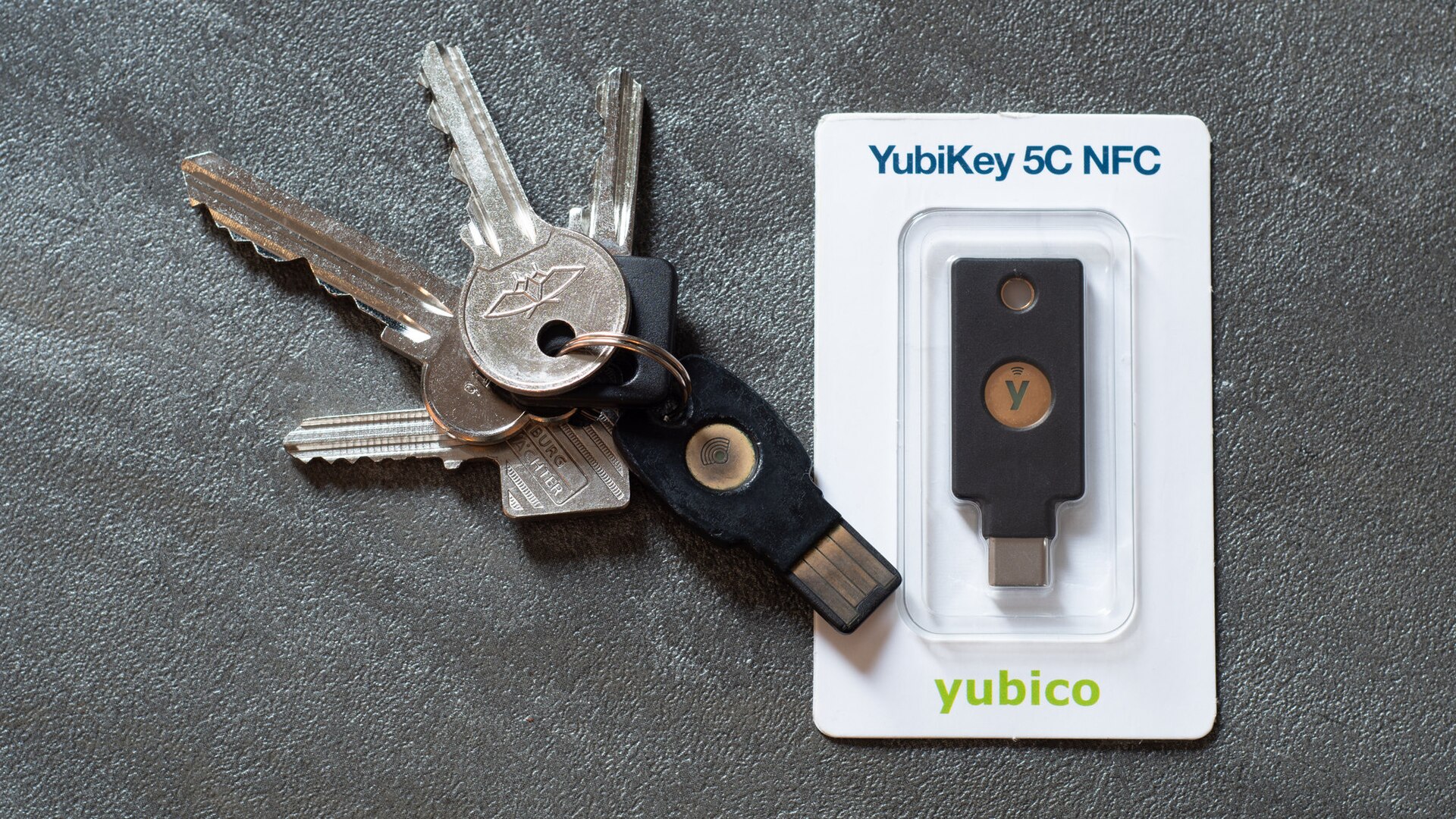
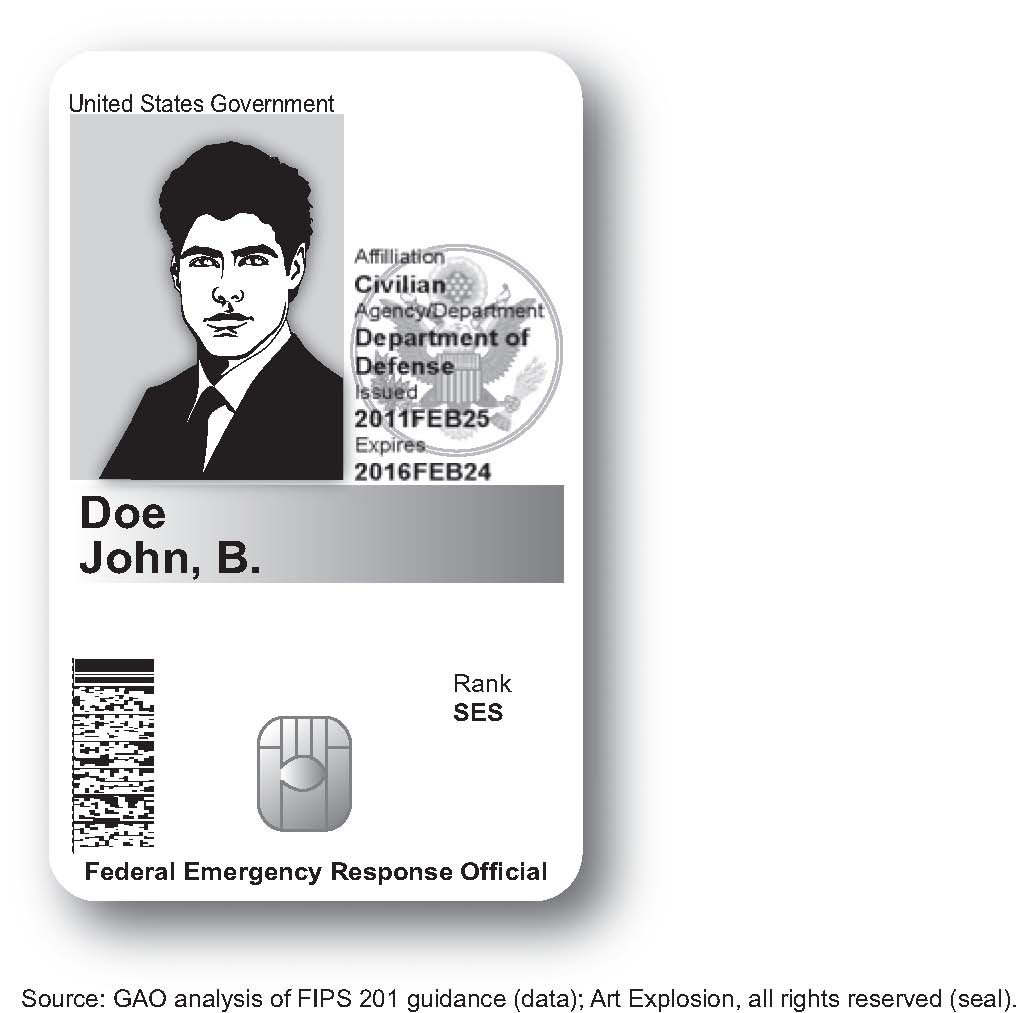
Phishing-resistant authenticators close that gap because they check where they are. A FIDO2 security key or passkey holds a private cryptographic key created for one website. When a sign-in page asks it to prove the user's identity, it signs a challenge that includes the site's real web address. A fake site at a look-alike address gets a signature that is useless on the real site, and the key will not respond to an unregistered site at all. Smart cards using public key infrastructure (PKI), such as the federal Personal Identity Verification (PIV) card and the military Common Access Card (CAC), achieve the same protection with certificates. NIST SP 800-63B-4 requires verifiers at AAL2 to offer at least one phishing-resistant option, requires phishing resistance at AAL3, and says federal agencies must require it for their own staff, contractors and partners.5 OMB's M-22-09 had already ordered that "For agency staff, contractors, and partners, phishing-resistant MFA is required," named PIV and "FIDO2 and Web Authentication-based authenticators" as acceptable, and told agencies to discontinue methods that fail to resist phishing, including SMS, voice, one-time codes and push notifications.21

Passkeys: synced and device-bound
A passkey is a FIDO credential that replaces the password entirely: the user activates it with a fingerprint, face or device PIN, and the device signs the sign-in challenge. There are two kinds, and the difference matters for regulated organizations:
- Device-bound passkeys live on one piece of hardware, such as a security key or a computer's security chip, and cannot be copied off it. They meet NIST AAL3 when the hardware qualifies.
- Synced passkeys are copied through a cloud account (for example, an Apple, Google or Microsoft account or a password manager) to all of the user's devices, so losing a phone does not lose the credential. SP 800-63B-4 now accepts "syncable authenticators" at AAL2 if the sync service meets its requirements, but not at AAL3, because the key can be exported.5
The trade-off is real. Synced passkeys are far easier to roll out to thousands of people and to customers, and they are still phishing-resistant. But they move part of the trust to the cloud account that syncs them: if a criminal takes over the employee's personal cloud account, the passkey may follow. Many organizations use synced passkeys for the general workforce and customers, and device-bound keys for administrators, executives, finance staff who move money, and anyone with access to large amounts of sensitive data. CISA's December 2024 guidance for highly targeted people says hardware FIDO security keys "are the most effective; however, FIDO passkeys are an acceptable alternative."22

MFA fatigue and number matching
Push MFA, where a phone app asks "Is this you signing in? Approve or Deny," is easy for users and was a big improvement over passwords. Its weakness is that the user can approve a sign-in they did not start. In push bombing or MFA fatigue, an attacker who already has the password triggers prompt after prompt, sometimes late at night, sometimes with a phone call pretending to be IT, until the user approves one to make it stop. The joint CISA and FBI advisory on Scattered Spider describes the group sending "repeated MFA notification prompts leading to employees pressing the 'Accept' button."6
Number matching blunts this: the sign-in screen shows a number, and the user must type that number into the app to approve, which is only possible for someone looking at the real sign-in screen. CISA's companion fact sheet recommends number matching as an interim step for organizations that cannot move to phishing-resistant MFA right away.23 Number matching does not stop an adversary-in-the-middle phishing page, which can show the user the number.
Text messages, voice calls and SIM swaps
Codes sent by text message or voice call are the weakest common form of MFA. In a SIM swap, a criminal persuades or bribes a mobile carrier's employee to move the victim's phone number to a SIM card the criminal controls, and then receives the codes. The federal Cyber Safety Review Board, reviewing the Lapsus$ group's attacks on large companies in 2021 and 2022, found "a collective failure to sufficiently account for and mitigate the risks associated with using Short Message Service (SMS) and voice calls for MFA," and recommended that organizations "transition away from voice and SMS-based MFA" toward FIDO2-compliant, phishing-resistant methods.24 CISA's December 2024 mobile guidance says plainly: "Do not use SMS as a second factor for authentication."22 NIST SP 800-63B-4 keeps telephone delivery as a "restricted" option that verifiers may offer only with other choices available and with attention to signs such as a recent SIM change.5
Even so, a text message code still stops the large majority of automated and bulk attacks. The question for a large organization is not "SMS or nothing" but "how quickly can we move each group of users up the ladder, starting with the people attackers want most."
What the evidence says about MFA
Two large studies by companies that run identity systems give a sense of scale, with the caution that both companies sell MFA:
- A Microsoft study of Azure Active Directory accounts showing suspicious activity (Meyer and colleagues, May 2023) found that MFA reduced the risk of account compromise by 99.22 percent across the population studied and by 98.56 percent for accounts whose credentials had leaked.25
- A Google study (Thomas and Moscicki, May 17, 2019) found that a phone-based sign-in prompt blocked 100 percent of automated bot attacks, 99 percent of bulk phishing and 90 percent of targeted attacks; an SMS code blocked 100, 96 and 76 percent respectively; and "zero users that exclusively use security keys fell victim to targeted phishing" during the study.26
The pattern is consistent: any MFA stops most mass attacks, and only phishing-resistant MFA reliably stops the skilled, targeted attacks that cause the largest breaches.
Who requires MFA, and how strong
Large organizations rarely answer to just one rule. The table lists the most common requirements as of Nov. 13, 2026. Lesson 3, The Standards Map, explains which rules apply to which organizations.
| Rule (version) | Who it covers | What it requires |
|---|---|---|
| FTC Safeguards Rule, 16 CFR 314.4(c)(5) (MFA in force since June 9, 2023) | Non-bank financial institutions under FTC jurisdiction: mortgage brokers, auto dealers that finance, tax preparers, many fintechs | MFA "for any individual accessing any information system," unless the Qualified Individual approves in writing a reasonably equivalent or more secure control7 |
| 23 NYCRR 500.12 (as amended Nov. 1, 2023; universal MFA from Nov. 1, 2025) | Banks, insurers and other firms licensed by the New York Department of Financial Services | MFA "for any individual accessing any information systems of a covered entity," unless the CISO approves in writing reasonably equivalent or more secure compensating controls, reviewed at least annually; entities with the 500.19(a) limited exemption must still use MFA for remote access to their systems, remote access to third-party applications from which nonpublic information is accessible, and privileged accounts other than service accounts that cannot sign in interactively8 |
| PCI DSS v4.0.1 (June 2024), requirements 8.4.2 and 8.3.6 | Anyone who stores, processes or transmits payment card data | MFA for all access into the cardholder data environment (future-dated requirement, mandatory since March 31, 2025); passwords at least 12 characters where systems support it19 |
| HIPAA Security Rule (current text, 2003, amended 2013) | Health plans, clearinghouses, most providers and their business associates | Person or entity authentication (164.312(d)) with no MFA requirement by name; HHS's Jan. 6, 2025 proposal would require MFA with limited exceptions, but no final rule had been published as of Nov. 14, 2026, and HHS's regulatory agenda has moved the target for a final rule from May 2026 to July 20271827 |
| OMB M-22-09 (Jan. 26, 2022) and Executive Order 14028 (May 12, 2021) | Federal civilian agencies | Agency-wide MFA (EO 14028); phishing-resistant MFA for staff, contractors and partners and an option for the public (M-22-09)2821 |
| NIST SP 800-171 Rev. 2, requirement 3.5.3 (used for CMMC Level 2), and Rev. 3, 03.05.03 | Defense contractors and others handling Controlled Unclassified Information | Rev. 2: MFA for local and network access to privileged accounts and for network access to non-privileged accounts; Rev. 3: MFA for access to privileged and non-privileged accounts29 |
| FFIEC guidance, "Authentication and Access to Financial Institution Services and Systems" (Aug. 11, 2021) | Banks and credit unions examined by federal regulators | Risk-based authentication; MFA or equivalent controls for high-risk users, including employees, third parties and customers with high-risk access30 |
| Idaho Code 67-827A and 67-2362 (House Bill 35, 2025, effective July 1, 2025) | Idaho state agencies, the legislative and judicial branches, and elected constitutional officers and their staffs | Multifactor identification for local and remote access to email, cloud storage, web applications, networks, databases and servers9 |
Cyber insurers belong in this list too. Since about 2021, insurance applications have routinely asked whether MFA protects email, remote access and administrator accounts, and a wrong answer can put a claim at risk. Lesson 10, Detection and Incident Response, and module 73's Continuity, Recovery and Cyber Insurance discuss insurance.
Notice what the Idaho law does and does not say. Its definition counts "SIM cards" and "smartphone applications" as possession-based credentials, so a text message code satisfies the statute even though federal guidance now treats it as the weakest option.9 Meeting the law is the floor; the agencies and offices it covers can choose stronger methods, and the Office of Information Technology Services sets the policy.
Passwords under NIST SP 800-63B-4
Passwords will be with large organizations for years, on legacy systems, as one factor of MFA, and as the code that opens devices. NIST's final Revision 4 of its authentication guidelines (SP 800-63B-4, dated July 2025 and released Aug. 1, 2025) replaced the 2017 version and settled several arguments that had run for a decade.155 The guidelines bind federal agencies; for everyone else they are the most widely cited statement of good practice, and regulators, auditors and insurers increasingly expect policies to match them.
| Topic | NIST SP 800-63B-4, section 3.1.1.2 (July 2025) | Older corporate practice it replaces |
|---|---|---|
| Minimum length | At least 15 characters when the password is the only factor; at least 8 when it is part of MFA ("SHALL") | 8 characters |
| Maximum length | Allow at least 64 characters ("SHOULD") | Often capped at 16 or 20 |
| Composition rules | "SHALL NOT impose other composition rules (e.g., requiring mixtures of different character types)" | Upper case, lower case, number and symbol required |
| Periodic change | "SHALL NOT require subscribers to change passwords periodically"; must force a change when there is evidence of compromise | Change every 60 or 90 days |
| Blocklist | Compare new passwords against a list of commonly used, expected or compromised passwords and reject matches, telling the user why | Rarely done |
| Hints and security questions | No hints available to unauthenticated users; do not prompt for knowledge-based questions ("first pet") | Security questions for resets |
| Password managers and paste | "SHALL allow the use of password managers and autofill"; SHOULD permit pasting | Paste blocked |
| Truncation | Verify the entire password; never truncate | Some systems silently cut long passwords |
The reasoning is now well established. Forced complexity produces predictable patterns ("Summer2026!"), and forced rotation produces small, guessable changes to the same password. Length, a blocklist of passwords that criminals already have, and a password manager do more good and cause less frustration. OMB had already ordered federal agencies in 2022 to remove special character and regular rotation requirements: "Password policies must not require use of special characters or regular rotation."21
Two cautions for regulated organizations. First, some rules and contracts still set their own password terms. PCI DSS v4.0.1, for example, sets a 12-character minimum (requirement 8.3.6) and, where a password is the only factor for user access, requires either changing it at least every 90 days or analyzing the account's security posture dynamically (requirement 8.3.9).19 When a rule you are subject to sets a stricter or different term, follow the rule for the systems it covers, and document why. Second, "no forced rotation" applies to people's passwords with a blocklist and monitoring in place. It does not apply to shared administrator passwords or service account secrets, which should be vaulted and rotated, especially when someone who knew them leaves.
The help desk is part of the sign-in system
Strong MFA has pushed skilled criminals toward the weakest remaining path: the account recovery process. If a caller can persuade the help desk to reset a password and register a new MFA device, the strongest authenticator in the world does not matter. The 2025 update to the joint advisory on Scattered Spider says the group "posed as employees to convince IT and/or helpdesk staff to provide sensitive information, reset the employee's password" and transfer MFA to devices the group controlled, and also posed as IT staff to get employees to read out their one-time codes.6
Two cases from 2023 show the cost:
- MGM Resorts (September 2023). MGM told investors in an Oct. 5, 2023 Form 8-K that the "cyber security issue" would have a negative impact of about $100 million on its third-quarter results, plus less than $10 million in one-time expenses, and that criminals had obtained personal information of customers, including some Social Security and passport numbers.31 MGM's filing did not describe how the attackers got in; news reports at the time, including a statement the attackers posted, described a phone call to the help desk by someone posing as an employee.
- Clorox (August 2023). In a lawsuit filed in July 2025 in Alameda County Superior Court, Clorox alleged that callers obtained password resets, MFA resets and phone number changes from its outsourced service desk, run by Cognizant, without the verification the contract required, and claimed about $380 million in damages. Cognizant denied responsibility and said it did not manage Clorox's cybersecurity.32 In a 2026 ruling, the court declined to strike Clorox's damages claim at the outset, so the case continues; these are still allegations, not findings.
A help desk that handles identity for a large organization needs written, enforced rules:
- No reset on knowledge alone. Name, employee number, date of birth, manager's name and the last four digits of a Social Security number are all findable. They do not prove identity.
- Verify through a channel the caller does not control. Call back on the number in the HR system (not the number the caller gives), require a live video check against the ID photo on file, or require the person's manager to confirm in a separate channel. Some organizations use identity verification services that compare a government ID to a selfie.
- Stronger checks for higher-risk accounts. Executives, administrators, finance staff who move money, and anyone with access to large data sets get a stricter path, ideally in person or with two verifiers.
- Prefer self-service recovery with strong factors. If every employee has two registered security keys or passkeys, most "I lost my phone" calls can be resolved without the help desk resetting anything.
- Notify and slow down. Any reset or new MFA registration sends an alert to the user's old contact methods and manager, and new devices get limited access for a set period.
- Write it into the outsourcing contract. If a vendor runs the service desk, the contract states the verification steps, requires recorded calls or logs, and gives you the right to audit them. Lesson 8 covers vendor contracts.
Social engineering of staff more broadly, including voice cloning and deepfake video calls, is covered in lesson 9, People: Training, Phishing and Insider Risk.
Privileged access management
A privileged account can change the rules: create users, grant rights, change security settings, read any mailbox, stop backups, or deploy software to every computer. Ransomware groups seek domain administrator rights because with them they can push encryption to every server at once. Privileged access management (PAM) is the set of controls that keeps those accounts few, strong, temporary and watched.
The core privileged access controls
- Separate admin accounts. Administrators use a normal account for email and web browsing and a separate privileged account, with phishing-resistant MFA, for administration. A phishing email that lands in the normal mailbox then cannot reach administrator rights directly. NIST SP 800-53's AC-6(2) states the idea: use non-privileged accounts for non-security functions.16
- Tiering. Accounts that administer the identity system itself (domain controllers, the identity provider, PAM tools) are the crown jewels and are used only from dedicated, hardened workstations. Accounts that administer servers are a separate tier, and workstation administrators are a third. An account from a higher tier never signs in to a lower-tier machine, where its credentials could be stolen.
- Just-in-time access. Instead of permanent administrator rights, people request administrator rights for a task and a time window (often one to eight hours), with approval for the most sensitive roles. Cloud providers' identity tools and PAM products support this. Standing administrator rights for named people should be rare and reviewed quarterly.
- Vaulting and rotation. Shared and built-in privileged passwords (the local administrator on each server, network device accounts, database owner accounts) are stored in a vault, checked out with a reason, and rotated automatically after use. Each server's local administrator password should be unique, so one stolen password does not open every server.
- Session recording and alerting. Privileged sessions on the most sensitive systems are recorded or at least logged in detail, and certain actions (adding someone to a domain administrators group, disabling logging, deleting backups) trigger immediate alerts. Lesson 10 covers logging.
- Break-glass accounts. A small number of emergency accounts exist for when the identity provider or MFA service is down. They are excluded from conditional access rules that could lock everyone out, protected by long secrets kept in a physical safe or split between two officers, never used day to day, and alarmed so that any use is investigated.
Before changing administrator rights, conditional access rules or MFA enforcement on production systems, plan the change, test it on a small group, and keep a tested way back, such as a working break-glass account; identity changes are among the easiest ways to lock an entire organization out of its own systems.
Service accounts, API keys and other non-human identities
In a large organization, accounts used by software usually outnumber accounts used by people, often many times over. Backup programs, monitoring tools, integration platforms, scheduled scripts, cloud functions, chatbots and AI agents all sign in to something. These non-human identities include service accounts in the directory, API keys and tokens, OAuth applications (a program a user or administrator has authorized to act on their behalf), SSH keys, certificates, and cloud workload identities. They share three bad habits: they are often highly privileged, their secrets rarely change, and nobody owns them after the person who created them leaves.
Four documented incidents show how these accounts fail:
- Okta support system (2023). Okta's root cause report said the attacker used a service account stored in the support system itself, an account that could view and update support cases. An employee had signed into a personal Google profile in the Chrome browser on a company laptop, and the service account's credentials were saved to that profile; the most likely exposure was the compromise of the employee's personal account or device. Files tied to 134 customers were accessed between Sept. 28 and Oct. 17, 2023, and session tokens found in some of them were used to hijack sessions of five customers. Okta disabled the service account, blocked personal Google profiles on managed laptops, and added session token binding for administrators.33
- Microsoft and Midnight Blizzard (2023 to 2024). Microsoft reported that a Russian state actor used password spraying against "a legacy, non-production test tenant account that did not have multifactor authentication (MFA) enabled," then found a legacy test OAuth application with high-level permissions in Microsoft's corporate environment and used it to give itself access to corporate mailboxes. Microsoft detected the attack on Jan. 12, 2024.34 A forgotten test account and a forgotten test application with real power were enough.
- Drizly (2018 and 2020). The FTC alleged that an employee exposed cloud computing login information on GitHub, that Drizly "did not require employees to use two-factor authentication for GitHub," and that an attacker later took over an employee's GitHub account, found stored credentials and stole data on about 2.5 million consumers. The 2023 final order required MFA for employee access to consumer data and also bound the CEO personally to run a security program at future companies that collect data on more than 25,000 people.35
- Chegg (2017 to 2020). The FTC alleged that Chegg "allowed employees and contractors to use a single login to access" its cloud databases, "did not require employees to use multifactor authentication measures" for them, stored personal data in plain text, and suffered "four security breaches since 2017." The order requires Chegg to provide MFA to customers and employees.36
The controls for non-human identities mirror those for people, with a few additions:
- Inventory and ownership. Every service account, API key and OAuth application has a named human owner, a purpose and a review date. Unowned ones are disabled after notice.
- No interactive sign-in. Service accounts are marked as such and blocked from interactive sign-in, so a stolen secret cannot be used to open a desktop or browser session.
- Least privilege and scoping. Each integration gets its own account with only the rights it needs, never a shared "integration admin." API keys are limited to specific actions and, where possible, specific source networks.
- Secrets out of code and documents. Keys and passwords go in a secrets manager, never in source code, chat messages, tickets, spreadsheets or browser profiles. Automated scanners check code repositories for leaked secrets before code is merged.
- Replace secrets with short-lived credentials. Modern cloud platforms let workloads prove their identity with short-lived tokens (often called workload identity federation or managed identities) instead of long-lived keys. Where long-lived keys remain, rotate them on a schedule and immediately when someone with access leaves.
- Review OAuth consents. Users and administrators grant third-party applications access to mail, files and calendars. Restrict who may grant consent, review high-privilege applications quarterly, and remove unused ones.
Vendors are moving in the same direction. After the 2024 campaign against its customers, Snowflake set out a timeline to end single-factor password sign-ins: mandatory MFA for human users of its web interface (September 2025 to January 2026), a requirement that new human users use a second factor (May to July 2026), and, from August 2026 on a rolling basis, no password-only sign-in for any human user and migration of legacy service users to a type that cannot use a password at all, with dates varying by account.37
Single sign-on, federation and sessions
Single sign-on (SSO) concentrates authentication in one identity provider that vouches for the user to hundreds of applications, using standards such as SAML 2.0 and OpenID Connect. For a large organization SSO is both the biggest security gain and the biggest single point of failure in identity:
- The gain: one place to enforce phishing-resistant MFA and device checks for every application; one switch that turns off a leaver's access everywhere; one set of sign-in logs to watch.
- The risk: a compromise of the identity provider, or of an administrator who controls it, reaches every connected application. Identity provider administrators are therefore the highest privilege tier and get the strictest controls.
Two practical points. First, an application that is "behind SSO" but still allows local username and password sign-in has a back door; turn off local sign-in for everyone except a monitored break-glass account. Many SaaS vendors charge more for SSO, a practice sometimes called the "SSO tax," and procurement should negotiate it in rather than accept a product without it. Second, after sign-in the user holds a session token (a cookie or bearer token) that stands in for the sign-in until it expires. Infostealer malware and adversary-in-the-middle phishing pages steal these tokens to bypass MFA entirely. SP 800-63B-4 recommends that AAL2 sessions last no longer than 24 hours overall and 1 hour of inactivity, and requires AAL3 sessions to end after 12 hours, with a recommended 15-minute inactivity timeout.5 Binding tokens to a device or network, as Okta did for its administrators after 2023, makes a stolen token much less useful.33
Conditional access policies in the identity provider tie these together: require phishing-resistant MFA for administrators and sensitive applications, allow access only from managed and healthy devices, block sign-ins from countries where you have no staff, and step up authentication when a sign-in looks risky. Lesson 6 explains how this fits the zero trust model.
Directory hygiene
The directory accumulates history. Ten or twenty years of mergers, reorganizations, projects and departed staff leave behind accounts and groups that no one can explain. Attackers look for exactly those. A yearly cleanup plan, with monthly sweeps, should cover:
- Stale and orphaned accounts: no sign-in for 45 or 90 days, or no matching HR or vendor record. Disable, wait, then delete.
- Legacy authentication: older email and directory protocols that cannot do MFA. As long as one is enabled, a password alone opens the account. Turn them off, with named and time-limited exceptions.
- Test, demo and training tenants and accounts: the Microsoft case shows these must meet the same MFA rules or be deleted.34
- Nested and oversized groups: groups inside groups that quietly grant administrator rights to hundreds of people. Review membership of every group that confers privilege.
- Accounts with passwords that never expire and are never used: often service accounts created by hand years ago.
- Old VPN profiles and remote access paths: Colonial Pipeline's CEO testified that the attacker "exploited the legacy VPN profile that was not intended to be in use," protected by a single factor.1
- Delegations and mailbox permissions: forgotten rights to read executives' mailboxes, and forwarding rules to outside addresses.
What went wrong: six incidents, one pattern
Lesson 1, The Big Picture, tells these stories from the attacker's side. Here they are from the identity team's side, with the control that would most likely have stopped or slowed each one.
| Incident | What the public record says | The identity control that was missing |
|---|---|---|
| Colonial Pipeline, May 2021 | Attacker used a legacy VPN profile with only a password ("It was a complicated password," the CEO told the Senate); the company's normal remote access required an RSA token1 | Directory and remote access hygiene; MFA on every remote access path |
| MGM Resorts, September 2023 | About $100 million impact on third-quarter results; entry method not described in the SEC filing, widely reported as help-desk social engineering31 | Help desk identity verification; phishing-resistant MFA for administrators |
| Okta support system, Sept. to Oct. 2023 | Service account credentials saved in a personal browser profile; 134 customers' files accessed33 | Service account ownership and vaulting; block personal profiles on managed devices |
| Microsoft, Nov. 2023 to Jan. 2024 | Password spray against a legacy test tenant account without MFA; legacy OAuth app with broad permissions34 | MFA on every account including test tenants; review of high-privilege OAuth applications |
| Change Healthcare, February 2024 | "On February 12, criminals used compromised credentials to remotely access a Change Healthcare Citrix portal... The portal did not have multi-factor authentication"; ransomware deployed nine days later; about 192.7 million people affected as of July 31, 2025238 | MFA on all remote access; inventory of internet-facing sign-in pages after acquisitions |
| Snowflake customers, April to June 2024 | About 165 organizations notified; accounts lacked MFA, stolen credentials had not been rotated (some from infostealer infections dating to November 2020), and no network allow lists; no evidence of a breach of Snowflake's own environment3 | MFA on cloud data platforms; rotate exposed credentials; network restrictions for service access |
The common pattern is not sophistication. It is a door that was supposed to be locked and was not: an account outside the process, a portal outside the MFA rollout, a help desk outside the authentication policy. That is why identity programs live or die on coverage, the share of accounts, applications and access paths that actually meet the standard, and why boards should ask for that number. Lesson 4, Governance: Boards, Officers and Disclosure, covers board metrics.
Running an identity program at scale
Who owns identity
Identity crosses every department, so ownership must be written down. A workable split in a large organization: HR owns the employee record and the dates that drive joiner, mover and leaver events; vendor management or procurement owns contractor and vendor records and their sponsors; each application or data owner decides who should have access to their system; the identity team runs the directory, identity provider, MFA and PAM tools; the CISO sets the standards and reports coverage; internal audit tests the whole chain; and the board or its risk committee receives the coverage metrics. Lesson 2, Risk Management in Plain Terms, explains how to put identity risks in the risk register.
Metrics that mean something
Boards and executives are often told "we have MFA." The useful questions are about coverage and speed:
- Percentage of human accounts with MFA enforced (not just enrolled), and percentage with phishing-resistant MFA, broken out for administrators, executives and finance staff.
- Percentage of internet-facing applications and remote access paths behind SSO and MFA, and a list of the exceptions with owners and end dates.
- Number of standing privileged accounts, and the trend.
- Median time from HR termination to account disablement, and the number of leavers whose access outlived them by more than a day.
- Access review completion rate and the share of entitlements removed.
- Number of service accounts and API keys with no owner, or with secrets older than the rotation standard.
- Help desk resets for high-risk accounts, and the share that followed the verification procedure on audit.
A 90-day identity plan, step by step
For an organization starting from a typical mixed state, a first 90 days might run like this. The numbers of days are illustrative; set your own based on your risk assessment.
- Days 1 to 15: find the doors. Inventory every internet-facing sign-in: VPNs, remote desktop gateways, Citrix and similar portals, email, SaaS applications, vendor portals, cloud consoles, data platforms. Mark which enforce MFA. This list is the Change Healthcare and Snowflake lesson.
- Days 1 to 30: close the worst gaps. Enforce MFA on every remote access path and every administrator account. Disable legacy authentication protocols. Disable accounts with no owner. Plan, test and keep a way back for each change.
- Days 15 to 45: fix the help desk. Adopt a written verification procedure for password and MFA resets, with stricter steps for high-risk accounts, and test it with a scripted call.
- Days 30 to 60: privileged access. Separate administrator accounts from daily accounts, issue hardware security keys to all administrators, vault shared privileged passwords, and set up alerts on changes to administrator groups.
- Days 45 to 75: connect HR. Make HR and vendor records the trigger for account creation and disablement; set expiration dates on every contractor account.
- Days 60 to 90: non-human identities and reviews. Inventory service accounts, API keys and OAuth applications; assign owners; start the first risk-based access review of privileged and sensitive access.
- Day 90 and after: move up the ladder. Set a dated plan to move the whole workforce to phishing-resistant MFA, starting with the people attackers want most, and adopt NIST SP 800-63B-4 password rules where no stricter rule applies.
Sample policies
The two samples below are written for a large organization. The SANS Institute's free policy templates and CIS's policy templates are other starting points; lesson 12, Privacy Law Overview, Resource and Policy Library, lists every sample policy in this module.
Sample only. Adapt it to your organization's risks, systems and laws, have qualified people review it, and do not treat it as a substitute for a risk assessment.
Follows: NIST SP 800-53 Rev. 5 (AC-2, AC-5, AC-6, IA-2); NIST Cybersecurity Framework 2.0, category PR.AA (Feb. 26, 2024); CIS Controls v8.1, Controls 5 and 6; 16 CFR 314.4(c)(1); 23 NYCRR 500.7; 45 CFR 164.308(a)(3) and (a)(4); PCI DSS v4.0.1 requirements 7 and 8. Checked Nov. 13, 2026.
Access Control Policy (sample)
1. Purpose. This policy sets how [Organization] grants, changes, reviews and removes access to its information systems and data, so that every person and program has only the access its job requires.
2. Scope. All employees, contractors, vendors, volunteers, students and other users; all service accounts, API keys, OAuth applications and other non-human identities; all systems, applications, cloud services and data owned or operated by or for [Organization], wherever located.
3. Principles. (a) Least privilege: access is limited to what is needed for assigned duties. (b) Need to know: access to sensitive data requires a business reason. (c) Separation of duties: no single person may [create a vendor and approve payment to it; develop and deploy code to production without review; administer and erase audit logs]; the list of conflicting roles is maintained by [Identity Governance Lead]. (d) Unique accounts: every user has an individual account; shared accounts are prohibited except as approved under section 9.
4. Authoritative sources. Workforce identities are created, changed and disabled only from records in [HR system]. Contractor and vendor identities are created only from records in [vendor management system] with a named internal sponsor and an end date not more than [12] months away.
5. Granting access. Standard access for each department is defined in role descriptions approved by the department head and [CISO]. Any additional access requires a request, approval by the system or data owner, and, for privileged or sensitive access, approval by [Security]. Temporary access must have an end date.
6. Changes in role. On a transfer or change of duties, new access is granted and prior access is removed within [14] days unless the new manager approves, in writing, a specific item to keep.
7. Removal of access. Accounts are disabled at the time of separation, and before notice for involuntary separations or users with privileged access. Within [24 hours], [IT] revokes active sessions and tokens, removes MFA registrations, disables accounts in applications outside single sign-on, and changes any shared secrets the person knew. Devices, security keys and badges are collected or remotely disabled.
8. Access reviews. System and data owners review access to privileged accounts and to systems holding [restricted] data at least quarterly, and all other access at least annually [and at least every six months for systems in the cardholder data environment]. Removals are completed within [10 business days]. Accounts inactive for [45] days are disabled. Accounts with no current owner are disabled monthly.
9. Privileged access. Privileged activities are performed only with separate administrator accounts using phishing-resistant MFA from [approved administrative workstations]. Standing privileged access is limited to [named roles] and reviewed quarterly; other administrator rights are granted just in time for no more than [8] hours. Shared and built-in privileged credentials are stored in [vault], checked out with a reason, and rotated after use. Break-glass accounts are limited to [two], stored under dual control, and every use is investigated.
10. Non-human identities. Every service account, API key, certificate and OAuth application has a named owner, documented purpose and review date; is denied interactive sign-in where the platform allows; holds only required permissions; and stores secrets only in [secrets manager]. Secrets are rotated at least every [12] months and immediately when a person with access leaves. User consent to third-party applications is limited to [approved publishers]; high-privilege applications are reviewed quarterly.
11. Logging. Access grants, changes, removals, privileged sessions and authentication events are logged and retained for [period, consistent with the logging standard], and alerts are generated for changes to privileged groups.
12. Exceptions. Exceptions require a written risk acceptance signed by the system owner and [CISO], with compensating controls and an expiration date of no more than [12] months.
13. Roles. [HR], [Vendor Management], system and data owners, [Identity team], [Help desk], [CISO], [Internal Audit]: responsibilities as described in [RACI table].
14. Enforcement and review. Violations may result in loss of access and discipline. This policy is reviewed at least annually by [CISO] and approved by [executive or board committee]. Effective [date]. Version [number].
Sample only. Adapt it to your organization's risks, systems and laws, have qualified people review it, and do not treat it as a substitute for a risk assessment.
Follows: NIST SP 800-63B-4 (July 2025), sections 2 and 3.1.1.2; OMB M-22-09 (Jan. 26, 2022); CISA, "Implementing Phishing-Resistant MFA" (October 2022); joint advisory AA23-320A (updated July 29, 2025); 16 CFR 314.4(c)(5); 23 NYCRR 500.12; PCI DSS v4.0.1 requirements 8.3 and 8.4. Checked Nov. 13, 2026.
Password and Multifactor Authentication Standard (sample)
1. Purpose and scope. This standard sets minimum authentication requirements for all [Organization] users and systems. Where a law, regulation or contract sets a stricter requirement for a system, that requirement applies to that system.
2. MFA required. MFA is required for (a) all access to [Organization] systems from outside the internal network; (b) all privileged and administrator access; (c) email, [single sign-on], cloud services and remote access tools; (d) all access to systems holding [restricted] data or [cardholder, health or customer financial] data; and (e) [all other access, by (date)].
3. Strength by role. Phishing-resistant MFA (FIDO2 security keys, device-bound or synced passkeys, or PKI smart cards) is required for [administrators, identity provider administrators, executives, staff who approve payments or change payee details, and users with bulk access to restricted data] by [date], and for all users by [date]. Device-bound authenticators are required for [identity provider and domain administrators]. Until then, push approval must use number matching. SMS and voice codes are permitted only [for account recovery with additional verification, or as a temporary method of no more than (14) days].
4. Authenticators. Users with phishing-resistant MFA register at least two authenticators. Authenticators are registered only after identity verification under section 7. Lost or stolen authenticators must be reported to [help desk] immediately.
5. Passwords. Where passwords are used: (a) minimum length 15 characters when the password is the only factor, and [12] characters when used with MFA [the PCI DSS minimum]; (b) at least 64 characters allowed; (c) no composition rules; (d) new passwords are checked against a list of common, expected and compromised passwords; (e) no periodic expiration for user passwords except [where required by PCI DSS 8.3.9 or another rule], but passwords are changed immediately on any evidence of compromise; (f) no password hints or knowledge-based questions; (g) approved password managers and paste are allowed; (h) passwords are never shared, emailed, or stored in documents or browsers on unmanaged devices.
6. Privileged and service credentials. Shared, built-in and service account secrets are stored in [vault or secrets manager], are unique per system, and are rotated after use, at least every [12] months, and immediately when a person who knew them leaves. Service accounts may not sign in interactively.
7. Resets and recovery. The help desk will not reset a password or MFA registration based on information the caller provides. Identity is verified by [callback to the number in the HR system, live video comparison with the photo on file, or in-person ID check], and for [high-risk accounts] by an additional approval from [manager or Security] through a separate channel. Each reset or new registration triggers a notice to the user and [manager] and is logged for audit.
8. Sessions. Sessions for [standard applications] end after no more than [24] hours or [1] hour of inactivity; sessions for privileged and [restricted] systems end after no more than [12] hours or [15] minutes of inactivity.
9. Legacy and exceptions. Legacy authentication protocols that cannot enforce MFA are disabled. Systems that cannot support this standard are listed with an owner, compensating controls, and a replacement date, approved in writing by [CISO] [and, for New York Part 500 or FTC Safeguards Rule purposes, by the CISO or Qualified Individual], and reviewed at least annually.
10. Review. [CISO] reviews this standard at least annually and whenever NIST, CISA or applicable regulators change their guidance. Effective [date]. Version [number].
Pictures, Numbers and Infographics
The key numbers in this lesson, each with its source and date.
| Number | What it measures | Source and date |
|---|---|---|
| 22 percent | Breaches where credential abuse was the initial access vector (most common vector that year) | Verizon DBIR 202510 |
| 12,195 | Confirmed data breaches analyzed (of 22,052 incidents) | Verizon DBIR 202510 |
| 31 percent | Breaches starting with exploitation of vulnerabilities, now ahead of stolen credentials | Verizon DBIR 2026 (incidents Nov. 1, 2024 to Oct. 31, 2025)11 |
| 19 percent; 25 percent | Median share of daily sign-in attempts that were credential stuffing; share at enterprise-sized organizations | Verizon, 2025 DBIR research on credential stuffing13 |
| 99.22 percent | Reduction in account compromise risk with MFA (98.56 percent for accounts with leaked credentials) | Meyer and colleagues, Microsoft, May 202325 |
| 0 | Users relying only on security keys who fell to targeted phishing in Google's study | Google, May 17, 201926 |
| 15 characters | Minimum password length when a password is the only factor (8 when part of MFA) | NIST SP 800-63B-4, July 20255 |
| 64 characters | Maximum length verifiers should allow, at minimum | NIST SP 800-63B-4, July 20255 |
| 24 hours; 12 hours | Maximum overall session length recommended at AAL2; required at AAL3 | NIST SP 800-63B-4, July 20255 |
| Every 6 months | Minimum review of user accounts and access in the cardholder data environment | PCI DSS v4.0.1, requirement 7.2.419 |
| 90 days | Inactive user accounts removed or disabled (PCI); 45 days for dormant accounts in CIS Safeguard 5.3 | PCI DSS v4.0.1, 8.2.6; CIS Controls v8.11917 |
| Nov. 1, 2025 | Date New York's universal MFA requirement took effect for DFS-regulated companies | NYDFS, MFA requirements, July 20258 |
| July 1, 2025 | Effective date of Idaho House Bill 35 requiring multifactor identification in state government (House 54 to 16, Senate 31 to 4; signed Feb. 24, 2025) | Idaho Legislature, H0035 (2025)9 |
| About 165 | Organizations notified in the 2024 Snowflake customer campaign; at least 79.7 percent of accounts used had prior credential exposure | Mandiant, June 10, 20243 |
| About 192.7 million | People affected by the Change Healthcare breach, as of July 31, 2025 | HHS Office for Civil Rights38 |
| About $100 million | Estimated negative impact of the September 2023 attack on MGM's third-quarter results | MGM Resorts Form 8-K, Oct. 5, 202331 |
| 134 | Customers whose support files were accessed in the 2023 Okta incident | Okta root cause analysis, Nov. 3, 202333 |
| $4.5 million | New York penalty against EyeMed after a phish of a mailbox shared by nine employees without MFA | NYDFS, Oct. 18, 202239 |
| About 2.5 million | Consumers whose data was exposed in the Drizly breach | FTC, Oct. 24, 202235 |


Common mistakes
- MFA everywhere except the one door that mattered. Colonial Pipeline required an RSA token for normal remote access, but a legacy VPN profile accepted a password alone.1 Change Healthcare's Citrix portal had no MFA.2 Coverage, not adoption, is the measure.
- Shared accounts. NYDFS found that nine EyeMed employees shared the credentials for one mailbox holding more than six years of consumer records, and that MFA was not enforced across its email; the company paid $4.5 million.39 The FTC alleged Chegg let employees and contractors share a single login to its cloud databases.36
- Secrets in the wrong place. Drizly's cloud login information was exposed on GitHub and later stolen from it, according to the FTC.35 Okta's service account credentials ended up in an employee's personal browser profile.33
- Forgotten test and legacy accounts. Microsoft's test tenant account had no MFA, and a legacy test OAuth application held broad permissions in the corporate environment.34
- Credentials never rotated after exposure. In the Snowflake campaign, some stolen credentials were still valid years after they were stolen because they "had not been rotated or updated."3
- Help desks that reset on request. The Scattered Spider advisory describes this as a core technique, and Clorox's lawsuit alleges exactly this failure by its outsourced service desk.632
- Relying on SMS for the most targeted people. The Cyber Safety Review Board found SIM swaps defeated SMS-based MFA in several Lapsus$ intrusions.24
- Treating the policy as the control. A policy that says "access is reviewed quarterly" without evidence of completed reviews and removals is a finding waiting to happen in any audit, and a misstatement if certified to a regulator. New York's EyeMed order found the company's compliance certifications for 2018 through 2021 improper.39
Questions people ask
Is any MFA better than none?
Yes, by a wide margin. The Microsoft and Google studies show even SMS codes stop nearly all automated and bulk attacks.2526 The point of the strength ladder is to decide whom to move up first, not to delay MFA while waiting for the best kind.
Do passkeys replace MFA, or are they MFA?
A passkey activated with a fingerprint, face or PIN combines something you have (the device holding the key) with something you are or know, so it is multifactor and phishing-resistant in one step. NIST accepts synced passkeys at AAL2 and device-bound ones at AAL3 when the hardware qualifies.5
Should we stop forcing password changes every 90 days?
For user passwords, NIST SP 800-63B-4 says verifiers "SHALL NOT" require periodic changes, provided you force a change on evidence of compromise and screen passwords against a blocklist.5 Check first whether a rule you are under says otherwise for particular systems: PCI DSS v4.0.1 still requires 90-day changes where a password is the only factor and no dynamic risk analysis is used.19 Shared and service account secrets are a different case and should still be rotated.
What about employees who will not or cannot use their personal phones?
Issue hardware security keys or company phones. Requiring personal phones can raise reimbursement and labor relations questions, and some workers have no smartphone. NIST also requires verifiers to offer alternatives to telephone-based codes for exactly this reason.5 Module 73's lesson on identity and device control discusses personal device questions.
How many security keys does each person need?
Two, registered at the same time, with the spare kept somewhere safe. The spare is what lets someone recover from a lost key without a help-desk reset, which is the moment social engineers wait for.
Do financial statement auditors check identity controls?
Yes. For public companies and many others, external auditors test IT general controls that include user provisioning, removal, periodic access reviews and privileged access on systems that affect financial reporting. Weaknesses in those controls are a common source of audit findings, and lesson 4 discusses how boards should follow them.
What is the single most useful first step for a large organization?
List every internet-facing sign-in page and remote access path, and check whether each one enforces MFA. The incidents in this lesson were mostly not failures of the MFA that existed; they were doors that MFA never reached.
Hard questions
Should regulators mandate phishing-resistant MFA for private organizations?
The case for a mandate: the federal government already requires it of its own agencies, the Cyber Safety Review Board recommended moving away from SMS, and the incidents of 2021 to 2024 show that weaker forms are being beaten routinely by organized groups.2124 Voluntary adoption is slow, and the costs of a breach fall on patients, customers and the public, not only on the company. The case against: rules that name a technology age badly, hardware keys cost money and add help-desk work, some workers and customers lack the devices, and small entities covered by the same rules would bear the heaviest relative cost. Current rules mostly split the difference: the FTC and New York require MFA but not a specific type, and allow a written equivalent.78 What the evidence shows: MFA of any type stops most mass attacks, and phishing-resistant MFA is the only type with a strong record against targeted phishing and help-desk-assisted attacks.264
Synced passkeys or hardware keys?
For synced passkeys: they are phishing-resistant, cost little, work on devices people already have, survive a lost phone, and can be rolled out to tens of thousands of employees and millions of customers. For hardware keys: the key cannot be copied, so the security of the credential does not depend on a personal cloud account, and it meets AAL3.5 What the evidence shows: both stop phishing pages. The remaining risk with synced passkeys is takeover of the account that syncs them, which matters most for administrators and others whom skilled attackers target. A split approach, synced for most and hardware for the highest-risk roles, is consistent with NIST's levels and CISA's December 2024 guidance.22
How much monitoring of employees does identity security justify?
For more monitoring: detecting stolen sessions, impossible travel and unusual downloads depends on watching sign-in and activity patterns closely, and insider cases often show warning signs in those records. For less: detailed behavioral monitoring can collect far more about employees than security needs, chills legitimate activity, and in some states and countries triggers notice or consent rules. What the evidence shows: sign-in and privileged-activity logs are standard and expected by regulators; content monitoring and behavioral scoring of ordinary staff are where the legal limits and employee concerns concentrate. Lesson 9 covers insider risk programs and the general legal limits.
Who is responsible when an outsourced help desk is tricked?
One view: the service provider promised to follow verification steps and is responsible if it did not, as Clorox alleges. The other: the customer chose the procedures, the scope and the tools, kept the risk of its own security program, and cannot outsource accountability, as Cognizant answered.32 What the record shows so far: the case is a set of allegations, not findings, and regulators generally hold the regulated organization responsible for its vendors' failures; the FTC Safeguards Rule, for example, requires overseeing service providers (16 CFR 314.4(f)).7 Contracts that state the verification steps and give audit rights are the practical answer for both sides.
For reporters and advocates
Identity failures leave a paper trail, and the right questions often get past "we were the victim of a sophisticated attack."
- SEC filings. Public companies must disclose material cybersecurity incidents on Form 8-K Item 1.05 and describe their risk management and governance in Form 10-K Item 1C under rules adopted July 26, 2023.40 Search EDGAR full-text search for the company name with terms such as "multifactor," "credential" or "help desk," and compare the 10-K description with what the 8-K says happened. MGM's 2023 filing is an example of disclosing financial impact without the entry method.31
- Sworn testimony. Congressional hearings produced the most specific public statements in the Colonial Pipeline and Change Healthcare cases: the legacy VPN password and the Citrix portal without MFA.12
- Regulators' orders. FTC orders (Chegg, Drizly), New York DFS consent orders (EyeMed) and HHS Office for Civil Rights resolution agreements spell out the specific identity failures and the required fixes.363539 The HHS breach portal lists health data breaches of 500 or more people.41
- Government advisories. CISA and FBI advisories such as AA23-320A describe the techniques used against named sectors.6
- Court records. Lawsuits between companies and their vendors, such as Clorox's against Cognizant, and class actions after breaches often contain the most detailed account of what happened; dockets are on state court portals, PACER and CourtListener.32
- Idaho. Idaho public agencies are subject to House Bill 35's multifactor requirement as of July 1, 2025.9 Under the Idaho Public Records Act (Idaho Code Title 74, Chapter 1), reporters can request records such as an agency's MFA compliance reports, policies and contracts for identity services, while recognizing that the act exempts some security-sensitive records.42 Idaho's breach notice law, Idaho Code 28-51-104 to 28-51-107, requires public agencies to notify the Idaho Attorney General of breaches; lesson 11 covers it in full.43
Questions to ask an organization after a breach or before a contract: What share of accounts, and of administrator accounts, use phishing-resistant MFA? Was the entry point covered by your MFA policy, and if not, why not? How does your help desk verify a caller before resetting MFA, and who audits it? How long after someone leaves is their access removed? How many service accounts and API keys have no owner? When did the board last receive identity coverage numbers?
Where to go next
- NIST SP 800-63-4 Digital Identity Guidelines (web version): The four volumes of NIST's 2025 identity guidelines, readable online. Free. For identity architects, auditors and policy writers; start with 63B-4 for passwords, MFA and sessions.
- CISA, More than a Password (MFA resources): CISA's MFA page with the phishing-resistant MFA and number matching fact sheets. Free. For executives and IT teams planning an MFA rollout or upgrade.
- CISA and FBI advisory on Scattered Spider (AA23-320A): Describes help-desk impersonation, MFA fatigue and SIM swaps, with mitigations. Free. Use it to test your help desk and recovery procedures.
- CIS Critical Security Controls v8.1: Controls 5 and 6 cover account and access control management with implementation groups by size. Free download with registration. Good for a prioritized checklist.
- Cyber Safety Review Board report on Lapsus$: Federal review of how a loosely organized group beat MFA at large companies, with recommendations. Free. For boards and CISOs making the case to move off SMS.
- FIDO Alliance, Passkeys: The industry group's explanation of passkeys and which platforms support them. Free. For teams planning passwordless sign-in for staff or customers.
- Module 73, Identity, Access and Device Control: The small and medium business version of this lesson, with a simple quarterly access review. Free. For smaller units and subsidiaries.
Still being checked (6 items)
These points could not be fully confirmed against a primary source when this lesson was written and fact checked in November 2026. The text above states each one as uncertain.
- The help-desk entry method in the September 2023 MGM Resorts attack comes from news reports and a statement attributed to the attackers; MGM's Oct. 5, 2023 Form 8-K does not describe how the attackers got in.
- Clorox's allegations against Cognizant are from press coverage of the July 2025 complaint; a 2026 ruling declining to strike the damages claim is reported by Hunton Andrews Kurth (May 12, 2026) and Law360, but the court, date and current docket status as of Nov. 14, 2026 could not be confirmed from a primary court record.
- The 2026 DBIR figures of 13 percent (credential abuse as initial access) and 39 percent (credential abuse at any stage) come from a secondary summary (Push Security), not the full report; the 31 and 48 percent figures are from Verizon's own report page.
- The FFIEC 2021 authentication guidance page could not be downloaded by script (403); its date and title are well documented but were not re-read for this lesson.
- Compliance dates for the individual parts of 23 NYCRR 500.7 (access privileges) were not confirmed; only the Nov. 1, 2025 date for universal MFA under 500.12 was confirmed.
- PCI DSS v4.0.1 requirement numbers and wording are described from the standard as published in June 2024 and were not re-read from the licensed document for this lesson.
Last verified November 14, 2026. General education, not legal, compliance, audit or other professional advice; rule versions and dates are stated in the text, and the sources used are listed in the Notes and Sources below. Check the regulator's current text before relying on any point.
Notes
- U.S. Senate Committee on Homeland Security and Governmental Affairs, Threats to Critical Infrastructure: Examining the Colonial Pipeline Cyber Attack, hearing of June 8, 2021, S. Hrg. 117-429, testimony of Colonial Pipeline CEO Joseph Blount (legacy VPN profile "not intended to be in use"; single-factor; "It was a complicated password"; normal remote access used an RSA token) (read Nov. 13, 2026). Read it online. ↩
- Andrew Witty, Chief Executive Officer, UnitedHealth Group, written testimony to the U.S. Senate Committee on Finance, May 1, 2024 ("On February 12, criminals used compromised credentials to remotely access a Change Healthcare Citrix portal"; "The portal did not have multi-factor authentication"; ransomware deployed Feb. 21) (read Nov. 13, 2026). Read it online. ↩
- Mandiant (Google Cloud), "UNC5537 Targets Snowflake Customer Instances for Data Theft and Extortion," June 10, 2024, updated June 17, 2024 (approximately 165 potentially exposed organizations notified; no MFA; credentials not rotated; no network allow lists; earliest infostealer infection November 2020; at least 79.7 percent of accounts had prior credential exposure; no evidence of a breach of Snowflake's enterprise environment) (read Nov. 13, 2026). Read it online. ↩
- Cybersecurity and Infrastructure Security Agency, "Implementing Phishing-Resistant MFA," fact sheet, October 2022 (ranking of MFA types; "phishing-resistant MFA is the gold standard"; SMS and voice "should only be used as a last resort") (read Nov. 13, 2026). Read it online. ↩
- National Institute of Standards and Technology, SP 800-63B-4, Digital Identity Guidelines: Authentication and Authenticator Management, July 2025 (released Aug. 1, 2025), section 2 (AAL2 and AAL3 requirements, phishing resistance, reauthentication), section 3.1.1.2 (password verifiers), restricted status of PSTN out-of-band authentication, and syncable authenticators (read Nov. 13, 2026). Read it online. ↩
- CISA and FBI, joint Cybersecurity Advisory AA23-320A, "Scattered Spider," Nov. 16, 2023, updated July 29, 2025 with the Royal Canadian Mounted Police, Canadian Centre for Cyber Security, Australian Signals Directorate, Australian Federal Police and the UK National Cyber Security Centre (help desk impersonation, MFA fatigue, SIM swap; mitigations led by phishing-resistant MFA) (read Nov. 13, 2026). Read it online. ↩
- Federal Trade Commission, Standards for Safeguarding Customer Information (Safeguards Rule), 16 CFR Part 314, including 314.4(c)(1) (access controls and least privilege), 314.4(c)(5) (multifactor authentication "for any individual accessing any information system") and 314.4(f) (service provider oversight), as amended, current eCFR text (read Nov. 13, 2026). Read it online. ↩
- New York State Department of Financial Services, "NY DFS Multi-Factor Authentication Requirements," July 2025 (23 NYCRR 500.12 as amended Nov. 1, 2023; from Nov. 1, 2025, MFA "for any individual accessing any of its information systems"; CISO-approved equivalents reviewed at least annually; limited exemption rules; SMS described as weaker) (read Nov. 13, 2026). Regulation text: 23 NYCRR 500.12(a) and (b), MFA "for any individual accessing any information systems of a covered entity," and the 500.19(a) limited-exemption list, Cornell Legal Information Institute (checked Nov. 14, 2026). Read it online. ↩
- Idaho Legislature, House Bill 35 (2025), "Information Technology Services," amending Idaho Code 67-827A and 67-831 and adding 67-2362; passed the House 54 to 16 on Jan. 27, 2025 and the Senate 31 to 4; signed by the Governor Feb. 24, 2025; Session Law Chapter 6; effective July 1, 2025; bill text and status page (read Nov. 13, 2026). Read it online. ↩
- Verizon, 2025 Data Breach Investigations Report, April 2025 (22,052 incidents and 12,195 confirmed breaches; credential abuse 22 percent and exploitation 20 percent of initial access vectors; infostealer findings) (read Nov. 13, 2026). Read it online. ↩
- Verizon, 2026 Data Breach Investigations Report, report page revised May 19, 2026 (exploitation of vulnerabilities 31 percent of initial access, ahead of stolen credentials; ransomware in 48 percent of breaches; incidents Nov. 1, 2024 to Oct. 31, 2025) (read Nov. 13, 2026). Read it online. ↩
- Push Security, "Verizon DBIR 2026 review," May 2026, a secondary summary of the 2026 DBIR (credential abuse 13 percent of initial access, 16 percent before the new pretexting category; credential abuse at some stage in 39 percent of breaches); figures not confirmed in the full report by this lesson (read Nov. 13, 2026). Read it online. ↩
- Verizon Business, "Credential stuffing attacks: 2025 DBIR research" (median 19 percent of daily authentication attempts were credential stuffing in single sign-on provider logs; up to 25 percent at enterprise-sized organizations) (read Nov. 13, 2026). Read it online. ↩
- National Institute of Standards and Technology, The NIST Cybersecurity Framework (CSF) 2.0, NIST CSWP 29, Feb. 26, 2024, Protect function, category PR.AA (Identity Management, Authentication, and Access Control) (read Nov. 13, 2026). Read it online. ↩
- National Institute of Standards and Technology, SP 800-63-4, Digital Identity Guidelines, with volumes 63A-4 (identity proofing), 63B-4 (authentication) and 63C-4 (federation), published Aug. 1, 2025, superseding SP 800-63-3 (assurance levels IAL, AAL, FAL) (read Nov. 13, 2026). Read it online. ↩
- National Institute of Standards and Technology, SP 800-53 Rev. 5, Security and Privacy Controls for Information Systems and Organizations (September 2020, with later updates), controls AC-2 (Account Management), AC-5 (Separation of Duties), AC-6 (Least Privilege, including AC-6(2)), IA-2 and IA-5 (read Nov. 13, 2026). Read it online. ↩
- Center for Internet Security, CIS Critical Security Controls v8.1 (June 2024), Control 5 (Account Management, including Safeguard 5.3, disable dormant accounts after 45 days of inactivity) and Control 6 (Access Control Management, including MFA Safeguards 6.3 to 6.5); free download with registration, described not reproduced (read Nov. 13, 2026). Read it online. ↩
- 45 CFR 164.308(a)(3) (workforce security, including termination procedures) and 164.308(a)(4) (information access management); 45 CFR 164.312(a)(1) (access control, including unique user identification) and 164.312(d) (person or entity authentication), HIPAA Security Rule, text at Cornell Legal Information Institute (read Nov. 13, 2026). Read it online. ↩
- PCI Security Standards Council, Payment Card Industry Data Security Standard v4.0.1 (June 2024), requirements 7.2.4 (review user accounts and access at least every six months), 8.2.6 (inactive accounts removed or disabled within 90 days), 8.3.6 (12-character minimum where supported), 8.3.9 (single-factor passwords changed every 90 days or dynamic analysis) and 8.4.2 (MFA for all access into the cardholder data environment, effective March 31, 2025); described, not reproduced; free from the PCI SSC document library (read Nov. 13, 2026). Read it online. ↩
- New York State Department of Financial Services, "What is Required?" (23 NYCRR Part 500 requirements by type of entity, including 500.7 access privileges and management and, for Class A companies, 500.7(c) privileged access management and blocking commonly used passwords) (read Nov. 13, 2026). Read it online. ↩
- Office of Management and Budget, Memorandum M-22-09, "Moving the U.S. Government Toward Zero Trust Cybersecurity Principles," Jan. 26, 2022, signed by Acting Director Shalanda D. Young, section III.A (Identity): phishing-resistant MFA for staff, contractors and partners; an option for public users; "Password policies must not require use of special characters or regular rotation" (read Nov. 13, 2026). Read it online. ↩
- Cybersecurity and Infrastructure Security Agency, "Mobile Communications Best Practice Guidance," Dec. 18, 2024 ("Do not use SMS as a second factor for authentication"; hardware FIDO keys "are the most effective; however, FIDO passkeys are an acceptable alternative") (read Nov. 13, 2026). Read it online. ↩
- Cybersecurity and Infrastructure Security Agency, "Implementing Number Matching in MFA Applications," fact sheet, October 2022 (read Nov. 13, 2026). Read it online. ↩
- Cyber Safety Review Board, Review of the Attacks Associated with Lapsus$ and Related Threat Groups, July 24, 2023, executive summary and key recommendations (SMS and voice MFA; SIM swapping; FIDO2-compliant, phishing-resistant methods) (read Nov. 13, 2026). Read it online. ↩
- Lucas Augusto Meyer, Sergio Romero, Gabriele Bertoli, Tom Burt, Alex Weinert and Juan Lavista Ferres, "How effective is multifactor authentication at deterring cyberattacks?" Microsoft, arXiv:2305.00945, May 1, 2023 (read Nov. 13, 2026). Read it online. ↩
- Kurt Thomas and Angelika Moscicki, "New research: How effective is basic account hygiene at preventing hijacking," Google Security Blog, May 17, 2019 (read Nov. 13, 2026). Read it online. ↩
- U.S. Department of Health and Human Services, "HIPAA Security Rule To Strengthen the Cybersecurity of Electronic Protected Health Information," proposed rule, 90 FR 898, Jan. 6, 2025 (proposes MFA with limited exceptions); a Federal Register search on Nov. 13, 2026 found no final rule (read Nov. 13, 2026); HHS's regulatory agenda entry, as reported by Davis Wright Tremaine on July 8, 2026, moved the final rule target from May 2026 to July 2027 and listed it among long-term actions (checked Nov. 14, 2026). Read it online. ↩
- Executive Order 14028, "Improving the Nation's Cybersecurity," May 12, 2021, 86 FR 26633 (May 17, 2021), section 3(d) (agency adoption of multi-factor authentication and encryption within 180 days) (read Nov. 13, 2026). Read it online. ↩
- National Institute of Standards and Technology, SP 800-171 Rev. 2 (February 2020), requirement 3.5.3, and SP 800-171 Rev. 3 (May 2024), requirement 03.05.03, Protecting Controlled Unclassified Information in Nonfederal Systems and Organizations (read Nov. 13, 2026). Read it online. ↩
- Federal Financial Institutions Examination Council, "Authentication and Access to Financial Institution Services and Systems," guidance issued Aug. 11, 2021, replacing the 2005 guidance and 2011 supplement (read Nov. 13, 2026). Read it online. ↩
- MGM Resorts International, Form 8-K, Oct. 5, 2023, Items 2.02 and 7.01 (negative impact of "approximately $100 million" on third-quarter Adjusted Property EBITDAR; "less than $10 million in one-time expenses"; customer personal information obtained) (read Nov. 13, 2026). Read it online. ↩
- CSO Online, "Clorox sues Cognizant for $380M over alleged helpdesk failures in cyberattack," July 23, 2025 (complaint in Alameda County Superior Court; allegations of password, MFA and phone number resets without verification in the August 2023 attack; Cognizant's response); allegations, not findings (read Nov. 13, 2026). Later ruling: Hunton Andrews Kurth, "Can You Bypass a Liability Cap?" May 12, 2026 (a California court in Clorox v. Cognizant declined to strike the roughly $380 million damages claim at the outset), and Law360, "Cognizant Must Face Clorox's $380M Suit Over Login Sharing" (checked Nov. 14, 2026). Read it online. ↩
- Okta Security, "Unauthorized Access to Okta's Support Case Management System: Root Cause and Remediation," Nov. 3, 2023 (service account credentials saved to a personal Google profile; access Sept. 28 to Oct. 17, 2023; 134 customers; five customers' sessions hijacked; remediation) (read Nov. 13, 2026). Read it online. ↩
- Microsoft Threat Intelligence, "Midnight Blizzard: Guidance for responders on nation-state attack," Microsoft Security Blog, Jan. 25, 2024 (password spray against a legacy, non-production test tenant account without MFA; legacy test OAuth application with high-level permissions; detected Jan. 12, 2024) (read Nov. 13, 2026). Read it online. ↩
- Federal Trade Commission, "FTC Takes Action Against Drizly and its CEO James Cory Rellas for Security Failures that Exposed Data of 2.5 Million Consumers," press release, Oct. 24, 2022; final order Jan. 10, 2023 (read Nov. 13, 2026). Read it online. ↩
- Federal Trade Commission, "FTC Brings Action Against Ed Tech Provider Chegg for Careless Security that Exposed Personal Data of Millions of Customers," press release, Oct. 31, 2022; final order Jan. 26, 2023 (read Nov. 13, 2026). Read it online. ↩
- Snowflake documentation, "Planning for the deprecation of single-factor password sign-ins" (phased timeline: Sept. 2025 to Jan. 2026, May to July 2026, Aug. to Oct. 2026; dates are estimates and vary by account) (read Nov. 13, 2026). Read it online. ↩
- U.S. Department of Health and Human Services, Office for Civil Rights, "Change Healthcare Cybersecurity Incident Frequently Asked Questions" (about 192.7 million individuals affected as of July 31, 2025) (read Nov. 13, 2026). Read it online. ↩
- New York State Department of Financial Services, press release on the $4.5 million settlement with EyeMed Vision Care LLC, Oct. 18, 2022 (shared mailbox credentials used by nine employees; MFA not enforced across email; more than six years of consumer data) (read Nov. 13, 2026). Read it online. ↩
- U.S. Securities and Exchange Commission, "Cybersecurity Risk Management, Strategy, Governance, and Incident Disclosure," Release Nos. 33-11216 and 34-97989, July 26, 2023 (Form 8-K Item 1.05; Regulation S-K Item 106; Form 10-K Item 1C) (read Nov. 13, 2026). Read it online. ↩
- U.S. Department of Health and Human Services, Office for Civil Rights, Breach Portal: Breaches Affecting 500 or More Individuals (read Nov. 13, 2026). Read it online. ↩
- Idaho Code Title 74, Chapter 1 (Public Records Act), including the exemptions in 74-104 to 74-111, as amended through the 2026 session (read Nov. 13, 2026). Read it online. ↩
- Idaho Code 28-51-104 to 28-51-107 (identity theft and breach notification; public agency notice to the Idaho Attorney General), as amended through the 2026 session (read Nov. 13, 2026). Read it online. ↩
Check yourself
1. According to the Colonial Pipeline CEO's Senate testimony of June 8, 2021, how did the attacker most likely get in?
Joseph Blount testified that the attacker exploited 'the legacy VPN profile that was not intended to be in use,' which had single-factor authentication, while normal remote access used an RSA token (S. Hrg. 117-429).
2. Which MFA method does CISA's October 2022 fact sheet place at the top of its ranking?
CISA's 'Implementing Phishing-Resistant MFA' (October 2022) ranks FIDO/WebAuthn and PKI-based MFA as phishing-resistant and calls it 'the gold standard.'
3. Under NIST SP 800-63B-4 (July 2025), what is the minimum length for a password used as the only authentication factor?
Section 3.1.1.2 requires a minimum of 15 characters for single-factor passwords and 8 when the password is part of MFA; 64 is the maximum that verifiers should allow at least.
4. What does NIST SP 800-63B-4 say about requiring users to change passwords every 90 days?
SP 800-63B-4, section 3.1.1.2: verifiers 'SHALL NOT require subscribers to change passwords periodically,' and must force a change when there is evidence of compromise.
5. What did Andrew Witty's May 1, 2024 testimony say about the Change Healthcare Citrix portal?
Witty's written testimony to the Senate Finance Committee: 'The portal did not have multi-factor authentication.'
6. Which three factors did Mandiant (June 10, 2024) identify in the Snowflake customer breaches?
Mandiant's UNC5537 report lists accounts without MFA, credentials that had not been rotated, and no network allow lists, and found no evidence of a breach of Snowflake's enterprise environment.
7. Under the FTC Safeguards Rule, 16 CFR 314.4(c)(5), who must use multifactor authentication?
16 CFR 314.4(c)(5) requires MFA 'for any individual accessing any information system,' with a written exception for reasonably equivalent or more secure controls.
8. What made EyeMed's mailbox easier to compromise, according to New York DFS's Oct. 18, 2022 announcement?
NYDFS found nine employees shared the mailbox credentials and EyeMed did not enforce multi-factor authentication across its email environment; EyeMed paid $4.5 million.
9. How did Microsoft say Midnight Blizzard first got in (Microsoft Security Blog, Jan. 25, 2024)?
Microsoft reported password spray attacks against 'a legacy, non-production test tenant account that did not have multifactor authentication (MFA) enabled,' followed by abuse of a legacy test OAuth application.
10. Idaho House Bill 35 (2025) requires multifactor identification for which group?
H0035, effective July 1, 2025, amended Idaho Code 67-827A for state agencies and added 67-2362 for the legislative and judicial branches and elected constitutional officers.
Terms in this lesson
- Identity and access management (IAM)
- The people, rules and systems that decide who or what may use which systems and data, and that prove each user's identity.
- Least privilege
- Giving each person or program only the access its job needs, for only as long as it needs it (NIST SP 800-53 AC-6).
- Role-based access control (RBAC)
- Attaching access to job roles and assigning people to roles, so access changes when the role changes.
- Attribute-based access control (ABAC)
- Deciding access from attributes of the user, the resource and the situation, such as department, data classification, device health and location.
- Joiner, mover, leaver (JML)
- The account life cycle: creating access when someone joins, changing it when they move, and removing it when they leave, ideally driven by HR records.
- Access review (certification)
- A periodic check in which managers or data owners confirm each person's access is still needed and remove what is not.
- Phishing-resistant MFA
- Authentication that cannot be relayed through a fake site, such as FIDO2 security keys, passkeys and PKI smart cards like the PIV card.
- Passkey
- A FIDO credential that replaces a password; it is activated on the device with a fingerprint, face or PIN, and may be device-bound or synced through a cloud account.
- Push bombing (MFA fatigue)
- Sending repeated MFA approval prompts until a user approves one to make them stop.
- Number matching
- A push MFA setting that makes the user type a number shown on the sign-in screen, so they cannot approve a sign-in they cannot see.
- SIM swap
- Getting a mobile carrier to move a victim's phone number to a SIM card the criminal controls, in order to receive text message codes.
- Authenticator assurance level (AAL)
- NIST's measure of sign-in strength: AAL1 single factor, AAL2 two factors with a phishing-resistant option offered, AAL3 phishing-resistant hardware with a non-exportable key.
- Privileged access management (PAM)
- Controls and tools that keep administrator access few, strong, temporary, vaulted and recorded.
- Non-human identity
- An account used by software rather than a person, such as a service account, API key, OAuth application, certificate or cloud workload identity.
- Break-glass account
- An emergency account kept under dual control for use when normal sign-in systems fail, monitored so that any use is investigated.
Sources
- NIST SP 800-63B-4, Authentication and Authenticator Management (2025-08-01) checked 2026-11
- OMB Memorandum M-22-09, Moving the U.S. Government Toward Zero Trust Cybersecurity Principles (2022-01-26) checked 2026-11
- CISA, Implementing Phishing-Resistant MFA (fact sheet) (2022-10-31) checked 2026-11
- CISA and FBI, Scattered Spider advisory AA23-320A (July 29, 2025 update) (2025-07-29) checked 2026-11
- Cyber Safety Review Board, Review of the Attacks Associated with Lapsus$ and Related Threat Groups (2023-07-24) checked 2026-11
- Senate HSGAC hearing on the Colonial Pipeline cyber attack, S. Hrg. 117-429 (2021-06-08) checked 2026-11
- Andrew Witty written testimony, Senate Finance Committee (2024-05-01) checked 2026-11
- FTC Safeguards Rule, 16 CFR Part 314 (eCFR) (2026-11-13) checked 2026-11
- NYDFS Multi-Factor Authentication Requirements (2025-07-01) checked 2026-11
- Idaho House Bill 35 (2025), Information Technology Services (2025-02-24) checked 2026-11
- Executive Order 14028, Improving the Nation's Cybersecurity (2021-05-12) checked 2026-11
- CISA, Mobile Communications Best Practice Guidance (2024-12-18) checked 2026-11
- MGM Resorts International Form 8-K (2023-10-05) checked 2026-11