Lesson 10 of 12 · about 70 minutes · Updated November 14, 2026
Detection and Incident Response
You'll be able to
- Explain how NIST SP 800-61 Rev. 3 (April 2025) changed incident response from a four-phase cycle to the six CSF 2.0 functions
- Describe what a large organization should log, how long to keep it, and what OMB M-26-14 changed for federal agencies in May 2026
- Compare SIEM, EDR, XDR, NDR and managed detection services and choose a security operations model
- Build an incident response plan with named decision makers, severity levels, playbooks, evidence handling and out-of-band communications
- List the main regulatory reporting clocks (SEC, bank 36-hour, NCUA, NYDFS, DFARS, TSA, NERC, HIPAA, FTC, Idaho, CIRCIA) and what starts each one
- Work through a ransomware payment decision using the OFAC and FinCEN advisories, and run tabletop exercises and after-action reviews that change things
Start here: the short version
- Detection and response is where security programs prove themselves. Every large organization will have incidents. What separates a bad week from a catastrophe is how fast someone notices, how clearly people know who decides, and whether the logs, backups and phone numbers are ready before they are needed.
- The federal playbook changed. NIST replaced its 2012 incident handling guide with SP 800-61 Revision 3 on April 3, 2025. The new version folds incident response into the six functions of the Cybersecurity Framework 2.0 instead of treating it as a separate four-phase cycle.1 On May 22, 2026, the White House budget office rescinded its 2021 logging memo (M-21-31) and replaced it with M-26-14, which cut the federal log retention baseline from 30 months to six months searchable and one year retrievable.2
- Reporting clocks are short and they overlap. A public company files a Form 8-K within four business days after deciding an incident is material.3 Banks tell their federal regulator within 36 hours; defense contractors report within 72 hours; New York financial firms within 72 hours, plus 24 hours after any extortion payment. The federal CIRCIA rule for critical infrastructure (72 hours for incidents, 24 hours for ransom payments as proposed) was still under White House review on Nov. 11, 2026, so it is not yet in force.4
- Ransom payments carry legal risk of their own. The Treasury Department's sanctions office says paying a sanctioned group can bring civil penalties "based on strict liability," and it counts prompt reports to law enforcement and full cooperation as significant mitigating factors.5
- Speed still costs or saves millions. The IBM and Ponemon Institute study released July 29, 2026 put the global average cost of a breach at $4.99 million for breaches from March 2025 to February 2026.6 Summaries of the same report put the U.S. average at $11.5 million and the average time to identify and contain a breach at 247 days.7
- The plan only works if people have practiced it. A written plan, named decision makers, a printed call list, playbooks for the likely attacks, and at least yearly tabletop exercises with executives in the room are the core. This lesson closes with a sample incident response plan and a sample ransomware playbook.
Rule versions and reports described: NIST SP 800-61 Rev. 3 (April 3, 2025) and the NIST Cybersecurity Framework 2.0 (Feb. 26, 2024); OMB Memorandum M-26-14 (May 22, 2026), which rescinded M-21-31 (Aug. 27, 2021), and CISA's Logging Reference Architecture (August 2026); SEC Form 8-K Item 1.05 and Regulation S-K Item 106 (adopted July 26, 2023, published 88 FR 51896, Aug. 4, 2023; unchanged as of Nov. 13, 2026 while the SEC reviews Regulation S-K); 12 CFR Part 53 and the parallel Federal Reserve and FDIC rules (36-hour bank notice, eCFR current to Oct. 23, 2026); 12 CFR 748.1(c) (credit unions, 72 hours); 23 NYCRR 500.17 (New York DFS, as amended Nov. 1, 2023); DFARS 252.204-7012 (72 hours, as carried in Class Deviation 2026-O0025 Rev. 3, Sept. 3, 2026); TSA Security Directive Pipeline-2021-01G; NERC CIP-008-6; the CIRCIA proposed rule (89 FR 23644, April 4, 2024, final rule under OIRA review since Oct. 1, 2026); HIPAA 45 CFR 164.308(a)(6) and 164.400 to 164.414; FTC Safeguards Rule 16 CFR 314.4(h) and (j); OFAC's ransomware advisory of Sept. 21, 2021 and FinCEN Advisory FIN-2021-A004 (Nov. 8, 2021); Idaho Code 28-51-105 and 74-105, read Nov. 13, 2026. Reports: FBI IC3 2025 Internet Crime Report (April 2026), Verizon 2026 Data Breach Investigations Report (May 2026), IBM Cost of a Data Breach 2025 and 2026. Rules and reports change; check the current text before relying on any date or deadline here.
Before you change anything. Plan changes to production systems, test them first, keep a way back, and follow your change management process. For clinical, plant-floor or other safety systems, involve the vendor, your safety lead and qualified engineers (see modules 109 and 111).
This lesson is about the moment a large or regulated organization learns that something is wrong, and everything that has to be in place before that moment for the response to go well. The small and medium business version of the same subject, with simpler tools and a single-page plan, is in module 73's Detection, Incident Response and Notification, and the very first steps for a small office are in module 72's When Something Goes Wrong. Read those for the basics. Here the scale is different: a hospital system with 20,000 devices, a bank with regulators in three agencies, a county with a sheriff's office and an election office on the same network, a public company whose stock price moves on a press release. At that scale, detection is a staffed operation, incident response is a governance process with legal deadlines, and the hard decisions (shut down the plant? pay the ransom? tell the market today?) belong to named executives, not to whoever happens to be on call.
The lesson connects to others in this module. Who on the board and in the executive suite owns these decisions, and what the SEC expects public companies to say, is in Governance, Boards, Officers and Disclosure. Backups that survive ransomware are in Data Protection, Encryption, Retention and Backups. Notice to affected people and state attorneys general, including Idaho's law in full, is in Breach Notification: Federal, State and Idaho. Sector versions live in the sister modules: hospitals in HIPAA Breach Notification, professional firms in Engagement Letters, Incident Response and Notice, and plants in Patching and Safety Together.
What changed in 2025 and 2026
Three changes since early 2025 matter to anyone who runs or oversees detection and response in a large organization. A fourth set, the reporting rules, is still moving and gets its own section below.
NIST SP 800-61 Rev. 3 replaced the four-phase cycle
For 13 years the standard American reference on incident handling was NIST Special Publication 800-61 Revision 2, the Computer Security Incident Handling Guide of August 2012. Its four-phase life cycle (preparation; detection and analysis; containment, eradication and recovery; post-incident activity) shows up in thousands of corporate plans, audit checklists and training courses. On April 3, 2025, NIST published Revision 3, titled Incident Response Recommendations and Considerations for Cybersecurity Risk Management: A CSF 2.0 Community Profile, by Alexander Nelson, Sanjay Rekhi, Murugiah Souppaya and Karen Scarfone. It supersedes Revision 2.1
The change is more than a new diagram. Revision 3 says plainly that "Incident response is now considered a critical part of cybersecurity risk management that should be integrated across organizational operations." It explains that the old model assumed incident response and recovery "was usually completed within a day or two," which is no longer true for many incidents.1 Instead of four phases, Revision 3 maps incident response onto the six functions of the NIST Cybersecurity Framework 2.0 (CSF), the voluntary framework NIST published Feb. 26, 2024: Govern, Identify, Protect, Detect, Respond and Recover.8 Govern, Identify and Protect are the preparation that makes response possible and prevents some incidents. Detect, Respond and Recover are the response itself. A continuous improvement loop, tied to the CSF's "Improvement" category (ID.IM), feeds lessons learned back into every function. NIST also says "The lessons learned during incident response should often be shared as soon as they are identified," instead of waiting for a formal review at the end.1
Two practical effects follow. First, an incident response plan that still uses the old four phases is not wrong, and nothing requires rewriting it, but auditors and regulators increasingly speak in CSF terms, so many organizations map their plan to the CSF functions and categories (for example RS.MA for incident management and RC.RP for recovery plan execution). Second, Revision 3 moves the detailed, fast-changing material (specific tools, playbook templates, technique lists) to online resources that NIST says it can "update and expand" without a new publication.1 One small sign of how slowly the change filters through: CISA's own incident reporting page still defined reportable incidents by reference to "NIST Special Publication 800-61 Rev 2" when this lesson read it on Nov. 13, 2026.9
Revision 3 also lists the people who belong in incident response, which is a useful check on any plan: leadership, incident handlers (on staff, contracted, or on call), technology professionals, the legal function, public affairs and media relations, human resources, physical security and facilities management, and the owners of the affected business assets, plus third parties such as managed security providers and cloud providers.1
The federal logging rules were reset
After the SolarWinds compromise came to light in December 2020, Executive Order 14028 and the Office of Management and Budget's Memorandum M-21-31 (Aug. 27, 2021) set the federal standard for logging. M-21-31 created four event logging tiers, EL0 (not effective) through EL3 (advanced), listed log types by priority, and told agencies to keep logs for 12 months in active storage and 18 more months in cold storage, 30 months in all.10 Because federal rules are often copied into contracts and state policies, many companies and state agencies used M-21-31 as their own benchmark.
On May 22, 2026, OMB Director Russell T. Vought signed M-26-14, Ensuring Effective and Efficient Agency Logging and Network Visibility to Defend Against Evolving Cyber Threats. It says: "Effective immediately, OMB Memorandum M-21-31 is rescinded."2 The new memo makes these changes for federal civilian agencies:
- Shorter retention. "Retained logs must be actively searchable for a minimum of 6 months after creation" and "retrievable for a year after creation."2
- Two named purposes. Continuous Event Monitoring (CEM) means logs and infrastructure that let agencies "monitor network activity in real time, promptly flag anomalous activity," usually watched by a security operations center. Threat Hunting, Investigation, Response, and Forensics (THIRF) means logs that let agencies "investigate and perform forensic analysis of network activity after a known or suspected compromise."2
- A five-level maturity scale (Level 0 Ineffective, Level 1 Initial, Level 2 Intermediate, Level 3 Advanced, Level 4 Optimal) replacing EL0 to EL3, with deadlines of 120, 180 and 320 days after CISA publishes a reference architecture to reach Levels 1, 2 and 3.2
- Coverage of connected devices and plant equipment. Agencies must pursue both purposes for systems that include "Internet of Things (IoT) devices or operational technology (OT)."2
- Access for investigators. In a known or suspected compromise, agencies "shall provide logs and other relevant data to CISA and the Federal Bureau of Investigation (FBI) upon request."2
CISA released the required Logging Reference Architecture on Aug. 20, 2026, with an agency logging plan template. M-26-14 gives agencies 90 days from that release to complete their first logging plans, so the plans are due to OMB and CISA by Nov. 18, 2026. CISA encouraged critical infrastructure operators and state, local, tribal and territorial governments to use the architecture as a benchmark.11
What this means for a non-federal organization: M-26-14 does not bind a hospital, a bank or a city. But if your contracts, cyber insurance applications or state policies cite M-21-31's 30-month figure, that reference now points at a rescinded memo. Each organization has to decide its own retention period from its legal duties (for example, the six-year HIPAA documentation rule for policies and records of required actions, or litigation holds), its investigation needs and its storage budget. The section on retention below walks through that choice.
Reporting rules are still moving
Several rules that set or would set incident clocks were in motion as of Nov. 13, 2026:
- CIRCIA. The Cyber Incident Reporting for Critical Infrastructure Act of 2022 requires covered entities to report covered cyber incidents to CISA within 72 hours and ransom payments within 24 hours, but only once CISA's final rule takes effect. CISA sent the final rule to the White House Office of Information and Regulatory Affairs on Oct. 1, 2026; MeriTalk reported on Nov. 11, 2026 that it was still under review and unpublished. On Nov. 9, 2026, CISA updated its voluntary incident reporting form, adding more detailed questions and MITRE ATT&CK terms, and said the update "does not change existing reporting requirements."4
- The SEC's disclosure rule. On Jan. 13, 2026, SEC Chairman Paul Atkins opened a broad review of Regulation S-K (File No. CLL-15). Business groups have asked the SEC to rescind Item 1.05; for example, CTIA, the wireless industry association, filed a comment on Oct. 2, 2026 urging a return to voluntary 8-K reporting of incidents. This lesson found no SEC proposal or final action changing Item 1.05 or Item 106 as of Nov. 13, 2026, so both remain in force.12
- The HIPAA Security Rule overhaul. HHS proposed in January 2025 to require, among other things, written incident response plans and restoration of critical systems within 72 hours. A July 2026 update to the federal regulatory agenda moved final action to "long-term actions," with a target no earlier than July 2027.13
- Information sharing protections. The Cybersecurity Information Sharing Act of 2015, which gives companies liability protection when they share cyber threat indicators with each other and the government, expired on Sept. 30, 2025, was restored in November 2025, and has since run on short extensions in spending bills; the most recent, in a stopgap law, runs to Dec. 11, 2026, while Congress weighs a longer renewal in the defense authorization bill.14 Legal departments should check its status before relying on those protections in a live incident.
Detection starts with logs
An organization can only respond to what it sees, and in computing, seeing means logs: the timestamped records that systems write when someone signs in, a file is opened, a program starts, a firewall allows or blocks a connection, or a setting changes. Logging sounds like plumbing, and in a sense it is. It is also the difference between "we think the attacker may have taken some files" and "the attacker copied these 41 files from this server between 2:14 and 2:31 a.m. on this date," which is the difference between notifying everyone and notifying the people actually affected.
Events, adverse events and incidents
NIST's vocabulary helps keep a plan precise. An event is "any observable occurrence that involves computing assets," such as a login attempt or a software update. An adverse event is an event with a negative consequence, whatever the cause. A cybersecurity incident, in the definition NIST borrows from the Federal Information Security Modernization Act of 2014, is "an occurrence that actually or imminently jeopardizes, without lawful authority," the integrity, confidentiality or availability of information or a system, and it also covers violations of security policies and acceptable use policies.1 Most of the millions of events a large organization logs each day are routine. A detection program exists to find the few adverse events that matter, decide quickly whether they amount to an incident, and hand those to responders.
Regulators use their own definitions, and the differences matter because they start legal clocks. The federal bank rule, for example, defines a "computer-security incident" as "an occurrence that results in actual harm to the confidentiality, integrity, or availability of an information system," and only a subset, the "notification incident," triggers the 36-hour notice.15 The SEC rule turns on whether an incident is "material" to investors, not on its technical severity.3 A well-built plan keeps a short glossary that ties the organization's own severity levels to each regulator's trigger.
What to log
No organization can log everything at full detail, and the ones that try often drown. Government guidance and incident experience point to a short list of sources that matter most. The international guidance Best Practices for Event Logging and Threat Detection, developed by the Australian Signals Directorate's cyber center with CISA, the FBI, NSA and partner agencies in seven other countries, stresses an approved enterprise logging policy, central collection, protected storage and a detection strategy focused on the threats that matter, including attackers who "live off the land" by misusing built-in administrative tools rather than bringing malware.16 NIST's draft Cybersecurity Log Management Planning Guide (SP 800-92 Rev. 1, initial public draft of Oct. 11, 2023) covers planning for log management; as of Nov. 13, 2026 NIST's site still listed it only as a draft, so the 2006 version remains the last final edition.17
| Log source | What it shows | Why it matters in an investigation |
|---|---|---|
| Identity provider and directory (for example Microsoft Entra ID, Active Directory, Okta) | Sign-ins, failed sign-ins, multifactor prompts, new devices, password resets, group and role changes | Most large intrusions involve stolen or abused accounts. Help desk resets and new MFA devices are early warnings. |
| Endpoint detection and response (EDR) agents on laptops and servers | Processes started, command lines, network connections, files written, scripts run | Shows what an attacker did on each machine, including misuse of built-in tools |
| Email and collaboration platforms | Message traces, mailbox rules, forwarding settings, file sharing, admin actions | Business email compromise and data theft through shared links |
| Cloud control planes (AWS CloudTrail, Azure activity logs, Google Cloud audit logs) and software-as-a-service audit logs | Who created, changed or deleted cloud resources and keys; data downloads | Cloud intrusions often leave no trace on any company-owned computer |
| Remote access: VPN, virtual desktop, remote support tools | Who connected, from where, for how long | Colonial Pipeline and Change Healthcare both began with remote access accounts that lacked multifactor sign-in |
| Firewalls, web proxies and DNS | Outbound connections and domain lookups | Command-and-control traffic and data leaving the network |
| Servers holding sensitive data (databases, file shares, electronic health record and core banking systems) | Queries, bulk exports, access by unusual accounts | Deciding exactly whose data was taken, which controls who gets notice |
| Backup systems | Job results, deletions, changes to retention or immutability settings | Ransomware crews try to destroy backups before they encrypt |
| Security tools themselves | Agent health, disabled agents, configuration changes | A sensor that goes quiet can mean an attacker turned it off |
| Operational technology gateways and historians | Remote sessions into plant networks, engineering changes | See module 111 for plant floors; M-26-14 now names OT expressly |
Two common gaps deserve a direct question from any board or audit committee. First, cloud and software-as-a-service logs are often off by default, kept only briefly, or sold as a premium license tier, so an organization may discover during an incident that the evidence it needs was never recorded. Second, sensitive-data systems are often logged for performance but not for who looked at what, which makes it hard to show that records were not accessed, and under most state breach laws that showing is what limits notice.
How long to keep logs
Retention is a cost and risk trade-off with four inputs. The first is legal duty: sector rules and contracts can require specific records to be kept, and litigation holds suspend deletion. The second is how long attackers hide. The federal government's own investigation of the 2017 Equifax breach found "The attack lasted for about 76 days before it was discovered."18 The FTC's 2024 complaint against Marriott alleged that one intrusion at Starwood began around July 2014 and went undetected until September 2018, and that another at Marriott ran from September 2018 to February 2020 without being detected.19 If logs roll off after 90 days, a four-year intrusion cannot be reconstructed. The third is cost: storage is cheap, but indexing logs so they can be searched quickly is not, which is why M-26-14 separates "actively searchable" (six months) from "retrievable" (one year).2 The fourth is privacy: logs hold personal information about employees and customers, and keeping them longer than needed creates its own breach and discovery exposure.
A sensible approach for a large organization is tiered: a short window of fast, searchable "hot" storage for the security operations center, a longer window of cheaper storage that can be restored for investigations, and a written schedule, approved by the records manager and the legal department, that states each log type's retention and the reason. Many organizations settled on 12 to 18 months searchable before 2026 because of M-21-31; whether to keep that or move toward the new federal floor is a judgment that should be made on purpose and written down, not left to whatever a vendor's default happens to be.
Protecting the logs themselves
Attackers delete and alter logs. Logs therefore need the same protection as any other sensitive data: send them off the source system quickly to a separate store, restrict who can delete or change them, keep administrator accounts for the logging platform separate from everyday domain administrator accounts, alert when a source stops sending, and make sure system clocks are synchronized so events from different systems line up. Encrypted traffic inspection devices need current certificates. The GAO found that at Equifax a device meant to inspect network traffic was misconfigured, and "the misconfiguration was due to an expired digital certificate" that "had expired about 10 months before the breach occurred."18 Nobody noticed the sensor was blind until the certificate was renewed and suspicious traffic suddenly appeared.

The tools: SIEM, EDR, XDR and managed detection
Security vendors use a thicket of acronyms. Here is what each tool category does, in plain terms, and what to ask about it.
SIEM: the central log system
A security information and event management (SIEM) system collects logs from many sources, normalizes them into a common format, keeps them searchable, and runs detection rules that raise alerts when patterns appear, such as one account failing to sign in 50 times and then succeeding from another country. Analysts use the SIEM to search across sources during an investigation. Many SIEMs now include automation features, often called SOAR (security orchestration, automation and response), that can carry out routine steps such as disabling an account or opening a ticket. The main costs are licensing (often priced by the volume of data ingested), storage and the staff needed to write and tune rules. A SIEM that ingests everything but has no one tuning it produces thousands of unread alerts.
EDR and XDR: sensors on the machines
Endpoint detection and response (EDR) is software installed on laptops, desktops and servers that records detailed activity, detects suspicious behavior, and lets responders isolate a machine from the network with one click while still investigating it. EDR replaced traditional antivirus in most large organizations because it watches behavior, not just known malware files. Extended detection and response (XDR) is a vendor term for EDR combined with data from email, identity, cloud and network tools in one product, so alerts from different places can be linked into a single incident. The question to ask about either: what share of our servers and laptops actually have a working, current agent today, and who is alerted when an agent goes silent?
Network, identity and cloud detection
Network detection and response (NDR) watches traffic flowing across the network, which helps where agents cannot be installed, such as medical devices, printers, building systems and plant equipment. Identity threat detection watches the directory and sign-in system for abuse such as unusual privilege grants. Cloud detection watches cloud control plane logs for risky changes, such as a storage bucket made public or new access keys created for an administrator. Large organizations generally need all three, because attackers increasingly avoid endpoints altogether.
Managed detection and response
Very few organizations can staff skilled analysts 24 hours a day, seven days a week. Managed detection and response (MDR) providers do the watching for them, usually using the customer's own EDR and SIEM data, and can take containment actions (such as isolating a laptop) under pre-agreed rules. A managed security service provider (MSSP) typically runs security devices and forwards alerts but may not investigate or contain. The contract decides which you have. Before signing, a large organization should get written answers to these questions: Which data sources do you monitor? What will you do on your own authority at 3 a.m., and what needs our approval? Who at our organization do you call, in what order, within how many minutes? Do you keep our logs, for how long, and can we get them back if we leave? Will your staff support our forensic investigation and testify if needed? Vendor and contract terms are covered in Vendors and Supply Chain.
Detection engineering and MITRE ATT&CK
Detection engineering is the work of writing, testing and maintaining the rules that turn logs into alerts. Mature teams treat rules like software: each one has an owner, a purpose, a test and a record of false positives. Most use MITRE ATT&CK, a free public knowledge base maintained by the nonprofit MITRE Corporation that catalogs the tactics and techniques real attackers have been observed using, to check which techniques their rules cover and where the gaps are.20 CISA's Nov. 9, 2026 update to its incident reporting form added ATT&CK terms to its questions about attacker activity, which makes the vocabulary even more useful for organizations that report to CISA.4 Detection priorities should also follow CISA's Known Exploited Vulnerabilities (KEV) catalog, the list of software flaws the government has confirmed attackers are using: a server with an unpatched KEV flaw facing the internet deserves both patching and closer watching.21
The 2026 Verizon Data Breach Investigations Report shows why. Trade press summaries of the report, which covers incidents from late 2024 through late 2025, say exploitation of vulnerabilities was the leading way attackers first got in, at 31 percent of breaches with a known entry point, up from 20 percent the year before, while the median time for organizations to fix vulnerabilities on CISA's KEV list grew from 32 to 43 days.22
| Tool | Watches | Strength | Common weakness |
|---|---|---|---|
| SIEM | Logs from everything you send it | Cross-source search and correlation; long-term evidence | Costly by volume; useless without tuning and people |
| EDR | Activity on each computer and server | Rich detail; one-click isolation | Blind where no agent is installed or the agent is disabled |
| XDR | EDR plus email, identity and cloud from one vendor | Links related alerts into one case | Works best inside one vendor's products |
| NDR | Network traffic | Sees devices that cannot run agents | Encrypted traffic limits what it can see |
| MDR service | Your tools, watched by the provider's analysts | Round-the-clock coverage without hiring a night shift | Only as good as the data you give it and the authority in the contract |
The security operations center
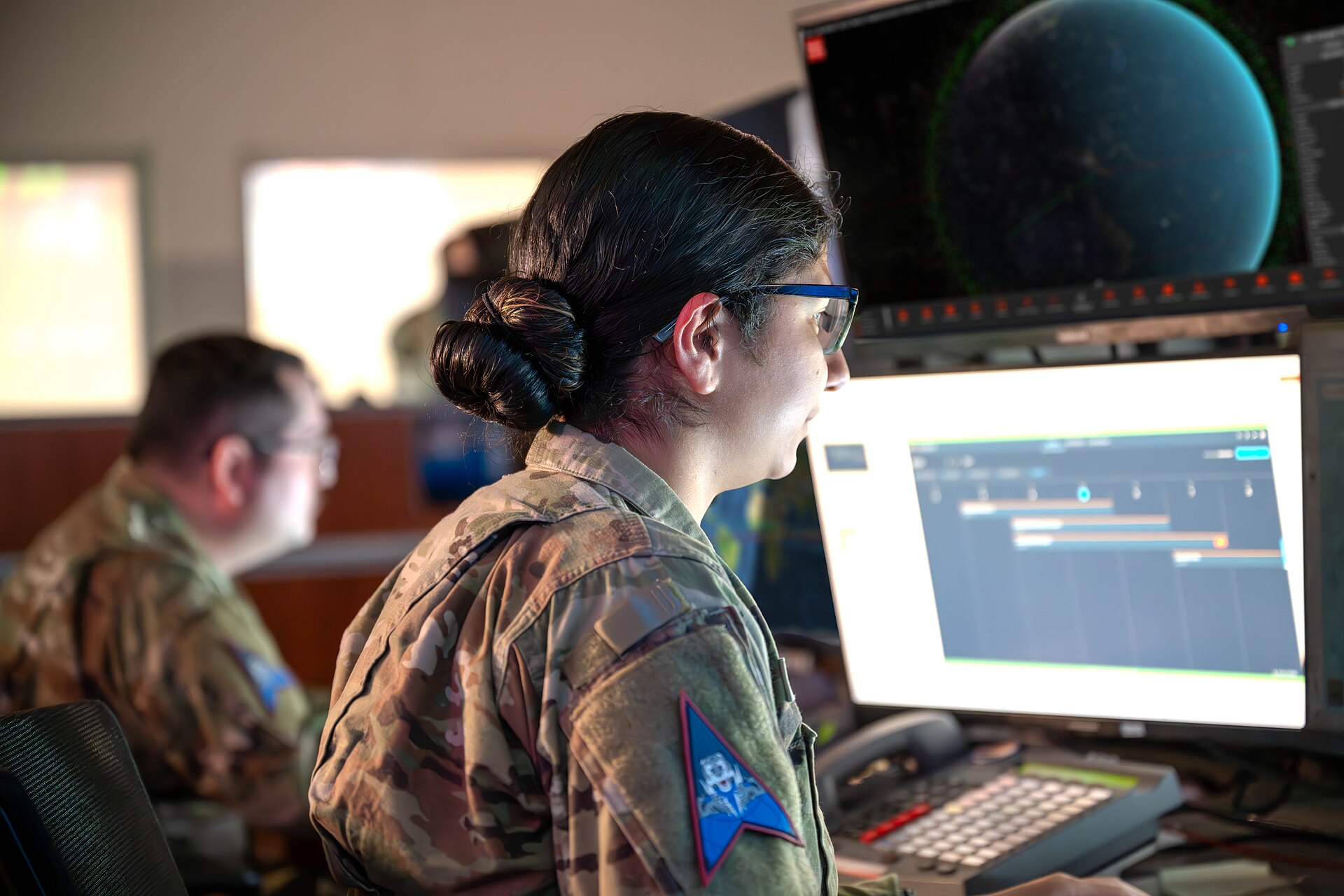
A security operations center (SOC) is the team, process and tools that watch for and respond to security events, usually around the clock. In a large organization it may be a room with a wall of screens; in a mid-size one it may be three employees plus an MDR contract; in a county it may be the state's or a regional provider's team. Federal policy has long expected each agency to have a top-level security operations center; M-26-14 says log storage may be decentralized but logs must be "readily available to the top-level agency security operations center (SOC)."2
Build, buy or hybrid
Running a full in-house SOC around the clock takes enough analysts to cover about 8,760 hours a year, plus leave, training and turnover, which in practice means at least eight to twelve people before anyone does engineering or threat hunting. That is why most organizations below the largest end up with a hybrid: an internal team that knows the business, owns detection engineering and leads incidents, plus an MDR provider for nights, weekends and first-line triage. Fully outsourced models can work for mid-size organizations if someone internal has the authority and the knowledge to act when the provider calls. The failure to avoid is an MDR provider that calls a phone number nobody answers.
Tiers, shifts and alert fatigue
Many SOCs use tiers: tier 1 analysts triage alerts and close obvious false positives; tier 2 investigates the rest; tier 3 handles complex cases, threat hunting and detection engineering. The weakness of tiered models is alert fatigue. The Senate Commerce Committee's 2014 staff report on the 2013 Target breach said Target "failed to respond to multiple automated warnings from the company's anti-intrusion software," and that its malware detection tool "triggered urgent alerts with each installation of the data exfiltration malware." The staff report noted that an alert might be dismissed as a false positive "if the system was frequently alarming."23 (The committee said those details came from press reports and expert analyses, not yet from Target's own forensic review.) The lesson for executives is that more alerts are not more security. The measures to watch are how many alerts are actually investigated, how many turn out to be real, and how many real incidents were found some other way.
Metrics that mean something
Boards often receive SOC metrics that measure activity ("2.3 million events blocked") rather than performance. More useful measures for a quarterly report, as described further in lesson 4:
- Mean time to detect and mean time to contain confirmed incidents, with the trend. IBM's 2025 study put the global average time to identify and contain a breach at 241 days, 17 days shorter than the year before, and the 2026 study, as summarized by Baker Donelson, at 247 days.247
- How incidents were found: by our own team, by a vendor or partner, or by the attacker. IBM's 2025 report said breaches identified by an organization's own security team cost about $900,000 less than those disclosed by the attacker.24
- Coverage: the share of servers, laptops, cloud accounts and critical applications sending logs and running a healthy EDR agent.
- Detection coverage of the ATT&CK techniques most used against the organization's sector.
- Exercise results: the date of the last tabletop, the number of open action items from it and from real incidents, and how many are overdue.
The incident response plan and team
Many laws now require a written plan, not just good intentions. The FTC Safeguards Rule, which covers non-bank financial institutions such as mortgage brokers, auto dealers that finance cars, tax preparers and many fintech companies, requires "a written incident response plan designed to promptly respond to, and recover from, any security event materially affecting the confidentiality, integrity, or availability of customer information," and lists what it must address: goals, internal processes, clear roles and decision authority, communications and information sharing, remediation of weaknesses, documentation, and evaluation and revision after events.25 The HIPAA Security Rule requires covered entities and business associates to "identify and respond to suspected or known security incidents," mitigate harmful effects where practicable, and document incidents and outcomes.26 The SEC's 2024 amendments to Regulation S-P require broker-dealers, investment advisers, investment companies and transfer agents to keep written incident response programs, with customer notice generally within 30 days and service providers required to notify the firm within 72 hours; larger entities had to comply by Dec. 3, 2025 and smaller ones by June 3, 2026.27 Defense contractors, banks, insurers and New York-licensed financial firms have their own versions. Even where no law requires a plan, cyber insurers ask for one on applications, and a false answer can void a policy.
What the plan must contain
A plan for a large organization usually has a short core document approved by senior leadership and a set of supporting playbooks and contact lists that the security team keeps current. The core document should cover:
- Scope and definitions. What counts as an event, an incident and a breach in this organization, tied to each regulator's trigger.
- Severity levels. A short scale (often four levels) with examples, so the person on call knows when to wake the chief information security officer (CISO) and when to wake the chief executive.
- Roles and decision rights. Who leads the response (the incident commander), who decides to shut down systems, who decides on outside notices, who speaks to the press, who can approve spending, and who stands in when each is unreachable.
- The call list. Internal leaders, the insurer's claim hotline, retained forensic and recovery firms, key vendors, the FBI field office, CISA and each regulator, kept on paper and on phones, not only on the network that may be down.
- The legal clock checklist. Every reporting duty the organization has, the trigger and the deadline, and who files each one (see the clocks section below).
- Evidence handling. What to preserve, how, and who may touch it.
- Communications. Out-of-band channels, message approval, templates for employees, customers and regulators.
- Recovery and business continuity links. Recovery priorities, restoration order, and when to switch to manual or "downtime" procedures; see lesson 7 for backups.
- After-action review. When it happens, who writes it, and how action items are tracked to completion.
- Testing and review. At least a yearly tabletop exercise and a review after every significant incident or major organizational change.
The team and who decides
A large organization's response team is not just the security department. Following NIST's list of roles, a typical core team has an incident commander (often the CISO or a deputy), the lead investigator or forensic firm, IT operations and the owners of affected systems, the general counsel's office, compliance, privacy, communications, human resources (for insider cases and employee data), finance (for ransom, payments fraud and insurance), risk management (for the insurer), and the business unit leaders whose operations are affected. Physical security and facilities join when buildings, badges or plant floors are involved.1
The most important design choice is who makes the five decisions that cannot wait: whether to disconnect or shut down major systems; whether an incident is material to investors or otherwise triggers a regulator's clock; whether and how to engage with an extortionist; what to tell employees, customers and the public, and when; and whether to bring in law enforcement. The plan should name a person and an alternate for each and say which ones require the chief executive or the board. Board involvement is covered in Governance, Boards, Officers and Disclosure.
Colonial Pipeline's chief executive, Joseph Blount, explained one such decision to the Senate Homeland Security and Governmental Affairs Committee on June 8, 2021. The ransomware was found on Colonial's business IT network, not on the operational network that runs the pipeline, but the company shut the pipeline down anyway because "if there was one percent chance that that OT system was compromised, it was worth shutting the pipeline system down."28 Whether or not one agrees with that call, it was a decision that only the top of the company could make, and it had to be made in hours.
Severity levels
A severity scale lets responders match the size of the response to the size of the problem. The labels below are an illustration for this lesson, not a standard; organizations should write their own with real examples from their systems.
| Level | Example | Who leads | Who is told, how fast |
|---|---|---|---|
| 4 (low) | A single phishing email reported and blocked; malware stopped on one laptop | SOC analyst | Logged; weekly summary to the security manager |
| 3 (moderate) | One account taken over but contained; a lost unencrypted laptop with limited data | SOC lead | CISO same day; privacy office if personal data may be involved |
| 2 (high) | Several systems compromised; sensitive data possibly accessed; a key vendor reports a breach of our data | Incident commander | CISO within 1 hour; general counsel's office, compliance and communications within 4 hours; legal clock checklist opened |
| 1 (critical) | Ransomware spreading; core services down; confirmed theft of large volumes of regulated data; extortion demand | Incident commander with executive crisis team | Chief executive and general counsel within 1 hour; board chair or committee chair within hours; insurer and forensic firm immediately |
Playbooks
Playbooks are short, specific procedures for the incidents an organization is most likely to face. The federal government's Cybersecurity Incident and Vulnerability Response Playbooks of November 2021, written by CISA under Executive Order 14028 for federal civilian agencies, are a free model of the format: a checklist for each phase, the decision points, and who must be notified.29 Common playbooks for a large organization include ransomware; business email compromise and payment fraud; compromised privileged account; data theft or extortion without encryption; insider misuse; a breach at a key vendor or cloud provider; a lost or stolen device; a critical vulnerability being exploited in the wild (for example, a new KEV entry on an internet-facing system); denial of service; and, for plants and hospitals, a compromise touching operational technology or medical devices. A sample ransomware playbook appears near the end of this lesson.


The first 72 hours, step by step
Every incident is different, but the first three days of a serious one follow a recognizable pattern. This is a worked example of the sequence for a large organization; the small business version is in module 73's lesson 11. Any containment step that changes production systems, such as disconnecting networks or disabling accounts at scale, should be planned, tested in exercises beforehand, and come with a way to reverse it.
- Hour 0 to 1: confirm and declare. The SOC or the person who noticed confirms that something real is happening, records the time of discovery (many clocks start here or at the moment of "determination"), and calls the incident commander. The commander declares an incident, assigns a severity level and opens a case record that will become the official timeline.
- Hour 1 to 2: assemble and switch channels. The core team meets on a pre-arranged out-of-band channel (see below). The general counsel's office, compliance and communications join for anything at level 2 or above. The commander assigns a scribe to keep a timestamped log of decisions and who made them.
- Hour 1 to 4: contain without destroying evidence. Isolate affected machines using EDR rather than wiping them; disable compromised accounts and revoke their sessions and tokens; block known malicious addresses; if ransomware is spreading, isolate network segments, ideally at the switch level as CISA's guide recommends. CISA's #StopRansomware Guide (September 2023) advises capturing system images and memory from affected devices if they cannot be isolated right away.30
- Hour 2 to 6: call the outside help. Notify the cyber insurer through the claim hotline in the policy (most policies require prompt notice and insurer consent before hiring vendors or paying anything). Engage the retained forensic firm. Contact the FBI field office or file at ic3.gov; consider reporting to CISA.
- Hour 4 to 24: scope and open the clocks. Begin answering four questions: how did they get in, what did they touch, are they still here, and what data may have been taken. In parallel, the general counsel's office and compliance walk through the legal clock checklist and decide which notices are due when. For a public company, the materiality assessment starts now; the four-business-day clock starts at the materiality determination, which the SEC expects to be made "without unreasonable delay."3
- Hour 12 to 36: brief leadership and the board. The chief executive and the board or its designated committee get a short written briefing with facts, unknowns, decisions needed and the next briefing time. A bank that has determined a notification incident occurred must notify its regulator within 36 hours of that determination.15
- Hour 24 to 72: communicate and stabilize. Employees get clear instructions (what to do, what not to do, where to get updates). Key customers, partners and vendors may need notice under contract. Regulators with 72-hour clocks (the Defense Department, New York DFS, credit unions, TSA-covered pipelines) are notified. Eradication and recovery planning begins, with restoration from known-good backups in priority order.
- Day 3 onward: recover, notify, review. Rebuild rather than clean where possible, reset credentials broadly once the attacker is out, watch closely for re-entry, and move into the longer notification work described in lesson 11.
Evidence preservation and chain of custody
Evidence serves four purposes after an incident: finding out what happened, deciding who must be notified, supporting law enforcement, and defending the organization in regulatory investigations and lawsuits. NIST's Guide to Integrating Forensic Techniques into Incident Response (SP 800-86, August 2006) remains the federal reference on collecting and handling digital evidence.31 The basics for a large organization:
- Preserve before you clean. Take disk images and memory captures of key systems before rebuilding them, and export relevant cloud and email logs before they age out.
- Keep a chain of custody: who collected each item, when, how, where it was stored and who has handled it since, with hash values (digital fingerprints) to show it has not changed.
- Issue a legal hold notice early so routine deletion of email, logs and tickets stops for anything related.
- Know the contract duties. Defense contractors covered by DFARS 252.204-7012 must preserve images of affected systems for at least 90 days after reporting so the Defense Department can request them.32
- Do not let anyone, including well-meaning administrators, "poke around" on compromised machines without direction from the forensic lead.
Out-of-band communications
If attackers control the email system or the corporate chat, they can read the response team's plans. Ransomware may also take down the phone system, the directory that holds everyone's numbers and the shared drive with the plan on it. A large organization should keep a separate communications channel that does not depend on the corporate identity system (for example, a separate collaboration tenant or a secure messaging app on personal phones, chosen in advance and tested in exercises), plus a printed copy of the plan and call list in several locations. Records rules still apply to these channels, so the plan should say how messages will be preserved.
Forensic reports and confidentiality
Organizations often want the forensic investigation kept confidential so that early, incomplete findings are not used against them in lawsuits. Whether a forensic firm's report is protected from disclosure in later litigation depends on who hired the firm, for what purpose, how the report was used and shared, and the court. Courts have reached different results, and some have ordered reports produced when the work looked like ordinary business remediation rather than preparation for litigation. This is a decision for the general counsel's office to set in the plan in advance, not for the security team to improvise during an incident. Whatever the arrangement, the facts themselves (what happened, which data was taken) are not hidden by it, and regulators expect accurate notices regardless.
Who to call and when
Law enforcement: FBI, IC3 and the Secret Service
The FBI is the lead federal agency for investigating cyberattacks by criminals and foreign governments. Its cyber agents work out of field offices around the country; Idaho is covered by the Salt Lake City Field Office, with resident agencies in Boise, Coeur d'Alene, Lewiston and Pocatello.33 The FBI asks victims of ransomware to report at ic3.gov, the Internet Crime Complaint Center, and says plainly: "The FBI does not support paying a ransom in response to a ransomware attack."34 IC3's 2025 report, released in April 2026, says "If you are impacted by ransomware or cybercrime, file a report with IC3 to share information with the FBI," and notes that organizations can also report directly to field offices.35 The best practice for a large organization is to build a relationship with the local field office's cyber squad before anything happens, so the first call is to someone who already knows the organization.
The U.S. Secret Service also investigates cyber-enabled financial crimes, such as payment card theft and wire fraud, through its Cyber Fraud Task Forces, and financial institutions and payment processors often have existing contacts there. Either agency will share with the other as needed.
Why call law enforcement at all? Five reasons: investigators may already know the attacker and its methods; they sometimes have decryption keys or can help recover funds; they can seize ransom payments, as the Justice Department did on June 7, 2021, when it seized 63.7 bitcoins, then worth about $2.3 million, of the roughly 75 bitcoins Colonial Pipeline paid;36 OFAC counts prompt reports and cooperation as significant mitigating factors if a payment later turns out to involve a sanctioned party;5 and a law enforcement request is one of the few grounds for delaying some notices. Most state breach laws, including Idaho's, allow notice to be delayed when a law enforcement agency says notice would impede a criminal investigation.37
CISA
The Cybersecurity and Infrastructure Security Agency (CISA), part of the Department of Homeland Security, is the federal civilian lead for helping victims, sharing warnings and coordinating with critical infrastructure. Anyone can report "anomalous cyber activity and/or cyber incidents 24/7" through CISA's online form or by phone at (888) 282-0870.9 CISA does not regulate most private organizations, and a report to CISA is voluntary unless a rule (such as TSA's pipeline directive or, once in effect, CIRCIA) requires it. Federal civilian agencies must report incidents to CISA "within one hour of being identified by the agency's top-level Computer Security Incident Response Team (CSIRT), security operations center (SOC), or information technology department," under CISA's 2017 Federal Incident Notification Guidelines. CISA's page said in November 2026 that the guidelines were being updated to match its new incident reporting form and would be renamed the Federal Incident Reporting Requirements.38 CISA's free services, such as vulnerability scanning and tabletop exercise packages, are covered in lesson 12.
Regulators, insurers, vendors and the board
The legal clock checklist should list every regulator by name with its reporting channel. Beyond regulators:
- The cyber insurer. Most policies require prompt notice and limit coverage for costs incurred without consent. Many require using the insurer's approved panel of forensic, recovery and notification vendors. Know the hotline and the policy number without needing the network.
- Key vendors and cloud providers. They may hold the logs you need, and contracts may require you to tell them, or them to tell you, within set times.
- Payment card brands and the acquiring bank when card data may be involved, under card network rules.
- Auditors. External auditors of public companies need to know about incidents that could affect financial reporting or internal controls.
- The board. The board or its designated committee should hear about critical incidents within hours, from management, not from the news. The plan should say who calls whom.


Mandatory reporting clocks
A large organization can owe a dozen notices for one incident, each with its own trigger, deadline and recipient. The trigger is often not the attack itself but a later moment: when the organization "determines" a notification incident occurred, "reasonably believes" a covered incident occurred, or decides an incident is material. Keeping those moments documented, with the time and the person who decided, is one of the scribe's most important jobs. Notices to affected individuals and state attorneys general are covered in lesson 11; this section covers reports to regulators and government agencies.
| Who | Rule | Report to | Deadline | Clock starts |
|---|---|---|---|---|
| Federal civilian agencies | CISA Federal Incident Notification Guidelines (effective April 1, 2017) | CISA | 1 hour | Identification by the agency's top-level response team38 |
| Bulk electric system entities | NERC CIP-008-6, Requirement R4 | E-ISAC and CISA | 1 hour (attempts: end of next calendar day) | Determination of a Reportable Cyber Security Incident39 |
| Banks and bank holding companies | 12 CFR Part 53 (OCC) and parallel Federal Reserve and FDIC rules (2021) | Primary federal regulator | As soon as possible, no later than 36 hours | Determination that a notification incident occurred15 |
| Bank service providers | Same rule, 12 CFR 53.4 | Each affected bank customer | As soon as possible | Determination of an incident disrupting covered services for 4 or more hours15 |
| Federally insured credit unions | 12 CFR 748.1(c) | NCUA | 72 hours | Reasonable belief of a reportable cyber incident40 |
| New York DFS-licensed firms (banks, insurers, others) | 23 NYCRR 500.17 | DFS portal | 72 hours; extortion payment 24 hours, reasons within 30 days | Determination that a cybersecurity incident occurred; making a payment41 |
| Defense contractors with covered defense information | DFARS 252.204-7012 | DoD (dibnet.dod.mil) | 72 hours | Discovery of a cyber incident32 |
| Covered pipeline owners and operators | TSA Security Directive Pipeline-2021-01G | CISA Central | 72 hours (was 12, then 24) | Identification of a cybersecurity incident42 |
| Public companies | SEC Form 8-K Item 1.05 | Investors, via EDGAR | 4 business days | Determination that the incident is material3 |
| Critical infrastructure (proposed) | CIRCIA, 6 U.S.C. 681b; proposed rule 89 FR 23644 | CISA | 72 hours; ransom payment 24 hours | Not in force until the final rule takes effect43 |
| Non-bank financial institutions under FTC jurisdiction | 16 CFR 314.4(j) | FTC online form | No later than 30 days, if 500 or more consumers | Discovery of a notification event25 |
| HIPAA covered entities | 45 CFR 164.404 to 164.408 | Individuals; HHS; media if more than 500 in a state | Without unreasonable delay, no later than 60 days | Discovery of a breach26 |
| Idaho public agencies | Idaho Code 28-51-105 | Idaho Attorney General | 24 hours | Discovery of a breach of the security of the system37 |
| Essential and important entities in the EU | NIS2 Directive, Article 23 | National authority or CSIRT | Early warning 24 hours, notification 72 hours, final report 1 month | Becoming aware of a significant incident44 |
A few of these deserve more explanation.
SEC: four business days after a materiality determination
Since Dec. 18, 2023 (June 15, 2024 for smaller reporting companies), a public company that experiences a cybersecurity incident it determines to be material must file a Form 8-K under Item 1.05 within four business days of that determination, describing the material aspects of the incident's nature, scope and timing and its material impact or reasonably likely material impact. The determination must be made "without unreasonable delay after discovery." Filing can be delayed only if the U.S. Attorney General determines that immediate disclosure would pose a substantial risk to national security or public safety and so notifies the SEC in writing.3 On May 21, 2024, the director of the SEC's Division of Corporation Finance, Erik Gerding, repeated the adopting release's words that "Item 1.05 is not a voluntary disclosure" and said that companies disclosing incidents not yet determined to be material should use a different item, such as Item 8.01, and then file an Item 1.05 report within four business days if the incident is later found material.45 One industry tracker counted 47 Item 1.05 filings and 31 voluntary Item 8.01 cyber filings from December 2023 to May 2026.46 The governance side, including the annual Item 106 disclosure of how the board oversees cyber risk, is in lesson 4.
The practical lesson is that the materiality decision needs a pre-agreed process: who gathers the facts, which factors are weighed (data volume and sensitivity, operational disruption, customer impact, regulatory exposure, reputational harm, and legal costs, not just the immediate dollar loss), who decides, and how the decision and its timing are documented. The SEC's enforcement cases against First American Financial (2021) and Blackbaud (2023), described under common mistakes below, both turned on facts that the security staff knew but the people writing disclosures did not.
Banks: 36 hours; credit unions: 72 hours
The Office of the Comptroller of the Currency, the Federal Reserve and the FDIC adopted a joint rule in November 2021 (in force since April 1, 2022, with compliance from May 1, 2022). A banking organization must notify its primary federal regulator "as soon as possible and no later than 36 hours after the banking organization determines that a notification incident has occurred." A notification incident is one that has materially disrupted or degraded, or is reasonably likely to, the bank's ability to carry out banking operations or deliver services "to a material portion of its customer base," business lines whose failure "would result in a material loss of revenue, profit, or franchise value," or operations whose failure "would pose a threat to the financial stability of the United States." The notice can be short: an email or phone call to the bank's supervisory contact is enough. Bank service providers, such as core processors, must notify each affected bank customer "as soon as possible" when an incident disrupts covered services "for four or more hours."15
The National Credit Union Administration's rule, in effect since Sept. 1, 2023, requires federally insured credit unions to notify NCUA "no later than 72 hours after a federally insured credit union reasonably believes" it has had a reportable cyber incident, including disruption caused by a compromise of a credit union service organization, cloud provider or other third party.40
New York DFS: 72 hours, and 24 hours after an extortion payment
New York's Department of Financial Services cybersecurity regulation (23 NYCRR Part 500) covers banks, insurers, mortgage companies, money transmitters and other firms licensed in New York, including many headquartered elsewhere. Covered entities "must notify the Department as promptly as possible but in no event later than 72 hours after determining" that a reportable cybersecurity incident occurred. Since the 2023 amendments, they must also "submit a Notice of Extortion Payment within 24 hours of making an extortion payment" and, "within 30 days of the payment," a written description of "the reasons payment was necessary." Submissions go through the DFS Portal.41
Defense contractors, pipelines and electric utilities
Defense contractors and subcontractors whose systems hold covered defense information must report cyber incidents to the Defense Department "within 72 hours of discovery," using a medium assurance certificate to access the DoD reporting site, and must preserve images of affected systems for at least 90 days. The clause also requires subcontractors to report to DoD directly and pass the report number up the chain. These duties continued unchanged in the Sept. 3, 2026 class deviation that suspended the planned November 2026 start of CMMC Phase 2.32
After the Colonial Pipeline attack, TSA required covered pipeline owners and operators to report incidents to CISA within 12 hours; it lengthened the window to 24 hours in May 2022 and later to 72 hours. The current directive, Pipeline-2021-01G (in effect Jan. 16, 2026, through Jan. 15, 2027), requires reports "as soon as practicable, but no later than 72 hours after the Owner/Operator identifies a cybersecurity incident," and a cybersecurity coordinator reachable "24 hours a day, seven days a week."42 Electric utilities subject to NERC's critical infrastructure protection standards must give initial notice to the Electricity Information Sharing and Analysis Center and CISA within "One hour after the determination of a Reportable Cyber Security Incident."39 Plant and utility specifics are in module 111's Sector Rules.
CIRCIA: where it stands
Congress passed CIRCIA in March 2022. It directs CISA to write rules requiring covered critical infrastructure entities to report covered cyber incidents "not later than 72 hours after the covered entity reasonably believes that the covered cyber incident has occurred" and ransom payments "not later than 24 hours after the ransom payment has been made." CISA's proposed rule of April 4, 2024 estimated 316,244 entities could be covered and 210,525 reports filed over the period it analyzed.43 The statute expected a final rule about 18 months after the proposal; CISA missed that and later target dates, sent the final rule to the White House for review on Oct. 1, 2026, and the rule was still under review and unpublished on Nov. 11, 2026.4 Until a final rule takes effect, CIRCIA reporting is voluntary. Organizations that are likely to be covered should already know which of their incidents would qualify, who would file, and how CIRCIA reports would line up with their sector regulator's clock, since a final rule could take effect within months of publication.
One incident, many reports
Consider a regional bank holding company that is publicly traded, licensed in New York, has a defense-contracting subsidiary and operates in Idaho. A ransomware attack that disrupts online banking could require a 36-hour notice to its federal bank regulator, a 72-hour notice to DFS, a 72-hour DoD report if the subsidiary's systems were touched, a four-business-day 8-K if management decides the incident is material, a 24-hour DFS notice if it pays, and later, notices to customers and state attorneys general under dozens of state laws. Each notice will be compared with the others by regulators, plaintiffs and reporters. The plan should assign one person to keep a master list of every notice sent, to whom, when, and what it said, and to check that the facts in each are consistent or that differences are explained.
Ransomware decisions
Ransomware is the incident that tests every part of a plan at once. It is common: the Verizon 2026 Data Breach Investigations Report found ransomware in 48 percent of breaches, up from 44 percent, while 69 percent of victims did not pay.47 IBM's 2026 study said ransomware hit 39 percent of the breached organizations it studied, up from 34 percent.6 The FBI's IC3 received 3,611 ransomware complaints in 2025 with reported losses of $32,320,105, but the report warns that many victims report no loss amount, "thereby creating an artificially low overall ransomware loss rate," and that its loss figures do not normally include lost business, time, wages, files or equipment.35 The top variants reported to IC3 in 2025 were Akira, Qilin and INC/Lynx/Sinobi.35
The government's position and sanctions risk
No federal law bans most private organizations from paying a ransom, but the government discourages it and two Treasury Department offices add legal risk:
- OFAC. The Office of Foreign Assets Control's Updated Advisory on Potential Sanctions Risks for Facilitating Ransomware Payments (Sept. 21, 2021), which superseded its Oct. 1, 2020 advisory, warns that paying a ransom to a sanctioned person or group, or to anyone in a sanctioned country, can violate U.S. sanctions, and that OFAC may impose civil penalties "based on strict liability," meaning a payer can be liable even if it did not know the recipient was sanctioned. It applies to victims and to the companies that help them, including insurers, forensic firms and financial institutions. OFAC treats "a company's self-initiated and complete report of a ransomware attack to law enforcement" as soon as possible after discovery, and "full and ongoing cooperation with law enforcement," as significant mitigating factors, and it credits steps that reduce the risk of extortion, such as offline backups and incident response plans.5
- FinCEN. The Financial Crimes Enforcement Network's Advisory FIN-2021-A004 (Nov. 8, 2021), Advisory on Ransomware and the Use of the Financial System to Facilitate Ransom Payments, tells banks, money services businesses and others how to spot ransomware-related payments and when to file suspicious activity reports, including for ransom payments made by institutions that are themselves victims, using the key term "CYBER-FIN-2021-A004."48
Public bodies may face more. Some states, North Carolina and Florida among them, have passed laws barring state agencies or local governments from paying ransoms; leaders of public entities should check their own state's current law rather than assume either way.
A decision framework
The decision whether to engage with an extortionist belongs to the chief executive (or for a public body, the elected or appointed head), with the board informed, after advice from the general counsel's office, the insurer, the forensic firm and law enforcement. It should never be made by IT alone. The questions to work through, in order:
- Is life or safety at risk? For hospitals, utilities and plants, patient and public safety comes first, and downtime procedures and diversion plans must start regardless of any payment decision.
- Can we restore without the attacker? Do we have clean, tested, offline or immutable backups, and how long will restoration take for each critical service? This is the single biggest factor, and it is decided long before the attack (see lesson 7).
- What was stolen? Most ransomware crews now steal data before encrypting. Payment does not undo the theft, and there is no way to verify that stolen data is deleted.
- Who is the attacker? The forensic firm and law enforcement help determine whether the group or its wallets are linked to sanctioned parties. If they are, payment is off the table.
- What does law enforcement know? The FBI or other agencies may have a decryptor, may have seized the group's infrastructure, or may know whether this group honors its promises.
- What do the insurer and the policy say? Coverage, consent requirements, and the insurer's own sanctions screening.
- What are the reporting duties if we pay? DFS within 24 hours; CIRCIA within 24 hours once in force; FinCEN filings by financial institutions involved; and the board.
- Document the decision either way, with the reasons, so that regulators and courts can later see it was made carefully.
What the big cases show
Two of the most studied ransomware attacks show both sides of the payment question. Colonial Pipeline paid 75 bitcoins, about $4.4 million, in May 2021, as Senators Rob Portman and Gary Peters noted at the June 8, 2021 hearing, and the Justice Department later recovered about $2.3 million of it by tracing the bitcoin.2836 UnitedHealth Group's chief executive, Andrew Witty, told the Senate Finance Committee on May 1, 2024 that attackers had used compromised credentials to get into a Change Healthcare remote access portal that did not have multifactor authentication, and confirmed the company paid a $22 million ransom.49 The theft was not undone: HHS later listed the breach as affecting about 192.7 million people, the largest health data breach reported to HHS.50 Paying did not prevent the data loss or the notice duties that followed.
Tabletop exercises
A tabletop exercise is a structured discussion in which the people who would respond to an incident walk through a realistic scenario, step by step, saying what they would do and finding the gaps before an attacker does. It is the cheapest way to test a plan, and for executives it is often the only practice they get.
What CISA's packages provide
CISA publishes more than 100 Tabletop Exercise Packages (CTEPs) covering physical and cyber threats. The cyber scenarios include ransomware, insider threats, phishing and industrial control system compromise, with versions for election infrastructure, local governments, ports, water and health care. Each package includes template objectives, scenarios and discussion questions, guidance for planners, facilitators and participants, an invitation template, a slide deck, a feedback form and an after-action report template, with modules on pre-incident information sharing, response and recovery. CISA lists no fee for downloading them, and organizations can also ask CISA to support an exercise.51 HHS's health sector programs and the sister modules point small providers to the same packages; see module 109's small clinic walkthrough.
How large organizations run them
Large organizations usually run two kinds of tabletop, at least once a year each:
- A technical exercise for the SOC, IT, forensic partners and system owners, going deep on detection, containment and recovery steps, ideally with real log data and the actual tools.
- An executive exercise for the chief executive, general counsel's office, finance, communications, operations leaders and, every year or two, board members. It focuses on the decisions: shutdown, materiality, ransom, public statements, customer and regulator notice, and how long the business can run on manual procedures.
Good exercises share some features. They use a scenario drawn from the organization's real risks, not a generic one (for a hospital, ransomware during a mass-casualty weekend; for a bank, a core processor outage at month end; for a county, an attack a week before an election). They add "injects," new facts that arrive during the exercise, such as a reporter's call, a post on a leak site, a regulator's question or an insurer refusing consent. They include the vendors that would really be involved. They force a decision on the hard questions instead of deferring them. And they end with a written after-action report with named owners and due dates. A facilitator from outside the security team helps keep the discussion honest.
Testing beyond the table
Tabletops test decisions; other tests check whether the technology works. Large organizations add full restoration tests of critical systems from backup (how long does it really take to rebuild the directory, the electronic health record, the core banking platform?), "purple team" exercises in which defenders and authorized testers work together to see whether specific attacker techniques are detected, and live tests of the out-of-band communications channel and the after-hours call tree. Any test that touches production systems should be planned, approved, tested on a small scale first and have a way back. Restoration testing is covered in lesson 7.
After-action reviews and improvement
NIST's Revision 3 puts improvement at the center of its model, feeding lessons learned into every CSF function, and says "Continuous improvement is increasingly necessary for all facets of cybersecurity risk management in order to keep up with modern threats."1 The FTC Safeguards Rule requires the incident response plan to cover "the evaluation and revision as necessary of the incident response plan following a security event."25 In practice:
- Hold the review within a few weeks, while memories are fresh, for every incident at level 2 or above and for every exercise.
- Make it blameless about individuals and specific about systems and decisions: what happened, when it was detected, how it was detected, what went well, what slowed the response, and what would have stopped it earlier.
- Turn findings into tracked action items with owners, budgets and due dates, reported to the CISO and summarized for the board.
- Update detection rules, playbooks, the call list and the training program.
- Share what can be shared, through the sector's information sharing and analysis center (ISAC) or with CISA, so others can defend themselves. NIST encourages sharing lessons as soon as they are identified.1
Reviews should be written knowing they may be read later by regulators or in litigation: factual, precise, and free of speculation stated as fact. The general counsel's office should set how they are prepared and stored.
Sample policies: an incident response plan and a ransomware playbook
The two samples below are written for a large or regulated organization. They follow the structure of NIST SP 800-61 Rev. 3, the FTC Safeguards Rule's list of plan elements, the HIPAA Security Rule's incident procedures standard, CISA's #StopRansomware Guide and the federal reporting rules described above. Every bracketed item must be filled in, and the whole document must be fitted to the organization's actual laws, contracts and systems.
Sample only. Adapt it to your organization's risks, systems and laws, have qualified people review it, and do not treat it as a substitute for a risk assessment.
Follows: NIST SP 800-61 Rev. 3 (April 3, 2025) and the NIST Cybersecurity Framework 2.0 (Feb. 26, 2024); 16 CFR 314.4(h) and (j); 45 CFR 164.308(a)(6); 12 CFR Part 53; 23 NYCRR 500.16 and 500.17; DFARS 252.204-7012; SEC Form 8-K Item 1.05; Idaho Code 28-51-105; CISA Cybersecurity Incident and Vulnerability Response Playbooks (November 2021). Written for this module on Nov. 13, 2026.
Incident response plan (sample)
1. Purpose and authority. This plan sets how [Organization] detects, responds to and recovers from cybersecurity incidents. It is approved by [chief executive / board committee] and owned by the [chief information security officer]. It applies to all business units, subsidiaries, employees, contractors and service providers who operate systems or handle data for [Organization].
2. Definitions. An event is any observable occurrence involving our computing assets. An incident is an occurrence that actually or imminently jeopardizes, without lawful authority, the confidentiality, integrity or availability of our information or systems, or a violation of our security or acceptable use policies. A reportable incident is any incident that meets a trigger in Appendix B (legal clock checklist). Only the [general counsel's office] determines whether an incident is a "breach" under any law.
3. Severity levels. Incidents are rated 1 (critical) to 4 (low) using the criteria and examples in Appendix A. The incident commander sets and may change the level. Level 1 and 2 incidents activate the crisis team.
4. Roles.
- Incident commander: [title], alternate [title]. Leads the response, sets priorities, assigns tasks, approves containment actions within delegated authority.
- Scribe: assigned by the commander for each level 1 or 2 incident. Keeps a timestamped log of facts, decisions, who made them and when, including the time of discovery and of each determination that starts a reporting clock.
- Lead investigator: [internal forensic lead or retained firm, contract number].
- Legal and compliance: [general counsel's office contact]; [chief compliance officer]. Own the legal clock checklist, materiality assessment process, regulator notices and legal holds.
- Privacy officer: [name]. Assesses personal information involved and prepares individual notices.
- Communications: [title]. Drafts all internal and external statements; no one else speaks to the media.
- Business owners of affected systems; IT operations; human resources (insider and employee matters); finance (payments, insurance, extortion); risk management (insurer liaison); physical security and facilities.
5. Decision rights. The following decisions are reserved: (a) shutting down or disconnecting [list of critical systems or sites]: [chief operating officer] or alternate; (b) determining materiality for SEC purposes: [disclosure committee] under the procedure in Appendix C; (c) any contact with, negotiation with or payment to an extortionist: [chief executive] only, after consulting the insurer, the lead investigator, law enforcement and the [general counsel's office], and after sanctions screening; (d) public statements: [chief executive] on recommendation of communications and the [general counsel's office]; (e) referral to law enforcement: incident commander with the [general counsel's office]. The [board committee] chair is told of any level 1 incident within [2] hours.
6. Detection and reporting inside the organization. Anyone who suspects an incident reports it at once to [security hotline, email, portal]. The security operations center [and our managed detection provider, contract number] monitor [systems] 24 hours a day. Alerts are triaged within [15] minutes for critical and [4] hours for other priorities.
7. Response steps. For every level 1 or 2 incident the team will: (a) confirm and declare; (b) move to the out-of-band channel in Appendix D; (c) contain, preferring isolation over deletion, and preserve evidence under Section 8; (d) notify the insurer at [hotline, policy number] within [time]; (e) engage the lead investigator; (f) open Appendix B and assign an owner to each reporting duty; (g) brief leadership on a fixed schedule; (h) eradicate and recover in the priority order in the business continuity plan; (i) monitor for re-entry for at least [30] days. Any change to production systems will be planned, tested where possible and reversible.
8. Evidence. Before rebuilding affected systems, the team will capture disk images and memory where feasible, export relevant logs, and record a chain of custody with hash values. A legal hold notice is issued for level 1 and 2 incidents. Images of systems subject to DFARS 252.204-7012 are kept at least 90 days after the DoD report.
9. Outside notices. All notices to regulators, law enforcement, customers, individuals, attorneys general and the public are sent only after approval by the [general counsel's office] and logged in the master notice register (who, when, what, sent by whom). Appendix B lists at minimum: [primary federal bank regulator, 36 hours]; [NCUA, 72 hours]; [NYDFS, 72 hours and 24 hours after any extortion payment]; [DoD, 72 hours]; [SEC Form 8-K, 4 business days after a materiality determination]; [FTC, 30 days for 500 or more consumers]; [HHS and individuals, 60 days]; [Idaho Attorney General, 24 hours for public agencies]; [state laws per lesson 11]; [contractual notices to customers and partners]; [CIRCIA, once in force].
10. Communications. Employees receive instructions within [hours] of a level 1 incident. Statements will be accurate, will not speculate, and will be updated as facts change. Messages to employees about the incident are not sent through any system believed compromised.
11. After-action review. Within [30] days after each level 1 or 2 incident and each exercise, the commander leads a blameless review. Action items are tracked to closure and reported to [board committee] quarterly.
12. Testing, training and review. At least annually: one technical tabletop, one executive tabletop, a restoration test of [critical systems] and a test of the out-of-band channel and call tree. This plan is reviewed at least annually and after any significant incident, reorganization, merger or change in law. The current call list is printed and kept at [locations].
Appendices: A. Severity criteria and examples. B. Legal clock checklist and regulator contacts. C. Materiality assessment procedure. D. Out-of-band communications and call tree. E. Playbooks (ransomware, business email compromise, privileged account compromise, vendor breach, data theft and extortion, insider misuse, lost device, exploited vulnerability, denial of service, operational technology).
Sample only. Adapt it to your organization's risks, systems and laws, have qualified people review it, and do not treat it as a substitute for a risk assessment.
Follows: CISA, MS-ISAC, NSA and FBI, #StopRansomware Guide (September 2023); OFAC, Updated Advisory on Potential Sanctions Risks for Facilitating Ransomware Payments (Sept. 21, 2021); FinCEN Advisory FIN-2021-A004 (Nov. 8, 2021); 23 NYCRR 500.17(c); NIST SP 800-61 Rev. 3. Written for this module on Nov. 13, 2026.
Ransomware playbook (sample)
Trigger. Use this playbook when any system shows signs of ransomware (encrypted files, ransom notes, mass file renaming, EDR ransomware alerts) or when anyone receives a demand claiming data has been stolen. It operates under the [Incident Response Plan] and is always a level 1 incident until the incident commander decides otherwise.
First hour.
- Do not power off affected machines unless the lead investigator directs; disconnect them from the network or isolate them through EDR.
- If spread is under way, isolate network segments at the switch or firewall level following the pre-approved isolation plan for [sites]. Disable [remote access gateways] if the entry point is unknown.
- Protect the backups: confirm that [backup systems] are isolated, that immutable or offline copies exist, and that backup administrator accounts have not been used.
- Declare a level 1 incident, convene the crisis team on the out-of-band channel, assign a scribe and start the timeline.
- Start downtime procedures for [clinical / plant / customer-facing] operations; decide on diversion or shutdown under Section 5 of the plan.
First day.
- Notify the insurer at [hotline]; engage the [retained forensic firm] and [recovery firm].
- Report to the FBI [field office contact] or at ic3.gov, and to CISA through its online reporting form at cisa.gov/report or by phone at (888) 282-0870.
- Capture images and memory from representative affected systems; preserve the ransom note and any attacker contact details without replying.
- Identify the initial entry point, the accounts used, and whether data left the network.
- Open the legal clock checklist; [general counsel's office] and [compliance] decide on regulator notices (bank 36 hours, NYDFS 72 hours, DoD 72 hours, SEC materiality process) and assign owners.
- Reset credentials for privileged and affected accounts once containment is confirmed; revoke sessions and tokens.
Extortion. No employee or vendor will contact, reply to or negotiate with the attacker except as directed by the [chief executive] under Section 5(c) of the plan. Before any decision: (a) sanctions screening of the group and payment addresses consistent with the OFAC advisory; (b) law enforcement consulted on decryptors and the group's record; (c) insurer consent obtained; (d) restoration options from backup estimated for each critical service. If a payment is made, [compliance] files the NYDFS Notice of Extortion Payment within 24 hours and the written reasons within 30 days, [finance] coordinates any FinCEN reporting by financial institutions involved, and the reasons are recorded. A payment does not change any notice duty.
Recovery. Rebuild from known-good images and restore data from backups scanned for malware, in the priority order of the business continuity plan: [identity systems], [network and security tools], [critical applications], then others. Monitor closely for re-entry for at least [30] days. Do not reconnect a restored segment until the lead investigator confirms the attacker's access paths are closed.
Close. After-action review within [30] days; update detections, backups and this playbook; brief the [board committee].
Pictures, Numbers and Infographics
The key numbers in this lesson, each with its source and year. Survey-based figures (IBM, Verizon) describe the organizations and incidents those studies covered, not every organization; IC3 figures count only what victims chose to report.
| Measure | Number | Source |
|---|---|---|
| Global average cost of a data breach (breaches March 2025 to February 2026) | $4.99 million | IBM and Ponemon, 20266 |
| U.S. average cost of a data breach | $10.22 million (2025 report); $11.5 million (2026 report, as summarized) | IBM 2025; Baker Donelson summary of IBM 2026247 |
| Average time to identify and contain a breach | 241 days (2025 report); 247 days (2026 report, as summarized) | IBM 2025; Baker Donelson summary of IBM 2026247 |
| Savings when a breach is found by the organization's own team rather than disclosed by the attacker | About $900,000 | IBM 202524 |
| Organizations that chose not to pay a ransom | 63% (IBM 2025); 69% of ransomware victims (Verizon 2026) | IBM 2025; Verizon DBIR 2026 as reported2447 |
| Share of breaches involving ransomware | 48% (up from 44%) | Verizon DBIR 2026 as reported47 |
| Vulnerability exploitation as first entry point | 31% (up from 20%) | Verizon DBIR 2026 as reported22 |
| Ransomware complaints and reported losses to the FBI, 2025 | 3,611 complaints; $32,320,105 | FBI IC3 2025 report35 |
| All complaints and losses reported to IC3, 2025 | 1,008,597 complaints; $20.877 billion | FBI IC3 2025 report35 |
| Equifax attackers' time inside before discovery (2017) | About 76 days; 145.5 million people affected | GAO-18-55918 |
| Change Healthcare breach (2024) | About 192.7 million people; $22 million ransom | HHS OCR; Senate Finance hearing5049 |
| Colonial Pipeline ransom (2021) and amount seized back | 75 bitcoins (about $4.4 million); 63.7 bitcoins (about $2.3 million) seized | Senate hearing; Justice Department2836 |
| Federal log retention, old and new | 30 months (M-21-31) to 6 months searchable, 1 year retrievable (M-26-14) | OMB102 |
| CIRCIA proposed rule scale | 316,244 entities; 210,525 reports over the analysis period | 89 FR 2364443 |
| Fastest reporting clocks | 1 hour (federal agencies, electric utilities); 24 hours (Idaho public agencies to the AG; NYDFS after extortion payment) | CISA; NERC; Idaho Code; NYDFS38393741 |
| SEC Item 1.05 filings, December 2023 to May 2026 | 47 (plus 31 voluntary Item 8.01 cyber filings) | Cherry Hill Advisory tracker46 |
| HHS OCR ransomware enforcement actions | 21st announced July 29, 2026 | HHS OCR52 |
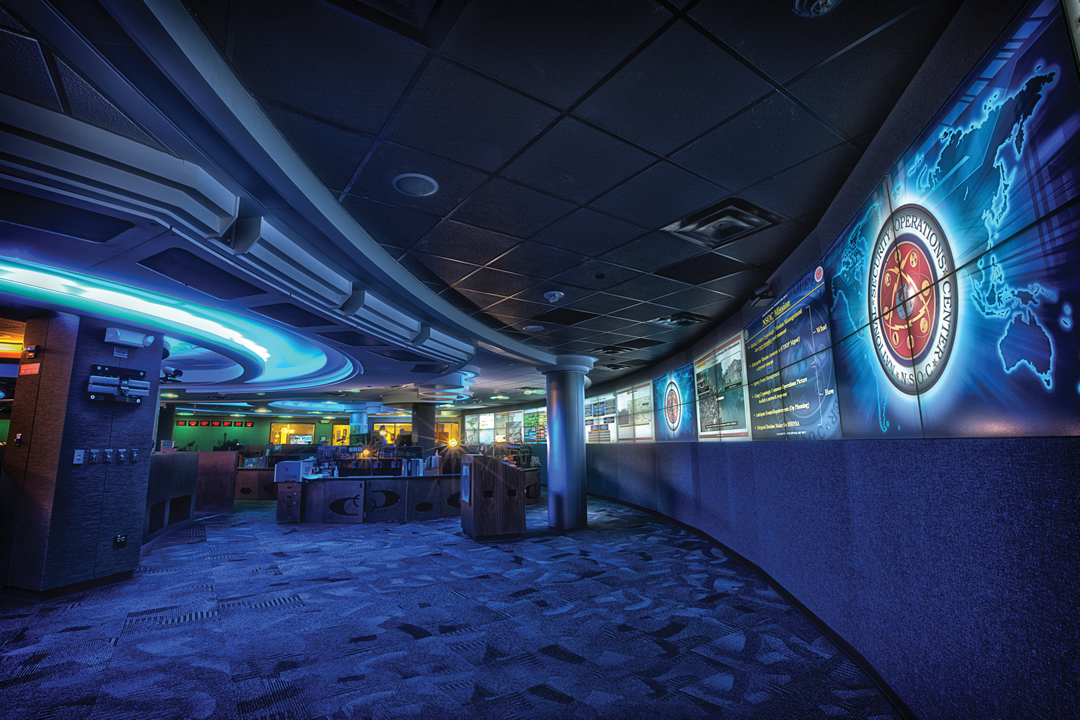

Common mistakes
These failures come from government reports and enforcement records. Each is a lesson in detection, escalation or response, not only in prevention.
A blind sensor nobody noticed
Equifax had a device to inspect encrypted network traffic, but its digital certificate "had expired about 10 months before the breach occurred," so encrypted traffic went uninspected. The attack "lasted for about 76 days before it was discovered" on July 29, 2017, and exposed personal information of at least 145.5 million people.18 Fix: monitor the health of security tools themselves, including certificates, agent coverage and log sources that go quiet.
Alerts that fired and were ignored
At Target in 2013, according to the Senate Commerce Committee staff, security software "triggered urgent alerts with each installation of the data exfiltration malware," and the company "failed to respond to multiple automated warnings."23 Fix: measure whether alerts are investigated, tune noisy rules, and give analysts clear authority to act.
Intrusions that ran for years
The FTC alleged that a Starwood intrusion that began around July 2014 went undetected until September 2018, exposing 339 million guest records worldwide, including 5.25 million unencrypted passport numbers, and that a later intrusion at Marriott ran from September 2018 to February 2020; its complaint alleged the companies failed to adequately log and monitor their networks. The order, proposed in October 2024 and made final in December 2024, requires a security program with independent assessments every two years and annual compliance certifications for 20 years.19 Fix: log the systems that hold sensitive data, keep logs long enough to investigate, and hunt for intruders rather than waiting for alerts.
Security staff knew; the people writing disclosures did not
In 2021 the SEC fined First American Financial $487,616 because its information security staff had found a vulnerability months before the company's public statements but had not fixed it, and the senior executives who made the statements were never told. The SEC's cyber unit chief said, "Issuers must ensure that information important to investors is reported up the corporate ladder."53 In 2023 Blackbaud paid $3 million after it announced that a ransomware attacker had not taken donor bank account information or Social Security numbers, when its technology and customer relations staff learned within days that the attacker had; they did not tell the senior managers responsible for disclosure, and a later quarterly report presented the risk of such data being taken as hypothetical.54 Fix: a written escalation path from the incident team to the disclosure committee, and a rule that public statements are checked against the latest forensic findings before release.
Remote access without multifactor sign-in
Colonial Pipeline's chief executive told the Senate the attackers likely used "the legacy VPN profile that was not intended to be in use," which "did only have single-factor authentication."28 UnitedHealth's chief executive testified that the Change Healthcare attackers entered through a remote access portal that lacked multifactor authentication.49 Fix: inventory every remote access path, require phishing-resistant multifactor sign-in, and log and watch all of them; see Identity and Access.
Ransomware without a risk analysis behind it
HHS's Office for Civil Rights has turned ransomware attacks into enforcement cases when the investigation found the organization had never done an accurate, thorough risk analysis. OCR announced four ransomware settlements together on April 23, 2026, and its 21st ransomware enforcement action, a $552,250 settlement with OSF HealthCare System, on July 29, 2026.5552 Fix: the risk analysis and incident procedures are themselves regulatory duties for HIPAA entities, and regulators will read them after an attack.
Questions people ask
Do we need our own around-the-clock SOC?
Only the largest organizations need a fully staffed in-house SOC. Most large and regulated organizations do better with a hybrid: an internal team that owns detection engineering, knows the business and leads incidents, plus a managed detection and response provider for nights, weekends and first-line triage. What every organization needs is someone watching at all hours, with written authority to contain, and an internal person who will answer the phone.
When does the SEC clock start: at the attack or at the decision?
At the materiality determination, which must be made "without unreasonable delay after discovery."3 Delaying the determination to delay the filing is itself a problem. Companies should document when facts reached the disclosure committee and when it decided.
Should we report to the FBI if no law requires it?
Usually yes. The FBI may already know the attacker and can sometimes help with decryption or recovering funds; reporting to law enforcement is a significant mitigating factor in OFAC's view if a payment later turns out to involve a sanctioned group;5 and IC3's reports depend on victims filing.35 Organizations that worry about loss of control over information can discuss scope and confidentiality with the field office.
Does reporting to CISA mean a regulator will investigate us?
CISA is not a regulator for most organizations, and voluntary reports are not enforcement filings. Under the Cybersecurity Information Sharing Act of 2015, sharing cyber threat indicators also carries legal protections, but the act has been running on short extensions since its Sept. 30, 2025 lapse, so its status on the day of an incident should be checked.14
How long should we keep logs now that M-21-31 is gone?
Long enough to investigate the intrusions you are likely to face, and no longer than your legal and privacy duties support. The federal floor is now six months searchable and one year retrievable,2 but intrusions like Starwood's ran for years.19 Many large organizations keep at least a year searchable for identity, endpoint and sensitive-data logs, and longer for records under legal hold.
Are tabletop exercises worth executives' time?
Yes, if they force real decisions. The decisions that hurt organizations most in public cases (shutdowns, payments, disclosures) are made by executives, and an exercise is the only rehearsal they get. CISA's packages make a first exercise inexpensive.51
Hard questions
Should ransom payments be banned?
For a ban: Payments fund criminal groups and their next attacks, and every payment proves the business model works. A ban would remove the choice from victims under pressure and make organizations invest in backups instead.
Against a ban: Some victims, especially hospitals and small public bodies without good backups, may face harm to patients or residents that a payment could shorten. A ban could drive payments underground and discourage the reporting that OFAC rewards as a mitigating factor.5
What the evidence shows: Federal policy discourages payment and enforces sanctions on a strict liability basis without banning payments generally.534 Fewer victims are paying: 69 percent of ransomware victims in the 2026 Verizon study did not pay.47 The factor organizations control is preparation, especially backups that the attacker cannot reach.
Are short reporting clocks helping or hurting?
For short clocks: Fast reports let government warn others while an attack is spreading, and investors and customers deserve to know quickly. The bank rule's 36-hour notice can be a short email or phone call to the supervisory contact.
Against: Responders spend hours on overlapping forms in the worst days of an incident; early reports are often wrong; and public disclosure can tip off attackers. Trade groups have asked the SEC to rescind Item 1.05 for these reasons.12
What the evidence shows: The clocks are multiplying and are not yet harmonized; CIRCIA's final rule, which the government has said should reduce duplication, was still unpublished on Nov. 11, 2026.4 The practical answer for organizations is a single master notice register and pre-drafted templates, so short clocks cost hours, not days.
Outsource detection, or build it?
For outsourcing: Skilled analysts are scarce, round-the-clock staffing is expensive, and MDR providers see attacks across many customers and spot patterns faster.
For building: Outsiders do not know the business, may not have authority to act, and add a vendor with deep access, which is itself a supply chain risk (see lesson 8).
What the evidence shows: Organizations that find breaches themselves pay less than those told by attackers,24 which argues for whichever model gives the most coverage of the organization's actual systems. For most, that is a hybrid with clear contracts.
How much monitoring is too much?
For broad monitoring: Attackers use real employee accounts; without detailed logs of what users do, an intrusion looks like normal work, and insider theft goes unseen.
For limits: Detailed logs are a record of employees' working lives and sometimes customers' private details. Logs kept forever become their own breach risk, and some states require notice to employees before electronic monitoring.
What the evidence shows: Federal policy now aims for useful, searchable logs rather than maximum volume, cutting retention while expanding coverage to devices and plant systems.2 A written logging policy that says what is collected, why, who may see it and when it is deleted serves both security and privacy; see lesson 9 on insider risk programs.
For reporters and advocates
What public records exist.
- SEC filings. Form 8-K Item 1.05 (material incidents) and Item 8.01 (voluntary disclosures) on EDGAR, and each public company's annual 10-K Item 1C describing its cyber risk management and board oversight. Compare an 8-K's description with later 8-K/A amendments, breach notices and lawsuit filings.3
- State attorney general breach lists. Many states, including Idaho, post breach notices; Idaho's list is on the attorney general's website.56 Maine, California, Washington and others publish detailed lists that often include the number of residents affected and copies of letters.
- HHS OCR breach portal and resolution agreements for health data breaches of 500 or more people, and OCR's ransomware settlements.55
- Enforcement orders from the FTC, SEC, NYDFS and state attorneys general, which describe failures of detection and escalation in detail.1954
- Government reports: GAO and inspectors general, congressional hearing transcripts (Colonial Pipeline, Change Healthcare), CISA advisories and the KEV catalog.1821
- Court records on PACER and CourtListener: class actions after breaches often attach forensic findings and timelines.
- Idaho public records. Requests to Idaho state and local agencies go under Idaho Code Title 74. Expect some limits: Idaho Code 74-105 exempts records relating to "the nature, location, or function of cybersecurity devices, programs, or systems" and certain critical infrastructure vulnerability assessments and response plans, but expenditure records are not exempt, so contracts, invoices and insurance payments generally are public.57
What to ask an organization after an incident. When did you first detect it, and how: your own team, a vendor, law enforcement or the attacker? When did you determine it was reportable or material, and to whom did you report, when? Which systems lacked logging or multifactor sign-in? Did you pay, and did you report the payment where required? When was your last tabletop exercise, and were executives in it? What did your after-action review find, and who is accountable for the fixes?
What to ask public officials. Does the city, county, school district or hospital district have a written incident response plan approved by its board, and when was it last exercised? Who monitors its networks after hours? Does it have cyber insurance, and does the policy allow ransom payments? Did it notify the Idaho Attorney General within 24 hours as Idaho Code 28-51-105 requires of public agencies?37
The Idaho angle. Kootenai Health in Coeur d'Alene reported a 2024 ransomware attack affecting 464,088 people in a Maine attorney general filing,58 and the Idaho attorney general's list shows 2026 filings by Minidoka Memorial Hospital.56 The FBI's Salt Lake City Field Office, with resident agencies in Boise, Coeur d'Alene, Lewiston and Pocatello, handles Idaho cyber cases.33 Ask local hospitals, utilities and governments whether they have met those agents before they needed them.
Where to go next
- CISA Tabletop Exercise Packages: Free scenario kits from CISA (more than 100), including ransomware, insider threat, phishing and sector versions, with facilitator guides and after-action templates. Pick the scenario closest to your real risk and run it with executives in the room.
- CISA #StopRansomware Guide: Free joint guide from CISA, MS-ISAC, NSA and FBI (September 2023) with prevention practices and a step-by-step response checklist. Use Part 2 as the backbone of a ransomware playbook.
- NIST SP 800-61 Rev. 3: Free NIST guidance (April 2025) that maps incident response to the CSF 2.0 functions, for CISOs, auditors and plan owners. Use it to map your existing plan to CSF categories.
- CISA incident reporting: Free 24/7 reporting to CISA by online form or (888) 282-0870, for any organization; voluntary unless a rule requires it. Put the number in your printed call list.
- FBI Internet Crime Complaint Center: Free FBI portal to report cybercrime and ransomware, plus annual reports with national and state figures. File early, with full transaction details for any payment fraud.
- MITRE ATT&CK: Free public knowledge base of attacker techniques used by detection engineers and SOC teams to measure detection coverage and write reports in common terms.
- CISA Known Exploited Vulnerabilities Catalog: Free government list of flaws attackers are known to use; use it to rank patching and to decide which systems to watch most closely.
Still being checked (5 items)
These points could not be fully confirmed against a primary source when this lesson was written and fact checked in November 2026. The text above states each one as uncertain.
- IBM 2026 Cost of a Data Breach figures for the U.S. average ($11.5 million) and the 247-day identify-and-contain time come from a secondary summary (Baker Donelson, July 30, 2026); the global $4.99 million and 39 percent ransomware figures were confirmed in IBM's own July 29, 2026 release, but the full report requires registration and was not read.
- Verizon 2026 DBIR figures (48 percent ransomware, 69 percent not paying, 31 percent exploitation, KEV remediation 32 to 43 days) come from trade press (Help Net Security, TechTarget), which quote the report; the Verizon report itself was not opened.
- The Uber and Joe Sullivan case was not used because justice.gov pages could not be fetched.
- SEC Item 1.05 filing counts (47 and 31) come from a private tracker and were not checked against EDGAR.
- The TSA directive revision that first moved the pipeline reporting window from 24 to 72 hours (before Pipeline-2021-01G) was not confirmed; the lesson says only that the window was later lengthened to 72 hours.
Last verified November 14, 2026. General education, not legal, compliance, audit or other professional advice; rule versions and dates are stated in the text, and the sources used are listed in the Notes and Sources below. Check the regulator's current text before relying on any point.
Notes
- National Institute of Standards and Technology, Incident Response Recommendations and Considerations for Cybersecurity Risk Management: A CSF 2.0 Community Profile, NIST Special Publication 800-61 Revision 3, by Alexander Nelson, Sanjay Rekhi, Murugiah Souppaya and Karen Scarfone (April 3, 2025), superseding SP 800-61 Rev. 2 (Aug. 6, 2012); definitions at p. 2, life cycle discussion at pp. 4 to 6, roles at pp. 7 to 8, Supplemental Content note at p. ii (read Nov. 13, 2026). Read it online. ↩
- Office of Management and Budget, Memorandum M-26-14, Ensuring Effective and Efficient Agency Logging and Network Visibility to Defend Against Evolving Cyber Threats, signed by Director Russell T. Vought (May 22, 2026), including the rescission of M-21-31, Appendix B (retention) and Appendix C (maturity levels) (read Nov. 13, 2026). Read it online. ↩
- Securities and Exchange Commission, Cybersecurity Risk Management, Strategy, Governance, and Incident Disclosure, final rule, Release No. 33-11216, 88 FR 51896 (Aug. 4, 2023), effective Sept. 5, 2023: Form 8-K Item 1.05, Instruction 1 (materiality determination without unreasonable delay), the Attorney General delay provision, Regulation S-K Item 106 and the compliance dates of Dec. 18, 2023 and June 15, 2024 (read Nov. 13, 2026). Read it online. ↩
- Lisbeth Perez, "CISA Updates Cyber Incident Reporting Form as CIRCIA Rule Awaits White House Review," MeriTalk (Nov. 11, 2026), reporting the Nov. 9, 2026 form update and the Oct. 1, 2026 submission of the final CIRCIA rule to OIRA. Press report (read Nov. 13, 2026). Read it online. ↩
- U.S. Department of the Treasury, Office of Foreign Assets Control, Updated Advisory on Potential Sanctions Risks for Facilitating Ransomware Payments (Sept. 21, 2021), which updates and supersedes the advisory of Oct. 1, 2020; no later OFAC ransomware advisory was found (read Nov. 13, 2026). Read it online. ↩
- IBM, press release, "IBM Study: One in Four Malicious Breaches are AI-Enabled, Costing Companies $6 Million on Average" (July 29, 2026), on the Cost of a Data Breach Report 2026, research by the Ponemon Institute covering breaches at 602 organizations from March 2025 to February 2026 (read Nov. 14, 2026; global average and the 39 percent ransomware figure confirmed in the release). Read it online. ↩
- Baker Donelson, "Ten Takeaways from IBM's 2026 Cost of a Data Breach Report" (2026), giving the U.S. average of $11.5 million and the 247-day average to identify and contain. Secondary summary; the full IBM report requires registration and was not read (read Nov. 13, 2026). Read it online. ↩
- National Institute of Standards and Technology, The NIST Cybersecurity Framework (CSF) 2.0, NIST CSWP 29 (Feb. 26, 2024) (read Nov. 13, 2026). Read it online. ↩
- Cybersecurity and Infrastructure Security Agency, "Report Anything Suspicious" / incident reporting page, including the 24/7 line (888) 282-0870 and the reference to NIST SP 800-61 Rev. 2 (read Nov. 13, 2026). Read it online. ↩
- Office of Management and Budget, Memorandum M-21-31, Improving the Federal Government's Investigative and Remediation Capabilities Related to Cybersecurity Incidents (Aug. 27, 2021), event logging tiers EL0 to EL3 and 12 months active plus 18 months cold storage; rescinded by M-26-14 on May 22, 2026 (read Nov. 13, 2026). Read it online. ↩
- Cybersecurity and Infrastructure Security Agency, "CISA Releases Foundational, Flexible Guidance to Help Federal Agencies Implement Effective Logging" and the Logging Reference Architecture (Aug. 20, 2026), as described by ExecutiveGov (Aug. 24, 2026); the Nov. 18, 2026 agency plan date is 90 days after release, the deadline M-26-14 sets (read Nov. 14, 2026). Read it online. ↩
- CTIA, comment letter to SEC Secretary Vanessa A. Countryman on reforming Regulation S-K, File No. CLL-15 (Oct. 2, 2026), responding to Chairman Paul Atkins's Jan. 13, 2026 request for comment. A search of the SEC rulemaking pages and news on Nov. 13, 2026 found no proposal amending Item 1.05 (read Nov. 13, 2026). Read it online. ↩
- Paubox, "HHS Pushes Final HIPAA Security Rule Update to 2027" (July 15, 2026), on the Unified Agenda entry for RIN 0945-AA22 moving the Security Rule final action to long-term actions; proposed rule published 90 FR 898 (Jan. 6, 2025). Secondary source (read Nov. 13, 2026). Read it online. ↩
- Congressional Research Service, The Cybersecurity Information Sharing Act of 2015: Expiring Provisions, IF12959 (updated Sept. 3, 2026), and Federal News Network, "CR extends cyber info sharing law through December" (September 2026); Nextgov/FCW, "Industry groups urge Congress to renew cyber threat-sharing law through defense authorization" (Nov. 2, 2026), giving the Dec. 11, 2026 expiration (read Nov. 14, 2026). Read it online. ↩
- 12 CFR Part 53, Computer-Security Incident Notification (OCC), sections 53.2(b)(4) and (b)(7), 53.3 and 53.4, eCFR current to Oct. 23, 2026; adopted jointly with the Federal Reserve (12 CFR Part 225, Subpart N) and FDIC (12 CFR Part 304, Subpart C), 86 FR 66424 (Nov. 23, 2021) (read Nov. 13, 2026). Read it online. ↩
- Australian Signals Directorate's Australian Cyber Security Centre with CISA, FBI, NSA and international partners, Best Practices for Event Logging and Threat Detection (released Aug. 21, 2024), CISA resource page and CISA alert of Aug. 21, 2024 announcing the guide and its focus on living off the land techniques (read Nov. 14, 2026). Read it online. ↩
- National Institute of Standards and Technology, Cybersecurity Log Management Planning Guide, NIST SP 800-92 Rev. 1, initial public draft (Oct. 11, 2023; comments closed Nov. 29, 2023); no final version found on CSRC (read Nov. 13, 2026). Read it online. ↩
- U.S. Government Accountability Office, Data Protection: Actions Taken by Equifax and Federal Agencies in Response to the 2017 Breach, GAO-18-559 (Aug. 30, 2018, released Sept. 7, 2018), pp. 10 to 14 (read Nov. 13, 2026). Read it online. ↩
- Federal Trade Commission, press release, "FTC Takes Action Against Marriott and Starwood Over Multiple Data Breaches" (Oct. 9, 2024), with complaint and proposed order; the FTC made the order final in December 2024 (read Nov. 14, 2026). Read it online. ↩
- The MITRE Corporation, MITRE ATT&CK knowledge base of adversary tactics and techniques (free) (read Nov. 13, 2026). Read it online. ↩
- Cybersecurity and Infrastructure Security Agency, Known Exploited Vulnerabilities Catalog (read Nov. 13, 2026). Read it online. ↩
- TechTarget, "Verizon 2026 DBIR: 6 key takeaways for CISOs" (May 22, 2026), reporting figures from the Verizon 2026 Data Breach Investigations Report (exploitation 31 percent of initial access; KEV remediation median 32 to 43 days). Secondary source; the Verizon report itself was not opened (read Nov. 13, 2026). Read it online. ↩
- U.S. Senate Committee on Commerce, Science, and Transportation, Majority Staff Report for Chairman Rockefeller, A "Kill Chain" Analysis of the 2013 Target Data Breach (March 26, 2014), Executive Summary and Sections A.2 and D (read Nov. 13, 2026). Read it online. ↩
- IBM, press release, "IBM Report: 13% Of Organizations Reported Breaches Of AI Models Or Applications, 97% Of Which Reported Lacking Proper AI Access Controls" (July 30, 2025), on the Cost of a Data Breach Report 2025 (600 organizations, breaches March 2024 to February 2025; $4.44 million global, $10.22 million U.S., 241 days, 63 percent did not pay, about $900,000 saved when detected internally) (read Nov. 13, 2026). Read it online. ↩
- 16 CFR 314.4(h) (written incident response plan and its seven required elements) and 314.4(j) (notification to the FTC within 30 days of discovery of a notification event involving 500 or more consumers, effective May 13, 2024), Cornell Legal Information Institute copy of the current eCFR text (read Nov. 13, 2026). Read it online. ↩
- 45 CFR 164.308(a)(6) (security incident procedures) and 164.404 to 164.408 (breach notice to individuals, the media and the Secretary), Cornell Legal Information Institute copy of the current eCFR text (read Nov. 13, 2026). Read it online. ↩
- U.S. Securities and Exchange Commission, Regulation S-P: Small Entity Compliance Guide for the amendments adopted May 16, 2024 (Release 34-100155, 89 FR 47688, June 3, 2024): incident response program, 30-day customer notice, 72-hour service provider notice, compliance dates Dec. 3, 2025 and June 3, 2026 (read Nov. 13, 2026). Read it online. ↩
- U.S. Senate Committee on Homeland Security and Governmental Affairs, Threats to Critical Infrastructure: Examining the Colonial Pipeline Cyber Attack, S. Hrg. 117-429 (June 8, 2021), testimony of Joseph Blount and questions by Sens. Peters, Portman and Hawley (Sen. Portman gave the 75 bitcoin figure and Sen. Peters the $4.4 million figure) (read Nov. 13, 2026). Read it online. ↩
- Cybersecurity and Infrastructure Security Agency, Cybersecurity Incident & Vulnerability Response Playbooks: Operational Procedures for Planning and Conducting Cybersecurity Incident and Vulnerability Response Activities in FCEB Information Systems (November 2021), issued under Executive Order 14028, section 6 (read Nov. 13, 2026). Read it online. ↩
- CISA, MS-ISAC, NSA and FBI, #StopRansomware Guide (September 2023, updating the September 2020 Ransomware Guide), Part 2, Ransomware and Data Extortion Response Checklist (read Nov. 13, 2026). Read it online. ↩
- Karen Kent, Suzanne Chevalier, Tim Grance and Hung Dang, Guide to Integrating Forensic Techniques into Incident Response, NIST SP 800-86 (August 2006) (read Nov. 13, 2026). Read it online. ↩
- DFARS 252.204-7012, Safeguarding Covered Defense Information and Cyber Incident Reporting, paragraphs (c) (report within 72 hours of discovery at dibnet.dod.mil), (e) (preserve images for at least 90 days) and (m) (subcontractors), as carried in DFARS Class Deviation 2026-O0025, Revision 3 (Sept. 3, 2026), which suspended the November 2026 CMMC Phase 2 transition (read Nov. 13, 2026). Read it online. ↩
- Federal Bureau of Investigation, Salt Lake City Field Office, "About" page, listing resident agencies in Boise, Coeur d'Alene, Lewiston and Pocatello (read Nov. 13, 2026). Read it online. ↩
- Federal Bureau of Investigation, "Ransomware" (Common Frauds and Scams page): "The FBI does not support paying a ransom in response to a ransomware attack" (read Nov. 13, 2026). Read it online. ↩
- Federal Bureau of Investigation, Internet Crime Complaint Center, 2025 Internet Crime Report (released April 2026): totals at p. 6, ransomware complaints and losses at pp. 7, 8 and 14, top variants at p. 14, reporting guidance at pp. 15 and 17 (read Nov. 13, 2026). Read it online. ↩
- U.S. Department of Justice, Office of Public Affairs, "Department of Justice Seizes $2.3 Million in Cryptocurrency Paid to the Ransomware Extortionists Darkside" (June 7, 2021) (read Nov. 13, 2026). Read it online. ↩
- Idaho Code 28-51-105, Disclosure of breach of security of computerized personal information by an agency, individual or a commercial entity, including the 24-hour notice by public agencies to the Idaho Attorney General and the law enforcement delay in subsection (3), Idaho Legislature website (read Nov. 13, 2026). Read it online. ↩
- Cybersecurity and Infrastructure Security Agency, Federal Incident Notification Guidelines (effective April 1, 2017), with the page note that the guidelines are being updated for the reporting form published Nov. 9, 2026 and renamed the Federal Incident Reporting Requirements (read Nov. 14, 2026). Read it online. ↩
- North American Electric Reliability Corporation, Reliability Standard CIP-008-6, Cyber Security: Incident Reporting and Response Planning, Requirement R4 and Table R4, Part 4.2 (read Nov. 13, 2026). Read it online. ↩
- 12 CFR 748.1(c), Cyber incident notification requirements (National Credit Union Administration), eCFR text (read Nov. 13, 2026). Read it online. ↩
- New York State Department of Financial Services, "Cybersecurity Submissions" page, on notices under 23 NYCRR 500.17 (72-hour incident notice; Notice of Extortion Payment within 24 hours; written reasons within 30 days; DFS Portal) (read Nov. 13, 2026). Read it online. ↩
- Transportation Security Administration, Security Directive Pipeline-2021-01G and transmittal memo (in effect Jan. 16, 2026, through Jan. 15, 2027), section on reporting to CISA within 72 hours and the 24/7 cybersecurity coordinator. The original directive (May 2021) set 12 hours, and the May 29, 2022 revision extended the deadline to 24 hours, as described by the Congressional Research Service, Pipeline Cybersecurity: Updated Directives, IN12006 (read Nov. 14, 2026). Read it online. ↩
- Cybersecurity and Infrastructure Security Agency, Cyber Incident Reporting for Critical Infrastructure Act (CIRCIA) Reporting Requirements, proposed rule, 89 FR 23644 (April 4, 2024), quoting 6 U.S.C. 681b and estimating 316,244 potentially affected entities and 210,525 reports (read Nov. 13, 2026). Read it online. ↩
- Directive (EU) 2022/2555 (NIS2 Directive), Article 23 and recital 102, EUR-Lex (read Nov. 13, 2026). Read it online. ↩
- Erik Gerding, Director, SEC Division of Corporation Finance, "Disclosure of Cybersecurity Incidents Determined To Be Material and Other Cybersecurity Incidents" (May 21, 2024), quoting the adopting release on Item 1.05 (read Nov. 14, 2026). Read it online. ↩
- Cherry Hill Advisory, "SEC Cybersecurity Disclosure Rule: Two Years of 8-K Filings (2026 Review)" (2026), counting 47 Item 1.05 filings and 31 voluntary Item 8.01 cyber filings from December 2023 to May 2026. Private tracker; counts not independently verified against EDGAR (read Nov. 13, 2026). Read it online. ↩
- Help Net Security, "Verizon DBIR: Vulnerability exploitation is the dominant initial access vector" (May 20, 2026), reporting the Verizon 2026 Data Breach Investigations Report (ransomware in 48 percent of breaches, up from 44 percent; 69 percent of victims did not pay). Secondary source (read Nov. 13, 2026). Read it online. ↩
- Financial Crimes Enforcement Network, Advisory on Ransomware and the Use of the Financial System to Facilitate Ransom Payments, FIN-2021-A004 (Nov. 8, 2021), updating FIN-2020-A006 (Oct. 1, 2020) (read Nov. 13, 2026). Read it online. ↩
- U.S. Senate Committee on Finance, Hacking America's Health Care: Assessing the Change Healthcare Cyberattack and What's Next, S. Hrg. 118-785 (May 1, 2024), testimony of Andrew Witty, chief executive of UnitedHealth Group (read Nov. 13, 2026). Read it online. ↩
- U.S. Department of Health and Human Services, Office for Civil Rights, "Change Healthcare Cybersecurity Incident Frequently Asked Questions" (content last reviewed Aug. 13, 2025; about 192.7 million individuals as of July 31, 2025) (read Nov. 13, 2026). Read it online. ↩
- Cybersecurity and Infrastructure Security Agency, "CISA Tabletop Exercise Packages" (more than 100 packages; contents and scenarios listed; no fee stated) (read Nov. 13, 2026). Read it online. ↩
- U.S. Department of Health and Human Services, Office for Civil Rights, press release on the OSF HealthCare System ransomware settlement ($552,250; 21st ransomware enforcement action) (July 29, 2026) (read Nov. 13, 2026). Read it online. ↩
- U.S. Securities and Exchange Commission, press release 2021-102, "SEC Charges Issuer With Cybersecurity Disclosure Controls Failures" (June 15, 2021), First American Financial Corporation, $487,616 (read Nov. 13, 2026). Read it online. ↩
- U.S. Securities and Exchange Commission, press release 2023-48, "SEC Charges Software Company Blackbaud Inc. for Misleading Disclosures About Ransomware Attack That Impacted Charitable Donors" (March 9, 2023), $3 million (read Nov. 13, 2026). Read it online. ↩
- U.S. Department of Health and Human Services, Office for Civil Rights, press release, "OCR Settles Four Ransomware Investigations" (April 23, 2026) (read Nov. 13, 2026). Read it online. ↩
- Idaho Office of the Attorney General, Consumer Protection, "Security Breaches" notice list, including Minidoka Memorial Hospital filings dated Aug. 6 and Sept. 28, 2026 (read Nov. 13, 2026). Read it online. ↩
- Idaho Code 74-105, Records exempt from disclosure, subsections (4)(b) (critical infrastructure records, including vulnerability assessments and emergency response plans) and (21) (cybersecurity devices, programs or systems), Idaho Legislature website (read Nov. 13, 2026). Read it online. ↩
- SecurityWeek, "460k Impacted by Kootenai Health Ransomware Attack" (August 2024), citing the Maine attorney general filing (464,088 people). Secondary source (read Nov. 13, 2026). Read it online. ↩
Check yourself
1. What did NIST SP 800-61 Revision 3 (April 3, 2025) change about incident response guidance?
NIST SP 800-61 Rev. 3 is a CSF 2.0 Community Profile: Govern, Identify and Protect support preparation, and Detect, Respond and Recover make up the response, with an improvement loop. It superseded Rev. 2 of 2012.
2. Under OMB Memorandum M-26-14 (May 22, 2026), how long must federal agencies keep logs actively searchable?
M-26-14 Appendix B: logs must be actively searchable for at least 6 months and retrievable for a year. The 12 plus 18 month rule came from M-21-31, which M-26-14 rescinded.
3. A public company decides on a Thursday that a cyber incident is material. Under Form 8-K Item 1.05, what is the deadline?
SEC final rule, 88 FR 51896 (Aug. 4, 2023): an Item 1.05 Form 8-K is due within four business days of determining the incident is material, and the determination must be made without unreasonable delay after discovery.
4. Under the 2021 federal banking rule (12 CFR Part 53 and parallel rules), when must a bank notify its primary federal regulator of a notification incident?
12 CFR 53.3 requires notice as soon as possible and no later than 36 hours after the banking organization determines a notification incident has occurred.
5. What does New York's DFS cybersecurity regulation require after a covered entity makes an extortion payment?
23 NYCRR 500.17, as described on the DFS Cybersecurity Submissions page: a Notice of Extortion Payment within 24 hours and the reasons payment was necessary within 30 days.
6. What was the status of the CIRCIA final rule on Nov. 11, 2026?
MeriTalk reported on Nov. 11, 2026 that CISA sent the final rule to OIRA on Oct. 1, 2026 and it remained under review; CIRCIA duties begin only when the final rule takes effect.
7. According to OFAC's Sept. 21, 2021 ransomware advisory, which factor does OFAC treat as significantly mitigating if a payment involves a sanctioned party?
OFAC's updated advisory says civil penalties are based on strict liability, but a prompt, complete report to law enforcement and full ongoing cooperation are significant mitigating factors.
8. What did the GAO find about how long the 2017 Equifax attack went undetected, and why?
GAO-18-559 (2018): the attack lasted about 76 days before discovery, and a misconfiguration caused by a certificate that had expired about 10 months earlier let encrypted traffic go uninspected.
9. Why did the SEC fine Blackbaud $3 million in March 2023?
SEC press release 2023-48 (March 9, 2023): staff learned the attacker took bank account data and Social Security numbers, the information did not reach the people responsible for disclosure, and later filings misstated the risk.
10. Within how long must a defense contractor covered by DFARS 252.204-7012 report a cyber incident, and how long must it keep images of affected systems?
DFARS 252.204-7012(c) and (e): report to DoD within 72 hours of discovery and preserve images of affected systems for at least 90 days; the clause remained in force under Class Deviation 2026-O0025 Rev. 3 (Sept. 3, 2026).
Terms in this lesson
- Security information and event management (SIEM)
- A system that collects logs from many sources, makes them searchable, and runs rules that raise alerts when suspicious patterns appear.
- Endpoint detection and response (EDR)
- Software on laptops and servers that records detailed activity, detects suspicious behavior and lets responders isolate a machine remotely.
- Extended detection and response (XDR)
- A vendor term for EDR combined with email, identity, cloud and network data in one product so related alerts are linked.
- Managed detection and response (MDR)
- A service in which an outside provider's analysts watch an organization's security data around the clock and take agreed containment steps.
- Security operations center (SOC)
- The team, processes and tools that monitor for and respond to security events, usually 24 hours a day.
- Incident commander
- The person who leads the response to a declared incident, sets priorities and assigns tasks within delegated authority.
- Notification incident
- Under the federal bank rule, a computer-security incident that materially disrupts or is reasonably likely to disrupt banking operations, key business lines or financial stability, triggering 36-hour notice.
- Materiality determination
- A public company's decision that a cyber incident matters to a reasonable investor; it starts the four-business-day Form 8-K Item 1.05 clock.
- Chain of custody
- A record of who collected each piece of evidence, when and how, and everyone who has handled it since, so it can be trusted later.
- Out-of-band communications
- A channel for the response team that does not depend on the possibly compromised corporate email, chat or identity systems.
- Tabletop exercise
- A structured discussion in which responders and executives walk through a realistic incident scenario to test the plan and decisions.
- After-action review
- A blameless review after an incident or exercise that records what happened and assigns tracked fixes.
- Continuous Event Monitoring (CEM)
- In OMB M-26-14, logs and infrastructure that let agencies watch network activity in real time and flag anomalies.
- Playbook
- A short, specific procedure for one type of incident, such as ransomware or business email compromise.
Sources
- NIST SP 800-61 Rev. 3, Incident Response Recommendations and Considerations for Cybersecurity Risk Management (2025-04-03) checked 2026-11
- OMB Memorandum M-26-14, Ensuring Effective and Efficient Agency Logging and Network Visibility (2026-05-22) checked 2026-11
- SEC final rule: Cybersecurity Risk Management, Strategy, Governance, and Incident Disclosure (88 FR 51896) (2023-08-04) checked 2026-11
- 12 CFR Part 53, Computer-Security Incident Notification (2026-10-23) checked 2026-11
- 12 CFR 748.1, NCUA cyber incident notification (2026-11-13) checked 2026-11
- NYDFS Cybersecurity Submissions (23 NYCRR 500.17) (2026-11-13) checked 2026-11
- CIRCIA Reporting Requirements, proposed rule (89 FR 23644) (2024-04-04) checked 2026-11
- OFAC, Updated Advisory on Potential Sanctions Risks for Facilitating Ransomware Payments (2021-09-21) checked 2026-11
- FinCEN Advisory FIN-2021-A004 on Ransomware (2021-11-08) checked 2026-11
- NERC CIP-008-6, Incident Reporting and Response Planning (2026-11-13) checked 2026-11
- FBI IC3 2025 Internet Crime Report (2026-04-01) checked 2026-11
- GAO-18-559, Data Protection: Actions Taken by Equifax and Federal Agencies in Response to the 2017 Breach (2018-08-30) checked 2026-11
- CISA, MS-ISAC, NSA and FBI, #StopRansomware Guide (2023-09-01) checked 2026-11
- Senate Commerce Committee staff report, A Kill Chain Analysis of the 2013 Target Data Breach (2014-03-26) checked 2026-11