Lesson 12 of 12 · about 60 minutes · Updated November 14, 2026
Privacy Law Overview, the Resource Library and the Sample Policy Library
You'll be able to
- Identify which federal privacy laws reach an organization by the kind of data it holds and the industry it is in, and name each one's regulator
- Explain the duties the DOJ Data Security Program and the 2024 foreign adversaries act place on ordinary companies, including the bulk thresholds
- List the state consumer privacy laws and their effective dates as of November 2026, describe what they share, and state California's 2026 to 2030 compliance dates
- Decide when the GDPR reaches a US organization, state its 72-hour breach rule and fines, and describe the status of the EU-U.S. Data Privacy Framework
- Build a privacy program around a data inventory, privacy impact assessments, truthful notices, working opt-outs and vendor contracts
- Use the Resource Library and Sample Policy Library to find free official tools and every sample policy in Modules 108 to 111
Start here: the short version
- The United States still has no single, general federal privacy law. A large organization lives under a stack of rules: federal laws aimed at one kind of data or one industry (health, finance, credit reports, children, students, government records, communications), the FTC's power over unfair and deceptive practices, state consumer privacy laws, and for anyone with customers abroad, the EU and UK GDPR.
- As of the IAPP's state tracker updated June 29, 2026, 23 states have signed a general consumer privacy law; counts of 24 add Florida's narrower law. Four states enacted laws in 2026 (Alabama, Louisiana, Oklahoma and Vermont), with effective dates from January 1, 2027 to January 1, 2028.12 Idaho has none.
- California is the heaviest single regime. Its 2025 regulations on risk assessments, cybersecurity audits and automated decisionmaking took effect January 1, 2026, with audit certifications due from April 1, 2028 and decisionmaking-technology rules from January 1, 2027.3
- Two newer federal rules treat personal data as a national security matter: the Protecting Americans' Data from Foreign Adversaries Act of 2024, enforced by the FTC, and the Justice Department's Data Security Program at 28 CFR Part 202, in force since April 8, 2025.45
- The EU-U.S. Data Privacy Framework survived its first court test on September 3, 2025, but the challenger appealed to the EU's highest court on October 31, 2025, and that appeal is pending.6
- The work that satisfies almost every one of these laws is the same: know what personal data you hold and where it goes (a data inventory), assess risky uses before you start them, tell people the truth in your notice, honor their choices and requests on time, bind your vendors by contract, and secure the data. The libraries at the end of this lesson collect the free official tools and every sample policy in this module and its sister modules.
Rule versions described: HIPAA Privacy, Security and Breach Notification Rules (45 CFR Parts 160 and 164, current eCFR text; the January 6, 2025 Security Rule proposal still pending); Gramm-Leach-Bliley Act (15 U.S.C. 6801 to 6809) with Regulation P (12 CFR Part 1016) and the FTC Safeguards Rule (16 CFR Part 314, notification amendment effective May 13, 2024); Fair Credit Reporting Act (15 U.S.C. 1681 et seq.); COPPA Rule as amended April 22, 2025 (16 CFR Part 312, effective June 23, 2025, compliance date April 22, 2026); FERPA (20 U.S.C. 1232g, 34 CFR Part 99); Privacy Act of 1974 (5 U.S.C. 552a); ECPA (18 U.S.C. 2510 to 2523 and 2701 to 2713); FTC Act Section 5 (15 U.S.C. 45); FTC Health Breach Notification Rule as amended effective July 29, 2024 (16 CFR Part 318); Protecting Americans' Data from Foreign Adversaries Act of 2024; DOJ Data Security Program (28 CFR Part 202, effective April 8, 2025); California Consumer Privacy Act and its regulations effective January 1, 2026; state consumer privacy laws per the IAPP tracker of June 29, 2026; Colorado SB 26-189 (May 2026); Executive Order 14365 (Dec. 11, 2025); EU General Data Protection Regulation (Regulation (EU) 2016/679) and the EU-U.S. Data Privacy Framework adequacy decision of July 10, 2023, with the General Court's judgment in Case T-553/23 (Sept. 3, 2025) and the pending appeal C-703/25 P; Idaho Code 28-51-104 to 28-51-107 and Idaho Technology Authority policies as posted. All read Nov. 13, 2026. Privacy law changes faster than any other area in this module; check the regulator's current text before relying on any point.
Before you change anything. Plan changes to production systems, test them first, keep a way back, and follow your change management process. For clinical, plant-floor or other safety systems, involve the vendor, your safety lead and qualified engineers (see modules 109 and 111).
A hospital system in Boise treats patients from Oregon and Washington, runs a patient portal with tracking code from an advertising company, sells nutrition counseling to employers, employs 6,000 people, and stores backup copies of its scheduling database with a cloud provider whose support team sits partly overseas. Which privacy laws apply? HIPAA, certainly, for most of what it does. But the employer wellness product may sit outside HIPAA. The tracking code on the portal has drawn FTC and HHS attention for years. Oregon's and Washington's laws may reach some of its non-HIPAA data. Its job applicants have rights in California if it recruits there. Its overseas support arrangement may need a look under the Justice Department's 2025 bulk data rule. And if it ever opens a clinic in Europe, the GDPR comes along.
That is what privacy law looks like for a large organization in late 2026: a stack of laws, each with its own definitions, triggers, deadlines and regulator. This lesson lays out the stack at the level a general counsel's office, a chief privacy officer, a compliance officer or a board needs. It does not repeat the small-business version in Federal Laws That Reach Your Business, State Privacy and Breach Laws and International Privacy for US Businesses, or the law-by-law course in Module 69, Privacy and Data Security Laws. Read those for the basics. Breach notice, which is where privacy and security law meet most sharply, has its own lesson: Breach Notification: Federal, State and Idaho.
The lesson then turns into two reference libraries for the whole module: a Resource Library of the free official tools (with what each is, who it is for, what it costs and how to use it), and a Sample Policy Library that lists every sample policy in Modules 108, 109, 110 and 111 and adds this lesson's own samples, a privacy notice and a data inventory worksheet.


How US privacy law is built
Four layers stack on top of each other, and a large organization usually sits in all four at once.
- Federal sector laws. Congress has written privacy statutes for particular kinds of data or particular industries: health information held by health plans and providers (HIPAA), customer information held by financial institutions (Gramm-Leach-Bliley), consumer reports (the Fair Credit Reporting Act), children's data online (COPPA), student records (FERPA), federal agency records (the Privacy Act), and electronic communications (ECPA). Each has its own regulator and its own definitions.
- The FTC's general power. Section 5 of the FTC Act forbids "unfair or deceptive acts or practices in or affecting commerce."7 The FTC has used it for decades as a general privacy and security law: breaking a promise in a privacy notice is deceptive; failing to protect data in a way that causes substantial injury can be unfair. Banks, insurers (as to the business of insurance) and nonprofits are largely outside the FTC's reach, but most companies are inside it.
- State laws. Every state has a breach notice law. Twenty-three have general consumer privacy laws that give residents rights over their data. Many have narrower laws on biometrics, health data, children, data brokers, student data and data security. State attorneys general enforce most of them, and California has a dedicated privacy agency.
- Foreign law that follows the data. The EU's General Data Protection Regulation and its UK twin apply to US organizations that offer goods or services to people in Europe or monitor their behavior there. Canada, Brazil, China, India and others have their own laws. Moving data out of Europe triggers transfer rules of its own.
Over all four sits a fifth source of duty that is easy to forget: contracts. Card brands impose PCI DSS (see The Standards Map); hospital customers impose business associate agreements; corporate customers impose data processing addenda; cyber insurers impose security conditions. For many organizations, the contract terms are stricter and more often enforced than the statutes.
Privacy and security are different duties
Security is about keeping data from people who should not have it: confidentiality, integrity and availability. Privacy is about what the organization itself does with personal data: what it collects, why, how long it keeps it, who it shares it with, and what choices the person gets. A perfectly secure organization can still break privacy law by selling data it promised not to sell, by using health data for advertising, or by keeping data forever. An organization with a strong privacy notice can still break security law by leaving a database open to the internet.
The laws reflect the split. HIPAA has a Privacy Rule and a separate Security Rule. Gramm-Leach-Bliley has a Privacy Rule (notices and opt-outs) and a Safeguards Rule (security program). The state consumer privacy laws are mostly about rights and choices but almost all require "reasonable" security too. Organizationally, many large companies put privacy under a chief privacy officer in the legal or compliance function and security under a CISO in technology, which works only if the two talk constantly. Lesson 4, Governance: Boards, Officers and Disclosure, covers how boards oversee both.
The federal sector laws
The table gives the whole federal set on one page. The sections after it add what a large organization most often gets wrong under each.
| Law (year) | Citation | Who it covers | Regulator | Core duties |
|---|---|---|---|---|
| HIPAA (1996), with HITECH (2009) | 45 CFR Parts 160 and 164 | Health plans, health care clearinghouses, providers that bill electronically, and their business associates | HHS Office for Civil Rights (OCR); state attorneys general | Limits on use and disclosure of protected health information; patient rights; security safeguards; breach notice |
| Gramm-Leach-Bliley Act (1999) | 15 U.S.C. 6801 to 6809; 12 CFR Part 1016; 16 CFR Part 314 | Financial institutions, broadly defined: banks, credit unions, lenders, mortgage brokers, tax preparers, auto dealers that finance, many fintechs | Bank regulators, CFPB, FTC, state insurance regulators | Privacy notices and opt-outs before sharing with nonaffiliated third parties; a written security program |
| Fair Credit Reporting Act (1970) | 15 U.S.C. 1681 et seq. | Consumer reporting agencies, users of consumer reports (employers, lenders, landlords, insurers), furnishers of data | CFPB, FTC | Permissible purpose, accuracy, disclosure and authorization for background checks, adverse action notices, secure disposal |
| COPPA (1998), Rule amended 2025 | 15 U.S.C. 6501 to 6506; 16 CFR Part 312 | Operators of websites, apps and services directed to children under 13, or with actual knowledge they collect from children under 13 | FTC; state attorneys general | Notice and verifiable parental consent; limits on retention; security program |
| FERPA (1974) | 20 U.S.C. 1232g; 34 CFR Part 99 | Schools and colleges that receive Department of Education funds, and vendors acting as "school officials" | Department of Education, Student Privacy Policy Office | Consent before disclosure of education records, with exceptions; parent and student access and correction rights |
| Privacy Act (1974) | 5 U.S.C. 552a | Federal agencies (and, through contract clauses, contractors that run agency systems of records) | Each agency; federal courts | Published notices of systems of records; no disclosure without consent except listed exceptions; access and amendment rights |
| ECPA (1986): Wiretap Act and Stored Communications Act | 18 U.S.C. 2510 to 2523; 2701 to 2713 | Anyone intercepting communications or accessing stored communications, including employers and service providers | Justice Department (criminal); private suits | No interception or access without consent or another exception |
| FTC Act Section 5 (1914, amended 1938) | 15 U.S.C. 45 | Most businesses in commerce | FTC | No unfair or deceptive practices, including broken privacy promises and unreasonable security |
| FTC Health Breach Notification Rule (2009, amended 2024) | 16 CFR Part 318 | Health apps and personal health record vendors not covered by HIPAA | FTC | Notice of breaches, including unauthorized disclosures, to people, the FTC and sometimes the media |
| Protecting Americans' Data from Foreign Adversaries Act (2024) | 15 U.S.C. 9901 | Data brokers | FTC | No selling or giving access to sensitive data of US individuals to foreign adversary countries or entities they control |
| DOJ Data Security Program (2025) | 28 CFR Part 202 | US persons engaging in covered data transactions involving countries of concern | Justice Department, National Security Division | Prohibited and restricted transactions involving bulk sensitive data and government-related data |
The statutes are at the Legal Information Institute and the regulations at eCFR: HIPAA's rules,8 Gramm-Leach-Bliley,9 Regulation P,10 the Safeguards Rule,11 FCRA,12 COPPA,13 FERPA and its regulations,14 the Privacy Act,15 the Wiretap Act16 and the Stored Communications Act.17
HIPAA at enterprise scale
HIPAA applies to "covered entities" (health plans, health care clearinghouses, and providers that conduct standard transactions electronically) and to their "business associates," the vendors and contractors that handle protected health information for them.8 Its Privacy Rule limits uses and disclosures and gives patients rights to access, amend and get an accounting of disclosures; its Security Rule requires administrative, physical and technical safeguards for electronic protected health information; its Breach Notification Rule sets notice duties covered in Lesson 11. Module 109 covers all of it in depth: who is covered in Who HIPAA Covers, the Privacy Rule and the separate substance use disorder rule in The Privacy Rule and Part 2, and the Security Rule, including the January 6, 2025 proposal to rewrite it, in The Security Rule and the Proposed Update. As that lesson records, the proposal was still a proposal as of late October 2026, with HHS's regulatory agenda projecting final action in July 2027.
Three points matter most for large and mixed organizations. First, HIPAA is entity-based, not data-based: the same blood pressure reading is protected health information in a hospital's record and not protected by HIPAA in a fitness app the patient bought. Large organizations that run both kinds of business (a health system with a consumer wellness app, an insurer with a marketing arm, a self-insured employer) need to know which data sits on which side. Second, many state consumer privacy laws exempt HIPAA data but not the whole organization, so the non-HIPAA data of a hospital can fall under state law. Third, tracking technologies on websites and portals have been the most contested privacy issue in health care since 2022; Module 109 traces that fight.
Gramm-Leach-Bliley: privacy and safeguards
The Gramm-Leach-Bliley Act of 1999 reaches "financial institutions," a term that covers far more than banks: mortgage lenders and brokers, finance companies, payday lenders, tax preparers, investment advisers, debt collectors, car dealers that arrange financing, and many fintech firms.9 It has two working parts.
- The Privacy Rule. For most institutions this is the CFPB's Regulation P, 12 CFR Part 1016.10 It requires an initial privacy notice to customers, an annual notice in some cases, and a chance to opt out before the institution shares nonpublic personal information with nonaffiliated third parties, subject to exceptions such as service providers and joint marketing.
- The Safeguards Rule. For institutions under FTC jurisdiction, 16 CFR Part 314 requires a written information security program with named elements: a Qualified Individual in charge, a written risk assessment, access controls, encryption of customer information, multifactor authentication, monitoring and testing, staff training, vendor oversight, an incident response plan, a written report to the board at least annually and, since May 13, 2024, notice to the FTC within 30 days of discovering a security event involving the unencrypted information of 500 or more consumers.11 Banks and credit unions follow parallel interagency guidelines from their own regulators.
Accounting and tax firms meet the Safeguards Rule in Module 110's Accounting and Tax Firms: GLBA Safeguards and the IRS. For the board report and Qualified Individual, see Lesson 4.
The Fair Credit Reporting Act
The FCRA is the oldest federal consumer privacy law, passed in 1970, and the one most large employers touch every day without thinking of it as privacy law.12 Any organization that orders a background check from a consumer reporting agency for hiring, retention or promotion must give the applicant a clear written disclosure in a stand-alone document, get written authorization, give a pre-adverse action notice with a copy of the report before acting on it, and then an adverse action notice. Lenders, landlords and insurers that use reports have their own notice duties. FCRA's Disposal Rule requires reasonable measures when throwing away consumer report information, and its Red Flags Rule requires creditors with covered accounts to run an identity theft prevention program. Class actions over the form of background check disclosures have been a steady source of liability for large employers because the statute allows statutory damages for willful violations.
COPPA as amended in 2025
COPPA requires operators of websites, apps and online services directed to children under 13, or that know they are collecting personal information from a child under 13, to give notice to parents and get verifiable parental consent before collecting, using or disclosing a child's personal information.13 The FTC finalized the first major rewrite of its COPPA Rule since 2013 in a rule published April 22, 2025, at 90 FR 16918. In the FTC's words: "The amended Rule is effective June 23, 2025," and regulated entities "have until April 22, 2026 to comply," with a few provisions on a different schedule.18 The compliance date has now passed. The changes that matter most to large operators and their vendors:
- Separate consent for disclosure. Operators need a separate verifiable parental consent before disclosing a child's personal information to third parties, such as for targeted advertising, unless the disclosure is integral to the service.
- Written security program. Operators must keep a written children's personal information security program with a designated coordinator, annual risk assessments and safeguards matched to those risks.
- Written retention policy. Operators may keep children's data only as long as reasonably necessary for the purpose collected and must publish a retention policy; keeping it indefinitely is not allowed.
- Biometric identifiers. The definition of personal information now includes biometric identifiers that can be used for automated recognition, such as voiceprints, facial templates and gait patterns.
- Other changes. A standalone definition of "mixed audience" sites, a new text-message method for some parental consents, and more reporting by the FTC-approved Safe Harbor programs.
The FTC did not finalize its proposed school-authorization rules, saying it would wait while the Department of Education considered changes to FERPA rules.18 The FTC's record penalty under COPPA, $275 million against Epic Games in December 2022, is discussed under Common mistakes below.19
FERPA and student data
FERPA protects "education records" at schools, school districts, colleges and universities that receive Department of Education funds.14 It requires written consent from the parent (or the student, once 18 or in college) before disclosing personally identifiable information from those records, subject to exceptions. The exception that matters most for large organizations is the "school official" exception: a vendor such as a learning platform, a student information system or a cloud provider can receive records without consent if it performs a service the school would otherwise do itself, is under the school's direct control as to use and maintenance of the records, and uses them only for the authorized purpose. That is why school contracts with technology vendors carry detailed data use clauses. Many states, including Idaho, have additional student data privacy statutes. The Department of Education's Student Privacy Policy Office publishes model terms and guidance, listed in the Resource Library below.
The Privacy Act and public agencies
The Privacy Act of 1974 governs federal agencies' "systems of records," meaning groups of records retrieved by a person's name or other identifier.15 Agencies must publish a System of Records Notice describing each system, may not disclose records without the person's written consent except under listed exceptions, and must let people see and seek correction of their records. Federal contractors that operate a system of records for an agency are bound through their contracts. A separate law, section 208 of the E-Government Act of 2002, requires federal agencies to perform privacy impact assessments for new systems that collect personal information, which is where the practice of written privacy assessments began in government.
State and local agencies are not covered by the Privacy Act's main provisions, with one exception people forget: section 7 of the Act, printed as a note to 5 U.S.C. 552a, requires any federal, state or local agency that asks someone for a Social Security number to tell them whether giving it is mandatory or voluntary, under what authority, and how it will be used. Idaho agencies work instead under the Idaho Public Records Act (Idaho Code Title 74, Chapter 1), which both opens government records and exempts many records containing personal information,20 and under the Idaho Technology Authority's policies, discussed below.
ECPA and workplace monitoring
The Electronic Communications Privacy Act of 1986 has two parts large employers meet. The Wiretap Act bars intentionally intercepting wire, oral or electronic communications in transit, with exceptions including where one party consents and where a provider monitors its own service in the ordinary course of business.16 The Stored Communications Act bars unauthorized access to stored communications at a provider.17 In practice, employers that monitor company email, chat and devices rely on clear written policies and acknowledgments that create consent, and on the fact that they are the provider of their own systems. Some states require the consent of all parties to record a phone call; others, such as Idaho, require only one party's consent,21 so organizations that record calls across state lines usually follow the strictest rule. Lesson 9, People, Training, Phishing and Insider Risk, covers monitoring for insider risk, and the small-business version is in Records Retention, Legal Holds and Workplace Privacy.
The FTC Act and the Health Breach Notification Rule
Most FTC privacy cases end in consent orders that last 20 years and require a privacy or security program, independent assessments and reports to the FTC. The FTC generally cannot fine a company for a first violation of Section 5 itself; it gets civil penalties when a company violates an existing order or a trade regulation rule such as COPPA or the Health Breach Notification Rule. Since the Supreme Court's 2021 decision in AMG Capital Management v. FTC, the FTC also cannot get money back for consumers directly under section 13(b) of the Act, which has made its rules more important as enforcement tools.
The Health Breach Notification Rule is one of those rules. It covers vendors of personal health records and related entities that are not covered by HIPAA. The FTC amended it in a rule published May 30, 2024 (89 FR 47028), effective July 29, 2024, to make clear it covers many health apps and similar technologies, to define a "personal health record" as one with the technical capacity to draw information from multiple sources, and to make clear that a "breach of security" includes an unauthorized disclosure, not only a hack.22 That last point came from the FTC's first case under the rule, against GoodRx in February 2023, where the "breach" was the company's own sharing of prescription and health data with advertising platforms.23 Notice duties under the rule are covered in Lesson 11.
Data security as national security: the 2024 and 2025 foreign adversary rules
Two rules adopted in 2024 and 2025 treat Americans' personal data as a national security asset. They are new enough that many large organizations have not mapped them, and they reach ordinary commercial arrangements: offshore support teams, overseas contractors, cloud and data analytics vendors, investors and data sales.
The Protecting Americans' Data from Foreign Adversaries Act
Congress passed the Protecting Americans' Data from Foreign Adversaries Act of 2024 (often shortened to PADFA) as part of a larger foreign aid and national security package signed April 24, 2024; it took effect 60 days later. It makes it unlawful for a data broker to sell, license, transfer or otherwise make available "personally identifiable sensitive data" of US individuals to a foreign adversary country or an entity controlled by one. The foreign adversary countries named by reference are China, Iran, North Korea and Russia. The FTC enforces it as an unfair or deceptive practice. On February 9, 2026, the FTC sent warning letters to 13 data brokers it did not name, and a law firm summary of the letters cited potential penalties of up to $53,088 per violation.5 Sensitive data under the Act is broad: government identifiers, health, financial account, biometric, genetic and precise geolocation data, private communications, and data on members of the armed forces, among other categories.
The DOJ Data Security Program (28 CFR Part 202)
The Justice Department's rule, issued under Executive Order 14117 of February 28, 2024, is broader and more technical. The final rule was published January 8, 2025 (Federal Register document 2024-31486) and most of it took effect April 8, 2025.4 It limits "covered data transactions" by US persons that would give a country of concern, or a "covered person" linked to one, access to bulk US sensitive personal data or to government-related data. The countries of concern are China, Russia, Iran, North Korea, Cuba and Venezuela.24
The rule sorts transactions into three groups:
- Prohibited: data brokerage with a country of concern or covered person, and any transaction giving them access to bulk human 'omic data or human biospecimens.
- Restricted: vendor agreements (including technology and cloud services), employment agreements, and non-passive investment agreements that would give access to covered data. These are allowed only if the US party meets security requirements published by CISA (organizational, system-level and data-level controls) and keeps a compliance program with due diligence, audits and records.
- Exempt: listed categories such as certain financial services, corporate group transactions incidental to business, official government business, and some clinical research and regulatory submissions.
The bulk thresholds, counted over the preceding 12 months, are low enough to catch many mid-sized data sets:24
| Data category | "Bulk" means more than |
|---|---|
| Human genomic data | 100 US persons |
| Human 'omic data (epigenomic, proteomic, transcriptomic) | 1,000 US persons |
| Biometric identifiers | 1,000 US persons |
| Precise geolocation data | 1,000 US devices |
| Personal health data | 10,000 US persons |
| Personal financial data | 10,000 US persons |
| Certain covered personal identifiers | 100,000 US persons |
| Government-related data (for example, data on current or recent federal employees, or linked to listed sensitive locations) | Any amount |
DOJ said it would not prioritize civil enforcement against good-faith compliance efforts from April 8 to July 8, 2025; the due diligence, audit and reporting provisions followed in October 2025.25 The National Security Division's program page posts a compliance guide dated April 11, 2025 and answers to frequently asked questions last updated September 24, 2025; when read for this lesson it listed no enforcement actions.26 Violations are punished under the International Emergency Economic Powers Act: the rule itself (28 CFR 202.1301) lists civil penalties of up to $368,136, an amount adjusted for inflation each year, or twice the transaction value, and criminal penalties for willful violations of up to 20 years in prison and a $1,000,000 fine.24
What large organizations do about these rules
- Add a column to the data inventory (described below) for the DOJ rule's data categories and volumes, so you know which data sets cross a bulk threshold.
- List every vendor, contractor, employee group and investor with access to those data sets, and note any that are located in, organized under the laws of, owned 50 percent or more by, or primarily resident in a country of concern. Cloud and support contracts that route work offshore are the usual surprise.
- Stop any data sale or licensing that could reach a country of concern; for data brokerage with any foreign person, the rule expects contract terms that bar onward transfer to countries of concern.
- For restricted transactions you keep, apply CISA's security requirements and keep the due diligence, audit and records the rule asks for.
- Make the procurement and vendor risk process ask the question at intake. Lesson 8, Vendors and Supply Chain, covers vendor tiers and contract terms.
The state consumer privacy laws
California passed the first state consumer privacy law in 2018. Virginia followed in 2021, and the pace has not slowed. The count depends on who is counting and whether Florida's narrow law (it reaches only companies with over $1 billion in global revenue that meet further tests) is included. The IAPP's tracker, updated June 29, 2026, lists 23 signed laws without Florida.1 MultiState, writing October 28, 2026, reports that four states enacted such laws in 2026, bringing its total to 24 when Florida is counted, and names the four as Alabama, Louisiana, Oklahoma and Vermont. It also reports that Connecticut, Delaware, Kentucky, Maryland, New Hampshire and New Jersey amended their existing laws in 2026, and that a Massachusetts bill was in conference committee.2 This lesson did not find a 25th state and did not search every statehouse; treat the count as correct as of late October 2026.
| State | Law (year signed) | Effective |
|---|---|---|
| California | California Consumer Privacy Act (2018), amended by the California Privacy Rights Act (2020) | Jan. 1, 2020 |
| Virginia | Consumer Data Protection Act (2021) | Jan. 1, 2023 |
| Colorado | Colorado Privacy Act (2021) | July 1, 2023 |
| Connecticut | Connecticut Data Privacy Act (2022) | July 1, 2023 |
| Utah | Utah Consumer Privacy Act (2022) | Dec. 31, 2023 |
| Oregon | Oregon Consumer Privacy Act (2023) | July 1, 2024 |
| Texas | Texas Data Privacy and Security Act (2023) | July 1, 2024 |
| Montana | Montana Consumer Data Privacy Act (2023) | Oct. 1, 2024 |
| Delaware, Iowa, Nebraska, New Hampshire | Delaware Personal Data Privacy Act (2023); Iowa Consumer Data Protection Act (2023); Nebraska Data Privacy Act (2024); New Hampshire SB 255 (2024) | Jan. 1, 2025 |
| New Jersey | SB 332 (2024) | Jan. 15, 2025 |
| Tennessee | Tennessee Information Protection Act (2023) | July 1, 2025 |
| Minnesota | Minnesota Consumer Data Privacy Act (2024) | July 31, 2025 |
| Maryland | Maryland Online Data Privacy Act (2024) | Oct. 1, 2025 |
| Indiana, Kentucky, Rhode Island | Indiana Consumer Data Protection Act (2023); Kentucky Consumer Data Protection Act (2024); Rhode Island Data Transparency and Privacy Protection Act (2024) | Jan. 1, 2026 |
| Louisiana, Oklahoma | Louisiana Data Privacy Act (2026); Oklahoma SB 546 (2026) | Jan. 1, 2027 |
| Alabama | Alabama Personal Data Protection Act, HB 351 (2026) | May 1, 2027 |
| Vermont | Vermont Data Privacy and Online Surveillance Act (2026) | Jan. 1, 2028 |
Dates are from the IAPP chart.1 Oklahoma's law was signed March 20, 2026 and Alabama's in mid-April 2026 (April 16 in the law firm summary cited here, April 17 in summaries by Hunton Andrews Kurth and Covington). The cited summary also gives Oklahoma's thresholds as 100,000 consumers, or 25,000 consumers plus more than half of gross revenue from selling data, with a 30-day cure period and penalties up to $7,500 per violation; and Alabama's as more than 25,000 consumers or more than 25 percent of revenue from selling data, with an exemption for businesses under 500 employees that do not sell data, a 45-day cure period and penalties up to $15,000 per violation.27 The timeline graphic in the Pictures, Numbers and Infographics section below shows how the laws stacked up over time.
What the state laws have in common
Outside California, most of these laws follow a template drafted for Washington State's unsuccessful privacy bills and first enacted in Virginia. For a large organization, the shared core is:
- Applicability by volume, not headcount. Most apply to a business that controls or processes the personal data of 100,000 or more state residents a year, or a smaller number (often 25,000) plus a share of revenue from selling data. Several newer laws use far lower thresholds; Texas uses the federal small business definition instead. A large organization will usually be covered in every state where it has meaningful customers.
- Consumer rights. To confirm processing and access data, correct it, delete it, get a portable copy, and opt out of sale, targeted advertising, and profiling that produces legal or similarly significant effects. Responses are due in 45 days, extendable once, with an appeal process.
- Sensitive data. Most require opt-in consent before processing sensitive data (health, race, religion, sexual orientation, immigration status, precise geolocation, genetic and biometric data, and data about known children). A few use an opt-out model instead.
- Universal opt-out signals. Many of the state laws require businesses to honor browser-based opt-out signals such as Global Privacy Control as a valid request to opt out of sale and targeted advertising.
- Data protection assessments. Written assessments before processing that presents a heightened risk: targeted advertising, sale, profiling with significant risk, and sensitive data. Attorneys general can demand them.
- Processor contracts. Required terms for contracts with vendors that process data on the business's behalf (instructions, confidentiality, deletion or return, assistance, audits, subcontractor flow-down).
- Reasonable security. A general duty to maintain reasonable administrative, technical and physical security practices.
- Enforcement. By the attorney general only, often after a notice-and-cure period, with civil penalties per violation. None gives consumers a general right to sue; California's breach-only private right of action is the exception.
- Exemptions. Usually for data covered by HIPAA, GLBA, FCRA and FERPA; some exempt whole entities under those laws and some only the data, which is why a bank's marketing data or a hospital's non-patient data can be covered.
The differences are where large organizations get caught. Maryland's 2024 law limits collection of personal data to what is "reasonably necessary and proportionate" and sensitive data to what is "strictly necessary," and bans sale of sensitive data outright, a tighter standard than notice and consent. Minnesota requires covered businesses to keep a data inventory and gives consumers a right to question the result of a significant profiling decision. Several states (Connecticut among them, in its 2025 and 2026 amendments) have lowered thresholds and added rules for minors and health data. The small-business view of these variations, with thresholds and cure periods for the newest states, is in State Privacy and Breach Laws, and the law-by-law treatment is in State Consumer Privacy Laws.
The usual large-organization strategy is to build one national program to the strictest common standard (rights for everyone, honor universal opt-out signals everywhere, opt-in for sensitive data everywhere, assessments for every high-risk use) and then handle the true outliers, such as Maryland's minimization rule or California's specific notice formats, as exceptions. It costs less than running different processes by state and avoids the mistake of treating a resident of one state worse than another without meaning to.
Idaho and the states without a general law
Idaho has no general consumer privacy law. Its main privacy statute for businesses is the breach notice law, Idaho Code 28-51-104 to 28-51-107, covered in Lesson 11 and in Idaho Privacy Law Up Close.28 In the 2026 session, House Bill 744 would have required informed consent before the commercial capture of biometric identifiers, limited their sale and set destruction deadlines; it was introduced February 20, 2026 and referred to the House Environment, Energy and Technology Committee on February 23, and the legislature's page shows no later action.29 Idaho residents still get the benefit of other states' laws when they deal with national companies that apply one standard everywhere, and Idaho businesses with customers in covered states must comply with those states' laws for those customers.
California: the heaviest single regime
California's law differs from the template in ways that matter at scale. It covers a business that has annual gross revenue over a dollar threshold set in the statute and adjusted for inflation (originally $25 million), or that buys, sells or shares the personal information of 100,000 or more consumers or households, or that gets half or more of its revenue from selling or sharing personal information.30 It covers employees, job applicants, contractors and business contacts, not only consumers, and has since January 1, 2023. It has its own agency, the California Privacy Protection Agency, which now also calls itself CalPrivacy, sharing enforcement with the attorney general.31 Its statute sets administrative fines of $2,500 per violation and $7,500 for intentional violations or those involving minors, adjusted for inflation, and gives consumers a private right of action for data breaches caused by a failure to maintain reasonable security.30
The agency's second major rulemaking finished in 2025. Its board adopted regulations on cybersecurity audits, risk assessments, automated decisionmaking technology (ADMT) and insurance on July 24, 2025; the Office of Administrative Law approved them and they were filed with the Secretary of State on September 22, 2025; they took effect January 1, 2026.31 The compliance dates are staggered:3
| Requirement | What it asks | Date |
|---|---|---|
| Risk assessments | A written assessment before processing that presents significant risk to privacy, such as selling or sharing personal information, processing sensitive personal information, or using ADMT for significant decisions | Compliance from Jan. 1, 2026; attestation and summary submitted to the agency by April 1, 2028 |
| Cybersecurity audits | An annual independent audit of the business's cybersecurity program, with a certification filed with the agency, for businesses whose processing presents significant security risk | Certification due April 1, 2028 (revenue over $100 million), April 1, 2029 ($50 million to $100 million), April 1, 2030 (under $50 million) |
| Automated decisionmaking technology | A pre-use notice, a right to opt out (with exceptions), and a right to access information about ADMT used for significant decisions about consumers, such as lending, housing, employment, education and health care | Jan. 1, 2027 |
The cybersecurity audit requirement is the first rule under a state consumer privacy law to require independent audits of private companies' security programs on a fixed schedule. (New York's financial regulator already requires its largest, Class A, licensees to conduct independent audits of their cybersecurity programs under 23 NYCRR 500.2(c).) Organizations already doing SOC 2 or ISO 27001 audits (see The Standards Map) will find overlap but not a match; the California audit must address the specific components the regulation lists.
Enforcement has moved from education to fines. The agency's first public settlement, with American Honda Motor Co. on March 12, 2025, carried a $632,500 fine.32 On September 30, 2025, the agency's board fined Tractor Supply Company $1,350,000, which it called the largest in its history.33 The attorney general's office settled with Healthline Media for $1.55 million on July 1, 2025, calling it the largest CCPA settlement to date.34 The pattern in all three, discussed under Common mistakes, is the same: broken opt-outs, weak vendor contracts and notices that did not match practice. In 2026 the agency also used the CCPA itself against a data broker, after more than a dozen earlier actions against unregistered brokers. On August 11 its board ordered LocateSmarter LLC, an Iowa data broker, to pay $116,490 for registering late as a data broker and for requiring Californians to give the last four digits of their Social Security number before they could opt out of sales; the agency called it its first decision against a data broker under the CCPA and the first under both the CCPA and California's Delete Act, which requires registered data brokers to honor deletion requests submitted through the state's central platform.35
GDPR and UK GDPR for US organizations
The EU's General Data Protection Regulation (Regulation (EU) 2016/679) has applied since May 25, 2018.36 It is the most influential privacy law in the world, and many US state laws borrowed its vocabulary: controller, processor, data protection assessment, purpose limitation. The United Kingdom kept a nearly identical copy, the UK GDPR, after it left the EU, alongside its Data Protection Act 2018.

When the GDPR reaches a US organization
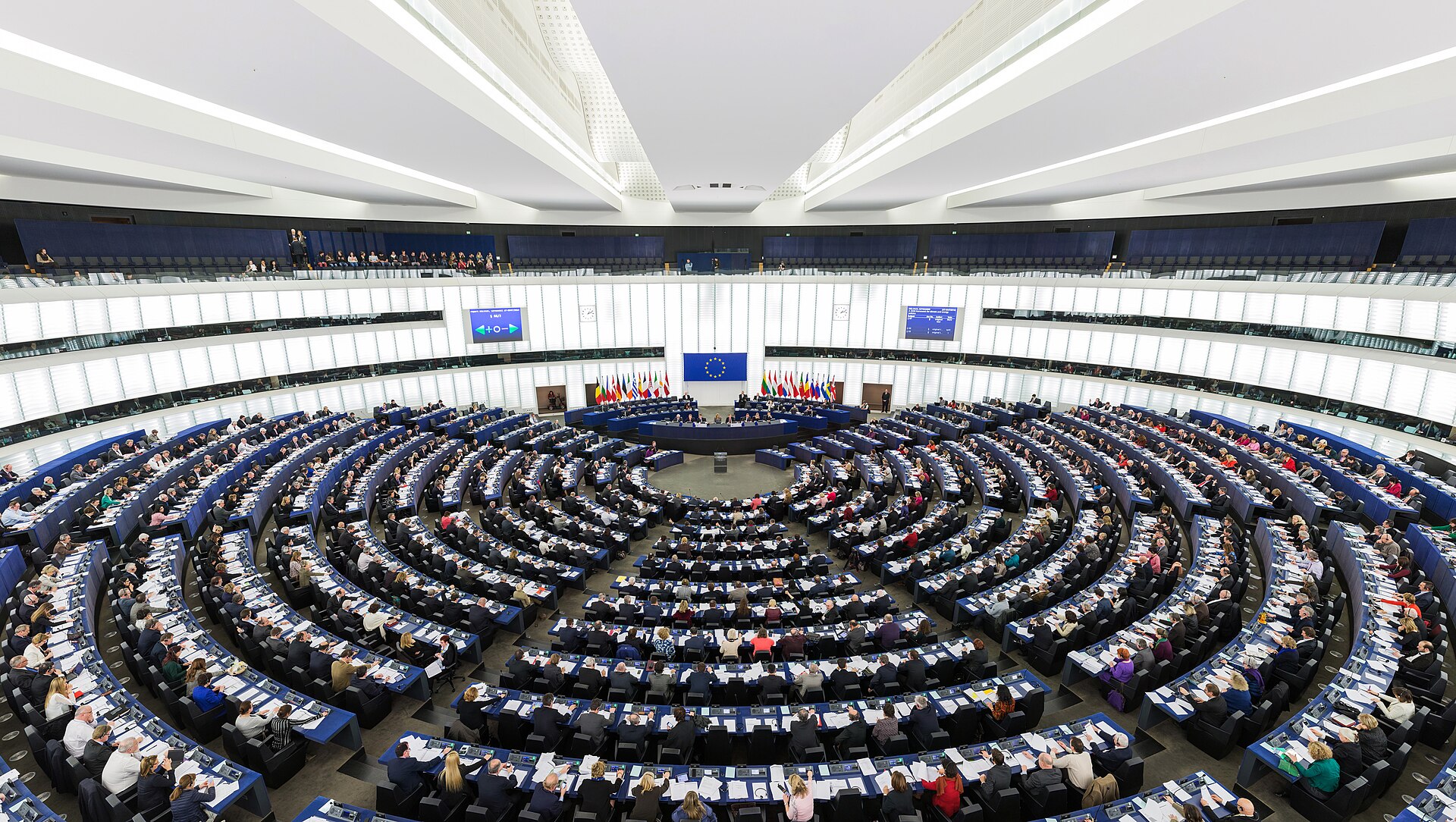
Article 3 sets the GDPR's reach. It applies to processing "in the context of the activities of an establishment" of a controller or processor in the EU, wherever the processing happens, so a US company's European office, branch or subsidiary brings its processing inside. It also applies to a controller or processor with no EU establishment when the processing relates to "the offering of goods or services" to people in the EU, paid or free, or to "the monitoring of their behaviour as far as their behaviour takes place within the Union."36 Merely having a website that Europeans can read is not enough; signs of targeting include European languages or currencies, shipping to EU countries, or EU-focused marketing. Tracking European visitors' behavior with analytics and advertising technology for profiling can count as monitoring.
A US organization reached under Article 3(2) usually must appoint a representative in the EU (Article 27), keep records of processing activities (Article 30, with a limited exemption for organizations under 250 employees), carry out data protection impact assessments for high-risk processing (Article 35), and in some cases appoint a data protection officer (Article 37). It needs a lawful basis for each processing purpose (Article 6), which is a stricter idea than US notice and choice: consent is only one of six bases, and "legitimate interests" requires a written balancing test.
The 72-hour breach notice and the fines
Article 33 requires a controller to notify its supervisory authority of a personal data breach "without undue delay and, where feasible, not later than 72 hours after having become aware of it," unless the breach is unlikely to result in a risk to people's rights and freedoms. Processors must notify the controller without undue delay. Article 34 adds notice to affected people when the risk is high.36 Seventy-two hours runs on calendar time, including weekends, and starts at awareness, not at the end of an investigation; a US incident response plan built around state law's 30-to-60-day windows needs a separate EU track. Lesson 10, Detection and Incident Response, covers how to build reporting clocks into the plan.
Fines under Article 83 reach up to 20 million euros or 4 percent of total worldwide annual turnover of the preceding year, whichever is higher, for violations of the core principles, legal bases, data subjects' rights and transfer rules, and up to 10 million euros or 2 percent for other violations such as security and breach notice duties.36 The largest fine to date was imposed for transfers to the United States, discussed next.
The European Commission proposed changes to the GDPR in November 2025 as part of a "digital omnibus" simplification package. On October 21, 2026, the Council of the EU agreed its position, which would raise the threshold for reporting a breach to the regulator to breaches "likely to result in a high risk" and, under a new proposal, extend the deadline to 96 hours, with each member state setting up a national entry point for reporting incidents under different EU laws. The European Parliament had not adopted its position when this lesson was written, and a November 9, 2026 law firm summary says plainly: "These changes are not yet law."37 Until they are, plan for 72 hours.
Moving data from Europe to the United States
Chapter V of the GDPR allows transfers of personal data out of the EU only on a recognized basis: an "adequacy" decision by the Commission that the destination country protects data adequately (Article 45), or appropriate safeguards such as the Commission's standard contractual clauses or binding corporate rules (Article 46), or narrow derogations.36 The history of transfers to the United States is a history of court defeats. The EU's Court of Justice struck down the Safe Harbor framework in 2015 and the Privacy Shield in July 2020 (the Schrems II decision), both times because of US surveillance law and the lack of a remedy for Europeans.
After Schrems II, companies that relied on standard contractual clauses had to assess US law and add "supplementary measures." Ireland's Data Protection Commission found that Meta Platforms Ireland's use of the 2021 clauses and supplementary measures for Facebook "did not address the risks" the court had identified, and on May 22, 2023 announced a fine of 1.2 billion euros, with orders to suspend future transfers within five months and stop unlawful processing of transferred data within six months.38
The current arrangement is the EU-U.S. Data Privacy Framework, built on Executive Order 14086 (October 2022), which added limits on US signals intelligence and a two-step redress process ending in a Data Protection Review Court. The Commission adopted an adequacy decision for it on July 10, 2023. US companies join by self-certifying to the Department of Commerce, and the public list of participants is at dataprivacyframework.gov.39 The United Kingdom has a parallel "UK Extension," and Switzerland its own Swiss-U.S. framework.
A French member of parliament, Philippe Latombe, asked the EU's General Court to annul the adequacy decision. On September 3, 2025, the General Court dismissed his action in Case T-553/23. He appealed to the Court of Justice on October 31, 2025; the appeal is Case C-703/25 P, published in the EU's Official Journal on December 22, 2025.640 This lesson found no judgment or Advocate General's opinion in the appeal as of November 13, 2026. A large organization relying on the framework should keep standard contractual clauses ready as a fallback, because both earlier frameworks fell in the same court: Safe Harbor after 15 years and Privacy Shield after four.
The international basics for smaller firms, including Canada's federal law and Quebec's Law 25, are in International Privacy for US Businesses.
Running a privacy program at scale
The laws above differ in their definitions, but they ask large organizations for the same handful of things. A privacy program is the machinery that produces them on a schedule and can prove it did. The NIST Privacy Framework, a free voluntary tool whose current Version 1.0 was released January 16, 2020 (a Version 1.1 was still an initial public draft when this lesson was written), organizes the work into five functions (Identify-P, Govern-P, Control-P, Communicate-P and Protect-P) and is built to sit beside the NIST Cybersecurity Framework.41 The CSF 2.0 itself, published February 26, 2024, added a Govern function that covers privacy-related risk decisions as well.42
Who owns privacy
Large organizations usually name a chief privacy officer or privacy director, often in the legal or compliance office, with a dotted line to the CISO. Health care has a required HIPAA privacy officer; Gramm-Leach-Bliley institutions have a Qualified Individual for security; organizations under the GDPR may need a data protection officer whose independence the law protects. What matters more than the title is that one named person owns the program, has a budget, reports to a board committee at least yearly, and can stop a project that has not been assessed. Privacy champions in each business unit (a trained person in marketing, HR, product, research and IT) keep the program from depending on one office's memory.
The data inventory
A data inventory (the GDPR calls its version "records of processing activities") is a list of every significant set of personal data the organization holds, with what it contains, where it lives, why it is collected, who can get to it, who it is shared with, where it goes geographically, how long it is kept, and which laws reach it. It is the foundation for everything else: you cannot answer a deletion request, scope a breach, honor an opt-out, apply the DOJ bulk data rule or write a truthful privacy notice without it. Minnesota now requires one by statute, and the GDPR has since 2018.
Large organizations build the inventory from three directions at once: interviews with each business process owner (what do you collect and why), technical discovery (scanning databases, file shares and cloud storage for personal data), and the vendor list (who receives data). The worksheet at the end of this lesson shows the fields. Lesson 7, Data Protection: Encryption, Retention and Backups, covers data classification and retention schedules, which share the inventory's fields; the small-business method is in Risk Assessment and Data Mapping.
Privacy impact assessments
A privacy impact assessment (PIA) is a written review, done before a new system, project, vendor or use of data goes live, of what personal data it involves, the risks to the people the data is about, and what will reduce those risks. The idea came from government: the E-Government Act of 2002 requires federal agencies to do them, and the Idaho Technology Authority publishes guideline G502, Privacy Impact Assessment, for state agencies, alongside its policy P4150, Privacy Policy.43 The private-sector equivalents now have legal force: GDPR data protection impact assessments for high-risk processing, the state laws' data protection assessments, and California's risk assessments with their attestation due in 2028.
A workable PIA process at scale has a short screening form (does this project involve personal data, sensitive data, children, new tracking, AI decisions, a new vendor or a new country?), a full assessment only when the screen says so, a sign-off by the privacy office and the business owner, and a requirement in the project management and procurement process that nothing launches without it. The assessment is also evidence: when a regulator asks why you made a choice, a dated assessment shows that you considered the risk.
Rights requests at scale
A national retailer or health system can receive thousands of access, deletion, correction and opt-out requests a year. Doing it well takes a single intake (web form, toll-free number, email, and honoring Global Privacy Control signals automatically), identity verification proportionate to the request (and none at all for opt-outs, which California's Honda case made clear), a workflow that finds the person's data across systems using the inventory, deadline tracking (45 days under most state laws, one month under the GDPR), documented exceptions when data must be kept (legal holds, fraud prevention, records retention laws), and records of each request. When an organization changes how its website handles opt-out signals or consent banners, it should plan the change, test it on a copy of the site and have a way back, because a broken banner is itself a violation.
Vendors, training and metrics
Every state law and the GDPR require contract terms with processors. In practice that means a standard data processing addendum, attached to every contract where a vendor handles personal data, matched to the vendor tier system in Lesson 8. Training should be role-based: marketing staff on tracking technology and consent, HR on applicant and employee notices, engineers on privacy by design, customer service on recognizing a rights request. Useful board metrics include the number of systems inventoried, assessments completed and overdue, rights requests received and closed on time, vendor contracts with current privacy terms, and regulator inquiries. Lesson 4 shows how these fit a board report, and Module 73's Privacy Program, AI Governance and Board Reporting gives the small-business version.
AI and privacy law
Automated decisions and AI training raise every privacy question at once: what data was collected, whether people were told, whether it is accurate, whether the decision can be explained and challenged. As of November 2026 the rules are moving in two directions at once.
| Rule | Status as of Nov. 13, 2026 | What it asks |
|---|---|---|
| Colorado SB 26-189 (replaces the 2024 Colorado AI Act, SB 24-205) | Adopted May 14, 2026; compliance from Jan. 1, 2027, when the attorney general's rules are also due44 | Notice when people interact with AI; a plain-language disclosure within 30 days of an adverse outcome from covered automated decisionmaking; correction of inaccurate data; human review where commercially reasonable; developer documentation to deployers and three years of records. The 2024 law's risk management program, impact assessments and duty of reasonable care were dropped. Attorney general enforcement only, with a 60-day cure right until Jan. 1, 2030. |
| California CCPA regulations on ADMT | Effective Jan. 1, 2026; ADMT compliance from Jan. 1, 20273 | Pre-use notice, opt-out and access rights for ADMT used for significant decisions, plus risk assessments |
| Texas Responsible AI Governance Act (HB 149) | Effective Jan. 1, 202645 | Bans developing or deploying AI with intent to discriminate unlawfully, incite harm or produce certain prohibited content; most disclosure duties fall on government agencies and health care providers; attorney general enforcement |
| Illinois HB 3773 (amending the Illinois Human Rights Act) | Effective Jan. 1, 2026 | No use of AI in employment decisions that has the effect of discriminating on protected grounds; notice to employees when AI is used |
| New York City Local Law 144 | Enforced since July 5, 2023 | Annual bias audit and notice before using automated employment decision tools |
| Executive Order 14365, "Ensuring a National Policy Framework for Artificial Intelligence" | Signed Dec. 11, 2025; AI Litigation Task Force formed Jan. 9, 2026; legislative recommendations published March 20, 202646 | Directs federal challenges to state AI laws seen as burdensome, a Commerce Department review of state laws and funding conditions. It does not itself preempt state law; organizations remain bound by state laws unless a court or Congress says otherwise. |
The Colorado story is a caution about building a program around one statute: the 2024 law was delayed, challenged in federal court and then replaced by a narrower one before it ever took effect. The duties that survive in nearly every proposal (an inventory of AI uses, notice, a way to correct data and get a human review, records, vendor documentation) are the ones to build first. The status of each state AI law in October 2026 is tracked in more detail in Module 73's Privacy Program, AI Governance and Board Reporting, and the EU's AI Act, which entered into force in August 2024 with obligations phasing in through 2027, applies to US firms that place AI systems on the EU market.
The Resource Library
These are the free official resources (and a few paid or registration-only ones, marked as such) that the lessons of this module and its sister modules rely on. Every link was opened on November 13, 2026. A few government sites refuse automated link checkers but load normally in a browser; those were checked by hand. Government publications are public domain; industry reports and standards are copyrighted and are described here, not reproduced. Each entry says what the resource is, who it is for, what it costs and how to use it.


Frameworks and standards
| Resource | What it is | Who it is for | Cost | How to use it | Checked |
|---|---|---|---|---|---|
| NIST Cybersecurity Framework (CSF) 2.0 and the CSF 2.0 document (CSWP 29) | The six-function framework (Govern, Identify, Protect, Detect, Respond, Recover), published Feb. 26, 2024 | Every organization; the common language for boards and regulators | Free | Write a current and a target profile; report progress to the board by function. See Lesson 3. | Nov. 13, 2026 |
| NIST CSF 2.0 Quick-Start Guides | Short guides for small businesses, enterprise risk managers, profiles, tiers and supply chain | Executives and teams starting out; risk officers tying cyber to enterprise risk | Free | Start with the guide matched to your role; the organizational profile template is a ready worksheet | Nov. 13, 2026 |
| NIST SP 800-53 Rev. 5 | The full catalog of security and privacy controls, including a privacy control family (PT) and baselines in SP 800-53B | Federal agencies and contractors; large organizations that want a detailed control set | Free | Use the baselines to pick controls; use the PT family for privacy program controls | Nov. 13, 2026 |
| NIST SP 800-171 Rev. 3 | Requirements for protecting controlled unclassified information in nonfederal systems | Defense and federal contractors (CMMC) | Free | Score yourself against each requirement; plan gaps. See Lesson 3. | Nov. 13, 2026 |
| NIST SP 800-61 Rev. 3 | Incident response recommendations, April 2025, mapped to CSF 2.0 | Incident response teams, CISOs | Free | Build the incident response plan in Lesson 10 on it | Nov. 13, 2026 |
| NIST SP 800-82 Rev. 3 | Guide to operational technology (OT) security | Manufacturers, utilities, hospitals with building and device systems | Free | Pair with Module 111, IEC 62443 and NIST SP 800-82 | Nov. 13, 2026 |
| NIST SP 800-66 Rev. 2 | Implementing the HIPAA Security Rule, a cybersecurity resource guide | Covered entities and business associates | Free | Use its key activities per standard as a checklist; see Module 109 | Nov. 13, 2026 |
| NIST Privacy Framework | Version 1.0 (Jan. 16, 2020), a voluntary privacy risk framework with five functions; Version 1.1 in draft | Privacy officers; organizations building a program | Free | Use the quick-start guide and profiles; pair with CSF 2.0 | Nov. 13, 2026 |
| CIS Critical Security Controls v8.1 | 18 prioritized control groups with three implementation groups | Any organization that wants a ranked to-do list | Free download with registration | Start with Implementation Group 1; measure coverage yearly | Nov. 13, 2026 |
| CIS Benchmarks | Consensus secure configuration guides for operating systems, cloud services, databases and applications | System administrators, cloud teams | Free PDFs for non-commercial use; paid tools and hardened images | Set baselines for each platform; check drift. See Lesson 6. | Nov. 13, 2026 |
| ISO/IEC 27001:2022 | The international standard for an information security management system, certifiable by accredited auditors | Organizations with international customers who ask for certification | Paid standard; certification audits cost more | Read the free ISO overview page; buy the standard only when pursuing certification. Described, not reproduced, in Lesson 3. | Nov. 13, 2026 |
Health sector resources
| Resource | What it is | Who it is for | Cost | How to use it | Checked |
|---|---|---|---|---|---|
| HHS Health Information Privacy (HIPAA) | OCR's guidance, FAQs, resolution agreements and rule texts | Covered entities, business associates, patients, reporters | Free | Read the enforcement highlights and resolution agreements for patterns | Nov. 13, 2026 |
| HHS Security Risk Assessment (SRA) Tool | Downloadable tool from ONC and OCR that walks a practice through a HIPAA risk assessment | Small and medium providers | Free | Run yearly; keep the report as risk analysis evidence. See Module 109, The Risk Analysis. | Nov. 13, 2026 |
| HHS 405(d) program and Health Industry Cybersecurity Practices (HICP) | The HHS and industry guide to the ten most effective practices for health care; the 405(d) site now redirects here | Hospitals, clinics, health plans | Free | Use the technical volume matched to your size; it is one of the "recognized security practices" OCR considers | Nov. 13, 2026 |
| HHS OCR breach portal | Public list of HIPAA breaches affecting 500 or more people | Reporters, researchers, compliance teams benchmarking peers | Free | Search by state, entity type and breach type; download the list | Nov. 13, 2026 |
| FDA medical device cybersecurity | FDA guidance for device makers and information for hospitals | Device manufacturers, biomedical engineering and hospital IT | Free | Ask device vendors for their software bill of materials and patch plans. See Medical Devices and Clinical Technology. | Nov. 13, 2026 |
CISA and federal threat resources
| Resource | What it is | Who it is for | Cost | How to use it | Checked |
|---|---|---|---|---|---|
| CISA Known Exploited Vulnerabilities (KEV) catalog | The list of vulnerabilities CISA has evidence are being exploited, with due dates for federal agencies | Every IT and security team | Free; data feed available | Patch KEV entries first; track time to fix. See Lesson 6. | Nov. 13, 2026 |
| CISA Cross-Sector Cybersecurity Performance Goals (CPGs) | A minimum set of practices; version 2.0 (December 2025) added governance47 | Critical infrastructure and any organization wanting a baseline | Free | Score yourself goal by goal; use the gaps as a first-year plan | Nov. 13, 2026 |
| CISA Free Cybersecurity Services and Tools | CISA's catalog of its own no-cost services (including Cyber Hygiene vulnerability scanning and web application scanning) and free tools from others, filterable by CPG | Critical infrastructure owners, public agencies, smaller organizations | Free | Sign up for Cyber Hygiene scanning of your internet-facing systems; contact your regional CISA advisor48 | Nov. 13, 2026 |
| CISA #StopRansomware | The joint ransomware guide, advisories on specific groups, and reporting links | Incident response and backup teams | Free | Use the guide's checklist with Lesson 7 and Lesson 10 | Nov. 13, 2026 |
| CISA Tabletop Exercise Packages | Ready-made scenarios, slide decks and facilitator guides for tabletop exercises | Executives, incident teams, public agencies | Free | Run one scenario a year with the executive team and the board | Nov. 13, 2026 |
| FBI Internet Crime Complaint Center (IC3) | Where victims report cybercrime; publishes annual reports and alerts | Every victim organization; reporters | Free | Report fraud and intrusions promptly; read the annual report's loss tables | Nov. 13, 2026 |
Information sharing and analysis centers (ISACs)
An ISAC is a member organization in one industry that shares threat warnings, indicators and lessons among its members and with government. Most charge dues scaled to the member's size.
| Resource | What it is | Who it is for | Cost | How to use it | Checked |
|---|---|---|---|---|---|
| Health-ISAC (H-ISAC) | Threat sharing for the health sector, including medical device makers and pharmaceutical companies | Hospitals, health plans, device makers, life sciences | Paid membership, dues by size | Join if you run a health system; route its alerts to your security operations team | Nov. 13, 2026 |
| Multi-State ISAC (MS-ISAC) | Threat sharing and services for state, local, tribal and territorial governments, run by the Center for Internet Security | Cities, counties, states, school districts, public utilities and public hospitals | Paid since Oct. 1, 2025. CISA cut $10 million (about half its budget) in March 2025 and the rest of federal funding ended in September 2025; dues are scaled to budget or population, up to $1,495 a year for organizations with budgets under $25 million, with a hardship waiver for a free first year4950 | Check whether your state bought a statewide membership (16 states had by November 2026); CIS Benchmarks and some threat intelligence stay free | Nov. 13, 2026 |
| Electricity ISAC (E-ISAC) | Threat sharing for the North American electricity industry, operated by NERC | Electric utilities and grid operators | Eligibility-based; check the site | Use its portal and its grid security exercise reports | Nov. 13, 2026 |
| Manufacturing ISAC (MFG-ISAC) | Threat sharing for manufacturers | Manufacturers of all sizes | Membership tiers; check the site | Pair with Module 111 | Nov. 13, 2026 |
| Financial Services ISAC (FS-ISAC) | Threat sharing for banks, credit unions, insurers and other financial firms worldwide | Financial institutions | Paid membership, dues by size | Use its alerts and exercises; smaller credit unions often join through partner programs | Nov. 13, 2026 |
| National Council of ISACs | The directory of ISACs by sector | Anyone looking for their sector's ISAC | Free to browse | Find the ISAC for any sector not listed here | Nov. 13, 2026 |
Community tools and annual reports
| Resource | What it is | Who it is for | Cost | How to use it | Checked |
|---|---|---|---|---|---|
| SANS Information Security Policy Templates | A library of editable security policy templates from the SANS Institute's policy project | Policy writers, compliance officers | Free | Compare with the samples in this module; adapt, do not copy whole | Nov. 13, 2026 |
| OWASP Top Ten | The Open Worldwide Application Security Project's list of the most critical web application security risks | Software developers, web teams, vendor managers | Free | Require vendors and developers to test against it | Nov. 13, 2026 |
| MITRE ATT&CK | A public knowledge base of attacker tactics and techniques seen in real incidents | Security operations, threat intelligence and detection engineers | Free | Map your detections to it to see coverage gaps | Nov. 13, 2026 |
| Verizon Data Breach Investigations Report (DBIR) | Annual analysis of thousands of incidents and breaches; the 2025 edition analyzed 22,052 incidents, of which 12,195 were confirmed breaches, and found third-party involvement in 30 percent of breaches51; the publisher's page now offers a 2026 edition | CISOs, boards, risk managers | Free with registration | Use its industry sections to pick likely attack patterns for your risk register | Nov. 13, 2026 |
| IBM Cost of a Data Breach Report | Annual study by the Ponemon Institute for IBM; the 2025 edition put the global average breach cost at $4.44 million and the US average at $10.22 million52; IBM's page now offers a 2026 edition | Boards, CFOs, risk managers | Free with registration | Use with caution as a benchmark; it is a survey of breached companies, not a census | Nov. 13, 2026 |
Regulators and legal texts
| Resource | What it is | Who it is for | Cost | How to use it | Checked |
|---|---|---|---|---|---|
| FTC, Start with Security | The FTC's guide to lessons from its data security cases (current version August 2023)53 | Any business under FTC jurisdiction | Free | Read each lesson against your own practices; the cases behind it are the FTC's idea of "reasonable" | Nov. 13, 2026 |
| FTC, Cybersecurity for Small Business | Short fact sheets and training materials | Small offices, branch offices, franchisees, vendors | Free | Hand to small vendors and branch managers | Nov. 13, 2026 |
| FTC, Privacy and Security business guidance | FTC guidance hub covering COPPA, health apps, credit reports, data security and the Safeguards Rule | Compliance officers, marketers, product teams | Free | Start here for any FTC rule question | Nov. 13, 2026 |
| FTC, Complying with COPPA: Frequently Asked Questions | The FTC staff's question-and-answer guide to the COPPA Rule | Operators of child-directed services, ed tech, ad tech | Free | Check against the 2025 amendments before relying on older answers | Nov. 13, 2026 |
| SEC EDGAR full-text search | Search of public company filings, including Form 8-K Item 1.05 incident reports and Form 10-K Item 1C cybersecurity disclosures | Boards, investors, reporters, peer benchmarking | Free | Search "Item 1.05" or "Item 1C" plus a company or industry. See Lesson 4. | Nov. 13, 2026 |
| California Privacy Protection Agency (CalPrivacy) | California's privacy regulator: regulations, enforcement decisions, data broker registry | Any business meeting CCPA thresholds | Free | Read the enforcement decisions; they show exactly what the agency checks | Nov. 13, 2026 |
| IAPP US State Privacy Legislation Tracker | A chart of signed and pending state consumer privacy laws, kept by the International Association of Privacy Professionals | Privacy officers, reporters, legislators | Free chart; IAPP membership is paid | Check the update date on the chart; confirm against the state's enrolled text | Nov. 13, 2026 |
| NCSL Security Breach Notification Laws | The National Conference of State Legislatures' list of every state's breach statute | Breach response teams, legislators | Free | Use as the index; read each statute itself. See Lesson 11. | Nov. 13, 2026 |
| DOJ National Security Division, Data Security Program | The bulk data rule, compliance guide (April 11, 2025) and FAQs (Sept. 24, 2025) | Any organization with bulk sensitive data and foreign vendors, employees or investors | Free | Work through the compliance guide with the data inventory | Nov. 13, 2026 |
| Data Privacy Framework program | The Commerce Department's site for the EU-U.S., UK and Swiss frameworks, with the list of participants | US companies receiving data from Europe; their customers | Free to read; annual self-certification fee to join | Check whether a US vendor is actually listed and current before relying on it | Nov. 13, 2026 |
| European Data Protection Board | The body of EU regulators; publishes GDPR guidelines and binding decisions | Organizations under the GDPR | Free | Read its guidelines on breach notification, territorial scope and transfers | Nov. 13, 2026 |
| UK Information Commissioner's Office, guidance for organizations | The UK regulator's plain-language guidance on the UK GDPR | Organizations with UK customers or staff | Free | Its guides are among the clearest explanations of GDPR concepts | Nov. 13, 2026 |
| Department of Education, Student Privacy Policy Office | FERPA guidance, model terms for ed tech contracts, training | Schools, colleges, ed tech vendors | Free | Use its model terms in vendor contracts | Nov. 13, 2026 |
| eCFR, 16 CFR Part 314 (Safeguards Rule) and 28 CFR Part 202 (DOJ bulk data rule) | The current official text of federal regulations, updated daily | Anyone citing a federal rule | Free | Always cite the eCFR's current text and date | Nov. 13, 2026 |
Idaho resources
| Resource | What it is | Who it is for | Cost | How to use it | Checked |
|---|---|---|---|---|---|
| Idaho Attorney General, Security Breaches | Explains that Idaho public agencies must notify the Attorney General within 24 hours of discovering a breach, accepts voluntary reports from businesses, and posts the breach notices received since Jan. 1, 202154 | Idaho agencies, businesses, reporters | Free | Search the list for Idaho breaches; send notices to the address on the page | Nov. 13, 2026 |
| Idaho Technology Authority policies, standards and guidelines | The state's IT and security rules for executive agencies, including P4150 Privacy Policy, G502 Privacy Impact Assessment, P4130 Information Systems Classification, P4590 Cybersecurity Incident and Breach Response, G580 Cybersecurity Breach Notification and G515 Critical Security Controls 1-6 Written Policy Template43 | Idaho state agencies; useful models for cities, counties and school districts | Free | Local governments can adapt the templates; reporters can compare agency practice against them | Nov. 13, 2026 |
| Idaho state cybersecurity site | The state's public cybersecurity information page | Idaho residents, agencies and businesses | Free | Check for state alerts and contacts | Nov. 13, 2026 |
| Idaho Code Title 28, Chapter 51 | Idaho's breach notice law, sections 28-51-104 to 28-51-107 | Anyone holding Idaho residents' personal information | Free | Read with Lesson 11 | Nov. 13, 2026 |
Professional resources
| Resource | What it is | Who it is for | Cost | How to use it | Checked |
|---|---|---|---|---|---|
| ABA Cybersecurity Legal Task Force | The American Bar Association's cybersecurity group: recorded programs, a monthly meeting archive and the ABA Cybersecurity Handbook (fourth edition) | Law firms, general counsel's offices, bar leaders | Some programs free; the handbook and some programs are paid | Pair with Module 110 for law and accounting firms | Nov. 13, 2026 |
The Sample Policy Library
Every sample policy in this module and its three sister modules is listed here, with a link to the lesson that holds it. Each sample is a starting point labeled as a sample, with brackets to fill and the sources it follows named; none is a substitute for a risk assessment or for review by qualified people who know your systems and the laws that apply to you. A policy approved by the board and never followed is worse than none, because it becomes evidence of what the organization knew it should do.
How the documents fit together: one top-level Information Security Policy, approved by the board or its committee, sets direction and assigns authority. Topic policies (access control, acceptable use, vendor risk, data classification and retention, privacy) state the rules. Standards (passwords and MFA, backups) set measurable requirements. Procedures, plans and playbooks (incident response, ransomware, breach notification) say who does what, in what order. Worksheets and templates (the risk register, the data inventory) hold the records.
| Sample | Type | Where it is |
|---|---|---|
| Risk register template | Worksheet | Module 108, Lesson 2: Risk Management in Plain Terms |
| Information Security Policy (the top-level policy) | Policy | Module 108, Lesson 4: Governance: Boards, Officers and Disclosure |
| Access Control Policy | Policy | Module 108, Lesson 5: Identity and Access |
| Password and Multifactor Authentication Standard | Standard | Module 108, Lesson 5: Identity and Access |
| Remote Access Policy | Policy | Module 108, Lesson 6: Network and Cloud Security |
| Bring Your Own Device Policy | Policy | Module 108, Lesson 6: Network and Cloud Security |
| Data Classification and Retention Policy | Policy | Module 108, Lesson 7: Data Protection: Encryption, Retention and Backups |
| Backup and Recovery Standard | Standard | Module 108, Lesson 7 |
| Vendor and Third-Party Risk Management Policy | Policy | Module 108, Lesson 8: Vendors and Supply Chain |
| Acceptable Use Policy | Policy | Module 108, Lesson 9: People, Training, Phishing and Insider Risk |
| Incident Response Plan | Plan | Module 108, Lesson 10: Detection and Incident Response |
| Ransomware Playbook | Playbook | Module 108, Lesson 10 |
| Breach Notification Procedure | Procedure | Module 108, Lesson 11: Breach Notification: Federal, State and Idaho |
| Privacy Notice; Data Inventory Worksheet | Notice; worksheet | Module 108, this lesson, below |
| Sample 1: Information Security Policy (master policy) | Policy | Module 109, A Small Clinic Walkthrough |
| Sample 2: Access Control, Password and Multi-Factor Authentication Policy | Policy | Module 109, A Small Clinic Walkthrough |
| Sample 3: Workforce Sanctions and Training Policy | Policy | Module 109, A Small Clinic Walkthrough |
| Sample 4: Backup, Contingency and Emergency Mode Operations Plan (outline) | Plan | Module 109, A Small Clinic Walkthrough |
| Sample 5: Incident Response and Ransomware Playbook | Playbook | Module 109, A Small Clinic Walkthrough |
| Sample 6: Breach Risk Assessment and Notification Procedure, with four-factor worksheet | Procedure | Module 109, A Small Clinic Walkthrough |
| Sample 7: HIPAA Risk Analysis Worksheet (table template) | Worksheet | Module 109, A Small Clinic Walkthrough |
| Sample 8: Business Associate Checklist | Checklist | Module 109, A Small Clinic Walkthrough |
| Sample 9: Device and Media Disposal and Reuse Policy | Policy | Module 109, A Small Clinic Walkthrough |
| Sample 10: Remote Access and Vendor Access Policy | Policy | Module 109, A Small Clinic Walkthrough |
| Client data handling, legal hold and secure disposal policy | Policy | Module 110, Client Data, E-Discovery, Cloud and AI |
| Trust account and client funds payment verification procedure | Procedure | Module 110, Trust Accounts and Client Money |
| Written information security plan outline for a small tax and accounting office | Plan outline | Module 110, Accounting and Tax Firms: GLBA Safeguards and the IRS |
| Engagement letter security and communications clause | Contract clause | Module 110, Engagement Letters, Incident Response and Notice |
| Incident response plan for a small professional firm | Plan | Module 110, Engagement Letters, Incident Response and Notice |
| Payment and wire instruction verification policy | Policy | Module 110, Business Email Compromise and Wire Fraud |
| Client notice: we will never change payment instructions by email | Notice wording | Module 110, Business Email Compromise and Wire Fraud |
| OT Remote Access Policy | Policy | Module 111, Remote Access, Vendors and Supply Chain |
| Vendor security requirements for an OT purchase or service contract | Contract terms | Module 111, Remote Access, Vendors and Supply Chain |
| OT patch and change management procedure | Procedure | Module 111, Patching and Safety Together |
| OT segmentation and network access standard | Standard | Module 111, A Plant Floor Segmentation Plan |
| Zone and conduit worksheet | Worksheet | Module 111, A Plant Floor Segmentation Plan |
Free official templates
These come from government agencies and nonprofits and are free to adapt:
- SANS Information Security Policy Templates: dozens of security policy templates covering acceptable use, passwords, remote access, incident handling and more.55
- NIST CSF 2.0 Quick-Start Guides, including an organizational profile template, and the NIST Privacy Framework quick-start guide for small and medium businesses.41
- HHS 405(d) Health Industry Cybersecurity Practices and the HHS Security Risk Assessment Tool for health care.
- CISA Cybersecurity Performance Goals, a ready self-assessment checklist, and CISA Tabletop Exercise Packages.47
- FTC, Start with Security.53
- Idaho Technology Authority G515, Critical Security Controls 1-6 Written Policy Template, and G502, Privacy Impact Assessment, both written for Idaho state agencies.43
- Department of Education Student Privacy Policy Office model terms for school technology contracts.
This lesson's samples: privacy notice and data inventory worksheet
The privacy notice below is written for a mid-sized or large US organization that is not primarily a health or financial institution (those have required federal notice formats under HIPAA and Regulation P) and that may be covered by several state consumer privacy laws. A notice is a promise: the FTC treats a false statement in it as deception, and the California cases below show regulators checking whether the website actually does what the notice says. Write the inventory first, then the notice from the inventory.
Sample only. Adapt it to your organization's risks, systems and laws, have qualified people review it, and do not treat it as a substitute for a risk assessment.
Follows: the notice elements required by the California Consumer Privacy Act and its regulations (effective Jan. 1, 2026) and by the Virginia, Colorado, Connecticut, Texas and other state consumer privacy laws as summarized in this lesson; FTC Act Section 5 (15 U.S.C. 45); GDPR Articles 13 and 14 for organizations with EU customers; the CalPrivacy and California attorney general enforcement actions against Honda (2025), Healthline (2025) and Tractor Supply (2025); the NIST Privacy Framework 1.0 (Communicate-P function).
Privacy Notice (sample)
Last updated: [date]. Effective: [date].
1. Who we are. This notice explains how [Organization legal name] and its subsidiaries [list or link] ("we") collect, use, share and protect personal information about [customers, website and app users, patients, job applicants, employees, business contacts: say which this notice covers]. If a different notice applies to you (for example our HIPAA Notice of Privacy Practices, our Gramm-Leach-Bliley privacy notice, or our employee privacy notice), we tell you where to find it here: [links].
2. What we collect. The categories of personal information we collected in the last 12 months, where it came from, and why:
| Category | Examples | Source | Why we use it | How long we keep it |
|---|---|---|---|---|
| Identifiers | [Name, address, email, phone, account number] | [You; our service providers] | [To provide services, bill you, contact you] | [Life of account plus X years] |
| Commercial information | [Purchases, service history] | [You; our systems] | [To fulfill orders, support, warranty] | [X years] |
| Internet activity | [Pages viewed, device and browser data, cookies and similar technologies] | [Your device, through our site and our analytics and advertising partners] | [Site operation, security, analytics, advertising if you have not opted out] | [X months] |
| Sensitive personal information | [Only list what you actually collect: precise geolocation, account login with password, health information, government ID, biometric data] | [Source] | [Specific purpose; we collect it with your consent where the law requires] | [X] |
| Employment-related information | [For applicants and staff, if covered here] | [You; references; background check providers with your authorization] | [Hiring, payroll, benefits, legal compliance] | [Per our retention schedule] |
3. How we share it. We share personal information with service providers and processors who work for us under written contracts that limit their use of it to our instructions and require them to protect it: [categories, such as cloud hosting, payment processing, customer support, analytics]. We [do / do not] "sell" personal information or "share" it for cross-context behavioral advertising, as those terms are defined in state law. [If you do: We sell or share these categories: [list], with these categories of third parties: [list].] We [do / do not] knowingly sell or share the personal information of consumers under 16. We may disclose information when required by law, to protect safety, or in a merger or sale of the business.
4. Your choices and rights. Depending on where you live, you may have the right to: know what personal information we have about you and get a copy in a portable format; correct inaccurate information; delete information we collected from you; opt out of the sale of your information, targeted advertising, and profiling that produces legal or similarly significant effects; limit our use of sensitive personal information; and appeal our decision on your request. We extend these rights to [all US consumers / residents of states with privacy laws]. We will not discriminate against you for using them.
5. How to make a request. Use [web form link], call [toll-free number], or email [address]. To opt out of sale, sharing and targeted advertising, use the [Your Privacy Choices / Do Not Sell or Share My Personal Information] link at the bottom of every page; we also honor opt-out preference signals such as Global Privacy Control sent by your browser, without asking you to log in or prove who you are. For requests to see, correct or delete information, we will verify your identity by [method proportionate to the data], asking for no more information than we need. You may use an authorized agent. We respond within 45 days and will tell you if we need up to 45 more. If we deny your request, you may appeal by [method]; if you are not satisfied with the result of the appeal, you may contact your state attorney general.
6. Children. Our services are not directed to children under 13, and we do not knowingly collect personal information from them. [If you do, link to the separate COPPA notice.]
7. Security and retention. We protect personal information with administrative, technical and physical safeguards appropriate to its sensitivity, including [encryption, access controls, multifactor authentication]. No system is perfectly secure. We keep personal information only as long as needed for the purposes in this notice or as the law requires, under our records retention schedule.
8. International transfers. [If applicable: We transfer personal information from the European Economic Area, the United Kingdom and Switzerland to the United States under [the EU-U.S. Data Privacy Framework and its UK and Swiss extensions / standard contractual clauses]. Our self-certification is listed at dataprivacyframework.gov.] Residents of the EU and UK can find our lawful bases for processing, retention periods and their rights, including the right to complain to a supervisory authority, in [link to GDPR supplement].
9. Changes. We will post changes here with a new date and, for material changes, notify you by [method] before they take effect.
10. Contact. [Privacy Office, address, email, phone]. [EU representative and data protection officer, if required.]
Sample only. Adapt it to your organization's risks, systems and laws, have qualified people review it, and do not treat it as a substitute for a risk assessment.
Follows: GDPR Article 30 (records of processing activities); the data inventory duty in Minnesota's consumer data privacy law as described in this lesson; the DOJ Data Security Program's data categories and bulk thresholds (28 CFR Part 202); the CCPA's notice categories; NIST Privacy Framework 1.0 (Identify-P function, inventory and mapping); Idaho Technology Authority P4130 and G505 on classification.
Data Inventory Worksheet (sample)
Instructions. Complete one row per significant data set or business process (for example "online orders," "patient scheduling," "payroll," "marketing email list"). The business owner fills in the first columns; IT and security confirm the systems and controls; the privacy office completes the legal columns. Review every row at least yearly and whenever a system, vendor or use changes. Owner: [Privacy Office]. Last full review: [date].
| Field | What to record | Example entry (illustrative) |
|---|---|---|
| 1. Data set or process name | Plain name used by the business | [Online customer orders] |
| 2. Business owner | Named person accountable for the data | [Director, E-commerce] |
| 3. People the data is about | Customers, patients, employees, applicants, children, business contacts | [Adult customers] |
| 4. Data elements | List fields; mark sensitive ones | [Name, address, email, order history; card data tokenized by processor] |
| 5. Approximate volume | Number of people or devices in the last 12 months, by state if possible | [About 240,000 people; 18,000 in Idaho] |
| 6. Source | Directly from the person, from devices, from third parties | [Customer checkout form] |
| 7. Purposes | Each reason the data is used | [Fulfill orders; customer support; fraud prevention] |
| 8. Legal basis or permission | Contract, consent, legal duty, legitimate interest (for GDPR); notice and opt-out status (for state laws) | [Contract; marketing only with opt-in] |
| 9. Systems and locations | Applications, databases, cloud services, regions, paper files | [Commerce platform in US-West region; data warehouse] |
| 10. Recipients | Vendors, affiliates, third parties, with contract status | [Payment processor (DPA signed [date]); shipping carrier; email service] |
| 11. International transfers and countries of concern | Any access or storage outside the US; any vendor, employee or investor link to China, Russia, Iran, North Korea, Cuba or Venezuela | [Support vendor staff in [country]; DOJ rule review completed [date]] |
| 12. Sale, sharing or targeted advertising | Yes or no; with whom; opt-out honored how | [Shared with advertising partner; GPC honored] |
| 13. Classification | Your classification level (see Lesson 7) | [Confidential] |
| 14. Retention | Retention period and deletion method | [7 years after last order; automated purge] |
| 15. Security controls | Encryption, access control, MFA, logging, backups | [Encrypted at rest and in transit; role-based access; MFA for admins] |
| 16. Laws that apply | Federal, state and foreign laws and contracts | [State consumer privacy laws; PCI DSS by contract; breach notice laws] |
| 17. Assessments | PIA or data protection assessment date and result; California risk assessment if applicable | [Assessment completed [date]; next due [date]] |
| 18. AI or automated decisions | Whether the data trains or feeds automated decisions about people | [Fraud scoring model; human review of declines] |
| 19. Breach notice triggers | Which data elements would trigger notice under state breach laws | [Name plus account credentials] |
| 20. Last reviewed and by whom | Date and reviewer | [Date; names] |
Pictures, Numbers and Infographics
The numbers in this lesson, in one place, each with its source.
| Number | What it measures | Source |
|---|---|---|
| 23 | States with a signed general consumer privacy law (IAPP count, without Florida), as of the June 29, 2026 tracker update | IAPP1 |
| 24 | The same count with Florida included, as of Oct. 28, 2026 | MultiState2 |
| 4 | States that enacted such laws in 2026: Alabama, Louisiana, Oklahoma, Vermont | MultiState2 |
| Jan. 1, 2027 to Jan. 1, 2028 | Effective dates of the four 2026 laws (Louisiana and Oklahoma Jan. 1, 2027; Alabama May 1, 2027; Vermont Jan. 1, 2028) | IAPP1 |
| $7,500 and $15,000 | Maximum civil penalty per violation under Oklahoma's and Alabama's 2026 laws, per one law firm summary | Ashurst Perkins Coie27 |
| Jan. 1, 2026 | Effective date of California's regulations on risk assessments, cybersecurity audits and ADMT | CalPrivacy3 |
| April 1, 2028, 2029, 2030 | California cybersecurity audit certification deadlines by revenue (over $100 million; $50 to $100 million; under $50 million) | CalPrivacy3 |
| $632,500; $1,350,000; $1.55 million | California penalties: Honda (March 12, 2025), Tractor Supply (Sept. 30, 2025), Healthline (July 1, 2025) | CalPrivacy and California attorney general323334 |
| April 22, 2026 | Compliance date for most of the amended COPPA Rule (effective June 23, 2025) | 90 FR 1691818 |
| $275 million | COPPA civil penalty against Epic Games, Dec. 19, 2022, the largest ever for an FTC rule violation at the time | FTC19 |
| $1.5 million | Civil penalty in the FTC's first Health Breach Notification Rule case, GoodRx, Feb. 1, 2023 | FTC23 |
| April 8, 2025 | Effective date of most of the DOJ Data Security Program, 28 CFR Part 202 | Federal Register4 |
| 100; 1,000; 10,000; 100,000 | DOJ bulk thresholds for genomic; 'omic, biometric and geolocation; health and financial; and identifier data | BakerHostetler summary of the rule24 |
| 13; $53,088 | Data brokers sent PADFA warning letters by the FTC on Feb. 9, 2026; cited maximum penalty per violation | Wiley5 |
| 72 hours | GDPR Article 33 deadline to notify the supervisory authority of a breach, where feasible | GDPR36 |
| 4 percent or 20 million euros | Top tier of GDPR fines, whichever is higher, based on worldwide annual turnover | GDPR Article 8336 |
| 1.2 billion euros | Irish DPC fine on Meta Ireland for EU-to-US transfers, announced May 22, 2023 | Irish DPC38 |
| Sept. 3, 2025; Oct. 31, 2025 | General Court upholds the Data Privacy Framework; Latombe files appeal C-703/25 P | EU Official Journal6 |
| $1.4 billion | Texas settlement with Meta over facial recognition under the state's biometric law, finalized July 30, 2024 | National Law Review56 |
| 24 hours | Deadline for Idaho public agencies to notify the Idaho Attorney General of a breach | Idaho Attorney General54 |
| $10 million; 18,500; $1,495 | MS-ISAC: March 2025 federal cut; government entities that once used it free; top annual dues for organizations with budgets under $25 million | NACo49 |

Common mistakes
Each of these is drawn from a public enforcement record. The organizations are large and well resourced; the failures are ordinary.
1. Making people prove who they are to opt out
California's privacy agency found that American Honda required consumers to verify their identity and hand over extra personal information to opt out of sale and sharing or to limit use of sensitive data, presented privacy choices unequally, made it hard to use an authorized agent, and shared data with advertising technology companies without the required contract terms. The March 12, 2025 settlement carried a $632,500 fine.32 Opt-outs need no identity verification; access and deletion requests need verification proportionate to the risk. The agency made the same point in August 2026 against a data broker that demanded partial Social Security numbers before honoring opt-outs.35
2. Forgetting job applicants and browser signals
Tractor Supply, the agency's largest fine to date at $1,350,000 on September 30, 2025, failed to tell California job applicants about their privacy rights, failed to honor opt-out preference signals including Global Privacy Control, kept a privacy policy that did not explain consumers' rights, and gave personal information to other companies without contracts containing privacy protections. It must also scan its digital properties for tracking technology and have an officer or director certify compliance every year for four years.33 California's law has covered applicants and employees since 2023, and many organizations still have no applicant notice.
3. Using health signals for advertising
The California attorney general's July 1, 2025 settlement with Healthline Media, $1.55 million, alleged that the health information website shared article titles suggesting a reader had been diagnosed with a medical condition to target ads, a violation of the law's purpose limitation; kept sharing data with some advertising partners after consumers opted out, including through Global Privacy Control; assumed partners had agreed to an industry framework instead of checking its contracts; and ran a consent banner that did not actually turn off tracking cookies.34 The FTC's 2023 case against GoodRx, its first under the Health Breach Notification Rule, made the same point federally: GoodRx shared prescription and health condition data with Facebook, Google and others despite promising not to, displayed a seal suggesting HIPAA compliance, and paid a $1.5 million civil penalty.23
4. Relying on contract clauses alone for transfers
Meta Ireland relied on the EU's 2021 standard contractual clauses plus supplementary measures to move Facebook users' data to the United States after Schrems II. Ireland's Data Protection Commission found those arrangements did not answer the risks the EU court had identified, fined the company 1.2 billion euros and ordered transfers suspended.38 Any organization moving European data needs a written transfer assessment, not only a signed clause, and a plan for what happens if the current framework falls.
5. Default settings that expose children
The FTC's December 19, 2022 case against Epic Games, maker of Fortnite, combined a $275 million COPPA penalty with $245 million in refunds. The FTC said Epic collected children's personal data without notifying parents or getting their consent, made deletion hard for parents, and kept voice and text chat on by default for children and teens even after employees urged an opt-in setting.19 The amended COPPA Rule, with its separate consent for third-party disclosures and its written security and retention duties, raises the bar further.
6. Collecting biometrics without consent
Texas sued Meta under its Capture or Use of Biometric Identifier Act, alleging that its photo-tagging feature captured Texans' facial geometry without consent. A Texas court finalized a $1.4 billion settlement on July 30, 2024, which a law firm summary called the largest biometrics settlement on record.56 Biometric laws in Illinois, Texas and Washington, and the biometric provisions in most new state laws, require notice and consent before collection; face and voice features in workplace timeclocks, building access and customer service systems are where large organizations most often collect biometrics without realizing it.
7. Not knowing where the data goes
Every case above has a common root: the organization did not have a current, accurate map of what data it collected, which tracking code was on which page, and which vendors received what. The data inventory and the screening step before new technology goes live, described earlier in this lesson, are the controls that would have caught most of them.
Questions people ask
We are covered by HIPAA. Do the state privacy laws apply to us?
For your patient records, usually not, because nearly every state law exempts protected health information. But many exempt only the data, not the organization, so your website visitors who are not patients, your marketing lists, your job applicants (in California) and any consumer product outside HIPAA can be covered. A few states exempt covered entities entirely. Check each state law's exemption section against your data inventory rather than assuming.
We are a public agency in Idaho. What privacy rules apply to us?
The state consumer privacy laws generally exempt government. Idaho agencies work under the Idaho Public Records Act (Title 74), the breach notice law (which requires public agencies to notify the Idaho Attorney General within 24 hours of discovering a breach), federal laws that reach specific programs (FERPA for schools, HIPAA for public health care providers and plans, the Privacy Act's Social Security number rule), and, for executive agencies, the Idaho Technology Authority's policies, including P4150 Privacy Policy and G502 Privacy Impact Assessment.5443 Cities, counties and school districts are not bound by ITA policies but can adopt them as models.
Is there going to be a federal privacy law that replaces the state laws?
Not yet. The latest attempt is the SECURE Data Act, H.R. 8413, introduced April 21, 2026 with nine Republican sponsors and referred to the Energy and Commerce and Judiciary Committees.57 It would replace state consumer privacy laws with one federal standard, enforced by the FTC and state attorneys general after a 45-day notice and cure period, with no private right of action.58 A House Energy and Commerce subcommittee held a hearing on it on June 3, 2026, but no markup or committee vote was on record as of November 14, 2026. Earlier bipartisan bills, including the American Privacy Rights Act draft of 2024, stalled over the same two questions: whether to override state laws and whether to let individuals sue.
Do we need to honor Global Privacy Control?
In California and in many of the other states with a consumer privacy law, yes: a browser's opt-out preference signal must be treated as a valid request to opt out of sale and sharing or targeted advertising. California's Tractor Supply and Healthline cases both cited failures to honor it.3334 Large organizations usually honor it nationwide, because detecting a visitor's state reliably is harder than honoring the signal for everyone.
Can we still rely on the EU-U.S. Data Privacy Framework?
Yes, as of November 13, 2026. The General Court upheld the adequacy decision on September 3, 2025, and the appeal (C-703/25 P) was still pending.6 Confirm that each US recipient is actually listed and current at dataprivacyframework.gov, and keep standard contractual clauses and a transfer assessment ready as a fallback.39
Does the DOJ bulk data rule really apply to ordinary companies?
It can. It is not limited to data brokers or defense firms. A hospital with health data on more than 10,000 people that hires an offshore support vendor with staff in a country of concern, or a retailer whose analytics vendor is owned by a company in one, may be in a restricted transaction that needs CISA's security requirements and a compliance program. The thresholds are low, and the rule counts data over the preceding 12 months.2426
What should the board ask about privacy?
Five questions cover most of it. Do we have a current data inventory, and who owns it? Which privacy laws apply to us, and which new ones take effect in the next 18 months? Do our opt-outs, cookie banners and vendor contracts actually work, and who tested them? What high-risk uses of data (AI, tracking, sensitive data, overseas access) were assessed this year, and were any stopped? What regulator inquiries, complaints or lawsuits are open? Lesson 4 covers board reporting in more detail.
Hard questions
One federal law, or many state laws?
The case for one federal law that overrides state laws: Businesses that serve the whole country face 23 or more different statutes with different thresholds, definitions, deadlines and cure periods; compliance costs fall hardest on mid-sized companies that cannot afford large privacy staffs; consumers get different rights depending on where they live; and data crosses state lines by nature, which is what the Constitution's commerce power is for. The SECURE Data Act's supporters make this argument.58
The case for keeping state laws, or a federal floor that states can exceed: States have acted while Congress has not for decades; a federal law that wipes out stronger state laws could lower protection for Californians, Marylanders and others; states can respond faster to new technology; and state attorneys general bring cases the FTC lacks resources for. Privacy advocacy groups have made this argument against the 2026 bill.
What the evidence shows: The state laws are more alike than different; most follow one template, and organizations that build to the strictest common standard report that the remaining differences are manageable. The real disagreements are narrower than the rhetoric: whether to allow private lawsuits, how strict data minimization should be, and whether a federal law should set a floor or a ceiling.
Should the default be opt-in or opt-out?
For opt-out (use allowed until the person says no): It keeps free, advertising-supported services working, avoids "consent fatigue" from endless pop-ups that people click through without reading, and lets organizations use data for ordinary purposes without friction. Most US state laws use opt-out for targeted advertising and sale.
For opt-in (no use until the person says yes): Most people never change defaults, so opt-out in practice means most data is used; the burden should sit with the organization that profits. The GDPR and most state laws already require opt-in for sensitive data, and Maryland goes further by limiting collection itself.
What the evidence shows: Defaults are powerful, which both sides agree on. The trend in US law is opt-out for ordinary data, opt-in for sensitive data and children's data, and growing use of universal opt-out signals that make opting out one click instead of one form per company. Data minimization rules, which limit collection regardless of consent, are the newest and most contested approach.
Should US organizations build on the Data Privacy Framework?
For relying on it: It is the law today, the General Court upheld it in 2025, it is simpler and cheaper than clause-by-clause transfer assessments, and Executive Order 14086 created binding limits and a redress court that did not exist when the earlier frameworks fell.
For caution: Both earlier frameworks were struck down by the EU's highest court; the appeal is pending; and the framework depends on a US executive order and oversight bodies that a future administration can change without Congress. In January 2025 the administration removed the Democratic members of the Privacy and Civil Liberties Oversight Board, one of the oversight bodies the adequacy decision describes, leaving it without a quorum; the Center for Democracy and Technology and the European privacy group noyb both said the removals put the framework at risk.
What the evidence shows: The cautious course most large organizations take is to use the framework where vendors are certified, keep standard contractual clauses in contracts as a backup, and keep a written transfer assessment current, so a court ruling becomes a paperwork change rather than a shutdown.
Should states regulate AI now, or wait for federal rules?
For state action now: Automated decisions already affect hiring, lending, housing and health care; existing discrimination and privacy laws were not written for them; and waiting for Congress could mean waiting indefinitely. Illinois, Texas, New York City, California and Colorado have all acted.
For waiting: A patchwork of state AI laws raises costs and may slow useful technology; the Colorado law was rewritten before it took effect because the first version was judged unworkable; and the federal executive order of December 2025 seeks one national standard.4446
What the evidence shows: The rules that have survived revision focus on notice, correction, human review and records, not on pre-approval of systems. Those duties are cheap to meet if an organization keeps an inventory of where it uses automated decisions, which is good practice whatever the law ends up requiring.
For reporters and advocates
What public records exist.
- State enforcement decisions. California's privacy agency posts its enforcement decisions and stipulated orders, including Honda, Tractor Supply and the 2026 data broker actions; the California attorney general posts CCPA settlements such as Healthline.32333435 Other state attorneys general announce settlements in press releases; Texas's biometric cases are a prominent example.56
- FTC orders. FTC complaints and consent orders under Section 5, COPPA and the Health Breach Notification Rule are public, and the orders require reports that can sometimes be obtained.2319
- Breach lists. The HHS OCR portal lists health breaches affecting 500 or more people.59 The Idaho Attorney General posts breach notices received since January 1, 2021.54 Several other states, including Maine, California and Washington, post notices too.
- SEC filings. Public companies describe cybersecurity risk management in Form 10-K Item 1C and material incidents in Form 8-K Item 1.05, searchable on EDGAR. Privacy enforcement often appears in the legal proceedings and risk factor sections.
- EU decisions. National data protection authorities and the European Data Protection Board publish decisions; the Court of Justice's docket shows the status of the Data Privacy Framework appeal, C-703/25 P.6
- Legislative records. Bill pages at the Idaho Legislature show every privacy bill's history; Idaho's 2026 biometric bill, H0744, is an example of a bill that did not advance past committee referral.29 Congress.gov and LegiScan track federal bills such as the SECURE Data Act.57
- Public agency records. Under the Idaho Public Records Act (Idaho Code Title 74, Chapter 1), reporters can request an agency's privacy policies, privacy impact assessments, data sharing agreements and vendor contracts, subject to the Act's exemptions for security details.20
What to ask.
- Of a company: Which state privacy laws do you comply with, and do you extend those rights to residents of states without a law, such as Idaho? Do you honor Global Privacy Control? Do you sell or share personal data, and with whom? Have you reviewed your vendors and investors under the DOJ bulk data rule?
- Of a hospital or health system: What tracking technologies run on your website and patient portal, and who receives the data? Which of your products sit outside HIPAA?
- Of a school district: Which ed tech vendors receive student data, under what contract terms, and has the district reviewed them since the amended COPPA Rule took effect?
- Of an Idaho state or local agency: Have you done a privacy impact assessment for this system, as ITA guideline G502 describes? How many breaches has the agency reported to the Attorney General, and when?43
- Of legislators: Why did Idaho not pass a general consumer privacy law or the 2026 biometric bill, and do Idaho residents lose protections that residents of neighboring Oregon and Montana have?
Idaho angle. Idaho is one of the states without a general consumer privacy law, surrounded by states with one (Oregon, Montana, Utah) and a state with a strong health data law (Washington). Idahoans get rights from national companies that apply one standard everywhere, and not from those that limit rights to residents of covered states. Idaho's public-agency breach notice duty, with its 24-hour deadline to the Attorney General and a public list of notices, is stronger than many states' and gives reporters a ready record.54
Where to go next
- NIST Privacy Framework: Free voluntary framework from NIST (Version 1.0, with 1.1 in draft) for building a privacy risk program, with a quick-start guide; for privacy officers and program leads; use it beside the CSF 2.0.
- FTC Privacy and Security business guidance: Free FTC hub for COPPA, health apps, credit reports, the Safeguards Rule and data security; for compliance and product teams; start here for any FTC rule question.
- California Privacy Protection Agency (CalPrivacy): Free regulations, enforcement decisions and data broker registry from California's privacy regulator; for any business meeting CCPA thresholds; read the decisions to see what the agency checks.
- DOJ Data Security Program: Free compliance guide and FAQs for the bulk data rule; for organizations with sensitive data and foreign vendors, staff or investors; work through it with your data inventory.
- European Data Protection Board: Free GDPR guidelines and decisions from the EU's regulators; for US organizations with European customers; read the guidelines on territorial scope, breach notification and transfers.
- Department of Education Student Privacy Policy Office: Free FERPA guidance and model contract terms; for schools, colleges and ed tech vendors; use the model terms in vendor contracts.
- IAPP US State Privacy Legislation Tracker: Free chart of signed and pending state privacy laws (IAPP membership itself is paid); for privacy officers, reporters and legislators; check its update date and confirm against each state's enrolled text.
Still being checked (8 items)
These points could not be fully confirmed against a primary source when this lesson was written and fact checked in November 2026. The text above states each one as uncertain.
- The count of state consumer privacy laws (23 per IAPP, 24 with Florida per MultiState) was not checked against every state legislature; no 25th state was found as of late October 2026.
- Oklahoma and Alabama thresholds, cure periods and penalty amounts come from law firm summaries (Ashurst Perkins Coie, confirmed by Hunton Andrews Kurth), not from the enrolled acts; Alabama's signing date is April 16, 2026 in one summary and April 17, 2026 in two others.
- California's cybersecurity audit applicability thresholds and the triggers for risk assessments are described in general terms from summaries; the approved regulation text was not opened.
- No hearing date, Advocate General's opinion or judgment in the Latombe appeal (C-703/25 P) was found as of Nov. 14, 2026 (a public case tracker checked Oct. 27, 2026 showed none), but the Court of Justice's docket was not opened directly.
- The status of the Illinois HB 3773 and Texas HB 149 effective dates relies on Module 73's October 2026 review and the Texas bill page; the Illinois text was not opened for this lesson.
- IBM 2025 and Verizon 2025 report figures were taken from the publishers' report pages and summaries; the full registration-gated reports were not reopened for this lesson.
- Membership costs for H-ISAC, E-ISAC, MFG-ISAC and FS-ISAC were not confirmed; the library says to check each site.
- No markup or committee vote on the SECURE Data Act (H.R. 8413) was found after the June 3, 2026 subcommittee hearing; Congress.gov blocks automated reading, so its action list was not opened directly.
Last verified November 14, 2026. General education, not legal, compliance, audit or other professional advice; rule versions and dates are stated in the text, and the sources used are listed in the Notes and Sources below. Check the regulator's current text before relying on any point.
Notes
- International Association of Privacy Professionals, US State Privacy Legislation Tracker 2026, chart of signed laws, last updated June 29, 2026 (read Nov. 13, 2026). Read it online. ↩
- MultiState, 2026 State Privacy Law Trends (Insider article, Oct. 28, 2026), on the four 2026 enactments, the 2026 amendments and the Massachusetts bill (read Nov. 13, 2026). Read it online. ↩
- California Privacy Protection Agency, California Finalizes Regulations to Strengthen Consumers' Privacy, announcement, Sept. 23, 2025, with the compliance dates for risk assessments, cybersecurity audits and ADMT (read Nov. 13, 2026). Read it online. ↩
- U.S. Department of Justice, National Security Division, Preventing Access to U.S. Sensitive Personal Data and Government-Related Data by Countries of Concern or Covered Persons, final rule, Federal Register document 2024-31486, Jan. 8, 2025, codified at 28 CFR Part 202, effective April 8, 2025 (read Nov. 13, 2026). Read it online. ↩
- Wiley Rein, FTC Sends Warning Letters to Data Brokers on PADFA Compliance, client alert, February 2026 (letters sent Feb. 9, 2026, to 13 unnamed data brokers; penalties up to $53,088 per violation cited) (read Nov. 13, 2026). Read it online. ↩
- Official Journal of the European Union, C series, Dec. 22, 2025: Case C-703/25 P, Philippe Latombe v European Commission, appeal brought Oct. 31, 2025 against the judgment of the General Court of Sept. 3, 2025 in Case T-553/23 (read Nov. 13, 2026). Read it online. ↩
- 15 U.S.C. 45, Federal Trade Commission Act Section 5, unfair or deceptive acts or practices, Legal Information Institute text (read Nov. 13, 2026). Read it online. ↩
- 45 CFR Part 164, Security and Privacy (HIPAA Security, Breach Notification and Privacy Rules), eCFR current text (read Nov. 13, 2026). Read it online. ↩
- 15 U.S.C. 6801, Gramm-Leach-Bliley Act, protection of nonpublic personal information (with sections 6802 to 6809), Legal Information Institute text (read Nov. 13, 2026). Read it online. ↩
- 12 CFR Part 1016, Privacy of Consumer Financial Information (Regulation P), eCFR current text (read Nov. 13, 2026). Read it online. ↩
- 16 CFR Part 314, Standards for Safeguarding Customer Information (FTC Safeguards Rule), including 314.4(j) on notification to the FTC, effective May 13, 2024, eCFR current text (read Nov. 13, 2026). Read it online. ↩
- 15 U.S.C. 1681 et seq., Fair Credit Reporting Act, Legal Information Institute text (read Nov. 13, 2026). Read it online. ↩
- 15 U.S.C. 6501 to 6506, Children's Online Privacy Protection Act, Legal Information Institute text (read Nov. 13, 2026). Read it online. ↩
- 20 U.S.C. 1232g, Family Educational Rights and Privacy Act, and 34 CFR Part 99, Legal Information Institute text (read Nov. 13, 2026). Read it online. ↩
- 5 U.S.C. 552a, Privacy Act of 1974, with section 7 of Pub. L. 93-579 printed in the notes, Legal Information Institute text (read Nov. 13, 2026). Read it online. ↩
- 18 U.S.C. 2511, interception and disclosure of wire, oral or electronic communications prohibited (Wiretap Act, Title I of ECPA), Legal Information Institute text (read Nov. 13, 2026). Read it online. ↩
- 18 U.S.C. 2701, unlawful access to stored communications (Stored Communications Act, Title II of ECPA), Legal Information Institute text (read Nov. 13, 2026). Read it online. ↩
- Federal Trade Commission, Children's Online Privacy Protection Rule, final rule, 90 FR 16918 (April 22, 2025), amending 16 CFR Part 312; DATES: effective June 23, 2025, compliance by April 22, 2026 except 312.11(d)(1), (d)(4) and (g) (read Nov. 13, 2026). Read it online. ↩
- Federal Trade Commission, Fortnite Video Game Maker Epic Games to Pay More Than Half a Billion Dollars over FTC Allegations of Privacy Violations and Unwanted Charges, press release, Dec. 19, 2022 (read Nov. 13, 2026). Read it online. ↩
- Idaho Code Title 74, Chapter 1, Public Records Act, Idaho Legislature (read Nov. 13, 2026). Read it online. ↩
- Idaho Code 18-6702(2)(d): lawful to intercept a communication when one of the parties has given prior consent, Idaho Legislature (read Nov. 13, 2026). Read it online. ↩
- Federal Trade Commission, Health Breach Notification Rule, final rule, 89 FR 47028 (May 30, 2024), 16 CFR Part 318, effective July 29, 2024 (read Nov. 13, 2026). Read it online. ↩
- Federal Trade Commission, FTC Enforcement Action to Bar GoodRx from Sharing Consumers' Sensitive Health Info for Advertising, press release, Feb. 1, 2023 (read Nov. 13, 2026). Read it online. ↩
- BakerHostetler, DOJ Implements Bulk Personal Data Transfer Restrictions, client alert, 2025: bulk thresholds, countries of concern and IEEPA penalties (read Nov. 13, 2026); thresholds, countries and the $368,136 civil penalty figure checked against the rule text at 28 CFR 202.205, 202.601 and 202.1301 (eCFR, read Nov. 14, 2026). Read it online. ↩
- Crowell and Moring, DOJ Data Security Program Update: Active Enforcement Begins This Week, client alert, July 2025: the April 8 to July 8, 2025 enforcement policy and the October 6, 2025 provisions (read Nov. 13, 2026). Read it online. ↩
- U.S. Department of Justice, National Security Division, Data Security Program page, listing the compliance guide (April 11, 2025) and FAQs (updated Sept. 24, 2025) (read Nov. 13, 2026). Read it online. ↩
- Ashurst Perkins Coie, Oklahoma and Alabama Headline a Busy Spring for Privacy Legislation, 2026: signing dates, thresholds, cure periods and penalties (read Nov. 13, 2026). Hunton Andrews Kurth and Covington's Inside Privacy give Alabama's signing date as April 17, 2026. Read it online. ↩
- Idaho Code 28-51-105, disclosure of breach of security of computerized personal information, with 28-51-104, 106 and 107, Idaho Legislature (read Nov. 13, 2026). Read it online. ↩
- Idaho Legislature, 2026 session, House Bill 744 (biometric identifiers), bill history: introduced Feb. 20, 2026; reported printed and referred to Environment, Energy and Technology Feb. 23, 2026; no later action shown (read Nov. 13, 2026). Read it online. ↩
- California Civil Code 1798.100 to 1798.199.100, California Consumer Privacy Act of 2018 as amended, including 1798.140 (definition of business), 1798.150 (private right of action for breaches) and 1798.155 and 1798.199.90 (penalties), California Legislative Information (read Nov. 13, 2026). Read it online. ↩
- California Privacy Protection Agency (CalPrivacy), CCPA Updates, Cybersecurity Audits, Risk Assessments, Automated Decisionmaking Technology and Insurance Regulations page: adopted by the board July 24, 2025, approved by the Office of Administrative Law and filed Sept. 22, 2025, effective Jan. 1, 2026 (read Nov. 13, 2026). Read it online. ↩
- California Privacy Protection Agency, announcement of the American Honda Motor Co. settlement, March 12, 2025, $632,500 (read Nov. 13, 2026). Read it online. ↩
- California Privacy Protection Agency, Nation's Largest Rural Lifestyle Retailer to Pay $1.35M Over CCPA Violations, announcement, Sept. 30, 2025 (read Nov. 13, 2026). Read it online. ↩
- California Attorney General, Attorney General Bonta Announces Largest CCPA Settlement to Date, Secures $1.55 Million from Healthline.com, press release, July 1, 2025 (read Nov. 13, 2026). Read it online. ↩
- California Privacy Protection Agency (CalPrivacy), CalPrivacy Brings First Action Against a Data Broker Under Both the CCPA and Delete Act, August 2026 (LocateSmarter LLC, $116,490) (read Nov. 13, 2026). Read it online. ↩
- Regulation (EU) 2016/679, General Data Protection Regulation, Official Journal L 119, May 4, 2016, Articles 3, 6, 27, 30, 33 to 35, 37, 45, 46 and 83, EUR-Lex (read Nov. 13, 2026). Read it online. ↩
- Lewis Silkin, Digital rulebook: simplification of EU data protection and cyber rules, Nov. 9, 2026, on the Council position of Oct. 21, 2026 (read Nov. 13, 2026). Read it online. ↩
- Data Protection Commission (Ireland), Data Protection Commission announces conclusion of inquiry into Meta Ireland, press release, May 22, 2023 (decision adopted May 12, 2023) (read Nov. 13, 2026). Read it online. ↩
- U.S. Department of Commerce, Data Privacy Framework program, participant list (read Nov. 13, 2026). Read it online. ↩
- WilmerHale, European Court of Justice to Review Challenge to EU-U.S. Data Privacy Framework, Dec. 1, 2025 (appeal filed Oct. 31, 2025 against the General Court ruling of Sept. 3, 2025) (read Nov. 13, 2026). Read it online. ↩
- National Institute of Standards and Technology, NIST Privacy Framework page: Version 1.0 (NIST CSWP 01162020) current; Version 1.1 listed as an initial public draft; quick-start guide for small and medium businesses (page modified June 24, 2026; read Nov. 13, 2026). Read it online. ↩
- NIST, The NIST Cybersecurity Framework (CSF) 2.0, NIST CSWP 29, Feb. 26, 2024 (read Nov. 13, 2026). Read it online. ↩
- Idaho Technology Authority, Policies, Standards and Guidelines page, listing P4150 Privacy Policy, G502 Privacy Impact Assessment, P4130 Information Systems Classification Policy, G505 Data Classification and Labeling, P4590 and S6010 Cybersecurity Incident and Breach Response Management and Reporting, G580 Cybersecurity Breach Notification and G515 Critical Security Controls 1-6 Written Policy Template (read Nov. 13, 2026). Read it online. ↩
- Mondaq (republishing a law firm summary), Colorado Hits Reset On AI Regulation: SB 26-189 Repeals And Reenacts The Colorado AI Act, 2026: adopted May 14, 2026; compliance Jan. 1, 2027; cure right until Jan. 1, 2030 (read Nov. 13, 2026). Read it online. ↩
- Texas Legislature Online, 89th Legislature, HB 149 (Texas Responsible Artificial Intelligence Governance Act), bill history (read Nov. 13, 2026). Read it online. ↩
- Proskauer Rose, What President Trump's AI Executive Order 14365 Means for Employers, April 6, 2026: Executive Order 14365, Ensuring a National Policy Framework for Artificial Intelligence, signed Dec. 11, 2025; AI Litigation Task Force established Jan. 9, 2026; legislative recommendation published March 20, 2026 (read Nov. 13, 2026). Read it online. ↩
- CISA, bulletin announcing Cross-Sector Cybersecurity Performance Goals 2.0, December 2025 (read Nov. 13, 2026). Read it online. ↩
- CISA, Free Cybersecurity Services and Tools catalog, recommending a Regional Cybersecurity Advisor, Cyber Hygiene Services and a CPG assessment as starting points (read Nov. 13, 2026). Read it online. ↩
- National Association of Counties, Cybersecurity group retools after funding cut, Nov. 3, 2026 (updated Nov. 9, 2026): the March 2025 cut of $10 million, the end of the cooperative agreement in September 2025, membership dues up to $1,495 for budgets under $25 million, the hardship waiver and 16 statewide memberships (read Nov. 13, 2026). Read it online. ↩
- Center for Internet Security, MS-ISAC Membership FAQ: fee model announced June 10, 2025, effective Oct. 1, 2025; no-cost resources that remain (read Nov. 13, 2026). Read it online. ↩
- Verizon, 2025 Data Breach Investigations Report (22,052 incidents analyzed, 12,195 confirmed breaches; third-party involvement in 30 percent of breaches) (read Nov. 13, 2026). Read it online. ↩
- IBM and Ponemon Institute, Cost of a Data Breach Report 2025 (global average $4.44 million; United States average $10.22 million) (read Nov. 13, 2026). Read it online. ↩
- Federal Trade Commission, Start with Security: A Guide for Business, August 2023 version (read Nov. 13, 2026). Read it online. ↩
- Idaho Attorney General, Consumer Protection Division, Security Breaches page: public agencies must notify the office within 24 hours of discovering a breach under Idaho Code 28-51-105(1); list of notices received since Jan. 1, 2021 (read Nov. 13, 2026). Read it online. ↩
- SANS Institute, Information Security Policy Templates (read Nov. 13, 2026). Read it online. ↩
- National Law Review, Texas Attorney General Reaches Largest Ever Biometrics Settlement with Meta, Aug. 28, 2024 (settlement order July 30, 2024, $1.4 billion, under the Capture or Use of Biometric Identifier Act) (read Nov. 13, 2026). Read it online. ↩
- LegiScan, H.R. 8413 (119th Congress), SECURE Data Act: introduced April 21, 2026, nine Republican sponsors, referred to Energy and Commerce and Judiciary; no recorded votes (read Nov. 13, 2026). The House Energy and Commerce Subcommittee on Commerce, Manufacturing and Trade held a legislative hearing on the bill June 3, 2026 (StateScoop, June 3, 2026). Read it online. ↩
- Hunton Andrews Kurth, House Republicans Introduce Federal Privacy Bill: SECURE Data Act, April 2026: preemption, FTC and attorney general enforcement, 45-day cure, no private right of action (read Nov. 13, 2026). Read it online. ↩
- U.S. Department of Health and Human Services, Office for Civil Rights, breach portal (breaches of unsecured protected health information affecting 500 or more individuals) (read Nov. 13, 2026). Read it online. ↩
Check yourself
1. Under the amended COPPA Rule published April 22, 2025, by what date did most regulated entities have to comply?
The final rule at 90 FR 16918 says the amended Rule is effective June 23, 2025 and that regulated entities have until April 22, 2026 to comply, with a few listed exceptions.
2. Which of these is a prohibited transaction under the DOJ Data Security Program (28 CFR Part 202)?
The rule prohibits data brokerage with countries of concern or covered persons; vendor, employment and investment agreements are restricted, not prohibited, and purely domestic transactions are not covered (final rule, Jan. 8, 2025, effective April 8, 2025).
3. How many states had signed a general consumer privacy law according to the IAPP tracker updated June 29, 2026 (without counting Florida)?
The IAPP chart lists 23 signed laws; MultiState counts 24 by adding Florida's narrower law. Nineteen were in effect on Nov. 13, 2026.
4. Under GDPR Article 33, when must a controller notify its supervisory authority of a personal data breach that is likely to pose a risk to people?
Article 33(1) of Regulation (EU) 2016/679 sets the 72-hour rule. The 96-hour change is only a proposal in the digital omnibus package; as of Nov. 9, 2026 it was not law.
5. What happened to the EU-U.S. Data Privacy Framework in court in 2025?
The General Court dismissed Case T-553/23 on Sept. 3, 2025; the appeal is Case C-703/25 P, filed Oct. 31, 2025 and still pending as of Nov. 13, 2026 (Official Journal, Dec. 22, 2025).
6. California's cybersecurity audit certifications are first due on April 1, 2028 for which businesses?
CalPrivacy's Sept. 23, 2025 announcement sets April 1, 2028 for businesses over $100 million, April 1, 2029 for $50 million to $100 million, and April 1, 2030 for under $50 million.
7. What did California's privacy agency find wrong with Honda's opt-out process in its March 12, 2025 settlement?
CalPrivacy's announcement says Honda required verification and excess personal information for opt-out requests, presented choices unequally, burdened authorized agents and lacked required vendor contract terms; the fine was $632,500.
8. Which statement about Idaho is correct as of November 2026?
Idaho is not on the IAPP list; H0744 shows no action after committee referral on Feb. 23, 2026; the Idaho Attorney General's page cites Idaho Code 28-51-105(1) for the 24-hour public agency notice.
9. Under FERPA, how can an ed tech vendor receive student education records without parental consent?
FERPA's school official exception (20 U.S.C. 1232g and 34 CFR Part 99) allows disclosure to contractors performing institutional services under the school's direct control.
10. What does Colorado SB 26-189, adopted May 14, 2026, do?
The law firm summary of SB 26-189 says it replaced SB 24-205, dropped the risk management program and impact assessment duties, and set a Jan. 1, 2027 compliance date with attorney general enforcement only.
Terms in this lesson
- Data inventory
- A maintained list of each significant set of personal data an organization holds: what it contains, where it lives, why it is used, who receives it, how long it is kept and which laws apply. The GDPR calls its version records of processing activities.
- Privacy impact assessment (PIA)
- A written review, done before a new system, project or use of data starts, of the personal data involved, the risks to the people it describes, and the measures that reduce those risks.
- Data protection assessment
- The state-law version of a privacy impact assessment, required before processing that presents heightened risk, such as targeted advertising, sale of data, certain profiling and sensitive data.
- Controller
- The organization that decides why and how personal data is processed. Most duties under the GDPR and state privacy laws fall on controllers.
- Processor
- An organization that processes personal data on a controller's behalf and under its instructions, such as a cloud or payroll vendor; required contract terms bind it.
- Sensitive data
- Categories of personal data that state laws and the GDPR protect more strictly, such as health, genetic and biometric data, precise geolocation, race, religion, sexual orientation, immigration status and data about children.
- Opt-out preference signal
- A setting sent automatically by a browser or device, such as Global Privacy Control, that tells websites the user opts out of sale and targeted advertising; several states require businesses to honor it.
- Adequacy decision
- A European Commission finding that a country, or a framework within it, protects personal data well enough for data to flow there from the EU without extra safeguards.
- Standard contractual clauses
- Contract terms adopted by the European Commission that an exporter and importer of personal data sign to allow transfers outside the EU when there is no adequacy decision.
- Automated decisionmaking technology (ADMT)
- Technology that processes personal information to make, or substantially replace human judgment in, a decision about a person; California regulates its use for significant decisions from Jan. 1, 2027.
- Covered data transaction
- Under the DOJ Data Security Program, a data brokerage, vendor, employment or investment agreement that involves access to bulk US sensitive personal data or government-related data.
- Country of concern
- Under the DOJ Data Security Program, China, Russia, Iran, North Korea, Cuba and Venezuela.
- Verifiable parental consent
- Under COPPA, consent from a parent obtained by a method reasonably calculated to confirm the person is the child's parent, required before collecting personal information from a child under 13.
- School official exception
- The FERPA exception that lets a school share education records with a contractor that performs a service the school would otherwise do, under the school's direct control, without parental consent.
Sources
- 45 CFR Part 164, HIPAA Security, Breach Notification and Privacy Rules (eCFR) (2026-11-13) checked 2026-11
- 16 CFR Part 314, FTC Safeguards Rule (eCFR) (2026-11-13) checked 2026-11
- FTC, Children's Online Privacy Protection Rule, final rule, 90 FR 16918 (2025-04-22) checked 2026-11
- FTC, Health Breach Notification Rule, final rule, 89 FR 47028 (2024-05-30) checked 2026-11
- DOJ, final rule on access to US sensitive personal data by countries of concern (28 CFR Part 202) (2025-01-08) checked 2026-11
- DOJ National Security Division, Data Security Program (2026-11-13) checked 2026-11
- California Privacy Protection Agency, announcement of finalized regulations (2025-09-23) checked 2026-11
- California Privacy Protection Agency, Tractor Supply decision announcement (2025-09-30) checked 2026-11
- California Attorney General, Healthline settlement (2025-07-01) checked 2026-11
- Regulation (EU) 2016/679, General Data Protection Regulation (EUR-Lex) (2016-05-04) checked 2026-11
- Official Journal notice of appeal, Case C-703/25 P, Latombe v Commission (2025-12-22) checked 2026-11
- Irish Data Protection Commission, Meta Ireland transfers decision (2023-05-22) checked 2026-11
- IAPP US State Privacy Legislation Tracker chart (2026-06-29) checked 2026-11
- Idaho Code Title 28, Chapter 51 (breach notification) (2026-11-13) checked 2026-11
- Idaho Technology Authority, policies, standards and guidelines (2026-11-13) checked 2026-11