Lesson 11 of 15 · about 8 minutes
Charles Pinckney: The Young Delegate and His Plan
You'll be able to
- Place Pinckney's life in order, from Charleston in 1757 to his death in 1824
- Explain the dispute over the Pinckney Plan and what the Avalon Project's editors say about the draft
- Read the Article VI clause banning religious tests and see who moved it
- Read what Pinckney said in defense of slavery on August 22, and weigh it
- See how a young Federalist became a Jeffersonian Republican
On May 29, 1787, after Edmund Randolph's long opening speech, a young South Carolinian said he had a plan too. Madison wrote that "Mr. CHARLES PINKNEY laid before the house the draught of a federal Government which he had prepared, to be agreed upon between the free and independent States of America."1 The plan was referred to the Committee of the Whole and, so far as the record shows, never debated. Pinckney later claimed it was the real foundation of the Constitution. Most historians dismiss the claim. What he did contribute is smaller and still worth knowing.
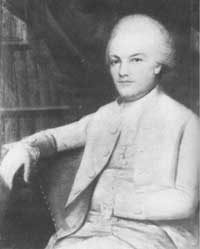
A Charleston Lawyer
Pinckney was born in Charleston in 1757, second cousin to another delegate, Charles Cotesworth Pinckney. Both grew up in wealthy slaveholding families. Charles read law and opened his own practice in 1779, at twenty-two. He joined the militia, was captured when Charleston fell to the British in 1780, and was released in June 1781.2 He sat in the state legislature for most of the next two decades and served in the Continental Congress, where he grew into a nationalist who wanted the Confederation strengthened.2
In Philadelphia he joined his cousin, John Rutledge and Pierce Butler as South Carolina's delegates. William Pierce wrote of "this young gentleman" that he had "a great variety of knowledge" and "a spirit of application and industry beyond most men," and that he spoke "with great neatness and perspicuity."2
The Plan That Wasn't Found
The record of the Pinckney Plan is odd. Madison did not copy the draft and Pinckney did not give him one. In 1818, when John Quincy Adams was preparing the Convention's journal for publication, he asked Pinckney for a copy, and Pinckney sent what he said was the draft. According to the editors of the Avalon Project's edition of Madison's Notes, it "appears to have been a copy of the report of the Committee of Detail of August 6, 1787, with certain alterations and additions," written on paper with the watermark "Russell & Co. 1797."1 A paper made in 1797 cannot have been the plan he held in 1787. The editors add that the plan "was not debated; it was neither used in the Committee of the Whole nor in the Convention," though it went to the Committee of Detail, which appears to have made some use of it.1
The National Constitution Center is blunt: Pinckney "claimed to have submitted a draft that was the real basis for the final Constitution. Most historians dismiss this claim, although they concede that he spoke often and effectively in the Convention debates and contributed much to the final version."2 He also claimed in later years that he had been only twenty-two in 1787, which would have made him the youngest delegate. He was about thirty.2
What He Said
On June 25, Pinckney gave a long speech on the Senate. He argued that American society had no ranks like Britain's, only professional men, commercial men and landowners, and that these were equal and had a common interest. "There is one, but one great & equal body of citizens composing the inhabitants of this Country among whom there are no distinctions of rank, and very few or none of fortune."3 He concluded that Americans should not copy the British three-order model, because the country had only one order, the commons.3 The Constitution that came out of the summer bars titles of nobility.45
On June 1 he said he wanted a vigorous executive but was afraid the powers of the existing Congress might make it a monarchy "of the worst kind, to wit an elective one."6
No religious test
Pinckney's best-remembered act is a motion. On August 30, as the Convention worked on what became Article VI, he moved to add that "no religious test shall ever be required as a qualification to any office or public trust under the authority of the U. States." Roger Sherman thought it unnecessary, "the prevailing liberality being a sufficient security agst. such tests." Gouverneur Morris and General Pinckney approved. The motion passed without a dissenting voice.7 The clause is in the Constitution today, at the end of Article VI.5
On slavery
Pinckney's August 22 remarks are the worst passage in his record. Against Mason and others who wanted the slave trade to be ended, he said: "If slavery be wrong, it is justified by the example of all the world." He cited Greece, Rome and the modern states of France, England and Holland, and said that "In all ages one half of mankind have been slaves." If left alone, he added, the southern states would probably stop importations themselves, and an attempt to take away the right would "produce serious objections to the Constitution."8 He was defending the interest of his region, and the argument that other nations did it too is no defense of holding human beings as property.
Governor, Federalist, Republican
Pinckney was governor of South Carolina from 1789 to 1792 and chaired the state's own constitutional convention. For some years he and his cousin led the Federalists there. By 1795 he had turned against the Jay Treaty and began to champion backcountry farmers against the coastal elite he belonged to.2 He entered the U.S. Senate in 1798 as a Jeffersonian, and in 1800 ran Jefferson's campaign in South Carolina. Jefferson rewarded him with the post of minister to Spain.2
Back in Charleston he led the Democratic-Republicans and pushed for better representation of backcountry districts and for universal white manhood suffrage.2 His health began to fail in 1821. He died of dropsy in 1824, three days after his sixty-seventh birthday.2
Pinckney's Life at a Glance
- 1757 Born in Charleston, South Carolina.
- 1779 Opens his law practice; joins the militia.
- 1780 Captured when Charleston falls; released June 1781.
- 1787 Lays his draft before the Convention May 29; speaks June 25; moves the religious test clause August 30; signs.
- 1789 Becomes governor of South Carolina.
- 1798 Enters the U.S. Senate as a Jeffersonian.
- 1800 Runs Jefferson's campaign in South Carolina.
- 1824 Dies of dropsy in Charleston.
Learn more
- Madison Debates, May 29: Pinckney lays his draft before the house, with the editors' notes on its authenticity.
- Madison Debates, June 25: Pinckney's speech on the character of American society.
- Madison Debates, August 30: the religious test motion.
- Madison Debates, August 22: the slave trade debate.
- National Constitution Center biography: a short life of Pinckney by historian Carol Berkin.
Notes
- James Madison, Notes of Debates in the Federal Convention of 1787, May 29, 1787, with editorial footnotes 22 and 23, Avalon Project, Yale Law School. Read it online. ↩
- Carol Berkin, "Charles Pinckney," Signers' Biographies, National Constitution Center. Read it online. ↩
- Madison, Notes of Debates, June 25, 1787, Avalon Project. Read it online. ↩
- U.S. Constitution, Article I, Section 9, clause 8 (no title of nobility), National Archives transcript. Read it online. ↩
- U.S. Constitution, Article I, Section 9, and Article VI, Clause 3, National Archives transcript. Read it online. ↩
- Madison, Notes of Debates, June 1, 1787, Avalon Project. Read it online. ↩
- Madison, Notes of Debates, August 30, 1787, Avalon Project. Read it online. ↩
- Madison, Notes of Debates, August 22, 1787, Avalon Project. Read it online. ↩
Terms in this lesson
- Pinckney Plan
- A draft constitution Charles Pinckney said he laid before the Convention on May 29, 1787. No contemporary copy survives, and most historians doubt the later text he supplied is what he presented.
- Religious test
- A requirement that an officeholder profess a certain faith. Article VI, Clause 3 bans them for federal office.
- Committee of Detail
- The five-member committee that drafted a working text of the Constitution from the Convention's resolutions, reporting August 6, 1787.
- Democratic-Republican
- The party of Jefferson and Madison in the 1790s and early 1800s. Pinckney joined it after being a Federalist.
- Dropsy
- The old name for edema, a buildup of fluid in the body. Pinckney died of it.
Sources
- National Constitution Center, Charles Pinckney, Signers' Biographies checked 2026-10
- Madison Debates, May 29, with editorial notes on the Pinckney draft, Avalon Project checked 2026-10
- Madison Debates, June 25, Avalon Project checked 2026-10
- Madison Debates, August 22, Avalon Project checked 2026-10
- Madison Debates, August 30, Avalon Project checked 2026-10
- The Constitution of the United States, transcript, National Archives checked 2026-10