Lesson 9 of 15 · about 8 minutes
Luther Martin: The Delegate Who Went Home
You'll be able to
- Place Martin's life in order, from New Jersey in 1748 to New York in 1826
- State what Martin argued at the Convention on June 27 and June 28 about the purpose of a general government
- Read his August 21 motion on the slave trade and his later account of the bargain behind it
- Explain why his Genuine Information mattered to the ratification fight in Maryland and beyond
On June 27, 1787, Luther Martin of Maryland took the floor and held it. Madison's Notes say he "contended at great length and with great eagerness that the General Govt. was meant merely to preserve the State Governts.: not to govern individuals."1 The next morning he "resumed his discourse." Martin was long-winded and passionate. In the winter that followed, he wrote his account of the Convention down for the Maryland legislature, and that report became one of the best-known inside views of the summer.
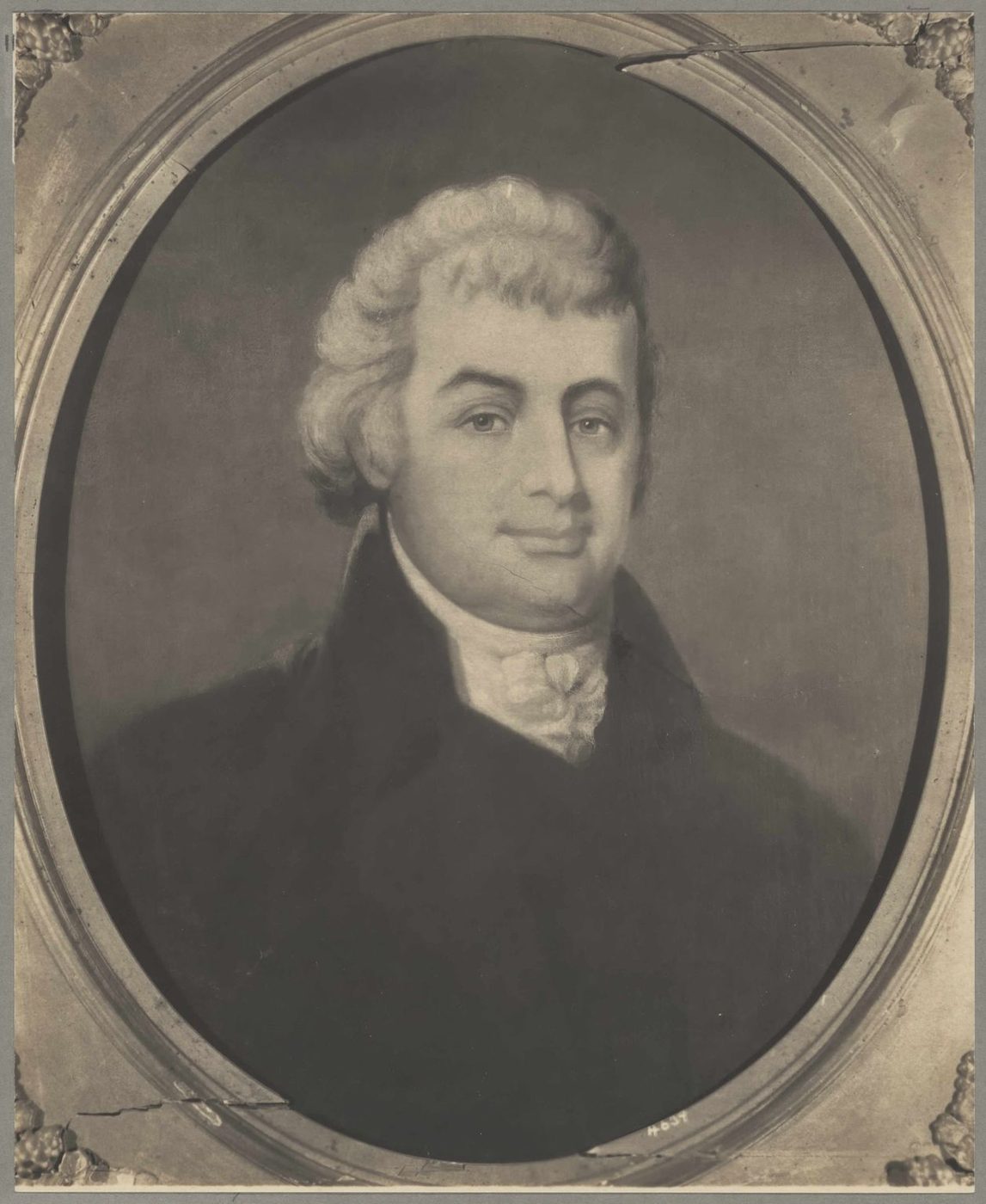
From Princeton to the Eastern Shore
Martin was born February 20, 1748, in New Brunswick, New Jersey. He graduated from Princeton, taught school in Queenstown, Maryland, studied law, and was admitted to the Virginia bar in 1771. He settled on Maryland's Eastern Shore and joined the Somerset County Committee of Observation in 1774. During the Revolution he wrote handbills aimed at the largely Loyalist population of the lower Eastern Shore.2 In 1778 Governor Thomas Johnson made him attorney general of Maryland, an office he held until 1805. The legislature chose him for the Continental Congress in 1784 and he did not serve, and in 1787 it sent him to Philadelphia.2
A Government for the States
The Maryland State Archives says no other delegate held more extreme views on states' rights. Martin's notion was that a general government existed to keep the state governments in order, not to run the lives of individuals. If too little power were given to it, he argued, more could be added later, but if too much, "it could never be resumed."1 He thought that going to the citizens at large for approval would throw them "back into a State of Nature," and that the people could speak only "through their tongue," meaning the state legislatures.1
On equal votes he made the small states' case. If states got votes in proportion to population, the smaller states "would be equally enslaved," because a majority from three large states could do as it pleased. If the interests of large and small states were really the same, he said, there was no danger in giving them an equal vote.3 He preferred, he said, to see partial confederacies than the plan on the table.3 The Convention did give each state an equal vote in the Senate. He opposed the plan anyway.
He carried the same instinct into the money clauses. On August 21 he moved that when Congress needed direct taxes, it first apportion them among the states and send each a requisition, passing its own collection laws only if a state failed to pay within the time set. Direct taxation, he said, "should not be used but in case of absolute necessity; and then the States will be best Judges of the mode."4 James McHenry seconded, and there was no debate. Only New Jersey voted yes, and Maryland split.
The Slave Trade Motion
Martin's most honorable moment was August 21. He moved to change Article VII, Section 4, so Congress could prohibit or tax the importation of slaves. Madison recorded three reasons. The first was that five slaves counted as three free people in the apportionment of representatives, so the clause would encourage the trade. The second was that slaves weakened one part of the Union, which the other parts were bound to protect. The third was that such a feature in the Constitution was "inconsistent with the principles of the revolution" and, as Madison put it, "dishonorable to the American character."4 The Notes put this in the third person, so the wording is Madison's.
He lost. A committee struck a deal, and the Constitution barred Congress from banning the import before 1808 while allowing a duty of up to ten dollars a person.5 In the Genuine Information Martin described how the bargain was made, and why the text avoids the word slave:
"They anxiously sought to avoid the admission of expressions which might be odious in the ears of Americans, although they were willing to admit into their system those things which the expressions signified."
Luther Martin, Genuine Information, January 27, 1788. 6
He also reported the objection, raised at the Convention, that counting slaves for representation "tended to encourage the slave trade, and to make it the interest of the states to continue that infamous traffic."6 The Maryland State Archives says he promoted the abolition of slavery on the national stage.2
Leaving Philadelphia
Martin appears in the Notes through August 31.7 He returned to Maryland before the work was done and never signed.2 In his own account he listed things done after he left: a change to one representative for every thirty thousand people instead of forty thousand, and the creation of the vice-presidency and the method of choosing a president.6 He opposed the whole because he thought it would destroy the state governments. He closed his report by saying he would give up his office and his property to see his country reject "those chains which are forged for it."6
What the Genuine Information did
The letter was addressed to Thomas Cockey Deye, Speaker of the Maryland House of Delegates, and dated Baltimore, January 27, 1788.6 It was a public account from a delegate who refused to sign. Martin also sat in the Maryland ratifying convention in 1788 and led the effort to prevent ratification. He failed.2
Later Years
Martin returned to Maryland and his practice. He served as attorney general again from 1819, suffered a stroke in 1820, and ended his life in poor health and debt. His old friend Aaron Burr took him into his home in New York, and Martin died there on July 8, 1826.2 One of his complaints, that the Constitution did not secure jury trial in civil cases, was one many opponents made, and the Seventh Amendment answered it.8
Martin's Life at a Glance
- 1748 Born February 20 in New Brunswick, New Jersey.
- 1771 Admitted to the Virginia bar.
- 1778 Appointed attorney general of Maryland.
- 1787 Speaks June 27 and 28 for the states; moves against the slave trade August 21; leaves before the signing.
- 1788 Dates his Genuine Information January 27; leads the losing fight against ratification in Maryland.
- 1805 Leaves the attorney general's office.
- 1819 Returns as attorney general.
- 1826 Dies July 8 in New York City.
Learn more
- Luther Martin, Genuine Information: his full report on the Convention, including the slave trade and the equality of votes.
- Madison Debates, June 27: Martin's long speech on the purpose of a general government.
- Madison Debates, August 21: the slave trade motion.
- Maryland State Archives: Luther Martin: a short life with sources.
Notes
- James Madison, Notes of Debates in the Federal Convention of 1787, June 27, 1787, Avalon Project, Yale Law School. Read it online. ↩
- Maryland State Archives, "Luther Martin (1748-1826)," Archives of Maryland Biographical Series, MSA SC 3520-875. Read it online. ↩
- Madison, Notes of Debates, June 28, 1787, Avalon Project. Read it online. ↩
- Madison, Notes of Debates, August 21, 1787, Avalon Project. Read it online. ↩
- U.S. Constitution, Article I, Section 9, Clause 1, National Archives transcript. Read it online. ↩
- Luther Martin, The Genuine Information, Delivered to the Legislature of the State of Maryland, Relative to the Proceedings of the General Convention, Baltimore, January 27, 1788, text at constitution.org. Read it online. ↩
- Madison, Notes of Debates, August 31, 1787, Avalon Project. Read it online. ↩
- "The Bill of Rights: A Transcription," Amendment VII, National Archives. Read it online. ↩
Terms in this lesson
- Genuine Information
- Martin's report to the Maryland House of Delegates, dated January 27, 1788, giving his account of the Convention and his reasons for opposing the Constitution.
- Attorney general
- The state's chief law officer. Martin held the post in Maryland from 1778 to 1805 and again from 1819.
- Anti-Federalist
- A person who opposed the Constitution as written, usually for lack of a bill of rights or fear of too much national power.
- Requisition
- A request from Congress to the states to pay a share of national expenses. Martin wanted direct taxes collected this way first.
- State of nature
- The condition of people before government. Martin said going to the citizens at large to approve a new government would throw them back into it.
Sources
- Maryland State Archives, Luther Martin (1748-1826), MSA SC 3520-875 checked 2026-10
- Luther Martin, The Genuine Information, constitution.org checked 2026-10
- Madison Debates, June 27, Avalon Project checked 2026-10
- Madison Debates, June 28, Avalon Project checked 2026-10
- Madison Debates, August 21, Avalon Project checked 2026-10
- The Constitution of the United States, transcript, National Archives checked 2026-10
- The Bill of Rights, transcript, National Archives checked 2026-10