Lesson 6 of 15 · about 8 minutes
John Dickinson: The Penman Who Would Not Sign Twice
You'll be able to
- Place Dickinson's life in order, from Maryland in 1732 to Wilmington in 1808
- Read his argument that liberty and security in property go together, from the Farmer letters
- Explain why a man who defended American rights would not sign the Declaration in 1776
- Follow his remarks at the Convention on experience, the small states and the slave trade
On July 1, 1776, in the debate on independence, John Dickinson told the Continental Congress what his vote would cost him. "My conduct this day," he said, "I expect will give the finishing blow to my ... diminished popularity."1 He had been famous since his Farmer letters nine years before. Now he abstained on independence, would not sign the Declaration, and left Congress. Eleven years later he was back in Philadelphia helping write the Constitution.
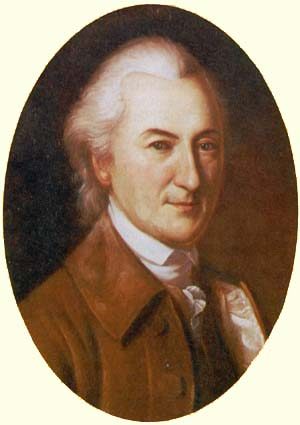
Maryland, Delaware and the Inns of Court
Dickinson was born in Maryland in 1732, the son of a successful planter, and the family moved to Delaware when he was eight. At eighteen he went to Philadelphia to study law, and in 1753 he sailed for London to finish his training at the Inns of Court. He came home four years later and built a prominent Philadelphia practice.2 In politics he began as a conservative. He defended the Quaker charter of Pennsylvania against an effort by Benjamin Franklin's faction to void it.2
The Farmer
In 1765 Dickinson led the Stamp Act Congress. Beginning in late 1767 he published twelve newspaper essays, Letters from a Farmer in Pennsylvania, against the Townshend duties. The colonies applauded them, Boston thanked him in a public meeting, and he became known in England too.2 His argument was legal and moral. Parliament could regulate trade, but duties laid to raise revenue were taxes, and taxes without consent took property. The last letter put the chain of reasoning into one sentence:
"Let these truths be indelibly impressed on our minds, that we cannot be happy without being free, that we cannot be free without being secure in our property, that we cannot be secure in our property, if, without our consent, others may, as by right, take it away."
John Dickinson, Letters from a Farmer in Pennsylvania, Letter XII. 3
Freedom rests on security in property, and security rests on consent. Dickinson also hoped for peace, and said so. He favored boycotts and petitions over violence. In 1775 he drafted the Olive Branch Petition asking the king to join in a reconciliation.2
July 1776
When the king rejected the petition, Congress moved toward independence, and Dickinson stayed where he was. He abstained on the vote and would not sign the Declaration. Because other delegates seemed ready to pass a rule that no one could stay in Congress without signing, he left. John Adams, his major adversary on the floor, praised his "alacrity and spirit" and was glad to see him go.2 Dickinson's reputation fell hard. Later he served as president of Pennsylvania from 1782 until he resigned in 1785 and returned to Delaware.2
Delaware's Delegate
Dickinson went to the Convention in 1787 for Delaware. Illness made him miss many sessions, and he left before the end. Even so, the National Constitution Center credits him with a central role in getting the Connecticut Compromise adopted.2
Experience over theory
On August 13, during a debate on whether money bills should start in the House, Madison recorded Dickinson saying something the Convention's reformers did not always want to hear:
"Experience must be our only guide. Reason may mislead us. It was not Reason that discovered the singular & admirable mechanism of the English Constitution."
John Dickinson, as recorded by James Madison, Convention debate of August 13, 1787. 4
He added that it was not reason that discovered "the odd & in the eye of those who are governed by reason, the absurd mode of trial by Jury." Accidents produced these things, he said, and "experience has give a sanction to them."4 A conservative would say the same today about customs that work without anyone having designed them.
Planets, not a single sun
On June 7 he argued against dissolving the states into a national mass. He compared the national system to the solar system, "in which the States were the planets, and ought to be left to move freely in their proper orbits." He said that preserving the states in a degree of agency was "indispensable," because it produced "that collision between the different authorities which should be wished for in order to check each other."5 On June 2 he had moved that the executive be removable by Congress at the request of a majority of the state legislatures. The motion lost, with only Delaware voting for it.6
On the slave trade
The National Constitution Center says Dickinson's father was a planter and enslaver, and that Dickinson spent his last years working to advance the abolition movement.2 At the Convention on August 22 he said it was "inadmissible on every principle of honor & safety that the importation of slaves should be authorised to the States by the Constitution." The right question, he said, was whether the national happiness would be promoted or impeded by importation, and that question belonged to the national government, not "the States particularly interested."7 On August 21 he had warned that without limits on the large states' representation, the small states would be reduced to "insignificancy" and importation of slaves would be encouraged.8 He lost on the slave trade, as most opponents of it did.
A Name Written by Another Hand
Dickinson was not in Philadelphia for the signing on September 17. He authorized George Read, his fellow Delaware delegate, to sign for him.2 So the man who would not sign the Declaration appears on the Constitution in a friend's hand.
Last Years
He served briefly as a Delaware state senator in 1793, retired the next year because of poor health, spent his last years supporting the abolition movement, and published two volumes of his collected political writings. He died in 1808. Jefferson, who had once considered him an opponent, said that "a more estimable man, or truer patriot, could not have left us."2
Dickinson's Life at a Glance
- 1732 Born in Maryland; family moves to Delaware when he is eight.
- 1753 Goes to London to study at the Inns of Court.
- 1765 Leads the Stamp Act Congress's opposition.
- 1767 Begins publishing Letters from a Farmer in Pennsylvania.
- 1775 Drafts the Olive Branch Petition.
- 1776 Abstains on independence and does not sign the Declaration.
- 1782 Elected president of Pennsylvania.
- 1787 Delaware delegate to the Convention; George Read signs for him.
- 1808 Dies.
Learn more
- Letters from a Farmer in Pennsylvania: the twelve essays, free to read.
- Madison Debates, August 13: Dickinson on experience and money bills.
- Madison Debates, August 22: Dickinson on the slave trade.
- Madison Debates, June 7: the solar-system speech.
- National Constitution Center biography: a short life of Dickinson by historian Carol Berkin.
Notes
- Dickinson's remarks in the independence debate, quoted in Carol Berkin, "John Dickinson," Signers' Biographies, National Constitution Center. Read it online. ↩
- Carol Berkin, "John Dickinson," Signers' Biographies, National Constitution Center. Read it online. ↩
- John Dickinson, Letters from a Farmer in Pennsylvania, to the Inhabitants of the British Colonies, Letter XII, Project Gutenberg eBook 47111. Read it online. ↩
- James Madison, Notes of Debates in the Federal Convention of 1787, August 13, 1787, Avalon Project, Yale Law School. Read it online. ↩
- Madison, Notes of Debates, June 7, 1787, Avalon Project. Read it online. ↩
- Madison, Notes of Debates, June 2, 1787, Avalon Project. Read it online. ↩
- Madison, Notes of Debates, August 22, 1787, Avalon Project. Read it online. ↩
- Madison, Notes of Debates, August 21, 1787, Avalon Project. Read it online. ↩
Terms in this lesson
- Letters from a Farmer in Pennsylvania
- Twelve essays Dickinson began publishing in late 1767 attacking the Townshend Acts and arguing that Parliament could regulate trade but not tax the colonies for revenue.
- Olive Branch Petition
- A 1775 appeal from the Second Continental Congress to King George III, drafted by Dickinson, asking him to join in a reconciliation.
- Townshend Acts
- Parliament's 1767 duties on goods imported into the colonies, meant to raise revenue.
- Proxy signature
- A signature placed by one person for another with permission. George Read signed the Constitution for Dickinson.
- Abstain
- To decline to vote either yes or no. Dickinson abstained on independence in July 1776.
Sources
- National Constitution Center, John Dickinson, Signers' Biographies checked 2026-10
- John Dickinson, Letters from a Farmer in Pennsylvania, Project Gutenberg checked 2026-10
- Madison Debates, June 2, Avalon Project checked 2026-10
- Madison Debates, June 7, Avalon Project checked 2026-10
- Madison Debates, August 13, Avalon Project checked 2026-10
- Madison Debates, August 22, Avalon Project checked 2026-10