Lesson 10 of 15 · about 8 minutes
Elbridge Gerry: The Skeptic From Marblehead
You'll be able to
- Place Gerry's life in order, from Marblehead in 1744 to the vice presidency in 1814
- Read his May 31 speech on the excess of democracy and his June 20 remarks on impeachment
- List the objections he gave on September 15 for refusing to sign
- Explain how the word gerrymander came from his name and what he did to earn it
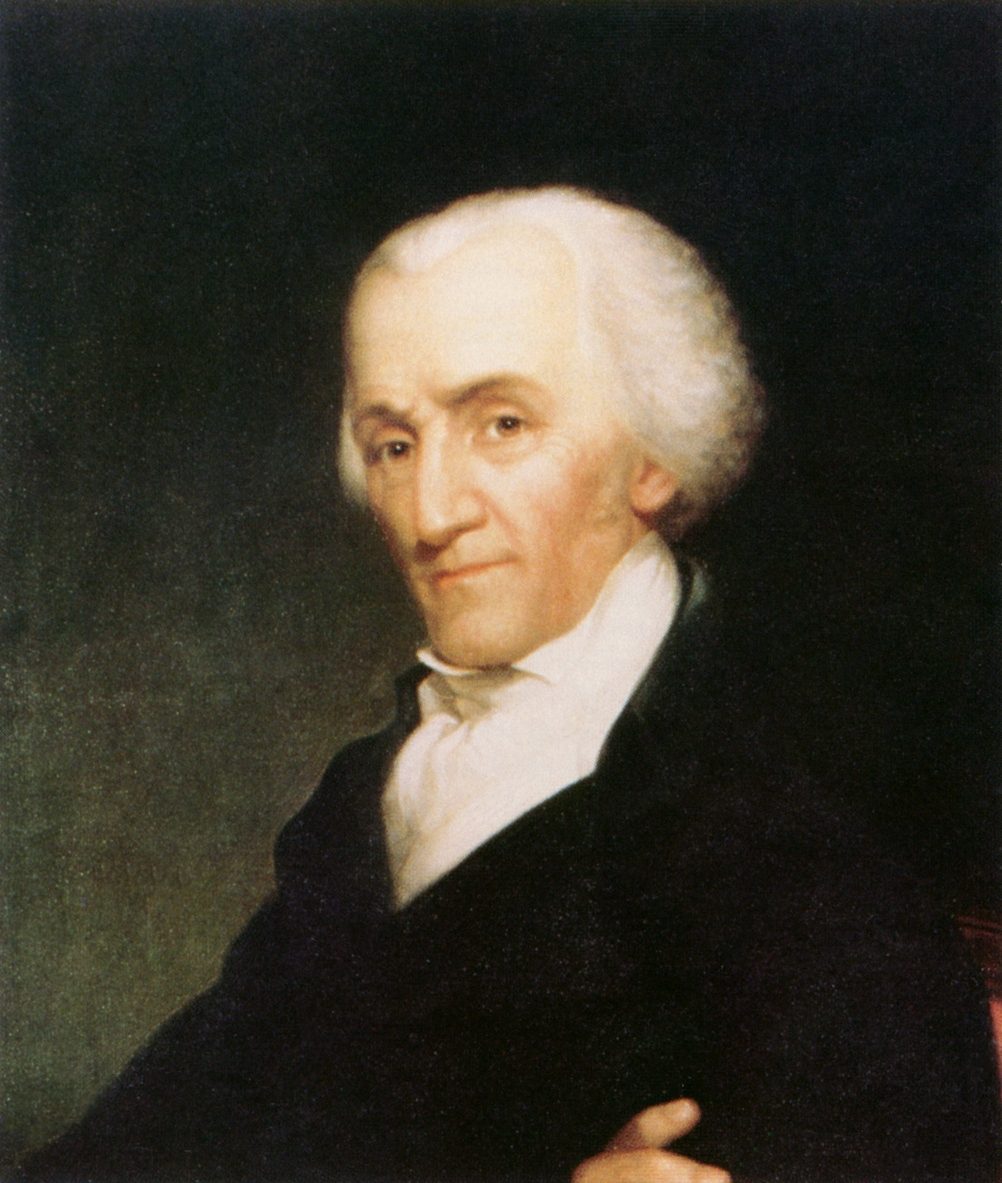
On September 15, 1787, Madison wrote, Elbridge Gerry "stated the objections which determined him to withhold his name from the Constitution." He gave eight about structure and three about the rights of citizens.1 Gerry was thin, small, slightly stuttering and touchy, and the National Constitution Center says he managed to irritate almost every other delegate.2 His name has outlasted most of the people he annoyed, though not in the way he would have chosen.
A Marblehead Merchant
Gerry was born in Marblehead, Massachusetts, in July 1744, the son of a wealthy merchant and shipper. He graduated from Harvard in 1762 at eighteen and joined the family business.2 Samuel Adams encouraged him to enter politics in 1772, and he served in the Massachusetts legislature and on Marblehead's committee of correspondence.2 He sat in the Second Continental Congress in 1776, where he urged fellow delegates to sign the Declaration. John Adams wrote: "If every Man here was a Gerry, the Liberties of America would be safe against the Gates of Earth and Hell."2
During the war he used his European business connections to supply the army and financed privateers against British shipping. He pressed Congress for better pay and equipment for enlisted men and earned the nickname "soldiers' friend."2
Distrust of the Crowd
Gerry reached Philadelphia in 1787 with Shays' Rebellion fresh in his mind. On May 31, when the delegates debated letting the people elect the House directly, he said:
"The evils we experience flow from the excess of democracy. The people do not want virtue, but are the dupes of pretended patriots."
Elbridge Gerry, as recorded by James Madison, May 31, 1787. 3
He said he had been "too republican heretofore." He was "still however republican," but experience had taught him "the danger of the levilling spirit."3 James Wilson wanted the House to come straight from the people. Gerry did not.
Yet Gerry did not trust power in other hands any more than in the crowd's. On July 20, when the delegates debated whether the president should be impeachable, he urged the necessity of impeachments. "A good magistrate will not fear them. A bad one ought to be kept in fear of them." He hoped "the maxim would never be adopted here that the chief magistrate could do no wrong."4 It is a fair summary of why citizens keep the power to remove officials.
Armies
On August 18, Gerry noted that the plan contained no check on standing armies in peacetime. The existing Congress could not keep an army by itself, he said. The new one could. "The people were jealous on this head, and great opposition to the plan would spring from such an omission."5 On September 5 he objected to appropriations for an army running two years instead of one, calling a standing army dangerous to liberty and unnecessary.6 The Constitution settled on a limit of two years: Congress may raise armies, but no appropriation for that use may run longer than that.7
The Motion for a Bill of Rights
On September 12, as the delegates debated juries, Mason said he wished the plan had been prefaced with a bill of rights. Gerry seized on it: he "concurred in the idea & moved for a Committee to prepare a Bill of Rights," and Mason seconded. No state voted yes. Ten voted no, and Massachusetts, Gerry's own state, abstained.8
Why He Would Not Sign
On September 15 Gerry listed his objections. There were eight points of structure, among them the duration and re-eligibility of the Senate, the House's power to conceal its journals, Congress's power over the places of election, its power over its own pay, and the fact that "3/5 of the Blacks are to be represented as if they were freemen." He could get past all of these, he said, "if the rights of the Citizens were not rendered insecure": by the general power to make laws "necessary and proper," by the power to raise armies and money without limit, and by a tribunal without juries "which will be a Star-chamber as to Civil cases." Under that view, he said, the best course was a second general convention.1
Two days later, as the others prepared to sign, he spoke again and said he feared civil war. In his own state of Massachusetts, he told the delegates, there were two parties, "one devoted to Democracy, the worst he thought of all political evils, the other as violent in the opposite extreme." He could not, by signing, "pledge himself to abide by it at all events."9 Along with Mason and Edmund Randolph, he refused.2
Congress and the Bill of Rights
Gerry told a friend that his reputation as an enemy of the Constitution was "remote from truth." Since the start of the Revolution, he said, he had been "ever solicitous for an efficient federal government."2 Elected to the first House in 1789, he did not think Madison's amendments went far enough. He pressed to consider all the amendments proposed by state ratifying conventions, especially those that would limit federal power, and he attacked the taxing power. He and the other Anti-Federalists lost.2
XYZ and the Gerrymander
In 1797 President Adams sent Gerry to France with two other commissioners. The mission became known as the XYZ affair, and Gerry's independent efforts alienated his colleagues. When he returned, a crowd stoned his carriage and burned him in effigy.2 He won the governorship of Massachusetts in 1810 and 1811. In 1812 he signed a bill creating new electoral districts that favored his Republican party, and a Federalist newspaper pointed out that one district looked like a salamander and printed a cartoon calling it a "Gerry-mander."2 The word survived. By late 1812 Gerry was out of office and in serious debt when the Republicans chose him as James Madison's running mate. He died of a heart attack at seventy, in 1814, while vice president.2
Gerry's Life at a Glance
- 1744 Born in Marblehead, Massachusetts.
- 1762 Graduates from Harvard College.
- 1772 Enters Massachusetts politics.
- 1776 Delegate to the Second Continental Congress; urges signing the Declaration.
- 1787 Speaks May 31 on the excess of democracy; moves for a bill of rights committee September 12; refuses to sign.
- 1789 Elected to the first House of Representatives.
- 1797 Sent to France; the XYZ affair follows.
- 1812 Signs the districting law that gave the gerrymander its name.
- 1814 Dies while serving as vice president.
Learn more
- Madison Debates, September 15: Gerry's list of objections.
- Madison Debates, September 12: the motion for a committee on a bill of rights.
- Madison Debates, May 31: Gerry on the excess of democracy.
- National Constitution Center biography: a life of Gerry by historian Carol Berkin.
Notes
- James Madison, Notes of Debates in the Federal Convention of 1787, September 15, 1787, Avalon Project, Yale Law School. Read it online. ↩
- Carol Berkin, "Elbridge Gerry," Signers' Biographies, National Constitution Center. Read it online. ↩
- Madison, Notes of Debates, May 31, 1787, Avalon Project. Read it online. ↩
- Madison, Notes of Debates, July 20, 1787, Avalon Project. Read it online. ↩
- Madison, Notes of Debates, August 18, 1787, Avalon Project. Read it online. ↩
- Madison, Notes of Debates, September 5, 1787, Avalon Project. Read it online. ↩
- U.S. Constitution, Article I, Section 8, Clause 12, National Archives transcript. Read it online. ↩
- Madison, Notes of Debates, September 12, 1787, Avalon Project. Read it online. ↩
- Madison, Notes of Debates, September 17, 1787, Avalon Project. Read it online. ↩
Terms in this lesson
- Gerrymander
- To draw legislative districts for partisan advantage. The word comes from Gerry, who signed a Massachusetts districting law in 1812 after a district was said to resemble a salamander.
- Impeachment
- A charge of serious misconduct brought against an official by the lower house of a legislature, tried by the upper house.
- Standing army
- A permanent professional army kept up in peacetime. Gerry and many others thought it a danger to liberty.
- Anti-Federalist
- A person who opposed the Constitution as written, usually over the lack of a bill of rights or fear of too much national power.
- XYZ affair
- A 1797 and 1798 diplomatic crisis in which French agents demanded bribes from three American commissioners, including Gerry.
Sources
- National Constitution Center, Elbridge Gerry, Signers' Biographies checked 2026-10
- Madison Debates, May 31, Avalon Project checked 2026-10
- Madison Debates, July 20, Avalon Project checked 2026-10
- Madison Debates, August 18, Avalon Project checked 2026-10
- Madison Debates, September 12, Avalon Project checked 2026-10
- Madison Debates, September 15, Avalon Project checked 2026-10
- Madison Debates, September 17, Avalon Project checked 2026-10