Lesson 5 of 15 · about 8 minutes
Gouverneur Morris: The Pen of the Constitution
You'll be able to
- Place Morris's life in order, from New York in 1752 to Morrisania in 1816
- Read his August 8 speech on slavery and the three-fifths rule
- Explain what the Committee of Style did and why Morris did the drafting
- Read the Preamble as the finished product of a drafter's craft
- See why Morris signed a Constitution he had objections to
The Constitution begins with a sentence that nobody forgets, and Gouverneur Morris is the main reason. When the Convention handed its resolutions to a five-man Committee of Style in September 1787, Morris took the pen. Delegate William Pierce wrote that Morris "winds through all the mazes of rhetoric, and throws around him such a glare that he charms, captivates, and leads away the senses of all who hear him."1 He could write, too.
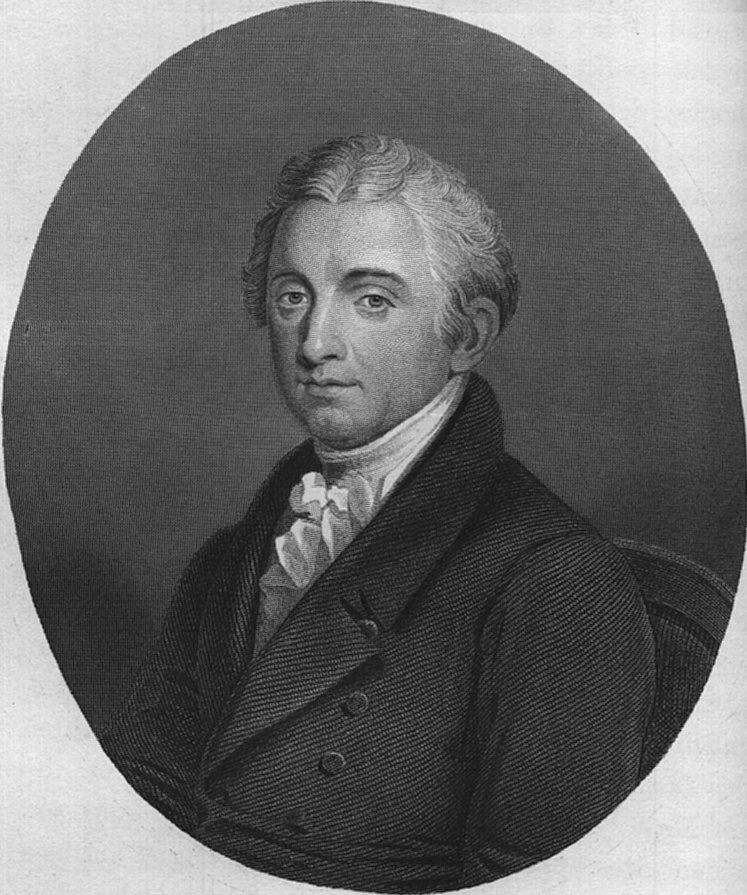
A New Yorker in Philadelphia
Morris was born in 1752 into a wealthy New York family, graduated from King's College at sixteen, and passed the bar at nineteen. As a young man he was wary of the protest movement, fearing it would become mob rule, but by 1775 he had sided with the Americans and sat in New York's provincial congress. He helped write the state's first constitution with John Jay and Robert R. Livingston.2
A carriage accident in his late twenties mangled his left leg, and physicians persuaded him that the lower part of the leg had to come off. He kept riding horses and dancing.2 Governor George Clinton's faction blocked his return to the Continental Congress in 1779, so Morris moved to Philadelphia, rebuilt a law practice, and spent four years assisting Robert Morris, the superintendent of finance. The two were not related. Both were chosen as Pennsylvania delegates in 1787.2
The Busiest Voice
Robert Morris hardly said a word in Philadelphia. Gouverneur spoke 173 times, more than Madison or James Wilson, and he sat on the Committee on Postponed Matters as well as the Committee of Style.2 He supported a strong national government and made no secret of liking rule by the well-off. On August 7 he moved to limit the vote to freeholders, and he argued that the Constitution as drafted threatened the country with an aristocracy, one that would "grow out of the House of Representatives." Give the vote to people who have no property, he said, and "they will sell them to the rich who will be able to buy them."3 The delegates did not follow him, and the Constitution leaves voter qualifications to the states.
August 8: the speech on slavery
Morris's most famous hour came the next day, when the delegates took up how slaves should count in the House. He moved to insert the word "free" before "inhabitants" so that only free people would be counted. Then he spoke.
"He never would concur in upholding domestic slavery. It was a nefarious institution. It was the curse of heaven on the States where it prevailed."
Gouverneur Morris, as recorded by James Madison, Convention debate of August 8, 1787. 4
He asked the question that Wilson had asked before him: "Upon what principle is it that the slaves shall be computed in the representation? Are they men? Then make them Citizens and let them vote. Are they property? Why then is no other property included?" He pictured a Georgia or South Carolina trader who goes to the coast of Africa and "tears away his fellow creatures from their dearest connections" and then, under this rule, gets more votes in government than a citizen of Pennsylvania or New Jersey who views the practice "with a laudable horror." And he called domestic slavery "the most prominent feature in the aristocratic countenance of the proposed Constitution."4
Morris lost. The three-fifths rule stayed in the Constitution.5 But the record shows that at least one of the most polished men in the room refused the soft language others used about slavery, and said so to the faces of the delegates who were taking its benefits.
The Committee of Style
On September 8 the Convention appointed a committee to put the agreed articles in order. Its members were William Samuel Johnson, Alexander Hamilton, Gouverneur Morris, James Madison and Rufus King.6 Madison was on it too. The National Constitution Center says Morris "took on the actual drafting" and that it was Morris who "perfected the Preamble."2
Look at the change. The draft the Convention had received on August 6 started: "We the people of the States of New Hampshire, Massachussetts, Rhode-Island and Providence Plantations," and listed all thirteen states in turn.7 The final text says this:
"We the People of the United States, in Order to form a more perfect Union, establish Justice, insure domestic Tranquility, provide for the common defence, promote the general Welfare, and secure the Blessings of Liberty to ourselves and our Posterity, do ordain and establish this Constitution for the United States of America."
Preamble, Constitution of the United States, as signed September 17, 1787. 5
The earlier draft named thirteen states. The final one names one people, and it states the purposes of the government in order, ending with liberty.
Signing Without Illusions
Morris had objections, and he said so. On September 17, as the delegates prepared to sign, he told them he "too had objections, but considering the present plan as the best that was to be attained, he should take it with all its faults." If it failed, he added, "a general anarchy will be the alternative."8 Writing to Timothy Pickering in 1814, he described his role this way: "My faculties were ... to further our business, remove impediments, obviate objections, and conciliate jarring opinions."2
France, the Senate and the Last Years
After ratification Morris served as minister plenipotentiary to France. He watched the Reign of Terror with horror and believed the Constitution had spared America the same fate. He returned in 1798, won a Senate seat in 1800, and lost it after Jefferson's party took control of the government. He bought Morrisania, his family estate, from his brother, put money into the Erie Canal, and backed the Hartford Convention of New England Federalists during the War of 1812. At fifty-seven he married Ann Cary Randolph on Christmas Day, 1809. He died in November 1816.2
Morris never gave up the idea that the better educated ought to govern. On that he lost. The Preamble he polished says "the People."
Morris's Life at a Glance
- 1752 Born in New York to a wealthy family.
- 1775 Joins New York's provincial congress.
- 1779 Defeated for reelection to the Continental Congress; moves to Philadelphia.
- 1787 Speaks 173 times at the Convention; August 8 speech on slavery; drafts the final text in September.
- 1798 Returns from France, where he had served as minister.
- 1800 Elected to the U.S. Senate.
- 1809 Marries Ann Cary Randolph.
- 1816 Dies at Morrisania in November.
Learn more
- Madison Debates, August 8: the full speech against slavery, with the debate around it.
- Madison Debates, September 17: the last day, with Morris's reasons for signing.
- The Constitution, transcript: read the Preamble and the articles in the form the committee left them.
- National Constitution Center biography: a short life of Morris by historian Carol Berkin.
Notes
- William Pierce's sketch of Morris, quoted in Carol Berkin, "Gouverneur Morris," Signers' Biographies, National Constitution Center. Read it online. ↩
- Carol Berkin, "Gouverneur Morris," Signers' Biographies, National Constitution Center. Read it online. ↩
- James Madison, Notes of Debates in the Federal Convention of 1787, August 7, 1787, Avalon Project, Yale Law School. Read it online. ↩
- Madison, Notes of Debates, August 8, 1787, Avalon Project. Read it online. ↩
- U.S. Constitution, Preamble and Article I, Section 2, National Archives transcript. Read it online. ↩
- Madison, Notes of Debates, September 8, 1787, Avalon Project. Read it online. ↩
- Madison, Notes of Debates, August 6, 1787, Report of the Committee of Detail, Avalon Project. Read it online. ↩
- Madison, Notes of Debates, September 17, 1787, Avalon Project. Read it online. ↩
Terms in this lesson
- Committee of Style
- The committee appointed on September 8, 1787, to put the Convention's resolutions in order. Its members were William Samuel Johnson, Alexander Hamilton, Gouverneur Morris, James Madison and Rufus King.
- Preamble
- The opening paragraph of the Constitution, beginning 'We the People of the United States,' that states the purposes of the new government.
- Freehold
- Ownership of land. Morris argued at the Convention for limiting the vote to freeholders.
- Minister Plenipotentiary
- A diplomat with full authority to act for his government. Morris served as the U.S. minister to France after ratification.
- Committee on Postponed Matters
- A Convention committee that took up unresolved questions, including how to choose the president.
Sources
- National Constitution Center, Gouverneur Morris, Signers' Biographies checked 2026-10
- Madison Debates, August 7, Avalon Project checked 2026-10
- Madison Debates, August 8, Avalon Project checked 2026-10
- Madison Debates, September 17, Avalon Project checked 2026-10
- The Constitution of the United States, transcript, National Archives checked 2026-10