Lesson 2 of 15 · about 8 minutes
George Mason: The Delegate Who Would Not Sign
You'll be able to
- Place Mason's life in order, from the Potomac in 1725 to Gunston Hall in 1792
- Read the opening of the Virginia Declaration of Rights and see how it shaped later American documents
- Follow Mason's motion for a bill of rights on September 12, 1787, and the vote that killed it
- List the objections Mason wrote when he refused to sign
- Weigh his attack on the slave trade against the fact that he held slaves
On Saturday, September 15, 1787, the delegates were two days from adjourning. The Constitution was written. Edmund Randolph and Elbridge Gerry had both said they would not sign. George Mason, the Virginia planter who had written his state's Declaration of Rights eleven years before, told the delegates that as the Constitution stood "he could neither give it his support or vote in Virginia; and he could not sign here what he could not support there."1 He left Philadelphia without his name on the document. He had asked the Convention for a bill of rights, and it had said no.
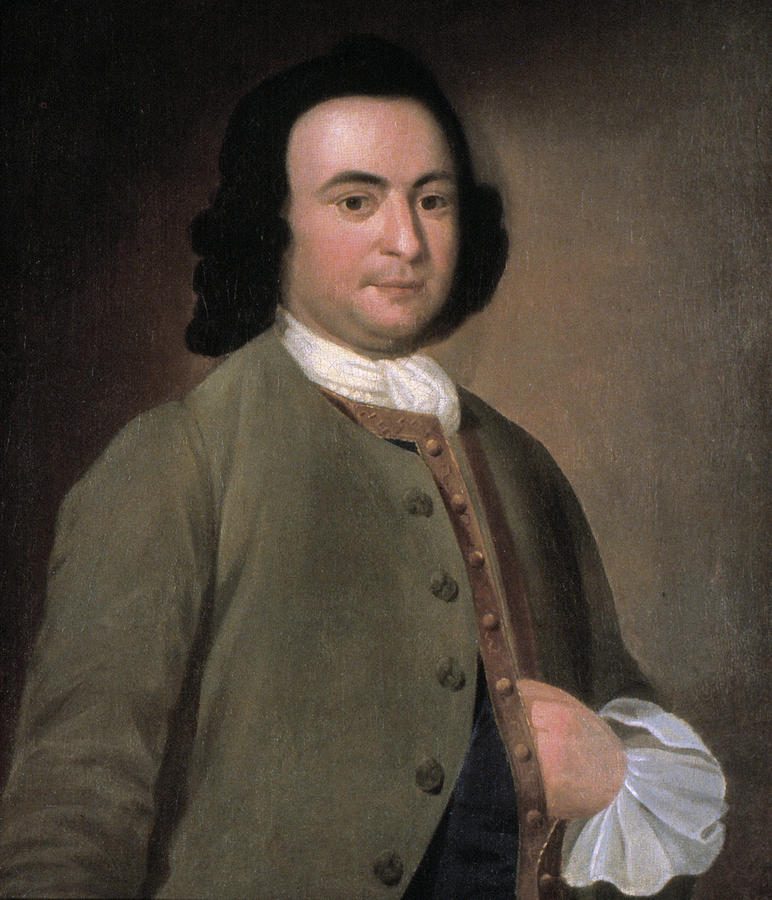
A Planter and His Library
Mason was born in 1725 into Virginia's planter class. His father drowned in 1735 when a storm capsized his boat on the Potomac, and nine-year-old George was raised by his uncle John Mercer, whose large library gave him an informal legal education. In 1750 he married and built Gunston Hall. He served as a county justice, sat in the House of Burgesses from 1759, and invested in western land.2
He wrote more than he spoke in public. In 1765 he composed an open letter to London merchants explaining the colonists' view of the Stamp Act, and in 1774 he helped draft the Fairfax Resolves against the Boston Port Act.2
The Declaration of Rights
In 1776 Virginia needed a new government, and Mason drafted a statement of rights to stand at the front of it. The convention revised his text and adopted it on June 12.3 The first section reads like a trial run for what Jefferson would write a month later in Philadelphia:
"That all men are by nature equally free and independent, and have certain inherent rights, of which, when they enter into a state of society, they cannot, by any compact, deprive or divest their posterity; namely, the enjoyment of life and liberty, with the means of acquiring and possessing property, and pursuing and obtaining happiness and safety."
Virginia Declaration of Rights, Section 1, June 12, 1776. 3
The next section says power comes from the people and that magistrates are "their trustees and servants, and at all times amenable to them."3 Natural rights and officials answerable to the people sit in the first two sections. The Gunston Hall museum notes that Mason's draft was the first version, and that the document later influenced the Declaration of Independence, the Constitution and the Bill of Rights.4
Philadelphia, 1787
Mason refused to attend the Continental Congress. He agreed to go to Philadelphia in 1787, and once there he was one of the most frequent speakers.2 On September 15 he told the delegates that "The Senate has already too much power," and he moved to require a two-thirds vote in Congress for any law regulating shipping before 1808, fearing a few rich merchants in Philadelphia, New York and Boston could squeeze the staple crops of the South.5
The slave trade speech
On August 22 the delegates took up the slave trade, and Mason, a slaveholder, spoke harder against it than anyone. Madison recorded him saying that "Slavery discourages arts & manufactures" and that "Every master of slaves is born a petty tyrant." He added that slaves "bring the judgment of heaven on a Country," and that "providence punishes national sins, by national calamities."6 He wanted Congress to have the power to prevent the increase of slavery. The Constitution barred Congress from ending the import before 1808.7 The record also leaves an uncomfortable fact in place: the man who said all this was a slaveholder, and the Gunston Hall museum says so plainly.4 He had a practical worry too. Maryland and Virginia had already banned imports, and he warned that the western settlers would get slaves through South Carolina and Georgia if those states stayed open.6
The motion that failed
On September 12 the Convention was tidying up. Elbridge Gerry raised trial by jury in civil cases, and Mason answered that a general principle would be enough. Then he said what he had wanted to say for a while:
"He wished the plan had been prefaced with a Bill of Rights, & would second a Motion if made for the purpose. It would give great quiet to the people; and with the aid of the State declarations, a bill might be prepared in a few hours."
George Mason, as recorded by James Madison, September 12, 1787. 8
Gerry moved for a committee to prepare one, and Mason seconded. Roger Sherman replied that the state declarations of rights were still in force and "sufficient," and that "The Legislature may be safely trusted." Mason came back with the objection that carried his whole case: "The Laws of the U. S. are to be paramount to State Bills of Rights." The vote was ten states against, Massachusetts abstaining. No state voted yes.8
Why He Refused
Two weeks earlier, on August 31, Mason had said he "would sooner chop off his right hand than put it to the Constitution as it now stands," and that he wanted to see the whole subject brought before another general convention if certain points were settled badly.9 On September 15 he argued that the Constitution had been formed "without the knowledge or idea of the people," and that it would end in "monarchy, or a tyrannical aristocracy." He would sign, he said, if another convention were called.1 No second convention came.
He put his reasons on paper and sent copies to friends, including George Washington. The first reads: "There is no Declaration of Rights, and the laws of the general government being paramount to the laws and constitution of the several States, the Declarations of Rights in the separate States are no security."10 He went on to complain that the House held "the shadow only of representation," that the Senate had too much power, and that the federal judiciary was built "to absorb and destroy the judiciaries of the several States." He also noted that the text said nothing on "the liberty of the press, or the trial by jury in civil causes; nor against the danger of standing armies in time of peace."10
The press attacked him for it. Mason did not budge. Madison, who beat him in the argument, wrote in 1827 that none who differed from him "will deny that he sustained throughout the proceedings of the body the high character of a powerful reasoner, a profound statesman, and a devoted Republican."2
Vindicated, Mostly
Mason predicted that the amendments Congress offered would be "Milk & Water Propositions." Even so, he lived to see the Bill of Rights ratified in 1791 and died the next year, of gout and possibly pneumonia.2 Mason's rule was to write down what the government may not do, and to write it first. Sherman had said the legislature could be trusted. The states wanted the list anyway, and on that point Mason was right.
Mason's Life at a Glance
- 1725 Born into Virginia's planter aristocracy.
- 1735 Father dies in a boating accident on the Potomac.
- 1750 Marries and builds Gunston Hall.
- 1774 Helps draft the Fairfax Resolves.
- 1776 Drafts the Virginia Declaration of Rights, adopted June 12.
- 1787 Speaks against the slave trade on August 22; seconds a motion for a bill of rights on September 12, which loses; refuses to sign on September 15.
- 1791 The Bill of Rights is ratified.
- 1792 Dies at Gunston Hall.
Learn more
- Mason's Objections to This Constitution of Government: his full list of reasons, in his own words.
- Virginia Declaration of Rights, 1776: all sixteen sections of the document he drafted.
- Madison Debates, September 12: the day the bill of rights motion failed.
- Madison Debates, August 22: the slave trade debate, including Mason's speech.
- Gunston Hall: George Mason: the museum of his home on his life, politics and slaveholding.
- National Constitution Center biography: a short life by historian Carol Berkin.
Notes
- James Madison, Notes of Debates in the Federal Convention of 1787, September 15, 1787, Avalon Project, Yale Law School. Read it online. ↩
- Carol Berkin, "George Mason," Signers' Biographies, National Constitution Center. Read it online. ↩
- Virginia Declaration of Rights, June 12, 1776, Sections 1 and 2, Avalon Project. Read it online. ↩
- Gunston Hall, "George Mason," on the Declaration of Rights and on Mason as a slave owner. Read it online. ↩
- Madison, Notes of Debates, September 15, 1787, Mason on the Senate and shipping laws, Avalon Project. Read it online. ↩
- Madison, Notes of Debates, August 22, 1787, Avalon Project. Read it online. ↩
- U.S. Constitution, Article I, Section 9, Clause 1, National Archives transcript. Read it online. ↩
- Madison, Notes of Debates, September 12, 1787, Avalon Project. Read it online. ↩
- Madison, Notes of Debates, August 31, 1787, Avalon Project. Read it online. ↩
- George Mason, "Objections to This Constitution of Government," written September 1787, first printed in the Virginia Journal, November 22, 1787, text at constitution.org. Read it online. ↩
Terms in this lesson
- Declaration of Rights
- A written list of rights the government may not take away. Virginia adopted Mason's on June 12, 1776.
- Anti-Federalist
- A person who opposed ratifying the Constitution as written in 1787 and 1788, usually because it lacked a bill of rights or gave the national government too much power.
- Paramount
- Superior in authority. Mason complained that national law was paramount to state bills of rights.
- Staple crops
- The main export crops of the Southern states, such as tobacco and rice. Mason feared a Congress dominated by Northern merchants could drive their price down.
- Second convention
- A new general convention that Mason and others wanted to meet after the first to review the plan.
Sources
- National Constitution Center, George Mason, Signers' Biographies checked 2026-10
- Virginia Declaration of Rights, June 12, 1776, Avalon Project checked 2026-10
- George Mason, Objections to This Constitution of Government, constitution.org checked 2026-10
- Madison Debates, August 22, Avalon Project checked 2026-10
- Madison Debates, September 12, Avalon Project checked 2026-10
- Madison Debates, September 15, Avalon Project checked 2026-10
- Madison Debates, August 31, Avalon Project checked 2026-10
- Gunston Hall, George Mason checked 2026-10
- The Constitution of the United States, transcript, National Archives checked 2026-10