Lesson 5 of 12 · about 55 minutes · Updated November 24, 2026
Idaho Case Files
You'll be able to
- Identify the four tracks an Idaho Medicaid or Medicare case can take (state criminal, federal criminal, federal civil and administrative) and the documents each produces.
- Describe the documented Idaho cases by type, including personal care, developmental disability and behavioral health agencies, clinics, dental, pharmacy and nursing facility cases.
- State each outcome correctly as charged, pleaded guilty, convicted, sentenced, settled with or without admission, or repaid without a fraud finding.
- Read the Idaho Medicaid Fraud Control Unit's statistics for fiscal 2021 to 2025 against its press releases and against neighboring states.
- Count and interpret Idaho's current OIG exclusions by year, legal authority and region from the LEIE file.
- Explain what the public record leaves out and which dockets, data files and records can fill the gaps.
Start here: the short version
- We documented 36 Idaho Medicaid and Medicare fraud, abuse and overpayment matters with outcomes or charges dated 2011 to Nov. 24, 2026. They come from Idaho Attorney General releases, U.S. Attorney for the District of Idaho releases, HHS Office of Inspector General (OIG) reposts, court filings, an Idaho Supreme Court opinion and an administrative ruling. For 2005 to 2010 we found only two federal release titles whose texts are no longer online. The table in this lesson lists each one with its outcome exactly as the record states it.12
- Most Idaho state cases are small, and most involve care at home. Of 14 people sentenced in state court whose restitution amounts were published, 11 owed less than $35,000; the largest, Jeffrey Stoker of Canyon County Home Care, Inc., was ordered in January 2023 to pay $248,696.33. Eight of the 36 matters involve personal care or home care hours that were billed but not worked (our count).3
- The biggest Idaho dollars are federal. A Caldwell optometrist was ordered in 2012 to pay $1 million in restitution; a Payette dental hygienist received 60 months in 2017; an Eagle nursing facility office manager received 37 months and $611,860.86 in restitution in 2020; and civil False Claims Act resolutions in the District of Idaho ran from $40,000 to $3 million.4567
- Idaho's Medicaid Fraud Control Unit (MFCU) is small. It reported 2 convictions, 5 indictments, 8 civil settlements and judgments and $900,756.39 in recoveries in federal fiscal year 2025, with 10 staff and $1,293,821 in grant spending. Across fiscal years 2021 to 2025 it reported 23 convictions and $3.69 million in recoveries against $5.58 million in spending (our sum of OIG's charts).8
- The penalty went up in 2024. House Bill 518, signed March 28, 2024 and effective July 1, 2024, raised the maximum for provider fraud under Idaho Code section 56-227A from 5 years to 15 years and a $15,000 fine. Conduct before that date is punished under the old limit.91011
- The OIG exclusion list shows 242 current exclusions of Idaho-addressed people and businesses dated 2005 to 2026. Of those, 108 followed a license revocation or suspension and 79 followed a conviction for a program-related crime (our count from the LEIE file updated Nov. 10, 2026, which drops anyone later reinstated).1213
- Charges are not convictions, and settlements are not admissions unless the papers say so. Two Ada County men arrested in 2026 and a third man charged by complaint in June 2026 are presumed innocent. Of the civil resolutions here, only AmeriHealth's owners and therapist Karen Canfield admitted False Claims Act violations.141516
Law: Idaho Code Title 56 chapter 2 (sections 56-209h, 56-226, 56-227, 56-227A and 56-227B) as amended through the 2026 session, including 2024 Idaho Session Laws chapter 228 (House Bill 518); 18 U.S.C. 1347; 31 U.S.C. 3729 to 3733; 42 U.S.C. 1320a-7 as amended through Nov. 24, 2026. Cases: outcomes as stated in the release, filing or opinion cited for each, read Nov. 24, 2026; dockets checked only where a number is given. Data: OIG MFCU statistical charts for federal fiscal years 2021 to 2025 (current as of Feb. 23, 2026 for 2025) and the OIG LEIE downloadable file updated Nov. 10, 2026. Checked Nov. 24, 2026. Case outcomes change on appeal and after sentencing; check the record.

This lesson is a case file. It pulls together every Idaho Medicaid and Medicare fraud, abuse and overpayment matter we could document from primary records, sorts them by type, and shows what the records say and leave out. It goes deeper than the short Idaho section in Medicare in Idaho, lesson 11, which listed six Medicare-connected cases from 2020 to 2026; this lesson adds the state Medicaid cases, the older federal cases, the civil and administrative tracks, the exclusion list and the MFCU's own statistics. The offices that bring these cases are described in lesson 2 and the laws in lesson 3.
Three ground rules run through every row. First, we name a person or company only as the record names them, and we use the record's own word for the outcome: charged, pleaded guilty, convicted, sentenced, settled, consent judgment, dismissed. Second, a press release is a government summary, not the court record itself; where a docket number exists we give it, and where the release gave none we say so. Third, we left out the names of patients and Medicaid participants, which the releases also leave out, and we did not add any facts about people beyond what the cited record says.
How an Idaho case reaches the public record
An Idaho Medicaid or Medicare billing problem can travel down four different tracks, and the track decides which documents exist, which court or office holds them, and what words describe the outcome. Many cases use more than one track at once: the Michael Applebaum matter in 2011 and 2012 produced a state jury conviction, a federal civil judgment and a medical license revocation.17
Track one: state criminal cases brought by the MFCU
Idaho Code section 56-226, added in 2007, created the Medicaid Fraud Control Unit inside the Office of the Attorney General and gave it "the authority and responsibility to conduct a statewide program for the investigation and prosecution" of Medicaid fraud, plus review of complaints of abuse or neglect of Medicaid recipients in facilities paid by Medicaid. The statute says no Health and Welfare official may "review or override the prosecutorial decisions" of the unit.18 OIG's 2013 review of the unit says it was founded in 2007.19
The main charge is provider fraud under Idaho Code section 56-227A: knowingly, with intent to defraud, presenting a false claim, obtaining authorization for services by fraud, or obtaining more public money than the provider is entitled to. Each instance is a separate offense. Since July 1, 2024 the maximum is 15 years in prison and a $15,000 fine, and restitution is mandatory.109 Cases are filed in the state district court of the county where the conduct happened (Ada, Canyon, Twin Falls, Bannock, Bonneville, Kootenai, Shoshone and others in this lesson), and the AG's deputies serve as prosecutors. Releases in this track usually give the judge, the plea date, the sentence and the restitution, and rarely give a case number.
Track two: federal criminal cases brought by the U.S. Attorney
The U.S. Attorney for the District of Idaho charges health care fraud under 18 U.S.C. 1347, wire fraud, aggravated identity theft and related federal crimes, usually after an investigation by HHS OIG, often with the FBI, the MFCU or other agencies. These cases cover Medicare, Medicaid and private insurance in one charge when the scheme hit all of them, as in the Christopher Card case, which named Idaho Medicaid, Medicare, Blue Cross of Idaho, Regence Blue Shield of Idaho and the Railroad Retirement Board.4 Federal sentences tend to be longer, and federal releases list prison months, supervised release, restitution and forfeiture. The underlying filings are on PACER.
Track three: federal civil False Claims Act cases
The U.S. Attorney's civil division can sue under the False Claims Act, 31 U.S.C. 3729, for damages and penalties, or settle. A private whistleblower (a relator) can also file a qui tam suit under seal; the government decides whether to intervene. Outcomes are settlements (usually "allegations only," with "no admission or determination of liability") or consent judgments in which a defendant admits some or all of the conduct. Idaho's own civil remedy, Idaho Code section 56-227B, allows triple damages but only for a provider who acts "knowingly with intent to defraud," a standard OIG's 2019 inspection said "severely" limited the unit's civil work.2021
Track four: administrative actions by Health and Welfare
Idaho Code section 56-209h lets the Department of Health and Welfare review claims before and after payment, suspend or withhold payments when it suspects fraud or abuse, recover overpayments with interest, and terminate provider agreements, with a hearing on appeal.22 These cases do not require proof of intent. They produce hearing officer decisions and, on appeal, court opinions. The Idaho Supreme Court's decision in Access Behavioral Health v. State, Department of Health and Welfare, Docket No. 48353-2020, upheld a recoupment for records that did not meet Medicaid rules and held that the False Claims Act's materiality test did not apply to the department's recoupment demands.23
A fifth result can follow any track. Under 42 U.S.C. 1320a-7, OIG must exclude anyone convicted of a program-related crime or patient abuse for at least five years, and may exclude people whose health care license was revoked or suspended. Excluded people appear on the List of Excluded Individuals/Entities (LEIE), and no federal health care program will pay for items or services they furnish or order.24
What each kind of document says, and what it leaves out
- A criminal complaint or indictment is an accusation. The 2026 Idaho complaint against Nathan Brasley sets out four counts with dates and the agency involved, and nothing in it is a finding.15
- A plea agreement contains facts the defendant admits; the release summarizes them. The Card release, for example, says that "according to the plea agreement" the scheme ran from 1993 to 2010.25
- A judgment and sentence states the sentence, restitution and fines. A "withheld judgment" in Idaho state court means the court withheld entering a conviction while the person serves probation, as in the 2013 Holm case.26
- A civil settlement agreement states what was paid and whether liability was admitted. The release usually quotes the agreement's disclaimer.
- A consent judgment is a court order the defendant agrees to. Canfield's admitted that she knowingly caused false Medicaid claims.16
- An administrative decision can order repayment without any finding of fraud, as in the 2013 Seasons of Hope case described below.27
The case table, 2011 to 2026
The table below lists 36 matters in date order. "Year" is the year of the outcome or, for open matters, the charge. Amounts are what the record says was ordered or agreed, not what was collected. Where a release gave no docket number, the "Case" column says so; a reader can search the name on PACER (federal) or the Idaho courts' iCourt portal (state). We give 2021 as the year for two state cases whose releases gave only a month and day; see "unverified" in the lesson notes. Cases already described in lesson 88/11 appear in one line each with a link back.
| Year | Case and court | Type | What the record says | Outcome in the record | Amount | Source |
|---|---|---|---|---|---|---|
| 2011 to 2012 | State v. Michael Applebaum (Canyon County; no number given) and a federal False Claims Act case (D. Idaho; no number given) | Physician (psychiatry) | Nampa psychiatrist; federal complaint alleged false Medicare and Medicaid claims for undocumented and ineligible services, 2004 to 2009 | Board of Medicine revoked license May 2011; Canyon County jury convicted him of obstruction and provider fraud Aug. 10, 2011; federal summary judgment announced Jan. 18, 2012 | $93,556.26 civil judgment | 1728 |
| 2011 | United States v. DesFosses and Benedetti (D. Idaho; no number given) | Physical therapy clinic | Co-owners of Pocatello Physical Therapy, P.A. altered records during a federal health care audit | Sentenced Dec. 12, 2011: 3 years probation each, 300 hours community service | $9,757.66 and $2,442 restitution; $1,000 fine (DesFosses) | 2 |
| 2012 | United States v. Christopher Card (D. Idaho; no number given) | Optometry | Caldwell optometrist (Total Vision, P.A.); false glaucoma and other diagnoses and tests never done, 1993 to Aug. 31, 2010; Idaho Medicaid, Medicare and three other payers | Pleaded guilty Aug. 16, 2012; sentenced Dec. 11, 2012 to 36 months and 3 years supervised release | $1,000,000 restitution; $100,000 fine | 425 |
| 2013 | State v. Angela M. Blom (Sixth District; no number given) | Not stated | Blackfoot; one count of provider fraud | Sentenced (OIG action date Feb. 25, 2013): 5 years suspended, 5 years probation; Judge David Nye | $18,342 (the summary calls it "interest") | 29 |
| 2013 | State v. Carl B. Holm (Sixth District; no number given) | Dental | Pocatello dentist; false dental claims to Idaho Medicaid | Felony provider fraud; withheld judgment, 3 years probation, $1,000 fine (action date March 12, 2013) | $7,315.55 restitution; $2,701.75 investigative costs | 26 |
| 2013 | Health and Welfare v. Seasons of Hope (administrative) | Behavioral health agency | Chubbuck mental health provider; state alleged billing for uncovered, misrepresented and undocumented services and revoked its Medicaid status | Administrative judge found billing mistakes but no intent to defraud; ordered more than $94,000 repaid; state appealed to the director (July 2013); final outcome not found | State sought over $439,000 plus about $18,000 in penalties | 27 |
| 2014 | State v. Michael and Heather Wallace (Fourth District; no number given) | Not stated | Caldwell couple "convicted in a Medicaid fraud case" | Sentenced by Judge Melissa Moody (action date Jan. 10, 2014) | $11,888 restitution | 30 |
| 2014 | State v. Robin Villarreal-Ratcliff (no court or number given) | Personal care | Idaho Falls family alternative care home; billed personal care for two children on Medicaid, Feb. 2011 to March 2012, while on trips to Costa Rica, Seattle, Pensacola and Hawaii | Sentenced for using a computer to submit fraudulent Medicaid claims (action date July 24, 2014); terms not in summary | Not stated | 31 |
| 2014 | State v. Cline M. Waddell and Linda J. Hefner (no court or number given) | Home care agency | Assisting Hands Home Care-Boise, LLC, described as a Nampa business; Hefner was office manager | Sentenced for defrauding Medicaid (action date Nov. 3, 2014); terms not in summary | Not stated | 32 |
| 2015 | United States v. Michael James Lott (D. Idaho; no number given) | Pharmacy and drugs | Roseville, Calif. man forged an oxycodone prescription filled April 28, 2014 and submitted to Medicaid | Pleaded guilty June 3, 2015 to obtaining a controlled substance by fraud and a health care false statement; sentence not found | Not stated | 33 |
| 2017 | United States v. Cherie R. Dillon (D. Idaho; no number given) | Dental | Fruitland dental hygienist practicing in Payette; billed dentist-only work and unsupervised hygiene under an absent dentist's name and number, 2010 to 2013 | Pleaded guilty to 24 counts of health care fraud and 24 of aggravated identity theft on trial day four; 60 months (June 2017) | Preliminary: $549,605.19 restitution; $847,016 forfeiture | 5 |
| 2017 | State v. Tiffany A. Larsen (Seventh District; no number given) | Agency documentation (service not stated) | Idaho Falls; falsified progress notes used to bill Medicaid through employer Qualicare, which found and reported it and repaid Medicaid | Pleaded guilty; 2 to 5 years suspended, 75 days jail, 5 years probation (Nov. 2017) | $1,431 restitution | 34 |
| 2019 | State v. Elwood Conica (Seventh District; no number given) | Health care products and supplies | St. Anthony; billed Medicaid for more expensive products, gave clients cheaper uncovered ones, kept the difference; found by Health and Welfare's Program Integrity Unit in July 2016 | Pleaded guilty; 5 years in prison (March 2019) | $33,613 restitution; $500 fine | 35 |
| 2020 | United States v. Karina Renee Moore (D. Idaho; no number given) | Nursing facility | Eagle; office manager at a Boise skilled nursing facility, 2007 to 2016; embezzled residents' funds and created Medicaid overpayments she took | Pleaded guilty Jan. 7, 2020; 37 months (May 2020) | $611,860.86 restitution | 6 |
| 2021 | United States v. Scott Alexander Laney (D. Idaho) | Lab sales | See 88/11; Medicare and Idaho Medicaid | Convicted after bench trial; 42 months (Feb. 2021) | $29,795.49 restitution | 36 |
| 2021 | State v. Andrea Romo (First District; no number given) | Personal care | Kellogg; did not visit a Medicaid participant's home for three weeks; a neighbor reported it | Pleaded guilty Sept. 9, 2020; sentenced July 6 (year inferred) to 3 years with 1.5 fixed, court retained jurisdiction | None: claims reversed before payment | 37 |
| 2021 | State v. Shahrieh Movaffaghi and Mahyar Khazei (Fifth District; no number given) | Personal care | Twin Falls caregivers both billed for care to one patient, 2016 to 2018, while the patient was out of the country | Pleaded guilty; sentenced June 11 (year inferred): 3-year unified sentences suspended, 3 years probation | $8,952 and $7,018 restitution | 38 |
| 2021 | United States ex rel. Garrett v. Kootenai Hospital District, No. 2:17-cv-00314-CWD (D. Idaho) | Hospital (qui tam) | Relators alleged six Medicare billing practices; the United States declined to intervene; motion to dismiss denied June 17, 2020 | Dismissed on joint motion after settlement (reported Sept. 17, 2021) | Not made public | 3940 |
| 2021 | United States and Dr. Eric Benson (D. Idaho; no number given) | Physician (prescribing) | Post Falls internist; alleged opioid prescriptions without legitimate purpose, 2014 to 2021, causing false Medicare and Medicaid drug claims | Settled Nov. 19, 2021; allegations only, no admission or determination of liability | $110,000 | 41 |
| 2022 | State v. Barry Robb Redford (Sixth District; no number given) | Behavioral health | Owner of Redford Counseling and Family Services, Pocatello; billed for services not provided, Jan. to April 2016 | Pleaded guilty; sentenced Feb. 28, 2022: 4 years suspended, 4 years probation | $363 restitution; $750 fine | 42 |
| 2022 | State v. Tracee Taylor (Fourth District; no number given) | Personal care | Nampa; employee of A-1 Home Health Care in Mountain Home; reported care hours while working other jobs | Pleaded guilty; sentenced April 29, 2022: 3 years suspended, probation | $1,623 restitution | 43 |
| 2022 | State v. Patricia Anderson (Fifth District; no number given) | Personal care (family member) | Twin Falls; billed in 2017 for care to a family member while out of state; misstated travel when questioned | Pleaded guilty to provider fraud and obstruction; sentenced July 11, 2022: 3 years with 1 fixed, suspended | $1,782 restitution paid; $2,000 fines | 44 |
| 2022 | Mallinckrodt ARD multistate settlement (D. Mass. qui tam; bankruptcy court approval March 2, 2022) | Drug maker (rebates) | Alleged underpayment of Medicaid rebates for H.P. Acthar Gel, 2013 to 2020; company admitted Acthar was not a new drug as of 2013 | Settled; Idaho joined | Idaho share $164,970 of $233.7 million | 45 |
| 2022 | State v. Janna Lyn Miller (Fourth District; no number given) | Developmental disability agency | Kuna; owner of Inclusion, Inc. (offices in Meridian, Sandpoint, Coeur d'Alene, Twin Falls); false representations about services, Jan. 2018 to March 2021 | Pleaded guilty May 12; sentenced Aug. 25, 2022: 5 years with 1 fixed, suspended; 180 days jail | $82,607 restitution; $2,000 fine; plus $169,465 overpayments and $65,256 penalties (administrative) | 46 |
| 2022 | State v. Ashley D. Lake (Fourth District; no number given) | Developmental disability or behavioral services | Boise; habilitative interventionist at Family Counseling Services; forged signatures and created notes for services not provided, May to Sept. 2018 | Pleaded guilty; sentenced Nov. 18, 2022: 3 years suspended, probation, 30 days jail | Full restitution before sentencing (amount not stated) | 47 |
| 2022 | State v. Mariah C. Ross (Fifth District; no number given) | Personal care | Twin Falls; Brightstar Care employee who worked at another agency while submitting timesheets; about 22 false claims paid | Pleaded guilty; sentenced Nov. 21, 2022: 4 years suspended, 3 years probation, 30 days jail at a probation officer's discretion | $1,700 restitution; $1,000 fine | 48 |
| 2023 | State v. Jeffrey Stoker (Fourth District; no number given) | Home care (nursing) | Middleton; owner of Canyon County Home Care, Inc.; in 2020 obtained Medicaid funds for nursing services and assessments not provided; directed false statements during a Program Integrity audit | Pleaded guilty Oct. 6, 2022 to soliciting and conspiring to commit forgery; sentenced Jan. 12, 2023: 7 years with 1 fixed, suspended; 90 days jail | $248,696.33 restitution | 3 |
| 2024 | United States v. Hatch, et al., No. 23-CV-00566-DKG (D. Idaho) | Clinics | AmeriHealth (Eastern Idaho Health Clinics); see 88/11 | Consent judgment Jan. 17, 2024; False Claims Act violations admitted; other allegations not admitted | $2,000,000 | 49 |
| 2024 | United States v. Canfield, No. 1:24-CV-00460-BLW (D. Idaho), and KA Health Services | Behavioral health | Boise; psychotherapy billed to Medicaid for refugee clients when unlicensed interpreters, not the counselor, met them | Oct. 29, 2024: KA Health and owner settled without admission; Canfield consented to judgment and admitted knowingly causing false claims | $321,576.51 and $40,000 | 16 |
| 2025 | Precision Diagnostics multistate settlement | Laboratory | Alleged unnecessary drug tests ordered by doctors who received free supplies, Jan. 2013 to Dec. 2022, in violation of anti-kickback laws | Settled; announced Jan. 29, 2025 | Idaho $219,321.25 of $27 million | 50 |
| 2025 | Bloom Care, LLC (D. Idaho; no number given) | Urgent care | Idaho and New Mexico urgent care; alleged unnecessary strep and flu tests and upcoded COVID-19 visits | Settled July 15, 2025; no admission or determination of liability | $3,000,000 | 751 |
| 2026 | State v. Tracy Hofius (First District, Kootenai County; no number given) | Developmental disability agency | Executive director of North Star Child Development Center, a nonprofit serving children; billed for services not provided, 2022 and 2023 | Pleaded guilty Nov. 18, 2025; sentenced Jan. 21, 2026: 3 years supervised probation, 45 days community labor, 120 hours service | $154,119 restitution; $1,000 fine | 11 |
| 2026 | State v. Joseph Hakizimana and State v. Hussein Hamad (Ada County; no numbers given) | Not stated | Arrested by Boise Police after MFCU investigations; four and five counts of provider fraud | Charged (announced June 1, 2026); presumed innocent | Not stated | 14 |
| 2026 | State v. Nathan Brasley, No. CR01-26-23857 (Fourth District, Ada County) | Supported living | Complaint alleges false claims for services he said he provided on behalf of Ignite Supported Living to one Medicaid client, July 19 to Sept. 23, 2024 | Charged by complaint June 17, 2026; listed in DOJ's 2026 takedown documents; later status not checked | Not stated | 1552 |
| 2026 | United States v. "unknown man" (D. Idaho, Pocatello; no number given) | Beneficiary side | Used a dead child's identity for 25 years to get SSI, Medicaid (about $91,000), SNAP and stimulus payments | Jury verdict May 2026; sentenced to 61 months (Aug. 25, 2026) | $283,977.40 restitution, all programs | 53 |
| 2022 (decision) | Access Behavioral Health v. State, Dept. of Health and Welfare, Idaho Supreme Court Docket No. 48353-2020 | Behavioral health (administrative) | Department demanded recoupment of Medicaid payments because the provider did not meet Medicaid recordkeeping requirements | Recoupment affirmed in an opinion filed Sept. 16, 2022 (170 Idaho 874); no fraud finding was involved | Not stated in the summary we read | 2354 |
The rows add up to 36 matters because the Applebaum state and federal cases are counted once, the two Ada County arrests are counted once, and couples or co-owners sentenced together are counted once. Two federal releases from the 2009 and 2010 OIG archive listings, "Two Convicted for Health Care Fraud" (Dec. 3, 2009) and "East Idaho Man Sentenced for Healthcare Fraud" (Oct. 18, 2010), name District of Idaho cases, but their texts are no longer online at the addresses OIG lists, so we could not read or include them.2
How we figured it: building the case table
Sources searched. The Idaho Attorney General's newsroom (every press release page from 2020 to Nov. 24, 2026, plus its "Medicaid Fraud" category), OIG's enforcement-action archive pages for 2005 to 2012 and current OIG reposts of Idaho AG releases from 2013 and 2014, the U.S. Attorney for the District of Idaho's current releases and its archived 2012 release index, DOJ's 2024 to 2026 national takedown summaries and court documents, federal opinions on Justia, Idaho Supreme Court summaries and Idaho news reports where the AG release was no longer online (East Idaho News for 2017 and 2019; the Spokesman-Review for 2012 and 2013).12
What counts. A matter is in the table when a primary record or a news report quoting one says an Idaho provider, Idaho-based business or Idaho case involved Medicaid or Medicare money, and gives an outcome or a formal charge. Cases about drugs or identity with no billing to Medicaid or Medicare (for example three Idaho professionals charged with obtaining controlled substances by fraud in DOJ's June 2018 takedown, and a Caldwell woman indicted in June 2026 for posing as a nurse) are discussed in the text but not counted.5556
Limits. This is the documented public record, not a census. The MFCU reported 23 convictions in federal fiscal years 2021 to 2025, and we found releases for fewer than that (see below). Settlements resolved without a release, sealed qui tam cases and cases closed before 2011 whose releases are gone are missing.
Personal care and home care: hours billed but not worked
The most common Idaho pattern in the record is a caregiver, or an agency, billing Medicaid for personal care hours that did not happen. Personal care and attendant services are paid for units of time worked under Idaho's state plan and home and community-based services waivers, described in lesson 89/03. Eight of the 36 matters in our table fit this pattern: three in Twin Falls, three involving agencies or workers in Canyon and Elmore counties, one in Idaho Falls and one in Kellogg.
How the cases were caught
The releases say how investigators learned of the problem, and the answers are mostly ordinary people and ordinary records:
- The participant or a neighbor reported it. In Twin Falls in April 2019, a Medicaid participant contacted Brightstar Care about Mariah C. Ross's work at his home; investigators found she was also employed by another care agency while submitting timesheets to Brightstar, and about 22 false claims had been paid.48 In Kellogg, a neighbor noticed that Andrea Romo had not come to a participant's home for three weeks and that the participant's condition was getting worse; the false claims were reversed before Medicaid paid them.37
- Payroll at other jobs. Tracee Taylor, assigned by A-1 Home Health Care in Mountain Home to two Medicaid clients, was working for the Mountain Home School District and Life Care Centers of America at times she reported caring for the clients.43
- Travel records. Robin Villarreal-Ratcliff billed personal care for two children while she was in Costa Rica, Seattle, Pensacola and Lihue, Hawaii, according to the OIG summary of the AG release.31 Patricia Anderson of Twin Falls billed in 2017 for care to a family member in Idaho while she was out of state, and the AG added an obstruction count because she "did not accurately represent the extent of her travels" when questioned.44 In the Movaffaghi and Khazei case, evidence obtained by "federal law enforcement agencies" showed the patient was out of the country while both caregivers billed for care from 2016 to 2018.38
- A state audit. Health and Welfare's Medicaid Program Integrity Unit was auditing Canyon County Home Care, Inc. when its owner, Jeffrey Stoker, made false statements and had two nurses fabricate documents, including a falsified employment contract and tax forms, so that the agency would appear to meet Medicaid staffing rules. He pleaded guilty to soliciting and conspiring to commit forgery, not provider fraud, and was ordered to pay $248,696.33.3
The sentences follow a pattern too. In state court, a first offense with a small loss usually produced a suspended prison term, probation, community service, a fine and restitution. Jail time appeared in some small-loss cases (Lake, 30 days; Larsen, 75 days), and the longest jail terms came with larger losses (Miller, 180 days; Stoker, 90 days). Among the documented cases, only Romo received a retained-jurisdiction sentence, in which the court keeps the case while the person completes a program and may then grant probation.37
What the personal care cases do not show
The cases show how individual caregivers were caught. They do not show how much personal care billing in Idaho is false, because no agency publishes a measured Idaho rate for that. The improper payment rates that CMS measures nationally (lesson 1) are not fraud rates and are not published for Idaho's personal care program. The schemes found in other states' home care programs, and the electronic visit verification system meant to stop them, are in lesson 6.
Developmental disability and behavioral health agencies
Nine matters involve agencies that serve people with developmental disabilities or mental health needs, a group of services covered in lesson 89/04 and lesson 89/05. They include the largest state restitution orders after Stoker's, and they include the two cases in this lesson where a hearing officer or court considered fraud and ordered repayment without finding it.
Agency owners and directors
Inclusion, Inc. (2022). Janna Lyn Miller of Kuna owned Inclusion, Inc., which provided home health, supervised employment, mental health counseling and social support services to Medicaid participants with developmental disabilities from a Meridian main office and satellite offices in Sandpoint, Coeur d'Alene and Twin Falls. Investigators found that from Jan. 1, 2018 to March 21, 2021 she made or directed billing staff to make false representations about services. Fourth District Judge Samuel Hoagland sentenced her on Aug. 25, 2022 to a suspended five-year sentence with one year fixed, 180 days in the Ada County Jail, and $82,607 in restitution. The release adds that the Program Integrity Unit had recovered nearly $64,000 before sentencing and that Miller also owed $169,465 in overpayments and $65,256 in penalties through the administrative track.46 That one case used both the criminal and administrative tracks at once.
North Star Child Development Center (2026). Tracy Hofius, 49, described by the Attorney General as a Kootenai County woman and the executive director of North Star Child Development Center, a nonprofit that provides developmental disability services to Idaho Medicaid participants, adjusted and submitted incorrect information to Health and Welfare to obtain Medicaid funds, according to the release, and investigators found "many of the services Medicaid paid for were not actually provided." She pleaded guilty Nov. 18, 2025. Judge Barry McHugh placed her on three years of supervised probation on Jan. 21, 2026 and ordered $154,119 in restitution. Because her conduct was in 2022 and 2023, the five-year maximum then in effect applied.11
Redford Counseling and Family Services (2022). Barry Robb Redford of Pocatello billed Idaho Medicaid for services he did not provide from January to April 2016. The loss was small ($363 in restitution) and the sentence was a suspended four-year term and probation.42


Front-line staff and progress notes
Three cases involve workers, not owners, and in each the false document was a progress note. Ashley D. Lake, a habilitative interventionist at Family Counseling Services in Boise, forged signatures on progress notes and wrote notes for services she did not provide from May to September 2018; the case began with a Medicaid patient's complaint, and she repaid in full before sentencing.47 Tiffany A. Larsen of Idaho Falls submitted falsified progress notes through her employer Qualicare, which found the problem, reported it, repaid Medicaid and cooperated, according to the release as published by East Idaho News.34 A 2026 complaint accuses Nathan Brasley of presenting claims for services he said he provided on behalf of Ignite Supported Living to one Medicaid client on four dates in July and September 2024 "that were not actually provided"; that is an allegation, and he is presumed innocent.15
The federal civil case: KA Health Services
The October 2024 KA Health resolution is the only Idaho False Claims Act case in our table that turned on who delivered a behavioral health service. According to the U.S. Attorney, counselor Karen Canfield knew that KA Health's clients were recently arrived refugees who were not fluent in English; licensed interpreters, who were not qualified to give psychotherapy, met with clients without her, and she then signed records showing she had provided the therapy. Canfield consented to a $40,000 judgment in United States v. Canfield, No. 1:24-CV-00460-BLW, and admitted "knowingly causing KA Health to submit false or fraudulent claims to Medicaid." KA Health Services and its owner, Khalid Ameri, paid $321,576.51; for them the release says the claims "are allegations only" and "there has been no admission or determination of liability."16 The Attorney General later counted the two together as $361,577 in civil recoveries in federal fiscal year 2025, "the highest annual civil recovery total from that partnership in the past decade."57
When fraud was alleged and not found
Two administrative matters show the other side. In 2013, Health and Welfare revoked the Medicaid status of Seasons of Hope, a Chubbuck mental health provider serving southern and eastern Idaho, after an 18-month investigation, and sought more than $439,000 in overpayments and about $18,000 in fines. Administrative judge Peter McDermott found that staff and administrators made billing mistakes but did not intentionally try to defraud Medicaid, and ordered repayment of more than $94,000. The department appealed to its director; the provider had laid off about 100 employees while it fought the case. We did not find the final decision.27 In Access Behavioral Health, decided Sept. 16, 2022, the Idaho Supreme Court upheld the department's recoupment because the provider did not meet Medicaid recordkeeping requirements; the case was about entitlement to payment, not fraud.2354
These two cases are why the case table separates "fraud" from "overpayment." The same billing records can support a criminal charge if prosecutors can prove intent, a civil case if they can prove knowledge, or only a repayment demand if they can prove neither.
Clinics, physicians, dentists and hospitals
The largest Idaho sentences
The longest documented prison terms for Idaho health care billing fraud came in federal court. Christopher Card, a Caldwell optometrist, admitted in his plea agreement that from 1993 to August 2010 he gave false diagnoses of glaucoma, acquired color deficiency, tension headaches and macular degeneration, billed for tests never performed and for altered results, and changed his practices in October 2008 after learning investigators had interviewed a former employee. Of the 18 patients named in the indictment, all diagnosed by him with glaucoma or related conditions, other doctors confirmed the condition in one. U.S. District Judge Edward J. Lodge sentenced him on Dec. 11, 2012 to 36 months, $1 million in restitution and a $100,000 fine. HHS OIG, the FBI and the MFCU investigated.425
Cherie R. Dillon, a Fruitland dental hygienist working in Payette, pleaded guilty to 24 counts of health care fraud and 24 counts of aggravated identity theft in January 2017, after four days of trial. From 2010 to 2013 she performed and billed procedures only a dentist may do, such as fillings, extractions and dentures, and billed hygiene services done without the supervision state law required, using the name and provider number of a dentist who was absent because of a disability. Chief Judge B. Lynn Winmill sentenced her to 60 months; restitution of $549,605.19 and forfeiture of $847,016 were set as preliminary amounts pending a later hearing.5 Aggravated identity theft carries a mandatory two-year consecutive term under 18 U.S.C. 1028A, which is one reason sentences in cases that use a real clinician's identity run longer.58

Physicians and clinics: the civil cases
Civil False Claims Act resolutions in the District of Idaho cover a wider range of conduct than the criminal cases:
- Michael Applebaum (2012). The U.S. Attorney's Affirmative Civil Enforcement Unit won a $93,556.26 summary judgment against the Canyon County psychiatrist for false Medicare and Medicaid claims for "undocumented and ineligible services" from 2004 to 2009. The Board of Medicine had revoked his license in May 2011, and a Canyon County jury had convicted him on Aug. 10, 2011 of obstruction and provider fraud.17 A 2010 news report on the federal complaint said it alleged more than 500 undocumented claims and nearly 50 with falsified dates.28
- Eric Benson (2021). A Post Falls internist paid $110,000, based partly on his ability to pay, to resolve allegations that opioid prescriptions from 2014 to 2021 lacked a legitimate medical purpose and caused false Medicare and Medicaid drug claims. No admission or determination of liability.41
- AmeriHealth (2024) and Bloom Care (2025). These are summarized in lesson 88/11. For this lesson the point is the wording: AmeriHealth's owners admitted False Claims Act violations in a $2 million consent judgment, while Bloom Care's $3 million settlement came with "no admission or determination of liability," and DOJ's 2025 takedown summary named its owners as Spencer Smith and Michael Weir.49751
Altering records during an audit
The 2011 Pocatello Physical Therapy case is the documented Idaho example of a crime committed during an audit itself. The two co-owners, Dan DesFosses and Colin "Ric" Benedetti, were sentenced on Dec. 12, 2011 "for altering records in a federal health care audit"; each received three years of probation and 300 hours of community service, with restitution of $9,757.66 and $2,442.2 The Stoker forgery case in 2023 and the Anderson obstruction count in 2022 are the state court versions of the same problem.
Dental cases
Besides Dillon, the record has one Idaho Medicaid dental case: Pocatello dentist Carl B. Holm, who received a withheld judgment, three years of probation and a $1,000 fine in March 2013 for submitting false dental claims, and paid $7,315.55 to Medicaid and $2,701.75 in investigative costs to the Attorney General.26 The LEIE lists four current Idaho exclusions for people whose specialty is dentistry with exclusion dates from 2005 to 2026 (our count).12
Hospitals and health systems
We searched DOJ, U.S. Attorney, OIG and Attorney General releases for False Claims Act resolutions naming St. Luke's Health System, Saint Alphonsus, Kootenai Health, Portneuf Medical Center, Eastern Idaho Regional Medical Center and Bingham Memorial Hospital. The only one we found in the record is the qui tam suit by Robbie Garrett, a former executive director of quality services, and James Daniel Garrett against Kootenai Hospital District, No. 2:17-cv-00314-CWD. The relators alleged six practices: billing for services at sites falsely presented as "provider-based," billing non-physician services under physician codes, billing inpatient admissions without physician orders, charging co-payments in violation of EMTALA, using false diagnosis codes, and patient rights violations. The United States declined to intervene. Magistrate Judge Candy W. Dale denied the hospital's motion to dismiss on June 17, 2020, which means only that the complaint was detailed enough to proceed, not that the claims were proved.39 The case was dismissed in September 2021 on a joint motion after the parties settled; the amount was not made public.40 Not finding a release for the other systems is a statement about what we found, not proof that no matter exists; a settlement can be announced only by DOJ's Civil Division or not announced at all, and sealed qui tam cases are not public. Hospital ownership and finances are covered in lesson 90/03.
Pharmacy, labs, drugs and supplies
Idaho's documented drug and lab matters are a mix of small local cases and Idaho's shares of national settlements.
- Forged prescriptions billed to Medicaid. Michael James Lott, of Roseville, Calif., pleaded guilty in Boise on June 3, 2015 to obtaining a controlled substance by fraud and to a false statement relating to health care, after admitting he altered prescriptions to fill them early and filled a forged oxycodone prescription on April 28, 2014 that was submitted to Medicaid. We did not find the sentence.33
- Lab accounts opened in clinicians' names. Scott Alexander Laney's 2020 conviction for opening urine drug testing accounts in nurse practitioners' names, which caused claims to Medicare and Idaho Medicaid, is described in lesson 88/11; the release credits the Payette Police Department and the MFCU with assisting HHS OIG.36
- Precision Diagnostics (2025). The Attorney General announced Idaho's $219,321.25 share of a $27 million national settlement over claims, from January 2013 to December 2022, for drug tests ordered by doctors who allegedly received free drug-testing supplies in exchange for lab referrals, in violation of state and federal anti-kickback laws. The company was paying in five annual installments; Idaho's first was $69,220.28.50
- Mallinckrodt (2022). Idaho's share of the $233,707,865.18 settlement over Medicaid drug rebates for H.P. Acthar Gel was $164,970, about $158,000 for Medicaid and $6,400 for the general fund, paid over seven years. Under the agreement Mallinckrodt admitted that Acthar was not a new drug as of 2013; the release describes the rest as government allegations.45
- Supplies. Elwood Conica of St. Anthony billed Medicaid for more expensive health care products, gave clients a different product Medicaid did not cover, kept the difference, and left some clients paying for products themselves. Health and Welfare's Program Integrity Unit found it in July 2016; he was sentenced in March 2019 to five years in prison and $33,613 in restitution.35
Drug diversion by health professionals appears in the federal record more often than drug billing fraud. DOJ's June 2018 release on the national takedown said three Idaho professionals, a registered nurse and two pharmacists, had been charged with obtaining controlled substances by fraud. Those were charges; because we did not check their outcomes, we do not name them here.55 OIG's exclusion list shows 15 current Idaho exclusions dated 2005 to 2026 under the mandatory authority for felony controlled substance convictions (our count).12
Nursing facilities and patient abuse or neglect
The one documented Idaho nursing facility fraud case is a theft case with a Medicaid twist. Karina Renee Moore of Eagle was office manager at a Boise skilled nursing facility (Marquis Care of Shaw Mountain, sold in May 2016 and renamed Shaw Mountain of Cascadia) from August 2007 to December 2016. She embezzled residents' private payments and Social Security payments, including from resident trust accounts, misused a deceased resident's Social Security checks, and billed Medicaid for services that other programs covered without reporting those payments, creating overpayments she then took. Employees reported checks showing $23,805.66 in embezzlement on Dec. 1, 2016. She pleaded guilty in January 2020 and received 37 months and $611,860.86 in restitution in May 2020.6 Nursing home economics and ownership are covered in lesson 90/09 and nursing home care in lesson 89/02.
Abuse and neglect cases: a gap in the public record
Idaho Code section 56-226 gives the MFCU authority to review complaints of abuse or neglect of Medicaid recipients in facilities paid by Medicaid and in board and care homes, and complaints of misappropriation of their funds.18 OIG's statistical charts show how little of that work has ended in a conviction recently: the Idaho unit reported zero abuse or neglect convictions in each federal fiscal year from 2021 to 2025, with two to four open abuse or neglect investigations at the end of each year.859606162 In fiscal years 2015 to 2017 it reported 2 abuse or neglect convictions out of 11, and 23 of 277 open cases.21
OIG's 2019 inspection recorded the unit director's explanation: Idaho law defines a vulnerable adult as one "unable to protect himself from abuse, neglect or exploitation due to physical or mental impairment," which the director said requires proving a level of impairment before a conviction is possible.21 Abuse and neglect cases can also be prosecuted by county prosecutors under the general criminal code, which the MFCU statistics do not count. The exclusion list gives another view: 21 current exclusions of Idaho-addressed people dated 2005 to 2026 rest on the mandatory authority for a conviction relating to patient abuse or neglect, 10 of them from 2020 to 2024 (our count).12 We did not find an MFCU press release from 2020 to 2026 announcing an abuse or neglect conviction.

Medicare Advantage and Part D
We found no Idaho-specific Medicare Advantage risk adjustment or coding case, and no Part D plan case, in the U.S. Attorney, DOJ or Attorney General releases we read. The national cases and the RADV audit system are in lesson 4. The Medicare-only Idaho cases from 2020 to 2026, mostly telemarketing-driven brace and genetic test orders signed by clinicians with Idaho ties, are in lesson 88/11.
Beneficiary-side and identity cases
Most of this lesson is about providers, because that is the MFCU's job. Idaho Code section 56-227 makes it a crime to obtain public assistance by a false statement and tells Health and Welfare to run a fraud control program for applications and benefits that do not fall under the MFCU.63 In August 2026 the Attorney General joined a letter urging Congress to pass the STOP FRAUD in Medicaid Act (H.R. 5364 and S. 4176), which would let federally funded MFCUs pursue recipient fraud; his letter said federal rules now limit that funding to provider fraud.64
One federal case from 2026 shows a beneficiary-side identity scheme. After a three-day trial in Pocatello in May 2026, a jury convicted a man whose identity "remains unknown" of wire fraud, theft of government funds and aggravated identity theft for using the identity of a boy who died in 1977 to obtain about $284,000 in benefits, including about $91,000 in Medicaid. Judge David C. Nye sentenced him to 61 months and $283,977.40 in restitution.53 A second 2026 federal case, against a Caldwell woman indicted for allegedly posing as a nurse to get jobs at a behavioral health hospital, a rehabilitation hospital, a skilled nursing facility and hospice businesses, was part of DOJ's 2026 national takedown of 455 defendants; it alleges wire fraud and identity theft against employers, not billing fraud, and is an allegation.56
The exclusion list for Idaho
The OIG exclusion list is the one place where every Idaho exclusion ends up regardless of which track produced it. We downloaded the full LEIE file (updated Nov. 10, 2026) and counted records with an Idaho address. The file had 360 current Idaho exclusions; 242 have exclusion dates from 2005 to 2026.12
| Authority (42 U.S.C. 1320a-7) | What triggers it | 2005 to 2009 | 2010 to 2014 | 2015 to 2019 | 2020 to 2024 | 2025 to 2026 | Total |
|---|---|---|---|---|---|---|---|
| (b)(4) | License revoked or suspended (permissive) | 41 | 40 | 11 | 10 | 6 | 108 |
| (a)(1) | Conviction of a program-related crime (mandatory) | 8 | 27 | 13 | 25 | 6 | 79 |
| (a)(2) | Conviction relating to patient abuse or neglect (mandatory) | 4 | 2 | 5 | 10 | 0 | 21 |
| (a)(4) | Felony conviction relating to a controlled substance (mandatory) | 2 | 6 | 4 | 2 | 1 | 15 |
| (a)(3) | Felony conviction relating to health care fraud (mandatory) | 2 | 5 | 4 | 0 | 1 | 12 |
| Other (b)(5), (b)(7), (b)(8), (b)(14) | Exclusion by another program, fraud or kickbacks, entity controlled by an excluded person, student loan default | 1 | 4 | 1 | 1 | 0 | 7 |
| All | 58 | 84 | 38 | 48 | 14 | 242 |
Who is on the Idaho list, and where
The LEIE's own occupation fields show that the Idaho list is mostly front-line workers. Of the 242 records dated 2005 to 2026, 97 carry the specialty "nurse/nurses aide," 27 "personal care provider" and 10 "health care aide"; 7 are physicians (MD or DO) by general category; and only 4 are businesses.12 By the city in the record, 101 are in Treasure Valley towns (Boise, Meridian, Nampa, Caldwell and neighbors), 50 in eastern Idaho (Idaho Falls, Pocatello, Blackfoot, Rexburg and neighbors), 50 in north Idaho (Coeur d'Alene, Post Falls, Lewiston, Moscow, Sandpoint and neighbors) and 20 in six Magic Valley towns (Twin Falls 10, Gooding 3, Kimberly 3, Rupert 2, Buhl 1, Burley 1); 21 are in other towns or have misspelled city names (our grouping). The address is the one OIG had at exclusion, which may not be where the person worked.
How we figured it: counting Idaho exclusions
Data. UPDATED.csv, the full LEIE downloadable file, downloaded from OIG on Nov. 24, 2026 (file date Nov. 10, 2026), 84,224 records nationally. OIG's download page says the file contains "all exclusions in effect" and that reinstated individuals and entities "are removed from this file."13
Method. We kept records with STATE = ID (360), then those with EXCLDATE from Jan. 1, 2005 onward (242; the latest Idaho record carries an exclusion date of Nov. 19, 2026, later than the file date, and is counted in 2026). We grouped by EXCLTYPE (for example 1128b4 is section 1128(b)(4), codified at 42 U.S.C. 1320a-7(b)(4)), by the first four digits of EXCLDATE, by SPECIALTY and GENERAL, and by CITY, assigning cities to four regions by hand. Percentages are each count divided by 242. Example: 108 / 242 = 44.6 percent, shown as 45 percent.
Comparison. For exclusions dated 2016 to 2025, the file has 85 Idaho records, against Montana 88, Wyoming 48, Utah 237, Nevada 269, Washington 277 and Oregon 298, and 24,551 nationally. These are raw counts by the address state; we did not adjust them for population or provider counts.
Limits. The file is a snapshot of current exclusions, so a person excluded in 2008 for five years and then reinstated is gone. Many license-based exclusions follow nursing board actions that have nothing to do with Medicaid billing. Exclusion type codes describe the legal authority, not the underlying conduct.
What the MFCU's statistics say against what the press releases show
Each year, every state MFCU reports its caseload and outcomes to HHS OIG, which publishes a statistical chart by state. Reading Idaho's rows next to the releases above shows how much of the unit's work never reaches a press release, and how much of its "recoveries" come from national cases. Federal fiscal years run Oct. 1 to Sept. 30, so fiscal 2025 is Oct. 1, 2024 to Sept. 30, 2025.
| Federal fiscal year | Open investigations at year end | Indictments | Convictions | Civil settlements and judgments | Total recoveries | Criminal recoveries | Civil, global (multistate) | Civil, other | Grant spending (state and federal) | Staff | Sentencing or settlement releases we found in the same year |
|---|---|---|---|---|---|---|---|---|---|---|---|
| 2021 | 179 | 7 | 7 | 4 | $724,022 | $29,618 | $694,404 | $0 | $914,382 | 9 | 2 state releases covering 3 people (Romo; Movaffaghi and Khazei), if the inferred 2021 dates are right |
| 2022 | 187 | 6 | 5 | 2 | $654,423 | $93,323 | $561,100 | $0 | $1,099,589 | 10 | 4 state sentencings (Redford, Taylor, Anderson, Miller); Mallinckrodt share |
| 2023 | 187 | 5 | 6 | 0 | $261,465 | $258,051 | $0 | $3,415 | $1,150,784 | 9 | 3 state sentencings (Lake, Ross, Stoker) |
| 2024 | 188 | 1 | 3 | 3 | $1,146,717 | $350,625 | $796,093 | $0 | $1,120,010 | 8 | None found for state convictions |
| 2025 | 145 | 5 | 2 | 8 | $900,756 | $6,252 | $532,928 | $361,577 | $1,293,821 | 10 | KA Health and Canfield (civil, Oct. 2024); Precision Diagnostics share (Jan. 2025); no state conviction release found |
| 2021 to 2025 | 24 | 23 | 17 | $3,687,384 | $737,868 | $2,584,525 | $364,992 | $5,578,586 |
Sources: OIG MFCU statistical charts for fiscal years 2021, 2022 and 2023 (PDF) and 2024 and 2025 (spreadsheets); dollar amounts rounded to the dollar; the totals row is our sum.626160598
Four things stand out. First, the unit reported 23 convictions in five years, and we found releases naming 10 people sentenced in state court in the same years; many convictions are never announced, and conviction and sentencing can fall in different fiscal years. Second, 70 percent of the five-year recoveries ($2.58 million of $3.69 million) came from "global" civil cases, which OIG defines as settlements or judgments involving DOJ and a group of state MFCUs, such as the Mallinckrodt and Precision Diagnostics cases; Idaho's share is real money, but the case was national.8 Third, OIG's chart defines recoveries as what defendants "are required to pay" and notes they "may not reflect actual collections"; the Precision Diagnostics share, for example, was being paid in five annual installments.50 Fourth, the 2024 indictment count was one, and the 2025 count rose to five, which matches the Attorney General's statement that fraud tips and referrals "jumped from 136 in 2024 to 219 in 2025."57
Idaho and its neighbors in fiscal 2025
| State | Open investigations | Indictments | Convictions | Civil settlements and judgments | Total recoveries | MFCU grant spending | Recoveries per $1 spent (our calculation) | Staff | Total Medicaid spending |
|---|---|---|---|---|---|---|---|---|---|
| Idaho | 145 | 5 | 2 | 8 | $900,756 | $1,293,821 | $0.70 | 10 | $4.17 billion |
| Montana | 51 | 7 | 1 | 8 | $711,089 | $930,818 | $0.76 | 9 | $2.63 billion |
| Wyoming | 65 | 5 | 1 | 6 | $1,525,358 | $632,223 | $2.41 | 4 | $0.85 billion |
| Utah | 139 | 15 | 8 | 8 | $2,727,899 | $4,250,065 | $0.64 | 22 | $5.32 billion |
| Nevada | 327 | 27 | 36 | 13 | $18,522,530 | $3,212,939 | $5.76 | 20 | $7.31 billion |
| Oregon | 76 | 12 | 6 | 13 | $13,651,361 | $4,761,446 | $2.87 | 20 | $18.87 billion |
| Washington | 515 | 15 | 16 | 12 | $45,117,253 | $13,876,463 | $3.25 | 61 | $23.12 billion |
| All units | 15,921 | 1,453 | 1,185 | 674 | $1,966,591,061 | $423,972,300 | $4.64 | 2,259 | $1,031.70 billion |
Source: OIG, FY 2025 MFCU Statistical Chart (information current as of Feb. 23, 2026; Medicaid spending includes state and federal shares).8 OIG reported the national figure as $4.64 recovered for every dollar spent, which our calculation matches.65 Idaho's ratio is close to Montana's and Utah's and far below Nevada's and Washington's; a single large case can swing a small state's ratio from year to year, as Idaho's fiscal 2024 total shows.
How we figured it: MFCU totals and ratios
Inputs. Idaho rows of the OIG statistical charts for fiscal 2021 (PDF), 2022 (PDF), 2023 (PDF), 2024 (spreadsheet) and 2025 (spreadsheet), downloaded Nov. 24, 2026, and the 2025 rows for the six neighbors and the national total.628
Method. Five-year totals are simple sums: recoveries $724,022 + $654,423 + $261,465 + $1,146,717 + $900,756 = $3,687,384 (to the dollar, from unrounded inputs $3,687,383.62); spending $914,382 + $1,099,589 + $1,150,784 + $1,120,010 + $1,293,821 = $5,578,586. Recoveries per dollar = total recoveries divided by MFCU grant expenditures for the same year. Idaho 2025: $900,756.39 / $1,293,821 = $0.696, shown as $0.70. Five-year Idaho ratio: $3,687,384 / $5,578,586 = $0.66. Global share: $2,584,525 / $3,687,384 = 70.1 percent.
Limits. Recoveries are amounts ordered or agreed, not collected. Global recoveries are a state's share of national cases. The charts count cases in the year the outcome was recorded, and the 2021 to 2023 PDF charts show whole dollars only.
Totals by type and by year
Counting the 36 documented matters by type gives the picture below. This is a count of what reached the public record, which leans toward cases the Attorney General and U.S. Attorney chose to announce.
Money by track
| Track | Matters with a stated amount | Total ordered or agreed (our sum) | Largest single amount | What the total includes |
|---|---|---|---|---|
| State criminal restitution | 13 releases, 14 people | $561,107.88 | $248,696.33 (Stoker, 2023) | Restitution only; fines, costs and the Blom "interest" figure left out |
| Federal criminal restitution | 5 cases, 6 people | $2,203,461.20 | $1,000,000 (Card, 2012) | Card, Pocatello Physical Therapy owners, Dillon (preliminary), Moore, Laney; covers Medicare, Medicaid, private insurers and, for Moore, residents' own money |
| Federal civil (Idaho cases) | 6 resolutions | $5,565,132.77 | $3,000,000 (Bloom Care, 2025) | Applebaum, Benson, Canfield, KA Health, AmeriHealth, Bloom; AmeriHealth's figure also resolved PPP loan claims and Bloom's covered New Mexico clinics |
| Idaho shares of national settlements | 2 | $384,291.25 | $219,321.25 (Precision Diagnostics, 2025) | Paid over several years |
| Administrative (state) | Miller, Seasons of Hope, Access | Not totaled | $169,465 plus $65,256 penalties (Miller) | Seasons of Hope's repayment was under appeal when last reported |
How we figured it: counts and money by track
Counts. Each row of the case table is one matter; we assigned one type per matter from the record's own description of the service. The Larsen case is counted under developmental disability and behavioral services because the release concerns progress notes for agency services; the release does not name the service, so that assignment is ours.
State restitution. $7,315.55 (Holm) + $11,888 (Wallace couple) + $1,431 (Larsen) + $33,613 (Conica) + $8,952 (Movaffaghi) + $7,018 (Khazei) + $1,623 (Taylor) + $363 (Redford) + $1,782 (Anderson) + $82,607 (Miller) + $1,700 (Ross) + $248,696.33 (Stoker) + $154,119 (Hofius) = $561,107.88. Eleven of the 14 people owed less than $35,000.
Federal criminal restitution. $1,000,000 + $9,757.66 + $2,442 + $549,605.19 + $611,860.86 + $29,795.49 = $2,203,461.20.
Federal civil. $93,556.26 + $110,000 + $40,000 + $321,576.51 + $2,000,000 + $3,000,000 = $5,565,132.77.
Do not add the rows together. Criminal restitution and civil settlements are different kinds of obligations, some cover several payers and states, and none is a measure of collections.
Matters by year, and a timeline
By the year of the outcome or charge, the 36 matters fall in 2011 (2), 2012 (1), 2013 (3), 2014 (3), 2015 (1), 2017 (2), 2019 (1), 2020 (1), 2021 (5), 2022 (8), 2023 (1), 2024 (2), 2025 (2) and 2026 (4). The 2022 cluster is real in the record: the Attorney General announced seven state sentencings or settlements that year. The gaps in 2016 and 2018 and the thin years after 2022 reflect what was announced, not necessarily what happened; the MFCU reported 3 convictions in fiscal 2024 without any release we could find.
| Year | Law or event | What changed | Source |
|---|---|---|---|
| 1977 | Idaho Code sections 56-227A and 56-227B added | Created the provider fraud felony and the civil triple-damages remedy | 1020 |
| 1998 | Idaho Code section 56-209h added | Administrative remedies: prepayment and postpayment review, payment suspension, recovery, termination | 22 |
| 2007 | Idaho Code section 56-226 added (2007 Idaho Session Laws chapter 341) | Created the Medicaid Fraud Control Unit in the Attorney General's office | 1819 |
| 2011 to 2012 | Applebaum state conviction and federal civil judgment; Pocatello Physical Therapy sentencing; Card sentencing | First documented Idaho cases in this file; Card's 36 months remains among the longest Idaho sentences | 174 |
| 2013 | OIG's first onsite review of the Idaho MFCU (OEI-09-12-00220) | Reported 15 convictions and about $5 million in recoveries for fiscal 2009 to 2011; recommended an updated agreement with Health and Welfare | 19 |
| 2017 | Dillon sentenced to 60 months | Among the longest documented Idaho provider sentences in this file | 5 |
| 2019 | OIG onsite inspection (OEI-12-18-00320) | Recorded 11 convictions and nearly $5.3 million for fiscal 2015 to 2017; noted barriers from the vulnerable adult definition and the civil intent standard | 21 |
| 2022 | Seven state releases; Mallinckrodt share | Most documented state outcomes in any single year | 1 |
| 2024 | House Bill 518 (2024 Idaho Session Laws chapter 228), signed March 28, effective July 1 | Provider fraud maximum raised from 5 to 15 years; recovery of investigation and prosecution costs; wider MFCU scope | 966 |
| 2024 | KA Health and Canfield resolutions | Counted in fiscal 2025 civil recoveries, which the Attorney General called the highest from the MFCU and U.S. Attorney partnership in a decade | 1657 |
| 2025 | Bloom Care settlement | Largest Idaho civil False Claims Act amount in this file ($3 million) | 7 |
| 2026 | Hofius sentenced; three men charged; national takedown documents include an Idaho state complaint | Referrals rose from 136 (2024) to 219 (2025), per the Attorney General | 111557 |
Regional view: Treasure Valley, Magic Valley, eastern and northern Idaho
- Treasure Valley (Ada, Canyon and nearby counties). The largest group: Applebaum (Nampa), Card (Caldwell), Wallace (Caldwell), Waddell and Hefner (Nampa business), Moore (Eagle and Boise), Dillon (Fruitland and Payette), Taylor (Nampa and Mountain Home), Miller (Kuna and Meridian), Lake (Boise), Stoker (Middleton), KA Health and Canfield (Boise), and the 2026 Ada County charges. The LEIE shows 101 current Idaho exclusions dated 2005 to 2026 in Treasure Valley towns.12
- Magic Valley. Three Twin Falls personal care cases from 2021 and 2022 (Movaffaghi and Khazei, Anderson, Ross), plus a Twin Falls satellite office of Inclusion, Inc. We found no federal Medicaid or Medicare fraud prosecution of a Magic Valley provider in the releases we read, consistent with lesson 88/11's Medicare search. The LEIE lists 20 current exclusions dated 2005 to 2026 in Twin Falls, Gooding, Kimberly, Rupert, Buhl and Burley.12
- Eastern Idaho (Bonneville, Bannock, Bingham and nearby). Holm (Pocatello dentist), Blom (Blackfoot), Pocatello Physical Therapy, Villarreal-Ratcliff and Larsen (Idaho Falls), Conica (St. Anthony), Redford (Pocatello), Seasons of Hope (Chubbuck), AmeriHealth (Eastern Idaho Health Clinics) and the 2026 Pocatello federal trial of the man whose identity is unknown.
- Northern Idaho (Kootenai, Nez Perce, Shoshone and nearby). Romo (Kellogg), Benson (Post Falls), the Kootenai Hospital District qui tam and Hofius (North Star Child Development Center).
Pictures, Numbers and Infographics
| Measure | Idaho | U.S. or other states | Year | Source |
|---|---|---|---|---|
| Documented Medicaid and Medicare fraud, abuse and overpayment matters | 36 | Not comparable (our search) | 2011 to Nov. 24, 2026 | Case table, this lesson |
| MFCU convictions | 2 | Montana 1, Wyoming 1, Oregon 6, Utah 8, Washington 16, Nevada 36; all units 1,185 | Federal fiscal 2025 | 8 |
| MFCU convictions, five years | 23 | National 1,185 in fiscal 2025 alone | Fiscal 2021 to 2025 | 628 |
| MFCU total recoveries | $900,756 | All units $1.97 billion | Fiscal 2025 | 8 |
| Recoveries per $1 of MFCU spending | $0.70 | All units $4.64; Utah $0.64; Montana $0.76; Nevada $5.76 | Fiscal 2025 | 865 |
| MFCU staff | 10 | Wyoming 4, Montana 9, Utah 22, Washington 61 | End of fiscal 2025 | 8 |
| MFCU federal grant award | $1,105,525 federal (75%) and $368,508.33 state (25%) | 75/25 match applies to all units | Federal fiscal 2026 | 14 |
| Fraud tips and referrals to the MFCU | 136 in 2024; 219 in 2025 | Not compared | 2024 to 2025 | 57 |
| Provider fraud maximum, Idaho Code 56-227A | 15 years and $15,000 | Federal health care fraud, 18 U.S.C. 1347: 10 years (more if injury or death) | Since July 1, 2024 | 1067 |
| Current OIG exclusions with Idaho addresses, dated 2005 to 2026 | 242 (108 license-based) | Idaho 85, Montana 88, Wyoming 48, Utah 237, Nevada 269, Washington 277, Oregon 298 for 2016 to 2025 | File of Nov. 10, 2026 | 12 |
| Largest state restitution order in the file | $248,696.33 (Stoker) | n/a | 2023 | 3 |
| Largest federal civil amount in the file | $3,000,000 (Bloom Care, no admission) | n/a | 2025 | 7 |
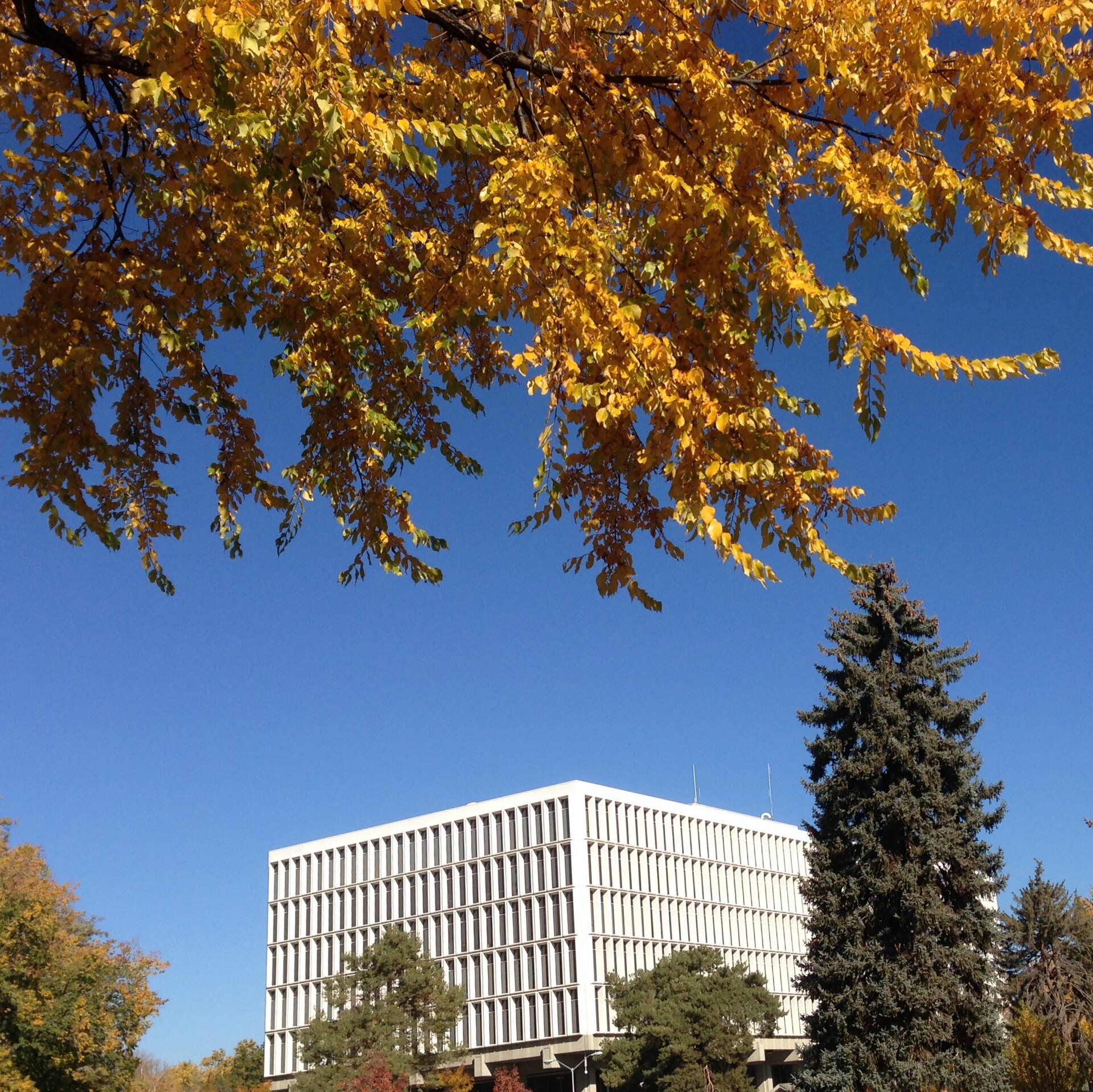
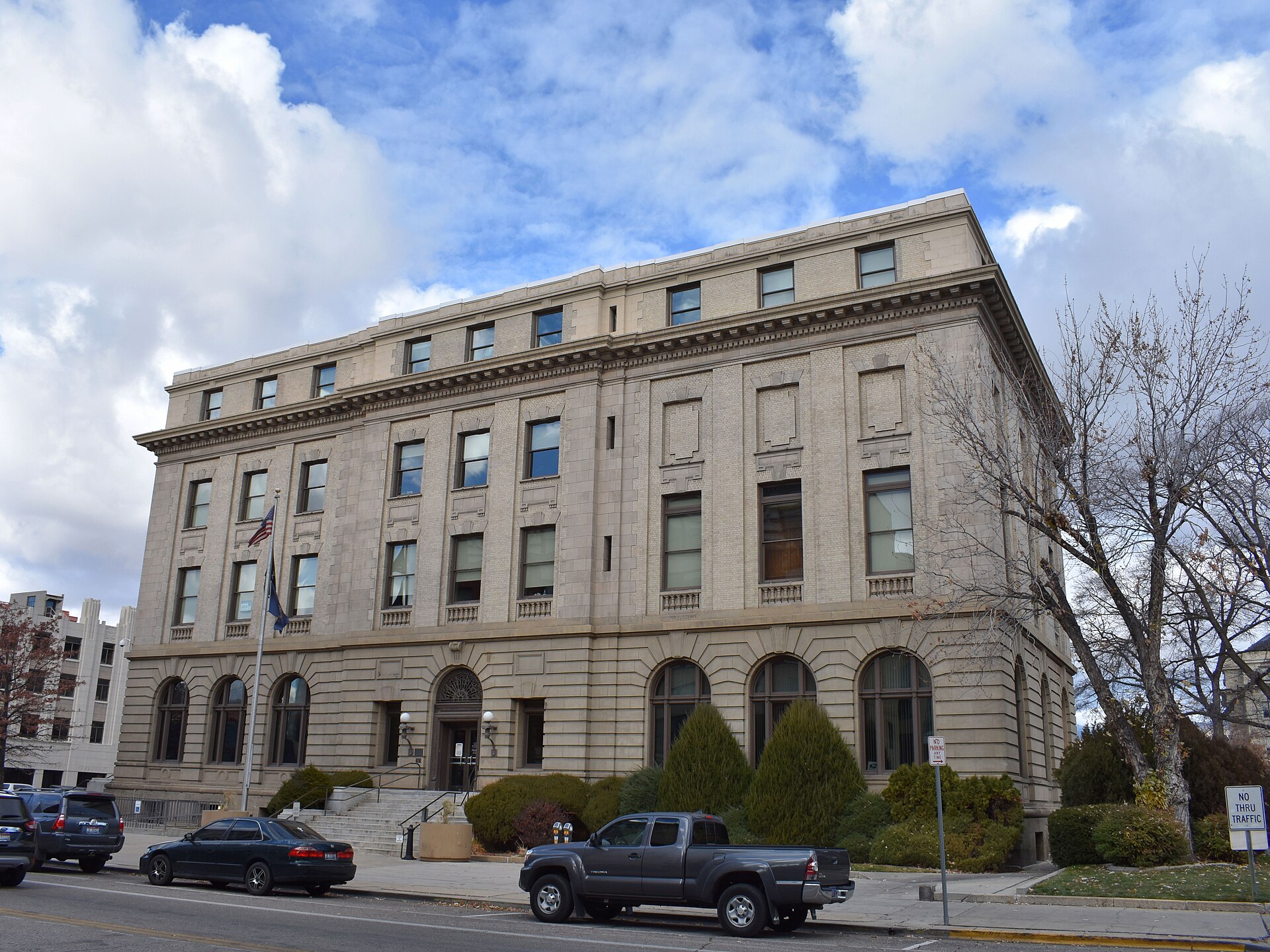
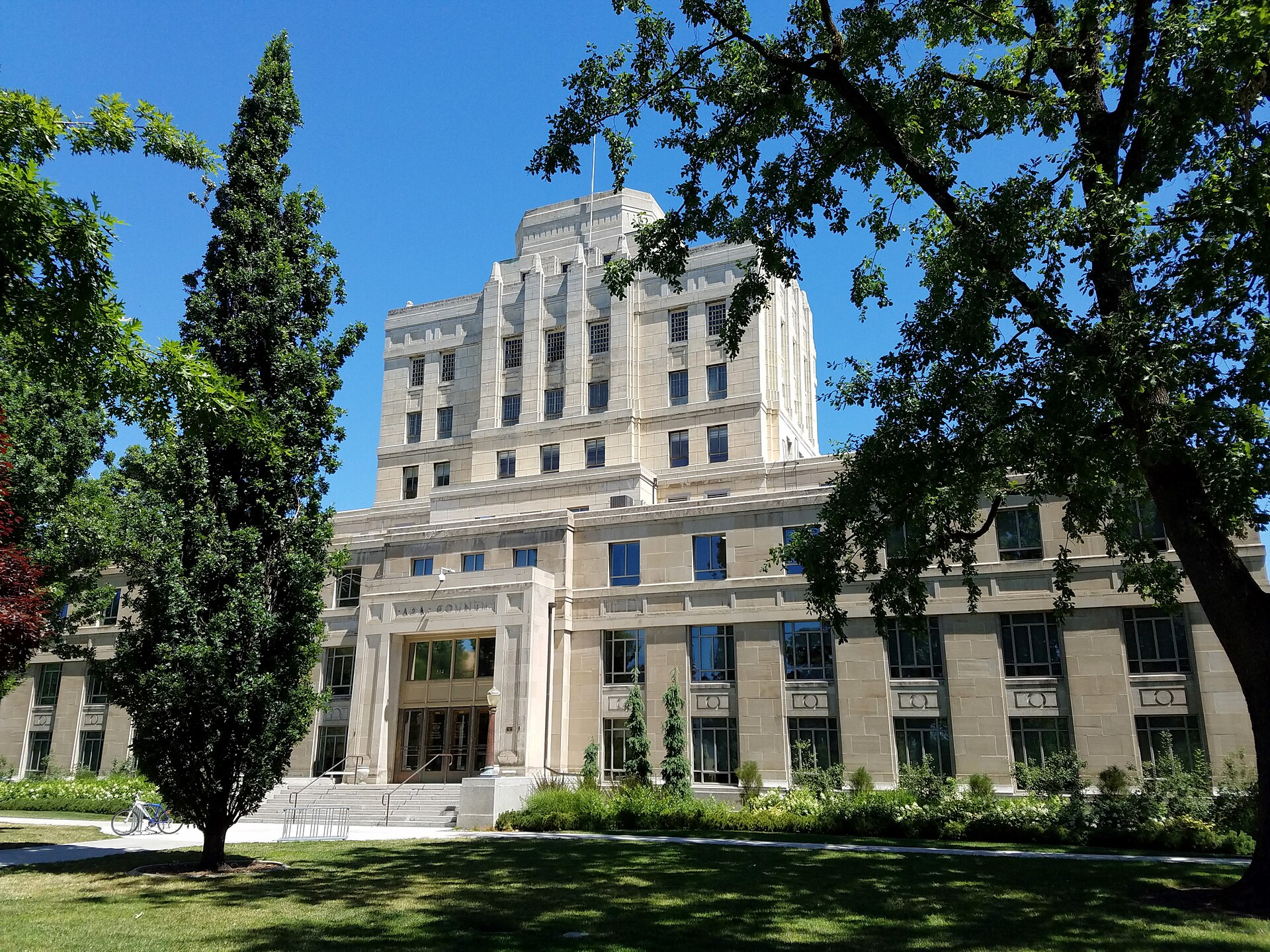
The four photos in this lesson show the federal courthouse in Boise, Boise's Old Federal Building, the Old Ada County Courthouse and Coeur d'Alene; none shows a person or place connected to any case. The eight graphics are the four-track diagram, the hypothetical personal care case, the two exclusion charts, the MFCU money chart, the case-type chart, the timeline and the neighbor ratio chart above.
Common mistakes
- Treating an arrest, complaint or indictment as a finding. The Attorney General's own June 2026 release says the provider fraud charges against two Ada County men "are merely accusations, and the defendants are presumed innocent," and DOJ's releases carry similar language.1456
- Reading a settlement as an admission. In the same October 2024 announcement, one party admitted liability (Canfield) and two did not (KA Health and its owner). Quote the agreement's words for each party separately.16
- Calling every overpayment fraud. The Seasons of Hope hearing found billing mistakes without intent to defraud, and Access Behavioral Health was a documentation recoupment. Idaho Code section 56-209h lets the department recover payments when "any condition of payment" was not met, without proof of intent.2722
- Adding restitution and civil settlements together. They are different obligations, and some include money from Medicare, private insurers, other states or, in the Moore case, residents' own funds. OIG warns that recoveries "may not reflect actual collections."8
- Treating MFCU recoveries as Idaho-only money. In fiscal 2021 to 2025, 70 percent of Idaho's reported recoveries were global, meaning state shares of national cases (our calculation).8
- Mixing fiscal years. OIG's MFCU numbers use the federal fiscal year (Oct. 1 to Sept. 30); Idaho's budget uses a July 1 to June 30 state fiscal year; releases use calendar dates. The KA Health settlement was announced in calendar 2024 and counted in federal fiscal 2025.57
- Reading the exclusion list as a history. The downloadable LEIE removes anyone reinstated, so it undercounts older years, and a license-based exclusion may have nothing to do with billing.13
- Applying today's penalty to old conduct. The 15-year maximum took effect July 1, 2024; the Hofius release notes that her 2022 and 2023 conduct carried a 5-year maximum.119
- Assuming a qui tam case the government declined was weak or was proved. In the Kootenai case the United States declined, the court let the case go forward, and the parties settled privately. None of those steps is a finding on the merits.39
What we know, what we don't, and what the data can show
What we know
- At least 36 Idaho matters from 2011 to Nov. 24, 2026 are documented in releases, filings, opinions or news reports quoting them, and their outcomes are as stated in the case table.
- The most common documented state scheme is billing for personal care or agency services that were not provided, usually exposed by a complaint, other payroll records, travel records or a Program Integrity audit.
- Idaho's MFCU reported 23 convictions and $3.69 million in recoveries in federal fiscal 2021 to 2025, with 70 percent of recoveries from national cases.8
- The provider fraud maximum rose to 15 years on July 1, 2024.9
What we don't know
- How much fraud in Idaho Medicaid goes undetected. No agency publishes a measured Idaho fraud rate.
- The outcomes of every conviction the MFCU counted, because many were not announced, and the case numbers of most state cases, because the releases do not give them.
- The final results of the Seasons of Hope appeal, the Lott sentencing, and the 2026 Ada County charges.
- Whether settlements with Idaho hospitals exist that were never announced, and what sealed qui tam cases are pending in the District of Idaho.
What the data can show
- OIG MFCU statistical charts show Idaho's yearly investigations, indictments, convictions, civil outcomes, recoveries and spending, and comparisons with every other state.
- The LEIE downloadable file shows current exclusions by state, city, specialty, authority and date; lesson 9 explains how to query it.
- PACER dockets for the District of Idaho show federal charges, pleas, judgments and civil settlements; Idaho iCourt shows state cases such as No. CR01-26-23857.
- OIG onsite inspections (OEI-09-12-00220, OEI-12-18-00320) show the unit's caseload mix, referral sources and barriers in the review years.
Questions people ask
Why do so many Idaho Medicaid fraud sentences end in probation?
The documented state cases mostly involved first offenses and small losses, often a few thousand dollars, and Idaho judges in those cases imposed suspended prison terms with probation, restitution, fines and community service. Where the loss was larger or the person deceived investigators, the releases show jail time (Miller, 180 days; Stoker, 90 days) or prison (Conica, five years). Federal cases with large losses or identity theft brought prison terms of 36 to 60 months.4635
Who decides whether a case is state or federal?
Prosecutors do, based on the law that fits and the size and reach of the case. Federal law covers Medicare, Medicaid and private insurers in one charge and offers aggravated identity theft, which adds a mandatory two years; Idaho's provider fraud statute covers public funds. The two offices often work together: the MFCU assisted in the Card, Dillon, Laney and KA Health federal cases.451658
Can an agency keep billing Medicaid while it is under investigation?
Idaho Code section 56-209h lets Health and Welfare suspend or withhold payments when it suspects fraud or abuse and believes later recovery would be difficult, and summarily suspend a provider agreement to prevent immediate danger, with a hearing within 30 days of an appeal. Federal rules on payment suspensions are covered in lesson 2.22
Does the MFCU prosecute people who lie to get Medicaid?
Mostly no. Idaho Code section 56-227 directs Health and Welfare to run a fraud control program for applications and benefits outside the MFCU's authority, and the Attorney General has said federal rules limit MFCU funding to provider fraud. The 2026 federal "unknown man" case shows recipient-side fraud prosecuted federally.636453
How much money does Idaho actually get back?
The record shows amounts ordered or agreed. Collection is a separate question: the Precision Diagnostics share was paid in installments, Mallinckrodt's over seven years, and criminal restitution depends on a defendant's ability to pay. OIG's chart says recoveries "may not reflect actual collections."50458
Can an excluded person work in health care?
An excluded person may hold a job, but federal health care programs will not pay for any item or service that person furnishes, orders or prescribes, and a provider that bills for such services can face civil money penalties under 42 U.S.C. 1320a-7a. That is why many providers check the LEIE before hiring.246813
Hard questions
Are small caregiver prosecutions worth the cost?
For: Prosecutors and the Attorney General argue that every false hour is money that did not reach a person with a disability, and that public cases deter other caregivers. The Romo case also involved a participant whose condition was getting worse during the missed visits.3757 Against: Caregivers and home care agencies argue that personal care pays low wages, that hour-tracking systems produce honest errors, and that a felony record ends a worker's career for losses of a few hundred dollars. What the evidence shows: The unit's five-year recoveries were about two-thirds of its spending, which is low by national standards, but OIG's return figure does not count deterrence or patient safety, and no Idaho study measures either.8
Should Idaho give its unit a broader civil law?
For: OIG's 2019 inspection recorded the unit director's view that Idaho's civil recovery statute requires proof of criminal intent, "severely limiting" civil cases, and that he had drafted a statute modeled on the federal False Claims Act. The Attorney General said in 2026 he would ask the Legislature for more authority.2157 Against: Providers argue that Idaho already has administrative recoupment without intent (Idaho Code 56-209h) and federal False Claims Act cases through the U.S. Attorney, and that a state law with a lower standard and whistleblower awards would expose small agencies to costly suits over paperwork. What the evidence shows: The unit's non-global civil recoveries were $0 in three of the five years from fiscal 2021 to 2025, $3,415 in fiscal 2023 and $361,577 in fiscal 2025, the year the KA Health and Canfield civil cases counted.8 Lesson 3 covers the federal incentive for state false claims laws.
Should every conviction be announced?
For: Public announcements inform agencies that hire caregivers and create deterrence; the unit reported 23 convictions in five years while we found far fewer releases. Against: Many defendants are low-wage workers, some cases end in withheld judgments meant to allow a fresh start, and publicity can identify patients in small towns. What the evidence shows: The record does not say how the office chooses which cases to announce; the exclusion list and court records remain public either way.
For reporters and advocates
Records that exist.
- Federal court files on PACER for the District of Idaho: indictments, plea agreements, judgments, civil complaints and settlement-related filings. Use the docket numbers in the case table where given (for example 1:24-CV-00460-BLW, 23-CV-00566-DKG, 2:17-cv-00314-CWD).
- State court files through the Idaho courts' iCourt portal, by name or by case number (for example CR01-26-23857), and the clerk of the district court in each county for documents not online.
- Releases: the Idaho Attorney General's Medicaid Fraud category, the U.S. Attorney for the District of Idaho (John Shirts was appointed U.S. Attorney effective Oct. 18, 2026, announced Oct. 19, after Bart M. Davis retired effective Oct. 17), OIG's enforcement actions page, and DOJ's yearly national takedown summaries and court documents.16952
- OIG data: the LEIE file and search, the MFCU statistical charts and OIG's onsite inspections of the Idaho unit.1321
- State records: Health and Welfare's Program Integrity Unit audit and recoupment decisions, payment suspension notices and hearing decisions, and the MFCU's memorandum of understanding with Health and Welfare, which OIG's 2013 review said needed updating, are state records that the Idaho Public Records Act, Idaho Code Title 74, governs (see module 47 and lesson 11 for which exemptions apply).19
- Licensing board actions: the Board of Medicine revoked Applebaum's license before his conviction, and nursing board actions drive the largest group of Idaho exclusions.17
What to ask. For any case: the docket number, the charging document, the plea agreement or settlement agreement, the judgment, and whether OIG excluded the person. For the MFCU: how many referrals came from Health and Welfare versus the public in 2025 and 2026, how many convictions were not announced and why, how much restitution has been collected, and how the 2024 law has changed charging. For Health and Welfare: how many payment suspensions and recoupments it imposed each year, and how many it referred.
The Idaho angle. Small cases dominate the state record, and the Magic Valley's documented cases are all caregivers in Twin Falls. The bigger dollars are federal and civil. How to report fairly on people accused in these cases is in lesson 12; the data tools are in lesson 9; and the misleading-number patterns for Medicaid figures are in lesson 74/09.
Where to go next
- HHS OIG Exclusions Database (LEIE search): Free federal search of everyone currently excluded from federal health care programs, by name or business; providers use it to screen staff, and anyone can check a name. A downloadable file of the full list is also free.
- HHS OIG Medicaid Fraud Control Units page: Free federal page with each year's MFCU statistical chart, annual reports and onsite inspections of state units, including Idaho's.
- Idaho Attorney General, Medicaid Fraud news releases: Free list of the Attorney General's Medicaid fraud announcements since 2022; each release names the court, judge and outcome, and states the MFCU's funding.
- PACER, federal court records: The federal judiciary's system for dockets and filings in the District of Idaho and other courts. Documents cost 10 cents a page, capped at $3 per document, and fees are waived for anyone who owes $30 or less in a quarter.
- Idaho courts iCourt portal: The Idaho judiciary's portal for searching state court case records by name or case number; free to search, with some documents available only from the county clerk.
- U.S. Attorney's Office, District of Idaho, news: Free list of federal charges, pleas, sentences and civil settlements announced in Idaho, searchable by date.
- HHS OIG Enforcement Actions: Free federal list of criminal, civil and state enforcement actions, including reposts of state MFCU releases; useful for finding older Idaho cases.
- SAM.gov exclusions search: Free federal site that lists people and companies excluded from federal contracts and programs; a second check alongside the LEIE.
Still being checked (9 items)
These points could not be fully confirmed against a primary source when this lesson was written and fact checked in November 2026. The text above states each one as uncertain.
- The years of two state sentencings are inferred: the Romo release gives the sentencing date as July 6 and the Movaffaghi and Khazei release as Friday, June 11, without a year. We list both as 2021 because the Romo plea was Sept. 9, 2020 and June 11 fell on a Friday in 2021; the releases did not state the year and the pages returned errors to a second download.
- Docket numbers for most cases were not given in the releases and could not be checked: CourtListener and Idaho iCourt refused automated access on Nov. 24, 2026. Numbers given are only those printed in a release, a filing or an opinion.
- Outcomes not found: the sentence of Michael James Lott (sentencing set for Aug. 18, 2015); the final decision on Health and Welfare's 2013 appeal in the Seasons of Hope case; the status after June 2026 of the charges against Nathan Brasley, Joseph Hakizimana and Hussein Hamad; and sentencing terms for the 2014 Villarreal-Ratcliff and Waddell and Hefner cases, whose OIG summaries do not give them.
- The texts of two District of Idaho releases listed in OIG's archive, 'Two Convicted for Health Care Fraud' (Dec. 3, 2009) and 'East Idaho Man Sentenced for Healthcare Fraud' (Oct. 18, 2010), are no longer online; their facts are unknown and they are not counted.
- We did not find any announced False Claims Act settlement naming St. Luke's, Saint Alphonsus, Portneuf Medical Center, Eastern Idaho Regional Medical Center or Bingham Memorial Hospital; this is a result of our search of DOJ, U.S. Attorney, OIG and Attorney General releases, not proof that none exists.
- The Blom summary describes the $18,342 ordered as 'interest'; we could not confirm whether it is restitution and left it out of totals.
- We could not confirm the year Idaho's MFCU was first certified by OIG; OIG's 2013 review says only that the unit was founded in 2007.
- The Access Behavioral Health overpayment amount and service years were not in the Idaho Supreme Court summary or the opinion excerpt we could read, so they are not stated.
- The Brasley case number CR01-26-23857 is taken from the stamped complaint as posted by DOJ; DOJ's 2026 court documents table lists the complaint without a number, and machine reading of the stamp on Nov. 24, 2026 could not confirm the last digits.
Last verified November 24, 2026. General education, not legal, medical, insurance or financial advice; every figure names its source and year in the Notes and Sources below. Data is revised: check the newest release before relying on any number.
Notes
- Idaho Office of the Attorney General, newsroom, "Medicaid Fraud" category (13 releases, 2022 to 2026), and press release pages 1 to 41 searched for Medicaid, provider fraud and related terms (read Nov. 24, 2026). Read it online. ↩
- HHS OIG, Enforcement Actions archive pages for 2005 to 2012, including the 2011 listing "Co-owners of Pocatello Physical Therapy, P.A. Sentenced in Federal Court" (Dec. 12, 2011) and the 2009 and 2010 listings of District of Idaho releases "Two Convicted for Health Care Fraud" (Dec. 3, 2009) and "East Idaho Man Sentenced for Healthcare Fraud" (Oct. 18, 2010), whose linked texts are no longer online (read Nov. 24, 2026). Read it online. ↩
- Idaho Attorney General, "Attorney General's Office Secures Conviction in Medicaid Fraud Case," Jan. 17, 2023 (Jeffrey Stoker, Canyon County Home Care, Inc.) (read Nov. 24, 2026). Read it online. ↩
- U.S. Attorney, District of Idaho, "Caldwell Optometrist Sentenced for Defrauding Health Care Benefit Programs," Dec. 11, 2012 (archived release) (read Nov. 24, 2026). Read it online. ↩
- U.S. Attorney, District of Idaho, "Fruitland Woman Sentenced to 60 Months in Prison for Health Care Fraud and Aggravated Identity Theft," June 7, 2017 (read Nov. 24, 2026). Read it online. ↩
- U.S. Attorney, District of Idaho, "Eagle Woman Sentenced to 37 Months for Health Care Fraud," May 29, 2020 (read Nov. 24, 2026). Read it online. ↩
- U.S. Attorney, District of Idaho, "Urgent Care Operator Pays $3 Million Dollars to Resolve Alleged Violations of the False Claims Act," July 15, 2025 (read Nov. 24, 2026). Read it online. ↩
- HHS OIG, FY 2025 MFCU Statistical Chart (spreadsheet; information current as of Feb. 23, 2026; footnotes define investigations as open at fiscal year end and recoveries as amounts defendants "are required to pay," which "may not reflect actual collections") (read Nov. 24, 2026). Read it online. ↩
- Idaho Legislature, House Bill 518 (2024), "Medicaid Fraud Control Unit": signed by the Governor March 28, 2024; 2024 Idaho Session Laws chapter 228; effective July 1, 2024 (read Nov. 24, 2026). Read it online. ↩
- Idaho Code section 56-227A, "Provider fraud, Criminal penalty" (added 1977, ch. 226; amended 2024, ch. 228): felony, up to 15 years, fine up to $15,000, mandatory restitution (read Nov. 24, 2026). Read it online. ↩
- Idaho Attorney General, "Attorney General Labrador Announces Sentencing of Kootenai County Woman for Public Assistance Provider Fraud," Jan. 29, 2026 (Tracy Hofius, North Star Child Development Center; also states the FY2026 MFCU grant of $1,105,525 federal and $368,508.33 state) (read Nov. 24, 2026). Read it online. ↩
- HHS OIG, List of Excluded Individuals/Entities, downloadable file UPDATED.csv, updated Nov. 10, 2026, downloaded Nov. 24, 2026; counts of records with STATE = ID by exclusion date, type, specialty and city are our own calculation (read Nov. 24, 2026). Read it online. ↩
- HHS OIG, "LEIE Downloadable Databases" page: the file contains "all exclusions in effect" and reinstated individuals and entities "are removed from this file" (read Nov. 24, 2026). Read it online. ↩
- Idaho Attorney General, "AG Labrador's Office Arrests Two Men in Ada County for Medicaid Fraud," June 1, 2026 (Joseph Hakizimana, four counts; Hussein Hamad, five counts; "These charges are merely accusations") (read Nov. 24, 2026). Read it online. ↩
- Criminal Complaint, State of Idaho v. Nathan Brasley, Case No. CR01-26-23857, District Court of the Fourth Judicial District, Ada County, filed June 17, 2026 (four counts of provider fraud, Idaho Code 56-227A(a) and/or (c)), posted with DOJ's 2026 National Health Care Fraud Takedown state court documents (read Nov. 24, 2026). Read it online. ↩
- U.S. Attorney, District of Idaho, "Boise Health Care Company and Former Therapist Resolve Fraudulent Psychotherapy Billing Allegations Involving Vulnerable Refugee Population," Oct. 29, 2024 (United States v. Canfield, No. 1:24-CV-00460-BLW) (read Nov. 24, 2026). Read it online. ↩
- U.S. Attorney, District of Idaho, "U.S. Attorney's Office Obtains Judgment Against Canyon Co. Psychiatrist for Medicare and Medicaid Fraud," Jan. 18, 2012 (archived release) (read Nov. 24, 2026). Read it online. ↩
- Idaho Code section 56-226, "Medicaid fraud control unit" (added 2007, ch. 341; amended 2024, ch. 228) (read Nov. 24, 2026). Read it online. ↩
- HHS OIG, Idaho State Medicaid Fraud Control Unit: 2012 Onsite Review, OEI-09-12-00220, April 2013 (read Nov. 24, 2026). Read it online. ↩
- Idaho Code section 56-227B, "Provider fraud, Damages" (added 1977; amended 2007): civil damages of three times the overstatement for a provider who acts "knowingly with intent to defraud" (read Nov. 24, 2026). Read it online. ↩
- HHS OIG, Idaho Medicaid Fraud Control Unit: 2018 Onsite Inspection, OEI-12-18-00320, August 2019 (fiscal years 2015 to 2017) (read Nov. 24, 2026). Read it online. ↩
- Idaho Code section 56-209h, "Administrative remedies" (added 1998; amended 2007, 2008 and 2016) (read Nov. 24, 2026). Read it online. ↩
- Idaho Supreme Court, opinion summary, Access Behavioral Health v. State of Idaho, Department of Health and Welfare, Docket No. 48353-2020 (read Nov. 24, 2026). Read it online. ↩
- 42 U.S.C. 1320a-7 (Social Security Act section 1128), exclusion of individuals and entities from federal health care programs; minimum five years for subsection (a) exclusions under (c)(3)(B) (read Nov. 24, 2026). Read it online. ↩
- U.S. Attorney, District of Idaho, "Caldwell Optometrist Pleads Guilty to Defrauding Health Care Benefit Programs as Parties Agree to $1 Million in Restitution," Aug. 16, 2012 (archived release) (read Nov. 24, 2026). Read it online. ↩
- HHS OIG, enforcement action "Pocatello Dentist Sentenced for Fraudulent Medicaid Billing," action date March 12, 2013 (Idaho Attorney General release) (read Nov. 24, 2026). Read it online. ↩
- Associated Press in the Spokesman-Review, "State appeals dismissal of Medicaid provider fraud case," July 5, 2013 (Seasons of Hope, Chubbuck) (read Nov. 24, 2026). Read it online. ↩
- Claims Journal (Associated Press), "Idaho Doctor Accused of Medicaid Fraud in Lawsuit," Dec. 13, 2010 (read Nov. 24, 2026). Read it online. ↩
- HHS OIG, enforcement action "Angela Blom Sentenced for Medicaid Fraud," action date Feb. 25, 2013 (Idaho Attorney General release) (read Nov. 24, 2026). Read it online. ↩
- HHS OIG, enforcement action "Caldwell Couple Sentenced in Medicaid Fraud," action date Jan. 10, 2014 (Idaho Attorney General release) (read Nov. 24, 2026). Read it online. ↩
- HHS OIG, enforcement action "Idaho Falls Woman Sentenced for Medicaid Fraud," action date July 24, 2014 (Idaho Attorney General release) (read Nov. 24, 2026). Read it online. ↩
- HHS OIG, enforcement action "Duo Sentenced for Medicaid Fraud," action date Nov. 3, 2014 (Idaho Attorney General release; Assisting Hands Home Care-Boise, LLC) (read Nov. 24, 2026). Read it online. ↩
- U.S. Attorney, District of Idaho, "California Man Pleads Guilty to Obtaining a Controlled Substance by Fraud and Billing Medicaid for a Fraudulent Prescription," June 3, 2015 (read Nov. 24, 2026). Read it online. ↩
- East Idaho News, "Idaho Falls woman sentenced for Medicaid fraud," Nov. 9, 2017, publishing the Idaho Attorney General's release (Tiffany A. Larsen) (read Nov. 24, 2026). Read it online. ↩
- East Idaho News, "St. Anthony man sentenced for Medicaid provider fraud," March 14, 2019, publishing the Idaho Attorney General's release (Elwood Conica) (read Nov. 24, 2026). Read it online. ↩
- U.S. Attorney, District of Idaho, "Boise Man Sentenced to 3.5 Years in Federal Prison for Health Care Fraud and Aggravated Identity Theft," Feb. 1, 2021 (read Nov. 24, 2026). Read it online. ↩
- Idaho Attorney General, "Shoshone County Woman Sentenced for Provider Fraud" (Andrea Romo; release gives the sentencing date as July 6 and the plea date as Sept. 9, 2020) (read Nov. 24, 2026). Read it online. ↩
- Idaho Attorney General, "Twin Falls County Caregivers Sentenced for Provider Fraud" (Shahrieh Movaffaghi and Mahyar Khazei; release gives the sentencing date as Friday, June 11, without a year) (read Nov. 24, 2026). Read it online. ↩
- United States ex rel. Garrett v. Kootenai Hospital District, No. 2:17-cv-00314-CWD (D. Idaho), Memorandum Decision and Order, Dkt. 54, June 17, 2020 (Magistrate Judge Candy W. Dale) (read Nov. 24, 2026). Read it online. ↩
- Bloomberg Law, "Kootenai Health, Whistleblowers Settle Medicare Fraud Claims," Sept. 17, 2021 (dismissal on joint motion; amount not made public) (read Nov. 24, 2026). Read it online. ↩
- U.S. Attorney, District of Idaho, "Post Falls Doctor Pays $110,000 to Settle Allegations that He Overprescribed Opioids," Nov. 19, 2021 (read Nov. 24, 2026). Read it online. ↩
- Idaho Attorney General, "Bannock County Man Sentenced for Provider Fraud," March 1, 2022 (Barry Robb Redford) (read Nov. 24, 2026). Read it online. ↩
- Idaho Attorney General, "Canyon County Woman Sentenced for Provider Fraud," May 2, 2022 (Tracee Taylor) (read Nov. 24, 2026). Read it online. ↩
- Idaho Attorney General, "Twin Falls Provider Sentenced for Fraud and Obstruction of a Medicaid Fraud Investigation," July 15, 2022 (Patricia Anderson) (read Nov. 24, 2026). Read it online. ↩
- Idaho Attorney General, "Mallinckrodt to Pay More Than $230 Million to Settle Lawsuit Alleging Underpayment of Medicaid Drug Rebates," Aug. 17, 2022 (read Nov. 24, 2026). Read it online. ↩
- Idaho Attorney General, "Idaho Provider Sentenced to Jail for Defrauding State Medicaid Program," Aug. 29, 2022 (Janna Lyn Miller, Inclusion, Inc.) (read Nov. 24, 2026). Read it online. ↩
- Idaho Attorney General, "Ada County Woman Sentenced for Provider Fraud," Nov. 21, 2022 (Ashley D. Lake) (read Nov. 24, 2026). Read it online. ↩
- Idaho Attorney General, "Twin Falls County Woman Sentenced for Provider Fraud," Nov. 28, 2022 (Mariah C. Ross) (read Nov. 24, 2026). Read it online. ↩
- U.S. Attorney, District of Idaho, "AmeriHealth Clinics Consent to a $2 Million Judgment to Resolve Healthcare Fraud Allegations," Jan. 17, 2024 (United States v. Hatch, et al., No. 23-CV-00566-DKG) (read Nov. 24, 2026). Read it online. ↩
- Idaho Attorney General, "Attorney General Labrador Announces Settlement in Medicaid Fraud Case," Jan. 29, 2025 (Precision Diagnostics) (read Nov. 24, 2026). Read it online. ↩
- U.S. Department of Justice, Criminal Division, 2025 National Health Care Fraud Takedown case summaries, District of Idaho entry (Bloom Care, LLC, Spencer Smith and Michael Weir) (read Nov. 24, 2026). Read it online. ↩
- U.S. Department of Justice, Criminal Division, 2026 National Health Care Fraud Takedown court documents, state court documents table, "State of Idaho v. Nathan Brasley" (read Nov. 24, 2026). Read it online. ↩
- U.S. Attorney, District of Idaho, "Unknown Man Sentenced to Five Years in Prison for Using Identity of Deceased Child for 25 Years to Obtain Nearly $300,000 in Government Benefits," Aug. 25, 2026 (read Nov. 24, 2026). Read it online. ↩
- Access Behavioral Health v. State, Dept. of Health and Welfare, 170 Idaho 874, 517 P.3d 803, opinion filed Sept. 16, 2022 (copy of the opinion on Leagle) (read Nov. 24, 2026). Read it online. ↩
- U.S. Attorney, District of Idaho, "District of Idaho Participates in National Health Care Fraud Takedown," June 28, 2018 (read Nov. 24, 2026). Read it online. ↩
- U.S. Attorney, District of Idaho, "Caldwell Woman Charged in the District of Idaho as Part of the National Health Care Fraud Takedown," June 24, 2026 (455 defendants nationally; indictment is an allegation) (read Nov. 24, 2026). Read it online. ↩
- Idaho Attorney General, "Labrador Letter: Medicaid Fraud Hurts Everyone. Here's What I'm Doing About It.," May 29, 2026; and "AG Labrador Joins White House Fraud Task Force Roundtable with Vice President Vance" (2026) (read Nov. 24, 2026). Read it online. ↩
- 18 U.S.C. 1028A, aggravated identity theft: a term of two years in addition to the punishment for the underlying felony (read Nov. 24, 2026). Read it online. ↩
- HHS OIG, FY 2024 MFCU Statistical Chart (spreadsheet), with the MFCU Annual Report FY 2024, OEI-09-25-00090 (read Nov. 24, 2026). Read it online. ↩
- HHS OIG, FY 2023 MFCU Statistical Chart (PDF) (read Nov. 24, 2026). Read it online. ↩
- HHS OIG, FY 2022 MFCU Statistical Chart (PDF) (read Nov. 24, 2026). Read it online. ↩
- HHS OIG, FY 2021 MFCU Statistical Chart (PDF) (read Nov. 24, 2026). Read it online. ↩
- Idaho Code section 56-227, "Fraudulent acts, Penalty," including subsection (5) on Health and Welfare's fraud control program (read Nov. 24, 2026). Read it online. ↩
- Idaho Attorney General, "Labrador Letter: Idaho Urges Congress to Give States the Tools to Stop Medicaid Fraud," Aug. 7, 2026 (STOP FRAUD in Medicaid Act, H.R. 5364 and S. 4176) (read Nov. 24, 2026). Read it online. ↩
- HHS OIG, Medicaid Fraud Control Units Annual Report: Fiscal Year 2025, OEI-09-26-00140, issued March 18, 2026 ($4.64 recovered per dollar spent; 1,185 convictions; 900 exclusions) (read Nov. 24, 2026). Read it online. ↩
- Idaho Attorney General, "Labrador Letter: Human Trafficking, Medicaid Fraud, Artificial Intelligence," March 29, 2024 (H 518 raises the maximum to 15 years, allows recovery of prosecution and investigation costs, and expands the provider fraud the office may investigate) (read Nov. 24, 2026). Read it online. ↩
- 18 U.S.C. 1347, health care fraud: up to 10 years, up to 20 if the violation results in serious bodily injury, and up to life if it results in death (read Nov. 24, 2026). Read it online. ↩
- 42 U.S.C. 1320a-7a (Social Security Act section 1128A), civil monetary penalties, including for claims for items or services furnished by an excluded person (read Nov. 24, 2026). Read it online. ↩
- U.S. Attorney, District of Idaho, press release list, including "U.S. Attorney Bart M. Davis Announces Retirement" (Oct. 7, 2026) and "John Shirts Appointed as United States Attorney for the District of Idaho" (Oct. 19, 2026; appointment effective Oct. 18, 2026) (read Nov. 24, 2026). Read it online. ↩
Check yourself
1. Under Idaho Code section 56-227A as amended by House Bill 518, what is the maximum prison term for provider fraud committed after July 1, 2024?
House Bill 518 (2024 Idaho Session Laws chapter 228), effective July 1, 2024, set the maximum at 15 years and a $15,000 fine; the Hofius release notes the earlier maximum was 5 years.
2. In the October 2024 KA Health Services resolution (United States v. Canfield, No. 1:24-CV-00460-BLW), who admitted liability?
The U.S. Attorney's release says Canfield admitted knowingly causing false Medicaid claims, while the claims against KA Health and Ameri were allegations only with no admission or determination of liability.
3. What share of the Idaho MFCU's reported recoveries in federal fiscal 2021 to 2025 came from global (multistate) civil cases, by our calculation from OIG's charts?
Global civil recoveries were $2,584,525 of $3,687,384, or 70.1 percent, summing OIG's MFCU statistical charts for fiscal 2021 to 2025.
4. Which legal authority accounts for the most current Idaho exclusions dated 2005 to 2026 in the LEIE file?
Our count of the LEIE file updated Nov. 10, 2026 found 108 of 242 Idaho exclusions under 1128(b)(4), license revocation or suspension, and 79 under 1128(a)(1).
5. In the 2013 Seasons of Hope administrative case, what did the administrative judge find?
The Spokesman-Review (AP) reported on July 5, 2013 that the judge found billing mistakes but no intent to defraud and ordered more than $94,000 repaid; the department appealed.
6. How many convictions did the Idaho MFCU report in federal fiscal 2025, according to OIG's statistical chart?
OIG's FY 2025 MFCU Statistical Chart lists 2 convictions, 5 indictments and 8 civil settlements and judgments for Idaho.
7. Why does the downloadable LEIE file undercount exclusions from older years?
OIG's LEIE download page says the file contains all exclusions in effect and that reinstated individuals and entities are removed.
8. In United States ex rel. Garrett v. Kootenai Hospital District, No. 2:17-cv-00314-CWD, what did the United States do?
The June 17, 2020 decision says the United States declined to intervene; Bloomberg Law reported in September 2021 that the case was dismissed on a joint motion after a settlement whose amount was not made public.
9. Which Idaho Code section lets Health and Welfare suspend payments and recover overpayments without proving intent to defraud?
Idaho Code section 56-209h provides prepayment and postpayment review, payment suspension, recovery when a condition of payment was not met, and termination of provider agreements.
10. What did OIG's 2019 inspection of the Idaho MFCU record as a barrier to civil cases?
OIG report OEI-12-18-00320 recorded the unit director's statement that the civil recovery statute requires a standard of criminal intent, severely limiting civil cases; Idaho Code 56-227B requires acting knowingly with intent to defraud.
Terms in this lesson
- Provider fraud (Idaho)
- The felony in Idaho Code section 56-227A: knowingly, with intent to defraud, presenting a false claim or obtaining more public money than a provider is entitled to. Maximum 15 years and $15,000 since July 1, 2024.
- Medicaid Fraud Control Unit (MFCU)
- The unit in the Idaho Attorney General's office, created by Idaho Code section 56-226 in 2007, that investigates and prosecutes Medicaid provider fraud and reviews abuse and neglect complaints in Medicaid-paid settings; funded 75 percent federal and 25 percent state.
- Withheld judgment
- An Idaho sentencing option in which the court withholds entering a judgment of conviction while the person serves probation, as in the 2013 Holm case.
- Retained jurisdiction
- An Idaho sentence in which the court keeps the case while the person completes a program and may then place the person on probation, as described in the Romo release.
- Unified sentence
- An Idaho prison sentence stated as a total term with a fixed minimum portion, for example 5 years with 1 fixed; often suspended in favor of probation.
- Restitution
- Money a court orders a defendant to repay to a victim, such as Idaho Medicaid, for the loss caused; an order, not proof of collection.
- Consent judgment
- A court judgment the defendant agrees to; it may include admissions, as in the AmeriHealth and Canfield cases.
- Global settlement
- A civil settlement involving the U.S. Department of Justice and a group of state MFCUs; OIG reports each state's share as global recoveries.
- Declined qui tam
- A whistleblower False Claims Act case the United States chose not to join; the relator may continue it, as in the Kootenai Hospital District case.
- Recoupment
- Health and Welfare's recovery of Medicaid payments when a condition of payment, such as required records, was not met; no proof of intent is needed under Idaho Code section 56-209h.
- Payment suspension
- Withholding of Medicaid payments to a provider during an investigation of suspected fraud or abuse, allowed by Idaho Code section 56-209h(4).
- Mandatory exclusion
- An OIG exclusion required by 42 U.S.C. 1320a-7(a) after a conviction for a program-related crime, patient abuse, a health care fraud felony or a controlled substance felony; at least five years.
- Superseding information
- A replacement federal charging document filed by prosecutors, often to set out the count a defendant will plead to, as in the 2012 Card plea.
Sources
- Idaho Attorney General, Medicaid Fraud news releases (2026-11-24) checked 2026-11
- HHS OIG, FY 2025 MFCU Statistical Chart (2026-11-24) checked 2026-11
- HHS OIG, Medicaid Fraud Control Units Annual Report FY 2025 (OEI-09-26-00140) (2026-11-24) checked 2026-11
- HHS OIG, LEIE downloadable file UPDATED.csv (Nov. 10, 2026) (2026-11-24) checked 2026-11
- HHS OIG, Idaho Medicaid Fraud Control Unit: 2018 Onsite Inspection (OEI-12-18-00320) (2026-11-24) checked 2026-11
- HHS OIG, Idaho State Medicaid Fraud Control Unit: 2012 Onsite Review (OEI-09-12-00220) (2026-11-24) checked 2026-11
- Idaho Code section 56-227A, Provider fraud, Criminal penalty (2026-11-24) checked 2026-11
- Idaho Code section 56-209h, Administrative remedies (2026-11-24) checked 2026-11
- Idaho Legislature, House Bill 518 (2024) (2026-11-24) checked 2026-11
- Criminal Complaint, State of Idaho v. Nathan Brasley, No. CR01-26-23857 (Ada County) (2026-11-24) checked 2026-11
- U.S. Attorney, District of Idaho, KA Health Services and Canfield resolution (Oct. 29, 2024) (2026-11-24) checked 2026-11
- U.S. Attorney, District of Idaho, Caldwell optometrist sentenced (Dec. 11, 2012) (2026-11-24) checked 2026-11
- United States ex rel. Garrett v. Kootenai Hospital District, No. 2:17-cv-00314-CWD, order of June 17, 2020 (2026-11-24) checked 2026-11
- 42 U.S.C. 1320a-7, exclusion from federal health care programs (2026-11-24) checked 2026-11