Lesson 10 of 12 · about 55 minutes · Updated November 24, 2026
Reading a Hospital or Nursing Home Like a Reporter
You'll be able to
- Pull one hospital's Medicare cost report from CMS files and find the worksheets and lines for size, payer mix, revenue, expenses, charity care and bad debt.
- Compute and explain patient-care and total margins, a current ratio and days of cash, using Minidoka Memorial Hospital's 2024 report as the model.
- Trace a nursing home or hospital's owners through the CMS All Owners and change-of-ownership files, and explain what the 2023 disclosure rule added and what the flags cannot show.
- Read Form 990 Schedule H Part I line 7 and Part III, and Schedule J, and say how they differ from the cost report's charity care figures.
- Read a nursing home inspection report using the A to L scope and severity grid, and explain immediate jeopardy, substandard quality of care, civil money penalty ranges and the Special Focus Facility list.
- Use court, lien and bond records (PACER, iCourt, the Secretary of State's UCC search and EMMA) and state plainly what each document can and cannot prove.
Start here: the short version
- Every Medicare hospital and nursing home files a yearly cost report, and it is public. Federal rule 42 CFR 413.20 requires an annual report, and 42 CFR 413.24(f) makes it due by the last day of the fifth month after the year closes. CMS posts the data in its Healthcare Cost Report Information System (HCRIS), most recently updated Sept. 30, 2026.123
- Five worksheets answer most reporters' questions. S-2 says who the hospital is and who controls it, S-3 counts beds and patient days, S-10 reports charity care and bad debt, and G-2 and G-3 hold revenue, expenses and net income.4
- A worked Idaho example: Minidoka Memorial Hospital in Rupert, a county-owned critical access hospital, reported net patient revenue of $57.1 million and operating expenses of $61.6 million for the year ended Sept. 30, 2024, a patient-care margin of minus 7.9 percent and a total margin of minus 6.2 percent (our calculation).56
- Nursing home inspections are graded on a 12-box grid, A to L. Severity runs from potential for minimal harm to immediate jeopardy, and scope from isolated to widespread. Federal rule 42 CFR 488.325 makes statements of deficiencies and plans of correction public within 14 calendar days of reaching the facility.78
- Fines have set ranges. For penalties assessed on or after Jan. 28, 2026, a per-day fine for immediate jeopardy runs $8,351 to $27,378 and a per-instance fine runs $2,739 to $27,378, under 45 CFR 102.3 and 91 FR 3665.910
- Ownership is now public in detail. CMS posted nursing home ownership data in September 2022 and hospital ownership data in December 2022, and a 2023 rule (88 FR 80141, effective Jan. 16, 2024) added private equity and real estate investment trust definitions. In the Sept. 29, 2026 file, no Idaho nursing home owner was flagged as either.11121314
- No single document proves wrongdoing. A loss on a cost report, a low star rating, a fine or a lien is a lead for questions. Each record has limits, and this lesson lists them.
Law and data: Social Security Act sections 1124, 1819, 1886(p) and (q), and 1919; 42 CFR 412.190, 413.20, 413.24, 483.70, 488.301 to 488.444 and 45 CFR 102.3 as amended through Nov. 20, 2026; 26 U.S.C. 6104; IRS Schedule H (2025) and Schedule J (Rev. December 2026); Idaho Code Title 31 chapter 36, Title 39 chapter 14 and Title 74 chapter 1 through the 2026 session; CMS files as dated in each table (Hospital Provider Cost Report 2024 edition posted October 2026; Hospital General Information updated Oct. 26, 2026; FY 2026 HAC Reduction Program file; nursing home files of Sept. 30, 2026; ownership files of Sept. 29, 2026; Special Focus Facility list of Oct. 28, 2026); checked Nov. 24, 2026. Ratings, fines, ownership and cost reports change often; check the newest release.


This is a method lesson. It teaches how to pull the public documents for one hospital or one nursing home, read the parts that matter, and say what each document can and cannot prove. It uses real Idaho filings where they exist and labeled hypothetical examples where real records would identify a patient or resident.
It does not repeat what other lessons already cover. Who owns Idaho's hospitals, how charity care rules work and what Idaho hospitals' margins look like as a group are in Idaho's Hospitals. The money side of nursing homes, including Medicaid daily rates and the bed tax, is in Nursing Home and Assisted Living Economics. Idaho's nursing home inspection results, star ratings, staffing and fines as a group are in Nursing Homes in Idaho, and small-hospital finances are in Rural Hospital Finances. Within this course, the wider set of public health data files is in lesson 9, contractors that run parts of Idaho Medicaid are in lesson 8, records requests are in lesson 11 and the reporting checklist is in lesson 12.
The document stack for one facility
Before reading any single record, it helps to know what exists. For a typical Idaho hospital or nursing home that takes Medicare and Medicaid, at least nine kinds of public records can be pulled without filing a records request. Each was created for a different purpose by a different office, and that purpose shapes what it can show.
| Record | Who files or makes it | Where it is | How current | Best for |
|---|---|---|---|---|
| Medicare cost report (Form CMS-2552-10 for hospitals; CMS-2540-10 or CMS-2540-24 for nursing homes) | The facility, through its Medicare Administrative Contractor | CMS HCRIS raw files; the Hospital Provider Cost Report public use file on data.cms.gov | Yearly; the 2024 public use file was posted in October 202615 | Beds, patient days by payer, revenue, expenses, margins, charity care, bad debt, balance sheet |
| CMS ownership files (Hospital All Owners, SNF All Owners, change of ownership files) | The facility reports to Medicare provider enrollment; CMS publishes | data.cms.gov, updated monthly | Monthly; the newest checked here is Sept. 29, 20261114 | Who holds 5 percent or more, officers, directors, managing parties, sales |
| IRS Form 990 with Schedule H and Schedule J | Nonprofit hospital organizations and nonprofit nursing home owners | The organization itself, IRS Tax Exempt Organization Search, ProPublica Nonprofit Explorer | Yearly, often one to two years behind1516 | Charity care at cost, community benefit, Medicare shortfall, bad debt, executive pay, related organizations |
| Care Compare and Provider Data Catalog files for hospitals | CMS, from claims, surveys and quality reporting | medicare.gov Care Compare; data.cms.gov/provider-data | Quarterly to yearly; Hospital General Information updated Oct. 26, 202617 | Star ratings, readmission and hospital-acquired condition penalties, patient survey scores |
| Nursing home inspection reports (Form CMS-2567) | State survey agency (in Idaho, the Bureau of Facility Standards) for CMS | Care Compare, the CMS QCOR site, the state's public folder, ProPublica Nursing Home Inspect | After each survey; the CMS nursing home files checked were modified Sept. 30, 20261819 | Deficiency tags, scope and severity, plans of correction, fines |
| Payroll-Based Journal staffing data | Each nursing home, quarterly, from payroll | data.cms.gov | Quarterly, about two months after quarter end20 | Daily nurse and aide hours per resident, contract staff use |
| Court records | Federal and state courts | PACER for federal; iCourt for Idaho state courts | As filed2122 | Lawsuits, liens, bankruptcies, criminal and False Claims Act cases |
| Lien and secured debt filings | Lenders and taxing authorities | Idaho Secretary of State UCC and lien search; county recorders | As filed23 | Who has a claim on equipment, receivables or property; tax liens |
| Bond disclosures | Hospitals and districts that borrow in the municipal bond market | MSRB's EMMA site | Annual reports and event notices as filed24 | Audited financial statements, debt terms, covenant problems, rating changes |
The Medicare cost report
What a cost report is and why it exists
A Medicare cost report is a long standardized financial and statistical filing. Medicare uses it to set and settle certain payments, most of all for critical access hospitals, which Medicare pays on the basis of their reasonable costs (the rules are in Rural Hospital Finances), and CMS uses cost report data in setting payment weights for other hospitals.25 Federal rule 42 CFR 413.20 says providers must keep "sufficient financial records and statistical data for proper determination of costs" and that "cost reports are required from providers on an annual basis with reporting periods based on the provider's accounting year."2
The due date is set in 42 CFR 413.24(f)(2): a cost report is due "on or before the last day of the fifth month following the close of the period covered by the report." A hospital whose year ends Sept. 30 files by Feb. 28 or 29; one whose year ends Dec. 31 files by May 31. Extensions are allowed only for "extraordinary circumstances" such as flood or fire. Reports are filed electronically.3
CMS collects the filed reports in HCRIS. Its cost report page lists the forms in use: CMS-2552-10 for hospitals (fiscal years 2010 to 2026), CMS-2540-10 and the newer CMS-2540-24 for skilled nursing facilities, and separate forms for home health agencies, hospices, dialysis facilities, rural health clinics, federally qualified health centers and community mental health centers.1 The line-by-line instructions for the hospital form are in chapter 40 of the Provider Reimbursement Manual, Part II, linked from CMS's hospital form page.25
Three facts about cost reports matter for anyone reading one:
- They are self-reported, then reviewed. The provider fills in the report. The Medicare Administrative Contractor accepts, reviews and sometimes audits it. HCRIS marks each report's status as "settled, as submitted, reopened."26 An "as submitted" report can change.
- They follow Medicare's rules, which differ from ordinary accounting. Costs are sorted into cost centers and allocated by statistics such as square feet and hours. The financial statement worksheets (the G series) come from the provider's books, but they may not match the audited financial statements line for line.
- They are public. HCRIS files are free to download. For nursing homes, 42 CFR 488.325(a)(7) lists "Medicare and Medicaid cost reports" among the records that must be made available on request.8
Two ways to get the numbers: HCRIS raw files and the public use file
CMS publishes cost report data in two forms.
The HCRIS raw files hold every number on every worksheet. They come as zipped comma-separated files: a report file (*_Rpt) with identifiers, fiscal year dates and status; a numeric file (*_Rpt_Nmrc) with every number keyed by worksheet, line and column; an alphanumeric file (*_Rpt_Alphnmrc) with names, addresses and yes-or-no answers; and a rollup file. The report record number joins them. CMS's HCRIS FAQ says the hospital and nursing home numeric files exceed 2 gigabytes, too large to load into Microsoft Access, and that most users load them into a database or statistics program such as Oracle, SAS, SPSS or SQL Server. CMS updates the files quarterly, with cutoffs of March 31, June 30, Sept. 30 and Dec. 31.26
The Hospital Provider Cost Report public use file on data.cms.gov is a single spreadsheet-sized file with one row per hospital cost report and about 117 selected fields: identification, beds and days, discharges, charity care and bad debt, salaries, the balance sheet, revenue, expenses and net income. CMS says the file "contains a subset of the variables available in the HCRIS" and that the data "have not been edited or changed."27 The 2024 edition, posted in October 2026, has 6,109 hospital cost reports, including 52 for Idaho.5 A data dictionary gives the worksheet, line and column behind each field, which lets anyone trace a number back to the form.4
The public use file is the easier starting point for one hospital. The raw files are needed for anything the public use file leaves out: department-level costs, Medicare settlement details, related-party costs, or the alphanumeric answers.
The worksheets that matter
The hospital cost report has dozens of worksheets. For reporting on one hospital, a handful carry most of the useful facts. The line and column numbers below are the ones CMS's data dictionary gives for the public use file fields.4
| Worksheet | What it is | Lines a reporter uses | Questions it answers |
|---|---|---|---|
| S-2, Part I | Hospital identification | Line 20 (fiscal year begin and end dates); line 21 (type of control: 1 and 2 nonprofit, 3 to 6 proprietary, 7 to 13 government, including 9 county and 11 hospital district) | Which year is this? Who controls the hospital? |
| S-3, Part I | Hospital statistics | Line 14: beds (column 2), days by payer (Medicare in column 6, Medicaid in column 7), employees on payroll in full-time equivalents (column 10) | How big is it? How busy? How dependent on Medicare and Medicaid? |
| S-10 | Uncompensated and indigent care | Line 1 (cost-to-charge ratio); line 2 (net Medicaid revenue); line 23, column 3 (cost of charity care); line 26 (bad debt); line 30 (cost of non-Medicare uncompensated care); line 31 (total unreimbursed and uncompensated care) | How much free or discounted care did it give, at cost? How much went unpaid? |
| G | Balance sheet | Cash, receivables, fixed assets, current and long-term liabilities, fund balance | Can it pay its bills? How much does it owe? |
| G-2 | Patient revenues and operating expenses | Line 28 (total inpatient and outpatient patient revenue, which is gross charges) | What share of business is outpatient? |
| G-3 | Statement of revenues and expenses | Line 1 (total patient revenue); line 2 (contractual allowances and discounts); line 3 (net patient revenue); line 4 (total operating expense); line 5 (net income from service to patients); line 25 (total other income); line 28 (total other expenses); line 29 (net income) | Did it make or lose money on patients? Overall? |
| A | Trial balance of expenses by cost center | Line 200 (total salaries in column 1, other costs in column 2) | What does it spend on payroll? |
| C, Part I | Costs and charges by department | Line 202 (total costs in column 3, total charges in column 8) | How do list prices compare with costs? |
One caution about the language: "revenue" on line 1 of Worksheet G-3 is the hospital's gross charges at list price, which almost no one pays in full. Net patient revenue on line 3 is what the hospital expects to collect after contractual allowances with Medicare, Medicaid and insurers, discounts, and its provision for bad debt.4
Pulling one hospital's cost report, step by step
- Find the CMS Certification Number (CCN). Every Medicare provider has a six-digit CCN. Idaho's begin with 13; the middle digits tell the type (for example 13-0xxx short-term hospitals, 13-13xx critical access hospitals). Care Compare and the Hospital General Information file list it as the facility ID.17
- Download the public use file. On data.cms.gov, open the Hospital Provider Cost Report dataset, pick the newest year and download the CSV. The 2024 edition is about 4 megabytes.5
- Filter to the CCN and read the dates first. The fiscal year begin and end dates (S-2 line 20) tell which 12 months the numbers cover. Idaho hospitals use different years: in the 2024 file, St. Luke's hospitals end Sept. 30, Saint Alphonsus hospitals end June 30, and many others end Dec. 31.5
- Read the type of control. Line 21 says whether the hospital reported itself as nonprofit, for-profit or government, and which kind of government.4
- Record the size and payer mix. Beds, total patient days, Medicare days and Medicaid days (S-3). Divide Medicare and Medicaid days by total days for each program's share of inpatient days. Remember that these are inpatient days; most small hospitals earn most of their revenue from outpatient care.
- Compute the margins. Patient-care margin = net income from service to patients (G-3 line 5) divided by net patient revenue (G-3 line 3). Total margin = net income (G-3 line 29) divided by net patient revenue plus total other income (G-3 lines 3 and 25). Write down both.
- Read the uncompensated care lines. Charity care at cost (S-10 line 23, column 3), bad debt (S-10 line 26, which is at charges), and total uncompensated care cost (S-10 line 30).4
- Look at the balance sheet. Cash, current assets and current liabilities (Worksheet G). A current ratio (current assets divided by current liabilities) under 1 means bills due within a year exceed assets that turn to cash within a year.
- Check the status and look for later reports. In the HCRIS raw report file, check whether the report is "as submitted," "settled" or "reopened."26 Then check whether a newer year has been filed: a report for a year that ended Sept. 30, 2025 was due Feb. 28, 2026 and may be in HCRIS before it reaches the public use file.3
- Compare with the hospital's own statements. For a public hospital, ask for the audited financial statements and budget; for a nonprofit, pull the Form 990; for a bond issuer, check EMMA. Differences in totals usually reflect different accounting rules, years or entities, and are worth asking about.
Worked example: Minidoka Memorial Hospital, Rupert
Minidoka Memorial Hospital in Rupert is a critical access hospital (CCN 131319). On its cost report for Oct. 1, 2023 to Sept. 30, 2024, it reported type of control 9, "Governmental, County," 22 beds and 271.1 full-time-equivalent employees on payroll.54 As a county hospital it is also subject to Idaho's county hospital board law (Idaho Code Title 31, chapter 36) and the Public Records Act (Idaho Code Title 74, chapter 1), which matter for the next steps.2829 We chose it because it is a Magic Valley hospital, because its records are public in more than one way, and because its numbers show how to read a hospital that loses money on patient care. The numbers below are as the hospital reported them.
| Cost report item (worksheet and line) | Minidoka Memorial, year ended Sept. 30, 2024 |
|---|---|
| Total patient revenue, gross charges (G-3 line 1) | $91,315,161 (inpatient $10,261,113; outpatient $81,054,048) |
| Less contractual allowances and discounts (G-3 line 2) | $34,255,475 |
| Net patient revenue (G-3 line 3) | $57,059,686 |
| Total operating expense (G-3 line 4) | $61,566,408 |
| Net income from service to patients (G-3 line 5) | minus $4,506,722 |
| Total other income (G-3 line 25) | $933,056 |
| Net income (G-3 line 29) | minus $3,573,666 |
| Beds; total inpatient days; Medicare days; Medicaid days (S-3) | 22; 1,624; 928; 106 |
| Bed days available (S-3) | 8,052 |
| Cost of charity care (S-10 line 23) | $338,736 |
| Bad debt expense, at charges (S-10 line 26) | $3,128,475 |
| Cost of non-Medicare uncompensated care (S-10 line 30) | $2,379,240 |
| Cash on hand and in banks (G) | $5,606,568 |
| Total current assets; total current liabilities (G) | $20,242,381; $11,327,577 |
| Depreciation (included in operating expense) | $5,103,530 |
Read together, the numbers say this: the hospital billed $91.3 million at list prices and expected to collect $57.1 million. It spent $61.6 million to operate, so it lost $4.5 million on patient care. Other income of $0.9 million, which can include items such as tax support, grants, investment income or cafeteria sales depending on how the hospital books them, cut the overall loss to $3.6 million.5 Almost nine of every ten dollars of patient charges were outpatient. On an average day, about one in five of its available inpatient beds was in use, and Medicare paid for 57 percent of inpatient days while Medicaid paid for 6.5 percent (our calculations).6
How we figured it: Minidoka Memorial's margins and ratios
Data. CMS Hospital Provider Cost Report public use file, 2024 edition (CostReport_2024_Final.csv), downloaded Nov. 24, 2026, row for CCN 131319 (report record 827810).5
Method. Patient-care margin = net income from service to patients / net patient revenue = minus $4,506,722 / $57,059,686 = minus 7.9 percent. Total margin = net income / (net patient revenue + total other income) = minus $3,573,666 / ($57,059,686 + $933,056 = $57,992,742) = minus 6.2 percent. Outpatient share of gross charges = $81,054,048 / $91,315,161 = 88.8 percent. Occupancy = 1,624 inpatient days / 8,052 bed days available = 20.2 percent. Medicare share of inpatient days = 928 / 1,624 = 57.1 percent; Medicaid = 106 / 1,624 = 6.5 percent. Current ratio = $20,242,381 / $11,327,577 = 1.79. Days of cash on hand = cash / ((operating expense minus depreciation) / 365) = $5,606,568 / ($56,462,878 / 365) = about 36 days; the report listed no temporary investments, and money held in other accounts or by a foundation would not show here.6
Limits. These are one year's self-reported numbers, not audited statements. We did not check the HCRIS status field for this report. Other income may include county tax support; the cost report does not label every source. A later report or an amended one may change the figures.
Five Magic Valley hospitals, and Idaho against its neighbors
One hospital's margin means more next to others. The table below applies the same two formulas to five Magic Valley hospitals in the 2024 public use file. Four of the five reported positive net income for the year; Minidoka Memorial did not. All five reported bad debt of more than $2.8 million at charges.56
| Hospital (city, CCN) | Type, control | Beds | Year ended | Net patient revenue | Patient-care margin | Total margin | Charity care at cost |
|---|---|---|---|---|---|---|---|
| St. Luke's Magic Valley (Twin Falls, 130002) | Short-term; nonprofit | 175 | Sept. 30, 2024 | $522.4 million | minus 5.7% | 0.4% | $12.4 million |
| St. Luke's Wood River (Ketchum, 131323) | Critical access; nonprofit | 25 | Sept. 30, 2024 | $96.1 million | 3.9% | 7.0% | $1.9 million |
| North Canyon Medical Center (Gooding, 131302) | Critical access; nonprofit | 16 | Sept. 30, 2024 | $72.9 million | 8.4% | 7.8% | $0.2 million |
| Cassia Regional Hospital (Burley, 131326) | Critical access; nonprofit | 25 | Dec. 31, 2024 | $66.4 million | minus 0.6% | 1.9% | $3.7 million |
| Minidoka Memorial Hospital (Rupert, 131319) | Critical access; county | 22 | Sept. 30, 2024 | $57.1 million | minus 7.9% | minus 6.2% | $0.3 million |
The St. Luke's Magic Valley row shows why a single margin can mislead. Its patients cost $29.6 million more than they paid, but $31.8 million of other income turned the year into a $2.1 million gain.5 Large systems often book income from investments, donations, shared services or related organizations at one hospital or at the parent, so a hospital-level cost report can show a loss while the system's audited statements show a gain, or the reverse. The cost report is a facility filing; the Form 990 and audited statements describe the corporation.
For the state comparison we computed median margins for all short-term and critical access hospital reports in each state in the same file. Idaho's median hospital lost money on patient care and earned a small total margin, like most of its neighbors; Utah and Nevada medians were much higher.6
| State | Hospital reports used | Median patient-care margin | Median total margin | Reports with a net loss |
|---|---|---|---|---|
| Idaho | 43 | minus 3.5% | 1.8% | 14 |
| Utah | 46 | 9.3% | 13.6% | 6 |
| Oregon | 55 | minus 6.2% | 1.0% | 25 |
| Washington | 85 | minus 6.2% | 2.0% | 27 |
| Montana | 58 | minus 6.0% | 2.6% | 24 |
| Wyoming | 28 | minus 8.0% | minus 0.4% | 14 |
| Nevada | 35 | 4.5% | 12.2% | 3 |
| All reports in the file | 4,521 | minus 2.4% | 5.5% | 1,316 |
How we figured it: state median margins
Data. Same 2024 public use file, all rows with CCN facility type "STH" (short-term hospital) or "CAH" (critical access hospital).5
Method. For each report with positive net patient revenue we computed the patient-care margin and total margin as in the Minidoka box, then took the median by state. Rows with zero or missing net patient revenue were dropped (Idaho 0 of 43; Oregon 2 of 57; Washington 1 of 86; Montana 3 of 61; all states 80 of 4,602), as was one out-of-state row whose other income exactly offset its net patient revenue, leaving 4,521 reports. "Reports with a net loss" counts reports with a negative total margin. Idaho's 43 reports are 16 short-term and 27 critical access hospitals; by type, Idaho's median critical access hospital had a patient-care margin of minus 6.5 percent and a total margin of 0.8 percent, and its median short-term hospital 0.2 percent and 5.3 percent.6
Limits. Fiscal years differ by hospital. The file mixes reports at different review stages. A median hides the spread. Hospitals record "other income" differently, and state rules on taxes and public support differ. These medians describe the file; they do not rank hospital quality or efficiency.
What a cost report can and cannot prove
It can show a facility's reported size, payer mix, revenue, expenses, margins, charity care at cost, bad debt, cash, debts and staffing levels, year over year and against other facilities that file the same form. It can show trends: a hospital whose cash falls for three straight years, or whose Medicaid days double, is a real story lead.
It cannot show quality of care, whether any one bill was right, whether a payment was fraudulent, or what a parent company earned. A loss on patient care is common for small rural hospitals (see Rural Hospital Finances) and is not by itself a sign of mismanagement. A cost report is a filing under Medicare rules; its figures can be revised when the contractor settles it.26
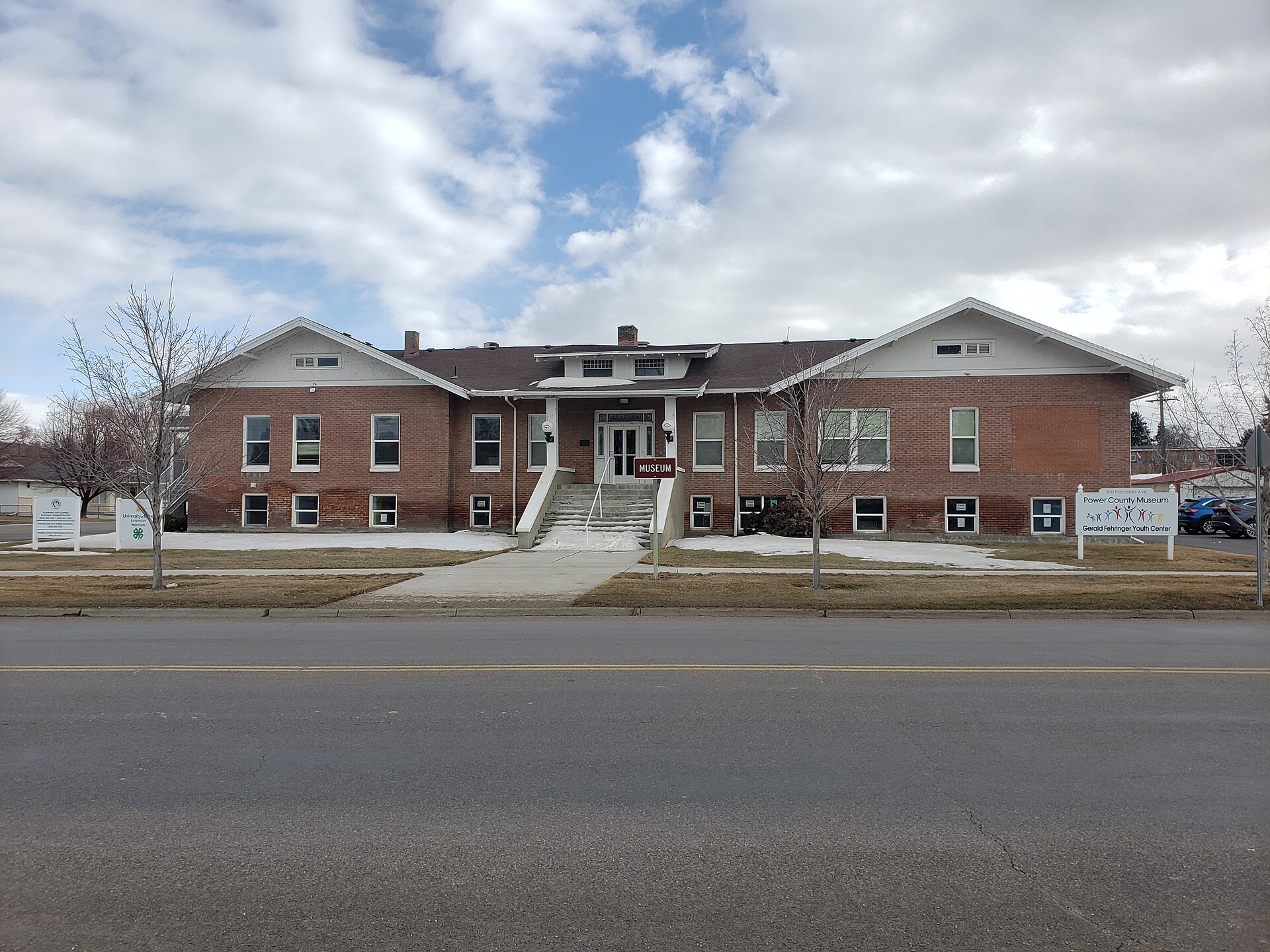

Who owns it: the CMS ownership files
What the law requires facilities to disclose
Social Security Act section 1124 (42 U.S.C. 1320a-3) has required Medicare and Medicaid providers to disclose "the identity of each person with an ownership or control interest." The law counts as owners anyone with a direct or indirect ownership interest of 5 percent or more, anyone holding a mortgage or note secured by the provider's assets equal to 5 percent or more of those assets, corporate officers and directors, and partners.30
For nursing homes the Affordable Care Act of 2010 (section 6101) added subsection (c). It requires skilled nursing facilities and Medicaid nursing facilities to disclose members of the governing body, officers, directors, managing employees, and "additional disclosable parties": anyone who exercises operational, financial or managerial control, leases real property to the facility or owns 5 percent or more of that property, or provides management, administrative, consulting, accounting or financial services, along with the organizational structure linking them.30
CMS carried out that subsection in a final rule, CMS-6084-F, published at 88 FR 80141 on Nov. 17, 2023 and effective Jan. 16, 2024. The rule also set definitions of "private equity company" and "real estate investment trust" for Medicare provider enrollment, so that owners could be flagged as one or the other, and it said CMS would make the information public.13
The ownership data files
Most of the ownership record became public in a series of 2022 releases:
- April 2022: CMS released data on mergers, acquisitions, consolidations and changes of ownership of hospitals and nursing homes from 2016 to 2022.12
- Sept. 26, 2022: CMS released ownership data for about 15,000 Medicare-certified nursing homes, with flags for owner types such as holding companies and identifiers that group homes under common ownership or management. CMS said it would update the files monthly.11
- Dec. 20, 2022: CMS released ownership data for more than 7,000 Medicare-certified hospitals.12
Today the main files on data.cms.gov are the Hospital All Owners and Skilled Nursing Facility All Owners files, the matching enrollment files, and change-of-ownership files that list buyer, seller and effective date. Each owner row carries the owner's name, role, percentage, association date and yes-or-no flags for kinds of owners.1431
What the Idaho rows show, and do not show, is itself instructive:
- In the Sept. 29, 2026 SNF All Owners file, the Idaho rows cover 78 nursing home enrollments and 1,499 owner rows. Of 587 rows for organizational owners, none was flagged "private equity company" and none was flagged "REIT." Eighteen were flagged as holding companies, 28 as financial institutions and 23 as chain home offices (our count).14
- The Sept. 29, 2026 Hospital All Owners file has flags for holding companies, investment firms, financial institutions and chain home offices, but no private equity or REIT columns at all.31
A zero in a flag column means no owner reported that category in Medicare enrollment. It does not prove that no investment fund or real estate trust has money in the chain above the facility. The flags depend on how owners classify themselves, and an interest held several layers up can sit with a company that is flagged only as a holding company or limited liability company. The 2023 rule's definitions were written to make that classification more consistent, and CMS's files are the record of what was reported.13 How private equity and real estate trusts figure in Idaho's nursing homes is covered in Nursing Homes in Idaho and Nursing Home and Assisted Living Economics.
Tracing an ownership chain
A nursing home's license is usually held by one company, the building by another, and the management by a third. The graphic below shows a common arrangement. It is a hypothetical example with made-up names, built from the categories that section 1124(c) and the 2023 rule ask facilities to disclose.
- Start with the enrollment. In the SNF or Hospital Enrollments file, find the facility by CCN or name and note its enrollment ID and the legal business name.14
- List the owners. In the All Owners file, filter on that enrollment ID. Sort by percentage and role. Note every organizational owner and its own associate ID.
- Climb the chain. Search each organizational owner's associate ID across the whole file. The same company often appears as an owner of other facilities, which shows the chain's size.
- Check the flags and dates. Read the owner-type flags (holding company, investment firm, private equity company, REIT, chain home office) and the association dates, which show when each owner came in.1413
- Check the sale history. In the change-of-ownership file, look for the facility as a buyer or seller and note the effective date.12
- Find the building. Use the county assessor and recorder for the parcel owner and deed. For leases and management contracts, look for additional disclosable parties and ask the facility.
- Check the companies. The Idaho Secretary of State's business records list registered agents and officers; the UCC and lien search shows lenders with security interests.23
- Confirm with the facility. Ownership files lag sales by weeks or months. Before publishing, ask the facility and the state licensing office to confirm current owners.
IRS Form 990 with Schedule H and Schedule J
A nonprofit hospital corporation files an annual Form 990 with the IRS. If it operated at least one hospital facility during the year, it must attach Schedule H, which combines all its hospital facilities into one schedule.32 Idaho's Hospitals explains the federal charity care rules in section 501(r) and compares what Idaho's largest systems report. This section is about getting and reading the form.
Getting the return
Federal law makes the return public. Under 26 U.S.C. 6104(d), a tax-exempt organization must let anyone inspect its annual return at its main office and must give copies on request, for no more than "a reasonable fee for any reproduction and mailing costs," immediately for in-person requests and within 30 days for written ones. The duty covers the three years starting on each return's due date, and it does not apply if the organization has made the return "widely available," for example by posting it.15 The IRS's Tax Exempt Organization Search lets anyone search Form 990 series returns; the IRS says it is still processing paper-filed returns received in 2021 and later.16 ProPublica's Nonprofit Explorer, a newsroom database, posts filings back to 2001 with summary financial data and a full-text search.33
A hospital run directly by a county or a hospital district is a unit of government; its main financial records are its budget, audited statements, board minutes and contracts, which are open under the Idaho Public Records Act (see lesson 11 and Idaho Public Records Requests).29 Some public hospitals have a separate nonprofit foundation that files its own Form 990.
Reading Schedule H
- Part I, lines 1 to 6 ask whether the organization had a written financial assistance policy, the income limits for free and discounted care as a percentage of the federal poverty guidelines, and whether it budgeted for free care and ran over.34
- Part I, line 7 is the community benefit table, at cost. Line 7a is financial assistance (charity care) at cost; 7b is Medicaid shortfall; 7c is other means-tested government programs; 7d totals them. Lines 7e to 7i add community health improvement, health professions education, subsidized health services, research, and cash and in-kind contributions; 7j totals those; 7k is the grand total. Each line has columns for total expense, direct offsetting revenue, net expense and percent of total expense.34
- Part II lists community building activities, such as housing or economic development, which the IRS counts separately.
- Part III reports bad debt (line 2) and the estimated part attributable to patients who were eligible for financial assistance (line 3); Medicare revenue (line 5), Medicare allowable costs (line 6) and the surplus or shortfall (line 7); and the collection policy (line 9).34
- Part V covers each hospital facility, including its community health needs assessment and its billing and collection practices.
Reading Schedule J for executive pay
Form 990 Part VII lists officers, directors, key employees and highest-paid employees. Schedule J breaks down pay for those above the reporting threshold. Part I asks about perks such as first-class travel, housing, club dues and personal services, and how the board set the chief executive's pay (a compensation committee, an independent consultant, a survey of other organizations). Part II splits each person's pay into base compensation, bonus and incentive compensation, other reportable compensation, retirement and other deferred compensation, and nontaxable benefits, with a total. Pay from related organizations is reported too.35
What a 990 can and cannot prove
A 990 is the organization's own report under IRS definitions. It shows what a nonprofit says it spent on charity care at cost, how it valued its Medicaid shortfall, how much bad debt it wrote off and what it paid its leaders. It does not show whether any patient who qualified for free care was billed, and it combines all facilities of one corporation, so a system's numbers cannot be split by hospital without the hospital's own reports. The cost report's S-10 charity care figure and the 990's line 7a figure use different definitions and years and should not be expected to match.344
Care Compare and the penalty programs for hospitals
Star ratings
CMS's Overall Hospital Quality Star Rating is set by federal rule, 42 CFR 412.190. Measures are sorted into five groups: Mortality, Safety of Care, Readmission, Patient Experience, and Timely and Effective Care. A hospital gets a rating only if it reports at least three measures in at least three groups, one of which must be Mortality or Safety of Care. Hospitals are compared within three peer groups based on how many measure groups they report. The rating is published once a year. For calendar year 2026, hospitals in the lowest quarter on Safety of Care can get no more than four stars, and starting in 2027 they lose one star.36
In the Hospital General Information file updated Oct. 26, 2026, CMS lists 48 Idaho hospital records. Twenty-two have an overall rating: 3 with two stars, 9 with three, 5 with four and 5 with five; none has one star. The other 26, mostly critical access, psychiatric and specialty hospitals, show "Not Available" because they report too few measures (our tally).17
The penalty programs
Two Medicare programs cut payments to hospitals paid under the inpatient prospective payment system. Neither applies to critical access hospitals.
- Hospital Readmissions Reduction Program (Social Security Act section 1886(q)): payment reductions began Oct. 1, 2012, for fiscal year 2013, and the reduction is capped at 3 percent. It measures readmissions for six conditions and procedures, and since fiscal year 2019 it compares hospitals with others that serve a similar share of people eligible for both Medicare and full Medicaid.37
- Hospital-Acquired Condition Reduction Program (section 1886(p)): hospitals whose Total HAC Score is above the 75th percentile, the worst-performing quarter, get a 1 percent payment reduction. Critical access, psychiatric, rehabilitation, long-term care and VA hospitals are among those exempt.38 CMS's fiscal year 2026 file lists 16 Idaho hospitals, 15 with a Total HAC Score (Grove Creek Medical Center's shows N/A), and 2 had the reduction: Saint Alphonsus Medical Center - Nampa (score 1.0612) and Idaho Falls Community Hospital (0.6228). The scores rest on patient safety indicators from July 1, 2022 to June 30, 2024 and infection data from calendar 2023 and 2024.39
A penalty is a payment formula applied to a quality score measured two or more years earlier. It is a fact worth reporting and a reason to ask the hospital what it changed. It is not a finding that any patient was harmed by any person.
A field that lags: who runs the hospital
The Hospital General Information file still lists Kootenai Health in Coeur d'Alene as "Government - Hospital District or Authority."17 Kootenai Health stopped being a public hospital district on Dec. 31, 2023, when its assets moved to a private nonprofit (Idaho's Hospitals has the record). Its cost report for calendar 2024, still filed under the name "Kootenai Hospital District," gives type of control 2, "Voluntary Non-Profit, Other."54 Two CMS files, two answers: the cost report reflects the change and the Care Compare ownership field does not. Always check ownership against more than one record.
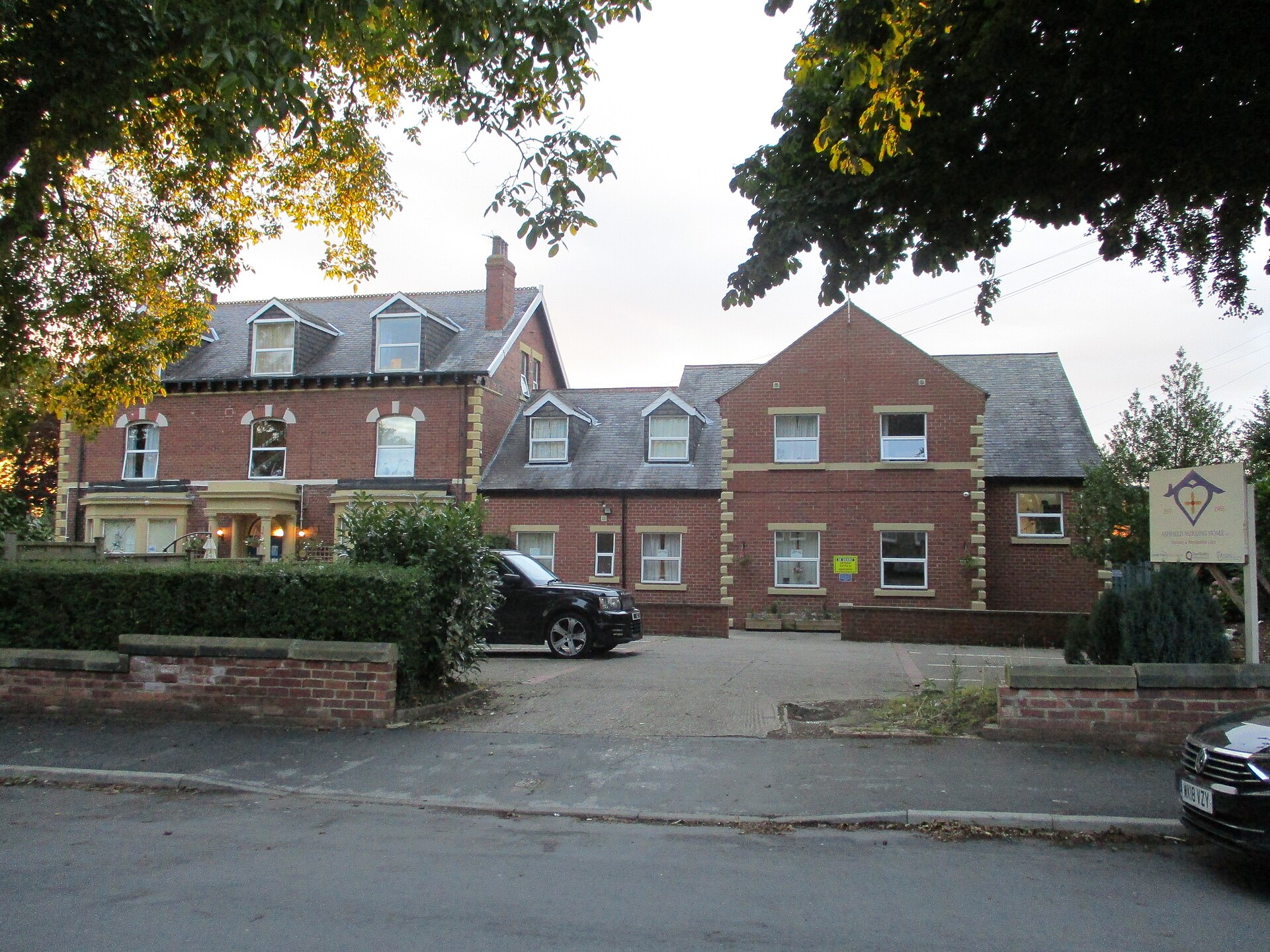

Reading a nursing home inspection
Who inspects and how often
Every nursing home that takes Medicare or Medicaid must meet federal requirements in 42 CFR part 483. State survey agencies inspect for CMS; in Idaho that is the Department of Health and Welfare's Bureau of Facility Standards, which licenses skilled nursing facilities for the state and surveys them for federal certification.19 CMS says standard surveys happen on a 9 to 15 month cycle, with a statewide average of 12 months, and complaint investigations happen in between.40 Idaho's own inspection numbers, star ratings and fines as a group are in Nursing Homes in Idaho; this section covers how to read one inspection.
Surveyors write each finding as a deficiency on Form CMS-2567, the Statement of Deficiencies and Plan of Correction. The left column describes what the surveyors found and cites the federal requirement, using an "F-tag" number for each nursing home requirement. The right column is the facility's plan of correction. Federal rule 42 CFR 488.325 requires the state or CMS to make statements of deficiencies, the facility's comments, approved plans of correction, final appeal results and termination notices available on request "within 14 calendar days after each item is made available to the facility." The same rule gives the state's Medicaid Fraud Control Unit access to survey records on written request.8
The scope and severity grid
Each deficiency gets a letter from A to L. The letter combines severity (four levels of harm) and scope (how many residents were affected or could be: isolated, a pattern, or widespread). Federal rule 42 CFR 488.404 lists the same two factors for choosing remedies, and CMS's State Operations Manual, Chapter 7, section 7400.3.1, lays them out as a grid.417
Three terms carry legal weight:
- Immediate jeopardy is "a situation in which the provider's noncompliance with one or more requirements of participation has caused, or is likely to cause, serious injury, harm, impairment, or death to a resident" (42 CFR 488.301). It is the J, K and L row.42
- Substandard quality of care means a deficiency under listed requirements (including parts of resident rights, freedom from abuse, neglect and exploitation, quality of life and quality of care) at level F, H, I, J, K or L.427 A substandard quality of care finding sets off extra steps: the facility must give the state a list of affected residents and their physicians within 10 working days, and the state notifies the physicians and the board that licenses the administrator.8
- Substantial compliance means only A, B or C level deficiencies; A-level findings do not need a plan of correction.7
Fines and other remedies
CMS and the state can impose remedies under 42 CFR 488.402 onward, including civil money penalties, denial of payment for new admissions and termination. CMS says denial of payment for new admissions is mandatory if a facility is not back in substantial compliance within three months, and termination follows at six months.40 The penalty ranges in 42 CFR 488.438 are written in older dollars and "adjusted annually under 45 CFR part 102." HHS's most recent adjustment, 91 FR 3665, published Jan. 28, 2026, applies to penalties assessed on or after that date.4310
| Penalty type | Range in 42 CFR 488.438 (unadjusted) | Adjusted range, 2025 column of 45 CFR 102.3 |
|---|---|---|
| Per day, immediate jeopardy | $3,050 to $10,000 | $8,351 to $27,378 |
| Per day, no immediate jeopardy (actual harm, or potential for more than minimal harm) | $50 to $3,000 | $136 to $8,211 |
| Per instance of noncompliance | $1,000 to $10,000 | $2,739 to $27,378 |
The rule cuts a penalty by 50 percent when a facility self-reports and promptly corrects noncompliance that was not a pattern of harm, widespread harm or immediate jeopardy, did not cause a death, was not a repeated deficiency that had already received this reduction, and the facility met its mandatory reporting duties and waives its hearing.439 CMS revised its enforcement guidance in QSO-26-03-NH, effective April 30, 2026: new penalty guidance for enforcement cycles beginning on or after March 31, 2026, and per-instance penalties displayed on Nursing Home Care Compare starting June 24, 2026.44 Fines shown on Care Compare before that date may not include per-instance penalties, which matters when comparing a home's fines across years.
Special Focus Facilities
CMS's Special Focus Facility program puts extra inspections on a small number of homes with a record of serious problems. CMS posts and updates a list with four tables: current SFFs, graduates, homes no longer in Medicare and Medicaid, and candidates. The candidate pool is five homes for each SFF slot, with a minimum of five and a maximum of 30 per state.45 The list updated Oct. 28, 2026 shows these Idaho entries, exactly as CMS lists them:
| CMS table | Facility (city, CCN) | What the list says |
|---|---|---|
| A, current SFF | Silverton Health and Rehabilitation of Cascadia (Silverton, 135058) | Most recent inspection July 10, 2026; met survey criteria on that survey; 16 months as an SFF |
| B, graduated | Cascadia of Boise (Boise, 135146) | Graduated Sept. 20, 2024 after 15 months |
| B, graduated | Royal Plaza Health and Rehabilitation of Cascadia (Lewiston, 135116) | Graduated June 2, 2025 after 8 months |
| D, candidate | Timber Springs Transitional Care (Boise, 135098) | 32 months as a candidate |
| D, candidate | Karcher Post Acute (Nampa, 135110) | 7 months as a candidate |
| D, candidate | Cascades at Desert View (Buhl, 135089) | 4 months as a candidate |
| D, candidate | Cascadia of Nampa (Nampa, 135144) | 4 months as a candidate |
| D, candidate | Orchards of Cascadia, The (Nampa, 135019) | 1 month as a candidate |
"Met" means the home met CMS's graduation criteria on its most recent survey; it must do so on two consecutive surveys to graduate. CMS warns that "data lags can occur between the completion of an inspection and the posting of information on this list" and advises "interpreting this information cautiously."45 A candidate is not an SFF, and being on the list is a judgment about inspection history, not a finding of any crime. A November 2026 list was not posted at CMS's expected address when we checked on Nov. 24, 2026.
Staffing from payroll records
Federal rule 42 CFR 483.70(p) requires each long-term care facility to "electronically submit to CMS complete and accurate direct care staffing information, including information for agency and contract staff, based on payroll and other verifiable and auditable data."46 This is the Payroll-Based Journal, which carries out section 6106 of the Affordable Care Act. Facilities file quarterly, due on the 45th day after the quarter (Feb. 14, May 15, Aug. 14 and Nov. 14). CMS has posted a public use file since Nov. 1, 2017 with the hours staff were paid to work each day at each home and the daily resident census; submissions moved to CMS's iQIES system on Aug. 17, 2026.20 Dividing a day's nurse and aide hours by that day's census gives hours per resident day, the measure behind Care Compare's staffing rating. Daily data can show what quarterly averages hide, such as differences between weekdays and weekends.
A hypothetical inspection report, read line by line
Real inspection reports describe residents in detail, even with names removed. To show how to read one without identifying anyone, here is a hypothetical example with a made-up facility and made-up facts, written in the form surveyors use.
Hypothetical: Example Valley Care Center, standard survey completed March 3. Deficiency under the requirement that the environment be as free of accident hazards as possible and that each resident receive adequate supervision. Scope and severity: G (actual harm, isolated). "Based on observation, interview and record review, the facility failed to ensure one of five sampled residents (Resident 4) received two-person assistance for transfers as directed in the care plan. Resident 4 fell during a one-person transfer and sustained a fracture." Plan of correction: staff retrained on care plans for transfers by March 20; the director of nursing to audit transfers on all units weekly for eight weeks; results to the quality committee.
Reading it like a reporter:
- Find the letter first. G means one resident was actually harmed, below immediate jeopardy. It is a serious finding, and it is about one resident on one occasion as sampled.
- Read the sample. "One of five sampled residents" describes the sample, not the whole home. A pattern or widespread letter would mean more residents were affected or at risk.
- Separate the finding from the facility's response. The left column is the surveyors' finding; the right column is the home's plan. The plan is the home's promise of fixes; it does not change the surveyors' finding.
- Check for a remedy and a revisit. Look for a fine, a denial of payment or a revisit showing correction, in Care Compare's penalty data and the survey history.4718
- Check the history. Has the same requirement been cited before? Repeat deficiencies raise penalties, and a long history can put a home on the SFF candidate list.4345
- Protect privacy. Do not try to identify a resident from a report. Family members who share their own records and consent are a different matter, covered in lesson 12.
Where to read inspection reports
- Nursing Home Care Compare on medicare.gov and the matching Provider Data Catalog files: deficiencies by tag, scope and severity, fines, payment denials, star ratings and staffing. The Provider Information and Penalties files were last modified Sept. 30, 2026.47
- QCOR (Quality, Certification and Oversight Reports), CMS's survey reporting site, which offers Form 2567 text reports for some provider types, including hospitals (complete through Sept. 17, 2026), and deficiency counts. QCOR says enforcement information remains available by Freedom of Information Act request.18
- The Bureau of Facility Standards, whose skilled nursing page links to a public folder of survey results.19
- ProPublica's Nursing Home Inspect, a newsroom tool that posts inspection narratives and lets users search them by keyword. Its Idaho page, with data as of October 2026, lists 80 homes and $1.02 million in penalties.48
Hospitals are surveyed too, after complaints and for certification, and those findings also go on Form CMS-2567. QCOR's hospital 2567 text reports are one place to read them.18


Court records, liens and bonds
Court records
Federal cases, including False Claims Act suits, health care fraud prosecutions and bankruptcies, are on PACER, the federal courts' electronic records system. PACER charges $0.10 a page, no more than $3 per document, waives fees for users who spend $30 or less in a quarter, and makes court opinions free.21 Idaho state cases, including civil suits by patients or vendors, collection cases, and criminal cases brought by the Attorney General's Medicaid Fraud Control Unit in state court, are on the Idaho Supreme Court's iCourt Public Access Portal. The portal's page says the legacy search remains available until Dec. 1, 2026.22 Idaho cases from the public record are collected in lesson 5, and the offices that bring them are in lesson 2.
A search by the facility's legal name and by its operator and owner names (from the ownership files) finds more than a search by the sign out front. A complaint or an indictment is an allegation; the docket shows what happened next. Sealed qui tam complaints under the False Claims Act are not visible until a court unseals them.
Liens and secured debt
The Idaho Secretary of State's UCC and lien search covers UCC financing statements (filed by lenders who take equipment, receivables or other property as security), IRS liens, state liens and agricultural liens. Non-certified UCC searches cost $3.23 Mortgages and liens on land and buildings are recorded with the county recorder. A tax lien or a new lender with a claim on a hospital's receivables can signal money trouble; it can also be routine financing. Ask before concluding.
Bond disclosures on EMMA
Hospitals and hospital districts that borrow by selling bonds must keep investors informed. The Municipal Securities Rulemaking Board's Electronic Municipal Market Access site, EMMA, "provides free public access to municipal securities documents and data": official statements (the prospectus for a bond issue) and continuing disclosures, including annual financial information and notices of events affecting the bonds. The SEC designated EMMA the official repository in 2009, and neither the SEC nor the MSRB reviews documents before they are posted.24 EMMA's continuing disclosure service started July 1, 2009, for filings required by SEC Rule 15c2-12.49 In Idaho, nonprofit hospitals can borrow through the Idaho Health Facilities Authority, created by Idaho Code section 39-1444 as "an independent public body politic and corporate"; bonds issued through a conduit such as this can be listed on EMMA under the issuer's name, so search both names.50 An official statement often holds the most detailed public description of a hospital system's finances, utilization and competition, with audited statements attached.
- Search EMMA by the hospital's or system's name and by "Idaho Health Facilities Authority" or the issuing district's name.
- Open the newest official statement and read the "obligated group" description (which hospitals are on the hook for the debt), the utilization tables and the financial summary.
- Open continuing disclosures for annual audited statements and quarterly reports if the borrower posts them.
- Read event notices: rating changes, covenant violations, draws on reserves or defaults are each reported as events.
- Compare the audited statements with the Medicare cost report and Form 990 for the same year, keeping in mind the different entities and rules.
What each document can and cannot prove
The table below is the short version of this lesson's cautions. It is the test to apply before a number from any of these records goes into a story, a hearing or a complaint.
| Record | Can show | Cannot show by itself |
|---|---|---|
| Medicare cost report | Reported size, payer mix, revenue, expenses, margins, charity care at cost, bad debt, cash and debt, under Medicare's rules4 | Quality; whether any claim was right; what a parent company earned; final numbers if the report is "as submitted"26 |
| Ownership files | Who reported 5 percent or more ownership or control, officers, managers, owner types, sale dates30 | Owners who did not report, interests far up a chain, or the money paid to related companies |
| Form 990 and Schedules H and J | Community benefit and charity care at cost as defined by the IRS; bad debt; Medicare shortfall; executive pay3435 | Facility-level numbers for a multi-hospital corporation; whether eligible patients were billed |
| Hospital star rating and penalties | How CMS's measures rank a hospital against its peers, for periods two or more years old3639 | Care for any one patient; quality at small hospitals that report too few measures |
| Form CMS-2567 inspection report | What surveyors found on a given day, with scope and severity, and the facility's planned fixes8 | Everything that happened between surveys; whether a finding would hold up on appeal until the appeal ends |
| Payroll-Based Journal | Paid hours for nurses and aides each day, and the census46 | Who was on which unit, or whether residents got the care their plans required |
| Court records | What each side alleged and what the court did2122 | Guilt or liability before a verdict, plea or judgment; sealed filings |
| Liens and UCC filings | Who has a recorded claim on property, equipment or receivables23 | Whether the debt is in default, or the amount still owed |
| Bond disclosures (EMMA) | Audited statements, debt terms, event notices filed by the borrower24 | Facts the borrower did not file; the SEC and MSRB do not review posts in advance |
A timeline of the public record
| Date | Law, rule or event | What changed | Source |
|---|---|---|---|
| July 1, 2009 | MSRB's EMMA continuing disclosure service starts | Annual reports and event notices for municipal bonds, including hospital bonds, posted free in one place | 49 |
| March 23, 2010 | Affordable Care Act sections 6101 and 6106 | Nursing home ownership and "additional disclosable party" disclosure (Social Security Act 1124(c)); payroll-based staffing data | 3020 |
| Fiscal year 2010 | Form CMS-2552-10 in use | Current hospital cost report form, with Worksheet S-10 for uncompensated care | 14 |
| Oct. 1, 2012 | Hospital Readmissions Reduction Program reductions begin (fiscal year 2013) | Payment cuts of up to 3 percent for excess readmissions | 37 |
| Nov. 1, 2017 | Payroll-Based Journal public use file | Daily nursing home staffing hours public | 20 |
| April 2022 | CMS change-of-ownership data | Hospital and nursing home mergers and sales, 2016 to 2022 | 12 |
| Sept. 26, 2022 | Nursing home ownership data | About 15,000 SNFs; monthly updates | 11 |
| Dec. 20, 2022 | Hospital ownership data | More than 7,000 hospitals | 12 |
| Nov. 17, 2023 (effective Jan. 16, 2024) | CMS-6084-F, 88 FR 80141 | Nursing home disclosure rules; private equity and REIT definitions for enrollment | 13 |
| Jan. 28, 2026 | 91 FR 3665, HHS penalty inflation adjustment | 2025 amounts for nursing home civil money penalties | 10 |
| Calendar year 2026 | 42 CFR 412.190(d)(9) | Four-star cap for hospitals in lowest Safety of Care quarter; one-star reduction from 2027 | 36 |
| April 30, 2026 | QSO-26-03-NH takes effect | State Operations Manual chapters 5 and 7 revised; per-instance penalties shown on Care Compare from June 24, 2026 | 44 |
| Aug. 17, 2026 | Payroll-Based Journal moves to iQIES | New submission system | 20 |
| October 2026 | 2024 Hospital Provider Cost Report file posted; SFF list of Oct. 28; Hospital General Information of Oct. 26 | Newest files used in this lesson | 54517 |
Pictures, Numbers and Infographics
| Measure | Idaho | U.S. or other states | Year | Source |
|---|---|---|---|---|
| Cost report due date | Last day of the fifth month after the year closes | Same nationwide | Rule current Nov. 2026 | 3 |
| Hospital cost reports in the 2024 public use file | 52 | 6,109 nationwide | Periods beginning in federal fiscal year 2024 | 5 |
| Minidoka Memorial patient-care and total margin | minus 7.9%; minus 6.2% | n/a | Year ended Sept. 30, 2024 | 6 |
| Median patient-care and total margin, short-term and critical access hospitals | minus 3.5%; 1.8% | Utah 9.3%, 13.6%; Oregon minus 6.2%, 1.0%; Washington minus 6.2%, 2.0%; Montana minus 6.0%, 2.6%; Wyoming minus 8.0%, minus 0.4%; Nevada 4.5%, 12.2%; all reports minus 2.4%, 5.5% | 2024 file | 6 |
| Median critical access hospital margins | minus 6.5%; 0.8% (12 of 27 with a net loss) | All U.S. critical access hospitals: minus 5.2%; 5.5% | 2024 file | 6 |
| Hospitals with an overall star rating | 22 of 48 records (5 with five stars, none with one) | n/a | File of Oct. 26, 2026 | 17 |
| Hospitals with a HAC Reduction Program penalty | 2 of 16 in the file (15 with a score) | Worst-performing quarter nationally | Fiscal year 2026 | 3938 |
| Special Focus Facility list entries | 1 current SFF, 2 graduates, 5 candidates | 5 to 30 candidates per state | List of Oct. 28, 2026 | 45 |
| Nursing home organizational owner rows flagged private equity or REIT | 0 of 587 | n/a | File of Sept. 29, 2026 | 14 |
| Per-day fine range, immediate jeopardy | $8,351 to $27,378 | Same nationwide | Penalties assessed on or after Jan. 28, 2026 | 910 |
| Days for a statement of deficiencies to be available on request | 14 calendar days after it reaches the facility | Same nationwide | Rule current Nov. 2026 | 8 |
| Nursing home penalties shown by ProPublica (newsroom tool) | $1.02 million; 80 homes | n/a | Data as of October 2026 | 48 |
Common mistakes
- Calling gross charges "revenue." Worksheet G-3 line 1 is charges at list price. Minidoka Memorial's $91.3 million in charges became $57.1 million in net patient revenue. Use line 3.45
- Reading a patient-care loss as the whole picture. St. Luke's Magic Valley lost $29.6 million on patient care in its 2024 cost report year and still showed a $2.1 million net gain after other income. Report both margins and say which is which.5
- Comparing years that do not line up. In the same 2024 file, Idaho hospitals' years end Sept. 30, Dec. 31 or June 30. Two "2024" reports can be nine months apart.5
- Treating "as submitted" as final. HCRIS marks reports as settled, as submitted or reopened. Early numbers can change.26
- Matching charity care across forms. The cost report's S-10 charity care and Schedule H line 7a use different definitions, years and entities. Do not add them, and do not call a gap between them a discrepancy without asking.344
- Reading "Not Available" as a bad rating. Twenty-six of Idaho's 48 hospital records have no overall star rating because they report too few measures under 42 CFR 412.190.1736
- Treating a payment penalty as news about this year's care. The fiscal year 2026 HAC penalties rest on data from mid-2022 through 2024.39
- Calling a candidate a Special Focus Facility. Table D lists candidates; only Table A lists SFFs. Neither is a criminal finding.45
- Reading a blank or "N" ownership flag as proof. No Idaho nursing home owner was flagged private equity or REIT in the Sept. 29, 2026 file, which records what owners reported, not everything that exists above them.1413
- Trusting one ownership field. Care Compare still lists Kootenai Health as a hospital district, while its own 2024 cost report reports nonprofit control.175
- Comparing fines across the 2026 display change. Per-instance penalties began appearing on Nursing Home Care Compare on June 24, 2026, under QSO-26-03-NH.44
- Assuming inspection reports are confidential. Statements of deficiencies and plans of correction are public on request under 42 CFR 488.325.8
What we know, what we don't, and what the data can show
What we know
- Every Medicare hospital and nursing home files a public annual cost report, due five months after its year ends, and CMS posts the data.31
- In the 2024 cost report file, Idaho's median short-term or critical access hospital lost 3.5 percent on patient care and earned a 1.8 percent total margin; Minidoka Memorial lost 7.9 percent and 6.2 percent (our calculations).6
- Twenty-two of 48 Idaho hospital records have a CMS overall star rating, and 2 of the 16 Idaho hospitals in the fiscal year 2026 HAC file have a penalty.1739
- CMS's Oct. 28, 2026 list shows one current Idaho SFF, two graduates and five candidates.45
- Nursing home inspection results, plans of correction, cost reports and owner names are public on request under 42 CFR 488.325.8
What we don't know
- Which Idaho cost reports in the 2024 file are settled and which are as submitted; we did not pull the HCRIS status field for every hospital.
- Whether a private equity fund or real estate trust holds an interest above any Idaho nursing home that is not reported as such in CMS files.
- How Idaho hospitals' audited statements compare with their cost reports, hospital by hospital, because audited statements are not in one public place.
- Whether the November 2026 SFF list changes Idaho's entries; it was not posted when we checked.
What the data can show
- HCRIS and the Hospital Provider Cost Report file: margins, cash, payer mix and charity care for any Medicare hospital, year over year since the 2010 form began.15
- CMS SNF and Hospital All Owners and change-of-ownership files: common owners across facilities and the dates owners came in.1431
- Nursing home Health Deficiencies and Penalties files and QCOR: each home's citations by tag and letter, and its fines.4718
- Payroll-Based Journal daily staffing file: hours per resident day by day and staff type.20
- IRS Form 990 filings: nonprofit community benefit and executive pay over time.1633
- EMMA: audited financial statements and event notices for hospitals that issue bonds.24
Questions people ask
Can anyone get a hospital's Medicare cost report?
Yes. HCRIS raw files and the Hospital Provider Cost Report file are free downloads from CMS, with no account needed. The public use file is the easier start; the raw files hold every line.15
Why can a cost report show a loss when a hospital says it had a good year?
Because the two may describe different entities, years or accounting rules. A cost report covers one Medicare provider under Medicare's rules; a press release or audited statement may cover a whole system, a different year or include investment gains. St. Luke's Magic Valley's report shows a patient-care loss offset by other income.5
Does a five-star hospital have no problems?
No. The rating is a summary of selected measures in five groups compared within a peer group, published once a year from data that is already old.36 A five-star hospital can have a complaint survey with deficiencies or a lawsuit. Use the rating as one fact among several.
How fast do nursing home inspection reports become public?
The rule requires them to be available on request within 14 calendar days after the facility receives them.8 Care Compare and the Provider Data Catalog post data in periodic releases (the nursing home files checked here were last modified Sept. 30, 2026), so the online version can trail the survey by weeks or months; CMS's SFF list carries the same warning about lags.4745
How can anyone tell who really owns a nursing home?
Start with the CMS SNF All Owners file and follow each organizational owner's ID through the file; then check the change-of-ownership file, the county recorder for the building, the Secretary of State for companies and lenders, and, for nonprofits, the Form 990's related-organization schedule. The steps are in the ownership section above.1423
Do county and district hospitals file Form 990s?
A hospital run directly by a county or district is a unit of government, so its main records are its budget, audit, minutes and contracts, which are covered by the Idaho Public Records Act. Its cost report is public like any other. A related nonprofit foundation, if it has one, files its own Form 990.29285
Are hospital inspection reports public too?
Yes, when a hospital is surveyed. Hospital deficiencies are written on Form CMS-2567, and CMS's QCOR site offers hospital 2567 text reports, complete through Sept. 17, 2026 when we checked.18
Hard questions
Are self-reported cost reports good enough to compare hospitals in public?
The hospital case: cost reports follow Medicare's allocation rules, not the hospital's management accounts; hospitals book other income and related-party costs differently; and early reports can change, so public rankings built from them can mislead and hurt a small hospital's standing with patients and lenders. The case for using them: they are the only uniform, public, line-by-line financial filing for every Medicare hospital, and CMS publishes them unedited so that anyone can check.27 What the evidence shows: the data carry a status field and a data dictionary, which let a careful reader name the year, the line and the review stage; the Magic Valley table above shows how much the choice between patient-care and total margin matters.2645
Do star ratings help patients or mislead them?
The case against: more than half of Idaho's hospital records have no rating, the method changes (the 2026 Safety of Care cap and the 2027 one-star reduction), and a single number blends very different measures. The case for: a simple, federal, public summary is better than none, and the rule now weights patient safety more. What the evidence shows: 26 of 48 Idaho records are unrated, mostly small hospitals, so the rating says little about rural Idaho; the detailed measures behind it are public in the same files.1736
Should ownership disclosure go further?
The case for more: residents, families, regulators and investigators need to know who controls money and staffing decisions, including landlords and managers, and the hospital file has no private equity or REIT flags at all. The case against: owners say more forms add cost without improving care, that ownership type alone does not predict quality, and that private investors include ordinary pension funds. What the evidence shows: Congress required more for nursing homes in 2010 and CMS finished the rule in 2023; Idaho's file shows no self-reported private equity or REIT owners, which is a fact about reporting, and the research on ownership and quality is summarized in Nursing Homes in Idaho.30131431
Are nursing home fines the right tool?
Residents' advocates' case: fines are small next to a chain's revenue, and the 50 percent self-report reduction and appeal rights soften them. Operators' case: fines take money away from staff and care in homes that rely on Medicaid, and a per-instance or per-day penalty can be large for a small rural home. What the evidence shows: federal ranges run from $136 a day to $27,378 a day or per instance after the January 2026 adjustment; ProPublica's tool shows $1.02 million in penalties for Idaho's 80 homes as of October 2026; and CMS changed its penalty guidance in 2026.9434844
For reporters and advocates
Records that exist.
- Cost reports: HCRIS raw files and the Hospital Provider Cost Report file; the SNF cost report file for nursing homes. Pull at least three years.15
- Ownership: CMS Hospital and SNF All Owners, Enrollments and change-of-ownership files on data.cms.gov.1431
- Nonprofit filings: Form 990 with Schedules H and J, from the organization, IRS search or ProPublica Nonprofit Explorer.151633
- Quality and penalties: Care Compare and the Provider Data Catalog (hospital general information, HAC and readmission files; nursing home provider, deficiency and penalty files).173947
- Inspections: Form CMS-2567 reports through Care Compare, QCOR, the Bureau of Facility Standards' public folder and ProPublica Nursing Home Inspect; the SFF list as CMS updates it.18194845
- Staffing: Payroll-Based Journal daily files.20
- Courts, liens and bonds: PACER, iCourt, the Secretary of State's UCC and lien search, county recorders, and EMMA.21222324
- Public hospital records: county hospital board and hospital district budgets, audits, minutes, contracts and bond documents, under Idaho Code Title 74 chapter 1.2928
What to ask officials and facilities. Which fiscal year and entity does this number cover? Has the cost report been settled or reopened? What is in "other income"? Who are the owners above the operator, and who owns the building? What did the facility change after this deficiency, and has a revisit confirmed it? Is any penalty under appeal? For a public hospital: what does the county or district contribute, and how is the debt secured?
Records requests. Records held by a county hospital, a hospital district or the Department of Health and Welfare fall under the Idaho Public Records Act (Idaho Code Title 74, chapter 1); Idaho Public Records Requests and lesson 11 describe how that process works. Records held by CMS fall under the federal Freedom of Information Act; QCOR notes that enforcement records are available that way, and 42 CFR 488.325(c) points to HHS's disclosure rules in 45 CFR part 5.29188
The Idaho angle. Most Idaho general hospitals are critical access hospitals (27 of the 43 general hospital reports in the 2024 file), and the median one lost money on patient care; many are run by counties or hospital districts (Idaho's Hospitals has the count), whose budgets and audits are open records. Nursing homes in Idaho are inspected by the Bureau of Facility Standards, and five of the eight Idaho entries on CMS's Oct. 28, 2026 SFF list include the name Cascadia; the ownership files are the place to check whether entries share owners. The data toolbox for Medicare and Medicaid as a whole is in lesson 9, contracts and vendors are in lesson 8, and the story checklist is in lesson 12.
Where to go next
- CMS Cost Reports (HCRIS) downloads: Free raw cost report files for hospitals, nursing homes, home health agencies, hospices and clinics, with documentation. For researchers and reporters comfortable with databases; the files are large.
- Hospital Provider Cost Report dataset (data.cms.gov): Free spreadsheet-sized file with about 117 cost report fields for every Medicare hospital, one row per report. The easiest place to start for a single hospital.
- Medicare Care Compare: Free CMS site for hospital and nursing home ratings, inspection results, staffing and penalties. For patients, families and reporters; the downloadable versions are in the Provider Data Catalog.
- QCOR (Quality, Certification and Oversight Reports): Free CMS reporting site for survey and certification data, including Form 2567 text reports for some provider types and nursing home deficiency counts.
- IRS Tax Exempt Organization Search: Free IRS search for a nonprofit's status and Form 990 series returns, plus bulk data files.
- MSRB EMMA: Free site from the Municipal Securities Rulemaking Board with official statements, annual financial filings and event notices for municipal bonds, including many hospital bonds.
- Idaho Bureau of Facility Standards, skilled nursing page: Idaho Department of Health and Welfare page for nursing home licensing and certification, with a link to a public folder of survey results and the state's complaint information.
- ProPublica Nursing Home Inspect (newsroom tool): Free nonprofit newsroom database of federal nursing home inspection reports with keyword search; not a government source, so check findings against CMS records.
Still being checked (9 items)
These points could not be fully confirmed against a primary source when this lesson was written and fact checked in November 2026. The text above states each one as uncertain.
- CMS had not posted a November 2026 Special Focus Facility list at its expected address on Nov. 24, 2026; Idaho's entries may change in the next list.
- We did not check the HCRIS status field (as submitted, settled or reopened) for Minidoka Memorial's report or for the other Idaho reports used in the margin tables.
- CMS's Hospital Provider Cost Report methodology note (posted November 2025) says the data match HCRIS as of July 17, 2025; that date appears to describe an earlier edition, and we did not confirm the HCRIS extract date for the 2024 edition posted in October 2026.
- The ownership counts use the Sept. 29, 2026 SNF and Hospital All Owners releases saved for modules 89 and 90; data.cms.gov provider files refused downloads from Jeff's PC and the cloud on Nov. 24, 2026, so a newer monthly release, if any, was not checked.
- Care Compare figures (hospital star ratings, the FY 2026 HAC file and nursing home file dates) were read through CMS's online datastore query on Nov. 24, 2026 because the CSV downloads were refused; the tallies are ours from those reads.
- The posted copy of State Operations Manual Chapter 7 is Rev. 213 (Feb. 10, 2023); QSO-26-03-NH revised Chapter 7 in 2026, and we did not confirm whether section numbers changed in the revision.
- We confirmed that Idaho Code section 39-1444 creates the Idaho Health Facilities Authority and that its chapter covers securities and notes of health institutions, but we did not read section 39-1447 in full or confirm specific Idaho hospital bond listings on EMMA, which refused automated access.
- What makes up each Magic Valley hospital's 'other income' (for example county tax support, investment income or donations) is not itemized in the public use file and was not confirmed.
- We did not open the Bureau of Facility Standards' public survey folder to check which reports it holds or how current they are.
Last verified November 24, 2026. General education, not legal, medical, insurance or financial advice; every figure names its source and year in the Notes and Sources below. Data is revised: check the newest release before relying on any number.
Notes
- Centers for Medicare & Medicaid Services (CMS), "Cost Reports" (Healthcare Cost Report Information System, HCRIS). The page lists the hospital form CMS-2552-10 (fiscal years 2010 to 2026), the skilled nursing facility forms CMS-2540-10 (2011 to 2025) and CMS-2540-24 (2024 to 2026), and shows the newest files as updated Sept. 30, 2026 and released Oct. 6, 2026 (read Nov. 24, 2026). Read it online. ↩
- 42 CFR 413.20, Financial data and reports, paragraphs (a) and (b): providers must keep records for determining costs and file cost reports annually on the provider's accounting year (eCFR text current through Nov. 20, 2026; read Nov. 24, 2026). Read it online. ↩
- 42 CFR 413.24(f), Cost reports, including (f)(2)(i), due "on or before the last day of the fifth month following the close of the period," and (f)(4), electronic submission (eCFR text current through Nov. 20, 2026; read Nov. 24, 2026). Read it online. ↩
- CMS, "Cost Report Data Dictionary Update" (March 2024), which gives the worksheet, line and column behind each field in the Hospital Provider Cost Report public use file, including type of control codes (S-2 Part I line 21) and Worksheet G-3 lines 1 to 29 (read Nov. 24, 2026). Read it online. ↩
- CMS, Hospital Provider Cost Report public use file, 2024 edition (CostReport_2024_Final.csv, posted October 2026; 6,109 hospital cost reports, Idaho rows include 16 short-term and 27 critical access hospital reports), downloaded and read Nov. 24, 2026. Figures for named hospitals are as the hospitals reported them. Read it online. ↩
- Our calculations from the CMS Hospital Provider Cost Report public use file, 2024 edition (note on the PUF above), Nov. 24, 2026; inputs and method in the "How we figured it" boxes. Medians use every short-term and critical access hospital report with positive net patient revenue. Read it online. ↩
- CMS, State Operations Manual, Chapter 7, Survey and Enforcement Process for Skilled Nursing Facilities and Nursing Facilities (copy posted as Rev. 213, Feb. 10, 2023), section 7001 (definition of substandard quality of care) and section 7400.3.1 (matrix for scope and severity). The PDF refused a download to Jeff's PC on Nov. 24, 2026; text read online and saved as a note in the lesson downloads folder. Read it online. ↩
- 42 CFR 488.325, Disclosure of results of surveys and activities: statements of deficiencies, plans of correction, cost reports and owner names must be made available on request within 14 calendar days after each item is made available to the facility; access for the state Medicaid Fraud Control Unit in paragraph (i) (eCFR; read Nov. 24, 2026). Read it online. ↩
- 45 CFR 102.3, Table 1, "2025 Maximum adjusted penalty" column for 42 CFR 488.408 and 488.438 penalties (eCFR text current through Nov. 20, 2026; read Nov. 24, 2026). Read it online. ↩
- HHS, "Annual Civil Monetary Penalties Inflation Adjustment," 91 FR 3665 (Jan. 28, 2026), effective on publication; applies a 1.02598 multiplier to set the 2025 amounts for penalties assessed on or after Jan. 28, 2026 (read Nov. 24, 2026). Read it online. ↩
- CMS press release, "Biden-Harris Administration Makes More Medicare Nursing Home Ownership Data Publicly Available" (Sept. 26, 2022): ownership data for about 15,000 Medicare-certified nursing homes, updated monthly (read Nov. 24, 2026). Read it online. ↩
- CMS press release (Dec. 20, 2022) on ownership data for all Medicare-certified hospitals (more than 7,000), noting the April 2022 release of mergers, acquisitions, consolidations and changes of ownership from 2016 to 2022 (read Nov. 24, 2026). Read it online. ↩
- CMS, "Medicare and Medicaid Programs; Disclosures of Ownership and Additional Disclosable Parties Information for Skilled Nursing Facilities and Nursing Facilities; Medicare Providers' and Suppliers' Disclosure of Private Equity Companies and Real Estate Investment Trusts," CMS-6084-F, 88 FR 80141 (Nov. 17, 2023), effective Jan. 16, 2024 (read Nov. 24, 2026). Read it online. ↩
- CMS, Skilled Nursing Facility All Owners file, release of Sept. 29, 2026, Idaho rows as saved for module 89 (1,499 owner rows for 78 Idaho enrollments; of 587 organizational owner rows, 0 flagged private equity company, 0 flagged REIT, 18 holding company, 28 financial institution, 23 chain home office); our count, Nov. 24, 2026. Read it online. ↩
- 26 U.S.C. 6104(d), Public inspection of certain annual returns: copies on request for a reasonable reproduction and mailing fee, in person immediately or in writing within 30 days, for the 3-year period beginning on the return's due date, unless the organization has made the return "widely available" (Cornell Legal Information Institute; read Nov. 24, 2026). Read it online. ↩
- IRS, "Tax Exempt Organization Search" (searchable Form 990 series returns, determination letters and bulk "Form 990 Series Cumulative Data Files"; the page says the IRS is still processing paper-filed 990 series returns received in 2021 and later) (read Nov. 24, 2026). Read it online. ↩
- CMS Provider Data Catalog, "Hospital General Information" (dataset xubh-q36u, updated Oct. 26, 2026), Idaho rows: 48 records; overall ratings 2 stars (3 hospitals), 3 stars (9), 4 stars (5), 5 stars (5), not available (26); our tally from the dataset query, read Nov. 24, 2026. Read it online. ↩
- CMS, Quality, Certification and Oversight Reports (QCOR): reports for 16 provider types including hospitals and nursing homes; Statement of Deficiency (Form 2567) text reports; hospital 2567 data complete through Sept. 17, 2026; enforcement information available by Freedom of Information Act request (read Nov. 24, 2026). Read it online. ↩
- Idaho Department of Health and Welfare, Bureau of Facility Standards, skilled nursing licensing and certification page (the address now opens a page titled "CMS/Federal Resources"): licensure by the state and certification by CMS; ePOC plans of correction; facility reported incidents portal; link to a public folder of skilled nursing survey results (read Nov. 24, 2026). Read it online. ↩
- CMS, "Staffing Data Submission Payroll Based Journal (PBJ)": implements Affordable Care Act section 6106; quarterly submission due by the 45th day after the quarter (Feb. 14, May 15, Aug. 14, Nov. 14); public use file since Nov. 1, 2017; submissions moved to iQIES Aug. 17, 2026 (read Nov. 24, 2026). Read it online. ↩
- Administrative Office of the U.S. Courts, "PACER Pricing: How fees work": $0.10 per page, no more than $3 per document, fees waived for users who spend $30 or less in a quarter, court opinions free (read Nov. 24, 2026). Read it online. ↩
- Idaho Supreme Court, iCourt Public Access Portal ("Idaho case and hearing information"; the page says the legacy portal's Smart Search and Hearings Search remain until Dec. 1, 2026) (read Nov. 24, 2026). Read it online. ↩
- Idaho Secretary of State, UCC and lien search page (UCC financing statements, IRS liens, state liens and agricultural liens searchable at sosbiz.idaho.gov; $3 fee for non-certified UCC searches) (read Nov. 24, 2026). Read it online. ↩
- U.S. Securities and Exchange Commission, Investor.gov, "Using EMMA": the Municipal Securities Rulemaking Board's Electronic Municipal Market Access site "provides free public access to municipal securities documents and data"; the SEC designated it the official repository in 2009; neither the SEC nor the MSRB reviews documents before posting (read Nov. 24, 2026). Read it online. ↩
- CMS, "Hospital 2552-2010 Form" page, with the HCRIS documentation file and the link to the Provider Reimbursement Manual, Part II, chapter 40 (the line-by-line instructions for Form CMS-2552-10) (read Nov. 24, 2026). Read it online. ↩
- CMS, "HCRIS Frequently Asked Questions": the Rpt, Rpt_Nmrc, Rpt_Alphnmrc and Rollup files; report status (settled, as submitted, reopened); the report record number as the key; quarterly updates with cutoffs of March 31, June 30, Sept. 30 and Dec. 31 (read Nov. 24, 2026). Read it online. ↩
- CMS, "Hospital Provider Cost Report Methodology" (posted November 2025): the file "contains a subset of the variables available in the HCRIS" and the data "have not been edited or changed" (read Nov. 24, 2026). Read it online. ↩
- Idaho Code Title 31, chapter 36, County Hospital Boards (31-3601 resolution of county commissioners; 31-3602 creation of board) (read Nov. 24, 2026). Read it online. ↩
- Idaho Code Title 74, chapter 1, Public Records Act (74-101 definitions; 74-102 right to examine; 74-103 request and response; 74-104 records exempt) (read Nov. 24, 2026). Read it online. ↩
- Social Security Act section 1124 (42 U.S.C. 1320a-3): (a) disclosure of each person with a direct or indirect ownership or control interest of 5 percent or more; (c) added by Affordable Care Act section 6101 (2010), additional disclosures for skilled nursing and nursing facilities, including "additional disclosable parties" (Cornell Legal Information Institute; read Nov. 24, 2026). Read it online. ↩
- CMS, Hospital All Owners file, release of Sept. 29, 2026 (national file saved for module 90): owner type flags include holding company, investment firm, financial institution and chain home office, but no private equity or REIT columns; our check of the column list, Nov. 24, 2026. Read it online. ↩
- IRS, 2025 Instructions for Schedule H (Form 990), "Who Must File": a hospital organization that operated at least one hospital facility during the tax year must complete Schedule H, combining all its facilities in a single schedule (read Nov. 24, 2026). Read it online. ↩
- ProPublica, Nonprofit Explorer (a newsroom database, not a government source, built from IRS releases; summary data from returns processed since 2012 and filings back to 2001) (read Nov. 24, 2026). Read it online. ↩
- Internal Revenue Service (IRS), Schedule H (Form 990), Hospitals, tax year 2025: Part I line 7 (financial assistance and certain other community benefits at cost, lines 7a to 7k), Part II (community building) and Part III (bad debt, Medicare and collection practices) (read Nov. 24, 2026). Read it online. ↩
- IRS, Schedule J (Form 990) (Rev. December 2026), Compensation Information, Part II columns (B)(i) base compensation, (B)(ii) bonus and incentive compensation, (B)(iii) other reportable compensation, (C) retirement and other deferred compensation, (D) nontaxable benefits, (E) total (read Nov. 24, 2026). Read it online. ↩
- 42 CFR 412.190, Overall Hospital Quality Star Rating: five measure groups (Mortality, Safety of Care, Readmission, Patient Experience, Timely and Effective Care), at least three measures in at least three groups with one being Mortality or Safety of Care, three peer groups, annual publication, and the Safety of Care cap for calendar year 2026 and one-star reduction from 2027 (eCFR text current through Nov. 20, 2026; read Nov. 24, 2026). Read it online. ↩
- CMS, "Hospital Readmissions Reduction Program (HRRP)": section 1886(q) of the Social Security Act; payment reductions began Oct. 1, 2012 (fiscal year 2013); reductions capped at 3 percent; six conditions and procedures measured; peer groups by dual-eligible share since fiscal year 2019 (read Nov. 24, 2026). Read it online. ↩
- CMS, "Hospital-Acquired Condition (HAC) Reduction Program": under Social Security Act section 1886(p), subsection (d) hospitals with a Total HAC Score above the 75th percentile (the worst-performing quartile) get a 1 percent payment reduction; critical access, psychiatric, rehabilitation, long-term care and VA hospitals, among others, are exempt (read Nov. 24, 2026). Read it online. ↩
- CMS Provider Data Catalog, "Hospital-Acquired Condition (HAC) Reduction Program," fiscal year 2026 file (dataset yq43-i98g, updated Jan. 26, 2026), Idaho rows: 16 hospitals (15 with a Total HAC Score; Grove Creek Medical Center N/A), 2 with payment reduction "Yes" (Saint Alphonsus Medical Center - Nampa, Total HAC Score 1.0612; Idaho Falls Community Hospital, 0.6228); PSI-90 period July 1, 2022 to June 30, 2024 and infection period Jan. 1, 2023 to Dec. 31, 2024 (read Nov. 24, 2026). Read it online. ↩
- CMS, "Nursing Home Enforcement" (page last modified March 10, 2026): remedies under Social Security Act sections 1819 and 1919 and 42 CFR 488.402; four severity levels and three scope levels; surveys on a 9 to 15 month cycle with a statewide average of 12 months; mandatory denial of payment for new admissions after three months and termination after six months without substantial compliance (read Nov. 24, 2026). Read it online. ↩
- 42 CFR 488.404, Factors to be considered in selecting remedies: severity (four levels) and scope (isolated, pattern, widespread), plus prior history (eCFR; read Nov. 24, 2026). Read it online. ↩
- 42 CFR 488.301, Definitions, including "immediate jeopardy" and "substandard quality of care" (eCFR text current through Nov. 20, 2026; read Nov. 24, 2026). Read it online. ↩
- 42 CFR 488.438, Civil money penalties: amount of penalty (per day upper and lower ranges and per instance ranges, "as adjusted annually under 45 CFR part 102"; 50 percent reduction for self-reported, promptly corrected noncompliance under stated conditions) (eCFR; read Nov. 24, 2026). Read it online. ↩
- CMS, QSO-26-03-NH (revised April 3, 2026; first issued Jan. 30, 2026), "Revisions to the State Operations Manual (SOM) Chapters 5 and 7": effective April 30, 2026; revised civil money penalty guidance for enforcement cycles beginning on or after March 31, 2026; per-instance penalties displayed on Nursing Home Care Compare beginning June 24, 2026 (read Nov. 24, 2026). Read it online. ↩
- CMS, Special Focus Facility (SFF) Program list, updated Oct. 28, 2026 (Table A current SFFs, Table B graduates, Table C terminated, Table D candidates; candidate pool of five per SFF slot, minimum 5 and maximum 30 per state). A November 2026 list was not posted at the expected address on Nov. 24, 2026 (read Nov. 24, 2026). Read it online. ↩
- 42 CFR 483.70(p), Mandatory submission of staffing information based on payroll data in a uniform format (eCFR text current through Nov. 20, 2026; read Nov. 24, 2026). Read it online. ↩
- CMS Provider Data Catalog, Nursing homes "Provider Information" (dataset 4pq5-n9py) and "Penalties" (dataset g6vv-u9sr), both modified Sept. 30, 2026; Idaho rows show processing date Aug. 1, 2026 (read Nov. 24, 2026). Read it online. ↩
- ProPublica, Nursing Home Inspect, Idaho page (a newsroom tool built from federal inspection data; "Data as of October 2026"; 80 homes, penalties of $1.02 million) (read Nov. 24, 2026). Read it online. ↩
- Municipal Securities Rulemaking Board, Notice 2009-39, launch of the EMMA continuing disclosure service on July 1, 2009, for documents filed under SEC Rule 15c2-12 as amended Dec. 5, 2008 (read Nov. 24, 2026). Read it online. ↩
- Idaho Code section 39-1444 (Title 39, chapter 14, Health Facilities): "There is hereby created an independent public body politic and corporate" named the Idaho health facilities authority (read Nov. 24, 2026). Read it online. ↩
Check yourself
1. Under 42 CFR 413.24(f)(2), when is a Medicare cost report for a year that ends on the last day of a month due?
42 CFR 413.24(f)(2)(i) sets the due date as the last day of the fifth month following the close of the period, or 150 days after the period for years that end on another day.
2. Which cost report line holds net patient revenue, the amount a hospital expects to collect after allowances and discounts?
CMS's data dictionary maps net patient revenue to Worksheet G-3 line 3: total patient revenue (line 1) less contractual allowances and discounts (line 2). G-2 line 28 is gross charges; S-10 line 23 is charity care; S-3 line 14 is beds and days.
3. What patient-care margin did Minidoka Memorial Hospital's cost report show for the year ended Sept. 30, 2024 (our calculation)?
Net income from service to patients of minus $4,506,722 divided by net patient revenue of $57,059,686 is minus 7.9 percent (CMS Hospital Provider Cost Report 2024 file). Minus 6.2 percent is its total margin; minus 3.5 and 1.8 percent are Idaho's medians.
4. On the nursing home scope and severity grid, which letter means immediate jeopardy that is widespread?
The State Operations Manual, Chapter 7, section 7400.3.1 grid puts immediate jeopardy in the top row: J isolated, K pattern, L widespread.
5. Under 42 CFR 488.325(d), how soon must statements of deficiencies and plans of correction be available to the public on request?
42 CFR 488.325(d) requires disclosure within 14 calendar days after each item is made available to the facility. The 10-working-day period in paragraph (g) is for a facility's list of residents after a substandard quality of care finding.
6. For a nursing home penalty assessed on or after Jan. 28, 2026, what is the per-day range for immediate jeopardy?
42 CFR 488.438 sets $3,050 to $10,000 before inflation adjustment; the 2025 column of 45 CFR 102.3, adopted at 91 FR 3665 (Jan. 28, 2026), gives $8,351 to $27,378. $136 to $8,211 is the adjusted range without immediate jeopardy.
7. In CMS's Hospital General Information file updated Oct. 26, 2026, how many of Idaho's 48 hospital records had no overall star rating?
Our tally of the file: 22 records are rated (3 two-star, 9 three-star, 5 four-star, 5 five-star) and 26 show Not Available, mostly hospitals that report too few measures under 42 CFR 412.190(d)(6).
8. Which federal rule set definitions of private equity company and real estate investment trust for Medicare enrollment and carried out nursing home ownership disclosure?
CMS-6084-F, published at 88 FR 80141 on Nov. 17, 2023 and effective Jan. 16, 2024, implements Social Security Act section 1124(c) and defines private equity companies and REITs. The others concern penalties, star ratings and survey guidance.
9. Under 26 U.S.C. 6104(d), how quickly must a tax-exempt hospital organization fill a written request for a copy of its annual return (unless it has made the return widely available)?
26 U.S.C. 6104(d)(1) requires copies immediately for in-person requests and within 30 days for written requests, for a reasonable reproduction and mailing fee, during the 3-year period after the return's due date.
10. Which two Idaho hospitals had a Hospital-Acquired Condition Reduction Program payment reduction in CMS's fiscal year 2026 file?
The FY 2026 HAC Reduction Program file lists 16 Idaho hospitals, with payment reduction Yes for Saint Alphonsus Medical Center - Nampa (score 1.0612) and Idaho Falls Community Hospital (0.6228); hospitals above the 75th percentile get a 1 percent cut under section 1886(p).
Terms in this lesson
- HCRIS
- Healthcare Cost Report Information System, CMS's database of the annual Medicare cost reports filed by hospitals, nursing homes and other institutional providers, posted as free downloads.
- CMS Certification Number (CCN)
- The six-digit number that identifies a Medicare-certified provider in CMS files; Idaho numbers begin with 13.
- Worksheet S-10
- The hospital cost report worksheet for uncompensated and indigent care, including charity care at cost (line 23), bad debt (line 26) and the cost of non-Medicare uncompensated care (line 30).
- Net patient revenue
- What a hospital expects to collect for patient care after contractual allowances and discounts are taken off its list-price charges (cost report Worksheet G-3 line 3).
- Patient-care margin
- Net income from service to patients divided by net patient revenue; it shows whether patient care alone covered operating costs.
- Total margin
- Net income divided by net patient revenue plus other income; it includes investment income, tax support, donations and other non-patient income.
- Type of control
- The cost report field (Worksheet S-2 Part I line 21) where a hospital reports whether it is nonprofit, for-profit or government, and which kind of government.
- Form CMS-2567
- The Statement of Deficiencies and Plan of Correction: surveyors' findings in one column and the facility's planned fixes in the other.
- Scope and severity
- The A to L letter given to each nursing home deficiency, combining four levels of harm with three levels of scope (isolated, pattern, widespread).
- Immediate jeopardy
- Noncompliance that has caused, or is likely to cause, serious injury, harm, impairment or death to a resident (42 CFR 488.301); letters J, K and L.
- Substandard quality of care
- A deficiency at level F, H, I, J, K or L under listed resident rights, abuse, quality of life and quality of care requirements, which triggers notices to physicians and the administrator licensing board.
- Special Focus Facility (SFF)
- A nursing home CMS selects for more frequent inspections because of a history of serious problems; CMS posts current SFFs, graduates and candidates monthly.
- Additional disclosable party
- Under Social Security Act section 1124(c), a person or company that exercises operational, financial or managerial control over a nursing home, leases it property or provides management, consulting, accounting or financial services.
- Official statement
- The disclosure document for a municipal bond issue, like a prospectus, posted with later continuing disclosures on the MSRB's EMMA site.
- Schedule J
- The Form 990 schedule that breaks down pay and benefits for a nonprofit's officers, directors, key employees and highest-paid employees.
Sources
- CMS, Cost Reports (HCRIS) (2026-11-24) checked 2026-11
- CMS, Hospital Provider Cost Report public use file, 2024 edition (2026-11-24) checked 2026-11
- CMS, Cost Report Data Dictionary Update (March 2024) (2026-11-24) checked 2026-11
- 42 CFR 413.24, Adequate cost data and cost finding (eCFR) (2026-11-24) checked 2026-11
- 42 CFR 488.325, Disclosure of results of surveys and activities (eCFR) (2026-11-24) checked 2026-11
- 42 CFR 488.438, Civil money penalties: amount of penalty (eCFR) (2026-11-24) checked 2026-11
- 45 CFR 102.3, Penalty adjustment and table (eCFR) (2026-11-24) checked 2026-11
- 42 CFR 412.190, Overall Hospital Quality Star Rating (eCFR) (2026-11-24) checked 2026-11
- CMS, State Operations Manual, Chapter 7 (survey and enforcement for nursing homes) (2026-11-24) checked 2026-11
- CMS-6084-F, 88 FR 80141 (Nov. 17, 2023), nursing home ownership disclosure and private equity and REIT definitions (2026-11-24) checked 2026-11
- IRS, Schedule H (Form 990), Hospitals, 2025 (2026-11-24) checked 2026-11
- 26 U.S.C. 6104, Publicity of information (Cornell LII) (2026-11-24) checked 2026-11
- CMS, Special Focus Facility list, updated Oct. 28, 2026 (2026-11-24) checked 2026-11
- CMS, HAC Reduction Program fiscal year 2026 hospital file (2026-11-24) checked 2026-11
- CMS, Staffing Data Submission, Payroll Based Journal (2026-11-24) checked 2026-11