Lesson 2 of 12 · about 60 minutes · Updated November 24, 2026
Who Polices the Money: The Offices That Check Medicare and Medicaid in Idaho
You'll be able to
- Name each office that polices Medicare and Medicaid money in Idaho, the law that creates it and the strongest tool it holds.
- Explain how federal law shapes Idaho's Medicaid Fraud Control Unit, including the separation from Health and Welfare, the 75 percent federal match and OIG certification.
- Read OIG's MFCU statistical chart for Idaho and its neighbors, separating open investigations, convictions, global settlement recoveries and grant spending.
- Describe what OIG found in its 2026 conditional recertifications of the Idaho unit and what the unit's action plan promises.
- Trace how a Medicaid fraud tip moves from Health and Welfare to the Attorney General's unit and to federal prosecutors, including payment suspension under 42 CFR 455.23.
- Compare the agencies' own return-on-investment figures with CBO's estimate and explain why they cannot be added together.
Start here: the short version
- Idaho's Medicaid Fraud Control Unit is on a short leash. HHS's Office of Inspector General (OIG) recertified the unit only conditionally on July 1, 2026, then again effective Aug. 31, 2026, citing shared office and evidence space, too few staff (10 on board against the 13 OIG estimates Idaho needs) and too few referrals. OIG approved the unit's action plan on Aug. 14, 2026 and planned an onsite visit for fall 2026.12
- The unit is small by any measure. In federal fiscal year 2025 it reported 145 open investigations, 5 indictments, 2 convictions, 8 civil settlements or judgments and $900,756 in recoveries, while spending $1,293,821 in combined state and federal grant money. Nationally, the 53 units reported $4.64 in recoveries for every $1 spent; Idaho's ratio was $0.70 (our calculation from OIG's chart).34
- Two state offices split the Medicaid work by law. The unit in the Attorney General's office (created by House Bill 166, signed April 2, 2007, now Idaho Code section 56-226) handles criminal and civil provider fraud and certain patient abuse. Health and Welfare's 16-person Medicaid Program Integrity Unit audits providers, recovers overpayments, imposes state civil money penalties and refers suspected fraud to the unit: 15 referrals in state fiscal year 2025, up from 5 in 2020.567
- Washington pays most of the bill. After a unit's first 12 quarters, the federal government pays 75 percent of its allowable costs (42 U.S.C. 1396b(a)(6); 42 CFR 1007.19). Congress put $2.5 billion into the Health Care Fraud and Abuse Control account in 2025, mostly for CMS, HHS OIG and the Justice Department.8910
- Medicare's police in Idaho are mostly contractors and federal agents. Noridian Healthcare Solutions processes Idaho's Medicare claims (Jurisdiction F, re-awarded Aug. 19, 2025), Qlarant is the Unified Program Integrity Contractor for the West, Cotiviti is the Region 4 Recovery Audit Contractor, and cases go to HHS OIG agents, the FBI's Salt Lake City field office and the U.S. Attorney for the District of Idaho.11121314
- The federal structure changed in 2026. An April 7, 2026 Attorney General memo moved the Justice Department's Health Care Fraud Unit into a new National Fraud Enforcement Division. John C. Shirts became U.S. Attorney for Idaho effective Oct. 18, 2026, by appointment of Attorney General Todd Blanche.1516
- Every agency counts its own "return." CMS reports $22.3 saved per $1 for Medicare program integrity in fiscal 2025, OIG reports $12.70 expected recoveries per $1, the joint HCFAC program reports $3.20 per $1 over 2023 to 2025, and CBO estimates the first extra dollar of HCFAC money returns more than $10. These figures measure different things and cannot be added.17181910
Law: Social Security Act titles XI, XVIII and XIX (including 42 U.S.C. 1320a-7c, 1395ddd, 1396a(a)(61), 1396b(a)(6) and (q), and 1396u-6), 42 CFR parts 455 and 1007 as amended through Nov. 24, 2026; Idaho Code sections 56-209h and 56-226 (as amended by 2024 Idaho Session Laws chapter 228), 41-290, 67-457 and 67-702, and IDAPA 16.05.07, through the 2026 session; OIG MFCU statistical charts for federal fiscal years 2020 to 2025; Health and Welfare program integrity figures for state fiscal years 2020 to 2025; OIG recertification letters dated July 1 and Aug. 28, 2026; checked Nov. 24, 2026. Staffing, certification status, contractors and office holders change; check the record.
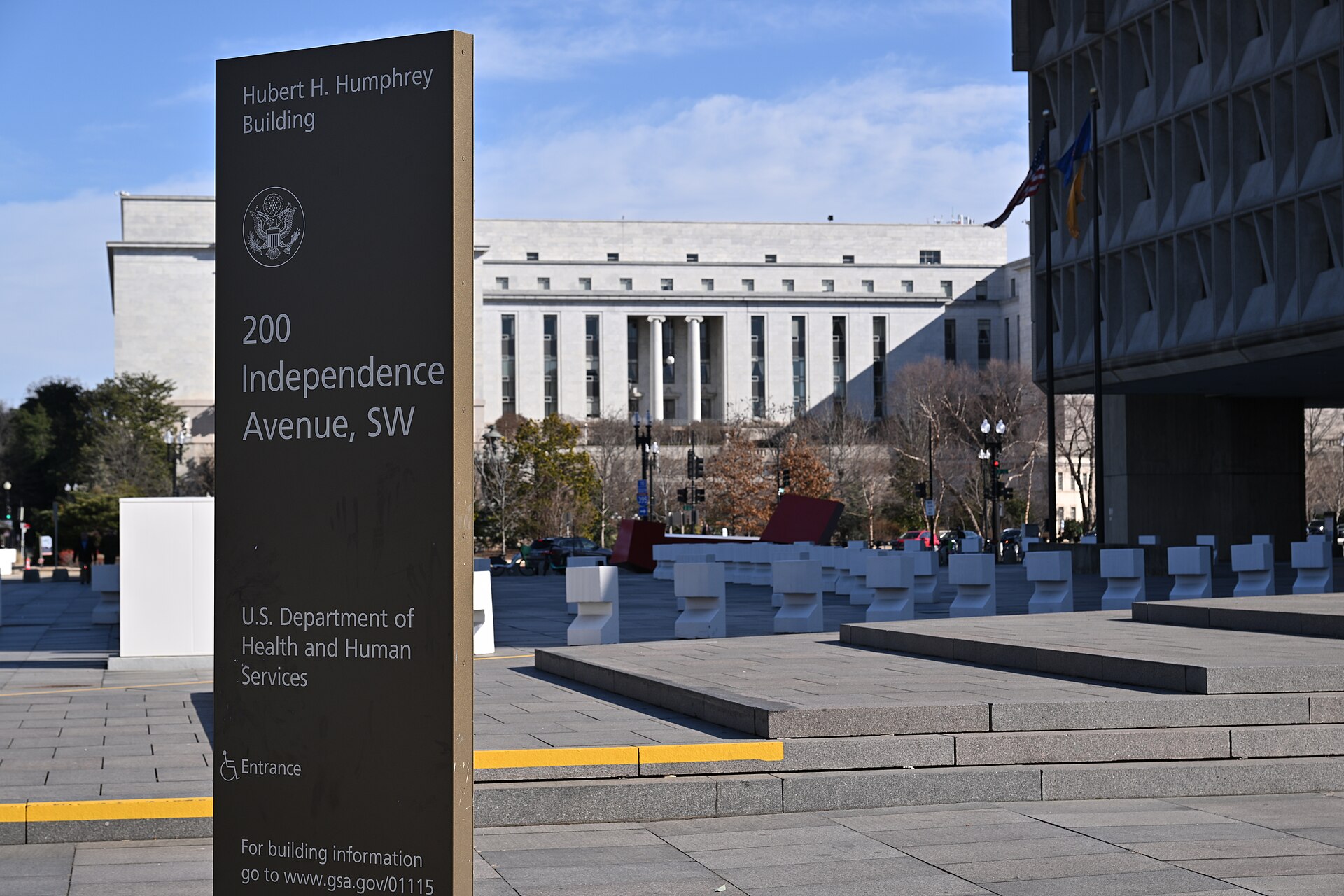

This lesson is a map of the offices that check Medicare and Medicaid money in Idaho: what law creates each one, what it can and cannot do, how big it is, and what its own numbers show. The definitions of improper payments, fraud, waste and abuse are in lesson 1. The laws these offices enforce (the False Claims Act, the Anti-Kickback Statute, the Stark law, exclusion and the criminal health care fraud statute) are in lesson 3. The cases they have brought in Idaho are in lesson 5, and the auditors who check the agencies themselves (GAO, the Legislative Services Office and the Office of Performance Evaluations) are in lesson 7. The short version of who fights Medicare fraud, the national takedowns and the Senior Medicare Patrol are in Medicare Fraud and Scams Aimed at Seniors, and the way Idaho Medicaid rules are written is in Who Writes the Rules. We link those lessons instead of repeating them.
The map: who does what
No single agency "polices" Medicare or Medicaid. The work is split by program (Medicare is federal; Medicaid is a federal and state partnership), by type of action (administrative, civil or criminal) and by who pays the bill. A useful way to sort the offices is by the strongest tool each one holds.
- Claims processors and screeners decide whether a provider gets enrolled and whether a claim gets paid. For Medicare in Idaho that is CMS and its contractor Noridian; for Idaho Medicaid it is the Department of Health and Welfare's Division of Medicaid and its vendors (lesson 8).1120
- Administrative enforcers can stop payments, recover overpayments, impose civil money penalties and end a provider's participation without going to court. These include CMS and its program integrity contractors, Health and Welfare's Medicaid Program Integrity Unit, and HHS OIG, which excludes people and companies from all federal health programs.212223
- Civil litigators sue under the False Claims Act and similar laws for damages and penalties. These are the Justice Department's Civil Division and the U.S. Attorneys' offices, plus a state's Medicaid Fraud Control Unit under state law.246
- Criminal investigators and prosecutors can charge people with crimes. Federal agents work for HHS OIG's Office of Investigations and the FBI; federal prosecutors work in U.S. Attorneys' offices and the Justice Department's health care fraud section. In Idaho, state Medicaid crimes are investigated and prosecuted by the Attorney General's Medicaid Fraud Control Unit.23256
- Overseers of the overseers audit and evaluate the agencies themselves: HHS OIG (for CMS and for state units), GAO for Congress, and in Idaho the Legislative Services Office audit staff and the Office of Performance Evaluations for the Legislature (lesson 7).2627
| Office | Created by | Main tools | Programs | Size or budget (year) |
|---|---|---|---|---|
| Idaho Medicaid Fraud Control Unit (Attorney General) | House Bill 166 (2007), Idaho Code 56-226; federal 42 U.S.C. 1396b(q), 42 CFR part 1007 | Criminal prosecution, civil recovery, subpoenas, patient abuse review | Medicaid; other federal programs with OIG approval | 10 staff; $1.29 million spent (FFY2025)36 |
| Medicaid Program Integrity Unit (Health and Welfare) | 42 CFR 455 subpart A; Idaho Code 56-209h; IDAPA 16.05.07 | Audits, overpayment recovery, state civil money penalties, payment suspension, termination, referral | Idaho Medicaid | 16.0 FTE (Feb. 2026)728 |
| HHS Office of Inspector General | 1976; Inspector General Act of 1978 | Criminal and civil investigations, audits, evaluations, exclusions, civil money penalties, MFCU oversight | All HHS programs | 1,560 FTE (FY2024 actual); $454.4 million program level requested for FY20262923 |
| CMS Center for Program Integrity and contractors | Medicare Integrity Program, 42 U.S.C. 1395ddd (1996); Medicaid Integrity Program, 42 U.S.C. 1396u-6 (2006) | Enrollment screening, claim edits, payment suspension, revocation, audits | Medicare; Medicaid support | $699.1 million HCFAC discretionary (FY2026 plan)303132 |
| Justice Department (Civil Division, National Fraud Enforcement Division, U.S. Attorneys) | False Claims Act; criminal code; HCFAC (42 U.S.C. 1320a-7c) | Civil suits, criminal charges, plea agreements, settlements | All federal health programs | $133.2 million HCFAC discretionary (FY2026 plan); District of Idaho about 70 employees3233 |
| FBI (Salt Lake City field office) | Federal law enforcement; HCFAC funding | Criminal investigation | All health care fraud, public and private | Covers Utah, Idaho, Montana1410 |
| Idaho Department of Insurance fraud investigations | Idaho Code 41-290 | Reviews insurer fraud reports, refers to prosecutors and licensing boards | Private insurance (not Medicaid or Medicare) | Not published on the page we read3435 |
| Licensing boards in DOPL | Idaho Code 67-2601(2)(h) and each board's practice act | License discipline | All licensees | 255,119 active licensees (June 30, 2025)36 |
Idaho's Medicaid Fraud Control Unit
A Medicaid Fraud Control Unit (MFCU) is a state law enforcement office that investigates and prosecutes Medicaid provider fraud and the abuse or neglect of patients in facilities paid by Medicaid. OIG lists 53 of them: one in each state, the District of Columbia, Puerto Rico and the U.S. Virgin Islands.37 They exist because Congress pays for them. The Medicare-Medicaid Anti-Fraud and Abuse Amendments (P.L. 95-142, Oct. 25, 1977) added the federal match for unit costs, and the Omnibus Budget Reconciliation Act of 1993 (P.L. 103-66, signed Aug. 10, 1993) made a unit a state plan requirement, with an escape clause: a state can skip it if it shows "minimal fraud exists" and a unit would not be cost-effective.838
What federal law requires of a unit
Federal law defines a unit in 42 U.S.C. 1396b(q). In plain terms, it must be:
- Part of a prosecuting office. In Idaho that is the Attorney General, who has statewide authority to prosecute crimes. States without statewide prosecutors may use referral agreements instead.89
- Separate from the Medicaid agency. The unit must be "separate and distinct" from the agency that runs Medicaid, so that the payer does not police itself. Idaho Code 56-226 says the same thing in state law and adds that no Health and Welfare official may "review or override" the unit's prosecutorial decisions.85
- A single, identifiable entity. Under 42 CFR 1007.5 the unit must report to its own director, have a budget separate from its parent agency, and have its headquarters and field offices "each in their own contiguous space," unless OIG agrees to another arrangement.9
- Staffed with all three professions. 42 CFR 1007.13 requires at least one attorney, one experienced auditor and one investigator (including a senior investigator), all working exclusively for the unit, plus a director who supervises everyone.9
- Statewide in reach. The unit investigates and prosecutes fraud in any part of the Medicaid program, and since the Consolidated Appropriations Act, 2021 (P.L. 116-260, sec. 207) it may also review abuse or neglect of Medicaid patients in noninstitutional settings, such as care given at home.8
- Reporting to OIG. By Nov. 30 each year the unit sends OIG its statistics for the federal fiscal year that ended Sept. 30 (42 CFR 1007.20), which is where the state-by-state numbers in this lesson come from.9
The money follows the certification. The federal government pays 90 percent of a newly certified unit's allowable costs for its first 12 quarters of operation and 75 percent after that, capped each quarter at the higher of $125,000 or one-quarter of 1 percent of the state's total Medicaid spending in the prior quarter (42 U.S.C. 1396b(a)(6); 42 CFR 1007.19). Federal money cannot pay for routine checks of whether beneficiaries received services, or for cases of "program abuse" that do not involve a substantial indication of fraud.89
How Idaho created its unit
Idaho's unit is young. House Bill 166 of 2007, introduced by the House Health and Welfare Committee, passed the House 69 to 0 on Feb. 28, 2007 and the Senate 32 to 0 on March 19, was signed by Gov. C.L. "Butch" Otter on April 2, 2007, and took effect July 1, 2007 as Session Law chapter 341.5 The bill's statement of purpose said it "establishes in the Office of the Attorney General an independent and certified Medicaid Fraud Control Unit" and gives the Attorney General and county prosecutors authority to prosecute Medicaid fraud.5 Its fiscal note estimated ongoing costs of $75,000 from the state general fund and $675,000 from federal funds for a unit of two attorneys, two investigators, two auditors, a paralegal and a legal secretary, and noted that Washington would pay 90 percent for the first three years.5 OIG's 2018 inspection report confirms the unit "was founded in 2007" and sits in the Attorney General's Criminal Law Division in Boise.39
Idaho was late compared with the 1977 start of federal funding and the 1993 requirement. We did not find a primary record showing how Idaho satisfied the 1993 requirement before 2007, or the exact date OIG first certified the Idaho unit; both are listed as unverified below. OIG's page of initial certification letters lists only recent ones: Puerto Rico and the U.S. Virgin Islands (December 2018), North Dakota (Sept. 18, 2019) and Illinois (June 7, 2023).40
The Legislature broadened the unit's state law in 2024. House Bill 518, introduced by the House Judiciary, Rules and Administration Committee with Rep. Jeff Cornilles as House floor sponsor and Sen. Adams as Senate floor sponsor, passed the House 69 to 0 on Feb. 21, 2024 and the Senate 35 to 0 on March 20, and was signed March 28, 2024 (Session Law chapter 228, effective July 1, 2024).41 Its statement of purpose says it set the maximum punishment for provider fraud at 15 years, allowed recovery of investigation and prosecution costs, let the Attorney General or a designee sign subpoenas, let the unit investigate "a wider range of provider fraud so long as it has a nexus to Medicaid," and brought the statute "more in line with Idaho's insurance fraud statute and federal regulations." The fiscal note said the unit could do the added work "with existing staff."41
What Idaho Code 56-226 lets the unit do
As amended, Idaho Code section 56-226 creates the unit "in the office of the attorney general," puts it "under the exclusive control of the attorney general," and gives it statewide authority to investigate and prosecute Medicaid-related fraud and provider violations and, with federal approval, certain matters involving other federal health programs.6 It lets the unit review complaints of abuse, neglect or misuse of patients' private funds in facilities and other care settings; enter provider premises to examine records; obtain records on written request, with no right to refuse on grounds of privacy or privilege; work with county prosecutors and police; share information with Health and Welfare and other regulators; and seek court-ordered restitution of investigation costs from people convicted. Recovered overpayments and restitution go to the state general fund under the statute.6
The unit does not handle fraud by Medicaid enrollees (people who lie to get or keep coverage). That belongs to Health and Welfare's welfare fraud and participant integrity teams, and the Attorney General's own page sends enrollee fraud reports to Health and Welfare.427

The unit by the numbers, 2020 to 2025
Every unit reports the same columns to OIG each year. The table shows Idaho's for federal fiscal years 2020 to 2025 (each runs Oct. 1 to Sept. 30). Two cautions from OIG's own notes: "investigations" is the number of cases open at the end of the year, not the number opened during it, and "recoveries" are amounts defendants are "required to pay" under settlements and judgments, which "may not reflect actual collections."343
| Federal fiscal year | Open investigations (year end) | Indictments | Convictions | Civil settlements and judgments | Total recoveries | Of which "global" | Grant spending (state and federal) | Idaho Medicaid spending | Staff |
|---|---|---|---|---|---|---|---|---|---|
| 2020 | 179 | 7 | 6 | 7 | $233,355 | $193,525 | $870,155 | $2.62 billion | 9 |
| 2021 | 179 | 7 | 7 | 4 | $724,022 | $694,404 | $914,382 | $3.01 billion | 9 |
| 2022 | 187 | 6 | 5 | 2 | $654,423 | $561,100 | $1,099,589 | $3.33 billion | 10 |
| 2023 | 187 | 5 | 6 | 0 | $261,465 | $0 | $1,150,784 | $2.92 billion | 9 |
| 2024 | 188 | 1 | 3 | 3 | $1,146,717 | $796,093 | $1,120,010 | $4.05 billion | 8 |
| 2025 | 145 | 5 | 2 | 8 | $900,756 | $532,928 | $1,293,821 | $4.17 billion | 10 |
| Six years | 31 | 29 | 24 | $3,920,739 | $2,778,050 (70.9%) | $6,448,741 |
Dollar figures are rounded to the nearest dollar; six-year totals and the global share are our calculation. Source: OIG MFCU statistical charts, FY2020 to FY2025.343
Three things stand out. First, most of Idaho's recovered dollars are "global" recoveries: shares of national civil settlements negotiated by the Justice Department and a group of state units, coordinated by the National Association of Medicaid Fraud Control Units. OIG's chart defines them that way.3 Over six years, 70.9 percent of Idaho's recoveries were global. That money is real money owed to Idaho Medicaid, but it mostly reflects national cases against drug makers and large companies, not Idaho investigations. Second, criminal results are thin: 29 convictions in six years, all fraud. OIG's 2026 letter says Idaho reported no patient abuse or neglect convictions since fiscal 2021.2 Third, the unit's dollar recoveries in most years were smaller than its own budget, which is the opposite of the national pattern (see the comparison below).
What OIG found in 2026: conditional recertification
OIG recertifies every unit each year, and it can attach conditions. On July 1, 2026, Inspector General T. March Bell wrote to Attorney General Raúl Labrador and the unit's interim director, Shawn Eastman, that OIG was recertifying the Idaho unit conditionally for 60 days.2 The letter rated the unit on OIG's performance standards and found:
- Not compliant with the space rule. The unit shared space and an evidence room with the Attorney General's Criminal Law Division, which OIG said falls short of 42 CFR 1007.5(b)(3) (its own contiguous space) and 1007.11(f) (safeguarding beneficiary information, including in evidence rooms).19
- Understaffed. The unit had 10 staff; OIG estimated it should have 13, based on Idaho's $4.1 billion in fiscal 2025 Medicaid spending. The letter cited high turnover, said the director left June 15, 2026, and said pay and benefits made recruiting hard.2
- Too few referrals. The unit received 19 referrals from the state program integrity unit in fiscal 2025 (up from 2 in fiscal 2024) and 4 from managed care organizations, which OIG called low. It received 8 patient abuse and neglect referrals.2
- Case flow rated effective. Only 8 of 206 cases (4 percent) had been open more than three years, and staff reviewed cases monthly.2
- Fraud work effective, abuse work not. Among 12 similar units, Idaho ranked fifth for fraud convictions over fiscal 2023 to 2025 (11 in all). OIG found the unit "is using its resources effectively" on fraud but "is not using its resources effectively" on patient abuse and neglect: no abuse or neglect convictions since fiscal 2021, tied for last among peers, and zero indictments in fiscal 2025. OIG said the unit lacks primary authority over these cases and should pursue a legislative or other fix.2
- Cooperation with OIG adequate but slipping. Joint investigations with OIG's Office of Investigations fell from five to one.2
On Aug. 28, 2026, OIG wrote again, this time to Labrador and the unit's new director, Sam Camp. OIG had approved the unit's action plan on Aug. 14, 2026, and recertified the unit conditionally again effective Aug. 31, 2026, with the special conditions still in place.1 The plan, as the letter describes it, includes dates to move staff and files into separate space and a locked, exclusive section of the evidence vault; a director hired Aug. 16, 2026 and an investigator starting Oct. 1, 2026, with a goal of 13 staff by adding three investigators (one possibly a nurse investigator); monthly meetings with the state program integrity unit and one managed care organization, introductory meetings with the other three, outreach to other agencies, and a plan to "evaluate the need for new legislation" on the unit's lack of jurisdiction over patient abuse or neglect. OIG planned an onsite visit in fall 2026 and warned that failure to make "significant progress" could lead OIG to "pursue additional certification actions or financial remedies."1
As of Nov. 24, 2026, OIG's recertification page lists the Aug. 31 letter as Idaho's latest.44 We found no public record that the conditions have been lifted, and no published result of the fall onsite visit. A conditional recertification is not a finding that anyone committed fraud, and it does not stop federal funding by itself; it is OIG's way of requiring fixes while the money continues.1
Earlier OIG reviews of the Idaho unit
The 2026 letters were not OIG's first look. OIG's 2012 onsite review (report OEI-09-12-00220, issued April 16, 2013) found the unit reported about $5 million in recoveries for fiscal 2009 through 2011 and opened 326 cases, but lacked adequate safeguards for case files, had not updated its policy manual, and had an outdated memorandum of understanding with Health and Welfare.45 The 2018 onsite inspection (OEI-12-18-00320, Aug. 19, 2019), covering fiscal 2015 to 2017, found the unit "operated in accordance with applicable laws, regulations, and policy transmittals," with 13 indictments, 11 convictions, 28 civil settlements and judgments and nearly $5.3 million in recoveries. It recommended updating the manual, limiting and documenting investigative delays, and documenting supervisory review in nearly a quarter of case files that lacked it; OIG closed all three recommendations as implemented on Jan. 29, 2020.39 In 2018 the unit had nine staff (two attorneys, four investigators, one auditor and two support staff) and spent $2,508,162 over three years, of which the state share was $627,017.39
The 2018 report also shows where cases came from: 230 referrals over three years, falling from 89 in fiscal 2015 to 58 in fiscal 2017, from Health and Welfare, private citizens, law enforcement, providers and the Bureau of Facility Standards, which was the main source of abuse and neglect referrals.39 The referral problem OIG flagged in 2026 is therefore not new: fewer referrals mean fewer cases, whatever the unit's staffing.
Health and Welfare: the payer's own police
Federal rules make the state Medicaid agency the first line of defense, because it holds the claims data. Under 42 CFR 455.13 to 455.16, the agency must have methods for identifying suspected fraud, must do a preliminary investigation of any complaint or questionable practice "from any source," and, if that gives reason to believe fraud occurred, must refer a suspected provider case to the state's certified unit. Under 42 CFR 455.21, it must "refer all cases of suspected provider fraud to the unit," give the unit free access to records and computerized data "in the form requested," and, on referral back from the unit, take administrative or court action to recover improper payments.21
Idaho law says the same thing in its own words. Idaho Code section 56-209h requires Health and Welfare to run an "administrative fraud control program" for violations outside the unit's scope, to refer suspected Medicaid provider fraud to the unit, and to answer the unit's requests for records promptly.22 The same section gives the department its administrative tools: prepayment and postpayment review of claims; a five-year record-keeping requirement for providers and immediate access to those records on written request; suspension or withholding of payments pending investigation, with a hearing within 30 days of a timely appeal; recovery of overpayments with interest; termination or denial of provider status for up to five years; civil money penalties of up to $1,000 per improperly claimed item (reducible to no less than 10 percent of that); and exclusion from Idaho programs for at least 10 years after a program-related criminal conviction or at least one year for other listed conduct.22
The Medicaid Program Integrity Unit
Health and Welfare's Director Juliet Charron gave the Senate Health and Welfare Committee a program integrity overview on Feb. 9, 2026. Her slides describe the Medicaid Program Integrity Unit as "a dedicated team of 16.0 FTE responsible to investigate and refer cases" of suspected provider fraud to the Attorney General's unit, and note that federal rules require a state to have both.7 The slides lay out the unit's process: detection through data mining, peer comparison, referrals, complaints and special studies; a preliminary investigation through data and record review, interviews and surveillance; and outcomes ranging from no action or education to overpayment recovery, civil money penalties, payment suspension, termination, exclusion or referral to the Attorney General's unit.7
| State fiscal year (July to June) | Completed cases | Overpayments recovered | Civil monetary penalties | Referrals to the MFCU |
|---|---|---|---|---|
| 2020 | 286 | $2.2 million | $926,000 | 5 |
| 2021 | 315 | $2.4 million | $1.08 million | 12 |
| 2022 | 323 | $1.7 million | $650,000 | 10 |
| 2023 | 265 | $2.6 million | $355,000 | 9 |
| 2024 | 245 | $1.8 million | $482,000 | 14 |
| 2025 | 210 | $2.1 million | $981,000 | 15 |
Source: Idaho Department of Health and Welfare, "DHW Program Integrity Overview," Senate Health and Welfare Committee, Feb. 9, 2026 (amounts as rounded on the slides).7
The department's own numbers show completed cases falling by about a third from the 2022 peak (323 to 210) while referrals to the unit tripled from 2020 (5 to 15). Over the six state fiscal years the unit reported about $12.8 million in recovered overpayments and about $4.5 million in civil monetary penalties (our sum of the rounded slide figures).7 The same slides acknowledge gaps: before November 2025 the department had no department-wide fraud, waste and abuse policy, training or consistent reporting method; resources dedicated to program integrity were limited "for the size and complexity of programs administered"; and there were "backlogs of cases to be investigated, funds to be recovered, and referred for prosecution."7
The department's other integrity teams
The February 2026 slides list several other teams that touch Medicaid. The Office of Program Integrity, created July 1, 2024 with 3.0 positions moved from elsewhere in the department, reviews whether programs comply with federal and state law. The Welfare Fraud Investigations Team (3.0 positions) investigates referred fraud across benefit programs and refers cases for recovery and prosecution. Internal Audit (2.0 positions) checks internal controls. The Self-Reliance Integrity Unit (9.0 positions) reviews suspected fraud by people receiving benefits, including Medicaid, SNAP and TANF; it received 4,940 referrals and collected $1.2 million in overpayments in state fiscal 2025.7 Fraud and abuse by Medicaid participants, such as visiting many prescribers or pharmacies for Schedule II drugs, is handled through provider audits, "pharmacy lock-in" (limiting a person to one pharmacy) and care management.7
The slides also list changes since 2024: Senate Bill 1453 (2024) moved one position to a fraud investigator; House Bill 62 (2025) let the department share information with the Idaho State Tax Commission starting July 2025, which the slides say made Idaho "the first state to do this"; a department-wide fraud, waste and abuse policy and an anonymous staff hotline began in November 2025; a compliance committee formed in January 2026; and annual fraud training for all staff started in February 2026.7 For the 2026 session the department described two budget requests, including a contractor for Medicaid provider reviews under "a contingency contract" paid a percentage of recoveries, and two proposed bills, one to create "an overarching Program Integrity chapter in Title 56."7 We did not confirm whether the program integrity chapter bill was introduced or passed, or whether the contingency contractor was funded; both are listed as unverified.
The rules the department enforces: IDAPA 16.05.07
The department's enforcement rules are IDAPA 16.05.07, "The Investigation and Enforcement of Fraud, Abuse, and Misconduct," with sections carrying a March 17, 2022 history date.28 The rule assigns investigations to the department's "Bureau of Compliance, or its successor" and lists the methods it may use: computer report reviews, referrals, audits, interviews, prepayment and postpayment review, sampling and subpoenas.28 When the department extrapolates an overpayment from a sample, its demand must describe the universe sampled, the sample size and selection method, the formulas used and the confidence level.28 Civil money penalties are set as a percentage of the amount at issue: 10 to 15 percent where there was no overpayment, 15 to 25 percent where there was one (25 percent for "no service, no documentation, or refusal of access"), with 5 to 15 percentage points added when the error rate exceeds 25 or 35 percent or the conduct was knowing. A provider who reports its own overpayment before a department audit starts owes no penalty under the rule.28 Exclusion after certain convictions runs at least 10 years under the rule, and becomes permanent after two or more prior qualifying convictions.28
Payment suspension on a "credible allegation of fraud"
The most powerful administrative tool is the payment suspension. Since a Feb. 2, 2011 federal rule (76 FR 5966), 42 CFR 455.23 says the state Medicaid agency "must suspend all Medicaid payments to a provider" once it determines there is "a credible allegation of fraud" for which an investigation is pending, unless it finds "good cause" not to suspend or to suspend only in part.21 The state may suspend without notice first, but must send notice within five days (or up to 90 days if law enforcement asks in writing to delay it). The notice must state the general allegations, say the suspension is temporary, and give appeal rights. A suspension ends when the agency or prosecutors decide the evidence is insufficient or when legal proceedings end. Each suspension must be referred to the state's unit.21 Idaho's rule allows payment withholding without prior notice and requires a hearing within 30 days after a timely appeal.2822
How often Idaho uses it is a live question. In its May 2025 review, CMS reported that Health and Welfare listed zero credible-allegation-of-fraud payment suspensions in federal fiscal 2020 to 2022, while one managed care plan, Molina, reported 5, 10 and 1 in those years and another said it uses pay holds rather than suspensions. CMS "was unable to resolve the discrepant reporting" between the state and its plans.46
Provider enrollment and screening
Stopping a bad actor at the door is cheaper than chasing payments later. Federal rules at 42 CFR part 455 subpart E, adopted in the same Feb. 2, 2011 rule (76 FR 5968), set what every state must do before and after enrolling a Medicaid provider.20
- Risk levels. Each provider type is screened at a "limited," "moderate" or "high" risk level (455.450). All get license checks, including licenses in other states, and federal database checks. Moderate and high risk add site visits. High risk adds a criminal background check and fingerprints for owners of 5 percent or more.20
- Database checks. The state must check the Social Security Administration's Death Master File, the National Plan and Provider Enumeration System (NPPES, the national provider identifier registry), OIG's List of Excluded Individuals/Entities (LEIE) and the federal excluded parties list (now in SAM.gov) at enrollment, and the LEIE and excluded parties list "no less frequently than monthly" (455.436).20
- Revalidation. Every provider must be revalidated "at least every 5 years" (455.414).20
- Ordering providers. Claims for ordered or referred services must carry the national provider identifier of the professional who ordered them (455.440).20
Who does Idaho's enrollment work day to day, and under what contract, is in lesson 8. The exclusion list itself and how to search it are in lesson 9.
Managed care plans as a third line
When Idaho pays a managed care plan, the plan must run its own fraud program and report to the state under 42 CFR 438.608 (Managed Care and Privatization covers Idaho's plans). CMS's focused review of Idaho's managed care oversight for federal fiscal 2020 to 2022, issued in May 2025, named four plans: Blue Cross of Idaho, Managed Care of North America (MCNA) Dental, Molina Healthcare of Idaho, and United Behavioral Health doing business as Optum Idaho.46 CMS found the plans' reported recoveries "low" for a program of Idaho's size; for example Molina reported recovering $1,639, $17,084 and $73,880 in 2020, 2021 and 2022, and two plans made no referrals to the state program integrity unit over the three years.46 CMS made three formal recommendations: written policies to rate plan performance under 42 CFR 438.66, beneficiary verification language in plan contracts under 438.608(a)(5), and enforcement of prompt overpayment reporting with recoveries counted in rate-setting under 438.608(a)(2) and (d)(4). It also reported that nine of ten recommendations from its 2018 review were "Not Corrected."46 Idaho owed CMS a corrective action plan within 30 days. CMS acknowledged the state's response on July 25, 2025.46
OIG's 2026 letter picks up the same thread from the other end: the Attorney General's unit received only 4 managed care referrals in fiscal 2025.2 Nationally, OIG's annual report counts 5,991 fraud referrals from managed care entities to all units that year.4
The HHS Office of Inspector General
HHS OIG dates from 1976 and works under the Inspector General Act of 1978, which gives it full access to HHS records and makes it report to both the HHS Secretary and Congress.2918 About 80 percent of its budget comes from the Health Care Fraud and Abuse Control program; the rest is appropriated for oversight of other HHS programs.18 HHS's fiscal 2026 budget justification counts 1,560 full-time-equivalent staff in fiscal 2024, an estimated 1,516 in 2025 and a request supporting 1,479 in 2026, and a fiscal 2026 program level of $454.4 million: $249.7 million in mandatory HCFAC money, $108.7 million in discretionary HCFAC money, an estimated $9.0 million in HCFAC collections and $87.0 million for other HHS programs.23 More than 70 percent of OIG employees work outside the Washington area, in regional and field offices.23
OIG's four working offices
| Office | What it does | Typical public product |
|---|---|---|
| Office of Investigations (OI) | Criminal, civil and administrative investigations; its special agents have full law enforcement authority and work with DOJ, the FBI and state units | Charges and pleas announced by U.S. Attorneys; OIG enforcement action pages |
| Office of Audit Services (OAS) | Audits of HHS programs, grantees, contractors and providers to find improper payments; oversees single audits and HHS financial statement audits | Audit reports with "A-" numbers and recommended recoveries (Idaho audits are in lesson 7) |
| Office of Evaluation and Inspections (OEI) | National evaluations, data briefs and the MFCU inspections and annual report | Reports with "OEI-" numbers, such as the Idaho MFCU inspections |
| Office of Counsel to the Inspector General (OCIG) | Legal work: represents OIG in civil and administrative cases, negotiates corporate integrity agreements, issues advisory opinions and compliance guidance | Advisory opinions, corporate integrity agreements, exclusions and civil money penalty cases |
Source: HHS OIG FY2026 congressional justification.23
What OIG reports about itself
OIG's Spring 2026 Semiannual Report to Congress, covering Oct. 1, 2025 to March 31, 2026 and issued July 10, 2026, reports $4,299,778,003 in investigative receivables, $814,075,000 in audit and evaluation disallowed costs, $447,645,500 in potential savings ("funds put to better use") and $509,937,641 in questioned costs; 317 criminal actions and 287 civil actions; and 1,212 exclusions (1,183 individuals and 29 entities). OIG sums the first three into a "total monetary impact" of $5.56 billion.47 Its hotline and web portal received 95,776 contacts in the six months; 40,815 were evaluated for potential investigation, 21,371 were referred within OIG or to another agency, and 19,444 were closed, for example because no HHS violation was involved.47
For fiscal 2025 as a whole, OIG's fact sheet reports a total monetary impact of $19.04 billion, 2,837 exclusions, 1,577 criminal and civil actions and "an expected $12.70 in recoveries for every $1 spent."18 OIG's annual MFCU report adds that 900 of those 2,837 exclusions (32 percent) followed convictions won by state units.4 Exclusion is the step that connects a state Medicaid conviction to every federal program: once OIG lists a person on the LEIE, no federal health program may pay for items or services that person furnishes, orders or prescribes (lesson 3 covers the law).
OIG as the overseer of state units
OIG is also the federal grant manager and regulator for the 53 units. It certifies and recertifies each one under 42 CFR part 1007 (rewritten by a final rule at 84 FR 10713, March 22, 2019), administers the grant, sets performance standards, inspects units on site and publishes a national annual report.937 The fiscal 2025 annual report (OEI-09-26-00140, issued March 18, 2026) counts 1,185 convictions (856 for fraud and 329 for patient abuse or neglect), 674 civil settlements and judgments, $1.3 billion in criminal recoveries and $706 million in civil recoveries, about $2 billion in all, on about $424 million in combined grant spending, of which about $318 million was federal: $4.64 recovered for every $1 spent.4 Personal care services attendants accounted for far more fraud convictions than any other provider type, with 326 in OIG's chart.4 How personal care billing cases work is in lesson 6.
CMS and its program integrity contractors
CMS pays the claims, so it controls the front-end tools: who gets enrolled, which claims are edited or denied before payment, and which providers have billing privileges suspended or revoked. Its Center for Program Integrity runs that work. Congress created the funding streams in two steps. The Health Insurance Portability and Accountability Act of 1996 (HIPAA, P.L. 104-191, Aug. 21, 1996) set up the Medicare Integrity Program (Social Security Act section 1893, 42 U.S.C. 1395ddd), which pays contractors to review claims, audit cost reports, recover overpayments and educate providers.30 The Deficit Reduction Act of 2005 (P.L. 109-171, signed Feb. 8, 2006) added the Medicaid Integrity Program (section 1936, 42 U.S.C. 1396u-6), under which CMS contracts for reviews and audits of Medicaid providers and supports state program integrity work.31 The Small Business Jobs Act of 2010 (P.L. 111-240, Sept. 27, 2010, section 4241) directed CMS to use predictive analytics to find and stop improper Medicare fee-for-service claims before payment (42 U.S.C. 1320a-7m).48
The contractors that touch Idaho
| Contractor type | Who holds it for Idaho | What it does | Legal basis |
|---|---|---|---|
| Medicare Administrative Contractor (MAC), Jurisdiction F | Noridian Healthcare Solutions, LLC (contract 75FCMC25CJ010, awarded Aug. 19, 2025) | Processes Part A and Part B claims, enrolls providers, runs medical review and collects overpayments for Alaska, Arizona, Idaho, Montana, North Dakota, Oregon, South Dakota, Utah, Washington and Wyoming | Social Security Act section 1874A (42 U.S.C. 1395kk-1), added Dec. 8, 200349 |
| Unified Program Integrity Contractor (UPIC), Western jurisdiction | Qlarant (awarded 2017, according to the company) | Investigates suspected fraud, waste and abuse in Medicare Parts A and B, DMEPOS, home health and hospice, and Medicaid; refers cases to law enforcement; identifies overpayments for the MAC to recoup | Medicare and Medicaid Integrity Programs |
| Recovery Audit Contractor (RAC), Region 4 | Cotiviti GOV Services LLC | Postpayment review of Medicare claims to find overpayments and underpayments, paid a contingency fee from recoveries | 42 U.S.C. 1395ddd(h), added Dec. 20, 2006 |
| RAC Region 5 (nationwide) | Cotiviti GOV Services LLC | DMEPOS, home health and hospice claims | 42 U.S.C. 1395ddd(h) |
| Medicare Parts C and D investigations | A separate contractor called the MEDIC (the Noridian page does not name the holder) | Medicare Advantage and drug plan fraud investigations | CMS contract |
Sources: CMS Jurisdiction F page; Noridian UPIC page; Qlarant UPIC West page (company statement); CMS Recovery Audit Program page.11125013
Noridian, which is both the outgoing and the incoming contractor for Jurisdiction F, reported serving 3,048,080 fee-for-service Medicare beneficiaries, 95,669 physicians and 531 hospitals as of Sept. 30, 2025, about 7.4 percent of national Part A and Part B claims.11 Noridian's own page explains a division of labor that confuses many providers: the UPIC investigates and identifies improper payments, but "recouping the money is not a UPIC function"; the MAC collects.12 The RAC is paid "only from amounts recovered," on a contingency basis, under the law that made the recovery audit program permanent (Tax Relief and Health Care Act of 2006, P.L. 109-432, section 302, Dec. 20, 2006).3013 The national CERT program that measures Medicare's improper payment rate is in lesson 1.
Idaho Medicaid's recovery audit exception
The Affordable Care Act also required states to contract with Medicaid recovery audit contractors, a rule now at 42 CFR 455.502. Idaho asked to be excused. In State Plan Amendment ID-18-0009, effective July 1, 2018 and approved by CMS in November 2018, CMS granted Idaho an exception. The state said its last RAC contract expired June 30, 2016, that three requests for proposals drew no responses, and that its small rural population and payment methods differ from Medicare's; it pointed to a data analytics contract with IBM-Watson and to its UPIC, Qlarant.51 Whether that exception has been renewed since is not something we could confirm from CMS's posted documents; it is listed as unverified.
What CMS says it saves
CMS published its fiscal 2025 program integrity results in May 2026 under the headline "CMS Reports Highest Program Integrity ROI Ever Recorded." It reports Medicare program integrity savings of $41.9 billion in fiscal 2025, up from $26.3 billion in fiscal 2024, and a return of $22.3 to 1, up from $14.6 to 1. Of the $41.9 billion, $28.4 billion (68 percent) is "cost avoidance," such as revocations and automated claim denials; $7.3 billion is payment accuracy and $6.3 billion is recoveries.17 These are CMS's own figures and methods. Cost avoidance is money CMS estimates it did not pay, not cash collected, and the page we read did not publish its method, and its Medicaid and CHIP savings panel gave no dollar figures in the version we read.17
The Justice Department and the FBI
Only the Justice Department can file federal criminal charges, and it controls the government's side of False Claims Act cases, including suits that whistleblowers file in the government's name (lesson 3). Its health care fraud work runs through three channels.
- Civil fraud. The Civil Division's Fraud Section and the civil divisions of U.S. Attorneys' offices handle False Claims Act cases, including whistleblower (qui tam) suits. The department reported that False Claims Act settlements and judgments "exceeded $6.8 billion" in fiscal 2025, of which over $5.7 billion related to health care, and that a record 1,297 qui tam suits were filed, up from 980 in 2024.24 The law itself is in lesson 3.
- Criminal health care fraud. An April 7, 2026 memo from the Acting Attorney General created a National Fraud Enforcement Division and gave its Assistant Attorney General immediate control of the Criminal Division's Health Care Fraud Unit, Tax Section and Market, Government, and Consumer Fraud Unit. The memo calls for a National Fraud Detection Center, prosecutors detailed from each U.S. Attorney's office, and more FBI agents and forensic accountants; the Civil Division names a liaison rather than moving staff.15 The renamed Health Care Fraud Section describes itself as "comprised of over 75 experienced white-collar prosecutors."25 On April 30, 2026 it launched a West Coast Strike Force with the U.S. Attorneys for Arizona, Nevada and the Northern District of California; Idaho is not named. The department says its strike force model has charged "over 6,200 defendants" who billed federal programs and private insurers more than $45 billion.52
- The U.S. Attorney for the District of Idaho. The Boise office and branch offices in Pocatello and Coeur d'Alene prosecute federal crimes and handle civil cases for the United States in Idaho. The office describes a staff of "about 70 employees, including 30 lawyers."33 Bart M. Davis signed the office's health care fraud releases in June 2026; John C. Shirts, a former Assistant U.S. Attorney (2018 to 2024) and state representative for District 9, was appointed U.S. Attorney by Attorney General Todd Blanche effective Oct. 18, 2026 and sworn in by Chief U.S. District Judge Amanda K. Brailsford, according to the office's Oct. 19, 2026 release.531654
Two District of Idaho matters show how the offices combine. In October 2024 the office announced that KA Health Services of Boise and its owner paid $321,576.51 to resolve allegations that it billed Medicaid for psychotherapy for recently arrived refugees that was "never provided and/or not provided by a qualified professional," with "no admission or determination of liability," while a former therapist consented to a $40,000 judgment and admitted violating the False Claims Act (United States v. Canfield, No. 1:24-cv-00460-BLW, D. Idaho). The investigators were the U.S. Attorney's office, HHS OIG and the Idaho Attorney General's Medicaid Fraud Control Unit, with help from Health and Welfare.55 In June 2026, as part of the national takedown, the office announced an indictment of a Caldwell woman on wire fraud and aggravated identity theft charges for allegedly using other people's nursing licenses to get nursing jobs; the release names HHS OIG and the Boise Police Department as investigators and states that "all defendants are presumed innocent until proven guilty."53 Lesson 5 collects Idaho cases in full (Idaho Case Files).
The FBI investigates health care fraud in both public programs and private insurance. Its Salt Lake City field office covers Utah, Idaho and Montana.14 According to the HCFAC program's fiscal 2025 fact sheet, the FBI disrupted 356 or more criminal fraud organizations and dismantled 79 or more enterprises nationwide that year.19

Who pays for the police: HCFAC and the unit grant
HIPAA created the Health Care Fraud and Abuse Control program (Social Security Act section 1128C, 42 U.S.C. 1320a-7c), directing the HHS Secretary, acting through OIG, and the Attorney General to set up a joint program "not later than January 1, 1997" to coordinate federal, state and local enforcement, conduct investigations and audits, enforce the exclusion, civil money penalty and anti-kickback laws, and issue safe harbors and advisory opinions.56 Its money comes from an account in the Medicare Hospital Insurance trust fund, as Medicare Fraud and Scams Aimed at Seniors explains.
The Congressional Budget Office described the account in a November 2026 presentation, CBO's Estimates of the Budgetary Effects of Increasing Funding for the Health Care Fraud and Abuse Control Account. Lawmakers provided $2.5 billion in 2025, most of it mandatory funding that rises with inflation; CBO's February 2026 baseline projects about $3.5 billion by 2036. In 2023, HHS received about 84 percent and DOJ about 16 percent. Within HHS most goes to CMS, especially the Medicare Integrity Program, and to OIG; within DOJ, mainly to U.S. Attorneys' offices, the Criminal Division and the FBI.10 CMS's fiscal 2026 operating plan for the discretionary part alone totals $941.0 million: $699.1 million for CMS program integrity, $108.7 million for HHS OIG and $133.2 million for DOJ, with $35.0 million for the Senior Medicare Patrol shown separately as a non-add line.32
State units are paid differently: by the federal Medicaid match described above, 75 percent federal after the first three years. Idaho's unit spent $1,293,821 in federal fiscal 2025 counting state and federal money together.3 At 75 percent, the federal share would be about $970,000 and the state share about $323,000 (our calculation; OIG's chart does not split Idaho's spending by source).9
How we figured it: unit ratios and shares
Data. OIG MFCU statistical charts for federal fiscal years 2020 to 2025, downloaded Nov. 24, 2026. Columns used: total recoveries, criminal recoveries, civil "global" recoveries, other civil recoveries, MFCU grant expenditures (state and federal), total Medicaid expenditures and staff on board.343
Ratios. Recoveries per grant dollar = total recoveries / grant expenditures. Idaho FY2025: $900,756.39 / $1,293,821 = $0.70. U.S. FY2025: $1,966,591,061 / $423,972,300 = $4.64, the same figure OIG reports. Grant spending per $1,000 of Medicaid = grant expenditures / Medicaid expenditures x 1,000; Idaho FY2025: $1,293,821 / $4,166,928,923 x 1,000 = $0.31. Staff per $1 billion of Medicaid = staff / (Medicaid expenditures / $1 billion); Idaho FY2025: 10 / 4.17 = 2.4.
Shares. Global share = global civil recoveries / total recoveries, summed over 2020 to 2025: Idaho $2,778,050 / $3,920,739 = 70.9 percent. The federal and state split of Idaho's spending applies the 75 percent rate in 42 CFR 1007.19 to the total and is an estimate.
Limits. Recoveries are amounts ordered or agreed, not collections, and a single large case can swing a year. Units differ in authority (some have primary jurisdiction over abuse and neglect; Idaho's does not), in how states organize Medicaid, and in how many global settlements they join. OIG itself warns that each unit's figures should be read in light of its state's organization and authorities.37
Other state offices with a role
The Department of Insurance, for private insurance
Fraud against private health insurers is a different track. Idaho Code section 41-290 requires an insurer that has facts suggesting a claim is fraudulent to notify the director of the Department of Insurance within 60 days on a form the director prescribes; the director decides which claims to investigate, arranges "an independent examination of the facts," and reports alleged violations to the licensing agency and the prosecuting authority. An insurer that intentionally fails to report can be fined.34 The department runs a fraud hotline listed on its fraud investigations page.35 This track covers claims against insurers, not Medicaid claims; Medicaid provider fraud belongs to Health and Welfare and the Attorney General's unit. The 2024 law that rewrote the Medicaid fraud statute was meant to bring it "more in line with Idaho's insurance fraud statute," according to its statement of purpose.41
Licensing boards
A fraud conviction or exclusion can follow a clinician to the licensing board. Idaho's boards for medicine, nursing, pharmacy and dentistry sit in the Division of Occupational and Professional Licenses (DOPL), created from the former Bureau of Occupational Licensing by House Bill 318 (2020) and Executive Order 2020-10. DOPL served 44 boards and commissions and 255,119 active licensees as of mid-2025. In fiscal 2025 the Board of Medicine received 285 complaints, Nursing 261, Dentistry 85 and Pharmacy 84; DOPL resolved 52.03 percent of investigations within 120 days against a 70 percent target.36 Idaho's enforcement rule tells Health and Welfare to notify licensing authorities and HHS OIG when it sanctions a provider.28
The Legislature
The Legislature does not investigate cases, but it funds the offices and audits the agencies. The Joint Finance-Appropriations Committee sets the budgets of the Attorney General and Health and Welfare (Idaho State Budget). The Joint Legislative Oversight Committee, created in 1993 (Idaho Code section 67-457), directs the Office of Performance Evaluations, which studies whether state programs work.2657 The Legislative Services Office must audit federal financial assistance to the state each year and review each executive department at least every three years, and must report to the Attorney General any facts suggesting "malfeasance, illegal expenditure, or misappropriation" of public money (Idaho Code section 67-702).27 Their reports on Medicaid are in lesson 7.
The Senior Medicare Patrol
The Senior Medicare Patrol is a federally funded volunteer program that teaches Medicare beneficiaries to spot and report billing errors and fraud; its fiscal 2026 HCFAC line is $35.0 million nationally.32 Who runs it in Idaho and its Idaho numbers are in Medicare Fraud and Scams Aimed at Seniors; we do not repeat them here.
How a tip becomes a case
A Medicaid fraud case in Idaho usually moves through the same steps, set by 42 CFR 455.13 to 455.23, Idaho Code 56-209h and 56-226, and the federal rules for joint cases. The steps below describe the process; they are not a recommendation to report anything.
- A lead arrives. Leads come from data mining and peer comparison, complaints from patients and families, current or former employees, other providers, managed care plans, the Bureau of Facility Standards, police, the HHS OIG hotline or a qui tam suit.73947
- Preliminary investigation. Health and Welfare must look into any complaint or questionable practice to see whether a full investigation is warranted (42 CFR 455.14). Its unit reviews claims data and records, interviews people and may watch a business.217
- Administrative fix or referral. If the problem looks like error or abuse, the department may educate the provider, recover an overpayment, add a civil money penalty or end the provider agreement (455.16; IDAPA 16.05.07). If it looks like provider fraud, the department must refer it to the Attorney General's unit (455.15 and 455.21; Idaho Code 56-209h(7)).212822
- Payment suspension decision. If the department finds a credible allegation of fraud, it must suspend payments unless it finds good cause not to, and must refer the suspension to the unit (455.23).21
- The unit opens a case. The unit decides whether to investigate. It can obtain records on written request, enter provider premises and use subpoenas signed by the Attorney General or a designee (Idaho Code 56-226, as amended in 2024).641
- Joint or federal track. Cases involving Medicare, other federal programs or several states may be worked with HHS OIG agents, the FBI and the U.S. Attorney, or folded into a national global settlement.553
- Charge, sue or close. Prosecutors file criminal charges in state or federal court, file or settle a civil case, or close the matter for insufficient evidence. A charge is an allegation; the person is presumed innocent.53
- After the case. A conviction can bring a sentence, restitution and forfeiture; OIG then excludes the person or company from federal health programs (900 of OIG's 2,837 exclusions in fiscal 2025 followed state unit convictions). Licensing boards may act on the license.436
Medicare leads in Idaho follow a parallel federal path: a complaint to the OIG hotline or Noridian, data analysis by CMS or the UPIC (Qlarant), a referral to OIG's Office of Investigations, and a case brought by the U.S. Attorney or the Justice Department, while CMS may suspend payments or revoke billing privileges on its own authority.1247 The Medicare version of this path, including what happens after a beneficiary calls, is in Medicare Fraud and Scams Aimed at Seniors.
Idaho compared with its neighbors
OIG's statistical chart lets us compare state units on the same definitions. Neighbor states differ in Medicaid size (Washington spends more than five times as much as Idaho), in unit authority and in whether they join large national settlements, so the comparison shows scale and output, not effort or skill.337
| State, FFY2025 | Open investigations | Indictments | Convictions | Civil settlements | Total recoveries | Grant spending | Medicaid spending | Staff | Recoveries per $1 spent | Staff per $1 billion Medicaid |
|---|---|---|---|---|---|---|---|---|---|---|
| Idaho | 145 | 5 | 2 | 8 | $0.90 million | $1.29 million | $4.17 billion | 10 | $0.70 | 2.4 |
| Utah | 139 | 15 | 8 | 8 | $2.73 million | $4.25 million | $5.32 billion | 22 | $0.64 | 4.1 |
| Oregon | 76 | 12 | 6 | 13 | $13.65 million | $4.76 million | $18.87 billion | 20 | $2.87 | 1.1 |
| Washington | 515 | 15 | 16 | 12 | $45.12 million | $13.88 million | $23.12 billion | 61 | $3.25 | 2.6 |
| Montana | 51 | 7 | 1 | 8 | $0.71 million | $0.93 million | $2.63 billion | 9 | $0.76 | 3.4 |
| Wyoming | 65 | 5 | 1 | 6 | $1.53 million | $0.63 million | $0.85 billion | 4 | $2.41 | 4.7 |
| Nevada | 327 | 27 | 36 | 13 | $18.52 million | $3.21 million | $7.31 billion | 20 | $5.76 | 2.7 |
| All 53 units | 15,921 | 1,453 | 1,185 | 674 | $1,966.59 million | $423.97 million | $1,031.70 billion | 2,259 | $4.64 | 2.2 |
Source: HHS OIG FY2025 MFCU statistical chart; the last two columns are our calculation (see the methods box above).3
Over the six years 2020 to 2025, Idaho's unit reported 31 indictments and 29 convictions on about $20.1 billion in Medicaid spending (sum of the six years), or about 1.4 convictions per $1 billion; Utah reported 92 convictions (about 3.5 per $1 billion), Nevada 131 (about 3.9), Montana 35 (about 2.4), Wyoming 5 (about 1.1), Oregon 57 (about 0.65) and Washington 76 (about 0.66), against about 1.35 nationally (our calculation from the six charts).343 Idaho also spends less on its unit relative to its program than most neighbors: about $0.31 per $1,000 of Medicaid spending in 2025, against $0.41 nationally, $0.80 in Utah and $0.75 in Wyoming; only Oregon ($0.25) spent less by that measure.3
A timeline of the offices
| Year | Law or event | What changed | Source |
|---|---|---|---|
| 1976 | HHS Office of Inspector General established | OIG begins its oversight of the department's health programs | OIG29 |
| 1977 | Medicare-Medicaid Anti-Fraud and Abuse Amendments, P.L. 95-142 (Oct. 25, 1977) | Federal match for state Medicaid fraud control units | 42 U.S.C. 1396b notes8 |
| 1978 | Inspector General Act of 1978 | Common framework and powers for inspectors general | OIG18 |
| 1993 | Omnibus Budget Reconciliation Act of 1993, P.L. 103-66, sec. 13625 (Aug. 10, 1993) | State plans must include a unit unless the state shows minimal fraud | 42 U.S.C. 1396a(a)(61)38 |
| 1996 | HIPAA, P.L. 104-191 (Aug. 21, 1996) | Health Care Fraud and Abuse Control program and the Medicare Integrity Program | 42 U.S.C. 1320a-7c, 1395ddd5630 |
| 2003 | Medicare Modernization Act, P.L. 108-173 (Dec. 8, 2003) | Law authorizing Medicare Administrative Contractors (Social Security Act section 1874A) | 42 U.S.C. 1395kk-149 |
| 2006 | Deficit Reduction Act of 2005, P.L. 109-171 (Feb. 8, 2006); Tax Relief and Health Care Act, P.L. 109-432 (Dec. 20, 2006) | Medicaid Integrity Program; permanent Medicare recovery audit contractors | 42 U.S.C. 1396u-6, 1395ddd(h)3130 |
| 2007 | Idaho House Bill 166, signed April 2, 2007, effective July 1 | Idaho creates its Medicaid Fraud Control Unit in the Attorney General's office | Idaho Legislature5 |
| 2010 | Small Business Jobs Act, P.L. 111-240, sec. 4241 (Sept. 27, 2010) | Predictive analytics to stop improper Medicare claims before payment | 42 U.S.C. 1320a-7m48 |
| 2011 | CMS rule published Feb. 2, 2011 (76 FR 5966 and 5968 for these sections) | Mandatory Medicaid payment suspension on a credible allegation of fraud; risk-based provider screening | 42 CFR 455.23, 455 subpart E2120 |
| 2013 | OIG onsite review of the Idaho unit (OEI-09-12-00220, April 16, 2013) | Case file security and an outdated agreement with Health and Welfare | OIG45 |
| 2017 | Qlarant awarded the Western UPIC (company statement) | One contractor for Medicare and Medicaid investigations in the West | Qlarant50 |
| 2018 | Idaho Medicaid recovery audit exception (SPA ID-18-0009, effective July 1, 2018) | Idaho excused from contracting with a Medicaid RAC | CMS51 |
| 2019 | MFCU final rule, 84 FR 10713 (March 22, 2019); OIG inspection of the Idaho unit (OEI-12-18-00320, Aug. 19, 2019) | Rewritten unit rules; Idaho unit found compliant with three recommendations | 42 CFR part 1007; OIG939 |
| 2020 | Consolidated Appropriations Act, 2021, P.L. 116-260, sec. 207 | Units may review abuse or neglect of Medicaid patients in noninstitutional settings | 42 U.S.C. 1396b(q)8 |
| 2024 | Idaho House Bill 518, signed March 28, 2024; Health and Welfare Office of Program Integrity, July 1, 2024 | Broader unit authority, 15-year maximum, subpoenas, cost recovery; new internal integrity office | Idaho Legislature; Health and Welfare417 |
| 2025 | CMS focused review of Idaho managed care integrity (May 2025); Noridian re-awarded Jurisdiction F (Aug. 19, 2025) | Three recommendations to Idaho; same Medicare contractor continues | CMS4611 |
| 2026 | DOJ National Fraud Enforcement Division (April 7); OIG conditional recertifications of the Idaho unit (July 1, Aug. 31); new U.S. Attorney for Idaho (Oct. 18); CBO HCFAC analysis (November) | Federal reorganization; Idaho unit ordered to fix space, staffing and referrals | DOJ; OIG; U.S. Attorney, District of Idaho; CBO1511610 |
Pictures, Numbers and Infographics
| Measure | Idaho | U.S. or other states | Year | Source |
|---|---|---|---|---|
| Medicaid Fraud Control Unit staff on board | 10 (OIG estimates 13 needed) | 2,259 in all 53 units; Utah 22, Washington 61 | FFY2025 | 31 |
| Unit grant spending (state and federal) | $1,293,821 | $423,972,300 all units | FFY2025 | 3 |
| Unit recoveries per $1 spent | $0.70 (our calculation) | $4.64 all units (OIG); Nevada $5.76; Utah $0.64 | FFY2025 | 34 |
| Unit convictions, six years | 29 | Utah 92; Nevada 131; Montana 35; all units 6,928 | FFY2020 to 2025 | 343 |
| Share of unit recoveries from global settlements | 70.9% (our calculation) | 20.2% all units (our calculation) | FFY2020 to 2025 | 343 |
| Federal match for unit costs | 75% after first 12 quarters | Same for all units; 90% for first 12 quarters | Current law | 89 |
| OIG certification status | Conditional, effective Aug. 31, 2026 | Recertified annually | 2026 | 144 |
| Health and Welfare Medicaid Program Integrity Unit | 16.0 FTE; 210 completed cases; $2.1 million recovered; $981,000 penalties; 15 referrals | Not compared | SFY2025 | 7 |
| Managed care referrals to the unit | 4 | 5,991 to all units | FFY2025 | 24 |
| HCFAC funding | Not allocated by state | $2.5 billion provided | 2025 | 10 |
| HHS OIG staff | Regional and field offices (count not published by state) | 1,560 FTE | FY2024 | 23 |
| OIG exclusions from unit convictions | Not published by state in the report | 900 of 2,837 | FY2025 | 4 |
| Medicare fee-for-service beneficiaries served by Jurisdiction F | Part of the 10-state total | 3,048,080 | Sept. 30, 2025 | 11 |
| District of Idaho U.S. Attorney's office | About 70 employees, 30 lawyers | Not compared | Current page | 33 |
Common mistakes
- Reading unit "recoveries" as cash in the bank. OIG defines recoveries as what defendants are "required to pay" and warns they "may not reflect actual collections."3 A restitution order against a defendant with no assets counts the same as a check from a large company.
- Crediting Idaho investigators with global settlement money. Seventy-one percent of Idaho's unit recoveries over 2020 to 2025 were global shares of national settlements negotiated by DOJ and a group of units (our calculation). They measure Idaho Medicaid's share of national cases, not the unit's own caseload.343
- Treating "investigations" as new cases opened. The column counts cases open at fiscal year end. A drop from 188 to 145 can mean cases were closed, not that fewer were opened.3
- Mixing fiscal years. Health and Welfare counts 15 referrals to the unit in state fiscal 2025 (July 2024 to June 2025); OIG's letter counts 19 from the state integrity unit in federal fiscal 2025 (October 2024 to September 2025). Both can be right.72
- Adding agency results together. One case can appear in the unit's statistics, OIG's semiannual report, the HCFAC report and a DOJ release. Summing them counts the same money several times. OIG's chart notes that recoveries "may involve cases that include participation by other Federal and State agencies."3
- Treating CMS "savings" as recovered dollars. Sixty-eight percent of CMS's $41.9 billion in fiscal 2025 Medicare program integrity savings was cost avoidance, an estimate of money not paid.17
- Comparing return-on-investment figures as if they were one measure. CMS's $22.3 to 1, OIG's $12.70, HCFAC's $3.20 and the units' $4.64 use different numerators, denominators and years. CBO notes that ROI figures differ in scope, in whether they cover new or current funding, and in whether they count deterrence.171819410
- Calling a conditional recertification a decertification or a scandal. OIG's Aug. 28, 2026 letter recertified the unit with conditions and an approved action plan; it is a compliance finding about space, staff and referrals, not a finding of misconduct.1
- Sending the wrong case to the wrong office in a story. The Attorney General's unit handles provider fraud; enrollee fraud goes to Health and Welfare, private insurance fraud to the Department of Insurance, and Medicare fraud mainly to HHS OIG and the U.S. Attorney.4234
- Thinking the UPIC collects the money. The UPIC identifies improper payments; the MAC recoups them.12
- Treating a payment suspension or an indictment as proof of fraud. A suspension rests on a "credible allegation" and is temporary by rule; an indictment is a charge. Both can end without any finding against the provider.2153
What we know, what we don't, and what the data can show
What we know
- Idaho created its Medicaid Fraud Control Unit by statute in 2007, and federal law requires it to be separate from Health and Welfare, which must refer suspected provider fraud to it.521
- The unit had 10 staff and spent $1.29 million in fiscal 2025; OIG estimates it needs 13 and recertified it only conditionally in July and August 2026.31
- Health and Welfare's 16-position Medicaid Program Integrity Unit completed 210 cases and recovered about $2.1 million in state fiscal 2025, by its own count.7
- Medicare integrity work in Idaho is done mainly by CMS contractors (Noridian, Qlarant, Cotiviti), HHS OIG, the FBI and the U.S. Attorney.111213
- HCFAC money pays much of the federal effort: $2.5 billion in 2025.10
What we don't know
- Whether the Idaho unit met OIG's conditions after the fall 2026 onsite visit; no later letter was posted as of Nov. 24, 2026.44
- How much fraud goes undetected in Idaho; no office measures it, and improper payment rates are not fraud rates (lesson 1).
- The size and budget of HHS OIG, FBI and DOJ work devoted to Idaho cases; none of the agencies publishes state-level staffing.
- Whether the 2026 Legislature acted on Health and Welfare's proposals for a program integrity chapter and a contingency-fee review contractor.7
- How the new National Fraud Enforcement Division will change federal health care cases in Idaho.15
What the data can show
- OIG MFCU statistical charts (annual Excel files since fiscal 2010): Idaho's investigations, indictments, convictions, civil results, recoveries by type, grant spending and staff, side by side with every other state.37
- OIG MFCU inspection reports and recertification letters: how OIG rates the unit's compliance and performance.4439
- Health and Welfare legislative presentations and budget requests: program integrity cases, recoveries, penalties and referrals by state fiscal year.7
- CMS state program integrity reviews: how Idaho oversees managed care plans and whether it fixed earlier findings.46
- OIG semiannual reports and the HCFAC fact sheet: national federal enforcement results; the LEIE exclusion file can be filtered to Idaho (lesson 9).4719
- DOJ and District of Idaho press releases with PACER dockets: which agencies worked each Idaho case.5553
Questions people ask
Who investigates fraud by a provider, and who investigates fraud by an enrollee?
Provider fraud in Idaho Medicaid goes from Health and Welfare's Medicaid Program Integrity Unit to the Attorney General's Medicaid Fraud Control Unit. Fraud by a person getting Medicaid (for example, hiding income) is handled by Health and Welfare's Self-Reliance Integrity Unit and Welfare Fraud Investigations Team, which can refer large cases for prosecution. The Attorney General's own page sends enrollee fraud reports to Health and Welfare.742
Is the Medicaid Fraud Control Unit part of Health and Welfare?
No. Federal law requires the unit to be "separate and distinct" from the Medicaid agency, and Idaho Code 56-226 puts it "under the exclusive control of the attorney general" and bars Health and Welfare officials from reviewing or overriding its prosecutorial decisions.85
What does "conditional recertification" mean? Does Idaho lose its federal money?
It means OIG renewed the unit's certification for a limited time with special conditions the unit must meet. The unit kept its certification, and OIG approved its action plan. OIG's letter says that if the unit does not make "significant progress," OIG "may pursue additional certification actions or financial remedies."1
Who decides whether a case is criminal or civil?
Prosecutors do. In a state Medicaid case, the Attorney General's unit decides whether to charge a crime under Idaho law or to pursue a civil recovery; Health and Welfare may still take administrative action. In a federal case, the U.S. Attorney or the Justice Department decides, often after OIG or FBI agents investigate. A criminal conviction requires proof beyond a reasonable doubt, a higher bar than in a civil case (lesson 3).624
Can a provider keep getting paid while under investigation?
Sometimes. Under 42 CFR 455.23 the state must suspend Medicaid payments once it finds a credible allegation of fraud, but may decide there is good cause not to, for example to protect patients' access to care or at the request of law enforcement. Idaho's rule and statute also allow payment withholding pending investigation, with a hearing within 30 days of an appeal.212822
Where does recovered money go?
Idaho Code 56-226 directs recovered overpayments and restitution collected by the unit to the state general fund.6 How federal and global settlement money is divided is set by federal law and by each settlement agreement, and the Health and Welfare slides we read do not say how the department books its own recoveries.7
Does Idaho Medicaid use a recovery audit contractor?
Not as of its 2018 state plan amendment, which excused Idaho from the federal requirement after its last RAC contract ended June 30, 2016 and three requests for proposals drew no bids.51 Medicare claims in Idaho are reviewed by the Region 4 Medicare RAC, Cotiviti.13
Hard questions
Should Idaho spend more on its fraud control unit?
For more: OIG says the unit is three staff short of what Idaho's $4.1 billion program needs, and Idaho spends less on its unit per $1,000 of Medicaid than the nation and most neighbors. At the 75 percent match, each added dollar of state money brings three federal dollars. CBO estimates that the first extra dollar of federal fraud-control funding returns more than $10, with returns highest when funding is low.1310
Against or cautious: Idaho's unit recovered $0.70 per dollar spent in 2025, so more staff are not guaranteed to pay for themselves, especially when the bottleneck is referrals. CBO also warns that returns fall as funding rises. The state share competes with other general fund needs, and OIG's own letter points to pay, benefits and turnover, not budget authority alone.3102
What the evidence shows: OIG's 2026 findings link performance to three things at once: staff, space and referrals. Referrals from Health and Welfare rose sharply in 2025 (from 2 to 19 by OIG's count), but managed care referrals stayed at 4.2
Who should handle abuse and neglect of Medicaid patients?
For giving the unit primary authority: OIG found Idaho's unit "is not using its resources effectively" on abuse and neglect, with no convictions since fiscal 2021, and said the unit should seek a legislative or other solution. Federal law since 2020 lets units review abuse in home and community settings, where many Idaho Medicaid patients receive care (Home and Community-Based Services).28
For local control: County prosecutors and local police have primary jurisdiction now, are closer to victims and witnesses, and handle abuse cases under the general criminal law whether or not Medicaid paid for the care. Moving cases to a state unit could add a layer between victims and local law enforcement.1
What the evidence shows: Under its action plan the unit will "evaluate the need for new legislation" on its jurisdiction over patient abuse or neglect. We found no bill on it as of Nov. 24, 2026.1
Should auditors be paid a share of what they recover?
For: Contingency pay costs taxpayers nothing unless money comes back. Congress built it into the Medicare RAC law ("payment shall be made to such a contractor only from amounts recovered"), and Health and Welfare asked in 2026 for a contingency contractor for Medicaid provider reviews.307
Against: Pay tied to findings creates an incentive to deny claims, and each denial pushes a small practice, rural clinic or home care agency to spend time and money on appeals and paperwork. Idaho's own 2018 state plan amendment says no vendor bid on three Medicaid RAC solicitations, which suggests the business case in a small state is thin.51
What the evidence shows: The statutes and rules set limits (for example, Idaho's rule requires a documented sampling method for any extrapolated overpayment), but we found no public evaluation of contingency auditing in Idaho Medicaid.28
Can the agencies' return-on-investment numbers be trusted?
For relying on them: The figures come from case outcomes and official reports, are published every year, and point the same way: fraud control returns more than it costs.19184
For skepticism: Each agency counts its own work, so the same case can raise several agencies' ratios; CMS counts estimated avoided payments; and unit recoveries are amounts ordered, not collected. CBO's own estimates, which come from an outside office, are lower at high funding levels and treat the savings as "nonscorable" for budget enforcement.17310
What the evidence shows: The direction is consistent across sources; the size is not, and none of the figures measures fraud prevented by deterrence directly.10
Is suspending payments before charges fair to providers?
For suspension: Money paid to a provider that later proves fraudulent is often gone; federal rules make suspension the default once an allegation is credible.21
Against: A small Idaho home care agency or clinic can close within weeks without Medicaid payments, before any charge or hearing, and its patients lose care. The rules allow good-cause exceptions for that reason.21
What the evidence shows: Idaho reported zero credible-allegation suspensions in federal fiscal 2020 to 2022 while one plan reported 16, and CMS could not reconcile the numbers. Without consistent counts, neither side can show how the tool is used in Idaho.46
For reporters and advocates
Records that exist.
- OIG MFCU records: annual statistical charts for every state, the national annual report, inspection reports on the Idaho unit (2013 and 2019) and the 2026 recertification letters.3744
- Health and Welfare program integrity presentations and budget requests, posted as attachments to Senate and House Health and Welfare and JFAC minutes on legislature.idaho.gov.7
- CMS state program integrity reviews of Idaho (the May 2025 managed care review and earlier reviews), with the state's corrective action plans.46
- Court records: federal cases on PACER (U.S. District Court for the District of Idaho) with indictments, plea agreements, judgments and settlement agreements; state cases on the Idaho iCourt portal. Sealed qui tam complaints are not public until unsealed.55
- DOJ and U.S. Attorney press releases, which name the investigating agencies; read them with the charging papers and plea agreements.53
- OIG's LEIE exclusion file, SAM.gov exclusions, OIG semiannual reports and the HCFAC fact sheet.4719
- Idaho Legislature records: bill histories and statements of purpose (House Bills 166 of 2007 and 518 of 2024), budget documents, Office of Performance Evaluations and Legislative Services Office reports.54157
- Licensing board discipline records through DOPL.36
Questions to ask officials.
- For the Attorney General's office: Has OIG lifted the special conditions? What did the fall 2026 onsite visit find? How many staff are on board today, and has the unit moved into its own space?
- For the Attorney General's office: How many of the unit's recoveries in each year came from Idaho cases rather than global settlements, and how much was actually collected?
- For Health and Welfare: How many credible-allegation payment suspensions has the department imposed each year since 2022, and how many "good cause" exceptions has it used?
- For Health and Welfare: Which managed care plans referred suspected fraud to the department in 2025 and 2026, and how many referrals did each send?
- For Health and Welfare: Did the contingency contractor for provider reviews get funded, and on what fee terms?
- For the U.S. Attorney's office: How many health care fraud cases did the District of Idaho open, charge and resolve in fiscal 2025 and 2026, and which agencies referred them?
Public records. Idaho agency records, including program integrity reports, referral counts, contracts and budget requests, can be requested under the Idaho Public Records Act (Idaho Code Title 74, chapter 1), with exemptions for active investigations and confidential health information (Idaho Public Records Requests; lesson 11). Federal agency records such as OIG correspondence with the unit can be sought under the federal Freedom of Information Act. How to turn these records into a story, fairly, is in lesson 12.
The Idaho angle. The 2026 letters are the only conditional recertifications of the Idaho unit we found in OIG's posted record. Watch for the next recertification letter, the Attorney General's fiscal 2028 budget request, and any bill on abuse and neglect jurisdiction in the 2027 session. Local reporting can ask how cases from the Magic Valley (Twin Falls, Burley, Rupert, Hailey), eastern Idaho (Bonneville, Bannock, Bingham) and northern Idaho (Kootenai, Nez Perce) reach a unit whose staff work in Boise.
Where to go next
- HHS OIG Medicaid Fraud Control Units page: Free. OIG's hub for the 53 units: yearly statistical charts by state (Excel), annual reports, inspection reports and recertification letters. Filter the charts to Idaho and its neighbors to compare caseloads, recoveries and staffing.
- Idaho Attorney General, Medicaid Fraud Control Unit: Free. The unit's public page: what it investigates, how complaints reach it, and where enrollee fraud reports go instead. For anyone who wants to know which office handles which kind of complaint.
- HHS OIG exclusions search (LEIE): Free. Searchable federal exclusion list and downloadable data file. Employers and reporters use it to check whether a person or company is barred from federal health programs; lesson 9 explains the file.
- HHS OIG Semiannual Reports to Congress: Free. OIG's twice-yearly report of audits, evaluations, investigations, exclusions and hotline contacts. Useful for national context and for OIG's own counting methods.
- CMS Review Contractor Directory: Free. CMS's interactive map of which MAC, UPIC, RAC and other review contractors serve each state, including Idaho. For providers and billers sorting out who sent an audit letter.
- Idaho Legislature bill and committee records: Free. Bill histories, statements of purpose and committee minutes with agency presentations, such as Health and Welfare's Feb. 9, 2026 program integrity overview. Search by bill number or committee date.
- PACER and the Idaho iCourt portal: PACER charges per page (capped per document; quarterly fees under a set amount are waived); iCourt at icourt.idaho.gov is the state system. Federal dockets show indictments, plea agreements, judgments and settlements in District of Idaho health care cases.
Still being checked (9 items)
These points could not be fully confirmed against a primary source when this lesson was written and fact checked in November 2026. The text above states each one as uncertain.
- The date OIG first certified the Idaho Medicaid Fraud Control Unit, and how Idaho met the 1993 federal requirement to operate a unit (42 U.S.C. 1396a(a)(61)) before 2007; the records we read say only that the unit was founded in 2007.
- Whether Idaho was among the last states to create a unit; OIG's posted list of initial certification letters covers only units certified since 2018, so we did not rank Idaho.
- Whether OIG lifted the special conditions on the Idaho unit after its planned fall 2026 onsite visit; no later letter was posted as of Nov. 24, 2026.
- Whether the 2026 Legislature passed Health and Welfare's proposed Title 56 program integrity chapter or funded a contingency-fee contractor for Medicaid provider reviews.
- Whether CMS renewed Idaho's 2018 exception from the Medicaid recovery audit contractor requirement after its initial term.
- The current organizational home of Health and Welfare's Medicaid Program Integrity Unit (IDAPA 16.05.07 assigns investigations to the 'Bureau of Compliance, or its successor'; the 2026 slides do not show an organization chart).
- The Department of Insurance fraud unit's staffing and case statistics, which were not on the page we read.
- The full FY2025 HCFAC annual report; only the fact sheet was posted on OIG's HCFAC page when we checked, so details beyond the fact sheet are not used.
- Qlarant's 2017 award date for the Western UPIC comes from the company's own page, not a CMS record.
Last verified November 24, 2026. General education, not legal, medical, insurance or financial advice; every figure names its source and year in the Notes and Sources below. Data is revised: check the newest release before relying on any number.
Notes
- HHS Office of Inspector General, letter from Inspector General T. March Bell to Idaho Attorney General Raúl Labrador and Director Sam Camp, Idaho Medicaid Fraud Control Unit, Aug. 28, 2026: conditional recertification effective Aug. 31, 2026, special conditions, approved action plan (Aug. 14, 2026), staffing (10 on board, 13 expected), planned fall 2026 onsite visit, citing 42 CFR 1007.5(b)(3) and 1007.11(f) (read Nov. 24, 2026). Read it online. ↩
- HHS Office of Inspector General, Idaho Medicaid Fraud Control Unit: 2026 Recertification Letter, July 1, 2026, to Attorney General Raúl Labrador and Interim Director Shawn Eastman: 60-day conditional recertification; findings on space, staffing, referrals (19 state program integrity unit referrals, 4 managed care referrals and 8 abuse and neglect referrals in FY2025), case progression (8 of 206 cases open more than three years), fraud convictions (11 in FY2023 to FY2025, fifth of 12 peer units) and abuse and neglect work, where OIG found the unit "is not using its resources effectively" (read Nov. 24, 2026; reloaded at this address Nov. 25, 2026). OIG's recertification page now links the Aug. 28, 2026 letter for Idaho; a saved note is in the module's download folder. Read it online. ↩
- HHS Office of Inspector General, FY 2025 MFCU Statistical Chart (Excel), information reported by the units and current as of Feb. 23, 2026. Notes define investigations as open at fiscal year end, recoveries as amounts defendants are required to pay that "may not reflect actual collections," global recoveries as civil settlements involving DOJ and a group of units, and grant and Medicaid expenditures as state and federal combined (read Nov. 24, 2026). Read it online. ↩
- HHS Office of Inspector General, Medicaid Fraud Control Units Annual Report: Fiscal Year 2025, OEI-09-26-00140, issued March 18, 2026: 1,185 convictions (856 fraud, 329 abuse or neglect), 674 civil settlements and judgments, $1.3 billion criminal and $706 million civil recoveries, $4.64 per $1 spent, about $424 million in grant spending (about $318 million federal), 900 of 2,837 OIG exclusions from unit convictions, 326 fraud convictions of personal care attendants, 5,991 managed care fraud referrals (read Nov. 24, 2026). Read it online. ↩
- Idaho Legislature, House Bill 166 (2007), "Medicaid fraud control unit": bill history (House 69-0-1 Feb. 28, 2007; Senate 32-0-3 March 19; signed by the governor April 2, 2007; Session Law chapter 341, effective July 1, 2007), statement of purpose RS 16914 and fiscal note, and the new Idaho Code section 56-226 (read Nov. 24, 2026). Read it online. ↩
- Idaho Code section 56-226, Medicaid fraud control unit [added 2007, ch. 341, sec. 4; am. 2024, ch. 228, sec. 1] (read Nov. 24, 2026). Read it online. ↩
- Idaho Department of Health and Welfare, Director Juliet Charron, "DHW Program Integrity Overview," presentation to the Senate Health and Welfare Committee, Feb. 9, 2026 (minutes attachment 2): Medicaid Program Integrity Unit (16.0 FTE) cases, recoveries, civil monetary penalties and MFCU referrals for SFY2020 to SFY2025; Office of Program Integrity; Self-Reliance Integrity Unit; 2026 session proposals (read Nov. 24, 2026). Read it online. ↩
- 42 U.S.C. 1396b (Social Security Act section 1903), subsection (a)(6) (90 percent federal match for a unit's first 12 quarters, 75 percent after) and subsection (q) (definition of a State Medicaid fraud control unit), with statutory notes listing P.L. 95-142 (Oct. 25, 1977) and P.L. 116-260, sec. 207 (noninstitutional settings) (read Nov. 24, 2026). Read it online. ↩
- 42 CFR part 1007, State Medicaid Fraud Control Units (source: 84 FR 10713, March 22, 2019), including sections 1007.5 (single identifiable entity, contiguous space), 1007.11, 1007.13 (staffing), 1007.19 (federal financial participation rates and cap) and 1007.20 (annual reporting by Nov. 30) (read Nov. 24, 2026). Read it online. ↩
- Congressional Budget Office, CBO's Estimates of the Budgetary Effects of Increasing Funding for the Health Care Fraud and Abuse Control Account, November 2026 (publication 62886): $2.5 billion provided in 2025; about $3.5 billion projected by 2036; 2023 split of about 84 percent HHS and 16 percent DOJ; first-dollar return estimated above 10 to 1; returns decline as funding rises; savings nonscorable under scorekeeping rule 14 (read Nov. 24, 2026). Read it online. ↩
- Centers for Medicare and Medicaid Services, "Who are the MACs: A/B MAC Jurisdiction F (JF)": Noridian Healthcare Solutions, LLC, contract 75FCMC25CJ010 awarded Aug. 19, 2025; states served; 3,048,080 fee-for-service beneficiaries, 95,669 physicians, 531 hospitals and 7.4 percent of national Part A and B claims as of Sept. 30, 2025 (read Nov. 24, 2026). Read it online. ↩
- Noridian Healthcare Solutions, JF Part A, "Unified Program Integrity Contractor (UPIC)": Qlarant is the Western UPIC; UPIC functions for Medicare and Medicaid; recoupment is a MAC function; Parts C and D handled by the MEDIC (read Nov. 24, 2026). Read it online. ↩
- Centers for Medicare and Medicaid Services, Medicare Fee for Service Recovery Audit Program: Region 4 (including Idaho) and Region 5 held by Cotiviti GOV Services LLC (read Nov. 24, 2026). Read it online. ↩
- Federal Bureau of Investigation, Salt Lake City Field Office page (covers Utah, Idaho and Montana) (read Nov. 24, 2026). Read it online. ↩
- U.S. Department of Justice, Office of the Attorney General, memorandum of April 7, 2026 from the Acting Attorney General establishing the National Fraud Enforcement Division and transferring operational control of the Criminal Division's Health Care Fraud Unit, Tax Section and Market, Government, and Consumer Fraud Unit (read Nov. 24, 2026). Read it online. ↩
- U.S. Attorney's Office, District of Idaho, "John Shirts Appointed as United States Attorney for the District of Idaho," Oct. 19, 2026: appointed by U.S. Attorney General Todd Blanche effective Oct. 18, 2026; sworn in by U.S. Chief District Judge Amanda K. Brailsford; Assistant U.S. Attorney 2018 to 2024 and District 9 state representative (read Nov. 25, 2026). Read it online. ↩
- Centers for Medicare and Medicaid Services, "CMS Reports Highest Program Integrity ROI Ever Recorded," May 2026: Medicare program integrity savings of $41.9 billion in FY2025 ($26.3 billion in FY2024), $22.3 to 1 return, cost avoidance $28.4 billion, payment accuracy $7.3 billion, recoveries $6.3 billion (agency figures) (read Nov. 24, 2026). Read it online. ↩
- HHS Office of Inspector General, About OIG fact sheet: Inspector General Act of 1978 basis; about 80 percent of budget from HCFAC; FY2025 total monetary impact of $19.04 billion, 2,837 exclusions, 1,577 criminal and civil actions and an expected $12.70 in recoveries per $1 spent (read Nov. 24, 2026). Read it online. ↩
- HHS Office of Inspector General and U.S. Department of Justice, FY 2025 HCFAC Annual Report Fact Sheet: $3.20 returned per $1 spent over FY2023 to FY2025, more than $6.9 billion in False Claims Act settlements and judgments, 741 new criminal investigations, 448 convictions, FBI disruption of 356 criminal fraud organizations and 79 enterprises, 2,837 exclusions (read Nov. 24, 2026). Read it online. ↩
- 42 CFR part 455, subpart E, Provider Screening and Enrollment (source: 76 FR 5968, Feb. 2, 2011), including sections 455.414 (revalidation at least every 5 years), 455.436 (federal database checks, LEIE and excluded parties list monthly), 455.440 (ordering provider NPI) and 455.450 (limited, moderate and high risk screening) (read Nov. 24, 2026). Read it online. ↩
- 42 CFR part 455, subpart A, Medicaid Agency Fraud Detection and Investigation Program, sections 455.13 to 455.23, including 455.21 (cooperation with state Medicaid fraud control units) and 455.23 (suspension of payments in cases of fraud) [76 FR 5966, Feb. 2, 2011] (read Nov. 24, 2026). Read it online. ↩
- Idaho Code section 56-209h, Administrative remedies (fraud control program, record access, payment withholding, recovery, termination, referrals to the Medicaid fraud control unit, civil monetary penalties, exclusion) [added 1998; amended 2007, 2008 and 2016] (read Nov. 24, 2026). Read it online. ↩
- U.S. Department of Health and Human Services, Office of Inspector General, Fiscal Year 2026 Justification of Estimates for Appropriations Committees: FTE (1,560 in FY2024, 1,516 estimated FY2025, 1,479 requested FY2026), FY2026 program level of $454.4 million by source, and descriptions of OI, OAS, OEI, OCIG and Mission Support (read Nov. 24, 2026). Read it online. ↩
- U.S. Department of Justice, Office of Public Affairs, release of Jan. 16, 2026 on False Claims Act results for fiscal 2025: settlements and judgments exceeding $6.8 billion, over $5.7 billion health care related, 1,297 qui tam suits filed, 401 government-initiated matters (read Nov. 24, 2026). Read it online. ↩
- U.S. Department of Justice, National Fraud Enforcement Division, Health Care Fraud Section page ("comprised of over 75 experienced white-collar prosecutors") (read Nov. 24, 2026). Read it online. ↩
- Idaho Code section 67-457, Joint Legislative Oversight Committee [added 1993, ch. 327, sec. 3; am. 1996] (read Nov. 24, 2026). Read it online. ↩
- Idaho Code section 67-702, Legislative Services Office audit duties [added 2009, ch. 52, sec. 11; am. 2014 and 2021] (read Nov. 24, 2026). Read it online. ↩
- IDAPA 16.05.07, The Investigation and Enforcement of Fraud, Abuse, and Misconduct, Idaho Department of Health and Welfare (sections dated 3-17-22), including sections 100 (investigation methods and sampling), 205 (recoupment), 210 (payment suspension), 230 (termination), 235 to 236 (civil monetary penalties), 240 to 261 (exclusion), 285 and 300 (notices) (read Nov. 24, 2026). Read it online. ↩
- HHS Office of Inspector General, "About OIG" ("Since its 1976 establishment") (read Nov. 24, 2026). Read it online. ↩
- 42 U.S.C. 1395ddd (Social Security Act section 1893), Medicare Integrity Program, added by P.L. 104-191, sec. 202(a), Aug. 21, 1996; subsection (h) recovery audit contractors added by P.L. 109-432, div. B, sec. 302(a), Dec. 20, 2006 (read Nov. 24, 2026). Read it online. ↩
- 42 U.S.C. 1396u-6 (Social Security Act section 1936), Medicaid Integrity Program, added by P.L. 109-171, sec. 6034(a)(2), Feb. 8, 2006 (read Nov. 24, 2026). Read it online. ↩
- Centers for Medicare and Medicaid Services, Health Care Fraud and Abuse Control Operating Plan for FY 2026 (discretionary, final): CMS program integrity $699.058 million, HHS OIG $108.735 million, DOJ $133.207 million, total $941.000 million; Senior Medicare Patrol $35.000 million non-add (read Nov. 24, 2026). Read it online. ↩
- U.S. Attorney's Office, District of Idaho, "About the Office" ("about 70 employees, including 30 lawyers") (read Nov. 24, 2026). Read it online. ↩
- Idaho Code section 41-290, insurer reporting of suspected fraudulent claims to the director of the Department of Insurance [originally 1981, ch. 23; redesignated 1994, ch. 219] (read Nov. 24, 2026). Read it online. ↩
- Idaho Department of Insurance, Fraud Investigations page (fraud hotline listed) (read Nov. 24, 2026). Read it online. ↩
- Idaho Division of Occupational and Professional Licenses, FY2025 Performance Measurement Report: 44 boards and commissions, 255,119 active licensees on June 30, 2025, complaints by board, 52.03 percent of investigations resolved within 120 days, HB 318 (2020) and Executive Order 2020-10 (read Nov. 24, 2026). Read it online. ↩
- HHS Office of Inspector General, Medicaid Fraud Control Units page: 53 units, annual recertification, statistical charts FY2010 to FY2025, annual reports, and the caution that each unit's figures should be read in light of state-specific organization and authorities (read Nov. 24, 2026). Read it online. ↩
- 42 U.S.C. 1396a(a)(61) (Social Security Act section 1902(a)(61)), state plan requirement to operate a Medicaid fraud control unit unless minimal fraud makes one not cost-effective, added by P.L. 103-66, sec. 13625(a) (Omnibus Budget Reconciliation Act of 1993) (read Nov. 24, 2026). Read it online. ↩
- HHS Office of Inspector General, Idaho Medicaid Fraud Control Unit: 2018 Onsite Inspection, OEI-12-18-00320, Aug. 19, 2019: unit founded in 2007 in the Attorney General's Criminal Law Division; FY2015 to FY2017 results; nine staff; $2,508,162 spent with a $627,017 state share; 230 referrals by source; three recommendations closed Jan. 29, 2020 (read Nov. 24, 2026). Read it online. ↩
- HHS Office of Inspector General, MFCU Certification Letters page (initial certifications: Illinois June 7, 2023; North Dakota Sept. 18, 2019; Puerto Rico Dec. 19, 2018; U.S. Virgin Islands Dec. 17, 2018) (read Nov. 24, 2026). Read it online. ↩
- Idaho Legislature, House Bill 518 (2024), "Medicaid fraud control unit": bill history (House 69-0-1 Feb. 21, 2024; Senate 35-0-0 March 20; signed March 28, 2024; Session Law chapter 228; effective July 1, 2024) and revised statement of purpose and fiscal note RS31228 (read Nov. 24, 2026). Read it online. ↩
- Idaho Office of the Attorney General, Medicaid Fraud Control Unit page (what the unit investigates; enrollee fraud reports directed to Health and Welfare) (read Nov. 24, 2026). Read it online. ↩
- HHS Office of Inspector General, MFCU statistical charts for FY2020 (current as of March 16, 2021), FY2021 (Feb. 24, 2022), FY2022 (Feb. 23, 2023), FY2023 (Feb. 23, 2024) and FY2024 (Feb. 24, 2025), Excel files linked from OIG's MFCU page (read Nov. 24, 2026). Read it online. ↩
- HHS Office of Inspector General, MFCU Recertification Letters page (Idaho letter dated 08/31 listed as the current Idaho entry) (read Nov. 24, 2026). Read it online. ↩
- HHS Office of Inspector General, Idaho State Medicaid Fraud Control Unit: 2012 Onsite Review, OEI-09-12-00220, April 16, 2013 (read Nov. 24, 2026). Read it online. ↩
- Centers for Medicare and Medicaid Services, Center for Program Integrity, Idaho Focused Program Integrity Desk Review: Medicaid Managed Care, final report May 2025, covering FFY2020 to FFY2022 under 42 CFR part 438 subpart H; state response acknowledged July 25, 2025 (read Nov. 24, 2026). Read it online. ↩
- HHS Office of Inspector General, Spring 2026 Semiannual Report to Congress (Oct. 1, 2025 to March 31, 2026), OIG-SAR-SPRING-2026, issued July 10, 2026: investigative receivables, disallowed costs, funds put to better use, questioned costs, criminal and civil actions, exclusions and hotline contacts (read Nov. 24, 2026). Read it online. ↩
- 42 U.S.C. 1320a-7m, use of predictive modeling and other analytics technologies in Medicare fee-for-service, enacted by P.L. 111-240, sec. 4241, Sept. 27, 2010 (Small Business Jobs Act of 2010) (read Nov. 24, 2026). Read it online. ↩
- 42 U.S.C. 1395kk-1 (Social Security Act section 1874A), contracts with Medicare administrative contractors, added by P.L. 108-173, title IX, Dec. 8, 2003 (read Nov. 24, 2026). Read it online. ↩
- Qlarant, "UPIC West" (company page; contract awarded by CMS in 2017; states and territories covered; activities). Company statement, not a government record (read Nov. 24, 2026). Read it online. ↩
- Centers for Medicare and Medicaid Services, Idaho State Plan Amendment ID-18-0009, exception to the Medicaid recovery audit contractor requirement at 42 CFR 455.502(b), effective July 1, 2018, approval letter November 2018 (read Nov. 24, 2026). Read it online. ↩
- U.S. Department of Justice, Office of Public Affairs, release of April 30, 2026 announcing the Fraud Division's West Coast Strike Force with the Districts of Arizona and Nevada and the Northern District of California ("over 6,200 defendants") (read Nov. 24, 2026). Read it online. ↩
- U.S. Attorney's Office, District of Idaho, "Caldwell Woman Charged in the District of Idaho as Part of the National Health Care Fraud Takedown," June 24, 2026 (U.S. Attorney Bart M. Davis; investigated by HHS OIG and the Boise Police Department; "All defendants are presumed innocent") (read Nov. 24, 2026). Read it online. ↩
- U.S. Attorney's Office, District of Idaho, home page (U.S. Attorney John C. Shirts; offices in Boise, Coeur d'Alene and Pocatello) (read Nov. 24, 2026). Read it online. ↩
- U.S. Attorney's Office, District of Idaho, release of Oct. 29, 2024 on KA Health Services and Karen Canfield resolving Medicaid psychotherapy billing allegations ($321,576.51 paid without admission of liability; $40,000 consent judgment with admission; United States v. Canfield, No. 1:24-cv-00460-BLW, D. Idaho) (read Nov. 24, 2026). Read it online. ↩
- 42 U.S.C. 1320a-7c (Social Security Act section 1128C), Fraud and abuse control program, added by P.L. 104-191 (HIPAA), Aug. 21, 1996 (read Nov. 24, 2026). Read it online. ↩
- Idaho Legislature, Office of Performance Evaluations home page (read Nov. 24, 2026). Read it online. ↩
Check yourself
1. Which Idaho law created the Medicaid Fraud Control Unit in the Attorney General's office?
House Bill 166, signed April 2, 2007 and effective July 1, 2007 (Session Law chapter 341), added Idaho Code section 56-226 creating the unit. House Bill 518 of 2024 amended it.
2. After a unit's first 12 quarters, what share of its allowable costs does the federal government pay?
42 U.S.C. 1396b(a)(6) and 42 CFR 1007.19 set 90 percent for the first 12 quarters and 75 percent after that, subject to a quarterly cap.
3. What did OIG do with the Idaho unit's certification in 2026?
OIG's July 1, 2026 letter gave a 60-day conditional recertification; its Aug. 28, 2026 letter recertified the unit conditionally again effective Aug. 31, 2026, with conditions on space, staffing and referrals.
4. How many staff did OIG say the Idaho unit had, and how many does OIG estimate it needs?
OIG's 2026 letters say the unit had 10 staff and estimate 13 based on Idaho's $4.1 billion in fiscal 2025 Medicaid spending.
5. Over federal fiscal years 2020 to 2025, about what share of the Idaho unit's recoveries came from 'global' national settlements?
Our calculation from OIG's statistical charts: $2,778,050 of $3,920,739, or 70.9 percent, were global civil recoveries.
6. Under 42 CFR 455.23, what must a state Medicaid agency do once it finds a credible allegation of fraud against a provider?
42 CFR 455.23(a) requires suspension of all Medicaid payments after a credible allegation of fraud unless the agency has good cause not to suspend or to suspend only in part, and the suspension must be referred to the unit.
7. Which contractor investigates suspected Medicare and Medicaid fraud for Idaho as the Western Unified Program Integrity Contractor?
Noridian's UPIC page and Qlarant's own page list Qlarant as the Western UPIC covering Idaho; Noridian is the Jurisdiction F MAC and Cotiviti is the Region 4 RAC.
8. What did an April 7, 2026 Attorney General memo do?
The memo established the National Fraud Enforcement Division and gave its Assistant Attorney General operational control of the Criminal Division's Health Care Fraud Unit, Tax Section and Market, Government, and Consumer Fraud Unit.
9. Health and Welfare reports 15 referrals to the unit in 2025; OIG reports 19 from the state program integrity unit in 2025. What best explains the difference?
The Health and Welfare slides use state fiscal years; OIG's letter uses the federal fiscal year, so the counting periods overlap only partly.
10. Which return-on-investment figure comes from an outside budget office rather than the agency doing the work?
CBO's November 2026 analysis estimates returns on added HCFAC funding; the CMS, OIG and unit figures are each agency's own reported results.
Terms in this lesson
- Medicaid Fraud Control Unit (MFCU)
- A state law enforcement office, certified and partly paid for by HHS OIG, that investigates and prosecutes Medicaid provider fraud and patient abuse or neglect. Idaho's is in the Attorney General's office (Idaho Code 56-226).
- Recertification
- OIG's annual renewal of a unit's federal certification under 42 CFR part 1007; it can be conditional, with special conditions the unit must meet.
- Medicaid Program Integrity Unit
- Health and Welfare's team that audits Medicaid providers, recovers overpayments, imposes state civil monetary penalties and refers suspected fraud to the MFCU; 16.0 FTE in 2026.
- Global recovery
- A state's share of a civil settlement or judgment negotiated by the Justice Department with a group of state units, usually in a national case.
- Credible allegation of fraud
- An allegation the state Medicaid agency has reviewed and found to have indicia of reliability; under 42 CFR 455.23 it triggers a payment suspension unless there is good cause.
- Payment suspension
- A temporary stop on payments to a provider while a fraud investigation is pending; it ends when the evidence is found insufficient or legal proceedings end.
- Office of Inspector General (OIG)
- The independent watchdog of HHS, created in 1976, with offices for investigations, audits, evaluations and legal work; it excludes providers and oversees state units.
- Center for Program Integrity
- The CMS office that runs Medicare and Medicaid program integrity work, including provider enrollment screening, claim edits and program integrity contractors.
- Unified Program Integrity Contractor (UPIC)
- A CMS contractor that investigates suspected fraud, waste and abuse in Medicare and Medicaid in a region; Qlarant holds the Western region, which includes Idaho.
- Medicare Administrative Contractor (MAC)
- The company that processes Medicare Part A and B claims for a region and collects overpayments; Noridian holds Jurisdiction F, which includes Idaho.
- Recovery Audit Contractor (RAC)
- A contractor that reviews paid Medicare claims for overpayments and underpayments and is paid a contingency fee from recoveries; Cotiviti holds Region 4.
- Health Care Fraud and Abuse Control program (HCFAC)
- The joint HHS and Justice Department program created by HIPAA in 1996 (42 U.S.C. 1320a-7c) and funded from the Medicare Hospital Insurance trust fund; $2.5 billion in 2025.
- Federal financial participation (FFP)
- The federal share of a state Medicaid cost; for MFCUs, 90 percent for the first 12 quarters and 75 percent after (42 CFR 1007.19).
- Strike force
- A Justice Department team of prosecutors and agents assigned to health care fraud in particular districts; the West Coast Strike Force formed April 30, 2026 covers Arizona, Nevada and Northern California.
- Return on investment (ROI)
- An agency's ratio of money recovered, saved or avoided to money spent; each agency defines it differently, so the figures are not comparable or additive.
Sources
- HHS OIG, FY 2025 MFCU Statistical Chart (and FY2020 to FY2024 charts) (2026-11-24) checked 2026-11
- HHS OIG, Idaho Medicaid Fraud Control Unit recertification letter, Aug. 28, 2026 (2026-11-24) checked 2026-11
- HHS OIG, Medicaid Fraud Control Units Annual Report: Fiscal Year 2025 (OEI-09-26-00140) (2026-11-24) checked 2026-11
- HHS OIG, Idaho Medicaid Fraud Control Unit: 2018 Onsite Inspection (OEI-12-18-00320) (2026-11-24) checked 2026-11
- Idaho Code section 56-226, Medicaid fraud control unit (2026-11-24) checked 2026-11
- Idaho Legislature, House Bill 166 (2007) and House Bill 518 (2024) (2026-11-24) checked 2026-11
- Idaho Department of Health and Welfare, DHW Program Integrity Overview, Feb. 9, 2026 (2026-11-24) checked 2026-11
- CMS, Idaho Focused Program Integrity Desk Review: Medicaid Managed Care, May 2025 (2026-11-24) checked 2026-11
- 42 CFR part 455 (subparts A and E) and part 1007 (2026-11-24) checked 2026-11
- 42 U.S.C. 1396b(a)(6) and (q) (2026-11-24) checked 2026-11
- HHS OIG, Spring 2026 Semiannual Report to Congress (2026-11-24) checked 2026-11
- CBO, Estimates of the Budgetary Effects of Increasing Funding for the HCFAC Account, November 2026 (2026-11-24) checked 2026-11
- U.S. Department of Justice, Attorney General memo establishing the National Fraud Enforcement Division, April 7, 2026 (2026-11-24) checked 2026-11
- CMS, Who are the MACs: A/B MAC Jurisdiction F (2026-11-24) checked 2026-11
- IDAPA 16.05.07, The Investigation and Enforcement of Fraud, Abuse, and Misconduct (2026-11-24) checked 2026-11