Lesson 7 of 10 · about 21 minutes
Public Choice and Government Failure
You'll be able to
- Explain the central assumption of public choice: that people in politics act from the same mix of motives as people in markets
- Describe the argument of The Calculus of Consent about decision rules, logrolling and the constitutional level of choice
- Define rent seeking and give Tullock's and Krueger's contributions, including Krueger's estimates for India and Turkey
- Use Olson's logic of collective action to explain why the U.S. sugar program survives despite its cost to consumers
- State the main empirical and moral objections to public choice and the replies its defenders give
On September 26, 2025, the Farm Service Agency of the U.S. Department of Agriculture posted a short notice. For the 2025 crop, a sugar processor in Idaho, Oregon or Washington could borrow from the government at 32.56 cents for every pound of refined beet sugar it pledged as collateral. In Louisiana the rate on raw cane sugar was 25.11 cents. The notice said the rates had been raised by the One Big Beautiful Bill Act, which President Trump signed on July 4, 2025.1 Almost nobody outside the sugar business read it. Every American who buys a candy bar, a loaf of bread or a bowl of cereal pays for it anyway.
That gap, between the few who read the notice and the many who pay, is the subject of a branch of economics called public choice. Its founders asked a plain question. If we assume that a grocer, a banker and a farmer look out for themselves, why should we assume that a senator, a regulator or a voter does not? The question runs from a Virginia seminar room in the 1950s to the sugar beet fields of southern Idaho, and its answers can be checked against what political scientists have found about how real voters and real officials behave.
How the sugar program works
The sugar program is a good place to start because it is easy to describe and hard to kill. USDA's Economic Research Service lists its parts. The government makes loans to processors, not to growers, and the loans are nonrecourse, which means that a processor who cannot sell its sugar for more than the loan rate may hand the sugar to the government and walk away from the debt. To keep that from happening often, USDA holds down supply. An overall marketing allotment limits how much sugar domestic processors may sell, set at not less than 85 percent of estimated deliveries for domestic human consumption. Tariff-rate quotas let a fixed amount of foreign sugar in at a low duty, with a high tariff above that amount. And a Feedstock Flexibility Program can divert surplus sugar to ethanol plants. The law asks USDA to run the whole thing, to the maximum extent possible, at no cost to the Federal Government.2
No cost to the Treasury is not the same as no cost. The program works by keeping the domestic price of sugar above the world price, and the people who pay the difference are sugar buyers. The 2018 farm bill set the national loan rates at 19.75 cents a pound for raw cane sugar and 25.38 cents for refined beet sugar. The 2025 act raised them to 24.00 cents and 32.77 cents.3
What the auditors found
The Government Accountability Office has studied the program more than once. In a report dated October 31, 2023, GAO said that in 2022 American buyers, food manufacturers among them, paid twice the world price for sugar. It summarized the research it reviewed this way: the program gives producers an estimated $1.4 billion to $2.7 billion a year in additional benefits and costs consumers an estimated $2.5 billion to $3.5 billion a year, for net costs to the economy of about $1 billion a year. GAO also noted studies linking the program to lost jobs in industries that use a lot of sugar, such as candy making.4
The 2023 numbers were not a surprise. In June 2000, GAO estimated that the program had cost domestic sweetener users about $1.9 billion in 1998, while beet and cane producers received benefits of about $1 billion, leaving a net loss to the economy of about $900 million. About 70 percent of the producer benefits went to beet growers and processors and about 30 percent to cane.5 A quarter century apart, the auditors found the same shape: a transfer from many buyers to few sellers, with a loss to the country on top of it.
An Idaho crop
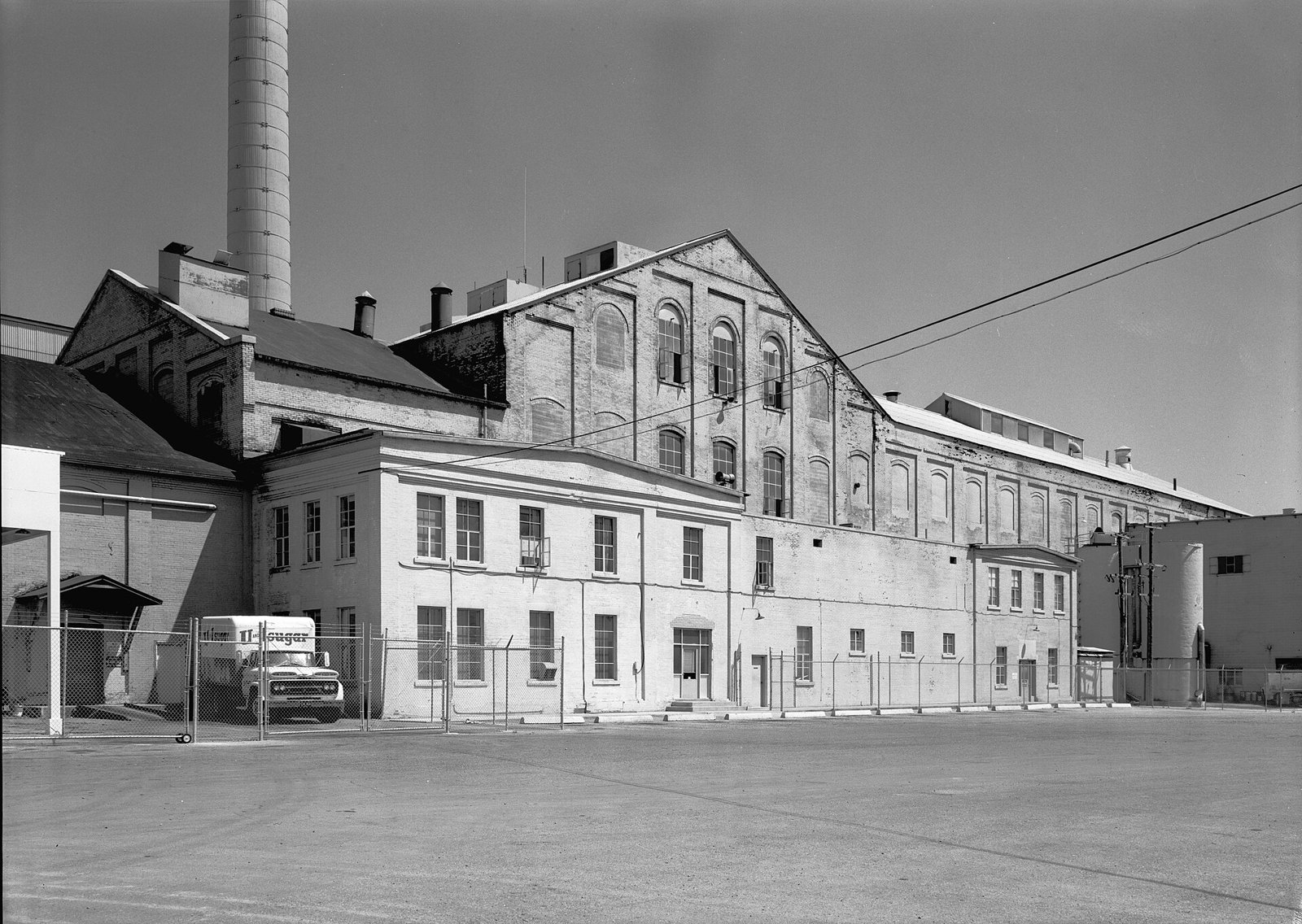
For readers in the Magic Valley this is not an abstraction. Amalgamated Sugar has been under the operating control of the Snake River Sugar Company, a cooperative of more than 750 beet growers in Idaho, Oregon and Washington, since 1997. Its growers raise beets on about 180,000 acres, and it calls itself the second-largest sugar beet processor in the country.6 The beet trucks on Magic Valley roads at harvest, the piles outside the factories, the jobs at the plants: all of it rests partly on a federal price floor. A grower who defends the program is defending his living, and a fair account says so. The question public choice asks is narrower. Why does a policy that costs the country about a billion dollars a year, by the government's own auditors' count, keep winning votes in Congress decade after decade?
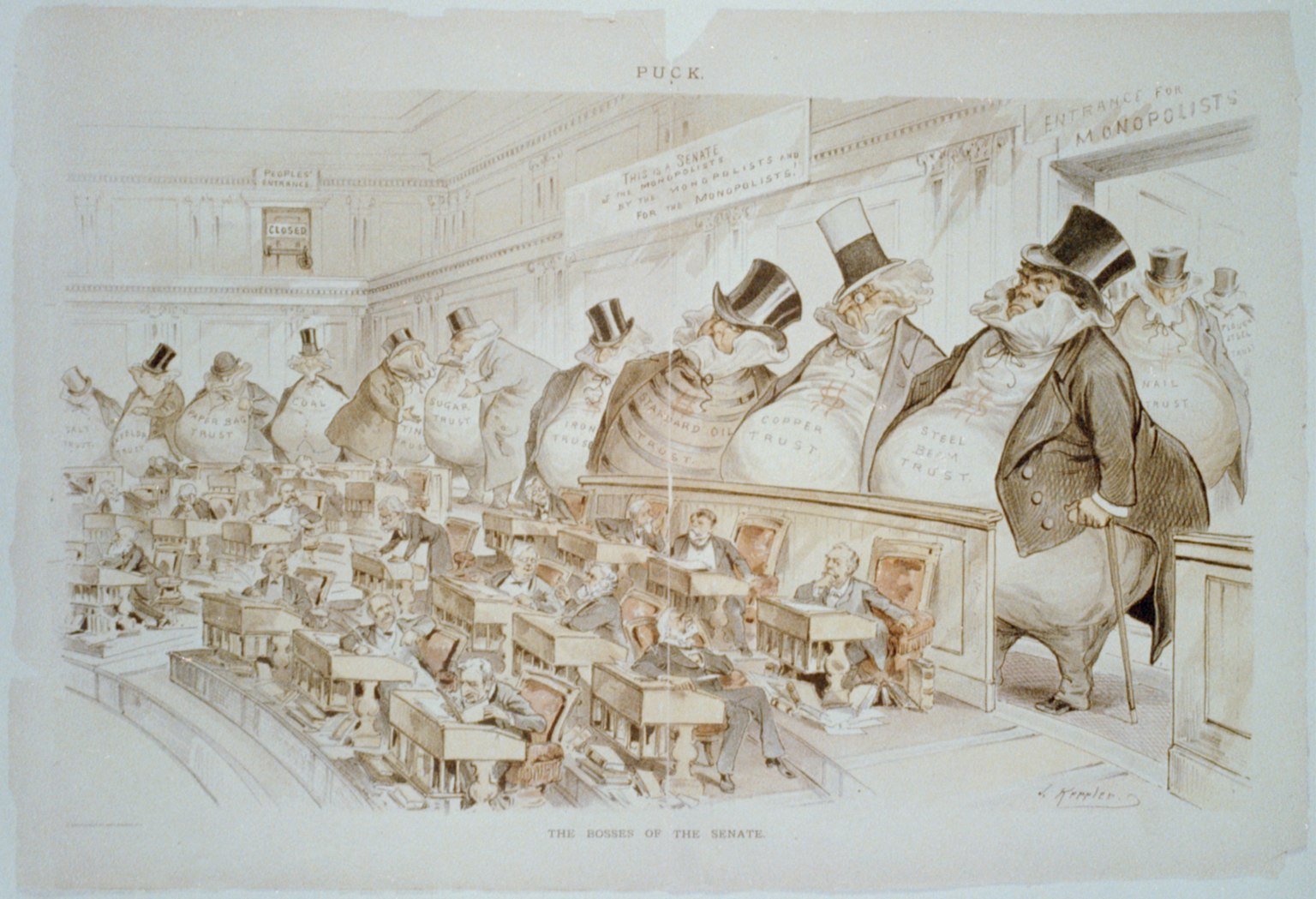
Politics without romance
James McGill Buchanan was born on October 3, 1919, in Murfreesboro, Tennessee, and died on January 9, 2013, in Blacksburg, Virginia. When the Swedish Academy gave him the economics prize in 1986, his address was the Center for Study of Public Choice in Fairfax, Virginia, and his citation read "for his development of the contractual and constitutional bases for the theory of economic and political decision-making."8
The Academy's press release put his starting point in a sentence most people can test against their own experience. People who act from self-interest in the market can hardly be expected to act from pure altruism once they enter politics. Parties and officials who act at least partly from self-interest, the Academy explained, will try to win as many votes as they can in order to reach positions of power.9 Buchanan liked to call this approach "politics without romance," and he used the phrase as the title of a lecture that later scholars have studied for its debt to Adam Smith and David Hume.10 The romance he rejected was the picture of government as a wise and selfless guardian that steps in whenever markets fall short.
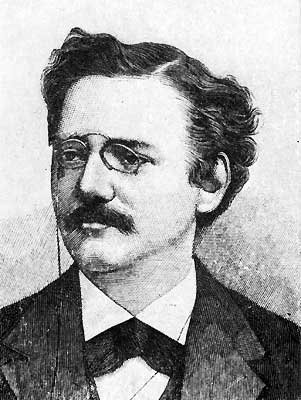
The idea did not start with him, and he said so. In his Nobel lecture, given on December 8, 1986, and titled "The Constitution of Economic Policy," he traced his own work to a dissertation the Swedish economist Knut Wicksell published in Jena in 1896.11 Wicksell had warned his fellow economists that legislators and ministers were not angels. Buchanan quoted Wicksell's warning in his lecture: "They are not pure organs of the community with no thought other than to promote the common weal." And he drew the professional lesson for his own trade. "Economists should cease proffering policy advice as if they were employed by a benevolent despot," he said, and should study instead the structure within which political decisions actually get made.11
The Calculus of Consent (1962)
Buchanan's best-known book, written with his colleague Gordon Tullock and published by the University of Michigan Press in 1962, was The Calculus of Consent: Logical Foundations of Constitutional Democracy. Its method is stated in the preface. "Human beings are conceived as the only ultimate choice-makers in determining group as well as private action." The authors were careful to add that this was a way of analyzing politics, not a moral creed: "Methodological individualism should not be confused with 'individualism' as a norm for organizing social activity."13
The book's central move is to separate two levels of choice. At the first level a people chooses its rules: how a law gets passed, how large a majority it needs, what the government may not do at all. At the second level, players act within those rules, passing budgets and fighting over bills.14 Buchanan and Tullock then weighed two kinds of cost that any decision rule creates. A rule that lets a bare majority, or one official, decide quickly is cheap to operate, but it exposes everyone else to the risk of being taxed or regulated for someone else's benefit. A rule that requires near-unanimity protects everyone from that risk, but it makes action slow and costly, since any holdout can block it. The best rule for a given kind of decision balances the two. A city might sensibly let a manager buy paper clips on his own signature and still require a two-thirds vote to borrow against the taxpayers' homes.
The book also gave a serious account of logrolling, the trading of votes among legislators. William Shughart, writing in the Concise Encyclopedia of Economics, gives the standard case: representatives of farm states agree to vote for protection for textile makers in exchange for votes for farm subsidies, so that both measures pass even though neither could pass alone.15 Logrolling is not always bad. It can let a minority with an intense interest win against a majority that barely cares, which is sometimes just. But it also explains how a legislature can pass a bundle of measures, each of which helps a few, whose combined cost to everyone exceeds the combined benefit.
Gordon Tullock, born in Rockford, Illinois, in 1922, came to the partnership from an unusual path. He studied at the University of Chicago from 1940 until the Army draft interrupted him, took a law degree there in 1947, and spent nine years as a Foreign Service officer before becoming a professor of economics. He taught at South Carolina, Virginia, Rice, Virginia Tech, George Mason and Arizona, and in 1966 started the journal that became Public Choice in 1969. He died in 2014.16 Buchanan, for his part, became the first director of the Center for the Study of Public Choice in 1969 and spent most of his career at Virginia universities, which is why the field is often called the Virginia school.14
Small groups beat large ones: Mancur Olson
Public choice explains why a legislator might favor the sugar growers. It took another economist to explain why the sugar buyers do not fight back. Mancur Olson, born in Grand Forks, North Dakota, in 1932, published The Logic of Collective Action: Public Goods and the Theory of Groups with Harvard University Press in 1965.17
Olson's insight cuts against common sense. We tend to assume that a large group with a shared interest will organize to defend it, and that a large group therefore has more political power than a small one. Olson argued the opposite. A benefit won by lobbying goes to everyone in the group whether or not they helped pay for the lobbying. So each member is tempted to let the others do the work, and in a very large group almost everyone gives in to the temptation. In a small group each member's share of the gain is large enough to justify the effort, the members know each other, and shirkers can be noticed. Shughart sums up the result: small, homogeneous groups with strong common interests tend to be more effective at applying political pressure than large, diffuse ones.15
Run the sugar numbers through Olson's logic. GAO's consumer cost of $2.5 billion to $3.5 billion a year, spread over roughly 340 million Americans, comes to something like $7 to $10 a person. Nobody quits his job to fight a ten-dollar loss. The benefit of $1.4 billion to $2.7 billion, divided among a few thousand growing operations and a handful of processors, comes to a great deal per farm.4 The growers have every reason to send representatives to Washington, give to campaigns and read the Farm Service Agency notices. The buyers have almost none. Large food companies do lobby against the program, which is why the fight is not entirely one-sided. But the household that pays twice the world price at the grocery store has no lobbyist at all.
Olson also saw how organizers get around the problem. Groups that succeed in politics often do so by offering their members something else they want, such as insurance, a trade journal or a seat at a professional meeting, and then using the dues for lobbying. He called this the by-product theory.17 The farm bureau that sells its members insurance and also testifies on the farm bill is one example. So is the professional society that runs the licensing exam.
The Rise and Decline of Nations (1982)
Olson's second major book, The Rise and Decline of Nations, published by Yale in 1982, took the argument from single programs to whole countries. In a stable society, he argued, small organized groups pile up over decades: trade associations, unions, professional cartels, protected industries. He called them distributional coalitions, because their aim is to get a bigger slice of the national pie, not a bigger pie. Each coalition slows change a little. Together they make an old, stable country sclerotic. His most striking claim was historical. He credited part of the rapid postwar growth of West Germany and Japan to the destruction of their coalitions by war, totalitarian rule and foreign occupation, and wrote that countries whose coalitions had been emasculated or abolished should grow quickly once a free and stable legal order was put in place.17
Olson had no brief for war. His point was that peace and stability carry a hidden cost, one that free people have to work to offset. His last book, Power and Prosperity, appeared in 2000, two years after his death, and contrasted the stationary bandit, a ruler who means to stay and so has some interest in his subjects' prosperity, with the roving bandit who takes what he can and moves on.17
Rent seeking: Tullock and Krueger
Economists use the word rent for any return above what it takes to keep a resource in its present use. Rent seeking is the effort to get such a return through politics: a subsidy for the good you produce, a tariff against your foreign rivals, a rule that keeps new competitors out.18 The concept has two parents.
Tullock's 1967 article
Tullock described the idea first, without the name, in "The Welfare Costs of Tariffs, Monopolies, and Theft," published in the Western Economic Journal in 1967.18 Before him, economists measured the cost of a monopoly or a tariff by the small triangle of trades that the higher price prevents. Tullock pointed out that this left something out. A monopoly privilege granted by government is a prize, and people spend real resources competing for prizes. Lawyers, lobbyists, campaign contributions and the time of able executives all go into winning the privilege or defending it. Those resources could have produced something else. So the true social cost of a tariff includes much of the profit the protected firms earn, because firms will spend up to that much to get and keep it. His comparison with theft makes the point: a society loses not just what the thief takes but also what the thief spends on tools and what homeowners spend on locks.
Krueger's numbers
Anne Krueger, studying heavily regulated poor countries, reached the same idea on her own and gave it the name that stuck. Her article "The Political Economy of the Rent-Seeking Society" appeared in the American Economic Review in 1974.18 She tried to measure the stakes. For India in 1964 she estimated that rents created by government regulation came to 7.3 percent of national income, and that import restrictions alone accounted for 5.1 percent. For Turkey in 1968 she estimated that the rents from import licenses alone were about 15 percent of gross national product.19 When a license to import is worth that much, the smartest people in the country will spend their days chasing licenses instead of building firms.
Why privileges are hard to repeal
Tullock added a second and gloomier point in a 1975 article titled "The Transitional Gains Trap." When government creates a privilege, the first owners profit. But the value of the privilege soon gets built into the price of whatever asset carries it, so later buyers pay full price and earn only an ordinary return. If the government then ends the privilege, those later owners suffer a real loss, even though they never got rich from it.16 The New York taxi medallion is the textbook case. So is farmland whose price reflects a commodity program. A beet grower who bought or leased ground at a price that assumed a protected sugar market has a strong and honest grievance if the protection disappears overnight. Tullock's conclusion was that the best time to stop a privilege is before it starts.
Tullock also noticed a puzzle that cuts the other way. If privileges are worth billions, why do interest groups spend so little to get them? A firm that stands to gain a billion dollars from a rule may need only a few million in contributions and lobbying. The puzzle, now called the Tullock paradox, appears in his 1980 essay "Efficient Rent-Seeking." Proposed answers include voters who punish politicians caught selling favors too openly, and competition among politicians to sell them.20 The paradox matters because it shows that rent seeking, though real, is held in check by something, and that something is partly the honesty and watchfulness of citizens.
Voters who do not look
Anthony Downs, in An Economic Theory of Democracy (1957), supplied the theory of the voter that public choice built on. One vote almost never decides an election. So the personal payoff from studying the issues is tiny, while the cost in time is real. Downs concluded that ignorance about politics is rational for most voters, and he pointed out that by the same arithmetic the act of voting itself is hard to explain on self-interest alone.15
Rational ignorance explains the FSA notice nobody reads. It also explains why programs are so often designed to be hard to see. A tariff or a price support hidden in the price of food draws less attention than a check written from the Treasury for the same amount. The sugar program is designed to cost the government nothing on paper, and that design is part of its political strength.
Bryan Caplan of George Mason University pushed the theory further in The Myth of the Rational Voter: Why Democracies Choose Bad Policies (Princeton University Press, 2007). Caplan argued that voters are not merely uninformed but biased, and in predictable directions. Because a wrong belief about trade or jobs costs the individual voter nothing at the ballot box, people hold the beliefs that feel best, which Caplan called rational irrationality. Using the 1996 Survey of Americans and Economists on the Economy, which polled 1,510 members of the public and 250 economists, he sorted the public's systematic errors into four groups: an anti-market bias, an anti-foreign bias, a make-work bias that judges policies by jobs instead of output, and a pessimistic bias.21 A rival account, the expressive voting theory of Geoffrey Brennan and Loren Lomasky, holds that people vote mainly to express values and identity, and only secondarily to choose a policy. That rival is itself a public choice theory.
Bureaus and budgets: William Niskanen
William A. Niskanen (1933 to 2011) worked inside the government he later analyzed. He was a defense analyst at the Pentagon in the 1960s, moved to the Office of Management and Budget, was chief economist at Ford Motor Company in the mid-1970s, served on President Reagan's Council of Economic Advisers from 1981 to 1985, and later headed the Cato Institute.22
His 1971 book Bureaucracy and Representative Government proposed a model of the budget-maximizing bureaucrat. A bureau chief, Niskanen reasoned, gains in pay, prestige, staff and discretion as his budget grows, and he knows far more about what his bureau's work really costs than the legislators who fund it. So bureaus tend to ask for, and get, more than an informed legislature would grant.22 Later scholars revised the model. A school of thought sometimes called congressional dominance argued that oversight committees, not bureaucrats, largely set agency priorities, so that an agency's policy tends to mirror the preferences of the key members of its oversight committee.15 That revision moves the problem without solving it, because members tend to seek seats on the committees that matter most to their districts. If the House Agriculture Committee is full of members from farm districts, then the committee and the agency can agree with each other and both disagree with the country.
George Stigler at Chicago reached a related conclusion about regulatory agencies from a different direction, arguing in 1971 that regulation is usually acquired by the industry it governs. That theory of capture, and the airline deregulation that tested it, is covered in Lesson 6 on the Chicago school.
Changing the rules: constitutional economics
If ordinary politics tilts toward concentrated interests, what can be done? Buchanan's answer was to stop expecting better results from better people and to look instead for better rules. He distinguished the constitutional level, where rules are chosen, from the level of ordinary politics within them, and he founded a journal of constitutional economics to get economists to study the first level.14 The Academy's 1986 release explained why this mattered to him: for any given set of rules, the outcome is decided largely by the political forces of the moment, so advice aimed at a single outcome is often futile, while the design of the rules and the possibility of constitutional reform take on great importance.9
Americans already live under a document that does much of what Buchanan admired. Madison's Constitution divides power among branches and between the nation and the states, requires two houses to agree, gives the President a veto and demands supermajorities for treaties and amendments. These are decision-cost rules in Buchanan and Tullock's sense: they make action slower so that a temporary majority, or a well-organized faction, has a harder time using the government against everyone else.
A rule that beat the interests: military base closures
Every military base is a concentrated benefit to the town around it. For decades Congress found it nearly impossible to close any base, because each member would fight to save the one at home and trade votes to save others. In 1988 Congress tried a different rule. An independent commission reviews the Defense Department's list of bases to close or realign, the President approves or rejects the list, and the list then becomes law unless Congress passes a joint resolution of disapproval within 45 days. The commission needed a majority vote to add a base to the list, and the 2005 law raised that to seven of nine members for bases the Pentagon had not named. Rounds followed in 1991, 1993, 1995 and 2005.23 Because members vote on the whole package, no one can logroll to save one base. The base-closure process is about as clean a test of constitutional economics as American government has run: change the rule, and the outcome changes.
Buchanan pressed the same reasoning on budgets. He argued that once Keynesian economics removed the old moral rule that governments should balance their books in peacetime, politicians faced a standing temptation to spend now and send the bill to voters who could not yet vote. With Richard Wagner he made that case in Democracy in Deficit (1977). Robert Tollison, introducing a later edition, summed up the book's thesis: "Keynesian economics had a bias toward deficits in terms of political self-interest." Tollison also recalled Buchanan's "lifelong dedication to the goal of a balanced budget amendment to the United States Constitution."24 Congress has never sent such an amendment to the states. His followers read the deficits that followed as proof of his diagnosis. His critics answer that deficits in recessions and wars can be wise, and that a rigid rule would tie the hands of a government in an emergency.
Beyond sugar: farm payments
The sugar program is small. Federal farm support as a whole is not, and its pattern fits Olson's theory well enough to be worth a look. The Economic Research Service reports that 86 percent of American farms are small family farms, and that they account for 17 percent of the total value of farm production. Midsize and large-scale family farms account for 66 percent of production and received 71 percent of countercyclical-type commodity payments, the Agriculture Risk Coverage and Price Loss Coverage programs. Small family farms, by contrast, received 76 percent of Conservation Reserve Program payments. The survey data were collected for 2023.25
Read fairly, those numbers cut two ways. Commodity payments follow production, so it is not shocking that farms producing two-thirds of the crop get most of the payments tied to crops. But the political story told for farm programs is usually about saving the small family farm, and most commodity money goes elsewhere. Public choice predicts exactly that gap between the story that wins votes and the transfer that results.
| Year | Work | Main idea |
|---|---|---|
| 1896 | Wicksell, Finanztheoretische Untersuchungen | Vote taxes and spending together; near-unanimity tests whether a project is worth its cost |
| 1957 | Downs, An Economic Theory of Democracy | Rational ignorance of voters |
| 1962 | Buchanan and Tullock, The Calculus of Consent | Two levels of choice; decision rules weigh decision costs against the risk of being exploited |
| 1965 | Olson, The Logic of Collective Action | Small groups organize more easily than large ones |
| 1967 | Tullock, "The Welfare Costs of Tariffs, Monopolies, and Theft" | Resources spent chasing privileges are a social cost |
| 1971 | Niskanen, Bureaucracy and Representative Government | The budget-maximizing bureau |
| 1974 | Krueger, "The Political Economy of the Rent-Seeking Society" | Names rent seeking; estimates it at 7.3 percent of India's national income |
| 1982 | Olson, The Rise and Decline of Nations | Distributional coalitions slow stable societies |
| 1986 | Buchanan wins the Nobel Memorial Prize | Constitutional bases of political decision-making |
| 2007 | Caplan, The Myth of the Rational Voter | Voters hold systematic, not random, errors |
Sources for the table are given in notes 8 through 22.8
Where the theory runs short
Public choice is a powerful tool, and like any tool it can be swung too hard. The evidence against its strongest claims deserves the same plain statement as the evidence for them.
Voters care about the country
If voters were purely self-interested, they would judge a President by their own paychecks. Political scientists Donald Kinder and D. Roderick Kiewiet tested that in a 1981 article in the British Journal of Political Science titled "Sociotropic Politics: The American Case." They found that national economic conditions shape House and presidential elections, and that voters' judgments about the nation's economy matter more to their choices than their judgments about their own finances.27 People vote, in good part, on what they think is good for the country. That does not mean they judge correctly, which is Caplan's point. But it does mean the self-interested voter of the simplest models is a caricature.
The paradox of voting points the same way. Downs's own arithmetic says a rational, selfish person would rarely bother to vote, yet tens of millions do. Duty, conscience and the wish to belong all seem to play a part. A theory that cannot explain why people show up at the polls has something to learn about why people act in public life.
The method under fire
In Pathologies of Rational Choice Theory (Yale University Press, 1994), the Yale political scientists Donald Green and Ian Shapiro examined the most celebrated results of rational choice in political science, including the work on collective action and voting, and argued that its much heralded achievements were deeply suspect when checked against careful empirical tests.28 Their complaint was less that the theory was wrong than that its users often fitted the facts to it after the fact. Defenders replied that the book judged a young field by unfair standards, and that the core predictions about organized interests have held up well.
People can solve collective action problems
Elinor Ostrom shared the 2009 economics prize, with Oliver Williamson, "for her analysis of economic governance, especially the commons."29 She documented irrigation districts, fisheries and grazing lands where users had worked out their own rules and enforced them for generations, without either private ownership or a central government in charge. Her work shows that Olson's logic describes a tendency, not a law. Small communities with trust, clear boundaries and the power to make their own rules can overcome free riding. Westerners who have watched a canal company or a water board allocate shares in a dry year have seen her point in action. And her findings fit comfortably with Buchanan's emphasis on rules chosen by the people who live under them.
The quarrel over motives
The sharpest attack on public choice came in 2017 from Duke historian Nancy MacLean in Democracy in Chains. MacLean argued that Buchanan and his allies concluded they could not win majority support for their program and set out instead to change the rules of government, an effort later funded by Charles Koch and other donors, with the aim of weakening protections most Americans rely on. In an interview with the Chronicle of Higher Education published July 19, 2017, she said she criticized ideas and not persons, called Buchanan a gentleman, and, answering the historian Sam Tanenhaus's point that a movement is not the same thing as a conspiracy, said she had never called it a conspiracy but wished she had addressed that distinction more explicitly.30
The criticism of her book was heavy and came from the left as well as the right. Political scientist Henry Farrell, writing with Steven Teles, questioned her evidence that a Buchanan document amounted to a master plan for the right, and Rick Perlstein called the book a conspiracy theory that left out the many other forces shaping American conservatism. Others accused her of misreading public choice economics and of pressing her evidence beyond what it showed, including on the era of school desegregation after Brown v. Board of Education and on Buchanan's supposed debt to John C. Calhoun, a parallel his George Mason colleague Donald Boudreaux called astonishing.30 Her best point survives the dispute: rules that make it harder for majorities to act also make it harder to correct injustice, and a theory of rules has to say who the rules protect. Buchanan's own answer was Wicksell's. A rule is fair when people would agree to it before they know which side of a particular fight they will be on.
Government failure and market failure
The deepest lesson of public choice is comparative. Economists before Buchanan often compared a messy real market with an ideal government and concluded that government should step in. Public choice insists on comparing real markets with real governments. Sometimes the real government wins the comparison: no market will raise an army or run a court system. Sometimes it loses badly, as the sugar program shows. The theory does not tell us in advance which case we face. It tells us to ask who gains, who pays, who is organized, who is watching, and what rule would make the answer come out better.
That last question belongs to citizens as much as to economists. Rent seeking flourishes where nobody reads the notices. It weakens when ordinary people take the trouble to know what their representatives voted for and why. The founders called that civic virtue. Buchanan called it constitutional citizenship. Either name describes a duty that free people owe to the government they want to keep legitimate.
Learn more
- The Calculus of Consent (Liberty Fund edition): The full text of Buchanan and Tullock's founding book, free online.
- Buchanan's Nobel lecture, "The Constitution of Economic Policy": His own short statement of what public choice is for.
- William Shughart, "Public Choice": A clear encyclopedia overview of the field, its founders and its main ideas.
- David Henderson, "Rent Seeking": Short and concrete, with Krueger's estimates and everyday examples.
- GAO, Sugar Program report (2023): The government's own auditors on what the sugar program costs and how import quotas are allocated.
- USDA ERS, Sugar and Sweeteners Policy: How the program works, from the agency that runs the numbers.
- Elinor Ostrom, Nobel Prize 2009: The strongest evidence that people can solve collective action problems on their own.
- Nancy MacLean responds to her critics: The leading modern critic of Buchanan, in her own words, with a summary of the case against her book.
- Economic Systems, Lesson 5: Milton Friedman: Friedman's list of government activities he thought unjustified reads well alongside public choice.
Notes
- U.S. Department of Agriculture, Farm Service Agency, "USDA Announces Fiscal Year 2026 Sugar Loan Rates, No Actions Under Feedstock Flexibility Program," September 26, 2025. Regional rates for the 2025 crop, in cents per pound: refined beet sugar, Idaho, Oregon and Washington 32.56; raw cane sugar, Florida 22.96 and Louisiana 25.11. Read it online. ↩
- USDA Economic Research Service, "Sugar and Sweeteners: Policy," on nonrecourse loans to processors, the overall allotment quantity of not less than 85 percent of estimated deliveries for domestic human consumption, tariff-rate quotas, the Feedstock Flexibility Program and the no-cost objective. Read it online. ↩
- ERS, "Sugar and Sweeteners: Policy," for the 2020 to 2024 loan rates of 19.75 cents (raw cane) and 25.38 cents (refined beet); Agweek, "One Big Beautiful Bill Act improves sugar loan rates," for the new national rates of 24.00 cents and 32.77 cents. Read it online. ↩
- U.S. Government Accountability Office, Sugar Program: Alternative Methods for Implementing Import Restrictions Could Increase Effectiveness, GAO-24-106144, October 31, 2023, highlights page. The per-person figure in the text divides GAO's range by a U.S. population of about 340 million and is the author's arithmetic. Read it online. ↩
- U.S. General Accounting Office, Sugar Program: Supporting Sugar Prices Has Increased Users' Costs While Benefiting Producers, GAO/RCED-00-126, June 9, 2000, Results in Brief. Read it online. ↩
- National Council of Farmer Cooperatives, member profile, "Amalgamated Sugar Company." Read it online. ↩
- Joseph Keppler, The Bosses of the Senate, lithograph, Puck, 1889, Library of Congress Prints and Photographs Division, LCCN 2002718861, no known restrictions on publication. View it online. ↩
- Nobel Prize Outreach, "James M. Buchanan Jr., Facts," The Sveriges Riksbank Prize in Economic Sciences in Memory of Alfred Nobel 1986: born October 3, 1919, Murfreesboro, Tennessee; died January 9, 2013, Blacksburg, Virginia; affiliation Center for Study of Public Choice, Fairfax, Virginia; prize motivation. Read it online. ↩
- Royal Swedish Academy of Sciences, press release on the 1986 prize in economic sciences, on self-interest in politics and on the importance of constitutional rules and reform. Read it online. ↩
- Andrew Farrant and Maria Pia Paganelli, "Romance or No Romance? Adam Smith and David Hume in James Buchanan's 'Politics Without Romance,'" in Research in the History of Economic Thought and Methodology 34A (Emerald, 2016). Read it online. ↩
- James M. Buchanan, "The Constitution of Economic Policy," Prize Lecture, December 8, 1986, sections I, III and V, and note citing Knut Wicksell, Finanztheoretische Untersuchungen (Jena: Gustav Fischer, 1896). Read it online. ↩
- Photograph of Knut Wicksell, circa 1900, from the National Library of Sweden (Libris), public domain. View it online. ↩
- James M. Buchanan and Gordon Tullock, The Calculus of Consent: Logical Foundations of Constitutional Democracy (Ann Arbor: University of Michigan Press, 1962; Indianapolis: Liberty Fund, 1999, foreword by Robert D. Tollison), Preface. Read it online. ↩
- "James M. Buchanan," Concise Encyclopedia of Economics (Library of Economics and Liberty): Virginia career, first director of the Center for the Study of Public Choice in 1969, the distinction between the constitutional level and play within the rules, and the founding of a journal of constitutional economics. Read it online. ↩
- William F. Shughart II, "Public Choice," Concise Encyclopedia of Economics: Downs on rational voter ignorance, the effectiveness of small groups, farm subsidies and textile protection as a logrolling example, Niskanen's budget-maximization model and the later congressional dominance model. Read it online. ↩
- "Gordon Tullock," Concise Encyclopedia of Economics: 1922 to 2014, born in Rockford, Illinois; University of Chicago law degree, 1947; nine years in the Foreign Service; teaching posts; founder of Papers in Non-Market Decision Making (1966), renamed Public Choice (1969); "The Transitional Gains Trap" (1975). Read it online. ↩
- "Mancur Olson," Concise Encyclopedia of Economics: born 1932, Grand Forks, North Dakota, died 1998; The Logic of Collective Action (1965) and the by-product theory; The Rise and Decline of Nations (1982) on distributional coalitions, Germany and Japan; Power and Prosperity (2000) on stationary and roving bandits. Read it online. ↩
- David R. Henderson, "Rent Seeking," Concise Encyclopedia of Economics, citing Gordon Tullock, "The Welfare Costs of Tariffs, Monopolies and Theft," Western Economic Journal 5 (1967), and Anne O. Krueger, "The Political Economy of the Rent-Seeking Society," American Economic Review 64 (1974). Read it online. ↩
- "Anne O. Krueger," Concise Encyclopedia of Economics, on her estimates of rents in India (1964: 7.3 percent of national income, 5.1 percent from import restrictions alone) and Turkey (1968: 15 percent of GNP from import licenses). Read it online. ↩
- "Tullock paradox," citing Gordon Tullock, "Efficient Rent-Seeking," in James Buchanan, Robert Tollison and Gordon Tullock, eds., Toward a Theory of the Rent-Seeking Society (1980). Read it online. ↩
- "The Myth of the Rational Voter," on Bryan Caplan's book (Princeton University Press, 2007), rational irrationality, the four biases, the 1996 Survey of Americans and Economists on the Economy, and reviews including Loren Lomasky's. Read it online. ↩
- History of Economic Thought website, "William A. Niskanen, 1933-2011": career and the budget-maximizing bureaucrat model of Bureaucracy and Representative Government (1971). Read it online. ↩
- Daniel H. Else and David E. Lockwood, Military Base Closures: The 2005 BRAC Commission, Congressional Research Service RS22061, March 11, 2005. Read it online. ↩
- James M. Buchanan and Richard E. Wagner, Democracy in Deficit: The Political Legacy of Lord Keynes (New York: Academic Press, 1977), Liberty Fund edition with a foreword by Robert D. Tollison. Read it online. ↩
- USDA Economic Research Service, America's Farms and Ranches at a Glance: 2024 Edition, Economic Information Bulletin 283, December 2024, data from the 2023 Agricultural Resource Management Survey. Read it online. ↩
- Jack E. Boucher, "Garland Sugar Factory, Utah-Idaho Sugar Company, general view," August 1971, Historic American Engineering Record UT-19, Library of Congress. View it online. ↩
- Donald R. Kinder and D. Roderick Kiewiet, "Sociotropic Politics: The American Case," British Journal of Political Science 11, no. 2 (April 1981): 129-161. Read the abstract. ↩
- Donald P. Green and Ian Shapiro, Pathologies of Rational Choice Theory: A Critique of Applications in Political Science (New Haven: Yale University Press, 1994), as described by the Yale Department of Political Science. Read it online. ↩
- Nobel Prize Outreach, "The Sveriges Riksbank Prize in Economic Sciences in Memory of Alfred Nobel 2009," summary, prize motivations for Elinor Ostrom and Oliver E. Williamson. Read it online. ↩
- Marc Parry, "Nancy MacLean Responds to Her Critics," The Chronicle of Higher Education, July 19, 2017, an email interview that also summarizes the objections of Henry Farrell, Rick Perlstein, Sam Tanenhaus and others. Read it online. ↩


Check yourself
1. For what did the Royal Swedish Academy award James Buchanan the 1986 prize in economics?
The Nobel Foundation gives Buchanan's prize motivation as 'for his development of the contractual and constitutional bases for the theory of economic and political decision-making.'
2. According to GAO's October 2023 report on the sugar program, roughly how much does the program cost U.S. consumers each year, according to the studies GAO reviewed?
GAO-24-106144 reports estimates that the program costs consumers $2.5 billion to $3.5 billion a year, while producers gain $1.4 billion to $2.7 billion, for net costs to the economy of about $1 billion a year.
3. Who gave the name 'rent seeking' to the idea Gordon Tullock had described in 1967?
The Concise Encyclopedia of Economics says Tullock originated the idea in 1967 and Krueger introduced the label in 'The Political Economy of the Rent-Seeking Society' (1974).
4. What did Mancur Olson argue in The Rise and Decline of Nations (1982) about Germany and Japan after the Second World War?
Olson credited part of their rapid growth to the destruction of the special-interest coalitions that accumulate in stable societies and slow growth.
5. What was William Niskanen's working assumption about government bureaus in his 1971 book?
Niskanen's Bureaucracy and Representative Government modeled the 'budget-maximizing bureaucrat,' whose incentives push toward larger budgets and authority.
6. Which finding from political science is the strongest evidence against a purely self-interested model of the voter?
Kinder and Kiewiet's 1981 study of 'sociotropic politics' found that judgments of the nation's economy shape vote choice more than personal finances do.
Terms in this lesson
- Public choice
- The use of economic tools to study politics, on the assumption that voters, politicians and officials pursue their own goals within the rules they face, as people in markets do.
- Rent seeking
- Spending time and money to obtain a transfer of wealth through government, such as a subsidy, tariff or license limit, instead of creating new wealth.
- Logrolling
- Vote trading among legislators, in which each supports the other's measure so that both pass when neither would pass alone.
- Concentrated benefits and dispersed costs
- A policy whose gains go to a small, organized group while its costs are spread thinly over many people, each of whom has little reason to resist.
- Rational ignorance
- Anthony Downs's point that a voter has little reason to study public issues, because one vote almost never decides an election and the time spent learning is costly.
- Constitutional economics
- Buchanan's study of the choice of rules, as distinct from choices made within the rules, and of how better rules can restrain the faults of ordinary politics.
- Transitional gains trap
- Tullock's 1975 observation that the value of a government privilege gets built into the price of the asset that carries it, so later owners earn no special profit yet lose heavily if the privilege ends.
- Tariff-rate quota
- A trade rule that lets a fixed quantity of a good enter at a low tariff and charges a much higher tariff on anything above that quantity.
Sources
- James M. Buchanan, Facts, Nobel Prize in Economic Sciences 1986 checked 2026-10
- James M. Buchanan, The Constitution of Economic Policy, Prize Lecture, December 8, 1986 checked 2026-10
- Buchanan and Tullock, The Calculus of Consent (Liberty Fund edition, Online Library of Liberty / Econlib) checked 2026-10
- William F. Shughart II, Public Choice, Concise Encyclopedia of Economics checked 2026-10
- David R. Henderson, Rent Seeking, Concise Encyclopedia of Economics checked 2026-10
- Mancur Olson, biography, Concise Encyclopedia of Economics checked 2026-10
- GAO-24-106144, Sugar Program: Alternative Methods for Implementing Import Restrictions Could Increase Effectiveness (October 31, 2023) checked 2026-10
- GAO/RCED-00-126, Sugar Program: Supporting Sugar Prices Has Increased Users' Costs (June 9, 2000) checked 2026-10
- USDA Economic Research Service, Sugar and Sweeteners: Policy checked 2026-10
- USDA Farm Service Agency, Fiscal Year 2026 Sugar Loan Rates (September 26, 2025) checked 2026-10
- USDA ERS, America's Farms and Ranches at a Glance: 2024 Edition (EIB-283) checked 2026-10
- Congressional Research Service, Military Base Closures: The 2005 BRAC Commission (RS22061) checked 2026-10
- Marc Parry, Nancy MacLean Responds to Her Critics, Chronicle of Higher Education (July 19, 2017) checked 2026-10