Lesson 4 of 10 · about 24 minutes
Hayek and the Knowledge Problem
You'll be able to
- Describe the Hayek-Keynes debate of 1931 and 1932 and what each man said of the other's work
- State what The Road to Serfdom argues and what it does not, including the government services Hayek accepted
- Explain the argument of 'The Use of Knowledge in Society' (1945) using Hayek's own tin example
- Explain spontaneous order and Hayek's reasons for calling himself an Old Whig and not a conservative
- Compare Hayek and Friedman on method, money and the business cycle
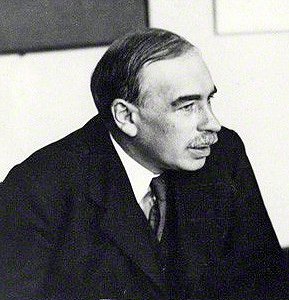
In June 1944 John Maynard Keynes was at sea, crossing the Atlantic to the conference at Bretton Woods that would design the postwar money system. He had brought along a new book by a man who had once been his sharpest critic, and on June 28 he wrote the author a letter. "In my opinion it is a grand book," Keynes told Friedrich Hayek. "Morally and philosophically I find myself in agreement with virtually the whole of it; and not only in agreement with it, but in a deeply moved agreement."1
Then came the objections. Keynes said Hayek had admitted that a line must be drawn somewhere between freedom and planning, "But you give us no guidance whatever as to where to draw it." He guessed that Hayek greatly underestimated "the practicability of the middle course."1 The two men liked each other by then. They had also spent the early 1930s in one of the most bruising exchanges in the history of economics. Their quarrel, friendly and unfriendly by turns, is the right place to begin with Hayek, because the question Keynes put in that letter is still the question.
Vienna, London and a quarrel with Keynes
Hayek was born in Vienna on May 8, 1899, the son of a professor of botany. He served in the Austro-Hungarian army on the Italian front in 1917 and 1918, took a doctorate in law at the University of Vienna in 1921 and one in political science in 1923, and spent the year from March 1923 to June 1924 doing graduate work at New York University.3 From 1927 to 1931 he directed the Austrian Institute for Trade Cycle Research. Then the London School of Economics invited him to lecture, and in 1931 he took its Tooke chair of economic science and statistics, which he held until 1950. He became a British subject in 1938, after the Nazi annexation of Austria made going home impossible.34
The 1931 lectures
The four London lectures came out in 1931 as Prices and Production. The historian Bruce Caldwell, general editor of Hayek's collected works, likes to tell what happened next. People who heard the lectures said Hayek was nearly incomprehensible when he read his text and quite clear when he answered questions, "so the end result was that they offered him a job."5 That summer Hayek also published a long review of Keynes's Treatise on Money. He argued that Keynes had borrowed part of Knut Wicksell's framework and ignored the theory of capital that went with it. Keynes was 16 years older, the editor of the Economic Journal and a public figure. He answered in print a few months later and went after Hayek's book as well. The most quoted line: Prices and Production seemed to him "one of the most frightful muddles I have ever read, with scarcely a sound proposition in it."5
Hayek's theory held that a central bank or banking system which pushed interest rates below the level set by real saving would draw resources into long-term projects that could not be finished once the credit stopped, and that the bust was the painful correction of those mistakes. Lesson 5 tests that theory against the evidence. Here it is enough to know that it drew heavy fire. Piero Sraffa of Cambridge attacked it in the Economic Journal in March 1932, and Nicholas Kaldor kept up the attack for a decade.6 In 1932 Hayek, Lionel Robbins and other LSE economists answered a letter from Keynes and his allies in The Times, arguing that private investment was a better road to recovery than public spending.4 When Keynes published The General Theory in 1936, it swept the profession. Hayek's own capital theory came out in 1941 and, in Caldwell's blunt verdict, was "almost unreadable, frankly; and in any event little read."5
Myth: Hayek predicted the crash of 1929
The Nobel committee wrote in 1974 that Hayek "was one of the few economists who gave warning of the possibility of a major economic crisis before the great crash came in the autumn of 1929," and Hayek later said yes when an interviewer asked whether he had forecast the depression.7 Scholars who have searched his writings of the time have found no clear prediction. A report he wrote for his institute, dated October 26, 1929, three days before the crash, said there was no reason at present to expect a sudden collapse of the New York market.4 His theory said a credit boom must end badly. It did not tell him when.
The war years
The war changed the relationship. Hayek reviewed Keynes's pamphlet How to Pay for the War (1940) favorably, and when the LSE was evacuated to Cambridge during the Battle of Britain, Keynes found Hayek rooms at King's College.5 Hayek was spending those years on a book he thought he had to write before the peace. It was published in London by Routledge in March 1944.
What The Road to Serfdom argues
Three American publishers turned the book down. Aaron Director, an economist with friends at the University of Chicago, helped place it with the University of Chicago Press, which published it on September 18, 1944. The first printing of 2,000 copies sold out at once, and more than 30,000 sold in six months.8 Look magazine ran a picture-book version in February 1945, and Reader's Digest printed a 20-page condensation in April 1945, which the Book-of-the-Month Club then sent to more than 600,000 readers.89 In Britain the book reached the 1945 election campaign. Winston Churchill warned in a broadcast that a socialist government would have to fall back on "some form of Gestapo," and the Labour leader Clement Attlee called the speech a second-hand version of the views of an Austrian professor. Labour won in a landslide.9
The dedication page reads "To the socialists of all parties."10 Hayek meant it. He was writing to people of good will in every party who believed that a planned economy could deliver security without costing freedom, and he thought they had not followed their own premises to the end.
The argument in brief
The book's chain of reasoning runs roughly like this. A central plan has to rank millions of uses for scarce resources. No democratic people agrees on such a ranking, because people value different things. So the planners must either stall or be given power to impose a ranking. Once that power exists, the general rules that let citizens plan their own lives give way to case-by-case orders. Hayek put the standard he was defending in a single sentence: "Stripped of all technicalities, this means that government in all its actions is bound by rules fixed and announced beforehand."11 And he named the cost of abandoning it with a phrase readers still repeat: "the more the state 'plans,' the more difficult planning becomes for the individual."11
Chapter 10, "Why the Worst Get on Top," adds a claim about people. A plan that needs a large, disciplined group with fairly uniform views will not usually recruit the best members of a society. Hayek wrote that such a group "is not likely to be formed by the best but rather by the worst elements of any society," because agreement is easiest to find at the lowest common level and among the most docile and the most easily led.12 Then there is the moral argument, which is easy to miss and which Keynes admired. Hayek thought that taking economic choices away from people took away the ground on which moral character grows.
"Responsibility, not to a superior, but to one's conscience, the awareness of a duty not exacted by compulsion, the necessity to decide which of the things one values are to be sacrificed to others, and to bear the consequences of one's own decision, are the very essence of any morals which deserve the name."
F. A. Hayek, The Road to Serfdom (Chicago, 1944), ch. 14, p. 212.13
What the book does not say
The book is often summarized as a claim that any step toward the welfare state ends in dictatorship. Hayek denied that in the introduction. "Nor am I arguing that these developments are inevitable," he wrote. "If they were, there would be no point in writing this."14 He also allowed government a good deal of work. He said that prohibiting poisonous substances, limiting working hours and requiring sanitary arrangements were "fully compatible with the preservation of competition," and that so was "an extensive system of social services," provided it was not designed to make competition ineffective.15 He wrote that "some minimum of food, shelter, and clothing, sufficient to preserve health and the capacity to work, can be assured to everybody," and that the case for the state helping to organize social insurance against sickness and accident was very strong.16 He even scolded his own side: "Probably nothing has done so much harm to the liberal cause as the wooden insistence of some liberals on certain rough rules of thumb, above all the principle of laissez faire."17
That is why readers on the right have sometimes found the book too soft. The Mises Institute economist Walter Block complained in 1996 that Hayek had made so many concessions that a system built on them would not differ sharply from what he opposed.9 Keynes made the mirror-image point in 1944. If the extreme is impossible and a line has to be drawn, he wrote, then Hayek was "on your own argument done for," since he was trying to persuade readers that one inch in the planned direction put them on a slippery path over the precipice.1
The answers from the left
The book drew sharp replies. Herman Finer, a Fabian socialist, answered it in 1946 with The Road to Reaction, and Barbara Wootton wrote Freedom under Planning (1945). George Orwell, reviewing it, agreed with what he called the negative part of the thesis, that collectivism is not inherently democratic and can give a tyrannical minority powers the Spanish Inquisitors never dreamt of. He also warned that a return to free competition could mean for most people a tyranny worse than the state's, because less accountable.9 The strongest modern reply points to Sweden, Denmark and Norway: high taxes, large welfare states and some of the freest societies on earth. Economists such as Jeffrey Sachs have used them to argue that Hayek's warning failed the test of history.9
Hayek's defenders answer that the Nordic countries kept private ownership, open trade and the rule of law, and abandoned the central planning of production that the book was actually about. Both sides have a point. The book's target was the 1940s idea of a centrally directed economy, and almost no democracy tried it. Whether that was because people heeded warnings like Hayek's, or because the danger was never as great as he feared, is the part nobody can prove.
The use of knowledge in society
The book made Hayek famous. A 12-page article made him permanent. "The Use of Knowledge in Society" appeared in the American Economic Review in September 1945, and in 2011 a committee of the American Economic Association named it one of the 20 best articles the journal had published in its first hundred years.184 It opens with a question: "What is the problem we wish to solve when we try to construct a rational economic order?"18
If someone had all the relevant information, Hayek wrote, the answer would be a matter of logic, and economists had worked out the mathematics. But the knowledge an economy depends on "never exists in concentrated or integrated form, but solely as the dispersed bits of incomplete and frequently contradictory knowledge which all the separate individuals possess."18 Much of it would never appear in a textbook. Hayek called it "the knowledge of the particular circumstances of time and place," and gave examples: the shipper who earns a living filling empty or half-filled journeys of tramp steamers, the estate agent who knows temporary opportunities, the arbitrageur who profits from local differences in commodity prices.18 Hayek noted with some irritation that people tend to treat this kind of knowledge with contempt. He thought it was as useful to society as any engineer's.
The tin example
His illustration is the passage most teachers quote. "Assume that somewhere in the world a new opportunity for the use of some raw material, say tin, has arisen, or that one of the sources of supply of tin has been eliminated." It does not matter which. "All that the users of tin need to know is that some of the tin they used to consume is now more profitably employed elsewhere, and that in consequence they must economize tin."18 They need not know where or why. A few people near the source know directly. They bid up the price, users of substitutes feel the change, users of the substitutes' substitutes feel it, and the adjustment spreads across the whole economy. "The whole acts as one market, not because any of its members survey the whole field, but because their limited individual fields of vision sufficiently overlap."18
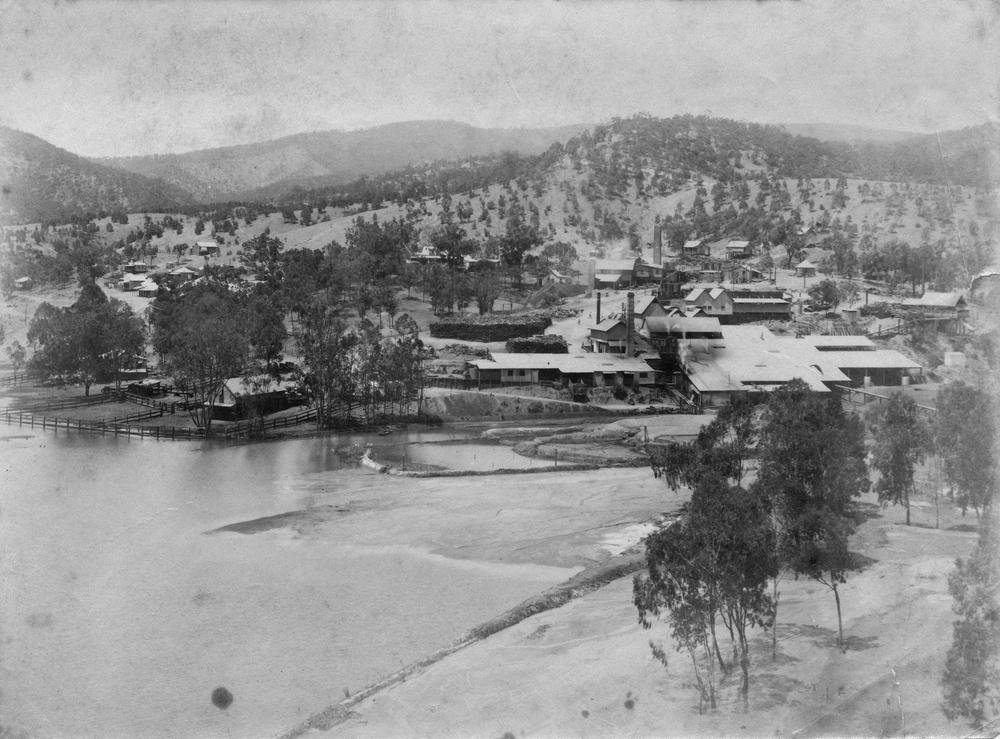
Hayek reached for a technical image. "It is more than a metaphor to describe the price system as a kind of machinery for registering change, or a system of telecommunications which enables individual producers to watch merely the movement of a few pointers, as an engineer might watch the hands of a few dials."18 And he chose a strong word on purpose. "The marvel is that in a case like that of a scarcity of one raw material, without an order being issued, without more than perhaps a handful of people knowing the cause, tens of thousands of people whose identity could not be ascertained by months of investigation, are made to use the material or its products more sparingly."18 If the mechanism had been designed by someone, he said, it "would have been acclaimed as one of the greatest triumphs of the human mind." Its misfortune was that nobody designed it and that the people guided by it usually do not know why they do what they do.18
A local version of the tin story
Picture a dry summer that cuts the hay crop in one part of the West. The price of hay rises at auction. A dairy three states away, which never heard about the drought, sees its feed bill go up and stretches its supply with silage or beet pulp. A cattle feeder decides to sell a few head early. A farmer with irrigated ground puts in an extra cutting. Nobody called a meeting. Every one of them acted on a number, and the number carried the news. That is the whole of Hayek's point, and it is why economists of every school, including many who reject his politics, assign the essay.
The essay was a contribution to a larger argument, the debate over whether socialism could calculate, which Lesson 5 tells in full. Ludwig von Mises had said in 1920 that a socialist economy without market prices for factories and machines could not tell a wise use of resources from a wasteful one. Socialist economists such as Oskar Lange answered that planners could set prices by trial and error. Hayek's reply, here and in a 1937 paper called "Economics and Knowledge," was that the trouble lay deeper than arithmetic. The planners could not gather the facts in the first place, because the facts lived in other people's heads and changed by the hour.20
Spontaneous order
The essay closes with a line from the philosopher Alfred North Whitehead that Hayek clearly loved: "Civilization advances by extending the number of important operations which we can perform without thinking about them."18 We use rules, customs and symbols whose meaning we do not fully understand, and through them we benefit from knowledge none of us has. For the rest of his life Hayek worked on the question of how such orders arise.
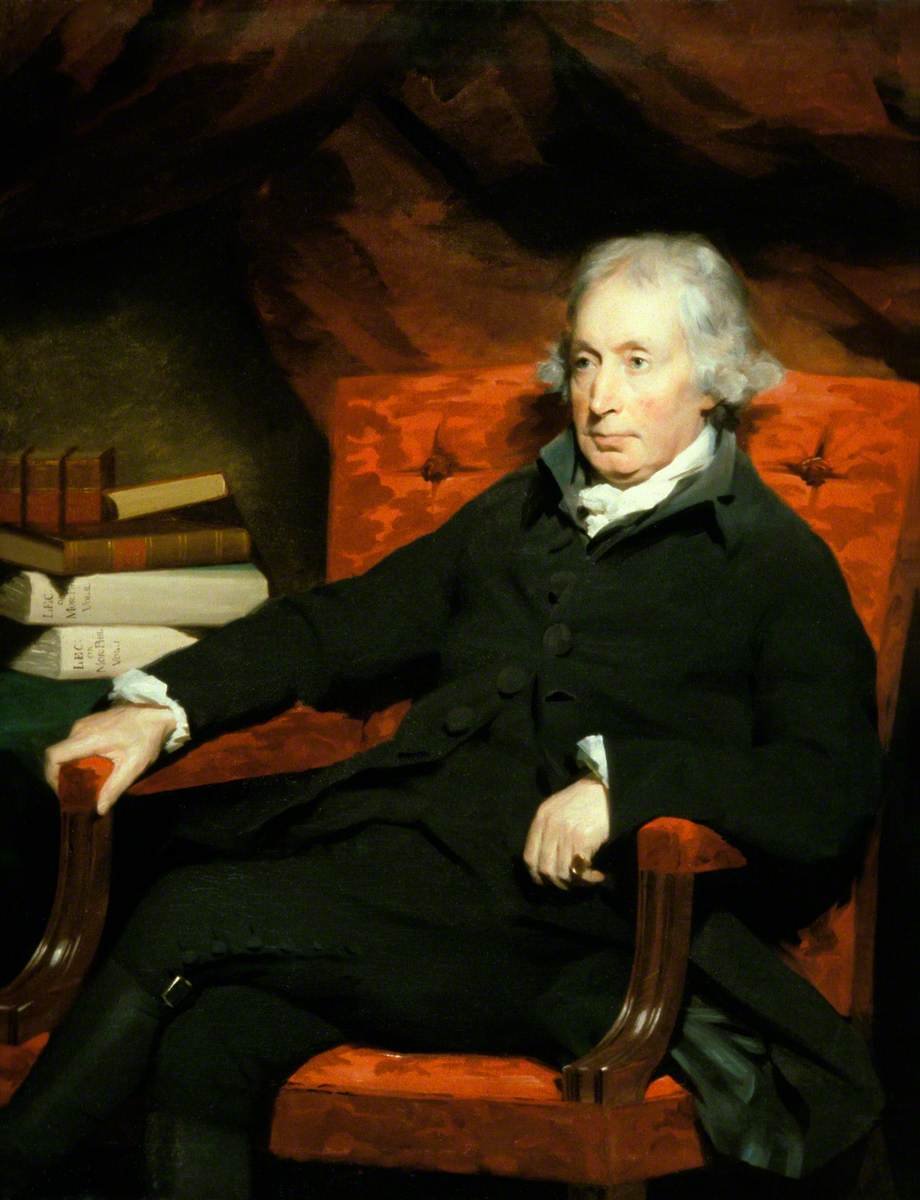
He found his answer in the Scottish Enlightenment. Adam Ferguson, a professor at Edinburgh, wrote in his Essay on the History of Civil Society (1767) that "nations stumble upon establishments, which are indeed the result of human action, but not the execution of any human design."21 Hayek quoted the line in The Constitution of Liberty and built a whole account of society on it. Language, money, the common law and the market were his standard examples. Nobody invented English. Nobody sat down and drafted the law of contracts from first principles. These orders grew as people tried things, kept what worked and passed it on. In the first volume of Law, Legislation and Liberty (1973) he named the two kinds of order with Greek words: a taxis is a made order, like an army or a firm, and a cosmos is a grown one.22
Milton Friedman, interviewed for public television in 1999, put the idea in his own words. There is a notion, he said, that you cannot get any order unless somebody plans it, "But, what Hayek emphasized was the possibility of spontaneous or decentralized order being produced by the market." Friedman reached for his favorite example, "a common, ordinary lead pencil, which required the cooperation of thousands of people."24
Spontaneous order does not mean that anything goes. Hayek insisted that a market works only inside a framework of rules: property, contract, the rule of law, strong protection of a private sphere. Caldwell sums up Hayek's view of regulation in the same spirit. Hayek opposed price-fixing and limits on entry because they blind the price system, worried that regulators always look backward while entrepreneurs look forward, and asked the old question of who will regulate the regulators.5
The Constitution of Liberty and the Old Whig
In 1950 Hayek left London. After a visiting year at the University of Arkansas he joined the University of Chicago, not in the economics department but on the Committee on Social Thought, as professor of social and moral science. His salary was paid by an outside foundation, the William Volker Fund.34 At Chicago he wrote The Constitution of Liberty, published in 1960. Its first sentence sets the subject: "We are concerned in this book with that condition of men in which coercion of some by others is reduced as much as is possible in society."25
The book is a long defense of the rule of law and a long examination of the welfare state, chapter by chapter: social security, taxation, housing, agriculture, education. Hayek again accepted a floor. He wrote that "as we grow richer, that minimum of sustenance which the community has always provided for those not able to look after themselves, and which can be provided outside the market, will gradually rise," and that government could usefully assist or even lead in such efforts.25 He took for granted "a system of public relief which provides a uniform minimum for all instances of proved need, so that no member of the community need be in want of food or shelter."25 What he opposed was using the state's coercive power to give each person the income someone decided he deserved. In the summer of 1975, according to an account by John Ranelagh, who worked there, Margaret Thatcher interrupted a paper on the "middle way" at the Conservative Research Department, pulled the book from her briefcase, and banged it on the table: "This is what we believe."4
Why I Am Not a Conservative
So it surprised many readers that the book ends with a postscript titled "Why I Am Not a Conservative." Hayek granted that conservatism proper is "a legitimate, probably necessary, and certainly widespread attitude of opposition to drastic change." His decisive objection was that "by its very nature it cannot offer an alternative to the direction in which we are moving." The tug of war between conservatives and progressives "can only affect the speed, not the direction, of contemporary developments." Though there was a need for a "brake on the vehicle of progress," he wrote, "I personally cannot be content with simply helping to apply the brake."26
He listed other complaints: a fondness for authority, a weak grasp of economic forces, nationalism, and what he called obscurantism, the habit of rejecting well-supported new knowledge because one dislikes its consequences. He was careful about faith. "True liberalism has no quarrel with religion," he wrote, and he deplored the "militant and essentially illiberal anti-religionism" of much nineteenth-century Continental liberalism. The liberal, "however profound his own spiritual beliefs, he will never regard himself as entitled to impose them on others."26
He also refused the word libertarian, which he found "singularly unattractive," with "too much the flavor of a manufactured term and of a substitute." His own label was older. "The more I learn about the evolution of ideas, the more I have become aware that I am simply an unrepentant Old Whig, with the stress on the 'old.'" He traced the tradition to the English Whigs and agreed with Lord Acton that "the notion of a higher law above municipal codes, with which Whiggism began, is the supreme achievement of Englishmen." In America, Hayek wrote, that doctrine was represented not by Jefferson or Hamilton but by James Madison, "the father of the Constitution."26
Remember: Hayek's quarrel with conservatives was partly over words. He wrote that in the United States it was still possible to defend liberty by defending long-established institutions, and that the American defender of the American tradition was a liberal in the European sense. American conservatives who defend the Constitution and the rule of law are defending much of what Hayek wanted defended. Lesson 10 takes up the conservative reply.26
Friedman told the PBS interviewer in 1999 that Hayek "is not a conservative, was not a conservative," and that in the American vocabulary Hayek was a libertarian, as Friedman called himself one.24 Hayek, who had refused that word in print, might not have thanked him for it.
The Nobel Prize and the pretence of knowledge
Hayek moved to the University of Freiburg in West Germany in 1962, retired in 1968, taught at Salzburg from 1969 to 1977 and returned to Freiburg.34 He was in his seventies, and many economists thought of him as a figure from the 1930s. Then, on October 9, 1974, the Royal Swedish Academy of Sciences announced that he would share the economics prize with Gunnar Myrdal, the Swedish social democrat, "for their pioneering work in the theory of money and economic fluctuations and for their penetrating analysis of the interdependence of economic, social and institutional phenomena."27 The press release singled out his work on how well different systems use "all the knowledge and all the information dispersed among individuals and enterprises," and added a pointed sentence: "For him it is not a matter of a simple defence of a liberal system of society as may sometimes appear from the popularized versions of his thinking."27 Myrdal reportedly complained about being paired with an ideologue.4
Hayek used his lecture in Stockholm on December 11, 1974, to scold his own profession. Inflation was accelerating across the West, and Hayek said it had been "brought about by policies which the majority of economists recommended and even urged governments to pursue." His verdict: "as a profession we have made a mess of things."28 He blamed what he called the scientistic attitude, the effort to copy the physical sciences by attending only to what can be measured. The theory that total spending determines total employment, he argued, was popular partly because it came with numbers, while the more likely cause of unemployment, a distorted structure of relative prices and wages, could not be measured in the same way. "I confess that I prefer true but imperfect knowledge, even if it leaves much indetermined and unpredictable, to a pretence of exact knowledge that is likely to be false."28
"He will therefore have to use what knowledge he can achieve, not to shape the results as the craftsman shapes his handiwork, but rather to cultivate a growth by providing the appropriate environment, in the manner in which the gardener does this for his plants."
F. A. Hayek, "The Pretence of Knowledge," Nobel lecture, December 11, 1974.28
The lecture ends with a warning against the student of society who becomes "an accomplice in men's fatal striving to control society," which would make him "not only a tyrant over his fellows" but perhaps "the destroyer of a civilization which no brain has designed but which has grown from the free efforts of millions of individuals."28 Later honors followed. Britain made him a Companion of Honour in 1984 on Thatcher's advice, and President George H. W. Bush awarded him the Presidential Medal of Freedom in 1991. He died in Freiburg on March 23, 1992, at 92.4
The Chile question
A fair account includes the episode his critics raise most often. Hayek visited Chile under General Augusto Pinochet's military government and accepted an honorary post with a free-market research center founded by economists there. In an interview with the Chilean newspaper El Mercurio published April 12, 1981, as translated and widely quoted, he said he was against dictatorships as long-term institutions but that a dictatorship might be necessary for a transitional period, and that he personally preferred a liberal dictatorship to a democratic government devoid of liberalism. In a 1978 letter to The Times he wrote that he had not found anyone in Chile who did not agree that personal freedom was greater under Pinochet than under Allende.4 His defenders note that he called the arrangement a hope and not a certainty, and that Chile did return to democracy in 1990. His critics answer that a theorist of the rule of law should not have spoken kindly of a regime that tortured and killed its opponents. Readers can judge. Lesson 5 of the Economic Systems module covers Friedman's own, different, contact with Chile.
Money without a government monopoly
Hayek's last major policy proposal was his most radical. In 1976 the Institute of Economic Affairs in London published Denationalisation of Money, and a revised and enlarged edition, The Argument Refined, followed in 1978.29 The proposal was simple to state. End the legal monopoly of governments over money and let private banks issue their own currencies, competing for customers on how well they held their value.
His reading of history was harsh. "I do not think it an exaggeration," he wrote, "to say that history is largely a history of inflation, and usually of inflations engineered by governments and for the gain of governments."29 From Roman times to the seventeenth century, he said, the story of coinage was an almost uninterrupted run of debasements. He drew a sweeping conclusion: that the recurring depressions and unemployment that critics had always held against the market order were "a consequence of the age-old government monopoly of the issue of money," and that competing private monies would have stayed stable and prevented the booms and busts.29
The obvious objection is Gresham's law, the old rule that bad money drives out good. Hayek answered that the law holds only when the government forces people to accept two monies at a fixed rate. With floating rates, people would get rid of the weaker money as fast as they could and hold the better one.29 Other economists raised practical doubts. A 1977 review by David H. Howard asked whether competition among currencies might settle into a new monopoly, and whether existing institutions had evolved to meet needs Hayek ignored.30 No country has adopted the plan. The European Central Bank has written that the decentralized money of bitcoin has its theoretical roots in Hayek's paper, though the political philosopher Adam James Tebble has argued that cryptocurrency goes further than Hayek ever proposed.30
Hayek and Friedman: allies who disagreed
Friedman always credited Hayek. The Road to Serfdom played a large part in how Friedman came to understand society, and the two men worked together, with Frank Knight and George Stigler, to found the Mont Pelerin Society,4 and in 1999 he told PBS that "There is no figure who had more of an influence, no person had more of an influence on the intellectuals behind the Iron Curtain than Friedrich Hayek."24 Yet the two men taught in different parts of the same university for twelve years and never became close. Alan Ebenstein, who wrote biographies of both men, judged that Hayek may have had a closer friendship with Keynes than with Friedman.4 Their disagreements were real, and they ran deep.
| Question | Hayek | Friedman |
|---|---|---|
| How is an economic theory tested? | Complex phenomena allow only pattern predictions and explanations of principle; copying physics leads to error ("The Pretence of Knowledge," 1974) | By its predictions, whatever its assumptions ("The Methodology of Positive Economics," 1953) |
| Who should issue money? | Competing private banks; no government monopoly (1976) | The central bank, bound by a fixed rule for money growth; later open to more radical ideas (1986) |
| What causes depressions? | Credit expansion that distorts the structure of production; the bust corrects it | Monetary contraction; the Fed let the money supply collapse after 1929 |
| What should be done in a slump? | Avoid new inflation that preserves bad investments | Prevent the money supply from falling |
| Preferred label | Old Whig; refused "conservative" and "libertarian" | Liberal in the old sense; "a libertarian with a small 'l'" |
| Best-known book for the public | The Road to Serfdom (1944) | Capitalism and Freedom (1962), Free to Choose (1980) |
On method
Friedman's 1953 essay said a theory should be judged by whether its predictions hold up. Hayek's Nobel lecture said that in complex fields like economics the demand for precise numerical prediction leads to false theories that look scientific. He did not regard his own theory as untestable. He said his account of unemployment "might be proved false," for instance if, with a constant money supply, a general rise in wages did not lead to unemployment.28 But he thought it could yield only general predictions. Late in life he told interviewers that one of the things he most regretted was not having criticized Friedman's Essays in Positive Economics, "which in a way is quite as dangerous a book" as Keynes's General Theory.32 Friedman, for his part, called himself "an enormous admirer of Hayek, but not for his economics." He judged Prices and Production "a very flawed book" while calling The Road to Serfdom "one of the great books of our time."4
On money
Hayek rejected Friedman's money rule in so many words. In Denationalisation he called the simple quantity theory of money "no more than a useful rough approximation" and said its chief defect was that it looked only at the general price level and ignored the damage new money does to relative prices and the direction of investment. Of Friedman's proposal for a legal limit on how fast the money supply could grow, he wrote: "I would not like to see what would happen if under such a provision it ever became known that the amount of cash in circulation was approaching the upper limit and that therefore a need for increased liquidity could not be met."29
Friedman returned the fire. As Lesson 1 noted, he objected that Hayek spent a career praising institutions that evolved without a designer and then proposed to replace the monetary system with a design of his own, and he pointed out that the law in most developed countries already lets two people trade in any medium they both accept.33 Yet in a 1986 paper with Anna Schwartz, "Has Government Any Role in Money?", Friedman himself moved a long way toward taking the government out of the money business, a shift the introduction to the third IEA edition of Hayek's paper pointed out.2933
On the business cycle
The deepest split was over the Depression. Friedman and Schwartz blamed the Federal Reserve for letting the money supply collapse after 1929, as Lesson 2 shows. Hayek's theory, at least as he and Lionel Robbins applied it in the early 1930s, warned against fighting the slump with new money. Caldwell describes his advice of the time as simply letting the system adjust.5 Friedman thought that advice had done real harm, and Lesson 5 quotes him saying so. By 1974 Hayek's emphasis had shifted to inflation. His Nobel lecture argued that unemployment would return when inflation stopped accelerating, "not because, as this view is sometimes misrepresented, this unemployment is deliberately brought about as a means to combat inflation," but as the inescapable consequence of the mistaken policies of the past.28
- 1899 Born in Vienna, May 8.
- 1921, 1923 Doctorates in law and political science, University of Vienna.
- 1931 Prices and Production; Tooke chair at the London School of Economics; the debate with Keynes begins.
- 1944 The Road to Serfdom: London in March, Chicago on September 18.
- 1945 "The Use of Knowledge in Society," American Economic Review, September.
- 1947 Founds the Mont Pelerin Society.
- 1950 Joins the Committee on Social Thought, University of Chicago.
- 1960 The Constitution of Liberty, with the postscript "Why I Am Not a Conservative."
- 1962 Moves to the University of Freiburg.
- 1973 Law, Legislation and Liberty, volume 1.
- 1974 Nobel Prize, shared with Gunnar Myrdal; lecture "The Pretence of Knowledge," December 11.
- 1976 Denationalisation of Money.
- 1991 Presidential Medal of Freedom.
- 1992 Dies in Freiburg, March 23.
For the reader who wants to carry one thing away from Hayek, it is the question he asked in 1945 and kept asking until 1992: who knows the facts? A rule that leaves decisions with the people who know the particular circumstances will often beat a plan made by people who do not, however wise they are. Keynes's question, where to draw the line, is the other half of the matter, and nobody in this module has answered it once and for all. Lesson 5 turns to the man who taught Hayek to ask his question, Ludwig von Mises.
Learn more
- Hayek, The Use of Knowledge in Society (1945): Twelve pages, the original journal scan from the AEA's list of its 20 best articles.
- Hayek, The Pretence of Knowledge (1974): The Nobel lecture in which he tells economists they "made a mess of things."
- Hayek, Why I Am Not a Conservative: The postscript to The Constitution of Liberty, best read alongside a conservative reply.
- The Road to Serfdom, 1944 Chicago edition: A scan of the wartime printing, so readers can check what the book really says.
- Skidelsky, Keynes v Hayek: The Four Buts: Keynes's biographer walks through the 1944 letter objection by objection.
- Caldwell, Cambridge Talk on Hayek (2010): Hayek's editor on the Keynes quarrel and on myths about Hayek from friend and foe.
- Hayek, Denationalisation of Money: The full text of the competing-currency proposal, with his reply to Friedman.
- Think Tank on Hayek (PBS, 1999): Friedman, two Hayek scholars and a critic from the left argue about his legacy.
Notes
- John Maynard Keynes to F. A. Hayek, June 28, 1944, in The Collected Writings of John Maynard Keynes, vol. 27, pp. 385-88, as quoted in Robert Skidelsky, "Keynes v Hayek: The Four Buts," Mont Pelerin Society special meeting, January 16, 2020 (Hoover Institution), sections "The First But" and "The Second But." Keynes read the book while crossing the Atlantic to Bretton Woods. Read it online. ↩
- Photograph of John Maynard Keynes, 1933, Wikimedia Commons, "File:Keynes 1933.jpg," marked public domain. View the file. ↩
- Friedrich August von Hayek, "Biographical," Nobel Prize in Economic Sciences 1974, from Nobel Lectures, Economics 1969-1980, ed. Assar Lindbeck (Singapore: World Scientific, 1992): born May 8, 1899; war service 1917-18; doctorates 1921 and 1923; New York University March 1923 to June 1924; institute 1927-31; Tooke Professor 1931-50; Chicago Committee on Social Thought 1950-62; Freiburg 1962-68. Read it online. ↩
- "Friedrich Hayek," Wikipedia, on British nationality (1938), the 1932 letters in The Times, the Volker Fund salary at Chicago, Salzburg and Freiburg, the October 26, 1929 report, Thatcher and The Constitution of Liberty (citing John Ranelagh), Myrdal's complaint, the Companion of Honour (1984), the Medal of Freedom (1991), the Chile interviews and the Centro de Estudios Publicos post, Ebenstein on Hayek and Friedman, Friedman's judgments of Hayek's books, the Mont Pelerin founding, the AER top 20 list (2011), and his death on March 23, 1992. Read it online. On the El Mercurio interview of April 12, 1981 and the 1978 letter to The Times, see also "Friedrich Hayek," Wikipedia en espanol, citing Juan Torres Lopez, "Hayek, Pinochet y algun otro mas," El Pais, June 22, 1999. Read it online. ↩
- Bruce Caldwell, "Cambridge Talk on Hayek," Institute for New Economic Thinking conference, King's College, Cambridge, April 8-11, 2010, pp. 1-8, on the 1931 lectures, the review of the Treatise, Keynes's reply, the war years, Hayek's cycle theory and policy advice, and his views on regulation. Read it online. ↩
- Piero Sraffa, "Dr. Hayek on Money and Capital," Economic Journal 42 (March 1932): 42-53; Nicholas Kaldor, "Professor Hayek and the Concertina-Effect," Economica 9, no. 36 (1942): 359-82; both summarized in "Austrian business cycle theory," Wikipedia. Read it online. ↩
- "The Prize in Economic Sciences 1974," press release, Royal Swedish Academy of Sciences, October 9, 1974, section "The Functional Efficiency of Economic Systems." Read it online. ↩
- University of Chicago Press, The Road to Serfdom, book page, on publication on September 18, 1944, the first printing of 2,000 copies, more than 30,000 sold in six months, and the Reader's Digest condensation distributed by the Book-of-the-Month Club to more than 600,000 readers. Read it online. ↩
- "The Road to Serfdom," Wikipedia, on the Routledge edition of March 1944, the three American rejections and Aaron Director, the Look version (February 1945) and the Reader's Digest condensation (April 1945), Churchill's broadcast and Attlee's reply, the reviews by Orwell, Finer and Wootton, Walter Block's 1996 criticism, and the Nordic objection by Jeffrey Sachs and others. Read it online. ↩
- F. A. Hayek, The Road to Serfdom (Chicago: University of Chicago Press, 1944), dedication page; this printing notes "Published September 1944. Eighth Impression July 1945." Read it online. ↩
- Hayek, The Road to Serfdom (Chicago, 1944), ch. 6, "Planning and the Rule of Law," pp. 72 and 76. Read it online. ↩
- Hayek, The Road to Serfdom (Chicago, 1944), ch. 10, "Why the Worst Get on Top," p. 138. Read it online. ↩
- Hayek, The Road to Serfdom (Chicago, 1944), ch. 14, "Material Conditions and Ideal Ends," p. 212. Skidelsky (note 1) discusses the passage and Keynes's reply that Hayek confused the moral and the material issues. Read it online. ↩
- Hayek, The Road to Serfdom (Chicago, 1944), Introduction, p. 4. Read it online. ↩
- Hayek, The Road to Serfdom (Chicago, 1944), ch. 3, "Individualism and Collectivism," p. 37. Read it online. ↩
- Hayek, The Road to Serfdom (Chicago, 1944), ch. 9, "Security and Freedom," pp. 120-21. Read it online. ↩
- Hayek, The Road to Serfdom (Chicago, 1944), ch. 1, "The Abandoned Road," pp. 17-18. Read it online. ↩
- F. A. Hayek, "The Use of Knowledge in Society," American Economic Review 35, no. 4 (September 1945): 519-30, at pp. 519 (the opening question and dispersed knowledge), 521-22 (time and place, the shipper and arbitrageur), 526 (tin), 527 (telecommunications, "marvel," "triumphs") and 528 (Whitehead). Read it online. ↩
- "Tin Smelter, dam and township of Irvinebank, ca. 1900," State Library of Queensland, Wikimedia Commons, "File:StateLibQld 1 390561 Tin Smelter, dam and township of Irvinebank, ca. 1900.jpg," public domain. View the file. ↩
- "Economic calculation problem," Wikipedia, on Mises (1920), Lange (1936-37), Hayek, ed., Collectivist Economic Planning (1935) and Hayek, "Economics and Knowledge," Economica 4, no. 13 (1937): 33-54. Read it online. ↩
- Adam Ferguson, An Essay on the History of Civil Society, 2nd ed. (London: A. Millar and T. Caddel; Edinburgh: A. Kincaid and J. Bell, 1768), part 3, section 2 (first published 1767); quoted by Hayek in The Constitution of Liberty, ch. 4. Read it online. ↩
- F. A. Hayek, Law, Legislation and Liberty, vol. 1, Rules and Order (London and Chicago, 1973), listed in his Nobel biography (note 3); ch. 2 is titled "Cosmos and Taxis." Read the biography. ↩
- Henry Raeburn, Adam Ferguson (1723-1816), c. 1790, University of Edinburgh Art Collection EU0012, Wikimedia Commons, public domain. View the file. ↩
- "Think Tank: Friedrich Hayek," transcript, PBS, 1999, with Ben Wattenberg, Karen Vaughn, Ronald Hamowy, Dean Baker and a recorded interview with Milton Friedman. Read it online. ↩
- F. A. Hayek, The Constitution of Liberty: The Definitive Edition, ed. Ronald Hamowy (Chicago: University of Chicago Press, 2011), ch. 1, p. 57 (opening sentence); ch. 17, "The Decline of Socialism and the Rise of the Welfare State," pp. 374-75 (minimum of sustenance); ch. 19, "Social Security," p. 424 (uniform minimum). First published 1960. Read it online. ↩
- F. A. Hayek, "Why I Am Not a Conservative," postscript to The Constitution of Liberty (1960), sections 1, 2, 3, 5, 6 and 7, as reprinted by the Foundation for Economic Education. Read it online. ↩
- "The Prize in Economic Sciences 1974," press release, October 9, 1974; prize motivation also given on "Friedrich von Hayek, Facts," NobelPrize.org. Read it online. ↩
- F. A. Hayek, "The Pretence of Knowledge," lecture to the memory of Alfred Nobel, December 11, 1974. Read it online. ↩
- F. A. Hayek, Denationalisation of Money: The Argument Refined, 2nd ed. (London: Institute of Economic Affairs, 1978), preface; section 4, "The Persistent Abuse of the Government Prerogative"; section 6, "The Confusion about Gresham's Law"; section 14, "The Uselessness of the Quantity Theory for Our Purposes"; and Geoffrey E. Wood, "Introduction to the Third Edition" (October 1990), as reprinted by FEE. Read it online. ↩
- "The Denationalisation of Money," Wikipedia, on the 1976 and 1978 editions, Friedman's objection, David H. Howard's 1977 review, the European Central Bank on bitcoin, and Adam James Tebble. Read it online. ↩
- Table compiled from notes 18, 28, 29 and 33 and from Milton Friedman, "The Methodology of Positive Economics," in Essays in Positive Economics (Chicago, 1953); Friedman's description of himself as "a libertarian with a small 'l'" is from "The Best of Both Worlds," interview by Brian Doherty, Reason, June 1995, as reprinted in "Quotations from Chairman Milton," Reason, January 24, 2007. Read it online. ↩
- F. A. Hayek, Hayek on Hayek: An Autobiographical Dialogue, ed. Stephen Kresge and Leif Wenar (Chicago: University of Chicago Press, 1994), p. 145, as quoted in "Friedman on Method," Organizations and Markets (blog), November 16, 2006. Read it online. ↩
- Milton Friedman and Anna J. Schwartz, "Has Government Any Role in Money?" Journal of Monetary Economics 17, no. 1 (1986): 37-62, reprinted in Friedman and Schwartz, Has Government Any Role in Money? (Chicago, 1987); Friedman's objection to Hayek's proposal as summarized in "The Denationalisation of Money," Wikipedia. Read it online. ↩


Check yourself
1. What did John Maynard Keynes write to Hayek after reading The Road to Serfdom in June 1944?
Keynes's letter of June 28, 1944, quoted by Robert Skidelsky and Bruce Caldwell, said he was in 'a deeply moved agreement' morally and philosophically, then objected that Hayek admitted a line must be drawn somewhere but gave 'no guidance whatever as to where to draw it.' The 'frightful muddles' remark came from Keynes's 1931 reply to Hayek's review.
2. In The Road to Serfdom, what did Hayek say about a minimum standard of living?
Chapter 9, 'Security and Freedom,' says there can be no doubt that 'some minimum of food, shelter, and clothing, sufficient to preserve health and the capacity to work, can be assured to everybody' (Chicago edition, 1944, p. 120).
3. In 'The Use of Knowledge in Society' (1945), what does Hayek say the users of tin need to know when tin becomes scarcer?
Hayek wrote that 'All that the users of tin need to know is that some of the tin they used to consume is now more profitably employed elsewhere,' and that most of them need not know where the more urgent need has arisen (American Economic Review 35, no. 4, p. 526).
4. Why did Hayek refuse to call himself a conservative in the postscript to The Constitution of Liberty (1960)?
Hayek wrote that conservatism 'by its very nature' cannot offer an alternative to the direction in which we are moving, and that the tug of war between conservatives and progressives 'can only affect the speed, not the direction' of events. He called himself an unrepentant Old Whig.
5. What did Hayek propose in Denationalisation of Money (1976)?
The Institute of Economic Affairs paper argued that the government monopoly of the issue of money should end and that competing private currencies would tend to be stable. Hayek also rejected Friedman's money-growth rule in the same work.
6. What did Hayek say about Friedman's Essays in Positive Economics in later interviews?
In Hayek on Hayek (1994), p. 145, Hayek said one of the things he most regretted was not having criticized Friedman's Essays in Positive Economics, 'which in a way is quite as dangerous a book' as the General Theory.
Terms in this lesson
- Knowledge problem
- Hayek's name for the fact that the knowledge an economy runs on is scattered among millions of people, much of it about particular times and places, and never exists in one mind or one office.
- Price signal
- A change in a price that tells buyers and sellers to use more or less of something, without telling them why. Hayek compared the price system to a system of telecommunications.
- Spontaneous order
- An order that arises from many people following rules and pursuing their own plans, without anyone designing the result. Language, common law and markets are Hayek's usual examples.
- Rule of law
- In Hayek's sense, government bound in all its actions by general rules fixed and announced beforehand, so that people can foresee how coercive power will be used and plan their own affairs.
- Scientism
- Hayek's word for the uncritical copying of the methods of the physical sciences in fields where they do not fit, such as the study of society.
- Old Whig
- Hayek's chosen label: the English tradition of limited government under a higher law, which he traced to 1688 and to James Madison.
- Denationalisation of money
- Hayek's 1976 proposal to end the government monopoly on issuing money and let private banks issue competing currencies.
Sources
- F. A. Hayek, The Use of Knowledge in Society, American Economic Review 35, no. 4 (September 1945), 519-530 checked 2026-10
- F. A. Hayek, The Road to Serfdom (Chicago: University of Chicago Press, 1944), scanned at the Internet Archive checked 2026-10
- F. A. Hayek, The Pretence of Knowledge, Nobel Prize lecture, December 11, 1974 checked 2026-10
- The Prize in Economic Sciences 1974, press release, October 9, 1974 checked 2026-10
- Friedrich von Hayek, Biographical, Nobel Prize 1974 checked 2026-10
- F. A. Hayek, Why I Am Not a Conservative (postscript to The Constitution of Liberty, 1960) checked 2026-10
- F. A. Hayek, Denationalisation of Money: The Argument Refined (full text at FEE) checked 2026-10
- Robert Skidelsky, Keynes v Hayek: The Four Buts (Hoover Institution, 2020) checked 2026-10
- Bruce Caldwell, Cambridge Talk on Hayek (INET, April 2010) checked 2026-10
- Think Tank with Ben Wattenberg, Friedrich Hayek, transcript with Milton Friedman (PBS, 1999) checked 2026-10
- The Road to Serfdom, University of Chicago Press page checked 2026-10
- Friedrich Hayek (Wikipedia) checked 2026-10
- The Road to Serfdom (Wikipedia) checked 2026-10