Lesson 5 of 10 · about 25 minutes
Mises, Rothbard and the Austrian School
You'll be able to
- Explain Menger's subjective theory of value and Bohm-Bawerk's ideas of time preference and roundabout production
- State Mises's 1920 argument that socialism cannot calculate, Oskar Lange's answer, and how the debate looked after 1989
- Describe the Austrian theory of the business cycle and the main empirical and theoretical objections to it
- Explain praxeology and why most economists reject Mises's a priori method
- Describe the work of Rothbard and Hazlitt and the role of the Mises Institute
On the day German troops entered Vienna in March 1938, men came to an apartment in the city, took the papers and library of an economist who no longer lived there, and carted them away. Ludwig von Mises had left Austria for a post in Geneva four years earlier. His papers were believed lost for half a century, until the historian Richard Ebeling and his wife Anna found them in a Soviet archive in Moscow.1 The Nazis had seized them, and the Red Army had seized them from the Nazis. Two regimes that each ran their economies from the top had wanted the files of the man who said such economies could not work.
Mises was 58 when he and his wife fled again in 1940, through France, Spain and Portugal, to New York.1 He had no university post waiting for him. Yet the tradition he carried, which began in Vienna in 1871, outlived the regimes that chased him, and it now has its own institute, journals, website and a large following among people who have never taken an economics class. Lesson 4 traced Hayek, the most honored member of that tradition. This lesson follows the rest of the family, and it gives the critics their full say.
Menger and the first Vienna school
Carl Menger was born in 1840 in Neu-Sandez, in Austrian Galicia (now Nowy Sacz in Poland). He trained in law and spent part of the 1860s as a market reporter for newspapers in Lemberg and Vienna, and that work, by the usual account, showed him a gap between the price theory he had been taught and the way buyers and sellers actually reasoned.2 In 1871 he published Grundsatze der Volkswirtschaftslehre, translated as Principles of Economics. In 1876 he became tutor in political economy to Crown Prince Rudolf, traveling with him through Europe and the British Isles, and he held the chair of political economy at Vienna until 1903. He died in 1921.2
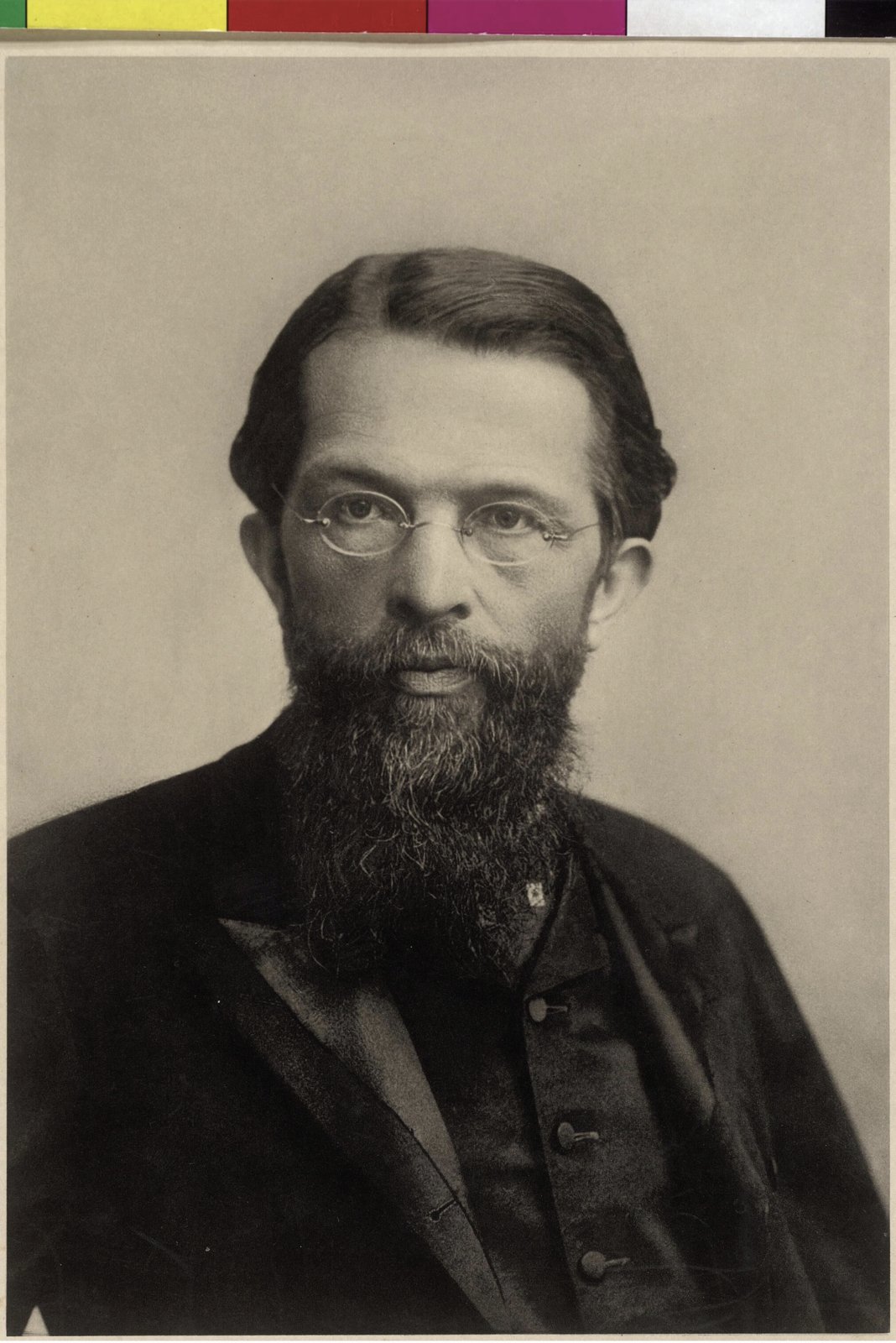
The book's central idea is one every reader can test at the grocery store. The classical economists, from Adam Smith to Karl Marx, had tied value to the cost of production, above all to labor. Menger said value lives in the mind of the person choosing.
"Value is therefore nothing inherent in goods, no property of them, but merely the importance that we first attribute to the satisfaction of our needs, that is, to our lives and well-being, and in consequence carry over to economic goods as the exclusive causes of the satisfaction of our needs."
Carl Menger, Principles of Economics (1871), ch. 3, "The Theory of Value," trans. James Dingwall and Bert F. Hoselitz (Mises Institute, 2007), p. 116.4
And value depends on the last unit. A classroom illustration in this tradition, usually credited to Bohm-Bawerk, imagines a settler with five sacks of grain: the first keeps him alive, the second keeps up his strength, and the fifth perhaps feeds a parrot. Lose one sack and he gives up the parrot, not his life. This is the principle of marginal utility, and Menger reached it independently in the same year as William Stanley Jevons in England, with Leon Walras in Switzerland publishing his version in 1874. Hayek, introducing the London School of Economics reprint of Menger's works, wrote that the independence of the three founders "is quite certain."4 Menger then fought the German historical school over whether economics could have general laws at all. Lesson 1 told how that quarrel gave the school its name.
Bohm-Bawerk, the finance minister
Eugen von Bohm-Bawerk, born in Brno in 1851, read Menger's book as a law student in Vienna and became, in Joseph Schumpeter's words, so completely Menger's enthusiastic disciple that it hardly mattered to look for other influences.5 He was no ivory-tower man. He served as Austria's minister of finance three times, briefly in 1895, again briefly, and then from 1900 to 1904. In office he defended the legally fixed gold standard and a balanced budget, and in 1902 he abolished the sugar subsidy.5
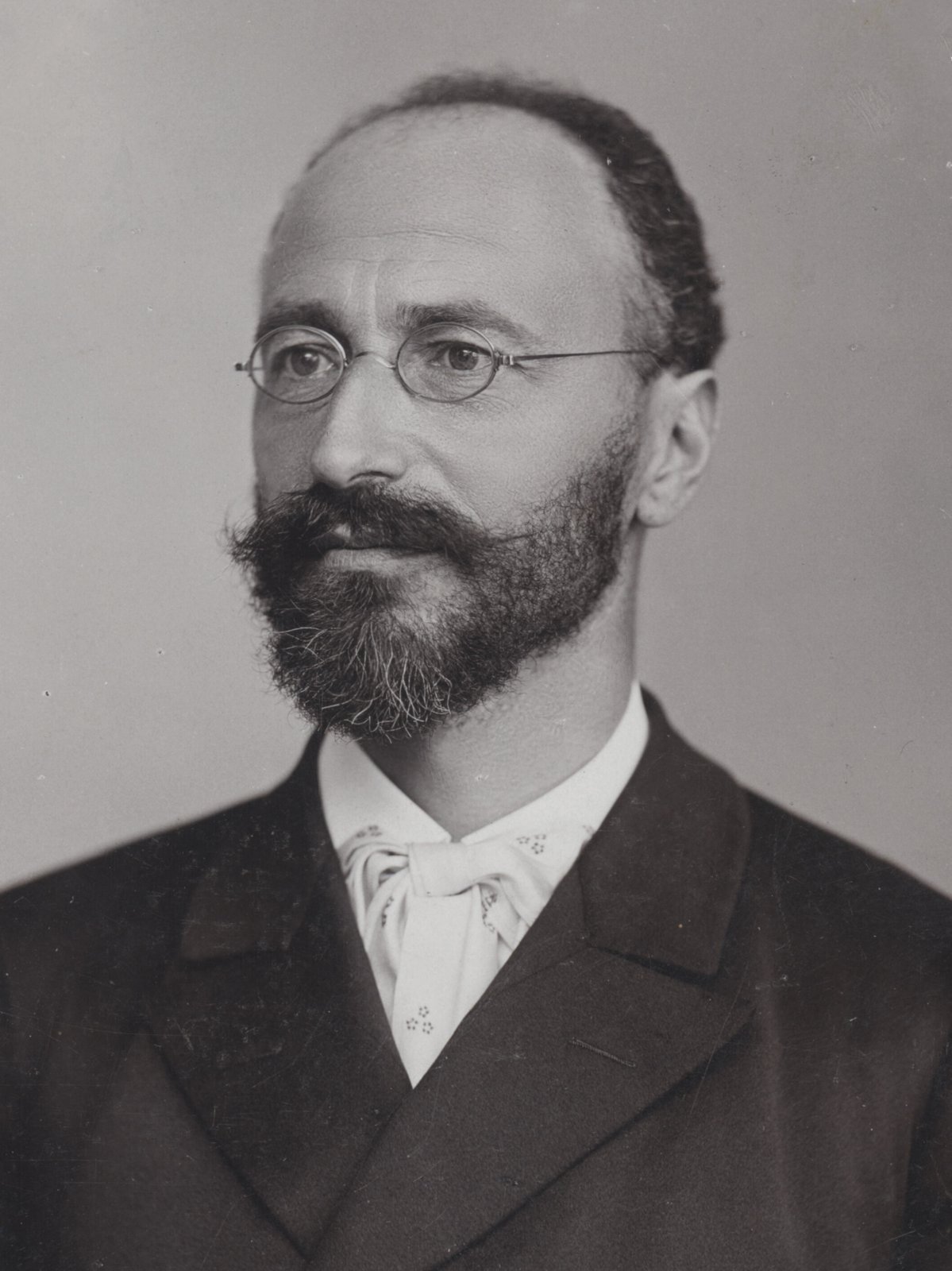
His great work, Capital and Interest, explained interest with two ideas. People generally prefer a good now to the same good later, which is time preference. And longer, more "roundabout" methods of production, which use tools and stages, yield more output than direct methods but take time. Interest is the price that brings the two together. He also wrote one of the most famous attacks on Marx, Karl Marx and the Close of His System (1896), and several leading Marxists, including Rudolf Hilferding, sat in his Vienna seminar in 1905 and 1906. So did a young Mises.5 Much of this first-wave work, Menger's marginal utility, Friedrich von Wieser's opportunity cost and Bohm-Bawerk's time preference, has long since been absorbed into mainstream economics.7
Mises: the man and the method
Ludwig von Mises was born on September 29, 1881, in Lemberg (today Lviv, Ukraine). He joined the Austrian Chamber of Commerce and Industry in 1909 and stayed until 1934, serving as an economic adviser to the government. He fought as an artillery officer in the First World War.1 His Theory of Money and Credit appeared in 1912, Socialism in 1922 and Liberalism in 1927. His living came from the Chamber, not the university. He also ran a private seminar in Vienna. Its regulars included Gottfried Haberler, later of Harvard, and Fritz Machlup, and Lionel Robbins of the LSE was among the friends who visited. Hayek first knew him as a subordinate in a government office handling Austria's postwar debts.17
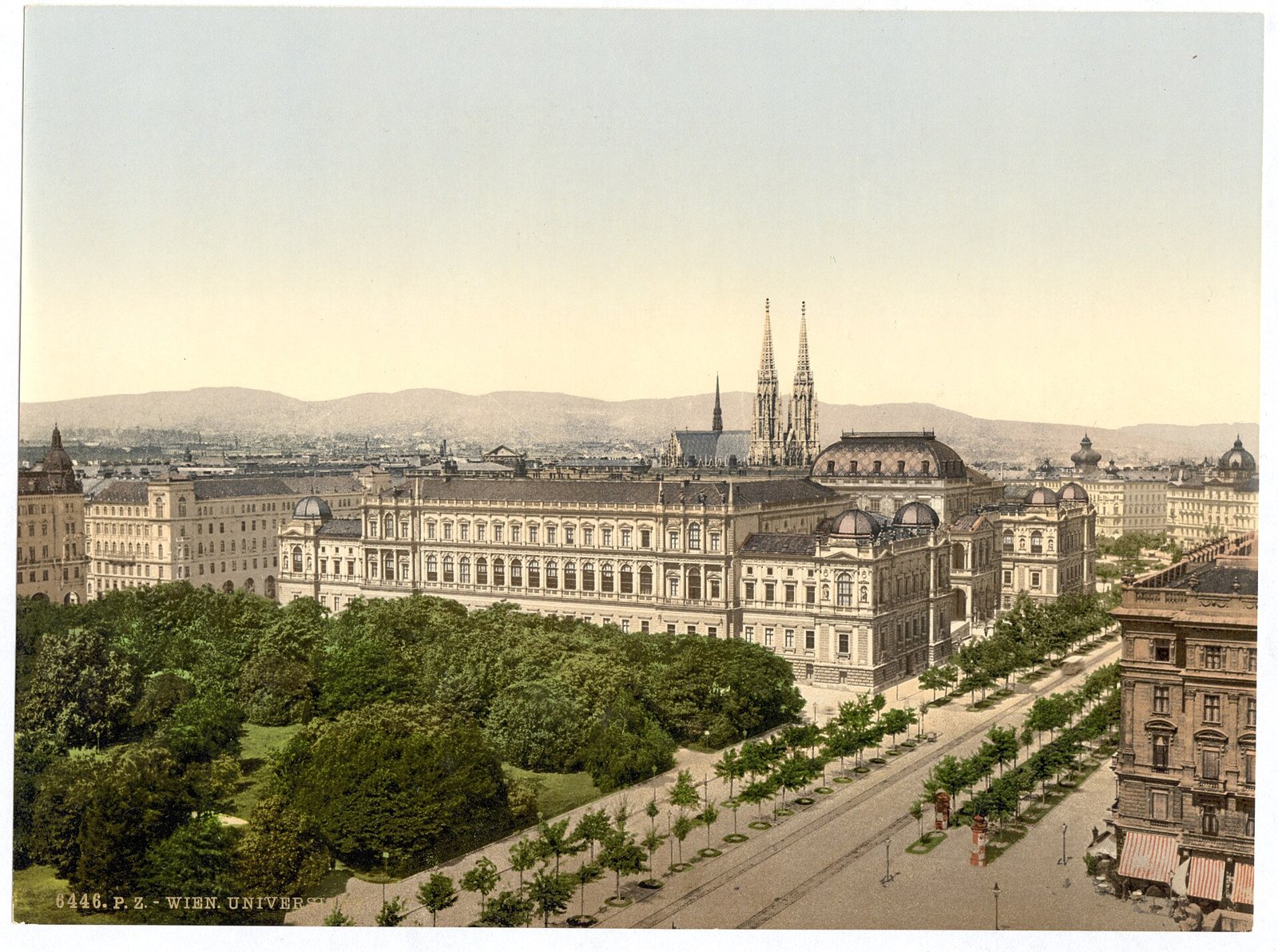
In America he was never fully at home in academic economics. New York University made him a visiting professor in 1945, and he kept the title until he retired in 1969, at 87, but the university did not pay him. His salary came from outside donors, chiefly the businessman Lawrence Fertig and the William Volker Fund.1 He died in New York on October 10, 1973, at 92. Henry Hazlitt, whom this lesson meets later, had helped him find the NYU post and arranged for him to write editorials for The New York Times.9
Mises was famous for not giving ground. At the first Mont Pelerin meeting in 1947, in a session on the distribution of income where some members were open to progressive taxation, he walked out muttering, as Friedman later told it, that they were all socialists.10 His student Murray Rothbard insisted the gruff image was unfair, and described a teacher who was unfailingly courteous and never bitter about his treatment by the profession.1
The 1927 passage on fascism
Mises's critics often quote one passage from Liberalism. Writing in 1927, five years after Mussolini took power, he said: "It cannot be denied that Fascism and similar movements aiming at the establishment of dictatorships are full of the best intentions and that their intervention has, for the moment, saved European civilization. The merit that Fascism has thereby won for itself will live on eternally in history." The sentences that follow matter just as much: "But though its policy has brought salvation for the moment, it is not of the kind which could promise continued success. Fascism was an emergency makeshift. To view it as something more would be a fatal error."11 The same chapter condemns fascist foreign policy as bound to produce "an endless series of wars that must destroy all of modern civilization." Critics read the passage as an apology for dictatorship against the left. Mises's biographer Jorg Guido Hulsmann calls that reading absurd, given the warning that follows.1 The passage shows a man in the Vienna of the 1920s, with communist uprisings in neighboring countries, misjudging what Mussolini was. Seven years later Mises left Austria to escape the Nazis.
The same book states the limited government Mises wanted: "As the liberal sees it, the task of the state consists solely and exclusively in guaranteeing the protection of life, health, liberty, and private property against violent attacks."11 That is a minimal state, which matters later when we come to Rothbard, who wanted none.
Praxeology
Mises's long treatise Human Action appeared from Yale University Press in 1949. Its first sentence is a definition: "Human action is purposeful behavior."12 From that starting point, and a few other assumptions, Mises claimed to deduce the whole of economic theory. He called the method praxeology, the logic of action, and he made a claim for it that no other modern economist of his stature made.
"Its statements and propositions are not derived from experience. They are, like those of logic and mathematics, a priori. They are not subject to verification or falsification on the ground of experience and facts."
Ludwig von Mises, Human Action (1949), ch. 2, Scholar's Edition (Mises Institute, 1998), p. 32.12
The case for this is better than it first sounds. Mises argued that history never repeats itself under controlled conditions, that people learn and change, and that human affairs produce no constants like the speed of light. So a statistical study can never refute a theorem of economics. It can only show how the theorem applied in one tangled case. Some propositions do seem true by reasoning alone. If people prefer more to less and a price is held below what buyers will pay, they will want more than sellers offer at that price. Nobody needs a regression to know it.
Most economists reject the method all the same, and their objection deserves to be stated plainly. A theory that no evidence could ever count against cannot be checked, and a theory that cannot be checked gives its holders no way to discover that they are wrong. The British economist Terence Hutchison pressed this point from 1938 onward. Friedman's 1953 essay on method, covered in Lesson 1, took the opposite line. Even Hayek said in a 1978 interview that he had never been able to accept the "almost eighteenth-century rationalism" of Mises's argument, though he thought Mises usually right in his conclusions.1 Bryan Caplan, who called himself an Austrian as a teenager and became an economist at George Mason University, wrote around 1997 that empirical work has a modest and necessary role even if one grants the a priori core: telling us "how big (or trivial)" the factors that theory identifies actually are.13 The method is the main reason the Austrian school is counted today as heterodox, outside the mainstream of the profession.7
Can socialism calculate?
Mises's most lasting contribution came early, in a 1920 article first given as a lecture the year before. It was translated as "Economic Calculation in the Socialist Commonwealth" and reprinted in English in 1935 in a volume Hayek edited, Collectivist Economic Planning.1415 The setting was urgent. Socialist parties were in or near power across Central Europe, and the Austrian philosopher Otto Neurath was arguing that a planned economy could do without money altogether and allocate goods in physical units.16
Mises's argument fits in a sentence: "Where there is no free market, there is no pricing mechanism; without a pricing mechanism, there is no economic calculation."14 His point concerned producer goods. A socialist state could still let consumers buy bread and shoes with money. But if the state owns every factory, mine and machine, these never change hands in a market, so they have no market prices. A planner choosing whether to build a railroad with steel or with concrete, or whether to build it at all, has no common measure for the thousands of inputs involved. Engineering can tell him what is technically possible. It cannot tell him what is economical. Every step away from private ownership of the means of production and from the use of money, Mises concluded, is a step away from rational economics.14
Lange's answer
The best socialist reply came from Oskar Lange, a young Polish economist who later taught at the University of Chicago, in a two-part article in the Review of Economic Studies in 1936 and 1937. Lange accepted that a socialist economy must calculate in terms of value. He denied that it needed private property to do so. In his model a Central Planning Board would set prices for producer goods, watch for shortages and surpluses, and raise or lower prices by trial and error, as a market does. Managers of state firms would be told to produce where price equals marginal cost. Abba Lerner extended the scheme.16 Lange was gracious about the challenge. He called Mises the great devil's advocate of the socialist cause and suggested that a statue of Professor Mises deserved a place of honor "in the great hall of the Ministry of Socialisation or of the Central Planning Board of the socialist state," as a reminder of the importance of sound accounting.17
Many economists in the 1940s thought Lange had won. Hayek did not, and his answer, laid out in Lesson 4, moved the debate from calculation to knowledge: a board in a capital city cannot gather the facts of time and place, and it cannot supply the incentive to find new ones, which is what entrepreneurs in a market do. Mises added that Lange's managers would be playing at markets without owning anything, and so would have no reason to take risks with care.18
How the debate looked after 1989
History supplied a test that no seminar could. Robert Heilbroner, a socialist and one of the best-selling economics writers of the century, wrote in The New Yorker in 1989 that "the contest between capitalism and socialism is over: capitalism has won." The next year, in the same magazine, he recalled hearing about Mises as a student in the 1930s, when the profession dismissed him, and conceded: "It turns out, of course, that Mises was right."19 In the journal Dissent in 1990 he asked who had predicted socialism's demise and answered that it had been "the Friedmans, Hayeks, von Miseses," while no writer in the Marxian tradition, and none of the leading centrist economists, had seen it coming.20
The argument has not ended. Some socialist writers, such as the computer scientist Paul Cockshott, argue that modern computers can solve the planning equations that defeated the Soviet Gosplan. Others point to the internal planning of giant firms. Mechanism-design theorists since the 1970s have recast the old debate in terms of incentives and hidden information.16 The Austrian reply is that the trouble was never only the number of equations. The data a computer would need are created by market exchange and do not exist without it.
- 1871 Menger, Principles of Economics.
- 1896 Bohm-Bawerk, Karl Marx and the Close of His System.
- 1908 Enrico Barone sets out the equations a socialist ministry of production would have to solve.
- 1920 Mises, "Economic Calculation in the Socialist Commonwealth."
- 1922 Mises, Socialism.
- 1935 Hayek edits Collectivist Economic Planning, with Mises's essay in English.
- 1936-37 Lange, "On the Economic Theory of Socialism."
- 1937, 1945 Hayek, "Economics and Knowledge" and "The Use of Knowledge in Society."
- 1949 Mises, Human Action.
- 1989-91 The Berlin Wall falls; the Soviet Union dissolves.
- 1989-90 Heilbroner: capitalism has won, and "Mises was right."
The Austrian theory of the business cycle
The second great Austrian claim concerns booms and busts. Mises first set it out in The Theory of Money and Credit (1912), drawing on Bohm-Bawerk's capital theory and on the Swedish economist Knut Wicksell. Hayek developed it in London, and the Nobel committee cited that work in 1974.21
The theory runs like this. Interest rates are prices. They tell businesses how much saving is available and how patient the public is willing to be. When banks or a central bank expand credit beyond real saving, interest rates fall below the level saving alone would set. Long projects suddenly look profitable: new mines, factories, office towers, housing tracts. Resources move into the early stages of production. But consumers have not actually agreed to wait longer for their goods, and the projects compete with them for labor and materials. When the credit expansion slows, the projects turn out to be unprofitable. Many are abandoned half built. The bust is the liquidation of these malinvestments.
"There is no means of avoiding the final collapse of a boom brought about by credit expansion. The alternative is only whether the crisis should come sooner as the result of a voluntary abandonment of further credit expansion, or later as a final and total catastrophe of the currency system involved."
Ludwig von Mises, Human Action (1949), ch. 20, Scholar's Edition, p. 570.22
The policy advice follows. Do not try to cure the bust with more credit, which only props up the bad projects and sets up a bigger collapse. Let prices and wages adjust.
Rothbard on 1929
Murray Rothbard applied the theory to the Great Depression in America's Great Depression (1963), and the book is still the standard Austrian account. Rothbard measured the money supply broadly, counting not only currency and bank deposits but savings and loan shares and the reserves of life insurance policies. By that measure, he found, money grew from $45.3 billion on June 30, 1921, by $28.0 billion over the eight-year boom, "a 61.8 percent increase," or 7.7 percent a year, which he called "a very sizable degree of inflation."23 He blamed the Federal Reserve, and especially Benjamin Strong of the New York Fed, for feeding the boom. He then argued that Herbert Hoover, far from practicing laissez-faire, intervened at every turn after the crash, propping up wages, prices and failing firms, and so turned a sharp correction into a long depression. The historian Paul Johnson, introducing the 2000 edition, summed up Rothbard's view of the Hoover and Roosevelt years as "really a continuum."24
Here the Austrians and Friedman meet head on, and Lesson 2 gives the other side. Friedman and Schwartz blamed the Fed for letting money collapse after 1929. Rothbard blamed it for pumping money in before. Rothbard admitted a fact that cuts against him: the wholesale price level stayed roughly stable through the 1920s, and Friedman praised Strong for keeping it so. Rothbard's answer was that a growing, more productive economy should have seen gently falling prices, so stable prices concealed an inflation of money and credit.25
The objections
Mainstream economists generally reject the theory, and they give several reasons.21 The first is empirical. Friedman examined American business cycles in 1964 and again with newer data in 1993, in a paper on what he called the "plucking model." If booms caused busts, a big expansion should be followed by a big contraction. Friedman found no such relation. He found instead that deep contractions tended to be followed by strong expansions, as if output had been plucked down from a ceiling and sprang back.21 The economist Jeffrey Rogers Hummel added that net investment stayed positive in every recession with data except the Great Depression, which is hard to square with a theory that says recessions liquidate excess investment.21
The second objection is about expectations. Caplan put it most sharply. If interest rates are artificially and unsustainably low, why would any businessman plan as if they will stay low forever? "No, what would happen is that entrepreneurs would realize that interest rates are only temporarily low, and take this into account." Rothbard, Caplan noted, credited entrepreneurs with great foresight about every market condition except the actions of the central bank.13 Caplan granted the Austrians a good deal, including that unemployment comes from wages that are too high for the circumstances and that inflation is no lasting cure for it, a view he said now prevails among academic economists.13
The third objection is about consequences. In a 1999 interview with the Hoover Digest, Friedman said: "I think the Austrian business-cycle theory has done the world a great deal of harm." He blamed Hayek and Robbins for advising Britain in the 1930s to let the slump cure itself, and added: "You have Rothbard saying it was a great mistake not to let the whole banking system collapse."26
The Austrians have answered each charge. The economist Roger Garrison argued that Friedman's aggregate findings are consistent with both monetarist and Austrian views, since the Austrian theory concerns the structure of production underneath the totals. Jesus Huerta de Soto replied that the theory links credit expansion to malinvestment, not the size of a boom to the size of the bust. On expectations, Garrison compared the boom to a chain letter: a person can rationally join a process he knows will end badly if he thinks he can get out in time.2113 And William L. Anderson of the Mises Institute answered Friedman's charge directly in 2013. Rothbard, he wrote, did not want healthy banks destroyed. He wanted insolvent banks closed and their assets passed to depositors, and he accepted the deflation that would follow. Anderson conceded that the prescription lacked detail.26 Some empirical studies, such as James Keeler's in 2001 and work by Francis Bismans and Christelle Mougeot in 2009, have found evidence consistent with the theory.21
| Austrian claim | Main objection | Austrian reply |
|---|---|---|
| Without market prices for capital goods, socialism cannot calculate (Mises, 1920) | Planners can find prices by trial and error (Lange, 1936-37) | Prices without owners carry no knowledge and no incentive (Hayek, Mises); the Soviet record |
| Economic theory is known a priori (Mises, 1949) | A theory no evidence could refute cannot be tested (Hutchison, Friedman, Caplan) | History has no controlled experiments or constants; data illustrate theory but cannot overturn it |
| Credit booms cause busts (Mises, Hayek) | Size of booms does not predict size of busts (Friedman, 1964 and 1993); investment rarely turns negative (Hummel) | The theory concerns the structure of production, not totals (Garrison, Huerta de Soto) |
| Entrepreneurs are misled by artificially low rates | Rational entrepreneurs would expect rates to rise (Caplan) | A person can rationally join a process he knows will fail (Garrison) |
| The 1920s were an inflationary boom (Rothbard, 1963) | Wholesale prices were stable; the money collapse came after 1929 (Friedman and Schwartz) | Stable prices in a productive economy hid credit inflation (Rothbard) |
The 2008 financial crisis brought the theory back into public argument. Years of low interest rates, a housing boom and a bust concentrated in construction and finance looked, to Austrians, like their story told again. Whether the fit proves the theory, or only shows that any account of a credit boom will mention credit, remains disputed. Lesson 9 returns to the crisis.
Rothbard: from economics to a political creed
Murray Rothbard was born in New York City on March 2, 1926. He took a bachelor's degree in mathematics at Columbia in 1945 and a doctorate in economics there in 1956, after long delays. He attended Mises's NYU seminar. The Volker Fund paid him to write a textbook explaining Human Action for college students, and the project grew into his treatise Man, Economy, and State (1962).28 He taught economics to engineering students at Brooklyn Polytechnic Institute from 1966 and, from 1986, held an endowed chair at the University of Nevada, Las Vegas. He died of a heart attack in Manhattan on January 7, 1995, at 68.28
Rothbard went where Mises would not. Mises wanted a state limited to protecting life, liberty and property. Rothbard wanted no state at all, with courts, police and defense supplied by competing private firms, a position he called anarcho-capitalism. He also grounded his politics differently. Mises defended the free society mainly by its consequences, the social cooperation and prosperity it makes possible. Rothbard rested it on natural rights, and he described utilitarian defenders of liberty as less consistent.
"The libertarian creed rests upon one central axiom: that no man or group of men may aggress against the person or property of anyone else. This may be called the 'nonaggression axiom.'"
Murray N. Rothbard, For a New Liberty (1973), ch. 2, 2nd ed. (Mises Institute, 2006), p. 27.29
He defined aggression as "the initiation of the use or threat of physical violence against the person or property of anyone else." And he placed his theory inside an older tradition: "'Natural rights' is the cornerstone of a political philosophy which, in turn, is embedded in a greater structure of 'natural law.'"29 Readers who start from natural law will find common ground there and also a sharp difference. Rothbard drew from natural law a single rule against aggression. The older Christian tradition of natural law, from Thomas Aquinas onward, drew from it duties as well as rights, and a place for legitimate government. Module 71 takes up that difference.
Rothbard was an organizer as much as a scholar. He edited The Libertarian Forum from 1969 to 1984, founded the Center for Libertarian Studies in 1976 and the Journal of Libertarian Studies in 1977, and helped found the Cato Institute in 1977 before a falling out with its leaders.28 In 1982 he joined Lew Rockwell in founding the Mises Institute. In 1989 he left the Libertarian Party and began building an alliance with the anti-interventionist right, calling himself a paleolibertarian, and in 1992 he backed Pat Buchanan in the Republican primaries, later shifting to Ross Perot and finally to George H. W. Bush.28 Those late alliances, and his positions on civil rights and on twentieth-century history, drew heavy criticism from other libertarians as well as from the left. His admirers answer that his economics and his case for liberty stand on their own, whatever one thinks of his political tactics.
Hazlitt and the one lesson
The Austrian school reached the general public mostly through a journalist. Henry Hazlitt was born in Philadelphia on November 28, 1894, and grew up poor in Brooklyn after his father died when Henry was an infant.9 H. L. Mencken chose him as his successor at The American Mercury and called him "one of the few economists in human history who could really write." From 1934 to 1946 he wrote most of the economics editorials for The New York Times. He left after he opposed the Bretton Woods agreements and the publisher, Arthur Hays Sulzberger, did not, and from 1946 to 1966 he wrote a signed column, "Business Tides," for Newsweek.9
Harper and Brothers published Economics in One Lesson in July 1946. It went through four printings that year, and Reader's Digest ran a condensed version in August 1946.30 The book has since sold more than a million copies.9 Its title promise is kept in one sentence.
"The art of economics consists in looking not merely at the immediate but at the longer effects of any act or policy; it consists in tracing the consequences of that policy not merely for one group but for all groups."
Henry Hazlitt, Economics in One Lesson (New York: Harper and Brothers, 1946), ch. 1.30
Hazlitt named his debts in the preface, dated March 25, 1946. The first was to Frederic Bastiat's essay "What Is Seen and What Is Not Seen," and Hazlitt called his book "a modernization, extension and generalization" of it. The third was to Mises, for his account of how monetary inflation spreads through an economy.30 The book opens with Bastiat's broken window. A young hoodlum heaves a brick through a baker's window. In the 1946 text the window costs $50. The glazier gets the business, and onlookers decide the vandal did the town a favor. Hazlitt points to what is not seen: the suit the baker was going to buy with that money, and the tailor who will not sell it. "Yet the broken window fallacy, under a hundred disguises, is the most persistent in the history of economics."30
Hazlitt's parity example
Hazlitt liked to test a policy by applying its logic everywhere. Federal farm policy in the 1940s aimed to restore "parity," the price relationship between farm and factory goods of 1909 to 1914. Hazlitt asked why only farm prices. A Chevrolet six-cylinder touring car cost $2,150 in 1912, he wrote, and a far better Chevrolet sedan cost $907 in 1942. Adjusted for parity on the same basis as farm products, the 1942 car would have cost $3,270. If parity made sense for wheat, it made sense for cars, and nobody wanted $3,270 Chevrolets.30 Idaho readers who know the farm program from the inside can judge how fair the comparison is. It shows the one lesson at work: follow the policy past the group it was written for.
Hazlitt was the founding vice president of the Foundation for Economic Education, set up by Leonard Read in 1946, a charter member of the Mont Pelerin Society, and editor of The Freeman in the early 1950s. He died on July 9, 1993, at 98.9 Economists have faulted the book for treating every intervention as the same mistake, and for passing quickly over cases, such as pollution or public health, where the unseen costs fall on people outside a transaction. The book's admirers reply that its one lesson is exactly the habit that would bring those costs into view.
The Mises Institute and the school today
The Ludwig von Mises Institute was founded in 1982 by Lew Rockwell, a former chief of staff to Representative Ron Paul of Texas, with the blessing of Mises's widow Margit. Rothbard was its first academic vice president, and early supporters included Hayek, Hazlitt and Ron Paul. It was affiliated with the business school of Auburn University in Alabama until 1998, when it moved into its own building across the street from campus.31 It publishes the Quarterly Journal of Austrian Economics, runs summer seminars, and gives away thousands of books online, including the editions of Mises, Rothbard and Menger cited in this lesson.311
The institute stands for one wing of the school. Austrians in the Mises and Rothbard line, such as Hans-Hermann Hoppe, Walter Block, Jesus Huerta de Soto and Robert Murphy, cluster around it. Austrians in the Hayek line, such as Israel Kirzner and Ludwig Lachmann at NYU and later the economists at George Mason University, are more willing to work with the methods and journals of the mainstream.7 The two wings disagree about method, about how far to go in politics, and about how much to concede to critics. In 2011 The Economist said the Austrian economics the institute champions had "won few mainstream converts," while noting its large presence online.31 The institute's paleolibertarian politics has influenced Ron Paul's campaigns and the Mises Caucus of the Libertarian Party, which Module 71 covers.31
The economist Tyler Cowen of George Mason, no Rothbardian, has called Mises's Socialism the most important critique of socialism ever written, and his articles on economic calculation "among the most important economics articles, ever," while calling Human Action "cranky and dogmatic."1 Many economists would sign that verdict. The Austrians asked the right question about socialism decades before history answered it, and they wrote the first serious account of how money can mislead investment. Their refusal to test their theories against data, and their habit of treating every critic as a statist, have kept the profession at arm's length. A reader can take Menger's insight about value, Mises's point about calculation and Hazlitt's one lesson without accepting praxeology or anarcho-capitalism. Many of the best free-market economists of the last century did exactly that.
Learn more
- Mises, Economic Calculation in the Socialist Commonwealth (1920): The short essay that started a seventy-year debate.
- Mises, Human Action (1949): The full treatise; chapters 1 and 2 state the method, chapter 20 the cycle theory.
- Menger, Principles of Economics (1871): The founding book, with Hayek's introduction on Menger's life.
- Hazlitt, Economics in One Lesson (1946): Still the clearest popular introduction to free-market reasoning.
- Rothbard, America's Great Depression (1963): The Austrian account of 1929, to read beside Friedman and Schwartz.
- Caplan, Why I Am Not an Austrian Economist: A former Austrian's careful and fair critique of the school.
- Anderson, Was Friedman Right about Rothbard and Collapsing Banks?: The Austrian reply to Friedman's harshest charge.
- Boaz, The Man Who Told the Truth: How a socialist economist came to write "Mises was right."
- Bradley, Market Socialism: A Subjectivist Evaluation (1981): An Austrian walk through the calculation debate and the Lange model.
Notes
- "Ludwig von Mises," Wikipedia: born September 29, 1881, Lemberg; Austrian Chamber of Commerce 1909-34; Geneva 1934-40; the 1938 raid and the papers found in Moscow by Richard and Anna Ebeling; flight through France, Spain and Portugal; NYU visiting professor 1945-69, unsalaried, funded by Lawrence Fertig; Mont Pelerin Society 1947; death October 10, 1973; Rothbard on Mises's character; Hulsmann on the 1927 passage; Hutchison, Scheall and Hayek's 1978 interview on apriorism; Tyler Cowen's assessment. Read it online. ↩
- "Carl Menger," Wikipedia: born 1840 in Neu-Sandez, Galicia (sources differ on the day in February); market journalist in Lemberg and Vienna; tutor to Crown Prince Rudolf from 1876; Vienna chair; Investigations into the Method of the Social Sciences (1883); died February 26, 1921. Read it online. ↩
- Photograph of Carl Menger, c. 1885-1900, Austrian National Library, Wikimedia Commons, "File:Carl Menger ONB original.png," public domain. View the file. ↩
- Carl Menger, Principles of Economics, trans. James Dingwall and Bert F. Hoselitz (1950; Auburn, Ala.: Ludwig von Mises Institute, 2007), ch. 3, p. 116; F. A. Hayek, "Introduction," pp. 11-36, on 1871 as the year of Jevons's and Menger's books, Walras in 1874, and the independence of the three. Hayek's introduction was written for the LSE reprint of the Grundsatze (Series of Reprints of Scarce Works, nos. 17-20). The five-sack illustration in the text is a teaching example in the Austrian tradition and is not quoted from Menger. Read it online. ↩
- "Eugen von Bohm-Bawerk," Wikipedia: born February 12, 1851, Brno; died August 27, 1914; Schumpeter's description; finance minister in 1895, briefly again, and 1900-04; gold standard, balanced budget, sugar subsidy ended 1902; Capital and Interest; critiques of Marx; Hilferding in the seminar, 1905-06; students Schumpeter, Mises and Henryk Grossman. Read it online. ↩
- Josef Lowy, portrait of Eugen von Bohm-Bawerk, 1896, Wikimedia Commons, "File:Eugen von Bohm-Bawerk 1896 Portrait cropped.png" (the Commons title uses the German umlaut: Böhm-Bawerk), public domain. View the file. ↩
- "Austrian school of economics," Wikipedia, on first-wave ideas absorbed by the mainstream, the school's heterodox status, the revival through Kirzner and Lachmann at NYU, the Hayekian and Mises-Rothbard wings, and centers at George Mason, King Juan Carlos University and Universidad Francisco Marroquin. Haberler, Machlup and Robbins are named in standard accounts of Mises's Vienna circle; the Mises article (note 1) describes the seminar without listing members. Read it online. ↩
- "The University, Vienna, Austro-Hungary," photochrom print, between 1890 and 1900, Library of Congress Prints and Photographs Division, LCCN 2002708401, Wikimedia Commons, public domain. View the item. ↩
- "Henry Hazlitt," Wikipedia: born November 28, 1894, Philadelphia; died July 9, 1993; Mencken's praise; New York Times 1934-46 and the Bretton Woods dispute; Newsweek "Business Tides" 1946-66; help to Mises at the Times and NYU; FEE vice president; Mont Pelerin; The Freeman; sales of more than a million copies. Read it online. ↩
- Bruce Caldwell, "Cambridge Talk on Hayek," INET conference, King's College, Cambridge, April 2010, p. 6, reporting that Mises walked out of a session at the first Mont Pelerin meeting muttering that everyone there was a socialist. Friedman told the story in a June 1995 Reason interview, according to the Mises article (note 1). Read it online. ↩
- Ludwig von Mises, Liberalism: In the Classical Tradition, trans. Ralph Raico, 3rd ed. (Irvington-on-Hudson, N.Y.: Foundation for Economic Education; San Francisco: Cobden Press, 1985), ch. 1, sec. 10, "The Argument of Fascism," and sec. 11, "The Limits of Governmental Activity." First published in German in 1927. Read it online. ↩
- Ludwig von Mises, Human Action: A Treatise on Economics (New Haven: Yale University Press, 1949), Scholar's Edition (Auburn, Ala.: Ludwig von Mises Institute, 1998), ch. 1, p. 11, and ch. 2, p. 32. Read it online. ↩
- Bryan Caplan, "Why I Am Not an Austrian Economist," George Mason University, written about 1997, preface and sections 3.4 and 4.3. Read it online. ↩
- Ludwig von Mises, "Economic Calculation in the Socialist Commonwealth" (1920), ch. 3 and sec. 2, "The Nature of Economic Calculation," Mises Institute online edition. Read it online. ↩
- Robert Bradley Jr., "Market Socialism: A Subjectivist Evaluation," Journal of Libertarian Studies 5, no. 1 (Winter 1981), on the 1920 article "adapted from a lecture of a year earlier," Die Gemeinwirtschaft (1922), and the replies; and "Economic calculation problem," Wikipedia, on the reprint in Hayek, ed., Collectivist Economic Planning (London: Routledge, 1935). Read it online. ↩
- "Socialist calculation debate," Wikipedia, on Barone, Neurath and Kautsky, the Lange model and the Central Planning Board, Lerner, Cockshott and Cottrell, mechanism design and Stiglitz. Read it online. Oskar Lange, "On the Economic Theory of Socialism," Review of Economic Studies 4, no. 1 (1936): 53-71, and 4, no. 2 (1937): 123-42. ↩
- Lange (1936), as quoted in Lawrence H. White, The Clash of Economic Ideas (Cambridge: Cambridge University Press, 2012), p. 47, reproduced by Stephen Hicks, "Mises as socialist hero." Read it online. ↩
- Bradley (note 15), on the Austrian replies to Lange, Lerner and Taylor; Hayek, "The Use of Knowledge in Society," American Economic Review 35, no. 4 (1945), discussed in Lesson 4. Read it online. ↩
- David Boaz, "The Man Who Told the Truth," Reason, January 21, 2005, quoting Robert Heilbroner in The New Yorker (1989 and 1990). Read it online. ↩
- Robert Heilbroner, "The World After Communism," Dissent (Fall 1990): 429-30, as reproduced by Stephen Hicks. Read it online. ↩
- "Austrian business cycle theory," Wikipedia, on the roots in Bohm-Bawerk and Wicksell, Mises (1912) and Hayek, its rejection by most economists, Sraffa and Kaldor, Friedman's 1964 study (reprinted 1969) and "The 'Plucking Model' of Business Fluctuations Revisited," Economic Inquiry 31, no. 2 (1993): 171-77, Hummel, Garrison, Huerta de Soto, Keeler (2001) and Bismans and Mougeot (2009). Read it online. ↩
- Mises, Human Action, Scholar's Edition, ch. 20, "Interest, Credit Expansion, and the Trade Cycle," p. 570. Read it online. ↩
- Murray N. Rothbard, America's Great Depression (Princeton: D. Van Nostrand, 1963), 5th ed. (Auburn, Ala.: Ludwig von Mises Institute, 2000), ch. 4, "Inflation of the Money Supply, 1921-1929," pp. 92-93. Read it online. ↩
- Paul Johnson, "Introduction to the Fifth Edition" (1999), in Rothbard, America's Great Depression, 5th ed., pp. xv-xvii. Read it online. ↩
- Murray N. Rothbard, "Introduction to the Second Edition" (July 1971), in America's Great Depression, 5th ed., pp. xxxiv-xxxv. Read it online. ↩
- William L. Anderson, "Was Friedman Right about Rothbard and Collapsing Banks?" Mises Daily, August 27, 2013, quoting Milton Friedman's 1999 interview in the Hoover Digest. Read it online. ↩
- Table compiled from notes 12 through 16, 21, 23, 25 and 26, and from Lessons 1, 2 and 4 of this module. Read the summary of the cycle debate. ↩
- "Murray Rothbard," Wikipedia: born March 2, 1926, New York; Columbia BA 1945 and PhD 1956; Volker Fund and Man, Economy, and State; Brooklyn Polytechnic from 1966; UNLV from 1986; The Libertarian Forum 1969-84; Center for Libertarian Studies 1976; Journal of Libertarian Studies 1977; Cato 1977; Mises Institute 1982; paleolibertarianism 1989; Buchanan 1992; criticism of his views on civil rights and history; died January 7, 1995. Read it online. ↩
- Murray N. Rothbard, For a New Liberty: The Libertarian Manifesto (1973; 2nd ed. 1978; Auburn, Ala.: Ludwig von Mises Institute, 2006), ch. 1, on the shift from natural rights to utilitarianism, and ch. 2, "Property and Exchange," pp. 27 and 32. Read it online. ↩
- Henry Hazlitt, Economics in One Lesson (New York: Harper and Brothers, 1946), printing history, preface dated March 25, 1946, ch. 1 "The Lesson," ch. 2 "The Broken Window," and the chapter on parity prices, full text at the Foundation for Economic Education. Read it online. ↩
- "Mises Institute," Wikipedia, on its founding in 1982 by Lew Rockwell, Margit von Mises's blessing, Rothbard as academic vice president, early supporters, the Auburn University affiliation until 1998, The Economist in 2011, and its influence on the Ron Paul campaigns and the Mises Caucus. Read it online. ↩


Check yourself
1. What did Carl Menger argue about value in his Principles of Economics (1871)?
Menger wrote that 'Value is therefore nothing inherent in goods, no property of them,' but the importance we attribute to the satisfaction of our needs (Principles of Economics, Mises Institute edition, p. 116).
2. What was the core claim of Mises's 1920 essay 'Economic Calculation in the Socialist Commonwealth'?
Mises wrote: 'Where there is no free market, there is no pricing mechanism; without a pricing mechanism, there is no economic calculation.'
3. How did Oskar Lange answer Mises in 1936 and 1937?
Lange's model had a Central Planning Board adjust prices by trial and error toward equilibrium, with managers told to set price equal to marginal cost. He also said socialists owed Mises a statue for raising the problem.
4. According to the Austrian theory of the business cycle, what starts an unsustainable boom?
Mises wrote in Human Action that the recurring boom and depression is 'the unavoidable outcome of the attempts, repeated again and again, to lower the gross market rate of interest by means of credit expansion' (p. 570).
5. What is the main objection most economists make to praxeology?
Mises wrote that praxeology's statements 'are not derived from experience' and 'are not subject to verification or falsification on the ground of experience and facts' (Human Action, p. 32). Critics from Terence Hutchison (1938) to Bryan Caplan (1997) objected that this puts the theory beyond testing.
6. What did Henry Hazlitt say the whole of economics could be reduced to in Economics in One Lesson (1946)?
Hazlitt wrote: 'The art of economics consists in looking not merely at the immediate but at the longer effects of any act or policy; it consists in tracing the consequences of that policy not merely for one group but for all groups.'
Terms in this lesson
- Subjective value
- The idea that the value of a good lies in the importance people attach to it for their own purposes, not in the labor or materials that went into it.
- Time preference
- The general preference for having a good now over having the same good later. Bohm-Bawerk used it to explain why interest exists.
- Roundabout production
- Producing by longer methods that use tools and stages, which take more time but yield more output. Bohm-Bawerk's term.
- Economic calculation problem
- Mises's 1920 argument that without market prices for land, machines and other means of production, a socialist economy cannot compare costs and so cannot tell efficient uses of resources from wasteful ones.
- Malinvestment
- In Austrian business cycle theory, investment drawn into projects that only looked profitable because credit expansion held interest rates artificially low.
- Praxeology
- Mises's name for the deductive science of human action, which starts from the fact that people act purposefully and claims its theorems are known a priori.
- Nonaggression axiom
- Rothbard's principle that no person or group may initiate or threaten physical violence against the person or property of anyone else.
- A system in which the means of production are publicly owned but prices are used to guide managers, as in Oskar Lange's model of 1936-37.
Sources
- Ludwig von Mises, Economic Calculation in the Socialist Commonwealth (1920), Mises Institute online edition checked 2026-10
- Ludwig von Mises, Human Action, Scholar's Edition (Mises Institute, 1998), PDF checked 2026-10
- Ludwig von Mises, Liberalism: In the Classical Tradition, trans. Ralph Raico, PDF checked 2026-10
- Carl Menger, Principles of Economics, trans. Dingwall and Hoselitz, intro. by F. A. Hayek, PDF checked 2026-10
- Murray N. Rothbard, America's Great Depression, 5th ed. (Mises Institute, 2000), PDF checked 2026-10
- Murray N. Rothbard, For a New Liberty, 2nd ed. (Mises Institute, 2006), PDF checked 2026-10
- Henry Hazlitt, Economics in One Lesson (1946), full text at FEE checked 2026-10
- Bryan Caplan, Why I Am Not an Austrian Economist (George Mason University, c. 1997) checked 2026-10
- Robert Bradley Jr., Market Socialism: A Subjectivist Evaluation, Journal of Libertarian Studies 5, no. 1 (1981) checked 2026-10
- William L. Anderson, Was Friedman Right about Rothbard and Collapsing Banks? (Mises Daily, 2013) checked 2026-10
- David Boaz, The Man Who Told the Truth (Reason, January 21, 2005) checked 2026-10
- Socialist calculation debate (Wikipedia) checked 2026-10
- Austrian business cycle theory (Wikipedia) checked 2026-10
- Ludwig von Mises (Wikipedia) checked 2026-10
- Murray Rothbard (Wikipedia) checked 2026-10