Lesson 9 of 9 · about 22 minutes
Washington's Precedents and the Peaceful Transfer
You'll be able to
- Explain the precedents Washington set on titles, the cabinet, neutrality, enforcing federal law and leaving office
- Describe the Alien and Sedition Acts of 1798 and the first prosecutions under them
- Trace the election of 1800 from the 73-73 electoral tie to Jefferson's first inaugural on March 4, 1801
- Name three things the founding generation left unfinished and cite the documents that show it
At four o'clock in the morning on March 4, 1801, the second president of the United States climbed into a stagecoach and left the capital. John Adams was not going to watch his rival take the oath.1 A few hours later Thomas Jefferson walked to the Capitol, delivered an inaugural address, and returned to his boarding house.1 Nobody called out a militia. Nobody seized a building. A party that had held the executive branch for twelve years gave it up to the party that had spent those years calling it a threat to liberty.
It sounds ordinary now. In 1801 it was a risk. This lesson follows the road to that morning, beginning in April 1789 with arguments about titles and bows and ending with the questions the new government had not answered.
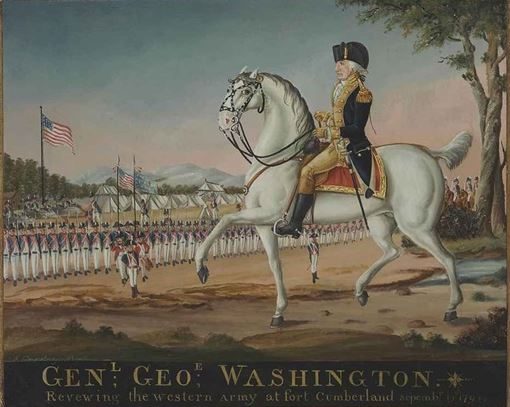
What to Call the President
The first fight in the first Congress was over a title. Vice President John Adams, presiding over the Senate, urged strongly that the president have one that put him on equal footing with European and Asian rulers. Richard Henry Lee, an Antifederalist and Adams's longtime ally, agreed. Proposals included "His Elective Majesty" and "His Mightiness."2 The Senate's choice was "His Highness the President of the United States of America and Protector of their Liberties."3 A majority of senators believed a title was necessary to earn the esteem of foreign nations.3
The House said no. Its select committee reported on May 5, 1789 in one sentence: "That it is not proper to annex any style or title to the respective styles or titles of office expressed in the Constitution."3 Many House members thought a title dangerous to republicanism and a little ridiculous.3 The Senate gave way reluctantly. It said it still believed a title would help the nation, but would yield to the House in order to preserve harmony.3 The president was to be "President," nothing more. Seen from the country, it was a good outcome, because it kept the office within the language of the Constitution.
A Cabinet Takes Shape
Washington filled the new departments with the men listed in Lesson 8. The Constitution allows the president to require the written opinion of the principal officer in each department, and it says nothing about a council.4 Washington held his first full cabinet meeting on November 26, 1791.5 By then the men in the room disagreed on almost everything. The State Department's historians describe the split: the French Revolution brought a war between Britain and France in 1793, and "divisions emerged" between those who supported the French, including Jefferson, and those who supported the British, including Hamilton.6 Washington had to govern with both men at his table. Jefferson left the cabinet at the end of 1793; Hamilton at the start of 1795.5
Neutrality, 1793
When France and Britain went to war in 1793, the United States was weak, and Washington's cabinet argued over whether to help France under the treaty of 1778. On April 22, 1793 he issued a proclamation. It declared that "the duty and interest of the United States require, that they should with sincerity and good faith adopt and pursue a conduct friendly and impartial toward the belligerant Powers." It warned citizens "to avoid all acts and proceedings whatsoever, which may in any manner tend to contravene such disposition," and said that anyone who helped one side in the war would not receive the protection of the United States against punishment.7 The proclamation never used the word "neutrality," and the policy it set became known by that name.
The test arrived at once. Edmond Charles Genet reached Charleston on April 8, 1793, calling himself "Citizen Genet," and began issuing commissions to privateers to attack British shipping from American ports. Jefferson told him in Philadelphia that the cabinet considered outfitting privateers in American ports to be a violation of neutrality. Genet ignored the warnings, readied another ship, the Little Democrat, and threatened to take his case to the American people. In the end he was recalled.8 The affair gave the United States a set of procedures for neutrality, which the State Department's account counts as its main result.8
Neutrality was Washington's own act. The Constitution does not say who declares such a policy, and Congress did not vote on it. That a president could set the nation's course toward other powers by proclamation was a precedent, and Jefferson and Madison's friends noticed.
The Whiskey Rebellion
Hamilton proposed an excise tax on distilled spirits, and Congress passed it in March 1791.9 In western Pennsylvania, where whiskey was both a crop and a currency, many people hated it. Protest turned violent in July 1794, when nearly 400 men near Pittsburgh set fire to the home of John Neville, the regional supervisor of tax collection.9 On August 7 Washington issued a proclamation. It described "combinations to defeat the execution of the laws laying duties upon spirits distilled within the United States and upon stills" and said they had proceeded by "irregular meetings," by threats against those who would take federal office, and by "actually injuring and destroying the property of persons who were understood to have so complied."10
Then he did what the Confederation Congress never could. He raised a militia force of 12,950 men and, Mount Vernon records, personally led it west.9 The rebels dispersed before the army reached Pittsburgh. About 150 men were apprehended, but the evidence was weak and witnesses were missing. John Mitchell and Philip Weigel were convicted of treason, and Washington pardoned both.9 The Republicans who followed Adams repealed the excise, and by 1802 it was gone.9
The lesson Washington took was that a government of the people had to be able to enforce its laws against a minority that refused to obey them. The lesson of the pardons was that it did not have to be vindictive about it. Both points belong in the record. The new republic had survived what Mount Vernon calls "the first true challenge to federal authority."9
Jay's Treaty
Britain and the United States still disputed trade, forts in the northwest and the seizure of American sailors and ships. Washington sent Chief Justice John Jay to London, and Jay and the British signed a treaty on November 19, 1794.6 It got the northwestern posts evacuated, which the British had already promised in 1783, and a commercial agreement. Other disputes went to arbitration. According to the State Department, it addressed few American interests, and it was "immensely unpopular with the American public."6 The Senate approved it on June 24, 1795, 20 to 10, the bare two-thirds the Constitution requires.6 Washington signed it and put up with the criticism, because, in the State Department's reading, he saw it as the price of peace and of time to rearm.6
The treaty sharpened a split that was already forming into parties. Washington had hoped to avoid that. He would say so in his farewell.
Two Terms and a Farewell
Article II set a four-year term and no limit on re-election.4 Washington served two terms and then decided he would not accept a third. His Farewell Address, which the State Department's historians date to September 17, 1796, appeared in a newspaper.11 It opens with a statement of his decision "to decline being considered among the number of those out of whom a choice is to be made."12
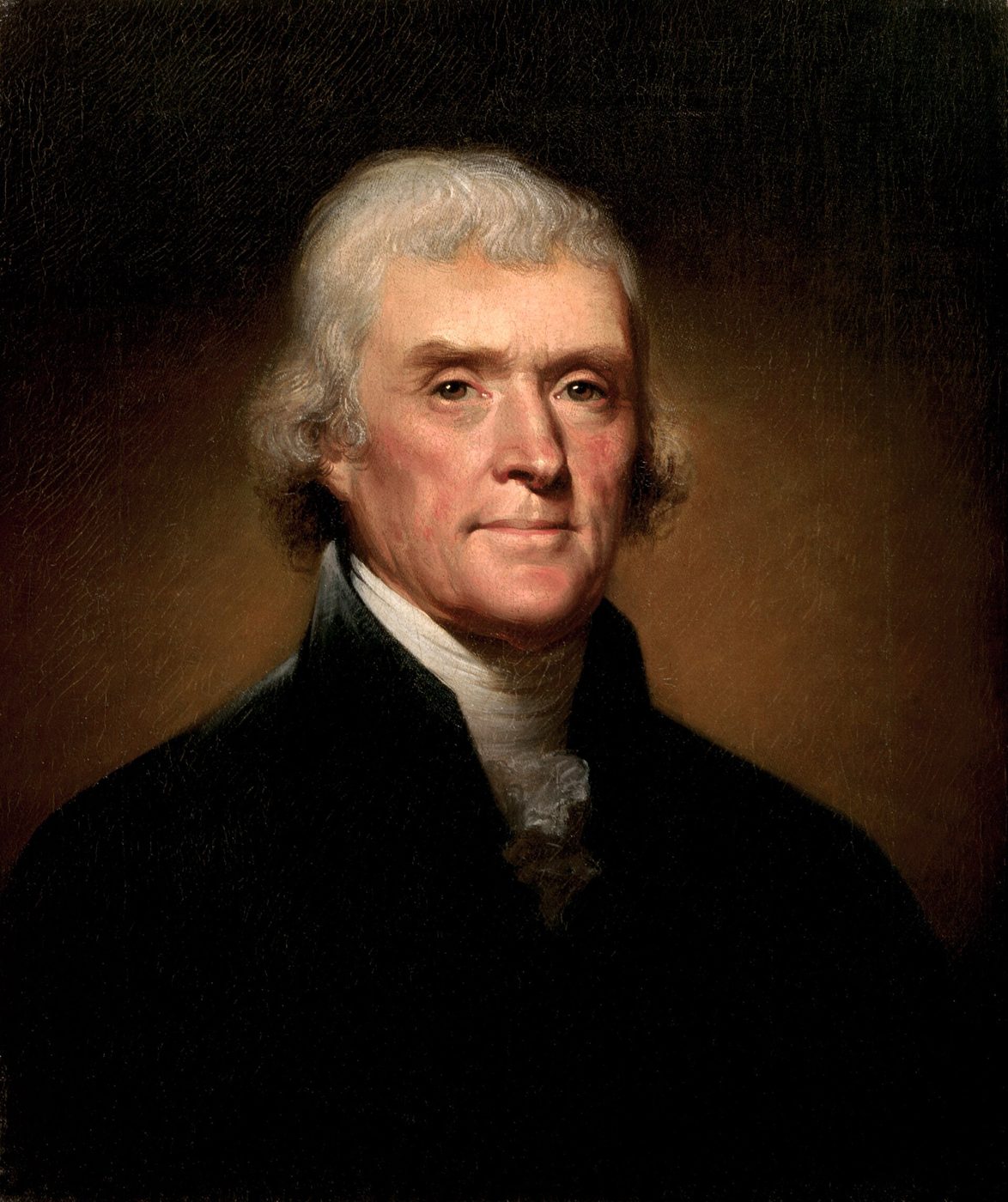
What he wrote has been quoted for two hundred years, usually in pieces. On foreign policy: "Observe good faith and justice towards all nations; cultivate peace and harmony with all." And: "It is our true policy to steer clear of permanent alliances with any portion of the foreign world; so far, I mean, as we are now at liberty to do it."12 The State Department points to another line from the same address: "The nation which indulges toward another an habitual hatred or an habitual fondness is in some degree a slave."11
On domestic politics he warned "against the baneful effects of the spirit of party generally." Party spirit, he wrote, "is inseparable from our nature," exists "in all governments," and "in those of the popular form, it is seen in its greatest rankness, and is truly their worst enemy."12 He had in mind exactly what was happening around him. The other warning is on religion and morality, and it sits where a reader of Washington's inaugural would expect it: "Of all the dispositions and habits which lead to political prosperity, religion and morality are indispensable supports."12
Washington's refusal to hold on was itself the precedent. A man with his popularity could have been president for life. He chose to leave, and the example was stronger than anything he could have said about it.
Adams, France and the Acts of 1798
John Adams won the election of 1796 and inherited a crisis. France had decided to seize American merchant ships, and Adams sent Elbridge Gerry, Charles Cotesworth Pinckney and John Marshall to Paris to restore peace. The French foreign minister, Talleyrand, would not meet them formally. Intermediaries, later labeled X, Y and Z in the published dispatches, told the Americans that a loan and a bribe would be needed first.13 The envoys refused. Adams released the correspondence, public anger rose, and an undeclared naval conflict, the Quasi-War, followed. A convention in 1800 restored peace.13 (Gerry's life is in Module 55, Lesson 10.)
Fear of France and of foreign-born agitators led Congress, controlled by Adams's Federalists, to pass a set of laws in the summer of 1798. The Alien Enemies Act, approved July 6, allowed the president in time of declared war or invasion to arrest and remove male natives of the hostile nation aged fourteen or older who were not naturalized.14 The Sedition Act, approved July 14, went further, and made it a crime to write, print or publish "any false, scandalous and malicious writing or writings against the government of the United States, or either house of the Congress of the United States, or the President of the United States, with intent to defame the said government."15
What the Sedition Act Said
The law had some protections for defendants. A person charged could give the truth of the matter as a defense, and the jury had the right to decide the law and the fact.15 Penalties were a fine of up to $2,000 and up to two years in prison.15 The act expired by its terms on March 3, 1801, the day before the new president took office.15 It did not cover criticism of the vice president, who was Jefferson, and the Federal Judicial Center observes that all of the defendants prosecuted were political opponents of the Adams administration.16
The first well-known case was Representative Matthew Lyon of Vermont, a Republican running for re-election. A grand jury indicted him in October 1798 for publishing letters with intent to defame the government and President Adams.16 One cited his own words: he had seen "every consideration of public welfare swallowed up in a continual grasp for power, in an unbounded thirst for ridiculous pomp, foolish adulation, or selfish avarice."16 Justice William Paterson presided over the circuit court. The jury returned a verdict of guilty in under an hour, and Paterson sentenced Lyon to four months in prison and a $1,000 fine, plus costs.16 While still in jail, Lyon won re-election.16 Paterson's life, including this case, is in Module 55, Lesson 8.
Virginia Answers
Virginia's General Assembly passed a resolution on December 24, 1798. It held that the federal powers were limited "by the plain sense and intention of the instrument," and declared that in a case of "deliberate, palpable, and dangerous exercise of other powers, not granted by the said compact," the states "have the right, and are in duty bound, to interpose for arresting the progress of the evil." It protested "the palpable and alarming infractions of the Constitution, in the two late cases of the 'Alien and Sedition Acts.'"17 The doctrine of interposition, as it came to be called, is a different matter from the question of whether the Sedition Act violated the First Amendment, and the two have been confused ever since. What the resolution shows is that the Federalists had given their opponents a constitutional grievance, and the Republicans used it.
The Federal Judicial Center puts the political result plainly. The number of Republican newspapers grew sharply while the act was in force, and those newspapers helped mobilize support for Jefferson. When the Republicans came to power they repealed the Federalist expansion of the federal courts.16
The Election of 1800
Under the original Constitution, each elector voted for two persons, and the one with the most votes became president and the runner-up vice president. The Federalists made sure one elector voted for John Jay, so that Adams would finish ahead of his running mate. The Democratic-Republicans did not. When the electoral votes were counted, Jefferson and Aaron Burr each had 73.18 The tie went to the House of Representatives, which was controlled by the Federalists.
The House voting began on February 11, 1801, during a snowstorm in Washington. It took thirty-six ballots over a week. On February 17, several Federalists, including James A. Bayard of Delaware, abstained, and Jefferson won. Alexander Hamilton, Jefferson's old enemy, had told some Federalists that Jefferson was "by far not so dangerous a man" as Burr.18 The Twelfth Amendment, ratified in 1804, ended the confusion by having electors vote separately for president and vice president.1
Adams had known he lost. His relationship with Jefferson stayed cordial enough that the two dined at the White House in January, the White House Historical Association notes, and when the House deadlocked, Adams refused to intercede.1 Then came the four o'clock stagecoach and the walk to the Capitol.
The Inaugural
Jefferson's speech did not gloat. It spoke to the men who had voted against him. "But every difference of opinion is not a difference of principle," he said. "We have called by different names brethren of the same principle. We are all Republicans, we are all Federalists."19 He meant the words in their old sense, as names for views about the republican form, not for the parties of the 1790s, and he went straight on to say that anyone who wished to dissolve the Union or change its republican form could "stand undisturbed as monuments of the safety with which error of opinion may be tolerated where reason is left free to combat it."19
"All, too, will bear in mind this sacred principle, that though the will of the majority is in all cases to prevail, that will to be rightful must be reasonable; that the minority possess their equal rights, which equal law must protect, and to violate would be oppression."
Thomas Jefferson, First Inaugural Address, March 4, 1801. 19
Jefferson listed what he thought government should do, in a short summary: "Equal and exact justice to all men, of whatever state or persuasion, religious or political; peace, commerce, and honest friendship with all nations, entangling alliances with none." The phrase on alliances echoes Washington's address.19
Eighteen years later he gave the day a name. The principles of the election, he told Spencer Roane in 1819, were "the true principles of the revolution of 1800. for that was as real a revolution in the principles of our government as that of 76. was in it's form." The people, he said, had made the change by "the suffrage of the people," and the nation had declared its will "by dismissing functionaries of one principle, and electing those of another."20
What Was Left Unfinished
The founders left a great deal undone. Three examples come straight from the record of the same years.
Who Counted as a Citizen
The first naturalization law, passed March 26, 1790, opened citizenship to "any alien, being a free white person, who shall have resided within the limits and under the jurisdiction of the United States for the term of two years."21 The Declaration had said all men are created equal, and the first Congress wrote race into the rules for becoming an American.
Slavery
Washington signed the Fugitive Slave Act of 1793 on February 12. It let an enslaver or agent seize a person who had fled to another state, bring that person before a federal judge or local magistrate, and take a certificate as a "sufficient warrant" for removal. Anyone who knowingly obstructed a seizure or harbored a fugitive after notice forfeited five hundred dollars.22 In 1796 Ona Judge fled the Washingtons' household in Philadelphia and went to New Hampshire. Washington sought her recapture, through a customs collector and again in 1799. She was never returned.23
Washington's will freed the 123 people he owned, but only on the death of his wife. The 153 who belonged to Martha Washington's first husband's estate were not his to free under Virginia law. On January 1, 1801, Martha freed her husband's people early.24 Congress passed a law in 1807 banning the importation of slaves from January 1, 1808, the date the Convention had set.25 Slavery itself was left in place.
The Native Nations
Congress, the president and the courts had not resolved how the United States would treat the Native nations whose lands lay beyond its settlements. In August 1795 General Anthony Wayne and the leaders of the Wyandots, Delawares, Shawanees, Ottawas, Chippewas and other nations signed the Treaty of Greenville, which ended a war and drew a general boundary line between the two sides.26 The line did not hold, and the question did not go away.
A reader who values ordered liberty will see in these three examples the same thing the delegates saw in Philadelphia. A government built on principle can still write down a rule that contradicts it, and the principle then becomes a debt that someone must pay.
The Road to 1801
- Apr 30, 1789 Washington inaugurated in New York.
- May 1789 House rejects a title for the president. Senate yields.
- Feb 12, 1793 Fugitive Slave Act signed.
- Apr 22, 1793 Proclamation on the war in Europe.
- Aug 7, 1794 Washington proclaims the Whiskey Rebellion.
- Nov 19, 1794 Jay's Treaty signed.
- Jun 24, 1795 Senate approves the treaty, 20 to 10.
- Sep 17, 1796 Farewell Address dated.
- Jul 1798 Alien Enemies Act (July 6) and Sedition Act (July 14).
- Dec 24, 1798 Virginia Resolution.
- Feb 17, 1801 House elects Jefferson on the 36th ballot.
- Mar 4, 1801 Sedition Act expires. Jefferson inaugurated.
Learn more
- Washington's Farewell Address: the full text, with the passages on party, religion and foreign alliances.
- Jefferson's First Inaugural Address: the speech of March 4, 1801.
- The Sedition Act Trials: Federal Judicial Center narrative of the trials of Lyon, Cooper and Callender.
- Whiskey Rebellion, Mount Vernon: the excise, the march west and the pardons.
- Jay's Treaty, Office of the Historian: the terms, the controversy and the Senate vote.
- The tied election of 1800, National Constitution Center: how the House broke the tie.
- Jefferson to Spencer Roane, 1819: the letter that names the "revolution of 1800."
Notes
- White House Historical Association, "Notably Absent: Presidential No-Shows on Inauguration Day." Read it online. ↩
- Center for the Study of the American Constitution, "A Titled President?" April 30, 2021. Read it online. ↩
- National Archives Education Updates, "'His Highness, The President' and the First Congress: Moving Toward Republicanism," April 29, 2014. Read it online. ↩
- The Constitution of the United States, Article II, transcript, National Archives. Read it online. ↩
- Mount Vernon, "Cabinet Members," Digital Encyclopedia. Read it online. ↩
- Office of the Historian, U.S. Department of State, "John Jay's Treaty, 1794-95," Milestones: 1784-1800. Read it online. ↩
- George Washington, Proclamation of Neutrality, April 22, 1793, Avalon Project, Yale Law School. Read it online. ↩
- Office of the Historian, U.S. Department of State, "The Citizen Genet Affair, 1793-1794," Milestones: 1784-1800. Read it online. ↩
- Mount Vernon, "Whiskey Rebellion," Digital Encyclopedia. Read it online. ↩
- George Washington, Proclamation on the Whiskey Rebellion, August 7, 1794, Avalon Project. Read it online. ↩
- Office of the Historian, U.S. Department of State, "Washington's Farewell Address, 1796," Milestones: 1784-1800. Read it online. ↩
- George Washington, Farewell Address, 1796, Avalon Project. Read it online. ↩
- Office of the Historian, U.S. Department of State, "The XYZ Affair and the Quasi-War with France, 1798-1800," Milestones: 1784-1800. Read it online. ↩
- An Act Respecting Alien Enemies, approved July 6, 1798, Avalon Project. Read it online. ↩
- An Act in Addition to the Act, Entitled "An Act for the Punishment of Certain Crimes Against the United States" (Sedition Act), approved July 14, 1798, Avalon Project. Read it online. ↩
- Bruce A. Ragsdale, The Sedition Act Trials, Federal Judicial Center, "Federal Trials and Great Debates in United States History" series. Read it online (PDF). ↩
- Virginia Resolution, December 24, 1798, Avalon Project. Read it online. ↩
- National Constitution Center, "On this day: A tied presidential election ends in Washington," February 17, 2023. Read it online. ↩
- Thomas Jefferson, First Inaugural Address, March 4, 1801, Avalon Project. Read it online. ↩
- Thomas Jefferson to Spencer Roane, September 6, 1819, Library of Congress, Thomas Jefferson exhibition. Read it online. ↩
- An Act to establish an uniform Rule of Naturalization, March 26, 1790, 1 Stat. 103, GovInfo. Read it online. ↩
- Fugitive Slave Act of 1793 (approved February 12, 1793), Mount Vernon Primary Source Collections. Read it online. ↩
- Mount Vernon, "Oney Judge," Digital Encyclopedia. Read it online. ↩
- Mount Vernon, "Status of Enslaved People in Washington's Will," Digital Encyclopedia. Read it online. ↩
- An Act to Prohibit the Importation of Slaves into any Port or Place Within the Jurisdiction of the United States, From and After the First Day of January, in the Year of our Lord One Thousand Eight Hundred and Eight, Avalon Project. Read it online. ↩
- Treaty of Greenville, August 3, 1795, Avalon Project. Read it online. ↩
Terms in this lesson
- Precedent
- An action that later officeholders treat as a guide because the first one to hold the office took it.
- Neutrality Proclamation
- Washington's April 22, 1793 statement that the United States would follow a friendly and impartial course toward the nations at war in Europe.
- Excise
- A tax on the production or sale of a good. The whiskey excise taxed distilled spirits.
- Sedition
- Conduct or speech meant to stir up resistance to lawful government. The Sedition Act of 1798 made certain criticism of the government a crime.
- Quasi-War
- The undeclared naval conflict between the United States and France from 1798 to 1800.
- Twelfth Amendment
- The 1804 amendment that had electors vote separately for president and vice president.
- Democratic-Republican
- The party of Jefferson and Madison, also called Republican. Not the same as today's Republican Party.
Sources
- Washington's Farewell Address (Avalon Project) checked 2026-10
- Proclamation of Neutrality, 1793 (Avalon Project) checked 2026-10
- Whiskey Rebellion (Mount Vernon) checked 2026-10
- John Jay's Treaty (Office of the Historian) checked 2026-10
- The Sedition Act Trials (Federal Judicial Center) checked 2026-10
- Sedition Act of 1798 (Avalon Project) checked 2026-10
- Jefferson's First Inaugural Address (Avalon Project) checked 2026-10
- A tied presidential election ends (National Constitution Center) checked 2026-10
- Notably Absent: Presidential No-Shows (White House Historical Association) checked 2026-10
- Jefferson to Spencer Roane, 1819 (Library of Congress) checked 2026-10
- Status of Enslaved People in Washington's Will (Mount Vernon) checked 2026-10