Lesson 7 of 10 · about 70 minutes
Modern Art and the State: Patrons, Censors and the Public Purse
You'll be able to
- Give the verified facts of Guernica's creation, custody and return, and of the 1937 Degenerate Art exhibition
- Compare three state models for art: the Federal Art Project, Nazi and Soviet control, and arm's-length cultural diplomacy, and state the evidence on both sides of the CIA and Abstract Expressionism argument
- Recount the 1989 to 1990 NEA controversy and the holdings in Texas v. Johnson, United States v. Eichman and NEA v. Finley, with dates and votes
- Explain what Judge Gershon decided in the Brooklyn Museum case and why a funding cut can be a First Amendment injury while a funding decision may not be
- Describe the 2025 to 2026 federal actions on the Smithsonian with dates and both sides' stated reasons
- Check whether a government-made artwork is in the public domain and how to trace a museum fight to primary documents
Start here: the short version
- Governments treat modern art in three ways: they order it (the Soviet Union's Socialist Realism, proclaimed in 1934)1, they destroy and mock it (the Nazi Degenerate Art show of summer 1937, which drew an estimated two million visitors)2, or they pay for it and argue about it (the Federal Art Project, 1935 to 1943, and the National Endowment for the Arts since 1965).3 Each model produced a different kind of fight, and the American one has been in courts and Congress for more than thirty-five years.
- Picasso painted Guernica between May 1 and June 4, 1937 for the Spanish Pavilion at the Paris International Exposition. It stayed at the Museum of Modern Art in New York under Picasso's condition that it go home only when democracy returned to Spain, and it went to Spain in 1981. On February 5, 2003, the woven copy outside the UN Security Council chamber was covered with a blue cloth before Colin Powell's presentation on Iraq.4
- The 1989 to 1990 culture fights ended with specific holdings. Texas v. Johnson (June 21, 1989) and United States v. Eichman (June 11, 1990) each ruled 5 to 4 that flag burning in protest is protected. A Cincinnati jury acquitted the Contemporary Arts Center and its director over seven Mapplethorpe photographs on October 5, 1990. And NEA v. Finley (June 25, 1998) upheld the "decency and respect" clause on its face.
- Whether the CIA made Abstract Expressionism is argued, not settled. Thomas Braden, a former MoMA executive secretary, ran the CIA's cultural programs from 1951 and wrote about them in 1967. The documented link between MoMA and the agency is personal and institutional. Skeptics point out that no one has produced papers showing the agency directed which paintings toured.
- The newest fights are about who writes the story the museums tell. Executive Order 14253 (March 27, 2025), a White House review of eight Smithsonian museums (letter of August 12, 2025), a July 4, 2026 White House report on the National Museum of American History, and Secretary Lonnie Bunch's announced retirement (September 8, 2026) are the verified record so far. Both sides' stated reasons are given below.
Lesson 06 followed the camera. This lesson follows the budget line. When a state decides what art is worth paying for, showing or keeping, it makes a political statement even if it says nothing at all about politics, and artists have been answering back for ninety years. The first answer is also the most famous.
Guernica: a painting that outlasted two states
The Spanish Republic's government acquired a mural in 1937 from Pablo Picasso for its pavilion at the Paris International Exposition. The Museo Reina Sofia, which now owns it, says Picasso painted it in Paris between May 1 and June 4, 1937, moved by news and photographs of the German aerial bombing of the Basque town of Guernica.5 It measures 349.3 by 776.6 centimeters.6 When the Second World War began, Picasso left it with the Museum of Modern Art in New York for safekeeping. In 1958 he extended the loan indefinitely on the condition that it stay "until democracy had been restored in Spain."7 It went to Spain in 1981 and entered the Reina Sofia's collection in 1992 (Museo Reina Sofia, Guernica).8
Notice what that custody did. From 1939 to 1981 the most famous antiwar painting of the century was in the custody of a private American museum, which lent it out often, under a condition tied to Spain's politics. A museum became the guardian of a political promise. And a political fight stayed attached to a work of art long after the war it depicted.
The painting's second political episode involved a copy. A woven version hangs outside the United Nations Security Council chamber in New York. On February 5, 2003, the Reina Sofia's Guernica site records, it was covered with a blue cloth, a blue banner bearing the UN logo and a display of council flags, in preparation for Secretary of State Colin Powell's presentation to the Security Council arguing that Iraq was hiding weapons of mass destruction (Reina Sofia, the covering of the woven copy).9 The museum's page notes that the claims in that presentation were later shown to be false.10 It does not report a reason given by the United Nations itself, and the lesson does not supply one. Commentators then and since have read the covering as a symbol hidden. What the record establishes is the date, the objects used and the occasion. The rest is interpretation, and every writer who tells it should say so.
Two states that controlled art: Munich and Moscow
The Nazi regime staged two exhibitions in Munich in summer 1937. The Great German Art Exhibition, in a large new building, showed the work the regime approved. The Degenerate Art exhibition opened one day later, was assembled in under three weeks, and showed more than 600 works that the regime wanted the public to despise.11 Organizers hung paintings from cords, left many unframed or mislabeled and painted mocking slogans such as "crazy at any price" on the walls.12 More than two million people are estimated to have visited it in 1937, far above expectations, while the official show drew fewer than 500,000.13 The regime had confiscated more than 20,000 works of modern art from German museums that year.14 In 1939 it planned a large international auction in Switzerland for June and profited from works by Matisse, Picasso and van Gogh, and burned more than 5,000 paintings it could not sell in the yard of Berlin's main firehouse (U.S. Holocaust Memorial Museum, Degenerate Art).15
One detail deserves attention because it disproves a common assumption: the regime's shaming exhibition outdrew its celebration of approved art by more than four to one. State disapproval turned out to be an excellent advertisement, a pattern that returns in the American fights below.
The Soviet model was a style rather than an exhibition. Tate says Stalin imposed Socialist Realism after he rose to power, and that Maxim Gorky formally proclaimed the doctrine at the 1934 Soviet Writers Congress, though it was never precisely defined.16 In painting it meant realist styles that produced highly optimistic images of Soviet life. Pessimistic or critical content was banned, which Tate names as the difference between it and social realism elsewhere, and Tate calls the result "propaganda art" (Tate, Socialist Realism).17 Lesson 06 describes a separate Soviet practice, the retouching of photographs to remove purged officials.
Both regimes shared one belief: that art is too important to leave to artists. They disagreed only about whether to destroy the art they disliked or to commission the art they wanted. The American system after 1935 chose a third option, and the third option has had a very different set of problems.
The American model, part one: the Federal Art Project
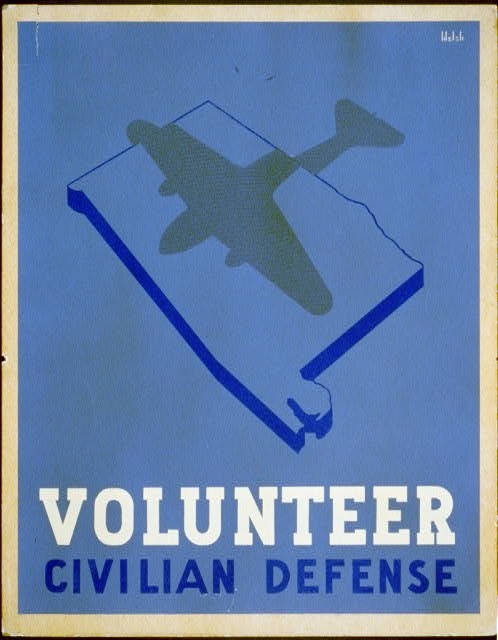
The Federal Art Project was developed in July and August 1935 as one of five programs under Federal Project Number One of the Works Progress Administration. Holger Cahill directed it for its entire existence.18 It paid painters, sculptors, muralists and graphic artists as relief workers. By Cahill's supervision, the project produced about 2,500 murals, about 18,000 sculptures, about 22,000 plates for the Index of American Design and about 108,000 easel works.19 Federal Project Number One ended in 1939; the art program survived under the name WPA Art Program but required local sponsors to contribute funds (Living New Deal, Federal Art Project).20 The Library of Congress's poster collection, titled "By the People, for the People: Posters from the WPA, 1936-1943," is described by the Library as 907 posters, while its live catalog listed 947 records under the collection in October 2026, 14 of them web pages, and the record for each poster carries the notice "No known restrictions on publication" (LOC, WPA Posters).21
The poster above is a plain example. A silkscreen from 1941 to 1943, credited to Welch, it urges civilian defense volunteering, and the catalog cites it as number 270 in Christopher DeNoon's Posters of the WPA (Wheatly Press, 1987).22 It is political the way an army recruiting poster is political, openly and with taxpayer money. The sources checked for this lesson record no content review of the posters. They do record that Federal Project Number One ended in 1939 and that the art program continued only with local sponsors paying part of the cost.
The Federal Art Project matters to the later fights because it set the American default: art made for the government, by employees, owned by the public. The NEA created in 1965 chose the opposite default: art made by independent artists, chosen by panels of peers, supported with a small share of its cost. That structure is why a government agency has been accused for more than thirty-five years both of censoring artists and of funding them.
Abstract Expressionism and the CIA: what the record shows and what is argued
The sharpest disagreement in this lesson is not about a law. It is about whether American modernism, the most celebrated art the country exported, was in part a Cold War project. Present both sides at full strength.
The documented core is institutional. The Museum of Modern Art's International Program, directed by Porter McCray, sent exhibitions abroad under the auspices of the International Council, a group of private patrons. MoMA's own April 21, 1959 press release says The New American Painting, selected by Dorothy C. Miller, showed 80 pictures, four to five each by 17 artists (Baziotes, Brooks, Francis, Gorky, Gottlieb, Guston, Hartigan, Kline, de Kooning, Motherwell, Newman, Pollock, Rothko, Stamos, Still, Tomlin and Tworkov) in eight European cities, Basel, Milan, Madrid, Berlin, Amsterdam, Brussels, Paris and London, between April 1958 and March 1959, as the first of more than fifty exhibitions the program had sent abroad in seven years.23 The release quotes McCray saying the paintings "created a sensation" (MoMA press release).24 Thomas Braden was MoMA's executive secretary in the late 1940s and became the CIA's supervisor of cultural activities in 1951.25 In the Saturday Evening Post of May 20, 1967, after the revelation of CIA links to the National Students Association, he wrote "I'm Glad the CIA is 'Immoral'," arguing that the Cold War was fought "with ideas instead of bombs."26
The strong claim is that the agency shaped the movement's rise. Frances Stonor Saunders, in Who Paid the Piper? The CIA and the Cultural Cold War (Granta, 1999; published in the United States by The New Press as The Cultural Cold War), draws on declassified documents and interviews to argue that the agency secretly funded or directed cultural activities in Western Europe and the United States, including in the visual arts, and that figures named in the book include Jackson Pollock as a person the agency used in its Cold War efforts (publisher's description).27 Eva Cockcroft's essay "Abstract Expressionism: Weapon of the Cold War" took the same line earlier and is reprinted in Pollock and After: The Critical Debate (Harper and Row, 1985), pp. 125 to 133.28 A survey essay at the Center for Law, Justice and Public Affairs describes her view as that the match between Cold War ideals and Abstract Expressionist individualism was "consciously forged."29
The skeptical case is also serious. The same survey describes Max Kozloff, in Artforum, arguing that the parallels between Cold War rhetoric and the painters' individualism were coincidental, and notes that revisionists cite the absence of documented political agreements between MoMA and the government.30 It adds that Louis Menand's essay "Unpopular Front" in The New Yorker and David and Cecile Shapiro's chapter in Reading Abstract Expressionism (Yale, 2005) are cited for the suspicious links between MoMA's leadership and the CIA while without, in that survey's account, showing that the agency chose the paintings. The survey's author rejects both extremes and argues that critics and museum leaders, not the painters, politicized the movement.31 A fact worth keeping in view: the painters themselves were not agents. Pollock had ties to Communist-sponsored workshops and to David Alfaro Siqueiros, which is the opposite of what the "weapon" thesis would predict.
Where does that leave a reader? With documented people and programs and an argued causal claim. The statement the evidence supports is that a museum whose leaders included a future CIA cultural officer sent American abstraction to Europe at a time when the agency was spending secretly on culture. The statement it does not yet support is that the agency decided which painters would be famous. Anyone who writes the second sentence as fact needs a document the first one lacks.
| Model | Who chooses the art | Example and date | What happened to dissenting art |
|---|---|---|---|
| Command | The party and its officials | Socialist Realism, proclaimed 1934 | Pessimistic or critical content banned |
| Purge | The regime, against named styles | Degenerate Art, Munich, summer 1937; 20,000+ works seized | Mocked, sold abroad in 1939 or burned (5,000+ paintings) |
| Employment | Federal Art Project officials | FAP, 1935 to 1943; about 108,000 easel works, 2,500 murals | Federal Project Number One ended 1939; art program continued with local sponsors |
| Cultural diplomacy | A private museum, private patrons, possibly an agency | The New American Painting, April 1958 to March 1959 | Not censored; the dispute is about who benefited and why |
| Arm's-length grants | Peer panels, with a chairperson and Congress above them | NEA, 1965 to present | Grants withdrawn or conditioned in 1989 to 1990; litigated to 1998 |
1989 and 1990: the NEA fights
The National Endowment for the Arts gave a modest share of the money for two works that became the most argued-over art in modern American politics. Andres Serrano's Piss Christ (1987) is a Cibachrome print, 152.4 by 101.6 centimeters, of a small crucifix submerged in a reddish fluid, the artist's urine. The series won the $15,000 Awards in the Visual Arts competition at the Center for Contemporary Art in Winston-Salem, North Carolina, of which the NEA contributed about a third.32 In 1989 Senator Alfonse D'Amato tore up a catalog page showing the photograph on the Senate floor, and Senator Jesse Helms denounced Serrano there, as the Retro Report transcript records, in language the transcript renders as "a jerk" (Smarthistory; Retro Report).33 The work has since been vandalized in Melbourne in 1997 and Avignon in 2011.
The second case was a traveling retrospective of Robert Mapplethorpe, The Perfect Moment, which had three portfolios, labeled X (homosexual sadomasochism), Y (flowers) and Z (nude portraits of African American men). It had received a $30,000 NEA grant to the Institute of Contemporary Art in Philadelphia and ran in Philadelphia and then Chicago.34 It was scheduled for the Corcoran Gallery in Washington in July 1989, and the Corcoran canceled it under pressure from Helms and the American Family Association; Helms had sent a letter to the NEA, signed by 36 senators, expressing outrage (Mental Floss).35
Congress responded by cutting NEA funding and by requiring the agency to consider "general standards of decency." The statute now reads that the chairperson must ensure "artistic excellence and artistic merit are the criteria by which applications are judged," taking into account "general standards of decency and respect for the diverse beliefs and values of the American public," and that obscenity "is without artistic merit, is not protected speech, and shall not be funded" (20 U.S.C. 954(d)).36
In Cincinnati the show produced a prosecution. The Contemporary Arts Center opened it on April 7, 1990, and an estimated 80,000 people attended.37 The same day a grand jury announced four indictments, two against the center and two against its director, Dennis Barrie, on charges of pandering obscenity and illegal use of a minor in nudity-oriented materials.38 Seven photographs were at issue: five showed men in sadomasochistic acts and two showed naked children. The trial began September 24, 1990 before Judge F. David J. Albanese, who admitted only the seven photographs and applied the Miller obscenity test. Eight jurors (four women and four men) heard the case.39 On October 5, 1990 they found the center and Barrie not guilty on all charges (Mental Floss).40 The Daily Pennsylvanian's report of October 8 adds that deliberation took two hours, that the first vote was seven to one for acquittal, and that jurors said they personally found some photographs lewd and distasteful but were convinced the photographs had artistic value.41 The legal frame is the Miller test, under which a work is obscene only if, among other things, it lacks serious literary, artistic, political or scientific value, and the judge admitted only the seven photographs for the jury to apply it to.
Four performance artists, Karen Finley, John Fleck, Holly Hughes and Tim Miller, applied to the NEA before the decency clause existed. Their advisory panel recommended approval of their projects, the National Council on the Arts recommended disapproval, and in June 1990 the NEA informed them funding had been denied.42 They sued. After Congress enacted the clause they and the National Association of Artists' Organizations challenged it on its face as vague and viewpoint-based. In National Endowment for the Arts v. Finley, 524 U.S. 569, decided June 25, 1998, the Court held the clause facially valid.43 Justice O'Connor's majority reasoned that it adds "considerations" to grant-making, does not bar awards and imposes no categorical requirement. Justice Scalia, joined by Justice Thomas, concurred in the judgment: the statute was viewpoint-based, he wrote, and the majority sustains it "by gutting it," but declining to fund speech does not abridge it.44 Justice Souter dissented, arguing the proviso mandates viewpoint-based decisions (Finley at Justia).45
Myth: the government censored Mapplethorpe and Serrano
The record is more complicated and more interesting. No government banned either artist from showing, selling or publishing. The Corcoran, a private gallery, canceled its own show under pressure from senators and an advocacy group. Cincinnati, a city, prosecuted a director and a museum, and a jury of eight residents acquitted them after about two hours. What Congress did was condition and cut public money, and the Supreme Court held in 1998 that adding "decency and respect" as considerations was constitutional on its face. Whether that is censorship depends on whether a refusal to subsidize counts as suppression, which is the exact question Scalia and Souter answered differently in Finley. Calling it censorship wins the argument in advance. Calling it ordinary budgeting does the same for the other side. The honest description is a funding fight with one prosecution in it, which the defendants won.
The flag: Dread Scott, Johnson and Eichman
The same summer produced a second art controversy that went to the Supreme Court by a different road. Dread Scott's What Is the Proper Way to Display a U.S. Flag? (1988) was an installation for audience participation: a photomontage, a shelf of books, pens, and a 3 by 5 foot American flag on the floor, with visitors invited to write answers in a ledger, many standing on the flag to do so. In 1989, on view at the School of the Art Institute of Chicago, it became a national controversy. President George H. W. Bush called it "disgraceful," Congress passed legislation to protect the flag, and Senator Bob Dole said the law would reach the "so-called 'artist' who has invited the trampling on the flag."46 The ledger holds comments from veterans that run from moved to demanding punishment. Scott's own account says he and three others later burned flags on the steps of the U.S. Capitol to oppose compulsory patriotism, and that this led to a landmark Supreme Court decision (Dread Scott's account).47 The record in the Court's opinion does not name the defendants, so the lesson relies on Scott's own statement for his role.
The two decisions are straightforward. In Texas v. Johnson, 491 U.S. 397, decided June 21, 1989, the Court held 5 to 4 that burning a flag as a political protest was expressive conduct and that Texas's interests in preventing breaches of the peace and preserving the flag as a symbol of national unity did not justify punishing it. Brennan wrote for Marshall, Blackmun, Scalia and Kennedy; Rehnquist dissented for himself, White and O'Connor, and Stevens dissented separately (Johnson at Justia).48 Congress answered with the Flag Protection Act of 1989, 18 U.S.C. 700, which barred knowingly mutilating, defacing, defiling, burning, maintaining on the floor or ground or trampling a flag and exempted the disposal of a worn flag.49 In United States v. Eichman, 496 U.S. 310, decided June 11, 1990, two cases, one from Washington (flags burned on the Capitol steps) and one from Seattle (a flag burned in protest at the Act's passage), reached the Court. It affirmed the dismissals 5 to 4. Brennan again wrote for the same four justices; Stevens, with Rehnquist, White and O'Connor, dissented. The majority said the Act lacked Texas's explicit content-based limit but was still tied to suppressing expression, because the interest it asserted was the flag's symbolic status, and rejected the argument that a "national consensus" favoring a ban changed the analysis (Eichman at Justia).50
Note the lineup. Scalia and Kennedy joined Brennan, Marshall and Blackmun in both cases, and Stevens dissented in both. The votes did not sort along any simple line. That is a fair summary of the whole decade: the arguments inside each camp were louder than the arguments between them.
Brooklyn, 1999: when the city threatened the museum
The Brooklyn Museum, run by the Brooklyn Institute of Arts and Sciences, scheduled Sensation: Young British Artists from the Saatchi Collection to open on October 2, 1999.51 The show included Chris Ofili's The Holy Virgin Mary, a painting that uses elephant dung and small photographs. Mayor Rudolph Giuliani called the work "sick" and said it offended him.52 According to the court's findings, on September 22, 1999, city officials said the city would cut all funding unless the museum canceled. The museum's board voted on September 28 to go ahead, the city ended funding, and withheld a monthly payment of $497,554 due October 1. Officials also threatened to cancel the lease, evict the museum and replace its board. The museum sued under 42 U.S.C. 1983 on September 28, and on September 30 the city filed an ejectment action in state court.53
On November 1, 1999, Judge Nina Gershon of the Eastern District of New York granted the museum's motion for a preliminary injunction (64 F. Supp. 2d 184).54 Her reasoning, as summarized from the opinion, ran in five steps. The court refused to abstain because no state case was pending when the federal suit was filed and found the eviction action was brought in bad faith to retaliate against protected expression. It held that loss of First Amendment freedoms even briefly is irreparable. It held that indirect suppression is still suppression, relying on cases such as Perry v. Sindermann. It found the lease reasons pretextual, since the city's own statements tied its actions to the exhibit's viewpoint. And it said the city could express its own views and decline to fund particular exhibits but could not penalize the museum's expression by cutting general operating support. The court also rejected the Establishment Clause theory: showing one work some find sacrilegious does not endorse an anti-religious view. Giuliani appealed, and the case settled in March 2000, with the city agreeing to pay $5.8 million over two years toward repairs to the museum's entrance hall (National Coalition Against Censorship).55
Set the decision beside Finley, decided about seventeen months earlier. They fit together. Congress may tell a grant-maker to consider decency, because a subsidy for particular projects is government's own choice. A mayor may not punish a museum for the content of a show by pulling the operating money and threatening its home, because that targets the institution's speech. The distinction between choosing what to fund and punishing speech by withdrawing support is the one fault line the next generation of fights will run along.
Ai Weiwei, and a state that did what the American ones could not
For contrast, consider what a government with no First Amendment does. The artist Ai Weiwei, born in Beijing in 1957 and elected an Honorary Royal Academician on May 26, 2011, was detained in April 2011 for 81 days and released on probation in June 2011, and his passport, held since 2011, was returned to him on July 22, 2015 (Royal Academy; PBS NewsHour).56 The Royal Academy lists the Václav Havel Prize for Creative Dissent (2012) and Amnesty International's Ambassador of Conscience Award (2015) among his honors.57 The lesson uses the dates only. The sources checked for it do not establish the charges, the Shanghai studio demolition or the details of the detention, so it does not state them. The point for an American reader is the difference in kind: Serrano lost grant eligibility and faced a hostile Senate, Ai lost his freedom to travel for four years.
Monuments: from art to removal, 2015 to 2026
Public sculpture is the art form closest to the state, since a government usually commissions it, places it on public land and can take it down. The Southern Poverty Law Center began cataloguing Confederate symbols in public spaces after the Charleston church shooting and publishes the results as its Whose Heritage? reports. Its June 24, 2020 update, a few weeks after George Floyd's death, reported 105 symbols removed (70 of them monuments), 48 renamed and 5 relocated, with nearly 1,800 still standing (SPLC, 2020 update).58 The fourth edition, released the week of April 24, 2025, was reported by the Alabama Reporter as counting 415 Confederate memorials removed, renamed or relocated since 2015, 2,086 still standing, among them 685 monuments, with removals slowing since 2023 (Alabama Reporter).59 Both are the SPLC's counts, as reported. The 2020 release counts "symbols" and the 2025 coverage counts "memorials," and this lesson did not check whether the editions define them alike, so the totals should not be compared directly.
The federal government's recent stance is that some removals went too far. Executive Order 14253, "Restoring Truth and Sanity to American History," signed March 27, 2025, directs the Secretary of the Interior to review whether monuments, markers or similar properties under Interior's jurisdiction were removed or changed since January 1, 2020 to perpetuate a false reconstruction of American history or to include any other improper partisan ideology, and, where appropriate and consistent with law, to reinstate them (White House, EO 14253, Section 4).60 The case for the order is that it restores public property torn down by crowds or by officials acting without public votes. The case against it is that it substitutes one official reading of the past for another. The text speaks of "the greatness of the achievements and progress of the American people" as the content standard.61 Both descriptions of what it does can be checked against the text.
The Smithsonian, 2025 to 2026
The same executive order covers the Smithsonian. Under Section 2, the Vice President, through his seat on the Board of Regents, is to work to remove "improper ideology" from Smithsonian museums, education and research centers, and the National Zoo, to recommend further actions to the President and, with congressional leaders, to seek appointment of citizen Regents who support the order's policy. The Vice President and the OMB Director are to work with Congress so that future funding does not pay for exhibits or programs that, in the order's words, degrade shared American values, divide Americans by race or promote ideologies inconsistent with federal law. The order says the American Women's History Museum is to celebrate women's achievements and not recognize men as women in any respect. Section 3 directs funding for infrastructure at Independence National Historical Park, to be completed by July 4, 2026 (EO 14253).62
On August 12, 2025, a letter signed by White House officials Lindsey Halligan, Vince Haley and Russell Vought went to Secretary Lonnie Bunch calling for a review of eight Smithsonian museums in a first phase: the National Museum of American History, the National Museum of Natural History, the National Museum of African American History and Culture, the National Museum of the American Indian, the National Air and Space Museum, the Smithsonian American Art Museum, the National Portrait Gallery and the Hirshhorn Museum and Sculpture Garden. The letter set targets at 30, 75 and 120 days, and at 120 days museums were to begin correcting public-facing content such as placards and digital displays to replace language the White House considered divisive or ideologically driven. It demanded grant documentation, inventories of permanent holdings and visitor surveys and called for analysis of exhibition texts, social media, curatorial process and exhibition planning. The Smithsonian replied that its work rests on "scholarly excellence, rigorous research, and the accurate, factual presentation of history," and said it would work constructively with the White House, Congress and its Regents (WGBH, August 12, 2025).63
On July 4, 2026 the White House Domestic Policy Council issued a report titled "Saving America's Story."64 As NPR described it, the report says the National Museum of American History has been captured by a "radical, activist ideology," underemphasizes the Founders, colonial history and the Revolution, does not celebrate the 250th anniversary enthusiastically enough, promotes activism it labels "anti-white," "illegal alien" and transgender, and tries to "indoctrinate" teachers and students. It names the museum's director, Anthea Hartig. Bunch told staff in a memo that the report "is not a fair characterization of the work and totality of the National Museum of American History," while acknowledging room for improvement, and cited accuracy and integrity.65 NPR reported no completed changes as of July 9, said Bunch and Hartig remained in their roles, and noted that the Smithsonian's charter says its museums are meant to operate independently of the federal government (NPR, July 9, 2026).66 On September 8, 2026 the Smithsonian announced that Bunch, after nearly 38 years there and seven as Secretary, would retire by the end of 2026, with the Board of Regents, chaired by Franklin D. Raines, to name an acting secretary and begin a national search (Smithsonian, September 8, 2026).67 His statement spoke of leaving "with pride and sadness, gratitude and joy," and the release did not mention the White House.68
The strongest case for the administration is that the Smithsonian is a federal trust institution funded by taxpayers, that the public may ask what its exhibits say, and that a 250th anniversary invites a review of how the founding is taught. The strongest case for the Smithsonian is that its charter and its Regents make it independent, that scholarly judgment is not a vote, and that an order telling a museum to remove "improper ideology" gives officials the power to define the term. Both positions rest on documents quoted above. NPR reported no completed changes to any exhibit as of July 9, 2026. Anyone writing on this subject should check the date of their last source, because this is the fastest-moving story in the lesson.
| Date | Fight | Who acted | Outcome |
|---|---|---|---|
| Summer 1937 | Degenerate Art exhibition, Munich | Nazi regime | 600+ works shown to be mocked; 20,000+ seized; 2 million visitors |
| 1939 | Sale and burning of confiscated art | Nazi regime | Auction planned in Switzerland; 5,000+ paintings burned in Berlin |
| 1989 | Serrano and Mapplethorpe; Corcoran cancellation | Senate; a private gallery | NEA funding cut; decency clause added in 1990 |
| June 21, 1989 | Texas v. Johnson | Supreme Court | 5 to 4, flag burning protected |
| June 11, 1990 | United States v. Eichman | Supreme Court | 5 to 4, Flag Protection Act of 1989 invalid as applied |
| Oct. 5, 1990 | Cincinnati obscenity trial | County prosecutors; jury | Acquittal on all charges after about two hours |
| June 25, 1998 | NEA v. Finley | Supreme Court | Decency clause facially valid; Scalia and Thomas concurring in judgment; Souter dissenting |
| Nov. 1, 1999 | Brooklyn Museum, Sensation | Mayor Giuliani; E.D.N.Y. | Preliminary injunction; settlement March 2000, $5.8 million |
| Feb. 5, 2003 | Guernica woven copy covered at the UN | United Nations staff | Covered for Powell's Security Council presentation; no UN reason in sources checked |
| Mar. 27, 2025 | Executive Order 14253 | President | Smithsonian and monuments directives |
| Aug. 12, 2025 | Review of eight Smithsonian museums | White House | 30, 75 and 120 day targets; Smithsonian pledged to work with the White House |
| July 4, 2026 to Sept. 8, 2026 | "Saving America's Story" report; Bunch retirement announced | Domestic Policy Council; Smithsonian | No completed changes reported as of July 9; Bunch to retire by year end |
How to: trace a museum or funding fight to the primary documents
- Start with the institution's own page for the work or exhibition: the Reina Sofia's entry for Guernica, MoMA's press release archive (moma.org/docs/press_archives), the Smithsonian's newsroom. Record the dates they give. Where the page is silent on a fact (the UN's reason for covering the woven copy), write "not stated" rather than filling the gap from memory.
- Find the legal text. For funding, read the statute (20 U.S.C. 954 at law.cornell.edu); for orders, read the order on whitehouse.gov and the Federal Register copy; for decisions, read the opinion at supreme.justia.com or courtlistener.com and note the vote and author before you read any summary.
- Separate the actors. In Mapplethorpe, one private gallery canceled, one city prosecuted, one Senate objected and one jury acquitted. Four different decisions got compressed into the word "censorship" in most coverage.
- Check the money. The Serrano award was $15,000 with about a third from the NEA; the Mapplethorpe grant was $30,000 to the Philadelphia institute; the Brooklyn payment withheld was $497,554. Dollar figures keep a story honest.
- Record both sides' strongest stated reason from their own documents, as the Smithsonian section does with the executive order and the Smithsonian's response.
- Date-stamp your last source. For anything after mid-2026, say "as of" and the date.
How to: check whether a government-made artwork is in the public domain
- Was it made by a federal employee as part of the job? Under 17 U.S.C. 105, such works have no copyright.69 Federal Art Project artists were paid project workers; the Library of Congress poster records carry "No known restrictions on publication."
- Read the catalog record's rights line, which for LOC items points to the collection's rights page. Treat it as the Library's research conclusion and note that the Library says it does not own the rights.
- Check publication date. Anything published in the United States before January 1, 1931 is public domain as of 2026.
- Distinguish the work from a reproduction. A museum's new photograph of a public domain painting may carry its own terms; the underlying painting does not.
- For state-commissioned works that are not federal (a city's mural, a state capitol sculpture), the artist usually keeps the copyright unless a contract assigned it, so check the commission.
If you report on this
- Say who did what. "The government censored Mapplethorpe" collapses a private gallery, a Senate, a city prosecutor and a jury. Name each, with its date.
- Give votes and authors for every decision: Johnson and Eichman were 5 to 4 with Brennan writing; Finley was a 6-justice majority opinion with two concurring in judgment and one dissent. Readers deserve the lineup, and it rarely matches an expected label.
- On the CIA and Abstract Expressionism, separate documented facts (Braden's role; MoMA's International Program and its 1958 to 1959 tour) from argued causation (the agency made the movement). State which sentence you are writing.
- On the Smithsonian, quote the executive order's operative text, then the Smithsonian's response, then say what actually changed and as of what date. The July 9, 2026 NPR report described no completed changes; the September 8, 2026 retirement announcement did not mention the White House.
- For monument counts, cite the SPLC edition and date, and say that an SPLC count is the SPLC's count, since definitions differ among editions.
- Check a work's custody and copyright before you reproduce it. This lesson embeds one Federal Art Project poster and links every other work to its museum page.
Go further
- Museo Reina Sofia, Guernica and its woven-copy page; the Museum of Modern Art's 1959 press release on The New American Painting.
- Frances Stonor Saunders, Who Paid the Piper? (Granta, 1999; The New Press edition), and Louis Menand, "Unpopular Front," The New Yorker, October 17, 2005, for the debate; Eva Cockcroft's essay in Pollock and After: The Critical Debate (1985); David and Cecile Shapiro in Reading Abstract Expressionism (Yale University Press, 2005).
- U.S. Holocaust Memorial Museum, Degenerate Art; Tate on Socialist Realism.
- Library of Congress WPA poster collection and Christopher DeNoon, Posters of the WPA (Wheatly Press, 1987); Living New Deal, Federal Art Project.
- 20 U.S.C. 954, NEA v. Finley, Texas v. Johnson, United States v. Eichman and the Brooklyn Museum opinion.
- Executive Order 14253, the Smithsonian's newsroom, and the SPLC's Whose Heritage dataset.
- The Constitution course's First Amendment lesson, lesson 05 on posters and murals, and lesson 10 on copyright and fair use.
Questions and answers
Where was Guernica between 1939 and 1981?
In the custody of the Museum of Modern Art in New York, which lent it for tours; Alfred Barr wrote in 1969 that Picasso had lent it about twenty times in Europe and the United States, according to MoMA.70 Picasso left it there for safekeeping when the Second World War began and, in 1958, extended the loan indefinitely on the condition that it stay until democracy had been restored in Spain.71 It went to Spain in 1981 and entered the Reina Sofia's collection in 1992, per the museum's own entry.
Why was the woven copy of Guernica covered at the United Nations?
The documented facts are the date and the occasion: on February 5, 2003 it was covered with a blue cloth, a banner with the UN logo and council flags in preparation for Colin Powell's presentation to the Security Council.72 The Reina Sofia's page does not report a reason given by the UN. Statements about intent, in either direction, are reporters' or critics' interpretations.
How many people saw the Nazi Degenerate Art show?
An estimated two million or more in 1937, according to the U.S. Holocaust Memorial Museum, against fewer than 500,000 for the Great German Art Exhibition that opened the day before.73 The museum states the show had more than 600 works. The article does not give a count of artists, and the lesson does not either.
Did the CIA make Abstract Expressionism famous?
The record shows that a MoMA executive secretary of the late 1940s, Thomas Braden, became the CIA's supervisor of cultural activities in 1951, and that MoMA's International Program sent The New American Painting to eight European cities in 1958 and 1959.74 The claim that the agency chose which painters would succeed is argued by Saunders and Cockcroft and disputed by revisionists, who cite the absence of documented political agreements. It is a thesis, and a careful writer labels it one.
Did the Supreme Court say the NEA can refuse to fund art it finds indecent?
In NEA v. Finley (June 25, 1998) it held that the "decency and respect" clause of 20 U.S.C. 954(d)(1) was facially valid because it adds considerations to grant-making and does not bar awards. It did not hold that any particular denial is lawful, and it said the clause imposes no categorical requirement.75 Justice Souter dissented and Justices Scalia and Thomas would have gone further in the government's favor, saying the clause was viewpoint-based but that declining to fund does not abridge speech.
Is flag burning legal in the United States?
As political protest, the Supreme Court held it protected expression in Texas v. Johnson (1989) and again, striking the federal Flag Protection Act as applied, in United States v. Eichman (1990), each time 5 to 4.76 Other laws, such as fire codes and rules against burning on someone else's property, are not affected by those holdings. The lesson reads those two opinions only.
What did the court decide in the Brooklyn Museum case?
Judge Nina Gershon granted a preliminary injunction on November 1, 1999, barring the city from withholding funds, seeking eviction or interfering with the museum's board in retaliation for the Sensation exhibit. She held that government may decline to fund an exhibit but may not punish a museum's expression by cutting general operating support, and the case settled in March 2000.77
What has the federal government actually done to the Smithsonian since 2025?
Verified steps: Executive Order 14253 (March 27, 2025); a White House letter calling for review of eight museums (August 12, 2025); a Domestic Policy Council report on the National Museum of American History (July 4, 2026); and the Smithsonian's announcement that Secretary Bunch will retire by the end of 2026 (September 8, 2026). NPR reported on July 9, 2026 that it knew of no completed changes. Anything after those dates needs a fresh source.
Hard questions
If Congress pays for art, why shouldn't it say what it will and will not pay for?
It may, and the Supreme Court said so in Finley: adding decency as a consideration to grant-making was facially valid, and Scalia's concurrence argued that declining to fund speech is not abridging it. The sharper point comes from Souter's dissent and the Brooklyn decision: when the criterion is the viewpoint of the work, or when the punishment falls on an institution's general support rather than on a particular grant, the First Amendment is engaged. Both sides of that line are in the opinions.
Wasn't the Cincinnati prosecution just a local community enforcing its own standards?
That is the prosecutors' strongest claim and the Miller test builds it in: contemporary community standards are part of the definition of obscenity. A county grand jury indicted. But the same community's jury, eight residents, acquitted in about two hours,78 deciding that photographs by a major artist in a museum had serious artistic value. The community standard cut the other way once it was asked.
The CIA has admitted funding cultural programs. Doesn't that prove the Abstract Expressionism thesis?
It proves that the agency ran cultural programs, which Braden wrote about in 1967. It does not prove that those programs chose the painters or paid for MoMA's tour. The 1959 press release credits a private International Council.79 That is the revisionists' point, and Saunders's response is documentary and circumstantial evidence of overlapping people and money. The two accounts disagree about proof, not about the existence of the programs.
Isn't the executive order on the Smithsonian just the President managing federal property?
That is the order's stated posture: the Smithsonian receives federal funds and the Vice President sits on the Board of Regents. The Smithsonian's counter is its charter, which, as NPR noted, says the museums are meant to operate independently of the federal government, and the Regents' role in governing it.80 Congress, which created the Smithsonian and appropriates its money, has the stronger claim to decide the balance. Until it does, the record is two institutions describing the same relationship differently.
Do museums have a political bias, whatever their own statements say?
Every museum makes choices about what to show, and the choices have consequences. The Reina Sofia's page on the woven copy, which says Powell's claims were later proved false, is a curator's judgment inside an institutional record. The fair test is whether a museum documents its choices and corrects errors in the open, and whether a critic can point to a specific label, wall text or acquisition rather than a general impression. The White House report names a museum and a director. The Smithsonian's answer names scholarship and independence. Both can be tested against the exhibits themselves, which anyone can walk through.
Learn more
- Museo Reina Sofia, Guernica: The museum's own entry for the painting, with dates, dimensions and custody history.
- U.S. Holocaust Memorial Museum, Degenerate Art: The Holocaust Encyclopedia article on the 1937 Munich show, with attendance and seizure figures.
- Tate, Socialist Realism: A short definition of the Soviet doctrine and how it differed from social realism.
- Living New Deal, Federal Art Project: Output numbers and the project's organization under the WPA.
- MoMA press release on The New American Painting: The primary document behind the CIA and Abstract Expressionism argument.
- NEA v. Finley: The full opinions, including O'Connor, Scalia and Souter.
- Brooklyn Museum v. City of New York: Judge Gershon's opinion, read in the original, on funding cuts as retaliation.
- Executive Order 14253: The text of the order, which lets you check every description of it.
- NPR on the Smithsonian and the White House report: The July 2026 reporting, with the Smithsonian's response.
Notes
- Tate, Art Terms: Socialist Realism. Proclamation at the 1934 Soviet Writers Congress. Read it online. ↩
- U.S. Holocaust Memorial Museum, Holocaust Encyclopedia: Degenerate Art. Attendance estimate for the 1937 show. Read it online. ↩
- Living New Deal, Federal Art Project (FAP). Dates of the Federal Art Project. Read it online. ↩
- Museo Reina Sofia, The woven version of Guernica covered at the UN (February 5, 2003). Date and objects used to cover the woven copy. Read it online. ↩
- Museo Nacional Centro de Arte Reina Sofia, Guernica (creation May 1 to June 4, 1937; MoMA loan; 1981 return). Dates of painting and the stated inspiration. Read it online. ↩
- Museo Nacional Centro de Arte Reina Sofia, Guernica (creation May 1 to June 4, 1937; MoMA loan; 1981 return). Dimensions as given in the museum entry. Read it online. ↩
- Museo Nacional Centro de Arte Reina Sofia, Guernica (creation May 1 to June 4, 1937; MoMA loan; 1981 return). Quotation and loan condition as stated in the museum entry. Read it online. ↩
- Museo Nacional Centro de Arte Reina Sofia, Guernica (creation May 1 to June 4, 1937; MoMA loan; 1981 return). 1981 transfer to Spain and 1992 entry into the collection. Read it online. ↩
- Museo Reina Sofia, The woven version of Guernica covered at the UN (February 5, 2003). February 5, 2003 covering and Powell presentation. Read it online. ↩
- Museo Reina Sofia, The woven version of Guernica covered at the UN (February 5, 2003). Museum note on the later falsity of the presentation. Read it online. ↩
- U.S. Holocaust Memorial Museum, Holocaust Encyclopedia: Degenerate Art. Opening a day after the Great German Art Exhibition, assembly time and number of works. Read it online. ↩
- U.S. Holocaust Memorial Museum, Holocaust Encyclopedia: Degenerate Art. Hanging, labeling and the "crazy at any price" slogan. Read it online. ↩
- U.S. Holocaust Memorial Museum, Holocaust Encyclopedia: Degenerate Art. Visitor figures for both exhibitions. Read it online. ↩
- U.S. Holocaust Memorial Museum, Holocaust Encyclopedia: Degenerate Art. Confiscation of more than 20,000 works. Read it online. ↩
- U.S. Holocaust Memorial Museum, Holocaust Encyclopedia: Degenerate Art. The 1939 auction plan and the burning of more than 5,000 paintings. Read it online. ↩
- Tate, Art Terms: Socialist Realism. Stalin, Gorky and the 1934 Writers Congress. Read it online. ↩
- Tate, Art Terms: Socialist Realism. Ban on pessimistic content and the phrase "propaganda art". Read it online. ↩
- Living New Deal, Federal Art Project (FAP). Development in 1935 under Federal Project Number One and Cahill's direction. Read it online. ↩
- Living New Deal, Federal Art Project (FAP). Output figures for murals, sculptures, plates and easel works. Read it online. ↩
- Living New Deal, Federal Art Project (FAP). End of Federal Project Number One in 1939 and the local sponsor requirement. Read it online. ↩
- Library of Congress, Works Progress Administration Posters collection. Collection title, poster counts and rights notice as of October 2026. Read it online. ↩
- Library of Congress, Volunteer civilian defense / Welch (Federal Art Project poster, 1941 to 1943), catalog record. Catalog record for the Welch poster, cited as number 270 in DeNoon. Read it online. ↩
- Museum of Modern Art press release, The New American Painting, April 21, 1959. The New American Painting: 80 pictures, 17 artists, eight cities, April 1958 to March 1959. Read it online. ↩
- Museum of Modern Art press release, The New American Painting, April 21, 1959. McCray quotation "created a sensation". Read it online. ↩
- Survey essay: Politicising the apolitical, Abstract Expressionism and the Cold War (Cockcroft, Saunders, Braden, Kozloff, Menand, Shapiro). Braden's career as discussed in the survey; see also Saunders. Read it online. ↩
- Survey essay: Politicising the apolitical, Abstract Expressionism and the Cold War (Cockcroft, Saunders, Braden, Kozloff, Menand, Shapiro). Braden, Saturday Evening Post, May 20, 1967, as discussed in the survey. Read it online. ↩
- The New Press, Frances Stonor Saunders, The Cultural Cold War: The CIA and the World of Arts and Letters. Saunders's argument about CIA cultural funding. Read it online. ↩
- Survey essay: Politicising the apolitical, Abstract Expressionism and the Cold War (Cockcroft, Saunders, Braden, Kozloff, Menand, Shapiro). Cockcroft essay and its citation. Read it online. ↩
- Survey essay: Politicising the apolitical, Abstract Expressionism and the Cold War (Cockcroft, Saunders, Braden, Kozloff, Menand, Shapiro). Survey's description of Cockcroft's view. Read it online. ↩
- Survey essay: Politicising the apolitical, Abstract Expressionism and the Cold War (Cockcroft, Saunders, Braden, Kozloff, Menand, Shapiro). Kozloff and the revisionist position. Read it online. ↩
- Survey essay: Politicising the apolitical, Abstract Expressionism and the Cold War (Cockcroft, Saunders, Braden, Kozloff, Menand, Shapiro). The survey author's own conclusion. Read it online. ↩
- Smarthistory, Sunanda K. Sanyal, Andres Serrano, Piss Christ. Description of Piss Christ, its size and the $15,000 award. Read it online. ↩
- Retro Report, transcript on the 1989 NEA controversy (D'Amato, Helms, Mapplethorpe, NEA Four). D'Amato, Helms and the 1989 Senate floor remarks, as recorded in the transcript. Read it online. ↩
- Mental Floss, In 1990, Art Went on Trial in Cincinnati and Won. Mapplethorpe retrospective and its $30,000 NEA grant. Read it online. ↩
- Mental Floss, In 1990, Art Went on Trial in Cincinnati and Won. Corcoran cancellation and the Helms letter signed by 36 senators. Read it online. ↩
- 20 U.S.C. 954, National Endowment for the Arts: National Endowment for the Arts, law text. Statutory text of the decency and obscenity provisions. Read it online. ↩
- Mental Floss, In 1990, Art Went on Trial in Cincinnati and Won. Opening on April 7, 1990 and attendance. Read it online. ↩
- Mental Floss, In 1990, Art Went on Trial in Cincinnati and Won. Indictments of the center and Dennis Barrie. Read it online. ↩
- Mental Floss, In 1990, Art Went on Trial in Cincinnati and Won. Trial from September 24, 1990, Judge Albanese and the jury. Read it online. ↩
- Mental Floss, In 1990, Art Went on Trial in Cincinnati and Won. Verdict of October 5, 1990. Read it online. ↩
- The Daily Pennsylvanian, Gallery acquitted of obscenity charges, October 8, 1990. Report of October 8, 1990 on deliberation time, first vote and juror statements. Read it online. ↩
- National Endowment for the Arts v. Finley, 524 U.S. 569 (1998). Background of the NEA Four as recounted in the opinion. Read it online. ↩
- National Endowment for the Arts v. Finley, 524 U.S. 569 (1998). Citation, date and holding. Read it online. ↩
- National Endowment for the Arts v. Finley, 524 U.S. 569 (1998). Scalia concurrence, quotation "by gutting it". Read it online. ↩
- National Endowment for the Arts v. Finley, 524 U.S. 569 (1998). Souter dissent. Read it online. ↩
- Dread Scott, What Is the Proper Way to Display a U.S. Flag? (artist's account). Bush, Dole and the 1989 Chicago controversy as recounted by the artist. Read it online. ↩
- Dread Scott, What Is the Proper Way to Display a U.S. Flag? (artist's account). Scott's own statement of his Capitol flag burning. Read it online. ↩
- Texas v. Johnson, 491 U.S. 397 (1989). Holding, vote and lineup in Texas v. Johnson, decided June 21, 1989. Read it online. ↩
- United States v. Eichman, 496 U.S. 310 (1990). Description of the Flag Protection Act of 1989. Read it online. ↩
- United States v. Eichman, 496 U.S. 310 (1990). Holding, vote and lineup in Eichman, decided June 11, 1990. Read it online. ↩
- Brooklyn Institute of Arts and Sciences v. City of New York, 64 F. Supp. 2d 184 (E.D.N.Y. 1999). Opening date as recorded in the court's findings. Read it online. ↩
- Brooklyn Institute of Arts and Sciences v. City of New York, 64 F. Supp. 2d 184 (E.D.N.Y. 1999). Giuliani statement as recorded in the findings. Read it online. ↩
- Brooklyn Institute of Arts and Sciences v. City of New York, 64 F. Supp. 2d 184 (E.D.N.Y. 1999). Funding cut, the $497,554 payment and the lawsuit timeline. Read it online. ↩
- Brooklyn Institute of Arts and Sciences v. City of New York, 64 F. Supp. 2d 184 (E.D.N.Y. 1999). Preliminary injunction of November 1, 1999. Read it online. ↩
- National Coalition Against Censorship, Sensation: Young British Artists from the Saatchi Collection. Settlement of March 2000 and the $5.8 million payment. Read it online. ↩
- PBS NewsHour, Chinese artist Ai Weiwei gets passport back, July 2015. Return of the passport on July 22, 2015. Read it online. ↩
- Royal Academy of Arts, Ai Weiwei (biography and honors). Honorary Royal Academician election, detention, probation and honors. Read it online. ↩
- SPLC, Whose Heritage dataset update, June 24, 2020. Counts of removed, renamed and relocated symbols as of June 24, 2020. Read it online. ↩
- Southern Poverty Law Center, Whose Heritage? Public Symbols of the Confederacy (fourth edition, April 2025, as reported by Alabama Reporter). Fourth edition counts as reported. Read it online. ↩
- The White House, Executive Order 14253, Restoring Truth and Sanity to American History, March 27, 2025. Section 4 on Interior review of monuments and markers. Read it online. ↩
- The White House, Executive Order 14253, Restoring Truth and Sanity to American History, March 27, 2025. Quoted content standard in the order. Read it online. ↩
- The White House, Executive Order 14253, Restoring Truth and Sanity to American History, March 27, 2025. Sections 2 and 3 on the Smithsonian and Independence National Historical Park. Read it online. ↩
- WGBH, White House calls for a review of eight Smithsonian museums, August 12, 2025. Letter of August 12, 2025, the eight museums, the 30, 75 and 120 day targets and the Smithsonian reply. Read it online. ↩
- NPR, Smithsonian chief emphasizes accuracy and integrity after White House report, July 9, 2026. Content of the July 4, 2026 report as described by NPR. Read it online. ↩
- NPR, Smithsonian chief emphasizes accuracy and integrity after White House report, July 9, 2026. Bunch memo to staff. Read it online. ↩
- NPR, Smithsonian chief emphasizes accuracy and integrity after White House report, July 9, 2026. No completed changes as of July 9, 2026, and the Smithsonian charter. Read it online. ↩
- Smithsonian Institution, Secretary Lonnie G. Bunch III announces retirement, September 8, 2026. Retirement announcement and Board of Regents process. Read it online. ↩
- Smithsonian Institution, Secretary Lonnie G. Bunch III announces retirement, September 8, 2026. Bunch statement. Read it online. ↩
- 17 U.S.C. 105, Subject matter of copyright: United States Government works. Federal government works carry no copyright. Read it online. ↩
- Museum of Modern Art, Original stretcher for Picasso's Guernica rediscovered in MoMA storage (2016; loan history and Barr quotation). Barr quotation and loan history. Read it online. ↩
- Museum of Modern Art, Original stretcher for Picasso's Guernica rediscovered in MoMA storage (2016; loan history and Barr quotation). Terms of the 1958 loan extension. Read it online. ↩
- Museo Reina Sofia, The woven version of Guernica covered at the UN (February 5, 2003). Covering of February 5, 2003. Read it online. ↩
- U.S. Holocaust Memorial Museum, Holocaust Encyclopedia: Degenerate Art. Attendance comparison. Read it online. ↩
- Museum of Modern Art press release, The New American Painting, April 21, 1959. Tour cities and dates. Read it online. ↩
- National Endowment for the Arts v. Finley, 524 U.S. 569 (1998). O'Connor majority reasoning. Read it online. ↩
- Texas v. Johnson, 491 U.S. 397 (1989). Vote in Johnson; the Eichman vote is at United States v. Eichman, 496 U.S. 310. Read it online. ↩
- National Coalition Against Censorship, Sensation: Young British Artists from the Saatchi Collection. Settlement. Read it online. ↩
- The Daily Pennsylvanian, Gallery acquitted of obscenity charges, October 8, 1990. Jury size and deliberation time. Read it online. ↩
- Museum of Modern Art press release, The New American Painting, April 21, 1959. Credit line in the press release. Read it online. ↩
- NPR, Smithsonian chief emphasizes accuracy and integrity after White House report, July 9, 2026. Charter language as noted by NPR. Read it online. ↩
Check yourself
1. What did the Supreme Court decide in NEA v. Finley (June 25, 1998)?
Justice O'Connor's opinion upheld the clause on its face. Scalia, joined by Thomas, concurred in the judgment and said the statute was viewpoint-based but that declining to fund is not abridging speech; Souter dissented.
2. What did the Brooklyn Museum case (Brooklyn Institute of Arts and Sciences v. City of New York, E.D.N.Y. Nov. 1, 1999) decide?
Judge Nina Gershon rejected abstention, found the lease reasons pretextual, and held that government may decline to fund a particular exhibit but may not withhold general operating support to punish a museum's expression. The case settled in March 2000.
3. In what order did the Nazi government stage its two Munich art exhibitions in summer 1937?
The Holocaust Museum's encyclopedia says Degenerate Art opened one day after the Great German Art Exhibition, was assembled in under three weeks, showed more than 600 works, and drew an estimated two million visitors against fewer than 500,000 for the official show.
4. Which statement about the CIA and Abstract Expressionism is supported by the sources checked for this lesson?
Braden's biography and his Saturday Evening Post article of May 20, 1967 are documented, as is MoMA's 1959 release on the tour (run by its International Program with a private International Council). Revisionist skeptics, such as Max Kozloff, point to the absence of documented political agreements. The strong claim that the CIA made the movement is argued, not proven.
5. What did United States v. Eichman (June 11, 1990) decide?
Justice Brennan wrote for a 5 to 4 Court (with Marshall, Blackmun, Scalia and Kennedy) that the Act's interest in the flag's symbolic status was tied to suppressing expression and could not survive exacting scrutiny. Stevens, Rehnquist, White and O'Connor dissented.
6. Which of these is the correct sequence of the 2025 federal actions on the Smithsonian that this lesson verified?
Executive Order 14253, signed March 27, 2025, directed the Vice President to work to remove 'improper ideology' through his seat on the Board of Regents. The August 12, 2025 letter, signed by Lindsey Halligan, Vince Haley and Russell Vought, set 30, 75 and 120 day targets for review of eight museums. A White House report on the National Museum of American History followed on July 4, 2026.
Terms in this lesson
- Degenerate Art (Entartete Kunst)
- The Nazi label for modern art, and the name of the Munich exhibition that opened in summer 1937 to ridicule it. The regime confiscated more than 20,000 works from German museums that year.
- The official Soviet doctrine, proclaimed by Maxim Gorky at the 1934 Soviet Writers Congress, requiring realist styles that portray Soviet life optimistically. Critical or pessimistic content was banned.
- Federal Art Project
- The visual arts branch of the Works Progress Administration, 1935 to 1943, directed by Holger Cahill. It paid artists to produce murals, easel works, sculpture and silkscreen posters, now held at the Library of Congress.
- Arm's-length funding
- Public arts money distributed through peer panels rather than by officials choosing works. The NEA works this way, which is why the 1989 to 1990 fights centered on whether Congress and the chairperson could override panels.
- Decency clause
- 20 U.S.C. 954(d)(1), added in 1990, which requires the NEA chairperson to take into account 'general standards of decency and respect for the diverse beliefs and values of the American public' along with artistic excellence and merit. Upheld on its face in NEA v. Finley (1998).
- Unconstitutional conditions
- The doctrine that government may not condition a benefit on giving up a constitutional right. The Brooklyn Museum court applied it to a city's threat to cut operating funds and evict the museum over an exhibit.
- Expressive conduct
- Action treated as speech because it is meant to convey a message the audience will understand. Burning a flag in protest was held to be expressive conduct in Texas v. Johnson (1989).
- Cultural diplomacy
- Use of art, music and exhibitions to shape foreign opinion. The Museum of Modern Art's International Program sent The New American Painting to eight European cities in 1958 and 1959.
- Public domain (government works)
- Works made by federal employees as part of their jobs have no copyright under 17 U.S.C. 105. Federal Art Project posters at the Library of Congress carry the notice 'no known restrictions on publication.'
Sources
- Museo Nacional Centro de Arte Reina Sofia, Guernica (creation May 1 to June 4, 1937; MoMA loan; 1981 return) checked 2026-10
- Museum of Modern Art, Original stretcher for Picasso's Guernica rediscovered in MoMA storage (2016; loan history and Barr quotation) checked 2026-10
- Museo Reina Sofia, The woven version of Guernica covered at the UN (February 5, 2003) checked 2026-10
- U.S. Holocaust Memorial Museum, Holocaust Encyclopedia: Degenerate Art checked 2026-10
- Tate, Art Terms: Socialist Realism checked 2026-10
- Living New Deal, Federal Art Project (FAP) checked 2026-10
- Library of Congress, Works Progress Administration Posters collection checked 2026-10
- Library of Congress, Volunteer civilian defense / Welch (Federal Art Project poster, 1941 to 1943), catalog record checked 2026-10
- Museum of Modern Art press release, The New American Painting, April 21, 1959 checked 2026-10
- The New Press, Frances Stonor Saunders, The Cultural Cold War: The CIA and the World of Arts and Letters checked 2026-10
- Survey essay: Politicising the apolitical, Abstract Expressionism and the Cold War (Cockcroft, Saunders, Braden, Kozloff, Menand, Shapiro) checked 2026-10
- Smarthistory, Sunanda K. Sanyal, Andres Serrano, Piss Christ checked 2026-10
- Retro Report, transcript on the 1989 NEA controversy (D'Amato, Helms, Mapplethorpe, NEA Four) checked 2026-10
- Mental Floss, In 1990, Art Went on Trial in Cincinnati and Won checked 2026-10
- The Daily Pennsylvanian, Gallery acquitted of obscenity charges, October 8, 1990 checked 2026-10
- 20 U.S.C. 954, National Endowment for the Arts: National Endowment for the Arts, law text checked 2026-10
- National Endowment for the Arts v. Finley, 524 U.S. 569 (1998) checked 2026-10
- Texas v. Johnson, 491 U.S. 397 (1989) checked 2026-10
- United States v. Eichman, 496 U.S. 310 (1990) checked 2026-10
- Dread Scott, What Is the Proper Way to Display a U.S. Flag? (artist's account) checked 2026-10
- Brooklyn Institute of Arts and Sciences v. City of New York, 64 F. Supp. 2d 184 (E.D.N.Y. 1999) checked 2026-10
- National Coalition Against Censorship, Sensation: Young British Artists from the Saatchi Collection checked 2026-10
- Royal Academy of Arts, Ai Weiwei (biography and honors) checked 2026-10
- PBS NewsHour, Chinese artist Ai Weiwei gets passport back, July 2015 checked 2026-10
- Southern Poverty Law Center, Whose Heritage? Public Symbols of the Confederacy (fourth edition, April 2025, as reported by Alabama Reporter) checked 2026-10
- SPLC, Whose Heritage dataset update, June 24, 2020 checked 2026-10
- The White House, Executive Order 14253, Restoring Truth and Sanity to American History, March 27, 2025 checked 2026-10
- WGBH, White House calls for a comprehensive review of eight Smithsonian museums, August 12, 2025 checked 2026-10
- NPR, Smithsonian chief emphasizes accuracy and integrity after White House report, July 9, 2026 checked 2026-10
- Smithsonian Institution, Secretary Lonnie G. Bunch III announces retirement, September 8, 2026 checked 2026-10