Lesson 9 of 9 · about 19 minutes
Environmental Damage, Cleanup and What a County Can Require
You'll be able to
- Describe the air, soil and water hazards from a battery fire with real measurements
- Summarize the Moss Landing testing record fairly, including where results disagree
- Explain how damaged and retired batteries are handled and why decommissioning plans and bonds matter
- List the conditions an Idaho county can attach to a battery permit and the limits on that power
When a battery plant burns, the fire ends and the questions start: what was in the smoke, where it landed, what washed into the drains, who tests it and who pays to haul away tens of thousands of burned modules. Moss Landing is the only large case with a public, multi-agency record, so most of this lesson leans on it. The siting half then turns to what an Idaho county can require so that it never has to find out the hard way.
Air: what the smoke carries
Lesson 6 listed the gases. The one that drives most health concern is hydrogen fluoride, which comes from the fluorinated salt in the electrolyte. In Larsson and colleagues' 2017 Scientific Reports study of seven commercial lithium-ion cell types, burning cells released 20 to 200 milligrams of HF per watt-hour of battery capacity, plus 15 to 22 mg/Wh of phosphoryl fluoride in some tests.
Worked example: the HF ceiling for one container
Apply the lab range to an invented 5 MWh container (5,000,000 Wh) that burns completely.
Low end:  5,000,000 Wh x 20 mg/Wh  = 100,000,000 mg = 100 kg HF
High end: 5,000,000 Wh x 200 mg/Wh = 1,000,000,000 mg = 1,000 kg HF

A one-container fire at a 160-container site:
  1 of 160 = 0.6% of the site's energy

Moss Landing 300 at 1,200 MWh, about 56,000 of
100,000 modules burned (EPA): roughly 56% of the energy
These are ceilings from small-cell lab tests, not predictions of what reaches a neighbor. HF reacts, dilutes and deposits; how much travels depends on how hot and high the plume rises and on wind. The arithmetic shows why the number of units that burn matters so much, and why air monitoring belongs in every emergency plan.
Real measurements so far have been reassuring at a distance. EPA ran nine monitoring stations during the January 2025 Moss Landing fire, two at the facility, four just outside it and three in nearby communities, measuring particulate matter and HF, and said on January 18, 2025 that it had not detected any risk to public health based on its data. Near Melba in October 2023, KIVI reported that preliminary Canyon County testing found concentrations within normal levels for the area. Residents near Moss Landing nonetheless reported physical symptoms after the fire and told Santa Cruz Local they felt sidelined by officials saying there was no problem. Monitoring at fixed stations can miss what a person downwind breathed during the worst hours. A UC Santa Cruz toxicologist urged testing of indoor dust and residents' blood, urine and hair; this course found no published human exposure testing as of October 2026.
Soil: the Moss Landing record
The testing record after Moss Landing is a good lesson in how different methods give different headlines.
| Who tested | When | What they reported |
|---|---|---|
| California DTSC and Monterey County environmental health | Late January 2025, 7 sites | Results did not indicate a human health threat; a county official said she would not sound "a total all-clear" |
| Never Again Moss Landing (residents' group), commissioned sampling | January and after the February flare-up, 16 sites | Heavy metals detected in some areas both times; a UC Santa Cruz toxicologist called some manganese, cobalt and nickel levels cause for concern |
| Vistra's contractor Terraphase, with DTSC oversight and split samples | May 2025, 27 samples | Samples across northern Monterey County, with DTSC taking its own at about half the sites, for heavy metals and dioxins |
| Moss Landing Marine Laboratories (Aiello et al., Scientific Reports, Nov. 26, 2025) | Before and after the fire, Hester Marsh in Elkhorn Slough | Surface nickel up to about 10 times and cobalt about 5 times pre-fire levels; enrichment in the top few millimeters; peak 1 to 3 km downwind; nickel to cobalt ratio about 2 to 1, matching NMC cathode material |
Early reports put the rise in marsh surface concentrations at "hundreds- to thousand-fold" over pre-fire levels. The peer-reviewed paper's bulk soil numbers are smaller, roughly fivefold to tenfold at maximum, and the authors list real limits: a field instrument that overestimated nickel, an estimated 2 to 5 mm affected layer resting on a weak regression, one site over about two months, and unknown fate downstream. They estimated about 25 metric tons of nickel, manganese and cobalt across the marsh, which they say should be interpreted with caution. Surface levels fell back near pre-fire values after rain and tides in early February, then nickel rose again after the February 18 flare-up. Most post-fire surface samples had nickel above 50 ppm, a level the authors associate with risk to plants and aquatic life.
Where the evidence points: a large NMC fire does deposit cathode metals downwind, measurably and in an identifiable fingerprint, mostly as a thin surface layer. Agency testing has not found a human health threat. No published study has measured what people absorbed. For farm country, that combination is the argument for baseline soil sampling before any project is built.
Water and runoff
Water used to cool batteries or exposures, and any electrolyte that leaks, can carry metals and fluoride compounds. At Moss Landing, EPA says all water from the burned building is collected on site and sampled to ensure proper disposal, and that stormwater captured on site, including any firefighting water from a flare-up, is contained and sampled before disposal. A battery site over an aquifer that feeds domestic and irrigation wells needs the same thinking before a fire: containment, a place for firefighting water to go, and a sampling plan.
Cleanup, recycling and end of life
EPA issued a Notice of Federal Response Action to Vistra on January 22, 2025, and on July 17, 2025 signed an Administrative Settlement Agreement and Order on Consent under CERCLA (Docket No. 09-2025-08), under which Vistra performs and pays for battery removal with EPA oversight. EPA called it the largest lithium-ion battery cleanup in agency history. Removal began September 29, 2025. By June 24, 2026, 33,943 intact batteries from the burned area had been de-energized and more than 33,000 sent off site for recycling, with about 5,000 left in areas unsafe to reach. Phase 2 removes the most damaged modules and demolishes the building; unstable batteries are submerged in brine, and a 24-hour private fire crew stands by. On September 18, 2026, about 1,300 damaged modules caught fire during that work, prompting a shelter-in-place order within one-third mile. Twenty months after the fire, the cleanup was still producing smoke.
Retired batteries raise their own issues. EPA says most lithium-ion batteries are likely hazardous waste when discarded, usually ignitable (D001) and reactive (D003), and that it plans new rules for managing end-of-life lithium batteries. Recycling recovers lithium, nickel, cobalt, manganese and graphite by shredding cells into "black mass" and then smelting or leaching. The lifecycle impacts lesson covers mining and recycling capacity.
The 2021 and later IFC require a decommissioning plan that covers removing both an intact system and one damaged by fire. Idaho's 2018 edition does not. Supplier risk is real, too: Powin, which Idaho Power selected for its first large-scale battery projects and which built the system that burned near Melba, filed for bankruptcy in 2025, and FlexGen bought its software, hardware and spare parts. Warranties and service promises are only as good as the company behind them, which is why counties ask for bonds held independently of the owner.
What a county can require
In Idaho, a battery project on private land usually comes before a county or city as a special or conditional use. Idaho Code 67-6512 sets the rules. Notice goes to owners within 300 feet and to "any additional area that may be substantially impacted," as the commission decides. Before granting the permit, the county may require studies of social, economic, fiscal and environmental effects. And it may attach conditions, including those:
- minimizing adverse impact on other development;
- controlling the sequence, timing and duration of development;
- assuring that development is maintained properly;
- designating the exact location and nature of development;
- requiring on-site or off-site public facilities or services;
- requiring more restrictive standards than those generally required in an ordinance; and
- requiring mitigation of effects on service delivery by any political subdivision, which includes fire districts.
| Concern | Conditions counties use |
|---|---|
| Fire safety | Comply with the 2026 NFPA 855; UL 9540 listing; UL 9540A and large-scale fire test reports for the exact product; hazard mitigation analysis; explosion control |
| Emergency response | Plan approved in writing by the fire district; training and gas-monitoring equipment at the owner's cost; named evacuation and shelter radius with a notification method; 24-hour contact |
| Distance | Setbacks from homes, schools, roads, wells and canals beyond the code's 10 and 100 feet |
| Environment | Baseline soil and water sampling; runoff containment; air, soil and water sampling after any incident at the owner's cost |
| Operations | Incident notification within hours; cap on MWh and review of augmentation; access to alarm and maintenance logs; annual inspection paid by the owner |
| End of life | Decommissioning plan for intact and damaged systems; bond or other security sized to an engineer's removal estimate, adjusted over time |
The limits are real. A county cannot set electric rates or wholesale market rules; those belong to the Idaho PUC and FERC. Under 67-6512(a), a denial or conditions unacceptable to the landowner may be subject to the regulatory taking analysis in Idaho Code 67-8003. Conditions hold up best when each one is tied to a specific impact in the record. The appeals and takings lesson covers that analysis, and the energy siting course takes an openly protective position on how far to go.
Developers argue that very large setbacks and moratoriums are not based on the codes, that modern outdoor designs keep fires to one unit, and that blocking storage keeps older peaking plants running and raises costs. Residents argue that rural fire districts are often volunteer, that the consequences of a fire land locally while the revenue goes elsewhere, and that Moss Landing's 20-month cleanup shows what "contained to the site" can still mean. A record that addresses both, with test data, a real emergency plan and money set aside, is what holds up.
Common mix-ups
- Claim: Moss Landing poisoned the whole region. What the evidence shows: Agency testing found no human health threat; peer-reviewed sampling found cathode metals enriched mostly in a thin surface layer downwind, with levels of concern for plants and aquatic life in places.
- Claim: Air monitors showed nothing, so there was no exposure. What the evidence shows: Fixed monitors show conditions where they sit. Deposition was measured downwind, and no published human exposure testing exists.
- Claim: Retired batteries can go to the landfill. What the evidence shows: EPA says most are likely hazardous waste when discarded.
Reporting angle
- Request the application's environmental and hydrology materials, stormwater plan and any baseline sampling under the Idaho Public Records Act; ask whether the county has required studies under 67-6512(e).
- Ask whether the permit requires post-incident air, soil and water sampling, who does it, who pays, and whether results are public.
- Ask for the decommissioning cost estimate, the bond amount, who holds it and how often it is updated.
- Ask who supplied the batteries and integration, and whether that company is still solvent and supporting its warranties.
- Watch the planning and zoning hearing and the board's findings; a condition not written into the decision does not exist.
Research angle
- Moss Landing cleanup record and legal documents: EPA response page and updates.
- The peer-reviewed deposition study: Aiello et al., Scientific Reports (2025).
- Community testing and toxicologist comments: Santa Cruz Local.
- HF measurements: Larsson et al. (2017).
- Waste rules and recycling: EPA lithium-ion battery recycling.
- Permit conditions authority: Idaho Code 67-6512.
Pictures, Numbers and Infographics
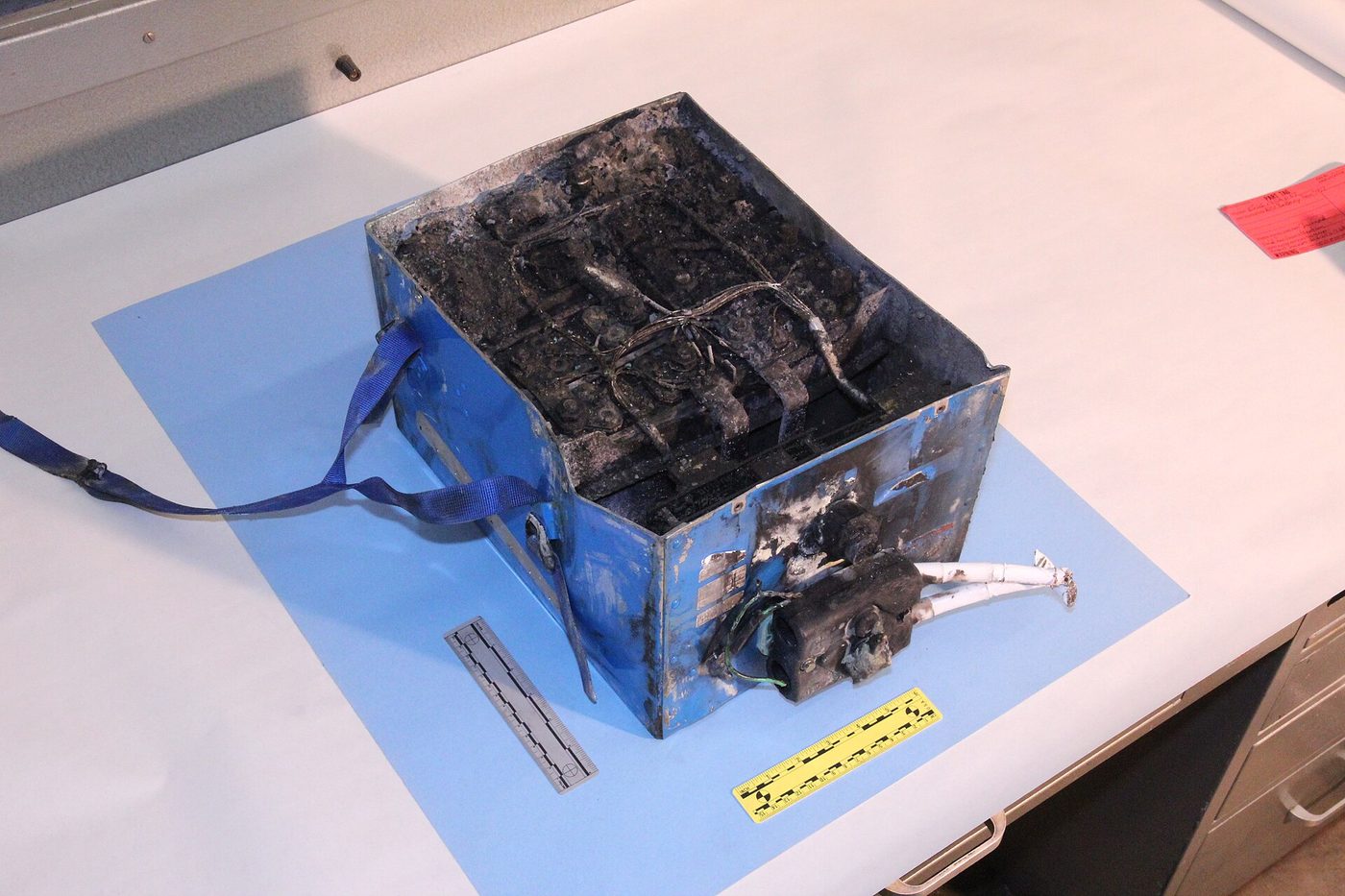
Federal data show what U.S. grid batteries are actually used for and how they have grown from short, fast units into multi-hour plants. The Moss Landing and lab figures show the scale of what one large lithium-ion fire leaves behind.
By the numbers
- 6,010.5 MW: U.S. large-scale battery capacity whose main job in 2023 was arbitrage, the largest single use. Frequency regulation came second at 4,416.8 MW, out of 16,052.9 MW installed. EIA, Battery Storage in the United States, figure data (2023 final data)
- 0.6 hours to 2.8 hours: the average storage duration of U.S. large-scale batteries installed in 2015, compared with those installed in 2023 (rounded to one decimal). EIA, Battery Storage in the United States, figure data (2023 final data)
- About 100,000 modules: the battery modules at Vistra's Moss Landing facility when the fire started January 16, 2025. Around 56,000 of them burned. U.S. EPA, Moss Landing updates, 2026
- 33,943: intact batteries from the burned area de-energized and ready for recycling, as of EPA's June 24, 2026 update. More than 33,000 had already been shipped off site. U.S. EPA, Moss Landing updates, 2026
- About 1,300 modules: the estimated number that burned in a second fire during the Moss Landing cleanup on September 18, 2026. U.S. EPA, Moss Landing updates, 2026
- 9 air monitoring stations: what EPA deployed for particulate matter and hydrogen fluoride during the January 2025 fire. EPA said its data showed no detected risk to public health. U.S. EPA news release, January 18, 2025
- 20 to 200 mg per watt-hour: hydrogen fluoride released by burning commercial lithium-ion cells in fire tests of seven battery types. Larsson and others, Scientific Reports, 2017
- About 10 times and 5 times: the rise in maximum surface nickel (an order of magnitude) and cobalt (a factor of five) in Hester Marsh soil after the Moss Landing fire, compared with pre-fire levels. Aiello and others, Scientific Reports, 2025
Check yourself
1. Larsson and colleagues measured how much hydrogen fluoride from burning lithium-ion cells?
The 2017 Scientific Reports study of seven commercial cell types found 20 to 200 mg/Wh of HF, plus 15 to 22 mg/Wh of phosphoryl fluoride in some tests.
2. What did the peer-reviewed Scientific Reports study of Hester Marsh find after the January 2025 Moss Landing fire?
Aiello and colleagues reported maximum surface Ni about 10 times and Co about 5 times pre-fire levels, confined to the top few millimeters, with peak levels 1 to 3 km downwind.
3. What did EPA say about its air monitoring during the Moss Landing fire?
EPA's January 18, 2025 release said it had not detected any risk to public health based on its air monitoring, which covered particulate matter and hydrogen fluoride.
4. Under what legal arrangement is Vistra removing the Moss Landing batteries?
EPA's response page cites CERCLA Docket No. 09-2025-08; Vistra conducts and pays for the work under EPA oversight.
5. Which Idaho statute lets a county attach conditions, including more restrictive standards, to a special use permit?
Idaho Code 67-6512(d) lists conditions including minimizing adverse impact, assuring proper maintenance and requiring more restrictive standards; (e) allows required studies.
6. How does EPA say most discarded lithium-ion batteries should be classified?
EPA's lithium-ion recycling page says most are likely hazardous when discarded and would likely carry D001 and D003 codes.
Terms in this lesson
- Hydrogen fluoride (HF)
- A toxic, corrosive gas formed when the fluorinated salt in lithium-ion electrolyte burns or breaks down.
- Deposition
- Particles from smoke settling onto soil, plants, water and surfaces downwind.
- CERCLA
- The federal Superfund law, under which EPA can oversee and require cleanup of hazardous substance releases.
- Decommissioning bond
- Financial security posted with a county so equipment removal and site restoration get paid for even if the owner fails.
- Baseline sampling
- Testing soil, water and air before a project starts, so later results can be compared against real local conditions.
Sources
- Larsson et al., Toxic fluoride gas emissions from lithium-ion battery fires, Scientific Reports 7, 10018 (2017) checked 2026-10
- Aiello et al., Coastal wetland deposition of cathode metals from the world's largest lithium-ion battery fire, Scientific Reports 15, 42113 (Nov. 26, 2025) checked 2026-10
- U.S. EPA news release, EPA air monitoring results near Moss Landing Vistra battery fire not exceeding health standards (Jan. 18, 2025) checked 2026-10
- U.S. EPA, Moss Landing Vistra battery fire response page (CERCLA Docket No. 09-2025-08) checked 2026-10
- U.S. EPA, Moss Landing Vistra battery fire updates (June 24 and Sept. 18, 2026 entries) checked 2026-10
- U.S. EPA Region 9, Moss Landing Vistra battery fire cleanup overview (July 2026) checked 2026-10
- U.S. EPA news release, EPA oversees largest lithium-ion battery cleanup in agency history at Moss Landing (Sept. 29, 2025) checked 2026-10
- Santa Cruz Local, New soil tests start after Moss Landing battery fire (May 15, 2025) checked 2026-10
- U.S. EPA, Lithium-ion battery recycling checked 2026-10
- Idaho Code 67-6512, Special use permits, conditions, and procedures checked 2026-10
- ESS News, FlexGen to acquire assets from bankrupt rival Powin Energy (Aug. 12, 2025) checked 2026-10
- TDWorld, Idaho Power announces plans for state's first large-scale battery storage projects (May 9, 2022), on selecting Powin checked 2026-10
- EPRI, BESS Failure Incident Database (stationary table: Melba, Oct. 2, 2023, integrator Powin Energy) checked 2026-10
- KIVI, Battery fire at Idaho Power substation south of Melba continues to burn (Oct. 3, 2023) checked 2026-10
- 2022 California Fire Code (based on the 2021 IFC), Section 1207.2 commissioning and decommissioning (UpCodes viewer) checked 2026-10